EP3759107B1 - Substituierte imidazo[4,5-c]chinolin-verbindungen mit einer n-1-verzweigten gruppe - Google Patents
Substituierte imidazo[4,5-c]chinolin-verbindungen mit einer n-1-verzweigten gruppe Download PDFInfo
- Publication number
- EP3759107B1 EP3759107B1 EP19713205.3A EP19713205A EP3759107B1 EP 3759107 B1 EP3759107 B1 EP 3759107B1 EP 19713205 A EP19713205 A EP 19713205A EP 3759107 B1 EP3759107 B1 EP 3759107B1
- Authority
- EP
- European Patent Office
- Prior art keywords
- compound
- salt
- formula
- compounds
- och
- Prior art date
- Legal status (The legal status is an assumption and is not a legal conclusion. Google has not performed a legal analysis and makes no representation as to the accuracy of the status listed.)
- Active
Links
Classifications
-
- C—CHEMISTRY; METALLURGY
- C07—ORGANIC CHEMISTRY
- C07D—HETEROCYCLIC COMPOUNDS
- C07D471/00—Heterocyclic compounds containing nitrogen atoms as the only ring hetero atoms in the condensed system, at least one ring being a six-membered ring with one nitrogen atom, not provided for by groups C07D451/00 - C07D463/00
- C07D471/02—Heterocyclic compounds containing nitrogen atoms as the only ring hetero atoms in the condensed system, at least one ring being a six-membered ring with one nitrogen atom, not provided for by groups C07D451/00 - C07D463/00 in which the condensed system contains two hetero rings
- C07D471/04—Ortho-condensed systems
-
- A—HUMAN NECESSITIES
- A61—MEDICAL OR VETERINARY SCIENCE; HYGIENE
- A61P—SPECIFIC THERAPEUTIC ACTIVITY OF CHEMICAL COMPOUNDS OR MEDICINAL PREPARATIONS
- A61P31/00—Antiinfectives, i.e. antibiotics, antiseptics, chemotherapeutics
- A61P31/12—Antivirals
Definitions
- Some drug compounds act by stimulating certain key aspects of the immune system, as well as by suppressing certain other aspects (e.g., U.S. Patent Numbers 6,039,969 (Tomai et al. ) and 6,200,592 (Tomai et al. )). These compounds are sometimes referred to as immune response modifiers (IRMs). Some IRM compounds are useful for treating viral diseases, neoplasias, and T H 2-mediated diseases. Some IRM compounds are useful as vaccine adjuvants.
- IRMs immune response modifiers
- IRM compounds have been reported based on the following bicyclic and tricyclic ring systems: 1H-imidazo[4,5-c]quinolin-4-amines (e.g., U.S. Patent Number 4,689,338 (Gerster )); 1H-imidazo[4,5-c]pyridin-4-amines (e.g., U.S. Patent Number 5,446,153 (Lindstrom et al. )); 1H-imidazo[4,5-c][1,5]naphthyidin-4-amines (e.g., U.S. Patent Number 6,194,425 (Gerster et al.
- N-1 and 2-substituted 1H-imidazo[4,5-c]quinolin-4-amines e.g., U.S. Patent Numbers 6,331,539 (Crooks et al. ), 6,451,810 (Coleman et al. ), 6,664,264 (Dellaria et al. ), 8,691,837 (Krepski et al. ), 8,088,790 (Kshirsagar et al. ), 8,673,932 (Kshirsagar et al. ), 8,697,873 (Krepski et al. ), and 7,915,281 (Krepski et al. )).
- US 2003/212092 A1 describes imidazoquinoline and tetrahydroimidazoquinoline compounds that contain ether and aryl or alkenyl functionality at the 1-position which are useful as immune response modifiers, and that the compounds and compositions thereof can induce the biosynthesis of various cytokines and are useful in the treatment of a variety of conditions including viral diseases and neoplastic diseases.
- the compounds of Formula (I) have a chiral center in the branched group off N-1.
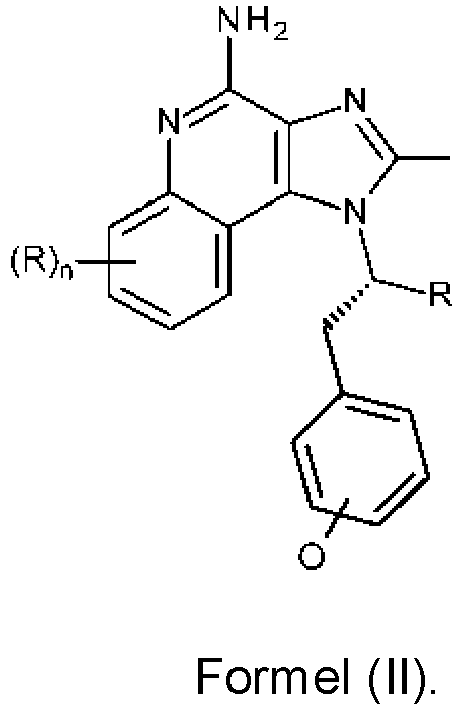
- the compounds of Formula (I) can be resolved into compounds (or salts thereof) of Formulas (II) and (III) (and/or such compounds can be synthesized using well-known techniques using chiral starting materials): and wherein n, R, R 1 , R 2 , and R 3 are as defined above.
- the compounds and salts, such as pharmaceutically acceptable salts, of these compounds can be used as vaccine adjuvants in methods of vaccinating a human or animal including administering an effective amount of the compound or salt to the human or animal, e.g. when administered in combination with a vaccine.
- compositions containing an effective amount of a compound (or salts thereof including pharmaceutically acceptable salts thereof) of Formula (I), such as a compound of Formula (II), Formula (III), or a combination thereof, are disclosed.
- alkyl refers to a monovalent group that is a radical of an alkane and includes straight-chain, branched, cyclic, and bicyclic alkyl groups, and combinations thereof. Unless otherwise indicated, the alkyl groups typically contain from 1 to 20 carbon atoms. In some embodiments, the alkyl groups contain 1 to 10 carbon atoms, 1 to 6 carbon atoms, 1 to 4 carbon atoms, or 1 to 3 carbon atoms.
- alkyl groups include, but are not limited to, methyl, ethyl, n-propyl, n-butyl, n-pentyl, isobutyl, t-butyl, isopropyl, n-octyl, n-heptyl, ethylhexyl, cyclopentyl, cyclohexyl, cycloheptyl, adamantyl, norbornyl, and the like.
- alkylene refers to a divalent group that is a radical of an alkane and includes groups that are linear, branched, cyclic, bicyclic, or a combination thereof. Unless otherwise indicated, the alkylene group typically has 1 to 20 carbon atoms. In some embodiments, the alkylene group has 1 to 10 carbon atoms, 1 to 6 carbon atoms, or 1 to 4 carbon atoms. Examples of “alkylene” groups include methylene, ethylene, 1,3-propylene, 1,2-propylene, 1,4-butylene, 1,4-cyclohexylene, and 1,4-cyclohexyldimethylene.
- An alkyl or alkylene group with carbon atoms optionally "interrupted" by one or more non-peroxidic -O- atoms refers to having carbon atoms on either side of the -O-. Examples include -CH 2 CH 2 -O-CH 2 CH 2 -, -CH 2 -CH 2 -O-CH 2 -CH 2 -O-CH 2 CH 2 -, -(CH 2 ) 2-4 -(OCH 2 CH 2 -) 1-5 , -(CH 2 ) 2-6 -(OCH 2 CH 2 -) 1-4 , and the like.
- alkoxy refers to a monovalent group having an oxy group bonded directly to an alkyl group.
- C x-y alkyl “C x-y alkoxy,” and C x-y alkylene” are inclusive of straight chain groups, branched chain groups, cyclic groups, and combinations thereof that have X to Y carbon atoms.
- a "C 1-5 alkyl” includes alkyl groups of 1 carbon, 2 carbons, 3 carbons, 4 carbons, and 5 carbons.
- C 1-5 alkyl examples include methyl, ethyl, n- propyl, isopropyl, n-butyl, sec-butyl, isobutyl, isomeric pentyls, cyclopropyl, cyclopentyl, and -CH 2 -cyclopropyl.
- aryl refers to a monovalent group that is aromatic and, optionally, carbocyclic.
- the aryl has at least one aromatic ring. Any additional rings can be unsaturated, partially saturated, saturated, or aromatic.
- the aromatic ring can have one or more additional carbocyclic rings that are fused to the aromatic ring.
- the aryl groups typically contain from 6 to 20 carbon atoms. In some embodiments, the aryl groups contain 6 to 18, 6 to 16, 6 to 12, or 6 to 10 carbon atoms. Examples of an aryl group include phenyl (designated by the abbreviation "Ph” herein), naphthyl, biphenyl, phenanthryl, and anthracyl.
- aralkyl refers to a monovalent group that is an alkyl group substituted with an aryl group (e.g., as in a benzyl group). Unless otherwise indicated, for both groups, the alkyl portion, which can be considered to be an alkylene group, often has 1 to 10 carbon atoms, 1 to 6 carbon atoms, or 1 to 4 carbon atoms and an aryl portion often has 6 to 20 carbon atoms, 6 to 18 carbon atoms, 6 to 16 carbon atoms, 6 to 12 carbon atoms, or 6 to 10 carbon atoms.
- salts include pharmaceutically acceptable salts, such as those described in Berge, Stephen M., "Pharmaceutical Salts," Journal of Pharmaceutical Sciences, 1977, 66, pages 1-19 .
- salts can be prepared by reacting a free base compound (that is, one not in a salt form) with an inorganic or organic acid such as, for example, hydrochloric acid, sulfuric acid, hydrobromic acid, methane sulfonic acid, ethane sulfonic acid, malic acid, maleic acid, acetic acid, trifluoroacetic acid, para-toluenesulfonic acid, salicylic acid, succinic acid, tartaric acid, citric acid, pamoic acid, xinafoic acid, oxalic acid, and the like.
- pharmaceutically acceptable carriers include those carriers that can deliver therapeutically or prophylactically effective amounts of one or more of the compounds or salts of the disclosure to a subject by a chosen route of administration, are generally tolerated by the subject, and have an acceptable toxicity profile (preferably minimal to no toxicity at an administered dose).
- suitable pharmaceutically acceptable carriers are described in Remington's Pharmaceutical Sciences, 18th Edition (1990), Mack Publishing Co. , and can be readily selected by one of ordinary skill in the art.
- Typical pharmaceutically acceptable salts include hydrochloride and dihydrochloride.
- Effective amount (including “therapeutically effective amount” and “prophylactically effective amount”) are defined as an amount of compound or salt sufficient to induce a therapeutic or prophylactic effect, such as cytokine induction, immunomodulation, antitumor activity, and/or antiviral activity. Depending on the disease or condition, the desired cytokine profile, and/or the acceptable level of side effects, the effective amount may vary. For example, a small amount of a very active compound or salt, or a large amount of a compound or salt of low activity, may be used to avoid undesirable side effects.
- Treatment and “Treatment” as well as variations thereof refer to reducing, limiting progression, ameliorating, preventing, or resolving to any extent the symptoms or signs related to a condition.
- “Ameliorate” and “ameliorating” refers to any reduction in the extent, severity, frequency, and/or likelihood of a symptom or clinical characteristic of a particular disease or condition.
- Antigen refers to any substance that can be bound by an antibody in a manner that is immunospecific to some degree.
- ambient temperature or “room temperature” refers to a temperature of 20°C to 25°C or 22°C to 25°C.
- each group is "independently" selected, whether specifically stated or not.
- each R group is independently selected.
- the compounds of Formula (I) have a chiral center in the branched group off N-1.
- the compounds of Formula (I) can be resolved into compounds (or salts thereof) of Formulas (II) and (III): and wherein:
- a compound or salt of Formula (II) may be more desirable than a compound or salt of Formula (III).
- compounds or salts of Formula (II) are more active with respect to inducing cytokine biosynthesis than compounds or salts of Formula (III).
- a more active compound or salt of Formula (II) would be desirable for use, a less active compound or salt of Formula (III) may be used in certain situations, for example, to avoid undesirable side effects.
- the -O-R 3 group is in a meta or para position, whereas in some embodiments, the -O-R 3 group is in the para position.
- R is selected from the group consisting of halogen, hydroxy, -C 1-7 alkyl, and -C 1-7 alkoxy. In some embodiments, R is selected from the group consisting of hydroxy, F, and Cl. In some embodiments, R is selected from the group consisting of F and Cl.
- n 0.
- R 1 is -CH 2 OCH 3 or -CH 2 OCH 2 CH 3 . In some embodiments, R 1 is -CH 2 OCH 2 CH 3 .
- R 2 is selected from the group consisting of hydrogen, methyl, and ethyl. In some embodiments, R 2 is hydrogen or methyl.
- R 3 has at least 5, or at least 6 carbon atoms.
- R 3 is an alkyl, optionally interrupted by non-peroxidic -O- atoms. In some embodiments, R 3 is an alkyl not interrupted by -O- atoms.
- R 3 is a linear alkyl.
- R 3 is selected from the group consisting of -(CH 2 ) 3 CH 3 , -(CH 2 ) 4 CH 3 , -(CH 2 ) 5 CH 3 , -(CH 2 ) 6 CH 3 , -(CH 2 ) 7 CH 3 , and -(CH 2 ) 11 CH 3 .
- R 3 is selected from the group consisting of -(CH 2 ) 3 CH 3 , -(CH 2 ) 5 CH 3 , -(CH 2 ) 7 CH 3 , and -(CH 2 ) 11 CH 3 .
- R 3 is -(CH 2 ) 3 CH 3 . In some embodiments, R 3 is -(CH 2 ) 5 CH 3 . In some embodiments, R 3 is -(CH 2 ) 7 CH 3 . In some embodiments, R 3 is -(CH 2 ) 11 CH 3 .
- R 3 is a branched alkyl. In some embodiments, R 3 is -CH 2 -CH(CH 2 CH 3 )-(CH 2 ) 3 CH 3 .
- R 3 is an aralkyl, wherein the alkyl portion is optionally interrupted by non-peroxidic -O- atoms. In some embodiments, R 3 is an aralkyl having an alkyl not interrupted by -O- atoms. In some embodiments, R 3 is -CH 2 -phenyl.
- R 1 is -C 1-3 alkylene-O-C 1-3 alkyl
- R 2 is selected from the group consisting of hydrogen, methyl, and ethyl
- R 3 is -C 4-12 alkyl
- n is 0.
- R 1 is -CH 2 OCH 3 or -CH 2 OCH 2 CH 3 ;
- R 2 is selected from the group consisting of hydrogen, methyl, and ethyl;
- R 3 is -C 4-12 alkyl; and n is 0.
- R 2 is hydrogen.
- R 3 is selected from the group consisting of -(CH 2 ) 3 CH 3 , -(CH 2 ) 4 CH 3 , -(CH 2 ) 5 CH 3 , -(CH 2 ) 6 CH 3 , -(CH 2 ) 7 CH 3 , and -(CH 2 ) 11 CH 3 .
- R 3 is selected from the group consisting of -(CH 2 ) 3 CH 3 , -(CH 2 ) 5 CH 3 , -(CH 2 ) 7 CH 3 , and -(CH 2 ) 11 CH 3 .
- R 3 is -(CH 2 ) 3 CH 3 , which can be 1-[(1S)-1-[(4-butoxyphenyl)methyl]-2-ethoxyethyl]imidazo[4,5-c]quinolin-4-amine.
- R 3 is -(CH 2 ) 5 CH 3 , which can be 1-[(1S)-1-(ethoxymethyl)-2-(4-hexoxyphenyl)ethyl]imidazo[4,5-c]quinolin-4-amine.
- R 3 is -(CH 2 ) 7 CH 3 , which can be 1-[(1S)-1-(ethoxymethyl)-2-(4-octoxyphenyl)ethyl]imidazo[4,5-c]quinolin-4-amine.
- R 3 is -(CH 2 ) 11 CH 3 , which can be 1-[(1S)-1-[(4-dodecoxyphenyl)methyl]-2-ethoxy-ethyl]imidazo[4,5-c]quinolin-4-amine.
- the compound is present in the form of a salt.
- the salt is typically a pharmaceutically acceptable salt. Most commonly the salt is a hydrochloride salt.
- mixtures of compounds of Formulas (II) and (III) are present.
- the compound of Formula (II) has an enantiomeric purity of at least 80% enantiomeric excess (80% ee).
- the enantiomeric purity of a compound of Formula (II) is relative to a compound of Formula (III).
- the compound of Formula (II) has an enantiomeric purity of at least 90% enantiomeric excess (90% ee).
- the compound of Formula (II) has an enantiomeric purity of at least 95% enantiomeric excess (95% ee).
- the compound of Formula (II) has an enantiomeric purity of at least 97% enantiomeric excess (97% ee). In some embodiments, the compound of Formula (II) has an enantiomeric purity of at least 98% enantiomeric excess (98% ee). In some embodiments, the compound of Formula (II) has an enantiomeric purity of at least 99% enantiomeric excess (99% ee). In some embodiments, the compound of Formula (II) has an enantiomeric purity of at least 99.5% enantiomeric excess (99.5% ee). In some embodiments, the compound of Formula (II) has an enantiomeric purity of at least 99.8% enantiomeric excess (99.8% ee).
- Tables 1-6 Exemplary compounds of Formulas (I), (II), and (III) are presented in Tables 1-6.
- each row represents a specific compound with n, R 1 , R 2 , and R 3 defined.
- a compound or salt selected from the group consisting of any one of the above embodiments of Formula (I), which may be compounds of Formula (II) and/or Formula (III), or salts thereof may be useful in a method of inducing cytokine biosynthesis in a human or animal by administering to the human or animal an effective amount of the compound or salt.
- a compound or salt selected from the group consisting of any one of the above embodiments of Formula (I), which may be compounds of Formula (II) and/or Formula (III), or salts thereof may be useful in a method of inducing IFN-alpha biosynthesis in a human or animal by administering to the human or animal an effective amount of the compound or salt.
- a compound or salt selected from the group consisting of any one of the above embodiments of Formula (I), which may be compounds of Formula (II) and/or Formula (III), or salts thereof may be useful in a method of inducing IFN-gamma biosynthesis in a human or animal by administering to the human or animal an effective amount of the compound or salt.
- a compound or salt selected from the group consisting of any one of the above embodiments of Formula (I), which may be compounds of Formula (II) and/or Formula (III), or salts thereof may be useful in a method of inducing TNF-alpha biosynthesis in a human or animal by administering to the human or animal an effective amount of the compound or salt.
- a compound or salt selected from the group consisting of any one of the above embodiments of Formula (I), which may be compounds of Formula (II) and/or Formula (III), or salts thereof may be useful in a method of inducing IP-10 biosynthesis in a human or animal by administering to the human or animal an effective amount of the compound or salt.
- a compound or salt selected from the group consisting of any one of the above embodiments of Formula (I), which may be compounds of Formula (II) and/or Formula (III), or salts thereof may be useful in a method for treating a viral disease in a human or animal by administering to the human or animal an effective amount of the compound or salt.
- a compound or salt selected from the group consisting of any one of the above embodiments of Formula (I), which may be compounds of Formula (II) and/or Formula (III), or salts thereof may be useful in a method for treating a neoplastic disease in a human or animal by administering to the human or animal an effective amount of the compound or salt.
- the compounds of the disclosure may be synthesized by synthetic routes that include processes analogous to those well known in the chemical arts, particularly in light of the description contained herein.
- the starting materials are generally available from commercial sources such as the Sigma-Aldrich Company (St. Louis, MO) or are readily prepared using methods well known to those of ordinary skill in the art (e.g., prepared by methods generally described in Louis F. Fieser and Mary Fieser, Reagents for Organic Synthesis, v. 1-26, Wiley, New York ; Alan R. Katritsky, Otto Meth-Cohn, Charles W. Rees, Comprehensive Organic Functional Group Transformations, volume 1-6, Pergamon Press, Oxford, England, (1995 ); Barry M.
- step (1) of Reaction Scheme 1 2-(tert-butoxycarbonylamino)-3-(4-tert-butoxyphenyl)propanoic acid of Formula (IV) (a di-protected version of tyrosine) can be can be reacted with isobutyl chloroformate and N-methylmorpholine followed by reaction with sodium borohydride in step (2) to provide the alcohol of Formula (V).
- Alkylation of the alcohol of Formula (V) in step (3) with an alkylating agent such as for example dialkylsulfate or an alkyl halide can provide the alkyl ether of Formula (VI).
- an alkylating agent such as for example dialkylsulfate or an alkyl halide
- the protecting groups can be removed from the compound of Formula (VI) using concentrated hydrochloric acid in ethanol with heating to provide the compound of Formula (VII).
- a 4-chloro-3-nitroquinoline of Formula (VIII) is reacted in step (5) with the compound of Formula (VII) to provide a 3-nitroquinolin-4-amine of Formula (IX).
- the reaction can be carried out by adding the amine of Formula (VII) to a solution of Formula (VIII) in a suitable solvent such as dichloromethane in the presence of a tertiary amine such as triethylamine.
- a suitable solvent such as dichloromethane
- a tertiary amine such as triethylamine.
- the 4-chloro-3-nitroquinoline compound of Formula (VIII) and substituted analogs are known compounds (see, for example, U.S. Patent Numbers 3,700,674 (Diehl et al. ), 5,389,640 (Gerster et al.
- substituted analogs of Formula (VIII) can be prepared starting with commercially available substituted anilines.
- step (6) of Reaction Scheme II the nitro group of Formula (IX) can be reduced to an amino group.
- the reduction can be carried out in a pressure bottle using hydrogen, a catalytic amount of palladium or platinum on carbon, and a solvent such as methanol, acetonitrile, toluene, or combinations thereof.
- the reaction can be carried out with a Parr apparatus.
- step (7) of Reaction Scheme II the resulting 3,4-diamine compound can be reacted with a carboxylic acid (R 2 CO 2 H) to provide a 1H-imidazo[4,5-c]quinoline of Formula (X).
- Suitable equivalents to carboxylic acids such as acyl chlorides, thioesters, and 1,1-dialkoxyalkyl alkanoates can also be used.
- the carboxylic acid or equivalent is selected so that it will provide the desired R 2 substituent in a compound of Formula (X).
- triethylorthoformate will provide a compound where R 2 is hydrogen and trimethyl orthovalerate will provide a compound where R 2 is n-butyl.
- the reaction can be carried out without a solvent or with an inert solvent.
- a catalyst such as pyridine hydrochloride can be included.
- step (8) of Reaction Scheme II the 1H-imidazo[4,5-c]quinoline-4-amine of Formula (X) is converted to an ether of Formula (XI) using conventional synthetic methods.
- the compound of Formula (X) can be reacted with a suitable alkyl halide (alkyl bromide or alkyl chloride) and a base (such as cesium carbonate) in an inert solvent (such as N,N-dimethylformamide).
- a suitable alkyl halide alkyl bromide or alkyl chloride
- a base such as cesium carbonate
- an inert solvent such as N,N-dimethylformamide
- the 1H-imidazo[4,5-c]quinoline of Formula (XI) can be oxidized to provide a 1H-imidazo[4,5-c]quinoline-SN-oxide using a conventional oxidizing agent capable of forming an N-oxide.
- a solution of the compound of Formula (XI) in a suitable solvent such as chloroform or dichloromethane is reacted with 3-chloroperbenzoic acid at ambient temperature.
- the N-oxide compound can be aminated to provide a 1H-imidazo[4,5-c]quinoline-4-amine of Formula (XII).
- Step (10) involves reacting the N-oxide compound with a sulfonylating agent and an aminating agent in an inert solvent such as dichloromethane or chloroform.
- Suitable asulfonylating agents include alkyl- or arylsulfonyl chlorides such as benzenesulfonyl chloride, methane sulfonyl chloride, or para-toluenesulfonyl chloride.
- Ammonium hydroxide is a suitable aminating agent.
- Formula (XII) is an embodiment of Formula (I).
- Compounds of the disclosure can be prepared according to Reaction Schemes I and II with the starting compound of Formula (IV) being replaced with similarly di-protected versions of homotyrosine, 3-amino-4-(3-hydroxyphenyl)butanoic acid, 4-amino-5-(4-hydroxyphenyl)pentanoic acid, or 4-amino-5-(3-hydroxyphenyl)pentanoic acid.
- Compounds of Formula (I), which may be compounds of Formula (II) and/or Formula (III), can be prepared by starting the reaction scheme with reactants having high enantiomeric purity.
- a racemic mixture of reactants or reactants of low enantiomeric purity (for example 10-70% enantiomeric excess) can be used with the final product isolated as the desired Formula (II) enantiomer using any suitable procedure for the resolution of a mixture of enantiomers.
- a well-known method for the resolution of a mixture of enantiomers is HPLC chromatography using a column with a chiral stationary phase (CSP).
- Another standard method for the resolution of a mixture of enantiomers involves reacting the mixture with an optically pure carboxylic acid to form diastereomeric salts that can be readily separated by for example recrystallization or chromatography methods. Regeneration of the free base completes the resolution process.
- resolving agents that are available in high enantiomeric purity include, but are not limited to, (+)-tartaric acid, (-)-mandelic acid, (-)-malic acid, (+)-camphor-10-sulfonic acid, and (+)-2,3-dibenzoyltartaric acid. If needed, different types of resolution steps can be combined, and multiple resolution steps can be utilized to achieve the desired enantiomeric purity.
- the enantiomeric purity is represented as the percent enantiomeric excess (% ee).
- Methods for the resolution of isomers are described in the references: Y. Okamoto, Chemical Society Reviews, 2008, 37, pages 2593-2608 ; G. Gubitz, Biopharmaceutics and Drug Disposition, 2001, 22, pages 291-336 ; and S. Mane, Analytical Methods, 2016, 8, pages 7567-7586 .
- Such techniques may include, for example, all types of chromatography (high performance liquid chromatography (HPLC), column chromatography using common absorbents such as silica gel, and thin layer chromatography), recrystallization, and differential (i.e., liquid-liquid) extraction techniques.
- the enantiomeric excess of the compounds of the disclosure can be determined using standard analytical assays such as gas chromatography or HPLC with a column having a chiral stationary phase (CSP). Suitable columns with a CSP are available from Chiral Technologies, Inc., Westchester, PA.
- CSP chiral stationary phase
- Enantiomeric excess (% ee) can be calculated from a chiral HPLC chromatogram by comparing the peak areas of the major enantiomer and minor enantiomer signals according to Equation 2.
- enantiomeric excess % ee peak area of major enantiomer ⁇ peak area of minor enantiomer peak area of major enantiomer + peak area of minor enantiomer ⁇ 100
- Prodrugs of the disclosed compounds can also be prepared by attaching to the compounds a functional group that can be cleaved under physiological conditions.
- a cleavable functional group will be cleaved in vivo by various mechanisms (such a through a chemical (e.g., hydrolysis) or enzymatic transformation) to yield a compound of the disclosure.
- a discussion of the use of prodrugs is provided by T. Higuchi and W. Stella, "Prodrugs as Novel Delivery Systems", vol. 14 of the ACS Symposium Series ; and in Bioreversible Carriers in Drug Design, ed. Edward B. Roche, American Pharmaceutical Association and Pergamon Press, 1987 .
- compositions of the disclosure are also contemplated.
- Pharmaceutical compositions of the disclosure contain a therapeutically effective amount of a compound or salt of the disclosure (described herein) in combination with a pharmaceutically acceptable carrier.
- the compounds of Formula (I), which may be compounds of Formula (II) and/or Formula (III), may be provided in any pharmaceutical composition suitable for administration to a subject (human or animal) and may be present in the pharmaceutical composition in any suitable form (for example as a solution, a suspension, an emulsion, or any form of a mixture).
- the pharmaceutical composition may be formulated with any pharmaceutically acceptable excipient, carrier, or vehicle.
- the pharmaceutically acceptable carrier comprises water (for example phosphate buffered saline or citrate buffered saline).
- the pharmaceutically carrier comprises an oil (for example corn, sesame, cottonseed, soybean, or safflower oil).
- the pharmaceutical composition may further include one or more additives including suspending agents, surfactants, dispersing agents, and preservatives (such as an anti-oxidant).
- the compounds of Formula (I), which may be compounds of Formula (II) and/or Formula (III) can be incorporated in a homogeneously dispersed formulation.
- the compounds of Formula (I), which may be compounds of Formula (II) and/or Formula (III) can be incorporated in an emulsified formulation.
- the compounds of Formula (I), which may be compounds of Formula (II) and/or Formula (III) can be incorporated in an oil-in-water formulation.
- An oil-in-water formulation can comprise an oil component, an aqueous component, and one or more surfactants (for example formulations comprising soybean oil, TWEEN 80, SPAN 85, and phosphate buffered saline).
- surfactants for example formulations comprising soybean oil, TWEEN 80, SPAN 85, and phosphate buffered saline.
- the compounds of Formula (I), which may be compounds of Formula (II) and/or Formula (III) can be incorporated into a liposome formulation.
- the pharmaceutical composition can further comprise an antigen in an amount effective to generate an immune response against the antigen.
- the antigen is a vaccine.
- the pharmaceutical composition can be administered in any suitable manner (parenterally or non-parenterally). In some embodiments, the pharmaceutical composition can be administered by an intradermal, subcutaneous, intramuscular, or intravenous injection.
- the compound of Formula (II) is present in the composition in at least 80% enantiomeric excess, relative to the compound of Formula (I), at least 90% enantiomeric excess, at least 95% enantiomeric excess, at least 96% enantiomeric excess, at least 96% enantiomeric excess, at least 97% enantiomeric excess, at least 98% enantiomeric excess, at least 99% enantiomeric excess, at least 99.5% enantiomeric, or at least 99.8% enantiomeric excess.
- the opposite enantiomer to the compound of Formula (III) is present in the composition in less than 10%, less than 5%, less than 2.5%, less than 2%, less than 1.5%, less than 1%, less than 0.5%, less than 0.25%, or less than 0.1%.
- the concentration of a compound of Formula (I), which may be a compound of Formula (II) and/or Formula (III), in the pharmaceutical composition can be at least 0.0005 mg/mL, at least 0.001 mg/mL, or at least 0.05 mg/mL. In some embodiments, the concentration of a compound of Formula (I), which may be a compound of Formula (II) and/or Formula (III), in the pharmaceutical composition can be up to 2.4 mg/mL, up to 0.06 mg/mL, up to 0.01 mg/mL, or up to 0.005 mg/mL.
- compositions of the disclosure will contain sufficient active ingredient or prodrug to provide a dose of at least 100 nanograms per kilogram (ng/kg), or at least 10 micrograms per kilogram ( ⁇ g/kg), of the compound or salt to the subject. In some embodiments, the compositions of the disclosure will contain sufficient active ingredient or prodrug to provide a dose of up to 50 milligrams per kilogram (mg/kg), or up to 5 mg/kg, of the compound or salt to the subject.
- the method includes administering sufficient compound to provide a dose of from 0.1 mg/m 2 to 2.0 mg/m 2 to the subject, for example, a dose of from 0.4 mg/m 2 to 1.2 mg/m 2 .
- a variety of dosage forms may be used to administer the compounds or salts of the disclosure to a human or animal.
- Dosage forms that can be used include, for example, tablets, lozenges, capsules, parenteral formulations, creams, ointments, topical gels, aerosol formulations, liquid formulations (e.g., aqueous formulation), transdermal patches, and the like.
- These dosage forms can be prepared with conventional pharmaceutically acceptable carriers and additives using conventional methods, which generally include the step of bringing the active ingredient into association with the carrier.
- a preferred dosage form has one or more of compounds or salts of the disclosure dissolved in an aqueous formulation.
- the compounds or salts described herein can be administered as the single therapeutic agent in the treatment regimen, or the compounds or salts described herein may be administered in combination with other active agents, including antivirals, antibiotics, proteins, peptides, oligonucleotides, antibodies, etc.
- cytokines e.g., IFN-alpha, IFN-gamma, TNF-alpha, IP-10
- cytokines e.g., IFN-alpha, IFN-gamma, TNF-alpha, IP-10
- the compounds or salts of the disclosure are agonists of cytokine biosynthesis and production, particularly agonists of IFN-alpha, IFN-gamma, TNF-alpha, and IP-10 cytokine biosynthesis and production.
- TLRs Toll-like receptors
- the compounds or salts of the disclosure primarily act as agonists of TLR-7 and/or TLR-8, however, other pathways or activities may be involved.
- Administration of the compounds or salts described herein can induce the production of interferon-alpha (IFN-alpha), interferon-gamma (IFN-gamma), tumor necrosis factor-alpha (TNF-alpha), and IP-10 in cells.
- Cytokines whose biosynthesis can be induced by compounds or salts of the disclosure include IFN-alpha, IFN-gamma, TNF-alpha, IP-10, and a variety of other cytokines. Among other effects, these cytokines can inhibit virus production and tumor cell growth, making the compounds or salts useful in the treatment of viral diseases and neoplastic diseases.
- the disclosure provides a method of inducing cytokine biosynthesis in a human or animal by administering an effective amount of a compound or salt of the disclosure to the human or animal.
- the human or animal to which the compound or salt is administered for induction of cytokine production may have one or more diseases, disorders, or conditions described below, for example a viral disease or a neoplastic disease, and administration of the compound or salt may provide therapeutic treatment.
- the compound or salt may be administered to the human or animal prior to the human or animal acquiring the disease so that administration of the compound or salt may provide a prophylactic treatment.
- compounds or salts described herein can affect other aspects of the innate immune response. For example, natural killer cell activity may be stimulated, an effect that may be due to cytokine induction.
- the compounds or salts may also activate macrophages, which in turn stimulate secretion of nitric oxide and the production of additional cytokines.
- the compounds or salts may cause proliferation and differentiation of B-lymphocytes.
- Conditions for which compounds or salts or compositions identified herein may be used as treatment include, but are not limited to:
- a compound, salt, or pharmaceutical composition described herein may be used as a vaccine adjuvant for use in conjunction with any material that increases either humoral and/or cell mediated immune responses, such as, for example, tumor antigens (e.g., MAGE-3, NY-ESO-1); live viral, bacterial, or parasitic immunogens; inactivated viral, protozoal, fungal, or bacterial immunogens; toxoids; toxins; polysaccharides; proteins; glycoproteins; peptides; cellular vaccines; DNA vaccines; autologous vaccines; recombinant proteins; and the like.
- tumor antigens e.g., MAGE-3, NY-ESO-1
- live viral, bacterial, or parasitic immunogens inactivated viral, protozoal, fungal, or bacterial immunogens
- toxoids toxoids
- toxins polysaccharides
- proteins glycoproteins
- peptides e.g., cellular vaccines
- DNA vaccines e.g
- Examples of vaccines that can benefit from use of a compound, salt, or composition identified herein as a vaccine adjuvant include BCG vaccine, cholera vaccine, plague vaccine, typhoid vaccine, hepatitis A vaccine, hepatitis B vaccine, hepatitis C vaccine, influenza A vaccine, influenza B vaccine, malaria vaccine, parainfluenza vaccine, polio vaccine, rabies vaccine, measles vaccine, mumps vaccine, rubella vaccine, yellow fever vaccine, tetanus vaccine, diphtheria vaccine, hemophilus influenza b vaccine, tuberculosis vaccine, meningococcal and pneumococcal vaccines, adenovirus vaccine, HIV vaccine, chicken pox vaccine, cytomegalovirus vaccine, dengue vaccine, feline leukemia vaccine, fowl plague vaccine, HSV-1 vaccine and HSV-2 vaccine, hog cholera vaccine, Japanese encephalitis vaccine, respiratory syncytial virus vaccine, rotavirus vaccine, papilloma virus vaccine,
- Compounds, salts, or pharmaceutical compositions identified herein may be particularly useful as vaccine adjuvants when used in conjunction with tumor antigens associated with colorectal cancer, head and neck cancer, breast cancer, lung cancer and melanoma.
- Compounds, salts, or pharmaceutical compositions identified herein may be particularly useful in individuals having compromised immune function.
- compounds, salts, or compositions may be used for treating opportunistic infections and tumors that occur after suppression of cell mediated immunity in, for example, transplant patients, cancer patients, and HIV patients.
- a viral disease or neoplastic disease may be treated in a human or animal in need thereof (having the disease) by administering a therapeutically effective amount of a compound, salt, or composition to the human or animal.
- a human or animal may also be vaccinated by administering an effective amount of a compound, salt, or composition described herein as a vaccine adjuvant.
- a method of vaccinating a human or animal includes administering an effective amount of a compound, salt, or composition described herein to the human or animal as a vaccine adjuvant.
- the vaccine adjuvant can be co-administered with the material that increases one or more humoral and cell mediated immune responses by including each in the same composition.
- the vaccine adjuvant and the material that increases either humoral and/or cell mediated immune responses can be in separate compositions.
- Compounds, salts, or compositions identified herein may as prophylactic or therapeutic vaccine adjuvants in veterinary applications.
- Compounds, salts, or compositions identified herein may be administered to, for example, pigs, horses, cattle, sheep, dogs, cats, poultry (such as chickens or turkeys), etc.
- Compounds or salts or compositions identified herein may be particularly useful when an effective amount is administered to a human or animal to treat bladder cancer, cervical dysplasia, actinic keratosis, basal cell carcinoma, genital warts, herpes virus infection, or cutaneous T-cell lymphoma.
- administration of the compound, salt, or composition of the disclosure is preferably topical (i.e., applied directly to the surface of a tumor, a lesion, a wart, or an infected tissue, etc.).
- an effective amount of compound, salt, or composition described herein, such as an aqueous composition is administered into the bladder of a human or animal that has at least one tumor of the bladder by intravesical instillation (e.g., administration using a catheter).
- An amount of a compound or salt effective to induce cytokine biosynthesis will typically cause one or more cell types, such as monocytes, macrophages, dendritic cells, and B-cells to produce an amount of one or more cytokines, such as, for example, IFN-alpha, IFN-gamma, TNF-alpha, and IP-10 that is increased (induced) over a background level of such cytokines.
- the precise dose will vary according to factors known in the art but is typically to be a dose of 100 ng/kg to 50 mg/kg, or 10 ⁇ g/kg to 5 mg/kg.
- the amount can be, for example, from 0.01 mg/m 2 to 5.0 mg/m 2 (computed according to the Dubois method as described above), although in other embodiments the induction of cytokine biosynthesis may be performed by administering a compound or salt in a dose outside this range.
- the method includes administering sufficient compound or salt or composition to provide a dose from 0.1 mg/m 2 to 2.0 mg/m 2 to the subject, for example, a dose of from 0.4 mg/m 2 to 1.2 mg/m 2 .
- a method of treating a viral infection in a human or animal and a method of treating a neoplastic disease in a human or animal can include administering an effective amount of a compound or salt described herein to the human or animal.
- An effective amount to treat or inhibit a viral infection can be an amount that will cause a reduction in one or more of the manifestations of viral infection, such as viral lesions, viral load, rate of virus production, and mortality as compared to untreated humans or animals.
- the precise amount that is effective for such treatment will vary according to factors known in the art but it is normally a dose of 100 ng/kg to 50 mg/kg, or 10 ⁇ g/kg to 5 mg/kg.
- An amount of a compound or salt effective to treat a neoplastic condition can be an amount that causes a reduction in tumor size or in the number of tumor foci.
- the precise amount will vary according to factors known in the art but is typically 100 ng/kg to 50 mg/kg, or 10 ⁇ g/kg to 5 mg/kg.
- the amount is typically, for example, from 0.01 mg/m 2 to 5.0 mg/m 2 (computed according to the Dubois method as described above), although in some embodiments the induction of cytokine biosynthesis may be performed by administering a compound or salt in a dose outside this range.
- the method includes administering sufficient compound or salt or composition to provide a dose from 0.1 mg/m 2 to 2.0 mg/m 2 to the subject, for example, a dose of from 0.4 mg/m 2 to 1.2 mg/m 2 .
- Sodium borohydride (NaBH 4 ), 10% palladium on carbon, cesium carbonate (Cs 2 CO 3 ), 1-iodooctane, 1-bromohexane, 2-ethylhexyl iodide, and N-methylmorpholine were obtained from the Sigma-Aldrich Company, St. Louis, MO.
- Diethyl sulfate, triethyl orthoformate, 3% platinum on carbon, benzyl bromide, 1-bromobutane, n-propyl acetate, para-toluenesulfonyl chloride, and pyridine hydrochloride were obtained from the Alfa Aesar Company, Haverhill, MA.
- (2S)-2-(tert-butoxycarbonylamino)-3-(4-tert-butoxyphenyl)propanoic acid (CAS Number 47375-34-8 ), isobutyl chloroformate, tetrabutylammonium chloride, and 3-chloroperbenzoic acid (about 80% MCPBA, which was determined iodometrically according to Braun, G. Org. Synth., Collective Volume 1932, 1, 431 ) were obtained from Oakwood Products Incorporated, Estill, SC.
- the resulting filtrate was returned to the cold bath and a solution of 1.12 g of NaBH 4 in 7 mL of water was carefully added. After stirring for 20 minutes, the reaction mixture was combined with 75 mL of water followed by the addition of 100 mL of ethyl acetate. The layers were separated and the aqueous layer was extracted with an additional 25 mL of ethyl acetate. The combined organic portions were washed with water and brine, dried over Na 2 SO 4 , filtered, and concentrated to give a colorless syrup.
- the resulting material was dissolved in 15 mL of dichloromethane followed by the addition of 6 mL of concentrated NH 4 OH solution and para-toluenesulfonyl chloride (127 mg, 0.68 mmol). After stirring rapidly for 1 hour, the reaction mixture was diluted with 20 mL of dichloromethane and washed successively with water (3x) and brine. The organic portion was dried over Na 2 SO 4 , filtered, and concentrated under reduced pressure.
- PBMC peripheral blood mononuclear cells
- the interface (buffy coat) containing the PBMC was collected and placed in a new sterile 50 mL conical polypropylene centrifuge tube.
- the PBMC were mixed with an equal volume of HBSS (about 20 mL from the interface and about 20 mL of HBSS), and then centrifuged at 1090 rpm, 10 minutes, 20°C, with brake (270Xg, GH 3.8A Rotor). After completing centrifugation, the cells were resuspended in 2 to 3mL ACK Red blood cell lysis buffer (ammonium chloride potassium solution, Gibco, Life Technology) and incubated for 2-5 minutes at 20°C.
- ACK Red blood cell lysis buffer ammonium chloride potassium solution, Gibco, Life Technology
- HBSS 40 mL
- HBSS 40 mL
- the sample was centrifuged at 270Xg for 10 minutes at 20°C.
- the supernatant was decanted, and the cell pellet was resuspended in 5 mL AIM V Medium (Gibco, Life Technology).
- Cell aggregates and debris were removed by filtering the cell solution through a BD Falcon 70 micron nylon cell strainer (BD Biosciences, San Jose, CA).
- the number of viable cells was determined by counting with a Miltenyi FACS instrument (Miltenyi Biotec Inc., San Diego, CA) or by using a hemacytometer. For determining cell viability with a hemacytometer, the cells were diluted 1/10 in 0.4% trypan blue and HBSS (specifically, 50 microliter of trypan blue + 40 microliter of HBSS + 10 microliter of cell solution were added to a microfuge tube and mixed). Ten microliters of the diluted cells were then applied to the hemacytometer, and the number of viable PBMC were determined by microscopy.
- the PBMC sample was then resuspended in 96-well plates at a concentration of 8 ⁇ 10 5 cells/well in 0.1 mL of AIM-V medium. Each compound was solubilized in DMSO to create a 3 mM stock solution. The stock solution was then further diluted with AIM-V medium to prepare the serial dilutions. The diluted compound (100 microliters) was then transferred to the PBMCs to achieve final compound concentrations of 30, 10, 3.3, 1.1, 0.37, 0.12, 0.04, 0.01 micromolar. The plates also had both positive and negative controls. The negative control wells contained only AIM-V medium with no example compound.
- the positive control wells contained imiquimod serially diluted to concentrations of 30, 10, 3.3, 1.1, 0.37, 0.12, 0.04, 0.01 micromolar.
- the plates were then cultured at 37°C /5 % CO 2 for 21-24 hours.
- Cell-free supernatants were harvested by centrifuging the 96-well plates at 2100 rpm, 23°C for 10 minutes. Approximately 160 microliter of the supernatant was then stored in a NUNC 96-well plate, covered with the compression cap and stored at -80°C until the cytokine analysis was done.
- IFN-alpha cytokine levels were measured by ELISA (human IFN-alpha, pan specific, Mabtech, Cincinnati, OH).
- IFN-gamma and TNF-alpha levels were measured by multiplex bead assay (magnetic beads, R & D Systems, Minneapolis, MN) according to the manufacturer's instructions.
- the data was analyzed to determine the minimum effective concentration (MEC) for each compound at which induction of a particular cytokine was observed in the assay. Specifically, the minimum effective concentration of each compound (micromolar) was determined as the lowest concentration of the compound that induced a measured cytokine response at a level (pictograms/mL) that was at least 2X greater than that observed with the negative control wells.
- the results are presented in Table 7. The designation " ⁇ 0.01" indicates that cytokine induction was observed at the lowest concentration of compound evaluated in the assays.
Landscapes
- Chemical & Material Sciences (AREA)
- Organic Chemistry (AREA)
- Health & Medical Sciences (AREA)
- Life Sciences & Earth Sciences (AREA)
- Medicinal Chemistry (AREA)
- Pharmacology & Pharmacy (AREA)
- Chemical Kinetics & Catalysis (AREA)
- General Chemical & Material Sciences (AREA)
- Communicable Diseases (AREA)
- Nuclear Medicine, Radiotherapy & Molecular Imaging (AREA)
- Virology (AREA)
- Oncology (AREA)
- Animal Behavior & Ethology (AREA)
- General Health & Medical Sciences (AREA)
- Public Health (AREA)
- Veterinary Medicine (AREA)
- Pharmaceuticals Containing Other Organic And Inorganic Compounds (AREA)
- Nitrogen Condensed Heterocyclic Rings (AREA)
- Medicines Containing Antibodies Or Antigens For Use As Internal Diagnostic Agents (AREA)
Claims (12)
- Verbindung der Formel (I) oder ein Salz davon:
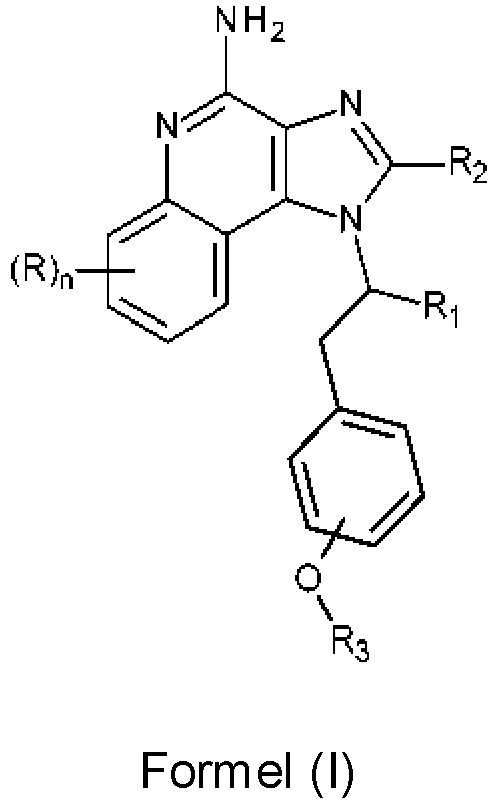 n eine ganze Zahl von 0 bis 1 ist;R ausgewählt ist aus der Gruppe bestehend aus Halogen, Hydroxy, Alkyl und Alkoxy;R1 -C1-3-Alkylene-O-C1-3-Alkyl ist;R2 ausgewählt ist aus der Gruppe bestehend aus Wasserstoff, Methyl, Ethyl, n-Propyl, n-Butyl, -CH2OCH3, -CH2OCH2CH3 und -CH2CH2OCH3; undR3 Alkyl, Aralkyl ist, wobei das Alkyl oder der Alkylanteil des Aralkyls durch ein oder mehrere nichtperoxidische -O-Atome optional unterbrochen sein kann, und wobei der Arylanteil des Aralkyls durch Halogen, Hydroxy, Alkyl, Alkoxy oder Kombinationen davon optional substituiert sein kann, und wobei R3 mindestens 4 Kohlenstoffatome und bis zu 12 Kohlenstoffatome aufweist.
 - Verbindung oder Salz nach Anspruch 1, die eine Verbindung der Formel (II) oder ein Salz davon ist:
- Verbindung oder Salz nach Anspruch 1, die eine Verbindung der Formel (III) oder ein Salz davon ist:

- Verbindung oder Salz nach Anspruch 3, wobei die -O-Rs-Gruppe in der Paraposition ist.
- Verbindung oder Salz nach einem der Ansprüche 1 bis einschließlich 4, wobei R ausgewählt ist aus der Gruppe bestehend aus Halogen, Hydroxy, -C1-7-Alkyl und -C1-7-Alkoxy.
- Verbindung oder Salz nach einem der Ansprüche 1 bis einschließlich 5, wobei n 0 ist.
- Verbindung oder Salz nach einem der Ansprüche 1 bis einschließlich 6, wobei R1 -CH2OCH3 oder -CH2OCH2CH3 ist.
- Verbindung oder Salz nach einem der Ansprüche 1 bis einschließlich 7, wobei R2 ausgewählt ist aus der Gruppe bestehend aus Wasserstoff, Methyl und Ethyl.
- Verbindung oder Salz nach einem der Ansprüche 1 bis einschließlich 8, wobei R3 -C4-12-Alkyl ist.
- Verbindung oder Salz nach einem der Ansprüche 1 bis einschließlich 8, wobei R3 -CH2-Phenyl ist.
- Verbindung oder Salz nach einem der Ansprüche 1 bis einschließlich 10 zur Verwendung in einem Verfahren zum Impfen eines Menschen oder Tieres, einschließlich eines Verabreichens einer wirksamen Menge der Verbindung oder des Salzes an den Menschen oder das Tier als ein Impfstoff-Adjuvans.
- Pharmazeutische Zusammensetzung, umfassend eine therapeutisch wirksame Menge einer Verbindung oder eines Salzes nach Anspruch 1 in Kombination mit einem pharmazeutisch verträglichen Träger.
Applications Claiming Priority (2)
| Application Number | Priority Date | Filing Date | Title |
|---|---|---|---|
| US201862636367P | 2018-02-28 | 2018-02-28 | |
| PCT/IB2019/051510 WO2019166937A1 (en) | 2018-02-28 | 2019-02-25 | Substituted imidazo[4,5-c]quinoline compounds with an n-1 branched group |
Publications (2)
| Publication Number | Publication Date |
|---|---|
| EP3759107A1 EP3759107A1 (de) | 2021-01-06 |
| EP3759107B1 true EP3759107B1 (de) | 2024-12-04 |
Family
ID=65904502
Family Applications (1)
| Application Number | Title | Priority Date | Filing Date |
|---|---|---|---|
| EP19713205.3A Active EP3759107B1 (de) | 2018-02-28 | 2019-02-25 | Substituierte imidazo[4,5-c]chinolin-verbindungen mit einer n-1-verzweigten gruppe |
Country Status (7)
| Country | Link |
|---|---|
| US (1) | US11370788B2 (de) |
| EP (1) | EP3759107B1 (de) |
| JP (1) | JP7251893B2 (de) |
| CN (1) | CN111788202B (de) |
| CA (1) | CA3092545A1 (de) |
| ES (1) | ES3003782T3 (de) |
| WO (1) | WO2019166937A1 (de) |
Families Citing this family (5)
| Publication number | Priority date | Publication date | Assignee | Title |
|---|---|---|---|---|
| CN113906027A (zh) * | 2019-06-12 | 2022-01-07 | 3M创新有限公司 | 具有N-1支链基团的苯乙基取代的咪唑并[4,5-c]喹啉化合物 |
| EP4178676B1 (de) | 2020-07-08 | 2026-04-15 | Solventum Intellectual Properties Company | N-1-verzweigte imidazochinoline, konjugate davon und verfahren |
| EP4263537A1 (de) * | 2020-12-16 | 2023-10-25 | 3M Innovative Properties Company | N-1-verzweigte imidazochinoline, konjugate davon und verfahren |
| CN116635394A (zh) * | 2020-12-16 | 2023-08-22 | 3M创新有限公司 | N-1支化咪唑并喹啉、其缀合物和方法 |
| EP4448519A1 (de) * | 2021-12-14 | 2024-10-23 | Solventum Intellectual Properties Company | N-1-triazolsubstituierte imidazochinoline, konjugate davon und verfahren |
Family Cites Families (32)
| Publication number | Priority date | Publication date | Assignee | Title |
|---|---|---|---|---|
| US3700674A (en) | 1969-04-30 | 1972-10-24 | American Cyanamid Co | 4-alkylamino-3-nitroquinolines |
| IL73534A (en) * | 1983-11-18 | 1990-12-23 | Riker Laboratories Inc | 1h-imidazo(4,5-c)quinoline-4-amines,their preparation and pharmaceutical compositions containing certain such compounds |
| US5389640A (en) | 1991-03-01 | 1995-02-14 | Minnesota Mining And Manufacturing Company | 1-substituted, 2-substituted 1H-imidazo[4,5-c]quinolin-4-amines |
| US5352784A (en) | 1993-07-15 | 1994-10-04 | Minnesota Mining And Manufacturing Company | Fused cycloalkylimidazopyridines |
| EP0708772B1 (de) | 1993-07-15 | 2000-08-23 | Minnesota Mining And Manufacturing Company | IMIDAZO [4,5-c]PYRIDIN-4-AMINE |
| KR100518903B1 (ko) | 1996-10-25 | 2005-10-06 | 미네소타 마이닝 앤드 매뉴팩춰링 캄파니 | Th2 매개 질병 및 관련 질병의 치료용 면역 반응 조절 화합물 |
| JPH1180156A (ja) | 1997-09-04 | 1999-03-26 | Hokuriku Seiyaku Co Ltd | 1−(置換アリール)アルキル−1h−イミダゾピリジン−4−アミン誘導体 |
| UA67760C2 (uk) | 1997-12-11 | 2004-07-15 | Міннесота Майнінг Енд Мануфакчурінг Компані | Імідазонафтиридин та тетрагідроімідазонафтиридин, фармацевтична композиція, спосіб індукування біосинтезу цитокінів та спосіб лікування вірусної інфекції, проміжні сполуки |
| US6110929A (en) | 1998-07-28 | 2000-08-29 | 3M Innovative Properties Company | Oxazolo, thiazolo and selenazolo [4,5-c]-quinolin-4-amines and analogs thereof |
| US6451810B1 (en) | 1999-06-10 | 2002-09-17 | 3M Innovative Properties Company | Amide substituted imidazoquinolines |
| US6331539B1 (en) | 1999-06-10 | 2001-12-18 | 3M Innovative Properties Company | Sulfonamide and sulfamide substituted imidazoquinolines |
| US6677347B2 (en) * | 2000-12-08 | 2004-01-13 | 3M Innovative Properties Company | Sulfonamido ether substituted imidazoquinolines |
| US6664264B2 (en) * | 2000-12-08 | 2003-12-16 | 3M Innovative Properties Company | Thioether substituted imidazoquinolines |
| UA75622C2 (en) * | 2000-12-08 | 2006-05-15 | 3M Innovative Properties Co | Aryl ether substituted imidazoquinolines, pharmaceutical composition based thereon |
| US6677348B2 (en) * | 2000-12-08 | 2004-01-13 | 3M Innovative Properties Company | Aryl ether substituted imidazoquinolines |
| AU2004244962A1 (en) | 2003-04-10 | 2004-12-16 | 3M Innovative Properties Company | Delivery of immune response modifier compounds using metal-containing particulate support materials |
| BRPI0413558A (pt) | 2003-08-12 | 2006-10-17 | 3M Innovative Properties Co | compostos contendo imidazo substituìdo por hidroxilamina |
| US7544697B2 (en) | 2003-10-03 | 2009-06-09 | Coley Pharmaceutical Group, Inc. | Pyrazolopyridines and analogs thereof |
| WO2005051317A2 (en) | 2003-11-25 | 2005-06-09 | 3M Innovative Properties Company | Substituted imidazo ring systems and methods |
| JP2007517035A (ja) * | 2003-12-29 | 2007-06-28 | スリーエム イノベイティブ プロパティズ カンパニー | アリールアルケニルおよびアリールアルキニル置換されたイミダゾキノリン |
| WO2005094531A2 (en) | 2004-03-24 | 2005-10-13 | 3M Innovative Properties Company | Amide substituted imidazopyridines, imidazoquinolines, and imidazonaphthyridines |
| CA2571360C (en) | 2004-06-18 | 2014-11-25 | 3M Innovative Properties Company | Substituted imidazoquinolines, imidazopyridines, and imidazonaphthyridines useful in inducing cytokine biosynthesis in animals |
| US8541438B2 (en) | 2004-06-18 | 2013-09-24 | 3M Innovative Properties Company | Substituted imidazoquinolines, imidazopyridines, and imidazonaphthyridines |
| US7915281B2 (en) | 2004-06-18 | 2011-03-29 | 3M Innovative Properties Company | Isoxazole, dihydroisoxazole, and oxadiazole substituted imidazo ring compounds and method |
| JP5543068B2 (ja) * | 2004-12-30 | 2014-07-09 | スリーエム イノベイティブ プロパティズ カンパニー | キラル縮合[1,2]イミダゾ[4,5−c]環状化合物 |
| KR20080083270A (ko) | 2005-11-04 | 2008-09-17 | 콜레이 파마시티컬 그룹, 인코포레이티드 | 하이드록시 및 알콕시 치환된 1에이치 이미다조퀴놀린 및방법 |
| ES2617451T3 (es) | 2010-08-17 | 2017-06-19 | 3M Innovative Properties Company | Composiciones lipidadas de compuestos modificadores de la respuesta inmunitaria, formulaciones, y métodos |
| WO2013033345A1 (en) | 2011-08-30 | 2013-03-07 | Regents Of The University Of Minnesota | Immunomodulators and immunomodulator conjugates |
| MX377916B (es) | 2014-04-22 | 2025-03-10 | Hoffmann La Roche | Compuestos 4-amino-imidazoquinolina. |
| US10730871B2 (en) * | 2016-01-28 | 2020-08-04 | Regents Of The University Of Minnesota | Immunomodulators and immunomodulator conjugates |
| EP3728255B1 (de) | 2017-12-20 | 2022-01-26 | 3M Innovative Properties Company | Amid-substituierte imidazo[4,5-c]chinolin-verbindungen mit verzweigtkettenverbindungsgruppe zur verwendung als immunreaktionsmodifikator |
| EP3887369B1 (de) | 2018-11-26 | 2024-05-08 | Solventum Intellectual Properties Company | N-1-verzweigten alkyl ether substituierten imidazo[4,5-c]quinolin verbindungen, zusammensetzungen und verfahren. |
-
2019
- 2019-02-25 JP JP2020545154A patent/JP7251893B2/ja active Active
- 2019-02-25 WO PCT/IB2019/051510 patent/WO2019166937A1/en not_active Ceased
- 2019-02-25 ES ES19713205T patent/ES3003782T3/es active Active
- 2019-02-25 US US15/733,519 patent/US11370788B2/en active Active
- 2019-02-25 CA CA3092545A patent/CA3092545A1/en active Pending
- 2019-02-25 EP EP19713205.3A patent/EP3759107B1/de active Active
- 2019-02-25 CN CN201980015722.5A patent/CN111788202B/zh active Active
Also Published As
| Publication number | Publication date |
|---|---|
| CA3092545A1 (en) | 2019-09-06 |
| JP2021515755A (ja) | 2021-06-24 |
| US20200385379A1 (en) | 2020-12-10 |
| ES3003782T3 (en) | 2025-03-11 |
| EP3759107A1 (de) | 2021-01-06 |
| US11370788B2 (en) | 2022-06-28 |
| CN111788202B (zh) | 2024-03-01 |
| WO2019166937A1 (en) | 2019-09-06 |
| JP7251893B2 (ja) | 2023-04-04 |
| CN111788202A (zh) | 2020-10-16 |
Similar Documents
| Publication | Publication Date | Title |
|---|---|---|
| EP3759107B1 (de) | Substituierte imidazo[4,5-c]chinolin-verbindungen mit einer n-1-verzweigten gruppe | |
| US12540137B2 (en) | N-1 branched alkyl ether substituted imidazo[4,5-c]quinoline compounds, compositions, and methods | |
| WO2020250089A1 (en) | Phenethyl substituted imidazo[4,5-c]quinoline compounds with an n-1 branched group | |
| US10766896B2 (en) | Imidazo[4,5-c] ring compounds containing guanidine substituted benzamide groups | |
| US11306083B2 (en) | Amide substituted imidazo[4,5-C]quinoline compounds with a branched chain linking group for use as an immune response modifier | |
| US12398134B2 (en) | N-1 branched cycloalkyl substituted imidazo[4,5-c]quinoline compounds, compositions, and methods | |
| US20220177471A1 (en) | N-1 branched alkyl substituted imidazo[4,5-c]quinoline compounds, compositions, and methods |
Legal Events
| Date | Code | Title | Description |
|---|---|---|---|
| STAA | Information on the status of an ep patent application or granted ep patent |
Free format text: STATUS: UNKNOWN |
|
| STAA | Information on the status of an ep patent application or granted ep patent |
Free format text: STATUS: THE INTERNATIONAL PUBLICATION HAS BEEN MADE |
|
| PUAI | Public reference made under article 153(3) epc to a published international application that has entered the european phase |
Free format text: ORIGINAL CODE: 0009012 |
|
| STAA | Information on the status of an ep patent application or granted ep patent |
Free format text: STATUS: REQUEST FOR EXAMINATION WAS MADE |
|
| 17P | Request for examination filed |
Effective date: 20200824 |
|
| AK | Designated contracting states |
Kind code of ref document: A1 Designated state(s): AL AT BE BG CH CY CZ DE DK EE ES FI FR GB GR HR HU IE IS IT LI LT LU LV MC MK MT NL NO PL PT RO RS SE SI SK SM TR |
|
| AX | Request for extension of the european patent |
Extension state: BA ME |
|
| DAV | Request for validation of the european patent (deleted) | ||
| DAX | Request for extension of the european patent (deleted) | ||
| STAA | Information on the status of an ep patent application or granted ep patent |
Free format text: STATUS: EXAMINATION IS IN PROGRESS |
|
| 17Q | First examination report despatched |
Effective date: 20220824 |
|
| RAP1 | Party data changed (applicant data changed or rights of an application transferred) |
Owner name: SOLVENTUM INTELLECTUAL PROPERTIES COMPANY |
|
| GRAP | Despatch of communication of intention to grant a patent |
Free format text: ORIGINAL CODE: EPIDOSNIGR1 |
|
| STAA | Information on the status of an ep patent application or granted ep patent |
Free format text: STATUS: GRANT OF PATENT IS INTENDED |
|
| INTG | Intention to grant announced |
Effective date: 20240711 |
|
| GRAS | Grant fee paid |
Free format text: ORIGINAL CODE: EPIDOSNIGR3 |
|
| GRAA | (expected) grant |
Free format text: ORIGINAL CODE: 0009210 |
|
| STAA | Information on the status of an ep patent application or granted ep patent |
Free format text: STATUS: THE PATENT HAS BEEN GRANTED |
|
| AK | Designated contracting states |
Kind code of ref document: B1 Designated state(s): AL AT BE BG CH CY CZ DE DK EE ES FI FR GB GR HR HU IE IS IT LI LT LU LV MC MK MT NL NO PL PT RO RS SE SI SK SM TR |
|
| REG | Reference to a national code |
Ref country code: GB Ref legal event code: FG4D |
|
| REG | Reference to a national code |
Ref country code: CH Ref legal event code: EP |
|
| REG | Reference to a national code |
Ref country code: DE Ref legal event code: R096 Ref document number: 602019062914 Country of ref document: DE |
|
| REG | Reference to a national code |
Ref country code: IE Ref legal event code: FG4D |
|
| REG | Reference to a national code |
Ref country code: ES Ref legal event code: FG2A Ref document number: 3003782 Country of ref document: ES Kind code of ref document: T3 Effective date: 20250311 |
|
| REG | Reference to a national code |
Ref country code: LT Ref legal event code: MG9D |
|
| REG | Reference to a national code |
Ref country code: NL Ref legal event code: MP Effective date: 20241204 |
|
| PG25 | Lapsed in a contracting state [announced via postgrant information from national office to epo] |
Ref country code: HR Free format text: LAPSE BECAUSE OF FAILURE TO SUBMIT A TRANSLATION OF THE DESCRIPTION OR TO PAY THE FEE WITHIN THE PRESCRIBED TIME-LIMIT Effective date: 20241204 |
|
| PG25 | Lapsed in a contracting state [announced via postgrant information from national office to epo] |
Ref country code: FI Free format text: LAPSE BECAUSE OF FAILURE TO SUBMIT A TRANSLATION OF THE DESCRIPTION OR TO PAY THE FEE WITHIN THE PRESCRIBED TIME-LIMIT Effective date: 20241204 |
|
| PG25 | Lapsed in a contracting state [announced via postgrant information from national office to epo] |
Ref country code: BG Free format text: LAPSE BECAUSE OF FAILURE TO SUBMIT A TRANSLATION OF THE DESCRIPTION OR TO PAY THE FEE WITHIN THE PRESCRIBED TIME-LIMIT Effective date: 20241204 |
|
| PG25 | Lapsed in a contracting state [announced via postgrant information from national office to epo] |
Ref country code: NO Free format text: LAPSE BECAUSE OF FAILURE TO SUBMIT A TRANSLATION OF THE DESCRIPTION OR TO PAY THE FEE WITHIN THE PRESCRIBED TIME-LIMIT Effective date: 20250304 |
|
| PG25 | Lapsed in a contracting state [announced via postgrant information from national office to epo] |
Ref country code: GR Free format text: LAPSE BECAUSE OF FAILURE TO SUBMIT A TRANSLATION OF THE DESCRIPTION OR TO PAY THE FEE WITHIN THE PRESCRIBED TIME-LIMIT Effective date: 20250305 Ref country code: LV Free format text: LAPSE BECAUSE OF FAILURE TO SUBMIT A TRANSLATION OF THE DESCRIPTION OR TO PAY THE FEE WITHIN THE PRESCRIBED TIME-LIMIT Effective date: 20241204 |
|
| PG25 | Lapsed in a contracting state [announced via postgrant information from national office to epo] |
Ref country code: RS Free format text: LAPSE BECAUSE OF FAILURE TO SUBMIT A TRANSLATION OF THE DESCRIPTION OR TO PAY THE FEE WITHIN THE PRESCRIBED TIME-LIMIT Effective date: 20250304 |
|
| PG25 | Lapsed in a contracting state [announced via postgrant information from national office to epo] |
Ref country code: NL Free format text: LAPSE BECAUSE OF FAILURE TO SUBMIT A TRANSLATION OF THE DESCRIPTION OR TO PAY THE FEE WITHIN THE PRESCRIBED TIME-LIMIT Effective date: 20241204 |
|
| REG | Reference to a national code |
Ref country code: AT Ref legal event code: MK05 Ref document number: 1748065 Country of ref document: AT Kind code of ref document: T Effective date: 20241204 |
|
| PG25 | Lapsed in a contracting state [announced via postgrant information from national office to epo] |
Ref country code: SM Free format text: LAPSE BECAUSE OF FAILURE TO SUBMIT A TRANSLATION OF THE DESCRIPTION OR TO PAY THE FEE WITHIN THE PRESCRIBED TIME-LIMIT Effective date: 20241204 |
|
| PG25 | Lapsed in a contracting state [announced via postgrant information from national office to epo] |
Ref country code: PL Free format text: LAPSE BECAUSE OF FAILURE TO SUBMIT A TRANSLATION OF THE DESCRIPTION OR TO PAY THE FEE WITHIN THE PRESCRIBED TIME-LIMIT Effective date: 20241204 |
|
| PG25 | Lapsed in a contracting state [announced via postgrant information from national office to epo] |
Ref country code: IS Free format text: LAPSE BECAUSE OF FAILURE TO SUBMIT A TRANSLATION OF THE DESCRIPTION OR TO PAY THE FEE WITHIN THE PRESCRIBED TIME-LIMIT Effective date: 20250404 |
|
| PG25 | Lapsed in a contracting state [announced via postgrant information from national office to epo] |
Ref country code: PT Free format text: LAPSE BECAUSE OF FAILURE TO SUBMIT A TRANSLATION OF THE DESCRIPTION OR TO PAY THE FEE WITHIN THE PRESCRIBED TIME-LIMIT Effective date: 20250404 |
|
| PG25 | Lapsed in a contracting state [announced via postgrant information from national office to epo] |
Ref country code: EE Free format text: LAPSE BECAUSE OF FAILURE TO SUBMIT A TRANSLATION OF THE DESCRIPTION OR TO PAY THE FEE WITHIN THE PRESCRIBED TIME-LIMIT Effective date: 20241204 |
|
| PG25 | Lapsed in a contracting state [announced via postgrant information from national office to epo] |
Ref country code: RO Free format text: LAPSE BECAUSE OF FAILURE TO SUBMIT A TRANSLATION OF THE DESCRIPTION OR TO PAY THE FEE WITHIN THE PRESCRIBED TIME-LIMIT Effective date: 20241204 Ref country code: AT Free format text: LAPSE BECAUSE OF FAILURE TO SUBMIT A TRANSLATION OF THE DESCRIPTION OR TO PAY THE FEE WITHIN THE PRESCRIBED TIME-LIMIT Effective date: 20241204 |
|
| PG25 | Lapsed in a contracting state [announced via postgrant information from national office to epo] |
Ref country code: SK Free format text: LAPSE BECAUSE OF FAILURE TO SUBMIT A TRANSLATION OF THE DESCRIPTION OR TO PAY THE FEE WITHIN THE PRESCRIBED TIME-LIMIT Effective date: 20241204 |
|
| PG25 | Lapsed in a contracting state [announced via postgrant information from national office to epo] |
Ref country code: CZ Free format text: LAPSE BECAUSE OF FAILURE TO SUBMIT A TRANSLATION OF THE DESCRIPTION OR TO PAY THE FEE WITHIN THE PRESCRIBED TIME-LIMIT Effective date: 20241204 |
|
| REG | Reference to a national code |
Ref country code: DE Ref legal event code: R097 Ref document number: 602019062914 Country of ref document: DE |
|
| PG25 | Lapsed in a contracting state [announced via postgrant information from national office to epo] |
Ref country code: SE Free format text: LAPSE BECAUSE OF FAILURE TO SUBMIT A TRANSLATION OF THE DESCRIPTION OR TO PAY THE FEE WITHIN THE PRESCRIBED TIME-LIMIT Effective date: 20241204 |
|
| PG25 | Lapsed in a contracting state [announced via postgrant information from national office to epo] |
Ref country code: MC Free format text: LAPSE BECAUSE OF FAILURE TO SUBMIT A TRANSLATION OF THE DESCRIPTION OR TO PAY THE FEE WITHIN THE PRESCRIBED TIME-LIMIT Effective date: 20241204 |
|
| REG | Reference to a national code |
Ref country code: CH Ref legal event code: PL |
|
| PG25 | Lapsed in a contracting state [announced via postgrant information from national office to epo] |
Ref country code: DK Free format text: LAPSE BECAUSE OF FAILURE TO SUBMIT A TRANSLATION OF THE DESCRIPTION OR TO PAY THE FEE WITHIN THE PRESCRIBED TIME-LIMIT Effective date: 20241204 |
|
| PLBE | No opposition filed within time limit |
Free format text: ORIGINAL CODE: 0009261 |
|
| STAA | Information on the status of an ep patent application or granted ep patent |
Free format text: STATUS: NO OPPOSITION FILED WITHIN TIME LIMIT |
|
| PG25 | Lapsed in a contracting state [announced via postgrant information from national office to epo] |
Ref country code: LU Free format text: LAPSE BECAUSE OF NON-PAYMENT OF DUE FEES Effective date: 20250225 |
|
| PG25 | Lapsed in a contracting state [announced via postgrant information from national office to epo] |
Ref country code: CH Free format text: LAPSE BECAUSE OF NON-PAYMENT OF DUE FEES Effective date: 20250228 |
|
| 26N | No opposition filed |
Effective date: 20250905 |
|
| REG | Reference to a national code |
Ref country code: BE Ref legal event code: MM Effective date: 20250228 |
|
| PG25 | Lapsed in a contracting state [announced via postgrant information from national office to epo] |
Ref country code: BE Free format text: LAPSE BECAUSE OF NON-PAYMENT OF DUE FEES Effective date: 20250228 |
|
| PG25 | Lapsed in a contracting state [announced via postgrant information from national office to epo] |
Ref country code: IE Free format text: LAPSE BECAUSE OF NON-PAYMENT OF DUE FEES Effective date: 20250225 |
|
| PGFP | Annual fee paid to national office [announced via postgrant information from national office to epo] |
Ref country code: GB Payment date: 20260121 Year of fee payment: 8 |
|
| PGFP | Annual fee paid to national office [announced via postgrant information from national office to epo] |
Ref country code: ES Payment date: 20260302 Year of fee payment: 8 |
|
| PGFP | Annual fee paid to national office [announced via postgrant information from national office to epo] |
Ref country code: DE Payment date: 20260121 Year of fee payment: 8 |
|
| PGFP | Annual fee paid to national office [announced via postgrant information from national office to epo] |
Ref country code: IT Payment date: 20260121 Year of fee payment: 8 |
|
| PGFP | Annual fee paid to national office [announced via postgrant information from national office to epo] |
Ref country code: FR Payment date: 20260121 Year of fee payment: 8 |