EP3758993B1 - Steuerung des motordrehmoments eines fahrzeugs vor dem abwürgen - Google Patents
Steuerung des motordrehmoments eines fahrzeugs vor dem abwürgen Download PDFInfo
- Publication number
- EP3758993B1 EP3758993B1 EP19707008.9A EP19707008A EP3758993B1 EP 3758993 B1 EP3758993 B1 EP 3758993B1 EP 19707008 A EP19707008 A EP 19707008A EP 3758993 B1 EP3758993 B1 EP 3758993B1
- Authority
- EP
- European Patent Office
- Prior art keywords
- vehicle
- torque
- traction motor
- launch
- threshold
- Prior art date
- Legal status (The legal status is an assumption and is not a legal conclusion. Google has not performed a legal analysis and makes no representation as to the accuracy of the status listed.)
- Active
Links
Images

Classifications
-
- B—PERFORMING OPERATIONS; TRANSPORTING
- B60—VEHICLES IN GENERAL
- B60L—PROPULSION OF ELECTRICALLY-PROPELLED VEHICLES; SUPPLYING ELECTRIC POWER FOR AUXILIARY EQUIPMENT OF ELECTRICALLY-PROPELLED VEHICLES; ELECTRODYNAMIC BRAKE SYSTEMS FOR VEHICLES IN GENERAL; MAGNETIC SUSPENSION OR LEVITATION FOR VEHICLES; MONITORING OPERATING VARIABLES OF ELECTRICALLY-PROPELLED VEHICLES; ELECTRIC SAFETY DEVICES FOR ELECTRICALLY-PROPELLED VEHICLES
- B60L15/00—Methods, circuits, or devices for controlling the traction-motor speed of electrically-propelled vehicles
- B60L15/10—Methods, circuits, or devices for controlling the traction-motor speed of electrically-propelled vehicles for automatic control superimposed on human control to limit the acceleration of the vehicle, e.g. to prevent excessive motor current
-
- B—PERFORMING OPERATIONS; TRANSPORTING
- B60—VEHICLES IN GENERAL
- B60L—PROPULSION OF ELECTRICALLY-PROPELLED VEHICLES; SUPPLYING ELECTRIC POWER FOR AUXILIARY EQUIPMENT OF ELECTRICALLY-PROPELLED VEHICLES; ELECTRODYNAMIC BRAKE SYSTEMS FOR VEHICLES IN GENERAL; MAGNETIC SUSPENSION OR LEVITATION FOR VEHICLES; MONITORING OPERATING VARIABLES OF ELECTRICALLY-PROPELLED VEHICLES; ELECTRIC SAFETY DEVICES FOR ELECTRICALLY-PROPELLED VEHICLES
- B60L15/00—Methods, circuits, or devices for controlling the traction-motor speed of electrically-propelled vehicles
- B60L15/20—Methods, circuits, or devices for controlling the traction-motor speed of electrically-propelled vehicles for control of the vehicle or its driving motor to achieve a desired performance, e.g. speed, torque, programmed variation of speed
- B60L15/2072—Methods, circuits, or devices for controlling the traction-motor speed of electrically-propelled vehicles for control of the vehicle or its driving motor to achieve a desired performance, e.g. speed, torque, programmed variation of speed for drive off
-
- B—PERFORMING OPERATIONS; TRANSPORTING
- B60—VEHICLES IN GENERAL
- B60L—PROPULSION OF ELECTRICALLY-PROPELLED VEHICLES; SUPPLYING ELECTRIC POWER FOR AUXILIARY EQUIPMENT OF ELECTRICALLY-PROPELLED VEHICLES; ELECTRODYNAMIC BRAKE SYSTEMS FOR VEHICLES IN GENERAL; MAGNETIC SUSPENSION OR LEVITATION FOR VEHICLES; MONITORING OPERATING VARIABLES OF ELECTRICALLY-PROPELLED VEHICLES; ELECTRIC SAFETY DEVICES FOR ELECTRICALLY-PROPELLED VEHICLES
- B60L3/00—Electric devices on electrically-propelled vehicles for safety purposes; Monitoring operating variables, e.g. speed, deceleration or energy consumption
- B60L3/0023—Detecting, eliminating, remedying or compensating for drive train abnormalities, e.g. failures within the drive train
- B60L3/0061—Detecting, eliminating, remedying or compensating for drive train abnormalities, e.g. failures within the drive train relating to electrical machines
-
- B—PERFORMING OPERATIONS; TRANSPORTING
- B60—VEHICLES IN GENERAL
- B60L—PROPULSION OF ELECTRICALLY-PROPELLED VEHICLES; SUPPLYING ELECTRIC POWER FOR AUXILIARY EQUIPMENT OF ELECTRICALLY-PROPELLED VEHICLES; ELECTRODYNAMIC BRAKE SYSTEMS FOR VEHICLES IN GENERAL; MAGNETIC SUSPENSION OR LEVITATION FOR VEHICLES; MONITORING OPERATING VARIABLES OF ELECTRICALLY-PROPELLED VEHICLES; ELECTRIC SAFETY DEVICES FOR ELECTRICALLY-PROPELLED VEHICLES
- B60L3/00—Electric devices on electrically-propelled vehicles for safety purposes; Monitoring operating variables, e.g. speed, deceleration or energy consumption
- B60L3/06—Limiting the traction current under mechanical overload conditions
-
- B—PERFORMING OPERATIONS; TRANSPORTING
- B60—VEHICLES IN GENERAL
- B60L—PROPULSION OF ELECTRICALLY-PROPELLED VEHICLES; SUPPLYING ELECTRIC POWER FOR AUXILIARY EQUIPMENT OF ELECTRICALLY-PROPELLED VEHICLES; ELECTRODYNAMIC BRAKE SYSTEMS FOR VEHICLES IN GENERAL; MAGNETIC SUSPENSION OR LEVITATION FOR VEHICLES; MONITORING OPERATING VARIABLES OF ELECTRICALLY-PROPELLED VEHICLES; ELECTRIC SAFETY DEVICES FOR ELECTRICALLY-PROPELLED VEHICLES
- B60L50/00—Electric propulsion with power supplied within the vehicle
- B60L50/10—Electric propulsion with power supplied within the vehicle using propulsion power supplied by engine-driven generators, e.g. generators driven by combustion engines
- B60L50/16—Electric propulsion with power supplied within the vehicle using propulsion power supplied by engine-driven generators, e.g. generators driven by combustion engines with provision for separate direct mechanical propulsion
-
- B—PERFORMING OPERATIONS; TRANSPORTING
- B60—VEHICLES IN GENERAL
- B60L—PROPULSION OF ELECTRICALLY-PROPELLED VEHICLES; SUPPLYING ELECTRIC POWER FOR AUXILIARY EQUIPMENT OF ELECTRICALLY-PROPELLED VEHICLES; ELECTRODYNAMIC BRAKE SYSTEMS FOR VEHICLES IN GENERAL; MAGNETIC SUSPENSION OR LEVITATION FOR VEHICLES; MONITORING OPERATING VARIABLES OF ELECTRICALLY-PROPELLED VEHICLES; ELECTRIC SAFETY DEVICES FOR ELECTRICALLY-PROPELLED VEHICLES
- B60L50/00—Electric propulsion with power supplied within the vehicle
- B60L50/50—Electric propulsion with power supplied within the vehicle using propulsion power supplied by batteries or fuel cells
- B60L50/60—Electric propulsion with power supplied within the vehicle using propulsion power supplied by batteries or fuel cells using power supplied by batteries
-
- B—PERFORMING OPERATIONS; TRANSPORTING
- B60—VEHICLES IN GENERAL
- B60W—CONJOINT CONTROL OF VEHICLE SUB-UNITS OF DIFFERENT TYPE OR DIFFERENT FUNCTION; CONTROL SYSTEMS SPECIALLY ADAPTED FOR HYBRID VEHICLES; ROAD VEHICLE DRIVE CONTROL SYSTEMS FOR PURPOSES NOT RELATED TO THE CONTROL OF A PARTICULAR SUB-UNIT
- B60W10/00—Conjoint control of vehicle sub-units of different type or different function
- B60W10/04—Conjoint control of vehicle sub-units of different type or different function including control of propulsion units
- B60W10/08—Conjoint control of vehicle sub-units of different type or different function including control of propulsion units including control of electric propulsion units, e.g. motors or generators
-
- B—PERFORMING OPERATIONS; TRANSPORTING
- B60—VEHICLES IN GENERAL
- B60W—CONJOINT CONTROL OF VEHICLE SUB-UNITS OF DIFFERENT TYPE OR DIFFERENT FUNCTION; CONTROL SYSTEMS SPECIALLY ADAPTED FOR HYBRID VEHICLES; ROAD VEHICLE DRIVE CONTROL SYSTEMS FOR PURPOSES NOT RELATED TO THE CONTROL OF A PARTICULAR SUB-UNIT
- B60W30/00—Purposes of road vehicle drive control systems not related to the control of a particular sub-unit, e.g. of systems using conjoint control of vehicle sub-units
- B60W30/18—Propelling the vehicle
-
- B—PERFORMING OPERATIONS; TRANSPORTING
- B60—VEHICLES IN GENERAL
- B60W—CONJOINT CONTROL OF VEHICLE SUB-UNITS OF DIFFERENT TYPE OR DIFFERENT FUNCTION; CONTROL SYSTEMS SPECIALLY ADAPTED FOR HYBRID VEHICLES; ROAD VEHICLE DRIVE CONTROL SYSTEMS FOR PURPOSES NOT RELATED TO THE CONTROL OF A PARTICULAR SUB-UNIT
- B60W30/00—Purposes of road vehicle drive control systems not related to the control of a particular sub-unit, e.g. of systems using conjoint control of vehicle sub-units
- B60W30/18—Propelling the vehicle
- B60W30/18009—Propelling the vehicle related to particular drive situations
- B60W30/18027—Drive off, accelerating from standstill
-
- B—PERFORMING OPERATIONS; TRANSPORTING
- B60—VEHICLES IN GENERAL
- B60W—CONJOINT CONTROL OF VEHICLE SUB-UNITS OF DIFFERENT TYPE OR DIFFERENT FUNCTION; CONTROL SYSTEMS SPECIALLY ADAPTED FOR HYBRID VEHICLES; ROAD VEHICLE DRIVE CONTROL SYSTEMS FOR PURPOSES NOT RELATED TO THE CONTROL OF A PARTICULAR SUB-UNIT
- B60W30/00—Purposes of road vehicle drive control systems not related to the control of a particular sub-unit, e.g. of systems using conjoint control of vehicle sub-units
- B60W30/18—Propelling the vehicle
- B60W30/18009—Propelling the vehicle related to particular drive situations
- B60W30/18054—Propelling the vehicle related to particular drive situations at stand still, e.g. engine in idling state
-
- B—PERFORMING OPERATIONS; TRANSPORTING
- B60—VEHICLES IN GENERAL
- B60L—PROPULSION OF ELECTRICALLY-PROPELLED VEHICLES; SUPPLYING ELECTRIC POWER FOR AUXILIARY EQUIPMENT OF ELECTRICALLY-PROPELLED VEHICLES; ELECTRODYNAMIC BRAKE SYSTEMS FOR VEHICLES IN GENERAL; MAGNETIC SUSPENSION OR LEVITATION FOR VEHICLES; MONITORING OPERATING VARIABLES OF ELECTRICALLY-PROPELLED VEHICLES; ELECTRIC SAFETY DEVICES FOR ELECTRICALLY-PROPELLED VEHICLES
- B60L2240/00—Control parameters of input or output; Target parameters
- B60L2240/10—Vehicle control parameters
- B60L2240/12—Speed
-
- B—PERFORMING OPERATIONS; TRANSPORTING
- B60—VEHICLES IN GENERAL
- B60L—PROPULSION OF ELECTRICALLY-PROPELLED VEHICLES; SUPPLYING ELECTRIC POWER FOR AUXILIARY EQUIPMENT OF ELECTRICALLY-PROPELLED VEHICLES; ELECTRODYNAMIC BRAKE SYSTEMS FOR VEHICLES IN GENERAL; MAGNETIC SUSPENSION OR LEVITATION FOR VEHICLES; MONITORING OPERATING VARIABLES OF ELECTRICALLY-PROPELLED VEHICLES; ELECTRIC SAFETY DEVICES FOR ELECTRICALLY-PROPELLED VEHICLES
- B60L2240/00—Control parameters of input or output; Target parameters
- B60L2240/40—Drive Train control parameters
- B60L2240/42—Drive Train control parameters related to electric machines
- B60L2240/423—Torque
-
- B—PERFORMING OPERATIONS; TRANSPORTING
- B60—VEHICLES IN GENERAL
- B60L—PROPULSION OF ELECTRICALLY-PROPELLED VEHICLES; SUPPLYING ELECTRIC POWER FOR AUXILIARY EQUIPMENT OF ELECTRICALLY-PROPELLED VEHICLES; ELECTRODYNAMIC BRAKE SYSTEMS FOR VEHICLES IN GENERAL; MAGNETIC SUSPENSION OR LEVITATION FOR VEHICLES; MONITORING OPERATING VARIABLES OF ELECTRICALLY-PROPELLED VEHICLES; ELECTRIC SAFETY DEVICES FOR ELECTRICALLY-PROPELLED VEHICLES
- B60L2240/00—Control parameters of input or output; Target parameters
- B60L2240/40—Drive Train control parameters
- B60L2240/42—Drive Train control parameters related to electric machines
- B60L2240/425—Temperature
-
- B—PERFORMING OPERATIONS; TRANSPORTING
- B60—VEHICLES IN GENERAL
- B60L—PROPULSION OF ELECTRICALLY-PROPELLED VEHICLES; SUPPLYING ELECTRIC POWER FOR AUXILIARY EQUIPMENT OF ELECTRICALLY-PROPELLED VEHICLES; ELECTRODYNAMIC BRAKE SYSTEMS FOR VEHICLES IN GENERAL; MAGNETIC SUSPENSION OR LEVITATION FOR VEHICLES; MONITORING OPERATING VARIABLES OF ELECTRICALLY-PROPELLED VEHICLES; ELECTRIC SAFETY DEVICES FOR ELECTRICALLY-PROPELLED VEHICLES
- B60L2250/00—Driver interactions
- B60L2250/26—Driver interactions by pedal actuation
-
- B—PERFORMING OPERATIONS; TRANSPORTING
- B60—VEHICLES IN GENERAL
- B60L—PROPULSION OF ELECTRICALLY-PROPELLED VEHICLES; SUPPLYING ELECTRIC POWER FOR AUXILIARY EQUIPMENT OF ELECTRICALLY-PROPELLED VEHICLES; ELECTRODYNAMIC BRAKE SYSTEMS FOR VEHICLES IN GENERAL; MAGNETIC SUSPENSION OR LEVITATION FOR VEHICLES; MONITORING OPERATING VARIABLES OF ELECTRICALLY-PROPELLED VEHICLES; ELECTRIC SAFETY DEVICES FOR ELECTRICALLY-PROPELLED VEHICLES
- B60L2250/00—Driver interactions
- B60L2250/26—Driver interactions by pedal actuation
- B60L2250/28—Accelerator pedal thresholds
-
- B—PERFORMING OPERATIONS; TRANSPORTING
- B60—VEHICLES IN GENERAL
- B60W—CONJOINT CONTROL OF VEHICLE SUB-UNITS OF DIFFERENT TYPE OR DIFFERENT FUNCTION; CONTROL SYSTEMS SPECIALLY ADAPTED FOR HYBRID VEHICLES; ROAD VEHICLE DRIVE CONTROL SYSTEMS FOR PURPOSES NOT RELATED TO THE CONTROL OF A PARTICULAR SUB-UNIT
- B60W2510/00—Input parameters relating to a particular sub-units
- B60W2510/08—Electric propulsion units
- B60W2510/087—Temperature
-
- B—PERFORMING OPERATIONS; TRANSPORTING
- B60—VEHICLES IN GENERAL
- B60W—CONJOINT CONTROL OF VEHICLE SUB-UNITS OF DIFFERENT TYPE OR DIFFERENT FUNCTION; CONTROL SYSTEMS SPECIALLY ADAPTED FOR HYBRID VEHICLES; ROAD VEHICLE DRIVE CONTROL SYSTEMS FOR PURPOSES NOT RELATED TO THE CONTROL OF A PARTICULAR SUB-UNIT
- B60W2510/00—Input parameters relating to a particular sub-units
- B60W2510/10—Change speed gearings
- B60W2510/1005—Transmission ratio engaged
-
- B—PERFORMING OPERATIONS; TRANSPORTING
- B60—VEHICLES IN GENERAL
- B60W—CONJOINT CONTROL OF VEHICLE SUB-UNITS OF DIFFERENT TYPE OR DIFFERENT FUNCTION; CONTROL SYSTEMS SPECIALLY ADAPTED FOR HYBRID VEHICLES; ROAD VEHICLE DRIVE CONTROL SYSTEMS FOR PURPOSES NOT RELATED TO THE CONTROL OF A PARTICULAR SUB-UNIT
- B60W2520/00—Input parameters relating to overall vehicle dynamics
- B60W2520/10—Longitudinal speed
-
- B—PERFORMING OPERATIONS; TRANSPORTING
- B60—VEHICLES IN GENERAL
- B60W—CONJOINT CONTROL OF VEHICLE SUB-UNITS OF DIFFERENT TYPE OR DIFFERENT FUNCTION; CONTROL SYSTEMS SPECIALLY ADAPTED FOR HYBRID VEHICLES; ROAD VEHICLE DRIVE CONTROL SYSTEMS FOR PURPOSES NOT RELATED TO THE CONTROL OF A PARTICULAR SUB-UNIT
- B60W2540/00—Input parameters relating to occupants
- B60W2540/10—Accelerator pedal position
-
- B—PERFORMING OPERATIONS; TRANSPORTING
- B60—VEHICLES IN GENERAL
- B60W—CONJOINT CONTROL OF VEHICLE SUB-UNITS OF DIFFERENT TYPE OR DIFFERENT FUNCTION; CONTROL SYSTEMS SPECIALLY ADAPTED FOR HYBRID VEHICLES; ROAD VEHICLE DRIVE CONTROL SYSTEMS FOR PURPOSES NOT RELATED TO THE CONTROL OF A PARTICULAR SUB-UNIT
- B60W2540/00—Input parameters relating to occupants
- B60W2540/12—Brake pedal position
-
- B—PERFORMING OPERATIONS; TRANSPORTING
- B60—VEHICLES IN GENERAL
- B60W—CONJOINT CONTROL OF VEHICLE SUB-UNITS OF DIFFERENT TYPE OR DIFFERENT FUNCTION; CONTROL SYSTEMS SPECIALLY ADAPTED FOR HYBRID VEHICLES; ROAD VEHICLE DRIVE CONTROL SYSTEMS FOR PURPOSES NOT RELATED TO THE CONTROL OF A PARTICULAR SUB-UNIT
- B60W2710/00—Output or target parameters relating to a particular sub-units
- B60W2710/08—Electric propulsion units
-
- B—PERFORMING OPERATIONS; TRANSPORTING
- B60—VEHICLES IN GENERAL
- B60W—CONJOINT CONTROL OF VEHICLE SUB-UNITS OF DIFFERENT TYPE OR DIFFERENT FUNCTION; CONTROL SYSTEMS SPECIALLY ADAPTED FOR HYBRID VEHICLES; ROAD VEHICLE DRIVE CONTROL SYSTEMS FOR PURPOSES NOT RELATED TO THE CONTROL OF A PARTICULAR SUB-UNIT
- B60W2710/00—Output or target parameters relating to a particular sub-units
- B60W2710/08—Electric propulsion units
- B60W2710/083—Torque
-
- B—PERFORMING OPERATIONS; TRANSPORTING
- B60—VEHICLES IN GENERAL
- B60W—CONJOINT CONTROL OF VEHICLE SUB-UNITS OF DIFFERENT TYPE OR DIFFERENT FUNCTION; CONTROL SYSTEMS SPECIALLY ADAPTED FOR HYBRID VEHICLES; ROAD VEHICLE DRIVE CONTROL SYSTEMS FOR PURPOSES NOT RELATED TO THE CONTROL OF A PARTICULAR SUB-UNIT
- B60W2720/00—Output or target parameters relating to overall vehicle dynamics
- B60W2720/40—Torque distribution
- B60W2720/403—Torque distribution between front and rear axle
-
- Y—GENERAL TAGGING OF NEW TECHNOLOGICAL DEVELOPMENTS; GENERAL TAGGING OF CROSS-SECTIONAL TECHNOLOGIES SPANNING OVER SEVERAL SECTIONS OF THE IPC; TECHNICAL SUBJECTS COVERED BY FORMER USPC CROSS-REFERENCE ART COLLECTIONS [XRACs] AND DIGESTS
- Y02—TECHNOLOGIES OR APPLICATIONS FOR MITIGATION OR ADAPTATION AGAINST CLIMATE CHANGE
- Y02T—CLIMATE CHANGE MITIGATION TECHNOLOGIES RELATED TO TRANSPORTATION
- Y02T10/00—Road transport of goods or passengers
- Y02T10/60—Other road transportation technologies with climate change mitigation effect
- Y02T10/64—Electric machine technologies in electromobility
-
- Y—GENERAL TAGGING OF NEW TECHNOLOGICAL DEVELOPMENTS; GENERAL TAGGING OF CROSS-SECTIONAL TECHNOLOGIES SPANNING OVER SEVERAL SECTIONS OF THE IPC; TECHNICAL SUBJECTS COVERED BY FORMER USPC CROSS-REFERENCE ART COLLECTIONS [XRACs] AND DIGESTS
- Y02—TECHNOLOGIES OR APPLICATIONS FOR MITIGATION OR ADAPTATION AGAINST CLIMATE CHANGE
- Y02T—CLIMATE CHANGE MITIGATION TECHNOLOGIES RELATED TO TRANSPORTATION
- Y02T10/00—Road transport of goods or passengers
- Y02T10/60—Other road transportation technologies with climate change mitigation effect
- Y02T10/70—Energy storage systems for electromobility, e.g. batteries
-
- Y—GENERAL TAGGING OF NEW TECHNOLOGICAL DEVELOPMENTS; GENERAL TAGGING OF CROSS-SECTIONAL TECHNOLOGIES SPANNING OVER SEVERAL SECTIONS OF THE IPC; TECHNICAL SUBJECTS COVERED BY FORMER USPC CROSS-REFERENCE ART COLLECTIONS [XRACs] AND DIGESTS
- Y02—TECHNOLOGIES OR APPLICATIONS FOR MITIGATION OR ADAPTATION AGAINST CLIMATE CHANGE
- Y02T—CLIMATE CHANGE MITIGATION TECHNOLOGIES RELATED TO TRANSPORTATION
- Y02T10/00—Road transport of goods or passengers
- Y02T10/60—Other road transportation technologies with climate change mitigation effect
- Y02T10/7072—Electromobility specific charging systems or methods for batteries, ultracapacitors, supercapacitors or double-layer capacitors
-
- Y—GENERAL TAGGING OF NEW TECHNOLOGICAL DEVELOPMENTS; GENERAL TAGGING OF CROSS-SECTIONAL TECHNOLOGIES SPANNING OVER SEVERAL SECTIONS OF THE IPC; TECHNICAL SUBJECTS COVERED BY FORMER USPC CROSS-REFERENCE ART COLLECTIONS [XRACs] AND DIGESTS
- Y02—TECHNOLOGIES OR APPLICATIONS FOR MITIGATION OR ADAPTATION AGAINST CLIMATE CHANGE
- Y02T—CLIMATE CHANGE MITIGATION TECHNOLOGIES RELATED TO TRANSPORTATION
- Y02T10/00—Road transport of goods or passengers
- Y02T10/60—Other road transportation technologies with climate change mitigation effect
- Y02T10/72—Electric energy management in electromobility
Definitions
- the present invention relates to control of traction motor torque before vehicle launch.
- control of traction motor torque before vehicle launch in vehicles or axles where the propulsion is delivered by an electric machine, such as electric-only and hybrid vehicles.
- aspects of the invention relate to a controller, a system, a vehicle, a method and a computer program.
- APD accelerator pedal demand
- ICE-equipped vehicles have a limited torque capability at idle and low rotational speeds.
- the electric motor ⁇ traction motor' or 'electric machine' herein
- the traction motor can generate very high level of torque from 0rpm and maintains it as the speed climbs until it reaches a power limit.
- US2010/198449 relates to a system for controlling brakes and torque in a hill hold scenario, where control occurs after driver demanded braking is terminated
- Electric traction motors and associated power electronics have a given torque capability whilst the motor is at 0rpm, but this amount is noticeably less than the full amount of torque that can be delivered whilst the motor is rotating. It is therefore desirable to apply a vehicle launch strategy to vehicles fitted with electric traction motors, to enable faster acceleration during the launch phase.
- Launching with a traction motor generates high stall torque before the launch, which can overheat the traction motor and/or power electronics if the amount of energy requested is high (high stall torque and/or is held for a long-duration).
- Permanent magnet motors can be particularly susceptible to overheating as compared to other traction motors such as induction motors.
- a vehicle launch with a traction motor can also be referred to as a 'stall launch'.
- a controller for controlling torque generated by at least one traction motor of a vehicle before a vehicle launch comprising:
- This provides the advantage of protecting the traction motor and/or associated power electronics from overheating before a stall launch.
- the controller is configured such that the torque generation is limited before an entry condition for a thermal de-rate function that de-rates the traction motor and/or an entry condition for a thermal de-rate function that de-rates an inverter for the traction motor above a threshold temperature is satisfied. This provides the advantage of preventive, rather than reactive overheating protection.
- the determination that torque demand increases comprises a determination that increased torque to satisfy at least part of an accelerator pedal demand increase is demanded from the at least one traction motor. This provides the advantage of enabling driver control of stall launch using at least a traction motor.
- the limit inhibits an amount of torque generation by the electric motor from exceeding a pre-launch threshold. This provides the advantage of a protective thermal limit on stall torque.
- the pre-launch threshold is configured to be low enough such that thermal de-rating of the traction motor does not activate while the generated torque is at the pre-launch threshold for at least a predetermined length of time. This provides the advantage of preventing overheating for at least the typical time required to prepare a stall launch.
- the pre-launch threshold is configured to be high enough such that the powertrain and/or drivetrain is pre-loaded while the generated torque is at the pre-launch threshold. This provides the advantage of reducing NVH by removing slack and applying twist to the drivetrain.
- the pre-launch threshold is a value equivalent to a percentage of the maximum powertrain torque capability. The optimum value depends on various factors such as the heat rejection capacity of the traction motor and associated power electronics, and may fall as an example within the range of about 10% to about 70% of the maximum powertrain torque capability.
- the pre-launch threshold depends on at least one of: a gradient that the vehicle is on; a driving mode that is currently active; whether the vehicle is towing; a user setting; a parameter detected by a sensor; an elapsed time period.
- the parameter is related to the temperature of the traction motor and/or power electronics for the traction motor. This provides the advantage that the response lag for meeting torque demand upon removal of the limit can be reduced when the vehicle is launching uphill, off-roading, towing, or similar driving scenarios.
- the at least one brake is in an applied state at least if braking from the driver is above a first threshold. This provides the advantage that the controller better distinguishes between a stall launch and normal driving scenario in which the brakes are not applied, and ensures the vehicle is safely held stationary on the brakes.
- the limit may not be applied in a normal driving scenario because the limit could interfere with intended immediate acceleration.
- the limit and the first threshold are configured such that the vehicle remains stationary while the limit and first threshold are applied even while torque generated by the at least one traction motor is at the limit. This provides the advantage that braking torque to the wheels exceeds tractive torque to the wheels, so that the vehicle remains held stationary and does not creep forward.
- the release of the at least one brake is determined at least if braking from the driver falls below a second threshold. This provides the advantage of enabling a more responsive stall launch which can begin before brake pressure falls to zero. Brake pressure can take some time to reduce to zero in the case of hydraulically controlled friction brakes.
- determining that at least one brake of the vehicle is in an applied state satisfies a requirement for entering a stall launch function of the vehicle and wherein the means to limit is configured to limit the torque generation if the torque demand increase occurs while simultaneously the stall launch function is in its entered state.
- the requirement is one of a plurality of requirements for entering the stall launch function, the requirements comprising one or more of: a transmission of the vehicle is not in neutral or park; the at least one brake is in an applied state first, then torque demand increases and/or rises above a threshold while the at least one brake is still in the applied state; vehicle speed is below a threshold.
- the controller comprises means to cause a change of torque multiplication between the traction motor and at least one wheel of the vehicle and/or a change of torque split between first and second axles of the vehicle, wherein a direction of the change is dependent on at least one of: a user setting; a parameter detected by a sensor, and to cause implementation of the change before release of the at least one brake.
- the torque multiplication may be between 'low' and 'high' transfer case ranges. A low range stall launch may be useful in off-road driving scenarios.
- the torque split may change between front biased and rear/all-wheel biased driving to find the best traction.
- the at least one traction motor comprises a first traction motor associated with a front axle of the vehicle and a second traction motor associated with a rear axle of the vehicle.
- the limit is lower for the second traction motor than for the first traction motor.
- the controller comprises means to, when the limit is removed, cause the second traction motor to generate more torque than the first traction motor for meeting torque demand. This provides the advantage of spreading thermal loads between the traction motors.
- a further advantage is increasing perceptible vehicle squat by front-biasing the torque before launch, and increasing traction during launch by shifting torque rearward for a rear-biased or four-wheel drive launch.
- the vehicle is an electric-only vehicle or a hybrid electric vehicle, such that all torque demand for tractive torque is demanded of the at least one traction motor. This provides the advantage of a more durable electric powertrain.
- a system comprising the controller and at least one traction motor.
- the system comprises the inverter.
- the system comprises a traction battery.
- the vehicle comprising the system.
- the vehicle is an electric-only vehicle or a hybrid electric vehicle.
- a controller comprising at least one electronic processor; and at least one electronic memory device electrically coupled to the electronic processor and having instructions (a computer program) stored therein, the at least one electronic memory device and the instructions configured to, with the at least one electronic processor, perform:
- the controller 'means' as described herein may equate to the at least one electronic processor; and at least one electronic memory device electrically coupled to the electronic processor and having instructions stored therein.
- a method of controlling torque generated by at least one traction motor of a vehicle before a vehicle launch comprising:
- a computer program that, when run on at least one electronic processor, causes the electronic processor to cause controlling torque generated by at least one traction motor of a vehicle before a vehicle launch, comprising:
- a controller for controlling torque generated by at least one traction motor of a vehicle before a vehicle launch comprising: means to limit torque generation by the traction motor in response to torque demand, before vehicle launch, if a first condition is satisfied, wherein the first condition is configured to be satisfied before a thermal de-rate condition for a thermal de-rate function is satisfied, wherein the thermal de-rate function de-rates the traction motor and/or an inverter above a threshold temperature.
- the first condition may be satisfied by any one or more of the aforementioned requirements for entering the stall launch function, and/or any other condition associated with torque demand and/or braking demand and/or generated torque and/or use of brakes and/or entering a stall launch mode.
- Entering a stall launch mode may require, for example, user actuation of a finger-operated human machine interface in some implementations.
- the vehicle may even need to be in a certain driving mode such as a sport mode which increases torque output and/or firms up suspension, etc. Satisfaction of the first condition is effectively independent of the current temperature of the traction motor and/or inverter.
- the limit may be removed when the first condition is no longer satisfied and/or when a different condition is satisfied that signals a request to launch, such as, for example, a user command to a finger-operated human-machine interface requesting launch.
- a request to launch such as, for example, a user command to a finger-operated human-machine interface requesting launch.
- Other features of this implementation may be similar to those described above.
- Fig 1A illustrates an example of a vehicle 100 in which embodiments of the invention can be implemented.
- the vehicle 100 is a passenger vehicle, also referred to as a passenger car or as an automobile.
- Passenger vehicles generally have kerb weights of less than 5000 kg.
- embodiments of the invention can be implemented for other applications, such as industrial vehicles, air or marine vehicles.
- Fig 1B shows an example of a system and various related subsystems for a vehicle such as the vehicle 100 of Fig 1A .
- the vehicle of Figs 1A and 1B is an all-electric vehicle. Such vehicles do not comprise internal combustion engines (ICEs), and are only driven by at least one traction motor 116a, 116b supplied with electrical energy from a high-voltage (hundreds of volts) traction battery 112 via an inverter 114, as shown.
- each traction motor has its own inverter.
- the traction motor may be a permanent magnet motor, which has been found to be more susceptible to overheating than induction motors, or may be an induction motor or any other type.
- Fig 1B shows two traction motors EM1 116a and EM2 116b, although any number can be provided, for example one for each wheel.
- the vehicle 100 may be a series hybrid electric vehicle, with a range-extending ICE.
- the vehicle 100 may be a parallel hybrid electric vehicle, wherein an ICE can provide at least some tractive torque.
- the vehicle 100 may comprise a transmission 118 and/or a transfer case 120.
- the transmission 118 may be of any appropriate type of gearbox.
- the transfer case 120 would be downstream of the transmission 118, and may be capable of controlling front-rear axle torque split and/or whether the vehicle 100 is in a high 'H' or low 'L' range.
- each of the two traction motors EM1 116a and EM2 116b is coupled to a separate axle 122, 124.
- EM1 is coupled to a front axle 122 and EM2 is coupled to a rear axle 124.
- a transfer case may not be required.
- the vehicle 100 is capable of being driven manually, therefore the vehicle 100 comprises manual controls including an accelerator pedal 106, a brake pedal 108, and a steering wheel (not shown).
- the vehicle 100 is semi-autonomous, such that acceleration and braking can be controlled automatically by an advanced driver assistance system (ADAS) (not shown) under driver supervision, when ADAS is active.
- ADAS advanced driver assistance system
- driver inputs may include one or more human-machine interfaces (HMI) such as switchgear and touchscreens (not shown) for enabling the driver to control infotainment, powertrain settings, driving mode settings, suspension settings, and other user settings for the vehicle 100.
- HMI human-machine interfaces
- Fig 1B also illustrates a controller 104 of at least the powertrain.
- the controller 104 and at least one traction motor 116a, 116b may together define a system 102.
- the system 102 may include any one or more of the other components shown in Fig 1B .
- the controller 104 may consist of a single discrete control unit such as shown in Fig 2A and described below, or its functionality may be distributed over a plurality of such control units.
- Various subsystems of Fig 1 are operably coupled to the controller 104 via any appropriate means, for example via a communications bus (e.g. CAN bus).
- a communications bus e.g. CAN bus
- the controller 104 is configured to receive an accelerator pedal demand (APD) signal from the accelerator pedal 106, e.g. from 0% to 100%, and convert the signal into a torque demand for the powertrain (e.g. PT_tq).
- APD accelerator pedal demand
- PT_tq torque demand for the powertrain
- PT_tq may be split into an ICE component (Eng_tq) and a traction motor component (EM_tq). The split may depend on a strategy implemented by an energy management system (not shown) and other systems. In an electric-only vehicle, PT_tq is EM_tq.
- EM_tq may be further split into EM1_tq, EM2_tq such as shown in Fig 1B .
- the split can control whether drive of the vehicle 100 is front-biased or rear-biased, and/or left-biased or right-biased.
- the torque generated by the traction motor(s) is generally proportional to APD when the vehicle is under manual control.
- the conversions and splits as described above may also be influenced by one or more functions such as ADAS torque demand, traction control, stability control, four-wheel steering, electronic differential, energy management, etc.
- the maximum torque of a traction motor is defined as the torque it produces when maximum torque demand is applied and held in normal operation. This corresponds at least to 100% APD. In an example, this corresponds to a particular steady-state root-mean-square stator current applied to the traction motor.
- the vehicle 100 comprises a brake system 110 comprising at least one brake 111.
- the at least one brake 111 may comprise a friction brake for generating negative (braking) wheel torque.
- the friction brake 111 may be implemented as a disc brake or a drum brake.
- the at least one brake 111 may comprise a brake for each wheel of the vehicle 100.
- Application of the brake 111 may be proportional to a brake pedal demand (BPD) signal from the brake pedal 108.
- BPD brake pedal demand
- the BPD signal may be generated by a parking brake function which is actuated automatically by a function such as a hill-hold function to prevent roll-back, or manually by a button or lever or the like.
- a function is referred to as an electronic parking brake (EPB) function.
- EPB's have dedicated brakes.
- the brake system 110 may operate on hydraulic pressure. Hydraulic brake pressure can be modulated by a brake pressure modulator pump, for example.
- the BPD signal is converted to a required hydraulic brake pressure which corresponds to a required braking torque.
- the pump causes that pressure to be applied.
- actuation of the at least one brake 111 may be mechanical, electrical or pneumatic.
- the BPD signal is first received by the brake system 110 and the brake system 110 is able to communicate information about braking to the controller 104.
- the controller 104 may first receive BPD and control the functions of the brake system 110.
- Fig 1B also shows sensing means 107 for sensing one or more other variables to enable the controller 104 to perform one or more functions described herein. Any of the sensors described herein may form part of the sensing means 107.
- one or more of the above-described signals and demands may be expressed as electronic signals.
- controller 104 An implementation of the controller 104 and various functions of the controller 104 will now be described, with reference to Figs 2A and 2B .
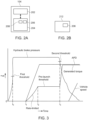
- a control unit is shown in Fig 2A which may implement, at least in part, the functionality of the controller 104.
- the controller 104 comprises means to cause any one or more of the methods described herein to be performed.
- the controller 104 includes at least one electronic processor 202; and at least one electronic memory device 204 electrically coupled to the electronic processor 202 and having instructions 206 (e.g. a computer program) stored therein, the at least one electronic memory device 204 and the instructions 206 configured to, with the at least one electronic processor 202, cause any one or more of the methods described herein to be performed.
- instructions 206 e.g. a computer program
- the electronic memory device comprises instructions 208 for a thermal de-rate function.
- the thermal de-rate function causes the controller 104 to determine whether the traction motor 116a, 116b and/or inverter 114 is overheating (entry condition), and if so, de-rate the traction motor 116a, 116b such that it is capable of generating less torque than required by torque demand EM_tq. This prevents damage to the powertrain.
- the determination may rely on temperature information from a temperature sensor(s) that measures the temperature of the traction motor 116a, 116b and/or inverter 114.
- the determination may rely on a thermal model that relates torque/stall torque generated by the traction motor 116a, 116b to a temperature of the traction motor 116a, 116b and/or inverter 114.
- Fig 2B illustrates an example of a non-transitory computer-readable storage medium 212 comprising the computer program 206.
- the stall launch function may be implemented in instructions readable by a controller, such as the instructions 206.
- the time history is a graph showing multiple variables over time during implementation of the stall launch function: hydraulic brake pressure; APD; generated torque by the traction motor 116a, 116b; and vehicle speed.
- the stall launch function comprises one or more entry requirements to determine that the vehicle 100 requires a stall launch.
- An entry requirement is that the brake(s) 111 of the vehicle 100 is in an applied state.
- determining that a brake 111 is in an applied state there are various ways of determining that a brake 111 is in an applied state.
- the presence of BPD could provide an indication that a brake 111 is applied.
- a sensor in the brake system 110 could detect a parameter indicative of the use of brakes such as hydraulic brake pressure.
- the determination may be specific to driver-requested braking, so a positive BPD may be required.
- a first threshold may be implemented such that the determination is made only when the braking (e.g. BPD or hydraulic brake pressure) increases past a first threshold.
- Fig 3 provides an example. At time t0 hydraulic brake pressure increases past a first threshold, satisfying the requirement of a brake(s) 111 being in an applied state.
- An entry requirement is that torque demand increases while simultaneously the at least one brake 111 of the vehicle 100 is in an applied state.
- the entry requirement is that the at least one brake 111 is in an applied state first, then the torque demand increase is determined while the at least one brake 111 is still in the applied state. This forces the driver to be on the brake pedal 108 initially to avoid unexpected unintended acceleration.
- t1 stall launch function entered
- a determination that torque demand increases could comprise determining that a signal dependent on torque demand is above a threshold.
- the determination may be that APD>threshold, PT_tq>threshold, or EM_tq>threshold, EM1_tq>threshold, EM2_tq>threshold, etc.
- the threshold could be equivalent to the baseline traction motor torque at 0% APD, for example 0Nm, or higher if the traction motor implements an 'idle' speed or creep torque function.
- Fig 3 provides an example.
- APD becomes a positive non-zero value while the hydraulic brake pressure is still above the first threshold, satisfying the requirement of simultaneous torque demand and braking. If this is the only entry requirement, the stall launch function is entered at time t1.
- the threshold torque demand could be higher such as a value above 50% or above 70%, or 100% of the relevant torque demand.
- the determination may be specific to driver-requested torque demands, and not to autonomous-driving torque demands, so a positive APD may always be required.
- Another optional entry requirement is that a transmission 118 of the vehicle 100 is not in neutral or park, and optionally not in reverse if reverse launches are prohibited.
- stall launch function is not already currently active.
- vehicle speed is below a threshold.
- the vehicle speed may need to be zero, i.e. vehicle stationary.
- the stall launch function is available in any driving mode (e.g. normal, rain/ice/snow, dynamic, rock crawl, grass/gravel/snow, mud/ruts/sand).
- Each mode determines one or more different powertrain (engine map) and/or drivetrain (shift map, transfer case range, 2/4wheel drive) and/or suspension (ride height, damping) and/or steering (weight, ratio) settings of the vehicle 100. Therefore, stall launch can be simple to use, requiring fewer actions such as setting a driving mode, and may be usable in off-road modes such as rock crawl, in which high launch torque may be required.
- selection of a particular driving mode e.g. via HMI or a terrain sensor [imaging sensor] is another entry requirement.
- the controller 104 limits torque generation by the traction motor 116a, 116b (e.g. EM1) in response to torque demanded of the traction motor 116a, 116b (e.g. EM1_tq).
- One or more requirements for implementing the limit is or matches one or more of the requirements for entering the stall launch function, or at least relates to a same parameter such as braking and torque demand. This ensures that the limit is applied in stall launch scenarios but not in other scenarios.
- implementation of the limit requires a (or the) determination that torque demand increases while simultaneously at least one brake 111 of the vehicle is (or is already) in an applied state.
- one or more requirements for implementing the limit may be that the stall launch function is active.
- one or more requirements for implementing the limit may be a temporal requirement.
- the temporal requirement may be satisfied if a temporal parameter associated with torque demand is below a threshold.
- the temporal parameter may be a rate of change of torque demand (e.g. APD). This enables the controller 104 to distinguish between a situation in which the driver applies APD at a slow rate where excess heat would be generated before launch, and a situation in which a sufficiently fast APD application takes place that the vehicle is expected to be launched before the limit becomes necessary or beneficial.
- Implementation of the limit may require that the stall launch function is active so that the limit does not apply to other driving scenarios. In other examples, implementation of the limit may require that one or more of the stall launch function entry conditions is satisfied.
- the limit may mean that the torque demand cannot be satisfied. Or, if the vehicle 100 is a parallel hybrid vehicle, the limit could be such that the proportion of torque generated by the ICE (de-clutched, or connected to a torque converter) relative to the traction motor 116a, 116b is increased so that APD is satisfied but with less contribution from the traction motor 116a, 116b.
- the torque generated by the traction motor 116a, 116b rises proportionally to APD from time t1, until time t2 when the generated torque reaches a pre-launch threshold.
- the limit may prevent an amount of torque generation by the traction motor from exceeding the pre-launch threshold.
- the proportionality is calibratable. In an implementation of this example, if the limit is applied the proportionality may be changed from normal such that less torque is generated by the traction motor 116a, 116b for a given APD.
- the rate of increase of torque generated by the traction motor 116a, 116b up to the pre-launch threshold may be limited to a lower, positive rate, than normal if the rate is applied, so there is more of a lag in torque generated in response to APD.
- Each of the above are example implementations of at least temporarily reducing the stall torque to reduce heat build-up. Although the above examples refer to a pre-launch threshold, it would be appreciated that in some implementations there is no pre-launch threshold.
- the pre-launch threshold from time t2 to time t3 is a limit on generated torque by the traction motor 116a, 116b.
- the generated torque may be controlled to prevent it from exceeding the pre-launch threshold.
- the pre-launch threshold may be set as a target that replaces the APB-based torque demand when the pre-launch threshold is exceeded, so that the generated torque drops back down to the pre-launch threshold after an overshoot.
- the pre-launch threshold is configured to be low enough such that thermal de-rating of the traction motor 116a, 116b does not activate while the generated torque is at the pre-launch threshold for at least a predetermined length of time.
- the predetermined length of time may be in the order of seconds, e.g. for at least 5 seconds to allow the driver to actuate a stall launch sequence. However, the predetermined time could be longer in the order of minutes, hours or indefinite.
- the specific value of the pre-launch threshold depends on implementation and vehicle hardware capabilities (electric machines, power electronics, heat dissipation). In an example, the value is within the range of about 10% to about 70% of the maximum powertrain torque capacity. More precisely, maximum torque capacity can be that which is normally achievable at 100% APD. In a particular example, the value is about a third of the maximum. With larger traction motors and better heat dissipation, the value may be higher, up to about two thirds of the maximum.
- the vehicle 100 Since the entry condition(s) for implementing the limit are satisfied before the torque generated by the traction motor 116a, 116b exceeds the pre-launch threshold, the vehicle 100 is pre-emptively controlled to avoid overheating. It can be said that the controller 104 is configured such that the torque generation is limited before the entry condition for the thermal de-rate function is satisfied. This makes it less likely for the thermal de-rate function to be entered during the stall launch.
- the pre-launch threshold at t2-t3, and the first threshold for the braking at t0 should be calibrated such that the vehicle 100 remains stationary.
- the maximum positive wheel torque allowed by the pre-launch threshold should not be greater than the minimum negative (braking) wheel torque allowed by the first threshold for the braking. It would not be desirable for the vehicle 100 to creep forward unexpectedly while preparing a stall launch.
- the pre-launch threshold should not be too low either.
- the pre-launch threshold is configured to be high enough such that the powertrain and/or drivetrain is pre-loaded while the generated torque is at the pre-launch threshold.
- the pre-load may remove any lost motion and create some twist of the drivetrain. Consequently, a thump will not be perceived on vehicle launch.
- the pre-launch threshold may even be high enough to enable perceptible vehicle squat that feels proportional to torque demand, until the pre-launch threshold is reached.
- a lowest value of the pre-launch threshold depends on implementation but is expected to be no higher than about 5% in practice for larger traction motors and no higher than about 20% in practice for smaller traction motors.
- the pre-launch threshold may be factory predetermined or may be variable in dependence on one or more parameters. The lower the threshold, the longer the duration of the lag time for meeting torque demand when the limit is removed. This lag may be unacceptable in some situations, including but not limited to:
- the pre-launch threshold should be higher.
- the situations/parameters are independent of a temperature of the traction motor 116a, 116b/inverter 114.
- the threshold is further controllable based on detected parameters by sensors, such as traction motor/inverter temperature, or optimum torque for a detected vehicle and/or road condition for maximum acceleration.
- the pre-launch threshold may be controllable to lower over time, since when it is first applied.
- the threshold may lower once or a plurality of times or continuously in proportion to the time elapsed. This provides the benefit of energy saving and additional thermal protection.
- the controller 104 may be further configured to pre-emptively set cooling demand for cooling the traction motor(s) and/or inverter(s) to full or higher-than-normal. This may be performed if the entry requirement(s) for the stall launch function are met, or when the limit is applied, or more specifically when the pre-launch threshold is reached, or at any other appropriate time.
- the hydraulic brake pressure falls, for example due to release of the brake pedal 108.
- the pressure may not necessarily fall instantaneously - Fig 3 shows a decay.
- the release of braking is taken as a signal to launch the vehicle 100.
- the limit is therefore removed in response to release of the at least one brake 111, so that the traction motor 116a, 116b can meet torque demand.
- the pre-launch threshold is no longer the limit/target. The removal of the limit could be instantaneous or gradual.
- the absence of BPD could provide an indication that a brake 111 is released.
- the hydraulic brake pressure could be monitored and when it falls, e.g. to zero, this provides an indication that the brake 111 is released.
- a second threshold may be implemented such that the determination is made only when the braking (e.g. BPD or hydraulic brake pressure) decreases past the second threshold.
- the second threshold could be the same as or different from the first threshold.
- Fig 3 provides an example.
- hydraulic brake pressure decreases past the second threshold, satisfying the requirement of the brake(s) 111 being released.
- the limit is removed at time t3.
- the generated torque by the traction motor 116a, 116b climbs (not instantaneously in this example) to meet the torque demand.
- the speed of the vehicle 100 rises.
- the vehicle speed may rise slightly after t3 as hydraulic brake pressure takes time to decay.
- the second threshold may need to be high (>50% of BPD or the pressure) to compensate for the decay time of hydraulic brake pressure and ensure a faster launch. A faster decay may allow for a lower second threshold.
- the stall launch function may include one or more other features in addition to the limit control described above.
- the stall launch function may perform one or more operations for increasing acceleration compared to if the stall launch function is inactive.
- torque generated and/or braking and/or a rate of clutch release could be controlled to reduce the risk of wheelspin.
- the transfer case 120 could be set to a high or low range depending on the driving mode as described above. The low range could be selected in response to a manual user input or a user setting such as rock crawl mode, or used automatically in dependence on parameters determined from the sensing means 107, such as a high road gradient parameter.
- the transmission 118 could be controlled in a similar way.
- a torque split between axles of the vehicle 100 could be controlled to control weight transfer to maximize grip of the driven and/or steered wheels.
- a torque split between axles of the vehicle 100 could take the form of front-biasing the torque before stall launch so that the front axle 122 receives more torque, then shifting torque rearward for a rear-biased or four-wheel drive launch so that the rear axle 124 receives more torque.
- the front-biasing is controlled to create more perceptible vehicle squat despite the limited pre-launch torque.
- the rearward torque shifting is to provide more traction during launch due to the load transfer to the rear.
- the pre-launch threshold for EM 1 for the front axle 122 could be lower than the pre-launch threshold for EM2 for the rear axle 124.
- This strategy may be optimum for spreading the temperature increase between EM1 and EM2.
- Another reason for having different pre-launch thresholds and/or torque shifting between axles is that the traction motors at each axle may have different torque capabilities and/or different cooling capabilities.
- the traction motor(s) for the rear axle may be larger than traction motor(s) for the front axle, so more relaxed limits may apply to the traction motor(s) for the rear axle, such as a higher pre-launch threshold.
- controller(s) 104 described herein can each comprise a control unit or computational device having one or more electronic processors 202.
- a vehicle 100 and/or a system thereof may comprise a single control unit or electronic controller or alternatively different functions of the controller(s) may be embodied in, or hosted in, different control units or controllers.
- a set of instructions 204 could be provided which, when executed, cause said controller(s) or control unit(s) to implement the control techniques described herein (including the described method(s)).
- the set of instructions may be embedded in one or more electronic processors, or alternatively, the set of instructions could be provided as software to be executed by one or more electronic processor(s).
- a first controller may be implemented in software run on one or more electronic processors, and one or more other controllers may also be implemented in software run on or more electronic processors, optionally the same one or more processors as the first controller. It will be appreciated, however, that other arrangements are also useful.
- a computer-readable storage medium 212 e.g., a non-transitory computer-readable storage medium
- a computer-readable storage medium 212 e.g., a non-transitory computer-readable storage medium
- a magnetic storage medium e.g., floppy diskette
- optical storage medium e.g., CD-ROM
- magneto optical storage medium e.g., magneto optical storage medium
- ROM read only memory
- RAM random access memory
- erasable programmable memory e.g., EPROM ad EEPROM
- flash memory or electrical or other types of medium for storing such information/instructions.
- the vehicle may be a fully autonomous vehicle. Acceleration and braking demands are from an autonomous driving controller rather than APD and BPD.
Landscapes
- Engineering & Computer Science (AREA)
- Transportation (AREA)
- Mechanical Engineering (AREA)
- Power Engineering (AREA)
- Automation & Control Theory (AREA)
- Chemical & Material Sciences (AREA)
- Combustion & Propulsion (AREA)
- Life Sciences & Earth Sciences (AREA)
- Sustainable Development (AREA)
- Sustainable Energy (AREA)
- Electric Propulsion And Braking For Vehicles (AREA)
Claims (14)
- Steuerung (104) zum Steuern eines Drehmoments, das durch mindestens einen Fahrmotor (116a, 116b) eines Fahrzeugs (100) vor einem Fahrzeugstart erzeugt wird, umfassend:Mittel, um zu bestimmen, dass sich eine Drehmomentanforderung erhöht, während sich gleichzeitig mindestens eine Bremse (111) des Fahrzeugs (100) in einem angewendeten Zustand befindet;Mittel, um in Abhängigkeit von der Bestimmung die Drehmomenterzeugung durch den Fahrmotor (116a, 116b) als Reaktion auf die Drehmomentanforderung zu begrenzen; undMittel, um die Begrenzung in Abhängigkeit von einer Freigabe der mindestens einen Bremse (111) aufzuheben, wobei die Drehmomenterzeugung begrenzt wird, bevor eine Eintrittsbedingung für eine thermische Drosselfunktion, die den Fahrmotor (116a, 116b) drosselt, und/oder eine Eintrittsbedingung für eine thermische Drosselfunktion, die einen Wechselrichter für den Fahrmotor (116a, 116b) oberhalb einer Schwellentemperatur drosselt, erfüllt ist,wobei bestimmt wird, dass sich die mindestens eine Bremse (111) in einem angewendeten Zustand befindet, falls ein Bremsen durch den Fahrer über einem ersten Schwellenwert liegt, undwobei die Begrenzung eine Menge von Drehmomenterzeugung durch den Elektromotor (116a, 116b) von einem Überschreiten eines Vorstartschwellenwerts verhindert, wobei der Vorstartschwellenwert konfiguriert ist, um niedrig genug zu sein, derart, dass ein thermisches Drosseln des Fahrmotors (116a, 116b) nicht aktiviert wird, während das erzeugte Drehmoment für mindestens eine zuvor bestimmte Zeitdauer bei dem Vorstartschwellenwert liegt.
- Steuerung (104) nach Anspruch 1, wobei die Bestimmung, dass sich die Drehmomentanforderung erhöht, eine Bestimmung umfasst, dass ein erhöhtes Drehmoment von dem mindestens einen Fahrmotor angefordert wird, um mindestens einen Teil einer Anforderungserhöhung eines Gaspedals (106) zu erfüllen.
- Steuerung (104) nach einem der Ansprüche 1 bis 2, wobei der Vorstartschwellenwert konfiguriert ist, um hoch genug zu sein, derart, dass der Triebstrang und/oder der Antriebsstrang vorgespannt wird, während das erzeugte Drehmoment bei dem Vorstartschwellenwert liegt, optional, wobei der Vorstartschwellenwert mindestens von einem der Folgenden abhängt: einer Steigung, auf der sich das Fahrzeug (100) befindet; einem Fahrmodus, der aktuell aktiv ist; ob das Fahrzeug (100) etwas schleppt; einer Benutzereinstellung; einem Parameter, der durch einen Sensor erfasst wird; einem abgelaufenen Zeitraum.
- Steuerung (104) nach einem der vorstehenden Ansprüche, wobei die Begrenzung und der erste Schwellenwert derart konfiguriert sind, dass das Fahrzeug (100) stehen bleibt, während die Begrenzung und der erste Schwellenwert angewendet werden, selbst während das Drehmoment, das durch den mindestens einen Fahrmotor (116a, 116b) erzeugt wird, an der Begrenzung liegt.
- Steuerung (104) nach einem der vorstehenden Ansprüche, wobei das Freigeben der mindestens einen Bremse (111) mindestens dann bestimmt wird, falls das Bremsen durch den Fahrer unter einen zweiten Schwellenwert fällt.
- Steuerung (104) nach einem der vorstehenden Ansprüche, wobei das Bestimmen, dass sich mindestens eine Bremse (111) des Fahrzeugs (100) in einem angewendeten Zustand befindet, eine Voraussetzung zum Eintreten einer Abwürgfunktion des Fahrzeugs (100) erfüllt, und wobei die Mittel zum Begrenzen konfiguriert sind, um die Drehmomenterzeugung zu begrenzen, falls die Drehmomentanforderungserhöhung auftritt, während sich gleichzeitig die Abwürgfunktion in ihrem eingetretenen Zustand befindet.
- Steuerung (104) nach Anspruch 6, wobei die Voraussetzung eine von einer Vielzahl von Voraussetzungen zum Eintreten der Abwürgfunktion ist, die Voraussetzungen umfassend eines oder mehrere von:ein Getriebe des Fahrzeugs (100) befindet sich nicht in einer Leerlauf- oder Parkstellung;die mindestens eine Bremse (111) befindet sich zunächst in einem angewendeten Zustand, dann erhöht sich die Drehmomentanforderung und/oder über einen Schwellenwert ansteigt, während sich die mindestens eine Bremse (111) noch in dem angewendeten Zustand befindet;die Geschwindigkeit des Fahrzeugs (100) liegt unter einem Schwellenwert.
- Steuerung (104) nach einem der vorstehenden Ansprüche, umfassend Mittel, um eine Änderung der Drehmomentvervielfachung zwischen dem Fahrmotor und mindestens einem Rad des Fahrzeugs (100) und/oder eine Änderung der Drehmomentaufteilung zwischen der ersten und der zweiten Achse des Fahrzeugs (100) zu bewirken, wobei eine Richtung der Änderung von mindestens einem der Folgenden abhängt: einer Benutzereinstellung; einem Parameter, der durch einen Sensor erfasst wird, und um die Durchführung der Änderung vor der Freigabe der mindestens einen Bremse (111) zu veranlassen.
- Steuerung (104) nach einem der vorstehenden Ansprüche, wobei der mindestens eine Fahrmotor (116a, 116b) einen ersten Fahrmotor (116a), der mit einer Vorderachse des Fahrzeugs (100) verbunden ist, und einen zweiten Fahrmotor (116b), der mit einer Hinterachse des Fahrzeugs (100) verbunden ist, umfasst, optional, wobei die Begrenzung für den zweiten Fahrmotor (116b) niedriger als für den ersten Fahrmotor (116a) ist, optional umfassend Mittel, um, wenn die Begrenzung aufgehoben ist, den zweiten Fahrmotor (116b) dazu veranlassen, mehr Drehmoment als der erste Fahrmotor (116a) zum Erfüllen von Drehmomentanforderung zu erzeugen.
- Steuerung (104) nach einem der vorstehenden Ansprüche, wobei das Fahrzeug (100) ein reines Elektrofahrzeug (100) oder ein Hybridelektrofahrzeug (100) ist, derart, dass die gesamte Drehmomentanforderung für das Antriebsdrehmoment von dem mindestens einen Fahrmotor (116a, 116b) angefordert wird.
- System, umfassend die Steuerung (104) nach einem der vorstehenden Ansprüche und mindestens einen Fahrmotor (116a, 116b).
- Fahrzeug, umfassend das System nach Anspruch 11, optional, wobei das Fahrzeug (100) ein reines Elektrofahrzeug oder ein Hybridelektrofahrzeug ist.
- Verfahren zum Steuern von Drehmoment, das durch den mindestens einem Fahrmotor (116a, 116b) eines Fahrzeugs (100) vor einem Fahrzeugstart erzeugt wird, umfassend:Bestimmen, dass sich die Drehmomentanforderung erhöht, während sich gleichzeitig mindestens eine Bremse (111) des Fahrzeugs (100) in einem angewendeten Zustand befindet;in Abhängigkeit von dem Bestimmen, Implementieren einer Begrenzung der Drehmomenterzeugung durch den Fahrmotor (116a, 116b) als Reaktion auf die Drehmomentanforderung; undAufheben der Begrenzung in Abhängigkeit von der Freigabe der mindestens einen Bremse (111), wobei die Drehmomenterzeugung begrenzt wird, bevor eine Eintrittsbedingung für eine thermische Drosselfunktion, die den Fahrmotor (116a, 116b) drosselt, und/oder eine Eintrittsbedingung für eine thermische Drosselfunktion, die einen Wechselrichter für den Fahrmotor (116a, 116b) oberhalb einer Schwellentemperatur drosselt, erfüllt ist,wobei bestimmt wird, dass sich die mindestens eine Bremse (111) in einem angewendeten Zustand befindet, falls das Bremsen durch den Fahrer über einem ersten Schwellenwert liegt, undwobei die Begrenzung verhindert, dass eine Menge von Drehmomenterzeugung durch den Elektromotor einen Vorstartschwellenwert überschreitet, wobei der Vorstartschwellenwert konfiguriert ist, um niedrig genug zu sein, derart, dass das thermische Drosseln des Fahrmotors (116a, 116b) nicht aktiviert wird, während das erzeugte Drehmoment für mindestens eine zuvor bestimmte Zeitdauer bei dem Vorstartschwellenwert liegt.
- Computerprogramm, das, wenn es auf mindestens einem elektronischen Prozessor ausgeführt wird, den elektronischen Prozessor veranlasst, das Steuern von Drehmoment, das durch mindestens einen Fahrmotor (116a, 116b) eines Fahrzeugs (100) vor einem Fahrzeugstart erzeugt wird, zu veranlassen, umfassend:Bestimmen, dass sich die Drehmomentanforderung erhöht, während sich gleichzeitig mindestens eine Bremse (111) des Fahrzeugs (100) in einem angewendeten Zustand befindet;in Abhängigkeit von dem Bestimmen, Implementieren einer Begrenzung der Drehmomenterzeugung durch den Fahrmotor (116a, 116b) als Reaktion auf die Drehmomentanforderung; undAufheben der Begrenzung in Abhängigkeit von der Freigabe der mindestens einen Bremse (111), wobei die Drehmomenterzeugung begrenzt wird, bevor eine Eintrittsbedingung für eine thermische Drosselfunktion, die den Fahrmotor (116a, 116b) drosselt, und/oder eine Eintrittsbedingung für eine thermische Drosselfunktion, die einen Wechselrichter für den Fahrmotor (116a, 116b) oberhalb einer Schwellentemperatur drosselt, erfüllt ist,wobei bestimmt wird, dass sich die mindestens eine Bremse (111) in einem angewendeten Zustand befindet, falls das Bremsen durch den Fahrer über einem ersten Schwellenwert liegt, undwobei die Begrenzung eine Menge von Drehmomenterzeugung durch den Elektromotor (116a, 116b) von dem Überschreiten eines Vorstartschwellenwerts verhindert, wobei der Vorstartschwellenwert konfiguriert ist, um niedrig genug zu sein, derart, dass ein thermisches Drosseln des Fahrmotors (116a, 116b) nicht aktiviert wird, während das erzeugte Drehmoment für mindestens eine zuvor bestimmte Zeitdauer bei dem Vorstartschwellenwert liegt.
Applications Claiming Priority (2)
| Application Number | Priority Date | Filing Date | Title |
|---|---|---|---|
| GB1803045.2A GB2571330B (en) | 2018-02-26 | 2018-02-26 | Control of vehicle traction motor torque before stall launch |
| PCT/EP2019/054516 WO2019162481A1 (en) | 2018-02-26 | 2019-02-25 | Control of vehicle traction motor torque before stall launch |
Publications (2)
| Publication Number | Publication Date |
|---|---|
| EP3758993A1 EP3758993A1 (de) | 2021-01-06 |
| EP3758993B1 true EP3758993B1 (de) | 2024-09-18 |
Family
ID=61903167
Family Applications (1)
| Application Number | Title | Priority Date | Filing Date |
|---|---|---|---|
| EP19707008.9A Active EP3758993B1 (de) | 2018-02-26 | 2019-02-25 | Steuerung des motordrehmoments eines fahrzeugs vor dem abwürgen |
Country Status (4)
| Country | Link |
|---|---|
| US (1) | US12528366B2 (de) |
| EP (1) | EP3758993B1 (de) |
| GB (1) | GB2571330B (de) |
| WO (1) | WO2019162481A1 (de) |
Families Citing this family (13)
| Publication number | Priority date | Publication date | Assignee | Title |
|---|---|---|---|---|
| US20220111735A1 (en) * | 2016-09-08 | 2022-04-14 | Transpod Inc. | Vehicle for travelling along a linear route guideway |
| GB2571329B (en) * | 2018-02-26 | 2021-08-04 | Jaguar Land Rover Ltd | Control of vehicle traction motor torque while vehicle roll-back is inhibited |
| CN111873982B (zh) * | 2020-08-03 | 2022-01-28 | 中国第一汽车股份有限公司 | 一种起步控制方法、装置、车辆和存储介质 |
| US11548395B2 (en) * | 2021-01-21 | 2023-01-10 | GM Global Technology Operations LLC | Electric drive stall torque enhancement based on vehicle level inputs |
| DE102021116668A1 (de) * | 2021-06-29 | 2022-12-29 | Bayerische Motoren Werke Aktiengesellschaft | Verfahren und Vorrichtung zum Betreiben eines elektrisch angetriebenen Fahrzeugs in Vorbereitung zu einem Anfahrvorgang |
| JP7540420B2 (ja) * | 2021-10-26 | 2024-08-27 | トヨタ自動車株式会社 | 誤発進抑制装置 |
| DE102021129267A1 (de) | 2021-11-10 | 2023-05-11 | Bayerische Motoren Werke Aktiengesellschaft | Verfahren zur Steuerung eines Elektromotors eines Batterie-Elektrofahrzeugs, ein Batterie-Elektrofahrzeug und ein Steuergerät für ein Batterie-Elektrofahrzeug |
| JP7836183B2 (ja) * | 2022-01-26 | 2026-03-26 | 本田技研工業株式会社 | 車両 |
| US20230399038A1 (en) * | 2022-03-15 | 2023-12-14 | Siemens Mobility, Inc. | Crossing gate mechanism with integrated cover or door detection scheme |
| CN115534926B (zh) * | 2022-10-08 | 2026-03-10 | 奇瑞汽车股份有限公司 | 混合动力汽车变速换档的控制方法 |
| US12151563B2 (en) * | 2023-04-19 | 2024-11-26 | Nikola Corporation | Torque management in multi-motor electric vehicle |
| GB2634776A (en) * | 2023-10-20 | 2025-04-23 | Jaguar Land Rover Ltd | Control system for a torque-limited vehicle |
| US12485750B1 (en) * | 2024-07-29 | 2025-12-02 | Fca Us Llc | Vehicle driveline protected system |
Citations (1)
| Publication number | Priority date | Publication date | Assignee | Title |
|---|---|---|---|---|
| EP1621438B1 (de) * | 2004-07-06 | 2007-11-21 | Robert Bosch Gmbh | Verfahren und Vorrichtung zur Beeinflussung des Motormoments während der Entriegelung einer automatisierten Parkbremse |
Family Cites Families (30)
| Publication number | Priority date | Publication date | Assignee | Title |
|---|---|---|---|---|
| US6319168B1 (en) * | 2000-04-25 | 2001-11-20 | General Motors Corporation | Apparatus and method for active transmission synchronization and shifting |
| US6634984B1 (en) * | 2001-02-08 | 2003-10-21 | Ford Global Technologies, Llc | Method of controlling engine idle speed during launch from neutral idle operation |
| JP3766019B2 (ja) * | 2001-12-26 | 2006-04-12 | 本田技研工業株式会社 | 電気自動車のモータトルク制御装置 |
| US6704622B2 (en) * | 2001-12-28 | 2004-03-09 | Visteon Global Technologies, Inc. | Vehicle stability control |
| US7021410B2 (en) * | 2002-11-27 | 2006-04-04 | Eaton Corporation | Method and system for determining the torque required to launch a vehicle having a hybrid drive-train |
| US6831429B2 (en) * | 2003-03-10 | 2004-12-14 | Visteon Global Technologies, Inc. | Prediction of available torque and power from battery-powered traction motor |
| US20050206111A1 (en) * | 2004-02-12 | 2005-09-22 | Gibson Gregory R | Tunable suspension system for enhanced acceleration characteristics of wheeled vehicles |
| JP2008054433A (ja) * | 2006-08-25 | 2008-03-06 | Toyota Motor Corp | 電動車両モータ制御装置 |
| US7771312B2 (en) * | 2007-03-14 | 2010-08-10 | Honda Motor Co., Ltd. | Selectable drivetrain control for a vehicle |
| JP4281830B2 (ja) * | 2007-09-13 | 2009-06-17 | トヨタ自動車株式会社 | 車両の制御装置、制御方法およびその方法を実現させるプログラム |
| JP4737277B2 (ja) * | 2008-11-11 | 2011-07-27 | トヨタ自動車株式会社 | 電動車両、電動車両の制御装置、および電動車両の制御プログラム |
| US7739005B1 (en) | 2009-02-26 | 2010-06-15 | Tesla Motors, Inc. | Control system for an all-wheel drive electric vehicle |
| JP5137897B2 (ja) * | 2009-05-20 | 2013-02-06 | 本田技研工業株式会社 | 車両の走行制御装置 |
| MX2011012881A (es) * | 2009-06-05 | 2012-06-27 | Magna Powertrain Usa Inc | Caja de transferencia electrica, hibrida, de modos multiples, para vehiculo de cuatro ruedas. |
| DE112011101678T5 (de) * | 2010-05-17 | 2013-07-18 | Honda Motor Co., Ltd. | Steuervorrichtung und Steuerverfahren für ein Elektrofahrzeug |
| FR2969561B1 (fr) * | 2010-12-22 | 2013-08-02 | Peugeot Citroen Automobiles Sa | Procede et dispositif de controle d'un frein automatique de stationnement d'un vehicule motorise |
| WO2013047346A1 (ja) * | 2011-09-29 | 2013-04-04 | Ntn株式会社 | センサ付車輪用軸受装置 |
| US9205758B2 (en) * | 2011-12-09 | 2015-12-08 | Borealis Technical Limited | Electric vehicle traction control system and method |
| EP2841289B1 (de) * | 2012-04-27 | 2016-04-27 | BorgWarner TorqTransfer Systems AB | Elektrische achse |
| US8977449B2 (en) * | 2012-05-04 | 2015-03-10 | Ford Global Technologies, Llc | Methods and systems for holding a vehicle stopped on a hill |
| US9018878B2 (en) * | 2012-07-23 | 2015-04-28 | Caterpillar Inc. | Derating vehicle electric drive motor and generator components |
| EP2885174B1 (de) * | 2012-08-16 | 2019-05-01 | Jaguar Land Rover Limited | Geschwindigkeitsregelungssystem für ein fahrzeug und verfahren mit externem kraftausgleich |
| US9862374B2 (en) * | 2012-11-29 | 2018-01-09 | Mack Trucks, Inc. | Series hybrid transmission and gear-shifting method for a series hybrid transmission |
| GB201308807D0 (en) * | 2013-05-16 | 2013-07-03 | Jaguar Land Rover Ltd | Vehicle traction control |
| US9096226B2 (en) * | 2013-10-31 | 2015-08-04 | Ford Global Technologies, Llc | Vehicle dynamic controls coordination system for dual-axle driven electric vehicles |
| US9827980B2 (en) * | 2013-11-11 | 2017-11-28 | Ford Global Technologies, Llc | Load-based vehicle operating control |
| WO2015186213A1 (ja) * | 2014-06-04 | 2015-12-10 | 株式会社エフ・シ-・シ- | 鞍乗り型車両 |
| DE102015206658A1 (de) * | 2015-04-14 | 2016-10-20 | Bayerische Motoren Werke Aktiengesellschaft | Adaptive Start-Stopp-Automatik für ein Kraftfahrzeug mit Automatikgetriebe unter Berücksichtigung von Hindernissen |
| EP3337701A4 (de) * | 2015-09-11 | 2020-01-01 | GM Global Technology Operations LLC | Fahrzeug mit gesteuertem start |
| US10882524B2 (en) * | 2018-02-09 | 2021-01-05 | Ford Global Technologies, Llc | Systems and methods for vehicle launch control |
-
2018
- 2018-02-26 GB GB1803045.2A patent/GB2571330B/en active Active
-
2019
- 2019-02-25 EP EP19707008.9A patent/EP3758993B1/de active Active
- 2019-02-25 WO PCT/EP2019/054516 patent/WO2019162481A1/en not_active Ceased
- 2019-02-25 US US16/971,837 patent/US12528366B2/en active Active
Patent Citations (1)
| Publication number | Priority date | Publication date | Assignee | Title |
|---|---|---|---|---|
| EP1621438B1 (de) * | 2004-07-06 | 2007-11-21 | Robert Bosch Gmbh | Verfahren und Vorrichtung zur Beeinflussung des Motormoments während der Entriegelung einer automatisierten Parkbremse |
Also Published As
| Publication number | Publication date |
|---|---|
| GB2571330A (en) | 2019-08-28 |
| EP3758993A1 (de) | 2021-01-06 |
| GB201803045D0 (en) | 2018-04-11 |
| US20210078577A1 (en) | 2021-03-18 |
| GB2571330B (en) | 2021-07-28 |
| US12528366B2 (en) | 2026-01-20 |
| WO2019162481A1 (en) | 2019-08-29 |
Similar Documents
| Publication | Publication Date | Title |
|---|---|---|
| US12528366B2 (en) | Control of vehicle traction motor torque before stall launch | |
| EP3758994B1 (de) | Steuerung des motordrehmoments eines fahrzeugs bei verhindertem zurückrollen des fahrzeugs | |
| US9676390B2 (en) | Vehicle traction control | |
| CN105555628B (zh) | 车辆控制器及方法 | |
| CN106553632B (zh) | 一种控制车辆从静止起步的方法 | |
| EP3036138B1 (de) | Dynamische abbremssteuerung für hybridfahrzeug zur erzielung eines konsistenten freilaufreaktion | |
| US10030598B2 (en) | Vehicle movement on an inclined surface | |
| JP2016531045A5 (de) | ||
| GB2500698A (en) | Vehicle traction control maintaining wheel slip in the range of 5 to 20 percent | |
| US8930104B1 (en) | System and method for distributing torque and a powertrain using the same | |
| EP4217248B1 (de) | Kriechdrehmomentsteuerungssystem für ein fahrzeug | |
| JP2023535752A (ja) | 選択可能な車両のクリープ | |
| US10513264B2 (en) | Controller for a motor vehicle and method | |
| GB2583054A (en) | Controller and method for controlling a vehicle | |
| EP2513517A1 (de) | Geschwindigkeitssteuerung für ein motorfahrzeug und steuerverfahren dafür | |
| CN112789202B (zh) | 用于管理机动车辆的动力总成的管理方法 | |
| SE542256C2 (en) | Method and system for controlling change of gear ratio in a vehicle during a detected reduced grip |
Legal Events
| Date | Code | Title | Description |
|---|---|---|---|
| STAA | Information on the status of an ep patent application or granted ep patent |
Free format text: STATUS: UNKNOWN |
|
| STAA | Information on the status of an ep patent application or granted ep patent |
Free format text: STATUS: THE INTERNATIONAL PUBLICATION HAS BEEN MADE |
|
| PUAI | Public reference made under article 153(3) epc to a published international application that has entered the european phase |
Free format text: ORIGINAL CODE: 0009012 |
|
| STAA | Information on the status of an ep patent application or granted ep patent |
Free format text: STATUS: REQUEST FOR EXAMINATION WAS MADE |
|
| 17P | Request for examination filed |
Effective date: 20200928 |
|
| AK | Designated contracting states |
Kind code of ref document: A1 Designated state(s): AL AT BE BG CH CY CZ DE DK EE ES FI FR GB GR HR HU IE IS IT LI LT LU LV MC MK MT NL NO PL PT RO RS SE SI SK SM TR |
|
| AX | Request for extension of the european patent |
Extension state: BA ME |
|
| DAV | Request for validation of the european patent (deleted) | ||
| DAX | Request for extension of the european patent (deleted) | ||
| STAA | Information on the status of an ep patent application or granted ep patent |
Free format text: STATUS: EXAMINATION IS IN PROGRESS |
|
| 17Q | First examination report despatched |
Effective date: 20221216 |
|
| P01 | Opt-out of the competence of the unified patent court (upc) registered |
Effective date: 20230528 |
|
| REG | Reference to a national code |
Ref country code: DE Ref legal event code: R079 Free format text: PREVIOUS MAIN CLASS: B60W0010080000 Ipc: B60L0003000000 Ref document number: 602019059038 Country of ref document: DE |
|
| GRAP | Despatch of communication of intention to grant a patent |
Free format text: ORIGINAL CODE: EPIDOSNIGR1 |
|
| STAA | Information on the status of an ep patent application or granted ep patent |
Free format text: STATUS: GRANT OF PATENT IS INTENDED |
|
| RIC1 | Information provided on ipc code assigned before grant |
Ipc: B60W 30/18 20120101ALI20231124BHEP Ipc: B60L 15/20 20060101ALI20231124BHEP Ipc: B60W 10/08 20060101ALI20231124BHEP Ipc: B60L 50/60 20190101ALI20231124BHEP Ipc: B60L 50/16 20190101ALI20231124BHEP Ipc: B60L 3/00 20190101AFI20231124BHEP |
|
| INTG | Intention to grant announced |
Effective date: 20231213 |
|
| GRAJ | Information related to disapproval of communication of intention to grant by the applicant or resumption of examination proceedings by the epo deleted |
Free format text: ORIGINAL CODE: EPIDOSDIGR1 |
|
| STAA | Information on the status of an ep patent application or granted ep patent |
Free format text: STATUS: EXAMINATION IS IN PROGRESS |
|
| GRAP | Despatch of communication of intention to grant a patent |
Free format text: ORIGINAL CODE: EPIDOSNIGR1 |
|
| STAA | Information on the status of an ep patent application or granted ep patent |
Free format text: STATUS: GRANT OF PATENT IS INTENDED |
|
| INTC | Intention to grant announced (deleted) | ||
| INTG | Intention to grant announced |
Effective date: 20240408 |
|
| GRAS | Grant fee paid |
Free format text: ORIGINAL CODE: EPIDOSNIGR3 |
|
| GRAA | (expected) grant |
Free format text: ORIGINAL CODE: 0009210 |
|
| STAA | Information on the status of an ep patent application or granted ep patent |
Free format text: STATUS: THE PATENT HAS BEEN GRANTED |
|
| AK | Designated contracting states |
Kind code of ref document: B1 Designated state(s): AL AT BE BG CH CY CZ DE DK EE ES FI FR GB GR HR HU IE IS IT LI LT LU LV MC MK MT NL NO PL PT RO RS SE SI SK SM TR |
|
| REG | Reference to a national code |
Ref country code: GB Ref legal event code: FG4D |
|
| REG | Reference to a national code |
Ref country code: CH Ref legal event code: EP |
|
| REG | Reference to a national code |
Ref country code: DE Ref legal event code: R096 Ref document number: 602019059038 Country of ref document: DE |
|
| REG | Reference to a national code |
Ref country code: IE Ref legal event code: FG4D |
|
| REG | Reference to a national code |
Ref country code: LT Ref legal event code: MG9D |
|
| PG25 | Lapsed in a contracting state [announced via postgrant information from national office to epo] |
Ref country code: NO Free format text: LAPSE BECAUSE OF FAILURE TO SUBMIT A TRANSLATION OF THE DESCRIPTION OR TO PAY THE FEE WITHIN THE PRESCRIBED TIME-LIMIT Effective date: 20241218 |
|
| PG25 | Lapsed in a contracting state [announced via postgrant information from national office to epo] |
Ref country code: GR Free format text: LAPSE BECAUSE OF FAILURE TO SUBMIT A TRANSLATION OF THE DESCRIPTION OR TO PAY THE FEE WITHIN THE PRESCRIBED TIME-LIMIT Effective date: 20241219 Ref country code: FI Free format text: LAPSE BECAUSE OF FAILURE TO SUBMIT A TRANSLATION OF THE DESCRIPTION OR TO PAY THE FEE WITHIN THE PRESCRIBED TIME-LIMIT Effective date: 20240918 |
|
| PG25 | Lapsed in a contracting state [announced via postgrant information from national office to epo] |
Ref country code: BG Free format text: LAPSE BECAUSE OF FAILURE TO SUBMIT A TRANSLATION OF THE DESCRIPTION OR TO PAY THE FEE WITHIN THE PRESCRIBED TIME-LIMIT Effective date: 20240918 |
|
| PG25 | Lapsed in a contracting state [announced via postgrant information from national office to epo] |
Ref country code: LV Free format text: LAPSE BECAUSE OF FAILURE TO SUBMIT A TRANSLATION OF THE DESCRIPTION OR TO PAY THE FEE WITHIN THE PRESCRIBED TIME-LIMIT Effective date: 20240918 |
|
| PG25 | Lapsed in a contracting state [announced via postgrant information from national office to epo] |
Ref country code: HR Free format text: LAPSE BECAUSE OF FAILURE TO SUBMIT A TRANSLATION OF THE DESCRIPTION OR TO PAY THE FEE WITHIN THE PRESCRIBED TIME-LIMIT Effective date: 20240918 |
|
| REG | Reference to a national code |
Ref country code: NL Ref legal event code: MP Effective date: 20240918 |
|
| PG25 | Lapsed in a contracting state [announced via postgrant information from national office to epo] |
Ref country code: RS Free format text: LAPSE BECAUSE OF FAILURE TO SUBMIT A TRANSLATION OF THE DESCRIPTION OR TO PAY THE FEE WITHIN THE PRESCRIBED TIME-LIMIT Effective date: 20241218 |
|
| PG25 | Lapsed in a contracting state [announced via postgrant information from national office to epo] |
Ref country code: RS Free format text: LAPSE BECAUSE OF FAILURE TO SUBMIT A TRANSLATION OF THE DESCRIPTION OR TO PAY THE FEE WITHIN THE PRESCRIBED TIME-LIMIT Effective date: 20241218 Ref country code: NO Free format text: LAPSE BECAUSE OF FAILURE TO SUBMIT A TRANSLATION OF THE DESCRIPTION OR TO PAY THE FEE WITHIN THE PRESCRIBED TIME-LIMIT Effective date: 20241218 Ref country code: LV Free format text: LAPSE BECAUSE OF FAILURE TO SUBMIT A TRANSLATION OF THE DESCRIPTION OR TO PAY THE FEE WITHIN THE PRESCRIBED TIME-LIMIT Effective date: 20240918 Ref country code: HR Free format text: LAPSE BECAUSE OF FAILURE TO SUBMIT A TRANSLATION OF THE DESCRIPTION OR TO PAY THE FEE WITHIN THE PRESCRIBED TIME-LIMIT Effective date: 20240918 Ref country code: GR Free format text: LAPSE BECAUSE OF FAILURE TO SUBMIT A TRANSLATION OF THE DESCRIPTION OR TO PAY THE FEE WITHIN THE PRESCRIBED TIME-LIMIT Effective date: 20241219 Ref country code: FI Free format text: LAPSE BECAUSE OF FAILURE TO SUBMIT A TRANSLATION OF THE DESCRIPTION OR TO PAY THE FEE WITHIN THE PRESCRIBED TIME-LIMIT Effective date: 20240918 Ref country code: BG Free format text: LAPSE BECAUSE OF FAILURE TO SUBMIT A TRANSLATION OF THE DESCRIPTION OR TO PAY THE FEE WITHIN THE PRESCRIBED TIME-LIMIT Effective date: 20240918 |
|
| REG | Reference to a national code |
Ref country code: AT Ref legal event code: MK05 Ref document number: 1724418 Country of ref document: AT Kind code of ref document: T Effective date: 20240918 |
|
| PG25 | Lapsed in a contracting state [announced via postgrant information from national office to epo] |
Ref country code: NL Free format text: LAPSE BECAUSE OF FAILURE TO SUBMIT A TRANSLATION OF THE DESCRIPTION OR TO PAY THE FEE WITHIN THE PRESCRIBED TIME-LIMIT Effective date: 20240918 |
|
| PG25 | Lapsed in a contracting state [announced via postgrant information from national office to epo] |
Ref country code: PT Free format text: LAPSE BECAUSE OF FAILURE TO SUBMIT A TRANSLATION OF THE DESCRIPTION OR TO PAY THE FEE WITHIN THE PRESCRIBED TIME-LIMIT Effective date: 20250120 Ref country code: IS Free format text: LAPSE BECAUSE OF FAILURE TO SUBMIT A TRANSLATION OF THE DESCRIPTION OR TO PAY THE FEE WITHIN THE PRESCRIBED TIME-LIMIT Effective date: 20250118 |
|
| PG25 | Lapsed in a contracting state [announced via postgrant information from national office to epo] |
Ref country code: RO Free format text: LAPSE BECAUSE OF FAILURE TO SUBMIT A TRANSLATION OF THE DESCRIPTION OR TO PAY THE FEE WITHIN THE PRESCRIBED TIME-LIMIT Effective date: 20240918 Ref country code: SM Free format text: LAPSE BECAUSE OF FAILURE TO SUBMIT A TRANSLATION OF THE DESCRIPTION OR TO PAY THE FEE WITHIN THE PRESCRIBED TIME-LIMIT Effective date: 20240918 |
|
| PG25 | Lapsed in a contracting state [announced via postgrant information from national office to epo] |
Ref country code: ES Free format text: LAPSE BECAUSE OF FAILURE TO SUBMIT A TRANSLATION OF THE DESCRIPTION OR TO PAY THE FEE WITHIN THE PRESCRIBED TIME-LIMIT Effective date: 20240918 |
|
| PG25 | Lapsed in a contracting state [announced via postgrant information from national office to epo] |
Ref country code: EE Free format text: LAPSE BECAUSE OF FAILURE TO SUBMIT A TRANSLATION OF THE DESCRIPTION OR TO PAY THE FEE WITHIN THE PRESCRIBED TIME-LIMIT Effective date: 20240918 Ref country code: AT Free format text: LAPSE BECAUSE OF FAILURE TO SUBMIT A TRANSLATION OF THE DESCRIPTION OR TO PAY THE FEE WITHIN THE PRESCRIBED TIME-LIMIT Effective date: 20240918 |
|
| PG25 | Lapsed in a contracting state [announced via postgrant information from national office to epo] |
Ref country code: PL Free format text: LAPSE BECAUSE OF FAILURE TO SUBMIT A TRANSLATION OF THE DESCRIPTION OR TO PAY THE FEE WITHIN THE PRESCRIBED TIME-LIMIT Effective date: 20240918 Ref country code: CZ Free format text: LAPSE BECAUSE OF FAILURE TO SUBMIT A TRANSLATION OF THE DESCRIPTION OR TO PAY THE FEE WITHIN THE PRESCRIBED TIME-LIMIT Effective date: 20240918 |
|
| PG25 | Lapsed in a contracting state [announced via postgrant information from national office to epo] |
Ref country code: SK Free format text: LAPSE BECAUSE OF FAILURE TO SUBMIT A TRANSLATION OF THE DESCRIPTION OR TO PAY THE FEE WITHIN THE PRESCRIBED TIME-LIMIT Effective date: 20240918 Ref country code: IT Free format text: LAPSE BECAUSE OF FAILURE TO SUBMIT A TRANSLATION OF THE DESCRIPTION OR TO PAY THE FEE WITHIN THE PRESCRIBED TIME-LIMIT Effective date: 20240918 |
|
| REG | Reference to a national code |
Ref country code: DE Ref legal event code: R097 Ref document number: 602019059038 Country of ref document: DE |
|
| PG25 | Lapsed in a contracting state [announced via postgrant information from national office to epo] |
Ref country code: DK Free format text: LAPSE BECAUSE OF FAILURE TO SUBMIT A TRANSLATION OF THE DESCRIPTION OR TO PAY THE FEE WITHIN THE PRESCRIBED TIME-LIMIT Effective date: 20240918 |
|
| PLBE | No opposition filed within time limit |
Free format text: ORIGINAL CODE: 0009261 |
|
| STAA | Information on the status of an ep patent application or granted ep patent |
Free format text: STATUS: NO OPPOSITION FILED WITHIN TIME LIMIT |
|
| 26N | No opposition filed |
Effective date: 20250619 |
|
| PG25 | Lapsed in a contracting state [announced via postgrant information from national office to epo] |
Ref country code: SE Free format text: LAPSE BECAUSE OF FAILURE TO SUBMIT A TRANSLATION OF THE DESCRIPTION OR TO PAY THE FEE WITHIN THE PRESCRIBED TIME-LIMIT Effective date: 20240918 |
|
| PG25 | Lapsed in a contracting state [announced via postgrant information from national office to epo] |
Ref country code: MC Free format text: LAPSE BECAUSE OF FAILURE TO SUBMIT A TRANSLATION OF THE DESCRIPTION OR TO PAY THE FEE WITHIN THE PRESCRIBED TIME-LIMIT Effective date: 20240918 |
|
| REG | Reference to a national code |
Ref country code: CH Ref legal event code: PL |
|
| PG25 | Lapsed in a contracting state [announced via postgrant information from national office to epo] |
Ref country code: LU Free format text: LAPSE BECAUSE OF NON-PAYMENT OF DUE FEES Effective date: 20250225 |
|
| PG25 | Lapsed in a contracting state [announced via postgrant information from national office to epo] |
Ref country code: CH Free format text: LAPSE BECAUSE OF NON-PAYMENT OF DUE FEES Effective date: 20250228 |
|
| REG | Reference to a national code |
Ref country code: BE Ref legal event code: MM Effective date: 20250228 |
|
| PG25 | Lapsed in a contracting state [announced via postgrant information from national office to epo] |
Ref country code: BE Free format text: LAPSE BECAUSE OF NON-PAYMENT OF DUE FEES Effective date: 20250228 |
|
| PG25 | Lapsed in a contracting state [announced via postgrant information from national office to epo] |
Ref country code: IE Free format text: LAPSE BECAUSE OF NON-PAYMENT OF DUE FEES Effective date: 20250225 |
|
| PGFP | Annual fee paid to national office [announced via postgrant information from national office to epo] |
Ref country code: GB Payment date: 20260220 Year of fee payment: 8 |
|
| PGFP | Annual fee paid to national office [announced via postgrant information from national office to epo] |
Ref country code: DE Payment date: 20260218 Year of fee payment: 8 |
|
| PGFP | Annual fee paid to national office [announced via postgrant information from national office to epo] |
Ref country code: FR Payment date: 20260218 Year of fee payment: 8 |
|
| PG25 | Lapsed in a contracting state [announced via postgrant information from national office to epo] |
Ref country code: CY Free format text: LAPSE BECAUSE OF FAILURE TO SUBMIT A TRANSLATION OF THE DESCRIPTION OR TO PAY THE FEE WITHIN THE PRESCRIBED TIME-LIMIT Effective date: 20240918 |
|
| PG25 | Lapsed in a contracting state [announced via postgrant information from national office to epo] |
Ref country code: LT Free format text: LAPSE BECAUSE OF FAILURE TO SUBMIT A TRANSLATION OF THE DESCRIPTION OR TO PAY THE FEE WITHIN THE PRESCRIBED TIME-LIMIT Effective date: 20240918 |
|
| PG25 | Lapsed in a contracting state [announced via postgrant information from national office to epo] |
Ref country code: TR Free format text: LAPSE BECAUSE OF FAILURE TO SUBMIT A TRANSLATION OF THE DESCRIPTION OR TO PAY THE FEE WITHIN THE PRESCRIBED TIME-LIMIT Effective date: 20240918 |