EP3753867A1 - Information processing device, information processing method, and information processing program - Google Patents
Information processing device, information processing method, and information processing program Download PDFInfo
- Publication number
- EP3753867A1 EP3753867A1 EP18906149.2A EP18906149A EP3753867A1 EP 3753867 A1 EP3753867 A1 EP 3753867A1 EP 18906149 A EP18906149 A EP 18906149A EP 3753867 A1 EP3753867 A1 EP 3753867A1
- Authority
- EP
- European Patent Office
- Prior art keywords
- waste
- mixing
- properties
- subjected
- information processing
- Prior art date
- Legal status (The legal status is an assumption and is not a legal conclusion. Google has not performed a legal analysis and makes no representation as to the accuracy of the status listed.)
- Pending
Links
Images
Classifications
-
- F—MECHANICAL ENGINEERING; LIGHTING; HEATING; WEAPONS; BLASTING
- F23—COMBUSTION APPARATUS; COMBUSTION PROCESSES
- F23G—CREMATION FURNACES; CONSUMING WASTE PRODUCTS BY COMBUSTION
- F23G5/00—Incineration of waste; Incinerator constructions; Details, accessories or control therefor
- F23G5/50—Control or safety arrangements
-
- F—MECHANICAL ENGINEERING; LIGHTING; HEATING; WEAPONS; BLASTING
- F23—COMBUSTION APPARATUS; COMBUSTION PROCESSES
- F23G—CREMATION FURNACES; CONSUMING WASTE PRODUCTS BY COMBUSTION
- F23G2201/00—Pretreatment
- F23G2201/70—Blending
- F23G2201/702—Blending with other waste
-
- F—MECHANICAL ENGINEERING; LIGHTING; HEATING; WEAPONS; BLASTING
- F23—COMBUSTION APPARATUS; COMBUSTION PROCESSES
- F23G—CREMATION FURNACES; CONSUMING WASTE PRODUCTS BY COMBUSTION
- F23G2900/00—Special features of, or arrangements for incinerators
- F23G2900/55—Controlling; Monitoring or measuring
- F23G2900/55011—Detecting the properties of waste to be incinerated, e.g. heating value, density
Definitions
- the present invention relates to an information processing device and the like, for evaluating waste properties of waste deposited in a waste pit.
- carried-in waste is once stored in a waste pit, and the stored waste is successively fed into an incinerator for incineration.
- the carried-in waste contains waste which is easy to burn and waste which is rich in water and is hard to burn. Therefore, for stable waste incineration, it is important to mix the waste in the waste pit to homogenize the waste.
- Patent Literature 1 listed below discloses performing a computation to determine the number of times of mixing of waste and calculating an evaluation value that indicates the degree of mixing of waste based on the number of times of mixing.
- Patent Literature 1 Japanese Patent Application Publication, Tokukai , No. 2010-275064 (Publication Date: December 9, 2010)
- an information processing device in accordance with an aspect of the present invention is an information processing device for evaluating waste properties of waste deposited in an internal space of a waste pit for each of individual unit areas into which the internal space of the waste pit is divided, the information processing device including: a degree-of-effectiveness assessing section configured to, when waste has been subjected to mixing in the waste pit, assess a degree of effectiveness of the mixing based on an image of the waste before being subjected to the mixing and an image of the waste after having been subjected to the mixing; and an updating section configured to update an evaluation of waste properties of a unit area, of the unit areas, corresponding to a location into which the waste having been subjected to the mixing was dropped, and configured to, in performing the update, adjust a degree of change of the evaluation of the waste properties of the unit area in accordance with the degree of effectiveness.
- a method for processing information in accordance with an aspect of the present invention is a method for processing information by use of an information processing device for evaluating waste properties of waste deposited in an internal space of a waste pit for each of individual unit areas into which the internal space of the waste pit is divided, the method including: a degree-of-effectiveness assessing step of, when waste has been subjected to mixing in the waste pit, assessing a degree of effectiveness of the mixing based on an image of the waste before being subjected to the mixing and an image of the waste after having been subjected to the mixing; and an updating step of updating an evaluation of waste properties of a unit area, of the unit areas, corresponding to a location into which the waste having been subjected to the mixing was dropped, and, in performing the update, adjusting a degree of change of the evaluation of the waste properties of the unit area in accordance with the degree of effectiveness.
- the aspect of the present invention brings about the effect of accurately evaluating the waste properties.
- the information processing device 1 has a function of evaluating waste properties of waste deposited in an internal space of a waste pit, which is a waste storage facility in a waste incineration plant.
- the waste properties are generally evaluated based on factors such as water content of waste, ash content of waste, combustible content of waste, and low calorific value of waste. Of these factors, the low calorific value and the water content (which may account for about 60% of the weight of waste) in particular have a significant impact on the combustibility of waste.
- the waste properties can be used as an index for evaluating the combustibility of waste.
- the waste incineration plant includes, in addition to the waste pit and the incinerator, other facilities such as a crane that transfers waste in the waste pit.
- the waste incineration plant only needs to include at least the waste pit, the crane, and the incinerator, and any other facilities to be included in the waste incineration plant are selected as necessary.
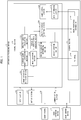
- Fig. 1 is a block diagram illustrating an example of main components of the information processing device 1.
- Fig. 1 also illustrates, as devices associated with the information processing device 1, a range finder 2, an image capturing device 3, and a crane control device 4.
- the information processing device 1 is capable of communicating with the range finder 2, the image capturing device 3, and the crane control device 4.
- the communication with these devices may be wired communication or may be wireless communication.
- the information processing device 1 may be, for example, a personal computer or the like.
- the range finder 2 measures a distance to a surface of a waste layer at each point in the waste pit and then outputs a measurement result to the information processing device 1.
- the range finder 2 only needs to determine a surface shape of the waste layer from the measurement result.
- the range finder 2 may be, for example, a laser range finder. Although only one range finder 2 is illustrated in Fig. 1 , a plurality of range finders 2 may be used.
- the image capturing device 3 captures an image of the inside of the waste pit and then outputs the captured image to the information processing device 1.
- the image capturing device 3 may be a device that captures a moving image or may be a device that captures a still image. As in the case of the range finder 2, a plurality of image capturing devices 3 may be provided.
- the crane control device 4 operates the crane by transmitting a control signal to the crane.
- the crane control device 4 outputs, to the information processing device 1, an operation signal indicating the status of operation control over the crane.
- the crane control device 4 outputs an operation signal indicating a start of the mixing operation, at the start of the mixing operation.
- the crane control device 4 outputs an operation signal indicating (i) the fact that the waste grabbing operation has been carried out and (ii) a location at which waste has been grabbed (hereinafter also referred to as "waste grabbing location").
- the crane control device 4 When the crane control device 4 has caused the bucket to carry out a waste release operation in the mixing operation, the crane control device 4 outputs an operation signal indicating (i) the fact that the waste release operation has been carried out and (ii) a location at which waste has been released (hereinafter also referred to as "waste release location").
- the mixing operation is an operation such that the bucket of the crane grabs and lifts waste in the waste pit and then releases the grabbed and lifted waste in the waste pit.
- Other typical operations of the crane include a restacking operation and an introduction operation.
- the restacking operation is an operation such that the bucket of the crane grabs and lifts waste in the waste pit and then releases the grabbed and lifted waste in the waste pit.
- the restacking operation differs from the mixing operation in that a location at which waste is grabbed and lifted lies in a waste brought-in area (an area where waste unloaded from a garbage truck is first deposited), and a location at which waste is released is outside the above-described waste brought-in area.
- the introduction operation is an operation such that the bucket of the crane grabs and lifts waste in the waste pit and then introduces the grabbed and lifted waste into a waste hopper.
- the waste having been introduced into the waste hopper is fed to the incinerator for incineration.
- the information processing device 1 includes: a control section 11 that centrally controls each section of the information processing device 1; an input section 12 that accepts an entry of data and the like to the information processing device 1; an output section 13 that outputs data; and a storage section 14 that stores various kinds of data used by the information processing device 1.
- the information processing device 1 further includes a communication section 15 for allowing the information processing device 1 to communicate with other device.
- Fig. 1 illustrates an example case in which the information processing device 1 communicates with the range finder 2, the image capturing device 3, and the crane control device 4 via one communication section 15.
- the information processing device 1 may be configured to communicate with different devices via different communication sections.
- the input section 12, the output section 13, the storage section 14, and the communication section 15 may be provided outside the information processing device 1.
- control section 11 includes a crane operation detecting section 111, a surface layer shape determining section 112, a specific gravity calculating section 113, an image obtaining section 114, a degree-of-effectiveness assessing section 115, a waste properties updating section 116, an initial evaluation determining section 117, a height updating section 118, an area determining section 119, and a crane control section 120.
- the storage section 14 stores a pit image 141 and waste properties information 142.
- the pit image 141 is a captured image obtained by capturing an image of waste in the waste pit. As described above, since the image capturing device 3 captures an image of waste in the waste pit, the information processing device 1 obtains the captured image from the image capturing device 3 through communication via the communication section 15 and then stores the obtained image in the storage section 14. The stored image is the pit image 141.
- the pit image 141 only needs to be an image of at least a surface of waste in the waste pit.
- the waste properties information 142 is information indicative of waste properties evaluated by the information processing device 1 for each of individual unit areas into which the internal space of the waste pit is divided.
- the unit areas may be defined in any manner.
- the description in Embodiment 1 will discuss an example case in which rectangular parallelepiped-shaped unit areas each having a predetermined width, depth, and height are defined by dividing a substantially rectangular parallelepiped-shaped internal space of the waste pit at predetermined intervals in a width direction, in a depth direction, and in a height direction, respectively.
- the waste properties information 142 includes, for each unit area, information indicative of a height of waste at a location of the unit area. The waste properties information 142 will be described later with reference to Fig. 2 .
- the crane operation detecting section 111 detects that the crane starts a predetermined operation in the waste pit and detects that the crane has carried out the predetermined operation in the waste pit. Specifically, the crane operation detecting section 111 determines that the mixing operation or the restacking operation is started, based on the operation signal received from the crane control device 4. Further, the crane operation detecting section 111 detects, based on the operation signals received from the crane control device 4, that the waste grabbing operation has been carried out by the crane, that the waste release operation has been carried out by the crane, and the locations at which these operations have been carried out.
- the surface layer shape determining section 112 determines the surface shape of a waste layer deposited in the waste pit. Specifically, the surface layer shape determining section 112 determines the surface shape of the waste layer at a certain location before the waste grabbing operation is carried out by the crane and the surface shape of the waste layer at that location after the waste grabbing operation has been carried out by the crane.
- the description in Embodiment 1 will discuss an example case where the surface layer shape determining section 112 determines the surface shape of the waste layer by using the measurement result obtained by the range finder 2. Note that the method of determining the surface shape of the waste layer is not limited to the method in such an example case. Alternatively, the surface shape of the waste layer can be determined by, for example, analyzing a captured image obtained by capturing an image of the surface of the waste layer with use of a stereo camera.
- the specific gravity calculating section 113 when waste has been subjected to mixing in the waste pit, calculates a specific gravity of the waste having been subjected to mixing. Specifically, the specific gravity calculating section 113 calculates a volume of the waste having been subjected to the mixing from the surface shape of the waste layer before being subjected to the mixing and the surface shape of the waste layer after having been subjected to the mixing, the surface shapes having been determined by the surface layer shape determining section 112. Note that a method of calculating the volume will be described later with reference to Fig. 3 .
- the specific gravity calculating section 113 calculates a density of the waste having been subjected to the mixing from the calculated volume and the weight of the waste having been subjected to the mixing, and then calculates the specific gravity of the waste having been subjected to the mixing from the calculated density.
- waste having a high specific gravity is hard to burn, and waste having a low specific gravity is easy to burn.
- the specific gravity is an index for evaluating the waste properties.
- a method of obtaining the weight of waste is not limited to any specific method and may be, for example, a method such that a weight sensor is provided in the crane, the weight sensor measures the weights of the waste-grabbing bucket before and after the waste grabbing operation, and a difference between the measured weights of the bucket is calculated to serve as the weight of the waste.
- the image obtaining section 114 obtains an image to be used for assessment of the degree of effectiveness of mixing and then outputs the obtained image to the degree-of-effectiveness assessing section 115. Specifically, at the start of the waste mixing operation, the image obtaining section 114 obtains a pit image 141 which includes an image of the waste grabbing location before being subjected to the waste grabbing operation, and then cuts out the image of the waste grabbing location from the obtained image. Similarly, the image obtaining section 114 obtains a pit image 141 which includes an image of the waste release location after having been subjected to the waste release operation, and then cuts out the image of the waste release location from the obtained image.
- the degree-of-effectiveness assessing section 115 assesses the degree of effectiveness of the mixing from an image of the waste before being subjected to the mixing and an image of the waste after having been subjected to the mixing.
- the degree of effectiveness of mixing is an index that indicates what degree of effectiveness in enhancing the suitability of waste having been subjected to mixing as a fuel has been achieved by that mixing.
- the degree-of-effectiveness assessing section 115 analyzes the image, cut out by the image obtaining section 114, of the waste grabbing location to evaluate the waste properties of the waste before being subjected to the mixing.
- the degree-of-effectiveness assessing section 115 analyzes the image, cut out by the image obtaining section 114, of the waste release location to evaluate the waste properties of the waste after having been subjected to the mixing. Then, the degree-of-effectiveness assessing section 115 assesses the degree of effectiveness of mixing from a difference between these evaluation results. Note that a method of evaluating the waste properties and a method of assessing the degree of effectiveness will be described later with reference to Fig. 4 .
- the waste properties updating section 116 updates the waste properties of the waste in an area into which the waste having been subjected to mixing was dropped. Further, the waste properties updating section 116, in performing the update, adjusts the degree of change of evaluation of the waste properties in accordance with the degree of effectiveness having been assessed by the degree-of-effectiveness assessing section 115. Further, the waste properties updating section 116, in performing the update, adjusts the degree of change of evaluation of the waste properties in accordance with the specific gravity having been calculated by the specific gravity calculating section 113. These adjustments will be described later with reference to Fig. 2 .
- the initial evaluation determining section 117 determines an initial evaluation of waste properties of waste brought in the waste pit. More specifically, the initial evaluation determining section 117 determines an initial evaluation of the waste properties according to the following factors: a day of the week on which waste is brought in, weather of a region from which waste brought in has been collected, a type of waste to be collected by a vehicle for bringing in waste, and a region from which the brought-in waste has been collected. Then, the initial evaluation determining section 117 notifies the waste properties updating section 116 of the determined initial evaluation, and then, the waste properties updating section 116 updates the waste properties information 142.
- the day of the week on which waste is brought in is a useful factor for determining the initial evaluation of the waste properties in a case where there is an imbalance in waste properties by day of the week.
- the initial evaluation determining section 117 determines the initial evaluation of the waste properties such that the initial evaluation is high on a day of the week on which the waste properties tend to be high, whereas the initial evaluation is low on a day of the week on which the waste properties tend to be low. Note that a relationship between a day of the week and the waste properties may be determined in advance.
- the weather of a region from which waste brought in has been collected have an influence on dryness of waste and is thus a useful factor for determining the initial evaluation of the waste properties.
- the initial evaluation determining section 117 determines the initial evaluation of the waste properties such that the initial evaluation is high in a case where weather of a region from which waste has been collected is sunny weather or cloudy weather, whereas the initial evaluation is low in a case where the weather is rainy weather, snowy weather, or the like weather.
- information on the weather may be entered by a user of the information processing device 1 through the input section 12 or may be obtained by the information processing device 1 through communication performed via the communication section 15.
- the type of waste to be collected by a vehicle for bringing in waste is also a useful factor for determining the initial evaluation of the waste properties, since it is natural that the combustibility of waste varies depending on the type of waste.
- the initial evaluation determining section 117 determines the initial evaluation of the waste properties such that the initial evaluation of waste brought in by a bring-in vehicle for collecting waste of a waste type which is easy to burn is high, whereas the initial evaluation of waste brought in by a bring-in vehicle for collecting waste of a waste type which is hard to burn is low.
- the bring-in vehicle can be identified by, for example, analyzing an image which is obtained by capturing an image of the bring-in vehicle.
- a relationship between the bring-in vehicle and the waste type may be determined in advance.
- the region from which the brought-in waste has been collected is a useful factor for determining the initial evaluation of the waste properties in a case where there is an imbalance in waste properties by region.
- the initial evaluation determining section 117 determines the initial evaluation of the waste properties such that the initial evaluation of waste collected in a region in which the waste properties tend to be high is high, whereas the initial evaluation of waste collected in a region in which the waste properties tend to be low is low.
- the region from which brought-in waste is collected is determined for each bring-in vehicle
- the region from which brought-in waste is collected can also be identified by identifying the bring-in vehicle as described above. Note also that a relationship between the region and the waste properties may be determined in advance.
- a method of evaluating each of the factors and how to reflect an evaluation of each of the factors in the initial evaluation of the waste properties may be determined as appropriate. For example, an initial evaluation value of the waste properties may be calculated by performing a computation such that evaluation values for the individual factors are calculated according to predetermined evaluation criteria, the evaluation values are subjected to the assignment of weights, and then the weighted evaluation values are added to each other. In addition, the initial evaluation of the waste properties may be determined based on at least one of the above factors rather than all of the above factors.
- the height updating section 118 updates a waste height included in the waste properties information 142 such that the waste height included in the waste properties information 142 matches the measurement result obtained by the range finder 2. Specifically, the height updating section 118 compares waste height distribution included in the waste properties information 142 with waste height distribution determined from the measurement result obtained by the range finder 2, and then updates the height included in the waste properties information 142 to the height determined from the measurement result obtained by the range finder 2, for a part with difference in height.
- the height update by the height updating section 118 may be carried out (i) at any time point (e.g., at predetermined time intervals), may be carried out (ii) at a time point when the crane operation detecting section 111 detects the waste grabbing operation or when the crane operation detecting section 111 detects the waste release operation, or may be carried out at both of these time points (i) and (ii).
- the area determining section 119 in periodically introducing waste in the waste pit into the waste hoper so that the introduced waste is fed into the incinerator, determines a target area from which waste in the waste pit is to be introduced into the waste hopper. At this time, the area determining section 119 refers to the waste properties information 142 to determine a target unit area to be subjected to the introduction such that a difference between an evaluation of waste properties of a target area which was determined in the past to be subjected to the introduction and an evaluation of waste properties of a target area to be newly determined to be subjected to the introduction falls within a predetermined range.
- the area determining section 119 determines a target unit area to be subjected to the introduction in the following manner. That is, the area determining section 119 determines a unit area, of the two or more unit areas having waste properties that satisfy the preset criterion, corresponding to a location into which waste having a relatively low specific gravity as calculated by the specific gravity calculating section 113 was dropped, to be the target unit area to be subjected to the introduction. Note that details of the method of determining the target unit area to be subjected to the introduction will be described later.
- the crane control section 120 controls an operation of the crane. Specifically, the crane control section 120 controls the operation of the crane by notifying the crane control device 4 of details of the operation of the crane. For example, the crane control section 120 notifies the crane control device 4 of the location of the unit area determined by the area determining section 119 as the waste grabbing location at the introduction operation. In response to the notification, the crane control device 4 causes the crane to carry out the waste grabbing operation at that location and introduce the waste grabbed by the waste grabbing operation into the waste hopper.
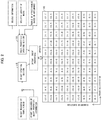
- Fig. 2 is a diagram illustrating an outline of the update of the waste properties information 142.
- Fig. 2 illustrates, out of pieces of unit area data contained in the waste properties information 142, heights and waste properties in 100 unit areas corresponding to surfaces of waste layers. That is, in an example in Fig. 2 , unit areas with a rectangular shape when viewed from above are defined by dividing an internal space of the waste pit into 10 equal parts in a transverse direction of the crane, and dividing the same space into 10 equal parts in the traveling direction of the crane. Further, although not illustrated in Fig.
- the internal space of the waste pit is divided by a plane parallel to a bottom surface of the waste pit in increments of a predetermined height from the bottom of the waste pit.
- Each of the unit areas has the predetermined height.
- the width, depth, and height of each unit area may be set as appropriate.
- the width, depth, and height of each unit area may be set on the basis of (i) the width and height of an area having a height which is changed by one grab by the crane and (ii) the waste height which is changed by one grab.
- the width, depth, and height of each unit area may be 1 m, 1 m, and 0.5 m, respectively.
- the waste height in the waste properties information 142 is updated by the height updating section 118 based on the measurement result obtained by the range finder 2. For example, of the unit areas in the waste properties information 142 illustrated in Fig. 2 , the unit area at the upper left corner has a height of 10. In a case where the measurement result obtained by the range finder 2 indicates that the height of that unit area is 11, the height updating section 118 calculates a difference between these heights to be +1 and then performs an update by adding the difference to the height before the update. That is, the height of that unit area is updated to 11.
- the waste properties updating section 116 updates the waste properties of that unit area.
- the initial evaluation determining section 117 evaluates the waste properties of such new waste.
- the waste properties updating section 116 updates (properly speaking, newly sets) the waste properties of waste in that unit area based on a result of the evaluation.
- the waste properties updating section 116 updates the waste properties of waste in that unit area in a manner as described below. Note that the following description will discuss an update performed when the mixing has been carried out, but the same update is also performed when the restacking has been carried out. Factors taken into account by the waste properties updating section 116 to perform the update when the mixing has been carried out are: mixing information indicative of how mixing of waste has been carried out; the specific gravity of waste calculated by the specific gravity calculating section 113; and the degree of effectiveness of mixing assessed based on waste appearance by the degree-of-effectiveness assessing section 115.
- the mixing information which is information indicative of waste grabbing location and waste release location detected by the crane operation detecting section 111, may be, for example, a coordinate value that serves as a basis for identifying the waste grabbing location and the waste release location.
- the mixing information may be, in a coordinate system set such that coordinate axes are the traveling direction of the crane and the transverse direction of the crane, a coordinate value of the center of the waste release location or the waste grabbing location.
- the waste properties updating section 116 first determines, from the mixing information, a unit area corresponding to the waste grabbing location and a unit area corresponding to the waste release location. In a case where the mixing information is a coordinate value, a unit area is determined on the basis of the coordinate value. In a case where the waste properties updating section 116 determines the unit area corresponding to the waste grabbing location, the waste properties updating section 116 determines the unit area according to the size of an area covered by one waste grab. Further, in a case where the waste properties updating section 116 determines the unit area corresponding to the waste release location, the waste properties updating section 116 determines the unit area according to the size of an area to which dropped waste spreads.
- the coefficients "a” to “c” may be set as appropriate depending on which of the evaluation values emphasis is to be placed on. Further, each of the above evaluation values only needs to be a value correlated with the waste properties, and a method of calculating each of the above evaluation values is not particularly limited. For example, the evaluation value of waste properties based on increase in number of times of mixing may be + 1 for every increase of one mixing. Further, the evaluation value of waste properties based on specific gravity may be a value which is determined depending on which of a plurality of predetermined ranges a value of the specific gravity falls within. For example, the specific gravity may be ranked in the following three levels: "high”, “medium”, and "low”.
- the evaluation value may be set to a negative value (e.g.,-0.5). If the specific gravity is ranked to be “low”, which indicates that waste is expected to be easy to burn, the evaluation value may be set to a positive value (e.g., +0.5). Then, the evaluation value corresponding to the specific gravity ranked to be “medium” may be set to a value (e.g., 0) intermediate between the positive value and the negative value. Further, the evaluation index based on the degree of effectiveness may be set as follows. That is, for example, the degree of effectiveness may be ranked in the following two levels: “high” and "low”. If the degree of effectiveness is ranked to be “high”, the evaluation index may be +0.5. If the degree of effectiveness is ranked to be "low”, the evaluation index may be 0.
- the waste properties updating section 116 adds the degree of change of the waste properties calculated as described above to a value of the waste properties of the unit area corresponding to the waste grabbing location, thereby calculating the value of the waste properties of waste having been subjected to mixing. Then, the waste properties updating section 116 determines, in the waste release location, a unit area immediately above a unit area which had been a surface layer until immediately before the waste release operation was carried out, and then sets the waste properties of the determined unit area as the calculated value. Note that the height of this unit area is determined by the height updating section 118.
- the waste properties updating section 116 updates data for the unit area corresponding to the waste grabbing location if necessary. For example, in a case where all waste in the unit area corresponding to the waste grabbing location has been grabbed and removed by the waste grabbing operation, the waste properties updating section 116 deletes data on the waste properties and height of that unit area. As a result, the unit area immediately below the unit area for which data has been deleted becomes a unit area corresponding to the surface layer of waste.
- the area determining section 119 refers to the waste properties information 142 as illustrated in Fig. 2 to determine which of the unit areas is to be the waste grabbing location in an introduction process of introducing waste into the waste hopper. At this time, the area determining section 119 determines a target unit area to be subjected to the introduction such that a difference between an evaluation of waste properties of a target area which was determined in the past to be subjected to the introduction and an evaluation of waste properties of a target area to be newly determined to be subjected to the introduction falls within a predetermined range. For example, assume that the past introduction is a previous introduction, and the above-described predetermined range is a range of ⁇ 1.
- the area determining section 119 determines a unit area with the waste properties of 6 to 8 to be subjected to the introduction.
- the predetermined range may be wider or narrower, and the past introduction to be considered may be a plurality of introductions.
- the waste grabbing location may be determined on the basis of an average value of waste properties of two or more most recently determined waste grabbing locations.
- a lower limit value of the waste properties is set so that the area determining section 119 does not set a unit area with waste properties falling below the lower limit value to be the waste grabbing location in the introduction process.
- waste having low waste properties is often present.
- waste that is not suitable for burning is separated from other waste and is collected in a predetermined area inside the waste pit. It is preferable that the area determining section 119 does not set such areas to be the waste grabbing location in the introduction process.
- the area determining section 119 may determine a unit area corresponding to the waste grabbing location on the condition that the unit area satisfies a certain evaluation value of waste properties based on specific gravity. That is, the area determining section 119 may determine a unit area corresponding to a location into which waste having a relatively low specific gravity as calculated by the specific gravity calculating section 113 was dropped, to be the target unit area to be subjected to the introduction.
- the area determining section 119 may determine a unit area corresponding to the waste grabbing location in the introduction process on the condition that the unit area satisfies at least one of the following factors: height (a higher priority is given to a unit area having a greater height); the number of times of mixing (a higher priority is given to a unit area having been subjected to mixing a larger number of times); and a distance from a position at which the bucket of the crane is currently present (a higher priority is given to a unit area which is closer to the position).
- the area determining section 119 may determine a unit area corresponding to the waste grabbing location in the introduction process on the condition that the unit area satisfies, for example, a certain evaluation value of waste properties based on the degree of effectiveness (a higher priority is given to a unit area having a higher degree of effectiveness).
- the waste properties information 142 may contain, for each of the unit areas, information indicative of a waste storage time and/or information indicative of a waste type. In such a case, a unit area corresponding to the waste grabbing location may be determined based on these pieces of information. Both waste stored for a short period of time and waste stored for an excessively long period of time are hard to burn. Therefore, it is preferable to find out in advance what range of the waste storage time makes waste easy to burn, and then determine a unit area corresponding to that range of the waste storage time to be the waste grabbing location.
- the unit area having been determined by the area determining section 119 to be the waste grabbing location may be presented to the user.
- the determined unit area may be presented to the user by any method.
- the output section 13 serves as a display device for outputting an image
- the determined unit area corresponding to the waste grabbing location may be presented to the user by causing the output section 13 to display and output the determined unit area.
- the crane control section 120 may be configured to cause the waste grabbing operation to be carried out on the condition that an entry operation for causing the waste grabbing operation to be carried out in that unit area corresponding to the waste grabbing location has been accepted via the input section 12.
- the area determining section 119 may determine unit areas corresponding to the waste grabbing location and the waste release location in the mixing and the restacking. In the mixing and the restacking, the area determining section 119 preferably determines unit areas corresponding to the waste grabbing location and the waste release location so that a unit area in which waste suitable for the introduction is present is maintained at all times. Further, in a case where the waste storage time is known, the area determining section 119 may determine unit areas corresponding to the waste grabbing location and the waste release location so that waste in the unit areas has waste properties suitable for the introduction after a lapse of an appropriate length of storage time.
- the area determining section 119 may determine unit areas corresponding to the waste grabbing location and the waste release location so that the waste properties of waste will be evaluated to be 7 to 9 in two to three days after the waste was brought in. Further, in a case where the waste type is known, the area determining section 119 may determine unit areas corresponding to the waste grabbing location and the waste release location so that imbalances in waste type are not caused across the unit areas.
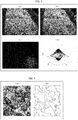
- Fig. 3 is a view illustrating an outline of the method of calculating the volume of waste.
- (a) of Fig. 3 illustrates a pit image obtained by capturing an image of a waste layer surface before the waste grabbing operation is carried out
- (b) of Fig. 3 is a pit image obtained by capturing an image of a waste layer surface after the waste grabbing operation has been carried out. Note that, in these pit images, an area surrounded by a circle is the waste grabbing location.
- (c) of Fig. 3 illustrates an image that indicates a difference between a height distribution of the waste layer surface the image of which was captured as the pit image illustrated in (a) of Fig. 3 and a height distribution of the waste layer surface the image of which was captured as the pit image illustrated in (b) of Fig. 3 .
- areas in which the difference in height is 0 is indicated by black, and areas in which the difference in height is larger is indicated by a color closer to white. That is, it can be seen from this image that the height of waste greatly changes in the waste grabbing location, while the height of waste does not change in other areas.
- (d) of Fig. 3 the height distribution of waste before and after the waste grabbing operation is shown in three-dimensional coordinate space. It can be seen from the graph in (d) of Fig. 3 that waste which had been heaped like a mountain before the waste grabbing operation was removed by the waste grabbing operation and that a depression is left in the waste grabbing location after the waste grabbing operation.
- the specific gravity calculating section 113 calculates the volume of grabbed waste from a difference between the height distribution of waste before the waste grabbing operation and the height distribution of waste after waste grabbing operation, both of which are shown in (d) of Fig. 3 .
- Fig. 4 is a view illustrating a captured image obtained by capturing an image of a waste layer surface and an image obtained as a result of extracting edges from the captured image.
- the degree-of-effectiveness assessing section 115 evaluates, from the captured image of the waste layer surface, the waste properties of waste the image of which is included in the captured image.
- the degree-of-effectiveness assessing section 115 by analyzing the above image, generates, as information indicative of the waste properties, degree-of-complexity information indicative of the degree of complexity of the shape of the waste layer surface. Waste is enclosed in the garbage bags at the time of being brought into the waste pit. Then, mixing breaks the garbage bags and spreads the waste in the garbage bags apart. That is, since effective mixing results in an increase in complexity of outer appearance of waste, the degree-of-complexity information can be used as an index for evaluating the waste properties.
- the degree-of-effectiveness assessing section 115 extracts edges of the image, i.e. an outline representing an outside shape of the captured image of waste. (b) of Fig. 4 illustrates an example of extraction of edge. Then, the degree-of-effectiveness assessing section 115 calculates a fractal dimension of the outline as the degree-of-complexity information.
- the fractal dimension can be calculated by using, for example, the box count method (box counting method), the modified pixel dilation method, or the like method.
- the degree-of-complexity information may be any information indicative of the degree of complexity of the shape of the waste layer surface, and any index other than the fractal dimension may be used as the degree-of-complexity information.
- the degree-of-effectiveness assessing section 115 calculates the degree-of-complexity information in the manner as described above for each of the image of the waste before being subjected to mixing and the image of the waste after having been subjected to mixing. Then, the degree-of-effectiveness assessing section 115 evaluates a difference between the calculated pieces of degree-of-complexity information based on a predetermined evaluation criterion to assess the degree of effectiveness.
- the evaluation criterion is not particularly limited. For example, if a value of the difference is equal to or larger than a threshold value, the degree of effectiveness may be assessed to be "high", and if the value of the difference is smaller than the threshold value, the degree of effectiveness may be assessed to be "low".
- the degree-of-effectiveness assessing section 115 may evaluate the waste properties based on color distribution of a captured image obtained by capturing an image of the waste layer surface. This is for the following reason. That is, since the waste enclosed in the garbage bags at the time of being brought into the waste pit is spread apart due to breakage of the garbage bags by mixing as described above, color distribution of the waste is changed by the mixing, and the degree of the change varies depending on whether the mixing was an effective mixing.
- the degree-of-effectiveness assessing section 115 may calculate an evaluation value based on the color distribution in a manner as described below.
- the degree-of-effectiveness assessing section 115 determines the distribution of a color component corresponding to the garbage bags in a capture image obtained by capturing an image of the waste layer surface. Subsequently, the degree-of-effectiveness assessing section 115 extracts, based on the determined distribution, pixel regions in which pixels of the similar color are gathered in the captured image, and calculates the number of the extracted pixel regions and the areas thereof. Then, the degree-of-effectiveness assessing section 115 calculates, from the calculated number and areas, an evaluation value indicating the degree of effectiveness of mixing. This evaluation value may be any value that is larger as the number of pixel regions is larger and the areas of the pixel regions is smaller. For example, a value obtained by dividing the number of pixel regions by the sum of the areas of the pixel regions may be the above-described evaluation value.
- the degree-of-effectiveness assessing section 115 may assess the degree of effectiveness based on both the degree-of-complexity information obtained as described above and the evaluation value obtained based on the color distribution. For example, the degree-of-effectiveness assessing section 115 may evaluate the degree of effectiveness on a scale of 1 to 5 with use of the degree-of-complexity information and evaluate the degree of effectiveness on a scale of 1 to 5 with use of the evaluation value obtained based on the color distribution. Then, the degree-of-effectiveness assessing section 115 may obtain, as a final degree of effectiveness, an average value of values of those degrees of effectiveness or a weighted average value thereof.
- the method of assessing the degree of mixing effectiveness based on images is not limited to the examples described above.
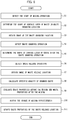
- Fig. 5 is a flowchart illustrating an example of a process for updating waste properties at the mixing operation (a method for processing information). Note that a process for updating the waste properties at the restacking operation is similar to the process presented in the example illustrated in Fig. 5 .
- the crane operation detecting section 111 detects that the crane starts the mixing operation and determines the waste grabbing location in the mixing operation, and then notifies the surface layer shape determining section 112 and the image obtaining section 114 of a determination result.
- the surface layer shape determining section 112 determines, from measurement data obtained by the range finder 2, the shape of a surface layer of waste in a unit area corresponding to the notified waste grabbing location.
- the image obtaining section 114 obtains a pit image 141 which includes an image of the waste grabbing location, and then cuts out the image of the unit area corresponding to the notified waste grabbing location from the obtained image. Then, the image obtaining section 114 transmits the image of the cutout part to the degree-of-effectiveness assessing section 115.
- the crane operation detecting section 111 detects that the crane has carried out the waste grabbing operation and notifies the surface layer shape determining section 112 of the fact that the crane has carried out the waste grabbing operation. Then, in S5, the surface layer shape determining section 112 having received such notification determines, from measurement data obtained by the range finder 2, the shape of a surface of a waste layer in a unit area corresponding to the waste grabbing location after the waste grabbing operation has been carried out.
- the crane operation detecting section 111 detects that the crane has carried out the waste release operation and determines the waste release location, and then notifies the image obtaining section 114 of a determination result. Then, in S7, the image obtaining section 114 obtains a pit image 141 which includes an image of a unit area corresponding to the waste release location, and then cuts out the image of the unit area corresponding to the notified waste release location from the obtained image. Then, the image obtaining section 114 transmits the image of the cutout part to the degree-of-effectiveness assessing section 115.
- the specific gravity calculating section 113 calculates, from the determination results obtained in S2 and S5, a specific gravity of the waste having been mixed through the mixing operation the start of which was detected in S1. The method of calculating the specific gravity is as described with reference to Fig. 3 . Then, the specific gravity calculating section 113 notifies the waste properties updating section 116 of the calculated specific gravity.
- the degree-of-effectiveness assessing section 115 evaluates, based on the image obtained in S3, waste properties of the waste before being subjected to the mixing, and evaluates, from the image obtained in S7, waste properties of the waste after having been subjected to the mixing. Then, in S10 (degree-of-effectiveness assessing step), the degree-of-effectiveness assessing section 115 assesses the degree of mixing effectiveness of the mixing operation the start of which was detected in S1, and then notifies the waste properties updating section 116 of an assessment result.
- the method of evaluating the waste properties and the method of assessing the degree of effectiveness are as described with reference to Fig. 4 .
- the waste properties updating section 116 updates waste properties of the unit area corresponding to the waste release location in the waste properties information 142, based on the specific gravity calculated in S8 and the assessment result obtained in S10.
- the method of performing the update is as described with reference to Fig. 2 . This ends the process for updating the waste properties. Note that although not illustrated in Fig. 5 , the waste properties updating section 116 updates the waste properties of the unit area corresponding to the waste grabbing location if necessary.
- the information processing device 1 updates the waste properties information 142 at any time by the process described above, it is possible to accurately grasp the waste properties distributions at all times. This makes it possible to perform appropriate automatic crane control using the waste properties information 142, such that waste having appropriate waste properties is introduced into the hopper, and mixing is carried out so that waste having appropriate waste properties can be prepared before next introduction into the hopper.
- the waste properties are updated in consideration of both the specific gravity and the degree of effectiveness.
- the waste properties may be updated in consideration of only one of them.
- the image obtaining section 114 and the degree-of-effectiveness assessing section 115 may be omitted.
- the surface layer shape determining section 112 and the specific gravity calculating section 113 may be omitted.
- the function of the information processing device 1 can also be realized by a plurality of information processing devices which are communicably connected to each other.
- the function which is the same as that of the information processing device 1 can be realized.
- the information processing devices constituting the information processing system may be dispersedly located on a network.
- the crane control device 4 having the waste properties evaluating function of the information processing device 1, a crane control system including such crane control device 4, and a waste incineration plant including such crane control device 4 are also included in the scope of the present invention.
- Control blocks of the information processing device 1 can be realized by a logic circuit (hardware) provided in an integrated circuit (IC chip) or the like or can be alternatively realized by software.
- the information processing device 1 includes a computer that executes instructions of a program that is software realizing the foregoing functions.
- the computer for example, includes at least one processor and at least one computer-readable storage medium in which the program is stored.
- An object of the present invention can be achieved by the processor of the computer reading and executing the program stored in the storage medium.
- the processor encompass a central processing unit (CPU).
- the storage medium encompass a "non-transitory tangible medium" such as a read only memory (ROM), a tape, a disk, a card, a semiconductor memory, and a programmable logic circuit.
- the computer may further include a random access memory (RAM) or the like in which the program is loaded.
- the program may be made available to the computer via any transmission medium (such as a communication network and a broadcast wave) which allows the program to be transmitted.
- a transmission medium such as a communication network and a broadcast wave
- an aspect of the present invention can also be achieved in the form of a computer data signal in which the program is embodied via electronic transmission and which is embedded in a carrier wave.
- An information processing device in accordance with an embodiment of the present invention is an information processing device for evaluating waste properties of waste deposited in an internal space of a waste pit for each of individual unit areas into which the internal space of the waste pit is divided, the information processing device including: a degree-of-effectiveness assessing section configured to, when waste has been subjected to mixing in the waste pit, assess a degree of effectiveness of the mixing based on an image of the waste before being subjected to the mixing and an image of the waste after having been subjected to the mixing; and an updating section configured to update an evaluation of waste properties of a unit area, of the unit areas, corresponding to a location into which the waste having been subjected to the mixing was dropped, and configured to, in performing the update, adjust a degree of change of the evaluation of the waste properties of the unit area in accordance with the degree of effectiveness.
- the degree of change of the evaluation of the waste properties is adjusted in consideration of the degree of effectiveness having been assessed based on the image of waste.
- the above-described configuration makes it possible to more accurately evaluate the waste properties as compared to the configuration in which the waste properties are evaluated based on only the number of times of mixing.
- the above-described information processing device may further include: an initial evaluation determining section configured to, in a case where waste has been brought into the waste pit, determine an initial evaluation of waste properties of a unit area, of the unit areas, corresponding to a location to which the brought-in waste has been dropped, according to at least one of the following factors: a day of the week on which the waste has been brought in, weather of a region from which the brought-in waste has been collected, a type of waste to be collected by a vehicle for bringing in waste, and a region from which the brought-in waste has been collected. According to this configuration, it is possible to appropriately determine an initial evaluation of the waste properties of the brought-in waste.
- the above-described information processing device may further include: an area determining section configured to, in periodically introducing the waste in the waste pit into a waste hopper so that the introduced waste is fed into an incinerator, determine a target unit area, among the unit areas, from which waste is to be introduced into the waste hopper, the area determining section determining the target unit area to be subjected to the introduction such that a difference between an evaluation of waste properties of a target unit area which was determined in the past to be subjected to the introduction and an evaluation of waste properties of a target unit area to be newly determined to be subjected to the introduction falls within a predetermined range.
- This configuration allows variations in waste properties of waste to be fed into the incinerator to be confined within a predetermined range. This makes it possible to stabilize combustion in the incinerator.
- An information processing device in accordance with an embodiment of the present invention is an information processing device for calculating waste properties of waste deposited in an internal space of a waste pit for each of individual unit areas into which the internal space of the waste pit is divided, the information processing device including: a specific gravity calculating section configured to, when waste has been subjected to mixing in the waste pit, (i) calculate a volume of the waste having been subjected to the mixing from a variation in surface shape of a waste layer between the waste before being subjected to the mixing and the waste after having been subjected to the mixing and (ii) calculate a specific gravity of the waste from (a) the calculated volume and (b) a weight of the waste having been subjected to the mixing; and an updating section configured to update an evaluation of waste properties of a unit area, of the unit areas, corresponding to a location into which the waste having been subjected to the mixing was dropped, and configured to, in performing the update, adjust a degree of change of the evaluation of the waste properties of the unit area in accordance with the specific gravity
- the degree of change of the evaluation of the waste properties is adjusted in consideration of the specific gravity having been calculated based on a variation in surface shape of a waste layer.
- the above-described configuration makes it possible to more accurately evaluate the waste properties as compared to the configuration in which the waste properties are evaluated based on only the number of times of mixing.
- the above-described information processing device may further include: an area determining section configured to, in periodically introducing the waste in the waste pit into a waste hopper so that the introduced waste is fed into an incinerator, determine a target unit area, among the unit areas, from which waste is to be introduced into the waste hopper, in a case where two or more of the unit areas have waste properties that satisfy a preset criterion for the introduction into the waste hopper, the area determining section determining a unit area, of the two or more unit areas, corresponding to a location into which waste having a relatively low specific gravity as calculated by the specific gravity calculating section was dropped, to be the target unit area to be subjected to the introduction.
- an area determining section configured to, in periodically introducing the waste in the waste pit into a waste hopper so that the introduced waste is fed into an incinerator, determine a target unit area, among the unit areas, from which waste is to be introduced into the waste hopper, in a case where two or more of the unit areas have waste properties that satisfy
- a method for processing information in accordance with an embodiment of the present invention is a method for processing information by use of an information processing device for evaluating waste properties of waste deposited in an internal space of a waste pit for each of individual unit areas into which the internal space of the waste pit is divided, the method including: a degree-of-effectiveness assessing step of, when waste has been subjected to mixing in the waste pit, assessing a degree of effectiveness of the mixing based on an image of the waste before being subjected to the mixing and an image of the waste after having been subjected to the mixing; and an updating step of updating an evaluation of waste properties of a unit area, of the unit areas, corresponding to a location into which the waste having been subjected to the mixing was dropped, and, in performing the update, adjusting a degree of change of the evaluation of the waste properties of the unit area in accordance with the degree of effectiveness.
- This information processing method produces effects similar to those produced by the information processing device.
- a method for processing information in accordance with an embodiment of the present invention is a method for processing information by use of an information processing device for calculating waste properties of waste deposited in an internal space of a waste pit for each of individual unit areas into which the internal space of the waste pit is divided, the method including: a specific gravity calculating step of, when waste has been subjected to mixing in the waste pit, (i) calculating a volume of the waste having been subjected to the mixing from a variation in surface shape of a waste layer between the waste before being subjected to the mixing and the waste after having been subjected to the mixing and (ii) calculating a specific gravity of the waste from (a) the calculated volume and (b) a weight of the waste having been subjected to the mixing; and an updating step of updating an evaluation of waste properties of a unit area, of the unit areas, corresponding to a location into which the waste having been subjected to the mixing was dropped, and, in performing the update, adjusting a degree of change of the evaluation of the waste properties of the unit area
- the information processing device in accordance with the foregoing aspects of the present invention can be realized by a computer.
- the computer is operated based on (i) an information processing program for causing the computer to realize the information processing device by causing the computer to operate as each section (software element) included in the information processing device and (ii) a computer-readable storage medium in which the information processing program is stored.
- an information processing program and a computer-readable storage medium are included in the scope of the present invention.
- the present invention is not limited to the embodiments, but can be altered by a skilled person in the art within the scope of the claims.
- the present invention also encompasses, in its technical scope, any embodiment derived by combining technical means disclosed in differing embodiments.
Landscapes
- Engineering & Computer Science (AREA)
- Mechanical Engineering (AREA)
- General Engineering & Computer Science (AREA)
- Refuse Collection And Transfer (AREA)
- Processing Of Solid Wastes (AREA)
- Incineration Of Waste (AREA)
Abstract
Description
- The present invention relates to an information processing device and the like, for evaluating waste properties of waste deposited in a waste pit.
- In a waste incineration plant, carried-in waste is once stored in a waste pit, and the stored waste is successively fed into an incinerator for incineration. The carried-in waste contains waste which is easy to burn and waste which is rich in water and is hard to burn. Therefore, for stable waste incineration, it is important to mix the waste in the waste pit to homogenize the waste.
- For this reason, a technique for realizing mixing for homogenization of waste has been developed conventionally. For example,
Patent Literature 1 listed below discloses performing a computation to determine the number of times of mixing of waste and calculating an evaluation value that indicates the degree of mixing of waste based on the number of times of mixing. - [Patent Literature 1]
Japanese Patent Application Publication, Tokukai, No.2010-275064 - Unfortunately, the number of times of mixing is not always accurately reflected in the waste properties. For example, an important purpose of mixing is to break garbage bags and spread waste in the garbage bags apart. However, even when the same single mixing is carried out, most of garbage bags may break, or many garbage bags may remain the same as before the mixing without being broken. In the former case, the waste properties are greatly improved, and in the latter case, the waste properties are not much improved. Unfortunately, in the technique of
Patent Literature 1, the evaluation values are the same in both of the cases. - It is an object of an aspect of the present invention to realize an information processing device and the like capable of accurately evaluating the waste properties.
- In order to solve the above problem, an information processing device in accordance with an aspect of the present invention is an information processing device for evaluating waste properties of waste deposited in an internal space of a waste pit for each of individual unit areas into which the internal space of the waste pit is divided, the information processing device including: a degree-of-effectiveness assessing section configured to, when waste has been subjected to mixing in the waste pit, assess a degree of effectiveness of the mixing based on an image of the waste before being subjected to the mixing and an image of the waste after having been subjected to the mixing; and an updating section configured to update an evaluation of waste properties of a unit area, of the unit areas, corresponding to a location into which the waste having been subjected to the mixing was dropped, and configured to, in performing the update, adjust a degree of change of the evaluation of the waste properties of the unit area in accordance with the degree of effectiveness.
- Further, in order to solve the above problem, a method for processing information in accordance with an aspect of the present invention is a method for processing information by use of an information processing device for evaluating waste properties of waste deposited in an internal space of a waste pit for each of individual unit areas into which the internal space of the waste pit is divided, the method including: a degree-of-effectiveness assessing step of, when waste has been subjected to mixing in the waste pit, assessing a degree of effectiveness of the mixing based on an image of the waste before being subjected to the mixing and an image of the waste after having been subjected to the mixing; and an updating step of updating an evaluation of waste properties of a unit area, of the unit areas, corresponding to a location into which the waste having been subjected to the mixing was dropped, and, in performing the update, adjusting a degree of change of the evaluation of the waste properties of the unit area in accordance with the degree of effectiveness.
- The aspect of the present invention brings about the effect of accurately evaluating the waste properties.
-
-
Fig. 1 is a block diagram illustrating an example of main components of an information processing device in accordance withEmbodiment 1 of the present invention. -
Fig. 2 is a diagram illustrating an outline of an update of waste properties information. -
Fig. 3 is a view illustrating an outline of a method of calculating a volume of waste. -
Fig. 4 is a view illustrating a captured image obtained by capturing an image of a waste layer surface and an image obtained as a result of extracting edges from the captured image. -
Fig. 5 is a flowchart illustrating an example of a process for updating waste properties at the mixing operation. - The following description will discuss an
information processing device 1 in accordance with an embodiment of the present invention with reference toFigs. 1 to 5 . Theinformation processing device 1 has a function of evaluating waste properties of waste deposited in an internal space of a waste pit, which is a waste storage facility in a waste incineration plant. The waste properties are generally evaluated based on factors such as water content of waste, ash content of waste, combustible content of waste, and low calorific value of waste. Of these factors, the low calorific value and the water content (which may account for about 60% of the weight of waste) in particular have a significant impact on the combustibility of waste. Thus, the waste properties can be used as an index for evaluating the combustibility of waste. A method of evaluating the waste properties inEmbodiment 1 will be described later. The waste incineration plant includes, in addition to the waste pit and the incinerator, other facilities such as a crane that transfers waste in the waste pit. The waste incineration plant only needs to include at least the waste pit, the crane, and the incinerator, and any other facilities to be included in the waste incineration plant are selected as necessary. - The following description will discuss a configuration of an information processing device in accordance with
Embodiment 1 with reference toFig. 1. Fig. 1 is a block diagram illustrating an example of main components of theinformation processing device 1.Fig. 1 also illustrates, as devices associated with theinformation processing device 1, arange finder 2, an image capturing device 3, and acrane control device 4. - The
information processing device 1 is capable of communicating with therange finder 2, the image capturing device 3, and thecrane control device 4. The communication with these devices may be wired communication or may be wireless communication. Theinformation processing device 1 may be, for example, a personal computer or the like. - The range finder 2 measures a distance to a surface of a waste layer at each point in the waste pit and then outputs a measurement result to the
information processing device 1. Therange finder 2 only needs to determine a surface shape of the waste layer from the measurement result. The range finder 2 may be, for example, a laser range finder. Although only onerange finder 2 is illustrated inFig. 1 , a plurality ofrange finders 2 may be used. - The image capturing device 3 captures an image of the inside of the waste pit and then outputs the captured image to the
information processing device 1. The image capturing device 3 may be a device that captures a moving image or may be a device that captures a still image. As in the case of therange finder 2, a plurality of image capturing devices 3 may be provided. - The
crane control device 4 operates the crane by transmitting a control signal to the crane. In addition, thecrane control device 4 outputs, to theinformation processing device 1, an operation signal indicating the status of operation control over the crane. For example, to cause the crane to carry out a waste mixing operation, thecrane control device 4 outputs an operation signal indicating a start of the mixing operation, at the start of the mixing operation. Further, when thecrane control device 4 has caused a bucket to carry out a waste grabbing operation in the mixing operation, thecrane control device 4 outputs an operation signal indicating (i) the fact that the waste grabbing operation has been carried out and (ii) a location at which waste has been grabbed (hereinafter also referred to as "waste grabbing location"). When thecrane control device 4 has caused the bucket to carry out a waste release operation in the mixing operation, thecrane control device 4 outputs an operation signal indicating (i) the fact that the waste release operation has been carried out and (ii) a location at which waste has been released (hereinafter also referred to as "waste release location"). - Note that the mixing operation is an operation such that the bucket of the crane grabs and lifts waste in the waste pit and then releases the grabbed and lifted waste in the waste pit. Other typical operations of the crane include a restacking operation and an introduction operation. Like the mixing operation, the restacking operation is an operation such that the bucket of the crane grabs and lifts waste in the waste pit and then releases the grabbed and lifted waste in the waste pit. However, the restacking operation differs from the mixing operation in that a location at which waste is grabbed and lifted lies in a waste brought-in area (an area where waste unloaded from a garbage truck is first deposited), and a location at which waste is released is outside the above-described waste brought-in area. Further, the introduction operation is an operation such that the bucket of the crane grabs and lifts waste in the waste pit and then introduces the grabbed and lifted waste into a waste hopper. The waste having been introduced into the waste hopper is fed to the incinerator for incineration.
- The
information processing device 1 includes: acontrol section 11 that centrally controls each section of theinformation processing device 1; aninput section 12 that accepts an entry of data and the like to theinformation processing device 1; anoutput section 13 that outputs data; and astorage section 14 that stores various kinds of data used by theinformation processing device 1. Theinformation processing device 1 further includes acommunication section 15 for allowing theinformation processing device 1 to communicate with other device.Fig. 1 illustrates an example case in which theinformation processing device 1 communicates with therange finder 2, the image capturing device 3, and thecrane control device 4 via onecommunication section 15. Alternatively, theinformation processing device 1 may be configured to communicate with different devices via different communication sections. Theinput section 12, theoutput section 13, thestorage section 14, and thecommunication section 15 may be provided outside theinformation processing device 1. - Further, the
control section 11 includes a craneoperation detecting section 111, a surface layershape determining section 112, a specificgravity calculating section 113, animage obtaining section 114, a degree-of-effectiveness assessing section 115, a wasteproperties updating section 116, an initialevaluation determining section 117, aheight updating section 118, anarea determining section 119, and acrane control section 120. Thestorage section 14 stores apit image 141 andwaste properties information 142. - The
pit image 141 is a captured image obtained by capturing an image of waste in the waste pit. As described above, since the image capturing device 3 captures an image of waste in the waste pit, theinformation processing device 1 obtains the captured image from the image capturing device 3 through communication via thecommunication section 15 and then stores the obtained image in thestorage section 14. The stored image is thepit image 141. Thepit image 141 only needs to be an image of at least a surface of waste in the waste pit. - The
waste properties information 142 is information indicative of waste properties evaluated by theinformation processing device 1 for each of individual unit areas into which the internal space of the waste pit is divided. The unit areas may be defined in any manner. The description inEmbodiment 1 will discuss an example case in which rectangular parallelepiped-shaped unit areas each having a predetermined width, depth, and height are defined by dividing a substantially rectangular parallelepiped-shaped internal space of the waste pit at predetermined intervals in a width direction, in a depth direction, and in a height direction, respectively. Further, thewaste properties information 142 includes, for each unit area, information indicative of a height of waste at a location of the unit area. Thewaste properties information 142 will be described later with reference toFig. 2 . - The crane
operation detecting section 111 detects that the crane starts a predetermined operation in the waste pit and detects that the crane has carried out the predetermined operation in the waste pit. Specifically, the craneoperation detecting section 111 determines that the mixing operation or the restacking operation is started, based on the operation signal received from thecrane control device 4. Further, the craneoperation detecting section 111 detects, based on the operation signals received from thecrane control device 4, that the waste grabbing operation has been carried out by the crane, that the waste release operation has been carried out by the crane, and the locations at which these operations have been carried out. - The surface layer
shape determining section 112 determines the surface shape of a waste layer deposited in the waste pit. Specifically, the surface layershape determining section 112 determines the surface shape of the waste layer at a certain location before the waste grabbing operation is carried out by the crane and the surface shape of the waste layer at that location after the waste grabbing operation has been carried out by the crane. The description inEmbodiment 1 will discuss an example case where the surface layershape determining section 112 determines the surface shape of the waste layer by using the measurement result obtained by therange finder 2. Note that the method of determining the surface shape of the waste layer is not limited to the method in such an example case. Alternatively, the surface shape of the waste layer can be determined by, for example, analyzing a captured image obtained by capturing an image of the surface of the waste layer with use of a stereo camera. - The specific
gravity calculating section 113, when waste has been subjected to mixing in the waste pit, calculates a specific gravity of the waste having been subjected to mixing. Specifically, the specificgravity calculating section 113 calculates a volume of the waste having been subjected to the mixing from the surface shape of the waste layer before being subjected to the mixing and the surface shape of the waste layer after having been subjected to the mixing, the surface shapes having been determined by the surface layershape determining section 112. Note that a method of calculating the volume will be described later with reference toFig. 3 . Then, the specificgravity calculating section 113 calculates a density of the waste having been subjected to the mixing from the calculated volume and the weight of the waste having been subjected to the mixing, and then calculates the specific gravity of the waste having been subjected to the mixing from the calculated density. Generally, waste having a high specific gravity is hard to burn, and waste having a low specific gravity is easy to burn. Thus, the specific gravity is an index for evaluating the waste properties. A method of obtaining the weight of waste is not limited to any specific method and may be, for example, a method such that a weight sensor is provided in the crane, the weight sensor measures the weights of the waste-grabbing bucket before and after the waste grabbing operation, and a difference between the measured weights of the bucket is calculated to serve as the weight of the waste. - The
image obtaining section 114 obtains an image to be used for assessment of the degree of effectiveness of mixing and then outputs the obtained image to the degree-of-effectiveness assessing section 115. Specifically, at the start of the waste mixing operation, theimage obtaining section 114 obtains apit image 141 which includes an image of the waste grabbing location before being subjected to the waste grabbing operation, and then cuts out the image of the waste grabbing location from the obtained image. Similarly, theimage obtaining section 114 obtains apit image 141 which includes an image of the waste release location after having been subjected to the waste release operation, and then cuts out the image of the waste release location from the obtained image. - When waste has been subjected to mixing in the waste pit, the degree-of-
effectiveness assessing section 115 assesses the degree of effectiveness of the mixing from an image of the waste before being subjected to the mixing and an image of the waste after having been subjected to the mixing. The degree of effectiveness of mixing is an index that indicates what degree of effectiveness in enhancing the suitability of waste having been subjected to mixing as a fuel has been achieved by that mixing. Specifically, the degree-of-effectiveness assessing section 115 analyzes the image, cut out by theimage obtaining section 114, of the waste grabbing location to evaluate the waste properties of the waste before being subjected to the mixing. Similarly, the degree-of-effectiveness assessing section 115 analyzes the image, cut out by theimage obtaining section 114, of the waste release location to evaluate the waste properties of the waste after having been subjected to the mixing. Then, the degree-of-effectiveness assessing section 115 assesses the degree of effectiveness of mixing from a difference between these evaluation results. Note that a method of evaluating the waste properties and a method of assessing the degree of effectiveness will be described later with reference toFig. 4 . - Every time waste has been subjected to mixing in the waste pit, the waste
properties updating section 116 updates the waste properties of the waste in an area into which the waste having been subjected to mixing was dropped. Further, the wasteproperties updating section 116, in performing the update, adjusts the degree of change of evaluation of the waste properties in accordance with the degree of effectiveness having been assessed by the degree-of-effectiveness assessing section 115. Further, the wasteproperties updating section 116, in performing the update, adjusts the degree of change of evaluation of the waste properties in accordance with the specific gravity having been calculated by the specificgravity calculating section 113. These adjustments will be described later with reference toFig. 2 . - The initial
evaluation determining section 117 determines an initial evaluation of waste properties of waste brought in the waste pit. More specifically, the initialevaluation determining section 117 determines an initial evaluation of the waste properties according to the following factors: a day of the week on which waste is brought in, weather of a region from which waste brought in has been collected, a type of waste to be collected by a vehicle for bringing in waste, and a region from which the brought-in waste has been collected. Then, the initialevaluation determining section 117 notifies the wasteproperties updating section 116 of the determined initial evaluation, and then, the wasteproperties updating section 116 updates thewaste properties information 142. - The day of the week on which waste is brought in is a useful factor for determining the initial evaluation of the waste properties in a case where there is an imbalance in waste properties by day of the week. The initial
evaluation determining section 117 determines the initial evaluation of the waste properties such that the initial evaluation is high on a day of the week on which the waste properties tend to be high, whereas the initial evaluation is low on a day of the week on which the waste properties tend to be low. Note that a relationship between a day of the week and the waste properties may be determined in advance. - The weather of a region from which waste brought in has been collected have an influence on dryness of waste and is thus a useful factor for determining the initial evaluation of the waste properties. The initial
evaluation determining section 117 determines the initial evaluation of the waste properties such that the initial evaluation is high in a case where weather of a region from which waste has been collected is sunny weather or cloudy weather, whereas the initial evaluation is low in a case where the weather is rainy weather, snowy weather, or the like weather. Note that information on the weather may be entered by a user of theinformation processing device 1 through theinput section 12 or may be obtained by theinformation processing device 1 through communication performed via thecommunication section 15. - The type of waste to be collected by a vehicle for bringing in waste is also a useful factor for determining the initial evaluation of the waste properties, since it is natural that the combustibility of waste varies depending on the type of waste. The initial
evaluation determining section 117 determines the initial evaluation of the waste properties such that the initial evaluation of waste brought in by a bring-in vehicle for collecting waste of a waste type which is easy to burn is high, whereas the initial evaluation of waste brought in by a bring-in vehicle for collecting waste of a waste type which is hard to burn is low. Note that the bring-in vehicle can be identified by, for example, analyzing an image which is obtained by capturing an image of the bring-in vehicle. Note also that a relationship between the bring-in vehicle and the waste type may be determined in advance. - The region from which the brought-in waste has been collected is a useful factor for determining the initial evaluation of the waste properties in a case where there is an imbalance in waste properties by region. The initial
evaluation determining section 117 determines the initial evaluation of the waste properties such that the initial evaluation of waste collected in a region in which the waste properties tend to be high is high, whereas the initial evaluation of waste collected in a region in which the waste properties tend to be low is low. In a case where the region from which brought-in waste is collected is determined for each bring-in vehicle, the region from which brought-in waste is collected can also be identified by identifying the bring-in vehicle as described above. Note also that a relationship between the region and the waste properties may be determined in advance. - A method of evaluating each of the factors and how to reflect an evaluation of each of the factors in the initial evaluation of the waste properties may be determined as appropriate. For example, an initial evaluation value of the waste properties may be calculated by performing a computation such that evaluation values for the individual factors are calculated according to predetermined evaluation criteria, the evaluation values are subjected to the assignment of weights, and then the weighted evaluation values are added to each other. In addition, the initial evaluation of the waste properties may be determined based on at least one of the above factors rather than all of the above factors.
- The
height updating section 118 updates a waste height included in thewaste properties information 142 such that the waste height included in thewaste properties information 142 matches the measurement result obtained by therange finder 2. Specifically, theheight updating section 118 compares waste height distribution included in thewaste properties information 142 with waste height distribution determined from the measurement result obtained by therange finder 2, and then updates the height included in thewaste properties information 142 to the height determined from the measurement result obtained by therange finder 2, for a part with difference in height. The height update by theheight updating section 118 may be carried out (i) at any time point (e.g., at predetermined time intervals), may be carried out (ii) at a time point when the craneoperation detecting section 111 detects the waste grabbing operation or when the craneoperation detecting section 111 detects the waste release operation, or may be carried out at both of these time points (i) and (ii). - The
area determining section 119, in periodically introducing waste in the waste pit into the waste hoper so that the introduced waste is fed into the incinerator, determines a target area from which waste in the waste pit is to be introduced into the waste hopper. At this time, thearea determining section 119 refers to thewaste properties information 142 to determine a target unit area to be subjected to the introduction such that a difference between an evaluation of waste properties of a target area which was determined in the past to be subjected to the introduction and an evaluation of waste properties of a target area to be newly determined to be subjected to the introduction falls within a predetermined range. - Further, in a case where two or more unit areas have waste properties that satisfy a preset criterion for the introduction into the waste hopper, the
area determining section 119 determines a target unit area to be subjected to the introduction in the following manner. That is, thearea determining section 119 determines a unit area, of the two or more unit areas having waste properties that satisfy the preset criterion, corresponding to a location into which waste having a relatively low specific gravity as calculated by the specificgravity calculating section 113 was dropped, to be the target unit area to be subjected to the introduction. Note that details of the method of determining the target unit area to be subjected to the introduction will be described later. - The
crane control section 120 controls an operation of the crane. Specifically, thecrane control section 120 controls the operation of the crane by notifying thecrane control device 4 of details of the operation of the crane. For example, thecrane control section 120 notifies thecrane control device 4 of the location of the unit area determined by thearea determining section 119 as the waste grabbing location at the introduction operation. In response to the notification, thecrane control device 4 causes the crane to carry out the waste grabbing operation at that location and introduce the waste grabbed by the waste grabbing operation into the waste hopper. - The following description will discuss an update of the
waste properties information 142 with reference toFig. 2. Fig. 2 is a diagram illustrating an outline of the update of thewaste properties information 142. Note thatFig. 2 illustrates, out of pieces of unit area data contained in thewaste properties information 142, heights and waste properties in 100 unit areas corresponding to surfaces of waste layers. That is, in an example inFig. 2 , unit areas with a rectangular shape when viewed from above are defined by dividing an internal space of the waste pit into 10 equal parts in a transverse direction of the crane, and dividing the same space into 10 equal parts in the traveling direction of the crane. Further, although not illustrated inFig. 2 , the internal space of the waste pit is divided by a plane parallel to a bottom surface of the waste pit in increments of a predetermined height from the bottom of the waste pit. Each of the unit areas has the predetermined height. The width, depth, and height of each unit area may be set as appropriate. For example, the width, depth, and height of each unit area may be set on the basis of (i) the width and height of an area having a height which is changed by one grab by the crane and (ii) the waste height which is changed by one grab. For example, in a case where the waste height in approximately one square meter area is decreased by approximately 0.5 m by one grab of the crane, the width, depth, and height of each unit area may be 1 m, 1 m, and 0.5 m, respectively. - The waste height in the
waste properties information 142 is updated by theheight updating section 118 based on the measurement result obtained by therange finder 2. For example, of the unit areas in thewaste properties information 142 illustrated inFig. 2 , the unit area at the upper left corner has a height of 10. In a case where the measurement result obtained by therange finder 2 indicates that the height of that unit area is 11, theheight updating section 118 calculates a difference between these heights to be +1 and then performs an update by adding the difference to the height before the update. That is, the height of that unit area is updated to 11. - In a case where an increased height has changed a state of a certain unit area from a state in which waste is absent previously to a state in which waste is present, i.e. in a case where waste has been newly brought in inside the waste pit and in a case where waste has been mixed or restacked, the waste
properties updating section 116 updates the waste properties of that unit area. In the case where waste has been newly brought in, the initialevaluation determining section 117 evaluates the waste properties of such new waste. Thus, the wasteproperties updating section 116 updates (properly speaking, newly sets) the waste properties of waste in that unit area based on a result of the evaluation. - Meanwhile, in the case where waste has been mixed, the waste
properties updating section 116 updates the waste properties of waste in that unit area in a manner as described below. Note that the following description will discuss an update performed when the mixing has been carried out, but the same update is also performed when the restacking has been carried out. Factors taken into account by the wasteproperties updating section 116 to perform the update when the mixing has been carried out are: mixing information indicative of how mixing of waste has been carried out; the specific gravity of waste calculated by the specificgravity calculating section 113; and the degree of effectiveness of mixing assessed based on waste appearance by the degree-of-effectiveness assessing section 115. Specifically, the mixing information, which is information indicative of waste grabbing location and waste release location detected by the craneoperation detecting section 111, may be, for example, a coordinate value that serves as a basis for identifying the waste grabbing location and the waste release location. For example, the mixing information may be, in a coordinate system set such that coordinate axes are the traveling direction of the crane and the transverse direction of the crane, a coordinate value of the center of the waste release location or the waste grabbing location. - To perform the update, the waste
properties updating section 116 first determines, from the mixing information, a unit area corresponding to the waste grabbing location and a unit area corresponding to the waste release location. In a case where the mixing information is a coordinate value, a unit area is determined on the basis of the coordinate value. In a case where the wasteproperties updating section 116 determines the unit area corresponding to the waste grabbing location, the wasteproperties updating section 116 determines the unit area according to the size of an area covered by one waste grab. Further, in a case where the wasteproperties updating section 116 determines the unit area corresponding to the waste release location, the wasteproperties updating section 116 determines the unit area according to the size of an area to which dropped waste spreads. - Next, the waste
properties updating section 116 refers to thewaste properties information 142 to determine waste properties of the unit area corresponding to the waste grabbing location. Then, The wasteproperties updating section 116 calculates the degree of change of the waste properties by the equation below. In the following equation, "a" to "c" are coefficients for weighting.
- The coefficients "a" to "c" may be set as appropriate depending on which of the evaluation values emphasis is to be placed on. Further, each of the above evaluation values only needs to be a value correlated with the waste properties, and a method of calculating each of the above evaluation values is not particularly limited. For example, the evaluation value of waste properties based on increase in number of times of mixing may be + 1 for every increase of one mixing. Further, the evaluation value of waste properties based on specific gravity may be a value which is determined depending on which of a plurality of predetermined ranges a value of the specific gravity falls within. For example, the specific gravity may be ranked in the following three levels: "high", "medium", and "low". If the specific gravity is ranked to be "high", which indicates that waste is expected to be difficult to burn, the evaluation value may be set to a negative value (e.g.,-0.5). If the specific gravity is ranked to be "low", which indicates that waste is expected to be easy to burn, the evaluation value may be set to a positive value (e.g., +0.5). Then, the evaluation value corresponding to the specific gravity ranked to be "medium" may be set to a value (e.g., 0) intermediate between the positive value and the negative value. Further, the evaluation index based on the degree of effectiveness may be set as follows. That is, for example, the degree of effectiveness may be ranked in the following two levels: "high" and "low". If the degree of effectiveness is ranked to be "high", the evaluation index may be +0.5. If the degree of effectiveness is ranked to be "low", the evaluation index may be 0.
- The waste
properties updating section 116 adds the degree of change of the waste properties calculated as described above to a value of the waste properties of the unit area corresponding to the waste grabbing location, thereby calculating the value of the waste properties of waste having been subjected to mixing. Then, the wasteproperties updating section 116 determines, in the waste release location, a unit area immediately above a unit area which had been a surface layer until immediately before the waste release operation was carried out, and then sets the waste properties of the determined unit area as the calculated value. Note that the height of this unit area is determined by theheight updating section 118. - Further, the waste
properties updating section 116 updates data for the unit area corresponding to the waste grabbing location if necessary. For example, in a case where all waste in the unit area corresponding to the waste grabbing location has been grabbed and removed by the waste grabbing operation, the wasteproperties updating section 116 deletes data on the waste properties and height of that unit area. As a result, the unit area immediately below the unit area for which data has been deleted becomes a unit area corresponding to the surface layer of waste. - The
area determining section 119 refers to thewaste properties information 142 as illustrated inFig. 2 to determine which of the unit areas is to be the waste grabbing location in an introduction process of introducing waste into the waste hopper. At this time, thearea determining section 119 determines a target unit area to be subjected to the introduction such that a difference between an evaluation of waste properties of a target area which was determined in the past to be subjected to the introduction and an evaluation of waste properties of a target area to be newly determined to be subjected to the introduction falls within a predetermined range. For example, assume that the past introduction is a previous introduction, and the above-described predetermined range is a range of ±1. In such a case, if the waste properties of the waste grabbing location which was determined to be subjected to the previous introduction process is 7, thearea determining section 119 determines a unit area with the waste properties of 6 to 8 to be subjected to the introduction. As a matter of course, the predetermined range may be wider or narrower, and the past introduction to be considered may be a plurality of introductions. In a case where the plurality of introductions are taken into account, the waste grabbing location may be determined on the basis of an average value of waste properties of two or more most recently determined waste grabbing locations. - Note that even though a difference from the evaluation of the waste properties of the area which was determined in the past to be subjected to the introduction was small, introduction of waste having excessively low waste properties is not preferable. Therefore, it is preferable that a lower limit value of the waste properties is set so that the
area determining section 119 does not set a unit area with waste properties falling below the lower limit value to be the waste grabbing location in the introduction process. In the vicinity of a bringing-in entrance where unloaded waste is brought in, waste having low waste properties is often present. In some of waste pits, waste that is not suitable for burning is separated from other waste and is collected in a predetermined area inside the waste pit. It is preferable that thearea determining section 119 does not set such areas to be the waste grabbing location in the introduction process. - Further, the
area determining section 119 may determine a unit area corresponding to the waste grabbing location on the condition that the unit area satisfies a certain evaluation value of waste properties based on specific gravity. That is, thearea determining section 119 may determine a unit area corresponding to a location into which waste having a relatively low specific gravity as calculated by the specificgravity calculating section 113 was dropped, to be the target unit area to be subjected to the introduction. Further, thearea determining section 119 may determine a unit area corresponding to the waste grabbing location in the introduction process on the condition that the unit area satisfies at least one of the following factors: height (a higher priority is given to a unit area having a greater height); the number of times of mixing (a higher priority is given to a unit area having been subjected to mixing a larger number of times); and a distance from a position at which the bucket of the crane is currently present (a higher priority is given to a unit area which is closer to the position). In addition, thearea determining section 119 may determine a unit area corresponding to the waste grabbing location in the introduction process on the condition that the unit area satisfies, for example, a certain evaluation value of waste properties based on the degree of effectiveness (a higher priority is given to a unit area having a higher degree of effectiveness). Further, thewaste properties information 142 may contain, for each of the unit areas, information indicative of a waste storage time and/or information indicative of a waste type. In such a case, a unit area corresponding to the waste grabbing location may be determined based on these pieces of information. Both waste stored for a short period of time and waste stored for an excessively long period of time are hard to burn. Therefore, it is preferable to find out in advance what range of the waste storage time makes waste easy to burn, and then determine a unit area corresponding to that range of the waste storage time to be the waste grabbing location. - Note that the unit area having been determined by the
area determining section 119 to be the waste grabbing location may be presented to the user. The determined unit area may be presented to the user by any method. For example, in a case where theoutput section 13 serves as a display device for outputting an image, the determined unit area corresponding to the waste grabbing location may be presented to the user by causing theoutput section 13 to display and output the determined unit area. Then, in such a case, thecrane control section 120 may be configured to cause the waste grabbing operation to be carried out on the condition that an entry operation for causing the waste grabbing operation to be carried out in that unit area corresponding to the waste grabbing location has been accepted via theinput section 12. - Further, the
area determining section 119 may determine unit areas corresponding to the waste grabbing location and the waste release location in the mixing and the restacking. In the mixing and the restacking, thearea determining section 119 preferably determines unit areas corresponding to the waste grabbing location and the waste release location so that a unit area in which waste suitable for the introduction is present is maintained at all times. Further, in a case where the waste storage time is known, thearea determining section 119 may determine unit areas corresponding to the waste grabbing location and the waste release location so that waste in the unit areas has waste properties suitable for the introduction after a lapse of an appropriate length of storage time. For example, thearea determining section 119 may determine unit areas corresponding to the waste grabbing location and the waste release location so that the waste properties of waste will be evaluated to be 7 to 9 in two to three days after the waste was brought in. Further, in a case where the waste type is known, thearea determining section 119 may determine unit areas corresponding to the waste grabbing location and the waste release location so that imbalances in waste type are not caused across the unit areas. - The following description will discuss a method of calculating a volume of waste by the specific
gravity calculating section 113 with reference toFig. 3. Fig. 3 is a view illustrating an outline of the method of calculating the volume of waste. (a) ofFig. 3 illustrates a pit image obtained by capturing an image of a waste layer surface before the waste grabbing operation is carried out, and (b) ofFig. 3 is a pit image obtained by capturing an image of a waste layer surface after the waste grabbing operation has been carried out. Note that, in these pit images, an area surrounded by a circle is the waste grabbing location. - Then, (c) of
Fig. 3 illustrates an image that indicates a difference between a height distribution of the waste layer surface the image of which was captured as the pit image illustrated in (a) ofFig. 3 and a height distribution of the waste layer surface the image of which was captured as the pit image illustrated in (b) ofFig. 3 . In this image, areas in which the difference in height is 0 is indicated by black, and areas in which the difference in height is larger is indicated by a color closer to white. That is, it can be seen from this image that the height of waste greatly changes in the waste grabbing location, while the height of waste does not change in other areas. - In (d) of
Fig. 3 , the height distribution of waste before and after the waste grabbing operation is shown in three-dimensional coordinate space. It can be seen from the graph in (d) ofFig. 3 that waste which had been heaped like a mountain before the waste grabbing operation was removed by the waste grabbing operation and that a depression is left in the waste grabbing location after the waste grabbing operation. The specificgravity calculating section 113 calculates the volume of grabbed waste from a difference between the height distribution of waste before the waste grabbing operation and the height distribution of waste after waste grabbing operation, both of which are shown in (d) ofFig. 3 . - The following description will discuss a method of evaluating the waste properties and assessing the degree of effectiveness by the degree-of-
effectiveness assessing section 115 with reference toFig. 4. Fig. 4 is a view illustrating a captured image obtained by capturing an image of a waste layer surface and an image obtained as a result of extracting edges from the captured image. In assessing the degree of effectiveness, the degree-of-effectiveness assessing section 115 evaluates, from the captured image of the waste layer surface, the waste properties of waste the image of which is included in the captured image. - Specifically, the degree-of-
effectiveness assessing section 115, by analyzing the above image, generates, as information indicative of the waste properties, degree-of-complexity information indicative of the degree of complexity of the shape of the waste layer surface. Waste is enclosed in the garbage bags at the time of being brought into the waste pit. Then, mixing breaks the garbage bags and spreads the waste in the garbage bags apart. That is, since effective mixing results in an increase in complexity of outer appearance of waste, the degree-of-complexity information can be used as an index for evaluating the waste properties. - In generating the degree-of-complexity information, the degree-of-
effectiveness assessing section 115 extracts edges of the image, i.e. an outline representing an outside shape of the captured image of waste. (b) ofFig. 4 illustrates an example of extraction of edge. Then, the degree-of-effectiveness assessing section 115 calculates a fractal dimension of the outline as the degree-of-complexity information. The fractal dimension can be calculated by using, for example, the box count method (box counting method), the modified pixel dilation method, or the like method. The degree-of-complexity information may be any information indicative of the degree of complexity of the shape of the waste layer surface, and any index other than the fractal dimension may be used as the degree-of-complexity information. - The degree-of-
effectiveness assessing section 115 calculates the degree-of-complexity information in the manner as described above for each of the image of the waste before being subjected to mixing and the image of the waste after having been subjected to mixing. Then, the degree-of-effectiveness assessing section 115 evaluates a difference between the calculated pieces of degree-of-complexity information based on a predetermined evaluation criterion to assess the degree of effectiveness. The evaluation criterion is not particularly limited. For example, if a value of the difference is equal to or larger than a threshold value, the degree of effectiveness may be assessed to be "high", and if the value of the difference is smaller than the threshold value, the degree of effectiveness may be assessed to be "low". - Note that the degree-of-
effectiveness assessing section 115 may evaluate the waste properties based on color distribution of a captured image obtained by capturing an image of the waste layer surface. This is for the following reason. That is, since the waste enclosed in the garbage bags at the time of being brought into the waste pit is spread apart due to breakage of the garbage bags by mixing as described above, color distribution of the waste is changed by the mixing, and the degree of the change varies depending on whether the mixing was an effective mixing. - Specifically, the number of pixel regions in which pixels of the same color (which may be pixels of a similar color) are gathered (mainly pixel regions where the garbage bags are shown) increases after the mixing. After the mixing, an area of each pixel region decreases. Then, the degree-of-
effectiveness assessing section 115 may calculate an evaluation value based on the color distribution in a manner as described below. - First, the degree-of-
effectiveness assessing section 115 determines the distribution of a color component corresponding to the garbage bags in a capture image obtained by capturing an image of the waste layer surface. Subsequently, the degree-of-effectiveness assessing section 115 extracts, based on the determined distribution, pixel regions in which pixels of the similar color are gathered in the captured image, and calculates the number of the extracted pixel regions and the areas thereof. Then, the degree-of-effectiveness assessing section 115 calculates, from the calculated number and areas, an evaluation value indicating the degree of effectiveness of mixing. This evaluation value may be any value that is larger as the number of pixel regions is larger and the areas of the pixel regions is smaller. For example, a value obtained by dividing the number of pixel regions by the sum of the areas of the pixel regions may be the above-described evaluation value. - Further, the degree-of-
effectiveness assessing section 115 may assess the degree of effectiveness based on both the degree-of-complexity information obtained as described above and the evaluation value obtained based on the color distribution. For example, the degree-of-effectiveness assessing section 115 may evaluate the degree of effectiveness on a scale of 1 to 5 with use of the degree-of-complexity information and evaluate the degree of effectiveness on a scale of 1 to 5 with use of the evaluation value obtained based on the color distribution. Then, the degree-of-effectiveness assessing section 115 may obtain, as a final degree of effectiveness, an average value of values of those degrees of effectiveness or a weighted average value thereof. - The method of assessing the degree of mixing effectiveness based on images is not limited to the examples described above. For example, it is possible to evaluate the degree of effectiveness by use of a machine-learned discriminator that uses as, teacher data, a captured image obtained by capturing an image of waste having been subjected to moderate mixing and a captured image obtained by capturing an image of waste having been insufficient mixing.
- A flow of a process carried out by the
information processing device 1 will be described with reference toFig. 5. Fig. 5 is a flowchart illustrating an example of a process for updating waste properties at the mixing operation (a method for processing information). Note that a process for updating the waste properties at the restacking operation is similar to the process presented in the example illustrated inFig. 5 . In S1, the craneoperation detecting section 111 detects that the crane starts the mixing operation and determines the waste grabbing location in the mixing operation, and then notifies the surface layershape determining section 112 and theimage obtaining section 114 of a determination result. - In S2, the surface layer
shape determining section 112 determines, from measurement data obtained by therange finder 2, the shape of a surface layer of waste in a unit area corresponding to the notified waste grabbing location. In S3, theimage obtaining section 114 obtains apit image 141 which includes an image of the waste grabbing location, and then cuts out the image of the unit area corresponding to the notified waste grabbing location from the obtained image. Then, theimage obtaining section 114 transmits the image of the cutout part to the degree-of-effectiveness assessing section 115. - In S4, the crane
operation detecting section 111 detects that the crane has carried out the waste grabbing operation and notifies the surface layershape determining section 112 of the fact that the crane has carried out the waste grabbing operation. Then, in S5, the surface layershape determining section 112 having received such notification determines, from measurement data obtained by therange finder 2, the shape of a surface of a waste layer in a unit area corresponding to the waste grabbing location after the waste grabbing operation has been carried out. - In S6, the crane
operation detecting section 111 detects that the crane has carried out the waste release operation and determines the waste release location, and then notifies theimage obtaining section 114 of a determination result. Then, in S7, theimage obtaining section 114 obtains apit image 141 which includes an image of a unit area corresponding to the waste release location, and then cuts out the image of the unit area corresponding to the notified waste release location from the obtained image. Then, theimage obtaining section 114 transmits the image of the cutout part to the degree-of-effectiveness assessing section 115. - In S8 (specific gravity calculating step), the specific
gravity calculating section 113 calculates, from the determination results obtained in S2 and S5, a specific gravity of the waste having been mixed through the mixing operation the start of which was detected in S1. The method of calculating the specific gravity is as described with reference toFig. 3 . Then, the specificgravity calculating section 113 notifies the wasteproperties updating section 116 of the calculated specific gravity. - In S9, the degree-of-
effectiveness assessing section 115 evaluates, based on the image obtained in S3, waste properties of the waste before being subjected to the mixing, and evaluates, from the image obtained in S7, waste properties of the waste after having been subjected to the mixing. Then, in S10 (degree-of-effectiveness assessing step), the degree-of-effectiveness assessing section 115 assesses the degree of mixing effectiveness of the mixing operation the start of which was detected in S1, and then notifies the wasteproperties updating section 116 of an assessment result. The method of evaluating the waste properties and the method of assessing the degree of effectiveness are as described with reference toFig. 4 . - In S11 (updating step), the waste
properties updating section 116 updates waste properties of the unit area corresponding to the waste release location in thewaste properties information 142, based on the specific gravity calculated in S8 and the assessment result obtained in S10. The method of performing the update is as described with reference toFig. 2 . This ends the process for updating the waste properties. Note that although not illustrated inFig. 5 , the wasteproperties updating section 116 updates the waste properties of the unit area corresponding to the waste grabbing location if necessary. - Since the
information processing device 1 updates thewaste properties information 142 at any time by the process described above, it is possible to accurately grasp the waste properties distributions at all times. This makes it possible to perform appropriate automatic crane control using thewaste properties information 142, such that waste having appropriate waste properties is introduced into the hopper, and mixing is carried out so that waste having appropriate waste properties can be prepared before next introduction into the hopper. - In the above embodiment, there is provided an example case in which the waste properties are updated in consideration of both the specific gravity and the degree of effectiveness. However, the waste properties may be updated in consideration of only one of them. In a case where only the specific gravity is considered, the
image obtaining section 114 and the degree-of-effectiveness assessing section 115 may be omitted. In a case where only the degree of effectiveness is considered, the surface layershape determining section 112 and the specificgravity calculating section 113 may be omitted. - Further, the function of the
information processing device 1 can also be realized by a plurality of information processing devices which are communicably connected to each other. For example, even in an information processing system in which an information processing device serving as the specificgravity calculating section 113, an information processing device serving as the degree-of-effectiveness assessing section 115, and an information processing device serving as the wasteproperties updating section 116 are communicably connected to each other, the function which is the same as that of theinformation processing device 1 can be realized. In this case, the information processing devices constituting the information processing system may be dispersedly located on a network. - Further, the
crane control device 4 having the waste properties evaluating function of theinformation processing device 1, a crane control system including suchcrane control device 4, and a waste incineration plant including suchcrane control device 4 are also included in the scope of the present invention. - Control blocks of the information processing device 1 (particularly, each section included in the control section 11) can be realized by a logic circuit (hardware) provided in an integrated circuit (IC chip) or the like or can be alternatively realized by software.
- In the latter case, the
information processing device 1 includes a computer that executes instructions of a program that is software realizing the foregoing functions. The computer, for example, includes at least one processor and at least one computer-readable storage medium in which the program is stored. An object of the present invention can be achieved by the processor of the computer reading and executing the program stored in the storage medium. Examples of the processor encompass a central processing unit (CPU). Examples of the storage medium encompass a "non-transitory tangible medium" such as a read only memory (ROM), a tape, a disk, a card, a semiconductor memory, and a programmable logic circuit. The computer may further include a random access memory (RAM) or the like in which the program is loaded. Further, the program may be made available to the computer via any transmission medium (such as a communication network and a broadcast wave) which allows the program to be transmitted. Note that an aspect of the present invention can also be achieved in the form of a computer data signal in which the program is embodied via electronic transmission and which is embedded in a carrier wave. - An information processing device in accordance with an embodiment of the present invention is an information processing device for evaluating waste properties of waste deposited in an internal space of a waste pit for each of individual unit areas into which the internal space of the waste pit is divided, the information processing device including: a degree-of-effectiveness assessing section configured to, when waste has been subjected to mixing in the waste pit, assess a degree of effectiveness of the mixing based on an image of the waste before being subjected to the mixing and an image of the waste after having been subjected to the mixing; and an updating section configured to update an evaluation of waste properties of a unit area, of the unit areas, corresponding to a location into which the waste having been subjected to the mixing was dropped, and configured to, in performing the update, adjust a degree of change of the evaluation of the waste properties of the unit area in accordance with the degree of effectiveness.
- According to the above-described configuration, the degree of change of the evaluation of the waste properties is adjusted in consideration of the degree of effectiveness having been assessed based on the image of waste. The above-described configuration makes it possible to more accurately evaluate the waste properties as compared to the configuration in which the waste properties are evaluated based on only the number of times of mixing.
- The above-described information processing device may further include: an initial evaluation determining section configured to, in a case where waste has been brought into the waste pit, determine an initial evaluation of waste properties of a unit area, of the unit areas, corresponding to a location to which the brought-in waste has been dropped, according to at least one of the following factors: a day of the week on which the waste has been brought in, weather of a region from which the brought-in waste has been collected, a type of waste to be collected by a vehicle for bringing in waste, and a region from which the brought-in waste has been collected. According to this configuration, it is possible to appropriately determine an initial evaluation of the waste properties of the brought-in waste.
- The above-described information processing device may further include: an area determining section configured to, in periodically introducing the waste in the waste pit into a waste hopper so that the introduced waste is fed into an incinerator, determine a target unit area, among the unit areas, from which waste is to be introduced into the waste hopper, the area determining section determining the target unit area to be subjected to the introduction such that a difference between an evaluation of waste properties of a target unit area which was determined in the past to be subjected to the introduction and an evaluation of waste properties of a target unit area to be newly determined to be subjected to the introduction falls within a predetermined range. This configuration allows variations in waste properties of waste to be fed into the incinerator to be confined within a predetermined range. This makes it possible to stabilize combustion in the incinerator.
- An information processing device in accordance with an embodiment of the present invention is an information processing device for calculating waste properties of waste deposited in an internal space of a waste pit for each of individual unit areas into which the internal space of the waste pit is divided, the information processing device including: a specific gravity calculating section configured to, when waste has been subjected to mixing in the waste pit, (i) calculate a volume of the waste having been subjected to the mixing from a variation in surface shape of a waste layer between the waste before being subjected to the mixing and the waste after having been subjected to the mixing and (ii) calculate a specific gravity of the waste from (a) the calculated volume and (b) a weight of the waste having been subjected to the mixing; and an updating section configured to update an evaluation of waste properties of a unit area, of the unit areas, corresponding to a location into which the waste having been subjected to the mixing was dropped, and configured to, in performing the update, adjust a degree of change of the evaluation of the waste properties of the unit area in accordance with the specific gravity.
- According to the above-described configuration, the degree of change of the evaluation of the waste properties is adjusted in consideration of the specific gravity having been calculated based on a variation in surface shape of a waste layer. The above-described configuration makes it possible to more accurately evaluate the waste properties as compared to the configuration in which the waste properties are evaluated based on only the number of times of mixing.
- The above-described information processing device may further include: an area determining section configured to, in periodically introducing the waste in the waste pit into a waste hopper so that the introduced waste is fed into an incinerator, determine a target unit area, among the unit areas, from which waste is to be introduced into the waste hopper, in a case where two or more of the unit areas have waste properties that satisfy a preset criterion for the introduction into the waste hopper, the area determining section determining a unit area, of the two or more unit areas, corresponding to a location into which waste having a relatively low specific gravity as calculated by the specific gravity calculating section was dropped, to be the target unit area to be subjected to the introduction. According to the above-described configuration, it is possible to preferentially feed into the incinerator waste which has a low specific gravity and thus is more likely to be easy to combust.
- A method for processing information in accordance with an embodiment of the present invention is a method for processing information by use of an information processing device for evaluating waste properties of waste deposited in an internal space of a waste pit for each of individual unit areas into which the internal space of the waste pit is divided, the method including: a degree-of-effectiveness assessing step of, when waste has been subjected to mixing in the waste pit, assessing a degree of effectiveness of the mixing based on an image of the waste before being subjected to the mixing and an image of the waste after having been subjected to the mixing; and an updating step of updating an evaluation of waste properties of a unit area, of the unit areas, corresponding to a location into which the waste having been subjected to the mixing was dropped, and, in performing the update, adjusting a degree of change of the evaluation of the waste properties of the unit area in accordance with the degree of effectiveness. This information processing method produces effects similar to those produced by the information processing device.
- A method for processing information in accordance with an embodiment of the present invention is a method for processing information by use of an information processing device for calculating waste properties of waste deposited in an internal space of a waste pit for each of individual unit areas into which the internal space of the waste pit is divided, the method including: a specific gravity calculating step of, when waste has been subjected to mixing in the waste pit, (i) calculating a volume of the waste having been subjected to the mixing from a variation in surface shape of a waste layer between the waste before being subjected to the mixing and the waste after having been subjected to the mixing and (ii) calculating a specific gravity of the waste from (a) the calculated volume and (b) a weight of the waste having been subjected to the mixing; and an updating step of updating an evaluation of waste properties of a unit area, of the unit areas, corresponding to a location into which the waste having been subjected to the mixing was dropped, and, in performing the update, adjusting a degree of change of the evaluation of the waste properties of the unit area in accordance with the specific gravity. This information processing method produces effects similar to those produced by the information processing device.
- The information processing device in accordance with the foregoing aspects of the present invention can be realized by a computer. The computer is operated based on (i) an information processing program for causing the computer to realize the information processing device by causing the computer to operate as each section (software element) included in the information processing device and (ii) a computer-readable storage medium in which the information processing program is stored. Such an information processing program and a computer-readable storage medium are included in the scope of the present invention.
- The present invention is not limited to the embodiments, but can be altered by a skilled person in the art within the scope of the claims. The present invention also encompasses, in its technical scope, any embodiment derived by combining technical means disclosed in differing embodiments.
-
- 1:
- Information processing device
- 113:
- Specific gravity calculating section
- 115:
- Degree-of-effectiveness assessing section
- 116:
- Waste properties updating section (updating section)
- 119:
- Area determining section
Claims (9)
- An information processing device for evaluating waste properties of waste deposited in an internal space of a waste pit for each of individual unit areas into which the internal space of the waste pit is divided, the information processing device comprising:a degree-of-effectiveness assessing section configured to, when waste has been subjected to mixing in the waste pit, assess a degree of effectiveness of the mixing based on an image of the waste before being subjected to the mixing and an image of the waste after having been subjected to the mixing; andan updating section configured to update an evaluation of waste properties of a unit area, of the unit areas, corresponding to a location into which the waste having been subjected to the mixing was dropped, and configured to, in performing the update, adjust a degree of change of the evaluation of the waste properties of the unit area in accordance with the degree of effectiveness.
- The information processing device according to claim 1, further comprising:
an initial evaluation determining section configured to, in a case where waste has been brought into the waste pit, determine an initial evaluation of waste properties of a unit area, of the unit areas, corresponding to a location to which the brought-in waste has been dropped, according to at least one of the following factors: a day of the week on which the waste has been brought in, weather of a region from which the brought-in waste has been collected, a type of waste to be collected by a vehicle for bringing in waste, and a region from which the brought-in waste has been collected. - The information processing device according to claim 1 or 2, further comprising:an area determining section configured to, in periodically introducing the waste in the waste pit into a waste hopper so that the introduced waste is fed into an incinerator, determine a target unit area, among the unit areas, from which waste is to be introduced into the waste hopper,the area determining section determining the target unit area to be subjected to the introduction such that a difference between an evaluation of waste properties of a target unit area which was determined in the past to be subjected to the introduction and an evaluation of waste properties of a target unit area to be newly determined to be subjected to the introduction falls within a predetermined range.
- An information processing device for calculating waste properties of waste deposited in an internal space of a waste pit for each of individual unit areas into which the internal space of the waste pit is divided, the information processing device comprising:a specific gravity calculating section configured to, when waste has been subjected to mixing in the waste pit, (i) calculate a volume of the waste having been subjected to the mixing from a variation in surface shape of a waste layer between the waste before being subjected to the mixing and the waste after having been subjected to the mixing and (ii) calculate a specific gravity of the waste from (a) the calculated volume and (b) a weight of the waste having been subjected to the mixing; andan updating section configured to update an evaluation of waste properties of a unit area, of the unit areas, corresponding to a location into which the waste having been subjected to the mixing was dropped, and configured to, in performing the update, adjust a degree of change of the evaluation of the waste properties of the unit area in accordance with the specific gravity.
- The information processing device according to claim 4, further comprising:an area determining section configured to, in periodically introducing the waste in the waste pit into a waste hopper so that the introduced waste is fed into an incinerator, determine a target unit area, among the unit areas, from which waste is to be introduced into the waste hopper,in a case where two or more of the unit areas have waste properties that satisfy a preset criterion for the introduction into the waste hopper, the area determining section determining a unit area, of the two or more unit areas, corresponding to a location into which waste having a relatively low specific gravity as calculated by the specific gravity calculating section was dropped, to be the target unit area to be subjected to the introduction.
- A method for processing information by use of an information processing device for evaluating waste properties of waste deposited in an internal space of a waste pit for each of individual unit areas into which the internal space of the waste pit is divided, the method comprising:a degree-of-effectiveness assessing step of, when waste has been subjected to mixing in the waste pit, assessing a degree of effectiveness of the mixing based on an image of the waste before being subjected to the mixing and an image of the waste after having been subjected to the mixing; andan updating step of updating an evaluation of waste properties of a unit area, of the unit areas, corresponding to a location into which the waste having been subjected to the mixing was dropped, and, in performing the update, adjusting a degree of change of the evaluation of the waste properties of the unit area in accordance with the degree of effectiveness.
- A method for processing information by use of an information processing device for calculating waste properties of waste deposited in an internal space of a waste pit for each of individual unit areas into which the internal space of the waste pit is divided, the method comprising:a specific gravity calculating step of, when waste has been subjected to mixing in the waste pit, (i) calculating a volume of the waste having been subjected to the mixing from a variation in surface shape of a waste layer between the waste before being subjected to the mixing and the waste after having been subjected to the mixing and (ii) calculating a specific gravity of the waste from (a) the calculated volume and (b) a weight of the waste having been subjected to the mixing; andan updating step of updating an evaluation of waste properties of a unit area, of the unit areas, corresponding to a location into which the waste having been subjected to the mixing was dropped, and, in performing the update, adjusting a degree of change of the evaluation of the waste properties of the unit area in accordance with the specific gravity.
- An information processing program for causing a computer to function as an information processing device according to claim 1, the information processing program causing the computer to function as the degree-of-effectiveness assessing section and the updating section.
- An information processing program for causing a computer to function as an information processing device according to claim 4, the information processing program causing the computer to function as the specific gravity calculating section and the updating section.
Applications Claiming Priority (2)
| Application Number | Priority Date | Filing Date | Title |
|---|---|---|---|
| JP2018025293A JP7018329B2 (en) | 2018-02-15 | 2018-02-15 | Information processing equipment, information processing methods, and information processing programs |
| PCT/JP2018/038887 WO2019159432A1 (en) | 2018-02-15 | 2018-10-18 | Information processing device, information processing method, and information processing program |
Publications (2)
| Publication Number | Publication Date |
|---|---|
| EP3753867A1 true EP3753867A1 (en) | 2020-12-23 |
| EP3753867A4 EP3753867A4 (en) | 2021-11-17 |
Family
ID=67619283
Family Applications (1)
| Application Number | Title | Priority Date | Filing Date |
|---|---|---|---|
| EP18906149.2A Pending EP3753867A4 (en) | 2018-02-15 | 2018-10-18 | INFORMATION PROCESSING DEVICE, INFORMATION PROCESSING PROCESS AND INFORMATION PROCESSING PROGRAM |
Country Status (4)
| Country | Link |
|---|---|
| EP (1) | EP3753867A4 (en) |
| JP (1) | JP7018329B2 (en) |
| CN (1) | CN111770886B (en) |
| WO (1) | WO2019159432A1 (en) |
Families Citing this family (7)
| Publication number | Priority date | Publication date | Assignee | Title |
|---|---|---|---|---|
| JP6644993B1 (en) * | 2019-09-06 | 2020-02-12 | 三菱重工環境・化学エンジニアリング株式会社 | Garbage crane control system |
| JP7387465B2 (en) * | 2020-01-29 | 2023-11-28 | 株式会社神戸製鋼所 | Waste agitation state evaluation device and method |
| JP7371535B2 (en) * | 2020-03-06 | 2023-10-31 | Jfeエンジニアリング株式会社 | Automatic operation control device, automatic operation control system, automatic operation control method, and waste treatment facility |
| JP7486890B2 (en) * | 2020-03-09 | 2024-05-20 | 三機工業株式会社 | Waste crane operation system and waste treatment facility using the same |
| JP7310758B2 (en) * | 2020-08-28 | 2023-07-19 | Jfeエンジニアリング株式会社 | Information processing device, information processing method, and program |
| TWI806810B (en) | 2023-01-05 | 2023-06-21 | 能創科技股份有限公司 | Pyrolysis system |
| JP7341445B1 (en) | 2023-04-05 | 2023-09-11 | 国立大学法人 岡山大学 | Waste quality calculation device and waste quality calculation method |
Family Cites Families (19)
| Publication number | Priority date | Publication date | Assignee | Title |
|---|---|---|---|---|
| JPS6449815A (en) * | 1987-08-20 | 1989-02-27 | Kubota Ltd | Method of agitating refuse in refuse pit in refuse incinerator |
| JPH02293515A (en) * | 1989-05-02 | 1990-12-04 | Babcock Hitachi Kk | Dust supplying crane control device |
| JPH09178141A (en) * | 1995-12-21 | 1997-07-11 | Kubota Corp | Crane control device for garbage pit |
| JPH11292045A (en) * | 1998-04-01 | 1999-10-26 | Niigata Eng Co Ltd | Bag breaking equipment |
| JP4018019B2 (en) * | 2003-04-07 | 2007-12-05 | 俊一郎 本田 | Sorting device for garbage by specific gravity |
| JP5025120B2 (en) * | 2005-11-02 | 2012-09-12 | 株式会社日立プラントテクノロジー | Operation method of automatic crane by control device of automatic crane for waste disposal factory |
| JP5185197B2 (en) | 2009-05-28 | 2013-04-17 | 株式会社神戸製鋼所 | Waste stirring evaluation method, waste stirring evaluation program, and waste stirring evaluation device |
| JP6159127B2 (en) * | 2013-04-09 | 2017-07-05 | 株式会社フジタ | Garbage collection system in apartment houses |
| JP6188571B2 (en) * | 2013-12-27 | 2017-08-30 | 日立造船株式会社 | Waste stirring state detection device and waste stirring state detection method |
| JP2015143139A (en) * | 2014-01-31 | 2015-08-06 | 日立造船株式会社 | Apparatus for detecting agitated state in refuse pit and method of detecting agitated state in refuse pit |
| JP6440374B2 (en) * | 2014-03-27 | 2018-12-19 | 日立造船株式会社 | Stirring state measuring device in garbage pit and stirring state measuring method in garbage pit |
| JP6381395B2 (en) * | 2014-10-01 | 2018-08-29 | 日立造船株式会社 | Display device for waste agitation in the waste pit |
| JP6561375B2 (en) * | 2015-05-22 | 2019-08-21 | 三菱重工環境・化学エンジニアリング株式会社 | Crane control equipment |
| JP6590310B2 (en) * | 2015-07-31 | 2019-10-16 | 株式会社ノエックス | Garbage collection system |
| WO2017188328A1 (en) * | 2016-04-28 | 2017-11-02 | 日立造船株式会社 | Calculation device, control method for calculation device, control program, and recording medium |
| JP6632490B2 (en) * | 2016-04-28 | 2020-01-22 | 日立造船株式会社 | Computing device, control method for computing device, control program, and recording medium |
| JP6659474B2 (en) * | 2016-06-09 | 2020-03-04 | 日立造船株式会社 | Crane control device, crane control device control method, control program, and recording medium |
| CN106292600B (en) * | 2016-08-30 | 2018-09-28 | 北京京城环保股份有限公司 | It is a kind of that how far journey dump pit data acquire, record system |
| CN107103026B (en) * | 2017-01-26 | 2020-10-16 | 荏原电产(青岛)科技有限公司 | Method for visualizing state before garbage incineration |
-
2018
- 2018-02-15 JP JP2018025293A patent/JP7018329B2/en active Active
- 2018-10-18 EP EP18906149.2A patent/EP3753867A4/en active Pending
- 2018-10-18 CN CN201880089483.3A patent/CN111770886B/en active Active
- 2018-10-18 WO PCT/JP2018/038887 patent/WO2019159432A1/en not_active Ceased
Also Published As
| Publication number | Publication date |
|---|---|
| CN111770886A (en) | 2020-10-13 |
| JP2019137551A (en) | 2019-08-22 |
| JP7018329B2 (en) | 2022-02-10 |
| WO2019159432A1 (en) | 2019-08-22 |
| EP3753867A4 (en) | 2021-11-17 |
| CN111770886B (en) | 2022-04-19 |
Similar Documents
| Publication | Publication Date | Title |
|---|---|---|
| JP7018329B2 (en) | Information processing equipment, information processing methods, and information processing programs | |
| Gili et al. | Rockfalls: analysis of the block fragmentation through field experiments | |
| Schleifer et al. | FRAGSCAN: A tool to measure fragmentation of blasted rock | |
| EP3643967A1 (en) | Information processing device, information processing method, and control program | |
| CN104406983A (en) | System evaluation method for block distribution after ore blasting | |
| SE504769C2 (en) | Method and apparatus for automatic assessment of cereals | |
| Fraser et al. | Validation and calibration of Canada-wide coarse-resolution satellite burned-area maps | |
| Cencerrado et al. | Response time assessment in forest fire spread simulation: An integrated methodology for efficient exploitation of available prediction time | |
| WO2022030227A1 (en) | Management system, management device, management method, and management program | |
| CN117789434A (en) | Hydraulic engineering seepage intelligent monitoring system and monitoring method | |
| CN117314157A (en) | Safety evaluation method, device, medium and equipment for mine slope stability | |
| CN118519120A (en) | Laser radar shielding detection method and device, storage medium and laser radar | |
| CN114330144B (en) | Slope dangerous stone early warning method, device, equipment and readable storage medium | |
| CN105913443A (en) | Method for detecting the texture of asphalt road face through simulated human eye identification technology | |
| CN110288186A (en) | A kind of resosurces environment loading capacity measurement and risk management and control method based on Risk Theory | |
| CN114037204A (en) | Comprehensive treatment and monitoring device and method based on coal gangue dump spontaneous combustion prevention | |
| KR101999031B1 (en) | Measurement apparatus for adhersion mineral of coke bin | |
| CN114519834A (en) | High-rise fire hazard early warning method, device and application | |
| CN117520716B (en) | Defect data marking method and system based on garbage incineration power generation | |
| KR20230035412A (en) | Management system, management device, management method and management program | |
| CN108920956A (en) | Machine learning method and system based on context aware | |
| JP6970946B1 (en) | Distribution map creation device, distribution map creation method, and program | |
| CN115546717A (en) | Concrete pumpability type identification method and device and electronic equipment | |
| CN113903136B (en) | A Forest Fire Emergency Situation Modeling and Analysis System | |
| WO2024150579A1 (en) | Management system, management apparatus, management method, and management program |
Legal Events
| Date | Code | Title | Description |
|---|---|---|---|
| STAA | Information on the status of an ep patent application or granted ep patent |
Free format text: STATUS: THE INTERNATIONAL PUBLICATION HAS BEEN MADE |
|
| PUAI | Public reference made under article 153(3) epc to a published international application that has entered the european phase |
Free format text: ORIGINAL CODE: 0009012 |
|
| STAA | Information on the status of an ep patent application or granted ep patent |
Free format text: STATUS: REQUEST FOR EXAMINATION WAS MADE |
|
| 17P | Request for examination filed |
Effective date: 20200824 |
|
| AK | Designated contracting states |
Kind code of ref document: A1 Designated state(s): AL AT BE BG CH CY CZ DE DK EE ES FI FR GB GR HR HU IE IS IT LI LT LU LV MC MK MT NL NO PL PT RO RS SE SI SK SM TR |
|
| AX | Request for extension of the european patent |
Extension state: BA ME |
|
| DAV | Request for validation of the european patent (deleted) | ||
| DAX | Request for extension of the european patent (deleted) | ||
| A4 | Supplementary search report drawn up and despatched |
Effective date: 20211015 |
|
| RIC1 | Information provided on ipc code assigned before grant |
Ipc: G06T 7/62 20170101ALI20211011BHEP Ipc: G06T 7/00 20170101ALI20211011BHEP Ipc: F23G 5/50 20060101ALI20211011BHEP Ipc: F23G 5/02 20060101ALI20211011BHEP Ipc: B65F 9/00 20060101AFI20211011BHEP |
|
| STAA | Information on the status of an ep patent application or granted ep patent |
Free format text: STATUS: EXAMINATION IS IN PROGRESS |
|
| 17Q | First examination report despatched |
Effective date: 20241009 |
|
| GRAP | Despatch of communication of intention to grant a patent |
Free format text: ORIGINAL CODE: EPIDOSNIGR1 |
|
| STAA | Information on the status of an ep patent application or granted ep patent |
Free format text: STATUS: GRANT OF PATENT IS INTENDED |