EP3747677B1 - Anhängekupplung mit einer sensoranordnung und einem drehmitnahmekörper - Google Patents
Anhängekupplung mit einer sensoranordnung und einem drehmitnahmekörper Download PDFInfo
- Publication number
- EP3747677B1 EP3747677B1 EP20187376.7A EP20187376A EP3747677B1 EP 3747677 B1 EP3747677 B1 EP 3747677B1 EP 20187376 A EP20187376 A EP 20187376A EP 3747677 B1 EP3747677 B1 EP 3747677B1
- Authority
- EP
- European Patent Office
- Prior art keywords
- ball
- coupling
- rotary driving
- driving body
- rotary
- Prior art date
- Legal status (The legal status is an assumption and is not a legal conclusion. Google has not performed a legal analysis and makes no representation as to the accuracy of the status listed.)
- Active
Links
Images


Classifications
-
- B—PERFORMING OPERATIONS; TRANSPORTING
- B60—VEHICLES IN GENERAL
- B60D—VEHICLE CONNECTIONS
- B60D1/00—Traction couplings; Hitches; Draw-gear; Towing devices
- B60D1/01—Traction couplings or hitches characterised by their type
- B60D1/06—Ball-and-socket hitches
-
- B—PERFORMING OPERATIONS; TRANSPORTING
- B60—VEHICLES IN GENERAL
- B60D—VEHICLE CONNECTIONS
- B60D1/00—Traction couplings; Hitches; Draw-gear; Towing devices
- B60D1/58—Auxiliary devices
Definitions
- the invention relates to a trailer coupling for a towing vehicle, in particular a passenger vehicle, for attaching a trailer to the towing vehicle, with a coupling device which comprises a ball carrier and a coupling ball arranged at a free end of the ball carrier for rotatably supporting a coupling receptacle of a towing ball coupling of the trailer, according to the preamble of claim 1.
- a trailer coupling for a towing vehicle that contains a sensor for detecting the angle of rotation of the trailer relative to the towing vehicle is based on DE 103 34 000 A1
- This document proposes rotating the entire ball head relative to a rod part on which the ball head is arranged, and detecting the relative rotation of the ball head to the rod by means of a magnetic field sensor.
- Another embodiment from this document relates to a trailer coupling in which the magnetic sensor is firmly integrated into the coupling ball and is actuated by an excitation field of a magnet that is arranged in the coupling receptacle.
- a sensor arrangement which is preferably designed as a type of sensor module and can be attached to a correspondingly prepared trailer coupling.
- the rotary drive surface is therefore in rotary drive contact with the inner surface of the coupling receptacle, for example.
- the rotary drive body it is also possible for the rotary drive body to be in rotary drive contact with an edge surface of the coupling receptacle, for example a peripheral edge of the coupling receptacle.
- the rotary drive body is preferably designed and/or provided such that it does not protrude from an outer side or an outer surface of the coupling receptacle when the tow ball coupling of the trailer is coupled to the tow ball coupling of the towing vehicle.
- the rotary drive body is expediently not provided and/or designed to penetrate the coupling receptacle of the tow ball coupling.
- the rotary drive body conveniently remains on the trailer coupling when the tow ball coupling is uncoupled. It therefore does not have to be removed when the tow ball coupling is uncoupled.
- the ball surface in the sense of the invention is of course the ball surface of the coupling ball associated with the coupling receptacle of the tow ball coupling, and therefore also its standard flattening on the top, although this can also be replaced by the rotary drive body.
- the coupling ball also advantageously has a type of collar or retaining edge on the underside.
- the trailer coupling has a receiving space for the sensor arrangement or the sensor module, for example. It is also expedient if the coupling device has a bearing channel and/or a through channel and/or an insertion channel for receiving and/or inserting and/or storing the rotary drive device. It is therefore possible to initially produce a trailer coupling without the sensor arrangement designed according to the invention, which is then installed or fitted as a retrofit solution. It is also conceivable that one and the same trailer coupling is used in series with and without a sensor arrangement, i.e. that depending on the equipment level of the respective towing vehicle, the trailer coupling is optionally installed with and without a sensor arrangement.
- the rotary drive body or a corresponding spare part can be mounted with the rotary drive body with an outer contour corresponding to the rotary drive body, so that the ball surface of the coupling ball, including its upper side, which complies with the standard, is completely available for the coupling receptacle of the tow ball coupling, even if no sensor arrangement is mounted.
- a basic idea of the invention is that it is not the coupling ball that is rotatable, but only the rotary drive body that is the movable component.
- the trailer coupling is therefore mechanically fixed.
- the coupling device and the coupling ball expediently form a single, preferably one-piece, structural unit.
- the movable member is provided by the rotary drive device, which can be easily replaced if it wears out. This results in a very stable, highly resilient structural unit that can withstand daily driving optimally. Among other things, this enables cost-effective production.
- the coupling device is a rigid, solid structural unit, so that even if the sensor arrangement fails, if the rotary drive body wears out or something similar, the combination of towing vehicle and trailer can continue to operate safely and reliably.
- the trailer coupling in conjunction with the trailer-side tow ball coupling enables numerous degrees of freedom of rotation, in particular the ability to rotate around an essentially vertical pivot or rotation axis required when cornering the trailer.
- trailer coupling according to the invention can have several rotary drive bodies. However, a single rotary drive body is preferred.
- a rotary transmission member is expediently arranged between the sensor arrangement and the at least one rotary drive body.
- the rotary transmission member is formed, for example, by a rotary shaft or contains a rotary shaft.
- the driving device for example its rotation transmission element, its rotation driving body or other components are expediently mounted on the coupling device or its base body by means of a bearing arrangement in such a way that the friction between the rotation driving body and the coupling receptacle, when this is placed on the trailer coupling, is significantly greater than the friction that exists between the rotation driving device or its components and the coupling device.
- the friction between the tow ball coupling and the rotation driving body is twice as great, expediently even three to ten times as great, preferably even eleven to thirty times as great as the friction between the rotation driving device or its components and the coupling device, i.e. for example its base body.
- This can be achieved, for example, by plain bearings, bearing disks or the like.
- rolling bearings for example ball bearings or roller bearings, could also be provided for particularly smooth mounting of the rotation driving device in relation to the fixed components of the trailer coupling.
- the coupling ball and the sensor arrangement are arranged on opposite sides of the ball carrier.
- the rotation transmission element also proves to be advantageous, namely, it transmits the rotation angle specification of the trailer to the sensor arrangement.
- the rotary transmission member and the at least one rotary drive body are detachably connected to one another.
- a positive connection is expedient, for example.
- the rotary transmission member and the rotary drive body can preferably be detached from one another without tools.
- the rotary drive body can only be connected to the rotary transmission member with a tool, in particular only a special tool.
- the detachable connection of the rotary transmission member and the rotary drive body enables easy replacement, for example if the rotary drive body is worn.
- the at least one rotary drive body and the rotary transmission member are expediently connected to one another in a rotationally fixed manner.
- the rotary drive body and the rotary transmission member engage with one another in a form-fitting manner.
- a connecting member for example a ball, a groove or the like, can also be provided.
- Another embodiment of the invention provides that the rotary drive body and the rotary transmission member are rotationally coupled but are movable relative to one another.
- the rotary coupling is preferably implemented via a gear.
- This gear can be implemented, for example, by the rotary drive body driving the rotary transmission member.
- intermediate gear components such as gear wheels, drive wheels, toothed belts, friction belts or the like, are also possible.
- the rotary drive body and the rotary transmission member are rotationally coupled to one another, preferably without slippage, in particular are rotationally fixed to one another. It is understood that the movable coupling between the rotary drive body and rotary transmission element is possible directly, but also indirectly.
- the transmission may, for example, comprise a friction transmission, a gear transmission, a belt transmission or the like.
- the rotation transmission member and the at least one rotation drive body can expediently be locked together by a locking arrangement.
- This locking arrangement can, for example, have a locking projection on one component that engages in a corresponding locking recess on the other component. Such locking is possible, for example, simply because the rotation transmission element has a springy property. An additional spring element is therefore not necessary to lock the two components together.
- a preferred embodiment of the locking arrangement provides that the rotation transmission member and/or the rotation drive body has a spring-loaded locking member, for example a ball, a spring-loaded bolt or the like.
- the locking member engages in a locking receptacle, which is designed in particular as a groove. It goes without saying that the locking receptacle can of course also be designed as a spherical cap.
- the groove preferably runs parallel to a rotation axis about which the rotation drive body is rotatably mounted, and/or parallel to a plug-on direction in which the rotation drive body can be plugged onto the rotation transmission member.
- the groove or spherical cap is expediently somewhat narrower than the width of the locking element, which has a slope or rounding on its engagement side or locking side, for example as Ball or rounded bolt.
- the locking mechanism is made as easy as possible to ensure that it is free of play, so that the rotation is free of play.
- the locking element always rests on the side edges of the locking receptacle when the latter is slightly narrower than the one that is expediently rounded or has at least one other inclined surface, for example a wedge-shaped one, and engages in the locking receptacle.
- a torque limiting device may be present between the rotary transmission element and the rotary drive body. If a threshold torque is exceeded, this torque limiting device removes the rotary connection between the rotary drive body and the rotary transmission element. This can prevent jamming, for example, which can ultimately lead to destruction or premature wear of the rotary drive device or the sensor arrangement.
- the rotation transmission member preferably supports the rotation drive body so that it can rotate relative to a base body of the coupling device.
- the base body preferably provides the ball carrier and the coupling ball in one piece.
- the coupling device can of course also be constructed in several parts, so that, for example, the ball carrier and the coupling ball are screwed together, also with the interposition of a further component, for example a spacer.
- the rotary drive device expediently has an excitation element that is rotationally coupled to the at least one rotary drive body.
- the excitation element is, for example, an excitation magnet or has an excitation magnet.
- the excitation element is passive, so to speak, ie the sensor arrangement, which is conveniently operated electrically, is stationary, while the excitation element rotates with the rotary drive device and generates or deflects, for example, a magnetic field, an electric field.
- the excitation element it is also possible for the excitation element to be an optical element which generates light and/or influences a radiation path, e.g. a reflector disk, a prism or the like.
- the shield is present on the rotary drive device. It goes without saying that the shield can also be present at another location, even in a fixed location.
- the shield protects against optical, magnetic or electrical influences, for example.
- the shield is made of a non-magnetic material, for example aluminum. It is preferred if the shield is arranged on the rotary transmission element, for example, and forms a shield around the excitation element.
- the excitation element for example the excitation magnet, can be embedded in the shield or a shielding body. It goes without saying that the shield can have one or more shielding bodies, shielding coatings or the like.
- the at least one rotary drive body is spring-loaded into the contact position by a spring arrangement.
- the spring arrangement thus holds the rotary drive body or the rotary drive surface thereof in contact with the coupling receptacle.
- the spring arrangement serves, for example, to create a balance between the rotary drive body on the one hand and the towing ball coupling on the other.
- the spring arrangement can also Function of an adjustment device, which acts, for example, when the rotary drive body wears out.
- the rotary drive body is resilient in itself, for example made of a correspondingly flexible material or having such a flexible coating in order to establish and maintain contact with the coupling receptacle.
- the spring arrangement is supported on a rotary bearing, for example on a bearing ring, a thrust washer or the like, with which the rotary drive device is rotatably mounted on a base body of the coupling device.
- the spring arrangement thus rotates, so to speak.
- a rotary bearing it is also possible for a rotary bearing to be present between the spring arrangement and the rotary drive body and/or the rotary transmission member.
- the aforementioned bearing ring means, for example, a ring of a ball bearing or a roller bearing.
- the at least one rotary drive body can be conveniently fixed in the contact position or in the rest position, for example locked, whereby the rotary drive body is flush with the ball surface in the rest position or is set back behind the ball surface. In any case, the rotary drive body does not protrude from the ball surface or only protrudes insignificantly when it is in the rest position.
- Such a locking mechanism can be implemented, for example, as a so-called push-push function.
- the rotary drive body can be brought into its rest position by pressing it once and spring into the contact position by pressing it again.
- a fixing element in particular a split pin or the like, is provided for fixing the rotary drive body in the rest position.
- a holding arrangement is expediently provided, for example the aforementioned locking arrangement.
- the rotary drive body protrudes less far from the ball surface than in the contact position, i.e. it is flush with the ball surface, for example, or is set back behind it.
- the rotary drive body still protrudes slightly from the ball surface in the rest position, but not as far as in the contact position.
- the holding arrangement includes, for example, a heart-shaped curve, as is known from ballpoint pen mechanisms. A description of this can be found, for example, in the utility model DE 70 15 045 or the disclosure document EN 146 16 07 In this context, the holding arrangement can also be designed in such a way that it enables the rotary drive body to be indexed further around the axis of rotation, for example in order to compensate for wear of the rotary drive body, as for example in DE 70 15 045 described.
- the holding arrangement can also have an actuating member or activation member which has an actuating surface protruding in front of the coupling device, for example the ball surface.
- an actuating member or activation member which has an actuating surface protruding in front of the coupling device, for example the ball surface.
- the actuating surface is actuated so that the actuating member is adjusted to a release position.
- the actuating member enables the rotary drive body to be adjusted in the direction of the contact position, while in a blocking position of the actuating member, the rotary drive body is in the rest position. is held.
- the actuating member to act directly on the rotary drive body, i.e. to release or block the rotary drive body itself.
- the actuating member acts on the locking arrangement, for example the locking member, with which the rotary transmission member and the at least one rotary drive body can be locked together. It is also possible for the actuating member to adjust the locking receptacle, for example by adjusting a base thereof. For example, in the release position, the actuating member enables the locking member to be positioned in the locking receptacle which expediently implements rotary drive, while in the blocking position the actuating member allows the locking member, for example the aforementioned ball, to lock into a blocking receptacle.
- the geometric shape of the ball surface comprises an upper side facing away from the ball carrier, for example a front side or a flattened area, as is usual with trailer couplings, and a circumferential surface extending between the upper side and the ball carrier. It is now possible to arrange one or more of the rotary drive bodies at different points on such a coupling ball. For example, a rotary drive body is provided which, in the contact position, protrudes in front of the upper side to detect a relative rotation of the coupling receptacle to the coupling ball about a substantially vertical axis.
- a rotary drive body can also be provided on the equatorial circumference, in any case on an intermediate area between the top and bottom of the coupling ball.
- the rotary drive body is preferably provided on a front side of the ball shell surface or peripheral shell surface in the direction of travel.
- a locking mechanism presses or locking jaw of the tow ball coupling on the rear circumferential surface of the coupling ball facing the direction of travel.
- the rotary drive body protruding from the top is preferably intended for a relative rotation of the coupling receptacle to the coupling ball about a substantially vertical axis (when using the trailer coupling).
- a rotary drive body there can detect an angular rotation, for example about a substantially horizontal axis.
- the same also applies to the rotary drive body that protrudes from the circumferential surface in the contact position. This is preferably used to detect a rotation of the coupling receptacle to the coupling ball about a substantially vertical axis.
- the rotary drive body to detect a rotation about a substantially horizontal axis or to be provided for this purpose.
- the rotary drive body can have completely different geometries.
- the rotary drive body is preferably formed, for example, by a cap element, by a front body attached to the front of the rotary transmission member or the like.
- the rotary drive body it is also possible for the rotary drive body to be formed, for example, by a wheel, a wing segment, a protruding pin or the like.
- the rotary drive body for example, as a flexible belt, which in turn drives the transmission member and/or directly the excitation member already explained above, for example an excitation magnet.
- the rotary drive body is a ball segment or designed as a type of ball cap.
- the coupling ball is not a solid ball, but rather a partial sphere, so to speak.
- the sphere segment is now cut in such a way that it completes the partial sphere to form a complete sphere.
- the entire ball does not have to be spherical on all sides, but can, for example, have a rim or a collar on its underside and be flattened on its upper side.
- the ball segment also expediently forms this flattening if it encompasses or forms its vertical front area, which is usually the upper area when the trailer coupling is in operation.
- the ball segment can of course also be provided on a side surface of the entire ball.
- the spherical segment and the partial sphere are expediently connected to each other with a small distance so that overall a standard spherical shape is achieved.
- the spherical segment conveniently forms a vertically upper front side of the entire sphere.
- the spherical segment is arranged on an equatorially upper side of the overall sphere.
- the ball segment or the rotary drive body has a smaller proportion of The spherical surface of the entire sphere has the advantage of the fixed partial sphere or base sphere.
- An additional bearing is expediently provided between a front side of the partial ball facing the ball segment and the ball segment, e.g. a plain bearing, a roller bearing or the like. It is also advantageous if a sealing ring or other sealing means are provided.
- a particularly preferred embodiment provides that the respective plain and roller bearing is arranged in the interior of the sealing ring or in another, expediently annular direction and is thus protected from environmental influences.
- a preferred embodiment provides that the ball segment forming the rotary drive body is coupled to the rotary transmission member described above in a rotationally fixed manner, for example by pinning or gluing.
- the rotary transmission member provides a rotary bearing of the ball segment against forces acting horizontally during driving, while the bearing between the ball segment and the partial ball absorbs forces acting vertically downwards, i.e. in the direction of the axis of rotation. It is also possible for the rotary transmission member to support the rotary drive body with respect to forces along and across the axis of rotation, e.g. vertically and horizontally.
- the rotary drive body is preferably made of an anti-slip material or is coated with one.
- Nitrile rubber for example, has proven to be an advantageous anti-slip material.
- the rotary drive body can also have reinforcements and the like, for example metal chips or fibers.
- the rotary drive body can also have a positive locking contour, for example a positive locking receptacle and/or a positive locking projection (or several of these) for producing a positive connection with the coupling receptacle.
- a positive locking contour for example a positive locking receptacle and/or a positive locking projection (or several of these) for producing a positive connection with the coupling receptacle.
- the anti-slip material helps to ensure that the friction between the rotary drive body and the coupling receptacle is greater than the internal friction of the rotary drive device with respect to the coupling device.
- the rotary drive device has one or more magnets that pull the rotary drive body in the direction of the coupling receptacle, which is usually ferromagnetic.
- the rotary drive device has a recess into which a magnet is inserted.
- an anti-slip coating or surface, a coating made of an elastic material or the like can expediently be provided above the magnet so that the magnet is not pulled directly towards the coupling receptacle.
- the magnet enables a force-locking connection between the rotary drive device and the coupling receptacle so that the rotary drive device is driven along with the coupling device when the coupling receptacle rotates.
- magnetic particles could also be embedded in a suitably elastomeric material, for example the aforementioned anti-slip material.
- the sensor arrangement is expediently arranged in a protective housing.
- the protective housing is made, for example, of a plastic material, in particular of a fiber-reinforced plastic material, for example glass fiber reinforced Plastic material.
- the plastic housing is preferably made of polyamide (PA), although glass fiber reinforcement (GF) is possible.
- the sensor arrangement can optionally also contain signal processing components in addition to the angle of rotation sensor, for example a processing unit that processes the output signal of the sensor and generates a sensor signal. It is also possible for the sensor arrangement to contain a bus coupler.
- the sensor arrangement has a connection for an additional module, whereby the additional module can implement further signal processing functions.
- the sensor arrangement contains the angle of rotation sensor and a signal processing unit for generating the sensor signal, which is provided at an output of the sensor arrangement.
- a further module for example in the form of the bus coupler or the like, could then be provided or connectable to this output.
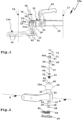
- the trailer couplings 10a-10g shown in the drawing have coupling devices 11a-11g that are suitable for attachment to a towing vehicle 12, for example a passenger towing vehicle.
- two transverse holes 14 are provided on ball supports 13 of the trailer couplings 10a-10g, for example, with which the coupling device 11a-11g can be screwed, for example, to a cross member of the towing vehicle 12 (not shown in the drawing).
- the following description refers to a rigid trailer coupling that is permanently arranged on the towing vehicle 12. It is understood that the coupling devices 11a-11g are only examples of coupling devices that can be removed from the towing vehicle 12 or are movably mounted on it, for example.
- the ball carriers 13 could be mounted so as to be pivotable and/or slidingly movable with respect to the towing vehicle 12 in order to be able to switch between a working position in which the trailer coupling is Figure 1 shown behind the rear of the towing vehicle 12, and a rest position, in which preferably provided is that the coupling device 11a-11g is moved away in the direction of a body of the towing vehicle 12, for example under and/or behind a rear bumper.
- this plays no role in the functioning of the trailer couplings 10a-10g according to the invention.
- the ball carrier 13 which is designed as an arm (“coupling arm”), facing away from the towing vehicle 12, there is a coupling ball which serves to rotatably support a towing ball coupling 16 of a trailer 17.
- the coupling ball 15a-15g engages in a coupling receptacle 18 of the towing ball coupling 16 in a manner known per se.
- the towing ball coupling 16 is arranged, for example, on a drawbar 19 of the trailer 17 and comprises a pivot lever 20 for actuating a holding jaw 21 between a holding position (see Figure 1 ) and a release position in which the coupling receptacle 18 is wide enough that the tow ball coupling 16 can be removed from the coupling ball 15a-15g.
- an inner surface 22 of the coupling receptacle 18 and a spherical surface 23 of the coupling ball 15a-15g lie opposite one another and at least partially against one another.
- the inner surface 22 can therefore slide along the spherical surface 23.
- the coupling receptacle 18 thus forms a ball socket in which the coupling ball 15a-15g is accommodated and can pivot in the manner of a ball joint. This is known per se.
- the coupling ball 15a-15g is arranged on a support 24 which projects upwards from the ball carrier 13.
- the coupling ball 15a-15g has an edge 25 on its underside, which is gripped by an under-gripping projection 26 of the tow ball coupling 16.
- a one-piece coupling device 11a-11g is shown, such that the ball carrier 13, the support 24 and the coupling ball 15a-15g arranged thereon are one piece.
- these components are formed from a single cast or forged part. It goes without saying that a multi-part construction is also possible, in which the components 13 and 15a-15g and expediently 24 are screwed together, welded or otherwise firmly connected to one another.
- Both the upper side 27, in particular the front side 28, as well as the peripheral surface 29 and, not shown, also the edge 25 are suitable for the arrangement of rotary drive bodies according to the invention, as will be described below:
- rotary drive bodies 30a-30g of rotary drive devices 31a-31g are provided for rotary drive contact with the coupling mouth or the coupling receptacle 18 of the towing ball coupling 16.
- the rotary drive bodies 30a-30g protrude in front of the ball surface 23.
- the rotary drive body 30a protrudes in front of the front face 28 of the coupling ball 15a, while the rotary drive bodies 30b-30d protrude in front of the circumferential surface 29.
- the rotary drive body 30a is spring-loaded into the contact position K, for which a spring arrangement 32 with a coil spring 33 is provided.
- the spring arrangement 32 holds the rotary drive body 30a in contact with the coupling receptacle 18.
- the rotary drive bodies 30b-30d are elastic in themselves or have an elastic coating such that they are always in rotary drive contact with the coupling receptacle 18 when the tow ball coupling 16 is coupled.
- the arrangement of the rotary drive bodies 30b-30c could be such that they also come into contact with the holding jaws 21.
- an arrangement as shown in the drawing is preferred, such that the rotary drive bodies 30b-30d are oriented in the direction of the towing vehicle 12, i.e. are in rotary drive contact with the coupling receptacle 18 on a side facing away from the holding jaw 21 when operating with the towing ball coupling 16. This keeps the mechanical stress low and also serves to optimally transmit and determine a rotation angle 34 that the towing ball coupling 16, and thus also the trailer 17, assumes with respect to the ball carrier 13, and thus the towing vehicle 12.
- yaw angle or angle about an axis of rotation 35 that is essentially vertical during operation of the combination of towing vehicle 12 and trailer 17, which axis can also be referred to as a swivel axis, whereby of course swivel angle detection or rotation angle detection about an axis that is horizontal during operation of the combination ("roll angle detection") or an obliquely inclined axis would also be possible according to the invention, but this is not the case in the exemplary embodiments.
- the rotary drive devices 31a-31g have rotary transmission members 36a-36g, each of which has a rotary shaft 37 or are designed as such.
- the rotation transmission members 36a-36g are each mounted on the coupling device 11a-11g so as to be rotatable about the rotation axis 35 by means of a bearing arrangement 99 which expediently has low internal friction and at least partially pass through the coupling ball 15a-15g or penetrate into it.
- the arrangement is such that the rotation transmission members 36a-36g also pass through the supports 24 and also the free end of the ball carrier 13 which carries the coupling ball 15a-15g, on the underside of which a sensor arrangement 40 is arranged which is designed and constructed to detect the angle of rotation 34.
- the sensor arrangement 40 is designed as a sensor module 41 (a discrete structure would be possible as an alternative) and comprises a rotation angle sensor 42, for example an inductive sensor, a magnetoresistive sensor (AMR or GMR), a Hall sensor or the like.
- the rotation angle sensor 42 is therefore a magnetically operating sensor.
- An excitation element 38 which is arranged on the respective rotation transmission element 36a-36g, serves to control or excite the rotation angle sensor 42.
- the magnetically operating rotation angle sensor 42 is an excitation magnet 39. The arrangement is therefore such that the movable element is formed by the excitation element 38, while the rotation angle sensor 42 is arranged in a fixed position on the coupling device 11a-11g.
- the rotation transmission member 36a-36g now enables the angle of rotation to be mechanically transferred from the area of the coupling ball 15a-15g to the lower area of a respective coupling device 11a-11g, where the sensor arrangement 40 is arranged.
- the sensor arrangement 40 is in connection with the trailer coupling 10a-10g, in particular in Figure 3 , can be seen in detail. In the case of trailer couplings 10b-10d, however, the sensor arrangement 40 is only shown schematically, but works in the same way in principle.
- the angle of rotation sensor 42 controls a processing unit 43, ie the output of the angle of rotation sensor 42 is connected to the input of the processing unit 43.
- the processing unit 43 generates an angle of rotation signal 44 for transmission to an on-board network of the towing vehicle 12.
- a corresponding signal line could be provided for the angle of rotation signal 44, which leads from the sensor arrangement 40 to the on-board network of the towing vehicle 12.
- a bus connection is preferred, ie the towing vehicle 12 has a data bus, e.g.
- the processing unit 43 feeds the angle of rotation signal 44, for example, into a bus coupler 45, which in turn serves to connect to the aforementioned data bus.
- the sensor arrangement 40 is connected, for example, via a line 46 to the on-board network of the towing vehicle 12.
- the line 46 comprises, for example, a bus line for connecting to the vehicle data bus, to which the bus coupler 45 is in turn connected.
- the sensor arrangement 40 is arranged in a protected manner on the underside of the ball carrier 13.
- the angle of rotation sensor 42, the processing unit 43 and the bus coupler 45 are arranged in a protective housing 47 which encapsulates the aforementioned components.
- These components could It can of course also be formed by a single electrical component, for example by an ASIC (Application Specific Integrated Circuit).
- the protective housing 47 therefore encapsulates the electrical components of the sensor arrangement 40. It should be noted at this point that it is of course also possible to encapsulate them using potting. In any case, it is advantageous if the sensor module 41 can be mounted as a whole on the trailer coupling 10a-10g.
- a receptacle 48 is accommodated on the coupling device 11a-11g also contributes to the protection of the sensor arrangement 40.
- the receptacle 48 is covered by a cover 49. This creates a kind of closed protective space in which the sensor arrangement 40 is arranged.
- the cover 49 is arranged on the ball carrier 13, for example, by means of screws 50.
- the line 46 is also guided in a protected manner.
- a bore or, as in the exemplary embodiment, a line channel 51 is provided, which extends from the receiving area for the sensor arrangement 40 in the direction of the vehicle-side end of the coupling device 11a-11g.
- the line channel 51 initially runs on the underside of the ball carrier 13, in its longitudinal direction, and is open on the underside. This enables simple assembly.
- a bore or an otherwise closed channel could also be provided in order to create a connecting line between the on-board network of a respective towing vehicle and a sensor arrangement operating according to the invention.
- the excitation element 38 is advantageously accommodated in a shield 52.
- the shield 52 is located at the end region of the rotation transmission element 36a-36g facing the sensor arrangement 40.
- the shield 52 is formed, for example, by a shielding body 53 which, on the one hand, the free end of the rotary shaft 37, e.g. with a plug or screw receptacle, and on the other hand comprises a central receptacle for the excitation magnet 39.
- the excitation magnet 39 therefore does not protrude from a side of the shield 52 facing the sensor arrangement 40, but is sunk into it or recessed into it.
- the excitation magnet 39 is thus surrounded by a peripheral wall of the shielding body 53, so that its magnetic field is not disturbed by the environment, in particular is not influenced by the magnetic material of the coupling device 11. Rather, its magnetic field 54 reaches the angle of rotation sensor 42, which is opposite the excitation element 38, directly.
- field conducting means can also be provided which direct the magnetic field 54 in the direction of the rotation angle sensor 42.
- other shielding means are provided for an excitation element, for example seals, capsule housings or the like, in order to protect the excitation element from environmental influences.
- the receiving space or the receptacle 48 could be covered by the cover 49 in such a way that a completely closed protective space - with the exception of the cable feed for the cable 46 - exists for the respective angle of rotation sensor. It is also conceivable to mount the angle of rotation sensor from below on the respective coupling device and then protect it, for example, by casting or another protective measure.
- the modular concept is preferred, in which the sensor arrangement 40 can also be subsequently mounted on the respective trailer coupling 10a-10g.
- the rotary shafts 37 are arranged in a bearing channel 55 which runs along the rotation axis 35 between an underside of the ball carrier 13, through the support 24 to the coupling ball 15a-15g.
- a recess 56 is preferably arranged in the lower region of the bearing channel 55, which, among other things, accommodates the shielding body 53.
- the bearing channel 55 is widened, so to speak, in its lower region facing the sensor arrangement 40.
- the recess 56 also serves to accommodate a bearing disk 57, a so-called thrust ring or thrust disk, for the rotatable mounting of the rotary drive device 31a-31g with respect to the coupling device 11a-11g.
- the rotary shaft 37 thus penetrates the bearing disk 57, which rests on the bottom of the recess 56 and on which the shielding body 53 is rotatably mounted.
- the shielding body 53 which represents a bearing end of the rotation transmission member 36a, is held in the recess 56 by a locking ring 59.
- a seal 58 between the locking ring 59 and the shielding body 53 is also expedient, but not absolutely necessary.
- a rotary bearing could also be provided instead of and/or in addition to the seal 58.
- This rotary bearing could be designed as a plain bearing like the bearing disk 57, whereby of course rolling bearings, in particular ball or roller bearings, or similar other bearing devices providing the required bearing properties could also be provided for both of these bearings.
- Bearing measures are also taken at the other end of the rotation transmission member 36a.
- the spring arrangement 32 is supported on a bearing disk 60.
- the bearing disk 60 is provided at the bottom of a recess 61, which, among other things, accommodates the rotary drive body 30a.
- the recesses 61, 56 are provided on opposite sides of the bearing channel 55.
- the recesses 56, 61 are expediently cylindrical, although other inner contours are of course also possible.
- the rotation transmission member 36a is thus rotatably mounted on the coupling device 11 by means of the bearings 57 and 60.
- the bearing 57 on which the shielding body 53 is supported, prevents the rotation transmission member 36a from being pulled out in the direction of the ball top 27.
- the rotary transmission member 36a On its side facing the rotary drive body 30a, the rotary transmission member 36a has a holding head 62.
- the holding head 62 is essentially cylindrical.
- the holding head 62 has a spring channel 63 in which a spring 64 and a ball 65 are accommodated.
- the spring 64 is supported on the one hand on the bottom of the spring channel 63 and on the other hand on the ball 65, so that the latter is spring-loaded radially outwards.
- the ball 65 forms a component of a locking arrangement 66, which also comprises a locking receptacle 67.
- the ball 65 is therefore loaded in the direction of the locking receptacle 67.
- the spring channel 63 runs radially with respect to the axis of rotation 35.
- the ball 65 is therefore loaded radially outwards with respect to the rotary transmission member 36a.
- the locking arrangement 66 serves to lock the rotary drive body 30a with the rotary transmission member 36a.
- the locking receptacle 67 is designed as a longitudinal groove that runs at least substantially parallel to the rotation axis 35.
- the locking receptacle 67 is formed, for example, on the inside of a plug-in receptacle 68 of the rotary drive body 30a.
- the holding head 62 of the rotary shaft 37 is inserted into the plug-in receptacle 68. When inserted, the ball 65 is initially displaced radially inward in the direction of the spring channel 63.
- the spring 64 presses the ball 65 outward in front of an outer circumference of the holding head 62 so that it locks into the locking receptacle 67. In this way, the rotary drive body 30a can be easily locked or mounted on the rotation transmission member 36a.
- the locking receptacle 67 is somewhat narrower than the diameter of the ball 65. As a result, the ball 65 always rests against the circumferential side flanks of the locking receptacle 67 with respect to the angle of rotation 34, so that there is optimal torsional stability between the rotary drive body 30a and the rotary transmission member 36a. At the same time, however, the two bodies 36a, 30a can also become disengaged, for example by pulling the rotary drive body 30a out of the recess 61 or by excessive rotary loading. In both cases, the ball 65 essentially gives way.
- a bevel 75 is preferably provided on the locking receptacle 67, which makes it easier to pull the rotary drive body 30a off the rotary transmission member 36a.
- the holding head 62 can have an outer peripheral contour that fits the plug-in receptacle 68, e.g. a cylindrical one, but in the present case is cubic.
- the holding head 62 is rotatable in the plug-in receptacle 68, the rotational stability being provided by the locking arrangement 66.
- a bearing disk 69 is arranged between an outer circumference of the rotary drive body 30a and an inner circumference of the recess 61, so that the rotary drive body 30a is rotatably mounted in the recess 61.
- the bearing disk 69 is in this case a disk with a flange projection which is supported on a step 70 of the recess 61.
- the spring arrangement 32 also acts on an end face of the holding head 62, thus on an end face of the peripheral wall which delimits the plug-in receptacle 68.
- a seal 71 is also provided on the rotary drive body 30a, the outer circumference of which rests against the inner circumference of the recess 61.
- the seal 71 is accommodated in an annular groove 72 of the rotary drive body 30.
- the seal 71 is U-shaped in cross section.
- the rotary drive body 30a On its free end, facing or associated with the coupling receptacle 18, the rotary drive body 30a also has a friction cap 73, for example made of NBR.
- the friction cap 73 is rounded on its outer circumference, i.e. it has curves that have approximately the same course as the curvature of the ball or peripheral surface 29, preferably even slightly more steeply inclined.
- the inner surface 22 of the coupling receptacle 18 always slides onto the friction cap 73, e.g. when placed on the coupling ball 15a and/or during driving, which prevents damage.
- the friction cap 73 rubs against the inside of the coupling receptacle 18 in such a way that a frictional connection is established.
- the rotary drive body 30a is rotated and with it also the other components of the rotary drive device 31a, thus also the rotary transmission element 36a and the excitation element 38 arranged thereon.
- the rotary drive body 30a can be easily replaced when it is worn.
- the rotary drive body 30a preferably has an engagement, in particular an annular groove 74, at which the rotary drive body 30a can be gripped and pulled off the rotation transmission member 36a.
- the friction cap 73 could also have positive-locking projections and/or receptacles on its rotary drive surface 76, other than those shown, in order to establish a positive-locking contact with the clutch receptacle 18.
- the rotary drive body 30b of the trailer coupling 10b is formed by a friction wheel 80, which is accommodated in a recess 81 on the coupling ball 15b.
- the recess 81 is designed in the manner of a pocket.
- the friction wheel 80 is mounted on a separate bearing shaft 82. An outer circumference of the friction wheel 80 is in frictional contact with an end of the rotary shaft 37 facing the friction wheel 80 and drives the rotary shaft 37. If the tow ball coupling 16 rotates on the coupling ball 15b, the friction wheel 80 is also rotated. The friction wheel 80 then in turn drives the rotary shaft 37, on the side of which facing the sensor arrangement 40 the excitation element 38 is arranged.
- the bearing shaft 82 and the rotary shaft 37 are arranged parallel to one another. It goes without saying that an oblique arrangement is also possible.
- the friction wheel 80 is therefore part of a friction wheel gear 83.
- a radial body 85 which forms the rotation transmission member 36c, is connected to the rotary shaft 37 in a rotationally fixed manner.
- the radial body 85 which, unlike what is shown in the drawing, could also be formed by a pin body that projects radially from the rotary shaft 37 and protrudes in front of the spherical surface 23, is designed here as a type of circular segment disk.
- an annular circumference of the radial body 85 protrudes in front of the spherical surface 23 in order to produce a frictional connection with the coupling receptacle 18 when the tow ball coupling 16 is placed on the coupling ball 15c.
- the radial body 85 is pivotally mounted in a recess 86 in the coupling ball 15c. It can pivot about the axis of rotation 35, in this case by approximately 130°. It is understood that such a large swivel angle is not necessary in practice, so that the recess 86 could, unlike that shown, enclose a smaller angular segment portion of the coupling ball 15c. However, larger swivel angles can also be realized, e.g. 180°.
- a wheel 90 is arranged in a rotationally fixed manner at the end of the rotation transmission member 36d facing away from the sensor arrangement 40.
- the wheel 90 is a component of a belt transmission 91 which is arranged in a recess 92 on the coupling ball 15d.
- the wheel 90 is driven by a belt 93 which runs both around the wheel 90 and around a deflection roller 94.
- drive rollers 95 are provided which protrude in front of the recess 92, i.e. in front of the coupling ball 15d.
- the belt 93 therefore runs between the deflection roller 94 and the two drive rollers 95, which are arranged approximately in the corner areas of a triangle.
- just a single drive roller 95 would be sufficient.
- the two drive rollers 95 produce a better frictional connection with the coupling receptacle 18.
- a friction belt or another flexible driving member could also protrude directly in front of a surface of a coupling ball of a trailer coupling according to the invention in order to be driven directly by the towing ball coupling, for example its inner surface, in the respective direction of rotation.
- the rotary drive body 30a is always spring-loaded into the contact position K, which allows for compensation for coupling receptacles 18 from different manufacturers or other tolerances.
- the rotary drive body is not always in the contact position K, in which it protrudes far in front of the ball surface 23, but can also be adjusted to a rest position R, in which it is aligned with the ball surface 23 or even set back behind it.
- holding arrangements 100a, 100b are provided for the trailer couplings 10e and 10f in order to hold the rotary drive body 30e, 30f in the rest position R or to release it for adjustment into the contact position K.
- the trailer coupling 10e is provided with a heart-shaped curve 105, for example on the inside or the plug-in receptacle 68 of the rotary drive body 30e, into which a curve follower (not shown) on the holding head 62 of the rotary transmission element 36e engages.
- a curve follower (not shown) on the holding head 62 of the rotary transmission element 36e engages.
- the way it works is known, for example, from ballpoint pens with push-button actuation.
- the heart-shaped curve 105 can also be arranged on the holding head 62, whereas the curve follower, which engages in the heart-shaped curve 105, would then be arranged on the inside of the plug-in receptacle 68 in this case.
- a basic construction of the trailer coupling 10f is similar to the trailer coupling 10a, but the rotary drive body 30f forms a component of the holding arrangement 100b through an actuating member 110 that interacts with the locking arrangement 66.
- the actuating member 110 has an actuating surface 111 that protrudes from the spherical surface 23 at its actuating end 112.
- the actuating member 110 is designed as a rod or bar.
- the actuating end 112 protrudes from the spherical surface 23 in the manner of a push button or pin, e.g. approximately equatorially.
- the actuating member 110 is slidably mounted in a channel 113 on the coupling ball 15f.
- the channel 113 runs at an angle, in this case at a right angle, to the bearing channel 55 or to the outer circumference of the rotary drive body 30f.
- the channel 113 is aligned with a keyhole bore 117 of the rotary drive body 30f, which comprises a blocking opening 118 and a guide channel 119, which functionally corresponds to the locking receptacle 67.
- the actuating member 110 is spring-loaded by a spring 116 which is supported on a bottom 115 of the channel 113 on the one hand and on a head 114 of the actuating member 110 on the other hand and moves the latter into a release position ( Figure 11b ).
- the release position F the actuating member 110 acts on the ball 65, i.e. the locking member of the locking arrangement 66, and pushes it out of the blocking opening 118.
- the spring arrangement 32 can then adjust the rotation transmission member 36f into the contact position K, since the ball 65 can enter the guide channel 119 in order to realize a play-free rotational drive of the rotational drive body 30f on the rotation transmission member 36f.
- the spring constant of the spring 116 is smaller than the spring constant of the spring 64, so that the actuating member 110 in the unloaded state, ie when nothing acts on the actuating end 112 in the direction of the rotary drive body 30f, radially is displaced outside the ball surface 23, whereby the ball 65 penetrates into the blocking opening 118.
- the Figures 13 to 15 The seventh embodiment described has similar components as the trailer coupling according to Figures 1-3 , however not with a pin-like rotary drive body 30a, but with a ball segment 120 forming a kind of cap as rotary drive body 30g.
- the ball segment 120 forms a kind of cap of an overall ball 121, which also includes a lower part, namely a partial ball 122.
- the ball segment 120 and the partial ball 122 are complementary to each other, i.e. they complement each other.
- a spherical surface 123 of the lower partial ball 122 and a spherical surface 124 of the ball segment 120 or rotary drive body 30g complement each other to form the entire spherical surface 23.
- the arrangement is such that the lower spherical surface 123 provided by the partial sphere 122 which is stationary during towing operation of the trailer coupling 10g is larger than the upper spherical surface 124, at least in relation to the engagement or interaction with the coupling receptacle 18.
- the coupling receptacle 18 therefore essentially acts on the stationary spherical surface 123 which supports it in a sliding manner, at least as far as the tensile forces or thrust forces or transverse forces in the horizontal direction (during driving operation) are concerned.
- the upper part of the entire sphere 121 namely the sphere surface 124, serves for rotational drive in order to generate an angular impulse or a rotational signal to the rotation angle sensor 42 via the transmission element 36g.
- the upper ball surface 124 is expediently provided with an adhesive coating and/or a Ribbing or another schematically shown form-fitting contour 134 can be implemented in order to improve the rotational drive between, on the one hand, the tow ball coupling 16 and, on the other hand, the rotational drive body 30g.
- the upper ball surface 124 can also be provided with or formed from an elastic plastic, wherein the plastic advantageously yields when the tow ball coupling 16 rests on it.
- the rotary drive body 30g can advantageously be spring-loaded in the direction away from the part that is stationary during towing operation of the trailer coupling 10g, in particular away from the partial ball 122 (into the contact position K), in order to improve the contact with the towing ball coupling 16.
- Standard coupling balls are flattened on their upper side.
- the partial ball 122 also expediently has a flattened area 125 on its upper side.
- the area of the flattened area 125 can be designed for positive engagement.
- a toothing can be provided, for example in the manner of a screw head, into which a corresponding projection, e.g. in the manner of a screwdriver bit, engages on the tow ball coupling 16 (not shown).
- the rotary drive body 30g is connected to the rotary transmission member 36g in a rotationally fixed manner.
- a pin 126 penetrates coaxial bores 127, 128 on the rotary transmission member 36g and the rotary drive body 30g.
- a rolling bearing 129 is arranged, which supports the rotary drive body 30g in the direction of the axis of rotation 35 is mounted directly on the fixed part of the trailer coupling 10g, namely on an end face 131 of the partial ball 122.
- a receptacle is provided on the ball segment and/or the partial ball, in which the rolling bearing 129 is accommodated.
- the rolling bearing 129 is located inside a seal 130, in this case an O-ring or sealing ring, so that it is protected against environmental influences.
- the ball segment 120 is located above an equatorial plane 132 of the overall ball 121, so that the tow ball coupling 16 can be supported on the ball surface 123 not only below the equatorial plane 132, but also above it.
- An additional bearing in particular a roller bearing, can expediently be provided in the area of the rotation transmission member 36g.
- a roller bearing 133 could be arranged in the recess 61, which is designed in particular to absorb forces acting transversely to the axis of rotation 35.
- the rolling bearings 133, 129 can be, for example, needle bearings, roller bearings or ball bearings.
- the senor arrangement it is not absolutely necessary for the sensor arrangement to be arranged directly on the underside of the ball carrier, but could also include a sensor arranged further up on the coupling device.
Landscapes
- Engineering & Computer Science (AREA)
- Transportation (AREA)
- Mechanical Engineering (AREA)
- Rolling Contact Bearings (AREA)
- Pivots And Pivotal Connections (AREA)
- Transmission Devices (AREA)
- Measurement Of Length, Angles, Or The Like Using Electric Or Magnetic Means (AREA)
Description
- Die Erfindung betrifft eine Anhängekupplung für ein Zugfahrzeug, insbesondere ein Personen-Kraftfahrzeug, zum Anhängen eines Anhängers an das Zugfahrzeug, mit einer Kupplungseinrichtung, die einen Kugelträger und eine an einem freien Ende des Kugelträgers angeordnete Kupplungskugel zum drehbaren Lagern einer Kupplungsaufnahme einer Zugkugelkupplung des Anhängers umfasst, gemäß dem Oberbegriff des Anspruchs 1.
- Eine derartige Anhängekupplung ist beispielsweise in
US 3,947,839 erläutert. - Eine Anhängekupplung für ein Zugfahrzeug, die einen Sensor zur Drehwinkelerfassung des Anhängers relativ zum Zugfahrzeug enthält, geht beispielsweise aus
DE 103 34 000 A1 hervor. Es wird in dieser Druckschrift vorgeschlagen, den gesamten Kugelkopf relativ zu einem Stangenteil, an dem der Kugelkopf angeordnet ist, zu drehen und die relative Verdrehung des Kugelkopfes zur Stange mittels eines Magnetfeldsensors zu erfassen. Ein anderes Ausführungsbeispiel aus diesem Dokument betrifft eine Anhängekupplung, bei der der Magnetsensor fest in die Kupplungskugel integriert ist und durch ein Erregerfeld eines Magneten betätigt wird, das in der Kupplungsaufnahme angeordnet ist. - Sofern die Kupplungskugel drehbar gelagert ist, sind die Anforderungen an das Lagerkonzept sehr hoch. Daher ist in
DE 10 2008 045 695 eine verbesserte Lageranordnung zum drehbeweglichen Lagern der Kupplungskugel bezüglich des Kugelträgers erläutert. - Davon ausgehend ist es die Aufgabe der vorliegenden Erfindung, eine Anhängekupplung mit einer Sensoranordnung zur Drehwinkelerfassung bereitzustellen, die eine hohe Verschleißfestigkeit aufweist.
- Zur Lösung der Aufgabe ist eine Anhängekupplung gemäß der technischen Lehre des Anspruchs 1 vorgesehen.
- Weiterhin wird zur Lösung dieser Aufgabe eine Sensoranordnung bereitgestellt, die vorzugsweise als eine Art Sensormodul ausgestaltet ist, und an eine entsprechend vorbereitete Anhängekupplung anbaubar ist.
- Die Drehmitnahmefläche ist also beispielsweise mit der Innenfläche der Kupplungsaufnahme in Drehmitnahmekontakt. Möglich ist aber vorteilhaft auch, dass der Drehmitnahmekörper z.B. mit einer Randfläche der Kupplungsaufnahme in Drehmitnahmekontakt ist, z.B. einem Umfangsrand der Kupplungsaufnahme.
- Der Drehmitnahmekörper ist vorzugsweise so ausgestaltet und/oder vorgesehen, dass er nicht vor eine Außenseite oder eine Außenfläche der Kupplungsaufnahme vorsteht, wenn die Zugkugelkupplung des Anhängers an die Anhängekupplung des Zugfahrzeugs angekuppelt ist. Der Drehmitnahmekörper ist zweckmäßigerweise nicht zum Durchdringen der Kupplungsaufnahme der Zugkugelkupplung vorgesehen und/oder ausgestaltet.
- Der Drehmitnahmekörper verbleibt zweckmäßigerweise an der Anhängekupplung, wenn die Zugkugelkupplung abgekuppelt wird. Er muss also beim Abkuppeln der Zugkugelkupplung nicht demontiert werden.
- Mit Kugeloberfläche im Sinne der Erfindung ist selbstverständlich die der Kupplungsaufnahme der Zugkugelkupplung zugeordnete Kugeloberfläche der Kupplungskugel gemeint, also auch deren oberseitige normgerechte Abflachung, wobei diese durch den Drehmitnahmekörper auch sozusagen ersetzt sein kann. Die Kupplungskugel hat auch unterseitig vorteilhaft eine Art Bund oder Halterand.
- Bei der Anhängekupplung ist dementsprechend beispielsweise ein Aufnahmeraum für die Sensoranordnung bzw. das Sensormodul vorhanden. Weiterhin ist es zweckmäßig, wenn die Kupplungseinrichtung einen Lagerkanal und/oder einen Durchgangskanal und/oder einen Einsteckkanal zum Aufnehmen und/oder Einbringen und/oder Lagern der Drehmitnahmeeinrichtung aufweist. Mithin ist es also möglich, eine Anhängekupplung zunächst ohne die erfindungsgemäß ausgestaltete Sensoranordnung herzustellen, die dann sozusagen als Nachrüstlösung ein- oder angebaut wird. Weiterhin ist es denkbar, dass ein und dieselbe Anhängekupplung mit und ohne Sensoranordnung im Serieneinsatz ist, d.h. dass je nach Ausrüstungsstufe des jeweiligen Zugfahrzeuges wahlweise die Anhängekupplung mit und ohne Sensoranordnung montiert wird.
- Dabei kann der Drehmitnahmekörper oder ein entsprechendes Ersatzteil mit dem Drehmitnahmekörper entsprechender Außenkontur montiert sein, so dass die Kugeloberfläche der Kupplungskugel, also auch deren oberseitige normgerechte Abflachung, vollständig für die Kupplungsaufnahme der Zugkugelkupplung bereitsteht, auch wenn keine Sensoranordnung montiert ist.
- Ein Grundgedanke der Erfindung ist es, dass nicht die Kupplungskugel drehbar ist, sondern lediglich der Drehmitnahmekörper das jeweils bewegliche Bauteil darstellt. Somit ist die Anhängekupplung mechanisch fest. Insgesamt bildet die Kupplungseinrichtung mit der Kupplungskugel zweckmäßigerweise eine einzige, vorzugsweise einstückige, Baueinheit. Das bewegliche Glied wird durch die Drehmitnahmeeinrichtung bereitgestellt, die bei Verschleiß ohne weiteres auswechselbar ist. Damit wird insgesamt eine sehr stabile, hoch belastbare Baueinheit erzielt, die dem täglichen Fahrbetrieb optimal Stand halten kann. Dies ermöglicht unter anderem eine preisgünstige Fertigung. Weiterhin ist es auch unter Sicherheitsaspekten vorteilhaft, wenn die Kupplungseinrichtung eine in sich starre, feste Baueinheit darstellt, so dass selbst bei Ausfall der Sensoranordnung, bei einem Verschleiß des Drehmitnahmekörpers oder dergleichen, weiterhin ein sicherer, zuverlässiger Fahrbetrieb des Gespanns aus Zugfahrzeug und Anhänger möglich ist.
- Die Anhängekupplung in Verbindung mit der anhängerseitigen Zugkugelkupplung ermöglicht zahlreiche Drehfreiheitsgrade, insbesondere eine bei Kurvenfahrt des Gespanns erforderliche Drehbarkeit um eine im Wesentlichen vertikale Schwenk- oder Drehachse.
- Es versteht sich, dass die erfindungsgemäße Anhängekupplung zwar mehrere Drehmitnahmekörper aufweisen kann. Bevorzugt ist jedoch ein einziger Drehmitnahmekörper.
- Zwischen der Sensoranordnung und dem mindestens einen Drehmitnahmekörper ist zweckmäßigerweise ein Drehübertragungsglied angeordnet. Das Drehübertragungsglied ist beispielsweise durch eine Drehwelle gebildet oder enthält eine Drehwelle.
- Die Mitnahmeeinrichtung, beispielsweise deren Drehübertragungsglied, deren Drehmitnahmekörper oder sonstige Komponenten sind zweckmäßigerweise mittels einer Lageranordnung derart an der Kupplungseinrichtung bzw. deren Grundkörper gelagert, dass die Reibung zwischen dem Drehmitnahmekörper und der Kupplungsaufnahme, wenn diese auf die Anhängekupplung aufgesetzt ist, wesentlich größer ist als diejenige Reibung, die zwischen der Drehmitnahmeeinrichtung bzw. deren Komponenten und der Kupplungseinrichtung vorhanden ist. Beispielsweise ist die Reibung zwischen der Zugkugelkupplung und dem Drehmitnahmekörper zweimal so groß, zweckmäßigerweise sogar drei- bis zehnmal so groß, vorzugsweise sogar elf- bis dreißigmal so groß wie eine Reibung zwischen der Drehmitnahmeeinrichtung bzw. deren Komponenten und der Kupplungseinrichtung, d.h. beispielsweise deren Grundkörper. Man kann dies beispielsweise bereits durch Gleitlager, Lagerscheiben oder dergleichen erreichen. Es könnten aber auch Wälzlager, beispielsweise Kugellager oder Rollenlager, zur besonders leichtgängigen Lagerung der Drehmitnahmeeinrichtung bezüglich der feststehenden Komponenten der Anhängekupplung vorgesehen sein.
- Bevorzugt sind die Kupplungskugel und die Sensoranordnung an einander entgegensetzten Seiten des Kugelträgers angeordnet. Somit ist es beispielsweise möglich, die Sensoranordnung sozusagen von unten an den Kugelträger anzubauen, wohingegen die Kupplungskugel an der Oberseite angeordnet ist. In diesem Zusammenhang erweist sich auch das Drehübertragungsglied als vorteilhaft, das nämlich die Drehwinkelvorgabe des Anhängers auf die Sensoranordnung überträgt.
- Bevorzugt ist es, wenn das Drehübertragungsglied und der mindestens eine Drehmitnahmekörper lösbar miteinander verbunden sind. Dabei ist beispielsweise eine formschlüssige Verbindung zweckmäßig. Bevorzugt sind das Drehübertragungsglied und der Drehmitnahmekörper werkzeuglos voneinander lösbar. Aus Gründen des Diebstahlschutzes kann es allerdings auch vorteilhaft sein, wenn der Drehmitnahmekörper nur mit einem Werkzeug, insbesondere nur einem Spezialwerkzeug, mit dem Drehübertragungsglied verbunden werden kann. Jedenfalls ermöglicht die lösbare Verbindung des Drehübertragungsglieds und des Drehmitnahmekörpers ein leichtes Austauschen, beispielsweise wenn der Drehmitnahmekörper verschlissen ist.
- Der mindestens eine Drehmitnahmekörper und das Drehübertragungsglied sind zweckmäßigerweise drehfest miteinander verbunden. Beispielsweise greifen der Drehmitnahmekörper und das Drehübertragungsglied formschlüssig ineinander ein. Es kann aber auch ein Verbindungsglied, beispielsweise eine Kugel, eine Nut oder dergleichen vorgesehen sein.
- Eine andere Ausführungsform der Erfindung sieht vor, dass der Drehmitnahmekörper und das Drehübertragungsglied zwar drehgekoppelt, jedoch relativ zueinander beweglich sind. Die Drehkopplung wird vorzugsweise über ein Getriebe realisiert. Dieses Getriebe kann beispielsweise dadurch realisiert sein, dass der Drehmitnahmekörper das Drehübertragungsglied antreibt. Aber auch der zwischengeschaltete Getriebekomponenten, beispielsweise Zahnräder, Treibräder, Zahnriemen, Reibriemen oder dergleichen mehr sind ohne weiteres möglich.
- Jedenfalls ist es bevorzugt, wenn der Drehmitnahmekörper und das Drehübertragungsglied vorzugsweise ohne Schlupf miteinander drehgekoppelt sind, insbesondere miteinander drehfest sind. Es versteht sich, dass die bewegliche Kopplung zwischen Drehmitnahmekörper und Drehübertragungsglied zwar direkt möglich ist, aber auch indirekt.
- Das Getriebe kann beispielsweise ein Reibradgetriebe, ein Zahnradgetriebe, ein Riemengetriebe oder dergleichen mehr umfassen.
- Das Drehübertragungsglied und der mindestens eine Drehmitnahmekörper sind zweckmäßigerweise durch eine Rastanordnung miteinander verrastbar.
- Diese Rastanordnung kann beispielsweise einen Rastvorsprung an einem Bauteil aufweisen, der in eine entsprechende Rastausnehmung am anderen Bauteil rastend eingreift. Eine solche Verrastung ist beispielsweise schon dadurch möglich, dass das Drehübertragungsglied eine federnde Eigenschaft aufweist. Somit ist ein zusätzliches Federelement nicht notwendig, um die beiden Komponenten miteinander zu verrasten.
- Eine bevorzugte Ausführungsform der Rastanordnung sieht vor, dass das Drehübertragungsglied und/oder der Drehmitnahmekörper ein federbelastetes Rastglied aufweist, beispielsweise eine Kugel, einen federbelasteten Bolzen oder dergleichen. Das Rastglied greift in eine insbesondere als Nut ausgestaltete Rastaufnahme ein. Es versteht sich, dass die Rastaufnahme selbstverständlich auch als Kugelkalotte ausgestaltet sein kann. Die Nut verläuft vorzugsweise parallel zu einer Drehachse, um die der Drehmitnahmekörper drehbar gelagert ist, und/oder parallel zu einer Aufsteckrichtung, in der der Drehmitnahmekörper auf das Drehübertragungsglied aufsteckbar ist.
- Die Nut oder Kugelkalotte ist zweckmäßigerweise etwas schmaler als eine Breite des Rastgliedes, das an seiner Eingreifseite oder Rastseite eine Schräge oder Rundung aufweist, beispielsweise als Kugel oder gerundeter Bolzen ausgestaltet ist. Auf diese Weise wird möglichst einfach eine Spielfreiheit der Verrastung hergestellt, so dass die Drehmitnahme spielfrei ist. Das Rastglied liegt nämlich stets an den Seitenkanten der Rastaufnahme an, wenn diese etwas schmaler als das zweckmäßigerweise gerundete oder auch mindestens eine sonstige, beispielsweise keilförmige Schrägfläche aufweist, in die Rastaufnahme eingreift.
- Weiterhin ist es möglich, dass zwischen dem Drehübertragungsglied und dem Drehmitnahmekörper eine Drehmomentbegrenzungseinrichtung vorhanden ist. Bei Überschreitung eines Schwellenmoments hebt diese Drehmomentbegrenzungseinrichtung den Drehschluss zwischen dem Drehmitnahmekörper und dem Drehübertragungsglied auf. Somit kann beispielsweise ein Verklemmen verhindert werden, was letztlich auch eine Zerstörung oder einen vorzeitigen Verschleiß der Drehmitnahmeeinrichtung oder auch der Sensoranordnung zur Folge haben kann.
- Bevorzugt lagert das Drehübertragungsglied den Drehmitnahmekörper drehbar bezüglich eines Grundkörpers der Kupplungseinrichtung. Der Grundkörper stellt vorzugsweise einstückig den Kugelträger und die Kupplungskugel bereit. An dieser Stelle sei bemerkt, dass die Kupplungseinrichtung selbstverständlich auch mehrteilig aufgebaut sein kann, so dass beispielsweise der Kugelträger und die Kupplungskugel miteinander verschraubt sind, auch unter Zwischenschaltung eines weiteren Bauelements, beispielsweise eines Abstandsstücks.
- Die Drehmitnahmeeinrichtung weist zweckmäßigerweise ein mit dem mindestens einen Drehmitnahmekörper drehgekoppeltes Erregerglied auf. Das Erregerglied ist beispielsweise ein Erregermagnet oder weist einen Erregermagneten auf. Vorzugsweise ist das Erregerglied sozusagen passiv, d.h. dass die Sensoranordnung, die zweckmäßigerweise elektrisch betrieben wird, ortsfest ist, während das Erregerglied mit der Drehmitnahmeeinrichtung mit dreht und beispielsweise ein Magnetfeld, ein elektrisches Feld erzeugt oder ablenkt. Es ist aber auch möglich, dass das Erregerglied ein optisches Glied ist, das beispielsweise Licht erzeugt und/oder einen Strahlungsverlauf beeinflusst, z.B. eine Reflektorscheibe, ein Prisma oder dergleichen.
- Bevorzugt ist es, wenn eine Abschirmung für das Erregerglied vorhanden ist. Beispielsweise ist die Abschirmung an der Drehmitnahmeeinrichtung vorhanden. Es versteht sich, dass die Abschirmung aber auch an einer sonstigen Stelle, auch ortsfest, vorhanden sein kann. Die Abschirmung schützt beispielsweise vor optischen, magnetischen oder elektrischen Einflüssen. So ist die Abschirmung beispielsweise aus einem nicht magnetischen Material, zum Beispiel Aluminium. Bevorzugt ist es, wenn die Abschirmung beispielsweise an dem Drehübertragungsglied angeordnet ist und einen Schirm um das Erregerglied bildet. Man kann beispielsweise, wie in den Ausführungsbeispielen noch deutlich wird, das Erregerglied, beispielsweise den Erregermagneten, sozusagen in die Abschirmung oder einen Abschirmkörper einbetten. Es versteht sich, dass die Abschirmung einen oder mehrere Abschirmkörper, Abschirmbeschichtungen oder dergleichen aufweisen kann.
- Bevorzugt ist der mindestens eine Drehmitnahmekörper durch eine Federanordnung in die Kontaktstellung federbelastet. Somit hält die Federanordnung den Drehmitnahmekörper bzw. die Drehmitnahmefläche desselben in Kontakt mit der Kupplungsaufnahme.
- Die Federanordnung dient beispielsweise dazu, einen Ausgleich zwischen einerseits dem Drehmitnahmekörper und andererseits der Zugkugelkupplung zu schaffen. Die Federanordnung kann auch die Funktion einer Nachstelleinrichtung haben, die beispielsweise bei Verschleiß des Drehmitnahmekörpers wirkt.
- Denkbar ist es aber auch, dass der Drehmitnahmekörper in sich federnd ist, beispielsweise aus einem entsprechend flexiblen Material besteht oder eine solche flexible Beschichtung aufweist, um so den Kontakt mit der Kupplungsaufnahme herzustellen und zu halten.
- Bei der Federanordnung ist es bevorzugt, wenn sie sich an einem Drehlager, beispielsweise an einem Lagerring, einer Anlaufscheibe, oder dergleichen, abstützt, mit dem die Drehmitnahmeeinrichtung an einem Grundkörper der Kupplungseinrichtung drehbar gelagert ist. Somit dreht die Federanordnung sozusagen mit. Es ist aber auch möglich, dass zwischen der Federanordnung und dem Drehmitnahmekörper und oder dem Drehübertragungsglied ein Drehlager vorhanden ist. Mit dem vorgenannten Lagerring ist beispielsweise ein Ring eines Kugellagers oder eines Wälzlagers gemeint.
- Der mindestens eine Drehmitnahmekörper ist zweckmäßigerweise in der Kontaktstellung oder in der Ruhestellung festlegbar, beispielsweise verrastbar, wobei der Drehmitnahmekörper in der Ruhestellung mit der Kugeloberfläche fluchtet oder hinter die Kugeloberfläche zurückversetzt ist. Jedenfalls steht der Drehmitnahmekörper nicht oder nur unwesentlich vor die Kugeloberfläche vor, wenn er in der Ruhestellung ist.
- Eine solche Verrastung kann beispielsweise als eine sogenannte Push-Push-Funktion realisiert sein. So kann beispielsweise der Drehmitnahmekörper durch einmaliges Drücken in seine Ruhestellung gebracht werden, durch ein weiteres Drücken in die Kontaktstellung vorfedern. Weiterhin ist es denkbar, dass beispielsweise ein Festlegeglied, insbesondere ein Splint oder dergleichen, zum Festlegen des Drehmitnahmekörpers in der Ruhestellung vorgesehen ist.
- Zum Halten des Drehmitnahmekörpers in der Ruhestellung oder auch zum Freigeben in die Kontaktstellung ist zweckmäßigerweise eine Halteanordnung vorgesehen, beispielsweise die vorgenannte Rastanordnung. In der Ruhestellung steht der Drehmitnahmekörper weniger weit vor die Kugeloberfläche vor als in der Kontaktstellung, d.h. er fluchtet beispielsweise mit der Kugeloberfläche oder steht hinter diese zurück. Es ist aber auch denkbar, dass der Drehmitnahmekörper in der Ruhestellung noch immer etwas vor die Kugeloberfläche vorsteht, jedoch nicht soweit, wie in der Kontaktstellung.
- Die Halteanordnung umfasst beispielsweise eine Herzkurve, wie man sie von Kugelschreibermechaniken kennt. Eine Beschreibung dazu findet sich beispielsweise im Gebrauchsmuster
DE 70 15 045 oder auch der OffenlegungsschriftDE 146 16 07 . In diesem Zusammenhang kann die Halteanordnung auch so getroffen sein, dass sie ein Weiterschalten des Drehmitnahmekörpers um die Drehachse ermöglicht, um beispielsweise einen Verschleiß des Drehmitnahmekörpers auszugleichen, wie beispielsweise inDE 70 15 045 beschrieben. - Die Halteanordnung kann auch ein Betätigungsglied oder Aktivierungsglied aufweisen, das eine vor die Kupplungseinrichtung, beispielsweise die Kugeloberfläche, vorstehende Betätigungsfläche aufweist. Beispielsweise beim Aufsetzen der Zugkugelkupplung oder durch Bedienereingriff wird die Betätigungsfläche betätigt, so dass das Betätigungsglied in eine Freigabestellung verstellt wird. In dieser Freigabestellung ermöglicht das Betätigungsglied eine Verstellung des Drehmitnahmekörpers in Richtung der Kontaktstellung, während in einer Blockierstellung des Betätigungsgliedes der Drehmitnahmekörper in der Ruhestellung gehalten wird. Nun ist es möglich, dass das Betätigungsglied unmittelbar auf den Drehmitnahmekörper wirkt, d.h. die Freigabe oder Blockierung des Drehmitnahmekörpers selbst bewirkt. Bevorzugt wirkt das Betätigungsglied jedoch auf die Rastanordnung, beispielsweise das Rastglied, mit der das Drehübertragungsglied und der mindestens eine Drehmitnahmekörper miteinander verrastbar sind. Es ist auch möglich, dass das Betätigungsglied die Rastaufnahme verstellt, beispielsweise einen Boden derselben verstellt. Beispielsweise ermöglicht das Betätigungsglied in der Freigabestellung, dass das Rastglied in der zweckmäßigerweise eine Drehmitnahme realisierenden Rastaufnahme positioniert ist, während das Betätigungsglied in der Blockierstellung das Rastglied, beispielsweise die vorgenannte Kugel, in einen Blockieraufnahme einrasten lässt.
- Die geometrische Gestalt der Kugeloberfläche umfasst eine vom Kugelträger abgewandte Oberseite, beispielsweise eine Stirnseite oder eine Abflachung, wie bei Anhängekupplungen üblich, und eine sich zwischen der Oberseite und dem Kugelträger erstreckende Umfangsmantelfläche. Nun ist es möglich, einen oder mehrere der Drehmitnahmekörper an verschiedenen Stellen einer solchen Kupplungskugel anzuordnen. Beispielsweise ist ein Drehmitnahmekörper vorgesehen, der in der Kontaktstellung vor die Oberseite zur Erfassung einer relativen Verdrehung der Kupplungsaufnahme zu der Kupplungskugel um eine im Wesentlichen vertikale Achse vorsteht.
- Aber auch am sozusagen äquatorialen Umfang, jedenfalls an einem Zwischenbereich zwischen der Oberseite und der Unterseite der Kupplungskugel, kann ein Drehmitnahmekörper vorgesehen sein. Bevorzugt ist der Drehmitnahmekörper an einer in Fahrtrichtung vorderen Seite der Kugelmanteloberfläche oder Umfangsmantelfläche vorgesehen. In der Regel drückt nämlich eine Verriegelung oder Verriegelungsbacke der Zugkugelkupplung auf die Fahrtrichtung hintere Umfangsmantelfläche der Kupplungskugel.
- Der vor die Oberseite vorstehende Drehmitnahmekörper ist zwar vorzugsweise für eine relative Verdrehung der Kupplungsaufnahme zur Kupplungskugel um eine im Wesentlichen vertikale Achse (bei Gebrauch der Anhängerkupplung) vorgesehen. Es ist aber auch möglich, dort einen Drehmitnahmekörper vorzusehen, der eine dazu winkelige Verdrehung erfassen kann, beispielsweise um eine im Wesentlichen horizontale Achse. Selbstverständlich gilt dasselbe auch für den Drehmitnahmekörper, der in der Kontaktstellung vor die Umfangsmantelfläche vorsteht. Dieser dient zwar bevorzugt dazu, eine Verdrehung der Kupplungsaufnahme zur Kupplungskugel um eine im Wesentlichen vertikale Achse zu erfassen. Es ist aber auch möglich, dass der Drehmitnahmekörper eine Verdrehung um eine im Wesentlichen horizontale Achse erfasst bzw. dazu vorgesehen ist.
- Der Drehmitnahmekörper kann völlig unterschiedliche Geometrien aufweisen. Bevorzugt ist der Drehmitnahmekörper beispielsweise durch ein Kappenelement, durch einen stirnseitig auf das Drehübertragungsglied angebrachten Stirnseitenkörper oder dergleichen gebildet. Es ist aber auch möglich, dass der Drehmitnahmekörper beispielsweise durch ein Rad, ein Flügelsegment, einen vorstehenden Stift oder dergleichen mehr gebildet wird. Weiterhin ist es denkbar, den Drehmitnahmekörper beispielsweise als flexiblen Riemen auszugestalten, der seinerseits wiederum das Übertragungsglied und/oder unmittelbar das vorher bereits erläuterte Erregerglied, beispielsweise einen Erregermagneten, antreibt.
- Der Drehmitnahmekörper ist in einer bevorzugten Ausführungsform der Erfindung ein Kugelsegment oder als eine Art Kugelkappe ausgestaltet. Die Kupplungskugel hingegen ist keine Vollkugel, sondern sozusagen eine Teilkugel. Das Kugelsegment ist nunmehr so getroffen, dass es die Teilkugel insgesamt zu einer Gesamtkugel ergänzt.
- Dazu ist wieder zu betonen, dass die Gesamtkugel selbstverständlich nicht allseitig kugelig sein muss, sondern beispielsweise in sich üblicher Weise an ihrer Unterseite einen Rand oder einen Bund aufweist und an ihrer Oberseite abgeflacht sein kann. Selbstverständlich bildet das Kugelsegment diese Abflachung zweckmäßigerweise ebenfalls aus, wenn es dessen vertikal stirnseitigen, beim Fahrbetrieb der Anhängekupplung in der Regel oberseitigen Bereich umfasst oder bildet.
- An dieser Stelle sei bemerkt, dass das Kugelsegment selbstverständlich auch an einer Seitenfläche der Gesamtkugel vorgesehen sein kann.
- Weiterhin ist festzuhalten, dass das Kugelsegment und die Teilkugel zweckmäßigerweise mit geringem Abstand miteinander verbunden sind, so dass insgesamt eine normgerechte kugelige Gestalt gegeben ist.
- Das Kugelsegment bildet zweckmäßigerweise wie bereits erwähnt eine vertikal obere Stirnseite der Gesamtkugel.
- Bevorzugt ist es, wenn das Kugelsegment an einer äquatorial oberen Seite der Gesamtkugel angeordnet ist.
- Bei dieser Ausführungsform sowie aber auch bei einer anderen Positionierung des Kugelsegmentes an der Gesamtkugel, beispielsweise einer beim Fahrbetrieb der Anhängekupplung horizontal schrägen Position, ist es vorteilhaft, wenn das Kugelsegment bzw. der Drehmitnahmekörper einen kleineren Anteil an der Kugeloberfläche der Gesamtkugel hat als vorteilhaft die feststehende Teilkugel oder Grundkugel.
- Zwischen einer dem Kugelsegment zugewandten Stirnseite der Teilkugel und dem Kugelsegment ist zweckmäßigerweise eine zusätzliche Lagerung vorhanden, z.B. ein Gleitlager, ein Wälzlager oder dergleichen. Weiterhin ist es vorteilhaft, wenn ein Dichtring oder sonstige Dichtmittel vorhanden sind. Eine besonders bevorzugte Ausführungsform sieht vor, dass das jeweilige Gleit- und Wälzlager im Innenraum des Dichtringes oder einer sonstigen, zweckmäßigerweise ringförmigen Richtung angeordnet ist und so vor Umwelteinflüssen geschützt ist.
- Eine bevorzugte Ausführungsform sieht vor, dass das den Drehmitnahmekörper bildende Kugelsegment mit dem vorbeschriebenen Drehübertragungsglied drehfest gekoppelt ist, beispielsweise verstiftet oder verklebt. Eine vorteilhafte Anordnung sieht dabei vor, dass der Drehübertragungsglied eine Drehlagerung des Kugelsegmentes gegenüber beim Fahrbetrieb horizontal wirkenden Kräften bereitstellt, während das Lager zwischen dem Kugelsegment und der Teilkugel nach vertikal unten, das heißt in Richtung der Drehachse wirkende Kräfte aufnimmt. Es ist auch möglich, dass das Drehübertragungsglied den Drehmitnahmekörper bezüglich Kräften längs und quer zur Drehachse, z.B. vertikal und horizontal, lagert.
- Der Drehmitnahmekörper besteht zweckmäßigerweise aus einem Antirutsch-Material oder ist mit einem solchen beschichtet. Als Antirutsch-Material hat sich zum Beispiel Nitrilkautschuk als vorteilhaft herausgestellt. Es versteht sich, dass der Drehmitnahmekörper auch Verstärkungen und dergleichen mehr aufweisen kann, beispielsweise Metallspäne oder Fasern.
- Der Drehmitnahmekörper kann auch eine Formschlusskontur, beispielsweise eine Formschlussaufnahme und/oder einen Formschlussvorsprung (oder auch mehrere jeweils davon) zur Herstellung eines Formschlusses mit der Kupplungsaufnahme aufweist.
- Das Antirutschmaterial trägt dazu bei, dass die Reibung zwischen Drehmitnahmekörper und Kupplungsaufnahme größer ist als eine innere Reibung der Drehmitnahmeeinrichtung bezüglich der Kupplungseinrichtung.
- Es versteht sich, dass auch ein kraftschlüssiger Halt möglich ist. Dazu ist zweckmäßigerweise vorgesehen, dass die Drehmitnahmeeinrichtung einen oder mehrere Magneten aufweist, die den Drehmitnahmekörper sozusagen in Richtung der Kupplungsaufnahme ziehen, die in der Regel ferromagnetisch ist. Beispielsweise hat die Drehmitnahmeeinrichtung eine Ausnehmung, in die ein Magnet eingesetzt ist. Es versteht sich, dass oberhalb des Magneten zweckmäßigerweise noch eine Antirutsch-Beschichtung oder Fläche, eine Beschichtung aus einem elastischen Material oder dergleichen, vorgesehen sein kann, so dass der Magnet nicht unmittelbar an die Kupplungsaufnahme herangezogen wird. Jedenfalls ermöglicht der Magnet einen Kraftschluss zwischen Drehmitnahmeeinrichtung und Kupplungsaufnahme, so dass die Drehmitnahmeeinrichtung bei einer Drehung der Kupplungsaufnahme bezüglich der Kupplungseinrichtung mitgenommen wird. An Stelle eines einzelnen Magneten könnten aber auch magnetische Partikel in ein zweckmäßigerweise elastomeres Material eingebettet sein, beispielsweise das vorgenannte Antirutsch-Material.
- Die Sensoranordnung ist zweckmäßigerweise in einem Schutzgehäuse angeordnet. Das Schutzgehäuse ist beispielsweise aus einem Kunststoffmaterial, insbesondere aus einem faserverstärkten Kunststoffmaterial, beispielsweise glasfaserverstärktem Kunststoffmaterial. Bevorzugt ist das Kunststoffgehäuse aus Polyamid (PA) , wobei hier eine Glasfaserverstärkung (GF) möglich ist.
- Die Sensoranordnung kann optional auch zusätzlich zu dem Drehwinkel-Sensor signalverarbeitende Komponenten enthalten, beispielsweise eine das Ausgangssignal des Sensors verarbeitende, ein Sensorsignal erzeugende Verarbeitungseinheit. Weiterhin ist es möglich, dass die Sensoranordnung einen Buskoppler enthält.
- Besonders bevorzugt ist ein modulares Konzept derart, dass beispielsweise bei der Sensoranordnung ein Anschluss für ein Zusatzmodul vorhanden ist, wobei das Zusatzmodul weitere Signalverarbeitungsfunktionen realisieren kann. So ist es beispielsweise denkbar, dass die Sensoranordnung als solche den Drehwinkelsensor sowie eine Signalverarbeitungseinheit zur Erzeugung des Sensorsignales enthält, das an einem Ausgang der Sensoranordnung bereitgestellt wird. An diesen Ausgang könnte dann ein weiteres Modul, beispielsweise in Gestalt des Buskopplers oder dergleichen, vorgesehen oder anschließbar sein.
- Nachfolgend werden Ausführungsbeispiele anhand der Zeichnung erläutert. Es zeigen
- Figur 1
- eine teilweise geschnittene Seitenansicht einer Kombination einer erfindungsgemäßen Anhängekupplung mit einer Zugkugelkupplung,
- Figur 2
- eine Explosionsdarstellung
- Figur 3
- eine Schnittdarstellung entlang einer Schnittlinie A-A der Anhängekupplung gemäß
Figur 1 , - Figur 4
- eine perspektivische Schrägdarstellung eines zweiten Ausführungsbeispiels einer erfindungsgemäßen Anhängekupplung, das in
- Figur 5
- entlang einer Schnittlinie B-B gemäß
Figur 4 geschnitten dargestellt ist - Figur 6
- eine perspektivische Darstellung eines dritten Ausführungsbeispiels einer erfindungsgemäßen Anhängekupplung, von der in
- Figur 7
- ein Schnitt entlang einer Schnittlinie C-C gezeigt ist,
- Figur 8
- eine vierte erfindungsgemäße Anhängekupplung, und
- Figur 9
- ein schematisch dargestelltes Drehmitnahmemodul etwa entsprechend einem Ausschnitt D in
Figur 8 . - Figur 10
- eine Querschnittsansicht einer fünften Anhängekupplung mit einer Herzkurve zwischen ihren Drehmitnahmekörper und ihrem Drehübertragungsglied,
- Figur 11a
- eine Querschnittsansicht einer sechsten Anhängekupplung mit einem Betätigungsglied zum Halten des Drehmitnahmekörper in einer Ruhestellung,
- Figur 11b
- die Anhängekupplung gemäß
Figur 11a , jedoch mit dem Drehmitnahmekörper in Kontaktstellung, - Figur 12
- den Drehmitnahmekörper der Anhängekupplung gemäß
Figur 11a, 11b , - Figur 13
- ein siebtes Ausführungsbeispiel einer erfindungsgemäßen Anhängekupplung in Querschnittsansicht etwa einer Schnittlinie A-A, in
- Figur 14
- in der die Anhängekupplung einzeln perspektivisch dargestellt ist, und
- Figur 15
- eine Teil-Querschnittsansicht der Anhängekupplung aus den
Figuren 14 und15 . - Bei den nachfolgenden Ausführungsbeispielen sind ähnliche oder gleichartige Komponenten mit denselben Bezugsziffern versehen. Zur Verdeutlichung von Unterschieden sind teilweise die Kleinbuchstaben a-g hinzugefügt.
- Die in der Zeichnung dargestellten Anhängekupplungen 10a-10g weisen Kupplungseinrichtungen 11a-11g auf, die zur Befestigung an einem Zugfahrzeug 12, beispielsweise einem Personenkraft-Zugfahrzeug, geeignet sind. Dazu sind an Kugelträgern 13 der Anhängekupplungen 10a-10g beispielsweise zwei quer verlaufende Bohrungen 14 vorgesehen, mit denen die Kupplungseinrichtung 11a-11g beispielsweise an einem in der Zeichnung nicht dargestellten Querträger des Zugfahrzeugs 12 angeschraubt werden kann. Bei der nachfolgenden Beschreibung wird von einer starren, dauerhaft am Zugfahrzeug 12 angeordneten Anhängekupplung gesprochen. Es versteht sich, dass die Kupplungseinrichtungen 11a-11g nur beispielhaft für Kupplungseinrichtungen stehen, die beispielsweise vom Zugfahrzeug 12 entfernbar oder an diesem beweglich gelagert sind. Beispielsweise könnten die Kugelträger 13 schwenkbeweglich und/oder schiebebeweglich bezüglich des Zugfahrzeuges 12 gelagert sein, um zwischen einer Arbeitsstellung, bei der die Anhängekupplung wie in
Figur 1 gezeigt hinter das Heck des Zugfahrzeugs 12 vorsteht, und einer Ruhestellung verstellt zu werden, bei der vorzugsweise vorgesehen ist, dass die Kupplungseinrichtung 11a-11g in Richtung einer Karosserie des Zugfahrzeuges 12 weg bewegt ist, beispielsweise unter und/oder hinter einen Heckstoßfänger. Das spielt jedoch bezüglich der Funktionsweise der erfindungsgemäßen Anhängekupplungen 10a-10g keine Rolle. - Vielmehr steht die nachfolgend im Detail erläuterte, vorteilhafte Anordnung und Ausgestaltung der Sensoranordnung sowie deren Erfassung eines Drehwinkels im Vordergrund.
- Am vom Zugfahrzeug 12 abgewandten Endbereich des beispielsweise als Arm ("Kupplungsarm") ausgestalteten Kugelträgers 13 befindet sich eine Kupplungskugel, die zum drehbaren Lagern einer Zugkugelkupplung 16 eines Anhängers 17 dient. Die Kupplungskugel 15a-15g greift in eine Kupplungsaufnahme 18 der Zugkugelkupplung 16 in an sich bekannter Weise ein. Die Zugkugelkupplung 16 ist beispielsweise an einer Deichsel 19 des Anhängers 17 angeordnet und umfasst einen Schwenkhebel 20 zum Betätigen eines Haltebackens 21 zwischen einer Haltestellung (siehe
Figur 1 ) und einer Lösestellung, in der die Kupplungsaufnahme 18 derart weit ist, dass die Zugkugelkupplung 16 von der Kupplungskugel 15a-15g abgenommen werden kann. - In der Haltestellung liegen eine Innenfläche 22 der Kupplungsaufnahme 18 und eine Kugeloberfläche 23 der Kupplungskugel 15a-15g einander gegenüber und zumindest partiell aneinander an. Mithin kann also die Innenfläche 22 an der Kugeloberfläche 23 entlang gleiten. Die Kupplungsaufnahme 18 bildet also eine Kugelpfanne, in der die Kupplungskugel 15a-15g aufgenommen ist und in der Art eines Kugelgelenks schwenken kann. Dies ist an sich bekannt.
- Die Kupplungskugel 15a-15g ist auf einer Stütze 24 angeordnet, die nach oben von dem Kugelträger 13 absteht. Die Kupplungskugel 15a-15g hat an ihrer Unterseite einen Rand 25, der von einem Untergreifvorsprung 26 der Zugkugelkupplung 16 untergriffen wird.
- Bei den Ausführungsbeispielen ist eine einstückige Kupplungseinrichtung 11a-11g dargestellt, derart, dass der Kugelträger 13, die Stütze 24 und die darauf angeordnete Kupplungskugel 15a-15g einstückig sind. Beispielsweise werden diese Komponenten von einem einzigen Guss- oder Schmiedeteil gebildet. Es versteht sich, dass auch eine mehrteilige Bauweise möglich ist, bei der die Komponenten 13 und 15a-15g sowie zweckmäßigerweise 24 miteinander verschraubt, verschweißt oder in sonstiger Weise miteinander fest verbunden sind.
- Zwischen dem Rand 25 und einer Oberseite 27 einer jeweiligen Kupplungskugel 15a-15g, die vorliegend abgeflacht ist und eine Stirnseite 28 bildet, befindet sich eine Umfangsmantelfläche 29 der jeweiligen Kugeloberfläche 23.
- Sowohl die Oberseite 27, insbesondere die Stirnseite 28, als auch die Umfangsmantelfläche 29 sowie nicht dargestellter Weise auch der Rand 25 eignen sich zur Anordnung erfindungsgemäßer Drehmitnahmekörper, wie nachfolgend noch beschrieben wird:
Bei den Anhängekupplungen 10a-10g sind Drehmitnahmekörper 30a-30g von Drehmitnahmeeinrichtungen 31a-31g für einen Drehmitnahmekontakt mit dem Kupplungsmaul bzw. der Kupplungsaufnahme 18 der Zugkugelkupplung 16 vorgesehen. In einer Kontaktstellung K stehen die Drehmitnahmekörper 30a-30g jedenfalls vor die Kugeloberfläche 23 vor. - Der Drehmitnahmekörper 30a steht vor die Stirnseite 28 der Kupplungskugel 15a vor, während die Drehmitnahmekörper 30b-30d vor die Umfangsmantelfläche 29 vorstehen. Der Drehmitnahmekörper 30a ist in die Kontaktstellung K federbelastet, wofür eine Federanordnung 32 mit einer Schraubenfeder 33 vorgesehen ist. Somit hält sozusagen die Federanordnung 32 den Drehmitnahmekörper 30a in Berührkontakt mit der Kupplungsaufnahme 18. Die Drehmitnahmekörper 30b-30d hingegen sind in sich elastisch oder weisen eine elastische Beschichtung auf, derart, dass sie bei angekuppelter Zugkugelkupplung 16 stets in Drehmitnahmekontakt mit der Kupplungsaufnahme 18 sind.
- Nun könnte die Anordnung der Drehmitnahmekörper 30b-30c so getroffen sein, dass sie auch in Kontakt mit den Haltebacken 21 gelangen. Bevorzugt ist jedoch eine Anordnung wie in der Zeichnung dargestellt, dergestalt, dass die Drehmitnahmekörper 30b-30d in Richtung des Zugfahrzeuges 12 orientiert sind, d.h. an einer beim Betrieb mit der Zugkugelkupplung 16 von dem Haltebacken 21 abgewandten Seite mit der Kupplungsaufnahme 18 in Drehmitnahmekontakt stehen. Das hält die mechanische Beanspruchung gering und dient zudem zu einer möglichst optimalen Übertragung und Ermittlung eines Drehwinkels 34, den die Zugkugelkupplung 16, mithin also auch der Anhänger 17, bezüglich des Kugelträgers 13, mithin also des Zugfahrzeugs 12, einnimmt.
- Bei den Ausführungsbeispielen kommt es hier im Wesentlichen auf eine Art Gierwinkel bzw. Winkel um eine beim Betrieb des Gespanns aus Zugfahrzeug 12 und Anhängers 17 im Wesentlichen vertikale Drehachse 35 an, die man auch als Schwenkachse bezeichnen kann, wobei selbstverständlich auch eine Schwenkwinkelerfassung oder Drehwinkelerfassung um eine beim Betrieb des Gespanns horizontale Achse ("Rollwinkelerfassung") oder schräg geneigte Achse erfindungsgemäß möglich wäre, was jedoch bei den Ausführungsbeispielen nicht der Fall ist.
- Die Drehmitnahmeeinrichtungen 31a-31g weisen Drehübertragungsglieder 36a-36g auf, die jeweils eine Drehwelle 37 aufweisen oder als solche ausgestaltet sind. Die Drehübertragungsglieder 36a-36g sind jeweils um die Drehachse 35 drehbar an der Kupplungseinrichtung 11a-11g mittels einer zweckmäßigerweise eine geringe innere Reibung aufweisenden Lageranordnung 99 gelagert und durchsetzen zumindest teilweise die Kupplungskugel 15a-15g bzw. dringen in diese ein. Weiterhin ist bei den Ausführungsbeispielen die Anordnung so getroffen, dass die Drehübertragungsglieder 36a-36g auch die Stützen 24 und weiterhin das freie, die Kupplungskugel 15a-15g tragende Ende der Kugelträger 13 durchsetzen, an deren Unterseite eine Sensoranordnung 40 angeordnet ist, die zur Erfassung des Drehwinkels 34 ausgestaltet und ausgebildet ist.
- Die Sensoranordnung 40 ist als ein Sensormodul 41 ausgestaltet (ein diskreter Aufbau wäre alternativ möglich) und umfasst einen Drehwinkelsensor 42, beispielsweise einen induktiven Sensor, einen magnetoresistiven Sensor (AMR oder GMR), einen Hall-Sensor oder dergleichen. Der Drehwinkelsensor 42 ist also ein magnetisch arbeitender Sensor. Selbstverständlich könnte man anstelle eines magnetischen Sensors auch einen kapazitiven, einen optischen Sensor oder dergleichen andere, einen Drehwinkel erfassende Sensoren einsetzen. Zur Ansteuerung bzw. Erregung des Drehwinkelsensors 42 dient ein Erregerglied 38, das am jeweiligen Drehübertragungsglied 36a-36g angeordnet ist. Beispielsweise handelt es sich bei dem magnetisch arbeitenden Drehwinkelsensor 42 um einen Erregermagneten 39. Mithin ist also die Anordnung so getroffen, dass das bewegliche Element vom Erregerglied 38 gebildet wird, während der Drehwinkelsensor 42 ortsfest an der Kupplungseinrichtung 11a-11g angeordnet ist.
- Das Drehübertragungsglied 36a-36g ermöglicht es nunmehr, dass der Drehwinkel mechanisch aus dem Bereich der Kupplungskugel 15a-15g an den unteren Bereich einer jeweiligen Kupplungseinrichtung 11a-11g übertragen wird, wo die Sensoranordnung 40 angeordnet ist.
- Die Sensoranordnung 40 ist im Zusammenhang mit der Anhängekupplung 10a-10g, insbesondere in
Figur 3 , im Detail erkennbar. Bei den Anhängekupplungen 10b-10d hingegen ist die Sensoranordnung 40 nur schematisch dargestellt, arbeitet aber im Prinzip gleich. - Der Drehwinkelsensor 42 steuert eine Verarbeitungseinheit 43 mit an, d.h. der Ausgang des Drehwinkelsensors 42 ist mit dem Eingang der Verarbeitungseinheit 43 verbunden. Die Verarbeitungseinheit 43 erzeugt ein Drehwinkelsignal 44 zur Übertragung an ein Bordnetz des Zugfahrzeugs 12. Beispielsweise könnte für das Drehwinkelsignal 44 eine entsprechende Signalleitung vorgesehen sein, die von der Sensoranordnung 40 zum Bordnetz des Zugfahrzeugs 12 führt. Bevorzugt ist jedoch eine Busankopplung, d.h. das Zugfahrzeug 12 hat einen Datenbus, z.B. einen CAN-Bus, einen LIN-Bus oder dergleichen, mit dem die Sensoranordnung 40 verbindbar oder wie beim Ausführungsbeispiel gemäß
Figur 1 verbunden ist. Die Verarbeitungseinheit 43 speist das Drehwinkelsignal 44 beispielsweise in einen Buskoppler 45 ein, der seinerseits wiederum zur Anbindung an den vorgenannten Datenbus dient. Die Sensoranordnung 40 ist beispielsweise über eine Leitung 46 mit dem Bordnetz des Zugfahrzeugs 12 verbunden. Die Leitung 46 umfasst beispielsweise eine Busleitung zur Anbindung an den Fahrzeug-Datenbus, mit der seinerseits wiederum der Buskoppler 45 verbunden ist. - Wie bereits angedeutet, ist die Sensoranordnung 40 geschützt an der Unterseite des Kugelträgers 13 angeordnet. Beispielsweise sind der Drehwinkelsensor 42, die Verarbeitungseinheit 43 und der Buskoppler 45 in einem Schutzgehäuse 47 angeordnet, das die vorgenannten Komponenten kapselt. Diese Komponenten könnten selbstverständlich auch durch eine einzige elektrische Baueinheit gebildet sein, beispielsweise durch einen ASIC (Application Specific Integrated Circuit).
- Mithin kapselt also das Schutzgehäuse 47 die elektrischen Komponenten der Sensoranordnung 40. An dieser Stelle sei bemerkt, dass selbstverständlich zu deren Kapselung auch ein Verguss möglich ist. Jedenfalls ist es vorteilhaft, wenn das Sensormodul 41 als Ganzes an der Anhängekupplung 10a-10g montierbar ist.
- Weiterhin trägt zum Schutz der Sensoranordnung 40 bei, dass eine Aufnahme 48 an der Kupplungseinrichtung 11a-11g aufgenommen ist. Die Aufnahme 48 wird von einem Deckel 49 abgedeckt. Mithin entsteht dadurch eine Art geschlossener Schutzraum, in dem die Sensoranordnung 40 angeordnet ist. Der Deckel 49 ist beispielsweise mittels Schrauben 50 an den Kugelträger 13 angeordnet. Weiterhin ist die Leitung 46 geschützt geführt. Beispielsweise ist eine Bohrung oder wie beim Ausführungsbeispiel ein Leitungskanal 51 vorgesehen, der sich vom Aufnahmebereich für die Sensoranordnung 40 in Richtung des fahrzeugseitigen Endes der Kupplungseinrichtung 11a-11g erstreckt. Vorläufig verläuft der Leitungskanal 51 an der Unterseite des Kugelträgers 13, in dessen Längserstreckungsrichtung und ist unterseitig offen. Dies ermöglicht eine einfache Montage. Selbstverständlich könnte auch eine Bohrung oder ein ansonsten geschlossener Kanal vorgesehen sein, um eine Verbindungsleitung zwischen dem Bordnetz eines jeweiligen Zugfahrzeuges und einer erfindungsgemäß arbeitenden Sensoranordnung herzustellen.
- Das Erregerglied 38 ist vorteilhaft in einer Abschirmung 52 aufgenommen. Die Abschirmung 52 befindet sich an dem der Sensoranordnung 40 zugewandten Endbereich des Drehübertragungsgliedes 36a-36g. Vorliegend ist die Abschirmung 52 beispielsweise durch einen Abschirmkörper 53 gebildet, der einerseits das freie Ende der Drehwelle 37 aufnimmt, z.B. mit einer Steck- oder Schraubaufnahme, und andererseits eine zentrale Aufnahme für den Erregermagneten 39 umfasst. Der Erregermagnet 39 steht also nicht vor eine der Sensoranordnung 40 zugewandte Seite der Abschirmung 52 vor, sondern ist in dieses sozusagen versenkt oder in dieser vertieft aufgenommen. Somit ist also der Erregermagnet 39 von einer Umfangswand des Abschirmkörpers 53 umgeben, so dass sein Magnetfeld nicht durch die Umgebung gestört wird, insbesondere nicht durch das magnetische Material der Kupplungseinrichtung 11 beeinflusst wird. Vielmehr gelangt sein Magnetfeld 54 direkt auf den Drehwinkelsensor 42, der dem Erregerglied 38 gegenüberliegt.
- Es versteht sich, dass anstelle oder in Ergänzung der Abschirmung 52 auch Feldleitmittel vorgesehen sein können, die das Magnetfeld 54 in Richtung des Drehwinkelsensors 42 lenken. Weiterhin ist es auch im Rahmen der Erfindung zu sehen, wenn sonstige Abschirmungsmittel für ein Erregerglied vorgesehen sind, beispielsweise auch Dichtungen, Kapselgehäuse oder dergleichen, um das Erregerglied vor Umwelteinflüssen zu schützen.
- Weiterhin ist noch zur Sensoranordnung 40 nachzutragen, dass diese selbstverständlich auch ohne das Schutzgehäuse 47 einen optimalen Schutz genießen kann. Beispielsweise könnte der Aufnahmeraum oder die Aufnahme 48 so durch den Deckel 49 abgedeckt sein, dass ein vollständiger - mit Ausnahme der Leitungszuführung für die Leitung 46 - geschlossener Schutzraum für den jeweiligen Drehwinkelsensor besteht. Weiterhin ist es denkbar, den Drehwinkelsensor von unten her an der jeweiligen Kupplungseinrichtung zu montieren und anschließend beispielsweise durch Verguss oder eine sonstige Schutzmaßnahme zu schützen.
- Bevorzugt ist aber das modulare Konzept, bei dem die Sensoranordnung 40 auch nachträglich an der jeweiligen Anhängekupplung 10a-10g montierbar ist.
- Die Drehwellen 37 sind in einem Lagerkanal 55 angeordnet, der entlang der Drehachse 35 zwischen einer Unterseite des Kugelträgers 13, durch die Stütze 24 hindurch bis zur Kupplungskugel 15a-15g verläuft.
- An dem unteren Bereich des Lagerkanals 55 ist vorzugsweise eine Ausnehmung 56 angeordnet, die unter anderem den Abschirmkörper 53 aufnimmt. Mithin ist also der Lagerkanal 55 sozusagen an seinem unteren, der Sensoranordnung 40 zugewandten Bereich aufgeweitet.
- Die Ausnehmung 56 dient weiterhin zur Aufnahme einer Lagerscheibe 57, einem sogenannten Anlaufring oder einer Anlaufscheibe, zur drehbaren Lagerung der Drehmitnahmeeinrichtung 31a-31g bezüglich der Kupplungseinrichtung 11a-11g. Mithin durchdringt die Drehwelle 37 die Lagerscheibe 57, die am Boden der Ausnehmung 56 anliegt und an der der Abschirmkörper 53 drehbar gelagert ist.
- Der Abschirmkörper 53, der sozusagen ein Lagerende des Drehübertragungsglieds 36a darstellt, wird durch einen Sicherungsring 59 in der Ausnehmung 56 gehalten. Zwischen dem Sicherungsring 59 und dem Abschirmkörper 53 ist weiterhin eine Dichtung 58 zweckmäßig, jedoch nicht unbedingt erforderlich.
- Es versteht sich, dass anstelle und/oder in Ergänzung der Dichtung 58 auch ein Drehlager vorgesehen sein könnte. Dieses Drehlager könnte wie die Lagerscheibe 57 als Gleitlager ausgestaltet sein, wobei selbstverständlich für beide dieser Lager auch Wälzlager, insbesondere Kugel- oder Rollenlager, oder dergleichen andere, jeweils erforderliche Lagereigenschaften bereitstellende Lagereinrichtungen vorgesehen sein könnten.
- Auch am anderen Ende des Drehübertragungsgliedes 36a sind Lagermaßnahmen getroffen. So stützt sich beispielsweise die Federanordnung 32 an einer Lagerscheibe 60 ab. Die Lagerscheibe 60 ist am Boden einer Ausnehmung 61 vorgesehen, die unter anderem den Drehmitnahmekörper 30a aufnimmt.
- Die Ausnehmungen 61, 56 sind an einander entgegengesetzten Seiten des Lagerkanales 55 vorgesehen. Die Ausnehmungen 56, 61 sind zweckmäßigerweise zylindrisch, wobei auch andere Innenkonturen selbstverständlich möglich sind.
- Das Drehübertragungsglied 36a ist also mit den Lagern 57 und 60 drehbar an der Kupplungseinrichtung 11 gelagert.
- Das Lager 57, an dem sich der Abschirmkörper 53 abstützt, verhindert ein Ausziehen des Drehübertragungsglieds 36a in Richtung der Kugel-Oberseite 27.
- An seiner dem Drehmitnahmekörper 30a zugewandten Seite hat das Drehübertragungsglied 36a einen Haltekopf 62. Der Haltekopf 62 ist im Wesentlichen zylindrisch. Der Haltekopf 62 hat einen Federkanal 63, in dem eine Feder 64 sowie eine Kugel 65 aufgenommen sind. Die Feder 64 stützt sich einerseits am Boden des Federkanals 63 und andererseits an der Kugel 65 ab, so dass diese nach radial außen federbelastet ist. Die Kugel 65 bildet einen Bestandteil einer Rastanordnung 66, die weiterhin eine Rastaufnahme 67 umfasst. Mithin ist also die Kugel 65 in Richtung der Rastaufnahme 67 belastet. Beim Ausführungsbeispiel verläuft der Federkanal 63 radial bezüglich der Drehachse 35. Somit ist also die Kugel 65 bezüglich des Drehübertragungsglieds 36a nach radial außen belastet.
- Die Rastanordnung 66 dient zur Verrastung des Drehmitnahmekörpers 30a mit dem Drehübertragungsglied 36a. Die Rastaufnahme 67 ist als eine Längsnut ausgestaltet, die zumindest im Wesentlichen parallel zur Drehachse 35 verläuft. Die Rastaufnahme 67 ist beispielsweise an der Innenseite einer Steckaufnahme 68 des Drehmitnahmekörpers 30a ausgebildet. Der Haltekopf 62 der Drehwelle 37 ist in die Steckaufnahme 68 eingesteckt. Beim Einstecken wird die Kugel 65 zunächst nach radial innen in Richtung des Federkanals 63 verdrängt. Wenn sich der Federkanal 63 und die Rastaufnahme 67 gegenüberstehen, drückt die Feder 64 die Kugel 65 nach außen vor einen Außenumfang des Haltekopfes 62 vor, so dass sie in die Rastaufnahme 67 einrastet. Auf diesem Wege ist also ein einfaches Einrasten bzw. Montieren des Drehmitnahmekörpers 30a an dem Drehübertragungsglied 36a möglich.
- Zudem wird dadurch eine Drehfestigkeit erzielt. Die Rastaufnahme 67 ist nämlich etwas schmaler als der Durchmesser der Kugel 65. Dadurch liegt die Kugel 65 stets bezüglich des Drehwinkels 34 an den umfangsseitigen Seitenflanken der Rastaufnahme 67 an, so dass zwischen dem Drehmitnahmekörper 30a und dem Drehübertragungsglied 36a eine optimale Drehfestigkeit vorhanden ist. Zugleich können die beiden Körper 36a, 30a aber auch außer Eingriff gelangen, beispielsweise durch Ziehen des Drehmitnahmekörpers 30a aus der Ausnehmung 61 heraus oder auch durch eine zu hohe Drehbelastung. In beiden Fällen gibt die Kugel 65 quasi nach. Vorzugsweise ist an der Rastaufnahme 67 eine Schräge 75 vorgesehen, die ein Abziehen des Drehmitnahmekörpers 30a vom Drehübertragungsglied 36a erleichtert.
- Der Haltekopf 62 kann eine Außenumfangskontur haben, die zur Steckaufnahme 68 passt, z.B. eine zylindrische, ist vorliegend jedoch kubisch.
- Zweckmäßigerweise ist der Haltekopf 62 in der Steckaufnahme 68 drehbar, wobei die Drehfestigkeit durch die Rastanordnung 66 hergestellt wird.
- Weiterhin ist zwischen einem Außenumfang des Drehmitnahmekörpers 30a und einem Innenumfang der Ausnehmung 61 eine Lagerscheibe 69 angeordnet, so dass der Drehmitnahmekörper 30a in der Ausnehmung 61 drehbar gelagert ist.
- Die Lagerscheibe 69 ist vorliegend eine Scheibe mit einem Flanschvorsprung, der sich an einer Stufe 70 der Ausnehmung 61 abstützt. Die Federanordnung 32 wirkt weiterhin auf eine Stirnseite des Haltekopfes 62, mithin also auf eine Stirnseite der Umfangswand, die die Steckaufnahme 68 begrenzt.
- Es wäre auch möglich, dass die Federanordnung 32 auf den Drehmitnahmekörper 30a wirkt, z.B. in der Art wie auf den Drehmitnahmekörper 30f, siehe
Figuren 11a, 11b . - An dem Drehmitnahmekörper 30a ist weiterhin eine Dichtung 71 vorgesehen, deren Außenumfang am Innenumfang der Ausnehmung 61 anliegt. Die Dichtung 71 ist in einer Ringnut 72 des Drehmitnahmekörpers 30 aufgenommen. Beispielsweise ist die Dichtung 71 im Querschnitt U-förmig.
- An seiner freien, der Kupplungsaufnahme 18 zugewandten oder zugeordneten Stirnseite hat der Drehmitnahmekörper 30a noch eine Reibkappe 73, beispielsweise aus NBR. Die Reibkappe 73 ist an ihrem Außenumfang abgerundet, d.h. sie hat Rundungen, die etwa denselben Verlauf haben, wie die Krümmung der Kugel- bzw. Umfangsmantelfläche 29, vorzugsweise sogar noch etwas stärker geneigt. Dadurch gleitet die Innenfläche 22 der Kupplungsaufnahme 18 stets auf die Reibkappe 73 auf, z.B. beim Aufsetzen auf die Kupplungskugel 15a und/oder beim Fahrbetrieb, was Zerstörungen verhindert. Andererseits reibt die Reibkappe 73 derart an der Innenseite der Kupplungsaufnahme 18, dass ein Reibschluss hergestellt ist. Dreht also die Zugkugelkupplung 16 relativ zur Kupplungskugel 15a, wird dadurch der Drehmitnahmekörper 30a mit gedreht und mit ihm auch die übrigen Komponenten der Drehmitnahmeeinrichtung 31a, also auch das Drehübertragungsglied 36a und das daran angeordnete Erregerglied 38.
- Andererseits kann der Drehmitnahmekörper 30a bei Verschleiß leicht ausgewechselt werden. Unterhalb der Reibkappe 73 ist am Drehmitnahmekörper 30a vorzugsweise ein Eingriff, insbesondere eine Ringnut 74 vorhanden, an dem der Drehmitnahmekörper 30a ergriffen und von dem Drehübertragungsglied 36a abgezogen werden kann.
- Selbstverständlich könnte die Reibkappe 73 auch anders als dargestellt noch Formschlussvorsprünge und/oder Aufnahmen an ihrer Drehmitnahmefläche 76 aufweisen, um einen formschlüssigen Kontakt mit der Kupplungsaufnahme 18 herzustellen.
- Der Drehmitnahmekörper 30b der Anhängekupplung 10b wird von einem Reibrad 80 gebildet, das in einer Ausnehmung 81 an der Kupplungskugel 15b aufgenommen ist. Die Ausnehmung 81 ist in der Art einer Tasche ausgestaltet. Das Reibrad 80 ist an einer separaten Lagerwelle 82 gelagert. Ein Außenumfang des Reibrades 80 ist in Reibkontakt mit einem dem Reibrad 80 zugewandten Ende der Drehwelle 37 und treibt die Drehwelle 37 an. Dreht also die Zugkugelkupplung 16 auf der Kupplungskugel 15b, wird das Reibrad 80 mit gedreht. Das Reibrad 80 treibt dann seinerseits die Drehwelle 37 an, an deren der Sensoranordnung 40 zugewandten Seite das Erregerglied 38 angeordnet ist.
- Die Lagerwelle 82 und die Drehwelle 37 sind parallel zueinander angeordnet. Es versteht sich, dass auch eine Schräganordnung möglich ist. Mithin ist also das Reibrad 80 Bestandteil eines Reibradgetriebes 83.
- Bei der Anhängekupplung 10c hingegen ist ein Radialkörper 85, der das Drehübertragungsglied 36c bildet, mit der Drehwelle 37 drehfest verbunden. Der Radialkörper 85, der anders als dargestellt in der Zeichnung auch durch einen Stiftkörper gebildet sein könnte, der radial von der Drehwelle 37 absteht und vor die Kugeloberfläche 23 vorsteht, ist vorliegend als eine Art Kreissegmentscheibe ausgestaltet. Mithin steht also ein Ringumfang des Radialkörpers 85 vor die Kugeloberfläche 23 vor, um dort einen Reibschluss mit der Kupplungsaufnahme 18 herzustellen, wenn die Zugkugelkupplung 16 auf die Kupplungskugel 15c aufgesetzt ist. Der Radialkörper 85 ist in einer Ausnehmung 86 der Kupplungskugel 15c schwenkbar gelagert. Er kann um die Drehachse 35 schwenken, vorliegend um ca. 130° . Es versteht sich, dass ein derart großer Schwenkwinkel in der Praxis nicht notwendig ist, so dass die Ausnehmung 86 anders als dargestellt einen kleineren Winkelsegmentanteil der Kupplungskugel 15c einschließen könnte. Größe Schwenkwinkel sind aber auch realisierbar, z.B. 180 °.
- Bei der Anhängekupplung 10d ist an dem von der Sensoranordnung 40 abgewandten Ende des Drehübertragungsglieds 36d ein Rad 90 drehfest angeordnet. Das Rad 90 ist ein Bestandteil eines Riemengetriebes 91, das in einer Ausnehmung 92 an der Kupplungskugel 15d angeordnet ist. Das Rad 90 wird durch einen Riemen 93 angetrieben, der sowohl um das Rad 90 als auch um eine Umlenkrolle 94 verläuft. Zum Antrieb des Riemens 93 sind Mitnehmerrollen 95 vorgesehen, die vor die Ausnehmung 92, d.h. vor die Kupplungskugel 15d vorstehen. Der Riemen 93 läuft also zwischen der Umlenkrolle 94 und den beiden Mitnehmerrollen 95, die insgesamt etwa in den Eckbereichen eines Dreieckes angeordnet sind. Selbstverständlich würde auch nur eine einzige Mitnehmerrolle 95 ausreichen. Allerdings stellen die beiden Mitnehmerrollen 95 einen besseren Reibschluss zur Kupplungsaufnahme 18 her.
- An dieser Stelle sei noch bemerkt, dass selbstverständlich auch ein Reibriemen oder ein sonstiges Mitnahmeglied flexibler Art auch direkt vor eine Oberfläche einer Kupplungskugel einer erfindungsgemäßen Anhängekupplung vorstehen könnte, um direkt von der Zugkugelkupplung, beispielsweise deren Innenfläche, in der jeweiligen Drehrichtung angetrieben zu werden.
- Beim Ausführungsbeispiel gemäß
Figuren 1 bis 3 ist der Drehmitnahmekörper 30a stets in die Kontaktstellung K federbelastet, was beispielsweise einen Ausgleich bei Kupplungsaufnahmen 18 unterschiedlicher Hersteller oder sonstiger Toleranzen ermöglicht. Vorteilhaft ist es aber auch, wenn der Drehmitnahmekörper nicht stets in der Kontaktstellung K ist, in der der vor die Kugeloberfläche 23 jedenfalls weit vorsteht, sondern auch in eine Ruhestellung R verstellbar ist, in der er beispielsweise mit der Kugeloberfläche 23 fluchtet oder gar hinter diese zurückversetzt ist. Das ist bei den Ausführungsbeispielen gemäßFiguren 10 bis 12 der Fall, wobei bei den Anhängekupplungen 10e und 10f Halteanordnungen 100a, 100b vorgesehen sind, um den Drehmitnahmekörper 30e, 30f in der Ruhestellung R zu halten oder zu einer Verstellung in die Kontaktstellung K freizugeben. - Bei der Anhängekupplung 10e ist eine Herzkurve 105 vorgesehen, beispielsweise an der Innenseite bzw. der Steckaufnahme 68 des Drehmitnahmekörpers 30e, in die ein Kurvenfolger (nicht dargestellt) am Haltekopf 62 des Drehübertragungsgliedes 36e eingreift. Die Funktionsweise ist beispielsweise von Kugelschreibern mit Druckknopfbetätigung bekannt. Es versteht sich, dass die Herzkurve 105 auch am Haltekopf 62 angeordnet sein kann, wohingegen der Kurvenfolger, der in die Herzkurve 105 eingreift, in diesem Falle dann an der Innenseite der Steckaufnahme 68 anzuordnen wäre.
- Eine Grundkonstruktion der Anhängekupplung 10f gleicht der Anhängekupplung 10a, wobei allerdings der Drehmitnahmekörper 30f durch ein Betätigungsglied 110, das mit der Rastanordnung 66 zusammenwirkt, einen Bestandteil der Halteanordnung 100b bildet. Das Betätigungsglied 110 hat eine vor die Kugeloberfläche 23 vorstehende Betätigungsfläche 111 an seinem Betätigungsende 112. Das Betätigungsglied 110 ist stangenartig oder stabförmig ausgestaltet. Das Betätigungsende 112 steht in der Art eines Druckknopfes oder Stiftes vor die Kugeloberfläche 23 vor, z.B. etwa äquatorial. Das Betätigungsglied 110 ist in einem Kanal 113 an der Kupplungskugel 15f schiebebeweglich gelagert. Der Kanal 113 verläuft winkelig, vorliegend rechtwinkelig, zum Lagerkanal 55 oder zum Außenumfang des Drehmitnahmekörpers 30f. Der Kanal 113 fluchtet mit einer Schlüssellochbohrung 117 des Drehmitnahmekörpers 30f, die eine Blockieröffnung 118 sowie einen Führungskanal 119, der der Rastaufnahme 67 funktional entspricht, umfasst.
- Das Betätigungsglied 110 ist durch eine Feder 116 federbelastet, die sich an einem Boden 115 des Kanals 113 einerseits und andererseits an einem Kopf 114 des Betätigungsglieds 110 abstützt und dieses in eine Freigabestellung (
Figur 11b ) belastet. In der Freigabestellung F wirkt das Betätigungsglied 110 auf die Kugel 65, also das Rastglied der Rastanordnung 66, und drückt dieses aus der Blockieröffnung 118 heraus. Dann kann die Federanordnung 32 das Drehübertragungsglied 36f in die Kontaktstellung K verstellen, da die Kugel 65 in den Führungskanal 119 gelangen kann, um eine spielfreie Drehmitnahme des Drehmitnahmekörpers 30f an dem Drehübertragungsglied 36f zu realisieren. - Die Federkonstante der Feder 116 ist kleiner als die Federkonstante der Feder 64, so dass das Betätigungsglied 110 im unbelasteten Zustand, d.h. wenn nichts auf das Betätigungsende 112 in Richtung des Drehmitnahmekörpers 30f einwirkt, nach radial außen vor die Kugeloberfläche 23 verdrängt wird, wobei die Kugel 65 in die Blockieröffnung 118 eindringt.
- Das in den
Figuren 13 bis 15 beschriebene siebte Ausführungsbeispiel hat ähnliche Komponenten wie die Anhängekupplung gemäßFiguren 1-3 , allerdings nicht mit einem stiftartigen Drehmitnahmekörper 30a, sondern mit einem eine Art Kappe bildenden Kugelsegment 120 als Drehmitnahmekörper 30g. - Das Kugelsegment 120 bildet eine Art Kappe einer Gesamtkugel 121, die auch noch einen unteren Teil umfasst, nämlich eine Teilkugel 122. Das Kugelsegment 120 und die Teilkugel 122 sind komplementär zueinander, das heißt sie ergänzen sich. Eine Kugeloberfläche 123 der unteren Teilkugel 122 und eine Kugeloberfläche 124 des Kugelsegments 120 bzw. Drehmitnahmekörper 30g ergänzen sich zu der gesamten Kugeloberfläche 23.
- Dabei ist die Anordnung so getroffen, dass die untere, von der beim Zugebetrieb der Anhängekupplung 10g feststehenden Teilkugel 122 bereitgestellte Kugeloberfläche 123 im Vergleich zur oberen Kugeloberfläche 124 zumindest in Bezug auf den Eingriff bzw. die Zusammenwirkung mit der Kupplungsaufnahme 18 größer ist. Mithin greift also die Kupplungsaufnahme 18 zumindest was die Zugkräfte oder Schubkräfte oder Querkräfte in horizontaler Richtung (beim Fahrbetrieb) betrifft, im Wesentlichen an der feststehenden, sie gleitend lagernden Kugeloberflächen 123 an.
- Der obere Teil der Gesamtkugel 121, nämlich die Kugeloberfläche 124, dient hingegen der Drehmitnahme, um über das Übertragungsglied 36g einen Drehimpuls bzw. ein Drehsignal auf den Drehwinkelsensor 42 zu erzeugen.
- Selbstverständlich ist die obere Kugeloberfläche 124 zweckmäßigerweise mit einer Haftbeschichtung und/oder einer Verrippung oder einer sonstigen, schematisch dargestellten Formschlusskontur 134 ausführbar, um die Drehmitnahme zwischen einerseits der Zugkugelkupplung 16 und andererseits dem Drehmitnahmekörper 30g zu verbessern.
- Ferner kann die obere Kugeloberfläche 124 auch mit einem elastischen Kunststoff versehen oder daraus gebildet sein, wobei der Kunststoff vorteilhaft nachgibt, wenn die Zugkugelkupplung 16 aufliegt.
- Weiter kann der Drehmitnahmekörper 30g vorteilhaft in Richtung vom beim Zugebetrieb der Anhängekupplung 10g feststehenden Teil weg, insbesondere von der Teilkugel 122 weg, (in die Kontaktstellung K) federbelastet sein, um den Kontakt mit der Zugkugelkupplung 16 zu verbessern.
- Normgerechte Kupplungskugeln sind an ihrer Oberseite abgeflacht. Dementsprechend weißt zweckmäßigerweise auch die Teilkugel 122 an ihrer Oberseite eine Abflachung 125 auf. Insbesondere der Bereich der Abflachung 125 kann für eine formschlüssige Mitnahme ausgestaltet sein. Man kann beispielsweise eine Verzahnung, beispielsweise in der Art eines Schraubenkopfes vorsehen, in die ein entsprechender Vorsprung, z.B. in der Art eines Schrauberbits, an der Zugkugelkupplung 16 (nicht dargestellt) eingreift.
- Der Drehmitnahmekörper 30g ist mit dem Drehübertragungsglied 36g drehfest verbunden. Dazu durchdringt ein Stift 126 zueinander koaxiale Bohrungen 127, 128 am Drehübertragungsglied 36g und dem Drehmitnahmekörper 30g.
- In einem Kontaktbereich des Kugelsegments 120 zur Teilkugel 122, das heißt im Bereich einander gegenüberliegender Stirnseiten, ist ein Wälzlager 129 angeordnet, das den Drehmitnahmekörper 30g in Richtung der Drehachse 35 unmittelbar auf dem feststehenden Teil der Anhängekupplung 10g lagert, nämlich an einer Stirnseite 131 der Teilkugel 122. Bevorzugt ist an dem Kugelsegment und/oder der Teilkugel eine Aufnahme vorgesehen, in der das Wälzlager 129 aufgenommen ist.
- Das Wälzlager 129 befindet sich im Innenraum einer Dichtung 130, vorliegenden einem O-Ring oder Dichtring, so dass es gegenüber Umwelteinflüssen geschützt ist.
- Das Kugelsegment 120 befindet sich oberhalb einer äquatorialen Ebene 132 der Gesamtkugel 121, so dass sich die Zugkugelkupplung 16 nicht nur unterhalb der äquatorialen Ebene 132, sondern auch oberhalb derselben an der Kugeloberfläche 123 abstützen kann.
- Zweckmäßigerweise kann im Bereich des Drehübertragungsglieds 36g eine zusätzliche Lagerung, insbesondere ein Wälzlager vorgesehen sein. Beispielsweise könnte in der Ausnehmung 61 ein Wälzlager 133 angeordnet werden, das insbesondere zur Aufnahme von quer zur Drehachse 35 wirkenden Kräften ausgestaltet ist.
- Die Wälzlager 133, 129 können beispielsweise Nadellager, Rollenlager oder Kugellager sein.
- Weiterhin ist festzuhalten, dass selbstverständlich beliebige Kombinationen der vorigen Ausführungsbeispiele sowie der eingangs genannten Ausführungsformen möglich sind.
- Des Weiteren ist es nicht unbedingt erforderlich, dass die Sensoranordnung unmittelbar an der Unterseite des Kugelträgers angeordnet ist, sondern auch einen weiter oben an der Kupplungseinrichtung angeordneten Sensor umfassen könnte.
Claims (14)
- Anhängekupplung für ein Zugfahrzeug (12), insbesondere ein Personen-Kraftfahrzeug, zum Anhängen eines Anhängers (17) an das Zugfahrzeug (12), mit einer Kupplungseinrichtung (11a-11f), die einen Kugelträger (13) und eine an einem freien Ende des Kugelträgers (13) angeordnete Kupplungskugel (15a-15g) zum drehbaren Lagern einer Kupplungsaufnahme (18) einer Zugkugelkupplung (16) des Anhängers (17) umfasst, wobei eine Innenfläche (22) der Kupplungsaufnahme (18) an einer Kugeloberfläche (23) der Kupplungskugel (15a-15g) gleiten kann, und mit einer Sensoranordnung (40) zur Erfassung eines Drehwinkels (34) der Zugkugelkupplung (16) bezüglich des Kugelträgers (13), wobei sie eine Drehmitnahmeeinrichtung (31a-31g) aufweist, die mindestens einen in einer Kontaktstellung (K) vor die Kugeloberfläche (23) vorstehenden Drehmitnahmekörper (30a-30g) aufweist, der relativ zu der Kugeloberfläche (23) an der Kupplungseinrichtung (11a-11f) drehbar gelagert ist, und wobei die Sensoranordnung (40) zur Erfassung eines Drehwinkels (34) des mindestens einen Drehmitnahmekörpers (30a-30g) relativ zu dem Kugelträger (13) ausgestaltet ist, dadurch gekennzeichnet, dass der Drehmitnahmekörper (30a-30g) eine zu einem reibschlüssigen Drehmitnahmekontakt mit der Kupplungsaufnahme (18), insbesondere der Innenfläche (22) der Kupplungsaufnahme (18), ausgestaltete Drehmitnahmefläche (76) aufweist.
- Anhängekupplung nach Anspruch 1, dadurch gekennzeichnet, dass zwischen der Sensoranordnung (40) und dem mindestens einen Drehmitnahmekörper (30a-30g) ein mit dem mindestens einen Drehmitnahmekörper (30a-30g) drehgekoppeltes, insbesondere als Drehwelle (37) ausgestaltetes und/oder mit dem Drehmitnahmekörper (30a-30g) einstückiges, Drehübertragungsglied (36a-36g) angeordnet ist und/oder dass die Drehmitnahmefläche (76) zu einem formschlüssigen und/oder kraftschlüssigen Drehmitnahmekontakt mit der Kupplungsaufnahme (18), insbesondere der Innenfläche (22) der Kupplungsaufnahme (18), ausgestaltet ist.
- Anhängekupplung nach Anspruch 1 oder 2, dadurch gekennzeichnet, dass die Kupplungskugel (15a-15g) und die Sensoranordnung (40) an einander entgegengesetzten Seiten des Kugelträgers (13) angeordnet sind.
- Anhängekupplung nach einem der vorhergehenden Ansprüche, dadurch gekennzeichnet, dass der Drehmitnahmekörper (30a-30g) als Kugelsegment (120) und die Kupplungskugel (15a-15g) als Teilkugel (122) ausgestaltet sind, und dass das Kugelsegment (120) die Teilkugel (122) zu einer, insbesondere vertikal stirnseitig abgeflachten, Gesamtkugel (121) ergänzt.
- Anhängekupplung nach Anspruch 4, dadurch gekennzeichnet, dass das Kugelsegment (120) eine vertikal obere Stirnseite der Gesamtkugel (121) bereitstellt und/oder dass das Kugelsegment (120) oberhalb einer äquatorialen Ebene (132) der Gesamtkugel (121) angeordnet ist und/oder dass zwischen einer dem Kugelsegment (120) zugewandten Stirnseite (131) der Teilkugel (122) und dem Kugelsegment (120) ein Gleitlager und/oder ein Wälzlager (129) und/oder ein Dichtung (130), insbesondere ein Dichtring, angeordnet sind.
- Anhängekupplung nach einem der vorhergehenden Ansprüche, dadurch gekennzeichnet, dass das Drehübertragungsglied (36a-36g) und der mindestens eine Drehmitnahmekörper (30a-30g) insbesondere werkzeuglos lösbar miteinander verbunden sind und/oder dass der mindestens eine Drehmitnahmekörper (30a-30g) und das Drehübertragungsglied (36a-36g), insbesondere spielfrei, drehfest miteinander verbunden sind oder relativ zueinander beweglich und über ein Getriebe miteinander drehgekoppelt sind und/oder dass das Drehübertragungsglied (36a-36g) und der mindestens eine Drehmitnahmekörper (30a-30g) durch eine Rastanordnung (66) miteinander verrastbar sind, wobei die Rastanordnung (66) vorteilhaft ein insbesondere an dem Drehübertragungsglied (36a-36g) angeordnetes, federbelastetes Rastglied umfasst, das in eine insbesondere als Nut ausgestaltete Rastaufnahme (67) eingreift.
- Anhängekupplung nach einem der vorhergehenden Ansprüche, dadurch gekennzeichnet, dass das Drehübertragungsglied (36a-36g) den Drehmitnahmekörper (30a-30g) drehbar bezüglich eines Grundkörpers der Kupplungseinrichtung (11a-11f) lagert.
- Anhängekupplung nach einem der vorhergehenden Ansprüche, dadurch gekennzeichnet, dass die Drehmitnahmeeinrichtung (31a-31g) ein mit dem mindestens einen Drehmitnahmekörper (30a-30g) drehgekoppeltes Erregerglied (38), insbesondere einen Erregermagneten (39), zur Zusammenwirkung mit der Sensoranordnung (40) aufweist und/oder dass sie eine insbesondere an der Drehmitnahmeeinrichtung (31a-31g) angeordnete Abschirmung (52) für das Erregerglied (38) aufweist.
- Anhängekupplung nach einem der vorhergehenden Ansprüche, dadurch gekennzeichnet, dass der mindestens eine Drehmitnahmekörper (30a-30g) eine Elastizität in Richtung der Kontaktstellung (K) aufweist und/oder durch eine Federanordnung (32) in die Kontaktstellung (K) federbelastet ist, in der mindestens eine Drehmitnahmekörper (30a-30g) vor die Kugeloberfläche (23) vorsteht, wobei sich die Federanordnung (32) vorteilhaft an einem Drehlager, insbesondere einem Lagerring, abstützt, mit dem die Drehmitnahmeeinrichtung (31a-31g) an einem Grundkörper der Kupplungseinrichtung (11a-11f) drehbar gelagert ist.
- Anhängekupplung nach einem der vorhergehenden Ansprüche, dadurch gekennzeichnet, dass der mindestens eine Drehmitnahmekörper (30a-30g) in der Kontaktstellung (K) und/oder in einer Ruhestellung (R) durch eine Halteanordnung (100a; 100b) festlegbar, insbesondere verrastbar ist, in der der mindestens eine Drehmitnahmekörper (30a-30g) weniger weit vor die Kugeloberfläche (23) vorsteht als in der Kontaktstellung (K), insbesondere mit Kugeloberfläche (23) fluchtet oder hinter die Kugeloberfläche (23) zurückversetzt ist.
- Anhängekupplung nach Anspruch 10, dadurch gekennzeichnet, dass die Halteanordnung (100a; 100b) eine Herzkurve (105), in die ein Kurvenfolger eingreift, und/oder ein Betätigungsglied (110) umfasst, das eine vor die Kupplungseinrichtung (11a-11f) vorstehende, insbesondere durch die Zugkugelkupplung (16) betätigbare Betätigungsfläche (111) aufweist, mit der das Betätigungsglied (110) in eine Freigabestellung betätigbar ist, in der der mindestens eine Drehmitnahmekörper (30a-30g) zu einer Verstellung in die Kontaktstellung (K) freigegeben ist, und das in einer Blockierstellung eine Blockierung des mindestens einen Drehmitnahmekörpers (30a-30g) in der Ruhestellung (R) bewirkt, wobei das Betätigungsglied (110) zweckmäßigerweise auf die Rastanordnung (66), insbesondere deren Rastglied, wirkend angeordnet ist, mit der das Drehübertragungsglied (36a-36g) und der mindestens eine Drehmitnahmekörper (30a-30g) miteinander verrastbar sind.
- Anhängekupplung nach einem der vorhergehenden Ansprüche, dadurch gekennzeichnet, dass die Kugeloberfläche (23) eine vom Kugelträger (13) abgewandte Oberseite (27), insbesondere eine Stirnseite (28), und eine sich zwischen der Oberseite (27) und dem Kugelträger (13) erstreckende Umfangsmantelfläche (29) aufweist, und dass der mindestens eine Drehmitnahmekörper (30a-30g) einen Drehmitnahmekörper (30a-30g) umfasst, der in der Kontaktstellung (K) vor die Oberseite (27) vorsteht und/oder einen Drehmitnahmekörper (30a-30g) umfasst, der in der Kontaktstellung (K) vor die Umfangsmantelfläche (29) vorsteht.
- Anhängekupplung nach einem der vorhergehenden Ansprüche, dadurch gekennzeichnet, dass der Drehmitnahmekörper (30a-30g) ein Rad (80) oder einen flexiblen Riemen (93) oder einen insbesondere als Flügelsegment ausgestalteten Radialkörper (85) oder ein Kappenelement umfasst oder dadurch gebildet ist und/oder dass der Drehmitnahmekörper (30a-30g) aus einem reibschlüssigen Antirutsch-Material, insbesondere Nitrilkautschuk, besteht oder mit einer Beschichtung aus Antirutsch-Material versehen ist und/oder dass der Drehmitnahmekörper (30a-30g) mindestens eine Formschlusskontur zur Herstellung eines Formschlusses mit der Kupplungsaufnahme (18) aufweist und/oder dass der Drehmitnahmekörper (30a-30g) für eine Kraftwirkung in Richtung der Kupplungsaufnahme (18) mindestens einen Magneten aufweist.
- Anhängekupplung nach einem der vorhergehenden Ansprüche, dadurch gekennzeichnet, dass die Drehmitnahmeeinrichtung (31a-31g), insbesondere der mindestens eine Drehmitnahmekörper (30a-30g), mittels einer Lageranordnung (99) derart an der Kupplungseinrichtung (11a-11f) drehbar gelagert ist, dass eine Reibung zwischen dem mindestens einen Drehmitnahmekörper (30a-30g) und der Kupplungsaufnahme (18), wenn diese an der Anhängekupplung montiert ist, mindestens doppelt so groß, zweckmäßigerweise 3 bis 10 mal so groß, vorzugsweise 11 bis 30 mal so groß ist wie eine Reibung zwischen der Drehmitnahmeeinrichtung (31a-31g) und der Kupplungseinrichtung (11a-11f).
Applications Claiming Priority (5)
| Application Number | Priority Date | Filing Date | Title |
|---|---|---|---|
| DE102009057871A DE102009057871A1 (de) | 2009-12-11 | 2009-12-11 | Anhängekupplung mit einer Sensoranordnung und einem Drehmitnahmekörper |
| DE102010010242A DE102010010242A1 (de) | 2009-12-11 | 2010-03-03 | Anhängekupplung mit einer Sensoranordnung und einem Drehmitnahmekörper |
| EP14002954.7A EP2826645B1 (de) | 2009-12-11 | 2010-12-07 | Anhängekupplung mit einer Sensoranordnung und einem Drehmitnahmekörper |
| EP10015363.4A EP2332750B1 (de) | 2009-12-11 | 2010-12-07 | Anhängekupplung mit einer Sensoranordnung und einem Drehmitnahmekörper |
| EP18199493.0A EP3453543B1 (de) | 2009-12-11 | 2010-12-07 | Anhängekupplung mit einer sensoranordnung und einem drehmitnahmekörper |
Related Parent Applications (5)
| Application Number | Title | Priority Date | Filing Date |
|---|---|---|---|
| EP14002954.7A Division EP2826645B1 (de) | 2009-12-11 | 2010-12-07 | Anhängekupplung mit einer Sensoranordnung und einem Drehmitnahmekörper |
| EP18199493.0A Division EP3453543B1 (de) | 2009-12-11 | 2010-12-07 | Anhängekupplung mit einer sensoranordnung und einem drehmitnahmekörper |
| EP18199493.0A Division-Into EP3453543B1 (de) | 2009-12-11 | 2010-12-07 | Anhängekupplung mit einer sensoranordnung und einem drehmitnahmekörper |
| EP10015363.4A Division EP2332750B1 (de) | 2009-12-11 | 2010-12-07 | Anhängekupplung mit einer Sensoranordnung und einem Drehmitnahmekörper |
| EP10015363.4A Previously-Filed-Application EP2332750B1 (de) | 2009-12-11 | 2010-12-07 | Anhängekupplung mit einer Sensoranordnung und einem Drehmitnahmekörper |
Publications (2)
| Publication Number | Publication Date |
|---|---|
| EP3747677A1 EP3747677A1 (de) | 2020-12-09 |
| EP3747677B1 true EP3747677B1 (de) | 2024-08-14 |
Family
ID=43654434
Family Applications (4)
| Application Number | Title | Priority Date | Filing Date |
|---|---|---|---|
| EP20187376.7A Active EP3747677B1 (de) | 2009-12-11 | 2010-12-07 | Anhängekupplung mit einer sensoranordnung und einem drehmitnahmekörper |
| EP10015363.4A Active EP2332750B1 (de) | 2009-12-11 | 2010-12-07 | Anhängekupplung mit einer Sensoranordnung und einem Drehmitnahmekörper |
| EP14002954.7A Active EP2826645B1 (de) | 2009-12-11 | 2010-12-07 | Anhängekupplung mit einer Sensoranordnung und einem Drehmitnahmekörper |
| EP18199493.0A Active EP3453543B1 (de) | 2009-12-11 | 2010-12-07 | Anhängekupplung mit einer sensoranordnung und einem drehmitnahmekörper |
Family Applications After (3)
| Application Number | Title | Priority Date | Filing Date |
|---|---|---|---|
| EP10015363.4A Active EP2332750B1 (de) | 2009-12-11 | 2010-12-07 | Anhängekupplung mit einer Sensoranordnung und einem Drehmitnahmekörper |
| EP14002954.7A Active EP2826645B1 (de) | 2009-12-11 | 2010-12-07 | Anhängekupplung mit einer Sensoranordnung und einem Drehmitnahmekörper |
| EP18199493.0A Active EP3453543B1 (de) | 2009-12-11 | 2010-12-07 | Anhängekupplung mit einer sensoranordnung und einem drehmitnahmekörper |
Country Status (1)
| Country | Link |
|---|---|
| EP (4) | EP3747677B1 (de) |
Families Citing this family (10)
| Publication number | Priority date | Publication date | Assignee | Title |
|---|---|---|---|---|
| EP2905155B1 (de) * | 2010-08-06 | 2021-07-28 | WESTFALIA - Automotive GmbH | Anhängekupplung mit einem Sensor |
| EP2511109B1 (de) * | 2011-04-12 | 2016-03-30 | WESTFALIA - Automotive GmbH | Anhängekupplung mit einem Mitnehmer |
| DE102012002335A1 (de) * | 2011-04-12 | 2012-10-18 | Westfalia-Automotive Gmbh | Anhängekupplung mit einem Mitnehmer |
| EP2511110B1 (de) * | 2011-04-12 | 2019-05-29 | WESTFALIA - Automotive GmbH | Anhängekupplung mit einem Sensor |
| DE102012011669B4 (de) * | 2012-06-14 | 2020-02-20 | Westfalia-Automotive Gmbh | Kupplungssystem, Anhängekupplung und Anhänger-Zugkupplung |
| DE102012019745A1 (de) * | 2012-10-09 | 2014-04-10 | Westfalia-Automotive Gmbh | Anhängekupplung mit einem Sensor |
| DE102014101869A1 (de) * | 2014-02-14 | 2015-08-20 | Scambia Holdings Cyprus Ltd. | Kupplungseinheit |
| CH713154A2 (de) | 2016-11-23 | 2018-05-31 | Scharmueller Gmbh & Co Kg | Vorrichtung zur Messung eines Knickwinkels und Fahrzeug. |
| KR102784979B1 (ko) * | 2024-07-22 | 2025-03-25 | 주식회사 사성공간정보 | 지피알(gpr) 탐사의 정밀도를 향상시킨 지하시설물 탐사시스템 |
| KR102882990B1 (ko) * | 2024-10-29 | 2025-11-07 | 주식회사 에스피이엔에스 | 인공지능을 이용한 지하공동을 자동으로 인식하는 시스템 운용방법 |
Citations (1)
| Publication number | Priority date | Publication date | Assignee | Title |
|---|---|---|---|---|
| DE10334000A1 (de) * | 2003-07-25 | 2005-02-24 | Volkswagen Ag | Anhängerkupplung |
Family Cites Families (7)
| Publication number | Priority date | Publication date | Assignee | Title |
|---|---|---|---|---|
| DE1461607A1 (de) | 1964-08-22 | 1969-04-10 | Hauser & Co Metallwarenfabrik | Kugelschreibermechanik |
| DE7015045U (de) | 1970-04-23 | 1970-09-10 | Schmidt Feinmech | Kugelschreibermechanik. |
| US3947839A (en) * | 1975-01-31 | 1976-03-30 | Frank Zigmant | Trailer angular direction sensor and indicator |
| US5579228A (en) * | 1991-05-21 | 1996-11-26 | University Of Utah Research Foundation | Steering control system for trailers |
| US6053521A (en) * | 1998-04-16 | 2000-04-25 | Schertler; Stephen James | Load sensing trailer ball-hitch drawbar |
| GB2342630B (en) * | 1998-10-12 | 2002-07-31 | Belton Technological Services | Reversing articulated vehicles |
| DE102008045695A1 (de) | 2008-04-18 | 2009-10-29 | Westfalia-Automotive Gmbh | Anhängekupplung |
-
2010
- 2010-12-07 EP EP20187376.7A patent/EP3747677B1/de active Active
- 2010-12-07 EP EP10015363.4A patent/EP2332750B1/de active Active
- 2010-12-07 EP EP14002954.7A patent/EP2826645B1/de active Active
- 2010-12-07 EP EP18199493.0A patent/EP3453543B1/de active Active
Patent Citations (1)
| Publication number | Priority date | Publication date | Assignee | Title |
|---|---|---|---|---|
| DE10334000A1 (de) * | 2003-07-25 | 2005-02-24 | Volkswagen Ag | Anhängerkupplung |
Also Published As
| Publication number | Publication date |
|---|---|
| EP3453543A1 (de) | 2019-03-13 |
| EP2826645B1 (de) | 2018-11-21 |
| EP3453543B1 (de) | 2020-09-02 |
| EP2826645A1 (de) | 2015-01-21 |
| EP2332750B1 (de) | 2014-09-03 |
| EP3747677A1 (de) | 2020-12-09 |
| EP2332750A1 (de) | 2011-06-15 |
Similar Documents
| Publication | Publication Date | Title |
|---|---|---|
| EP3747677B1 (de) | Anhängekupplung mit einer sensoranordnung und einem drehmitnahmekörper | |
| DE102010010242A1 (de) | Anhängekupplung mit einer Sensoranordnung und einem Drehmitnahmekörper | |
| EP2368726B1 (de) | Anhängekupplung | |
| EP2110272B1 (de) | Anhängekupplung | |
| EP2415620B1 (de) | Anhängekupplung mit einem Sensor | |
| EP3713782B1 (de) | Sensorvorrichtung für eine zugfahrzeugkupplung | |
| EP3713781B1 (de) | Sensorvorrichtung für eine zugfahrzeugkupplung | |
| DE102010033641A1 (de) | Anhängekupplung | |
| DE102013007114A1 (de) | Anhängekupplung | |
| DE102009057871A1 (de) | Anhängekupplung mit einer Sensoranordnung und einem Drehmitnahmekörper | |
| EP2474430B1 (de) | Anhängekupplung | |
| EP2511110A1 (de) | Anhängekupplung mit einem Sensor | |
| DE102012216794A1 (de) | Kugelschwenkmodul | |
| EP2792513B1 (de) | Anhängekupplung | |
| EP2799261B1 (de) | Anhängekupplung | |
| EP2796304B1 (de) | Anhängekupplung | |
| DE102017127744A1 (de) | Sensorvorrichtung für eine Zugfahrzeugkupplung | |
| EP3219520A2 (de) | Anhängekupplungssystem für kraftfahrzeuge | |
| DE102010049384A1 (de) | Verbindungseinrichtung für eine Anhängekupplung oder einen Lastenträger | |
| DE102017127743A1 (de) | Sensorvorrichtung für eine Zugfahrzeugkupplung | |
| DE102013007115A1 (de) | Anhängekupplung | |
| DE102013007123A1 (de) | Anhängekupplung | |
| DE102011108805A1 (de) | Anhängekupplung mit einem Sensor |
Legal Events
| Date | Code | Title | Description |
|---|---|---|---|
| PUAI | Public reference made under article 153(3) epc to a published international application that has entered the european phase |
Free format text: ORIGINAL CODE: 0009012 |
|
| STAA | Information on the status of an ep patent application or granted ep patent |
Free format text: STATUS: THE APPLICATION HAS BEEN PUBLISHED |
|
| AC | Divisional application: reference to earlier application |
Ref document number: 2332750 Country of ref document: EP Kind code of ref document: P Ref document number: 3453543 Country of ref document: EP Kind code of ref document: P Ref document number: 2826645 Country of ref document: EP Kind code of ref document: P |
|
| AK | Designated contracting states |
Kind code of ref document: A1 Designated state(s): AL AT BE BG CH CY CZ DE DK EE ES FI FR GB GR HR HU IE IS IT LI LT LU LV MC MK MT NL NO PL PT RO RS SE SI SK SM TR |
|
| STAA | Information on the status of an ep patent application or granted ep patent |
Free format text: STATUS: REQUEST FOR EXAMINATION WAS MADE |
|
| 17P | Request for examination filed |
Effective date: 20210526 |
|
| RBV | Designated contracting states (corrected) |
Designated state(s): AL AT BE BG CH CY CZ DE DK EE ES FI FR GB GR HR HU IE IS IT LI LT LU LV MC MK MT NL NO PL PT RO RS SE SI SK SM TR |
|
| STAA | Information on the status of an ep patent application or granted ep patent |
Free format text: STATUS: EXAMINATION IS IN PROGRESS |
|
| 17Q | First examination report despatched |
Effective date: 20221124 |
|
| GRAP | Despatch of communication of intention to grant a patent |
Free format text: ORIGINAL CODE: EPIDOSNIGR1 |
|
| STAA | Information on the status of an ep patent application or granted ep patent |
Free format text: STATUS: GRANT OF PATENT IS INTENDED |
|
| INTG | Intention to grant announced |
Effective date: 20240328 |
|
| GRAS | Grant fee paid |
Free format text: ORIGINAL CODE: EPIDOSNIGR3 |
|
| GRAA | (expected) grant |
Free format text: ORIGINAL CODE: 0009210 |
|
| STAA | Information on the status of an ep patent application or granted ep patent |
Free format text: STATUS: THE PATENT HAS BEEN GRANTED |
|
| AC | Divisional application: reference to earlier application |
Ref document number: 2332750 Country of ref document: EP Kind code of ref document: P Ref document number: 2826645 Country of ref document: EP Kind code of ref document: P Ref document number: 3453543 Country of ref document: EP Kind code of ref document: P |
|
| AK | Designated contracting states |
Kind code of ref document: B1 Designated state(s): AL AT BE BG CH CY CZ DE DK EE ES FI FR GB GR HR HU IE IS IT LI LT LU LV MC MK MT NL NO PL PT RO RS SE SI SK SM TR |
|
| REG | Reference to a national code |
Ref country code: GB Ref legal event code: FG4D Free format text: NOT ENGLISH |
|
| REG | Reference to a national code |
Ref country code: CH Ref legal event code: EP |
|
| REG | Reference to a national code |
Ref country code: DE Ref legal event code: R096 Ref document number: 502010017095 Country of ref document: DE |
|
| REG | Reference to a national code |
Ref country code: IE Ref legal event code: FG4D Free format text: LANGUAGE OF EP DOCUMENT: GERMAN |
|
| REG | Reference to a national code |
Ref country code: LT Ref legal event code: MG9D |
|
| REG | Reference to a national code |
Ref country code: NL Ref legal event code: MP Effective date: 20240814 |
|
| PG25 | Lapsed in a contracting state [announced via postgrant information from national office to epo] |
Ref country code: NO Free format text: LAPSE BECAUSE OF FAILURE TO SUBMIT A TRANSLATION OF THE DESCRIPTION OR TO PAY THE FEE WITHIN THE PRESCRIBED TIME-LIMIT Effective date: 20241114 |
|
| PG25 | Lapsed in a contracting state [announced via postgrant information from national office to epo] |
Ref country code: FI Free format text: LAPSE BECAUSE OF FAILURE TO SUBMIT A TRANSLATION OF THE DESCRIPTION OR TO PAY THE FEE WITHIN THE PRESCRIBED TIME-LIMIT Effective date: 20240814 Ref country code: NL Free format text: LAPSE BECAUSE OF FAILURE TO SUBMIT A TRANSLATION OF THE DESCRIPTION OR TO PAY THE FEE WITHIN THE PRESCRIBED TIME-LIMIT Effective date: 20240814 Ref country code: PT Free format text: LAPSE BECAUSE OF FAILURE TO SUBMIT A TRANSLATION OF THE DESCRIPTION OR TO PAY THE FEE WITHIN THE PRESCRIBED TIME-LIMIT Effective date: 20241216 Ref country code: GR Free format text: LAPSE BECAUSE OF FAILURE TO SUBMIT A TRANSLATION OF THE DESCRIPTION OR TO PAY THE FEE WITHIN THE PRESCRIBED TIME-LIMIT Effective date: 20241115 Ref country code: PL Free format text: LAPSE BECAUSE OF FAILURE TO SUBMIT A TRANSLATION OF THE DESCRIPTION OR TO PAY THE FEE WITHIN THE PRESCRIBED TIME-LIMIT Effective date: 20240814 |
|
| PG25 | Lapsed in a contracting state [announced via postgrant information from national office to epo] |
Ref country code: BG Free format text: LAPSE BECAUSE OF FAILURE TO SUBMIT A TRANSLATION OF THE DESCRIPTION OR TO PAY THE FEE WITHIN THE PRESCRIBED TIME-LIMIT Effective date: 20240814 |
|
| PG25 | Lapsed in a contracting state [announced via postgrant information from national office to epo] |
Ref country code: LV Free format text: LAPSE BECAUSE OF FAILURE TO SUBMIT A TRANSLATION OF THE DESCRIPTION OR TO PAY THE FEE WITHIN THE PRESCRIBED TIME-LIMIT Effective date: 20240814 |
|
| PG25 | Lapsed in a contracting state [announced via postgrant information from national office to epo] |
Ref country code: IS Free format text: LAPSE BECAUSE OF FAILURE TO SUBMIT A TRANSLATION OF THE DESCRIPTION OR TO PAY THE FEE WITHIN THE PRESCRIBED TIME-LIMIT Effective date: 20241214 |
|
| PG25 | Lapsed in a contracting state [announced via postgrant information from national office to epo] |
Ref country code: HR Free format text: LAPSE BECAUSE OF FAILURE TO SUBMIT A TRANSLATION OF THE DESCRIPTION OR TO PAY THE FEE WITHIN THE PRESCRIBED TIME-LIMIT Effective date: 20240814 |
|
| PG25 | Lapsed in a contracting state [announced via postgrant information from national office to epo] |
Ref country code: RS Free format text: LAPSE BECAUSE OF FAILURE TO SUBMIT A TRANSLATION OF THE DESCRIPTION OR TO PAY THE FEE WITHIN THE PRESCRIBED TIME-LIMIT Effective date: 20241114 Ref country code: ES Free format text: LAPSE BECAUSE OF FAILURE TO SUBMIT A TRANSLATION OF THE DESCRIPTION OR TO PAY THE FEE WITHIN THE PRESCRIBED TIME-LIMIT Effective date: 20240814 |
|
| PG25 | Lapsed in a contracting state [announced via postgrant information from national office to epo] |
Ref country code: RS Free format text: LAPSE BECAUSE OF FAILURE TO SUBMIT A TRANSLATION OF THE DESCRIPTION OR TO PAY THE FEE WITHIN THE PRESCRIBED TIME-LIMIT Effective date: 20241114 Ref country code: PT Free format text: LAPSE BECAUSE OF FAILURE TO SUBMIT A TRANSLATION OF THE DESCRIPTION OR TO PAY THE FEE WITHIN THE PRESCRIBED TIME-LIMIT Effective date: 20241216 Ref country code: PL Free format text: LAPSE BECAUSE OF FAILURE TO SUBMIT A TRANSLATION OF THE DESCRIPTION OR TO PAY THE FEE WITHIN THE PRESCRIBED TIME-LIMIT Effective date: 20240814 Ref country code: NO Free format text: LAPSE BECAUSE OF FAILURE TO SUBMIT A TRANSLATION OF THE DESCRIPTION OR TO PAY THE FEE WITHIN THE PRESCRIBED TIME-LIMIT Effective date: 20241114 Ref country code: NL Free format text: LAPSE BECAUSE OF FAILURE TO SUBMIT A TRANSLATION OF THE DESCRIPTION OR TO PAY THE FEE WITHIN THE PRESCRIBED TIME-LIMIT Effective date: 20240814 Ref country code: LV Free format text: LAPSE BECAUSE OF FAILURE TO SUBMIT A TRANSLATION OF THE DESCRIPTION OR TO PAY THE FEE WITHIN THE PRESCRIBED TIME-LIMIT Effective date: 20240814 Ref country code: IS Free format text: LAPSE BECAUSE OF FAILURE TO SUBMIT A TRANSLATION OF THE DESCRIPTION OR TO PAY THE FEE WITHIN THE PRESCRIBED TIME-LIMIT Effective date: 20241214 Ref country code: HR Free format text: LAPSE BECAUSE OF FAILURE TO SUBMIT A TRANSLATION OF THE DESCRIPTION OR TO PAY THE FEE WITHIN THE PRESCRIBED TIME-LIMIT Effective date: 20240814 Ref country code: GR Free format text: LAPSE BECAUSE OF FAILURE TO SUBMIT A TRANSLATION OF THE DESCRIPTION OR TO PAY THE FEE WITHIN THE PRESCRIBED TIME-LIMIT Effective date: 20241115 Ref country code: FI Free format text: LAPSE BECAUSE OF FAILURE TO SUBMIT A TRANSLATION OF THE DESCRIPTION OR TO PAY THE FEE WITHIN THE PRESCRIBED TIME-LIMIT Effective date: 20240814 Ref country code: ES Free format text: LAPSE BECAUSE OF FAILURE TO SUBMIT A TRANSLATION OF THE DESCRIPTION OR TO PAY THE FEE WITHIN THE PRESCRIBED TIME-LIMIT Effective date: 20240814 Ref country code: BG Free format text: LAPSE BECAUSE OF FAILURE TO SUBMIT A TRANSLATION OF THE DESCRIPTION OR TO PAY THE FEE WITHIN THE PRESCRIBED TIME-LIMIT Effective date: 20240814 |
|
| PG25 | Lapsed in a contracting state [announced via postgrant information from national office to epo] |
Ref country code: DK Free format text: LAPSE BECAUSE OF FAILURE TO SUBMIT A TRANSLATION OF THE DESCRIPTION OR TO PAY THE FEE WITHIN THE PRESCRIBED TIME-LIMIT Effective date: 20240814 Ref country code: SM Free format text: LAPSE BECAUSE OF FAILURE TO SUBMIT A TRANSLATION OF THE DESCRIPTION OR TO PAY THE FEE WITHIN THE PRESCRIBED TIME-LIMIT Effective date: 20240814 Ref country code: RO Free format text: LAPSE BECAUSE OF FAILURE TO SUBMIT A TRANSLATION OF THE DESCRIPTION OR TO PAY THE FEE WITHIN THE PRESCRIBED TIME-LIMIT Effective date: 20240814 |
|
| PG25 | Lapsed in a contracting state [announced via postgrant information from national office to epo] |
Ref country code: EE Free format text: LAPSE BECAUSE OF FAILURE TO SUBMIT A TRANSLATION OF THE DESCRIPTION OR TO PAY THE FEE WITHIN THE PRESCRIBED TIME-LIMIT Effective date: 20240814 |
|
| PG25 | Lapsed in a contracting state [announced via postgrant information from national office to epo] |
Ref country code: CZ Free format text: LAPSE BECAUSE OF FAILURE TO SUBMIT A TRANSLATION OF THE DESCRIPTION OR TO PAY THE FEE WITHIN THE PRESCRIBED TIME-LIMIT Effective date: 20240814 |
|
| PG25 | Lapsed in a contracting state [announced via postgrant information from national office to epo] |
Ref country code: SK Free format text: LAPSE BECAUSE OF FAILURE TO SUBMIT A TRANSLATION OF THE DESCRIPTION OR TO PAY THE FEE WITHIN THE PRESCRIBED TIME-LIMIT Effective date: 20240814 Ref country code: IT Free format text: LAPSE BECAUSE OF FAILURE TO SUBMIT A TRANSLATION OF THE DESCRIPTION OR TO PAY THE FEE WITHIN THE PRESCRIBED TIME-LIMIT Effective date: 20240814 |
|
| REG | Reference to a national code |
Ref country code: DE Ref legal event code: R097 Ref document number: 502010017095 Country of ref document: DE |
|
| PLBE | No opposition filed within time limit |
Free format text: ORIGINAL CODE: 0009261 |
|
| STAA | Information on the status of an ep patent application or granted ep patent |
Free format text: STATUS: NO OPPOSITION FILED WITHIN TIME LIMIT |
|
| PG25 | Lapsed in a contracting state [announced via postgrant information from national office to epo] |
Ref country code: MC Free format text: LAPSE BECAUSE OF FAILURE TO SUBMIT A TRANSLATION OF THE DESCRIPTION OR TO PAY THE FEE WITHIN THE PRESCRIBED TIME-LIMIT Effective date: 20240814 |
|
| 26N | No opposition filed |
Effective date: 20250515 |
|
| REG | Reference to a national code |
Ref country code: CH Ref legal event code: PL |
|
| PG25 | Lapsed in a contracting state [announced via postgrant information from national office to epo] |
Ref country code: LU Free format text: LAPSE BECAUSE OF NON-PAYMENT OF DUE FEES Effective date: 20241207 |
|
| GBPC | Gb: european patent ceased through non-payment of renewal fee |
Effective date: 20241207 |
|
| PG25 | Lapsed in a contracting state [announced via postgrant information from national office to epo] |
Ref country code: SE Free format text: LAPSE BECAUSE OF FAILURE TO SUBMIT A TRANSLATION OF THE DESCRIPTION OR TO PAY THE FEE WITHIN THE PRESCRIBED TIME-LIMIT Effective date: 20240814 |
|
| REG | Reference to a national code |
Ref country code: BE Ref legal event code: MM Effective date: 20241231 |
|
| PG25 | Lapsed in a contracting state [announced via postgrant information from national office to epo] |
Ref country code: GB Free format text: LAPSE BECAUSE OF NON-PAYMENT OF DUE FEES Effective date: 20241207 Ref country code: BE Free format text: LAPSE BECAUSE OF NON-PAYMENT OF DUE FEES Effective date: 20241231 |
|
| PG25 | Lapsed in a contracting state [announced via postgrant information from national office to epo] |
Ref country code: CH Free format text: LAPSE BECAUSE OF NON-PAYMENT OF DUE FEES Effective date: 20241231 |
|
| PG25 | Lapsed in a contracting state [announced via postgrant information from national office to epo] |
Ref country code: IE Free format text: LAPSE BECAUSE OF NON-PAYMENT OF DUE FEES Effective date: 20241207 |
|
| PGFP | Annual fee paid to national office [announced via postgrant information from national office to epo] |
Ref country code: DE Payment date: 20251126 Year of fee payment: 16 |
|
| PGFP | Annual fee paid to national office [announced via postgrant information from national office to epo] |
Ref country code: FR Payment date: 20251125 Year of fee payment: 16 |
|
| REG | Reference to a national code |
Ref country code: AT Ref legal event code: MM01 Ref document number: 1712977 Country of ref document: AT Kind code of ref document: T Effective date: 20241207 |
|
| PG25 | Lapsed in a contracting state [announced via postgrant information from national office to epo] |
Ref country code: CY Free format text: LAPSE BECAUSE OF FAILURE TO SUBMIT A TRANSLATION OF THE DESCRIPTION OR TO PAY THE FEE WITHIN THE PRESCRIBED TIME-LIMIT; INVALID AB INITIO Effective date: 20101207 |
|
| PG25 | Lapsed in a contracting state [announced via postgrant information from national office to epo] |
Ref country code: AT Free format text: LAPSE BECAUSE OF NON-PAYMENT OF DUE FEES Effective date: 20241207 |