EP3740392B1 - Verfahren zum vermeiden von überschlägen eines kraftfahrzeuges mittels torque vectoring, korrespondierendes lenksystem - Google Patents
Verfahren zum vermeiden von überschlägen eines kraftfahrzeuges mittels torque vectoring, korrespondierendes lenksystem Download PDFInfo
- Publication number
- EP3740392B1 EP3740392B1 EP19701791.6A EP19701791A EP3740392B1 EP 3740392 B1 EP3740392 B1 EP 3740392B1 EP 19701791 A EP19701791 A EP 19701791A EP 3740392 B1 EP3740392 B1 EP 3740392B1
- Authority
- EP
- European Patent Office
- Prior art keywords
- wheel
- drive
- motor vehicle
- steering
- loaded
- Prior art date
- Legal status (The legal status is an assumption and is not a legal conclusion. Google has not performed a legal analysis and makes no representation as to the accuracy of the status listed.)
- Active
Links
Images


Classifications
-
- B—PERFORMING OPERATIONS; TRANSPORTING
- B60—VEHICLES IN GENERAL
- B60W—CONJOINT CONTROL OF VEHICLE SUB-UNITS OF DIFFERENT TYPE OR DIFFERENT FUNCTION; CONTROL SYSTEMS SPECIALLY ADAPTED FOR HYBRID VEHICLES; ROAD VEHICLE DRIVE CONTROL SYSTEMS FOR PURPOSES NOT RELATED TO THE CONTROL OF A PARTICULAR SUB-UNIT
- B60W10/00—Conjoint control of vehicle sub-units of different type or different function
- B60W10/20—Conjoint control of vehicle sub-units of different type or different function including control of steering systems
-
- B—PERFORMING OPERATIONS; TRANSPORTING
- B60—VEHICLES IN GENERAL
- B60K—ARRANGEMENT OR MOUNTING OF PROPULSION UNITS OR OF TRANSMISSIONS IN VEHICLES; ARRANGEMENT OR MOUNTING OF PLURAL DIVERSE PRIME-MOVERS IN VEHICLES; AUXILIARY DRIVES FOR VEHICLES; INSTRUMENTATION OR DASHBOARDS FOR VEHICLES; ARRANGEMENTS IN CONNECTION WITH COOLING, AIR INTAKE, GAS EXHAUST OR FUEL SUPPLY OF PROPULSION UNITS IN VEHICLES
- B60K7/00—Disposition of motor in, or adjacent to, traction wheel
- B60K7/0007—Disposition of motor in, or adjacent to, traction wheel the motor being electric
-
- B—PERFORMING OPERATIONS; TRANSPORTING
- B60—VEHICLES IN GENERAL
- B60W—CONJOINT CONTROL OF VEHICLE SUB-UNITS OF DIFFERENT TYPE OR DIFFERENT FUNCTION; CONTROL SYSTEMS SPECIALLY ADAPTED FOR HYBRID VEHICLES; ROAD VEHICLE DRIVE CONTROL SYSTEMS FOR PURPOSES NOT RELATED TO THE CONTROL OF A PARTICULAR SUB-UNIT
- B60W30/00—Purposes of road vehicle drive control systems not related to the control of a particular sub-unit, e.g. of systems using conjoint control of vehicle sub-units
- B60W30/02—Control of vehicle driving stability
- B60W30/04—Control of vehicle driving stability related to roll-over prevention
-
- B—PERFORMING OPERATIONS; TRANSPORTING
- B60—VEHICLES IN GENERAL
- B60G—VEHICLE SUSPENSION ARRANGEMENTS
- B60G2800/00—Indexing codes relating to the type of movement or to the condition of the vehicle and to the end result to be achieved by the control action
- B60G2800/21—Traction, slip, skid or slide control
- B60G2800/213—Traction, slip, skid or slide control by applying forward/backward torque on each wheel individually
-
- B—PERFORMING OPERATIONS; TRANSPORTING
- B60—VEHICLES IN GENERAL
- B60G—VEHICLE SUSPENSION ARRANGEMENTS
- B60G2800/00—Indexing codes relating to the type of movement or to the condition of the vehicle and to the end result to be achieved by the control action
- B60G2800/90—System Controller type
- B60G2800/96—ASC - Assisted or power Steering control
- B60G2800/963—Steer-by-wire
-
- B—PERFORMING OPERATIONS; TRANSPORTING
- B60—VEHICLES IN GENERAL
- B60G—VEHICLE SUSPENSION ARRANGEMENTS
- B60G2800/00—Indexing codes relating to the type of movement or to the condition of the vehicle and to the end result to be achieved by the control action
- B60G2800/90—System Controller type
- B60G2800/96—ASC - Assisted or power Steering control
- B60G2800/965—Automatic or driver-independent manoeuvre, e.g. for obstacle avoidance or roll-over prevention
-
- B—PERFORMING OPERATIONS; TRANSPORTING
- B60—VEHICLES IN GENERAL
- B60K—ARRANGEMENT OR MOUNTING OF PROPULSION UNITS OR OF TRANSMISSIONS IN VEHICLES; ARRANGEMENT OR MOUNTING OF PLURAL DIVERSE PRIME-MOVERS IN VEHICLES; AUXILIARY DRIVES FOR VEHICLES; INSTRUMENTATION OR DASHBOARDS FOR VEHICLES; ARRANGEMENTS IN CONNECTION WITH COOLING, AIR INTAKE, GAS EXHAUST OR FUEL SUPPLY OF PROPULSION UNITS IN VEHICLES
- B60K23/00—Arrangement or mounting of control devices for vehicle transmissions, or parts thereof, not otherwise provided for
- B60K23/04—Arrangement or mounting of control devices for vehicle transmissions, or parts thereof, not otherwise provided for for differential gearing
- B60K2023/043—Control means for varying left-right torque distribution, e.g. torque vectoring
-
- B—PERFORMING OPERATIONS; TRANSPORTING
- B60—VEHICLES IN GENERAL
- B60K—ARRANGEMENT OR MOUNTING OF PROPULSION UNITS OR OF TRANSMISSIONS IN VEHICLES; ARRANGEMENT OR MOUNTING OF PLURAL DIVERSE PRIME-MOVERS IN VEHICLES; AUXILIARY DRIVES FOR VEHICLES; INSTRUMENTATION OR DASHBOARDS FOR VEHICLES; ARRANGEMENTS IN CONNECTION WITH COOLING, AIR INTAKE, GAS EXHAUST OR FUEL SUPPLY OF PROPULSION UNITS IN VEHICLES
- B60K23/00—Arrangement or mounting of control devices for vehicle transmissions, or parts thereof, not otherwise provided for
- B60K23/04—Arrangement or mounting of control devices for vehicle transmissions, or parts thereof, not otherwise provided for for differential gearing
-
- B—PERFORMING OPERATIONS; TRANSPORTING
- B60—VEHICLES IN GENERAL
- B60T—VEHICLE BRAKE CONTROL SYSTEMS OR PARTS THEREOF; BRAKE CONTROL SYSTEMS OR PARTS THEREOF, IN GENERAL; ARRANGEMENT OF BRAKING ELEMENTS ON VEHICLES IN GENERAL; PORTABLE DEVICES FOR PREVENTING UNWANTED MOVEMENT OF VEHICLES; VEHICLE MODIFICATIONS TO FACILITATE COOLING OF BRAKES
- B60T2230/00—Monitoring, detecting special vehicle behaviour; Counteracting thereof
- B60T2230/03—Overturn, rollover
-
- B—PERFORMING OPERATIONS; TRANSPORTING
- B60—VEHICLES IN GENERAL
- B60W—CONJOINT CONTROL OF VEHICLE SUB-UNITS OF DIFFERENT TYPE OR DIFFERENT FUNCTION; CONTROL SYSTEMS SPECIALLY ADAPTED FOR HYBRID VEHICLES; ROAD VEHICLE DRIVE CONTROL SYSTEMS FOR PURPOSES NOT RELATED TO THE CONTROL OF A PARTICULAR SUB-UNIT
- B60W30/00—Purposes of road vehicle drive control systems not related to the control of a particular sub-unit, e.g. of systems using conjoint control of vehicle sub-units
- B60W30/02—Control of vehicle driving stability
- B60W30/04—Control of vehicle driving stability related to roll-over prevention
- B60W2030/043—Control of vehicle driving stability related to roll-over prevention about the roll axis
-
- B—PERFORMING OPERATIONS; TRANSPORTING
- B60—VEHICLES IN GENERAL
- B60W—CONJOINT CONTROL OF VEHICLE SUB-UNITS OF DIFFERENT TYPE OR DIFFERENT FUNCTION; CONTROL SYSTEMS SPECIALLY ADAPTED FOR HYBRID VEHICLES; ROAD VEHICLE DRIVE CONTROL SYSTEMS FOR PURPOSES NOT RELATED TO THE CONTROL OF A PARTICULAR SUB-UNIT
- B60W2520/00—Input parameters relating to overall vehicle dynamics
- B60W2520/12—Lateral speed
- B60W2520/125—Lateral acceleration
-
- B—PERFORMING OPERATIONS; TRANSPORTING
- B60—VEHICLES IN GENERAL
- B60W—CONJOINT CONTROL OF VEHICLE SUB-UNITS OF DIFFERENT TYPE OR DIFFERENT FUNCTION; CONTROL SYSTEMS SPECIALLY ADAPTED FOR HYBRID VEHICLES; ROAD VEHICLE DRIVE CONTROL SYSTEMS FOR PURPOSES NOT RELATED TO THE CONTROL OF A PARTICULAR SUB-UNIT
- B60W2520/00—Input parameters relating to overall vehicle dynamics
- B60W2520/30—Wheel torque
-
- B—PERFORMING OPERATIONS; TRANSPORTING
- B60—VEHICLES IN GENERAL
- B60W—CONJOINT CONTROL OF VEHICLE SUB-UNITS OF DIFFERENT TYPE OR DIFFERENT FUNCTION; CONTROL SYSTEMS SPECIALLY ADAPTED FOR HYBRID VEHICLES; ROAD VEHICLE DRIVE CONTROL SYSTEMS FOR PURPOSES NOT RELATED TO THE CONTROL OF A PARTICULAR SUB-UNIT
- B60W2520/00—Input parameters relating to overall vehicle dynamics
- B60W2520/40—Torque distribution
- B60W2520/406—Torque distribution between left and right wheel
-
- B—PERFORMING OPERATIONS; TRANSPORTING
- B60—VEHICLES IN GENERAL
- B60W—CONJOINT CONTROL OF VEHICLE SUB-UNITS OF DIFFERENT TYPE OR DIFFERENT FUNCTION; CONTROL SYSTEMS SPECIALLY ADAPTED FOR HYBRID VEHICLES; ROAD VEHICLE DRIVE CONTROL SYSTEMS FOR PURPOSES NOT RELATED TO THE CONTROL OF A PARTICULAR SUB-UNIT
- B60W2710/00—Output or target parameters relating to a particular sub-units
- B60W2710/08—Electric propulsion units
- B60W2710/083—Torque
-
- B—PERFORMING OPERATIONS; TRANSPORTING
- B60—VEHICLES IN GENERAL
- B60W—CONJOINT CONTROL OF VEHICLE SUB-UNITS OF DIFFERENT TYPE OR DIFFERENT FUNCTION; CONTROL SYSTEMS SPECIALLY ADAPTED FOR HYBRID VEHICLES; ROAD VEHICLE DRIVE CONTROL SYSTEMS FOR PURPOSES NOT RELATED TO THE CONTROL OF A PARTICULAR SUB-UNIT
- B60W2710/00—Output or target parameters relating to a particular sub-units
- B60W2710/20—Steering systems
-
- B—PERFORMING OPERATIONS; TRANSPORTING
- B60—VEHICLES IN GENERAL
- B60W—CONJOINT CONTROL OF VEHICLE SUB-UNITS OF DIFFERENT TYPE OR DIFFERENT FUNCTION; CONTROL SYSTEMS SPECIALLY ADAPTED FOR HYBRID VEHICLES; ROAD VEHICLE DRIVE CONTROL SYSTEMS FOR PURPOSES NOT RELATED TO THE CONTROL OF A PARTICULAR SUB-UNIT
- B60W2710/00—Output or target parameters relating to a particular sub-units
- B60W2710/20—Steering systems
- B60W2710/207—Steering angle of wheels
-
- B—PERFORMING OPERATIONS; TRANSPORTING
- B60—VEHICLES IN GENERAL
- B60W—CONJOINT CONTROL OF VEHICLE SUB-UNITS OF DIFFERENT TYPE OR DIFFERENT FUNCTION; CONTROL SYSTEMS SPECIALLY ADAPTED FOR HYBRID VEHICLES; ROAD VEHICLE DRIVE CONTROL SYSTEMS FOR PURPOSES NOT RELATED TO THE CONTROL OF A PARTICULAR SUB-UNIT
- B60W2720/00—Output or target parameters relating to overall vehicle dynamics
- B60W2720/26—Wheel slip
- B60W2720/266—Slip values between left and right wheel
-
- B—PERFORMING OPERATIONS; TRANSPORTING
- B60—VEHICLES IN GENERAL
- B60W—CONJOINT CONTROL OF VEHICLE SUB-UNITS OF DIFFERENT TYPE OR DIFFERENT FUNCTION; CONTROL SYSTEMS SPECIALLY ADAPTED FOR HYBRID VEHICLES; ROAD VEHICLE DRIVE CONTROL SYSTEMS FOR PURPOSES NOT RELATED TO THE CONTROL OF A PARTICULAR SUB-UNIT
- B60W2720/00—Output or target parameters relating to overall vehicle dynamics
- B60W2720/30—Wheel torque
-
- B—PERFORMING OPERATIONS; TRANSPORTING
- B60—VEHICLES IN GENERAL
- B60W—CONJOINT CONTROL OF VEHICLE SUB-UNITS OF DIFFERENT TYPE OR DIFFERENT FUNCTION; CONTROL SYSTEMS SPECIALLY ADAPTED FOR HYBRID VEHICLES; ROAD VEHICLE DRIVE CONTROL SYSTEMS FOR PURPOSES NOT RELATED TO THE CONTROL OF A PARTICULAR SUB-UNIT
- B60W2720/00—Output or target parameters relating to overall vehicle dynamics
- B60W2720/40—Torque distribution
- B60W2720/406—Torque distribution between left and right wheel
-
- B—PERFORMING OPERATIONS; TRANSPORTING
- B60—VEHICLES IN GENERAL
- B60Y—INDEXING SCHEME RELATING TO ASPECTS CROSS-CUTTING VEHICLE TECHNOLOGY
- B60Y2200/00—Type of vehicle
- B60Y2200/90—Vehicles comprising electric prime movers
- B60Y2200/91—Electric vehicles
-
- B—PERFORMING OPERATIONS; TRANSPORTING
- B60—VEHICLES IN GENERAL
- B60Y—INDEXING SCHEME RELATING TO ASPECTS CROSS-CUTTING VEHICLE TECHNOLOGY
- B60Y2300/00—Purposes or special features of road vehicle drive control systems
- B60Y2300/02—Control of vehicle driving stability
-
- B—PERFORMING OPERATIONS; TRANSPORTING
- B60—VEHICLES IN GENERAL
- B60Y—INDEXING SCHEME RELATING TO ASPECTS CROSS-CUTTING VEHICLE TECHNOLOGY
- B60Y2300/00—Purposes or special features of road vehicle drive control systems
- B60Y2300/80—Control of differentials
- B60Y2300/82—Torque vectoring
Definitions
- the present invention relates to a method for preventing rollovers of a motor vehicle during a lateral load change with the features of the preamble of claim 1 and a steer-by-wire steering system of a motor vehicle with the features of the preamble of claim 8.
- the position of the steered wheels is not directly linked to the steering input device, such as a steering wheel.
- the steering input device such as a steering wheel.
- the driver's steering request is picked up by a steering angle sensor, and the position of the steered wheels is controlled by a steering actuator depending on the driver's steering request.
- the so-called "torque vectoring” in which a drive torque is distributed between a left and a right vehicle wheel using a specially designed differential gear in order to counteract understeering or oversteering.
- a drive torque is distributed between a left and a right vehicle wheel using a specially designed differential gear in order to counteract understeering or oversteering.
- one wheel is braked while the drive force is directed to the wheel that has the greatest yaw moment reduction, i.e. if understeering occurs, the control system applies more drive force to the outside wheel via a separate clutch so that the vehicle is "pushed" into the curve.
- the inside wheel can be completely relieved of load and the outside wheel can be completely loaded at the same time.
- the loaded wheel can transmit a lateral force that is sufficient to tip the vehicle over.
- a rollover stabilization system is known from the state of the art, in which the outside front wheel is braked in critical situations or when there is a risk of rollover, so that the lateral force on this wheel is reduced. At the same time, braking this wheel creates a Yaw moment around the vertical axis of the vehicle, which counteracts the steering of the vehicle. By reducing the lateral force and the creation of the yaw moment, the lateral acceleration is reduced, which can reduce the risk of rollover.
- the disadvantage of this solution is that the vehicle slides out of the curve over the front wheel, understeering, and the vehicle speed is also reduced by braking.
- Such systems are known, for example, from DE 10 2004 046 985 A1 , DE 10 2010 017 647 A1 or WO 2006/026259 A1 .
- This object is achieved by a method for preventing rollovers of a motor vehicle during lateral load changes with the features of claim 1 and a steer-by-wire steering system of a motor vehicle with the features of claim 8.
- the drive torque is preferably the maximum torque of a drive motor. It is preferred if the drive torque drives the wheel loaded by the transverse load change in the direction of travel.
- the application of the drive torque and the steering of the wheel loaded by the transverse load change take place for a limited time interval that is at least as long as a critical condition lasts.
- the limited time interval is in a range between 0.1s and 0.3s.
- the application of the drive torque and the steering of the wheel loaded by the transverse load change take place in an automatic steering state of the motor vehicle steering.
- the wheel loaded by the lateral load change is the outer wheel.
- a steer-by-wire steering system of a motor vehicle with a steerable front wheel axle having two steerable wheels wherein the front wheel axle has an individual wheel drive which, by means of a drive control, individually controls the wheel drives assigned to the steerable wheels. and wherein an electric steering actuator is provided which controls the position of the steerable wheels, wherein the drive control and the steering actuator are designed to carry out the method described above.
- a steer-by-wire steering system 1 is shown.
- a rotation angle sensor (not shown) is attached to a steering shaft 2, which detects the driver's steering angle applied by turning a steering input device 3, which in the example is designed as a steering wheel. However, a steering torque can also be detected.
- a feedback actuator 4 is attached to the steering shaft 2, which serves to simulate the effects of the road on the steering wheel 3 and thus gives the driver feedback on the steering and driving behavior of the vehicle.
- the driver's steering request is passed on via the rotation angle of the steering shaft 2 measured by the rotation angle sensor via signal lines to a steering control unit 5, which controls an electric steering actuator 6 depending on further input variables, which controls the position of the steered wheels 70,71.
- the steering actuator 6 acts indirectly on the steered wheels 70,71 via a steering rod steering gear 8, such as a rack and pinion steering gear, as well as via tie rods 9 and other components.
- Drive motors 10 are assigned to the steerable wheels 70,71, which drive the wheels 70,71 separately in the form of an individual wheel drive.
- a drive control 11 determines the drive torques for the steerable wheels 70,71 based on the angle of rotation of the steering shaft 2 measured by the angle of rotation sensor and other signals and controls the respective drive motor 10 accordingly.
- FIG. 2 the motor vehicle with the two axles is shown schematically, wherein the drive of the steerable wheels 70,71 is arranged on the front axle 12.
- the front axle 12 comprises, in relation to a direction of travel, a first steerable wheel 71 and a second steerable wheel 70, which are connected to one another via the rack 13 of the rack and pinion steering gear.
- the rack 13 is moved transversely to the direction of travel x to the right or left, the wheels are pivoted about a respective pivot point 140, 141.
- a first drive motor 10 is arranged on the left in the direction of travel and a second drive motor 10 is arranged on the right in the direction of travel.
- the wheel drive motors 10 are each connected to the steerable wheels 70,71 via drive shafts.
- the wheel drive motors 10 are preferably electric motors.
- the drive control 11 controls the first drive motor 10 via a first signal line S1 and the second drive motor 10 via a second signal line S2.
- the drive control 11 also receives information about the state of the rear axle via a signal line S3.
- the vehicle moves in the direction of travel x at a speed v.
- a critical load change that could lead to the vehicle overturning is detected based on the measured lateral acceleration of the vehicle and the known values of the mass, track width and center of gravity.
- the system switches from a manual steering state to an automatic steering state.
- "manual steering state” means that the driver can turn the vehicle by operating the steering wheel. wheels. Assistance systems can influence the steering of the wheels.
- the steer-by-wire steering system takes over the steering of the wheels independently of the steering input on the steering wheel.
- the automatic steering state is maintained for a limited time interval ⁇ t, namely as long as the critical state lasts, preferably in a range between 0.1s and 0.3s.
- a torque T drive and a wheel steering angle ⁇ LW are applied to the loaded outer wheel.
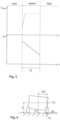
- Figure 3 shows the time course of the torque T drive and the wheel steering angle ⁇ LW .
- the drive torque T drive turns the loaded wheel in the direction of travel x.
- the applied drive torque T drive is the maximum torque made available by the drive motor 10, which can briefly exceed the continuous torque by a long way. This causes the loaded wheel to slip.
- the term "slip" refers to the condition when the surface speed of the wheel differs from the vehicle speed v when the vehicle wheel accelerates.
- the drive slip limits the transverse force that can be transferred from the wheel to the road.
- the vehicle begins to slide. All wheels are in contact with the road surface. This can prevent the vehicle from tipping over.
- the driven wheel is steered slightly back in the direction of travel so that the transverse forces on the vehicle do not increase any further, because a smaller wheel steering angle ⁇ LW generates less transverse acceleration and therefore also less transverse force F Q .
- the wheel is only steered back so far that the vehicle no longer tips over, ie the direction of travel is not necessarily achieved when steering back.
- the vehicle should be brought away from a state in which the vehicle is in danger of tipping over.
- m the vehicle mass
- g the acceleration due to gravity
- b the width of the vehicle from the vehicle center to the wheel center
- h the height of the vehicle from the road to the vehicle center.
- the wheel steering angle ⁇ LW must be reduced because steering the tires into a straight position increases the curve radius.
- the combination of torque T drive and wheel steering angle ⁇ LW causes the vehicle to slip but not tip over, allowing a faster transition to the manual state. After the limited time interval ⁇ t, the driver takes over steering again and the torque T drive and the wheel steering angle ⁇ LW are reduced or no longer applied. If it is detected that the critical state no longer exists, the system can switch from the automatic to the manual state before the intervention time ⁇ t has elapsed.
Landscapes
- Engineering & Computer Science (AREA)
- Transportation (AREA)
- Mechanical Engineering (AREA)
- Automation & Control Theory (AREA)
- Chemical & Material Sciences (AREA)
- Combustion & Propulsion (AREA)
- Steering Control In Accordance With Driving Conditions (AREA)
Description
- Die vorliegende Erfindung betrifft ein Verfahren zum Vermeiden von Überschlägen eines Kraftfahrzeuges bei Querlastwechsel mit den Merkmalen des Oberbegriffs des Anspruchs 1 und einem Steer-by-Wire-Lenksystem eines Kraftfahrzeuges mit den Merkmalen des Oberbegriffs des Anspruchs 8.
- Bei Steer-by-Wire-Lenksystemen ist die Stellung der gelenkten Räder nicht direkt mit dem Lenkeingabemittel, beispielsweise einem Lenkrad, gekoppelt. Es besteht eine Verbindung zwischen dem Lenkrad und den gelenkten Rädern über elektrische Signale. Der Fahrerlenkwunsch wird von einem Lenkwinkelsensor abgegriffen, und in Abhängigkeit von dem Fahrerlenkwunsch wird über einen Lenksteller die Stellung der gelenkten Räder geregelt.
- Um instabile Fahrsituationen, wie Übersteuern oder Untersteuern zu vermeiden, ist das sogenannte "Torque Vectoring" bekannt, bei dem ein Antriebsmoment zwischen einem linken und einem rechten Fahrzeugrad mittels eines speziell ausgebildeten Differenzialgetriebes verteilt wird, um auf diese Weise dem Untersteuern oder Übersteuern entgegenzuwirken. So wird bei einer instabilen Fahrsituation ein Rad abgebremst, während die Antriebskraft an das Rad geleitet wird, welches die größte Giermomentreduktion aufweist, d. h. kommt es zum Untersteuern, beaufschlagt die Steuerung das kurvenäußere Rad über eine separate Kupplung mit mehr Antriebskraft, sodass das Fahrzeug in die Kurve "hineingeschoben" wird. Bei einem starken Querlastwechsel kann es dazu kommen, dass gleichzeitig das kurveninnere Rad komplett entlastet und das kurvenäußere Rad komplett belastet wird. Das belastete Rad kann dabei eine Querkraft übertragen, die ausreicht das Kraftfahrzeug umzukippen.
- Aus dem Stand der Technik ist eine Überschlagsstablisierung (ARS) bekannt, bei der das kurvenäußere Vorderrad in kritischen Situationen oder bei Überschlagsgefahr abgebremst wird, sodass die Seitenkraft an diesem Rad reduziert wird. Gleichzeitig entsteht durch Abbremsung dieses Rads ein Giermoment um die Hochachse des Fahrzeugs, welches dem Einlenken des Fahrzeugs entgegenwirkt. Durch die Verminderung der Seitenkraft und die Entstehung des Giermoments wird die Querbeschleunigung reduziert, wodurch das Überschlagsrisiko gesenkt werden kann. Als nachteilig erweist sich diese Lösung dahingehend, dass das Fahrzeug über das Vorderrad untersteuernd aus der Kurve hinausrutscht und durch das Abbremsen zusätzlich die Fahrzeuggeschwindigkeit herabgesetzt wird. Derartige Systeme sind beispielsweise bekannt aus
DE 10 2004 046 985 A1 ,DE 10 2010 017 647 A1 oderWO 2006/026259 A1 . - Aus
DE 10 2009 045 234 A1 ist ferner ein Verfahren zum Betreiben einer Antriebsvorrichtung eines Fahrzeuges bekannt, die wenigstens zwei Radnabenmotoren aufweist, die mittels einer Master-Slave-Kommunikation miteinander kommunizieren. - Schließlich ist aus
DE 10 2005 046 776 A1 eine Wankstabilitätssteuerung unter Verwendung eines Vierradantriebs bekannt, bei der in Reaktion auf einen potenziellen Überrollzustand zum Verhindern des Überrollens des Fahrzeugs aktive Differentialgetriebe allein oder zusätzlich zu einem Abbremsen eingesetzt werden. - Es ist Aufgabe der vorliegenden Erfindung, ein verbessertes Verfahren und ein Steer-by-Wire-Lenksystem zum Vermeiden von Überschlägen eines Kraftfahrzeuges bei starkem Querlastwechsel anzugeben.
- Diese Aufgabe wird von einem Verfahren zum Vermeiden von Überschlägen eines Kraftfahrzeuges bei Querlastwechsel mit den Merkmalen des Anspruchs 1 und einem Steer-by-Wire-Lenksystem eines Kraftfahrzeuges mit den Merkmalen des Anspruchs 8 gelöst.
- Demnach ist ein Verfahren zum Vermeiden von Überschlägen eines Kraftfahrzeuges bei Querlastwechsel vorgesehen, wobei das Kraftfahrzeug einen Einzelradantrieb aufweist, der dazu ausgebildet ist, ein durch den Querlastwechsel belastetes Rad unabhängig von dem wenigstens einem anderen Rad des Kraftfahrzeuges anzutreiben, wobei folgende Verfahrensschritte dabei vorgesehen sind:
- Erkennen eines kritischen Zustandes des Kraftfahrzeuges bei Querlastwechsel,
- Aufbringen eines Antriebsdrehmomentes durch einen Einzelradantrieb auf das durch den Querlastwechsel belastete Rad des Kraftfahrzeuges, derart, dass das durch den Querlastwechsel belastete Rad in Schlupf gebracht wird, und
- Einlenken des durch den Querlastwechsel belasteten Rades des Kraftfahrzeuges in Richtung einer Fahrtrichtung, derart, dass ein Überschlagen des Kraftfahrzeuges verhindert werden kann.
- Das Kraftfahrzeug wird durch dieses Verfahren ins Rutschen gebracht, es kippt aber nicht um. Vorzugsweise ist das Antriebsdrehmoment das maximale Drehmoment eines Antriebsmotors. Dabei ist es bevorzugt, wenn das Antriebsdrehmoment das durch den Querlastwechsel belastete Rad in Fahrtrichtung antreibt.
- In einer bevorzugten Ausführungsform erfolgt das Aufbringen des Antriebsdrehmomentes und das Einlenken des durch den Querlastwechsel belasteten Rades für ein begrenztes Zeitintervall, das mindestens so lang ist, wie ein kritischer Zustand andauert.
- Insbesondere liegt das begrenzte Zeitintervall in einem Bereich zwischen 0,1s und 0,3s.
- In einer bevorzugten Ausführungsform erfolgt das Aufbringen des Antriebsdrehmomentes und das Einlenken des durch den Querlastwechsel belasteten Rades in einem automatischen Lenkungszustand der Kraftfahrzeuglenkung.
- Im Falle einer Kurvenfahrt ist das durch den Querlastwechsel belastete Rad das kurvenäußere Rad.
- Weiterhin ist ein Steer-by-Wire-Lenksystem eines Kraftfahrzeuges mit einer zwei lenkbare Räder aufweisenden lenkbaren Vorderradachse vorgesehen, wobei die Vorderradachse einen Einzelradantrieb aufweist, der mittels einer Antriebssteuerung den lenkbaren Rädern zugeordnete Radantriebe einzeln antreibt, und wobei ein elektrischer Lenksteller vorgesehen ist, der die Stellung der lenkbaren Räder steuert, wobei die Antriebssteuerung und der Lenksteller derart ausgebildet sind, das zuvor beschriebene Verfahren auszuführen.
- Eine bevorzugte Ausführungsform der Erfindung wird nachfolgend anhand der Zeichnungen näher erläutert. Gleichartige oder gleichwirkende Bauteile werden in den Figuren mit denselben Bezugszeichen bezeichnet. Es zeigen:
- Fig. 1:
- eine schematische Darstellung eines Steer-by-Wire-Lenksystems mit zwei separaten Radantrieben auf der Vorderachse,
- Fig. 2:
- eine schematische Darstellung eines Steer-by-Wire-Lenksystems in Draufsicht,
- Fig. 3:
- ein Diagramm des zeitlichen Verlaufs von Drehmoment und Radlenkwinkel zur Ansteuerung des kurvenäußeren Rades,
- Fig. 4:
- eine schematische Darstellung der auf das Kraftfahrzeug wirkenden Kräfte, sowie
- Fig. 5:
- ein Diagramm des Verlaufs der Reifenquerkraft in Abhängigkeit von dem Antriebsmoment.
- In der
Figur 1 ist ein Steer-by-Wire-Lenksystem 1 gezeigt. An einer Lenkwelle 2 ist ein nicht dargestellter Drehwinkelsensor angebracht, welcher das durch Drehen eines Lenkeingabemittels 3, welches im Beispiel als Lenkrad ausgebildet ist, aufgebrachten Fahrerlenkwinkel erfasst. Es kann aber zusätzlich auch ein Lenkmoment erfasst werden. Des Weiteren ist an der Lenkwelle 2 ein Feedback-Aktuator 4 angebracht, welcher dazu dient, die Rückwirkungen von der Fahrbahn auf das Lenkrad 3 zu simulieren und somit dem Fahrer eine Rückmeldung über das Lenk- und Fahrverhalten des Fahrzeugs zu geben. Der Fahrerlenkwunsch wird über den vom Drehwinkelsensor gemessenen Drehwinkel der Lenkwelle 2 über Signalleitungen an eine Lenkungssteuereinheit 5 weitergegeben, die in Abhängigkeit von weiteren Eingangsgrößen einen elektrischen Lenksteller 6 ansteuert, welcher die Stellung der gelenkten Räder 70,71 steuert. Der Lenksteller 6 wirkt über ein Lenkstangen-Lenkgetriebe 8, wie beispielsweise einem Zahnstangen-Lenkgetriebe, sowie über Spurstangen 9 und anderen Bauteilen mittelbar auf die gelenkten Räder 70,71. Den lenkbaren Rädern 70,71 sind Antriebsmotoren 10 zugeordnet, die die Räder 70,71 in Form eines Einzelradantriebs separat antreiben. Eine Antriebssteuerung 11 bestimmt anhand des vom Drehwinkelsensor gemessenen Drehwinkels der Lenkwelle 2 und weiteren Signalen die Antriebsmomente für die lenkbaren Räder 70,71 und steuert den jeweiligen Antriebsmotor 10 entsprechend an. - In
Figur 2 ist schematisch das Kraftfahrzeug mit den beiden Achsen dargestellt, wobei der Antrieb der lenkbaren Räder 70,71 auf der Vorderachse 12 angeordnet ist. Die Vorderachse 12 umfasst bezogen auf eine Fahrtrichtung ein erstes lenkbares Rad 71 und ein zweites lenkbares Rad 70, die über die Zahnstange 13 des Zahnstangenlenkgetriebes miteinander verbunden sind. Bei Verlagerung der Zahnstange 13 quer zur Fahrtrichtung x nach rechts oder links, werden die Räder um einen jeweiligen Schwenkpunkt 140, 141 verschwenkt. Ein erster Antriebsmotor 10 ist in Fahrtrichtung links und ein zweiter Antriebsmotor 10 ist in Fahrtrichtung rechts angeordnet. Die Radantriebsmotoren 10 sind jeweils über Antriebswellen mit den lenkbaren Rädern 70,71 verbunden. Bei den Radantriebsmotoren 10 handelt es sich vorzugsweise um Elektromotoren. Die Antriebssteuerung 11 steuert über eine erste Signalleitung S1 den ersten Antriebsmotor 10 und über eine zweite Signalleitung S2 den zweiten Antriebsmotor 10 an. Die Antriebssteuerung 11 empfängt zudem Informationen über den Zustand der Hinterachse über eine Signalleitung S3 geleitet. Das Fahrzeug bewegt sich in Fahrtrichtung x mit einer Geschwindigkeit v. - Ein kritischer Lastwechsel, der zu einem Überschlagen des Kraftfahrzeuges führen könnte, wird anhand der gemessenen Querbeschleunigung des Kraftfahrzeuges und den bekannten Größen der Masse, der Spurweite und der Schwerpunkthöhe erkannt. Bei Erkennung des kritischen Zustands erfolgt der Wechsel von einem manuellen Lenkungszustand in einen automatischen Lenkungszustand. Unter "manuellen Lenkungszustand" wird in diesem Fall verstanden, dass der Fahrer durch Betätigen des Lenkrades ein Einlenken der Räder bewirkt. Dabei können Assistenzsysteme das Einlenken der Räder beeinflussen. In dem automatischen Lenkungszustand hingegen übernimmt das Steer-by-Wire Lenksystem das Ansteuern der Räder unabhängig von der Lenkeingabe am Lenkrad. Der automatische Lenkungszustand wird für ein begrenztes Zeitintervall Δt aufrechtgehalten und zwar so lange wie der kritische Zustand andauert, bevorzugt in einem Bereich zwischen 0,1s und 0,3s.
- Während des automatischen Lenkungszustandes wird auf das belastete kurvenäußere Rad ein Drehmoment TAntrieb sowie ein Radlenkwinkel ϕLW aufgebracht.
Figur 3 zeigt den zeitlichen Verlauf des Drehmomentes TAntrieb sowie des Radlenkwinkels ϕLW. Das Antriebsdrehmoment TAntrieb dreht das belastete Rad in Fahrtrichtung x. Vorzugsweise ist das aufgebrachte Antriebsdrehmoment TAntrieb, das vom Antriebsmotor 10 maximal zur Verfügung gestellte Drehmoment, das kurzzeitig auch weit über das Dauer-Drehmoment hinausgehen kann. Das belastete Rad wird dadurch in Schlupf gebracht. Unter dem Begriff "Schlupf" wird der Zustand verstanden, wenn sich beim Beschleunigen des Fahrzeugrades die Oberflächengeschwindigkeit des Rades von der Fahrzeuggeschwindigkeit v unterscheidet. Der Antriebsschlupf limitiert die von dem Rad auf die Straße übertragbare Querkraft. Das Fahrzeug fängt an zu rutschen. Dabei haben alle Räder Kontakt zur Fahrbahnoberfläche. Ein Kippen des Fahrzeuges kann somit verhindert werden. Während der Antriebsmomentspitze wird das angetriebene Rad etwas zurück in Richtung Fahrtrichtung gelenkt, damit die Querkräfte auf das Fahrzeug nicht weiter steigen, denn ein kleinerer Radlenkwinkel ϕLW erzeugt weniger Querbeschleunigung und dadurch auch weniger Querkraft FQ. Das Rad wird nur so viel zurück gelenkt, dass das Fahrzeug nicht mehr kippt, d. h. es wird nicht unbedingt die Fahrtrichtung beim Zurücklenken erreicht. - Während des Eingriffszeitraums Δt soll das Fahrzeug weg von einem Zustand gebracht werden, in welchem das Fahrzeug zu kippen droht.
- Dabei gilt folgender Zusammenhang, wie in der
Figur 4 dargestellt:
FQ*h=Fm*b/2, wobei gemäss der Kraftgleichung:
In Querrichtung: FQ=FR - In Vertikalrichtung: FN=Fm=m*g,
wobei m die Fahrzeugmasse ist, g die Erdbeschleunigung und b der Fahrzeugbreite vom Fahrzeugmittelpunkt bis zum Radmittelpunkt entspricht und h die Fahrzeughöhe von der Fahrbahn bis zum Fahrzeugmittelpunkt ist. In diesem Zustand kippt das Fahrzeug noch nicht. Es befindet sich jedoch im Grenzzustand zum Kippen. Daher muss nachfolgend die Reifenquerkraft FR zwischen Fahrzeugrädern und Strasse reduziert werden. Hierzu besteht der Zusammenhang, dass der Antriebsschlupf die übertragbare Reifenquerkraft FQ reduziert. Dadurch werden die durchdrehenden Fahrzeugräder auf der belasteten Seite weniger Querkraft übertragen, sodass das Fahrzeug in Querrichtung entlang eines grösseren Kurvenradius rutscht. - Zur Reduktion der Reifenquerkraft FR muss das Antriebsmoment TAntrieb erhöht werden. Der Zusammenhang zwischen Reifenkraft und Antriebsmoment ist in
Figur 5 dargestellt. - Um den Kurvenradius zu erhöhen, muss die Fahrzeugquerkraft FQ reduziert werden.


- Zur Reduktion der Reifenquerkraft muss der Radlenkwinkel ϕLW vermindert werden, weil dadurch, dass die Reifen in eine gerade Position gelenkt werden, der Kurvenradius grösser wird.
- Durch die Kombination aus Drehmoment TAntrieb und Radlenkwinkel ϕLW rutscht das Fahrzeug, kippt aber nicht um und ein schnellerer Übergang in den manuellen Zustand kann ermöglicht werden. Nach dem begrenzten Zeitintervall Δt übernimmt der Fahrer wieder das Lenken und das Drehmoment TAntrieb und der Radlenkwinkel ϕLW werden wieder reduziert bzw. nicht mehr aufgeprägt. Wird detektiert, dass der kritische Zustand nicht mehr vorliegt, kann auch vor Ablauf der Eingriffszeit Δt vom automatischen in den manuellen Zustand gewechselt werden.
Claims (8)
- Verfahren zum Vermeiden von Überschlägen eines Kraftfahrzeuges bei Querlastwechsel, wobei ein kritischer Zustand des Kraftfahrzeuges bei Querlastwechsel erkannt wird, dadurch gekennzeichnet, dass das Kraftfahrzeug einen Einzelradantrieb aufweist, der dazu ausgebildet ist, ein durch den Querlastwechsel belastetes Rad (70,71) unabhängig von dem wenigstens einem anderen Rad (70,71) des Kraftfahrzeuges anzutreiben, und dass folgende Verfahrensschritte vorgesehen sind:• Aufbringen eines Antriebsdrehmomentes (TAntrieb) durch einen Einzelradantrieb (150,151) auf das durch den Querlastwechsel belastete Rad (70,71) des Kraftfahrzeuges, derart, dass das durch den Querlastwechsel belastete Rad (70,71) in Schlupf gebracht wird, so dass das belastete Rad (70, 71) durchdreht, wobei der Antriebsschlupf die übertragbare Reifenquerkraft (FQ) reduziert und das Kraftfahrzeug in Querrichtung entlang eines größeren Kurvenradius rutscht, und• Einlenken des durch den Querlastwechsel belasteten Rades (70,71) des Kraftfahrzeuges in Richtung einer Fahrtrichtung (x), derart, dass ein Überschlagen des Kraftfahrzeuges verhindert werden kann.
- Verfahren nach Anspruch 1, dadurch gekennzeichnet, dass das Antriebsdrehmoment (TAntrieb) das maximale Drehmoment eines Antriebsmotors (10) ist.
- Verfahren nach Anspruch 1 oder 2, dadurch gekennzeichnet, dass das Antriebsdrehmoment (TAntrieb) das durch den Querlastwechsel belastete Rad (70,71) in Fahrtrichtung (x) antreibt.
- Verfahren nach einem der vorhergehenden Ansprüche, dadurch gekennzeichnet, dass das Aufbringen des Antriebsdrehmomentes (TAntrieb) und das Einlenken des durch den Querlastwechsel belasteten Rades für ein begrenztes Zeitintervall (Δt) erfolgt, das mindestens so lang ist, wie ein kritischer Zustand andauert.
- Verfahren nach Anspruch 4, dadurch gekennzeichnet, dass das begrenzte Zeitintervall (Δt) in einem Bereich zwischen 0,1s und 0,3s liegt.
- Verfahren nach einem der vorhergehenden Ansprüche, dadurch gekennzeichnet, dass das Aufbringen des Antriebsdrehmomentes (TAntrieb) und das Einlenken des durch den Querlastwechsel belasteten Rades (70,71) in einem automatischen Lenkungszustand der Kraftfahrzeuglenkung erfolgt.
- Verfahren nach einem der vorhergehenden Ansprüche, dadurch gekennzeichnet, dass das durch den Querlastwechsel belastete Rad (70,71) das kurvenäußere Rad ist.
- Steer-by-Wire-Lenksystem eines Kraftfahrzeuges mit einer zwei lenkbare Räder (70,71) aufweisenden lenkbaren Vorderradachse (12), wobei die Vorderradachse (12) einen Einzelradantrieb aufweist, der mittels einer Antriebssteuerung (11) den lenkbaren Rädern (70,71) zugeordnete Radantriebe (150,151) einzeln antreibt, und wobei ein elektrischer Lenksteller (6) vorgesehen ist, der die Stellung der lenkbaren Räder (70,71) steuert, dadurch gekennzeichnet, dass die Antriebssteuerung (11) und der Lenksteller (6) derart ausgebildet sind, das Verfahren nach einem der Ansprüche 1 bis 7 auszuführen.
Applications Claiming Priority (2)
| Application Number | Priority Date | Filing Date | Title |
|---|---|---|---|
| DE102018101182.2A DE102018101182A1 (de) | 2018-01-19 | 2018-01-19 | Verfahren zum Vermeiden von Überschlägen eines Kraftfahrzeuges mittels Torque Vectoring |
| PCT/EP2019/050865 WO2019141649A1 (de) | 2018-01-19 | 2019-01-15 | Verfahren zum vermeiden von überschlägen eines kraftfahrzeuges mittels torque vectoring |
Publications (2)
| Publication Number | Publication Date |
|---|---|
| EP3740392A1 EP3740392A1 (de) | 2020-11-25 |
| EP3740392B1 true EP3740392B1 (de) | 2024-12-25 |
Family
ID=65234530
Family Applications (1)
| Application Number | Title | Priority Date | Filing Date |
|---|---|---|---|
| EP19701791.6A Active EP3740392B1 (de) | 2018-01-19 | 2019-01-15 | Verfahren zum vermeiden von überschlägen eines kraftfahrzeuges mittels torque vectoring, korrespondierendes lenksystem |
Country Status (5)
| Country | Link |
|---|---|
| US (1) | US11390265B2 (de) |
| EP (1) | EP3740392B1 (de) |
| CN (1) | CN111601729B (de) |
| DE (1) | DE102018101182A1 (de) |
| WO (1) | WO2019141649A1 (de) |
Families Citing this family (5)
| Publication number | Priority date | Publication date | Assignee | Title |
|---|---|---|---|---|
| DE102017114494A1 (de) * | 2017-06-29 | 2019-01-03 | Thyssenkrupp Ag | Steer-by-Wire-Lenksystem mit Torque-Vectoring und integrierter Anti-Schlupf-Regelung |
| DE102018101182A1 (de) * | 2018-01-19 | 2019-07-25 | Thyssenkrupp Ag | Verfahren zum Vermeiden von Überschlägen eines Kraftfahrzeuges mittels Torque Vectoring |
| JP7445459B2 (ja) * | 2020-03-02 | 2024-03-07 | 株式会社Subaru | 電動車両の制御装置 |
| CN113085836A (zh) * | 2021-04-30 | 2021-07-09 | 中国农业大学 | 车辆侧倾控制方法 |
| DE102021207263A1 (de) | 2021-07-09 | 2023-01-12 | Volkswagen Aktiengesellschaft | Verfahren und Steuervorrichtung zum Vermeiden eines Kippens eines Kraftfahrzeugs mit Steer-by-Wire Lenkung und Kraftfahrzeug |
Family Cites Families (23)
| Publication number | Priority date | Publication date | Assignee | Title |
|---|---|---|---|---|
| DE4201146C2 (de) * | 1991-01-18 | 2003-01-30 | Hitachi Ltd | Vorrichtung zur Steuerung des Kraftfahrzeugverhaltens |
| DE19802041A1 (de) * | 1998-01-21 | 1999-07-22 | Bosch Gmbh Robert | Verfahren und Vorrichtung zur Stabilisierung eines Fahrzeuges im Sinne einer Umkippvermeidung |
| US6438464B1 (en) * | 1998-07-16 | 2002-08-20 | Continental Teves Ag & Co., Ohg | Method and device for detecting the overturning hazard of a motor vehicle |
| US7233236B2 (en) * | 2000-09-25 | 2007-06-19 | Ford Global Technologies, Llc | Passive wheel lift identification for an automotive vehicle using operating input torque to wheel |
| US7109856B2 (en) * | 2000-09-25 | 2006-09-19 | Ford Global Technologies, Llc | Wheel lifted and grounded identification for an automotive vehicle |
| DE10135020B4 (de) * | 2001-07-18 | 2005-03-03 | Robert Bosch Gmbh | Verfahren und Vorrichtung zur Erkennung und Behebung einer Umkippgefahr |
| JP4228865B2 (ja) * | 2003-09-30 | 2009-02-25 | 三菱ふそうトラック・バス株式会社 | 車両のロールオーバ抑制制御装置 |
| JP4284210B2 (ja) * | 2004-03-02 | 2009-06-24 | 株式会社アドヴィックス | 車両の操舵制御装置 |
| JP4524597B2 (ja) * | 2004-09-27 | 2010-08-18 | 日産自動車株式会社 | 四輪独立駆動車の駆動力配分装置 |
| WO2006026259A1 (en) * | 2004-08-26 | 2006-03-09 | Kelsey-Hayes Company | Vehicle roll mitigation through wheel slip controls |
| US7640081B2 (en) * | 2004-10-01 | 2009-12-29 | Ford Global Technologies, Llc | Roll stability control using four-wheel drive |
| US7715965B2 (en) * | 2004-10-15 | 2010-05-11 | Ford Global Technologies | System and method for qualitatively determining vehicle loading conditions |
| JP4747722B2 (ja) * | 2005-08-04 | 2011-08-17 | いすゞ自動車株式会社 | 車両の横転防止装置 |
| EP1979189B1 (de) * | 2006-02-03 | 2011-05-04 | Eaton Corporation | Ein elektronisch gesteuertes differenzial mit begrenztem schlupf verwendende stabilitätsverbesserte traktions- und gierregelung |
| JP2008024125A (ja) * | 2006-07-20 | 2008-02-07 | Advics:Kk | 車両挙動安定化制御装置 |
| JP2008049996A (ja) * | 2006-07-26 | 2008-03-06 | Tokyo Institute Of Technology | 車両の運動制御装置 |
| US8321088B2 (en) * | 2006-08-30 | 2012-11-27 | Ford Global Technologies | Integrated control system for stability control of yaw, roll and lateral motion of a driving vehicle using an integrated sensing system to determine lateral velocity |
| DE102008002361A1 (de) * | 2008-06-11 | 2009-12-17 | Robert Bosch Gmbh | Verfahren und Vorrichtung zur Vermeidung seitlichen Umkippens bei Rückwärtsfahrt |
| US8670909B2 (en) * | 2009-07-14 | 2014-03-11 | Ford Global Technologies, Llc | Automotive vehicle |
| DE102009045234A1 (de) * | 2009-10-01 | 2011-04-28 | Robert Bosch Gmbh | Verfahren zum Betreiben einer Antriebsvorrichtung, Antriebsvorrichtung |
| US9296263B2 (en) * | 2011-12-23 | 2016-03-29 | Prasad Muthukumar | Smart active tyre pressure optimising system |
| US11136021B1 (en) * | 2017-10-18 | 2021-10-05 | Zoox, Inc. | Independent control of vehicle wheels |
| DE102018101182A1 (de) * | 2018-01-19 | 2019-07-25 | Thyssenkrupp Ag | Verfahren zum Vermeiden von Überschlägen eines Kraftfahrzeuges mittels Torque Vectoring |
-
2018
- 2018-01-19 DE DE102018101182.2A patent/DE102018101182A1/de active Pending
-
2019
- 2019-01-15 US US16/957,424 patent/US11390265B2/en active Active
- 2019-01-15 CN CN201980008787.7A patent/CN111601729B/zh active Active
- 2019-01-15 WO PCT/EP2019/050865 patent/WO2019141649A1/de not_active Ceased
- 2019-01-15 EP EP19701791.6A patent/EP3740392B1/de active Active
Also Published As
| Publication number | Publication date |
|---|---|
| EP3740392A1 (de) | 2020-11-25 |
| US20200339099A1 (en) | 2020-10-29 |
| CN111601729A (zh) | 2020-08-28 |
| DE102018101182A1 (de) | 2019-07-25 |
| WO2019141649A1 (de) | 2019-07-25 |
| CN111601729B (zh) | 2023-09-05 |
| US11390265B2 (en) | 2022-07-19 |
Similar Documents
| Publication | Publication Date | Title |
|---|---|---|
| EP3740392B1 (de) | Verfahren zum vermeiden von überschlägen eines kraftfahrzeuges mittels torque vectoring, korrespondierendes lenksystem | |
| EP4051554B1 (de) | Verfahren zur steuerung eines kraftfahrzeuges im notlenkbetrieb mittels vorderradbremsen-basierten torque-vectoring | |
| EP2013069B1 (de) | Verfahren und vorrichtung zum ermitteln eines optimalen lenkwinkels in untersteuersituationen eines fahrzeugs | |
| EP3022107B1 (de) | Verfahren zum betreiben der lenkung eines kraftfahrzeugs | |
| DE3804587C2 (de) | ||
| EP4093650B1 (de) | Verfahren zur steuerung eines kraftfahrzeuges bei langsamen geschwindigkeiten mittels antriebsdifferenzmoment an der hinterachse | |
| EP1849682B1 (de) | Verfahren zur Lenkungsregelung | |
| DE10141425B4 (de) | Verfahren zur fahrzustandsabhängigen Lenkunterstützung | |
| EP3645374B1 (de) | Steer-by-wire-lenksystem mit torque-vectoring und integrierter anti-schlupf-regelung | |
| DE102014200608B4 (de) | Verfahren und Vorrichtung zum Betreiben eines Kraftfahrzeugs | |
| WO2019185462A1 (de) | Kraftfahrzeug mit hinterradlenkung und torque-vectoring auf der hinterradachse | |
| EP2288532B1 (de) | Vorrichtung und verfahren zur beeinflussung der fahrzeugquerdynamik | |
| DE102005018519B4 (de) | Verfahren zur Fahrdynamik-Regelung von Kraftfahrzeugen | |
| DE102005012584B4 (de) | Verfahren und Vorrichtung zum Erhöhen der Fahrstabilität eines Fahrzeugs während der Fahrt durch eine Kurve | |
| EP3697660B1 (de) | Verfahren zur bestimmung eines reibungskoeffizienten zwischen einem rad eines kraftfahrzeuges und einer strassenoberfläche mit torque vectoring | |
| EP3483038B1 (de) | Verfahren zur steuerung einer hinterachslenkung eines kraftfahrzeugs | |
| DE19723841B4 (de) | Kraftfahrzeug und Verfahren zum Betreiben eines Kraftfahrzeuges mit einer Vorrichtung zur Bekämpfung von Schleuderbewegungen | |
| DE102006019732B4 (de) | Fahrzeug-Servolenksystem mit elektromotorischer Momentenunterstützung | |
| DE102005019337A1 (de) | Fahrzeugsteuersystem zur Erleichterung des Herausfahrens aus Fahrrinnen und damit ausgestattetes Kraftfahrzeug | |
| DE102008012006B4 (de) | Verfahren zum Betreiben eines aktiven Lenksystems und aktives Lenksystem | |
| DE102010036619B4 (de) | Verfahren zum Betreiben eines Lenksystems | |
| EP1388472A1 (de) | Betriebsverfahren für ein Fahrzeug-Lenksystem | |
| DE102006008668A1 (de) | Lenksystem und Verfahren zum Bewegen von Rädern eines zweispurigen Fahrzeugs | |
| DE102016210126B4 (de) | Verfahren zum Steuern eines Fahrzeugs sowie Fahrzeug zur Umsetzung des Verfahrens | |
| DE102016001361A1 (de) | Fahrwerksystem für ein Fahrzeug, Fahrzeug mit einem solchen Fahrwerksystem und Verfahren zum Lenken eines Fahrzeugs |
Legal Events
| Date | Code | Title | Description |
|---|---|---|---|
| STAA | Information on the status of an ep patent application or granted ep patent |
Free format text: STATUS: UNKNOWN |
|
| STAA | Information on the status of an ep patent application or granted ep patent |
Free format text: STATUS: THE INTERNATIONAL PUBLICATION HAS BEEN MADE |
|
| PUAI | Public reference made under article 153(3) epc to a published international application that has entered the european phase |
Free format text: ORIGINAL CODE: 0009012 |
|
| STAA | Information on the status of an ep patent application or granted ep patent |
Free format text: STATUS: REQUEST FOR EXAMINATION WAS MADE |
|
| 17P | Request for examination filed |
Effective date: 20200819 |
|
| AK | Designated contracting states |
Kind code of ref document: A1 Designated state(s): AL AT BE BG CH CY CZ DE DK EE ES FI FR GB GR HR HU IE IS IT LI LT LU LV MC MK MT NL NO PL PT RO RS SE SI SK SM TR |
|
| AX | Request for extension of the european patent |
Extension state: BA ME |
|
| RAP1 | Party data changed (applicant data changed or rights of an application transferred) |
Owner name: THYSSENKRUPP PRESTA AG Owner name: THYSSENKRUPP AG |
|
| RAP1 | Party data changed (applicant data changed or rights of an application transferred) |
Owner name: THYSSENKRUPP AG Owner name: THYSSENKRUPP PRESTA AG |
|
| DAV | Request for validation of the european patent (deleted) | ||
| DAX | Request for extension of the european patent (deleted) | ||
| STAA | Information on the status of an ep patent application or granted ep patent |
Free format text: STATUS: EXAMINATION IS IN PROGRESS |
|
| 17Q | First examination report despatched |
Effective date: 20220817 |
|
| GRAP | Despatch of communication of intention to grant a patent |
Free format text: ORIGINAL CODE: EPIDOSNIGR1 |
|
| STAA | Information on the status of an ep patent application or granted ep patent |
Free format text: STATUS: GRANT OF PATENT IS INTENDED |
|
| INTG | Intention to grant announced |
Effective date: 20240812 |
|
| GRAS | Grant fee paid |
Free format text: ORIGINAL CODE: EPIDOSNIGR3 |
|
| GRAA | (expected) grant |
Free format text: ORIGINAL CODE: 0009210 |
|
| STAA | Information on the status of an ep patent application or granted ep patent |
Free format text: STATUS: THE PATENT HAS BEEN GRANTED |
|
| AK | Designated contracting states |
Kind code of ref document: B1 Designated state(s): AL AT BE BG CH CY CZ DE DK EE ES FI FR GB GR HR HU IE IS IT LI LT LU LV MC MK MT NL NO PL PT RO RS SE SI SK SM TR |
|
| REG | Reference to a national code |
Ref country code: GB Ref legal event code: FG4D Free format text: NOT ENGLISH |
|
| REG | Reference to a national code |
Ref country code: CH Ref legal event code: EP |
|
| REG | Reference to a national code |
Ref country code: DE Ref legal event code: R096 Ref document number: 502019012684 Country of ref document: DE |
|
| REG | Reference to a national code |
Ref country code: IE Ref legal event code: FG4D Free format text: LANGUAGE OF EP DOCUMENT: GERMAN |
|
| REG | Reference to a national code |
Ref country code: DE Ref legal event code: R084 Ref document number: 502019012684 Country of ref document: DE |
|
| REG | Reference to a national code |
Ref country code: LT Ref legal event code: MG9D |
|
| PG25 | Lapsed in a contracting state [announced via postgrant information from national office to epo] |
Ref country code: FI Free format text: LAPSE BECAUSE OF FAILURE TO SUBMIT A TRANSLATION OF THE DESCRIPTION OR TO PAY THE FEE WITHIN THE PRESCRIBED TIME-LIMIT Effective date: 20241225 |
|
| PG25 | Lapsed in a contracting state [announced via postgrant information from national office to epo] |
Ref country code: BG Free format text: LAPSE BECAUSE OF FAILURE TO SUBMIT A TRANSLATION OF THE DESCRIPTION OR TO PAY THE FEE WITHIN THE PRESCRIBED TIME-LIMIT Effective date: 20241225 |
|
| PG25 | Lapsed in a contracting state [announced via postgrant information from national office to epo] |
Ref country code: NO Free format text: LAPSE BECAUSE OF FAILURE TO SUBMIT A TRANSLATION OF THE DESCRIPTION OR TO PAY THE FEE WITHIN THE PRESCRIBED TIME-LIMIT Effective date: 20250325 |
|
| PG25 | Lapsed in a contracting state [announced via postgrant information from national office to epo] |
Ref country code: GR Free format text: LAPSE BECAUSE OF FAILURE TO SUBMIT A TRANSLATION OF THE DESCRIPTION OR TO PAY THE FEE WITHIN THE PRESCRIBED TIME-LIMIT Effective date: 20250326 Ref country code: LV Free format text: LAPSE BECAUSE OF FAILURE TO SUBMIT A TRANSLATION OF THE DESCRIPTION OR TO PAY THE FEE WITHIN THE PRESCRIBED TIME-LIMIT Effective date: 20241225 |
|
| PG25 | Lapsed in a contracting state [announced via postgrant information from national office to epo] |
Ref country code: RS Free format text: LAPSE BECAUSE OF FAILURE TO SUBMIT A TRANSLATION OF THE DESCRIPTION OR TO PAY THE FEE WITHIN THE PRESCRIBED TIME-LIMIT Effective date: 20250325 |
|
| REG | Reference to a national code |
Ref country code: NL Ref legal event code: MP Effective date: 20241225 |
|
| PG25 | Lapsed in a contracting state [announced via postgrant information from national office to epo] |
Ref country code: NL Free format text: LAPSE BECAUSE OF FAILURE TO SUBMIT A TRANSLATION OF THE DESCRIPTION OR TO PAY THE FEE WITHIN THE PRESCRIBED TIME-LIMIT Effective date: 20241225 |
|
| PG25 | Lapsed in a contracting state [announced via postgrant information from national office to epo] |
Ref country code: SM Free format text: LAPSE BECAUSE OF FAILURE TO SUBMIT A TRANSLATION OF THE DESCRIPTION OR TO PAY THE FEE WITHIN THE PRESCRIBED TIME-LIMIT Effective date: 20241225 |
|
| PG25 | Lapsed in a contracting state [announced via postgrant information from national office to epo] |
Ref country code: PL Free format text: LAPSE BECAUSE OF FAILURE TO SUBMIT A TRANSLATION OF THE DESCRIPTION OR TO PAY THE FEE WITHIN THE PRESCRIBED TIME-LIMIT Effective date: 20241225 |
|
| PG25 | Lapsed in a contracting state [announced via postgrant information from national office to epo] |
Ref country code: ES Free format text: LAPSE BECAUSE OF FAILURE TO SUBMIT A TRANSLATION OF THE DESCRIPTION OR TO PAY THE FEE WITHIN THE PRESCRIBED TIME-LIMIT Effective date: 20241225 |
|
| PG25 | Lapsed in a contracting state [announced via postgrant information from national office to epo] |
Ref country code: IS Free format text: LAPSE BECAUSE OF FAILURE TO SUBMIT A TRANSLATION OF THE DESCRIPTION OR TO PAY THE FEE WITHIN THE PRESCRIBED TIME-LIMIT Effective date: 20250425 |
|
| PG25 | Lapsed in a contracting state [announced via postgrant information from national office to epo] |
Ref country code: PT Free format text: LAPSE BECAUSE OF FAILURE TO SUBMIT A TRANSLATION OF THE DESCRIPTION OR TO PAY THE FEE WITHIN THE PRESCRIBED TIME-LIMIT Effective date: 20250428 |
|
| PG25 | Lapsed in a contracting state [announced via postgrant information from national office to epo] |
Ref country code: EE Free format text: LAPSE BECAUSE OF FAILURE TO SUBMIT A TRANSLATION OF THE DESCRIPTION OR TO PAY THE FEE WITHIN THE PRESCRIBED TIME-LIMIT Effective date: 20241225 |
|
| PG25 | Lapsed in a contracting state [announced via postgrant information from national office to epo] |
Ref country code: RO Free format text: LAPSE BECAUSE OF FAILURE TO SUBMIT A TRANSLATION OF THE DESCRIPTION OR TO PAY THE FEE WITHIN THE PRESCRIBED TIME-LIMIT Effective date: 20241225 |
|
| PG25 | Lapsed in a contracting state [announced via postgrant information from national office to epo] |
Ref country code: SK Free format text: LAPSE BECAUSE OF FAILURE TO SUBMIT A TRANSLATION OF THE DESCRIPTION OR TO PAY THE FEE WITHIN THE PRESCRIBED TIME-LIMIT Effective date: 20241225 |
|
| PG25 | Lapsed in a contracting state [announced via postgrant information from national office to epo] |
Ref country code: CZ Free format text: LAPSE BECAUSE OF FAILURE TO SUBMIT A TRANSLATION OF THE DESCRIPTION OR TO PAY THE FEE WITHIN THE PRESCRIBED TIME-LIMIT Effective date: 20241225 |
|
| PG25 | Lapsed in a contracting state [announced via postgrant information from national office to epo] |
Ref country code: IT Free format text: LAPSE BECAUSE OF FAILURE TO SUBMIT A TRANSLATION OF THE DESCRIPTION OR TO PAY THE FEE WITHIN THE PRESCRIBED TIME-LIMIT Effective date: 20241225 |
|
| REG | Reference to a national code |
Ref country code: CH Ref legal event code: PL |
|
| PG25 | Lapsed in a contracting state [announced via postgrant information from national office to epo] |
Ref country code: SE Free format text: LAPSE BECAUSE OF FAILURE TO SUBMIT A TRANSLATION OF THE DESCRIPTION OR TO PAY THE FEE WITHIN THE PRESCRIBED TIME-LIMIT Effective date: 20241225 |
|
| PG25 | Lapsed in a contracting state [announced via postgrant information from national office to epo] |
Ref country code: MC Free format text: LAPSE BECAUSE OF FAILURE TO SUBMIT A TRANSLATION OF THE DESCRIPTION OR TO PAY THE FEE WITHIN THE PRESCRIBED TIME-LIMIT Effective date: 20241225 Ref country code: LU Free format text: LAPSE BECAUSE OF NON-PAYMENT OF DUE FEES Effective date: 20250115 |
|
| REG | Reference to a national code |
Ref country code: DE Ref legal event code: R097 Ref document number: 502019012684 Country of ref document: DE |
|
| PG25 | Lapsed in a contracting state [announced via postgrant information from national office to epo] |
Ref country code: DK Free format text: LAPSE BECAUSE OF FAILURE TO SUBMIT A TRANSLATION OF THE DESCRIPTION OR TO PAY THE FEE WITHIN THE PRESCRIBED TIME-LIMIT Effective date: 20241225 |
|
| PG25 | Lapsed in a contracting state [announced via postgrant information from national office to epo] |
Ref country code: BE Free format text: LAPSE BECAUSE OF NON-PAYMENT OF DUE FEES Effective date: 20250131 |
|
| PG25 | Lapsed in a contracting state [announced via postgrant information from national office to epo] |
Ref country code: CH Free format text: LAPSE BECAUSE OF NON-PAYMENT OF DUE FEES Effective date: 20250131 |
|
| REG | Reference to a national code |
Ref country code: BE Ref legal event code: MM Effective date: 20250131 |
|
| PLBE | No opposition filed within time limit |
Free format text: ORIGINAL CODE: 0009261 |
|
| STAA | Information on the status of an ep patent application or granted ep patent |
Free format text: STATUS: NO OPPOSITION FILED WITHIN TIME LIMIT |
|
| GBPC | Gb: european patent ceased through non-payment of renewal fee |
Effective date: 20250325 |
|
| 26N | No opposition filed |
Effective date: 20250926 |
|
| PG25 | Lapsed in a contracting state [announced via postgrant information from national office to epo] |
Ref country code: GB Free format text: LAPSE BECAUSE OF NON-PAYMENT OF DUE FEES Effective date: 20250325 |
|
| PG25 | Lapsed in a contracting state [announced via postgrant information from national office to epo] |
Ref country code: FR Free format text: LAPSE BECAUSE OF NON-PAYMENT OF DUE FEES Effective date: 20250225 |
|
| PG25 | Lapsed in a contracting state [announced via postgrant information from national office to epo] |
Ref country code: IE Free format text: LAPSE BECAUSE OF NON-PAYMENT OF DUE FEES Effective date: 20250115 |
|
| REG | Reference to a national code |
Ref country code: AT Ref legal event code: MM01 Ref document number: 1753896 Country of ref document: AT Kind code of ref document: T Effective date: 20250115 |
|
| PGFP | Annual fee paid to national office [announced via postgrant information from national office to epo] |
Ref country code: DE Payment date: 20260121 Year of fee payment: 8 |
|
| PG25 | Lapsed in a contracting state [announced via postgrant information from national office to epo] |
Ref country code: HR Free format text: LAPSE BECAUSE OF FAILURE TO SUBMIT A TRANSLATION OF THE DESCRIPTION OR TO PAY THE FEE WITHIN THE PRESCRIBED TIME-LIMIT Effective date: 20241225 Ref country code: AT Free format text: LAPSE BECAUSE OF NON-PAYMENT OF DUE FEES Effective date: 20250115 |