EP3735587B1 - Synchronisierter zellzyklus-genexpressionstest für morbus alzheimer und verwandte therapeutische verfahren - Google Patents
Synchronisierter zellzyklus-genexpressionstest für morbus alzheimer und verwandte therapeutische verfahren Download PDFInfo
- Publication number
- EP3735587B1 EP3735587B1 EP18885782.5A EP18885782A EP3735587B1 EP 3735587 B1 EP3735587 B1 EP 3735587B1 EP 18885782 A EP18885782 A EP 18885782A EP 3735587 B1 EP3735587 B1 EP 3735587B1
- Authority
- EP
- European Patent Office
- Prior art keywords
- genes
- add
- subject
- gene
- patients
- Prior art date
- Legal status (The legal status is an assumption and is not a legal conclusion. Google has not performed a legal analysis and makes no representation as to the accuracy of the status listed.)
- Active
Links
Images



Classifications
-
- C—CHEMISTRY; METALLURGY
- C12—BIOCHEMISTRY; BEER; SPIRITS; WINE; VINEGAR; MICROBIOLOGY; ENZYMOLOGY; MUTATION OR GENETIC ENGINEERING
- C12Q—MEASURING OR TESTING PROCESSES INVOLVING ENZYMES, NUCLEIC ACIDS OR MICROORGANISMS; COMPOSITIONS OR TEST PAPERS THEREFOR; PROCESSES OF PREPARING SUCH COMPOSITIONS; CONDITION-RESPONSIVE CONTROL IN MICROBIOLOGICAL OR ENZYMOLOGICAL PROCESSES
- C12Q1/00—Measuring or testing processes involving enzymes, nucleic acids or microorganisms; Compositions therefor; Processes of preparing such compositions
- C12Q1/68—Measuring or testing processes involving enzymes, nucleic acids or microorganisms; Compositions therefor; Processes of preparing such compositions involving nucleic acids
- C12Q1/6876—Nucleic acid products used in the analysis of nucleic acids, e.g. primers or probes
- C12Q1/6883—Nucleic acid products used in the analysis of nucleic acids, e.g. primers or probes for diseases caused by alterations of genetic material
-
- C—CHEMISTRY; METALLURGY
- C12—BIOCHEMISTRY; BEER; SPIRITS; WINE; VINEGAR; MICROBIOLOGY; ENZYMOLOGY; MUTATION OR GENETIC ENGINEERING
- C12Q—MEASURING OR TESTING PROCESSES INVOLVING ENZYMES, NUCLEIC ACIDS OR MICROORGANISMS; COMPOSITIONS OR TEST PAPERS THEREFOR; PROCESSES OF PREPARING SUCH COMPOSITIONS; CONDITION-RESPONSIVE CONTROL IN MICROBIOLOGICAL OR ENZYMOLOGICAL PROCESSES
- C12Q2600/00—Oligonucleotides characterized by their use
- C12Q2600/112—Disease subtyping, staging or classification
-
- C—CHEMISTRY; METALLURGY
- C12—BIOCHEMISTRY; BEER; SPIRITS; WINE; VINEGAR; MICROBIOLOGY; ENZYMOLOGY; MUTATION OR GENETIC ENGINEERING
- C12Q—MEASURING OR TESTING PROCESSES INVOLVING ENZYMES, NUCLEIC ACIDS OR MICROORGANISMS; COMPOSITIONS OR TEST PAPERS THEREFOR; PROCESSES OF PREPARING SUCH COMPOSITIONS; CONDITION-RESPONSIVE CONTROL IN MICROBIOLOGICAL OR ENZYMOLOGICAL PROCESSES
- C12Q2600/00—Oligonucleotides characterized by their use
- C12Q2600/158—Expression markers
Definitions
- AD Alzheimer's disease
- non-ADD non-Alzheimer's dementia
- US2010/021913 A1 discloses a method for diagnosing Alzheimer's Disease using PKC-elicited gene expression profiles.
- This invention provides a method for determining whether a human subject is afflicted with AD or non-ADD when the subject is suspected of being afflicted with AD or non-ADD, comprising the steps of
- This invention also provides a method for determining whether a human subject is afflicted with AD or non-ADD when the subject is suspected of being afflicted with AD or non-ADD, comprising the steps of
- This invention further provides a method for determining whether a human subject is afflicted with AD or non-ADD when the subject is suspected of being afflicted with AD or non-ADD, comprising the steps of
- administer means to deliver the agent to a subject's body via any known method.
- Specific modes of administration include, without limitation, intravenous, oral, sublingual, transdermal, subcutaneous, intraperitoneal and intrathecal administration.
- oral delivery systems include tablets and capsules. These can contain excipients such as binders (e.g., hydroxypropylmethylcellulose, polyvinyl pyrilodone, other cellulosic materials and starch), diluents (e.g., lactose and other sugars, starch, dicalcium phosphate and cellulosic materials), disintegrating agents (e.g., starch polymers and cellulosic materials) and lubricating agents (e.g., stearates and talc).
- excipients such as binders (e.g., hydroxypropylmethylcellulose, polyvinyl pyrilodone, other cellulosic materials and starch), diluents (e.g., lactose and other sugars, starch, dicalcium phosphate and cellulosic materials), disintegrating agents (e.g., starch polymers and cellulosic materials) and lubricating agents (e.g
- Injectable drug delivery systems include, for example, solutions, suspensions, gels, microspheres and polymeric injectables, and can comprise excipients such as solubility-altering agents (e.g., ethanol, propylene glycol and sucrose) and polymers (e.g., polycaprylactones and PLGA's).
- Implantable systems include rods and discs and can contain excipients such as PLGA and polycaprylactone.
- Alzheimer's disease means a concurrent affliction with the following three symptoms: (i) dementia; (ii) amyloid plaques; and (iii) neurofibrillary tangles. Dementia can be diagnosed during life. Cerebral amyloid plaques and neurofibrillary tangles can, for example, be diagnosed during autopsy. This definition of Alzheimer's disease is the one provided by the National Institute of Neurological Disorders and Stroke (NINDS) of the National Institutes of Health (NIH), and is known as the "gold standard.” All subjects from whom samples were taken and studied, and for which data are presented herein, are autopsy-confirmed AD and non-ADD patients.
- NINDS National Institute of Neurological Disorders and Stroke
- a gene's expression level is "consistent" with that gene's expression level in corresponding synchronized cells derived from AD patients if it is the same as, or close to, that expression level. For example, assume that gene X's TPM measure in synchronized cells derived from AD patients is 10 and its TPM measure is 100 in the same type of cells derived from non-ADD patients that are synchronized in the same way. A subject's gene X expression level would be consistent with gene X's AD expression level if it were, for example, below 50, below 40, below 30, below 20 or, ideally, 10 or lower.
- lymphocytes is achieved, for example, by conducting the culturing at a temperature and in a growth factor milieu permissive of cell growth. In another embodiment, “culturing” lymphocytes is performed under conditions (e.g., those described herein for proliferation) that preserve lymphocyte viability.
- the temperature, salinity and protein milieu permissive of cell growth is 37 °C, RPMI 1640 Medium with 10% fetal bovine serum ("FBS") and 1% penicillin ("PS").
- FBS fetal bovine serum
- PS penicillin
- the lymphocyte-culturing step is performed for more than three hours. Preferably, the lymphocyte-culturing step is performed for more than six hours (e.g., overnight).
- B-lymphocyte can be cultured to over-confluence, i.e., high density/ ⁇ l. The high density is determined as the plateau that is typically more then 90% in the growth curve. Then, the lymphocytes are starved overnight.
- lymphocytes e.g., B lymphocytes
- Methods for obtaining lymphocytes from a subject's blood include, for example, flow cytometry, Ficoll (a hydrophilic polysaccharide that separates layers of blood), and gradient centrifugation.
- the lymphocytes e.g., B lymphocytes
- the lymphocytes can be used in immortalized or primary (i.e., non-immortalized) form.
- Methods for immortalizing lymphocytes e.g., B lymphocytes
- EBV Epstein-Barr virus
- culturing skin fibroblasts is achieved, for example, by conducting the culturing at a temperature and in a growth factor milieu permissive of cell growth. In another embodiment, “culturing” skin fibroblasts is performed under conditions (e.g., those described below for proliferation) that preserve skin fibroblasts viability. In one embodiment, the temperature, humidity and protein milieu permissive of cell growth is 37 °C, DMEM Medium with 10% fetal bovine serum ("FBS") and 1% penicillin ("PS"). In one embodiment of this invention, the skin fibroblast-culturing step is performed for more than three hours. Preferably, the skin fibroblast-culturing step is performed for more than six hours (e.g., overnight).
- FBS fetal bovine serum
- PS penicillin
- Methods for obtaining skin fibroblasts from a subject's blood include, for example, skin punch biopsy, and growing cells out of explants. When cell confluence reaches 100%, cells are passaged. Typically after two passages, fibroblasts are purified in a proportion greater than 95%.
- cells "derived" from a subject are cells that arise through culturing and/or other physical manipulation performed on cells directly removed from the subject.
- cultured skin fibroblasts derived from a subject are those skin fibroblasts that arise through culturing a sample of skin cells (e.g., contained in a punch biopsy) directly removed from the subject.
- diagnosing Alzheimer's disease with respect to a symptomatic human subject, means determining that there is greater than 50% likelihood that the subject is afflicted with Alzheimer's disease.
- diagnosing Alzheimer's disease means determining that there is greater than 60%, 70%, 80% or 90% likelihood that the subject is afflicted with Alzheimer's disease.
- the phrase "determining whether the subject is afflicted with Alzheimer's disease” is synonymous with the phrase “diagnosing Alzheimer's disease.”
- diagnosing non-ADD with respect to a symptomatic human subject, means determining that there is greater than 50% likelihood that the subject is afflicted with non-ADD.
- diagnosis non-ADD means determining that there is greater than 60%, 70%, 80% or 90% likelihood that the subject is afflicted with non-ADD.
- the phrase "determining whether the subject is afflicted with non-ADD” is synonymous with the phrase “diagnosing non-ADD.”
- a gene is "differentially expressed between corresponding synchronized cells derived from AD patients and those derived from non-ADD patients” if, for example, the gene's TPM measure in synchronized cells derived from AD patients is different than in the same type of cells derived from non-ADD patients that are synchronized in the same way.
- gene X would be differentially expressed between corresponding synchronized cells derived from AD patients and those derived from non-ADD patients if its TPM measure in synchronized cells derived from AD patients were 10 and its TPM measure were 100 in the same type of cells derived from non-ADD patients that are synchronized in the same way.
- an agent "favorably" affects the expression level of a gene whose expression level correlates with AD if it either decreases or increases that expression toward a level correlative with a non-AD state. For example, if the expression level of gene X is lower in an AD patient than in a non-afflicted patient, an agent favorably affecting the expression level of that gene would increase its expression level. Similarly, if the expression level of gene X is higher in an AD patient than in a non-afflicted patient, an agent favorably affecting the expression level of that gene would decrease its expression level.
- measuring the expression level of a gene means quantitatively determining the expression level via any means for doing so (e.g., Total RNA Sequencing, (20 million reads, 2x75bp PE)).
- measuring the expression level of a gene is accomplished by measuring the number of RNA transcripts for that gene per million total RNA transcripts (i.e., "TPM” via FastQ data, and FPKM estimation per sample) present in the cell-derived RNA population being studied.
- TPM Total RNA Sequencing
- a subject afflicted with "non-Alzheimer's dementia” means a subject showing dementia such as, for example, that which characterizes Parkinson's disease, Huntington's disease and frontotemporal dementia.
- a "population" of cells includes any number of cells permitting the manipulation and study required to assess gene expression.
- the population of cells includes at least 1,000,000 cells.
- the population of cells includes between 100,000 cells and 1,000,000 cells, between 10,000 cells and 100,000 cells, between 1,000 cells and 10,000 cells, between 100 cells and 1,000 cells, between 10 cells and 100 cells, and fewer than 10 cells (e.g., one cell).
- the term "subject" includes, without limitation, a mammal such as a human, a non-human primate, a dog, a cat, a horse, a sheep, a goat, a cow, a rabbit, a pig, a rat and a mouse.
- the subject can be of any age.
- the subject can be 50 years or older, 55 years or older, 60 years or older, 65 or older, 70 or older, 75 or older, 80 or older, 85 or older, or 90 or older.
- the instant methods are envisioned for all subjects, preferably humans (and preferably symptomatic).
- a human subject who is "suspected of being afflicted with AD or non-ADD" is a subject displaying at least one symptom consistent with both AD and non-ADD, e.g., dementia.
- synchronizing a population of cells means placing at least a majority of cells in that population in the same cell cycle stage (namely, in the G1, S, G2 or M stage, and preferably in the G1, S or G2 stage). In one embodiment, synchronizing a population of cells means placing at least 60%, at least 70%, at least 80%, at least 90%, at least 95% or preferably at least 99% of cells in that population in the same cell cycle stage. In another embodiment, synchronizing a population of cells means placing the cells in that population in the same cell cycle stage that they would be in if cultured to over-confluence and then starved. Cell confluence followed by serum starvation typically arrests the cells in the G0/G1 stage [1-3].
- Doses i.e., "therapeutically effective amounts" include, for example, a single administration, and two or more administrations (i.e., fractions).
- the therapeutically effective amount of a drug approved for a non-Alzheimer's indication is the dose and dosing regimen approved for that non-Alzheimer's indication.
- treating a subject afflicted with a disorder shall include, without limitation, (i) slowing, stopping or reversing the disorder's progression, (ii) slowing, stopping or reversing the progression of the disorder's symptoms, (iii) reducing the likelihood of the disorder's recurrence, and/or (iv) reducing the likelihood that the disorder's symptoms will recur.
- treating a subject afflicted with a disorder means (i) reversing the disorder's progression, ideally to the point of eliminating the disorder, and/or (ii) reversing the progression of the disorder's symptoms, ideally to the point of eliminating the symptoms.
- the treatment of AD can be measured according to a number of clinical endpoints. These include, without limitation, (a) lowering, stabilizing or slowing progression of (i) dementia, (ii) synaptic loss, (iii) amyloid plaques and/or (iv) neurofibrillary tangles, and/or (b) favorably affecting the expression level of a gene whose expression level correlates with AD.
- This invention provides accurate gene-based methods for determining whether a human subject is afflicted with AD or non-ADD when the subject is suspected of being afflicted with AD or non-ADD.
- the subject methods are based, at least in part, on the surprising discovery that synchronizing a patient's suitable cell population and then measuring the expression levels of genes that are differentially expressed between AD and non-ADD cells permits accurately diagnosing the patient as having either AD or non-ADD.
- Certain gene expression-altering agents for the use in treating AD are also described.
- this invention provides a method for determining whether a human subject is afflicted with AD or non-ADD when the subject is suspected of being afflicted with AD or non-ADD, comprising the steps of
- the suitable cells derived from the subject are cultured skin cell fibroblasts. In another embodiment, the suitable cells derived from the subject are cultured B lymphocytes (preferably immortalized B lymphocytes).
- synchronizing the population of suitable cells comprises culturing the cells to over-confluence and then starving the resulting over-confluent cells.
- the gene is known to be differentially expressed by a significant margin.
- the gene is known to be differentially expressed by at least 50% between corresponding synchronized cells derived from AD patients and those derived from non-ADD patients.
- the gene is known to be differentially expressed by at least 100% between corresponding synchronized cells derived from AD patients and those derived from non-ADD patients.
- Another way of expressing the degree of differential expression is "% change" or "%Ch", which is equal to [AD expression - Non-ADD expression / Non-ADD expression ].
- the gene expression levels set forth in Table 9, including PHBP8 and, one, two or more, three or more, four or more, are indicative of AD.
- the gene expression levels set forth in Table 10, including PHBP8 and, one, two or more, three or more, four or more, are indicative of AD.
- a PSMB9 expression level greater than 18 TPM is indicative of AD.
- AD-indicative expression levels for each other gene disclosed herein are readily determined based on the data presented.
- step (b) comprises measuring the expression levels of a plurality of genes including PHBP8, each gene being known to be differentially expressed between corresponding synchronized cells derived from AD patients and those derived from non-ADD patients.
- the plurality of genes can be of any suitable size, such as at least two genes, at least five genes, at least 20 genes, at least 100 genes, and at least 1,000 genes including PHBP8.
- each gene of the plurality of genes is known to be differentially expressed by at least 50% (and more preferably by at least 100%) between corresponding synchronized cells derived from AD patients and those derived from non-ADD patients.
- the plurality of genes comprises PHBP8 and one or more genes selected from the group consisting of AC004057.1, AC092651.1, ACP6, ADAM20, ASXL2, C2CD5, CARNS1, FAM149B1, GLIS3-AS1, IL18R1, LINC01393, LZIC, MAP1LC3B2, NHLH1, NORAD, NPPA-AS1_3, OSMR-AS1, PAN3, PSMB9, RAB3IP, RDH16, RFESDP1, RPL5, SCG2, SDHD, SHISA5, SLC45A3, SNHG14, TTC26, URB2, USMG5, WASF2, ZCWPW2, ZNF444, and ZNF70.
- AC004057.1, AC092651.1, ACP6, ADAM20, ASXL2, C2CD5, CARNS1, FAM149B1, GLIS3-AS1, IL18R1, LINC01393, LZIC MAP1LC3B2, NHLH1, NORAD, NPPA-AS1_3,
- the expression levels measured in step (b) are "consistent" with those in corresponding synchronized cells derived from AD patients if, for example, for at least a majority of gene expression levels measured, each such level is independently consistent with that gene's expression level in corresponding synchronized cells derived from AD patients.
- measuring the expression level of a gene can be accomplished by any suitable method known in the art.
- measuring the expression level of a gene comprises measuring the number of that gene's RNA transcripts per number of total transcripts.
- the subject invention provides a method for determining whether a human subject is afflicted with AD or non-ADD when the subject is suspected of being afflicted with AD or non-ADD, comprising the steps of
- the subject invention provides a method for determining whether a human subject is afflicted with AD or non-ADD when the subject is suspected of being afflicted with AD or non-ADD, comprising the steps of
- a method for determining whether a human subject is afflicted with AD, non-ADD or a disorder which is neither (“NDS") when the subject is suspected of being afflicted with AD or non-ADD comprising the steps of
- an agent known to favorably affect the expression level of one or more genes whose expression levels correlate with Alzheimer's disease for the use in treating a human subject afflicted with Alzheimer's disease by administering to the subject a therapeutically effective amount of the agent is described.
- the genes are selected from the group consisting of AC004057.1, AC092651.1, ACP6, ADAM20, ASXL2, C2CD5, CARNS1, FAM149B1, GLIS3-AS1, IL18R1, LINC01393, LZIC, MAP1LC3B2, NHLH1, NORAD, NPPA-AS1_3, OSMR-AS1, PAN3, PHBP8, PSMB9, RAB3IP, RDH16, RFESDP1, RPL5, SCG2, SDHD, SHISA5, SLC45A3, SNHG14, TTC26, URB2, USMG5, WASF2, ZCWPW2, ZNF444, and ZNF70.
- the genes are selected from the group consisting of IL18R1, PSMB9, TTC26, WASF2, ACP6, CARNS1, NPPA-AS1_3, SCG2 and SDHD.
- the gene is IL18R1, PSMB9, TTC26, WASF2, ACP6, CARNS1, NPPA-AS1_3, SCG2 or SDHD.
- the agent is carfilzomib which, in one embodiment, is administered in the manner stated on the FDA-approved label for one of its approved indications (e.g., in the manner approved for treating multiple myeloma, wherein the formulation is injectable and is administered at a dose of 30 mg or 60 mg).
- the agent is bortezomib which, in one embodiment, is administered in the manner stated on the FDA-approved label for one of its approved indications (e.g., in the manner approved for treating multiple myeloma, wherein the formulation is injectable and is administered at a dose of 3.5 mg, or 1.3 mg/m 2 ).
- the agent is bumetanide which, in one embodiment, is administered in the manner stated on the FDA-approved label for one of its approved indications (e.g., in the manner approved for treating edema, wherein the formulation is oral and is administered at a dose of 0.5 mg, 1 mg or 2 mg daily, every other day, or daily for 3-4 days followed by a 1-2-day rest period).
- the agent is furosemide which, in one embodiment, is administered in the manner stated on the FDA-approved label for one of its approved indications (e.g., in the manner approved for treating edema or hypertension, wherein the formulation is oral and is administered at a dose of 20 mg, 40 mg, 60 mg or 80 mg per day (e.g., 40 mg 2x daily)).
- the agent is torsemide which, in one embodiment, is administered in the manner stated on the FDA-approved label for one of its approved indications (e.g., in the manner approved for treating edema or hypertension, wherein the formulation is oral and is administered at a dose of 5 mg, 10 mg, 15 mg or 20 mg per day).
- the agent is any of cisplatin, clozapine, cyclosporin A, dexamethasone, etanercept, filgrastim, haloperidol, heparin, infliximab, leflunomide, prednisolone, progesterone, tacrolimus, thalidomide or calcitriol which, in one embodiment, is administered in the manner stated on the FDA-approved label for one of its approved indications.
- the preferred route of administration is oral, and the preferred dosage is from 0.1 mg/kg to 100 mg/kg, from 1 mg/kg to 5 mg/kg, from 5 mg/kg to 10 mg/kg, from 10 mg/kg to 15 mg/kg, or from 15 mg/kg to 20 mg/kg.
- Example 2 Study 2; Synchronized Cell Cycle Gene Expression Test For Alzheimer's Disease: Cross-Validation of Genetic Differential Expression
- the genes were ranked in decreasing statistical significance order, i.e., with the highest statistical significance first (examples in Tables 4 and 5). The ranking is based on the t-test (two tailed, unequal variance) for the two groups of samples AD and Non-ADD. The comparison of the two lists of genes was made as described below.
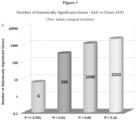
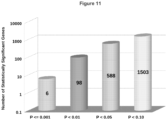
- the number of statistically significant genes is similar in the training and validation sets ( Fig. 8 ), with smaller differences for lower statistical significance (P ⁇ 0.10) and larger differences for higher statistical significance (P ⁇ 0.001).
- the larger difference for the higher statistical significance (P ⁇ 0.001) could be due not only to the different number of samples in the validation set (5) when compared to the training set (8), but also to the different types of Non-ADD samples in the two sets. This difference suggests a high diversity of dysregulated pathways.
- the presence of the first 40 genes from the training set (Table 4) was checked in the list of 2,077 genes from the validation set (P ⁇ 0.10; Fig. 8 ).
- the presence of the first 40 genes from the validation set (Table 5) was checked in the list of 2,103 genes from the training set (P ⁇ 0.10; Fig. 8 ).
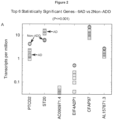
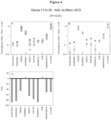
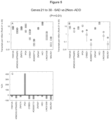
- the first 40 genes from Tables 4 and 5 are under highest statistical significance therefore it is very likely to have the highest impact in Alzheimer's disease detection, treatment, and pathways dysregulation.
- the cross-correlation of the first 40 genes in each set was made with a larger pool of genes from the opposite set (P ⁇ 0.10) to accommodate the diversity in Non-ADD samples as well as to compensate for different numbers of samples in the validation (5) and training sets (8). However, in the end only the genes with similar statistical significance are considered as representing the core of dysregulation for AD.
- the average and standard deviations were calculated for the Transcripts Per Million (TPM) values for each of the two groups - Alzheimer's disease (AD) and Non-Alzheimer's Disease Demented (Non-ADD) for each gene.
- the reference intervals were then calculated according to Horn and Pesce (Reference Intervals: A User's Guide. Paul S. Horn and Amadeo J. Pesce. Washington, DC: AACC Press, 2005, ISBN 1-59425-035-9 ) as the average plus minus two standard deviations.
- the reference intervals calculated in this way assure that 95% of all the possible values in each population (AD or non-ADD) are considered.
- the AD diagnosis is based on the 26 components/genes of the vector. For each one of the components, the greater than (>) or smaller than ( ⁇ ) the cut-off value is indicated for each gene, in the last column.
- Table 10 Gene Expression Levels (TPM) Indicative of AD (Study 2) Number Gene name Cut-Off AD Diagnosis 1 AC004057.1 161.81 >161.81 2 ACP6 2.84 ⁇ 2.84 3 ADAM20 0.16 ⁇ 0.16 4 ASXL2 0.74 ⁇ 0.76 5 C2CD5 28.76 >28.76 6 CARNS1 0.16 >0.15 7 FAM149B1 22.60 ⁇ 22.60 8 LINC01393 1.00 >0.86 9 MAP1LC3B2 4.41 >4.41 10 NHLH1 0.27 ⁇ 0.27 11 NPPA-AS1_3 2.54 ⁇ 2.54 12 PAN3 15.98 ⁇ 15.98 13 PHBP8 0.98 >0.98 14 PSMB9 18.00 >18.00 15 RAB3IP 0.50
Landscapes
- Chemical & Material Sciences (AREA)
- Life Sciences & Earth Sciences (AREA)
- Health & Medical Sciences (AREA)
- Organic Chemistry (AREA)
- Proteomics, Peptides & Aminoacids (AREA)
- Engineering & Computer Science (AREA)
- Analytical Chemistry (AREA)
- Zoology (AREA)
- Wood Science & Technology (AREA)
- Genetics & Genomics (AREA)
- General Health & Medical Sciences (AREA)
- Bioinformatics & Cheminformatics (AREA)
- Immunology (AREA)
- Biotechnology (AREA)
- Molecular Biology (AREA)
- Microbiology (AREA)
- Biophysics (AREA)
- Biochemistry (AREA)
- Physics & Mathematics (AREA)
- General Engineering & Computer Science (AREA)
- Pathology (AREA)
- Measuring Or Testing Involving Enzymes Or Micro-Organisms (AREA)
- Medicinal Chemistry (AREA)
- Veterinary Medicine (AREA)
- Public Health (AREA)
- Animal Behavior & Ethology (AREA)
- Pharmacology & Pharmacy (AREA)
- Epidemiology (AREA)
- Medicines That Contain Protein Lipid Enzymes And Other Medicines (AREA)
- Pharmaceuticals Containing Other Organic And Inorganic Compounds (AREA)
- Acyclic And Carbocyclic Compounds In Medicinal Compositions (AREA)
- Micro-Organisms Or Cultivation Processes Thereof (AREA)
- Biomedical Technology (AREA)
- Neurosurgery (AREA)
- Neurology (AREA)
- General Chemical & Material Sciences (AREA)
- Nuclear Medicine, Radiotherapy & Molecular Imaging (AREA)
- Chemical Kinetics & Catalysis (AREA)
- Psychiatry (AREA)
- Hospice & Palliative Care (AREA)
Claims (10)
- Verfahren, um festzustellen, ob ein menschliches Subjekt an Alzheimer-Krankheit ("AD") oder an einer Nicht-Alzheimer-Demenz ("Nicht-ADD") leidet, wenn vermutet wird, dass das Subjekt an AD oder Nicht-ADD leidet, umfassend die Schritte:(a) Synchronisieren einer Population geeigneter Zellen, die von dem Subjekt stammen, und(b) Messen, in der resultierenden synchronisierten Zellpopulation, des Expressionsniveaus eines Gens, von dem bekannt ist, dass es zwischen entsprechenden synchronisierten Zellen, die von AD-Patienten stammen, und solchen, die von Nicht-ADD-Patienten stammen, unterschiedlich exprimiert wird, wobei das Gen PHBP8 ist,wobei (i) das Subjekt an AD leidet, wenn das in Schritt (b) gemessene Expressionsniveau mit dem Expressionsniveau dieses Gens in entsprechenden synchronisierten Zellen, die von AD-Patienten stammen, übereinstimmt, und (ii) das Subjekt an Nicht-ADD leidet, wenn das in Schritt (b) gemessene Expressionsniveau mit dem Expressionsniveau dieses Gens in entsprechenden synchronisierten Zellen, die von Nicht-ADD-Patienten stammen, übereinstimmt.
- Verfahren nach Anspruch 1, wobei die vom Subjekt stammenden geeigneten Zellen kultivierte Hautzellen-Fibroblasten sind.
- Verfahren nach Anspruch 1, wobei die vom Subjekt stammenden geeigneten Zellen kultivierte B-Lymphozyten sind, vorzugsweise wobei die B-Lymphozyten immortalisiert sind.
- Verfahren nach Anspruch 1, wobei das Synchronisieren der Population geeigneter Zellen das Kultivieren der Zellen bis zur Überkonfluenz and anschließend das Aushungern der resultierenden überkonfluenten Zellen umfasst.
- Verfahren nach Anspruch 1, wobei Schritt (b) das Messen der Expressionsniveaus von einer Mehrzahl von Genen umfasst, wobei von jedem Gen bekannt ist, dass es zwischen entsprechenden synchronisierten Zellen, die von AD-Patienten stammen, und solchen, die von Nicht-ADD-Patienten stammen, unterschiedlich exprimiert wird, wobei die Mehrzahl von Genen ausgewählt ist aus der Gruppe bestehend aus wenigstens zwei Genen, wenigstens fünf Genen, wenigstens 20 Genen, wenigstens 100 Genen und wenigstens 1000 Genen.
- Verfahren nach Anspruch 5, wobei von jedem Gen der Mehrzahl von Genen bekannt ist, dass es zwischen entsprechenden synchronisierten Zellen, die von AD-Patienten stammen, und solchen, die von Nicht-ADD-Patienten stammen, wenigstens 50% unterschiedlich exprimiert wird, vorzugsweise wobei von jedem Gen der Mehrzahl von Genen bekannt ist, dass es zwischen entsprechenden synchronisierten Zellen, die von AD-Patienten stammen, und solchen, die von Nicht-ADD-Patienten stammen, wenigstens 100% unterschiedlich exprimiert wird.
- Verfahren nach Anspruch 5, wobei die Mehrzahl von Genen PHBP8 und ein oder mehrere Gene, ausgewählt aus der Gruppe bestehend aus AC004057.1, AC092651.1, ACP6, ADAM20, ASXL2, C2CD5, CARNS1, FAM149B1, GLIS3-AS1, IL18R1, LINC01393, LZIC, MAP1LC3B2, NHLH1, NORAD, NPPA-AS1_3, OSMR-AS1, PAN3, PSMB9, RAB3IP, RDH16, RFESDP1, RPL5, SCG2, SDHD, SHISA5, SLC45A3, SNHG14, TTC26, URB2, USMG5, WASF2, ZCWPW2, ZNF444 und ZNF70, umfasst.
- Verfahren nach Anspruch 1, wobei das Messen des Expressionsniveaus eines Gens das Messen der Anzahl der RNA-Transkripte dieses Gens pro Anzahl der Gesamttranskripte umfasst.
- Verfahren nach Anspruch 1, umfassend die Schritte:(a) Synchronisieren einer Population von kultivierten Hautzellen-Fibroblasten, die von dem Subjekt stammen, wobei das Synchronisieren das Kultivieren der Fibroblasten bis zur Überkonfluenz and anschließend das Aushungern der resultierenden überkonfluenten Fibroblasten umfasst, und(b) Messen, in der resultierenden synchronisierten Fibroblastenpopulation, des Expressionsniveaus eines jeden der Gene AC004057.1, AC092651.1, ACP6, ADAM20, ASXL2, C2CD5, CARNS1, FAM149B1, GLIS3-AS1, IL18R1, LINC01393, LZIC, MAP1LC3B2, NHLH1, NORAD, NPPA-AS1_3, OSMR-AS1, PAN3, PHBP8, PSMB9, RAB3IP, RDH16, RFESDP1, RPL5, SCG2, SDHD, SHISA5, SLC45A3, SNHG14, TTC26, URB2, USMG5, WASF2, ZCWPW2, ZNF444 und ZNF70, wobei das Messen des Expressionsniveaus eines jeden Gens das Messen der Anzahl seiner RNA-Transkripte pro Anzahl der Gesamttranskripte umfasst,wobei (i) das Subjekt an AD leidet, wenn die in Schritt (b) gemessenen Expressionsniveaus mit den Expressionsniveaus der Gene in entsprechenden synchronisierten Zellen, die von AD-Patienten stammen, übereinstimmen, und (ii) das Subjekt an Nicht-ADD leidet, wenn die in Schritt (b) gemessenen Expressionsniveaus mit den Expressionsniveaus der Gene in entsprechenden synchronisierten Zellen, die von Nicht-ADD-Patienten stammen, übereinstimmen.
- Verfahren nach Anspruch 1, umfassend die Schritte:(a) Synchronisieren einer Population von kultivierten immortalisierten B-Lymphozyten, die von dem Subjekt stammen, wobei das Synchronisieren das Kultivieren der Lymphozyten bis zur Überkonfluenz and anschließend das Aushungern der resultierenden überkonfluenten Lymphozyten umfasst, und(b) Messen, in der resultierenden synchronisierten Lymphozytenpopulation, des Expressionsniveaus eines jeden der Gene AC004057.1, AC092651.1, ACP6, ADAM20, ASXL2, C2CD5, CARNS1, FAM149B1, GLIS3-AS1, IL18R1, LINC01393, LZIC, MAP1LC3B2, NHLH1, NORAD, NPPA-AS1_3, OSMR-AS1, PAN3, PHBP8, PSMB9, RAB3IP, RDH16, RFESDP1, RPL5, SCG2, SDHD, SHISA5, SLC45A3, SNHG14, TTC26, URB2, USMG5, WASF2, ZCWPW2, ZNF444 und ZNF70, wobei das Messen des Expressionsniveaus eines jeden Gens das Messen der Anzahl seiner RNA-Transkripte pro Anzahl der Gesamttranskripte umfasst,wobei (i) das Subjekt an AD leidet, wenn die in Schritt (b) gemessenen Expressionsniveaus mit den Expressionsniveaus der Gene in entsprechenden synchronisierten Zellen, die von AD-Patienten stammen, übereinstimmen, und (ii) das Subjekt an Nicht-ADD leidet, wenn die in Schritt (b) gemessenen Expressionsniveaus mit den Expressionsniveaus der Gene in entsprechenden synchronisierten Zellen, die von Nicht-ADD-Patienten stammen, übereinstimmen.
Applications Claiming Priority (2)
| Application Number | Priority Date | Filing Date | Title |
|---|---|---|---|
| US201762596588P | 2017-12-08 | 2017-12-08 | |
| PCT/US2018/064322 WO2019113363A1 (en) | 2017-12-08 | 2018-12-06 | Synchronized cell cycle gene expression test for alzheimer's disease and related therapeutic methods |
Publications (3)
| Publication Number | Publication Date |
|---|---|
| EP3735587A1 EP3735587A1 (de) | 2020-11-11 |
| EP3735587A4 EP3735587A4 (de) | 2022-04-06 |
| EP3735587B1 true EP3735587B1 (de) | 2024-10-30 |
Family
ID=66751250
Family Applications (2)
| Application Number | Title | Priority Date | Filing Date |
|---|---|---|---|
| EP18885782.5A Active EP3735587B1 (de) | 2017-12-08 | 2018-12-06 | Synchronisierter zellzyklus-genexpressionstest für morbus alzheimer und verwandte therapeutische verfahren |
| EP20818289.9A Pending EP3980560A4 (de) | 2017-12-08 | 2020-06-04 | Synchronisierter zellzyklus-genexpressionstest für morbus alzheimer |
Family Applications After (1)
| Application Number | Title | Priority Date | Filing Date |
|---|---|---|---|
| EP20818289.9A Pending EP3980560A4 (de) | 2017-12-08 | 2020-06-04 | Synchronisierter zellzyklus-genexpressionstest für morbus alzheimer |
Country Status (6)
| Country | Link |
|---|---|
| US (2) | US20190323083A1 (de) |
| EP (2) | EP3735587B1 (de) |
| JP (4) | JP7422673B2 (de) |
| KR (3) | KR20250050122A (de) |
| CN (2) | CN111699386B (de) |
| WO (2) | WO2019113363A1 (de) |
Families Citing this family (5)
| Publication number | Priority date | Publication date | Assignee | Title |
|---|---|---|---|---|
| EP3735587B1 (de) * | 2017-12-08 | 2024-10-30 | NeuroGX LLC | Synchronisierter zellzyklus-genexpressionstest für morbus alzheimer und verwandte therapeutische verfahren |
| WO2023206347A1 (zh) * | 2022-04-29 | 2023-11-02 | 苏州瀛创生物科技有限公司 | 作为早老性痴呆诊断标志物的ddit4l剪切产物 |
| EP4427746A1 (de) * | 2023-03-08 | 2024-09-11 | Bash Biotech Inc | Behandlung von demenz mit bortezomib oder parbendazol |
| WO2025076156A1 (en) * | 2023-10-04 | 2025-04-10 | Neurogx Llc | Gene expression-based tests for alzheimer's disease |
| WO2025199015A1 (en) * | 2024-03-18 | 2025-09-25 | Neurocode Llc | Transcriptome-based methods for diagnosing alzheimer's disease |
Family Cites Families (24)
| Publication number | Priority date | Publication date | Assignee | Title |
|---|---|---|---|---|
| WO2000040749A2 (en) * | 1999-01-06 | 2000-07-13 | Genenews Inc. | Method for the detection of gene transcripts in blood and uses thereof |
| US6780641B2 (en) * | 2000-07-10 | 2004-08-24 | University Of British Columbia | Immortalized human microglia cell line |
| WO2005003288A2 (en) * | 2003-07-02 | 2005-01-13 | Elena Jazin | Diagnostic methods , prognostic methods and pharmaceutical compositions for neurodegenerative diseases like alzheimer’s disease by modulating and investigating genes rgs4 and itpkb, their gene products or fragments and derivatives thereof |
| US7232818B2 (en) * | 2004-04-15 | 2007-06-19 | Proteolix, Inc. | Compounds for enzyme inhibition |
| US7776312B2 (en) * | 2004-08-13 | 2010-08-17 | Healthpartners Research Foundation | Method of treating Alzheimer's disease comprising administering deferoxamine (DFO) to the upper one-third of the nasal cavity |
| WO2006054979A1 (en) * | 2004-11-15 | 2006-05-26 | Blanchette Rockefeller Neurosciences Institute | Abnormalities of phosphatase 2a (pp2a) for diagnosis and treatment of alzheimer’s disease |
| EP1876449A1 (de) * | 2006-07-07 | 2008-01-09 | Universität Leipzig | Zellzyklusbasierter Bluttest zur Diagnose von Alzheimer |
| US20080286876A1 (en) * | 2007-05-14 | 2008-11-20 | Chissoe Stephanie | GENES ASSOCIATED WITH ALZHEIMER'S DISEASE - Hltdip |
| EP2669386A1 (de) * | 2008-07-28 | 2013-12-04 | Blanchette Rockefeller Neurosciences Institute | Stimulierte ausgelöste genomische Profilmarker von Morbus Alzheimer |
| EP2389371A4 (de) * | 2009-01-22 | 2012-09-12 | Neurotherapeutics Pharma Inc | Bumetanid-, furosemid-, piretanid-, azosemid- und torsemid-analoge sowie zusammensetzungen daraus und ihre verwendung |
| EP2483694A1 (de) * | 2009-10-01 | 2012-08-08 | Protagen AG | Biomarker für morbus alzheimer |
| CA2776501C (en) * | 2009-10-02 | 2022-04-19 | Blanchette Rockefeller Neurosciences Institute | Fibroblast growth patterns for diagnosis of alzheimer's disease |
| US9458489B2 (en) * | 2010-03-04 | 2016-10-04 | Massachusetts Institute Of Technology | Microfluidics sorter for cell detection and isolation |
| WO2013010003A1 (en) * | 2011-07-12 | 2013-01-17 | University Of Medicine And Dentistry Of New Jersey | Diagnostic biomarker profiles for the detection and diagnosis of alzheimer's disease |
| WO2013066764A2 (en) * | 2011-10-31 | 2013-05-10 | Merck Sharp & Dohme Corp. | Alzheimer's disease signature markers and methods of use |
| US20160289762A1 (en) * | 2012-01-27 | 2016-10-06 | The Board Of Trustees Of The Leland Stanford Junior University | Methods for profiliing and quantitating cell-free rna |
| US20160188792A1 (en) * | 2014-08-29 | 2016-06-30 | Washington University In St. Louis | Methods and Compositions for the Detection, Classification, and Diagnosis of Schizophrenia |
| EP3473253A1 (de) * | 2014-10-29 | 2019-04-24 | University Of Maryland | Verfahren zur behandlung altersbedingter symptome bei säugetieren und zusammensetzungen dafür |
| WO2016085943A1 (en) * | 2014-11-25 | 2016-06-02 | Rastelli, Luca | Use of ubiquitin-proteasome system inhibitors for treatment of tumors associated with neurofibromatosis type-2 |
| EP3265810A1 (de) | 2015-03-06 | 2018-01-10 | Blanchette Rockefeller Neurosciences, Institute | Verfahren zur klassifizierung von populationen, einschliesslich alzheimer-krankheitspopulationen |
| WO2016170489A1 (en) * | 2015-04-24 | 2016-10-27 | Fresenius Kabi Oncology Ltd. | Pharmaceutical compositions of proteasome inhibitor |
| US20180282784A1 (en) * | 2017-03-31 | 2018-10-04 | NeuroDiagnostics LLC | LYMPHOCYTE-BASED PKCe TEST FOR ALZHEIMER'S DISEASE |
| WO2019113277A1 (en) * | 2017-12-08 | 2019-06-13 | NeuroDiagnostics LLC | Diagnosing disease via gene expression profile in synchronized cells |
| EP3735587B1 (de) * | 2017-12-08 | 2024-10-30 | NeuroGX LLC | Synchronisierter zellzyklus-genexpressionstest für morbus alzheimer und verwandte therapeutische verfahren |
-
2018
- 2018-12-06 EP EP18885782.5A patent/EP3735587B1/de active Active
- 2018-12-06 KR KR1020257010324A patent/KR20250050122A/ko active Pending
- 2018-12-06 KR KR1020207019116A patent/KR20200096582A/ko not_active Ceased
- 2018-12-06 KR KR1020237045089A patent/KR102790240B1/ko active Active
- 2018-12-06 JP JP2020550042A patent/JP7422673B2/ja active Active
- 2018-12-06 CN CN201880088949.8A patent/CN111699386B/zh active Active
- 2018-12-06 CN CN202310947094.2A patent/CN117051096A/zh active Pending
- 2018-12-06 WO PCT/US2018/064322 patent/WO2019113363A1/en not_active Ceased
-
2019
- 2019-06-07 US US16/434,362 patent/US20190323083A1/en not_active Abandoned
-
2020
- 2020-06-04 EP EP20818289.9A patent/EP3980560A4/de active Pending
- 2020-06-04 WO PCT/US2020/036069 patent/WO2020247591A1/en not_active Ceased
-
2023
- 2023-03-10 JP JP2023037412A patent/JP2023060336A/ja active Pending
- 2023-04-05 US US18/295,893 patent/US20230340600A1/en active Pending
-
2024
- 2024-07-10 JP JP2024111131A patent/JP2024124580A/ja active Pending
-
2025
- 2025-06-18 JP JP2025102054A patent/JP2025120500A/ja active Pending
Also Published As
| Publication number | Publication date |
|---|---|
| CN111699386B (zh) | 2023-08-18 |
| JP2021511067A (ja) | 2021-05-06 |
| JP7422673B2 (ja) | 2024-01-26 |
| EP3735587A4 (de) | 2022-04-06 |
| KR102790240B1 (ko) | 2025-04-04 |
| KR20250050122A (ko) | 2025-04-14 |
| WO2019113363A1 (en) | 2019-06-13 |
| KR20240005227A (ko) | 2024-01-11 |
| JP2024124580A (ja) | 2024-09-12 |
| EP3980560A4 (de) | 2023-06-28 |
| JP2023060336A (ja) | 2023-04-27 |
| US20230340600A1 (en) | 2023-10-26 |
| JP2025120500A (ja) | 2025-08-15 |
| CN111699386A (zh) | 2020-09-22 |
| US20190323083A1 (en) | 2019-10-24 |
| EP3735587A1 (de) | 2020-11-11 |
| CN117051096A (zh) | 2023-11-14 |
| KR20200096582A (ko) | 2020-08-12 |
| WO2020247591A1 (en) | 2020-12-10 |
| EP3980560A1 (de) | 2022-04-13 |
Similar Documents
| Publication | Publication Date | Title |
|---|---|---|
| Schlingmann et al. | mTOR-activating mutations in RRAGD are causative for kidney tubulopathy and cardiomyopathy | |
| Pauneto et al. | Intra-tumoral hypoxia promotes CD8+ T cell dysfunction via chronic activation of integrated stress response transcription factor ATF4 | |
| Akizawa et al. | Long-term efficacy and safety of molidustat for anemia in chronic kidney disease: DIALOGUE extension studies | |
| Duan et al. | Integrated analyses of multi-omic data derived from paired primary lung cancer and brain metastasis reveal the metabolic vulnerability as a novel therapeutic target | |
| JP2023060336A (ja) | アルツハイマー病についての同調させた細胞周期遺伝子発現試験および関連治療法 | |
| Trucco et al. | A phase I window, dose escalating and safety trial of metformin in combination with induction chemotherapy in relapsed refractory acute lymphoblastic leukemia: metformin with induction chemotherapy of vincristine, dexamethasone, PEG‐asparaginase, and doxorubicin | |
| JP7812232B2 (ja) | 癌患者における抗腫瘍免疫の増強のための患者選択 | |
| De Vito et al. | MiR‐142‐3p regulates synaptopathy‐driven disease progression in multiple sclerosis | |
| Ebner et al. | Recent developments in the field of cachexia, sarcopenia, and muscle wasting: highlights from the 11th Cachexia Conference | |
| Zhang et al. | EGFR‐TKIs induced DPP4 drives metabolic reprogramming of persister cells in lung cancer | |
| US11400088B2 (en) | Uses of compound in preparation of drugs for treating brain glioma | |
| WO2016123679A1 (en) | A method of treatment | |
| Maruyama et al. | Combination therapy with cetirizine and anti-PD-1 antibody suppresses colitis-induced colon tumor formation in mice | |
| Li et al. | Key genes are associated with the prognosis of glioma, and melittin can regulate the expression of these genes in glioma U87 cells | |
| US20220040252A1 (en) | Treatment of prostate cancer by androgen ablation and il-8 blockade | |
| HK40104747A (en) | Synchronized cell cycle gene expression test for alzheimer’s disease and related therapeutic methods | |
| Xu et al. | Exploring the molecular mechanism of Qilian Fuzheng capsule for treatment of non-small cell lung cancer using network pharmacology, RNA-seq, molecular docking and experimental verification | |
| Kim et al. | Fucoidan P Alleviates Sarcopenic Obesity by Regulating Muscle Protein and Energy Metabolism | |
| US20260115283A1 (en) | Method for treating cancer by using combination of asparagine inhibitor and immune checkpoint inhibitor and pharmaceutical composition comprising combination of asparagine inhibitor and immune checkpoint inhibitor | |
| HK40033341B (en) | Synchronized cell cycle gene expression test for alzheimer's disease and related therapeutic methods | |
| WO2019139831A1 (en) | Methods for identification, assessment, prevention, and treatment of metabolic disorders using succinate | |
| HK40033341A (en) | Synchronized cell cycle gene expression test for alzheimer's disease and related therapeutic methods | |
| Giblin et al. | The deacylase SIRT5 supports melanoma viability by regulating chromatin dynamics | |
| US20120309845A1 (en) | Dosing regimens and methods for treating or preventing acute myeloid leukemia | |
| Zhang et al. | Monocyte/macrophage-derived IL-15 activates STAT5 to trigger the EFNA1/NCOA2-positive feedback loop, facilitating retinal angiogenesis in high-glucose environments |
Legal Events
| Date | Code | Title | Description |
|---|---|---|---|
| STAA | Information on the status of an ep patent application or granted ep patent |
Free format text: STATUS: THE INTERNATIONAL PUBLICATION HAS BEEN MADE |
|
| PUAI | Public reference made under article 153(3) epc to a published international application that has entered the european phase |
Free format text: ORIGINAL CODE: 0009012 |
|
| STAA | Information on the status of an ep patent application or granted ep patent |
Free format text: STATUS: REQUEST FOR EXAMINATION WAS MADE |
|
| 17P | Request for examination filed |
Effective date: 20200618 |
|
| AK | Designated contracting states |
Kind code of ref document: A1 Designated state(s): AL AT BE BG CH CY CZ DE DK EE ES FI FR GB GR HR HU IE IS IT LI LT LU LV MC MK MT NL NO PL PT RO RS SE SI SK SM TR |
|
| AX | Request for extension of the european patent |
Extension state: BA ME |
|
| DAV | Request for validation of the european patent (deleted) | ||
| DAX | Request for extension of the european patent (deleted) | ||
| RIC1 | Information provided on ipc code assigned before grant |
Ipc: C12Q 1/6883 20180101ALI20210817BHEP Ipc: G01N 33/50 20060101ALI20210817BHEP Ipc: G01N 33/48 20060101AFI20210817BHEP |
|
| A4 | Supplementary search report drawn up and despatched |
Effective date: 20220310 |
|
| RIC1 | Information provided on ipc code assigned before grant |
Ipc: C12Q 1/6883 20180101ALI20220303BHEP Ipc: G01N 33/50 20060101ALI20220303BHEP Ipc: G01N 33/48 20060101AFI20220303BHEP |
|
| GRAP | Despatch of communication of intention to grant a patent |
Free format text: ORIGINAL CODE: EPIDOSNIGR1 |
|
| STAA | Information on the status of an ep patent application or granted ep patent |
Free format text: STATUS: GRANT OF PATENT IS INTENDED |
|
| INTG | Intention to grant announced |
Effective date: 20240529 |
|
| GRAS | Grant fee paid |
Free format text: ORIGINAL CODE: EPIDOSNIGR3 |
|
| GRAA | (expected) grant |
Free format text: ORIGINAL CODE: 0009210 |
|
| STAA | Information on the status of an ep patent application or granted ep patent |
Free format text: STATUS: THE PATENT HAS BEEN GRANTED |
|
| AK | Designated contracting states |
Kind code of ref document: B1 Designated state(s): AL AT BE BG CH CY CZ DE DK EE ES FI FR GB GR HR HU IE IS IT LI LT LU LV MC MK MT NL NO PL PT RO RS SE SI SK SM TR |
|
| REG | Reference to a national code |
Ref country code: GB Ref legal event code: FG4D |
|
| REG | Reference to a national code |
Ref country code: CH Ref legal event code: EP |
|
| REG | Reference to a national code |
Ref country code: IE Ref legal event code: FG4D |
|
| REG | Reference to a national code |
Ref country code: DE Ref legal event code: R096 Ref document number: 602018076104 Country of ref document: DE |
|
| P01 | Opt-out of the competence of the unified patent court (upc) registered |
Free format text: CASE NUMBER: APP_818/2025 Effective date: 20250108 |
|
| REG | Reference to a national code |
Ref country code: LT Ref legal event code: MG9D |
|
| REG | Reference to a national code |
Ref country code: NL Ref legal event code: MP Effective date: 20241030 |
|
| PG25 | Lapsed in a contracting state [announced via postgrant information from national office to epo] |
Ref country code: HR Free format text: LAPSE BECAUSE OF FAILURE TO SUBMIT A TRANSLATION OF THE DESCRIPTION OR TO PAY THE FEE WITHIN THE PRESCRIBED TIME-LIMIT Effective date: 20241030 Ref country code: PT Free format text: LAPSE BECAUSE OF FAILURE TO SUBMIT A TRANSLATION OF THE DESCRIPTION OR TO PAY THE FEE WITHIN THE PRESCRIBED TIME-LIMIT Effective date: 20250228 Ref country code: IS Free format text: LAPSE BECAUSE OF FAILURE TO SUBMIT A TRANSLATION OF THE DESCRIPTION OR TO PAY THE FEE WITHIN THE PRESCRIBED TIME-LIMIT Effective date: 20250228 |
|
| PG25 | Lapsed in a contracting state [announced via postgrant information from national office to epo] |
Ref country code: FI Free format text: LAPSE BECAUSE OF FAILURE TO SUBMIT A TRANSLATION OF THE DESCRIPTION OR TO PAY THE FEE WITHIN THE PRESCRIBED TIME-LIMIT Effective date: 20241030 Ref country code: NL Free format text: LAPSE BECAUSE OF FAILURE TO SUBMIT A TRANSLATION OF THE DESCRIPTION OR TO PAY THE FEE WITHIN THE PRESCRIBED TIME-LIMIT Effective date: 20241030 |
|
| REG | Reference to a national code |
Ref country code: AT Ref legal event code: MK05 Ref document number: 1737347 Country of ref document: AT Kind code of ref document: T Effective date: 20241030 |
|
| PG25 | Lapsed in a contracting state [announced via postgrant information from national office to epo] |
Ref country code: BG Free format text: LAPSE BECAUSE OF FAILURE TO SUBMIT A TRANSLATION OF THE DESCRIPTION OR TO PAY THE FEE WITHIN THE PRESCRIBED TIME-LIMIT Effective date: 20241030 |
|
| PG25 | Lapsed in a contracting state [announced via postgrant information from national office to epo] |
Ref country code: ES Free format text: LAPSE BECAUSE OF FAILURE TO SUBMIT A TRANSLATION OF THE DESCRIPTION OR TO PAY THE FEE WITHIN THE PRESCRIBED TIME-LIMIT Effective date: 20241030 |
|
| PG25 | Lapsed in a contracting state [announced via postgrant information from national office to epo] |
Ref country code: NO Free format text: LAPSE BECAUSE OF FAILURE TO SUBMIT A TRANSLATION OF THE DESCRIPTION OR TO PAY THE FEE WITHIN THE PRESCRIBED TIME-LIMIT Effective date: 20250130 |
|
| PG25 | Lapsed in a contracting state [announced via postgrant information from national office to epo] |
Ref country code: LV Free format text: LAPSE BECAUSE OF FAILURE TO SUBMIT A TRANSLATION OF THE DESCRIPTION OR TO PAY THE FEE WITHIN THE PRESCRIBED TIME-LIMIT Effective date: 20241030 Ref country code: AT Free format text: LAPSE BECAUSE OF FAILURE TO SUBMIT A TRANSLATION OF THE DESCRIPTION OR TO PAY THE FEE WITHIN THE PRESCRIBED TIME-LIMIT Effective date: 20241030 Ref country code: GR Free format text: LAPSE BECAUSE OF FAILURE TO SUBMIT A TRANSLATION OF THE DESCRIPTION OR TO PAY THE FEE WITHIN THE PRESCRIBED TIME-LIMIT Effective date: 20250131 |
|
| PG25 | Lapsed in a contracting state [announced via postgrant information from national office to epo] |
Ref country code: PL Free format text: LAPSE BECAUSE OF FAILURE TO SUBMIT A TRANSLATION OF THE DESCRIPTION OR TO PAY THE FEE WITHIN THE PRESCRIBED TIME-LIMIT Effective date: 20241030 |
|
| PG25 | Lapsed in a contracting state [announced via postgrant information from national office to epo] |
Ref country code: RS Free format text: LAPSE BECAUSE OF FAILURE TO SUBMIT A TRANSLATION OF THE DESCRIPTION OR TO PAY THE FEE WITHIN THE PRESCRIBED TIME-LIMIT Effective date: 20250130 |
|
| PG25 | Lapsed in a contracting state [announced via postgrant information from national office to epo] |
Ref country code: SM Free format text: LAPSE BECAUSE OF FAILURE TO SUBMIT A TRANSLATION OF THE DESCRIPTION OR TO PAY THE FEE WITHIN THE PRESCRIBED TIME-LIMIT Effective date: 20241030 |
|
| PG25 | Lapsed in a contracting state [announced via postgrant information from national office to epo] |
Ref country code: MC Free format text: LAPSE BECAUSE OF FAILURE TO SUBMIT A TRANSLATION OF THE DESCRIPTION OR TO PAY THE FEE WITHIN THE PRESCRIBED TIME-LIMIT Effective date: 20241030 |
|
| PG25 | Lapsed in a contracting state [announced via postgrant information from national office to epo] |
Ref country code: DK Free format text: LAPSE BECAUSE OF FAILURE TO SUBMIT A TRANSLATION OF THE DESCRIPTION OR TO PAY THE FEE WITHIN THE PRESCRIBED TIME-LIMIT Effective date: 20241030 |
|
| PG25 | Lapsed in a contracting state [announced via postgrant information from national office to epo] |
Ref country code: EE Free format text: LAPSE BECAUSE OF FAILURE TO SUBMIT A TRANSLATION OF THE DESCRIPTION OR TO PAY THE FEE WITHIN THE PRESCRIBED TIME-LIMIT Effective date: 20241030 |
|
| PG25 | Lapsed in a contracting state [announced via postgrant information from national office to epo] |
Ref country code: RO Free format text: LAPSE BECAUSE OF FAILURE TO SUBMIT A TRANSLATION OF THE DESCRIPTION OR TO PAY THE FEE WITHIN THE PRESCRIBED TIME-LIMIT Effective date: 20241030 |
|
| PG25 | Lapsed in a contracting state [announced via postgrant information from national office to epo] |
Ref country code: SK Free format text: LAPSE BECAUSE OF FAILURE TO SUBMIT A TRANSLATION OF THE DESCRIPTION OR TO PAY THE FEE WITHIN THE PRESCRIBED TIME-LIMIT Effective date: 20241030 |
|
| PG25 | Lapsed in a contracting state [announced via postgrant information from national office to epo] |
Ref country code: CZ Free format text: LAPSE BECAUSE OF FAILURE TO SUBMIT A TRANSLATION OF THE DESCRIPTION OR TO PAY THE FEE WITHIN THE PRESCRIBED TIME-LIMIT Effective date: 20241030 |
|
| PG25 | Lapsed in a contracting state [announced via postgrant information from national office to epo] |
Ref country code: IT Free format text: LAPSE BECAUSE OF FAILURE TO SUBMIT A TRANSLATION OF THE DESCRIPTION OR TO PAY THE FEE WITHIN THE PRESCRIBED TIME-LIMIT Effective date: 20241030 |
|
| REG | Reference to a national code |
Ref country code: CH Ref legal event code: PL Ref country code: DE Ref legal event code: R097 Ref document number: 602018076104 Country of ref document: DE |
|
| PG25 | Lapsed in a contracting state [announced via postgrant information from national office to epo] |
Ref country code: LU Free format text: LAPSE BECAUSE OF NON-PAYMENT OF DUE FEES Effective date: 20241206 |
|
| PLBE | No opposition filed within time limit |
Free format text: ORIGINAL CODE: 0009261 |
|
| STAA | Information on the status of an ep patent application or granted ep patent |
Free format text: STATUS: NO OPPOSITION FILED WITHIN TIME LIMIT |
|
| PG25 | Lapsed in a contracting state [announced via postgrant information from national office to epo] |
Ref country code: SE Free format text: LAPSE BECAUSE OF FAILURE TO SUBMIT A TRANSLATION OF THE DESCRIPTION OR TO PAY THE FEE WITHIN THE PRESCRIBED TIME-LIMIT Effective date: 20241030 |
|
| 26N | No opposition filed |
Effective date: 20250731 |
|
| REG | Reference to a national code |
Ref country code: BE Ref legal event code: MM Effective date: 20241231 |
|
| PG25 | Lapsed in a contracting state [announced via postgrant information from national office to epo] |
Ref country code: BE Free format text: LAPSE BECAUSE OF NON-PAYMENT OF DUE FEES Effective date: 20241231 |
|
| PG25 | Lapsed in a contracting state [announced via postgrant information from national office to epo] |
Ref country code: CH Free format text: LAPSE BECAUSE OF NON-PAYMENT OF DUE FEES Effective date: 20241231 |
|
| PG25 | Lapsed in a contracting state [announced via postgrant information from national office to epo] |
Ref country code: IE Free format text: LAPSE BECAUSE OF NON-PAYMENT OF DUE FEES Effective date: 20241206 |
|
| PGFP | Annual fee paid to national office [announced via postgrant information from national office to epo] |
Ref country code: GB Payment date: 20251218 Year of fee payment: 8 |
|
| PGFP | Annual fee paid to national office [announced via postgrant information from national office to epo] |
Ref country code: FR Payment date: 20251218 Year of fee payment: 8 |
|
| PGFP | Annual fee paid to national office [announced via postgrant information from national office to epo] |
Ref country code: DE Payment date: 20251217 Year of fee payment: 8 |
|
| PG25 | Lapsed in a contracting state [announced via postgrant information from national office to epo] |
Ref country code: TR Free format text: LAPSE BECAUSE OF FAILURE TO SUBMIT A TRANSLATION OF THE DESCRIPTION OR TO PAY THE FEE WITHIN THE PRESCRIBED TIME-LIMIT Effective date: 20241030 |
|
| PG25 | Lapsed in a contracting state [announced via postgrant information from national office to epo] |
Ref country code: SI Free format text: LAPSE BECAUSE OF FAILURE TO SUBMIT A TRANSLATION OF THE DESCRIPTION OR TO PAY THE FEE WITHIN THE PRESCRIBED TIME-LIMIT Effective date: 20241030 |
|
| PG25 | Lapsed in a contracting state [announced via postgrant information from national office to epo] |
Ref country code: LT Free format text: LAPSE BECAUSE OF FAILURE TO SUBMIT A TRANSLATION OF THE DESCRIPTION OR TO PAY THE FEE WITHIN THE PRESCRIBED TIME-LIMIT Effective date: 20241030 |