EP3733185A1 - Treating non-small cell lung cancer with atr inhibitors - Google Patents
Treating non-small cell lung cancer with atr inhibitors Download PDFInfo
- Publication number
- EP3733185A1 EP3733185A1 EP20180337.6A EP20180337A EP3733185A1 EP 3733185 A1 EP3733185 A1 EP 3733185A1 EP 20180337 A EP20180337 A EP 20180337A EP 3733185 A1 EP3733185 A1 EP 3733185A1
- Authority
- EP
- European Patent Office
- Prior art keywords
- cells
- compound
- gemcitabine
- cancer
- cisplatin
- Prior art date
- Legal status (The legal status is an assumption and is not a legal conclusion. Google has not performed a legal analysis and makes no representation as to the accuracy of the status listed.)
- Granted
Links
- JZCWLJDSIRUGIN-UHFFFAOYSA-N CC(C)S(c(cc1)ccc1-c(nc1-c2cc(-c3ccc(CNC)cc3)n[o]2)cnc1N)(=O)=O Chemical compound CC(C)S(c(cc1)ccc1-c(nc1-c2cc(-c3ccc(CNC)cc3)n[o]2)cnc1N)(=O)=O JZCWLJDSIRUGIN-UHFFFAOYSA-N 0.000 description 2
- DUIHHZKTCSNTGM-UHFFFAOYSA-N CS(c(cc1)ccc1-c(nc1C(Nc2ccccc2)=O)cnc1N)(=O)=O Chemical compound CS(c(cc1)ccc1-c(nc1C(Nc2ccccc2)=O)cnc1N)(=O)=O DUIHHZKTCSNTGM-UHFFFAOYSA-N 0.000 description 2
Images










Classifications
-
- A—HUMAN NECESSITIES
- A61—MEDICAL OR VETERINARY SCIENCE; HYGIENE
- A61K—PREPARATIONS FOR MEDICAL, DENTAL OR TOILETRY PURPOSES
- A61K31/00—Medicinal preparations containing organic active ingredients
- A61K31/33—Heterocyclic compounds
- A61K31/395—Heterocyclic compounds having nitrogen as a ring hetero atom, e.g. guanethidine or rifamycins
- A61K31/495—Heterocyclic compounds having nitrogen as a ring hetero atom, e.g. guanethidine or rifamycins having six-membered rings with two or more nitrogen atoms as the only ring heteroatoms, e.g. piperazine or tetrazines
- A61K31/4965—Non-condensed pyrazines
- A61K31/497—Non-condensed pyrazines containing further heterocyclic rings
-
- A—HUMAN NECESSITIES
- A61—MEDICAL OR VETERINARY SCIENCE; HYGIENE
- A61K—PREPARATIONS FOR MEDICAL, DENTAL OR TOILETRY PURPOSES
- A61K31/00—Medicinal preparations containing organic active ingredients
- A61K31/33—Heterocyclic compounds
- A61K31/395—Heterocyclic compounds having nitrogen as a ring hetero atom, e.g. guanethidine or rifamycins
- A61K31/495—Heterocyclic compounds having nitrogen as a ring hetero atom, e.g. guanethidine or rifamycins having six-membered rings with two or more nitrogen atoms as the only ring heteroatoms, e.g. piperazine or tetrazines
- A61K31/505—Pyrimidines; Hydrogenated pyrimidines, e.g. trimethoprim
- A61K31/506—Pyrimidines; Hydrogenated pyrimidines, e.g. trimethoprim not condensed and containing further heterocyclic rings
-
- A—HUMAN NECESSITIES
- A61—MEDICAL OR VETERINARY SCIENCE; HYGIENE
- A61K—PREPARATIONS FOR MEDICAL, DENTAL OR TOILETRY PURPOSES
- A61K31/00—Medicinal preparations containing organic active ingredients
- A61K31/33—Heterocyclic compounds
- A61K31/395—Heterocyclic compounds having nitrogen as a ring hetero atom, e.g. guanethidine or rifamycins
- A61K31/495—Heterocyclic compounds having nitrogen as a ring hetero atom, e.g. guanethidine or rifamycins having six-membered rings with two or more nitrogen atoms as the only ring heteroatoms, e.g. piperazine or tetrazines
- A61K31/4965—Non-condensed pyrazines
-
- A—HUMAN NECESSITIES
- A61—MEDICAL OR VETERINARY SCIENCE; HYGIENE
- A61K—PREPARATIONS FOR MEDICAL, DENTAL OR TOILETRY PURPOSES
- A61K31/00—Medicinal preparations containing organic active ingredients
- A61K31/33—Heterocyclic compounds
- A61K31/395—Heterocyclic compounds having nitrogen as a ring hetero atom, e.g. guanethidine or rifamycins
- A61K31/495—Heterocyclic compounds having nitrogen as a ring hetero atom, e.g. guanethidine or rifamycins having six-membered rings with two or more nitrogen atoms as the only ring heteroatoms, e.g. piperazine or tetrazines
- A61K31/505—Pyrimidines; Hydrogenated pyrimidines, e.g. trimethoprim
-
- A—HUMAN NECESSITIES
- A61—MEDICAL OR VETERINARY SCIENCE; HYGIENE
- A61K—PREPARATIONS FOR MEDICAL, DENTAL OR TOILETRY PURPOSES
- A61K31/00—Medicinal preparations containing organic active ingredients
- A61K31/33—Heterocyclic compounds
- A61K31/555—Heterocyclic compounds containing heavy metals, e.g. hemin, hematin, melarsoprol
-
- A—HUMAN NECESSITIES
- A61—MEDICAL OR VETERINARY SCIENCE; HYGIENE
- A61K—PREPARATIONS FOR MEDICAL, DENTAL OR TOILETRY PURPOSES
- A61K31/00—Medicinal preparations containing organic active ingredients
- A61K31/70—Carbohydrates; Sugars; Derivatives thereof
- A61K31/7042—Compounds having saccharide radicals and heterocyclic rings
- A61K31/7048—Compounds having saccharide radicals and heterocyclic rings having oxygen as a ring hetero atom, e.g. leucoglucosan, hesperidin, erythromycin, nystatin, digitoxin or digoxin
-
- A—HUMAN NECESSITIES
- A61—MEDICAL OR VETERINARY SCIENCE; HYGIENE
- A61K—PREPARATIONS FOR MEDICAL, DENTAL OR TOILETRY PURPOSES
- A61K31/00—Medicinal preparations containing organic active ingredients
- A61K31/70—Carbohydrates; Sugars; Derivatives thereof
- A61K31/7042—Compounds having saccharide radicals and heterocyclic rings
- A61K31/7052—Compounds having saccharide radicals and heterocyclic rings having nitrogen as a ring hetero atom, e.g. nucleosides, nucleotides
- A61K31/706—Compounds having saccharide radicals and heterocyclic rings having nitrogen as a ring hetero atom, e.g. nucleosides, nucleotides containing six-membered rings with nitrogen as a ring hetero atom
- A61K31/7064—Compounds having saccharide radicals and heterocyclic rings having nitrogen as a ring hetero atom, e.g. nucleosides, nucleotides containing six-membered rings with nitrogen as a ring hetero atom containing condensed or non-condensed pyrimidines
- A61K31/7068—Compounds having saccharide radicals and heterocyclic rings having nitrogen as a ring hetero atom, e.g. nucleosides, nucleotides containing six-membered rings with nitrogen as a ring hetero atom containing condensed or non-condensed pyrimidines having oxo groups directly attached to the pyrimidine ring, e.g. cytidine, cytidylic acid
-
- A—HUMAN NECESSITIES
- A61—MEDICAL OR VETERINARY SCIENCE; HYGIENE
- A61K—PREPARATIONS FOR MEDICAL, DENTAL OR TOILETRY PURPOSES
- A61K33/00—Medicinal preparations containing inorganic active ingredients
- A61K33/24—Heavy metals; Compounds thereof
- A61K33/243—Platinum; Compounds thereof
-
- A—HUMAN NECESSITIES
- A61—MEDICAL OR VETERINARY SCIENCE; HYGIENE
- A61K—PREPARATIONS FOR MEDICAL, DENTAL OR TOILETRY PURPOSES
- A61K45/00—Medicinal preparations containing active ingredients not provided for in groups A61K31/00 - A61K41/00
- A61K45/06—Mixtures of active ingredients without chemical characterisation, e.g. antiphlogistics and cardiaca
-
- A—HUMAN NECESSITIES
- A61—MEDICAL OR VETERINARY SCIENCE; HYGIENE
- A61P—SPECIFIC THERAPEUTIC ACTIVITY OF CHEMICAL COMPOUNDS OR MEDICINAL PREPARATIONS
- A61P1/00—Drugs for disorders of the alimentary tract or the digestive system
- A61P1/18—Drugs for disorders of the alimentary tract or the digestive system for pancreatic disorders, e.g. pancreatic enzymes
-
- A—HUMAN NECESSITIES
- A61—MEDICAL OR VETERINARY SCIENCE; HYGIENE
- A61P—SPECIFIC THERAPEUTIC ACTIVITY OF CHEMICAL COMPOUNDS OR MEDICINAL PREPARATIONS
- A61P35/00—Antineoplastic agents
-
- A—HUMAN NECESSITIES
- A61—MEDICAL OR VETERINARY SCIENCE; HYGIENE
- A61P—SPECIFIC THERAPEUTIC ACTIVITY OF CHEMICAL COMPOUNDS OR MEDICINAL PREPARATIONS
- A61P43/00—Drugs for specific purposes, not provided for in groups A61P1/00-A61P41/00
-
- A—HUMAN NECESSITIES
- A61—MEDICAL OR VETERINARY SCIENCE; HYGIENE
- A61K—PREPARATIONS FOR MEDICAL, DENTAL OR TOILETRY PURPOSES
- A61K2121/00—Preparations for use in therapy
-
- A—HUMAN NECESSITIES
- A61—MEDICAL OR VETERINARY SCIENCE; HYGIENE
- A61N—ELECTROTHERAPY; MAGNETOTHERAPY; RADIATION THERAPY; ULTRASOUND THERAPY
- A61N5/00—Radiation therapy
- A61N5/10—X-ray therapy; Gamma-ray therapy; Particle-irradiation therapy
- A61N2005/1092—Details
- A61N2005/1098—Enhancing the effect of the particle by an injected agent or implanted device
Definitions
- Pancreatic cancer is the tenth most common site of new cancers and is responsible for 6% of all cancer related deaths.
- the 5-year survival rate is less than 5%.
- Non-small cell lung cancer is the most common form of lung cancer, accounting for about 85% of all lung cancer cases. Most patients present with advanced stage III or IV NSCLC with a 5-year survival of 24% and 4% respectively. Because of the advanced nature of disease on presentation, surgical resection is often not an option. For the majority of patients therapy involves chemotherapy and / or radiation treatment. The selection of chemotherapy is highly variable based on disease stage, patient performance criteria and geographical regional preference. In most cases chemotherapy is based on a doublet that includes a platinating agent such as Cisplatin or carboplatin and a second cytotoxic drug such as gemcitabine, etoposide or taxotere.
- a platinating agent such as Cisplatin or carboplatin
- a second cytotoxic drug such as gemcitabine, etoposide or taxotere.
- therapy can include treatment with agents that target specific proteins that are mutated or disregulated such as ALK and EGFR (eg crizotinib, gefitinib and erlotinib).
- agents that target specific proteins that are mutated or disregulated such as ALK and EGFR (eg crizotinib, gefitinib and erlotinib).
- ALK and EGFR eg crizotinib, gefitinib and erlotinib.
- ATR ATM and Rad3 related
- ATM and Rad3 related kinase is a protein kinase involved in cellular responses to certain forms of DNA damage (eg double strand breaks and replication stress).
- ATR kinase acts with ATM ("ataxia telangiectasia mutated") kinase and many other proteins to regulate a cell's response to double strand DNA breaks and replication stress, commonly referred to as the DNA Damage Response ("DDR").
- the DDR stimulates DNA repair, promotes survival and stalls cell cycle progression by activating cell cycle checkpoints, which provide time for repair. Without the DDR, cells are much more sensitive to DNA damage and readily die from DNA lesions induced by endogenous cellular processes such as DNA replication or exogenous DNA damaging agents commonly used in cancer therapy.
- Healthy cells can rely on a host of different proteins for DNA repair including the DDR kinases ATR and ATM. In some cases these proteins can compensate for one another by activating functionally redundant DNA repair processes. On the contrary, many cancer cells harbour defects in some of their DNA repair processes, such as ATM signaling, and therefore display a greater reliance on their remaining intact DNA repair proteins which include ATR.
- ATR has been implicated as a critical component of the DDR in response to disrupted DNA replication. As a result, these cancer cells are more dependent on ATR activity for survival than healthy cells. Accordingly, ATR inhibitors may be useful for cancer treatment, either used alone or in combination with DNA damaging agents, because they shut down a DNA repair mechanism that is more important for cellular survival in many cancer cells than in healthy normal cells.
- ATR inhibitors may be effective both as single agents and as potent sensitizers to radiotherapy or genotoxic chemotherapy.
- hypoxic cancer cells are known to be resistant to treatment, most notably IR treatment, and are highly aggressive.
- components of the DDR can be activated under hypoxic conditions and it has also been shown that hypoxic cells are more reliant on components of the DDR for survival.
- This invention relates to uses of ATR inhibitors for treating pancreatic cancer and non-small cell lung cancer.
- this invention relates to methods of treating pancreatic cancer in a patient (e.g., a human) with an ATR inhibitor in combination with gemcitabine and/or radiation therapy.
- Applicants have demonstrated synergistic efficacy of ATR inhibitors in combination with gemcitabine and/or radiation therapy in clonogenic and viability assays on the pancreatic cancer cell lines, (e.g. PSN-1, MiaPaCa-2 and Panc-1) as well as in a primary tumor line (e.g., Panc-M).
- Disruption of ATR activity was measured by assessing DNA damage induced phosphorylation of Chkl (Ser 345) and by assessing DNA damage foci and RAD51 foci following irradiation.
- non-small cell lung cancer With respect to non-small cell lung cancer, his invention relates to methods of treating non-small cell lung cancer with an ATR inhibitor in combination with cisplatin or carboplatin, etoposide, and ionizing radiation.
- Applicants have demonstrated synergy of ATR inhibitors in combination with cisplatin, etoposide, gemcitabine, oxaplatin and irinotecan in viability assays against a panel of 35 human lung cancer cell lines as well as demonstrated in vivo efficacy in a lung cancer mouse model in combination with cisplatin.
- pancreatic cancer provides methods for treating pancreatic cancer in a patient by administering to the patient an ATR inhibitor in combination with another known pancreatic cancer treatment.
- One aspect of the invention includes administering the ATR inhibitor in combination with gemcitabine.
- the pancreatic cancer comprises one of the following cell lines: PSN-1, MiaPaCa-2 or Panc-1.
- the cancer comprises the primary tumor line Panc-M.
- Another aspect of the invention provides methods for treating cancer (e.g., pancreatic or non-small cell lung) in a patient by administering to the patient an ATR inhibitor in combination with radiation therapy.
- cancer e.g., pancreatic or non-small cell lung
- Another aspect of the invention provides methods for treating non-small cell lung cancer in a patient by administering to the patient an ATR inhibitor in combination with cisplatin or carboplatin, etoposide, and/or ionizing radiation.
- Applicants have demonstrated synergy of ATR inhibitors in combination with cisplatin, etoposide, gemcitabine, oxaliplatin and irinotecan in viability assays against a panel of 35 human lung cancer cell lines as well as demonstrated in vivo efficacy in a lung cancer mouse model in combination with cisplatin.
- This invention also relates to the use of ATR inhibitors in combination with cisplatin or carboplatin, etoposide, and/or ionizing radiation for treating non-small cell lung cancer.
- ATR inhibitors examples are shown in Table 1 below:
- Another aspect provides a method of treating pancreatic cancer by administering to pancreatic cancer cells an ATR inhibitor selected from a compound in Table 1 in combination with one or more cancer therapies.
- the ATR inhibitor is combined with chemoradiation, chemotherapy, and/or radiation therapy.
- chemoradiation refers to a treatment regime that includes both chemotherapy (such as gemcitabine) and radiation.
- the chemotherapy is gemcitabine.
- Yet another aspect provides a method of increasing the sensitivity of pancreatic cancer cells to a cancer therapy selected from gemcitabine or radiation therapy by administering an ATR inhibitor selected from a compound in Table 1 in combination with the cancer therapy.
- the cancer therapy is gemcitabine. In other embodiments, the cancer therapy is radiation therapy. In yet another embodiment the cancer therapy is chemoradiation.
- Another aspect provides a method of inhibiting phosphorylation of Chkl (Ser 345) in a pancreatic cancer cell comprising administering an ATR inhibitor selected from a compound in Table 1 after treatment with gemcitabine (e.g., 100 nM) and/or radiation (e.g., 6 Gy) to a pancreatic cancer cell.
- an ATR inhibitor selected from a compound in Table 1 after treatment with gemcitabine (e.g., 100 nM) and/or radiation (e.g., 6 Gy) to a pancreatic cancer cell.
- Another aspect provides method of radiosensitizing hypoxic PSN-1, MiaPaCa-2 or PancM tumor cells by administering an ATR inhibitor selected from a compound in Table 1 to the tumor cell in combination with radiation therapy.
- Yet another aspect provides a method of sensitizing hypoxic PSN-1, MiaPaCa-2 or PancM tumor cells by administering an ATR inhibitor selected from a compound in Table 1 to the tumor cell in combination with gemcitabine.
- Another aspect provides a method of sensitizing PSN-1 and MiaPaCa-2 tumor cells to chemoradiation by administering an ATR inhibitor selected from a compound in Table 1 to the tumor cells in combination with chemoradiation.
- Another aspect provides a method of disrupting damage-induced cell cycle checkpoints by administering an ATR inhibitor selected from a compound in Table 1 in combination with radiation therapy to a pancreatic cancer cell.
- Another aspect provides a method of inhibiting repair of DNA damage by homologous recombination in a pancreatic cancer cell by administering an ATR inhibitor selected from a compound in Table 1 in combination with one or more of the following treatments: chemoradiation, chemotherapy, and radiation therapy.
- the chemotherapy is gemcitabine.
- Another aspect provides a method of inhibiting repair of DNA damage by homologous recombination in a pancreatic cancer cell by administering an ATR inhibitor selected from a compound in Table 1 in combination with gemcitabine and radiation therapy.
- the pancreatic cancer cells are derived from a pancreatic cell line selected from PSN-1, MiaPaCa-2 or Panc-1.
- the pancreatic cancer cells are in a cancer patient. In other embodiments, the cancer cells are part of a tumor.
- Another embodiment provides methods for treating non-small cell lung cancer in a patient by administering to the patient an ATR inhibitor in combination with other known non-small cell lung cancer treatments.
- One aspect of the invention includes administering to a patient an ATR inhibitor in combination with cisplatin or carboplatin, etoposide, and / or ionizing radiation.
- Another aspect provides a method of treating non-small cell lung cancer by administering to a patient an ATR inhibitor selected from a compound in Table 1 in combination with one or more cancer therapies.
- the ATR inhibitor is combined with chemoradiation, chemotherapy, and/or radiation therapy.
- chemoradiation refers to a treatment regime that includes both chemotherapy (such as cisplatin, carboplatin, or etoposide) and radiation.
- the chemotherapy comprises Cisplatin or carboplatin, and etoposide.
- Yet another aspect provides a method of increasing the sensitivity of non-small cell lung cancer cells to a cancer therapy selected from cisplatin or carboplatin, etoposide, and ionizing radiation by administering to a patient an ATR inhibitor selected from a compound in Table 1 in combination with one or more cancer therapy.
- the cancer therapy is cisplatin or carboplatin. In other embodiments, the cancer therapy is radiation therapy. In yet another embodiment the cancer therapy is etoposide.
- the cancer therapy is a combination of cisplatin or carboplatin, etoposide, and ionizing radiation. In some embodiments the cancer therapy is cisplatin or carboplatin and etoposide. In other embodiments the cancer therapy is cisplatin or carboplatin and etoposide and ionizing radiation. In yet other embodiments the cancer therapy is cisplatin or carboplatin and ionizing radiation.
- Another aspect provides a method of inhibiting phosphorylation of Chkl (Ser 345) in a non-small cell lung cancer cell comprising administering to a patient an ATR inhibitor selected from a compound in Table 1.
- the ATR inhibitor is administered in combination with gemcitabine (e.g., 100 nM), cisplatin or carboplatin, etoposide, ionizing radiation or radiation (e.g., 6 Gy) to a non-small cell lung cancer cell.
- the non-small cell lung cancer cells are in a cancer patient.
- the ATR inhibitor is N-(2-aminoethyl)-2-aminoethyl-N-(2-aminoethyl)-2-aminoethyl-N-(2-aminoethyl)-2-aminoethyl-N-(2-aminoethyl)-2-aminoethyl-N-(2-aminoethyl)-2-aminoethyl
- the ATR inhibitor is N-(2-aminoethyl)-2-aminoethyl-N-(2-aminoethyl)-2-aminoethyl-N-(2-aminoethyl)-2-aminoethyl-N-(2-aminoethyl)-2-aminoethyl-N-(2-aminoethyl)-2-aminoethyl
- Another aspect provides use of an ATR inhibitor selected from a compound in Table 1 in combination with gemcitabine and radiation therapy for treating pancreatic cancer.
- Another aspect provides use of an ATR inhibitor selected from a compound in Table 1 in combination with cisplatin or carboplatin, etoposide, and ionizing radiation for treating non-small cell lung cancer.
- the ATR inhibitor is Compound VE-821. In other embodiments, the ATR inhibitor is Compound VE-822.
- Another aspect provides use of an ATR inhibitor selected from a compound in Table 1 in combination with gemcitabine and radiation therapy for the manufacture of a medicament for treating pancreatic cancer.
- Another aspect provides use of an ATR inhibitor selected from a compound in Table 1 in combination with cisplatin or carboplatin, etoposide, and ionizing radiation for the manufacture of a medicament for treating non-small cell lung cancer.
- the ATR inhibitor is Compound VE-821. In other embodiments, the ATR inhibitor is Compound VE-822.
- MiaPaCa-2, PSN-1, Panel and MRC5 cells (5 x 10⁴) were plated in 96-well plates and after 4 h treated with increasing concentrations of VE-821 at 1 h before irradiation with a single dose of 6 Gy. Medium was replaced 96 h post-irradiation at which point viability was measured using the using the Alamar Blue assay (Resazurin substrate, SIGMA). Cells were allowed to proliferate and cell viability was again analyzed at day 8 for the different treatment conditions. Cell viability and surviving fraction were normalized to the untreated (control) group.
- Logarithmically growing cells were plated in triplicate in 6-well tissue culture dishes under oxic (21% O 2 ) or hypoxic conditions (0.5% O 2 ) using an InVivo2 300 chamber (Ruskinn Technology, UK). Cells were incubated for 6 hours before irradiation under oxia or hypoxia using tightly sealed chambers. The target O 2 level was achieved within 6 h of gassing and maintained during irradiation, as confirmed by an OxyLite oxygen probe (Oxford Optronix). Cells irradiated under hypoxia were exposed to normoxia at 1 h post-irradiation.
- VE-821 (1 ⁇ M) was added 1 h prior to irradiation (6 Gy) and was washed away 72 h after irradiation.
- cells were initially exposed to increasing concentrations of gemcitabine (5, 10 and 20 nM) for 24 h before addition of the VE-821 (1 ⁇ M) for another 72 h.
- the effect of triple combination of irradiation with VE-821 and gemcitabine was examined as well. Cells were incubated for 10-21 days until colonies were stained with 0.5% crystal violet and counted in a CellCount automated colony counter (Oxford Optronix). Clonogenic survival was calculated and data were fitted in the GraphPad Prism 4.0 (GraphPad Software, CA).
- MiaPaCa-2 and PSN-1 cells were exposed to gemcitabine and/or 1 ⁇ M VE-821 drug 1 h prior to irradiation with a single dose of 6 Gy.
- Cells were lysed in RIPA buffer 2 h post-irradiation and subjected to SDS-PAGE electrophoresis and immunoblotting. Chemoluminescence (SuperSignal, Millipore) and film exposure was used to detect antibody binding. Exposed film was digitized and figures were assembled using Microsoft PowerPoint.
- Cells growing in 6-well dishes were treated with 1 ⁇ M VE-821 drug 1 h prior to 6 Gy irradiation. Cells were incubated for 6 h before irradiation under oxia (21% 02) or hypoxia (0.5% 02) using tightly sealed chambers. At multiple time points, cells were lifted in trypsin and fixed in 70% ethanol and stored at 4°C. Cells were incubated with propidium iodide (50 ⁇ g/ml in PBS containing 200 ⁇ g/ml RNAse) for 1 h at room temperature and analysed by flow cytometry (FACSort, Becton Dickinson). Cell cycle phase was quantitated using ModFit Cell Cycle Analysis software.
- All cell lines were seeded in 30 ⁇ l of tissue culture medium containing 10% FBS into 384-well opaque-bottom assay plates. The seeding density was based on the logarithmic growth rate of each cell line. After 24 hours, compound stock solutions were added to each well to afford a matrix consisting of 5 concentrations for VE-822 and 6 concentrations for chemotoxics. Each well contains either, agent alone or a combination of both agents. The final concentration range for VE-822 was 25 nM-2 ⁇ M.
- the concentration ranges for the chemotoxics were as follows: Etoposide, 10 nM-10 ⁇ M; Gemcitabine, 0.16 nM-160 nM; Cisplatin, 20 nM-20 ⁇ M; Oxaliplatin, 40 nM-40 ⁇ M; Irinotecan (SN-38), 0.12 nM-120 nM.
- Etoposide 10 nM-10 ⁇ M
- Gemcitabine 0.16 nM-160 nM
- Cisplatin 20 nM-20 ⁇ M
- Oxaliplatin 40 nM-40 ⁇ M
- Irinotecan (SN-38) 0.12 nM-120 nM.
- the cells were then incubated for 96 hours at 37°C in an atmosphere of 5% CO 2 and 95% humidity.
- All cell lines were seeded in 30 ⁇ l of tissue culture medium containing 10% FBS into 384-well opaque-bottom plates. The seeding density was based on the logarithmic growth rate of each cell line. After 24 hours, compound stock solutions were added to each well to afford a matrix consisting of 9 concentrations for VE-822 and 7 concentrations for Gemcitabine and Cisplatin. Each well contains either, agent alone or a combination of both agents. The final concentration ranges were as follows: VE-822, 0.3 nM-2 ⁇ M; Gemcitabine, 0.3 nM-0.22 ⁇ M; Cisplatin, 30 nM-20 ⁇ M. The cells were then incubated for 96 hours at 37°C in an atmosphere of 5% CO 2 and 95% humidity.
- This assay measures the number of viable cells in a culture based on the quantitation of ATP, which is present in metabolically active cells.
- CellTiter-Glo Reagent (Promega, Madison, WI, USA) was prepared according to the manufacturer's instructions and added 96 hours after compound addition (25 ⁇ l/well) to measure cell viability. Luminescence signal was measured with the PHERAStarFS (BMG Labtech, Cary, NC, USA) automated plate reader. All cell lines were screened in duplicate.
- Raw luminescence CellTiter-Glo (CTG) values were normalized to the mean CTG value for the negative control DMSO-treated samples on each assay plate.
- IC 50 values for chemotoxic alone were calculated using DMSO-normalized cell survival values for the samples treated with chemotoxic compound alone.
- VE-822 -treated chemotoxic IC 50 values were calculated using VE-822 -normalized cell survival values for all samples treated with the chemotoxic at a given concentration of VE-822. A 3x or greater reduction in IC 50 was used to identify strongly synergistic effects between VE-822 and chemotoxics.
- Tumor tissue was excised from a patient with a poorly differentiated adenocarcinoma. This tumor tissue was implanted subcutaneously in the flank of a SCID mouse and passaged twice before compound testing. For compound testing passage-two tumor tissue was implanted subcutaneously in the flank of SCID mice and tumors grown to a volume of about 200mm 3 .
- Cisplatin was dosed alone at either 1 or 3 mg/kg ip, once per week (ip, q7d, on day 2 of each week) for two weeks.
- VE-822 was dosed as a solution alone at 60 mg/kg po on 4 consecutive days per weekly cycle (qd4, dosed on days 1, 2, 3 and 4 each week).
- Two combination groups received cisplatin at 1 or 3 mg/kg plus VE-822 at 60 mg/kg po on the same schedule as the single agent group.
- a control group received vehicle alone (10% Vitamin E TPGS in water, po qd4). All drug treatment was stopped on Day 28. Vehicle, cisplatin (1 mg/kg) and VE-822 (60 mg/kg) groups were sacrificed and the remainder monitored for a further 40 days to assess tumor re-growth.
- PSN1 cells (1 x 10 6 cells per mouse) were implanted as a mixture in Matrigel (100 ⁇ l per mouse) into the flank of female nude MF1 mice and grown to a volume of about 200mm 3 prior to compound administration.
- _Gemcitabine was dosed alone at 15 mg/kg ip, once every three days (ip, q3d) in 0.5% methylcellulose in water for a maximum of 10 cycles.
- VE-822 was dosed, as a suspension in 0.5% methylcellulose in water, alone at either 10, 30 or 60 mg/kg po every other day for 28 days (po q2d).
- Three combination groups received gemcitabine at 15 mg/kg plus VE-822 either at 10, 30 or at 60 mg/kg po on the same schedule as the single agent groups.
- a control group received vehicle alone (0.5% methylcellulose ip q3d). All drug treatment was stopped on Day 30. Vehicle and VE-822 groups were sacrificed on day 13 due to excessive tumor volumes.
- Compound VE-821 inhibits phosphorylation of Chkl (Ser 345) after treatment with gemcitabine (100 nM), radiation (6 Gy) or both ( see Fig. 1A ).
- Compound VE-821 radiosensitises pancreatic tumour cells but not normal cells. When cells were irradiated in the presence of Compound VE-821, a decrease in surviving fraction was observed and this radiosensitising effect increased as the drug incubation time after irradiation was extended ( see figure 1C ).
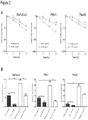
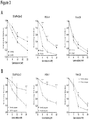
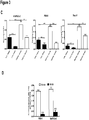
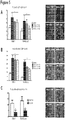
- Compound VE-821 radiosensitises tumour PSN-1, MiaPaCa-2 and PancM cells under hypoxic conditions ( see figure 2A-B ). Compound VE-821 also sensitises normoxic and hypoxic cancer cells to gemcitabine ( see figure 3B-C ). Compound VE-821 potentiates the effect of chemoradiation in both PSN-1 and MiaPaCa-2 cancer cells ( see figure 3D ). Compound VE-821 disrupts damage-induced cell cycle checkpoints ( see supplementary figure 2 ). Compound VE-821 inhibits repair of DNA damage by homologous recombination ( see figures 5A, 5B, and 5C ).
- Results for Compounds 821 and 822 are shown in Figures 1X to 8X and 1Y to 6Y .
- VE-821 and VE-822 sensitize cancer cells to radiation therapy (see Figures 1X-5X ).
- VE-822 enhances the antitumor effects of ionizing radiation in a MiaPaCa pancreatic cancer xenograft model ( see Figure 6X) and in a PSN-1 pancreatic cancer xenograft model ( see Figures 7X and 8X).
- VE-822 enhances the antitumor effects of cisplatin in a primary adenocarcinoma NSCLC xenograft model.
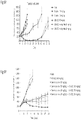
- Black filled circles are vehicle treatment; Red filled diamonds are Cisplatin treatment (1mg/kg q7d); Blue filled diamonds are Cisplatin treatment (3mg/kg q7d); Green filled squares are VE-822 treatment (60mg/kg qd4); Green empty triangles are Cisplatin (1mg/kg) and VE-822 (60mg/kg qd4); Blue empty triangles are Cisplatin (3mg/kg) and VE-822 (60mg/kg qd4) ( see Figure 5Y ).
- VE-822 also enhances the antitumor effects of gemcitamine in a PSN1 pancreatic cancer xenograft model.
- Red filled circles are VE-822 treatment; Black filled squares are vehicle treatment; Green filled circles are gemcitabine treatment; Blue filled circles are gemcitabine and VE-822 (10mg/kg) treatment; Red filled circles are gemcitabine and VE-822 (30mg/kg) treatment; Pink filled circles are gemcitabine and VE-822 (60mg/kg) treatment;
- VE-822 synergizes with chemotoxics across a panel of lung cancer cell lines
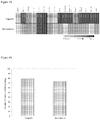
- the heat map represents the maximum shift in IC 50 of each chemotoxic achieved when combined with VE-822 for 96 hours. Colors represent an IC 50 shift range from -10 (antagonism, blue) to 10 (synergy, red) ( see Figure 1Y ). VE-822 exhibits greater than 3-fold synergy with cisplatin, etoposide, gemcitabine, oxaplatin and irinotecan in lung cancer cell lines ( see Figure 2Y ).
- VE-822 Synergizes with Cisplatin and Gemcitabine in pancreatic cancer cell lines.
- the heat map represents the maximum shift in IC 50 of each chemotoxic achieved when combined with VE-822 for 96 hours. Colors represent an IC 50 shift range from -10 (antagonism, blue) to 10 (synergy, red) ( see Figure 3Y ).
Landscapes
- Health & Medical Sciences (AREA)
- Life Sciences & Earth Sciences (AREA)
- Animal Behavior & Ethology (AREA)
- Veterinary Medicine (AREA)
- Public Health (AREA)
- General Health & Medical Sciences (AREA)
- Pharmacology & Pharmacy (AREA)
- Medicinal Chemistry (AREA)
- Chemical & Material Sciences (AREA)
- Epidemiology (AREA)
- Molecular Biology (AREA)
- Chemical Kinetics & Catalysis (AREA)
- General Chemical & Material Sciences (AREA)
- Nuclear Medicine, Radiotherapy & Molecular Imaging (AREA)
- Organic Chemistry (AREA)
- Inorganic Chemistry (AREA)
- Bioinformatics & Cheminformatics (AREA)
- Engineering & Computer Science (AREA)
- Pharmaceuticals Containing Other Organic And Inorganic Compounds (AREA)
- Acyclic And Carbocyclic Compounds In Medicinal Compositions (AREA)
- Medicines That Contain Protein Lipid Enzymes And Other Medicines (AREA)
- Radiation-Therapy Devices (AREA)
Abstract
Description
- Pancreatic cancer is the tenth most common site of new cancers and is responsible for 6% of all cancer related deaths. The 5-year survival rate is less than 5%.
- Current therapies involve either neoadjuvant treatment with chemotherapy (e.g., with gemcitabine) and / or radiation therapy or surgical removal followed by either adjuvant chemotherapy (e.g., with gemcitabine) or radiation therapy. Although the survival rate with treatment of gemcitabine increases the 5-year survival from 10% to 20%, there still is a strong need for better therapies for treating pancreatic cancer.
- Several therapeutics have been tested in phase II and phase III trials though results have not been too promising. Tipifarnib, an oral farnesyltransferase inhibitor, did not show significant improvement in overall survival when combined with gemcitabine. Similarly, cetuximab, an epidermal growth factor receptor (EGRF), also showed no clinical benefit when combined with gemcitabine. Only a small increase in overall survival (6.24 months versus 5.91 months) was observed.
- Lung cancer is the second most common form of cancer and is the leading cause of cancer-related mortality. Non-small cell lung cancer (NSCLC) is the most common form of lung cancer, accounting for about 85% of all lung cancer cases. Most patients present with advanced stage III or IV NSCLC with a 5-year survival of 24% and 4% respectively. Because of the advanced nature of disease on presentation, surgical resection is often not an option. For the majority of patients therapy involves chemotherapy and / or radiation treatment. The selection of chemotherapy is highly variable based on disease stage, patient performance criteria and geographical regional preference. In most cases chemotherapy is based on a doublet that includes a platinating agent such as Cisplatin or carboplatin and a second cytotoxic drug such as gemcitabine, etoposide or taxotere. For a small number of patients, therapy can include treatment with agents that target specific proteins that are mutated or disregulated such as ALK and EGFR (eg crizotinib, gefitinib and erlotinib). Patients are selected for these targeted treatments based on genetic or proteomic markers. A great number of agents have been assessed in late stage NSCLC clinical studies, however most have shown very little benefit over chemotherapy based treatments, with median overall survival typically less than 11 months.
- Accordingly, there is a tremendous need for new strategies to improve pancreatic and non-small cell lung cancer treatments.
- ATR ("ATM and Rad3 related") kinase is a protein kinase involved in cellular responses to certain forms of DNA damage (eg double strand breaks and replication stress). ATR kinase acts with ATM ("ataxia telangiectasia mutated") kinase and many other proteins to regulate a cell's response to double strand DNA breaks and replication stress, commonly referred to as the DNA Damage Response ("DDR"). The DDR stimulates DNA repair, promotes survival and stalls cell cycle progression by activating cell cycle checkpoints, which provide time for repair. Without the DDR, cells are much more sensitive to DNA damage and readily die from DNA lesions induced by endogenous cellular processes such as DNA replication or exogenous DNA damaging agents commonly used in cancer therapy.
- Healthy cells can rely on a host of different proteins for DNA repair including the DDR kinases ATR and ATM. In some cases these proteins can compensate for one another by activating functionally redundant DNA repair processes. On the contrary, many cancer cells harbour defects in some of their DNA repair processes, such as ATM signaling, and therefore display a greater reliance on their remaining intact DNA repair proteins which include ATR.
- In addition, many cancer cells express activated oncogenes or lack key tumour suppressors, and this can make these cancer cells prone to dysregulated phases of DNA replication which in turn cause DNA damage. ATR has been implicated as a critical component of the DDR in response to disrupted DNA replication. As a result, these cancer cells are more dependent on ATR activity for survival than healthy cells. Accordingly, ATR inhibitors may be useful for cancer treatment, either used alone or in combination with DNA damaging agents, because they shut down a DNA repair mechanism that is more important for cellular survival in many cancer cells than in healthy normal cells.
- In fact, disruption of ATR function (e.g. by gene deletion) has been shown to promote cancer cell death both in the absence and presence of DNA damaging agents. This suggests that ATR inhibitors may be effective both as single agents and as potent sensitizers to radiotherapy or genotoxic chemotherapy.
- Furthermore, solid tumors often contain regions that are hypoxic (low oxygen levels). This is significant because hypoxic cancer cells are known to be resistant to treatment, most notably IR treatment, and are highly aggressive. One reason for this observation is that components of the DDR can be activated under hypoxic conditions and it has also been shown that hypoxic cells are more reliant on components of the DDR for survival.
- For all of these reasons, there is a need for the development of potent and selective ATR inhibitors for the treatment of pancreatic cancer, for the treatment of lung cancer, and for the development of agents that are effective against both hypoxic and normoxic cancer cells.
- This invention relates to uses of ATR inhibitors for treating pancreatic cancer and non-small cell lung cancer. With respect to pancreatic cancer, this invention relates to methods of treating pancreatic cancer in a patient (e.g., a human) with an ATR inhibitor in combination with gemcitabine and/or radiation therapy. Applicants have demonstrated synergistic efficacy of ATR inhibitors in combination with gemcitabine and/or radiation therapy in clonogenic and viability assays on the pancreatic cancer cell lines, (e.g. PSN-1, MiaPaCa-2 and Panc-1) as well as in a primary tumor line (e.g., Panc-M). Disruption of ATR activity was measured by assessing DNA damage induced phosphorylation of Chkl (Ser 345) and by assessing DNA damage foci and RAD51 foci following irradiation.
- With respect to non-small cell lung cancer, his invention relates to methods of treating non-small cell lung cancer with an ATR inhibitor in combination with cisplatin or carboplatin, etoposide, and ionizing radiation. Applicants have demonstrated synergy of ATR inhibitors in combination with cisplatin, etoposide, gemcitabine, oxaplatin and irinotecan in viability assays against a panel of 35 human lung cancer cell lines as well as demonstrated in vivo efficacy in a lung cancer mouse model in combination with cisplatin.
-
-
Figure 1 . VE-821 radiosensitises pancreatic tumour cells.- A) Western blot analysis of Chk1 inhibition.
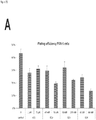
Cells were treated with 100 nM gemcitabine for 1 h, 1 µM VE-821 was added 1 h later and cells were irradiated (6 Gy) 1 h after that. Drugs were left for the duration of the experiment and cells were lysed at 2 h post-irradiation and subjected to Western blot analysis. - B) VE-821 radiosensitizes pancreatic tumour cells but not normal fibroblasts. PSN-1, Panc-1, MiaPaCa-2 pancreatic cancer cell lines and MRC5 fibroblasts were treated with increasing concentrations of VE-821 for 96 h combined with or without 4 Gy radiation at 1 h after VE-821 addition. Cell viability was measured after 8 days and shown as normalized to DMSO-treated cells.
- C) Scheduling of VE-821 affects radiosensitivity.
PSN-1 cells were plated as single cells, treated with 1 µM VE-821 at different time points in relation to 4 Gy irradiation and assessed for colony formation after 10 days. The survival fraction at 4 Gy for each of the treatment schedules was determined by taking into account the relevant plating efficiency of unirradiated cells. - D) Clonogenic survival of cells pancreatic cancer cells in response to ATR inhibition. Cells were treated with 1 µM VE-821 4 h after plating and 1 h prior to irradiation. Drug was removed after 72 h and colony-forming ability was assessed after 10 to 21 days. (n=3). *, P < 0.05; **, P < 0.01 over DMSO-treated control.
- A) Western blot analysis of Chk1 inhibition.
-
Figure 2 . VE-821 radiosensitises pancreatic tumour cells under hypoxic conditions.- A) clonogenic survival curves of cells treated with 1 µM VE-821 and irradiation under hypoxic conditions. Plated cells were transferred to hypoxia (0.5% O2) and acclimatised for 6 h. VE-821 (1 µM) was then added at 1h prior to irradiation and left for 72 h upon which the medium was replaced. Cells were transferred to normoxia at 1 h post-irradiation.
- B) clonogenic survival of cells after irradiation with 6 Gy and treatment with 1 µM VE-821 in oxic and hypoxic (0.5% O2) conditions, as described above and in
Fig. 1 (n=3). *, P < 0.05; **, P < 0.01; ***, P < 0.001 over DMSO-treated control.
-
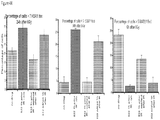
Figure 3 . VE-821 sensitises pancreatic cancer cells to gemcitabine treatment.- A) clonogenic survival of cells treated with gemcitabine and 1 µM VE-821. Cells were treated with increasing concentrations of gemcitabine for 24 h followed by 72 h treatment of 1 µM VE-821. Colony forming ability was assessed after 10 to 21 days.
- B) clonogenic survival of cells treated with gemcitabine in hypoxia. Plated cells were transferred to hypoxia (0.5% O2) and acclimatised for 6 h. Cells were then treated with increasing concentrations of gemcitabine for 24 h followed by 72 h treatment of 1 µM VE-821. Hypoxic cells were transferred to
normoxia 1 h after VE-821 addition. - C) clonogenic survival after treatment with 20 nM gemcitabine and VE-821 in oxic and hypoxic (0.5% O2) conditions, as described above.
- D) clonogenic survival of cells treated with gemcitabine and irradiation. PSN-1 and MiaPaCa-2 cells were treated with 5 nM or 10 nM gemcitabine, respectively, for 24 h, medium was then replaced and 1 µM VE-821 was added from 1 h prior to 72
h post 4 Gy irradiation. Colony forming ability was assessed after 10 to 21 days (n=3). *, P < 0.05; **, P < 0.01; ***, P < 0.001 over DMSO-treated control.
-
Figure 4 . VE-821 perturbs the irradiation-induced cell cycle checkpoint in pancreatic cancer cells.
VE-821 (1 µM) was added 1 h prior to 6 Gy irradiation and left for the duration of the experiment. Cells were lifted and fixed at 12 h or 24 h after irradiation, stained with propidium iodide and analysed for cell cycle distribution by flow cytometry (n=3) -
Figure 5 . VE-821 increases 53BP1 and γH2AX foci number and reduces RAD51 foci formation.
Cells were treated with 1 µM VE-821 at various time points in relation to 6 Gy irradiation, as indicated, and fixed at 24 h post-irradiation. Subsequently, cells were stained for (A) γH2AX and (B) 53BP1 foci and the percentage of cells with more than 7 and 5 foci per cell was quantitated, respectively. C, for analysing Rad51 foci formation, cells were fixed at 6 h post-irradiation and the percentage of cells with more than 9 foci per cell was quantitated. Representative images are shown on the right (n=3). *, P < 0.05 -
- Suppl
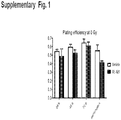
Fig 1 . Effect of VE-821 incubation time on plating efficiency.
PSN-1 cells were plated as single cells, treated with 1uM VE-821 for various time periods and assessed for colony formation after 10 days. - Suppl
Fig. 2 .
VE-821 perturbs the irradiation-induced G2/M checkpoint in pancreatic cancer cells in hypoxic conditions.
Cells were pre-incubated under hypoxic (0.5% O2) conditions for 6 h and 1 µM VE-821 was added 1 h prior to irradiation (6 Gy). Cells were transferred tonormoxia 1 h after irradiation and were lifted and fixed at 12 h or 24 h after irradiation, stained with propidium iodide and analysed for cell cycle distribution by flow cytometry (n=3). -
Fig 1X . Dose response relationship for radiosensitivity induced byCompounds
Small scale clonogenic survival assays were performed on HeLa cells treated with the different ATR inhibitors at increasing concentrations followed by irradiation at 6Gy. Data is plotted as decrease in clonogenic survival in relation to the DMSO-treated cells for both irradiated (SF 6Gy, pink line) and unirradiated cells (plating efficiency, PE; blue line). A high degree of increased radiosensitivity can be seen as a large decrease in survival after irradiation accompanied by a small decrease in unirradiated survival at a specific drug concentration. -
Fig 2X . Assessment of radiosensitivity in tumour cells and normal cells.- A) Clonogenic survival after drug treatment in the absence of irradiation. PSN1 and MiaPaca cells were plated at low densities, treated with the drugs indicated and assessed for clonogenic survival.
- B) Clonogenic survival of PSN1, MiaPaca, and MRC5 cells pretreated with
Compounds
-
Fig 3X . Assessment of dependency of drug addition and removal timing on radiosensitivity.
MiaPaca cells were plated at low densities and drug was added at various time points in relation to the 4Gy radiation treatment: 1h prior to IR, 5min after IR, 2h or 4h after IR; and removed at various time points: 5min after, 1h after, or 19h after IR. Clonogenic survival was assessed after 14 days. Results are shown as the surviving fraction at 4Gy (top panel) or the percentage radiosensitisation (middle panel) compared to the DMSO-treated cells. The different treatment schedules did not cause differences in plating efficiency (bottom panel). -
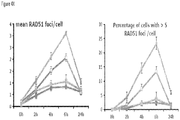
Fig 4X . DNA damage foci analysis afterCompound 822 treatment and irradiation.- A) Assessment of gH2AX, 53BP1 foci at 24h after IR at 6Gy and of RAD51 foci at 6h after IR. MiaPaca cells were treated with
80nM Compound 822 1h prior or 1h post irradiation and drug was washed away at 5min after or 1h after IR. Cells were fixed after 6h (for RAD51 foci) or 24h (for gH2AX and 53BP1 foci). The percentage of cells containing more than a certain number of foci was quantitated. - B) Time course of DNA damage foci. Cells were treated as in A and fixed at the time points shown followed by staining for gH2AX, 53BP1 and RAD51 foci. Data is shown as the mean number of foci at a particular time point (upper panels) or the percentage of cells containing more than a certain number of foci (lower panels).
- A) Assessment of gH2AX, 53BP1 foci at 24h after IR at 6Gy and of RAD51 foci at 6h after IR. MiaPaca cells were treated with
-
Fig 5X . Cell cycle analysis of Compound 822-treated cells after 6Gy irradiation.
PSN1 cells were treated with40nM Compound 822 1h prior to 6Gy irradiation in triplicate wells. Cells were lifted and fixed at several time points after IR, stained with propidium iodide and analysed by flow cytometry.- A) Cell cycle histogram plots. Fitted peaks are coloured red for G1 phase, shaded for S-phase, and green for G2/M phase. One out of three wells is shown for each time point and treatment.
- B) Average cell cycle percentages over time. Cell cycle percentage values were obtained from fitted histogram plots (n=3) and plotted for control-treated and Compound 822-treated cells.
- Figure 6X. MiaPaCa Tumor Volume over Time for
Compound 822. - Figure 7X and 8X. PSN-1 Tumor Volume over Time for
Compound 822. -
Figure 1Y . Lung Cancer Cell Screen: VE-822 Synergizes with Chemotoxics Across a Panel of Lung Cancer Cell Lines in Lung Cell Viability Assay -
Figure 2Y . Lung Cancer Cell Screen: VE-822 Exhibits Greater than 3-fold Synergy with Chemotoxics in Lung Cancer Cell Lines in a Cell Viability Assay -
Figure 3Y . Pancreatic Cancer Cell Screen: VE-822 Synergizes with Cisplatin and Gemcitabine in Pancreatic Cancer Cell Lines in a Cell Viability Assay -
Figure 4Y . Pancreatic Cancer Cell Screen: VE-822 Exhibits Greater than 3-fold Synergy with Chemotoxics in Pancreatic Cancer Cell Lines a Cell Viability Assay -
Figure 5Y . Effect of VE-822 and cisplatin on tumor volume and body weight in a primary adenocarcinoma NSCLC xenograft in SCID mice. -
Figure 6Y : Effect of VE-822 administered PO q2d at 10, 30 or 60 mg/kg in combination with gemcitabine (15 mg/kg IP q3d) on the tumor volume of mice bearing PSN1 pancreatic cancer xenografts. - One aspect of this invention provides methods for treating pancreatic cancer in a patient by administering to the patient an ATR inhibitor in combination with another known pancreatic cancer treatment. One aspect of the invention includes administering the ATR inhibitor in combination with gemcitabine. In some embodiments, the pancreatic cancer comprises one of the following cell lines: PSN-1, MiaPaCa-2 or Panc-1. According to another aspect, the cancer comprises the primary tumor line Panc-M.
- Another aspect of the invention provides methods for treating cancer (e.g., pancreatic or non-small cell lung) in a patient by administering to the patient an ATR inhibitor in combination with radiation therapy.
- Another aspect of the invention provides methods for treating non-small cell lung cancer in a patient by administering to the patient an ATR inhibitor in combination with cisplatin or carboplatin, etoposide, and/or ionizing radiation. Applicants have demonstrated synergy of ATR inhibitors in combination with cisplatin, etoposide, gemcitabine, oxaliplatin and irinotecan in viability assays against a panel of 35 human lung cancer cell lines as well as demonstrated in vivo efficacy in a lung cancer mouse model in combination with cisplatin. This invention also relates to the use of ATR inhibitors in combination with cisplatin or carboplatin, etoposide, and/or ionizing radiation for treating non-small cell lung cancer.
- Examples of ATR inhibitors are shown in Table 1 below:

- The terms referring to
compounds - Another aspect provides a method of treating pancreatic cancer by administering to pancreatic cancer cells an ATR inhibitor selected from a compound in Table 1 in combination with one or more cancer therapies. In some embodiments, the ATR inhibitor is combined with chemoradiation, chemotherapy, and/or radiation therapy. As would be understood by one of skill in the art, chemoradiation refers to a treatment regime that includes both chemotherapy (such as gemcitabine) and radiation. In some embodiments, the chemotherapy is gemcitabine.
- Yet another aspect provides a method of increasing the sensitivity of pancreatic cancer cells to a cancer therapy selected from gemcitabine or radiation therapy by administering an ATR inhibitor selected from a compound in Table 1 in combination with the cancer therapy.
- In some embodiments, the cancer therapy is gemcitabine. In other embodiments, the cancer therapy is radiation therapy. In yet another embodiment the cancer therapy is chemoradiation.
- Another aspect provides a method of inhibiting phosphorylation of Chkl (Ser 345) in a pancreatic cancer cell comprising administering an ATR inhibitor selected from a compound in Table 1 after treatment with gemcitabine (e.g., 100 nM) and/or radiation (e.g., 6 Gy) to a pancreatic cancer cell.
- Another aspect provides method of radiosensitizing hypoxic PSN-1, MiaPaCa-2 or PancM tumor cells by administering an ATR inhibitor selected from a compound in Table 1 to the tumor cell in combination with radiation therapy.
- Yet another aspect provides a method of sensitizing hypoxic PSN-1, MiaPaCa-2 or PancM tumor cells by administering an ATR inhibitor selected from a compound in Table 1 to the tumor cell in combination with gemcitabine.
- Another aspect provides a method of sensitizing PSN-1 and MiaPaCa-2 tumor cells to chemoradiation by administering an ATR inhibitor selected from a compound in Table 1 to the tumor cells in combination with chemoradiation.
- Another aspect provides a method of disrupting damage-induced cell cycle checkpoints by administering an ATR inhibitor selected from a compound in Table 1 in combination with radiation therapy to a pancreatic cancer cell.
- Another aspect provides a method of inhibiting repair of DNA damage by homologous recombination in a pancreatic cancer cell by administering an ATR inhibitor selected from a compound in Table 1 in combination with one or more of the following treatments: chemoradiation, chemotherapy, and radiation therapy.
- In some embodiments, the chemotherapy is gemcitabine.
- Another aspect provides a method of inhibiting repair of DNA damage by homologous recombination in a pancreatic cancer cell by administering an ATR inhibitor selected from a compound in Table 1 in combination with gemcitabine and radiation therapy.
- In some embodiments, the pancreatic cancer cells are derived from a pancreatic cell line selected from PSN-1, MiaPaCa-2 or Panc-1.
- In other embodiments, the pancreatic cancer cells are in a cancer patient. In other embodiments, the cancer cells are part of a tumor.
- Another embodiment provides methods for treating non-small cell lung cancer in a patient by administering to the patient an ATR inhibitor in combination with other known non-small cell lung cancer treatments. One aspect of the invention includes administering to a patient an ATR inhibitor in combination with cisplatin or carboplatin, etoposide, and / or ionizing radiation.
- Another aspect provides a method of treating non-small cell lung cancer by administering to a patient an ATR inhibitor selected from a compound in Table 1 in combination with one or more cancer therapies. In some embodiments, the ATR inhibitor is combined with chemoradiation, chemotherapy, and/or radiation therapy. As would be understood by one of skill in the art, chemoradiation refers to a treatment regime that includes both chemotherapy (such as cisplatin, carboplatin, or etoposide) and radiation. In some embodiments, the chemotherapy comprises Cisplatin or carboplatin, and etoposide.
- Yet another aspect provides a method of increasing the sensitivity of non-small cell lung cancer cells to a cancer therapy selected from cisplatin or carboplatin, etoposide, and ionizing radiation by administering to a patient an ATR inhibitor selected from a compound in Table 1 in combination with one or more cancer therapy.
- In some embodiments, the cancer therapy is cisplatin or carboplatin. In other embodiments, the cancer therapy is radiation therapy. In yet another embodiment the cancer therapy is etoposide.
- In some embodiments, the cancer therapy is a combination of cisplatin or carboplatin, etoposide, and ionizing radiation. In some embodiments the cancer therapy is cisplatin or carboplatin and etoposide. In other embodiments the cancer therapy is cisplatin or carboplatin and etoposide and ionizing radiation. In yet other embodiments the cancer therapy is cisplatin or carboplatin and ionizing radiation.
- Another aspect provides a method of inhibiting phosphorylation of Chkl (Ser 345) in a non-small cell lung cancer cell comprising administering to a patient an ATR inhibitor selected from a compound in Table 1. In some embodiments, the ATR inhibitor is administered in combination with gemcitabine (e.g., 100 nM), cisplatin or carboplatin, etoposide, ionizing radiation or radiation (e.g., 6 Gy) to a non-small cell lung cancer cell.
- In other embodiments, the non-small cell lung cancer cells are in a cancer patient.
- In some embodiments, the ATR inhibitor is

- In other embodiments, the ATR inhibitor is

- Another aspect provides use of an ATR inhibitor selected from a compound in Table 1 in combination with gemcitabine and radiation therapy for treating pancreatic cancer.
- Another aspect provides use of an ATR inhibitor selected from a compound in Table 1 in combination with cisplatin or carboplatin, etoposide, and ionizing radiation for treating non-small cell lung cancer.
- In some embodiments, the ATR inhibitor is Compound VE-821. In other embodiments, the ATR inhibitor is Compound VE-822.
- Another aspect provides use of an ATR inhibitor selected from a compound in Table 1 in combination with gemcitabine and radiation therapy for the manufacture of a medicament for treating pancreatic cancer.
- Another aspect provides use of an ATR inhibitor selected from a compound in Table 1 in combination with cisplatin or carboplatin, etoposide, and ionizing radiation for the manufacture of a medicament for treating non-small cell lung cancer.
- In some embodiments, the ATR inhibitor is Compound VE-821. In other embodiments, the ATR inhibitor is Compound VE-822.
- The examples are for the purpose of illustration only and are not to be construed as limiting the scope of the invention in any way.
- MiaPaCa-2, PSN-1, Panel and MRC5 cells (5 x 10⁴) were plated in 96-well plates and after 4 h treated with increasing concentrations of VE-821 at 1 h before irradiation with a single dose of 6 Gy. Medium was replaced 96 h post-irradiation at which point viability was measured using the using the Alamar Blue assay (Resazurin substrate, SIGMA). Cells were allowed to proliferate and cell viability was again analyzed at
day 8 for the different treatment conditions. Cell viability and surviving fraction were normalized to the untreated (control) group. - Logarithmically growing cells were plated in triplicate in 6-well tissue culture dishes under oxic (21% O2) or hypoxic conditions (0.5% O2) using an
InVivo2 300 chamber (Ruskinn Technology, UK). Cells were incubated for 6 hours before irradiation under oxia or hypoxia using tightly sealed chambers. The target O2 level was achieved within 6 h of gassing and maintained during irradiation, as confirmed by an OxyLite oxygen probe (Oxford Optronix). Cells irradiated under hypoxia were exposed to normoxia at 1 h post-irradiation. As standard, VE-821 (1 µM) was added 1 h prior to irradiation (6 Gy) and was washed away 72 h after irradiation. For the chemotherapy experiments, cells were initially exposed to increasing concentrations of gemcitabine (5, 10 and 20 nM) for 24 h before addition of the VE-821 (1 µM) for another 72 h. The effect of triple combination of irradiation with VE-821 and gemcitabine was examined as well. Cells were incubated for 10-21 days until colonies were stained with 0.5% crystal violet and counted in a CellCount automated colony counter (Oxford Optronix). Clonogenic survival was calculated and data were fitted in the GraphPad Prism 4.0 (GraphPad Software, CA). - MiaPaCa-2 and PSN-1 cells were exposed to gemcitabine and/or 1 µM VE-821
drug 1 h prior to irradiation with a single dose of 6 Gy. Cells were lysed inRIPA buffer 2 h post-irradiation and subjected to SDS-PAGE electrophoresis and immunoblotting. Chemoluminescence (SuperSignal, Millipore) and film exposure was used to detect antibody binding. Exposed film was digitized and figures were assembled using Microsoft PowerPoint. - Cells growing in 96-well plates were treated with 1 µM VE-821
drug 1 h prior to 6 Gy irradiation and fixed in 3% formaldehyde at multiple time points. Cells were subsequently pearmeabalised and blocked in PBS with 0.1% Triton 1% BSA (w/v). Cells were incubated with primary antibody overnight at 4°C and after a PBS wash incubated with fluorescently labeled secondary antibody followed gy a PBS wash and nuclear staining with DAPI. Images were acquired and foci quantitated using anIN Cell Analyzer 1000 automated epifluorescence microscope and analysis software (GE Healthcare, Cahlfont St. Giles, UK) - Cells growing in 6-well dishes were treated with 1 µM VE-821
drug 1 h prior to 6 Gy irradiation. Cells were incubated for 6 h before irradiation under oxia (21% 02) or hypoxia (0.5% 02) using tightly sealed chambers. At multiple time points, cells were lifted in trypsin and fixed in 70% ethanol and stored at 4°C. Cells were incubated with propidium iodide (50 µg/ml in PBS containing 200 µg/ml RNAse) for 1 h at room temperature and analysed by flow cytometry (FACSort, Becton Dickinson). Cell cycle phase was quantitated using ModFit Cell Cycle Analysis software. - All cell lines were seeded in 30 µl of tissue culture medium containing 10% FBS into 384-well opaque-bottom assay plates. The seeding density was based on the logarithmic growth rate of each cell line. After 24 hours, compound stock solutions were added to each well to afford a matrix consisting of 5 concentrations for VE-822 and 6 concentrations for chemotoxics. Each well contains either, agent alone or a combination of both agents. The final concentration range for VE-822 was 25 nM-2 µM. The concentration ranges for the chemotoxics were as follows: Etoposide, 10 nM-10 µM; Gemcitabine, 0.16 nM-160 nM; Cisplatin, 20 nM-20 µM; Oxaliplatin, 40 nM-40 µM; Irinotecan (SN-38), 0.12 nM-120 nM. The cells were then incubated for 96 hours at 37°C in an atmosphere of 5% CO2 and 95% humidity.
- All cell lines were seeded in 30 µl of tissue culture medium containing 10% FBS into 384-well opaque-bottom plates. The seeding density was based on the logarithmic growth rate of each cell line. After 24 hours, compound stock solutions were added to each well to afford a matrix consisting of 9 concentrations for VE-822 and 7 concentrations for Gemcitabine and Cisplatin. Each well contains either, agent alone or a combination of both agents.The final concentration ranges were as follows: VE-822, 0.3 nM-2 µM; Gemcitabine, 0.3 nM-0.22 µM; Cisplatin, 30 nM-20 µM. The cells were then incubated for 96 hours at 37°C in an atmosphere of 5% CO2 and 95% humidity.
- This assay measures the number of viable cells in a culture based on the quantitation of ATP, which is present in metabolically active cells.
- CellTiter-Glo Reagent (Promega, Madison, WI, USA) was prepared according to the manufacturer's instructions and added 96 hours after compound addition (25 µl/well) to measure cell viability. Luminescence signal was measured with the PHERAStarFS (BMG Labtech, Cary, NC, USA) automated plate reader. All cell lines were screened in duplicate.
- Raw luminescence CellTiter-Glo (CTG) values were normalized to the mean CTG value for the negative control DMSO-treated samples on each assay plate. IC50 values for chemotoxic alone were calculated using DMSO-normalized cell survival values for the samples treated with chemotoxic compound alone. To determine fraction of cell survival in the presence of VE-822, raw CTG values were normalized to the mean CTG value for the samples exposed to the same concentration of VE-822 in the absence of the chemotoxic compound. VE-822 -treated chemotoxic IC50 values were calculated using VE-822 -normalized cell survival values for all samples treated with the chemotoxic at a given concentration of VE-822. A 3x or greater reduction in IC50 was used to identify strongly synergistic effects between VE-822 and chemotoxics.
- Tumor tissue was excised from a patient with a poorly differentiated adenocarcinoma. This tumor tissue was implanted subcutaneously in the flank of a SCID mouse and passaged twice before compound testing. For compound testing passage-two tumor tissue was implanted subcutaneously in the flank of SCID mice and tumors grown to a volume of about 200mm3. Cisplatin was dosed alone at either 1 or 3 mg/kg ip, once per week (ip, q7d, on
day 2 of each week) for two weeks. VE-822 was dosed as a solution alone at 60 mg/kg po on 4 consecutive days per weekly cycle (qd4, dosed ondays - PSN1 cells (1 x 10⁶ cells per mouse) were implanted as a mixture in Matrigel (100µl per mouse) into the flank of female nude MF1 mice and grown to a volume of about 200mm3 prior to compound administration._Gemcitabine was dosed alone at 15 mg/kg ip, once every three days (ip, q3d) in 0.5% methylcellulose in water for a maximum of 10 cycles. VE-822 was dosed, as a suspension in 0.5% methylcellulose in water, alone at either 10, 30 or 60 mg/kg po every other day for 28 days (po q2d). Three combination groups received gemcitabine at 15 mg/kg plus VE-822 either at 10, 30 or at 60 mg/kg po on the same schedule as the single agent groups. A control group received vehicle alone (0.5% methylcellulose ip q3d). All drug treatment was stopped on
Day 30. Vehicle and VE-822 groups were sacrificed on day 13 due to excessive tumor volumes. - Compound VE-821 inhibits phosphorylation of Chkl (Ser 345) after treatment with gemcitabine (100 nM), radiation (6 Gy) or both (see
Fig. 1A ). Compound VE-821 radiosensitises pancreatic tumour cells but not normal cells. When cells were irradiated in the presence of Compound VE-821, a decrease in surviving fraction was observed and this radiosensitising effect increased as the drug incubation time after irradiation was extended (seefigure 1C ). - Compound VE-821 radiosensitises tumour PSN-1, MiaPaCa-2 and PancM cells under hypoxic conditions (see
figure 2A-B ). Compound VE-821 also sensitises normoxic and hypoxic cancer cells to gemcitabine (seefigure 3B-C ). Compound VE-821 potentiates the effect of chemoradiation in both PSN-1 and MiaPaCa-2 cancer cells (seefigure 3D ). Compound VE-821 disrupts damage-induced cell cycle checkpoints (see supplementaryfigure 2 ). Compound VE-821 inhibits repair of DNA damage by homologous recombination (seefigures 5A, 5B, and 5C ). - Results for
Compounds Figures 1X to 8X and1Y to 6Y . VE-821 and VE-822 sensitize cancer cells to radiation therapy (seeFigures 1X-5X ). - VE-822 enhances the antitumor effects of ionizing radiation in a MiaPaCa pancreatic cancer xenograft model (see Figure 6X) and in a PSN-1 pancreatic cancer xenograft model (see Figures 7X and 8X).
- VE-822 enhances the antitumor effects of cisplatin in a primary adenocarcinoma NSCLC xenograft model.
Figure 5Y shows the effect of VE-822 and cisplatin on tumor volume and body weight in a primary adenocarcinoma NSCLC xenograft in SCID mice. Data are mean ± sem, n = 9-10. Black filled circles are vehicle treatment; Red filled diamonds are Cisplatin treatment (1mg/kg q7d); Blue filled diamonds are Cisplatin treatment (3mg/kg q7d); Green filled squares are VE-822 treatment (60mg/kg qd4); Green empty triangles are Cisplatin (1mg/kg) and VE-822 (60mg/kg qd4); Blue empty triangles are Cisplatin (3mg/kg) and VE-822 (60mg/kg qd4) (seeFigure 5Y ). - VE-822 also enhances the antitumor effects of gemcitamine in a PSN1 pancreatic cancer xenograft model.
Figure 6Y shows the effect of VE-822 administered PO q2d at 10, 30 or 60 mg/kg in combination with gemcitabine (15 mg/kg IP q3d) on the tumor volume of mice bearing PSN1 pancreatic cancer xenografts. Data shown are mean tumor volume ± SEM (n = 8 per group). Red filled circles are VE-822 treatment; Black filled squares are vehicle treatment; Green filled circles are gemcitabine treatment; Blue filled circles are gemcitabine and VE-822 (10mg/kg) treatment; Red filled circles are gemcitabine and VE-822 (30mg/kg) treatment; Pink filled circles are gemcitabine and VE-822 (60mg/kg) treatment; - The heat map represents the maximum shift in IC50 of each chemotoxic achieved when combined with VE-822 for 96 hours. Colors represent an IC50 shift range from -10 (antagonism, blue) to 10 (synergy, red) (see
Figure 1Y ). VE-822 exhibits greater than 3-fold synergy with cisplatin, etoposide, gemcitabine, oxaplatin and irinotecan in lung cancer cell lines (seeFigure 2Y ). - The heat map represents the maximum shift in IC50 of each chemotoxic achieved when combined with VE-822 for 96 hours. Colors represent an IC50 shift range from -10 (antagonism, blue) to 10 (synergy, red) (see
Figure 3Y ). - While we have described a number of embodiments of this invention, it is apparent that our basic examples may be altered to provide other embodiments that utilize the compounds, methods, and processes of this invention. Therefore, it will be appreciated that the scope of this invention is to be defined by the appended claims rather than by the specific embodiments that have been represented by way of example herein.
- The present disclosure also encompasses the following numbered embodiments:
-
- 1. A method of treating pancreatic cancer in a patient by administering to the patient an ATR inhibitor selected from

- 2. A method of increasing the sensitivity of pancreatic cancer cells to a cancer therapy selected from gemcitabine or radiation therapy in a patient by administering to the patient an ATR inhibitor selected from

- 3. The method of
embodiment 1, wherein the cancer therapy is gemcitabine. - 4. The method of
embodiment 1, wherein the cancer therapy is radiation therapy. - 5. A method of sensitizing hypoxic pancreatic cancer cells to a cancer therapy selected from gemcitabine or radiation therapy by administering to a patient an ATR inhibitor selected from

- 6. A method of inhibiting phosphorylation of Chkl (Ser 345) in a pancreatic cancer cell comprising administering to a patient an ATR inhibitor selected from

- 7. A method of radio sensitizing hypoxic pancreatic cancer cells by administering to a patient an ATR inhibitor selected from

- 8. A method of sensitizing hypoxic pancreatic cancer cells by administering to a patient an ATR inhibitor selected from

- 9. A method of sensitizing pancreatic cancer cells to chemoradiation by administering to a patient an ATR inhibitor selected from

- 10. The method of embodiment 9 wherein the chemotherapy is gemcitabine.
- 11. A method of disrupting damage-induced cell cycle checkpoints by administering to a patient an ATR inhibitor selected from

- 12. A method of inhibiting repair of DNA damage by homologous recombination in a pancreatic cancer cell by administering an ATR inhibitor selected from

- 13. The method of any one of
embodiments 1 to 12, wherein the pancreatic cancer cells are derived from a pancreatic cell line selected from PSN-1, MiaPaCa-2 or Panc-1. - 14. The method of any one of
embodiments 1 to 12, wherein the pancreatic cancer cells are in a cancer patient. - 15. The method of any one of
embodiments 1 to 12, wherein the compound is administered to a patient. - 16. The method of any one of
embodiments 1 to 12, wherein the compound is administered to a pancreatic cancer cell. - 17. A method of treating non-small cell lung cancer in a patient comprising administering to the patient a compound of
formula 821 or 822:
- 18. The method of embodiment 17, comprising administering to a patient a compound of
formula - 19. The method of
embodiment 18, wherein the cancer therapy is Cisplatin or Carboplatin and Etoposide. - 20. The method of
embodiment 18, wherein the cancer therapy is Cisplatin or Carboplatin and Etoposide and ionizing radiation. - 21. The method of
embodiment 18, wherein the cancer therapy is ionizing radiation. - 22. The method according to any one of
embodiments 1 to 21, wherein the ATR inhibitor is 822.
Claims (8)
- A compound of formula 822:

- The compound of formula 822 in combination with a cancer therapy selected from the group consisting of Cisplatin or Carboplatin, Etoposide, and ionizing radiation, for use according to claim 1.
- The compound for use according to claim 2, wherein the cancer therapy is Cisplatin or Carboplatin and Etoposide.
- The compound for use according to claim 2, wherein the cancer therapy is Cisplatin or Carboplatin and Etoposide and ionizing radiation.
- The compound for use according to claim 2, wherein the cancer therapy is ionizing radiation.
- The compound for use according to claim 2, wherein the cancer therapy is etoposide.
- The compound for use according to claim 2, wherein the cancer therapy is cisplatin or carboplatin.
- The compound for use according to claim 1, wherein the cancer therapy is gemcitabine.
Applications Claiming Priority (3)
| Application Number | Priority Date | Filing Date | Title |
|---|---|---|---|
| US201161542084P | 2011-09-30 | 2011-09-30 | |
| EP12772860.8A EP2750679B1 (en) | 2011-09-30 | 2012-10-01 | Treating pancreatic cancer and non-small cell lung cancer with atr inhibitors |
| PCT/US2012/058374 WO2013049859A1 (en) | 2011-09-30 | 2012-10-01 | Treating pancreatic cancer and non-small cell lung cancer with atr inhibitors |
Related Parent Applications (2)
| Application Number | Title | Priority Date | Filing Date |
|---|---|---|---|
| EP12772860.8A Division EP2750679B1 (en) | 2011-09-30 | 2012-10-01 | Treating pancreatic cancer and non-small cell lung cancer with atr inhibitors |
| EP12772860.8A Division-Into EP2750679B1 (en) | 2011-09-30 | 2012-10-01 | Treating pancreatic cancer and non-small cell lung cancer with atr inhibitors |
Publications (2)
| Publication Number | Publication Date |
|---|---|
| EP3733185A1 true EP3733185A1 (en) | 2020-11-04 |
| EP3733185B1 EP3733185B1 (en) | 2022-12-07 |
Family
ID=47019166
Family Applications (2)
| Application Number | Title | Priority Date | Filing Date |
|---|---|---|---|
| EP12772860.8A Active EP2750679B1 (en) | 2011-09-30 | 2012-10-01 | Treating pancreatic cancer and non-small cell lung cancer with atr inhibitors |
| EP20180337.6A Active EP3733185B1 (en) | 2011-09-30 | 2012-10-01 | Treating non-small cell lung cancer with atr inhibitors |
Family Applications Before (1)
| Application Number | Title | Priority Date | Filing Date |
|---|---|---|---|
| EP12772860.8A Active EP2750679B1 (en) | 2011-09-30 | 2012-10-01 | Treating pancreatic cancer and non-small cell lung cancer with atr inhibitors |
Country Status (16)
| Country | Link |
|---|---|
| US (3) | US20130089626A1 (en) |
| EP (2) | EP2750679B1 (en) |
| JP (4) | JP6162126B2 (en) |
| KR (1) | KR102056586B1 (en) |
| CN (3) | CN108685922A (en) |
| AU (3) | AU2012315384B2 (en) |
| BR (1) | BR112014007690B1 (en) |
| CA (2) | CA2850491C (en) |
| ES (2) | ES2940121T3 (en) |
| IL (1) | IL231813B (en) |
| IN (1) | IN2014CN02501A (en) |
| MX (2) | MX373340B (en) |
| RU (2) | RU2018108589A (en) |
| SG (2) | SG11201401095YA (en) |
| WO (1) | WO2013049859A1 (en) |
| ZA (1) | ZA201402627B (en) |
Families Citing this family (75)
| Publication number | Priority date | Publication date | Assignee | Title |
|---|---|---|---|---|
| BRPI0924084B1 (en) | 2008-12-19 | 2021-12-21 | Vertex Pharmaceuticals Incorporated | PYRAZINE DERIVATIVES AND PHARMACEUTICAL COMPOSITION INCLUDING THEM |
| US8962631B2 (en) | 2010-05-12 | 2015-02-24 | Vertex Pharmaceuticals Incorporated | Compounds useful as inhibitors of ATR kinase |
| AU2011253025A1 (en) | 2010-05-12 | 2012-11-29 | Vertex Pharmaceuticals Incorporated | Compounds useful as inhibitors of ATR kinase |
| JP2013526538A (en) | 2010-05-12 | 2013-06-24 | バーテックス ファーマシューティカルズ インコーポレイテッド | Compounds useful as ATR kinase inhibitors |
| EP2569287B1 (en) | 2010-05-12 | 2014-07-09 | Vertex Pharmaceuticals Inc. | Compounds useful as inhibitors of atr kinase |
| US9062008B2 (en) | 2010-05-12 | 2015-06-23 | Vertex Pharmaceuticals Incorporated | Compounds useful as inhibitors of ATR kinase |
| WO2011143422A1 (en) | 2010-05-12 | 2011-11-17 | Vertex Pharmaceuticals Incorporated | 2 -aminopyridine derivatives useful as inhibitors of atr kinase |
| WO2011163527A1 (en) | 2010-06-23 | 2011-12-29 | Vertex Pharmaceuticals Incorporated | Pyrrolo- pyrazine derivatives useful as inhibitors of atr kinase |
| WO2012138938A1 (en) | 2011-04-05 | 2012-10-11 | Vertex Pharmaceuticals Incorporated | Aminopyrazine compounds useful as inhibitors of tra kinase |
| JP2014522818A (en) | 2011-06-22 | 2014-09-08 | バーテックス ファーマシューティカルズ インコーポレイテッド | Compounds useful as ATR kinase inhibitors |
| EP2723745A1 (en) | 2011-06-22 | 2014-04-30 | Vertex Pharmaceuticals Inc. | Compounds useful as inhibitors of atr kinase |
| JP2014517079A (en) | 2011-06-22 | 2014-07-17 | バーテックス ファーマシューティカルズ インコーポレイテッド | Compounds useful as ATR kinase inhibitors |
| WO2013049720A1 (en) | 2011-09-30 | 2013-04-04 | Vertex Pharmaceuticals Incorporated | Compounds useful as inhibitors of atr kinase |
| WO2013049719A1 (en) | 2011-09-30 | 2013-04-04 | Vertex Pharmaceuticals Incorporated | Compounds useful as inhibitors of atr kinase |
| IN2014CN02501A (en) | 2011-09-30 | 2015-06-26 | Vertex Pharma | |
| SG10201606774UA (en) | 2011-09-30 | 2016-10-28 | Vertex Pharma | Processes for making compounds useful as inhibitors of atr kinase |
| MX2014003796A (en) | 2011-09-30 | 2015-01-16 | Vertex Pharma | Compounds useful as inhibitors of atr kinase. |
| US8841449B2 (en) | 2011-11-09 | 2014-09-23 | Vertex Pharmaceuticals Incorporated | Compounds useful as inhibitors of ATR kinase |
| WO2013071093A1 (en) | 2011-11-09 | 2013-05-16 | Vertex Pharmaceuticals Incorporated | Pyrazine compounds useful as inhibitors of atr kinase |
| EP2776421A1 (en) | 2011-11-09 | 2014-09-17 | Vertex Pharmaceuticals Incorporated | Compounds useful as inhibitors of atr kinase |
| EP2776422A1 (en) | 2011-11-09 | 2014-09-17 | Vertex Pharmaceuticals Incorporated | Compounds useful as inhibitors of atr kinase |
| EP2776429A1 (en) | 2011-11-09 | 2014-09-17 | Vertex Pharmaceuticals Incorporated | Compounds useful as inhibitors of atr kinase |
| US20140044802A1 (en) * | 2012-04-05 | 2014-02-13 | Vertex Pharmaceuticals Incorporated | Compounds useful as inhibitors of atr kinase and combination therapies thereof |
| DK2904406T3 (en) | 2012-10-04 | 2018-06-18 | Vertex Pharma | METHOD OF DETERMINING THE ATR INHIBITION, INCREASED DNA DAMAGE |
| US8912198B2 (en) | 2012-10-16 | 2014-12-16 | Vertex Pharmaceuticals Incorporated | Compounds useful as inhibitors of ATR kinase |
| SMT202000713T1 (en) | 2012-12-07 | 2021-03-15 | Vertex Pharma | Pyrazolo[1,5-a]pyrimidines useful as inhibitors of atr kinase for the treatment of cancer diseases |
| JP2016512815A (en) | 2013-03-15 | 2016-05-09 | バーテックス ファーマシューティカルズ インコーポレイテッドVertex Pharmaceuticals Incorporated | Condensed pyrazolopyrimidine derivatives useful as inhibitors of ATR kinase |
| WO2015057461A2 (en) | 2013-10-18 | 2015-04-23 | The United States Of America, As Represented By The Secretary, Department Of Health And Human Services | Antibodies that specifically bind ataxia telangiectasia-mutated and rad3-related kinase phosphorylated at position 1989 and their use |
| HUE046727T2 (en) | 2013-12-06 | 2020-03-30 | Vertex Pharma | 2-amino-6-fluoro-n-[5-fluoro-pyridin-3-yl]pyrazolo[1,5-a]pyrimidin-3-carboxamide compound useful as atr kinase inhibitor, its preparation, different solid forms and radiolabelled derivatives thereof |
| CN107074863B (en) | 2014-06-05 | 2019-12-03 | 沃泰克斯药物股份有限公司 | Methods of making ATR kinase inhibitors and their different solid forms |
| PL3157566T3 (en) * | 2014-06-17 | 2019-10-31 | Vertex Pharma | Method for treating cancer using a combination of chk1 and atr inhibitors |
| TWI700283B (en) | 2014-08-04 | 2020-08-01 | 德商拜耳製藥公司 | 2-(morpholin-4-yl)-1,7-naphthyridines |
| US20190000850A1 (en) * | 2015-02-09 | 2019-01-03 | The Regents Of The University Of California | Combination cancer therapy |
| KR102678021B1 (en) * | 2015-09-30 | 2024-06-26 | 버텍스 파마슈티칼스 인코포레이티드 | Pharmaceutical composition for cancer treatment comprising an ATR inhibitor, used in combination with a DNA damaging agent |
| DK3402532T3 (en) | 2016-01-11 | 2022-07-11 | Celator Pharmaceuticals Inc | INHIBITION OF ATAXIA TELANGIECTASIA AND RAD3-RELATED PROTEIN (ATR) |
| WO2018049400A1 (en) * | 2016-09-12 | 2018-03-15 | University Of Florida Research Foundation, Incorporated | Use of atr and chk1 inhibitor compounds |
| EA039513B1 (en) * | 2017-01-09 | 2022-02-04 | Селатор Фармасьютикалз, Инк. | INHIBITOR OF ATAXIA-TELANGIECTASIA AND Rad3-RELATED PROTEIN (ATR) AND LIPOSOME COMPOSITIONS COMPRISING SAME |
| WO2018153972A1 (en) | 2017-02-24 | 2018-08-30 | Bayer Pharma Aktiengesellschaft | Combination of atr kinase inhibitors and antiandrogens |
| JOP20190197A1 (en) | 2017-02-24 | 2019-08-22 | Bayer Pharma AG | ATR kinase inhibitor for use in a method to treat hyperproliferative disease |
| TW201840319A (en) | 2017-02-24 | 2018-11-16 | 德商拜耳廠股份有限公司 | Combination of atr kinase inhibitors with radium-223 salt |
| WO2018153971A1 (en) * | 2017-02-24 | 2018-08-30 | Bayer Pharma Aktiengesellschaft | Combination of atr kinase inhibitors |
| WO2018206547A1 (en) | 2017-05-12 | 2018-11-15 | Bayer Pharma Aktiengesellschaft | Combination of bub1 and atr inhibitors |
| WO2019025440A1 (en) | 2017-08-04 | 2019-02-07 | Bayer Pharma Aktiengesellschaft | Combination of atr kinase inhibitors and pd-1/pd-l1 inhibitors |
| EP3461480A1 (en) | 2017-09-27 | 2019-04-03 | Onxeo | Combination of a dna damage response cell cycle checkpoint inhibitors and belinostat for treating cancer |
| CA3084863A1 (en) | 2017-12-08 | 2019-06-13 | Bayer Aktiengesellschaft | Predictive markers for atr kinase inhibitors |
| AU2018397736A1 (en) * | 2017-12-29 | 2020-07-09 | Vertex Pharmaceuticals Incorporated | Methods of cancer treatment using an ATR inhibitor |
| EP3851528A4 (en) * | 2018-09-12 | 2023-12-06 | Institute for Basic Science | COMPOSITION FOR INDUCING THE DEATH OF CELLS HAVING A MUTATED GENE, AND METHOD FOR INDUCING THE DEATH OF CELLS HAVING A MODIFIED GENE USING THE COMPOSITION |
| ES3009674T3 (en) | 2018-09-26 | 2025-03-31 | Merck Patent Gmbh | Combination of a pd-1 antagonist, an atr inhibitor and a platinating agent for the treatment of cancer |
| CN113164447A (en) | 2018-10-15 | 2021-07-23 | 默克专利股份公司 | Combination therapy with DNA alkylating agents and ATR inhibitors |
| EP3866805A1 (en) | 2018-10-16 | 2021-08-25 | Bayer Aktiengesellschaft | Combination of atr kinase inhibitors with 2,3-dihydroimidazo[1,2-c]quinazoline compounds |
| US11801246B2 (en) | 2018-11-09 | 2023-10-31 | East Tennessee State University Research Foundatio | Methods of treating ischemic disease by administering an ATR kinase inhibitor |
| US12528774B2 (en) | 2019-02-25 | 2026-01-20 | The Regents Of The University Of California | Thiosemicarbazone compounds and uses thereof |
| EP4237421A4 (en) | 2020-11-02 | 2024-11-06 | Trethera Corporation | CRYSTALLINE FORMS OF A DEOXYCYTIDINE KINASE INHIBITOR AND USES THEREOF |
| CN113073139A (en) * | 2021-04-06 | 2021-07-06 | 浙江大学 | Pancreatic cancer tumor marker and application thereof |
| TW202320802A (en) * | 2021-07-16 | 2023-06-01 | 美商塞萊托藥品股份有限公司 | Liposomal formulations of bcl inhibitors |
| CN115300512B (en) * | 2022-08-05 | 2024-01-12 | 华中科技大学同济医学院附属协和医院 | Use of ATR inhibitor VE-822 in the treatment of lung adenocarcinoma |
| CN121712509A (en) | 2023-05-04 | 2026-03-20 | 锐新医药公司 | Combination therapy for RAS related diseases or conditions |
| US20250049810A1 (en) | 2023-08-07 | 2025-02-13 | Revolution Medicines, Inc. | Methods of treating a ras protein-related disease or disorder |
| IL327306A (en) | 2023-10-12 | 2026-05-01 | Revolution Medicines Inc | Macrocyclic ras inhibitors |
| KR20250074713A (en) | 2023-11-15 | 2025-05-28 | 주식회사 레이메드 | Composition for treating pancreatic cancer comprising radioactive technetium-99m labeled metal nanoparticles |
| WO2025171296A1 (en) | 2024-02-09 | 2025-08-14 | Revolution Medicines, Inc. | Ras inhibitors |
| WO2025217307A1 (en) | 2024-04-09 | 2025-10-16 | Revolution Medicines, Inc. | Methods for predicting response to a ras(on) inhibitor and combination therapies |
| WO2025240847A1 (en) | 2024-05-17 | 2025-11-20 | Revolution Medicines, Inc. | Ras inhibitors |
| WO2025255438A1 (en) | 2024-06-07 | 2025-12-11 | Revolution Medicines, Inc. | Methods of treating a ras protein-related disease or disorder |
| WO2025265060A1 (en) | 2024-06-21 | 2025-12-26 | Revolution Medicines, Inc. | Therapeutic compositions and methods for managing treatment-related effects |
| WO2026006747A1 (en) | 2024-06-28 | 2026-01-02 | Revolution Medicines, Inc. | Ras inhibitors |
| WO2026015801A1 (en) | 2024-07-12 | 2026-01-15 | Revolution Medicines, Inc. | Methods of treating a ras related disease or disorder |
| WO2026015796A1 (en) | 2024-07-12 | 2026-01-15 | Revolution Medicines, Inc. | Methods of treating a ras related disease or disorder |
| WO2026015790A1 (en) | 2024-07-12 | 2026-01-15 | Revolution Medicines, Inc. | Methods of treating a ras related disease or disorder |
| WO2026015825A1 (en) | 2024-07-12 | 2026-01-15 | Revolution Medicines, Inc. | Use of ras inhibitor for treating pancreatic cancer |
| WO2026050446A1 (en) | 2024-08-29 | 2026-03-05 | Revolution Medicines, Inc. | Ras inhibitors |
| WO2026072904A2 (en) | 2024-09-26 | 2026-04-02 | Revolution Medicines, Inc. | Compositions and methods for treating lung cancer |
| WO2026090116A2 (en) | 2024-10-21 | 2026-04-30 | Revolution Medicines, Inc. | Ras inhibitors |
| US20260108528A1 (en) | 2024-10-22 | 2026-04-23 | Revolution Medicines, Inc. | Methods of treating a ras protein-related disease or disorder |
| WO2026090245A1 (en) | 2024-10-22 | 2026-04-30 | Revolution Medicines, Inc. | Use of ras inhibitors for treating cancer |
Citations (4)
| Publication number | Priority date | Publication date | Assignee | Title |
|---|---|---|---|---|
| WO2010054398A1 (en) * | 2008-11-10 | 2010-05-14 | Vertex Pharmaceuticals Incorporated | Compounds useful as inhibitors of atr kinase |
| WO2010071837A1 (en) * | 2008-12-19 | 2010-06-24 | Vertex Pharmaceuticals Incorporated | Pyrazine derivatives useful as inhibitors of atr kinase |
| WO2011143425A2 (en) * | 2010-05-12 | 2011-11-17 | Vertex Pharmaceuticals Incorporated | Compounds useful as inhibitors of atr kinase |
| WO2011143423A2 (en) * | 2010-05-12 | 2011-11-17 | Vertex Pharmaceuticals Incorporated | Compounds useful as inhibitors of atr kinase |
Family Cites Families (214)
| Publication number | Priority date | Publication date | Assignee | Title |
|---|---|---|---|---|
| US4309430A (en) | 1980-06-27 | 1982-01-05 | Merck & Co., Inc. | Pyrazinyl-1,2,4-oxadiazole-5-ones, for treatment of edema, and processes for preparing same |
| JPS62270623A (en) | 1985-12-07 | 1987-11-25 | Daicel Chem Ind Ltd | Bis(4-aminophenyl)pyrazine, its production, polyimide and its production |
| JPS63208520A (en) | 1987-02-26 | 1988-08-30 | Terumo Corp | Blood platelet agglutination inhibitor containing pyrazine derivative |
| US5329012A (en) | 1987-10-29 | 1994-07-12 | The Research Foundation Of State University Of New York | Bis(acyloxmethyl)imidazole compounds |
| JP2597917B2 (en) | 1990-04-26 | 1997-04-09 | 富士写真フイルム株式会社 | Novel dye-forming coupler and silver halide color photographic material using the same |
| US5572248A (en) | 1994-09-19 | 1996-11-05 | Teleport Corporation | Teleconferencing method and system for providing face-to-face, non-animated teleconference environment |
| EP0914318A1 (en) | 1996-05-11 | 1999-05-12 | Kings College London | Pyrazines |
| JP2002241379A (en) | 1997-03-21 | 2002-08-28 | Dainippon Pharmaceut Co Ltd | 3-oxadiazolylquinoxaline derivative |
| WO1999044609A1 (en) | 1998-03-03 | 1999-09-10 | Merck & Co., Inc. | FUSED PIPERIDINE SUBSTITUTED ARYLSULFONAMIDES AS β3-AGONISTS |
| DE19826671A1 (en) | 1998-06-16 | 1999-12-23 | Hoechst Schering Agrevo Gmbh | 1,3-oxazoline and 1,3-thiazoline derivatives, processes for their preparation and their use as pesticides |
| CN1146561C (en) | 1998-07-16 | 2004-04-21 | 盐野义制药株式会社 | Pyrimidine derivatives having antitumor activity |
| US7023913B1 (en) | 2000-06-14 | 2006-04-04 | Monroe David A | Digital security multimedia sensor |
| ES2267492T3 (en) | 1999-02-05 | 2007-03-16 | Debiopharm S.A. | CYCLOSPORINE DERIVATIVES AND PROCEDURE FOR PREPARATION OF SUCH DERIVATIVES. |
| US6738073B2 (en) | 1999-05-12 | 2004-05-18 | Imove, Inc. | Camera system with both a wide angle view and a high resolution view |
| EP1377554A1 (en) | 1999-06-16 | 2004-01-07 | University Of Iowa Research Foundation | Antagonism of immunostimulatory cpg-oligonucleotides by 4-aminoquinolines and other weak bases |
| US7015954B1 (en) | 1999-08-09 | 2006-03-21 | Fuji Xerox Co., Ltd. | Automatic video system using multiple cameras |
| US6660753B2 (en) | 1999-08-19 | 2003-12-09 | Nps Pharmaceuticals, Inc. | Heteropolycyclic compounds and their use as metabotropic glutamate receptor antagonists |
| PT1237880E (en) | 1999-12-17 | 2008-03-05 | Novartis Vaccines & Diagnostic | Pyrazine based inhibitors of glycogen synthase kinase 3 |
| US6849660B1 (en) | 2000-08-01 | 2005-02-01 | Isis Pharmaceuticals, Inc. | Antimicrobial biaryl compounds |
| JP2002072370A (en) | 2000-08-29 | 2002-03-12 | Fuji Photo Optical Co Ltd | Paper magazine and photograph printing device |
| JP2002072372A (en) | 2000-09-04 | 2002-03-12 | Fuji Photo Film Co Ltd | Image forming sheet cutting device |
| US6829391B2 (en) | 2000-09-08 | 2004-12-07 | Siemens Corporate Research, Inc. | Adaptive resolution system and method for providing efficient low bit rate transmission of image data for distributed applications |
| EP1217000A1 (en) | 2000-12-23 | 2002-06-26 | Aventis Pharma Deutschland GmbH | Inhibitors of factor Xa and factor VIIa |
| US8085293B2 (en) | 2001-03-14 | 2011-12-27 | Koninklijke Philips Electronics N.V. | Self adjusting stereo camera system |
| US6759657B2 (en) | 2001-03-27 | 2004-07-06 | Kabushiki Kaisha Toshiba | Infrared sensor |
| JPWO2002080899A1 (en) | 2001-03-30 | 2005-01-06 | エーザイ株式会社 | Gastrointestinal disease treatment |
| US6469002B1 (en) | 2001-04-19 | 2002-10-22 | Millennium Pharmaceuticals, Inc. | Imidazolidine compounds |
| DE60229059D1 (en) | 2001-05-08 | 2008-11-06 | Univ Yale | PROTEOMIMETIC COMPOUNDS AND METHOD |
| SE0102438D0 (en) | 2001-07-05 | 2001-07-05 | Astrazeneca Ab | New compounds |
| SE0102439D0 (en) | 2001-07-05 | 2001-07-05 | Astrazeneca Ab | New compounds |
| JP2003074370A (en) | 2001-09-05 | 2003-03-12 | Suzuki Motor Corp | Engine belt protection device |
| USRE40794E1 (en) | 2001-09-26 | 2009-06-23 | Merck & Co., Inc. | Crystalline forms of carbapenem antibiotics and methods of preparation |
| GB0124939D0 (en) | 2001-10-17 | 2001-12-05 | Glaxo Group Ltd | Chemical compounds |
| WO2003045924A1 (en) | 2001-11-21 | 2003-06-05 | Pharmacia & Upjohn Company | Substituted aryl 1,4-pyrazine derivatives |
| US6992087B2 (en) | 2001-11-21 | 2006-01-31 | Pfizer Inc | Substituted aryl 1,4-pyrazine derivatives |
| US20030187026A1 (en) | 2001-12-13 | 2003-10-02 | Qun Li | Kinase inhibitors |
| RU2004126671A (en) | 2002-02-06 | 2005-04-10 | Вертекс Фармасьютикалз Инкорпорейтед (Us) | HETEROARYL COMPOUNDS USEFUL AS GSK-3 INHIBITORS |
| ATE395343T1 (en) | 2002-03-13 | 2008-05-15 | Janssen Pharmaceutica Nv | SULFONYL DERIVATIVES AS HISTONE DEACETYLASE INHIBITORS |
| GB0206860D0 (en) | 2002-03-22 | 2002-05-01 | Glaxo Group Ltd | Compounds |
| TWI319387B (en) | 2002-04-05 | 2010-01-11 | Astrazeneca Ab | Benzamide derivatives |
| US7043079B2 (en) | 2002-04-25 | 2006-05-09 | Microsoft Corporation | “Don't care” pixel interpolation |
| GB0209715D0 (en) | 2002-04-27 | 2002-06-05 | Astrazeneca Ab | Chemical compounds |
| CA2484209C (en) | 2002-05-03 | 2013-06-11 | Exelixis, Inc. | Protein kinase modulators and methods of use |
| US7704995B2 (en) | 2002-05-03 | 2010-04-27 | Exelixis, Inc. | Protein kinase modulators and methods of use |
| KR20050004214A (en) | 2002-05-31 | 2005-01-12 | 에자이 가부시키가이샤 | Pyrazole compound and medicinal composition containing the same |
| US7015227B2 (en) | 2002-06-21 | 2006-03-21 | Cgi Pharmaceuticals, Inc. | Certain amino-substituted monocycles as kinase modulators |
| AU2003245669A1 (en) | 2002-06-21 | 2004-01-06 | Cellular Genomics, Inc. | Certain aromatic monocycles as kinase modulators |
| AU2003282679A1 (en) | 2002-10-04 | 2004-05-04 | Arena Pharmaceuticals, Inc. | Hydroxypyrazoles for use against metabolic-related disorders |
| US20040075741A1 (en) | 2002-10-17 | 2004-04-22 | Berkey Thomas F. | Multiple camera image multiplexer |
| US7385626B2 (en) | 2002-10-21 | 2008-06-10 | Sarnoff Corporation | Method and system for performing surveillance |
| US20040100560A1 (en) | 2002-11-22 | 2004-05-27 | Stavely Donald J. | Tracking digital zoom in a digital video camera |
| SE0203752D0 (en) | 2002-12-17 | 2002-12-17 | Astrazeneca Ab | New compounds |
| SE0203754D0 (en) | 2002-12-17 | 2002-12-17 | Astrazeneca Ab | New compounds |
| RS53118B (en) | 2003-02-26 | 2014-06-30 | Sugen Inc. | AMINOHETEROARYL UNITS AS PROTEIN KINASE INHIBITORS |
| US7684624B2 (en) | 2003-03-03 | 2010-03-23 | Smart Technologies Ulc | System and method for capturing images of a target area on which information is recorded |
| MXPA05009245A (en) | 2003-03-11 | 2005-10-19 | Pfizer Prod Inc | Pyrazine compounds as transforming growth factor (tgf) inhibitors. |
| EP1606266A4 (en) | 2003-03-21 | 2008-06-25 | Smithkline Beecham Corp | Chemical compounds |
| US20060293339A1 (en) | 2003-03-24 | 2006-12-28 | Chakravarty Prasun K | Biaryl substituted 6-membered heterocycles as sodium channel blockers |
| GB2400101A (en) | 2003-03-28 | 2004-10-06 | Biofocus Discovery Ltd | Compounds capable of binding to the active site of protein kinases |
| GB2400514B (en) | 2003-04-11 | 2006-07-26 | Hewlett Packard Development Co | Image capture method |
| CA2524867A1 (en) | 2003-05-15 | 2004-12-02 | Merck & Co., Inc. | 3-(2-amino-1-azacyclyl)-5-aryl-1,2,4-oxadiazoles as s1p receptor agonists |
| WO2004103991A1 (en) | 2003-05-20 | 2004-12-02 | 'chemical Diversity Research Institute', Ltd. | 2-substituted piperidines, focused library and a pharmaceutical compound |
| US20050123902A1 (en) | 2003-05-21 | 2005-06-09 | President And Fellows Of Harvard College | Human papillomavirus inhibitors |
| PE20050206A1 (en) | 2003-05-26 | 2005-03-26 | Schering Ag | PHARMACEUTICAL COMPOSITION CONTAINING AN INHIBITOR OF HISTONE DEACETILASE |
| US7986339B2 (en) | 2003-06-12 | 2011-07-26 | Redflex Traffic Systems Pty Ltd | Automated traffic violation monitoring and reporting system with combined video and still-image data |
| JP2005020227A (en) | 2003-06-25 | 2005-01-20 | Pfu Ltd | Image compression device |
| TWI339206B (en) | 2003-09-04 | 2011-03-21 | Vertex Pharma | Compositions useful as inhibitors of protein kinases |
| WO2005034952A2 (en) | 2003-10-07 | 2005-04-21 | The Feinstein Institute For Medical Research | Isoxazole and isothiazole compounds useful in the treatment of inflammation |
| US20050116968A1 (en) | 2003-12-02 | 2005-06-02 | John Barrus | Multi-capability display |
| EP1694670A1 (en) | 2003-12-16 | 2006-08-30 | GPC Biotech AG | Pyrazine derivatives as effective compounds against infectious diseases |
| JP2007524682A (en) | 2004-02-12 | 2007-08-30 | メルク エンド カムパニー インコーポレーテッド | Bipyridylamide as a regulator of metabotropic glutamate receptor-5 |
| US20050276765A1 (en) | 2004-06-10 | 2005-12-15 | Paul Nghiem | Preventing skin damage |
| JP2008502687A (en) | 2004-06-14 | 2008-01-31 | タケダ サン ディエゴ インコーポレイテッド | Kinase inhibitor |
| BRPI0513899A (en) | 2004-07-27 | 2008-05-20 | Sgx Pharmaceuticals Inc | fused ring heterocyclic kinase modulators |
| US7626021B2 (en) | 2004-07-27 | 2009-12-01 | Sgx Pharmaceuticals, Inc. | Fused ring heterocycle kinase modulators |
| WO2006021886A1 (en) | 2004-08-26 | 2006-03-02 | Pfizer Inc. | Aminoheteroaryl compounds as protein tyrosine kinase inhibitors |
| GEP20104906B (en) | 2004-08-26 | 2010-02-25 | Pfizer | Enantiomerically pure aminoheteroaryl compounds as protein kinase inhibitors |
| US7730406B2 (en) | 2004-10-20 | 2010-06-01 | Hewlett-Packard Development Company, L.P. | Image processing system and method |
| US7705042B2 (en) | 2004-10-22 | 2010-04-27 | Janssen Pharmaceutica Nv | Class of arylamide compounds useful as inhibitors of c-fms kinase |
| WO2006053342A2 (en) | 2004-11-12 | 2006-05-18 | Osi Pharmaceuticals, Inc. | Integrin antagonists useful as anticancer agents |
| ZA200704888B (en) | 2004-11-22 | 2009-02-25 | Vertex Pharma | Pyrrolopyrazines and pyrazolopyrazines useful as inhibitors of protein kinases |
| JP4810669B2 (en) | 2004-11-25 | 2011-11-09 | コニカミノルタホールディングス株式会社 | Organic electroluminescence element, display device and lighting device |
| GB0428235D0 (en) | 2004-12-23 | 2005-01-26 | Glaxo Group Ltd | Novel compounds |
| CA2590261C (en) | 2004-12-27 | 2011-08-16 | Alcon, Inc. | Aminopyrazine analogs for treating glaucoma and other rho kinase-mediated diseases and conditions |
| GB0500492D0 (en) | 2005-01-11 | 2005-02-16 | Cyclacel Ltd | Compound |
| US7622583B2 (en) | 2005-01-14 | 2009-11-24 | Chemocentryx, Inc. | Heteroaryl sulfonamides and CCR2 |
| GB0501999D0 (en) | 2005-02-01 | 2005-03-09 | Sentinel Oncology Ltd | Pharmaceutical compounds |
| CN101163692B (en) | 2005-02-16 | 2012-01-18 | 先灵公司 | Heterocyclic substituted piperazines with cxcr3 antagonist activity |
| AU2006239632B2 (en) | 2005-04-25 | 2012-03-15 | Merck Patent Gmbh | Novel AZA- heterocycles serving as kinase inhibitors |
| WO2006124874A2 (en) | 2005-05-12 | 2006-11-23 | Kalypsys, Inc. | Inhibitors of b-raf kinase |
| JP2008543754A (en) | 2005-06-09 | 2008-12-04 | メルク エンド カムパニー インコーポレーテッド | Inhibitor of checkpoint kinase |
| CA2617413A1 (en) | 2005-08-02 | 2007-02-08 | Lexicon Pharmaceuticals, Inc. | 2-aminoaryl pyridines as protein kinases inhibitors |
| WO2007015632A1 (en) | 2005-08-04 | 2007-02-08 | Cgk Co., Ltd. | Atm and atr inhibitor |
| US7394926B2 (en) | 2005-09-30 | 2008-07-01 | Mitutoyo Corporation | Magnified machine vision user interface |
| US7806604B2 (en) | 2005-10-20 | 2010-10-05 | Honeywell International Inc. | Face detection and tracking in a wide field of view |
| TW200736260A (en) | 2005-11-10 | 2007-10-01 | Smithkline Beecham Corp | Inhibitors of Akt activity |
| DE602006011363D1 (en) | 2005-12-01 | 2010-02-04 | Hoffmann La Roche | Heteroaryl-substituted steroid derivatives as L-CPT1 inhibitors |
| EP1970377A4 (en) | 2005-12-09 | 2013-02-27 | Meiji Seika Kaisha | Lincomycin derivative and antibacterial agent containing the same as active ingredient |
| BRPI0620668A2 (en) | 2005-12-14 | 2011-11-22 | Du Pont | compound of formula 1, composition comprising compound, invertebrate pest control composition, spray composition, bait composition, trap device, invertebrate pest control methods, cockroach, ants or termites control method and protection method. seeds against invertebrate pests |
| JP2009521494A (en) | 2005-12-22 | 2009-06-04 | アルコン リサーチ, リミテッド | (Indazol-5-yl) -pyrazine and (1,3-dihydroindol-2-one) -pyrazine for treating rho kinase-mediated diseases and conditions |
| PE20070978A1 (en) | 2006-02-14 | 2007-11-15 | Novartis Ag | HETEROCICLIC COMPOUNDS AS INHIBITORS OF PHOSPHATIDYLINOSITOL 3-KINASES (PI3Ks) |
| ITMI20060311A1 (en) | 2006-02-21 | 2007-08-22 | Btsr Int Spa | PERFECT DEVICE FOR WIRE OR FILATIO SUPPLY TO A TEXTILE MACHINE AND METHOD TO IMPLEMENT THIS POWER SUPPLY |
| GB0603684D0 (en) | 2006-02-23 | 2006-04-05 | Novartis Ag | Organic compounds |
| WO2007096764A2 (en) | 2006-02-27 | 2007-08-30 | Glenmark Pharmaceuticals S.A. | Bicyclic heteroaryl derivatives as cannabinoid receptor modulators |
| TW200800203A (en) | 2006-03-08 | 2008-01-01 | Astrazeneca Ab | New use |
| WO2007111904A2 (en) | 2006-03-22 | 2007-10-04 | Vertex Pharmaceuticals Incorporated | C-met protein kinase inhibitors for the treatment of proliferative disorders |
| US7574131B2 (en) | 2006-03-29 | 2009-08-11 | Sunvision Scientific Inc. | Object detection system and method |
| MX2008012658A (en) | 2006-03-31 | 2008-12-16 | Schering Corp | Kinase inhibitors. |
| US7629346B2 (en) | 2006-06-19 | 2009-12-08 | Hoffmann-La Roche Inc. | Pyrazinecarboxamide derivatives as CB1 antagonists |
| CA2655857C (en) | 2006-06-22 | 2014-12-02 | Mallinckrodt Inc. | Pyrazine derivatives with extended conjugation and uses thereof |
| US20080039450A1 (en) | 2006-06-22 | 2008-02-14 | Jensen Annika J | Compounds |
| EP1900727A1 (en) | 2006-08-30 | 2008-03-19 | Cellzome Ag | Aminopyridine derivatives as kinase inhibitors |
| KR20090073121A (en) | 2006-09-29 | 2009-07-02 | 노파르티스 아게 | Pyrazolopyrimidines as PI3 'Lipid Kinase Inhibitors |
| GB0619342D0 (en) | 2006-09-30 | 2006-11-08 | Vernalis R&D Ltd | New chemical compounds |
| RU2454405C2 (en) | 2006-10-04 | 2012-06-27 | Ф.Хоффманн-Ля Рош Аг | 3-pyridine carboxamide and 2-pyrazine carboxamide derivatives as hdl-cholesterol raising agents |
| US7981893B2 (en) | 2006-10-19 | 2011-07-19 | Signal Pharmaceuticals, Llc | Heteroaryl compounds, compositions thereof, and methods of treatment therewith |
| US8148361B2 (en) | 2006-11-10 | 2012-04-03 | Bristol-Myers Squibb Company | Kinase inhibitors |
| US20080132698A1 (en) | 2006-11-30 | 2008-06-05 | University Of Ottawa | Use of N-oxide compounds in coupling reactions |
| CL2007003627A1 (en) | 2006-12-15 | 2008-07-25 | Bayer Schering Pharma Ag | COMPOUNDS DERIVED FROM 3-H-PIRAZOLOPIRIDINAS; PREPARATION METHOD; PHARMACEUTICAL COMPOSITION; AND USE FOR THE TREATMENT OF DECREGULATED VASCULAR GROWTH DISEASES SUCH AS ACUTE MYELOGEN LEUKEMIA, RETINOPATIA, REUMATOID ARTHRITIS, PSORIAS |
| WO2008079291A2 (en) | 2006-12-20 | 2008-07-03 | Amgen Inc. | Substituted heterocycles and methods of use |
| PE20081581A1 (en) | 2006-12-21 | 2008-11-12 | Plexxikon Inc | PIRROLO [2,3-b] PYRIDINES COMPOUNDS AS KINASE MODULATORS |
| GB0625659D0 (en) | 2006-12-21 | 2007-01-31 | Cancer Rec Tech Ltd | Therapeutic compounds and their use |
| US8314087B2 (en) | 2007-02-16 | 2012-11-20 | Amgen Inc. | Nitrogen-containing heterocyclyl ketones and methods of use |
| ES2431163T3 (en) | 2007-03-01 | 2013-11-25 | Novartis Ag | PIM kinase inhibitors and methods for use |
| RU2009141185A (en) | 2007-04-10 | 2011-05-20 | Байер КропСайенс АГ (DE) | INSECTICIDAL DERIVATIVES OF ARILIZOXOXAZOLINE |
| JP2008260691A (en) | 2007-04-10 | 2008-10-30 | Bayer Cropscience Ag | Insecticidal arylisoxazoline derivative |
| PE20090288A1 (en) | 2007-05-10 | 2009-04-03 | Smithkline Beecham Corp | QUINOXALINE DERIVATIVES AS PI3 KINASE INHIBITORS |
| PE20090717A1 (en) | 2007-05-18 | 2009-07-18 | Smithkline Beecham Corp | QUINOLINE DERIVATIVES AS PI3 KINASE INHIBITORS |
| UY31137A1 (en) | 2007-06-14 | 2009-01-05 | Smithkline Beecham Corp | DERIVATIVES OF QUINAZOLINE AS INHIBITORS OF THE PI3 QUINASA |
| JP2009027904A (en) | 2007-06-19 | 2009-02-05 | Hitachi Ltd | Rotating electric machine |
| EP2012409A2 (en) | 2007-06-19 | 2009-01-07 | Hitachi, Ltd. | Rotating electrical machine |
| WO2008156174A1 (en) | 2007-06-21 | 2008-12-24 | Taisho Pharmaceutical Co., Ltd. | Pyrazinamide compound |
| US20090005381A1 (en) | 2007-06-26 | 2009-01-01 | Philip Manton Brown | Methods of treating serotonin-mediated diseases and disorders |
| US8461189B2 (en) | 2007-06-27 | 2013-06-11 | Merck Sharp & Dohme Corp. | Pyridyl derivatives as histone deacetylase inhibitors |
| GB0713259D0 (en) | 2007-07-09 | 2007-08-15 | Astrazeneca Ab | Pyrazine derivatives 954 |
| AU2008275891B2 (en) | 2007-07-19 | 2013-10-10 | H.Lundbeck A/S | 5-membered heterocyclic amides and related compounds |
| WO2009014637A2 (en) | 2007-07-19 | 2009-01-29 | Schering Corporation | Heterocyclic amide compounds as protein kinase inhibitors |
| KR20100038119A (en) | 2007-08-01 | 2010-04-12 | 화이자 인코포레이티드 | Pyrazole compounds and their use as raf inhibitors |
| WO2009024825A1 (en) | 2007-08-21 | 2009-02-26 | Astrazeneca Ab | 2-pyrazinylbenzimidazole derivatives as receptor tyrosine kinase inhibitors |
| WO2009037247A1 (en) | 2007-09-17 | 2009-03-26 | Neurosearch A/S | Pyrazine derivatives and their use as potassium channel modulators |
| JP2011500778A (en) | 2007-10-25 | 2011-01-06 | アストラゼネカ・アクチエボラーグ | Pyridine and pyrazine derivatives-083 |
| EP2265270A1 (en) | 2008-02-04 | 2010-12-29 | OSI Pharmaceuticals, Inc. | 2-aminopyridine kinase inhibitors |
| KR101261514B1 (en) | 2008-02-25 | 2013-05-07 | 에프. 호프만-라 로슈 아게 | Pyrrolopyrazine kinase inhibitors |
| ATE522536T1 (en) | 2008-02-25 | 2011-09-15 | Hoffmann La Roche | PYRROLOPYRAZINE KINASE INHIBITORS |
| EP2247593B1 (en) | 2008-02-25 | 2011-08-10 | F. Hoffmann-La Roche AG | Pyrrolopyrazine kinase inhibitors |
| CA2716223A1 (en) | 2008-02-25 | 2009-09-03 | F. Hoffmann-La Roche Ag | Pyrrolopyrazine kinase inhibitors |
| TW200940537A (en) | 2008-02-26 | 2009-10-01 | Astrazeneca Ab | Heterocyclic urea derivatives and methods of use thereof |
| EP2265574A1 (en) | 2008-02-29 | 2010-12-29 | Array Biopharma, Inc. | N- (6-aminopyridin-3-yl) -3- (sulfonamido) benzamide derivatives as b-raf inhibitors for the treatment of cancer |
| US8268834B2 (en) | 2008-03-19 | 2012-09-18 | Novartis Ag | Pyrazine derivatives that inhibit phosphatidylinositol 3-kinase enzyme |
| US8110576B2 (en) | 2008-06-10 | 2012-02-07 | Plexxikon Inc. | Substituted pyrrolo[2,3b]pyrazines and methods for treatment of raf protein kinase-mediated indications |
| GB0814364D0 (en) | 2008-08-05 | 2008-09-10 | Eisai London Res Lab Ltd | Diazaindole derivatives and their use in the inhibition of c-Jun N-terminal kinase |
| US8012976B2 (en) | 2008-08-06 | 2011-09-06 | Biomarin Pharmaceutical Inc. | Dihydropyridophthalazinone inhibitors of poly(ADP-ribose)polymerase (PARP) |
| JP5576370B2 (en) | 2008-08-06 | 2014-08-20 | ファイザー・インク | 6-substituted 2-heterocyclylaminopyrazine compounds as CHK-1 inhibitors |
| JP2010077286A (en) | 2008-09-26 | 2010-04-08 | Aica Kogyo Co Ltd | Silicone resin composition and adhesive film |
| CN102317277A (en) | 2008-10-21 | 2012-01-11 | 沃泰克斯药物股份有限公司 | C-met protein kinase inhibitors |
| AU2009324894B2 (en) | 2008-11-25 | 2015-04-09 | University Of Rochester | MLK inhibitors and methods of use |
| ES2464458T3 (en) | 2008-12-05 | 2014-06-02 | F. Hoffmann-La Roche Ag | Pyrrolopyrazinyl ureas as kinase inhibitors |
| US20110053923A1 (en) | 2008-12-22 | 2011-03-03 | Astrazeneca | Chemical compounds 610 |
| CA2748099C (en) | 2008-12-22 | 2017-02-28 | Array Biopharma Inc. | 7-phenoxychroman carboxylic acid derivatives |
| WO2010075376A2 (en) | 2008-12-23 | 2010-07-01 | Abbott Laboratories | Anti-viral compounds |
| TW201036946A (en) | 2009-01-30 | 2010-10-16 | Toyama Chemical Co Ltd | N-acylanthranilic acid derivative or salt thereof |
| JP5353279B2 (en) | 2009-02-06 | 2013-11-27 | Jnc株式会社 | Method for producing coelenteramide or an analog thereof |
| RU2011137419A (en) | 2009-02-11 | 2013-03-20 | Суновион Фармасьютикалз Инк. | REVERSE AGONISTS AND HISTAMINE H3 ANTAGONISTS AND WAYS OF THEIR APPLICATION |
| CN101537007A (en) | 2009-03-18 | 2009-09-23 | 中国医学科学院血液病医院(血液学研究所) | Application of N-(thiofuran-2) pyrazolo (1, 5-a) pyridine-3-formanides compounds for preparing antineoplastic |
| EP2411007A4 (en) | 2009-03-27 | 2012-12-05 | Uab Research Foundation | MODULATION OF MEDIATION TRANSLATION BY IRES SEQUENCES |
| AR077468A1 (en) | 2009-07-09 | 2011-08-31 | Array Biopharma Inc | PIRAZOLO COMPOUNDS (1,5-A) PYRIMIDINE SUBSTITUTED AS TRK-QUINASA INHIBITORS |
| DK2454892T3 (en) | 2009-07-13 | 2015-04-20 | Widex As | HEARING-AID adapted to detect brain waves and a method for HOW TO ADAPT a hearing aid |
| EP2454262B1 (en) | 2009-07-15 | 2014-05-14 | Abbott Laboratories | Pyrrolopyrazine inhibitors of kinases |
| EP2461688B1 (en) | 2009-08-07 | 2016-03-16 | Dow AgroSciences LLC | Pesticidal compositions |
| JP2011042639A (en) | 2009-08-24 | 2011-03-03 | Kowa Co | Biphenylpyrazine compound, and erythropoietin production promoter containing the same as active ingredient |
| CN101671336B (en) | 2009-09-23 | 2013-11-13 | 辽宁利锋科技开发有限公司 | Aromatic heterocyclic pyrimidine derivatives and analogs, preparation methods and uses thereof |
| DE102009043260A1 (en) | 2009-09-28 | 2011-04-28 | Merck Patent Gmbh | Pyridinyl-imidazolone derivatives |
| AU2010303567B2 (en) | 2009-10-06 | 2016-06-09 | Millennium Pharmaceuticals, Inc | Heterocyclic compounds useful as PDK1 inhibitors |
| PL2526090T3 (en) | 2010-01-18 | 2016-04-29 | Medicines For Malaria Venture Mmv | New anti-malarial agents |
| US8518945B2 (en) | 2010-03-22 | 2013-08-27 | Hoffmann-La Roche Inc. | Pyrrolopyrazine kinase inhibitors |
| WO2011124998A1 (en) | 2010-04-08 | 2011-10-13 | Pfizer Inc. | Substituted 3,5- di phenyl - isoxazoline derivatives as insecticides and acaricides |
| ES2602475T3 (en) | 2010-04-15 | 2017-02-21 | Tracon Pharmaceuticals, Inc. | Enhancement of anticancer activity by combination therapy with BER inhibitors |
| US8916593B2 (en) | 2010-05-04 | 2014-12-23 | Pfizer Inc. | Alkoxy-substituted 2-aminopyridines as ALK inhibitors |
| US8962631B2 (en) | 2010-05-12 | 2015-02-24 | Vertex Pharmaceuticals Incorporated | Compounds useful as inhibitors of ATR kinase |
| JP2013526538A (en) | 2010-05-12 | 2013-06-24 | バーテックス ファーマシューティカルズ インコーポレイテッド | Compounds useful as ATR kinase inhibitors |
| WO2011143422A1 (en) | 2010-05-12 | 2011-11-17 | Vertex Pharmaceuticals Incorporated | 2 -aminopyridine derivatives useful as inhibitors of atr kinase |
| AU2011253025A1 (en) | 2010-05-12 | 2012-11-29 | Vertex Pharmaceuticals Incorporated | Compounds useful as inhibitors of ATR kinase |
| BR112012029437A2 (en) | 2010-05-20 | 2017-03-07 | F Hoffmann - La Roche Ag | pyrrolo [2,3-b] pyrazine-7-carboxamide derivatives and their use as jak and syk inhibitors |
| RU2012152354A (en) | 2010-05-20 | 2014-06-27 | Ф. Хоффманн-Ля Рош Аг | Pyrrolopyrazine derivatives as syk and jak inhibitors |
| WO2011163527A1 (en) | 2010-06-23 | 2011-12-29 | Vertex Pharmaceuticals Incorporated | Pyrrolo- pyrazine derivatives useful as inhibitors of atr kinase |
| CN102311396B (en) | 2010-07-05 | 2015-01-07 | 暨南大学 | Pyrazine derivative and preparation method as well as application thereof to pharmacy |
| EP2407478A1 (en) | 2010-07-14 | 2012-01-18 | GENETADI Biotech, S.L. | New cyclotetrapeptides with pro-angiogenic properties |
| JP5782238B2 (en) | 2010-07-30 | 2015-09-24 | ルネサスエレクトロニクス株式会社 | Voltage detection circuit and control method thereof |
| US8962623B2 (en) | 2011-03-04 | 2015-02-24 | Locus Pharmaceuticals, Inc. | Aminopyrazine compounds |
| AU2012225805B2 (en) | 2011-03-04 | 2017-03-02 | Lexicon Pharmaceuticals, Inc. | MST1 kinase inhibitors and methods of their use |
| WO2012138938A1 (en) | 2011-04-05 | 2012-10-11 | Vertex Pharmaceuticals Incorporated | Aminopyrazine compounds useful as inhibitors of tra kinase |
| MX2013013331A (en) | 2011-05-17 | 2014-10-17 | Principia Biopharma Inc | Azaindole derivatives as tyrosine kinase inhibitors. |
| JP2014522818A (en) | 2011-06-22 | 2014-09-08 | バーテックス ファーマシューティカルズ インコーポレイテッド | Compounds useful as ATR kinase inhibitors |
| JP2014517079A (en) | 2011-06-22 | 2014-07-17 | バーテックス ファーマシューティカルズ インコーポレイテッド | Compounds useful as ATR kinase inhibitors |
| EP2723745A1 (en) | 2011-06-22 | 2014-04-30 | Vertex Pharmaceuticals Inc. | Compounds useful as inhibitors of atr kinase |
| WO2013049719A1 (en) | 2011-09-30 | 2013-04-04 | Vertex Pharmaceuticals Incorporated | Compounds useful as inhibitors of atr kinase |
| WO2013049720A1 (en) | 2011-09-30 | 2013-04-04 | Vertex Pharmaceuticals Incorporated | Compounds useful as inhibitors of atr kinase |
| IN2014CN02501A (en) | 2011-09-30 | 2015-06-26 | Vertex Pharma | |
| MX2014003796A (en) | 2011-09-30 | 2015-01-16 | Vertex Pharma | Compounds useful as inhibitors of atr kinase. |
| SG10201606774UA (en) | 2011-09-30 | 2016-10-28 | Vertex Pharma | Processes for making compounds useful as inhibitors of atr kinase |
| EP2776429A1 (en) * | 2011-11-09 | 2014-09-17 | Vertex Pharmaceuticals Incorporated | Compounds useful as inhibitors of atr kinase |
| US8841449B2 (en) | 2011-11-09 | 2014-09-23 | Vertex Pharmaceuticals Incorporated | Compounds useful as inhibitors of ATR kinase |
| EP2776422A1 (en) | 2011-11-09 | 2014-09-17 | Vertex Pharmaceuticals Incorporated | Compounds useful as inhibitors of atr kinase |
| EP2776421A1 (en) | 2011-11-09 | 2014-09-17 | Vertex Pharmaceuticals Incorporated | Compounds useful as inhibitors of atr kinase |
| WO2013071093A1 (en) | 2011-11-09 | 2013-05-16 | Vertex Pharmaceuticals Incorporated | Pyrazine compounds useful as inhibitors of atr kinase |
| US20140044802A1 (en) | 2012-04-05 | 2014-02-13 | Vertex Pharmaceuticals Incorporated | Compounds useful as inhibitors of atr kinase and combination therapies thereof |
| CN103373996A (en) | 2012-04-20 | 2013-10-30 | 山东亨利医药科技有限责任公司 | Bicyclic derivatives serving as CRTH2 receptor antagonist |
| DK2904406T3 (en) | 2012-10-04 | 2018-06-18 | Vertex Pharma | METHOD OF DETERMINING THE ATR INHIBITION, INCREASED DNA DAMAGE |
| US8912198B2 (en) | 2012-10-16 | 2014-12-16 | Vertex Pharmaceuticals Incorporated | Compounds useful as inhibitors of ATR kinase |
| SMT202000713T1 (en) | 2012-12-07 | 2021-03-15 | Vertex Pharma | Pyrazolo[1,5-a]pyrimidines useful as inhibitors of atr kinase for the treatment of cancer diseases |
| JP6096005B2 (en) | 2013-02-26 | 2017-03-15 | リンテック株式会社 | Sheet peeling apparatus and peeling method |
| HUE046727T2 (en) | 2013-12-06 | 2020-03-30 | Vertex Pharma | 2-amino-6-fluoro-n-[5-fluoro-pyridin-3-yl]pyrazolo[1,5-a]pyrimidin-3-carboxamide compound useful as atr kinase inhibitor, its preparation, different solid forms and radiolabelled derivatives thereof |
| CN107074863B (en) | 2014-06-05 | 2019-12-03 | 沃泰克斯药物股份有限公司 | Methods of making ATR kinase inhibitors and their different solid forms |
| PL3157566T3 (en) | 2014-06-17 | 2019-10-31 | Vertex Pharma | Method for treating cancer using a combination of chk1 and atr inhibitors |
-
2012
- 2012-10-01 IN IN2501CHN2014 patent/IN2014CN02501A/en unknown
- 2012-10-01 JP JP2014533486A patent/JP6162126B2/en not_active Expired - Fee Related
- 2012-10-01 CN CN201810375541.0A patent/CN108685922A/en active Pending
- 2012-10-01 ES ES20180337T patent/ES2940121T3/en active Active
- 2012-10-01 SG SG11201401095YA patent/SG11201401095YA/en unknown
- 2012-10-01 WO PCT/US2012/058374 patent/WO2013049859A1/en not_active Ceased
- 2012-10-01 KR KR1020147011670A patent/KR102056586B1/en not_active Expired - Fee Related
- 2012-10-01 EP EP12772860.8A patent/EP2750679B1/en active Active
- 2012-10-01 CN CN201810375517.7A patent/CN108464983A/en active Pending
- 2012-10-01 RU RU2018108589A patent/RU2018108589A/en unknown
- 2012-10-01 BR BR112014007690-1A patent/BR112014007690B1/en not_active IP Right Cessation
- 2012-10-01 CA CA2850491A patent/CA2850491C/en active Active
- 2012-10-01 AU AU2012315384A patent/AU2012315384B2/en not_active Ceased
- 2012-10-01 CN CN201280057951.1A patent/CN103957917A/en active Pending
- 2012-10-01 CA CA3089792A patent/CA3089792C/en active Active
- 2012-10-01 ES ES12772860T patent/ES2899880T3/en active Active
- 2012-10-01 RU RU2014117666A patent/RU2648507C2/en active
- 2012-10-01 SG SG10201602515QA patent/SG10201602515QA/en unknown
- 2012-10-01 MX MX2014003785A patent/MX373340B/en active IP Right Grant
- 2012-10-01 US US13/633,114 patent/US20130089626A1/en not_active Abandoned
- 2012-10-01 MX MX2019006684A patent/MX392542B/en unknown
- 2012-10-01 EP EP20180337.6A patent/EP3733185B1/en active Active
-
2014
- 2014-02-28 US US14/193,845 patent/US10813929B2/en active Active
- 2014-03-30 IL IL231813A patent/IL231813B/en active IP Right Grant
- 2014-04-10 ZA ZA2014/02627A patent/ZA201402627B/en unknown
-
2017
- 2017-04-07 JP JP2017076560A patent/JP2017119724A/en not_active Withdrawn
- 2017-07-20 AU AU2017206224A patent/AU2017206224A1/en not_active Abandoned
-
2018
- 2018-05-11 JP JP2018092027A patent/JP2018119014A/en active Pending
-
2019
- 2019-05-09 AU AU2019203240A patent/AU2019203240B2/en not_active Ceased
- 2019-12-19 JP JP2019229321A patent/JP7162585B2/en active Active
-
2020
- 2020-08-26 US US17/003,554 patent/US20200390761A1/en not_active Abandoned
Patent Citations (4)
| Publication number | Priority date | Publication date | Assignee | Title |
|---|---|---|---|---|
| WO2010054398A1 (en) * | 2008-11-10 | 2010-05-14 | Vertex Pharmaceuticals Incorporated | Compounds useful as inhibitors of atr kinase |
| WO2010071837A1 (en) * | 2008-12-19 | 2010-06-24 | Vertex Pharmaceuticals Incorporated | Pyrazine derivatives useful as inhibitors of atr kinase |
| WO2011143425A2 (en) * | 2010-05-12 | 2011-11-17 | Vertex Pharmaceuticals Incorporated | Compounds useful as inhibitors of atr kinase |
| WO2011143423A2 (en) * | 2010-05-12 | 2011-11-17 | Vertex Pharmaceuticals Incorporated | Compounds useful as inhibitors of atr kinase |
Non-Patent Citations (5)
| Title |
|---|
| I M PIRES ET AL: "Targeting radiation-resistant hypoxic tumour cells through ATR inhibition", BRITISH JOURNAL OF CANCER, vol. 107, no. 2, 19 June 2012 (2012-06-19), pages 291 - 299, XP055048151, ISSN: 0007-0920, DOI: 10.1038/bjc.2012.265 * |
| JEAN-DAMIEN CHARRIER ET AL: "Discovery of Potent and Selective Inhibitors of Ataxia Telangiectasia Mutated and Rad3 Related (ATR) Protein Kinase as Potential Anticancer Agents", JOURNAL OF MEDICINAL CHEMISTRY, vol. 54, no. 7, 14 April 2011 (2011-04-14), pages 2320 - 2330, XP055008447, ISSN: 0022-2623, DOI: 10.1021/jm101488z * |
| PHILIP M REAPER ET AL: "Selective killing of ATM- or p53-deficient cancer cells through inhibition of ATR", NATURE CHEMICAL BIOLOGY, vol. 7, no. 7, 13 April 2011 (2011-04-13), pages 428 - 430, XP055048149, ISSN: 1552-4450, DOI: 10.1038/nchembio.573 * |
| PHILIP M REAPER ET AL: "Supplementary Information. Selective killing of ATM- or p53-deficient cancer cells through inhibition of ATR", NATURE CHEMICAL BIOLOGY, vol. 7, no. 7, 13 April 2011 (2011-04-13), pages 1 - 26, XP055048405, ISSN: 1552-4450, DOI: 10.1038/nchembio.573 * |
| REMKO PREVO ET AL: "The novel ATR inhibitor VE-821 increases sensitivity of pancreatic cancer cells to radiation and chemotherapy", CANCER BIOLOGY & THERAPY, vol. 13, no. 11, 24 July 2012 (2012-07-24), US, pages 1072 - 1081, XP055531997, ISSN: 1538-4047, DOI: 10.4161/cbt.21093 * |
Also Published As
Similar Documents
| Publication | Publication Date | Title |
|---|---|---|
| AU2019203240B2 (en) | Treating pancreatic cancer and non-small cell lung cancer with ATR inhibitors | |
| Kausar et al. | Sensitization of pancreatic cancers to gemcitabine chemoradiation by WEE1 kinase inhibition depends on homologous recombination repair | |
| Song et al. | Magnolin targeting of ERK1/2 inhibits cell proliferation and colony growth by induction of cellular senescence in ovarian cancer cells | |
| Luo et al. | NPRL2 promotes docetaxel chemoresistance in castration resistant prostate cancer cells by regulating autophagy through the mTOR pathway | |
| Mohite et al. | Elucidation of the role of the epigenetic regulatory mechanisms of PI3K/Akt/mTOR signaling pathway in human malignancies | |
| Odhiambo et al. | Preclinical evaluation of the ATR inhibitor BAY 1895344 as a radiosensitizer for head and neck squamous cell carcinoma | |
| HK40036792A (en) | Treating non-small cell lung cancer with atr inhibitors | |
| NZ623119B2 (en) | Treating pancreatic cancer and non-small cell lung cancer with atr inhibitors | |
| HK1260230A1 (en) | Treating pancreatic cancer and non-small cell lung cancer with atr inhibitors | |
| HK1260680A1 (en) | Treating pancreatic cancer and non-small cell lung cancer with atr inhibitors | |
| HK1196536A (en) | Treating pancreatic cancer and non-small cell lung cancer with atr inhibitors | |
| Manguinhas | Inhibition of the redox function of APE1 as a potential strategy to improve the efficacy of cisplatin in non-small cell lung cancer cells | |
| JP2023554532A (en) | Use of pharmaceutical compositions in lung cancer treatment | |
| Toulany et al. | 43 Y-BOX BINDING PROTEIN-1 PHOSPHORYLATION INDUCED BY IONIZING RADIATION DEPENDS ON EGFR KINASE ACTIVITY AND K-RAS STATUS | |
| Eberle et al. | 42 TRIMODALITY TREATMENT OF MUSCLE INVASIVE BLADDER CANCER WITH DEEP-HYPERTHERMIA: FIRST EXPERIENCE IN AARAU | |
| Cox et al. | Chemoradiotherapy for Inoperable Non-small Cell Lung Cancer | |
| Zoetemelk | Challenges and considerations in designing multidrug combinations for cancer treatment |
Legal Events
| Date | Code | Title | Description |
|---|---|---|---|
| PUAI | Public reference made under article 153(3) epc to a published international application that has entered the european phase |
Free format text: ORIGINAL CODE: 0009012 |
|
| STAA | Information on the status of an ep patent application or granted ep patent |
Free format text: STATUS: THE APPLICATION HAS BEEN PUBLISHED |
|
| AC | Divisional application: reference to earlier application |
Ref document number: 2750679 Country of ref document: EP Kind code of ref document: P |
|
| AK | Designated contracting states |
Kind code of ref document: A1 Designated state(s): AL AT BE BG CH CY CZ DE DK EE ES FI FR GB GR HR HU IE IS IT LI LT LU LV MC MK MT NL NO PL PT RO RS SE SI SK SM TR |
|
| STAA | Information on the status of an ep patent application or granted ep patent |
Free format text: STATUS: REQUEST FOR EXAMINATION WAS MADE |
|
| 17P | Request for examination filed |
Effective date: 20210201 |
|
| RBV | Designated contracting states (corrected) |
Designated state(s): AL AT BE BG CH CY CZ DE DK EE ES FI FR GB GR HR HU IE IS IT LI LT LU LV MC MK MT NL NO PL PT RO RS SE SI SK SM TR |
|
| REG | Reference to a national code |
Ref country code: HK Ref legal event code: DE Ref document number: 40036792 Country of ref document: HK |
|
| GRAP | Despatch of communication of intention to grant a patent |
Free format text: ORIGINAL CODE: EPIDOSNIGR1 |
|
| STAA | Information on the status of an ep patent application or granted ep patent |
Free format text: STATUS: GRANT OF PATENT IS INTENDED |
|
| INTG | Intention to grant announced |
Effective date: 20220610 |
|
| GRAS | Grant fee paid |
Free format text: ORIGINAL CODE: EPIDOSNIGR3 |
|
| GRAA | (expected) grant |
Free format text: ORIGINAL CODE: 0009210 |
|
| STAA | Information on the status of an ep patent application or granted ep patent |
Free format text: STATUS: THE PATENT HAS BEEN GRANTED |
|
| AC | Divisional application: reference to earlier application |
Ref document number: 2750679 Country of ref document: EP Kind code of ref document: P |
|
| AK | Designated contracting states |
Kind code of ref document: B1 Designated state(s): AL AT BE BG CH CY CZ DE DK EE ES FI FR GB GR HR HU IE IS IT LI LT LU LV MC MK MT NL NO PL PT RO RS SE SI SK SM TR |
|
| REG | Reference to a national code |
Ref country code: GB Ref legal event code: FG4D |
|
| REG | Reference to a national code |
Ref country code: CH Ref legal event code: EP Ref country code: AT Ref legal event code: REF Ref document number: 1535881 Country of ref document: AT Kind code of ref document: T Effective date: 20221215 |
|
| REG | Reference to a national code |
Ref country code: DE Ref legal event code: R096 Ref document number: 602012079103 Country of ref document: DE |
|
| REG | Reference to a national code |
Ref country code: IE Ref legal event code: FG4D |
|
| REG | Reference to a national code |
Ref country code: LT Ref legal event code: MG9D |
|
| REG | Reference to a national code |
Ref country code: NL Ref legal event code: MP Effective date: 20221207 |
|
| PG25 | Lapsed in a contracting state [announced via postgrant information from national office to epo] |
Ref country code: SE Free format text: LAPSE BECAUSE OF FAILURE TO SUBMIT A TRANSLATION OF THE DESCRIPTION OR TO PAY THE FEE WITHIN THE PRESCRIBED TIME-LIMIT Effective date: 20221207 Ref country code: NO Free format text: LAPSE BECAUSE OF FAILURE TO SUBMIT A TRANSLATION OF THE DESCRIPTION OR TO PAY THE FEE WITHIN THE PRESCRIBED TIME-LIMIT Effective date: 20230307 Ref country code: LT Free format text: LAPSE BECAUSE OF FAILURE TO SUBMIT A TRANSLATION OF THE DESCRIPTION OR TO PAY THE FEE WITHIN THE PRESCRIBED TIME-LIMIT Effective date: 20221207 Ref country code: FI Free format text: LAPSE BECAUSE OF FAILURE TO SUBMIT A TRANSLATION OF THE DESCRIPTION OR TO PAY THE FEE WITHIN THE PRESCRIBED TIME-LIMIT Effective date: 20221207 |
|
| REG | Reference to a national code |
Ref country code: ES Ref legal event code: FG2A Ref document number: 2940121 Country of ref document: ES Kind code of ref document: T3 Effective date: 20230503 |
|
| REG | Reference to a national code |
Ref country code: AT Ref legal event code: MK05 Ref document number: 1535881 Country of ref document: AT Kind code of ref document: T Effective date: 20221207 |
|
| PG25 | Lapsed in a contracting state [announced via postgrant information from national office to epo] |
Ref country code: RS Free format text: LAPSE BECAUSE OF FAILURE TO SUBMIT A TRANSLATION OF THE DESCRIPTION OR TO PAY THE FEE WITHIN THE PRESCRIBED TIME-LIMIT Effective date: 20221207 Ref country code: PL Free format text: LAPSE BECAUSE OF FAILURE TO SUBMIT A TRANSLATION OF THE DESCRIPTION OR TO PAY THE FEE WITHIN THE PRESCRIBED TIME-LIMIT Effective date: 20221207 Ref country code: LV Free format text: LAPSE BECAUSE OF FAILURE TO SUBMIT A TRANSLATION OF THE DESCRIPTION OR TO PAY THE FEE WITHIN THE PRESCRIBED TIME-LIMIT Effective date: 20221207 Ref country code: HR Free format text: LAPSE BECAUSE OF FAILURE TO SUBMIT A TRANSLATION OF THE DESCRIPTION OR TO PAY THE FEE WITHIN THE PRESCRIBED TIME-LIMIT Effective date: 20221207 Ref country code: GR Free format text: LAPSE BECAUSE OF FAILURE TO SUBMIT A TRANSLATION OF THE DESCRIPTION OR TO PAY THE FEE WITHIN THE PRESCRIBED TIME-LIMIT Effective date: 20230308 |
|
| P01 | Opt-out of the competence of the unified patent court (upc) registered |
Effective date: 20230314 |
|
| PG25 | Lapsed in a contracting state [announced via postgrant information from national office to epo] |
Ref country code: NL Free format text: LAPSE BECAUSE OF FAILURE TO SUBMIT A TRANSLATION OF THE DESCRIPTION OR TO PAY THE FEE WITHIN THE PRESCRIBED TIME-LIMIT Effective date: 20221207 |
|
| PG25 | Lapsed in a contracting state [announced via postgrant information from national office to epo] |
Ref country code: SM Free format text: LAPSE BECAUSE OF FAILURE TO SUBMIT A TRANSLATION OF THE DESCRIPTION OR TO PAY THE FEE WITHIN THE PRESCRIBED TIME-LIMIT Effective date: 20221207 Ref country code: RO Free format text: LAPSE BECAUSE OF FAILURE TO SUBMIT A TRANSLATION OF THE DESCRIPTION OR TO PAY THE FEE WITHIN THE PRESCRIBED TIME-LIMIT Effective date: 20221207 Ref country code: PT Free format text: LAPSE BECAUSE OF FAILURE TO SUBMIT A TRANSLATION OF THE DESCRIPTION OR TO PAY THE FEE WITHIN THE PRESCRIBED TIME-LIMIT Effective date: 20230410 Ref country code: EE Free format text: LAPSE BECAUSE OF FAILURE TO SUBMIT A TRANSLATION OF THE DESCRIPTION OR TO PAY THE FEE WITHIN THE PRESCRIBED TIME-LIMIT Effective date: 20221207 Ref country code: CZ Free format text: LAPSE BECAUSE OF FAILURE TO SUBMIT A TRANSLATION OF THE DESCRIPTION OR TO PAY THE FEE WITHIN THE PRESCRIBED TIME-LIMIT Effective date: 20221207 Ref country code: AT Free format text: LAPSE BECAUSE OF FAILURE TO SUBMIT A TRANSLATION OF THE DESCRIPTION OR TO PAY THE FEE WITHIN THE PRESCRIBED TIME-LIMIT Effective date: 20221207 |
|
| PG25 | Lapsed in a contracting state [announced via postgrant information from national office to epo] |
Ref country code: SK Free format text: LAPSE BECAUSE OF FAILURE TO SUBMIT A TRANSLATION OF THE DESCRIPTION OR TO PAY THE FEE WITHIN THE PRESCRIBED TIME-LIMIT Effective date: 20221207 Ref country code: IS Free format text: LAPSE BECAUSE OF FAILURE TO SUBMIT A TRANSLATION OF THE DESCRIPTION OR TO PAY THE FEE WITHIN THE PRESCRIBED TIME-LIMIT Effective date: 20230407 Ref country code: AL Free format text: LAPSE BECAUSE OF FAILURE TO SUBMIT A TRANSLATION OF THE DESCRIPTION OR TO PAY THE FEE WITHIN THE PRESCRIBED TIME-LIMIT Effective date: 20221207 |
|
| REG | Reference to a national code |
Ref country code: DE Ref legal event code: R097 Ref document number: 602012079103 Country of ref document: DE |
|
| PLBE | No opposition filed within time limit |
Free format text: ORIGINAL CODE: 0009261 |
|
| STAA | Information on the status of an ep patent application or granted ep patent |
Free format text: STATUS: NO OPPOSITION FILED WITHIN TIME LIMIT |
|
| PG25 | Lapsed in a contracting state [announced via postgrant information from national office to epo] |
Ref country code: DK Free format text: LAPSE BECAUSE OF FAILURE TO SUBMIT A TRANSLATION OF THE DESCRIPTION OR TO PAY THE FEE WITHIN THE PRESCRIBED TIME-LIMIT Effective date: 20221207 |
|
| 26N | No opposition filed |
Effective date: 20230908 |
|
| PG25 | Lapsed in a contracting state [announced via postgrant information from national office to epo] |
Ref country code: SI Free format text: LAPSE BECAUSE OF FAILURE TO SUBMIT A TRANSLATION OF THE DESCRIPTION OR TO PAY THE FEE WITHIN THE PRESCRIBED TIME-LIMIT Effective date: 20221207 |
|
| REG | Reference to a national code |
Ref country code: DE Ref legal event code: R119 Ref document number: 602012079103 Country of ref document: DE |
|
| PG25 | Lapsed in a contracting state [announced via postgrant information from national office to epo] |
Ref country code: MC Free format text: LAPSE BECAUSE OF FAILURE TO SUBMIT A TRANSLATION OF THE DESCRIPTION OR TO PAY THE FEE WITHIN THE PRESCRIBED TIME-LIMIT Effective date: 20221207 |
|
| REG | Reference to a national code |
Ref country code: CH Ref legal event code: PL |
|
| REG | Reference to a national code |
Ref country code: BE Ref legal event code: MM Effective date: 20231031 |
|
| PG25 | Lapsed in a contracting state [announced via postgrant information from national office to epo] |
Ref country code: LU Free format text: LAPSE BECAUSE OF NON-PAYMENT OF DUE FEES Effective date: 20231001 |
|
| GBPC | Gb: european patent ceased through non-payment of renewal fee |
Effective date: 20231001 |
|
| PG25 | Lapsed in a contracting state [announced via postgrant information from national office to epo] |
Ref country code: LU Free format text: LAPSE BECAUSE OF NON-PAYMENT OF DUE FEES Effective date: 20231001 |
|
| PG25 | Lapsed in a contracting state [announced via postgrant information from national office to epo] |
Ref country code: GB Free format text: LAPSE BECAUSE OF NON-PAYMENT OF DUE FEES Effective date: 20231001 |
|
| PG25 | Lapsed in a contracting state [announced via postgrant information from national office to epo] |
Ref country code: CH Free format text: LAPSE BECAUSE OF NON-PAYMENT OF DUE FEES Effective date: 20231031 |
|
| PG25 | Lapsed in a contracting state [announced via postgrant information from national office to epo] |
Ref country code: GB Free format text: LAPSE BECAUSE OF NON-PAYMENT OF DUE FEES Effective date: 20231001 Ref country code: FR Free format text: LAPSE BECAUSE OF NON-PAYMENT OF DUE FEES Effective date: 20231031 Ref country code: DE Free format text: LAPSE BECAUSE OF NON-PAYMENT OF DUE FEES Effective date: 20240501 Ref country code: CH Free format text: LAPSE BECAUSE OF NON-PAYMENT OF DUE FEES Effective date: 20231031 |
|
| PG25 | Lapsed in a contracting state [announced via postgrant information from national office to epo] |
Ref country code: BE Free format text: LAPSE BECAUSE OF NON-PAYMENT OF DUE FEES Effective date: 20231031 |
|
| PG25 | Lapsed in a contracting state [announced via postgrant information from national office to epo] |
Ref country code: IE Free format text: LAPSE BECAUSE OF NON-PAYMENT OF DUE FEES Effective date: 20231001 |
|
| PG25 | Lapsed in a contracting state [announced via postgrant information from national office to epo] |
Ref country code: IE Free format text: LAPSE BECAUSE OF NON-PAYMENT OF DUE FEES Effective date: 20231001 |
|
| PG25 | Lapsed in a contracting state [announced via postgrant information from national office to epo] |
Ref country code: BG Free format text: LAPSE BECAUSE OF FAILURE TO SUBMIT A TRANSLATION OF THE DESCRIPTION OR TO PAY THE FEE WITHIN THE PRESCRIBED TIME-LIMIT Effective date: 20221207 |
|
| REG | Reference to a national code |
Ref country code: ES Ref legal event code: FD2A Effective date: 20241126 |
|
| PG25 | Lapsed in a contracting state [announced via postgrant information from national office to epo] |
Ref country code: BG Free format text: LAPSE BECAUSE OF FAILURE TO SUBMIT A TRANSLATION OF THE DESCRIPTION OR TO PAY THE FEE WITHIN THE PRESCRIBED TIME-LIMIT Effective date: 20221207 |
|
| PG25 | Lapsed in a contracting state [announced via postgrant information from national office to epo] |
Ref country code: IT Free format text: LAPSE BECAUSE OF NON-PAYMENT OF DUE FEES Effective date: 20231001 |
|
| PG25 | Lapsed in a contracting state [announced via postgrant information from national office to epo] |
Ref country code: IT Free format text: LAPSE BECAUSE OF NON-PAYMENT OF DUE FEES Effective date: 20231001 |
|
| PG25 | Lapsed in a contracting state [announced via postgrant information from national office to epo] |
Ref country code: ES Free format text: LAPSE BECAUSE OF NON-PAYMENT OF DUE FEES Effective date: 20231002 |
|
| PG25 | Lapsed in a contracting state [announced via postgrant information from national office to epo] |
Ref country code: ES Free format text: LAPSE BECAUSE OF NON-PAYMENT OF DUE FEES Effective date: 20231002 |
|
| PG25 | Lapsed in a contracting state [announced via postgrant information from national office to epo] |
Ref country code: CY Free format text: LAPSE BECAUSE OF FAILURE TO SUBMIT A TRANSLATION OF THE DESCRIPTION OR TO PAY THE FEE WITHIN THE PRESCRIBED TIME-LIMIT; INVALID AB INITIO Effective date: 20121001 |
|
| PG25 | Lapsed in a contracting state [announced via postgrant information from national office to epo] |
Ref country code: HU Free format text: LAPSE BECAUSE OF FAILURE TO SUBMIT A TRANSLATION OF THE DESCRIPTION OR TO PAY THE FEE WITHIN THE PRESCRIBED TIME-LIMIT; INVALID AB INITIO Effective date: 20121001 |