EP3733171B1 - Compositions comprising hmb and atp as well as their use - Google Patents
Compositions comprising hmb and atp as well as their use Download PDFInfo
- Publication number
- EP3733171B1 EP3733171B1 EP20169493.2A EP20169493A EP3733171B1 EP 3733171 B1 EP3733171 B1 EP 3733171B1 EP 20169493 A EP20169493 A EP 20169493A EP 3733171 B1 EP3733171 B1 EP 3733171B1
- Authority
- EP
- European Patent Office
- Prior art keywords
- hmb
- atp
- muscle
- strength
- supplementation
- Prior art date
- Legal status (The legal status is an assumption and is not a legal conclusion. Google has not performed a legal analysis and makes no representation as to the accuracy of the status listed.)
- Active
Links
Images



Classifications
-
- A—HUMAN NECESSITIES
- A61—MEDICAL OR VETERINARY SCIENCE; HYGIENE
- A61K—PREPARATIONS FOR MEDICAL, DENTAL OR TOILETRY PURPOSES
- A61K31/00—Medicinal preparations containing organic active ingredients
- A61K31/70—Carbohydrates; Sugars; Derivatives thereof
- A61K31/7042—Compounds having saccharide radicals and heterocyclic rings
- A61K31/7052—Compounds having saccharide radicals and heterocyclic rings having nitrogen as a ring hetero atom, e.g. nucleosides, nucleotides
- A61K31/706—Compounds having saccharide radicals and heterocyclic rings having nitrogen as a ring hetero atom, e.g. nucleosides, nucleotides containing six-membered rings with nitrogen as a ring hetero atom
- A61K31/7064—Compounds having saccharide radicals and heterocyclic rings having nitrogen as a ring hetero atom, e.g. nucleosides, nucleotides containing six-membered rings with nitrogen as a ring hetero atom containing condensed or non-condensed pyrimidines
- A61K31/7076—Compounds having saccharide radicals and heterocyclic rings having nitrogen as a ring hetero atom, e.g. nucleosides, nucleotides containing six-membered rings with nitrogen as a ring hetero atom containing condensed or non-condensed pyrimidines containing purines, e.g. adenosine, adenylic acid
-
- A—HUMAN NECESSITIES
- A61—MEDICAL OR VETERINARY SCIENCE; HYGIENE
- A61K—PREPARATIONS FOR MEDICAL, DENTAL OR TOILETRY PURPOSES
- A61K31/00—Medicinal preparations containing organic active ingredients
- A61K31/185—Acids; Anhydrides, halides or salts thereof, e.g. sulfur acids, imidic, hydrazonic or hydroximic acids
- A61K31/19—Carboxylic acids, e.g. valproic acid
-
- A—HUMAN NECESSITIES
- A61—MEDICAL OR VETERINARY SCIENCE; HYGIENE
- A61P—SPECIFIC THERAPEUTIC ACTIVITY OF CHEMICAL COMPOUNDS OR MEDICINAL PREPARATIONS
- A61P21/00—Drugs for disorders of the muscular or neuromuscular system
-
- A—HUMAN NECESSITIES
- A61—MEDICAL OR VETERINARY SCIENCE; HYGIENE
- A61P—SPECIFIC THERAPEUTIC ACTIVITY OF CHEMICAL COMPOUNDS OR MEDICINAL PREPARATIONS
- A61P21/00—Drugs for disorders of the muscular or neuromuscular system
- A61P21/06—Anabolic agents
-
- A—HUMAN NECESSITIES
- A61—MEDICAL OR VETERINARY SCIENCE; HYGIENE
- A61P—SPECIFIC THERAPEUTIC ACTIVITY OF CHEMICAL COMPOUNDS OR MEDICINAL PREPARATIONS
- A61P3/00—Drugs for disorders of the metabolism
-
- A—HUMAN NECESSITIES
- A61—MEDICAL OR VETERINARY SCIENCE; HYGIENE
- A61P—SPECIFIC THERAPEUTIC ACTIVITY OF CHEMICAL COMPOUNDS OR MEDICINAL PREPARATIONS
- A61P43/00—Drugs for specific purposes, not provided for in groups A61P1/00-A61P41/00
Definitions
- the present invention relates to a composition
- a composition comprising ⁇ -hydroxy- ⁇ -methylbutyrate (HMB) and adenosine-5'-triphosphate (ATP), and non-therapeutic methods of using a combination of HMB and ATP to improve strength and power, improve muscle mass and prevent or lessen typical declines in performance characteristic of overreaching.
- HMB ⁇ -hydroxy- ⁇ -methylbutyrate
- ATP adenosine-5'-triphosphate
- HMB ketoisocaproate
- KIC ketoisocaproate
- HMB ⁇ -hydroxy- ⁇ -methylbutyrate
- HMB is an active metabolite of the amino acid leucine.
- the use of HMB to suppress proteolysis originates from the observations that leucine has protein-sparing characteristics.
- the essential amino acid leucine can either be used for protein synthesis or transaminated to the ⁇ -ketoacid ( ⁇ -ketoisocaproate, KIC).
- KIC can be oxidized to HMB.
- Approximately 5% of leucine oxidation proceeds via the second pathway.
- HMB is superior to leucine in enhancing muscle mass and strength.
- the optimal effects of HMB can be achieved at 3.0 grams per day, or 0.038g/kg of body weight per day, while those of leucine require over 30.0 grams per day.
- HMB Once produced or ingested, HMB appears to have two fates.
- the first fate is simple excretion in urine. After HMB is fed, urine concentrations increase, resulting in an approximate 20-50% loss of HMB to urine.
- Another fate relates to the activation of HMB to HMB-CoA. Once converted to HMB-CoA, further metabolism may occur, either dehydration of HMB-CoA to MC-CoA, or a direct conversion of HMB-CoA to HMG-CoA, which provides substrates for intracellular cholesterol synthesis.
- HMB is incorporated into the cholesterol synthetic pathway and could be a source for new cell membranes that are used for the regeneration of damaged cell membranes.
- HMB human studies have shown that muscle damage following intense exercise, measured by elevated plasma CPK (creatine phosphokinase), is reduced with HMB supplementation within the first 48 hrs. The protective effect of HMB lasts up to three weeks with continued daily use. Numerous studies have shown an effective dose of HMB to be 3.0 grams per day as CaHMB (calcium HMB) (-38 mg/kg body weight-day -1 ). This dosage increases muscle mass and strength gains associated with resistance training, while minimizing muscle damage associated with strenuous exercise (34) (4, 23, 26). HMB has been tested for safety, showing no side effects in healthy young or old adults. HMB in combination with L-arginine and L-glutamine has also been shown to be safe when supplemented to AIDS and cancer patients.
- CaHMB calcium HMB
- HMB free acid a new delivery form of HMB.
- This new delivery form has been shown to be absorbed quicker and have greater tissue clearance than CaHMB.
- the new delivery form is described in U.S. Patent Publication Serial No. 20120053240 .
- Adenosine-5'-triphosphate has long been known as the chemical energy source for tissues including muscle (19). Intracellular ATP concentrations (1- 10 m M ) are quite high in contrast to extracellular concentrations (10-100nM) and therefore release of ATP from cells such as erythrocytes and muscle is strictly controlled. More recently extracellular effects of ATP, acting through purinergic receptors found in most cell types, have been elicited (20). Several extracellular physiological functions of ATP have been described including vasodilation (21), reduced pain perception (22), and as a neurotransmission cotransmitter (23, 24). Importantly, small and transient increases in vascular ATP in muscle can cause vasodilation and an increase in blood flow to the muscle (25).
- ATP has been shown to have an inotrophic effect ATP on cardiac muscle (26, 27).
- Another study supporting systemic effects of ATP demonstrated that oral administration of ATP to rabbits for 14 days resulted in a reduction in peripheral vascular resistance, improvement of cardiac output, reduction of lung resistance, and increased arterial PaO 2 (28).
- Adenosine resulting from the degradation of ATP, may also act as a signaling agent through purinergic receptors (29) or may be degraded by adenosine deaminase (30). Adenosine acting through purinergic receptors can essentially mimic the effects of ATP (29). Adenosine infusion into muscle results in increased nitric oxide formation and similar vascular effects as seen with ATP infusion (31).
- Fatigue resistance in repeated high intensity bouts of exercise is a much sought after attribute in athletics. This is true for both augmentation of training volume, as well as sustained force and power output in intermittent sports such as hockey.
- acute adaptations in blood flow occur to stave off declines in force generating capacity (40, 45).
- oxygen demand in skeletal muscle There is a tight coupling between oxygen demand in skeletal muscle and increases in blood flow (45).
- red blood cells that regulate this response by acting as "oxygen sensors" (45).
- ATP is carried in red blood cells and when oxygen is low in a working muscle region, the red blood cell deforms resulting in a cascade of events which lead to ATP release and binding to endothelial cells in smooth muscle (43).
- Binding results in smooth muscle relaxation and subsequent increases in blood flow, nutrient and oxygen delivery (43). Specifically, extracellular ATP directly promotes the increased synthesis and release of nitric oxide (NO) and prostacyclin (PGl 2 ) within skeletal muscle and therefore directly affects tissue vasodilation and blood flow (31). This is supported by research suggesting increased vasodilation and blood flow in response to intra-arterial infusion (47) and exogenous administration of ATP. These changes in blood flow likely lead to an increased substrate pool for skeletal muscle by virtue of increased glucose and O 2 uptake (42) . The outcome is maintenance of energy status in the cell under fatiguing contractions. (54, 56)
- HMB acts by speeding regenerative capacity of skeletal muscle following high intensity or prolonged exercise (3).
- HMB can lower indices of skeletal muscle damage and protein breakdown in a dose-dependent fashion (50, 3, 2).
- HMB-FA free acid form
- HMB-FA given 30 minutes prior to an acute bout of high volume resistance training was able to attenuate indices of muscle damage and improve perceived recovery in resistance trained athletes (61).
- acute ingestion of 2.4 grams of HMB-FA increases skeletal muscle protein synthesis and decreases protein breakdown by +70 % and - 56 % respectively (58).
- WO 2006/034586 discloses compositions comprising HMB and ATP for use in increasing muscle mass, increasing power and strength and enabling the effective use of overload principles.
- WO 2010/068696 discloses compositions comprising 0.5g - 30g HMB for use in increasing strength and muscle mass.
- compositions comprising 150mg - 850mg ATP for use in improving the anaerobic exercise capacity of a mammal, as well as increasing muscle mass and/or strength.
- the present invention comprises a composition and non-therapeutic methods of using a combination of ATP and HMB, as defined in the claims, that results in these improvements.
- One object of the present invention is to provide a composition according to the claims for non-therapeutic use in increasing strength and power.
- a further object of the present invention is to provide a composition according to the claims for non-therapeutic use in improving muscle mass.
- Another object of the present invention is to provide non-therapeutic methods of administering a composition according to the claims for increasing strength and power.
- An additional object of the present invention is to provide non-therapeutic methods of administering a composition according to the claims for improving muscle mass.
- Another object of the present invention is to provide a composition according to the claims for non-therapeutic use in preventing or lessening decay seen in performance following an overreaching cycle.
- composition comprising HMB and ATP is provided.
- the composition is administered to an animal in need thereof. All non-therapeutic methods comprise administering to the animal HMB and ATP,
- the present invention comprises a combination of HMB and ATP that has a synergistic effect and increases strength and power.
- the present invention also comprises a combination of HMB and ATP that has the unexpected and surprising results of improving muscle mass.
- the present invention also comprises a combination of HMB and ATP that has the unexpected and surprising result of preventing or lessening typical decay seen in performance following an overreaching cycle.
- the combination of HMB and ATP results in significant enhancements.
- This combination can be used on all age groups seeking increases in strength and power, increases in muscle mass, and prevention or lessening of typical decay seen in performance following an overreaching cycle.
- the present invention provides a composition comprising from 0.5 g to 30 g of HMB or a salt thereof and from 10 mg to 80 g of ATP.
- HMB ⁇ -hydroxy- ⁇ -methylbutyric acid, or ⁇ -hydroxy-isovaleric acid
- HMB can be represented in its free acid form as (CH 3 ) 2 (OH)CCH 2 COOH.
- the term "HMB” refers to the compound having the foregoing chemical formula, in both its free acid and salt forms. While any form of HMB can be used within the context of the present invention, preferably HMB is selected from the group comprising a free acid or a salt thereof.
- HMB salts include sodium salt, potassium salt, chromium salt, calcium salt, magnesium salt, alkali metal salts, and earth metal salts.
- HMB can be synthesized by oxidation of diacetone alcohol.
- One suitable procedure is described by Coffman et al., J. Am. Chem. Soc. 80: 2882-2887 (1958 ).
- HMB is synthesized by an alkaline sodium hypochlorite oxidation of diacetone alcohol.
- the product is recovered in free acid form, which can be converted to a salt.
- HMB can be prepared as its calcium salt by a procedure similar to that of Coffman et al. (1958) in which the free acid of HMB is neutralized with calcium hydroxide and recovered by crystallization from an aqueous ethanol solution.
- the calcium salt of HMB is commercially available from Metabolic Technologies, Ames, Iowa.
- HMB supplementation improves muscle mass and strength gains in conjunction with resistance-exercise training, and attenuates loss of muscle mass in conditions such as cancer and AIDS (1-5).
- Nissen and Sharp performed a meta-analysis of supplements used in conjunction with resistance training and found that HMB was one of only two supplements that had clinical studies showing significant increases in strength and lean mass with resistance training (1).
- HMB supplementation In addition to strength and muscle mass gains, CaHMB supplementation also decreases indicators of muscle damage and protein degradation. Human studies have shown that muscle damage following intense exercise, measured by elevated plasma CPK (creatine phosphokinase), is reduced with HMB supplementation. The protective effect of HMB has been shown to manifest itself for at least three weeks with continued daily use (6-8) In vitro studies in isolated rat muscle show that HMB is a potent inhibitor of muscle proteolysis (9) especially during periods of stress. These findings have been confirmed in humans; for example, HMB inhibits muscle proteolysis in subjects engaging in resistance training (3).
- HMB The molecular mechanisms by which HMB decreases protein breakdown and increases protein synthesis have been reported (10, 11). Eley et al conducted in vitro studies which have shown that HMB stimulates protein synthesis through mTOR phosphorylation (11, 12). Other studies have shown HMB decreases proteolysis through attenuation of the induction of the ubiquitin-proteosome proteolytic pathway when muscle protein catabolism is stimulated by proteolysis inducing factor (PIF), lipopolysaccharide (LPS), and angiotension II (10, 13, 14). Still other studies have demonstrated that HMB also attenuates the activation of caspases-3 and - 8 proteases (15). Taken together these studies indicate that HMB supplementation results in increased lean mass and the accompanying strength gains through a combination of decreased proteolysis and increased protein synthesis.
- PAF proteolysis inducing factor
- LPS lipopolysaccharide
- angiotension II 10, 13, 14
- HMB also attenuates the activation
- HMB utilized in clinical studies and marketed as an ergogenic aid has been in the calcium salt form (3, 16). Recent advances have allowed the HMB to be manufactured in a free acid form for use as a nutritional supplement. Recently, a new free acid form of HMB was developed, which was shown to be more rapidly absorbed than CaHMB, resulting in quicker and higher peak serum HMB levels and improved serum clearance to the tissues (18).
- HMB free acid may therefore be a more efficacious method of administering HMB than the calcium salt form, particularly when administered directly preceding intense exercise, HMB free acid initiated 30 min prior to an acute bout of exercise was more efficacious in attenuating muscle damage and ameliorating inflammatory response than CaHMB.
- HMB or a salt thereof is incorporated into the delivery and/or administration form in a fashion so as to result in a dosage range of 0.5 g HMB to 30 g HMB.
- ATP adenosine-5'-triphosphate
- Oral administration of ATP is usually in the form of Adenosine-5'-Triphospate Disodium.
- Adenosine-5'-Triphosphate Disodium or any form of ATP or adenosine suitable for oral administration may be combined with any of the known coatings suitable for imparting enteric properties in granular form.
- ATP is incorporated into the delivery and/or administration form in a fashion so as to result in a dosage range of 10mg to 80 g.
- composition of HMB and ATP is administered to an animal in any suitable manner.
- Acceptable forms include, but are not limited to, solids, such as tablets or capsules, and liquids, such as enteral or intravenous solutions.
- the composition can be administered utilizing any pharmaceutically acceptable carrier.
- Pharmaceutically acceptable carriers are well known in the art and examples of such carriers include various starches and saline solutions.
- the composition is administered in an edible form.
- an effective dosage range may be administered in divided dosages, such as two to three times per day.
- the dosage amount of HMB can be expressed in terms of corresponding mole amount of Ca-HMB.
- the dosage range within which HMB may be administered orally or intravenously is within the range from 0.01 to 0.5 grams HMB (Ca-HMB) per kilogram of body weight per 24 hours. For adults, assuming body weights of from about 100 to 200 lbs., the dosage amount orally or intravenously of HMB (Ca-HMB basis) can range from 0.5 to 30 grams per subject per 24 hours.
- ATP is present in the composition in any form.
- a range of ATP in the present invention includes ATP in the amount of 10 mg to 80 g.
- the composition When the composition is administered orally in an edible form, the composition is preferably in the form of a dietary supplement, foodstuff or pharmaceutical medium, more preferably in the form of a dietary supplement or foodstuff.
- a dietary supplement or foodstuff comprising the composition can be utilized within the context of the present invention.
- the composition regardless of the form (such as a dietary supplement, foodstuff or a pharmaceutical medium), may include amino acids, proteins, peptides, carbohydrates, fats, sugars, minerals and/or trace elements.
- the composition will normally be combined or mixed in such a way that the composition is substantially uniformly distributed in the dietary supplement or foodstuff.
- the composition can be dissolved in a liquid, such as water.
- composition of the dietary supplement may be a powder, a gel, a liquid or may be tabulated or encapsulated.
- composition is combined with a suitable pharmaceutical carrier, such as dextrose or sucrose.
- the composition of the pharmaceutical medium can be intravenously administered in any suitable manner.
- the composition is preferably in a water-soluble non-toxic form.
- Intravenous administration is particularly suitable for hospitalized patients that are undergoing intravenous (IV) therapy.
- the composition can be dissolved in an IV solution (e.g., a saline or glucose solution) being administered to the patient.
- the composition can be added to nutritional IV solutions, which may include amino acids, peptides, proteins and/or lipids.
- the amounts of the composition to be administered intravenously can be similar to levels used in oral administration. Intravenous infusion may be more controlled and accurate than oral administration.
- Methods of calculating the frequency by which the composition is administered are well-known in the art and any suitable frequency of administration can be used within the context of the present invention (e.g., one 6 g dose per day or two 3 g doses per day) and over any suitable time period (e.g., a single dose can be administered over a five minute time period or over a one hour time period, or, alternatively, multiple doses can be administered over an extended time period).
- the combination of HMB and ATP can be administered over an extended period of time, such as weeks, months or years.
- HMB and ATP do not have to be administered in the same composition to perform the claimed methods. Stated another way, separate capsules, pills, mixtures, etc. of ATP and of HMB may be administered to a subject to carry out the claimed methods,
- Any suitable dose of HMB can be used within the context of the present invention. Methods of calculating proper doses are well known in the art. Likewise, any suitable dose of ATP can be used within the context of the present invention. Methods of calculating proper doses are well known in the art.
- HMB and ATP in the levels sufficient to increase strength and power.
- Both HMB free acid alone and HMB free acid plus ATP supplementation increased strength and power gains greater than those observed with placebo supplementation (p ⁇ 0.001, treatment*time).
- post hoc analysis showed that HMB plus ATP supplementation significantly further improved strength and power gains over those for HMB supplementation alone (p ⁇ 0.05).
- the following experimental examples indicate that HMB does have a positive effect on strength, power, and muscle mass and reduces muscle damage while aiding in recovery.
- the combination of HMB plus ATP resulted in even greater improvement in strength and power compared to HMB alone and these effects are synergistic.
- the HMB-ATP combination also demonstrated surprising and unexpected effects on muscle mass and declines in performance that are characteristic of overreaching.
- composition of the present invention as generally described and illustrated in the Examples herein, could be synthesized in a variety of formulations and dosage forms.
- the following more detailed description of the presently preferred embodiments of the methods, formulations and compositions of the present invention is merely representative of the presently preferred embodiments of the invention.
- overreaching is an increase in training volume and/or intensity of exercise resulting in performance decrements. Recovery from this condition often requires a few days to a week or more. Many structured training programs utilize phases of overreaching to induce an adaptive response.
- LBM Lean body mass
- hypertrophy increases are used as indicators of improving muscle mass.
- Phase 1 consisted of a non-linear periodized resistance training program (3 times per week) modified from Kraemer et al. (36) (Table 1).
- Phase 2 (Table 2) consisted of a two week overreaching cycle.
- phase 3 consisted of a tapering of the training volume for weeks 11 and 12 (Table 3).
- Muscle mass, body composition, strength, power, resting plasma testosterone, cortisol concentrations, and creatine kinase were examined collectively at the end of weeks 0, 4, 8, 9, 10, and 12 to assess the chronic effects of HMB-ATP; these were also assessed at the end of weeks 9 and 10, corresponding to the mid- and endpoints of the phase 2 overreaching cycle.
- An overview of the study design is summarized in Figure 1 .
- muscle strength was assessed via 1RM testing of the back squat, bench press, and deadlift. Each lift was performed as described by the International Powerlifting Federation rules (44).
- Body composition (lean body mass, fat mass, and total mass) was determined by dual x-ray absorptiometry (DXA; Lunar Prodigy enCORE 2008, Madison, Wisconsin, U.S.A.).
- Skeletal muscle hypertrophy was determined via the combined changes in ultrasonography-determined muscle thickness of the vastus lateralis (VL) and vastus intermedius (VI) muscles.
- Muscle power was assessed during maximal cycling (Wingate Test) and jumping movements.
- Wingate Test maximal cycling
- volunteers were instructed to cycle against a predetermined resistance (7.5% of body weight) as fast as possible for 10 seconds (36).
- the saddle height was adjusted to the individual's height to produce a 5-10° knee flexion while the foot was in the low position of the central void.
- a standardized verbal stimulus was provided to each participant.
- Power output was recorded in real time during the 10-second sprint test, by a computer connected to the standard cycle ergometer (Monark model 894e, Vansbro, Sweden), Peak power (PP) was recorded using Monark Anaerobic Wingate Software, Version 1.0 (Monark, Vansbro, Sweden).
- the ICC of muscle peak power was 0.96.
- VJ vertical jump
- AMTI force platform Advanced Mechanical Technology, Inc., Watertown, MA
- Data acquisition software LabVIEW, version 7.1; National Instruments Corporation, Austin, TX
- Peak power was calculated as the peak combination of ground reaction force and peak velocity during the accelerated launch on the platform.
- the ICC of VJ power was 0.97.
- HMB Free Acid HMB
- PAK ATP ® 400 mg per day of ATP
- placebo food-grade orange flavors and sweeteners
- Phase 1 consisting of daily undulating periodization (weeks 1 to 8)
- Phase 2 consisting of the overreaching cycle (weeks 9 and 10)
- Phase 3 consisting of the taper cycle (weeks 11 and 12).
- Serum total and free testosterone, cortisol, and C-reactive protein (CRP) were assayed via ELISA kits obtained from Diagnostic Systems Laboratories (Webster, TX). All hormones were measured in the same assay on the same day to avoid compounded interassay variance. Intra-assay variance was less than 3% for all analytes.
- Serum creatine kinase (CK) was measured using colorimetric procedures at 340 nm (Diagnostics Chemicals, Oxford, CT). Twenty-four hour urine collections were made and 3-methylhistine was determined by previously described methods (Rathmacher et al 1992 and Wilson et al, 2013).
- PRS Perceived Recovery Status
- a one-way ANOVA model was used to analyze the baseline characteristic data using the Proc GLM procedure in SAS (Version 9.1,SAS Institute, Cary, NC) 1 (SAS Institute, Inc. (1985) SAS User's Guide: Statistics, 5th ed. Cary, NC: SAS Institute, Inc.).
- the main effect of treatment was included in the model. Muscle strength and power, body composition, muscle damage, hormonal status, and perceived recovery score (PRS) changes over the 12-week study were analyzed with a 2x2 factorial, repeated measures ANOVA using the Proc Mixed procedure in SAS.
- the initial value, week 0, was used as a covariate with the main effects of HMB, ATP, and Time, and the interactions of HMB*time, ATP*time, and HMB*ATP*time in the model.
- the overreaching cycle of the study was also assessed by using the 2x2 factorial, repeated measures ANOVA with the Proc Mixed procedure in SAS; however, the value measured at the week 8 time point was used as a covariate with the main effects of HMB, ATP, and Time, and the interactions of HMB*time, A TP * time and HMB*ATP*time.
- the Least Squares Means procedure was then used to compare treatment means at each time point (post-hoc t-test). Statistical significance was determined at p ⁇ 0.05 and trends were determined between p > 0.05 and p ⁇ 0.10.
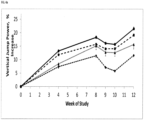
- Muscular power was assessed using both the vertical jump and Wingate PP tests and results are shown in Figures 4a and 4b , respectively. Both of these measures of power were significantly increased during the study with HMB (HMB*time, p ⁇ 0.001 for both) and with ATP supplementation (ATP*time, p ⁇ 0.001 and p ⁇ 0.04 for vertical jump power and Wingate PP, respectively, Figures 4A and 4B ). Over the 12-weeks of training vertical jump power increased 614 ⁇ 52, 991 ⁇ 51, 796 ⁇ 75, and 1076 ⁇ 40 watts in placebo, HMB, ATP, and HMB-ATP supplemented groups, respectively ( t -test p ⁇ 0.05).
- Wingate PP decreased by 4.7 ⁇ 1.5, 0.3 ⁇ 0.9, 2.9 ⁇ 0.7, and 2.0 ⁇ 0.9% in the placebo, HMB, ATP, and HMB-ATP supplemented groups, respectively ( Figure 4B ).
- HMB, ATP, and HMB-ATP supplementation resulted in the participants maintaining greater Wingate PP power than the placebo supplemented group with gains in power of 10.2 ⁇ 1.6, 9.0 ⁇ 1.6, and 14.5 ⁇ 1.2% from baseline, respectively ( t -test, p ⁇ 0.05).
- Resistance training resulted in increased lean body mass (LBM) and quadriceps thickness (Time, p ⁇ 0.001) whereas, fat percentage was decreased with the training, (Time, p ⁇ 0.001) at weeks 0, 4, 8, and 12.
- Supplementation with HMB increased body weight, LBM, and quadriceps thickness and decreased body fat (HMB*time, p ⁇ 0.03, p ⁇ 0.001, p ⁇ 0.001, and p ⁇ 0.001, respectively) whereas ATP supplementation increased LBM and quadriceps thickness (ATP ⁇ time, p ⁇ 0.01 and 0.04, respectively).
- HMB-FA Beta-hydroxy-Beta-methylbutyrate free acid
- ATP adenosine-5'-triphosphate
- Muscle damage was assessed by blood CK, which was increased by training, particularly after the changes in training volume at the initiation of the study and at weeks 9 and 10 during the overreaching cycle (Table 6; Time, p ⁇ 0.001).
- the initial training resulted in a 342 ⁇ 64% increase and the two-week overreaching cycle resulted in a 159 ⁇ 55% increase in CK levels in the placebo-supplemented group.
- HMB-FA Beta-hydroxy-Beta-methylbutyrate free acid
- ATP adenosine-5'-triphosphate
- CK creatine kinase
- CRP C-reactive protein
- LDH lactate dehydrogenase
- PRS perceived recovery score
- HMB-ATP results in increases in LBM, muscle hypertrophy, strength, and power. These increases are, in the instances of strength and power, synergistic, and in the instances of lean body mass and muscle hypertrophy, additive. Moreover, when faced with greater training frequencies, as demonstrated with the overreaching cycle of training, HMB-ATP prevents typical declines in performance that are characteristic of overreaching. All of these results were unexpected and surprising.
Landscapes
- Health & Medical Sciences (AREA)
- Life Sciences & Earth Sciences (AREA)
- Chemical & Material Sciences (AREA)
- Veterinary Medicine (AREA)
- Public Health (AREA)
- Medicinal Chemistry (AREA)
- General Health & Medical Sciences (AREA)
- Animal Behavior & Ethology (AREA)
- Pharmacology & Pharmacy (AREA)
- Epidemiology (AREA)
- Nuclear Medicine, Radiotherapy & Molecular Imaging (AREA)
- Organic Chemistry (AREA)
- Engineering & Computer Science (AREA)
- General Chemical & Material Sciences (AREA)
- Chemical Kinetics & Catalysis (AREA)
- Bioinformatics & Cheminformatics (AREA)
- Molecular Biology (AREA)
- Orthopedic Medicine & Surgery (AREA)
- Neurology (AREA)
- Physical Education & Sports Medicine (AREA)
- Obesity (AREA)
- Endocrinology (AREA)
- Hematology (AREA)
- Diabetes (AREA)
- Pharmaceuticals Containing Other Organic And Inorganic Compounds (AREA)
- Acyclic And Carbocyclic Compounds In Medicinal Compositions (AREA)
- Medicines That Contain Protein Lipid Enzymes And Other Medicines (AREA)
- Medicinal Preparation (AREA)
Applications Claiming Priority (3)
| Application Number | Priority Date | Filing Date | Title |
|---|---|---|---|
| US201261698919P | 2012-09-10 | 2012-09-10 | |
| PCT/US2013/059039 WO2014040067A1 (en) | 2012-09-10 | 2013-09-10 | Composition of hmb and atp and methods of use |
| EP13835631.6A EP2892522A4 (en) | 2012-09-10 | 2013-09-10 | HMB AND ATP COMPOSITION AND METHODS OF USE |
Related Parent Applications (2)
| Application Number | Title | Priority Date | Filing Date |
|---|---|---|---|
| EP13835631.6A Division EP2892522A4 (en) | 2012-09-10 | 2013-09-10 | HMB AND ATP COMPOSITION AND METHODS OF USE |
| PCT/US2013/059039 Previously-Filed-Application WO2014040067A1 (en) | 2012-09-10 | 2013-09-10 | Composition of hmb and atp and methods of use |
Publications (2)
| Publication Number | Publication Date |
|---|---|
| EP3733171A1 EP3733171A1 (en) | 2020-11-04 |
| EP3733171B1 true EP3733171B1 (en) | 2023-10-25 |
Family
ID=50237697
Family Applications (2)
| Application Number | Title | Priority Date | Filing Date |
|---|---|---|---|
| EP20169493.2A Active EP3733171B1 (en) | 2012-09-10 | 2013-09-10 | Compositions comprising hmb and atp as well as their use |
| EP13835631.6A Ceased EP2892522A4 (en) | 2012-09-10 | 2013-09-10 | HMB AND ATP COMPOSITION AND METHODS OF USE |
Family Applications After (1)
| Application Number | Title | Priority Date | Filing Date |
|---|---|---|---|
| EP13835631.6A Ceased EP2892522A4 (en) | 2012-09-10 | 2013-09-10 | HMB AND ATP COMPOSITION AND METHODS OF USE |
Country Status (14)
| Country | Link |
|---|---|
| US (1) | US10092590B2 (https=) |
| EP (2) | EP3733171B1 (https=) |
| JP (1) | JP6258943B2 (https=) |
| CN (1) | CN105025891B (https=) |
| AU (1) | AU2013312113B2 (https=) |
| BR (1) | BR112015005199B1 (https=) |
| CA (1) | CA2884405C (https=) |
| DK (1) | DK3733171T3 (https=) |
| ES (1) | ES2970283T3 (https=) |
| FI (1) | FI3733171T3 (https=) |
| HU (1) | HUE065064T2 (https=) |
| PL (1) | PL3733171T3 (https=) |
| PT (1) | PT3733171T (https=) |
| WO (1) | WO2014040067A1 (https=) |
Families Citing this family (3)
| Publication number | Priority date | Publication date | Assignee | Title |
|---|---|---|---|---|
| WO2017205673A1 (en) * | 2016-05-25 | 2017-11-30 | TSI Group Ltd. | Stabilization of beta-hydroxyisovaleric acid formulations in soft gel capsules |
| US10888576B2 (en) * | 2018-10-08 | 2021-01-12 | Metabolic Technologies, Inc. | Composition of HMB and ATP and methods of use |
| JP2024524288A (ja) * | 2021-06-22 | 2024-07-05 | ティエスアイ ユーエスエイ エルエルシー | アデノシン三リン酸(atp)を含む組成物および認知機能に対する使用方法 |
Family Cites Families (16)
| Publication number | Priority date | Publication date | Assignee | Title |
|---|---|---|---|---|
| US5028440A (en) | 1990-01-30 | 1991-07-02 | Iowa State University Research Foundation, Inc. | Method of raising meat producing animals to increase lean tissue development |
| US4992470A (en) | 1990-02-08 | 1991-02-12 | Iowa State University Research Foundation, Inc. | Method of enhancing immune response of mammals |
| ES2142353T3 (es) | 1992-09-16 | 2000-04-16 | Univ Iowa State Res Found Inc | Procedimiento para reducir los niveles de colesterol total y de colesterol asociado a lipoproteinas de baja densidad en sangre. |
| US5348979A (en) | 1992-12-23 | 1994-09-20 | Iowa State University Research Foundation Inc. | Method of promoting nitrogen retention in humans |
| US6031000A (en) | 1998-06-23 | 2000-02-29 | Iowa State University Research Foundation, Inc. | Composition comprising β-hydroxy-β-methylbutyric acid and at least one amino acid and methods of use |
| JP4010390B2 (ja) | 1999-09-20 | 2007-11-21 | 明治乳業株式会社 | 免疫賦活化組成物 |
| US7629329B2 (en) * | 2001-06-04 | 2009-12-08 | Tsi Health Sciences, Inc. | Method for increasing muscle mass and strength through administration of adenosine triphosphate |
| US20050027005A1 (en) | 2003-08-02 | 2005-02-03 | Matthias Boldt | Nutrient compositions and methods for sustenance and promotion of positive metabolic energy levels in a targeted manner |
| US20050215640A1 (en) * | 2004-03-26 | 2005-09-29 | Baxter Jeffrey H | HMB compositions and uses thereof |
| US20060083793A1 (en) * | 2004-09-29 | 2006-04-20 | Gardiner Paul T | Nutritional composition for promoting muscle performance and acting as hydrogen (H+) blocker |
| US20060073891A1 (en) * | 2004-10-01 | 2006-04-06 | Holt Timothy M | Display with multiple user privacy |
| JP5032310B2 (ja) * | 2005-05-27 | 2012-09-26 | 興和株式会社 | 疲労回復のための医薬 |
| WO2007108071A1 (ja) * | 2006-03-17 | 2007-09-27 | Pharma Foods International Co., Ltd. | 抗ストレス組成物及びそれを含有する飲食品 |
| WO2010068696A1 (en) | 2008-12-09 | 2010-06-17 | Metabolic Technologies, Inc. | Nutritional intervention for improving muscular function and strength |
| DE102009052640A1 (de) | 2009-11-10 | 2011-05-12 | Linde-Lkca-Dresden Gmbh | Verfahren und Vorrichtung zur Gaswäsche |
| EP2512236B1 (en) * | 2009-12-18 | 2016-10-19 | Metabolic Technologies, Inc. | Improved method of administering beta-hydroxy-beta-methylbutyrate (hmb) |
-
2013
- 2013-09-10 US US14/023,162 patent/US10092590B2/en active Active
- 2013-09-10 WO PCT/US2013/059039 patent/WO2014040067A1/en not_active Ceased
- 2013-09-10 BR BR112015005199-5A patent/BR112015005199B1/pt active IP Right Grant
- 2013-09-10 ES ES20169493T patent/ES2970283T3/es active Active
- 2013-09-10 HU HUE20169493A patent/HUE065064T2/hu unknown
- 2013-09-10 PL PL20169493.2T patent/PL3733171T3/pl unknown
- 2013-09-10 JP JP2015531321A patent/JP6258943B2/ja active Active
- 2013-09-10 CN CN201380058560.6A patent/CN105025891B/zh active Active
- 2013-09-10 CA CA2884405A patent/CA2884405C/en active Active
- 2013-09-10 FI FIEP20169493.2T patent/FI3733171T3/fi active
- 2013-09-10 AU AU2013312113A patent/AU2013312113B2/en active Active
- 2013-09-10 PT PT201694932T patent/PT3733171T/pt unknown
- 2013-09-10 DK DK20169493.2T patent/DK3733171T3/da active
- 2013-09-10 EP EP20169493.2A patent/EP3733171B1/en active Active
- 2013-09-10 EP EP13835631.6A patent/EP2892522A4/en not_active Ceased
Also Published As
| Publication number | Publication date |
|---|---|
| AU2013312113A1 (en) | 2015-03-26 |
| US20140080781A1 (en) | 2014-03-20 |
| CN105025891A (zh) | 2015-11-04 |
| HK1217087A1 (zh) | 2016-12-23 |
| JP6258943B2 (ja) | 2018-01-10 |
| CA2884405A1 (en) | 2014-03-13 |
| AU2013312113B2 (en) | 2018-08-02 |
| DK3733171T3 (da) | 2024-01-29 |
| EP2892522A1 (en) | 2015-07-15 |
| CN105025891B (zh) | 2020-01-21 |
| EP2892522A4 (en) | 2016-01-20 |
| HUE065064T2 (hu) | 2024-05-28 |
| CA2884405C (en) | 2021-03-30 |
| JP2015527408A (ja) | 2015-09-17 |
| ES2970283T3 (es) | 2024-05-27 |
| BR112015005199A2 (pt) | 2017-07-04 |
| US10092590B2 (en) | 2018-10-09 |
| EP3733171A1 (en) | 2020-11-04 |
| PT3733171T (pt) | 2024-01-31 |
| FI3733171T3 (fi) | 2024-01-24 |
| BR112015005199B1 (pt) | 2022-09-06 |
| PL3733171T3 (pl) | 2024-03-18 |
| WO2014040067A1 (en) | 2014-03-13 |
Similar Documents
| Publication | Publication Date | Title |
|---|---|---|
| Fitschen et al. | Efficacy of β-hydroxy-β-methylbutyrate supplementation in elderly and clinical populations | |
| EP2512236B1 (en) | Improved method of administering beta-hydroxy-beta-methylbutyrate (hmb) | |
| US20190209501A1 (en) | Compositions and methods of use of beta-hydroxy-beta-methylbutyrate (hmb) assosiated with intermittent fasting | |
| JP5762396B2 (ja) | 糖尿病療法の支援のためのα−ケト酸を含有する栄養補助剤 | |
| EP3445355A1 (en) | Administration of butyrate, beta-hydroxybutyrate, and related compounds in humans | |
| EP3733171B1 (en) | Compositions comprising hmb and atp as well as their use | |
| Gupta et al. | Clinical research and therapeutic importance of dietary supplement L-carnitine | |
| US20150366901A1 (en) | Methods of Treating Heart Failure | |
| US10888576B2 (en) | Composition of HMB and ATP and methods of use | |
| McDonough | Oral creatine hydrochloride supplementation: acute effects on submaximal, intermittent bouts of bench press and vertical jump exercises | |
| US20160184248A1 (en) | Compositions and methods of use of -hydroxy-methylbutyrate (hmb) resulting in an acute endocrine response | |
| HK1217087B (zh) | Hmb和atp的组合物及使用方法 | |
| Turpin | Therapeutic role of dietary nitrates on cardiorespiratory function in cancer survivors | |
| Kawecka et al. | Creatine supplementation: facts and myths | |
| US20210113501A1 (en) | Method of administering beta-hydroxy-beta-methylbutyrate (hmb) | |
| Arney | Mechanisms of Fatigability in Individuals With Prediabetes and the Effect of Dietary Nitrate Supplementation | |
| KR20230124538A (ko) | 운동 없이 근육량, 근력 및 근육 기능을 개선하기 위한 β-하이드록시-β-메틸부티레이트(HMB)의 조성물 및 사용 방법 | |
| Porcelli | Functional evaluation of muscle oxidative metabolism in metabolic myophaties. A cross-talk between exercise physiology and clinical medicine | |
| Demaison et al. | Is there an ‘obesity paradox’of cardiac survival in heart disease? A perspective from experimental laboratory studies | |
| Fitschen | Efficacy of beta-hydroxy-beta-methylbutyrate (HMB) supplementation in hemodialysis patients | |
| Hogwood et al. | Sex Differences in the Effects of Inorganic Nitrate Supplementation On Exercise Economy 1 and Endurance Capacity in Healthy Young Adults 2 | |
| FROST III | RECOVERY DYNAMICS IN MASTER AND AGED ATHLETES |
Legal Events
| Date | Code | Title | Description |
|---|---|---|---|
| PUAI | Public reference made under article 153(3) epc to a published international application that has entered the european phase |
Free format text: ORIGINAL CODE: 0009012 |
|
| STAA | Information on the status of an ep patent application or granted ep patent |
Free format text: STATUS: THE APPLICATION HAS BEEN PUBLISHED |
|
| AC | Divisional application: reference to earlier application |
Ref document number: 2892522 Country of ref document: EP Kind code of ref document: P |
|
| AK | Designated contracting states |
Kind code of ref document: A1 Designated state(s): AL AT BE BG CH CY CZ DE DK EE ES FI FR GB GR HR HU IE IS IT LI LT LU LV MC MK MT NL NO PL PT RO RS SE SI SK SM TR |
|
| STAA | Information on the status of an ep patent application or granted ep patent |
Free format text: STATUS: REQUEST FOR EXAMINATION WAS MADE |
|
| 17P | Request for examination filed |
Effective date: 20210803 |
|
| RBV | Designated contracting states (corrected) |
Designated state(s): AL AT BE BG CH CY CZ DE DK EE ES FI FR GB GR HR HU IE IS IT LI LT LU LV MC MK MT NL NO PL PT RO RS SE SI SK SM TR |
|
| GRAP | Despatch of communication of intention to grant a patent |
Free format text: ORIGINAL CODE: EPIDOSNIGR1 |
|
| STAA | Information on the status of an ep patent application or granted ep patent |
Free format text: STATUS: GRANT OF PATENT IS INTENDED |
|
| RAP3 | Party data changed (applicant data changed or rights of an application transferred) |
Owner name: TSI INC Owner name: METABOLIC TECHNOLOGIES, LLC |
|
| INTG | Intention to grant announced |
Effective date: 20230310 |
|
| GRAS | Grant fee paid |
Free format text: ORIGINAL CODE: EPIDOSNIGR3 |
|
| GRAA | (expected) grant |
Free format text: ORIGINAL CODE: 0009210 |
|
| STAA | Information on the status of an ep patent application or granted ep patent |
Free format text: STATUS: THE PATENT HAS BEEN GRANTED |
|
| RAP1 | Party data changed (applicant data changed or rights of an application transferred) |
Owner name: METABOLIC TECHNOLOGIES, LLC |
|
| AC | Divisional application: reference to earlier application |
Ref document number: 2892522 Country of ref document: EP Kind code of ref document: P |
|
| AK | Designated contracting states |
Kind code of ref document: B1 Designated state(s): AL AT BE BG CH CY CZ DE DK EE ES FI FR GB GR HR HU IE IS IT LI LT LU LV MC MK MT NL NO PL PT RO RS SE SI SK SM TR |
|
| REG | Reference to a national code |
Ref country code: GB Ref legal event code: FG4D |
|
| REG | Reference to a national code |
Ref country code: CH Ref legal event code: EP |
|
| REG | Reference to a national code |
Ref country code: DE Ref legal event code: R096 Ref document number: 602013084863 Country of ref document: DE |
|
| REG | Reference to a national code |
Ref country code: IE Ref legal event code: FG4D |
|
| REG | Reference to a national code |
Ref country code: FI Ref legal event code: FGE |
|
| REG | Reference to a national code |
Ref country code: DK Ref legal event code: T3 Effective date: 20240126 |
|
| REG | Reference to a national code |
Ref country code: PT Ref legal event code: SC4A Ref document number: 3733171 Country of ref document: PT Date of ref document: 20240131 Kind code of ref document: T Free format text: AVAILABILITY OF NATIONAL TRANSLATION Effective date: 20240124 |
|
| REG | Reference to a national code |
Ref country code: NO Ref legal event code: T2 Effective date: 20231025 Ref country code: DE Ref legal event code: R082 Ref document number: 602013084863 Country of ref document: DE Representative=s name: HERNANDEZ, YORCK, DIPL.-ING., DE |
|
| REG | Reference to a national code |
Ref country code: NL Ref legal event code: FP |
|
| REG | Reference to a national code |
Ref country code: LT Ref legal event code: MG9D |
|
| REG | Reference to a national code |
Ref country code: SE Ref legal event code: TRGR |
|
| PG25 | Lapsed in a contracting state [announced via postgrant information from national office to epo] |
Ref country code: GR Free format text: LAPSE BECAUSE OF FAILURE TO SUBMIT A TRANSLATION OF THE DESCRIPTION OR TO PAY THE FEE WITHIN THE PRESCRIBED TIME-LIMIT Effective date: 20240126 |
|
| PG25 | Lapsed in a contracting state [announced via postgrant information from national office to epo] |
Ref country code: IS Free format text: LAPSE BECAUSE OF FAILURE TO SUBMIT A TRANSLATION OF THE DESCRIPTION OR TO PAY THE FEE WITHIN THE PRESCRIBED TIME-LIMIT Effective date: 20240225 |
|
| PG25 | Lapsed in a contracting state [announced via postgrant information from national office to epo] |
Ref country code: LT Free format text: LAPSE BECAUSE OF FAILURE TO SUBMIT A TRANSLATION OF THE DESCRIPTION OR TO PAY THE FEE WITHIN THE PRESCRIBED TIME-LIMIT Effective date: 20231025 |
|
| PG25 | Lapsed in a contracting state [announced via postgrant information from national office to epo] |
Ref country code: LT Free format text: LAPSE BECAUSE OF FAILURE TO SUBMIT A TRANSLATION OF THE DESCRIPTION OR TO PAY THE FEE WITHIN THE PRESCRIBED TIME-LIMIT Effective date: 20231025 Ref country code: IS Free format text: LAPSE BECAUSE OF FAILURE TO SUBMIT A TRANSLATION OF THE DESCRIPTION OR TO PAY THE FEE WITHIN THE PRESCRIBED TIME-LIMIT Effective date: 20240225 Ref country code: GR Free format text: LAPSE BECAUSE OF FAILURE TO SUBMIT A TRANSLATION OF THE DESCRIPTION OR TO PAY THE FEE WITHIN THE PRESCRIBED TIME-LIMIT Effective date: 20240126 Ref country code: BG Free format text: LAPSE BECAUSE OF FAILURE TO SUBMIT A TRANSLATION OF THE DESCRIPTION OR TO PAY THE FEE WITHIN THE PRESCRIBED TIME-LIMIT Effective date: 20240125 |
|
| REG | Reference to a national code |
Ref country code: ES Ref legal event code: FG2A Ref document number: 2970283 Country of ref document: ES Kind code of ref document: T3 Effective date: 20240527 |
|
| REG | Reference to a national code |
Ref country code: HU Ref legal event code: AG4A Ref document number: E065064 Country of ref document: HU |
|
| PG25 | Lapsed in a contracting state [announced via postgrant information from national office to epo] |
Ref country code: RS Free format text: LAPSE BECAUSE OF FAILURE TO SUBMIT A TRANSLATION OF THE DESCRIPTION OR TO PAY THE FEE WITHIN THE PRESCRIBED TIME-LIMIT Effective date: 20231025 Ref country code: LV Free format text: LAPSE BECAUSE OF FAILURE TO SUBMIT A TRANSLATION OF THE DESCRIPTION OR TO PAY THE FEE WITHIN THE PRESCRIBED TIME-LIMIT Effective date: 20231025 Ref country code: HR Free format text: LAPSE BECAUSE OF FAILURE TO SUBMIT A TRANSLATION OF THE DESCRIPTION OR TO PAY THE FEE WITHIN THE PRESCRIBED TIME-LIMIT Effective date: 20231025 |
|
| REG | Reference to a national code |
Ref country code: DE Ref legal event code: R097 Ref document number: 602013084863 Country of ref document: DE |
|
| PG25 | Lapsed in a contracting state [announced via postgrant information from national office to epo] |
Ref country code: SK Free format text: LAPSE BECAUSE OF FAILURE TO SUBMIT A TRANSLATION OF THE DESCRIPTION OR TO PAY THE FEE WITHIN THE PRESCRIBED TIME-LIMIT Effective date: 20231025 |
|
| PG25 | Lapsed in a contracting state [announced via postgrant information from national office to epo] |
Ref country code: SM Free format text: LAPSE BECAUSE OF FAILURE TO SUBMIT A TRANSLATION OF THE DESCRIPTION OR TO PAY THE FEE WITHIN THE PRESCRIBED TIME-LIMIT Effective date: 20231025 Ref country code: SK Free format text: LAPSE BECAUSE OF FAILURE TO SUBMIT A TRANSLATION OF THE DESCRIPTION OR TO PAY THE FEE WITHIN THE PRESCRIBED TIME-LIMIT Effective date: 20231025 Ref country code: RO Free format text: LAPSE BECAUSE OF FAILURE TO SUBMIT A TRANSLATION OF THE DESCRIPTION OR TO PAY THE FEE WITHIN THE PRESCRIBED TIME-LIMIT Effective date: 20231025 Ref country code: EE Free format text: LAPSE BECAUSE OF FAILURE TO SUBMIT A TRANSLATION OF THE DESCRIPTION OR TO PAY THE FEE WITHIN THE PRESCRIBED TIME-LIMIT Effective date: 20231025 |
|
| PLBE | No opposition filed within time limit |
Free format text: ORIGINAL CODE: 0009261 |
|
| STAA | Information on the status of an ep patent application or granted ep patent |
Free format text: STATUS: NO OPPOSITION FILED WITHIN TIME LIMIT |
|
| 26N | No opposition filed |
Effective date: 20240726 |
|
| PG25 | Lapsed in a contracting state [announced via postgrant information from national office to epo] |
Ref country code: SI Free format text: LAPSE BECAUSE OF FAILURE TO SUBMIT A TRANSLATION OF THE DESCRIPTION OR TO PAY THE FEE WITHIN THE PRESCRIBED TIME-LIMIT Effective date: 20231025 |
|
| PG25 | Lapsed in a contracting state [announced via postgrant information from national office to epo] |
Ref country code: SI Free format text: LAPSE BECAUSE OF FAILURE TO SUBMIT A TRANSLATION OF THE DESCRIPTION OR TO PAY THE FEE WITHIN THE PRESCRIBED TIME-LIMIT Effective date: 20231025 |
|
| PG25 | Lapsed in a contracting state [announced via postgrant information from national office to epo] |
Ref country code: MC Free format text: LAPSE BECAUSE OF FAILURE TO SUBMIT A TRANSLATION OF THE DESCRIPTION OR TO PAY THE FEE WITHIN THE PRESCRIBED TIME-LIMIT Effective date: 20231025 |
|
| PG25 | Lapsed in a contracting state [announced via postgrant information from national office to epo] |
Ref country code: LU Free format text: LAPSE BECAUSE OF NON-PAYMENT OF DUE FEES Effective date: 20240910 |
|
| REG | Reference to a national code |
Ref country code: CH Ref legal event code: U11 Free format text: ST27 STATUS EVENT CODE: U-0-0-U10-U11 (AS PROVIDED BY THE NATIONAL OFFICE) Effective date: 20251001 |
|
| PGFP | Annual fee paid to national office [announced via postgrant information from national office to epo] |
Ref country code: FI Payment date: 20250912 Year of fee payment: 13 Ref country code: PT Payment date: 20250909 Year of fee payment: 13 |
|
| PGFP | Annual fee paid to national office [announced via postgrant information from national office to epo] |
Ref country code: DE Payment date: 20250910 Year of fee payment: 13 Ref country code: DK Payment date: 20250911 Year of fee payment: 13 |
|
| PGFP | Annual fee paid to national office [announced via postgrant information from national office to epo] |
Ref country code: NO Payment date: 20250924 Year of fee payment: 13 |
|
| PGFP | Annual fee paid to national office [announced via postgrant information from national office to epo] |
Ref country code: IT Payment date: 20250922 Year of fee payment: 13 Ref country code: PL Payment date: 20250908 Year of fee payment: 13 Ref country code: NL Payment date: 20250912 Year of fee payment: 13 |
|
| PGFP | Annual fee paid to national office [announced via postgrant information from national office to epo] |
Ref country code: BE Payment date: 20250917 Year of fee payment: 13 Ref country code: GB Payment date: 20250911 Year of fee payment: 13 |
|
| PGFP | Annual fee paid to national office [announced via postgrant information from national office to epo] |
Ref country code: FR Payment date: 20250922 Year of fee payment: 13 Ref country code: AT Payment date: 20250909 Year of fee payment: 13 |
|
| PGFP | Annual fee paid to national office [announced via postgrant information from national office to epo] |
Ref country code: SE Payment date: 20250910 Year of fee payment: 13 |
|
| PGFP | Annual fee paid to national office [announced via postgrant information from national office to epo] |
Ref country code: CZ Payment date: 20250909 Year of fee payment: 13 Ref country code: IE Payment date: 20250909 Year of fee payment: 13 |
|
| PGFP | Annual fee paid to national office [announced via postgrant information from national office to epo] |
Ref country code: HU Payment date: 20251013 Year of fee payment: 13 |
|
| PGFP | Annual fee paid to national office [announced via postgrant information from national office to epo] |
Ref country code: CH Payment date: 20251001 Year of fee payment: 13 |
|
| PG25 | Lapsed in a contracting state [announced via postgrant information from national office to epo] |
Ref country code: CY Free format text: LAPSE BECAUSE OF FAILURE TO SUBMIT A TRANSLATION OF THE DESCRIPTION OR TO PAY THE FEE WITHIN THE PRESCRIBED TIME-LIMIT; INVALID AB INITIO Effective date: 20130910 |
|
| PGFP | Annual fee paid to national office [announced via postgrant information from national office to epo] |
Ref country code: ES Payment date: 20251016 Year of fee payment: 13 |
|
| REG | Reference to a national code |
Ref country code: AT Ref legal event code: UEP Ref document number: 1623960 Country of ref document: AT Kind code of ref document: T Effective date: 20231025 |