EP3715469B1 - Verfahren zur markierung von nukleinsäure - Google Patents
Verfahren zur markierung von nukleinsäure Download PDFInfo
- Publication number
- EP3715469B1 EP3715469B1 EP20159534.5A EP20159534A EP3715469B1 EP 3715469 B1 EP3715469 B1 EP 3715469B1 EP 20159534 A EP20159534 A EP 20159534A EP 3715469 B1 EP3715469 B1 EP 3715469B1
- Authority
- EP
- European Patent Office
- Prior art keywords
- nucleic acid
- labeled
- nucleobase
- transfer group
- labeling
- Prior art date
- Legal status (The legal status is an assumption and is not a legal conclusion. Google has not performed a legal analysis and makes no representation as to the accuracy of the status listed.)
- Active
Links
Images

Classifications
-
- C—CHEMISTRY; METALLURGY
- C12—BIOCHEMISTRY; BEER; SPIRITS; WINE; VINEGAR; MICROBIOLOGY; ENZYMOLOGY; MUTATION OR GENETIC ENGINEERING
- C12N—MICROORGANISMS OR ENZYMES; COMPOSITIONS THEREOF; PROPAGATING, PRESERVING, OR MAINTAINING MICROORGANISMS; MUTATION OR GENETIC ENGINEERING; CULTURE MEDIA
- C12N15/00—Mutation or genetic engineering; DNA or RNA concerning genetic engineering, vectors, e.g. plasmids, or their isolation, preparation or purification; Use of hosts therefor
- C12N15/09—Recombinant DNA-technology
- C12N15/10—Processes for the isolation, preparation or purification of DNA or RNA
- C12N15/102—Mutagenizing nucleic acids
-
- C—CHEMISTRY; METALLURGY
- C12—BIOCHEMISTRY; BEER; SPIRITS; WINE; VINEGAR; MICROBIOLOGY; ENZYMOLOGY; MUTATION OR GENETIC ENGINEERING
- C12Q—MEASURING OR TESTING PROCESSES INVOLVING ENZYMES, NUCLEIC ACIDS OR MICROORGANISMS; COMPOSITIONS OR TEST PAPERS THEREFOR; PROCESSES OF PREPARING SUCH COMPOSITIONS; CONDITION-RESPONSIVE CONTROL IN MICROBIOLOGICAL OR ENZYMOLOGICAL PROCESSES
- C12Q1/00—Measuring or testing processes involving enzymes, nucleic acids or microorganisms; Compositions therefor; Processes of preparing such compositions
- C12Q1/68—Measuring or testing processes involving enzymes, nucleic acids or microorganisms; Compositions therefor; Processes of preparing such compositions involving nucleic acids
- C12Q1/6813—Hybridisation assays
- C12Q1/6816—Hybridisation assays characterised by the detection means
-
- C—CHEMISTRY; METALLURGY
- C07—ORGANIC CHEMISTRY
- C07H—SUGARS; DERIVATIVES THEREOF; NUCLEOSIDES; NUCLEOTIDES; NUCLEIC ACIDS
- C07H19/00—Compounds containing a hetero ring sharing one ring hetero atom with a saccharide radical; Nucleosides; Mononucleotides; Anhydro-derivatives thereof
- C07H19/02—Compounds containing a hetero ring sharing one ring hetero atom with a saccharide radical; Nucleosides; Mononucleotides; Anhydro-derivatives thereof sharing nitrogen
- C07H19/04—Heterocyclic radicals containing only nitrogen atoms as ring hetero atom
- C07H19/16—Purine radicals
- C07H19/173—Purine radicals with 2-deoxyribosyl as the saccharide radical
-
- C—CHEMISTRY; METALLURGY
- C07—ORGANIC CHEMISTRY
- C07H—SUGARS; DERIVATIVES THEREOF; NUCLEOSIDES; NUCLEOTIDES; NUCLEIC ACIDS
- C07H21/00—Compounds containing two or more mononucleotide units having separate phosphate or polyphosphate groups linked by saccharide radicals of nucleoside groups, e.g. nucleic acids
-
- C—CHEMISTRY; METALLURGY
- C12—BIOCHEMISTRY; BEER; SPIRITS; WINE; VINEGAR; MICROBIOLOGY; ENZYMOLOGY; MUTATION OR GENETIC ENGINEERING
- C12Q—MEASURING OR TESTING PROCESSES INVOLVING ENZYMES, NUCLEIC ACIDS OR MICROORGANISMS; COMPOSITIONS OR TEST PAPERS THEREFOR; PROCESSES OF PREPARING SUCH COMPOSITIONS; CONDITION-RESPONSIVE CONTROL IN MICROBIOLOGICAL OR ENZYMOLOGICAL PROCESSES
- C12Q1/00—Measuring or testing processes involving enzymes, nucleic acids or microorganisms; Compositions therefor; Processes of preparing such compositions
- C12Q1/68—Measuring or testing processes involving enzymes, nucleic acids or microorganisms; Compositions therefor; Processes of preparing such compositions involving nucleic acids
- C12Q1/6811—Selection methods for production or design of target specific oligonucleotides or binding molecules
-
- C—CHEMISTRY; METALLURGY
- C12—BIOCHEMISTRY; BEER; SPIRITS; WINE; VINEGAR; MICROBIOLOGY; ENZYMOLOGY; MUTATION OR GENETIC ENGINEERING
- C12Q—MEASURING OR TESTING PROCESSES INVOLVING ENZYMES, NUCLEIC ACIDS OR MICROORGANISMS; COMPOSITIONS OR TEST PAPERS THEREFOR; PROCESSES OF PREPARING SUCH COMPOSITIONS; CONDITION-RESPONSIVE CONTROL IN MICROBIOLOGICAL OR ENZYMOLOGICAL PROCESSES
- C12Q1/00—Measuring or testing processes involving enzymes, nucleic acids or microorganisms; Compositions therefor; Processes of preparing such compositions
- C12Q1/68—Measuring or testing processes involving enzymes, nucleic acids or microorganisms; Compositions therefor; Processes of preparing such compositions involving nucleic acids
- C12Q1/6813—Hybridisation assays
- C12Q1/6816—Hybridisation assays characterised by the detection means
- C12Q1/6823—Release of bound markers
-
- C—CHEMISTRY; METALLURGY
- C12—BIOCHEMISTRY; BEER; SPIRITS; WINE; VINEGAR; MICROBIOLOGY; ENZYMOLOGY; MUTATION OR GENETIC ENGINEERING
- C12Q—MEASURING OR TESTING PROCESSES INVOLVING ENZYMES, NUCLEIC ACIDS OR MICROORGANISMS; COMPOSITIONS OR TEST PAPERS THEREFOR; PROCESSES OF PREPARING SUCH COMPOSITIONS; CONDITION-RESPONSIVE CONTROL IN MICROBIOLOGICAL OR ENZYMOLOGICAL PROCESSES
- C12Q1/00—Measuring or testing processes involving enzymes, nucleic acids or microorganisms; Compositions therefor; Processes of preparing such compositions
- C12Q1/68—Measuring or testing processes involving enzymes, nucleic acids or microorganisms; Compositions therefor; Processes of preparing such compositions involving nucleic acids
- C12Q1/6813—Hybridisation assays
- C12Q1/6827—Hybridisation assays for detection of mutation or polymorphism
-
- C—CHEMISTRY; METALLURGY
- C12—BIOCHEMISTRY; BEER; SPIRITS; WINE; VINEGAR; MICROBIOLOGY; ENZYMOLOGY; MUTATION OR GENETIC ENGINEERING
- C12Q—MEASURING OR TESTING PROCESSES INVOLVING ENZYMES, NUCLEIC ACIDS OR MICROORGANISMS; COMPOSITIONS OR TEST PAPERS THEREFOR; PROCESSES OF PREPARING SUCH COMPOSITIONS; CONDITION-RESPONSIVE CONTROL IN MICROBIOLOGICAL OR ENZYMOLOGICAL PROCESSES
- C12Q1/00—Measuring or testing processes involving enzymes, nucleic acids or microorganisms; Compositions therefor; Processes of preparing such compositions
- C12Q1/68—Measuring or testing processes involving enzymes, nucleic acids or microorganisms; Compositions therefor; Processes of preparing such compositions involving nucleic acids
- C12Q1/6813—Hybridisation assays
- C12Q1/6834—Enzymatic or biochemical coupling of nucleic acids to a solid phase
- C12Q1/6837—Enzymatic or biochemical coupling of nucleic acids to a solid phase using probe arrays or probe chips
-
- C—CHEMISTRY; METALLURGY
- C12—BIOCHEMISTRY; BEER; SPIRITS; WINE; VINEGAR; MICROBIOLOGY; ENZYMOLOGY; MUTATION OR GENETIC ENGINEERING
- C12N—MICROORGANISMS OR ENZYMES; COMPOSITIONS THEREOF; PROPAGATING, PRESERVING, OR MAINTAINING MICROORGANISMS; MUTATION OR GENETIC ENGINEERING; CULTURE MEDIA
- C12N2310/00—Structure or type of the nucleic acid
- C12N2310/30—Chemical structure
- C12N2310/33—Chemical structure of the base
-
- C—CHEMISTRY; METALLURGY
- C12—BIOCHEMISTRY; BEER; SPIRITS; WINE; VINEGAR; MICROBIOLOGY; ENZYMOLOGY; MUTATION OR GENETIC ENGINEERING
- C12Q—MEASURING OR TESTING PROCESSES INVOLVING ENZYMES, NUCLEIC ACIDS OR MICROORGANISMS; COMPOSITIONS OR TEST PAPERS THEREFOR; PROCESSES OF PREPARING SUCH COMPOSITIONS; CONDITION-RESPONSIVE CONTROL IN MICROBIOLOGICAL OR ENZYMOLOGICAL PROCESSES
- C12Q2523/00—Reactions characterised by treatment of reaction samples
- C12Q2523/10—Characterised by chemical treatment
-
- C—CHEMISTRY; METALLURGY
- C12—BIOCHEMISTRY; BEER; SPIRITS; WINE; VINEGAR; MICROBIOLOGY; ENZYMOLOGY; MUTATION OR GENETIC ENGINEERING
- C12Q—MEASURING OR TESTING PROCESSES INVOLVING ENZYMES, NUCLEIC ACIDS OR MICROORGANISMS; COMPOSITIONS OR TEST PAPERS THEREFOR; PROCESSES OF PREPARING SUCH COMPOSITIONS; CONDITION-RESPONSIVE CONTROL IN MICROBIOLOGICAL OR ENZYMOLOGICAL PROCESSES
- C12Q2563/00—Nucleic acid detection characterized by the use of physical, structural and functional properties
- C12Q2563/101—Nucleic acid detection characterized by the use of physical, structural and functional properties radioactivity, e.g. radioactive labels
-
- C—CHEMISTRY; METALLURGY
- C12—BIOCHEMISTRY; BEER; SPIRITS; WINE; VINEGAR; MICROBIOLOGY; ENZYMOLOGY; MUTATION OR GENETIC ENGINEERING
- C12Q—MEASURING OR TESTING PROCESSES INVOLVING ENZYMES, NUCLEIC ACIDS OR MICROORGANISMS; COMPOSITIONS OR TEST PAPERS THEREFOR; PROCESSES OF PREPARING SUCH COMPOSITIONS; CONDITION-RESPONSIVE CONTROL IN MICROBIOLOGICAL OR ENZYMOLOGICAL PROCESSES
- C12Q2600/00—Oligonucleotides characterized by their use
- C12Q2600/158—Expression markers
Definitions
- This application relates generally to a labeling method for nucleic acid.
- Nucleic acid drugs such as antisense, aptamer, and siRNA drugs, exert effects by specific base-pairing between the short DNA or RNA fragments in the nucleic acid drugs and RNA from disease related genes. Such nucleic acid drugs can target not only protein-coding regions but also non-protein-coding regions in RNA transcripts. Nucleic acid drugs are being developed as medicines for diseases that are not successfully treated with small-molecule and antibody drugs, and are being studied in many clinical trials for refractory diseases such as genetic disorders and cancers.
- Each antisense drug in practical use comprises many chemically modified nucleotides to prevent in vivo enzymatic hydrolysis.
- side effects or toxicity from the chemically modified nucleotides have become a big problem.
- siRNAs are mostly derived from naturally occurring nucleic acids in connection with the mechanism of action.
- siRNA drugs are incorporated into any of drug delivery systems (DDSs) to prevent in vivo degradation and the resulting drugs are used.
- DDSs drug delivery systems
- the pharmacokinetics of small-molecule drugs are studied during the development stage to improve efficacy and to avoid toxicity.
- the pharmacokinetic analyses of nucleic acid drugs have not been performed well as compared to those conducted for the development of small-molecule drugs. This is because those nucleic acid drugs typically have such a high molecular weight of several thousand daltons (Da) and will produce metabolites with such a wide variety of structures that the nucleic acid drugs are not applicable to, for example, mass spectrometric and HPLC analyses.
- an activated RNA-induced silencing complex (RISC) which has incorporated an antisense strand of a siRNA exhibits its effect at quite low concentrations in cells.
- RISC activated RNA-induced silencing complex
- radioactivity can be sensitively detected, radioactivity can be used not only in in vivo experiments but also used for tracking a labeled nucleic acid in human subjects by PET (positron emission tomography) and SPECT (single photon emission computed tomography) imaging.
- PET positron emission tomography
- SPECT single photon emission computed tomography
- Radioactively labeled nucleic acids include end-labeled nucleic acids, in which either end of each nucleotide sequence is labeled, and internally labeled nucleic acids, in which a non-terminal portion of each nucleotide sequence is labeled.
- End-labeled nucleic acids are disclosed in Non Patent Literature 1 ( Dolle, F., and four other authors, "A general method for labeling oligodeoxynucleotides with 18F for in vivo PET imaging", J. Label. Compd.
- Non Patent Literature 2 Hatanaka, K., and seven other authors, "Development of double-stranded siRNA labeling method using positron emitter and its in vivo trafficking analyzed by positron emission tomography", Bioconjugate Chem., 2010, 21, 756-763 );
- Non Patent Literature 3 Kuboyama, T., and 10 other authors, "Stoichiometry-focused 18F-labeling of alkyne-substituted oligodeoxynucleotides using azido([18F]fluoromethyl)benzenes by Cu-catalyzed Huisgen reaction", Bioorg. Med.
- Non Patent Literature 4 Bartlett, D. W., and four other authors, "Impact of tumor-specific targeting on the biodistribution and efficacy of siRNA nanoparticles measured by multimodality in vivo imaging", Proc Natl Acad Sci USA, 2007, 104, 15549-15554 );
- Non Patent Literature 5 Liu, G., and five other authors, "Tumor pretargeting in mice using 99mTc-labeled morpholino, a DNA analog", J. Nucl.
- Non Patent Literature 6 Roivainen, A., and 11 other authors, "68Ga-labeled oligonucleotides for in vivo imaging with PET", J. Nucl. Med., 2004, 45, 347-355 ).
- end-labeled nucleic acids these nucleic acids are degraded in vivo to fragments, among which only fragments containing a radiolabel at either end can be detected.
- end-labeled nucleic acids are suitable for pharmacokinetic analysis of antisense drugs which are protected from degradation as described above.
- siRNAs which are mostly derived from naturally occurring nucleic acids are prone to fragmentation by enzymatic hydrolysis, and the sense strands remaining unincorporated into RISCs during the process of forming activated RISCs will be degraded and metabolized.
- internally labeled nucleic acids in which a nucleotide at a position of interest is selectively radiolabeled are essential to detect the incorporation of siRNA into activated RISC and to analyze the dynamics of the incorporation.
- nucleic acids can be prepared using a photoreactive agent, such as psoralen, or a polymerase.
- a photoreactive agent such as psoralen
- a polymerase e.g., a polymerase
- use of a photoreactive agent or a polymerase allows a nucleic acid to be labeled at random but not to be selectively radiolabeled at positions of interest within the nucleic acid sequence.
- Non Patent Literature 7 Tan, W., and three other authors, “Site-specific synthesis of [3H]oligonucleotides in high specific activity through direct solid-phase redox chemistry", Tetrahedron Lett., 1995, 36, 21, p.3631-3634 );
- Non Patent Literature 8 Christensen, J., and five other authors, “Tritium labeling of full-length small interfering RNAs", J. Label. Compd.
- Non Patent Literature 9 Dougan, H., and three other authors, "Synthesis and radioiodination of a stannyl oligodeoxyribonucleotide", Nucleic Acids Res., 1997, 25, p.2897-2901 ); and Non Patent Literature 10 ( Fujibayashi, Y., and seven other authors, "A novel 111In-labeled antisense DNA probe with multi-chelating sites (MCS-Probe) showing high specific radioactivity and labeling efficiency", Nucl. Med. Biol., 1999, 26, p. 17-21 ).
- MCS-Probe multi-chelating sites
- Non Patent Literature 7 discloses a method in which the 5' hydroxyl group of the ribose of a nucleotide of interest is oxidized and the oxidized ribose is then reduced with tritium-labeled sodium borohydride during solid-phase nucleic acid synthesis using a nucleic acid synthesizer.
- Non Patent Literature 8 discloses a method in which the Br of a bromouracil incorporated during siRNA synthesis is allowed to react with tritium gas under pressure for bromine/tritium exchange.
- the radioisotope used for the preparation of internally labeled nucleic acids is not limited to tritium.
- an isotope of iodine is used in Non Patent Literature 9.
- Non Patent Literature 10 discloses a method in which a metal complex containing an isotope of indium is incorporated into a nucleic acid.
- Non Patent Literature 7 As seen in the cases of the internally labeled nucleic acids reported in Non Patent Literature 7 to Non Patent Literature 10, where a labeling precursor should be incorporated during synthesis of the nucleic acids, the disclosed methods are not applicable to labeling of nucleic acids which are previously synthesized or isolated from natural systems. Additionally, the method disclosed in Non Patent Literature 9 requires reaction with tritium gas under pressure, which results in limited number of institutions that can practice the method. Furthermore, the internally labeled nucleic acid prepared using a metal complex and disclosed in Non Patent Literature 10 is so sterically bulky that the function of the nucleic acid may be compromised.
- the present disclosure is completed in view of the above-described problems.
- the aim of the present disclosure is to provide a labeling method for nucleic acid by which a nucleic acid, whether of synthetic or natural origin, can be labeled without compromising the function thereof in such a manner that the labeled nucleic acid can be sensitively detected even when the labeled nucleic acid is fragmented.
- the transfer group may be a pyridinyl-keto transfer group, and the pyridinyl-keto transfer group may be transferred to a cytosine or adenine nucleobase as the target nucleobase during the transferring step.
- the transfer group may be a diketo transfer group, and the diketo transfer group may be transferred to a guanine nucleobase as the target nucleobase during the transferring step.
- the transfer group may be acetyl group, and an acetyl group may be transferred to the 2' position of the ribose of a nucleotide residue containing an uracil nucleobase as the target nucleobase during the transferring step.
- labeling method for nucleic acid according to the present disclosure may further include:
- the radioactive material may be tritium.
- a nucleic acid whether of synthetic or natural origin, can be labeled by the present disclosure without compromising the function thereof in such a manner that the labeled nucleic acid can be sensitively detected even when the labeled nucleic acid is fragmented.
- a labeling method for nucleic acid includes a reaction step, a transferring step, and a labeling step.
- a nucleic acid probe is hybridized to a nucleic acid to be labeled.
- the nucleic acid to be labeled is not particularly limited, provided that 2'-deoxyribonucleotides can form a duplex with the nucleic acid.
- DNA, RNA, and modified products thereof are included in the nucleic acid to be labeled.
- the nucleic acid to be labeled is RNA.
- the nucleic acid to be labeled is, for example, single-stranded DNA, double-stranded DNA, single-stranded RNA, double-stranded RNA, antisense strand, siRNA, or mRNA.
- the nucleotide sequence of the nucleic acid to be labeled is not particularly limited, and a nucleic acid with any nucleotide sequence can be a nucleic acid to be labeled.
- the nucleotide sequence of the nucleic acid to be labeled includes at least one guanine nucleobase, cytosine nucleobase, or adenine nucleobase.
- sequence of the nucleic acid to be labeled is not limited to a particular length, and is, for example, 5 to 1000 nucleotides long, 8 to 500 nucleotides long, 10 to 300 nucleotides long, or 10 to 200 nucleotides long.
- sequence of the nucleic acid to be labeled is preferably 10 to 150 nucleotides long, 15 to 100 nucleotides long, or 20 to 100 nucleotides long.
- the nucleic acid probe is an oligonucleotide with a nucleotide sequence which is complementary to that of the nucleic acid to be labeled.
- a reactive nucleobase derivative is incorporated at a position complementary to that of a target nucleobase as a target of labeling in the nucleic acid to be labeled.
- the reactive nucleobase derivative incorporated into the nucleic acid probe is, for example, S-(2-(methylidene)-1-phenylbutane-1,3-dione)-6-thioguanine (derivative 1) represented by the structural formula (1).
- the reactive nucleobase derivative incorporated into the nucleic acid probe is, for example, (E)-3-(1-(pyridin-2-yl)prop-2-en-1-one)-6-thioguanine (derivative 2) represented by the structural formula (2).
- the reactive nucleobase derivative incorporated into the nucleic acid probe is, for example, (E)-3-(1-(pyridin-2-yl)prop-2-en-1-one)-4-thiothymine (derivative 3) represented by the structural formula (3).
- the nucleic acid to be labeled and the nucleic acid probe should be mixed together, for example, in a neutral or basic buffer solution.
- a transfer group contained in the reactive nucleobase derivative is transferred by means of proximity effect to the nucleotide residue containing the target nucleobase in the nucleic acid to be labeled (in the transferring step).
- the transferring step should be conducted at 35 to 40°C, preferably at 37°C.
- the time required for the reaction between the nucleic acid to be labeled and the nucleic acid probe in the reaction and transferring steps is 5 minutes to 6 hours, 10 minutes to 4 hours, or 1 to 3 hours, and is preferably 2 hours, in total.
- the transfer group is not particularly limited, provided that the transfer group is reactive.
- the transfer group contains an ⁇ , ⁇ -unsaturated carbonyl group.
- the transfer group is preferably a diketo transfer group.
- a diketo transfer group is transferred to the 2-amino group of guanine under basic conditions.
- the selectivity of a nucleobase to which a transfer group is transferred can be altered depending on the reaction conditions during the transferring step. Under neutral conditions, a transfer group is transferred to the 4-amino group of cytosine by the derivative 1, as indicated below.
- the transfer group is preferably a pyridinyl-keto transfer group. In cases where the derivative 2 is used, a transfer group is transferred to the 4-amino group of cytosine, as indicated below.
- a transfer group is transferred to the 6-amino group of adenine, as indicated below.
- a transfer group can be transferred to a nucleobase in the nucleic acid to be labeled by using any of the above derivatives 1 to 3
- a transfer group can also be transferred to a sugar in the nucleic acid to be labeled.
- N-(1-acetyl-4-pyridyl)-2-carboxamide-6-aminopurine (derivative 4) represented by the structural formula (4) may be used as a reactive nucleobase derivative incorporated into the nucleic acid probe.
- the above nucleic acid probe can be synthesized, for example, by any known technique using an automated DNA synthesizer.
- a nucleic acid probe containing the derivative 1 for example, 2-chloromethylene-1-(pyridin-2-yl)butane-1,3-dione may be allowed to react with an oligonucleotide comprising 2'-deoxyribonucleotides including a 6-thio-2'-deoxyguanosine in a buffer solution.
- (E)-3-iodo-1-(pyridin-2-yl)prop-2-en-1-one may be allowed to react with an oligonucleotide comprising 2'-deoxyribonucleotides including a 6-thio-2'-deoxyguanosine in a buffer solution.
- (E)-3-iodo-1-(pyridin-2-yl)prop-2-en-1-one may be allowed to react with an oligonucleotide comprising 2'-deoxyribonucleotides including a 4-thiothymidine in a buffer solution.
- acetic anhydride may be allowed to react with an oligonucleotide comprising 2'-deoxyribonucleotides including an N-(1-acetyl-4-pyridyl)-2-carboxamide-6-aminopurine in a buffer solution.
- a method of synthesizing the derivative 4 will be illustrated in Example 3 below.
- the length of the nucleic acid probe is not particularly limited, provided that a duplex formed between the nucleic acid probe and target RNA is stably maintained.
- the length of the nucleic acid probe may be longer or shorter than that of the nucleic acid to be labeled.
- the length of the nucleic acid probe is, for example, 10 to 20 nucleotides, 12 to 18 nucleotides, or 13 to 17 nucleotides.
- the incorporated reactive nucleobase derivative in the nucleic acid probe is, for example, not preferably located at the 3' or 5' end of the oligonucleotide chain with a length of 10 to 20 nucleotides, but preferably located 5 to 10 nucleotides or 6 to 8 nucleotides inside of the 3' or 5' end.
- the transfer group transferred to the nucleotide residue is labeled with a radioactive material.
- a radioactive material Any known radioactive material may be used for the labeling.
- the radioactive material is, for example, tritium.
- the above transfer group can be labeled with tritium by reaction between the nucleic acid to be labeled and tritium-labeled sodium borohydride in water.
- a transfer group transferred to the nucleic acid to be labeled and originally contained in the derivative 1 can be labeled with tritium, as indicated below.
- Transfer groups transferred to the nucleic acid to be labeled and originally contained in the derivatives 2 and 3 can be labeled with tritium, as indicated below.
- a transfer group transferred to the nucleic acid to be labeled and originally contained in the derivative 4 can be labeled with tritium, as indicated below.
- examples of the radioactive material include radioisotopes such as 18 F, 111 I, 76 Br, 67 Ga, 68 Ga, 99m Tc, 111 In, 89 Sr, 186 Re, 153 Sm, and 117m Sn.
- a transfer group containing an alkyne moiety should be transferred to a nucleotide residue, followed by a click reaction between an azide compound containing a radioisotope (a radiolabeling unit) and the alkyne.
- the click reaction between the alkyne and the azide compound is a [3 + 2]-cycloaddition (Huisgen cycloaddition) between the alkyne and the azide compound.
- a 1,2,3-triazole derivative is obtained by the Huisgen cycloaddition.
- Conditions for the Huisgen cycloaddition can be appropriately selected.
- esterification/amidation of a reduced transfer group with a haloacetate as a radiolabeling unit as indicated below can result in incorporation of a radioisotope such as 18 F, 131 I, and 76 Br.
- a radioisotope such as 18 F, 131 I, and 76 Br.
- a nucleic acid probe that contains a reactive nucleobase derivative incorporated at a position complementary to that of a target nucleobase as a target of labeling in a nucleic acid to be labeled is hybridized to the nucleic acid to be labeled and a transfer group is then transferred to the nucleic acid to be labeled.
- the nucleic acid whether of synthetic or natural origin, can be chemically modified with the transfer group at a desired position on the nucleic acid in a selective manner depending on the nucleotide sequence of the nucleic acid probe.
- nucleic acid to be labeled can be labeled at any position on the nucleic acid other than both the ends by the present labeling method for nucleic acid, this method is suitable for monitoring the behavior of a nucleic acid, such as siRNA, which is susceptible to in vivo fragmentation.
- the transfer group is labeled with a radioactive material, so that the nucleic acid to be labeled can be labeled in such a manner that the labeled nucleic acid can be sensitively detected.
- the transfer group according to the present embodiment is not as sterically bulky as the aforementioned metal complex and does not compromise the function of the nucleic acid, as shown in Text Example 2 below.
- the labeling method for nucleic acid may include the step of separating the double-stranded nucleic acid into single strands prior to the above reaction step.
- the labeling method for nucleic acid allows a nucleic acid to be chemically modified with a transfer group at a desired position on the nucleic acid in a selective manner
- the present labeling method can produce a nucleic acid labeled at different positions on the same nucleic acid to be labeled.
- the labeling method for nucleic acid further includes the following first to third steps, in addition to the above reaction, transferring, and labeling steps.
- a nucleic acid probe that has a nucleotide sequence complementary to that of the nucleic acid to be labeled and contains a reactive nucleobase derivative incorporated at a position complementary to that of a nucleobase (designated as the nucleobase Y) different from the position of the target nucleobase (designated as the nucleobase X) in the nucleic acid to be labeled is hybridized to the nucleic acid to be labeled.
- the transfer group transferred to the nucleotide residue containing the nucleobase Y is labeled with a radioactive material different from the radioactive material used in the labeling step.
- a fragment containing the nucleobase X and another fragment containing the nucleobase Y can be distinguishably detected even when the nucleic acid to be labeled is degraded in vivo. Consequently, the behavior of multiple fragments derived from the nucleic acid to be labeled can be monitored, and the obtained information on the multiple fragments can be totally analyzed to elucidate the behavior of the nucleic acid to be labeled.
- a method for nucleic acid preparation includes the step of mixing a first nucleic acid to be labeled that was obtained in the above labeling step and containing a labeled nucleotide residue that contains a nucleobase X and a second nucleic acid to be labeled that was obtained in the above third step and containing a labeled nucleotide residue that contains a nucleobase Y.
- a nucleic acid sample containing the first and second nucleic acids to be labeled that was obtained by the method for nucleic acid preparation is introduced into the body, the behavior of the nucleic acid to be labeled can be elucidated in detail.
- the number of labeled positions in a set of nucleic acids to be labeled is not limited to two but may be three or more.
- RNA 01 as a nucleic acid to be labeled is the sense strand of a siRNA against the (P)RR/ATP6AP2 gene.
- the nucleotide sequence of RNA 01 is represented by SEQ ID NO: 1.
- a synthetic DNA fragment that was complementary to a region extending between the A residue at four nucleotides and the G residue at 20 nucleotides downstream of the 5' end of RNA 01 was designated as nucleic acid probe 01.
- the nucleotide sequence of nucleic acid probe 01 is represented by SEQ ID NO: 2.
- Nucleic acid probe 01 contains a 6-thio-2'-deoxyguanosine residue at the eighth position from the 5' end, which is complementary to the position of the C residue at 13 nucleotides downstream of the 5' end of RNA 01.
- a mixture of nucleic acid probe 01(50 ⁇ M) and a pyridinyl-keto transfer group-containing compound ((E)-3-iodo-1-(pyridin-2-yl)prop-2-en-1-one, 750 ⁇ M) was prepared in a carbonate buffer (25 mM, pH 10.0) at 0°C and allowed to react at the same temperature for 30 minutes to obtain artificial nucleic acid 01 containing a reactive nucleobase derivative.
- RNA 01 5 ⁇ M NiCl 2 75 ⁇ M
- Artificial nucleic acid 01 7.5 ⁇ M HEPES buffer 50 mM (pH 7.0) NaCl 100 mM
- the obtained reaction solution was concentrated, and a carbonate buffer, NaBT 4 , and ultra-pure water were added to the resulting reaction solution to obtain the following final concentrations.
- the reaction in the above reaction solution was allowed to proceed at room temperature for 30 minutes, and the reaction solution was then neutralized by adding 10% acetic acid in water.
- the resulting crude reaction product was purified by HPLC (column: 4.6 ⁇ 250 mm, manufactured by Osaka Soda Co., Ltd.; flow rate: 1.0 ml/min; buffer A: TEAA, buffer B: CH 3 CN, linear-gradient from 10% B to 15% B in 20 min; UV detector at 254 nm), and fractions corresponding to individual UV peaks were collected.
- a volume of 10 ⁇ l from the fraction corresponding each UV peak was diluted 100 times in scintillation cocktail (Ultima Gold MV), and the radioactivity was then measured on a liquid scintillation counter.
- the collected HPLC fractions were lyophilized, and then reconstituted in PBS and stored frozen.
- RNA 02 which is the antisense strand of a siRNA against the (P)RR/ATP6AP2 gene, was designated as a nucleic acid to be labeled and was labeled with tritium in the same manner as RNA 01.
- the nucleotide sequence of RNA 02 is represented by SEQ ID NO: 3.
- a synthetic DNA fragment that was complementary to a region extending between the A residue at seven nucleotides and the A residue at 21 nucleotides downstream of the 5' end of RNA 02 was designated as nucleic acid probe 02.
- the nucleotide sequence of nucleic acid probe 02 is represented by SEQ ID NO: 4.
- Nucleic acid probe 02 contains a 6-thio-2'-deoxyguanosine residue at the 11th position from the 5' end, which is complementary to the position of the C residue at 12 nucleotides downstream of the 5' end of RNA 02.
- the reaction between nucleic acid probe 02 and a pyridinyl-keto transfer group-containing compound ((E)-3-iodo-1-(pyridin-2-yl)prop-2-en-1-one) was allowed to proceed in the same manner as nucleic acid probe 01 to obtain artificial nucleic acid 02 containing a reactive nucleobase derivative.
- modified RNA 02 obtained from the reaction between RNA 02 and artificial nucleic acid 02 and comprising the transfer group transferred to RNA 02 was allowed to react with NaBT 4 , and the resulting crude reaction product was purified by HPLC, and the radioactivity was measured in collected fractions corresponding to individual UV peaks.
- the collected HPLC fractions were lyophilized, and then reconstituted in PBS and stored frozen.
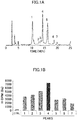
- FIG. 1A shows the UV peaks corresponding to crude reaction products obtained from modified RNA 01
- FIG. 1B shows the radiation doses corresponding to the individual UV peaks.
- a tritium-labeled species of RNA 01 ( 3 H-RNA 01) was successfully obtained from the isolated and purified fraction corresponding to the peak 4.
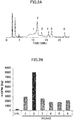
- FIG. 2A shows the UV peaks corresponding to crude reaction products obtained from modified RNA 02
- FIG. 2B shows the radiation doses corresponding to the individual UV peaks.
- a tritium-labeled species of RNA 02 ( 3 H-RNA 02) was successfully obtained from the isolated and purified fraction corresponding to the peak 2.
- mice male were reared for one week before a simple medium (PBS), 3 H-RNA 01, 3 H-RNA 02, or a siRNA prepared from 3 H-RNA 02 and an unlabeled species of RNA 01 was administered intravitreally to the mice via the sclera of the corneal limbus with a microsyringe and a 33G needle under sevoflurane inhalation anesthesia.
- the 3 H-RNA 01, 3 H-RNA 02, and siRNA were administered at a concentration of 100 pmol/eye.
- mice were euthanized by cervical dislocation to extract one eyeball, or eye tissues including the segment containing the lens and vitreous humor and the segment containing the retina from each euthanized mouse.
- Four mice were used for each treatment time.
- 0.5 ml of Solvable manufactured by PerkinElmer Inc.
- the resulting mixture was incubated overnight at 50°C to dissolve the biological material.
- the mixture was cooled down to normal temperature, to which 10 ml of Ultima Gold MV was then added to measure the radioactivity on a liquid scintillation counter. The radioactivity was calculated and expressed in becquerels per gram of organ.
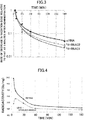
- FIG. 3 shows the rate of decrease in radiation dose in eyeball relative to that at 5 minutes after administration of each of the 3 H-RNA 01, 3 H-RNA 02, and siRNA. It was indicated that the double-stranded siRNA had a longer residence time in eyeball than the single-stranded 3 H-RNA 01 and 3 H-RNA 02.
- FIG. 4 shows the change in radioactivity over time in each mouse eye tissue extracted from mice administered with the siRNA.
- the change in radioactivity over time in either the segment containing the retina or the segment containing the lens and vitreous humor was successfully tracked. It was indicated that the behavior of the siRNA in the segment containing the retina was different from that in the segment containing the lens and vitreous humor.
- a synthetic mRNA encoding a peptide with an amino acid sequence represented by SEQ ID NO: 5 (molecular weight (MW): 2897.4872; MW of a protonated species: 2898.2231) for cell-free translation systems was designated as a nucleic acid to be labeled and was labeled with tritium in the same manner as RNA 01.
- the nucleotide sequence of the synthetic mRNA is represented by SEQ ID NO: 6.
- a synthetic DNA fragment that was complementary to a region extending between the A residue at 82 nucleotides and the A residue at 92 nucleotides downstream of the 5' end of the synthetic mRNA was designated as nucleic acid probe 03.
- Nucleic acid probe 03 is a synthetic nucleic acid comprising 3'-OMe-modified ribonucleotides.
- the nucleotide sequence of nucleic acid probe 03 is represented by SEQ ID NO: 7.
- the theoretical and observed masses of nucleic acid probe 03 were found to be 3596.59 and 3596.53 by MALDI/TOF MS, respectively.
- Nucleic acid probe 03 contains a 6-thio-2'-deoxyguanosine residue at the seventh position from the 5' end, which is complementary to the position of the C residue at 88 nucleotides downstream of the 5' end of the synthetic mRNA.
- nucleic acid probe 03 The reaction between nucleic acid probe 03 and a pyridinyl-keto transfer group-containing compound ((E)-3-iodo-1-(pyridin-2-yl)prop-2-en-1-one) was allowed to proceed in the same manner as nucleic acid probe 01 to obtain artificial nucleic acid 03 containing a reactive nucleobase derivative.
- the theoretical and observed masses of artificial nucleic acid 03 were found to be 3727.63 and 3727.73 by MALDI/TOF MS, respectively.
- the reaction for transferring the transfer group to the synthetic mRNA was performed by incubating the synthetic mRNA and artificial nucleic acid 03 in HEPES buffer, pH 7.0, at 37°C for 1 hour in the presence of 75 ⁇ M NiCl 2 .
- the reduction was allowed to proceed in the presence of NaBT 4 , and low molecular weight impurities were then removed by centrifugal filtration (Amicon Ultra-0.5mL 10K, manufactured by Merck KGaA) to purify crude reaction products by HPLC.
- the HPLC elution conditions were changed to conditions using buffer A: TEAA, buffer B: CH 3 CN, and a linear-gradient from 10% B to 20% B in 20 min.
- the radioactivity was measured in collected fractions corresponding to individual UV peaks.
- the collected HPLC fractions were lyophilized, and then reconstituted in PBS and stored frozen.
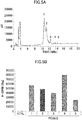
- FIG. 5A shows the UV peaks corresponding to crude reaction products
- FIG. 5B shows the radiation doses corresponding to the individual UV peaks.
- a tritium-labeled species of RNA 03 ( 3 H-RNA 03) was successfully obtained from the isolated and purified fraction corresponding to the peak 2.
- RNA 03 A nonradioactively labeled species of RNA 03, which was prepared in the same manner as the above tritium-labeled species of RNA 03 except that NaBH 4 was used instead of NaBT 4 , was added to a translation system using a Pure system (Pure Frex 2.0, manufactured by GeneFrontier Co.) and was allowed to react at 37°C for 1 hour. The reaction solution was then subjected to affinity chromatography using anti-T7-tag agarose beads, and the molecular weight of the product in the obtained elute was analyzed by mass spectrometry (MALDI-TOF MASS).
- MALDI-TOF MASS mass spectrometry
- FIG. 6 shows the spectra obtained from the mass spectrometric analysis.
- the accurate molecular weight of the synthesized peptide was expected to be 2898.22, and the result of the analysis indicated that the same peptide was produced from the nonradioactively labeled species of RNA 03 and an unmodified species of the mRNA.
- Precursors of the derivative 4 were synthesized from 2'-deoxyguanosine by the following steps a to j.
- tert -butylchlorodimethylsilane (42.2 g, 280 mmol) and imidazole (30 g, 441 mmol) were added at room temperature to a suspension of 2'-deoxyguanosine (20 g, 70.1 mmol) in anhydrous dimethylformamide (400 ml), and the resulting mixture was stirred. After 20 hours, the mixture was supplemented with 200 ml of ice-cold water and continued stirring. After 1 hour, the precipitate was filtered and dried under reduced pressure. The product was purified by recrystallization in methanol to yield compound 2-1 (28 g, 80%) as a white crystal.
- Step b Synthesis of 2-amino-9- ⁇ (2R,4S,5R)-4-( tert -butyldimethylsilyloxy)-5-[( tert -butyldimethylsilyloxy)methyl]tetrahydrofuran-2-yl ⁇ -9H-purine-6-yl-2,4,6-triisopropylbenzenesulfonate (compound 2-2)
- a suspension of compound 2-1 (1.0 g, 2.02 mmol) in anhydrous dichloromethane (40 ml) was subjected to azeotropic distillation with anhydrous acetonitrile, and triisopropylbenzenesulfonyl chloride (1.2 g, 3.96 mmol), N,N-dimethyl-4-aminopyridine (25 mg, 0.21 mmol), and triethylamine (560 ⁇ l, 4.02 mmol) were added to the suspension under an argon gas flow at 0°C, and the resulting mixture was stirred.
- reaction solution was washed with water and saturated brine, dried on anhydrous sodium sulfate, and then subjected to solvent evaporation under reduced pressure.
- Step c Synthesis of 9- ⁇ (2 R ,4 S ,5 R )-4-( tert -butyldimethylsilyloxy)-5-[( tert- butyldimethylsilyloxy)methyl]tetrahydrofuran-2-yl ⁇ -2-iodo-9H-purine-6-yl-2,4,6-triisopropylbenzenesulfonate (compound 2-3)
- Step d Synthesis of 6-amino-9- ⁇ (2 R ,4 S ,5 R )-4-( tert -butyldimethylsilyloxy)-5-[( tert -butyldimethylsilyloxy)methyl]tetrahydrofuran-2-yl]-2-iodo-9H-purine (compound 2-4)
- reaction solution was cooled down to room temperature and then diluted with ethyl acetate, and the resulting solution was washed with saturated aqueous ammonium chloride solution, dried on anhydrous sodium sulfate, and then subjected to solvent evaporation under reduced pressure.
- Step f Synthesis of 6-amino-9- ⁇ (2 R ,4 S ,5 R )-4-( tert -butyldimethylsilyloxy)-5-[( tert- butyldimethylsilyloxy)methyl]tetrahydrofuran-2-yl ⁇ -9H-purine-2-methylcarboxylate (compound 2-6)
- reaction solution was neutralized with saturated aqueous sodium bicarbonate solution and subjected to solvent evaporation under reduced pressure.
- Saturated aqueous sodium bicarbonate solution was added to the residue, and the resulting solution was extracted with ethyl acetate and subjected to solvent evaporation under reduced pressure.
- anhydrous benzoic acid 105 mg, 0.4641 mmol
- a solution of compound 2-6 50 mg, 0.0930 mmol
- anhydrous pyridine 470 ⁇ l
- the reaction solution was diluted with chloroform, and the resulting solution was washed with saturated aqueous ammonium chloride solution, dried on anhydrous sodium sulfate, and then subjected to solvent evaporation under reduced pressure.
- Step j Synthesis of 6-(N-benzoylamino)-9- ⁇ (2 R ,4 S ,5 R )-4-[2-cyanoethoxy(diisopropylamino)phosphinyl]-5-dimethoxytrityloxymethyl-tetrahydrofuran-2-yl ⁇ -9H-purine-2-methylcarboxylate (compound 2-10)
- a solution of compound 2-10 in anhydrous acetonitrile was prepared and then loaded onto an automated DNA synthesizer to introduce compound 2-10 into a 2'-deoxyribooligonucleotide by a standardized protocol for the machine.
- anhydrous methanol and 4-aminopyridine were added, and the resulting mixture was incubated overnight at 55°C for cleavage of the nucleic acid probe from the CPG supports, deprotection of the nucleotides, and introduction of amine.
- methanol solvent was evaporated by blowing argon gas, and 0.1 M TEAA buffer was added to the residue, and the resulting solution was filtered through a membrane filter to remove insoluble material, and then purified by HPLC a . Subsequently, the purified oligonucleotide in 5% acetic acid in water was left to stand at room temperature for 30 minutes for the deprotection of the dimethoxytrityl group at the 5' end, and the resulting oligonucleotide was again purified by HPLC b to obtain the derivative 4.
Landscapes
- Chemical & Material Sciences (AREA)
- Organic Chemistry (AREA)
- Life Sciences & Earth Sciences (AREA)
- Health & Medical Sciences (AREA)
- Engineering & Computer Science (AREA)
- Zoology (AREA)
- Wood Science & Technology (AREA)
- Proteomics, Peptides & Aminoacids (AREA)
- Genetics & Genomics (AREA)
- Molecular Biology (AREA)
- Biochemistry (AREA)
- Biotechnology (AREA)
- General Health & Medical Sciences (AREA)
- General Engineering & Computer Science (AREA)
- Bioinformatics & Cheminformatics (AREA)
- Physics & Mathematics (AREA)
- Biophysics (AREA)
- Microbiology (AREA)
- Immunology (AREA)
- Analytical Chemistry (AREA)
- Biomedical Technology (AREA)
- Crystallography & Structural Chemistry (AREA)
- Plant Pathology (AREA)
- Measuring Or Testing Involving Enzymes Or Micro-Organisms (AREA)
- Medicines Containing Antibodies Or Antigens For Use As Internal Diagnostic Agents (AREA)
- Pharmaceuticals Containing Other Organic And Inorganic Compounds (AREA)
- Peptides Or Proteins (AREA)
- Medicines That Contain Protein Lipid Enzymes And Other Medicines (AREA)
- Investigating Or Analysing Biological Materials (AREA)
- Saccharide Compounds (AREA)
Claims (6)
- Verfahren zum Markieren von Nukleinsäure, dadurch gekennzeichnet, dass es umfasst:einen Reaktionsschritt zum Hybridisieren einer Nukleinsäuresonde, die eine Nukleotidsequenz hat, die komplementär zu derjenigen einer zu markierenden Nukleinsäure ist, und ein reaktives Nukleobasenderivat enthält, das an einer Position komplementär zu derjenigen einer Zielnukleobase als Ziel der Markierung in der zu markierenden Nukleinsäure eingebaut ist, an die zu markierende Nukleinsäure;einen Transferierungsschritt zum Transferieren einer Transfergruppe, die in dem reaktiven Nukleobasenderivat enthalten ist, an den Nukleotidrest, der die Zielnukleobase in der zu markierenden Nukleinsäure enthält; undeinen Markierschritt zum Markieren der auf den Nukleotidrest transferierten Transfergruppe mit einem radioaktiven Material.
- Verfahren zum Markieren von Nukleinsäure nach Anspruch 1, dadurch gekennzeichnet, dass:die Transfergruppe eine Pyridinyl-Keto-Transfergruppe ist, unddie Pyridinyl-Keto-Transfergruppe während des Transferierungsschritts an eine Cytosin- oder Adenin-Nukleobase als Zielnukleobase transferiert wird.
- Verfahren zum Markieren von Nukleinsäure nach Anspruch 1 oder 2, dadurch gekennzeichnet, dass:die Transfergruppe eine Diketo-Transfergruppe ist, unddie Diketo-Transfergruppe während des Transferierungsschritts an eine Guanin-Nukleobase als Zielnukleobase transferiert wird.
- Verfahren zum Markieren von Nukleinsäure nach einem der Ansprüche 1 bis 3, dadurch gekennzeichnet, dass:die Transfergruppe eine Acetylgruppe ist, unddie Acetylgruppe während des Transferierungsschritts an die 2'-Position der Ribose eines Nukleotidrests, der eine Uracil-Nukleobase als Zielnukleobase enthält, transferiert wird.
- Verfahren zum Markieren von Nukleinsäure nach einem der Ansprüche 1 bis 4, dadurch gekennzeichnet, dass es des Weiteren umfasst:einen ersten Schritt zum Hybridisieren einer Nukleinsäuresonde, die eine Nukleotidsequenz hat, die komplementär zu derjenigen der zu markierenden Nukleinsäure ist, und ein reaktives Nukleobasenderivat enthält, das an einer Position komplementär zu derjenigen einer Zielnukleobase eingebaut ist, die sich von der Position der Zielnukleobase in der zu markierenden Nukleinsäure unterscheidet, an die zu markierende Nukleinsäure;einen zweiten Schritt zum Transferieren einer Transfergruppe, die in dem reaktiven Nukleobasenderivat der Nukleinsäuresonde enthalten ist, die in dem ersten Schritt an die zu markierende Nukleinsäure hybridisiert wurde, auf den Nukleotidrest, der die Nukleobase enthält, die sich an der anderen Position in der zu markierenden Nukleinsäure befindet; undeinen dritten Schritt zum Markieren der Transfergruppe, die auf den Nukleotidrest transferiert wurde, welcher die Nukleobase enthält, die sich an der anderen Position befindet, mit einer Art von radioaktivem Material, das sich von dem radioaktiven Material unterscheidet, das in dem Markierschritt verwendet wurde.
- Verfahren zum Markieren von Nukleinsäure nach einem der Ansprüche 1 bis 5, dadurch gekennzeichnet, dass das radioaktive Material Tritium ist.
Applications Claiming Priority (1)
| Application Number | Priority Date | Filing Date | Title |
|---|---|---|---|
| JP2019065888A JP6960639B2 (ja) | 2019-03-29 | 2019-03-29 | 核酸の標識方法 |
Publications (2)
| Publication Number | Publication Date |
|---|---|
| EP3715469A1 EP3715469A1 (de) | 2020-09-30 |
| EP3715469B1 true EP3715469B1 (de) | 2021-09-08 |
Family
ID=69740233
Family Applications (1)
| Application Number | Title | Priority Date | Filing Date |
|---|---|---|---|
| EP20159534.5A Active EP3715469B1 (de) | 2019-03-29 | 2020-02-26 | Verfahren zur markierung von nukleinsäure |
Country Status (5)
| Country | Link |
|---|---|
| US (1) | US11499178B2 (de) |
| EP (1) | EP3715469B1 (de) |
| JP (1) | JP6960639B2 (de) |
| KR (1) | KR102379206B1 (de) |
| CN (1) | CN111748550B (de) |
Family Cites Families (3)
| Publication number | Priority date | Publication date | Assignee | Title |
|---|---|---|---|---|
| WO2006033484A1 (ja) * | 2004-09-24 | 2006-03-30 | Kyushu University, National University Corporation | 核酸マイクロアレイ及び核酸プローブの設計方法並びに遺伝子検出方法 |
| JP4621926B2 (ja) * | 2008-07-24 | 2011-02-02 | 国立大学法人九州大学 | 酵素基質修飾ヌクレオシド三リン酸、核酸プローブ、マルチラベル化核酸プローブ、マルチラベル化核酸プローブの製造方法および標的核酸の検出方法 |
| EP2818850B1 (de) * | 2012-02-22 | 2016-08-03 | Olympus Corporation | Verfahren zum nachweis eines zielpartikels |
-
2019
- 2019-03-29 JP JP2019065888A patent/JP6960639B2/ja active Active
-
2020
- 2020-02-24 US US16/798,704 patent/US11499178B2/en active Active
- 2020-02-25 KR KR1020200023221A patent/KR102379206B1/ko active Active
- 2020-02-26 EP EP20159534.5A patent/EP3715469B1/de active Active
- 2020-02-28 CN CN202010129157.XA patent/CN111748550B/zh active Active
Also Published As
| Publication number | Publication date |
|---|---|
| CN111748550B (zh) | 2023-11-24 |
| CN111748550A (zh) | 2020-10-09 |
| US11499178B2 (en) | 2022-11-15 |
| JP6960639B2 (ja) | 2021-11-05 |
| KR20200115113A (ko) | 2020-10-07 |
| KR102379206B1 (ko) | 2022-03-25 |
| EP3715469A1 (de) | 2020-09-30 |
| JP2020162476A (ja) | 2020-10-08 |
| US20200308635A1 (en) | 2020-10-01 |
Similar Documents
| Publication | Publication Date | Title |
|---|---|---|
| JP7789856B2 (ja) | 活性剤の脂質ナノ粒子送達のための脂質 | |
| EP3668834B1 (de) | Lipide zur verwendung in lipidnanopartikelformulierungen | |
| EP3160938B1 (de) | Neuartige lipide und lipidnanopartikelformulierungen zur freisetzung von nukleinsäuren | |
| EP3094728B1 (de) | Chirales design | |
| EP3992291B1 (de) | Neue verbindung und anwendung davon | |
| AU2013289880B2 (en) | Chiral control | |
| AU2005323437B2 (en) | Oligonucleotides comprising a C5-modified pyrimidine | |
| JP2021046396A (ja) | ホスホルアミダイト化学を使用する骨格修飾モルホリノオリゴヌクレオチド及びキメラの合成 | |
| EP4344744A2 (de) | Oligonukleotidzusammensetzungen und verfahren dafür | |
| JP2021521140A (ja) | オリゴヌクレオチド組成物及びその使用方法 | |
| EP3770257B1 (de) | Bhs-passierender lipidligand einer heteronukleinsäure | |
| WO2006078278A2 (en) | Single-stranded and double-stranded oligonucleotides comprising a 2-arylpropyl moiety | |
| JPH05504552A (ja) | 2’位が改変されたオリゴヌクレオチド | |
| CN110337495B (zh) | 单链寡核苷酸 | |
| WO2019182037A1 (ja) | 毒性が低減されたアンチセンスオリゴヌクレオチド | |
| EP3728591B1 (de) | Gapmer-oligonukleotide mit einer phosphordithioat-internukleosidverknüpfung | |
| CN104011209A (zh) | 病毒基因表达的抑制 | |
| CN101437943A (zh) | 牢固结合的碱基-修饰的寡核苷酸和人工核酸酶组合的反义药剂 | |
| CN113412268A (zh) | 5’位修饰核苷和使用其的核苷酸 | |
| EP4484439B1 (de) | 6'-cyano-modifizierte blockierte nukleoside, nukleotide und neepesinsäurepolymere | |
| US11499178B2 (en) | Labeling method for nucleic acid | |
| CN119285688A (zh) | 修饰的核苷酸单体及其用途 | |
| AU2024351425C1 (en) | Mrna cap analog and use thereof | |
| CN120230165A (zh) | 一种亚磷酰胺阳离子单体及其合成方法 | |
| WO2025148770A1 (zh) | 修饰的核苷酸单体及其用途 |
Legal Events
| Date | Code | Title | Description |
|---|---|---|---|
| PUAI | Public reference made under article 153(3) epc to a published international application that has entered the european phase |
Free format text: ORIGINAL CODE: 0009012 |
|
| STAA | Information on the status of an ep patent application or granted ep patent |
Free format text: STATUS: REQUEST FOR EXAMINATION WAS MADE |
|
| 17P | Request for examination filed |
Effective date: 20200226 |
|
| AK | Designated contracting states |
Kind code of ref document: A1 Designated state(s): AL AT BE BG CH CY CZ DE DK EE ES FI FR GB GR HR HU IE IS IT LI LT LU LV MC MK MT NL NO PL PT RO RS SE SI SK SM TR |
|
| AX | Request for extension of the european patent |
Extension state: BA ME |
|
| RIN1 | Information on inventor provided before grant (corrected) |
Inventor name: TANIGUCHI, YOSUKE Inventor name: SASAKI, SHIGEKI Inventor name: HARADA, GAKURO |
|
| RBV | Designated contracting states (corrected) |
Designated state(s): AL AT BE BG CH CY CZ DE DK EE ES FI FR GB GR HR HU IE IS IT LI LT LU LV MC MK MT NL NO PL PT RO RS SE SI SK SM TR |
|
| GRAP | Despatch of communication of intention to grant a patent |
Free format text: ORIGINAL CODE: EPIDOSNIGR1 |
|
| STAA | Information on the status of an ep patent application or granted ep patent |
Free format text: STATUS: GRANT OF PATENT IS INTENDED |
|
| INTG | Intention to grant announced |
Effective date: 20210406 |
|
| GRAS | Grant fee paid |
Free format text: ORIGINAL CODE: EPIDOSNIGR3 |
|
| GRAA | (expected) grant |
Free format text: ORIGINAL CODE: 0009210 |
|
| STAA | Information on the status of an ep patent application or granted ep patent |
Free format text: STATUS: THE PATENT HAS BEEN GRANTED |
|
| AK | Designated contracting states |
Kind code of ref document: B1 Designated state(s): AL AT BE BG CH CY CZ DE DK EE ES FI FR GB GR HR HU IE IS IT LI LT LU LV MC MK MT NL NO PL PT RO RS SE SI SK SM TR |
|
| REG | Reference to a national code |
Ref country code: GB Ref legal event code: FG4D |
|
| REG | Reference to a national code |
Ref country code: CH Ref legal event code: EP Ref country code: AT Ref legal event code: REF Ref document number: 1428645 Country of ref document: AT Kind code of ref document: T Effective date: 20210915 |
|
| REG | Reference to a national code |
Ref country code: IE Ref legal event code: FG4D |
|
| REG | Reference to a national code |
Ref country code: DE Ref legal event code: R096 Ref document number: 602020000494 Country of ref document: DE |
|
| REG | Reference to a national code |
Ref country code: LT Ref legal event code: MG9D |
|
| REG | Reference to a national code |
Ref country code: NL Ref legal event code: MP Effective date: 20210908 |
|
| PG25 | Lapsed in a contracting state [announced via postgrant information from national office to epo] |
Ref country code: RS Free format text: LAPSE BECAUSE OF FAILURE TO SUBMIT A TRANSLATION OF THE DESCRIPTION OR TO PAY THE FEE WITHIN THE PRESCRIBED TIME-LIMIT Effective date: 20210908 Ref country code: SE Free format text: LAPSE BECAUSE OF FAILURE TO SUBMIT A TRANSLATION OF THE DESCRIPTION OR TO PAY THE FEE WITHIN THE PRESCRIBED TIME-LIMIT Effective date: 20210908 Ref country code: ES Free format text: LAPSE BECAUSE OF FAILURE TO SUBMIT A TRANSLATION OF THE DESCRIPTION OR TO PAY THE FEE WITHIN THE PRESCRIBED TIME-LIMIT Effective date: 20210908 Ref country code: LT Free format text: LAPSE BECAUSE OF FAILURE TO SUBMIT A TRANSLATION OF THE DESCRIPTION OR TO PAY THE FEE WITHIN THE PRESCRIBED TIME-LIMIT Effective date: 20210908 Ref country code: BG Free format text: LAPSE BECAUSE OF FAILURE TO SUBMIT A TRANSLATION OF THE DESCRIPTION OR TO PAY THE FEE WITHIN THE PRESCRIBED TIME-LIMIT Effective date: 20211208 Ref country code: HR Free format text: LAPSE BECAUSE OF FAILURE TO SUBMIT A TRANSLATION OF THE DESCRIPTION OR TO PAY THE FEE WITHIN THE PRESCRIBED TIME-LIMIT Effective date: 20210908 Ref country code: FI Free format text: LAPSE BECAUSE OF FAILURE TO SUBMIT A TRANSLATION OF THE DESCRIPTION OR TO PAY THE FEE WITHIN THE PRESCRIBED TIME-LIMIT Effective date: 20210908 Ref country code: NO Free format text: LAPSE BECAUSE OF FAILURE TO SUBMIT A TRANSLATION OF THE DESCRIPTION OR TO PAY THE FEE WITHIN THE PRESCRIBED TIME-LIMIT Effective date: 20211208 |
|
| REG | Reference to a national code |
Ref country code: AT Ref legal event code: MK05 Ref document number: 1428645 Country of ref document: AT Kind code of ref document: T Effective date: 20210908 |
|
| PG25 | Lapsed in a contracting state [announced via postgrant information from national office to epo] |
Ref country code: LV Free format text: LAPSE BECAUSE OF FAILURE TO SUBMIT A TRANSLATION OF THE DESCRIPTION OR TO PAY THE FEE WITHIN THE PRESCRIBED TIME-LIMIT Effective date: 20210908 Ref country code: GR Free format text: LAPSE BECAUSE OF FAILURE TO SUBMIT A TRANSLATION OF THE DESCRIPTION OR TO PAY THE FEE WITHIN THE PRESCRIBED TIME-LIMIT Effective date: 20211209 |
|
| PG25 | Lapsed in a contracting state [announced via postgrant information from national office to epo] |
Ref country code: AT Free format text: LAPSE BECAUSE OF FAILURE TO SUBMIT A TRANSLATION OF THE DESCRIPTION OR TO PAY THE FEE WITHIN THE PRESCRIBED TIME-LIMIT Effective date: 20210908 |
|
| PG25 | Lapsed in a contracting state [announced via postgrant information from national office to epo] |
Ref country code: IS Free format text: LAPSE BECAUSE OF FAILURE TO SUBMIT A TRANSLATION OF THE DESCRIPTION OR TO PAY THE FEE WITHIN THE PRESCRIBED TIME-LIMIT Effective date: 20220108 Ref country code: SM Free format text: LAPSE BECAUSE OF FAILURE TO SUBMIT A TRANSLATION OF THE DESCRIPTION OR TO PAY THE FEE WITHIN THE PRESCRIBED TIME-LIMIT Effective date: 20210908 Ref country code: SK Free format text: LAPSE BECAUSE OF FAILURE TO SUBMIT A TRANSLATION OF THE DESCRIPTION OR TO PAY THE FEE WITHIN THE PRESCRIBED TIME-LIMIT Effective date: 20210908 Ref country code: RO Free format text: LAPSE BECAUSE OF FAILURE TO SUBMIT A TRANSLATION OF THE DESCRIPTION OR TO PAY THE FEE WITHIN THE PRESCRIBED TIME-LIMIT Effective date: 20210908 Ref country code: PT Free format text: LAPSE BECAUSE OF FAILURE TO SUBMIT A TRANSLATION OF THE DESCRIPTION OR TO PAY THE FEE WITHIN THE PRESCRIBED TIME-LIMIT Effective date: 20220110 Ref country code: PL Free format text: LAPSE BECAUSE OF FAILURE TO SUBMIT A TRANSLATION OF THE DESCRIPTION OR TO PAY THE FEE WITHIN THE PRESCRIBED TIME-LIMIT Effective date: 20210908 Ref country code: NL Free format text: LAPSE BECAUSE OF FAILURE TO SUBMIT A TRANSLATION OF THE DESCRIPTION OR TO PAY THE FEE WITHIN THE PRESCRIBED TIME-LIMIT Effective date: 20210908 Ref country code: EE Free format text: LAPSE BECAUSE OF FAILURE TO SUBMIT A TRANSLATION OF THE DESCRIPTION OR TO PAY THE FEE WITHIN THE PRESCRIBED TIME-LIMIT Effective date: 20210908 Ref country code: CZ Free format text: LAPSE BECAUSE OF FAILURE TO SUBMIT A TRANSLATION OF THE DESCRIPTION OR TO PAY THE FEE WITHIN THE PRESCRIBED TIME-LIMIT Effective date: 20210908 Ref country code: AL Free format text: LAPSE BECAUSE OF FAILURE TO SUBMIT A TRANSLATION OF THE DESCRIPTION OR TO PAY THE FEE WITHIN THE PRESCRIBED TIME-LIMIT Effective date: 20210908 |
|
| REG | Reference to a national code |
Ref country code: DE Ref legal event code: R097 Ref document number: 602020000494 Country of ref document: DE |
|
| PLBE | No opposition filed within time limit |
Free format text: ORIGINAL CODE: 0009261 |
|
| STAA | Information on the status of an ep patent application or granted ep patent |
Free format text: STATUS: NO OPPOSITION FILED WITHIN TIME LIMIT |
|
| PG25 | Lapsed in a contracting state [announced via postgrant information from national office to epo] |
Ref country code: DK Free format text: LAPSE BECAUSE OF FAILURE TO SUBMIT A TRANSLATION OF THE DESCRIPTION OR TO PAY THE FEE WITHIN THE PRESCRIBED TIME-LIMIT Effective date: 20210908 |
|
| 26N | No opposition filed |
Effective date: 20220609 |
|
| PG25 | Lapsed in a contracting state [announced via postgrant information from national office to epo] |
Ref country code: SI Free format text: LAPSE BECAUSE OF FAILURE TO SUBMIT A TRANSLATION OF THE DESCRIPTION OR TO PAY THE FEE WITHIN THE PRESCRIBED TIME-LIMIT Effective date: 20210908 |
|
| REG | Reference to a national code |
Ref country code: DE Ref legal event code: R119 Ref document number: 602020000494 Country of ref document: DE |
|
| PG25 | Lapsed in a contracting state [announced via postgrant information from national office to epo] |
Ref country code: MC Free format text: LAPSE BECAUSE OF FAILURE TO SUBMIT A TRANSLATION OF THE DESCRIPTION OR TO PAY THE FEE WITHIN THE PRESCRIBED TIME-LIMIT Effective date: 20210908 |
|
| REG | Reference to a national code |
Ref country code: BE Ref legal event code: MM Effective date: 20220228 |
|
| PG25 | Lapsed in a contracting state [announced via postgrant information from national office to epo] |
Ref country code: LU Free format text: LAPSE BECAUSE OF NON-PAYMENT OF DUE FEES Effective date: 20220226 |
|
| PG25 | Lapsed in a contracting state [announced via postgrant information from national office to epo] |
Ref country code: FR Free format text: LAPSE BECAUSE OF NON-PAYMENT OF DUE FEES Effective date: 20220228 |
|
| PG25 | Lapsed in a contracting state [announced via postgrant information from national office to epo] |
Ref country code: IT Free format text: LAPSE BECAUSE OF FAILURE TO SUBMIT A TRANSLATION OF THE DESCRIPTION OR TO PAY THE FEE WITHIN THE PRESCRIBED TIME-LIMIT Effective date: 20210908 Ref country code: IE Free format text: LAPSE BECAUSE OF NON-PAYMENT OF DUE FEES Effective date: 20220226 Ref country code: DE Free format text: LAPSE BECAUSE OF NON-PAYMENT OF DUE FEES Effective date: 20220901 |
|
| PG25 | Lapsed in a contracting state [announced via postgrant information from national office to epo] |
Ref country code: BE Free format text: LAPSE BECAUSE OF NON-PAYMENT OF DUE FEES Effective date: 20220228 |
|
| PG25 | Lapsed in a contracting state [announced via postgrant information from national office to epo] |
Ref country code: MK Free format text: LAPSE BECAUSE OF FAILURE TO SUBMIT A TRANSLATION OF THE DESCRIPTION OR TO PAY THE FEE WITHIN THE PRESCRIBED TIME-LIMIT Effective date: 20210908 Ref country code: CY Free format text: LAPSE BECAUSE OF FAILURE TO SUBMIT A TRANSLATION OF THE DESCRIPTION OR TO PAY THE FEE WITHIN THE PRESCRIBED TIME-LIMIT Effective date: 20210908 |
|
| PG25 | Lapsed in a contracting state [announced via postgrant information from national office to epo] |
Ref country code: HU Free format text: LAPSE BECAUSE OF FAILURE TO SUBMIT A TRANSLATION OF THE DESCRIPTION OR TO PAY THE FEE WITHIN THE PRESCRIBED TIME-LIMIT; INVALID AB INITIO Effective date: 20200226 |
|
| PG25 | Lapsed in a contracting state [announced via postgrant information from national office to epo] |
Ref country code: MT Free format text: LAPSE BECAUSE OF FAILURE TO SUBMIT A TRANSLATION OF THE DESCRIPTION OR TO PAY THE FEE WITHIN THE PRESCRIBED TIME-LIMIT Effective date: 20210908 |
|
| PG25 | Lapsed in a contracting state [announced via postgrant information from national office to epo] |
Ref country code: TR Free format text: LAPSE BECAUSE OF FAILURE TO SUBMIT A TRANSLATION OF THE DESCRIPTION OR TO PAY THE FEE WITHIN THE PRESCRIBED TIME-LIMIT Effective date: 20210908 |
|
| REG | Reference to a national code |
Ref country code: CH Ref legal event code: U11 Free format text: ST27 STATUS EVENT CODE: U-0-0-U10-U11 (AS PROVIDED BY THE NATIONAL OFFICE) Effective date: 20260301 |
|
| PGFP | Annual fee paid to national office [announced via postgrant information from national office to epo] |
Ref country code: GB Payment date: 20260219 Year of fee payment: 7 |
|
| PGFP | Annual fee paid to national office [announced via postgrant information from national office to epo] |
Ref country code: CH Payment date: 20260301 Year of fee payment: 7 |