EP3713075A1 - Power conversion system - Google Patents
Power conversion system Download PDFInfo
- Publication number
- EP3713075A1 EP3713075A1 EP17931919.9A EP17931919A EP3713075A1 EP 3713075 A1 EP3713075 A1 EP 3713075A1 EP 17931919 A EP17931919 A EP 17931919A EP 3713075 A1 EP3713075 A1 EP 3713075A1
- Authority
- EP
- European Patent Office
- Prior art keywords
- current
- converter
- power conversion
- voltage
- inverter
- Prior art date
- Legal status (The legal status is an assumption and is not a legal conclusion. Google has not performed a legal analysis and makes no representation as to the accuracy of the status listed.)
- Granted
Links
Images



Classifications
-
- H—ELECTRICITY
- H02—GENERATION; CONVERSION OR DISTRIBUTION OF ELECTRIC POWER
- H02M—APPARATUS FOR CONVERSION BETWEEN AC AND AC, BETWEEN AC AND DC, OR BETWEEN DC AND DC, AND FOR USE WITH MAINS OR SIMILAR POWER SUPPLY SYSTEMS; CONVERSION OF DC OR AC INPUT POWER INTO SURGE OUTPUT POWER; CONTROL OR REGULATION THEREOF
- H02M5/00—Conversion of AC power input into AC power output, e.g. for change of voltage, for change of frequency, for change of number of phases
- H02M5/40—Conversion of AC power input into AC power output, e.g. for change of voltage, for change of frequency, for change of number of phases with intermediate conversion into DC
- H02M5/42—Conversion of AC power input into AC power output, e.g. for change of voltage, for change of frequency, for change of number of phases with intermediate conversion into DC by static converters
- H02M5/44—Conversion of AC power input into AC power output, e.g. for change of voltage, for change of frequency, for change of number of phases with intermediate conversion into DC by static converters using discharge tubes or semiconductor devices to convert the intermediate DC into AC
- H02M5/453—Conversion of AC power input into AC power output, e.g. for change of voltage, for change of frequency, for change of number of phases with intermediate conversion into DC by static converters using discharge tubes or semiconductor devices to convert the intermediate DC into AC using devices of a triode or transistor type requiring continuous application of a control signal
- H02M5/458—Conversion of AC power input into AC power output, e.g. for change of voltage, for change of frequency, for change of number of phases with intermediate conversion into DC by static converters using discharge tubes or semiconductor devices to convert the intermediate DC into AC using devices of a triode or transistor type requiring continuous application of a control signal using semiconductor devices only
- H02M5/4585—Conversion of AC power input into AC power output, e.g. for change of voltage, for change of frequency, for change of number of phases with intermediate conversion into DC by static converters using discharge tubes or semiconductor devices to convert the intermediate DC into AC using devices of a triode or transistor type requiring continuous application of a control signal using semiconductor devices only having a rectifier with controlled elements
-
- H—ELECTRICITY
- H02—GENERATION; CONVERSION OR DISTRIBUTION OF ELECTRIC POWER
- H02J—ELECTRIC POWER NETWORKS; CIRCUIT ARRANGEMENTS OR SYSTEMS FOR SUPPLYING OR DISTRIBUTING ELECTRIC POWER; SYSTEMS FOR STORING ELECTRIC ENERGY
- H02J3/00—Circuit arrangements for AC mains or AC distribution networks
- H02J3/18—Arrangements for adjusting, eliminating or compensating reactive power in networks
-
- H—ELECTRICITY
- H02—GENERATION; CONVERSION OR DISTRIBUTION OF ELECTRIC POWER
- H02M—APPARATUS FOR CONVERSION BETWEEN AC AND AC, BETWEEN AC AND DC, OR BETWEEN DC AND DC, AND FOR USE WITH MAINS OR SIMILAR POWER SUPPLY SYSTEMS; CONVERSION OF DC OR AC INPUT POWER INTO SURGE OUTPUT POWER; CONTROL OR REGULATION THEREOF
- H02M1/00—Details of apparatus for conversion
- H02M1/0003—Details of control, feedback or regulation circuits
- H02M1/0009—Devices or circuits for detecting current in a converter
-
- H—ELECTRICITY
- H02—GENERATION; CONVERSION OR DISTRIBUTION OF ELECTRIC POWER
- H02M—APPARATUS FOR CONVERSION BETWEEN AC AND AC, BETWEEN AC AND DC, OR BETWEEN DC AND DC, AND FOR USE WITH MAINS OR SIMILAR POWER SUPPLY SYSTEMS; CONVERSION OF DC OR AC INPUT POWER INTO SURGE OUTPUT POWER; CONTROL OR REGULATION THEREOF
- H02M1/00—Details of apparatus for conversion
- H02M1/0067—Converter structures employing plural converter units, other than for parallel operation of the units on a single load
- H02M1/007—Plural converter units in cascade
-
- H—ELECTRICITY
- H02—GENERATION; CONVERSION OR DISTRIBUTION OF ELECTRIC POWER
- H02M—APPARATUS FOR CONVERSION BETWEEN AC AND AC, BETWEEN AC AND DC, OR BETWEEN DC AND DC, AND FOR USE WITH MAINS OR SIMILAR POWER SUPPLY SYSTEMS; CONVERSION OF DC OR AC INPUT POWER INTO SURGE OUTPUT POWER; CONTROL OR REGULATION THEREOF
- H02M1/00—Details of apparatus for conversion
- H02M1/12—Arrangements for reducing harmonics from AC input or output
-
- H—ELECTRICITY
- H02—GENERATION; CONVERSION OR DISTRIBUTION OF ELECTRIC POWER
- H02M—APPARATUS FOR CONVERSION BETWEEN AC AND AC, BETWEEN AC AND DC, OR BETWEEN DC AND DC, AND FOR USE WITH MAINS OR SIMILAR POWER SUPPLY SYSTEMS; CONVERSION OF DC OR AC INPUT POWER INTO SURGE OUTPUT POWER; CONTROL OR REGULATION THEREOF
- H02M1/00—Details of apparatus for conversion
- H02M1/32—Means for protecting converters other than automatic disconnection
-
- H—ELECTRICITY
- H02—GENERATION; CONVERSION OR DISTRIBUTION OF ELECTRIC POWER
- H02M—APPARATUS FOR CONVERSION BETWEEN AC AND AC, BETWEEN AC AND DC, OR BETWEEN DC AND DC, AND FOR USE WITH MAINS OR SIMILAR POWER SUPPLY SYSTEMS; CONVERSION OF DC OR AC INPUT POWER INTO SURGE OUTPUT POWER; CONTROL OR REGULATION THEREOF
- H02M1/00—Details of apparatus for conversion
- H02M1/32—Means for protecting converters other than automatic disconnection
- H02M1/325—Means for protecting converters other than automatic disconnection with means for allowing continuous operation despite a fault, i.e. fault tolerant converters
-
- H—ELECTRICITY
- H02—GENERATION; CONVERSION OR DISTRIBUTION OF ELECTRIC POWER
- H02M—APPARATUS FOR CONVERSION BETWEEN AC AND AC, BETWEEN AC AND DC, OR BETWEEN DC AND DC, AND FOR USE WITH MAINS OR SIMILAR POWER SUPPLY SYSTEMS; CONVERSION OF DC OR AC INPUT POWER INTO SURGE OUTPUT POWER; CONTROL OR REGULATION THEREOF
- H02M1/00—Details of apparatus for conversion
- H02M1/42—Circuits or arrangements for compensating for or adjusting power factor in converters or inverters
- H02M1/4208—Arrangements for improving power factor of AC input
-
- H—ELECTRICITY
- H02—GENERATION; CONVERSION OR DISTRIBUTION OF ELECTRIC POWER
- H02M—APPARATUS FOR CONVERSION BETWEEN AC AND AC, BETWEEN AC AND DC, OR BETWEEN DC AND DC, AND FOR USE WITH MAINS OR SIMILAR POWER SUPPLY SYSTEMS; CONVERSION OF DC OR AC INPUT POWER INTO SURGE OUTPUT POWER; CONTROL OR REGULATION THEREOF
- H02M5/00—Conversion of AC power input into AC power output, e.g. for change of voltage, for change of frequency, for change of number of phases
- H02M5/40—Conversion of AC power input into AC power output, e.g. for change of voltage, for change of frequency, for change of number of phases with intermediate conversion into DC
-
- H—ELECTRICITY
- H02—GENERATION; CONVERSION OR DISTRIBUTION OF ELECTRIC POWER
- H02M—APPARATUS FOR CONVERSION BETWEEN AC AND AC, BETWEEN AC AND DC, OR BETWEEN DC AND DC, AND FOR USE WITH MAINS OR SIMILAR POWER SUPPLY SYSTEMS; CONVERSION OF DC OR AC INPUT POWER INTO SURGE OUTPUT POWER; CONTROL OR REGULATION THEREOF
- H02M7/00—Conversion of AC power input into DC power output; Conversion of DC power input into AC power output
- H02M7/42—Conversion of DC power input into AC power output without possibility of reversal
- H02M7/44—Conversion of DC power input into AC power output without possibility of reversal by static converters
- H02M7/48—Conversion of DC power input into AC power output without possibility of reversal by static converters using discharge tubes with control electrode or semiconductor devices with control electrode
- H02M7/493—Conversion of DC power input into AC power output without possibility of reversal by static converters using discharge tubes with control electrode or semiconductor devices with control electrode the static converters being arranged for operation in parallel
-
- H—ELECTRICITY
- H02—GENERATION; CONVERSION OR DISTRIBUTION OF ELECTRIC POWER
- H02P—CONTROL OR REGULATION OF ELECTRIC MOTORS, ELECTRIC GENERATORS OR DYNAMO-ELECTRIC CONVERTERS; CONTROLLING TRANSFORMERS, REACTORS OR CHOKE COILS
- H02P27/00—Arrangements or methods for the control of AC motors characterised by the kind of supply voltage
- H02P27/04—Arrangements or methods for the control of AC motors characterised by the kind of supply voltage using variable-frequency supply voltage, e.g. inverter or converter supply voltage
- H02P27/06—Arrangements or methods for the control of AC motors characterised by the kind of supply voltage using variable-frequency supply voltage, e.g. inverter or converter supply voltage using DC to AC converters or inverters
- H02P27/08—Arrangements or methods for the control of AC motors characterised by the kind of supply voltage using variable-frequency supply voltage, e.g. inverter or converter supply voltage using DC to AC converters or inverters with pulse width modulation
-
- H—ELECTRICITY
- H02—GENERATION; CONVERSION OR DISTRIBUTION OF ELECTRIC POWER
- H02P—CONTROL OR REGULATION OF ELECTRIC MOTORS, ELECTRIC GENERATORS OR DYNAMO-ELECTRIC CONVERTERS; CONTROLLING TRANSFORMERS, REACTORS OR CHOKE COILS
- H02P29/00—Arrangements for regulating or controlling electric motors, appropriate for both AC and DC motors
- H02P29/50—Reduction of harmonics
-
- H—ELECTRICITY
- H02—GENERATION; CONVERSION OR DISTRIBUTION OF ELECTRIC POWER
- H02M—APPARATUS FOR CONVERSION BETWEEN AC AND AC, BETWEEN AC AND DC, OR BETWEEN DC AND DC, AND FOR USE WITH MAINS OR SIMILAR POWER SUPPLY SYSTEMS; CONVERSION OF DC OR AC INPUT POWER INTO SURGE OUTPUT POWER; CONTROL OR REGULATION THEREOF
- H02M1/00—Details of apparatus for conversion
- H02M1/0003—Details of control, feedback or regulation circuits
- H02M1/0025—Arrangements for modifying reference values, feedback values or error values in the control loop of a converter
Definitions
- the present invention relates to a power conversion system including at least two power conversion apparatuses whose outputs are connected in parallel.
- a method of connecting outputs of a plurality of power conversion apparatuses in parallel is known.
- a power conversion system in which an AC motor is driven by two power conversion apparatuses, AC outputs of the two power conversion apparatuses are connected via a coupling reactor.
- an output current of each apparatus becomes unbalanced due to the difference in output voltages of the two power conversion apparatuses and the difference in impedance of the coupling reactor and wiring cable.
- a circulating current called cross flow is generated between two apparatuses.
- the following method is known as a countermeasure for suppressing this cross current.
- a cross current between two PWM inverters of the power conversion apparatus is detected. Then, a cross current compensation value in the same unit as the common voltage command value of each PWM inverter is obtained.
- a cross current control unit is provided that adds the cross current compensation value to the voltage command value of one PWM inverter according to the value of the cross current, and subtracts it from the voltage command value of the other PWM inverter. (For example, see Patent Document 1).
- Patent document 1 Japanese Patent Publication No. 2012-244674 (page 9, Fig. 1 and Fig. 3 )
- the cross current control unit disclosed in Patent Document 1 basically controls the output voltage of the PWM inverter that controls the output of the power conversion apparatus as the manipulated variable.
- the cross current to be controlled is large to some extent, the output waveforms of the two inverters are different, and an unexpected harmonic current may flow through the coupling reactor. Therefore, it is necessary to determine the specification of the coupling reactor in consideration of such a phenomenon.
- the present invention has been made in view of the above problem, and an object of the present invention is to provide a power conversion system that prevents an unexpected harmonic current from flowing in a cross current control of two power conversion apparatuses that are operated in parallel.
- a power conversion system comprises a first power conversion apparatus including a first converter capable of controlling a DC voltage and a first inverter, and a second power conversion apparatus including a second converter capable of controlling a DC voltage and a second inverter, wherein, outputs of the first inverter and the second inverter are connected in parallel via a coupling reactor, and a DC output voltage of any one of these two converters is controlled in accordance with a difference between a first detection current detected by a first current detector detecting an output current of the first inverter and a second detection current detected by a second current detector detecting an output current of the second inverter to suppress a cross current flowing between the first inverter and the second inverter.
- FIG. 1 is the circuit configuration diagram of the power conversion system according to the first embodiment of the present invention.
- a commercial three-phase AC power supply 1 is connected to converters 21A and 21B of power conversion apparatuses 2A and 2B via current detectors 5A and 5B, respectively.
- the power conversion apparatuses 2A and 2B include converters 21A and 21B, DC capacitors 23A and 23B, and inverters 22A and 22B, respectively.
- DC output voltages of converters 21A and 21B are smoothed by DC capacitors 23A and 23B, and they are inputted to inverters 22A and 22B, respectively.
- the AC outputs of the inverters 22A and 22B are connected to one and the other terminals of the coupling reactor 3 provided between each phase of the AC output via current detectors 6A and 6B, respectively.
- the three-phase output at the middle point of the coupling reactor 3 is connected to the AC motor 4.
- power conversion apparatuses 2A and 2B drive AC motor 4 in parallel.
- the inverter 22A and the inverter 22B are synchronously controlled, and their fundamental wave outputs are in same phase.
- the converters 21A and 21B and the inverters 22A and 22B are all voltage-type PWM converters.
- the power devices constituting the converters 21A and 21B are on / off controlled by gate signals provided from the control units 8A and 8B, respectively.
- the control units 8A and 8B are supplied with outputs of voltage detectors 24A and 24B for detecting a DC voltage applied to the DC capacitors 23A and 23B, in addition to input current signals from current detectors 5A and 5B, respectively.
- the output currents detected by the current detectors 6A and 6B are given to an addition input and a subtraction input of a subtractor 71 of a difference current control unit 7, respectively. Then, the output of the subtractor 71, that is, the difference between the output currents of the inverters 22A and 22B is provided to a difference current controller 72 which is, for example, a PI controller.
- the difference current controller 72 controls the inputted difference to be a minimum, and supplies the output to the subtraction input of a subtractor 73 as a DC voltage reference correction amount.
- a preset DC voltage reference is applied to the addition input of the subtractor 73.
- the output of the subtractor 73 is provided to the control unit 8A as a corrected DC voltage reference.
- the DC voltage reference itself is given to the control unit 8B.
- the output of the difference current controller 72 becomes negative, and therefore, the corrected DC voltage reference which is the output of the subtracter 73 is larger than the DC voltage reference.
- the output voltage and the output current of the inverter 22A increase, and as a result, the difference approaches to be zero.
- the internal configuration of the control unit 8A will be described below.
- the DC voltage of the power conversion apparatus 2A detected by the voltage detector 24A is compared with the corrected DC voltage reference given from the subtractor 73 of the difference current control unit 7 by a subtractor 81A as DC voltage feedback.
- the output difference of the subtractor 81A is supplied to a voltage controller 82A, that is, for example a PI controller.
- the voltage controller 82A controls so that the difference is minimized, and outputs an input current reference.
- This input current reference is compared with the input current detected by the current detector 5A in a subtracter 83A, and the output difference of the subtracter 83A is given to a current controller 84A, that is, for example a PI controller.
- the current controller 84A operates as a minor loop controller, controls so that this difference is minimized, and outputs a three-phase voltage command.
- the three-phase voltage command are given to a PWM controller 85A.
- the PWM controller 85A supplies a pulse width modulated gate signal to each power device of the converter 21A so that the input voltage of each phase of the converter 21A becomes the three-phase voltage command.
- control unit 8B since the internal configuration is the same as that of the control unit 8A, except that the signal supplied to the addition input of a subtractor 81B is not the corrected DC voltage reference but the set DC voltage reference itself, explanation of the control unit 8B is omitted.
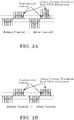
- FIG. 2A shows the output voltage waveform of the inverter 22A before and after performing the cross current suppression control by the difference current control unit 7 in the first embodiment.
- This control is an example of control when the output current of the inverter 22A is small. Since the control for increasing the DC voltage is performed as shown in the figure, the pulse width of the PWM-modulated output voltage waveform is the same before and after the control. Although the peak value of the fundamental wave voltage has increased after the control as compared to before the control, unexpected harmonic components are not included.
- FIG. 2B shows the transition of the output voltage waveform of the inverter 22A when the same cross current control is performed by modulating the PWM pulse of the inverter 22A.
- the peak value of the output voltage waveform PWM-modulated by the cross current suppression control does not change, but the pulse width of the output voltage waveform changes significantly, and the frequency components of the harmonics also differ greatly before and after control. Therefore, in this case, an unexpected harmonic current may flow through the coupling reactor 3.
- the power conversion apparatus 2A is an example of a "first power conversion apparatus", and the power conversion apparatus 2B is an example of a "second power conversion apparatus".
- Converter 21A is an example of a "first converter”
- converter 21B is an example of a "second converter”.
- inverter 22A is an example of a "first inverter”
- converter 22B is an example of a "second inverter”.
- the current detector 6A is an example of a "first current detector”
- the current converter 6B is an example of a "second current detector”.
- the control unit 8A is an example of a "first control unit", and the control unit 8B is an example of a "second control unit".
- FIG. 3 is the circuit configuration diagram of the power conversion system according to the second embodiment of the present invention.
- the same parts as those of the power conversion system according to the first embodiment of the present invention in FIG. 1 are denoted by the same reference numerals, and description thereof will be omitted.
- the difference between the second embodiment and the first embodiment is followings.
- the subtractor 74 calculate the difference between the DC voltage feedback correction amount outputted from the difference current controller 72 and the DC voltage detected by the voltage detector 24A, and gives the output as corrected DC voltage feedback to the subtraction input of a subtractor 86 of the control unit 8C.
- DC voltage reference is given to the addition input of the subtractor 86, and the difference between the DC voltage reference and the output of the subtractor 74 is provided to the voltage controller 82A.
- the DC voltage reference is corrected by the subtractor 73, and the corrected DC voltage reference is provided to the subtractor 81A.
- the DC voltage feedback is corrected by the subtractor 74 without changing the DC voltage reference, and the corrected DC voltage feedback is provided to the subtractor 86. That is, the first and second embodiments differ only in that the DC voltage reference or the DC voltage feedback is corrected for the cross current suppression control, so the basic operation and effect are the same.
- FIG. 4 is the block diagram of a power conversion system according to Embodiment 3 of the present invention.
- the AC power supply 1 supplies an AC voltage to the primary winding of an input transformer 1A.
- the input transformer 1A is a secondary multi-winding transformer, and has six secondary windings in this embodiment. From each of these secondary windings, a three-phase or single-phase secondary voltage is supplied to each converter of the power conversion apparatuses 2C, 2D, 2E, 2F, 2G, and 2H.
- Each inverter of the power conversion apparatuses 2C, 2D, 2E, 2F, 2G, and 2H is a single-phase inverter.
- Inverter output of the power conversion apparatuses 2C and 2D, 2E and 2F, and 2G and 2H are connected in parallel via the coupling reactors 3A, 3B and 3C, respectively.
- the midpoint of each of the coupling reactors 3A, 3B, and 3C is connected to the U-phase, V-phase, and W-phase input terminals of the AC motor 4, respectively.
- the cross current suppression control described in the first or second embodiment it is possible to apply the cross current suppression control described in the first or second embodiment. That is, the DC voltage reference or the DC voltage feedback of one power conversion apparatus is corrected according to the difference between the output currents of the inverters forming a pair, and the converter of one power conversion apparatus is controlled so that this difference is minimized.
- FIG. 5 is the circuit configuration diagram of a power conversion system according to Embodiment 4 of the present invention.
- the control unit 8C that controls the converter 21A performs the reactive power control.
- a voltage detector 9A for detecting the input voltage of the converter 21A is provided, and its output is provided to a phase synchronization circuit 86A in the control unit 8C.
- the three-phase current detected by the current detector 5A is inputted to a 3-phase to 2-phase converter 87A.
- the 3-phase to 2-phase converter 87A converts the three-phase current into a q-axis current and a d-axis current orthogonal thereto based on a reference phase ⁇ outputted from a phase synchronization circuit 86A. If the reference phase ⁇ is appropriately selected, the q-axis current can be an active current flowing into the converter 21A, and the d-axis current can be a reactive current.
- a subtracter 83C calculates the difference between the active current reference outputted from the voltage controller 82A and the q-axis current, and provides the difference to a q-axis current controller 84C.
- the q-axis current controller 84C operates as a minor loop controller, outputs a q-axis voltage command by controlling the input difference to be a minimum, and supplies the q-axis voltage command to a 2-phase to 3-phase converter 88A.
- the d-axis current is supplied to a subtractor 83D, and the difference between the reactive current reference given from the outside and the d-axis current is calculated in the subtractor 83D, and the difference is supplied to a d-axis current controller 84D.
- the d-axis current controller 84D outputs a d-axis voltage command by controlling the input difference to be a minimum, and supplies the d-axis voltage command to the 2-phase to 3-phase converter 88A.
- the 2-phase to 3-phase converter 88A converts the q-axis voltage command and the d-axis voltage command into three-phase voltage commands based on the reference phase ⁇ , and supplies the three-phase voltage commands to the PWM controller 85A.
- control unit 8D that controls the converter 21B also performs the reactive power control, and thus provides the signal of a voltage detector 9B to a control unit 8D. Since the internal configuration of the control unit 8D is the same as the internal configuration of the control unit 8C except that the DC voltage reference is not the corrected DC voltage reference but the set DC voltage reference itself, the description is omitted.
- the reactive power control by applying the reactive power control to the converter 21A, the DC voltage constant control and the inverter-side cross current suppression control are performed by the active current control, and, for example, it becomes possible to control the reactive power to the power system to be desired value by the reactive current control.
- the converter 21 is a self-excited converter using a so-called self-extinguishing element.
- a external commutated converter can be used as long as the DC output can be variably controlled.
- the present application also applies a normal three-phase output power conversion apparatus. For example, two sets of two power conversion apparatuses shown in FIG. 1 may be used, and the outputs of each set may drive an AC motor via a coupling reactor.
- both the converters of the two power conversion apparatuses perform the reactive power control.
- the configuration may be such that only one of the converters performs the reactive power control.
Landscapes
- Engineering & Computer Science (AREA)
- Power Engineering (AREA)
- Inverter Devices (AREA)
- Physics & Mathematics (AREA)
- General Physics & Mathematics (AREA)
Abstract
Description
- The present invention relates to a power conversion system including at least two power conversion apparatuses whose outputs are connected in parallel.
- As a means for increasing the capacity of a power conversion apparatus, a method of connecting outputs of a plurality of power conversion apparatuses in parallel is known. For example, in a power conversion system in which an AC motor is driven by two power conversion apparatuses, AC outputs of the two power conversion apparatuses are connected via a coupling reactor. In such a parallel multiplexed power conversion system, an output current of each apparatus becomes unbalanced due to the difference in output voltages of the two power conversion apparatuses and the difference in impedance of the coupling reactor and wiring cable. Then, a circulating current called cross flow is generated between two apparatuses. The following method is known as a countermeasure for suppressing this cross current. First, a cross current between two PWM inverters of the power conversion apparatus is detected. Then, a cross current compensation value in the same unit as the common voltage command value of each PWM inverter is obtained. A cross current control unit is provided that adds the cross current compensation value to the voltage command value of one PWM inverter according to the value of the cross current, and subtracts it from the voltage command value of the other PWM inverter. (For example, see Patent Document 1).
- Patent document 1: Japanese Patent Publication No.
2012-244674 Fig. 1 andFig. 3 ) - The cross current control unit disclosed in
Patent Document 1 basically controls the output voltage of the PWM inverter that controls the output of the power conversion apparatus as the manipulated variable. In such control, when the cross current to be controlled is large to some extent, the output waveforms of the two inverters are different, and an unexpected harmonic current may flow through the coupling reactor. Therefore, it is necessary to determine the specification of the coupling reactor in consideration of such a phenomenon. - The present invention has been made in view of the above problem, and an object of the present invention is to provide a power conversion system that prevents an unexpected harmonic current from flowing in a cross current control of two power conversion apparatuses that are operated in parallel.
- In order to achieve the above object, a power conversion system according to the present invention comprises a first power conversion apparatus including a first converter capable of controlling a DC voltage and a first inverter, and a second power conversion apparatus including a second converter capable of controlling a DC voltage and a second inverter, wherein, outputs of the first inverter and the second inverter are connected in parallel via a coupling reactor, and a DC output voltage of any one of these two converters is controlled in accordance with a difference between a first detection current detected by a first current detector detecting an output current of the first inverter and a second detection current detected by a second current detector detecting an output current of the second inverter to suppress a cross current flowing between the first inverter and the second inverter.
- According to the present invention, it is possible to provide a power conversion system that prevents an unexpected harmonic current from flowing in the cross current control of two power conversion apparatuses that are operated in parallel.
-
-
FIG. 1 is a circuit configuration diagram of a power conversion system according to a first embodiment of the present invention. -
FIG. 2A and 2B are explanatory diagram of cross flow control according to the first embodiment of the present invention. -
FIG. 3 is a circuit configuration diagram of a power conversion system according to a second embodiment of the present invention. -
FIG. 4 is a block diagram of a power conversion system according to a third embodiment of the present invention. -
FIG. 5 is a circuit configuration diagram of a power conversion system according to a fourth embodiment of the present invention. - Hereinafter, embodiment of the present invention will be described with reference to the drawings.
-
FIG. 1 is the circuit configuration diagram of the power conversion system according to the first embodiment of the present invention. A commercial three-phaseAC power supply 1 is connected toconverters power conversion apparatuses current detectors power conversion apparatuses converters DC capacitors inverters converters DC capacitors inverters inverters coupling reactor 3 provided between each phase of the AC output viacurrent detectors coupling reactor 3 is connected to theAC motor 4. With the above configuration,power conversion apparatuses drive AC motor 4 in parallel. Here, theinverter 22A and theinverter 22B are synchronously controlled, and their fundamental wave outputs are in same phase. - In this embodiment, the
converters inverters converters control units control units voltage detectors DC capacitors current detectors - The output currents detected by the
current detectors subtractor 71 of a differencecurrent control unit 7, respectively. Then, the output of thesubtractor 71, that is, the difference between the output currents of theinverters current controller 72 which is, for example, a PI controller. The differencecurrent controller 72 controls the inputted difference to be a minimum, and supplies the output to the subtraction input of asubtractor 73 as a DC voltage reference correction amount. A preset DC voltage reference is applied to the addition input of thesubtractor 73. Then, the output of thesubtractor 73 is provided to thecontrol unit 8A as a corrected DC voltage reference. Further, the DC voltage reference itself is given to thecontrol unit 8B. Here, for example, when the output current of theinverter 22A is smaller than that of theinverter 22B, the output of the differencecurrent controller 72 becomes negative, and therefore, the corrected DC voltage reference which is the output of thesubtracter 73 is larger than the DC voltage reference. By this operation, the output voltage and the output current of theinverter 22A increase, and as a result, the difference approaches to be zero. - The internal configuration of the
control unit 8A will be described below. The DC voltage of thepower conversion apparatus 2A detected by thevoltage detector 24A is compared with the corrected DC voltage reference given from thesubtractor 73 of the differencecurrent control unit 7 by asubtractor 81A as DC voltage feedback. And the output difference of thesubtractor 81A is supplied to avoltage controller 82A, that is, for example a PI controller. Thevoltage controller 82A controls so that the difference is minimized, and outputs an input current reference. This input current reference is compared with the input current detected by thecurrent detector 5A in asubtracter 83A, and the output difference of thesubtracter 83A is given to acurrent controller 84A, that is, for example a PI controller. Thecurrent controller 84A operates as a minor loop controller, controls so that this difference is minimized, and outputs a three-phase voltage command. The three-phase voltage command are given to aPWM controller 85A. ThePWM controller 85A supplies a pulse width modulated gate signal to each power device of theconverter 21A so that the input voltage of each phase of theconverter 21A becomes the three-phase voltage command. - Next, regarding the internal configuration of the
control unit 8B, since the internal configuration is the same as that of thecontrol unit 8A, except that the signal supplied to the addition input of asubtractor 81B is not the corrected DC voltage reference but the set DC voltage reference itself, explanation of thecontrol unit 8B is omitted. - With reference to
FIG. 2A and 2B , how the output voltage waveform of theinverter 22A changes by the operation of the differencecurrent control unit 7 and thecontrol unit 8A with the above configuration will be described.FIG. 2A shows the output voltage waveform of theinverter 22A before and after performing the cross current suppression control by the differencecurrent control unit 7 in the first embodiment. This control is an example of control when the output current of theinverter 22A is small. Since the control for increasing the DC voltage is performed as shown in the figure, the pulse width of the PWM-modulated output voltage waveform is the same before and after the control. Although the peak value of the fundamental wave voltage has increased after the control as compared to before the control, unexpected harmonic components are not included. -
FIG. 2B shows the transition of the output voltage waveform of theinverter 22A when the same cross current control is performed by modulating the PWM pulse of theinverter 22A. As shown in the figure, in this case, the peak value of the output voltage waveform PWM-modulated by the cross current suppression control does not change, but the pulse width of the output voltage waveform changes significantly, and the frequency components of the harmonics also differ greatly before and after control. Therefore, in this case, an unexpected harmonic current may flow through thecoupling reactor 3. - The
power conversion apparatus 2A is an example of a "first power conversion apparatus", and thepower conversion apparatus 2B is an example of a "second power conversion apparatus".Converter 21A is an example of a "first converter", andconverter 21B is an example of a "second converter". Further,inverter 22A is an example of a "first inverter", andconverter 22B is an example of a "second inverter". Thecurrent detector 6A is an example of a "first current detector", and thecurrent converter 6B is an example of a "second current detector". Thecontrol unit 8A is an example of a "first control unit", and thecontrol unit 8B is an example of a "second control unit". -
FIG. 3 is the circuit configuration diagram of the power conversion system according to the second embodiment of the present invention. Regarding each part of the second embodiment, the same parts as those of the power conversion system according to the first embodiment of the present invention inFIG. 1 are denoted by the same reference numerals, and description thereof will be omitted. The difference between the second embodiment and the first embodiment is followings. First, in the differencecurrent control unit 7A, thesubtractor 74 calculate the difference between the DC voltage feedback correction amount outputted from the differencecurrent controller 72 and the DC voltage detected by thevoltage detector 24A, and gives the output as corrected DC voltage feedback to the subtraction input of asubtractor 86 of thecontrol unit 8C. Second, DC voltage reference is given to the addition input of thesubtractor 86, and the difference between the DC voltage reference and the output of thesubtractor 74 is provided to thevoltage controller 82A. - In the first embodiment, the DC voltage reference is corrected by the
subtractor 73, and the corrected DC voltage reference is provided to thesubtractor 81A. In contrast, in the second embodiment, as described above, the DC voltage feedback is corrected by thesubtractor 74 without changing the DC voltage reference, and the corrected DC voltage feedback is provided to thesubtractor 86. That is, the first and second embodiments differ only in that the DC voltage reference or the DC voltage feedback is corrected for the cross current suppression control, so the basic operation and effect are the same. -
FIG. 4 is the block diagram of a power conversion system according toEmbodiment 3 of the present invention. TheAC power supply 1 supplies an AC voltage to the primary winding of an input transformer 1A. The input transformer 1A is a secondary multi-winding transformer, and has six secondary windings in this embodiment. From each of these secondary windings, a three-phase or single-phase secondary voltage is supplied to each converter of thepower conversion apparatuses power conversion apparatuses power conversion apparatuses coupling reactors coupling reactors AC motor 4, respectively. - Even in the power conversion system having the configuration shown in
FIG. 4 , it is possible to apply the cross current suppression control described in the first or second embodiment. That is, the DC voltage reference or the DC voltage feedback of one power conversion apparatus is corrected according to the difference between the output currents of the inverters forming a pair, and the converter of one power conversion apparatus is controlled so that this difference is minimized. -
FIG. 5 is the circuit configuration diagram of a power conversion system according toEmbodiment 4 of the present invention. Regarding each part of the fourth embodiment, the same parts as those of the power conversion system according to the first embodiment of the present invention inFIG. 1 are denoted by the same reference numerals, and description thereof will be omitted. The fourth embodiment differs from the first embodiment in that, thecontrol unit 8C that controls theconverter 21A performs the reactive power control. For this purpose, avoltage detector 9A for detecting the input voltage of theconverter 21A is provided, and its output is provided to aphase synchronization circuit 86A in thecontrol unit 8C. - Hereinafter, the internal configuration of the
control unit 8C will be described. The three-phase current detected by thecurrent detector 5A is inputted to a 3-phase to 2-phase converter 87A. The 3-phase to 2-phase converter 87A converts the three-phase current into a q-axis current and a d-axis current orthogonal thereto based on a reference phase ϕ outputted from aphase synchronization circuit 86A. If the reference phase ϕ is appropriately selected, the q-axis current can be an active current flowing into theconverter 21A, and the d-axis current can be a reactive current. Asubtracter 83C calculates the difference between the active current reference outputted from thevoltage controller 82A and the q-axis current, and provides the difference to a q-axiscurrent controller 84C. The q-axiscurrent controller 84C operates as a minor loop controller, outputs a q-axis voltage command by controlling the input difference to be a minimum, and supplies the q-axis voltage command to a 2-phase to 3-phase converter 88A. On the other hand, the d-axis current is supplied to asubtractor 83D, and the difference between the reactive current reference given from the outside and the d-axis current is calculated in thesubtractor 83D, and the difference is supplied to a d-axis current controller 84D. The d-axis current controller 84D outputs a d-axis voltage command by controlling the input difference to be a minimum, and supplies the d-axis voltage command to the 2-phase to 3-phase converter 88A. The 2-phase to 3-phase converter 88A converts the q-axis voltage command and the d-axis voltage command into three-phase voltage commands based on the reference phase ϕ, and supplies the three-phase voltage commands to thePWM controller 85A. - Further, in
FIG. 5 , thecontrol unit 8D that controls theconverter 21B also performs the reactive power control, and thus provides the signal of avoltage detector 9B to acontrol unit 8D. Since the internal configuration of thecontrol unit 8D is the same as the internal configuration of thecontrol unit 8C except that the DC voltage reference is not the corrected DC voltage reference but the set DC voltage reference itself, the description is omitted. - According to the configuration described above, by applying the reactive power control to the
converter 21A, the DC voltage constant control and the inverter-side cross current suppression control are performed by the active current control, and, for example, it becomes possible to control the reactive power to the power system to be desired value by the reactive current control. - While certain embodiments have been described, these embodiments have been presented by way of example only, and are not intended to limit the scope of the inventions. Indeed, the novel embodiments described herein may be embodied in a variety of other forms; furthermore, various omissions, substitutions and changes in the form of the embodiments described herein may be made without departing from the spirit of the inventions. The accompanying claims and their equivalents are intended to cover such forms or modifications as would fall within the scope and spirit of the inventions.
- For example, in each embodiment, the converter 21 is a self-excited converter using a so-called self-extinguishing element. However, in the case of a converter that does not control reactive power, a external commutated converter can be used as long as the DC output can be variably controlled. In the third embodiment, an example of the power conversion system including a plurality of sets of two single-phase output power conversion apparatuses has been described. However, obviously the present application also applies a normal three-phase output power conversion apparatus. For example, two sets of two power conversion apparatuses shown in
FIG. 1 may be used, and the outputs of each set may drive an AC motor via a coupling reactor. - Also, in the fourth embodiment, it is described that both the converters of the two power conversion apparatuses perform the reactive power control. However, the configuration may be such that only one of the converters performs the reactive power control.
-
- 1
- AC power supply
- 1A
- Input transformer
- 2A, 2B, 2C, 2D, 2E, 2F, 2G, 2H
- Power conversion apparatus
- 21A, 21B
- Converter
- 22A, 22B
- Inverter
- 23A, 23B
- DC capacitor
- 24A, 24B
- Voltage detector
- 3, 3A, 3B, 3C
- Coupling reactor
- 5A, 5B
- Current detector
- 6A, 6B
- Current detector
- 7, 7A
- Difference current control unit
- 71
- Subtractor
- 72
- Difference current controller
- 73, 74
- Subtractor
- 8A, 8B, 8C, 8D
- Control unit
- 81A, 81B
- Subtractor
- 82A, 82B
- Voltage controller
- 83A, 83B, 83C, 83D
- Subtractor
- 84A, 84B, 84C, 84D
- Current controller
- 85A, 85B
- @ PWM controller
- 86A
- Phase synchronization circuit
- 87A
- 3-phase to 2-phase converter
- 88A
- 2-phase to 3-phase converter
- 9A, 9B
- Voltage detector
Claims (5)
- A power conversion system for driving an AC motor comprising,
a first power conversion apparatus including a first converter capable of controlling a DC voltage and a first inverter;
a second power conversion apparatus including a second converter capable of controlling a DC voltage and a second inverter,
wherein, outputs of the first inverter and the second inverter are connected in parallel via a coupling reactor, and a DC output voltage of any one of these two converters is controlled in accordance with a difference between a first detection current detected by a first current detector detecting an output current of the first inverter and a second detection current detected by a second current detector detecting an output current of the second inverter to suppress a cross current flowing between the first inverter and the second inverter. - The power conversion system according to claim 1 further comprising,
a first controller that controls the first converter;
a second controller that controls the second converter;
a difference current control unit that outputs a correction signal to the first controller so that a difference between the first detection current and the second detection current is minimized,
wherein, the second control unit controls the DC output voltage of the second converter to be a predetermined DC voltage reference, and the first control unit controls the DC output voltage of the first converter to a value obtained by correcting the predetermined DC voltage reference with the correction signal. - The power conversion system according to claim 1 further comprising,
a first controller that controls the first converter;
a second controller that controls the second converter;
a difference current control unit that outputs a correction signal to the first controller so that a difference between the first detection current and the second detection current is minimized,
wherein, the second control unit controls the DC output voltage of the second converter to be a predetermined DC voltage reference, and the first control unit controls a DC feedback voltage of the first converter with the correction signal so that a value corrected by the correction signal becomes the predetermined DC voltage reference. - The power conversion system according to any one of claim 1 to claim 3,
Wherein, at least one of the first control unit and the second control unit performs reactive current control, and an AC output voltage control of the first converter or the second converter is performed using the reactive current control of the first converter or the second converter as a minor loop. - The power conversion system according to any one of claim 1 to claim 4,
wherein a plurality of sets of the two power conversion apparatuses are provided, and outputs of the plurality of sets of the inverters are combined to drive the AC motor.
Applications Claiming Priority (1)
| Application Number | Priority Date | Filing Date | Title |
|---|---|---|---|
| PCT/JP2017/041104 WO2019097605A1 (en) | 2017-11-15 | 2017-11-15 | Power conversion system |
Publications (3)
| Publication Number | Publication Date |
|---|---|
| EP3713075A1 true EP3713075A1 (en) | 2020-09-23 |
| EP3713075A4 EP3713075A4 (en) | 2021-06-23 |
| EP3713075B1 EP3713075B1 (en) | 2022-10-19 |
Family
ID=66537775
Family Applications (1)
| Application Number | Title | Priority Date | Filing Date |
|---|---|---|---|
| EP17931919.9A Active EP3713075B1 (en) | 2017-11-15 | 2017-11-15 | Power conversion system |
Country Status (5)
| Country | Link |
|---|---|
| US (1) | US10951125B2 (en) |
| EP (1) | EP3713075B1 (en) |
| JP (1) | JP6864116B2 (en) |
| CN (1) | CN111357186B (en) |
| WO (1) | WO2019097605A1 (en) |
Cited By (1)
| Publication number | Priority date | Publication date | Assignee | Title |
|---|---|---|---|---|
| JP2022532320A (en) * | 2021-01-14 | 2022-07-14 | 深▲せん▼市正浩創新科技股▲ふん▼有限公司 | Inverter system, inverter system control method and parallel inverter system |
Families Citing this family (5)
| Publication number | Priority date | Publication date | Assignee | Title |
|---|---|---|---|---|
| DE102018101311A1 (en) * | 2018-01-22 | 2019-07-25 | Eaton Intelligent Power Limited | Electrical protection switching arrangement |
| DE102018101312A1 (en) * | 2018-01-22 | 2019-07-25 | Eaton Intelligent Power Limited | Electrical protection circuitry |
| EP3883115A4 (en) * | 2018-11-14 | 2022-06-22 | Toshiba Mitsubishi-Electric Industrial Systems Corporation | CURRENT CONVERSION DEVICE |
| JP7271386B2 (en) * | 2019-10-01 | 2023-05-11 | 株式会社東芝 | POWER CONVERSION DEVICE AND CONTROL METHOD OF POWER CONVERSION DEVICE |
| EP3916990B1 (en) | 2020-05-28 | 2026-04-15 | Goodrich Control Systems | Distributed control architecture for motor drives |
Family Cites Families (22)
| Publication number | Priority date | Publication date | Assignee | Title |
|---|---|---|---|---|
| CA2066490C (en) * | 1991-04-22 | 1997-10-14 | Nobuo Sashida | Parallel operation system of ac output inverters |
| GB2264403B (en) * | 1992-02-18 | 1996-09-04 | Hitachi Ltd | An apparatus for controlling parallel running of inverters |
| JP2791273B2 (en) * | 1993-09-07 | 1998-08-27 | 株式会社東芝 | Power converter |
| JP3496369B2 (en) * | 1995-11-06 | 2004-02-09 | 三菱電機株式会社 | Power supply for laser |
| JP2002291255A (en) * | 2001-03-27 | 2002-10-04 | Sawafuji Electric Co Ltd | Inverter system |
| WO2007135730A1 (en) * | 2006-05-23 | 2007-11-29 | Mitsubishi Denki Kabushiki Kaisha | Power converter |
| JP4748052B2 (en) * | 2006-12-22 | 2011-08-17 | 東芝三菱電機産業システム株式会社 | AC output converter parallel operation controller |
| US7852643B2 (en) * | 2007-06-27 | 2010-12-14 | General Electric Company | Cross current control for power converter system |
| CN101826804B (en) * | 2010-05-21 | 2012-06-20 | 哈尔滨工业大学 | Control method of parallel-type permanent magnet direct-drive wind power converter in wind driven generation system |
| JP5733015B2 (en) | 2011-05-17 | 2015-06-10 | 株式会社明電舎 | Parallel operation apparatus and parallel operation method for PWM power converter |
| CN102231608B (en) * | 2011-07-04 | 2013-08-07 | 浙江大学 | DC (direct current) loop-current suspension device for inverter parallel system |
| JP5822732B2 (en) * | 2012-01-11 | 2015-11-24 | 東芝三菱電機産業システム株式会社 | 3-level power converter |
| CN103312187B (en) * | 2012-03-09 | 2016-02-03 | 台达电子工业股份有限公司 | A Converter System |
| CA2879956C (en) * | 2012-07-25 | 2017-08-01 | Toshiba Mitsubishi-Electric Industrial Systems Corporation | Power supply system |
| CN103684021B (en) * | 2012-09-17 | 2016-05-04 | 中国北车股份有限公司 | Inverter parallel control system |
| CN102890208A (en) * | 2012-09-21 | 2013-01-23 | 上海交通大学 | Parallel pair-pushing test method of high-power power electronic converter and main loop |
| CN103888007B (en) * | 2014-03-17 | 2016-03-23 | 电子科技大学 | Inverter Parallel Circulation Suppression System Based on PR Control and Dual Carrier Modulation |
| CN104184353A (en) * | 2014-08-12 | 2014-12-03 | 天津瑞能电气有限公司 | Inverter parallel connection based circulating current suppression method |
| JP6520336B2 (en) * | 2015-04-15 | 2019-05-29 | 富士電機株式会社 | Power converter control device |
| JP6416707B2 (en) | 2015-07-08 | 2018-10-31 | 東芝三菱電機産業システム株式会社 | Power conversion system |
| CN106374830B (en) * | 2016-09-13 | 2018-09-21 | 合肥工业大学 | High-power high step-up ratio photovoltaic DC converter device and control method |
| CN106533221B (en) * | 2016-12-08 | 2019-01-29 | 株洲中车时代电气股份有限公司 | A kind of high-power general type PWM rectifier and its control method |
-
2017
- 2017-11-15 JP JP2019554093A patent/JP6864116B2/en active Active
- 2017-11-15 EP EP17931919.9A patent/EP3713075B1/en active Active
- 2017-11-15 CN CN201780096883.2A patent/CN111357186B/en active Active
- 2017-11-15 WO PCT/JP2017/041104 patent/WO2019097605A1/en not_active Ceased
-
2020
- 2020-05-13 US US15/930,801 patent/US10951125B2/en active Active
Cited By (3)
| Publication number | Priority date | Publication date | Assignee | Title |
|---|---|---|---|---|
| JP2022532320A (en) * | 2021-01-14 | 2022-07-14 | 深▲せん▼市正浩創新科技股▲ふん▼有限公司 | Inverter system, inverter system control method and parallel inverter system |
| EP4050789A4 (en) * | 2021-01-14 | 2023-01-18 | EcoFlow Inc. | INVERTER SYSTEM, INVERTER SYSTEM CONTROL METHOD, AND PARALLEL INVERTER SYSTEM |
| JP7220307B2 (en) | 2021-01-14 | 2023-02-09 | 深▲せん▼市正浩創新科技股▲ふん▼有限公司 | INVERTER SYSTEM, INVERTER SYSTEM CONTROL METHOD AND PARALLEL INVERTER SYSTEM |
Also Published As
| Publication number | Publication date |
|---|---|
| CN111357186B (en) | 2023-08-01 |
| EP3713075A4 (en) | 2021-06-23 |
| WO2019097605A1 (en) | 2019-05-23 |
| EP3713075B1 (en) | 2022-10-19 |
| JP6864116B2 (en) | 2021-04-21 |
| US20200321888A1 (en) | 2020-10-08 |
| US10951125B2 (en) | 2021-03-16 |
| CN111357186A (en) | 2020-06-30 |
| JPWO2019097605A1 (en) | 2020-10-22 |
Similar Documents
| Publication | Publication Date | Title |
|---|---|---|
| US10951125B2 (en) | Supression of cross current in a plural converter system | |
| EP2804309B1 (en) | Three-level power conversion device | |
| US10236818B2 (en) | Drive and control apparatus for multiple-winding motor | |
| US8471514B2 (en) | Adaptive harmonic reduction apparatus and methods | |
| US9780692B2 (en) | Control device of neutral-point-clamped power converter apparatus, and control method of neutral-point-clamped power converter apparatus | |
| EP2051362A1 (en) | Inverter | |
| US20140268970A1 (en) | Matrix converter and method for controlling matrix converter | |
| EP2043241A2 (en) | Motor Drive Using Flux Adjustment to Control Power Factor | |
| US11218107B2 (en) | Control device for power converter | |
| KR101846212B1 (en) | The V/F droop parallel operation inverter controlling apparatus based on active damping and repetition controlling compensation, and the method thereof | |
| EP2858233A2 (en) | High dynamic control apparatus for current source converter background | |
| JP2014068498A (en) | Control method for power conversion device | |
| KR20160122923A (en) | Apparatus and method for generating offset voltage of 3-phase inverter | |
| KR20160122922A (en) | Apparatus and method for generating offset voltage of 3-phase inverter | |
| JP6131360B1 (en) | Power converter | |
| WO2017119214A1 (en) | Electric power converting device | |
| JP5351390B2 (en) | Power converter | |
| JP5147624B2 (en) | Inverter device | |
| JP5888074B2 (en) | Power converter | |
| JP7040077B2 (en) | Power converter | |
| JP2017153277A (en) | Self-excited reactive power compensation apparatus | |
| JP2009247110A (en) | Inverter controller | |
| KR102600920B1 (en) | Transformerless uninterruptible power supply and method of controlling the same | |
| JP7356395B2 (en) | power converter | |
| JP2023104788A (en) | Electric motor control method and electric motor control device |
Legal Events
| Date | Code | Title | Description |
|---|---|---|---|
| STAA | Information on the status of an ep patent application or granted ep patent |
Free format text: STATUS: THE INTERNATIONAL PUBLICATION HAS BEEN MADE |
|
| PUAI | Public reference made under article 153(3) epc to a published international application that has entered the european phase |
Free format text: ORIGINAL CODE: 0009012 |
|
| STAA | Information on the status of an ep patent application or granted ep patent |
Free format text: STATUS: REQUEST FOR EXAMINATION WAS MADE |
|
| 17P | Request for examination filed |
Effective date: 20200422 |
|
| AK | Designated contracting states |
Kind code of ref document: A1 Designated state(s): AL AT BE BG CH CY CZ DE DK EE ES FI FR GB GR HR HU IE IS IT LI LT LU LV MC MK MT NL NO PL PT RO RS SE SI SK SM TR |
|
| AX | Request for extension of the european patent |
Extension state: BA ME |
|
| DAV | Request for validation of the european patent (deleted) | ||
| DAX | Request for extension of the european patent (deleted) | ||
| A4 | Supplementary search report drawn up and despatched |
Effective date: 20210521 |
|
| RIC1 | Information provided on ipc code assigned before grant |
Ipc: H02M 7/493 20070101AFI20210517BHEP Ipc: H02M 5/458 20060101ALI20210517BHEP Ipc: H02M 1/00 20060101ALI20210517BHEP Ipc: H02M 1/12 20060101ALI20210517BHEP Ipc: H02P 4/00 20060101ALI20210517BHEP Ipc: H02P 29/50 20160101ALI20210517BHEP |
|
| GRAP | Despatch of communication of intention to grant a patent |
Free format text: ORIGINAL CODE: EPIDOSNIGR1 |
|
| STAA | Information on the status of an ep patent application or granted ep patent |
Free format text: STATUS: GRANT OF PATENT IS INTENDED |
|
| INTG | Intention to grant announced |
Effective date: 20220519 |
|
| GRAS | Grant fee paid |
Free format text: ORIGINAL CODE: EPIDOSNIGR3 |
|
| GRAA | (expected) grant |
Free format text: ORIGINAL CODE: 0009210 |
|
| STAA | Information on the status of an ep patent application or granted ep patent |
Free format text: STATUS: THE PATENT HAS BEEN GRANTED |
|
| AK | Designated contracting states |
Kind code of ref document: B1 Designated state(s): AL AT BE BG CH CY CZ DE DK EE ES FI FR GB GR HR HU IE IS IT LI LT LU LV MC MK MT NL NO PL PT RO RS SE SI SK SM TR |
|
| REG | Reference to a national code |
Ref country code: GB Ref legal event code: FG4D |
|
| REG | Reference to a national code |
Ref country code: CH Ref legal event code: EP |
|
| REG | Reference to a national code |
Ref country code: IE Ref legal event code: FG4D |
|
| REG | Reference to a national code |
Ref country code: DE Ref legal event code: R096 Ref document number: 602017062915 Country of ref document: DE |
|
| REG | Reference to a national code |
Ref country code: AT Ref legal event code: REF Ref document number: 1526203 Country of ref document: AT Kind code of ref document: T Effective date: 20221115 |
|
| REG | Reference to a national code |
Ref country code: LT Ref legal event code: MG9D |
|
| REG | Reference to a national code |
Ref country code: NL Ref legal event code: MP Effective date: 20221019 |
|
| REG | Reference to a national code |
Ref country code: AT Ref legal event code: MK05 Ref document number: 1526203 Country of ref document: AT Kind code of ref document: T Effective date: 20221019 |
|
| PG25 | Lapsed in a contracting state [announced via postgrant information from national office to epo] |
Ref country code: NL Free format text: LAPSE BECAUSE OF FAILURE TO SUBMIT A TRANSLATION OF THE DESCRIPTION OR TO PAY THE FEE WITHIN THE PRESCRIBED TIME-LIMIT Effective date: 20221019 |
|
| PG25 | Lapsed in a contracting state [announced via postgrant information from national office to epo] |
Ref country code: SE Free format text: LAPSE BECAUSE OF FAILURE TO SUBMIT A TRANSLATION OF THE DESCRIPTION OR TO PAY THE FEE WITHIN THE PRESCRIBED TIME-LIMIT Effective date: 20221019 Ref country code: PT Free format text: LAPSE BECAUSE OF FAILURE TO SUBMIT A TRANSLATION OF THE DESCRIPTION OR TO PAY THE FEE WITHIN THE PRESCRIBED TIME-LIMIT Effective date: 20230220 Ref country code: NO Free format text: LAPSE BECAUSE OF FAILURE TO SUBMIT A TRANSLATION OF THE DESCRIPTION OR TO PAY THE FEE WITHIN THE PRESCRIBED TIME-LIMIT Effective date: 20230119 Ref country code: LT Free format text: LAPSE BECAUSE OF FAILURE TO SUBMIT A TRANSLATION OF THE DESCRIPTION OR TO PAY THE FEE WITHIN THE PRESCRIBED TIME-LIMIT Effective date: 20221019 Ref country code: FI Free format text: LAPSE BECAUSE OF FAILURE TO SUBMIT A TRANSLATION OF THE DESCRIPTION OR TO PAY THE FEE WITHIN THE PRESCRIBED TIME-LIMIT Effective date: 20221019 Ref country code: ES Free format text: LAPSE BECAUSE OF FAILURE TO SUBMIT A TRANSLATION OF THE DESCRIPTION OR TO PAY THE FEE WITHIN THE PRESCRIBED TIME-LIMIT Effective date: 20221019 Ref country code: AT Free format text: LAPSE BECAUSE OF FAILURE TO SUBMIT A TRANSLATION OF THE DESCRIPTION OR TO PAY THE FEE WITHIN THE PRESCRIBED TIME-LIMIT Effective date: 20221019 |
|
| PG25 | Lapsed in a contracting state [announced via postgrant information from national office to epo] |
Ref country code: RS Free format text: LAPSE BECAUSE OF FAILURE TO SUBMIT A TRANSLATION OF THE DESCRIPTION OR TO PAY THE FEE WITHIN THE PRESCRIBED TIME-LIMIT Effective date: 20221019 Ref country code: PL Free format text: LAPSE BECAUSE OF FAILURE TO SUBMIT A TRANSLATION OF THE DESCRIPTION OR TO PAY THE FEE WITHIN THE PRESCRIBED TIME-LIMIT Effective date: 20221019 Ref country code: LV Free format text: LAPSE BECAUSE OF FAILURE TO SUBMIT A TRANSLATION OF THE DESCRIPTION OR TO PAY THE FEE WITHIN THE PRESCRIBED TIME-LIMIT Effective date: 20221019 Ref country code: IS Free format text: LAPSE BECAUSE OF FAILURE TO SUBMIT A TRANSLATION OF THE DESCRIPTION OR TO PAY THE FEE WITHIN THE PRESCRIBED TIME-LIMIT Effective date: 20230219 Ref country code: HR Free format text: LAPSE BECAUSE OF FAILURE TO SUBMIT A TRANSLATION OF THE DESCRIPTION OR TO PAY THE FEE WITHIN THE PRESCRIBED TIME-LIMIT Effective date: 20221019 Ref country code: GR Free format text: LAPSE BECAUSE OF FAILURE TO SUBMIT A TRANSLATION OF THE DESCRIPTION OR TO PAY THE FEE WITHIN THE PRESCRIBED TIME-LIMIT Effective date: 20230120 |
|
| REG | Reference to a national code |
Ref country code: DE Ref legal event code: R097 Ref document number: 602017062915 Country of ref document: DE |
|
| REG | Reference to a national code |
Ref country code: BE Ref legal event code: MM Effective date: 20221130 |
|
| PG25 | Lapsed in a contracting state [announced via postgrant information from national office to epo] |
Ref country code: SM Free format text: LAPSE BECAUSE OF FAILURE TO SUBMIT A TRANSLATION OF THE DESCRIPTION OR TO PAY THE FEE WITHIN THE PRESCRIBED TIME-LIMIT Effective date: 20221019 Ref country code: RO Free format text: LAPSE BECAUSE OF FAILURE TO SUBMIT A TRANSLATION OF THE DESCRIPTION OR TO PAY THE FEE WITHIN THE PRESCRIBED TIME-LIMIT Effective date: 20221019 Ref country code: MC Free format text: LAPSE BECAUSE OF FAILURE TO SUBMIT A TRANSLATION OF THE DESCRIPTION OR TO PAY THE FEE WITHIN THE PRESCRIBED TIME-LIMIT Effective date: 20221019 Ref country code: EE Free format text: LAPSE BECAUSE OF FAILURE TO SUBMIT A TRANSLATION OF THE DESCRIPTION OR TO PAY THE FEE WITHIN THE PRESCRIBED TIME-LIMIT Effective date: 20221019 Ref country code: DK Free format text: LAPSE BECAUSE OF FAILURE TO SUBMIT A TRANSLATION OF THE DESCRIPTION OR TO PAY THE FEE WITHIN THE PRESCRIBED TIME-LIMIT Effective date: 20221019 Ref country code: CZ Free format text: LAPSE BECAUSE OF FAILURE TO SUBMIT A TRANSLATION OF THE DESCRIPTION OR TO PAY THE FEE WITHIN THE PRESCRIBED TIME-LIMIT Effective date: 20221019 |
|
| PLBE | No opposition filed within time limit |
Free format text: ORIGINAL CODE: 0009261 |
|
| STAA | Information on the status of an ep patent application or granted ep patent |
Free format text: STATUS: NO OPPOSITION FILED WITHIN TIME LIMIT |
|
| PG25 | Lapsed in a contracting state [announced via postgrant information from national office to epo] |
Ref country code: SK Free format text: LAPSE BECAUSE OF FAILURE TO SUBMIT A TRANSLATION OF THE DESCRIPTION OR TO PAY THE FEE WITHIN THE PRESCRIBED TIME-LIMIT Effective date: 20221019 Ref country code: LU Free format text: LAPSE BECAUSE OF NON-PAYMENT OF DUE FEES Effective date: 20221115 Ref country code: AL Free format text: LAPSE BECAUSE OF FAILURE TO SUBMIT A TRANSLATION OF THE DESCRIPTION OR TO PAY THE FEE WITHIN THE PRESCRIBED TIME-LIMIT Effective date: 20221019 |
|
| 26N | No opposition filed |
Effective date: 20230720 |
|
| PG25 | Lapsed in a contracting state [announced via postgrant information from national office to epo] |
Ref country code: IE Free format text: LAPSE BECAUSE OF NON-PAYMENT OF DUE FEES Effective date: 20221115 |
|
| PG25 | Lapsed in a contracting state [announced via postgrant information from national office to epo] |
Ref country code: SI Free format text: LAPSE BECAUSE OF FAILURE TO SUBMIT A TRANSLATION OF THE DESCRIPTION OR TO PAY THE FEE WITHIN THE PRESCRIBED TIME-LIMIT Effective date: 20221019 Ref country code: FR Free format text: LAPSE BECAUSE OF NON-PAYMENT OF DUE FEES Effective date: 20221219 Ref country code: BE Free format text: LAPSE BECAUSE OF NON-PAYMENT OF DUE FEES Effective date: 20221130 |
|
| PG25 | Lapsed in a contracting state [announced via postgrant information from national office to epo] |
Ref country code: CY Free format text: LAPSE BECAUSE OF FAILURE TO SUBMIT A TRANSLATION OF THE DESCRIPTION OR TO PAY THE FEE WITHIN THE PRESCRIBED TIME-LIMIT Effective date: 20221019 |
|
| PG25 | Lapsed in a contracting state [announced via postgrant information from national office to epo] |
Ref country code: MK Free format text: LAPSE BECAUSE OF FAILURE TO SUBMIT A TRANSLATION OF THE DESCRIPTION OR TO PAY THE FEE WITHIN THE PRESCRIBED TIME-LIMIT Effective date: 20221019 Ref country code: HU Free format text: LAPSE BECAUSE OF FAILURE TO SUBMIT A TRANSLATION OF THE DESCRIPTION OR TO PAY THE FEE WITHIN THE PRESCRIBED TIME-LIMIT; INVALID AB INITIO Effective date: 20171115 |
|
| PG25 | Lapsed in a contracting state [announced via postgrant information from national office to epo] |
Ref country code: BG Free format text: LAPSE BECAUSE OF FAILURE TO SUBMIT A TRANSLATION OF THE DESCRIPTION OR TO PAY THE FEE WITHIN THE PRESCRIBED TIME-LIMIT Effective date: 20221019 |
|
| PG25 | Lapsed in a contracting state [announced via postgrant information from national office to epo] |
Ref country code: MT Free format text: LAPSE BECAUSE OF FAILURE TO SUBMIT A TRANSLATION OF THE DESCRIPTION OR TO PAY THE FEE WITHIN THE PRESCRIBED TIME-LIMIT Effective date: 20221019 |
|
| REG | Reference to a national code |
Ref country code: CH Ref legal event code: U11 Free format text: ST27 STATUS EVENT CODE: U-0-0-U10-U11 (AS PROVIDED BY THE NATIONAL OFFICE) Effective date: 20251201 |
|
| PG25 | Lapsed in a contracting state [announced via postgrant information from national office to epo] |
Ref country code: TR Free format text: LAPSE BECAUSE OF FAILURE TO SUBMIT A TRANSLATION OF THE DESCRIPTION OR TO PAY THE FEE WITHIN THE PRESCRIBED TIME-LIMIT Effective date: 20221019 |
|
| PGFP | Annual fee paid to national office [announced via postgrant information from national office to epo] |
Ref country code: DE Payment date: 20250930 Year of fee payment: 9 |
|
| PGFP | Annual fee paid to national office [announced via postgrant information from national office to epo] |
Ref country code: GB Payment date: 20251001 Year of fee payment: 9 |
|
| PGFP | Annual fee paid to national office [announced via postgrant information from national office to epo] |
Ref country code: IT Payment date: 20251022 Year of fee payment: 9 |
|
| PGFP | Annual fee paid to national office [announced via postgrant information from national office to epo] |
Ref country code: CH Payment date: 20251201 Year of fee payment: 9 |