EP3709633A1 - Videoaufnahmeverfahren und videoaufnahmeterminal - Google Patents
Videoaufnahmeverfahren und videoaufnahmeterminal Download PDFInfo
- Publication number
- EP3709633A1 EP3709633A1 EP18884133.2A EP18884133A EP3709633A1 EP 3709633 A1 EP3709633 A1 EP 3709633A1 EP 18884133 A EP18884133 A EP 18884133A EP 3709633 A1 EP3709633 A1 EP 3709633A1
- Authority
- EP
- European Patent Office
- Prior art keywords
- video
- video file
- user
- recording
- image
- Prior art date
- Legal status (The legal status is an assumption and is not a legal conclusion. Google has not performed a legal analysis and makes no representation as to the accuracy of the status listed.)
- Granted
Links
Images

Classifications
-
- H—ELECTRICITY
- H04—ELECTRIC COMMUNICATION TECHNIQUE
- H04N—PICTORIAL COMMUNICATION, e.g. TELEVISION
- H04N5/00—Details of television systems
- H04N5/76—Television signal recording
- H04N5/765—Interface circuits between an apparatus for recording and another apparatus
- H04N5/77—Interface circuits between an apparatus for recording and another apparatus between a recording apparatus and a television camera
- H04N5/772—Interface circuits between an apparatus for recording and another apparatus between a recording apparatus and a television camera the recording apparatus and the television camera being placed in the same enclosure
-
- G—PHYSICS
- G11—INFORMATION STORAGE
- G11B—INFORMATION STORAGE BASED ON RELATIVE MOVEMENT BETWEEN RECORD CARRIER AND TRANSDUCER
- G11B27/00—Editing; Indexing; Addressing; Timing or synchronising; Monitoring; Measuring tape travel
- G11B27/02—Editing, e.g. varying the order of information signals recorded on, or reproduced from, record carriers
- G11B27/031—Electronic editing of digitised analogue information signals, e.g. audio or video signals
-
- G—PHYSICS
- G11—INFORMATION STORAGE
- G11B—INFORMATION STORAGE BASED ON RELATIVE MOVEMENT BETWEEN RECORD CARRIER AND TRANSDUCER
- G11B27/00—Editing; Indexing; Addressing; Timing or synchronising; Monitoring; Measuring tape travel
- G11B27/02—Editing, e.g. varying the order of information signals recorded on, or reproduced from, record carriers
- G11B27/031—Electronic editing of digitised analogue information signals, e.g. audio or video signals
- G11B27/036—Insert-editing
-
- G—PHYSICS
- G11—INFORMATION STORAGE
- G11B—INFORMATION STORAGE BASED ON RELATIVE MOVEMENT BETWEEN RECORD CARRIER AND TRANSDUCER
- G11B27/00—Editing; Indexing; Addressing; Timing or synchronising; Monitoring; Measuring tape travel
- G11B27/10—Indexing; Addressing; Timing or synchronising; Measuring tape travel
- G11B27/34—Indicating arrangements
-
- H—ELECTRICITY
- H04—ELECTRIC COMMUNICATION TECHNIQUE
- H04N—PICTORIAL COMMUNICATION, e.g. TELEVISION
- H04N23/00—Cameras or camera modules comprising electronic image sensors; Control thereof
- H04N23/60—Control of cameras or camera modules
- H04N23/62—Control of parameters via user interfaces
-
- H—ELECTRICITY
- H04—ELECTRIC COMMUNICATION TECHNIQUE
- H04N—PICTORIAL COMMUNICATION, e.g. TELEVISION
- H04N23/00—Cameras or camera modules comprising electronic image sensors; Control thereof
- H04N23/60—Control of cameras or camera modules
- H04N23/63—Control of cameras or camera modules by using electronic viewfinders
-
- H—ELECTRICITY
- H04—ELECTRIC COMMUNICATION TECHNIQUE
- H04N—PICTORIAL COMMUNICATION, e.g. TELEVISION
- H04N23/00—Cameras or camera modules comprising electronic image sensors; Control thereof
- H04N23/80—Camera processing pipelines; Components thereof
-
- H—ELECTRICITY
- H04—ELECTRIC COMMUNICATION TECHNIQUE
- H04N—PICTORIAL COMMUNICATION, e.g. TELEVISION
- H04N5/00—Details of television systems
- H04N5/222—Studio circuitry; Studio devices; Studio equipment
- H04N5/262—Studio circuits, e.g. for mixing, switching-over, change of character of image, other special effects ; Cameras specially adapted for the electronic generation of special effects
- H04N5/2621—Cameras specially adapted for the electronic generation of special effects during image pickup, e.g. digital cameras, camcorders, video cameras having integrated special effects capability
-
- H—ELECTRICITY
- H04—ELECTRIC COMMUNICATION TECHNIQUE
- H04N—PICTORIAL COMMUNICATION, e.g. TELEVISION
- H04N5/00—Details of television systems
- H04N5/222—Studio circuitry; Studio devices; Studio equipment
- H04N5/262—Studio circuits, e.g. for mixing, switching-over, change of character of image, other special effects ; Cameras specially adapted for the electronic generation of special effects
- H04N5/272—Means for inserting a foreground image in a background image, i.e. inlay, outlay
-
- H—ELECTRICITY
- H04—ELECTRIC COMMUNICATION TECHNIQUE
- H04N—PICTORIAL COMMUNICATION, e.g. TELEVISION
- H04N5/00—Details of television systems
- H04N5/76—Television signal recording
-
- H—ELECTRICITY
- H04—ELECTRIC COMMUNICATION TECHNIQUE
- H04N—PICTORIAL COMMUNICATION, e.g. TELEVISION
- H04N23/00—Cameras or camera modules comprising electronic image sensors; Control thereof
- H04N23/60—Control of cameras or camera modules
- H04N23/68—Control of cameras or camera modules for stable pick-up of the scene, e.g. compensating for camera body vibrations
- H04N23/681—Motion detection
- H04N23/6812—Motion detection based on additional sensors, e.g. acceleration sensors
Definitions
- the present disclosure relates to the technical field of video recording, and more particularly, relates to a video recording method and a video recording terminal.
- the present disclosure is intended to solve at least one of the above-mentioned technical defects, particularly the technical defect that alignment is difficult in the case of continuing video recording.
- the present disclosure provides a video recording method.
- the method includes following steps:
- pausing the recording upon receipt of the pause instruction input by the user includes: pausing the recording upon receipt of the pause instruction input by the user, and acquiring and storing first orientation data captured, at the very moment, by an angular velocity sensor; and displaying the last frame image on the dynamic image in the superimposition manner includes: displaying the last frame image on the dynamic image in the a superimposition manner, and sending a corresponding prompt to the user according to a matching relationship between the first orientation data and second orientation data detected, in real time, by the angular velocity sensor.
- displaying the last frame image on the dynamic image in the in superimposition manner includes: displaying the last frame image on the dynamic image in the superimposition manner, and sending a corresponding prompt to the user according to similarity between any frame image of the dynamic image and the last frame image.
- the method before splicing the first video file and the second video file into the target video file, the method further includes adding an animation special effect into the first video file and/or the second video file.
- the method before splicing the first video file and the second video file into the target video file, the method further includes performing frame insertion or frame extraction processing on the first video file and/or the second video file.
- the method before displaying the last frame image subjected to transparency processing, the method further includes outlining major elements in image content of the last frame image.
- the video when the record instruction input by the user is received, the video is recorded upon countdown to run out a first preset time, and/or when the continue-to-record instruction input by the user is received, recording of the video continues upon countdown to run out a second preset time.
- a recording progress component with a time mark is displayed during recording the video.
- the video is re-recorded and the first video file is regenerated when a re-record instruction input by the user is received; and/or after the second video file is generated, the video is re-recorded and the second video file is regenerated when the re-record instruction input by the user is received.
- the present disclosure also provides a video recording terminal.
- the terminal includes:
- a video is recorded upon receipt of a record instruction input by a user; then the recording is paused upon receipt of a pause instruction input by the user; and a first video file is generated.
- a dynamic image which is being captured by an image sensor in real time continues to be displayed, and a last frame image of the first video file subjected to transparency processing displayed on the dynamic image in a superimposition manner.
- the video continues to be recorded upon receipt of a continue-to-record instruction input by the user, then the recording is stopped upon receipt of a stop instruction input by the user, and a second video file is generated.
- the first video file and the second video file are spliced into a target video file.
- the user may position an image via the last frame image retained when the first video is recorded therebefore, such that a subsequently recorded second video may join well with the previously recorded first video, thereby realizing a continue-to-record function for an incomplete video.
- the transition of the finally spliced target video is more natural, thereby increasing the interest in self-created videos, and thus increasing the click-through rate of a self-created video.
- terminal and the "terminal device” as used herein include not only a device of a wireless signal receiver which has no transmitting capability, but also a device for receiving and transmitting hardware which can perform a two-way communication on a two-way communication link.
- the device may include: a cellular device or other communication devices with a single-line display and with or without a multi-line display; a Personal Communications Service (PCS) capable of combining voice, data processing, fax and/or data communication capabilities; a Personal Digital Assistant (PDA) that may include a radio frequency receiver, a pager, an Internet/Intranet accessor, a web browser, a notepad, a calendar and/or a Global Positioning System (GPS) receiver; and a conventional laptop and/or palmtop computer or other devices having and/or including the radio frequency receiver.
- PCS Personal Communications Service
- PDA Personal Digital Assistant
- GPS Global Positioning System
- terminal and the “terminal device” as used herein may be portable, transportable and mounted in vehicles (aerospace, sea and/or land), or may be suitable and/or configured for local operations, and/or may run in any other locations of the earth and/or space in a distributed manner.
- the "terminal” and the “terminal device” as used herein may be a communication terminal, an Internet terminal and a music/video playback terminal, e.g., a PDA, an Mobile Internet Device (MID) and/or a mobile phone with a music/video playback function, and may also be such device as a smart television or a set top box.
- FIG. 1 is a flowchart of a video recording method according to an embodiment.
- the present disclosure provides a video recording method.
- the video recording method is applied to a mobile terminal, and includes the following steps S100 to S400.
- a video is recorded upon receipt of a record instruction input by a user (e.g., the user taps a record button), then the recording is paused upon receipt of a pause instruction input by the user (e.g., the user taps a pause button), and a first video file is generated.
- the first video file may be a cache file recorded in a memory.
- the video is recorded immediately upon receipt of the record instruction input by the user. In some other embodiments, the video is recorded upon countdown to run out a first preset time, for example, 3 seconds, when the record instruction input by the user is received.
- a recording progress component with a time mark for example, a recording progress bar
- a recording progress bar may be displayed to display a recording progress in real time.
- the recording progress bar is provided with a time mark, such that the user can know the recording time of the video conveniently.
- the recording process bar is paused synchronously when the recording is paused upon receipt of the pause instruction input by the user.
- the recording may be paused upon receipt of the pause instruction input by the user, and simultaneously, first orientation data captured by an angular velocity sensor (gyroscope) at the very moment (namely, time at which the recording is paused) is acquired and stored.
- the first orientation data records a current orientation, for example, an inclination, of a terminal.
- directional data captured by a magnetic sensor at the very moment may be acquired and stored simultaneously.
- the user may be instructed to adjust an orientation, for example, an inclination or direction, of the terminal based on the first orientation data.
- the video may be re-recorded and the first video file is regenerated when a re-record instruction input by the user (e.g., the user taps a re-record button) is received.
- the original first video file may be deleted or replaced with the regenerated first video file.
- the first video file may be deleted after a delete instruction input by the user (e.g., the user taps a delete button) is received. Then, the video is re-recorded and the first video file is regenerated when the re-record instruction input by the user is received (e.g., the user taps the record button again).
- a delete instruction input by the user e.g., the user taps a delete button
- an instruction of the user may be received to add animation special effect contents to the first video file to increase the interestingness of the video.
- Step S200 is executed after the first video file is generated.
- step S200 a dynamic image captured, in real time, by an image sensor continues be displayed, and a last frame image of the first video file subjected to transparency processing is displayed on the dynamic image in a superimposition manner.
- the image sensor may still capture the dynamic image but not store the dynamic image as a video file.
- the image sensor of a mobile phone or a camera may be started to capture screen images in real time, but the screen images captured by the image sensors in real time may not be stored as pictures or video files until the user taps a shoot button or record button.
- the terminal continues to display the dynamic image in real time, and the dynamic image is for the user to observe a scene to be recorded.
- the last frame image may be displayed on the dynamic image in the superimposition manner.
- the last frame image is subjected to transparency processing.
- the last frame image may be translucent, which is equivalent to that the dynamic image is covered with a translucent picture when it is displayed, such that the user may still see, through the translucent last frame image, the dynamic image that are being captured by the image sensor in real time.
- the user may conveniently position an image via the translucent last frame image during the continued recording. That is, the user may determine the start time for continued recording by comparing the dynamic image with the last frame image. Therefore, a transition between a first video and a second video may be more natural.
- major elements in the image content of the last frame image may be outlined. For example, if the major element in the image content of the last frame image is a person image, the person image in the last frame image may be outlined, such that the user may position the image more conveniently.
- a corresponding prompt may be sent to the user according to a matching relationship between the first orientation data described above and a second orientation data currently detected by the angular velocity sensor in real time. For example, when a pose of the user holding the terminal does not match a pose of the user at the moment when the recording is paused, the current dynamic image naturally may not match the last frame image. Therefore, a matching degree or similarity between the dynamic image and the last frame image can be analyzed by comparing the first orientation data with the second orientation data, so as to prompt the user to make corresponding adjustments.
- the user is prompted to incline in a certain direction or at a certain inclination angle, or the user is prompted to adjust the orientation of the terminal.
- the first orientation data and the second orientation data are compared to determine that the dynamic image matches or is similar to the last frame image, the user may be prompted to continue the recording.
- a corresponding prompt may be sent to the user according to the similarity between any frame image of the dynamic image and the last frame image while displaying the last frame image on the dynamic image in the superimposition manner. That is, in these embodiments, the user is prompted by directly determining the matching degree or similarity between the dynamic image and the last frame image via image analysis, and the user may be prompted to continue the recording when the matching degree or similarity between the dynamic image (e.g., a certain frame) and the last frame image reaches a preset condition.
- the matching degree or similarity between the dynamic image e.g., a certain frame
- step S300 the video continues to be displayed when a continue-to-record instruction input by the user (e.g., the user taps the record button again) is received, then the recording is stopped when a stop instruction input by the user is received, and a second video file is generated.
- the second video file may be a cache file recorded in a memory.
- the video is recorded as soon as the continue-to-record instruction input by the user is received. However, in some other embodiments, the video is recorded upon countdown to run out a second preset time, for example, 3 seconds, when the continue-to-record input by the user is received.
- a recording progress component with a time mark for example, a recording progress bar, may be displayed to display the recording progress in real time.
- the video may be re-recorded and the second video file is regenerated when a re-record instruction input by the user (for example, the user taps a re-record button) is received.
- the original second video file may be deleted or replaced with the regenerated second video file.
- the second video file may be deleted after a delete instruction input by the user (e.g., the user taps a delete button) is received. Then, the video is re-recorded and the second video file is regenerated when the re-record instruction input by the user is received (e.g., the user taps the record button again).
- a delete instruction input by the user e.g., the user taps a delete button
- an instruction of the user may be received to add animation special effect contents to the second video file to increase the interestingness of the video.
- step S400 the first video file and the second video file are spliced into a target video file.
- the target video file may be a cache file in a memory.
- the target video file is shared or is stored locally or in a cloud server when a share instruction or store instruction input by the user is received.
- the first video file and the second video file may be spliced into the target video file after a splice instruction input by the user is received, or, the first video file and the second video file may be automatically spliced into the target video file after step S300, which is not limited herein.
- Image processing may be performed on the target video file.
- animation special effects may be added.
- Image signal processing includes but is not limited to at least one of the following operations: black reduction, lens roll-off correction, channel gain adjustment, defective pixel correction, demosaicing, cropping, scaling, white balance, color correction, brightness adaptation, color conversion and image contrast enhancement.
- frame insertion or frame extraction processing may be performed on the first video file and/or the second video file before the first video file and the second video file are spliced into the target video file.
- Frame insertion processing may include inserting repeated frames into frames of the video, whereby the time span of the video is increased accordingly, and actions become slower in the view of the user.
- Frame extraction processing may include uniformly extracting and discarding some of the video frames (e.g., extracting odd-number or even-number frames), whereby the time span of the video is reduced accordingly, and the actions become faster in the view of the user.
- the present disclosure further provides a video recording terminal.
- the video recording terminal includes: one or more processors; a memory; and one or more applications stored in the memory and are configured to be executed by the one or more processors such that the one or more applications implement the video recording method according to any of the above embodiments.
- An embodiment of the present disclosure also provides a mobile terminal.
- the terminal may be any terminal device including a mobile phone, a tablet computer, a PDA, a Point of Sales (POS) machine, an onboard computer.
- the terminal being a mobile phone is taken as an example.
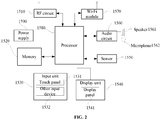
- FIG. 2 is a block diagram showing a partial structure of a mobile phone related to the terminal provided by an embodiment of the present disclosure.
- the mobile phone includes: a radio frequency (RF) circuit 1510, a memory 1520, an input unit 1530, a display unit 1540, a sensor 1550, an audio circuit 1560, a wireless fidelity (Wi-Fi) module 1570, a processor 1580, a power supply 1590 and other components.
- RF radio frequency
- the RF circuit 1510 may be configured to receive and transmitting during the reception or transmission of information or during a call. Specifically, the RF circuit 1510 receives downlink information from a base station for the processing of the processor 1580, and additionally sends data designed for the uplink to the base station. Generally, the RF circuit 1510 includes, but is not limited to, an antenna, at least one amplifier, a transceiver, a coupler, a Low Noise Amplifier (LNA), a duplexer, and the like. In addition, the RF circuitry 1510 may also communicate with the network and other devices via wireless communication.
- LNA Low Noise Amplifier
- the above wireless communication may use any communication standard or protocol, including but not limited to Global System of Mobile communication (GSM), General Packet Radio Service (GPRS), Code Division Multiple Access (CDMA), Wideband Code Division Multiple Access (WCDMA), Long Term Evolution (LTE), E-mail, Short Messaging Service (SMS), and the like.
- GSM Global System of Mobile communication
- GPRS General Packet Radio Service
- CDMA Code Division Multiple Access
- WCDMA Wideband Code Division Multiple Access
- LTE Long Term Evolution
- E-mail Short Messaging Service
- the memory 1520 may be configured to store software programs and modules.
- the processor 1580 runs various functional applications and data processing of the mobile phone by running the software programs and modules stored in the memory 1520.
- the memory 1520 may mainly include a program storage area and a data storage area.
- the program storage area may store an operating system, an application required for at least one function (such as a voiceprint playing function, an image playing function, etc.), and the like.
- the data storage area may store data (such as audio data, a directory, etc.) created according to the usage of the mobile phone.
- the memory 1520 may include a high-speed random-access memory, and may also include a non-volatile memory, such as at least one magnetic disk memory, flash memory device, or other volatile solid-state memory.
- the input unit 1530 may be configured to receive input numeric or character information and to generate key signal inputs related to user settings and function controls of the mobile phone.
- the input unit 1530 may include a touch panel 1531 and other input device 1532.
- the touch panel 1531 also referred to as a touch screen, may collect touch operations of the user on or near the touch panel (for example, the user uses any proper article or accessory such as a finger, a stylus, or the like to operate on the touch panel 1531 or near the touch panel 1531), and drive a corresponding connecting device according to a preset program.
- the touch panel 1531 may include two parts: a touch detection device and a touch controller.
- the touch detection device detects the touch orientation of the user, detects a signal generated by the touch operation, and transmits the signal to the touch controller.
- the touch controller receives the touch information from the touch detection device, converts the touch information into contact coordinates, and sends same to the processor 1580.
- the touch controller may further receive commands from the processor 1580 and execute them.
- the touch panel 1531 may be implemented in various types such as resistive type, capacitive type, infrared ray, and surface acoustic waves.
- the input unit 1530 may also include other input device 1532.
- other input device 1532 may include, but are not limited to, one or more of a physical keyboard or keypad, a function key (such as a volume control button, a switch button, etc.), a trackball, a mouse, a joystick, and the like.
- a function key such as a volume control button, a switch button, etc.
- a trackball such as a mouse, a joystick, and the like.
- the display unit 1540 may be configured to display information input by the user or information provided to the user as well as various menus of the mobile phone.
- the display unit 1540 may include a display panel 1541.
- the display panel 1541 may be configured in the form of a liquid crystal display (LCD), an organic light-emitting diode (OLED), or the like.
- the touch panel 1531 may cover the display panel 1541. After the touch panel 1531 detects a touch operation on or near the touch panel, the touch panel 1531 transmits same to the processor 1580 to determine the type of the touch event. Then the processor 1580, according to the type of the touch event, provides a corresponding visual output on the display panel 1541.
- the touch panel 1531 and the display panel 1541 are used as two independent components to implement the input and input functions of the mobile phone, in some embodiments, the touch panel 1531 and the display panel 1541 may be integrated to realize the input and output functions of the mobile phone.
- the mobile phone may also include at least one type of sensor 1550, such as a light sensor, a motion sensor, and other sensors.
- the light sensor may include an ambient light sensor and a proximity sensor.
- the ambient light sensor may adjust the brightness of the display panel 1541 according to the brightness of the ambient light.
- the proximity sensor may close the display panel 1541 and/or the backlight when the mobile phone moves to the ear.
- an accelerometer sensor may detect the acceleration of each direction (usually three axes), may detect the magnitude and direction of gravity at rest, which may be used for an application that identifies the gesture of the mobile phone (such as horizontal and vertical screen switching, related game, magnetometer attitude calibration) and vibration recognition related functions (such as pedometer, tapping), or the like.
- Other sensors such as gyroscopes, barometers, hygrometers, thermometers, infrared sensors, or the like that may be equipped on mobile phones is not described herein.
- An audio circuit 1560, a speaker 1561, and a microphone 1562 may provide an audio interface between the user and the mobile phone.
- the audio circuit 1560 may transmit the converted electrical data of the received audio data to the speaker 1561, and the speaker 1561 converts it into a voiceprint signal output.
- the microphone 1562 converts the captured voiceprint signal into an electrical signal, the electrical signal is received by the audio circuit 1560 and converted to audio data, and the audio data is output to the processor 1580 for processing and is further transmitted to the other mobile device via the RF circuit 1510, or the audio data is output to the memory 1520 for further processing.
- Wi-Fi is a short-range wireless transmission technology.
- the mobile phone may help users to send and receive e-mail, browse web pages and access streaming media through Wi-Fi module 1570.
- the Wi-Fi module 1570 provides users with wireless broadband Internet access.
- FIG. 2 shows the Wi-Fi module 1570, it may be understood that the Wi-Fi module does not belong to the essential configuration of the mobile phone, and may be omitted as needed within the scope of not changing the essence of the present disclosure.
- the processor 1580 is the control center for the mobile phone that connects various portions of the entire mobile phone using various interfaces and lines.
- the processor 1580 executes various functions and processing data of the mobile phone by running or executing the software programs and/or modules stored in the memory 1520 and invoking data stored in the memory 1520, so as to realize overall monitoring of the mobile phone.
- the processor 1580 may include one or more processing units.
- the processor 1580 may integrate an application processor and a modem processor.
- the application processor mainly processes an operating system, a user interface, an application, and the like.
- the modem processor primarily handles wireless communications. It would be appreciated that the above described modem processor may also not be integrated into the processor 1580.
- the mobile phone also includes a power supply 1590 (such as a battery) that supplies power to the various components.
- a power supply 1590 (such as a battery) that supplies power to the various components.
- the power supply may be logically connected to the processor 1580 via a power management system, thereby enabling management of charging, discharging, and power consumption via the power management system.
- the mobile phone may further include a camera, a Bluetooth module, and the like, and details are not described herein again.
- the processor 1580 included in the terminal may further implement the following functions: recording a video upon receipt of a record instruction input by a user, pausing the recording upon receipt of a pause instruction input by the user, and generating a first video file; continuing to display a dynamic image which is being captured by an image sensor in real time, and displaying a last frame image of the first video file subjected to transparency processing on the dynamic image in a superimposition manner; continuing to record the video upon receipt of a continue-to-record instruction input by the user, stopping the recording upon receipt of a stop instruction input by the user, and generating a second video file; and splicing the first video file and the second video file into a target video file. That is, the processor 1580 has the function of performing the video recording method of any of the above embodiments, which is not repeated herein.
- a video is recorded upon receipt of a record instruction input by a user; the recording is paused upon receipt of a pause instruction input by the user; and a first video file is generated.
- a dynamic image captured by an image sensor in real time continues to be displayed, and a last frame image of the first video file subjected to transparency processing is displayed on the dynamic image in a superimposition manner.
- the video continues to be recorded upon receipt of a continue-to-record instruction input by the user, then the recording is stopped upon receipt of a stop instruction input by the user, and a second video file is generated.
- the first video file and the second video file are spliced into a target video file.
- the user may position an image via the last frame image retained when the first video is recorded therebefore, such that a subsequently recorded second video may join well with the previously recorded first video, thereby realizing a continued-to-record function for an incomplete video.
- the transition of the finally spliced target video is more natural, increasing the interest in self-created videos, and thus increasing the click-through rate of a self-created video.
Landscapes
- Engineering & Computer Science (AREA)
- Multimedia (AREA)
- Signal Processing (AREA)
- Human Computer Interaction (AREA)
- Television Signal Processing For Recording (AREA)
Applications Claiming Priority (2)
| Application Number | Priority Date | Filing Date | Title |
|---|---|---|---|
| CN201711236846.5A CN107948562B (zh) | 2017-11-30 | 2017-11-30 | 视频录制方法和视频录制终端 |
| PCT/CN2018/118380 WO2019105441A1 (zh) | 2017-11-30 | 2018-11-30 | 视频录制方法和视频录制终端 |
Publications (3)
| Publication Number | Publication Date |
|---|---|
| EP3709633A4 EP3709633A4 (de) | 2020-09-16 |
| EP3709633A1 true EP3709633A1 (de) | 2020-09-16 |
| EP3709633B1 EP3709633B1 (de) | 2021-10-27 |
Family
ID=61946931
Family Applications (1)
| Application Number | Title | Priority Date | Filing Date |
|---|---|---|---|
| EP18884133.2A Active EP3709633B1 (de) | 2017-11-30 | 2018-11-30 | Videoaufnahmeverfahren und videoaufnahmeterminal |
Country Status (6)
| Country | Link |
|---|---|
| US (1) | US11089259B2 (de) |
| EP (1) | EP3709633B1 (de) |
| CN (1) | CN107948562B (de) |
| RU (1) | RU2745737C1 (de) |
| SG (1) | SG11202005043TA (de) |
| WO (1) | WO2019105441A1 (de) |
Families Citing this family (11)
| Publication number | Priority date | Publication date | Assignee | Title |
|---|---|---|---|---|
| CN107948562B (zh) * | 2017-11-30 | 2020-05-15 | 广州市百果园信息技术有限公司 | 视频录制方法和视频录制终端 |
| CN109167950B (zh) * | 2018-10-25 | 2020-05-12 | 腾讯科技(深圳)有限公司 | 视频录制方法、视频播放方法、装置、设备及存储介质 |
| CN109640019B (zh) * | 2018-12-13 | 2021-09-07 | 广州艾美网络科技有限公司 | 一种通过移动终端录制编辑长视频的方法 |
| CN110694264B (zh) * | 2019-10-12 | 2025-06-03 | 努比亚技术有限公司 | 游戏视频的生成方法、终端及可读存储介质 |
| CN111214829A (zh) * | 2019-12-30 | 2020-06-02 | 咪咕视讯科技有限公司 | 一种教学方法、电子设备及存储介质 |
| KR102558294B1 (ko) * | 2020-12-31 | 2023-07-24 | 한국과학기술연구원 | 임의 시점 영상 생성 기술을 이용한 다이나믹 영상 촬영 장치 및 방법 |
| CN115379107B (zh) * | 2021-06-07 | 2023-04-21 | 云南力衡医疗技术有限公司 | 工具使用视频处理方法及装置 |
| CN115278341A (zh) * | 2022-06-30 | 2022-11-01 | 海信视像科技股份有限公司 | 显示设备及视频处理方法 |
| CN117218269A (zh) * | 2022-09-07 | 2023-12-12 | 腾讯科技(深圳)有限公司 | 视频处理方法、装置、设备及存储介质 |
| EP4572317A4 (de) * | 2023-10-10 | 2025-12-31 | Samsung Electronics Co Ltd | Elektronische vorrichtung und videoerfassungsverfahren |
| WO2025102368A1 (zh) * | 2023-11-17 | 2025-05-22 | 影石创新科技股份有限公司 | 视频续录方法和拍摄设备 |
Family Cites Families (17)
| Publication number | Priority date | Publication date | Assignee | Title |
|---|---|---|---|---|
| US6466224B1 (en) * | 1999-01-19 | 2002-10-15 | Matsushita Electric Industrial Co., Ltd. | Image data composition and display apparatus |
| US6807361B1 (en) * | 2000-07-18 | 2004-10-19 | Fuji Xerox Co., Ltd. | Interactive custom video creation system |
| JP2005341416A (ja) * | 2004-05-28 | 2005-12-08 | Toshiba Corp | 撮像機能付き電子機器およびその画像表示方法 |
| JP4820136B2 (ja) * | 2005-09-22 | 2011-11-24 | パナソニック株式会社 | 映像音声記録装置及び映像音声記録方法 |
| KR101520659B1 (ko) * | 2008-02-29 | 2015-05-15 | 엘지전자 주식회사 | 개인용 비디오 레코더를 이용한 영상 비교 장치 및 방법 |
| KR101506488B1 (ko) * | 2008-04-04 | 2015-03-27 | 엘지전자 주식회사 | 근접센서를 이용하는 휴대 단말기 및 그 제어방법 |
| KR101576969B1 (ko) * | 2009-09-08 | 2015-12-11 | 삼성전자 주식회사 | 영상처리장치 및 영상처리방법 |
| JP2011259365A (ja) * | 2010-06-11 | 2011-12-22 | Sony Corp | カメラシステム、映像選択装置及び映像選択方法 |
| US9554049B2 (en) * | 2012-12-04 | 2017-01-24 | Ebay Inc. | Guided video capture for item listings |
| CN103347155B (zh) | 2013-06-18 | 2016-08-10 | 北京汉博信息技术有限公司 | 实现两个视频流不同过渡效果切换的转场特效模块及方法 |
| CN103546698B (zh) * | 2013-10-31 | 2016-08-17 | 广东欧珀移动通信有限公司 | 一种移动终端录制视频保存方法和装置 |
| CN103702041A (zh) * | 2013-12-30 | 2014-04-02 | 乐视网信息技术(北京)股份有限公司 | 一种视频暂停续拍的方法及装置 |
| CN105245810B (zh) * | 2015-10-08 | 2018-03-16 | 广东欧珀移动通信有限公司 | 一种视频转场的处理方法及装置 |
| CN105872700A (zh) * | 2015-11-30 | 2016-08-17 | 乐视网信息技术(北京)股份有限公司 | 开机视频无缝循环的实现方法及装置 |
| CN106210531B (zh) * | 2016-07-29 | 2019-05-03 | Oppo广东移动通信有限公司 | 视频生成方法、装置和移动终端 |
| US10438630B2 (en) * | 2017-02-10 | 2019-10-08 | Canon Kabushiki Kaisha | Display control apparatus that performs time-line display, method of controlling the same, and storage medium |
| CN107948562B (zh) * | 2017-11-30 | 2020-05-15 | 广州市百果园信息技术有限公司 | 视频录制方法和视频录制终端 |
-
2017
- 2017-11-30 CN CN201711236846.5A patent/CN107948562B/zh active Active
-
2018
- 2018-11-30 WO PCT/CN2018/118380 patent/WO2019105441A1/zh not_active Ceased
- 2018-11-30 SG SG11202005043TA patent/SG11202005043TA/en unknown
- 2018-11-30 RU RU2020121732A patent/RU2745737C1/ru active
- 2018-11-30 EP EP18884133.2A patent/EP3709633B1/de active Active
- 2018-11-30 US US16/764,958 patent/US11089259B2/en active Active
Also Published As
| Publication number | Publication date |
|---|---|
| WO2019105441A1 (zh) | 2019-06-06 |
| US20200351467A1 (en) | 2020-11-05 |
| CN107948562A (zh) | 2018-04-20 |
| EP3709633A4 (de) | 2020-09-16 |
| EP3709633B1 (de) | 2021-10-27 |
| RU2745737C1 (ru) | 2021-03-31 |
| US11089259B2 (en) | 2021-08-10 |
| CN107948562B (zh) | 2020-05-15 |
| SG11202005043TA (en) | 2020-06-29 |
Similar Documents
| Publication | Publication Date | Title |
|---|---|---|
| EP3709633A1 (de) | Videoaufnahmeverfahren und videoaufnahmeterminal | |
| CN110557566B (zh) | 视频拍摄方法及电子设备 | |
| US9924205B2 (en) | Video remote-commentary synchronization method and system, and terminal device | |
| CN111010510B (zh) | 一种拍摄控制方法、装置及电子设备 | |
| CN111355889A (zh) | 拍摄方法、装置、电子设备和存储介质 | |
| CN107786827B (zh) | 视频拍摄方法、视频播放方法、装置及移动终端 | |
| WO2019196929A1 (zh) | 一种视频数据处理方法及移动终端 | |
| CN107809598B (zh) | 一种拍摄方法、移动终端及服务器 | |
| CN110300274B (zh) | 视频文件的录制方法、装置及存储介质 | |
| WO2019223494A1 (zh) | 截屏方法及移动终端 | |
| CN111597370B (zh) | 一种拍摄方法及电子设备 | |
| CN109151546A (zh) | 一种视频处理方法、终端及计算机可读存储介质 | |
| CN106973234A (zh) | 一种视频拍摄方法及终端 | |
| WO2015131768A1 (en) | Video processing method, apparatus and system | |
| CN108449541B (zh) | 一种全景图像拍摄方法及移动终端 | |
| CN108174109B (zh) | 一种拍照方法及移动终端 | |
| CN113490010A (zh) | 基于直播视频的互动方法、装置、设备及存储介质 | |
| US11863901B2 (en) | Photographing method and terminal | |
| CN110650294A (zh) | 视频拍摄方法、移动终端及可读存储介质 | |
| CN110602386A (zh) | 一种视频录制方法及电子设备 | |
| CN108012101B (zh) | 视频录制方法和视频录制终端 | |
| CN108307105B (zh) | 一种拍摄方法、终端及计算机可读存储介质 | |
| CN108282611B (zh) | 一种图像处理方法及移动终端 | |
| CN108174081B (zh) | 一种拍摄方法及移动终端 | |
| CN106454078B (zh) | 一种对焦模式控制方法及终端设备 |
Legal Events
| Date | Code | Title | Description |
|---|---|---|---|
| STAA | Information on the status of an ep patent application or granted ep patent |
Free format text: STATUS: THE INTERNATIONAL PUBLICATION HAS BEEN MADE |
|
| PUAI | Public reference made under article 153(3) epc to a published international application that has entered the european phase |
Free format text: ORIGINAL CODE: 0009012 |
|
| STAA | Information on the status of an ep patent application or granted ep patent |
Free format text: STATUS: REQUEST FOR EXAMINATION WAS MADE |
|
| STAA | Information on the status of an ep patent application or granted ep patent |
Free format text: STATUS: EXAMINATION IS IN PROGRESS |
|
| 17P | Request for examination filed |
Effective date: 20200608 |
|
| A4 | Supplementary search report drawn up and despatched |
Effective date: 20200709 |
|
| AK | Designated contracting states |
Kind code of ref document: A1 Designated state(s): AL AT BE BG CH CY CZ DE DK EE ES FI FR GB GR HR HU IE IS IT LI LT LU LV MC MK MT NL NO PL PT RO RS SE SI SK SM TR |
|
| AX | Request for extension of the european patent |
Extension state: BA ME |
|
| 17Q | First examination report despatched |
Effective date: 20200911 |
|
| DAV | Request for validation of the european patent (deleted) | ||
| DAX | Request for extension of the european patent (deleted) | ||
| GRAP | Despatch of communication of intention to grant a patent |
Free format text: ORIGINAL CODE: EPIDOSNIGR1 |
|
| STAA | Information on the status of an ep patent application or granted ep patent |
Free format text: STATUS: GRANT OF PATENT IS INTENDED |
|
| RAP1 | Party data changed (applicant data changed or rights of an application transferred) |
Owner name: BIGO TECHNOLOGY PTE. LTD. |
|
| RIC1 | Information provided on ipc code assigned before grant |
Ipc: H04N 5/262 20060101ALI20210518BHEP Ipc: G11B 27/031 20060101ALI20210518BHEP Ipc: H04N 5/232 20060101ALI20210518BHEP Ipc: H04N 5/77 20060101ALI20210518BHEP Ipc: H04N 5/76 20060101AFI20210518BHEP |
|
| INTG | Intention to grant announced |
Effective date: 20210602 |
|
| GRAS | Grant fee paid |
Free format text: ORIGINAL CODE: EPIDOSNIGR3 |
|
| GRAA | (expected) grant |
Free format text: ORIGINAL CODE: 0009210 |
|
| STAA | Information on the status of an ep patent application or granted ep patent |
Free format text: STATUS: THE PATENT HAS BEEN GRANTED |
|
| AK | Designated contracting states |
Kind code of ref document: B1 Designated state(s): AL AT BE BG CH CY CZ DE DK EE ES FI FR GB GR HR HU IE IS IT LI LT LU LV MC MK MT NL NO PL PT RO RS SE SI SK SM TR |
|
| REG | Reference to a national code |
Ref country code: GB Ref legal event code: FG4D |
|
| REG | Reference to a national code |
Ref country code: CH Ref legal event code: EP |
|
| REG | Reference to a national code |
Ref country code: AT Ref legal event code: REF Ref document number: 1442942 Country of ref document: AT Kind code of ref document: T Effective date: 20211115 |
|
| REG | Reference to a national code |
Ref country code: DE Ref legal event code: R096 Ref document number: 602018025908 Country of ref document: DE |
|
| REG | Reference to a national code |
Ref country code: IE Ref legal event code: FG4D |
|
| REG | Reference to a national code |
Ref country code: LT Ref legal event code: MG9D |
|
| REG | Reference to a national code |
Ref country code: NL Ref legal event code: MP Effective date: 20211027 |
|
| REG | Reference to a national code |
Ref country code: AT Ref legal event code: MK05 Ref document number: 1442942 Country of ref document: AT Kind code of ref document: T Effective date: 20211027 |
|
| PG25 | Lapsed in a contracting state [announced via postgrant information from national office to epo] |
Ref country code: RS Free format text: LAPSE BECAUSE OF FAILURE TO SUBMIT A TRANSLATION OF THE DESCRIPTION OR TO PAY THE FEE WITHIN THE PRESCRIBED TIME-LIMIT Effective date: 20211027 Ref country code: LT Free format text: LAPSE BECAUSE OF FAILURE TO SUBMIT A TRANSLATION OF THE DESCRIPTION OR TO PAY THE FEE WITHIN THE PRESCRIBED TIME-LIMIT Effective date: 20211027 Ref country code: FI Free format text: LAPSE BECAUSE OF FAILURE TO SUBMIT A TRANSLATION OF THE DESCRIPTION OR TO PAY THE FEE WITHIN THE PRESCRIBED TIME-LIMIT Effective date: 20211027 Ref country code: BG Free format text: LAPSE BECAUSE OF FAILURE TO SUBMIT A TRANSLATION OF THE DESCRIPTION OR TO PAY THE FEE WITHIN THE PRESCRIBED TIME-LIMIT Effective date: 20220127 Ref country code: AT Free format text: LAPSE BECAUSE OF FAILURE TO SUBMIT A TRANSLATION OF THE DESCRIPTION OR TO PAY THE FEE WITHIN THE PRESCRIBED TIME-LIMIT Effective date: 20211027 |
|
| PG25 | Lapsed in a contracting state [announced via postgrant information from national office to epo] |
Ref country code: IS Free format text: LAPSE BECAUSE OF FAILURE TO SUBMIT A TRANSLATION OF THE DESCRIPTION OR TO PAY THE FEE WITHIN THE PRESCRIBED TIME-LIMIT Effective date: 20220227 Ref country code: SE Free format text: LAPSE BECAUSE OF FAILURE TO SUBMIT A TRANSLATION OF THE DESCRIPTION OR TO PAY THE FEE WITHIN THE PRESCRIBED TIME-LIMIT Effective date: 20211027 Ref country code: PT Free format text: LAPSE BECAUSE OF FAILURE TO SUBMIT A TRANSLATION OF THE DESCRIPTION OR TO PAY THE FEE WITHIN THE PRESCRIBED TIME-LIMIT Effective date: 20220228 Ref country code: PL Free format text: LAPSE BECAUSE OF FAILURE TO SUBMIT A TRANSLATION OF THE DESCRIPTION OR TO PAY THE FEE WITHIN THE PRESCRIBED TIME-LIMIT Effective date: 20211027 Ref country code: NO Free format text: LAPSE BECAUSE OF FAILURE TO SUBMIT A TRANSLATION OF THE DESCRIPTION OR TO PAY THE FEE WITHIN THE PRESCRIBED TIME-LIMIT Effective date: 20220127 Ref country code: NL Free format text: LAPSE BECAUSE OF FAILURE TO SUBMIT A TRANSLATION OF THE DESCRIPTION OR TO PAY THE FEE WITHIN THE PRESCRIBED TIME-LIMIT Effective date: 20211027 Ref country code: LV Free format text: LAPSE BECAUSE OF FAILURE TO SUBMIT A TRANSLATION OF THE DESCRIPTION OR TO PAY THE FEE WITHIN THE PRESCRIBED TIME-LIMIT Effective date: 20211027 Ref country code: HR Free format text: LAPSE BECAUSE OF FAILURE TO SUBMIT A TRANSLATION OF THE DESCRIPTION OR TO PAY THE FEE WITHIN THE PRESCRIBED TIME-LIMIT Effective date: 20211027 Ref country code: GR Free format text: LAPSE BECAUSE OF FAILURE TO SUBMIT A TRANSLATION OF THE DESCRIPTION OR TO PAY THE FEE WITHIN THE PRESCRIBED TIME-LIMIT Effective date: 20220128 Ref country code: ES Free format text: LAPSE BECAUSE OF FAILURE TO SUBMIT A TRANSLATION OF THE DESCRIPTION OR TO PAY THE FEE WITHIN THE PRESCRIBED TIME-LIMIT Effective date: 20211027 |
|
| REG | Reference to a national code |
Ref country code: CH Ref legal event code: PL |
|
| REG | Reference to a national code |
Ref country code: DE Ref legal event code: R097 Ref document number: 602018025908 Country of ref document: DE |
|
| PG25 | Lapsed in a contracting state [announced via postgrant information from national office to epo] |
Ref country code: SM Free format text: LAPSE BECAUSE OF FAILURE TO SUBMIT A TRANSLATION OF THE DESCRIPTION OR TO PAY THE FEE WITHIN THE PRESCRIBED TIME-LIMIT Effective date: 20211027 Ref country code: SK Free format text: LAPSE BECAUSE OF FAILURE TO SUBMIT A TRANSLATION OF THE DESCRIPTION OR TO PAY THE FEE WITHIN THE PRESCRIBED TIME-LIMIT Effective date: 20211027 Ref country code: RO Free format text: LAPSE BECAUSE OF FAILURE TO SUBMIT A TRANSLATION OF THE DESCRIPTION OR TO PAY THE FEE WITHIN THE PRESCRIBED TIME-LIMIT Effective date: 20211027 Ref country code: MC Free format text: LAPSE BECAUSE OF FAILURE TO SUBMIT A TRANSLATION OF THE DESCRIPTION OR TO PAY THE FEE WITHIN THE PRESCRIBED TIME-LIMIT Effective date: 20211027 Ref country code: LU Free format text: LAPSE BECAUSE OF NON-PAYMENT OF DUE FEES Effective date: 20211130 Ref country code: EE Free format text: LAPSE BECAUSE OF FAILURE TO SUBMIT A TRANSLATION OF THE DESCRIPTION OR TO PAY THE FEE WITHIN THE PRESCRIBED TIME-LIMIT Effective date: 20211027 Ref country code: DK Free format text: LAPSE BECAUSE OF FAILURE TO SUBMIT A TRANSLATION OF THE DESCRIPTION OR TO PAY THE FEE WITHIN THE PRESCRIBED TIME-LIMIT Effective date: 20211027 Ref country code: CZ Free format text: LAPSE BECAUSE OF FAILURE TO SUBMIT A TRANSLATION OF THE DESCRIPTION OR TO PAY THE FEE WITHIN THE PRESCRIBED TIME-LIMIT Effective date: 20211027 Ref country code: BE Free format text: LAPSE BECAUSE OF NON-PAYMENT OF DUE FEES Effective date: 20211130 |
|
| REG | Reference to a national code |
Ref country code: BE Ref legal event code: MM Effective date: 20211130 |
|
| PLBE | No opposition filed within time limit |
Free format text: ORIGINAL CODE: 0009261 |
|
| STAA | Information on the status of an ep patent application or granted ep patent |
Free format text: STATUS: NO OPPOSITION FILED WITHIN TIME LIMIT |
|
| 26N | No opposition filed |
Effective date: 20220728 |
|
| PG25 | Lapsed in a contracting state [announced via postgrant information from national office to epo] |
Ref country code: IE Free format text: LAPSE BECAUSE OF NON-PAYMENT OF DUE FEES Effective date: 20211130 Ref country code: AL Free format text: LAPSE BECAUSE OF FAILURE TO SUBMIT A TRANSLATION OF THE DESCRIPTION OR TO PAY THE FEE WITHIN THE PRESCRIBED TIME-LIMIT Effective date: 20211027 |
|
| PG25 | Lapsed in a contracting state [announced via postgrant information from national office to epo] |
Ref country code: SI Free format text: LAPSE BECAUSE OF FAILURE TO SUBMIT A TRANSLATION OF THE DESCRIPTION OR TO PAY THE FEE WITHIN THE PRESCRIBED TIME-LIMIT Effective date: 20211027 |
|
| PG25 | Lapsed in a contracting state [announced via postgrant information from national office to epo] |
Ref country code: IT Free format text: LAPSE BECAUSE OF FAILURE TO SUBMIT A TRANSLATION OF THE DESCRIPTION OR TO PAY THE FEE WITHIN THE PRESCRIBED TIME-LIMIT Effective date: 20211027 |
|
| PG25 | Lapsed in a contracting state [announced via postgrant information from national office to epo] |
Ref country code: CY Free format text: LAPSE BECAUSE OF FAILURE TO SUBMIT A TRANSLATION OF THE DESCRIPTION OR TO PAY THE FEE WITHIN THE PRESCRIBED TIME-LIMIT Effective date: 20211027 |
|
| PG25 | Lapsed in a contracting state [announced via postgrant information from national office to epo] |
Ref country code: LI Free format text: LAPSE BECAUSE OF NON-PAYMENT OF DUE FEES Effective date: 20220630 Ref country code: HU Free format text: LAPSE BECAUSE OF FAILURE TO SUBMIT A TRANSLATION OF THE DESCRIPTION OR TO PAY THE FEE WITHIN THE PRESCRIBED TIME-LIMIT; INVALID AB INITIO Effective date: 20181130 Ref country code: CH Free format text: LAPSE BECAUSE OF NON-PAYMENT OF DUE FEES Effective date: 20220630 |
|
| PG25 | Lapsed in a contracting state [announced via postgrant information from national office to epo] |
Ref country code: MK Free format text: LAPSE BECAUSE OF FAILURE TO SUBMIT A TRANSLATION OF THE DESCRIPTION OR TO PAY THE FEE WITHIN THE PRESCRIBED TIME-LIMIT Effective date: 20211027 |
|
| PG25 | Lapsed in a contracting state [announced via postgrant information from national office to epo] |
Ref country code: MT Free format text: LAPSE BECAUSE OF FAILURE TO SUBMIT A TRANSLATION OF THE DESCRIPTION OR TO PAY THE FEE WITHIN THE PRESCRIBED TIME-LIMIT Effective date: 20211027 |
|
| PG25 | Lapsed in a contracting state [announced via postgrant information from national office to epo] |
Ref country code: TR Free format text: LAPSE BECAUSE OF FAILURE TO SUBMIT A TRANSLATION OF THE DESCRIPTION OR TO PAY THE FEE WITHIN THE PRESCRIBED TIME-LIMIT Effective date: 20211027 |
|
| PGFP | Annual fee paid to national office [announced via postgrant information from national office to epo] |
Ref country code: DE Payment date: 20251118 Year of fee payment: 8 |
|
| PGFP | Annual fee paid to national office [announced via postgrant information from national office to epo] |
Ref country code: GB Payment date: 20251010 Year of fee payment: 8 |
|
| PGFP | Annual fee paid to national office [announced via postgrant information from national office to epo] |
Ref country code: FR Payment date: 20251010 Year of fee payment: 8 |