EP3703393B1 - Verfahren zur ressourcenauswahl in der d2d-kommunikation und endgerät - Google Patents
Verfahren zur ressourcenauswahl in der d2d-kommunikation und endgerät Download PDFInfo
- Publication number
- EP3703393B1 EP3703393B1 EP17930229.4A EP17930229A EP3703393B1 EP 3703393 B1 EP3703393 B1 EP 3703393B1 EP 17930229 A EP17930229 A EP 17930229A EP 3703393 B1 EP3703393 B1 EP 3703393B1
- Authority
- EP
- European Patent Office
- Prior art keywords
- terminal device
- resources
- resource
- resource set
- physical layer
- Prior art date
- Legal status (The legal status is an assumption and is not a legal conclusion. Google has not performed a legal analysis and makes no representation as to the accuracy of the status listed.)
- Active
Links
Images
Classifications
-
- H—ELECTRICITY
- H04—ELECTRIC COMMUNICATION TECHNIQUE
- H04W—WIRELESS COMMUNICATION NETWORKS
- H04W4/00—Services specially adapted for wireless communication networks; Facilities therefor
- H04W4/70—Services for machine-to-machine communication [M2M] or machine type communication [MTC]
-
- H—ELECTRICITY
- H04—ELECTRIC COMMUNICATION TECHNIQUE
- H04L—TRANSMISSION OF DIGITAL INFORMATION, e.g. TELEGRAPHIC COMMUNICATION
- H04L5/00—Arrangements affording multiple use of the transmission path
- H04L5/003—Arrangements for allocating sub-channels of the transmission path
- H04L5/0078—Timing of allocation
- H04L5/0082—Timing of allocation at predetermined intervals
-
- H—ELECTRICITY
- H04—ELECTRIC COMMUNICATION TECHNIQUE
- H04W—WIRELESS COMMUNICATION NETWORKS
- H04W4/00—Services specially adapted for wireless communication networks; Facilities therefor
- H04W4/30—Services specially adapted for particular environments, situations or purposes
- H04W4/40—Services specially adapted for particular environments, situations or purposes for vehicles, e.g. vehicle-to-pedestrians [V2P]
-
- H—ELECTRICITY
- H04—ELECTRIC COMMUNICATION TECHNIQUE
- H04W—WIRELESS COMMUNICATION NETWORKS
- H04W72/00—Local resource management
- H04W72/02—Selection of wireless resources by user or terminal
-
- H—ELECTRICITY
- H04—ELECTRIC COMMUNICATION TECHNIQUE
- H04W—WIRELESS COMMUNICATION NETWORKS
- H04W72/00—Local resource management
- H04W72/04—Wireless resource allocation
- H04W72/044—Wireless resource allocation based on the type of the allocated resource
- H04W72/0453—Resources in frequency domain, e.g. a carrier in FDMA
-
- H—ELECTRICITY
- H04—ELECTRIC COMMUNICATION TECHNIQUE
- H04W—WIRELESS COMMUNICATION NETWORKS
- H04W72/00—Local resource management
- H04W72/20—Control channels or signalling for resource management
- H04W72/25—Control channels or signalling for resource management between terminals via a wireless link, e.g. sidelink
-
- H—ELECTRICITY
- H04—ELECTRIC COMMUNICATION TECHNIQUE
- H04W—WIRELESS COMMUNICATION NETWORKS
- H04W72/00—Local resource management
- H04W72/50—Allocation or scheduling criteria for wireless resources
- H04W72/53—Allocation or scheduling criteria for wireless resources based on regulatory allocation policies
-
- H—ELECTRICITY
- H04—ELECTRIC COMMUNICATION TECHNIQUE
- H04W—WIRELESS COMMUNICATION NETWORKS
- H04W72/00—Local resource management
- H04W72/50—Allocation or scheduling criteria for wireless resources
- H04W72/54—Allocation or scheduling criteria for wireless resources based on quality criteria
- H04W72/542—Allocation or scheduling criteria for wireless resources based on quality criteria using measured or perceived quality
-
- H—ELECTRICITY
- H04—ELECTRIC COMMUNICATION TECHNIQUE
- H04W—WIRELESS COMMUNICATION NETWORKS
- H04W8/00—Network data management
- H04W8/22—Processing or transfer of terminal data, e.g. status or physical capabilities
- H04W8/24—Transfer of terminal data
-
- H—ELECTRICITY
- H04—ELECTRIC COMMUNICATION TECHNIQUE
- H04W—WIRELESS COMMUNICATION NETWORKS
- H04W80/00—Wireless network protocols or protocol adaptations to wireless operation
- H04W80/08—Upper layer protocols
-
- H—ELECTRICITY
- H04—ELECTRIC COMMUNICATION TECHNIQUE
- H04W—WIRELESS COMMUNICATION NETWORKS
- H04W74/00—Wireless channel access
- H04W74/08—Non-scheduled access, e.g. ALOHA
- H04W74/0808—Non-scheduled access, e.g. ALOHA using carrier sensing, e.g. carrier sense multiple access [CSMA]
-
- H—ELECTRICITY
- H04—ELECTRIC COMMUNICATION TECHNIQUE
- H04W—WIRELESS COMMUNICATION NETWORKS
- H04W92/00—Interfaces specially adapted for wireless communication networks
- H04W92/16—Interfaces between hierarchically similar devices
- H04W92/18—Interfaces between hierarchically similar devices between terminal devices
Definitions
- Embodiments of the present disclosure relate to the field of wireless communication, and more particularly, to a method for resource selection in device-to-device (D2D) communication and a terminal device.
- D2D device-to-device
- V2X Vehicle-to-Everything
- SL sidelink
- D2D D2D communication
- LTE long term evolution
- the Internet of Vehicle system employs a terminal-to-terminal direct communication method, thus it has higher spectrum efficiency and lower transmission delay.
- transmission mode 3 (mode 3) and transmission mode 4 (mode 4).
- a terminal device using transmission mode 3 and a terminal device using transmission mode 4 transmit data in different resource pools. Resources used by the terminal device using transmission mode 3 are allocated by a base station, and the terminal device transmits data on a sidelink according to the resources allocated by the base station; and the terminal device using transmission mode 4 can autonomously select the transmission resources for the sidelink.
- resources used by the terminal device using transmission mode 3 are allocated by a base station, and the terminal device transmits data on a sidelink according to the resources allocated by the base station; and the terminal device using transmission mode 4 can autonomously select the transmission resources for the sidelink.
- these two transmission modes can also be used, and a terminal device using transmission mode 3 and a terminal device using transmission mode 4 can share resource pools. Since the terminal device using transmission mode 3 is connected to the base station, and its transmission resources are allocated by the base station, when the terminal device using transmission mode 3 and the terminal device using transmission mode 4 coexist, it is more necessary to protect the reliability of the terminal device using transmission mode 3. However, this may lead to a situation that the terminal device using transmission mode 4 has insufficient available resources.
- EP 3 661 237 A1 published after the filing date of the present application, relates to a carrier selection method including: obtaining channel busy ratios (CBR) of a plurality of candidate carriers; performing filtering processing on the CBRs of the plurality of carriers to obtain CBRs of the plurality of carriers after filtering; and selecting a carrier from the plurality of carriers according to the CBRs of the plurality of carriers that are obtained after filtering. Therefore, filtering processing is performed on a measurement result of the CBRs of the plurality of carriers, and the carrier is selected from the plurality of carriers according to the CBRs of the plurality of carriers that are obtained after filtering processing, thereby reducing carrier switching frequency and ensuring system stability while the carrier is selected.
- CBR channel busy ratios
- US 2016/295624 A1 relates to a method of a first user equipment (UE) in a wireless vehicular communication network.
- the method includes receiving a plurality of messages including control and data messages from at least one second UE using at least one of multiple resource pools, where the plurality of messages include event-triggered or periodic traffic and the multiple resource pools include at least one of dedicated or shared resource pools.
- the method further includes determining the at least one of the multiple resource pools to transmit the plurality of messages to the at least one second UE, where multiple traffic types or priorities are multiplexed in the at least one of the multiple resource pools.
- the method further includes dynamically adjusting resource selection of the first UE within the at least one of the multiple resource pools based on a state of the wireless vehicular communication network and directly communicating the plurality of messages to the at least one second UE using the at least one of the multiple resource pools.
- the embodiments of the present disclosure provide a method for resource selection in D2D communication and a terminal device, which enable, under the condition that resource requirements of the terminal devices are satisfied, terminal devices using different transmission modes to select appropriate transmission resources for performing data transmission and reduce interference.
- the present invention is defined in the independent claims.
- a method for resource selection in D2D communication including: performing, by a physical layer of a first terminal device, sensing in a first resource pool on a first carrier within a time interval [n + T1, n + T2] to obtain a first resource set, and resources in the first resource set can be used for the first terminal device to transmit a target service, where n is a time when the target service arrives, or a time when the first terminal device determines that performing sensing is required, 0 ⁇ T1 ⁇ T2; and reporting, by the physical layer of the first terminal device, information of the first resource set to a higher layer of the first terminal device.
- the physical layer of the terminal device reports the first resource set that it determined available for transmitting the target service to the higher layer, so that the higher layer of the terminal device can allocate resources to the terminal device or indicate it to perform operations such as resource reselection and the like based on the report of the physical layer, thereby the terminal device can also obtain transmission resources for transmitting the target service when the available resources are insufficient for resource selection.
- the performing, by a physical layer of a first terminal device, sensing in a first resource pool on a first carrier within a time interval [n + T1, n + T2] to obtain a first resource set includes:
- the second resource set does not comprise resources occupied and/or reserved by a second terminal device, wherein the second terminal device is a terminal device using a first transmission mode, and the first terminal device is a terminal device using a second transmission mode.
- the physical layer of the first terminal device using the second transmission mode excludes resources occupied and/or reserved by the second terminal device using the first transmission mode, thereby when the first terminal device performs the resource selection, it does not affect the data transmission of the second terminal device using the first transmission mode.
- time-frequency resources used by the terminal device using the first transmission mode for service transmission are resources scheduled by a network device; time-frequency resources used by the terminal device using the second transmission mode for service transmission are resources that the terminal device using the second transmission mode autonomously selects in a resource pool corresponding to the second transmission mode.
- the first transmission mode may be, for example, transmission mode 3 in the Release-14 of the 3GPP protocol.
- the time-frequency resources used by the terminal device for performing the data transmission are resources scheduled by the network device.
- the second transmission mode may be, for example, transmission mode 4 in the Release-14 of the foregoing 3GPP protocol.
- the time-frequency resources are resources that the terminal device can autonomously select, such as resources randomly selected in the corresponding resource pool, or resources determined by the terminal device based on results of sensing.
- the physical layer of the terminal device using transmission mode 4 excludes the resources occupied and/or reserved by the terminal device using transmission mode 3, and reports information of a remaining resource set to its higher layer. Thereby, while the terminal device using transmission mode 4 performs resource selection, it also ensures normal transmission of the terminal device using transmission mode 3.
- the reporting, by the physical layer of the first terminal device, information of the first resource set to a higher layer of the first terminal device includes: reporting, by the physical layer of the first terminal device, resources in the first resource set to the higher layer of the first terminal device.
- the reporting, by the physical layer of the first terminal device, information of the first resource set to a higher layer of the first terminal device includes: reporting, by the physical layer of the first terminal device, an insufficient resource indication to the higher layer of the first terminal device, where the insufficient resource indication is used to indicate that a ratio of B and A is lower than the threshold Q, where B is the amount of resources in the second resource set, and A is the total amount of resources in the first resource pool on the first carrier within the time interval [n + T1, n + T2].
- the method further includes: determining, by the higher layer of the first terminal device, in the first resource set, a target resource for the first terminal device to transmit the target service; sending, by the higher layer of the first terminal device, a first indication to the physical layer of the first terminal device, and the first indication is used to indicate the target resource; and transmitting, by the physical layer of the first terminal device, the target service on the target resource according to the first indication.
- the method further includes: sending, by the higher layer of the first terminal device, a second indication to the physical layer of the first terminal device, and the second indication is used to indicate that the physical layer of the first terminal device reselects a first resource set available for transmitting the target service in a second resource pool on the first carrier.
- the method further includes: sending, by the higher layer of the first terminal device, a third indication to the physical layer of the first terminal device, and the third indication is used to indicate that the physical layer of the first terminal device reselects a first resource set available for transmitting the target service in a third resource pool on a second carrier
- the method before the performing, by the physical layer of the first terminal device, sensing in the first resource pool within the time interval [n + T1, n + T2] to obtain a second resource set, the method further includes: receiving, by the first terminal device, configuration information sent by a network device, and the configuration information is used to indicate the threshold Q; or acquiring, by the first terminal device, the threshold Q pre-stored in the first terminal device.
- a terminal device in a second aspect, can perform operations of the terminal device in the first aspect or any optional implementation of the first aspect described above.
- the terminal device may include module units for performing the operations of the terminal device in the first aspect or any possible implementation of the first aspect described above.
- a terminal device in a third aspect, includes a processor, a transceiver, and a memory. Where, the processor, the transceiver, and the memory communicate with each other through an internal connection path.
- the memory is configured to store instructions
- the processor is configured to execute instructions stored in the memory. When the processor executes the instructions stored in the memory, the execution causes the terminal device to execute the methods in the first aspect or any possible implementation of the first aspect, or the execution causes the terminal device to implement the terminal device provided in the second aspect.
- a computer readable storage medium stores programs that cause a terminal device to perform the methods for resource selection in D2D communication of the first aspect and any of various implementations described above.
- a system chip in a fifth aspect, includes an input interface, an output interface, a processor, and a memory.
- the processor is configured to execute instructions stored in the memory. When the instructions are executed, the processor may implement the methods in the foregoing first aspect or any possible implementation of the first aspect.
- a computer program product including instructions is provided, and when the computer program product runs on a computer, the computer is caused to execute the methods in the foregoing first aspect or any possible implementation of the first aspect.
- GSM global system of mobile communication
- CDMA code division multiple access
- WCDMA wideband code division multiple access
- LTE long term evolution
- FDD LTE frequency division duplex
- TDD LTE time division duplex
- UMTS universal mobile telecommunication system
- the present disclosure describes various embodiments in combination with a terminal device.
- the terminal device can also refer to a user equipment (UE), an access terminal, a user unit, a user station, a mobile station, a mobile site, a remote station, a remote terminal, a mobile device, a user terminal, a terminal, a wireless communication device, a user agent or a user device.
- UE user equipment
- the access terminal can be a cell phone, a cordless phone, a session initiation protocol (SIP) phone, a wireless local loop (WLL) station, a personal digital assistant (PDA), a handheld device with wireless communication function, a computing device or other processing devices connected to wireless modems, a vehicle device, a wearable device, a terminal device in a future 5G network or a terminal device in a future evolved public land mobile network (PLMN) network, or the like.
- SIP session initiation protocol
- WLL wireless local loop
- PDA personal digital assistant
- PLMN public land mobile network
- the present disclosure describes various embodiments in combination with a network device.
- the network device may be a device for communicating with a terminal device.
- a terminal device may be a base station (Base Transceiver Station, BTS) in a GSM system or CDMA system, or a base station (NodeB, NB) in a WCDMA system, or it may also be an evolutional node B (eNB or eNodeB) in an LTE system, or the network device may be a relay station, an access point, a vehicle device, a wearable device, and a network-side device in a future 5G network or a network-side device in a future evolved PLMN network, or the like.
- BTS Base Transceiver Station
- NodeB, NB base station
- eNB evolutional node B
- LTE evolutional node B
- the network device may be a relay station, an access point, a vehicle device, a wearable device, and a network-side device in a future
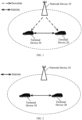
- FIG. 1 and FIG. 2 are schematic diagrams of two application scenarios according to embodiments of the present disclosure.
- FIG. 1 exemplarily shows one network device and two terminal devices.
- the wireless communication system may include multiple network devices and the amount of terminal devices exist in the coverage of each network device may be different from two. The embodiments of the present invention do not limit thereto.
- the wireless communication system may also include other network entities such as a mobile management entity (MME), a serving gateway (S-GW), a packet data network gateway (P-GW), and the like, but the embodiments of the present invention do not limited thereto.
- MME mobile management entity
- S-GW serving gateway
- P-GW packet data network gateway
- a terminal device 20 and a terminal device 30 can communicate in a D2D communication mode.
- the terminal device 20 and the terminal device 30 directly communicate with each other through a D2D link, i.e., a sidelink (SL).
- a sidelink SL
- the terminal device 20 and the terminal device 30 directly communicate with each other through a sidelink.
- the terminal device 20 communicates with the terminal device 30 through a sidelink, and transmission resources are allocated by the network device; in FIG. 2 , the terminal device 20 communicates with the terminal device 30 through a sidelink, transmission resources are autonomously selected by the terminal device, and no network device is required to allocate transmission resources.
- D2D communication may refer to Vehicle to Vehicle (V2V) communication or Vehicle to Everything (V2X) communication.
- V2X Vehicle to Everything
- X may widely refer to any device with wireless receiving and sending capabilities, for example, but not limited to, slow moving wireless apparatus, fast moving vehicle devices, or network control nodes with wireless transmitting and receiving capabilities. It should be understood that the embodiments of the present invention are mainly applied to the scenarios of V2X communication, but can also be applied to any other D2D communication scenarios, which the embodiments of the present invention do not limit thereto.
- VUE Vehicle User Equipment
- PUE Pedestrian User Equipment
- PUE Pedestrian User Equipment
- PUE Pedestrian User Equipment
- VUE has higher processing capability and is usually powered by a battery in a vehicle.
- PUE has lower processing capability, reducing power consumption is also a major factor that PUE needs to consider. Therefore, in an existing Internet of Vehicle system, VUE is considered to have complete receiving and sensing capabilities; while PUE is considered to have partial or no receiving and sensing capabilities.
- PUE has part of the sensing capability, its selection of resources can employ a sensing method similar to VUE, and selection of available resources is performed on the part of the resources that can be sensed; if PUE does not have the sensing capability, then PUE randomly selects transmission resources in a resource pool.
- transmission mode 3 (mode 3) and transmission mode 4 (mode 4).
- Transmission resources of a terminal device using transmission mode 3 are allocated by a base station, and the terminal device sends data on a sidelink according to the resources allocated by the base station; the base station can allocate resources for a single transmission for the terminal device, or allocate resources for semi-static transmission for the terminal device. If a terminal device using transmission mode 4 has the sensing capability, it transmits data by means of sensing and reservation. If it does not have the sensing capability, it randomly selects transmission resources in a resource pool.
- a terminal device with the sensing capability acquires an available resource set from a resource pool by means of sensing, and the terminal device randomly selects a resource from the set to perform data transmission. Since services in the Internet of Vehicle system is periodical, the terminal device usually adopts semi-static transmission, that is, after selecting a transmission resource, the terminal device will continuously use this resource in multiple transmission periods, thereby reducing the probability of resource reselection and resource conflicts. In the control information transmitted by the terminal device in one time, the information of resources reserved for the next transmission is carried, so that other terminal devices can determine whether this resource is reserved and used by the terminal device through detecting the control information of the terminal device, thus achieving a purpose of reducing resource conflicts.
- a resource pool corresponding to transmission mode 3 and a resource pool corresponding to transmission mode 4 are orthogonal.
- a terminal device using mode 3 performs data transmission on time-frequency resources in a resource pool supporting mode 3
- a terminal device using mode 4 performs data transmission on time-frequency resources in a resource pool supporting mode 4.
- a terminal device using transmission mode 3 and a terminal device using transmission mode 4 can share a resource pool.
- a terminal device with the sensing capability can select resources through sensing, and for a terminal device without the sensing capability, it is inevitable to cause interference with data transmission of other terminal devices. Since the terminal device using transmission mode 3 is connected to a base station, and its transmission resources are allocated by the base station, when the terminal device using transmission mode 3 and the terminal device using transmission mode 4 coexist, it is more necessary to protect the transmission reliability of the terminal device using transmission mode 3.
- each sidelink process one carrier may include two processes
- the terminal device performs resource selection within a time interval [n + T1, n + T2] ms according to a sensing result of a sensing window in the last 1s (i.e. 1000ms).
- the time period [n + T1, n + T2] ms is called a selection window, where T1 and T2 may satisfy T1 ⁇ 4, 20 ⁇ T2 ⁇ 100, for example.
- the last 1s described later indicates the 1s before the time n.
- the specific processes of resource selection are as follows. Here, taking the terminal device 20 sensing resources of the terminal device 30 as an example for description:
- a time-frequency resource occupied by a data channel corresponding to a certain control channel is referred to here as a time-frequency resource (or a resource block) used to transmit the data channel.
- a time-frequency resource or a resource block used to transmit the data channel.
- the resources A1 and B1 in FIG. 3 may both be referred to as a time-frequency resource.
- the terminal device 20 After the terminal device 20 selects the time-frequency resource for data transmission, it will continue to use the time-frequency resource in each transmission period of the subsequent transmission process, using the time-frequency resource C_resel times in total, where C_resel is a Resource Reselection Counter. Each time data is transmitted, the value of C_resel is decremented by 1. When the value of C_resel is reduced to 0, the terminal device 20 will generate a random number between [0, 1], which will be compared with a Probability Resource Keep (ProbResourceKeep) parameter. This parameter denotes a probability that the terminal device continues to use this resource. If the value of the random number is greater than the parameter, the terminal device 20 performs resource reselection. If the value of the random number is lower than the parameter, the terminal device 20 may continue to use this time-frequency resource to perform data transmission, and at the same time reset the value of C_resel.
- ProbResourceKeep Probability Resource Keep
- the terminal device 20 needs to select A ⁇ 20% resources with the lowest RSSI measurement value from the remaining B resources in the candidate resource set S_A and moves them to the candidate resource set S_B.
- the PSSCH-RSRP threshold has been increased to a maximum value, and it is still that B ⁇ A ⁇ 20%, that is, it is not enough to select these A ⁇ 20% resources among the remaining B resources in the candidate resource set S_A, then the terminal device cannot find the transmission resources for transmitting the current data.
- the physical layer of the terminal device reports the first resource set that it currently determines available for transmitting the target service to the higher layer, so that the higher layer of the terminal device can allocate resources to the terminal device or indicate it to perform operations such as resource reselection and the like based on the report of the physical layer, thereby enabling the terminal device to obtain transmission resources for transmitting the target service.
- the reliability of data transmission of the terminal devices using different transmission modes can be guaranteed.
- operations performed by the physical layer of the terminal device may be understood as operations performed on the physical layer by the terminal device, or operations performed by a physical layer module of the terminal device; operations performed by the higher layer (hereinafter also referred to as the higher layer) of the terminal device may be understood as operations performed on the higher layer by the terminal device or operations performed by a higher layer module of the terminal device.
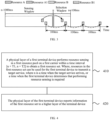
- FIG. 4 is a schematic flowchart of a method for resource selection in D2D communication according to an embodiment of the present disclosure.
- the method shown in FIG. 4 may be executed by a first terminal device, and the first terminal device may be, for example, the terminal device 20 or the terminal device 30 shown in FIG. 2 .
- the method for resource selection in D2D communication includes: In 410, a physical layer of the first terminal device performs sensing in a first resource pool on a first carrier within a time interval [n + T1, n + T2] to obtain a first resource set.
- Resources in the first resource set can be used for the first terminal device to transmit a target service, where n is a time when the target service arrives, or a time when the first terminal device determines that performing sensing is required, 0 ⁇ T1 ⁇ T2.
- T1 and T2 may be configured by a network device for the first terminal device, or may be pre-stored in the first terminal device, or may be self-selected by the first terminal device in some way, which is not limited here.
- 0 ⁇ T1 ⁇ D1, D2 ⁇ T2 ⁇ D3, D1, D2, and D3 are parameters predefined by the system or configured by the network device, and D3 ⁇ D, D represents a delay requirement of the target service.
- the physical layer of the first terminal device reports information of the first resource set to a higher layer of the terminal device.
- the physical layer of the first terminal device listens resources within the time interval [n + T1, n + T2] in the first resource pool on the first carrier, so as to determine the first resource set that can be used to transmit the target service.
- n is the time when the target service arrives, or n is the time when the first terminal device determines that performing sensing is required.
- the physical layer of the first terminal device may receive a request sent by its higher layer at the time n, thus the physical layer of the first terminal device determines at the time n that performing sensing within the time interval [n + T1, n + T2] is required, so as to find transmission resources for the target service.
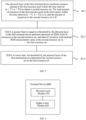
- 410 may further include 411 to 413.
- the physical layer of the first terminal device performs sensing in the first resource pool within the time interval [n + T1, n + T2] to obtain a second resource set.
- the total amount of resources in the first resource pool on the first carrier within the time interval [n + T1, n + T2] is A, and the amount of resources in the second resource set is B.
- the second resource set does not include resources occupied and/or reserved by a second terminal device
- the second terminal device is a terminal device using a first transmission mode
- the first terminal device is a terminal device using a second transmission mode.
- the first terminal device detects a PSCCH of the second terminal device in the first resource pool
- the resources occupied by a PSSCH scheduled by the PSCCH and the reserved resources indicated by the PSCCH are excluded from the second resource set.
- the physical layer of the first terminal device using the second transmission mode excludes the resources occupied and/or reserved by the second terminal device using the first transmission mode, and report information of the remaining resource set to the higher layer, the data transmission of the second terminal device using the first transmission mode will not be affected.
- the time-frequency resources used by the terminal device using the first transmission mode for performing service transmission are resources scheduled by the network device, and the time-frequency resources used by the terminal device using the second transmission mode for performing service transmission are resources selected autonomously by the terminal device from a resource pool corresponding to the second transmission mode.
- the first transmission mode may be, for example, transmission mode 3 in the Release-14 of the foregoing 3GPP protocol.
- the time-frequency resources used by the terminal device for performing the data transmission are resources scheduled by the network device.
- the second transmission mode may be, for example, transmission mode 4 in the Release-14 of the foregoing 3GPP protocol.
- the time-frequency resources are resources that the terminal device can autonomously select, such as resources randomly selected in a corresponding resource pool, or resources determined by the terminal device based on the results of sensing.
- the physical layer of the terminal device using transmission mode 4 excludes the resources occupied and/or reserved by the terminal device using transmission mode 3, thereby guaranteeing the normal transmission of the terminal device using transmission mode 3 while the terminal device using transmission mode 4 performs resource selection.
- the physical layer of the first terminal device performs detection on RSSI of the B resources in the second resource set, and takes P resources with smallest RSSI measurement value in the second resource set as the first resource set.
- the physical layer of the first terminal device determines the second resource set as the first resource set.
- the physical layer of the first terminal device using the second transmission mode performs sensing in the first resource pool configured by the network device for the terminal device using the second transmission mode, to obtain the second resource set.
- the first terminal device using the second transmission mode performs sensing in the first resource pool, it will exclude the resources occupied and/or reserved by the second terminal device using the first transmission mode, so that data transmission of the second terminal device using the first transmission mode is guaranteed.
- the total amount of resources of the first resource pool within the time interval [n + T1, n + T2] is A
- the first terminal device needs to exclude the resources occupied and/or reserved by the second terminal device among the A resources, and at the same time, other unavailable resources are also excluded, for example, resources that the PSSCH-RSRP measurement value is greater than the PSSCH-RSRP threshold and are occupied and/or reserved by other first terminal devices are excluded from the A resources, thereby obtaining the second resource set.
- the amount of resources in the second resource set is B, and the B resources are resources that can be used by the first terminal device to transmit the target service.
- B which is the amount of resources in the second resource set, is equivalent to the amount of resources in the candidate resource set S_B obtained in step (4) in the description of FIG. 3 .
- the physical layer of the first terminal device performs sensing in the first resource pool within the time interval [n + T1, n + T2] and obtains the second resource set.
- the B resources in the second resource set may be, for example, the second resource set obtained by the first terminal device through sensing after the PSSCH-RSRP threshold has reached a maximum value (such as infinity).
- a maximum value such as infinity
- the PSSCH-RSRP threshold is already infinite, it can be considered that the first terminal device will not exclude resources occupied and/or reserved by other first terminal devices from the A resources. Even in this case, if B, which is the amount of resources in the second resource set, is still less than P, the physical layer of the first terminal device may directly determine the second resource set as the first resource set.
- the physical layer of the first terminal device performs detection on the received signal strength indicator RSSI of the B resources in the second resource set, and takes P resources with smallest RSSI measurement value in the second resource set as the first resource set.
- B which is the amount of resources in the second resource set
- P the physical layer of the first terminal device uses the P resources with the smallest RSSI measurement value in the B resources as the first resource set, and reports relevant information of the first resource set to the higher layer of the first terminal device. At this time, the amount of resources in the first resource set is P.
- the physical layer of the first terminal device may directly determine the second resource set as the first resource set.
- B/A is lower than the threshold Q, it means that B, which is the amount of resources in the second resource set, is less than P.
- B the amount of resources in the second resource set, is not enough for performing resource selection based on RSSI measurement values, and P resources cannot be selected, then, at this time, the physical layer of the first terminal device may directly determine the B resources in the second resource set as the first resource set, and report relevant information of the first resource set to the higher layer. At this time, the amount of resources in the first resource set is B instead of P.
- the method before 410, that is, before the physical layer of the first terminal device performing sensing in the first resource pool within the time interval [n + T1, n + T2] to obtain a second resource set, the method further includes: the first terminal device receives configuration information sent by the network device, the configuration information is used to indicate the threshold Q; or the first terminal device acquires the threshold Q pre-stored in the first terminal device.
- the threshold Q may be configured by the network device to the first terminal device, or is a threshold agreed in advance by the network device and the first terminal device, for example, specified in a protocol.
- the physical layer of the first terminal device reports the information of the first resource set to the higher layer.
- the information of the first resource set may specifically be resources in the first resource set, and/or an indication used to indicate that resources in the first resource set is insufficient.
- the reporting, by the physical layer of the first terminal device, the information of the first resource set to the higher layer of the terminal device includes: the physical layer of the first terminal device reports resources in the first resource set to the higher layer of the terminal device.
- the reporting, by the physical layer of the first terminal device, the information of the first resource set to the higher layer of the terminal device includes: the physical layer of the first terminal device reports an insufficient resource indication to the higher layer of the first terminal device, which is used to indicate a ratio of B and A is lower than the threshold Q, where B is the amount of resources in the second resource set and A is the total amount of resources in the first resource pool on the first carrier within the time interval [n + T1, n + T2].
- the physical layer of the first terminal device indicates B/A ⁇ Q to the higher layer of the first terminal device through the insufficient resource indication. It can also be understood that the insufficient resource indication indicates that the amount of resources in the first resource set reported by the physical layer is insufficient.
- the higher layer may instruct the physical layer to perform resource selection in the following ways:
- the method further includes: the higher layer of the first terminal device determines, in the first resource set, a target resource for the first terminal device to transmit the target service; the higher layer of the first terminal device sends a first indication to the physical layer of the first terminal device, where the first indication is used to indicate the target resource; and the physical layer of the first terminal device transmits the target service on the target resource according to the first indication.
- the method further includes: the higher layer of the first terminal device sends a second indication to the physical layer of the first terminal device, where the second indication is used to indicate that the physical layer of the first terminal device reselects a first resource set available for transmitting the target service in a second resource pool on the first carrier.
- the method further includes: the higher layer of the first terminal device sends a third indication to the physical layer of the first terminal device, where the third indication is used to indicate that the physical layer of the first terminal device reselects a first resource set available for transmitting the target service in a third resource pool on a second carrier.
- the higher layer of the first terminal device may select a suitable transmission resource (that is, the target resource) in the first resource set for the target service, and send the target resource to the physical layer, so that the physical layer transmits the target service on the target resource. If the higher layer of the first terminal device receives only the insufficient resource indication, the higher layer may also transmit an indication to indicate the physical layer to reselect a first resource set available for transmitting the target service in other resource pools on the first carrier; or, when multi-carrier transmission is supported, the higher layer may also indicate the physical layer to reselect a first resource set available for transmitting the target service in other resource pools on other carriers.
- a suitable transmission resource that is, the target resource
- the higher layer may also transmit an indication to indicate the physical layer to reselect a first resource set available for transmitting the target service in other resource pools on the first carrier; or, when multi-carrier transmission is supported, the higher layer may also indicate the physical layer to reselect a first resource set available for transmitting the target
- the physical layer of the terminal device reports the determined first resource set for transmitting the target service to the high layer, so that the higher layer of the terminal device can allocate resources to the terminal device or indicate it to perform operations such as resource reselection based on the report of the physical layer, thereby enabling the terminal device to obtain transmission resources for transmitting the target service when the available resources are not sufficient for resource selection.
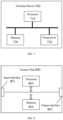
- FIG. 6 is a schematic block diagram of a terminal device 600 according to an embodiment of the present disclosure. As shown in FIG. 6 , the terminal device 600 is a first terminal device, and the first terminal device 600 includes a physical layer module 610 and a higher layer module 620. Where:
- the physical layer of the terminal device reports the determined first resource set for transmitting the target service to the higher layer, so that the higher layer of the terminal device can allocate resources to the terminal device or indicate it to perform operations such as resource reselection based on the report of the physical layer, thereby enabling the terminal device to obtain transmission resources for transmitting the target service when the available resources are insufficient for resource selection.
- the physical layer module 610 is specifically configured to: perform sensing in the first resource pool within the time interval [n + T1, n + T2] to obtain a second resource set, where, the total amount of resources in the first resource pool on the first carrier within the time interval [n + T1, n + T2] is A, and the amount of resources in the second resource set is B; if B/A is greater than or equal to a threshold Q, the physical layer module 610 performs detection on received signal strength indicator RSSI of the B resources in the second resource set, and takes P resources with smallest RSSI measurement value in the second resource set as the first resource set; and if B/A is lower than the threshold Q, the physical layer module 610 determines the second resource set as the first resource set.
- P is determined based on Q and A.
- the second resource set does not include resources occupied and/or reserved by a second terminal device, where the second terminal device is a terminal device using a first transmission mode, and the first terminal device is a terminal device using a second transmission mode.
- time-frequency resources used by the terminal device using the first transmission mode for performing service transmission are resources scheduled by a network device
- time-frequency resources used by the terminal device using the second transmission mode for performing service transmission are resources autonomously selected by the terminal device in a resource pool corresponding to the second transmission mode.
- the physical layer module 610 is specifically configured to report the resources in the first resource set to the higher layer module 620.
- the physical layer module 610 is specifically configured to report an insufficient resource indication to the higher layer module 620, where the insufficient resource indication is used to indicate that a ratio of B and A is lower than the threshold Q, where B is the amount of resources in the second resource set, and A is the total amount of resources in the first resource pool on the first carrier within the time interval [n + T1, n + T2].
- the higher layer module 620 is further configured to: determine, in the first resource set, a target resource for the first terminal device to transmit the target service; and send a first indication to the physical layer module 610, the first indication is used to indicate the target resource; and the physical layer module 610 is further configured to transmit the target service on the target resource according to the first indication.
- the higher layer module 620 is further configured to send a second indication to the physical layer module 610, where the second indication is used to indicate that the physical layer module 610 reselects a first resource set available for transmitting the target service in a second resource pool on the first carrier.
- the higher layer module 620 is further configured to: send a third indication to the physical layer module 610, where the third indication is used to indicate that the physical layer module 610 reselects a first resource set available for transmitting the target service in a third resource pool on a second carrier.
- the physical layer module 610 is further configured to: receive configuration information sent by the network device, where the configuration information is used to indicate the threshold Q; or acquire the threshold Q pre-stored in the first terminal device.
- terminal device 600 may perform corresponding operations of the method 400 performed by the first terminal device in the foregoing method embodiments. For brevity, details are not described herein again.
- FIG. 7 is a schematic structural diagram of a terminal device 700 according to an embodiment of the present disclosure.
- the terminal device 700 includes a processor 710, a transceiver 720, and a memory 730.
- the processor 710, the transceiver 720, and the memory 730 communicate with each other through an internal connection path.
- the memory 730 is configured to store instructions, and the processor 710 is configured to execute instructions stored in the memory 730 to control the transceiver 720 to receive signals or send signals.
- the processor 710 may invoke program codes stored in the memory 730 to perform corresponding operations of the method 400 performed by the first terminal device in the method embodiments. For brevity, details are not described herein again.
- the processor in the embodiment of the present disclosure may be an integrated circuit chip with signal processing capability.
- each step of the above method embodiments may be completed by an integrated logic circuit of hardware in a processor or instructions in a form of software.
- the above processor may be a general-purpose processor, a digital signal processor (DSP), an application specific integrated circuit (ASIC), a field programmable gate array (FPGA), or other programmable logic devices, discrete gates or transistor logic devices, discrete hardware components.
- DSP digital signal processor
- ASIC application specific integrated circuit
- FPGA field programmable gate array
- a general-purpose processor may be a microprocessor or the processor may be any conventional processor or the like.
- the steps in combination with the methods disclosed in the embodiments of the present disclosure may be directly embodied as performed by a hardware decoding processor, or may be performed by a combination of hardware and software modules in the decoding processor.
- the software module can be located in a conventional storage medium in the art such as random access memory, flash memory, read-only memory, programmable read-only memory, or electrically erasable programmable memory, register, or the like.
- the storage medium is located in the memory, and the processor reads information in the memory and combines its hardware to complete the steps of the above methods.
- the memory in the embodiments of the present disclosure may be a volatile memory or a non-volatile memory, or may include both volatile and non-volatile memory.
- the non-volatile memory may be a read-only memory (ROM), a programmable ROM (PROM), an erasable PROM (EPROM), an electrically EPROM (EEPROM) or flash memory.
- the volatile memory may be a random access memory (RAM), which is used as an external cache.
- RAM direct rambus RAM
- SRAM static RAM
- DRAM dynamic RAM
- SDRAM synchronous DRAM
- DDR SDRAM double data rate SDRAM
- ESDRAM enhanced SDRAM
- SLDRAM synchlink DRAM
- DR RAM direct rambus RAM
- FIG. 8 is a schematic structural diagram of a system chip according to an embodiment of the present disclosure.
- the system chip 800 of FIG. 8 includes an input interface 801, an output interface 802, at least one processor 803, and a memory 804.
- the input interface 801, the output interface 802, the processor 803, and the memory 804 are connected to each other through an internal connection path.
- the processor 803 is configured to execute codes in the memory 804.
- the processor 803 may implement the method 400 performed by the first terminal device in the method embodiments. For brevity, details are not described herein again.
- the disclosed systems, devices, and methods may be implemented in other ways.
- the device embodiments described above are merely illustrative.
- the division of the unit is only a logical function division. In an actual implementation, there may be another division manner.
- multiple units or components may be combined or may be integrated into another system, or some features can be ignored or not executed.
- the shown or discussed coupling or direct coupling or communication connection between each other may be an indirect coupling or communication connection through some interfaces, devices or units, and may be in electrical, mechanical or other forms.
- the units described as separate components may or may not be physically separated, and the components displayed as units may or may not be physical units, that is, may be located in one place, or may be distributed to multiple network units. Some or all of the units may be selected according to actual needs to implement the purpose of the solution of the present embodiment.
- each functional unit in each embodiment of the present disclosure may be integrated into one monitoring unit, or each unit may exist physically separately, or two or more units may be integrated into one unit.
- This functionality if implemented as a software functional unit and sold or used as a standalone product, can be stored in a computer readable storage medium.
- the technical solution of the present disclosure essentially, or a part of contributing to the prior art, or a part of the technical solution, may be embodied in a form of a software product, the computer software product is stored in a storage medium, which includes a number of instructions for causing a computer device (which may be a personal computer, server, or network device, or the like) to perform all or part of the steps of various embodiments of the present disclosure.
- the foregoing storage medium includes various medium that can store program codes: a U disk, a mobile hard disk, a read-only memory (ROM), a random access memory (RAM), a magnetic disk, or an optical disk, or the like.
Landscapes
- Engineering & Computer Science (AREA)
- Signal Processing (AREA)
- Computer Networks & Wireless Communication (AREA)
- Quality & Reliability (AREA)
- Databases & Information Systems (AREA)
- Mobile Radio Communication Systems (AREA)
- Physics & Mathematics (AREA)
- Electromagnetism (AREA)
Claims (11)
- Verfahren zur Ressourcenauswahl in einer Gerät-zu-Gerät-Kommunikation, D2D-Kommunikation, wobei das Verfahren Folgendes umfasst:Durchführen (410), durch eine physische Schicht eines ersten Endgeräts, eines Erfassens in einem ersten Ressourcen-Pool auf einem ersten Träger innerhalb eines Zeitintervalls [n + T1, n + T2] zum Erhalten eines ersten Ressourcensatzes, und wobei Ressourcen im ersten Ressourcensatz für das Übertragen eines Zieldiensts durch das erste Endgerät verwendet werden können, wobei die Ressourcen Zeit-Frequenz-Ressourcen sind, wobei n eine Zeit ist, zu der der Zieldienst ankommt, oder eine Zeit, zu der das erste Endgerät bestimmt, dass das Durchführen eines Erfassens erforderlich ist, 0≤T1<T2; undBerichten (420), durch die physische Schicht des ersten Endgeräts, von Informationen des ersten Ressourcensatzes an eine höhere Schicht des ersten Endgeräts;wobei das Durchführen (410), durch eine physische Schicht eines ersten Endgeräts, eines Erfassens in einem ersten Ressourcen-Pool auf einem ersten Träger innerhalb eines Zeitintervalls [n + T1, n + T2] zum Erhalten eines ersten Ressourcensatzes Folgendes umfasst:Durchführen (411), durch die physische Schicht des ersten Endgeräts, eines Erfassens im ersten Ressourcen-Pool innerhalb des Zeitintervalls [n + T1, n + T2] zum Erhalten eines zweiten Ressourcensatzes, wobei die Gesamtmenge an Ressourcen im ersten Ressourcen-Pool auf dem ersten Träger innerhalb des Zeitintervalls [n + T1, n + T2] A ist und die Menge an Ressourcen im zweiten Ressourcensatz B ist;Durchführen (412), durch die physische Schicht des ersten Endgeräts, einer Messung eines Empfangssignalstärkeindikators, RSSI, von B Ressourcen im zweiten Ressourcensatz, wenn B/A größer als eine oder gleich einer Schwelle Q ist, und Heranziehen von P Ressourcen mit dem kleinsten RSSI-Messwert im zweiten Ressourcensatz als den ersten Ressourcensatz, wobei P gemäß Q und A bestimmt wird; undBestimmen (413), durch die physische Schicht des ersten Endgeräts, des zweiten Ressourcensatzes als den ersten Ressourcensatz, wenn B/A kleiner als die Schwelle Q ist,wobei das Berichten (420), durch die physische Schicht des ersten Endgeräts, von Informationen des ersten Ressourcensatzes an eine höhere Schicht des ersten Endgeräts Folgendes umfasst:Berichten, durch die physische Schicht des ersten Endgeräts, einer Angabe nicht ausreichender Ressourcen an die höhere Schicht des ersten Endgeräts;wobei der zweite Ressourcensatz keine Ressourcen umfasst, die durch ein zweites Endgerät belegt und/oder reserviert sind, wobei das zweite Endgerät ein Endgerät ist, das einen ersten Übertragungsmodus verwendet, und das erste Endgerät ein Endgerät ist, das einen zweiten Übertragungsmodus verwendet; undwobei Zeit-Frequenz-Ressourcen, die durch das Endgerät, das den ersten Übertragungsmodus verwendet, zur Dienstübertragung verwendet werden, Ressourcen sind, die durch ein Netzwerkgerät geplant werden; Zeit-Frequenz-Ressourcen, die durch das Endgerät, das den zweiten Übertragungsmodus verwendet, zur Dienstübertragung verwendet werden, Ressourcen sind, die autonom aus einem Ressourcen-Pool entsprechend dem zweiten Übertragungsmodus durch das Endgerät, das den zweiten Übertragungsmodus verwendet, ausgewählt werden.
- Verfahren nach Anspruch 1, wobei das Berichten (420), durch die physische Schicht des ersten Endgeräts, von Informationen des ersten Ressourcensatzes an eine höhere Schicht des ersten Endgeräts Folgendes umfasst:
Berichten, durch die physische Schicht des ersten Endgeräts, von Ressourcen im ersten Ressourcensatz an die höhere Schicht des ersten Endgeräts. - Verfahren nach Anspruch 1 oder 2, wobei die Angabe nicht ausreichender Ressourcen zum Angeben, dass ein Verhältnis von B und A kleiner als die Schwelle Q ist, verwendet wird, wobei B die Menge an Ressourcen im zweiten Ressourcensatz ist und A die Gesamtmenge an Ressourcen im ersten Ressourcen-Pool auf dem ersten Träger innerhalb des Zeitintervalls [n + T1, n + T2] ist.
- Verfahren nach einem der Ansprüche 1 bis 3, wobei das Verfahren ferner Folgendes umfasst:Bestimmen, durch die höhere Schicht des ersten Endgeräts im ersten Ressourcensatz, einer Zielressource für das erste Endgerät zum Übertragen des Zieldiensts;Senden, durch die höhere Schicht des ersten Endgeräts, einer ersten Angabe an die physische Schicht des ersten Endgeräts, wobei die erste Angabe zum Angeben der Zielressource verwendet wird; undÜbertragen, durch die physische Schicht des ersten Endgeräts, des Zieldiensts auf der Zielressource gemäß der ersten Angabe.
- Verfahren nach einem der Ansprüche 1 bis 3, wobei das Verfahren ferner Folgendes umfasst:Senden, durch die höhere Schicht des ersten Endgeräts, einer zweiten Angabe an die physische Schicht des ersten Endgeräts, wobei die zweite Angabe zum Angeben der physischen Schicht des ersten Endgeräts zum Neuauswählen eines ersten Ressourcensatzes, der zum Übertragen des Zieldiensts in einem zweiten Ressourcen-Pool auf dem ersten Träger verfügbar ist, verwendet wird; oderSenden, durch die höhere Schicht des ersten Endgeräts, einer dritten Angabe an die physische Schicht des ersten Endgeräts, wobei die dritte Angabe zum Angeben der physischen Schicht des ersten Endgeräts zum Neuauswählen eines ersten Ressourcensatzes, der zum Übertragen des Zieldiensts in einem dritten Ressourcen-Pool auf einem zweiten Träger verfügbar ist, verwendet wird.
- Endgerät (600), wobei das Endgerät (600) ein erstes Endgerät ist, das ein Modul der physischen Schicht (610) und ein Modul der höheren Schicht (620) umfasst, wobei:das Modul der physischen Schicht (610) zum Durchführen eines Erfassens in einem ersten Ressourcen-Pool auf einem ersten Träger innerhalb eines Zeitintervalls [n + T1, n + T2] zum Erhalten eines ersten Ressourcensatzes ausgelegt ist, und wobei Ressourcen im ersten Ressourcensatz für das Übertragen, durch das erste Endgerät, eines Zieldiensts verwendet werden können, wobei die Ressourcen Zeit-Frequenz-Ressourcen sind, wobei n eine Zeit ist, zu der der Zieldienst ankommt, oder eine Zeit, zu der das erste Endgerät bestimmt, dass das Durchführen eines Erfassens erforderlich ist, 0≤T1<T2;das Modul der physischen Schicht (610) ferner zum Berichten von Informationen des ersten Ressourcensatzes an das Modul der höheren Schicht (620) ausgelegt ist;das Modul der physischen Schicht (610) ferner ausgelegt ist zum:Durchführen eines Erfassens im ersten Ressourcen-Pool innerhalb des Zeitintervalls [n + T1, n + T2] zum Erhalten eines zweiten Ressourcensatzes, wobei die Gesamtmenge an Ressourcen im ersten Ressourcen-Pool auf dem ersten Träger innerhalb des Zeitintervalls [n + T1, n + T2] A ist und die Menge an Ressourcen im zweiten Ressourcensatz B ist;Durchführen einer Detektion an einem Empfangssignalstärkeindikator, RSSI, von B Ressourcen im zweiten Ressourcensatz, wenn B/A größer als eine oder gleich einer Schwelle Q ist, und Heranziehen von P Ressourcen mit dem kleinsten RSSI-Messwert im zweiten Ressourcensatz als den ersten Ressourcensatz; wobei P gemäß Q und A bestimmt wird; undBestimmen des zweiten Ressourcensatzes als den ersten Ressourcensatz, wenn B/A kleiner als die Schwelle Q ist;wobei das Modul der physischen Schicht (610) ferner ausgelegt ist zum: Berichten einer Angabe nicht ausreichender Ressourcen an das Modul der höheren Schicht (620);wobei der zweite Ressourcensatz keine Ressourcen umfasst, die durch ein zweites Endgerät belegt und/oder reserviert sind, wobei das zweite Endgerät ein Endgerät ist, das einen ersten Übertragungsmodus verwendet, und das erste Endgerät ein Endgerät ist, das einen zweiten Übertragungsmodus verwendet; undwobei Zeit-Frequenz-Ressourcen, die durch das Endgerät, das den ersten Übertragungsmodus verwendet, zur Dienstübertragung verwendet werden, Ressourcen sind, die durch ein Netzwerkgerät geplant werden, und Zeit-Frequenz-Ressourcen, die durch das Endgerät, das den zweiten Übertragungsmodus verwendet, zur Dienstübertragung verwendet werden, Ressourcen sind, die autonom aus einem Ressourcen-Pool entsprechend dem zweiten Übertragungsmodus durch das Endgerät auswählt werden.
- Endgerät (600) nach Anspruch 6, wobei das Modul der physischen Schicht (610) ausgelegt ist zum:
Berichten von Ressourcen im ersten Ressourcensatz an das Modul der höheren Schicht (620). - Endgerät (600) nach Anspruch 6, wobei die Angabe nicht ausreichender Ressourcen zum Angeben, dass ein Verhältnis von B und A kleiner als die Schwelle Q ist, verwendet wird, wobei B die Menge an Ressourcen im zweiten Ressourcensatz ist und A die Gesamtmenge an Ressourcen im ersten Ressourcen-Pool auf dem ersten Träger innerhalb des Zeitintervalls [n + T1, n + T2] ist.
- Endgerät (600) nach einem der Ansprüche 6 bis 8, wobei das Modul der höheren Schicht (620) ferner ausgelegt ist zum:Bestimmen, im ersten Ressourcensatz, einer Zielressource für das erste Endgerät zum Übertragen des Zieldiensts;Senden einer ersten Angabe an das Modul der physischen Schicht (610), wobei die erste Angabe zum Angeben der Zielressource verwendet wird; undwobei das Modul der physischen Schicht (610) ferner zum Übertragen des Zieldiensts auf der Zielressource gemäß der ersten Angabe ausgelegt ist.
- Endgerät (600) nach einem der Ansprüche 6 bis 8, wobei das Modul der höheren Schicht (620) ferner ausgelegt ist zum:Senden einer zweiten Angabe an das Modul der physischen Schicht (610), wobei die zweite Angabe zum Angeben des Moduls der physischen Schicht (610) zum Neuauswählen eines ersten Ressourcensatzes, der zum Übertragen des Zieldiensts in einem zweiten Ressourcen-Pool auf dem ersten Träger verfügbar ist, verwendet wird; oderSenden einer dritten Angabe an das Modul der physischen Schicht (610), wobei die dritte Angabe zum Angeben des Moduls der physischen Schicht (610) zum Neuauswählen eines ersten Ressourcensatzes, der zum Übertragen des Zieldiensts in einem dritten Ressourcen-Pool auf einem zweiten Träger verfügbar ist, verwendet wird.
- Endgerät (600) nach einem der Ansprüche 6 bis 10, wobei das Modul der physischen Schicht (610) ferner ausgelegt ist zum:
Empfangen von Konfigurationsinformationen, die durch ein Netzwerkgerät gesendet werden, wobei die Konfigurationsinformationen zum Angeben der Schwelle Q oder Erfassen der Schwelle Q, die im ersten Endgerät vorgespeichert ist, verwendet werden.
Applications Claiming Priority (1)
| Application Number | Priority Date | Filing Date | Title |
|---|---|---|---|
| PCT/CN2017/109403 WO2019084927A1 (zh) | 2017-11-03 | 2017-11-03 | D2d通信中资源选取的方法和终端设备 |
Publications (3)
| Publication Number | Publication Date |
|---|---|
| EP3703393A1 EP3703393A1 (de) | 2020-09-02 |
| EP3703393A4 EP3703393A4 (de) | 2020-10-28 |
| EP3703393B1 true EP3703393B1 (de) | 2025-02-12 |
Family
ID=66332738
Family Applications (1)
| Application Number | Title | Priority Date | Filing Date |
|---|---|---|---|
| EP17930229.4A Active EP3703393B1 (de) | 2017-11-03 | 2017-11-03 | Verfahren zur ressourcenauswahl in der d2d-kommunikation und endgerät |
Country Status (8)
| Country | Link |
|---|---|
| US (1) | US11343662B2 (de) |
| EP (1) | EP3703393B1 (de) |
| JP (1) | JP2021508185A (de) |
| KR (1) | KR20200077578A (de) |
| CN (1) | CN111316675B (de) |
| AU (1) | AU2017438194A1 (de) |
| TW (1) | TW201919430A (de) |
| WO (1) | WO2019084927A1 (de) |
Families Citing this family (22)
| Publication number | Priority date | Publication date | Assignee | Title |
|---|---|---|---|---|
| US11849435B2 (en) * | 2018-08-09 | 2023-12-19 | Lg Electronics Inc. | Communication method and device considering flexible slot format in NR V2X |
| CN113785636A (zh) * | 2019-05-10 | 2021-12-10 | 株式会社Ntt都科摩 | 用户装置和通信方法 |
| CN110856270B (zh) * | 2019-11-08 | 2021-08-10 | 中国信息通信研究院 | 一种信道接入侦听方法和终端设备 |
| CN112954712B (zh) * | 2019-12-10 | 2023-08-15 | 中国移动通信有限公司研究院 | 数据采集的方法及设备 |
| EP4090084A4 (de) * | 2020-02-07 | 2023-01-18 | Guangdong Oppo Mobile Telecommunications Corp., Ltd. | Verfahren und vorrichtung zur ressourcenauswahl und endgerät |
| CN113473601B (zh) * | 2020-03-30 | 2024-11-26 | 维沃移动通信有限公司 | 一种资源选择方法及设备 |
| CN113543236B (zh) | 2020-04-16 | 2024-08-27 | 维沃移动通信有限公司 | 资源选择方法、装置及用户设备 |
| WO2021258301A1 (zh) * | 2020-06-23 | 2021-12-30 | Oppo广东移动通信有限公司 | 资源排除方法、装置、终端设备及存储介质 |
| US20230254817A1 (en) * | 2020-06-24 | 2023-08-10 | Beijing Xiaomi Mobile Software Co., Ltd. | Method and apparatus for user equipment sidelink communication, user equipment and storage medium |
| CN114007224B (zh) * | 2020-07-27 | 2025-05-13 | 维沃移动通信有限公司 | 旁链路资源选择方法及终端 |
| US20230300859A1 (en) * | 2020-08-07 | 2023-09-21 | Panasonic Intellectual Property Corporation Of America | Terminal and sidelink communication control method |
| CN114079886B (zh) * | 2020-08-20 | 2024-07-05 | 华为终端有限公司 | V2x报文发送方法、v2x通信设备及电子设备 |
| CN112205054B (zh) * | 2020-08-26 | 2023-10-10 | 北京小米移动软件有限公司 | 资源确定方法、资源确定装置及存储介质 |
| US11678325B2 (en) * | 2020-12-02 | 2023-06-13 | Qualcomm Incorporated | Techniques for sidelink resource selection |
| CN114599090B (zh) * | 2020-12-03 | 2025-08-22 | 维沃移动通信有限公司 | 资源选择的方法、装置和终端设备 |
| WO2022141104A1 (zh) * | 2020-12-29 | 2022-07-07 | Oppo广东移动通信有限公司 | 资源选取方法、装置、设备及存储介质 |
| CN115002716B (zh) * | 2021-03-01 | 2025-04-25 | 华为技术有限公司 | 一种确定传输资源的方法、装置及设备 |
| BR112023017761A2 (pt) * | 2021-04-02 | 2023-11-21 | Guangdong Oppo Mobile Telecommunications Corp Ltd | Método de seleção de recurso baseada em detecção parcial realizada por um equipamento de usuário e equipamento de usuário |
| CN115190447A (zh) * | 2021-04-06 | 2022-10-14 | 大唐移动通信设备有限公司 | 一种资源选择方法及终端设备 |
| CN117044267A (zh) * | 2021-06-04 | 2023-11-10 | Oppo广东移动通信有限公司 | 资源选取的方法及设备 |
| CN114501396B (zh) * | 2022-03-28 | 2022-10-14 | 深圳市科思科技股份有限公司 | 数据传输方法、装置及设备 |
| CN116963293A (zh) * | 2022-04-11 | 2023-10-27 | 中国移动通信有限公司研究院 | 资源选择和资源池配置方法、装置、设备及可读存储介质 |
Family Cites Families (23)
| Publication number | Priority date | Publication date | Assignee | Title |
|---|---|---|---|---|
| US8750139B2 (en) * | 2008-04-15 | 2014-06-10 | Qualcomm Incorporated | Method and apparatus for carrier selection in multi-carrier communication systems |
| CN104113851B (zh) * | 2013-04-16 | 2019-04-16 | 中兴通讯股份有限公司 | 一种d2d发现方法及基站、用户设备 |
| WO2015168937A1 (zh) * | 2014-05-09 | 2015-11-12 | 富士通株式会社 | 资源选择装置和通信系统 |
| US20160295624A1 (en) * | 2015-04-02 | 2016-10-06 | Samsung Electronics Co., Ltd | Methods and apparatus for resource pool design for vehicular communications |
| EP3373641B1 (de) * | 2015-11-04 | 2021-10-27 | LG Electronics Inc. | Verfahren zur übertragung von daten eines v2x-endgeräts in einem drahtloskommunikationssystem und vorrichtung |
| US10383147B2 (en) * | 2015-12-28 | 2019-08-13 | Samsung Electronics Co., Ltd. | Methods and apparatus for resource collision avoidance in vehicle to vehicle communication |
| US10244538B2 (en) * | 2016-02-12 | 2019-03-26 | Futurewei Technologies, Inc. | System and method for determining a resource selection technique |
| JP6669041B2 (ja) * | 2016-05-12 | 2020-03-18 | ソニー株式会社 | 通信装置、通信方法及びコンピュータプログラム |
| US10880897B2 (en) * | 2016-05-13 | 2020-12-29 | Apple Inc. | Apparatus of a user equipment (UE) to select resources in a vehicle to vehicle (V2V) communication system |
| US11197269B2 (en) * | 2016-08-10 | 2021-12-07 | Samsung Electronics Co., Ltd. | Method and apparatus for selecting resources in V2X communications |
| US10764867B2 (en) * | 2016-09-27 | 2020-09-01 | Lg Electronics Inc. | Method and device for selecting resource and transmitting PSSCH in wireless communication system |
| WO2018059698A1 (en) * | 2016-09-29 | 2018-04-05 | Telefonaktiebolaget Lm Ericsson (Publ) | Coordination of scheduled and contention-based uplink transmissions |
| GB2554644B (en) * | 2016-09-29 | 2018-10-10 | Tcl Communication Ltd | Sensing methods for wireless communication devices |
| WO2018062832A1 (en) * | 2016-09-29 | 2018-04-05 | Samsung Electronics Co., Ltd. | Method and device for controlling congestion |
| WO2018062967A2 (en) * | 2016-09-30 | 2018-04-05 | Innovative Technology Lab Co., Ltd. | Method and apparatus for determining resource pool |
| JP6845340B2 (ja) * | 2017-02-06 | 2021-03-17 | エルジー エレクトロニクス インコーポレイティド | 無線通信システムにおけるサイドリンク通信を行う方法、及びこのための装置 |
| US11101902B2 (en) * | 2017-03-03 | 2021-08-24 | Lg Electronics Inc. | Method for measuring signal reception power of terminal in wireless communication system and terminal using method |
| WO2018174684A1 (ko) * | 2017-03-24 | 2018-09-27 | 엘지전자 주식회사 | 무선 통신 시스템에서 사이드링크 신호를 전송하는 방법 및 장치 |
| CN107124770B (zh) * | 2017-04-27 | 2021-02-23 | 宇龙计算机通信科技(深圳)有限公司 | 一种d2d多载波聚合的载波集选取方法及相关设备 |
| WO2018201390A1 (en) * | 2017-05-04 | 2018-11-08 | Panasonic Intellectual Property Corporation Of America | User equipment, base station and wireless communication method |
| WO2019028649A1 (zh) * | 2017-08-08 | 2019-02-14 | 华为技术有限公司 | 业务数据传输方法及装置 |
| CN111034293A (zh) * | 2017-08-11 | 2020-04-17 | 中兴通讯股份有限公司 | 在旁链链路通信中共享资源池的系统和方法 |
| PL3661237T3 (pl) * | 2017-09-15 | 2023-01-23 | Guangdong Oppo Mobile Telecommunications Corp., Ltd. | Sposób wyboru nośnej i urządzenia komunikacyjnego |
-
2017
- 2017-11-03 EP EP17930229.4A patent/EP3703393B1/de active Active
- 2017-11-03 CN CN201780096513.9A patent/CN111316675B/zh active Active
- 2017-11-03 JP JP2020524158A patent/JP2021508185A/ja not_active Withdrawn
- 2017-11-03 AU AU2017438194A patent/AU2017438194A1/en not_active Abandoned
- 2017-11-03 WO PCT/CN2017/109403 patent/WO2019084927A1/zh not_active Ceased
- 2017-11-03 KR KR1020207015651A patent/KR20200077578A/ko not_active Withdrawn
-
2018
- 2018-11-02 TW TW107139030A patent/TW201919430A/zh unknown
-
2020
- 2020-05-01 US US16/864,337 patent/US11343662B2/en active Active
Also Published As
| Publication number | Publication date |
|---|---|
| WO2019084927A1 (zh) | 2019-05-09 |
| CN111316675B (zh) | 2024-11-12 |
| US11343662B2 (en) | 2022-05-24 |
| KR20200077578A (ko) | 2020-06-30 |
| JP2021508185A (ja) | 2021-02-25 |
| EP3703393A4 (de) | 2020-10-28 |
| AU2017438194A1 (en) | 2020-06-18 |
| CN111316675A (zh) | 2020-06-19 |
| TW201919430A (zh) | 2019-05-16 |
| EP3703393A1 (de) | 2020-09-02 |
| US20200260246A1 (en) | 2020-08-13 |
Similar Documents
| Publication | Publication Date | Title |
|---|---|---|
| EP3703393B1 (de) | Verfahren zur ressourcenauswahl in der d2d-kommunikation und endgerät | |
| US11582729B2 (en) | Method for data transmission in sidelink and terminal device | |
| CN109644436B (zh) | 资源共享的方法和终端设备 | |
| EP3614774B1 (de) | Verfahren zur vorrichtung-zu-vorrichtung-kommunikation und endgerätevorrichtung | |
| JP7290637B2 (ja) | D2d通信におけるリソース構成方法、端末デバイス及びネットワークデバイス | |
| CN111277974B (zh) | 载波选取的方法和通信设备 | |
| JP2021502742A5 (de) | ||
| WO2019091143A1 (zh) | D2d通信中资源配置的方法、终端设备和网络设备 | |
| AU2018401510B2 (en) | Signal transmission method and device | |
| CN108173633A (zh) | 接收上行参考信号的方法和装置 | |
| WO2020015345A1 (zh) | 侧行链路中数据传输的方法和终端设备 | |
| CN110741708B (zh) | D2d通信中载波选取的方法和终端设备 | |
| CA3065831A1 (en) | Data transmission method, terminal device, and network device |
Legal Events
| Date | Code | Title | Description |
|---|---|---|---|
| STAA | Information on the status of an ep patent application or granted ep patent |
Free format text: STATUS: THE INTERNATIONAL PUBLICATION HAS BEEN MADE |
|
| PUAI | Public reference made under article 153(3) epc to a published international application that has entered the european phase |
Free format text: ORIGINAL CODE: 0009012 |
|
| STAA | Information on the status of an ep patent application or granted ep patent |
Free format text: STATUS: REQUEST FOR EXAMINATION WAS MADE |
|
| 17P | Request for examination filed |
Effective date: 20200529 |
|
| AK | Designated contracting states |
Kind code of ref document: A1 Designated state(s): AL AT BE BG CH CY CZ DE DK EE ES FI FR GB GR HR HU IE IS IT LI LT LU LV MC MK MT NL NO PL PT RO RS SE SI SK SM TR |
|
| AX | Request for extension of the european patent |
Extension state: BA ME |
|
| A4 | Supplementary search report drawn up and despatched |
Effective date: 20200930 |
|
| RIC1 | Information provided on ipc code assigned before grant |
Ipc: H04W 72/00 20090101ALI20200924BHEP Ipc: H04W 4/00 20180101AFI20200924BHEP Ipc: H04W 4/40 20180101ALI20200924BHEP Ipc: H04W 4/70 20180101ALI20200924BHEP |
|
| DAV | Request for validation of the european patent (deleted) | ||
| DAX | Request for extension of the european patent (deleted) | ||
| STAA | Information on the status of an ep patent application or granted ep patent |
Free format text: STATUS: EXAMINATION IS IN PROGRESS |
|
| 17Q | First examination report despatched |
Effective date: 20230425 |
|
| GRAP | Despatch of communication of intention to grant a patent |
Free format text: ORIGINAL CODE: EPIDOSNIGR1 |
|
| STAA | Information on the status of an ep patent application or granted ep patent |
Free format text: STATUS: GRANT OF PATENT IS INTENDED |
|
| INTG | Intention to grant announced |
Effective date: 20241029 |
|
| GRAS | Grant fee paid |
Free format text: ORIGINAL CODE: EPIDOSNIGR3 |
|
| GRAA | (expected) grant |
Free format text: ORIGINAL CODE: 0009210 |
|
| STAA | Information on the status of an ep patent application or granted ep patent |
Free format text: STATUS: THE PATENT HAS BEEN GRANTED |
|
| AK | Designated contracting states |
Kind code of ref document: B1 Designated state(s): AL AT BE BG CH CY CZ DE DK EE ES FI FR GB GR HR HU IE IS IT LI LT LU LV MC MK MT NL NO PL PT RO RS SE SI SK SM TR |
|
| REG | Reference to a national code |
Ref country code: GB Ref legal event code: FG4D |
|
| REG | Reference to a national code |
Ref country code: CH Ref legal event code: EP |
|
| REG | Reference to a national code |
Ref country code: DE Ref legal event code: R096 Ref document number: 602017087782 Country of ref document: DE |
|
| REG | Reference to a national code |
Ref country code: IE Ref legal event code: FG4D |
|
| P01 | Opt-out of the competence of the unified patent court (upc) registered |
Free format text: CASE NUMBER: APP_9857/2025 Effective date: 20250226 |
|
| REG | Reference to a national code |
Ref country code: NL Ref legal event code: MP Effective date: 20250212 |
|
| PG25 | Lapsed in a contracting state [announced via postgrant information from national office to epo] |
Ref country code: RS Free format text: LAPSE BECAUSE OF FAILURE TO SUBMIT A TRANSLATION OF THE DESCRIPTION OR TO PAY THE FEE WITHIN THE PRESCRIBED TIME-LIMIT Effective date: 20250512 |
|
| PG25 | Lapsed in a contracting state [announced via postgrant information from national office to epo] |
Ref country code: FI Free format text: LAPSE BECAUSE OF FAILURE TO SUBMIT A TRANSLATION OF THE DESCRIPTION OR TO PAY THE FEE WITHIN THE PRESCRIBED TIME-LIMIT Effective date: 20250212 |
|
| PG25 | Lapsed in a contracting state [announced via postgrant information from national office to epo] |
Ref country code: PL Free format text: LAPSE BECAUSE OF FAILURE TO SUBMIT A TRANSLATION OF THE DESCRIPTION OR TO PAY THE FEE WITHIN THE PRESCRIBED TIME-LIMIT Effective date: 20250212 |
|
| PG25 | Lapsed in a contracting state [announced via postgrant information from national office to epo] |
Ref country code: ES Free format text: LAPSE BECAUSE OF FAILURE TO SUBMIT A TRANSLATION OF THE DESCRIPTION OR TO PAY THE FEE WITHIN THE PRESCRIBED TIME-LIMIT Effective date: 20250212 |
|
| REG | Reference to a national code |
Ref country code: LT Ref legal event code: MG9D |
|
| PG25 | Lapsed in a contracting state [announced via postgrant information from national office to epo] |
Ref country code: IS Free format text: LAPSE BECAUSE OF FAILURE TO SUBMIT A TRANSLATION OF THE DESCRIPTION OR TO PAY THE FEE WITHIN THE PRESCRIBED TIME-LIMIT Effective date: 20250612 Ref country code: NO Free format text: LAPSE BECAUSE OF FAILURE TO SUBMIT A TRANSLATION OF THE DESCRIPTION OR TO PAY THE FEE WITHIN THE PRESCRIBED TIME-LIMIT Effective date: 20250512 |
|
| PG25 | Lapsed in a contracting state [announced via postgrant information from national office to epo] |
Ref country code: NL Free format text: LAPSE BECAUSE OF FAILURE TO SUBMIT A TRANSLATION OF THE DESCRIPTION OR TO PAY THE FEE WITHIN THE PRESCRIBED TIME-LIMIT Effective date: 20250212 |
|
| PG25 | Lapsed in a contracting state [announced via postgrant information from national office to epo] |
Ref country code: HR Free format text: LAPSE BECAUSE OF FAILURE TO SUBMIT A TRANSLATION OF THE DESCRIPTION OR TO PAY THE FEE WITHIN THE PRESCRIBED TIME-LIMIT Effective date: 20250212 |
|
| PG25 | Lapsed in a contracting state [announced via postgrant information from national office to epo] |
Ref country code: PT Free format text: LAPSE BECAUSE OF FAILURE TO SUBMIT A TRANSLATION OF THE DESCRIPTION OR TO PAY THE FEE WITHIN THE PRESCRIBED TIME-LIMIT Effective date: 20250612 Ref country code: LV Free format text: LAPSE BECAUSE OF FAILURE TO SUBMIT A TRANSLATION OF THE DESCRIPTION OR TO PAY THE FEE WITHIN THE PRESCRIBED TIME-LIMIT Effective date: 20250212 |
|
| PG25 | Lapsed in a contracting state [announced via postgrant information from national office to epo] |
Ref country code: BG Free format text: LAPSE BECAUSE OF FAILURE TO SUBMIT A TRANSLATION OF THE DESCRIPTION OR TO PAY THE FEE WITHIN THE PRESCRIBED TIME-LIMIT Effective date: 20250212 Ref country code: GR Free format text: LAPSE BECAUSE OF FAILURE TO SUBMIT A TRANSLATION OF THE DESCRIPTION OR TO PAY THE FEE WITHIN THE PRESCRIBED TIME-LIMIT Effective date: 20250513 |
|
| REG | Reference to a national code |
Ref country code: AT Ref legal event code: MK05 Ref document number: 1767238 Country of ref document: AT Kind code of ref document: T Effective date: 20250212 |
|
| PG25 | Lapsed in a contracting state [announced via postgrant information from national office to epo] |
Ref country code: SE Free format text: LAPSE BECAUSE OF FAILURE TO SUBMIT A TRANSLATION OF THE DESCRIPTION OR TO PAY THE FEE WITHIN THE PRESCRIBED TIME-LIMIT Effective date: 20250212 |
|
| PG25 | Lapsed in a contracting state [announced via postgrant information from national office to epo] |
Ref country code: SM Free format text: LAPSE BECAUSE OF FAILURE TO SUBMIT A TRANSLATION OF THE DESCRIPTION OR TO PAY THE FEE WITHIN THE PRESCRIBED TIME-LIMIT Effective date: 20250212 |
|
| PG25 | Lapsed in a contracting state [announced via postgrant information from national office to epo] |
Ref country code: DK Free format text: LAPSE BECAUSE OF FAILURE TO SUBMIT A TRANSLATION OF THE DESCRIPTION OR TO PAY THE FEE WITHIN THE PRESCRIBED TIME-LIMIT Effective date: 20250212 |
|
| PG25 | Lapsed in a contracting state [announced via postgrant information from national office to epo] |
Ref country code: IT Free format text: LAPSE BECAUSE OF FAILURE TO SUBMIT A TRANSLATION OF THE DESCRIPTION OR TO PAY THE FEE WITHIN THE PRESCRIBED TIME-LIMIT Effective date: 20250212 |
|
| PG25 | Lapsed in a contracting state [announced via postgrant information from national office to epo] |
Ref country code: AT Free format text: LAPSE BECAUSE OF FAILURE TO SUBMIT A TRANSLATION OF THE DESCRIPTION OR TO PAY THE FEE WITHIN THE PRESCRIBED TIME-LIMIT Effective date: 20250212 |
|
| PG25 | Lapsed in a contracting state [announced via postgrant information from national office to epo] |
Ref country code: CZ Free format text: LAPSE BECAUSE OF FAILURE TO SUBMIT A TRANSLATION OF THE DESCRIPTION OR TO PAY THE FEE WITHIN THE PRESCRIBED TIME-LIMIT Effective date: 20250212 Ref country code: EE Free format text: LAPSE BECAUSE OF FAILURE TO SUBMIT A TRANSLATION OF THE DESCRIPTION OR TO PAY THE FEE WITHIN THE PRESCRIBED TIME-LIMIT Effective date: 20250212 |
|
| PG25 | Lapsed in a contracting state [announced via postgrant information from national office to epo] |
Ref country code: RO Free format text: LAPSE BECAUSE OF FAILURE TO SUBMIT A TRANSLATION OF THE DESCRIPTION OR TO PAY THE FEE WITHIN THE PRESCRIBED TIME-LIMIT Effective date: 20250212 |
|
| PG25 | Lapsed in a contracting state [announced via postgrant information from national office to epo] |
Ref country code: SK Free format text: LAPSE BECAUSE OF FAILURE TO SUBMIT A TRANSLATION OF THE DESCRIPTION OR TO PAY THE FEE WITHIN THE PRESCRIBED TIME-LIMIT Effective date: 20250212 |