EP3702999B1 - Verfahren zur durchführung eines verbesserten mobilitätsdienstes - Google Patents
Verfahren zur durchführung eines verbesserten mobilitätsdienstes Download PDFInfo
- Publication number
- EP3702999B1 EP3702999B1 EP19159561.0A EP19159561A EP3702999B1 EP 3702999 B1 EP3702999 B1 EP 3702999B1 EP 19159561 A EP19159561 A EP 19159561A EP 3702999 B1 EP3702999 B1 EP 3702999B1
- Authority
- EP
- European Patent Office
- Prior art keywords
- vehicle
- user
- teleoperator
- location
- pick
- Prior art date
- Legal status (The legal status is an assumption and is not a legal conclusion. Google has not performed a legal analysis and makes no representation as to the accuracy of the status listed.)
- Active
Links
Images

Classifications
-
- G—PHYSICS
- G06—COMPUTING OR CALCULATING; COUNTING
- G06Q—INFORMATION AND COMMUNICATION TECHNOLOGY [ICT] SPECIALLY ADAPTED FOR ADMINISTRATIVE, COMMERCIAL, FINANCIAL, MANAGERIAL OR SUPERVISORY PURPOSES; SYSTEMS OR METHODS SPECIALLY ADAPTED FOR ADMINISTRATIVE, COMMERCIAL, FINANCIAL, MANAGERIAL OR SUPERVISORY PURPOSES, NOT OTHERWISE PROVIDED FOR
- G06Q50/00—Information and communication technology [ICT] specially adapted for implementation of business processes of specific business sectors, e.g. utilities or tourism
- G06Q50/40—Business processes related to the transportation industry
-
- G—PHYSICS
- G05—CONTROLLING; REGULATING
- G05D—SYSTEMS FOR CONTROLLING OR REGULATING NON-ELECTRIC VARIABLES
- G05D1/00—Control of position, course, altitude or attitude of land, water, air or space vehicles, e.g. using automatic pilots
- G05D1/20—Control system inputs
- G05D1/22—Command input arrangements
- G05D1/221—Remote-control arrangements
- G05D1/222—Remote-control arrangements operated by humans
- G05D1/223—Command input arrangements on the remote controller, e.g. joysticks or touch screens
- G05D1/2232—Touch screens
-
- G—PHYSICS
- G05—CONTROLLING; REGULATING
- G05D—SYSTEMS FOR CONTROLLING OR REGULATING NON-ELECTRIC VARIABLES
- G05D1/00—Control of position, course, altitude or attitude of land, water, air or space vehicles, e.g. using automatic pilots
- G05D1/20—Control system inputs
- G05D1/22—Command input arrangements
- G05D1/221—Remote-control arrangements
- G05D1/227—Handing over between remote control and on-board control; Handing over between remote control arrangements
- G05D1/2279—Handing over between remote control and on-board control; Handing over between remote control arrangements involving allocation of control between two or more remote operators, e.g. tele-assistance
-
- G—PHYSICS
- G05—CONTROLLING; REGULATING
- G05D—SYSTEMS FOR CONTROLLING OR REGULATING NON-ELECTRIC VARIABLES
- G05D1/00—Control of position, course, altitude or attitude of land, water, air or space vehicles, e.g. using automatic pilots
- G05D1/60—Intended control result
- G05D1/69—Coordinated control of the position or course of two or more vehicles
- G05D1/698—Control allocation
- G05D1/6987—Control allocation by centralised control off-board any of the vehicles
-
- G—PHYSICS
- G06—COMPUTING OR CALCULATING; COUNTING
- G06Q—INFORMATION AND COMMUNICATION TECHNOLOGY [ICT] SPECIALLY ADAPTED FOR ADMINISTRATIVE, COMMERCIAL, FINANCIAL, MANAGERIAL OR SUPERVISORY PURPOSES; SYSTEMS OR METHODS SPECIALLY ADAPTED FOR ADMINISTRATIVE, COMMERCIAL, FINANCIAL, MANAGERIAL OR SUPERVISORY PURPOSES, NOT OTHERWISE PROVIDED FOR
- G06Q10/00—Administration; Management
- G06Q10/02—Reservations, e.g. for tickets, services or events
-
- G—PHYSICS
- G06—COMPUTING OR CALCULATING; COUNTING
- G06Q—INFORMATION AND COMMUNICATION TECHNOLOGY [ICT] SPECIALLY ADAPTED FOR ADMINISTRATIVE, COMMERCIAL, FINANCIAL, MANAGERIAL OR SUPERVISORY PURPOSES; SYSTEMS OR METHODS SPECIALLY ADAPTED FOR ADMINISTRATIVE, COMMERCIAL, FINANCIAL, MANAGERIAL OR SUPERVISORY PURPOSES, NOT OTHERWISE PROVIDED FOR
- G06Q10/00—Administration; Management
- G06Q10/06—Resources, workflows, human or project management; Enterprise or organisation planning; Enterprise or organisation modelling
- G06Q10/063—Operations research, analysis or management
- G06Q10/0631—Resource planning, allocation, distributing or scheduling for enterprises or organisations
-
- G—PHYSICS
- G06—COMPUTING OR CALCULATING; COUNTING
- G06Q—INFORMATION AND COMMUNICATION TECHNOLOGY [ICT] SPECIALLY ADAPTED FOR ADMINISTRATIVE, COMMERCIAL, FINANCIAL, MANAGERIAL OR SUPERVISORY PURPOSES; SYSTEMS OR METHODS SPECIALLY ADAPTED FOR ADMINISTRATIVE, COMMERCIAL, FINANCIAL, MANAGERIAL OR SUPERVISORY PURPOSES, NOT OTHERWISE PROVIDED FOR
- G06Q30/00—Commerce
- G06Q30/01—Customer relationship services
- G06Q30/015—Providing customer assistance, e.g. assisting a customer within a business location or via helpdesk
-
- G—PHYSICS
- G06—COMPUTING OR CALCULATING; COUNTING
- G06Q—INFORMATION AND COMMUNICATION TECHNOLOGY [ICT] SPECIALLY ADAPTED FOR ADMINISTRATIVE, COMMERCIAL, FINANCIAL, MANAGERIAL OR SUPERVISORY PURPOSES; SYSTEMS OR METHODS SPECIALLY ADAPTED FOR ADMINISTRATIVE, COMMERCIAL, FINANCIAL, MANAGERIAL OR SUPERVISORY PURPOSES, NOT OTHERWISE PROVIDED FOR
- G06Q30/00—Commerce
- G06Q30/06—Buying, selling or leasing transactions
- G06Q30/0645—Rental transactions; Leasing transactions
-
- G—PHYSICS
- G06—COMPUTING OR CALCULATING; COUNTING
- G06Q—INFORMATION AND COMMUNICATION TECHNOLOGY [ICT] SPECIALLY ADAPTED FOR ADMINISTRATIVE, COMMERCIAL, FINANCIAL, MANAGERIAL OR SUPERVISORY PURPOSES; SYSTEMS OR METHODS SPECIALLY ADAPTED FOR ADMINISTRATIVE, COMMERCIAL, FINANCIAL, MANAGERIAL OR SUPERVISORY PURPOSES, NOT OTHERWISE PROVIDED FOR
- G06Q50/00—Information and communication technology [ICT] specially adapted for implementation of business processes of specific business sectors, e.g. utilities or tourism
- G06Q50/40—Business processes related to the transportation industry
- G06Q50/43—Business processes related to the sharing of vehicles, e.g. car sharing
-
- G—PHYSICS
- G05—CONTROLLING; REGULATING
- G05D—SYSTEMS FOR CONTROLLING OR REGULATING NON-ELECTRIC VARIABLES
- G05D2105/00—Specific applications of the controlled vehicles
- G05D2105/20—Specific applications of the controlled vehicles for transportation
- G05D2105/22—Specific applications of the controlled vehicles for transportation of humans
-
- G—PHYSICS
- G05—CONTROLLING; REGULATING
- G05D—SYSTEMS FOR CONTROLLING OR REGULATING NON-ELECTRIC VARIABLES
- G05D2107/00—Specific environments of the controlled vehicles
- G05D2107/10—Outdoor regulated spaces
- G05D2107/13—Spaces reserved for vehicle traffic, e.g. roads, regulated airspace or regulated waters
-
- G—PHYSICS
- G05—CONTROLLING; REGULATING
- G05D—SYSTEMS FOR CONTROLLING OR REGULATING NON-ELECTRIC VARIABLES
- G05D2109/00—Types of controlled vehicles
- G05D2109/10—Land vehicles
Definitions
- the present invention relates to a system for performing an improved mobility service. Moreover, the present invention relates to a method of performing an improved mobility service.
- Mobility is an essential human need. Aside from the use of private vehicles, such as cars and bicycles, as well as mass transportation services, such as buses and subways, this need is met today by a growing number of shared mobility services. Examples of such services include vehicle sharing services, such as car, scooter and bike sharing, as well as ride-hailing services.
- vehicle sharing services such as car, scooter and bike sharing, as well as ride-hailing services.
- the first type is a model of rental where users rent a vehicle for typically short periods of time, often by the hour.
- This model is increasingly provided in urban locations by companies such as DriveNow, Car2Go, and others. It is attractive for users who make only occasional use of a vehicle, as well as others who would like occasional access to a vehicle of a different type than they use day-by-day.
- typically private drivers offer rides in their personal non-commercial vehicles.
- the connection between a user and a local driver is typically made via an online platform using e.g. an app on a smartphone. Due to differences in local regulations with respect to passenger transportation, the dissemination of this model widely differs between different countries and regions.
- ride-hailing services include Uber, Lyft, and others.
- a system for performing an improved mobility service comprising:
- the system comprises a vehicle that is remotely driven to a pick up location by a teleoperator
- the user does not have to walk to the vehicle before using it.
- this not only may improve convenience for the user, but it may also reduce the user's stress level as well as the total journey time.
- availability may be increased, since the vehicle does not have to be located within a short distance from the pick up location at the time the user makes the mobility request.
- the control of the vehicle is handed over from remote driving by the teleoperator to conventional driving by the user, the user can drive the car him-/herself.
- the wireless communication network is preferably a network that allows for a bi-directional transmission of data between the vehicle and the teleoperator station.
- it can be a fourth generation (4G) wireless communication network or a fifth generation (5G) wireless communication network.
- the vehicle is preferably a car, such as a small car, a regular car, or a Sports Utility Vehicle (SUV), a van, a truck or another type of vehicle that is adapted to be remotely driven.
- SUV Sports Utility Vehicle
- a van a truck or another type of vehicle that is adapted to be remotely driven.
- SUV Sports Utility Vehicle
- it may also be a buggy or the like.
- the vehicle is a modified vehicle that provides the required on-board infrastructure for teleoperation.
- This can include actuators for controlling the vehicle, one or more capturing units for capturing a live representation of the vehicle's environment, and appropriate interfaces for bi-directional communication with the teleoperator station via the wireless communication network.
- the actuators can be mechanical actuators that directly actuate on the vehicle's steering wheel, speed pedal and brakes.
- already present actuators of the vehicle e.g., for adjusting the orientation of the vehicle's wheels
- system further comprises:
- the communication unit is further adapted to send a notification that the vehicle is about to reach or has reached the pick up location to the user, wherein the notification comprises a picture captured by a camera of the vehicle.
- the communication unit is further adapted to receive a video data request from the user and to send, in response to the video data request, video data captured by a video camera of the vehicle to the user.
- the communication unit is further adapted to receive a vehicle stop request from the user while the teleoperator station is used by the teleoperator to drive the vehicle remotely to the pick up location, wherein the system further comprises a vehicle stopping unit that is adapted to stop, in response to the vehicle stop request, the vehicle.
- system further comprises:
- the communication unit is further adapted to send, in response to an indication from the vehicle that the driver's door has been opened, a vehicle key message specifying a vehicle key to the user, wherein the vehicle is further adapted to allow the user to authenticate himself/herself with the vehicle key for conventional driving of the vehicle.
- the vehicle is further adapted to customize to the user, in response to a successful authentication of the user for conventional driving of the vehicle, one or more of the characteristics of the vehicle selected from the group consisting of: (i) seat adjustment, (ii) steering wheel adjustment, (iii) ambient light, (iv) rear mirror adjustment, (v) side mirror adjustment, and (vi) music station.
- system further comprises:
- the vehicle comprises a visual indicator with a configurable appearance that is adapted to allow the user to recognize the vehicle
- the system further comprises a visual indicator appearance configuration unit that is adapted to configure the appearance of the visual indicator to be different between vehicles from a pool of vehicles
- the communication unit is further adapted to send an indication of the configured appearance of the visual indicator of the vehicle to the user.
- a method of performing an improved mobility service comprising:
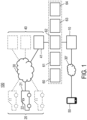
- Fig. 1 shows schematically and exemplarily an embodiment of a system 100 for performing an improved mobility service.
- the system 100 comprises a communication unit 10 that is adapted to receive a mobility request specifying a pick up location within a geographic region from a user.
- the system 100 further comprises a vehicle 21 that is adapted to be either remotely driven by a teleoperator via a wireless communication network 30 or to be conventionally driven by a user, as well as a teleoperator station 41 that is adapted to be used, in response to the mobility request, by the teleoperator to drive the vehicle 21 remotely to the pick up location.
- a vehicle 21 that is adapted to be either remotely driven by a teleoperator via a wireless communication network 30 or to be conventionally driven by a user, as well as a teleoperator station 41 that is adapted to be used, in response to the mobility request, by the teleoperator to drive the vehicle 21 remotely to the pick up location.
- the vehicle 21 is a modified vehicle that provides the required on-board infrastructure for teleoperation.
- This can include actuators for controlling the vehicle, one or more video cameras for capturing the vehicle's environment, and appropriate interfaces for bi-directional communication with the teleoperator station 41 via the wireless communication network 30.
- the actuators can be mechanical actuators that directly actuate the vehicle's steering wheel, speed pedal and brakes. Since the vehicle 21 is also adapted to be conventionally driven by a user, the actuators should preferably be designed and arranged in the vehicle 21 such that they do not restrain the user in the conventional driving of the vehicle 21. Alternatively, already present actuators of the vehicle (e.g., for adjusting the orientation of the vehicle's wheels) may be controlled via an electronic interface.
- the wireless communication network 30 is a network that allows for a bi-directional transmission of data between the vehicle 21 and the teleoperator station 41.
- it can be a fourth generation (4G) wireless communication network or a fifth generation (5G) wireless communication network.
- the transmitted data includes control commands for controlling the actuators in the vehicle 21, which are transmitted from the teleoperator station 41 to the vehicle 21, as well as the captured video data of the vehicle's environment, which are transmitted from the vehicle 21 to the teleoperator station 41.
- further data may be exchanged between the vehicle 21 and the teleoperator station 41, such as information about the status of the vehicle 21 (e.g., speed, rpm, error information, and the like).
- the teleoperator station 41 comprises a direct interface for the teleoperator. This includes one or more monitors or other display device(s) (e.g., a head-mounted display (HMD), a projection display, or the like) on which the transmitted video data from the one or more cameras of the vehicle 21 are shown, such that the teleoperator is able to see the vehicle's environment and to provide control commands to the vehicle 21.
- the teleoperator station 41 comprises appropriate control devices, such as a steering wheel and pedals to provide the basic functionality. For additional control of the vehicle 21, such as its blinkers, wipers, lights, etc. additional control keys or the like may be provided by the teleoperator station 41.
- the one or more video cameras of the vehicle 21 provide a 360 degree view of the vehicle's environment, which provides an all-round vision for the teleoperator.
- the one or more video cameras may provide a number of separate views, e.g., a front view, a rear view and two side views.
- the captured video data is preferably transmitted in a compressed form to enable a speedy transmission via the wireless communication network 30.
- the video data may be compressed using modern video coding technology, such as H.264/AVC (Advanced Video Coding) or H.265/HEVC (High Efficiency Video Coding), wherein the video coding technology is preferably run in a modus that allows for ultra low delay encoding and decoding.
- the video coding technology may be run such that for encoding a video frame only already known video frames are used as a reference to improve coding efficiency.
- the user can send the mobility request to the communication unit 10 from a networked computing device 50, e.g. a PC, laptop, or mobile terminal, that is connected to the Internet.
- this device is a mobile networked terminal 50 that provides an application, e.g., a mobile app, for sending the mobility request to the communication unit 10 via a wireless communication network 30'.
- This may be the same network as the wireless communication network 30 or it may be a different network.
- the mobility request specifies a pick up location within a geographic region, i.e., a location at which the user desires to pick up the vehicle 21.
- the geographic region may refer to a region in which the improved mobility service is provided, for example, an urban region or a particular state or country.
- the mobile app provides an interface for the user to select the pick up location. This can be realized e.g. by providing the user with a displayed map on which he/she can select the pick up location and/or by allowing the user to type the address of the pick up location into the mobile networked terminal 50. It is also possible that the mobile app accesses GPS data acquired by the mobile networked terminal 50 and preselects the pick up location based on the user's current GPS location.
- the interface can then provide the user with the possibility to manually change the preselected location to the desired pick up location. Moreover, there may also be an update to the pick up location due to traffic situation, which is communicated to the user by appropriate means, e.g. by a visual indication in the mobile app.
- the mobility request may also specify a drop off location within the geographic region, i.e., a location at which the user desires to drop off the vehicle 21.
- the system 100 further comprises a vehicle selection unit 60 that is adapted to select the vehicle 21 from a pool 20 of vehicles as well as a teleoperator station selection unit 61 that is adapted to select the teleoperator station 41 from a pool 40 of teleoperator stations.
- the selection of the vehicle 21 from the pool 20 of vehicles is based on one or more characteristics selected from the group consisting of: (i) a proximity of the vehicle 21 to the pick up location, (ii) a fuel level or state of charge of the vehicle 21, and (iii) user preferences regarding the type and/or size of the vehicle 21. For example, if the selection is based on the proximity of the vehicle 21 to the pick up location, the vehicle 21 can be selected such that it is already close to the pick up location. This allows the vehicle 21 to quickly reach the pick up location in order to avoid unnecessary waiting for the user. Moreover, it may reduce the energy consumption and overall costs of the improved mobility service, and it may also reduce congestion of the vehicles, service and/or streets. Additionally or alternatively, if the selection is based on a fuel level or state of charge of the vehicle 21, the vehicle 21 can be selected such that it is sufficiently charged or fueled.
- the selection is based on one or more characteristics selected from the group consisting of: (i) a proximity of the vehicle 21 to the pick up location, (ii) the drop off location, (iii) a fuel level or state of charge of the vehicle 21, and (iv) user preferences regarding the type and/or size of the vehicle 21.
- the vehicle 21 can be can be selected such that it is already close to the pick up location and that it is sufficiently charged or fueled to reach the drop off location without having to be recharged or fueled, if the drop off location is within a reasonable distance from the pick up location and it is assumed that the user chooses a direct route from the pick up location to the drop off location.
- the selection of the teleoperator station 41 from a pool 40 of teleoperator stations is based on an expected latency between the teleoperator station 41 and the vehicle 21.
- the latency in both directions of the data transmission is kept low in order to make it safer and easier for the teleoperator to drive the vehicle 21 remotely and allow him/her to timely react to dynamic events that occur in the vehicle's environment.
- the selection is based on the expected latency between the teleoperator station 41 and the vehicle 21, the teleoperator station 41 can be selected such that a high quality remote driving experience is provided to the teleoperator.
- the teleoperator station 41 may be closer to the vehicle 21 in terms of a distance in network switching units, cable length and/or other parameters resulting in the end-to-end latency of the wireless communication network 30 between the teleoperator station 41 and the vehicle 21, wherein a placement of the teleoperator station 41 at a network edge of the wireless communication network 30 may improve the experienced latency.
- the selection of the vehicle 21 from the pool 20 of vehicles and/or the selection of the teleoperator station 41 from the pool 40 of teleoperator stations may further be based on additional characteristics. For example, it may be based on user preference of vehicle type (small car, regular car, van, et cetera) and/or on the availability / occupancy of a particular teleoperator station.
- the teleoperator can use the teleoperator station 41 to drive the vehicle 21 remotely to the pick up location.
- the teleoperator can 'leave' the vehicle 21 and the teleoperator station 41 can again be selected by the teleoperator station selection unit 61 for use by the teleoperator to remotely drive another vehicle from the pool 40 of vehicles. This allows to save human resources for driving the vehicles in the improved mobility service. Moreover, it increases efficiency resulting in an affordable and more convenient mobility service for the user.
- the communication unit 10 is further adapted to send a notification that the vehicle 21 is about to reach or has reached the pick up location to the user, wherein the notification includes a picture captured by a camera of the vehicle 21.
- the picture can then be shown to the user via the mobile app. This may make it easier for the user to find the vehicle 21 at the pick up location.
- the camera that captures the picture is a front camera of the vehicle 21.
- the mobile app may also allow the user to send a video data request to the communication unit 10.
- the communication unit 10 is further adapted to receive the video data request from the user and to send, in response to the video data request, video data captured by a video camera of the vehicle 21 to the user.
- the video camera that captures the video data is also a front camera of the vehicle 21.
- the communication unit 10 is further adapted to receive a vehicle stop request from the user while the teleoperator station 41 is used by the teleoperator to drive the vehicle 21 remotely to the pick up location.
- the system 100 further comprises a vehicle stopping unit 63 that is adapted to stop, in response to the vehicle stop request, the vehicle 21. This feature is advantageous when the user sees that the vehicle 21 approaches the pick up location and wants to save the time the teleoperator may need to correctly park the vehicle 21 at the pick up location.
- the system 100 further comprises a proximity determination unit 62 that is adapted to determine if the user is within a pre-defined proximity to the vehicle 21, for instance, within a radius of 10, 15 or 25 meters from the vehicle 21. This can be achieved, for example, by comparing the user's current GPS location as provided by the GPS data that is accessed via the mobile app and GPS data of the vehicle 21.
- the vehicle 21 is further adapted to unlock the driver's door if the user is within the pre-defined proximity to the vehicle 21. This increases the comfort for the user, since he/she does not have to unlock the vehicle 21 himself /herself.
- the vehicle 21 When the user opens the driver's door, the vehicle 21 generates a respective indication and communicates it to the system 100.
- the communication unit 10 is further adapted to send, in response to the indication from the vehicle 21, a vehicle key message specifying a vehicle key to the user.
- the vehicle 21 is further adapted to allow the user to authenticate himself/herself with the vehicle key for conventional driving of the vehicle 21.
- the authentication may be performed, for instance, using Bluetooth, preferably Bluetooth Low Energy (also referred to as Bluetooth LE, BLE or Bluetooth Smart), or Near Field Communication (NFC) mechanisms.
- the vehicle key message is received by the mobile networked terminal 50, which connects to the vehicle 21 using Bluetooth Low Energy.
- the mobile networked terminal 50 uses the Bluetooth Low Energy connection to authenticate the user with the vehicle key for conventional driving of the vehicle 21. It can also be foreseen that the identification of the user in the vehicle 21 is based on the signal strength of the Bluetooth and/or NFC and/or similar communication within the vehicle 21.
- the authentication process is vehicle agnostic. For example, let's assume that a first user requested a first vehicle and that a second user requested a second vehicle to about the same pick up location at the same. If the first user opens the second vehicle, the authentication process preferably still works.
- the first user can then drive away with the second vehicle and the second user can drive away with the first vehicle.
- the vehicle 21 is further adapted to customize to the user, in response to a successful authentication of the user for conventional driving of the vehicle 21, one or more of the characteristics of the vehicle 21 selected from the group consisting of: (i) seat adjustment, (ii) steering wheel adjustment, (iii) ambient light, (iv) rear mirror adjustment, (v) side mirror adjustment, and (vi) music station.
- This further increases the comfort for the user, since he/she does not have to adjust these characteristics of the vehicle 21 himself/herself.
- This information about personal characteristics is stored by the system 100 in order for the user to experience this convenience in any vehicle from the pool 20, independent of the specific vehicle 21.
- the system 100 further comprises a handover unit 22 that is adapted to hand over the control of the vehicle 21 from remote driving by the teleoperator to conventional driving by the user.
- a handover unit 22 that is adapted to hand over the control of the vehicle 21 from remote driving by the teleoperator to conventional driving by the user. This may include, in response to the successful authentication of the user for conventional driving of the vehicle 21, one or more of the vehicle 21 (i) performing the above-described customization; (ii) confirming the successful authentication (e.g. by an LED turning green); (iii) switching into a state where it can be conventionally driven by the user (e.g. the user may do nothing but more the gear from P to D to start driving), and (iv) greeting the user (e.g. via audio "Welcometinct” or via a display "Welcometinct", where Vintage may be the name of the user).
- the user can now conventionally drive the vehicle 21 to the drop off location.
- the vehicle 21 may then be adapted to lock the vehicle's doors after a pre-defined time, e.g., 10 seconds after the user left the vehicle 21.
- This may also be realized using Bluetooth, particular, Bluetooth Low Energy, or Near Field Communication mechanisms.
- the vehicle 21 may be adapted to detect that the signal strength of the Bluetooth Low Energy connection between the user's mobile networked terminal 50 and the vehicle 21 becomes low or that the connection is lost completely, indicating that the user has left the vehicle 21.
- the vehicle 21 is further adapted to generate a respective indication and to communicate it to the system 100.
- the vehicle 21 can then be returned to the pool 20 and re-used by the system 100 to serve another user in response to a respective mobility request.
- the doors of the vehicle 21 may be locked via the mobile app.
- the mobile app may provide an interface with a button that reads "Close the vehicle in 15 seconds" or the like.
- the interface may also provide a button that reads "Hold the vehicle” or the like.
- a communication unit 10 receives a mobility request specifying a pick up location within a geographic region from a user.
- step S102 in response to the mobility request, a teleoperator uses a teleoperator station 41 to remotely drive a vehicle 21 via a wireless communication network 30 to the pick up location.
- step S103 a handover unit 22 hands over the control of the vehicle 21 from remote driving by the teleoperator to conventional driving by the user.
- the method of providing an improved mobility service may be performed by the system 100 for providing an improved mobility service described with reference to Fig. 1 above.
- the mobile networked terminal 50 can provide a vibration feature that can be sensed by the user, wherein the mobile networked terminal 50 is adapted to increase the intensity of the vibration with an decreasing proximity of the user to the vehicle 21.
- the proximity determination unit 62 may not only be adapted to determine if the user is within a pre-defined proximity to the vehicle 21, but may be adapted to continuously determine proximity information that is provided to the mobile networked terminal 50.
- the user may be identified by the vehicle 21 via face recognition techniques using one or more cameras installed in or at the vehicle 21.
- the vehicle 21 comprises a visual indicator with a configurable appearance that is adapted to allow the user to recognize the vehicle 21.
- the system 100 further comprises a visual indicator appearance configuration unit 63 that is adapted to configure the appearance of the visual indicator to be different between vehicles from the pool 20 of vehicles, and the communication unit 10 is further adapted to send an indication of the configured appearance of the visual indicator of the vehicle 21 to the user.
- the visual indicator may be, for instance, an LED color light that is attached to the vehicle 21, wherein the color is configured by the visual indicator appearance configuration unit 63 to differ between vehicles from the pool 20 of vehicles. This, however, does not mean that the visual indicators of all vehicles must be configured to have different colors.
- the colors of the visual indicators of vehicles that are simultaneously present at the pick up location are configured to be visually discernable. This allows the user to find the correct vehicle even if multiple vehicles 21 from the pool of vehicles 20 are simultaneously present at the pick up location, e.g., at an exit of an airport terminal.
- an authentication based on QR codes may be used.
- the user when the user is at the vehicle 21, he/she may have to scan a QR code that is attached somewhere on the vehicle 21 (e.g. under the lock of the driver's door). This information is then sent from user's mobile networked terminal 50 to the system 100, which then sends a command to the vehicle 21 to unlock the doors.
- the unlocking of the doors may further depend on the proximity of the user to the vehicle 21. For example, the vehicle's doors may only be unlocked if the user and the vehicle 21 are within certain radius based on their respective GPS location (e.g. within 20 meters).
- a single unit or device may fulfill the functions of several items recited in the claims.
- the mere fact that certain measures are recited in mutually different dependent claims does not indicate that a combination of these measures cannot be used to advantage.
- the present invention relates to a system for performing an improved mobility service.
- the system comprises a communication unit, a vehicle, a teleoperator station, and a handover unit.
- the communication unit is adapted to receive a mobility request specifying a pick up location within a geographic region from a user.
- the vehicle is adapted to be either remotely driven by a teleoperator via a wireless communication network or to be conventionally driven by the user.
- the teleoperator station is adapted to be used, in response to the mobility request, by the teleoperator to drive the vehicle remotely to the pick up location.
- the handover unit is adapted to hand over the control of the vehicle from remote driving by the teleoperator to conventional driving by the user.
Landscapes
- Business, Economics & Management (AREA)
- Engineering & Computer Science (AREA)
- General Physics & Mathematics (AREA)
- Physics & Mathematics (AREA)
- Human Resources & Organizations (AREA)
- Strategic Management (AREA)
- Economics (AREA)
- General Business, Economics & Management (AREA)
- Theoretical Computer Science (AREA)
- Marketing (AREA)
- Tourism & Hospitality (AREA)
- Accounting & Taxation (AREA)
- Development Economics (AREA)
- Remote Sensing (AREA)
- Automation & Control Theory (AREA)
- Entrepreneurship & Innovation (AREA)
- Radar, Positioning & Navigation (AREA)
- Aviation & Aerospace Engineering (AREA)
- Finance (AREA)
- Primary Health Care (AREA)
- Quality & Reliability (AREA)
- Operations Research (AREA)
- General Health & Medical Sciences (AREA)
- Health & Medical Sciences (AREA)
- Game Theory and Decision Science (AREA)
- Educational Administration (AREA)
- Mobile Radio Communication Systems (AREA)
Claims (11)
- System (100) zum Durchführen eines verbesserten Mobilitätsdienstes, umfassend:- eine Kommunikationseinheit (10), die angepasst ist, eine Mobilitätsanforderung, die einen Abholort innerhalb einer geografischen Region angibt, von einem Benutzer zu empfangen; und- ein Fahrzeug (21), das angepasst ist, entweder von einem Teleoperator über ein drahtloses Kommunikationsnetz (30) ferngesteuert gefahren zu werden oder vom Benutzer herkömmlich gefahren zu werden,dadurch gekennzeichnet, dass das System (100) des Weiteren umfasst:- eine Teleoperator-Station (41), die angepasst ist, als Reaktion auf die Mobilitätsanforderung von dem Teleoperator benutzt zu werden, um das Fahrzeug (21) ferngesteuert zu dem Abholort zu fahren;- eine Übergabeeinheit (22), die angepasst ist, die Steuerung des Fahrzeugs (21) von der Fernsteuerung durch den Teleoperator an das herkömmliche Fahren durch den Benutzer zu übergeben; und- eine Teleoperator-Stations-Auswahleinheit (61), die angepasst ist, die Teleoperator-Station (41) aus einem Pool (40) von Teleoperator-Stationen auszuwählen, wobei die Auswahl auf einer erwarteten Latenzzeit zwischen der Teleoperator-Station (41) und dem Fahrzeug (21) basiert.
- System (100) nach Anspruch 1, des Weiteren umfassend:- eine Fahrzeugauswahleinheit (60), die angepasst ist, das Fahrzeug (21) aus einem Pool (20) von Fahrzeugen auszuwählen, wobei die Auswahl auf einer oder mehreren Eigenschaften basiert, die aus der Gruppe ausgewählt sind, die aus Folgendem besteht: (i) einer Nähe des Fahrzeugs (21) zu dem Abholort, (ii) einem Kraftstoffstand oder einem Ladezustand des Fahrzeugs (21) und (iii) Benutzerpräferenzen hinsichtlich des Typs und/oder der Größe des Fahrzeugs (21),wobei, optional, die Mobilitätsanforderung weiterhin einen Absetzort innerhalb der geographischen Region spezifiziert und die Auswahl auf einer oder mehreren Eigenschaften basiert, die aus der Gruppe ausgewählt sind, die aus Folgendem besteht: (i) einer Nähe des Fahrzeugs (21) zu dem Abholort, (ii) dem Absetzort, (iii) einem Kraftstoffstand oder einem Ladezustand des Fahrzeugs (21), und (iv) Benutzerpräferenzen hinsichtlich des Typs und/oder der Größe des Fahrzeugs (21).
- System (100) nach Anspruch 1 oder 2, wobei die Kommunikationseinheit (10) des Weiteren angepasst ist, eine Benachrichtigung, dass das Fahrzeug (21) dabei ist, den Abholort zu erreichen oder diesen erreicht hat, an den Benutzer zu senden, wobei die Benachrichtigung ein von einer Kamera des Fahrzeugs (21) aufgenommenes Bild umfasst.
- System (100) nach einem der Ansprüche 1 bis 3, wobei die Kommunikationseinheit (10) des Weiteren angepasst ist, eine Videodatenanforderung von dem Benutzer zu empfangen und als Reaktion auf die Videodatenanforderung Videodaten, die von einer Videokamera des Fahrzeugs (21) aufgenommen wurden, an den Benutzer zu senden.
- System (100) nach einem der Ansprüche 1 bis 4, wobei die Kommunikationseinheit (10) des Weiteren angepasst ist, eine Fahrzeuganhalteanforderung von dem Benutzer zu empfangen, während die Teleoperatorstation (41) von dem Teleoperator verwendet wird, um das Fahrzeug (21) ferngesteuert zu dem Abholort zu fahren, wobei das System (100) des Weiteren eine Fahrzeuganhalteeinheit (63) umfasst, die angepasst ist, als Reaktion auf die Fahrzeuganhalteanforderung das Fahrzeug (21) anzuhalten.
- System (100) nach einem der Ansprüche 1 bis 5, des Weiteren umfassend:- eine Nähebestimmungseinheit (62), die angepasst ist, zu bestimmen, ob sich der Benutzer in einer vordefinierten Nähe zu dem Fahrzeug (21) befindet, wobei das Fahrzeug (21) des Weiteren angepasst ist, die Fahrertür zu entriegeln, wenn sich der Benutzer in der vordefinierten Nähe zu dem Fahrzeug (21) befindet.
- System (100) nach einem der Ansprüche 1 bis 6, wobei die Kommunikationseinheit (10) des Weiteren angepasst ist, als Reaktion auf eine Anzeige des Fahrzeugs (21), dass die Fahrertür geöffnet wurde, eine Fahrzeugschlüsselnachricht, die einen Fahrzeugschlüssel angibt, an den Benutzer zu senden, wobei das Fahrzeug (21) des Weiteren angepasst ist, es dem Benutzer zu ermöglichen, sich mit dem Fahrzeugschlüssel für das herkömmliche Fahren des Fahrzeugs (21) zu authentifizieren.
- System (100) nach Anspruch 7, wobei das Fahrzeug (21) des Weiteren angepasst ist, als Reaktion auf eine erfolgreiche Authentifizierung des Benutzers für das konventionelle Fahren des Fahrzeugs (21) eine oder mehrere der Eigenschaften des Fahrzeugs (21), die aus der Gruppe ausgewählt sind, die aus Folgendem besteht: (i) Sitzeinstellung, (ii) Lenkradeinstellung, (iii) Umgebungslicht, (iv) Rückspiegeleinstellung, (v) Seitenspiegeleinstellung, und (vi) Musiksender, an den Benutzer anzupassen.
- System (100) nach einem der Ansprüche 1 bis 8, des Weiteren umfassend:- ein mobiles vernetztes Endgerät (50), das angepasst ist, von dem Benutzer zur Kommunikation mit der Kommunikationseinheit (10) verwendet zu werden, und das ein Vibrationsmerkmal bereitstellt, das von dem Benutzer wahrgenommen werden kann, wobei das mobile vernetzte Endgerät (50) angepasst ist, die Intensität der Vibration mit einer abnehmenden Nähe des Benutzers zu dem Fahrzeug (21) zu erhöhen.
- System (100) nach einem der Ansprüche 1 bis 9, wobei das Fahrzeug (21) einen visuellen Indikator mit einem konfigurierbaren Erscheinungsbild umfasst, der angepasst ist, dem Benutzer zu ermöglichen, das Fahrzeug (21) zu erkennen, wobei das System (100) des Weiteren eine Konfigurationseinheit (63) für das Erscheinungsbild des visuellen Indikators umfasst, die angepasst ist, das Erscheinungsbild des visuellen Indikators so zu konfigurieren, dass es sich zwischen Fahrzeugen aus einem Pool (20) von Fahrzeugen unterscheidet, wobei die Kommunikationseinheit (10) des Weiteren angepasst ist, eine Anzeige des konfigurierten Erscheinungsbildes des visuellen Indikators des Fahrzeugs (21) an den Benutzer zu senden.
- Verfahren zum Durchführen eines verbesserten Mobilitätsdienstes, umfassend:- Empfangen (S101), durch eine Kommunikationseinheit (10), einer Mobilitätsanforderung, die einen Abholort innerhalb einer geografischen Region angibt, von einem Benutzer,dadurch gekennzeichnet, dass das Verfahren des Weiteren umfasst:als Reaktion auf die Mobilitätsanforderung, Verwenden (S102), durch einen Teleoperator, einer Teleoperator-Station (41), um ein Fahrzeug (21) über ein drahtloses Kommunikationsnetz (30) ferngesteuert zu dem Abholort zu fahren; und- Übergeben (S103), durch eine Übergabeeinheit (22), der Steuerung des Fahrzeugs (21) von der Fernsteuerung durch den Teleoperator an das herkömmliche Fahren durch den Benutzer,wobei die Teleoperator-Station (41) aus einem Pool (40) von Teleoperator-Stationen ausgewählt wird, wobei die Auswahl auf einer erwarteten Latenz zwischen der Teleoperator-Station (41) und dem Fahrzeug (21) basiert.
Priority Applications (1)
| Application Number | Priority Date | Filing Date | Title |
|---|---|---|---|
| EP19159561.0A EP3702999B1 (de) | 2019-02-27 | 2019-02-27 | Verfahren zur durchführung eines verbesserten mobilitätsdienstes |
Applications Claiming Priority (1)
| Application Number | Priority Date | Filing Date | Title |
|---|---|---|---|
| EP19159561.0A EP3702999B1 (de) | 2019-02-27 | 2019-02-27 | Verfahren zur durchführung eines verbesserten mobilitätsdienstes |
Publications (2)
| Publication Number | Publication Date |
|---|---|
| EP3702999A1 EP3702999A1 (de) | 2020-09-02 |
| EP3702999B1 true EP3702999B1 (de) | 2024-07-17 |
Family
ID=65766793
Family Applications (1)
| Application Number | Title | Priority Date | Filing Date |
|---|---|---|---|
| EP19159561.0A Active EP3702999B1 (de) | 2019-02-27 | 2019-02-27 | Verfahren zur durchführung eines verbesserten mobilitätsdienstes |
Country Status (1)
| Country | Link |
|---|---|
| EP (1) | EP3702999B1 (de) |
Families Citing this family (1)
| Publication number | Priority date | Publication date | Assignee | Title |
|---|---|---|---|---|
| DE102024100014A1 (de) * | 2024-01-02 | 2025-07-03 | Valeo Schalter Und Sensoren Gmbh | Verfahren zum Fernsteuern eines Fahrzeugs und Fernsteuerungssystem |
Citations (1)
| Publication number | Priority date | Publication date | Assignee | Title |
|---|---|---|---|---|
| US20170045885A1 (en) * | 2014-11-13 | 2017-02-16 | Toyota Motor Engineering & Manufacturing North America, Inc. | Remote operation of autonomous vehicle in unexpected environment |
Family Cites Families (2)
| Publication number | Priority date | Publication date | Assignee | Title |
|---|---|---|---|---|
| WO2017172415A1 (en) * | 2016-04-01 | 2017-10-05 | Uber Technologies, Inc. | Transport facilitation system for configuring a service vehicle for a user |
| US10134286B1 (en) * | 2017-09-26 | 2018-11-20 | GM Global Technology Operations LLC | Selecting vehicle pickup location |
-
2019
- 2019-02-27 EP EP19159561.0A patent/EP3702999B1/de active Active
Patent Citations (1)
| Publication number | Priority date | Publication date | Assignee | Title |
|---|---|---|---|---|
| US20170045885A1 (en) * | 2014-11-13 | 2017-02-16 | Toyota Motor Engineering & Manufacturing North America, Inc. | Remote operation of autonomous vehicle in unexpected environment |
Also Published As
| Publication number | Publication date |
|---|---|
| EP3702999A1 (de) | 2020-09-02 |
Similar Documents
| Publication | Publication Date | Title |
|---|---|---|
| CN118119544B (zh) | 一种显示方法、显示设备、方向盘和车辆 | |
| US9440605B2 (en) | Configurable rental vehicle | |
| KR102533096B1 (ko) | 모바일 센서 플랫폼 | |
| CN109558957B (zh) | 选择车辆上车位置 | |
| US10479370B2 (en) | System and method for authorizing a user to operate a vehicle | |
| US9478134B2 (en) | Method of determining an attribute of a parking structure | |
| JP7209651B2 (ja) | 車両の画像提供システム、および車両の画像提供方法 | |
| JP6828740B2 (ja) | 車両の電子インタフェースを介した通信を容易にするためのシステム及び方法 | |
| CN109017757A (zh) | 汽车远程代驾方法及系统 | |
| CN107911476B (zh) | 一种多功能辅助驾驶和监控系统 | |
| US20120215403A1 (en) | Method of monitoring a vehicle driver | |
| CN108022441A (zh) | 在控制站与其它交通成员之间通信的方法和自动驾驶车辆 | |
| WO2017125788A1 (en) | Systems and methods for enabling remotely autonomous transport in real world vehicles on road | |
| CN108961803A (zh) | 车辆驾驶辅助方法、装置、系统及终端设备 | |
| CN105743968A (zh) | 管理个性化车辆使用者信息的方法和系统 | |
| US11110892B2 (en) | Method of bicycle parking management and a system of bicycle parking management | |
| US20220242307A1 (en) | Display system for transportation networks | |
| CN110233867A (zh) | 使用实况相机监督执行远程车辆命令 | |
| CN110018842A (zh) | 远程车辆任务管理 | |
| EP3702999A1 (de) | Verfahren zur durchführung eines verbesserten mobilitätsdienstes | |
| KR20050043353A (ko) | 차량과 이동단말이 연동된 인텔리전트 시스템 및 그서비스 제공방법 | |
| JP7826974B2 (ja) | 情報処理装置、情報処理方法およびプログラム | |
| CN107139724A (zh) | 用于车辆的车载屏幕动态显示方法及其车载中控系统 | |
| US8644889B2 (en) | Restoring connectivity to a desubscribed telematics unit | |
| CN107979634A (zh) | 基于位置数据生成交通顾问报告 |
Legal Events
| Date | Code | Title | Description |
|---|---|---|---|
| PUAI | Public reference made under article 153(3) epc to a published international application that has entered the european phase |
Free format text: ORIGINAL CODE: 0009012 |
|
| STAA | Information on the status of an ep patent application or granted ep patent |
Free format text: STATUS: THE APPLICATION HAS BEEN PUBLISHED |
|
| AK | Designated contracting states |
Kind code of ref document: A1 Designated state(s): AL AT BE BG CH CY CZ DE DK EE ES FI FR GB GR HR HU IE IS IT LI LT LU LV MC MK MT NL NO PL PT RO RS SE SI SK SM TR |
|
| AX | Request for extension of the european patent |
Extension state: BA ME |
|
| RAP1 | Party data changed (applicant data changed or rights of an application transferred) |
Owner name: REE TECHNOLOGY GMBH |
|
| RIN1 | Information on inventor provided before grant (corrected) |
Inventor name: SCELSI, FABRIZIO Inventor name: DJUKIC, BOGDAN Inventor name: VON DER OHE, THOMAS Inventor name: SCHIERL, THOMAS |
|
| STAA | Information on the status of an ep patent application or granted ep patent |
Free format text: STATUS: REQUEST FOR EXAMINATION WAS MADE |
|
| 17P | Request for examination filed |
Effective date: 20210302 |
|
| RBV | Designated contracting states (corrected) |
Designated state(s): AL AT BE BG CH CY CZ DE DK EE ES FI FR GB GR HR HU IE IS IT LI LT LU LV MC MK MT NL NO PL PT RO RS SE SI SK SM TR |
|
| RAP3 | Party data changed (applicant data changed or rights of an application transferred) |
Owner name: VAY TECHNOLOGY GMBH |
|
| STAA | Information on the status of an ep patent application or granted ep patent |
Free format text: STATUS: EXAMINATION IS IN PROGRESS |
|
| 17Q | First examination report despatched |
Effective date: 20220311 |
|
| REG | Reference to a national code |
Free format text: PREVIOUS MAIN CLASS: G06Q0050300000 Ipc: G06Q0050000000 Ref country code: DE Ref legal event code: R079 Ref document number: 602019055248 Country of ref document: DE Free format text: PREVIOUS MAIN CLASS: G06Q0050300000 Ipc: G06Q0050000000 |
|
| GRAP | Despatch of communication of intention to grant a patent |
Free format text: ORIGINAL CODE: EPIDOSNIGR1 |
|
| STAA | Information on the status of an ep patent application or granted ep patent |
Free format text: STATUS: GRANT OF PATENT IS INTENDED |
|
| RIC1 | Information provided on ipc code assigned before grant |
Ipc: G07C 5/08 20060101ALI20240124BHEP Ipc: G06Q 50/43 20240101ALI20240124BHEP Ipc: G06Q 50/40 20240101ALI20240124BHEP Ipc: G06Q 50/00 20120101AFI20240124BHEP |
|
| INTG | Intention to grant announced |
Effective date: 20240212 |
|
| GRAS | Grant fee paid |
Free format text: ORIGINAL CODE: EPIDOSNIGR3 |
|
| GRAA | (expected) grant |
Free format text: ORIGINAL CODE: 0009210 |
|
| STAA | Information on the status of an ep patent application or granted ep patent |
Free format text: STATUS: THE PATENT HAS BEEN GRANTED |
|
| AK | Designated contracting states |
Kind code of ref document: B1 Designated state(s): AL AT BE BG CH CY CZ DE DK EE ES FI FR GB GR HR HU IE IS IT LI LT LU LV MC MK MT NL NO PL PT RO RS SE SI SK SM TR |
|
| REG | Reference to a national code |
Ref country code: CH Ref legal event code: EP |
|
| REG | Reference to a national code |
Ref country code: DE Ref legal event code: R096 Ref document number: 602019055248 Country of ref document: DE |
|
| REG | Reference to a national code |
Ref country code: IE Ref legal event code: FG4D |
|
| REG | Reference to a national code |
Ref country code: LT Ref legal event code: MG9D |
|
| REG | Reference to a national code |
Ref country code: NL Ref legal event code: MP Effective date: 20240717 |
|
| PG25 | Lapsed in a contracting state [announced via postgrant information from national office to epo] |
Ref country code: PT Free format text: LAPSE BECAUSE OF FAILURE TO SUBMIT A TRANSLATION OF THE DESCRIPTION OR TO PAY THE FEE WITHIN THE PRESCRIBED TIME-LIMIT Effective date: 20241118 |
|
| REG | Reference to a national code |
Ref country code: AT Ref legal event code: MK05 Ref document number: 1704858 Country of ref document: AT Kind code of ref document: T Effective date: 20240717 |
|
| PG25 | Lapsed in a contracting state [announced via postgrant information from national office to epo] |
Ref country code: NL Free format text: LAPSE BECAUSE OF FAILURE TO SUBMIT A TRANSLATION OF THE DESCRIPTION OR TO PAY THE FEE WITHIN THE PRESCRIBED TIME-LIMIT Effective date: 20240717 |
|
| PG25 | Lapsed in a contracting state [announced via postgrant information from national office to epo] |
Ref country code: PT Free format text: LAPSE BECAUSE OF FAILURE TO SUBMIT A TRANSLATION OF THE DESCRIPTION OR TO PAY THE FEE WITHIN THE PRESCRIBED TIME-LIMIT Effective date: 20241118 Ref country code: NL Free format text: LAPSE BECAUSE OF FAILURE TO SUBMIT A TRANSLATION OF THE DESCRIPTION OR TO PAY THE FEE WITHIN THE PRESCRIBED TIME-LIMIT Effective date: 20240717 |
|
| PG25 | Lapsed in a contracting state [announced via postgrant information from national office to epo] |
Ref country code: NO Free format text: LAPSE BECAUSE OF FAILURE TO SUBMIT A TRANSLATION OF THE DESCRIPTION OR TO PAY THE FEE WITHIN THE PRESCRIBED TIME-LIMIT Effective date: 20241017 |
|
| PG25 | Lapsed in a contracting state [announced via postgrant information from national office to epo] |
Ref country code: GR Free format text: LAPSE BECAUSE OF FAILURE TO SUBMIT A TRANSLATION OF THE DESCRIPTION OR TO PAY THE FEE WITHIN THE PRESCRIBED TIME-LIMIT Effective date: 20241018 Ref country code: FI Free format text: LAPSE BECAUSE OF FAILURE TO SUBMIT A TRANSLATION OF THE DESCRIPTION OR TO PAY THE FEE WITHIN THE PRESCRIBED TIME-LIMIT Effective date: 20240717 Ref country code: PL Free format text: LAPSE BECAUSE OF FAILURE TO SUBMIT A TRANSLATION OF THE DESCRIPTION OR TO PAY THE FEE WITHIN THE PRESCRIBED TIME-LIMIT Effective date: 20240717 |
|
| PG25 | Lapsed in a contracting state [announced via postgrant information from national office to epo] |
Ref country code: BG Free format text: LAPSE BECAUSE OF FAILURE TO SUBMIT A TRANSLATION OF THE DESCRIPTION OR TO PAY THE FEE WITHIN THE PRESCRIBED TIME-LIMIT Effective date: 20240717 |
|
| PG25 | Lapsed in a contracting state [announced via postgrant information from national office to epo] |
Ref country code: LV Free format text: LAPSE BECAUSE OF FAILURE TO SUBMIT A TRANSLATION OF THE DESCRIPTION OR TO PAY THE FEE WITHIN THE PRESCRIBED TIME-LIMIT Effective date: 20240717 |
|
| PG25 | Lapsed in a contracting state [announced via postgrant information from national office to epo] |
Ref country code: IS Free format text: LAPSE BECAUSE OF FAILURE TO SUBMIT A TRANSLATION OF THE DESCRIPTION OR TO PAY THE FEE WITHIN THE PRESCRIBED TIME-LIMIT Effective date: 20241117 Ref country code: AT Free format text: LAPSE BECAUSE OF FAILURE TO SUBMIT A TRANSLATION OF THE DESCRIPTION OR TO PAY THE FEE WITHIN THE PRESCRIBED TIME-LIMIT Effective date: 20240717 |
|
| PG25 | Lapsed in a contracting state [announced via postgrant information from national office to epo] |
Ref country code: HR Free format text: LAPSE BECAUSE OF FAILURE TO SUBMIT A TRANSLATION OF THE DESCRIPTION OR TO PAY THE FEE WITHIN THE PRESCRIBED TIME-LIMIT Effective date: 20240717 |
|
| PG25 | Lapsed in a contracting state [announced via postgrant information from national office to epo] |
Ref country code: ES Free format text: LAPSE BECAUSE OF FAILURE TO SUBMIT A TRANSLATION OF THE DESCRIPTION OR TO PAY THE FEE WITHIN THE PRESCRIBED TIME-LIMIT Effective date: 20240717 Ref country code: RS Free format text: LAPSE BECAUSE OF FAILURE TO SUBMIT A TRANSLATION OF THE DESCRIPTION OR TO PAY THE FEE WITHIN THE PRESCRIBED TIME-LIMIT Effective date: 20241017 |
|
| PG25 | Lapsed in a contracting state [announced via postgrant information from national office to epo] |
Ref country code: RS Free format text: LAPSE BECAUSE OF FAILURE TO SUBMIT A TRANSLATION OF THE DESCRIPTION OR TO PAY THE FEE WITHIN THE PRESCRIBED TIME-LIMIT Effective date: 20241017 Ref country code: PL Free format text: LAPSE BECAUSE OF FAILURE TO SUBMIT A TRANSLATION OF THE DESCRIPTION OR TO PAY THE FEE WITHIN THE PRESCRIBED TIME-LIMIT Effective date: 20240717 Ref country code: NO Free format text: LAPSE BECAUSE OF FAILURE TO SUBMIT A TRANSLATION OF THE DESCRIPTION OR TO PAY THE FEE WITHIN THE PRESCRIBED TIME-LIMIT Effective date: 20241017 Ref country code: LV Free format text: LAPSE BECAUSE OF FAILURE TO SUBMIT A TRANSLATION OF THE DESCRIPTION OR TO PAY THE FEE WITHIN THE PRESCRIBED TIME-LIMIT Effective date: 20240717 Ref country code: IS Free format text: LAPSE BECAUSE OF FAILURE TO SUBMIT A TRANSLATION OF THE DESCRIPTION OR TO PAY THE FEE WITHIN THE PRESCRIBED TIME-LIMIT Effective date: 20241117 Ref country code: HR Free format text: LAPSE BECAUSE OF FAILURE TO SUBMIT A TRANSLATION OF THE DESCRIPTION OR TO PAY THE FEE WITHIN THE PRESCRIBED TIME-LIMIT Effective date: 20240717 Ref country code: GR Free format text: LAPSE BECAUSE OF FAILURE TO SUBMIT A TRANSLATION OF THE DESCRIPTION OR TO PAY THE FEE WITHIN THE PRESCRIBED TIME-LIMIT Effective date: 20241018 Ref country code: FI Free format text: LAPSE BECAUSE OF FAILURE TO SUBMIT A TRANSLATION OF THE DESCRIPTION OR TO PAY THE FEE WITHIN THE PRESCRIBED TIME-LIMIT Effective date: 20240717 Ref country code: ES Free format text: LAPSE BECAUSE OF FAILURE TO SUBMIT A TRANSLATION OF THE DESCRIPTION OR TO PAY THE FEE WITHIN THE PRESCRIBED TIME-LIMIT Effective date: 20240717 Ref country code: BG Free format text: LAPSE BECAUSE OF FAILURE TO SUBMIT A TRANSLATION OF THE DESCRIPTION OR TO PAY THE FEE WITHIN THE PRESCRIBED TIME-LIMIT Effective date: 20240717 Ref country code: AT Free format text: LAPSE BECAUSE OF FAILURE TO SUBMIT A TRANSLATION OF THE DESCRIPTION OR TO PAY THE FEE WITHIN THE PRESCRIBED TIME-LIMIT Effective date: 20240717 |
|
| PG25 | Lapsed in a contracting state [announced via postgrant information from national office to epo] |
Ref country code: SM Free format text: LAPSE BECAUSE OF FAILURE TO SUBMIT A TRANSLATION OF THE DESCRIPTION OR TO PAY THE FEE WITHIN THE PRESCRIBED TIME-LIMIT Effective date: 20240717 Ref country code: RO Free format text: LAPSE BECAUSE OF FAILURE TO SUBMIT A TRANSLATION OF THE DESCRIPTION OR TO PAY THE FEE WITHIN THE PRESCRIBED TIME-LIMIT Effective date: 20240717 Ref country code: DK Free format text: LAPSE BECAUSE OF FAILURE TO SUBMIT A TRANSLATION OF THE DESCRIPTION OR TO PAY THE FEE WITHIN THE PRESCRIBED TIME-LIMIT Effective date: 20240717 |
|
| REG | Reference to a national code |
Ref country code: DE Ref legal event code: R097 Ref document number: 602019055248 Country of ref document: DE |
|
| PG25 | Lapsed in a contracting state [announced via postgrant information from national office to epo] |
Ref country code: EE Free format text: LAPSE BECAUSE OF FAILURE TO SUBMIT A TRANSLATION OF THE DESCRIPTION OR TO PAY THE FEE WITHIN THE PRESCRIBED TIME-LIMIT Effective date: 20240717 |
|
| PG25 | Lapsed in a contracting state [announced via postgrant information from national office to epo] |
Ref country code: CZ Free format text: LAPSE BECAUSE OF FAILURE TO SUBMIT A TRANSLATION OF THE DESCRIPTION OR TO PAY THE FEE WITHIN THE PRESCRIBED TIME-LIMIT Effective date: 20240717 |
|
| PG25 | Lapsed in a contracting state [announced via postgrant information from national office to epo] |
Ref country code: SK Free format text: LAPSE BECAUSE OF FAILURE TO SUBMIT A TRANSLATION OF THE DESCRIPTION OR TO PAY THE FEE WITHIN THE PRESCRIBED TIME-LIMIT Effective date: 20240717 |
|
| PLBE | No opposition filed within time limit |
Free format text: ORIGINAL CODE: 0009261 |
|
| STAA | Information on the status of an ep patent application or granted ep patent |
Free format text: STATUS: NO OPPOSITION FILED WITHIN TIME LIMIT |
|
| 26N | No opposition filed |
Effective date: 20250422 |
|
| PG25 | Lapsed in a contracting state [announced via postgrant information from national office to epo] |
Ref country code: SE Free format text: LAPSE BECAUSE OF FAILURE TO SUBMIT A TRANSLATION OF THE DESCRIPTION OR TO PAY THE FEE WITHIN THE PRESCRIBED TIME-LIMIT Effective date: 20240717 |
|
| PG25 | Lapsed in a contracting state [announced via postgrant information from national office to epo] |
Ref country code: MC Free format text: LAPSE BECAUSE OF FAILURE TO SUBMIT A TRANSLATION OF THE DESCRIPTION OR TO PAY THE FEE WITHIN THE PRESCRIBED TIME-LIMIT Effective date: 20240717 |
|
| REG | Reference to a national code |
Ref country code: CH Ref legal event code: PL |
|
| PG25 | Lapsed in a contracting state [announced via postgrant information from national office to epo] |
Ref country code: LU Free format text: LAPSE BECAUSE OF NON-PAYMENT OF DUE FEES Effective date: 20250227 |
|
| PG25 | Lapsed in a contracting state [announced via postgrant information from national office to epo] |
Ref country code: CH Free format text: LAPSE BECAUSE OF NON-PAYMENT OF DUE FEES Effective date: 20250228 |
|
| GBPC | Gb: european patent ceased through non-payment of renewal fee |
Effective date: 20250227 |
|
| REG | Reference to a national code |
Ref country code: BE Ref legal event code: MM Effective date: 20250228 |
|
| PG25 | Lapsed in a contracting state [announced via postgrant information from national office to epo] |
Ref country code: GB Free format text: LAPSE BECAUSE OF NON-PAYMENT OF DUE FEES Effective date: 20250227 |
|
| PG25 | Lapsed in a contracting state [announced via postgrant information from national office to epo] |
Ref country code: FR Free format text: LAPSE BECAUSE OF NON-PAYMENT OF DUE FEES Effective date: 20250228 |
|
| PG25 | Lapsed in a contracting state [announced via postgrant information from national office to epo] |
Ref country code: BE Free format text: LAPSE BECAUSE OF NON-PAYMENT OF DUE FEES Effective date: 20250228 |
|
| PG25 | Lapsed in a contracting state [announced via postgrant information from national office to epo] |
Ref country code: IE Free format text: LAPSE BECAUSE OF NON-PAYMENT OF DUE FEES Effective date: 20250227 |
|
| PG25 | Lapsed in a contracting state [announced via postgrant information from national office to epo] |
Ref country code: IT Free format text: LAPSE BECAUSE OF FAILURE TO SUBMIT A TRANSLATION OF THE DESCRIPTION OR TO PAY THE FEE WITHIN THE PRESCRIBED TIME-LIMIT Effective date: 20240717 |
|
| PGFP | Annual fee paid to national office [announced via postgrant information from national office to epo] |
Ref country code: DE Payment date: 20260304 Year of fee payment: 8 |