EP3701966B1 - Hepalatide verbindungen zur verwendung bei der behandlung von hbv-krankheiten - Google Patents
Hepalatide verbindungen zur verwendung bei der behandlung von hbv-krankheiten Download PDFInfo
- Publication number
- EP3701966B1 EP3701966B1 EP18871510.6A EP18871510A EP3701966B1 EP 3701966 B1 EP3701966 B1 EP 3701966B1 EP 18871510 A EP18871510 A EP 18871510A EP 3701966 B1 EP3701966 B1 EP 3701966B1
- Authority
- EP
- European Patent Office
- Prior art keywords
- polypeptide
- hbv
- amino acid
- seq
- terminal modification
- Prior art date
- Legal status (The legal status is an assumption and is not a legal conclusion. Google has not performed a legal analysis and makes no representation as to the accuracy of the status listed.)
- Active
Links
Images

Classifications
-
- A—HUMAN NECESSITIES
- A61—MEDICAL OR VETERINARY SCIENCE; HYGIENE
- A61K—PREPARATIONS FOR MEDICAL, DENTAL OR TOILETRY PURPOSES
- A61K38/00—Medicinal preparations containing peptides
- A61K38/16—Peptides having more than 20 amino acids; Gastrins; Somatostatins; Melanotropins; Derivatives thereof
- A61K38/162—Peptides having more than 20 amino acids; Gastrins; Somatostatins; Melanotropins; Derivatives thereof from virus
-
- A—HUMAN NECESSITIES
- A61—MEDICAL OR VETERINARY SCIENCE; HYGIENE
- A61K—PREPARATIONS FOR MEDICAL, DENTAL OR TOILETRY PURPOSES
- A61K38/00—Medicinal preparations containing peptides
- A61K38/16—Peptides having more than 20 amino acids; Gastrins; Somatostatins; Melanotropins; Derivatives thereof
-
- A—HUMAN NECESSITIES
- A61—MEDICAL OR VETERINARY SCIENCE; HYGIENE
- A61K—PREPARATIONS FOR MEDICAL, DENTAL OR TOILETRY PURPOSES
- A61K39/00—Medicinal preparations containing antigens or antibodies
- A61K39/12—Viral antigens
- A61K39/29—Hepatitis virus
-
- A—HUMAN NECESSITIES
- A61—MEDICAL OR VETERINARY SCIENCE; HYGIENE
- A61P—SPECIFIC THERAPEUTIC ACTIVITY OF CHEMICAL COMPOUNDS OR MEDICINAL PREPARATIONS
- A61P1/00—Drugs for disorders of the alimentary tract or the digestive system
- A61P1/16—Drugs for disorders of the alimentary tract or the digestive system for liver or gallbladder disorders, e.g. hepatoprotective agents, cholagogues, litholytics
-
- A—HUMAN NECESSITIES
- A61—MEDICAL OR VETERINARY SCIENCE; HYGIENE
- A61P—SPECIFIC THERAPEUTIC ACTIVITY OF CHEMICAL COMPOUNDS OR MEDICINAL PREPARATIONS
- A61P31/00—Antiinfectives, i.e. antibiotics, antiseptics, chemotherapeutics
- A61P31/12—Antivirals
- A61P31/20—Antivirals for DNA viruses
Definitions
- This invention relates to a polypeptide comprising an amino acid sequence selected from SEQ ID NOs: 21 - 40 and 49 or a pharmaceutical composition comprising said polypeptide for use in methods for treating or preventing hepatitis B virus-related liver diseases in a dose of 4.2 - 5.0mg for at least 7 consecutive days.
- HBV hepatitis B virus
- HBV viral envelope contains three surface antigen proteins: large (L), medium (M), and small (S). These proteins are coded by a single open reading frame on the S gene, starting from three different translation initiation sites, i.e., L (Pre-S1 + Pre-S2 + S), M (Pre-S2 + S), and S (S). HBV is divided into 9 genotypes (A-I), and Pre-S1 region of each genotype has different amino acid sequence.
- HBV binds to the sodium taurocholate cotransporting polypeptide (NTCP) on the surface of liver cell through the large protein (large HBsAg) on the surface of virus, and mediates the infection of liver cell ( Yan et al., ELife , 1: e00049 (2012 )).
- NTCP sodium taurocholate cotransporting polypeptide
- Large HBsAg large protein
- Derivative polypeptides containing the HBV Pre-S1 amino acid sequence can block HBV infection of hepatocytes in vitro ( Gripon P et al. J. Virol. 2005; 79 (3): 1613-1622 ) and in animal models ( Petersen J et al. Nat Biotechnol. 2008 Mar; 26 (3): 335-41 .).
- NTCP bears the physiological function of transporting bile acids from the portal vein blood stream to the liver, and is one of the important proteins of bile acid enterohepatic circulation ( Alrefai W et al. Pharmaceutical Research, 2007; 24 (10): 1803-1823 ).
- NTCP is specifically expressed in the liver, and is rarely expressed in other tissues.
- HBV Pre-S1-derived polypeptides show obvious liver aggregation in animals ( Schieck a et al. Hepatology. 2013 Jul; 58 (1): 43-53 .).
- 12 dose groups were set up and given single 2h continuous intravenous injections at the dosages of 0.3ug, 3ug, 10ug, 100ug, 800ug, 3mg, 5mg, 10mg, and 20mg and single subcutaneous injections at the dosages of 800ug, 5mg, and 10mg, respectively.
- a total of 36 healthy subjects were enrolled and assigned to the above 12 dose groups, with 3 persons for each group. All 36 subjects completed clinical trials. Due to the influence of continuous intravenous administration on pharmacokinetic parameters, it is difficult to analyze the pharmacokinetic parameters of intravenous administration.
- EP 3 025 723 A1 describes a composition comprising a polypeptide and a buffer salt, in particular a phosphate buffer salt.
- WO 2016/055534 A2 disclose a combination therapy of HBV and HDV infection using a composition comprising an inhibitor of Na+-taurocholate cotransporting polypeptide (NTCP) and an active agent.
- NTCP Na+-taurocholate cotransporting polypeptide
- WO 2009/092612 A1 discloses hydrophobic modified preS-derived peptide of HBV as a vehicle for the specific delivery of compounds to the liver for use in preventing and/or treating liver diseases or disorders.
- Blank A et al. describe Myrcludex B for use in treating HBV and HDV wherein up to 20 mg Myrcludex B intravenously and up to 10 mg Myrcludex B subcutaneously are administered in a single dose ( Journal of Hepatology, 28 April 2016 ).
- amino acid substitutions and “conservative substitutions” are used interchangeably herein to refer to intended amino acid swaps within a group of amino acids wherein an amino acid is exchanged with a different amino acid of similar size, structure, charge, and/or polarity.
- Families of amino acid residues having similar side chains are known in the art, including basic side chains (e.g. , lysine, arginine, histidine), acidic side chains (e.g., aspartic acid, glutamic acid), uncharged polar side chains (e.g., glycine, asparagine, glutamine, serine, threonine, tyrosine, cysteine), nonpolar side chains (e.g.
- conservative amino acid substitutions include, e.g., exchange of one of the aliphatic or hydrophobic amino acids Ala, Val, Leu, and Ile for one of the other amino acids in that group of four; exchange between the hydroxyl-containing residues Ser and Thr; exchange between the acidic residues Asp and Glu; exchange between the amide residues Asn and Gln; exchange between the basic residues Lys, Arg, and His; exchange between the aromatic residues Phe, Tyr, and Trp; and exchange between the small-sized amino acids Ala, Ser, Thr, Met, and Gly.
- Conservative substitutions, such as substituting a conserved amino acid with a similar, structurally related amino acid would not be reasonably expected to impose a substantial influence on the biological activity of the polypeptide.
- the polypeptide described herein may have 1-30, such as, e.g., 1-20, 1-10, 1-8, 1-5, or 1-3, amino acid deletions, substitutions, or insertions relative to the amino acid sequence of SEQ ID NO: 23, including all integers in between these ranges. In some embodiments, the polypeptide described herein may have 1-3 amino acid deletions, substitutions, or insertions from the amino acid sequence of SEQ ID NO: 23.
- the polypeptide described herein may have 1-30, such as, e.g., 1-20, 1-10, 1-8, 1-5, or 1-3, amino acid deletions or insertions at the C terminus of an amino acid sequence chosen from SEQ ID NOs: 23, 34-40 and 49, including all integers in between these ranges.
- the polypeptide described herein comprises an amino acid sequence chosen from SEQ ID NOs: 21, 22, and 24-28.
- the polypeptide described herein comprises the amino acid sequence of any one of the polypeptides listed in Table 1.
- the polypeptide described herein may be chosen from any one of the post-translationally modified polypeptides listed in Table 1. Table 1. List of Exemplary Polypeptides SEQ ID No.
- aspects of the present disclosure also include variants of the polypeptides described herein having a native flanking amino acid sequence from the HBV L protein, such as, e.g., from the pre-S1 region of the L protein, added to the N and/or C terminus.
- the native flanking amino acid sequence refers to the native sequence flanking the N or C terminus of the polypeptide described herein in the pre-S1 region of the corresponding HBV genotype or any other HBV genotypes.
- the polypeptide described herein comprises an amino acid sequence chosen from SEQ ID NOs: 23, 34-40 and 49, and a native flanking amino acid sequence at the N and/or C terminus derived from the pre-S1 region of any one of HBV genotypes A-H.
- the native flanking amino acid sequence may be derived from the consensus sequence of an HBV strain with the GenBank Accession No. KC875260 (genotype A; SEQ ID NO: 41), AY220704 (genotype B; SEQ ID NO: 42), AF461363 (genotype C; SEQ ID NO: 43), AY796030 (genotype D; SEQ ID NO: 44), AB205129 (genotype E; SEQ ID NO: 45), DQ823095 (genotype F; SEQ ID NO: 46), HE981176 (genotype G; SEQ ID NO: 47), or AB179747 (genotype H; SEQ ID NO: 48).
- polypeptide described herein may comprise the amino acid sequence of SEQ ID NO: 23, and a native flanking amino acid sequence at the N and/or C terminus derived from the pre-S1 region of HBV genotype C.
- polypeptide described herein may comprise the amino acid sequence of SEQ ID NO: 23, and a native flanking amino acid sequence at the N and/or C terminus derived from the pre-S1 region of any one of HBV genotypes A, B, D, E, F, G, and H.
- the N and/or C terminus of the polypeptide described herein may independently comprise a native flanking amino acid sequence having a length of 1-10, such as, e.g., 1-8, 1-5, or 1-3 amino acids, including all integers in between these ranges.
- the polypeptide described herein may comprise the amino acid sequence of SEQ ID NO: 23 and a native flanking amino acid sequence of 10 amino acids at the N terminus from the pre-S1 region of HBV genotype C.
- the polypeptide may comprise amino acids 2-59 of the pre-S1 region of HBV genotype C (SEQ ID NO: 29).
- polypeptide described herein may comprise the amino acid sequence of SEQ ID NO: 23 and a native flanking amino acid sequence of 9 amino acids at the N terminus from the pre-S1 region of HBV genotype E or G.
- the polypeptide may comprise amino acids 13-59 of the pre-S1 region of HBV genotype C and amino acids 2-11 of the pre-S1 region of HBV genotype E or G (SEQ ID NO: 30).
- any polypeptides described herein can have native flanking amino acid sequences of any length extended from the N and/or C terminus, and the resulting polypeptides retain one or more biological activities of the original polypeptides.
- polypeptides described herein can be made by chemical synthesis or by employing recombinant technology.
- a synthetic gene When recombinant procedures are selected, a synthetic gene may be constructed de novo or a natural gene may be mutated by, for example, cassette mutagenesis.
- the polypeptides described herein may be produced using recombinant DNA techniques. These techniques contemplate, in simplified form, taking the gene, either natural or synthetic, encoding the peptide; inserting it into an appropriate vector; inserting the vector into an appropriate host cell; culturing the host cell to cause expression of the gene; and recovering or isolating the peptide produced thereby. In some embodiments, the recovered peptide is then purified to a suitable degree.
- DNA sequence encoding a polypeptide described herein is cloned and manipulated so that it may be expressed in a convenient host.
- DNA encoding parent polypeptides can be obtained from an HBV genomic library, from cDNA derived from mRNA from cells expressing the polypeptide, or by synthetically constructing the DNA sequence.
- the parent DNA is then inserted into an appropriate plasmid or vector which is used to transform a host cell.
- plasmid vectors containing replication and control sequences which are derived from species compatible with the host cell are used in connection with those hosts.
- the vector ordinarily carries a replication site, as well as sequences which encode proteins or peptides that are capable of providing phenotypic selection in transformed cells.
- the vector may be those commonly used in the art, or constructed using standard techniques by combining functional fragments of the vectors commonly used in the art.
- the host cell may be prokaryotic or eukaryotic.
- prokaryotic host cells may include E. coli, Bacillus subtilis, and other enterobacteriaceae such as, e.g., Salmonella typhimurium or Serratia marcesans, and various Pseudomonas species.
- eukaryotic organisms such as yeast cultures, or cells derived from multicellular organisms, such as insect or mammalian cell cultures, may be used. Examples of such eukaryotic host cell lines include VERO and HeLa cells, Chinese Hamster Ovary (CHO) cell lines, W138, 293, BHK, COS-7, and MDCK cell lines.
- the polypeptides described herein may be prepared using solid-phase synthesis, or other equivalent chemical syntheses known in the art.
- solid-phase synthesis is initiated from the C-terminus of the peptide by coupling a protected ⁇ -amino acid to a suitable resin.
- a suitable resin can be prepared by attaching an ⁇ -amino-protected amino acid by an ester linkage to a chloromethylated resin or a hydroxymethyl resin, or by an amide bond to a BHA resin or MBHA resin.
- the amino acids are coupled to the peptide chain using techniques well known in the art for the formation of peptide bonds.
- One method involves converting the amino acid to a derivative that will render the carboxyl group more susceptible to reaction with the free N-terminal amino group of the peptide fragment.
- the amino acid can be converted to a mixed anhydride by reaction of a protected amino acid with ethylchloroformate, phenyl chloroformate, sec-butyl chloroformate, isobutyl chloroformate, pivaloyl chloride or like acid chlorides.
- the amino acid can be converted to an active ester such as a 2,4,5-trichlorophenyl ester, a pentachlorophenyl ester, a pentafluorophenyl ester, a p-nitrophenyl ester, a N-hydroxysuccinimide ester, or an ester formed from 1-hydroxybenzotriazole.
- an active ester such as a 2,4,5-trichlorophenyl ester, a pentachlorophenyl ester, a pentafluorophenyl ester, a p-nitrophenyl ester, a N-hydroxysuccinimide ester, or an ester formed from 1-hydroxybenzotriazole.
- Another coupling method involves use of a suitable coupling agent such as N,N'-dicyclohexylcarbodiimide or N,N'-diisopropylcarbodiimide.
- the ⁇ -amino group of each amino acid employed in the peptide synthesis may be protected during the coupling reaction to prevent side reactions involving their active ⁇ -amino function.
- certain amino acids that contain reactive side-chain functional groups e.g., sulfhydryl, amino, carboxyl, and hydroxyl
- suitable protecting groups to prevent a chemical reaction from occurring at that site during both the initial and subsequent coupling steps.
- the selection of a suitable side-chain protecting group is within the skill of the art. The protecting group will be readily removable upon completion of the desired amino acid peptide under reaction conditions that will not alter the structure of the peptide chain.
- the remaining ⁇ -amino and side-chain protected amino acids are coupled stepwise within the desired order.
- some may be coupled to one another prior to addition to the solid-phase synthesizer. The selection of an appropriate coupling reagent is within the skill of the art.
- Each protected amino acid or amino acid sequence is introduced into the solid-phase reactor in excess, and the coupling is suitably carried out in a medium of dimethylformamide (DMF) or CH2Cl2 or mixtures thereof. If incomplete coupling occurs, the coupling procedure is repeated before removal of the N-amino protecting group prior to the coupling of the next amino acid. The success of the coupling reaction at each stage of the synthesis may be monitored.
- the coupling reactions can be performed automatically using well known methods, for example, a BIOSEARCH 9500 TM peptide synthesizer.
- the protected peptide Upon completion of the desired peptide sequence, the protected peptide must be cleaved from the resin support, and all protecting groups must be removed. The cleavage reaction and removal of the protecting groups is suitably accomplished simultaneously or stepwise.
- the bond anchoring the peptide to the resin is an ester linkage formed between the free carboxyl group of the C-terminal residue and one of the many chloromethyl groups present on the resin matrix. It will be appreciated that the anchoring bond can be cleaved by reagents that are known to be capable of breaking an ester linkage and of penetrating the resin matrix.
- polypeptides may be modified (such as, e.g., modified at the N-terminus with a hydrophobic group, including, e.g., myristic acid, palmitic acid, stearic acid, oleic acid, linoleic acid, cholesterol, arachidonic acid; modified at the C-terminus by amidation (amination), isopentanediolization, or other stabilizing C-terminal modification) either before or after the polypeptide is cleaved from the support.
- a hydrophobic group including, e.g., myristic acid, palmitic acid, stearic acid, oleic acid, linoleic acid, cholesterol, arachidonic acid
- modified at the C-terminus by amidation (amination), isopentanediolization, or other stabilizing C-terminal modification either before or after the polypeptide is cleaved from the support.
- Purification of the polypeptides of the invention may be achieved using conventional procedures such as preparative HPLC (including reversed phase HPLC) or other known chromatographic techniques such as gel permeation, ion exchange, partition chromatography, affinity chromatography (including monoclonal antibody columns) or countercurrent distribution.
- preparative HPLC including reversed phase HPLC
- chromatographic techniques such as gel permeation, ion exchange, partition chromatography, affinity chromatography (including monoclonal antibody columns) or countercurrent distribution.
- compositions including pharmaceutical compositions, comprising a polypeptide described herein.
- the composition may comprise any one or more polypeptides described herein.
- the composition may further comprise a suitable pharmaceutically acceptable carrier.
- a “pharmaceutically acceptable carrier” refers to an inactive ingredient, such as, e.g., solid, semisolid, or liquid filler, diluent, encapsulating material, formulation auxiliary, excipient, or carrier, for use with a therapeutic agent that together comprise a "pharmaceutical composition" for administration to a subject.
- a pharmaceutically acceptable carrier is non-toxic to recipients at the dosages and concentrations employed, and is compatible with other ingredients of the formulation.
- the pharmaceutically acceptable carrier is appropriate for the formulation employed.
- the carrier may be a gel capsule. If the therapeutic agent is to be administered subcutaneously, the carrier ideally is not irritable to the skin and does not cause injection site reaction.
- compositions of the polypeptides described herein may be prepared by mixing such polypeptide having the desired degree of purity with one or more optional pharmaceutically acceptable carriers.
- Pharmaceutically acceptable carriers may include, e.g.: buffers (such as, e.g., phosphate, citrate, and other organic acids); antioxidants (such as, e.g., ascorbic acid and methionine); preservatives (such as, e.g., octadecyldimethylbenzyl ammonium chloride, hexamethonium chloride, benzalkonium chloride, benzethonium chloride, phenol, butyl or benzyl alcohol, alkyl parabens such as methyl or propyl paraben, catechol, resorcinol, cyclohexanol, 3-pentanol, and m- cresol); low molecular weight (such as, e.g., less than about 10 residues) polypeptides; proteins (
- Exemplary pharmaceutical carriers may also include binding agents (such as, e.g., pregelatinized maize starch, polyvinylpyrrolidone or hydroxypropyl methylcellulose, etc.); fillers (such as, e.g., lactose and other sugars, microcrystalline cellulose, pectin, gelatin, calcium sulfate, ethyl cellulose, polyacrylates or calcium hydrogen phosphate, etc.); lubricants (such as, e.g., magnesium stearate, talc, silica, colloidal silicon dioxide, stearic acid, metallic stearates, hydrogenated vegetable oils, corn starch, polyethylene glycols, sodium benzoate, sodium acetate, etc.); disintegrants (such as, e.g., starch, sodium starch glycolate, etc.); and wetting agents (such as, e.g., sodium lauryl sulphate, etc.).
- binding agents such as, e.g., pregelatinized
- Exemplary pharmaceutically acceptable carriers may further include interstitial drug dispersion agents such as soluble neutral-active hyaluronidase glycoproteins (sHASEGP), for example, human soluble PH-20 hyaluronidase glycoproteins, such as rHuPH20 (HYLENEX ® , Baxter International, Inc.).
- sHASEGP soluble neutral-active hyaluronidase glycoproteins
- rHuPH20 HYLENEX ® , Baxter International, Inc.
- a sHASEGP may be combined in the pharmaceutical composition with one or more additional glycosammoglycanases, such as, e.g., chondroitinases.
- compositions may also comprise more than one active ingredient suitable for the particular indication being treated, for example, those with complementary activities that do not adversely affect each other.
- active ingredients may be suitably present in combination in amounts that are effective for the purpose intended.
- the active ingredients may be entrapped in microcapsules prepared, for example, by coacervation techniques or by interfacial polymerization, such as, e.g., hydroxymethylcellulose or gelatin-microcapsules and poly-(methylmethacylate) microcapsules, respectively, in colloidal drug delivery systems (such as e.g., liposomes, albumin microspheres, microemulsions, nano-particles and nanocapsules), or in macroemulsions.
- colloidal drug delivery systems such as e.g., liposomes, albumin microspheres, microemulsions, nano-particles and nanocapsules
- the pharmaceutical composition may comprise sustained-release preparations.
- sustained-release preparations include, e.g., semipermeable matrices of solid hydrophobic polymers containing the polypeptides described herein, which matrices may be in the form of shaped articles, such as, e.g., films or microcapsules.
- the pharmaceutical compositions may be used for in vivo administration and may be sterile. Sterility may be readily accomplished, e.g., by filtration through sterile filtration membranes.
- the pharmaceutical compositions may be formulated into any of many possible dosage forms, such as, e.g., tablets, capsules, gel capsules, powders, or granules.
- the pharmaceutical compositions may also be formulated as solutions, suspensions, emulsions, or mixed media.
- the pharmaceutical compositions may be formulated as lyophilized formulations or aqueous solutions.
- the pharmaceutical compositions may be formulated as a solution.
- the polypeptides described herein may be administered in an unbuffered solution, such as, e.g., in saline or in water.
- the polypeptides may also be administered in a suitable buffer solution.
- the buffer solution may comprise acetate, citrate, prolamine, carbonate, or phosphate, or any combination thereof.
- the buffer solution may be phosphate buffered saline (PBS). The pH and osmolality of the buffer solution containing the polypeptides can be adjusted to be suitable for administering to a subject.
- PBS phosphate buffered saline
- the pharmaceutical compositions may be formulated as suspensions in aqueous, non-aqueous, or mixed media.
- Aqueous suspensions may further contain substances which increase the viscosity of the suspension including, for example, sodium carboxymethylcellulose, sorbitol and/or dextran.
- the suspension may also contain stabilizers.
- the pharmaceutical compositions may be formulated as emulsions.
- Exemplary emulsions include heterogeneous systems of one liquid dispersed in another in the form of droplets usually exceeding 0.1 ⁇ m in diameter.
- Emulsions may contain additional components in addition to the dispersed phases, and the active drug which may be present in a solution in the aqueous phase, the oily phase, or itself as a separate phase.
- Microemulsions are also included as an embodiment of the present disclosure.
- the pharmaceutical compositions may also be formulated as liposomal formulations.
- the pharmaceutical compositions may be formulated as a dosage form suitable for administration, e.g., an injection suitable for subcutaneous administration.
- the pharmaceutical compositions comprise a certain amount of the polypeptide described herein, so as to achieve a therapeutically effective amount of a daily dosage after the administration of one or several doses of the pharmaceutical compositions per day.
- a therapeutically effective amount herein refers to an amount of the polypeptide at which the saturating content of the polypeptide in liver target organ can be achieved after several days ( ⁇ 7 days) of administration of the therapeutically effective amount of the polypeptide.
- the therapeutically effective amount described herein is a daily dosage of 777.95-926.13 nmol.
- the therapeutically effective amount described herein is a daily dosage of 4.2 ⁇ 5.0 mg.
- the polypeptide in the pharmaceutical composition is hepalatide, and the therapeutically effective amount is 4.2 ⁇ 5.0 mg per day, preferably 4.2 mg per day. In some embodiments, the polypeptide in the pharmaceutical composition is Myrcludex B, and the therapeutically effective amount is 4.2 ⁇ 5.0 mg per day, preferably 5.0 mg per day.
- the pharmaceutical compositions described herein are administrated several times per day, and therapeutically effective amount can be achieved.
- the pharmaceutical compositions described herein are prepared as multiple unit dosage forms, e.g., each unit dosage form may comprise at least 18.52 nmol, or may comprise 37.05 nmol, 55.57 nmol, 111.14 nmol, 129.66 nmol, 259.32 nmol or 388.98 nmol.
- Corresponding number of the unit dosage forms may be administrated per day, to achieve a total dosage of the day in the range of the therapeutically effective amount.
- each unit dosage form may comprise at least 0.1 mg of hepalatide, or may comprise 0.2 mg, 0.3 mg, 0.6 mg, 0.7 mg, 1.4 mg, 2.1 mg or 4.2 mg of hepalatide, i.e., the specification of the pharmaceutical compositions is 0.1 mg, 0.2 mg, 0.3 mg, 0.6 mg, 0.7 mg, 1.4 mg, 2.1 mg or 4.2 mg.
- each unit dosage form comprises 0.1 mg of hepalatide
- 42 unit dosage forms of the pharmaceutical compositions may be administrated per day.
- each unit dosage form may comprise at least 0.1 mg of Myrcludex B, or may comprise 0.25 mg, 0.5 mg, 1.0 mg, 2.5 mg or 5.0 mg of Myrcludex B, i.e., the specification of the pharmaceutical compositions is 0.1 mg, 0.25 mg, 0.5mg, 1.0 mg, 2.5 mg or 5.0 mg.
- the number of the unit dosage forms may be in the range of 1 ⁇ 50 doses, such as 1 ⁇ 42 doses.
- compositions described herein may be in a form of lyophilized preparation.
- a dose of lyophilized medicaments may comprise 37.05 ⁇ 926.13 nmol or 0.1 ⁇ 5 mg of the polypeptide described herein, e.g., 259.32 ⁇ 926.13 nmol or 1.4 ⁇ 5 mg, 388.98 ⁇ 926.13 nmol or 2.1 ⁇ 5 mg, or 777.95-926.13 nmol or 4.2 ⁇ 5 mg of the polypeptide described herein.
- it can be administrated as an injection to a subject after dissolving in an appropriate amount of solvent.
- a lyophilized preparation may comprise two bottles of medicaments, each bottle comprises 388.98 mmol or 2.1 mg of lyophilized polypeptides, and the preparation may be administered to the subject twice a day, to obtain a daily total dosage of 777.95 nmol or 4.2 mg.
- kits comprising the pharmaceutical compositions.
- One or several doses of the pharmaceutical compositions described herein may be comprised in the kit for preventing or treating hepatitis B virus-related liver diseases by one or more days of administration.
- kits comprises at least 7 doses of the pharmaceutical compositions, and each dose of the pharmaceutical compositions comprises 777.95-926.13 nmol or 4.2 ⁇ 5.0 mg of the polypeptide described herein, for continuous administration for at least 7 days.
- the kit enables 7 days of continuous administration.
- the kit comprises at least 7 doses of the pharmaceutical compositions, and each dose of the pharmaceutical compositions comprises 4.2 ⁇ 5.0 mg, preferably 4.2 mg of hepalatide or 5.0 mg of Myrcludex B, for continuous administration for at least 7 days.
- the kit comprises at least 2 doses of the pharmaceutical compositions, and the total amount of the polypeptide comprised in the pharmaceutical compositions in the kit reaches 777.95-926.13 nmol or 4.2 ⁇ 5.0 mg, as the total dosage per dayIt is described that each dose of the pharmaceutical compositions may comprise e.g.
- the kit comprises multiple doses of the pharmaceutical compositions, which enables at least 7 days of continuous administration, and a total amount of the polypeptide comprised in several doses of the multiple doses of the pharmaceutical compositions meets the daily dosage, i.e., reaches 777.95-926.13 nmol or 4.2 ⁇ 5.0 mg.
- each dose of the pharmaceutical compositions comprises 388.98 nmol or 2.1 mg of the polypeptide
- the kit comprises at least 14 doses of the pharmaceutical compositions, and every 2 doses meet the daily dose.
- the preventing or treating methods described herein comprise a step of continuous administrating the sufficient dosage of the polypeptides or the pharmaceutical compositions comprising the polypeptide for at least 7 days.
- Target organ saturation or “... in the target organ is saturated” described herein refers to after administrating a certain amount of the polypeptides, an apparent volume of distribution is less than 100 L. In these embodiments, the apparent volume of distribution is usually 10 ⁇ 100 L, such as 10 ⁇ 50 L or 20 ⁇ 40 L.
- treatment includes treatment of a subject (e.g. a mammal, such as a human) or a cell to alter the current course of the subject or cell.
- Treatment includes, e.g., administration of a polypeptide described herein or a pharmaceutical composition comprising such polypeptide, and may be performed either prophylactically or subsequent to the initiation of a pathologic event or contact with an etiologic agent.
- prophylactic treatments which can be directed to reducing the rate of progression of the disease or condition being treated, delaying the onset of that disease or condition, or reducing the severity of its onset.
- Serums of the tupaias were collected 4 days before infection and on days 9, 14, 21, and 42 after infection, and HBsAg, HBeAg, HBV DNA titer and alanine aminotransferase (ALT) in the serums were detected. Liver tissue was taken for pathological examination on the 21st day after infection.
- liver tissue of healthy tupaia was used as normal control.
- the PBS group showed significant pathological changes of tupaia liver tissue caused by HBV infection, mainly including turbid and swollen hepatocytes and balloon-like changes at the portal area around hepatic lobule, with a small amount of lymphocyte infiltration, which are very similar to hepatitis caused by HBV acute infection in adults.
- HBIG cannot alleviate the pathological changes of tupaia liver tissue caused by HBV infection.
- liver in the low dose hepalatide group were similar to that in the PBS group, with the degree of lesions slightly alleviated.
- High-dose and medium-dose hepalatides completely blocked the pathological damage to hepatocytes caused by HBV like balloon-like changes, etc, and the liver tissues were basically the same as the liver tissue of healthy tupaia.
- hepalatide can effectively block HBV infection in the terms of serology (HBsAg, HBeAg), virology (serum HBV DNA copy number), enzymology (alanine aminotransferase, ALT) and pathology.
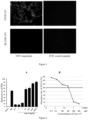
- NTCP-293 cell line was formed by transfecting non-hepatocyte-derived 293 cells with NTCP.
- Amino acid K at position 37 of hepalatide (Cmyr-47) or unrelated control peptide (peptide 47 derived from the Pre-S1 region of heron HBV, myristoyl-GLNQSTFNPLGFFPSHQLDPLFKANAGSADWDKNPNKDPWP QAHDTA-amido, SEQ ID NO: 50) were fluorescently labeled by FITC. As shown in Fig.
- FITC-hepalatide bound to NTCP-293 cells, but did not bind to 293 cells which was not transfected with NTCP (BLANK-293), illustrating that the binding of hepalatide to cells is NTCP specific.
- FITC-labeled unrelated control peptide did not bind to NTCP-293 cells, illustrating that the binding is specific to the sequence of hepalatide.
- Phase Ia trial Phase Subject Dosage (s.c) Number Test drug : placebo (sex ratio) Ia Healthy subjects 0.525 mg/person 4:1 (male 2, female 3) 2.10 mg/person 4:1 (male 3, female 2) 4.20 mg/person 8:2 (Male and female half and half) 6.30 mg/person 8:2 (Male and female half and half) 8.40 mg/person 8:2 (Male and female half and half) 10.50 mg/person 4:1 (male 2, female 3) Table 3.
- the multiple-dose climb phase Ib clinical trial of hepalatide was a randomized, double-blind, blank-controlled, single-center trial.
- Three dose groups (4.20 mg, 6.30 mg and 8.40 mg) were set up, and 10, 10 and 15 healthy subjects were planned to be enrolled in each group, respectively.
- the ratio of men to women is 18:17.
- the healthy subjects were enrolled into the experimental groups and the blank control group double-blindly and randomly at the ratio of 4: 1, and were administrated by subcutaneous injection once a day for 7 days, and were observed for 3 days after drug withdrawal.
- the administrations and exposures of hepalatide during the test were shown in Table 6.
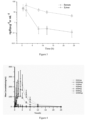
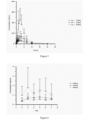
- Clinic pharmacokinetic study A phase Ib clinical pharmacokinetic study of multiple-dose climbing subcutaneous administration was carried out in 35 healthy subjects. Subjects were administered continuously once a day for 7 days. The dosage settings and PK analysis population are shown in Table 9. Blood samples were collected at the following times: before and 2 minutes, 5 minutes, 15 minutes, 30 minutes, 45 minutes, 1 hour, 1.5 hours, 2 hours, 3 hours, 4 hours, 6 hours, 8 hours, and 12 hours after administration; Day 2: 24 hours after Day 1 administration (before Day 2 administration of); Days 3 ⁇ 6: before administration; Day 7: before and 2 minutes, 5 minutes, 15 minutes, 30 minutes, 45 minutes, 1 hour, 1.5 hours, 2 hours, 3 hours, 4 hours, 6 hours, 8 hours, and 12 hours after administration.
Landscapes
- Health & Medical Sciences (AREA)
- Life Sciences & Earth Sciences (AREA)
- Virology (AREA)
- Medicinal Chemistry (AREA)
- Veterinary Medicine (AREA)
- Public Health (AREA)
- General Health & Medical Sciences (AREA)
- Chemical & Material Sciences (AREA)
- Animal Behavior & Ethology (AREA)
- Pharmacology & Pharmacy (AREA)
- Engineering & Computer Science (AREA)
- Immunology (AREA)
- Epidemiology (AREA)
- Organic Chemistry (AREA)
- General Chemical & Material Sciences (AREA)
- Chemical Kinetics & Catalysis (AREA)
- Nuclear Medicine, Radiotherapy & Molecular Imaging (AREA)
- Communicable Diseases (AREA)
- Bioinformatics & Cheminformatics (AREA)
- Gastroenterology & Hepatology (AREA)
- Molecular Biology (AREA)
- Biotechnology (AREA)
- Oncology (AREA)
- Proteomics, Peptides & Aminoacids (AREA)
- Microbiology (AREA)
- Mycology (AREA)
- Medicines That Contain Protein Lipid Enzymes And Other Medicines (AREA)
- Peptides Or Proteins (AREA)
- Medicinal Preparation (AREA)
Claims (8)
- Polypeptid, umfassend eine Aminosäuresequenz, ausgewählt aus SEQ ID Nr: 21 - 40 und 49, oder eine pharmazeutische Zusammensetzung, umfassend das Polypeptid, zur Verwendung in einem Verfahren zur Behandlung oder Vorbeugung von HBV-bedingten Lebererkrankungen, wobei das Polypeptid in einer Dosis von 4,2 - 5,0 mg für mindestens 7 aufeinanderfolgende Tage verabreicht wird.
- Polypeptid oder pharmazeutische Zusammensetzung, umfassend das Polypeptid zur Verwendung nach Anspruch 1, wobei das Polypeptid eine N-terminale Modifikation mit einer hydrophoben Gruppe umfasst; wobei vorzugsweise die hydrophobe Gruppe ausgewählt ist aus Myristinsäure, Palmitinsäure, Stearinsäure, Ölsäure, Linolsäure, Cholesterin und Arachidonsäure; wobei bevorzugter die hydrophobe Gruppe Myristinsäure ist; und/oder das Polypeptid eine C-terminale Modifikation umfasst; wobei vorzugsweise die C-terminale Modifikation Amidierung, Isopentandiolierung oder keine Modifikation ist.
- Polypeptid oder pharmazeutische Zusammensetzung, umfassend das Polypeptid zur Verwendung nach Anspruch 1 oder 2, wobei das Polypeptid am N-Terminus und/oder am C-Terminus eine native flankierende Aminosäuresequenz aus der pre-S1-Region von HBV umfasst; wobei vorzugsweise die native flankierende Aminosäuresequenz aus der pre-S1-Region von HBV eine Länge von 1-10, 1-8, 1-5 oder 1-3 Aminosäuren hat.
- Polypeptid oder pharmazeutische Zusammensetzung, umfassend das Polypeptid zur Verwendung nach Anspruch 3, wobei das Polypeptid eine N-terminale Modifikation mit einer hydrophoben Gruppe, ausgewählt aus Myristinsäure, Palmitinsäure, Stearinsäure und Cholesterin, und eine C-terminale Modifikation mit Amidierung umfasst; wobei vorzugsweise das Polypeptid in einer der SEQ ID Nr: 1-20 oder 51 dargelegt ist; wobei bevorzugter das Polypeptid in SEQ ID Nr: 3 oder 51 dargelegt ist.
- Polypeptid oder pharmazeutische Zusammensetzung, umfassend das Polypeptid zur Verwendung nach einem der Ansprüche 1 bis 4, wobei das Polypeptid in einer täglichen Dosierung von 4,2 bis 5,0 mg, vorzugsweise 4,2 mg oder 5,0 mg, für mindestens 7 aufeinanderfolgende Tage verabreicht wird.
- Polypeptid oder pharmazeutische Zusammensetzung, umfassend das Polypeptid zur Verwendung nach Anspruch 5, wobeidas Polypeptid die Aminosäuresequenz von SEQ ID Nr: 23 umfasst und eine N-terminale Modifikation mit Myristinsäure und eine C-terminale Modifikation mit Aminierung umfasst; wobei vorzugsweise die ausreichende Dosierung eine tägliche Dosierung von 4,2 mg ist; oderdas Polypeptid die Aminosäuresequenz von SEQ ID Nr: 49 umfasst und eine N-terminale Modifikation mit Myristinsäure und eine C-terminale Modifikation mit Aminierung umfasst, wobei vorzugsweise die ausreichende Dosis eine tägliche Dosis von 5,0 mg ist.
- Polypeptid oder pharmazeutische Zusammensetzung, umfassend das Polypeptid zur Verwendung nach Anspruch 1, wobeidas Polypeptid die Aminosäuresequenz von SEQ ID Nr: 23 umfasst und eine N-terminale Modifikation mit Myristinsäure und eine C-terminale Modifikation mit Aminierung umfasst, wobei das Verfahren das Verabreichen von N Dosen der pharmazeutischen Zusammensetzung an den Patienten pro Tag umfasst, um eine Tagesdosis von 4,2 mg zu erreichen, wobei N eine ganze Zahl von 1 bis 42 ist; oderdas Polypeptid die Aminosäuresequenz von SEQ ID Nr: 49 umfasst und eine N-terminale Modifikation mit Myristinsäure und eine C-terminale Modifikation mit Aminierung umfasst, wobei das Verfahren das Verabreichen von N Dosen der pharmazeutischen Zusammensetzung an den Patienten pro Tag umfasst, um eine Tagesdosis von 5,0 mg zu erreichen, wobei N eine ganze Zahl von 1 bis 50 ist.
- Polypeptid oder pharmazeutische Zusammensetzung, umfassend das Polypeptid zur Verwendung nach einem der Ansprüche 1 bis 7, wobei die HBV-bedingten Lebererkrankungen chronische Hepatitis-B-Virusinfektion, chronische Hepatitis B, Hepatitis-B-bedingte Leberfibrose und -zirrhose, Hepatitis-B-bedingten Leberkrebs umfassen; wobei vorzugsweise die chronische Hepatitis B HBeAg-positive chronische Hepatitis B und HBeAgnegative chronische Hepatitis B einschließt.
Applications Claiming Priority (2)
| Application Number | Priority Date | Filing Date | Title |
|---|---|---|---|
| CN201711024391.0A CN109718364A (zh) | 2017-10-27 | 2017-10-27 | 充分剂量条件下治疗乙肝病毒相关肝病的药物和方法 |
| PCT/CN2018/112062 WO2019080919A1 (zh) | 2017-10-27 | 2018-10-26 | 充分剂量条件下治疗乙肝病毒相关肝病的药物和方法 |
Publications (4)
| Publication Number | Publication Date |
|---|---|
| EP3701966A1 EP3701966A1 (de) | 2020-09-02 |
| EP3701966A4 EP3701966A4 (de) | 2021-06-30 |
| EP3701966C0 EP3701966C0 (de) | 2025-07-09 |
| EP3701966B1 true EP3701966B1 (de) | 2025-07-09 |
Family
ID=66247177
Family Applications (1)
| Application Number | Title | Priority Date | Filing Date |
|---|---|---|---|
| EP18871510.6A Active EP3701966B1 (de) | 2017-10-27 | 2018-10-26 | Hepalatide verbindungen zur verwendung bei der behandlung von hbv-krankheiten |
Country Status (5)
| Country | Link |
|---|---|
| US (1) | US20200316166A1 (de) |
| EP (1) | EP3701966B1 (de) |
| JP (1) | JP7672677B2 (de) |
| CN (2) | CN109718364A (de) |
| WO (1) | WO2019080919A1 (de) |
Families Citing this family (4)
| Publication number | Priority date | Publication date | Assignee | Title |
|---|---|---|---|---|
| CN116510021A (zh) * | 2022-01-24 | 2023-08-01 | 上海贺普药业股份有限公司 | 有限化慢性乙肝的核苷(酸)类药物治疗的药物及方法 |
| CN116621944A (zh) * | 2022-02-10 | 2023-08-22 | 成都奥达生物科技有限公司 | 一种长效肝炎病毒进入抑制剂 |
| WO2024012423A1 (zh) * | 2022-07-11 | 2024-01-18 | 上海贺普药业股份有限公司 | 乙型肝炎病毒受体oatp及其应用 |
| WO2025031397A1 (zh) * | 2023-08-08 | 2025-02-13 | 前沿生物药业(南京)股份有限公司 | 钠离子-牛磺胆酸共转运蛋白长效抑制剂及其应用 |
Family Cites Families (8)
| Publication number | Priority date | Publication date | Assignee | Title |
|---|---|---|---|---|
| CN1733798B (zh) * | 2005-08-12 | 2012-07-04 | 上海贺普生物科技有限公司 | 乙型肝炎病毒表面l蛋白相关肽 |
| WO2009092396A1 (en) * | 2008-01-25 | 2009-07-30 | Universitätsklinikum Heidelberg | Hydrophobic modified pres-derived peptides of hepatitis b virus (hbv) and their use as hbv and hdv entry inhibitors |
| JP5686468B2 (ja) * | 2008-01-25 | 2015-03-18 | ルプレヒト−カールス−ウニヴェルジテート ハイデルベルクRuprecht−Karls−Universitaet Heidelberg | B型肝炎ウイルス(HBV)の疎水性修飾されたpreS由来ペプチド及び肝臓に化合物を特異的に送達するためのビヒクルとしてのそれらの使用 |
| CN102241744B (zh) * | 2010-05-14 | 2015-03-04 | 上海贺普药业股份有限公司 | 一种病毒感染阻断剂、其药物组合物及其应用 |
| KR101944263B1 (ko) * | 2012-06-11 | 2019-02-01 | 시아먼 유니버시티 | 에이치비브이 감염 및 관련 질병의 치료를 위한 폴리펩타이드 및 항체 |
| JP6445447B2 (ja) | 2012-11-12 | 2018-12-26 | ルプレヒト−カールス−ウニヴェルジテート ハイデルベルクRuprecht−Karls−Universitaet Heidelberg | Hbv及び/又はhdv感受性の細胞、細胞株及び非ヒト動物の開発 |
| CN104274827B (zh) * | 2013-07-01 | 2020-07-14 | 上海贺普药业股份有限公司 | 贺普拉肽的制剂 |
| EA201790786A1 (ru) * | 2014-10-07 | 2017-09-29 | Мир Гмбх | Комбинированная терапия вызываемой вирусами hbv и hdv инфекции |
-
2017
- 2017-10-27 CN CN201711024391.0A patent/CN109718364A/zh active Pending
-
2018
- 2018-10-26 CN CN201880068783.3A patent/CN111417402A/zh active Pending
- 2018-10-26 EP EP18871510.6A patent/EP3701966B1/de active Active
- 2018-10-26 US US16/759,200 patent/US20200316166A1/en active Pending
- 2018-10-26 WO PCT/CN2018/112062 patent/WO2019080919A1/zh not_active Ceased
- 2018-10-26 JP JP2020543680A patent/JP7672677B2/ja active Active
Also Published As
| Publication number | Publication date |
|---|---|
| JP7672677B2 (ja) | 2025-05-08 |
| CN109718364A (zh) | 2019-05-07 |
| CN111417402A (zh) | 2020-07-14 |
| JP2021500411A (ja) | 2021-01-07 |
| EP3701966A4 (de) | 2021-06-30 |
| EP3701966A1 (de) | 2020-09-02 |
| US20200316166A1 (en) | 2020-10-08 |
| WO2019080919A1 (zh) | 2019-05-02 |
| EP3701966C0 (de) | 2025-07-09 |
Similar Documents
| Publication | Publication Date | Title |
|---|---|---|
| EP3701966B1 (de) | Hepalatide verbindungen zur verwendung bei der behandlung von hbv-krankheiten | |
| JP6608799B2 (ja) | 高可溶性レプチン | |
| CA2713189C (en) | Hydrophobic modified pres-derived peptides of hepatitis b virus (hbv) and their use as hbv and hdv entry inhibitors | |
| US20200338158A1 (en) | Therapeutic Drug for Non-Alcoholic Fatty Liver Disease | |
| US20230414706A1 (en) | Compositions and methods for treating metabolic diseases | |
| US20220016211A1 (en) | Fgf-21 conjugate formulations | |
| WO2021216659A1 (en) | Modified peptide fragments of cav-1 protein and uses thereof | |
| US12173061B2 (en) | Compositions and methods for treatment of chronic lung diseases | |
| WO2014121492A1 (zh) | Sp肽或其衍生物在制备降低il-13水平的药物中的应用 | |
| US20250144205A1 (en) | Compositions and methods for treating infectious diseases | |
| WO2022207918A1 (en) | COVID-19 Therapy | |
| JP2025522991A (ja) | 修飾カベオリン-1ペプチド製剤ならびにその製造方法及び使用方法 |
Legal Events
| Date | Code | Title | Description |
|---|---|---|---|
| STAA | Information on the status of an ep patent application or granted ep patent |
Free format text: STATUS: THE INTERNATIONAL PUBLICATION HAS BEEN MADE |
|
| PUAI | Public reference made under article 153(3) epc to a published international application that has entered the european phase |
Free format text: ORIGINAL CODE: 0009012 |
|
| STAA | Information on the status of an ep patent application or granted ep patent |
Free format text: STATUS: REQUEST FOR EXAMINATION WAS MADE |
|
| 17P | Request for examination filed |
Effective date: 20200515 |
|
| AK | Designated contracting states |
Kind code of ref document: A1 Designated state(s): AL AT BE BG CH CY CZ DE DK EE ES FI FR GB GR HR HU IE IS IT LI LT LU LV MC MK MT NL NO PL PT RO RS SE SI SK SM TR |
|
| AX | Request for extension of the european patent |
Extension state: BA ME |
|
| DAV | Request for validation of the european patent (deleted) | ||
| DAX | Request for extension of the european patent (deleted) | ||
| A4 | Supplementary search report drawn up and despatched |
Effective date: 20210601 |
|
| RIC1 | Information provided on ipc code assigned before grant |
Ipc: A61K 38/16 20060101AFI20210526BHEP Ipc: A61K 39/29 20060101ALI20210526BHEP Ipc: A61P 31/20 20060101ALI20210526BHEP |
|
| STAA | Information on the status of an ep patent application or granted ep patent |
Free format text: STATUS: EXAMINATION IS IN PROGRESS |
|
| 17Q | First examination report despatched |
Effective date: 20220510 |
|
| GRAP | Despatch of communication of intention to grant a patent |
Free format text: ORIGINAL CODE: EPIDOSNIGR1 |
|
| STAA | Information on the status of an ep patent application or granted ep patent |
Free format text: STATUS: GRANT OF PATENT IS INTENDED |
|
| INTG | Intention to grant announced |
Effective date: 20250130 |
|
| GRAS | Grant fee paid |
Free format text: ORIGINAL CODE: EPIDOSNIGR3 |
|
| GRAA | (expected) grant |
Free format text: ORIGINAL CODE: 0009210 |
|
| STAA | Information on the status of an ep patent application or granted ep patent |
Free format text: STATUS: THE PATENT HAS BEEN GRANTED |
|
| AK | Designated contracting states |
Kind code of ref document: B1 Designated state(s): AL AT BE BG CH CY CZ DE DK EE ES FI FR GB GR HR HU IE IS IT LI LT LU LV MC MK MT NL NO PL PT RO RS SE SI SK SM TR |
|
| REG | Reference to a national code |
Ref country code: GB Ref legal event code: FG4D |
|
| REG | Reference to a national code |
Ref country code: CH Ref legal event code: EP |
|
| REG | Reference to a national code |
Ref country code: IE Ref legal event code: FG4D |
|
| U01 | Request for unitary effect filed |
Effective date: 20250715 |
|
| U07 | Unitary effect registered |
Designated state(s): AT BE BG DE DK EE FI FR IT LT LU LV MT NL PT RO SE SI Effective date: 20250721 |
|
| U20 | Renewal fee for the european patent with unitary effect paid |
Year of fee payment: 8 Effective date: 20251028 |