EP3701362B1 - Autonom kooperierende intelligente vorrichtungen - Google Patents
Autonom kooperierende intelligente vorrichtungen Download PDFInfo
- Publication number
- EP3701362B1 EP3701362B1 EP18869019.2A EP18869019A EP3701362B1 EP 3701362 B1 EP3701362 B1 EP 3701362B1 EP 18869019 A EP18869019 A EP 18869019A EP 3701362 B1 EP3701362 B1 EP 3701362B1
- Authority
- EP
- European Patent Office
- Prior art keywords
- cluster
- active
- unit
- spreadsheet
- programming
- Prior art date
- Legal status (The legal status is an assumption and is not a legal conclusion. Google has not performed a legal analysis and makes no representation as to the accuracy of the status listed.)
- Active
Links
Images









Classifications
-
- G—PHYSICS
- G06—COMPUTING OR CALCULATING; COUNTING
- G06F—ELECTRIC DIGITAL DATA PROCESSING
- G06F3/00—Input arrangements for transferring data to be processed into a form capable of being handled by the computer; Output arrangements for transferring data from processing unit to output unit, e.g. interface arrangements
- G06F3/01—Input arrangements or combined input and output arrangements for interaction between user and computer
- G06F3/048—Interaction techniques based on graphical user interfaces [GUI]
- G06F3/0484—Interaction techniques based on graphical user interfaces [GUI] for the control of specific functions or operations, e.g. selecting or manipulating an object, an image or a displayed text element, setting a parameter value or selecting a range
-
- H—ELECTRICITY
- H04—ELECTRIC COMMUNICATION TECHNIQUE
- H04L—TRANSMISSION OF DIGITAL INFORMATION, e.g. TELEGRAPHIC COMMUNICATION
- H04L12/00—Data switching networks
- H04L12/28—Data switching networks characterised by path configuration, e.g. LAN [Local Area Networks] or WAN [Wide Area Networks]
- H04L12/2803—Home automation networks
- H04L12/2816—Controlling appliance services of a home automation network by calling their functionalities
-
- H—ELECTRICITY
- H04—ELECTRIC COMMUNICATION TECHNIQUE
- H04L—TRANSMISSION OF DIGITAL INFORMATION, e.g. TELEGRAPHIC COMMUNICATION
- H04L67/00—Network arrangements or protocols for supporting network services or applications
- H04L67/01—Protocols
- H04L67/12—Protocols specially adapted for proprietary or special-purpose networking environments, e.g. medical networks, sensor networks, networks in vehicles or remote metering networks
-
- H—ELECTRICITY
- H04—ELECTRIC COMMUNICATION TECHNIQUE
- H04L—TRANSMISSION OF DIGITAL INFORMATION, e.g. TELEGRAPHIC COMMUNICATION
- H04L67/00—Network arrangements or protocols for supporting network services or applications
- H04L67/01—Protocols
- H04L67/12—Protocols specially adapted for proprietary or special-purpose networking environments, e.g. medical networks, sensor networks, networks in vehicles or remote metering networks
- H04L67/125—Protocols specially adapted for proprietary or special-purpose networking environments, e.g. medical networks, sensor networks, networks in vehicles or remote metering networks involving control of end-device applications over a network
-
- H—ELECTRICITY
- H04—ELECTRIC COMMUNICATION TECHNIQUE
- H04L—TRANSMISSION OF DIGITAL INFORMATION, e.g. TELEGRAPHIC COMMUNICATION
- H04L67/00—Network arrangements or protocols for supporting network services or applications
- H04L67/01—Protocols
- H04L67/131—Protocols for games, networked simulations or virtual reality
-
- G—PHYSICS
- G06—COMPUTING OR CALCULATING; COUNTING
- G06F—ELECTRIC DIGITAL DATA PROCESSING
- G06F40/00—Handling natural language data
- G06F40/10—Text processing
- G06F40/166—Editing, e.g. inserting or deleting
- G06F40/177—Editing, e.g. inserting or deleting of tables; using ruled lines
- G06F40/18—Editing, e.g. inserting or deleting of tables; using ruled lines of spreadsheets
Definitions
- the present invention relates to smart devices, and in particular to cooperation among smart devices.
- the Internet of things is a network of physical devices embedded with electronics, software, sensors, actuators, and network connectivity which enable these devices to collect and exchange data and perform actions.
- the smart home also known as home automation or domotics, is a subset of IoT, focusing on the control and automation of residential lighting, heating, ventilation, air conditioning, security, appliances and gadgets.
- control hub that manages cooperation among smart devices in the smart home and other IoT applications costs money to acquire and install, reduces reliability by introducing a single point of failure, and impedes interoperability because of conflicting commercial interests among control hub providers.
- Two refences that describe systems of cooperating devices and were identified by the European Patent Office during the examination of the present application are: D1: US 2005/096753 A1 (ARLING PAUL D [US) ET AL) 5 May 2005 ; and D2: US 2013/219438 A1 (ARLING PAUL D [US] ET AL) 22 August 2013 .
- the present invention introduces systems and functionalities that reduce the costs, increase reliability and interoperability and improve the manageability by users of cooperation among smart devices in the smart home and other IoT applications.
- the present disclosure teaches eliminating control hubs via autonomous cooperation among smart devices, where each active smart device decides by itself and for itself how to respond to state changes reported by other smart devices. Eliminating control hubs reduces the cost and improves the reliability and interoperability of clusters of cooperating smart devices.
- the present disclosure teaches improving manageability by users of simpler clusters of smart devices by using spreadsheets for programming the cooperation among smart devices, so that many users that are not professional programmers can set up smart devices to cooperate according to the users' requirements and preferences.
- the level of skill required for setting up smart devices according to the second aspect is that of spreadsheet users, where more experienced and capable spreadsheet users turn into more sophisticated users of the second aspect of the present invention.
- a “smart device” herein is an integral physical thing that includes a memory, processor and communication unit, collectively called “controller”, and zero or more electrically-operated “functional unit” controlled by the processor. All elements described herein as included in a smart device are contained in a common enclosure and/or are physically attached to each other.
- a smart device having no functional unit is called herein a “bridge smart device” abbreviated “bridge device”, and is devised to cooperate with external device(s).
- a functional unit is either an "information unit” that measures, collects, detects, receives, downloads or otherwise obtains useful information that may affect the operation of other devices, or an "active unit” that controllably performs an action.
- Active units included in active devices are further categorized into a "controllable service unit” whose action provides a tangible useful service that directly benefits users, and “controllable connector unit”, such as an electronically-actuated switch or valve, whose action affects the supply of a resource, such as electricity or water, that is consumed by the provision of a tangible useful service by an "external active device” that includes an active unit that is a service unit that provides a tangible useful service, as well as optionally an “alien controller” that controls the service unit yet is not directly programmed and operating according to the teachings of the present disclosure, such as an alien irrigation timer.
- controllable service unit whose action provides a tangible useful service that directly benefits users
- controllable connector unit such as an electronically-actuated switch or valve, whose action affects the supply of a resource, such as electricity or water, that is consumed by the provision of a tangible useful service by an "external active device” that includes an active unit that is a service unit that provides a tangible useful service, as well as optionally
- a service unit of an external active device may be a dumb service unit, such as a conventional sprinkler, light or fan, that has no controller of its own but is indirectly controlled by a connector device that controls the supply of a resource such as water or electricity.
- An “active smart device”, abbreviated “active device”, is herein a smart device that includes at least one active unit.
- An “information smart device”, abbreviated “information device”, is herein a smart device that includes one or more information units and no active unit.
- An “active bridge device” is herein a smart device that includes a controller and no functional unit of its own and selectably sends control signals to an external active device that includes an active unit that is a controllable service unit that provides a tangible useful service.
- An “information bridge device” is a smart device that includes a controller and no functional unit of its own and communicates with external information device(s) to obtain information.
- a “service device” includes a controller and at least one controllable service unit, while a “connector device” includes a controller and exactly one controllable connector unit.
- Smart devices communicate with other devices via communication links such as Bluetooth LE, Wi-Fi, infrared, sound, wired connection, powerline connection, text messaging, or any other technology that may move data among devices.
- communication links such as Bluetooth LE, Wi-Fi, infrared, sound, wired connection, powerline connection, text messaging, or any other technology that may move data among devices.
- a smart device may include several functional units embodied as distinct hardware pieces, such as a ceiling fan that includes both a fan unit and a lighting unit and a controller that controls both, while a single hardware piece may serve as multiple functional units, for example, a camera that serves as both a license plate reader and a motion detector.
- a ceiling fan that includes both a fan unit and a lighting unit and a controller that controls both
- a single hardware piece may serve as multiple functional units, for example, a camera that serves as both a license plate reader and a motion detector.
- Each functional unit has a "state" parameter that measures or characterizes or specifies the condition or situation or output of the functional unit.
- states Non-limiting examples are numeric states in case of a temperature sensor; textual states, such as ⁇ 'off, 'low', ⁇ med', 'high' ⁇ , in case of an air conditioner; or an alphanumeric expression in the case of a license plate reader.
- More complex state parameters such as vectors or matrices or databases, may be used in more complex applications, for example in manufacturing or traffic control systems or in an autonomous car.
- a "current state” of a functional unit is the current condition or situation or output of a functional unit, while a “target state” of an active unit is a state to be reached or executed by the active unit or otherwise affect the state of the active unit.
- a current state of a functional unit is reported by the communication unit of a smart device that includes or otherwise controls the functional unit, to possibly affect the state of other functional unit(s).
- the target state of an active unit is autonomously calculated by the controller of an active device that includes or otherwise controls the active unit, to control the operation of the active unit.
- state, current state and target state may be replaced by analogous terms and expressed in various ways, as long as retaining the essence of what is reported by smart devices to characterize their condition or situation or output, and what is to be autonomously calculated and then determine the operation of functional units of active devices.
- a vendor of a controllable service unit that is an electric gate defines states of the electric gates such as 0 (close), 1 (partly open, opening), 2 (open), 3 (partly open, closing), and 30, 31, ... 120 which represent the number of seconds that the gate is instructed to stay fully open before automatically reclosing.
- the current state and target state may occupy different ranges of values, yet they are useful and unambiguous for effective programming and monitoring of the gate operation without confusion.
- Another exemplary, complex target state is of an active device that is a text messaging apparatus, whose target state actually includes two parameters: an address, such as ⁇ 2125557890', and a message content, such as 'abracadabra'.
- This exemplary target state may be represented either by the two separate parameters: 2125557890 (numeric), and 'abracadabra' (text), or by a single text parameter such as ⁇ 2125557890(abracadabra)'.
- Another example of a complex state if of an air conditioner whose target state includes both 'low', 'med', 'high' airflow intensity and a numerical temperature parameter.
- the actual target state format is specified and published by the vendor of the smart device, and the person that programs the apparatus is required to adhere to the published format so that the respective active device will function as desired.
- An active unit "cooperates" with another (active or information) functional unit if the active unit selectably changes its state in response to a change in the state of the other functional unit.
- the two cooperating functional units may reside on two separate smart devices, for example one smart device controlling an air conditioner while the other smart device including an ambient thermometer; or both may reside within a single smart device, as is the case, for example, of a smart device that includes both a light (active unit) and a motion sensor (information unit) that affects the operation of the light.
- Two smart devices are said to cooperate if an active device of the two smart devices controls a functional unit (included in the smart device or in an external device) that cooperates with a functional unit of the other smart device.
- a light may turn on when both darkness is detected by a light sensor (information unit) while motion is detected by a motion sensor (information unit); further, the same light (active unit) may turn on also upon an electric gate (active unit) opening while darkness is detected by the light sensor (information unit).
- a “cluster” is a group of at least two smart devices, each selected by a user for cooperating with at least one other smart device of the cluster.
- a functional unit is said to belong to a cluster if it forms part of a smart device included in the cluster.
- a cluster selectably communicates with at least one "programming device” that is a computing device or system, such as a personal computer, a tablet or a smartphone, or any programming environment used by professional programmers, that can communicate with smart devices of the cluster for allowing programming the cooperation rules of a cluster and distributing them to smart devices of the cluster.
- a "connected cluster” there is a path of undirected cooperation links between each two smart devices of the cluster, as explained with reference to Fig. 1A below.
- a “cluster cooperation program” is a code or script determining, for all active devices of a cluster, how to calculate the target state of each active unit controlled by each active device according to current state(s) of functional unit(s) reported by other smart devices of the cluster.
- a “device cooperation program” is a code or script determining, for an active device of a cluster, how to calculate the target state(s) of the active units(s) controlled by the active device according to current state(s) of active unit(s) reported by other smart devices of the cluster.
- a "spreadsheet” is used herein under two meanings: (1) data and formulas organized in a tabular form; and (2) an interactive computer program for organization, analysis and storage of data in tabular form.
- the program operates on data entered in cells of a table.
- Each cell may contain numeric data, logical data, text data or a formula, and display the data or the result of calculating the formula based on the contents of other cells.
- “cell” herein may mean also to the content of a cell, as in the expression cell A7 equals cell B5 plus cell C6.
- a "spreadsheet formula” is a spreadsheet-recognizable formula contained within a cell of a spreadsheet, in a form that is a human-comprehensible textual expression that may include any combination of numeric, logical and/or text values; references to other cells; arithmetic and/or relational operators; or functions.
- a "cluster cooperation spreadsheet”, abbreviated a “cluster spreadsheet”, and a “device cooperation spreadsheet”, abbreviated “device spreadsheet”, are usable in embodiments that use spreadsheets as cluster cooperation programs and device cooperation programs, respectively. Such embodiments facilitate the manageability by users of simpler clusters of smart devices.
- processors performing calculations and controlling operations.
- processor pertains herein to one or more microprocessors and/or circuits collectively programmed to perform an algorithm.
- programmed to or “programmed for” pertains herein to a processor configured to perform an algorithm by mask design, by executable code recorded in firmware embedded in or next to the processor, and/or by executable code or script loaded into the processor from a memory or another storage device.
- the present disclosure focuses on the programming of functional cooperation among functional units of a cluster of smart devices and does not concern communication and pairing among smart devices, which may benefit from popular communications protocol used for interconnecting products in and beyond the smart homes, such as X10, Ethernet, RS-485, 6LoWPAN, Bluetooth LE (BLE), ZigBee and Z-Wave, with new protocols emerging from time to time.
- popular communications protocol used for interconnecting products in and beyond the smart homes such as X10, Ethernet, RS-485, 6LoWPAN, Bluetooth LE (BLE), ZigBee and Z-Wave, with new protocols emerging from time to time.
- phrases such as 'comprising an item', 'including an item', ⁇ having an item', and so forth denote one or more of the cited item.
- phrases using a plural language such as in 'the system includes widgets connected to gadgets' cover also the singular cases of a widget connected to a gadget, a widget connected to several gadgets, or several widgets connected to a gadget.
- selectably such as in selectably performing an action, means herein that an action is performed only as needed or upon user initiative or external command or signal.
- the present disclosure teaches autonomous cooperation among smart devices of a connected cluster, where each active device of a connected cluster decides by itself and for itself how to respond to current states reported by other smart devices.
- a programming device is used for programming a cluster cooperation program that defines the cooperation rules for all active devices of the cluster and is optionally used for testing the cluster operation in a hub-based mode.
- a programming device is then used for distributing the cluster cooperation program to all active devices of the cluster, for autonomous operation of the active devices.
- using a cluster spreadsheet as a cluster cooperation program and as a programming environment is advantageous for allowing many users and handymen that are not professional programmers, to program cooperation among smart devices according to personal needs and preferences of end users.
- spreadsheet formulas are used to calculate target states of active units according to reported current states of functional units.
- Programming messages based on the spreadsheet formulas are received and stored by the smart devices of the cluster for autonomous operation.
- Processors of smart devices of the cluster then receive reported current states of functional units of the cluster, calculate the target states of the active units included in the smart devices according to the received current states and respective spreadsheet formulas, and control the active units according to the calculated target states.
- a connected cluster of smart devices the connected cluster programmed to cooperate according to a cluster cooperation program, the cluster cooperation program for calculating target states of active units according to current states of functional units, the connected cluster including: (1) at least one information device, each information device for reporting a current state of at least one information unit; and (2) at least two active devices, each active device for controlling at least one active unit, each active device including: (a) a communication unit included in the active device for receiving from smart devices of the connected cluster current states of functional units, (b) a memory included in the active device for storing the cluster cooperation program, and (c) a processor included in the active device and programmed to autonomously: (i) calculate a target state of each active unit controlled by the active device according to the cluster cooperation program stored in the memory and at least one current state of a functional unit received via the communication unit, and (ii) control each active unit controlled by the active device for operating according to the calculated target state.
- the cluster cooperation program may be in a format of a cluster spreadsheet.
- the processor of the active device is aware of the identity(ies) of the active unit(s) included in or controlled by the active device, and controls those active unit(s) according to the respective target state calculations made according to the cluster cooperation program.
- an active device of the at least two active devices may be: (i) a service device that includes a controllable service unit providing a tangible useful service; (ii) a connector device that includes a controllable connector unit affecting the supply of a resource that is consumed by an external active device that provides a tangible useful service; or (iii) an active bridge device controlling an external active device that provides a tangible useful service.
- the controllable service unit/ controllable connector unit respectively, is contained in a common enclosure with and/or is physically attached to the respective communication unit, memory and processor of the same active device.
- a method of programming and operating a connected cluster of smart devices including: (1) in a programming device: programming a cluster cooperation program for calculating target states of active units according to current states of functional units; (2) in each information device of the connected cluster: reporting a current state of at least one information unit; and (3) in each active device of at least two active devices of the connected cluster: controlling each active unit of at least one active unit controlled by the active device, by: (a) receiving the cluster cooperation program from a programming device, (b) storing the cluster cooperation program in a memory of the active device, (c) receiving from smart devices of the connected cluster current states of functional units, (d) autonomously calculating a target state of each active unit controlled by the active device according to the cluster cooperation program stored in the memory and at least one received current state of a functional unit, and (e) controlling each active unit for operating according to the calculated target state.
- the method may further include the step of: in a programming device: testing the connected cluster in hub-based mode, by running the cluster cooperation program for: (i) receiving from smart devices of the connected cluster current states of functional units, (ii) calculating, by the programming device, a target state for each active unit controlled by each active device of the connected cluster, according to the cluster cooperation program and the received current states of functional units, and (iii) controlling the active devices for operating according to the calculated target states.
- the cluster cooperation program may be a cluster spreadsheet.
- an active device for selectably cooperating with smart devices, the active device including: (1) an active unit included in the active device for controllably performing an action; (2) a communication unit included in the active device for: (a) receiving a cluster spreadsheet, spreadsheet formulas, from programming devices, and (b) receiving from smart devices current states of functional units; (3) a memory included in the active device for storing the cluster spreadsheet received via the communication unit; and (4) a processor included in the active device and programmed to autonomously: (a) calculate a target state of the active unit included in the active device according to: (i) one or more of the spreadsheet formulas received via the communication unit and stored in the memory, and (ii) one or more of current states of a functional units received via the communication unit, and (b) control the active unit included in the active device for performing the action according to the calculated target state.
- An active unit included in the active device may be a controllable service unit whose action is providing a tangible useful service, such as lighting.
- An active unit included in the active device may be a controllable connector unit whose action is supplying a resource that is consumed by provision of a tangible useful service by an external active device.
- the controllable connector unit may be an electronically-actuated switch and the resource be electricity; in another exemplary embodiment, the controllable connector unit may be an electronically-actuated valve and the resource be water.
- the processor and the communication unit of the active device are further operable to provide to programming devices a spreadsheet stored in the memory for restoring a cluster of smart devices.
- the active device may include a real-time clock, and one or more spreadsheet formulas used to calculate a target state may includes a time parameter.
- the cluster spreadsheet and the memory of an active device may include one or more formulas for intermediate calculation(s)
- Fig. 10 depicts a hub-based system 1000 of the background art.
- Smart devices 1040A...1040N are deployed, each operating according to its respective device + slave program 1042N... 1042N.
- the device part of device + slave program takes care of the device operation, such as the operation of a computerized machine, while the slave feature of device + slave programs of active devices of smart devices 1040A...1040N is for obeying commands received from cluster control hub 1020 running cluster cooperation program 1022 to selectably affect the operation of the active devices.
- the information devices of the smart devices 1040A...1040N of system 1000 are programmed to acquire and report information to cluster control hub 1020, while the active devices of the smart devices 1040A...1040N of system 1000 are programmed to control the operation of respective active units included in or controlled through or by controllers of the active devices according to commands 1060A...1060N received from cluster control hub 1020.
- information 1050A...1050N is sent by smart devices that are information devices and is optional for smart devices that are active devices, while commands 1060A... 1060N affect the operation of active devices.
- the cooperation among smart devices of hub-based system 1000 i.e. the rules determining how each active device responds to current state changes reported by other smart devices of the cluster, is exclusively determined by cluster cooperation program 1022 running on a processor of cluster control hub 1020.
- Fig. 11 depicts an autonomous cluster 1100, that includes smart devices 1140A...1140N that autonomously cooperate, independent of a hub.
- current state information 1150A... 1150N is reported by all information device and optionally also by active devices of smart devices 1140A... 1140N
- no commands equivalent to commands 1060A...1060N of hub-based system 1000 of Fig. 10 are shown in Fig. 11 ; instead, each active device of smart devices 1 140A...1140N runs its own respective device cooperation program 1 142A...1142N that calculates the target state of respective functional unit(s) according to the current state(s) reported by other smart devices of autonomous cluster 1100. Examples of target states calculations according to reported current states are described below with reference to spreadsheet-based cooperation programs, for example with reference to Fig. 3D .
- Fig. 12 depicts system 1200 that includes the layout of autonomous cluster 1100 of Fig. 11 , with the addition of a programming device 1260.
- Cluster 1210 includes a plurality of smart devices 1220 each including zero or more functional unit 1230 and a controller 1240.
- Controller 1240 includes communication unit 1244 for receiving programming instructions from a programming device 1260, and for sending and/or receiving current state reports to and/or from other smart devices of the cluster.
- Memory 1250 includes a device program 1252 that runs on processor 1248 to control the operation of communication unit 1244 and functional unit(s) 1230 included in or controlled by smart device 1220.
- Device cooperation program 1256 that under the current claims and case 1510 of Fig.
- cluster cooperation program 1264 is included in a smart device 1220 that is an active device to calculate the target state of functional unit(s) 1230 that are active units, according to current state(s) reported by other smart device(s) of cluster 1210, and possibly also according to time parameters.
- Slave program 1254 may be included for running on processor 1248 in a hub-based test mode, under the control of a programming device 1260 acting as a temporary control hub running cluster cooperation program 1264.
- device program 1252 is preferably programmed and provided by the vendor of smart device 1220 as part of the smart device, to control and manage actions of the included functional unit(s) 1230; in sophisticated smart devices, such as industrial robots, medical diagnosis devices or drones, the device program 1252 may be complex and require substantial computing resources.
- device cooperation program 1256 is programmed by programmers or users of cluster 1210 that use a programming device 1260 for determining cooperation rules among the smart devices 1220 of cluster 1210, typically requiring only minimal or modest computing resources. Accordingly, it will be appreciated that in practical implementation of system 1200, the addition of device cooperation program 1256 to memory 1250 may require only marginal extra storage and processing resources that require no extra hardware, which implies that the autonomous cluster 1100 ( Fig.
- Device program 1252 is responsive to device cooperation program 1256 and optionally also to slave program 1254, to selectably affect the operation of active unit(s) 1230 of smart device(s) 1220 that are active devices, in response to current state changes reported by smart device(s) of cluster 1210.
- Programming device 1260 is a computing device, such as a personal computer, tablet computer or smartphone, or any programming environment, including hardware and software, used by professional programmers. Programming device 1260 is used for programming and preferably testing cluster 1210. Programming program 1262 uses a programming environment, such as C or a spreadsheet, usable for coding or scripting a cluster cooperation program 1264 that calculates, for each active device of cluster 1210, target state(s) of active unit(s) of the active device according to current state(s) of functional unit(s) reported by smart devices of cluster 1210.
- Cluster cooperation program 1264 is used for two purposes: (i) for optionally running on programming device 1260 that acts as a temporary hub in hub-based test mode, where individual smart devices 1220 run their slave program 1254 in order to cooperate according to commands generated by and received from programming device 1260, similar to hub-based system 1000 of Fig. 10 ; and (ii) as a basis for deriving cooperation programs 1256 for all active smart devices 1220 of cluster 1210.
- Distribution program 1266 receives cluster cooperation program 1264 as its input, and derives and distributes device cooperation programs 1256 to all active devices of cluster 1210.
- Fig. 13 schematically illustrates and summarizes three steps A-C of programming an active device 1220 of cluster 1210 of Fig. 12 by programming device 1260.
- step A 1272 programmers or users use programming program 1262 that uses a programming environment usable for coding or scripting a cluster cooperation program 1264 that determines, for each active device of cluster 1210, how to calculate target state(s) of active unit(s) controlled by the active device according to current states of active unit(s) reported by smart devices of cluster 1210.
- step B 1274 the code or script of cluster cooperation program 1264 is handed over to a programming device 1260 that runs distribution program 1266, to derive and then distribute in step C 1276, device cooperation programs 1256, that under the current claims and case 1510 of Fig. 15 equals cluster cooperation program 1264, to active devices 1220 of Fig. 12 .
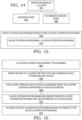
- Fig. 14 illustrates and summarizes two operation modes 1400 of a cluster: hub-based mode 1410 and autonomous devices mode 1420.
- hub-based mode 1410 is optionally used for testing cluster cooperation program 1264 and the smart devices 1220 of cluster 1210; cluster 1210 runs in a hub-based mode, similar to hub-based system 1000 of the background art, where programming device 1260 running cluster cooperation program 1264 and acting as a control hub, sends commands to control active devices of smart devices 1220 that run in slave mode under slave program 1254.
- programming device 1260 may be disconnected from cluster 1210, and each active device of smart devices 1220 operates under its device cooperation program 1256, to operate autonomously according to the hub-less configuration of Fig. 11 .
- Fig. 15 illustrates and summarizes the concept of device cooperation program derived from the cluster cooperation program 1500, with the specific case of device cooperation mode equals the cluster cooperation program 1510, i.e. where the cluster cooperation program 1264 is copied to the active devices of smart devices 1220 of cluster 1210, acting as a device cooperation program 1256 of each active device.
- the option of device cooperation program equals the cluster cooperation program 1510 is the simplest, straightforward mode of operation of distribution program 1266 for deriving device cooperation program 1256 of an active device 1220 from cluster cooperation program 1264 by step C 1276 of Fig. 13 .
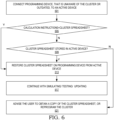
- Fig. 16 is a flowchart describing the process of establishing, testing and operating an autonomous cluster 1100 of Fig. 11 and cluster 1210 of Fig. 12 .
- a cluster cooperation program is programmed by programmers or users, using a programming device 1260 of Fig. 12 .
- the smart devices are deployed in their intended site or locations, and communication among the smart devices is established and tested, using communication networks known in the art.
- the cluster operates in hub-based mode, by programming device 1260 ( Fig.
- step 1613 the device cooperation programs 1256 of all active devices of cluster 1210 that equal cluster cooperation program 1264 are distributed by programming device 1260 running distribution program 1266 (steps B-C of Fig.
- step 1617 the programming device 1260 may be disconnected from cluster 1210 ( Fig. 12 ) and the active devices of cluster 1210 continue autonomous operation in hub-less mode, each device running its respective device cooperation program, as demonstrated by autonomous cluster 1100 of Fig. 11 .
- cluster spreadsheet as a cluster cooperation program is advantageous by allowing many users and handyman that are not professional programmers, to effectively program cooperation among smart devices according to personal needs and preferences. It will be also noted, however, that in larger and more complex clusters in the broader IoT context, such as in manufacturing or traffic control systems, using a spreadsheet as a programming tool may prove too limiting and inadequate, and professional programmers using professional programming environment may be called to program the cluster cooperation program conventionally, and then the device cooperation programs for all active devices of the cluster are derived and distributed as taught above.
- autonomous cluster 1100 compared to the hub-based system 1000 of the background art, eliminates the cost of the hub as well as the hub being a single point of failure.
- the present disclosure teaches improving manageability by users of clusters of smart devices by using spreadsheets for programming the cooperation among smart devices, so that many users that are not professional programmers can set up smart devices to cooperate according to the users' requirements and preferences.
- the cluster cooperation program is implemented as a cluster spreadsheet
- the device cooperation programs are implemented as device spreadsheets that equal or are derived from the cluster spreadsheet.
- FIGs. 1A-9B elaborate on using spreadsheets for programming clusters, serving for both demonstrating the general concept of autonomous clusters described above with reference to Figs. 11-16 , as well as introducing spreadsheet-related features that offer specific advantages elaborated below.
- Fig. 1A schematically describes a system 100A that includes a cluster 104 of smart devices, and optionally external devices 102A-102B.
- a cluster is established and programmed by a user and may later be updated by revised programming and/or by adding, deleting or replacing smart devices.
- Exemplary cluster 104 includes seven smart devices, out of which devices 106A-106C are information devices, and devices 108A-108D are active devices.
- Information devices provide to other devices information that may affect the operation of active devices, while active devices perform useful actions that serve a user or affect the provision of a service by external devices.
- smart devices include real-time clocks that may further affect their operation.
- information device 106A such as a hygrometer
- information device 106B such as an ambient thermometer
- active device 108A such as an air conditioner in the living room.
- the room temperature measured by information device 106B also affects the operation of active device 108B such as electric shades, which in turn affects the operation of active device 108C such as the living room lights.
- Information device 106C such as a motion sensor in the kitchen, affects the operation of active device 108D, such as the kitchen lights. It will be appreciated that the pair information device 106C and active device 108D could be separated into a separate cluster, but, at the user option, they may be included in cluster 104.
- cooperation links 104L among smart devices in cluster 104 of Fig. 1A pertain only to the cooperation among the devices.
- all smart devices of a cluster selectably or regularly communicate with one another, which facilitates reprogramming the cluster, or establishing new cooperations among currently-unrelated smart devices of the cluster.
- a connected cluster is herein a cluster in which each two smart devices of the cluster have a path of cooperation links 104L connecting them, while ignoring directions of the cooperation links.
- cluster 104 includes two connected clusters: one composed of devices 106A, 108A, 106B, 108B and 108C, and the other composed of devices 106C and 108D.
- the advantage of having a larger cluster that includes multiple connected clusters that share the same communication networks and the same cluster spreadsheet is the ease of rearranging cooperations among smart devices by updating the cluster spreadsheet, possibly also updating the division of the cluster into connected cluster(s).
- All smart devices of cluster 104 are configured to cooperate according to the teachings of the present disclosure. There may be optionally other external devices, that are unaware of the present disclosure, but are still effectively cooperating with smart devices of cluster 104.
- an external active device 102A such as a conventional fan or sprinkler, may be effectively controlled by an electronically-actuated socket or valve, respectively, that is an active device that is a connector device 110C ( Fig. 2D ) that contains a controllable connector unit 120C ( Fig. 2C ) that controls the supply of a resource, such as electricity or water, that is consumed by the provision of the service by the external active device 102A.
- An external active device 102A that is electronically controlled by a controller of its own, may be actuated by control signals received from an active device of cluster 104 that is an active bridge device 110B ( Fig. 2D ).
- An external information device 102B such as an Internet weather forecast station may be consulted by a data fetcher that acts as a bridge information device of cluster 104.
- Another example for a bridge information device of a cluster is an Internet receiver that cooperates with an external information device 102B that is a smartphone or a computer, wherein the current state of the bridge information device being user commands received from the smartphone or computer, thereby potentially allowing the user to remotely control any and all active devices of the cluster that take into account the received user commands (current states of the internet receiver) in calculating the target states of respective active units.
- a system 100A that includes a cluster 104, optionally supplemented by external devices, is installed for providing useful services to users by active units of active devices of the cluster and/or optionally by active units of external devices.
- exemplary useful services in the home environment are lighting, irrigation, playing music, locking doors, actuating gates, air-conditioning and ventilation; beyond the home environment, exemplary useful services are manufacturing, traffic control and access control.
- Information devices may affect the provision of the services according to conditions programmed according to the teachings of the present disclosure, and include, but are not limited to sensors, detectors, data fetchers from the internet, and any user-interface elements such as buttons, switches, touchscreens, pointing devices, accelerators, Internet receiver, and cameras that allow users to affect the operation of active units by taking into account users inputs - considered as the current state of the respective information unit(s) - when calculating target states of active units as taught below.
- Fig. 1B depicts a system 100B that includes a cluster 104 of smart devices, selectably connectable (i.e. may be connected or disconnected by a user) to one or more programming device 150.
- Cluster 104 includes a plurality of smart devices 110.
- Each smart device (with the exception of bridge devices) includes at least one functional unit 120, which serves a purpose and utility of smart device 110, and a communication unit 130 for communicating with other smart devices and with programming device 150.
- a functional unit 120 is either an active unit or an information unit.
- An active unit provides a useful service to the user, and its operation is affected by one or more functional units.
- An information unit may affect the operation of an active unit.
- a smart device 110 may include several functional units 120; for example, a smart ceiling fan may include a fan unit, a light unit, and a thermometer. If a smart device includes at least one active unit, it is called an active device. For brevity, the functional units of all smart devices that belong to a cluster are collectively referred to as the functional units of the cluster.
- Each functional unit may have a current state 124 that measures or characterizes the current condition or output of the functional unit.
- the current state may be registered in a storage device of the functional unit or of the smart device, and is communicated by the smart device via communication unit 130 to other smart devices of the cluster, possibly affecting the operation of active units.
- the current state is typically the information measured, detected or otherwise obtained by the information unit.
- the current state represents the current activity status of the active unit; for example, in case of an active unit that is the living room light, the current state may be 0 (off), 1 (low) or 2 (high).
- active units may be affected by current states not only of information units, but, alternatively or additionally, of other active units.
- an active unit of a fan may be programmed by the user to turn off in response to an active unit of lights turning off, or, in another example, opening a gate may cause lights to turn on.
- Some smart devices may host several functionalities, for example: a ceiling fan that includes both a fan and a light, or a camera that serves as both a motion sensor and license plate reader.
- a ceiling fan that includes both a fan and a light
- a camera that serves as both a motion sensor and license plate reader.
- such smart devices will be considered to include several separate functional units, each having its own state.
- some such devices may alternatively be considered to host a single complex functional unit; for example, a ceiling fan having both a fan unit and a light unit may be considered as including a single complex functional unit of fan + light that has nine states: 00, 1, 2, 10, 11, 12, 20, 21, 22, where the first digit relates to the fan's off, low and high operation modes while the second digit relates to the light's off, low and high intensity modes.
- Memory 138 performs general storage functions in cooperation with processor 134. Additionally, in case of an active device, memory 138 also stores code derived from spreadsheet formula(s), or spreadsheet formulas, or a complete spreadsheet as discussed below.
- Processor 134 controls the operation of functional unit 120 if the unit is an active unit, and the communication with other devices.
- Optional real-time clock 140 may be included in smart device 110, to allow recording the time of changes in current state 124 and optionally affect operations of active smart units, for example, prevent loud music playing at night.
- Manual control 146 is optionally included in some active devices, for allowing manual override by the user over the programming of a certain functional unit; for example, turn on the light in spite of programming that decides otherwise. Such override preferably causes a corresponding change of the current state 124 that is reported to other smart devices of the cluster.
- Programming device 150 is used by a user for programming the cluster and other tasks described below. It communicates with smart devices of the cluster, as described below.
- Fig. 1C demonstrates exemplary contents of memory 138 of Fig. 1B in a preferred embodiment of a smart device 110 of Fig. 1B .
- Calculation instructions 138S are included in an active device, where they operate processor 134 of the smart device for calculating target state(s) of active unit(s) included in the smart device.
- Calculation instructions 138S are redundant and may be eliminated in an information device, i.e. in a smart device that includes no active units.
- Calculation instructions 138S are a complete copy or a portion of a cluster spreadsheet, or a code derived from a spreadsheet, as will be described in more detail below.
- memory 138 stores cluster spreadsheet copy 138C, for supporting restoring of the cluster by a programming device, as described below.
- Program 138P runs on processor 134 of smart device 110 ( Fig. 1B ) for executing calculation and communication operations; in case of an active device, program 138P interprets calculation instructions 138S for calculating target states and controlling the active unit(s) included in the smart device toward reaching the respective target states; in both active and information devices, program 138P operates to broadcast the current state of the active unit(s) to other smart devices of the cluster.
- Functional unit table 138U is preferably included in memory 138 and is set by the vendor of smart device 110 ( Fig. 1B ) to exhibit the characteristics of the functional units included in the smart device, to be used for filling-in operational and guidance information into the cluster spreadsheet via a programming device.
- Functional unit cells 138F preferably register in memory 138 the column allocated for each functional unit in the cluster spreadsheet, and the specific cells of the cluster spreadsheet allocated for recording the current state and time of its last change, per each functional unit of the smart device.
- Functional unit cells 138F may simplify the current state messages broadcasted by the smart device into a format such as "D14/2" which indicates that the current state of the fan functional unit of the ceiling fan smart device is now 2, to be easily inserted into cell D14 of all spreadsheets of the cluster.
- Smart device 110 includes at least one functional unit 120 (or zero functional units in case of a smart device 110 that is a bridge device), as well as communication unit 130, processor 134 and memory 138 that are collectively called controller 128. It will be noted that the present disclosure distinguishes the functional roles of the communication unit, processor and memory even if they form parts of an integrally-manufactured controller.
- Connection 122 includes customary attachment components, such as a socket, for physically, electrically and logically connecting controller 128 to functional unit(s) 120 and/or to a body of smart device 110.
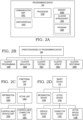
- Fig. 2A schematically describes programming device 150 of Fig. 1B .
- Programming device 150 is a computing device that is used by a user for conveniently programming a cluster; examples for programming device 150 include a desktop or laptop personal computer, a tablet computer or a smartphone.
- Memory 150M stores program 150R running on processor 150P for establishing, running and updating cluster spreadsheet 150S, authoring programming instructions, and communicating with smart devices of the cluster.
- Communication unit 150C sends to smart devices of the cluster programming commands derived from cluster spreadsheet 150S, and user interface 150U displays cluster spreadsheet 150S and receives user entries for entering values and formulas into the spreadsheet.
- the cluster operates autonomously, independently of the programming device, when the programming device 150 is disconnected from the cluster.
- the same or another programming device 150 may be later connected to a cluster for updates or restoring.
- programs that aid users in authoring spreadsheets via graphical or other interface may be used to facilitate spreadsheet authoring.
- Fig. 2B schematically depicts five operation modes 160 of programming device 150 of Figs. 1B-2A with respect to a cluster.
- cluster programming mode 160P a user has designed a cluster of a plurality of smart devices, selected the maker and model of each smart device, and obtained the parameters of each of the smart devices.
- the user does not need yet to purchase and/or deploy the smart devices, but may obtain the parameters of the smart devices from data sheets or from websites.
- the user enters formulas and parameters as further described with reference to Figs. 3B-3D .
- the user gets immediate feedback regarding errors such as in the formula syntax, use of functions, or circular references, and corrects such errors.
- cluster simulation mode 160S which still does not require purchasing and deploying the cluster's smart devices, the user enters various current states and time parameters into the spreadsheet, to simulate a variety of what-if scenarios, which may help in correcting and improving the spreadsheet formulas for better performance of the cluster.
- Toward cluster testing mode 160T the user purchases and deploys the cluster's smart devices, establishes a communication network among all devices of the cluster, and connects the programming device to the cluster so that the programming device can obtain the current states of all functional units of the cluster as reported by all smart devices.
- the programming device then sends programming commands to all active devices, such as by broadcasting the cluster spreadsheet or a slim version of the cluster spreadsheet to all active devices.
- the cluster then starts real operation, with all devices performing and cooperating according to their respective columns in the cluster spreadsheet. The user experiences the operation of all active units in the real world, while monitoring all the current states and intermediate calculations shown on the cluster spreadsheet that is displayed by the programming device.
- Cluster testing mode 160T is also useful for revealing functions that work fine on the programming device, yet are not recognized by a leaner spreadsheet interpreter of a smart device.
- Another variation of cluster testing mode 160T is where a programming device running the cluster spreadsheet acts as a temporary hub and the active devices operating in a slave mode under slave program 1254 ( Fig. 12 ), thereby the entire cluster is operating and tested in a hub-based mode 1410 ( Fig. 14 ).
- the programming device When the user changes his mind with respect to the way the cluster operates, or adds, deletes or replaces one or more smart devices of the cluster, the programming device is connected to the cluster for running in cluster update mode 160U to update the cluster spreadsheet, which is preferably followed by another round of simulation and testing.
- Cluster restoring mode 160R is called when the user wishes to test or update the cluster, yet the original programming device or the cluster-related files have been lost.
- any compatible programming device 150 is loaded with program 150R, and then connected to the cluster to retrieve the cluster spreadsheet from a smart device of the cluster; in case that calculation instructions 138S ( Fig.
- cluster spreadsheet copy 138C may be retrieved (cluster spreadsheet copy 138C may be absent if calculation instructions 138S are identical to the cluster spreadsheet.)
- cluster spreadsheet copy 138C may be absent if calculation instructions 138S are identical to the cluster spreadsheet.
- a functional unit 120 is either an active unit 120A that controllably performs an action, or an information unit 120N that obtains information that is reported to selectably affect the operation of active device(s).
- An active unit 120A is either a controllable service unit 120S whose action provides users with a tangible useful service such as lighting, ventilation, music or irrigation; or a controllable connector unit 120C whose action affects the supply of a resource, such as electricity or water, that is consumed by the provision of a tangible useful service by an external active device that is not directly controllable according to the teachings the present disclosure.
- a controllable connector unit 120C may be an electronically-actuated switch embedded within a wall outlet or socket, that affects the supply of electricity to a conventional light, music player or fan, thereby controlling the operation of the light, music player or fan; or it can be an electronically-actuated valve that controls the supply of water to a conventional sprinkler or irrigation timer.
- a smart device 110 includes a controller and zero or more functional units (zero in case of a bridge device).
- An information device 110N includes zero or more information unit 120N (zero in case that information device 110N is a bridge information device) and no active units.
- An active device 110A is categorized as a service device 110S if it includes a controller and at least one controllable service unit 120S; a connector device 110C if it includes a controller and exactly one controllable connector unit 120C; or an active bridge device 110B if it includes a controller only (i.e. no functional unit) and cooperates with an external active device 102A ( Fig. 1A ) to control its operation.
- a cluster is established and operates to provide one or more useful services via at least one service unit associated with the cluster, that is either a controllable service unit included in an active device of the cluster, or a service unit included in an external active device
- the cluster spreadsheet is preferably a cluster programming tool usable by users that are not necessarily professional programmers, for programming a cluster, as well as for simulating and testing the cluster's operation, and updating and restoring a cluster, as described above with reference to Fig. 2B .
- the cluster spreadsheet is authored and edited via a programming device.
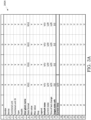
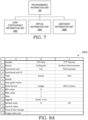
- Fig. 3A is a simplified segment of an exemplary blank cluster spreadsheet 300A, such as cluster spreadsheet 150S of Fig. 2A .
- Cells A1-A17 include exemplary generic row titles. Rows 1-16 of each column B and beyond, are dedicated to a specific functional unit of a smart device of the cluster. The contents of ells marked “V” are to be determined by a vendor of the respective smart device. Cells marked “U” are to be filled by the user. "V/U” denotes a default value initially determined by the vendor but can be modified by the user. “U/D” denotes cells to be filled by the user for cluster simulation and later be determined by devices/functional units during testing and actual operation of the cluster.
- (U) denotes formula cells that are to be filled by the user, but typically just for functional units that are active unit.
- V/(U) denotes state formats that are determined by the vendor, but in some cases, may be modifiable by the user; for example, a thermometer may have a Fahrenheit format that the user may be allowed to change to Celsius.
- a cluster spreadsheet of the type demonstrated by spreadsheet 300A may serve the five roles described with reference to Fig. 2B .
- row 18 and below (out of which rows 18-25 are shown), as well as optionally also columns to the right of the last functional unit column (not shown) and/or additional worksheets within the workbook (not shown) are usable as a general scratchpad, allowing the user to enter parameters, tables, databases and/or links, and perform intermediate calculations, as spreadsheet users commonly do in order to break down a complex calculation into several simpler calculation steps or for any other calculation purpose.
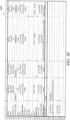
- Fig. 3B schematically describes an exemplary cluster spreadsheet 300B of a basic cluster that includes three smart devices: a light switch (column B), a thermometer (column C), and a ceiling fan that includes two functional units: a fan (column D) and a light (column E).
- the user may download module description such as 300C ( Fig. 3C ) from each respective vendor's website, and copy/paste the module description into the cluster spreadsheet.
- module description such as 300C ( Fig. 3C ) from each respective vendor's website, and copy/paste the module description into the cluster spreadsheet.
- the same parameters may be keyed-in manually into the programming device according to a product datasheet, or downloaded automatically from an actual smart device upon first connection between the smart device and a programming device.
- the user is then prompted to name the functional units of the cluster (row 7), consider changing default states (row 13) and program the active units of the cluster by entering formulas calculating target states into row 16 and optionally also using the scratch pad area (such as row 18 and below) for intermediate calculations.
- the exemplary functional units of columns B and C are information units (see row 5), row 16 does not expect formulas in columns B and C.
- Vendor row is set by the vendor and includes the name of a vendor (usually - manufacturer) of a smart device, to help the user identify the respective device.
- Device row is set by the vendor and includes the name of the device.
- Functional unit row is set by the vendor and includes the name of the functional unit, which is often the same as the smart device - if the smart device includes only one functional unit - or has a distinctive name in case of multiple functional units within a smart device, as demonstrated by columns D-E.
- Functional unit ID is set by the vendor and includes a unique alphanumeric string that identifies specific devices, and is added when specific hardware is recognized by a programming device upon installation and setup, which allows the user to identify specific devices (having the ID marked on the device and its packaging) in case of multiple similar units within the cluster (for example, several thermometers).
- the functional unit ID also allows a present disclosure associate column letter (e.g. B for the light switch) with the respective unit. Examples for functional unit ID are shown in Fig. 3D .
- Type is set by the vendor and comes to distinguish between active units and information units.
- Health is reported by the smart device, and is included in devices that have a self-test feature, where OK, for example, indicates a healthy functional unit, BAD indicates a malfunctioning functional unit which may turn current state into its default state value (rows 14-15), while other text values may be used by the smart device's vendor as messages to the user (for example: LOW BATTERY) to be displayed in testing mode (160T of Fig. 2B ).
- User-given name is entered by the user via a programming device to identify the specific role of a specific functional unit, such as living room switch.
- State format is set by the vendor and pertains to the way the current state (and also target state for active units) is expressed, such as integer, text, Boolean, etc.
- Default state is assumed as the current state of a functional unit, in case that the current state is not received, or the functional unit is in BAD health; the default state is originally suggested by the vendor but may be further set by the user; for example, the vendor may suggest that the default state of a light is off while the user may prefer to set it on.
- Current state is reported by a smart device, and is the current condition or output of a functional unit, such as a fan operating in high mode or a thermometer measuring 65 degrees Fahrenheit.
- a functional unit such as a fan operating in high mode or a thermometer measuring 65 degrees Fahrenheit.
- the current state may be either measured by an internal sensor, or presumed to equal the target state, for example in case of a light unit, or presumed to reach the target state after a predetermined period of time, for example, an air conditioner may be presumed to reach a current state of high 60 seconds after its target state is changed to high.
- Time of last change in the current state is reported by the smart device along with reporting the current state.
- Target state calc is a spreadsheet formula entered by the user, for each active unit (columns D-E in the present example) via a programming device, and typically refers to current states of other functional units, and possibly also to times of last change and intermediate formulas included in the scratch pad are (e.g. rows 18 and below).
- Current time is the actual time derived from a real-time clock of a device running the spreadsheet, and is potentially taken into account by formulas within the spreadsheet.
- Fig. 3D demonstrates spreadsheet 300D in programming and simulation modes, where the user has filled in functional unit names in row 7, optionally has updated default states in row 13, and has entered spreadsheet formulas into row 16 for the active devices of columns D and E. The user has also used the scratchpad area under row 18 to enter spreadsheet formulas for intermediate calculations and parameters that are used for calculations, as users of spreadsheets regularly do.
- the programming device is used to establish and program a cluster prior to connecting to the cluster smart devices, or even prior to purchasing the devices; accordingly, the true current state (row 14) and the time of last change (row 15) are unavailable and the current time (cell B17) is irrelevant.
- the user is advised to experiment with entering various values into rows 14, 15 and 17 and observe the calculated results in all cells that include formulas (in the current example: D16, E16, B19 and B20).
- Fig. 3E shows spreadsheet 300E that visually demonstrates what the user actually sees, during simulation modes with the data entered in Fig. 3D , and specifically the calculated results show in the formula cells of Fig. 3D , i.e. in cells D16, E16, B19 and B20.
- the current hour is calculated by cell B19 as 11
- the respective light level is calculated by cell B20 as 1
- the light unit of column E is set to target state 1 (cell E16) while the fan unit of column D is set to target state 2 (cell D16).
- Fig. 3F illustrates cluster spreadsheet 300F in testing mode, where actual smart devices have been purchased, deployed and are communicating with the programming device that is used for testing (see cluster testing mode 160T in Fig. 2B ).
- the IDs of all actual functional units are displayed in row 4, and all current states and the time of their last changes are shown in rows 14-15, based on actual values received from the respective smart devices, and may be interpreted by the processors of smart devices of the exemplary cluster for operation.
- a cluster is established and programmed by a user using a programming device, and then preferably the cluster continues autonomous operation independently of the programming device or any other hub.
- every active device is individually programmed to receive from other smart devices the current states of their functional unit(s) and respective time stamps, and calculate, for each of its active units, the target state based on the spreadsheet formula entered by the user into row 16 of the active unit's respective column within the cluster spreadsheet (see, for example, cells D16 and E16 in spreadsheet 300D of Fig. 3D ), that possibly references other spreadsheet formulas and parameters entered by the user into the cluster spreadsheet's scratchpad area (see, for example, cells B19-B20 and B22-B23 in spreadsheet 300D).
- each active device is programmed by the programming device toward operation and/or testing (cluster testing mode 160T in Fig. 2B ).
- Programming an active device of a cluster by a programming device is made via a programming message including instructions for calculating a target state of an active unit of the active device according to one or more spreadsheet formula(s).
- a programming message including instructions for calculating a target state of an active unit of the active device according to one or more spreadsheet formula(s).
- Such a message can have various forms, as discussed with reference to Fig. 4 below.
- the programming message sent by the programming device is of a device spreadsheet that is a copy of cluster spreadsheet 300F of Fig. 3F .
- the processor of the active device receiving such a message is programmed to interpret the spreadsheet and is aware of the spreadsheet column(s) allocated for the active unit(s) included in the smart device.
- the active device's processor interprets the device spreadsheet (which is the same as the cluster spreadsheet) to calculate the target state(s) of its active unit(s), and then controls the active unit(s) for reaching the respective calculated target states.
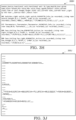
- the programming message received by a smart device from a programming device may include a plain text version of the cluster spreadsheet, such as spreadsheet 300G of Fig. 3G , that is a CSV (comma separated values) version of cluster spreadsheet 300F.
- Spreadsheet 300H of Fig. 3H demonstrates a device spreadsheet in CSV format that is a transpose of spreadsheet 300G of Fig. 3G .
- both cluster spreadsheets and device spreadsheets may allocate a row per active unit, rather than allocating a column per active unit in the other exemplary spreadsheets.
- the spreadsheet representation of a cluster taught by the present disclosure is not limited to allocating a column per active unit.
- the guidance cells from cluster spreadsheet 300F of Fig. 3F may be cleared, leaving a programming message including a slim CSV-format device spreadsheet as demonstrated by device spreadsheet 300J of Fig. 3J .
- the formulas and parameters in the scratchpad area need to be included in the slim spreadsheet if they are referenced, directly or indirectly, by the target state cells of the active units included in the active device.
- the device spreadsheet may be further trimmed per active device by removing cells that are not affecting the target state(s) of the active unit(s) of the current active device.
- spreadsheets of Figs. 3F-3H and 3J have the same effect on the smart devices that interpret them for operation.
- the advantage of spreadsheet 300F of Fig. 3F is, however, the uniformity of the spreadsheet across all active devices of the cluster as well as the programming device(s). Such uniformity implies that all active devices of the cluster include the cluster spreadsheet, which allows any compatible programming device, even if it is unfamiliar with the cluster, to get immediately acquainted with the cluster and start full operation upon first communication with any active device of the cluster.
- This advantage shall be further appreciated by recognizing that actual clusters may operate for years before requiring update, upgrade or maintenance, and any programming device that was originally involved in the initial setup of the cluster may have retired or been lost (see cluster restoring mode 160R of Fig. 2B ).
- the programming of the smart device is made by less than the cluster spreadsheet, then advantageously a complete copy of the cluster spreadsheet may be copied during cluster programming, for cluster restoring purpose, to devices of the cluster (see cluster spreadsheet copy 138C in Fig. 1C ).
- Fig. 4 schematically summarizes various possibilities for the content of a programming message sent by a programming device to an active device during setup or update of a cluster.
- the basis for programming an active device is spreadsheet formulas included in the cluster spreadsheet, such as spreadsheet 300D of Fig. 3D , that possibly references other spreadsheet formulas in the scratchpad area of the spreadsheet.
- code may be generated by the programming device for running on the processor of the respective active device, for operating the selected active unit, hence the broad expression "calculation instructions according to spreadsheet formula(s)" 400 of Fig. 4 .
- This embodiment allows each programming message to include merely formulas and references relevant to the selected active device, thus different active devices may receive and store different programming messages.
- Embodiment 400B is similar to 400A, except that the formulas and cells are organized in a format of a textual device spreadsheet (such as in CSV or tab-delimited text format) derived from the cluster spreadsheet, hence the respective active device's processor is programmed to interpret data and formulas organized as a spreadsheet.
- each smart device when the smart device programming is made via a complete or partial cluster spreadsheet, each smart device shall preferably but not necessarily be aware of the spreadsheet column dedicated to each functional unit included in the smart device, such that: (i) messages reporting health or current state and the time of its last change (rows 6, 14-15) are sent by smart devices in association with the corresponding column(s) of the included functional unit(s), and (ii) each active device retrieves the target state(s) of its active unit(s) from the result in row 16 of the column(s) corresponding to each active unit.
- functional units may be identified, when sending and interpreting health, current states and times of last change update messages, by their functional unit ID (row 4 in the exemplary spreadsheets) being attached to each message.
- Embodiment 400D/300F where all active devices of a cluster store the cluster spreadsheet, that is ready to run on a programming device and interact with a user, offers many advantages of simplicity, reliability, cluster maintenance, the ability to broadcast a single programming message to all smart devices of the cluster, and straightforward restoring of a cluster by a programming device retrieving the cluster spreadsheet from any active device of the cluster.
- Fig. 4 demonstrates that there are also other viable possibilities that may work, under the broad definition of calculation instructions according to spreadsheet formula(s), which may work better for some processors of smart devices with limited storage and processing capacity.
- Fig. 5A schematically depicts programming of a cluster of smart devices by a user.
- the user designs a cluster of smart devices that he/she wants to acquire, deploy and use, each smart device including one or more functional unit(s).
- the user uses a programming device, for example a laptop computer, for establishing a cluster spreadsheet including the smart devices of the cluster, as demonstrated, for example, by spreadsheet 300B of Fig. 3B , where parameters of individual modules, for example module description 300C of Fig. 3C , are obtained via the internet, from datasheets, or from the respective smart devices.
- step 409 the user decides and enters into the cluster spreadsheet settings for each functional unit of the cluster, including formulas for calculating target states for active devices, as demonstrated, for example, by spreadsheet 300D of Fig. 3D .
- step 411 the user simulates the cluster (cluster simulation mode 160S of Fig. 2B ) by running the cluster spreadsheet with varying settings, until he/she is satisfied with the operation of the simulated cluster.
- step 415 the user acquires and deploys the smart devices of the cluster and connects them to a cluster network so that each smart device of the cluster can communicate with each other smart device of the cluster, for example via a Wi-Fi or BLE (Bluetooth low energy) network.
- Wi-Fi Wireless Fidelity
- a programming device that can be the same programming device used in step 405 or another programming device loaded with the cluster spreadsheet, is connected to the cluster and sends programming messages to all active devices of the cluster, each programming message is for calculating a target state of an active unit according to the respective formula cells of the cluster spreadsheet.
- the programming message may be in any of the forms summarized in Fig. 4 .
- the user tests the cluster (luster testing mode 160T of Fig. 2B ) by observing the operation of all active devices in the real world while monitoring, on the screen of the programming device, the current states of all devices, as well as the results of intermediate calculations. The user may adjust formulas and parameters to correct errors and improve performance.
- step 427 the programming device is preferably disconnected from the cluster, leaving the cluster to autonomously operate in step 431, which may last for days, months or years.
- step 435 the user decides to repair, add, remove or replace smart devices of the cluster, or just improve performance, and then uses a programming device for such reprogramming, starting again from step 405. It will be appreciated that in step 435, the user may use a programming device that is unacquainted with the present cluster, and connect with any active device of the cluster to retrieve the cluster spreadsheet (cluster restoring mode 160R of Fig. 2B ).
- Fig. 5B schematically depicts the operation of a programming device, such as programming device 150 of Figs. 1B and 2A .
- the programming device establishes a cluster spreadsheet and receives general vendor parameters for all functional units included in the cluster, as demonstrated, for example, by spreadsheet 300B of Fig. 3B .
- vendor parameters are entered by the user or, in some embodiments, may be read from smart devices when connected to the programming device.
- the programming device receives from the user settings (including formulas) and parameters related to functional units of the cluster, and places them in the cluster spreadsheet, as demonstrated, for example, by spreadsheet 300D of Fig. 3D .
- the programming device simulates the cluster (cluster simulation mode 160S of Fig.
- step 461 the programming device is connected to the cluster, and then sends programming messages to all active units of the cluster, for example, by broadcasting the cluster spreadsheet to all active devices, or by sending a customized device spreadsheet to each active device.
- step 463 while still connected to the cluster, actual current status parameters from all functional units of the cluster are received and in step 465 the received parameters are displayed, along with calculation results, so the user actually runs a live test of the cluster (see cluster simulation mode 160S of Fig. 2B ).
- step 469 the programming device receives from the user an indication whether the user approves the cluster programming, in which case, in step 473 the programming device is disconnected from the cluster and the cluster is left to operate autonomously, independently of the programming device.
- step 471 the programming device receives revised settings from the user, sends updated programming messages to the smart devices, and diverts to step 463 for another round of live testing.
- Fig. 5C depicts the operation of a processor of an active device.
- the active device connects to a programming device via the cluster network.
- the active device receives from the user, via the programming device, parameters and spreadsheet formula(s) that the user has entered into the programming device, and in step 485 the programmed active device is disconnected from the programming device.
- the active device receives current states of functional unit(s) from other smart device(s) of the cluster, and in step 491, the active device interprets the spreadsheet formula(s) received in step 483, to calculate a target state of an active unit of the active device. If the target state is different than the current state of the active unit, then in step 493 the processor operates the active unit for reaching the calculated target state.
- step 495 the active device is reconnected to a programming device for updating the programming, then the process diverts to step 483 for another round of programming, otherwise the process diverts to step 489, waiting for changes in current states of other devices to trigger a change of state of an active unit of the active device.
- Fig. 6 schematically depicts cluster restoring mode 160R of Fig. 2B .
- a programming device that is unaware of a cluster or outdated, for example as in the case that another programming device was used for updating a cluster, is connected to an active device of the cluster.
- step 505 checks whether, according to the cluster configuration parameters (not shown), calculation instructions 138S stored in the memory of the active device are in the form of a copy of the cluster spreadsheet, and, if so, the process continues with step 513 of restoring the cluster spreadsheet on the programming device from the programming instructions on the active device.
- step 509 checks the availability of a copy of the cluster spreadsheet in cluster spreadsheet copy 138C in the memory of the active device, in which case the process continues with step 513 of restoring the cluster spreadsheet on the programming device from the cluster spreadsheet copy 138C on the active device.
- the programming device continues with any of cluster simulation mode 160S, cluster testing mode 160T or cluster update mode 160U. If both tests 505 and 509 fail, then the user is advised in step 521 to obtain a cluster spreadsheet copy from another source, or reprogram the cluster from scratch.
- an active device is supplied for deployment with its state parameters which pertain to its active units being predefined by the vendor that supplies the active device.
- the vendor may provide configuration options and tools for configuring the smart device according to specific needs and preferences.
- a vendor of a general-purpose robotic arm may provide a joystick built into the device, or an application program interfacing with the device, to allow the user to define ten specific positions of the robotic arm that correspond to states 0-9 of the robotic arm.
- active devices can be customized according to specific uses, before cooperation among smart devices is programmed via a cluster cooperation program such as a cluster spreadsheet.
- Cluster programming by users has focused above on programming the active devices of a cluster to calculate target states of active units according to current states of selected functional (information and/or active) units, and/or time parameters. Accordingly, in some embodiments, information devices, i.e. smart devices that include one or more information units but no active units, may lack programming by user, or even lack provisions for programming by users. In other embodiments, however, programming of information devices by users may be desirable for performance, efficiency and/or ease of cluster spreadsheet programming, and, accordingly, provisions for programing by users may be included also in information devices.
- information units of a cluster measure, detect or otherwise obtain information that may affect the operation of active units of the cluster.
- the vendor or developer of an information unit determines the type and format of the information provided by the unit by default.
- the user authors spreadsheet formulas for calculating target states of active units according to current states of functional units and/or time parameters. It may be found by the user and/or by the vendor of an information unit (actually, of a smart device that includes the information unit) that the raw information provided by the information unit is insufficient or inconvenient to work with in authoring the spreadsheet formulas, which is the motivation for the provision of programming information units by users, as described below.
- Fig. 7 schematically introduces three types 700 of programmable information units: (i) user-configurable information unit 700C, (ii) virtual information unit 700V, and (iii) user-made information unit 700M.
- the three types of programmable information units are described in the following sections. It will be noted that actual programming of information units according to types 700C and 700M is implemented in the controllers of the smart devices that include such information units. It will also be noted that the three types 700 of programmable information units are not mutually exclusive within a cluster of even within a smart device; thus, a certain smart device may include a user-configurable information unit 700C and a user-made information unit 700M and be associated with a virtual information unit 700V.
- User-configurable information unit 700C pertains to a case where a vendor of a certain information unit (actually, of a smart device that includes the information unit) provides a configuration tool - such as a computer or smartphone application program, or a manual switch or DIP switch - that is usable for configuring the information unit prior to programming the cluster.
- a configuration tool - such as a computer or smartphone application program, or a manual switch or DIP switch - that is usable for configuring the information unit prior to programming the cluster.
- An example is a camera used for motion detection within a certain inspection area. The user deploys the camera in its intended service spot, and may use a vendor-supplied application program to view the actual inspection area via the camera, draw polygons within the inspection area seen on the screen to define zones, and number or name the zones.
- the user configuration is then recorded in the smart device by the vendor's application program, so that subsequently the smart device is configured to autonomously report to the cluster devices a current state of the camera (information unit), which is the number or name of a zone where a motion is currently detected by the camera.
- the user may then author a spreadsheet formula for calculating a target state of an active unit of the cluster, such as a garage gate, to respond to motion detected in selected zone(s).
- thermometer measuring temperature by default in degrees Fahrenheit, with its vendor providing users with a hardware switch or a software tool for configuring the thermometer to report temperature in degrees Celsius or Kelvin.
- an information unit After an information unit is configured by a user, it may be added to a cluster with its unit description 300C ( Fig. 3C ) updated according to the actual configuration made by the user.
- a virtual information unit is optionally added to a cluster spreadsheet and device spreadsheets without affecting the current state actually reported by any smart device with respect to any physical information unit.
- Virtual information unit 700V of Fig. 7 is demonstrated by an example of cluster spreadsheet 800A of Fig. 8A .
- the Fig. 8A scenario is of a user establishing a cluster of two smart devices: a ceiling fan and an ambient thermometer. The user wishes to program the cluster so that the fan is turned on and off according to the current temperature reported by the thermometer. However, the user's difficulty is that the thermometer reports the current temperature in degrees Celsius, while the user is accustomed to degrees Fahrenheit. To overcome the difficulty, the user uses a programming device such as programming device 150 of Fig.
- current state cell D14 includes the Fahrenheit representation of the current temperature originally measured and reported in degrees Celsius by the genuine thermometer corresponding to column C.
- the user further enters a formula into cell B16 for programming the fan's operation, where he/she uses '80' as the threshold temperature expressed in degrees Fahrenheit, while the referenced temperature is that calculated by current state D14 of the Fahrenheit-oriented virtual thermometer unit of column D.
- Fig. 8C demonstrates the user experience of working with a virtual information unit when programming, simulating or testing the cluster spreadsheet. Actually, the user sees cluster spreadsheet 800C with calculation results appearing in cells D13, D14 and B16. The user who established column D for his convenience, actually ignores the inconvenient Celsius-oriented column C of the genuine thermometer, which can be even hidden by the user, and works exclusively with the Fahrenheit-oriented virtual thermometer of column D.
- the virtual device of column D has a similar impact to, and could be eliminated and substituted by entering a Celsius-to-Fahrenheit conversion formula within the scratchpad area of the cluster spreadsheet, and the presentation of a 'Fahrenheit thermometer' in a format of a functional unit in column D is a matter of user convenience and perception.
- the actual functional unit - the ambient thermometer of column C - is the only unit actually reporting the temperature current state to the cluster, which continues to be in degrees Celsius,
- the current state formula of cell D14 is distributed, as an intermediate calculation formula, when a programming device sends programming messages to the cluster devices (the fan in the present scenario).
- a single information unit may yield more than one virtual information unit; for example: bathroom scales in kg units may yield both virtual scales in lb. units, as well as a virtual identifier-by-approximate-weight of the family member using the scales, (vi) Calculation of the current state of the virtual information unit may involve intermediate calculations within the spreadsheet's scratchpad area.
- a user-made information unit is added by a user to a smart device, by the user using a programming device for programming the smart device that includes an information unit.
- the smart device will include a new user-made information unit whose current state is reported similarly to the current state of any other information unit.
- the user adds another user-made information unit whose current state is reported in degrees Fahrenheit.
- the user-made information unit option is available only if the vendor of the respective smart device includes programming provisions in the controller of the information device, so that the controller of the information device is capable of calculating a to-be-reported current state according to spreadsheet formulas derived from a user-authored spreadsheet.
- Fig. 9A depicts an exemplary cluster spreadsheet 900A of a cluster that originally includes a ceilings fan active unit (column B) and a Celsius thermometer information unit (column C).
- the user when using a programming device, finds Celsius degrees inconvenient for programming that target state of the active unit (cell B 16) according to the current state of the information unit (cell C14) because he/she is accustomed to degrees Fahrenheit, and therefore creates a new user-made Fahrenheit thermometer by adding column D, including the conversion formulas.
- the user enters special annotation(s) that signal to the programming device that column D of Fig. 9A is meant to create a user-made information unit rather than a virtual unit as in column D of Fig. 8B .
- Exemplary annotations are 'user' in cell D1 and an extended serial number in column D4 that associates the information unit of column D with that of column C.
- thermometer smart device When the programming device sends programming instructions to the smart devices of the cluster, the minimum instructions received by the thermometer smart device are derived from spreadsheet 900B of Fig. 9B .
- the thermometer smart device now includes a new information unit corresponding to column D whose current state D14 is calculated by the thermometer smart device and reported by the thermometer smart device to the cluster smart devices as the current temperature in degrees Fahrenheit.
- thermometer active device necessitate interpretation of calculation instructions stemming from spreadsheet-originated formulas also in information devices
- the original functional unit - the ambient thermometer of column C - may continue to report the current temperature in degrees Celsius
- the current state calculated by the thermometer active device in cell D14 is distributed by the thermometer active device as any other current state reported with respect to an active unit.
- a single information unit may add more than one user-made information unit; for example: bathroom scales in kg units may yield both user-made scales in lb. units, as well as a user-made identifier-by-approximate-weight of the family member using the scales.
- Calculation of the current state of the user-made information unit may involve intermediate calculations within the spreadsheet's scratchpad area, to be interpreted by the controller of the smart device that included the user-made information unit.
- a virtual information unit does not necessitate execution of calculation instructions derived from spreadsheet formulas by the smart device that includes the referenced original information unit (Celsius thermometer in the examples of Figs. 8B-9B ), while a user-made information unit executes calculation instructions derived from spreadsheet formulas by the smart device that includes the referenced original information unit.
- Simple information devices such as a manual switch reporting what a user wants to happen or a thermometer reporting the current temperature, are associated with a single parameter to be reported by information devices and calculated by spreadsheet formulas. More sophisticated information devices may provide multi-parameter information. For example: a text messaging receiver may provide both a message content and a sender identifier, or an access-control camera at a parking garage may provide both the color of a car and its license plate number.
- the vendor of a smart device may establish a separate information device per parameter, for example the text messaging receiver device will appear as two separate information devices (two columns for the cluster spreadsheet): one is a sender reporter and the other is a message content reporter; (ii) The vendor provides information device programming options (700M) for programming the device as including user-made information units, and the user breaks down a multi-parameter report into multiple single-parameter reports; (iii) The user establishes virtual information units (700V); or (iv) The user uses the scratchpad area of the cluster spreadsheet for breaking down multi-parameter reports into single parameters used for calculations.
- information device programming options 700M
- the user establishes virtual information units (700V)
- the user uses the scratchpad area of the cluster spreadsheet for breaking down multi-parameter reports into single parameters used for calculations.
- cluster spreadsheets may include multiple current state and target state rows to accommodate multiple-parameter states.
- two rows may be used so that the current state reported by the camera occupies a cell for the detected color and another cell for the read license place number.
- the target state of an air-conditioner may occupy two cells: one for the target temperature and the other for the blower speed.
- the hub-less architecture makes the cluster lean (eliminating the hub), reliable (avoiding a single point of failure) and secure and private (avoiding unnecessary connections to the Internet and the Cloud). Furthermore, in embodiments that use a cluster spreadsheet for the cluster cooperation program, clusters become programmable by many users and handymen that are not professional programmers, which makes clusters more manageable, flexible and modular; also, using ubiquitous spreadsheets for programming current state and devices eases standardization, hence promoting interoperability among smart devices offered by different vendors.
- the invention is about autonomous cooperation among smart devices of a cluster.
- the claimed clusters include at least one information device and at least two active devices.
Landscapes
- Engineering & Computer Science (AREA)
- Computer Networks & Wireless Communication (AREA)
- Signal Processing (AREA)
- Theoretical Computer Science (AREA)
- General Engineering & Computer Science (AREA)
- Health & Medical Sciences (AREA)
- General Health & Medical Sciences (AREA)
- Medical Informatics (AREA)
- Computing Systems (AREA)
- Physics & Mathematics (AREA)
- General Physics & Mathematics (AREA)
- Automation & Control Theory (AREA)
- Human Computer Interaction (AREA)
- Artificial Intelligence (AREA)
- Audiology, Speech & Language Pathology (AREA)
- Computational Linguistics (AREA)
- Stored Programmes (AREA)
- Electrotherapy Devices (AREA)
- Piezo-Electric Or Mechanical Vibrators, Or Delay Or Filter Circuits (AREA)
- Selective Calling Equipment (AREA)
Claims (10)
- Verbundener Cluster (104, 1210) von intelligenten Geräten (110, 1220), wobei jedes intelligente Gerät (110, 1220) einen Controller (128, 1240) und wenigstens eine Funktionseinheit (120, 1230) einschließt, wobei jede Funktionseinheit (120, 1230) entweder eine Informationseinheit (120N), die nützliche Informationen erhält, oder eine aktive Einheit (120A) ist, die steuerbar eine Aktion ausführt, wobei der verbundene Cluster (104, 1210) so programmiert ist, dass er gemäß einem Cluster-Kooperationsprogramm (1264) kooperiert, wobei das Cluster-Kooperationsprogramm (1264) zum Berechnen von Zielzuständen aktiver Einheiten (120A) gemäß den aktuellen Zuständen von Funktionseinheiten (120) dient, wobei der verbundene Cluster (104, 1210) umfasst:- wenigstens eine Informationsvorrichtung (106A...), wobei jede Informationsvorrichtung zum Melden eines aktuellen Zustands von wenigstens einer Informationseinheit (120N) dient; und- wenigstens zwei aktive Vorrichtungen (108A...), wobei jede aktive Vorrichtung zum Steuern wenigstens einer aktiven Einheit (120A) dient, die in der aktiven Vorrichtung eingeschlossen ist,dadurch gekennzeichnet, dass: jede aktive Vorrichtung ferner einschließt:* eine Kommunikationseinheit (130, 1244), die in der aktiven Vorrichtung eingeschlossen ist, um: (i) das Cluster-Kooperationsprogramm (1264) von einem Programmiergerät (150, 1260) zu empfangen, und (ii) aktuelle Zustände von Funktionseinheiten (120, 1230) von intelligenten Geräten (110, 1220) des verbundenen Clusters (104, 1210) zu empfangen,* einen in der aktiven Vorrichtung eingeschlossenen Speicher (138, 1250) zum Speichern des über die Kommunikationseinheit (130, 1244) empfangenen Cluster-Kooperationsprogramms (1256/1510), und* einen Prozessor (134, 1248), der in der aktiven Vorrichtung (108A...) eingeschlossen ist und programmiert ist, um autonom: (i) einen Zielzustand von jeder aktiven Einheit (120A), die von der aktiven Vorrichtung (108A... ) gemäß dem in dem Speicher (138, 1250) gespeicherten Cluster-Kooperationsprogramm (1256/1510) gesteuert wird, und wenigstens einen über die Kommunikationseinheit (130, 1244) empfangenen aktuellen Zustand einer Funktionseinheit (120) zu berechnen, und (ii) jede von der aktiven Vorrichtung (108A...) gesteuerte aktive Einheit (120A) für Betrieb gemäß dem berechneten Zielzustand zu steuern.
- Verbundener Cluster nach Anspruch 1, wobei das Cluster-Kooperationsprogramm (1264, 1256/1510) ein Cluster-Spreadsheet (150S) ist, das wenigstens eine Spreadsheet-Formel einschließt.
- Verfahren zum Programmieren und Betreiben eines verbundenen Clusters (104, 1210) von intelligenten Geräten (110, 1220), wobei jedes intelligente Gerät (110, 1220) einen Controller (128, 1240) und wenigstens eine Funktionseinheit (120, 1230) einschließt, wobei jede Funktionseinheit (120, 1230) entweder eine Informationseinheit (120N), die nützliche Informationen erhält, oder eine aktive Einheit (120A) ist, die steuerbar eine Aktion ausführt, wobei das Verfahren umfasst:- in einer Programmiervorrichtung (150, 1260): Programmieren eines Cluster-Kooperationsprogramms (1264) zum Berechnen von Zielzuständen aktiver Einheiten (120A) gemäß aktuellen Zuständen von Funktionseinheiten (120);- in jeder Informationsvorrichtung (106A...) von wenigstens einer Informationsvorrichtung des verbundenen Clusters (104): Melden eines aktuellen Zustands von wenigstens einer Informationseinheit (120N); unddadurch gekennzeichnet, dass: das Verfahren ferner umfasst:- in jeder aktiven Vorrichtung (108A...) von wenigstens zwei aktiven Vorrichtungen des verbundenen Clusters (104): Steuern jeder aktiven Einheit (120A) von wenigstens einer aktiven Einheit (120A), die in der aktiven Vorrichtung eingeschlossen ist und von dieser gesteuert wird, durch:* Empfangen des Cluster-Kooperationsprogramms (1264) von einer Programmiervorrichtung,* Speichern des Cluster-Kooperationsprogramms (1256/1510) in einem Speicher (138, 1250) der aktiven Vorrichtung,* Empfangen von aktuellen Zuständen von Funktionseinheiten (120) von intelligenten Geräten (110) des verbundenen Clusters (104),* autonomes Berechnen eines Zielzustands von jeder aktiven Einheit (120A), die von der aktiven Vorrichtung (108A...) gesteuert wird, gemäß dem Cluster-Kooperationsprogramm (1256/1510), das in dem Speicher (138, 1250) gespeichert ist, und wenigstens eines empfangenen aktuellen Zustands einer funktionalen Einheit (120), und* Steuern jeder aktiven Einheit (120A) zum Betrieb gemäß dem berechneten Zielzustand.
- Verfahren nach Anspruch 3, ferner umfassend den Schritt von:- in einer Programmiervorrichtung (150, 1260): Testen des verbundenen Clusters (104) in Hub-basiertem Modus, indem das Cluster-Kooperationsprogramm (1264) ausgeführt wird, um:- aktuelle Zustände von Funktionseinheiten (120) von intelligenten Geräten (110) des verbundenen Clusters (104) zu empfangen,- einen Zielzustand für jede aktive Einheit (120A), die von jeder aktiven Vorrichtung des verbundenen Clusters (104) gesteuert wird, durch die Programmiervorrichtung (150, 1260) zu berechnen, gemäß dem Cluster-Kooperationsprogramm (1264) und den empfangenen aktuellen Zuständen der Funktionseinheiten (120), und- Steuern der aktiven Vorrichtungen (108A...) zum Betrieb gemäß den berechneten Zielzuständen.
- Verfahren nach einem der Ansprüche 3 bis 4, wobei das Cluster-Kooperationsprogramm (1264) ein Cluster-Spreadsheet (150S) ist, das wenigstens eine Spreadsheet-Formel einschließt.
- Aktive Vorrichtung (108A) zum selektiven Zusammenwirken mit intelligenten Vorrichtungen (110), die Funktionseinheiten (120) einschließen, wobei jede Funktionseinheit (120) entweder eine Informationseinheit (120N), die nützliche Informationen erhält, oder eine aktive Einheit (120A) ist, die steuerbar eine Aktion ausführt, wobei die aktive Vorrichtung umfasst:- eine aktive Einheit (120A), die in der aktiven Vorrichtung (108A) eingeschlossen ist, um steuerbar eine Aktion auszuführen;dadurch gekennzeichnet, dass: die aktive Vorrichtung ferner umfasst:- eine Kommunikationseinheit (130), die in der aktiven Vorrichtung (108A) eingeschlossen ist, um:* ein Cluster-Spreadsheet (150S), das Spreadsheet-Formeln einschließt, von Programmiervorrichtungen (150) zu empfangen, und* aktuelle Zustände von Funktionseinheiten (120) von intelligenten Geräten (110) zu empfangen;- einen in der aktiven Vorrichtung eingeschlossenen Speicher (138) zum Speichern des über die Kommunikationseinheit (130) empfangenen Cluster-Spreadsheets (150S); und- einen Prozessor (134), der in der aktiven Vorrichtung (108A) eingeschlossen und so programmiert ist, dass er autonom:* einen Zielzustand der aktiven Einheit (120A) berechnet, die in der aktiven Vorrichtung (108A) eingeschlossen ist, gemäß: (i) einer oder mehrerer der Spreadsheet-Formeln, die in dem Cluster-Spreadsheet (150S) eingeschlossen sind, empfangen über die Kommunikationseinheit (130) und gespeichert in dem Speicher (138), und (ii) einem oder mehreren der aktuellen Zustände von Funktionseinheiten (120), die über die Kommunikationseinheit (130) empfangen werden, und* Steuern der aktiven Einheit (120A), die in der aktiven Vorrichtung (108A) eingeschlossen ist, um die Aktion gemäß dem berechneten Zielzustand durchzuführen.
- Aktive Vorrichtung (108A) nach Anspruch 6, wobei die aktive Einheit (120A), die in der aktiven Vorrichtung (108A) eingeschlossen ist, eine steuerbare Serviceeinheit (120S) ist, deren Aktion einen greifbaren nützlichen Service bereitstellt.
- Aktive Vorrichtung (108A) nach Anspruch 6, wobei die aktive Einheit (120A), die in der aktiven Vorrichtung (108A) eingeschlossen ist, eine steuerbare Verbindungseinheit (120C) ist, deren Aktion Bereitstellung einer Ressource ist, die durch Bereitstellung eines greifbaren nützlichen Dienstes durch eine externe aktive Vorrichtung (102A) verbraucht wird.
- Aktive Vorrichtung nach Anspruch 7 oder 8, wobei der greifbare nützliche Dienst Beleuchtung ist.
- Aktive Vorrichtung (108A) nach einem der Ansprüche 6 bis 8, wobei der Prozessor (134) und die Kommunikationseinheit (130) ferner so betreibbar sind, dass sie Programmiervorrichtungen (150) ein in dem Speicher (138) gespeichertes Cluster-Spreadsheet (150S) zur Wiederherstellung eines Clusters (104) von intelligenten Vorrichtungen (110) bereitstellen.
Applications Claiming Priority (4)
| Application Number | Priority Date | Filing Date | Title |
|---|---|---|---|
| US201762575432P | 2017-10-21 | 2017-10-21 | |
| US15/806,357 US10025471B1 (en) | 2017-10-21 | 2017-11-08 | User-programmable cluster of smart devices |
| US16/016,680 US10620798B2 (en) | 2017-10-21 | 2018-06-25 | Autonomously cooperating smart devices |
| PCT/IB2018/054734 WO2019077415A1 (en) | 2017-10-21 | 2018-06-27 | SMART INDEPENDENT COOPERATING DEVICES |
Publications (4)
| Publication Number | Publication Date |
|---|---|
| EP3701362A1 EP3701362A1 (de) | 2020-09-02 |
| EP3701362A4 EP3701362A4 (de) | 2021-07-07 |
| EP3701362B1 true EP3701362B1 (de) | 2023-08-16 |
| EP3701362C0 EP3701362C0 (de) | 2023-08-16 |
Family
ID=66170534
Family Applications (1)
| Application Number | Title | Priority Date | Filing Date |
|---|---|---|---|
| EP18869019.2A Active EP3701362B1 (de) | 2017-10-21 | 2018-06-27 | Autonom kooperierende intelligente vorrichtungen |
Country Status (4)
| Country | Link |
|---|---|
| US (1) | US10620798B2 (de) |
| EP (1) | EP3701362B1 (de) |
| IL (1) | IL273192B2 (de) |
| WO (1) | WO2019077415A1 (de) |
Families Citing this family (1)
| Publication number | Priority date | Publication date | Assignee | Title |
|---|---|---|---|---|
| EP3764599B1 (de) * | 2019-07-12 | 2023-01-25 | Nokia Solutions and Networks Oy | Überwachung von intelligenten vorrichtungen in einem netzwerk |
Family Cites Families (33)
| Publication number | Priority date | Publication date | Assignee | Title |
|---|---|---|---|---|
| US20140098247A1 (en) | 1999-06-04 | 2014-04-10 | Ip Holdings, Inc. | Home Automation And Smart Home Control Using Mobile Devices And Wireless Enabled Electrical Switches |
| US6993417B2 (en) | 2001-09-10 | 2006-01-31 | Osann Jr Robert | System for energy sensing analysis and feedback |
| US9131272B2 (en) | 2003-11-04 | 2015-09-08 | Universal Electronics Inc. | System and method for saving and recalling state data for media and home appliances |
| US7136709B2 (en) | 2003-11-04 | 2006-11-14 | Universal Electronics Inc. | Home appliance control system and methods in a networked environment |
| US8307119B2 (en) | 2006-03-31 | 2012-11-06 | Google Inc. | Collaborative online spreadsheet application |
| US20100082537A1 (en) | 2008-09-29 | 2010-04-01 | Menahem Lasser | File system for storage device which uses different cluster sizes |
| US20140176337A1 (en) * | 2012-12-20 | 2014-06-26 | David Valin | Solar panel wind turbine communication server network apparatus method and mechanism |
| US8724639B2 (en) | 2010-02-26 | 2014-05-13 | Mohamed K. Mahmoud | Smart home hub |
| US8433714B2 (en) | 2010-05-27 | 2013-04-30 | Business Objects Software Ltd. | Data cell cluster identification and table transformation |
| US9952893B2 (en) | 2010-11-03 | 2018-04-24 | Microsoft Technology Licensing, Llc | Spreadsheet model for distributed computations |
| US9811516B2 (en) | 2010-12-14 | 2017-11-07 | Microsoft Technology Licensing, Llc | Location aware spreadsheet actions |
| US10416615B2 (en) | 2012-03-15 | 2019-09-17 | Comigo Ltd. | System and method for social television management of smart homes |
| KR20130063659A (ko) * | 2011-12-07 | 2013-06-17 | 현대자동차주식회사 | 스마트 기기를 이용한 차량용 정보 제공장치 |
| CN102843315A (zh) | 2012-08-31 | 2012-12-26 | 鸿富锦精密工业(深圳)有限公司 | 智能家庭网络系统及其智能网关 |
| CN102843278B (zh) | 2012-08-31 | 2015-11-25 | 鸿富锦精密工业(深圳)有限公司 | 智能家庭网络系统及其注册控制装置与家电设备注册方法 |
| US9230560B2 (en) | 2012-10-08 | 2016-01-05 | Nant Holdings Ip, Llc | Smart home automation systems and methods |
| US20140244001A1 (en) | 2013-02-25 | 2014-08-28 | Qualcomm Incorporated | Controlling many different devices from a smart controller |
| EP2779668A3 (de) * | 2013-03-11 | 2015-04-15 | Nagravision S.A. | Konfigurationsverfahren für ein Multimediasystem |
| CN103326907B (zh) | 2013-06-14 | 2017-02-15 | 山东智慧生活数据系统有限公司 | 智能家庭网络系统及其家电设备注册方法 |
| IL228749A (en) | 2013-10-06 | 2014-09-30 | Adir Tubi | Wifi controlled switching method and device |
| CN103901844A (zh) | 2014-03-13 | 2014-07-02 | 惠州Tcl移动通信有限公司 | 一种基于Alljoyn技术的智能家居控制方法及系统 |
| US10282787B1 (en) * | 2014-04-25 | 2019-05-07 | State Farm Mutual Automobile Insurance Company | Systems and methods for determining cause of loss to a property |
| US20150370272A1 (en) * | 2014-06-23 | 2015-12-24 | Google Inc. | Intelligent configuration of a smart environment based on arrival time |
| US10013412B2 (en) | 2014-08-25 | 2018-07-03 | Purple Robot Software, Inc. | Peer to peer spreadsheet processing |
| US10042336B2 (en) * | 2014-09-09 | 2018-08-07 | Savant Systems, Llc | User-defined scenes for home automation |
| US20160182247A1 (en) | 2014-12-19 | 2016-06-23 | Smartlabs, Inc. | Smart home device adaptive configuration systems and methods using cloud data |
| US9578443B2 (en) | 2014-12-19 | 2017-02-21 | Smartlabs, Inc. | Smart home device adaptive configuration systems and methods |
| US9911318B2 (en) | 2015-03-27 | 2018-03-06 | Google Llc | Configuring a smart home controller |
| US10235437B2 (en) | 2015-03-31 | 2019-03-19 | Informatica Llc | Table based data set extraction from data clusters |
| US10133443B2 (en) | 2015-06-14 | 2018-11-20 | Google Llc | Systems and methods for smart home automation using a multifunction status and entry point icon |
| CN105223815B (zh) | 2015-07-22 | 2017-10-31 | 广东天诚智能科技有限公司 | 智能家居无线控制系统 |
| US10198422B2 (en) | 2015-11-06 | 2019-02-05 | Mitsubishi Electric Corporation | Information-processing equipment based on a spreadsheet |
| US20180087795A1 (en) | 2016-09-23 | 2018-03-29 | Ecofactor, Inc. | Multi-function thermostat |
-
2018
- 2018-06-25 US US16/016,680 patent/US10620798B2/en active Active
- 2018-06-27 EP EP18869019.2A patent/EP3701362B1/de active Active
- 2018-06-27 WO PCT/IB2018/054734 patent/WO2019077415A1/en not_active Ceased
-
2020
- 2020-03-09 IL IL273192A patent/IL273192B2/en unknown
Also Published As
| Publication number | Publication date |
|---|---|
| IL273192A (en) | 2020-04-30 |
| EP3701362A1 (de) | 2020-09-02 |
| US20190121507A1 (en) | 2019-04-25 |
| WO2019077415A1 (en) | 2019-04-25 |
| EP3701362C0 (de) | 2023-08-16 |
| IL273192B1 (en) | 2023-01-01 |
| EP3701362A4 (de) | 2021-07-07 |
| US10620798B2 (en) | 2020-04-14 |
| IL273192B2 (en) | 2023-05-01 |
Similar Documents
| Publication | Publication Date | Title |
|---|---|---|
| US11625018B2 (en) | Method and system for configuring virtual controllers in a building management system | |
| US11720074B2 (en) | Method and system for managing virtual controllers in a building management system | |
| US11782410B2 (en) | Building management system with control logic distributed between a virtual controller and a smart edge controller | |
| US20210014079A1 (en) | System and method for remote monitoring and controlling of building automation devices | |
| US10697662B2 (en) | Automated adjustment of an HVAC schedule for resource conservation | |
| KR102594357B1 (ko) | 디바이스를 제어하는 제어 방법 및 장치 | |
| US11940786B2 (en) | Building management system and method with virtual controller and failsafe mode | |
| CN104620186B (zh) | 具有建筑物自动化系统的自动获取和分析的移动设备 | |
| US9983653B2 (en) | Central control apparatus for controlling facilities, facility control system including the same, and method of controlling facilities | |
| US8793668B2 (en) | Protocol independent programming environment | |
| US11012253B2 (en) | Controller for smart devices | |
| CN104883377B (zh) | 空调的控制方法、控制系统及社交网络服务器 | |
| US10025471B1 (en) | User-programmable cluster of smart devices | |
| EP3701362B1 (de) | Autonom kooperierende intelligente vorrichtungen | |
| CN108319153A (zh) | 家电设备的控制方法、装置、系统、相关设备及存储介质 | |
| Akhai et al. | Wireless networking solutions for climate control and comfort in modern air conditioning systems | |
| CN119814845B (zh) | 一种基于数字底座的楼宇自控系统及方法 | |
| CN120871652A (zh) | 智能家居的控制方法、系统、装置与电子设备 | |
| Farag | ClimaCon: an autonomous energy efficient climate control solution for smart buildings | |
| CA3041383A1 (en) | Intelligent commissioning of building automation controllers | |
| Cambeiro | The Human in the loop in Cyber-Physical Systems: the case of Building Automation | |
| da Silva | Mobile Application to Support Intelligent Supervision System for Service Buildings | |
| JP2021092997A (ja) | 空気処理機の設定方法、及び、設定プログラム | |
| Blumstein et al. | Open software-architecture for building monitoring and control | |
| US10768587B2 (en) | Smart replay in management systems |
Legal Events
| Date | Code | Title | Description |
|---|---|---|---|
| STAA | Information on the status of an ep patent application or granted ep patent |
Free format text: STATUS: THE INTERNATIONAL PUBLICATION HAS BEEN MADE |
|
| PUAI | Public reference made under article 153(3) epc to a published international application that has entered the european phase |
Free format text: ORIGINAL CODE: 0009012 |
|
| STAA | Information on the status of an ep patent application or granted ep patent |
Free format text: STATUS: REQUEST FOR EXAMINATION WAS MADE |
|
| 17P | Request for examination filed |
Effective date: 20200422 |
|
| AK | Designated contracting states |
Kind code of ref document: A1 Designated state(s): AL AT BE BG CH CY CZ DE DK EE ES FI FR GB GR HR HU IE IS IT LI LT LU LV MC MK MT NL NO PL PT RO RS SE SI SK SM TR |
|
| AX | Request for extension of the european patent |
Extension state: BA ME |
|
| DAV | Request for validation of the european patent (deleted) | ||
| DAX | Request for extension of the european patent (deleted) | ||
| A4 | Supplementary search report drawn up and despatched |
Effective date: 20210604 |
|
| RIC1 | Information provided on ipc code assigned before grant |
Ipc: G06F 3/0484 20130101AFI20210528BHEP Ipc: G06F 13/00 20060101ALI20210528BHEP Ipc: G06F 15/00 20060101ALI20210528BHEP Ipc: H04L 12/28 20060101ALI20210528BHEP Ipc: H04L 29/08 20060101ALI20210528BHEP |
|
| REG | Reference to a national code |
Ref country code: DE Ref legal event code: R079 Free format text: PREVIOUS MAIN CLASS: G06F0003048400 Ipc: H04L0012280000 Ref document number: 602018055671 Country of ref document: DE |
|
| GRAP | Despatch of communication of intention to grant a patent |
Free format text: ORIGINAL CODE: EPIDOSNIGR1 |
|
| STAA | Information on the status of an ep patent application or granted ep patent |
Free format text: STATUS: GRANT OF PATENT IS INTENDED |
|
| INTG | Intention to grant announced |
Effective date: 20230324 |
|
| RIC1 | Information provided on ipc code assigned before grant |
Ipc: G06F 40/18 20200101ALN20230313BHEP Ipc: H04L 67/125 20220101ALI20230313BHEP Ipc: H04L 12/28 20060101AFI20230313BHEP |
|
| GRAS | Grant fee paid |
Free format text: ORIGINAL CODE: EPIDOSNIGR3 |
|
| GRAA | (expected) grant |
Free format text: ORIGINAL CODE: 0009210 |
|
| STAA | Information on the status of an ep patent application or granted ep patent |
Free format text: STATUS: THE PATENT HAS BEEN GRANTED |
|
| AK | Designated contracting states |
Kind code of ref document: B1 Designated state(s): AL AT BE BG CH CY CZ DE DK EE ES FI FR GB GR HR HU IE IS IT LI LT LU LV MC MK MT NL NO PL PT RO RS SE SI SK SM TR |
|
| REG | Reference to a national code |
Ref country code: CH Ref legal event code: EP |
|
| REG | Reference to a national code |
Ref country code: DE Ref legal event code: R096 Ref document number: 602018055671 Country of ref document: DE |
|
| REG | Reference to a national code |
Ref country code: IE Ref legal event code: FG4D |
|
| U01 | Request for unitary effect filed |
Effective date: 20230816 |
|
| U07 | Unitary effect registered |
Designated state(s): AT BE BG DE DK EE FI FR IT LT LU LV MT NL PT SE SI Effective date: 20230822 |
|
| PG25 | Lapsed in a contracting state [announced via postgrant information from national office to epo] |
Ref country code: GR Free format text: LAPSE BECAUSE OF FAILURE TO SUBMIT A TRANSLATION OF THE DESCRIPTION OR TO PAY THE FEE WITHIN THE PRESCRIBED TIME-LIMIT Effective date: 20231117 |
|
| PG25 | Lapsed in a contracting state [announced via postgrant information from national office to epo] |
Ref country code: IS Free format text: LAPSE BECAUSE OF FAILURE TO SUBMIT A TRANSLATION OF THE DESCRIPTION OR TO PAY THE FEE WITHIN THE PRESCRIBED TIME-LIMIT Effective date: 20231216 |
|
| PG25 | Lapsed in a contracting state [announced via postgrant information from national office to epo] |
Ref country code: RS Free format text: LAPSE BECAUSE OF FAILURE TO SUBMIT A TRANSLATION OF THE DESCRIPTION OR TO PAY THE FEE WITHIN THE PRESCRIBED TIME-LIMIT Effective date: 20230816 Ref country code: NO Free format text: LAPSE BECAUSE OF FAILURE TO SUBMIT A TRANSLATION OF THE DESCRIPTION OR TO PAY THE FEE WITHIN THE PRESCRIBED TIME-LIMIT Effective date: 20231116 Ref country code: IS Free format text: LAPSE BECAUSE OF FAILURE TO SUBMIT A TRANSLATION OF THE DESCRIPTION OR TO PAY THE FEE WITHIN THE PRESCRIBED TIME-LIMIT Effective date: 20231216 Ref country code: HR Free format text: LAPSE BECAUSE OF FAILURE TO SUBMIT A TRANSLATION OF THE DESCRIPTION OR TO PAY THE FEE WITHIN THE PRESCRIBED TIME-LIMIT Effective date: 20230816 Ref country code: GR Free format text: LAPSE BECAUSE OF FAILURE TO SUBMIT A TRANSLATION OF THE DESCRIPTION OR TO PAY THE FEE WITHIN THE PRESCRIBED TIME-LIMIT Effective date: 20231117 |
|
| PG25 | Lapsed in a contracting state [announced via postgrant information from national office to epo] |
Ref country code: PL Free format text: LAPSE BECAUSE OF FAILURE TO SUBMIT A TRANSLATION OF THE DESCRIPTION OR TO PAY THE FEE WITHIN THE PRESCRIBED TIME-LIMIT Effective date: 20230816 |
|
| PG25 | Lapsed in a contracting state [announced via postgrant information from national office to epo] |
Ref country code: ES Free format text: LAPSE BECAUSE OF FAILURE TO SUBMIT A TRANSLATION OF THE DESCRIPTION OR TO PAY THE FEE WITHIN THE PRESCRIBED TIME-LIMIT Effective date: 20230816 |
|
| PG25 | Lapsed in a contracting state [announced via postgrant information from national office to epo] |
Ref country code: SM Free format text: LAPSE BECAUSE OF FAILURE TO SUBMIT A TRANSLATION OF THE DESCRIPTION OR TO PAY THE FEE WITHIN THE PRESCRIBED TIME-LIMIT Effective date: 20230816 Ref country code: RO Free format text: LAPSE BECAUSE OF FAILURE TO SUBMIT A TRANSLATION OF THE DESCRIPTION OR TO PAY THE FEE WITHIN THE PRESCRIBED TIME-LIMIT Effective date: 20230816 Ref country code: ES Free format text: LAPSE BECAUSE OF FAILURE TO SUBMIT A TRANSLATION OF THE DESCRIPTION OR TO PAY THE FEE WITHIN THE PRESCRIBED TIME-LIMIT Effective date: 20230816 Ref country code: CZ Free format text: LAPSE BECAUSE OF FAILURE TO SUBMIT A TRANSLATION OF THE DESCRIPTION OR TO PAY THE FEE WITHIN THE PRESCRIBED TIME-LIMIT Effective date: 20230816 Ref country code: SK Free format text: LAPSE BECAUSE OF FAILURE TO SUBMIT A TRANSLATION OF THE DESCRIPTION OR TO PAY THE FEE WITHIN THE PRESCRIBED TIME-LIMIT Effective date: 20230816 |
|
| U20 | Renewal fee for the european patent with unitary effect paid |
Year of fee payment: 7 Effective date: 20240405 |
|
| REG | Reference to a national code |
Ref country code: DE Ref legal event code: R097 Ref document number: 602018055671 Country of ref document: DE |
|
| PLBE | No opposition filed within time limit |
Free format text: ORIGINAL CODE: 0009261 |
|
| STAA | Information on the status of an ep patent application or granted ep patent |
Free format text: STATUS: NO OPPOSITION FILED WITHIN TIME LIMIT |
|
| 26N | No opposition filed |
Effective date: 20240517 |
|
| PG25 | Lapsed in a contracting state [announced via postgrant information from national office to epo] |
Ref country code: MC Free format text: LAPSE BECAUSE OF FAILURE TO SUBMIT A TRANSLATION OF THE DESCRIPTION OR TO PAY THE FEE WITHIN THE PRESCRIBED TIME-LIMIT Effective date: 20230816 |
|
| REG | Reference to a national code |
Ref country code: CH Ref legal event code: PL |
|
| PG25 | Lapsed in a contracting state [announced via postgrant information from national office to epo] |
Ref country code: IE Free format text: LAPSE BECAUSE OF NON-PAYMENT OF DUE FEES Effective date: 20240627 |
|
| PG25 | Lapsed in a contracting state [announced via postgrant information from national office to epo] |
Ref country code: CH Free format text: LAPSE BECAUSE OF NON-PAYMENT OF DUE FEES Effective date: 20240630 |
|
| U20 | Renewal fee for the european patent with unitary effect paid |
Year of fee payment: 8 Effective date: 20250409 |
|
| PGFP | Annual fee paid to national office [announced via postgrant information from national office to epo] |
Ref country code: GB Payment date: 20250620 Year of fee payment: 8 |
|
| PG25 | Lapsed in a contracting state [announced via postgrant information from national office to epo] |
Ref country code: CY Free format text: LAPSE BECAUSE OF FAILURE TO SUBMIT A TRANSLATION OF THE DESCRIPTION OR TO PAY THE FEE WITHIN THE PRESCRIBED TIME-LIMIT; INVALID AB INITIO Effective date: 20180627 |
|
| PG25 | Lapsed in a contracting state [announced via postgrant information from national office to epo] |
Ref country code: HU Free format text: LAPSE BECAUSE OF FAILURE TO SUBMIT A TRANSLATION OF THE DESCRIPTION OR TO PAY THE FEE WITHIN THE PRESCRIBED TIME-LIMIT; INVALID AB INITIO Effective date: 20180627 |