EP3700441B1 - Exoskelettvorrichtung mit expandierbarem profil zum ritzen - Google Patents
Exoskelettvorrichtung mit expandierbarem profil zum ritzen Download PDFInfo
- Publication number
- EP3700441B1 EP3700441B1 EP18869708.0A EP18869708A EP3700441B1 EP 3700441 B1 EP3700441 B1 EP 3700441B1 EP 18869708 A EP18869708 A EP 18869708A EP 3700441 B1 EP3700441 B1 EP 3700441B1
- Authority
- EP
- European Patent Office
- Prior art keywords
- expandable section
- expandable
- exoskeleton device
- slits
- section
- Prior art date
- Legal status (The legal status is an assumption and is not a legal conclusion. Google has not performed a legal analysis and makes no representation as to the accuracy of the status listed.)
- Active
Links
Images
Classifications
-
- A—HUMAN NECESSITIES
- A61—MEDICAL OR VETERINARY SCIENCE; HYGIENE
- A61B—DIAGNOSIS; SURGERY; IDENTIFICATION
- A61B17/00—Surgical instruments, devices or methods
- A61B17/32—Surgical cutting instruments
- A61B17/3205—Excision instruments
- A61B17/3207—Atherectomy devices working by cutting or abrading; Similar devices specially adapted for non-vascular obstructions
- A61B17/320725—Atherectomy devices working by cutting or abrading; Similar devices specially adapted for non-vascular obstructions with radially expandable cutting or abrading elements
-
- A—HUMAN NECESSITIES
- A61—MEDICAL OR VETERINARY SCIENCE; HYGIENE
- A61M—DEVICES FOR INTRODUCING MEDIA INTO, OR ONTO, THE BODY; DEVICES FOR TRANSDUCING BODY MEDIA OR FOR TAKING MEDIA FROM THE BODY; DEVICES FOR PRODUCING OR ENDING SLEEP OR STUPOR
- A61M25/00—Catheters; Hollow probes
- A61M25/10—Balloon catheters
- A61M25/104—Balloon catheters used for angioplasty
-
- A—HUMAN NECESSITIES
- A61—MEDICAL OR VETERINARY SCIENCE; HYGIENE
- A61M—DEVICES FOR INTRODUCING MEDIA INTO, OR ONTO, THE BODY; DEVICES FOR TRANSDUCING BODY MEDIA OR FOR TAKING MEDIA FROM THE BODY; DEVICES FOR PRODUCING OR ENDING SLEEP OR STUPOR
- A61M29/00—Dilators with or without means for introducing media, e.g. remedies
- A61M29/02—Dilators made of swellable material
-
- A—HUMAN NECESSITIES
- A61—MEDICAL OR VETERINARY SCIENCE; HYGIENE
- A61B—DIAGNOSIS; SURGERY; IDENTIFICATION
- A61B17/00—Surgical instruments, devices or methods
- A61B17/00234—Surgical instruments, devices or methods for minimally invasive surgery
- A61B2017/00238—Type of minimally invasive operation
- A61B2017/00243—Type of minimally invasive operation cardiac
-
- A—HUMAN NECESSITIES
- A61—MEDICAL OR VETERINARY SCIENCE; HYGIENE
- A61B—DIAGNOSIS; SURGERY; IDENTIFICATION
- A61B17/00—Surgical instruments, devices or methods
- A61B17/22—Implements for squeezing-off ulcers or the like on inner organs of the body; Implements for scraping-out cavities of body organs, e.g. bones; for invasive removal or destruction of calculus using mechanical vibrations; for removing obstructions in blood vessels, not otherwise provided for
- A61B2017/22051—Implements for squeezing-off ulcers or the like on inner organs of the body; Implements for scraping-out cavities of body organs, e.g. bones; for invasive removal or destruction of calculus using mechanical vibrations; for removing obstructions in blood vessels, not otherwise provided for with an inflatable part, e.g. balloon, for positioning, blocking, or immobilisation
- A61B2017/22061—Implements for squeezing-off ulcers or the like on inner organs of the body; Implements for scraping-out cavities of body organs, e.g. bones; for invasive removal or destruction of calculus using mechanical vibrations; for removing obstructions in blood vessels, not otherwise provided for with an inflatable part, e.g. balloon, for positioning, blocking, or immobilisation for spreading elements apart
-
- A—HUMAN NECESSITIES
- A61—MEDICAL OR VETERINARY SCIENCE; HYGIENE
- A61M—DEVICES FOR INTRODUCING MEDIA INTO, OR ONTO, THE BODY; DEVICES FOR TRANSDUCING BODY MEDIA OR FOR TAKING MEDIA FROM THE BODY; DEVICES FOR PRODUCING OR ENDING SLEEP OR STUPOR
- A61M25/00—Catheters; Hollow probes
- A61M2025/0004—Catheters; Hollow probes having two or more concentrically arranged tubes for forming a concentric catheter system
-
- A—HUMAN NECESSITIES
- A61—MEDICAL OR VETERINARY SCIENCE; HYGIENE
- A61M—DEVICES FOR INTRODUCING MEDIA INTO, OR ONTO, THE BODY; DEVICES FOR TRANSDUCING BODY MEDIA OR FOR TAKING MEDIA FROM THE BODY; DEVICES FOR PRODUCING OR ENDING SLEEP OR STUPOR
- A61M25/00—Catheters; Hollow probes
- A61M25/10—Balloon catheters
- A61M2025/1043—Balloon catheters with special features or adapted for special applications
- A61M2025/105—Balloon catheters with special features or adapted for special applications having a balloon suitable for drug delivery, e.g. by using holes for delivery, drug coating or membranes
-
- A—HUMAN NECESSITIES
- A61—MEDICAL OR VETERINARY SCIENCE; HYGIENE
- A61M—DEVICES FOR INTRODUCING MEDIA INTO, OR ONTO, THE BODY; DEVICES FOR TRANSDUCING BODY MEDIA OR FOR TAKING MEDIA FROM THE BODY; DEVICES FOR PRODUCING OR ENDING SLEEP OR STUPOR
- A61M25/00—Catheters; Hollow probes
- A61M25/10—Balloon catheters
- A61M2025/1043—Balloon catheters with special features or adapted for special applications
- A61M2025/109—Balloon catheters with special features or adapted for special applications having balloons for removing solid matters, e.g. by grasping or scraping plaque, thrombus or other matters that obstruct the flow
Definitions
- This disclosure relates generally to exoskeleton devices for use on the outer surfaces of elongated medical instruments, such as catheters and balloons ( e.g., angioplasty balloons, etc.). More specifically, this disclosure relates to exoskeleton devices with expandable sections that may be expanded in a manner that enables the exoskeleton devices to score tissues, plaques, or other targets against which the expanded exoskeleton devices are forced, which may enable further treatment ( e.g., with medicines, etc.) treatment of the tissues, plaques, or other targets.
- elongated medical instruments such as catheters and balloons (e.g., angioplasty balloons, etc.). More specifically, this disclosure relates to exoskeleton devices with expandable sections that may be expanded in a manner that enables the exoskeleton devices to score tissues, plaques, or other targets against which the expanded exoskeleton devices are forced, which may enable further treatment ( e.g., with medicines, etc.) treatment of the tissues, plaques, or other targets.
- Percutaneous transluminal angioplasty which is commonly referred to as balloon angioplasty or, even more simply, as angioplasty, is a commonly used minimally invasive endovascular procedure for treating vessels (e.g., arteries, veins, etc.) whose pathways have been narrowed or obstructed (i.e., stenosis of the vessels).
- angioplasty is often used to surgically treat arterial atherosclerosis (i.e., the formation of plaques on the insides of arterial walls)-a common cause of stenosis.
- Angioplasty typically involves introducing a deflated balloon catheter to the narrowed or obstructed portion of the vessel, which may be visually confirmed by fluoroscopy, and then inflating the balloon to force the obstructed or narrowed portion of the vessel, including the atherosclerosis, outward.
- a stent may be placed at that site to hold the newly revascularized portion of the vessel open.
- Atherosclerosis or, more specifically, the atherosclerotic plaque typically remains in place following angioplasty.
- Angioplasty may be accompanied by treatment with medicines, but that treatment is typically limited to drugs that are administered to the subject for a period of time after the angioplasty procedure has been conducted.
- medicines that prevent or treat blood clots e.g., acetylsalicylic acid (aspirin), an antiplatelet medication (clipidogrel), etc.
- aspirin acetylsalicylic acid
- clipidogrel antiplatelet medication
- US 2014/058421 and US 2010/211161 are examples of known similar exoskeleton devices in the field.
- An exoskeleton device is capable of use with an expandable instrument (e.g., a balloon catheter, etc.). More specifically, an expandable section of an exoskeleton device may include a lumen that can receive the expandable instrument, including an expander of the expandable instrument (e.g., a balloon of the balloon catheter, etc.). The expandable section of the exoskeleton device, or at least a portion of the expandable section, may be capable of expanding, for example, upon expansion ( e.g., inflation, etc.) of the expander of the expandable instrument over which that portion of the expandable section is positioned.
- an expandable section of an exoskeleton device may include a lumen that can receive the expandable instrument, including an expander of the expandable instrument (e.g., a balloon of the balloon catheter, etc.).
- the expandable section of the exoskeleton device, or at least a portion of the expandable section may be capable of expanding, for example, upon expansion ( e.g., inflation, etc.) of
- the expandable section of an exoskeleton device when it expands, it may be capable of being forced against and scoring an adjacent surface (e.g., an inner surface of a vessel, a surface of a plaque on an inner surface of a vessel, etc.).
- the expandable section may include a plurality of struts, or spines, positioned around a circumference of the expandable section. Since the struts are positioned around the circumference of the expandable section, each strut may be somewhat arcuate, but substantially flat. Each strut may extend along a length of the expandable section.
- portions of adjacent struts may be forced apart from one another, and each strut may rotate (e.g., by up to about 90°, etc.), causing an edge or a corner thereof to be somewhat radially disposed.
- the edge or corner of each strut, or spine may engage, or contact, and even score a surface against which the strut is forced.
- the expandable section may comprise or be defined from at least a portion of a body of the exoskeleton device, such as a tube (e.g., a hypotube, etc.), which may be formed from a substantially rigid material, such as a metal (e.g., stainless steel, nitinol (nickel titanium), etc.) or a polymer (e.g., polyether ether ketone (PEEK), etc.).
- Struts may be defined by adjacent rows of slits, with the slits of each row being offset from, or staggered relative to, the slits of an adjacent row.
- Such an arrangement along with the material or materials from which the expandable section is formed, may enable an expanded portion of the expandable section to resiliently return to its relaxed state once radial tension (e.g., from an internal force, etc.) on that portion of the expandable section is released (e.g., when pressure from an expander of an expandable instrument within the expandable section is released, etc.).
- radial tension e.g., from an internal force, etc.
- its outer surface may be smooth or substantially smooth (accounting for discontinuities that occur as material is removed from the tube to form the slit).
- the expandable section of the exoskeleton device may also carry a medicament, which may be delivered to the surface that is engaged or scored while that surface is engaged or scored.
- the medicament may be carried by edges of the struts, or spines, of the exoskeleton device (e.g., coated onto the edges of the struts, etc.).
- edges of the struts, or spines, of the exoskeleton device e.g., coated onto the edges of the struts, etc.
- Such a configuration may enable the exoskeleton device to deliver the medicament to a surface upon expanding the expandable section, or a portion thereof, to cause one or more struts, or spines, of the exoskeleton device to score that surface.
- the medicament may be introduced into a lumen of the exoskeleton device in a manner that enables it to flow onto or through outer surfaces of the struts while the expandable section is in a fully expanded state (e.g., expanded to a limit defined by a vessel or other structure within which the expandable section is disposed, by a balloon or another expandable instrument within the expandable section, and/or by the expandable section itself), in a partially expanded state, or in an unexpanded state, or a relaxed state.
- a fully expanded state e.g., expanded to a limit defined by a vessel or other structure within which the expandable section is disposed, by a balloon or another expandable instrument within the expandable section, and/or by the expandable section itself
- the exoskeleton device may include a distal section that is capable of introduction into a subject's body (e.g., into a vessel within the body of a subject, etc.).
- a collar may be provided around a distal end of the exoskeleton device or around a distal end of the expandable section.
- the collar may comprise a smooth, even flexible member.
- the collar may facilitate introduction of the exoskeleton device into the body of a subject and/or prevent expansion of a distal end of the expandable section.
- a body of the exoskeleton device may include a tubular element (e.g., an extension of the expandable section, a catheter, etc.) coextensive with a proximal end of the expandable section.
- the tubular element may comprise intermediate and proximal portions of the exoskeleton device.
- the tubular element may include a lumen that can receive an elongated medical instrument, such as an expandable instrument (e.g., a balloon catheter, etc.) and, thus, may enable placement of the exoskeleton device on the elongated medical instrument.
- a configuration of the tubular element may enable the tubular element and, thus, the exoskeleton device, to engage the elongated medical instrument, optionally securing the tubular element to the elongated medical instrument.
- the tubular element may comprise an extension of the portion of the body of the exoskeleton device from which the expandable section is formed or defined.
- the tubular element may comprise a separately manufactured structure that has been aligned with and secured to the portion of the body that forms or defines the expandable section.
- a medical system in another aspect, includes an exoskeleton device and an expandable instrument, and may also include a guidewire.
- the exoskeleton device may be capable of placement over the expandable instrument, or of receiving at least a portion of the expandable instrument, including an expander of the expandable instrument.
- Any embodiment of exoskeleton device according to this disclosure may be included in a medical system with expandable instrument.
- the expandable instrument may have any configuration suitable for the procedure to be performed using the medical system. Without limitation, the expandable instrument may comprise a balloon catheter with a configuration suitable for use in the procedure to be performed.
- a guidewire is included in the medical system, it may have a size (e.g., an outer diameter) suitable for use with the selected expandable instrument and exoskeleton device.
- a medical system may include apparatuses that facilitate introduction of the guidewire, the expandable instrument, and/or the exoskeleton device into the body of a subject (e.g., a cannula, an introducer, etc.), apparatuses that work in conjunction with the expandable instrument (e.g., a syringe or another apparatus for expanding the expander of the expandable instrument ( e.g., inflating a balloon of a balloon catheter, etc.), etc.), imaging apparatuses, medicaments, and the like.
- apparatuses that facilitate introduction of the guidewire, the expandable instrument, and/or the exoskeleton device into the body of a subject e.g., a cannula, an introducer, etc.
- apparatuses that work in conjunction with the expandable instrument e.g., a syringe or another apparatus for expanding the expander of the expandable instrument (e.g., inflating a balloon of a balloon catheter, etc.), etc.
- methods for using an exoskeleton device include the introduction of an expandable instrument (e.g., a balloon catheter, etc.) into a subject's body.
- the expandable instrument may be introduced, or advanced, into the subject's body along a guidewire that was previously placed along a desired path within the subject's body.
- an expander e.g., a balloon, etc.
- an expandable instrument may be advanced to a location within the subject's body that is to be treated (e.g., to a narrowed or occluded portion of a vessel, to a plaque in a blood vessel, to a clot, to a diseased or an injured location of a blood vessel, etc.).
- Advancement of the expandable instrument and its expander may be visualized or otherwise monitored in a manner known in the art (e.g., under fluoroscopy, etc.).
- An exoskeleton device may be positioned over the expandable instrument.
- the exoskeleton device may be positioned over the expandable instrument before the expandable instrument is introduced and advanced into the subject's body and, thus, the exoskeleton device may be introduced and advanced into the subject's body simultaneously with introduction and advancement of the expandable instrument into the subject's body.
- the exoskeleton device may be introduced, or advanced, into the subject's body along an expandable instrument that was previously placed along the desired path within the subject's body (e.g., by introducing the expandable instrument into a lumen of the exoskeleton device and introducing and advancing the exoskeleton device over the expandable instrument, etc.).
- Positioning of the exoskeleton device over the expandable instrument may include placement of an expandable section of the exoskeleton device over an expander of the expandable instrument. If necessary, the position of one or both of the expandable section of the exoskeleton device and the expander of the expandable instrument may be modified or adjusted relative to a location that is to be treated within the subject's body. As an example, the expandable section of the exoskeleton device and the expander of the expandable instrument may be moved together relative to a site that is to be treated. As another example, the expander of the expandable instrument may be moved relative to the expandable section of exoskeleton device and, optionally, relative to a treatment site within body of a subject.
- the expander of the expandable instrument may be expanded. Expansion of the expander of the expandable instrument may cause the expandable section of the exoskeleton device to expand. Expansion of the expandable section of the exoskeleton device may force members of the expandable section, including edges or corners of the as struts, against the location that is to be treated. As the edges or corners of the struts of the expandable section are forced against the location that is to be treated, the edges or corners of the struts of the expandable section may engage and even score that location.
- an exoskeleton device may include introduction advancement of the exoskeleton device into a subject's body along a guidewire that was previously placed along a desired path within the subject's body. Advancement of the exoskeleton device may include advancement of an expandable section of the exoskeleton device to a treatment site within the subject's body (e.g., to a narrowed or occluded portion of a vessel, to a plaque in a blood vessel, to a clot, to a diseased or an injured location of a blood vessel, etc.). Advancement of the exoskeleton device and its expandable section may be visualized or otherwise monitored in a manner known in the art (e.g., under fluoroscopy, etc.).
- an expandable instrument may be introduced into a lumen of the exoskeleton device and advanced into the subject's body through the exoskeleton device. Advancement of the expandable instrument may continue until an expander of the expandable instrument reaches a desired location within the expandable section of the exoskeleton device, which may be confirmed visually or in any other suitable manner known in the art (e.g., under fluoroscopy, etc.). If necessary, the position of one or both of the expandable section of the exoskeleton device and the expander of the expandable instrument may be modified or adjusted relative to a location that is to be treated within the subject's body.
- the relatively long expandable section may be positioned along a relatively long treatment site.
- the relatively short expander may be positioned at a first position along the length of the relatively long expandable section. With the relatively short expander at the first position, the relatively short expander may be expanded to cause that portion of the relatively long expandable section to expand, which may cause the edges or corners of struts of the relatively long expandable section to engage or score a first part of the relatively long treatment site.
- the relatively short expander may then be moved to one or more further locations along the length of the relatively long expandable section and expanded to cause the relatively long expandable section to expand at each further location, which may cause edges of corners of struts at the further location along the length of the expandable section to engage or score (a) corresponding further part(s) of the relatively long treatment site.
- the medicament may be transferred to the locations that have been engaged by the edges or corners of struts of the expandable section and introduced into any scores that have been formed at those locations.
- use of the exoskeleton device may the direct application of one or more medicaments to a treatment site (e.g., to the cause of a stenosis, such as an atherosclerotic plaque, etc.), and facilitate uptake of the one or more of medicaments by the treatment site.
- the expander of the expandable instrument may be contracted (e.g., the balloon of a balloon catheter may be deflated, etc.), enabling the expandable section of the exoskeleton device to transition from an expanded state to an unexpanded state.
- the expandable section of the exoskeleton device and the expander of the expandable instrument may then be moved ( e.g., advanced, withdrawn, etc.) to another treatment site.
- the exoskeleton device and the expandable instrument may be removed from the subject's body.
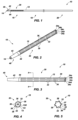
- At least part of the distal portion 16 of the body 12 of the exoskeleton device 10 may have a tubular configuration, through which a lumen 14 is defined.
- the body 12 has a tubular configuration along its entire length; thus, the lumen 14 extends through the entire length of the body 12.
- the body 12 may comprise a substantially unitary structure or it may include a plurality of assembled elements that have been secured together. In embodiments where the body 12 includes a substantially unitary structure, it may be defined from a single element (e.g., a tube, etc.). An embodiment of the body 12 that includes a plurality of assembled elements may include a distal portion 16 that is formed separately from and subsequently assembled with and joined to a remainder of the body 12, including its intermediate portion 18 and its proximal portion 20.
- the body 12 may be formed from any of a variety of suitable materials or from a combination of suitable materials.
- the entire body 12 or its distal portion 16 may be defined from or comprise a hypotube, which may be formed from a substantially rigid material, such as a metal (e.g., stainless steel, nitinol, etc.) or a polymer (e.g., polyether ether ketone (PEEK), etc.).
- a metal e.g., stainless steel, nitinol, etc.
- PEEK polyether ether ketone
- the body 12 comprises a distal portion 16 that has been formed separately from a remainder of the body 12
- the remainder of the body 12 may be formed from any of a variety of suitable materials, including, without limitation, materials from which catheters may be formed (e.g., silicone, nylon, polyurethane, polyethylene, polyethylene terephthalate (PET), polytetrafluoroethylene (PTFE), latex, etc.), as well as a variety of other materials.
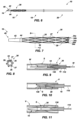
- the expandable section 30 of the exoskeleton device 10 may be capable of expanding outward (e.g., radially outward, etc.) from an unexpanded state, as shown in FIGs. 1-4 , to an expanded state, as depicted by FIGs. 5-8 , upon applying an expanding force (e.g., a radially outwardly expanding force, etc.) from within the expandable section 30 to inner surfaces 13 I of the wall 13 of the portion of the body 12 from which the expandable section 30 is defined.
- the expandable section 30 may be capable of resiliently returning or substantially resiliently returning to the unexpanded state upon removal of the expanding force.
- the expandable section 30 of the exoskeleton device 10 may, as illustrated, be located along the distal portion 16 of the body 12 of the exoskeleton device 10.
- a distal side 32 of the expandable section 30 may be positioned adjacent to a distal end 15 of the body 12.
- Exoskeleton devices with expandable sections that are located at other positions (e.g. more proximal positions) along the lengths of the bodies of the exoskeleton devices (e.g., along at least part of the intermediate portion 18, along at least part of the distal portion 20, etc.) are also within the scope of this disclosure.
- each slit 32 may extend completely through the wall 13 of the body 12, from its outer surface 13 O to its inner surface 13 I . In other embodiments, each slit 32 may extend only partially through the wall 13 of the body 12 (e.g., from the outer surface 13 O of the wall 13 toward the inner surface 13 I of the wall 13, etc.). The extent to which each slit 32 extends through the wall 13 of the body 12 may depend, at least in part, upon the material from which the body 12 is formed. Slits 32 may be formed by any technique that is compatible with the material from which the body 12 of the exoskeleton device 10 is formed. As a non-limiting example, laser cutting processes may be used to form slits 32 in the body 12.
- Each series 34a, 34b, 34c, etc. may be defined by linearly aligned slits 32.
- the slits 32 and each series 34a, 34b, 34c, etc. may extend longitudinally along the body 12, with each series 34a, 34b, 34c, etc., being positioned along a generator of the expandable section 30 (i.e., a line extending from one end of the expandable section 30 to the other end of the expandable section 30, parallel to an axis 31 of the expandable section 30).
- the slits 32 of each series 34b, 34c, 34d, etc. may be offset relative to the slits 32 of each adjacent series 34a, 34b, 34c, 34d, 34e, etc.
- Each slit 32 in a series 34a, 34b, 34c, etc. may overlap about half of one (if the slit 32 is located at or near an end of the expandable section 30) or two (if the slit 32 is intermediately located along the length of the expandable section 30) circumferentially adjacent slits 32 of each adjacent series 34a, 34b, 34c, etc.
- Staggering of the slits 32 around the circumference of the distal portion 16 of the body 12 of the exoskeleton device 10 may provide the expandable section 30 with a so-called "brickwork” appearance, with solid portions of the body 12 between the slits 32 arranged in a so-called “running bond pattern.”
- circumferentially corresponding slits 32 of every other series 34a and 34c, etc., of slits 32 may have equal lengths and be in complete alignment.
- Circumferentially adjacent series 34a, 34b, 34c, etc., of slits 32 may be spaced equidistantly around the circumference of the body 12.
- the expandable section 30 may include an even number of series 34a, 34b, 34c, etc., of slits 32.
- each slit 32 of the expandable section 30 may be staggered relative to its circumferentially adjacent slits 32.
- each strut 36 may comprise a solid portion of the body 12 between adjacent series 34a and 34b, 34b and 34c, 34c and 34d, etc., of slits 32.
- Solid portions of the body 12 located between adjacent slits 32 in a series 34a, 34b, 34c, etc., of slits 32 comprise joints 38 between circumferentially adjacent struts 36.
- each slit 32 comprises a gap between a pair of circumferentially adjacent struts 36.
- the body 12 may comprise a stainless steel hypotube having an outer diameter (OD) of about 1.85 mm and an inner diameter (ID) of about 1.7 mm.
- the wall 13 of the body 12 may have a thickness of about 0.076 mm.
- Twelve (12) series 34a, 34b, 34c, etc., of slits 32 may be arranged equidistantly around the circumference of the body 12, defining twelve (12) struts 36 having widths of about 0.43 mm, accounting for the width of each slit 32.
- Each slit 32 may have a length of about 2.54 cm, with adjacent slits 32 in the same series 34a, 34b, 34c, etc., being spaced about 0.38 mm apart from each other to define joints 38 having lengths of about 0.38 mm. Circumferentially adjacent slits 32 may be offset from one another by about 1.27 cm.
- the outer surface 13 O of the wall 13 of the portion of the body 12 from which the expandable section 30 is defined may be substantially smooth, accounting for discontinuities that occur as material is removed from the wall 13 of the body 12 to form each slit 32.
- the slits 32 open up and the struts 36 may rotate from circumferentially disposed orientations (i.e., where the outer surface 13 O of each strut 36 is oriented along the circumference of the wall 13 of the body 12) to more radial orientations.
- All of the struts 36 of the expandable section 30 may rotate in the same direction (e.g., counterclockwise, clockwise, etc.). As each strut 36 begins to rotate, an edge 37 of the strut 36 is exposed at an outer extent of the expanded expandable section 30.
- FIG. 5 shows the expandable section 30 in a partially expanded state, or an intermediate state.
- FIGs. 6-8 depict the expandable section 30 of the exoskeleton device 10 in a fully expanded state. As illustrated by FIG. 8 , when the expandable section 30 is fully expanded, each strut 36 may rotate by as much as 90°, with each strut 36 being oriented substantially radially.
- the struts 36 and their at least partially outward facing edges 37 may be forced against the location that is to be treated, which may also be referred to herein as a treatment site.
- the members of the expandable section may contact that location or even score that location.
- the medicament may be transferred from the struts 36 to the location that has been treated.
- the medicament may also be introduced into any scores formed at the location that has been treated.
- a distal end 40 of the exoskeleton device 10 may have a configuration that enables its introduction into a subject's body (e.g., into a vessel within the body of a subject, etc.) and its advancement through the subject's body.
- the distal end 40 of the exoskeleton device 10 may have a frustoconical configuration (i.e., it may have the shape of a truncated cone, which lacks a pointed tip).
- Such a configuration of distal end 40 may have a gradual taper (e.g., a taper of about 5°, a taper of about 8°, a taper of about 10°, etc.).
- a collar 42 may be provided at the distal end 40 of the exoskeleton device 40 and/or at a distal side of the expandable section 30 of the exoskeleton device 10.
- the collar 42 may facilitate introduction of the exoskeleton device 10 into a subject's body, as well as advancement of the exoskeleton device 10 through the subject's body.
- Such a collar 42 may be smooth and, optionally, flexible (e.g., it may be formed from a flexible, resilient material, such as silicone, etc.).
- the collar 42 may be provided around a distal end of the expandable section 30 to limit expansion at the distal end of the expandable section 30.
- a radiopaque marker 44 may be provided at the distal end 40 of the exoskeleton device 10.
- the distal end 40 may be formed from a radiopaque material (e.g., platinum, etc.) to define the radiopaque marker 44, or a band of radiopaque material may be placed at or near the distal end 40 of the exoskeleton device 10 (e.g., directly adjacent to a distal side of the expandable element 30, etc.).
- the radiopaque marker 44 may enable visualization (e.g., through fluoroscopy, etc.) of a location of the exoskeleton device 10 and/or its expandable section 30 within a subject's body.
- the intermediate portion 18 of the exoskeleton device 10 is located on a proximal side of the expandable section 30, and the proximal portion 20 of the exoskeleton device 10 is located on a proximal side of the intermediate portion 18, closest to an individual (e.g., a healthcare professional, etc.) introducing, advancing, and/or operating the exoskeleton device 10 and any associated devices.
- an individual e.g., a healthcare professional, etc.
- the tubular element may include a lumen that can receive the one or more other elongated medical instruments.
- the intermediate portion 18 and, optionally, the proximal portion 20 of the exoskeleton device 10 may comprise an extension of the body 12 of the exoskeleton device 10.
- the proximal portion 20 and, optionally, the intermediate portion 18 of the exoskeleton device 10 may comprise another separately manufactured structure (e.g., a catheter, another tube, a tether, etc.) that may be aligned with and is secured to a proximal end of the body 12 of the exoskeleton device 10.
- FIGs. 9-11 embodiments of various techniques for introducing an exoskeleton device 10 ( FIGs. 1-8 ) of this disclosure into a body of a subject are depicted.
- FIG. 9 an embodiment of a technique for introducing an expandable element 30 of an exoskeleton device 10 to a treatment site S, or a target location, within a body of a subject is shown.
- a guidewire W is introduced into the subject's body and advanced to and, optionally, through the treatment site S in a manner known in the art.
- the treatment site S shown in FIG. 9 is a narrowed or occluded location along a vessel V (e.g., a blood vessel, such as an artery or a vein, etc.); it should be noted, however, that the expandable section 30 of the exoskeleton device 10 may be used to treat other organs or features of a subject's anatomy.
- a vessel V e.g., a blood vessel, such as an artery or a vein, etc.
- the exoskeleton device 10 and an expandable instrument 110 are pre-assembled, with an expandable section 30 of the exoskeleton device 10 positioned over an expander 130 of the expandable instrument 110.
- Preassembly of the exoskeleton device 10 and the expandable instrument 110 may include securing the exoskeleton device 10 to the expandable instrument 110.
- the exoskeleton device 10 and the expandable instrument 110 may then be placed over the guidewire W and introduced into the subject's body together (i.e., simultaneously), and advanced along the guidewire W until the expandable section 30 and the expander 130 reach the treatment site S.
- FIG. 11 depicts an embodiment of an exoskeleton device 10 introduction and advancement method that includes introducing a guidewire W ( FIG. 9 ) into the subject's body, advanced through the subject's body to the treatment site S, and, optionally, advanced through the treatment site.
- the exoskeleton device 10 may then be introduced into the subject's body and advanced through the subject's body until an expandable section 30 of the exoskeleton device 10 reaches the treatment site S.
- the guidewire W may, in some embodiments, be removed from the exoskeleton device 10 and, thus, from the subject's body.
- An expandable instrument 110 may be assembled with a proximal portion 20 ( FIGs.
- the exoskeleton device 10 e.g., introduced into a lumen 14 ( FIGs. 1 and 4 ) of the exoskeleton device 10, etc.
- the exoskeleton device 10 e.g., introduced into a lumen 14 ( FIGs. 1 and 4 ) of the exoskeleton device 10, etc.
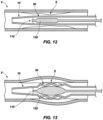
- an expander 130 of the expandable instrument 110 is positioned at a desired location within the expandable section 30 of the exoskeleton device 10 and, thus, at the treatment site S.
- the expander 130 may be expanded in a suitable manner to expand the expandable section 30 (e.g., a balloon of a balloon catheter may be inflated, etc.), as illustrated by FIG. 13 .
- a suitable manner to expand the expandable section 30 e.g., a balloon of a balloon catheter may be inflated, etc.
- a plurality of different expandable instruments 110 with differently configured expanders 130 may be sequentially introduced to a treatment site S, operated (or used), and removed from the treatment site S through a single, previously placed exoskeleton device 10.
Landscapes
- Health & Medical Sciences (AREA)
- Life Sciences & Earth Sciences (AREA)
- Heart & Thoracic Surgery (AREA)
- Animal Behavior & Ethology (AREA)
- Veterinary Medicine (AREA)
- Engineering & Computer Science (AREA)
- Biomedical Technology (AREA)
- Vascular Medicine (AREA)
- General Health & Medical Sciences (AREA)
- Public Health (AREA)
- Surgery (AREA)
- Hematology (AREA)
- Anesthesiology (AREA)
- Medical Informatics (AREA)
- Molecular Biology (AREA)
- Nuclear Medicine, Radiotherapy & Molecular Imaging (AREA)
- Child & Adolescent Psychology (AREA)
- Biophysics (AREA)
- Pulmonology (AREA)
- Prostheses (AREA)
- Surgical Instruments (AREA)
Claims (11)
- Exoskelettvorrichtung (10), die mit einem expandierbaren Instrument (110) verbaut werden kann und Folgendes umfasst:
einen expandierbaren Bereich (30), der über einem Expander (130) eines expandierbaren Instruments (110) platziert werden kann, wobei der expandierbare Bereich (30) mehrere Streben (36) umfasst, wobei sich jede Strebe (36) entlang einer Länge des expandierbaren Bereichs (30) erstreckt, wobei die mehreren Streben (36) um einen Umfang des expandierbaren Bereichs (30) herum positioniert sind, wobei jede Strebe (36) der mehreren Streben (36) mehrere Bereiche umfasst, wobei jeder Bereich von einem Paar paralleler Schlitze (32) durch den expandierbaren Bereich (30) definiert wird, wobei jeder Schlitz (32) des Paars paralleler Schlitze (32) über den Umfang hinweg angrenzende Bereiche von über den Umfang hinweg angrenzenden Streben (36) der mehreren Streben (36) abtrennt, wobei der expandierbare Bereich (30) durch eine Anordnung von Schlitzen (32) des expandierbaren Bereichs (30) radial expandierbar ist, und dadurch gekennzeichnet, dass jede Strebe (36) aus einer über den Umfang hinweg angeordneten Ausrichtung in eine eher radiale Ausrichtung drehbar ist, so dass ein Rand der Strebe an einer äußeren Erstreckung des expandierbaren Bereichs bei einer radialen Expansion des expandierbaren Bereichs (30) freigelegt wird. - Exoskelettvorrichtung (10) nach Anspruch 1, wobei eine Außenfläche (13O) des expandierbaren Bereichs (30) im Wesentlichen glatt ist, wenn sich der expandierbare Bereich (30) in einem nicht expandierten Zustand befindet.
- Exoskelettvorrichtung (10) nach Anspruch 1 oder Anspruch 2, wobei der expandierbare Bereich (30) mehrere Reihen (34) von Schlitzen (32) umfasst, die sich entlang einer Länge des expandierbaren Bereichs (30) erstrecken, wobei jede Reihe (34) der mehreren Reihen (34) eine Folge von Schlitzen (32) umfasst, die entlang der Länge des expandierbaren Bereichs (30) angeordnet sind.
- Exoskelettvorrichtung (10) nach Anspruch 3, wobei die mehreren Reihen (34) von Schlitzen (32) senkrecht zur Länge des expandierbaren Bereichs (30), um einen Umfang des expandierbaren Bereichs (30) entlang mehreren Erzeugenden des Umfangs des expandierbaren Bereichs (30) angeordnet sind.
- Exoskelettvorrichtung (10) nach Anspruch 3 oder Anspruch 4, wobei jeder Schlitz (32) der Folge von Schlitzen (32) jeder Reihe (34a) der mehreren Reihen (34) von Schlitzen (32) bezüglich mindestens eines Schlitzes (32) der Folge von Schlitzen (32) jeder angrenzenden Reihe (34b) der mehreren Reihen (34) von Schlitzen versetzt ist.
- Exoskelettvorrichtung (10) nach Anspruch 5, wobei jeder Schlitz (32) der Folge von Schlitzen (32) jeder Reihe (34a) der mehreren Reihen (34) von Schlitzen (32) um etwa die Hälfte der Länge mindestens eines Schlitzes (32) der Folge von Schlitzen (32) jeder angrenzenden Reihe (34b) der mehreren Reihen (34) von Schlitzen (32) versetzt ist.
- Exoskelettvorrichtung (10) nach Anspruch 6, wobei jeder Schlitz (32), der sich nicht zu einem Ende des expandierbaren Bereichs (30) erstreckt, dieselbe Länge wie jeder andere Schlitz (32), der sich nicht zu einem Ende des expandierbaren Bereichs (30) erstreckt, aufweist.
- Exoskelettvorrichtung (10) nach einem der Ansprüche 5-7, wobei Schlitze (32) der Folge von Schlitzen (32) jeder anderen Reihe (34) der mehreren Reihen (34) von Schlitzen (32) gleiche Längen aufweisen und vollständig auf einander ausgerichtet sind.
- Medizinisches System, das Folgendes umfasst:einen Führungsdraht (W), der in einen Körper eines Patienten eingeführt werden kann, um einen Pfad zwischen einer kutanen Stelle an einer Außenseite des Körpers und einem Behandlungsort (S) in den Körper zu definieren;eine Exoskelettvorrichtung (10) nach einem der Ansprüche 1-8, die in den Körper eingeführt und durch den Körper entlang dem Pfad (V) vorgeschoben werden kann, um den expandierbaren Bereich (10) an dem Behandlungsort (S) zu platzieren; undein expandierbares Instrument (110) mit einem Expander (130), der in den expandierbaren Bereich (30) der Exoskelettvorrichtung (10) eingeführt werden und eine Expansion des expandierbaren Bereichs (30) bewirken kann.
- Medizinisches System nach Anspruch 9, wobei die mehreren Streben (36) eine Fläche ritzen können, gegen die sie bei Expansion des Expanders (130) des expandierbaren Instruments (110) gedrückt werden.
- Medizinisches System nach Anspruch 10, das ferner Folgendes umfasst:
ein Medikament auf den mehreren Streben (36).
Applications Claiming Priority (3)
| Application Number | Priority Date | Filing Date | Title |
|---|---|---|---|
| US201762578378P | 2017-10-27 | 2017-10-27 | |
| US201862623117P | 2018-01-29 | 2018-01-29 | |
| PCT/US2018/058057 WO2019084567A1 (en) | 2017-10-27 | 2018-10-29 | EXOSQUELET DEVICE WITH EXPANDABLE SECTION ENABLING AN INCISION |
Publications (5)
| Publication Number | Publication Date |
|---|---|
| EP3700441A1 EP3700441A1 (de) | 2020-09-02 |
| EP3700441A4 EP3700441A4 (de) | 2021-07-28 |
| EP3700441B1 true EP3700441B1 (de) | 2025-06-11 |
| EP3700441C0 EP3700441C0 (de) | 2025-06-11 |
| EP3700441B8 EP3700441B8 (de) | 2025-07-16 |
Family
ID=66244716
Family Applications (1)
| Application Number | Title | Priority Date | Filing Date |
|---|---|---|---|
| EP18869708.0A Active EP3700441B8 (de) | 2017-10-27 | 2018-10-29 | Exoskelettvorrichtung mit expandierbarem profil zum ritzen |
Country Status (4)
| Country | Link |
|---|---|
| US (3) | US11179549B2 (de) |
| EP (1) | EP3700441B8 (de) |
| JP (1) | JP7356974B2 (de) |
| WO (1) | WO2019084567A1 (de) |
Families Citing this family (9)
| Publication number | Priority date | Publication date | Assignee | Title |
|---|---|---|---|---|
| US11406801B2 (en) | 2017-10-27 | 2022-08-09 | Transit Scientific, LLC | Exoskeleton device with expandable section for scoring |
| US11179549B2 (en) * | 2017-10-27 | 2021-11-23 | Transit Scientific, LLC | Exoskeleton device with expandable section for scoring |
| US20210330343A1 (en) * | 2018-06-08 | 2021-10-28 | Surmodics, Inc. | Systems, devices and methods for controlled vessel lesion dissection |
| US11896508B2 (en) * | 2018-09-22 | 2024-02-13 | Transit Scientific, LLC | Expandable exoskeleton devices |
| WO2021030632A1 (en) * | 2019-08-13 | 2021-02-18 | Transit Scientific, LLC | Exoskeleton device with expandable section for scoring |
| USD980427S1 (en) * | 2019-08-14 | 2023-03-07 | Transit Scientific, LLC | Expandable medical device |
| JP2023525952A (ja) * | 2020-02-24 | 2023-06-20 | トランジット サイエンティフィック,エルエルシー | バルーン支援注入技法 |
| EP4240287A1 (de) * | 2020-11-04 | 2023-09-13 | Edwards Lifesciences Corporation | Expandierbare hülle für transaxillären zugang |
| CN120285423B (zh) * | 2025-06-13 | 2025-09-16 | 浙江归创医疗科技有限公司 | 刻痕鞘管 |
Family Cites Families (40)
| Publication number | Priority date | Publication date | Assignee | Title |
|---|---|---|---|---|
| US2854983A (en) * | 1957-10-31 | 1958-10-07 | Arnold M Baskin | Inflatable catheter |
| US5176693A (en) | 1992-05-11 | 1993-01-05 | Interventional Technologies, Inc. | Balloon expandable atherectomy cutter |
| US5336178A (en) | 1992-11-02 | 1994-08-09 | Localmed, Inc. | Intravascular catheter with infusion array |
| US5441515A (en) | 1993-04-23 | 1995-08-15 | Advanced Cardiovascular Systems, Inc. | Ratcheting stent |
| US5562620A (en) | 1994-04-01 | 1996-10-08 | Localmed, Inc. | Perfusion shunt device having non-distensible pouch for receiving angioplasty balloon |
| US5556408A (en) * | 1995-04-27 | 1996-09-17 | Interventional Technologies Inc. | Expandable and compressible atherectomy cutter |
| NL1000413C2 (nl) * | 1995-05-22 | 1996-11-25 | Cordis Europ | Balloncatheter met ballonbeschermingsmantel. |
| US5797935A (en) | 1996-09-26 | 1998-08-25 | Interventional Technologies Inc. | Balloon activated forced concentrators for incising stenotic segments |
| US6280411B1 (en) * | 1998-05-18 | 2001-08-28 | Scimed Life Systems, Inc. | Localized delivery of drug agents |
| US20050055082A1 (en) | 2001-10-04 | 2005-03-10 | Shmuel Ben Muvhar | Flow reducing implant |
| DE10017147C2 (de) * | 2000-04-03 | 2003-06-12 | Wolfram Voelker | Einschwemmbarer Führungsdraht für einen Katheter |
| US7252679B2 (en) * | 2001-09-13 | 2007-08-07 | Cordis Corporation | Stent with angulated struts |
| US7494497B2 (en) * | 2003-01-02 | 2009-02-24 | Boston Scientific Scimed, Inc. | Medical devices |
| US20050080472A1 (en) | 2003-10-10 | 2005-04-14 | Atkinson Robert Emmett | Lead stabilization devices and methods |
| US8876882B2 (en) | 2003-10-10 | 2014-11-04 | Mark Gelido Barongan | Cutting stent |
| US8066780B2 (en) | 2004-05-03 | 2011-11-29 | Fulfillium, Inc. | Methods for gastric volume control |
| US10076641B2 (en) | 2005-05-11 | 2018-09-18 | The Spectranetics Corporation | Methods and systems for delivering substances into luminal walls |
| US8672990B2 (en) | 2005-05-27 | 2014-03-18 | Boston Scientific Scimed, Inc. | Fiber mesh controlled expansion balloon catheter |
| US20080077165A1 (en) | 2006-02-24 | 2008-03-27 | National University Of Ireland, Galway | Minimally Invasive Intravascular Treatment Device |
| US8747738B2 (en) | 2006-08-15 | 2014-06-10 | Abbott Cardiovascular Systems Inc. | Sterilization methods for medical devices |
| US20080221666A1 (en) | 2006-12-15 | 2008-09-11 | Cardiomind, Inc. | Stent systems |
| GB0706499D0 (en) * | 2007-04-03 | 2007-05-09 | Angiomed Ag | Bendable stent |
| EP2172242A1 (de) | 2008-10-03 | 2010-04-07 | National University of Ireland Galway | Intravaskuläre Behandlungsvorrichtung |
| US8690936B2 (en) * | 2008-10-10 | 2014-04-08 | Edwards Lifesciences Corporation | Expandable sheath for introducing an endovascular delivery device into a body |
| US20150313732A1 (en) | 2009-08-13 | 2015-11-05 | Quadra Endovascular, Inc. | Method and Device for Treating a Target Site in a Vascular Body Channel |
| US8740961B2 (en) | 2009-08-13 | 2014-06-03 | Richard Eustis Fulton, III | Method for treating a target site in a vascular body channel |
| EP2593049A1 (de) | 2010-07-16 | 2013-05-22 | Abbott Cardiovascular Systems Inc. | Verfahren und medizinische vorrichtung mit gewebeeingriffelement zur freisetzung eines therapeutikums |
| US8702736B2 (en) | 2010-11-22 | 2014-04-22 | Rex Medical L.P. | Cutting wire assembly for use with a catheter |
| EP2686057A2 (de) * | 2011-03-15 | 2014-01-22 | Henry William Lupton | Verankerungsvorrichtung zur verankerung eines bohrwerkzeugs in einem lumen oder gefäss |
| EP2768568B1 (de) | 2011-10-18 | 2020-05-06 | Boston Scientific Scimed, Inc. | Ballonkatheter mit integrierter vernetzung |
| WO2013067180A1 (en) | 2011-11-04 | 2013-05-10 | Boston Scientific Scimed, Inc. | Catheter including a bare metal hypotube |
| US20130144328A1 (en) | 2011-12-06 | 2013-06-06 | Boston Scientific Scimed, Inc. | Expanding distal sheath with combined embolic protection |
| CN104936550B (zh) | 2012-11-15 | 2017-09-22 | 恩菲纽姆血管技术有限公司 | 临时血管支撑架和刻划装置 |
| WO2014176451A1 (en) | 2013-04-24 | 2014-10-30 | Trustees Of Tufts College | Bioresorbable biopolymer stent |
| EP3127497B1 (de) | 2013-11-07 | 2018-01-31 | Cook Medical Technologies LLC | Ballonkatheter mit lithotripsieverstärkungssystem |
| US10286190B2 (en) | 2013-12-11 | 2019-05-14 | Cook Medical Technologies Llc | Balloon catheter with dynamic vessel engaging member |
| JP2015173913A (ja) | 2014-03-17 | 2015-10-05 | ニプロ株式会社 | 血管形成カテーテル |
| WO2017044655A1 (en) * | 2015-09-08 | 2017-03-16 | Transit Scientific, LLC | Exoskeleton devices for use with elongated medical instruments |
| JP6836894B2 (ja) * | 2016-12-22 | 2021-03-03 | テルモ株式会社 | 医療デバイス |
| US11179549B2 (en) | 2017-10-27 | 2021-11-23 | Transit Scientific, LLC | Exoskeleton device with expandable section for scoring |
-
2018
- 2018-10-29 US US16/174,205 patent/US11179549B2/en active Active
- 2018-10-29 JP JP2020524127A patent/JP7356974B2/ja active Active
- 2018-10-29 EP EP18869708.0A patent/EP3700441B8/de active Active
- 2018-10-29 WO PCT/US2018/058057 patent/WO2019084567A1/en not_active Ceased
-
2021
- 2021-11-23 US US17/534,323 patent/US12161826B2/en active Active
-
2024
- 2024-12-10 US US18/976,176 patent/US20250177705A1/en active Pending
Also Published As
| Publication number | Publication date |
|---|---|
| US11179549B2 (en) | 2021-11-23 |
| WO2019084567A1 (en) | 2019-05-02 |
| JP7356974B2 (ja) | 2023-10-05 |
| JP2021501007A (ja) | 2021-01-14 |
| EP3700441A1 (de) | 2020-09-02 |
| US20220080164A1 (en) | 2022-03-17 |
| EP3700441A4 (de) | 2021-07-28 |
| US20190126011A1 (en) | 2019-05-02 |
| EP3700441C0 (de) | 2025-06-11 |
| US12161826B2 (en) | 2024-12-10 |
| EP3700441B8 (de) | 2025-07-16 |
| US20250177705A1 (en) | 2025-06-05 |
Similar Documents
| Publication | Publication Date | Title |
|---|---|---|
| US12161826B2 (en) | Exoskeleton device with expandable section for scoring | |
| US12370350B2 (en) | Exoskeleton device with expandable section for scoring | |
| US20240261121A1 (en) | Expandable exoskeleton devices | |
| CN108136159B (zh) | 带有再进入针和远侧稳定囊体的闭塞部旁路设备 | |
| EP2977072B1 (de) | Kathetervorrichtung zur behandlung von gefässen | |
| US20250242131A1 (en) | Medical devices for fluid delivery | |
| EP3122412A1 (de) | Verfahren und vorrichtung zur platzierung eines katheters in einem gefässsystem | |
| JP2006515788A (ja) | 破壊可能なガイドワイヤチャンネルを備えたカテーテル | |
| US12226599B2 (en) | Medical devices for fluid delivery and methods of use and manufacture | |
| EP2787935A1 (de) | Subintimale rekanalisierung mit bioabsorbierbarem stent | |
| US20130297007A1 (en) | Apparatuses and methods for guiding endoluminal devices through body lumens | |
| US11129964B2 (en) | Trapping sheaths and guide catheters | |
| US10420919B2 (en) | Introducer with dynamic dilator and methods of using the same | |
| US20210045901A1 (en) | Expandable medical devices | |
| WO2021030632A1 (en) | Exoskeleton device with expandable section for scoring | |
| EP3801306B1 (de) | Schneidvorrichtungen und kathetersysteme für kontrollierte gefässläsionsdissektion | |
| US11020573B2 (en) | Method and apparatuses for accessing and/or modifying a target patient tissue site | |
| US12576249B1 (en) | Infusion catheter and balloon catheter system and method |
Legal Events
| Date | Code | Title | Description |
|---|---|---|---|
| STAA | Information on the status of an ep patent application or granted ep patent |
Free format text: STATUS: THE INTERNATIONAL PUBLICATION HAS BEEN MADE |
|
| PUAI | Public reference made under article 153(3) epc to a published international application that has entered the european phase |
Free format text: ORIGINAL CODE: 0009012 |
|
| STAA | Information on the status of an ep patent application or granted ep patent |
Free format text: STATUS: REQUEST FOR EXAMINATION WAS MADE |
|
| 17P | Request for examination filed |
Effective date: 20200325 |
|
| AK | Designated contracting states |
Kind code of ref document: A1 Designated state(s): AL AT BE BG CH CY CZ DE DK EE ES FI FR GB GR HR HU IE IS IT LI LT LU LV MC MK MT NL NO PL PT RO RS SE SI SK SM TR |
|
| AX | Request for extension of the european patent |
Extension state: BA ME |
|
| DAV | Request for validation of the european patent (deleted) | ||
| DAX | Request for extension of the european patent (deleted) | ||
| A4 | Supplementary search report drawn up and despatched |
Effective date: 20210629 |
|
| RIC1 | Information provided on ipc code assigned before grant |
Ipc: A61B 17/3207 20060101AFI20210623BHEP Ipc: A61M 25/10 20130101ALI20210623BHEP |
|
| GRAP | Despatch of communication of intention to grant a patent |
Free format text: ORIGINAL CODE: EPIDOSNIGR1 |
|
| STAA | Information on the status of an ep patent application or granted ep patent |
Free format text: STATUS: GRANT OF PATENT IS INTENDED |
|
| INTG | Intention to grant announced |
Effective date: 20240805 |
|
| GRAJ | Information related to disapproval of communication of intention to grant by the applicant or resumption of examination proceedings by the epo deleted |
Free format text: ORIGINAL CODE: EPIDOSDIGR1 |
|
| STAA | Information on the status of an ep patent application or granted ep patent |
Free format text: STATUS: REQUEST FOR EXAMINATION WAS MADE |
|
| GRAP | Despatch of communication of intention to grant a patent |
Free format text: ORIGINAL CODE: EPIDOSNIGR1 |
|
| STAA | Information on the status of an ep patent application or granted ep patent |
Free format text: STATUS: GRANT OF PATENT IS INTENDED |
|
| INTC | Intention to grant announced (deleted) | ||
| INTG | Intention to grant announced |
Effective date: 20250102 |
|
| GRAS | Grant fee paid |
Free format text: ORIGINAL CODE: EPIDOSNIGR3 |
|
| GRAA | (expected) grant |
Free format text: ORIGINAL CODE: 0009210 |
|
| STAA | Information on the status of an ep patent application or granted ep patent |
Free format text: STATUS: THE PATENT HAS BEEN GRANTED |
|
| AK | Designated contracting states |
Kind code of ref document: B1 Designated state(s): AL AT BE BG CH CY CZ DE DK EE ES FI FR GB GR HR HU IE IS IT LI LT LU LV MC MK MT NL NO PL PT RO RS SE SI SK SM TR |
|
| REG | Reference to a national code |
Ref country code: GB Ref legal event code: FG4D |
|
| REG | Reference to a national code |
Ref country code: CH Ref legal event code: EP |
|
| RAP4 | Party data changed (patent owner data changed or rights of a patent transferred) |
Owner name: TRANSIT SCIENTIFIC, LLC |
|
| REG | Reference to a national code |
Ref country code: CH Ref legal event code: PK Free format text: BERICHTIGUNG B8 |
|
| REG | Reference to a national code |
Ref country code: IE Ref legal event code: FG4D |
|
| REG | Reference to a national code |
Ref country code: DE Ref legal event code: R096 Ref document number: 602018082581 Country of ref document: DE |
|
| REG | Reference to a national code |
Ref country code: CH Ref legal event code: PK Free format text: BERICHTIGUNG B8 |
|
| U01 | Request for unitary effect filed |
Effective date: 20250711 |
|
| U07 | Unitary effect registered |
Designated state(s): AT BE BG DE DK EE FI FR IT LT LU LV MT NL PT RO SE SI Effective date: 20250716 |
|
| PG25 | Lapsed in a contracting state [announced via postgrant information from national office to epo] |
Ref country code: ES Free format text: LAPSE BECAUSE OF FAILURE TO SUBMIT A TRANSLATION OF THE DESCRIPTION OR TO PAY THE FEE WITHIN THE PRESCRIBED TIME-LIMIT Effective date: 20250611 |
|
| PG25 | Lapsed in a contracting state [announced via postgrant information from national office to epo] |
Ref country code: GR Free format text: LAPSE BECAUSE OF FAILURE TO SUBMIT A TRANSLATION OF THE DESCRIPTION OR TO PAY THE FEE WITHIN THE PRESCRIBED TIME-LIMIT Effective date: 20250912 Ref country code: NO Free format text: LAPSE BECAUSE OF FAILURE TO SUBMIT A TRANSLATION OF THE DESCRIPTION OR TO PAY THE FEE WITHIN THE PRESCRIBED TIME-LIMIT Effective date: 20250911 |
|
| PG25 | Lapsed in a contracting state [announced via postgrant information from national office to epo] |
Ref country code: HR Free format text: LAPSE BECAUSE OF FAILURE TO SUBMIT A TRANSLATION OF THE DESCRIPTION OR TO PAY THE FEE WITHIN THE PRESCRIBED TIME-LIMIT Effective date: 20250611 |
|
| PG25 | Lapsed in a contracting state [announced via postgrant information from national office to epo] |
Ref country code: RS Free format text: LAPSE BECAUSE OF FAILURE TO SUBMIT A TRANSLATION OF THE DESCRIPTION OR TO PAY THE FEE WITHIN THE PRESCRIBED TIME-LIMIT Effective date: 20250911 |
|
| U20 | Renewal fee for the european patent with unitary effect paid |
Year of fee payment: 8 Effective date: 20251030 |
|
| PG25 | Lapsed in a contracting state [announced via postgrant information from national office to epo] |
Ref country code: IS Free format text: LAPSE BECAUSE OF FAILURE TO SUBMIT A TRANSLATION OF THE DESCRIPTION OR TO PAY THE FEE WITHIN THE PRESCRIBED TIME-LIMIT Effective date: 20251011 |
|
| PG25 | Lapsed in a contracting state [announced via postgrant information from national office to epo] |
Ref country code: SM Free format text: LAPSE BECAUSE OF FAILURE TO SUBMIT A TRANSLATION OF THE DESCRIPTION OR TO PAY THE FEE WITHIN THE PRESCRIBED TIME-LIMIT Effective date: 20250611 |
|
| PG25 | Lapsed in a contracting state [announced via postgrant information from national office to epo] |
Ref country code: CZ Free format text: LAPSE BECAUSE OF FAILURE TO SUBMIT A TRANSLATION OF THE DESCRIPTION OR TO PAY THE FEE WITHIN THE PRESCRIBED TIME-LIMIT Effective date: 20250611 |
|
| PG25 | Lapsed in a contracting state [announced via postgrant information from national office to epo] |
Ref country code: PL Free format text: LAPSE BECAUSE OF FAILURE TO SUBMIT A TRANSLATION OF THE DESCRIPTION OR TO PAY THE FEE WITHIN THE PRESCRIBED TIME-LIMIT Effective date: 20250611 |
|
| PG25 | Lapsed in a contracting state [announced via postgrant information from national office to epo] |
Ref country code: SK Free format text: LAPSE BECAUSE OF FAILURE TO SUBMIT A TRANSLATION OF THE DESCRIPTION OR TO PAY THE FEE WITHIN THE PRESCRIBED TIME-LIMIT Effective date: 20250611 |