EP3683577A1 - Quantitative analysis method for monomer of photoresist binder - Google Patents
Quantitative analysis method for monomer of photoresist binder Download PDFInfo
- Publication number
- EP3683577A1 EP3683577A1 EP18856906.5A EP18856906A EP3683577A1 EP 3683577 A1 EP3683577 A1 EP 3683577A1 EP 18856906 A EP18856906 A EP 18856906A EP 3683577 A1 EP3683577 A1 EP 3683577A1
- Authority
- EP
- European Patent Office
- Prior art keywords
- binder
- monomers
- methacrylate
- monomer
- analysis
- Prior art date
- Legal status (The legal status is an assumption and is not a legal conclusion. Google has not performed a legal analysis and makes no representation as to the accuracy of the status listed.)
- Granted
Links
Images
Classifications
-
- G—PHYSICS
- G01—MEASURING; TESTING
- G01N—INVESTIGATING OR ANALYSING MATERIALS BY DETERMINING THEIR CHEMICAL OR PHYSICAL PROPERTIES
- G01N30/00—Investigating or analysing materials by separation into components using adsorption, absorption or similar phenomena or using ion-exchange, e.g. chromatography or field flow fractionation
- G01N30/02—Column chromatography
- G01N30/62—Detectors specially adapted therefor
- G01N30/72—Mass spectrometers
- G01N30/7206—Mass spectrometers interfaced to gas chromatograph
-
- G—PHYSICS
- G01—MEASURING; TESTING
- G01N—INVESTIGATING OR ANALYSING MATERIALS BY DETERMINING THEIR CHEMICAL OR PHYSICAL PROPERTIES
- G01N30/00—Investigating or analysing materials by separation into components using adsorption, absorption or similar phenomena or using ion-exchange, e.g. chromatography or field flow fractionation
- G01N30/02—Column chromatography
- G01N30/88—Integrated analysis systems specially adapted therefor, not covered by a single one of the groups G01N30/04 - G01N30/86
-
- G—PHYSICS
- G01—MEASURING; TESTING
- G01N—INVESTIGATING OR ANALYSING MATERIALS BY DETERMINING THEIR CHEMICAL OR PHYSICAL PROPERTIES
- G01N30/00—Investigating or analysing materials by separation into components using adsorption, absorption or similar phenomena or using ion-exchange, e.g. chromatography or field flow fractionation
- G01N30/02—Column chromatography
- G01N30/04—Preparation or injection of sample to be analysed
- G01N30/06—Preparation
-
- G—PHYSICS
- G01—MEASURING; TESTING
- G01N—INVESTIGATING OR ANALYSING MATERIALS BY DETERMINING THEIR CHEMICAL OR PHYSICAL PROPERTIES
- G01N30/00—Investigating or analysing materials by separation into components using adsorption, absorption or similar phenomena or using ion-exchange, e.g. chromatography or field flow fractionation
- G01N30/02—Column chromatography
- G01N30/04—Preparation or injection of sample to be analysed
- G01N30/06—Preparation
- G01N30/12—Preparation by evaporation
-
- G—PHYSICS
- G01—MEASURING; TESTING
- G01N—INVESTIGATING OR ANALYSING MATERIALS BY DETERMINING THEIR CHEMICAL OR PHYSICAL PROPERTIES
- G01N30/00—Investigating or analysing materials by separation into components using adsorption, absorption or similar phenomena or using ion-exchange, e.g. chromatography or field flow fractionation
- G01N30/02—Column chromatography
- G01N30/62—Detectors specially adapted therefor
- G01N30/72—Mass spectrometers
-
- G—PHYSICS
- G01—MEASURING; TESTING
- G01N—INVESTIGATING OR ANALYSING MATERIALS BY DETERMINING THEIR CHEMICAL OR PHYSICAL PROPERTIES
- G01N30/00—Investigating or analysing materials by separation into components using adsorption, absorption or similar phenomena or using ion-exchange, e.g. chromatography or field flow fractionation
- G01N30/02—Column chromatography
- G01N30/04—Preparation or injection of sample to be analysed
- G01N30/06—Preparation
- G01N30/12—Preparation by evaporation
- G01N2030/125—Preparation by evaporation pyrolising
-
- G—PHYSICS
- G01—MEASURING; TESTING
- G01N—INVESTIGATING OR ANALYSING MATERIALS BY DETERMINING THEIR CHEMICAL OR PHYSICAL PROPERTIES
- G01N30/00—Investigating or analysing materials by separation into components using adsorption, absorption or similar phenomena or using ion-exchange, e.g. chromatography or field flow fractionation
- G01N30/02—Column chromatography
- G01N30/88—Integrated analysis systems specially adapted therefor, not covered by a single one of the groups G01N30/04 - G01N30/86
- G01N2030/8809—Integrated analysis systems specially adapted therefor, not covered by a single one of the groups G01N30/04 - G01N30/86 analysis specially adapted for the sample
- G01N2030/884—Integrated analysis systems specially adapted therefor, not covered by a single one of the groups G01N30/04 - G01N30/86 analysis specially adapted for the sample organic compounds
- G01N2030/885—Integrated analysis systems specially adapted therefor, not covered by a single one of the groups G01N30/04 - G01N30/86 analysis specially adapted for the sample organic compounds involving polymers
Definitions
- the present invention relates to a method for quantitative analysis of monomers in a photoresist (PR) binder, specifically a color filter (CF) PR binder for a thin film transistor-liquid crystal display (TFT-LCD).
- PR photoresist
- CF color filter
- TFT-LCD thin film transistor-liquid crystal display
- a TFT-LCD is an advanced liquid crystal display (LCD) which independently drives each pixel by adding an active element TFT (thin film transistor) to each pixel in a LCD.
- the TFT-LCD is a product with a higher resolution by covering a thin semiconductor film made of silicon on a glass plate, in which the TFT is an ultrathin film and turns on and off for each pixel on the LCD, so that each pixel is independently driven.
- the TFT-LCD is largely composed of a bottom glass substrate on which the TFT is formed, a top glass substrate on which a color filter is formed, and a liquid crystal injected therebetween.
- the TFT serves to transmit and control electrical signals, and the liquid crystal controls the transmission of light by varying the molecular structure according to the applied voltage. The light thus controlled passes through the color filter and appears as a desired color and image.
- the color screen of the TFT-LCD provides colors controlled by adjusting the transmittance of white light emitted from a backlight (BL) unit through the liquid crystal cell and obtained by mixing lights emitted from a RGB (red, green, blue) color filter.
- the color filter substrate is composed of a black matrix (BM) for intercepting light between cells, an RGB pattern for providing color, and a common electrode (ITO) for applying voltage to the liquid crystal cell.
- BM black matrix
- ITO common electrode
- a color filter photoresist is a photosensitive resin obtained by mixing a polymer and a photosensitive material and it exhibits RGB colors.
- the CFPR is mainly made of a millbase [a pigment, a polymeric dispersant, and a solvent], a polymeric binder, a photoinitiator, a multifunctional monomer (MM), and additional additives.
- the binders used for the photoresist may be divided into a linear binder and a reactive binder. Unlike the linear binder, the reactive binder has reactive monomers (with -OH group) which allow further reaction.
- the composition of the photoresist has been analyzed by using GC/MS, Py-GC/MS and LC/MS, and the composition of monomers in the binder has been analyzed by using NMR ( see Journal of Analytical and Applied Pyrolysis 98 (2012) 236-241 ; Journal of Chromatographic Science 52 (2014) 143-148 ).
- NMR analysis has limitations as the monomer components constantly become diverse and complicated. For this reason, there is a trial to establish a quantitative analysis method by pyrolysis, but it is necessary to overcome quantitative measurement errors due to the precipitation of a binder in a PR solution and optimize quantitative analysis conditions such as sample weight and oven conditions as various kinds of monomers are used.
- Previous Py-GC/MS has been applied only in qualitative analysis to determine the composition of several pyrolysates produced by the pyrolysis mechanism of polymers and to determine monomer components constituting polymers.
- the present inventors have endeavored to investigate the Py-GC/MS in quantitative aspect and attained information on pyrolysis efficiency to develop a method for analyzing the content of monomers in a photoresist binder, which can be variously utilized in general laboratories.
- the object of the present invention is to provide a quantitative analysis method of monomers in a color filter photoresist (PR) binder for a TFF-LCD by using Py-GC/MS which has been applied in qualitative analysis.
- PR color filter photoresist
- the present invention provides a method for quantitative analysis of monomers in a photoresist (PR) binder obtained by polymerization of two or more monomers, which comprises the steps of: (1 preparing a binder as a standard obtained by polymerization of same kinde of monomers as those comprised in the PR binder; (2) subjecting each of the standard prepared in the step (1) and the PR binder into Py-GC/MS analysis; and (3) normalizing the analysis result of the step (2) to determine the weight ratios of the two or more monomers in the PR binder.
- PR photoresist
- the quantitative analysis of the present invention can be used in determining the content of monomers contained in a PR binder by using Py-GC/MS which has been previously applied in qualitative analysis.
- the present invention relates to an analysis method which comprises analysis of a photoresist (PR) binder via Py-GC/MS by using a standard having the same two or more monomers as the PR binder to be analyzed and each contend thereof being confirmed and normalization of the analyzed results to quantitatively identify the weight ratios of the two or more monomers in the PR binder.
- PR photoresist
- the Py-GC/MS has been applied only in qualitative analysis to determine the composition of several pyrolysates produced by the pyrolysis mechanism of polymers and to determine monomer components constituting polymers.
- the composition of monomers in the binder has been analyzed by using NMR, which has limitations as the monomer components are complicated.
- the present invention investigates the Py-GC/MS in quantitative aspect and attains information on pyrolysis efficiency to develop a method for analyzing the content of monomers in a photoresist binder, which can be variously utilized in general laboratories.
- the present invention provides a method for quantitative analysis of monomers in a PR binder obtained by polymerization of two or more monomers, which comprises the steps of: (1) preparing a binder obtained by polymerization of the same monomers as the PR binder as a standard; (2) analyzing the standard prepared in the step (1) and the PR binder by using Py-GC/MS; and (3) normalizing the analysis results of the step (2) to determine the weight ratios of the two or more monomers in the PR binder.
- the monomers in the PR binder may comprise acrylate monomer or methacrylate monomer, for example two or more monomers selected from the group consisting of ethyl hexyl acrylate (EHA), butyl acrylate (BA), methyl acrylate (MA), ethyl acrylate (EA), ethyl hexyl methacrylate (EHMA), butyl methacrylate (BMA), methyl methacrylate (MMA), ethyl methacrylate (EMA), benzyl methacrylate (BzMA), N-phenylmaleimide (N-PMI), styrene, lauryl methacrylate (LMA), cyclohexyl methacrylate (CHMA), methyl methacrylate (MMA), and 2-hydroxypropane-1,3-diyl bis(2-methylacrylate) (reactive methacrylate, RMA).
- EHA ethyl hexyl acrylate
- a linear binder among the PR binders is subject to radical polymerization by a single step reaction, and a reactive binder reacts a part of MMA in the linear binder with the epoxy of glycidyl methacrylate (GMA) by a 2-step reaction to introduce a reactive site.
- GMA glycidyl methacrylate
- its ratios of two or more monomers may be the same or different from that of the PR binder to be analyzed.
- the Py-GC/MS analysis in the step (2) is not particularly limited if it is performed by an analyzer being conventionally used for gas chromatography and mass spectrometry.
- the Py-GC/MS analysis in the step (2) may be performed at a pyrolyzer temperature of 500 to 700°C according to one embodiment, or 550 to 650 °C according to other embodiment.
- the temperature of a GC oven may be maintained at 50 to 60°C for 3 to 10 minutes, and then increased to 300 to 350°C at a rate of 10 to 15°C/min, and finally maintained at 300 to 350°C for 5 to 20 minutes.
- the pyrolysis mechanism of the PR binder is divided into depolymerization, chain cleavage, elimination and the like. Particularly, when the methacrylate binder is subject to depolymerization, its monomer components decomposed can be detected to analyze the composition of the binder resin.
- the pyrolysis rate obtained by depolymerization as the pyrolysis mechanism of the PR binder to be analyzed may varied depending on the ratios of two or more monomers constituting the PR binder.
- the quantitative analysis of monomers in a PR binder according to the present invention uses a PR binder having the same two or more monomers as the PR binder to be analyzed as a standard and obtains the precise content ratio of the monomers by using Py-GC/MS analysis.
- Bruker AvanceIII HD 700MHz NMR spectrometer equipped with 5mm PABBO probe was used for proton NMR experiments.
- 10 mg of the sample was put in a vial and 0.75 mL of acetone-d6 as a solvent was added thereto to dissolve the sample.
- the resultant solution was transferred into an NMR tube for experiments.
- the experiments were performed under the conditions of zg30 pulse sequence and 32 times scan with 5 seconds of relaxation delay time.
- An elemental analysis was carried out by accurately measuring 1.3 to 1.5 mg of each sample into a Sn sample cup and using Flash 2000 (Thermo Fisher Scientific) as an elemental analyzer under the operation conditions of 1060°C as a furnace temperature, 65 ° C as an oven temperature, and 140 ml /min as a flow rate.
- the sample was left on a GC oven set at 50°C for 5 minutes and the temperature of the oven was increased to 320°C at a rate of 10°C/min to give chromatograms under the conditions: 1 mL/min of flow rate of He (carrier gas); 1/50 of split ratio of injector; 300°C of injector, oven and interface temperature of GC/MS; 320°C of interface temperature of the pyrolyzer; and 20 to 600 m/z of MSD scan mode.
- the 3 standards for each PR binder were tested and a calibration curve for each monomer was given. About 1 mg of the binder was measured with a micro-balance, transferred to a sample cup, and subjected to Py-GC/MS analysis.
- the area% of the detected monomers was substituted into the calibration curve, and the content of each monomer was determined and normalized to obtain the weight ratios of the monomers.
- An elemental analysis was carried out by accurately measuring 1.3 to 1.5 mg of each sample into a Sn sample cup and using Flash 2000 (Thermo Fisher Scientific) as an elemental analyzer under the operation conditions of 1060°C as a furnace temperature, 65 ° C as an oven temperature, and 140 ml /min as a flow rate.
Landscapes
- Physics & Mathematics (AREA)
- Health & Medical Sciences (AREA)
- Life Sciences & Earth Sciences (AREA)
- Chemical & Material Sciences (AREA)
- Analytical Chemistry (AREA)
- Biochemistry (AREA)
- General Health & Medical Sciences (AREA)
- General Physics & Mathematics (AREA)
- Immunology (AREA)
- Pathology (AREA)
- Addition Polymer Or Copolymer, Post-Treatments, Or Chemical Modifications (AREA)
- Other Investigation Or Analysis Of Materials By Electrical Means (AREA)
- Optical Filters (AREA)
- Adhesives Or Adhesive Processes (AREA)
Abstract
Description
- This application claims the benefit of priority to Korean Patent Application No.
10-2017-0117204, filed on September 13, 2017 - The present invention relates to a method for quantitative analysis of monomers in a photoresist (PR) binder, specifically a color filter (CF) PR binder for a thin film transistor-liquid crystal display (TFT-LCD).
- A TFT-LCD is an advanced liquid crystal display (LCD) which independently drives each pixel by adding an active element TFT (thin film transistor) to each pixel in a LCD. The TFT-LCD is a product with a higher resolution by covering a thin semiconductor film made of silicon on a glass plate, in which the TFT is an ultrathin film and turns on and off for each pixel on the LCD, so that each pixel is independently driven. The TFT-LCD is largely composed of a bottom glass substrate on which the TFT is formed, a top glass substrate on which a color filter is formed, and a liquid crystal injected therebetween. The TFT serves to transmit and control electrical signals, and the liquid crystal controls the transmission of light by varying the molecular structure according to the applied voltage. The light thus controlled passes through the color filter and appears as a desired color and image.
- The color screen of the TFT-LCD provides colors controlled by adjusting the transmittance of white light emitted from a backlight (BL) unit through the liquid crystal cell and obtained by mixing lights emitted from a RGB (red, green, blue) color filter. The color filter substrate is composed of a black matrix (BM) for intercepting light between cells, an RGB pattern for providing color, and a common electrode (ITO) for applying voltage to the liquid crystal cell.
- A color filter photoresist (CFPR) is a photosensitive resin obtained by mixing a polymer and a photosensitive material and it exhibits RGB colors. The CFPR is mainly made of a millbase [a pigment, a polymeric dispersant, and a solvent], a polymeric binder, a photoinitiator, a multifunctional monomer (MM), and additional additives. The binders used for the photoresist may be divided into a linear binder and a reactive binder. Unlike the linear binder, the reactive binder has reactive monomers (with -OH group) which allow further reaction.
- The composition of the photoresist has been analyzed by using GC/MS, Py-GC/MS and LC/MS, and the composition of monomers in the binder has been analyzed by using NMR (see Journal of Analytical and Applied Pyrolysis 98 (2012) 236-241; Journal of Chromatographic Science 52 (2014) 143-148). However, the NMR analysis has limitations as the monomer components constantly become diverse and complicated. For this reason, there is a trial to establish a quantitative analysis method by pyrolysis, but it is necessary to overcome quantitative measurement errors due to the precipitation of a binder in a PR solution and optimize quantitative analysis conditions such as sample weight and oven conditions as various kinds of monomers are used.
- Previous Py-GC/MS has been applied only in qualitative analysis to determine the composition of several pyrolysates produced by the pyrolysis mechanism of polymers and to determine monomer components constituting polymers. The present inventors have endeavored to investigate the Py-GC/MS in quantitative aspect and attained information on pyrolysis efficiency to develop a method for analyzing the content of monomers in a photoresist binder, which can be variously utilized in general laboratories.
- The object of the present invention is to provide a quantitative analysis method of monomers in a color filter photoresist (PR) binder for a TFF-LCD by using Py-GC/MS which has been applied in qualitative analysis.
- In order to accomplish the object, the present invention provides a method for quantitative analysis of monomers in a photoresist (PR) binder obtained by polymerization of two or more monomers, which comprises the steps of: (1 preparing a binder as a standard obtained by polymerization of same kinde of monomers as those comprised in the PR binder; (2) subjecting each of the standard prepared in the step (1) and the PR binder into Py-GC/MS analysis; and (3) normalizing the analysis result of the step (2) to determine the weight ratios of the two or more monomers in the PR binder.
- The quantitative analysis of the present invention can be used in determining the content of monomers contained in a PR binder by using Py-GC/MS which has been previously applied in qualitative analysis.
-
-
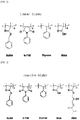
FIG. 1 shows the kind of monomers contained in a linear binder among photoresist (PR) binders. -
FIG. 2 shows the kind of monomers contained in a reactive binder among the PR binders. -
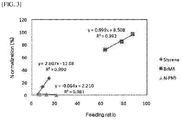
FIG. 3 shows a calibration curve of normalized area (%) versus the feeding ratio of monomers in binder A (consisting of benzyl methacrylate (BzMA), N-phenylmaleimide (N-PMI) and styrene) in accordance with the present invention. - Hereinafter, the present invention will be described in detail.
- It should be understood that the terms used in the specification and the appended claims should not be construed as limited to general and dictionary meanings, but interpreted based on the meanings and concepts corresponding to technical aspects of the present invention on the basis of the principle that the inventor is allowed to define terms appropriately for the best explanation.
- The present invention relates to an analysis method which comprises analysis of a photoresist (PR) binder via Py-GC/MS by using a standard having the same two or more monomers as the PR binder to be analyzed and each contend thereof being confirmed and normalization of the analyzed results to quantitatively identify the weight ratios of the two or more monomers in the PR binder.
- Generally, the Py-GC/MS has been applied only in qualitative analysis to determine the composition of several pyrolysates produced by the pyrolysis mechanism of polymers and to determine monomer components constituting polymers. The composition of monomers in the binder has been analyzed by using NMR, which has limitations as the monomer components are complicated.
- The present invention investigates the Py-GC/MS in quantitative aspect and attains information on pyrolysis efficiency to develop a method for analyzing the content of monomers in a photoresist binder, which can be variously utilized in general laboratories.
- Therefore, the present invention provides a method for quantitative analysis of monomers in a PR binder obtained by polymerization of two or more monomers, which comprises the steps of: (1) preparing a binder obtained by polymerization of the same monomers as the PR binder as a standard; (2) analyzing the standard prepared in the step (1) and the PR binder by using Py-GC/MS; and (3) normalizing the analysis results of the step (2) to determine the weight ratios of the two or more monomers in the PR binder.
- In one embodiment, the monomers in the PR binder may comprise acrylate monomer or methacrylate monomer, for example two or more monomers selected from the group consisting of ethyl hexyl acrylate (EHA), butyl acrylate (BA), methyl acrylate (MA), ethyl acrylate (EA), ethyl hexyl methacrylate (EHMA), butyl methacrylate (BMA), methyl methacrylate (MMA), ethyl methacrylate (EMA), benzyl methacrylate (BzMA), N-phenylmaleimide (N-PMI), styrene, lauryl methacrylate (LMA), cyclohexyl methacrylate (CHMA), methyl methacrylate (MMA), and 2-hydroxypropane-1,3-diyl bis(2-methylacrylate) (reactive methacrylate, RMA).
- In one embodiment, a linear binder among the PR binders is subject to radical polymerization by a single step reaction, and a reactive binder reacts a part of MMA in the linear binder with the epoxy of glycidyl methacrylate (GMA) by a 2-step reaction to introduce a reactive site.
- In the standard prepared in the step (1), its ratios of two or more monomers may be the same or different from that of the PR binder to be analyzed.
- The Py-GC/MS analysis in the step (2) is not particularly limited if it is performed by an analyzer being conventionally used for gas chromatography and mass spectrometry. The Py-GC/MS analysis in the step (2) may be performed at a pyrolyzer temperature of 500 to 700°C according to one embodiment, or 550 to 650 °C according to other embodiment. In the Py-GC/MS analysis in the step (2), the temperature of a GC oven may be maintained at 50 to 60°C for 3 to 10 minutes, and then increased to 300 to 350°C at a rate of 10 to 15°C/min, and finally maintained at 300 to 350°C for 5 to 20 minutes.
- The pyrolysis mechanism of the PR binder is divided into depolymerization, chain cleavage, elimination and the like. Particularly, when the methacrylate binder is subject to depolymerization, its monomer components decomposed can be detected to analyze the composition of the binder resin.
- The pyrolysis rate obtained by depolymerization as the pyrolysis mechanism of the PR binder to be analyzed may varied depending on the ratios of two or more monomers constituting the PR binder.
- Considering the above matters, the quantitative analysis of monomers in a PR binder according to the present invention uses a PR binder having the same two or more monomers as the PR binder to be analyzed as a standard and obtains the precise content ratio of the monomers by using Py-GC/MS analysis.
- Hereinafter, the present invention will be described in more detail with reference to Examples. It will be apparent to those skilled in the art that the following examples are intended to be illustrative of the present invention and not to be construed as limiting the scope of the invention.
- In this example, 3 linear binders and 3 reactive binders having monomer compositions as shown in Table 1 below were analyzed.
[Table 1] Information of PR 6 binders Analysis Monomer feeding ratio (wt%) Bzma1) N-PMI2) Styrene LMA3) CHMA4) MMA5) RMA6) Linear binder Binder A 78.0 12.8 9.3 - - - - Binder B 56.7 9.3 6.7 27.3 - - - Binder C - - - - 71.6 28.4 - Reactive Binder d 86.2 - - - - - 13.8 binder Binder E 17.2 32.3 19.4 - - 9.8 20.4 Binder F - - - - 48.9 4.4 45.6 1)benzyl methacrylate, 2)N-phenylmaleimide, 3)lauryl methacrylate, 4)cyclohexyl methacrylate 5)methyl methacrylate, 6)2-hydroxypropane-1,3-diyl bis(2-methylacrylate) - The structures of monomers constituting the PR binder were shown in Table 2 below and
FIGS. 1 and 2 .[Table 2] # Structure # Structure 1 
2 
3 
4 
5 
6 
7 
- For each of PR binders A to F, three different standards 1, 2 and 3 were prepared by using the same kinds of monomers in their different contents. Three standards for each PR binder were exhibited to have monomer compositions and contents shown in Tables 3 to 8 below.
[Table 3] Monomer feeding ratio (wt%) in Standard for Binder A BzMA1) N-PMI2) styrene 1 64 21 15 2 78 13 9 3 88 7 6 1) benzyl methacrylate, 2) N-phenylmaleimide [Table 4] Monomer feeding ratio (wt%) in Standard for Binder B BzMA1) N-PMI2) styrene LMA3) 1 29 14 9 47 2 57 9 7 27 3 78 6 3 13 1)benzyl methacrylate, 2) N-phenylmaleimide, 3)lauryl methacrylate [Table 5] Monomer feeding ratio (wt%) in Standard for Binder C CHMA1) MMA2) 1 84 16 2 72 28 3 43 57 1)cyclohexyl methacrylate, 2)methyl methacrylate [Table 6] Monomer feeding ratio (wt%) in Standard for Binder D BzMA1) RMA2) 1 79 21 2 87 13 3 94 6 1)benzyl methacrylate, 2)2-hydroxypropane-1,3-diyl bis(2-methylacrylate) [Table 7] Monomer feeding ratio (wt%) in Standard for Binder E BzMA1) N-PMI2) Styrene MMA3) RMA4) 1 34 25 16 17 9 2 17 32 20 10 20 3 51 12 8 4 25 1)benzyl methacrylate, 2) N-phenylmaleimide, 3)methyl methacrylate, 4)2-hydroxypropane-1,3-diyl bis(2-methylacrylate) [Table 8] Monomer feeding ratio (wt%) in Standard for Binder F CHMA1) MMA2) RMA3) 1 47 14 39 2 49 5 46 3 44 31 26 1)cyclohexyl methacrylate, 2)methyl methacrylate, 3)2-hydroxypropane-1,3-diyl bis(2-methylacrylate) - Bruker AvanceIII HD 700MHz NMR spectrometer equipped with 5mm PABBO probe was used for proton NMR experiments. As the pretreatment, 10 mg of the sample was put in a vial and 0.75 mL of acetone-d6 as a solvent was added thereto to dissolve the sample. The resultant solution was transferred into an NMR tube for experiments. The experiments were performed under the conditions of zg30 pulse sequence and 32 times scan with 5 seconds of relaxation delay time. An elemental analysis was carried out by accurately measuring 1.3 to 1.5 mg of each sample into a Sn sample cup and using Flash 2000 (Thermo Fisher Scientific) as an elemental analyzer under the operation conditions of 1060°C as a furnace temperature, 65 ° C as an oven temperature, and 140 ml /min as a flow rate.
- For Py-GC/MS, the pyrolysis of the sample was performed in a furnace being maintained to 600°C, and then the sample was analyzed by using Ultra ALLOY-5 (5% diphenyl-95% dimethylpolysiloxane) metal column (0.25 mm I.D.×30m L., 0.25 µm of coated film thickness, Frontier Laboratories) connected to Agilent 7890A GC system equipped with a pyrolyzer and 5975C inert XL mass selective detector (MSD). Specifically, the sample was left on a GC oven set at 50°C for 5 minutes and the temperature of the oven was increased to 320°C at a rate of 10°C/min to give chromatograms under the conditions: 1 mL/min of flow rate of He (carrier gas); 1/50 of split ratio of injector; 300°C of injector, oven and interface temperature of GC/MS; 320°C of interface temperature of the pyrolyzer; and 20 to 600 m/z of MSD scan mode. The 3 standards for each PR binder were tested and a calibration curve for each monomer was given. About 1 mg of the binder was measured with a micro-balance, transferred to a sample cup, and subjected to Py-GC/MS analysis.
- The area% of the detected monomers was substituted into the calibration curve, and the content of each monomer was determined and normalized to obtain the weight ratios of the monomers.
- An elemental analysis was carried out by accurately measuring 1.3 to 1.5 mg of each sample into a Sn sample cup and using Flash 2000 (Thermo Fisher Scientific) as an elemental analyzer under the operation conditions of 1060°C as a furnace temperature, 65 ° C as an oven temperature, and 140 ml /min as a flow rate.
- For a PR binder containing benzyl methacrylate (BzMA), N-phenylmaleimide (N-PMI) and styrene monomers, 3 standards and a sample of binder A were taken in the amount of 0.5mg, 1mg, 1.5mg and 2mg, respectively, and then tested after accurately weighing their weight up to 0.1 mg unit. By using Py-GC/MS (pyrolyzer temperature: 600°C), the area% of each monomer was measured and the measured values were substituted into the calibration curve to normalize the values. The results thereof were shown in Tables 9 and 10 below.
[Table 9] Result of Normalization for Monomers in Binder A Area% Normalization styrene BzMA1) N-PMI2) Standard 1 26.69 72.45 0.86 Standard 2 15.76 82.83 1.41 Standard 3 1.48 96.71 1.81 1)benzyl methacrylate, 2) N-phenylmaleimide [Table 10] Results of Feeding Ratio in Binder A Styrene BzMA1) N-PMI2) Feeding Ratio Normalization Feeding Ratio Normalization Feeding Ratio Normalization Standard 1 15 26.69 64 72.45 21 0.86 Standard 2 9 15.76 78 82.83 13 1.41 Standard 3 6 1.48 88 96.71 7 1.81 1) benzyl methacrylate, 2) N-phenylmaleimide - Based on
FIG. 3 showing a calibration curve of normalized area (%) versus the feeding ratio of the monomers, the 3 standards were subject to quantitative analysis to obtain recovery ratios and errors for the samples of PR binder whose feeding ratios were confirmed. As shown in Table 11 below, the error range between the recovery ratios of BzMA, N-PMI and styrene which are monomers of the PR binder A and the feeding ratios thereof was found to be from 0.4% to maximum 8.1%.[Table 11] Error between Recovery Ratio and Feeding Ratio in PR Binder Styrene BzMA1) N-PMI2) Recovery Ratio 10.0% 77.7% 12.3% Feeding Ratio 9.2% 78.0% 12.8% Error 8.1% 0.4% 3.7% 1)benzyl methacrylate, 2)N-phenylmaleimide - This example performed quantitative analyses for total 6 samples of linear binders and reactive binders, and the results from each analysis method were shown in Table 12 below. For the binders C, D and F, it was confirmed that the NMR method provided less error than the Py-GC/MS method. For the binders A, B and E, it was confirmed that the Py-GC/MS method provides less error than the NMR method.
- From these results, it can be seen that the Py-GC/MS method is more suitable for a binder containing four or more monomers. The EA method was used to calibrate the content of N in NMR calculations (NMR + EA method).
[Table 12] Recovery Ratio and Error of Monomers in 6 Binder Samples by Analysis of Py-GC/MS, NMR and NMR + EA Sample Analysis Method Monomer (wt%) (deviation) Bzma1) N-PMI2) Styrene LMA3) CHMA4) MMA5) RMA6) Binder A Feeding Ratio 78.0 12.8 9.2 - - - - Py-GC/MS 77.7 (0.4) 12.3 (3.7) 10.0 (8.1) - - - - NMR 76.4 (2.0) 16.2 (27.1) 7.4 (20.5) - - - - NMR+EA 77.0 (1.3) 14.5 (13.5) 8.5 (7.8) - - - - Binder B Feeding Ratio 56.7 9.3 6.7 27.3 - - - Py-GC/MS 61.5 (8.5) 9.4 (1.2) 7.3 (8.3) 21.8 (20.1) - - - NMR 56.2 (0.8) 12.9 (39.3) 7.8 (15.9) 23.1 (15.5) - - - NMR+EA 56.1 (0.9) 13.0 (39.7) 7.7 (14.9) 23.2 (15.2) - - - Binder C Feeding Ratio - - - - 71.6 28.4 - Py-GC/MS - - - - 67.6 (5.5) 32.4 (14.0) - NMR - - - - 71.5 (0.2) 28.5 (0.4) - Binder D Feeding Ratio 86.2 - - - - - 13.8 Py-GC/MS 85.4 (1.0) - - - - - 14.6 (6.1) NMR 86.6 (0.4) - - - - - 13.4 (2.7) Binder E Feeding Ratio 17.4 32.6 19.5 - - 9.9 20.6 Py-GC/MS 17.5 (0.5) 32.6 (0.0) 20.7 (5.7) - - 8.9 (9.5) 20.3 (1.4) NMR 17.0 (2.3) 39.9 (22.5) 17.3 (11.5) - - 7.9 (20.1) 17.9 (13.0) NMR+EA 17.4 (0.1) 34.8 (6.9) 21.3 (8.8) - - 8.0 (18.8) 18.5 (10.1) Binder F Feeding Ratio - - - - 49.4 4.5 46.1 Py-GC/MS - - - - 52.4 (6.1) 4.8 (6.3) 42.8 (7.1) NMR - - - - 52.3 (5.9) 4.4 (2.7) 43.3 (6.1) 1)benzyl methacrylate, 2)N-phenylmaleimide, 3)lauryl methacrylate, 4)cyclohexyl methacrylate 5)methyl methacrylate, 6)2-hydroxypropane-1,3-diyl bis(2-methylacrylate) - While the present invention has been particularly shown and described with reference to figures and embodiments thereof, it will be understood by those of ordinary skill in the art that the scope of the present invention is not limited thereby and that various changes and modifications may be made therein. Therefore, the actual scope of the present invention will be defined by the appended claims and their equivalents.
Claims (5)
- A method for quantitative analysis of monomers in a photoresist (PR) binder obtained by polymerization of two or more monomers, comprising:(1) preparing a binder as a standard obtained by polymerization of same kinde of monomers as those comprised in the PR binder;(2) subjecting each of the standard prepared in the step (1) and the PR binder into Py-GC/MS analysis; and(3) normalizing the analysis results of the step (2) to determine weight ratios of the two or more monomers in the PR binder.
- The method of claim 1, wherein the monomers in the PR binder comprise acrylate monomer or methacrylate monomer.
- The method of claim 1, wherein the monomers in the PR binder are two or more monomers selected from the group consisting of ethyl hexyl acrylate (EHA), butyl acrylate (BA), methyl acrylate (MA), ethyl acrylate (EA), ethyl hexyl methacrylate (EHMA), butyl methacrylate (BMA), methyl methacrylate (MMA), ethyl methacrylate (EMA), benzyl methacrylate (BzMA), N-phenylmaleimide (N-PMI), styrene, lauryl methacrylate (LMA), cyclohexyl methacrylate (CHMA), methyl methacrylate (MMA), and 2-hydroxypropane-1,3-diyl bis(2-methylacrylate) (reactive methacrylate, RMA).
- The method of claim 1, wherein the analyzing using the Py-GC/MS is performed at a pyrolyzer temperature of 500 to 700°C.
- The method of claim 1, wherein in the analyzing using the Py-GC/MS, a GC oven temperature is maintained at 50 to 60°C for 3 to 10 minutes, and then increased to 300 to 350°C at a rate of 10 to 15°C/min, and finally maintained at 300 to 350°C for 5 to 20 minutes.
Applications Claiming Priority (2)
| Application Number | Priority Date | Filing Date | Title |
|---|---|---|---|
| KR1020170117204A KR102139407B1 (en) | 2017-09-13 | 2017-09-13 | Quantitative analysis method of monomers in binders of photoresists |
| PCT/KR2018/009792 WO2019054663A1 (en) | 2017-09-13 | 2018-08-24 | Quantitative analysis method for monomer of photoresist binder |
Publications (3)
| Publication Number | Publication Date |
|---|---|
| EP3683577A1 true EP3683577A1 (en) | 2020-07-22 |
| EP3683577A4 EP3683577A4 (en) | 2020-11-04 |
| EP3683577B1 EP3683577B1 (en) | 2022-07-06 |
Family
ID=65722905
Family Applications (1)
| Application Number | Title | Priority Date | Filing Date |
|---|---|---|---|
| EP18856906.5A Active EP3683577B1 (en) | 2017-09-13 | 2018-08-24 | Quantitative analysis method for monomer of photoresist binder |
Country Status (6)
| Country | Link |
|---|---|
| US (1) | US11579126B2 (en) |
| EP (1) | EP3683577B1 (en) |
| JP (1) | JP7004253B2 (en) |
| KR (1) | KR102139407B1 (en) |
| CN (1) | CN110462395A (en) |
| WO (1) | WO2019054663A1 (en) |
Families Citing this family (2)
| Publication number | Priority date | Publication date | Assignee | Title |
|---|---|---|---|---|
| CN111044657B (en) * | 2019-12-16 | 2022-07-12 | 上海微谱化工技术服务有限公司 | Method for detecting functional monomer in solvent type acrylic resin |
| CN113702521A (en) * | 2021-08-18 | 2021-11-26 | 汤臣(江苏)材料科技股份有限公司 | Method for rapidly determining regenerated methyl methacrylate generated by cracking of organic glass |
Family Cites Families (31)
| Publication number | Priority date | Publication date | Assignee | Title |
|---|---|---|---|---|
| JPS60219208A (en) * | 1984-04-13 | 1985-11-01 | Japan Synthetic Rubber Co Ltd | Rubber-like conjugated diene copolymer and its production |
| US4996134A (en) | 1984-04-13 | 1991-02-26 | Japan Synthetic Rubber Co., Ltd. | Conjugated diene copolymer, a process for producing the copolymer, and a photosensitive composition comprising the copolymer |
| JPS6227662A (en) * | 1985-07-27 | 1987-02-05 | Nippon Oil & Fats Co Ltd | Method for analysis of vinyl type terpolymer |
| CA2076727A1 (en) * | 1991-08-30 | 1993-03-01 | Richard T. Mayes | Alkaline-etch resistant dry film photoresist |
| JP3168380B2 (en) * | 1994-07-29 | 2001-05-21 | キヤノン株式会社 | Electrostatic image developing toner, toner manufacturing method and image forming method |
| JPH0933508A (en) * | 1995-07-20 | 1997-02-07 | Sekisui Chem Co Ltd | Method for analyzing composition of copolymer containing acrylic acid and/or methacrylic acid |
| US5876899A (en) * | 1996-09-18 | 1999-03-02 | Shipley Company, L.L.C. | Photoresist compositions |
| JP3444818B2 (en) | 1999-06-29 | 2003-09-08 | シャープ株式会社 | Inspection method and management method of coating liquid for electrophotographic photoreceptor |
| WO2002014497A2 (en) * | 2000-08-16 | 2002-02-21 | Purdue Research Foundation | Genes encoding mutant p-coumarate 3-hydroxylase (c3h) and methods of use |
| RU2327195C1 (en) | 2004-01-27 | 2008-06-20 | Асахи Касеи Кемикалз Корпорейшн | Photosensitive resin for printing matrix engraved by laser |
| JP2006193479A (en) * | 2005-01-14 | 2006-07-27 | Mitsubishi Rayon Co Ltd | Acrylic resin depolymerization apparatus and depolymerization method |
| JP5175098B2 (en) * | 2005-08-03 | 2013-04-03 | 株式会社Dnpファインケミカル | Method for producing polymer composition and polymer composition |
| US8187794B2 (en) | 2007-04-23 | 2012-05-29 | Eastman Kodak Company | Ablatable elements for making flexographic printing plates |
| MY142698A (en) | 2007-04-26 | 2010-12-31 | Sumitomo Electric Industries | Method of analyzing inorganic phosphorus in organic material and apparatus therefor |
| JP5840355B2 (en) * | 2009-10-22 | 2016-01-06 | 旭化成ケミカルズ株式会社 | Acrylic resin and molded body |
| JP5437165B2 (en) * | 2010-05-24 | 2014-03-12 | 三菱レイヨン株式会社 | Copolymer composition analysis method and program thereof |
| KR101113645B1 (en) * | 2010-07-27 | 2012-02-14 | 현대자동차주식회사 | Method for Quantitative Analysis of Acrylonitrile and Additives in Acrylonitrile-Butadiene Rubber Compositions |
| JP2012078340A (en) * | 2010-09-10 | 2012-04-19 | Polyplastics Co | Quantitative method for cyclic olefin polymer content and production method of resin composition |
| JP2012220686A (en) * | 2011-04-07 | 2012-11-12 | Asahi Kasei E-Materials Corp | Photosensitive resin composition and laminate of the same |
| KR101209618B1 (en) * | 2011-07-07 | 2012-12-07 | 현대자동차주식회사 | The quantitative analysis method of ethylidene norborene in ethylene propylene diene monomer using pyrolyzer gaschromatography massspectrometer |
| WO2013084284A1 (en) | 2011-12-05 | 2013-06-13 | 日立化成株式会社 | Method for forming protective film for touch panel electrodes, photosensitive resin composition, and photosensitive element |
| WO2013084282A1 (en) | 2011-12-05 | 2013-06-13 | 日立化成株式会社 | Method for forming resin cured film pattern, photosensitive resin composition, and photosensitive element |
| JP5774054B2 (en) * | 2012-05-31 | 2015-09-02 | エルジー・ケム・リミテッド | Novel polymer and coloring composition containing the same |
| KR20140047190A (en) | 2012-10-04 | 2014-04-22 | 현대자동차주식회사 | Quantitative analysis method for rubber composition of synthetic rubber and natural rubber compound |
| KR101914815B1 (en) | 2013-09-30 | 2018-11-05 | 주식회사 엘지화학 | Resin compositions for optical film, optical films formed by using the same, polarizing plate and display device comprising the same |
| JP6522288B2 (en) * | 2014-06-23 | 2019-05-29 | 住友化学株式会社 | Methacrylic resin composition and molded article thereof |
| KR101734214B1 (en) * | 2014-09-26 | 2017-05-11 | 주식회사 엘지화학 | Analytical Method and System for Composition of Monomer in Modified (poly(vinylidene fluoride) Resin |
| CN104458994B (en) | 2014-12-16 | 2016-01-27 | 上海微谱化工技术服务有限公司 | The analytical approach of acryl resin |
| JP2016155256A (en) * | 2015-02-23 | 2016-09-01 | コニカミノルタ株式会社 | Heat shielding film, and method for producing the same |
| US9887455B2 (en) | 2015-03-05 | 2018-02-06 | Kymeta Corporation | Aperture segmentation of a cylindrical feed antenna |
| KR101808404B1 (en) * | 2015-09-03 | 2017-12-13 | 주식회사 엘지화학 | Analytical Method and System for Monomer of Acrylate Adhesive |
-
2017
- 2017-09-13 KR KR1020170117204A patent/KR102139407B1/en active Active
-
2018
- 2018-08-24 WO PCT/KR2018/009792 patent/WO2019054663A1/en not_active Ceased
- 2018-08-24 CN CN201880022714.9A patent/CN110462395A/en active Pending
- 2018-08-24 EP EP18856906.5A patent/EP3683577B1/en active Active
- 2018-08-24 US US16/603,712 patent/US11579126B2/en active Active
- 2018-08-24 JP JP2019553436A patent/JP7004253B2/en active Active
Also Published As
| Publication number | Publication date |
|---|---|
| JP7004253B2 (en) | 2022-01-21 |
| EP3683577A4 (en) | 2020-11-04 |
| CN110462395A (en) | 2019-11-15 |
| JP2020515852A (en) | 2020-05-28 |
| KR102139407B1 (en) | 2020-07-29 |
| KR20190030013A (en) | 2019-03-21 |
| WO2019054663A1 (en) | 2019-03-21 |
| US20200319151A1 (en) | 2020-10-08 |
| US11579126B2 (en) | 2023-02-14 |
| EP3683577B1 (en) | 2022-07-06 |
Similar Documents
| Publication | Publication Date | Title |
|---|---|---|
| Quirino et al. | Online sample preconcentration in capillary electrophoresis using analyte focusing by micelle collapse | |
| Luftmann et al. | Automated interface for hyphenation of planar chromatography with mass spectrometry | |
| EP3683577B1 (en) | Quantitative analysis method for monomer of photoresist binder | |
| Grote-Koska et al. | Performance of the new RapidFire system for therapeutic monitoring of immunosuppressants | |
| Diamantidou et al. | Development and validation of an ultra high performance liquid chromatography-tandem mass spectrometry method for the determination of phthalate esters in Greek grape marc spirits | |
| Heineman et al. | Optically transparent thin-layer electrodes: studies of iron (II)-(III) acetylacetonate ligand exchange reactions in acetonitrile | |
| Nichols et al. | Automated flow injection method for the high precision determination of drift tube ion mobility collision cross sections | |
| Tooley et al. | Real-Time Determination of Molecular Weight: Use of MaDDOSY (Mass Determination Diffusion Ordered Spectroscopy) to Monitor the Progress of Polymerization Reactions | |
| Dhellemmes et al. | Getting the best out of capillary electrophoresis and capillary electrophoresis–mass spectrometry by quantifying sources of peak broadening for proteins using polyelectrolyte multilayer coated fused silica capillaries | |
| Grundmann et al. | Analyzing small samples with high efficiency: capillary batch injection–capillary electrophoresis–mass spectrometry | |
| Kumar et al. | High‐throughput capillary electrophoresis analysis of biopharmaceuticals utilizing sequential injections | |
| CN110133280B (en) | Method for measuring beta chain variant hemoglobin glycosylation rate | |
| Gupta et al. | Adsorption of pyrantel pamoate on mercury from aqueous solutions: studies by stripping voltammetry | |
| CN120971617A (en) | A method for determining the purity of thiamine disulfide products based on liquid chromatography | |
| Wu et al. | High‐field asymmetric waveform ion mobility spectrometry coupled with liquid chromatography/electrospray ionization tandem mass spectrometry (LC/ESI‐FAIMS‐MS/MS) multi‐component bioanalytical method development, performance evaluation and demonstration of the constancy of the compensation voltage with change of mobile phase composition or flow rate | |
| RU2010112545A (en) | METHOD FOR CALIBRATION CORRECTION IN DIAGNOSTIC RESEARCH | |
| Van Wijk et al. | Capillary electrophoresis-mass spectrometry for impurity profiling of basic pharmaceuticals using non-volatile background electrolytes | |
| CN108680680A (en) | Method for measuring peak-out time of reactive monomer in chromatogram and concentration of reactive monomer in liquid crystal | |
| Liu et al. | The nonglycosylated variant in therapeutic monoclonal antibodies preferentially forms large aggregates under typical thermal stresses used in forced degradation studies | |
| Hanna et al. | Novel three-dimensional capillary electrophoresis system for complex and trace analysis | |
| Li et al. | A novel in vitro serum stability assay for antibody therapeutics incorporating internal standards | |
| Müller et al. | Spatially resolved analysis of liquid crystal displays by laser ablation-atmospheric pressure chemical ionization-mass spectrometry | |
| CN112415111B (en) | Method for detecting impurities of 4-methyl-N-phenylaniline and o-chlorobenzoic acid | |
| Chen et al. | An ultra-sensitive LC–MS/MS method to determine midazolam levels in human plasma: Development, validation and application to a clinical study | |
| KR101700994B1 (en) | Separation method of photoactive compound |
Legal Events
| Date | Code | Title | Description |
|---|---|---|---|
| STAA | Information on the status of an ep patent application or granted ep patent |
Free format text: STATUS: THE INTERNATIONAL PUBLICATION HAS BEEN MADE |
|
| PUAI | Public reference made under article 153(3) epc to a published international application that has entered the european phase |
Free format text: ORIGINAL CODE: 0009012 |
|
| STAA | Information on the status of an ep patent application or granted ep patent |
Free format text: STATUS: REQUEST FOR EXAMINATION WAS MADE |
|
| 17P | Request for examination filed |
Effective date: 20190926 |
|
| AK | Designated contracting states |
Kind code of ref document: A1 Designated state(s): AL AT BE BG CH CY CZ DE DK EE ES FI FR GB GR HR HU IE IS IT LI LT LU LV MC MK MT NL NO PL PT RO RS SE SI SK SM TR |
|
| AX | Request for extension of the european patent |
Extension state: BA ME |
|
| A4 | Supplementary search report drawn up and despatched |
Effective date: 20201002 |
|
| RIC1 | Information provided on ipc code assigned before grant |
Ipc: G01N 30/06 20060101ALI20200928BHEP Ipc: G01N 30/12 20060101ALI20200928BHEP Ipc: G01N 30/88 20060101ALI20200928BHEP Ipc: G01N 30/72 20060101AFI20200928BHEP |
|
| DAV | Request for validation of the european patent (deleted) | ||
| DAX | Request for extension of the european patent (deleted) | ||
| GRAP | Despatch of communication of intention to grant a patent |
Free format text: ORIGINAL CODE: EPIDOSNIGR1 |
|
| STAA | Information on the status of an ep patent application or granted ep patent |
Free format text: STATUS: GRANT OF PATENT IS INTENDED |
|
| INTG | Intention to grant announced |
Effective date: 20220317 |
|
| GRAS | Grant fee paid |
Free format text: ORIGINAL CODE: EPIDOSNIGR3 |
|
| GRAA | (expected) grant |
Free format text: ORIGINAL CODE: 0009210 |
|
| STAA | Information on the status of an ep patent application or granted ep patent |
Free format text: STATUS: THE PATENT HAS BEEN GRANTED |
|
| AK | Designated contracting states |
Kind code of ref document: B1 Designated state(s): AL AT BE BG CH CY CZ DE DK EE ES FI FR GB GR HR HU IE IS IT LI LT LU LV MC MK MT NL NO PL PT RO RS SE SI SK SM TR |
|
| REG | Reference to a national code |
Ref country code: AT Ref legal event code: REF Ref document number: 1503207 Country of ref document: AT Kind code of ref document: T Effective date: 20220715 Ref country code: CH Ref legal event code: EP |
|
| REG | Reference to a national code |
Ref country code: DE Ref legal event code: R096 Ref document number: 602018037739 Country of ref document: DE |
|
| REG | Reference to a national code |
Ref country code: IE Ref legal event code: FG4D |
|
| REG | Reference to a national code |
Ref country code: LT Ref legal event code: MG9D |
|
| REG | Reference to a national code |
Ref country code: NL Ref legal event code: MP Effective date: 20220706 |
|
| PG25 | Lapsed in a contracting state [announced via postgrant information from national office to epo] |
Ref country code: SE Free format text: LAPSE BECAUSE OF FAILURE TO SUBMIT A TRANSLATION OF THE DESCRIPTION OR TO PAY THE FEE WITHIN THE PRESCRIBED TIME-LIMIT Effective date: 20220706 Ref country code: RS Free format text: LAPSE BECAUSE OF FAILURE TO SUBMIT A TRANSLATION OF THE DESCRIPTION OR TO PAY THE FEE WITHIN THE PRESCRIBED TIME-LIMIT Effective date: 20220706 Ref country code: PT Free format text: LAPSE BECAUSE OF FAILURE TO SUBMIT A TRANSLATION OF THE DESCRIPTION OR TO PAY THE FEE WITHIN THE PRESCRIBED TIME-LIMIT Effective date: 20221107 Ref country code: NO Free format text: LAPSE BECAUSE OF FAILURE TO SUBMIT A TRANSLATION OF THE DESCRIPTION OR TO PAY THE FEE WITHIN THE PRESCRIBED TIME-LIMIT Effective date: 20221006 Ref country code: NL Free format text: LAPSE BECAUSE OF FAILURE TO SUBMIT A TRANSLATION OF THE DESCRIPTION OR TO PAY THE FEE WITHIN THE PRESCRIBED TIME-LIMIT Effective date: 20220706 Ref country code: LV Free format text: LAPSE BECAUSE OF FAILURE TO SUBMIT A TRANSLATION OF THE DESCRIPTION OR TO PAY THE FEE WITHIN THE PRESCRIBED TIME-LIMIT Effective date: 20220706 Ref country code: LT Free format text: LAPSE BECAUSE OF FAILURE TO SUBMIT A TRANSLATION OF THE DESCRIPTION OR TO PAY THE FEE WITHIN THE PRESCRIBED TIME-LIMIT Effective date: 20220706 Ref country code: FI Free format text: LAPSE BECAUSE OF FAILURE TO SUBMIT A TRANSLATION OF THE DESCRIPTION OR TO PAY THE FEE WITHIN THE PRESCRIBED TIME-LIMIT Effective date: 20220706 Ref country code: ES Free format text: LAPSE BECAUSE OF FAILURE TO SUBMIT A TRANSLATION OF THE DESCRIPTION OR TO PAY THE FEE WITHIN THE PRESCRIBED TIME-LIMIT Effective date: 20220706 |
|
| REG | Reference to a national code |
Ref country code: AT Ref legal event code: MK05 Ref document number: 1503207 Country of ref document: AT Kind code of ref document: T Effective date: 20220706 |
|
| PG25 | Lapsed in a contracting state [announced via postgrant information from national office to epo] |
Ref country code: PL Free format text: LAPSE BECAUSE OF FAILURE TO SUBMIT A TRANSLATION OF THE DESCRIPTION OR TO PAY THE FEE WITHIN THE PRESCRIBED TIME-LIMIT Effective date: 20220706 Ref country code: IS Free format text: LAPSE BECAUSE OF FAILURE TO SUBMIT A TRANSLATION OF THE DESCRIPTION OR TO PAY THE FEE WITHIN THE PRESCRIBED TIME-LIMIT Effective date: 20221106 Ref country code: HR Free format text: LAPSE BECAUSE OF FAILURE TO SUBMIT A TRANSLATION OF THE DESCRIPTION OR TO PAY THE FEE WITHIN THE PRESCRIBED TIME-LIMIT Effective date: 20220706 Ref country code: GR Free format text: LAPSE BECAUSE OF FAILURE TO SUBMIT A TRANSLATION OF THE DESCRIPTION OR TO PAY THE FEE WITHIN THE PRESCRIBED TIME-LIMIT Effective date: 20221007 |
|
| REG | Reference to a national code |
Ref country code: CH Ref legal event code: PL |
|
| REG | Reference to a national code |
Ref country code: DE Ref legal event code: R097 Ref document number: 602018037739 Country of ref document: DE |
|
| PG25 | Lapsed in a contracting state [announced via postgrant information from national office to epo] |
Ref country code: SM Free format text: LAPSE BECAUSE OF FAILURE TO SUBMIT A TRANSLATION OF THE DESCRIPTION OR TO PAY THE FEE WITHIN THE PRESCRIBED TIME-LIMIT Effective date: 20220706 Ref country code: RO Free format text: LAPSE BECAUSE OF FAILURE TO SUBMIT A TRANSLATION OF THE DESCRIPTION OR TO PAY THE FEE WITHIN THE PRESCRIBED TIME-LIMIT Effective date: 20220706 Ref country code: MC Free format text: LAPSE BECAUSE OF FAILURE TO SUBMIT A TRANSLATION OF THE DESCRIPTION OR TO PAY THE FEE WITHIN THE PRESCRIBED TIME-LIMIT Effective date: 20220706 Ref country code: LU Free format text: LAPSE BECAUSE OF NON-PAYMENT OF DUE FEES Effective date: 20220824 Ref country code: LI Free format text: LAPSE BECAUSE OF NON-PAYMENT OF DUE FEES Effective date: 20220831 Ref country code: DK Free format text: LAPSE BECAUSE OF FAILURE TO SUBMIT A TRANSLATION OF THE DESCRIPTION OR TO PAY THE FEE WITHIN THE PRESCRIBED TIME-LIMIT Effective date: 20220706 Ref country code: CZ Free format text: LAPSE BECAUSE OF FAILURE TO SUBMIT A TRANSLATION OF THE DESCRIPTION OR TO PAY THE FEE WITHIN THE PRESCRIBED TIME-LIMIT Effective date: 20220706 Ref country code: CH Free format text: LAPSE BECAUSE OF NON-PAYMENT OF DUE FEES Effective date: 20220831 Ref country code: AT Free format text: LAPSE BECAUSE OF FAILURE TO SUBMIT A TRANSLATION OF THE DESCRIPTION OR TO PAY THE FEE WITHIN THE PRESCRIBED TIME-LIMIT Effective date: 20220706 |
|
| REG | Reference to a national code |
Ref country code: BE Ref legal event code: MM Effective date: 20220831 |
|
| PLBE | No opposition filed within time limit |
Free format text: ORIGINAL CODE: 0009261 |
|
| STAA | Information on the status of an ep patent application or granted ep patent |
Free format text: STATUS: NO OPPOSITION FILED WITHIN TIME LIMIT |
|
| PG25 | Lapsed in a contracting state [announced via postgrant information from national office to epo] |
Ref country code: SK Free format text: LAPSE BECAUSE OF FAILURE TO SUBMIT A TRANSLATION OF THE DESCRIPTION OR TO PAY THE FEE WITHIN THE PRESCRIBED TIME-LIMIT Effective date: 20220706 Ref country code: EE Free format text: LAPSE BECAUSE OF FAILURE TO SUBMIT A TRANSLATION OF THE DESCRIPTION OR TO PAY THE FEE WITHIN THE PRESCRIBED TIME-LIMIT Effective date: 20220706 |
|
| 26N | No opposition filed |
Effective date: 20230411 |
|
| PG25 | Lapsed in a contracting state [announced via postgrant information from national office to epo] |
Ref country code: AL Free format text: LAPSE BECAUSE OF FAILURE TO SUBMIT A TRANSLATION OF THE DESCRIPTION OR TO PAY THE FEE WITHIN THE PRESCRIBED TIME-LIMIT Effective date: 20220706 |
|
| PG25 | Lapsed in a contracting state [announced via postgrant information from national office to epo] |
Ref country code: IE Free format text: LAPSE BECAUSE OF NON-PAYMENT OF DUE FEES Effective date: 20220824 |
|
| PG25 | Lapsed in a contracting state [announced via postgrant information from national office to epo] |
Ref country code: SI Free format text: LAPSE BECAUSE OF FAILURE TO SUBMIT A TRANSLATION OF THE DESCRIPTION OR TO PAY THE FEE WITHIN THE PRESCRIBED TIME-LIMIT Effective date: 20220706 |
|
| PG25 | Lapsed in a contracting state [announced via postgrant information from national office to epo] |
Ref country code: BE Free format text: LAPSE BECAUSE OF NON-PAYMENT OF DUE FEES Effective date: 20220831 |
|
| PG25 | Lapsed in a contracting state [announced via postgrant information from national office to epo] |
Ref country code: IT Free format text: LAPSE BECAUSE OF FAILURE TO SUBMIT A TRANSLATION OF THE DESCRIPTION OR TO PAY THE FEE WITHIN THE PRESCRIBED TIME-LIMIT Effective date: 20220706 |
|
| PG25 | Lapsed in a contracting state [announced via postgrant information from national office to epo] |
Ref country code: CY Free format text: LAPSE BECAUSE OF FAILURE TO SUBMIT A TRANSLATION OF THE DESCRIPTION OR TO PAY THE FEE WITHIN THE PRESCRIBED TIME-LIMIT Effective date: 20220706 |
|
| PG25 | Lapsed in a contracting state [announced via postgrant information from national office to epo] |
Ref country code: MK Free format text: LAPSE BECAUSE OF FAILURE TO SUBMIT A TRANSLATION OF THE DESCRIPTION OR TO PAY THE FEE WITHIN THE PRESCRIBED TIME-LIMIT Effective date: 20220706 Ref country code: HU Free format text: LAPSE BECAUSE OF FAILURE TO SUBMIT A TRANSLATION OF THE DESCRIPTION OR TO PAY THE FEE WITHIN THE PRESCRIBED TIME-LIMIT; INVALID AB INITIO Effective date: 20180824 |
|
| PG25 | Lapsed in a contracting state [announced via postgrant information from national office to epo] |
Ref country code: BG Free format text: LAPSE BECAUSE OF FAILURE TO SUBMIT A TRANSLATION OF THE DESCRIPTION OR TO PAY THE FEE WITHIN THE PRESCRIBED TIME-LIMIT Effective date: 20220706 |
|
| PG25 | Lapsed in a contracting state [announced via postgrant information from national office to epo] |
Ref country code: MT Free format text: LAPSE BECAUSE OF FAILURE TO SUBMIT A TRANSLATION OF THE DESCRIPTION OR TO PAY THE FEE WITHIN THE PRESCRIBED TIME-LIMIT Effective date: 20220706 |
|
| PGFP | Annual fee paid to national office [announced via postgrant information from national office to epo] |
Ref country code: DE Payment date: 20250721 Year of fee payment: 8 |
|
| PGFP | Annual fee paid to national office [announced via postgrant information from national office to epo] |
Ref country code: GB Payment date: 20250722 Year of fee payment: 8 |
|
| PGFP | Annual fee paid to national office [announced via postgrant information from national office to epo] |
Ref country code: FR Payment date: 20250725 Year of fee payment: 8 |
|
| PG25 | Lapsed in a contracting state [announced via postgrant information from national office to epo] |
Ref country code: TR Free format text: LAPSE BECAUSE OF FAILURE TO SUBMIT A TRANSLATION OF THE DESCRIPTION OR TO PAY THE FEE WITHIN THE PRESCRIBED TIME-LIMIT Effective date: 20220706 |