EP3679935A1 - Abbaumittel mit autophagischem mechanismus beschädigter mitochondrien - Google Patents
Abbaumittel mit autophagischem mechanismus beschädigter mitochondrien Download PDFInfo
- Publication number
- EP3679935A1 EP3679935A1 EP18831146.8A EP18831146A EP3679935A1 EP 3679935 A1 EP3679935 A1 EP 3679935A1 EP 18831146 A EP18831146 A EP 18831146A EP 3679935 A1 EP3679935 A1 EP 3679935A1
- Authority
- EP
- European Patent Office
- Prior art keywords
- compound
- group
- mitochondria
- salt
- substituent
- Prior art date
- Legal status (The legal status is an assumption and is not a legal conclusion. Google has not performed a legal analysis and makes no representation as to the accuracy of the status listed.)
- Pending
Links
- 0 *C1OC(COP(O)(O2)=O)C2=C1O Chemical compound *C1OC(COP(O)(O2)=O)C2=C1O 0.000 description 1
Images



Classifications
-
- C—CHEMISTRY; METALLURGY
- C07—ORGANIC CHEMISTRY
- C07D—HETEROCYCLIC COMPOUNDS
- C07D473/00—Heterocyclic compounds containing purine ring systems
- C07D473/02—Heterocyclic compounds containing purine ring systems with oxygen, sulphur, or nitrogen atoms directly attached in positions 2 and 6
- C07D473/18—Heterocyclic compounds containing purine ring systems with oxygen, sulphur, or nitrogen atoms directly attached in positions 2 and 6 one oxygen and one nitrogen atom, e.g. guanine
-
- A—HUMAN NECESSITIES
- A61—MEDICAL OR VETERINARY SCIENCE; HYGIENE
- A61K—PREPARATIONS FOR MEDICAL, DENTAL OR TOILETRY PURPOSES
- A61K31/00—Medicinal preparations containing organic active ingredients
- A61K31/33—Heterocyclic compounds
- A61K31/395—Heterocyclic compounds having nitrogen as a ring hetero atom, e.g. guanethidine or rifamycins
- A61K31/495—Heterocyclic compounds having nitrogen as a ring hetero atom, e.g. guanethidine or rifamycins having six-membered rings with two or more nitrogen atoms as the only ring heteroatoms, e.g. piperazine or tetrazines
- A61K31/505—Pyrimidines; Hydrogenated pyrimidines, e.g. trimethoprim
- A61K31/519—Pyrimidines; Hydrogenated pyrimidines, e.g. trimethoprim ortho- or peri-condensed with heterocyclic rings
- A61K31/52—Purines, e.g. adenine
- A61K31/522—Purines, e.g. adenine having oxo groups directly attached to the heterocyclic ring, e.g. hypoxanthine, guanine, acyclovir
-
- A—HUMAN NECESSITIES
- A61—MEDICAL OR VETERINARY SCIENCE; HYGIENE
- A61K—PREPARATIONS FOR MEDICAL, DENTAL OR TOILETRY PURPOSES
- A61K47/00—Medicinal preparations characterised by the non-active ingredients used, e.g. carriers or inert additives; Targeting or modifying agents chemically bound to the active ingredient
- A61K47/50—Medicinal preparations characterised by the non-active ingredients used, e.g. carriers or inert additives; Targeting or modifying agents chemically bound to the active ingredient the non-active ingredient being chemically bound to the active ingredient, e.g. polymer-drug conjugates
- A61K47/51—Medicinal preparations characterised by the non-active ingredients used, e.g. carriers or inert additives; Targeting or modifying agents chemically bound to the active ingredient the non-active ingredient being chemically bound to the active ingredient, e.g. polymer-drug conjugates the non-active ingredient being a modifying agent
- A61K47/54—Medicinal preparations characterised by the non-active ingredients used, e.g. carriers or inert additives; Targeting or modifying agents chemically bound to the active ingredient the non-active ingredient being chemically bound to the active ingredient, e.g. polymer-drug conjugates the non-active ingredient being a modifying agent the modifying agent being an organic compound
- A61K47/545—Heterocyclic compounds
-
- A—HUMAN NECESSITIES
- A61—MEDICAL OR VETERINARY SCIENCE; HYGIENE
- A61K—PREPARATIONS FOR MEDICAL, DENTAL OR TOILETRY PURPOSES
- A61K47/00—Medicinal preparations characterised by the non-active ingredients used, e.g. carriers or inert additives; Targeting or modifying agents chemically bound to the active ingredient
- A61K47/50—Medicinal preparations characterised by the non-active ingredients used, e.g. carriers or inert additives; Targeting or modifying agents chemically bound to the active ingredient the non-active ingredient being chemically bound to the active ingredient, e.g. polymer-drug conjugates
- A61K47/51—Medicinal preparations characterised by the non-active ingredients used, e.g. carriers or inert additives; Targeting or modifying agents chemically bound to the active ingredient the non-active ingredient being chemically bound to the active ingredient, e.g. polymer-drug conjugates the non-active ingredient being a modifying agent
- A61K47/62—Medicinal preparations characterised by the non-active ingredients used, e.g. carriers or inert additives; Targeting or modifying agents chemically bound to the active ingredient the non-active ingredient being chemically bound to the active ingredient, e.g. polymer-drug conjugates the non-active ingredient being a modifying agent the modifying agent being a protein, peptide or polyamino acid
- A61K47/64—Drug-peptide, drug-protein or drug-polyamino acid conjugates, i.e. the modifying agent being a peptide, protein or polyamino acid which is covalently bonded or complexed to a therapeutically active agent
-
- A—HUMAN NECESSITIES
- A61—MEDICAL OR VETERINARY SCIENCE; HYGIENE
- A61P—SPECIFIC THERAPEUTIC ACTIVITY OF CHEMICAL COMPOUNDS OR MEDICINAL PREPARATIONS
- A61P25/00—Drugs for disorders of the nervous system
- A61P25/28—Drugs for disorders of the nervous system for treating neurodegenerative disorders of the central nervous system, e.g. nootropic agents, cognition enhancers, drugs for treating Alzheimer's disease or other forms of dementia
-
- A—HUMAN NECESSITIES
- A61—MEDICAL OR VETERINARY SCIENCE; HYGIENE
- A61P—SPECIFIC THERAPEUTIC ACTIVITY OF CHEMICAL COMPOUNDS OR MEDICINAL PREPARATIONS
- A61P29/00—Non-central analgesic, antipyretic or antiinflammatory agents, e.g. antirheumatic agents; Non-steroidal antiinflammatory drugs [NSAID]
-
- A—HUMAN NECESSITIES
- A61—MEDICAL OR VETERINARY SCIENCE; HYGIENE
- A61P—SPECIFIC THERAPEUTIC ACTIVITY OF CHEMICAL COMPOUNDS OR MEDICINAL PREPARATIONS
- A61P3/00—Drugs for disorders of the metabolism
-
- A—HUMAN NECESSITIES
- A61—MEDICAL OR VETERINARY SCIENCE; HYGIENE
- A61P—SPECIFIC THERAPEUTIC ACTIVITY OF CHEMICAL COMPOUNDS OR MEDICINAL PREPARATIONS
- A61P35/00—Antineoplastic agents
-
- A—HUMAN NECESSITIES
- A61—MEDICAL OR VETERINARY SCIENCE; HYGIENE
- A61P—SPECIFIC THERAPEUTIC ACTIVITY OF CHEMICAL COMPOUNDS OR MEDICINAL PREPARATIONS
- A61P43/00—Drugs for specific purposes, not provided for in groups A61P1/00-A61P41/00
-
- C—CHEMISTRY; METALLURGY
- C07—ORGANIC CHEMISTRY
- C07D—HETEROCYCLIC COMPOUNDS
- C07D213/00—Heterocyclic compounds containing six-membered rings, not condensed with other rings, with one nitrogen atom as the only ring hetero atom and three or more double bonds between ring members or between ring members and non-ring members
- C07D213/02—Heterocyclic compounds containing six-membered rings, not condensed with other rings, with one nitrogen atom as the only ring hetero atom and three or more double bonds between ring members or between ring members and non-ring members having three double bonds between ring members or between ring members and non-ring members
- C07D213/04—Heterocyclic compounds containing six-membered rings, not condensed with other rings, with one nitrogen atom as the only ring hetero atom and three or more double bonds between ring members or between ring members and non-ring members having three double bonds between ring members or between ring members and non-ring members having no bond between the ring nitrogen atom and a non-ring member or having only hydrogen or carbon atoms directly attached to the ring nitrogen atom
- C07D213/24—Heterocyclic compounds containing six-membered rings, not condensed with other rings, with one nitrogen atom as the only ring hetero atom and three or more double bonds between ring members or between ring members and non-ring members having three double bonds between ring members or between ring members and non-ring members having no bond between the ring nitrogen atom and a non-ring member or having only hydrogen or carbon atoms directly attached to the ring nitrogen atom with substituted hydrocarbon radicals attached to ring carbon atoms
- C07D213/54—Radicals substituted by carbon atoms having three bonds to hetero atoms with at the most one bond to halogen, e.g. ester or nitrile radicals
- C07D213/56—Amides
-
- C—CHEMISTRY; METALLURGY
- C07—ORGANIC CHEMISTRY
- C07D—HETEROCYCLIC COMPOUNDS
- C07D519/00—Heterocyclic compounds containing more than one system of two or more relevant hetero rings condensed among themselves or condensed with a common carbocyclic ring system not provided for in groups C07D453/00 or C07D455/00
Definitions
- the present invention relates to degradation of organelles utilizing an autophagy mechanism.
- Mitochondria are organelles essential for cell survival, and are involved in maintenance of calcium homeostasis, regulation of inflammation and cell growth, apoptosis, and the like in addition to an ATP production function.
- ROS reactive oxygen species
- autophagy mechanism also called mitophagy
- activity of autophagy is reduced by aging and the like, and hence there exist age-related diseases based on accumulation of injured mitochondria. Examples thereof include Parkinson's disease and cancer.
- the uncoupler is a molecule capable of injuring mitochondrial membranes, and can artificially produce a mitochondrial dysfunction state. Produced dysfunctional mitochondria need to be removed, and hence mitophagy is activated in cells. That is, the uncoupler has the following problem: the uncoupler has an action of further worsening mitochondrial injury due to a disease, and hence is unsuitable for therapeutic use.
- An object to be achieved by the present invention is to provide a novel degrader for mitochondria utilizing an autophagy mechanism.
- the inventors of the present invention have made extensive investigations, and as a result, have found that the above-mentioned object can be achieved by using a compound or a salt thereof, the compound containing a ligand capable of binding to or accumulating in mitochondria and a specific substituent having a specific 1,9-dihydro-6H-purin-6-one ring structure.
- the present invention provides a degrader, a pharmaceutical, and a compound or a salt thereof as described in the following items:
- the novel degrader for mitochondria based on an autophagy mechanism can be provided.
- the present invention provides a compound or a salt thereof, the compound containing a ligand capable of binding to or accumulating on a mitochondrial surface and a substituent represented by the following general formula (1): where R 1 , R 2 , and R 3 are identical to or different from each other, and each represent a hydrogen atom or a substituent, provided that when R 1 represents hydrogen and R 2 represents an amino group, a case in which R 3 represents is excluded.
- the compound containing a ligand capable of binding to or accumulating in mitochondria and a substituent represented by the general formula (1) is sometimes referred to simply as "compound A".
- examples of the "substituent" include a hydrocarbon group that may be substituted, an amino group that may be substituted, a halogen atom, a cyano group, a nitro group, a heterocyclic group that may be substituted, an acyl group, a carbamoyl group that may be substituted, a thiocarbamoyl group that may be substituted, a sulfamoyl group that may be substituted, a hydroxy group that may be substituted, a sulfanyl group that may be substituted, and a silyl group that may be substituted.
- hydrocarbon group examples include a C 1-6 alkyl group, a C 2-6 alkenyl group, a C 2-6 alkynyl group, a C 3-10 cycloalkyl group, a C 3-10 cycloalkenyl group, a C 6-14 aryl group, and a C 7-16 aralkyl group.
- C 1-6 alkyl group refers to a linear or branched saturated hydrocarbon group having 1 to 6 carbon atoms. Examples thereof include methyl, ethyl, n-propyl, isopropyl, n-butyl, isobutyl, sec-butyl, tert-butyl, n-pentyl, isopentyl, neopentyl, 1-ethylpropyl, n-hexyl, isohexyl, and 2-ethylbutyl.
- C 2-6 alkenyl group refers to a linear or branched hydrocarbon group having a double bond and having 2 to 6 carbon atoms. Examples thereof include ethenyl, 1-propenyl, 2-propenyl, 2-methyl-1-propenyl, 1-butenyl, 2-butenyl, 3-butenyl, 3-methyl-2-butenyl, 1-pentenyl, 2-pentenyl, 3-pentenyl, 4-pentenyl, 4-methyl-3-pentenyl, 1-hexenyl, 3-hexenyl, and 5-hexenyl.
- C 2-6 alkynyl group refers to a linear or branched hydrocarbon group having a triple bond and having 2 to 6 carbon atoms. Examples thereof include ethynyl, 1-propynyl, 2-propynyl, 1-butynyl, 2-butynyl, 3-butynyl, 1-pentynyl, 2-pentynyl, 3-pentynyl, 4-pentynyl, 1-hexynyl, 2-hexynyl, 3-hexynyl, 4-hexynyl, 5-hexynyl, and 4-methyl-2-pentynyl.
- C 3-10 cycloalkyl group refers to a cyclic alkyl group having 3 to 10 carbon atoms. Examples thereof include cyclopropyl, cyclobutyl, cyclopentyl, cyclohexyl, cycloheptyl, cyclooctyl, bicyclo[2.2.1]heptyl, bicyclo[2.2.2]octyl, bicyclo[3.2.1]octyl, and adamantyl.
- C 3-10 cycloalkenyl group refers to a cyclic hydrocarbon group having a double bond and having 3 to 10 carbon atoms. Examples thereof include cyclopropenyl, cyclobutenyl, cyclopentenyl, cyclohexenyl, cycloheptenyl, and cyclooctenyl.
- C 6-14 aryl group examples include phenyl, 1-naphthyl, 2-naphthyl, 1-anthryl, 2-anthryl, and 9-anthryl.
- C 7-16 aralkyl group examples include benzyl, phenethyl, naphthylmethyl, and phenylpropyl.
- the number of substituents is not particularly limited, but may be appropriately set to, for example, from 1 to 5, from 1 to 3, or 1.
- halogen atom examples include fluorine, chlorine, bromine, and iodine.
- heterocyclic group is a seven- to ten-membered saturated or unsaturated heterocyclic group containing 1 to 4 heteroatoms each selected from the group consisting of a nitrogen atom, a sulfur atom, and an oxygen atom.
- More specific examples thereof include a thienyl group, a thiazolyl group, a furyl group, a piperidinyl group, a piperazinyl group, a pyridinyl group, a pyrrolinyl group, a morpholinyl group, an imidazolyl group, an indolyl group, a pyrimidinyl group, an oxazolyl group, a pyrrolidinyl group, an indolizinyl group, and a benzofuranyl group.
- acyl group examples include a formyl group, and an alkylcarbonyl group in which an alkyl moiety is the above-mentioned C 1-6 alkyl group.
- R 1 represents preferably a hydrogen atom, a hydrocarbon group, or the like, more preferably a hydrogen atom, a C 1-6 (preferably C 1-3 ) alkyl group, or the like, still more preferably a hydrogen atom.
- R 2 represents preferably a hydrogen atom, a hydrocarbon group that may be substituted (preferably a hydrocarbon group that may be substituted with at least one kind selected from the group consisting of an amino group and a carbamoyl group, more preferably a C 1-6 alkyl group that may be substituted with at least one kind selected from the group consisting of an amino group and a carbamoyl group), an amino group that may be substituted, a carbamoyl group that may be substituted, or the like; more preferably a substituted hydrocarbon group (preferably a hydrocarbon group substituted with at least one kind selected from the group consisting of an amino group and a carbamoyl group, more preferably a C 1-6 alkyl group substituted with at least one kind selected from the group consisting of an amino group and a carbamoyl group), an amino group, a carbamoyl group, or the like; still more preferably a hydrocarbon group substituted with an amino group (preferably a C 1-6 al
- R 3 is not particularly limited, but for example, represents preferably a hydrogen atom, a hydrocarbon group that may be substituted, or the like; more preferably a hydrogen atom, or a hydrocarbon (e.g., a C 6-14 aryl group or a C 7-16 aralkyl group) that may be substituted with a halogen; still more preferably a hydrocarbon (a C 6-14 aryl group (preferably phenyl or naphthyl, more preferably phenyl) or a C 7-16 aralkyl group (preferably a C 7-12 phenylalkyl or a C 11-17 naphthylalkyl, more preferably a C 7-12 phenylalkyl) substituted with a halogen (preferably fluorine).
- a hydrocarbon e.g., a C 6-14 aryl group or a C 7-16 aralkyl group
- a C 7-16 aralkyl group preferably a C 7-12 pheny
- the "ligand capable of binding to or accumulating in mitochondria” means a ligand capable of binding to mitochondria by covalent bonding, hydrogen bonding, or the like or accumulating in mitochondria (in the inside of mitochondria or on the surface thereof).
- ligands known in the technical field to which the present invention belongs may be widely used.
- many compounds capable of accumulating in mitochondria are known, and examples thereof include low-molecular-weight ligands capable of binding to proteins on the mitochondrial outer membrane, such as 8 kDa translocator protein (TSPO) and voltage-dependent anion channel (VDAC).
- TSPO translocator protein
- VDAC voltage-dependent anion channel
- Rhodamine dyes and triphenylphosphonium salts it is also known that positively charged compounds accumulate in mitochondria.
- Examples of the ligand include a monovalent substituent obtained by removing one hydrogen atom from any one of the following compounds:
- examples of the ligand also include a monovalent group obtained by removing one hydrogen atom from a compound represented by the following formula, the group having a structure in which 1 to 5 (e.g., 1 to 3, 1 to 2, or 1) hydrogen atoms in a phenyl group in the formula are each substituted with a substituent (e.g., at least one kind of group selected from the group consisting of a linear or branched C1 to C6 alkyl group, a halogen, and a linear or branched C1 to C6 alkoxy group).
- a substituent e.g., at least one kind of group selected from the group consisting of a linear or branched C1 to C6 alkyl group, a halogen, and a linear or branched C1 to C6 alkoxy group.
- examples of the halogen include fluorine, chlorine, bromine, and iodine.
- examples of the monovalent group obtained by removing one hydrogen atom from any one of the compounds given above as the ligand may include the following.
- examples of the ligand also include, in addition to the foregoing, a substituent having a structure in which, in the following formula, 1 to 5 (e.g., 1 to 3, 1 to 2, or 1) hydrogen atoms in a phenyl group in the formula are each substituted with a substituent (e.g., at least one group selected from the group consisting of a linear or branched C1 to C6 alkyl group, a halogen, and a linear or branched C1 to C6 alkoxy group).
- a substituent e.g., at least one group selected from the group consisting of a linear or branched C1 to C6 alkyl group, a halogen, and a linear or branched C1 to C6 alkoxy group.
- a protein capable of accumulating in the inside of mitochondria or on the surface thereof may also be utilized.
- An example of such protein is a protein having added thereto a signal sequence (mitochondrial targeting sequence).
- mitochondrial targeting signal sequence sequences known in the technical field to which the present invention belongs may be widely used (e.g., " Importing Mitochondrial Proteins: Machineries and Mechanisms", A. Chacinska, C. M. Koehler, D. Milenkovic, T. Lithgow, N. Pfanne, Cell, 138, 628-644 (2009 )).
- a tag technology may be used in order to bond the ligand to the substituent represented by the general formula (1).
- the protein capable of accumulating in the inside of mitochondria or on the surface thereof there may be used a fusion protein obtained by combining a tag protein and the mitochondrial targeting signal sequence.
- the tag protein include HaloTag (HT), SNAP-tag, CLIP-tag, and Ash-tag (assembly helper tag).
- Such fusion protein may be, for example, a fusion protein obtained by further fusing a fluorescent protein (e.g., EmGFP).
- an example of the ligand may be a ligand having a structure in which a substituent (e.g., in the case of using HaloTag, a halogen atom, or a hydrocarbon group substituted with a halogen atom) bonded to a tag molecule is bonded to a protein capable of accumulating in mitochondria, the protein being modified with the tag molecule bonded to the substituent.
- a substituent e.g., in the case of using HaloTag, a halogen atom, or a hydrocarbon group substituted with a halogen atom
- an example of the compound containing a ligand capable of binding to or accumulating in mitochondria and a substituent represented by the following general formula (1) may be a compound represented by the following general formula (2) or a salt thereof: where:
- the -L a -O-(-CH 2 -CH 2 -O-) n -L b - moiety serves as a linker for linking the ligand capable of binding to or accumulating in mitochondria and the substituent represented by the general formula (1).
- L a represents a linker
- an example of such linker is a chain linker whose main chain is formed of 1 to 15 atoms, preferably 1 to 10 atoms.
- linker may contain, in its main chain, one or two (preferably one) divalent cyclic structure(s) (e.g., a five-membered or six-membered unsaturated hydrocarbon ring group; or a five-membered or six-membered heterocyclic group having (preferably one to four, more preferably one to three of) at least one kind of heteroatom selected from the group consisting of nitrogen, oxygen, and sulfur).
- divalent cyclic structure(s) e.g., a five-membered or six-membered unsaturated hydrocarbon ring group; or a five-membered or six-membered heterocyclic group having (preferably one to four, more preferably one to three of) at least one kind of heteroatom selected from the group consisting of nitrogen, oxygen, and sulfur).
- the five-membered or six-membered divalent unsaturated hydrocarbon ring group for example, and the like are given, and a phenylene group and the like are preferably given.
- Examples of the five-membered or six-membered divalent heterocycle having (preferably one to four, more preferably two or three of) at least one kind of heteroatom selected from the group consisting of nitrogen, oxygen, and sulfur include divalent groups each obtained by removing two hydrogen atoms from pyrrole, pyrrolidine, pyrazole, triazole, pyridine, furan, pyran, thiophene, morpholine, or the like.
- heterocycles five-membered or six-membered divalent heterocyclic groups each having 1 to 3 (preferably 2 or 3) nitrogen atoms as the heteroatoms (e.g., divalent groups each obtained by removing two hydrogen atoms from a pyrazole ring or a triazole ring, more specifically, for example, and the like) are given.
- divalent aromatic rings including an aromatic hydrocarbon ring group and an aromatic heterocyclic group.
- divalent aromatic rings divalent groups each obtained by removing two hydrogen atoms from a five- or six-membered ring, such as furan, pyrrole, or benzene, and the like may be given, and more specifically, for example, and the like are given.
- Such chain linker may be substituted with a substituent, and may be preferably substituted with, for example, at least one kind selected from the group consisting of a halogen, a hydroxy group, and a C 1-6 alkyl group.
- the number of substituents is not particularly limited, but may be appropriately designed within the range of, for example, from 1 to 3, from 1 to 2, or 1.
- the expression "whose main chain is formed of 1 to 10 atoms" means that the number of atoms forming the main chain excluding hydrogen atoms is from 1 to 0.
- L a represents the following structure: may also be expressed as a chain linker whose main chain is formed of 7 atoms.
- L a represents the following structure: may be expressed as a chain linker whose main chain is formed of 9 atoms.
- L b represents a linker
- an example of such linker is a chain linker whose main chain is formed of 1 to 15 atoms, preferably 1 to 10 atoms.
- any such linker may be substituted with a substituent, and may be preferably substituted with, for example, at least one kind selected from the group consisting of a halogen, a hydroxy group, a C 1-6 alkyl group, and an amino group that may have, as a substituent, an alkyl group and/or an acyl group.
- the number of substituents is not particularly limited, but may be appropriately designed within the range of, for example, from 1 to 3, from 1 to 2, or 1.
- the linker may contain, in its main chain, one or two (preferably one) divalent cyclic structure(s) (e.g., a five-membered or six-membered unsaturated hydrocarbon ring group; or a five-membered or six-membered heterocyclic group having (preferably one to four, more preferably one to three of) at least one kind of heteroatom selected from the group consisting of nitrogen, oxygen, and sulfur).
- divalent cyclic structure(s) e.g., a five-membered or six-membered unsaturated hydrocarbon ring group; or a five-membered or six-membered heterocyclic group having (preferably one to four, more preferably one to three of) at least one kind of heteroatom selected from the group consisting of nitrogen, oxygen, and sulfur).
- Examples of the five-membered or six-membered unsaturated hydrocarbon ring group; the five-membered or six-membered heterocyclic group having at least one kind of heteroatom selected from the group consisting of nitrogen, oxygen, and sulfur, and the like include those described above for L a .
- preferred examples of the divalent cyclic structure include divalent aromatic rings (including an aromatic hydrocarbon ring group and an aromatic heterocyclic group), and more specifically, may include divalent groups each obtained by removing two hydrogen atoms from a five- or six-membered ring, such as furan, pyrrole, or benzene, and the like. Still more specifically, for example, and the like are given.
- n represents a natural number of from 1 to 10, preferably from 1 to 8, more preferably from 1 to 6, still more preferably from 1 to 5.
- reaction formula-1 Reaction formula-1
- R 1 , R 2 , R 3 , R 4 , L a , L b , and "n" are the same as described above;
- R 5 and R 6 represent groups that react with each other to be bonded to each other so as to form -L b -;
- R 7 and R 8 represent groups that react with each other to be bonded to each other so as to form -L a -.
- Step 1 Compound A-2 may be obtained by allowing Compound A-1 and water to react with each other.
- substitution reaction may be performed in an appropriate solvent or in the absence of a solvent by a method known per se or a method equivalent thereto.
- a reaction time is from 0.1 hour to 100 hours, preferably from 0.1 hour to 24 hours.
- a reaction temperature may be appropriately set to, for example, from 0°C to the boiling point of the solvent, preferably from 0°C to 100°C.
- Step 2 Compound A-3 may be obtained by N-alkylating Compound A-2.
- N-alkylation reaction may be performed in an appropriate solvent or in the absence of a solvent by a method known per se or a method equivalent thereto.
- a reaction time is from 0.1 hour to 100 hours, preferably from 0.1 hour to 24 hours.
- a reaction temperature may be appropriately set to, for example, from 0°C to the boiling point of the solvent, preferably from 0°C to 100°C.
- Step 3 Compound A-4 may be obtained by brominating Compound A-3.
- Such reaction may be performed in an appropriate solvent or in the absence of a solvent by a method known per se or a method equivalent thereto.
- a reaction time is from 0.1 hour to 100 hours, preferably from 0.1 hour to 24 hours.
- a reaction temperature may be appropriately set to, for example, from 0°C to the boiling point of the solvent, preferably from 0°C to 100°C.
- Step 4 Compound A-6 may be obtained by allowing Compound A-4 and Compound A-5 to react with each other. Such reaction may be performed in an appropriate solvent or in the absence of a solvent by a method known per se or a method equivalent thereto.
- a reaction time is from 0.1 hour to 100 hours, preferably from 0.1 hour to 24 hours.
- a reaction temperature may be appropriately set to, for example, from 0°C to the boiling point of the solvent, preferably from 0°C to 100°C.
- the use ratio of Compound A-5 may be appropriately set within the range of, for example, from 0.1 mol to 10 mol with respect to 1 mol of Compound A-4.
- Compound A-8 may be obtained by allowing Compound A-6 and Compound A-7 to react with each other. Such reaction may be performed in an appropriate solvent or in the absence of a solvent by a method known per se or a method equivalent thereto.
- a reaction time is from 0.1 hour to 100 hours, preferably from 0.1 hour to 24 hours.
- a reaction temperature may be appropriately set to, for example, from 0°C to the boiling point of the solvent, preferably from 0°C to 100°C.
- the use ratio of Compound A-7 may be appropriately set within the range of, for example, from 0.1 mol to 10 mol with respect to 1 mol of Compound A-6.
- the compound A' may be obtained by allowing Compound A-8 and Compound A-9 to react with each other. Such reaction may be performed in an appropriate solvent or in the absence of a solvent by a method known per se or a method equivalent thereto.
- a reaction time is from 0.1 hour to 100 hours, preferably from 0.1 hour to 24 hours.
- a reaction temperature may be appropriately set to, for example, from 0°C to the boiling point of the solvent, preferably from 0°C to 100°C.
- the use ratio of Compound A-9 may be appropriately set within the range of, for example, from 0.1 mol to 10 mol with respect to 1 mol of Compound A-8.
- the compound according to the present invention may also be produced as shown in the following reaction formula II: where R 1 , R 2 , R 3 , R 4 , R 5 , R 6 , R 7 , R 8 , L a , L b , and "n" are the same as described above.
- Compound A-10 may be obtained by allowing Compound A-9 and Compound A-7 to react with each other. Such reaction may be performed in an appropriate solvent or in the absence of a solvent by a method known per se or a method equivalent thereto.
- a reaction time is from 0.1 hour to 100 hours, preferably from 0.1 hour to 24 hours.
- a reaction temperature may be appropriately set to, for example, from 0°C to the boiling point of the solvent, preferably from 0°C to 100°C.
- the use ratio of Compound A-7 may be appropriately set within the range of, for example, from 0.1 mol to 10 mol with respect to 1 mol of Compound A-9.
- the compound A' may be obtained by allowing Compound A-10 and Compound A-6 to react with each other. Such reaction may be performed in an appropriate solvent or in the absence of a solvent by a method known per se or a method equivalent thereto.
- a reaction time is from 0.1 hour to 100 hours, preferably from 0.1 hour to 24 hours.
- a reaction temperature may be appropriately set to, for example, from 0°C to the boiling point of the solvent, preferably from 0°C to 100°C.
- the use ratio of Compound A-6 may be appropriately set within the range of, for example, from 0.1 mol to 10 mol with respect to 1 mol of Compound A-10.
- Each of the compounds obtained in the respective steps of the above-mentioned production method may be subjected to the next step after having been isolated/purified by known separating/purifying means, such as concentration, reduced-pressure concentration, crystallization, solvent extraction, reprecipitation, or chromatography, or without being isolated/purified.
- known separating/purifying means such as concentration, reduced-pressure concentration, crystallization, solvent extraction, reprecipitation, or chromatography, or without being isolated/purified.
- the salt of the compound A encompasses an acid addition salt and a salt with a base.
- the acid addition salt include: inorganic acid salts, such as a hydrochloride, a hydrobromide, a hydroiodide, a sulfate, a perchlorate, and a phosphate; organic acid salts, such as an oxalate, a malonate, a succinate, a maleate, a fumarate, a lactate, a malate, a citrate, a tartrate, a benzoate, a trifluoroacetate, an acetate, a methanesulfonate, a p-toluenesulfonate, and a trifluoromethanesulfonate; and acidic amino acid salts, such as a glutamate and an aspartate.
- the salt with a base include: alkali metal or alkaline earth metal salts, such as a sodium salt, a potassium salt, and a calcium salt; salts with organic bases, such as a pyridine salt and a triethylamine salt; and salts with basic amino acids, such as lysine and arginine.
- alkali metal or alkaline earth metal salts such as a sodium salt, a potassium salt, and a calcium salt
- salts with organic bases such as a pyridine salt and a triethylamine salt
- salts with basic amino acids such as lysine and arginine.
- the salt of the compound A also encompasses a halide (e.g., a chloride) and the like.
- the present invention when the compound A or the salt thereof has an isomer, such as an optical isomer, a stereoisomer, or a regioisomer, the present invention may encompass both of an invention using any of the isomers and an invention using a mixture of a variety of isomers, unless it is clearly specified which of the isomers is used.
- an isomer such as an optical isomer, a stereoisomer, or a regioisomer
- the compound A may be present in the form of a hydrate or a solvate, and hence the compound of the present invention also encompasses such hydrate and solvate.
- a solvent forming the solvate is exemplified by alcohols, such as ethanol and propanol, organic acids, such as acetic acid, esters, such as ethyl acetate, ethers, such as tetrahydrofuran and diethyl ether, ketones, such as acetone, and DMSO.
- alcohols such as ethanol and propanol
- organic acids such as acetic acid
- esters such as ethyl acetate
- ethers such as tetrahydrofuran and diethyl ether
- ketones such as acetone
- DMSO DMSO
- the compound A or the salt thereof of the present invention is capable of inducing degradation of injured mitochondria by an autophagy mechanism. Accordingly, the present invention provides a pharmaceutical for preventing or treating a disease that is treatable by degradation of injured mitochondria, the pharmaceutical including the compound A or the salt thereof.
- Examples of the disease that is treatable by degradation of injured mitochondria include a neurodegenerative disease, such as Parkinson's disease, Alzheimer's disease, amyotrophic lateral sclerosis (ALS), Huntington's chorea, progressive supranuclear palsy, dementia with Lewy bodies, striatonigral degeneration, olivopontocerebellar atrophy, spinocerebellar degeneration, or Pick's disease, cancer, an inflammatory disease, an age-related disease, a metabolic disease, a mitochondrial disease (e.g., MELAS, MERRF, chronic progressive external ophthalmoplegia, or Leigh's encephalomyelopathy), and Down syndrome.
- a neurodegenerative disease such as Parkinson's disease, Alzheimer's disease, amyotrophic lateral sclerosis (ALS), Huntington's chorea, progressive supranuclear palsy, dementia with Lewy bodies, striatonigral degeneration, olivopontocerebellar atrophy, spinocerebellar
- the compound A or the salt thereof serving as the active ingredient of the present invention may be used alone as a pharmaceutical, or may be used as a pharmaceutical composition in combination with any of various pharmaceutically acceptable carriers (e.g., a tonicity agent, a chelating agent, a stabilizing agent, a pH regulator, a preservative, an antioxidant, a solubilizing agent, or a thickening agent).
- a tonicity agent e.g., a chelating agent, a stabilizing agent, a pH regulator, a preservative, an antioxidant, a solubilizing agent, or a thickening agent.
- tonicity agent examples include: sugars, such as glucose, trehalose, lactose, fructose, mannitol, xylitol, and sorbitol; polyhydric alcohols, such as glycerol, polyethylene glycol, and propylene glycol; and inorganic salts, such as sodium chloride, potassium chloride, and calcium chloride.
- sugars such as glucose, trehalose, lactose, fructose, mannitol, xylitol, and sorbitol
- polyhydric alcohols such as glycerol, polyethylene glycol, and propylene glycol
- inorganic salts such as sodium chloride, potassium chloride, and calcium chloride.
- Those tonicity agents may be used alone or in combination thereof.
- chelating agent examples include: edetates, such as disodium edetate, calcium disodium edetate, trisodium edetate, tetrasodium edetate, and calcium edetate; ethylenediaminetetraacetates; nitrilotriacetic acid or salts thereof; sodium hexametaphosphate; and citric acid.
- edetates such as disodium edetate, calcium disodium edetate, trisodium edetate, tetrasodium edetate, and calcium edetate
- ethylenediaminetetraacetates such as sodium hexametaphosphate
- citric acid such as sodium hexametaphosphate
- Those chelating agents may be used alone or in combination thereof.
- An example of the stabilizing agent is sodium hydrogen sulfite.
- Examples of the pH regulator include acids, such as hydrochloric acid, carbonic acid, acetic acid, and citric acid, and also include: alkali metal hydroxides, such as sodium hydroxide and potassium hydroxide; alkali metal carbonates or hydrogen carbonates, such as sodium carbonate; alkali metal acetates, such as sodium acetate; alkali metal citrates, such as sodium citrate; and bases, such as trometamol.
- acids such as hydrochloric acid, carbonic acid, acetic acid, and citric acid
- alkali metal hydroxides such as sodium hydroxide and potassium hydroxide
- alkali metal carbonates or hydrogen carbonates such as sodium carbonate
- alkali metal acetates such as sodium acetate
- alkali metal citrates such as sodium citrate
- bases such as trometamol.
- preservatives examples include: sorbic acid; potassium sorbate; parahydroxybenzoates, such as methyl parahydroxybenzoate, ethyl parahydroxybenzoate, propyl parahydroxybenzoate, and butyl parahydroxybenzoate; quaternary ammonium salts, such as chlorhexidine gluconate, benzalkonium chloride, benzethonium chloride, and cetylpyridinium chloride; alkylpolyaminoethylglycine; chlorobutanol; polyquad; polyhexamethylene biguanide; and chlorhexidine. Those preservatives may be used alone or in combination thereof.
- antioxidants examples include sodium hydrogen sulfite, dried sodium sulfite, sodium pyrosulfite, and concentrated mixed tocopherols. Those antioxidants may be used alone or in combination thereof.
- solubilizing agent examples include sodium benzoate, glycerol, D-sorbitol, glucose, propylene glycol, hydroxypropyl methylcellulose, polyvinylpyrrolidone, macrogol, and D-mannitol. Those solubilizing agents may be used alone or in combination thereof.
- thickening agent examples include polyethylene glycol, methyl cellulose, ethyl cellulose, carmellose sodium, xanthan gum, sodium chondroitin sulfate, hydroxyethyl cellulose, hydroxypropyl cellulose, hydroxypropyl methylcellulose, polyvinylpyrrolidone, and polyvinyl alcohol. Those thickening agents may be used alone or in combination thereof.
- the pharmaceutical composition may further contain, in addition to the compound A or the salt thereof, a compound known to have a preventive or therapeutic action on the disease that is treatable by degradation of injured mitochondria.
- the pharmaceutical composition may further contain, in addition to the compound A or the salt thereof, a compound known or suggested to have an autophagy-inducing action.
- An example of such compound is sirolimus (rapamycin).
- another example of such compound is the compound described in Kaizuka et al., Molecular Cell, 64, 835 (2016 ). Those compounds may be used alone or in combination thereof.
- the content of the compound A or the salt thereof in the composition is not particularly limited, and may be appropriately set within, for example, conditions such as 90 mass% or more, 70 mass% or more, 50 mass% or more, 30 mass% or more, 10 mass% or more, 5 mass% or more, and 1 mass% or more in terms of the content of the compound A.
- a dosage form is not particularly limited, and examples thereof may include various dosage forms including: orally administered agents, such as a tablet, a pill, a capsule, a powder, a granule, and a syrup; and parenterally administered agents, such as an injection (e.g., intravenous injection, intramuscular injection, or local injection), a gargle, a drop, external preparations (an ointment, a cream, a patch, and an inhalant), and a suppository.
- orally administered agents such as a tablet, a pill, a capsule, a powder, a granule, and a syrup
- parenterally administered agents such as an injection (e.g., intravenous injection, intramuscular injection, or local injection), a gargle, a drop, external preparations (an ointment, a cream, a patch, and an inhalant), and a suppository.
- orally administered agents e.g., a tablet, a pill, a capsule, a powder, a granule, and a syrup
- external preparations an ointment, a cream, a patch, and an inhalant
- the dose of the compound A or the salt thereof varies depending on, for example, an administration route and the age, body weight, or symptom of a patient, and hence cannot be uniquely defined.
- the dose only needs to be such an amount that a daily dose for adults is generally about 5,000 mg or less, preferably about 1,000 mg or less, more preferably 500 mg or less in terms of the dose of the compound A.
- the lower limit of the dose of the compound A or the salt thereof is also not particularly limited, and may be appropriately set within, for example, such a range that a daily dose for adults is generally 1 mg or more, preferably 10 mg or more, more preferably 100 mg or more in terms of the dose of the compound A.
- the compound A or the salt thereof When administered once daily, the compound A or the salt thereof only needs to be contained in the above-mentioned amount in a single dose. When administered three times daily, the compound A or the salt thereof only needs to be contained in an amount corresponding to one-third of the above-mentioned amount in a single dose.
- the pharmaceutical of the present invention is administered to patients, such as mammals.
- mammals include humans, monkeys, mice, rats, rabbits, cats, dogs, pigs, cattle, horses, and sheep.
- the present invention also provides a degrader for injured mitochondria based on an autophagy mechanism, the degrader including the compound A or the salt thereof.
- the degrader including the compound A or the salt thereof.
- the active ingredient, dosage form, dose, and the like of the degrader are the same as those described above for the pharmaceutical of the present invention.
- room temperature refers to about 10°C to about 35°C.
- overnight generally refers to 10 hours to 15 hours.
- a reaction using a reagent or compound unstable against water or oxygen a flask, syringe, cannula, and the like that had been dried by heating in advance were used, and the reaction was performed under a nitrogen atmosphere or under an argon atmosphere.
- Reduced-pressure concentration was performed using a diaphragm vacuum pump and a rotary evaporator.
- JASCO PU-980 from JASCO Corporation as a pump
- JASCO UV-4075 from JASCO Corporation as a UV detector
- JASCO 807-IT from JASCO Corporation as an integrator
- COSMOCIL 5C18-AR-II [ ⁇ 5 ⁇ m, 4.6 mm I.D. ⁇ 150 mm] from Nacalai Tesque, Inc. as an analytical column
- a nuclear magnetic resonance spectrum was measured using JNM-ECA600 (600 MHz) manufactured by JEOL Ltd.
- Oxo-(2-phenyl-1H-indol-3-yl)-acetyl chloride (0.57 mg) was placed in a flask. Under an argon atmosphere at 0°C, DMF (6.8 ⁇ L), TEA (0.45 ⁇ L), and FBnNAC-linker (1.7 mg) were added, and the mixture was increased in temperature to room temperature and stirred for 7 hours.
- the reaction mixture was purified by HPLC (5C18-AR-II, mobile phase: water/acetonitrile (containing 0.1% TFA)) to afford the title compound (1.9 mg).
- HeLa cells cultured in Dulbecco's Modified Eagle Medium (DMEM) were transfected with a plasmid pEmGFP-HaloTag-Omp25 encoding EmGFP-HaloTag-Omp25, and were allowed to stably express the protein.
- DMEM Dulbecco's Modified Eagle Medium
- pEmGFP-HaloTag-Omp25 sequence information (SEQ ID NO: 1) is illustrated in FIG. 1 and FIG. 2 .
- HeLa cells stably expressing EmGFP-HaloTag-Omp25 were seeded in Dulbecco's Modified Eagle Medium (DMEM) and cultured for 24 hours. The cells were divided into two groups. (R)-2-Acetamido-3-(2-amino-9-(4-fluorobenzyl)-6-oxo-6,9-dihydro-1H-purin-8-ylthio)-N-(21-chloro-3,6,9,12,15-pentaoxahenicosyl)propanamide was added to an experimental group at a final concentration of 15 ⁇ M, followed by incubation under the conditions of 37°C/5% CO 2 for 4 hours to synthesize the molecule of Example 5.
- DMEM Dulbecco's Modified Eagle Medium
- a control group to which no drug was added, was a group of cells free of the molecule of Example 5.
- an uncoupler CCCP was added at a final concentration of 10 ⁇ M to both of the control group and the experimental group, followed by incubation for 4 hours to induce mitochondrial injury.
- the cells were washed with PBS and treated with a cell lysis solution containing a protease inhibitor to afford a cell extract.
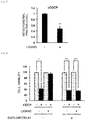
- the cell extract was subjected to SDS-PAGE, and the level of a protein UQCRC1 present in the matrix of mitochondria was detected by western blotting.
- the relative value of the UQCRC1 level in the cells of the experimental group with respect to the control group was adopted as an activity value.
- the level of actin was used as an internal standard.
- CCCP In order to cause mitochondrial injury, in this case, the uncoupler CCCP was used as a typical experimental condition. CCCP induces an abnormality in mitochondrial membrane potential.
- HeLa cells stably expressing EmGFP-HaloTag-Omp25 were seeded in Dulbecco's Modified Eagle Medium (DMEM) and cultured for 24 hours. The cells were divided into two groups. (R)-2-Acetamido-3-(2-amino-9-(4-fluorobenzyl)-6-oxo-6,9-dihydro-1H-purin-8-ylthio)-N-(21-chloro-3,6,9,12,15-pentaoxahenicosyl)propanamide was added to an experimental group at a final concentration of 15 ⁇ M, followed by incubation under the conditions of 37°C/5% CO 2 for 4 hours to synthesize the molecule of Example 5.
- DMEM Dulbecco's Modified Eagle Medium
- a control group to which no drug was added, was a group of cells free of the molecule of Example 5.
- the uncoupler CCCP was added at a final concentration of 10 ⁇ M to both of the control group and the experimental group, followed by incubation for 4 hours to induce mitochondrial injury.
- the cells of each group were washed with PBS and subjected to fixing treatment with 4% paraformaldehyde, and then cell viability was calculated using a commercially available TUNEL apoptosis analysis kit (AAT Bioquest, Inc.). Viability (%) under each condition when the cell viability of the control group is defined as 100 (%) is shown in FIG. 4 as a bar graph. In the legend of the graph, the molecule of Example 5 is referred to as "ligand" for simplicity.
- DMEM Dulbecco's Modified Eagle Medium
- Indole-FBn was added to the medium at a final concentration of 1 ⁇ M, followed by further incubation for 10 hours.
- nuclear staining by Hoechst33342 staining was performed for 30 minutes from 9 hours and 30 minutes to 10 hours after the addition of Indole-FBn.
- the uncoupler CCCP was added at a final concentration of 10 ⁇ M, followed by further incubation for 2 hours to induce mitochondrial injury.
- Cells in each of which DNA fragmentation was found in the nucleus were judged to be dead cells, and cell viability was calculated by the following equation.
- Cell viability % 100 ⁇ number of cells in which DNA fragmentation is abserved / total number of cells
- the cell viability immediately before the CCCP treatment and the cell viability after 2 hours of the CCCP treatment are shown as a bar graph to enable comparison.
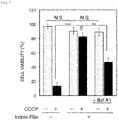
- HeLa cells seeded in Dulbecco's Modified Eagle Medium (DMEM) in a 96-well plate at 30,000 cells/well were incubated under the conditions of 37°C/5% CO 2 for 1 day, and then subjected to nuclear staining by Hoechst33342 staining. Subsequently, the uncoupler CCCP was added to half the wells at a final concentration of 10 ⁇ M, followed by further incubation for 2 hours to induce mitochondrial injury (non-Indole-FBn-treated and CCCP-treated condition). Cells in each of which DNA fragmentation was found in the nucleus were judged to be dead cells, and cell viability was calculated. In addition, cell viability was also calculated for the non-CCCP-treated wells (non-treated condition for both Indole-FBn and CCCP). The results are shown in FIG. 5 .
- DMEM Dulbecco's Modified Eagle Medium
- Bafilomycin A1 (Baf A1) is known to inhibit autophagy via lysosome function inhibition.
- Baf A1 was allowed to coexist, and the involvement of the autophagy mechanism was confirmed as described below.
- HeLa cells cultured in Dulbecco's Modified Eagle Medium (DMEM) were transfected with the plasmid pEmGFP-HaloTag-Omp25 containing a gene sequence encoding the EmGFP-HaloTag-Omp25 fusion protein localized on the mitochondrial outer membrane, and were allowed to stably express the protein.
- DMEM Dulbecco's Modified Eagle Medium
- CMXRos red fluorescent dye MitoTracker Red CMXRos (Thermo Fisher Scientific, M7513) was added thereto, followed by incubation for 30 minutes to stain mitochondria. At this stage, the mitochondria in the cells had been stained in two colors by EmGFP-HaloTag-Omp25 and MitoTracker Red CMXRos. Subsequently, MitoTracker Red CMXRos in the medium was removed by medium exchange. Mitochondria to be biosynthesized after this operation can only be detected with green fluorescence, and are not to be detected with red fluorescence. This difference was utilized to observe the degradation process of mitochondria by living cell imaging.
- the cells were divided into two groups. Indole-FBn was added to an experimental group at a final concentration of 10 ⁇ M. Indole-FBn was not added to a control group.
- a culture vessel was fixed to a stage-top incubator (37°C, 5% CO 2 ) mounted on a fluorescence microscope (KEYENCE, BX9000), and all the subsequent operations were performed on the microscope.
- 10 ⁇ M CCCP was simultaneously added to the experimental group and the control group, and incubation was continued.
- the signals of EmGFP-HaloTag-Omp25 and MitoTracker Red CMXRos at the time of the addition of Indole-FBn (-10 h), the time of the addition of CCCP (0 h), 2 hours after the addition of CCCP (+2 h), 4 hours after the addition of CCCP (+8 h), and 16 hours after the addition of CCCP (+16 h) are shown in FIG. 6 and FIG. 7 .
- the intensities of the signals of EmGFP-HaloTag-Omp25 (green fluorescence) and MitoTracker Red CMXRos (red fluorescence) in the photographs shown in FIG. 6 are shown as relative values with the respective intensities at -10 h being defined as 1. Image analysis was performed with ImageJ (National Institutes of Health). The results are shown in FIG. 6 and FIG. 7 .
- Detroit532 cells which were Down syndrome patient foreskin-derived fibroblasts, were cultured in Eagle's Minimum Essential Medium. The cells were divided into two groups. A compound (Indole-FBn) was added to an experimental group at a final concentration of 10 ⁇ M, and was not added to a control group, followed by incubation for 3 days (37°C, 5% CO 2 ). The cells of each group were each stained with JC-1 (abcam, 113850).
- the JC-1 dye accumulates in mitochondria having a normal membrane potential to emit red fluorescence. Meanwhile, its localization is lost from mitochondria having an abnormal membrane potential and green fluorescence is emitted. That is, in a JC-1 staining image, a lower "green/red fluorescence intensity ratio" means that the membrane potential of mitochondria is kept more normal. Staining images were analyzed with ImageJ (National Institute of Health), and the "green/red fluorescence intensity ratio" is shown as a graph. The results are shown in FIG. 8 . Error bars represent standard deviations obtained from data from three independent experiments.
- Example 14 In order to confirm that the Indole-FBn compound treatment in Example 14 induces the degradation (mitophagy) of mitochondria, analysis was performed using Mtphagy dye (Dojindo, MD01) as a mitophagy detection kit. The use of this reagent allows mitochondria under mitophagy degradation to be selectively detected as bright spots under a fluorescence microscope. A larger number of bright spots per cell indicates the occurrence of more active mitophagy.
- Mtphagy dye Diojindo, MD01
- Mtphagy dye was added to Detroit532 cells. After 30 minutes from the addition, Mtphagy dye was removed by washing, the medium was changed to a fresh one, and Indole-FBnG was added at a final concentration of 10 ⁇ M. Meanwhile, a group of cells treated with DMSO was used as a control group. After 24 hours from the addition of Indole-FBn, bright spots of Mtphagy Dye were observed with a fluorescence microscope ( FIG. 9 ). The photographs were taken of the cells of the control group and the drug-administered group immediately after the Indole-FBn treatment (0 hours) and after 24 hours.
- HeLa cells were seeded in Dulbecco's Modified Eagle Medium (DMEM) and cultured for 24 hours. The cells were divided into two groups. Indole-FBnPYR was added to an experimental group at a final concentration of 0.1 ⁇ M, followed by incubation under the conditions of 37°C/5% CO 2 for 4 hours. In this case, a control group, to which Indole-FBnPYR was not added, was a group of cells free of any drug. Next, the uncoupler CCCP was added at a final concentration of 10 ⁇ M to both of the control group and the experimental group, followed by incubation for 10 hours to induce mitochondrial injury.
- DMEM Dulbecco's Modified Eagle Medium
- the cells of each group were washed with PBS and subjected to fixing treatment with 4% paraformaldehyde, and then cell viability was calculated using a TUNEL apoptosis analysis kit (Promega, DeadEnd Fluorometric TUNEL System). The results are shown in FIG. 10 .
Landscapes
- Chemical & Material Sciences (AREA)
- Health & Medical Sciences (AREA)
- Organic Chemistry (AREA)
- Life Sciences & Earth Sciences (AREA)
- Medicinal Chemistry (AREA)
- Public Health (AREA)
- Pharmacology & Pharmacy (AREA)
- Veterinary Medicine (AREA)
- Animal Behavior & Ethology (AREA)
- General Health & Medical Sciences (AREA)
- Engineering & Computer Science (AREA)
- Bioinformatics & Cheminformatics (AREA)
- Nuclear Medicine, Radiotherapy & Molecular Imaging (AREA)
- Chemical Kinetics & Catalysis (AREA)
- General Chemical & Material Sciences (AREA)
- Epidemiology (AREA)
- Biomedical Technology (AREA)
- Neurosurgery (AREA)
- Proteomics, Peptides & Aminoacids (AREA)
- Neurology (AREA)
- Hospice & Palliative Care (AREA)
- Rheumatology (AREA)
- Pain & Pain Management (AREA)
- Molecular Biology (AREA)
- Psychiatry (AREA)
- Diabetes (AREA)
- Hematology (AREA)
- Obesity (AREA)
- Pharmaceuticals Containing Other Organic And Inorganic Compounds (AREA)
- Measuring Or Testing Involving Enzymes Or Micro-Organisms (AREA)
- Medicinal Preparation (AREA)
Applications Claiming Priority (2)
| Application Number | Priority Date | Filing Date | Title |
|---|---|---|---|
| JP2017135086 | 2017-07-10 | ||
| PCT/JP2018/025941 WO2019013181A1 (ja) | 2017-07-10 | 2018-07-09 | 傷害を受けたミトコンドリアのオートファジー機構による分解剤 |
Publications (2)
| Publication Number | Publication Date |
|---|---|
| EP3679935A1 true EP3679935A1 (de) | 2020-07-15 |
| EP3679935A4 EP3679935A4 (de) | 2021-04-21 |
Family
ID=65002044
Family Applications (1)
| Application Number | Title | Priority Date | Filing Date |
|---|---|---|---|
| EP18831146.8A Pending EP3679935A4 (de) | 2017-07-10 | 2018-07-09 | Abbaumittel mit autophagischem mechanismus beschädigter mitochondrien |
Country Status (4)
| Country | Link |
|---|---|
| US (1) | US11512084B2 (de) |
| EP (1) | EP3679935A4 (de) |
| JP (1) | JP7370579B2 (de) |
| WO (1) | WO2019013181A1 (de) |
Cited By (1)
| Publication number | Priority date | Publication date | Assignee | Title |
|---|---|---|---|---|
| US11666661B2 (en) | 2018-03-23 | 2023-06-06 | The Regents Of The University Of California | Methods and compounds for targeted autophagy |
Families Citing this family (2)
| Publication number | Priority date | Publication date | Assignee | Title |
|---|---|---|---|---|
| JP7161760B2 (ja) * | 2017-02-03 | 2022-10-27 | 国立大学法人東北大学 | 複素環化合物 |
| WO2024201691A1 (ja) * | 2023-03-28 | 2024-10-03 | 国立大学法人東北大学 | オートファジーを誘導する化合物のスクリーニング方法 |
Family Cites Families (8)
| Publication number | Priority date | Publication date | Assignee | Title |
|---|---|---|---|---|
| US4748177A (en) * | 1984-03-26 | 1988-05-31 | Warner-Lambert Company | Guanine derivatives |
| US5625056A (en) | 1992-05-26 | 1997-04-29 | Biolog Life Science Institute | Derivatives of cyclic guanosine-3',5'-monophosphorothioate |
| WO2009063235A1 (en) * | 2007-11-13 | 2009-05-22 | Astrazeneca Ab | Derivatives of 1,9-dihydro-6h-purin-6-one and uses thereof-018 |
| US8323649B2 (en) * | 2008-11-25 | 2012-12-04 | Alderbio Holdings Llc | Antibodies to IL-6 and use thereof |
| US20140088034A1 (en) * | 2011-05-11 | 2014-03-27 | Stc.Unm | NITRIC OXIDE/cGMP PATHWAY INHIBITION OF VLA-4 RELATED CELL ADHESION |
| CN110317811A (zh) | 2012-09-17 | 2019-10-11 | 霍夫曼-拉罗奇有限公司 | Usp30抑制剂及其使用方法 |
| EP3481842A1 (de) * | 2016-07-11 | 2019-05-15 | Mireca Medicines GmbH | Neue äquatorial modifizierte polymerverbundene multimere von guanosin-3',5'-cyclischen monophosphaten |
| JP7161760B2 (ja) * | 2017-02-03 | 2022-10-27 | 国立大学法人東北大学 | 複素環化合物 |
-
2018
- 2018-07-09 EP EP18831146.8A patent/EP3679935A4/de active Pending
- 2018-07-09 WO PCT/JP2018/025941 patent/WO2019013181A1/ja not_active Ceased
- 2018-07-09 JP JP2019529720A patent/JP7370579B2/ja active Active
- 2018-07-09 US US16/629,119 patent/US11512084B2/en active Active
Cited By (1)
| Publication number | Priority date | Publication date | Assignee | Title |
|---|---|---|---|---|
| US11666661B2 (en) | 2018-03-23 | 2023-06-06 | The Regents Of The University Of California | Methods and compounds for targeted autophagy |
Also Published As
| Publication number | Publication date |
|---|---|
| EP3679935A4 (de) | 2021-04-21 |
| WO2019013181A1 (ja) | 2019-01-17 |
| US20200223848A1 (en) | 2020-07-16 |
| US11512084B2 (en) | 2022-11-29 |
| JP7370579B2 (ja) | 2023-10-30 |
| JPWO2019013181A1 (ja) | 2020-05-07 |
Similar Documents
| Publication | Publication Date | Title |
|---|---|---|
| CN104662011B (zh) | 治疗线粒体疾病的色满衍生物 | |
| KR20120087878A (ko) | 1,3-프로판디설포닉 애시드의 수송을 위한 방법, 화합물 및 조성물 | |
| JP6639656B2 (ja) | ミトコンドリア疾患を治療する新規化合物 | |
| US11512084B2 (en) | Degradation agent using autophagic mechanism of damaged mitochondria | |
| ES2924058T3 (es) | Polimixinas antimicrobianas para el tratamiento de infecciones bacterianas | |
| EA020236B1 (ru) | Производные хиноксалиндиона | |
| US11078222B2 (en) | Hydroxybenzoic acid derivatives, methods and uses thereof | |
| US9868715B2 (en) | Apigenin analogs, compositions, and methods related thereto | |
| ES2372707T3 (es) | Inhibidores de la ikk-beta serina-treonina proteína quinasa. | |
| Liu et al. | Novel octapeptide-DTX prodrugs targeting MMP-7 as effective agents for the treatment of colorectal cancer with lower systemic toxicity | |
| JP2015531382A (ja) | ピロリジン | |
| ES2636469T3 (es) | Nuevos derivados de pirido[3,4-c][1,9]fenantrolina y 11,12-dihidropirido[3,4-c][1,9]fenantrolina y su uso, particularmente para el tratamiento de cáncer | |
| CN107922363B (zh) | 与金属和/或自由基螯合构型有关的邻伯二胺,及其抗羰基和氧化应激的活性,及其用途 | |
| US20250084023A2 (en) | Novel aromatic molecules | |
| US20220041591A1 (en) | Compounds for treating diabetes and/or related conditions | |
| CN115298159A (zh) | 与氧化应激相关的病症的治疗和用于其的化合物 | |
| KR20160038598A (ko) | 신규 하이드록사메이트 유도체 및 이를 포함하는 암의 예방 또는 치료용 약제학적 조성물 | |
| NL2034014B1 (en) | Polyamine derivative and preparation method and application thereof | |
| FI81802B (fi) | Foerfarande foer framstaellning av terapeutiskt verksamt 2-(3-metoxi-5-metyltio- eller 5-metylsulfinyl-2-tienyl-1h-imidazo(4,5-c)pyridin. | |
| US20250002436A1 (en) | Naphthoquinone-based chalcone derivatives and uses thereof | |
| KR20260004410A (ko) | 포르피린증 치료용 아미도 피리도[3,4-b]인돌-1,4-디온 화합물 | |
| US20150038493A1 (en) | Compounds that trap alpha-oxoaldehydes and alpha-beta-unsaturated aldehydes, meta-compounds containing such compounds, and use of said compounds in treating illnesses related to the accumulation of ages and ales | |
| WO2025231279A1 (en) | Thio compounds for the treatment of disorders associated with oxidative stress |
Legal Events
| Date | Code | Title | Description |
|---|---|---|---|
| STAA | Information on the status of an ep patent application or granted ep patent |
Free format text: STATUS: THE INTERNATIONAL PUBLICATION HAS BEEN MADE |
|
| PUAI | Public reference made under article 153(3) epc to a published international application that has entered the european phase |
Free format text: ORIGINAL CODE: 0009012 |
|
| STAA | Information on the status of an ep patent application or granted ep patent |
Free format text: STATUS: REQUEST FOR EXAMINATION WAS MADE |
|
| 17P | Request for examination filed |
Effective date: 20200207 |
|
| AK | Designated contracting states |
Kind code of ref document: A1 Designated state(s): AL AT BE BG CH CY CZ DE DK EE ES FI FR GB GR HR HU IE IS IT LI LT LU LV MC MK MT NL NO PL PT RO RS SE SI SK SM TR |
|
| AX | Request for extension of the european patent |
Extension state: BA ME |
|
| DAV | Request for validation of the european patent (deleted) | ||
| DAX | Request for extension of the european patent (deleted) | ||
| A4 | Supplementary search report drawn up and despatched |
Effective date: 20210323 |
|
| RIC1 | Information provided on ipc code assigned before grant |
Ipc: A61K 31/522 20060101AFI20210317BHEP Ipc: A61K 47/54 20170101ALI20210317BHEP Ipc: A61P 3/00 20060101ALI20210317BHEP Ipc: A61P 25/28 20060101ALI20210317BHEP Ipc: A61P 29/00 20060101ALI20210317BHEP Ipc: A61P 35/00 20060101ALI20210317BHEP Ipc: A61P 43/00 20060101ALI20210317BHEP Ipc: C07D 473/18 20060101ALI20210317BHEP |
|
| STAA | Information on the status of an ep patent application or granted ep patent |
Free format text: STATUS: EXAMINATION IS IN PROGRESS |
|
| 17Q | First examination report despatched |
Effective date: 20220307 |