EP3676684B1 - Temperaturverwaltung in wearable-vorrichtungen - Google Patents
Temperaturverwaltung in wearable-vorrichtungen Download PDFInfo
- Publication number
- EP3676684B1 EP3676684B1 EP18778693.4A EP18778693A EP3676684B1 EP 3676684 B1 EP3676684 B1 EP 3676684B1 EP 18778693 A EP18778693 A EP 18778693A EP 3676684 B1 EP3676684 B1 EP 3676684B1
- Authority
- EP
- European Patent Office
- Prior art keywords
- temperature
- computer
- wireless transmitter
- transmission rate
- transmission
- Prior art date
- Legal status (The legal status is an assumption and is not a legal conclusion. Google has not performed a legal analysis and makes no representation as to the accuracy of the status listed.)
- Active
Links
Images




Classifications
-
- G—PHYSICS
- G06—COMPUTING OR CALCULATING; COUNTING
- G06F—ELECTRIC DIGITAL DATA PROCESSING
- G06F1/00—Details not covered by groups G06F3/00 - G06F13/00 and G06F21/00
- G06F1/16—Constructional details or arrangements
- G06F1/20—Cooling means
- G06F1/206—Cooling means comprising thermal management
-
- G—PHYSICS
- G06—COMPUTING OR CALCULATING; COUNTING
- G06F—ELECTRIC DIGITAL DATA PROCESSING
- G06F1/00—Details not covered by groups G06F3/00 - G06F13/00 and G06F21/00
- G06F1/16—Constructional details or arrangements
- G06F1/1613—Constructional details or arrangements for portable computers
- G06F1/163—Wearable computers, e.g. on a belt
-
- H—ELECTRICITY
- H04—ELECTRIC COMMUNICATION TECHNIQUE
- H04B—TRANSMISSION
- H04B1/00—Details of transmission systems, not covered by a single one of groups H04B3/00 - H04B13/00; Details of transmission systems not characterised by the medium used for transmission
- H04B1/02—Transmitters
- H04B1/03—Constructional details, e.g. casings, housings
- H04B1/036—Cooling arrangements
-
- H—ELECTRICITY
- H04—ELECTRIC COMMUNICATION TECHNIQUE
- H04B—TRANSMISSION
- H04B1/00—Details of transmission systems, not covered by a single one of groups H04B3/00 - H04B13/00; Details of transmission systems not characterised by the medium used for transmission
- H04B1/38—Transceivers, i.e. devices in which transmitter and receiver form a structural unit and in which at least one part is used for functions of transmitting and receiving
- H04B1/3827—Portable transceivers
- H04B1/385—Transceivers carried on the body, e.g. in helmets
-
- H—ELECTRICITY
- H04—ELECTRIC COMMUNICATION TECHNIQUE
- H04N—PICTORIAL COMMUNICATION, e.g. TELEVISION
- H04N23/00—Cameras or camera modules comprising electronic image sensors; Control thereof
- H04N23/60—Control of cameras or camera modules
- H04N23/66—Remote control of cameras or camera parts, e.g. by remote control devices
- H04N23/661—Transmitting camera control signals through networks, e.g. control via the Internet
-
- H—ELECTRICITY
- H04—ELECTRIC COMMUNICATION TECHNIQUE
- H04B—TRANSMISSION
- H04B1/00—Details of transmission systems, not covered by a single one of groups H04B3/00 - H04B13/00; Details of transmission systems not characterised by the medium used for transmission
- H04B1/38—Transceivers, i.e. devices in which transmitter and receiver form a structural unit and in which at least one part is used for functions of transmitting and receiving
- H04B1/3827—Portable transceivers
- H04B1/385—Transceivers carried on the body, e.g. in helmets
- H04B2001/3866—Transceivers carried on the body, e.g. in helmets carried on the head
-
- Y—GENERAL TAGGING OF NEW TECHNOLOGICAL DEVELOPMENTS; GENERAL TAGGING OF CROSS-SECTIONAL TECHNOLOGIES SPANNING OVER SEVERAL SECTIONS OF THE IPC; TECHNICAL SUBJECTS COVERED BY FORMER USPC CROSS-REFERENCE ART COLLECTIONS [XRACs] AND DIGESTS
- Y02—TECHNOLOGIES OR APPLICATIONS FOR MITIGATION OR ADAPTATION AGAINST CLIMATE CHANGE
- Y02D—CLIMATE CHANGE MITIGATION TECHNOLOGIES IN INFORMATION AND COMMUNICATION TECHNOLOGIES [ICT], I.E. INFORMATION AND COMMUNICATION TECHNOLOGIES AIMING AT THE REDUCTION OF THEIR OWN ENERGY USE
- Y02D10/00—Energy efficient computing, e.g. low power processors, power management or thermal management
Definitions
- the design of many wearable display systems may be constrained to ensure conform with certain requirements such as form factor. This constraint may result in marginal designs for electronic components.
- the constrained design may limit the functionality of these components when compared to designs without the constraints . This is particularly true for glasses with an integrated camera or display and wearable devices that integrate multiple functions using additional sensor or circuitry for other functions. Therefore, improved methods of managing these electronic components under these design constraints are desired.
- US Patent US9668217B1 describes device handshaking between a client device and an associated wearable device, the latter having both high-speed wireless circuitry and low-power wireless circuitry for communication with the client device. High-speed connection status may be analysed by the client device and used to conserve battery power at the wearable device.
- US2007/083778 A1 concerns a wireless communication terminal that includes a transmitting unit transmitting data to a wireless base station, a temperature detecting unit detecting a terminal temperature of the inside of the wireless communication terminal, a transmission power detecting unit detecting a transmission power, a memory unit storing plural sets of terminal temperature variation information, and a control unit changing the transmission power based on a state of communication with a wireless base station.
- the control unit controls the transmission state of the data based on the selected one of the plural sets of terminal temperature variation information, so as to prevent the terminal temperature from increasing over an upper limit of a predetermined operation guarantee temperature range.
- the invention is a wearable electronic device, method and medium as defined in the appended claims.
- the video processor of this example implementation uses a read only memory (ROM) with direct memory access (DMA) to boot the video processor in some aspects.
- ROM read only memory
- DMA direct memory access
- Such a video processor can boot from an off state to capturing camera data within 300 milliseconds, and can then be returned to the off state as soon as the camera data is written to memory. This creates a responsive user experience while limiting battery drain.
- the low-power circuitry manages an energy efficient connection to a client device, and transfer of the camera data to the device. For example, if the camera data is captured when there is no client device nearby, the low-power wireless circuitry may periodically transmit a service set identifier (SSID.) When a smartphone running an application associated with the glasses receives the SSID, the application may automatically request any new camera data from the glasses.
- the low-power processor verifies that the camera data has not been sent to the smartphone previously; then the low-power processor boots a high-speed processor of the high-speed circuitry.
- the high-speed processor turns on high-speed wireless circuitry, such as an 802.11 Wi-Fi chip.
- the low-power processor may interrupt the transmission to allow the video processor to boot, capture additional camera data, and power down as described above. The transfer may then be resumed if the smartphone is still in communication with the glasses, or may be resumed later if the connection has been interrupted.
- One particular additional embodiment may include a display integrated with glasses. Such an embodiment may operate to conserve power in a manner similar to the operations described above for camera operation and camera data transfer.
- an example embodiment with a display may operate in a low-power mode, with display elements powered down and low-power circuitry monitoring battery-life and low-power connections with client devices.
- Such an embodiment may receive a communication via a low-power wireless connection to display media content on the display of the glasses.
- the low-power circuitry will initiate a power up and boot of any specified elements, present the media content on the display of the device, and then automatically power down the display and associated circuitry to return to the low-power state after a fixed amount of time.
- Such operations may be integrated with any other operations and interrupts for any other elements included in the glasses with the display system.
- Frame 32 additionally includes a left arm or temple piece 46 and a second arm or temple piece 47 coupled to the respective left and right end portions 41, 42 of the front piece 33 by any suitable means such as a hinge (not shown), so as to be coupled to the front piece 33, or rigidly or fixably secured to the front piece so as to be integral with the front piece 33.
- Each of the temple pieces 46 and 47 can include a first portion 51 that is coupled to the respective end portion 41 or 42 of the front piece 33 and any suitable second portion 52 for coupling to the ear of the user.
- the front piece 33 can be formed from a single piece of material, so as to have a unitary or integral construction.
- the entire frame 32 can be formed from a single piece of material so as to have a unitary or integral construction.
- Glasses 31 include cameras 69. Although two cameras are depicted, other embodiments contemplate the use of a single or additional (i.e., more than two) cameras. In various embodiments, glasses 31 may include any number of input sensors or peripheral devices in addition to cameras 69.
- Front piece 33 is provided with an outward facing, forward-facing or front or outer surface 66 that faces forward or away from the user when the glasses 31 are mounted on the face of the user, and an opposite inward-facing, rearward-facing or rear or inner surface 67 that faces the face of the user when the glasses 31 are mounted on the face of the user.
- Such sensors can include inwardly-facing video sensors or digital imaging modules such as cameras that can be mounted on or provided within the inner surface 67 of the front piece 33 or elsewhere on the frame 32 so as to be facing the user, and outwardly-facing video sensors or digital imaging modules such as cameras 69 that can be mounted on or provided with the outer surface 66 of the front piece 33 or elsewhere on the frame 32 so as to be facing away from the user.
- Such sensors, peripheral devices or peripherals can additionally include biometric sensors, location sensors, or any other such sensors.
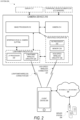
- System 200 includes camera device 210, client device 290, and server system 298.
- Client device 290 may be a smartphone, tablet, phablet, laptop computer, access point, or any other such device capable of connecting with camera device 210 using both a low-power wireless connection 225 and a high-speed wireless connection 237.
- Client device 290 is connected to server system 298 and network 295.
- the network 295 may include any combination of wired and wireless connections.
- Server system 298 may be one or more computing devices as part of a service or network computing system.
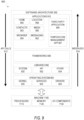
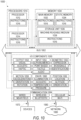
- Client device 290 and any elements of server system 298 and network 295 may be implemented using details of software architecture 902 or machine 1000 described in FIGs. 9 and 10 .
- Video processor 212 includes circuitry to receive signals from the camera 214 and process those signals from the camera 214 into a format suitable for storage in the memory 234.
- Video processor 212 is structured within camera device 210 such that it may be powered on and booted under the control of low-power circuitry 220.
- Video processor 212 may additionally be powered down by low-power circuitry 220.
- video processor 212 may still consume a small amount of power even when it is in an off state. This power will, however, be negligible compared to the power used by video processor 212 when it is in an on state, and will also have a negligible impact on battery life.
- video processor 212 comprises a microprocessor integrated circuit (IC) customized for processing sensor data from camera 214, along with volatile memory used by the microprocessor to operate.
- IC microprocessor integrated circuit
- volatile memory used by the microprocessor to operate.
- a non-volatile read only memory (ROM) may be integrated on the IC with instructions for operating or booting the video processor 212. This ROM may be minimized to match a minimum size needed to provide basic functionality for gathering sensor data from camera 214, such that no extra functionality that would cause delays in boot time are present.
- the ROM may be configured with direct memory access (DMA) to the volatile memory of the microprocessor of video processor 212.
- DMA direct memory access
- DMA allows memory-to-memory transfer of data from the ROM to system memory of the video processor 212 independently of operation of a main controller of video processor 212. Providing DMA to this boot ROM further reduces the amount of time from power on of the video processor 212 until sensor data from the camera 214 can be processed and stored. In certain embodiments, minimal processing of the camera signal from the camera 214 is performed by the video processor 212, and additional processing may be performed by applications operating on the client device 290 or server system 298.
- the lower power circuitry 220 and/or the high-speed circuitry 230 may consume power as part of the operation of the camera device 210 and in the course of performing one or more functions such as capturing images, transmitting data, or performing other computing processes. Such power consumption may result in heat that may impact the camera device 210 as well as a user wearing the device.
- Embodiments described herein may function to manage temperature in wearable devices such as glasses 31, discussed above with respect to FIG. 1 , of which the camera device 210 may be a part in some aspects.
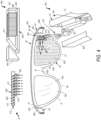
- Computer 376 is implemented using the processor elements of the camera device 210, including video processor 212, high-speed circuitry 230, and low-power circuitry 220. Computer 376 may additionally include any circuitry needed to power and process information for display matrix 367, which may be similar to display 211. In certain embodiments, video processor 212 or high-speed processor 232 may include circuitry to drive display matrix 367. In other embodiments, separate display circuitry may be integrated with the other elements of computer 376 to enable presentation of images on display matrix 367.
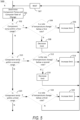
- FIG. 5 is a flowchart of a method for regulating a temperature of an electronic component.
- the electronic component regulated by the process 300 discussed below with respect to FIG. 5 may be the low power circuitry 220 and/or high-speed circuitry 230, discussed above with respect to FIG. 2 .
- the low power circuitry 220 and/or high-speed circuitry 230 may be integrated into the glasses 361 of FIG. 3 or glasses 491 of FIG. 4 .
- one or more functions of process 500 discussed below may be performed by the temperature management application 967, discussed below with respect to FIG. 9 .
- instructions 1016 discussed below with respect to FIG.
- process 500 also include limiting an amount of data transmitted during a time period to an amount indicated by the transmission rate limit. For example, in some aspects, a moving count of data transmitted during a sequential series of time periods may be maintained. These moving counts can facilitate determination of data transmission rates over those same time periods. If the moving count indicates that the device has reached the transmission rate limit as defined by process 500 above, then delays may be introduced into transmission of additional data. For example, if an amount of data available for transmission would cause the device to exceed the transmission rate limit for a given time period, that data may wait until a later time such that a rate of transmission that includes the data does not exceed the transmission rate limit.
- FIG. 7 shows another exemplary embodiment of glasses 361.
- the embodiment of glasses 361 shown in FIG. 7 includes the components of glasses 361 shown in FIG. 3 .
- the glasses 361 also include an ambient temperature sensor 705 and a frame temperature sensor 710.
- the ambient temperature sensor 705 and frame temperature sensor 710 may be included in the peripheral device elements 219, discussed above with respect to FIG. 2 .
- the ambient temperature sensor 705 and frame temperature sensor 710 may be operably connected to the computer 376, such that the computer may obtain temperature measurements of the ambient environment and the frame from the ambient temperature sensor 705 and frame temperature sensor 710 respectively.
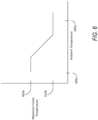
- a wearable temperature is determined.
- the wearable temperature is determined based on readings from a temperature sensor, such as temperature sensor 710, discussed above with respect to FIG. 7 .
- a hardware module is implemented mechanically, electronically, or any suitable combination thereof.
- a hardware module can include dedicated circuitry or logic that is permanently configured to perform certain operations.
- a hardware module can be a special-purpose processor, such as a Field-Programmable Gate Array (FPGA) or an Application Specific Integrated Circuit (ASIC).
- a hardware module may also include programmable logic or circuitry that is temporarily configured by software to perform certain operations.
- a hardware module can include software encompassed within a general-purpose processor or other programmable processor. It will be appreciated that the decision to implement a hardware module mechanically, in dedicated and permanently configured circuitry, or in temporarily configured circuitry (e.g., configured by software) can be driven by cost and time considerations.
- processors that are temporarily configured (e.g., by software) or permanently configured to perform the relevant operations. Whether temporarily or permanently configured, such processors constitute processor-implemented modules that operate to perform one or more operations or functions described herein.
- processor-implemented module refers to a hardware module implemented using one or more processors.
- the libraries 906 provide a low-level common infrastructure utilized by the applications 910.
- the libraries 906 can include system libraries 930 (e.g., C standard library) that can provide functions such as memory allocation functions, string manipulation functions, mathematic functions, and the like.
- the libraries 906 can include API libraries 932 such as media libraries (e.g., libraries to support presentation and manipulation of various media formats such as Moving Picture Experts Group-4 (MPEG4), Advanced Video Coding (H.264 or AVC), Moving Picture Experts Group Layer-3 (MP3), Advanced Audio Coding (AAC), Adaptive Multi-Rate (AMR) audio codec, Joint Photographic Experts Group (JPEG or JPG), or Portable Network Graphics (PNG)), graphics libraries (e.g., an OpenGL framework used to render in two dimensions (2D) and three dimensions (3D) in a graphic content on a display), database libraries (e.g., SQLite to provide various relational database functions), web libraries (e.g., WebKit to provide web browsing functionality), and the like.
- the libraries 906 can also include a wide variety of other libraries 934 to provide many other APIs to the applications 910.
- the applications 910 may include a home application 950, a contacts application 952, a browser application 954, a location application 958, a media application 960, a messaging application 962, and a broad assortment of other applications such as a third party application 966.
- the applications 910 are programs that execute functions defined in the programs.
- Various programming languages can be employed to create one or more of the applications 910, structured in a variety of manners, such as object-oriented programming languages (e.g., Objective-C, Java, or C++) or procedural programming languages (e.g., C or assembly language).
- FIG. 10 illustrates an example mobile device 1000 executing a mobile operating system (e.g., IOS TM , ANDROID TM , WINDOWS ® Phone, or other mobile operating systems), consistent with some embodiments.
- the mobile device 1000 includes a touch screen operable to receive tactile data from a user.
- applications can be executing on the mobile device 1000, such as native applications (e.g., applications programmed in Objective-C, Swift, or another suitable language running on IOS TM , or applications programmed in Java running on ANDROID TM ), mobile web applications (e.g., applications written in Hypertext Markup Language-5 (HTML5)), or hybrid applications (e.g., a native shell application that launches an HTML5 session).
- native applications e.g., applications programmed in Objective-C, Swift, or another suitable language running on IOS TM , or applications programmed in Java running on ANDROID TM
- mobile web applications e.g., applications written in Hypertext Markup Language-5 (HTML5)
- hybrid applications e.g., a native shell application that launches an HTML5 session.
- processor is intended to include multi-core processors that may comprise two or more independent processors (also referred to as “cores”) that can execute instructions contemporaneously.
- FIG. 10 shows multiple processors 1010, the machine 1000 may include a single processor with a single core, a single processor with multiple cores (e.g., a multi-core processor), multiple processors with a single core, multiple processors with multiples cores, or any combination thereof.
- the memory 1030 comprises a main memory 1032, a static memory 1034, and a storage unit 1036 accessible to the processors 1010 via the bus 1002, according to some embodiments.
- the storage unit 1036 can include a machine-readable medium 1038 on which are stored the instructions 1016 embodying any one or more of the methodologies or functions described herein.
- the instructions 1016 can also reside, completely or at least partially, within the main memory 1032, within the static memory 1034, within at least one of the processors 1010 (e.g., within the processor's cache memory), or any suitable combination thereof, during execution thereof by the machine 1000. Accordingly, in various embodiments, the main memory 1032, the static memory 1034, and the processors 1010 are considered machine-readable media 1038.
- the term "memory” refers to a machine-readable medium 1038 able to store data temporarily or permanently and may be taken to include, but not be limited to, random-access memory (RAM), read-only memory (ROM), buffer memory, flash memory, and cache memory. While the machine-readable medium 1038 is shown in an example embodiment to be a single medium, the term “machine-readable medium” should be taken to include a single medium or multiple media (e.g., a centralized or distributed database, or associated caches and servers) able to store the instructions 1016.
- machine-readable medium shall accordingly be taken to include, but not be limited to, one or more data repositories in the form of a solid-state memory (e.g., flash memory), an optical medium, a magnetic medium, other non-volatile memory (e.g., Erasable Programmable Read-Only Memory (EPROM)), or any suitable combination thereof.
- solid-state memory e.g., flash memory
- EPROM Erasable Programmable Read-Only Memory
- machine-readable medium specifically excludes non-statutory signals per se.
- the I/O components 1050 include a wide variety of components to receive input, provide output, produce output, transmit information, exchange information, capture measurements, and so on. In general, it will be appreciated that the I/O components 1050 can include many other components that are not shown in FIG. 10 .
- the I/O components 1050 are grouped according to functionality merely for simplifying the following discussion, and the grouping is in no way limiting. In various example embodiments, the I/O components 1050 include output components 1052 and input components 1054.
- the input components 1054 include alphanumeric input components (e.g., a keyboard, a touch screen configured to receive alphanumeric input, a photo-optical keyboard, or other alphanumeric input components), point-based input components (e.g., a mouse, a touchpad, a trackball, a joystick, a motion sensor, or other pointing instruments), tactile input components (e.g., a physical button, a touch screen that provides location and force of touches or touch gestures, or other tactile input components), audio input components (e.g., a microphone), and the like.
- alphanumeric input components e.g., a keyboard, a touch screen configured to receive alphanumeric input, a photo-optical keyboard, or other alphanumeric input components
- point-based input components e.g., a mouse, a touchpad, a trackball, a joystick, a motion sensor, or other pointing instruments
- tactile input components e.g., a physical button, a touch
- the I/O components 1050 include biometric components 1056, motion components 1058, environmental components 1060, or position components 1062, among a wide array of other components.
- the biometric components 1056 include components to detect expressions (e.g., hand expressions, facial expressions, vocal expressions, body gestures, or eye tracking), measure biosignals (e.g., blood pressure, heart rate, body temperature, perspiration, or brain waves), identify a person (e.g., voice identification, retinal identification, facial identification, fingerprint identification, or electroencephalogram based identification), and the like.
- the motion components 1058 include acceleration sensor components (e.g., accelerometer), gravitation sensor components, rotation sensor components (e.g., gyroscope), and so forth.
- the environmental components 1060 include, for example, illumination sensor components (e.g., photometer), temperature sensor components (e.g., one or more thermometers that detect ambient temperature), humidity sensor components, pressure sensor components (e.g., barometer), acoustic sensor components (e.g., one or more microphones that detect background noise), proximity sensor components (e.g., infrared sensors that detect nearby objects), gas sensor components (e.g., machine olfaction detection sensors, gas detection sensors to detect concentrations of hazardous gases for safety or to measure pollutants in the atmosphere), or other components that may provide indications, measurements, or signals corresponding to a surrounding physical environment.
- the environmental components such as the temperature sensor components that detect ambient temperature, may be utilized to manage the temperature of electronic components discussed herein.
- the position components 1062 include location sensor components (e.g., a Global Positioning System (GPS) receiver component), altitude sensor components (e.g., altimeters or barometers that detect air pressure from which altitude may be derived), orientation sensor components (e.g., magnetometers), and the like.
- location sensor components e.g., a Global Positioning System (GPS) receiver component
- altitude sensor components e.g., altimeters or barometers that detect air pressure from which altitude may be derived
- orientation sensor components e.g., magnetometers
- the devices 1070 may be another machine or any of a wide variety of peripheral devices (e.g., a peripheral device coupled via a Universal Serial Bus (USB)).
- the disclosed methods and systems may manage the transmission bandwidth of one or more of the wireless components (e.g. WiFi) and/or Bluetooth components in order to control an operating temperature of a device, such as the device 1000.
- the communication components 1064 included the low power circuitry 220 and/or high speed circuitry 230.
- IP Internet Protocol
- WI-FI ® Wireless Fidelity
- NFC beacon a variety of information can be derived via the communication components 1064, such as location via Internet Protocol (IP) geo-location, location via WI-FI ® signal triangulation, location via detecting an BLUETOOTH ® or NFC beacon signal that may indicate a particular location, and so forth.
- IP Internet Protocol
- the network 1080 or a portion of the network 1080 may include a wireless or cellular network
- the coupling 1082 may be a Code Division Multiple Access (CDMA) connection, a Global System for Mobile communications (GSM) connection, or another type of cellular or wireless coupling.
- CDMA Code Division Multiple Access
- GSM Global System for Mobile communications
- the coupling 1082 can implement any of a variety of types of data transfer technology, such as Single Carrier Radio Transmission Technology (1xRTT), Evolution-Data Optimized (EVDO) technology, General Packet Radio Service (GPRS) technology, Enhanced Data rates for GSM Evolution (EDGE) technology, third Generation Partnership Project (3GPP) including 3G, fourth generation wireless (4G) networks, Universal Mobile Telecommunications System (UMTS), High Speed Packet Access (HSPA), Worldwide Interoperability for Microwave Access (WiMAX), Long Term Evolution (LTE) standard, others defined by various standard-setting organizations, other long range protocols, or other data transfer technology.
- 1xRTT Single Carrier Radio Transmission Technology
- GPRS General Packet Radio Service
- EDGE Enhanced Data rates for GSM Evolution
- 3GPP Third Generation Partnership Project
- 4G fourth generation wireless (4G) networks
- Universal Mobile Telecommunications System (UMTS) Universal Mobile Telecommunications System
- HSPA High Speed Packet Access
- WiMAX Worldwide Interoperability for Microwave Access
- the instructions 1016 are transmitted or received over the network 1080 using a transmission medium via a network interface device (e.g., a network interface component included in the communication components 1064) and utilizing any one of a number of well-known transfer protocols (e.g., Hypertext Transfer Protocol (HTTP)).
- a network interface device e.g., a network interface component included in the communication components 1064
- HTTP Hypertext Transfer Protocol
- the instructions 1016 are transmitted or received using a transmission medium via the coupling 1072 (e.g., a peer-to-peer coupling) to the devices 1070.
- the term "transmission medium” shall be taken to include any intangible medium that is capable of storing, encoding, or carrying the instructions 1016 for execution by the machine 1000, and includes digital or analog communications signals or other intangible media to facilitate communication of such software.
- the machine-readable medium 1038 is non-transitory (in other words, not having any transitory signals) in that it does not embody a propagating signal.
- labeling the machine-readable medium 1038 "non-transitory" should not be construed to mean that the medium is incapable of movement; the medium 1038 should be considered as being transportable from one physical location to another.
- the machine-readable medium 1038 since the machine-readable medium 1038 is tangible, the medium 1038 may be considered to be a machine-readable device.
- inventive subject matter has been described with reference to specific example embodiments, various modifications and changes may be made to these embodiments without departing from the broader scope of embodiments of the present disclosure.
- inventive subject matter may be referred to herein, individually or collectively, by the term "invention" merely for convenience and without intending to voluntarily limit the scope of this application to any single disclosure or inventive concept if more than one is, in fact, disclosed.
- the term "or" may be construed in either an inclusive or exclusive sense. Moreover, plural instances may be provided for resources, operations, or structures described herein as a single instance. Additionally, boundaries between various resources, operations, modules, engines, and data stores are somewhat arbitrary, and particular operations are illustrated in a context of specific illustrative configurations. Other allocations of functionality are envisioned and may fall within a scope of various embodiments of the present disclosure. In general, structures and functionality presented as separate resources in the example configurations may be implemented as a combined structure or resource. Similarly, structures and functionality presented as a single resource may be implemented as separate resources. The specification and drawings are, accordingly, to be regarded in an illustrative rather than a restrictive sense.
Landscapes
- Engineering & Computer Science (AREA)
- Theoretical Computer Science (AREA)
- Signal Processing (AREA)
- Human Computer Interaction (AREA)
- Physics & Mathematics (AREA)
- General Engineering & Computer Science (AREA)
- General Physics & Mathematics (AREA)
- Computer Networks & Wireless Communication (AREA)
- Computer Hardware Design (AREA)
- Multimedia (AREA)
- Eyeglasses (AREA)
- Studio Devices (AREA)
Claims (14)
- Eine Wearable-Elektronikvorrichtung (31, 200; 361; 491), umfassend:eine Brille (43, 44);eine Kamera (69; 214);einen drahtlosen Sender (224, 236);einen Computer (61; 212), wobei der Computer zu Folgendem konfiguriert ist:Erfassen eines Bildes unter Verwendung der Kamera;Übertragen des Bildes unter Verwendung des drahtlosen Senders mit einer Übertragungsrate, die geringer als eine Übertragungsratengrenze des drahtlosen Senders ist;Bestimmen einer Temperatur des drahtlosen Senders während des Übertragens des Bildes;Bestimmen einer Temperaturänderungsrate basierend auf der bestimmten Temperatur;Bestimmen, ob die Übertragungsratengrenze des drahtlosen Senders vergrößert oder verkleinert werden soll, basierend auf der Temperatur und der Temperaturänderungsrate;Justieren der Übertragungsratengrenze des drahtlosen Senders basierend auf der Bestimmung;Begrenzen der Übertragungsrate des drahtlosen Senders basierend auf der justierten Übertragungsratengrenze;Bestimmen einer voraussichtlichen Vollendungszeit für die Übertragung des Bildes; undHinausschieben des Begrenzens der Übertragungsrate als Reaktion darauf, dass die voraussichtliche Vollendungszeit ein Kriterium erfüllt.
- Wearable-Elektronikvorrichtung nach Anspruch 1, wobei der Computer (61) ferner zu Folgendem konfiguriert ist:Bestimmen, ob die Temperatur des drahtlosen Senders in einem ersten Temperaturbereich oder einem angrenzenden zweiten Temperaturbereich liegt; undJustieren der Übertragungsratengrenze basierend auf der Bestimmung.
- Wearable-Elektronikvorrichtung nach Anspruch 1 oder Anspruch 2, wobei der Computer (61) ferner dazu konfiguriert ist, Daten, die die Temperatur des drahtlosen Senders angeben, von dem drahtlosen Sender zu lesen, und die Temperatur basierend auf den von dem drahtlosen Sender gelesenen Daten zu bestimmen.
- Wearable-Elektronikvorrichtung nach einem der Ansprüche 1 bis 3, ferner umfassend einen Temperatursensor (705, 710), wobei der Computer ferner dazu konfiguriert ist, Daten von dem Temperatursensor zu lesen und die Temperatur des drahtlosen Senders basierend auf den von dem Temperatursensor gelesenen Daten zu bestimmen.
- Wearable-Elektronikvorrichtung nach Anspruch 2, wobei der Computer ferner zu Folgendem konfiguriert ist:Vergleichen der Temperaturänderungsrate mit einer ersten Ratenschwelle oder einer zweiten Ratenschwelle als Reaktion darauf, dass die Temperatur in den ersten Temperaturbereich bzw. den zweiten Temperaturbereich fällt; undJustieren der Übertragungsratengrenze basierend auf dem Vergleich.
- Wearable-Elektronikvorrichtung nach Anspruch 5, wobei der Computer ferner dazu konfiguriert ist, die Übertragungsratengrenze als Reaktion darauf zu vergrößern, dass die Temperaturänderungsrate unter der jeweiligen Schwelle liegt, und ansonsten die Übertragungsratengrenze zu verkleinern.
- Wearable-Elektronikvorrichtung nach Anspruch 6, wobei der Computer ferner dazu konfiguriert ist, die Übertragungsratengrenze um 2 Mbit/Sek. zu vergrößern oder zu verkleinern.
- Wearable-Elektronikvorrichtung nach einem der Ansprüche 5, 6 oder 7, wobei die erste Ratenschwelle 15 Grad Celsius pro Minute beträgt und die zweite Ratenschwelle 10 Grad Celsius pro Minute beträgt, wobei optional der erste Temperaturbereich 0 °C bis 20 °C ist und der zweite Temperaturbereich 21 °C bis 49 °C ist.
- Wearable-Elektronikvorrichtung nach einem der Ansprüche 2 bis 8, wobei der Computer ferner zu Folgendem konfiguriert ist:Bestimmen, in welchem der angrenzenden Temperaturbereiche die Temperatur des drahtlosen Senders liegt; undJustieren der Übertragungsratengrenze basierend auf dem bestimmten Temperaturbereich.
- Wearable-Elektronikvorrichtung nach einem der Ansprüche 1 bis 9, wobei das Begrenzen der Übertragungsrate des drahtlosen Senders basierend auf der justierten Übertragungsratengrenze das Verzögern von Übertragungen umfasst, um ein Überschreiten der Übertragungsratengrenze zu vermeiden.
- Wearable-Elektronikvorrichtung nach einem der Ansprüche 1 bis 10, wobei der drahtlose Sender eine Bluetooth-Niedrigenergie-Komponente oder eine WiFi-Vorrichtung ist.
- Wearable-Elektronikvorrichtung nach einem der Ansprüche 1 bis 11, wobei das Bild in einer Videodatei oder einer Bilddatei beinhaltet ist.
- Ein Verfahren zum Verwalten der Temperatur eines drahtlosen Senders in einer Wearable-Vorrichtung, die eine Kamera, einen drahtlosen Sender und einen Computer beinhaltet, umfassend:Erfassen, über den Computer, eines Bildes unter Verwendung einer Kamera;Übertragen, über den Computer, des Bildes unter Verwendung eines drahtlosen Senders mit einer Übertragungsrate, die geringer als eine Übertragungsratengrenze des drahtlosen Senders ist;Bestimmen (501), über den Computer, einer Temperatur des drahtlosen Senders während des Übertragens des Bildes;Bestimmen (501), über den Computer, einer Temperaturänderungsrate basierend auf der bestimmten Temperatur;Bestimmen (502, 503, 510, 512, 520, 522), über den Computer, ob die Übertragungsratengrenze des drahtlosen Senders vergrößert oder verkleinert werden soll, basierend auf der Temperatur und der Temperaturänderungsrate;Justieren (506, 508, 514, 516, 524), über den Computer, der Übertragungsratengrenze des drahtlosen Senders basierend auf der Bestimmung;Begrenzen, über den Computer, der Übertragungsrate des drahtlosen Senders basierend auf der justierten Übertragungsratengrenze;Bestimmen einer voraussichtlichen Vollendungszeit für die Übertragung des Bildes; undHinausschieben des Begrenzens der Übertragungsrate als Reaktion darauf, dass die voraussichtliche Vollendungszeit ein Kriterium erfüllt.
- Ein nicht transitorisches computerlesbares Medium, das Anweisungen umfasst, die, wenn sie ausgeführt werden, einen Computer veranlassen, ein Verfahren zum Verwalten der Temperatur eines drahtlosen Senders in einer Wearable-Vorrichtung, die eine Kamera beinhaltet, durchzuführen, wobei das Verfahren Folgendes umfasst:Erfassen, über den Computer, eines Bildes unter Verwendung einer Kamera;Übertragen, über den Computer, des Bildes unter Verwendung eines drahtlosen Senders mit einer Übertragungsrate, die geringer als eine Übertragungsratengrenze des drahtlosen Senders ist;Bestimmen, über den Computer, einer Temperatur des drahtlosen Senders während des Übertragens des Bildes;Bestimmen, über den Computer, einer Temperaturänderungsrate basierend auf der bestimmten Temperatur;Bestimmen, über den Computer, ob die Übertragungsratengrenze des drahtlosen Senders vergrößert oder verkleinert werden soll, basierend auf der Temperatur und der Temperaturänderungsrate;Justieren, über den Computer, der Übertragungsratengrenze des drahtlosen Senders basierend auf der Bestimmung;Begrenzen, über den Computer, der Übertragungsrate des drahtlosen Senders basierend auf der justierten Übertragungsratengrenze;Bestimmen einer voraussichtlichen Vollendungszeit für die Übertragung des Bildes; undHinausschieben des Begrenzens der Übertragungsrate als Reaktion darauf, dass die voraussichtliche Vollendungszeit ein Kriterium erfüllt.
Applications Claiming Priority (2)
| Application Number | Priority Date | Filing Date | Title |
|---|---|---|---|
| US15/693,103 US10216236B1 (en) | 2017-08-31 | 2017-08-31 | Systems and methods for temperature management in wearable devices |
| PCT/US2018/049229 WO2019046797A1 (en) | 2017-08-31 | 2018-08-31 | SYSTEMS AND METHODS FOR MANAGING TEMPERATURE IN CLOTHING DEVICES |
Publications (2)
| Publication Number | Publication Date |
|---|---|
| EP3676684A1 EP3676684A1 (de) | 2020-07-08 |
| EP3676684B1 true EP3676684B1 (de) | 2024-07-03 |
Family
ID=63684526
Family Applications (1)
| Application Number | Title | Priority Date | Filing Date |
|---|---|---|---|
| EP18778693.4A Active EP3676684B1 (de) | 2017-08-31 | 2018-08-31 | Temperaturverwaltung in wearable-vorrichtungen |
Country Status (5)
| Country | Link |
|---|---|
| US (5) | US10216236B1 (de) |
| EP (1) | EP3676684B1 (de) |
| KR (2) | KR102383797B1 (de) |
| CN (2) | CN111052036B (de) |
| WO (1) | WO2019046797A1 (de) |
Families Citing this family (41)
| Publication number | Priority date | Publication date | Assignee | Title |
|---|---|---|---|---|
| CN105552988B (zh) * | 2015-12-09 | 2018-07-03 | 歌尔股份有限公司 | 可穿戴电子设备的充电控制方法、装置以及智能手表 |
| KR102330254B1 (ko) * | 2017-04-07 | 2021-11-23 | 삼성전자주식회사 | 트래픽 제어 방법 및 그 전자 장치 |
| US10216236B1 (en) | 2017-08-31 | 2019-02-26 | Snap Inc. | Systems and methods for temperature management in wearable devices |
| US12165482B2 (en) * | 2019-02-14 | 2024-12-10 | Ruth Nicola Millican | Mobile personal-safety apparatus |
| WO2021130113A1 (en) * | 2019-12-27 | 2021-07-01 | Koninklijke Philips N.V. | Method, apparatus for temperature detection and wearable device |
| US20240029541A1 (en) * | 2020-02-14 | 2024-01-25 | Ruth Nicola Millican | Personal mobile safety apparatus and evidence secure method |
| US11455078B1 (en) | 2020-03-31 | 2022-09-27 | Snap Inc. | Spatial navigation and creation interface |
| US11836940B2 (en) * | 2020-06-15 | 2023-12-05 | Zebra Technologies Corporation | Three-dimensional sensor acuity recovery assistance |
| JP7557537B2 (ja) * | 2020-07-22 | 2024-09-27 | 株式会社小糸製作所 | 情報検出装置、および路面描画装置 |
| TWI748743B (zh) * | 2020-11-11 | 2021-12-01 | 瑞昱半導體股份有限公司 | 溫度控制方法、通訊系統與控制電路 |
| US11797162B2 (en) | 2020-12-22 | 2023-10-24 | Snap Inc. | 3D painting on an eyewear device |
| EP4268066A1 (de) | 2020-12-22 | 2023-11-01 | Snap Inc. | Medieninhaltsplayer auf einer brillenvorrichtung |
| US11782577B2 (en) * | 2020-12-22 | 2023-10-10 | Snap Inc. | Media content player on an eyewear device |
| US12105283B2 (en) | 2020-12-22 | 2024-10-01 | Snap Inc. | Conversation interface on an eyewear device |
| US12229342B2 (en) | 2020-12-22 | 2025-02-18 | Snap Inc. | Gesture control on an eyewear device |
| US11994751B1 (en) | 2020-12-30 | 2024-05-28 | Snap Inc. | Dual system on a chip eyewear |
| EP4191380B1 (de) * | 2021-01-13 | 2026-04-29 | Samsung Electronics Co., Ltd. | Elektronische vorrichtung und benutzeraktivitätsbasiertes heizsteuerungsverfahren in einer elektronischen vorrichtung |
| KR20220151381A (ko) * | 2021-05-06 | 2022-11-15 | 삼성전자주식회사 | 전자 장치, 웨어러블 장치, 및 전자 장치와 웨어러블 장치를 포함하는 시스템 |
| US12210379B2 (en) * | 2021-05-06 | 2025-01-28 | Microsoft Technology Licensing, Llc | Application performance mitigation for wearable device |
| CN117321537A (zh) * | 2021-05-17 | 2023-12-29 | 斯纳普公司 | 眼睛佩戴设备动态功率配置 |
| US11688101B2 (en) | 2021-05-18 | 2023-06-27 | Snap Inc. | Intrinsic parameters estimation in visual tracking systems |
| KR20240007247A (ko) * | 2021-05-18 | 2024-01-16 | 스냅 인코포레이티드 | 아이웨어 표면 온도 평가 |
| KR102766471B1 (ko) * | 2021-05-19 | 2025-02-12 | 스냅 인코포레이티드 | 증강 현실 디스플레이 디바이스를 위한 터치패드 입력 |
| US12164449B2 (en) * | 2021-08-24 | 2024-12-10 | Snap Inc. | Eyewear with a system on a chip with simultaneous USB communications |
| US12413325B2 (en) | 2021-10-04 | 2025-09-09 | Snap Inc. | Synchronizing systems on a chip using time synchronization messages |
| US12184404B2 (en) | 2021-10-05 | 2024-12-31 | Snap Inc. | Reconciling events in multi-node systems using hardware timestamps |
| US11784619B2 (en) | 2021-10-05 | 2023-10-10 | Snap Inc. | Disciplining crystals to synchronize timing of independent nodes |
| US11775005B2 (en) | 2021-10-06 | 2023-10-03 | Snap Inc. | Synchronizing systems on a chip using a shared clock |
| US12445591B2 (en) | 2021-10-07 | 2025-10-14 | Snap Inc. | Dual system on a chip eyewear |
| US12021611B2 (en) | 2021-10-07 | 2024-06-25 | Snap Inc. | Synchronizing systems-on-chip using GPIO timestamps |
| US20230124748A1 (en) * | 2021-10-14 | 2023-04-20 | Jason Heger | Dual system on a chip eyewear |
| US12372791B2 (en) * | 2021-10-14 | 2025-07-29 | Snap Inc. | Dual system on a chip eyewear |
| US11997249B2 (en) | 2021-10-14 | 2024-05-28 | Snap Inc. | Dual system on a chip eyewear |
| US12174379B2 (en) * | 2021-10-14 | 2024-12-24 | Snap Inc. | Dual system on a chip eyewear |
| US12136160B2 (en) | 2022-04-27 | 2024-11-05 | Snap Inc. | Augmented reality experience power usage prediction |
| US12236512B2 (en) | 2022-08-23 | 2025-02-25 | Snap Inc. | Avatar call on an eyewear device |
| US12057036B2 (en) | 2022-09-13 | 2024-08-06 | Qualcomm Incorporated | Predicting thermal states in connected devices to provide edge processing |
| US12535867B2 (en) | 2022-09-22 | 2026-01-27 | Samsung Electronics Co., Ltd. | Electronic device and method for controlling heat generation thereof during a call |
| EP4567558A4 (de) * | 2022-10-04 | 2025-11-12 | Samsung Electronics Co Ltd | Verfahren zur steuerung einer elektronischen vorrichtung auf temperaturbasis und elektronische vorrichtung dafür |
| KR102698323B1 (ko) * | 2023-11-21 | 2024-08-26 | 주식회사 이노피아테크 | 작업 현장의 동시 모니터링에 특화된 사용자 인터페이스를 제공하는 웨어러블 장치 및 그 제어 방법 |
| US20250181934A1 (en) * | 2023-12-01 | 2025-06-05 | Tejas Bahulkar | Thermal runtime prediction for electronic devices |
Citations (1)
| Publication number | Priority date | Publication date | Assignee | Title |
|---|---|---|---|---|
| US20100091747A1 (en) * | 2008-10-15 | 2010-04-15 | Dorsey John G | Dynamic thermal control for wireless transceivers |
Family Cites Families (32)
| Publication number | Priority date | Publication date | Assignee | Title |
|---|---|---|---|---|
| JP2990150B2 (ja) | 1998-04-06 | 1999-12-13 | 静岡日本電気株式会社 | 携帯電話機の過熱防止の方法とその装置 |
| US6708277B1 (en) * | 2000-05-12 | 2004-03-16 | Motorola, Inc. | Method and system for parallel bus stepping using dynamic signal grouping |
| EP1204903A4 (de) * | 2000-05-30 | 2005-05-04 | Seiko Epson Corp | Tragbare elektronische vorrichtung |
| US7806525B2 (en) * | 2003-10-09 | 2010-10-05 | Ipventure, Inc. | Eyeglasses having a camera |
| US8374730B2 (en) * | 2005-08-25 | 2013-02-12 | Apple Inc. | Methods and apparatuses for dynamic thermal control |
| JP4563291B2 (ja) * | 2005-09-29 | 2010-10-13 | 京セラ株式会社 | 無線通信端末 |
| JP2009111681A (ja) * | 2007-10-30 | 2009-05-21 | Olympus Corp | 温度検出制御装置及びそれを備えた撮像装置 |
| US8244296B2 (en) * | 2008-10-15 | 2012-08-14 | Apple Inc. | Dynamic thermal control for wireless transceivers |
| JP2010268036A (ja) * | 2009-05-12 | 2010-11-25 | Panasonic Corp | 立体映像装置 |
| US20130002798A1 (en) * | 2010-03-18 | 2013-01-03 | Nec Corporation | Mobile telephone set having video-phone function low in amount of heat generation |
| US8447161B2 (en) * | 2011-01-21 | 2013-05-21 | Panasonic Corporation | Imaging apparatus |
| US8666221B2 (en) * | 2011-01-21 | 2014-03-04 | Panasonic Corporation | Imaging apparatus |
| US9047835B2 (en) * | 2011-08-17 | 2015-06-02 | Broadcom Corporation | Thermal and power aware graphics processing |
| KR102078093B1 (ko) * | 2011-11-10 | 2020-02-18 | 삼성전자 주식회사 | 휴대단말기의 온도 제어장치 및 방법 |
| US9661221B2 (en) * | 2013-03-15 | 2017-05-23 | Qualcomm Incorporated | Always-on camera sampling strategies |
| JP6217169B2 (ja) * | 2013-06-21 | 2017-10-25 | 富士通株式会社 | 携帯端末装置、端末制御プログラム及び端末制御方法 |
| US9501128B2 (en) * | 2013-10-30 | 2016-11-22 | Globalfoundries Inc. | Cooperative reduced power mode suspension for high input/output (‘I/O’) workloads |
| US9557786B2 (en) | 2013-11-11 | 2017-01-31 | Mediatek Inc. | Power thermal policy using micro-throttle |
| US9525440B2 (en) | 2013-12-26 | 2016-12-20 | Silicon Laboratories Inc. | Transmission-based temperature control for an electrical device |
| JP2015154179A (ja) * | 2014-02-13 | 2015-08-24 | 株式会社リコー | 画像処理装置、撮像装置、画像処理プログラム、画像処理方法 |
| CN105981083B (zh) * | 2014-02-24 | 2019-01-08 | 索尼公司 | 智能可穿戴设备和用于优化输出的方法 |
| US9760136B2 (en) * | 2014-08-15 | 2017-09-12 | Intel Corporation | Controlling temperature of a system memory |
| US9922236B2 (en) | 2014-09-17 | 2018-03-20 | Toyota Motor Engineering & Manufacturing North America, Inc. | Wearable eyeglasses for providing social and environmental awareness |
| US10290324B2 (en) * | 2015-02-25 | 2019-05-14 | Htc Corporation | Recording device, recording control method and non-transitory computer readable medium thereof |
| US9668217B1 (en) | 2015-05-14 | 2017-05-30 | Snap Inc. | Systems and methods for wearable initiated handshaking |
| US10896591B2 (en) | 2015-07-31 | 2021-01-19 | Motorola Mobility Llc | Eyewear with proximity sensors to detect outside line of sight presence and corresponding methods |
| US20170115742A1 (en) | 2015-08-01 | 2017-04-27 | Zhou Tian Xing | Wearable augmented reality eyeglass communication device including mobile phone and mobile computing via virtual touch screen gesture control and neuron command |
| CN105450873A (zh) * | 2015-12-08 | 2016-03-30 | 深圳天珑无线科技有限公司 | 一种温度控制方法和终端设备 |
| CN105516907B (zh) * | 2015-12-30 | 2019-02-15 | 广州中海达卫星导航技术股份有限公司 | 基于低功耗蓝牙技术的数据传输方法 |
| US10216236B1 (en) | 2017-08-31 | 2019-02-26 | Snap Inc. | Systems and methods for temperature management in wearable devices |
| US10845864B2 (en) * | 2018-10-12 | 2020-11-24 | Motorola Mobility Llc | Multipoint sensor system for efficient power consumption |
| US11501733B2 (en) * | 2019-08-15 | 2022-11-15 | Intel Corporation | Panel self-refresh (PSR) transmission of bulk data |
-
2017
- 2017-08-31 US US15/693,103 patent/US10216236B1/en active Active
-
2018
- 2018-08-31 KR KR1020207008782A patent/KR102383797B1/ko active Active
- 2018-08-31 WO PCT/US2018/049229 patent/WO2019046797A1/en not_active Ceased
- 2018-08-31 KR KR1020227011047A patent/KR102455974B1/ko active Active
- 2018-08-31 CN CN201880054835.1A patent/CN111052036B/zh active Active
- 2018-08-31 CN CN202211425460.XA patent/CN115877928A/zh active Pending
- 2018-08-31 EP EP18778693.4A patent/EP3676684B1/de active Active
- 2018-12-28 US US16/236,114 patent/US10551889B2/en active Active
-
2019
- 2019-12-20 US US16/723,663 patent/US11068034B2/en active Active
-
2021
- 2021-06-23 US US17/304,567 patent/US11599171B2/en active Active
-
2023
- 2023-01-31 US US18/104,115 patent/US11886261B2/en active Active
Patent Citations (1)
| Publication number | Priority date | Publication date | Assignee | Title |
|---|---|---|---|---|
| US20100091747A1 (en) * | 2008-10-15 | 2010-04-15 | Dorsey John G | Dynamic thermal control for wireless transceivers |
Also Published As
| Publication number | Publication date |
|---|---|
| KR102455974B1 (ko) | 2022-10-19 |
| CN111052036B (zh) | 2022-11-01 |
| CN115877928A (zh) | 2023-03-31 |
| KR20200043462A (ko) | 2020-04-27 |
| US20200142458A1 (en) | 2020-05-07 |
| US20230176636A1 (en) | 2023-06-08 |
| US11599171B2 (en) | 2023-03-07 |
| CN111052036A (zh) | 2020-04-21 |
| US20190064891A1 (en) | 2019-02-28 |
| US20210318736A1 (en) | 2021-10-14 |
| KR20220045256A (ko) | 2022-04-12 |
| US10216236B1 (en) | 2019-02-26 |
| US11886261B2 (en) | 2024-01-30 |
| WO2019046797A1 (en) | 2019-03-07 |
| US20190187765A1 (en) | 2019-06-20 |
| KR102383797B1 (ko) | 2022-04-08 |
| EP3676684A1 (de) | 2020-07-08 |
| US11068034B2 (en) | 2021-07-20 |
| US10551889B2 (en) | 2020-02-04 |
Similar Documents
| Publication | Publication Date | Title |
|---|---|---|
| US11886261B2 (en) | Temperature management in wearable devices | |
| US12164105B2 (en) | Reducing boot time and power consumption in displaying data content | |
| US12363420B2 (en) | Systems and methods for DSP fast boot | |
| US20230284142A1 (en) | Systems and methods for wearable initiated handshaking | |
| US9742997B1 (en) | Systems and methods for device communication handshaking | |
| US11669149B2 (en) | Reduced IMU power consumption in a wearable device |
Legal Events
| Date | Code | Title | Description |
|---|---|---|---|
| STAA | Information on the status of an ep patent application or granted ep patent |
Free format text: STATUS: UNKNOWN |
|
| STAA | Information on the status of an ep patent application or granted ep patent |
Free format text: STATUS: THE INTERNATIONAL PUBLICATION HAS BEEN MADE |
|
| PUAI | Public reference made under article 153(3) epc to a published international application that has entered the european phase |
Free format text: ORIGINAL CODE: 0009012 |
|
| STAA | Information on the status of an ep patent application or granted ep patent |
Free format text: STATUS: REQUEST FOR EXAMINATION WAS MADE |
|
| 17P | Request for examination filed |
Effective date: 20200130 |
|
| AK | Designated contracting states |
Kind code of ref document: A1 Designated state(s): AL AT BE BG CH CY CZ DE DK EE ES FI FR GB GR HR HU IE IS IT LI LT LU LV MC MK MT NL NO PL PT RO RS SE SI SK SM TR |
|
| AX | Request for extension of the european patent |
Extension state: BA ME |
|
| DAV | Request for validation of the european patent (deleted) | ||
| DAX | Request for extension of the european patent (deleted) | ||
| RAP3 | Party data changed (applicant data changed or rights of an application transferred) |
Owner name: SNAP INC. |
|
| STAA | Information on the status of an ep patent application or granted ep patent |
Free format text: STATUS: EXAMINATION IS IN PROGRESS |
|
| 17Q | First examination report despatched |
Effective date: 20211203 |
|
| GRAP | Despatch of communication of intention to grant a patent |
Free format text: ORIGINAL CODE: EPIDOSNIGR1 |
|
| STAA | Information on the status of an ep patent application or granted ep patent |
Free format text: STATUS: GRANT OF PATENT IS INTENDED |
|
| INTG | Intention to grant announced |
Effective date: 20240205 |
|
| P01 | Opt-out of the competence of the unified patent court (upc) registered |
Effective date: 20240405 |
|
| GRAS | Grant fee paid |
Free format text: ORIGINAL CODE: EPIDOSNIGR3 |
|
| GRAA | (expected) grant |
Free format text: ORIGINAL CODE: 0009210 |
|
| STAA | Information on the status of an ep patent application or granted ep patent |
Free format text: STATUS: THE PATENT HAS BEEN GRANTED |
|
| AK | Designated contracting states |
Kind code of ref document: B1 Designated state(s): AL AT BE BG CH CY CZ DE DK EE ES FI FR GB GR HR HU IE IS IT LI LT LU LV MC MK MT NL NO PL PT RO RS SE SI SK SM TR |
|
| REG | Reference to a national code |
Ref country code: CH Ref legal event code: EP |
|
| REG | Reference to a national code |
Ref country code: DE Ref legal event code: R096 Ref document number: 602018071322 Country of ref document: DE |
|
| REG | Reference to a national code |
Ref country code: NL Ref legal event code: FP |
|
| REG | Reference to a national code |
Ref country code: LT Ref legal event code: MG9D |
|
| PG25 | Lapsed in a contracting state [announced via postgrant information from national office to epo] |
Ref country code: PT Free format text: LAPSE BECAUSE OF FAILURE TO SUBMIT A TRANSLATION OF THE DESCRIPTION OR TO PAY THE FEE WITHIN THE PRESCRIBED TIME-LIMIT Effective date: 20241104 |
|
| REG | Reference to a national code |
Ref country code: AT Ref legal event code: MK05 Ref document number: 1700502 Country of ref document: AT Kind code of ref document: T Effective date: 20240703 |
|
| PG25 | Lapsed in a contracting state [announced via postgrant information from national office to epo] |
Ref country code: PT Free format text: LAPSE BECAUSE OF FAILURE TO SUBMIT A TRANSLATION OF THE DESCRIPTION OR TO PAY THE FEE WITHIN THE PRESCRIBED TIME-LIMIT Effective date: 20241104 |
|
| PG25 | Lapsed in a contracting state [announced via postgrant information from national office to epo] |
Ref country code: NO Free format text: LAPSE BECAUSE OF FAILURE TO SUBMIT A TRANSLATION OF THE DESCRIPTION OR TO PAY THE FEE WITHIN THE PRESCRIBED TIME-LIMIT Effective date: 20241003 |
|
| PG25 | Lapsed in a contracting state [announced via postgrant information from national office to epo] |
Ref country code: GR Free format text: LAPSE BECAUSE OF FAILURE TO SUBMIT A TRANSLATION OF THE DESCRIPTION OR TO PAY THE FEE WITHIN THE PRESCRIBED TIME-LIMIT Effective date: 20241004 Ref country code: FI Free format text: LAPSE BECAUSE OF FAILURE TO SUBMIT A TRANSLATION OF THE DESCRIPTION OR TO PAY THE FEE WITHIN THE PRESCRIBED TIME-LIMIT Effective date: 20240703 Ref country code: PL Free format text: LAPSE BECAUSE OF FAILURE TO SUBMIT A TRANSLATION OF THE DESCRIPTION OR TO PAY THE FEE WITHIN THE PRESCRIBED TIME-LIMIT Effective date: 20240703 |
|
| PG25 | Lapsed in a contracting state [announced via postgrant information from national office to epo] |
Ref country code: BG Free format text: LAPSE BECAUSE OF FAILURE TO SUBMIT A TRANSLATION OF THE DESCRIPTION OR TO PAY THE FEE WITHIN THE PRESCRIBED TIME-LIMIT Effective date: 20240703 |
|
| PG25 | Lapsed in a contracting state [announced via postgrant information from national office to epo] |
Ref country code: LV Free format text: LAPSE BECAUSE OF FAILURE TO SUBMIT A TRANSLATION OF THE DESCRIPTION OR TO PAY THE FEE WITHIN THE PRESCRIBED TIME-LIMIT Effective date: 20240703 |
|
| PG25 | Lapsed in a contracting state [announced via postgrant information from national office to epo] |
Ref country code: IS Free format text: LAPSE BECAUSE OF FAILURE TO SUBMIT A TRANSLATION OF THE DESCRIPTION OR TO PAY THE FEE WITHIN THE PRESCRIBED TIME-LIMIT Effective date: 20241103 Ref country code: AT Free format text: LAPSE BECAUSE OF FAILURE TO SUBMIT A TRANSLATION OF THE DESCRIPTION OR TO PAY THE FEE WITHIN THE PRESCRIBED TIME-LIMIT Effective date: 20240703 |
|
| PG25 | Lapsed in a contracting state [announced via postgrant information from national office to epo] |
Ref country code: CZ Free format text: LAPSE BECAUSE OF FAILURE TO SUBMIT A TRANSLATION OF THE DESCRIPTION OR TO PAY THE FEE WITHIN THE PRESCRIBED TIME-LIMIT Effective date: 20240703 Ref country code: HR Free format text: LAPSE BECAUSE OF FAILURE TO SUBMIT A TRANSLATION OF THE DESCRIPTION OR TO PAY THE FEE WITHIN THE PRESCRIBED TIME-LIMIT Effective date: 20240703 |
|
| PG25 | Lapsed in a contracting state [announced via postgrant information from national office to epo] |
Ref country code: RS Free format text: LAPSE BECAUSE OF FAILURE TO SUBMIT A TRANSLATION OF THE DESCRIPTION OR TO PAY THE FEE WITHIN THE PRESCRIBED TIME-LIMIT Effective date: 20241003 Ref country code: ES Free format text: LAPSE BECAUSE OF FAILURE TO SUBMIT A TRANSLATION OF THE DESCRIPTION OR TO PAY THE FEE WITHIN THE PRESCRIBED TIME-LIMIT Effective date: 20240703 |
|
| PG25 | Lapsed in a contracting state [announced via postgrant information from national office to epo] |
Ref country code: RS Free format text: LAPSE BECAUSE OF FAILURE TO SUBMIT A TRANSLATION OF THE DESCRIPTION OR TO PAY THE FEE WITHIN THE PRESCRIBED TIME-LIMIT Effective date: 20241003 Ref country code: PL Free format text: LAPSE BECAUSE OF FAILURE TO SUBMIT A TRANSLATION OF THE DESCRIPTION OR TO PAY THE FEE WITHIN THE PRESCRIBED TIME-LIMIT Effective date: 20240703 Ref country code: NO Free format text: LAPSE BECAUSE OF FAILURE TO SUBMIT A TRANSLATION OF THE DESCRIPTION OR TO PAY THE FEE WITHIN THE PRESCRIBED TIME-LIMIT Effective date: 20241003 Ref country code: LV Free format text: LAPSE BECAUSE OF FAILURE TO SUBMIT A TRANSLATION OF THE DESCRIPTION OR TO PAY THE FEE WITHIN THE PRESCRIBED TIME-LIMIT Effective date: 20240703 Ref country code: IS Free format text: LAPSE BECAUSE OF FAILURE TO SUBMIT A TRANSLATION OF THE DESCRIPTION OR TO PAY THE FEE WITHIN THE PRESCRIBED TIME-LIMIT Effective date: 20241103 Ref country code: HR Free format text: LAPSE BECAUSE OF FAILURE TO SUBMIT A TRANSLATION OF THE DESCRIPTION OR TO PAY THE FEE WITHIN THE PRESCRIBED TIME-LIMIT Effective date: 20240703 Ref country code: GR Free format text: LAPSE BECAUSE OF FAILURE TO SUBMIT A TRANSLATION OF THE DESCRIPTION OR TO PAY THE FEE WITHIN THE PRESCRIBED TIME-LIMIT Effective date: 20241004 Ref country code: FI Free format text: LAPSE BECAUSE OF FAILURE TO SUBMIT A TRANSLATION OF THE DESCRIPTION OR TO PAY THE FEE WITHIN THE PRESCRIBED TIME-LIMIT Effective date: 20240703 Ref country code: ES Free format text: LAPSE BECAUSE OF FAILURE TO SUBMIT A TRANSLATION OF THE DESCRIPTION OR TO PAY THE FEE WITHIN THE PRESCRIBED TIME-LIMIT Effective date: 20240703 Ref country code: CZ Free format text: LAPSE BECAUSE OF FAILURE TO SUBMIT A TRANSLATION OF THE DESCRIPTION OR TO PAY THE FEE WITHIN THE PRESCRIBED TIME-LIMIT Effective date: 20240703 Ref country code: BG Free format text: LAPSE BECAUSE OF FAILURE TO SUBMIT A TRANSLATION OF THE DESCRIPTION OR TO PAY THE FEE WITHIN THE PRESCRIBED TIME-LIMIT Effective date: 20240703 Ref country code: AT Free format text: LAPSE BECAUSE OF FAILURE TO SUBMIT A TRANSLATION OF THE DESCRIPTION OR TO PAY THE FEE WITHIN THE PRESCRIBED TIME-LIMIT Effective date: 20240703 |
|
| REG | Reference to a national code |
Ref country code: CH Ref legal event code: PL |
|
| REG | Reference to a national code |
Ref country code: DE Ref legal event code: R097 Ref document number: 602018071322 Country of ref document: DE |
|
| PG25 | Lapsed in a contracting state [announced via postgrant information from national office to epo] |
Ref country code: DK Free format text: LAPSE BECAUSE OF FAILURE TO SUBMIT A TRANSLATION OF THE DESCRIPTION OR TO PAY THE FEE WITHIN THE PRESCRIBED TIME-LIMIT Effective date: 20240703 Ref country code: RO Free format text: LAPSE BECAUSE OF FAILURE TO SUBMIT A TRANSLATION OF THE DESCRIPTION OR TO PAY THE FEE WITHIN THE PRESCRIBED TIME-LIMIT Effective date: 20240703 Ref country code: SM Free format text: LAPSE BECAUSE OF FAILURE TO SUBMIT A TRANSLATION OF THE DESCRIPTION OR TO PAY THE FEE WITHIN THE PRESCRIBED TIME-LIMIT Effective date: 20240703 |
|
| PG25 | Lapsed in a contracting state [announced via postgrant information from national office to epo] |
Ref country code: LU Free format text: LAPSE BECAUSE OF NON-PAYMENT OF DUE FEES Effective date: 20240831 |
|
| PG25 | Lapsed in a contracting state [announced via postgrant information from national office to epo] |
Ref country code: MC Free format text: LAPSE BECAUSE OF FAILURE TO SUBMIT A TRANSLATION OF THE DESCRIPTION OR TO PAY THE FEE WITHIN THE PRESCRIBED TIME-LIMIT Effective date: 20240703 Ref country code: CH Free format text: LAPSE BECAUSE OF NON-PAYMENT OF DUE FEES Effective date: 20240831 Ref country code: EE Free format text: LAPSE BECAUSE OF FAILURE TO SUBMIT A TRANSLATION OF THE DESCRIPTION OR TO PAY THE FEE WITHIN THE PRESCRIBED TIME-LIMIT Effective date: 20240703 |
|
| PG25 | Lapsed in a contracting state [announced via postgrant information from national office to epo] |
Ref country code: SK Free format text: LAPSE BECAUSE OF FAILURE TO SUBMIT A TRANSLATION OF THE DESCRIPTION OR TO PAY THE FEE WITHIN THE PRESCRIBED TIME-LIMIT Effective date: 20240703 Ref country code: IT Free format text: LAPSE BECAUSE OF FAILURE TO SUBMIT A TRANSLATION OF THE DESCRIPTION OR TO PAY THE FEE WITHIN THE PRESCRIBED TIME-LIMIT Effective date: 20240703 |
|
| PLBE | No opposition filed within time limit |
Free format text: ORIGINAL CODE: 0009261 |
|
| STAA | Information on the status of an ep patent application or granted ep patent |
Free format text: STATUS: NO OPPOSITION FILED WITHIN TIME LIMIT |
|
| 26N | No opposition filed |
Effective date: 20250404 |
|
| REG | Reference to a national code |
Ref country code: BE Ref legal event code: MM Effective date: 20240831 |
|
| PG25 | Lapsed in a contracting state [announced via postgrant information from national office to epo] |
Ref country code: BE Free format text: LAPSE BECAUSE OF NON-PAYMENT OF DUE FEES Effective date: 20240831 |
|
| PG25 | Lapsed in a contracting state [announced via postgrant information from national office to epo] |
Ref country code: IE Free format text: LAPSE BECAUSE OF NON-PAYMENT OF DUE FEES Effective date: 20240831 |
|
| PGFP | Annual fee paid to national office [announced via postgrant information from national office to epo] |
Ref country code: NL Payment date: 20250718 Year of fee payment: 8 |
|
| PG25 | Lapsed in a contracting state [announced via postgrant information from national office to epo] |
Ref country code: SE Free format text: LAPSE BECAUSE OF FAILURE TO SUBMIT A TRANSLATION OF THE DESCRIPTION OR TO PAY THE FEE WITHIN THE PRESCRIBED TIME-LIMIT Effective date: 20240703 |
|
| PGFP | Annual fee paid to national office [announced via postgrant information from national office to epo] |
Ref country code: DE Payment date: 20250718 Year of fee payment: 8 |
|
| PGFP | Annual fee paid to national office [announced via postgrant information from national office to epo] |
Ref country code: GB Payment date: 20250717 Year of fee payment: 8 |
|
| PGFP | Annual fee paid to national office [announced via postgrant information from national office to epo] |
Ref country code: FR Payment date: 20250717 Year of fee payment: 8 |
|
| PG25 | Lapsed in a contracting state [announced via postgrant information from national office to epo] |
Ref country code: CY Free format text: LAPSE BECAUSE OF FAILURE TO SUBMIT A TRANSLATION OF THE DESCRIPTION OR TO PAY THE FEE WITHIN THE PRESCRIBED TIME-LIMIT; INVALID AB INITIO Effective date: 20180831 |
|
| PG25 | Lapsed in a contracting state [announced via postgrant information from national office to epo] |
Ref country code: HU Free format text: LAPSE BECAUSE OF FAILURE TO SUBMIT A TRANSLATION OF THE DESCRIPTION OR TO PAY THE FEE WITHIN THE PRESCRIBED TIME-LIMIT; INVALID AB INITIO Effective date: 20180831 |