EP3671440B1 - Empfehlungsverfahren und endgerät - Google Patents
Empfehlungsverfahren und endgerät Download PDFInfo
- Publication number
- EP3671440B1 EP3671440B1 EP17925343.0A EP17925343A EP3671440B1 EP 3671440 B1 EP3671440 B1 EP 3671440B1 EP 17925343 A EP17925343 A EP 17925343A EP 3671440 B1 EP3671440 B1 EP 3671440B1
- Authority
- EP
- European Patent Office
- Prior art keywords
- rule
- event
- recommendation result
- platform
- application
- Prior art date
- Legal status (The legal status is an assumption and is not a legal conclusion. Google has not performed a legal analysis and makes no representation as to the accuracy of the status listed.)
- Active
Links
Images











Classifications
-
- G—PHYSICS
- G06—COMPUTING OR CALCULATING; COUNTING
- G06F—ELECTRIC DIGITAL DATA PROCESSING
- G06F16/00—Information retrieval; Database structures therefor; File system structures therefor
- G06F16/90—Details of database functions independent of the retrieved data types
- G06F16/95—Retrieval from the web
- G06F16/953—Querying, e.g. by the use of web search engines
- G06F16/9535—Search customisation based on user profiles and personalisation
-
- G—PHYSICS
- G06—COMPUTING OR CALCULATING; COUNTING
- G06F—ELECTRIC DIGITAL DATA PROCESSING
- G06F9/00—Arrangements for program control, e.g. control units
- G06F9/06—Arrangements for program control, e.g. control units using stored programs, i.e. using an internal store of processing equipment to receive or retain programs
- G06F9/44—Arrangements for executing specific programs
-
- G—PHYSICS
- G06—COMPUTING OR CALCULATING; COUNTING
- G06F—ELECTRIC DIGITAL DATA PROCESSING
- G06F9/00—Arrangements for program control, e.g. control units
- G06F9/06—Arrangements for program control, e.g. control units using stored programs, i.e. using an internal store of processing equipment to receive or retain programs
- G06F9/44—Arrangements for executing specific programs
- G06F9/451—Execution arrangements for user interfaces
-
- G—PHYSICS
- G06—COMPUTING OR CALCULATING; COUNTING
- G06F—ELECTRIC DIGITAL DATA PROCESSING
- G06F9/00—Arrangements for program control, e.g. control units
- G06F9/06—Arrangements for program control, e.g. control units using stored programs, i.e. using an internal store of processing equipment to receive or retain programs
- G06F9/44—Arrangements for executing specific programs
- G06F9/451—Execution arrangements for user interfaces
- G06F9/453—Help systems
-
- G—PHYSICS
- G06—COMPUTING OR CALCULATING; COUNTING
- G06Q—INFORMATION AND COMMUNICATION TECHNOLOGY [ICT] SPECIALLY ADAPTED FOR ADMINISTRATIVE, COMMERCIAL, FINANCIAL, MANAGERIAL OR SUPERVISORY PURPOSES; SYSTEMS OR METHODS SPECIALLY ADAPTED FOR ADMINISTRATIVE, COMMERCIAL, FINANCIAL, MANAGERIAL OR SUPERVISORY PURPOSES, NOT OTHERWISE PROVIDED FOR
- G06Q10/00—Administration; Management
- G06Q10/10—Office automation; Time management
- G06Q10/109—Time management, e.g. calendars, reminders, meetings or time accounting
-
- H—ELECTRICITY
- H04—ELECTRIC COMMUNICATION TECHNIQUE
- H04M—TELEPHONIC COMMUNICATION
- H04M1/00—Substation equipment, e.g. for use by subscribers
- H04M1/72—Mobile telephones; Cordless telephones, i.e. devices for establishing wireless links to base stations without route selection
- H04M1/724—User interfaces specially adapted for cordless or mobile telephones
- H04M1/72448—User interfaces specially adapted for cordless or mobile telephones with means for adapting the functionality of the device according to specific conditions
- H04M1/72451—User interfaces specially adapted for cordless or mobile telephones with means for adapting the functionality of the device according to specific conditions according to schedules, e.g. using calendar applications
-
- H—ELECTRICITY
- H04—ELECTRIC COMMUNICATION TECHNIQUE
- H04M—TELEPHONIC COMMUNICATION
- H04M1/00—Substation equipment, e.g. for use by subscribers
- H04M1/72—Mobile telephones; Cordless telephones, i.e. devices for establishing wireless links to base stations without route selection
- H04M1/724—User interfaces specially adapted for cordless or mobile telephones
- H04M1/72448—User interfaces specially adapted for cordless or mobile telephones with means for adapting the functionality of the device according to specific conditions
- H04M1/72454—User interfaces specially adapted for cordless or mobile telephones with means for adapting the functionality of the device according to specific conditions according to context-related or environment-related conditions
Definitions
- Embodiments of this application relate to the terminal application field, and in particular, to a recommendation method and a terminal.
- Terminal intelligence is an inevitable development trend.
- Rule matching is an intelligent method. An application can define a lot of rules, and then match an event according to a rule, to provide a recommendation result. However, each application defines rules, performs rule-based matching, and recommends a result on its own. Consequently, a same system resource may be repeatedly invoked by a plurality of applications, causing additional power consumption. For example, various sensor data is obtained.
- US 2014/344709 A1 discloses a system for generating a message.
- the system receives user interaction event data.
- the user interaction event data describes explicit or implicit interactions of a user with a web application and/or mobile application.
- the system modifies a graph describing the user's current context associated with the user based on an analysis of the user interaction event data, as interpreted by the system learning from previous processing of user interaction event data.
- the context graph includes information about the user's state, behavior, and interests, and some or all portions of the context graph may be shared between users.
- the system determines a set of rules associated with a group of users that includes the user, and then applies the determined set of rules to any context graph associated with the user to generate the message.
- Embodiments of this application provide a recommendation method and a terminal, to save system resources and remind a user of a recommendation result.
- the recommendation result may be some functions of an application, or may be an activity reminder, making the terminal more intelligent.
- the technical solutions provided in the embodiments of this application have the following beneficial effects:
- the terminal provided in the embodiments of this application includes a rule platform with system-level permission, and the rule platform manages rules required by a plurality of applications of the terminal together. Therefore, when the rules required by the plurality of applications include the same conditions, the rule platform only needs to obtain the event of the terminal and match the obtained event with the condition, thereby saving system resources and preventing the system resources from being invoked repeatedly.
- the system-level permission means that all resources of a system can be used.
- some intelligent reminders or services can be provided on a terminal based on historical behavior habits of a user or based on some rules or models, so that the user can use the terminal more conveniently, that is, making the user feel that the terminal is getting increasingly intelligent.
- the terminal can implement various intelligent services by itself or by combining with a cloud.
- the terminal may include a rule platform, an algorithm platform, and a user portrait platform.
- the terminal can implement, by using one or more of the three platforms and other resources, various intelligent services, for example: 1. service recommendation; 2. reminder service; and 3. notification filtering service.
- the following embodiments of this application mainly detail the foregoing second service, that is, the reminder service.
- the following descriptions of the rule platform, the user portrait platform, and the graphical user interface focus on functions related to the reminder service.
- the rule platform, the user portrait platform, and the graphical user interface included in the terminal are not limited to the functions described below.
- a technical solution of this application provides a rule platform that is included in a terminal.
- the rule platform is a system-level service, and can obtain data of a system-level application and a non-system-level application on the terminal.
- the rule platform may provide a unified rule base and a unified personal knowledge base.
- the rule base implements unified rule matching and life cycle management functions, and implements simplified and easy-to-use rule matching and life cycle management solutions to reduce application development costs.
- the personal knowledge base provides a unified mobile phone status and user information management mechanism, supports proactive monitoring of system events and passive monitoring of application events, performs rule matching, makes rule matching more reasonable, and reduces system resource consumption. Rules can be updated through a server.
- an application is allowed to proactively obtain a recommendation result
- a rule engine is allowed to proactively activate a recommendation result.
- the recommendation result may be displayed by the terminal, in other words, the terminal reminds a user of the recommendation result, that is, the reminder service.
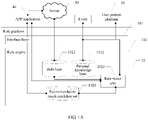
- FIG. 1A is a system architecture diagram applied to an embodiment of this application.
- a rule platform 10 is included in a terminal, and is a system-level application.
- the rule platform 10 provides an ability to manage and match rules for a plurality of APPs in the terminal.
- a user portrait platform 20, an application 40, and a graphical user interface 50 are also included in the terminal.
- Any one or more applications 40 in the terminal may register a rule with the rule platform 10, and the rule platform 10 stores the rule registered by the application.
- the rule platform 10 may be further connected to a cloud server 30, and can periodically query the cloud server 30 for whether any rule is updated, and if a rule is updated, the rule platform 10 downloads the updated rule to update the related rule.
- the rule platform 10 may be further connected to the user portrait platform 20 in the terminal.
- the rule platform 10 may obtain a user portrait from the user portrait platform 20 and store the obtained user portrait.
- the rule platform 10 may send a detected event to the user portrait platform 20, so that the user portrait platform 20 can update the user portrait.
- the rule platform 10 may include: an interface layer 101 and a rule engine 102.
- Interface layer 101 an invocation or communication method agreed between modular programs. Due to function decoupling between modules, information that needs to be shared may be defined in an interface. Decoupling is to separate modules that are not correlated or limitedly correlated in a program.
- the interface layer 101 has the following functions: monitoring an event; registering, modifying, querying, and deleting a rule; returning a recommendation result to the application 40; sending a detected event to the personal knowledge base 1022, the user portrait platform 20, and a rule status unit 1023; and the like.
- the application 40 may register a rule to a rule base 1021 of the rule engine 102 through the interface layer 101.
- Rule engine 102 A developer may use the engine to quickly build or deploy a function required by a program, or use the engine to help a program to run.
- an engine is a support part of a program or a system.
- Common program engines include a game engine, a search engine, an antivirus engine, and the like.
- the rule engine 102 in this application may include function modules such as the rule base 1021, the personal knowledge base 1022, the rule status unit 1023, and a recommendation result candidate set 1024.
- the rule platform 10 may request a user portrait from the user portrait platform 20, and then store the obtained user portrait in the personal knowledge base 1022. After detecting an event, the rule platform 10 may send the detected event to the user portrait platform 20, and the user portrait platform 20 may update the user portrait based on the newly received event, and send an updated user portrait to the rule platform 10.
- the interface layer 101 may further send the event to the rule status unit 1023.
- the personal knowledge base 1022 may further record a condition matching status. After the rule status unit 1023 matches the obtained event with a condition of the related rule, if the matching is successful, a successful matching state is recorded in the personal knowledge base 1022, that is, the condition matching status is stored in the personal knowledge base 1022.
- a recommendation result is output only after a rule meets one or more conditions. For example, when one or more detected events are matched with one or more conditions of a rule, a status of the condition or conditions can be recorded as "matched”. Then, other events are received to determine whether other conditions of the rule are matched. If all the conditions are matched, a state of the rule in the rule status unit 1023 is "matched", and a recommendation result can be output to the application 40.
- the personal knowledge base 1022 may further record a period status of a rule related to the event, obtained from the rule status unit 1023. After a rule is matched, a period status of the rule may be recorded correspondingly. For example, a recommendation result is output once every five days after the rule is matched. In this case, after the rule is matched, the rule enters a sleep period, and enters an active state again five days later. It should be understood that, during the five days, even if a detected event matches the rule, no recommendation result is output because the rule is still in a sleep state.
- the rule status unit 1023 is configured to receive an event sent from the interface layer 101.
- the rule status unit 1023 may obtain a rule related to the event from the rule base 1021 to update a status. If states of all conditions of a rule in the personal knowledge base 1022 are "matched", the rule status unit 1023 records a state of this rule as "matched”, and the rule status unit 1023 may output a recommendation result corresponding to the rule to any one or more applications 40.
- the recommendation result candidate set 1024 may store a corresponding recommendation result after a rule is matched, and the application 40 may obtain one or more recommendation results from the recommendation result candidate set 1024 for display.
- FIG. 1B is a schematic diagram of an embodiment of a terminal.
- the terminal includes a rule platform 10 and a graphical user interface 50.
- the rule platform 10 includes an interface layer 101 and a rule engine 102.
- the rule engine 102 includes a rule base 1021, a personal knowledge base 1022, and a rule status unit 1023.
- the rule base 1021 includes at least one rule, and each rule includes at least one condition.
- the interface layer 101 is configured to obtain a first event.
- the rule status unit 1023 is configured to: obtain at least one rule related to the first event from the rule base 1021, update a matching status of a first condition corresponding to the first event in the at least one rule related to the first event, and record the matching status in the personal knowledge base 1022; and is further configured to: when a matching status of each condition in a first rule indicates that matching is successful, output a recommendation result corresponding to the first rule.
- the personal knowledge base 1022 is configured to store the first event, and the matching status of the first condition in the at least one rule related to the first event.
- the graphical user interface 50 is configured to display the recommendation result.
- the interface layer 101 is further configured to receive the first rule sent by a first application, and store the first rule in the rule base 1021.
- that the rule status unit 1023 outputs a recommendation result corresponding to the first rule includes: the rule status unit 1023 sends the recommendation result to a second application.
- the graphical user interface 50 is specifically configured to display the recommendation result by the second application, where the second application is the same as or different from the first application.
- FIG. 1D is a schematic diagram of another embodiment of a terminal.
- the rule engine 102 further includes a recommendation result candidate set 1024. That the rule status unit 1023 outputs a recommendation result corresponding to the first rule includes: the rule status unit 1023 outputs the recommendation result to the recommendation result candidate set 1024.
- the graphical user interface 50 is specifically configured to display the recommendation result obtained by the second application from the recommendation result candidate set 1024, where the second application is the same as or different from the first application.
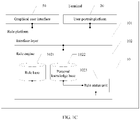
- FIG. 1C is a schematic diagram of another embodiment of a terminal.
- the terminal further includes a user portrait platform 20, and the first rule includes a second condition related to a user portrait.
- the personal knowledge base 1022 is further configured to obtain a current user portrait from the user portrait platform 20 of the terminal; and update a matching status of the second condition based on the current user portrait.
- the rule base 1021 is further configured to receive, through the interface layer 101, an updated rule sent by a server; and update a rule related to the updated rule in the rule base 1021.
- FIG. 2 is a schematic diagram of an embodiment of a recommendation method according to an embodiment of this application.
- the recommendation method includes the following steps.
- Step 201 An application 40 registers a rule with a rule platform 10.
- Any one or more applications, or all applications on a terminal may register a rule with the rule platform 10, and a rule engine 102 in the rule platform 10 may store the rule registered by the application to a rule base 1021 for centralized management.
- the APPs may register respective rules with the rule engine 102 by using an Android interface definition language (Android Interface Definition Language, AIDL) interface provided by the rule engine 102, and the rule engine 102 stores the rules registered by the APPs to the rule base 1021.
- Each application may register one or more rules with the rule platform 10.
- Rules included in the rule base 1021 may be classified into a rule defined in an application and a user-defined rule.
- the user-defined rule is also actually implemented on the application, and this application may be referred to as a custom application.
- a plurality of match conditions and recommendation results may be defined in the custom application, where the plurality of match conditions and recommendation results may be displayed on a display interface of the terminal; and then a user may select a target match condition and a corresponding target recommendation result based on a requirement of the user, so as to generate a customized rule.
- the rule base 1021 includes at least one rule, and each rule includes at least one condition.
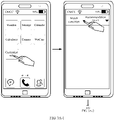
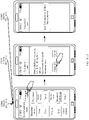
- FIG. 3A-1 and FIG. 3A-2 are a schematic diagram of displaying a plurality of match conditions in a display interface on a terminal.
- Match condition types may include time, location, weather, temperature, work, life, study, and the like, and each match condition type may further include a plurality of match conditions.
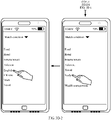
- FIG. 3B-1 and FIG. 3B-2 are a schematic diagram of displaying a plurality of recommendation results in a display interface on a terminal.
- Recommendation result types may include food, hotel, entertainment, take-out, travel, study, and the like, and each recommendation result type may further include a plurality of recommendation results.
- the plurality of match conditions and the plurality of recommendation results are available for the user to select, so as to generate a user-defined rule.
- FIG. 3C-1 , FIG. 3C-2 , and FIG. 3C-3 are a schematic diagram of selecting a target match condition and a target recommendation result by a user.
- the user may drag to display the target match condition and the target recommendation result on a display interface, and then tap an icon such as OK or Generate Rule to generate the user-defined rule.
- FIG. 3D-1 , FIG. 3D-2 , and FIG. 3D-3 are a schematic diagram of selecting a target match condition and a target recommendation result by a user.
- the user selects a target match condition or a target recommendation result, and the target match condition/target recommendation result is added into a thumbnail icon.
- the target match condition and the target recommendation result of the rule are displayed.
- a display position of the thumbnail icon on the display interface is not limited, and the thumbnail icon may rotate, be added with a text prompt, be highlighted, or have its frame flashing, to remind the user.
- the rules stored in the rule base 1021 may be updated.
- the terminal may send a query request to a server 30, where the query request is used to query whether any rule is updated; the terminal receives an updated rule sent by the server 30; and the terminal updates a rule related to the updated rule in the rule base 1021.
- the upgraded application registers a rule with the rule platform 10, where the rule may include an updated rule; and updates all rules related to the updated rule in the rule base 1021.
- the application is not upgraded, but the application sends an updated rule to the server 30; the server 30 may store the updated rule; and the interface layer 101 in the rule platform 10 may periodically query the server 30 whether any rule is updated, and if a rule is updated, downloads the updated rule from the server 30, and updates all rules related to the updated rule in the rule base 1021.
- each application does not need to monitor an event; instead, the interface layer 101 of the rule platform 10 performs centralized management and monitoring.
- the rule platform 10 has system-level permission, can proactively monitor various system events, and can also passively monitor various application events.
- the application may set various rules. Even if the application does not have system-level permission, the application can write a system parameter as a match condition into a rule, so as to implement corresponding function recommendation.
- a rule may be any combination of different conditions.
- a first application registers a rule with the rule engine 102 through the interface layer 101, where match conditions of the rule are condition A, condition B, and condition C, and a corresponding recommendation result is performing a first operation; that a second application registers a rule with the rule engine 102 through the interface layer 101, where match conditions of the rule are condition A, condition B, and condition D, and a corresponding recommendation result is performing a second operation; and that a third application registers a rule with the rule engine 102 through the interface layer 101, where match conditions of the rule are condition B, condition C, and condition E, and a corresponding recommendation result is performing a third operation.
- condition B all the three applications need to monitor corresponding events. In this case, a system resource for condition B is repeatedly invoked, causing additional power consumption. In this embodiment of this application, if an event detected by the interface layer 101 matches condition B, the event may be recorded and invoked repeatedly. The event may match condition B in rules of the three applications. There is no need to monitor the event for three times, thereby saving system resources.
- obtaining, by the rule platform 10, an event may include: monitoring, by the interface layer 101 of the rule platform 10, the event; and sending, by the interface layer 101, the event to a personal knowledge base 1022, a rule status unit 1023, and a user portrait platform 20.
- Step 202 The interface layer 101 of the rule platform 10 monitors an event.
- each application does not need to monitor an event; instead, the interface layer 101 can monitor the event.
- the event may be any event occurring on the terminal; and the event may include a system event and/or an application event.
- a plurality of events may be detected by the interface layer 101 at the same time.
- the interface layer 101 may proactively monitor a system event, and the rule engine 102 needs to proactively register monitoring with a corresponding system module through the interface layer 101.
- the interface layer 101 may also passively monitor an event. For example, some application events are monitored passively by the interface layer 101.
- the rule platform 10 may send a registration request to an application, so that the application sends some specific events to the interface layer 101 when the specific events occur. When these specific events occur on the application, the application proactively sends the specific events to the interface layer 101, that is, the interface layer 101 passively monitors the events.
- the events may include inserting headphones, removing headphones, walking, running, cycling, driving/riding a car, power volume, screen on, black screen, weather, temperature, geographical fence, light intensity, a network status, wireless fidelity (wireless fidelity, Wi-Fi) on/off, mobile data on/off, vibration on/off, flight mode on/off, disturbance free on/off, eye protection mode on/off, date, time, camera on/off, and the like.
- an event that can be detected by the terminal is: the weather is thundershower.
- an event that can be detected by the terminal is: enabling a flight mode.
- an event that can be detected by the terminal is: making a call.
- an event that can be detected by the terminal is: being in a photographing mode.
- Step 203 The interface layer 101 of the rule platform 10 sends the event to the personal knowledge base 1022, the rule status unit 1023, and the user portrait platform 20.
- the personal knowledge base 1022 receives the event sent by the interface layer 101, and the personal knowledge base 1022 may record and store the event, and specifically, may record information such as an occurrence quantity, time, a location of the event, and other information.
- the interface layer 101 may further send the event to the rule status unit 1023.
- a historical user portrait may be stored in the personal knowledge base 1022.
- the interface layer 101 may further send the event to the user portrait platform 20, and the user portrait platform 20 performs user tag analysis on the event to determine whether a user portrait changes. If the user portrait changes, an updated user portrait may be fed back to the personal knowledge base 1022. If the user portrait does not change, the original user portrait may be fed back or not fed back. After receiving the updated user portrait, the personal knowledge base 1022 may update the stored historical user portrait.
- the user portrait can be used as a condition to match with the match condition in the rule.
- Conditions in some rules include the user portrait, and conditions in some rules do not include the user portrait.
- the rules without the user portrait have no effect on rule matching.
- the rules with the user portrait are considered to be matched successfully only when one or more detected events and the user portrait all meet a match condition in a specific rule.
- a recommendation result can be output to the application 40.
- a recommendation result may be stored in a recommendation result candidate set 1024, and the application 40 proactively obtains the recommendation result from the recommendation result candidate set 1024.
- Step 204 The rule status unit 1023 queries the rule base 1021 for a rule related to the event, and if there is no such rule, ends the process; or if there is such a rule, performs step 205.
- the rule status unit 1023 may obtain at least one rule related to the event from the rule base 1021.
- That the rule status unit 1023 of the rule platform 10 obtains at least one rule related to the event from the rule base 1021 may be obtaining all rules related to the event.
- the at least one rule related to this event may be registered by a plurality of applications, or may be registered by one application.
- the rule status unit 1023 may query and obtain at least one rule or all rules related to the event from the rule base 1021 to perform status update.
- the personal knowledge base 1022 may further record a condition matching status of the rule related to the event, and the condition matching status may be "matched", "satisfied", or other indication information.
- the personal knowledge base 1022 may store a condition of the rule related to the event, and record the condition matching status; or the personal knowledge base 1022 may record only the condition matching status (a condition identifier is unique); or another manner may be used. This is not specifically limited.
- a first event monitored by the interface layer 101 is 9:00 a.m., and two rules related to 9:00 a.m. are found in the rule base 1021 through query.
- the rule status unit 1023 may obtain the two rules for status update.
- condition matching statuses corresponding to the two rules are recorded in the personal knowledge base 1022; or match conditions of the two rules may be stored in the personal knowledge base 1022, and condition matching statuses are recorded correspondingly. It is assumed that a first rule A is "6:00 a.m. to 10:00 a.m.
- a recommendation result is 'wear a mask"'; and that a second rule B is "commuting hours (8:00 a.m. to 9:00 a.m., or 5:30 p.m. to 7:00 p.m. + headphones inserted + in-vehicle state, a recommendation result is 'play music using music software'".
- the personal knowledge base 1022 records a condition matching status corresponding to the at least one rule related to the event.
- the personal knowledge base 1022 may obtain the match condition corresponding to the at least one rule or all rules related to the event from the rule status unit 1023, and the condition matching status may be recorded in the personal knowledge base 1022.
- each rule has a unique identifier, and correspondingly, the rule identifier and the condition matching status may be directly recorded.
- the status of condition 1 of the rule A is "matched/satisfied". It should be understood that the condition matching status of the rule may be recorded in various ways, which is not specifically limited.
- the interface layer 101 sends the event Tuesday to the rule status unit 1023, and the rule status unit 1023 queries the rule base 1021 for all rules related to the event Tuesday.
- all the rules related to Tuesday are as follows: A first rule A is "6:00 a.m.-10:00 a.m. workday (Monday to Friday) + poor air quality (an air pollution index is greater than 100), a recommendation result is 'wear a mask'"; and a second rule C is "the third week of each month + Tuesday, a recommendation result is '50% off in McDonald's'".
- a third event detected by the interface layer 101 is a pollution index of 150
- the interface layer 101 sends the event of a pollution index of 150 to the rule status unit 1023, and the rule status unit 1023 queries the rule base 1021 for all rules related to the event of a pollution index of 150.
- all the rules related to the pollution index of 150 are: the first rule A "6:00 a.m. to 10:00 a.m. in workday (Monday to Friday) + poor air quality (an air pollution index is greater than 100), a recommendation result is 'wear a mask'".
- Step 207 If condition matching statuses of all rules in the personal knowledge base 1022 indicate that matching is successful, the rule status unit 1023 outputs a recommendation result.
- the terminal displays the recommendation result corresponding to the first rule.
- the first rule may further include a second condition related to a user portrait; and the rule platform 10 obtains a current user portrait from the user portrait platform 20 of the terminal, and updates a match status of the second condition based on the current user portrait.
- the terminal displays a recommendation result corresponding to the first rule, where the second rule is one of the at least one rule related to the first event.
- the terminal may randomly display a recommendation result corresponding to one of the at least two rules. If priorities are different, the terminal may display a recommendation result corresponding to a rule with a highest priority, or may display recommendation results corresponding to the first N (N is an integer greater than or equal to 2) rules with a highest priority.
- the rule status unit 1023 when the condition matching status of one or more rules related to the event is "matched/satisfied" or other information indicating that the matching is successful, the event is considered to be matched with the one or more rules, and the rule status unit 1023 outputs the recommendation result corresponding to the one or more rules.
- the rule status unit 1023 may proactively activate the recommendation result, and display the recommendation result on the application 40 through the interface layer 101.
- the recommendation result may be stored in the recommendation result candidate set 1024, the application 40 obtains the one or more recommendation results from the recommendation result candidate set 1024 through the interface layer 101, and the application 40 may display the recommendation result based on a priority of the rule.
- the application 40 may obtain one or all recommendation results. After obtaining the recommendation result, the application 40 may control how to display the recommendation result. For example, the application 40 obtains a plurality of recommendation results. However, if the plurality of recommendation results are displayed at a time, interference may be caused to the user, and a crash may occur. In addition, the recommendation results may not be displayed on a same application.
- the application 40 may set the rule priority. When a plurality of recommendation results are obtained, a recommendation result to be displayed on the application 40 may be determined based on recommendation results corresponding to the rule priorities, or another display manner may be used, which is not specifically limited.
- condition 1 workday (Monday to Friday)
- condition 2 6:00 a.m. to 10:00 a.m.
- condition 3 air pollution index greater than 100
- a state is "matched”
- the detected event is considered to be matched with the rule, and the rule status unit 1023 outputs the recommendation result.
- condition 1 commuting hours (8:00 a.m.-9:00 a.m., or 5:30 p.m.-7:00 p.m.)
- condition 2 headphones inserted, a state is "satisfied”
- condition 3 in-vehicle state, a state is "satisfied”
- the detected event is considered to be matched with the rule, and the rule status unit 1023 outputs the recommendation result.
- the server may collect usage habits of a plurality of users, and update rules based on the usage habits of the plurality of users. For example, there are two rules, and the server sends a first rule to 50 mobile phones: during commuting time (8:00 a.m.-9:00 a.m.), prompting to listen to music, and sends a second rule to the other 50 mobile phones: during commuting time (8:00 a.m.-9:00 a.m.), prompting to view hot news. Then, the server may count a click rate of the 100 mobile phone users during the time period of 8:00 a.m.-9:00 a.m. If a click rate of listening to music is much higher than that of viewing hot news, the server may update the second rule to the first rule, or vice versa.
- Step 208 The terminal displays the recommendation result.
- that the terminal displays the recommendation result corresponding to the first rule may include: (1) sending, by the rule platform 10, the recommendation result to the second application; and displaying, by the second application, the recommendation result, where the second application is the same as or different from the first application; or (2) storing, by the rule platform 10, the recommendation result; and obtaining, by the second application, the recommendation result from the rule platform 10, and displaying the recommendation result, where the second application is the same as or different from the first application.
- the application of the terminal receives and displays the recommendation result activated by the rule status unit 1023, or the application of the terminal obtains one or more recommendation results from the recommendation result candidate set 1024, and controls to display the one or more recommendation results. It should be noted that, the application of the event and the application that finally displays the recommendation result are not necessarily a same application.
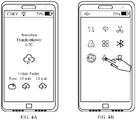
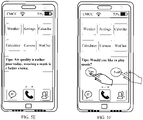
- the terminal displays the recommendation result, as shown in FIG. 5A .
- the event detected is "enabling a flight mode”
- a rule in the rule base 1021 specifies that the match condition is "flight mode enabled” and the recommendation result is “during the flight, you can select the following pastimes: video, music, reading, and others”
- the terminal displays the recommendation result, as shown in FIG. 5B .
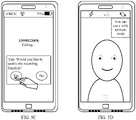
- the terminal displays the recommendation result, as shown in FIG. 5C . If the detected event is "camera on”, and a rule in the rule base 1021 specifies that the match condition is "photographing mode” and the recommendation result is "You can use a wide aperture mode”, the terminal displays the recommendation result, as shown in FIG. 5D .
- FIG. 5E is a schematic diagram of the recommendation result displayed on the terminal. If the second rule is successfully matched, the terminal displays "play music using music software”.
- FIG. 5F is a schematic diagram of the recommendation result displayed on the terminal. If both the first rule and the second rule are successfully matched, a display order of the recommendation results may be determined based on priorities of the rules.
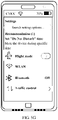
- the first application or the second application described in the embodiments of this application may be, for example, a setting application.
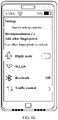
- FIG. 4E is a schematic diagram of a display interface of a setting application. After the setting application is started, the display interface may display suggested setting options, such as adding other fingerprints (using other fingerprints to unlock).
- the setting application may send some rules to the rule base of the rule platform 10 in advance. For example, one of the rules is: rejecting three incoming calls during 11:00 p.m. to 6 a.m., and a recommendation result is: Set "do not disturb" time (mute the device during a specific time).
- the event detected by the interface layer 101 is that incoming calls at 12 p.m., 2 a.m., and 4 a.m.
- an updated recommendation result is displayed on the display interface of the setting application, that is, "Set 'do not disturb' time (mute the device during a specific time)".
- the setting suggestion may be updated along with the recommendation results for rule matching.
- the terminal provided in the embodiments of this application includes a rule platform with system-level permission, and the rule platform manages rules required by a plurality of applications of the terminal together. Therefore, when the rules required by the plurality of applications include the same conditions, the rule platform only needs to obtain the event of the terminal and match the obtained event with the condition, thereby saving system resources and preventing the system resources from being invoked repeatedly.
- the system-level permission means that all resources of a system can be used.
- the terminal provides a unified rule management system, which may be a rule base and may implement unified rule matching and life cycle management functions.
- the terminal provides a unified context awareness system, which may be a personal knowledge base and may support user-defined rules.
- the rules stored in the rule base can be registered and updated through a cloud, and hot update of the rules is supported.
- the interface layer can proactively monitor a system event and passively monitor an application event, to trigger rule matching.
- the application can proactively obtain the recommendation result, and the engine can proactively activate the recommendation result.
- Unified rule management on the cloud, a rule definition template, a modular rule match condition, and a life cycle condition are supported.
- a rule status may be updated by updating a rule condition.
- the rule base may further include the following rules:
- the rule base 1021 may include the following stored rules: For example, (1) eye protection mode function prompt. If light intensity is greater than a first threshold, or the light intensity is less than a second threshold, or, between 9 p.m. and 6 a.m., or, a screen is on in a non-full screen mode for more than 10 minutes, the user may be prompted to use the eye protection mode.
- a life cycle includes three reminders, and an interval between reminders is five days.
- Knuckle screenshot function prompt After it is detected that a user uses a manner other than knuckle screenshot to capture a screenshot for two times (which can be self-defined), if a third non-knuckle screenshot is detected, the user may be asked whether to use the knuckle screenshot function, or the user may be prompted to use a knuckle prompt function.
- a life cycle may include two reminders, and an interval between the two reminders is seven days.
- Call recording function prompt For example, in modes such as calling, voice chat, and video, a user may be prompted to enable a call recording function.
- a life cycle includes one reminder, that is, the rule is disabled or reset after one reminder.
- Camera wide aperture mode prompt For example, if a camera provided in a system or a camera application provided by a third party (such as BeautyCam and Pitu) is used, in a photographing mode, a user may be prompted to use a wide aperture mode.
- a life cycle includes three reminders, and an interval between reminders is 15 days.
- Notification management function prompt If a user performs an operation such as tapping or double-tapping on a notification message on a display screen, the user may be prompted to manage received notification messages.
- a life cycle includes two reminders, and an interval between reminders is two days.
- Timed power-on/off function prompt For example, a user is prompted to power off a mobile phone at 11 p.m. and power on the phone at 7 a.m.
- a life cycle includes three reminders, and an interval between reminders is one day.
- Notification split-screen display function prompt For example, if an SMS message, a WeChat message, or a QQ message is received in a full screen mode, a user may be prompted to use the split-screen display function.
- a life cycle includes three reminders, and an interval between reminders is three days.
- Add contact prompt of a scan business card function For example, in an interface for adding a new contact, a user may be prompted to add information by using the scan business card function.
- a life cycle includes three reminders, and an interval between reminders is five days.
- Video/music/reading prompt When in an airplane, a flight mode is enabled, and there is no signal. However, it is quite boring during the flight, and a user may be asked whether to watch a video, listen to music, or read a book.
- the user selects the match condition and the corresponding recommendation result to generate a customized rule, for example: workday (Monday to Friday) morning (6:00 a.m. to 10:00 a.m.) + poor air quality (an air pollution index is greater than 100), prompting "wear a mask”; or, on the first day of each month, prompting "make credit card repayment, pay gas, electricity, and water bills, and top up the mobile phone”; or, every Friday afternoon (17:00-19:00) + rain/snow, prompting "Fresh Hema”; or, in-vehicle Bluetooth connected, automatically enabling "Gao De Navigation”; or other events.
- options in the user-defined rules may be preset in the mobile phone, and the user may select a desired option based on an actual requirement.
- the rules may also be rules for recommending an APP (a third-party APP may be allowed) for a specified scenario. For example: commuting hours (8:00 a.m.-9:00 a.m., or 5:30 p.m.-7:00 p.m.) + headphones inserted + in-vehicle state, music software can be recommended; overtime period (7:00 p.m.-9:00 p.m.) + walk + company + rain/snow, a taxi hailing software can be recommended; and weekend (Saturday and Sunday) + not at home or work + dinner time (6:00 p.m.-9:00 p.m.) + static + movie fan, movie ticketing software can be recommended.
- the rules may also be rules for targetedly recommending some functions of an APP (a third-party APP may be allowed). For example: using Alipay + stock software, Alipay's Ant Financial can be recommended; in-vehicle state + navigation + manual input, voice assistant can be recommended; too many pictures/documents, cloud backup can be recommended.
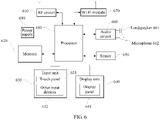
- FIG. 6 is a block diagram of a partial structure of a mobile phone related to a terminal according to an embodiment of this application.
- the mobile phone includes components such as a radio frequency (Radio Frequency, RF) circuit 610, a memory 620, an input unit 630, a display unit 640, a sensor 650, an audio circuit 660, a wireless fidelity (wireless fidelity, Wi-Fi) module 670, a processor 680, and a power supply 690.
- RF Radio Frequency
- the RF circuit 610 may be configured to receive and send signals in an information sending and receiving process or a call process, and particularly, receive downlink information from a base station, and then send the downlink information to the processor 680 for processing. In addition, the RF circuit 610 sends related uplink data to the base station. Generally, the RF circuit 610 includes but is not limited to an antenna, at least one amplifier, a transceiver, a coupler, a low noise amplifier (Low Noise Amplifier, LNA), a duplexer, and the like. In addition, the RF circuit 610 may communicate with a network and another device through wireless communication.
- LNA Low Noise Amplifier
- the wireless communication may use any communication standard or protocol, including but not limited to global system for mobile communications (Global System of Mobile communication, GSM), general packet radio service (General Packet Radio Service, GPRS), code division multiple access (Code Division Multiple Access, CDMA), wideband code division multiple access (Wideband Code Division Multiple Access, WCDMA), long term evolution (Long Term Evolution, LTE), email, short message service (Short Messaging Service, SMS), and the like.
- GSM Global System of Mobile communication
- GPRS General Packet Radio Service
- CDMA Code Division Multiple Access
- WCDMA Wideband Code Division Multiple Access
- LTE Long Term Evolution
- SMS short message service
- the memory 620 may be configured to store a software program and a module.
- the processor 680 executes various function applications of the mobile phone and processes data by running the software program and the module stored in the memory 620.
- the memory 620 may mainly include a program storage area and a data storage area.
- the program storage area may store an operating system, an application program required by at least one function (such as an audio play function or an image play function), and the like; and the data storage area may store data (such as audio data and a phone book) created based on use of the mobile phone, and the like.
- the memory 620 may include a high-speed random access memory, and may further include a non-volatile memory such as at least one disk storage device, a flash memory device, or another volatile solid-state storage device.
- the input unit 630 may be configured to receive input digital or character information, and generate a key signal input related to user settings and function control of the mobile phone.
- the input unit 630 may include a touch panel 631 and other input devices 632.
- the touch panel 631 also referred to as a touchscreen, may collect a touch operation performed by a user on or near the touch panel 631 (for example, an operation performed by the user on or near the touch panel 631 by using any proper object or accessory such as a finger or a stylus), and drive a corresponding connection apparatus according to a preset program.
- the touch panel 631 may include two parts: a touch detection apparatus and a touch controller.
- the touch detection device detects a touch orientation of the user, detects a signal brought by the touch operation, and transmits the signal to the touch controller.
- the touch controller receives touch information from the touch detection apparatus, converts the touch information into contact coordinates, and sends the contact coordinates to the processor 680, and can receive a command sent by the processor 680 and execute the command.
- the touch panel 631 may be implemented in various types, such as a resistive type, a capacitive type, an infrared type, and a surface acoustic wave type.
- the input unit 630 may include the other input devices 632. Specifically, the other input devices 632 may further include but are not limited to one or more of a physical keyboard, a function key (such as a volume control key or an on/off key), a trackball, a mouse, and a joystick.
- the display unit 640 may be configured to display information input by the user, or information provided for the user, and various menus of the mobile phone.
- the display unit 640 may include a display panel 641.
- the display panel 641 may be configured in a form of a liquid crystal display (Liquid Crystal Display, LCD), an organic light-emitting diode (Organic Light-Emitting Diode, OLED), or the like.
- the touch panel 631 may cover the display panel 641. After detecting a touch operation on or near the touch panel 631, the touch panel 631 transmits a touch event to the processor 680 to determine a touch event type. Then, the processor 680 provides a corresponding visual output on the display panel 641 based on the touch event type.
- the touch panel 631 and the display panel 641 are used as two independent components to implement input and output functions of the mobile phone.
- the touch panel 631 and the display panel 641 may be integrated to implement the input and output functions of the mobile phone.
- the mobile phone may further include at least a type of sensor 650, such as a light sensor, a motion sensor, or another sensor.
- the light sensor may include an ambient light sensor and a proximity sensor.
- the ambient light sensor may adjust luminance of the display panel 641 based on brightness of ambient light.
- the proximity sensor may turn off the display panel 641 and/or backlight when the mobile phone moves to the ear.
- an accelerometer sensor may detect magnitudes of acceleration in various directions (usually three axes), detect, in a static state, a magnitude and a direction of gravity, and may be used for an application that recognizes a posture of the mobile phone (for example, screen switching between a portrait mode and a landscape mode, a related game, and magnetometer posture calibration), a vibration identification-related function (for example, a pedometer or tapping), and the like.
- a posture of the mobile phone for example, screen switching between a portrait mode and a landscape mode, a related game, and magnetometer posture calibration
- a vibration identification-related function for example, a pedometer or tapping
- the audio circuit 660, a loudspeaker 661, and a microphone 662 may provide an audio interface between the user and the mobile phone.
- the audio circuit 660 may transmit an electrical signal converted from received audio data to the loudspeaker 661, and the loudspeaker 661 converts the electrical signal into a sound signal for output.
- the microphone 662 converts a received sound signal into an electrical signal
- the audio circuit 660 receives the electrical signal and converts the electrical signal into audio data, and outputs the audio data to the processor 680 for processing; and processed audio data is sent to, for example, another mobile phone through the RF circuit 610, or the audio data is output to the memory 620 for further processing.
- Wi-Fi is a short-range wireless transmission technology.
- the mobile phone can help, by using the Wi-Fi module 670, the user to receive and send emails, browse a web page, access streaming media, and the like, to provide wireless broadband internet access for the user.
- FIG. 6 shows the Wi-Fi module 670, it can be understood that the Wi-Fi module 670 is not a mandatory part of the mobile phone, and may be omitted based on a requirement without changing the essence scope of the present invention.
- the processor 680 is a control center of the mobile phone, is connected to all parts of the entire mobile phone by using various interfaces and lines, and by running or executing the software program and/or module stored in the memory 620, and invoking data stored in the memory 620, performs various functions of the mobile phone and processes data, to perform overall monitoring on the mobile phone.
- the processor 680 may include one or more processing units.
- an application processor and a modem processor may be integrated into the processor 680.
- the application processor mainly processes an operating system, a user interface, an application, and the like.
- the modem processor mainly processes wireless communication. It can be understood that the foregoing modem processor may not be integrated into the processor 680.
- the mobile phone further includes the power supply 690 (such as a battery) that supplies power to the components.
- the power supply may be logically connected to the processor 680 through a power management system, to implement functions such as charging management, discharging management, and power consumption management through the power management system.
- the mobile phone may further include a camera, a Bluetooth module, and the like, and details are not described herein.
- the terminal in the foregoing embodiment may be based on the terminal structure shown in FIG. 6 , and the processor 630 may execute a program instruction stored in the memory 640 to implement the method shown in the foregoing embodiment, and details are not described herein again.
- All or some of the foregoing embodiments may be implemented by software, hardware, firmware, or any combination thereof.
- the embodiments may be implemented completely or partially in a form of a computer program product.
- the computer program product includes one or more computer instructions.
- the computer may be a general-purpose computer, a dedicated computer, a computer network, or another programmable apparatus.
- the computer instructions may be stored in a computer-readable storage medium or may be transmitted from a computer-readable storage medium to another computer-readable storage medium.
- the computer instructions may be transmitted from a website, computer, server, or data center to another website, computer, server, or data center in a wired (for example, a coaxial cable, an optical fiber, or a digital subscriber line (DSL)) or wireless (for example, infrared, radio, or microwave) manner.
- a wired for example, a coaxial cable, an optical fiber, or a digital subscriber line (DSL)
- wireless for example, infrared, radio, or microwave
- the computer-readable storage medium may be any usable medium accessible by a computer, or a data storage device, such as a server or a data center, integrating one or more usable media.
- the usable medium may be a magnetic medium (for example, a floppy disk, a hard disk, or a magnetic tape), an optical medium (for example, a DVD), a semiconductor medium (for example, a solid-state drive Solid State Disk (SSD)), or the like.
Landscapes
- Engineering & Computer Science (AREA)
- Software Systems (AREA)
- Theoretical Computer Science (AREA)
- Physics & Mathematics (AREA)
- General Physics & Mathematics (AREA)
- Human Computer Interaction (AREA)
- Business, Economics & Management (AREA)
- General Engineering & Computer Science (AREA)
- Human Resources & Organizations (AREA)
- Signal Processing (AREA)
- Computer Networks & Wireless Communication (AREA)
- Strategic Management (AREA)
- Entrepreneurship & Innovation (AREA)
- Data Mining & Analysis (AREA)
- Databases & Information Systems (AREA)
- Environmental & Geological Engineering (AREA)
- Economics (AREA)
- Marketing (AREA)
- Operations Research (AREA)
- Quality & Reliability (AREA)
- Tourism & Hospitality (AREA)
- General Business, Economics & Management (AREA)
- User Interface Of Digital Computer (AREA)
- Management, Administration, Business Operations System, And Electronic Commerce (AREA)
- Information Transfer Between Computers (AREA)
- Information Retrieval, Db Structures And Fs Structures Therefor (AREA)
Claims (14)
- Computerimplementiertes Empfehlungsverfahren, wobei das Verfahren auf ein Endgerät angewendet ist, das Endgerät eine Regelplattform umfasst, die Regelplattform eine Berechtigung auf Systemebene aufweist und das Verfahren Folgendes umfasst:Erlangen, durch die Regelplattform, eines ersten Ereignisses;Erlangen, durch die Regelplattform, einer ersten Regel in Bezug auf das erste Ereignis und mindestens einer weiteren Regel in Bezug auf das erste Ereignis von einer Regeldatenbank (1021), wobei die Regelplattform die Regeldatenbank (1021) umfasst, die Regeldatenbank (1021) mindestens zwei Regeln umfasst und jede Regel mindestens eine Bedingung umfasst und wobei die erste Regel und die mindestens eine weitere Regel eine erste Bedingung umfassen, deren Abgleichstatus von dem ersten Ereignis abhängt;Aktualisieren, durch die Regelplattform, eines Abgleichstatus der ersten Bedingung, die dem ersten Ereignis entspricht, in der ersten Regel in Bezug auf das erste Ereignis und in der mindestens einen weiteren Regel in Bezug auf das erste Ereignis; undwenn ein Abgleichstatus jeder Bedingung in der ersten Regel angibt, dass ein Abgleich erfolgreich ist, Anzeigen, durch das Endgerät, eines Empfehlungsergebnisses, das der ersten Regel entspricht,wenn ein Abgleichstatus jeder Bedingung in der mindestens einen weiteren Regel angibt, dass ein Abgleich erfolgreich ist, Anzeigen, durch das Endgerät, eines Empfehlungsergebnisses, das der mindestens einen weiteren Regel entspricht.
- Verfahren nach Anspruch 1, wobei vor dem Erlangen, durch die Regelplattform, der ersten Regel in Bezug auf das erste Ereignis aus einer Regeldatenbank (1021) das Verfahren ferner Folgendes umfasst:Empfangen, durch die Regelplattform, der durch eine erste Anwendung gesendeten ersten Regel; undSpeichern, durch die Regelplattform, der ersten Regel in der Regeldatenbank (1021).
- Verfahren nach Anspruch 1 oder 2, wobei das Anzeigen, durch das Endgerät, eines Empfehlungsergebnisses, das der ersten Regel entspricht, Folgendes umfasst:Senden, durch die Regelplattform, des Empfehlungsergebnisses an eine zweite Anwendung; undAnzeigen, durch die zweite Anwendung, des Empfehlungsergebnisses, wobei die zweite Anwendung die gleiche wie oder eine andere als die erste Anwendung ist.
- Verfahren nach Anspruch 1 oder 2, wobei das Anzeigen, durch das Endgerät, eines Empfehlungsergebnisses, das der ersten Regel entspricht, Folgendes umfasst:Speichern, durch die Regelplattform, des Empfehlungsergebnisses; undErlangen, durch eine zweite Anwendung, des Empfehlungsergebnisses von der Regelplattform und Anzeigen des Empfehlungsergebnisses, wobei die zweite Anwendung die gleiche wie oder eine andere als die erste Anwendung ist.
- Verfahren nach einem der Ansprüche 1 bis 4, wobei die erste Regel eine zweite Bedingung in Bezug auf ein Benutzerporträt umfasst und vor dem Anzeigen, durch das Endgerät, eines Empfehlungsergebnisses, das der ersten Regel entspricht, das Verfahren ferner Folgendes umfasst:Erlangen, durch die Regelplattform, eines derzeitigen Benutzerporträts von einer Benutzerporträtplattform des Endgeräts; undAktualisieren, durch die Regelplattform, eines Abgleichstatus der zweiten Bedingung auf Grundlage des derzeitigen Benutzerporträts.
- Verfahren nach einem der Ansprüche 1 bis 5, wobei das Verfahren ferner Folgendes umfasst:Senden, durch das Endgerät, einer Abfrageanforderung an einen Server, wobei die Abfrageanforderung verwendet wird, um abzufragen, ob eine Regel aktualisiert ist;Empfangen, durch das Endgerät, einer durch den Server gesendeten aktualisierten Regel; undAktualisieren, durch das Endgerät, einer Regel in Bezug auf die aktualisierte Regel in der Regeldatenbank (1021).
- Verfahren nach einem der Ansprüche 1 bis 6, wobei, wenn der Abgleichstatus jeder Bedingung in der ersten Regel angibt, dass der Abgleich erfolgreich ist, das Anzeigen, durch das Endgerät, eines Empfehlungsergebnisses, das der ersten Regel entspricht, Folgendes umfasst:
wenn Abgleichstatus aller Bedingungen in der ersten Regel und einer zweiten Regel angeben, dass ein Abgleich erfolgreich ist, und eine Priorität der ersten Regel höher als die der zweiten Regel ist, Anzeigen, durch das Endgerät, des Empfehlungsergebnisses, das der ersten Regel entspricht, wobei die zweite Regel eine der mindestens einen weiteren Regel in Bezug auf das erste Ereignis ist. - Verfahren nach einem der Ansprüche 1 bis 7, wobei das Endgerät die Regelplattform und eine grafische Benutzeroberfläche (50) umfasst, wobei die Regelplattform eine Schnittstellenschicht (101) und eine Regelmaschine (102) umfasst;die Regelmaschine (102) die Regeldatenbank (1021), eine persönliche Wissensdatenbank (1022), eine Regelstatuseinheit (1023), einen Empfehlungsergebniskandidatensatz und die Benutzerporträtplattform umfasst, wobei die erste Regel die zweite Bedingung in Bezug auf das Benutzerporträt umfasst;die Schnittstellenschicht (101) dazu konfiguriert ist, das erste Ereignis zu erlangen;die Regelstatuseinheit (1023) dazu konfiguriert ist, die erste Regel und die mindestens eine weitere Regel in Bezug auf das erste Ereignis von der Regeldatenbank (1021) zu erlangen und den Abgleichstatus der ersten Bedingung, die dem ersten Ereignis entspricht, in der ersten Regel und in der mindestens einen weiteren Regel in Bezug auf das erste Ereignis zu aktualisieren;die persönliche Wissensdatenbank (1022) dazu konfiguriert ist, das erste Ereignis und den Abgleichstatus der ersten Bedingung in der ersten Regel und der mindestens einen weiteren Regel in Bezug auf das erste Ereignis zu speichern; und ferner dazu konfiguriert ist, das derzeitige Benutzerporträt von der Benutzerporträtplattform zu erlangen und den Abgleichstatus der zweiten Bedingung auf Grundlage des derzeitigen Benutzerporträts zu aktualisieren;der Empfehlungsergebniskandidatensatz zu Folgendem konfiguriert ist: wenn der Abgleichstatus jeder Bedingung in der ersten Regel angibt, dass der Abgleich erfolgreich ist, Speichern des Empfehlungsergebnisses, das der ersten Regel entspricht; unddie grafische Benutzeroberfläche (50) dazu konfiguriert ist, das Empfehlungsergebnis anzuzeigen.
- Endgerät, umfassend: eine Regelplattform und eine grafische Benutzeroberfläche (50), wobei die Regelplattform eine Schnittstellenschicht (101) und eine Regelmaschine (102) umfasst;die Regelmaschine (102) eine Regeldatenbank (1021), eine persönliche Wissensdatenbank (1022) und eine Regelstatuseinheit (1023) umfasst, wobei die Regeldatenbank (1021) mindestens eine Regel umfasst und jede Regel mindestens eine Bedingung umfasst;die Schnittstellenschicht (101) dazu konfiguriert ist, ein erstes Ereignis zu erlangen;die Regelstatuseinheit (1023) zu Folgendem konfiguriert ist: Erlangen einer ersten Regel in Bezug auf das erste Ereignis und mindestens einer weiteren Regel in Bezug auf das erste Ereignis von der Regeldatenbank (1021), Aktualisieren eines Abgleichstatus einer ersten Bedingung, die dem ersten Ereignis entspricht, in der ersten Regel und in der mindestens einen weiteren Regel in Bezug auf das erste Ereignis und Aufzeichnen des Abgleichstatus in der persönlichen Wissensdatenbank (1022); und ferner zu Folgendem konfiguriert ist: wenn ein Abgleichstatus jeder Bedingung in der ersten Regel angibt, dass ein Abgleich erfolgreich ist, Ausgeben eines Empfehlungsergebnisses, das der ersten Regel entspricht, und wenn ein Abgleichstatus jeder Bedingung in der mindestens einen weiteren Regel angibt, dass ein Abgleich erfolgreich ist, Ausgeben eines Empfehlungsergebnisses, das der mindestens einen weiteren Regel entspricht;die persönliche Wissensdatenbank (1022) dazu konfiguriert ist, das erste Ereignis und den Abgleichstatus der ersten Bedingung in der ersten Regel und in der mindestens einen weiteren Regel in Bezug auf das erste Ereignis zu speichern; unddie grafische Benutzeroberfläche (50) dazu konfiguriert ist, das Empfehlungsergebnis anzuzeigen.
- Endgerät nach Anspruch 9, wobei
die Schnittstellenschicht (101) ferner dazu konfiguriert ist, die durch eine erste Anwendung gesendete erste Regel zu empfangen und die erste Regel in der Regeldatenbank (1021) zu speichern. - Endgerät nach Anspruch 9 oder 10, wobei der Umstand, dass die Regelstatuseinheit (1023) ein Empfehlungsergebnis ausgibt, das der ersten Regel entspricht, Folgendes umfasst: die Regelstatuseinheit (1023) sendet das Empfehlungsergebnis an eine zweite Anwendung; und
die grafische Benutzeroberfläche (50) spezifisch dazu konfiguriert ist, das Empfehlungsergebnis durch die zweite Anwendung anzuzeigen, wobei die zweite Anwendung die gleiche wie oder eine andere als die erste Anwendung ist. - Endgerät nach Anspruch 9 oder 10, wobei die Regelmaschine (102) ferner einen Empfehlungsergebniskandidatensatz umfasst;der Umstand, dass die Regelstatuseinheit (1023) ein Empfehlungsergebnis ausgibt, das der ersten Regel entspricht, Folgendes umfasst: die Regelstatuseinheit (1023) gibt das Empfehlungsergebnis an den Empfehlungsergebniskandidatensatz aus; unddie grafische Benutzeroberfläche (50) spezifisch dazu konfiguriert ist, das durch eine zweite Anwendung von dem Empfehlungsergebniskandidatensatz erlangte Empfehlungsergebnis anzuzeigen, wobei die zweite Anwendung die gleiche wie oder eine andere als die erste Anwendung ist.
- Endgerät nach einem der Ansprüche 9 bis 12, wobei das Endgerät ferner eine Benutzerporträtplattform umfasst, wobei die erste Regel eine zweite Bedingung in Bezug auf ein Benutzerporträt umfasst; und
die persönliche Wissensdatenbank (1022) ferner dazu konfiguriert ist, ein derzeitiges Benutzerporträt von der Benutzerporträtplattform des Endgeräts zu erlangen und einen Abgleichstatus der zweiten Bedingung auf Grundlage des derzeitigen Benutzerporträts zu aktualisieren. - Endgerät nach einem der Ansprüche 9 bis 13, wobei die Regeldatenbank (012) ferner dazu konfiguriert ist, durch die Schnittstellenschicht (101) eine durch einen Server gesendete aktualisierte Regel zu empfangen und eine Regel in Bezug auf die aktualisierte Regel in der Regeldatenbank (1021) zu aktualisieren.
Priority Applications (1)
| Application Number | Priority Date | Filing Date | Title |
|---|---|---|---|
| EP22154938.9A EP4071695B1 (de) | 2017-09-18 | 2017-09-18 | Empfehlungsverfahren und endgerät |
Applications Claiming Priority (1)
| Application Number | Priority Date | Filing Date | Title |
|---|---|---|---|
| PCT/CN2017/102084 WO2019051835A1 (zh) | 2017-09-18 | 2017-09-18 | 一种推荐方法及终端 |
Related Child Applications (2)
| Application Number | Title | Priority Date | Filing Date |
|---|---|---|---|
| EP22154938.9A Division EP4071695B1 (de) | 2017-09-18 | 2017-09-18 | Empfehlungsverfahren und endgerät |
| EP22154938.9A Division-Into EP4071695B1 (de) | 2017-09-18 | 2017-09-18 | Empfehlungsverfahren und endgerät |
Publications (3)
| Publication Number | Publication Date |
|---|---|
| EP3671440A1 EP3671440A1 (de) | 2020-06-24 |
| EP3671440A4 EP3671440A4 (de) | 2020-11-11 |
| EP3671440B1 true EP3671440B1 (de) | 2022-04-13 |
Family
ID=65722295
Family Applications (2)
| Application Number | Title | Priority Date | Filing Date |
|---|---|---|---|
| EP17925343.0A Active EP3671440B1 (de) | 2017-09-18 | 2017-09-18 | Empfehlungsverfahren und endgerät |
| EP22154938.9A Active EP4071695B1 (de) | 2017-09-18 | 2017-09-18 | Empfehlungsverfahren und endgerät |
Family Applications After (1)
| Application Number | Title | Priority Date | Filing Date |
|---|---|---|---|
| EP22154938.9A Active EP4071695B1 (de) | 2017-09-18 | 2017-09-18 | Empfehlungsverfahren und endgerät |
Country Status (5)
| Country | Link |
|---|---|
| US (2) | US11245786B2 (de) |
| EP (2) | EP3671440B1 (de) |
| CN (3) | CN109983458B (de) |
| ES (1) | ES2913424T3 (de) |
| WO (1) | WO2019051835A1 (de) |
Families Citing this family (9)
| Publication number | Priority date | Publication date | Assignee | Title |
|---|---|---|---|---|
| CN113039566A (zh) * | 2018-12-12 | 2021-06-25 | 西门子股份公司 | 工业物联网解决方案的应用程序配置方法、装置、系统、计算机软件产品以及可读介质 |
| CN110322139B (zh) * | 2019-06-28 | 2023-11-28 | 创新先进技术有限公司 | 策略推荐方法及装置 |
| CN114286999B (zh) * | 2019-11-05 | 2025-02-11 | 深圳市欢太科技有限公司 | 推送内容的处理方法、装置、电子设备以及存储介质 |
| CN112241464A (zh) * | 2020-05-27 | 2021-01-19 | 杭州智尔科技有限公司 | 一种数据查询方法及装置 |
| CN113127748B (zh) * | 2021-05-18 | 2023-09-05 | 北京奇艺世纪科技有限公司 | 数据过滤方法及系统 |
| CN114339417B (zh) * | 2021-12-30 | 2024-05-10 | 未来电视有限公司 | 一种视频推荐的方法、终端设备和可读存储介质 |
| CN114579847B (zh) * | 2022-02-21 | 2025-05-27 | 中国银联股份有限公司 | 推送方法、装置、设备及计算机存储介质 |
| CN116893864B (zh) * | 2023-07-17 | 2024-02-13 | 无锡车联天下信息技术有限公司 | 智能座舱的语音助手实现方法、装置及电子设备 |
| CN117809389A (zh) * | 2023-12-01 | 2024-04-02 | 大连熵基科技有限公司 | 智能管理方法、装置、设备及计算机可读存储介质 |
Citations (1)
| Publication number | Priority date | Publication date | Assignee | Title |
|---|---|---|---|---|
| US9893904B2 (en) * | 2013-05-14 | 2018-02-13 | Palo Alto Research Center Incorporated | Rule-based messaging and dialog engine |
Family Cites Families (41)
| Publication number | Priority date | Publication date | Assignee | Title |
|---|---|---|---|---|
| US7177859B2 (en) * | 2002-06-26 | 2007-02-13 | Microsoft Corporation | Programming model for subscription services |
| US20160277261A9 (en) * | 2006-12-29 | 2016-09-22 | Prodea Systems, Inc. | Multi-services application gateway and system employing the same |
| US8719105B2 (en) * | 2007-02-01 | 2014-05-06 | 7 Billion People, Inc. | Dynamic reconfiguration of web pages based on user behavioral portrait |
| JP5169840B2 (ja) * | 2007-02-06 | 2013-03-27 | 日本電気株式会社 | 携帯電話機、携帯電話機のカスタマイズ方法および携帯電話機のカスタマイズプログラム |
| US20080250323A1 (en) | 2007-04-04 | 2008-10-09 | Huff Gerald B | Method and apparatus for recommending an application-feature to a user |
| US8090621B1 (en) * | 2007-06-27 | 2012-01-03 | Amazon Technologies, Inc. | Method and system for associating feedback with recommendation rules |
| JP5116492B2 (ja) * | 2008-01-15 | 2013-01-09 | 三菱電機株式会社 | アプリケーション実行端末 |
| JP2010146366A (ja) * | 2008-12-19 | 2010-07-01 | Toshiba Corp | 情報提供サーバ |
| CN106126388A (zh) | 2009-10-16 | 2016-11-16 | 阿里巴巴集团控股有限公司 | 监控事件的方法、规则引擎装置和规则引擎系统 |
| CN102056351B (zh) * | 2009-10-28 | 2013-06-12 | 中国移动通信集团浙江有限公司 | 一种推送服务系统及方法 |
| CN101917295B (zh) * | 2010-08-26 | 2013-08-21 | 北京天融信科技有限公司 | 一种基于对象的事件响应方法和系统 |
| CN102799751A (zh) | 2011-05-25 | 2012-11-28 | 鸿富锦精密工业(深圳)有限公司 | 备忘录系统、备忘录实现方法及具有该系统的手持式设备 |
| US8417233B2 (en) * | 2011-06-13 | 2013-04-09 | Mercury Mobile, Llc | Automated notation techniques implemented via mobile devices and/or computer networks |
| KR101777353B1 (ko) * | 2011-06-16 | 2017-09-11 | 삼성전자주식회사 | 디지털 촬영 장치 및 이의 제어 방법 |
| CN102855532B (zh) | 2011-06-30 | 2016-05-18 | 国际商业机器公司 | 基于通信消息管理工作任务的方法和装置 |
| JP5979159B2 (ja) * | 2012-02-09 | 2016-08-24 | 日本電気株式会社 | 推薦条件修正装置、推薦条件修正方法、および、推薦条件修正プログラム |
| KR101639659B1 (ko) * | 2012-03-24 | 2016-07-15 | 인텔 코포레이션 | 위치 기반 애플리케이션 추천 |
| US9262180B2 (en) | 2012-04-26 | 2016-02-16 | Adobe Systems Incorporated | Method and apparatus for recommending product features in a software application in real time |
| US9160844B2 (en) * | 2012-08-06 | 2015-10-13 | Angel.Com Incorporated | Conversation assistant |
| US9460608B2 (en) * | 2012-09-13 | 2016-10-04 | Apple Inc. | Reminder creation for tasks associated with a user event |
| KR102003818B1 (ko) * | 2012-10-16 | 2019-07-25 | 엘지전자 주식회사 | 휴대 단말기 및 그 동작 방법 |
| CN102905233A (zh) * | 2012-10-25 | 2013-01-30 | 北京小米科技有限责任公司 | 一种终端功能推荐的方法及装置 |
| WO2014073214A1 (ja) * | 2012-11-12 | 2014-05-15 | 日本電気株式会社 | パーソナル情報を分析する情報処理システム及びパーソナル情報分析方法 |
| CN103841508A (zh) * | 2012-11-20 | 2014-06-04 | 中国电信股份有限公司 | 用户信息获取方法和信息汇聚平台 |
| US9009823B1 (en) | 2013-02-23 | 2015-04-14 | Fireeye, Inc. | Framework for efficient security coverage of mobile software applications installed on mobile devices |
| CN103347118A (zh) | 2013-06-19 | 2013-10-09 | 腾讯科技(深圳)有限公司 | 一种消息提醒方法和装置 |
| CN103458275A (zh) * | 2013-09-02 | 2013-12-18 | 深圳市茁壮网络股份有限公司 | 实时交互的数字电视资讯推荐系统及方法 |
| CN103744576B (zh) | 2013-11-08 | 2016-12-07 | 维沃移动通信有限公司 | 一种用于实现移动终端的操作界面的方法及系统 |
| EP3085163B1 (de) * | 2013-12-20 | 2017-06-14 | Telefonaktiebolaget LM Ericsson (publ) | Steuerungsvorrichtung zur bereitstellung von zugangsnetzwerkbezogenen informationen, verfahren zur steuerung davon, kommunikationsendgerät, verfahren zur steuerung davon, programm und speichermedium |
| WO2016004554A1 (zh) * | 2014-06-16 | 2016-01-14 | 华为技术有限公司 | 移动终端中呈现全景照片的方法和装置、以及移动终端 |
| EP3203645B1 (de) * | 2014-09-30 | 2018-11-28 | Huawei Technologies Co., Ltd. | Informationsverarbeitungsverfahren und nfc-endgerät |
| US10264089B2 (en) * | 2014-12-31 | 2019-04-16 | Verizon Patent And Licensing Inc. | Rule configuration framework for communication protocols |
| CN107040863B (zh) * | 2015-07-30 | 2021-01-15 | 中国移动通信集团内蒙古有限公司 | 实时业务推荐方法及系统 |
| CN105915954A (zh) * | 2015-10-30 | 2016-08-31 | 乐视移动智能信息技术(北京)有限公司 | 一种基于手机屏幕的视频推荐方法和系统 |
| CN105516272A (zh) | 2015-11-30 | 2016-04-20 | 用友优普信息技术有限公司 | 提醒方法、提醒装置和服务器 |
| CN105893441A (zh) | 2015-12-15 | 2016-08-24 | 乐视网信息技术(北京)股份有限公司 | 一种终端的应用推荐方法及应用推荐系统 |
| CN105677774B (zh) * | 2015-12-30 | 2019-11-22 | 百度在线网络技术(北京)有限公司 | 一种数据事件推送方法和装置 |
| CN106021600B (zh) | 2016-06-12 | 2018-03-09 | 腾讯科技(深圳)有限公司 | 信息提示方法及装置 |
| CN105973255A (zh) * | 2016-06-17 | 2016-09-28 | 北京奇虎科技有限公司 | 路线推荐方法及终端 |
| CN107016026B (zh) * | 2016-11-11 | 2020-07-24 | 阿里巴巴集团控股有限公司 | 一种用户标签确定、信息推送方法和设备 |
| CN107122220A (zh) | 2017-04-12 | 2017-09-01 | 上海前隆金融信息服务有限公司 | 规则引擎的组建方法/系统、业务管理方法/系统及设备 |
-
2017
- 2017-09-18 EP EP17925343.0A patent/EP3671440B1/de active Active
- 2017-09-18 ES ES17925343T patent/ES2913424T3/es active Active
- 2017-09-18 CN CN201780073035.XA patent/CN109983458B/zh active Active
- 2017-09-18 CN CN202210250414.4A patent/CN114756738A/zh active Pending
- 2017-09-18 EP EP22154938.9A patent/EP4071695B1/de active Active
- 2017-09-18 CN CN202410168516.0A patent/CN118013121A/zh active Pending
- 2017-09-18 WO PCT/CN2017/102084 patent/WO2019051835A1/zh not_active Ceased
- 2017-09-18 US US16/648,155 patent/US11245786B2/en active Active
-
2021
- 2021-12-21 US US17/557,681 patent/US20220191318A1/en active Pending
Patent Citations (1)
| Publication number | Priority date | Publication date | Assignee | Title |
|---|---|---|---|---|
| US9893904B2 (en) * | 2013-05-14 | 2018-02-13 | Palo Alto Research Center Incorporated | Rule-based messaging and dialog engine |
Also Published As
| Publication number | Publication date |
|---|---|
| US20220191318A1 (en) | 2022-06-16 |
| CN109983458B (zh) | 2024-02-09 |
| ES2913424T3 (es) | 2022-06-02 |
| CN118013121A (zh) | 2024-05-10 |
| WO2019051835A1 (zh) | 2019-03-21 |
| EP4071695B1 (de) | 2024-11-06 |
| US20200259947A1 (en) | 2020-08-13 |
| CN109983458A (zh) | 2019-07-05 |
| CN114756738A (zh) | 2022-07-15 |
| EP3671440A1 (de) | 2020-06-24 |
| US11245786B2 (en) | 2022-02-08 |
| EP4071695A3 (de) | 2023-01-11 |
| EP4071695A2 (de) | 2022-10-12 |
| EP3671440A4 (de) | 2020-11-11 |
Similar Documents
| Publication | Publication Date | Title |
|---|---|---|
| EP3671440B1 (de) | Empfehlungsverfahren und endgerät | |
| US11138251B2 (en) | System to customize and view permissions, features, notifications, and updates from a cluster of applications | |
| EP2847978B1 (de) | Kalenderanpassung von ableiteten kontexten und etikettenübergabe | |
| US10824439B2 (en) | Method for managing application program use time offline, and terminal device | |
| CN114356167B (zh) | 不同屏显示不同的应用快捷菜单 | |
| US20140179377A1 (en) | Mobile electronic device having program notification function and program notification method thereof | |
| CN109690479B (zh) | 一种关联通知消息的方法、装置及移动终端 | |
| WO2019080929A1 (zh) | 消息提示方法、移动终端 | |
| CN106557330A (zh) | 移动终端系统通知栏通知信息处理方法、装置和移动终端 | |
| KR20160094927A (ko) | 단문 메시지 콘텐츠를 디스플레이하는 방법, 장치 및 시스템, 단문 메시지의 디스플레이를 결정하는 방법 및 장치 | |
| CN106201553A (zh) | 在桌面推送应用程序的控制方法、装置及终端设备 | |
| CN114741011A (zh) | 在通知栏下拉菜单中管理多个自由窗口 | |
| US11082906B2 (en) | Terminal behavior triggering method and terminal based on environment parameter and terminal status parameter | |
| US20130250734A1 (en) | Suspendable alarms | |
| CN106528284B (zh) | 应用程序配置方法、装置及终端设备 | |
| CN110581922A (zh) | 一种闹钟设置方法及终端设备 | |
| CN107391732A (zh) | 应用程序的功能引导方法、装置及终端设备 | |
| CN110955436A (zh) | 一种应用程序安装方法及电子设备 | |
| CN106791174A (zh) | 一种闹钟调整方法、装置及移动终端 | |
| WO2022217590A1 (zh) | 语音提示方法、终端及存储介质 | |
| CN118349243A (zh) | 设备系统升级方法、装置、介质及设备 | |
| CN115225966B (zh) | 应用启动方法、装置、终端设备和存储介质 | |
| CN112748965A (zh) | 终端功能管理方法、终端和存储介质 | |
| CN114327937A (zh) | 事件处理方法、移动终端及存储介质 | |
| CN113742037A (zh) | 移动终端及其应用控制方法 |
Legal Events
| Date | Code | Title | Description |
|---|---|---|---|
| STAA | Information on the status of an ep patent application or granted ep patent |
Free format text: STATUS: THE INTERNATIONAL PUBLICATION HAS BEEN MADE |
|
| PUAI | Public reference made under article 153(3) epc to a published international application that has entered the european phase |
Free format text: ORIGINAL CODE: 0009012 |
|
| STAA | Information on the status of an ep patent application or granted ep patent |
Free format text: STATUS: REQUEST FOR EXAMINATION WAS MADE |
|
| 17P | Request for examination filed |
Effective date: 20200318 |
|
| AK | Designated contracting states |
Kind code of ref document: A1 Designated state(s): AL AT BE BG CH CY CZ DE DK EE ES FI FR GB GR HR HU IE IS IT LI LT LU LV MC MK MT NL NO PL PT RO RS SE SI SK SM TR |
|
| AX | Request for extension of the european patent |
Extension state: BA ME |
|
| A4 | Supplementary search report drawn up and despatched |
Effective date: 20201014 |
|
| RIC1 | Information provided on ipc code assigned before grant |
Ipc: G06Q 50/00 20120101ALI20201008BHEP Ipc: G06F 9/44 20180101AFI20201008BHEP |
|
| DAV | Request for validation of the european patent (deleted) | ||
| DAX | Request for extension of the european patent (deleted) | ||
| REG | Reference to a national code |
Ref country code: DE Ref legal event code: R079 Ref document number: 602017056111 Country of ref document: DE Free format text: PREVIOUS MAIN CLASS: G06F0009440000 Ipc: G06Q0010100000 |
|
| RIC1 | Information provided on ipc code assigned before grant |
Ipc: G06F 9/44 20180101ALI20210804BHEP Ipc: G06Q 10/10 20120101AFI20210804BHEP |
|
| GRAP | Despatch of communication of intention to grant a patent |
Free format text: ORIGINAL CODE: EPIDOSNIGR1 |
|
| STAA | Information on the status of an ep patent application or granted ep patent |
Free format text: STATUS: GRANT OF PATENT IS INTENDED |
|
| INTG | Intention to grant announced |
Effective date: 20211028 |
|
| GRAS | Grant fee paid |
Free format text: ORIGINAL CODE: EPIDOSNIGR3 |
|
| GRAA | (expected) grant |
Free format text: ORIGINAL CODE: 0009210 |
|
| STAA | Information on the status of an ep patent application or granted ep patent |
Free format text: STATUS: THE PATENT HAS BEEN GRANTED |
|
| AK | Designated contracting states |
Kind code of ref document: B1 Designated state(s): AL AT BE BG CH CY CZ DE DK EE ES FI FR GB GR HR HU IE IS IT LI LT LU LV MC MK MT NL NO PL PT RO RS SE SI SK SM TR |
|
| REG | Reference to a national code |
Ref country code: GB Ref legal event code: FG4D |
|
| REG | Reference to a national code |
Ref country code: CH Ref legal event code: EP |
|
| REG | Reference to a national code |
Ref country code: DE Ref legal event code: R096 Ref document number: 602017056111 Country of ref document: DE |
|
| REG | Reference to a national code |
Ref country code: IE Ref legal event code: FG4D |
|
| REG | Reference to a national code |
Ref country code: AT Ref legal event code: REF Ref document number: 1483986 Country of ref document: AT Kind code of ref document: T Effective date: 20220515 |
|
| REG | Reference to a national code |
Ref country code: NL Ref legal event code: FP |
|
| REG | Reference to a national code |
Ref country code: ES Ref legal event code: FG2A Ref document number: 2913424 Country of ref document: ES Kind code of ref document: T3 Effective date: 20220602 |
|
| REG | Reference to a national code |
Ref country code: LT Ref legal event code: MG9D |
|
| REG | Reference to a national code |
Ref country code: AT Ref legal event code: MK05 Ref document number: 1483986 Country of ref document: AT Kind code of ref document: T Effective date: 20220413 |
|
| PG25 | Lapsed in a contracting state [announced via postgrant information from national office to epo] |
Ref country code: SE Free format text: LAPSE BECAUSE OF FAILURE TO SUBMIT A TRANSLATION OF THE DESCRIPTION OR TO PAY THE FEE WITHIN THE PRESCRIBED TIME-LIMIT Effective date: 20220413 Ref country code: PT Free format text: LAPSE BECAUSE OF FAILURE TO SUBMIT A TRANSLATION OF THE DESCRIPTION OR TO PAY THE FEE WITHIN THE PRESCRIBED TIME-LIMIT Effective date: 20220816 Ref country code: NO Free format text: LAPSE BECAUSE OF FAILURE TO SUBMIT A TRANSLATION OF THE DESCRIPTION OR TO PAY THE FEE WITHIN THE PRESCRIBED TIME-LIMIT Effective date: 20220713 Ref country code: LT Free format text: LAPSE BECAUSE OF FAILURE TO SUBMIT A TRANSLATION OF THE DESCRIPTION OR TO PAY THE FEE WITHIN THE PRESCRIBED TIME-LIMIT Effective date: 20220413 Ref country code: HR Free format text: LAPSE BECAUSE OF FAILURE TO SUBMIT A TRANSLATION OF THE DESCRIPTION OR TO PAY THE FEE WITHIN THE PRESCRIBED TIME-LIMIT Effective date: 20220413 Ref country code: GR Free format text: LAPSE BECAUSE OF FAILURE TO SUBMIT A TRANSLATION OF THE DESCRIPTION OR TO PAY THE FEE WITHIN THE PRESCRIBED TIME-LIMIT Effective date: 20220714 Ref country code: FI Free format text: LAPSE BECAUSE OF FAILURE TO SUBMIT A TRANSLATION OF THE DESCRIPTION OR TO PAY THE FEE WITHIN THE PRESCRIBED TIME-LIMIT Effective date: 20220413 Ref country code: BG Free format text: LAPSE BECAUSE OF FAILURE TO SUBMIT A TRANSLATION OF THE DESCRIPTION OR TO PAY THE FEE WITHIN THE PRESCRIBED TIME-LIMIT Effective date: 20220713 Ref country code: AT Free format text: LAPSE BECAUSE OF FAILURE TO SUBMIT A TRANSLATION OF THE DESCRIPTION OR TO PAY THE FEE WITHIN THE PRESCRIBED TIME-LIMIT Effective date: 20220413 |
|
| PG25 | Lapsed in a contracting state [announced via postgrant information from national office to epo] |
Ref country code: RS Free format text: LAPSE BECAUSE OF FAILURE TO SUBMIT A TRANSLATION OF THE DESCRIPTION OR TO PAY THE FEE WITHIN THE PRESCRIBED TIME-LIMIT Effective date: 20220413 Ref country code: PL Free format text: LAPSE BECAUSE OF FAILURE TO SUBMIT A TRANSLATION OF THE DESCRIPTION OR TO PAY THE FEE WITHIN THE PRESCRIBED TIME-LIMIT Effective date: 20220413 Ref country code: LV Free format text: LAPSE BECAUSE OF FAILURE TO SUBMIT A TRANSLATION OF THE DESCRIPTION OR TO PAY THE FEE WITHIN THE PRESCRIBED TIME-LIMIT Effective date: 20220413 Ref country code: IS Free format text: LAPSE BECAUSE OF FAILURE TO SUBMIT A TRANSLATION OF THE DESCRIPTION OR TO PAY THE FEE WITHIN THE PRESCRIBED TIME-LIMIT Effective date: 20220813 |
|
| REG | Reference to a national code |
Ref country code: DE Ref legal event code: R097 Ref document number: 602017056111 Country of ref document: DE |
|
| PG25 | Lapsed in a contracting state [announced via postgrant information from national office to epo] |
Ref country code: SM Free format text: LAPSE BECAUSE OF FAILURE TO SUBMIT A TRANSLATION OF THE DESCRIPTION OR TO PAY THE FEE WITHIN THE PRESCRIBED TIME-LIMIT Effective date: 20220413 Ref country code: SK Free format text: LAPSE BECAUSE OF FAILURE TO SUBMIT A TRANSLATION OF THE DESCRIPTION OR TO PAY THE FEE WITHIN THE PRESCRIBED TIME-LIMIT Effective date: 20220413 Ref country code: RO Free format text: LAPSE BECAUSE OF FAILURE TO SUBMIT A TRANSLATION OF THE DESCRIPTION OR TO PAY THE FEE WITHIN THE PRESCRIBED TIME-LIMIT Effective date: 20220413 Ref country code: EE Free format text: LAPSE BECAUSE OF FAILURE TO SUBMIT A TRANSLATION OF THE DESCRIPTION OR TO PAY THE FEE WITHIN THE PRESCRIBED TIME-LIMIT Effective date: 20220413 Ref country code: DK Free format text: LAPSE BECAUSE OF FAILURE TO SUBMIT A TRANSLATION OF THE DESCRIPTION OR TO PAY THE FEE WITHIN THE PRESCRIBED TIME-LIMIT Effective date: 20220413 Ref country code: CZ Free format text: LAPSE BECAUSE OF FAILURE TO SUBMIT A TRANSLATION OF THE DESCRIPTION OR TO PAY THE FEE WITHIN THE PRESCRIBED TIME-LIMIT Effective date: 20220413 |
|
| PLBE | No opposition filed within time limit |
Free format text: ORIGINAL CODE: 0009261 |
|
| STAA | Information on the status of an ep patent application or granted ep patent |
Free format text: STATUS: NO OPPOSITION FILED WITHIN TIME LIMIT |
|
| 26N | No opposition filed |
Effective date: 20230116 |
|
| PG25 | Lapsed in a contracting state [announced via postgrant information from national office to epo] |
Ref country code: AL Free format text: LAPSE BECAUSE OF FAILURE TO SUBMIT A TRANSLATION OF THE DESCRIPTION OR TO PAY THE FEE WITHIN THE PRESCRIBED TIME-LIMIT Effective date: 20220413 |
|
| PG25 | Lapsed in a contracting state [announced via postgrant information from national office to epo] |
Ref country code: MC Free format text: LAPSE BECAUSE OF FAILURE TO SUBMIT A TRANSLATION OF THE DESCRIPTION OR TO PAY THE FEE WITHIN THE PRESCRIBED TIME-LIMIT Effective date: 20220413 |
|
| REG | Reference to a national code |
Ref country code: CH Ref legal event code: PL |
|
| REG | Reference to a national code |
Ref country code: BE Ref legal event code: MM Effective date: 20220930 |
|
| PG25 | Lapsed in a contracting state [announced via postgrant information from national office to epo] |
Ref country code: SI Free format text: LAPSE BECAUSE OF FAILURE TO SUBMIT A TRANSLATION OF THE DESCRIPTION OR TO PAY THE FEE WITHIN THE PRESCRIBED TIME-LIMIT Effective date: 20220413 |
|
| P01 | Opt-out of the competence of the unified patent court (upc) registered |
Effective date: 20230511 |
|
| P01 | Opt-out of the competence of the unified patent court (upc) registered |
Effective date: 20230518 |
|
| PG25 | Lapsed in a contracting state [announced via postgrant information from national office to epo] |
Ref country code: LU Free format text: LAPSE BECAUSE OF NON-PAYMENT OF DUE FEES Effective date: 20220918 |
|
| PG25 | Lapsed in a contracting state [announced via postgrant information from national office to epo] |
Ref country code: LI Free format text: LAPSE BECAUSE OF NON-PAYMENT OF DUE FEES Effective date: 20220930 Ref country code: CH Free format text: LAPSE BECAUSE OF NON-PAYMENT OF DUE FEES Effective date: 20220930 |
|
| PG25 | Lapsed in a contracting state [announced via postgrant information from national office to epo] |
Ref country code: BE Free format text: LAPSE BECAUSE OF NON-PAYMENT OF DUE FEES Effective date: 20220930 |
|
| PG25 | Lapsed in a contracting state [announced via postgrant information from national office to epo] |
Ref country code: CY Free format text: LAPSE BECAUSE OF FAILURE TO SUBMIT A TRANSLATION OF THE DESCRIPTION OR TO PAY THE FEE WITHIN THE PRESCRIBED TIME-LIMIT Effective date: 20220413 |
|
| PG25 | Lapsed in a contracting state [announced via postgrant information from national office to epo] |
Ref country code: MK Free format text: LAPSE BECAUSE OF FAILURE TO SUBMIT A TRANSLATION OF THE DESCRIPTION OR TO PAY THE FEE WITHIN THE PRESCRIBED TIME-LIMIT Effective date: 20220413 Ref country code: HU Free format text: LAPSE BECAUSE OF FAILURE TO SUBMIT A TRANSLATION OF THE DESCRIPTION OR TO PAY THE FEE WITHIN THE PRESCRIBED TIME-LIMIT; INVALID AB INITIO Effective date: 20170918 |
|
| PG25 | Lapsed in a contracting state [announced via postgrant information from national office to epo] |
Ref country code: MT Free format text: LAPSE BECAUSE OF FAILURE TO SUBMIT A TRANSLATION OF THE DESCRIPTION OR TO PAY THE FEE WITHIN THE PRESCRIBED TIME-LIMIT Effective date: 20220413 |
|
| PG25 | Lapsed in a contracting state [announced via postgrant information from national office to epo] |
Ref country code: BG Free format text: LAPSE BECAUSE OF FAILURE TO SUBMIT A TRANSLATION OF THE DESCRIPTION OR TO PAY THE FEE WITHIN THE PRESCRIBED TIME-LIMIT Effective date: 20220413 |
|
| PG25 | Lapsed in a contracting state [announced via postgrant information from national office to epo] |
Ref country code: BG Free format text: LAPSE BECAUSE OF FAILURE TO SUBMIT A TRANSLATION OF THE DESCRIPTION OR TO PAY THE FEE WITHIN THE PRESCRIBED TIME-LIMIT Effective date: 20220413 |
|
| PGFP | Annual fee paid to national office [announced via postgrant information from national office to epo] |
Ref country code: NL Payment date: 20250814 Year of fee payment: 9 |
|
| PGFP | Annual fee paid to national office [announced via postgrant information from national office to epo] |
Ref country code: DE Payment date: 20250730 Year of fee payment: 9 |
|
| PGFP | Annual fee paid to national office [announced via postgrant information from national office to epo] |
Ref country code: IT Payment date: 20250825 Year of fee payment: 9 |
|
| PGFP | Annual fee paid to national office [announced via postgrant information from national office to epo] |
Ref country code: GB Payment date: 20250731 Year of fee payment: 9 |
|
| PGFP | Annual fee paid to national office [announced via postgrant information from national office to epo] |
Ref country code: FR Payment date: 20250808 Year of fee payment: 9 |
|
| PGFP | Annual fee paid to national office [announced via postgrant information from national office to epo] |
Ref country code: IE Payment date: 20250812 Year of fee payment: 9 |
|
| PG25 | Lapsed in a contracting state [announced via postgrant information from national office to epo] |
Ref country code: TR Free format text: LAPSE BECAUSE OF FAILURE TO SUBMIT A TRANSLATION OF THE DESCRIPTION OR TO PAY THE FEE WITHIN THE PRESCRIBED TIME-LIMIT Effective date: 20220413 |
|
| PGFP | Annual fee paid to national office [announced via postgrant information from national office to epo] |
Ref country code: ES Payment date: 20251016 Year of fee payment: 9 |