EP3663867A1 - Niobium-molybdenum alloy compensating balance spring for a watch or clock movement - Google Patents
Niobium-molybdenum alloy compensating balance spring for a watch or clock movement Download PDFInfo
- Publication number
- EP3663867A1 EP3663867A1 EP18210512.2A EP18210512A EP3663867A1 EP 3663867 A1 EP3663867 A1 EP 3663867A1 EP 18210512 A EP18210512 A EP 18210512A EP 3663867 A1 EP3663867 A1 EP 3663867A1
- Authority
- EP
- European Patent Office
- Prior art keywords
- balance spring
- alloy
- sup
- formula
- niobium
- Prior art date
- Legal status (The legal status is an assumption and is not a legal conclusion. Google has not performed a legal analysis and makes no representation as to the accuracy of the status listed.)
- Granted
Links
Images


Classifications
-
- G—PHYSICS
- G04—HOROLOGY
- G04B—MECHANICALLY-DRIVEN CLOCKS OR WATCHES; MECHANICAL PARTS OF CLOCKS OR WATCHES IN GENERAL; TIME PIECES USING THE POSITION OF THE SUN, MOON OR STARS
- G04B17/00—Mechanisms for stabilising frequency
- G04B17/04—Oscillators acting by spring tension
- G04B17/06—Oscillators with hairsprings, e.g. balance
- G04B17/066—Manufacture of the spiral spring
-
- C—CHEMISTRY; METALLURGY
- C22—METALLURGY; FERROUS OR NON-FERROUS ALLOYS; TREATMENT OF ALLOYS OR NON-FERROUS METALS
- C22C—ALLOYS
- C22C27/00—Alloys based on rhenium or a refractory metal not mentioned in groups C22C14/00 or C22C16/00
- C22C27/02—Alloys based on vanadium, niobium, or tantalum
-
- C—CHEMISTRY; METALLURGY
- C22—METALLURGY; FERROUS OR NON-FERROUS ALLOYS; TREATMENT OF ALLOYS OR NON-FERROUS METALS
- C22C—ALLOYS
- C22C27/00—Alloys based on rhenium or a refractory metal not mentioned in groups C22C14/00 or C22C16/00
- C22C27/04—Alloys based on tungsten or molybdenum
-
- C—CHEMISTRY; METALLURGY
- C22—METALLURGY; FERROUS OR NON-FERROUS ALLOYS; TREATMENT OF ALLOYS OR NON-FERROUS METALS
- C22F—CHANGING THE PHYSICAL STRUCTURE OF NON-FERROUS METALS AND NON-FERROUS ALLOYS
- C22F1/00—Changing the physical structure of non-ferrous metals or alloys by heat treatment or by hot or cold working
- C22F1/16—Changing the physical structure of non-ferrous metals or alloys by heat treatment or by hot or cold working of other metals or alloys based thereon
- C22F1/18—High-melting or refractory metals or alloys based thereon
-
- G—PHYSICS
- G04—HOROLOGY
- G04B—MECHANICALLY-DRIVEN CLOCKS OR WATCHES; MECHANICAL PARTS OF CLOCKS OR WATCHES IN GENERAL; TIME PIECES USING THE POSITION OF THE SUN, MOON OR STARS
- G04B17/00—Mechanisms for stabilising frequency
- G04B17/20—Compensation of mechanisms for stabilising frequency
- G04B17/22—Compensation of mechanisms for stabilising frequency for the effect of variations of temperature
- G04B17/227—Compensation of mechanisms for stabilising frequency for the effect of variations of temperature composition and manufacture of the material used
Definitions
- the invention relates to the field of horology and more particularly to a balance spring of a regulating organ, made of a niobium-molybdenum alloy.
- Mechanical watch movements include a regulating organ comprising a balance wheel and a balance spring. Since these movements must accurately function between 8 °C and 38 °C as defined by the COSC (Swiss Official Chronometer Testing), they require materials having elastic properties that do not change with temperature or materials that self-compensate any temperature induced change in their dynamic behavior and the ones of the balance wheel. More precisely, the thermal dilatations of the balance wheel and of the spiral are compensated by a thermal increase of spiral Young's modulus as the temperature increases. Actually, most of materials present a Young's modulus that decreases when the temperature increases. Hence, materials of interest for making balance springs are commonly defined as materials having an anomalous thermoelastic behavior.
- the balance spring may be made of Elinvar material, which has a temperature independent Young's modulus within a certain temperature range.
- Elinvar material includes an alloy containing 56% of iron, 36% of nickel and 5% of chromium.
- EP 0 886 195 discloses a balance spring that is insensitive to magnetic fields since it is made of a paramagnetic niobium-zirconium based alloy.
- the properties of this alloy result from specific heat treatments and doping elements such as 500 ppm or more of an oxygen based interstitial agent.
- this kind of alloys exhibits some precipitates that are difficult to control.
- EP 1 422 436 discloses a silicon based balance spring, which is also insensitive to magnetic fields but with a Young's modulus very sensitive to temperature variations. Thermal compensation can be obtained by a silicon core and an external layer made of silicon oxide.
- silicon based balance springs remain fragile and require additional care with respect to their handling and to the assembly of the regulating organ.
- the present invention relates to an alloy having an anomalous thermal behavior of the Young's modulus. As opposed to some of the prior art alloys, this alloy does not require a method of preparation involving specific heat treatments. It can be made according to conventional metallurgic methods since its anomalous behavior results from the combination of its alloying elements, and eventually from the texture of the grains in the alloy.
- the present invention relates to a specific niobium-molybdenum (Nb-Mo) based alloy that exhibits an anomalous thermoelastic behavior. As opposed to Nb-Zr alloys, precipitations do not take place within Nb-Mo alloys. Indeed, the Nb-Mo alloys form a solid solution over the whole composition range.
- Nb-Mo niobium-molybdenum
- the invention relates to a balance spring for a watch or clock movement made of a niobium-molybdenum alloy of formula (I): (Nb 1-x M 1 x ) n (Mo 1-y M 2 y ) m M 3 z M 4 u (I) wherein
- Amounts x, n, y, m, z and u relate to the respective molar amounts of elements Nb, M 1 , Mo, M 2 , M 3 and M 4 within formula (I). For instance, for every (1-x) moles of niobium, the alloy of formula (I) contains x moles of M 1 .
- the thermal coefficient of elasticity (CTE) of this alloy has an anomalous behavior preferably between -10 °C and 40 °C, more preferably between 8 °C and 38 °C. Due to its anomaly, the alloy does not get more and more flexible as the temperature increases.
- pure niobium exhibits an anomalous elastic behavior due to its c 44 elastic coefficient from about 500 K. Alloying element(s), such as molybdenum, allow(s) shifting this anomaly to lower temperatures. However, pure molybdenum does not exhibit an anomalous thermoelastic behavior.
- the alloy of formula (I) has an anomalous thermoelastic behavior that is, at least, due to its shear elastic coefficient c 44 and/or to its shear coefficient constant c'.
- alloying elements such as M 1 , M 2 , M 3 and M 4 are added so as to adjust the properties required for a balance spring e.g. elasticity, deformability or a low coefficient of expansion. They may also affect the thermoelastic anomaly of the alloy.
- the alloy of formula (I) has a coefficient of expansion that is preferably less than 10.10 -6 /°C enabling the thermo-compensation of a spring balance assembly.
- n and m correspond to the respective amounts of alloying elements Nb + M 1 and Mo + M 2 .
- the n amount of alloying element(s) Nb+M 1 ranges from more than 0.6 to 0.98 or less.
- M 1 is Ta, V or both.
- the amount "x" of element M 1 is strictly less than 1, preferably between 0 and 0.5 (0 ⁇ x ⁇ 0.5), more preferably between 0 and 0.2 (0 ⁇ x ⁇ 0.2). Larger amounts of M 1 may cause precipitation, hence, strongly affect the thermoelastic behavior and impede deformability. In general, vanadium maintains the thermoelastic anomaly while tantalum reduces it.
- Element M 1 is preferably vanadium.
- the m amount of alloying element(s) Mo+M 2 ranges from between 0.02 and 0.4.
- M 3 is a strengthening alloying element. It improves the mechanical properties of the alloy. It can also ensure the shift of the thermoelastic anomaly of the alloy, typically to lower temperatures i.e. from -10 °C to 40 °C.
- M 3 is a metalloid or a metal other than Nb, Ta, V, Mo and W.
- Metals include alkali metals, alkaline earth metals, transition metals, lanthanides and actinides.
- metalloids include B, Si, Ge, As, Sb, Te and At.
- M 3 is preferably any one of: Be, Al, Si, Ge, Sc, Y, La, Ti, Hf, Cr, Mn, Re, Fe, Ru, Os, Co, Rh, Ir, Ni, Pd, Pt, Cu, Ag, Au, or a mixture thereof.
- any one of means "at least one selected from the group comprising.".
- the alloy of formula (I) exhibits ductility properties that are advantageous in the formation of a balance spring. Indeed, many deformation steps are carried out, for instance the reduction of the section of a wire. Accordingly, the alloy comprises Nb, Mo and preferably any one of Zr, Ta, or Ti, which improve the ductility of the alloy.
- the presence of any one of V, Ta, Pd, Pt, Ti, Rh and Zr can enhance the shift of the anomaly of the elastic behavior to temperatures that preferably range between -10 °C and 40 °C.
- the amount "z" of the M 3 element within formula (I) is preferably between 0 and 0.02 (0 ⁇ z ⁇ 0.02).
- M 4 is hardening alloying element.
- M 4 is preferably any one of: O, N, C, B, P, H or a mixture thereof.
- the amount "u" of the M 4 element within formula (I) is preferably between 0 and 0.01 (0 ⁇ u ⁇ 0.01).
- the niobium-molybdenum alloy of formula (I) may contain either or both of M 3 and M 4 . Accordingly, z + u may be strictly greater than 0.
- M 3 is preferably any one of Cu, Ti, Al, Cr, Mn, Si, or a mixture thereof. These alloying elements, as well as W and V, allow refining the microstructure of the alloy.
- M 3 can be any one of Cr, Ni, Mn, Ti, Zr, Hf or a mixture thereof while M 4 can be any one of C, O, B, N or a mixture thereof.
- the conditions (kinetics and/or temperature) for preparing and transforming the alloy may be adjusted thanks to these alloying elements, as well as Ta, Mo, V and W.
- the balance spring made of the alloy of formula (I) may also comprise an oxide layer. This oxide layer acts as a passivation layer and therefore protects the balance spring from corrosion for instance.
- the niobium-molybdenum alloy of formula (I) may be zirconium free and/or chromium free.
- It can be free of magnetic elements such as Fe, Co and Ni.
- the alloy of formula (I) is preferably insensitive to magnetic fields.
- the metal elements of the alloy may have similar size and same crystal structure in elemental form in order to enhance the probability to form a solid solution and in order to reduce the probability of forming secondary phases.
- Elements having the same crystal structure for instance cubic materials, e.g. body-centered cubic materials, include V, Cr, Mn, Fe, Ta, W, and mixtures thereof, preferably any one of V, Cr, Mn, Ta, W and mixtures thereof, and even more preferably any one of V, Cr, Ta, W and mixtures thereof.
- the niobium-molybdenum alloy may be of formula Nb n Mo m M 4 u .
- the invention also relates to a timepiece movement comprising a balance spring made of the niobium-molybdenum alloy of formula (I).
- this timepiece movement may be a watch or a clock.
- the invention also relates to a process for preparing a balance spring made of the niobium-molybdenum alloy of formula (I).
- the above steps include cold/semi-hot transformations of the alloy, which generally texture the alloy.
- temperature, transformation rates and heat treatments may be chosen and adjusted to favor and/or preserve the degree of texture.
- Texturing the alloy may be useful in order to adjust the anomaly of the alloy when it depends on the c 44 elastic coefficient. Indeed, since the c 44 elastic coefficient is anisotropic, a texturing step may allow adjusting the anomaly of the alloy.
- the anomaly of the alloy of formula (I) depends on the c 44 and/or on the c' elastic coefficients. As opposed to prior art alloys, the anomaly can be adjusted at two different levels since these two elastic coefficients can be independently adjusted thanks to the alloying elements (c 44 and c' coefficients) and thanks to a texturing step (c 44 ).
- Niobium-molybdenum alloys have been compared to pure niobium and pure molybdenum using DFT calculations (density functional theory).
- Figure 2 shows that the presence of Mo in the Nb-Mo alloys shifts the minimum c 44 from 500 K to temperatures close to 0 K as compared to pure Nb. Above 15 % and below 41 % in molybdenum, we observe an increase in the temperature behavior of c', which is not the case for elemental Nb and Mo.
Landscapes
- Chemical & Material Sciences (AREA)
- Engineering & Computer Science (AREA)
- Metallurgy (AREA)
- Physics & Mathematics (AREA)
- Materials Engineering (AREA)
- Mechanical Engineering (AREA)
- Organic Chemistry (AREA)
- Manufacturing & Machinery (AREA)
- General Physics & Mathematics (AREA)
- Thermal Sciences (AREA)
- Crystallography & Structural Chemistry (AREA)
- Springs (AREA)
Abstract
Description
- The invention relates to the field of horology and more particularly to a balance spring of a regulating organ, made of a niobium-molybdenum alloy.
- Mechanical watch movements include a regulating organ comprising a balance wheel and a balance spring. Since these movements must accurately function between 8 °C and 38 °C as defined by the COSC (Swiss Official Chronometer Testing), they require materials having elastic properties that do not change with temperature or materials that self-compensate any temperature induced change in their dynamic behavior and the ones of the balance wheel. More precisely, the thermal dilatations of the balance wheel and of the spiral are compensated by a thermal increase of spiral Young's modulus as the temperature increases. Actually, most of materials present a Young's modulus that decreases when the temperature increases. Hence, materials of interest for making balance springs are commonly defined as materials having an anomalous thermoelastic behavior.
- For instance, the balance spring may be made of Elinvar material, which has a temperature independent Young's modulus within a certain temperature range. An example of Elinvar material includes an alloy containing 56% of iron, 36% of nickel and 5% of chromium.
- Many alloys have been developed as alternatives to the Elinvar iron alloys. They include temperature dependent materials that are able to compensate for the variation of their Young's modulus, which results from the temperature and, eventually, from the magneto constriction i.e. the ability of a material to change its shape upon exposure to a magnetic field.
- Since magnetic perturbations are everywhere in today's environment, it is desirable to have non-magnetic field sensitive materials. For instance,
EP 0 886 195 - Alternatively,
EP 1 422 436 - Although many materials satisfy the requirements for making a balance spring, there is still a need for new materials, easier to produce and to implement.
- The present invention relates to an alloy having an anomalous thermal behavior of the Young's modulus. As opposed to some of the prior art alloys, this alloy does not require a method of preparation involving specific heat treatments. It can be made according to conventional metallurgic methods since its anomalous behavior results from the combination of its alloying elements, and eventually from the texture of the grains in the alloy.
- The present invention relates to a specific niobium-molybdenum (Nb-Mo) based alloy that exhibits an anomalous thermoelastic behavior. As opposed to Nb-Zr alloys, precipitations do not take place within Nb-Mo alloys. Indeed, the Nb-Mo alloys form a solid solution over the whole composition range.
- More specifically, the invention relates to a balance spring for a watch or clock movement made of a niobium-molybdenum alloy of formula (I):
(Nb1-xM1 x)n(Mo1-yM2 y)mM3 zM4 u (I)
wherein - M1, M2, M3 and M4 are different from one another,
- M1 is tantalum (Ta), vanadium (V) or both,
- M2 is tungsten (W),
- M3 is a strengthening alloying element,
- M4 is hardening alloying element,
- Amounts x, n, y, m, z and u relate to the respective molar amounts of elements Nb, M1, Mo, M2, M3 and M4 within formula (I). For instance, for every (1-x) moles of niobium, the alloy of formula (I) contains x moles of M1.
- The thermal coefficient of elasticity (CTE) of this alloy has an anomalous behavior preferably between -10 °C and 40 °C, more preferably between 8 °C and 38 °C. Due to its anomaly, the alloy does not get more and more flexible as the temperature increases.
- On the other hand, pure niobium exhibits an anomalous elastic behavior due to its c44 elastic coefficient from about 500 K. Alloying element(s), such as molybdenum, allow(s) shifting this anomaly to lower temperatures. However, pure molybdenum does not exhibit an anomalous thermoelastic behavior.
- Typically, the alloy of formula (I) has an anomalous thermoelastic behavior that is, at least, due to its shear elastic coefficient c44 and/or to its shear coefficient constant c'.
- Although not wishing to be bound to any particular theory, it is believed that the anomaly of the elastic behavior of the alloy of formula (I) could be related:
- to a high density of states at the Fermi level, and
- to a decrease in the number of electronic states during a distortion of the primitive cell in the vicinity of the Fermi level.
- These two conditions are met thanks to the presence of niobium whereas, as already mentioned, molybdenum ensures the shift of the anomaly to the temperature range of interest.
- Further alloying elements such as M1, M2, M3 and M4 are added so as to adjust the properties required for a balance spring e.g. elasticity, deformability or a low coefficient of expansion. They may also affect the thermoelastic anomaly of the alloy.
- The alloy of formula (I) has a coefficient of expansion that is preferably less than 10.10-6/°C enabling the thermo-compensation of a spring balance assembly.
- In formula (I), "n" and "m" correspond to the respective amounts of alloying elements Nb + M1 and Mo + M2.
- The n amount of alloying element(s) Nb+M1 ranges from more than 0.6 to 0.98 or less.
- As already mentioned, M1 is Ta, V or both. The amount "x" of element M1 is strictly less than 1, preferably between 0 and 0.5 (0 ≤ x ≤ 0.5), more preferably between 0 and 0.2 (0 ≤ x ≤ 0.2). Larger amounts of M1 may cause precipitation, hence, strongly affect the thermoelastic behavior and impede deformability. In general, vanadium maintains the thermoelastic anomaly while tantalum reduces it.
- Element M1 is preferably vanadium.
- The m amount of alloying element(s) Mo+M2 ranges from between 0.02 and 0.4.
- As already mentioned, the amount "y" of tungsten (M2 = tungsten) is strictly less than 1. It preferably ranges between 0 and 0.5 (0 ≤ y ≤ 0.5), more preferably between 0 and 0.2 (0 ≤ y ≤ 0.2).
- M3 is a strengthening alloying element. It improves the mechanical properties of the alloy. It can also ensure the shift of the thermoelastic anomaly of the alloy, typically to lower temperatures i.e. from -10 °C to 40 °C.
- According to a preferred embodiment, M3 is a metalloid or a metal other than Nb, Ta, V, Mo and W.
- Metals include alkali metals, alkaline earth metals, transition metals, lanthanides and actinides. On the other hand, metalloids include B, Si, Ge, As, Sb, Te and At.
- M3 is preferably any one of: Be, Al, Si, Ge, Sc, Y, La, Ti, Hf, Cr, Mn, Re, Fe, Ru, Os, Co, Rh, Ir, Ni, Pd, Pt, Cu, Ag, Au, or a mixture thereof. Here and elsewhere, any one of means "at least one selected from the group comprising...".
- The alloy of formula (I) exhibits ductility properties that are advantageous in the formation of a balance spring. Indeed, many deformation steps are carried out, for instance the reduction of the section of a wire. Accordingly, the alloy comprises Nb, Mo and preferably any one of Zr, Ta, or Ti, which improve the ductility of the alloy.
- Besides Mo, the presence of any one of V, Ta, Pd, Pt, Ti, Rh and Zr can enhance the shift of the anomaly of the elastic behavior to temperatures that preferably range between -10 °C and 40 °C.
- The amount "z" of the M3 element within formula (I) is preferably between 0 and 0.02 (0 ≤ z ≤ 0.02).
- M4 is hardening alloying element. M4 is preferably any one of: O, N, C, B, P, H or a mixture thereof.
- The amount "u" of the M4 element within formula (I) is preferably between 0 and 0.01 (0 ≤ u ≤ 0.01).
- The niobium-molybdenum alloy of formula (I) may contain either or both of M3 and M4. Accordingly, z + u may be strictly greater than 0.
- When z is strictly greater than 0 (i.e. z + u > 0), M3 is preferably any one of Cu, Ti, Al, Cr, Mn, Si, or a mixture thereof. These alloying elements, as well as W and V, allow refining the microstructure of the alloy.
- When z and u are both strictly greater than 0, M3 can be any one of Cr, Ni, Mn, Ti, Zr, Hf or a mixture thereof while M4 can be any one of C, O, B, N or a mixture thereof. The conditions (kinetics and/or temperature) for preparing and transforming the alloy may be adjusted thanks to these alloying elements, as well as Ta, Mo, V and W.
- According to a particular embodiment, preferably when the alloy comprises any one of Cr, Ti, Al, Si, Fe, W, Ni, Mn, V, N or a mixture thereof, the balance spring made of the alloy of formula (I) may also comprise an oxide layer. This oxide layer acts as a passivation layer and therefore protects the balance spring from corrosion for instance.
- The niobium-molybdenum alloy of formula (I) may be zirconium free and/or chromium free.
- It can be free of magnetic elements such as Fe, Co and Ni.
- According to another embodiment, the alloy of formula (I) is preferably insensitive to magnetic fields.
- The metal elements of the alloy may have similar size and same crystal structure in elemental form in order to enhance the probability to form a solid solution and in order to reduce the probability of forming secondary phases. Elements having the same crystal structure, for instance cubic materials, e.g. body-centered cubic materials, include V, Cr, Mn, Fe, Ta, W, and mixtures thereof, preferably any one of V, Cr, Mn, Ta, W and mixtures thereof, and even more preferably any one of V, Cr, Ta, W and mixtures thereof.
- According to another particular embodiment of the invention, x = y = z = 0. In other words, the niobium-molybdenum alloy may be of formula NbnMomM4 u.
- The invention also relates to a timepiece movement comprising a balance spring made of the niobium-molybdenum alloy of formula (I). For instance, this timepiece movement may be a watch or a clock.
- The invention also relates to a process for preparing a balance spring made of the niobium-molybdenum alloy of formula (I).
- It can be prepared according to any conventional process, for instance according to a process comprising the following steps:
- casting the alloy of formula (I),
- making a bar of alloy,
- forming a wire of alloy from the bar of alloy,
- shaping the wire into a balance spring,
- optionally, heat-treating the balance spring, preferably between 500 and 1500 °C, more preferably between 650 and 880 °C.
- The above steps (bar making, wire forming and shaping...) include cold/semi-hot transformations of the alloy, which generally texture the alloy. As a result, temperature, transformation rates and heat treatments may be chosen and adjusted to favor and/or preserve the degree of texture.
- Texturing the alloy may be useful in order to adjust the anomaly of the alloy when it depends on the c44 elastic coefficient. Indeed, since the c44 elastic coefficient is anisotropic, a texturing step may allow adjusting the anomaly of the alloy.
- The anomaly of the alloy of formula (I) depends on the c44 and/or on the c' elastic coefficients. As opposed to prior art alloys, the anomaly can be adjusted at two different levels since these two elastic coefficients can be independently adjusted thanks to the alloying elements (c44 and c' coefficients) and thanks to a texturing step (c44).
- The skilled person in the art will be able to adjust the experimental conditions of the above steps in order to prepare the alloy of formula (I).
- The invention and its advantages will become more apparent to one skilled in the art from the following figures and examples.
-
-
Figure 1 shows the density of states in the vicinity of the Fermi level for pure niobium, pure molybdenum and for niobium-molybdenum alloys. -
Figure 2 shows the calculated absolute variation in the elastic constants c44 and c' as a function of temperature considering constant volume of pure niobium, pure molybdenum and niobium-molybdenum alloys. - Niobium-molybdenum alloys have been compared to pure niobium and pure molybdenum using DFT calculations (density functional theory).
- The exemplified alloys according to the invention are NbMo15% (n = 0.85; m = 0.15); NbMo24% (n = 0.76; m = 0.24) and NbMo33% n = 0.67; m = 0.33).
- They have been compared to pure niobium, pure molybdenum and to the following alloys: NbMo41% (n = 0.59; m = 0.41) and NbMo50% (n = 0.5; m = 0.5) that fall outside of formula (I).
-
Figure 2 shows that the presence of Mo in the Nb-Mo alloys shifts the minimum c44 from 500 K to temperatures close to 0 K as compared to pure Nb. Above 15 % and below 41 % in molybdenum, we observe an increase in the temperature behavior of c', which is not the case for elemental Nb and Mo. - However, when, the amount of Mo is greater than 40% (NbMo41% and NbMo50%), which is outside the invention, the influence of the electronic structure contribution decreases since the density of states at the Fermi level also decreases (see
figures 1 and2 ). These materials almost behave like pure molybdenum.



Claims (12)
- Balance spring for a watch or clock movement made of a niobium-molybdenum alloy of formula (I):
(Nb1-xM1 x)n(Mo1-yM2 y)mM3 zM4 u (I)
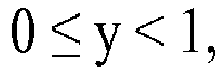
whereinM1, M2, M3 and M4 are different from one another,M1 is Ta, V or both,M2 is W,M3 is a strengthening alloying element,M4 is a hardening alloying element,


- Balance spring according to claim 1, characterized in that the alloy of formula (I) has an anomalous thermoelastic behavior due to its shear elastic coefficient c44 and/or to its shear coefficient constant c'.
- Balance spring according to any of claims 1 to 2, characterized in that M3 is a metalloid or a metal other than Nb, Ta, V, Mo and W.
- Balance spring according to any of claims 1 to 3, characterized in that M3 is any one of Be, Al, Si, Ge, Sc, Y, La, Ti, Hf, Cr, Mn, Re, Fe, Ru, Os, Co, Rh, Ir, Ni, Pd, Pt, Cu, Ag, Au, or a mixture thereof.
- Balance spring according to any of claims 1 to 4, characterized in that M4 is any one of O, N, C, B, P, H or a mixture thereof.
- Balance spring according to any of claims 1 to 4, characterized in that z is strictly greater than 0,
M3 is any one of Cu, Ti, Al, Cr, Mn, Si, or a mixture thereof. - Balance spring according to any of claims 1 to 6, characterized in that the alloy of formula (I) comprises an oxide layer.
- Balance spring according to any of claims 1 to 6, characterized in that the alloy of formula (I) comprises an oxide layer and any one of Cr, Ti, Al, Si, Fe, W, Ni, Mn, V and N.
- Balance spring according to claim 1, characterized in that x = y = z = 0.
- Balance spring according to any of claims 1 to 9, characterized in that the niobium-molybdenum alloy of formula (I) is zirconium free and chromium free.
- Timepiece movement comprising the balance spring according to any of claims 1 to 10.
- Process for making the balance spring of any of claims 1 to 10, according to the following steps:- casting the alloy of formula (I),- making a bar of alloy,- forming a wire of alloy from the bar of alloy,- shaping the wire into a balance spring,- optionally, heat-treating the balance spring.
Priority Applications (1)
| Application Number | Priority Date | Filing Date | Title |
|---|---|---|---|
| EP18210512.2A EP3663867B1 (en) | 2018-12-05 | 2018-12-05 | Niobium-molybdenum alloy compensating balance spring for a watch or clock movement |
Applications Claiming Priority (1)
| Application Number | Priority Date | Filing Date | Title |
|---|---|---|---|
| EP18210512.2A EP3663867B1 (en) | 2018-12-05 | 2018-12-05 | Niobium-molybdenum alloy compensating balance spring for a watch or clock movement |
Publications (2)
| Publication Number | Publication Date |
|---|---|
| EP3663867A1 true EP3663867A1 (en) | 2020-06-10 |
| EP3663867B1 EP3663867B1 (en) | 2026-02-04 |
Family
ID=64606897
Family Applications (1)
| Application Number | Title | Priority Date | Filing Date |
|---|---|---|---|
| EP18210512.2A Active EP3663867B1 (en) | 2018-12-05 | 2018-12-05 | Niobium-molybdenum alloy compensating balance spring for a watch or clock movement |
Country Status (1)
| Country | Link |
|---|---|
| EP (1) | EP3663867B1 (en) |
Cited By (1)
| Publication number | Priority date | Publication date | Assignee | Title |
|---|---|---|---|---|
| US12493265B2 (en) * | 2022-03-14 | 2025-12-09 | Seiko Watch Kabushiki Kaisha (trading as Seiko Watch Corporation) | Hairspring, timepiece movement, and timepiece |
Citations (7)
| Publication number | Priority date | Publication date | Assignee | Title |
|---|---|---|---|---|
| FR1521737A (en) * | 1966-04-22 | 1968-04-19 | Straumann Inst Ag | Alloy of metals or semiconductors having a low coefficient of modulus of elasticity as a function of temperature variations |
| US3547713A (en) * | 1966-04-22 | 1970-12-15 | Straumann Inst Ag | Methods of making structural materials having a low temperature coefficient of the modulus of elasticity |
| EP0886195A1 (en) | 1997-06-20 | 1998-12-23 | Montres Rolex Sa | Auto-compensating spring for mechanical oscillatory spiral spring of clockwork movement and method of manufacturing the same |
| EP1258786A1 (en) * | 2001-05-18 | 2002-11-20 | Montres Rolex Sa | Self-compensating spring for a mechanical oscillator of balance-spring type |
| US6503341B2 (en) | 1999-03-26 | 2003-01-07 | Montres Rolex S.A. | Self-compensating spiral for a spiral balance-wheel in watchwork and process for treating this spiral |
| EP1422436A1 (en) | 2002-11-25 | 2004-05-26 | CSEM Centre Suisse d'Electronique et de Microtechnique SA | Spiral watch spring and its method of production |
| US9227834B2 (en) | 2011-04-12 | 2016-01-05 | Diamaze Microtechnology S.A. | Edge-reinforced micromechanical component |
-
2018
- 2018-12-05 EP EP18210512.2A patent/EP3663867B1/en active Active
Patent Citations (9)
| Publication number | Priority date | Publication date | Assignee | Title |
|---|---|---|---|---|
| FR1521737A (en) * | 1966-04-22 | 1968-04-19 | Straumann Inst Ag | Alloy of metals or semiconductors having a low coefficient of modulus of elasticity as a function of temperature variations |
| US3547713A (en) * | 1966-04-22 | 1970-12-15 | Straumann Inst Ag | Methods of making structural materials having a low temperature coefficient of the modulus of elasticity |
| EP0886195A1 (en) | 1997-06-20 | 1998-12-23 | Montres Rolex Sa | Auto-compensating spring for mechanical oscillatory spiral spring of clockwork movement and method of manufacturing the same |
| US5881026A (en) | 1997-06-20 | 1999-03-09 | Montres Rolex S.A. | Self-compensating balance spring for a mechanical oscillator of a balance-spring/balance assembly of a watch movement and process for manufacturing this balance-spring |
| US6503341B2 (en) | 1999-03-26 | 2003-01-07 | Montres Rolex S.A. | Self-compensating spiral for a spiral balance-wheel in watchwork and process for treating this spiral |
| EP1258786A1 (en) * | 2001-05-18 | 2002-11-20 | Montres Rolex Sa | Self-compensating spring for a mechanical oscillator of balance-spring type |
| US6705601B2 (en) | 2001-05-18 | 2004-03-16 | Rolex S.A. | Self-compensating spiral spring for a mechanical balance-spiral spring oscillator |
| EP1422436A1 (en) | 2002-11-25 | 2004-05-26 | CSEM Centre Suisse d'Electronique et de Microtechnique SA | Spiral watch spring and its method of production |
| US9227834B2 (en) | 2011-04-12 | 2016-01-05 | Diamaze Microtechnology S.A. | Edge-reinforced micromechanical component |
Non-Patent Citations (2)
| Title |
|---|
| HUBBELL W. C, F. R. BROTZEN: "Elastic constants of niobium-molibdenum alloys in the temperature range -190 to+100 °C", CJ. APPL. PHYS., vol. 43, no. 8, 1 August 1972 (1972-08-01), pages 3306 - 3312, XP055876108 |
| LANDOLT-BMSTEIN: "New Series III/29a", 1972, article "Nb-Mo alloys", pages: 332 - 334, XP055876111 |
Cited By (1)
| Publication number | Priority date | Publication date | Assignee | Title |
|---|---|---|---|---|
| US12493265B2 (en) * | 2022-03-14 | 2025-12-09 | Seiko Watch Kabushiki Kaisha (trading as Seiko Watch Corporation) | Hairspring, timepiece movement, and timepiece |
Also Published As
| Publication number | Publication date |
|---|---|
| EP3663867B1 (en) | 2026-02-04 |
Similar Documents
| Publication | Publication Date | Title |
|---|---|---|
| US6705601B2 (en) | Self-compensating spiral spring for a mechanical balance-spiral spring oscillator | |
| JP3281602B2 (en) | Self-compensating balance spring and its manufacturing method | |
| EP2351864B1 (en) | Process for producing a high-hardness constant-modulus alloy insensitive to magnetism, hair spring, mechanical driving device and watch | |
| CN120738535A (en) | High entropy alloy for external components | |
| US4894100A (en) | Ti-Ni-V shape memory alloy | |
| WO2008023734A1 (en) | Iron-based alloy and process for producing the same | |
| JP2010138491A5 (en) | ||
| JPH0920968A (en) | Cu-based non-magnetic metallic glass alloy, method for producing the same, and elastic actuator | |
| CN102537162B (en) | Spring with stiffness coefficient controlled by magnitude field and preparation method thereof | |
| US3735971A (en) | Strainable members exposed to temperature variations and materials therefor | |
| EP3663867B1 (en) | Niobium-molybdenum alloy compensating balance spring for a watch or clock movement | |
| US3547713A (en) | Methods of making structural materials having a low temperature coefficient of the modulus of elasticity | |
| US20220307114A1 (en) | High entropy alloy, method of preparation and use of the same | |
| US20200115775A1 (en) | Co-based high-strength amorphous alloy and use thereof | |
| US20250320585A1 (en) | Fe-Mn ALLOY, HAIRSPRING FOR TIMEPIECE, AND METHOD FOR PRODUCING Fe-Mn ALLOY | |
| JPH04124246A (en) | Dial | |
| EP0122689B1 (en) | An alloy with constant modulus of elasticity | |
| JP6459078B2 (en) | Fe-Mn-based constant elastic / insensitive magnetic alloy | |
| JP3790499B2 (en) | Elastic material made of bulk metallic glass | |
| WO2000073523A1 (en) | Cr-BASE ALLOY EXCELLENT IN BALANCE BETWEEN STRENGTH AND DUCTILITY AT HIGH TEMPERATURE | |
| Krüger | Developments in the Metallurgy of Spring Materials for Instruments | |
| HK1016703B (en) | Auto-compensating spring for mechanical oscillatory spiral spring of clockwork movement and method of manufacturing the same | |
| JPH0762505A (en) | How to use Ni-Ti superelastic spring | |
| HK40014427A (en) | High entropy alloy for external components | |
| HERZER | NANOCRYSTALLINE FE-CU-NB-SI-B ALLOYS |
Legal Events
| Date | Code | Title | Description |
|---|---|---|---|
| PUAI | Public reference made under article 153(3) epc to a published international application that has entered the european phase |
Free format text: ORIGINAL CODE: 0009012 |
|
| STAA | Information on the status of an ep patent application or granted ep patent |
Free format text: STATUS: THE APPLICATION HAS BEEN PUBLISHED |
|
| AK | Designated contracting states |
Kind code of ref document: A1 Designated state(s): AL AT BE BG CH CY CZ DE DK EE ES FI FR GB GR HR HU IE IS IT LI LT LU LV MC MK MT NL NO PL PT RO RS SE SI SK SM TR |
|
| AX | Request for extension of the european patent |
Extension state: BA ME |
|
| STAA | Information on the status of an ep patent application or granted ep patent |
Free format text: STATUS: REQUEST FOR EXAMINATION WAS MADE |
|
| 17P | Request for examination filed |
Effective date: 20201126 |
|
| RBV | Designated contracting states (corrected) |
Designated state(s): AL AT BE BG CH CY CZ DE DK EE ES FI FR GB GR HR HU IE IS IT LI LT LU LV MC MK MT NL NO PL PT RO RS SE SI SK SM TR |
|
| RAP1 | Party data changed (applicant data changed or rights of an application transferred) |
Owner name: RICHEMONT INTERNATIONAL SA |
|
| TPAC | Observations filed by third parties |
Free format text: ORIGINAL CODE: EPIDOSNTIPA |
|
| STAA | Information on the status of an ep patent application or granted ep patent |
Free format text: STATUS: EXAMINATION IS IN PROGRESS |
|
| 17Q | First examination report despatched |
Effective date: 20220104 |
|
| GRAP | Despatch of communication of intention to grant a patent |
Free format text: ORIGINAL CODE: EPIDOSNIGR1 |
|
| STAA | Information on the status of an ep patent application or granted ep patent |
Free format text: STATUS: GRANT OF PATENT IS INTENDED |
|
| RIC1 | Information provided on ipc code assigned before grant |
Ipc: G04B 17/06 20060101AFI20250702BHEP Ipc: C22F 1/18 20060101ALI20250702BHEP Ipc: C22C 27/04 20060101ALI20250702BHEP Ipc: C22C 27/02 20060101ALI20250702BHEP Ipc: G04B 17/22 20060101ALI20250702BHEP |
|
| INTG | Intention to grant announced |
Effective date: 20250729 |
|
| GRAS | Grant fee paid |
Free format text: ORIGINAL CODE: EPIDOSNIGR3 |
|
| GRAA | (expected) grant |
Free format text: ORIGINAL CODE: 0009210 |
|
| STAA | Information on the status of an ep patent application or granted ep patent |
Free format text: STATUS: THE PATENT HAS BEEN GRANTED |
|
| AK | Designated contracting states |
Kind code of ref document: B1 Designated state(s): AL AT BE BG CH CY CZ DE DK EE ES FI FR GB GR HR HU IE IS IT LI LT LU LV MC MK MT NL NO PL PT RO RS SE SI SK SM TR |
|
| REG | Reference to a national code |
Ref country code: CH Ref legal event code: F10 Free format text: ST27 STATUS EVENT CODE: U-0-0-F10-F00 (AS PROVIDED BY THE NATIONAL OFFICE) Effective date: 20260204 Ref country code: GB Ref legal event code: FG4D |
|
| REG | Reference to a national code |
Ref country code: IE Ref legal event code: FG4D |
|
| REG | Reference to a national code |
Ref country code: DE Ref legal event code: R096 Ref document number: 602018088987 Country of ref document: DE |