EP3663697A1 - Durch benutzerverhalten gesteuerte schusswaffe - Google Patents
Durch benutzerverhalten gesteuerte schusswaffe Download PDFInfo
- Publication number
- EP3663697A1 EP3663697A1 EP19165865.7A EP19165865A EP3663697A1 EP 3663697 A1 EP3663697 A1 EP 3663697A1 EP 19165865 A EP19165865 A EP 19165865A EP 3663697 A1 EP3663697 A1 EP 3663697A1
- Authority
- EP
- European Patent Office
- Prior art keywords
- firearm
- user
- target
- bullets
- trigger
- Prior art date
- Legal status (The legal status is an assumption and is not a legal conclusion. Google has not performed a legal analysis and makes no representation as to the accuracy of the status listed.)
- Granted
Links
Images







Classifications
-
- F—MECHANICAL ENGINEERING; LIGHTING; HEATING; WEAPONS; BLASTING
- F41—WEAPONS
- F41A—FUNCTIONAL FEATURES OR DETAILS COMMON TO BOTH SMALLARMS AND ORDNANCE, e.g. CANNONS; MOUNTINGS FOR SMALLARMS OR ORDNANCE
- F41A19/00—Firing or trigger mechanisms; Cocking mechanisms
- F41A19/58—Electric firing mechanisms
- F41A19/59—Electromechanical firing mechanisms, i.e. the mechanical striker element being propelled or released by electric means
-
- F—MECHANICAL ENGINEERING; LIGHTING; HEATING; WEAPONS; BLASTING
- F41—WEAPONS
- F41A—FUNCTIONAL FEATURES OR DETAILS COMMON TO BOTH SMALLARMS AND ORDNANCE, e.g. CANNONS; MOUNTINGS FOR SMALLARMS OR ORDNANCE
- F41A3/00—Breech mechanisms, e.g. locks
- F41A3/12—Bolt action, i.e. the main breech opening movement being parallel to the barrel axis
- F41A3/14—Rigid bolt locks, i.e. having locking elements rigidly mounted on the bolt or bolt handle and on the barrel or breech-housing respectively
- F41A3/16—Rigid bolt locks, i.e. having locking elements rigidly mounted on the bolt or bolt handle and on the barrel or breech-housing respectively the locking elements effecting a rotary movement about the barrel axis, e.g. rotating cylinder bolt locks
- F41A3/26—Rigid bolt locks, i.e. having locking elements rigidly mounted on the bolt or bolt handle and on the barrel or breech-housing respectively the locking elements effecting a rotary movement about the barrel axis, e.g. rotating cylinder bolt locks semi-automatically or automatically operated, e.g. having a slidable bolt-carrier and a rotatable bolt
-
- F—MECHANICAL ENGINEERING; LIGHTING; HEATING; WEAPONS; BLASTING
- F41—WEAPONS
- F41A—FUNCTIONAL FEATURES OR DETAILS COMMON TO BOTH SMALLARMS AND ORDNANCE, e.g. CANNONS; MOUNTINGS FOR SMALLARMS OR ORDNANCE
- F41A17/00—Safety arrangements, e.g. safeties
- F41A17/08—Safety arrangements, e.g. safeties for inhibiting firing in a specified direction, e.g. at a friendly person or at a protected area
-
- F—MECHANICAL ENGINEERING; LIGHTING; HEATING; WEAPONS; BLASTING
- F41—WEAPONS
- F41A—FUNCTIONAL FEATURES OR DETAILS COMMON TO BOTH SMALLARMS AND ORDNANCE, e.g. CANNONS; MOUNTINGS FOR SMALLARMS OR ORDNANCE
- F41A19/00—Firing or trigger mechanisms; Cocking mechanisms
- F41A19/01—Counting means indicating the number of shots fired
-
- F—MECHANICAL ENGINEERING; LIGHTING; HEATING; WEAPONS; BLASTING
- F41—WEAPONS
- F41A—FUNCTIONAL FEATURES OR DETAILS COMMON TO BOTH SMALLARMS AND ORDNANCE, e.g. CANNONS; MOUNTINGS FOR SMALLARMS OR ORDNANCE
- F41A19/00—Firing or trigger mechanisms; Cocking mechanisms
- F41A19/58—Electric firing mechanisms
- F41A19/64—Electric firing mechanisms for automatic or burst-firing mode
-
- F—MECHANICAL ENGINEERING; LIGHTING; HEATING; WEAPONS; BLASTING
- F41—WEAPONS
- F41A—FUNCTIONAL FEATURES OR DETAILS COMMON TO BOTH SMALLARMS AND ORDNANCE, e.g. CANNONS; MOUNTINGS FOR SMALLARMS OR ORDNANCE
- F41A35/00—Accessories or details not otherwise provided for
-
- F—MECHANICAL ENGINEERING; LIGHTING; HEATING; WEAPONS; BLASTING
- F41—WEAPONS
- F41G—WEAPON SIGHTS; AIMING
- F41G3/00—Aiming or laying means
-
- F—MECHANICAL ENGINEERING; LIGHTING; HEATING; WEAPONS; BLASTING
- F41—WEAPONS
- F41G—WEAPON SIGHTS; AIMING
- F41G3/00—Aiming or laying means
- F41G3/06—Aiming or laying means with rangefinder
-
- F—MECHANICAL ENGINEERING; LIGHTING; HEATING; WEAPONS; BLASTING
- F41—WEAPONS
- F41G—WEAPON SIGHTS; AIMING
- F41G3/00—Aiming or laying means
- F41G3/08—Aiming or laying means with means for compensating for speed, direction, temperature, pressure, or humidity of the atmosphere
-
- F—MECHANICAL ENGINEERING; LIGHTING; HEATING; WEAPONS; BLASTING
- F41—WEAPONS
- F41G—WEAPON SIGHTS; AIMING
- F41G3/00—Aiming or laying means
- F41G3/12—Aiming or laying means with means for compensating for muzzle velocity or powder temperature with means for compensating for gun vibrations
-
- F—MECHANICAL ENGINEERING; LIGHTING; HEATING; WEAPONS; BLASTING
- F41—WEAPONS
- F41G—WEAPON SIGHTS; AIMING
- F41G3/00—Aiming or laying means
- F41G3/14—Indirect aiming means
- F41G3/16—Sighting devices adapted for indirect laying of fire
- F41G3/165—Sighting devices adapted for indirect laying of fire using a TV-monitor
Definitions
- the present disclosure relates generally to handheld firearms and more specifically to a firearm that automatically releases bullets responsive to behavior of a user.
- firearms are used in dangerous situations, for example where a user is under pressure to respond rapidly and accurately to threats.
- the user needs to take specific actions to neutralize a threat, including identifying the threat, aiming the firearm, squeezing the trigger to release a bullet or round of bullets, assessing the results and repeating actions. Reducing the required actions can increase the speed of the user in neutralizing a threat and may make a difference between life and death.
- the patent describes a firearm that prevents misfire in which the user aims then presses and holds the trigger to release a first bullet.
- the aim of the firearm may deviate from the target due to the recoil of the firearm or other distractions.
- the firearm is designed to automatically (while the trigger is engaged) release additional bullets when the user manages to re-aim the firearm to approximately the same direction as when releasing the first bullet.
- the above method eliminates the need of the user to accurately re-aim the barrel of the firearm and then press the trigger when reaching the desired position, rather it is sufficient to only point the barrel to the approximate direction previously acquired and the firearm releases bullets when the barrel is pointed correctly.
- This method has been found to increase the shooting rate and ability of the user to hit a target and improve lethality.
- the above method is excellent for a motionless shooter and motionless target. However if either is moving it will not improve the hit probability. Likewise if the user wishes to fire at a new target he must release the trigger and start over. Accordingly in some situations a different system and scheme is desirable.
- An aspect of an embodiment of the disclosure relates to a firearm that controls the release of bullets based on behavior of the user.
- the firearm includes sensors that track the motion of the firearm and enable monitoring a virtual vector tracking the direction in which the barrel of the firearm is pointing.
- the firearm further includes a controller that monitors the measurements of the sensors and analyzes them to determine if they indicate the occurrence of preconfigured motion patterns corresponding to actions of the user.
- the firearm further includes a trigger that is engaged by the user to release a first bullet toward a target and then as long as it is engaged analyze the measurements to identify the occurrence of the preconfigured motion patterns.
- the preconfigured motion patterns include at least a case in which the user shoots a first bullet at a target and then swerves the barrel toward a new target and stabilizes the firearm in the direction of the new target while keeping the trigger engaged.
- Additional preconfigured motion patterns may include shooting at a first target and then moving the barrel of the firearm to track a moving target.
- the controller may take into account recoil motion, user motion due to carrying the firearm and user motion due to attempts to stabilize the firearm in a specific direction (e.g. pointing the barrel toward a target).
- the firearm has different selectable operation modes such as safe mode, semi-automatic, burst and automatic as commonly implemented in firearms.
- the current firearm may include one or more new operation modes, which allow the automatic release of bullets responsive to the user motion patterns as explained above.
- the firearm supports more than one mode in which the controller is configured to handle the sensed measurements differently, for example one mode may assume that the user is stationary and one mode may assume the user is moving and analyze the sensor measurements accordingly.
- a method of controlling the release of bullets from a firearm by user behavior comprising:
- the preconfigured motion patterns include moving the firearm to track a moving target.
- the preconfigured motion patterns further include that the user is also moving.
- the preconfigured motion patterns include that the user stabilizes the firearm toward a stationary target.
- the preconfigured motion patterns further include that the user is also moving.
- the sensors include multiple chips installed on a planar surface, which are rotated relative to each other and each chip comprising an accelerometer and a gyroscope.
- the sensors include an optical sensor or an IR/thermal sensor.
- stabilizing the firearm toward a target comprises aiming the firearm so that it wobbles around an axis directed from the firearm to the target and the wobbling's are essentially restricted within a limited error window around the axis.
- the firearm limits the release of bullets to specific spatial boundaries relative to the first direction.
- the firearm provides an indication if the bullets depleted.
- the user selects a behavioral controlled operation mode to enable the firearm to automatically release bullets instead of only releasing bullets manually.
- the firearm includes a separate behavioral controlled operation mode for handling a stationary user and a separate behavioral controlled operation mode for handling a moving user.
- a firearm that controls the release of bullets based on user behavior comprising:
- the preconfigured motion patterns include moving the firearm to track a moving target.
- the preconfigured motion patterns further include that the user is also moving.
- the preconfigured motion patterns include identifying that the user stabilizes the firearm toward a stationary target.
- the preconfigured motion patterns further include that the user is also moving.
- the sensors include multiple chips installed on a planar surface, which are rotated relative to each other and each chip comprising an accelerometer and a gyroscope.
- the sensors include an optical sensor or an IR/thermal sensor.
- stabilizing the firearm toward a target comprises aiming the firearm so that it wobbles around an axis directed from the firearm to the target and the wobbling's are essentially restricted within a limited error window around the axis.
- the firearm limits the release of bullets to specific spatial boundaries relative to the first direction.
- the firearm provides an indication if the bullets depleted.
- the firearm includes a manual mode and a behavioral controlled operation mode to enable the firearm to automatically release bullets based on user behavior instead of only releasing bullets manually.
- the firearm includes a separate behavioral controlled operation mode for handling a stationary user and a separate behavioral controlled operation mode for handling a moving user.
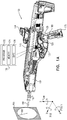
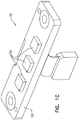
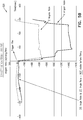
- Fig. 1A is a schematic illustration of a behavior controlled firearm 100 and figures 1B and 1C are enlarged views of elements of the behavior controlled firearm 100, according to an exemplary embodiment of the disclosure.
- Firearm 100 is a semi-automatic or fully automatic firearm including a barrel 110, a mode selector 140 and a trigger 120 for releasing a bullet or sequence of bullets through the barrel toward a target.
- the mode selector 140 enables a user to select various modes (see Fig. 1B ), for example:
- firearm 100 includes multiple user behavior controlled modes to handle different situations based on the user selection. For example one mode is selected by the user to handle a situation in which the user is stationary and aims the firearm 100, and a second mode is selected to handle a situation in which the user is in motion toward a target.
- one mode is selected by the user to handle a situation in which the user is stationary and aims the firearm 100
- a second mode is selected to handle a situation in which the user is in motion toward a target.
- the firearm 100 can respond more accurately to the motion of the user and firearm 100.
- each user behavior controlled mode (148) induces a presumption that the user is acting according to the selected mode, for example basically stable or basically walking or running. The presumption may affect the response of the fire arm to the measurements provided by the sensors, so that the firearm 100 may respond differently to the same motion based on the selected mode.
- firearm 100 includes a trigger status monitor 135 that identifies if the trigger 120 is engaged (i.e. pressed by the user) or released.
- trigger status monitor 135 may identify the status of the trigger 120 by a mechanical connection that moves with the trigger 120, by an electrical connection for example by closing or opening a circuit when the trigger 120 is engaged, by a Hall Effect sensor or by an optical element that identifies the position of the trigger 120.
- the sear of the firearm is held or released responsive to the position of the trigger and calculations of a controller 170 to withhold or release the sear to fire bullets.
- an electromagnet or other means may be used to hold and release the sear of the firearm.
- firearm 100 also includes a power source 175, for example a battery to power elements of the firearm that require electrical power.
- the power source 175 may be rechargeable.
- firearm 100 includes one or more sensors 130, 132 or 134 (as shown in Fig. 1A ) to determine the spatial orientation of the firearm 100 and identify motion and acceleration of the firearm 100.
- the sensors 130 may include a gyroscope, an accelerometer, a magnetometer and/or other sensors such as a temperature sensor, RF radar or ultrasonic radar.
- sensors 132 may include an image sensor, a light sensor, an infrared (thermal) sensor, an optical sensor or a laser spot detection system. Alternatively or additionally, the sensor may be in the form of an optical sight 134.
- the sensors 130, 132 and 134 may be positioned inside the firearm 100, on the body of the firearm 100 or in an element attached to the firearm, for example as part of an optic sight 134 installed on the firearm 100.
- the sensors 130, 132 and 134 may be one dimensional, two dimensional or three dimensional.
- the readings of the sensors 130, 132 and 134 may be provided to the controller 170 to monitor the motion of the firearm 100.
- controller 170 includes a processor 172, a memory 174 and an electromechanical fire control (EMFC) 176 or other type of fire control (e.g. an electromagnetic system: a solenoid or motor and the like) that controls the release of bullets when the trigger 120 is engaged.
- EMFC electromechanical fire control
- the processor 172 and memory 174 are configured to analyze the measurements received from the sensors 130, 132 and 134, identify user behavior and firearm motion based on motion patterns of the firearm. If the identified behavior or motion fits a preselected pattern or set of patterns, controller 170 instructs the electromechanical fire control (EMFC) 176 to release a bullet.
- EMFC electromechanical fire control
- controller 170 may construct a virtual vector 150 designating the direction of the barrel 110 of the firearm. Controller 170 monitors changes to the spatial orientation of the virtual vector 150 and decides if to release a bullet or multiple bullets responsive to the path or motion of the vector 150.
- sensors 130 may comprise of one or more integrated circuits 190 as shown in Fig. 1C .
- the integrated circuits may include:
- multiple integrated circuits 190 are used, for example three integrated circuits 190 may be installed on a single planar surface 195 (as shown in Fig. 1C ) to simplify installation in firearm 100.
- one of the integrated circuits 190 is rotated by 90 relative to the other two to enhance accuracy of the measurements.
- each of the integrated circuits 190 may be rotated differently to enhance accuracy of the measurements.
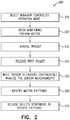
- Fig. 2 is a flow diagram of a method 200 of controlling the release of bullets from firearm 100 based on the behavior of a user, according to an exemplary embodiment of the disclosure.
- an operation mode (142, 144, 146, 148)
- the user can select that the firearm 100 will function as a standard firearm (142, 144, 146), for example releasing bullets directly responsive to engaging the trigger 120.
- the user can select (210) a behavior controlled mode 148 (optionally, there may be more than one behavior controlled mode) that releases bullets responsive to user behavior (e.g. engaging the trigger and performing motion patterns that provide indication of the user's intention.
- controller 170 may begin monitoring (220) the status of the firearm 100 to determine from the motion pattern if the firearm 100 is essentially stationary or if for example it is being carried by a user that is walking or running.
- controller 170 analyzes the sensor measurements to form a virtual vector 150 designating the direction and motion of the barrel over time.
- the trigger a first bullet is released (240).
- controller 170 continuously analyzes the measurements of the sensors 130 to identify motion patterns, for example:
- the analysis is based on the overall motion (e.g. based on the general motion of the firearm - pitch (X) - rotation about the lateral axis, yaw (Z) - rotation about the normal axis and roll (Y) - rotation about the longitudinal axis - see coordinates in Fig. 1A ), timing of accelerated motion (e.g. if the user makes sudden changes in the direction of the barrel or alternatively moves the barrel with a constant angular speed) or if the user keeps the virtual vector 150 stable aiming approximately in a specific direction (e.g. wobbling around a specific axis essentially within a limited radius 160 or within a defined boundary defining an error window 165).
- the overall motion e.g. based on the general motion of the firearm - pitch (X) - rotation about the lateral axis, yaw (Z) - rotation about the normal axis and roll (Y) - rotation about the longitudinal axis - see coordinates in Fig. 1A
- processor 172 checks backward for a predetermined amount of time to determine if a relevant motion pattern can be identified. In some cases a relevant motion pattern may be detected only after a specific time interval has passed providing enough information to identify behavior of the user.
- controller 170 while the trigger is engaged controller 170 continuously analyzes (250) the sensor measurements to identify (260) motion patterns.
- EMFC electromechanical fire control
- controller 170 will release (270) bullets according to the rules of the pattern.
- Fig. 3 is a state table 300 of various motion patterns, according to an exemplary embodiment of the disclosure.
- the following six cases are recognized by firearm 100 for releasing bullets while the user holds/engages trigger 120.
- the user may be stationary or the user may be in motion (walking/running) and the target may be: 1) stationary, 2) in motion, 3) alternating.
- firearm 100 prevents the release of bullets when moving with irregular (e.g. jerky/randomly accelerating) motion.
- irregular e.g. jerky/randomly accelerating
- bullets are released when the firearm is essentially stable for a minimal preselected amount of time (e.g. 0.1 seconds, 0.5 seconds, 1 second or other time lengths).
- steady motion e.g. linear motion at an approximately steady speed.
- firearm 100 limits the release of bullets to specific spatial boundaries relative to the direction of the first bullet, for example even though the trigger 120 is engaged, firearm 100 limits the release of bullets to specific maximum angles around the direction of the first bullet.
- the automatic release of bullets is time limited, for example if the user does not form motion that causes release of bullets within a predefined amount of time (e.g. 10-100 seconds) after release of the first bullet or a previous bullet, the controller 170 will respond as if the user released the trigger.
- a predefined amount of time e.g. 10-100 seconds
- the controller 170 will respond as if the user released the trigger.
- the predefined time is user selectable.
- the firearm 100 provides an indication if the bullets in the magazine of the firearm have depleted, for example by a vibration engine 180 in the handle of the firearm 100 that provides for example a steady vibration when the firearm 100 is out of bullets. Accordingly, the user receive a tactile indication without needing to examine the firearm 100.
- the vibration engine 180 may provide a different type of vibration signal, so that the user knows that he needs to check the weapon.
- firearm 100 resets controller 170 and begins again to monitor the firearm motion while waiting for the user to engage the trigger 120.
- sensors 132 or 134 based on optics may be used to determine motion or stability based on analysis of a specific image/target/light remaining within an error window.
- sensors 130 based on sensing motion e.g. an accelerometer, gyroscope or magnetometer
- controller 170 receives and analyzes the measurements of the pitch (X), roll (Y) and/or yaw (Z) angles as a function of time, and the angular rate of change as a function of time. The measurements can be from before releasing a first bullet and/or after releasing a first bullet.
- controller 170 may decide if to release additional bullets.
- other sensor measurements e.g. trigger status monitor 135.
- trigger status monitor 135 can be used to support or alter the decisions of controller 170.
- the motion of the firearm 100 immediately after releasing a bullet provides a unique signature (e.g. based on the pitch angle of a gyro sensor) from which the shooting position of the user can be identified, for example:
- the unique signature appears within about the first 400-500ms after release of the bullet (time 0). Based on the unique signature controller 170 can identify the shooting position of the user and take further decisions responsive to this identification.
- the angle rate (e.g. degrees/time) of the gyro sensor provides additional information related to the shooting mode of the user. For example by comparing the pitch (X) angle rate of change relative to the yaw (Z) angle rate of change an extent of stability of the firearm 100 can be identified, for example:
- the stability of the pitch (X) angle rate of change relative to the yaw (Z) angle rate of change provides an indication if the user is steadily aiming at a target in contrast to a user that is hastily aiming at a target.
- the time length of the stability e.g. more than 2 seconds
- the trigger status monitor 135 is also used to provide information regarding the motion of the trigger and the time at which the trigger was fully engaged to instruct firearm 100 to release a bullet.
- the trigger motion can also provide an indication regarding slow trigger squeezing, for example by a sniper, in contrast to engaging the trigger quickly as for example in the case of a user in combat or unexpectedly meeting an opponent and firing hastily.
- controller 170 can identify the user position and user mode of operation based on the motion of firearm 100 when releasing the first bullet.
- additional information can be derived from monitoring the angular position of the firearm 100 over time (e.g. pitch (X) and yaw (Z)) and the angular rate of change of the motion of firearm 100.
- X angular position of the firearm 100 over time
- Z yaw
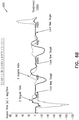
- Graph 610 when tracking a target the pitch (X) angle and rate of change after releasing the first bullet become essentially steady. Likewise the Yaw (Z) angular rate of change also become essentially steady since the firearm 100 is moving at an essentially constant speed (e.g. for more than 1.3 seconds).
- controller 170 can identify if the user is stabilizing the firearm 100 toward a target. For example as illustrated in graph 620 if more than 1.3 seconds pass from releasing a bullet and the angular rate of change of the pitch and yaw are both close to zero for more than about 300ms, this indicates that the user is stabilizing the firearm 100 toward a new target and a bullet should be released.
- controller 170 determines that the user is interested in continuing to fire at the original target (e.g. as illustrated in graph 630).
- motion of a walking user can be identified (e.g. as illustrated in graph 640), for example based on the pitch (X) angular rate of change and the roll (Y) angular rate of change.
- X pitch
- Y roll
- motion of a walking user can be identified (e.g. as illustrated in graph 640), for example based on the pitch (X) angular rate of change and the roll (Y) angular rate of change.
- X pitch
- Y roll
- controller 170 determines if to release bullets while the user keeps the trigger 120 engaged.
- the user may be in one of six stability modes of operation.
- controller 170 determines the mode of operation based on the measurements before releasing the first bullet and immediately after releasing the first bullet (by engaging the trigger).
- the stability mode may be constant as long as the trigger 120 is engaged or it may change responsive to the user behavior/motion.
- TABLE 1 MODE TITLE Stability test Before 1 st bullet Stability test After 1 st bullet M0 Hasty stability parameters Fig 5b - hasty none M1 Regular standing + kneeling Fig 5A - targeted Fig 4A or 4B M2 Regular prone Fig 5A - targeted Fig 4C M3 Walking user none Fig 6D M4 Target tracking none Fig. 6A Sniper+M2 Sniper + prone mode Fig 5C -sniper Fig 4C
- controller 170 may monitor parameters for example as shown in Table 2. Typically the monitored information is analyzed from about 0.5 seconds before releasing a first bullet and continuously until releasing the trigger or when the bullet magazine is depleted. Optionally, the mode may continue after replacing a bullet magazine.
- Stability mode set before first bullet Stability mode set approximately from 0.5 seconds before firing the first bullet
- Selected stability mode Number of stability samples taken about every 2ms Initial angle of shooting windows (degrees)
- Final angle of shooting window (degrees ) Minimal time for releasing next bullets in ms Max time for releasing next bullet in ms
- No change Sniper prone M2 700 0.015 0.015 1500 2500 2501
- controller 170 determines if to release a bullet based on specific parameters for each mode as shown in Table 2. For example for a prone sniper controller 170 takes about 700 samples in 4 seconds (a sample every 2ms) and verifies that the shooting angles of the error window is limited to 0.015 degrees. If the firearm motion meets these limitations between a time of 1500ms to 2500ms after releasing a bullet the controller 170 will instruct the release of additional bullets (e.g. up to a maximum number of bullets). Otherwise if the firearm 100 does not meet the stability requirements within the allotted time, controller 170 will initiate testing for a new target, for example repeating the test for a new time window or in some modes change to a new stability mode.
- Table 2 For example for a prone sniper controller 170 takes about 700 samples in 4 seconds (a sample every 2ms) and verifies that the shooting angles of the error window is limited to 0.015 degrees. If the firearm motion meets these limitations between a time of 1500ms to 2500ms after releasing
Landscapes
- Engineering & Computer Science (AREA)
- General Engineering & Computer Science (AREA)
- User Interface Of Digital Computer (AREA)
- Aiming, Guidance, Guns With A Light Source, Armor, Camouflage, And Targets (AREA)
Applications Claiming Priority (1)
| Application Number | Priority Date | Filing Date | Title |
|---|---|---|---|
| IL263603A IL263603B2 (en) | 2018-12-09 | 2018-12-09 | Firearm controlled by user behavior |
Publications (2)
| Publication Number | Publication Date |
|---|---|
| EP3663697A1 true EP3663697A1 (de) | 2020-06-10 |
| EP3663697B1 EP3663697B1 (de) | 2021-03-03 |
Family
ID=65910821
Family Applications (1)
| Application Number | Title | Priority Date | Filing Date |
|---|---|---|---|
| EP19165865.7A Active EP3663697B1 (de) | 2018-12-09 | 2019-03-28 | Durch benutzerverhalten gesteuerte schusswaffe |
Country Status (6)
| Country | Link |
|---|---|
| US (1) | US10900733B2 (de) |
| EP (1) | EP3663697B1 (de) |
| KR (1) | KR102276310B1 (de) |
| AU (1) | AU2019272045B2 (de) |
| IL (1) | IL263603B2 (de) |
| SG (1) | SG10201910567WA (de) |
Families Citing this family (10)
| Publication number | Priority date | Publication date | Assignee | Title |
|---|---|---|---|---|
| US12398968B2 (en) | 2017-03-08 | 2025-08-26 | Sturm, Ruger & Company, Inc. | Fault tolerant electromagnetic safety system for firearms |
| US10969186B2 (en) | 2017-03-08 | 2021-04-06 | Strum, Ruger & Company, Inc. | Fast action shock invariant magnetic actuator for firearms |
| IL270559A (en) * | 2019-11-11 | 2021-05-31 | Israel Weapon Ind I W I Ltd | Firearms with automatic target acquisition and firing system |
| US11530901B2 (en) * | 2020-01-03 | 2022-12-20 | Axial Innovation LLC | Reflex sight utilizing shock absorption |
| US12066263B2 (en) * | 2020-06-10 | 2024-08-20 | Brett C. Bilbrey | Human transported automatic weapon subsystem with human-non-human target recognition |
| US11231252B2 (en) * | 2020-06-10 | 2022-01-25 | Brett C. Bilbrey | Method for automated weapon system with target selection of selected types of best shots |
| DE102020006480A1 (de) | 2020-10-21 | 2022-04-21 | Labetherm GmbH | Handfeuerwaffen-System |
| CN112902738B (zh) * | 2021-03-12 | 2024-05-03 | 山东大学 | 一种激光模拟射击枪、靶及系统 |
| IL283081B2 (en) * | 2021-05-10 | 2024-07-01 | Smart Shooter Ltd | Firearm trigger control device |
| KR102817339B1 (ko) * | 2023-07-20 | 2025-06-10 | (주)동인광학 | 조준 안정화 훈련 장치 및 이의 운용 방법 |
Citations (3)
| Publication number | Priority date | Publication date | Assignee | Title |
|---|---|---|---|---|
| US20020174588A1 (en) * | 2001-05-24 | 2002-11-28 | R.A. Brands, Llc | Firearm orientation and drop sensor system |
| US20060005447A1 (en) * | 2003-09-12 | 2006-01-12 | Vitronics Inc. | Processor aided firing of small arms |
| US9557130B2 (en) | 2014-05-27 | 2017-01-31 | Israel Weapon Industries (I.W.I) Ltd. | Apparatus and method for improving hit probability of a firearm |
Family Cites Families (22)
| Publication number | Priority date | Publication date | Assignee | Title |
|---|---|---|---|---|
| SE355664B (de) | 1971-02-26 | 1973-04-30 | Bofors Ab | |
| FR2691792A1 (fr) * | 1992-06-02 | 1993-12-03 | Giat Ind Sa | Dispositif de déclenchement du tir d'une arme à feu. |
| US5966859A (en) * | 1997-11-14 | 1999-10-19 | Samuels; Mark A. | Devices and methods for controlled manual and automatic firearm operation |
| US6321478B1 (en) | 1998-12-04 | 2001-11-27 | Smith & Wesson Corp. | Firearm having an intelligent controller |
| US6796213B1 (en) * | 2003-05-23 | 2004-09-28 | Raytheon Company | Method for providing integrity bounding of weapons |
| US6871439B1 (en) * | 2003-09-16 | 2005-03-29 | Zyberwear, Inc. | Target-actuated weapon |
| ES2628514T3 (es) * | 2010-02-02 | 2017-08-03 | Saab Ab | Procedimiento y disposiciones para disparar un arma de fuego |
| US8453368B2 (en) | 2010-08-20 | 2013-06-04 | Rocky Mountain Scientific Laboratory, Llc | Active stabilization targeting correction for handheld firearms |
| IL211966A (en) * | 2011-03-28 | 2016-12-29 | Smart Shooter Ltd | Weapons, a direction system for him, his method of operation, and a method of reducing the chance of a sin's purpose |
| WO2013002856A2 (en) * | 2011-04-01 | 2013-01-03 | Zrf, Llc | System and method for automatically targeting a weapon |
| US10782097B2 (en) * | 2012-04-11 | 2020-09-22 | Christopher J. Hall | Automated fire control device |
| KR101468160B1 (ko) | 2012-12-21 | 2014-12-05 | 주식회사 도담시스템스 | 사격 명중률 향상을 위한 훈련 시스템 및 이의 제어방법 |
| US9127907B2 (en) * | 2013-06-07 | 2015-09-08 | Trackingpoint, Inc. | Precision guided firearm including an optical scope configured to determine timing of discharge |
| US9222754B2 (en) | 2013-06-07 | 2015-12-29 | Trackingpoint, Inc. | Precision guided firearm with hybrid sensor fire control |
| AT513579B1 (de) | 2013-12-05 | 2015-03-15 | Bernhard Ing Neuhold | Schusswaffe mit Sicherungssystem |
| WO2015103155A1 (en) * | 2014-01-03 | 2015-07-09 | Flir Systems, Inc. | Camera system |
| US20150211828A1 (en) * | 2014-01-28 | 2015-07-30 | Trackingpoint, Inc. | Automatic Target Acquisition for a Firearm |
| US9945640B2 (en) | 2015-11-19 | 2018-04-17 | Philip Scott Lyren | Firearm system that tracks points of aim of a firearm |
| US9897416B2 (en) * | 2015-12-22 | 2018-02-20 | Huntercraft Limited | Photoelectric sighting device |
| EP3704437A4 (de) * | 2017-11-03 | 2021-07-28 | Aimlock Inc. | Halbautonome motorisierte waffensysteme |
| KR102290860B1 (ko) * | 2017-11-10 | 2021-08-17 | 한화디펜스 주식회사 | 복수의 표적을 선정하고 사격을 수행하는 원격 화기 제어 장치 및 방법 |
| US20190310042A1 (en) * | 2018-04-04 | 2019-10-10 | Sed C. HIMMICH | Weapon lock control system |
-
2018
- 2018-12-09 IL IL263603A patent/IL263603B2/en unknown
-
2019
- 2019-03-24 US US16/362,656 patent/US10900733B2/en active Active
- 2019-03-28 EP EP19165865.7A patent/EP3663697B1/de active Active
- 2019-11-12 SG SG10201910567WA patent/SG10201910567WA/en unknown
- 2019-11-29 AU AU2019272045A patent/AU2019272045B2/en active Active
- 2019-12-06 KR KR1020190161375A patent/KR102276310B1/ko active Active
Patent Citations (3)
| Publication number | Priority date | Publication date | Assignee | Title |
|---|---|---|---|---|
| US20020174588A1 (en) * | 2001-05-24 | 2002-11-28 | R.A. Brands, Llc | Firearm orientation and drop sensor system |
| US20060005447A1 (en) * | 2003-09-12 | 2006-01-12 | Vitronics Inc. | Processor aided firing of small arms |
| US9557130B2 (en) | 2014-05-27 | 2017-01-31 | Israel Weapon Industries (I.W.I) Ltd. | Apparatus and method for improving hit probability of a firearm |
Also Published As
| Publication number | Publication date |
|---|---|
| IL263603A (en) | 2020-06-30 |
| KR102276310B1 (ko) | 2021-07-14 |
| US20200182576A1 (en) | 2020-06-11 |
| AU2019272045B2 (en) | 2021-03-18 |
| IL263603B2 (en) | 2023-02-01 |
| EP3663697B1 (de) | 2021-03-03 |
| IL263603B (en) | 2022-10-01 |
| SG10201910567WA (en) | 2020-07-29 |
| KR20200071020A (ko) | 2020-06-18 |
| US10900733B2 (en) | 2021-01-26 |
| AU2019272045A1 (en) | 2020-06-25 |
Similar Documents
| Publication | Publication Date | Title |
|---|---|---|
| EP3663697B1 (de) | Durch benutzerverhalten gesteuerte schusswaffe | |
| EP2536995B1 (de) | Methode und System zur Waffenregulierung | |
| AU2020267163B2 (en) | Firearm with automatic target acquiring and shooting | |
| EP2950032B1 (de) | Vorrichtung und verfahren zur verbesserung der treffwahrscheinlichkeit einer schusswaffe | |
| US8141473B2 (en) | Apparatus for synthetic weapon stabilization and firing | |
| EP2811253B1 (de) | Präzisionsgeführte feuerwaffe mit hybrider sensorauslösesteuerung | |
| US9728095B1 (en) | Firearm trigger pull training system and methods | |
| US20150123807A1 (en) | Shooter Aim Detection and Warning System | |
| EP2811252B1 (de) | Präzisionsgeführte Feuerwaffe mit einem optischen Sichtinstrument konfiguriert zur Bestimmung des Abschusszeitpunktes | |
| EA031066B1 (ru) | Система прицеливания огнестрельного оружия (варианты) и способ управления работой огнестрельного оружия | |
| IL240682A (en) | A method for aiming a weapon with a range detector and a method for achieving a target | |
| US10082366B2 (en) | Fire-control device for a small arm and small arm | |
| KR102279589B1 (ko) | 명중평가장치, 이를 구비하는 함정전투체계, 및 명중평가방법 | |
| US20250314458A1 (en) | Firearm safety and training aid | |
| KR102277720B1 (ko) | 영점조절이 가능한 착탈식 권총 레이저 조준기 |
Legal Events
| Date | Code | Title | Description |
|---|---|---|---|
| PUAI | Public reference made under article 153(3) epc to a published international application that has entered the european phase |
Free format text: ORIGINAL CODE: 0009012 |
|
| STAA | Information on the status of an ep patent application or granted ep patent |
Free format text: STATUS: REQUEST FOR EXAMINATION WAS MADE |
|
| 17P | Request for examination filed |
Effective date: 20190328 |
|
| AK | Designated contracting states |
Kind code of ref document: A1 Designated state(s): AL AT BE BG CH CY CZ DE DK EE ES FI FR GB GR HR HU IE IS IT LI LT LU LV MC MK MT NL NO PL PT RO RS SE SI SK SM TR |
|
| AX | Request for extension of the european patent |
Extension state: BA ME |
|
| GRAP | Despatch of communication of intention to grant a patent |
Free format text: ORIGINAL CODE: EPIDOSNIGR1 |
|
| STAA | Information on the status of an ep patent application or granted ep patent |
Free format text: STATUS: GRANT OF PATENT IS INTENDED |
|
| INTG | Intention to grant announced |
Effective date: 20201120 |
|
| GRAS | Grant fee paid |
Free format text: ORIGINAL CODE: EPIDOSNIGR3 |
|
| GRAA | (expected) grant |
Free format text: ORIGINAL CODE: 0009210 |
|
| STAA | Information on the status of an ep patent application or granted ep patent |
Free format text: STATUS: THE PATENT HAS BEEN GRANTED |
|
| AK | Designated contracting states |
Kind code of ref document: B1 Designated state(s): AL AT BE BG CH CY CZ DE DK EE ES FI FR GB GR HR HU IE IS IT LI LT LU LV MC MK MT NL NO PL PT RO RS SE SI SK SM TR |
|
| REG | Reference to a national code |
Ref country code: GB Ref legal event code: FG4D |
|
| REG | Reference to a national code |
Ref country code: CH Ref legal event code: EP Ref country code: AT Ref legal event code: REF Ref document number: 1367670 Country of ref document: AT Kind code of ref document: T Effective date: 20210315 |
|
| REG | Reference to a national code |
Ref country code: DE Ref legal event code: R096 Ref document number: 602019002854 Country of ref document: DE |
|
| REG | Reference to a national code |
Ref country code: IE Ref legal event code: FG4D |
|
| REG | Reference to a national code |
Ref country code: NL Ref legal event code: FP |
|
| REG | Reference to a national code |
Ref country code: LT Ref legal event code: MG9D |
|
| PG25 | Lapsed in a contracting state [announced via postgrant information from national office to epo] |
Ref country code: NO Free format text: LAPSE BECAUSE OF FAILURE TO SUBMIT A TRANSLATION OF THE DESCRIPTION OR TO PAY THE FEE WITHIN THE PRESCRIBED TIME-LIMIT Effective date: 20210603 Ref country code: LT Free format text: LAPSE BECAUSE OF FAILURE TO SUBMIT A TRANSLATION OF THE DESCRIPTION OR TO PAY THE FEE WITHIN THE PRESCRIBED TIME-LIMIT Effective date: 20210303 Ref country code: FI Free format text: LAPSE BECAUSE OF FAILURE TO SUBMIT A TRANSLATION OF THE DESCRIPTION OR TO PAY THE FEE WITHIN THE PRESCRIBED TIME-LIMIT Effective date: 20210303 Ref country code: GR Free format text: LAPSE BECAUSE OF FAILURE TO SUBMIT A TRANSLATION OF THE DESCRIPTION OR TO PAY THE FEE WITHIN THE PRESCRIBED TIME-LIMIT Effective date: 20210604 Ref country code: HR Free format text: LAPSE BECAUSE OF FAILURE TO SUBMIT A TRANSLATION OF THE DESCRIPTION OR TO PAY THE FEE WITHIN THE PRESCRIBED TIME-LIMIT Effective date: 20210303 Ref country code: BG Free format text: LAPSE BECAUSE OF FAILURE TO SUBMIT A TRANSLATION OF THE DESCRIPTION OR TO PAY THE FEE WITHIN THE PRESCRIBED TIME-LIMIT Effective date: 20210603 |
|
| PG25 | Lapsed in a contracting state [announced via postgrant information from national office to epo] |
Ref country code: RS Free format text: LAPSE BECAUSE OF FAILURE TO SUBMIT A TRANSLATION OF THE DESCRIPTION OR TO PAY THE FEE WITHIN THE PRESCRIBED TIME-LIMIT Effective date: 20210303 Ref country code: PL Free format text: LAPSE BECAUSE OF FAILURE TO SUBMIT A TRANSLATION OF THE DESCRIPTION OR TO PAY THE FEE WITHIN THE PRESCRIBED TIME-LIMIT Effective date: 20210303 Ref country code: LV Free format text: LAPSE BECAUSE OF FAILURE TO SUBMIT A TRANSLATION OF THE DESCRIPTION OR TO PAY THE FEE WITHIN THE PRESCRIBED TIME-LIMIT Effective date: 20210303 Ref country code: SE Free format text: LAPSE BECAUSE OF FAILURE TO SUBMIT A TRANSLATION OF THE DESCRIPTION OR TO PAY THE FEE WITHIN THE PRESCRIBED TIME-LIMIT Effective date: 20210303 |
|
| PG25 | Lapsed in a contracting state [announced via postgrant information from national office to epo] |
Ref country code: EE Free format text: LAPSE BECAUSE OF FAILURE TO SUBMIT A TRANSLATION OF THE DESCRIPTION OR TO PAY THE FEE WITHIN THE PRESCRIBED TIME-LIMIT Effective date: 20210303 Ref country code: SM Free format text: LAPSE BECAUSE OF FAILURE TO SUBMIT A TRANSLATION OF THE DESCRIPTION OR TO PAY THE FEE WITHIN THE PRESCRIBED TIME-LIMIT Effective date: 20210303 |
|
| PG25 | Lapsed in a contracting state [announced via postgrant information from national office to epo] |
Ref country code: IS Free format text: LAPSE BECAUSE OF FAILURE TO SUBMIT A TRANSLATION OF THE DESCRIPTION OR TO PAY THE FEE WITHIN THE PRESCRIBED TIME-LIMIT Effective date: 20210703 Ref country code: SK Free format text: LAPSE BECAUSE OF FAILURE TO SUBMIT A TRANSLATION OF THE DESCRIPTION OR TO PAY THE FEE WITHIN THE PRESCRIBED TIME-LIMIT Effective date: 20210303 Ref country code: RO Free format text: LAPSE BECAUSE OF FAILURE TO SUBMIT A TRANSLATION OF THE DESCRIPTION OR TO PAY THE FEE WITHIN THE PRESCRIBED TIME-LIMIT Effective date: 20210303 Ref country code: PT Free format text: LAPSE BECAUSE OF FAILURE TO SUBMIT A TRANSLATION OF THE DESCRIPTION OR TO PAY THE FEE WITHIN THE PRESCRIBED TIME-LIMIT Effective date: 20210705 |
|
| REG | Reference to a national code |
Ref country code: DE Ref legal event code: R097 Ref document number: 602019002854 Country of ref document: DE |
|
| PLBE | No opposition filed within time limit |
Free format text: ORIGINAL CODE: 0009261 |
|
| STAA | Information on the status of an ep patent application or granted ep patent |
Free format text: STATUS: NO OPPOSITION FILED WITHIN TIME LIMIT |
|
| PG25 | Lapsed in a contracting state [announced via postgrant information from national office to epo] |
Ref country code: DK Free format text: LAPSE BECAUSE OF FAILURE TO SUBMIT A TRANSLATION OF THE DESCRIPTION OR TO PAY THE FEE WITHIN THE PRESCRIBED TIME-LIMIT Effective date: 20210303 Ref country code: AL Free format text: LAPSE BECAUSE OF FAILURE TO SUBMIT A TRANSLATION OF THE DESCRIPTION OR TO PAY THE FEE WITHIN THE PRESCRIBED TIME-LIMIT Effective date: 20210303 Ref country code: LU Free format text: LAPSE BECAUSE OF NON-PAYMENT OF DUE FEES Effective date: 20210328 Ref country code: IE Free format text: LAPSE BECAUSE OF NON-PAYMENT OF DUE FEES Effective date: 20210328 Ref country code: MC Free format text: LAPSE BECAUSE OF FAILURE TO SUBMIT A TRANSLATION OF THE DESCRIPTION OR TO PAY THE FEE WITHIN THE PRESCRIBED TIME-LIMIT Effective date: 20210303 Ref country code: ES Free format text: LAPSE BECAUSE OF FAILURE TO SUBMIT A TRANSLATION OF THE DESCRIPTION OR TO PAY THE FEE WITHIN THE PRESCRIBED TIME-LIMIT Effective date: 20210303 |
|
| 26N | No opposition filed |
Effective date: 20211206 |
|
| PG25 | Lapsed in a contracting state [announced via postgrant information from national office to epo] |
Ref country code: IS Free format text: LAPSE BECAUSE OF FAILURE TO SUBMIT A TRANSLATION OF THE DESCRIPTION OR TO PAY THE FEE WITHIN THE PRESCRIBED TIME-LIMIT Effective date: 20210703 |
|
| REG | Reference to a national code |
Ref country code: CH Ref legal event code: PL |
|
| PG25 | Lapsed in a contracting state [announced via postgrant information from national office to epo] |
Ref country code: LI Free format text: LAPSE BECAUSE OF NON-PAYMENT OF DUE FEES Effective date: 20220331 Ref country code: CH Free format text: LAPSE BECAUSE OF NON-PAYMENT OF DUE FEES Effective date: 20220331 |
|
| P01 | Opt-out of the competence of the unified patent court (upc) registered |
Effective date: 20230313 |
|
| PG25 | Lapsed in a contracting state [announced via postgrant information from national office to epo] |
Ref country code: CY Free format text: LAPSE BECAUSE OF FAILURE TO SUBMIT A TRANSLATION OF THE DESCRIPTION OR TO PAY THE FEE WITHIN THE PRESCRIBED TIME-LIMIT Effective date: 20210303 |
|
| P02 | Opt-out of the competence of the unified patent court (upc) changed |
Effective date: 20230529 |
|
| PG25 | Lapsed in a contracting state [announced via postgrant information from national office to epo] |
Ref country code: SI Free format text: LAPSE BECAUSE OF FAILURE TO SUBMIT A TRANSLATION OF THE DESCRIPTION OR TO PAY THE FEE WITHIN THE PRESCRIBED TIME-LIMIT Effective date: 20210303 Ref country code: HU Free format text: LAPSE BECAUSE OF FAILURE TO SUBMIT A TRANSLATION OF THE DESCRIPTION OR TO PAY THE FEE WITHIN THE PRESCRIBED TIME-LIMIT; INVALID AB INITIO Effective date: 20190328 |
|
| PG25 | Lapsed in a contracting state [announced via postgrant information from national office to epo] |
Ref country code: MK Free format text: LAPSE BECAUSE OF FAILURE TO SUBMIT A TRANSLATION OF THE DESCRIPTION OR TO PAY THE FEE WITHIN THE PRESCRIBED TIME-LIMIT Effective date: 20210303 |
|
| PG25 | Lapsed in a contracting state [announced via postgrant information from national office to epo] |
Ref country code: TR Free format text: LAPSE BECAUSE OF FAILURE TO SUBMIT A TRANSLATION OF THE DESCRIPTION OR TO PAY THE FEE WITHIN THE PRESCRIBED TIME-LIMIT Effective date: 20210303 |
|
| PG25 | Lapsed in a contracting state [announced via postgrant information from national office to epo] |
Ref country code: MT Free format text: LAPSE BECAUSE OF FAILURE TO SUBMIT A TRANSLATION OF THE DESCRIPTION OR TO PAY THE FEE WITHIN THE PRESCRIBED TIME-LIMIT Effective date: 20210303 |
|
| PGFP | Annual fee paid to national office [announced via postgrant information from national office to epo] |
Ref country code: GB Payment date: 20260324 Year of fee payment: 8 |
|
| PGFP | Annual fee paid to national office [announced via postgrant information from national office to epo] |
Ref country code: DE Payment date: 20260319 Year of fee payment: 8 |
|
| PGFP | Annual fee paid to national office [announced via postgrant information from national office to epo] |
Ref country code: AT Payment date: 20260320 Year of fee payment: 8 |
|
| PGFP | Annual fee paid to national office [announced via postgrant information from national office to epo] |
Ref country code: BE Payment date: 20260319 Year of fee payment: 8 Ref country code: IT Payment date: 20260324 Year of fee payment: 8 |
|
| PGFP | Annual fee paid to national office [announced via postgrant information from national office to epo] |
Ref country code: NL Payment date: 20260319 Year of fee payment: 8 |
|
| PGFP | Annual fee paid to national office [announced via postgrant information from national office to epo] |
Ref country code: FR Payment date: 20260320 Year of fee payment: 8 |
|
| PGFP | Annual fee paid to national office [announced via postgrant information from national office to epo] |
Ref country code: CZ Payment date: 20260323 Year of fee payment: 8 |