EP3660161B1 - Methods and materials for assessing loss of heterozygosity - Google Patents
Methods and materials for assessing loss of heterozygosity Download PDFInfo
- Publication number
- EP3660161B1 EP3660161B1 EP19199341.9A EP19199341A EP3660161B1 EP 3660161 B1 EP3660161 B1 EP 3660161B1 EP 19199341 A EP19199341 A EP 19199341A EP 3660161 B1 EP3660161 B1 EP 3660161B1
- Authority
- EP
- European Patent Office
- Prior art keywords
- loh
- cancer
- patient
- brca1
- length
- Prior art date
- Legal status (The legal status is an assumption and is not a legal conclusion. Google has not performed a legal analysis and makes no representation as to the accuracy of the status listed.)
- Active
Links
Images











Classifications
-
- C—CHEMISTRY; METALLURGY
- C12—BIOCHEMISTRY; BEER; SPIRITS; WINE; VINEGAR; MICROBIOLOGY; ENZYMOLOGY; MUTATION OR GENETIC ENGINEERING
- C12Q—MEASURING OR TESTING PROCESSES INVOLVING ENZYMES, NUCLEIC ACIDS OR MICROORGANISMS; COMPOSITIONS OR TEST PAPERS THEREFOR; PROCESSES OF PREPARING SUCH COMPOSITIONS; CONDITION-RESPONSIVE CONTROL IN MICROBIOLOGICAL OR ENZYMOLOGICAL PROCESSES
- C12Q1/00—Measuring or testing processes involving enzymes, nucleic acids or microorganisms; Compositions therefor; Processes of preparing such compositions
- C12Q1/68—Measuring or testing processes involving enzymes, nucleic acids or microorganisms; Compositions therefor; Processes of preparing such compositions involving nucleic acids
- C12Q1/6876—Nucleic acid products used in the analysis of nucleic acids, e.g. primers or probes
- C12Q1/6883—Nucleic acid products used in the analysis of nucleic acids, e.g. primers or probes for diseases caused by alterations of genetic material
- C12Q1/6886—Nucleic acid products used in the analysis of nucleic acids, e.g. primers or probes for diseases caused by alterations of genetic material for cancer
-
- A—HUMAN NECESSITIES
- A61—MEDICAL OR VETERINARY SCIENCE; HYGIENE
- A61K—PREPARATIONS FOR MEDICAL, DENTAL OR TOILETRY PURPOSES
- A61K31/00—Medicinal preparations containing organic active ingredients
- A61K31/28—Compounds containing heavy metals
- A61K31/282—Platinum compounds
-
- A—HUMAN NECESSITIES
- A61—MEDICAL OR VETERINARY SCIENCE; HYGIENE
- A61K—PREPARATIONS FOR MEDICAL, DENTAL OR TOILETRY PURPOSES
- A61K33/00—Medicinal preparations containing inorganic active ingredients
- A61K33/24—Heavy metals; Compounds thereof
- A61K33/243—Platinum; Compounds thereof
-
- A—HUMAN NECESSITIES
- A61—MEDICAL OR VETERINARY SCIENCE; HYGIENE
- A61P—SPECIFIC THERAPEUTIC ACTIVITY OF CHEMICAL COMPOUNDS OR MEDICINAL PREPARATIONS
- A61P35/00—Antineoplastic agents
-
- A—HUMAN NECESSITIES
- A61—MEDICAL OR VETERINARY SCIENCE; HYGIENE
- A61P—SPECIFIC THERAPEUTIC ACTIVITY OF CHEMICAL COMPOUNDS OR MEDICINAL PREPARATIONS
- A61P43/00—Drugs for specific purposes, not provided for in groups A61P1/00-A61P41/00
-
- G—PHYSICS
- G16—INFORMATION AND COMMUNICATION TECHNOLOGY [ICT] SPECIALLY ADAPTED FOR SPECIFIC APPLICATION FIELDS
- G16B—BIOINFORMATICS, i.e. INFORMATION AND COMMUNICATION TECHNOLOGY [ICT] SPECIALLY ADAPTED FOR GENETIC OR PROTEIN-RELATED DATA PROCESSING IN COMPUTATIONAL MOLECULAR BIOLOGY
- G16B20/00—ICT specially adapted for functional genomics or proteomics, e.g. genotype-phenotype associations
- G16B20/10—Ploidy or copy number detection
-
- G—PHYSICS
- G16—INFORMATION AND COMMUNICATION TECHNOLOGY [ICT] SPECIALLY ADAPTED FOR SPECIFIC APPLICATION FIELDS
- G16B—BIOINFORMATICS, i.e. INFORMATION AND COMMUNICATION TECHNOLOGY [ICT] SPECIALLY ADAPTED FOR GENETIC OR PROTEIN-RELATED DATA PROCESSING IN COMPUTATIONAL MOLECULAR BIOLOGY
- G16B20/00—ICT specially adapted for functional genomics or proteomics, e.g. genotype-phenotype associations
- G16B20/20—Allele or variant detection, e.g. single nucleotide polymorphism [SNP] detection
-
- C—CHEMISTRY; METALLURGY
- C12—BIOCHEMISTRY; BEER; SPIRITS; WINE; VINEGAR; MICROBIOLOGY; ENZYMOLOGY; MUTATION OR GENETIC ENGINEERING
- C12Q—MEASURING OR TESTING PROCESSES INVOLVING ENZYMES, NUCLEIC ACIDS OR MICROORGANISMS; COMPOSITIONS OR TEST PAPERS THEREFOR; PROCESSES OF PREPARING SUCH COMPOSITIONS; CONDITION-RESPONSIVE CONTROL IN MICROBIOLOGICAL OR ENZYMOLOGICAL PROCESSES
- C12Q2600/00—Oligonucleotides characterized by their use
- C12Q2600/106—Pharmacogenomics, i.e. genetic variability in individual responses to drugs and drug metabolism
-
- C—CHEMISTRY; METALLURGY
- C12—BIOCHEMISTRY; BEER; SPIRITS; WINE; VINEGAR; MICROBIOLOGY; ENZYMOLOGY; MUTATION OR GENETIC ENGINEERING
- C12Q—MEASURING OR TESTING PROCESSES INVOLVING ENZYMES, NUCLEIC ACIDS OR MICROORGANISMS; COMPOSITIONS OR TEST PAPERS THEREFOR; PROCESSES OF PREPARING SUCH COMPOSITIONS; CONDITION-RESPONSIVE CONTROL IN MICROBIOLOGICAL OR ENZYMOLOGICAL PROCESSES
- C12Q2600/00—Oligonucleotides characterized by their use
- C12Q2600/154—Methylation markers
-
- C—CHEMISTRY; METALLURGY
- C12—BIOCHEMISTRY; BEER; SPIRITS; WINE; VINEGAR; MICROBIOLOGY; ENZYMOLOGY; MUTATION OR GENETIC ENGINEERING
- C12Q—MEASURING OR TESTING PROCESSES INVOLVING ENZYMES, NUCLEIC ACIDS OR MICROORGANISMS; COMPOSITIONS OR TEST PAPERS THEREFOR; PROCESSES OF PREPARING SUCH COMPOSITIONS; CONDITION-RESPONSIVE CONTROL IN MICROBIOLOGICAL OR ENZYMOLOGICAL PROCESSES
- C12Q2600/00—Oligonucleotides characterized by their use
- C12Q2600/156—Polymorphic or mutational markers
-
- C—CHEMISTRY; METALLURGY
- C12—BIOCHEMISTRY; BEER; SPIRITS; WINE; VINEGAR; MICROBIOLOGY; ENZYMOLOGY; MUTATION OR GENETIC ENGINEERING
- C12Q—MEASURING OR TESTING PROCESSES INVOLVING ENZYMES, NUCLEIC ACIDS OR MICROORGANISMS; COMPOSITIONS OR TEST PAPERS THEREFOR; PROCESSES OF PREPARING SUCH COMPOSITIONS; CONDITION-RESPONSIVE CONTROL IN MICROBIOLOGICAL OR ENZYMOLOGICAL PROCESSES
- C12Q2600/00—Oligonucleotides characterized by their use
- C12Q2600/158—Expression markers
Definitions
- This document relates to methods and materials involved in assessing samples (e.g., cancer cells) for the presence of a loss of heterozygosity (LOH) signature.
- samples e.g., cancer cells
- LOH loss of heterozygosity
- this document provides methods and materials for determining whether or not a cell (e.g., a cancer cell) contains an LOH signature.
- This document also provides materials and methods for identifying cells (e.g., cancer cells) having a deficiency in homology directed repair (HDR) as well as materials and methods for identifying cancer patients likely to respond to a particular cancer treatment regimen.
- HDR deficiency and HRD homologous repair deficiency
- Cancer is a serious public health problem, with 562,340 people in the United States of America dying of cancer in 2009 alone.
- American Cancer Society, Cancer Facts & Figures 2009 (available at American Cancer Society website).
- One of the primary challenges in cancer treatment is discovering relevant, clinically useful characteristics of a patient's own cancer and then, based on these characteristics, administering a treatment plan best suited to the patient's cancer. While strides have been made in this field of personalized medicine, there is still a significant need for better molecular diagnostic tools to characterize patients' cancers.
- one aspect of this invention features a method for assessing LOH in a cancer cell or genomic DNA thereof.
- the method comprises, or consists essentially of, (a) detecting, in a cancer cell or genomic DNA derived therefrom, LOH regions in at least one pair of human chromosomes of the cancer cell (e.g., any pair of human chromosomes other than a human X/Y sex chromosome pair); and (b) determining the number and size (e.g., length) of said LOH regions.
- LOH regions are analyzed in a number of chromosome pairs that are representative of the entire genome (e.g., enough chromosomes are analyzed such that the number and size of LOH regions are expected to be representative of the number and size of LOH regions across the genome).
- the method further comprises determining the total number of LOH regions that are longer than about 1.5, 5, 12, 13, 14, 15, 16, 17 or more (preferably 14, 15, 16 or more, more preferably 15 or more) megabases but shorter than the entire length of the respective chromosome which the LOH region is located within (Indicator LOH Regions). Alternatively or additionally, the total combined length of such Indicator LOH Regions is determined.
- An alternative method for assessing LOH in a cancer cell or genomic DNA thereof comprises, or consists essentially of, (a) detecting, in a cancer cell or genomic DNA derived therefrom, LOH regions in at least one pair of human chromosomes of the cancer cell, wherein the at least one pair of human chromosomes is not a human X/Y sex chromosome pair; and (b) determining the total number and/or combined length of LOH regions, in the at least one pair of human chromosomes, that are longer than a first length but shorter than the length of the whole chromosome containing the LOH region, wherein the first length is about 1.5 or more (or 5, 10, 13, 14, 15, 16 or more, preferably 15 or more) megabases.
- that total number or combined length is equal to or greater than a predetermined reference number, then said cancer cell or genomic DNA or a patient having said cancer cell or genomic DNA is identified as having an HDR-deficiency LOH signature.
- the present invention provides a method of predicting the status of BRCA1 and BRCA2 genes in a cancer cell.
- the method comprises, or consists essentially of, determining, in the cancer cell, the total number and/or combined length of LOH regions in at least one pair of human chromosomes of the cancer cell that are longer than a first length but shorter than the length of the whole chromosome containing the LOH region, wherein the at least one pair of human chromosomes is not a human X/Y sex chromosome pair, wherein the first length is about 1.5 or more (or 5, 10 or more, preferably about 15 or more) megabases; and correlating the total number or combined length that is greater than a reference number with an increased likelihood of a deficiency in the BRCA1 or BRCA2 gene.
- this invention provides a method of predicting the status of HDR in a cancer cell.
- the method comprises, or consists essentially of, determining, in the cancer cell, the total number and/or combined length of LOH regions in at least one pair of human chromosomes of the cancer cell that are longer than a first length but shorter than the length of the whole chromosome containing the LOH region, wherein the at least one pair of human chromosomes is not a human X/Y sex chromosome pair, wherein the first length is about 1.5 or more (or 5, 10 or more, preferably about 15 or more) megabases; and correlating the total number or combined length that is greater than a reference number with an increased likelihood of a deficiency in HDR.
- this invention provides a method of predicting a cancer patient's response to a cancer treatment regimen comprising a DNA damaging agent, an anthracycline, a topoisomerase I inhibitor, radiation, and/or a PARP inhibitor.
- the method comprises, or consists essentially of, determining, in a cancer cell from the cancer patient, the number and/or combined length of LOH regions in at least one pair of human chromosomes of a cancer cell of the cancer patient that are longer than a first length but shorter than the length of the whole chromosome containing the LOH region, wherein the at least one pair of human chromosomes is not a human X/Y sex chromosome pair, wherein the first length is about 1.5 or more (or 5, 10 or more, preferably about 15 or more) megabases; and correlating the total number or combined length that is greater than a reference number with an increased likelihood that the cancer patient will respond to the cancer treatment regimen.
- the patients are treatment na ⁇ ve patients.
- present invention relates to a method of predicting a cancer patient's response to a treatment regimen.
- the method comprises, or consists essentially of, determining, in a cancer cell from the cancer patient, the total number and/or combined length of LOH regions in at least one pair of human chromosomes of a cancer cell of the cancer patient that are longer than a first length but shorter than the length of the whole chromosome containing the LOH region, wherein the at least one pair of human chromosomes is not a human X/Y sex chromosome pair, wherein the first length is about 1.5 or more (or 5, 10 or more, preferably about 15 or more) megabases; and correlating the total number or combined length that is greater than a reference number with an increased likelihood that the cancer patient will not respond to a treatment regimen including paclitaxel or docetaxel.
- this invention is directed to a method of treating cancer.
- the method comprises, or consists essentially of, (a) determining, in a cancer cell from a cancer patient or genomic DNA obtained therefrom, the total number and/or combined length of LOH regions in at least one pair of human chromosomes of the cancer cell that are longer than a first length but shorter than the length of the whole chromosome containing the LOH region, wherein the at least one pair of human chromosomes is not a human X/Y sex chromosome pair, wherein the first length is about 1.5 or more (or 5, 10 or more, preferably about 15 or more) megabases; and (b) administering to the cancer patient a cancer treatment regimen comprising one or more drugs chosen from the group consisting of DNA damaging agents, anthracyclines, topoisomerase I inhibitors, and PARP inhibitors, if the total number or combined length of LOH regions is greater than a reference number.
- the patients are treatment na ⁇ ve patients.
- the LOH regions can be determined in at least two, five, ten, or 21 pairs of human chromosomes.
- the cancer cell can be an ovarian, breast, or esophageal cancer cell.
- the first length can be about 6, 12, or about 15 or more megabases.
- the reference number can be 6, 7, 8, 9, 10, 11, 12, 13, 14, 15, 16, 17, 18 or 20 or greater.
- the at least one pair of human chromosomes can exclude human chromosome 17.
- the DNA damaging agent can be cisplatin, carboplatin, oxalaplatin, or picoplatin
- the anthracycline can be epirubincin or doxorubicin
- the topoisomerase I inhibitor can be campothecin, topotecan, or irinotecan
- the PARP inhibitor can be iniparib, olaparib or velapirib.
- this invention features the use of one or more drugs selected from the group consisting of DNA damaging agents, anthracyclines, topoisomerase I inhibitors, and PARP inhibitors, in the manufacture of a medicament useful for treating a cancer in a patient identified as having a cancer cell determined to have a total of 5, 8, 9, 10, 12, 15, 17, 20 or more Indicator LOH Regions.
- the Indicator LOH Regions can be determined in at least two, five, ten, or 21 pairs of human chromosomes.
- the cancer cell can be an ovarian, breast, or esophageal cancer cell.
- the Indicator LOH Regions can have a length of about 6, 12, or 15 or more megabases.
- the Indicator LOH Regions can be present on a chromosome other than human chromosome 17.
- the DNA damaging agent can be a platinum-based chemotherapy drug
- the anthracycline can be epirubincin or doxorubicin
- the topoisomerase I inhibitor can be campothecin, topotecan, or irinotecan
- the PARP inhibitor can be iniparib, olaparib or velapirib.
- the patients are treatment naive patients.
- this invention features the use of a plurality of oligonucleotides capable of hybridizing to a plurality of polymorphic regions of human genomic DNA, in the manufacture of a diagnostic kit useful for determining the total number or combined length of Indicator LOH Regions in at least a chromosome pair of a human cancer cell obtained from a cancer patient, and for detecting (a) an increased likelihood of a deficiency in the BRCA1 or BRCA2 gene in the cancer cell, (b) an increased likelihood of a deficiency in HDR in the cancer cell, or (c) an increased likelihood that the cancer patient will respond to cancer treatment regimen comprising a DNA damaging agent, an anthracycline, a topoisomerase I inhibitor, radiation, or a PARP inhibitor.
- the Indicator LOH Regions can be determined in at least two, five, ten, or 21 pairs of human chromosomes.
- the cancer cell can be an ovarian, breast, or esophageal cancer cell.
- the Indicator LOH Regions can have a length of about 6, 12, or 15 or more megabases.
- the Indicator LOH Regions can be present on a chromosome other than human chromosome 17.
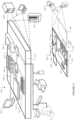
- this invention features a system for determining LOH status of a cancer cell of a cancer patient.
- the system comprises, or consists essentially of, (a) a sample analyzer configured to produce a plurality of signals about genomic DNA of at least one pair of human chromosomes of the cancer cell, and (b) a computer sub-system programmed to calculate, based on the plurality of signals, the number or combined length of Indicator LOH Regions in the at least one pair of human chromosomes.
- the computer sub-system can be programmed to compare the number or combined length of Indicator LOH Regions to a reference number to determine (a) a likelihood of a deficiency in BRCA1 and/or BRCA2 genes in the cancer cell, (b) a likelihood of a deficiency in HDR in the cancer cell, or (c) a likelihood that the cancer patient will respond to cancer treatment regimen comprising a DNA damaging agent, an anthracycline, a topoisomerase I inhibitor, radiation, or a PARP inhibitor.
- the system can comprise an output module configured to display the likelihood of (a), (b), or (c).
- the system can comprise an output module configured to display a recommendation for the use of the cancer treatment regimen.
- the Indicator LOH Regions can be determined in at least two, five, ten, or 21 pairs of human chromosomes.
- the cancer cell can be an ovarian, breast, or esophageal cancer cell.
- the Indicator LOH Regions can have a length of about 6, 12, or 15 or more megabases.
- the Indicator LOH Regions can be present on chromosomes other than a human chromosome 17.
- the DNA damaging agent can be a platinum-based chemotherapy drug
- the anthracycline can be epirubincin or doxorubicin
- the topoisomerase I inhibitor can be campothecin, topotecan, or irinotecan
- the PARP inhibitor can be iniparib, olaparib or velapirib.
- the invention provides a computer program product embodied in a computer readable medium that, when executing on a computer, provides instructions for detecting the presence or absence of any LOH region along one or more of human chromosomes other than the human X and Y sex chromosomes, and the LOH region having a length of about 1.5 or more (or 5, 10 or more, preferably 15 or more) megabases but shorter than the length of the whole chromosome containing the LOH region; and determining the total number or combined length of the LOH regions in the one or more chromosome pairs.
- the computer program product can include other instructions.
- the Indicator LOH Regions can be determined in at least two, five, ten or 21 pairs of human chromosomes.
- the cancer cell can be an ovarian, breast, or esophageal cancer cell.
- the Indicator LOH Regions can have a length of about 6, 12, or 15 or more megabases.
- the Indicator LOH Regions can be present on chromosomes other than a human chromosome 17.
- the DNA damaging agent can be a platinum-based chemotherapy drug, the anthracycline can be epirubincin or doxorubicin, the topoisomerase I inhibitor can be campothecin, topotecan, or irinotecan, or the PARP inhibitor can be iniparib, olaparib or velapirib.
- the present invention provides a diagnostic kit.
- the kit comprises, or consists essentially of, at least 500 oligonucleotides capable of hybridizing to a plurality of polymorphic regions of human genomic DNA; and a computer program product provided herein.
- the computer program product can be embodied in a computer readable medium that, when executing on a computer, provides instructions for detecting the presence or absence of any LOH region along one or more of human chromosomes other than the human X and Y sex chromosomes, and the LOH region having a length of about 1.5 or more (or 5 or 10 or more, preferably about 15 or more) megabases but shorter than the length of the whole chromosome containing the LOH region; and determining the total number and/or combined length of the LOH region in the one or more chromosome pairs.
- this document features a method for assessing cancer cells of a patient for the presence of an LOH signature.
- the method comprises, or consists essentially of, (a) detecting the presence of more than a reference number of LOH regions in at least one pair of human chromosomes of a cancer cell of the cancer patient that are longer than a first length but shorter than the length of the whole chromosome containing the LOH region, wherein the at least one pair of human chromosomes is not a human X/Y sex chromosome pair, wherein the first length is about 1.5 or more megabases, and (b) identifying the patient as having cancer cells with the LOH signature.
- this document features a method for assessing cancer cells of a patient for the presence of an HDR deficient status.
- the method comprises, or consists essentially of, (a) detecting the presence of more than a reference number of LOH regions in at least one pair of human chromosomes of a cancer cell of the cancer patient that are longer than a first length but shorter than the length of the whole chromosome containing the LOH region, wherein the at least one pair of human chromosomes is not a human X/Y sex chromosome pair, wherein the first length is about 1.5 or more megabases, and (b) identifying the patient as having cancer cells with the HDR deficient status.
- this document features a method for assessing cancer cells of a patient for the presence of a genetic mutation within a gene from an HDR pathway.
- the method comprises, or consists essentially of, (a) detecting the presence of more than a reference number of LOH regions in at least one pair of human chromosomes of a cancer cell of the cancer patient that are longer than a first length but shorter than the length of the whole chromosome containing the LOH region, wherein the at least one pair of human chromosomes is not a human X/Y sex chromosome pair, wherein the first length is about 1.5 or more megabases, and (b) identifying the patient as having cancer cells with the genetic mutation.
- this document features a method for determining if a patient is likely to respond to a cancer treatment regimen comprising administering radiation or a drug selected from the group consisting of DNA damaging agents, anthracyclines, topoisomerase I inhibitors, and PARP inhibitors.
- the method comprises, or consists essentially of, (a) detecting the presence of more than a reference number of LOH regions in at least one pair of human chromosomes of a cancer cell of the cancer patient that are longer than a first length but shorter than the length of the whole chromosome containing the LOH region, wherein the at least one pair of human chromosomes is not a human X/Y sex chromosome pair, wherein the first length is about 1.5 or more megabases, and (b) identifying the patient as being likely to respond to the cancer treatment regimen.
- this document features a method for assessing a patient.
- the method comprises, or consists essentially of, (a) determining that the patient comprises cancer cells having an LOH signature, wherein the presence of more than a reference number of LOH regions in at least one pair of human chromosomes of a cancer cell of the cancer patient that are longer than a first length but shorter than the length of the whole chromosome containing the LOH region indicates that the cancer cells have the LOH signature, wherein the at least one pair of human chromosomes is not a human X/Y sex chromosome pair, wherein the first length is about 1.5 or more megabases, and (b) diagnosing the patient as having cancer cells with the LOH signature.
- this document features a method for assessing a patient.
- the method comprises, or consists essentially of, (a) determining that the patient comprises cancer cells having an HDR deficiency status, wherein the presence of more than a reference number of LOH regions in at least one pair of human chromosomes of a cancer cell of the cancer patient that are longer than a first length but shorter than the length of the whole chromosome containing the LOH region indicates that the cancer cells have the HDR deficiency status, wherein the at least one pair of human chromosomes is not a human X/Y sex chromosome pair, wherein the first length is about 1.5 or more megabases, and (b) diagnosing the patient as having cancer cells with the HDR deficient status.
- this document features a method for assessing a patient.
- the method comprises, or consists essentially of, (a) determining that the patient comprises cancer cells having a genetic mutation within a gene from an HDR pathway, wherein the presence of more than a reference number of LOH regions in at least one pair of human chromosomes of a cancer cell of the cancer patient that are longer than a first length but shorter than the length of the whole chromosome containing the LOH region indicates that the cancer cells have the genetic mutation, wherein the at least one pair of human chromosomes is not a human X/Y sex chromosome pair, wherein the first length is about 1.5 or more megabases, and (b) diagnosing the patient as having cancer cells with the genetic mutation.
- this document features a method for assessing a patient for a likelihood to respond to a cancer treatment regimen comprising administering radiation or a drug selected from the group consisting of DNA damaging agents, anthracyclines, topoisomerase I inhibitors, and PARP inhibitors.
- the method comprises, or consists essentially of, (a) determining that the patient comprises cancer cells having an LOH signature, wherein the presence of more than a reference number of LOH regions in at least one pair of human chromosomes of a cancer cell of the cancer patient that are longer than a first length but shorter than the length of the whole chromosome containing the LOH region indicates that the cancer cells have the LOH signature, wherein the at least one pair of human chromosomes is not a human X/Y sex chromosome pair, wherein the first length is about 1.5 or more megabases, and (b) diagnosing, based at least in part on the presence of the LOH signature, the patient as being likely to respond to the cancer treatment regimen.
- this document features a method for performing a diagnostic analysis of a cancer cell of a patient.
- the method comprises, or consists essentially of, (a) detecting the presence of more than a reference number of LOH regions in at least one pair of human chromosomes of the cancer cell that are longer than a first length but shorter than the length of the whole chromosome containing the LOH region, wherein the at least one pair of human chromosomes is not a human X/Y sex chromosome pair, wherein the first length is about 1.5 or more megabases, and (b) identifying the patient as having cancer cells with an LOH signature.
- this document features a method for performing a diagnostic analysis of a cancer cell of a patient.
- the method comprises, or consists essentially of, (a) detecting the presence of more than a reference number of LOH regions in at least one pair of human chromosomes of the cancer cell that are longer than a first length but shorter than the length of the whole chromosome containing the LOH region, wherein the at least one pair of human chromosomes is not a human X/Y sex chromosome pair, wherein the first length is about 1.5 or more megabases, and (b) identifying the patient as having cancer cells with a HDR deficient status.
- this document features a method for performing a diagnostic analysis of a cancer cell of a patient.
- the method comprises, or consists essentially of, (a) detecting the presence of more than a reference number of LOH regions in at least one pair of human chromosomes of the cancer cell that are longer than a first length but shorter than the length of the whole chromosome containing the LOH region, wherein the at least one pair of human chromosomes is not a human X/Y sex chromosome pair, wherein the first length is about 1.5 or more megabases, and (b) identifying the patient as having cancer cells with a genetic mutation within a gene from an HDR pathway.
- this document features a method for performing a diagnostic analysis of a cancer cell of a patient to determine if the cancer patient is likely to respond to a cancer treatment regimen comprising administering radiation or a drug selected from the group consisting of DNA damaging agents, anthracyclines, topoisomerase I inhibitors, and PARP inhibitors.
- the method comprises, or consists essentially of, (a) detecting the presence of more than a reference number of LOH regions in at least one pair of human chromosomes of the cancer cell that are longer than a first length but shorter than the length of the whole chromosome containing the LOH region, wherein the at least one pair of human chromosomes is not a human X/Y sex chromosome pair, wherein the first length is about 1.5 or more megabases, and (b) identifying the patient as being likely to respond to the cancer treatment regimen.
- this document features a method for diagnosing a patient as having cancer cells having an LOH signature.
- the method comprises, or consists essentially of, (a) determining that the patient comprises cancer cells having the LOH signature, wherein the presence of more than a reference number of LOH regions in at least one pair of human chromosomes of a cancer cell of the cancer patient that are longer than a first length but shorter than the length of the whole chromosome containing the LOH region indicates that the cancer cells have the LOH signature, wherein the at least one pair of human chromosomes is not a human X/Y sex chromosome pair, wherein the first length is about 1.5 or more megabases, and (b) diagnosing the patient as having cancer cells with the LOH signature.
- this document features a method for diagnosing a patient as having cancer cells with an HDR deficient status.
- the method comprises, or consists essentially of, (a) determining that the patient comprises cancer cells having the HDR deficiency status, wherein the presence of more than a reference number of LOH regions in at least one pair of human chromosomes of a cancer cell of the cancer patient that are longer than a first length but shorter than the length of the whole chromosome containing the LOH region indicates that the cancer cells have the HDR deficiency status, wherein the at least one pair of human chromosomes is not a human X/Y sex chromosome pair, wherein the first length is about 1.5 or more megabases, and (b) diagnosing the patient as having cancer cells with the HDR deficient status.
- this document features a method for diagnosing a patient as having cancer cells with a genetic mutation within a gene from an HDR pathway.
- the method comprises, or consists essentially of, (a) determining that the patient comprises cancer cells having the genetic mutation, wherein the presence of more than a reference number of LOH regions in at least one pair of human chromosomes of a cancer cell of the cancer patient that are longer than a first length but shorter than the length of the whole chromosome containing the LOH region indicates that the cancer cells have the genetic mutation, wherein the at least one pair of human chromosomes is not a human X/Y sex chromosome pair, wherein the first length is about 1.5 or more megabases, and (b) diagnosing the patient as having cancer cells with the genetic mutation.
- this document features a method for diagnosing a patient as being a candidate for a cancer treatment regimen comprising administering radiation or a drug selected from the group consisting of DNA damaging agents, anthracyclines, topoisomerase I inhibitors, and PARP inhibitors.
- the method comprises, or consists essentially of, (a) determining that the patient comprises cancer cells having an LOH signature, wherein the presence of more than a reference number of LOH regions in at least one pair of human chromosomes of a cancer cell of the cancer patient that are longer than a first length but shorter than the length of the whole chromosome containing the LOH region indicates that the cancer cells have the LOH signature, wherein the at least one pair of human chromosomes is not a human X/Y sex chromosome pair, wherein the first length is about 1.5 or more megabases, and (b) diagnosing, based at least in part on the presence of the LOH signature, the patient as being likely to respond to the cancer treatment regimen.
- This document provides methods and materials involved in assessing samples (e.g., cancer cells) for the presence of an LOH signature. For example, this document provides methods and materials for determining whether or not a cell (e.g., a human cancer cell) contains an LOH signature (e.g., a HDR-deficiency LOH signature).
- a cell e.g., a human cancer cell
- an LOH signature e.g., a HDR-deficiency LOH signature
- a comparison of sequences present at the same locus on each chromosome can reveal whether that particular locus is homozygous or heterozygous within the genome of a cell.
- Polymorphic loci within the human genome are generally heterozygous within an individual since that individual typically receives one copy from the biological father and one copy from the biological mother.
- a polymorphic locus or a string of polymorphic loci within an individual are homozygous as a result of inheriting identical copies from both biological parents.
- Loss of heterozygosity may result from several mechanisms. For example, in some cases, a region of one chromosome can be deleted in a somatic cell. The region that remains present on the other chromosome (the other non-sex chromosome for males) is an LOH region as there is only one copy (instead of two copies) of that region present within the genome of the affected cells. This LOH region can be any length (e.g., from a length less than about 1.5 Mb up to a length equal to the entire length of the chromosome). This type of LOH event results in a copy number reduction.
- a region of one chromosome (one non-sex chromosome for males) in a somatic cell can be replaced with a copy of that region from the other chromosome, thereby eliminating any heterozygosity that may have been present within the replaced region.
- the region that remains present on each chromosome is an LOH region and can be referred to as a copy neutral LOH region.
- Copy neutral LOH regions can be any length (e.g., from a length less than about 1.5 Mb up to a length equal to the entire length of the chromosome).
- a cellular sample e.g., cancer cell sample
- a cellular sample can be identified as having a "positive LOH signature status" (or alternatively called “HDR-deficiency LOH signature") if the genome of the cells being assessed contains five or more (e.g., six or more, seven or more, eight or more, nine or more, ten or more, eleven or more, 12 or more, 13 or more, 14 or more, 15 or more, 16 or more, 17 or more, 18 or more, 19 or more, or 20 or more) LOH regions that are (a) longer than about 1.5 megabases (e.g., longer than about 2, 2.5, 3, 4, 5, 6, 7, 8, 9, 10, 11, 12, 13, 14, 15, 16, 17, 18, 19, 20, 25, 30, 35, 40, 45, 50, 75, or 100 megabases (Mb), preferably longer than about 14 or 15 or 16, more preferably longer than about 15 megabases) and (b) less than the length of the entire chromosome that contains that LOH region.
- Mb megabases
- a cancer cell sample can be identified as having a positive LOH signature status if the genome of the cells being assessed contains nine or more LOH regions that are (a) longer than about 15 Mb and (b) less than the length of the entire chromosome that contains that LOH region.
- the term "Indicator LOH Region” refers to an LOH region that is in a pair of human chromosomes other than the human X/Y sex chromosome pair, and that is characterized by loss of heterozygosity with a length of about 1.5 or more megabases but shorter than the length of the whole chromosome containing the LOH region.
- an Indicator LOH Region is any LOH region about 2, 2.5, 3, 4, 5, 6, 7, 8, 9, 10, 11, 12, 13, 14, 15, 16, 17, 18, 19, 20, 25, 30, 35, 40, 45, 50, 75, or 100 megabases (Mb) or more (preferably longer than about 14 or 15 megabases) and less than the length of the whole chromosome that contains that LOH region.
- Cells identified as having a positive LOH signature can be classified as having an increased likelihood of having an HDR deficiency and/or as having an increased likelihood of having a deficient status in one or more genes in the HDR pathway.
- cancer cells identified as having a positive LOH signature status can be classified as having an increased likelihood of having an HDR deficient status.
- cancer cells identified as having a positive LOH signature status can be classified as having an increased likelihood of having a deficient status for one or more genes in the HDR pathway.
- deficient status for a gene means the sequence, structure, expression and/or activity of the gene or its product is/are deficient as compared to normal. Examples include, but are not limited to, low or no mRNA or protein expression, deleterious mutations, hypermethylation, attenuated activity (e.g., enzymatic activity, ability to bind to another biomolecule), etc.
- deficient status for a pathway e.g., HDR pathway
- BRCA1 e.g., BRCA1
- Deficient status in a gene in the HDR pathway may result in deficiency or reduced activity in homology directed repair in the cancer cells.
- genes in the HDR pathway include, without limitation, the genes listed in Table 1. Table 1. Selected HDR Pathway Genes Gene Name Entrez Gene Symbol (if assigned) Entrez Gene Id Gene Name Entrez Gene Symbol (if assigned) Entrez Gene Id BLM BLM 641 RAD50 RAD50 10111 BRCA1 BRCA1 672 RAD51 RAD51 5888 BRCA2 BRCA2 675 RAD51AP1 RAD51AP1 10635 CtIP RBBP8 5932 RAD51B RAD51L1 5890 DNA polymerase delta POLD1 5424 RAD51C RAD51C 5889 POLD2 5424 RAD51D RAD51L3 5892 POLD3 10714 RAD54 ATRX 546 POLD4 57804 RAD54B RAD54B 25788 DNA polymerase eta POLH 5429 RMI1 RMI1
- Examples of genetic mutations that can be present within a gene of the HDR pathway include, without limitation, those listed in Table 2. Table 2. Possible genetic mutations within selected genes of the HDR pathway.
- a cellular sample e.g., cancer cell sample
- LOH regions e.g., at least 7, 8, 9, 10, or more LOH regions
- Cells e.g., cancer cells
- identified as having an increased number of LOH regions that cover the whole chromosome can be classified as having an increased likelihood of having HDR proficiency, that is, intact HDR pathway.
- cancer cells identified as having an increased number of LOH regions that cover the whole chromosome can be classified as being more likely to have intact BRCA1 and BRCA2 genes.
- identifying LOH loci can include, first, determining the genotype of a sample at various genomic loci (e.g., SNP loci, individual bases in large sequencing) and, second, determining whether homozygous loci are due to LOH events. Any appropriate technique can be used to determine genotypes at loci of interest within the genome of a cell.
- single nucleotide polymorphisms e.g., human genome-wide SNP arrays
- targeted sequencing of loci of interest e.g., sequencing SNP loci and their surrounding sequences
- untargeted sequencing e.g., whole exome, transcriptome, or genome sequencing
- an analysis of the homozygous or heterozygous nature of loci over a length of a chromosome can be performed to determine the length of regions of homozygosity or heterozygosity.
- a stretch of SNP locations that are spaced apart (e.g., spaced about 25 kb to about 100 kb apart) along a chromosome can be evaluated using SNP array results to determine not only the presence of a region of homozygosity along a chromosome but also the length of that region.
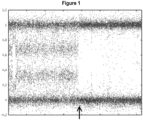
- Results from a SNP array can be used to generate a graph that plots allele dosages along a chromosome.
- nucleic acid arrays useful in the invention include the arrays used in the various examples below (e.g., Affymetrix 500K GeneChip array in Example 3; Affymetrix OncoScan TM FFPE Express 2.0 Services (Formerly MIP CN Services) in Example 4).
- loci e.g., SNPs
- common techniques can be used to identify loci and regions of LOH.
- One way to determine whether homozygosity is due to LOH is to compare the somatic genotype to the germline.
- the genotype for a plurality of loci e.g., SNPs
- the genotype for each sample can be compared (typically computationally) to determine where the genome of the germline cell was heterozygous and the genome of the somatic cell is homozygous.
- loci are LOH loci and regions of such loci are LOH regions.
- Computational techniques can also be used to determine whether homozygosity is due to LOH. Such techniques are particularly useful when a germline sample is not available for analysis and comparison. For example, algorithms such as those described elsewhere can be used to detect LOH regions using information from SNP arrays ( Nannya et al., Cancer Res. (2005) 65:6071-6079 (2005 )). Typically these algorithms do not explicitly take into account contamination of tumor samples with benign tissue. Cf. International Application No. PCT/US2011/026098 to Abkevich et al. ; Goransson et al., PLoS One (2009) 4(6):e6057 . This contamination is often high enough to make the detection of LOH regions challenging. Improved analytical methods according to the present invention for identifying LOH, even in spite of contamination, include those embodied in computer software products as described below.
- the first possibility is that cancer cells have LOH with deletion of allele B in a sample with 50% contamination with normal cells.
- the second possibility is that there is no LOH but allele A is duplicated in a sample with no contamination with normal cells.
- An algorithm can be implemented as a computer program as described herein to reconstruct LOH regions based on genotype (e.g., SNP genotype) data.
- One point of the algorithm is to first reconstruct allele specific copy numbers (ASCN) at each locus (e.g., SNP).
- ASCNs are the numbers of copies of both paternal and maternal alleles.
- An LOH region is then determined as a stretch of SNPs with one of the ASCNs (paternal or maternal) being zero.
- the algorithm can be based on maximizing a likelihood function and can be conceptually akin to a previously described algorithm designed to reconstruct total copy number (rather than ASCN) at each locus (e.g., SNP). See International Application No. PCT/US2011/026098 to Abkevich et al.
- the likelihood function can be maximized over ASCN of all loci, level of contamination with benign tissue, total copy number averaged over the whole genome, and sample specific noise level.
- the input data for the algorithm can include or consist of (1) sample-specific normalized signal intensities for both allele of each locus and (2) assay-specific (specific for different SNP arrays and for sequence based approach) set of parameters defined based on analysis of large number of samples with known ASCN profiles.
- nucleic acid sequencing techniques can be used to identify loci as being homozygous or heterozygous.
- genomic DNA from a cell sample e.g., a cancer cell sample
- Any appropriate method can be used to extract and fragment genomic nucleic acid including, without limitation, commercial kits such as QIAamp TM DNA Mini Kit (Qiagen TM ), MagNA TM Pure DNA Isolation Kit (Roche Applied Science TM ) and GenElute TM Mammalian Genomic DNA Miniprep Kit (Sigma-Aldrich TM ).
- QIAamp TM DNA Mini Kit Qiagen TM
- MagNA TM Pure DNA Isolation Kit Roche Applied Science TM
- GenElute TM Mammalian Genomic DNA Miniprep Kit Sigma-Aldrich TM
- either targeted or untargeted sequencing can be done to determine the sample's genotypes at loci.
- whole genome, whole transcriptome, or whole exome sequencing can be done to determine genotypes at millions or even billions
- genomic DNA can be enriched for those fragments containing a locus (e.g., SNP location) to be analyzed using kits designed for this purpose (e.g ., Agilent SureSelect TM , Illumina TruSeq Capture TM , and Nimblegen SeqCap EZ Choice TM ).
- kits designed for this purpose e.g ., Agilent SureSelect TM , Illumina TruSeq Capture TM , and Nimblegen SeqCap EZ Choice TM.
- genomic DNA containing the loci to be analyzed can be hybridized to biotinylated capture RNA fragments to form biotinylated RNA/genomic DNA complexes.
- DNA capture probes may be utilized resulting in the formation of biotinylated DNA/genomic DNA hybrids.
- Streptavidin coated magnetic beads and a magnetic force can be used to separate the biotinylated RNA/genomic DNA complexes from those genomic DNA fragments not present within a biotinylated RNA/genomic DNA complex.
- the obtained biotinylated RNA/genomic DNA complexes can be treated to remove the captured RNA from the magnetic beads, thereby leaving intact genomic DNA fragments containing a locus to be analyzed.
- These intact genomic DNA fragments containing the loci to be analyzed can be amplified using, for example, PCR techniques.
- the amplified genomic DNA fragments can be sequenced using a high-throughput sequencing technology or a next-generation sequencing technology such as Illumina HiSeq TM , Illumina MiSeq TM , Life Technologies SoLID TM or Ion Torrent TM , or Roche 454 TM .
- a next-generation sequencing technology such as Illumina HiSeq TM , Illumina MiSeq TM , Life Technologies SoLID TM or Ion Torrent TM , or Roche 454 TM .
- the sequencing results from the genomic DNA fragments can be used to identify loci as being homozygous or heterozygous, analogous to the microarray analysis described herein.
- an analysis of the homozygous or heterozygous nature of loci over a length of a chromosome can be performed to determine the length of regions of homozygosity or heterozygosity. For example, a stretch of SNP locations that are spaced apart (e.g., spaced about 25 kb to about 100 kb apart) along a chromosome can be evaluated by sequencing, and the sequencing results used to determine not only the presence of a region of homozygosity along a chromosome but also the length of that LOH region.
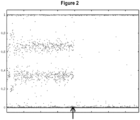
- Obtained sequencing results can be used to generate a graph that plots allele dosages along a chromosome.
- An example of such a graph is presented in Figure 2 . Determining whether homozygosity is due to LOH (as opposed to homozygosity in the germline) can be performed as described herein.
- a selection process can be used to select loci (e.g., SNP loci) to be evaluated using an assay configured to identify loci as being homozygous or heterozygous (e.g., SNP array-based assays and sequencing-based assays). For example, any human SNP location can be selected for inclusion in a SNP array-based assay or a sequencing-based assay configured to identify loci as being homozygous or heterozygous within the genome of cells.
- 0.5, 1.0, 1.5, 2.0, 2.5 million or more SNP locations present within the human genome can be evaluated to identify those SNPs that (a) are not present on the Y chromosome, (b) are not mitochondrial SNPs, (c) have a minor allele frequency of at least about five percent in Caucasians, (d) have a minor allele frequency of at least about one percent in three races other than Caucasians ( e.g., Chinese, Japanese, and Yoruba), and/or (e) do not have a significant deviation from Hardy Weinberg equilibrium in any of the four races. In some cases, more than 100,000, 150,000, or 200,000 human SNPs can be selected that meet criteria (a) through (e).
- a group of SNPs (e.g., top 110,000 SNPs) can be selected such that the SNPs have a high degree of allele frequency in Caucasians, cover the human genome in a somewhat evenly spaced manner ( e.g., at least one SNP every about 25 kb to about 500 kb), and are not in linkage disequilibrium with another selected SNP for in any of the four races.
- about 40, 50, 60, 70, 80, 90, 100, 110, 120, 130 thousand or more SNPs can be selected as meeting each of these criteria and included in an assay configured to identify LOH regions across a human genome.
- SNPs can be selected for analysis with a SNP array-based assay, and between about 45,000 and about 55,000 (e.g., about 54,000) SNPs can be selected for analysis with a sequencing-based assay.
- a cell sample can be assessed to determine if the genome of cells of the sample contains an LOH signature, lacks an LOH signature, has an increased number of LOH regions that cover the whole chromosome, or lacks an increased number of LOH regions that cover the whole chromosome.
- Any appropriate type of sample can be assessed.
- a sample containing cancer cells can be assessed to determine if the genome of the cancer cells contains an LOH signature, lacks an LOH signature, has an increased number of LOH regions that cover the whole chromosome, or lacks an increased number of LOH regions that cover the whole chromosome.
- samples containing cancer cells that can be assessed as described herein include, without limitation, tumor biopsy samples (e.g., breast tumor biopsy samples), formalin-fixed, paraffin-embedded tissue samples containing cancer cells, core needle biopsies, fine needle aspirates, and samples containing cancer cells shed from a tumor (e.g., blood, urine or other bodily fluids).
- tumor biopsy samples e.g., breast tumor biopsy samples
- formalin-fixed, paraffin-embedded tissue samples containing cancer cells e.g., core needle biopsies, fine needle aspirates
- samples containing cancer cells shed from a tumor e.g., blood, urine or other bodily fluids.
- the sample can be prepared by DNA extraction using a genomic DNA extraction kit optimized for FFPE tissue, including but not limited to those described above (e.g., QuickExtract TM FFPE DNA Extraction Kit (Epicentre TM ), and QIAamp TM DNA FFPE Tissue Kit (Qiagen TM )).
- a genomic DNA extraction kit optimized for FFPE tissue including but not limited to those described above (e.g., QuickExtract TM FFPE DNA Extraction Kit (Epicentre TM ), and QIAamp TM DNA FFPE Tissue Kit (Qiagen TM )).
- laser dissection techniques can be performed on a tissue sample to minimize the number of non-cancer cells within a cancer cell sample to be assessed.
- antibody based purification methods can be used to enrich for cancer cells and/or deplete non-cancer cells.
- cancer cell can be assessed using the methods and materials described herein.
- breast cancer cells, ovarian cancer cells, liver cancer cells, esophageal cancer cells, lung cancer cells, head and neck cancer cells, prostate cancer cells, colon, rectal, or colorectal cancer cells, and pancreatic cancer cells can be assessed to determine if the genome of the cancer cells contains an LOH signature, lacks an LOH signature, has an increased number of LOH regions that cover the whole chromosome, or lacks an increased number of LOH regions that cover the whole chromosome.
- the cancer cells are primary or metastatic cancer cells of ovarian cancer, breast cancer, lung cancer or esophageal cancer.
- one or more pairs of chromosomes can be assessed.
- the genome of cancer cells is assessed for the presence or absence of an LOH signature using one or more (e.g., one, two, three, four, five, six, seven, eight, nine, ten, eleven, twelve, 13, 14, 15, 16, 17, 18, 19, 20, 21, 22, 23) pairs of chromosomes.
- a pair to be assessed can include the pair of X sex chromosomes; whereas, in the case of males, a pair of any autosomal chromosomes ( i . e ., any pair other than the pair of X and Y sex chromosomes) can be assessed.
- the chromosome number 17 pair may be excluded from the analysis. It has been determined that certain chromosomes carry unusually high levels of LOH in certain cancers and, thus, it can be helpful to exclude such chromosomes when analyzing samples as described herein from patients having these cancers. In some cases, the sample is from a patient having ovarian cancer, and the chromosome to be excluded is chromosome 17.
- 10 or more (e.g., 13, 16, 19 or 23) pairs of chromosomes can be assessed.
- a pair to be assessed can include the pair of X sex chromosomes; whereas, in the case of males, a pair of any autosomal chromosomes ( i.e., any pair other than the pair of X and Y sex chromosomes) can be assessed.
- the chromosome number 17 pair may be excluded from the analysis.
- the sample is from a patient having ovarian cancer, and the chromosome to be excluded is chromosome 17.
- the genome of cancer cells is assessed for the presence or absence of an increased number of LOH regions that cover the whole chromosome using 10 or more (e.g., 13, 16, 19, or 23) pairs of chromosomes.
- a predefined number of chromosomes may be analyzed to determine the total number of Indicator LOH Regions, preferably the total number of LOH regions of a length of greater than 9 megabases, 10 megabases, 12 megabases, 14 megabases, more preferably greater than 15 megabases.
- the sizes of all identified Indicator LOH Regions may be summed up to obtain a total length of Indicator LOH Regions.
- the reference number discussed above for the total number of Indicator LOH Regions may be 5, 6, 7, 8, 9, 10, 11, 12, 13, 14, 15, 16, 18, 19, 20 or greater, preferably 5, preferably 8, more preferably 9 or 10, most preferably 10.
- the reference number for the total ( e.g., combined) length of Indicator LOH Regions may be about 75, 90, 105, 120, 130, 135, 150, 175, 200, 225, 250, 275, 300, 325 350, 375, 400, 425, 450, 475, 500 megabases or greater, preferably about 75 megabases or greater, preferably about 90 or 105 megabases or greater, more preferably about 120 or 130 megabases or greater, and more preferably about 135 megabases or greater, and most preferably about 150 megabases or greater.
- the total number of LOH regions of a length of greater than about 14 or 15 megabases is determined and compared to a reference number of about 5, 6, 7, 8, 9, 10, 11, 12, 13, 14, 15, 16, 18, 19, or 20.
- the total length of LOH regions of a length of greater than about 14 or 15 megabases is determined and compared to a reference number of about 75, 90, 105, 120, 130, 135, 150, 175, 200, 225, 250, 275, 300, 325 350, 375, 400, 425, 450, 475, or 500 megabases.
- the number of LOH regions (or the combined length, or a test value or score derived from either) in a patient sample is considered "greater” than a reference if it is at least 2-, 3-, 4-, 5-, 6-, 7-, 8-, 9-, or 10-fold greater than the reference while in some embodiments, it is considered “greater” if it is at least 1, 2, 3, 4, 5, 6, 7, 8, 9, or 10 standard deviations greater than the reference.
- the number of LOH regions (or the combined length, or a test value or score derived from either) in a patient sample is considered “not greater” than a reference if it is not more than 2-, 3-, 4-, 5-, 6-, 7-, 8-, 9-, or 10-fold greater than the reference while in some embodiments, it is considered “not greater” if it is not more than 1, 2, 3, 4, 5, 6, 7, 8, 9, or 10 standard deviations greater than the reference.
- the reference number is derived from a relevant reference population.
- Such reference populations may include patients (a) with the same cancer as the patient being tested, (b) with the same cancer sub-type, (c) with cancer having similar genetic or other clinical or molecular features, (d) who responded to a particular treatment, (e) who did not respond to a particular treatment, (f) who are apparently healthy (e.g., do not have any cancer or at least do not have the tested patient's cancer), etc.
- the reference number may be (a) representative of the number (or length, value or score) found in the reference population as a whole, (b) an average (mean, median, etc.) of the number (or length, value or score) found in the reference population as a whole or a particular sub-population, (c) representative of the number (or length, value or score) ( e.g., an average such as mean or median) found in terciles, quartiles, quintiles, etc. of the reference population as ranked by (i) their respective number (or length, value or score) or (ii) the clinical feature they were found to have ( e.g., strength of response, prognosis (including time to cancer-specific death), etc.).
- patients having cancer cells identified as having a positive LOH signature status can be classified, based at least in part on a positive LOH signature status, as being likely to respond to a particular cancer treatment regimen.
- patients having cancer cells with a genome containing an LOH signature can be classified, based at least in part on a positive LOH signature status, as being likely to respond to a cancer treatment regimen that includes the use of a DNA damaging agent, a synthetic lethality agent (e.g., a PARP inhibitor), radiation, or a combination thereof.
- a DNA damaging agent e.g., a synthetic lethality agent
- a synthetic lethality agent e.g., a PARP inhibitor
- radiation or a combination thereof.
- the patients are treatment naive patients.
- DNA damaging agents include, without limitation, platinum-based chemotherapy drugs (e.g., cisplatin, carboplatin, oxaliplatin, and picoplatin), anthracyclines (e.g., epirubicin and doxorubicin), topoisomerase I inhibitors (e.g., campothecin, topotecan, and irinotecan), DNA crosslinkers such as mitomycin C, and triazene compounds ( e.g., dacarbazine and temozolomide).
- Synthetic lethality therapeutic approaches typically involve administering an agent that inhibits at least one critical component of a biological pathway that is especially important to a particular tumor cell's survival.
- inhibitors of poly ADP ribose polymerase can be especially potent against such tumors because two pathways critical to survival become obstructed (one biologically, e.g., by BRCA1 mutation, and the other synthetically, e.g ., by administration of a pathway drug).
- Synthetic lethality approaches to cancer therapy are described in, e.g., O'Brien et al., Converting cancer mutations into therapeutic opportunities, EMBO MOL. MED. (2009) 1:297-299 .
- Examples of synthetic lethality agents include, without limitation, PARP inhibitors or double strand break repair inhibitors in homologous repair-deficient tumor cells, PARP inhibitors in PTEN-deficient tumor cells, methotrexate in MSH2-deficient tumor cells, etc.
- Examples of PARP inhibitors include, without limitation, olaparib, iniparib, and veliparib.
- Examples of double strand break repair inhibitors include, without limitation, KU55933 (ATM inhibitor) and NU7441 (DNA-PKcs inhibitor).
- Examples of information that can be used in addition to a positive LOH signature status to base a classification of being likely to respond to a particular cancer treatment regimen include, without limitation, previous treatment results, germline or somatic DNA mutations, gene or protein expression profiling (e.g., ER/PR/HER2 status, PSA levels), tumor histology (e.g., adenocarcinoma, squamous cell carcinoma, papillary serous carcinoma, mucinous carcinoma, invasive ductal carcinoma, ductal carcinoma in situ (non-invasive), etc.), disease stage, tumor or cancer grade (e.g., well, moderately, or poorly differentiated (e.g., Gleason, modified Bloom Richardson), etc.), number of previous courses of treatment, etc.
- previous treatment results germline or somatic DNA mutations
- gene or protein expression profiling e.g., ER/PR/HER2 status, PSA levels
- tumor histology e.g., adenocarcinoma, squamous
- the cancer patient can be treated with such a cancer treatment regimen.
- the patients are treatment naive patients.
- Any appropriate method for treating the cancer at issue can be used to treat a cancer patient identified as having cancer cells having a positive LOH signature status.
- platinum-based chemotherapy drugs or a combination of platinum-based chemotherapy drugs can be used to treat cancer as described elsewhere ( see, e.g., U.S. Patent Nos. 3,892,790 , 3,904,663 , 7,759,510 , 7,759,488 and 7,754,684 .
- anthracyclines or a combination of anthracyclines can be used to treat cancer as described elsewhere ( see, e.g., U.S. Patent Nos. 3,590,028 , 4,138,480 , 4,950,738 , 6,087,340 , 7,868,040 , and 7,485,707 .
- topoisomerase I inhibitors or a combination of topoisomerase I inhibitors can be used to treat cancer as described elsewhere ( see, e.g., U.S. Patent Nos. 5,633,016 and 6,403,563 .
- PARP inhibitors or a combination of PARP inhibitors can be used to treat cancer as described elsewhere ( see, e.g., U.S.
- Patent Nos. 5,177,075 , 7,915,280 , and 7,351,701 can be used to treat cancer as described elsewhere ( see, e.g., U.S. Patent No. 5,295,944 ).
- a combination comprising different agents e.g., a combination comprising any of platinum-based chemotherapy drugs, anthracyclines, topoisomerase I inhibitors, and/or PARP inhibitors
- platinum-based chemotherapy drugs e.g., anthracyclines, topoisomerase I inhibitors, and/or PARP inhibitors
- PARP inhibitors e.g., a combination comprising any of platinum-based chemotherapy drugs, anthracyclines, topoisomerase I inhibitors, and/or PARP inhibitors
- a combination treatment may comprise any of the above agents or treatments (e.g., a DNA damaging agent, a PARP inhibitor, radiation, or a combination thereof) together with another agent or treatment- e.g., a taxane agent (e.g., doxetaxel, paclitaxel, abraxane), a growth factor or growth factor receptor inhibitor (e.g., erlotinib, gefitinib, lapatinib, sunitinib, bevacizumab, cetuximab, trastuzumab, panitumumab), and/or an antimetabolite (e.g., 5-flourouracil, methotrexate).
- a taxane agent e.g., doxetaxel, paclitaxel, abraxane
- a growth factor or growth factor receptor inhibitor e.g., erlotinib, gefitinib, lapatinib, sunitinib, bevacizum
- patients identified as having cancer cells with a genome lacking an LOH signature can be classified, based at least in part on a negative LOH signature status, as being less likely to respond to a treatment regimen that includes a DNA damaging agent, a PARP inhibitor, radiation, or a combination thereof.
- such a patient can be classified as likely to respond to a cancer treatment regimen that includes the use of one or more cancer treatment agents not associated with HDR, such as a taxane agent (e.g., doxetaxel, paclitaxel, abraxane), a growth factor or growth factor receptor inhibitor (e.g., erlotinib, gefitinib, lapatinib, sunitinib, bevacizumab, cetuximab, trastuzumab, panitumumab), and/or an antimetabolite agent (e.g., 5-flourouracil, methotrexate).
- the patients are treatment naive patients.
- the cancer patient can be treated with such a cancer treatment regimen.
- a cancer treatment regimen that includes the use of a cancer treatment agent not associated with HDR
- Any appropriate method for the cancer being treated can be used to treat a cancer patient identified as having cancer cells having a negative LOH signature status.
- Examples of information that can be used in addition to a negative LOH signature status to base a classification of being likely to respond to a particular cancer treatment regimen include, without limitation, previous treatment results, germline or somatic DNA mutations, gene or protein expression profiling (e.g., ER/PR/HER2 status, PSA levels), tumor histology (e.g., adenocarcinoma, squamous cell carcinoma, papillary serous carcinoma, mucinous carcinoma, invasive ductal carcinoma, ductal carcinoma in situ (non-invasive), etc.), disease stage, tumor or cancer grade (e.g., well, moderately, or poorly differentiated ( e.g., Gleason, modified Bloom Richardson), etc.), number of previous courses of treatment, etc.
- previous treatment results germline or somatic DNA mutations
- gene or protein expression profiling e.g., ER/PR/HER2 status, PSA levels
- tumor histology e.g., adenocarcinoma, squam
- the patient can be assessed to determine whether or not the treatment regimen has an effect. If a beneficial effect is detected, the patient can continue with the same or a similar cancer treatment regimen. If a minimal or no beneficial effect is detected, then adjustments to the cancer treatment regimen can be made. For example, the dose, frequency of administration, or duration of treatment can be increased. In some cases, additional anti-cancer agents can be added to the treatment regimen or a particular anti-cancer agent can be replaced with one or more different anti-cancer agents. The patient being treated can continue to be monitored as appropriate, and changes can be made to the cancer treatment regimen as appropriate.
- an LOH signature can be used to determine a patient's prognosis.
- patients whose tumors have an LOH signature show significantly better survival than patients whose tumors do not have such an LOH signature.
- this document features a method for determining a patient's prognosis based at least in part of detecting the presence or absence of an LOH signature in a sample from the patient.
- the method comprises, or consists essentially of, (a) determining whether the patient comprises cancer cells having an LOH signature as described herein (e.g ., wherein the presence of more than a reference number of LOH regions in at least one pair of human chromosomes of a cancer cell of the cancer patient that are longer than a first length but shorter than the length of the whole chromosome containing the LOH region indicates that the cancer cells have the LOH signature, wherein the at least one pair of human chromosomes is not a human X/Y sex chromosome pair, wherein the first length is about 1.5 or more megabases), and (b)(1) determining, based at least in part on the presence of the LOH signature, that the patient has a relatively good prognosis, or (b)(2) determining, based at least in part on the absence of the LOH signature, that the patient has a relatively poor prognosis.
- an LOH signature as described herein
- Prognosis may include the patient's likelihood of survival (e .g., progression-free survival, overall survival), wherein a relatively good prognosis would include an increased likelihood of survival as compared to some reference population (e.g., average patient with this patient's cancer type/subtype, average patient not having an LOH signature, etc.). Conversely, a relatively poor prognosis in terms of survival would include a decreased likelihood of survival as compared to some reference population (e.g., average patient with this patient's cancer type/subtype, average patient having an LOH signature, etc.).
- some reference population e.g., average patient with this patient's cancer type/subtype, average patient not having an LOH signature, etc.
- a relatively poor prognosis in terms of survival would include a decreased likelihood of survival as compared to some reference population (e.g., average patient with this patient's cancer type/subtype, average patient having an LOH signature, etc.).
- this document provides methods for assessing patients for cells (e.g., cancer cells) having a genome containing an LOH signature.
- the patients are treatment na ⁇ ve patients.
- one or more clinicians or medical professionals can determine if a patient contains cancer cells having a genome containing an LOH signature.
- one or more clinicians or medical professionals can determine if a patient contains cancer cells having a genome containing an LOH signature by obtaining a cancer cell sample from the patient and assessing the genome of cancer cells of the cancer cell sample to determine the presence or absence of an LOH signature as described herein.
- one or more clinicians or medical professionals can obtain a cancer cell sample from a patient and provide that sample to a testing laboratory having the ability to assess the genome of cancer cells of the cancer cell sample to provide an indication about the presence or absence of an LOH signature as described herein.
- the patients are treatment naive patients.
- the one or more clinicians or medical professionals can determine if a patient contains cancer cells having a genome containing an LOH signature by receiving information about the presence or absence of an LOH signature directly or indirectly from the testing laboratory.
- a testing laboratory after assessing the genome of cancer cells for presence or absence of an LOH signature as described herein, can provide a clinician or medical professional with, or access to, a written, electronic, or oral report or medical record that provides an indication about the presence or absence of an LOH signature for a particular patient being assessed.
- a written, electronic, or oral report or medical record can allow the one or more clinicians or medical professionals to determine if a particular patient being assessed contains cancer cells having a genome containing an LOH signature.
- a clinician or medical professional or group of clinicians or medical professionals determines that a particular patient being assessed contains cancer cells having a genome containing an LOH signature
- the clinician or medical professional can classify that patient as having cancer cells whose genome contains the presence of an LOH signature.
- the patients are treatment naive patients.
- a clinician or medical professional or group of clinicians or medical professionals can diagnose a patient determined to have cancer cells whose genome contains the presence of an LOH signature as having cancer cells likely to be deficient in HDR.
- Such a diagnosis can be based solely on a determination that a particular patient being assessed contains cancer cells having a genome containing an LOH signature or can be based at least in part on a determination that a particular patient being assessed contains cancer cells having a genome containing an LOH signature.
- a patient determined to have cancer cells whose genome contains the presence of an LOH signature can be diagnosed as likely to be deficient in HDR based on the combination of a positive LOH signature status and deficient status in one or more tumor suppressor genes (e.g., BRCA1/2, RAD51C), a family history of cancer, or the presence of behavioral risk factors (e.g., smoking).
- a clinician or medical professional or group of clinicians or medical professionals can diagnose a patient determined to have cancer cells whose genome contains the presence of an LOH signature as having cancer cells likely to contain genetic mutations in one or more genes in the HDR pathway.
- the patients are treatment naive patients.
- Such a diagnosis can be based solely on a determination that a particular patient being assessed contains cancer cells having a genome containing an LOH signature or can be based at least in part on a determination that a particular patient being assessed contains cancer cells having a genome containing an LOH signature.
- a patient determined to have cancer cells whose genome contains the presence of an LOH signature can be diagnosed as having cancer cells likely to contain genetic mutations in one or more genes in the HDR pathway based on the combination of a positive LOH positive status and a family history of cancer, or the presence of behavioral risk factors (e.g., smoking).
- a clinician or medical professional or group of clinicians or medical professionals can diagnose a patient determined to have cancer cells whose genome contains the presence of an LOH signature as having cancer cells likely to respond to a particular cancer treatment regimen.
- the patients are treatment naive patients.
- Such a diagnosis can be based solely on a determination that a particular patient being assessed contains cancer cells having a genome containing an LOH signature or can be based at least in part on a determination that a particular patient being assessed contains cancer cells having a genome containing an LOH signature.
- a patient determined to have cancer cells whose genome contains the presence of an LOH signature can be diagnosed as being likely to respond to a particular cancer treatment regimen based on the combination of a positive LOH signature status and deficient status in one or more tumor suppressor genes (e.g., BRCA1/2, RAD51), a family history of cancer, or the presence of behavioral risk factors (e.g., smoking).
- tumor suppressor genes e.g., BRCA1/2, RAD51
- a family history of cancer e.g., smoking.
- a patient determined to have cancer cells whose genome contains the presence of an LOH signature can be diagnosed as likely to respond to a cancer treatment regimen that includes the use of a platinum-based chemotherapy drug such as cisplatin, carboplatin, oxaliplatin, or picoplatin, an anthracycline such as epirubicin or doxorubicin, a topoisomerase I inhibitor such as campothecin, topotecan, or irinotecan, a PARP inhibitor, radiation, a combination thereof, or a combination of any of the preceding with another anti-cancer agent.
- the patients are treatment naive patients.
- a clinician or medical professional or group of clinicians or medical professionals determines that a particular patient being assessed contains cancer cells having a genome lacking an LOH signature
- the clinician or medical professional can classify that patient as having cancer cells whose genome contains an absence of an LOH signature.
- the patients are treatment naive patients.
- a clinician or medical professional or group of clinicians or medical professionals can diagnose a patient determined to have cancer cells containing a genome that lacks the presence of an LOH signature as having cancer cells likely to have functional HDR.
- a clinician or medical professional or group of clinicians or medical professionals can diagnose a patient determined to have cancer cells containing a genome that lacks the presence of an LOH signature as having cancer cells that do not likely contain genetic mutations in one or more genes in the HDR pathway.
- a clinician or medical professional or group of clinicians or medical professionals can diagnose a patient determined to have cancer cells containing a genome that lacks the presence of an LOH signature or contains an increased number of LOH regions that cover the whole chromosome as having cancer cells that are less likely to respond to a platinum-based chemotherapy drug such as cisplatin, carboplatin, oxalaplatin, or picoplatin, an anthracycline such as epirubincin or doxorubicin, a topoisomerase I inhibitor such as campothecin, topotecan, or irinotecan, a PARP inhibitor, or radiation and/or more likely to respond to a cancer treatment regimen that includes the use of a cancer treatment agent not associated with HDR such as one or more taxane agents, growth factor or growth factor receptor inhibitors, anti-metabolite agents, etc.
- the patients are treatment naive patients.
- this document also provides methods for performing a diagnostic analysis of a nucleic acid sample (e.g., a genomic nucleic acid sample or amplified genomic nucleic acid sample) of a cancer patient to determine if cancer cells within the patient have a genome containing an LOH signature and/or an increased number of LOH regions that cover the whole chromosome.
- the patients are treatment naive patients.
- one or more laboratory technicians or laboratory professionals can detect the presence or absence of an LOH signature in the genome of cancer cells of the patient or the presence or absence of an increased number of LOH regions that cover the whole chromosome in the genome of cancer cells of the patient.
- one or more laboratory technicians or laboratory professionals can detect the presence or absence of an LOH signature or the presence or absence of an increased number of LOH regions that cover the whole chromosome in the genome of cancer cells of the patient by (a) receiving a cancer cell sample obtained from the patient, receiving a genomic nucleic acid sample obtained from cancer cells obtained from the patient, or receiving an enriched and/or amplified genomic nucleic acid sample obtained from cancer cells obtained from the patient and (b) performing an analysis (e.g., a SNP array-based assay or a sequencing-based assay) using the received material to detect the presence or absence of an LOH signature or the presence or absence of an increased number of LOH regions that cover the whole chromosome as described herein.
- an analysis e.g., a SNP array-based assay or a sequencing-based assay
- one or more laboratory technicians or laboratory professionals can receive a sample to be analyzed (e.g., a cancer cell sample obtained from the patient, a genomic nucleic acid sample obtained from cancer cells obtained from the patient, or an enriched and/or amplified genomic nucleic acid sample obtained from cancer cells obtained from the patient) directly or indirectly from a clinician or medical professional.
- a sample to be analyzed e.g., a cancer cell sample obtained from the patient, a genomic nucleic acid sample obtained from cancer cells obtained from the patient, or an enriched and/or amplified genomic nucleic acid sample obtained from cancer cells obtained from the patient
- the patients are treatment naive patients.
- the laboratory technician or laboratory professional can identify the patient whose cancer cells were detected as having an LOH signature as having cancer cells with a positive LOH signature status.
- one or more laboratory technicians or laboratory professionals can identify a patient having cancer cells that were detected to have an LOH signature as having cancer cells with a positive LOH signature status by associating that positive LOH signature status or the result (or results or a summary of results) of the performed diagnostic analysis with the corresponding patient's name, medical record, symbolic/numerical identifier, or a combination thereof.
- a laboratory technician or laboratory professional or group of laboratory technicians or laboratory professionals can identify a patient having cancer cells that were detected to have an LOH signature as having cancer cells potentially deficient in HDR by associating the positive LOH signature status, the potentially deficient in HDR status, or the result (or results or a summary of results) of the performed diagnostic analysis with the corresponding patient's name, medical record, symbolic/numerical identifier, or a combination thereof.
- identification can be based solely on detecting the presence of an LOH signature or can be based at least in part on detecting the presence of an LOH signature.
- a laboratory technician or laboratory professional can identify a patient having cancer cells that were detected to have an LOH signature as having cancer cells potentially deficient in HDR based on a combination of a positive LOH signature status and the results of other genetic and biochemical tests performed at the testing laboratory.
- the patients are treatment naive patients.
- a laboratory technician or laboratory professional or group of laboratory technicians or laboratory professionals can identify a patient having cancer cells that were detected to have an LOH signature as having cancer cells potentially containing a genetic mutation in one or more genes in the HDR pathway by associating the positive LOH signature status, the potential presence of a genetic mutation in one or more genes in the HDR pathway, or the result (or results or a summary of results) of the performed diagnostic analysis with the corresponding patient's name, medical record, symbolic/numerical identifier, or a combination thereof.
- identification can be based solely on detecting the presence of an LOH signature or can be based at least in part on detecting the presence of an LOH signature.
- a laboratory technician or laboratory professional can identify a patient having cancer cells that were detected to have an LOH signature as having cancer cells potentially containing a genetic mutation in one or more genes in the HDR pathway based on a combination of a positive LOH signature status and the results of other genetic and biochemical tests performed at the testing laboratory.
- the patients are treatment naive patients.
- a laboratory technician or laboratory professional or group of laboratory technicians or laboratory professionals can identify a patient having cancer cells that were detected to have an LOH signature as having cancer cells likely to respond to a particular cancer treatment regimen by associating the positive LOH signature status, a potentially deficient HDR status, a potential presence of a deficient status in one or more genes in the HDR pathway, or the result (or results or a summary of results) of the performed diagnostic analysis with the corresponding patient's name, medical record, symbolic/numerical identifier, or a combination thereof.
- identification can be based solely on detecting the presence of an LOH signature or can be based at least in part on detecting the presence of an LOH signature.
- a laboratory technician or laboratory professional can identify a patient having cancer cells that were detected to have an LOH signature as having cancer cells likely to respond to a particular cancer treatment regimen based on a combination of a positive LOH signature status and the results of other genetic and biochemical tests performed at the testing laboratory.
- the patients are treatment naive patients.
- the laboratory technician or laboratory professional can identify the patient whose cancer cells were detected as lacking an LOH signature as having cancer cells with a negative LOH signature status.
- one or more laboratory technicians or laboratory professionals can identify a patient having cancer cells that were detected to lack an LOH signature as having cancer cells with a negative LOH signature status by associating that negative LOH signature status or the result (or results or a summary of results) of the performed diagnostic analysis with the corresponding patient's name, medical record, symbolic/numerical identifier, or a combination thereof.
- a laboratory technician or laboratory professional or group of laboratory technicians or laboratory professionals can identify a patient having cancer cells that were detected to lack an LOH signature as having cancer cells with potentially intact HDR by associating the negative LOH signature status, the potentially intact HDR status, or the result (or results or a summary of results) of the performed diagnostic analysis with the corresponding patient's name, medical record, symbolic/numerical identifier, or a combination thereof.
- the patients are treatment naive patients.
- a laboratory technician or laboratory professional or group of laboratory technicians or laboratory professionals can identify a patient having cancer cells that were detected to lack an LOH signature as having cancer cells with potentially intact genes of the HDR pathway by associating the negative LOH signature status, the potential absence of genetic mutations in genes of the HDR pathway, or the result (or results or a summary of results) of the performed diagnostic analysis with the corresponding patient's name, medical record, symbolic/numerical identifier, or a combination thereof.
- the patients are treatment naive patients.
- a laboratory technician or laboratory professional or group of laboratory technicians or laboratory professionals can identify a patient having cancer cells that were detected to lack an LOH signature as having cancer cells as less likely to respond to one particular treatment (e.g., a platinum-based chemotherapy drug such as cisplatin, carboplatin, oxalaplatin, or picoplatin, an anthracycline such as epirubincin or doxorubicin, a topoisomerase I inhibitor such as campothecin, topotecan, or irinotecan, a PARP inhibitor such as iniparib, olaparib, or velapirib, or radiation) and/or more likely to respond to a particular cancer treatment regimen (e.g., a cancer treatment regimen that includes the use of a cancer treatment agent not associated with HDR) by associating the negative LOH signature status, a potentially intact HDR status, a potential absence of genetic mutations in genes of the HDR pathway, or the result (or results or a summary of a particular cancer treatment
- the laboratory technician or laboratory professional can identify the patient whose cancer cells were detected as having an increased number of LOH regions that cover the whole chromosome as likely having cancer cells with an intact BRCA1, BRCA2 and/or RAD51C status, or intact HDR pathway.
- one or more laboratory technicians or laboratory professionals can identify a patient having cancer cells that were detected to have an increased number of LOH regions that cover the whole chromosome as likely having cancer cells with an intact BRCA1 and BRCA2 status by associating the presence of an increased number of LOH regions that cover the whole chromosome or the result (or results or a summary of results) of the performed diagnostic analysis with the corresponding patient's name, medical record, symbolic/numerical identifier, or a combination thereof.
- the patients are treatment naive patients.
- results of any analyses according to the invention will often be communicated to physicians, genetic counselors and/or patients (or other interested parties such as researchers) in a transmittable form that can be communicated or transmitted to any of the above parties.
- a form can vary and can be tangible or intangible.
- the results can be embodied in descriptive statements, diagrams, photographs, charts, images or any other visual forms. For example, graphs or diagrams showing genotype or LOH (or HRD status) information can be used in explaining the results.
- the statements and visual forms can be recorded on a tangible medium such as papers, computer readable media such as floppy disks, compact disks, flash memory, etc., or in an intangible medium, e.g ., an electronic medium in the form of email or website on internet or intranet.
- results can also be recorded in a sound form and transmitted through any suitable medium, e.g. , analog or digital cable lines, fiber optic cables, etc., via telephone, facsimile, wireless mobile phone, internet phone and the like.
- the information and data on a test result can be produced anywhere in the world and transmitted to a different location.
- the information and data on a test result may be generated, cast in a transmittable form as described above, and then imported into the United States.
- the present invention also encompasses a method for producing a transmittable form of information on an LOH signature for at least one patient sample.
- the method comprises the steps of (1) determining an LOH signature according to methods of the present invention; and (2) embodying the result of the determining step in a transmittable form.
- the transmittable form is a product of such a method.
- an LOH signature e.g., the total number of LOH regions in at least one pair of human chromosomes of said cancer cell that are longer than a first length but shorter than the length of the whole chromosome containing the LOH region, wherein said at least one pair of human chromosomes is not a human X/Y sex chromosome pair, wherein said first length is about 1.5 or more megabases
- a particular clinical feature e.g., an increased likelihood of a deficiency in the BRCA1 or BRCA2 gene; an increased likelihood of HDR deficiency; an increased likelihood of response to a treatment regimen comprising a DNA damaging agent, an anthracycline, a topoisomerase I inhibitor, radiation, and/or a PARP inhibitor; etc.
- the number is greater than some reference (or optionally to another feature if the number is less than some reference).
- another embodiment of the invention may involve, in addition to or instead of a correlating step, one or both of the following steps: (a) concluding that the patient has the clinical feature based at least in part on the presence or absence of the LOH signature; or (b) communicating that the patient has the clinical feature based at least in part on the presence or absence of the LOH signature.
- one embodiment described in this document is a method of predicting a cancer patient's response to a cancer treatment regimen comprising a DNA damaging agent, an anthracycline, a topoisomerase I inhibitor, radiation, and/or a PARP inhibitor, said method comprising: (1) determining, in a cancer cell from said cancer patient, the number of LOH regions in at least one pair of human chromosomes of a cancer cell of said cancer patient that are longer than a first length but shorter than the length of the whole chromosome containing the LOH region, wherein said at least one pair of human chromosomes is not a human X/Y sex chromosome pair, wherein said first length is about 1.5 or more megabases; and (2) correlating said total number that is greater than a reference number with an increased likelihood that said cancer patient will respond to said cancer treatment regimen.
- this description of this embodiment is understood to include a description of two related embodiments, i.e., a method of predicting a cancer patient's response to a cancer treatment regimen comprising a DNA damaging agent, an anthracycline, a topoisomerase I inhibitor, radiation, and/or a PARP inhibitor, said method comprising: (1) determining, in a cancer cell from said cancer patient, the number of LOH regions in at least one pair of human chromosomes of a cancer cell of said cancer patient that are longer than a first length but shorter than the length of the whole chromosome containing the LOH region, wherein said at least one pair of human chromosomes is not a human X/Y sex chromosome pair, wherein said first length is about 1.5 or more megabases; and (2)(a) concluding that said patient has an increased likelihood that said cancer patient will respond to said cancer treatment regimen based at least in part on a total number that is greater than a reference number; or (2)(
- such correlating, concluding or communicating may comprise assigning a risk or likelihood of the clinical feature occurring based at least in part on the particular assay or analysis output.
- risk is a percentage probability of the event or outcome occurring.
- the patient is assigned to a risk group (e.g., low risk, intermediate risk, high risk, etc.).
- low risk is any percentage probability below 5%, 10%, 15%, 20%, 25%, 30%, 35%, 40%, 45%, or 50%.
- intermediate risk is any percentage probability above 5%, 10%, 15%, 20%, 25%, 30%, 35%, 40%, 45%, or 50% and below 15%, 20%, 25%, 30%, 35%, 40%, 45%, 50%, 55%, 60%, 65%, 70%, or 75%.
- high risk is any percentage probability above 25%, 30%, 35%, 40%, 45%, 50%, 55%, 60%, 65%, 70%, 75%, 80%, 85%, 90%, 95%, or 99%.
- communicating means to make such information known to another person or transfer such information to a thing (e.g., a computer).
- a patient's prognosis or likelihood of response to a particular treatment is communicated.
- the information used to arrive at such a prognosis or response prediction e.g., LOH signature according to the present invention, etc.
- This communication may be auditory (e.g., verbal), visual (e.g., written), electronic (e.g., data transferred from one computer system to another), etc.
- communicating a cancer classification comprises generating a report that communicates the cancer classification.
- the report is a paper report, an auditory report, or an electronic record.
- the report is displayed and/or stored on a computing device ( e.g., handheld device, desktop computer, smart device, website, etc.).
- the cancer classification is communicated to a physician (e.g., a report communicating the classification is provided to the physician).
- the cancer classification is communicated to a patient (e.g., a report communicating the classification is provided to the patient).
- Communicating a cancer classification can also be accomplished by transferring information (e.g., data) embodying the classification to a server computer and allowing an intermediary or end-user to access such information (e.g., by viewing the information as displayed from the server, by downloading the information in the form of one or more files transferred from the server to the intermediary or end-user's device, etc.).
- information e.g., data
- intermediary or end-user to access such information (e.g., by viewing the information as displayed from the server, by downloading the information in the form of one or more files transferred from the server to the intermediary or end-user's device, etc.).
- an embodiment of the invention comprises concluding some fact (e.g., a patient's prognosis or a patient's likelihood of response to a particular treatment regimen)
- this may include in some embodiments a computer program concluding such fact, typically after performing an algorithm that applies information on LOH regions according to the present invention.
- the present invention encompasses a related embodiment involving a test value or score (e.g., HRD score, LOH score, etc.) derived from, incorporating, and/or, at least to some degree, reflecting such number or length.
- a test value or score e.g., HRD score, LOH score, etc.
- one embodiment of the invention provides a method of treating cancer in a patient, comprising: (1) determining in a sample from said patient the number of LOH regions in at least one pair of human chromosomes of a cancer cell of the cancer patient that are longer than a first length but shorter than the length of the whole chromosome containing the LOH region indicates that the cancer cells have the LOH signature, wherein the at least one pair of human chromosomes is not a human X/Y sex chromosome pair, wherein the first length is about 1.5 or more megabases; (2) providing a test value derived from the number of said LOH regions; (3) comparing said test value to one or more reference values derived from the number of said LOH regions in a reference population (e.g., mean, median, terciles, quartiles, quintiles, etc.); and (4)(a) administering to said patient an anti-cancer drug, or recommending or prescribing or initiating a treatment regimen comprising chemotherapy and/or
- the invention encompasses, mutatis mutandis, corresponding embodiments where the test value or score is used to determine the patient's prognosis, the patient's likelihood of response to a particular treatment regimen, the patient's or patient's sample's likelihood of having a BRCA1, BRCA2, RAD51C or HDR deficiency, etc.
- Figure 15 shows an exemplary process by which a computing system (or a computer program (e.g., software) containing computer-executable instructions) can identify LOH loci or regions from genotype data as described herein. If the observed ratio of the signals of two alleles, A and B, is two to one, there are two possibilities. The first possibility is that cancer cells have LOH with deletion of allele B in a sample with 50% contamination with normal cells. The second possibility is that there is no LOH but allele A is duplicated in a sample with no contamination with normal cells.
- the process begins at box 1500, where the following data are collected by the computing system; (1) sample-specific normalized signal intensities for both alleles of each locus and (2) assay-specific (specific for different SNP arrays and for sequence based approach) set of parameters defined based on analysis of large number of samples with known ASCN profiles.
- any appropriate assay such as a SNP array-based assay or sequencing-based assay can be used to assess loci along a chromosome for homozygosity or heterozygosity.
- a system including a signal detector and a computer can be used to collect data (e.g., fluorescent signals or sequencing results) regarding the homozygous or heterozygous nature of the plurality of loci (e.g., sample-specific normalized signal intensities for both alleles of each locus).
- allele specific copy numbers are reconstructed at each locus (e.g., each SNP).
- ASCNs are the numbers of copies of both paternal and maternal alleles.
- a likelihood function is used to determine whether a homozygous locus or region of homozygous loci is due to LOH.
- the computer process further comprises a step of inquiring or determining whether a patient is treatment naive.
- Figure 3 shows an exemplary process by which a computing system can determine the presence or absence of an LOH signature.
- the process begins at box 300, where data regarding the homozygous or heterozygous nature of a plurality of loci along a chromosome is collected by the computing system.
- any appropriate assay such as a SNP array-based assay or sequencing-based assay can be used to assess loci along a chromosome for homozygosity or heterozygosity.
- a system including a signal detector and a computer can be used to collect data (e.g., fluorescent signals or sequencing results) regarding the homozygous or heterozygous nature of the plurality of loci.
- data regarding the homozygous or heterozygous nature of a plurality of loci as well as the location or spatial relationship of each locus is assessed by the computing system to determine the length of any LOH regions present along a chromosome.
- data regarding the number of LOH regions detected and the length of each detected LOH region is assessed by the computing system to determine the number of LOH regions that have a length (a) greater than or equal to a preset number of Mb (e.g., 15 Mb) and (b) less than the entire length of the chromosome containing that LOH region.
- Mb preset number of Mb
- the computing system can determine the total or combined LOH length as described above.
- the computing system formats an output providing an indication of the presence or absence of an LOH signature.
- the computing system can present the output to a user (e.g., a laboratory technician, clinician, or medical professional).
- a user e.g., a laboratory technician, clinician, or medical professional.
- the presence or absence of an LOH signature can be used to provide an indication about a patient's likely HDR status, an indication about the likely presence or absence of genetic mutations in genes of the HDR pathway, and/or an indication about possible cancer treatment regimens.
- FIG. 4 is a diagram of an example of a computer device 1400 and a mobile computer device 1450, which may be used with the techniques described herein.
- Computing device 1400 is intended to represent various forms of digital computers, such as laptops, desktops, workstations, personal digital assistants, servers, blade servers, mainframes, and other appropriate computers.
- Computing device 1450 is intended to represent various forms of mobile devices, such as personal digital assistants, cellular telephones, smart phones, and other similar computing devices.
- the components shown here, their connections and relationships, and their functions, are meant to be exemplary only, and are not meant to limit implementations of the inventions described and/or claimed in this document.
- Computing device 1400 includes a processor 1402, memory 1404, a storage device 1406, a high-speed interface 1408 connecting to memory 1404 and high-speed expansion ports 1410, and a low speed interface 1415 connecting to low speed bus 1414 and storage device 1406.
- Each of the components 1402, 1404, 1406, 1408, 1410, and 1415 are interconnected using various busses, and may be mounted on a common motherboard or in other manners as appropriate.
- the processor 1402 can process instructions for execution within the computing device 1400, including instructions stored in the memory 1404 or on the storage device 1406 to display graphical information for a GUI on an external input/output device, such as display 1416 coupled to high speed interface 1408.
- multiple processors and/or multiple buses may be used, as appropriate, along with multiple memories and types of memory.
- multiple computing devices 1400 may be connected, with each device providing portions of the necessary operations (e.g., as a server bank, a group of blade servers, or a multi-processor system).
- the memory 1404 stores information within the computing device 1400.
- the memory 1404 is a volatile memory unit or units.
- the memory 1404 is a non-volatile memory unit or units.
- the memory 1404 may also be another form of computer-readable medium, such as a magnetic or optical disk.
- the storage device 1406 is capable of providing mass storage for the computing device 1400.
- the storage device 1406 may be or contain a computer-readable medium, such as a floppy disk device, a hard disk device, an optical disk device, or a tape device, a flash memory or other similar solid state memory device, or an array of devices, including devices in a storage area network or other configurations.
- a computer program product can be tangibly embodied in an information carrier.
- the computer program product may also contain instructions that, when executed, perform one or more methods, such as those described herein.
- the information carrier is a computer- or machine-readable medium, such as the memory 1404, the storage device 1406, memory on processor 1402, or a propagated signal.
- the high speed controller 1408 manages bandwidth-intensive operations for the computing device 1400, while the low speed controller 1415 manages lower bandwidth-intensive operations.
- the high-speed controller 1408 is coupled to memory 1404, display 1416 (e.g., through a graphics processor or accelerator), and to high-speed expansion ports 1410, which may accept various expansion cards (not shown).
- low-speed controller 1415 is coupled to storage device 1406 and low-speed expansion port 1414.
- the low-speed expansion port which may include various communication ports (e.g., USB, Bluetooth, Ethernet, or wireless Ethernet) may be coupled to one or more input/output devices, such as a keyboard, a pointing device, a scanner, an optical reader, a fluorescent signal detector, or a networking device such as a switch or router, e.g. , through a network adapter.
- input/output devices such as a keyboard, a pointing device, a scanner, an optical reader, a fluorescent signal detector, or a networking device such as a switch or router, e.g. , through a network adapter.
- the computing device 1400 may be implemented in a number of different forms, as shown in the figure. For example, it may be implemented as a standard server 1420, or multiple times in a group of such servers. It may also be implemented as part of a rack server system 1424. In addition, it may be implemented in a personal computer such as a laptop computer 1422. Alternatively, components from computing device 1400 may be combined with other components in a mobile device (not shown), such as device 1450. Each of such devices may contain one or more of computing device 1400, 1450, and an entire system may be made up of multiple computing devices 1400, 1450 communicating with each other.
- Computing device 1450 includes a processor 1452, memory 1464, an input/output device such as a display 1454, a communication interface 1466, and a transceiver 1468, among other components (e.g., a scanner, an optical reader, a fluorescent signal detector).
- the device 1450 may also be provided with a storage device, such as a microdrive or other device, to provide additional storage.
- a storage device such as a microdrive or other device, to provide additional storage.
- Each of the components 1450, 1452, 1464, 1454, 1466, and 1468 are interconnected using various buses, and several of the components may be mounted on a common motherboard or in other manners as appropriate.
- the processor 1452 can execute instructions within the computing device 1450, including instructions stored in the memory 1464.
- the processor may be implemented as a chipset of chips that include separate and multiple analog and digital processors.
- the processor may provide, for example, for coordination of the other components of the device 1450, such as control of user interfaces, applications run by device 1450, and wireless communication by device 1450.
- Processor 1452 may communicate with a user through control interface 1458 and display interface 1456 coupled to a display 1454.
- the display 1454 may be, for example, a TFT LCD (Thin-Film-Transistor Liquid Crystal Display) or an OLED (Organic Light Emitting Diode) display, or other appropriate display technology.
- the display interface 1456 may comprise appropriate circuitry for driving the display 1454 to present graphical and other information to a user.
- the control interface 1458 may receive commands from a user and convert them for submission to the processor 1452.
- an external interface 1462 may be provide in communication with processor 1452, so as to enable near area communication of device 1450 with other devices. External interface 1462 may provide, for example, for wired communication in some implementations, or for wireless communication in other implementations, and multiple interfaces may also be used.
- the memory 1464 stores information within the computing device 1450.
- the memory 1464 can be implemented as one or more of a computer-readable medium or media, a volatile memory unit or units, or a non-volatile memory unit or units.
- Expansion memory 1474 may also be provided and connected to device 1450 through expansion interface 1472, which may include, for example, a SIMM (Single In Line Memory Module) card interface.
- SIMM Single In Line Memory Module
- expansion memory 1474 may provide extra storage space for device 1450, or may also store applications or other information for device 1450.
- expansion memory 1474 may include instructions to carry out or supplement the processes described herein, and may include secure information also.
- expansion memory 1474 may be provide as a security module for device 1450, and may be programmed with instructions that permit secure use of device 1450.
- secure applications may be provided via the SIMM cards, along with additional information, such as placing identifying information on the SIMM card in a non-hackable manner.
- the memory may include, for example, flash memory and/or NVRAM memory, as discussed below.
- a computer program product is tangibly embodied in an information carrier.
- the computer program product contains instructions that, when executed, perform one or more methods, such as those described herein.
- the information carrier is a computer- or machine-readable medium, such as the memory 1464, expansion memory 1474, memory on processor 1452, or a propagated signal that may be received, for example, over transceiver 1468 or external interface 1462.
- Device 1450 may communicate wirelessly through communication interface 1466, which may include digital signal processing circuitry where necessary. Communication interface 1466 may provide for communications under various modes or protocols, such as GSM voice calls, SMS, EMS, or MMS messaging, CDMA, TDMA, PDC, WCDMA, CDMA2000, or GPRS, among others. Such communication may occur, for example, through radio-frequency transceiver 1468. In addition, short-range communication may occur, such as using a Bluetooth, WiFi, or other such transceiver (not shown). In addition, GPS (Global Positioning System) receiver module 1470 may provide additional navigation- and location-related wireless data to device 1450, which may be used as appropriate by applications running on device 1450.
- GPS Global Positioning System
- Device 1450 may also communicate audibly using audio codec 1460, which may receive spoken information from a user and convert it to usable digital information. Audio codec 1460 may likewise generate audible sound for a user, such as through a speaker, e.g., in a handset of device 1450. Such sound may include sound from voice telephone calls, may include recorded sound ( e.g., voice messages, music files, etc.) and may also include sound generated by applications operating on device 1450.
- Audio codec 1460 may receive spoken information from a user and convert it to usable digital information. Audio codec 1460 may likewise generate audible sound for a user, such as through a speaker, e.g., in a handset of device 1450. Such sound may include sound from voice telephone calls, may include recorded sound ( e.g., voice messages, music files, etc.) and may also include sound generated by applications operating on device 1450.
- the computing device 1450 may be implemented in a number of different forms, as shown in the figure. For example, it may be implemented as a cellular telephone 1480. It may also be implemented as part of a smartphone 1482, personal digital assistant, or other similar mobile device.
- implementations of the systems and techniques described herein can be realized in digital electronic circuitry, integrated circuitry, specially designed ASICs (application specific integrated circuits), computer hardware, firmware, software, and/or combinations thereof.
- ASICs application specific integrated circuits
- These various implementations can include implementation in one or more computer programs that are executable and/or interpretable on a programmable system including at least one programmable processor, which may be special or general purpose, coupled to receive data and instructions from, and to transmit data and instructions to, a storage system, at least one input device, and at least one output device.
- the systems and techniques described herein can be implemented on a computer having a display device (e.g., a CRT (cathode ray tube) or LCD (liquid crystal display) monitor) for displaying information to the user and a keyboard and a pointing device (e.g., a mouse or a trackball) by which the user can provide input to the computer.
- a display device e.g., a CRT (cathode ray tube) or LCD (liquid crystal display) monitor
- a keyboard and a pointing device e.g., a mouse or a trackball
- Other kinds of devices can be used to provide for interaction with a user as well; for example, feedback provided to the user can be any form of sensory feedback (e.g., visual feedback, auditory feedback, or tactile feedback); and input from the user can be received in any form, including acoustic, speech, or tactile input.
- the systems and techniques described herein can be implemented in a computing system that includes a back end component (e.g., as a data server), or that includes a middleware component (e.g., an application server), or that includes a front end component (e.g., a client computer having a graphical user interface or a Web browser through which a user can interact with an implementation of the systems and techniques described herein), or any combination of such back end, middleware, or front end components.
- the components of the system can be interconnected by any form or medium of digital data communication (e.g., a communication network). Examples of communication networks include a local area network ("LAN”), a wide area network (“WAN”), and the Internet.
- LAN local area network
- WAN wide area network
- the Internet the global information network
- the computing system can include clients and servers.
- a client and server are generally remote from each other and typically interact through a communication network.
- the relationship of client and server arises by virtue of computer programs running on the respective computers and having a client-server relationship to each other.
- a computing system provided herein can be configured to include one or more sample analyzers.
- a sample analyzer can be configured to produce a plurality of signals about genomic DNA of at least one pair of human chromosomes of a cancer cell.
- a sample analyzer can produce signals that are capable of being interpreted in a manner that identifies the homozygous or heterozygous nature of loci along a chromosome.
- a sample analyzer can be configured to carry out one or more steps of a SNP array-based assay or sequencing-based assay and can be configured to produce and/or capture signals from such assays.
- a computing system provided herein can be configured to include a computing device.
- the computing device can be configured to receive signals from a sample analyzer.
- the computing device can include computer-executable instructions or a computer program (e.g., software) containing computer-executable instructions for carrying out one or more of the methods or steps described herein.
- such computer-executable instructions can instruct a computing device to analyze signals from a sample analyzer, from another computing device, from a SNP array-based assay, or from a sequencing-based assay.
- the analysis of such signals can be carried out to determine genotypes, homozygosity at certain loci, regions of homozygosity, the number of LOH regions, to determine the size of LOH regions, to determine the number of LOH regions having a particular size or range of sizes, to determine whether or not a sample is positive for an LOH signature, to determine the number of Indicator LOH Regions in at least one pair of human chromosomes, to determine a likelihood of a deficiency in BRCA1 and/or BRCA2 genes, to determine a likelihood of a deficiency in HDR, to determine a likelihood that a cancer patient will respond to a particular cancer treatment regimen (e.g., a regimen that includes a DNA damaging agent, an anthracycline, a topoisomerase I inhibitor, radiation, a PARP inhibitor, or a combination thereof), or to determine a combination of these items.
- a particular cancer treatment regimen e.g., a regimen that includes a DNA damaging agent, an anth
- a computing system can include computer-executable instructions or a computer program (e.g., software) containing computer-executable instructions for formatting an output providing an indication about the number of LOH regions, the size of LOH regions, the number of LOH regions having a particular size or range of sizes, whether or not a sample is positive for an LOH signature, the number of Indicator LOH Regions in at least one pair of human chromosomes, a likelihood of a deficiency in BRCA1 and/or BRCA2 genes, a likelihood of a deficiency in HDR, a likelihood that a cancer patient will respond to a particular cancer treatment regimen (e.g., a regimen that includes a DNA damaging agent, an anthracycline, a topoisomerase I inhibitor, radiation, a PARP inhibitor, or a combination thereof), or a combination of these items.
- a particular cancer treatment regimen e.g., a regimen that includes a DNA damaging agent, an anthracycline, a top
- a computing system can include computer-executable instructions or a computer program (e.g., software) containing computer-executable instructions for determining a desired cancer treatment regimen for a particular patient based at least in part on the presence or absence of an LOH signature or on the number of Indicator LOH Regions.
- a computer program e.g., software
- a computing system can include a pre-processing device configured to process a sample (e.g., cancer cells) such that a SNP array-based assay or sequencing-based assay can be performed.
- a sample e.g., cancer cells
- pre-processing devices include, without limitation, devices configured to enrich cell populations for cancer cells as opposed to non-cancer cells, devices configured to lyse cells and/or extract genomic nucleic acid, and devices configured to enrich a sample for particular genomic DNA fragments.
- kits for assessing samples e.g., cancer cells
- samples e.g., cancer cells
- this document provides kits for assessing cancer cells for the presence of an LOH signature or to determine the number of Indicator LOH Regions in at least one pair of human chromosomes.
- a kit provided herein can include either SNP probes (e.g., an array of SNP probes for carrying out a SNP array-based assay described herein) or primers (e.g., primers designed for sequencing SNP regions via a sequencing-based assay) in combination with a computer program product containing computer-executable instructions for carrying out one or more of the methods or steps described herein (e.g., computer-executable instructions for determining the number of LOH regions having a particular size or range of sizes).
- a kit provided herein can include at least 500, 1000, 10,000, 25,000, or 50,000 SNP probes capable of hybridizing to polymorphic regions of human genomic DNA.
- a kit provided herein can include at least 500, 1000, 10,000, 25,000, or 50,000 primers capable of sequencing polymorphic regions of human genomic DNA.
- a kit provided herein can include one or more other ingredients for performing a SNP array-based assay or a sequencing-based assay. Examples of such other ingredients include, without limitation, buffers, sequencing nucleotides, enzymes ( e.g., polymerases), etc. This document also provides the use of any appropriate number of the materials provided herein in the manufacture of a kit for carrying out one or more of the methods or steps described herein.
- this document provides the use of a collection of SNP probes (e.g., a collection of 10,000 to 100,000 SNP probes) and a computer program product provided herein in the manufacture of a kit for assessing cancer cells for the presence of an LOH signature.
- a collection of SNP probes e.g., a collection of 10,000 to 100,000 SNP probes
- a computer program product provided herein in the manufacture of a kit for assessing cancer cells for the presence of an LOH signature.
- the first set of 94 tumors was used to derive a candidate signature
- the second set of 40 tumors was used to validate the signature. All coding regions of BRCA1 and BRCA2 genes were sequenced to detect germ line and somatic mutations. Levels of BRCA1 and BRCA2 mRNA expression were measured, and Affymetrix SNP microarrays were performed.
- a computer program was used to reconstruct LOH signature status based on allele intensities derived from the microarray data.
- An algorithm was developed and implemented as a computer program to reconstruct LOH regions based on genotype (e.g., SNP genotype) data.
- ASCN allele specific copy numbers
- SNP allele specific copy numbers
- ASCNs are the numbers of copies of both paternal and maternal alleles.
- An LOH region was then determined as a stretch of SNPs with one of the ASCNs (paternal or maternal) being zero.
- the algorithm was based on maximizing a likelihood function and was conceptually analogous to a previously described algorithm designed to reconstruct total copy number (rather than ASCN) at each locus (e.g., SNP). See International Application No. PCT/US2011/026098 to Abkevich et al.
- the likelihood function was maximized over ASCN of all loci, level of contamination with benign tissue, total copy number averaged over the whole genome, and sample specific noise level.
- the input data for the algorithm included (1) sample-specific normalized signal intensities for both allele of each locus and (2) assay-specific (specific for different SNP arrays and for sequence based approach) set of parameters defined based on analysis of large number of samples with known ASCN profiles.
- Tumors were defined as being HDR deficient for the purpose of this analysis if they either had one or more deleterious mutations in BRCA1 and/or BRCA2 genes or if they had low expression of BRCA1 mRNA. The rest of the tumors were defined as likely HDR non-deficient for the purpose of this analysis.
- LOH regions The distribution of the lengths of LOH regions was investigated ( Figure 5 ).
- Three categories of LOH regions were used: (1) LOH affecting a whole chromosome; (2) large LOH regions (greater than about 15 Mb), which typically affect a part of a chromosomal arm or the whole chromosomal arm; and (3) multiple short LOH regions (less than about 15Mb).
- HDR deficiency It was probable that tumors likely to be HDR non-deficient were in fact HDR deficient due to other genetic alterations, excluding BRCA1 and BRCA2 mutations and low mRNA expression. In addition to the number of large LOH regions, the total length of these regions also correlated significantly with HDR deficiency.
- the 134 tumors were divided from combined training and validation data sets into three groups: (1) BRCA deficient if they either had one or more deleterious mutations in BRCA1 and/or BRCA2 genes or if they had low expression of BRCA1 mRNA; (2) HDR deficient / BRCA intact if they have 9 or more large LOH regions (greater than 15 Mb but less than the length of the entire chromosome); (3) HDR intact if they have less than 9 large LOH regions (greater than 15 Mb but less than the length of the entire chromosome). Results of this analysis are presented in Figure 9 . It shows a high frequency of BRCA deficiency as well as HDR deficiency that is not due to BRCA deficiency among ovarian tumors.
- Figure 10 shows the distribution of large LOH regions (greater than 15 Mb but less than the length of the entire chromosome) for different types of cancer cell lines.
- the size of the circles is proportional to the number of samples with such number of large LOH regions.
- Frequency of HDR deficiency (cell lines with at least 9 of such large LOH regions) is the highest among breast and esophagus cancer cell lines. No HDR deficiency was observed among colon cancer cell lines. Validating the previous findings for ovarian tumors, all BRCA deficient cell lines were found to be HDR deficient as well.
- Figure 11 shows the distribution of large LOH regions (greater than 15 Mb but less than the length of the entire chromosome) for publicly available lung tumor data set (GSE19399 from Gene Expression Omnibus). It was observed that frequency of HDR deficiency (defined as having at least 9 large LOH regions) is quite large among lung tumors (39%).
- Advanced RPMI 1640 was used as the diluent for the highest concentration.
- Advanced RPMI 1640 plus a predetermined amount of DMSO equal to the total DMSO in the high concentration working stock was used for the low concentration, with a maximum of 60% DMSO used for the lowest concentration. This was done to keep the DMSO concentrations equal in every well and prevent non-specific cell death as a result of DMSO.
- the lower of the two drug concentrations was placed in a 96-well, thin-wall PCR cycle plate (Robbins Scientific Cat # 1055-00-0) in rows A-D, column 12, while the higher concentration was placed in rows E-H, column 12, of the same plate.
- ATPlite assays (Perkin Elmer cat # 6016941) were run on each well of each plate according to the ATPLite Assay protocol. The luminescence was then read on a FUSION machine and saved as a .CSV file. For each cell-line and drug combination, the four replicates of the no-drug control were averaged and divided by 100 to create a "normalization factor" used to calculate a normalized percent survival. The normalized percent survival for the no-drug controls was 100%. The four replicates of the cell-plus-drug wells were averaged and divided by the normalization factor for each drug concentration. The percent survival for each drug concentration, starting with a concentration equal to 0, was used to calculate an IC 50 using proprietary software.
- Figure 13 shows response to chemotherapy for breast and ovarian cancer cell lines.
- IC 50 Log 10
- IC 50 Log 10
- Figure 14 is a version of a graph from Figure 13 that indicates specificity and sensitivity among responders and non-responders to treatment with platinum compounds (oxaliplatin, cisplatin, and carboplatin) when exposed to 29 breast cancer cell lines.
- the dashed lines place a threshold number of large LOH regions longer than 15 Mb and shorter than the entire chromosome at nine.
- the solid line divides cell lines into responders and non-responders.
- 67 cancer cell lines were analyzed (29 ovarian, 34 breast, 3 colon, 1 pancreatic). Three breast cancer cell lines were obtained from DSMZ (Braunschweig, Germany). The colon, pancreatic, and remaining breast cancer cell lines were obtained from ATCC (Manassas, VA). Cancer cell lines were grown in RPMI + 10% FBS + 1% penicillin/streptomycin media at 37° C in T75 flasks until ⁇ 5 ⁇ 10 6 cell density. Exceptions were cell lines that required non-standard media, L-glutamine, or insulin. Cells grown in suspension were centrifuged for 5 minutes at 1700 rpm in a 1.5 mL centrifuge tube and the supernatant discarded.
- tissueRuptor Qiagen
- QIAzol lysis reagent RNA isolation using a Qiagen miRNAeasy Mini Kit per the manufacturers protocol.
- a QIAamp DNA Mini Kit Qiagen was used to isolate DNA as per the manufacturer's protocol with an overnight lysis incubation at 56°C and RNase A treatment.
- the Methyl-Profiler DNA Methylation PCR Array System (SABiosciences) was used to quantify methylation levels following the manufacturers recommended protocol. DNA methylation-sensitive and methylation-dependent restriction enzymes were used to selectively digest unmethylated or methylated genomic DNA, respectively. Post-digest DNA was quantified by real-time PCR using primers flanking the regions of interest. The relative concentrations of differentially methylated DNA are determined by comparing the amount of each digest with that of a mock digest.
- RNA was treated with Amplification Grade Deoxyribonuclease I (Sigma-Aldrich Inc.) per manufacturer's protocol with an extended incubation time of 30 minutes. Reverse transcription was performed using a High-Capacity cDNA Reverse Transcription Kit (Applied Biosystems, Foster City, CA) per manufacturer's instructions.
- Replicate preamplifications were run independently using the Taqman PreAmp Master Mix Kit (Applied Biosystems) protocol in a 5 ⁇ l reaction volume. To preamplification replicates were run at 8 and 18 cycles respectively for cell cycle gene assays. Three preamplification replicates were run at 18 cycles only for BRCA1 assays. The post-amplification products were diluted 1:5 in low-EDTA Tris-EDTA (TE). Quantitative Polymerase Chain Reaction (qPCR) was then performed and assessed on Gene Expression M48 Dynamic Arrays (Fluidigm, South San Francisco, CA) per manufacturer's protocol. The comparative cycle threshold (C T ) method was used to calculate relative gene expression.
- C T comparative cycle threshold
- C T s from preamplification of different numbers of cycles were centered by the average of the genes on the replicate that were in common between all replicates.
- the resulting values were normalized first by the average C T s of the housekeeper genes then by the average of the normalized C T s of each assay on all samples from the first cohort to yield ⁇ C T .
- CCP score and relative BRCA1 expression were calculated as the average of the negative of the ⁇ C T s of the cell-cycle genes and BRCA1 assays, respectively.
- Samples in which CCP expression and BRCA1 expression are anti-correlated were defined as BRCA1 deficient.
- BRCA1 expression was regressed on CCP score using iteratively re-weighted least squares (IWLS). Points outside of the 99% prediction interval on the low end were considered abnormal. This method is described in greater detail in International Application No. PCT/US2011/054369 to Timms et al.
- the Affymetrix GeneChip Mapping NspI or StyI Assay Kit was used in the generation of biotinylated DNA for Affymetrix Mapping 500K NspI or StyI microarray hybridizations (each assay was prepared separately). Genomic DNA (250 ng) was digested with NspI or StyI restriction enzyme and adaptors were added to restriction fragment ends with T4 DNA ligase. Adaptor-modified samples were PCR amplified using Clontech Titanium Taq, which generated an amplified product of average size between 200 and 1,100 bp. Amplification products were purified using a Clontech DNA amplification cleanup kit.
- Affymetrix Fragmentation Reagent 90 ⁇ g of purified DNA was fragmented using Affymetrix Fragmentation Reagent. Biotin-labeling of the fragmented sample was accomplished using the GeneChip DNA Labeling Reagent. Biotin-labeled DNA was hybridized on NspI or StyI Affymetrix microarrays at 49oC for 16 to 18 hours in the Affymetrix rotation oven. After hybridization, probe array wash and stain procedures were carried out on the automatic Affymetrix Fluidics Stations as per manufacturer's manual and microarrays were scanned and raw data was collected by Affymetrix GeneChip Scanner 3000.
- the algorithm is designed to determine the most likely allele specific copy number at each SNP location. The corresponding likelihood explicitly takes into account contamination of a cancer DNA sample with non-cancer stromal cell DNA.
- a similar algorithm for CN analysis is described in detail in International Application No. PCT/US2011/026098 to Abkevich et al. (publication no. WO/2011/106541 ).
- the latter array in addition to SNP probes, contains a number of probes for non-polymorphic locations across the human genome. These probes are informative for CN analysis but are not directly informative for LOH analysis.
- a tumor sample was considered HR deficient if it had a germline or somatic mutation in BRCA1 or BRCA2, or methylation or low mRNA expression of BRCA1.
- 31 of 152 samples from the first cohort were carriers of mutations in BRCA1 and/or BRCA2, along with 14/53 from the second cohort and 83/435 from the third cohort (two of which were excluded from the further analysis, see below). Mutations are summarized in Table 4. Table 4. BRCA1, BRCA2, and RAD51C defects detected in the study cohorts.
- the degree of methylation was measured for promoter CpG islands of both BRCA1 and BRCA2. Methylation in multiple samples was observed for BRCA1, but not BRCA2. 11 of 126 samples from the first cohort, 3 of 34 from the second cohort and 64 of 435 from the third cohort were defined as HR deficient due to high levels of BRCA1 promoter methylation. Deleterious BRCA1 or BRCA2 mutations were not observed in any of these samples, except for one sample from the third cohort.
- BRCA1 and BRCA2 expression levels were measured for 137 samples from the first cohort and 53 samples from the second cohort. Expression of BRCA1 in 20 samples was abnormally low. Only five samples with abnormally low expression of BRCA1 were not flagged as HR deficient due to BRCA1 promoter methylation. No abnormally low expression was observed for BRCA2.
- BRCA1 or BRCA2 A single intact copy of BRCA1 or BRCA2 is required for functionality.
- the BRCA1 gene is contained within a region of LOH.
- the BRCA2 gene is observed within an LOH region.
- the first cohort of samples was used as the "discovery" cohort. LOH regions on chromosome 17 were excluded from the analysis because in almost all samples LOH was observed over this chromosome, probably because genes important for progression of ovarian cancer are on this chromosome.
- HR deficiency was checked for correlation between HR deficiency and the number of short LOH regions ( ⁇ 15 Mb), the number of long LOH regions (>15 Mb but less than the whole chromosome), and the number of LOH regions covering whole chromosomes.
- Various different LOH region length cut-offs can be used and the influence of this cut-off on detecting HR deficiency is explored in Figure 19 and its accompanying discussion, though 15 Mb was found to be generally preferred.
- the second and third cohorts were used to validate the results obtained for the first cohort.
- BRCA1 and BRCA2 are the primary genes responsible for HR deficiency in ovarian cancer.
- many other genes may also be important with, for example, both RAD51C (Meindl et al., 2010) and RAD51D (Loveday et al., 2011) recently being implicated as predisposition genes for ovarian cancer.
- the degree of methylation was measured for promoter CpG islands of eight additional genes involved in the HR pathway (Table 5) in the first cohort. Only RAD51C had high levels of promoter methylation (3 of 89 samples). In the third cohort 11 of 435 samples had methylation of the RAD51C promoter.
- Figure 18a shows the distributions of HRD scores for these three groups of mutants, as well as for wild type samples. The distributions of HRD scores among wild type ovarian tumors and wild type cancer cell lines are not significantly different.
- the HRD score was validated in two independent ovarian cancer datasets, and also reflected mutations resulting in HR deficiency in breast and pancreatic cell lines. Table 6. Average of HRD score for BRCA1 and BRCA2 deficient and intact tumors and corresponding p values.
- RAD51C promoter methylation is observed in ovarian tumors.
- High HRD score was significantly associated with RAD51C deficiency in two datasets. Only one additional HR deficient tumor was confirmed in the 3 datasets, a nonsense mutation in FANCM with LOH resulting in loss of the second allele.
- the HRD score associated with the FANCM mutation (8) is within the range of the normal distribution for samples with elevated HRD score.
- High HRD score is highly correlated with HR deficiency, and this score can be utilized to identify patients with high likelihood of responding to DNA damaging agents and PARP inhibitors (among other agents).
- Such a test has clear clinical utility in breast and ovarian cancer, and can be used to expand the use of PARPi and platinum salts to other cancers where HR deficiency is less well characterized.
- the patient cohort analyzed in this example included 56 breast cancer patients, all of whom are either BRCA mutation positive or have triple negative breast cancer (most are TNBC). Stages I - III were included (most are II or III). The patients received 6 cycles of neoadjuvant gemcitabine + iniparib + carboplatin. Response was measured as relatively lower residual cancer burden following treatment.
- the average HRD score for responders was 16.5.
- the average HRD score for BRCA1/2 intact and for BRCA1/2 deficient responders was the same.
- the average HRD score for non-responders was 11.4.
- the average IIRD score for BRCA1/2 intact non-responders is 11.6 and for BRCA1 deficient non-responder was 8.
Landscapes
- Health & Medical Sciences (AREA)
- Chemical & Material Sciences (AREA)
- Life Sciences & Earth Sciences (AREA)
- Engineering & Computer Science (AREA)
- Proteomics, Peptides & Aminoacids (AREA)
- General Health & Medical Sciences (AREA)
- Organic Chemistry (AREA)
- Bioinformatics & Cheminformatics (AREA)
- Genetics & Genomics (AREA)
- Analytical Chemistry (AREA)
- Physics & Mathematics (AREA)
- Immunology (AREA)
- Pathology (AREA)
- Wood Science & Technology (AREA)
- Zoology (AREA)
- Public Health (AREA)
- Pharmacology & Pharmacy (AREA)
- Medicinal Chemistry (AREA)
- Animal Behavior & Ethology (AREA)
- Veterinary Medicine (AREA)
- Biotechnology (AREA)
- Molecular Biology (AREA)
- Biophysics (AREA)
- Epidemiology (AREA)
- Oncology (AREA)
- General Engineering & Computer Science (AREA)
- Biochemistry (AREA)
- Microbiology (AREA)
- Hospice & Palliative Care (AREA)
- Inorganic Chemistry (AREA)
- Theoretical Computer Science (AREA)
- Spectroscopy & Molecular Physics (AREA)
- Medical Informatics (AREA)
- Evolutionary Biology (AREA)
- Bioinformatics & Computational Biology (AREA)
- Nuclear Medicine, Radiotherapy & Molecular Imaging (AREA)
- General Chemical & Material Sciences (AREA)
- Chemical Kinetics & Catalysis (AREA)
- Measuring Or Testing Involving Enzymes Or Micro-Organisms (AREA)
- Medicines That Contain Protein Lipid Enzymes And Other Medicines (AREA)
Priority Applications (1)
| Application Number | Priority Date | Filing Date | Title |
|---|---|---|---|
| EP24191594.1A EP4497824A3 (en) | 2011-12-21 | 2012-12-21 | Methods and materials for assessing loss of heterozygosity |
Applications Claiming Priority (4)
| Application Number | Priority Date | Filing Date | Title |
|---|---|---|---|
| US201161578713P | 2011-12-21 | 2011-12-21 | |
| US201261654402P | 2012-06-01 | 2012-06-01 | |
| EP12860530.0A EP2794907B2 (en) | 2011-12-21 | 2012-12-21 | Methods and materials for assessing loss of heterozygosity |
| PCT/US2012/071380 WO2013096843A1 (en) | 2011-12-21 | 2012-12-21 | Methods and materials for assessing loss of heterozygosity |
Related Parent Applications (2)
| Application Number | Title | Priority Date | Filing Date |
|---|---|---|---|
| EP12860530.0A Division EP2794907B2 (en) | 2011-12-21 | 2012-12-21 | Methods and materials for assessing loss of heterozygosity |
| EP12860530.0A Division-Into EP2794907B2 (en) | 2011-12-21 | 2012-12-21 | Methods and materials for assessing loss of heterozygosity |
Related Child Applications (1)
| Application Number | Title | Priority Date | Filing Date |
|---|---|---|---|
| EP24191594.1A Division EP4497824A3 (en) | 2011-12-21 | 2012-12-21 | Methods and materials for assessing loss of heterozygosity |
Publications (2)
| Publication Number | Publication Date |
|---|---|
| EP3660161A1 EP3660161A1 (en) | 2020-06-03 |
| EP3660161B1 true EP3660161B1 (en) | 2024-07-31 |
Family
ID=48669561
Family Applications (3)
| Application Number | Title | Priority Date | Filing Date |
|---|---|---|---|
| EP19199341.9A Active EP3660161B1 (en) | 2011-12-21 | 2012-12-21 | Methods and materials for assessing loss of heterozygosity |
| EP24191594.1A Pending EP4497824A3 (en) | 2011-12-21 | 2012-12-21 | Methods and materials for assessing loss of heterozygosity |
| EP12860530.0A Active EP2794907B2 (en) | 2011-12-21 | 2012-12-21 | Methods and materials for assessing loss of heterozygosity |
Family Applications After (2)
| Application Number | Title | Priority Date | Filing Date |
|---|---|---|---|
| EP24191594.1A Pending EP4497824A3 (en) | 2011-12-21 | 2012-12-21 | Methods and materials for assessing loss of heterozygosity |
| EP12860530.0A Active EP2794907B2 (en) | 2011-12-21 | 2012-12-21 | Methods and materials for assessing loss of heterozygosity |
Country Status (11)
| Country | Link |
|---|---|
| US (5) | US9388472B2 (enExample) |
| EP (3) | EP3660161B1 (enExample) |
| JP (5) | JP6325453B2 (enExample) |
| CN (2) | CN104160037B (enExample) |
| AU (4) | AU2012358244A1 (enExample) |
| BR (1) | BR112014015152A2 (enExample) |
| CA (1) | CA2860312C (enExample) |
| DK (1) | DK2794907T4 (enExample) |
| ES (1) | ES2759533T5 (enExample) |
| FI (1) | FI2794907T4 (enExample) |
| WO (1) | WO2013096843A1 (enExample) |
Families Citing this family (31)
| Publication number | Priority date | Publication date | Assignee | Title |
|---|---|---|---|---|
| WO2011160063A2 (en) | 2010-06-18 | 2011-12-22 | Myriad Genetics, Inc. | Methods and materials for assessing loss of heterozygosity |
| ES2704303T3 (es) | 2010-08-24 | 2019-03-15 | Dana Farber Cancer Inst Inc | Procedimientos para la predicción de una respuesta contra el cáncer |
| CA2839210A1 (en) | 2011-06-17 | 2012-12-20 | Myriad Genetics, Inc. | Methods and materials for assessing allelic imbalance |
| EP3660161B1 (en) * | 2011-12-21 | 2024-07-31 | Myriad Genetics, Inc. | Methods and materials for assessing loss of heterozygosity |
| EP3415915B1 (en) | 2012-02-23 | 2024-10-23 | Children's Medical Center Corporation | Methods for predicting response to parp inhibitors |
| CA2867434C (en) | 2012-06-07 | 2021-10-12 | Institut Curie | Methods for detecting inactivation of the homologous recombination pathway (brca1/2) in human tumors |
| EP4023765A1 (en) | 2013-12-09 | 2022-07-06 | Institut Curie | Methods for detecting inactivation of the homologous recombination pathway (brca1/2) in human tumors |
| CN105917007A (zh) * | 2014-01-16 | 2016-08-31 | 克洛维斯肿瘤有限公司 | Parp抑制剂用以治疗显示杂合性丧失的乳腺癌或卵巢癌患者的用途 |
| ES2800673T3 (es) | 2014-08-15 | 2021-01-04 | Myriad Genetics Inc | Métodos y materiales para evaluar una deficiencia de recombinación homóloga |
| US20160160294A1 (en) * | 2014-12-08 | 2016-06-09 | Tesaro | Methods and materials for predicting response to niraparib |
| US20180148792A1 (en) | 2015-05-19 | 2018-05-31 | T.S. Sridhar | Method for Identification of a Deficient BRCA1 Function |
| WO2017191074A1 (en) * | 2016-05-01 | 2017-11-09 | Genome Research Limited | Method of characterising a dna sample |
| GB201607629D0 (en) * | 2016-05-01 | 2016-06-15 | Genome Res Ltd | Mutational signatures in cancer |
| WO2017191076A1 (en) * | 2016-05-01 | 2017-11-09 | Genome Research Limited | Method of characterising a dna sample |
| GB2555765A (en) | 2016-05-01 | 2018-05-16 | Genome Res Ltd | Method of detecting a mutational signature in a sample |
| CN107287285A (zh) * | 2017-03-28 | 2017-10-24 | 上海至本生物科技有限公司 | 一种预测同源重组缺失机制及患者对癌症治疗响应的方法 |
| US11830579B2 (en) | 2017-07-25 | 2023-11-28 | Sophia Genetics Sa | Methods for detecting biallelic loss of function in next-generation sequencing genomic data |
| CN112805563B (zh) * | 2018-05-18 | 2025-06-13 | 约翰·霍普金斯大学 | 用于评估和/或治疗癌症的无细胞dna |
| IT201900013335A1 (it) * | 2019-07-30 | 2021-01-30 | Menarini Silicon Biosystems Spa | Metodo per analizzare la perdita di eterozigosi (loh) a seguito di amplificazione totale del genoma basata su un sito di restrizione deterministico (drs-wga) |
| EP4051805A4 (en) * | 2019-10-29 | 2023-11-01 | The Board of Trustees of the Leland Stanford Junior University | TREATMENT METHODS BASED ON MOLECULAR RESPONSE TO TREATMENT |
| EP3945525A1 (en) | 2020-07-27 | 2022-02-02 | Sophia Genetics S.A. | Methods for identifying chromosomal spatial instability such as homologous repair deficiency in low coverage next-generation sequencing data |
| CN112410423B (zh) * | 2020-11-03 | 2021-08-13 | 南京世和基因生物技术股份有限公司 | 同源重组缺失的标志物、检测方法以及检测系统 |
| CN112226495B (zh) * | 2020-12-18 | 2021-03-16 | 北京迈基诺基因科技股份有限公司 | 一种dna同源重组异常的检测方法及其应用 |
| EP4274908A1 (en) * | 2021-01-10 | 2023-11-15 | Act Genomics (IP) Limited | Homologous recombination deficiency determining method and kit thereof |
| WO2022150063A1 (en) * | 2021-01-10 | 2022-07-14 | Act Genomics (Ip) Co., Ltd. | Homologous recombination deficiency determining method and kit thereof |
| CN113466417B (zh) * | 2021-05-13 | 2023-03-21 | 柳州东风容泰化工股份有限公司 | 一种氟尿嘧啶的制备纯度评估方法及系统 |
| US12188961B2 (en) | 2022-07-29 | 2025-01-07 | International Business Machines Corporation | Method for accurate pad contact testing |
| EP4605937A1 (en) | 2022-10-19 | 2025-08-27 | Vib Vzw | Method of determining loss of heterozygosity status of a tumor |
| WO2025078387A1 (en) | 2023-10-10 | 2025-04-17 | Vib Vzw | Method of detecting loss of heterozygosity status of a tumor |
| WO2025078404A1 (en) | 2023-10-10 | 2025-04-17 | Vib Vzw | Methods of determining response of a tumor to dna-damaging agents or to agents inhibiting or impairing dna repair |
| WO2025173014A1 (en) | 2024-02-16 | 2025-08-21 | Onecell Diagnostics India Private Limited | A method for selecting ovarian cancer patients for parp inhibitor treatment |
Family Cites Families (84)
| Publication number | Priority date | Publication date | Assignee | Title |
|---|---|---|---|---|
| YU33730B (en) | 1967-04-18 | 1978-02-28 | Farmaceutici Italia | Process for preparing a novel antibiotic substance and salts thereof |
| GB1432563A (en) | 1972-04-10 | 1976-04-22 | Rustenburg Platinum Mines Ltd | Platinum- co-ordination compounds |
| GB1432562A (en) | 1972-04-10 | 1976-04-22 | Rustenburg Platinum Mines Ltd | Platinum co-ordination compounds |
| ES444380A1 (es) | 1976-01-16 | 1977-06-16 | Gosalvez Mario | Un procedimiento para preparar derivados metalicos antraci- clinicos. |
| US4950738A (en) | 1984-09-13 | 1990-08-21 | Cytogen Corporation | Amine derivatives of anthracycline antibiotics |
| US5977082A (en) | 1985-08-02 | 1999-11-02 | Pharmacia & Upjohn Company | Injectable ready-to-use solutions containing an antitumor anthracycline glycoside |
| DE3630497A1 (de) | 1986-09-08 | 1988-03-10 | Behringwerke Ag | Cis-platin-komplexe, verfahren zu ihrer herstellung und diese verbindungen enthaltende pharmazeutische mittel |
| DK252688A (da) | 1987-05-08 | 1988-11-09 | Sankyo Co | Antitumorplatinkomplekser, fremgangsmaade til fremstilling deraf, samt deres terapeutiske anvendelse |
| US4996337A (en) | 1987-06-23 | 1991-02-26 | American Cyanamid Company | Synthesis of cisplatin analogs |
| US5177075A (en) | 1988-08-19 | 1993-01-05 | Warner-Lambert Company | Substituted dihydroisoquinolinones and related compounds as potentiators of the lethal effects of radiation and certain chemotherapeutic agents; selected compounds, analogs and process |
| US5434256A (en) | 1988-11-22 | 1995-07-18 | Board Of Regents, The University Of Texas System | Diamine platinum complexes as antitumor agents |
| US4946954A (en) | 1989-01-17 | 1990-08-07 | Georgetown University | Platinum pharmaceutical agents |
| US5744101A (en) | 1989-06-07 | 1998-04-28 | Affymax Technologies N.V. | Photolabile nucleoside protecting groups |
| US5143854A (en) | 1989-06-07 | 1992-09-01 | Affymax Technologies N.V. | Large scale photolithographic solid phase synthesis of polypeptides and receptor binding screening thereof |
| US6040138A (en) | 1995-09-15 | 2000-03-21 | Affymetrix, Inc. | Expression monitoring by hybridization to high density oligonucleotide arrays |
| AU647741B2 (en) | 1989-12-01 | 1994-03-31 | Regents Of The University Of California, The | Methods and compositions for chromosome-specific staining |
| US5295944A (en) | 1991-05-14 | 1994-03-22 | Dana-Farber Cancer Institute | Method for treating a tumor with ionizing radiation |
| MX9206577A (es) | 1991-11-15 | 1993-05-01 | Smithkline Beecham Corp | COMPOSICIóN FARMACEUTICA PARA INHIBIR EL CRECIMIENTO DE CELULAS TUMORALES |
| WO1995003335A1 (en) * | 1993-07-26 | 1995-02-02 | K.O. Technology, Inc. | Inhibitors of alternative alleles of genes as a basis for cancer therapeutic agents |
| US5587384A (en) | 1994-02-04 | 1996-12-24 | The Johns Hopkins University | Inhibitors of poly(ADP-ribose) synthetase and use thereof to treat NMDA neurotoxicity |
| US5578832A (en) | 1994-09-02 | 1996-11-26 | Affymetrix, Inc. | Method and apparatus for imaging a sample on a device |
| US5539083A (en) | 1994-02-23 | 1996-07-23 | Isis Pharmaceuticals, Inc. | Peptide nucleic acid combinatorial libraries and improved methods of synthesis |
| US5556752A (en) | 1994-10-24 | 1996-09-17 | Affymetrix, Inc. | Surface-bound, unimolecular, double-stranded DNA |
| US5837492A (en) | 1995-12-18 | 1998-11-17 | Myriad Genetics, Inc. | Chromosome 13-linked breast cancer susceptibility gene |
| GB9620209D0 (en) | 1996-09-27 | 1996-11-13 | Cemu Bioteknik Ab | Method of sequencing DNA |
| GB9626815D0 (en) | 1996-12-23 | 1997-02-12 | Cemu Bioteknik Ab | Method of sequencing DNA |
| WO1998041531A2 (en) | 1997-03-20 | 1998-09-24 | University Of Washington | Solvent for biopolymer synthesis, solvent microdroplets and methods of use |
| US6214821B1 (en) | 1998-03-05 | 2001-04-10 | Washington State University Research Foundation | Methods and composition for the inhibition of cancer cells |
| GB9806324D0 (en) | 1998-03-24 | 1998-05-20 | Pharmacia & Upjohn Spa | Antitumour synergetic composition |
| GB9808145D0 (en) | 1998-04-17 | 1998-06-17 | Zeneca Ltd | Assay |
| US20030049613A1 (en) | 1998-08-17 | 2003-03-13 | Manuel Perucho | Methods for identifying somatic changes in genomic sequences useful for cancer diagnosis and prognosis |
| US6465177B1 (en) | 1998-10-26 | 2002-10-15 | John Wayne Cancer Institute | Detection of loss of heterozygosity in tumor and serum of melanoma patients |
| WO2000040755A2 (en) | 1999-01-06 | 2000-07-13 | Cornell Research Foundation, Inc. | Method for accelerating identification of single nucleotide polymorphisms and alignment of clones in genomic sequencing |
| US6261775B1 (en) | 1999-04-09 | 2001-07-17 | The Regents Of The University Of California | Detection of chromosome copy number changes to distinguish melanocytic nevi from malignant melanoma |
| US6274320B1 (en) | 1999-09-16 | 2001-08-14 | Curagen Corporation | Method of sequencing a nucleic acid |
| US6858412B2 (en) | 2000-10-24 | 2005-02-22 | The Board Of Trustees Of The Leland Stanford Junior University | Direct multiplex characterization of genomic DNA |
| US7858331B2 (en) | 2000-11-03 | 2010-12-28 | Dana Farber Cancer Institute, Inc. | Compositions and methods for the treatment of cancer |
| ATE478664T1 (de) | 2000-12-01 | 2010-09-15 | Eisai Inc | Azaphenanthridone-derivate und deren verwendung als parp-inhibitoren |
| GB0121285D0 (en) | 2001-09-03 | 2001-10-24 | Cancer Res Ventures Ltd | Anti-cancer combinations |
| CA2477761A1 (en) | 2002-03-01 | 2003-09-12 | Ravgen, Inc. | Methods for detection of genetic disorders |
| US20050191632A1 (en) | 2002-11-01 | 2005-09-01 | John Byrd | Cytogenetic abnormalities that are predictive of response to therapy for chronic lymphocytic leukemia |
| WO2004072269A2 (en) | 2003-02-12 | 2004-08-26 | Mayo Foundation For Medical Education And Research | Bex4 nucleic acids, polypeptides, and method of using |
| US20040170983A1 (en) * | 2003-02-27 | 2004-09-02 | Danenberg Kathleen D. | Methods of determining a chemotherapuetic regimin based on loss of heterozygosity at the thymidylate synthase locus |
| US20050112604A1 (en) | 2003-03-14 | 2005-05-26 | Akihide Fujimoto | Loss of heterozygosity of the DNA markers in the 12q22-23 region |
| US7754684B2 (en) | 2003-06-11 | 2010-07-13 | Access Pharmaceuticals, Inc. | Macromolecular platinum chelates |
| DE04777189T1 (de) | 2003-07-02 | 2011-04-07 | Solux Corporation, San Diego | Thermisch stabiles kristallines epirubicin-hydrochlorid und herstellungsverfahren dafür |
| ATE454893T1 (de) | 2003-07-25 | 2010-01-15 | Cancer Rec Tech Ltd | Tricyclische parp-hemmer |
| DE602004015811D1 (de) | 2003-08-13 | 2008-09-25 | Univ South Florida | Verfahren zur inhibierung der proliferation von tumorzellen, bei dem platinkomplexe eingesetzt werden |
| US20080108057A1 (en) | 2004-06-22 | 2008-05-08 | Griffith Jeffrey K | Allelic imbalance in the diagnosis and prognosis of cancer |
| WO2006047481A2 (en) | 2004-10-22 | 2006-05-04 | Redpath Integrated Pathology, Inc. | Enhanced amplifiability of minute fixative-treated tissue samples, minute stained cytology samples, and other minute sources of dna |
| US20070070349A1 (en) | 2005-09-23 | 2007-03-29 | Helicos Biosciences Corporation | Optical train and method for TIRF single molecule detection and analysis |
| US8105768B2 (en) | 2005-03-09 | 2012-01-31 | Abbott Laboratories | Methods of identifying patients for treatment with HER-2/neu inhibitors based on detection of HER-2/neu and TOP2A gene copy number |
| US20060234264A1 (en) | 2005-03-14 | 2006-10-19 | Affymetrix, Inc. | Multiplex polynucleotide synthesis |
| JP2008538496A (ja) | 2005-04-12 | 2008-10-30 | 454 ライフ サイエンシーズ コーポレイション | ウルトラディープ配列決定を用いて配列変異体を決定するための方法 |
| AU2006238877A1 (en) | 2005-04-21 | 2006-11-02 | Alza Corporation | Method for treating advanced ovarian cancer with doxorubicin entrapped in liposomes |
| WO2006128195A2 (en) | 2005-05-27 | 2006-11-30 | Dana-Farber Cancer Institute | Methods of diagnosing and treating cancer by detection of chromosomal abnormalities |
| MX2007015852A (es) | 2005-06-30 | 2008-02-22 | Bionumerik Pharmaceuticals Inc | Analogos de platino con ligandos de monoazol. |
| EP1926835B1 (en) | 2005-09-21 | 2014-12-31 | BioArray Solutions Ltd. | Message abundance and allele copy number determination using ivt with single-stranded primer-promoter-selector constructs |
| US20080262062A1 (en) | 2006-11-20 | 2008-10-23 | Bipar Sciences, Inc. | Method of treating diseases with parp inhibitors |
| US20090081237A1 (en) | 2007-03-12 | 2009-03-26 | Dana-Farber Cancer Institute | Prognostic, diagnostic, and cancer therapeutic uses of FANCI and FANCI modulating agents |
| CN101821619B (zh) | 2007-09-07 | 2015-02-11 | 弗卢丁公司 | 拷贝数变化确定、方法和系统 |
| SI2209375T1 (sl) * | 2007-10-03 | 2014-12-31 | Eisai Inc. | Spojine inhibitorja PARP in metode uporabe |
| KR20100102609A (ko) | 2007-11-12 | 2010-09-24 | 바이파 사이언스 인코포레이티드 | Parp 억제제를 단독으로 사용하거나 항종양제와 병용하여 유방암을 치료하는 방법 |
| CA2708157A1 (en) | 2007-12-07 | 2009-06-11 | Bipar Sciences, Inc. | Treatment of cancer with combinations of topoisomerase inhibitors and parp inhibitors |
| US20090246789A1 (en) | 2008-03-25 | 2009-10-01 | University Of South Carolina | Gene Mutation Profiling of CSMD1 |
| WO2009148528A2 (en) | 2008-05-30 | 2009-12-10 | Millennium Pharmaceuticals, Inc. | Assessment of chromosomal alterations to predict clinical outcome of bortezomib treatment |
| CN102203787B (zh) | 2008-10-31 | 2015-08-26 | Abbvie公司 | 基于基因拷贝数改变的模式的结肠直肠癌的基因组分类 |
| US8206910B2 (en) * | 2008-12-08 | 2012-06-26 | The Cleveland Clinic Foundation | Targets for use in diagnosis, prognosis and therapy of breast cancer |
| KR100925337B1 (ko) | 2009-05-25 | 2009-11-09 | 주식회사 마크로젠 | 염색체 수 이상 검출을 통한 유방암 약물 반응성 예측 |
| WO2011048495A1 (en) | 2009-10-19 | 2011-04-28 | Stichting Het Nederlands Kanker Instituut | Predicting benefit of anti-cancer therapy via array comparative genomic hybridization |
| EP2539468A4 (en) | 2010-02-24 | 2013-08-28 | Myriad Genetics Inc | DIAGNOSTIC PROCEDURE INCLUDING LOSS OF HETEROZYGOTY |
| WO2011160063A2 (en) * | 2010-06-18 | 2011-12-22 | Myriad Genetics, Inc. | Methods and materials for assessing loss of heterozygosity |
| WO2012019000A2 (en) | 2010-08-04 | 2012-02-09 | On-Q-ity | Biomarkers for the identification monitoring and treatment of ovarian cancer |
| ES2704303T3 (es) | 2010-08-24 | 2019-03-15 | Dana Farber Cancer Inst Inc | Procedimientos para la predicción de una respuesta contra el cáncer |
| KR20190002733A (ko) | 2010-12-30 | 2019-01-08 | 파운데이션 메디신 인코포레이티드 | 종양 샘플의 다유전자 분석의 최적화 |
| CA2839210A1 (en) | 2011-06-17 | 2012-12-20 | Myriad Genetics, Inc. | Methods and materials for assessing allelic imbalance |
| EP3660161B1 (en) * | 2011-12-21 | 2024-07-31 | Myriad Genetics, Inc. | Methods and materials for assessing loss of heterozygosity |
| EP3415915B1 (en) | 2012-02-23 | 2024-10-23 | Children's Medical Center Corporation | Methods for predicting response to parp inhibitors |
| CA2867434C (en) | 2012-06-07 | 2021-10-12 | Institut Curie | Methods for detecting inactivation of the homologous recombination pathway (brca1/2) in human tumors |
| AU2014248007B2 (en) | 2013-04-05 | 2020-03-26 | Myriad Genetics, Inc. | Methods and materials for assessing homologous recombination deficiency |
| EP4023765A1 (en) | 2013-12-09 | 2022-07-06 | Institut Curie | Methods for detecting inactivation of the homologous recombination pathway (brca1/2) in human tumors |
| CN105917007A (zh) | 2014-01-16 | 2016-08-31 | 克洛维斯肿瘤有限公司 | Parp抑制剂用以治疗显示杂合性丧失的乳腺癌或卵巢癌患者的用途 |
| ES2800673T3 (es) * | 2014-08-15 | 2021-01-04 | Myriad Genetics Inc | Métodos y materiales para evaluar una deficiencia de recombinación homóloga |
| JP7259274B2 (ja) * | 2018-11-12 | 2023-04-18 | ソニーグループ株式会社 | 情報処理装置、情報処理方法、及びプログラム |
-
2012
- 2012-12-21 EP EP19199341.9A patent/EP3660161B1/en active Active
- 2012-12-21 DK DK12860530.0T patent/DK2794907T4/da active
- 2012-12-21 WO PCT/US2012/071380 patent/WO2013096843A1/en not_active Ceased
- 2012-12-21 BR BR112014015152A patent/BR112014015152A2/pt not_active IP Right Cessation
- 2012-12-21 ES ES12860530T patent/ES2759533T5/es active Active
- 2012-12-21 CA CA2860312A patent/CA2860312C/en active Active
- 2012-12-21 EP EP24191594.1A patent/EP4497824A3/en active Pending
- 2012-12-21 CN CN201280070358.0A patent/CN104160037B/zh active Active
- 2012-12-21 AU AU2012358244A patent/AU2012358244A1/en not_active Abandoned
- 2012-12-21 JP JP2014548965A patent/JP6325453B2/ja active Active
- 2012-12-21 CN CN201710172605.2A patent/CN107267598B/zh active Active
- 2012-12-21 EP EP12860530.0A patent/EP2794907B2/en active Active
- 2012-12-21 FI FIEP12860530.0T patent/FI2794907T4/fi active
-
2014
- 2014-06-18 US US14/307,708 patent/US9388472B2/en active Active
-
2016
- 2016-06-24 US US15/192,497 patent/US10612098B2/en active Active
-
2018
- 2018-04-12 JP JP2018076503A patent/JP6700333B2/ja active Active
- 2018-08-02 AU AU2018211277A patent/AU2018211277B2/en active Active
-
2020
- 2020-02-24 US US16/799,797 patent/US20200190602A1/en active Pending
- 2020-04-30 JP JP2020079997A patent/JP7128853B2/ja active Active
- 2020-08-28 AU AU2020223754A patent/AU2020223754B2/en active Active
-
2022
- 2022-08-19 JP JP2022130844A patent/JP7595619B2/ja active Active
- 2022-09-08 AU AU2022228167A patent/AU2022228167B2/en active Active
- 2022-12-14 US US18/081,586 patent/US20230111438A1/en active Pending
-
2024
- 2024-11-26 JP JP2024205398A patent/JP2025032160A/ja active Pending
-
2025
- 2025-03-21 US US19/087,361 patent/US20250215509A1/en active Pending
Also Published As
Similar Documents
| Publication | Publication Date | Title |
|---|---|---|
| US20250215509A1 (en) | Methods and materials for assessing loss of heterozygosity | |
| US20250250643A1 (en) | Methods and materials for assessing loss of heterozygosity | |
| HK40120571A (en) | Methods and materials for assessing loss of heterozygosity | |
| NZ625468B2 (en) | Methods and materials for assessing loss of heterozygosity |
Legal Events
| Date | Code | Title | Description |
|---|---|---|---|
| PUAI | Public reference made under article 153(3) epc to a published international application that has entered the european phase |
Free format text: ORIGINAL CODE: 0009012 |
|
| STAA | Information on the status of an ep patent application or granted ep patent |
Free format text: STATUS: THE APPLICATION HAS BEEN PUBLISHED |
|
| AC | Divisional application: reference to earlier application |
Ref document number: 2794907 Country of ref document: EP Kind code of ref document: P |
|
| AK | Designated contracting states |
Kind code of ref document: A1 Designated state(s): AL AT BE BG CH CY CZ DE DK EE ES FI FR GB GR HR HU IE IS IT LI LT LU LV MC MK MT NL NO PL PT RO RS SE SI SK SM TR |
|
| AX | Request for extension of the european patent |
Extension state: BA ME |
|
| STAA | Information on the status of an ep patent application or granted ep patent |
Free format text: STATUS: REQUEST FOR EXAMINATION WAS MADE |
|
| 17P | Request for examination filed |
Effective date: 20201130 |
|
| RBV | Designated contracting states (corrected) |
Designated state(s): AL AT BE BG CH CY CZ DE DK EE ES FI FR GB GR HR HU IE IS IT LI LT LU LV MC MK MT NL NO PL PT RO RS SE SI SK SM TR |
|
| STAA | Information on the status of an ep patent application or granted ep patent |
Free format text: STATUS: EXAMINATION IS IN PROGRESS |
|
| 17Q | First examination report despatched |
Effective date: 20220111 |
|
| GRAP | Despatch of communication of intention to grant a patent |
Free format text: ORIGINAL CODE: EPIDOSNIGR1 |
|
| STAA | Information on the status of an ep patent application or granted ep patent |
Free format text: STATUS: GRANT OF PATENT IS INTENDED |
|
| INTG | Intention to grant announced |
Effective date: 20240301 |
|
| GRAS | Grant fee paid |
Free format text: ORIGINAL CODE: EPIDOSNIGR3 |
|
| GRAA | (expected) grant |
Free format text: ORIGINAL CODE: 0009210 |
|
| STAA | Information on the status of an ep patent application or granted ep patent |
Free format text: STATUS: THE PATENT HAS BEEN GRANTED |
|
| P01 | Opt-out of the competence of the unified patent court (upc) registered |
Free format text: CASE NUMBER: APP_36060/2024 Effective date: 20240617 |
|
| AC | Divisional application: reference to earlier application |
Ref document number: 2794907 Country of ref document: EP Kind code of ref document: P |
|
| AK | Designated contracting states |
Kind code of ref document: B1 Designated state(s): AL AT BE BG CH CY CZ DE DK EE ES FI FR GB GR HR HU IE IS IT LI LT LU LV MC MK MT NL NO PL PT RO RS SE SI SK SM TR |
|
| REG | Reference to a national code |
Ref country code: CH Ref legal event code: EP Ref country code: GB Ref legal event code: FG4D |
|
| REG | Reference to a national code |
Ref country code: DE Ref legal event code: R096 Ref document number: 602012080980 Country of ref document: DE |
|
| REG | Reference to a national code |
Ref country code: IE Ref legal event code: FG4D |
|
| REG | Reference to a national code |
Ref country code: LT Ref legal event code: MG9D |
|
| REG | Reference to a national code |
Ref country code: NL Ref legal event code: MP Effective date: 20240731 |
|
| PG25 | Lapsed in a contracting state [announced via postgrant information from national office to epo] |
Ref country code: PT Free format text: LAPSE BECAUSE OF FAILURE TO SUBMIT A TRANSLATION OF THE DESCRIPTION OR TO PAY THE FEE WITHIN THE PRESCRIBED TIME-LIMIT Effective date: 20241202 |
|
| REG | Reference to a national code |
Ref country code: AT Ref legal event code: MK05 Ref document number: 1708501 Country of ref document: AT Kind code of ref document: T Effective date: 20240731 |
|
| PG25 | Lapsed in a contracting state [announced via postgrant information from national office to epo] |
Ref country code: PT Free format text: LAPSE BECAUSE OF FAILURE TO SUBMIT A TRANSLATION OF THE DESCRIPTION OR TO PAY THE FEE WITHIN THE PRESCRIBED TIME-LIMIT Effective date: 20241202 |
|
| PG25 | Lapsed in a contracting state [announced via postgrant information from national office to epo] |
Ref country code: NO Free format text: LAPSE BECAUSE OF FAILURE TO SUBMIT A TRANSLATION OF THE DESCRIPTION OR TO PAY THE FEE WITHIN THE PRESCRIBED TIME-LIMIT Effective date: 20241031 |
|
| PG25 | Lapsed in a contracting state [announced via postgrant information from national office to epo] |
Ref country code: NL Free format text: LAPSE BECAUSE OF FAILURE TO SUBMIT A TRANSLATION OF THE DESCRIPTION OR TO PAY THE FEE WITHIN THE PRESCRIBED TIME-LIMIT Effective date: 20240731 Ref country code: FI Free format text: LAPSE BECAUSE OF FAILURE TO SUBMIT A TRANSLATION OF THE DESCRIPTION OR TO PAY THE FEE WITHIN THE PRESCRIBED TIME-LIMIT Effective date: 20240731 Ref country code: GR Free format text: LAPSE BECAUSE OF FAILURE TO SUBMIT A TRANSLATION OF THE DESCRIPTION OR TO PAY THE FEE WITHIN THE PRESCRIBED TIME-LIMIT Effective date: 20241101 Ref country code: PL Free format text: LAPSE BECAUSE OF FAILURE TO SUBMIT A TRANSLATION OF THE DESCRIPTION OR TO PAY THE FEE WITHIN THE PRESCRIBED TIME-LIMIT Effective date: 20240731 |
|
| PGFP | Annual fee paid to national office [announced via postgrant information from national office to epo] |
Ref country code: GB Payment date: 20241217 Year of fee payment: 13 |
|
| PG25 | Lapsed in a contracting state [announced via postgrant information from national office to epo] |
Ref country code: BG Free format text: LAPSE BECAUSE OF FAILURE TO SUBMIT A TRANSLATION OF THE DESCRIPTION OR TO PAY THE FEE WITHIN THE PRESCRIBED TIME-LIMIT Effective date: 20240731 |
|
| PGFP | Annual fee paid to national office [announced via postgrant information from national office to epo] |
Ref country code: FR Payment date: 20241227 Year of fee payment: 13 |
|
| PG25 | Lapsed in a contracting state [announced via postgrant information from national office to epo] |
Ref country code: LV Free format text: LAPSE BECAUSE OF FAILURE TO SUBMIT A TRANSLATION OF THE DESCRIPTION OR TO PAY THE FEE WITHIN THE PRESCRIBED TIME-LIMIT Effective date: 20240731 |
|
| PG25 | Lapsed in a contracting state [announced via postgrant information from national office to epo] |
Ref country code: AT Free format text: LAPSE BECAUSE OF FAILURE TO SUBMIT A TRANSLATION OF THE DESCRIPTION OR TO PAY THE FEE WITHIN THE PRESCRIBED TIME-LIMIT Effective date: 20240731 Ref country code: IS Free format text: LAPSE BECAUSE OF FAILURE TO SUBMIT A TRANSLATION OF THE DESCRIPTION OR TO PAY THE FEE WITHIN THE PRESCRIBED TIME-LIMIT Effective date: 20241130 |
|
| PG25 | Lapsed in a contracting state [announced via postgrant information from national office to epo] |
Ref country code: HR Free format text: LAPSE BECAUSE OF FAILURE TO SUBMIT A TRANSLATION OF THE DESCRIPTION OR TO PAY THE FEE WITHIN THE PRESCRIBED TIME-LIMIT Effective date: 20240731 |
|
| PG25 | Lapsed in a contracting state [announced via postgrant information from national office to epo] |
Ref country code: ES Free format text: LAPSE BECAUSE OF FAILURE TO SUBMIT A TRANSLATION OF THE DESCRIPTION OR TO PAY THE FEE WITHIN THE PRESCRIBED TIME-LIMIT Effective date: 20240731 Ref country code: RS Free format text: LAPSE BECAUSE OF FAILURE TO SUBMIT A TRANSLATION OF THE DESCRIPTION OR TO PAY THE FEE WITHIN THE PRESCRIBED TIME-LIMIT Effective date: 20241031 |
|
| PG25 | Lapsed in a contracting state [announced via postgrant information from national office to epo] |
Ref country code: RS Free format text: LAPSE BECAUSE OF FAILURE TO SUBMIT A TRANSLATION OF THE DESCRIPTION OR TO PAY THE FEE WITHIN THE PRESCRIBED TIME-LIMIT Effective date: 20241031 Ref country code: PL Free format text: LAPSE BECAUSE OF FAILURE TO SUBMIT A TRANSLATION OF THE DESCRIPTION OR TO PAY THE FEE WITHIN THE PRESCRIBED TIME-LIMIT Effective date: 20240731 Ref country code: NO Free format text: LAPSE BECAUSE OF FAILURE TO SUBMIT A TRANSLATION OF THE DESCRIPTION OR TO PAY THE FEE WITHIN THE PRESCRIBED TIME-LIMIT Effective date: 20241031 Ref country code: NL Free format text: LAPSE BECAUSE OF FAILURE TO SUBMIT A TRANSLATION OF THE DESCRIPTION OR TO PAY THE FEE WITHIN THE PRESCRIBED TIME-LIMIT Effective date: 20240731 Ref country code: LV Free format text: LAPSE BECAUSE OF FAILURE TO SUBMIT A TRANSLATION OF THE DESCRIPTION OR TO PAY THE FEE WITHIN THE PRESCRIBED TIME-LIMIT Effective date: 20240731 Ref country code: IS Free format text: LAPSE BECAUSE OF FAILURE TO SUBMIT A TRANSLATION OF THE DESCRIPTION OR TO PAY THE FEE WITHIN THE PRESCRIBED TIME-LIMIT Effective date: 20241130 Ref country code: HR Free format text: LAPSE BECAUSE OF FAILURE TO SUBMIT A TRANSLATION OF THE DESCRIPTION OR TO PAY THE FEE WITHIN THE PRESCRIBED TIME-LIMIT Effective date: 20240731 Ref country code: GR Free format text: LAPSE BECAUSE OF FAILURE TO SUBMIT A TRANSLATION OF THE DESCRIPTION OR TO PAY THE FEE WITHIN THE PRESCRIBED TIME-LIMIT Effective date: 20241101 Ref country code: FI Free format text: LAPSE BECAUSE OF FAILURE TO SUBMIT A TRANSLATION OF THE DESCRIPTION OR TO PAY THE FEE WITHIN THE PRESCRIBED TIME-LIMIT Effective date: 20240731 Ref country code: ES Free format text: LAPSE BECAUSE OF FAILURE TO SUBMIT A TRANSLATION OF THE DESCRIPTION OR TO PAY THE FEE WITHIN THE PRESCRIBED TIME-LIMIT Effective date: 20240731 Ref country code: BG Free format text: LAPSE BECAUSE OF FAILURE TO SUBMIT A TRANSLATION OF THE DESCRIPTION OR TO PAY THE FEE WITHIN THE PRESCRIBED TIME-LIMIT Effective date: 20240731 Ref country code: AT Free format text: LAPSE BECAUSE OF FAILURE TO SUBMIT A TRANSLATION OF THE DESCRIPTION OR TO PAY THE FEE WITHIN THE PRESCRIBED TIME-LIMIT Effective date: 20240731 |
|
| PGFP | Annual fee paid to national office [announced via postgrant information from national office to epo] |
Ref country code: DE Payment date: 20241227 Year of fee payment: 13 |
|
| PG25 | Lapsed in a contracting state [announced via postgrant information from national office to epo] |
Ref country code: RO Free format text: LAPSE BECAUSE OF FAILURE TO SUBMIT A TRANSLATION OF THE DESCRIPTION OR TO PAY THE FEE WITHIN THE PRESCRIBED TIME-LIMIT Effective date: 20240731 Ref country code: DK Free format text: LAPSE BECAUSE OF FAILURE TO SUBMIT A TRANSLATION OF THE DESCRIPTION OR TO PAY THE FEE WITHIN THE PRESCRIBED TIME-LIMIT Effective date: 20240731 Ref country code: SM Free format text: LAPSE BECAUSE OF FAILURE TO SUBMIT A TRANSLATION OF THE DESCRIPTION OR TO PAY THE FEE WITHIN THE PRESCRIBED TIME-LIMIT Effective date: 20240731 |
|
| PG25 | Lapsed in a contracting state [announced via postgrant information from national office to epo] |
Ref country code: EE Free format text: LAPSE BECAUSE OF FAILURE TO SUBMIT A TRANSLATION OF THE DESCRIPTION OR TO PAY THE FEE WITHIN THE PRESCRIBED TIME-LIMIT Effective date: 20240731 |
|
| PG25 | Lapsed in a contracting state [announced via postgrant information from national office to epo] |
Ref country code: CZ Free format text: LAPSE BECAUSE OF FAILURE TO SUBMIT A TRANSLATION OF THE DESCRIPTION OR TO PAY THE FEE WITHIN THE PRESCRIBED TIME-LIMIT Effective date: 20240731 |
|
| PG25 | Lapsed in a contracting state [announced via postgrant information from national office to epo] |
Ref country code: SK Free format text: LAPSE BECAUSE OF FAILURE TO SUBMIT A TRANSLATION OF THE DESCRIPTION OR TO PAY THE FEE WITHIN THE PRESCRIBED TIME-LIMIT Effective date: 20240731 Ref country code: IT Free format text: LAPSE BECAUSE OF FAILURE TO SUBMIT A TRANSLATION OF THE DESCRIPTION OR TO PAY THE FEE WITHIN THE PRESCRIBED TIME-LIMIT Effective date: 20240731 |
|
| REG | Reference to a national code |
Ref country code: DE Ref legal event code: R097 Ref document number: 602012080980 Country of ref document: DE |
|
| PLBE | No opposition filed within time limit |
Free format text: ORIGINAL CODE: 0009261 |
|
| STAA | Information on the status of an ep patent application or granted ep patent |
Free format text: STATUS: NO OPPOSITION FILED WITHIN TIME LIMIT |
|
| PG25 | Lapsed in a contracting state [announced via postgrant information from national office to epo] |
Ref country code: MC Free format text: LAPSE BECAUSE OF FAILURE TO SUBMIT A TRANSLATION OF THE DESCRIPTION OR TO PAY THE FEE WITHIN THE PRESCRIBED TIME-LIMIT Effective date: 20240731 |
|
| 26N | No opposition filed |
Effective date: 20250501 |
|
| REG | Reference to a national code |
Ref country code: CH Ref legal event code: PL |
|
| PG25 | Lapsed in a contracting state [announced via postgrant information from national office to epo] |
Ref country code: LU Free format text: LAPSE BECAUSE OF NON-PAYMENT OF DUE FEES Effective date: 20241221 |
|
| PG25 | Lapsed in a contracting state [announced via postgrant information from national office to epo] |
Ref country code: SE Free format text: LAPSE BECAUSE OF FAILURE TO SUBMIT A TRANSLATION OF THE DESCRIPTION OR TO PAY THE FEE WITHIN THE PRESCRIBED TIME-LIMIT Effective date: 20240731 |
|
| REG | Reference to a national code |
Ref country code: BE Ref legal event code: MM Effective date: 20241231 |
|
| PG25 | Lapsed in a contracting state [announced via postgrant information from national office to epo] |
Ref country code: BE Free format text: LAPSE BECAUSE OF NON-PAYMENT OF DUE FEES Effective date: 20241231 |
|
| PG25 | Lapsed in a contracting state [announced via postgrant information from national office to epo] |
Ref country code: CH Free format text: LAPSE BECAUSE OF NON-PAYMENT OF DUE FEES Effective date: 20241231 |
|
| PG25 | Lapsed in a contracting state [announced via postgrant information from national office to epo] |
Ref country code: IE Free format text: LAPSE BECAUSE OF NON-PAYMENT OF DUE FEES Effective date: 20241221 |