EP3659758A2 - Merkmalsschätzsystem, merkmalsschätzverfahreen - Google Patents
Merkmalsschätzsystem, merkmalsschätzverfahreen Download PDFInfo
- Publication number
- EP3659758A2 EP3659758A2 EP19211189.6A EP19211189A EP3659758A2 EP 3659758 A2 EP3659758 A2 EP 3659758A2 EP 19211189 A EP19211189 A EP 19211189A EP 3659758 A2 EP3659758 A2 EP 3659758A2
- Authority
- EP
- European Patent Office
- Prior art keywords
- characteristic
- torque signal
- physical quantity
- robot hand
- module
- Prior art date
- Legal status (The legal status is an assumption and is not a legal conclusion. Google has not performed a legal analysis and makes no representation as to the accuracy of the status listed.)
- Granted
Links
Images





Classifications
-
- B—PERFORMING OPERATIONS; TRANSPORTING
- B25—HAND TOOLS; PORTABLE POWER-DRIVEN TOOLS; MANIPULATORS
- B25J—MANIPULATORS; CHAMBERS PROVIDED WITH MANIPULATION DEVICES
- B25J13/00—Controls for manipulators
- B25J13/08—Controls for manipulators by means of sensing devices, e.g. viewing or touching devices
- B25J13/087—Controls for manipulators by means of sensing devices, e.g. viewing or touching devices for sensing other physical parameters, e.g. electrical or chemical properties
-
- B—PERFORMING OPERATIONS; TRANSPORTING
- B25—HAND TOOLS; PORTABLE POWER-DRIVEN TOOLS; MANIPULATORS
- B25J—MANIPULATORS; CHAMBERS PROVIDED WITH MANIPULATION DEVICES
- B25J9/00—Program-controlled manipulators
- B25J9/16—Program controls
- B25J9/1602—Program controls characterised by the control system, structure, architecture
- B25J9/161—Hardware, e.g. neural networks, fuzzy logic, interfaces, processor
-
- B—PERFORMING OPERATIONS; TRANSPORTING
- B25—HAND TOOLS; PORTABLE POWER-DRIVEN TOOLS; MANIPULATORS
- B25J—MANIPULATORS; CHAMBERS PROVIDED WITH MANIPULATION DEVICES
- B25J9/00—Program-controlled manipulators
- B25J9/16—Program controls
- B25J9/1628—Program controls characterised by the control loop
- B25J9/1653—Program controls characterised by the control loop parameters identification, estimation, stiffness, accuracy, error analysis
-
- B—PERFORMING OPERATIONS; TRANSPORTING
- B25—HAND TOOLS; PORTABLE POWER-DRIVEN TOOLS; MANIPULATORS
- B25J—MANIPULATORS; CHAMBERS PROVIDED WITH MANIPULATION DEVICES
- B25J13/00—Controls for manipulators
- B25J13/08—Controls for manipulators by means of sensing devices, e.g. viewing or touching devices
- B25J13/081—Touching devices, e.g. pressure-sensitive
-
- B—PERFORMING OPERATIONS; TRANSPORTING
- B25—HAND TOOLS; PORTABLE POWER-DRIVEN TOOLS; MANIPULATORS
- B25J—MANIPULATORS; CHAMBERS PROVIDED WITH MANIPULATION DEVICES
- B25J13/00—Controls for manipulators
- B25J13/08—Controls for manipulators by means of sensing devices, e.g. viewing or touching devices
- B25J13/085—Force or torque sensors
-
- B—PERFORMING OPERATIONS; TRANSPORTING
- B25—HAND TOOLS; PORTABLE POWER-DRIVEN TOOLS; MANIPULATORS
- B25J—MANIPULATORS; CHAMBERS PROVIDED WITH MANIPULATION DEVICES
- B25J9/00—Program-controlled manipulators
- B25J9/16—Program controls
- B25J9/1612—Program controls characterised by the hand, wrist, grip control
-
- G—PHYSICS
- G05—CONTROLLING; REGULATING
- G05B—CONTROL OR REGULATING SYSTEMS IN GENERAL; FUNCTIONAL ELEMENTS OF SUCH SYSTEMS; MONITORING OR TESTING ARRANGEMENTS FOR SUCH SYSTEMS OR ELEMENTS
- G05B19/00—Program-control systems
- G05B19/02—Program-control systems electric
- G05B19/418—Total factory control, i.e. centrally controlling a plurality of machines, e.g. direct or distributed numerical control [DNC], flexible manufacturing systems [FMS], integrated manufacturing systems [IMS] or computer integrated manufacturing [CIM]
- G05B19/41815—Total factory control, i.e. centrally controlling a plurality of machines, e.g. direct or distributed numerical control [DNC], flexible manufacturing systems [FMS], integrated manufacturing systems [IMS] or computer integrated manufacturing [CIM] characterised by the cooperation between machine tools, manipulators and conveyor or other workpiece supply system, workcell
-
- G—PHYSICS
- G05—CONTROLLING; REGULATING
- G05B—CONTROL OR REGULATING SYSTEMS IN GENERAL; FUNCTIONAL ELEMENTS OF SUCH SYSTEMS; MONITORING OR TESTING ARRANGEMENTS FOR SUCH SYSTEMS OR ELEMENTS
- G05B19/00—Program-control systems
- G05B19/02—Program-control systems electric
- G05B19/418—Total factory control, i.e. centrally controlling a plurality of machines, e.g. direct or distributed numerical control [DNC], flexible manufacturing systems [FMS], integrated manufacturing systems [IMS] or computer integrated manufacturing [CIM]
- G05B19/4183—Total factory control, i.e. centrally controlling a plurality of machines, e.g. direct or distributed numerical control [DNC], flexible manufacturing systems [FMS], integrated manufacturing systems [IMS] or computer integrated manufacturing [CIM] characterised by data acquisition, e.g. workpiece identification
-
- G—PHYSICS
- G05—CONTROLLING; REGULATING
- G05B—CONTROL OR REGULATING SYSTEMS IN GENERAL; FUNCTIONAL ELEMENTS OF SUCH SYSTEMS; MONITORING OR TESTING ARRANGEMENTS FOR SUCH SYSTEMS OR ELEMENTS
- G05B2219/00—Program-control systems
- G05B2219/30—Nc systems
- G05B2219/39—Robotics, robotics to robotics hand
- G05B2219/39529—Force, torque sensor in wrist, end effector
-
- G—PHYSICS
- G05—CONTROLLING; REGULATING
- G05B—CONTROL OR REGULATING SYSTEMS IN GENERAL; FUNCTIONAL ELEMENTS OF SUCH SYSTEMS; MONITORING OR TESTING ARRANGEMENTS FOR SUCH SYSTEMS OR ELEMENTS
- G05B2219/00—Program-control systems
- G05B2219/30—Nc systems
- G05B2219/39—Robotics, robotics to robotics hand
- G05B2219/39535—Measuring, test unit build into hand, end effector
Definitions
- the present invention relates to a characteristic estimation system, a characteristic estimation method, and a program.
- WO 2015/068210 A1 there is described a system configured to upload trace data on a physical quantity of an industrial machine, for example, a robot hand configured to grip an object, to a cloud server to cause an analyst to analyze the trace data uploaded to the cloud server.
- a problem to be solved by the present invention is to estimate, for example, a characteristic of an object.
- a characteristic estimation system includes: a robot hand configured to grip an object; an operation control module configured to cause the robot hand to operate based on operation information defining an operation of the robot hand; a physical quantity acquisition module configured to acquire a physical quantity at a time when the robot hand grips the object; and an estimation module configured to estimate a characteristic of the object based on the physical quantity.
- a characteristic estimation method includes : causing a robot hand configured to grip an object to operate based on operation information defining an operation of the robot hand; acquiring a physical quantity at a time when the robot hand grips the object; and estimating a characteristic of the object based on the physical quantity.
- a program causes a computer to function as: an operation control module configured to cause a robot hand configured to grip an object to operate based on operation information defining an operation of the robot hand; a physical quantity acquisition module configured to acquire a physical quantity at a time when the robot hand grips the object; and an estimation module configured to estimate a characteristic of the object based on the physical quantity.
- the characteristic estimation system further includes a transmission module configured to transmit data including the physical quantity to a computer configured to analyze the physical quantity, based on the characteristic estimated by the estimation module.
- the characteristic estimation system further includes a process change module configured to change, based on the characteristic estimated by the estimation module, a process before a process of the robot hand gripping the object.
- the characteristic estimation system further includes an operation information change module configured to change the operation information based on the characteristic estimated by the estimation module.
- the physical quantity includes a torque signal
- the characteristic estimation system further includes a first estimation module configured to estimate the characteristic of the object based on a change in the torque signal acquired in each manufacturing cycle of the object.
- the physical quantity includes a torque signal
- the characteristic estimation system further includes a second estimation module configured to estimate the characteristic of the object based on a rise time of the torque signal.
- the physical quantity includes a torque signal
- the characteristic estimation system further includes a third estimation module configured to estimate the characteristic of the object based on a convergence timing of the torque signal.
- the physical quantity includes a torque signal
- the characteristic estimation system further includes a fourth estimation module configured to estimate the characteristic of the object based on a peak value of the torque signal.
- the physical quantity includes a torque signal
- the characteristic estimation system further includes a fifth estimation module configured to estimate the characteristic of the object based on a convergence value obtained when the torque signal converges.
- the characteristic of the object can be estimated.
- FIG. 1 is a diagram for illustrating an overall configuration of the characteristic estimation system according to the embodiment.
- a characteristic estimation system 1 includes a user terminal 10, a robot controller 20, and a robot 30.
- Each of the user terminal 10 and the robot controller 20 is connected to a network N such as the Internet or a local area network.
- a network N such as the Internet or a local area network.
- one user terminal 10, one robot controller 20, and one robot 30 are illustrated, but there may be a plurality of user terminals 10, robot controllers 20, and robots 30.
- the user terminal 10 is a computer to be operated by a user.
- the user terminal 10 is a personal computer, a cellular phone (including a smartphone), or a mobile terminal (including a tablet terminal).
- the user terminal 10 includes a CPU 11, a storage 12, a communicator 13, an operation interface 14, and a display 15.
- the CPU 11 includes at least one processor.
- the storage 12 includes a volatile memory, for example, a RAM and a non-volatile memory, for example, a hard disk, and is configured to store various programs and data.
- the CPU 11 is configured to execute various types of processing based on those programs and data.
- the communicator 13 includes a network card and a communication interface, for example, various types of communication connectors, and is configured to communicate to/from other devices.
- the operation interface 14 is an input device such as a mouse and a keyboard.
- the display 15 is a liquid crystal display, an organic EL display, or the like, and is configured to display various types of screens in accordance with an instruction from the CPU 11.
- the robot controller 20 is a computer configured to control the robot 30.
- the robot controller 20 may be a dedicated device for a specific robot 30, but is a general-purpose computer in this embodiment.
- the robot controller 20 includes a CPU 21, a storage 22, and a communicator 23.
- the CPU 21, the storage 22, and the communicator 23 have the same configuration as the CPU 11, the storage 12, and the communicator 13, respectively.
- the robot controller 20 is configured to transmit an operation instruction to the robot 30.
- the robot controller 20 may be configured to control a plurality of robots 30.
- the robot 30 is, for example, an industrial robot.
- the robot 30 may be a general-purpose articulated robot.
- various types of robots such as a vertical articulated robot, a horizontal articulated robot, and a gantry robot can be applied.
- the robot 30 includes a robot hand 31 and a sensor unit 32.
- the robot hand 31 is also referred to as a "work hand” or an "end effector".
- the robot hand 31 is attached to a tip of the robot arm of the robot 30, and is configured to grip and move an object to a predetermined position.
- Power required for the operation of the robot hand 31 is supplied by a power line passing through the inside of the robot 30.
- a motor in the robot hand 31 is rotated by the power supplied from the power line to control the opening and closing of the robot hand 31.
- the motor is not limited to a rotary type, and may be a linear type.
- the sensor unit 32 includes a sensor configured to detect operation of the robot 30.
- the sensor unit 32 may be configured to detect operation of the robot arm of the robot 30.
- the sensor unit 32 includes at least one of a torque sensor, a force sensor, or a motor encoder.
- the torque sensor is a sensor configured to detect a torque when the motor inside the robot hand 31 rotates.
- any system can be applied, such as a capacitance system or an optical system.
- the force sensor is a sensor configured to detect a force applied to the tip of the robot hand 31.
- the force sensor is also referred to as a "force-sensing sensor” or a “tactile sensor”, and any system can be applied, such as a strain gauge system or a capacitance system.
- the motor encoder is a sensor configured to detect a position of the motor in the robot hand 31. For example, when the motor is a rotary motor, the rotation amount (rotation position/rotation angle) is detected. When the motor is a linear motor, the movement amount (current position) on a straight line is detected. As the motor encoder, any system can be applied, such as an optical system or a magnetic system.
- the programs and data described as being stored in the storage 12 and the storage 22 may be supplied to the user terminal 10 or the robot controller 20 through the network N.
- the hardware configuration of each device is not limited to the above-mentioned example, and various types of hardware can be applied.
- the user terminal 10 and the robot controller 20 may each include a reader (for example, optical disc drive or memory card slot) configured to read a computer-readable information storage medium and an input/output device (for example, USB terminal) configured to directly connect to an external device.
- programs and data stored in the information storage medium may be supplied to the user terminal 10 or the robot controller 20 through the reader or the input/output device.
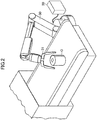
- FIG. 2 is a diagram for illustrating how the characteristic estimation system 1 is used.
- the characteristic estimation system 1 is used in a facility, for example, a factory manufacturing processed food, and as illustrated in FIG. 2 , the robot hand 31 grips an object O.
- the object O is an object to be gripped by the robot hand 31, and is also referred to as a "workpiece".
- the final product may correspond to the object O, or an intermediate product produced in the manufacturing process of the product may correspond to the object O.
- the object O is moved within a work range of the robot 30 by a belt conveyor or the like, and is gripped by the robot hand 31 operating under the control of the robot controller 20.
- the characteristic estimation system 1 may be used in a situation in which any product is manufactured. In this embodiment, operation of the characteristic estimation system 1 is described based on an example in which a processed food is manufactured.
- the manufacturing process itself of the processed food may be a general manufacturing process, and includes, for example, a raw material production process, a molding process, and a heating process.
- the raw material production process is a process of producing the raw material of the processed food. For example, in the raw material production process, seasonings and the like are added to the raw material and stirred.
- the molding process is a process of molding the raw material produced in the raw material production process. For example, in the molding process, the raw material is molded by extruding the raw material from a die or the like or by pouring the raw material into a mold.
- the heating process is a process of heating the molded raw material. For example, in the heating process, the raw material is heated by the molded raw material passing through an oven or a steamer.
- the robot hand 31 is configured to grip the object O on which the molding process has been performed, and to estimate various characteristics such as the size, shape, or hardness of the object O based on a physical quantity detected by the torque sensor or the like of the sensor unit 32. Now, details of the configuration of the characteristic estimation system 1 are described.
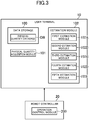
- FIG. 3 is a functional block diagram for illustrating functions to be implemented in the characteristic estimation system 1. The functions to be implemented by each of the user terminal 10 and the robot controller 20 are now described.
- an operation control module 200 is implemented in the robot controller 20, an operation control module 200 is implemented.
- the operation control module 200 is mainly implemented by the CPU 21.
- the operation control module 200 is configured to operate the robot hand 31 based on operation information defining operation of the robot hand 31.
- the operation information defines the timing and force (speed) of opening and closing the robot hand 31.
- the operation control module 200 opens and closes the robot hand 31 based on the timing and force indicated by the operation information.
- the robot hand 31 grips the object O arranged at a first position and moves the object O to a second position. Therefore, the operation information indicates commands and parameters for moving the robot hand 31 to the first position, closing the hand at the predetermined timing and force, and moving the robot hand 31 to the second position while maintaining a constant grip force. Based on the commands and parameters indicated by the operation information, the operation control module 200 moves the robot hand 31 to the first position, closes the hand at the predetermined timing and force, then moves the robot hand 31 to the second position while maintaining a constant grip force, and opens the hand.
- the object O is manufactured in cycles, and therefore the operation information indicates operation of the robot hand 31 in each cycle.
- the operation control module 200 operates the robot hand 31 based on the operation information when the start point of the cycle arrives.
- the operation control module 200 may determine whether or not the start time of the cycle has arrived by executing time measurement processing, or a sensor may be arranged to detect that the object O has moved to a predetermined position, and the operation control module 200 may determine whether or not the start point of the cycle has arrived based on a signal from the sensor.
- the operation information defines the timing and rotation amount for rotating the motor.
- the operation control module 200 controls an output voltage to the motor such that the motor rotates at the timing and rotation amount indicated by the operation information.
- the operation information defines the timing and movement amount for moving the motor.
- the operation control module 200 controls the output voltage to the motor such that the motor moves at the timing and movement amount indicated by the operation information.
- the operation control module 200 may operate the robot arm of the robot 30 such that the robot hand 31 moves to the position of the object O based on the operation information.
- a data storage 100 As illustrated in FIG. 3 , in the user terminal 10, a data storage 100, a physical quantity acquisition module 101, and an estimation module 102 are implemented.
- the data storage 100 is mainly implemented by the storage 12.
- the data storage 100 is configured to store the data required for estimating a characteristic of the object O.
- the data storage 100 stores a database DB for storing physical quantities acquired by the physical quantity acquisition module 101.
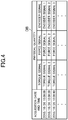
- FIG. 4 is a table for showing a data storage example of the database DB.
- physical quantities acquired by the physical quantity acquisition module 101 are stored in the database DB in time series.
- the physical quantities are stored in association with the acquisition date and time.
- information such as the type of the physical quantity (sensor type) and the name of the axis on which the physical quantity is detected may be stored in the database DB.
- the physical quantity is information indicating operation of the robot hand 31 detected by the sensor unit 32.
- the physical quantity may be any kind of information, for example, a torque signal (torque value) detected by the torque sensor of the sensor unit 32, a force signal (pressure value) detected by the force sensor of the sensor unit 32, or an encoder signal (rotation amount or movement amount) detected by the motor encoder of the sensor unit 32.
- the product is manufactured in cycles, and therefore, for each cycle, the physical quantity detected for that cycle is stored in the database DB.
- the physical quantity detected when the robot hand 31 grips the object O is stored in the database DB.
- the data to be stored in the data storage 100 is not limited to the above-mentioned example.
- the data storage 100 may store a threshold value and a reference value, which are described later, or may store an application for collecting and analyzing physical quantities.
- the physical quantity acquisition module 101 is mainly implemented by the CPU 11.
- the physical quantity acquisition module 101 is configured to acquire a physical quantity at a time when the robot hand 31 grips the object O.
- the physical quantity acquisition module 101 acquires the physical quantity based on a detection signal from the sensor unit 32.
- a detection signal from the sensor unit 32 In this embodiment, there is described a case in which the physical quantity acquisition module 101 acquires the detection signal from the sensor unit 32 directly as the physical quantity.
- the physical quantity acquisition module 101 may also magnify or perform other processing on the value indicated by the detection signal from the sensor unit 32, and acquire the processed value as the physical quantity.
- the physical quantity acquisition module 101 stores the physical quantity in the database DB in association with the acquisition time. For example, the physical quantity acquisition module 101 acquires a torque signal detected by the torque sensor of the sensor unit 32 as the physical quantity, and stores the acquired torque signal in the database DB. As another example, the physical quantity acquisition module 101 acquires a force signal detected by the force sensor of the sensor unit 32 as the physical quantity, and stores the acquired force signal in the database DB. As another example, the physical quantity acquisition module 101 acquires an encoder signal detected by the motor encoder of the sensor unit 32 as the physical quantity, and stores the acquired encoder signal in the database DB.
- the physical quantity acquisition module 101 acquires the physical quantity detected in a period determined in advance (hereinafter referred to as "acquisition period").
- the acquisition period may include the entire period during which the robot hand 31 is in contact with the object O, or may include only a part of the period.
- the acquisition period may include all or only a part of the period from the time the robot hand 31 touches the object O in order to grip the object O until the robot hand 31 moves the object O and separates from the object O.
- the acquisition period may include all or only a part of the period from when the robot hand 31 starts the operation of closing the hand in order to grip the object O until the robot hand 31 opens and finishes releasing the object O.
- the acquisition period may include all of the cycle or only a part of the cycle.
- FIG. 5 is a graph for showing an example of a physical quantity acquired by the physical quantity acquisition module 101.
- the physical quantity is a torque signal.
- the horizontal axis (t-axis) is a time axis
- the vertical axis (T-axis) is an axis indicating the value of the torque signal.
- a waveform of the torque signal is indicated by a symbol TS1.
- the torque signal TS1 is shown from when the robot hand 31 starts a closing operation until the grip of the object O is completed.
- the reference symbols of the torque signals are omitted unless it is particularly required to refer to the drawings.
- the object O is manufactured in cycles, and therefore the torque signal changes over a cycle in the manner indicated by TS1 of FIG. 5 .
- the robot hand 31 does not touch the object O, and therefore the torque signal is a constant value without a peak.
- the torque signal changes rapidly from the converged state.
- the estimation module 102 is mainly implemented by the CPU 11.
- the estimation module 102 is configured to estimate a characteristic of the object O based on a physical quantity.
- the characteristic of the object O is a state, a feature, or a quality of the object O.
- the characteristic may be the size, shape, or hardness (firmness) of the object O, or whether or not an abnormality has occurred.
- the term "estimation" as used herein means determining the characteristic of the object O from a physical quantity.
- the relationship between the physical quantity and the characteristic of the object O is described as a part of the program code.
- a plurality of conditions relating to the physical quantity are prepared. Each condition is associated with a characteristic of the object O, and the estimation module 102 estimates the characteristic associated with the condition satisfied by the physical quantity as the characteristic of the object O.
- the object O to be estimated is the object O that is being gripped at the time of acquisition of the physical quantity.
- the estimation module 102 includes a first estimation module 102A, a second estimation module 102B, a third estimation module 102C, a fourth estimation module 102D, and a fifth evaluation module 102E, and estimates the characteristic of the object O by comprehensively considering a plurality of conditions.
- the following description is an example of a method of estimating the characteristic, but it is not required that all of the first estimation module 102A to the fifth estimation module 102E be implemented. For example, only a part (any one, two, three, or four) of the first estimation module 102A to the fifth estimation module 102E may be implemented. Similar to the example of FIG. 5 , there is described an example in which the physical quantity is a torque signal.
- the gripping method of the robot hand 31 may be different from the other cycles.
- the first estimation module 102A is configured to estimate the characteristic of the object O based on a change in the torque signal acquired in each manufacturing cycle of the object.
- FIG. 6 is a graph for showing processing of estimating a characteristic of the object O.
- the first estimation module 102A determines whether or not a difference between the torque signal in the cycle in which the object O to be estimated is manufactured (hereinafter referred to as "estimation cycle") and the torque signal at a time when the object O manufactured in another cycle (hereinafter referred to as “comparison cycle”) serving as a cycle to be compared to is gripped is equal to or more than a threshold value, and estimates the characteristic of the object O based on the determination result.
- the comparison cycle may be any cycle different from the estimation cycle, and may be before the estimation cycle or after the estimation cycle. It is sufficient that at least one cycle is the comparison cycle.
- the comparison cycle may be only one cycle or may be a plurality of cycles. When a plurality of cycles are comparison cycles, the first estimation module 102A may compare each torque signal for all of the comparison cycles with the torque signal for the estimation cycle, or may calculate an average value of the torque signals of the plurality of comparison cycles and compare that average value with the torque signal for the estimation cycle.
- the first estimation module 102A estimates that an abnormality has occurred in the object O in the estimation cycle, and when the difference is less than the threshold value, the first estimation module 102A estimates that the object O of the estimation cycle is normal.
- the difference is a difference between the torque signal values or a difference in timing at which the torque signals have changed.
- the torque signals change with time, and therefore the first estimation module 102A may acquire an integral value of the torque signal difference as the difference, or may acquire the average value of the torque signal difference as the difference.
- the first estimation module 102A may acquire, as the difference, the value of the difference at the time at which the difference between the torque signals is the largest.
- the timings t 11 and t 21 at which the signal rises is the same for the torque signals TS1 and TS2, but the subsequent peak values T 11 and T 21 and the timings t 12 and t 22 are different.
- the convergence values T 12 and T 22 and the timings t 13 and t 23 thereof are also different. Those signal values and timings are used as the difference.
- the threshold value may be a value determined in advance, and is stored in the data storage 100.
- the threshold value may be a fixed value or a variable value.
- the threshold value may be specified by the user, or a value may be set depending on the type of the object O or the type of the robot 30.
- An abnormality is a situation in which the characteristic of the object O is not that of a standard object O. Stated another way, an abnormality occurs when an error with respect to the characteristic of the standard object O exceeds an allowable range. For example, an abnormality occurs when at least one error of the size, shape, and hardness of the object O is equal to or more than an allowable range.
- the characteristic of the standard object O is a characteristic of an ideal object O, and is the characteristic of the object O expected by the user. In a process of molding a processed food as in this embodiment, molding is performed such that the processed food has a predetermined shape, and therefore having the expected size, shape, and hardness corresponds to having the characteristic of the standard object O.
- the object O having an unexpected characteristic corresponds to occurrence of an abnormality.
- Normal means the opposite of abnormality, and is the characteristic of the standard object O. Stated another way, “normal” means that the error with respect to the characteristic of the standard object O is less than the allowable range. For example, when the error of at least one of the size, shape, or hardness of the object O is less than the allowable range, the characteristic is normal. The object O having an expected characteristic corresponds to being normal.
- the second estimation module 102B is configured to estimate the characteristic of the object O based on the rise time of the torque signal.
- the rise time is a timing at which the torque signal changes from a state in which the change in the torque signal is less than the threshold value before the robot hand 31 touches the object O to a state in which the robot hand 31 touches the object O and the change in the torque signal is equal to or more than the threshold value.
- the rise time is a timing at which the torque signal changes from a state in which the amount of increase in the torque signal per unit time is less than the threshold value before the robot hand 31 touches the object O to a state in which the robot hand 31 touches the object O and the amount of increase in the torque signal per unit time is equal to or more than the threshold value .
- the threshold value may be set to any value, and may be a fixed value or a variable value.
- the second estimation module 102B determines whether or not the rise time of the torque signal is earlier than a reference value, and estimates the characteristic of the object O based on the determination result.
- the reference value may be any timing determined in advance, and for example, is the rise time of the torque signal at a time when the robot hand 31 grips the standard object O.
- the reference value may be set manually by the user, or may be an average value of rise times of torque signals of objects O determined to be normal.
- the second estimation module 102B determines whether or not the rise time of the torque signal is earlier than a standard timing.
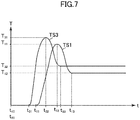
- FIG. 7 and FIG. 8 are graphs for showing processing of estimating a characteristic of the object O.
- the torque signal TS1 of FIG. 7 and FIG. 8 is a torque signal of the standard object O.
- the reference value is the rise time t 11 of the torque signal TS1.
- the robot hand 31 touches the object O earlier than expected, and hence a rise time t 31 is earlier than the torque signal TS1, as shown by a torque signal TS3 of FIG. 7 .
- the robot hand 31 touches the object O later than expected, and hence a rise time t 41 is later than the torque signal TS1, as shown by a torque signal TS4 of FIG. 8 .
- the second estimation module 102B may determine whether or not the rise time of the torque signal is earlier than the reference value, and estimate the size of the object O based on the determination result. Specifically, the second estimation module 102B may determine that the object O is larger than the standard when the rise time of the torque signal is earlier than the reference value, and determines that the object O is smaller than standard when the rise time of the torque signal is later than the reference value.
- the robot hand 31 touches the object O earlier than expected, and hence a rise time t 31 is earlier than the torque signal TS1, as shown by the torque signal TS3.
- the robot hand 31 touches the object O later than expected, and hence a rise time t 41 is later than the torque signal TS1, as shown by the torque signal TS4.
- the second estimation module 102B may determine whether or not the rise time of the torque signal is earlier than the reference value, and estimate the shape (degree of recess/protrusion) of the object O based on the determination result. Specifically, the second estimation module 102B may determine that the object O protrudes compared to the standard shape when the rise time of the torque signal is earlier than the reference value, and determines that the object O is recessed compared to the standard shape when the rise time of the torque signal is later than the reference value.
- the second estimation module 102B may also, for example, estimate the characteristic of the object O based on the difference between the rise time of the torque signal and the reference value. For example, when the difference in size is larger, the difference in the rise time is larger, and hence the second estimation module 102B may estimate the size of the object O based on the difference between the rise time of the torque signal and the reference value. Specifically, the second estimation module 102B may estimate that when the difference is larger, the difference from the standard size is larger, and when the difference is smaller, the difference from the standard size is smaller. For example, the second estimation module 102B may estimate that the size of the object O is abnormal when the difference between the rising timing of the torque signal and the reference value is equal to or more than the threshold value.
- the second estimation module 102B may estimate the shape of the object O based on the difference between the rise time of the torque signal and the reference value. Specifically, the second estimation module 102B may estimate that when the difference is larger, the difference from the standard shape is larger, and when the difference is smaller, the difference from the standard shape is smaller. For example, the second estimation module 102B may estimate that the shape of the object O is abnormal when the difference between the rise time of the torque signal and the reference value is equal to or more than the threshold value.
- the third estimation module 102C is configured to estimate the characteristic of the object O based on a convergence timing of the torque signal .
- the convergence timing is a timing at which, after the rise time (or after the peak), the torque signal changes from a state in which the change in the torque signal is equal to or more than the threshold value to a state in which the change in the torque signal is less than the threshold value.
- the convergence timing is a timing at which the amount of decrease in the torque signal per unit time changes from the state in which the amount of decrease in the torque signal per unit time is equal to or more than the threshold value after the rise time (or after the peak) to the state in which the amount of decrease in the torque signal per unit time is less than the threshold value.
- the threshold value may be set to any value, and may be a fixed value or a variable value.
- the third estimation module 102C determines whether or not the convergence timing of the torque signal is earlier than the reference value, and estimates the characteristic of the object O based on the determination result.
- the reference value may be any timing determined in advance, and for example, is the convergence timing of the torque signal at a time when the robot hand 31 grips the standard object O.
- the reference value may be set manually by the user, or may be an average value of convergence timings of torque signals of objects O determined to be normal. In the examples of FIG. 7 and FIG. 8 , the reference value is the convergence timing t 13 of the torque signal TS1.
- the third estimation module 102C determines whether or not the convergence timing of the torque signal is earlier than a standard timing.
- the robot hand 31 touches the object O earlier than expected and gripping is also completed earlier. Therefore, as shown by the torque signal TS3 of FIG. 7 , a convergence timing t 33 is earlier than the signal TS1.
- the robot hand 31 touches the object O later than expected and gripping is also completed later. Therefore, as shown by the torque signal TS4, a convergence timing t 43 is later than the torque signal TS1.
- the third estimation module 102C may determine whether or not the convergence timing of the torque signal is earlier than the reference value, and estimate the size of the object O based on the determination result. Specifically, the third estimation module 102C may determine that the object O is larger than standard when the convergence timing of the torque signal is earlier than the reference value, and determines that the object O is smaller than standard when the convergence timing of the torque signal is later than the reference value.
- the robot hand 31 touches the object O earlier than expected, and also completes the gripping earlier.
- the convergence timing t 33 is earlier than the torque signal TS1, as shown by the torque signal TS3.
- the robot hand 31 touches the object O later than expected, and also completes the gripping later.
- the convergence timing t 43 is later than the torque signal TS1, as shown by the torque signal TS4.
- the third estimation module 102C may determine whether or not the convergence timing of the torque signal is earlier than the reference value, and estimate the shape of the object O based on the determination result. Specifically, the third estimation module 102C may determine that the object O protrudes compared to the standard shape when the convergence timing of the torque signal is earlier than the reference value, and determines that the object O is recessed compared to the standard shape when the convergence timing of the torque signal is later than the reference value.
- the robot hand 31 completes the gripping of the object O earlier than expected. Therefore, as shown by the torque signal TS3, the convergence timing t 33 is earlier than the torque signal TS1.
- the torque signal TS4 the convergence timing t 43 is later than the torque signal TS1.
- the third estimation module 102C may determine whether or not the convergence timing of the torque signal is earlier than the reference value, and estimate the hardness of the object O based on the determination result. Specifically, the third estimation module 102C may determine that the object O is harder than the standard hardness when the convergence timing of the torque signal is earlier than the reference value, and determine that the object O is softer than the standard hardness when the convergence timing of the torque signal is later than the reference value.
- the third estimation module 102C may also, for example, estimate the characteristic of the object O based on the difference between the convergence timing of the torque signal and the reference value. For example, when the difference in size is larger, the difference in the convergence timing is larger, and hence the third estimation module 102C may estimate the size of the object O based on the difference between the convergence timing of the torque signal and the reference value. Specifically, the third estimation module 102C may estimate that when the difference is larger, the difference from the standard size is larger, and when the difference is smaller, the difference from the standard size is smaller. For example, the third estimation module 102C may estimate that the size of the object O is abnormal when the difference between the convergence timing of the torque signal and the reference value is equal to or more than the threshold value.
- the third estimation module 102C may estimate the shape of the object O based on the difference between the convergence timing of the torque signal and the reference value. Specifically, the third estimation module 102C may estimate that when the difference is larger, the difference from the standard shape is larger, and when the difference is smaller, the difference from the standard shape is smaller. For example, the third estimation module 102C may estimate that the shape of the object O is abnormal when the difference between the convergence timing of the torque signal and the reference value is equal to or more than the threshold value.
- the third estimation module 102C may estimate the hardness of the object O based on the difference between the convergence timing of the torque signal and the reference value. Specifically, the third estimation module 102C may estimate that when the difference is larger, the difference from the standard hardness is larger, and when the difference is smaller, the difference from the standard hardness is smaller. For example, the third estimation module 102C may estimate that the hardness of the object O is abnormal when the difference between the convergence timing of the torque signal and the reference value is equal to or more than the threshold value.
- the fourth estimation module 102D is configured to estimate the characteristic of the object O based on the peak value of the torque signal.
- the peak value is the maximum value of the torque signal in the acquisition period. Specifically, the peak value is the maximum value of the torque signal from when the robot hand 31 touches the object O until the robot hand 31 releases the object O.
- the fourth estimation module 102D sets the highest value of the torque signal changing over time as the peak value.
- the fourth estimation module 102D determines whether or not the peak value of the torque signal is higher than a reference value, and estimates the characteristic of the object O based on the determination result.
- the reference value may be any value determined in advance, and for example, is the peak value at a time when the robot hand 31 grips the standard object O.
- the reference value may be set manually by the user, or may be an average value of the peak values of torque signals of objects O determined to be normal. In the examples of FIG. 7 and FIG. 8 , the reference value is the peak value T 11 of the torque signal TS1.
- the fourth estimation module 102D determines whether the peak value of the torque signal is higher or lower than a standard peak value.
- the repelling force acting against the robot hand 31 from the object O increases when the hand tries to close to a predetermined position. Therefore, as shown by the torque signal TS3, a peak value T 31 is higher than the torque signal TS1.
- the torque signal TS4 a peak value T 41 is lower than the torque signal TS1.
- the fourth estimation module 102D may determine whether or not the peak value of the torque signal is higher than the reference value, and estimate the size of the object O based on the determination result. Specifically, the fourth estimation module 102D may determine that the object O is larger than standard when the peak value of the torque signal is higher than the reference value, and determine that the object O is smaller than standard when the peak value of the torque signal is lower than the reference value.
- the repelling force acting against the robot hand 31 from the object O increases when the hand tries to close to a predetermined position. Therefore, as shown by the torque signal TS3, the peak value T 31 is higher than the torque signal TS1.
- the torque signal TS4 the peak value T 41 is lower than the torque signal TS1.
- the fourth estimation module 102D may determine whether or not the peak value of the torque signal is higher than the reference value, and estimate the shape of the object O based on the determination result. Specifically, the fourth estimation module 102D may determine that the object O protrudes compared to the standard shape when the peak value of the torque signal is higher than the reference value, and determine that the object O is recessed compared to the standard shape when the peak value of the torque signal is lower than the reference value.
- the torque signal TS3 when the hardness of the object O is more than the standard hardness, the repelling force acting against the robot hand 31 from the object O increases when the hand tries to close to a predetermined position. Therefore, as shown by the torque signal TS3, the peak value T 31 is higher than the torque signal TS1.
- the torque signal TS4 when the hardness of the object O is less than the standard hardness, the repelling force acting against the robot hand 31 from the object O decreases when the hand tries to close to a predetermined position. Therefore, as shown by the torque signal TS4, the peak value T 41 is lower than the torque signal TS1.
- the fourth estimation module 102D may determine whether or not the peak value of the torque signal is higher than the reference value, and estimate the hardness of the object O based on the determination result. Specifically, the fourth estimation module 102D may determine that the object O is harder than the standard hardness when the peak value of the torque signal is higher than the reference value, and determine that the object O is softer than the standard hardness when the peak value of the torque signal is lower than the reference value.
- the fourth estimation module 102D may also, for example, estimate the characteristic of the object O based on the difference between the peak value of the torque signal and the reference value. For example, when the difference in size is larger, the difference in the peak value is larger, and hence the fourth estimation module 102D may estimate the size of the object O based on the difference between the peak value of the torque signal and the reference value. Specifically, the fourth estimation module 102D may estimate that when the difference is larger, the difference from the standard size is larger, and when the difference is smaller, the difference from the standard size is smaller.
- the fourth estimation module 102D may estimate the shape of the object O based on the difference between the peak value of the torque signal and the reference value. Specifically, the fourth estimation module 102D may estimate that when the difference is larger, the difference from the standard shape is larger, and when the difference is smaller, the difference from the standard shape is smaller.
- the fourth estimation module 102D may estimate the hardness of the object O based on the difference between the peak value of the torque signal and the reference value. Specifically, the fourth estimation module 102D may estimate that when the difference is larger, the difference from the standard hardness is larger, and when the difference is smaller, the difference from the standard hardness is smaller.
- the fifth estimation module 102E is configured to estimate the characteristic of the object O based on the convergence value at a time when the torque signal converges .
- the convergence value is the value of the torque signal at a time when the convergence timing arrives. Stated another way, the convergence value is the value at a time when the change amount of the torque signal becomes less than the threshold value after the rise time (after the peak) .
- the threshold value can be set to any value, and may be a fixed value or a variable value.
- the fifth estimation module 102E determines whether or not the convergence value of the torque signal is higher than a reference value, and estimates the characteristic of the object O based on the determination result.
- the reference value may be any value determined in advance, and for example, is the convergence value at a time when the robot hand 31 grips the standard object O.
- the reference value may be set manually by the user, or may be an average value of the convergence values of past torque signals. In the examples of FIG. 7 and FIG. 8 , the reference value is the convergence value T 12 of the torque signal TS1.
- the fifth estimation module 102E determines whether or not the convergence value of the torque signal is higher or lower than a standard convergence value.
- the repelling force from the object O against the robot hand 31 increases when the robot hand 31 tries to close the hand to a predetermined position, and therefore as shown by the torque signal TS3, the convergence value T 32 is higher than the torque signal TS1.
- the repelling force from the object O against the robot hand 31 decreases when the robot hand 31 tries to close the hand to a predetermined position, and therefore as shown by the torque signal TS4, the convergence value T 42 is lower than the torque signal TS1.
- the fifth estimation module 102E may determine whether or not the convergence value of the torque signal is higher than the reference value, and estimate the size of the object O based on the determination result. Specifically, the fifth estimation module 102E may determine that the object O is larger than standard when the convergence value of the torque signal is higher than the reference value, and determine that the object O is smaller than standard when the convergence value of the torque signal is lower than the reference value.
- the repelling force from the object O against the robot hand 31 increases when the robot hand 31 tries to close the hand to a predetermined position, and therefore as shown by the torque signal TS3, the convergence value T 32 is higher than the torque signal TS1.
- the repelling force from the object O against the robot hand 31 decreases when the robot hand 31 tries to close the hand to a predetermined position, and therefore as shown by the torque signal TS4, the convergence value T 42 is lower than the torque signal TS1.
- the fifth estimation module 102E may determine whether or not the convergence value of the torque signal is higher than the reference value, and estimate the shape of the object O based on the determination result. Specifically, the fifth estimation module 102E may determine that the object O protrudes compared to the standard shape when the convergence value of the torque signal is higher than the reference value, and determine that the object O is recessed compared to the standard shape when the convergence value of the torque signal is lower than the reference value.
- the repelling force from the object O against the robot hand 31 increases when the robot hand 31 tries to close the hand to a predetermined position, and therefore as shown by the torque signal TS3, the convergence value T 32 is higher than the torque signal TS1.
- the repelling force from the object O against the robot hand 31 decreases when therobothand31 tries to close the hand to a predetermined position, and therefore as shown by the torque signal TS4, the convergence value T 42 is lower than the torque signal TS1.
- the fifth estimation module 102E may determine whether or not the convergence value of the torque signal is higher than the reference value, and estimate the hardness of the object O based on the determination result. Specifically, the fifth estimation module 102E may determine that the object O is harder than the standard hardness when the convergence value of the torque signal is higher than the reference value, and determine that the object O is softer than the standard hardness when the convergence value of the torque signal is lower than the reference value.
- the fifth estimation module 102E may also, for example, estimate the characteristic of the object O based on the difference between the convergence value of the torque signal and the reference value. For example, when the difference in the size is larger, the difference in convergence value is larger, and hence the fifth estimation module 102E may estimate the size of the object O based on the difference between the convergence value of the torque signal and the reference value. Specifically, the fifth estimation module 102E may estimate that when the difference is larger, the difference from the standard size is larger, and when the difference is smaller, the difference from the standard size is smaller.
- the fifth estimation module 102E may estimate the shape of the object O based on the difference between the convergence value of the torque signal and the reference value. Specifically, the fifth estimation module 102E may estimate that when the difference is larger, the difference from the standard shape is larger, and when the difference is smaller, the difference from the standard shape is smaller.
- the fifth estimation module 102E may estimate the hardness of the object O based on the difference between the convergence value of the torque signal and the reference value. Specifically, the fifth estimation module 102E may estimate that when the difference is larger, the difference from the standard hardness is larger, and when the difference is smaller, the difference from the standard hardness is smaller.
- the force (brittleness) of the object O may be estimated based on the torque signal.
- the robot hand 31 may break the object O when the object O is gripped.
- the torque signal changes suddenly, and thus when there is a sudden change in the torque signal, it may be estimated that the force of the object O is insufficient (object O is weaker than standard).
- the estimation module 102 may estimate the characteristic of the object O based on a force signal detected by the force sensor of the sensor unit 32. For example, when the object O is larger than the standard size, similarly to the rise time of the torque sensor, the robot hand 31 touches the object O earlier than expected, and hence the rise time of the force signal is earlier than standard. Therefore, the estimation module 102 may estimate the characteristic of the object O based on the rise time of the force signal. Similarly, the estimation module 102 may estimate the characteristic of the object O based on at least one of the convergence timing, the peak value, or the convergence value of the force signal.
- the estimation module 102 may estimate the characteristic of the object O based on an encoder signal detected by the motor encoder of the sensor unit 32. For example, when the object O is larger than the standard size, the robot hand 31 touches the object O earlier than expected, and hence the timing at which the rotation amount or movement amount of the motor drops is earlier than standard. For this reason, the estimation module 102 may estimate the characteristic of the object O based on the timing at which the rotation amount or movement amount of the motor drops. Similarly, the estimation module 102 may estimate the characteristic of the object O based on the timing at which the rotation or movement of the motor stops, for example.
- FIG. 9 is a flowchart for illustrating processing to be executed in the characteristic estimation system 1.
- the processing illustrated in FIG. 9 is executed in the user terminal 10 by the CPU 11 operating in accordance with programs stored in the storage 12, and executed in the robot controller 20 by the CPU 21 operating in accordance with programs stored in the storage 22.
- the processing illustrated in FIG. 9 is an example of processing to be executed by the functional blocks illustrated in FIG. 3 , and is executed each time a cycle for manufacturing the object O arrives, for example.
- Step S1 the CPU 21 operates the robot hand 31 based on the operation information stored in the storage 22 (Step S1).
- the CPU 21 controls the output voltage to the motor in the robot hand 31 such that the robot hand 31 opens and closes at the timing and force indicated by the operation information.
- the CPU 21 acquires a physical quantity detected by the sensor unit 32 (Step S2). In Step S2, the CPU 21 acquires the torque signal from the torque sensor of the sensor unit 32.
- the CPU 21 may also acquire, for example, the force signal from the force sensor of the sensor unit 32 or the encoder signal from the motor encoder of the sensor unit 32.
- the CPU 21 transmits the physical quantity acquired in Step S2 to the user terminal 10 (Step S3).
- the CPU 21 transmits to the user terminal 10 a change over time in the physical quantity based on the physical quantity repeatedly acquired in the cycle.
- the CPU 11 acquires from the robot controller 20 the physical quantity detected by the sensor unit 32 (Step S4) .
- the CPU 11 records the acquired physical quantity in the database DB in association with the current date and time.
- the CPU 11 estimates the characteristic of the object O based on the physical quantity acquired in Step S4 (Step S5). As described above, when the torque signal is the physical quantity, in Step S5, the CPU 11 estimates at least one of the size, shape, or hardness of the object O based on at least one of the torque signal, rise timing, convergence timing, peak value, or convergence value in past cycles.
- the CPU 11 displays the characteristic of the object O estimated in Step S5 on the display 15 (Step S6).
- the CPU 11 may display on the display 15 the presence/absence of an abnormality in the object O, or may display on the display 15 estimated information on at least one of the estimated size, shape, or hardness of the object O.
- the estimation result of the characteristic is displayed on the display 15, but the CPU 11 may transmit the estimation result to a computer of a person in charge of product inspection or may record the estimation result in the storage 12 without particularly displaying the estimation result.
- the CPU 11 may output an alarm by using sound, light, or the like when an abnormality has occurred in the object O.
- a robot hand 31 configured to grip the object O operates based on operation information, and a characteristic of the object O can be estimated based on a physical quantity at a time when the robot hand 31 grips the object O. For example, when the object O does not have a desired hardness, the physical quantity at a time when the robot hand 31 grips the object O does not show a predetermined waveform, and hence the hardness of the object O can be estimated. As another example, when the object O does not have a desired size or shape, the physical quantity at a time when the robot hand 31 grips the object O does not show a predetermined waveform, and hence the size or shape of the object O can be estimated. As a result, it is possible to reduce the amount of work and effort required for inspection and to improve the quality of the product.
- the characteristic of the object O can be estimated more accurately by estimating the characteristic of the object O based on a change in the torque signal acquired in each manufacturing cycle of the object O, for example, by estimating whether or not the torque signal has deviated from a normal state.
- the characteristic of the object O can be estimated more accurately by estimating the characteristic of the object O based on the rise time of the torque signal.
- the characteristic of the object O can be estimated more accurately by estimating the characteristic of the object O based on the convergence timing of the torque signal.
- the characteristic of the object O can be estimated more accurately by estimating the characteristic of the object O based on the peak value of the torque signal.
- the characteristic of the object O can be estimated more accurately by estimating the characteristic of the object O based on the convergence value of the torque signal.
- FIG. 10 is a functional block diagram in a modification example of the present invention. As illustrated in FIG. 10 , in the modification example described below, a transmission module 103, a process change module 104, and an operation information change module 105 are implemented. Each of those functions is mainly implemented by the CPU 11.
- the sensor included in the sensor unit 32 may be any sensor, and is not limited to a torque sensor, a force sensor, and a motor encoder.
- a temperature sensor may be included in the sensor unit 32, a temperature detected by the temperature sensor may correspond to the physical quantity, and the characteristic of the object O may be estimated based on the temperature.
- a magnetic sensor may be included in the sensor unit 32, magnetism detected by the magnetic sensor may correspond to the physical quantity, and the characteristic of the object O may be estimated based on magnetism.
- the characteristic estimation system 1 can be applied to any product.
- the characteristic estimation system 1 may estimate the characteristic of the object O in a process of manufacturing or working a material.
- the object O may be a material that is a final product, or may be a material that has been processed to produce a food.
- the characteristic estimation system 1 may estimate the characteristic of the object O in a manufacturing process of a vehicle such as a car or a motorcycle. In this case, the object O is an individual part forming the vehicle.
- the characteristic estimation system 1 can be freely applied in situations such as manufacturing of furniture or building components, or manufacturing of semiconductor substrates.
- An industrial robot has been described above as an example of the robot 30, but various types of robots can be applied as the robot 30, such as a service robot, a home robot, or a medical robot.
- the characteristic of a product or the like gripped by a service robot may be estimated based on the physical quantity detected by the sensor unit 32.
- the characteristic of tableware or the like gripped by a home robot may be estimated based on the physical quantity detected by the sensor unit 32.
- the characteristic of medical equipment or the like gripped by a medical robot may be estimated based on the physical quantity detected by the sensor unit 32.
- each function is implemented by the user terminal 10, but each function may be distributed among a plurality of computers.
- each function may be implemented by a server computer.
- the characteristic estimation system 1 may also use, for example, machine learning (for example, Bayesian network, support vector machine, or deep learning) when estimating the characteristic of the object O.
- machine learning for example, Bayesian network, support vector machine, or deep learning
- the characteristic estimation system 1 may use machine learning when determining whether or not there is an abnormality in the object O.
- the characteristic estimation system 1 causes a learning device to learn based on teacher data including a physical quantity measured when an abnormality has occurred in the object O and a physical quantity measured when the abnormality has not occurred in the object O (that is, when normal) .
- the learning device determines whether to classify the input physical quantity as being abnormal or normal (that is, assign a label to input physical quantity indicating which of abnormal or normal the physical quantity is), and outputs an analysis result.
- classification learning device methods are applicable to the determination itself. For example, when a convolutional neural network is used, the input physical quantity is converted into a feature amount, and classification is performed based on the feature amount.
- the learning device may classify the type of abnormality that has occurred based on the input physical quantities.
- the learning device may classify the type of abnormality that has occurred by dividing a physical quantity measured over a certain period when the robot hand 31 grips the object O into a plurality of periods, and considering the physical quantity of each period in time series.
Landscapes
- Engineering & Computer Science (AREA)
- Robotics (AREA)
- Mechanical Engineering (AREA)
- Automation & Control Theory (AREA)
- Human Computer Interaction (AREA)
- Physics & Mathematics (AREA)
- General Physics & Mathematics (AREA)
- Manufacturing & Machinery (AREA)
- Quality & Reliability (AREA)
- General Engineering & Computer Science (AREA)
- Health & Medical Sciences (AREA)
- Orthopedic Medicine & Surgery (AREA)
- General Health & Medical Sciences (AREA)
- Evolutionary Computation (AREA)
- Fuzzy Systems (AREA)
- Mathematical Physics (AREA)
- Software Systems (AREA)
- Artificial Intelligence (AREA)
- Manipulator (AREA)
- Control Of Electric Motors In General (AREA)
- User Interface Of Digital Computer (AREA)
Applications Claiming Priority (1)
| Application Number | Priority Date | Filing Date | Title |
|---|---|---|---|
| JP2018223491A JP7094210B2 (ja) | 2018-11-29 | 2018-11-29 | 特性推定システム、特性推定方法、及びプログラム |
Publications (3)
| Publication Number | Publication Date |
|---|---|
| EP3659758A2 true EP3659758A2 (de) | 2020-06-03 |
| EP3659758A3 EP3659758A3 (de) | 2020-06-17 |
| EP3659758B1 EP3659758B1 (de) | 2025-02-12 |
Family
ID=68655358
Family Applications (1)
| Application Number | Title | Priority Date | Filing Date |
|---|---|---|---|
| EP19211189.6A Active EP3659758B1 (de) | 2018-11-29 | 2019-11-25 | Merkmalsschätzsystem, merkmalsschätzverfahreen |
Country Status (4)
| Country | Link |
|---|---|
| US (1) | US11504860B2 (de) |
| EP (1) | EP3659758B1 (de) |
| JP (1) | JP7094210B2 (de) |
| CN (1) | CN111230859B (de) |
Cited By (1)
| Publication number | Priority date | Publication date | Assignee | Title |
|---|---|---|---|---|
| EP4443129A1 (de) * | 2023-04-03 | 2024-10-09 | Kikusui Seisakusho Ltd. | System und verfahren zur messung der härte eines formprodukts |
Families Citing this family (3)
| Publication number | Priority date | Publication date | Assignee | Title |
|---|---|---|---|---|
| WO2021239210A1 (en) * | 2020-05-25 | 2021-12-02 | Abb Schweiz Ag | Robot application development system |
| US11630027B1 (en) * | 2021-03-03 | 2023-04-18 | Amazon Technologies, Inc. | Testing rigs having variable mass properties for robotic end effectors and associated methods of use |
| JP2023105577A (ja) * | 2022-01-19 | 2023-07-31 | 本田技研工業株式会社 | ロボット遠隔操作制御装置、ロボット遠隔操作制御方法、およびプログラム |
Citations (1)
| Publication number | Priority date | Publication date | Assignee | Title |
|---|---|---|---|---|
| WO2015068210A1 (ja) | 2013-11-05 | 2015-05-14 | 株式会社安川電機 | トレースデータ記録システム、トレースデータ記録サーバ、トレースデータ記録方法、プログラム、及び情報記憶媒体 |
Family Cites Families (15)
| Publication number | Priority date | Publication date | Assignee | Title |
|---|---|---|---|---|
| JPH0697259A (ja) | 1992-09-11 | 1994-04-08 | Hitachi Ltd | ウェハ移送機構 |
| CN102248537B (zh) * | 2007-06-27 | 2013-12-04 | 松下电器产业株式会社 | 机器手控制装置及控制方法、机器人 |
| JP5327722B2 (ja) * | 2010-05-07 | 2013-10-30 | 株式会社安川電機 | ロボットの負荷推定装置及び負荷推定方法 |
| JP5516548B2 (ja) | 2011-11-01 | 2014-06-11 | 株式会社デンソー | 把持用センサ及びロボットハンド駆動制御装置 |
| WO2014201163A1 (en) * | 2013-06-11 | 2014-12-18 | Somatis Sensor Solutions LLC | Systems and methods for sensing objects |
| JP6106122B2 (ja) | 2014-04-02 | 2017-03-29 | ファナック株式会社 | 溶接検査ロボットシステム |
| US9272417B2 (en) * | 2014-07-16 | 2016-03-01 | Google Inc. | Real-time determination of object metrics for trajectory planning |
| JP6203775B2 (ja) | 2015-03-31 | 2017-09-27 | ファナック株式会社 | 固定されたワークの異常を判定するロボットシステム、および、異常判定方法 |
| EP3409232B1 (de) * | 2016-01-26 | 2023-03-29 | Sony Group Corporation | Vorrichtung zur rückkopplung einer griffkraftempfindung |
| US20170259433A1 (en) * | 2016-03-11 | 2017-09-14 | Seiko Epson Corporation | Robot control device, information processing device, and robot system |
| JP2017177294A (ja) * | 2016-03-31 | 2017-10-05 | キヤノン株式会社 | ロボット制御装置、ロボット制御方法、ロボットシステムおよびコンピュータプログラム |
| JP6605123B2 (ja) * | 2016-04-04 | 2019-11-13 | 三菱電機株式会社 | ミシン |
| KR102269710B1 (ko) | 2016-11-17 | 2021-06-25 | 가부시키가이샤 야스카와덴키 | 파지력 설정 시스템, 파지력 설정 방법, 및 파지력 추정 시스템 |
| US10455222B2 (en) * | 2017-03-30 | 2019-10-22 | Intel Corporation | Technologies for autonomous three-dimensional modeling |
| CN108214558B (zh) * | 2018-01-18 | 2021-04-06 | 中南大学 | 一种用于欠驱动机械手的被抓握物体刚度估计方法 |
-
2018
- 2018-11-29 JP JP2018223491A patent/JP7094210B2/ja active Active
-
2019
- 2019-11-22 CN CN201911156900.4A patent/CN111230859B/zh active Active
- 2019-11-25 EP EP19211189.6A patent/EP3659758B1/de active Active
- 2019-11-26 US US16/695,210 patent/US11504860B2/en active Active
Patent Citations (1)
| Publication number | Priority date | Publication date | Assignee | Title |
|---|---|---|---|---|
| WO2015068210A1 (ja) | 2013-11-05 | 2015-05-14 | 株式会社安川電機 | トレースデータ記録システム、トレースデータ記録サーバ、トレースデータ記録方法、プログラム、及び情報記憶媒体 |
Cited By (1)
| Publication number | Priority date | Publication date | Assignee | Title |
|---|---|---|---|---|
| EP4443129A1 (de) * | 2023-04-03 | 2024-10-09 | Kikusui Seisakusho Ltd. | System und verfahren zur messung der härte eines formprodukts |
Also Published As
| Publication number | Publication date |
|---|---|
| JP2020089177A (ja) | 2020-06-04 |
| EP3659758B1 (de) | 2025-02-12 |
| US20200171675A1 (en) | 2020-06-04 |
| US11504860B2 (en) | 2022-11-22 |
| CN111230859A (zh) | 2020-06-05 |
| CN111230859B (zh) | 2023-07-07 |
| EP3659758A3 (de) | 2020-06-17 |
| JP7094210B2 (ja) | 2022-07-01 |
Similar Documents
| Publication | Publication Date | Title |
|---|---|---|
| US11504860B2 (en) | Characteristic estimation system, characteristic estimation method, and information storage medium | |
| CN107969120B (zh) | 考虑周围接触的机器人的致动器的控制和调节 | |
| Mahler et al. | Guest editorial open discussion of robot grasping benchmarks, protocols, and metrics | |
| US20160239000A1 (en) | TS-DIST: Learning Adaptive Distance Metric in Time Series Sets | |
| JP6374911B2 (ja) | 部品の製造工程の過程を制御するための装置および方法 | |
| CN120588243A (zh) | 机械手控制系统的优化方法及系统 | |
| CN108472809B (zh) | 机器人和用于运行机器人的方法 | |
| CN115454012A (zh) | 诊断装置、诊断方法及诊断程序 | |
| CN103900904B (zh) | 一种中子原位力学加载系统 | |
| CN108604142A (zh) | 一种触屏设备操作方法及触屏设备 | |
| JP6731603B1 (ja) | 検査システム | |
| JP2019003238A (ja) | 異常検出装置及び異常検出システム | |
| US12596354B2 (en) | Abnormality information estimation system, operation analysis system, motor control device, abnormality information estimation method, and program | |
| US12585839B2 (en) | Process variability simulator for manufacturing processes | |
| US20240042720A1 (en) | Control device, control method, and recording medium | |
| Liu et al. | Deep Koopman-VAE Based Process Monitoring for Industrial Biosystems | |
| US20230409909A1 (en) | Data analysis system, data analysis method, and non-transitory computer-readable recording medium | |
| CN116383571A (zh) | 一种触感数据采集方法、装置及系统 | |
| CN110536781A (zh) | 机器人和用于运行机器人的方法 | |
| CN116449688A (zh) | 机器人电机pid参数确定方法、装置和计算机设备 | |
| CN117224236A (zh) | 一种阻力补偿方法、装置、机器人及存储介质 | |
| CN120704244A (zh) | 一种面向精细抓取的灵巧手自适应导纳控制系统及方法 | |
| Mizutani et al. | Disturbance compensation based on data memory for macro-micro bilateral control | |
| CN114689348A (zh) | 机器人动力学分析系统 | |
| CN106227399A (zh) | 一种智能设备的控制方法和装置 |
Legal Events
| Date | Code | Title | Description |
|---|---|---|---|
| PUAI | Public reference made under article 153(3) epc to a published international application that has entered the european phase |
Free format text: ORIGINAL CODE: 0009012 |
|
| STAA | Information on the status of an ep patent application or granted ep patent |
Free format text: STATUS: THE APPLICATION HAS BEEN PUBLISHED |
|
| PUAL | Search report despatched |
Free format text: ORIGINAL CODE: 0009013 |
|
| AK | Designated contracting states |
Kind code of ref document: A2 Designated state(s): AL AT BE BG CH CY CZ DE DK EE ES FI FR GB GR HR HU IE IS IT LI LT LU LV MC MK MT NL NO PL PT RO RS SE SI SK SM TR |
|
| AX | Request for extension of the european patent |
Extension state: BA ME |
|
| AK | Designated contracting states |
Kind code of ref document: A3 Designated state(s): AL AT BE BG CH CY CZ DE DK EE ES FI FR GB GR HR HU IE IS IT LI LT LU LV MC MK MT NL NO PL PT RO RS SE SI SK SM TR |
|
| AX | Request for extension of the european patent |
Extension state: BA ME |
|
| RIC1 | Information provided on ipc code assigned before grant |
Ipc: G05B 19/418 20060101ALI20200512BHEP Ipc: B25J 9/16 20060101AFI20200512BHEP |
|
| STAA | Information on the status of an ep patent application or granted ep patent |
Free format text: STATUS: REQUEST FOR EXAMINATION WAS MADE |
|
| 17P | Request for examination filed |
Effective date: 20201216 |
|
| RBV | Designated contracting states (corrected) |
Designated state(s): AL AT BE BG CH CY CZ DE DK EE ES FI FR GB GR HR HU IE IS IT LI LT LU LV MC MK MT NL NO PL PT RO RS SE SI SK SM TR |
|
| STAA | Information on the status of an ep patent application or granted ep patent |
Free format text: STATUS: EXAMINATION IS IN PROGRESS |
|
| 17Q | First examination report despatched |
Effective date: 20211202 |
|
| GRAP | Despatch of communication of intention to grant a patent |
Free format text: ORIGINAL CODE: EPIDOSNIGR1 |
|
| STAA | Information on the status of an ep patent application or granted ep patent |
Free format text: STATUS: GRANT OF PATENT IS INTENDED |
|
| INTG | Intention to grant announced |
Effective date: 20241030 |
|
| GRAS | Grant fee paid |
Free format text: ORIGINAL CODE: EPIDOSNIGR3 |
|
| GRAA | (expected) grant |
Free format text: ORIGINAL CODE: 0009210 |
|
| STAA | Information on the status of an ep patent application or granted ep patent |
Free format text: STATUS: THE PATENT HAS BEEN GRANTED |
|
| AK | Designated contracting states |
Kind code of ref document: B1 Designated state(s): AL AT BE BG CH CY CZ DE DK EE ES FI FR GB GR HR HU IE IS IT LI LT LU LV MC MK MT NL NO PL PT RO RS SE SI SK SM TR |
|
| REG | Reference to a national code |
Ref country code: GB Ref legal event code: FG4D |
|
| REG | Reference to a national code |
Ref country code: CH Ref legal event code: EP |
|
| REG | Reference to a national code |
Ref country code: DE Ref legal event code: R096 Ref document number: 602019065707 Country of ref document: DE |
|
| REG | Reference to a national code |
Ref country code: IE Ref legal event code: FG4D |
|
| REG | Reference to a national code |
Ref country code: NL Ref legal event code: MP Effective date: 20250212 |
|
| PG25 | Lapsed in a contracting state [announced via postgrant information from national office to epo] |
Ref country code: RS Free format text: LAPSE BECAUSE OF FAILURE TO SUBMIT A TRANSLATION OF THE DESCRIPTION OR TO PAY THE FEE WITHIN THE PRESCRIBED TIME-LIMIT Effective date: 20250512 |
|
| PG25 | Lapsed in a contracting state [announced via postgrant information from national office to epo] |
Ref country code: FI Free format text: LAPSE BECAUSE OF FAILURE TO SUBMIT A TRANSLATION OF THE DESCRIPTION OR TO PAY THE FEE WITHIN THE PRESCRIBED TIME-LIMIT Effective date: 20250212 |
|
| PG25 | Lapsed in a contracting state [announced via postgrant information from national office to epo] |
Ref country code: PL Free format text: LAPSE BECAUSE OF FAILURE TO SUBMIT A TRANSLATION OF THE DESCRIPTION OR TO PAY THE FEE WITHIN THE PRESCRIBED TIME-LIMIT Effective date: 20250212 |
|
| PG25 | Lapsed in a contracting state [announced via postgrant information from national office to epo] |
Ref country code: ES Free format text: LAPSE BECAUSE OF FAILURE TO SUBMIT A TRANSLATION OF THE DESCRIPTION OR TO PAY THE FEE WITHIN THE PRESCRIBED TIME-LIMIT Effective date: 20250212 |
|
| REG | Reference to a national code |
Ref country code: LT Ref legal event code: MG9D |
|
| PG25 | Lapsed in a contracting state [announced via postgrant information from national office to epo] |
Ref country code: IS Free format text: LAPSE BECAUSE OF FAILURE TO SUBMIT A TRANSLATION OF THE DESCRIPTION OR TO PAY THE FEE WITHIN THE PRESCRIBED TIME-LIMIT Effective date: 20250612 Ref country code: NO Free format text: LAPSE BECAUSE OF FAILURE TO SUBMIT A TRANSLATION OF THE DESCRIPTION OR TO PAY THE FEE WITHIN THE PRESCRIBED TIME-LIMIT Effective date: 20250512 |
|
| PG25 | Lapsed in a contracting state [announced via postgrant information from national office to epo] |
Ref country code: NL Free format text: LAPSE BECAUSE OF FAILURE TO SUBMIT A TRANSLATION OF THE DESCRIPTION OR TO PAY THE FEE WITHIN THE PRESCRIBED TIME-LIMIT Effective date: 20250212 |
|
| PG25 | Lapsed in a contracting state [announced via postgrant information from national office to epo] |
Ref country code: HR Free format text: LAPSE BECAUSE OF FAILURE TO SUBMIT A TRANSLATION OF THE DESCRIPTION OR TO PAY THE FEE WITHIN THE PRESCRIBED TIME-LIMIT Effective date: 20250212 |
|
| PG25 | Lapsed in a contracting state [announced via postgrant information from national office to epo] |
Ref country code: LV Free format text: LAPSE BECAUSE OF FAILURE TO SUBMIT A TRANSLATION OF THE DESCRIPTION OR TO PAY THE FEE WITHIN THE PRESCRIBED TIME-LIMIT Effective date: 20250212 Ref country code: PT Free format text: LAPSE BECAUSE OF FAILURE TO SUBMIT A TRANSLATION OF THE DESCRIPTION OR TO PAY THE FEE WITHIN THE PRESCRIBED TIME-LIMIT Effective date: 20250612 |
|
| PG25 | Lapsed in a contracting state [announced via postgrant information from national office to epo] |
Ref country code: BG Free format text: LAPSE BECAUSE OF FAILURE TO SUBMIT A TRANSLATION OF THE DESCRIPTION OR TO PAY THE FEE WITHIN THE PRESCRIBED TIME-LIMIT Effective date: 20250212 Ref country code: GR Free format text: LAPSE BECAUSE OF FAILURE TO SUBMIT A TRANSLATION OF THE DESCRIPTION OR TO PAY THE FEE WITHIN THE PRESCRIBED TIME-LIMIT Effective date: 20250513 |
|
| REG | Reference to a national code |
Ref country code: AT Ref legal event code: MK05 Ref document number: 1765666 Country of ref document: AT Kind code of ref document: T Effective date: 20250212 |
|
| PG25 | Lapsed in a contracting state [announced via postgrant information from national office to epo] |
Ref country code: SE Free format text: LAPSE BECAUSE OF FAILURE TO SUBMIT A TRANSLATION OF THE DESCRIPTION OR TO PAY THE FEE WITHIN THE PRESCRIBED TIME-LIMIT Effective date: 20250212 |
|
| PG25 | Lapsed in a contracting state [announced via postgrant information from national office to epo] |
Ref country code: SM Free format text: LAPSE BECAUSE OF FAILURE TO SUBMIT A TRANSLATION OF THE DESCRIPTION OR TO PAY THE FEE WITHIN THE PRESCRIBED TIME-LIMIT Effective date: 20250212 |
|
| PG25 | Lapsed in a contracting state [announced via postgrant information from national office to epo] |
Ref country code: DK Free format text: LAPSE BECAUSE OF FAILURE TO SUBMIT A TRANSLATION OF THE DESCRIPTION OR TO PAY THE FEE WITHIN THE PRESCRIBED TIME-LIMIT Effective date: 20250212 |
|
| PG25 | Lapsed in a contracting state [announced via postgrant information from national office to epo] |
Ref country code: IT Free format text: LAPSE BECAUSE OF FAILURE TO SUBMIT A TRANSLATION OF THE DESCRIPTION OR TO PAY THE FEE WITHIN THE PRESCRIBED TIME-LIMIT Effective date: 20250212 |
|
| PG25 | Lapsed in a contracting state [announced via postgrant information from national office to epo] |
Ref country code: AT Free format text: LAPSE BECAUSE OF FAILURE TO SUBMIT A TRANSLATION OF THE DESCRIPTION OR TO PAY THE FEE WITHIN THE PRESCRIBED TIME-LIMIT Effective date: 20250212 |
|
| PG25 | Lapsed in a contracting state [announced via postgrant information from national office to epo] |
Ref country code: CZ Free format text: LAPSE BECAUSE OF FAILURE TO SUBMIT A TRANSLATION OF THE DESCRIPTION OR TO PAY THE FEE WITHIN THE PRESCRIBED TIME-LIMIT Effective date: 20250212 Ref country code: EE Free format text: LAPSE BECAUSE OF FAILURE TO SUBMIT A TRANSLATION OF THE DESCRIPTION OR TO PAY THE FEE WITHIN THE PRESCRIBED TIME-LIMIT Effective date: 20250212 |
|
| PG25 | Lapsed in a contracting state [announced via postgrant information from national office to epo] |
Ref country code: RO Free format text: LAPSE BECAUSE OF FAILURE TO SUBMIT A TRANSLATION OF THE DESCRIPTION OR TO PAY THE FEE WITHIN THE PRESCRIBED TIME-LIMIT Effective date: 20250212 |
|
| PG25 | Lapsed in a contracting state [announced via postgrant information from national office to epo] |
Ref country code: SK Free format text: LAPSE BECAUSE OF FAILURE TO SUBMIT A TRANSLATION OF THE DESCRIPTION OR TO PAY THE FEE WITHIN THE PRESCRIBED TIME-LIMIT Effective date: 20250212 |
|
| REG | Reference to a national code |
Ref country code: DE Ref legal event code: R097 Ref document number: 602019065707 Country of ref document: DE |
|
| PLBE | No opposition filed within time limit |
Free format text: ORIGINAL CODE: 0009261 |
|
| STAA | Information on the status of an ep patent application or granted ep patent |
Free format text: STATUS: NO OPPOSITION FILED WITHIN TIME LIMIT |
|
| PGFP | Annual fee paid to national office [announced via postgrant information from national office to epo] |
Ref country code: DE Payment date: 20250930 Year of fee payment: 7 |
|
| 26N | No opposition filed |
Effective date: 20251113 |