EP3639439B1 - Verfahren und vorrichtung zur kommunikation einer harq-ack-rückmeldung auf einem uplink-steuerkanal - Google Patents
Verfahren und vorrichtung zur kommunikation einer harq-ack-rückmeldung auf einem uplink-steuerkanal Download PDFInfo
- Publication number
- EP3639439B1 EP3639439B1 EP18738145.4A EP18738145A EP3639439B1 EP 3639439 B1 EP3639439 B1 EP 3639439B1 EP 18738145 A EP18738145 A EP 18738145A EP 3639439 B1 EP3639439 B1 EP 3639439B1
- Authority
- EP
- European Patent Office
- Prior art keywords
- symbols
- control channel
- channel
- physical
- harq
- Prior art date
- Legal status (The legal status is an assumption and is not a legal conclusion. Google has not performed a legal analysis and makes no representation as to the accuracy of the status listed.)
- Active
Links
Images


Classifications
-
- H—ELECTRICITY
- H04—ELECTRIC COMMUNICATION TECHNIQUE
- H04L—TRANSMISSION OF DIGITAL INFORMATION, e.g. TELEGRAPHIC COMMUNICATION
- H04L1/00—Arrangements for detecting or preventing errors in the information received
- H04L1/12—Arrangements for detecting or preventing errors in the information received by using return channel
- H04L1/16—Arrangements for detecting or preventing errors in the information received by using return channel in which the return channel carries supervisory signals, e.g. repetition request signals
- H04L1/18—Automatic repetition systems, e.g. Van Duuren systems
- H04L1/1812—Hybrid protocols; Hybrid automatic repeat request [HARQ]
-
- H—ELECTRICITY
- H04—ELECTRIC COMMUNICATION TECHNIQUE
- H04L—TRANSMISSION OF DIGITAL INFORMATION, e.g. TELEGRAPHIC COMMUNICATION
- H04L1/00—Arrangements for detecting or preventing errors in the information received
- H04L1/12—Arrangements for detecting or preventing errors in the information received by using return channel
- H04L1/16—Arrangements for detecting or preventing errors in the information received by using return channel in which the return channel carries supervisory signals, e.g. repetition request signals
- H04L1/18—Automatic repetition systems, e.g. Van Duuren systems
- H04L1/1829—Arrangements specially adapted for the receiver end
- H04L1/1861—Physical mapping arrangements
-
- H—ELECTRICITY
- H04—ELECTRIC COMMUNICATION TECHNIQUE
- H04L—TRANSMISSION OF DIGITAL INFORMATION, e.g. TELEGRAPHIC COMMUNICATION
- H04L1/00—Arrangements for detecting or preventing errors in the information received
- H04L1/12—Arrangements for detecting or preventing errors in the information received by using return channel
- H04L1/16—Arrangements for detecting or preventing errors in the information received by using return channel in which the return channel carries supervisory signals, e.g. repetition request signals
- H04L1/18—Automatic repetition systems, e.g. Van Duuren systems
- H04L1/1829—Arrangements specially adapted for the receiver end
- H04L1/1864—ARQ related signaling
-
- H—ELECTRICITY
- H04—ELECTRIC COMMUNICATION TECHNIQUE
- H04L—TRANSMISSION OF DIGITAL INFORMATION, e.g. TELEGRAPHIC COMMUNICATION
- H04L41/00—Arrangements for maintenance, administration or management of data switching networks, e.g. of packet switching networks
- H04L41/08—Configuration management of networks or network elements
-
- H—ELECTRICITY
- H04—ELECTRIC COMMUNICATION TECHNIQUE
- H04L—TRANSMISSION OF DIGITAL INFORMATION, e.g. TELEGRAPHIC COMMUNICATION
- H04L5/00—Arrangements affording multiple use of the transmission path
- H04L5/003—Arrangements for allocating sub-channels of the transmission path
- H04L5/0053—Allocation of signalling, i.e. of overhead other than pilot signals
-
- H—ELECTRICITY
- H04—ELECTRIC COMMUNICATION TECHNIQUE
- H04W—WIRELESS COMMUNICATION NETWORKS
- H04W24/00—Supervisory, monitoring or testing arrangements
- H04W24/08—Testing, supervising or monitoring using real traffic
-
- H—ELECTRICITY
- H04—ELECTRIC COMMUNICATION TECHNIQUE
- H04W—WIRELESS COMMUNICATION NETWORKS
- H04W72/00—Local resource management
- H04W72/04—Wireless resource allocation
- H04W72/044—Wireless resource allocation based on the type of the allocated resource
- H04W72/0453—Resources in frequency domain, e.g. a carrier in FDMA
-
- H—ELECTRICITY
- H04—ELECTRIC COMMUNICATION TECHNIQUE
- H04W—WIRELESS COMMUNICATION NETWORKS
- H04W72/00—Local resource management
- H04W72/20—Control channels or signalling for resource management
- H04W72/21—Control channels or signalling for resource management in the uplink direction of a wireless link, i.e. towards the network
-
- H—ELECTRICITY
- H04—ELECTRIC COMMUNICATION TECHNIQUE
- H04W—WIRELESS COMMUNICATION NETWORKS
- H04W72/00—Local resource management
- H04W72/20—Control channels or signalling for resource management
- H04W72/23—Control channels or signalling for resource management in the downlink direction of a wireless link, i.e. towards a terminal
-
- H—ELECTRICITY
- H04—ELECTRIC COMMUNICATION TECHNIQUE
- H04W—WIRELESS COMMUNICATION NETWORKS
- H04W74/00—Wireless channel access
- H04W74/08—Non-scheduled access, e.g. ALOHA
- H04W74/0833—Random access procedures, e.g. with 4-step access
Definitions
- the present disclosure is directed to a method and apparatus for communicating on a wireless network. More particularly, the present disclosure is directed to communicating using a physical uplink channel on a wireless wide area network. In particular, the present disclosure is directed to a method, an apparatus for wireless communication, and a processor for wireless communication.
- a Physical Uplink Control Channel carries Uplink Control Information (UCI) such as Hybrid Automatic Repeat Request-Acknowledgement (HARQ-ACK) feedback, Scheduling Requests (SR), and Channel State Information (CSI).
- UCI Uplink Control Information
- HARQ-ACK Hybrid Automatic Repeat Request-Acknowledgement
- SR Scheduling Requests
- CSI Channel State Information
- 5G Fifth Generation
- RAT 3rd Generation Partnership Project
- NR New Radio
- Short PUCCH with 1 or 2 Orthogonal Frequency Division Multiplexing (OFDM) or Discrete Fourier Transform-spread-OFDM (DFT-s-OFDM) symbol duration is suitable for support of low-latency traffic with fast HARQ-ACK feedback.
- Long PUCCH has 4-14 OFDM or DFT-S-OFDM symbols of a slot, where a slot can be defined as a time unit that has one or more symbols.
- the long PUCCH also may span over multiple slots that can be used for coverage extension and/or large payload UCI transmission.
- a Message 4 is transmitted by a Network Entity (NE), such as a gNodeB (gNB), for contention resolution, and it may be addressed by either a Cell Radio Network Temporary Identifier (C-RNTI) that is included in Msg 3 from a UE, such as for the case of connected mode UEs, or a temporary C-RNTI that is included in a Random Access Response (RAR) message, such as Msg2, from the NE.
- C-RNTI Cell Radio Network Temporary Identifier
- RAR Random Access Response
- the UE transmits Acknowledgement (ACK) if the UE correctly decodes Msg4 and detects its own identity.
- DTX Discontinuous Transmission
- a UE may need to be configured with multiple short PUCCH-based ULL SR resources within a slot. Further, with mini-slot based scheduling, a short PUCCH or a short Physical Uplink Shared Channel (PUSCH) may occur on any symbol within a slot, instead of on the last few symbols of the slot.
- PUSCH Physical Uplink Shared Channel
- a UE determines a PUCCH resource in an implicit or explicit manner, such as indicated by DL scheduling Downlink Control Information (DCI), from a set of group-common or common PUCCH resources configured via a RAR or a System Information Block (SIB).
- DCI Downlink Control Information
- SIB System Information Block
- US 2012/0320848 A1 relates to the transmission of Hybrid Automatic Repeat Request acknowledgments in response to multi-input multi-output (MIMO) transmissions of data and dedicated reference signals with codebook-based feedback on the Physical Downlink shared channel (PDCCH).
- MIMO multi-input multi-output
- PDCH Physical Downlink shared channel
- US 2014/169,316 A1 describes a method for a terminal to transmit a signal in a wireless communication system, the method for signal transmission comprising the steps of: determining a resource index for the transmission of a physical uplink control channel (PUCCH); and transmitting the PUCCH to any one transmission point among a plurality of transmission points, wherein the transmission point which is to receive the PUCCH is determined on the basis of where the resource index belongs among n number of parts of uplink bandwidths.
- PUCCH physical uplink control channel
- US 2014/003,375 A1 describes a wireless network determining at least part of a PUCCH resource index n PUCCH (PUCCH format 1a/1b) associated with an ePDCCH PRB set.
- the PUCCH resource index n PUCCH is determined depending on whether a localized or distributed ePDCCH is used.
- Claim 1 defines a method
- claim 7 defines an apparatus for wireless communication
- claim 12 defines a processor for wireless communication
- claim 13 defines a method
- claim 14 defines a network equipment for wireless communication
- claim 15 defines a processor for wireless communication.
- Some embodiments provide a method and apparatus for communicating on a wireless network. Some embodiments can further provide a method and apparatus for transmitting and/or receiving a HARQ-ACK feedback on an UL control channel. Some embodiments can additionally provide a method and apparatus for transmitting and/or receiving over a long physical UL channel resource. Some embodiments can also provide a method and apparatus for transmitting and/or receiving a physical UL channel based on modification information.
- a lack of a valid dedicated UL control channel resource configuration can be ascertained by a device.
- a number of symbols for an UL control channel can be determined in response to ascertaining a lack of a valid dedicated UL control channel resource configuration.
- a DL message can be received.
- the DL message can be based on a device identity of the device.
- a HARQ-ACK feedback can be transmitted on the UL control channel using the determined number of symbols in response to receiving the DL message.
- a number of symbols for an UL control channel can be determined by a device.
- System information indicating the number of symbols for the UL control channel can be transmitted.
- a DL message based on a device identity can be transmitted.
- HARQ-ACK feedback can be received on the UL control channel using the indicated number of symbols in response to transmitting the DL message.
- a semi-static configuration information for a short physical UL channel resource corresponding to a short physical UL channel can be received at a device. Scheduling information to transmit over a long physical UL channel resource corresponding to a long physical UL channel can be received.
- the long physical UL channel resource and the short physical UL channel resource can at least partially overlap in time.
- the long physical UL channel can be longer in duration than the short physical UL channel.
- the long physical UL channel resource can be transmitted over if the device does not support an UL transmission on one or more non-contiguous PRBs in the frequency domain.
- semi-static configuration information for a short physical UL channel resource corresponding to a short physical UL channel can be ascertained by a device.
- the semi-static configuration information for the short physical UL channel resource can be transmitted.
- Scheduling information to transmit over a long physical UL channel resource corresponding to a long physical UL channel can be determined.
- the long physical UL channel and the short physical UL channel resource can at least partially overlap in time.
- the long physical UL channel can be longer in duration than the short physical UL channel.
- the determined scheduling information can be transmitted.
- Information can be received on the long physical UL channel resource.
- scheduling information to transmit a physical UL channel can be received at a device.
- the scheduling information can include modification information regarding modifying a physical UL channel transmission.
- the physical UL channel can be transmitted based on the scheduling information including the modification information.
- scheduling information to transmit a physical UL channel can be determined by a device.
- the scheduling information can include modification information regarding modifying a physical UL channel transmission.
- the scheduling information including the modification information can be transmitted.
- the physical UL channel based on the scheduling information including the modification information can be received.
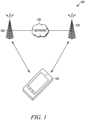
- FIG. 1 is an example block diagram of a system 100 according to a possible embodiment.
- the system 100 can include a User Equipment (UE) 110, at least one Network Entity (NE) 120 and 125, such as a base station, and a network 130.
- the UE 110 can be a wireless wide area network device, a user device, wireless terminal, a portable wireless communication device, a smartphone, a cellular telephone, a flip phone, a personal digital assistant, a personal computer, a selective call receiver, an Internet of Things (IoT) device, a tablet computer, a laptop computer, or any other user device that is capable of sending and receiving communication signals on a wireless network.
- IoT Internet of Things
- the at least one NE 120 and 125 can be wireless wide area network base stations, can be NodeBs, can be enhanced NodeBs (eNBs), can be New Radio (NR) NodeBs (gNBs), such as 5G NodeBs, can be unlicensed network base stations, can be access points, can be base station controllers, can be network controllers, can be Transmission/Reception Points (TRPs), can be different types of base stations from each other, and/or can be any other network entities that can provide wireless access between a UE and a network.
- eNBs enhanced NodeBs
- gNBs New Radio
- 5G NodeBs can be unlicensed network base stations
- can be access points can be base station controllers
- can be network controllers can be Transmission/Reception Points (TRPs)
- TRPs Transmission/Reception Points
- the network 130 can include any type of network that is capable of sending and receiving wireless communication signals.
- the network 130 can include a wireless communication network, a cellular telephone network, a Time Division Multiple Access (TDMA)-based network, a Code Division Multiple Access (CDMA)-based network, an Orthogonal Frequency Division Multiple Access (OFDMA)-based network, a Long Term Evolution (LTE) network, a NR network, a 3GPP-based network, a satellite communications network, a high altitude platform network, the Internet, and/or other communications networks.
- TDMA Time Division Multiple Access
- CDMA Code Division Multiple Access
- OFDMA Orthogonal Frequency Division Multiple Access
- the UE 110 can communicate with the network 130 via at least one network entity 120.
- the UE can send and receive control signals on a control channel and user data signals on a data channel.
- Some embodiments can provide resource allocation and multiplexing for flexible uplink communications. Some embodiments can additionally provide a HARQ-ACK resource for Msg4 during RACH procedure. Some embodiments can also provide methods to determine a PUCCH resource for HARQ-ACK feedback in response to Msg4. Some embodiments can further provide methods to multiplex slot-based long PUSCH/PUCCH with mini-slot based short PUCCH/PUSCH.
- a UE can always employ a long PUCCH for HARQ-ACK feedback to Msg4 to avoid potential PUCCH coverage limitation and UE capability issues.
- a NE may estimate UL path loss, a UE's power headroom, or UE capability to support low latency traffic with short PUCCH/PUSCH.
- the long PUCCH with longer transmission duration may guarantee reliable UCI decoding and serve all types of UEs.
- the long PUCCH for HARQ-ACK feedback to Msg4 may consist of or include a pre-determined number of OFDM or DFT-s-OFDM symbols based on the reference numerology of a given frequency band.
- Pre-determined long PUCCH duration can be easily accommodated in Frequency Division Duplexing (FDD) systems, as the number of available UL symbols does not change over slots.
- a NE can indicate, as a part of system information, the number of symbols for the long PUCCH carrying HARQ-ACK feedback for Msg4, which may depend on a cell size and/or the number of semi-statically configured symbols for a downlink control region for particularly a TDD system.
- the NE can implicitly or explicitly indicate the number of symbols for the long PUCCH carrying HARQ-ACK feedback for Msg4 in the DCI that includes DL scheduling information for Msg4.
- the NE can indicate a starting and/or ending symbol(s) of the long PUCCH.
- the duration of long PUCCH can be determined according to the total number of PUSCH transmissions required for successful Msg3 decoding. Additionally, or alternatively, the duration of long PUCCH can be determined according to the available UL symbols in a slot where HARQ-ACK feedback to Msg4 will be transmitted. In another example, the duration of long PUCCH may be determined based on the Modulation and Coding Scheme (MCS) of the Msg3 PUSCH transmission. The duration of long PUCCH may be based on one or more of the above schemes. In one example, the duration of long PUCCH may be a separately encoded field of the DCI or may be jointly encoded with other msg4 DCI information in the DCI.
- MCS Modulation and Coding Scheme
- a UE that knows its UE identity such as Cell Radio Network Temporary Identifier (C-RNTI) is unknown to the NE, such as when the UE is not in a Radio Resource Control (RRC)-connected state, can use long PUCCH for HARQ-ACK feedback to Msg4.
- C-RNTI Cell Radio Network Temporary Identifier
- RRC Radio Resource Control
- a UE knows its UE identity, such as C-RNTI, is known to the NE, such as when the UE is in an RRC-connected state, the UE can use long PUCCH or short PUCCH for msg 4 HARQ-ACK feedback based on one or more of short PUCCH UE capability, a PUCCH type and/or duration configuration signaling, a short PUCCH if path loss less than a threshold, a number of PUSCH transmissions required for successful Msg3 decoding, MCS allocated to Msg 3, and/or other criteria described in this disclosure.
- a NE may determine and indicate a PUCCH type in terms of time duration, such as short or long, for UE's HARQ-ACK feedback to Msg4, based on preamble received power, the total number of PUSCH transmissions required for successful Msg3 decoding, and/or an implicit indication from the UE.
- both the NE and the UE may identify the PUCCH duration type for HARQ-ACK feedback to Msg4 based on the total number of Msg3 transmissions.
- the UE may interpret some of DCI bit fields in a PDCCH that delivers scheduling information for Msg4 and the UE's HARQ-ACK feedback to Msg4 differently depending on the identified PUCCH duration type.
- the UE can indicate in Msg3 whether to support short PUCCH or not, such as via a 1-bit flag. In one example, if only one Msg3 transmission occurs before Msg4 reception, the UE can use a short PUCCH for HARQ-ACK feedback to Msg4. Otherwise, the UE can use a long PUCCH for HARQ-ACK feedback to Msg4.
- the NE can partition a set of preambles into two or more subsets and the UE can select a preamble subset depending on a DL path loss estimate.
- DL path loss threshold value(s) for each preamble subset can be predefined or can be signaled as a part of RACH configuration information. If the NE detects a preamble from the preamble subset corresponding to DL path loss larger than a certain value and/or schedules one or more retransmission(s) of Msg3, the NE can inform the UE to use a long PUCCH via DCI that includes DL scheduling information for Msg4. Further, the NE can transmit a dynamic indication on the number of symbols for the long PUCCH.
- HARQ-ACK feedback to Msg4 is either ACK or DTX
- one sequence can be allocated for Msg4 HARQ-ACK feedback to indicate ACK or DTX.
- a HARQ-ACK PUCCH in response to Msg4 can be code-division multiplexed (CDM'ed) with sequence-based SR PUCCHs from other UEs or sequence-based HARQ-ACK PUCCHs from other UEs.
- DL scheduling DCI for Msg4 can include information on allocated Physical Resource Blocks (PRBs) and allocated sequences, such as cyclic shifts of a base sequence, for HARQ-ACK transmission with limited signaling overhead.
- PRBs Physical Resource Blocks
- allocated sequences such as cyclic shifts of a base sequence
- PRB offset for long PUCCH, an allocated PRB index, where PRB indexing starts from a bandwidth part boundary, can be determined based on a dynamically signaled value together with a semi-statically indicated, such as via RAR or SIB, PRB offset.
- DCI can indicate a sub-band group index and allocated PRB(s) within the assigned sub-band group, where the sub-band group includes one or more contiguous or non-contiguous sub-bands and a sub-band includes one or more consecutive PRBs.
- the aforementioned methods for UE's HARQ-ACK feedback to Msg4 are also applicable to PUCCH resource determination for UE's HARQ-ACK transmission when UE does not have dedicated PUCCH resource configuration.
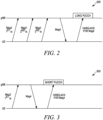
- FIG. 2 is an example illustration 200 of long PUCCH type selection for HARQ-ACK feedback to Msg4 based on the number of Msg3 transmissions according to a possible embodiment.
- FIG. 3 is an example illustration 300 of short PUCCH type selection for HARQ-ACK feedback to Msg4 based on the number of Msg3 transmissions according to a possible embodiment.
- a NE can determine or switch a PUCCH type between long PUCCH and short PUCCH for the UE's subsequent UCI transmission based on at least the UE's Power Headroom Report (PHR) and/or the average number of UL transmissions for successful decoding of one UL Transport Block (TB) during a certain period.
- PHR Power Headroom Report
- the NE can indicate the UE to use long PUCCH in order to overcome a potential UL transmit power limitation.
- a high number of retransmissions may occur if the interference level changes dynamically and accordingly, the initial selection of MCS may not be optimal.
- overprovisioning PUCCH resources by using long PUCCH may be useful to avoid potential PUCCH decoding error due to dynamic interference variation.
- slot-based long PUSCH/PUCCH and mini-slot based short PUSCH/PUCCH can coexist.
- UEs that are not limited by uplink Transmit (Tx) power or have sufficient power headroom, such as above a certain threshold, may be able to use both long PUCCH and short PUCCH depending on UCI types, traffic types, and/or applications.
- Tx uplink Transmit
- a UE may be semi-statically configured with a long PUCCH resource for periodic transmission of large payload UCI, such as a periodic CSI report including narrow beam related information, while a short PUCCH resource can be used for SR or HARQ-ACK transmission.
- mini-slot based short PUSCH/PUCCH can be used for Ultra-Reliable Ultra-Low-Latency (URLLC) traffic
- slot-based long PUSCH/PUCCH can be employed for normal traffic, such as regular latency traffic.
- different scheduling frequencies such as mini-slot vs slot level scheduling and semi-static vs dynamic scheduling, different HARQ processing timelines, and different processing delays for UL transmission upon reception of UL grant can be considered to determine UE behaviors.
- a UE may operate according to the following options to multiplex semi-statically configured short PUCCH/PUSCH, such as for URLLC SR and grant-free UL data transmission, and dynamically scheduled long PUSCH/PUCCH, such as for grant-based UL data transmission and aperiodic CSI report.
- semi-static URLLC SR or grant-free PUSCH resources may be UE-specifically or cell-specifically configured. Even with UE-specific configuration, the time-frequency resources may still be shared by multiple UEs, such as via CDM.
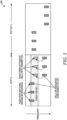
- FIG. 4 is an example illustration 400 of multiplexing semi-statically configured short PUCCH with slot-based PUSCH from different UEs according to a possible embodiment.
- UL DCI scheduling of long PUSCH/PUCCH can include an indication of the semi-statically configured short PUSCH/PUCCH resource for other UEs, such as UE 2, that fully or partially overlaps with the long PUSCH/PUCCH resource in time and in frequency, such as for UE 1, as shown in the illustration 400.
- the UE such as UE 1, can determine the overlapped Resource Elements (REs) based on the indication and can perform rate-matching around the overlapped REs for the long PUSCH/PUCCH.
- REs Resource Elements
- the semi-static short PUSCH/PUCCH resource is selected from a predefined set of resources, and/or the short PUSCH/PUCCH resource is determined by combination of one of predefined configuration and a few configurable parameters, a signaling overhead in UL DCI for indicating the semi-statically configured short PUCCH/PUSCH resource can be reduced by including a selected configuration index and a few configurable parameters.
- FIG. 5 is an example illustration 500 of multiplexing semi-statically configured short PUCCH with slot-based PUSCH from one UE according to a possible embodiment.
- the UE can consider the configured short PUCCH/PUSCH resources not available for long PUSCH/PUCCH and can perform rate-matching around the configured short PUCCH/PUSCH resources.
- the UE may not transmit URLLC SR or grant-free data transmission on the configured short PUCCH/PUSCH resources, other UEs may use the configured short PUCCH/PUSCH resources.
- the UE can perform rate-matching irrespective of whether it actually transmits short PUCCH/PUSCH on the configured resources. If, in a given symbol, long PUCCH/PUSCH resource allocation does not include the semi-statically configured short PUCCH/PUSCH resources and if the UE is not capable of simultaneous transmissions on non-contiguous PRBs for example, due to emission issues or UE capability, and the UE should transmit short PUCCH/PUSCH, the short PUCCH/PUSCH transmission can be moved into the allocated long PUCCH/PUSCH resource, as shown in the illustration 500.
- the actual short PUCCH/PUSCH transmission from the UE may or may not occur, such as for URLLC SR or grant-free transmission, and whether to transmit short PUCCH/PUSCH or not is determined in a mini-slot or non-slot level, where a mini-slot is a transmission duration smaller than a slot, it may be difficult for UE to perform rate-matching around the moved short PUCCH/PUSCH resources in advance by taking into account the actual transmission.
- the UE may puncture the long PUSCH/PUCCH for the moved short PUCCH/PUSCH resources, if short PUCCH(s)/PUSCH(s) are actually transmitted.
- the long PUSCH/PUCCH has been prepared, such as by channel coding and rate-matching for the allocated long PUSCH/PUCCH resources, or is in the process of being prepared for transmission prior to the need to transmit a short PUCCH/PUSCH transmission, such as from a trigger for URLLC SR or grant-free transmission, so to avoid the reprocessing and the associated processing delays and the need to reserve hardware time budget for packet generation and preparation of the long PUSCH/PUCCH, the short PUSCH/PUCCH transmission can puncture the long PUSCH/PUCCH REs.
- the short PUSCH/PUCCH transmission can puncture at least the overlapping long PUSCH/PUCCH symbols even if the short PUSCH/PUCCH partially overlaps on some of the REs of the long PUSCH/PUCCH. Puncturing more than the just the overlapping symbols can be done prior to and following the short PUSCH/PUCCH transmission to allow for power adjustment and setting settling time, as the targeted transmission power for the short PUSCH/PUCCH and long PUSCH/PUCCH may be different.
- the long PUSCH/PUCCH can be dropped if the UE is unable or not capable of maintaining transmit phase continuity after the short PUSCH/PUCCH transmission, such as due to a power change, a resource change, and/or power ramp-up/down transients.
- the long PUSCH/PUCCH may be resumed in the next mini-slot or slot in the case of mini-slot or slot aggregation allocating a plurality of mini-slots or slots with each mini-slot or slot having its own phase reference signals.
- the short PUSCH/PUCCH overlaps at least a portion of the reference signal symbols of the long PUSCH/ PUCCH, the long PUSCH/PUCCH transmission can be dropped.
- At least a portion of the long PUSCH/PUCCH transmission can be dropped. This may correspond to OFDM/SC-FDMA symbols of the long PUSCH/PUCCH for which the reference signals with OCC are a phase reference.
- a UE has semi-statically configured short PUCCH/PUSCH, such as URLLC SR, resources and semi-statically configured long PUSCH/PUCCH, such as periodic CSI report, resources, if the short PUCCH/PUSCH and long PUSCH/PUCCH resources occur on non-contiguous PRBs in the same slot, and if the UE does not support an UL transmission on non-contiguous PRBs in the frequency domain, the UE may not use the semi-statically configured short PUCCH/PUSCH resources, but the UE can move short PUCCH/PUSCH transmissions within the long PUSCH/PUCCH resources. Furthermore, the UE can puncture the long PUSCH/PUCCH on the resource elements where short PUCCH(s)/PUSCH(s) are actually transmitted.
- semi-statically configured short PUCCH/PUSCH such as URLLC SR
- long PUSCH/PUCCH such as periodic CSI report
- a NE can include an indication on whether the UE has to monitor UE-specific or group-specific DCI carrying dynamic puncturing information, which can be denoted as "puncturing DCI," or not, such as via a 1-bit flag, in UL DCI scheduling long PUSCH/PUCCH.
- the UE can monitor puncturing DCI if the number of allocated PRBs for long PUSCH/PUCCH is larger than a certain value.
- the NE can further indicate a monitoring interval of puncturing DCI, such as a slot-level or mini-slot level interval.
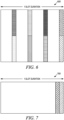
- FIG. 6 is an example illustration 600 of a puncturing pattern for mini-slot or non-slot level monitoring of puncturing DCI within a slot-based PUSCH according to a possible embodiment.
- FIG. 7 is an example illustration 700 of a puncturing pattern for slot level monitoring of puncturing DCI within a slot-based PUSCH according to a possible embodiment.
- the UE's dynamic puncturing on the long PUSCH/PUCCH may be needed to multiplex dynamically scheduled short PUCCH/PUSCH for the same UE or for different UE(s).
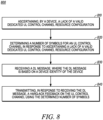
- FIG. 8 is an example flowchart 800 illustrating the operation of a wireless communication device, such as the UE 110, according to a possible embodiment.
- a lack of a valid dedicated UL control channel resource configuration can be ascertained by the device.
- the device identity can be a UE identity.
- the UL control channel can be a PUCCH or any other UL channel that can carry control signaling, such as Channel Quality Indicators (CQIs), Acknowledgement/Negative Acknowledgements (ACK/NACKs), SRs, and other control signaling.
- CQIs Channel Quality Indicators
- ACK/NACKs Acknowledgement/Negative Acknowledgements
- SRs SRs
- a RAR message can be received in response to the transmitted RACH preamble.
- the RAR message can include information of an UL grant.
- the UL grant can be a PUSCH grant or any other uplink channel grant.
- An UL message can be transmitted according the UL grant.
- the UL message can be a Msg3 message or any other UL message.
- the UL message can carry at least a device identity of the device.
- the DL message can be received in response to transmitting the UL message.
- a number of symbols for an UL control channel can be determined in response to ascertaining a lack of a valid dedicated UL control channel resource configuration. Determining can include determining the number of symbols based on a number of UL data channel transmissions for a same transport block and/or based on available UL symbols in a slot where the HARQ-ACK feedback to the DL message will be transmitted.
- the UL data channel can be a PUSCH or any other UL data channel.
- an indication of a number of symbols for the UL control channel can be received via system information.
- the indication can be an index to predefined set of UL control channel configurations.
- the index can identify a number of symbols in a predefined set of numbers of symbols in the predefined set of UL control channel configurations.
- the indicated number of symbols can be identified from the predefined set of numbers of symbols.
- the predetermined set of numbers of symbols can be based on a reference numerology indicated in the system information. For example, different numerologies provide for different subcarrier spacing in the frequency domain, where slot duration can get shorter as the subcarrier spacing gets wider. Determining can include determining the number of symbols based on the received indication.
- a DL message can be received.
- the DL message can be based on a device identity of the device.
- the DL message can be a Msg4 message or any other message.
- a HARQ-ACK feedback on the UL control channel can be transmitted using the determined number of symbols in response to receiving the DL message.
- the index received in the indication above can also identify a cell-specific PRB offset for the UL control channel and the HARQ-ACK feedback can be transmitted on the UL control channel, in response to receiving the DL message, using the identified cell-specific PRB offset.
- the index can additionally identify a starting symbol for the UL control channel and the HARQ-ACK feedback on the UL control channel can be transmitted using the identified starting symbol in response to receiving the DL message.
- an allocated PRB index where PRB indexing starts from a bandwidth part boundary, can be determined based on a dynamically signaled value together with a semi-statically indicated, such as via RAR or SIB, PRB offset.
- the DL message can be based on an identity of the device by including the device identity, by scrambling the message using the device identity, by being addressed by the device identity, or otherwise based on the device identity.
- Transmitting the HARQ-ACK feedback can include transmitting a HARQ-ACK feedback via a long PUCCH in response to receiving the DL message.
- DL scheduling DCI can be received.
- the DL scheduling DCI can include information of a device-specific PRB offset and cyclic shift information of a base sequence for the HARQ-ACK feedback transmission.
- the HARQ-ACK can use a particular cyclic shift and the HARQ-NACK can use a different cyclic shift.
- a base sequence for ACK/NACK transmission, such as the HARQ-ACK feedback can be identified via cell-specific information, such as a cell-specific scrambling ID parameter, a 'hoppingID', and/or other cell-specific information.
- the cyclic shift information can further identify the device-specific cyclic shift of the base sequence that the device should use for its ACK/NACK transmission.
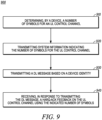
- FIG. 9 is an example flowchart 900 illustrating the operation of a wireless communication device, such as the NE 120, according to a possible embodiment.
- a number of symbols for an UL control channel can be determined by a device, such as the NE 120.
- the number of symbols for the UL control channel can be determined based on cell size.
- the number of symbols for the UL control channel can also be determined based on number of configured symbols for a DL control resource.
- the number of symbols can additionally be determined based on a number of PUSCH transmissions for a same transport block and/or based on available UL symbols in a slot where the HARQ-ACK feedback to the DL message will be transmitted.
- system information indicating the number of symbols for the UL control channel can be transmitted.
- An indication of a number of symbols for subsequent UL control channel transmissions can also be transmitted.
- the number of symbols for subsequent UL control channel transmissions can be based on a UE's PHR and/or an average number of UL transmissions for successful decoding of one UL TB.
- the indication can be an index to predefined set of UL control channel configurations.
- the index can also identify a number of symbols in a predefined set of numbers of symbols in the predefined set of UL control channel configurations.
- the predetermined set of numbers of symbols can be based on a reference numerology indicated in the system information.
- a DL message based on a device identity can be transmitted.
- the device identity can be a UE ID or any other device identity.
- DL scheduling DCI can also be transmitted.
- the DL scheduling DCI can include information of a device-specific PRB offset and cyclic shift information of a base sequence for the HARQ-ACK feedback.
- a RACH preamble can be received.
- a RAR message can be transmitted in response to the received RACH preamble.
- the RAR message can include information of an UL grant.
- the UL grant can be a PUSCH grant.
- An UL message can be received according the UL grant.
- the UL message can carry at least a device identity of a device.
- the DL message can then be transmitted at 930 in response to receiving the UL message.
- a HARQ-ACK feedback transmission can be received on the UL control channel using the indicated number of symbols in response to transmitting the DL message.
- the index described above can also identify a cell-specific PRB offset for the UL control channel and the HARQ-ACK feedback can be received on the UL control channel using the identified cell-specific PRB offset in response to transmitting the DL message.
- the index can further identify a starting symbol for the UL control channel and the HARQ-ACK feedback can be received on the UL control channel using the identified starting symbol in response to transmitting the DL message.
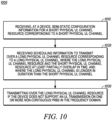
- FIG. 10 is an example flowchart 1000 illustrating the operation of a wireless communication device, such as the UE 110, according to a possible embodiment.
- semi-static configuration information for a short physical UL channel resource can be received at a device.
- the short physical UL channel resource can correspond to a short physical UL channel.
- a physical uplink channel can be a PUCCH, a PUSCH, or any other physical uplink channel.
- the short physical UL channel resource can be shared by multiple devices.
- the short physical UL channel resource can be shared by multiple UEs via Code Division Multiplexing (CDM).
- CDM Code Division Multiplexing
- scheduling information to transmit over a long physical UL channel resource corresponding to a long physical UL channel can be received.
- the long physical UL channel resource and the short physical UL channel resource can at least partially overlap in time.
- the short physical UL channel resource can include contiguous physical resource blocks in frequency and contiguous OFDM or SC-FDMA symbols in time.
- the long physical UL channel resource can include contiguous physical resource blocks in frequency and contiguous OFDM or SC-FDMA symbols in time.
- the long physical UL channel can be longer in duration than the short physical UL channel.
- the short physical UL channel resource can be determined to partially overlap the long physical UL channel in the frequency domain.
- the short physical UL channel resource can be modified to fully overlap with the long physical UL channel resource in the frequency domain based on determining the short physical UL channel resource partially overlaps the long physical UL channel in the frequency domain. The modification can ensure no change of power spectral density.
- transmission can be made over the long physical UL channel resource if the device does not support an UL transmission on one or more non-contiguous PRBs in the frequency domain.
- rate-matching of the long physical UL channel around the short physical UL channel resource can be performed if the long physical UL channel resource for the long physical UL channel at least partially includes the short physical UL channel resource in the frequency domain.
- Rate-matching of the long physical UL channel around the modified short physical UL channel resource can be performed if the long physical UL channel resource for the long physical UL channel at least partially includes the short physical UL channel resource in the frequency domain.
- a URLLC SR can be transmitted on the short physical UL channel resource.
- the URLLC SR can also be transmitted on the modified short physical UL channel resource.
- a grant-free UL data transmission can be performed on the short physical UL channel resource.
- the grant-free UL data transmission can also be performed on the modified short physical UL channel resource.
- a physical UL channel resource can be identified in the long physical UL channel resource to transmit the short physical UL channel if the long physical UL channel resource does not overlap the short physical UL channel resource in the frequency domain.
- the physical UL channel resource can be fully, such as completely, within the long physical UL channel resource.
- the short physical UL channel can be transmitted on the identified physical UL channel resource.
- the long physical UL channel can be punctured on the identified short physical UL channel resource.
- the long physical UL channel can be punctured on the identified short physical UL channel resource and additional resource elements. This can allow for power adjustment and setting settling time. Transmission of the long physical UL channel can be skipped after transmitting the short physical UL channel if transmit phase continuity cannot be maintained after transmitting the short physical UL channel. For example, the transmission of the long physical UL channel can be dropped after transmitting the short physical UL channel, if transmit phase continuity cannot be maintained after transmitting the short physical UL channel.
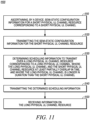
- FIG. 11 is an example flowchart 1100 illustrating the operation of a wireless communication device, such as the NE 120, according to a possible embodiment.
- semi-static configuration information can be ascertained for a short physical UL channel resource corresponding to a short physical UL channel.
- a physical UL channel can be a PUCCH, a PUSCH, or any other physical UL channel.
- the short physical UL channel resource can be shared by multiple devices.
- the semi-static configuration information for the short physical UL channel resource can be transmitted.
- scheduling information to transmit over a long physical UL channel resource corresponding to a long physical UL channel can be determined.
- the long physical UL channel and the short physical UL channel resource can at least partially overlap in time.
- the long physical UL channel can be longer in duration than the short physical UL channel.
- the determined scheduling information can be transmitted.
- information can be received on the long physical UL channel resource.
- the long physical UL channel can be received rate-matched around the short physical UL channel resource if the long physical UL channel resource at least partially includes the short physical UL channel resource in the frequency domain.
- An URLLC SR can also be received on the short physical UL channel resource.
- a physical UL channel resource in the long physical UL channel resource can be identified to receive the short physical UL channel if the long physical UL channel resource does not overlap the short physical UL channel resource in the frequency domain.
- the physical UL channel resource can be fully, such as completely, within the long physical UL channel resource.
- the short physical UL channel can be received on the identified physical UL channel resource.
- Receiving the short physical UL channel can include detecting transmission of the short physical UL channel on the identified physical UL channel resource.
- the long physical UL channel can be received punctured on the identified short physical UL channel resource.
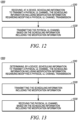
- FIG. 12 is an example flowchart 1200 illustrating the operation of a wireless communication device, such as the UE 110, according to a possible embodiment.
- scheduling information to transmit a physical UL channel can be received.
- the scheduling information can include modification information regarding modifying a physical UL channel transmission.
- the scheduling information can include the modification information if a number of PRBs allocated for the physical UL channel is larger than a threshold number of PRBs.
- the scheduling information can also include information regarding at least one allocated PRB and at least one allocated symbol for the physical UL channel.
- the scheduling information can be in DCI.
- the DCI including scheduling information can be different from DCI including dynamic puncturing information.
- the modification information can include an indication of rate-matching of a physical UL channel around REs.
- the modification information can also include an identification of the REs around which to perform rate-matching.
- the modification information can be included in the scheduling information if a number of PRBs allocated for the physical UL channel is larger than a threshold number of PRBs.
- the modification information can additionally include information regarding monitoring for DCI including dynamic puncturing information.
- the modification information can further include information regarding monitoring a PDCCH for the DCI including dynamic puncturing information.
- the physical UL channel can be transmitted based on the scheduling information including the modification information. Transmitting can include performing rate-matching of the physical UL channel around REs based on the indication of rate matching. Transmitting can also include performing rate-matching of the physical UL channel around the REs around which to perform rate-matching.
- the REs around which to perform rate-matching can be determined based on a set of resources determined by a predefined configuration and/or a configurable parameter.
- the predefined configuration can be a set of rate matching or puncturing resource grids and the configurable parameter can be a granularity of rate matching or puncturing resource grid.
- an indication of a monitoring interval for a PDCCH carrying the DCI including the dynamic puncturing information can be received.
- a puncturing pattern and a payload size of the DCI including the dynamic puncturing information can be determined.
- the puncturing pattern and the payload size can be determined based on the scheduling information for the physical UL channel and the monitoring interval.
- Monitoring occasions can be determined based on the indicated monitoring interval. The monitoring occasions can occur after receiving the scheduling information to transmit the physical UL channel and before completing transmission of the physical UL channel.
- the DCI including the dynamic puncturing information can be monitored for.
- Monitoring can include monitoring for a PDCCH carrying the DCI including dynamic puncturing information based on the determined monitoring occasions.
- the DCI including the dynamic puncturing information can be decoded.
- a resource for puncturing can be determined based on the dynamic puncturing information.
- FIG. 13 is an example flowchart 1300 illustrating the operation of a wireless communication device, such as the NE 120, according to a possible embodiment.
- scheduling information to transmit a physical UL channel can be determined.
- the scheduling information can include modification information regarding modifying a physical UL channel transmission.
- the scheduling information can also include information regarding at least one allocated PRB and at least one allocated symbol for the physical UL channel.
- the modification information can include information regarding monitoring a PDCCH for DCI including dynamic puncturing information if a number of PRBs allocated for the physical UL channel is larger than a threshold number of PRBs.
- the modification information can be included in the scheduling information if a number of PRBs allocated for the physical UL channel is larger than a threshold number of PRBs.
- an indication of rate-matching of a physical UL channel around REs can be determined and the modification information can include the indication of rate-matching of a physical UL channel around REs.
- REs around which to perform rate-matching can be identified and the modification information can include an identification of the REs around which to perform rate-matching.
- the REs around which to perform rate-matching can be determined based on a set of resources determined by a predefined configuration and/or a configurable parameter.
- the scheduling information including the modification information can be transmitted.
- the physical UL channel can be received based on the scheduling information including the modification information.
- the modification information can include information regarding monitoring for DCI including dynamic puncturing information.
- the modification information can also include information regarding monitoring a PDCCH for the DCI including dynamic puncturing information.
- the DCI including dynamic puncturing information can be transmitted.
- An indication of a monitoring interval for a PDCCH carrying the DCI including the dynamic puncturing information can be transmitted.
- Monitoring occasions can be determined based on the indicated monitoring interval. The monitoring occasions can occur after transmitting the scheduling information to transmit the physical UL channel and before completing reception of the physical UL channel.
- Transmitting the DCI can include transmitting a PDCCH carrying the DCI including dynamic puncturing information based on the indicated monitoring interval.
- a puncturing pattern and a payload size of the DCI including the dynamic puncturing information can be determined.
- the puncturing pattern and the payload size can be determined based on the scheduling information for the physical UL channel and the monitoring interval.
- the received physical UL channel can be punctured based on the dynamic puncturing information.
- the display 1440 can be a viewfinder, a Liquid Crystal Display (LCD), a Light Emitting Diode (LED) display, an Organic Light Emitting Diode (OLED) display, a plasma display, a projection display, a touch screen, or any other device that displays information.
- the transceiver 1470 can be one or more transceivers that can include a transmitter and/or a receiver.
- the audio input and output circuitry 1430 can include a microphone, a speaker, a transducer, or any other audio input and output circuitry.
- the user interface 1460 can include a keypad, a keyboard, buttons, a touch pad, a joystick, a touch screen display, another additional display, or any other device useful for providing an interface between a user and an electronic device.
- the network interface 1480 can be a Universal Serial Bus (USB) port, an Ethernet port, an infrared transmitter/receiver, an IEEE 1394 port, a wireless transceiver, a WLAN transceiver, or any other interface that can connect an apparatus to a network, device, and/or computer and that can transmit and receive data communication signals.
- the memory 1450 can include a Random Access Memory (RAM), a Read Only Memory (RON), an optical memory, a solid state memory, a flash memory, a removable memory, a hard drive, a cache, or any other memory that can be coupled to an apparatus.
- Disclosed embodiments may also be implemented on a general-purpose or a special purpose computer, a programmed microprocessor or microprocessor, peripheral integrated circuit elements, an application-specific integrated circuit or other integrated circuits, hardware/electronic logic circuits, such as a discrete element circuit, a programmable logic device, such as a programmable logic array, field programmable gate-array, or the like.
- the controller 1420 may be any controller or processor device or devices capable of operating an apparatus and implementing the disclosed embodiments. Some or all of the additional elements of the apparatus 1400 can also perform some or all of the operations of the disclosed embodiments.
- the controller 1420 can ascertain a lack of a valid dedicated UL control channel resource configuration.
- the controller 1420 can determine a number of symbols for an UL control channel in response to ascertaining a lack of a valid dedicated UL control channel resource configuration. Determining can include determining the number of symbols based on a number of UL data channel transmissions for a same transport block and/or based on available UL symbols in a slot where the HARQ-ACK feedback to the DL message will be transmitted.
- the transceiver 1470 can receive, via system information, an indication of a number of symbols for the UL control channel and the controller 1420 can determine the number of symbols based on the received indication.
- the indication can be an index to predefined set of UL control channel configurations.
- the index can identify a number of symbols in a predefined set of numbers of symbols in the predefined set of UL control channel configurations and the controller 1470 can identify the indicated number of symbols from the predefined set of numbers of symbols.
- the predetermined set of numbers of symbols can be based on a reference numerology indicated in the system information.
- the transceiver 1470 can receive a DL message.
- the DL message can be based on a device identity of the device.
- the transceiver 1470 can also receive DL scheduling DCI, where the DL scheduling DCI includes information of a device-specific PRB offset and cyclic shift information of a base sequence for the HARQ-ACK feedback transmission.
- the transceiver 1470 can transmit, in response to receiving the DL message, a HARQ-ACK feedback on the UL control channel using the determined number of symbols.
- the index can further identify a cell-specific PRB offset for the UL control channel and the transceiver 1470 can transmit, in response to receiving the DL message, the HARQ-ACK feedback on the UL control channel using the identified cell-specific PRB offset.
- the index can also identify a starting symbol for the UL control channel and the transceiver 1470 can transmit, in response to receiving the DL message, the HARQ-ACK feedback on the UL control channel using the identified starting symbol.
- the transceiver 1470 can transmit a DL message based on a device identity, such as an identity of the device the DL message is being transmitted to.
- the transceiver 1470 can transmit DL scheduling DCI.
- the DL scheduling DCI can include information of a device-specific PRB offset and cyclic shift information of a base sequence for HARQ-ACK feedback transmission.
- the transceiver 1470 can receive, in response to transmitting the DL message, a HARQ-ACK feedback on the UL control channel using the indicated number of symbols.
- the transceiver 1470 can receive a RACH preamble.
- the transceiver 1470 can transmit a RAR message in response to the received RACH preamble.
- the RAR message can include information of an UL grant.
- the transceiver 1470 can receive an UL message according the UL grant.
- the UL message can carry at least a device identity of a device that sent the UL message.
- the transceiver 1470 can transmit an indication of a number of symbols for subsequent UL control channel transmissions.
- the number of symbols for subsequent UL control channel transmissions can be based on a UE's PHR and/or an average number of UL transmissions for successful decoding of one UL TB.
- the controller 1420 can control operations of the apparatus 1400.
- the transceiver 1470 can receive semi-static configuration information for a short physical UL channel resource corresponding to a short physical UL channel.
- the short physical UL channel resource can be shared by multiple devices, such as multiple UEs.
- the transceiver 1470 can receive scheduling information to transmit over a long physical UL channel resource corresponding to a long physical UL channel.
- the long physical UL channel resource and the short physical UL channel resource can at least partially overlap in time.
- the long physical UL channel can be longer in duration than the short physical UL channel.
- the transceiver 1470 can transmit over the long physical UL channel resource if the device does not support an UL transmission on one or more non-contiguous PRBs in the frequency domain.
- the controller 1420 can perform rate-matching of the long physical UL channel around the short physical UL channel resource for transmission of the long physical UL channel if the long physical UL channel resource for the long physical UL channel at least partially includes the short physical UL channel resource in the frequency domain.
- the transceiver 1470 can also transmit a URLLC SR on the short physical UL channel resource.
- the transceiver 1470 can further perform a grant-free UL data transmission on the short physical UL channel resource.
- the controller 1420 can determine that the short physical UL channel resource partially overlaps the long physical UL channel in the frequency domain.
- the controller 1420 can modify the short physical UL channel resource to fully overlap with the long physical UL channel resource in the frequency domain based on determining the short physical UL channel resource partially overlaps the long physical UL channel in the frequency domain.
- the controller 1420 can perform rate-matching of the long physical UL channel around the modified short physical UL channel resource if the long physical UL channel resource for the long physical UL channel at least partially includes the short physical UL channel resource in the frequency domain.
- the controller 1420 can identify a physical UL channel resource in the long physical UL channel resource to transmit the short physical UL channel if the long physical UL channel resource does not overlap the short physical UL channel resource in the frequency domain.
- the transceiver 1470 can transmit the short physical UL channel on the identified physical UL channel resource.
- the controller 1420 can puncture the long physical UL channel on the identified short physical UL channel resource.
- the controller 1420 can ascertain semi-static configuration information for a short physical UL channel resource corresponding to a short physical UL channel.
- the short physical UL channel resource can be shared by multiple devices.
- the transceiver 1470 can transmit the semi-static configuration information for the short physical UL channel resource.
- the controller 1420 can determine scheduling information to transmit over a long physical UL channel resource corresponding to a long physical UL channel.
- the long physical UL channel and the short physical UL channel resource can at least partially overlap in time.
- the long physical UL channel can be longer in duration than the short physical UL channel.
- the transceiver 1470 can transmit the determined scheduling information.
- the transceiver 1470 can receive information on the long physical UL channel resource.
- the transceiver 1470 can receive the long physical UL channel rate-matched around the short physical UL channel resource if the long physical UL channel resource at least partially includes the short physical UL channel resource in the frequency domain.
- the transceiver 1470 can also receiver an URLLC SR on the short physical UL channel resource.
- the controller 1420 can identify a physical UL channel resource in the long physical UL channel resource to receive the short physical UL channel if the long physical UL channel resource does not overlap the short physical UL channel resource in the frequency domain.
- the transceiver 1470 can receive the short physical UL channel on the identified physical UL channel resource. Receiving the short physical UL channel can include detecting transmission of the short physical UL channel on the identified physical UL channel resource.
- the transceiver 1470 can receive the long physical UL channel punctured on the identified short physical UL channel resource.
- the controller 1420 can control operations of the apparatus 1400.
- the transceiver 1470 can receive scheduling information to transmit a physical UL channel.
- the scheduling information can include modification information regarding modifying a physical UL channel transmission.
- the scheduling information can also include information regarding at least one allocated PRB and at least one allocated symbol for the physical UL channel.
- the modification information can include an indication of rate-matching of a physical UL channel around REs.
- the modification information can also include an identification of the REs around which to perform rate-matching.
- the modification information can be included in the scheduling information if a number of PRBs allocated for the physical UL channel is larger than a threshold number of PRBs.
- the controller 1420 can determine the REs around which to perform rate-matching based on a set of resources determined by a predefined configuration and/or a configurable parameter.
- the transceiver 1470 can transmit the physical UL channel based on the scheduling information including the modification information. Transmitting can include performing rate-matching of the physical UL channel around REs based on the indication of rate matching. Transmitting can also include performing rate-matching of the physical UL channel around the REs around which to perform rate-matching.
- the modification information can include information regarding monitoring for DCI including dynamic puncturing information.
- the modification information can also include information regarding monitoring a PDCCH for the DCI including dynamic puncturing information.
- the transceiver 1470 can receive an indication of a monitoring interval for a PDCCH carrying the DCI including the dynamic puncturing information.
- the controller 1420 can determine monitoring occasions based on the indicated monitoring interval.
- the controller 1420 can monitor for the DCI including the dynamic puncturing information. Monitoring for the DCI can include monitoring for a PDCCH carrying the DCI including dynamic puncturing information based on the determined monitoring occasions. The monitoring occasions can occur after receiving the scheduling information to transmit the physical uplink channel and before completing transmission of the physical uplink channel.
- the controller 1420 can decode the DCI including the dynamic puncturing information.
- the controller 1420 can determine a resource for puncturing based on the dynamic puncturing information.
- the controller 1420 can determine a puncturing pattern and a payload size of the DCI including the dynamic puncturing information based on the scheduling information for the physical uplink channel and the monitoring interval.
- the controller 1420 can puncture the physical UL channel on the determined resource for puncturing.
- the transceiver 1470 can transmit the physical UL channel by transmitting the punctured physical UL channel.
- the controller 1420 can determine scheduling information to transmit a physical UL channel.
- the scheduling information including modification information can regard modifying a physical UL channel transmission.
- the scheduling information can also include information regarding at least one allocated PRB and at least one allocated symbol for the physical UL channel.
- the modification information can include information regarding monitoring a PDCCH for DCI including dynamic puncturing information if a number of PRBs allocated for the physical UL channel is larger than a threshold number of PRBs.
- the controller 1420 can also determine an indication of rate-matching of a physical UL channel around REs and the modification information can include the indication of rate-matching of a physical UL channel around REs.
- the controller 1420 can also identify REs around which to perform rate-matching and the modification information can include an identification of the REs around which to perform rate-matching.
- the controller 1420 can determine the REs around which to perform rate-matching based on a set of resources determined by at least one selected from a predefined configuration and a configurable parameter.
- the modification information can also include information regarding monitoring for DCI including dynamic puncturing information.
- the modification information can be included in the scheduling information if a number of PRBs allocated for the physical UL channel is larger than a threshold number of PRBs.
- the DCI including the dynamic puncturing information can be transmitted after transmitting the scheduling information for the physical uplink channel and before completing reception of the physical uplink channel.
- a puncturing pattern and a payload size of the DCI including the dynamic puncturing information can be based on the scheduling information for the physical uplink channel and a monitoring interval for the DCI including the dynamic puncturing information.
- the transceiver 1470 can transmit the scheduling information including the modification information.
- the transceiver 1470 can also transmit the DCI including dynamic puncturing information.
- the transceiver 1470 can receive the physical UL channel based on the scheduling information including the modification information.
- the received physical UL channel can be punctured based on the dynamic puncturing information.
- the method of this disclosure can be implemented on a programmed processor.
- the controllers, flowcharts, and modules may also be implemented on a general purpose or special purpose computer, a programmed microprocessor or microcontroller and peripheral integrated circuit elements, an integrated circuit, a hardware electronic or logic circuit such as a discrete element circuit, a programmable logic device, or the like.
- any device on which resides a finite state machine capable of implementing the flowcharts shown in the figures may be used to implement the processor functions of this disclosure.
Landscapes
- Engineering & Computer Science (AREA)
- Signal Processing (AREA)
- Computer Networks & Wireless Communication (AREA)
- Mobile Radio Communication Systems (AREA)
Claims (15)
- Verfahren (800), das durch eine Benutzereinrichtung, UE; durchgeführt wird, umfassend:Sicherstellen (810) eines Fehlens einer gültigen dedizierten Uplink-Steuerkanal-Ressourcenkonfiguration;Bestimmen (820) einer Anzahl von Symbolen für einen Uplink-Steuerkanal als Reaktion auf das Sicherstellen des Fehlens der gültigen dedizierten Uplink-Steuerkanal-Ressourcenkonfiguration;Empfangen (830) einer Downlink-Nachricht basierend auf einer UE-Identität der UE;Empfangen von Downlink, DL,-Planungs-Downlink-Steuerinformationen, DCI, wobei die DL-Planungs-DCI Informationen zu einem UE-spezifischen physikalischen Ressourcenblock-Offset, PRB-Offset, und zyklischen Verschiebungsinformationen einer Basissequenz für eine Übertragung einer Rückmeldung einer hybridautomatischen Wiederholungsanforderungsbestätigung, HARQ-ACK-Rückmeldung, einschließen; undÜbertragen (840), als Reaktion auf die empfangene Downlink-Nachricht, der HARQ-ACK-Rückmeldung auf dem Uplink-Steuerkanal unter Verwendung der bestimmten Anzahl von Symbolen.
- Verfahren (800) nach Anspruch 1, wobei das Bestimmen (820) das Bestimmen der Anzahl von Symbolen umfasst, wobei mindestens eines ausgewählt ist aus: basierend auf einer Anzahl von Uplink-Datenkanalübertragungen für einen gleichen Transportblock; und basierend auf verfügbaren Uplink-Symbolen in einem Slot, in dem die HARQ-ACK-Rückmeldung zu der Downlink-Nachricht übertragen wird.
- Verfahren (800) nach Anspruch 1, ferner umfassend das Empfangen, über Systeminformationen, einer Angabe einer Anzahl von Symbolen für den Uplink-Steuerkanal, undwobei das Bestimmen (820) das Bestimmen der Anzahl von Symbolen basierend auf der empfangenen Angabe umfasst, und optionalwobei die Angabe ein Index für einen vordefinierten Satz von Uplink-Steuerkanalkonfigurationen ist.
- Verfahren (800) nach Anspruch 3,wobei der Index eine Anzahl von Symbolen in einem vordefinierten Satz von Anzahlen von Symbolen in dem vordefinierten Satz von Uplink-Steuerkanalkonfigurationen identifiziert, undwobei das Verfahren (800) das Identifizieren der angegebenen Anzahl von Symbolen aus dem vordefinierten Satz von Anzahlen von Symbolen umfasst, und optionalwobei der zuvor bestimmte Satz von Anzahlen von Symbolen auf einer Referenznumerologie basiert, die in den Systeminformationen angegeben ist.
- Verfahren (800) nach Anspruch 3,wobei der Index ferner einen zellenspezifischen PRB-Offset für den Uplink-Steuerkanal identifiziert, undwobei das Übertragen (840) ferner das Übertragen, als Reaktion auf das Empfangen der Downlink-Nachricht, der HARQ-ACK-Rückmeldung auf dem Uplink-Steuerkanal unter Verwendung des identifizierten zellenspezifischen PRB-Offsets einschließt, oderwobei der Index ebenso ein Startsymbol für den Uplink-Steuerkanal identifiziert, undwobei das Übertragen (840) ebenso das Übertragen, als Reaktion auf das Empfangen der Downlink-Nachricht, der HARQ-ACK-Rückmeldung auf dem Uplink-Steuerkanal unter Verwendung des identifizierten Startsymbols einschließt.
- Verfahren (800) nach Anspruch 1, ferner umfassend:Übertragen einer Direktzugriffskanalpräambel;Empfangen einer Direktzugriffsantwortnachricht als Reaktion auf die übertragene Direktzugriffskanalpräambel, wobei die Direktzugriffsantwortnachricht Informationen zu einer Uplink-Grant einschließt; undÜbertragen einer Uplink-Nachricht gemäß der Uplink-Grant, wobei die Uplink-Nachricht mindestens eine Vorrichtungsidentität einer Vorrichtung trägt,wobei die Downlink-Nachricht als Reaktion auf das Übertragen der ersten Uplink-Nachricht empfangen wird.
- Benutzereinrichtung, UE, (1400) für drahtlose Kommunikation, umfassend mindestens einen Speicher (1450) und mindestens einen Prozessor (1420), der mit dem mindestens einen Speicher (1450) gekoppelt und konfiguriert ist, um die UE (1400) zu veranlassen zum:Sicherstellen eines Fehlens einer gültigen dedizierten Uplink-Steuerkanal-Ressourcenkonfiguration;Bestimmen einer Anzahl von Symbolen für einen Uplink-Steuerkanal als Reaktion auf das Sicherstellen eines Fehlens einer gültigen dedizierten Uplink-Steuerkanal-Ressourcenkonfiguration;Empfangen einer Downlink-Nachricht, wobei die Downlink-Nachricht auf einer UE-Identität der UE basiert;Empfangen von Downlink, DL,-Planungs-Downlink-Steuerinformationen, DCI, wobei die DL-Planungs-DCI Informationen zu einem UE-spezifischen physikalischen Ressourcenblock-Offset, PRB-Offset, und zyklischen Verschiebungsinformationen einer Basissequenz für die Übertragung einer Rückmeldung der hybridautomatischen Wiederholungsanforderungsbestätigung, HARQ-ACK-Rückmeldung einschließen; undÜbertragen, als Reaktion auf das Empfangen der Downlink-Nachricht, der HARQ-ACK-Rückmeldung auf dem Uplink-Steuerkanal unter Verwendung der bestimmten Anzahl von Symbolen.
- UE (1400) nach Anspruch 7, wobei das Bestimmen das Bestimmen der Anzahl von Symbolen umfasst, von denen mindestens eines aus, basierend auf einer Anzahl von Uplink-Datenkanalübertragungen für einen gleichen Transportblock und basierend auf verfügbaren Uplink-Symbolen in einem Slot, in dem die HARQ-ACK-Rückmeldung an die Downlink-Nachricht übertragen wird, ausgewählt wird.
- UE nach Anspruch 7, wobei der mindestens eine Prozessor (1420) ferner eingerichtet ist, um die UE (1400) zu veranlassen, über Systeminformationen, eine Angabe einer Anzahl von Symbolen für den Uplink-Steuerkanal zu empfangen, und
wobei das Bestimmen das Bestimmen der Anzahl von Symbolen basierend auf der empfangenen Angabe umfasst, und optional wobei die Angabe ein Index für einen vordefinierten Satz von Uplink-Steuerkanalkonfigurationen ist. - UE (1400) nach Anspruch 9,wobei der Index eine Anzahl von Symbolen in einem vordefinierten Satz von Anzahlen von Symbolen in dem vordefinierten Satz von Uplink-Steuerkanalkonfigurationen identifiziert, undwobei der mindestens eine Prozessor (1420) ferner eingerichtet ist, um die UE (1400) zu veranlassen, die angegebene Anzahl von Symbolen aus dem vordefinierten Satz von Anzahlen von Symbolen zu identifizieren, und optional,wobei der zuvor bestimmte Satz von Anzahlen von Symbolen auf einer Referenznumerologie basiert, die in den Systeminformationen angegeben ist.
- UE (1400) nach Anspruch 9,wobei der Index ferner einen zellenspezifischen PRB-Offset für den Uplink-Steuerkanal identifiziert, undwobei das Übertragen ferner das Überragen, als Reaktion auf das Empfangen der Downlink-Nachricht, der HARQ-ACK auf dem Uplink-Steuerkanal unter Verwendung des identifizierten zellenspezifischen PRB-Offsets einschließt, oderwobei der Index ebenso ein Startsymbol für den Uplink-Steuerkanal identifiziert, undwobei das Übertragen ebenso das Übertragen, als Reaktion auf das Empfangen der Downlink-Nachricht, der HARQ-ACK-Rückmeldung auf dem Uplink-Steuerkanal unter Verwendung des identifizierten Startsymbols einschließt.
- Prozessor für drahtlose Kommunikation, umfassend: mindestens eine Steuervorrichtung (1420), die mit mindestens einem Speicher (1450) gekoppelt und konfiguriert ist, um den Prozessor zu veranlassen zum:Sicherstellen eines Fehlens einer gültigen dedizierten Uplink-Steuerkanal-Ressourcenkonfiguration;Bestimmen einer Anzahl von Symbolen für einen Uplink-Steuerkanal als Reaktion auf das Sicherstellen eines Fehlens einer gültigen dedizierten Uplink-Steuerkanal-Ressourcenkonfiguration;Empfangen einer Downlink-Nachricht, wobei die Downlink-Nachricht auf einer Vorrichtungsidentität der Vorrichtung basiert;Empfangen von Downlink, DL,-Planungs-Downlink-Steuerinformationen, DCI, wobei die DL-Planungs-DCI Informationen zu einem UE-spezifischen physikalischen Ressourcenblock-Offset, PRB-Offset, und zyklischen Verschiebungsinformationen einer Basissequenz für die Übertragung einer Rückmeldung der hybridautomatischen Wiederholungsanforderungsbestätigung, HARQ-ACK-Rückmeldung einschließen; undÜbertragen, als Reaktion auf die empfangene Downlink-Nachricht, der HARQ-ACK-Rückmeldung auf dem Uplink-Steuerkanal unter Verwendung der bestimmten Anzahl von Symbolen.
- Verfahren (900), das durch eine Benutzerinstanz (120) durchgeführt wird, umfassend:Bestimmen (910) einer Anzahl von Symbolen für einen Uplink-Steuerkanal, UL-Steuerkanal;Übertragen (920) von Systeminformationen, die die Anzahl von Symbolen für den UL-Steuerkanal angeben;Übertragen (930) von Downlink, DL,-Planungs-Downlink-Steuerinformationen, DCI, wobei die DL-Planungs-DCI Informationen zu einem UE-spezifischen physikalischen Ressourcenblock-Offset, PRB-Offset, und zyklischen Verschiebungsinformationen einer Basissequenz für die Übertragung einer Rückmeldung der hybridautomatischen Wiederholungsanforderungsbestätigung, HARQ-ACK-Rückmeldung einschließen;Empfangen (940), als Reaktion auf das Übertragen der DL-Planungs-DCI, der HARQ-ACK-Rückmeldungsübertragung unter Verwendung der angegebenen Anzahl von Symbolen.
- Netzwerkinstanz (1400) für drahtlose Kommunikation, umfassend mindestens einen Speicher (1450) und mindestens einen Prozessor (1420), der mit dem mindestens einen Speicher (1450) gekoppelt und konfiguriert ist, um die Netzwerkinstanz zu veranlassen zum:Bestimmen (910) einer Anzahl von Symbolen für einen Uplink-Steuerkanal, UL-Steuerkanal;Übertragen (920) von Systeminformationen, die die Anzahl von Symbolen für den UL-Steuerkanal angeben;Übertragen (930) von Downlink, DL,-Planungs-Downlink-Steuerinformationen, DCI, wobei die DL-Planungs-DCI Informationen zu einem UE-spezifischen physikalischen Ressourcenblock-Offset, PRB-Offset, und zyklischen Verschiebungsinformationen einer Basissequenz für die Übertragung einer Rückmeldung der hybridautomatischen Wiederholungsanforderungsbestätigung, HARQ-ACK-Rückmeldung einschließen;Empfangen (940), als Reaktion auf das Übertragen des DL-Planungs-DCI, der HARQ-ACK-Rückmeldungsübertragung unter Verwendung der angegebenen Anzahl von Symbolen.
- Prozessor für drahtlose Kommunikation, umfassend mindestens einen Speicher (1450) und mindestens einen Prozessor (1420), der mit dem mindestens einen Speicher (1450) gekoppelt und konfiguriert ist, um eine Netzwerkinstanz zu veranlassen zum:Bestimmen (910) einer Anzahl von Symbolen für einen Uplink-Steuerkanal, UL-Steuerkanal;Übertragen (920) von Systeminformationen, die die Anzahl von Symbolen für den UL-Steuerkanal angeben;Übertragen (930) von Downlink, DL,-Planungs-Downlink-Steuerinformationen, DCI, wobei die DL-Planungs-DCI Informationen zu einem UE-spezifischen physikalischen Ressourcenblock-Offset, PRB-Offset, und zyklischen Verschiebungsinformationen einer Basissequenz für die Übertragung einer Rückmeldung der hybridautomatischen Wiederholungsanforderungsbestätigung, HARQ-ACK-Rückmeldung einschließen;Empfangen (940), als Reaktion auf das Übertragen des DL-Planungs-DCI, der HARQ-ACK-Rückmeldungsübertragung unter Verwendung der angegebenen Anzahl von Symbolen.
Applications Claiming Priority (2)
| Application Number | Priority Date | Filing Date | Title |
|---|---|---|---|
| US201762521279P | 2017-06-16 | 2017-06-16 | |
| PCT/US2018/037937 WO2018232368A1 (en) | 2017-06-16 | 2018-06-15 | Method and apparatus for communicating a harq-ack feedback on an uplink control channel |
Publications (3)
| Publication Number | Publication Date |
|---|---|
| EP3639439A1 EP3639439A1 (de) | 2020-04-22 |
| EP3639439C0 EP3639439C0 (de) | 2025-05-07 |
| EP3639439B1 true EP3639439B1 (de) | 2025-05-07 |
Family
ID=62842300
Family Applications (1)
| Application Number | Title | Priority Date | Filing Date |
|---|---|---|---|
| EP18738145.4A Active EP3639439B1 (de) | 2017-06-16 | 2018-06-15 | Verfahren und vorrichtung zur kommunikation einer harq-ack-rückmeldung auf einem uplink-steuerkanal |
Country Status (7)
| Country | Link |
|---|---|
| US (4) | US10743339B2 (de) |
| EP (1) | EP3639439B1 (de) |
| KR (1) | KR102662318B1 (de) |
| CN (2) | CN110710146B (de) |
| BR (1) | BR112019026865A2 (de) |
| ES (1) | ES3024478T3 (de) |
| WO (1) | WO2018232368A1 (de) |
Families Citing this family (54)
| Publication number | Priority date | Publication date | Assignee | Title |
|---|---|---|---|---|
| ES3015237T3 (en) * | 2016-01-07 | 2025-04-30 | Nokia Solutions & Networks Oy | Method and apparatus for allocating acknowledgement resources |
| EP3550918B1 (de) | 2017-01-07 | 2024-06-12 | LG Electronics Inc. | Verfahren für ein endgerät zur übertragung eines uplink-steuerkanals in einem drahtloskommunikationssystem und kommunikationsvorrichtung damit |
| CN110463323B (zh) * | 2017-02-02 | 2023-04-04 | 株式会社Ntt都科摩 | 用户终端以及无线通信方法 |
| WO2018157365A1 (zh) * | 2017-03-03 | 2018-09-07 | 南通朗恒通信技术有限公司 | 一种被用于功率调整的用户设备、基站中的方法和装置 |
| US10454644B2 (en) | 2017-03-24 | 2019-10-22 | Qualcomm Incorporated | Techniques for multi-cluster uplink transmissions |
| US10660090B2 (en) * | 2017-06-26 | 2020-05-19 | Qualcomm Incorporated | Slot format indicator signaling in wireless communication systems |
| US10813118B2 (en) * | 2017-07-10 | 2020-10-20 | Lg Electronics Inc. | Method for transmitting and receiving uplink control information and devices supporting the same |
| WO2019033071A1 (en) | 2017-08-10 | 2019-02-14 | Babaei Alireza | MULTIPLEXING UPLINK CONTROL INFORMATION |
| US20190052414A1 (en) * | 2017-08-10 | 2019-02-14 | Alireza Babaei | Multiplexing mechanism for uplink control information |
| CN110999151B (zh) * | 2017-08-11 | 2021-10-15 | 中兴通讯股份有限公司 | 用于无线通信中的资源分配的方法和装置 |
| US11388729B2 (en) | 2017-09-28 | 2022-07-12 | Telefonaktiebolaget Lm Ericsson (Publ) | Adjusting a physical uplink control channel (PUCCH) format in a wireless communication network |
| WO2019061190A1 (en) * | 2017-09-28 | 2019-04-04 | Qualcomm Incorporated | FLOW ADAPTATION FOR A SHARED PHYSICAL DOWNLINK (PDSCH) AND NEW PHYSICAL UPLINK (PUSCH) CHANNEL OF NEW RADIO (NR) |
| WO2019061277A1 (en) * | 2017-09-29 | 2019-04-04 | Lenovo (Beijing) Limited | FEEDBACK MESSAGE HAVING A SEQUENCE INDICATING FEEDBACK INFORMATION CORRESPONDING TO DATA BLOCKS |
| US11445513B2 (en) * | 2017-10-06 | 2022-09-13 | Ntt Docomo, Inc. | User terminal and radio communication method |
| EP3706352B1 (de) * | 2017-11-10 | 2022-08-24 | LG Electronics Inc. | Verfahren zum senden oder empfangen eines sr-tragenden pucch in einem drahtlosen kommunikationssystem und vorrichtung dafür |
| US10469221B2 (en) * | 2017-11-10 | 2019-11-05 | Huawei Technologies Co., Ltd. | Communication method, apparatus, and system |
| CN109769300B (zh) | 2017-11-10 | 2025-11-07 | 华为技术有限公司 | 一种通信方法、装置以及系统 |
| US11357051B2 (en) | 2017-12-21 | 2022-06-07 | Samsung Electronics Co., Ltd. | System and method of handling bandwidth part inactivity timer |
| EP3512146B1 (de) * | 2018-01-12 | 2023-10-04 | Nokia Technologies Oy | Mehrzellige periodische/sps-csi-meldung für drahtloses netzwerk |
| US11271701B2 (en) * | 2018-01-12 | 2022-03-08 | Qualcomm Incorporated | Physical downlink control channel (PDCCH) monitoring with overlapping resources |
| KR102651081B1 (ko) * | 2018-01-22 | 2024-03-26 | 레노보 (싱가포르) 피티이. 엘티디. | 비연속 자원 할당에 대한 최대 전력 감소를 결정하기 위한 방법 및 장치 |
| CN111727644B (zh) * | 2018-02-14 | 2023-07-14 | Lg电子株式会社 | 无线通信系统中通过跳频执行上行链路发送的方法及其装置 |
| US10785792B2 (en) * | 2018-03-28 | 2020-09-22 | Google Llc | User device-initiated low-latency data transmissions |
| MX2021001873A (es) * | 2018-08-17 | 2021-04-19 | Guangdong Oppo Mobile Telecommunications Corp Ltd | Metodo de transmision de se?al, dispositivo terminal y dispositivo de red. |
| US10587298B1 (en) * | 2018-08-30 | 2020-03-10 | Qualcomm Incorporated | Transmission throttling for emission exposure management |
| US11233620B2 (en) * | 2018-11-30 | 2022-01-25 | T-Mobile Usa, Inc. | Scheduling HARQ transmissions in mini-slots |
| US11133909B2 (en) | 2018-11-30 | 2021-09-28 | T-Mobile Usa, Inc. | Scheduling HARQ transmissions in mini-slots based on fading conditions |
| US11265134B2 (en) * | 2019-01-10 | 2022-03-01 | Qualcomm Incorporated | Feedback transmission using multiple access signatures |
| US11337253B2 (en) * | 2019-01-11 | 2022-05-17 | Qualcomm Incorporated | Feedback for message B of a two-step random access channel procedure |
| US11233551B2 (en) | 2019-01-11 | 2022-01-25 | Nokia Technologies Oy | Dynamically enabling and disabling multiplexing of HARQ-ACK feedback for different types of traffic |
| US11438930B2 (en) * | 2019-01-11 | 2022-09-06 | Qualcomm Incorporated | Timing indication for a two-step random access channel procedure |
| CN111757485B (zh) * | 2019-03-29 | 2023-01-06 | 中国信息通信研究院 | 一种上行控制信息资源分配方法、设备和系统 |
| US12262372B2 (en) * | 2019-04-30 | 2025-03-25 | Lenovo (Beijing) Limited | Apparatus and method of PUCCH transmission and reception |
| CN111865539B (zh) * | 2019-04-30 | 2022-12-06 | 大唐移动通信设备有限公司 | 一种上行信道传输方法、终端及基站 |
| WO2020224969A1 (en) * | 2019-05-03 | 2020-11-12 | Sony Corporation | Communications device, infrastructure equipment and methods |
| CN111614444B (zh) * | 2019-05-29 | 2021-12-03 | 维沃移动通信有限公司 | 混合自动重传请求确认反馈方法和终端 |
| US11664871B2 (en) * | 2019-06-10 | 2023-05-30 | Qualcomm Incorporated | Methods and apparatus for UE initiated beam reporting |
| CN112350805B (zh) * | 2019-08-08 | 2022-03-29 | 大唐移动通信设备有限公司 | 一种信息传输方法、终端及基站 |
| CN111800867B (zh) * | 2019-08-16 | 2023-05-09 | 维沃移动通信有限公司 | 半持续调度物理下行共享信道的反馈方法及终端设备 |
| US11503609B2 (en) * | 2019-09-27 | 2022-11-15 | Qualcomm Incorporated | PUCCH repetition before RRC connection setup |
| EP4038996A1 (de) | 2019-10-04 | 2022-08-10 | Lenovo (Singapore) Pte. Ltd. | Verfahren und vorrichtung für ein zweistufiges direktzugriffsverfahren |
| US20230140695A1 (en) * | 2019-10-11 | 2023-05-04 | Ntt Docomo, Inc. | Terminal and radio communication method |
| US11516652B2 (en) * | 2019-12-13 | 2022-11-29 | Qualcomm Incorporated | User equipment capability and enablement indication for downlink control information (DCI) based beam and path loss (PL) reference signal (RS) activation |
| CN111901882B (zh) * | 2020-01-17 | 2025-05-30 | 中兴通讯股份有限公司 | 信道冲突处理方法、装置、设备和存储介质 |
| CN113285790A (zh) * | 2020-01-31 | 2021-08-20 | 英特尔公司 | 反馈资源配置的方法 |
| US12446027B2 (en) | 2020-04-01 | 2025-10-14 | Telefonaktiebolaget Lm Ericsson (Publ) | PUSCH resource allocation with multiple TRPs |
| US11871410B2 (en) * | 2020-05-12 | 2024-01-09 | Qualcomm Incorporated | Joint shared channel timing allocation in downlink control information |
| US11950251B2 (en) | 2020-07-23 | 2024-04-02 | Qualcomm Incorporated | Configured grant based physical uplink shared channel transmission with associated scheduling request |
| US12302330B2 (en) * | 2020-10-13 | 2025-05-13 | Qualcomm Incorporated | Physical uplink control channel with an adaptive number of orthogonal frequency-division multiplexing symbols |
| CN115087125B (zh) * | 2021-03-11 | 2026-01-16 | 华为技术有限公司 | 物理上行控制信道传输的方法、终端设备和网络设备 |
| CN115701189A (zh) * | 2021-07-30 | 2023-02-07 | 维沃移动通信有限公司 | 上行传输方法、装置及终端 |
| US11728945B2 (en) * | 2021-08-09 | 2023-08-15 | Qualcomm Incorporated | Uplink reference signal bundling techniques in wireless communications |
| US20240284462A1 (en) * | 2023-02-16 | 2024-08-22 | Qualcomm Incorporated | Indications for uplink resources via uplink control information |
| WO2025175470A1 (zh) * | 2024-02-20 | 2025-08-28 | Oppo广东移动通信有限公司 | 上行传输方法、装置、设备及存储介质 |
Family Cites Families (73)
| Publication number | Priority date | Publication date | Assignee | Title |
|---|---|---|---|---|
| CN101478828B (zh) * | 2008-01-04 | 2011-12-21 | 电信科学技术研究院 | 下行调度消息的发送方法、通信系统及基站 |
| JP2009206855A (ja) * | 2008-02-28 | 2009-09-10 | Fujitsu Ltd | 無線通信システム |
| US8311053B2 (en) * | 2008-09-15 | 2012-11-13 | Infineon Technologies Ag | Methods for controlling an uplink signal transmission power and communication devices |
| CN101772184B (zh) * | 2009-01-04 | 2012-05-30 | 电信科学技术研究院 | 基于竞争的随机接入反馈方法、系统及用户终端 |
| CN105187174B (zh) * | 2010-03-10 | 2018-11-16 | Lg电子株式会社 | 发送控制信息的方法和装置 |
| KR101761618B1 (ko) * | 2010-06-25 | 2017-07-26 | 엘지전자 주식회사 | 무선 통신 시스템에서 제어 정보의 전송 방법 및 장치 |
| US8830883B2 (en) * | 2010-11-16 | 2014-09-09 | Qualcomm Incorporated | Method and apparatus for improving acknowledgement/negative acknowledgement feedback |
| WO2012070672A1 (en) * | 2010-11-22 | 2012-05-31 | Sharp Kabushiki Kaisha | Multiple channel state information (csi) reporting on the physical uplink shared channel (pusch) with carrier aggregation |
| US9413509B2 (en) * | 2011-06-17 | 2016-08-09 | Texas Instruments Incorporated | Hybrid automatic repeat request acknowledge resource allocation for enhanced physical downlink control channel |
| WO2013015576A2 (ko) * | 2011-07-27 | 2013-01-31 | 엘지전자 주식회사 | 무선통신시스템에서 신호 송수신 방법 및 장치 |
| CN103095398B (zh) * | 2011-11-04 | 2017-04-12 | 华为技术有限公司 | 传输控制信息的方法、用户设备和基站 |
| CN103188033B (zh) * | 2011-12-29 | 2015-11-25 | 华为技术有限公司 | 编码上行控制信息的方法及装置 |
| US9055569B2 (en) | 2012-06-29 | 2015-06-09 | Samsung Electronics Co., Ltd. | Uplink hybrid acknowledgement signaling in wireless communications systems |
| US9294230B2 (en) | 2012-07-02 | 2016-03-22 | Intel Corporation | Multiplexing of channel state information and hybrid automatic repeat request—acknowledgement information |
| KR101584751B1 (ko) * | 2012-08-16 | 2016-01-12 | 주식회사 케이티 | 송수신 포인트의 상향링크 제어채널 자원 설정 방법, 그 송수신 포인트, 단말의 상향링크 제어채널 자원 매핑방법 및 그 단말 |
| CN104823389A (zh) * | 2012-11-29 | 2015-08-05 | Lg电子株式会社 | 在无线通信系统中发送对接收的应答的方法和设备 |
| WO2015002433A1 (ko) * | 2013-07-01 | 2015-01-08 | 엘지전자 주식회사 | D2d 신호 전송 방법 및 사용자기기 |
| CN104767595A (zh) * | 2014-01-07 | 2015-07-08 | 中兴通讯股份有限公司 | Harq-ack反馈信息的传输方法、系统及终端和基站 |
| SG11201606699XA (en) * | 2014-02-13 | 2016-09-29 | Lg Electronics Inc | Method for transmitting/receiving synchronization signal for d2d communication in wireless communication system, and apparatus therefor |
| CN104852787B (zh) * | 2014-02-13 | 2020-04-10 | 电信科学技术研究院 | 竞争解决消息反馈信息的发送方法及装置 |
| US10673556B2 (en) * | 2015-01-09 | 2020-06-02 | Lg Electronics Inc. | Method for transmitting control information, and apparatus therefor |
| WO2016161629A1 (en) * | 2015-04-10 | 2016-10-13 | Mediatek Singapore Pte. Ltd. | Methods and apparatus for pucch resource allocation of mtc |
| EP4447355A3 (de) * | 2015-11-04 | 2025-01-01 | InterDigital Patent Holdings, Inc. | Verfahren und vorgehensweisen für schmalbandigen lte-betrieb |
| US11240842B2 (en) | 2016-01-08 | 2022-02-01 | Acer Incorporated | Device and method of handling transmission/reception for serving cell |
| JP6699205B2 (ja) | 2016-02-02 | 2020-05-27 | ソニー株式会社 | 基地局装置、通信端末、通信システム、プログラム、フレーム送信方法およびデータ構造 |
| WO2017134337A1 (en) * | 2016-02-04 | 2017-08-10 | Nokia Technologies Oy | Method and apparatus for implementing control and reference signals for physical-uplink-shared-channel communication |
| BR112018070527B1 (pt) | 2016-04-07 | 2020-12-01 | Telefonaktiebolaget Lm Ericsson (Publ) | método desempenhado por uma estação base, método desempenhado por um equipamento de usuário, estação base e equipamento de usuário |
| US10912082B2 (en) * | 2016-04-19 | 2021-02-02 | Lg Electronics Inc. | Ways for supporting multiple TTIs |
| WO2017193347A1 (zh) * | 2016-05-12 | 2017-11-16 | 华为技术有限公司 | 下行控制信息的传输方法、终端和基站 |
| EP3455966B1 (de) * | 2016-05-13 | 2020-07-15 | Telefonaktiebolaget LM Ericsson (publ) | Adaptive übertragungszeitintervalllänge |
| US10462739B2 (en) | 2016-06-21 | 2019-10-29 | Samsung Electronics Co., Ltd. | Transmissions of physical downlink control channels in a communication system |
| US10314037B2 (en) * | 2016-07-08 | 2019-06-04 | Qualcomm Incorporated | Latency reduction techniques in wireless communications |
| US10687330B2 (en) * | 2016-07-21 | 2020-06-16 | Qualcomm Incorporated | Techniques for communicating on an uplink in a shared radio frequency spectrum band |
| WO2018031066A1 (en) * | 2016-08-10 | 2018-02-15 | Intel IP Corporation | Resource allocation indication for physical uplink control channel (pucch) |
| KR102455240B1 (ko) | 2016-08-18 | 2022-10-17 | 삼성전자 주식회사 | 무선 통신 시스템에서 상향링크 제어 정보를 송수신하는 방법 및 장치 |
| CN113411894B (zh) * | 2016-09-30 | 2022-04-29 | 华为技术有限公司 | 信息的传输方法、终端设备和网络设备 |
| CN109792336B (zh) * | 2016-09-30 | 2021-02-26 | 诺基亚通信公司 | Nr pucch覆盖范围扩展 |
| US20180110042A1 (en) | 2016-10-13 | 2018-04-19 | Qualcomm Incorporated | Concurrent transmission of low latency and non-low latency uplink control channels |
| US11039466B2 (en) * | 2016-10-28 | 2021-06-15 | Apple Inc. | User equipment (UE), evolved node-B (ENB) and methods for multiplexing new radio (NR) physical uplink shared channel (NR PUSCH) and NR physical uplink control channel (NR PUCCH) |
| US10708938B2 (en) | 2016-10-31 | 2020-07-07 | Samsung Electronics Co., Ltd. | Transmission of UL control channels with dynamic structures |
| AU2017355904B2 (en) * | 2016-11-01 | 2020-07-30 | Lg Electronics Inc. | Method and apparatus for configuring subband aggregation in NR carrier in wireless communication system |
| KR101984606B1 (ko) * | 2016-11-01 | 2019-05-31 | 엘지전자 주식회사 | 무선 통신 시스템에서 동적 가변 사이즈의 하향링크 제어 정보를 송신하는 방법 및 이를 위한 장치 |
| CN109906576B (zh) * | 2016-11-04 | 2022-05-24 | 摩托罗拉移动有限责任公司 | 识别用于发送第一上行链路信道的资源 |
| US10925081B2 (en) | 2016-11-15 | 2021-02-16 | Lg Electronics Inc. | Method for transmitting information regarding available resource, and apparatus therefor |
| WO2018111948A1 (en) | 2016-12-13 | 2018-06-21 | Sharp Laboratories Of America, Inc. | Base stations, user equipments, and related communication methods |
| US10425962B2 (en) | 2016-12-14 | 2019-09-24 | Qualcomm Incorporated | PUCCH design with flexible symbol configuration |
| CN108271262B (zh) * | 2017-01-03 | 2024-03-15 | 北京三星通信技术研究有限公司 | 分配上行控制信道的方法及设备 |
| EP4020865A1 (de) * | 2017-01-04 | 2022-06-29 | IDAC Holdings, Inc. | Empfänger-feedback in drahtlosen systemen |
| US10455560B2 (en) * | 2017-01-05 | 2019-10-22 | Sharp Kabushiki Kaisha | Short physical uplink control channel (PUCCH) design for 5th generation (5G) new radio (NR) |
| WO2018135606A1 (ja) * | 2017-01-20 | 2018-07-26 | 株式会社Nttドコモ | ユーザ端末及び無線通信方法 |
| US10841904B2 (en) * | 2017-02-02 | 2020-11-17 | Sharp Kabushiki Kaisha | Short physical uplink control channel (PUCCH) design for 5th generation (5G) new radio (NR) |
| EP3579628B1 (de) * | 2017-02-05 | 2023-08-16 | LG Electronics Inc. | Verfahren zur übertragung eines physikalischen geteilten uplink-steuerungskanals in einem drahtloskommunikationssystem und vorrichtung dafür |
| US10958394B2 (en) * | 2017-03-10 | 2021-03-23 | Qualcomm Incorporated | Ultra-reliable low-latency communication indication channelization designs |
| US10985876B2 (en) * | 2017-03-15 | 2021-04-20 | Apple Inc. | Determination of new radio (NR) physical uplink control channel (PUCCH) resource for hybrid automatic repeat request acknowledgement (HARQ-ACK) feedback |
| US10856307B2 (en) | 2017-03-21 | 2020-12-01 | Kt Corporation | Method for transmitting and receiving downlink pre-emption indication information using bitmap in new radio networks and apparatus thereof |
| KR20180107686A (ko) * | 2017-03-22 | 2018-10-02 | 삼성전자주식회사 | 무선 셀룰라 통신 시스템에서 상향 제어 채널 전송 방법 및 장치 |
| US11115257B2 (en) | 2017-03-23 | 2021-09-07 | Huawei Technologies Co., Ltd. | System and method for multiplexing traffic |
| CN108633021B (zh) * | 2017-03-23 | 2024-01-19 | 华为技术有限公司 | 一种上行控制信道的资源映射方法及装置 |
| KR102316752B1 (ko) * | 2017-03-24 | 2021-10-25 | 삼성전자 주식회사 | 복수의 통신 서비스를 제공하기 위한 정보 송수신 방법 및 장치 |
| KR102314320B1 (ko) * | 2017-04-01 | 2021-10-19 | 엘지전자 주식회사 | 무선 통신 시스템에서 짧은 전송 시간 간격을 지원하는 단말을 위한 상향링크 신호 전송 또는 수신 방법 및 이를 위한 장치 |
| EP3596984B1 (de) * | 2017-04-17 | 2022-07-20 | Samsung Electronics Co., Ltd. | Verfahren und vorrichtung zur steuerung der uplink-leistung |
| US10548096B2 (en) * | 2017-04-21 | 2020-01-28 | Samsung Electronics Co., Ltd. | Information type multiplexing and power control |
| EP3618321B1 (de) * | 2017-04-28 | 2022-04-20 | LG Electronics Inc. | Verfahren zur meldung von kanalstatusinformationen in einem drahtloskommunikationssystem und vorrichtung dafür |
| US10951377B2 (en) * | 2017-05-01 | 2021-03-16 | Lg Electronics Inc. | Method and device for allocating resources in wireless communication system |
| WO2018204730A1 (en) * | 2017-05-03 | 2018-11-08 | Intel IP Corporation | Handling collision for mini-slot-based and slot-based transmission |
| KR102373791B1 (ko) * | 2017-05-04 | 2022-03-14 | 삼성전자주식회사 | 통신 시스템에서 제어 정보 탐색 및 데이터 정보 전송을 위한 방법 및 장치 |
| KR102288629B1 (ko) * | 2017-05-04 | 2021-08-11 | 삼성전자 주식회사 | 무선 통신 시스템에서 상향 제어 채널 전송 방법 및 장치 |
| US10560220B2 (en) | 2017-05-23 | 2020-02-11 | Qualcomm Incorporated | Systems and methods for mitigating decoding errors due to puncturing of symbols |
| WO2018227208A1 (en) * | 2017-06-09 | 2018-12-13 | Intel IP Corporation | Concurrent transmission of acknowledgment and scheduling request information on a control channel |
| CN120342563A (zh) * | 2017-06-14 | 2025-07-18 | 交互数字专利控股公司 | Wtru、基站及其实现的方法 |
| US10531443B2 (en) * | 2017-06-15 | 2020-01-07 | Sharp Kabushiki Kaisha | Physical uplink control channel (PUCCH) format adaptation for 5th generation (5G) new radio (NR) |
| CN109150458B (zh) * | 2017-06-16 | 2022-11-08 | 中兴通讯股份有限公司 | 控制信息传输方法及装置 |
| WO2019033071A1 (en) * | 2017-08-10 | 2019-02-14 | Babaei Alireza | MULTIPLEXING UPLINK CONTROL INFORMATION |
-
2018
- 2018-06-15 EP EP18738145.4A patent/EP3639439B1/de active Active
- 2018-06-15 WO PCT/US2018/037937 patent/WO2018232368A1/en not_active Ceased
- 2018-06-15 US US16/010,010 patent/US10743339B2/en active Active
- 2018-06-15 KR KR1020197037026A patent/KR102662318B1/ko active Active
- 2018-06-15 CN CN201880036525.7A patent/CN110710146B/zh active Active
- 2018-06-15 CN CN202310237298.7A patent/CN116346292A/zh active Pending
- 2018-06-15 US US16/010,153 patent/US20180368169A1/en not_active Abandoned
- 2018-06-15 US US16/010,084 patent/US10750529B2/en active Active
- 2018-06-15 ES ES18738145T patent/ES3024478T3/es active Active
- 2018-06-15 BR BR112019026865-0A patent/BR112019026865A2/pt unknown
-
2022
- 2022-07-15 US US17/813,026 patent/US20220353896A1/en active Pending
Also Published As
| Publication number | Publication date |
|---|---|
| KR20200015558A (ko) | 2020-02-12 |
| BR112019026865A2 (pt) | 2020-06-30 |
| EP3639439C0 (de) | 2025-05-07 |
| WO2018232368A1 (en) | 2018-12-20 |
| US10743339B2 (en) | 2020-08-11 |
| US20180368169A1 (en) | 2018-12-20 |
| US10750529B2 (en) | 2020-08-18 |
| KR102662318B1 (ko) | 2024-05-02 |
| CN110710146B (zh) | 2023-03-28 |
| US20220353896A1 (en) | 2022-11-03 |
| US20180368168A1 (en) | 2018-12-20 |
| EP3639439A1 (de) | 2020-04-22 |
| CN110710146A (zh) | 2020-01-17 |
| US20180368138A1 (en) | 2018-12-20 |
| ES3024478T3 (en) | 2025-06-04 |
| CN116346292A (zh) | 2023-06-27 |
Similar Documents
| Publication | Publication Date | Title |
|---|---|---|
| US20220353896A1 (en) | Method and apparatus for communicating an uplink channel | |
| CN114731594B (zh) | 用于两步随机接入过程的方法和装置 | |
| CN110463332B (zh) | 用于无线通信网络上的随机接入的方法和装置 | |
| KR102216025B1 (ko) | 감소된 레이턴시로 버퍼 상태 보고들을 송신하기 위한 방법 및 장치 | |
| US10813150B2 (en) | Method and apparatus for scheduling uplink transmissions with reduced latency | |
| US20210352660A1 (en) | Uplink control information transmitting method and apparatus | |
| US10117188B2 (en) | Method and apparatus for scheduling uplink transmissions with reduced latency | |
| US10542503B2 (en) | Method and apparatus for scheduling uplink transmissions with reduced latency | |
| EP3554118B1 (de) | Verfahren für autorisierungsfreie übertragung, endgerätevorrichtung und netzwerkvorrichtung | |
| EP3742847B1 (de) | Verfahren und vorrichtung zur übertragung von informationen | |
| WO2021231507A1 (en) | Apparatus and method of cancelling a pusch transmission | |
| US20230345432A1 (en) | Methods and systems for coverage enhancement in wireless networks | |
| BR122023027342A2 (pt) | Aparelho e método |
Legal Events
| Date | Code | Title | Description |
|---|---|---|---|
| STAA | Information on the status of an ep patent application or granted ep patent |
Free format text: STATUS: UNKNOWN |
|
| STAA | Information on the status of an ep patent application or granted ep patent |
Free format text: STATUS: THE INTERNATIONAL PUBLICATION HAS BEEN MADE |
|
| PUAI | Public reference made under article 153(3) epc to a published international application that has entered the european phase |
Free format text: ORIGINAL CODE: 0009012 |
|
| STAA | Information on the status of an ep patent application or granted ep patent |
Free format text: STATUS: REQUEST FOR EXAMINATION WAS MADE |
|
| 17P | Request for examination filed |
Effective date: 20200116 |
|
| AK | Designated contracting states |
Kind code of ref document: A1 Designated state(s): AL AT BE BG CH CY CZ DE DK EE ES FI FR GB GR HR HU IE IS IT LI LT LU LV MC MK MT NL NO PL PT RO RS SE SI SK SM TR |
|
| AX | Request for extension of the european patent |
Extension state: BA ME |
|
| DAV | Request for validation of the european patent (deleted) | ||
| DAX | Request for extension of the european patent (deleted) | ||
| STAA | Information on the status of an ep patent application or granted ep patent |
Free format text: STATUS: EXAMINATION IS IN PROGRESS |
|
| 17Q | First examination report despatched |
Effective date: 20220120 |
|
| GRAP | Despatch of communication of intention to grant a patent |
Free format text: ORIGINAL CODE: EPIDOSNIGR1 |
|
| STAA | Information on the status of an ep patent application or granted ep patent |
Free format text: STATUS: GRANT OF PATENT IS INTENDED |
|
| INTG | Intention to grant announced |
Effective date: 20250102 |
|
| GRAS | Grant fee paid |
Free format text: ORIGINAL CODE: EPIDOSNIGR3 |
|
| GRAA | (expected) grant |
Free format text: ORIGINAL CODE: 0009210 |
|
| STAA | Information on the status of an ep patent application or granted ep patent |
Free format text: STATUS: THE PATENT HAS BEEN GRANTED |
|
| AK | Designated contracting states |
Kind code of ref document: B1 Designated state(s): AL AT BE BG CH CY CZ DE DK EE ES FI FR GB GR HR HU IE IS IT LI LT LU LV MC MK MT NL NO PL PT RO RS SE SI SK SM TR |
|
| REG | Reference to a national code |
Ref country code: GB Ref legal event code: FG4D |
|
| REG | Reference to a national code |
Ref country code: CH Ref legal event code: EP |
|
| REG | Reference to a national code |
Ref country code: DE Ref legal event code: R096 Ref document number: 602018081716 Country of ref document: DE |
|
| REG | Reference to a national code |
Ref country code: IE Ref legal event code: FG4D Ref country code: ES Ref legal event code: FG2A Ref document number: 3024478 Country of ref document: ES Kind code of ref document: T3 Effective date: 20250604 |
|
| U01 | Request for unitary effect filed |
Effective date: 20250528 |
|
| U07 | Unitary effect registered |
Designated state(s): AT BE BG DE DK EE FI FR IT LT LU LV MT NL PT RO SE SI Effective date: 20250606 |
|
| PGFP | Annual fee paid to national office [announced via postgrant information from national office to epo] |
Ref country code: GB Payment date: 20250617 Year of fee payment: 8 |
|
| U20 | Renewal fee for the european patent with unitary effect paid |
Year of fee payment: 8 Effective date: 20250825 |
|
| PGFP | Annual fee paid to national office [announced via postgrant information from national office to epo] |
Ref country code: ES Payment date: 20250710 Year of fee payment: 8 |
|
| PG25 | Lapsed in a contracting state [announced via postgrant information from national office to epo] |
Ref country code: GR Free format text: LAPSE BECAUSE OF FAILURE TO SUBMIT A TRANSLATION OF THE DESCRIPTION OR TO PAY THE FEE WITHIN THE PRESCRIBED TIME-LIMIT Effective date: 20250808 Ref country code: NO Free format text: LAPSE BECAUSE OF FAILURE TO SUBMIT A TRANSLATION OF THE DESCRIPTION OR TO PAY THE FEE WITHIN THE PRESCRIBED TIME-LIMIT Effective date: 20250807 |
|
| PG25 | Lapsed in a contracting state [announced via postgrant information from national office to epo] |
Ref country code: PL Free format text: LAPSE BECAUSE OF FAILURE TO SUBMIT A TRANSLATION OF THE DESCRIPTION OR TO PAY THE FEE WITHIN THE PRESCRIBED TIME-LIMIT Effective date: 20250507 |
|
| PG25 | Lapsed in a contracting state [announced via postgrant information from national office to epo] |
Ref country code: HR Free format text: LAPSE BECAUSE OF FAILURE TO SUBMIT A TRANSLATION OF THE DESCRIPTION OR TO PAY THE FEE WITHIN THE PRESCRIBED TIME-LIMIT Effective date: 20250507 |
|
| PG25 | Lapsed in a contracting state [announced via postgrant information from national office to epo] |
Ref country code: RS Free format text: LAPSE BECAUSE OF FAILURE TO SUBMIT A TRANSLATION OF THE DESCRIPTION OR TO PAY THE FEE WITHIN THE PRESCRIBED TIME-LIMIT Effective date: 20250807 |
|
| PG25 | Lapsed in a contracting state [announced via postgrant information from national office to epo] |
Ref country code: IS Free format text: LAPSE BECAUSE OF FAILURE TO SUBMIT A TRANSLATION OF THE DESCRIPTION OR TO PAY THE FEE WITHIN THE PRESCRIBED TIME-LIMIT Effective date: 20250907 |
|
| PG25 | Lapsed in a contracting state [announced via postgrant information from national office to epo] |
Ref country code: SM Free format text: LAPSE BECAUSE OF FAILURE TO SUBMIT A TRANSLATION OF THE DESCRIPTION OR TO PAY THE FEE WITHIN THE PRESCRIBED TIME-LIMIT Effective date: 20250507 |
|
| PG25 | Lapsed in a contracting state [announced via postgrant information from national office to epo] |
Ref country code: CZ Free format text: LAPSE BECAUSE OF FAILURE TO SUBMIT A TRANSLATION OF THE DESCRIPTION OR TO PAY THE FEE WITHIN THE PRESCRIBED TIME-LIMIT Effective date: 20250507 |
|
| PG25 | Lapsed in a contracting state [announced via postgrant information from national office to epo] |
Ref country code: SK Free format text: LAPSE BECAUSE OF FAILURE TO SUBMIT A TRANSLATION OF THE DESCRIPTION OR TO PAY THE FEE WITHIN THE PRESCRIBED TIME-LIMIT Effective date: 20250507 |
|
| REG | Reference to a national code |
Ref country code: CH Ref legal event code: H13 Free format text: ST27 STATUS EVENT CODE: U-0-0-H10-H13 (AS PROVIDED BY THE NATIONAL OFFICE) Effective date: 20260127 |