EP3637101B1 - Verfahren und vorrichtung zum erhalten eines referenzsignals und computerlesbares speichermedium - Google Patents
Verfahren und vorrichtung zum erhalten eines referenzsignals und computerlesbares speichermedium Download PDFInfo
- Publication number
- EP3637101B1 EP3637101B1 EP18844065.5A EP18844065A EP3637101B1 EP 3637101 B1 EP3637101 B1 EP 3637101B1 EP 18844065 A EP18844065 A EP 18844065A EP 3637101 B1 EP3637101 B1 EP 3637101B1
- Authority
- EP
- European Patent Office
- Prior art keywords
- relative position
- control channel
- sequence
- offset
- information
- Prior art date
- Legal status (The legal status is an assumption and is not a legal conclusion. Google has not performed a legal analysis and makes no representation as to the accuracy of the status listed.)
- Active
Links
Images








Classifications
-
- H—ELECTRICITY
- H04—ELECTRIC COMMUNICATION TECHNIQUE
- H04L—TRANSMISSION OF DIGITAL INFORMATION, e.g. TELEGRAPHIC COMMUNICATION
- H04L27/00—Modulated-carrier systems
- H04L27/26—Systems using multi-frequency codes
- H04L27/2601—Multicarrier modulation systems
- H04L27/2602—Signal structure
- H04L27/261—Details of reference signals
- H04L27/2613—Structure of the reference signals
-
- H—ELECTRICITY
- H04—ELECTRIC COMMUNICATION TECHNIQUE
- H04L—TRANSMISSION OF DIGITAL INFORMATION, e.g. TELEGRAPHIC COMMUNICATION
- H04L27/00—Modulated-carrier systems
- H04L27/26—Systems using multi-frequency codes
- H04L27/2601—Multicarrier modulation systems
- H04L27/2647—Arrangements specific to the receiver only
- H04L27/2655—Synchronisation arrangements
- H04L27/2666—Acquisition of further OFDM parameters, e.g. bandwidth, subcarrier spacing, or guard interval length
-
- H—ELECTRICITY
- H04—ELECTRIC COMMUNICATION TECHNIQUE
- H04L—TRANSMISSION OF DIGITAL INFORMATION, e.g. TELEGRAPHIC COMMUNICATION
- H04L5/00—Arrangements affording multiple use of the transmission path
-
- H—ELECTRICITY
- H04—ELECTRIC COMMUNICATION TECHNIQUE
- H04L—TRANSMISSION OF DIGITAL INFORMATION, e.g. TELEGRAPHIC COMMUNICATION
- H04L5/00—Arrangements affording multiple use of the transmission path
- H04L5/003—Arrangements for allocating sub-channels of the transmission path
- H04L5/0048—Allocation of pilot signals, i.e. of signals known to the receiver
-
- H—ELECTRICITY
- H04—ELECTRIC COMMUNICATION TECHNIQUE
- H04L—TRANSMISSION OF DIGITAL INFORMATION, e.g. TELEGRAPHIC COMMUNICATION
- H04L5/00—Arrangements affording multiple use of the transmission path
- H04L5/003—Arrangements for allocating sub-channels of the transmission path
- H04L5/0048—Allocation of pilot signals, i.e. of signals known to the receiver
- H04L5/0051—Allocation of pilot signals, i.e. of signals known to the receiver of dedicated pilots, i.e. pilots destined for a single user or terminal
-
- H—ELECTRICITY
- H04—ELECTRIC COMMUNICATION TECHNIQUE
- H04L—TRANSMISSION OF DIGITAL INFORMATION, e.g. TELEGRAPHIC COMMUNICATION
- H04L5/00—Arrangements affording multiple use of the transmission path
- H04L5/003—Arrangements for allocating sub-channels of the transmission path
- H04L5/0053—Allocation of signalling, i.e. of overhead other than pilot signals
-
- H—ELECTRICITY
- H04—ELECTRIC COMMUNICATION TECHNIQUE
- H04L—TRANSMISSION OF DIGITAL INFORMATION, e.g. TELEGRAPHIC COMMUNICATION
- H04L5/00—Arrangements affording multiple use of the transmission path
- H04L5/0091—Signalling for the administration of the divided path, e.g. signalling of configuration information
- H04L5/0092—Indication of how the channel is divided
-
- H—ELECTRICITY
- H04—ELECTRIC COMMUNICATION TECHNIQUE
- H04L—TRANSMISSION OF DIGITAL INFORMATION, e.g. TELEGRAPHIC COMMUNICATION
- H04L5/00—Arrangements affording multiple use of the transmission path
- H04L5/0091—Signalling for the administration of the divided path, e.g. signalling of configuration information
- H04L5/0094—Indication of how sub-channels of the path are allocated
-
- H—ELECTRICITY
- H04—ELECTRIC COMMUNICATION TECHNIQUE
- H04W—WIRELESS COMMUNICATION NETWORKS
- H04W72/00—Local resource management
- H04W72/04—Wireless resource allocation
-
- H—ELECTRICITY
- H04—ELECTRIC COMMUNICATION TECHNIQUE
- H04W—WIRELESS COMMUNICATION NETWORKS
- H04W72/00—Local resource management
- H04W72/04—Wireless resource allocation
- H04W72/044—Wireless resource allocation based on the type of the allocated resource
- H04W72/0453—Resources in frequency domain, e.g. a carrier in FDMA
-
- H—ELECTRICITY
- H04—ELECTRIC COMMUNICATION TECHNIQUE
- H04W—WIRELESS COMMUNICATION NETWORKS
- H04W72/00—Local resource management
- H04W72/20—Control channels or signalling for resource management
- H04W72/23—Control channels or signalling for resource management in the downlink direction of a wireless link, i.e. towards a terminal
-
- H—ELECTRICITY
- H04—ELECTRIC COMMUNICATION TECHNIQUE
- H04W—WIRELESS COMMUNICATION NETWORKS
- H04W76/00—Connection management
- H04W76/20—Manipulation of established connections
- H04W76/27—Transitions between radio resource control [RRC] states
-
- H—ELECTRICITY
- H04—ELECTRIC COMMUNICATION TECHNIQUE
- H04W—WIRELESS COMMUNICATION NETWORKS
- H04W88/00—Devices specially adapted for wireless communication networks, e.g. terminals, base stations or access point devices
- H04W88/02—Terminal devices
-
- H—ELECTRICITY
- H04—ELECTRIC COMMUNICATION TECHNIQUE
- H04B—TRANSMISSION
- H04B7/00—Radio transmission systems, i.e. using radiation field
- H04B7/02—Diversity systems; Multi-antenna system, i.e. transmission or reception using multiple antennas
- H04B7/04—Diversity systems; Multi-antenna system, i.e. transmission or reception using multiple antennas using two or more spaced independent antennas
- H04B7/0413—MIMO systems
- H04B7/0452—Multi-user MIMO systems
-
- H—ELECTRICITY
- H04—ELECTRIC COMMUNICATION TECHNIQUE
- H04L—TRANSMISSION OF DIGITAL INFORMATION, e.g. TELEGRAPHIC COMMUNICATION
- H04L5/00—Arrangements affording multiple use of the transmission path
- H04L5/0001—Arrangements for dividing the transmission path
- H04L5/0003—Two-dimensional division
- H04L5/0005—Time-frequency
- H04L5/0007—Time-frequency the frequencies being orthogonal, e.g. OFDM(A) or DMT
Definitions
- This application relates to the mobile communications field, and in particular, to a technology for obtaining a reference signal in a wireless communications system.
- a base station In a Long Term Evolution (Long Term Evolution, LTE) network, a base station usually allocates a part of system bandwidth regions to a specific terminal device. That is, within a specific time, resources in a specific frequency region are allocated to the terminal device. In this case, if the base station preferentially allocates high-quality resources among the resources in the specific frequency region to the terminal device, so that service quality of the terminal device is better ensured, a reference signal may provide reference for the base station during resource scheduling in this process.
- LTE Long Term Evolution
- reference points of a plurality of broadcast channels coexist in frequency division mode.
- a method for generating first sequences corresponding to the reference points of the broadcast channels refer to a method for generating a terminal device specific reference signal in LTE.
- a resource of one control channel resource set overlaps that of another control channel resource set on an OFDM symbol, and first sequences on reference signal resources included in REGs on overlapping time-frequency resources are different.
- a relative location relationship between a candidate access resource and the resource on which the access cell is located may be a frequency distance between a resource location of the candidate access resource and a location of center frequency point of the access cell, or a frequency distance between a resource location of the candidate access resource and a location of a low frequency of the access cell.
- 3 GPP DRAFT R1-161820 discloses that the offset between the NB-IoT PRB to the LTE middle PRB.
- reference signals used by control channel resources configured for reference points of different broadcast channels are selected from a same sequence.
- first sequences in an overlapping region are the same, and further, resource reuse by a plurality of users, for example, orthogonal MU-MIMO, can be implemented in the overlapping resource region.
- the MIB includes the position offset information of the control channel resources. This is advantageous to forward compatibility, and can flexibly avoid interference from a signal sent by a neighboring cell on the control channel resources.
- a same frequency domain reference point may be referenced by the obtained first sequence. Therefore, a plurality of overlapping control channel resources can share a same reference signal sequence, and further, resource reuse by a plurality of users, for example, orthogonal MU-MIMO, can be implemented.
- relative position information of a control channel relative to a reference point of a broadcast channel and relative position information of the reference point of the broadcast channel relative to the frequency domain reference point can be jointly encoded for indicating. This improves coding efficiency and reduces indication signaling overheads.
- the configuration information of the bandwidth may be carried in RMSI other than a MIB. Therefore, indication signaling overheads of the MIB are reduced.
- the RMSI may carry more bit information, and further, an offset of a bandwidth subband in frequency domain may be more flexible, that is, an offset granularity in frequency domain may be smaller. Therefore, the offset of the bandwidth subband is more flexible, and resource utilization can be improved.
- a network device when configuring time-frequency resources of the control channel resource set, a network device obtains an overlapping resource region on the time-frequency resources, and determines the position offset information according to the overlapping resource region, and when configuring the control channel resource set, configures position offset information of a first sequence used by a control channel reference signal, so that reference signal sequences of a plurality of control channels are the same in the overlapping region. Therefore, orthogonal reuse by a plurality of users, that is, orthogonal MU-MIMO, is enabled. In addition, non-orthogonal interference between sequences that is caused by a plurality of different sequences on a same reference signal resource can be reduced.
- the indication information used to indicate the position offset information includes indication information used to indicate a physical resource block number of the control channel resource set; and the obtaining, by a terminal device, position offset information includes: determining, by the terminal device, the position offset information according to a physical resource block indicated by the physical resource block number.
- all control channel resources use a same physical resource block number, and a reference point of the physical resource block number may be notified by a MIB or RMSI, and further, the terminal device obtains the unified physical resource block number in frequency domain according to a same frequency domain reference point. Therefore, first sequences determined for control channel resource sets including the same physical resource block number are the same, so that first sequences of control channel resource sets with overlapping resources are the same. Therefore, orthogonal reuse by a plurality of users, that is, orthogonal MU-MIMO, is enabled.
- the MIB does not need to carry indication information of the frequency domain reference point. Therefore, indication overheads of the MIB are reduced.
- the frequency domain reference point is indicated by RMSI with more resources. Therefore, bandwidth configurations are more flexible, fragments of the bandwidth in use are reduced, and spectrum utilization is improved.
- the second sequence is used for a reference signal included in a first control channel resource set configured by the MIB, and the first control channel resource set includes a common search space of a control channel, and mainly carries control information for scheduling the RMSI.
- the foregoing first sequence is used for the control channel resource set configured by RRC, and the first control channel resource set includes a common search space of the control channel and/or a user specific search space of the control channel, and mainly carries control information for scheduling data.
- he MIB does not include indication information of a frequency domain reference point, and therefore, indication signaling overheads of the MIB can be reduced. Therefore, the terminal device cannot obtain a position relative to the frequency domain reference, and can only directly generate a reference signal sequence, or truncate the first sequence from a center position of a reference signal sequence. Because a size of an initial access bandwidth is limited, it is less possible that control channel resource sets sent in different frequency bands in frequency domain overlap each other in frequency domain. Therefore, reuse by a plurality of users is impossible.
- a terminal device receiving RMSI can obtain the first sequence according to a reference frequency configured by the RMSI, and orthogonal reuse by a plurality of users, that is, MU-MIMO, can be implemented in an overlapping resource region between a plurality of control channel resource sets.
- Functions of the invention may be implemented by hardware, or may be implemented by corresponding software executed by hardware.
- the hardware or software includes one or more modules corresponding to the foregoing function.
- the module may be software and/or hardware.
- Network architectures and application scenarios described in the embodiments of this application are intended to describe the technical solutions of the embodiments of this application more clearly, and do not constitute any limitation to the technical solutions provided by the embodiments of this application.
- a person of ordinary skill in the art may know that, with evolution of the network architectures and emergence of new service scenarios, the technical solutions provided by the embodiments of this application are also applicable to similar technical problems.
- SCMA sparse code multiple access
- LDS low density signature
- a multicarrier transmission system using a non-orthogonal multiple access technology for example, a system using a non-orthogonal multiple access technology, orthogonal frequency division multiplexing (orthogonal frequency division multiplexing, OFDM), filter bank multicarrier (filter bank multicarrier, FBMC), generalized frequency division multiplexing (generalized frequency division multiplexing, GFDM), or filtered orthogonal frequency division multiplexing (filtered-OFDM, F-OFDM).
- OFDM orthogonal frequency division multiplexing
- filter bank multicarrier filter bank multicarrier
- FBMC generalized frequency division multiplexing
- generalized frequency division multiplexing generalized frequency division multiplexing
- filtered-OFDM filtered-OFDM, F-OFDM
- a terminal device in this application may be an access terminal, a subscriber unit, a subscriber station, a mobile station, a mobile station, a remote station, a remote terminal, a mobile device, a user terminal, a terminal, a wireless communications device, a user agent, or a user apparatus.
- the access terminal may be a cellular phone, a cordless phone, a Session Initiation Protocol (Session Initiation Protocol, SIP) phone, a wireless local loop (wireless local loop, WLL) station, a personal digital assistant (personal digital assistant, PDA), a handheld device having a wireless communication function, a computing device, another processing device connected to a wireless modem, an in-vehicle device, a wearable device, a terminal device in a future 5G network, a terminal device in a future evolved public land mobile network (public land mobile network, PLMN), or the like. This is not limited in the embodiments of this application.
- a network device in this application may be a device for communicating with a terminal device.
- the network device may be a base transceiver station (base transceiver station, BTS) in a global system for mobile communications (global system for mobile communications, GSM) system or a code division multiple access (code division multiple access, CDMA) system, or may be a NodeB (NodeB, NB) in a wideband code division multiple access (wideband code division multiple access, WCDMA) system, or may be an evolved NodeB (evolved NodeB, eNB or eNodeB) in an LTE system, or may be a radio controller in a cloud radio access network (cloud radio access network, CRAN) scenario; or the network device may be a relay station, an access point, an in-vehicle device, a wearable device, a network device in a future 5G network, a network device in a future evolved PLMN network, or the like. This is not limited in the embodiments of this application.
- FIG: 1 is a schematic diagram of a network architecture of a communications network according to an embodiment of this application.
- the communications system may include a terminal device 10 and a network device 20.
- the network device 20 is configured to provide a communications service for the terminal device 10 and access a core network.
- the terminal device 10 accesses the network by searching for a synchronization signal or a broadcast signal or the like sent by the network device 20, so as to communicate with the network device.
- Arrows shown in FIG 1 may indicate uplink transmission and/or downlink transmission performed by using cellular links between the terminal device 10 and the network device 20.
- the network architecture includes but is not limited to one terminal device.
- symbol includes but is not limited to an orthogonal frequency division multiplexing (orthogonal frequency division multiplexing, OFDM) symbol, a sparse code multiple access technology (sparse code multiplexing access, SCMA) symbol, a filtered orthogonal frequency division multiplexing (filtered orthogonal frequency division multiplexing, F-OFDM) symbol, or a non-orthogonal multiple access (non-orthogonal multiple access, NOMA) symbol, which may be determined according to an actual situation. Details are not described herein.
- subframe is a time-frequency resource occupying a whole system bandwidth in frequency domain or a time-frequency resource element of fixed duration in time domain, for example, 1 millisecond.
- timeslot is a basic time-frequency resource element, and occupies 7 or 14 consecutive OFDM symbols in time domain.
- subcarrier width is a smallest granularity in frequency domain.
- a subcarrier width of a subcarrier is 15 kHz; in 5G, a subcarrier width may be 15 kHz, 30 kHz, or 60 kHz.
- the term "physical resource block" is P consecutive subcarriers occupied in frequency domain, and resources occupied in time domain are Q consecutive OFDM symbols.
- P and Q are natural numbers that are greater than or equal to 1.
- a physical resource block number in this application corresponds to a frequency domain position of an actual physical resource block. For example, if the physical resource block number is n, a set of 12 corresponding consecutive subcarrier numbers in frequency domain is ⁇ n, n+1, n+2, n+3, n+5, n+6, n+7, n+8, n+9, n+10, n+11 ⁇ .
- the physical resource block number may be a number of a physical resource block included in a system carrier bandwidth, or the physical resource block number is a number of a physical resource block in a subband within a system carrier bandwidth.
- resource element group is P consecutive subcarriers occupied in frequency domain, and resources occupied in time domain are one consecutive OFDM symbol.
- P is a natural number that is greater than 1.
- control channel element corresponds to a plurality of resource element groups, and a quantity of resource element groups corresponding to a control channel element is fixed, for example, 6.
- control channel resource set is a time-frequency resource carrying a control channel, including one or more consecutive or discrete time-frequency resource blocks in time domain and/or frequency domain.
- position offset information is indication information used to determine an offset of a physical channel relative to a reference point.
- an offset of a time-frequency resource on which the physical channel is located, relative to the reference point may be obtained based on the position offset information, and a unit of the offset may be a quantity of physical resource blocks, a quantity of subcarriers, a quantity of REGs, or the like.
- ordinal numbers such as “first”, “second”, “third”, “fourth”, “fifth”, “sixth”, “seventh”, “eighth”, and “ninth” are used for distinguishing a plurality of objects, instead of limiting a sequence, a time sequence, priorities, importance, or the like of the plurality of objects.
- a frequency domain reference point may be a system carrier bandwidth boundary or a center frequency domain position (for example, a center frequency), for example, a smallest subcarrier within a system carrier bandwidth, a largest subcarrier within a system carrier bandwidth, or a center subcarrier within a system carrier bandwidth; or a frequency domain reference point may be a candidate position of a channel raster, where the candidate position of the channel raster corresponds to a subcarrier position of the channel raster within a system bandwidth, and the subcarrier position of the channel raster is a predefined position. For example, within the system carrier bandwidth, a subcarrier position of one channel raster is included at an interval of 300 kHz.
- a reference point of a broadcast channel may be a center frequency domain position or a boundary of a resource on which the broadcast channel is located, or may be a center frequency domain position or a boundary of a resource on which the broadcast channel is located, for example, a smallest subcarrier of the resource on which the broadcast channel is located, a largest subcarrier of the resource on which the broadcast channel is located, or a center subcarrier of the resource on which the reference point of the broadcast channel is located.
- a relative position of a control channel resource set relative to a reference point of a broadcast channel or a frequency domain reference point includes a position of a frequency domain boundary or a frequency domain center position of the control channel resource set relative to the reference point of the broadcast channel or the frequency domain reference point, where the frequency domain boundary includes a smallest subcarrier or a largest subcarrier in the control channel resource set.
- the relative position of a bandwidth relative to a reference point of a broadcast channel or a frequency domain reference point includes a position of a frequency domain boundary or a frequency domain center position of the bandwidth relative to the reference point of the broadcast channel or the frequency domain reference point, where the frequency domain boundary includes a smallest subcarrier or a largest subcarrier in the control channel resource set.
- FIG: 2 is a schematic flowchart of a method for obtaining a reference signal according to an embodiment of the present invention. As shown in FIG: 2 , the method includes the following parts.
- Part 201 A network device obtains position offset information.
- Part 202 The network device obtains a first sequence based on the position offset information.
- that the network device obtains a first sequence based on the position offset information includes: the network device obtains the first sequence based on the position offset information, or the network device generates the first sequence based on the position offset information.
- the method further includes: the network device generates a reference signal sequence. It should be especially emphasized that no sequence exists between the generating a reference signal sequence and part 201. Specifically, the reference signal sequence may be generated first, and then the position offset information is obtained; or the position offset information is obtained first, and then the reference signal sequence is generated.
- That the network device obtains a first sequence based on the position offset information includes: the network device obtains the first sequence from the reference signal sequence based on the position offset information, where the first sequence is a subset of the reference signal sequence, and the position offset information is a position of at least one value of the first sequence in the reference signal sequence.
- a network device obtains position offset information includes: the network device may determine the position offset information according to a position of a resource element for mapping the first sequence.
- the control channel resource set includes the resource element.
- Part 203 The network device maps the first sequence to a resource element carrying a reference signal in a control channel resource set.
- the network device sends a MIB to a terminal device, where the MIB includes indication information of a first relative position and indication information of a second relative position, the first relative position is a position of a reference point of a broadcast channel carrying the MIB, relative to a frequency domain reference point, the second relative position is a relative position of the control channel resource set relative to the reference point of the broadcast channel, and the indication information of the first relative position and the indication information of the second relative position are used to indicate the position offset information.
- the terminal device receives a master signal block MIB sent by a network device, where the MIB includes indication information of a third relative position, the third relative position is a position of a reference point of a broadcast channel carrying the MIB, relative to a frequency domain reference point, the indication information of the third relative position is used with a fourth relative position to indicate the position offset information, the fourth relative position is a relative position of the control channel resource set relative to the reference point of the broadcast channel, and the fourth relative position is configured or preset.
- the MIB includes indication information of a third relative position
- the third relative position is a position of a reference point of a broadcast channel carrying the MIB, relative to a frequency domain reference point
- the indication information of the third relative position is used with a fourth relative position to indicate the position offset information
- the fourth relative position is a relative position of the control channel resource set relative to the reference point of the broadcast channel
- the fourth relative position is configured or preset.
- the network device sends a master information block MIB to a terminal device, where the MIB includes indication information used to indicate eighth relative position information of the control channel resource set relative to a frequency domain reference point, and the indication information of the eighth relative position information is used to indicate the position offset information.
- the network device sends configuration information of a bandwidth to a terminal device, where the configuration information includes indication information of a fifth relative position, the fifth relative position is a relative position of a system bandwidth subset of the control channel resource set relative to a frequency domain reference point, and the indication information of the fifth relative position is used to indicate the position offset information.
- the network device sends configuration information of a bandwidth to a terminal device, where the configuration information includes indication information of a sixth relative position and indication information of a seventh relative position, the sixth relative position is a relative position of a bandwidth comprising the control channel resource set relative to a reference point frequency domain position of a broadcast channel carrying a MIB, the seventh relative position is a position of the reference point of the broadcast channel carrying the MIB, relative to a frequency domain reference point, and the indication information of the sixth relative position and the indication information of the seventh relative position are used to indicate the position offset information.
- the network device sends configuration information of the control channel resource set to the terminal device, where the configuration information of the control channel resource set includes indication information used to indicate the position offset information.
- the indication information used to indicate the position offset information includes indication information used to indicate a physical resource block number of the control channel resource set.
- a network device obtains position offset information includes: determining the position offset information according to a position of a resource element for mapping the first sequence, where the control channel resource set includes the resource element of the first sequence.
- a complex value modulation symbol corresponding to the first sequence is obtained according to the first sequence.
- the network device maps the complex value modulation symbol to a predefined control channel reference signal resource element, and sends the control channel.
- Part 204 A terminal device obtains position offset information.
- the terminal device may obtain the position offset information in any one of the following manners:
- the terminal device receives a master information block MIB sent by the network device, where the MIB includes indication information used to indicate a first relative position and indication information used to indicate a second relative position, the first relative position is a position of a reference point of a broadcast channel carrying the MIB, relative to a frequency domain reference point, and the second relative position is a relative position of the control channel resource set relative to the reference point of the broadcast channel; and that a terminal device obtains position offset information includes: the terminal device determines the position offset information according to the first relative position indicated by the indication information of the first relative position and the second relative position indicated by the indication information of the second relative position.
- the MIB includes the position offset information of the control channel resources. This is advantageous to forward compatibility, and can flexibly avoid interference from a signal sent by a neighboring cell on the control channel resources.
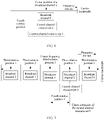
- FIG: 3 is a schematic diagram of a correspondence between a first relative position and a reference point of a broadcast channel in the manner 1. As shown in FIG: 3 , a reference point of each broadcast channel corresponds to a first relative position.
- the first relative position may be an offset of a quantity of units of physical resource blocks, of the reference point of the broadcast channel relative to the frequency domain reference point.
- the quantity of offset physical resource blocks is used as an example for indicating the offset.
- An actual offset may be predefined as other resource units, and is not limited herein.
- the terminal device receives the master signal block MIB sent by the network device, where the MIB includes the indication information used to indicate the first relative position of the reference point of the broadcast channel carrying the MIB, relative to the frequency domain reference point.
- the MIB includes the indication information used to indicate the first relative position of the reference point of the broadcast channel carrying the MIB, relative to the frequency domain reference point.
- indication information corresponding to a reference point 2 of a broadcast channel is 001
- a first relative position 2 is + N Offset RB .
- Table 1 Reference point of a broadcast channel Indication information First relative position 0 000 0 2 001 + N Offset RB 4 010 + 2N Offset FB 1 011 - N Offset FB 3 100 - 2N Offset FB
- indication information of a reference point 1 of a broadcast channel included in the MIB is ⁇ 011 ⁇ , and it may be determined, according to a correspondence between the reference point of the broadcast channel, the indication information, and the first relative position, that a first relative position 2 corresponding to the reference point of the broadcast channel is ⁇ - N Offset RB ⁇ .
- indication information of a reference point 2 of a broadcast channel is ⁇ 001 ⁇ , and a first relative position 4 is ⁇ + N Offset RB ⁇ ; indication information corresponding to a reference point 3 of a broadcast channel is ⁇ 100 ⁇ , and a first relative position 1 is ⁇ - 2N Offset RB ⁇ ; indication information corresponding to a reference point 4 of a broadcast channel is ⁇ 010 ⁇ , and a first relative position 5 is ⁇ + 2N Offset RB ⁇ ; indication information corresponding to a reference point 0 of a broadcast channel is ⁇ 100 ⁇ , and a first relative position 5 is ⁇ 0 ⁇ .
- the correspondence between the reference point of the broadcast channel, the indication information, and the first relative position may be predefined by the network device and the terminal device, or may be specified by a protocol, or may be preconfigured. This is not specifically limited in this application, and shall fall within the protection scope of this application as long as the correspondence between the reference point of the broadcast channel, the indication information, and the first relative position can be reflected.
- the master signal block MIB sent by the network device and received by the terminal device further includes the indication information used to indicate the second relative position of the control channel resource set relative to the reference point of the broadcast channel.
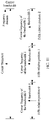
- FIG: 4 is a schematic diagram of a correspondence between a control channel resource set and a second relative position in the manner 1. As shown in FIG: 4 , a center subcarrier of a reference point 0 of a broadcast channel is located on a center frequency, and the second relative position is a relative position of the control channel resource set relative to the reference point 0 of the broadcast channel.
- indication information corresponding to the control channel resource set 0 included in the MIB is 000, and a second relative position is - 2 N CORESET_offset RB .
- Indication information corresponding to a control channel resource set 1 included in the MIB is 001, and a second relative position is - 2 N CORESET_offset RB .
- a resource position offset of the control channel resource set relative to a center position of the reference point of the broadcast channel may be determined according to the indication information.
- Control channel resource set Indication information Second relative position 0 000 -2 N CORESET_offset RB 1 001 -N CORESET_offset RB 2 010 0 3 011 + N CORESET_offset RB 4 100 + 2 N CORESET_offset RB
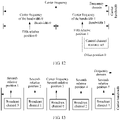
- FIG: 5 is a schematic diagram of a correspondence between a first relative position and a second relative position in the manner 1.
- position offset information of the control channel resource set 4 is determined according to a first relative position 4 and a second relative position 4, where the first relative position 4 is + N Offset RB , and the second relative position 4 is + 2N CORESET_offset RB . Therefore, an offset position of the control channel resource set 4 is N Offset RB + 2N CORESET_offset RB .
- the position offset information may be obtained according to the first relative position and the second relative position by using any one of the following methods: for example, performing one or more of summation, deduction, multiplication, or division processing on the first relative position and the second relative position to determine the position offset information.
- the terminal device obtains a first sequence based on the offset position ( N Offset RB + 2 N CORESET_offset RB ).
- that the terminal device obtains a first sequence based on the position offset information includes:
- the terminal device may generate a reference signal sequence by using a formula (1).
- N max,DL RB indicates a maximum value of a physical resource blocks included in a system carrier bandwidth
- n RB RE is a quantity of resource elements included in each physical resource block and used for mapping a reference channel.
- the terminal device obtains the first sequence from the reference signal sequence r based on the position offset information.
- the position offset information N Offset RB + 2 N CORESET_offset RB .
- the correspondence between the reference point of the broadcast channel, the indication information, and the first relative position or the second relative position may be predefined by the network device and the terminal device, or may be specified by a protocol, or may be preconfigured. This is not specifically limited in this application, and shall fall within the protection scope of this application as long as the correspondence between the reference point of the broadcast channel, the indication information, and the first relative position can be reflected.
- the terminal device receives a master signal block MIB sent by the network device, where the MIB includes indication information used to indicate a third relative position, and the third relative position is a position of a reference point of a broadcast channel carrying the MIB, relative to a frequency domain reference point; and that a terminal device obtains position offset information includes: the terminal device determines the position offset information according to the third relative position indicated by the indication information of the third relative position and a fourth relative position, where the fourth relative position is a relative position of the control channel resource set relative to the reference point of the broadcast channel, and the fourth relative position is configured or preset.
- the position offset information may be obtained according to the third relative position and the fourth relative position by using any one of the following methods: for example, performing one or more of summation, deduction, multiplication, or division processing on the third relative position and the fourth relative position to determine the position offset information.
- FIG: 6 is a schematic diagram of a correspondence between a control channel resource set and a fourth relative position in the manner 2.
- the fourth relative position is a relative position of the control channel resource set relative to a reference point 0 of a broadcast channel.
- a position of a center subcarrier of a resource of the control channel resource set is the same as that of a center subcarrier of the reference point of the broadcast channel.
- the fourth relative position is configured or preset.
- control channel resource set relative to the reference point of the broadcast channel is fixed in the manner 2, but whether a size of a time-frequency resource included in the control channel resource set is variable is not limited.
- FIG: 7 is a schematic diagram for indicating a third relative position and a preset fourth relative position in the manner 2.
- position offset information of the control channel resource set 4 is determined according to a third relative position 4 and a fourth relative position 4.
- indication information included in the MIB is 001, according to Table 1 in the manner 1, it can be known that the third relative position 4 is + N Offset RB , and a resource position of the control channel resource set relative to the reference point of the broadcast channel is predefined and is 0, that is, the fourth relative position is predefined as a center position of the reference point of the broadcast channel. Therefore, position offset information of the control channel resource set 0 is + N Offset RB .
- Manner 3 The terminal device receives a master information block MIB, where the MIB includes indication information used to indicate eighth relative position information of the control channel resource set relative to a frequency domain reference point; and that a terminal device obtains position offset information includes: the terminal device determines the position offset information according to the eighth relative position corresponding to the indication information of the eighth relative position.
- reference signals used by control channel resources configured for reference points of different broadcast channels are selected from a same sequence.
- first sequences in an overlapping region are the same, and further, resource reuse by a plurality of users, for example, orthogonal MU-MIMO, can be implemented in the overlapping resource region.
- a reference position of a control channel relative to a reference point of a broadcast channel and position information of the reference point of the broadcast channel relative to the frequency domain reference point can be jointly encoded. This improves coding efficiency and reduces indication signaling overheads.
- the terminal device receives the indication information used to indicate the eighth relative position of the control channel resource set relative to the frequency domain reference point.
- the indication information is 011, as shown in Table 3, and the indication information 001 represents that an offset position 4 of the control channel resource set 0 is + N CORESET_offset RB .
- Table 3 Control channel resource set Indication information Eighth relative position 0 000 - 2 N CORESET_offset RB 1 001 - N COPESET_offset RB 2 010 0 3 011 + N CORESET_offset RB 4 100 + 2 N CORESET_offset RB
- FIG: 8 is a schematic structural diagram of information of an offset position 4 in the manner 3. As shown in FIG: 8 , according to Table 4, it can be known that an eighth relative position corresponding to a control channel resource set 3 is + N CORESET_offset RB .
- the terminal device determines, according to the eighth relative position, that the position offset information is (+ N CORESET_offset RB ) .
- the position offset information is (+ N CORESET_offset RB ) .
- For a manner of obtaining the first sequence based on the position offset information refer to the manner of obtaining the first sequence based on the position offset information in the manner 1. Details are not described again herein.
- the correspondence between the control channel resource set, the indication information, and the eighth relative position may be predefined by the network device and the terminal device, or may be specified by a protocol, or may be preconfigured. This is not specifically limited in this application, and shall fall within the protection scope of this application as long as the correspondence between the control channel resource set, the indication information, and the eighth relative position can be reflected.
- Manner 4 The terminal device receives configuration information of a bandwidth, where the configuration information includes indication information of a fifth relative position, and the fifth relative position is a relative position of a bandwidth comprising the control channel resource set relative to a frequency domain reference point; and that a terminal device obtains position offset information includes: the terminal device determines the position offset information according to the fifth relative position indicated by the indication information of the fifth relative position.
- the configuration information of the bandwidth may be carried in RMSI other than a MIB. Therefore, indication signaling overheads of the MIB are reduced.
- the RMSI may carry more bit information, and further, an offset of a bandwidth subband in frequency domain may be more flexible, that is, an offset granularity in frequency domain may be smaller. Therefore, the offset of the bandwidth subband is more flexible, and resource utilization can be improved.
- the network device sends higher layer signaling to the terminal device, where the higher layer signaling includes configuration information of a system bandwidth, and the higher layer signaling includes at least one of RRC signaling, system information, RMSI information, or the like.
- An offset of a center frequency of the bandwidth relative to a center frequency may include at least one of the following:
- the higher layer signaling may indicate, by using explicit signaling, that the fifth relative position may be at least one value in a value set.
- the value set may be predefined.
- the value set may be ⁇ - 2N Offset_BP RB , -N Offset_BP RB , 0, + N Offset_BP RB , + 2N Offet_BP RB ⁇ .
- a fifth relative position 1 of a bandwidth 0 is - 2N Offset_BR RB ; a first relative position 2 of a bandwidth 1 is -N Offset_BP RB ; a fifth relative position 3 of a bandwidth 2 is 0; a fifth relative position 3 of a bandwidth 3 is + N Offset_BP RB ; and a fifth relative position 2 of a bandwidth 4 is + 2N Offset_BP RB .
- At least one value in the predefined value set corresponds to the control channel resource set included in a system bandwidth subband.
- the predefined value set may be predefined, or may be specified by a protocol, or may be preconfigured. This is not specifically limited in this application.
- the higher layer signaling sent by the network device to the terminal device includes the configuration information of the bandwidth with a quantity of bandwidths, where a size of a frequency domain resource occupied by each subband is equal.
- the higher layer signaling includes system information, RMSI (Remaining minimum system information), RRC signaling, or the like.
- the terminal device may determine the fourth offset position information based on the quantity of bandwidths and a number of the subset.
- Table 4 Bandwidth Indication information Fifth relative position 0 0 - N CORESET_offset RB / 4 1 1 + N CORESET_offset RB / 4
- the system carrier bandwidth includes two subsets: a bandwidth 0 and a bandwidth 1, configured by using the higher layer signaling.
- a maximum quantity of physical resource blocks included in a downlink system carrier bandwidth in frequency domain is N max DL
- a quantity of physical resource blocks within a subband bandwidth included in a downlink system carrier bandwidth is N max_BP D L , where a value of N max_BP D L or N max DL is a value predefined by the system.
- a value of the fifth relative position may be determined based on the quantity of included bandwidths. For example, if the quantity of bandwidths is 2, the fifth relative position is ⁇ - N max DL / 4 , + N max DL / 4 ⁇ ⁇ . In this case, it indicates that the fifth relative position corresponding to the bandwidth 0 of the control channel resource set is -N max DL / 4, or + N max DL / 4.
- the system carrier bandwidth includes three bandwidths: a bandwidth 0, a bandwidth 1, and a bandwidth 2, configured by using the higher layer signaling, as shown in Table 5.
- Table 5 Bandwidth Indication information Fifth relative position 0 0 -N max DL / 3 1 1 0 2 2 +N max DL / 3
- a maximum quantity of physical resource blocks included in a downlink system carrier bandwidth in frequency domain is N max DL .
- a value of the fifth relative position is ⁇ - N max DL / 3, 0, + N max DL / 3 ⁇ . If it is indicated that the control channel resource set is within the bandwidth 0, a fifth relative position 0 is -N max DL / 3, but a fifth relative position 1 is 0, and a fifth relative position 2 is + N max DL / 3.
- the correspondence between the bandwidth, the indication information, and the fifth relative position may be predefined by the network device and the terminal device, or may be specified by a protocol, or may be preconfigured. This is not specifically limited in this application, and shall fall within the protection scope of this application as long as the correspondence between the bandwidth, the indication information, and the fifth relative position can be reflected.
- the bandwidth configuration method further includes a method similar to a resource allocation type 2 Type2 in LTE. Details are not described herein.
- control channel resource set is within the bandwidth.
- Position information of the control channel resource set relative to a center or boundary of the bandwidth is determined by the configuration information included in the higher layer signaling, and the higher layer signaling includes RRC signaling or RAR signaling, or the like.
- a position of the bandwidth comprising the control channel resource set may be marked as an offset position 0, as shown in Table 6.
- Table 6 Control channel resource set Indication information Offset position 0 0 000 - 2 N CORESET_offset RB 1 001 - N CORESET_offset RB 2 010 0 3 011 + N CORESET_offset RB 4 100 + 2 N CORESET_offset RB
- the terminal device determines the offset position according to the fifth relative position and the offset position 0.
- control channel resource set is within the bandwidth.
- the offset position 0 of the control channel resource set relative to the center or boundary of the bandwidth is determined by the configuration information included in the higher layer signaling, and the higher layer signaling includes RRC signaling or RAR signaling, or the like.
- the correspondence between the control channel resource set, the indication information, and the offset position 0 may be predefined by the network device and the terminal device, or may be specified by a protocol, or may be preconfigured. This is not specifically limited in this application, and shall fall within the protection scope of this application as long as the correspondence between the control channel resource set, the indication information, and the offset position 0 can be reflected.
- the terminal device receives configuration information of a bandwidth, where the configuration information includes indication information of a sixth relative position and indication information of a seventh relative position, the sixth relative position is a relative position of a bandwidth comprising the control channel resource set relative to a reference point of a broadcast channel carrying a MIB, and the seventh relative position is a position of the reference point of the broadcast channel carrying the MIB, relative to a frequency domain reference point; and that a terminal device obtains position offset information includes: determining the position offset information according to the sixth relative position indicated by the indication information of the sixth relative position and the seventh relative position indicated by the indication information of the seventh relative position.
- the position offset information may be obtained according to the sixth relative position and the seventh relative position by using any one of the following methods: for example, performing one or more of summation, deduction, multiplication, or division processing on the sixth relative position and the seventh relative position to determine the position offset information.
- the configuration information of the bandwidth may be carried in RMSI other than a MIB. Therefore, indication signaling overheads of the MIB are reduced.
- the RMSI may carry more bit information, and further, an offset of the bandwidth in frequency domain may be more flexible, that is, an offset granularity in frequency domain may be smaller. Therefore, the offset of the bandwidth is more flexible, and resource utilization can be improved.
- An implementation of the sixth relative position in the manner 5 may be: predefining a value set ⁇ -2N Offset_BP RB , -N Offset_BP RB , 0, + N Offse_BP RB , + 2N Offset_BP RB ⁇ of the sixth relative position, and configuring a value of the sixth relative position corresponding to the bandwidth.
- An implementation of the seventh relative position in the manner 5 may be: as shown in Table 4, indication information corresponding to a reference point 0 of a broadcast channel is 000, and a seventh relative position 1 is 0; indication information corresponding to a reference point 2 of a broadcast channel is 001, and a seventh relative position 2 is + N Offset RB .
- Table 7 Reference point of a broadcast channel Indication information Seventh relative position 0 000 0 2 001 + N Offset RB 4 010 + 2N Offset FB 1 011 - N Offset RB 3 100 - 2N Offset FB
- a value of the seventh relative position in Table 7 indicates an offset of a quantity of units of physical resource blocks, of the reference point of the broadcast channel relative to the frequency domain reference point. It is noted that in this embodiment, only the quantity of offset physical resource blocks is used as an example for indicating a value of the predefined offset. An actually predefined offset may be predefined as other resource units, and is not limited herein.
- indication information of a reference point 1 of a broadcast channel is ⁇ 011 ⁇ , and a seventh relative position 2 is ⁇ - N Offset RB ⁇ ; indication information of a reference point 2 of a broadcast channel is ⁇ 001 ⁇ , and a seventh relative position 4 is ⁇ + N Offset RB ⁇ ; indication information corresponding to a reference point 3 of a broadcast channel is ⁇ 100 ⁇ , and a seventh relative position 1 is ⁇ - 2N Offset RB ⁇ ; indication information corresponding to a reference point 4 of a broadcast channel is ⁇ 010 ⁇ , and a seventh relative position 5 is ⁇ + 2N Offset RB ⁇ ; indication information corresponding to a reference point 0 of a broadcast channel is ⁇ 100 ⁇ , and a seventh relative position 5 is ⁇ 0 ⁇ .
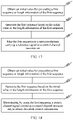
- FIG: 14 is a schematic diagram of a correspondence between a sixth relative position and a seventh relative position.
- a sixth relative position 0 is -N Offset_BP RB
- a seventh relative position 1 is + 2N Offse-BP RB
- the offset position is ( -N Offset_BP RB + 2N Offset_BP RB ).
- the correspondence between the reference point of the broadcast channel, the indication information, and the seventh relative position may be predefined by the network device and the terminal device, or may be specified by a protocol, or may be preconfigured. This is not specifically limited in this application, and shall fall within the protection scope of this application as long as the correspondence between the reference point of the broadcast channel, the indication information, and the seventh relative position can be reflected.
- That a terminal device obtains offset position information includes: the terminal device receives configuration information of the control channel resource set, where the configuration information of the control channel resource set includes indication information used to indicate the position offset information.
- a network device when configuring time-frequency resources of the control channel resource set, obtains an overlapping resource region on the time-frequency resources, and determines the position offset information according to the overlapping resource region, and when configuring the control channel resource set, configures position offset information of a first sequence used by a control channel reference signal, so that reference signal sequences of a plurality of control channels are the same in the overlapping region. Therefore, orthogonal reuse by a plurality of users, that is, orthogonal MU-MIMO, is enabled. In addition, non-orthogonal interference between sequences that is caused by a plurality of different sequences on a same reference signal resource can be reduced.
- the indication information used to indicate the position offset information includes indication information used to indicate a physical resource block number of the control channel resource set; and the method further includes: the terminal device determines the position offset information according to a physical resource block indicated by the physical resource block number.
- the terminal device determines the position offset information according to a physical resource block indicated by the physical resource block number.
- the indication information of the physical resource block number may be a unified physical resource block number that exists within a whole system bandwidth.
- the center frequency is located in a number 0
- N CORESET RB is a total quantity of physical resource blocks included in the control channel resource set
- the position offset information may be determined by using n CORESET .
- a set of physical resource block numbers included in a physical resource set is ⁇ 2, 3, 4, 5, 6 ⁇ , and the position offset information is 2.
- the frequency domain reference point is a boundary of a system carrier bandwidth
- the physical resource block number corresponding to the frequency domain reference point is 0, and the offset position is n CORESET .
- the method for obtaining the first sequence based on the offset position further includes generating the first sequence based on the offset position.
- the obtained offset position is n offset
- Nc 1600 + n offset .
- the foregoing method is applicable not only to a control channel resource set of a single symbol but also to a control channel resource set of a plurality of symbols. Details are not described herein.
- This embodiment ensures that when a plurality of control channel resource sets overlap each other on time-frequency resources, orthogonal code division multiplexing can be implemented for reference signals mapped on the overlapping time-frequency resources.
- the terminal device generates a reference signal sequence.
- Step 205 in which the terminal device obtains a first sequence based on the offset position includes: the terminal device obtains the first sequence from the reference signal sequence based on the position offset information, where the first sequence is a subset of the reference signal sequence, and the offset position is a position of at least one value of the first sequence in the reference signal sequence.
- the reference signal sequence is a pseudo random aperiodic sequence
- the control channel resource set occupies one OFDM symbol in time domain, and each REG in the control channel resource set includes four resource elements used for mapping reference signals.
- Part 205 The terminal device obtains a first sequence based on the position offset information.
- Part 206 The terminal device demodulates, by using the first sequence, a control channel signal carried in the control channel resource set, to obtain downlink control information.
- the terminal device may obtain the downlink control information in the following manner:
- the terminal device detects a control channel in the control channel resource set, performs related processing on a received control channel reference signal by using the first sequence, estimates channel state information of a time-frequency resource on which the control channel is located, and demodulates and decodes the received control channel signal according to the channel state information to obtain the downlink control information.
- part 201 to part 203 in the embodiment shown in FIG: 2 may be used as an embodiment.
- Part 204 to part 206 may be used as another embodiment separately.
- a sequence of performing part 201 to part 206 in the embodiment shown in FIG. 2 may also be another sequence. This is not specifically limited in the present invention.
- the method may further include part 207:
- the terminal device receives a master information block MIB sent by the network device, where the MIB includes indication information used to indicate an eleventh relative position of the control channel resource set relative to a reference point of a broadcast channel carrying the MIB; and the terminal device obtains the second sequence from the reference signal sequence according to the eleventh relative position, where the second sequence is a subset of the reference signal sequence, and the eighth relative position is a position of at least one value of the second sequence in the reference signal sequence.
- the eleventh position is a relative position of the control channel resource set relative to the reference point of the broadcast channel.
- part 207 may be used in combination with part 204 to part 206 in the embodiment shown in FIG: 2 . This is not specifically limited in the present invention. A specific execution sequence may be determined flexibly. For example, part 207 may be performed first or may be performed before one of part 204 to part 206.
- the MIB does not need to carry indication information of the frequency domain reference point. Therefore, indication overheads of the MIB are reduced.
- the frequency domain reference point is indicated by RMSI with more resources. Therefore, bandwidth configurations are more flexible, fragments of the bandwidth in use are reduced, and spectrum utilization is improved.
- the second sequence is used for a reference signal included in a first control channel resource set configured by the MIB, and the first control channel resource set includes a common search space of a control channel, and mainly carries control information for scheduling the RMSI.
- the foregoing first sequence is used for the control channel resource set configured by RRC, and the first control channel resource set includes a common search space of the control channel and/or a user specific search space of the control channel, and mainly carries control information for scheduling data.
- FIG: 17 is another method for obtaining a reference sequence according to an embodiment of the present invention. The method includes the following parts.
- Part 301 A network device obtains an initial value for generating a first sequence or length information of the first sequence.
- Part 302 The network device generates the first sequence based on the initial value or the length information of the first sequence.
- Part 303 The network device maps the first sequence to a resource element carrying a reference signal in a control channel resource set.
- the network device sends a MIB to a terminal device, where the MIB includes information used to indicate a time-frequency resource occupied by the control channel resource set.
- the network device sends one or more of a synchronization signal, a broadcast channel scrambling sequence, a broadcast channel reference signal, or broadcast information that includes the initial value for generating the first sequence to the terminal device.
- the MIB does not include indication information of a frequency domain reference point, and therefore, indication signaling overheads of the MIB can be reduced. Therefore, the terminal device cannot obtain a position relative to the frequency domain reference, and can only directly generate a reference signal sequence, or truncate the first sequence from a center position of a reference signal sequence. Because a size of an initial access bandwidth is limited, it is less possible that control channel resource sets sent in different frequency bands in frequency domain overlap each other in frequency domain. Therefore, reuse by a plurality of users is impossible.
- a terminal device receiving RMSI can obtain the first sequence according to a reference frequency configured by the RMSI, and orthogonal reuse by a plurality of users, that is, MU-MIMO, can be implemented in an overlapping resource region between a plurality of control channel resource sets.
- FIG: 18 is another method for obtaining a reference sequence according to an embodiment of the present invention. The method includes the following parts.
- Part 401 A terminal device obtains an initial value for generating a first sequence or length information of the first sequence.
- Part 402 The terminal device generates the first sequence based on the initial value or the length information of the first sequence.
- Part 403 The terminal device demodulates, by using the first sequence, a control channel signal carried in a control channel resource set, to obtain downlink control information.
- the method further includes: the terminal device receives a MIB, where the MIB includes information used to indicate a time-frequency resource occupied by the control channel resource set; and that a terminal device obtains length information of the first sequence includes: determining a length of the first sequence according to the information about the time-frequency resource occupied by the control channel resource set.
- a terminal device obtains an initial value for generating a first sequence includes: the terminal device obtains one or more of a synchronization signal, a broadcast channel scrambling sequence, a broadcast channel reference signal, or broadcast information that includes the initial value for generating the first sequence.
- FIG 17 may be used in combination with the embodiment shown in FIG: 18 .
- a sequence of steps in the combined process may comply with sequences of steps in FIG: 17 and FIG: 18 , or may not comply with sequences of steps in FIG: 17 and FIG: 18 . This is not limited.
- a terminal device obtains length information of the first sequence in step 401 may include: the terminal device generates the first sequence, where a length of the first sequence is indicated by a MIB.
- the terminal device may generate the initial value of the first sequence by using one or more configurations of a synchronization signal, a broadcast channel scrambling sequence, a broadcast channel reference signal, or broadcast information. This ensures randomicity of a reference signal sequence used in the control channel resource set, and can avoid interference caused by another cell to a reference signal in the control channel resource set.
- the MIB includes the information used to indicate the time-frequency resource occupied by the control channel resource set, and/or configuration information of a reference signal resource included in the control channel resource set.
- the terminal device may determine the length of the first sequence according to a size of the time-frequency resource, occupied by the control channel resource set and included in the MIB.
- a quantity of physical resource blocks included in the control channel resource set in frequency domain and configured by the MIB is N CORESET RB
- an OFDM symbol included in time domain is M CORESET os
- the system predefines that a quantity of resources occupied by a reference signal included in each REG is N REG RS .
- the length of the first sequence is N REG RS ⁇ N CORESET RB ⁇ M CORESET os .
- the configuration information indicates that a quantity of resource elements included in the REG and used for mapping the reference signal is 3; and it is determined, based on the quantity N CORESET RB of physical resource blocks included in the control channel resource set in frequency domain and the OFDM symbol M CORESET os included in time domain, that the length of the first sequence is 3 ⁇ N CORESET RB ⁇ M CORESET os .
- the MIB does not include indication information of a frequency domain reference point, and therefore, indication signaling overheads of the MIB can be reduced. Therefore, the terminal device cannot obtain a position relative to the frequency domain reference, and can only directly generate a reference signal sequence, or truncate the first sequence from a center position of a reference signal sequence. Because a size of an initial access bandwidth is limited, it is less possible that control channel resource sets sent in different frequency bands in frequency domain overlap each other in frequency domain. Therefore, reuse by a plurality of users is impossible.
- user equipment receiving RMSI can obtain the first sequence according to a reference frequency configured by the RMSI, and orthogonal reuse by a plurality of users, that is, MU-MIMO, can be implemented in an overlapping resource region between a plurality of control channel resource sets.
- the correspondence between the indication information and the quantity of REs of the reference signal may be predefined by the network device and the terminal device, or may be specified by a protocol, or may be preconfigured. This is not specifically limited in this application, and shall fall within the protection scope of this application as long as the correspondence between the indication information in the broadcast channel and the quantity of REs of the reference signal can be reflected.
- FIG: 19 is another method for obtaining a reference signal according to an embodiment of this application. The method includes the following parts.
- Part 501 The terminal device generates a broadcast channel reference signal sequence.
- a time-frequency resource position of a broadcast channel reference signal is merely an example for understanding this embodiment of this application.
- This application includes but is not limited to this.
- other manners may be used in 5G to describe a resource position to which a broadcast channel reference signal is mapped.
- Part 502 A network device sends a broadcast channel reference signal to the terminal device, where the broadcast channel reference signal includes a subset carrying the broadcast channel reference signal sequence.
- a correspondence between the subset of the reference signal sequence and a ninth relative position is predefined, as shown in Table 9.
- the broadcast reference signal sequence is determined according to a correspondence between subsets of different reference signal sequences and different relative position information.
- Table 9 Subset of a reference signal sequence Ninth relative position 0 - 2N Offset FB 1 - N Offset RB 2 0 3 + N Offset RB 4 + 2 N Offset RB
- FIG: 20 provides a sequence truncated from a broadcast channel reference signal sequence included in a broadcast channel 2, where a reference signal sequence number included in a broadcast channel reference signal on a first OFDM symbol is ⁇ 2N max,DL RB - 2N PBCH RB + N Offset RB , ..., 2N max,DL RB + 2N PBCH RB + N Offset RB - 1 ⁇ ; and a reference signal sequence number included on a second OFDM symbol is ⁇ 6N max,DL RB - 2N PBCH RB + N Offset RB , ..., 6N max,DL RB + 2N PBCH RB + N Offset RB - 1 ⁇ .
- the correspondence between the subset of the reference signal sequence and the ninth relative position may be predefined by the network device and the terminal device, or may be specified by a protocol, or may be preconfigured. This is not specifically limited in this application, and shall fall within the protection scope of this application as long as the correspondence between the subset of the reference signal sequence and the ninth relative position can be reflected.
- the frequency domain reference point may also be a minimum frequency within a system bandwidth in frequency domain, or a maximum frequency within a system bandwidth in frequency domain. Details are not described herein.
- the terminal device determines, by blindly detecting the reference signal sequence, a frequency domain position of the received broadcast channel, or determines frequency domain offset information of the broadcast channel relative to a reference position of the system bandwidth in frequency domain.
- Part 503 The terminal device receives the broadcast channel reference signal sent by the network device, where the broadcast channel reference signal includes the subset carrying the broadcast channel reference signal sequence.
- Part 504 The network device sends a MIB to the terminal device, where the MIB includes indication information used to indicate a tenth relative position of the control channel resource set relative to the broadcast channel.
- Part 505 The terminal device receives the MIB.
- Part 506 The terminal device obtains position offset information based on a ninth relative position corresponding to the subset carrying the broadcast channel reference signal sequence and the tenth relative position indicated by the indication information of the tenth relative position.
- Part 507 The terminal device obtains a first sequence based on the position offset information.
- the first sequence is a subset of the control channel reference sequence.
- the control channel resource set occupies one OFDM symbol in time domain, and each REG in the control channel resource set includes four resource elements used for mapping reference signals.
- the REG includes resource elements of control information and resource elements of the reference signal.
- a length of the control channel reference sequence includes only N Ref RB , and N Ref RB ⁇ N max,DL RB , where N max,DL RB is a maximum value of a physical resource blocks included in the system bandwidth.
- the control channel reference sequence may be mapped to a whole carrier in a repetition manner, as shown in FIG: 21 .
- Part 508 The terminal device demodulates and decodes, by using the first sequence, a control channel carried in the control channel resource set, to obtain control information.
- each network element for example, UE, a base station, or a core network entity, includes a corresponding hardware structure and/or a software module for performing each function.
- each network element for example, UE, a base station, or a core network entity, includes a corresponding hardware structure and/or a software module for performing each function.
- a person of ordinary skill in the art should easily be aware that, in combination with the examples described in the embodiments disclosed in this specification, units, algorithms steps may be implemented by hardware or a combination of hardware and computer software. Whether a function is performed by hardware or hardware driven by computer software depends on particular applications and design constraints of the technical solutions. A person skilled in the art may use different methods to implement the described functions for each particular application, but it should not be considered that the implementation goes beyond the scope of the present invention.
- An embodiment of the present invention provides a terminal device.
- the apparatus includes: a processor 601, configured to control and manage actions of the terminal device, and perform processing performed by the terminal device in the embodiment shown in FIG: 2 , for example, configured to obtain position offset information, obtain a first sequence based on the position offset information, and demodulate, by using the first sequence, a control channel signal carried in a control channel resource set, to obtain downlink control information.
- the processor is further configured to generate a reference signal sequence; and the processor is specifically configured to obtain the first sequence from the reference signal sequence based on the position offset information, where the first sequence is a subset of the reference signal sequence, and the position offset information is a position of at least one value of the first sequence in the reference signal sequence.
- the terminal device further includes a receiver 602, configured to receive a master information block MIB sent by a network device, where the MIB includes indication information used to indicate a first relative position and indication information used to indicate a second relative position, the first relative position is a position of a reference point of a broadcast channel carrying the MIB, relative to a frequency domain reference point, and the second relative position is a relative position of the control channel resource set relative to the reference point of the broadcast channel; and the processor is specifically configured to determine the position offset information according to the first relative position indicated by the indication information of the first relative position and the second relative position indicated by the indication information of the second relative position that are received by the receiving module 602.
- the terminal device further includes a receiver 602, configured to receive a master signal block MIB sent by a network device, where the MIB includes indication information used to indicate a third relative position, and the third relative position is a position of a reference point of a broadcast channel carrying the MIB, relative to a frequency domain reference point; and the processor is specifically configured to determine the position offset information according to the third relative position indicated by the indication information of the third relative position that is received by the receiver and a fourth relative position, where the fourth relative position is a relative position of the control channel resource set relative to the reference point of the broadcast channel, and the fourth relative position is configured or preset.
- the processor is specifically configured to determine the position offset information according to the third relative position indicated by the indication information of the third relative position that is received by the receiver and a fourth relative position, where the fourth relative position is a relative position of the control channel resource set relative to the reference point of the broadcast channel, and the fourth relative position is configured or preset.
- the processor is further configured to instruct the processor 602 to receive a master signal block MIB sent by a network device, where the MIB includes indication information used to indicate eighth relative position information of the control channel resource set relative to a frequency domain reference point; and the processor is specifically configured to determine the position offset information according to the eighth relative position indicated by the indication information of the eighth relative position.
- the terminal device further includes a receiver 602, configured to receive configuration information of a system bandwidth subset, where the configuration information of the subset includes indication information of a fifth relative position, and the fifth relative position is a relative position of a system bandwidth subset of the control channel resource set relative to a frequency domain reference point; and the processor is specifically configured to determine the position offset information according to the fifth relative position indicated by the indication information of the fifth relative position that is received by the receiver.
- the terminal device further includes a receiver 602, configured to receive configuration information of a system bandwidth subset, where the configuration information of the subset includes indication information of a sixth relative position and indication information of a seventh relative position, the sixth relative position is a relative position of a system bandwidth subset of the control channel resource set relative to a reference point of a broadcast channel carrying a MIB, and the seventh relative position is a position of the reference point of the broadcast channel carrying the MIB, relative to a frequency domain reference point; and the processor is specifically configured to determine the position offset information according to the sixth relative position indicated by the indication information of the sixth relative position and the seventh relative position indicated by the indication information of the seventh relative position that are received by the receiver.
- the configuration information of the subset includes indication information of a sixth relative position and indication information of a seventh relative position
- the sixth relative position is a relative position of a system bandwidth subset of the control channel resource set relative to a reference point of a broadcast channel carrying a MIB
- the seventh relative position is a position of the reference point of the broadcast
- the processor is further configured to instruct a receiver to receive configuration information of the control channel resource set, where the configuration information of the control channel resource set includes indication information used to indicate the position offset information.
- the processor is specifically configured to: when the indication information used to indicate the position offset information includes indication information used to indicate a physical resource block number of the control channel resource set, determine the position offset information according to a physical resource block indicated by the physical resource block number.
- the configuration information of the control channel resource set includes at least one of a random access response RAR and radio resource control RRC signaling, and the control channel resource set includes a type-1 common search space CSS and/or a terminal specific search space USS.
- the terminal device further includes a receiver 602, configured to receive a master information block MIB sent by a network device, where the MIB includes indication information used to indicate an eleventh relative position of the control channel resource set relative to a reference point of a broadcast channel carrying the MIB; and the processor 601 is specifically configured to obtain the second sequence from the reference signal sequence according to the eleventh relative position, where the second sequence is a subset of the reference signal sequence, and the eighth relative position is a position of at least one value of the second sequence in the reference signal sequence.
- a receiver 602 configured to receive a master information block MIB sent by a network device, where the MIB includes indication information used to indicate an eleventh relative position of the control channel resource set relative to a reference point of a broadcast channel carrying the MIB
- the processor 601 is specifically configured to obtain the second sequence from the reference signal sequence according to the eleventh relative position, where the second sequence is a subset of the reference signal sequence, and the eighth relative position is a position of at least one value of the second sequence in the reference signal sequence
- the terminal device may further include a memory 603, configured to store program code and data of the terminal device.
- the terminal device may further include a transmitter 604 and a modem processor 605.
- the transmitter 604 is configured to adjust (for example, perform analog conversion, filtering, amplification, and up-conversion) the output sample and generate an uplink signal, where the uplink signal is transmitted to the network device in the foregoing embodiment by using an antenna.
- the antenna receives a downlink signal transmitted by a base station in the foregoing embodiment.
- the receiver 602 adjusts (for example, performs filtering, amplification, down-conversion, and digitization) the signal received from the antenna and provides an input sample.
- an encoder receives service data and a signaling message to be sent on an uplink, and performs processing (for example, formatting, encoding, and interleaving) on the service data and signaling message.
- a modulator further processes (for example, performs symbol mapping and modulation) the encoded service data and signaling message and provides an output sample.
- a demodulator processes (for example, demodulates) the input sample and provides a symbol estimation.
- a decoder processes (for example, de-interleaves and decodes) the symbol estimation and provides data and a signaling message that are decoded and sent to the terminal device.
- the encoder, the modulator, the demodulator, and the decoder may be implemented by a composite modem processor 605.
- the units perform processing based on a radio access technology (for example, access technologies of LTE and other evolved systems) used by a radio access network.
- An embodiment of the present invention further provides a network device, including: a processor 701, configured to control and manage actions of the network device, and perform processing performed by the network device in the embodiment shown in FIG: 2 .
- the processor is configured to obtain position offset information, obtain a first sequence based on the position offset information, and map the first sequence to a resource element carrying a reference signal in a control channel resource set.
- the processor is configured to generate a reference signal sequence, and obtain the first sequence from the reference signal sequence based on the position offset information, where the first sequence is a subset of the reference signal sequence, and the position offset information is a position of at least one value of the first sequence in the reference signal sequence.
- the network device further includes a transmitter 702, configured to send a master signal block MIB to a terminal device, where the MIB includes indication information of a first relative position and indication information of a second relative position, the first relative position is a position of a reference point of a broadcast channel carrying the MIB, relative to a frequency domain reference point, the second relative position is a relative position of the control channel resource set relative to the reference point of the broadcast channel, and the indication information of the first relative position and the indication information of the second relative position are used to indicate the position offset information.
- the MIB includes indication information of a first relative position and indication information of a second relative position
- the first relative position is a position of a reference point of a broadcast channel carrying the MIB, relative to a frequency domain reference point
- the second relative position is a relative position of the control channel resource set relative to the reference point of the broadcast channel
- the indication information of the first relative position and the indication information of the second relative position are used to indicate the position offset information.
- the network device further includes a transmitter 702, configured to send a MIB to a terminal device, where the MIB includes indication information of a third relative position, the third relative position is a position of a reference point of a broadcast channel carrying the MIB, relative to a frequency domain reference point, the indication information of the third relative position is used with a fourth relative position to indicate the position offset information, the fourth relative position is a relative position of the control channel resource set relative to the reference point of the broadcast channel, and the fourth relative position is configured or preset.
- the MIB includes indication information of a third relative position
- the third relative position is a position of a reference point of a broadcast channel carrying the MIB, relative to a frequency domain reference point
- the indication information of the third relative position is used with a fourth relative position to indicate the position offset information
- the fourth relative position is a relative position of the control channel resource set relative to the reference point of the broadcast channel
- the fourth relative position is configured or preset.
- the network device further includes a transmitter 702, configured to send a master information block MIB to a terminal device, where the MIB includes indication information used to indicate eighth relative position information of the control channel resource set relative to a frequency domain reference point, and the indication information of the eighth relative position information is used to indicate the position offset information.
- a transmitter 702 configured to send a master information block MIB to a terminal device, where the MIB includes indication information used to indicate eighth relative position information of the control channel resource set relative to a frequency domain reference point, and the indication information of the eighth relative position information is used to indicate the position offset information.
- the network device further includes a transmitter 702, configured to send configuration information of a system bandwidth subset to a terminal device, where the configuration information of the subset includes indication information of a fifth relative position, the fifth relative position is a relative position of a system bandwidth subset of the control channel resource set relative to a frequency domain reference point, and the indication information of the fifth relative position is used to indicate the position offset information.
- a transmitter 702 configured to send configuration information of a system bandwidth subset to a terminal device, where the configuration information of the subset includes indication information of a fifth relative position, the fifth relative position is a relative position of a system bandwidth subset of the control channel resource set relative to a frequency domain reference point, and the indication information of the fifth relative position is used to indicate the position offset information.
- the network device further includes a transmitter 702, configured to send configuration information of a system bandwidth subset to a terminal device, where the configuration information of the subset includes indication information of a sixth relative position and indication information of a seventh relative position, the sixth relative position is a relative position of a system bandwidth subset of the control channel resource set relative to a reference point frequency domain position of a broadcast channel carrying a MIB, the seventh relative position is a position of the reference point of the broadcast channel carrying the MIB, relative to a frequency domain reference point, and the indication information of the sixth relative position and the indication information of the seventh relative position are used to indicate the position offset information.
- the configuration information of the subset includes indication information of a sixth relative position and indication information of a seventh relative position
- the sixth relative position is a relative position of a system bandwidth subset of the control channel resource set relative to a reference point frequency domain position of a broadcast channel carrying a MIB
- the seventh relative position is a position of the reference point of the broadcast channel carrying the MIB, relative to a frequency domain reference
- the network device further includes a transmitter 702, configured to send configuration information of the control channel resource set to the terminal device, where the configuration information of the control channel resource set includes indication information used to indicate the position offset information.
- the indication information used to indicate the position offset information includes indication information used to indicate a physical resource block number of the control channel resource set.
- the network device further includes a transmitter 702, configured to send a master information block MIB, where the MIB includes indication information used to indicate an eleventh relative position of the control channel resource set relative to a reference point of a broadcast channel carrying the MIB.
- a transmitter 702 configured to send a master information block MIB, where the MIB includes indication information used to indicate an eleventh relative position of the control channel resource set relative to a reference point of a broadcast channel carrying the MIB.
- the configuration information of the control channel resource set includes at least one of a random access response RAR and radio resource control RRC signaling, and the control channel resource set includes a type-1 common search space CSS and/or a terminal specific search space USS.
- FIG: 23 shows only a simplified design of the network device.
- the network device may include any quantity of transmitters, receivers, processors, controllers, memories, communications units, and the like, and all network devices that can implement the present invention shall fall within the protection scope of the present invention.
- An embodiment of the present invention further provides a terminal device, including: a processor 801, configured to control and manage actions of the terminal device, and perform processing performed by the terminal device in the embodiment shown in FIG: 18 , for example, configured to obtain an initial value for generating a first sequence or length information of the first sequence, generate the first sequence based on the initial value or the length information of the first sequence, and demodulate, by using the first sequence, a control channel signal carried in a control channel resource set, to obtain downlink control information.
- a terminal device including: a processor 801, configured to control and manage actions of the terminal device, and perform processing performed by the terminal device in the embodiment shown in FIG: 18 , for example, configured to obtain an initial value for generating a first sequence or length information of the first sequence, generate the first sequence based on the initial value or the length information of the first sequence, and demodulate, by using the first sequence, a control channel signal carried in a control channel resource set, to obtain downlink control information.
- the terminal device further includes a receiver 802, configured to receive a MIB, where the MIB includes information used to indicate a time-frequency resource occupied by the control channel resource set; and the processor is specifically configured to determine a length of the first sequence according to the information about the time-frequency resource occupied by the control channel resource set.
- the processor is specifically configured to obtain one or more of a synchronization signal, a broadcast channel scrambling sequence, a reference signal, or broadcast information that includes the initial value for generating the first sequence.
- the terminal device may further include a memory 803, configured to store program code and data of the terminal device.
- the terminal device may further include a transmitter 804 and a modem processor 805.
- the transmitter 804 is configured to adjust (for example, perform analog conversion, filtering, amplification, and up-conversion) the output sample and generate an uplink signal, where the uplink signal is transmitted to the network device in the foregoing embodiment by using an antenna.
- the antenna receives a downlink signal transmitted by a base station in the foregoing embodiment.
- the receiver 802 adjusts (for example, performs filtering, amplification, down-conversion, and digitization) the signal received from the antenna and provides an input sample.
- an encoder receives service data and a signaling message to be sent on an uplink, and performs processing (for example, formatting, encoding, and interleaving) on the service data and signaling message.
- a modulator further processes (for example, performs symbol mapping and modulation) the encoded service data and signaling message and provides an output sample.
- a demodulator processes (for example, demodulates) the input sample and provides a symbol estimation.
- a decoder processes (for example, de-interleaves and decodes) the symbol estimation and provides data and a signaling message that are decoded and sent to the terminal device.
- the encoder, the modulator, the demodulator, and the decoder may be implemented by a composite modem processor 805.
- the units perform processing based on a radio access technology (for example, access technologies of LTE and other evolved systems) used by a radio access network.
- An embodiment of the present invention further provides a network device.
- the apparatus includes: a processor 901, configured to control and manage actions of the network device, and perform processing performed by the network device in the embodiment shown in FIG: 17 .
- the processor is configured to generate an initial value of a first sequence or length information of the first sequence, generate the first sequence based on the initial value or the length information of the first sequence, and map the first sequence to a resource element carrying a reference signal in a control channel resource set.
- the network device further includes a receiver 902, configured to send a MIB to a terminal device, where the MIB includes information used to indicate a time-frequency resource occupied by the control channel resource set.
- the apparatus further includes a transmitter, configured to send one or more of a synchronization signal, a broadcast channel scrambling sequence, a broadcast channel reference signal, or broadcast information that includes the initial value for generating the first sequence to the terminal device.
- a transmitter configured to send one or more of a synchronization signal, a broadcast channel scrambling sequence, a broadcast channel reference signal, or broadcast information that includes the initial value for generating the first sequence to the terminal device.
- FIG: 25 shows only a simplified design of the network device.
- the network device may include any quantity of transmitters, receivers, processors, controllers, memories, communications units, and the like, and all network devices that can implement the present invention shall fall within the protection scope of the present invention.
- FIG: 26 shows a network device used in the foregoing embodiment.
- the apparatus is configured to perform processing performed by the network device in the embodiment shown in FIG: 19.
- the apparatus includes a processor 1001 and a transmitter 1002.
- the processor 1001 is configured to generate a broadcast channel reference signal, where the broadcast channel reference signal includes a subset carrying a broadcast channel reference signal sequence.
- the transmitter 1002 is configured to send the broadcast channel reference signal generated by the processor to the terminal device, and send a MIB to the terminal device, where the MIB includes indication information used to indicate a tenth relative position of the control channel resource set relative to the broadcast channel, and the subset of the broadcast channel reference signal sequence and the indication information of the tenth relative position are used to indicate position offset information.
- FIG: 26 shows only a simplified design of the network device.
- the network device may include any quantity of transmitters, receivers, processors, controllers, memories, communications units, and the like, and all network devices that can implement the present invention shall fall within the protection scope of the present invention.
- FIG: 27 shows a terminal device used in the foregoing embodiment.
- the apparatus is configured to perform processing performed by the terminal device in the embodiment shown in FIG: 19.
- the apparatus includes a processor 1101 and a receiver 1102.
- the processor 1101 is configured to generate a broadcast channel reference signal sequence.
- the receiver 1102 is configured to: receive the broadcast channel reference signal sent by the network device, where the broadcast channel reference signal includes a subset carrying the broadcast channel reference signal sequence; and receive a MIB sent by the network device, where the MIB includes indication information used to indicate a tenth relative position of the control channel resource set relative to the broadcast channel.
- the processing module is configured to obtain position offset information based on a ninth relative position corresponding to the subset of the broadcast channel reference signal sequence received by the receiver 1101 and the tenth relative position indicated by the indication information of the tenth relative position, and demodulate and decode, by using the first sequence, a control channel carried in the control channel resource set, to obtain control information.
- the terminal device may further include a memory 1103, configured to store program code and data of the terminal device.
- the terminal device may further include a transmitter 1104 and a modem processor 1105.
- the transmitter 1104 is configured to adjust (for example, perform analog conversion, filtering, amplification, and up-conversion) the output sample and generate an uplink signal, where the uplink signal is transmitted to the network device in the foregoing embodiment by using an antenna.
- the antenna receives a downlink signal transmitted by a base station in the foregoing embodiment.
- the receiver 1102 adjusts (for example, performs filtering, amplification, down-conversion, and digitization) the signal received from the antenna and provides an input sample.
- an encoder receives service data and a signaling message to be sent on an uplink, and performs processing (for example, formatting, encoding, and interleaving) on the service data and signaling message.
- a modulator further processes (for example, performs symbol mapping and modulation) the encoded service data and signaling message and provides an output sample.
- a demodulator processes (for example, demodulates) the input sample and provides a symbol estimation.
- a decoder processes (for example, de-interleaves and decodes) the symbol estimation and provides data and a signaling message that are decoded and sent to the terminal device.
- the encoder, the modulator, the demodulator, and the decoder may be implemented by a composite modem processor 1105.
- the units perform processing based on a radio access technology (for example, access technologies of LTE and other evolved systems) used by a radio access network.
- the controller or processor configured to perform the functions of the network device and the terminal device in the present invention may be a central processing unit (CPU), a general purpose processor, a digital signal processor (DSP), an application-specific integrated circuit (ASIC), a field programmable gate array (FPGA) or another programmable logic device, a transistor logic device, a hardware component, or any combination thereof.
- the controller/processor may implement or execute various example logical blocks, modules, and circuits described with reference to content disclosed in the present invention.
- the processor may be a combination of processors implementing a computing function, for example, a combination of one or more microprocessors, or a combination of the DSP and a microprocessor.
- Method or algorithm steps described in combination with the content disclosed in the present invention may be implemented by hardware, or may be implemented by a processor by executing a software instruction.
- the software instruction may be formed by a corresponding software module.
- the software module may be located in a RAM memory, a flash memory, a ROM memory, an EPROM memory, an EEPROM memory, a register, a hard disk, a removable magnetic disk, a CD-ROM, or a storage medium of any other form known in the art.
- a storage medium is coupled to a processor, so that the processor can read information from the storage medium or write information into the storage medium.
- the storage medium may be a component of the processor.
- the processor and the storage medium may be located in the ASIC.
- the ASIC may be located in a terminal device.
- the processor and the storage medium may exist in the terminal device as discrete components.
- the computer-readable medium includes a computer storage medium and a communications medium, where the communications medium includes any medium that enables a computer program to be transmitted from one place to another.
- the storage medium may be any available medium accessible to a general-purpose or dedicated computer.
Landscapes
- Engineering & Computer Science (AREA)
- Signal Processing (AREA)
- Computer Networks & Wireless Communication (AREA)
- Mobile Radio Communication Systems (AREA)
Claims (14)
- Verfahren zum Erhalten eines Referenzsignals, das Folgendes umfasst:Erhalten, durch ein Endgerät, von Positionsversatzinformationen, wobei die Positionsversatzinformationen eine relative Position und einen Positionsversatz 0 umfassen, die relative Position einer Menge von physikalischen Ressourcenblöcken entspricht, um die ein kleinster Hilfsträger einer Bandbreite, die einen Steuerkanalressourcensatz umfasst, von einem Frequenzdomänenreferenzpunkt versetzt ist, wobei der Positionsversatz 0 einer Menge von physischen Ressourcenblöcken entspricht, um die ein kleinster Hilfsträger des Steuerkanalressourcensatzes von dem kleinsten Hilfsträger innerhalb der Bandbreite, die den Steuerkanalressourcensatz umfasst, versetzt ist;Erhalten, durch das Endgerät, einer ersten Sequenz aus einer Referenzsignalsequenz basierend auf den Positionsversatzinformationen, wobei die erste Sequenz ein Teilsatz der Referenzsignalsequenz ist; undDemodulieren, durch das Endgerät durch Verwenden der ersten Sequenz, eines Steuerkanalsignals, das in dem Steuerkanalressourcensatz getragen wird, um Downlink-Steuerinformationen zu erhalten.
- Verfahren nach Anspruch 1, wobei
eine Zahl des physikalischen Ressourcenblocks des Frequenzdomänenreferenzpunkts 0 ist und der Frequenzdomänenreferenzpunkt durch Systeminformationen benachrichtigt wird; oder der Frequenzdomänenreferenzpunkt eine Kandidatenposition eines Kanalrasters ist. - Verfahren nach Anspruch 1 oder 2, wobei die relative Position durch eine Signalisierung höherer Schichten angegeben wird und die Signalisierung höherer Schichten eine Funkressourcensteuerungs(radio resource control - RRC)-Signalisierung umfasst.
- Verfahren nach einem der Ansprüche 1 bis 3, wobei der Positionsversatz 0 basierend auf Konfigurationsinformationen bestimmt wird, die in einer Signalisierung höherer Schichten enthalten sind, und die Signalisierung höherer Schichten die Funkressourcensteuerungs(RRC)-Signalisierung umfasst.
- Verfahren nach einem der Ansprüche 1 bis 4, wobei die erste Sequenz eine Sequenz ist, die einem Ressourcenelement zugeordnet ist, das ein Referenzsignal in dem Steuerkanalressourcensatz trägt.
- Verfahren zum Senden eines Referenzsignals, das Folgendes umfasst:Erhalten, durch eine Netzwerkvorrichtung, einer ersten Sequenz, die Positionsversatzinformationen entspricht, wobei die Positionsversatzinformationen eine relative Position und einen Positionsversatz 0 umfassen, die relative Position einer Menge von physikalischen Ressourcenblöcken entspricht, um die ein kleinster Hilfsträger einer Bandbreite, die einen Steuerkanalressourcensatz umfasst, von einem Frequenzdomänenreferenzpunkt versetzt ist, wobei der Positionsversatz 0 einer Menge von physischen Ressourcenblöcken entspricht, um die ein kleinster Hilfsträger des Steuerkanalressourcensatzes von dem kleinsten Hilfsträger innerhalb der Bandbreite, die den Steuerkanalressourcensatz umfasst, versetzt ist und wobei die erste Sequenz ein Teilsatz einer Referenzsignalsequenz ist;Zuordnen, durch die Netzwerkvorrichtung, der ersten Sequenz zu einem Ressourcenelement in dem Steuerkanalressourcensatz; undSenden, durch die Netzwerkvorrichtung, des Referenzsignals, das der ersten Sequenz entspricht.
- Verfahren nach Anspruch 6, das ferner Folgendes umfasst:
Senden, durch die Netzwerkvorrichtung, von Systeminformationen, wobei die Systeminformationen den Frequenzdomänenreferenzpunkt angeben und die Zahl des physikalischen Ressourcenblocks des Frequenzdomänenreferenzpunkts 0 ist. - Verfahren nach Anspruch 6 oder 7, das ferner Folgendes umfasst:
Senden, durch die Netzwerkvorrichtung, der Signalisierung höherer Schichten, wobei die Signalisierung höherer Schichten die relative Position angibt, und die Signalisierung höherer Schichten die Funkressourcensteuerungs(RRC)-Signalisierung umfasst. - Verfahren nach einem der Ansprüche 6 bis 8, das ferner Folgendes umfasst:
Senden, durch die Netzwerkvorrichtung, der Signalisierung höherer Schichten, wobei der Positionsversatz 0 basierend auf Konfigurationsinformationen bestimmt wird, die in der Signalisierung höherer Schichten enthalten sind, und die Signalisierung höherer Schichten die RRC-Signalisierung umfasst. - Einrichtung, die konfiguriert ist, um das Verfahren nach einem der Ansprüche 1 bis 5 zu implementieren.
- Einrichtung, die konfiguriert ist, um das Verfahren nach einem der Ansprüche 6 bis 9 zu implementieren.
- Kommunikationssystem, das die Netzwerkvorrichtung nach einem der Ansprüche 6 bis 9 umfasst.
- Computerlesbares Speichermedium, das Anweisungen umfasst, die, wenn sie durch einen Computer ausgeführt werden, den Computer veranlassen, das Verfahren nach einem der Ansprüche 1 bis 5 zu verrichten.
- Computerlesbares Speichermedium, das Anweisungen umfasst, die, wenn sie durch einen Computer ausgeführt werden, den Computer veranlassen, das Verfahren nach einem der Ansprüche 6 bis 9 zu verrichten.
Priority Applications (2)
| Application Number | Priority Date | Filing Date | Title |
|---|---|---|---|
| EP25223720.1A EP4770027A2 (de) | 2017-08-11 | 2018-07-17 | Verfahren und vorrichtung zum erhalten eines referenzsignals und computerlesbares speichermedium |
| EP22161499.3A EP4106255A1 (de) | 2017-08-11 | 2018-07-17 | Verfahren und vorrichtung zum erhalt eines referenzsignals und computerlesbares speichermedium |
Applications Claiming Priority (2)
| Application Number | Priority Date | Filing Date | Title |
|---|---|---|---|
| CN201710687455.9A CN109391431B (zh) | 2017-08-11 | 2017-08-11 | 一种获取参考信号的方法、装置和计算机可读存储介质 |
| PCT/CN2018/095881 WO2019029325A1 (zh) | 2017-08-11 | 2018-07-17 | 一种获取参考信号的方法、装置和计算机可读存储介质 |
Related Child Applications (3)
| Application Number | Title | Priority Date | Filing Date |
|---|---|---|---|
| EP22161499.3A Division-Into EP4106255A1 (de) | 2017-08-11 | 2018-07-17 | Verfahren und vorrichtung zum erhalt eines referenzsignals und computerlesbares speichermedium |
| EP22161499.3A Division EP4106255A1 (de) | 2017-08-11 | 2018-07-17 | Verfahren und vorrichtung zum erhalt eines referenzsignals und computerlesbares speichermedium |
| EP25223720.1A Division EP4770027A2 (de) | 2017-08-11 | 2018-07-17 | Verfahren und vorrichtung zum erhalten eines referenzsignals und computerlesbares speichermedium |
Publications (3)
| Publication Number | Publication Date |
|---|---|
| EP3637101A1 EP3637101A1 (de) | 2020-04-15 |
| EP3637101A4 EP3637101A4 (de) | 2020-08-12 |
| EP3637101B1 true EP3637101B1 (de) | 2022-07-06 |
Family
ID=65270857
Family Applications (3)
| Application Number | Title | Priority Date | Filing Date |
|---|---|---|---|
| EP22161499.3A Withdrawn EP4106255A1 (de) | 2017-08-11 | 2018-07-17 | Verfahren und vorrichtung zum erhalt eines referenzsignals und computerlesbares speichermedium |
| EP18844065.5A Active EP3637101B1 (de) | 2017-08-11 | 2018-07-17 | Verfahren und vorrichtung zum erhalten eines referenzsignals und computerlesbares speichermedium |
| EP25223720.1A Pending EP4770027A2 (de) | 2017-08-11 | 2018-07-17 | Verfahren und vorrichtung zum erhalten eines referenzsignals und computerlesbares speichermedium |
Family Applications Before (1)
| Application Number | Title | Priority Date | Filing Date |
|---|---|---|---|
| EP22161499.3A Withdrawn EP4106255A1 (de) | 2017-08-11 | 2018-07-17 | Verfahren und vorrichtung zum erhalt eines referenzsignals und computerlesbares speichermedium |
Family Applications After (1)
| Application Number | Title | Priority Date | Filing Date |
|---|---|---|---|
| EP25223720.1A Pending EP4770027A2 (de) | 2017-08-11 | 2018-07-17 | Verfahren und vorrichtung zum erhalten eines referenzsignals und computerlesbares speichermedium |
Country Status (5)
| Country | Link |
|---|---|
| US (5) | US10693694B2 (de) |
| EP (3) | EP4106255A1 (de) |
| JP (1) | JP7007028B2 (de) |
| CN (3) | CN109391431B (de) |
| WO (1) | WO2019029325A1 (de) |
Families Citing this family (15)
| Publication number | Priority date | Publication date | Assignee | Title |
|---|---|---|---|---|
| CN108282303B (zh) * | 2017-01-06 | 2023-03-10 | 北京三星通信技术研究有限公司 | 信号传输的方法及设备 |
| WO2019050323A1 (en) | 2017-09-08 | 2019-03-14 | Samsung Electronics Co., Ltd. | METHOD AND SYSTEM FOR MANAGING RADIO LINK MONITORING (RLM) USING BANDWIDTH PART CONFIGURATIONS (BWP) |
| WO2020034303A1 (en) * | 2018-09-20 | 2020-02-20 | Zte Corporation | Methods, apparatus and systems for scheduling resources in a wireless communication |
| CN111263451B (zh) * | 2019-01-23 | 2022-10-11 | 维沃移动通信有限公司 | 副链路传输方法和设备 |
| WO2020154930A1 (zh) * | 2019-01-29 | 2020-08-06 | Oppo广东移动通信有限公司 | 无线通信的方法、终端设备和网络设备 |
| US11678336B2 (en) * | 2019-03-29 | 2023-06-13 | Qualcomm Incorporated | Indication design and signaling |
| US12562862B2 (en) * | 2019-08-15 | 2026-02-24 | Nec Corporation | Transmission and reception of downlink control information |
| CN110572878B (zh) * | 2019-09-06 | 2022-11-25 | 北京紫光展锐通信技术有限公司 | 控制信道的传输带宽发送、获取方法及装置、存储介质 |
| EP4050948B1 (de) * | 2019-11-29 | 2025-10-29 | Huawei Technologies Co., Ltd. | Relatives positionierungsverfahren, -vorrichtung und -system |
| CN113973375B (zh) * | 2020-07-24 | 2026-06-05 | 大唐移动通信设备有限公司 | 信号的传输方法、装置、终端、基站及存储介质 |
| CN115088358B (zh) * | 2022-05-11 | 2026-02-10 | 北京小米移动软件有限公司 | 一种传输干扰偏移信息的方法、装置及可读存储介质 |
| CN119769152A (zh) * | 2022-09-28 | 2025-04-04 | 华为技术有限公司 | 一种通信方法、装置、可读存储介质和芯片系统 |
| CN117955784A (zh) * | 2023-05-12 | 2024-04-30 | 中兴通讯股份有限公司 | 通信方法、装置及存储介质 |
| CN117375788B (zh) * | 2023-11-15 | 2024-09-17 | 深圳市宏大联合实业有限公司 | 一种参考信号配置方法、传感器、通信节点和存储介质 |
| CN121463086A (zh) * | 2024-07-31 | 2026-02-03 | 华为技术有限公司 | 通信方法和通信装置 |
Family Cites Families (24)
| Publication number | Priority date | Publication date | Assignee | Title |
|---|---|---|---|---|
| JP4320446B2 (ja) * | 2003-07-18 | 2009-08-26 | 韓國電子通信研究院 | 無線携帯ネットワークシステムにおける無線資源割当方法及び装置 |
| US9344259B2 (en) | 2007-06-20 | 2016-05-17 | Google Technology Holdings LLC | Control channel provisioning and signaling |
| WO2011046387A2 (en) | 2009-10-15 | 2011-04-21 | Lg Electronics Inc. | Apparatus and method for transmitting and receiving reference signal (rs) for demodulation |
| KR101754970B1 (ko) * | 2010-01-12 | 2017-07-06 | 삼성전자주식회사 | 무선 통신 시스템의 채널 상태 측정 기준신호 처리 장치 및 방법 |
| CN102158449B (zh) * | 2010-02-12 | 2014-03-12 | 华为技术有限公司 | 一种生成参考信号的方法、基站及终端 |
| PL2540019T3 (pl) * | 2010-02-22 | 2019-05-31 | Samsung Electronics Co Ltd | Zastosowanie kodów przeskakiwania sekwencji i pokrywania ortogonalnego do sygnałów odniesienia łącza wysyłania |
| CN102215057B (zh) | 2010-04-02 | 2014-12-03 | 华为技术有限公司 | 生成参考信号的方法及设备 |
| US9084191B2 (en) * | 2011-01-20 | 2015-07-14 | Qualcomm Incorporated | Method and apparatus for determining timing information for cells |
| KR102131832B1 (ko) | 2011-11-13 | 2020-08-05 | 엘지전자 주식회사 | 무선 통신 시스템에서 제어정보 전송 방법 및 장치 |
| EP2829101A4 (de) * | 2012-03-21 | 2015-12-09 | Nokia Technologies Oy | Zyklische kanalstatusinformationsreferenzsignalkonfiguration für neuen trägertyp mit rückwärtskompatiblem segment |
| CN106851837A (zh) * | 2012-08-17 | 2017-06-13 | 华为技术有限公司 | 上行控制信息的发送方法和装置 |
| KR20140080021A (ko) * | 2012-12-20 | 2014-06-30 | 주식회사 팬택 | 단말, 단말의 시스템 정보 수신 방법, 기지국, 및 기지국의 시스템 정보 전송 방법 |
| US9185697B2 (en) * | 2012-12-27 | 2015-11-10 | Google Technology Holdings LLC | Method and apparatus for device-to-device communication |
| KR20150100832A (ko) * | 2013-01-21 | 2015-09-02 | 후지쯔 가부시끼가이샤 | 채널 상태 정보 기준 신호의 전송 방법, 기지국, 단말기, 시스템, 기계 판독가능 프로그램 및 기계 판독가능 프로그램을 저장하는 기억 매체 |
| CN104125643B (zh) * | 2013-04-28 | 2018-01-19 | 华为技术有限公司 | 一种降低邻区干扰的方法和节点 |
| US20150003405A1 (en) * | 2013-06-26 | 2015-01-01 | Mediatek Inc. | Enhanced Broadcast Channel for Primary System Information acquisition in OFDM/OFDMA Systems |
| WO2015109513A1 (zh) | 2014-01-24 | 2015-07-30 | 华为技术有限公司 | 信息传输的方法、用户设备及基站 |
| EP3169013B1 (de) | 2014-04-21 | 2019-01-02 | LG Electronics Inc. -1- | Verfahren zum senden und empfangen von downlink-steuerinformationen in einem drahtloskommunikationssystem zur unterstützung von apparat-zu-apparat-kommunikation und vorrichtung dafür |
| US20150326362A1 (en) * | 2014-05-08 | 2015-11-12 | Intel IP Corporation | Demodulation reference signal (dmrs) sequence design for device-to-device (d2d) discovery |
| CN106953720B (zh) * | 2016-01-07 | 2020-01-03 | 工业和信息化部电信研究院 | 一种信号发送方法、装置和系统 |
| WO2017195848A1 (ja) * | 2016-05-12 | 2017-11-16 | 株式会社Nttドコモ | ユーザ端末及び無線通信方法 |
| JP6911296B2 (ja) * | 2016-08-08 | 2021-07-28 | ソニーグループ株式会社 | 通信装置、通信方法、及びプログラム |
| CN106455040B (zh) * | 2016-11-30 | 2019-12-10 | 宇龙计算机通信科技(深圳)有限公司 | 一种传输信息的方法、基站及终端 |
| US10470191B2 (en) * | 2016-12-09 | 2019-11-05 | Samsung Electronics Co., Ltd. | Method and apparatus of broadcast signals and channels for system information transmission |
-
2017
- 2017-08-11 CN CN201710687455.9A patent/CN109391431B/zh active Active
- 2017-08-11 CN CN202011423754.XA patent/CN112492693B/zh active Active
- 2017-08-11 CN CN202111270448.1A patent/CN114142979A/zh active Pending
-
2018
- 2018-07-17 WO PCT/CN2018/095881 patent/WO2019029325A1/zh not_active Ceased
- 2018-07-17 EP EP22161499.3A patent/EP4106255A1/de not_active Withdrawn
- 2018-07-17 EP EP18844065.5A patent/EP3637101B1/de active Active
- 2018-07-17 EP EP25223720.1A patent/EP4770027A2/de active Pending
- 2018-07-17 JP JP2020529792A patent/JP7007028B2/ja active Active
-
2019
- 2019-03-15 US US16/355,157 patent/US10693694B2/en active Active
-
2020
- 2020-06-05 US US16/894,011 patent/US11283660B2/en active Active
-
2022
- 2022-03-03 US US17/686,094 patent/US11962449B2/en active Active
-
2024
- 2024-04-01 US US18/623,815 patent/US12695655B2/en active Active
-
2025
- 2025-12-05 US US19/410,103 patent/US20260089040A1/en active Pending
Also Published As
| Publication number | Publication date |
|---|---|
| US20190215211A1 (en) | 2019-07-11 |
| US20260089040A1 (en) | 2026-03-26 |
| US11283660B2 (en) | 2022-03-22 |
| CN112492693A (zh) | 2021-03-12 |
| BR112020002942A2 (pt) | 2020-08-18 |
| RU2020109673A3 (de) | 2021-10-18 |
| CN112492693B (zh) | 2021-11-30 |
| WO2019029325A1 (zh) | 2019-02-14 |
| US20220191077A1 (en) | 2022-06-16 |
| US11962449B2 (en) | 2024-04-16 |
| CN109391431B (zh) | 2021-10-26 |
| JP2020530736A (ja) | 2020-10-22 |
| EP3637101A4 (de) | 2020-08-12 |
| RU2020109673A (ru) | 2021-09-13 |
| EP3637101A1 (de) | 2020-04-15 |
| US20240323070A1 (en) | 2024-09-26 |
| US20200304356A1 (en) | 2020-09-24 |
| EP4770027A2 (de) | 2026-07-01 |
| CN109391431A (zh) | 2019-02-26 |
| US12695655B2 (en) | 2026-07-28 |
| US10693694B2 (en) | 2020-06-23 |
| JP7007028B2 (ja) | 2022-01-24 |
| EP4106255A1 (de) | 2022-12-21 |
| CN114142979A (zh) | 2022-03-04 |
Similar Documents
| Publication | Publication Date | Title |
|---|---|---|
| US11962449B2 (en) | Method and apparatus for obtaining reference signal | |
| US11589357B2 (en) | Detection window indication method and apparatus | |
| EP3598824B1 (de) | Verfahren und vorrichtung zur kommunikation | |
| CN109661846B (zh) | 通信方法、终端设备和网络设备 | |
| RU2721385C1 (ru) | Способ и терминальное устройство для передачи данных | |
| EP3297373B1 (de) | Funkkommunikationbasisstationsausrüstung, funkkommunikationsendgerät und suchbereichseinstellungsverfahren | |
| WO2019096311A1 (zh) | 随机接入方法、终端及网络设备 | |
| CN110380814B (zh) | 信息指示方法、终端设备和网络设备 | |
| WO2018129987A1 (zh) | 免授权传输的方法、终端设备和网络设备 | |
| CN112438067A (zh) | 资源配置的方法和终端设备 | |
| WO2019096238A1 (zh) | 一种通信方法和设备 | |
| CN112887073B (zh) | 带宽部分处理方法、终端设备及网络设备 | |
| WO2018201344A1 (zh) | 无线通信的方法、终端设备和网络设备 | |
| WO2018126968A1 (zh) | 一种信号发送、接收方法及装置 | |
| CN114930906B (zh) | 保护间隔的确定方法、设备及存储介质 | |
| WO2018082365A1 (zh) | 传输控制方法、装置及系统存储介质 | |
| RU2772299C2 (ru) | Способ и устройство для получения опорного сигнала и считываемый компьютером носитель |
Legal Events
| Date | Code | Title | Description |
|---|---|---|---|
| STAA | Information on the status of an ep patent application or granted ep patent |
Free format text: STATUS: THE INTERNATIONAL PUBLICATION HAS BEEN MADE |
|
| PUAI | Public reference made under article 153(3) epc to a published international application that has entered the european phase |
Free format text: ORIGINAL CODE: 0009012 |
|
| STAA | Information on the status of an ep patent application or granted ep patent |
Free format text: STATUS: REQUEST FOR EXAMINATION WAS MADE |
|
| 17P | Request for examination filed |
Effective date: 20200111 |
|
| AK | Designated contracting states |
Kind code of ref document: A1 Designated state(s): AL AT BE BG CH CY CZ DE DK EE ES FI FR GB GR HR HU IE IS IT LI LT LU LV MC MK MT NL NO PL PT RO RS SE SI SK SM TR |
|
| AX | Request for extension of the european patent |
Extension state: BA ME |
|
| REG | Reference to a national code |
Ref country code: DE Ref legal event code: R079 Ref document number: 602018037727 Country of ref document: DE Free format text: PREVIOUS MAIN CLASS: G01N0033000000 Ipc: H04L0005000000 |
|
| A4 | Supplementary search report drawn up and despatched |
Effective date: 20200709 |
|
| RIC1 | Information provided on ipc code assigned before grant |
Ipc: H04L 27/26 20060101ALI20200704BHEP Ipc: H04L 5/00 20060101AFI20200704BHEP |
|
| DAV | Request for validation of the european patent (deleted) | ||
| DAX | Request for extension of the european patent (deleted) | ||
| STAA | Information on the status of an ep patent application or granted ep patent |
Free format text: STATUS: EXAMINATION IS IN PROGRESS |
|
| 17Q | First examination report despatched |
Effective date: 20210412 |
|
| GRAP | Despatch of communication of intention to grant a patent |
Free format text: ORIGINAL CODE: EPIDOSNIGR1 |
|
| STAA | Information on the status of an ep patent application or granted ep patent |
Free format text: STATUS: GRANT OF PATENT IS INTENDED |
|
| GRAJ | Information related to disapproval of communication of intention to grant by the applicant or resumption of examination proceedings by the epo deleted |
Free format text: ORIGINAL CODE: EPIDOSDIGR1 |
|
| STAA | Information on the status of an ep patent application or granted ep patent |
Free format text: STATUS: EXAMINATION IS IN PROGRESS |
|
| INTG | Intention to grant announced |
Effective date: 20210826 |
|
| GRAP | Despatch of communication of intention to grant a patent |
Free format text: ORIGINAL CODE: EPIDOSNIGR1 |
|
| STAA | Information on the status of an ep patent application or granted ep patent |
Free format text: STATUS: GRANT OF PATENT IS INTENDED |
|
| INTC | Intention to grant announced (deleted) | ||
| INTG | Intention to grant announced |
Effective date: 20211021 |
|
| GRAS | Grant fee paid |
Free format text: ORIGINAL CODE: EPIDOSNIGR3 |
|
| GRAJ | Information related to disapproval of communication of intention to grant by the applicant or resumption of examination proceedings by the epo deleted |
Free format text: ORIGINAL CODE: EPIDOSDIGR1 |
|
| GRAL | Information related to payment of fee for publishing/printing deleted |
Free format text: ORIGINAL CODE: EPIDOSDIGR3 |
|
| STAA | Information on the status of an ep patent application or granted ep patent |
Free format text: STATUS: EXAMINATION IS IN PROGRESS |
|
| GRAP | Despatch of communication of intention to grant a patent |
Free format text: ORIGINAL CODE: EPIDOSNIGR1 |
|
| STAA | Information on the status of an ep patent application or granted ep patent |
Free format text: STATUS: GRANT OF PATENT IS INTENDED |
|
| INTC | Intention to grant announced (deleted) | ||
| INTG | Intention to grant announced |
Effective date: 20220330 |
|
| GRAA | (expected) grant |
Free format text: ORIGINAL CODE: 0009210 |
|
| STAA | Information on the status of an ep patent application or granted ep patent |
Free format text: STATUS: THE PATENT HAS BEEN GRANTED |
|
| AK | Designated contracting states |
Kind code of ref document: B1 Designated state(s): AL AT BE BG CH CY CZ DE DK EE ES FI FR GB GR HR HU IE IS IT LI LT LU LV MC MK MT NL NO PL PT RO RS SE SI SK SM TR |
|
| REG | Reference to a national code |
Ref country code: AT Ref legal event code: REF Ref document number: 1503648 Country of ref document: AT Kind code of ref document: T Effective date: 20220715 Ref country code: CH Ref legal event code: EP |
|
| REG | Reference to a national code |
Ref country code: DE Ref legal event code: R096 Ref document number: 602018037727 Country of ref document: DE |
|
| REG | Reference to a national code |
Ref country code: IE Ref legal event code: FG4D |
|
| REG | Reference to a national code |
Ref country code: LT Ref legal event code: MG9D |
|
| REG | Reference to a national code |
Ref country code: NL Ref legal event code: MP Effective date: 20220706 |
|
| PG25 | Lapsed in a contracting state [announced via postgrant information from national office to epo] |
Ref country code: SE Free format text: LAPSE BECAUSE OF FAILURE TO SUBMIT A TRANSLATION OF THE DESCRIPTION OR TO PAY THE FEE WITHIN THE PRESCRIBED TIME-LIMIT Effective date: 20220706 Ref country code: RS Free format text: LAPSE BECAUSE OF FAILURE TO SUBMIT A TRANSLATION OF THE DESCRIPTION OR TO PAY THE FEE WITHIN THE PRESCRIBED TIME-LIMIT Effective date: 20220706 Ref country code: PT Free format text: LAPSE BECAUSE OF FAILURE TO SUBMIT A TRANSLATION OF THE DESCRIPTION OR TO PAY THE FEE WITHIN THE PRESCRIBED TIME-LIMIT Effective date: 20221107 Ref country code: NO Free format text: LAPSE BECAUSE OF FAILURE TO SUBMIT A TRANSLATION OF THE DESCRIPTION OR TO PAY THE FEE WITHIN THE PRESCRIBED TIME-LIMIT Effective date: 20221006 Ref country code: NL Free format text: LAPSE BECAUSE OF FAILURE TO SUBMIT A TRANSLATION OF THE DESCRIPTION OR TO PAY THE FEE WITHIN THE PRESCRIBED TIME-LIMIT Effective date: 20220706 Ref country code: LV Free format text: LAPSE BECAUSE OF FAILURE TO SUBMIT A TRANSLATION OF THE DESCRIPTION OR TO PAY THE FEE WITHIN THE PRESCRIBED TIME-LIMIT Effective date: 20220706 Ref country code: LT Free format text: LAPSE BECAUSE OF FAILURE TO SUBMIT A TRANSLATION OF THE DESCRIPTION OR TO PAY THE FEE WITHIN THE PRESCRIBED TIME-LIMIT Effective date: 20220706 Ref country code: FI Free format text: LAPSE BECAUSE OF FAILURE TO SUBMIT A TRANSLATION OF THE DESCRIPTION OR TO PAY THE FEE WITHIN THE PRESCRIBED TIME-LIMIT Effective date: 20220706 Ref country code: ES Free format text: LAPSE BECAUSE OF FAILURE TO SUBMIT A TRANSLATION OF THE DESCRIPTION OR TO PAY THE FEE WITHIN THE PRESCRIBED TIME-LIMIT Effective date: 20220706 |
|
| REG | Reference to a national code |
Ref country code: AT Ref legal event code: MK05 Ref document number: 1503648 Country of ref document: AT Kind code of ref document: T Effective date: 20220706 |
|
| PG25 | Lapsed in a contracting state [announced via postgrant information from national office to epo] |
Ref country code: PL Free format text: LAPSE BECAUSE OF FAILURE TO SUBMIT A TRANSLATION OF THE DESCRIPTION OR TO PAY THE FEE WITHIN THE PRESCRIBED TIME-LIMIT Effective date: 20220706 Ref country code: IS Free format text: LAPSE BECAUSE OF FAILURE TO SUBMIT A TRANSLATION OF THE DESCRIPTION OR TO PAY THE FEE WITHIN THE PRESCRIBED TIME-LIMIT Effective date: 20221106 Ref country code: HR Free format text: LAPSE BECAUSE OF FAILURE TO SUBMIT A TRANSLATION OF THE DESCRIPTION OR TO PAY THE FEE WITHIN THE PRESCRIBED TIME-LIMIT Effective date: 20220706 Ref country code: GR Free format text: LAPSE BECAUSE OF FAILURE TO SUBMIT A TRANSLATION OF THE DESCRIPTION OR TO PAY THE FEE WITHIN THE PRESCRIBED TIME-LIMIT Effective date: 20221007 |
|
| REG | Reference to a national code |
Ref country code: CH Ref legal event code: PL |
|
| REG | Reference to a national code |
Ref country code: BE Ref legal event code: MM Effective date: 20220731 |
|
| REG | Reference to a national code |
Ref country code: DE Ref legal event code: R097 Ref document number: 602018037727 Country of ref document: DE |
|
| PG25 | Lapsed in a contracting state [announced via postgrant information from national office to epo] |
Ref country code: SM Free format text: LAPSE BECAUSE OF FAILURE TO SUBMIT A TRANSLATION OF THE DESCRIPTION OR TO PAY THE FEE WITHIN THE PRESCRIBED TIME-LIMIT Effective date: 20220706 Ref country code: RO Free format text: LAPSE BECAUSE OF FAILURE TO SUBMIT A TRANSLATION OF THE DESCRIPTION OR TO PAY THE FEE WITHIN THE PRESCRIBED TIME-LIMIT Effective date: 20220706 Ref country code: MC Free format text: LAPSE BECAUSE OF FAILURE TO SUBMIT A TRANSLATION OF THE DESCRIPTION OR TO PAY THE FEE WITHIN THE PRESCRIBED TIME-LIMIT Effective date: 20220706 Ref country code: LU Free format text: LAPSE BECAUSE OF NON-PAYMENT OF DUE FEES Effective date: 20220717 Ref country code: LI Free format text: LAPSE BECAUSE OF NON-PAYMENT OF DUE FEES Effective date: 20220731 Ref country code: DK Free format text: LAPSE BECAUSE OF FAILURE TO SUBMIT A TRANSLATION OF THE DESCRIPTION OR TO PAY THE FEE WITHIN THE PRESCRIBED TIME-LIMIT Effective date: 20220706 Ref country code: CZ Free format text: LAPSE BECAUSE OF FAILURE TO SUBMIT A TRANSLATION OF THE DESCRIPTION OR TO PAY THE FEE WITHIN THE PRESCRIBED TIME-LIMIT Effective date: 20220706 Ref country code: CH Free format text: LAPSE BECAUSE OF NON-PAYMENT OF DUE FEES Effective date: 20220731 Ref country code: AT Free format text: LAPSE BECAUSE OF FAILURE TO SUBMIT A TRANSLATION OF THE DESCRIPTION OR TO PAY THE FEE WITHIN THE PRESCRIBED TIME-LIMIT Effective date: 20220706 |
|
| PLBE | No opposition filed within time limit |
Free format text: ORIGINAL CODE: 0009261 |
|
| STAA | Information on the status of an ep patent application or granted ep patent |
Free format text: STATUS: NO OPPOSITION FILED WITHIN TIME LIMIT |
|
| PG25 | Lapsed in a contracting state [announced via postgrant information from national office to epo] |
Ref country code: SK Free format text: LAPSE BECAUSE OF FAILURE TO SUBMIT A TRANSLATION OF THE DESCRIPTION OR TO PAY THE FEE WITHIN THE PRESCRIBED TIME-LIMIT Effective date: 20220706 Ref country code: EE Free format text: LAPSE BECAUSE OF FAILURE TO SUBMIT A TRANSLATION OF THE DESCRIPTION OR TO PAY THE FEE WITHIN THE PRESCRIBED TIME-LIMIT Effective date: 20220706 Ref country code: BE Free format text: LAPSE BECAUSE OF NON-PAYMENT OF DUE FEES Effective date: 20220731 |
|
| 26N | No opposition filed |
Effective date: 20230411 |
|
| P01 | Opt-out of the competence of the unified patent court (upc) registered |
Effective date: 20230514 |
|
| PG25 | Lapsed in a contracting state [announced via postgrant information from national office to epo] |
Ref country code: AL Free format text: LAPSE BECAUSE OF FAILURE TO SUBMIT A TRANSLATION OF THE DESCRIPTION OR TO PAY THE FEE WITHIN THE PRESCRIBED TIME-LIMIT Effective date: 20220706 |
|
| PG25 | Lapsed in a contracting state [announced via postgrant information from national office to epo] |
Ref country code: IE Free format text: LAPSE BECAUSE OF NON-PAYMENT OF DUE FEES Effective date: 20220717 |
|
| PG25 | Lapsed in a contracting state [announced via postgrant information from national office to epo] |
Ref country code: SI Free format text: LAPSE BECAUSE OF FAILURE TO SUBMIT A TRANSLATION OF THE DESCRIPTION OR TO PAY THE FEE WITHIN THE PRESCRIBED TIME-LIMIT Effective date: 20220706 |
|
| PG25 | Lapsed in a contracting state [announced via postgrant information from national office to epo] |
Ref country code: IT Free format text: LAPSE BECAUSE OF FAILURE TO SUBMIT A TRANSLATION OF THE DESCRIPTION OR TO PAY THE FEE WITHIN THE PRESCRIBED TIME-LIMIT Effective date: 20220706 |
|
| PG25 | Lapsed in a contracting state [announced via postgrant information from national office to epo] |
Ref country code: HU Free format text: LAPSE BECAUSE OF FAILURE TO SUBMIT A TRANSLATION OF THE DESCRIPTION OR TO PAY THE FEE WITHIN THE PRESCRIBED TIME-LIMIT; INVALID AB INITIO Effective date: 20180717 |
|
| PG25 | Lapsed in a contracting state [announced via postgrant information from national office to epo] |
Ref country code: MK Free format text: LAPSE BECAUSE OF FAILURE TO SUBMIT A TRANSLATION OF THE DESCRIPTION OR TO PAY THE FEE WITHIN THE PRESCRIBED TIME-LIMIT Effective date: 20220706 Ref country code: CY Free format text: LAPSE BECAUSE OF FAILURE TO SUBMIT A TRANSLATION OF THE DESCRIPTION OR TO PAY THE FEE WITHIN THE PRESCRIBED TIME-LIMIT Effective date: 20220706 |
|
| PG25 | Lapsed in a contracting state [announced via postgrant information from national office to epo] |
Ref country code: TR Free format text: LAPSE BECAUSE OF FAILURE TO SUBMIT A TRANSLATION OF THE DESCRIPTION OR TO PAY THE FEE WITHIN THE PRESCRIBED TIME-LIMIT Effective date: 20220706 |
|
| PG25 | Lapsed in a contracting state [announced via postgrant information from national office to epo] |
Ref country code: BG Free format text: LAPSE BECAUSE OF FAILURE TO SUBMIT A TRANSLATION OF THE DESCRIPTION OR TO PAY THE FEE WITHIN THE PRESCRIBED TIME-LIMIT Effective date: 20220706 |
|
| PG25 | Lapsed in a contracting state [announced via postgrant information from national office to epo] |
Ref country code: MT Free format text: LAPSE BECAUSE OF FAILURE TO SUBMIT A TRANSLATION OF THE DESCRIPTION OR TO PAY THE FEE WITHIN THE PRESCRIBED TIME-LIMIT Effective date: 20220706 |
|
| PGFP | Annual fee paid to national office [announced via postgrant information from national office to epo] |
Ref country code: DE Payment date: 20250604 Year of fee payment: 8 |
|
| PGFP | Annual fee paid to national office [announced via postgrant information from national office to epo] |
Ref country code: GB Payment date: 20260608 Year of fee payment: 9 |
|
| PGFP | Annual fee paid to national office [announced via postgrant information from national office to epo] |
Ref country code: FR Payment date: 20260608 Year of fee payment: 9 |