EP3628650B1 - Verfahren und anlage zur stofflichen verwertung eines ammonium- , phosphat- und feststoffhaltigen mediums - Google Patents
Verfahren und anlage zur stofflichen verwertung eines ammonium- , phosphat- und feststoffhaltigen mediums Download PDFInfo
- Publication number
- EP3628650B1 EP3628650B1 EP19192014.9A EP19192014A EP3628650B1 EP 3628650 B1 EP3628650 B1 EP 3628650B1 EP 19192014 A EP19192014 A EP 19192014A EP 3628650 B1 EP3628650 B1 EP 3628650B1
- Authority
- EP
- European Patent Office
- Prior art keywords
- medium
- stage
- precipitation
- solids
- filtration
- Prior art date
- Legal status (The legal status is an assumption and is not a legal conclusion. Google has not performed a legal analysis and makes no representation as to the accuracy of the status listed.)
- Revoked
Links
Images
Classifications
-
- C—CHEMISTRY; METALLURGY
- C05—FERTILISERS; MANUFACTURE THEREOF
- C05F—ORGANIC FERTILISERS NOT COVERED BY SUBCLASSES C05B, C05C, e.g. FERTILISERS FROM WASTE OR REFUSE
- C05F3/00—Fertilisers from human or animal excrements, e.g. manure
-
- C—CHEMISTRY; METALLURGY
- C05—FERTILISERS; MANUFACTURE THEREOF
- C05B—PHOSPHATIC FERTILISERS
- C05B7/00—Fertilisers based essentially on alkali or ammonium orthophosphates
-
- C—CHEMISTRY; METALLURGY
- C05—FERTILISERS; MANUFACTURE THEREOF
- C05F—ORGANIC FERTILISERS NOT COVERED BY SUBCLASSES C05B, C05C, e.g. FERTILISERS FROM WASTE OR REFUSE
- C05F7/00—Fertilisers from waste water, sewage sludge, sea slime, ooze or similar masses
-
- Y—GENERAL TAGGING OF NEW TECHNOLOGICAL DEVELOPMENTS; GENERAL TAGGING OF CROSS-SECTIONAL TECHNOLOGIES SPANNING OVER SEVERAL SECTIONS OF THE IPC; TECHNICAL SUBJECTS COVERED BY FORMER USPC CROSS-REFERENCE ART COLLECTIONS [XRACs] AND DIGESTS
- Y02—TECHNOLOGIES OR APPLICATIONS FOR MITIGATION OR ADAPTATION AGAINST CLIMATE CHANGE
- Y02A—TECHNOLOGIES FOR ADAPTATION TO CLIMATE CHANGE
- Y02A40/00—Adaptation technologies in agriculture, forestry, livestock or agroalimentary production
- Y02A40/10—Adaptation technologies in agriculture, forestry, livestock or agroalimentary production in agriculture
- Y02A40/20—Fertilizers of biological origin, e.g. guano or fertilizers made from animal corpses
-
- Y—GENERAL TAGGING OF NEW TECHNOLOGICAL DEVELOPMENTS; GENERAL TAGGING OF CROSS-SECTIONAL TECHNOLOGIES SPANNING OVER SEVERAL SECTIONS OF THE IPC; TECHNICAL SUBJECTS COVERED BY FORMER USPC CROSS-REFERENCE ART COLLECTIONS [XRACs] AND DIGESTS
- Y02—TECHNOLOGIES OR APPLICATIONS FOR MITIGATION OR ADAPTATION AGAINST CLIMATE CHANGE
- Y02P—CLIMATE CHANGE MITIGATION TECHNOLOGIES IN THE PRODUCTION OR PROCESSING OF GOODS
- Y02P20/00—Technologies relating to chemical industry
- Y02P20/141—Feedstock
- Y02P20/145—Feedstock the feedstock being materials of biological origin
Definitions
- the invention relates to a method for material utilization of a medium containing ammonium and solids, according to the preamble of claim 1, and to a system for carrying out such a method.
- the medium containing ammonium and solids can be formed in particular by agricultural, industrial or municipal residues, such as liquid manure or fermentation residues from fermenters.
- the recycling process provides for a solids separation step, in which in particular nutrient-poor solids are separated from the medium. This is followed by a precipitation step, in which phosphate salts are separated, and then a stripping step, by which nitrogen compounds are recovered from the medium.
- the medium is acidified, in which the medium is mixed with an acid in an acidification stage.
- the pH of the medium is adjusted to between 3 and 6, which means that both a sufficient solution of the phosphate salts and an effective reduction in ammonia emissions can be achieved.
- the medium is then filtered separately to remove precipitated phosphate salts.
- the phosphate salts which have precipitated out in the medium to be treated can first be dissolved at the beginning of the process and in particular before the solids separation step.
- a significantly larger proportion of the phosphate salts remain in the medium or in the permeate that occurs afterwards during the solids removal step.
- the phosphate salts can then be obtained in larger quantities by the separate filtration downstream of the solids separation step in the precipitation step.
- ammonium nitrogen from a medium such as liquid manure or fermentation residues is usually carried out by stripping.
- the ammonium nitrogen contained in the medium in question must be converted into ammonia nitrogen.
- Ammonium (NH 4 + ) and ammonia (NH 3 ) are in equilibrium with each other according to the reaction equation NH 4 + + OH - ⁇ NH 3 + H 2 O.
- a process for material recycling of ammonium-containing waste water is out EP0915058A2 known.
- the solids are first separated.
- magnesium salt is added as a precipitating agent for precipitating ammonium in the form of magnesium ammonium phosphate.
- the magnesium ammonium phosphate can be thermally decomposed, such as by steam/air stripping, to yield ammonia and magnesium salt.
- a disadvantage of the known method for recycling media containing ammonium and solids is that there is only relatively limited recycling, with some recyclables remaining unused in the medium.
- ammonia can then only be obtained from the magnesium ammonium phosphate precipitation salt. A cost-effective and largely complete removal of phosphate and nitrogen from the medium is therefore not possible with this process.
- DE102016122869A1 describes a process for the treatment of biological waste, such as liquid manure, in which, after separating coarse solids, first of all particulate-bound phosphates are dissolved by introducing CO2 and the liquid phase is then acidified in order to reduce the CO2 content. This is followed by the expulsion of NH3 by stripping and then the precipitation of calcium phosphate.
- WO2018/067631A1 describes a process for the treatment of waste water originating from a settling tank or an activated sludge tank. This is fed into a digester to produce organic acid and then fed to a solids separator. The phosphate is then separated off in a reactor. In addition, ammonium can be removed from the remaining medium, for example by stripping.
- WO2011/089019A1 describes a process for obtaining phosphorus from manure and biomass, in which a fermentation step is provided for acidification. According to the description, stripping to remove ammonia can also be provided.
- US2017/0327427A1 a phosphorus extraction process in which a pre-filtered fertilizer is acidified and subjected to multi-stage microfiltration and precipitation. in one In a further step, ammonia is transferred from the liquid phase to the gaseous phase and separated by blowing air into the medium.
- the object of the invention is to avoid the disadvantages mentioned in a generic method and to ensure better material utilization and more economical recovery of the valuable materials.
- This object is achieved by a method for recycling a medium containing ammonium and solids with the features of claim 1 .
- the remaining medium is conditioned between the precipitation step and the stripping step, during which it is heated to a temperature between 40 and 60° C. and its pH value is raised further to 10 to 13.
- the supernatant is prepared for the stripping process after alkalization.
- the supernatant is heated and the pH value is further increased so that the ammonium-ammonia balance shifts in favor of the ammonia.
- the pH value is increased under pH value monitoring by adding a suitable lye.
- the optimal operating point with regard to the parameters pH value and temperature is variable according to the local heat surplus and the chemical prices.
- Sodium hydroxide (NaOH) can be used as the lye.
- the acidification carried out beforehand can reduce ammonia outgassing, so that a greater yield in terms of usable separated nitrogen compounds can also be achieved in the later stripping process. The acidification thus enables improved separation from the medium, both in terms of quantity and purity of the nutrient-poor organic solids, and thus overall more efficient recovery of valuable materials.
- the solids separation step comprises a prefiltration and a microfiltration downstream of this.
- the pre-filtration removes coarse solids from the medium and serves to protect the downstream micro-filtration.
- the microfiltration is usually carried out as a cross-flow membrane filtration. There are filter sharpness of up to 0.5 microns, preferably used up to 0.1 microns, which in particular solids in the form of bacteria can also be retained.
- This at least two-stage solids separation step makes it possible to separate relatively large proportions of the solids contained in the medium, such as, in particular, nutrient-poor organic solids.
- the organic solids are separated in a nutrient-poor form so that they can be used in a more targeted manner and marketed more economically, for example as a humus-forming soil improver in agriculture.
- Another advantage of the high degree of separation of the solids is that fewer blockages occur in the subsequent process steps and the cleaning effort and downtimes can be reduced.
- the medium is made alkaline.
- the pH value of the medium which is now present as permeate, is raised by adding lye, so that phosphate salts precipitate in a precipitation crystallization. Due to their density, the phosphate salts can sediment and then be fed to the phosphate salt separation.
- the alkalinization takes place under pH monitoring by adding a suitable lye.
- the pH of the medium or of the permeate is raised to a range from 8 to 10 during the alkalization. In this way, the most complete possible precipitation of the phosphate salts can be achieved.
- caustic soda and/or calcium hydroxide is added to the medium or the permeate during the alkalization, as a result of which the composition of the phosphate salts suitable for the separation can be adjusted particularly precisely.
- the nitrogen compounds separated off during the stripping step are advantageously output in the form of an ammonium sulphate solution by means of acidic gas scrubbing with sulfuric acid, as a result of which the nitrogen compounds obtained can be further processed or marketed particularly conveniently, for example for fertilizer production.
- the residual water occurring during stripping is further processed by means of reverse osmosis.
- the residual water occurring at the end of the method according to the invention can also be treated in such a way that it can be discharged or used as process water.
- Reverse osmosis permeate can be discharged directly into a receiving water.
- the retentate that otherwise occurs during reverse osmosis also has a relatively high potassium content, so that it can also be used in fertilizer production. In this way, essentially complete material utilization of the medium to be treated can be achieved by means of the method according to the invention.
- the stated object is achieved by a plant according to claim 7 with a filtration stage, a precipitation stage and a stripping device for carrying out the method in one of the embodiments described above, the precipitation stage having a separate separating device for the phosphate salt separation.
- the plant enables the phosphate salts to be separated without significant organic contamination and thus particularly good utilization or marketing of the same.
- An acidification stage is provided before the filtration stage, by means of which the phosphate salts precipitated in the medium to be treated can first be dissolved before the filtration stage. As a result, at least a large part of the phosphate salts remain in the medium or in the permeate produced in the filtration stage.
- the phosphate salts can then be obtained in larger quantities by the separate filtration downstream of the filtration stage in the precipitation step.
- the acidification carried out beforehand can reduce ammonia outgassing, so that a greater yield in terms of usable separated nitrogen compounds can also be achieved in the later stripping process.
- the acidification stage advantageously has a stirred tank in which the medium can be mixed to a sufficient extent with an acid used for the acidification. This can ensure that the precipitated phosphate salts contained in the medium are dissolved as completely as possible before the filtration stage.
- a conditioning stage is also provided between the precipitation stage and the stripping device, which has both a metering device for metering a lye into the medium and a temperature control device for heating the medium.
- the acidification stage has a pH value measuring and control device. In this way, exact dosing of the acid used in the acidification and its sufficient mixing with the medium can be ensured in order to be able to adjust a pH value in the range from 3 to 6 which is distributed as uniformly as possible in the medium.
- the filtration stage has a coarse filter device for the pre-filtration and a downstream membrane filter device for the microfiltration, as a result of which reliable and efficient operation of the filtration stage and the system as a whole can be ensured.
- the coarse filter device has a screw press, a decanter centrifuge, a helical filter and/or a slotted-edge filter in order to be able to ensure efficient and trouble-free separation of coarse solids from the medium.
- the membrane filter device has vibrating membranes and/or cushion modules with a maximum pore size of 0.5 ⁇ m, preferably 0.1 ⁇ m.
- a maximum pore size of 0.5 ⁇ m, preferably 0.1 ⁇ m.
- the separate separating device of the precipitation stage has a decanter centrifuge, a chamber filter press and/or a belt filter, as a result of which a particularly efficient separation of the phosphate salts from the medium can be achieved.
- the precipitation stage has a sedimentation stage, as a result of which the phosphate salts can be separated off particularly effectively.
- a reverse osmosis stage is additionally connected downstream of the stripping device.
- treated water can be obtained from the remaining medium, which can be used as process water, for example, or can be discharged directly.
- the retentate that also occurs during reverse osmosis also has such a high potassium content that it can also be used for fertilizer production can be used and thus a substantially complete utilization of the medium is achieved.
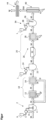
- a medium M containing ammonium and solids which consists of agricultural, industrial or municipal residues, is first introduced into an acidification stage 2 in the plant illustrated here.
- the medium M can be formed in particular by liquid manure or fermentation residues from fermenters.
- the acidification stage 2 has a stirred tank 4 and a metering device 6 for delivering acid S, such as sulfuric acid, into the stirred tank 4, with the delivery being controlled or regulated via a pH value measuring and regulating device 8.
- acid S such as sulfuric acid
- the acidification stage 2 is connected upstream of a filtration stage 10 which has a coarse filter device 12 and a membrane filter device 14 connected downstream of this.
- the coarse filter device 12 has, for example, a screw press, a decanter centrifuge, a spiral filter and/or an edge filter for separating coarse solids gF and an outlet 16 through which the separated coarse solids gF can be discharged.
- the membrane filter device 14 has, for example, vibrating membranes and/or cushion modules with a maximum pore size of 0.5 ⁇ m, preferably 0.1 ⁇ m, for microfiltration fine solids fF, such as organic solids in particular.
- the fine solids fF are concentrated in the microfiltration retentate and returned to the coarse filter device.
- the filtration stage 10 is in turn followed by a precipitation stage 20 in which the pH value of the remaining medium M formed by the permeate of the filtration stage 10 can be raised in a process container 22 .
- a dosing device 24 is provided for carrying out this alkalization, by means of which a lye L, such as caustic soda and/or calcium hydroxide, can be dispensed into the process container 22 .
- the alkalinization of the precipitation stage 20 is followed by a sedimentation stage 32 and a phosphate salt separation 26 with a separate separating device 28, which is formed, for example, by a decanter centrifuge, a chamber filter press and/or a belt filter.
- the separating device 28 is used to separate precipitated phosphate salts P from the medium M.
- the phosphate salt separator 26 also has an outlet 30 to discharge the phosphate salts P obtained in this way.
- the remaining medium M is delivered to a conditioning stage 34, where it can be heated by a temperature control device 36 and increased to a new pH value by means of a further dosing device 38 to deliver a lye L.
- the conditioning stage 34 is in turn followed by a stripping device 40, by means of which nitrogen compounds, such as ammonium sulfate A, can also be removed. This can then be released via an outlet 42 in particular in the form of an ammonium sulphate solution.
- a stripping device 40 by means of which nitrogen compounds, such as ammonium sulfate A, can also be removed. This can then be released via an outlet 42 in particular in the form of an ammonium sulphate solution.
- residual water RWan falls at the stripping device 40 and can be introduced into a downstream reverse osmosis stage 44 in order to obtain a treated water W.
- the medium M is mixed with the acid S in the acidification stage 2 and the pH is adjusted to a value in the range from 3 to 6. In this way, precipitated phosphate salts P are brought into solution in the medium and ammonia outgassing is reduced.
- the solids separation step in the filtration stage 10 is followed by alkalization in the precipitation stage 20, in which the pH of the permeate or the remaining medium M is raised to a pH in the range between 8 and 10 by metering in the lye L via the metering device 24 .
- the phosphate salts can precipitate in a precipitation crystallization and sediment in the sedimentation stage 32 due to their density.
- they are then fed to the phosphate salt separator 26, where they are obtained from the sediment as a solid by means of the separating device 28.
- the medium M remaining in the plant after the precipitation stage 20 is prepared for the stripping process.
- the supernatant is heated and the pH value is increased further by metering in the lye L by means of the metering device 38 so that the ammonium-ammonia balance shifts in favor of the ammonia.
- the pH value is increased by monitoring the pH value up to a value between 10 and 13.
- Sodium hydroxide solution (NaOH) for example, can be used as the lye.
- the medium M is heated to a temperature between 40 and 60° C. by means of the temperature control device 36 .
- the stripping step then takes place in the stripping device 40, in which the ammonium sulfate A is separated off and can be discharged as a solution via the outlet 42.
- the liquid/gaseous aggregate state equilibrium of the ammonia is shifted towards gaseous.
- the medium M in the stripper device 40 is passed from top to bottom, preferably via a bulk filling or a structured packing.
- the packing is designed to maximize the surface area of the liquid. Air or vapor is passed countercurrently through the packing, which comes into contact with the liquid via the liquid surface.
- ammonia is converted into the gas phase.
- the gas is enriched with ammonia and the liquid is depleted.
- the ammonia-depleted gas is using a gas scrubber with a suitable Acid washed to recover an ammonium solution.
- ammonium sulfate solution can be obtained by scrubbing the gas with sulfuric acid.
- the residual water RW accumulates during the stripping step, which can be processed by means of the reverse osmosis device 44 to form the water W, which can be used as process water or for introduction into a receiving water.
- a retentate RT that is retained at the reverse osmosis device 44 and contains particularly potassium can be used for the production of fertilizer.
Landscapes
- Chemical & Material Sciences (AREA)
- Organic Chemistry (AREA)
- Engineering & Computer Science (AREA)
- Environmental & Geological Engineering (AREA)
- Physical Water Treatments (AREA)
- Separation Using Semi-Permeable Membranes (AREA)
- Fertilizers (AREA)
Description
- Die Erfindung betrifft ein Verfahren zur stofflichen Verwertung eines ammonium- und feststoffhaltigen Mediums, nach dem Oberbegriff des Anspruchs 1 sowie eine Anlage zur Durchführung eines solchen Verfahrens. Das ammonium- und feststoffhaltige Medium kann dabei insbesondere durch landwirtschaftliche, industrielle oder kommunale Reststoffe gebildet sein, wie beispielsweise Gülle oder Gärreste aus Fermentern. Das Verwertungsverfahren sieht dabei einen Feststoffabtrennungsschritt vor, bei dem insbesondere nährstoffarme Feststoffe aus dem Medium abgetrennt werden. Anschließend erfolgt ein Fällungsschritt, bei dem Phosphatsalze abgetrennt werden, und hiernach ein Strippungsschritt, durch den Stickstoffverbindungen aus dem Medium gewonnen werden. Dabei wird vor dem Feststoffabtrennungsschritt eine Ansäuerung des Mediums vorgenommen, bei der das Medium in einer Ansäuerungsstufe mit einer Säure durchmischt wird. Bei dieser Ansäuerung wird ein pH-Wert des Mediums zwischen 3 und 6 eingestellt, wodurch sowohl eine ausreichende Lösung der Phosphatsalze als auch eine wirksame Verringerung der Ammoniakausgasungen erreicht werden kann. Beim späteren Fällungsschritt wird dann eine separate Filtration des Mediums zur Abtrennung ausgefallener Phosphatsalze vorgenommen. Hierdurch können die in dem zu behandelnden Medium ausgefallenen Phosphatsalze zu Beginn des Verfahrens und insbesondere vor dem Feststoffabtrennungsschritt zunächst in Lösung gebracht werden. Dadurch verbleiben die Phosphatsalze während des Feststoffabtrennungsschrittes zu einem deutlich größeren Teil im Medium beziehungsweise im hiernach anfallenden Permeat. Durch die dem Feststoffabtrennungsschritt nachgeschaltete separate Filtration im Fällungsschritt können die Phosphatsalze dann in größerer Menge gewonnen werden.
- Nach dem Stand der Technik erfolgt die Entfernung von Ammonium-Stickstoff aus einem Medium wie Gülle oder Gärresten üblicherweise durch Strippung. Hierzu muss der im betreffenden Medium enthaltene Ammonium-Stickstoff in Ammoniak-Stickstoff überführt werden. Ammonium (NH4 +) und Ammoniak (NH3) stehen miteinander entsprechend der Reaktionsgleichung NH4 + + OH - ⇄NH3 + H2O in einem Gleichgewicht.
- Ein Verfahren zur stofflichen Verwertung von ammoniumhaltigem Abwasser ist aus
EP0915058A2 bekannt. Bei diesem bekannten Verfahren werden zunächst die Feststoffe abgetrennt. Anschließend erfolgt beispielsweise die Zugabe von Magnesiumsalz als Fällmittel zur Fällung von Ammonium in Form von Magnesiumammoniumphosphat. Nach dessen Abtrennung kann das Magnesiumammoniumphosphat unter Gewinnung von Ammoniak und Magnesiumsalz thermisch zersetzt werden, wie beispielsweise im Zuge einer Dampf/Luft-Strippung. - Nachteilig an dem bekannten Verfahren zur stofflichen Verwertung von ammonium- und feststoffhaltigen Medien ist, dass hierbei lediglich eine relativ begrenzte stoffliche Verwertung erfolgt, bei der einige Wertstoffe ungenutzt im Medium verbleiben. Zudem ist bei der bekannten Vorgehensweise die Zugabe von Magnesium zur Fällung von Magnesiumammoniumphosphat erforderlich. In einem weiteren Schritt kann dann lediglich aus dem Magnesiumammoniumphosphat-Fällsalz Ammoniak gewonnen werden. Eine kostengünstige und weitestgehend vollständige Entfrachtung des Mediums von Phosphat und Stickstoff ist in diesem Verfahren somit nicht möglich.
-
DE102016122869A1 beschreibt ein Verfahren zur Aufbereitung von biologischen Abfällen, wie beispielsweise Gülle, bei dem nach dem Abtrennen grober Feststoffe zunächst partikulär gebundene Phosphate durch Einleiten von CO2 gelöst werden und die Flüssigphase anschließend angesäuert wird, um den CO2-Gehalt zu reduzieren. Hiernach erfolgt dann das Austreiben von NH3 durch Stripping sowie hiernach das Fällen von Calcium-Phosphat. -
WO2018/067631A1 beschreibt ein Verfahren zur Behandlung von Abwasser, das aus einem Absetzbecken oder einem Belebtschlammbecken stammt. Dieses wird zur Herstellung organischer Säure in einen Faulbehälter gegeben und anschließend einem Feststoffabscheider zugeführt. In einem Reaktor wird anschließend Phosphat abgetrennt. Aus dem verbleibenden Medium kann zudem Ammonium abgetrennt werden, wie beispielsweise durch Strippung. -
WO2011/089019A1 beschreibt ein Verfahren zur Phosphorgewinnung aus Mist und Biomasse, bei dem zur Ansäuerung ein Fermentierungsschritt vorgesehen ist. Nach der Beschreibung kann dabei zudem auch eine Strippung zur Abtrennung von Ammoniak vorgesehen werden. -
US2017/0327427A1 ein Verfahren zur Phosphorextraktion, bei dem ein vorgefilterter Dünger angesäuert und einer mehrstufigen Mikrofiltration und Fällung zugeführt wird. In einem weiteren Schritt wird durch das Einblasen von Luft in das Medium Ammoniak von der flüssigen in die gasförmige Phase übergeleitet und abgetrennt. - Die Aufgabe der Erfindung ist es, bei einem gattungsgemäßen Verfahren die genannten Nachteile zu vermeiden und eine bessere stoffliche Verwertung sowie eine wirtschaftlichere Gewinnung der Wertstoffe zu gewährleisten.
- Diese Aufgabe wird durch ein Verfahren zur stofflichen Verwertung eines ammonium- und feststoffhaltigen Mediums mit den Merkmalen des Anspruchs 1 gelöst. Dabei wird zwischen dem Fällungsschritt und dem Strippungsschritt eine Konditionierung des verbleibenden Mediums vorgenommen, bei der dieses auf eine Temperatur zwischen 40 und 60 °C erwärmt und dessen pH-Wert auf 10 bis 13 weiter angehoben wird. In der Konditionierung wird der Überstand nach der Alkalisierung für den Strippungsprozess vorbereitet. Dabei wird der Überstand erwärmt und der pH-Wert weiter angehoben, sodass sich das Ammonium-Ammoniak-Gleichgewicht zu Gunsten des Ammoniaks verschiebt. Die pH-Wertanhebung erfolgt unter einer pH-Wertüberwachung durch die Zugabe einer geeigneten Lauge. Der optimale Betriebspunkt hinsichtlich der Parameter pH-Wert und Temperatur ist entsprechend des örtlichen Wärmeüberschusses und der Chemikalienpreise variabel. Als Lauge kann beispielsweise Natronlauge (NaOH) verwendet werden. Zudem können durch die vorab vorgenommene Ansäuerung Ammoniakausgasungen verringert werden, so dass auch im späteren Strippungsverfahren ein größerer Ertrag hinsichtlich der verwertbaren abgetrennten Stickstoffverbindungen erzielt werden kann. Die Ansäuerung ermöglicht somit sowohl hinsichtlich Menge als auch hinsichtlich der Reinheit der nährstoffarmen organischen Feststoffe eine verbesserte Abtrennung aus dem Medium und somit insgesamt eine effizientere Wertstoffgewinnung.
- Zudem ist es günstig, wenn die Ansäuerung mittels Schwefelsäure erfolgt, um eine sichere und kostengünstige Verfügbarkeit der für das Verfahren verwendeten Säure gewährleisten zu können.
- Vorteilhafterweise umfasst der Feststoffabtrennungsschritt eine Vorfiltration und eine dieser nachgeschaltete Mikrofiltration. Die Vorfiltration entfernt dabei grobe Feststoffe aus dem Medium und dient dazu, die nachgelagerte Mikrofiltration zu schützen. Die Mikrofiltration ist üblicherweise als Membranfiltration im Querstrom ausgeführt. Es werden Filterschärfen von bis zu 0,5 µm, vorzugsweise bis zu 0,1 µm verwendet, wodurch insbesondere auch Feststoffe in Form von Bakterien zurückgehalten werden können. Durch diesen wenigstens zweistufigen Feststoffabtrennungsschritt können relativ große Anteile der im Medium enthaltenen Feststoffe, wie insbesondere nährstoffarme organische Feststoffe abgetrennt werden. Die organischen Feststoffe werden dabei in nährstoffarmer Form abgetrennt, so dass diese gezielter verwertet und wirtschaftlicher vermarktet werden können, wie beispielsweise als humusbildender Bodenverbesserer in der Landwirtschaft. Ein weiterer Vorteil des hohen Abtrennungsgrades der Feststoffe besteht darin, dass in den nachfolgenden Verfahrensschritten weniger Verblockungen auftreten und der Reinigungsaufwand beziehungsweise die Stillstandszeiten verringert werden können.
- Im Zuge des Fällungsschrittes wird eine Alkalisierung des Mediums vorgenommen. Bei der Alkalisierung wird der pH-Wert des nun als Permeat vorliegenden Mediums durch einen Laugezusatz angehoben, sodass Phosphatsalze in einer Fällungskristallisation ausfallen. Aufgrund Ihrer Dichte können die Phosphatsalze sedimentieren und anschließend der Phosphatsalzabtrennung zugeführt werden. Die Alkalisierung erfolgt unter einer pH-Wertüberwachung durch die Zugabe einer geeigneten Lauge.
- In einer weiteren vorteilhaften Ausführungsform wird bei der Alkalisierung der pH-Wert des Mediums beziehungsweise des Permeats in einen Bereich von 8 bis 10 angehoben. Hierdurch kann eine möglichst vollständige Fällung der Phosphatsalze erreicht werden.
- Dabei ist es in jedem Fall günstig, wenn dem Medium beziehungsweise dem Permeat bei der Alkalisierung Natronlauge und/oder Calciumhydroxid zugegeben wird, wodurch die für die Abtrennung geeignete Zusammensetzung der Phosphatsalze besonders genau eingestellt werden kann.
- Vorteilhafterweise werden die beim Strippungsschritt abgetrennten Stickstoffverbindungen in Form einer Ammoniumsulfatlösung durch saure Gaswäsche mit Schwefelsäure ausgegeben, wodurch die gewonnenen Stickstoffverbindungen besonders komfortabel weiterverarbeitet beziehungsweise vermarktet werden können, wie beispielsweise für die Düngerherstellung.
- Darüber hinaus ist es günstig, wenn ein bei der Strippung anfallendes Restwasser mittels einer Umkehrosmose weiter aufbereitet wird. Hierdurch kann auch das am Ende des erfindungsgemäßen Verfahrens anfallende Restwasser derart aufbereitet werden, dass es ausgebracht beziehungsweise als Brauchwasser genutzt werden kann. Das Permeat der Umkehrosmose kann dabei direkt in einen Vorfluter eingeleitet werden. Das im Übrigen bei der Umkehrosmose anfallende Retentat weist dabei zudem einen relativ hohen Kaliumgehalt auf, so dass auch dieses in der Düngemittelherstellung verwendet werden kann. Auf diese Weise kann mittels des erfindungsgemäßen Verfahrens eine im Wesentlichen vollständige stoffliche Verwertung des zu behandelnden Mediums erzielt werden.
- Ferner wird die genannte Aufgabe durch eine Anlage gemäß Anspruch 7 mit einer Filtrationsstufe, einer Fällungsstufe und einer Strippungseinrichtung zur Durchführung des Verfahrens in einer der oben beschriebenen Ausführungsformen gelöst, wobei die Fällungsstufe eine separate Trenneinrichtung für die Phosphatsalzabtrennung aufweist. Hierdurch ermöglicht die Anlage die Abtrennung der Phosphatsalze ohne gewichtige organische Verunreinigung und dadurch eine besonders gute Verwertung beziehungsweise Vermarktung derselben. Hierbei ist vor der Filtrationsstufe dabei eine Ansäuerungsstufe vorgesehen, mittels der die in dem zu behandelnden Medium ausgefallenen Phosphatsalze vor der Filtrationsstufe zunächst in Lösung gebracht werden können. Dadurch verbleiben die Phosphatsalze in der Filtrationsstufe zumindest zu einem großen Teil im Medium beziehungsweise im anfallenden Permeat. Durch die der Filtrationsstufe nachgeschaltete separate Filtration im Fällungsschritt können die Phosphatsalze dann in größerer Menge gewonnen werden. Zudem können durch die vorab vorgenommene Ansäuerung Ammoniakausgasungen verringert werden, so dass auch im späteren Strippungsverfahren ein größerer Ertrag hinsichtlich der verwertbaren abgetrennten Stickstoffverbindungen erzielt werden kann.
- Hierbei weist die Ansäuerungsstufe vorteilhafterweise einen Rührbehälter auf, in dem das Mediums mit einer für die Ansäuerung verwendeten Säure in ausreichendem Maße vermischt werden kann. Hierdurch kann gewährleistet werden, dass die im Medium enthaltenen ausgefallenen Phosphatsalze vor der Filtrationsstufe möglichst vollständig in Lösung gebracht werden.
- Erfindungsgemäß ist zwischen der Fällungsstufe und der Strippungseinrichtung zudem eine Konditionierungsstufe vorgesehen, die sowohl eine Dosierungseinrichtung für die Zudosierung einer Lauge zum Medium als auch eine Temperiereinrichtung für die Erwärmung des Mediums aufweist. Hierdurch kann in der nachgeschalteten Strippung eine besonders effiziente Abtrennung der im verbleibenden Medium enthaltenen Stickstoffverbindungen erzielt werden.
- Zudem ist es von Vorteil, wenn die Ansäuerungsstufe eine pH-Wert-Mess- und Regeleinrichtung aufweist. Auf diese Weise kann eine exakte Zudosierung der bei der Ansäuerung verwendeten Säure sowie deren ausreichende Vermischung mit dem Medium gewährleistet werden, um im Medium einen möglichst gleichmäßig verteilten pH-Wert im Bereich von 3 bis 6 einstellen zu können.
- Ferner ist es günstig, wenn die Filtrationsstufe eine Grobfiltereinrichtung für die Vorfiltration und eine dieser nachgeschaltete Membranfiltereinrichtung für die Mikrofiltration aufweist, wodurch ein zuverlässiger und effizienter Betrieb der Filtrationsstufe und der Anlage insgesamt gewährleistet werden kann.
- Ferner ist es von Vorteil, wenn die Grobfiltereinrichtung eine Schneckenpresse, eine Dekanterzentrifuge, einen Wendelfilter und/oder einen Kantenspaltfilter aufweist, um eine effiziente und störungsfreie Abtrennung grober Feststoffe aus dem Medium gewährleisten zu können.
- Zudem ist es vorteilhaft, wenn die Membranfiltereinrichtung vibrierende Membrane und/oder Kissenmodule mit einer Porengröße von maximal 0,5 µm, vorzugsweise 0,1 µm aufweist. Hierdurch können Feststoffe, wie insbesondere Bakterien, zuverlässig zurückgehalten werden. Zudem können Verblockungen der Membrane durch grobe Feststoffe auf diese Weise vermieden werden.
- In einer besonders vorteilhaften Ausführungsform weist die separate Trenneinrichtung der Fällungsstufe eine Dekanterzentrifuge, eine Kammerfilterpresse und/oder einen Bandfilter auf, wodurch eine besonders effiziente Abtrennung der Phosphatsalze aus dem Medium erzielt werden kann.
- Dabei ist es günstig, wenn die Fällungsstufe eine Sedimentationsstufe aufweist, wodurch die Phosphatsalze besonders wirksam abgetrennt werden können.
- Ferner ist es günstig, wenn der Strippungseinrichtung zusätzlich noch eine Umkehrosmosestufe nachgeschaltet ist. Durch diese kann aus dem verbleibenden Medium aufbereitetes Wasser gewonnen werden, das beispielsweise als Brauchwasser verwertbar ist oder direkt eingeleitet werden kann. Das bei der Umkehrosmose ferner anfallende Retentat weist dabei zudem einen derart hohen Kaliumgehalt auf, dass auch dieses für die Düngemittelherstellung verwendet werden kann und somit eine im Wesentlichen vollständige Verwertung des Mediums erzielt wird.
- In der Figur ist eine beispielhafte Ausführungsform der Erfindung dargestellt. Es zeigt:
- Figur 1
- einen schematischen Aufbau einer Anlage zur Durchführung eines erfindungsgemäßen Verfahrens zur stofflichen Verwertung eines ammonium- und feststoffhaltigen Mediums.
- Wie aus der Figur zu entnehmen ist, wird bei der hierin dargestellten Anlage ein ammonium- und feststoffhaltiges Medium M, das aus landwirtschaftlichen, industriellen oder kommunalen Reststoffen besteht, zunächst in eine Ansäuerungsstufe 2 gegeben. Das Medium M kann dabei insbesondere durch Gülle oder Gärreste aus Fermentern gebildet sein.
- Die Ansäuerungsstufe 2 weist einen Rührbehälter 4 und eine Dosiereinrichtung 6 zur Abgabe von Säure S, wie beispielsweise Schwefelsäure, in den Rührbehälter 4 auf, wobei die Abgabe über eine pH-Wert-Mess- und Regeleinrichtung 8 gesteuert beziehungsweise geregelt ist.
- Die Ansäuerungsstufe 2 ist einer Filtrationsstufe 10 vorgeschaltet, die eine Grobfiltereinrichtung 12 und eine dieser nachgeschalteten Membranfiltereinrichtung 14 aufweist. Die Grobfiltereinrichtung 12 weist beispielsweise eine Schneckenpresse, eine Dekanterzentrifuge, einen Wendelfilter und/oder einen Kantenspaltfilter für die Abtrennung grober Feststoffe gF sowie einen Auslass 16 auf, über den die abgetrennten groben Feststoffe gF abgegeben werden können.
- Die Membranfiltereinrichtung 14 weist beispielsweise vibrierende Membrane und/oder Kissenmodule mit einer Porengröße von maximal 0,5 µm, vorzugsweise 0,1 µm, für die Mikrofiltration feiner Feststoffe fF, wie insbesondere organischer Feststoffe auf. Die feinen Feststoffe fF werden im Retentat der Mikrofiltration aufkonzentriert und in die Grobfiltereinrichtung zurückgeführt.
- Der Filtrationsstufe 10 ist wiederum eine Fällungsstufe 20 nachgeschaltet, bei der in einem Prozessbehälter 22 der pH-Wert des durch das Permeat der Filtrationsstufe 10 gebildeten verbleibende Medium M angehoben werden kann. Zur Durchführung dieser Alkalisierung ist eine Dosiereinrichtung 24 vorgesehen, mittels der eine Lauge L, wie Natronlauge und/oder Calciumhydroxid in den Prozessbehälter 22 abgegeben werden kann.
- Der Alkalisierung der Fällungsstufe 20 ist eine Sedimentationsstufe 32 und eine Phosphatsalzabtrennung 26 mit einer separaten Trenneinrichtung 28 nachgeschaltet, die beispielsweise durch eine Dekanterzentrifuge, eine Kammerfilterpresse und/oder einen Bandfilter gebildet ist. Die Trenneinrichtung 28 dient dabei zur Abtrennung ausgefallener Phosphatsalze P aus dem Medium M. Zur Abgabe der hierbei gewonnen Phosphatsalze P weist die Phosphatsalzabtrennung 26 ferner einen Auslass 30 auf.
- Nach der Filtration durch die Trenneinrichtung 28 der Phosphatsalzabtrennung 26 wird das verbleibende Medium M an eine Konditionierungsstufe 34 abgegeben, wo diese durch eine Temperiereinrichtung 36 erwärmt und mittels einer weiteren Dosiereinrichtung 38 zur Abgabe einer Lauge L auf einen neuen pH-Wert erhöht werden kann.
- Der Konditionierungsstufe 34 schließt sich wiederum eine Strippungseinrichtung 40 an, mittels der ferner Stickstoffverbindungen, wie Ammoniumsulfat A abgetrennt werden können. Dieses kann dann insbesondere in Form einer Ammoniumsulfatlösung über einen Auslass 42 abgegeben werden.
- Darüber hinaus fällt an der Strippungseinrichtung 40 Restwasser RWan, das in eine nachgeschaltete Umkehrosmosestufe 44 eingeleitet werden kann, um ein aufbereitetes Wasser W zu erhalten.
- Bei der Durchführung des erfindungsgemäßen Verfahrens wird das Medium M in der Ansäuerungsstufe 2 mit der Säure S durchmischt und dabei auf einen pH-Wert im Bereich von 3 bis 6 eingestellt. Hierdurch werden im Medium ausgefallene Phosphatsalze P in Lösung gebracht und die Ammoniakausgasungen verringert.
- Anschließend erfolgt die Vorfiltration in der Grobfiltereinrichtung 12, bei der die groben Feststoffe gF aus dem Medium M entfernt werden und anschließend die Mikrofiltration in der Membranfiltereinrichtung 14. Durch die bei dieser verwendeten Porengröße von maximal 0,5 µm, beziehungsweise bevorzugt 0,1 µm, werden organische Feststoffe, die insbesondere auf Bakterien zurückgehen, zurückgehalten und in die Grobfiltereinrichtung zurückgeführt.
- Nach dem Feststoffabtrennungsschritt in der Filtrationsstufe 10 folgt die Alkalisierung in der Fällungsstufe 20, bei der der pH-Wert des Permeats beziehungsweise des verbleibenden Mediums M durch Zudosieren der Lauge L über die Dosiereinrichtung 24 auf einen pH-Wert im Bereich zwischen 8 und 10 angehoben wird. Hierdurch können die Phosphatsalze in einer Fällungskristallisation ausfallen und aufgrund Ihrer Dichte in der Sedimentationsstufe 32 sedimentieren. Im Anschluss hieran werden sie dann der Phosphatsalzabtrennung 26 zugeführt, wo sie mittels der Trenneinrichtung 28 aus dem Sediment als Feststoff gewonnen werden.
- In der Konditionierung wird das in der Anlage verbleibende Medium M nach der Fällungsstufe 20 für den Strippungsprozess vorbereitet. Dabei wird der Überstand erwärmt und der pH-Wert durch Zudosierung der Lauge L mittels der Dosierungseinrichtung 38 weiter angehoben, sodass sich das Ammonium-Ammoniak-Gleichgewicht zu Gunsten des Ammoniaks verschiebt. Die pH-Wertanhebung erfolgt unter einer pH-Wertüberwachung bis zu einem Wert zwischen 10 und 13. Als Lauge kann beispielsweise Natronlauge (NaOH) verwendet werden. Gleichzeitig erfolgt mittels der Temperiereinrichtung 36 eine Erwärmung des Mediums M auf eine Temperatur zwischen 40 und 60°C.
- In der Strippungseinrichtung 40 erfolgt dann der Strippungsschritt, bei dem das Ammoniumsulfat A abgetrennt wird und als Lösung über den Auslass 42 abgegeben werden kann. Bei der Strippung wird das Aggregatszustands-Gleichgewicht flüssig/gasförmig des Ammoniaks in Richtung gasförmig verschoben. Dazu wird das Medium M in der Strippereinrichtung 40 von oben nach unten geleitet, vorzugsweiße über eine Schüttkörperfüllung oder eine strukturierte Füllkörperpackung. Die Packung dient zur Maximierung der Oberfläche der Flüssigkeit. Im Gegenstrom wird Luft oder Dampf durch die Packung geführt, die über die Flüssigkeitsoberfläche mit der Flüssigkeit in Kontakt tritt. Dabei wird Ammoniak in die Gasphase überführt. Das Gas wird folglich mit Ammoniak angereichert, die Flüssigkeit wird abgereichert. Das mit Ammoniak abgereicherte Gas wird mittels Gaswäscher mit einer geeigneten Säure gewaschen, wobei eine Ammoniumlösung gewonnen wird. Beispielsweise kann durch Gaswäsche mit Schwefelsäure Ammoniumsulfatlösung gewonnen werden. Ferner fällt beim Strippungsschritt das Restwasser RW an, das mittels der Umkehrosmoseeinrichtung 44 zum Wasser W aufbereitet werden kann, das als Brauchwasser oder zur Einleitung in einen Vorfluter verwendet werden kann. Zudem kann ein an der Umkehrosmoseeinrichtung 44 zurückgehaltenes und besonders kaliumhaltiges Retentat RT für die Düngemittelherstellung verwendet werden.
Claims (11)
- Verfahren zur stofflichen Verwertung eines ammonium- und feststoffhaltigen Mediums (M), wie insbesondere aus landwirtschaftlichen, industriellen oder kommunalen Reststoffen, bei dema) in einem Feststoffabtrennungsschritt Feststoffe (gF, fF),b) in einem dem Feststoffabtrennungsschritt nachgeschalteten Fällungsschritt Phosphatsalze (P) undc) in einem dem Fällungsschritt nachgeschalteten Strippungsschritt Stickstoffverbindungen,aus dem Medium (M) abgetrennt werden, wobeivor dem Feststoffabtrennungsschritt eine Ansäuerung des Mediums (M) vorgenommen wird, bei der das Medium (M) in einer Ansäuerungsstufe (2) mit einer Säure (S) durchmischt und ein pH-Wert des Mediums (M) zwischen 3 und 6 eingestellt wird, und der Fällungsschritt eine separate Filtration des Mediums (M) zur Abtrennung ausgefallener Phosphatsalze (P) umfasst,dadurch gekennzeichnet, dass zwischen dem Fällungsschritt und dem Strippungsschritt eine Konditionierung des verbleibenden Mediums (M) vorgenommen wird, bei der dieses auf eine Temperatur zwischen 40 und 60 °C erwärmt und dessen pH-Wert auf 10 bis 13 weiter angehoben wird.
- Verfahren nach Anspruch 1, dadurch gekennzeichnet, dass die Ansäuerung mittels Schwefelsäure (S) erfolgt.
- Verfahren nach Anspruch 1 oder 2, dadurch gekennzeichnet, dass der Feststoffabtrennungsschritt eine Vorfiltration und eine dieser nachgeschaltete Mikrofiltration umfasst.
- Verfahren nach einem der Ansprüche 1 bis 3, dadurch gekennzeichnet, dass bei dem Fällungsschritt eine Alkalisierung des Mediums (M) vorgenommen wird, bei der der pH-Wert des Mediums (M) in einen Bereich von 8 bis 10 angehoben wird.
- Verfahren nach Anspruch 4, dadurch gekennzeichnet, dass dem Medium (M) bei der Alkalisierung Natronlauge und/oder Calciumhydroxid zugegeben wird.
- Verfahren nach einem der Ansprüche 1 bis 5, dadurch gekennzeichnet, dass beim Strippungsschritt die abgetrennten Stickstoffverbindungen in Form einer Ammoniumsulfatlösung (A) ausgegeben werden und ein anfallendes Restwasser (RW) in einer nachgeschalteten Umkehrosmose weiter aufbereitet wird.
- Anlage zur Durchführung eines Verfahrens nach einem der Ansprüche 1 bis 6 mit einer Filtrationsstufe (10), einer Fällungsstufe (20) und einer Strippungseinrichtung (40), wobei die Fällungsstufe (20) eine separate Trenneinrichtung (28) für die Phosphatsalzabtrennung aufweist und vor der Filtrationsstufe (10) eine Ansäuerungsstufe (2) vorgesehen ist, die einen Rührbehälter (4) zum Mischen des Mediums (M) mit einer Säure (S) aufweist, dadurch gekennzeichnet, dass zwischen der Fällungsstufe (20) und der Strippungseinrichtung (40) eine Konditionierungsstufe (34) vorgesehen ist, die sowohl eine Dosierungseinrichtung (38) für die Zudosierung einer Lauge (L) als auch eine Temperiereinrichtung (36) für die Erwärmung des Mediums (M) aufweist.
- Anlage nach Anspruch 7, dadurch gekennzeichnet, dass die Ansäuerungsstufe (2) eine pH-Wert-Mess- und Regeleinrichtung (8) beinhaltet, in Abhängigkeit von der eine Zudosierung der Säure (S) in das Medium (M) steuerbar ist.
- Anlage nach Anspruch 7 oder 8, dadurch gekennzeichnet, dass die Filtrationsstufe (10) eine Grobfiltereinrichtung (12) in Form einer Schneckenpresse, einer Dekanterzentrifuge, eines Wendelfilters und/oder eines Kantenspaltfilters für die Vorfiltration und eine der Grobfiltereinrichtung nachgeschaltete Membranfiltereinrichtung (14) für die Mikrofiltration aufweist, die vibrierende Membrane und/oder Kissenmodule mit einer Porengröße von maximal 0,5 µm, vorzugsweise 0,1 µm aufweist.
- Anlage nach einem der Ansprüche 7 bis 9, dadurch gekennzeichnet, dass die separate Trenneinrichtung (28) der Fällungsstufe (20) eine Dekanterzentrifuge, eine Kammerfilterpresse und/oder einen Bandfilter aufweist.
- Anlage nach einem der Ansprüche 7 bis 10, dadurch gekennzeichnet, dass die Fällungsstufe (20) eine Sedimentationsstufe (32) aufweist.
Applications Claiming Priority (1)
| Application Number | Priority Date | Filing Date | Title |
|---|---|---|---|
| DE102018122354.4A DE102018122354B4 (de) | 2018-09-13 | 2018-09-13 | Verfahren und Anlage zur stofflichen Verwertung eines ammonium- und feststoffhaltigen Mediums |
Publications (2)
| Publication Number | Publication Date |
|---|---|
| EP3628650A1 EP3628650A1 (de) | 2020-04-01 |
| EP3628650B1 true EP3628650B1 (de) | 2023-02-01 |
Family
ID=67659046
Family Applications (1)
| Application Number | Title | Priority Date | Filing Date |
|---|---|---|---|
| EP19192014.9A Revoked EP3628650B1 (de) | 2018-09-13 | 2019-08-16 | Verfahren und anlage zur stofflichen verwertung eines ammonium- , phosphat- und feststoffhaltigen mediums |
Country Status (3)
| Country | Link |
|---|---|
| EP (1) | EP3628650B1 (de) |
| DE (1) | DE102018122354B4 (de) |
| DK (1) | DK3628650T3 (de) |
Families Citing this family (3)
| Publication number | Priority date | Publication date | Assignee | Title |
|---|---|---|---|---|
| DE102022115962A1 (de) | 2022-06-27 | 2023-12-28 | TEC Austria GmbH | Verfahren und Anlage zur Aufarbeitung von Wasser |
| DE102022119273A1 (de) * | 2022-08-01 | 2024-02-01 | TEC Austria GmbH | Verwendung eines Lamellenklärers in einer Sedimentationseinrichtung einer Vorrichtung zur Behandlung von öl- und/oder fetthaltigem Abwasser |
| DE102022119276A1 (de) * | 2022-08-01 | 2024-03-07 | TEC Austria GmbH | Verwendung einer Umkehrosmoseeinrichtung in einer Vorrichtung zur Behandlung von Wasser |
Citations (9)
| Publication number | Priority date | Publication date | Assignee | Title |
|---|---|---|---|---|
| DE4040067A1 (de) | 1990-12-14 | 1992-06-17 | Nalco Chemie Gmbh Deutsche | Verfahren zur gewinnung der ammoniumgehalte aus prozess- und abwaessern |
| DE4239637C1 (de) | 1992-11-23 | 1994-04-28 | Preussag Noell Wassertech | Verfahren und Vorrichtung zur Entfernung von ammoniumhaltigen Verbindungen aus Abwässern |
| DE102004033310A1 (de) | 2004-07-08 | 2006-01-26 | Hans Huber Ag Maschinen- Und Anlagenbau | Verfahren und Vorrichtung zum Separieren von Magnesium-Ammonium-Phosphat MAP aus Abwasser |
| WO2011089019A1 (en) | 2010-01-25 | 2011-07-28 | Ceres Milieu Holding Bv | Method and installation for dephosphorizing manure and/or biomass |
| US20140197111A1 (en) | 2013-01-11 | 2014-07-17 | Chinese Research Academy Of Environmental Sciences | Methods and systems for wastewater treatment and resource recovery |
| DE102014207842B3 (de) | 2014-04-25 | 2014-10-09 | Fraunhofer-Gesellschaft zur Förderung der angewandten Forschung e.V. | Kombinierte Rückgewinnung von Phosphor, Kalium und Stickstoff aus wässrigen Reststoffen |
| US20170327427A1 (en) | 2016-05-13 | 2017-11-16 | University Of Maryland, Baltimore County | Phosphorus extraction and recovery system (pears) |
| WO2018067631A1 (en) | 2016-10-05 | 2018-04-12 | Nutrient Recovery & Upcycling, Llc | Wastewater treatment with customized phosphate control |
| DE102016122869A1 (de) | 2016-11-28 | 2018-05-30 | Chemische Fabrik Budenheim Kg | Gesamtverfahren zur Aufbereitung von biologischen Abfällen |
Family Cites Families (2)
| Publication number | Priority date | Publication date | Assignee | Title |
|---|---|---|---|---|
| EP0915058A3 (de) | 1997-11-07 | 1999-07-28 | Fraunhofer-Gesellschaft zur Förderung der angewandten Forschung e.V. | Verfahren zur stofflichen Verwertung von ammoniumhaltigem Abwasser |
| DE102015118900A1 (de) * | 2015-11-04 | 2017-05-04 | Chemische Fabrik Budenheim Kg | Phosphatgewinnung aus wertstoffhaltigen Rohstoffen |
-
2018
- 2018-09-13 DE DE102018122354.4A patent/DE102018122354B4/de active Active
-
2019
- 2019-08-16 EP EP19192014.9A patent/EP3628650B1/de not_active Revoked
- 2019-08-16 DK DK19192014.9T patent/DK3628650T3/da active
Patent Citations (9)
| Publication number | Priority date | Publication date | Assignee | Title |
|---|---|---|---|---|
| DE4040067A1 (de) | 1990-12-14 | 1992-06-17 | Nalco Chemie Gmbh Deutsche | Verfahren zur gewinnung der ammoniumgehalte aus prozess- und abwaessern |
| DE4239637C1 (de) | 1992-11-23 | 1994-04-28 | Preussag Noell Wassertech | Verfahren und Vorrichtung zur Entfernung von ammoniumhaltigen Verbindungen aus Abwässern |
| DE102004033310A1 (de) | 2004-07-08 | 2006-01-26 | Hans Huber Ag Maschinen- Und Anlagenbau | Verfahren und Vorrichtung zum Separieren von Magnesium-Ammonium-Phosphat MAP aus Abwasser |
| WO2011089019A1 (en) | 2010-01-25 | 2011-07-28 | Ceres Milieu Holding Bv | Method and installation for dephosphorizing manure and/or biomass |
| US20140197111A1 (en) | 2013-01-11 | 2014-07-17 | Chinese Research Academy Of Environmental Sciences | Methods and systems for wastewater treatment and resource recovery |
| DE102014207842B3 (de) | 2014-04-25 | 2014-10-09 | Fraunhofer-Gesellschaft zur Förderung der angewandten Forschung e.V. | Kombinierte Rückgewinnung von Phosphor, Kalium und Stickstoff aus wässrigen Reststoffen |
| US20170327427A1 (en) | 2016-05-13 | 2017-11-16 | University Of Maryland, Baltimore County | Phosphorus extraction and recovery system (pears) |
| WO2018067631A1 (en) | 2016-10-05 | 2018-04-12 | Nutrient Recovery & Upcycling, Llc | Wastewater treatment with customized phosphate control |
| DE102016122869A1 (de) | 2016-11-28 | 2018-05-30 | Chemische Fabrik Budenheim Kg | Gesamtverfahren zur Aufbereitung von biologischen Abfällen |
Non-Patent Citations (13)
| Title |
|---|
| "Lueger – Lexikon der Technik, 4. Auflage in 17 Bänden; Bd. 16: Lexikon der Verfahrenstechnik", vol. 16, 1 January 1970, DEUTSCHE VERLAGS-ANSTALT GMBH, Stuttgart, article HERMANN FRANKE: "Absorption", pages: 16 - 17, XP009562769 |
| „BERICHTE AUS FORSCHUNG UND ENTWICKLUNG NR. 063", FRAUNHOFER IGB; DISSERTATION, VERTEIDIGT AM 8. JULI 2014: "Dissertation", vol. 63, 1 January 2014, FRAUNHOFER VERLAG; FRAUNHOFER-INSTITUT FÜR GRENZFLÄCHEN- UND BIOVERFAHRENSTECHNIK IGB, Stuttgart, DE, ISBN: 978-3-8396-0781-7, article CUELLAR CAMPOS ASTRID ALEJANDRA: "Development of a Process for the Enhanced Phosphorus Recovery from the Organic Matrix of Agricultural Residues", pages: 1 - 174, XP093309452, DOI: 10.18419/opus-6858 |
| ANONYMOUS: "Stripper, Strippung", BIBLIOTHEK // LEXIKON DER GEOTHERMIE // S, BUNDESVERBAND GEOTHERMIE E.V., BERLIN, DE, Berlin, DE, pages 1 - 2, XP093309444, Retrieved from the Internet <URL:https://www.geothermie.de/bibliothek/lexikon-der-geothermie/s/stripper-strippung> |
| ANONYMOUS: "Strippung", WIKIPEDIA, pages 1 - 2, XP093309440, Retrieved from the Internet <URL:https://de.wikipedia.org/w/index.php?title=Strippung&oldid=208484971> |
| ATEKNEA SOLUTIONS: "BioEcoSIM, for environmental sustainability and economic benefit for European agriculture.", XP093309465, Retrieved from the Internet <URL:https://www.youtube.com/watch?v=_uqQMawXtH4> |
| D13 - Google-Suchergebnis zu D1 |
| D14 - Google-Erläuterung zu „Verfasserdatum" |
| D15 - Google-Anleitung zur Veränderung des Verfasserdatums |
| D17 - Auszug des Internatarchivs „Wayback Machine" vom 20.02.2024 |
| GÜNTHER LARS: "Großtechnische Nährstoffrückgewinnung und Schadstoffausschleusung aus kommunalen Klärschlämmen", VERÖFFENTLICHUNGEN DES INSTITUTES FÜR SIEDLUNGSWASSERWIRTSCHAFT DER TECHNISCHEN UNIVERSITÄT BRAUNSCHWEIG, 1 January 2011 (2011-01-01), pages 1 - 238, XP093140638, DOI: 10.24355/dbbs.084-202103230735-0 |
| LENNEVEY KINIDI, IVY AI WEI TAN, NORAZIAH BINTI ABDUL WAHAB, KHAIRUL FIKRI BIN TAMRIN, CIRILO NOLASCO HIPOLITO, SHANTI FARIDAH SAL: "Recent Development in Ammonia Stripping Process for Industrial Wastewater Treatment", INTERNATIONAL JOURNAL OF CHEMICAL ENGINEERING, HINDAWI PUBLISHING CORPORATION, US, vol. 2018, 9 July 2018 (2018-07-09), US , pages 1 - 14, XP055548203, ISSN: 1687-806X, DOI: 10.1155/2018/3181087 |
| S. SARACCO, GENON, G: "High temperature ammonia stripping and recovery from process liquid wastes", JOURNAL OF HAZARDOUS MATERIALS, ELSEVIER, AMSTERDAM, NL, vol. 37, no. 1, 1 April 1994 (1994-04-01), AMSTERDAM, NL , pages 191 - 206, XP055033947, ISSN: 0304-3894, DOI: 10.1016/0304-3894(94)85048-8 |
| ZENGER PHILLIP: "Verwertungsmöglichkeiten von Schweinegülle mit Bezug auf die Steiermark", MASTER OF SCIENCE, 19 February 2018 (2018-02-19), pages 1 - 187, XP093140641 |
Also Published As
| Publication number | Publication date |
|---|---|
| EP3628650A1 (de) | 2020-04-01 |
| DE102018122354B4 (de) | 2022-02-17 |
| DK3628650T3 (da) | 2023-04-11 |
| DE102018122354A1 (de) | 2020-03-19 |
Similar Documents
| Publication | Publication Date | Title |
|---|---|---|
| DE3873112T2 (de) | Abwasserbehandlungsverfahren. | |
| EP3390590B1 (de) | Verfahren zur faulung und hydrothermalen karbonisierung von klärschlamm | |
| EP3061725B1 (de) | Verfahren zur abtrennung von phosphor aus biomasse | |
| DE102010043711B4 (de) | Wasseraufbereitungsverfahren | |
| EP0968964B1 (de) | Verfahren zur stofflichen Verwertung von Gülle | |
| DE102015203484B4 (de) | Verfahren zur Schlammbehandlung und Schlammbehandlungsanlage | |
| DE102018122354B4 (de) | Verfahren und Anlage zur stofflichen Verwertung eines ammonium- und feststoffhaltigen Mediums | |
| WO2014090973A1 (de) | Verfahren und anlage zur aufbereitung und verarbeitung von wässern | |
| EP3984966A1 (de) | Verfahren zum behandeln von phosphor-/phosphathaltigem rohschlamm sowie vorrichtung zum behandeln von phosphor-/phosphathaltigem rohschlamm | |
| EP4116280B1 (de) | Verfahren und anordnung zur herstellung eines torfersatzstoffes aus einer faserstoffsuspension | |
| EP3138814B1 (de) | Verfahren zur gewinnung von anorganischen kaliumsalzen aus einer anaeroben und/oder aeroben behandlung zumindest teilweise zugänglichen substraten | |
| DE102016211664A1 (de) | Verfahren und Anlage zur Abtrennung und/oder Rückgewinnung von Stickstoffverbindungen aus einem Flüssig- oder Schlammsubstrat | |
| EP3615476B1 (de) | Verfahren und vorrichtung zur aufbereitung von abfallprodukten | |
| DE102004033310A1 (de) | Verfahren und Vorrichtung zum Separieren von Magnesium-Ammonium-Phosphat MAP aus Abwasser | |
| WO2019072814A1 (de) | Verbessertes verfahren zur kohlenstoffdioxid-extraktion von phosphaten aus rohstoffen | |
| DE102007056916B4 (de) | Anlage und Verfahren zur Herstellung von Biogas | |
| DE102018006337A1 (de) | Anlage und Verfahren zur Aufbereitung von Gärresten, Gülle und anderen hochbelasteten Abwässern | |
| EP0915058A2 (de) | Verfahren zur stofflichen Verwertung von ammoniumhaltigem Abwasser | |
| EP2586519A1 (de) | Aufarbeitung von belastetem Abwasser aus der Produktion von Pflanzenschutzmitteln | |
| DE19731177C1 (de) | Mobile Anlage zur Aufbereitung von Gülle | |
| AT389895B (de) | Verfahren zur aufarbeitung von melasse oder melasseschlempe sowie anlage zur durchfuehrung des verfahrens | |
| DE102022112764A1 (de) | Vorrichtung zur Aufbereitung einer Lösung sowie entsprechendes Verfahren | |
| EP4056533A1 (de) | Verfahren zur selektiven trennung und aufbereitung von stoffströmen aus einem hydrothermalen karbonisierungsprozess | |
| EP1487743A1 (de) | Verfahren und vorrichtung zur erzeugung eines metallhydroxids | |
| DE202018003727U1 (de) | Anlage zur Aufbereitung von Gärresten, Gülle und anderen hochbelasteten Abwässern |
Legal Events
| Date | Code | Title | Description |
|---|---|---|---|
| PUAI | Public reference made under article 153(3) epc to a published international application that has entered the european phase |
Free format text: ORIGINAL CODE: 0009012 |
|
| STAA | Information on the status of an ep patent application or granted ep patent |
Free format text: STATUS: THE APPLICATION HAS BEEN PUBLISHED |
|
| AK | Designated contracting states |
Kind code of ref document: A1 Designated state(s): AL AT BE BG CH CY CZ DE DK EE ES FI FR GB GR HR HU IE IS IT LI LT LU LV MC MK MT NL NO PL PT RO RS SE SI SK SM TR |
|
| AX | Request for extension of the european patent |
Extension state: BA ME |
|
| STAA | Information on the status of an ep patent application or granted ep patent |
Free format text: STATUS: REQUEST FOR EXAMINATION WAS MADE |
|
| 17P | Request for examination filed |
Effective date: 20201001 |
|
| RBV | Designated contracting states (corrected) |
Designated state(s): AL AT BE BG CH CY CZ DE DK EE ES FI FR GB GR HR HU IE IS IT LI LT LU LV MC MK MT NL NO PL PT RO RS SE SI SK SM TR |
|
| STAA | Information on the status of an ep patent application or granted ep patent |
Free format text: STATUS: EXAMINATION IS IN PROGRESS |
|
| 17Q | First examination report despatched |
Effective date: 20211019 |
|
| GRAP | Despatch of communication of intention to grant a patent |
Free format text: ORIGINAL CODE: EPIDOSNIGR1 |
|
| STAA | Information on the status of an ep patent application or granted ep patent |
Free format text: STATUS: GRANT OF PATENT IS INTENDED |
|
| INTG | Intention to grant announced |
Effective date: 20221006 |
|
| GRAS | Grant fee paid |
Free format text: ORIGINAL CODE: EPIDOSNIGR3 |
|
| GRAA | (expected) grant |
Free format text: ORIGINAL CODE: 0009210 |
|
| STAA | Information on the status of an ep patent application or granted ep patent |
Free format text: STATUS: THE PATENT HAS BEEN GRANTED |
|
| AK | Designated contracting states |
Kind code of ref document: B1 Designated state(s): AL AT BE BG CH CY CZ DE DK EE ES FI FR GB GR HR HU IE IS IT LI LT LU LV MC MK MT NL NO PL PT RO RS SE SI SK SM TR |
|
| REG | Reference to a national code |
Ref country code: GB Ref legal event code: FG4D Free format text: NOT ENGLISH |
|
| REG | Reference to a national code |
Ref country code: CH Ref legal event code: EP Ref country code: AT Ref legal event code: REF Ref document number: 1546910 Country of ref document: AT Kind code of ref document: T Effective date: 20230215 |
|
| REG | Reference to a national code |
Ref country code: DE Ref legal event code: R096 Ref document number: 502019006908 Country of ref document: DE |
|
| REG | Reference to a national code |
Ref country code: IE Ref legal event code: FG4D Free format text: LANGUAGE OF EP DOCUMENT: GERMAN |
|
| REG | Reference to a national code |
Ref country code: DK Ref legal event code: T3 Effective date: 20230403 |
|
| REG | Reference to a national code |
Ref country code: NL Ref legal event code: FP |
|
| REG | Reference to a national code |
Ref country code: LT Ref legal event code: MG9D |
|
| P01 | Opt-out of the competence of the unified patent court (upc) registered |
Effective date: 20230427 |
|
| PG25 | Lapsed in a contracting state [announced via postgrant information from national office to epo] |
Ref country code: RS Free format text: LAPSE BECAUSE OF FAILURE TO SUBMIT A TRANSLATION OF THE DESCRIPTION OR TO PAY THE FEE WITHIN THE PRESCRIBED TIME-LIMIT Effective date: 20230201 Ref country code: PT Free format text: LAPSE BECAUSE OF FAILURE TO SUBMIT A TRANSLATION OF THE DESCRIPTION OR TO PAY THE FEE WITHIN THE PRESCRIBED TIME-LIMIT Effective date: 20230601 Ref country code: NO Free format text: LAPSE BECAUSE OF FAILURE TO SUBMIT A TRANSLATION OF THE DESCRIPTION OR TO PAY THE FEE WITHIN THE PRESCRIBED TIME-LIMIT Effective date: 20230501 Ref country code: LV Free format text: LAPSE BECAUSE OF FAILURE TO SUBMIT A TRANSLATION OF THE DESCRIPTION OR TO PAY THE FEE WITHIN THE PRESCRIBED TIME-LIMIT Effective date: 20230201 Ref country code: LT Free format text: LAPSE BECAUSE OF FAILURE TO SUBMIT A TRANSLATION OF THE DESCRIPTION OR TO PAY THE FEE WITHIN THE PRESCRIBED TIME-LIMIT Effective date: 20230201 Ref country code: HR Free format text: LAPSE BECAUSE OF FAILURE TO SUBMIT A TRANSLATION OF THE DESCRIPTION OR TO PAY THE FEE WITHIN THE PRESCRIBED TIME-LIMIT Effective date: 20230201 Ref country code: ES Free format text: LAPSE BECAUSE OF FAILURE TO SUBMIT A TRANSLATION OF THE DESCRIPTION OR TO PAY THE FEE WITHIN THE PRESCRIBED TIME-LIMIT Effective date: 20230201 |
|
| PG25 | Lapsed in a contracting state [announced via postgrant information from national office to epo] |
Ref country code: SE Free format text: LAPSE BECAUSE OF FAILURE TO SUBMIT A TRANSLATION OF THE DESCRIPTION OR TO PAY THE FEE WITHIN THE PRESCRIBED TIME-LIMIT Effective date: 20230201 Ref country code: PL Free format text: LAPSE BECAUSE OF FAILURE TO SUBMIT A TRANSLATION OF THE DESCRIPTION OR TO PAY THE FEE WITHIN THE PRESCRIBED TIME-LIMIT Effective date: 20230201 Ref country code: IS Free format text: LAPSE BECAUSE OF FAILURE TO SUBMIT A TRANSLATION OF THE DESCRIPTION OR TO PAY THE FEE WITHIN THE PRESCRIBED TIME-LIMIT Effective date: 20230601 Ref country code: GR Free format text: LAPSE BECAUSE OF FAILURE TO SUBMIT A TRANSLATION OF THE DESCRIPTION OR TO PAY THE FEE WITHIN THE PRESCRIBED TIME-LIMIT Effective date: 20230502 Ref country code: FI Free format text: LAPSE BECAUSE OF FAILURE TO SUBMIT A TRANSLATION OF THE DESCRIPTION OR TO PAY THE FEE WITHIN THE PRESCRIBED TIME-LIMIT Effective date: 20230201 |
|
| PG25 | Lapsed in a contracting state [announced via postgrant information from national office to epo] |
Ref country code: SM Free format text: LAPSE BECAUSE OF FAILURE TO SUBMIT A TRANSLATION OF THE DESCRIPTION OR TO PAY THE FEE WITHIN THE PRESCRIBED TIME-LIMIT Effective date: 20230201 Ref country code: RO Free format text: LAPSE BECAUSE OF FAILURE TO SUBMIT A TRANSLATION OF THE DESCRIPTION OR TO PAY THE FEE WITHIN THE PRESCRIBED TIME-LIMIT Effective date: 20230201 Ref country code: EE Free format text: LAPSE BECAUSE OF FAILURE TO SUBMIT A TRANSLATION OF THE DESCRIPTION OR TO PAY THE FEE WITHIN THE PRESCRIBED TIME-LIMIT Effective date: 20230201 Ref country code: CZ Free format text: LAPSE BECAUSE OF FAILURE TO SUBMIT A TRANSLATION OF THE DESCRIPTION OR TO PAY THE FEE WITHIN THE PRESCRIBED TIME-LIMIT Effective date: 20230201 |
|
| REG | Reference to a national code |
Ref country code: DE Ref legal event code: R026 Ref document number: 502019006908 Country of ref document: DE |
|
| PLBI | Opposition filed |
Free format text: ORIGINAL CODE: 0009260 |
|
| PLAX | Notice of opposition and request to file observation + time limit sent |
Free format text: ORIGINAL CODE: EPIDOSNOBS2 |
|
| PG25 | Lapsed in a contracting state [announced via postgrant information from national office to epo] |
Ref country code: SK Free format text: LAPSE BECAUSE OF FAILURE TO SUBMIT A TRANSLATION OF THE DESCRIPTION OR TO PAY THE FEE WITHIN THE PRESCRIBED TIME-LIMIT Effective date: 20230201 |
|
| 26 | Opposition filed |
Opponent name: FRAUNHOFER-GESELLSCHAFT ZUR FOERDERUNG DER ANGEWANDTEN FORSCHUNG E.V. Effective date: 20231031 |
|
| PG25 | Lapsed in a contracting state [announced via postgrant information from national office to epo] |
Ref country code: SI Free format text: LAPSE BECAUSE OF FAILURE TO SUBMIT A TRANSLATION OF THE DESCRIPTION OR TO PAY THE FEE WITHIN THE PRESCRIBED TIME-LIMIT Effective date: 20230201 |
|
| PLBB | Reply of patent proprietor to notice(s) of opposition received |
Free format text: ORIGINAL CODE: EPIDOSNOBS3 |
|
| PG25 | Lapsed in a contracting state [announced via postgrant information from national office to epo] |
Ref country code: MC Free format text: LAPSE BECAUSE OF FAILURE TO SUBMIT A TRANSLATION OF THE DESCRIPTION OR TO PAY THE FEE WITHIN THE PRESCRIBED TIME-LIMIT Effective date: 20230201 |
|
| PG25 | Lapsed in a contracting state [announced via postgrant information from national office to epo] |
Ref country code: MC Free format text: LAPSE BECAUSE OF FAILURE TO SUBMIT A TRANSLATION OF THE DESCRIPTION OR TO PAY THE FEE WITHIN THE PRESCRIBED TIME-LIMIT Effective date: 20230201 |
|
| PG25 | Lapsed in a contracting state [announced via postgrant information from national office to epo] |
Ref country code: LU Free format text: LAPSE BECAUSE OF NON-PAYMENT OF DUE FEES Effective date: 20230816 |
|
| PG25 | Lapsed in a contracting state [announced via postgrant information from national office to epo] |
Ref country code: LU Free format text: LAPSE BECAUSE OF NON-PAYMENT OF DUE FEES Effective date: 20230816 |
|
| REG | Reference to a national code |
Ref country code: IE Ref legal event code: MM4A |
|
| PG25 | Lapsed in a contracting state [announced via postgrant information from national office to epo] |
Ref country code: IE Free format text: LAPSE BECAUSE OF NON-PAYMENT OF DUE FEES Effective date: 20230816 |
|
| PG25 | Lapsed in a contracting state [announced via postgrant information from national office to epo] |
Ref country code: IE Free format text: LAPSE BECAUSE OF NON-PAYMENT OF DUE FEES Effective date: 20230816 |
|
| PG25 | Lapsed in a contracting state [announced via postgrant information from national office to epo] |
Ref country code: BG Free format text: LAPSE BECAUSE OF FAILURE TO SUBMIT A TRANSLATION OF THE DESCRIPTION OR TO PAY THE FEE WITHIN THE PRESCRIBED TIME-LIMIT Effective date: 20230201 |
|
| PG25 | Lapsed in a contracting state [announced via postgrant information from national office to epo] |
Ref country code: BG Free format text: LAPSE BECAUSE OF FAILURE TO SUBMIT A TRANSLATION OF THE DESCRIPTION OR TO PAY THE FEE WITHIN THE PRESCRIBED TIME-LIMIT Effective date: 20230201 |
|
| PG25 | Lapsed in a contracting state [announced via postgrant information from national office to epo] |
Ref country code: CY Free format text: LAPSE BECAUSE OF FAILURE TO SUBMIT A TRANSLATION OF THE DESCRIPTION OR TO PAY THE FEE WITHIN THE PRESCRIBED TIME-LIMIT; INVALID AB INITIO Effective date: 20190816 |
|
| PG25 | Lapsed in a contracting state [announced via postgrant information from national office to epo] |
Ref country code: HU Free format text: LAPSE BECAUSE OF FAILURE TO SUBMIT A TRANSLATION OF THE DESCRIPTION OR TO PAY THE FEE WITHIN THE PRESCRIBED TIME-LIMIT; INVALID AB INITIO Effective date: 20190816 |
|
| PGFP | Annual fee paid to national office [announced via postgrant information from national office to epo] |
Ref country code: NL Payment date: 20250821 Year of fee payment: 7 |
|
| PGFP | Annual fee paid to national office [announced via postgrant information from national office to epo] |
Ref country code: DE Payment date: 20250819 Year of fee payment: 7 Ref country code: DK Payment date: 20250821 Year of fee payment: 7 |
|
| PGFP | Annual fee paid to national office [announced via postgrant information from national office to epo] |
Ref country code: IT Payment date: 20250829 Year of fee payment: 7 |
|
| PGFP | Annual fee paid to national office [announced via postgrant information from national office to epo] |
Ref country code: BE Payment date: 20250820 Year of fee payment: 7 Ref country code: GB Payment date: 20250822 Year of fee payment: 7 |
|
| PGFP | Annual fee paid to national office [announced via postgrant information from national office to epo] |
Ref country code: FR Payment date: 20250827 Year of fee payment: 7 Ref country code: AT Payment date: 20250819 Year of fee payment: 7 |
|
| PGFP | Annual fee paid to national office [announced via postgrant information from national office to epo] |
Ref country code: CH Payment date: 20250901 Year of fee payment: 7 |
|
| REG | Reference to a national code |
Ref country code: DE Ref legal event code: R064 Ref document number: 502019006908 Country of ref document: DE Ref country code: DE Ref legal event code: R103 Ref document number: 502019006908 Country of ref document: DE |
|
| RDAF | Communication despatched that patent is revoked |
Free format text: ORIGINAL CODE: EPIDOSNREV1 |
|
| PG25 | Lapsed in a contracting state [announced via postgrant information from national office to epo] |
Ref country code: TR Free format text: LAPSE BECAUSE OF FAILURE TO SUBMIT A TRANSLATION OF THE DESCRIPTION OR TO PAY THE FEE WITHIN THE PRESCRIBED TIME-LIMIT Effective date: 20230201 |
|
| RDAG | Patent revoked |
Free format text: ORIGINAL CODE: 0009271 |
|
| STAA | Information on the status of an ep patent application or granted ep patent |
Free format text: STATUS: PATENT REVOKED |
|
| REG | Reference to a national code |
Ref country code: CH Ref legal event code: N12 Free format text: ST27 STATUS EVENT CODE: U-0-0-N10-N12 (AS PROVIDED BY THE NATIONAL OFFICE) Effective date: 20260304 |
|
| 27W | Patent revoked |
Effective date: 20251028 |
|
| GBPR | Gb: patent revoked under art. 102 of the ep convention designating the uk as contracting state |
Effective date: 20251028 |