EP4056533A1 - Verfahren zur selektiven trennung und aufbereitung von stoffströmen aus einem hydrothermalen karbonisierungsprozess - Google Patents
Verfahren zur selektiven trennung und aufbereitung von stoffströmen aus einem hydrothermalen karbonisierungsprozess Download PDFInfo
- Publication number
- EP4056533A1 EP4056533A1 EP22154306.9A EP22154306A EP4056533A1 EP 4056533 A1 EP4056533 A1 EP 4056533A1 EP 22154306 A EP22154306 A EP 22154306A EP 4056533 A1 EP4056533 A1 EP 4056533A1
- Authority
- EP
- European Patent Office
- Prior art keywords
- material flow
- nitrogen
- phosphorus
- containing stream
- stream
- Prior art date
- Legal status (The legal status is an assumption and is not a legal conclusion. Google has not performed a legal analysis and makes no representation as to the accuracy of the status listed.)
- Withdrawn
Links
- 239000000463 material Substances 0.000 title claims abstract description 108
- 238000000034 method Methods 0.000 title claims abstract description 105
- 238000000926 separation method Methods 0.000 title claims abstract description 25
- 238000010000 carbonizing Methods 0.000 title 1
- 239000007787 solid Substances 0.000 claims abstract description 50
- 238000003763 carbonization Methods 0.000 claims abstract description 48
- XLYOFNOQVPJJNP-UHFFFAOYSA-N water Substances O XLYOFNOQVPJJNP-UHFFFAOYSA-N 0.000 claims abstract description 25
- 239000007788 liquid Substances 0.000 claims abstract description 24
- 239000002253 acid Substances 0.000 claims abstract description 11
- 238000001556 precipitation Methods 0.000 claims abstract description 9
- QJGQUHMNIGDVPM-UHFFFAOYSA-N nitrogen group Chemical group [N] QJGQUHMNIGDVPM-UHFFFAOYSA-N 0.000 claims description 48
- OAICVXFJPJFONN-UHFFFAOYSA-N Phosphorus Chemical compound [P] OAICVXFJPJFONN-UHFFFAOYSA-N 0.000 claims description 35
- 229910052698 phosphorus Inorganic materials 0.000 claims description 35
- 239000011574 phosphorus Substances 0.000 claims description 35
- QAOWNCQODCNURD-UHFFFAOYSA-N Sulfuric acid Chemical compound OS(O)(=O)=O QAOWNCQODCNURD-UHFFFAOYSA-N 0.000 claims description 28
- 239000012528 membrane Substances 0.000 claims description 20
- HEMHJVSKTPXQMS-UHFFFAOYSA-M Sodium hydroxide Chemical compound [OH-].[Na+] HEMHJVSKTPXQMS-UHFFFAOYSA-M 0.000 claims description 18
- BFNBIHQBYMNNAN-UHFFFAOYSA-N ammonium sulfate Chemical compound N.N.OS(O)(=O)=O BFNBIHQBYMNNAN-UHFFFAOYSA-N 0.000 claims description 15
- 229910052921 ammonium sulfate Inorganic materials 0.000 claims description 15
- 235000011130 ammonium sulphate Nutrition 0.000 claims description 15
- 229910052567 struvite Inorganic materials 0.000 claims description 14
- 239000004254 Ammonium phosphate Substances 0.000 claims description 13
- MXZRMHIULZDAKC-UHFFFAOYSA-L ammonium magnesium phosphate Chemical compound [NH4+].[Mg+2].[O-]P([O-])([O-])=O MXZRMHIULZDAKC-UHFFFAOYSA-L 0.000 claims description 13
- 229910000148 ammonium phosphate Inorganic materials 0.000 claims description 13
- 235000019289 ammonium phosphates Nutrition 0.000 claims description 13
- 238000006243 chemical reaction Methods 0.000 claims description 13
- MNNHAPBLZZVQHP-UHFFFAOYSA-N diammonium hydrogen phosphate Chemical compound [NH4+].[NH4+].OP([O-])([O-])=O MNNHAPBLZZVQHP-UHFFFAOYSA-N 0.000 claims description 13
- 230000015572 biosynthetic process Effects 0.000 claims description 12
- OKTJSMMVPCPJKN-UHFFFAOYSA-N Carbon Chemical compound [C] OKTJSMMVPCPJKN-UHFFFAOYSA-N 0.000 claims description 10
- 238000001914 filtration Methods 0.000 claims description 9
- 230000002209 hydrophobic effect Effects 0.000 claims description 9
- 238000002386 leaching Methods 0.000 claims description 9
- 229910052799 carbon Inorganic materials 0.000 claims description 8
- 238000001728 nano-filtration Methods 0.000 claims description 8
- 238000000108 ultra-filtration Methods 0.000 claims description 8
- 239000011148 porous material Substances 0.000 claims description 7
- 239000002904 solvent Substances 0.000 claims description 7
- 239000002594 sorbent Substances 0.000 claims description 7
- 239000002351 wastewater Substances 0.000 claims description 7
- 150000001875 compounds Chemical class 0.000 claims description 6
- 150000003018 phosphorus compounds Chemical class 0.000 claims description 6
- 239000012876 carrier material Substances 0.000 claims description 5
- 238000004140 cleaning Methods 0.000 claims description 4
- 230000002378 acidificating effect Effects 0.000 claims description 3
- 239000003054 catalyst Substances 0.000 claims description 2
- 159000000003 magnesium salts Chemical class 0.000 claims 1
- 239000000126 substance Substances 0.000 abstract description 11
- 239000000047 product Substances 0.000 abstract description 8
- 150000007513 acids Chemical class 0.000 abstract description 4
- 239000007795 chemical reaction product Substances 0.000 abstract description 3
- 239000013067 intermediate product Substances 0.000 abstract description 3
- 230000000694 effects Effects 0.000 abstract description 2
- 230000002028 premature Effects 0.000 abstract description 2
- QGZKDVFQNNGYKY-UHFFFAOYSA-N Ammonia Chemical compound N QGZKDVFQNNGYKY-UHFFFAOYSA-N 0.000 description 42
- 229910021529 ammonia Inorganic materials 0.000 description 21
- NBIIXXVUZAFLBC-UHFFFAOYSA-N Phosphoric acid Chemical compound OP(O)(O)=O NBIIXXVUZAFLBC-UHFFFAOYSA-N 0.000 description 16
- -1 ammonium ions Chemical class 0.000 description 14
- 229910000147 aluminium phosphate Inorganic materials 0.000 description 8
- 239000002028 Biomass Substances 0.000 description 6
- 230000029087 digestion Effects 0.000 description 6
- 239000002245 particle Substances 0.000 description 5
- CURLTUGMZLYLDI-UHFFFAOYSA-N Carbon dioxide Chemical compound O=C=O CURLTUGMZLYLDI-UHFFFAOYSA-N 0.000 description 4
- TWRXJAOTZQYOKJ-UHFFFAOYSA-L Magnesium chloride Chemical compound [Mg+2].[Cl-].[Cl-] TWRXJAOTZQYOKJ-UHFFFAOYSA-L 0.000 description 4
- 238000004176 ammonification Methods 0.000 description 4
- 150000003839 salts Chemical class 0.000 description 4
- 239000010865 sewage Substances 0.000 description 4
- 239000003245 coal Substances 0.000 description 3
- 239000013078 crystal Substances 0.000 description 3
- 238000010494 dissociation reaction Methods 0.000 description 3
- 230000005593 dissociations Effects 0.000 description 3
- 230000007717 exclusion Effects 0.000 description 3
- 238000004519 manufacturing process Methods 0.000 description 3
- 238000001471 micro-filtration Methods 0.000 description 3
- 230000000717 retained effect Effects 0.000 description 3
- 238000004062 sedimentation Methods 0.000 description 3
- 239000010801 sewage sludge Substances 0.000 description 3
- 238000004065 wastewater treatment Methods 0.000 description 3
- IJGRMHOSHXDMSA-UHFFFAOYSA-N Atomic nitrogen Chemical compound N#N IJGRMHOSHXDMSA-UHFFFAOYSA-N 0.000 description 2
- 239000002033 PVDF binder Substances 0.000 description 2
- 239000004743 Polypropylene Substances 0.000 description 2
- 238000012870 ammonium sulfate precipitation Methods 0.000 description 2
- 239000001166 ammonium sulphate Substances 0.000 description 2
- FFBHFFJDDLITSX-UHFFFAOYSA-N benzyl N-[2-hydroxy-4-(3-oxomorpholin-4-yl)phenyl]carbamate Chemical compound OC1=C(NC(=O)OCC2=CC=CC=C2)C=CC(=C1)N1CCOCC1=O FFBHFFJDDLITSX-UHFFFAOYSA-N 0.000 description 2
- 239000001569 carbon dioxide Substances 0.000 description 2
- 229910002092 carbon dioxide Inorganic materials 0.000 description 2
- 230000015556 catabolic process Effects 0.000 description 2
- 229920002678 cellulose Polymers 0.000 description 2
- 239000001913 cellulose Substances 0.000 description 2
- 238000002425 crystallisation Methods 0.000 description 2
- 230000008025 crystallization Effects 0.000 description 2
- 238000000354 decomposition reaction Methods 0.000 description 2
- 150000002013 dioxins Chemical class 0.000 description 2
- 239000003344 environmental pollutant Substances 0.000 description 2
- 150000004676 glycans Chemical class 0.000 description 2
- 230000007062 hydrolysis Effects 0.000 description 2
- 238000006460 hydrolysis reaction Methods 0.000 description 2
- 239000003077 lignite Substances 0.000 description 2
- 238000000622 liquid--liquid extraction Methods 0.000 description 2
- 229910001629 magnesium chloride Inorganic materials 0.000 description 2
- 244000005700 microbiome Species 0.000 description 2
- 239000000203 mixture Substances 0.000 description 2
- 239000002105 nanoparticle Substances 0.000 description 2
- 229910017464 nitrogen compound Inorganic materials 0.000 description 2
- 150000002830 nitrogen compounds Chemical group 0.000 description 2
- 230000000149 penetrating effect Effects 0.000 description 2
- 231100000719 pollutant Toxicity 0.000 description 2
- 125000005575 polycyclic aromatic hydrocarbon group Chemical group 0.000 description 2
- 229920001155 polypropylene Polymers 0.000 description 2
- 229920001282 polysaccharide Polymers 0.000 description 2
- 239000005017 polysaccharide Substances 0.000 description 2
- 229920001343 polytetrafluoroethylene Polymers 0.000 description 2
- 239000004810 polytetrafluoroethylene Substances 0.000 description 2
- 229920002981 polyvinylidene fluoride Polymers 0.000 description 2
- 238000000746 purification Methods 0.000 description 2
- 238000000638 solvent extraction Methods 0.000 description 2
- 241000196324 Embryophyta Species 0.000 description 1
- WQZGKKKJIJFFOK-GASJEMHNSA-N Glucose Natural products OC[C@H]1OC(O)[C@H](O)[C@@H](O)[C@@H]1O WQZGKKKJIJFFOK-GASJEMHNSA-N 0.000 description 1
- 108010009736 Protein Hydrolysates Proteins 0.000 description 1
- 240000008042 Zea mays Species 0.000 description 1
- 235000005824 Zea mays ssp. parviglumis Nutrition 0.000 description 1
- 235000002017 Zea mays subsp mays Nutrition 0.000 description 1
- CKMXBZGNNVIXHC-UHFFFAOYSA-L ammonium magnesium phosphate hexahydrate Chemical compound [NH4+].O.O.O.O.O.O.[Mg+2].[O-]P([O-])([O-])=O CKMXBZGNNVIXHC-UHFFFAOYSA-L 0.000 description 1
- 150000003863 ammonium salts Chemical class 0.000 description 1
- 150000004982 aromatic amines Chemical class 0.000 description 1
- QVGXLLKOCUKJST-UHFFFAOYSA-N atomic oxygen Chemical compound [O] QVGXLLKOCUKJST-UHFFFAOYSA-N 0.000 description 1
- 150000001720 carbohydrates Chemical class 0.000 description 1
- 235000014633 carbohydrates Nutrition 0.000 description 1
- 239000003610 charcoal Substances 0.000 description 1
- 238000002485 combustion reaction Methods 0.000 description 1
- 238000009833 condensation Methods 0.000 description 1
- 230000005494 condensation Effects 0.000 description 1
- 235000005822 corn Nutrition 0.000 description 1
- 125000004122 cyclic group Chemical group 0.000 description 1
- 238000006731 degradation reaction Methods 0.000 description 1
- 230000001419 dependent effect Effects 0.000 description 1
- 230000008021 deposition Effects 0.000 description 1
- 238000006073 displacement reaction Methods 0.000 description 1
- 238000000605 extraction Methods 0.000 description 1
- 239000000446 fuel Substances 0.000 description 1
- 239000007789 gas Substances 0.000 description 1
- 239000008103 glucose Substances 0.000 description 1
- 229910001385 heavy metal Inorganic materials 0.000 description 1
- 238000001764 infiltration Methods 0.000 description 1
- 230000008595 infiltration Effects 0.000 description 1
- 239000004615 ingredient Substances 0.000 description 1
- 150000002500 ions Chemical class 0.000 description 1
- 229920005610 lignin Polymers 0.000 description 1
- 229920002521 macromolecule Polymers 0.000 description 1
- 238000005374 membrane filtration Methods 0.000 description 1
- 229910001463 metal phosphate Inorganic materials 0.000 description 1
- VUZPPFZMUPKLLV-UHFFFAOYSA-N methane;hydrate Chemical compound C.O VUZPPFZMUPKLLV-UHFFFAOYSA-N 0.000 description 1
- 238000002156 mixing Methods 0.000 description 1
- 229910052757 nitrogen Inorganic materials 0.000 description 1
- 235000015097 nutrients Nutrition 0.000 description 1
- 150000002897 organic nitrogen compounds Chemical class 0.000 description 1
- 229910052760 oxygen Inorganic materials 0.000 description 1
- 239000001301 oxygen Substances 0.000 description 1
- NBIIXXVUZAFLBC-UHFFFAOYSA-K phosphate Chemical compound [O-]P([O-])([O-])=O NBIIXXVUZAFLBC-UHFFFAOYSA-K 0.000 description 1
- 150000003013 phosphoric acid derivatives Chemical class 0.000 description 1
- 239000002244 precipitate Substances 0.000 description 1
- 230000001376 precipitating effect Effects 0.000 description 1
- 238000011084 recovery Methods 0.000 description 1
- 239000004576 sand Substances 0.000 description 1
- 239000004460 silage Substances 0.000 description 1
- 239000010802 sludge Substances 0.000 description 1
- 239000002002 slurry Substances 0.000 description 1
- 239000002689 soil Substances 0.000 description 1
- 238000001179 sorption measurement Methods 0.000 description 1
- 239000000725 suspension Substances 0.000 description 1
Images
Classifications
-
- C—CHEMISTRY; METALLURGY
- C10—PETROLEUM, GAS OR COKE INDUSTRIES; TECHNICAL GASES CONTAINING CARBON MONOXIDE; FUELS; LUBRICANTS; PEAT
- C10B—DESTRUCTIVE DISTILLATION OF CARBONACEOUS MATERIALS FOR PRODUCTION OF GAS, COKE, TAR, OR SIMILAR MATERIALS
- C10B57/00—Other carbonising or coking processes; Features of destructive distillation processes in general
- C10B57/005—After-treatment of coke, e.g. calcination desulfurization
-
- B—PERFORMING OPERATIONS; TRANSPORTING
- B01—PHYSICAL OR CHEMICAL PROCESSES OR APPARATUS IN GENERAL
- B01J—CHEMICAL OR PHYSICAL PROCESSES, e.g. CATALYSIS OR COLLOID CHEMISTRY; THEIR RELEVANT APPARATUS
- B01J20/00—Solid sorbent compositions or filter aid compositions; Sorbents for chromatography; Processes for preparing, regenerating or reactivating thereof
- B01J20/02—Solid sorbent compositions or filter aid compositions; Sorbents for chromatography; Processes for preparing, regenerating or reactivating thereof comprising inorganic material
- B01J20/20—Solid sorbent compositions or filter aid compositions; Sorbents for chromatography; Processes for preparing, regenerating or reactivating thereof comprising inorganic material comprising free carbon; comprising carbon obtained by carbonising processes
-
- B—PERFORMING OPERATIONS; TRANSPORTING
- B01—PHYSICAL OR CHEMICAL PROCESSES OR APPARATUS IN GENERAL
- B01J—CHEMICAL OR PHYSICAL PROCESSES, e.g. CATALYSIS OR COLLOID CHEMISTRY; THEIR RELEVANT APPARATUS
- B01J27/00—Catalysts comprising the elements or compounds of halogens, sulfur, selenium, tellurium, phosphorus or nitrogen; Catalysts comprising carbon compounds
- B01J27/14—Phosphorus; Compounds thereof
- B01J27/16—Phosphorus; Compounds thereof containing oxygen, i.e. acids, anhydrides and their derivates with N, S, B or halogens without carriers or on carriers based on C, Si, Al or Zr; also salts of Si, Al and Zr
-
- C—CHEMISTRY; METALLURGY
- C01—INORGANIC CHEMISTRY
- C01B—NON-METALLIC ELEMENTS; COMPOUNDS THEREOF; METALLOIDS OR COMPOUNDS THEREOF NOT COVERED BY SUBCLASS C01C
- C01B25/00—Phosphorus; Compounds thereof
- C01B25/16—Oxyacids of phosphorus; Salts thereof
- C01B25/26—Phosphates
- C01B25/28—Ammonium phosphates
-
- C—CHEMISTRY; METALLURGY
- C01—INORGANIC CHEMISTRY
- C01B—NON-METALLIC ELEMENTS; COMPOUNDS THEREOF; METALLOIDS OR COMPOUNDS THEREOF NOT COVERED BY SUBCLASS C01C
- C01B25/00—Phosphorus; Compounds thereof
- C01B25/16—Oxyacids of phosphorus; Salts thereof
- C01B25/26—Phosphates
- C01B25/45—Phosphates containing plural metal, or metal and ammonium
-
- C—CHEMISTRY; METALLURGY
- C01—INORGANIC CHEMISTRY
- C01B—NON-METALLIC ELEMENTS; COMPOUNDS THEREOF; METALLOIDS OR COMPOUNDS THEREOF NOT COVERED BY SUBCLASS C01C
- C01B25/00—Phosphorus; Compounds thereof
- C01B25/16—Oxyacids of phosphorus; Salts thereof
- C01B25/26—Phosphates
- C01B25/45—Phosphates containing plural metal, or metal and ammonium
- C01B25/451—Phosphates containing plural metal, or metal and ammonium containing metal and ammonium
-
- C—CHEMISTRY; METALLURGY
- C01—INORGANIC CHEMISTRY
- C01C—AMMONIA; CYANOGEN; COMPOUNDS THEREOF
- C01C1/00—Ammonia; Compounds thereof
- C01C1/24—Sulfates of ammonium
-
- C—CHEMISTRY; METALLURGY
- C01—INORGANIC CHEMISTRY
- C01C—AMMONIA; CYANOGEN; COMPOUNDS THEREOF
- C01C1/00—Ammonia; Compounds thereof
- C01C1/24—Sulfates of ammonium
- C01C1/242—Preparation from ammonia and sulfuric acid or sulfur trioxide
-
- C—CHEMISTRY; METALLURGY
- C02—TREATMENT OF WATER, WASTE WATER, SEWAGE, OR SLUDGE
- C02F—TREATMENT OF WATER, WASTE WATER, SEWAGE, OR SLUDGE
- C02F11/00—Treatment of sludge; Devices therefor
- C02F11/10—Treatment of sludge; Devices therefor by pyrolysis
-
- C—CHEMISTRY; METALLURGY
- C02—TREATMENT OF WATER, WASTE WATER, SEWAGE, OR SLUDGE
- C02F—TREATMENT OF WATER, WASTE WATER, SEWAGE, OR SLUDGE
- C02F9/00—Multistage treatment of water, waste water or sewage
-
- B—PERFORMING OPERATIONS; TRANSPORTING
- B01—PHYSICAL OR CHEMICAL PROCESSES OR APPARATUS IN GENERAL
- B01J—CHEMICAL OR PHYSICAL PROCESSES, e.g. CATALYSIS OR COLLOID CHEMISTRY; THEIR RELEVANT APPARATUS
- B01J2220/00—Aspects relating to sorbent materials
- B01J2220/40—Aspects relating to the composition of sorbent or filter aid materials
- B01J2220/48—Sorbents characterised by the starting material used for their preparation
- B01J2220/4812—Sorbents characterised by the starting material used for their preparation the starting material being of organic character
- B01J2220/4825—Polysaccharides or cellulose materials, e.g. starch, chitin, sawdust, wood, straw, cotton
-
- B—PERFORMING OPERATIONS; TRANSPORTING
- B01—PHYSICAL OR CHEMICAL PROCESSES OR APPARATUS IN GENERAL
- B01J—CHEMICAL OR PHYSICAL PROCESSES, e.g. CATALYSIS OR COLLOID CHEMISTRY; THEIR RELEVANT APPARATUS
- B01J2220/00—Aspects relating to sorbent materials
- B01J2220/40—Aspects relating to the composition of sorbent or filter aid materials
- B01J2220/48—Sorbents characterised by the starting material used for their preparation
- B01J2220/4812—Sorbents characterised by the starting material used for their preparation the starting material being of organic character
- B01J2220/4837—Lignin
-
- C—CHEMISTRY; METALLURGY
- C02—TREATMENT OF WATER, WASTE WATER, SEWAGE, OR SLUDGE
- C02F—TREATMENT OF WATER, WASTE WATER, SEWAGE, OR SLUDGE
- C02F1/00—Treatment of water, waste water, or sewage
- C02F1/44—Treatment of water, waste water, or sewage by dialysis, osmosis or reverse osmosis
- C02F1/442—Treatment of water, waste water, or sewage by dialysis, osmosis or reverse osmosis by nanofiltration
-
- C—CHEMISTRY; METALLURGY
- C02—TREATMENT OF WATER, WASTE WATER, SEWAGE, OR SLUDGE
- C02F—TREATMENT OF WATER, WASTE WATER, SEWAGE, OR SLUDGE
- C02F1/00—Treatment of water, waste water, or sewage
- C02F1/44—Treatment of water, waste water, or sewage by dialysis, osmosis or reverse osmosis
- C02F1/444—Treatment of water, waste water, or sewage by dialysis, osmosis or reverse osmosis by ultrafiltration or microfiltration
-
- C—CHEMISTRY; METALLURGY
- C02—TREATMENT OF WATER, WASTE WATER, SEWAGE, OR SLUDGE
- C02F—TREATMENT OF WATER, WASTE WATER, SEWAGE, OR SLUDGE
- C02F1/00—Treatment of water, waste water, or sewage
- C02F1/66—Treatment of water, waste water, or sewage by neutralisation; pH adjustment
-
- C—CHEMISTRY; METALLURGY
- C02—TREATMENT OF WATER, WASTE WATER, SEWAGE, OR SLUDGE
- C02F—TREATMENT OF WATER, WASTE WATER, SEWAGE, OR SLUDGE
- C02F3/00—Biological treatment of water, waste water, or sewage
- C02F3/28—Anaerobic digestion processes
Definitions
- the invention relates to a method for the selective separation and treatment of material flows from a hydrothermal carbonization process, the material flow originating from the hydrothermal carbonization process being separated by means of a solid-liquid separation into a material flow containing solids and a material flow containing process water and in a final step from the at least one Material flow a product is formed.
- the invention also relates to the use of the material streams obtainable by the process, in particular for the production of ammonium sulphate, ammonium phosphate, magnesium ammonium phosphate (MAP) and of carrier materials or sorbents for wastewater treatment.
- MAP magnesium ammonium phosphate
- Such a possible digestion process is the treatment of the biomass using a hydrothermal carbonization process (HTC), in which the Biomass is treated under high pressure and temperature, usually in a temperature range of 185 to 220 °C and pressures of up to 25 bar.
- HTC hydrothermal carbonization process
- Such biomasses usually consist of a high percentage of carbohydrates or polysaccharides, which form charcoal, similar to lignite, by splitting off carbon dioxide and water.
- Such hydrothermal carbonization processes are already widely known in the prior art, for example from DE 10 2011 001 954 A1 .
- This document provides for the biomass and the added steam to be mixed during the course of the hydrothermal carbonization in order to provide a large reaction surface and thus a large surface for pressure and heat to act on as a result of the mixing. It has been shown that this results in a carbonization reaction that begins much more quickly and proceeds more evenly.
- the basis of the hydrothermal carbonization reaction is the supplied biomass, which usually contains lignin in which the cellulose intended for carbonization, i.e. a polysaccharide, is bound.
- hydrolysis takes place, which converts the cellulose into glucose. This is dissolved in the process water. Within the process, the hydrolysis requires only a short time, about one to two minutes. The actual carbonization reaction then takes place, usually under a pressure of around 25 bar and at a temperature of 210 to 230 °C.
- the so-called condensation takes place as practically the last major step, in which the water-soluble carbon components are combined to form larger molecules.
- the HTC carbon is then formed from this. This has properties similar to lignite and can therefore be used as an energy source, but also for soil improvement or as a sorbent in waste water treatment.
- Comparable is from the DE 10 2014 112 108 B3 previously known.
- a hydrothermal carbonization process is also used here to recover phosphorus from sewage sludge, with subsequent acidic digestion, which converts the phosphate compounds present in the form of metal phosphates into phosphoric acid.
- the task addressed by the invention is the energy- and resource-saving selection and processing of material flows from a hydrothermal carbonization process.
- this object is achieved with a method according to independent claim 1 .
- Advantageous configurations of the method according to the invention can be found in the dependent claims.
- the invention relates to a method for the selective separation and processing of at least one material flow from a hydrothermal carbonization process, the material flow originating from the hydrothermal carbonization process being separated by means of solid-liquid separation into a material flow containing solids and a material flow containing process water and a final step from the at least one material flow a product is formed.
- any solids originating from the hydrothermal carbonization process in particular the HTC carbon produced during the hydrothermal carbonization process, can be removed from the at least one material flow originating from the hydrothermal carbonization process, so that the solids-containing material flow obtained as a result and the process-water-containing material flow each can be further selected and processed for themselves.
- a desired product or intermediate can be formed from the at least one stream in a final step, and this can be done, for example, by adding an acid or base to form a salt.
- the method according to the invention is characterized in that the pH value of the at least one material flow originating from the hydrothermal carbonization process is not adjusted until the end step at the earliest, in particular by adding an acid and/or a base, i.e. ultimately the addition of an acid or base is omitted until the end step is reached.
- the pH value of the at least one material flow originating from the hydrothermal carbonization process is not adjusted during the selection and processing, undesirable effects, such as premature precipitation of any dissolved substances, can be prevented until the desired intermediate product or end product is produced the at least one material flow originating from the hydrothermal carbonization process can be precipitated or extracted.
- the invention thus provides a method with which ultimately a cost-efficient utilization of at least one material flow originating from a hydrothermal carbonization process can be made possible.
- the method provides that the product is formed in the final step without adjusting the pH of the at least one stream.
- the respective pH value of the at least one stream is not adjusted, for example for precipitating a salt, in order to be able to dispense with additional chemicals, in particular acids and bases.
- the method provides in a further advantageous embodiment that the pH of the at least one stream is adjusted by adding an acid and / or base in the formation of the product in the final step.
- the method provides in a preferred embodiment that the material flow containing solids contains a proportion of solids, in particular HTC coal, of up to 50% by weight.
- a proportion of solids in particular HTC coal
- this suspension also known as slurry
- Pipe systems can be pumped without deposits or blockages due to an excessive solids content of the solids-containing material flow during transport of this or high pressures are required for promotion, which also energy can be saved in further processing.
- the method provides that the solid-liquid separation of the at least one material flow originating from the hydrothermal carbonization process into a material flow containing solids and a material flow containing process water is carried out by means of sedimentation.
- Sedimentation is the deposition of particles from liquids or gases under the influence of weight or centrifugal force.
- sedimentation tanks or settlement tanks are used in sewage treatment plants, in which the substances that are heavier than the liquid in which they are located sink to the bottom of the tank. These decantable substances can then be removed from the liquid using sand traps or sludge collectors and, if necessary, further processed.
- the method provides that part of the material flow containing process water is returned to the hydrothermal carbonization process.
- any dissolved ingredients within the material flow containing process water and the heat energy stored within the material flow containing process water can be fed back into the hydrothermal carbonization process.
- both the crystallization rate and the associated effective HTC char formation during the hydrothermal carbonization process can be increased and part of the energy required for the hydrothermal carbonization process can be recovered in the form of heat from the recycled part of the process water-containing material flow.
- the method provides, in an advantageous embodiment, the solids-containing material flow by means of To treat leaching in such a way that the phosphorus compounds contained in the solids-containing stream can be converted into a phosphorus-containing stream.
- Leaching is to be understood as meaning the removal of substances from a solid by means of a suitable solvent in each case.
- the method provides in a further advantageous embodiment that the leaching of the solids-containing material flow is carried out with solutions or solvents with an acidic pH value, preferably with a pH value of 1 to 2, is carried out.
- the method provides that the phosphorus-containing material flow is cleaned by means of a filtration and/or a liquid-liquid separation method.
- the filtration can be, for example, a micro, ultra or nano filtration, depending on the degree of purity to be achieved. Both permeable and semipermeable membranes can be used.
- Liquid-liquid separation processes are understood to mean, for example, liquid-liquid extraction, in which the different solubilities of substances in two immiscible solvents are used.
- a hydrophilic (usually water) and a hydrophobic, often organic, solvent are usually used as the solvent.
- the method provides in an advantageous embodiment that the solids present in the flow of solids, in particular HTC carbon, can be separated from the flow of solids by means of a solid-liquid separation, in particular a filtration.
- the filtration can be, for example, micro, ultra or nanofiltration, depending on the degree of purity to be achieved. Both permeable and semipermeable membranes can be used.
- the solid-liquid separation is carried out under pressure, so that the solids obtained from the solids-containing stream contain the smallest possible proportion of any liquid residues.
- the process water-containing material flow separated from the solid, nutrient-rich and still containing residual heat from the hydrothermal carbonization process can be introduced into an anaerobic reaction vessel, in particular into an anaerobic reactor, for the decomposition of nitrogen compounds from the process water-containing material flow and for the formation of a nitrogenous material flow will.
- a so-called digestion tower can be used as an anaerobic reaction vessel or reactor, for example in sewage treatment plants, in which an ammonification is carried out with the aid of microorganisms with the exclusion of oxygen.
- microorganisms also known as decomposers, are able to split off ammonia from organic nitrogen compounds, ultimately producing ammonia, carbon dioxide and biogas.
- the ammonia formed in this way is usually present in dissolved form in the form of ammonium ions, which ultimately causes the nitrogen-containing material flow to become alkaline.
- the method provides an advantageous one Configuration before that the nitrogenous stream is cleaned by ultrafiltration.
- ultrafiltration is a filtration process in which macromolecular substances and small particles can be separated from a medium and concentrated.
- the exclusion limit for ultrafiltration is usually between 2 and 100 nm, ie larger substances or particles cannot penetrate the membrane and are therefore retained.
- the method provides in a further advantageous embodiment that the nitrogen-containing material flow is cleaned with a nanofiltration.
- nanofiltration is a pressure-driven membrane filtration process that retains dissolved molecules, heavy metal ions and other small particles.
- the exclusion limit for nanofiltration is usually a maximum pore size of 2 nm. This means that inert or refractory, ie poorly degradable or degradation-resistant compounds can also be retained. Due to the hydrothermal carbonization process, these are typically low-molecular aromatic amines and acids, e.g. humic compounds, in particular humic substance hydrolysates, some of which are not water-soluble or only soluble in a basic environment. The compounds and particles retained in this way are advantageously returned to the hydrothermal carbonization process and/or to the anaerobic vessel for further decomposition.
- the present invention relates to a nitrogen-containing stream which can be obtained by the method described above.
- the invention provides that the nitrogen-containing stream is brought into contact with sulfuric acid for the production of ammonium sulfate.
- the ammonium sulfate for example, by within the nitrogenous Form stream existing ammonia by reaction with the sulfuric acid.
- the ammonia is dissolved in the nitrogen-containing material flow in the form of ammonium ions, whereby the dissociation equilibrium between ammonium ions and ammonia can be adjusted by the pH value and the temperature, so that it is advantageous to use the residual heat left over from the ammonification process for displacement of the dissociation equilibrium in order to increase the yield of the ammonia dissolved within the nitrogen-containing stream.
- the use provides that the nitrogen-containing stream is brought to a basic pH range, preferably in a range from 9 to 10, using a base, preferably sodium hydroxide solution ammonia present and ultimately the yield of ammonium sulfate formed by the reaction with the sulfuric acid can be increased.
- the use in an advantageous embodiment provides that the nitrogen-containing material flow in countercurrent operation or cocurrent operation on a semipermeable membrane with the sulfuric acid reacting to form the ammonium sulfate is brought into contact.
- the ammonia present within the nitrogen-containing material stream can diffuse through the semipermeable membrane, in particular in gaseous form, in order then to react with the sulfuric acid to form ammonium sulfate after penetrating the semipermeable membrane.
- ammonium sulphate from ammonia and sulfuric acid is a highly exothermic reaction
- the respective material flows i.e. the nitrogen-containing material flow and the sulfuric acid
- the countercurrent principle or co-current principle as this allows an optimal heat exchange between the two material flows.
- the ammonium sulfate that suddenly precipitates due to the change in pH value can be evaporated to form crystals in an energy-saving manner, with the result that a high degree of purity of the ammonium sulfate crystals or salts formed in this way can be ensured.
- the semipermeable membrane can have hydrophobic properties and/or a pore size of 0.1 to 0.3 ⁇ m.
- polytetrafluoroethylene, polypropylene or polyvinylidene fluoride is suitable as the hydrophobic material for the semipermeable membrane.
- the present invention relates to a phosphorus-containing stream which can be obtained by the process described above.
- the invention provides that the phosphorus-containing stream and the nitrogen-containing stream are brought into contact to form ammonium phosphate.
- the dissolved or broken down phosphorus can be present in the phosphorus-containing stream, for example, in the form of phosphoric acid, with the phosphoric acid being able to react with the ammonia present in the nitrogen-containing stream when the phosphorus-containing stream is brought into contact with the nitrogen-containing stream within the phosphorus-containing stream to form ammonium phosphate.
- the ammonium phosphate formed in this way is usually present in the phosphorus-containing stream in dissolved form.
- the use in an advantageous embodiment provides that the phosphorus-containing stream is brought to a pH value range of 0.5- 1.5 is set.
- a suitably strong acid in particular sulfuric acid, it can be ensured that the dissolved or broken down phosphorus is present in the phosphorus-containing stream in the form of phosphoric acid.
- the method provides in an advantageous use that the nitrogen-containing stream by means a base, preferably sodium hydroxide solution, is brought into a basic pH range, preferably in a range from 9 to 10. This can reduce the proportion of the ammonia present in the nitrogen-containing stream and ultimately the yield of the ammonia produced by the reaction with the phosphorus-containing stream existing phosphoric acid formed ammonium phosphate can be increased.
- a base preferably sodium hydroxide solution
- ammonium phosphate from ammonia and phosphoric acid is a highly exothermic reaction, so that the respective material flows, i.e. the nitrogen-containing material flow and the phosphorus-containing material flow, are brought into contact according to the countercurrent principle, since this allows an optimal heat exchange between the two material flows.
- the ammonia present within the nitrogen-containing stream can diffuse through the semi-permeable membrane, in particular in gaseous form, in order then, after penetrating the semi-permeable membrane, to react with the phosphoric acid of the phosphorus-containing stream to form ammonium phosphate.
- the semipermeable membrane can have hydrophobic properties and/or a pore size of 0.1 to 0.3 ⁇ m.
- polytetrafluoroethylene, polypropylene or polyvinylidene fluoride is suitable as the hydrophobic material for the semipermeable membrane.
- the nitrogenous stream produced by the process for the formation of ammonium phosphate and ammonium sulfate can be brought into contact in series or in parallel with the phosphorus-containing stream produced by the process and with sulfuric acid. In this way it can be ensured that all of the ammonia produced during the ammonification, which can be present in dissolved form in the form of ammonium ions, can be used to form ammonium salts.
- a further advantage is that, depending on the requirements or legal regulations in the respective different states, the nitrogen-containing material flow can be made available for the formation of ammonium phosphate or for the formation of ammonium sulfate or in each case proportionately for the formation of both compounds.
- the method provides that the ammonium phosphate formed, which is preferably present dissolved in the form of ammonium ions and phosphate ions, can be precipitated as struvite, better known as magnesium ammonium phosphate (MAP), by adding magnesium chloride.
- MAP magnesium ammonium phosphate
- the optimum crystallization point for the formation of MAP is at a basic pH, preferably in the range from 7 to 10, and this can be adjusted accordingly by adding a base, preferably sodium hydroxide solution, and/or by using the nitrogenous stream.
- the present invention relates to a solid which can be obtained by the process described above.
- the invention provides that the solids obtained from the solids-containing material flow, in particular the HTC carbon, can be used as a carrier material for catalysts or as a sorbent for cleaning, in particular waste water.
- the advantage of using the solids obtained from the solids-containing material flow is that the HTC carbon contained in it in particular has a high affinity for pollutants, for example for polyaromatic hydrocarbons (PAH), nanoparticles or dioxins, which when using the Solids can be filtered for the purification of waste water from the respective waste water.
- pollutants for example for polyaromatic hydrocarbons (PAH), nanoparticles or dioxins
- the solids laden with pollutants can ultimately be used further, in particular as fuel for generating energy, with the solids having an increased calorific value due to the inclusion of PAHs, nanoparticles or dioxins, precisely because of the previous use as a sorbent.
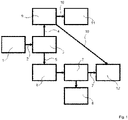
- FIG 1 shows a flow chart for the selection, processing and use of individual material flows.
- biomass in particular sewage sludge from a sewage treatment plant
- a hydrothermal carbonization process 1 whereby the material flow 2 obtained by the hydrothermal carbonization process is first subjected to a solid-liquid separation 3 and thus separated into a material flow 5 containing solids and a material flow 4 containing process water, without the pH value of the material flow 2 originating from the hydrothermal carbonization process being reduced or which is adapted to the process water-containing 4 and solids-containing material flow 5 formed after the solid-liquid separation 3 .
- the solids-containing material flow 5 separated from the process water by the solid-liquid separation 3 is then treated by means of leaching 6, i.e. the dissolving or extraction of materials using suitable solutions or solvents, so that the phosphorus compounds present within the solids-containing material flow 5 are dissolved out or can be extracted.
- the solids-containing material stream 5 treated by means of leaching 6 is then subjected to a solid-liquid separation 3, whereby solids 8, in particular HTC coal, and a phosphorus-containing material stream 7 are obtained.
- solids 8 in particular HTC coal
- a phosphorus-containing material stream 7 are obtained.
- the solid 8 obtained in this way which usually consists exclusively of HTC Kolle, can then be subjected to further cleaning steps, in particular further infiltration and leaching, so that this optionally cleaned solid 8 can then be used as a carrier material or sorbent for the purification of waste water, in particular of Sewage treatment plants, suitable.
- the phosphorus-containing stream 7 obtained by the solid-liquid separation 3 can be cleaned to increase the purity, for example by filtration, in particular micro-, ultra- or nanofiltration, or by means of liquid-liquid extraction.
- the optionally cleaned phosphorus-containing stream 7 can then be brought into contact with the nitrogen-containing stream for MAP precipitation 12, the adjustment of the pH value being necessary for the precipitation of the MAP can be advantageous, in particular to positively influence the speed of the precipitation reaction.
- process-water-containing stream 4 obtained from the solid-liquid separation 3 can be introduced into an anaerobic reactor 9 to exclude the nitrogen compounds present within the process-water-containing stream 4 .
- Part of the material flow 4 containing process water can also be returned to the hydrothermal carbonization process 1 for the recovery of any compounds that have not yet been fully converted and any residual heat that is still present.
- the nitrogen-containing stream 10 formed by the digestion of the nitrogenous compounds in the anaerobic reactor 9, the pH value of which is also not adjusted after the digestion, can then be cleaned, for example, by means of ultra- and nanofiltration and then used both for ammonium sulfate precipitation 11 with sulfuric acid and can also be used for MAP precipitation with the phosphorus-containing stream 7 and magnesium chloride.
Landscapes
- Chemical & Material Sciences (AREA)
- Organic Chemistry (AREA)
- Inorganic Chemistry (AREA)
- Engineering & Computer Science (AREA)
- Materials Engineering (AREA)
- Chemical Kinetics & Catalysis (AREA)
- Life Sciences & Earth Sciences (AREA)
- Hydrology & Water Resources (AREA)
- Environmental & Geological Engineering (AREA)
- Water Supply & Treatment (AREA)
- Analytical Chemistry (AREA)
- Oil, Petroleum & Natural Gas (AREA)
- Separation Using Semi-Permeable Membranes (AREA)
Abstract
Die Erfindung betrifft ein Verfahren zur selektiven Trennung und Aufbereitung von Stoffströmen aus einem hydrothermalen Karbonisierungsprozess, wobei der aus dem hydrothermalen Karbonisierungsprozess entstammende Stoffstrom mittels einer Fest-Flüssig-Trennung in einen feststoffhaltigen Stoffstrom und in einen prozesswasserhaltigen Stoffstrom separiert und in einem Endschritt aus dem wenigstens einem Stoffstrom ein Produkt gebildet wird.Um energie- und ressourcenschonend eine Selektierung und Auftrennung von wenigstens einem Stoffstrom aus einem hydrothermalen Karbonisierungsprozess durchführen zu können, schlägt das erfindungsgemäße Verfahren vor, dass zur Justierung des pH-Werts des wenigstens einen Stoffstroms eine Zugabe von Säuren und Basen weggelassen wird.Damit können insbesondere unerwünschte Effekte, beispielsweise eine vorzeitige Ausfällung etwaiger gelöster Stoffe, unterbunden werden, bis schließlich das gewünschte Zwischenprodukt bzw. Endprodukt aus dem wenigstens einen, aus dem hydrothermalen Karbonisierungsprozess entstammenden Stoffstrom extrahiert werden kann.
Description
- Die Erfindung betrifft ein Verfahren zur selektiven Trennung und Aufbereitung von Stoffströmen aus einem hydrothermalen Karbonisierungsprozess, wobei der aus dem hydrothermalen Karbonisierungsprozess entstammende Stoffstrom mittels einer Fest-Flüssig-Trennung in einen feststoffhaltigen Stoffstrom und in einen prozesswasserhaltigen Stoffstrom separiert und in einem Endschritt aus dem wenigstens einem Stoffstrom ein Produkt gebildet wird. Die Erfindung betrifft ebenfalls die Verwendung der durch das Verfahren erhältlichen Stoffströme, im Besonderen zur Herstellung von Ammoniumsulfat, Ammoniumphosphat, Magnesiumammoniumphosphat (MAP) sowie von Trägermaterialien oder Sorbens zur Abwasserreinigung.
- Biomassen, insbesondere Klärschlämme, weisen selten eine homogene Zusammensetzung auf und resultieren sehr häufig aus unterschiedlichsten Stoffströmen sowie Zuflüssen, wobei ein solches Gemisch nur dann effizient aufbereitet und verwertet werden kann, wenn ein entsprechender Aufschluss wieder die spätere Selektierung in Einzelstoffströme ermöglicht.
- Ein solches mögliches Aufschlussverfahren ist die Behandlung der Biomasse mittels eines hydrothermalen Karbonisierungsverfahrens (HTC), bei dem die Biomasse unter hohem Druck und Temperatur, meist in einen Temperaturbereich von 185 bis 220 °C und Drücken bis zu 25 bar, behandelt wird. Üblicherweise bestehen solche Biomassen zu einem hohen Prozentsatz aus Kohlenhydraten oder Polysacchariden, die unter Abspaltung von Kohlendioxid und Wasser Kohle, ähnlich der Braunkohle, bilden.
- Solche hydrothermalen Karbonisierungsverfahren sind bereits im Stand der Technik vielfältig bekannt, etwa aus der
DE 10 2011 001 954 A1 . Diese Schrift sieht vor, während des Ablaufens der hydrothermalen Karbonisierung eine Durchmischung der Biomasse sowie des zugefügten Dampfes vorzunehmen, um aufgrund der Durchmischung eine große Reaktionsfläche und damit eine große Angriffsfläche für Druck und Hitze bereitzustellen. Es hat sich gezeigt, dass hieraus eine deutlich schneller beginnende und gleichmäßiger ablaufende Karbonisierungsreaktion erfolgt. - Basis der hydrothermalen Karbonisierungsreaktion ist die zugeführte Biomasse, welche üblicherweise Lignin enthält, in welchem die zur Karbonisierung vorgesehene Zellulose, also ein Polysaccharid, gebunden ist.
- Zu Beginn des hydrothermalen Karbonisierungsprozesses findet zunächst eine Hydrolyse statt, welche eine Umwandlung der Zellulose in Glukose bewirkt. Diese ist hierbei im Prozesswasser gelöst. Innerhalb des Prozesses erfordert die Hydrolyse lediglich eine kurze Zeit, etwa ein bis zwei Minuten. Anschließend findet dann die eigentliche Karbonisierungsreaktion statt, wobei diese meist unter einem Druck von etwa 25 bar und bei einer Temperatur von 210 bis 230 °C abläuft.
- Nach der Karbonisierung erfolgt als praktisch letzter großer Schritt die sogenannte Kondensation, bei welcher ein Zusammenschließen der wasserlöslichen Kohlenstoff-Bestandteile zu größeren Molekülen erfolgt. Daraus bildet sich anschließend die HTC-Kohle. Diese hat ähnliche Eigenschaften wie Braunkohle und kann daher als Energieträger, aber auch zur Bodenverbesserung oder als Sorbens in der Abwasserreinigung eingesetzt werden.
- Vergleichbares ist aus der
DE 10 2014 112 108 B3 vorbekannt. Hier wird zur Rückgewinnung von Phosphor aus Klärschlamm ebenfalls ein hydrothermales Karbonisierungsverfahren angewendet, mit einem sich hieran anschließenden sauren Aufschluss, der die in Form von Metallphosphaten vorhandenen Phosphatverbindungen in Phosphorsäure überführt. - Ferner ist aus der Veröffentlichung von Wirth et al. (Wirth, Benjamin, and Jan Mumme. "Anaerobic digestion of waste water from hydrothermal carbonization of corn silage." Appl. Bioenergy 1.1 (2013): 10-2478.) ein Verfahren zur Gewinnung eines stickstoffhaltigen Stoffstroms aus Abwässern mittels eines anaerob geführten Prozesses vorbekannt.
- Ausgehend von diesem Stand der Technik ist die Aufgabe, die sich die Erfindung stellt, die energie- und ressourcenschonende Selektierung und Aufbereitung von Stoffströmen aus einem hydrothermalen Karbonisierungsprozess.
- Diese Aufgabe wird in einem ersten Aspekt mit einem Verfahren gemäß dem unabhängigen Anspruch 1 gelöst. Vorteilhafte Ausgestaltungen des erfindungsgemäßen Verfahrens können den abhängigen Ansprüchen entnommen werden.
- Bei der Erfindung handelt es sich um ein Verfahren zur selektiven Trennung und Aufbereitung von wenigstens einem Stoffstrom aus einem hydrothermalen Karbonisierungsprozess, wobei der aus dem hydrothermalen Karbonisierungsprozess entstammende Stoffstrom mittels einer Fest-Flüssig-Trennung in einen feststoffhaltigen Stoffstrom und in einen prozesswasserhaltigen Stoffstrom separiert und in einem Endschritt aus dem wenigstens einem Stoffstrom ein Produkt gebildet wird.
- Durch die Fest-Flüssig-Trennung können etwaige aus dem hydrothermalen Karbonisierungsprozess entstammende Feststoffe, insbesondere die beim hydrothermalen Karbonisierungsprozess entstehende HTC-Kohle, aus dem wenigstens einen aus dem hydrothermalen Karbonisierungsprozess entstammenden Stoffstrom entfernt werden, sodass der hierdurch erhaltene feststoffhaltige Stoffstrom sowie der prozesswasserhaltige Stoffstrom jeweils für sich im weiteren selektiert und aufbereitet werden können.
- Nach der Selektierung und Aufbereitung, insbesondere durch Reinigung oder Filtration, des wenigstens einen Stoffstroms kann in einem Endschritt aus dem wenigstens einen Stoffstrom ein gewünschtes Produkt oder Zwischenprodukt gebildet werden, wobei dies beispielsweise durch Zugabe einer Säure oder Base unter Bildung eines Salzes erfolgen kann.
- Das erfindungsgemäße Verfahren zeichnet sich dadurch aus, dass der pH-Wert des wenigstens einen, aus dem hydrothermalen Karbonisierungsprozess entstammenden Stoffstroms bis frühestens beim Endschritt nicht justiert wird, insbesondere durch Zugabe einer Säure und/oder einer Base, also letztlich die Zugabe einer Säure oder Base bis zum Erreichen des Endschrittes weggelassen wird.
- Dadurch, dass der pH-Wert des wenigstens einen, aus dem hydrothermalen Karbonisierungsprozess entstammenden Stoffstroms während der Selektierung und Aufbereitung nicht justiert wird, können unerwünschte Effekte, beispielsweise eine vorzeitige Ausfällung etwaiger gelöster Stoffe, unterbunden werden, bis schließlich das gewünschte Zwischenprodukt bzw. Endprodukt aus dem wenigstens einen, aus dem hydrothermalen Karbonisierungsprozess entstammenden Stoffstrom ausgefällt bzw. extrahiert werden kann.
- Hierdurch entfällt beispielsweise die zyklische Anpassung des pH-Wertes nach jedem Trennschritt, womit energie- und ressourcenschonend und somit letztlich kosteneffizient Zwischen- und Endprodukte aus dem wenigstens einen, aus dem hydrothermalen Karbonisierungsprozess entstammenden Stoffstrom gewonnen werden können, da insbesondere der Chemikalieneinsatz, beispielsweise in Form von Säuren und Basen, zur Justierung des pH-Wertes des wenigstens einen aus dem hydrothermalen Karbonisierungsprozess entstammenden Stoffstroms reduziert werden kann.
- Somit stellt die Erfindung ein Verfahren bereit, mit dem letztlich eine kosteneffiziente Verwertung von wenigstens einem aus einem hydrothermalen Karbonisierungsprozess entstammenden Stoffstrom ermöglicht werden kann.
- In einer vorteilhaften Ausgestaltung sieht das Verfahren vor, dass die Bildung des Produktes im Endschritt ohne die Justierung des pH-Wertes des wenigstens einen Stoffstroms erfolgt. Das bedeutet, dass der jeweils vorhandene pH-Wert des wenigstens einen Stoffstroms beispielsweise zur Fällung eines Salzes nicht angepasst wird, um auf zusätzliche Chemikalien, insbesondere Säuren und Basen, verzichten zu können.
- Da je nach zu bildenden Produktes es allerdings vorteilhaft sein kann, dem pH-Wert, insbesondere bei Fällung, anzupassen, um beispielsweise die Reinheit und die maximale Ausbeute des zu bildenden Produktes zu optimieren, sieht das Verfahren in einer weiteren vorteilhaften Ausgestaltung vor, dass der pH-Wert des wenigstens einen Stoffstroms durch Zugabe einer Säure und/oder Base bei der Bildung des Produktes im Endschritt angepasst wird.
- Um den feststoffhaltigen Stoffstrom auch weiterhin durch geeignete Rohrsysteme pumpen und damit zu weiteren Selektierungs- und Aufbereitungsschritten an die entsprechende Anlagen leiten zu können, sieht das Verfahren in einer bevorzugten Ausgestaltung vor, dass der feststoffhaltige Stoffstrom einen Anteil von Feststoffen, insbesondere von HTC-Kohle, in Höhe von bis zu 50 Gew. % aufweist. Durch die Anreicherung der Feststoffe im feststoffhaltigen Stoffstrom auf bis zu 50 Gew. % kann letztlich gewährleistet werden, dass diese Suspension, auch Slurry genannt, auch weiterhin wie eine Flüssigkeit durch beispielweise Rohrsysteme gepumpt werden kann, ohne dass es dabei zu Ablagerungen oder Verstopfungen aufgrund eines zu hohen Feststoffanteils des feststoffhaltigen Stoffstroms bei Transport von diesem kommt oder hohe Drücke zur Förderung benötigt werden, wodurch ebenfalls Energie bei der weiteren Verarbeitung eingespart werden kann.
- In einer weiteren vorteilhaften Ausgestaltung sieht das Verfahren vor, dass die Fest-Flüssig-Trennung des wenigstens einem aus dem hydrothermalen Karbonisierungsprozess entstammenden Stoffstroms in einen feststoffhaltigen und einen prozesswasserhaltigen Stoffstrom mittels Sedimentation durchgeführt wird.
- Bei der Sedimentation handelt es sich um ein Ablagern von Teilchen aus Flüssigkeiten oder Gasen unter dem Einfluss der Gewichts- oder der Zentrifugalkraft. Beispielsweise kommen sogenannte Sedimentationsbecken bzw. Absatzbecken bei Kläranlagen zum Einsatz, bei denen die Stoffe, die schwerer als die Flüssigkeit sind, in der sie sich befinden, auf den Behälterboden sinken. Diese dekantierbaren Stoffe können anschließend mithilfe von Sandfängen oder Schlammsammlern aus der Flüssigkeit entfernt und gegebenenfalls weiterverarbeitet werden.
- In einer weiteren vorteilhaften Ausgestaltung sieht das Verfahren vor, dass ein Teil des prozesswasserhaltigen Stoffstroms in den hydrothermalen Karbonisierungsprozess zurückgeführt wird. Damit können etwaige gelöste Inhaltsstoffe innerhalb des prozesswasserhaltigen Stoffstroms sowie die innerhalb des prozesswasserhaltigen Stoffstroms gespeicherte Wärmeenergie zurück in den hydrothermalen Karbonisierungsprozess geführt werden. Hierdurch kann insbesondere sowohl die Kristallisationsrate und die damit verbundene effektive HTC-Kohlebildung während des hydrothermalen Karbonisierungsprozesses erhöht werden als auch ein Teil der für den hydrothermalen Karbonisierungsprozess benötigten Energie in Form von Wärme aus dem zurückgeführten Teil des prozesswasserhaltigen Stoffstroms zurückgewonnen werden.
- Um vorhandene Phosphorverbindungen aus dem feststoffhaltigen Stoffstrom aufschließen bzw. extrahieren zu können, wobei die Phosphorverbindungen die insbesondere in der durch den hydrothermalen Karbonisierungsprozess hergestellten HTC-Kohle aufgrund deren Adsorptionsaffinität zu Aktivkohle eingeschlossen sind, sieht das Verfahren in einer vorteilhaften Ausgestaltung vor, den feststoffhaltigen Stoffstrom mittels Auslaugung derart zu behandeln, dass die im feststoffhaltigen Stoffstrom enthaltenen Phosphorverbindungen in einen phosphorhaltigen Stoffstrom überführt werden können. Unter Auslaugung ist dabei die Herauslösung von Substanzen mittels eines jeweils geeigneten Lösungsmittels aus einem Feststoff zu verstehen.
- Damit auch schwerlösliche Phosphorverbindungen aus dem feststoffhaltigen Stoffstrom extrahiert bzw. aufgeschlossen werden können, sieht das Verfahren in einer weiteren vorteilhaften Ausgestaltung vor, dass die Auslaugung des feststoffhaltigen Stoffstroms mit Lösungen bzw. Lösungsmitteln mit einem sauren pH-Wert, bevorzugt mit einem pH-Wert von 1 bis 2, durchgeführt wird.
- Ferner sieht das Verfahren in einer vorteilhaften Ausgestaltung vor, dass der phosphorhaltige Stoffstrom mittels einer Filtration und/oder einem Flüssig-Flüssig-Trennverfahren gereinigt wird. Bei der Filtration kann es sich hierbei beispielsweise um eine Mikro-, Ultra- oder Nanofiltration handeln, je nach zu erreichendem Reinheitsgrad. Zu Anwendung können dabei sowohl permeable als auch semipermeable Membranen kommen.
- Unter Flüssig-Flüssig-Trennverfahren ist beispielsweise die Flüssig-Flüssig-Extraktion zu verstehen, bei der die unterschiedlichen Löslichkeiten von Stoffen in zwei nicht miteinander mischbaren Lösungsmitteln ausgenutzt wird. Als Lösungsmittel kommt hierbei meist ein hydrophiles (meist Wasser) und ein hydrophobes, häufig organisches, Lösungsmittel zum Einsatz.
- Da insbesondere die aus dem hydrothermalen Karbonisierungsprozess gebildete HTC-Kohle braunkohleähnliche Eigenschaften aufweist, also sich insbesondere zur Energiegewinnung durch Verbrennung eignet, sieht das Verfahren in einer vorteilhaften Ausgestaltung vor, dass die im feststoffhaltigen Stoffstrom vorhandenen Feststoffe, insbesondere HTC-Kohle, mittels einer Fest-Flüssig-Trennung, insbesondere einer Filtration, aus dem feststoffhaltigen Stoffstrom abgetrennt werden können.
- Auch hier kann es sich bei der Filtration beispielsweise um eine Mikro-, Ultra- oder Nanofiltration handeln, je nach zu erreichendem Reinheitsgrad. Zu Anwendung können dabei sowohl permeable als auch semipermeable Membranen kommen. Darüber hinaus kann es vorteilhaft sein, wenn die Fest-Flüssig-Trennung unter Druck durchgeführt wird, sodass der aus dem feststoffhaltigen Stoffstrom erhaltene Feststoff einen möglichst geringen Anteil von etwaigen flüssigen Rückständen beinhaltet.
- Der von Feststoff abgetrennte, nährstoffreiche und noch Restwärme aus dem hydrothermalen Karbonisierungsprozess enthaltene prozesswasserhaltige Stoffstrom kann in einer vorteilhaften Ausgestaltung des Verfahrens in ein anaerobes Reaktionsgefäß, insbesondere in einen anaeroben Reaktor, zum Aufschluss von Stickstoffverbindungen aus dem prozesswasserhaltigen Stoffstrom und zur Bildung eines stickstoffhaltigen Stoffstroms, eingeführt werden.
- Dabei kann als anaerobes Reaktionsgefäß bzw. Reaktor beispielsweise bei Kläranlagen ein sogenannter Faulturm verwendet werden, bei dem unter Sauerstoffausschluss eine Ammonifikation mithilfe von Mikroorganismen durchgeführt wird. Diese Mikroorganismen, auch Destruenten genannt, sind in der Lage, Ammoniak aus organischen Stickstoffverbindungen abzuspalten, wobei letztlich vor allem Ammoniak, Kohlenstoffdioxid sowie Biogas entsteht. Das so gebildete Ammoniak liegt dabei meist gelöst in Form von Ammonium-Ionen vor, womit letztlich eine Alkalisierung des stickstoffhaltigen Stoffstroms bewirkt wird.
- Um mögliche Rückstände des Ammonifikationsprozess aus dem stickstoffhaltigen Stoffstrom entfernen zu können, sieht das Verfahren in einer vorteilhaften Ausgestaltung vor, dass der stickstoffhaltige Stoffstrom mittels Ultrafiltration gereinigt wird. Generell handelt es sich bei der Ultrafiltration um ein Filtrationsverfahren bei den makromolekularen Substanzen und kleine Partikel aus einem Medium abgetrennt und aufkonzentriert werden können. Die Ausschlussgrenze liegt bei einer Ultrafiltration üblicherweise zwischen 2 und 100 nm, d. h. das größere Substanzen bzw. Partikel die Membran nicht durchdringen können und somit zurückgehalten werden.
- Damit eine hohe Reinheit des stickstoffhaltigen Stoffstroms gewährleistet werden kann, sieht das Verfahren in einer weiteren vorteilhaften Ausgestaltung vor, dass der stickstoffhaltige Stoffstrom mit einer Nanofiltration gereinigt wird. Generell handelt es sich bei der Nanofiltration um ein druckgetriebenes Membranfiltrationsverfahren, das gelöste Moleküle, Schwermetallionen und andere kleine Partikel zurückhält. Die Ausschlussgrenze liegt bei einer Nanofiltration üblicherweise bei einer Porengröße von maximal 2 nm. Somit können auch inerte bzw. refraktäre, also schwer abbaubare bzw. abbauresistente Verbindungen zurückgehalten werden. Dabei handelt es sich aufgrund des hydrothermalen Karbonisierungsprozesses typischerweise um niedrigmolekulare aromatische Amine und Säuren, z.B. Huminverbindungen, insbesondere Huminstoffhydrolysate, die teilweise nicht wasserlöslich oder nur in einem basischen Milieu löslich sind. In vorteilhafter Weise werden die so zurückgehaltenen Verbindungen und Partikel wieder in den hydrothermalen Karbonisierungsprozess und/oder in das anaerobe Gefäß zur weiteren Zerlegung zurückgeführt.
- Gemäß einem weiteren Aspekt betrifft die vorliegende Erfindung einen stickstoffhaltigen Stoffstrom, der durch das oben beschriebene Verfahren erhältlich ist.
- Die Erfindung sieht vor, dass der stickstoffhaltige Stoffstrom zur Herstellung von Ammoniumsulfat mit Schwefelsäure in Kontakt gebracht wird. Dabei kann sich das Ammoniumsulfat beispielsweise durch das innerhalb des stickstoffhaltigen Stoffstroms vorhandene Ammoniak durch Reaktion mit der Schwefelsäure bilden.
- Dabei liegt das Ammoniak im stickstoffhaltigen Stoffstrom gelöst in Form von Ammonium-Ionen vor, wobei sich das Dissoziationsgleichgewicht zwischen Ammonium-Ionen und Ammoniak durch den pH-Wert und der Temperatur einstellen lässt, sodass es vorteilhaft ist, die aus dem Ammonifikationsprozess verbliebene Restwärme zur Verschiebung des Dissoziationsgleichgewichts zu nutzen, um damit die Ausbeute des innerhalb des stickstoffhaltigen Stoffstroms gelösten Ammoniak zu erhöhen.
- Daher sieht die Verwendung in einer vorteilhaften Ausgestaltung vor, dass der stickstoffhaltige Stoffstrom mittels einer Base, bevorzugt Natronlauge, in einen basischen pH-Wert-Bereich gebracht wird, bevorzugt in einem Bereich von 9 bis 10. Hierdurch kann der Anteil des in dem stickstoffhaltigen Stoffstrom vorhandenen Ammoniaks und letztlich die Ausbeute des durch die Reaktion mit der Schwefelsäure gebildeten Ammoniumsulfats erhöht werden.
- Um jedoch bei der Bildung des Ammoniumsulfats eine hohe Reinheit der sich bildenden Kristalle bzw. Salzen gewährleisten zu können, sieht die Verwendung in einer vorteilhaften Ausgestaltung vor, dass der stickstoffhaltige Stoffstrom im Gegenstrombetrieb oder Gleichstrombetrieb an einer semipermeablen Membran mit der zur Bildung des Ammoniumsulfats reagierenden Schwefelsäure in Kontakt gebracht wird. Dabei kann das innerhalb des stickstoffhaltigen Stoffstroms vorhandene Ammoniak durch die semipermeable Membran insbesondere gasförmig hindurch diffundieren, um anschließend nach durchdringen der semipermeablen Membran mit der Schwefelsäure zu Ammoniumsulfat zu reagieren.
- Da die Bildung von Ammoniumsulfat aus Ammoniak und Schwefelsäure eine stark exotherme Reaktion ist, wird das in Kontakt bringen der jeweiligen Stoffströme, also des stickstoffhaltigen Stoffstroms und der Schwefelsäure, im Gegenstromprinzip oder Gleichstromprinzip betrieben, da hierdurch ein optimaler Wärmeaustausch zwischen den beiden Stoffströmen stattfinden kann. Darüber hinaus kann das durch die pH-Wertänderung schlagartig ausfallende Ammoniumsulfat energiesparend zu Kristallen eingedampft werden, womit eine hohe Reinheit der derart gebildeten Ammoniumsulfatkristalle bzw. -salze gewährleistet werden kann.
- Die semipermeable Membran kann dabei in einer vorteilhaften Ausgestaltung hydrophobe Eigenschaften und/oder eine Porengröße von 0,1 bis 0,3 µm aufweisen. Als hydrophobes Material für die semipermeable Membran eignet sich dabei insbesondere Polytetraflourethylen, Polypropylen oder Polyvinylidenflourid.
- Gemäß einem weiteren Aspekt betrifft die vorliegende Erfindung einen phosphorhaltigen Stoffstrom, der durch das oben beschriebene Verfahren erhältlich ist.
- Die Erfindung sieht vor, dass der phosphorhaltige Stoffstrom und der stickstoffhaltige Stoffstrom zur Bildung von Ammoniumphosphat in Kontakt gebracht werden. Der gelöste bzw. aufgeschlossene Phosphor kann dabei im phosphorhaltigen Stoffstrom beispielsweise in Form von Phosphorsäure vorliegen, wobei die Phosphorsäure mit dem im stickstoffhaltigen Stoffstrom vorhandenen Ammoniak bei in Kontakt bringen des phosphorhaltigen Stoffstroms mit dem stickstoffhaltigen Stoffstrom innerhalb des phosphorhaltigen Stoffstroms zu Ammoniumphosphat reagieren kann. Das so gebildete Ammoniumphosphat liegt dabei allerdings aufgrund seiner hohen Löslichkeit meist im phosphorhaltigen Stoffstrom gelöst vor.
- Um sicherzustellen, dass der gelöste bzw. aufgeschlossene Phosphor im phosphorhaltigen Stoffstrom in Form von Phosphorsäure vorliegt, sieht die Verwendung in vorteilhafter Ausgestaltung vor, dass der phosphorhaltige Stoffstrom mittels einer Säure, bevorzugt Schwefelsäure, in eine pH-Wert-Bereich von 0,5-1,5 eingestellt wird. Durch die Zugabe einer geeignet starken Säure, insbesondere von Schwefelsäure, kann sichergestellt werden, dass der gelöste bzw. aufgeschlossene Phosphor im phosphorhaltigen Stoffstrom in Form von Phosphorsäure vorliegt.
- Da das Ammoniak im stickstoffhaltigen Stoffstrom gelöst in Form von Ammonium-lonen vorliegt, wobei sich das Dissoziationsgleichgewicht zwischen Ammonium-lonen und Ammoniak durch den pH-Wert und der Temperatur einstellen lässt, sieht das Verfahren in einer vorteilhaften Verwendung vor, dass der stickstoffhaltige Stoffstrom mittels einer Base, bevorzugt Natronlauge, in einen basischen pH-Wert-Bereich gebracht wird, bevorzugt in einem Bereich von 9 bis 10. Hierdurch kann der Anteil des in dem stickstoffhaltigen Stoffstrom vorhandenen Ammoniaks und letztlich die Ausbeute des durch die Reaktion mit der im phosphorhaltigen Stoffstroms vorhandenen Phosphorsäure gebildeten Ammoniumphosphats erhöht werden.
- Ferner ist die Bildung von Ammoniumphosphat aus Ammoniak und Phosphorsäure eine stark exotherme Reaktion, sodass das in Kontakt bringen der jeweiligen Stoffströme, also des stickstoffhaltigen Stoffstroms und des phosphorhaltigen Stoffstroms, im Gegenstromprinzip betrieben, da hierdurch ein optimaler Wärmeaustausch zwischen den beiden Stoffströmen stattfinden kann. Dabei kann das innerhalb des stickstoffhaltigen Stoffstroms vorhandene Ammoniak durch die semipermeable Membran insbesondere gasförmig hindurch diffundieren, um anschließend nach durchdringen der semipermeablen Membran mit der Phosphorsäure des phosphorhaltigen Stoffstroms zu Ammoniumphosphat zu reagieren.
- Auch hier kann die semipermeable Membran dabei in einer vorteilhaften Ausgestaltung hydrophobe Eigenschaften und/oder eine Porengröße von 0,1 bis 0,3 µm aufweisen. Als hydrophobes Material für die semipermeable Membran eignet sich dabei insbesondere Polytetraflourethylen, Polypropylen oder Polyvinylidenflourid.
- In einer besonders bevorzugten Verwendung des nach dem Verfahren hergestellten stickstoffhaltigen Stoffstroms zur Bildung von Ammoniumphosphat und Ammoniumsulfat kann der stickstoffhaltige Stoffstrom in Serie oder parallel mit dem nach dem Verfahren hergestellten phosphorhaltigen Stoffstrom und mit Schwefelsäure in Kontakt gebracht werden. Hierdurch kann sichergestellt werden, dass sämtliches bei der Ammonifikation hergestellte Ammoniak, welches gelöst in Form von Ammonium-Ionen vorliegen kann, zur Bildung von Ammoniumsalzen genutzt werden kann.
- Insbesondere kann gewährleistet werden, dass sämtlicher aufgeschlossene bzw. gelöste Phosphor im phosphorhaltigen Stoffstrom mit dem im stickstoffhaltigen Stoffstrom enthaltenen Ammoniak zu Ammoniumphosphat reagiert und noch überschüssiges Ammoniak bzw. Ammonium-Ionen in Form von Ammoniumsulfat gewonnen werden kann. Somit kann das im stickstoffhaltigen Stoffstrom enthaltene Ammoniak bzw. die Ammonium-Ionen vollständig verwertet werden.
- Ein weiterer Vorteil liegt darin, dass je nach Bedarf oder gesetzlichen Regelung in den jeweils verschiedenen Staaten der stickstoffhaltige Stoffstrom zur Bildung von Ammoniumphosphat oder zur Bildung von Ammoniumsulfat oder jeweils anteilig zur Bildung von beiden Verbindungen zur Verfügung gestellt werden kann.
- Weiterhin sieht das Verfahren in einer vorteilhaften Verwendung vor, dass das gebildete Ammoniumphosphat, welches bevorzugt gelöst in Form von Ammonium-Ionen und Phosphat-Ionen vorliegt, durch Zugabe von Magnesiumchlorid als Struvit, besser bekannt als Magnesiumammoniumphosphat (MAP), ausgefällt werden kann. Dabei liegt der optimale Auskristallisationspunkt zur Bildung von MAP in einem basischen pH-Wert, bevorzugt in einem Bereich von 7 bis 10, wobei dieser durch Zugabe einer Base, bevorzugt von Natronlauge, und/oder durch Verwendung des stickstoffhaltigen Stoffstroms entsprechend eingestellt werden kann.
- Gemäß einem weiteren Aspekt betrifft die vorliegende Erfindung einen Feststoff, der durch das oben beschriebene Verfahren erhältlich ist.
- Die Erfindung sieht vor, dass die aus dem feststoffhaltigen Stoffstrom gewonnenen Feststoffe, insbesondere die HTC-Kohle, als Trägermaterial für Katalysatoren oder so Sorbens für die Reinigung, insbesondere von Abwässern, genutzt werden kann. Der Vorteil, der sich aus der Verwendung des aus dem feststoffhaltigen Stoffstrom gewonnen Feststoff ergibt, ist, dass insbesondere die darin enthaltenen HTC-Kohle eine hohe Schadstoffaffinität, beispielsweise für Polyaromatische-Kohlenwasserstoffe (PAK), Nanopartikel oder Dioxine, aufweist, welche bei Verwendung des Feststoffs zur Reinigung von Abwässern aus dem jeweiligen Abwasser gefiltert werden können.
- Der mit Schadstoffen beladene Feststoff kann letztlich noch weiter verwendet werden, insbesondere als Brennmaterial zur Energiegewinnung, wobei gerade durch die vorherige Nutzung als Sorbens der Feststoff durch den Einschluss von PAK, Nanopartikel oder Dioxinen einen erhöhten Brennwert aufweist.
- Sämtliche Merkmale der Erfindung können sowohl einzeln als auch in beliebiger Kombination miteinander erfindungswesentlich sein.
- Im Weiteren wird das erfindungsgemäße Verfahren sowie die Verwendung der selektierten und aufbereiteten Stoffströme anhand eines Ausführungsbeispiels näher erläutert.
- Es zeigt:
Fig. 1 : ein Fließbildschema für die Selektierung, Aufbereitung und Verwendung von einzelnen Stoffströmen. -
Figur 1 zeigt ein Fließbildschema für die Selektierung, Aufbereitung und Verwendung von einzelnen Stoffströmen. Zunächst wird Biomasse, insbesondere Klärschlamm von einer Kläranlage, mittels eines hydrothermalen Karbonisierungsprozesses 1 behandelt, wobei der durch das hydrothermale Karbonisierungsprozess erhaltene Stoffstrom 2 zunächst einer Fest-Flüssig-Trennung 3 unterzogen und somit in einen feststoffhaltigen Stoffstrom 5 und einem prozesswasserhaltigen Stoffstrom 4 separiert wird, ohne dass der pH-Wert des aus dem hydrothermalen Karbonisierungsprozess entstammenden Stoffstroms 2 oder die der nach der Fest-Flüssig-Trennung 3 gebildeten prozesswasserhaltigen 4 und feststoffhaltigen Stoffstroms 5 angepasst wird. - Der durch die Fest-Flüssig-Trennung 3 vom Prozesswasser getrennte feststoffhaltige Stoffstrom 5 wird anschließend mittels Auslaugung 6, also dem Lösen bzw. Extrahieren von Stoffen mittels geeigneter Lösungen bzw. Lösungsmitteln, behandelt, sodass die innerhalb des feststoffhaltigen Stoffstroms 5 vorhandenen Phosphorverbindungen herausgelöst bzw. extrahiert werden können.
- Anschließend wird der mittels Auslaugung 6 behandelte feststoffhaltige Stoffstrom 5 einer Fest-Flüssig-Trennung 3 unterzogen, womit Feststoffe 8, insbesondere HTC-Kohle, und ein phosphorhaltige Stoffstrom 7 erhalten wird. Auch hier findet keine Justierung des pH-Wertes des erhaltenen phosphorhaltigen Stoffstroms 7 statt. Der so erhaltene Feststoff 8, wobei dieser meist ausschließlich aus HTC Kolle besteht, kann anschließend beispielsweise weiteren Reinigungsschritten, insbesondere einer weiteren Infiltration sowie Auslaugung unterzogen werden, sodass dieser gegebenenfalls gereinigte Feststoff 8 sich anschließend als Trägermaterial oder Sorbens für die Reinigung von Abwässern, insbesondere von Kläranlagen, eignet.
- Weiterhin kann der durch die Fest-Flüssig-Trennung 3 erhaltene phosphorhaltige Stoffstrom 7 zur Erhöhung der Reinheit beispielsweise durch Filtration, insbesondere Mikro-, Ultra- oder Nanofiltration, oder mittels Flüssig-Flüssig-Extraktion gereinigt werden.
- Der gegebenenfalls gereinigte phosphorhaltige Stoffstrom 7 kann anschließend mit dem stickstoffhaltigen Stoffstrom zur MAP-Fällung 12 in Kontakt gebracht werden, wobei zur Ausfällung des MAP durchaus die Anpassung des pH-Wertes von Vorteil sein kann, insbesondere um die Geschwindigkeit der Fällungsreaktion positiv zu beeinflussen.
- Ferner kann der aus der Fest-Flüssig-Trennung 3 erhaltene, prozesswasserhaltigen Stoffstrom 4 in einen anaeroben Reaktor 9 zum Ausschluss der innerhalb des prozesswasserhaltigen Stoffstroms 4 vorhandenen Stickstoffverbindungen eingeführt werden. Auch kann ein Teil des prozesswasserhaltigen Stoffstroms 4 zur Rückgewinnung von etwaigen noch nicht vollständig umgesetzten Verbindungen sowie noch vorhandener Restwärme in den hydrothermalen Karbonisierungsprozess 1 zurückgeführt werden.
- Der durch den Aufschluss der stickstoffhaltigen Verbindungen im anaeroben Reaktor 9 gebildete, stickstoffhaltige Stoffstrom 10, dessen pH-Wert nach dem Aufschluss ebenfalls nicht justiert wird, kann anschließend beispielsweise mittels einer Ultra- und Nanofiltration gereinigt und danach sowohl zur Ammoniumsulfat-Fällung 11 mit Schwefelsäure als auch zur MAP-Fällung mit dem phosphorhaltigen Stoffstrom 7 und Magnesiumchlorid genutzt werden.
- Somit ist vorstehend eine energie- und ressourcenschonende Selektierung und Aufbereitung von Stoffströmen aus einem hydrothermalen Karbonisierungsprozess sowie deren Verwendung zur Herstellung von Ammoniumsulfat und Magnesiumammoniumphosphat (MAP) sowie Trägermaterialien oder Sorbens zur Abwasserreinigung offenbart.
-
- 1
- Hydrothermaler Karbonisierungsprozess (HTC)
- 2
- HTC-Stoffstrom
- 3
- Fest-Flüssig-Trennung
- 4
- Prozesswasserhaltiger Stoffstrom
- 5
- Feststoffhaltiger Stoffstrom
- 6
- Auslaugung
- 7
- Phosphorhaltiger Stoffstrom
- 8
- Feststoff
- 9
- Anaerober Reaktor
- 10
- Stickstoffhaltiger Stoffstrom
- 11
- Ammoniumsulfat-Fällung
- 12
- MAP-Fällung
Claims (22)
- Verfahren zur selektiven Trennung und Aufbereitung von wenigstens einem Stoffstrom (2,4,5) aus einem hydrothermalen Karbonisierungsprozess (1), wobei der aus dem hydrothermalen Karbonisierungsprozess (1) entstammende Stoffstrom (2) mittels einer Fest-Flüssig-Trennung (3) in einen feststoffhaltigen Stoffstrom (5) und in einen prozesswasserhaltigen Stoffstrom (4) separiert und in einem Endschritt aus dem wenigstens einen Stoffstrom (4,5) ein Produkt gebildet wird, dadurch gekennzeichnet, dass die Justierung des pH-Werts des wenigstens einen Stoffstroms (2,4,5,7,10) durch Zugabe einer Säure und/oder Base frühstens beim Endschritt stattfindet.
- Verfahren nach Anspruch 1, dadurch gekennzeichnet, dass ein Teil des prozesswasserhaltigen Stoffstroms (4) in den hydrothermalen Karbonisierungsprozess (1) zurückgeführt wird.
- Verfahren nach Anspruch 1 oder 2, dadurch gekennzeichnet, dass mittels Auslaugung (6) Phosphorverbindungen aus dem feststoffhaltigen Stoffstrom (5) in einen phosphorhaltigen Stoffstrom (7) überführt werden, wobei die Auslaugung (6) bevorzugt mit Lösungen und/oder Lösungsmitteln mit einem sauren pH-Wert, bevorzugt mit einem pH-Wert in einem Bereich von 1 bis 2, durchgeführt wird und besonders bevorzugt der phosphorhaltige Stoffstrom (7) mittels einer Filtration und/oder einem Flüssig-Flüssig-Trennverfahren gereinigt und/oder aufkonzentriert wird.
- Verfahren nach wenigstens einem der vorhergehenden Ansprüche 1 bis 3, dadurch gekennzeichnet, dass die in dem feststoffhaltigen Stoffstrom (5) vorhandenen Feststoffe (8), insbesondere HTC-Kohle, mittels einer Fest-Flüssig-Trennung, insbesondere einer Filtration, aus dem feststoffhaltigen Stoffstrom (5) abgetrennt werden.
- Verfahren nach wenigstens einem der Ansprüche 1 bis 4, dadurch gekennzeichnet, dass der prozesswasserhaltige Stoffstrom (4) in ein anaerobes Reaktionsgefäß, insbesondere in einen anaeroben Reaktor (9), zum Aufschluss der stickstoffhaltigen Verbindungen aus dem prozesswasserhaltigen Stoffstrom (4) und zur Bildung eines stickstoffhaltigen Stoffstroms (10), eingeführt wird.
- Verfahren nach Anspruch 5, dadurch gekennzeichnet, dass der stickstoffhaltige Stoffstrom (10) mittels Ultrafiltration gereinigt wird.
- Verfahren nach Anspruch 6, dadurch gekennzeichnet, dass der stickstoffhaltige Stoffstrom (10) mittels Nanofiltration gereinigt wird, insbesondere zur Abtrennung von inerten und/oder refraktären Verbindungen.
- Stickstoffhaltiger Stoffstrom, erhältlich aus einem Verfahren gemäß den Ansprüchen 5 bis 7.
- Verwendung des stickstoffhaltigen Stoffstroms nach Anspruch 8 zur Bildung von Ammoniumsulfat durch in Kontakt bringen mit Schwefelsäure.
- Verwendung nach Anspruch 9, dadurch gekennzeichnet, dass mittels einer Base, bevorzugt Natronlauge, der pH-Wert des stickstoffhaltigen Stoffstroms (10) in einen basischen Bereich, bevorzugt in einen Bereich von 9 bis 10, eingestellt wird.
- Verwendung nach Anspruch 9 oder 10, dadurch gekennzeichnet, dass der stickstoffhaltige Stoffstrom (10) im Gleichstrombetrieb an einer semipermeablen Membran mit der Schwefelsäure in Kontakt gebracht wird, wobei bevorzugt die semipermeable Membran hydrophobe Eigenschaften und/oder eine Porengröße von 0,1 bis 0,3 µm aufweist.
- Verwendung nach Anspruch 9 oder 10, dadurch gekennzeichnet, dass der stickstoffhaltige Stoffstrom (10) im Gegenstrombetrieb an einer semipermeablen Membran mit der Schwefelsäure in Kontakt gebracht wird, wobei bevorzugt die semipermeable Membran hydrophobe Eigenschaften und/oder eine Porengröße von 0,1 bis 0,3 µm aufweist.
- Phosphorhaltiger Stoffstrom, erhältlich nach einem Verfahren gemäß Anspruch 3.
- Verwendung des stickstoffhaltigen Stoffstroms (10) nach Anspruch 8 und des phosphorhaltigen Stoffstroms (7) nach Anspruch 13 zur Bildung von Ammoniumphosphat durch in Kontakt bringen des stickstoffhaltigen Stoffstroms (10) mit dem phosphorhaltigen Stoffstrom (7).
- Verwendung nach Anspruch 14, dadurch gekennzeichnet, dass der pH-Wert des phosphorhaltigen Stoffstroms (7) mittels einer Säure, bevorzugt Schwefelsäure, in einen Bereich von 0,5 bis 1,5 eingestellt wird.
- Verwendung nach Anspruch 14 oder 15, dadurch gekennzeichnet, dass der pH-Wert des stickstoffhaltigen Stoffstroms (10) mittels einer Base, bevorzugt Natronlauge, in einen Bereich von 9 bis 11 eingestellt wird.
- Verwendung nach wenigstens einem der Ansprüche 14 bis 16, dadurch gekennzeichnet, dass der phosphorhaltige (7) und der stickstoffhaltige Stoffstrom (10) im Gleichstrombetrieb an einer semipermeablen Membran in Kontakt gebracht werden, wobei bevorzugt die semipermeable Membran hydrophobe Eigenschaften und/oder eine Porengröße von 0,1 bis 0,3 µm aufweist.
- Verwendung nach wenigstens einem der Ansprüche 14 bis 16, dadurch gekennzeichnet, dass der phosphorhaltige (7) und der stickstoffhaltige Stoffstrom (10) im Gegenstrombetrieb an einer semipermeablen Membran in Kontakt gebracht werden, wobei bevorzugt die semipermeable Membran hydrophobe Eigenschaften und/oder eine Porengröße von 0,1 bis 0,3 µm aufweist.
- Verwendung nach wenigstens einem der Ansprüche 14 bis 18, dadurch gekennzeichnet, dass durch Zugabe eines Magnesiumsalzes das Ammoniumphosphat in Form von Magnesiumammoniumphosphat ausgefällt wird.
- Verwendung nach Anspruch 19, dadurch gekennzeichnet, dass der pH-Wert zur Ausfällung von Magnesiumammoniumphosphat mittels einer Base, bevorzugt Natronlauge, und/oder mittels des stickstoffhaltigen Stoffstroms (10) in einen basischen Bereich, insbesondere in einen Bereich von 7 bis 10, gebracht wird.
- Feststoff, erhältlich nach einem Verfahren gemäß Anspruch 4.
- Verwendung des Feststoffs nach Anspruch 21 als Trägermaterial für Katalysatoren oder Sorbens für die Reinigung, insbesondere von Abwässern.
Priority Applications (1)
| Application Number | Priority Date | Filing Date | Title |
|---|---|---|---|
| CN202210225258.6A CN115074146A (zh) | 2021-03-10 | 2022-03-09 | 用于选择性分离和处理来自水热碳化工艺的物料流的方法 |
Applications Claiming Priority (1)
| Application Number | Priority Date | Filing Date | Title |
|---|---|---|---|
| DE102021105793.0A DE102021105793A1 (de) | 2021-03-10 | 2021-03-10 | Verfahren zur selektiven trennung und aufbereitung von stoffströmen aus einem hydrothermalen karbonisierungsprozess |
Publications (1)
| Publication Number | Publication Date |
|---|---|
| EP4056533A1 true EP4056533A1 (de) | 2022-09-14 |
Family
ID=80119267
Family Applications (1)
| Application Number | Title | Priority Date | Filing Date |
|---|---|---|---|
| EP22154306.9A Withdrawn EP4056533A1 (de) | 2021-03-10 | 2022-01-31 | Verfahren zur selektiven trennung und aufbereitung von stoffströmen aus einem hydrothermalen karbonisierungsprozess |
Country Status (3)
| Country | Link |
|---|---|
| EP (1) | EP4056533A1 (de) |
| CN (1) | CN115074146A (de) |
| DE (1) | DE102021105793A1 (de) |
Citations (2)
| Publication number | Priority date | Publication date | Assignee | Title |
|---|---|---|---|---|
| DE102011001954A1 (de) | 2011-04-11 | 2012-10-11 | Orfist AG | Verfahren zur Durchführung einer hydrothermalen Karbonisierungsreaktion und Reaktionstank hierfür |
| DE102014112108B3 (de) | 2014-08-25 | 2015-06-18 | Ava-Co2 Schweiz Ag | Verfahren zur Rückgewinnung von in Abwässern gelöstem Phosphor |
-
2021
- 2021-03-10 DE DE102021105793.0A patent/DE102021105793A1/de not_active Ceased
-
2022
- 2022-01-31 EP EP22154306.9A patent/EP4056533A1/de not_active Withdrawn
- 2022-03-09 CN CN202210225258.6A patent/CN115074146A/zh active Pending
Patent Citations (2)
| Publication number | Priority date | Publication date | Assignee | Title |
|---|---|---|---|---|
| DE102011001954A1 (de) | 2011-04-11 | 2012-10-11 | Orfist AG | Verfahren zur Durchführung einer hydrothermalen Karbonisierungsreaktion und Reaktionstank hierfür |
| DE102014112108B3 (de) | 2014-08-25 | 2015-06-18 | Ava-Co2 Schweiz Ag | Verfahren zur Rückgewinnung von in Abwässern gelöstem Phosphor |
Non-Patent Citations (4)
| Title |
|---|
| ARAGÓN-BRICEÑO C I ET AL: "Hydrothermal carbonization of wet biomass from nitrogen and phosphorus approach: A review", RENEWABLE ENERGY, PERGAMON PRESS, OXFORD, GB, vol. 171, 24 February 2021 (2021-02-24), pages 401 - 415, XP086531815, ISSN: 0960-1481, [retrieved on 20210224], DOI: 10.1016/J.RENENE.2021.02.109 * |
| CHIRAG M. MEHTA ET AL: "Technologies to Recover Nutrients from Waste Streams: A Critical Review", CRITICAL REVIEWS IN ENVIRONMENTAL SCIENCE AND TECHNOLOGY, vol. 45, no. 4, 4 November 2014 (2014-11-04), pages 385 - 427, XP055238278, ISSN: 1064-3389, DOI: 10.1080/10643389.2013.866621 * |
| HE CHAO ET AL: "Effective Nitrogen Removal and Recovery from Dewatered Sewage Sludge Using a Novel Integrated System of Accelerated Hydrothermal Deamination and Air Stripping", ENVIRONMENTAL SCIENCE & TECHNOLOGY, vol. 49, no. 11, 21 May 2015 (2015-05-21), US, pages 6872 - 6880, XP055943049, ISSN: 0013-936X, Retrieved from the Internet <URL:https://pubs.acs.org/doi/pdf/10.1021/acs.est.5b00652> DOI: 10.1021/acs.est.5b00652 * |
| HEILMANN STEVEN M. ET AL: "Phosphorus Reclamation through Hydrothermal Carbonization of Animal Manures", ENVIRONMENTAL SCIENCE & TECHNOLOGY, vol. 48, no. 17, 20 August 2014 (2014-08-20), US, pages 10323 - 10329, XP055942862, ISSN: 0013-936X, Retrieved from the Internet <URL:https://pubs.acs.org/doi/pdf/10.1021/es501872k> DOI: 10.1021/es501872k * |
Also Published As
| Publication number | Publication date |
|---|---|
| CN115074146A (zh) | 2022-09-20 |
| DE102021105793A1 (de) | 2022-09-15 |
Similar Documents
| Publication | Publication Date | Title |
|---|---|---|
| DE3873112T2 (de) | Abwasserbehandlungsverfahren. | |
| EP3390590B1 (de) | Verfahren zur faulung und hydrothermalen karbonisierung von klärschlamm | |
| EP0968964B1 (de) | Verfahren zur stofflichen Verwertung von Gülle | |
| EP3434382A1 (de) | Fraktionierte abscheidung von wertstoffen aus wässrigen vielkomponentengemischen | |
| DE102015203484B4 (de) | Verfahren zur Schlammbehandlung und Schlammbehandlungsanlage | |
| WO2012062353A1 (de) | Verfahren zur nutzung von bei der erzeugung lignozellulosischer faserstoffe anfallendem abwasser | |
| DE102018122354B4 (de) | Verfahren und Anlage zur stofflichen Verwertung eines ammonium- und feststoffhaltigen Mediums | |
| DE102012002590A1 (de) | Verfahren zur Behandlung von Prozesswasser aus einem hydrothermalen Karbonisierungsprozess | |
| EP4056533A1 (de) | Verfahren zur selektiven trennung und aufbereitung von stoffströmen aus einem hydrothermalen karbonisierungsprozess | |
| WO2018197671A1 (de) | Verfahren und vorrichtung zur aufbereitung von abfallprodukten | |
| EP0439770A2 (de) | Verfahren zur Abtrennung von Schadstoffen und Gewinnung von Wertstoffen aus dem Abwasserstrom einer Kokerei | |
| EP4116280B1 (de) | Verfahren und anordnung zur herstellung eines torfersatzstoffes aus einer faserstoffsuspension | |
| EP3484846A1 (de) | Verfahren zur katalytischen erzeugung von ameisensäure und regeneration des dabei eingesetzten katalysators bei geringem überdruck | |
| EP3466890B1 (de) | Verfahren zur aufbereitung von abwasser aus der milchindustrie | |
| Szkadłubowicz et al. | Removal of contaminants from liquid after the hydrothermal carbonization of sewage sludge using a combination of membrane techniques and struvite precipitation | |
| EP1620363A1 (de) | Verfahren zur aufbereitung von nitrathaltigen abw ssern | |
| EP1334952A2 (de) | Verfahren und Vorrichtung zur Behandlung von ammonum-, phosphat- und kaliumhaltigen Flüssigkeiten | |
| DE102018006337A1 (de) | Anlage und Verfahren zur Aufbereitung von Gärresten, Gülle und anderen hochbelasteten Abwässern | |
| DE102015118988B4 (de) | Verfahren zum Betreiben einer Biogasanlage | |
| EP4050086A1 (de) | Beladene kohle und verfahren zu deren herstellung aus biomasse | |
| DE102019131391A1 (de) | Verfahren zur Klärschlammaufbereitung sowie Klärschlammanlage | |
| WO2011091951A1 (de) | Verfahren zur erzeugung von exportdampf in einer industrieanlage | |
| JP7340655B1 (ja) | 液状肥料の製造方法および製造システム | |
| EP4279167A1 (de) | Vorrichtung zur aufbereitung einer lösung sowie entsprechendes verfahren | |
| DE10152751A1 (de) | Verfahren zur Aufbereitung von Biofiltraten aus biotechnologisch behandelten Substraten und Anordnung zur Durchführung des Verfahrens |
Legal Events
| Date | Code | Title | Description |
|---|---|---|---|
| PUAI | Public reference made under article 153(3) epc to a published international application that has entered the european phase |
Free format text: ORIGINAL CODE: 0009012 |
|
| STAA | Information on the status of an ep patent application or granted ep patent |
Free format text: STATUS: THE APPLICATION HAS BEEN PUBLISHED |
|
| AK | Designated contracting states |
Kind code of ref document: A1 Designated state(s): AL AT BE BG CH CY CZ DE DK EE ES FI FR GB GR HR HU IE IS IT LI LT LU LV MC MK MT NL NO PL PT RO RS SE SI SK SM TR |
|
| STAA | Information on the status of an ep patent application or granted ep patent |
Free format text: STATUS: THE APPLICATION IS DEEMED TO BE WITHDRAWN |
|
| 18D | Application deemed to be withdrawn |
Effective date: 20230315 |