EP3620171B1 - Anti-gm-csf antibodies and uses therefor - Google Patents
Anti-gm-csf antibodies and uses therefor Download PDFInfo
- Publication number
- EP3620171B1 EP3620171B1 EP19180152.1A EP19180152A EP3620171B1 EP 3620171 B1 EP3620171 B1 EP 3620171B1 EP 19180152 A EP19180152 A EP 19180152A EP 3620171 B1 EP3620171 B1 EP 3620171B1
- Authority
- EP
- European Patent Office
- Prior art keywords
- csf
- antibody
- human
- artificial sequence
- dna
- Prior art date
- Legal status (The legal status is an assumption and is not a legal conclusion. Google has not performed a legal analysis and makes no representation as to the accuracy of the status listed.)
- Active
Links
Images







Classifications
-
- C—CHEMISTRY; METALLURGY
- C07—ORGANIC CHEMISTRY
- C07K—PEPTIDES
- C07K16/00—Immunoglobulins [IG], e.g. monoclonal or polyclonal antibodies
- C07K16/18—Immunoglobulins [IG], e.g. monoclonal or polyclonal antibodies against material from animals or humans
- C07K16/24—Immunoglobulins [IG], e.g. monoclonal or polyclonal antibodies against material from animals or humans against cytokines, lymphokines or interferons
-
- C—CHEMISTRY; METALLURGY
- C07—ORGANIC CHEMISTRY
- C07K—PEPTIDES
- C07K16/00—Immunoglobulins [IG], e.g. monoclonal or polyclonal antibodies
- C07K16/18—Immunoglobulins [IG], e.g. monoclonal or polyclonal antibodies against material from animals or humans
- C07K16/24—Immunoglobulins [IG], e.g. monoclonal or polyclonal antibodies against material from animals or humans against cytokines, lymphokines or interferons
- C07K16/243—Colony Stimulating Factors
-
- A—HUMAN NECESSITIES
- A61—MEDICAL OR VETERINARY SCIENCE; HYGIENE
- A61P—SPECIFIC THERAPEUTIC ACTIVITY OF CHEMICAL COMPOUNDS OR MEDICINAL PREPARATIONS
- A61P1/00—Drugs for disorders of the alimentary tract or the digestive system
-
- A—HUMAN NECESSITIES
- A61—MEDICAL OR VETERINARY SCIENCE; HYGIENE
- A61P—SPECIFIC THERAPEUTIC ACTIVITY OF CHEMICAL COMPOUNDS OR MEDICINAL PREPARATIONS
- A61P1/00—Drugs for disorders of the alimentary tract or the digestive system
- A61P1/04—Drugs for disorders of the alimentary tract or the digestive system for ulcers, gastritis or reflux esophagitis, e.g. antacids, inhibitors of acid secretion, mucosal protectants
-
- A—HUMAN NECESSITIES
- A61—MEDICAL OR VETERINARY SCIENCE; HYGIENE
- A61P—SPECIFIC THERAPEUTIC ACTIVITY OF CHEMICAL COMPOUNDS OR MEDICINAL PREPARATIONS
- A61P11/00—Drugs for disorders of the respiratory system
- A61P11/06—Antiasthmatics
-
- A—HUMAN NECESSITIES
- A61—MEDICAL OR VETERINARY SCIENCE; HYGIENE
- A61P—SPECIFIC THERAPEUTIC ACTIVITY OF CHEMICAL COMPOUNDS OR MEDICINAL PREPARATIONS
- A61P17/00—Drugs for dermatological disorders
-
- A—HUMAN NECESSITIES
- A61—MEDICAL OR VETERINARY SCIENCE; HYGIENE
- A61P—SPECIFIC THERAPEUTIC ACTIVITY OF CHEMICAL COMPOUNDS OR MEDICINAL PREPARATIONS
- A61P17/00—Drugs for dermatological disorders
- A61P17/06—Antipsoriatics
-
- A—HUMAN NECESSITIES
- A61—MEDICAL OR VETERINARY SCIENCE; HYGIENE
- A61P—SPECIFIC THERAPEUTIC ACTIVITY OF CHEMICAL COMPOUNDS OR MEDICINAL PREPARATIONS
- A61P19/00—Drugs for skeletal disorders
- A61P19/02—Drugs for skeletal disorders for joint disorders, e.g. arthritis, arthrosis
-
- A—HUMAN NECESSITIES
- A61—MEDICAL OR VETERINARY SCIENCE; HYGIENE
- A61P—SPECIFIC THERAPEUTIC ACTIVITY OF CHEMICAL COMPOUNDS OR MEDICINAL PREPARATIONS
- A61P25/00—Drugs for disorders of the nervous system
-
- A—HUMAN NECESSITIES
- A61—MEDICAL OR VETERINARY SCIENCE; HYGIENE
- A61P—SPECIFIC THERAPEUTIC ACTIVITY OF CHEMICAL COMPOUNDS OR MEDICINAL PREPARATIONS
- A61P29/00—Non-central analgesic, antipyretic or antiinflammatory agents, e.g. antirheumatic agents; Non-steroidal antiinflammatory drugs [NSAID]
-
- A—HUMAN NECESSITIES
- A61—MEDICAL OR VETERINARY SCIENCE; HYGIENE
- A61P—SPECIFIC THERAPEUTIC ACTIVITY OF CHEMICAL COMPOUNDS OR MEDICINAL PREPARATIONS
- A61P37/00—Drugs for immunological or allergic disorders
-
- A—HUMAN NECESSITIES
- A61—MEDICAL OR VETERINARY SCIENCE; HYGIENE
- A61P—SPECIFIC THERAPEUTIC ACTIVITY OF CHEMICAL COMPOUNDS OR MEDICINAL PREPARATIONS
- A61P37/00—Drugs for immunological or allergic disorders
- A61P37/08—Antiallergic agents
-
- A—HUMAN NECESSITIES
- A61—MEDICAL OR VETERINARY SCIENCE; HYGIENE
- A61P—SPECIFIC THERAPEUTIC ACTIVITY OF CHEMICAL COMPOUNDS OR MEDICINAL PREPARATIONS
- A61P7/00—Drugs for disorders of the blood or the extracellular fluid
-
- C—CHEMISTRY; METALLURGY
- C07—ORGANIC CHEMISTRY
- C07K—PEPTIDES
- C07K16/00—Immunoglobulins [IG], e.g. monoclonal or polyclonal antibodies
-
- A—HUMAN NECESSITIES
- A61—MEDICAL OR VETERINARY SCIENCE; HYGIENE
- A61K—PREPARATIONS FOR MEDICAL, DENTAL OR TOILETRY PURPOSES
- A61K39/00—Medicinal preparations containing antigens or antibodies
- A61K2039/505—Medicinal preparations containing antigens or antibodies comprising antibodies
-
- C—CHEMISTRY; METALLURGY
- C07—ORGANIC CHEMISTRY
- C07K—PEPTIDES
- C07K2317/00—Immunoglobulins specific features
- C07K2317/10—Immunoglobulins specific features characterized by their source of isolation or production
- C07K2317/14—Specific host cells or culture conditions, e.g. components, pH or temperature
-
- C—CHEMISTRY; METALLURGY
- C07—ORGANIC CHEMISTRY
- C07K—PEPTIDES
- C07K2317/00—Immunoglobulins specific features
- C07K2317/20—Immunoglobulins specific features characterized by taxonomic origin
- C07K2317/21—Immunoglobulins specific features characterized by taxonomic origin from primates, e.g. man
-
- C—CHEMISTRY; METALLURGY
- C07—ORGANIC CHEMISTRY
- C07K—PEPTIDES
- C07K2317/00—Immunoglobulins specific features
- C07K2317/30—Immunoglobulins specific features characterized by aspects of specificity or valency
- C07K2317/33—Crossreactivity, e.g. for species or epitope, or lack of said crossreactivity
-
- C—CHEMISTRY; METALLURGY
- C07—ORGANIC CHEMISTRY
- C07K—PEPTIDES
- C07K2317/00—Immunoglobulins specific features
- C07K2317/50—Immunoglobulins specific features characterized by immunoglobulin fragments
- C07K2317/52—Constant or Fc region; Isotype
-
- C—CHEMISTRY; METALLURGY
- C07—ORGANIC CHEMISTRY
- C07K—PEPTIDES
- C07K2317/00—Immunoglobulins specific features
- C07K2317/50—Immunoglobulins specific features characterized by immunoglobulin fragments
- C07K2317/55—Fab or Fab'
-
- C—CHEMISTRY; METALLURGY
- C07—ORGANIC CHEMISTRY
- C07K—PEPTIDES
- C07K2317/00—Immunoglobulins specific features
- C07K2317/50—Immunoglobulins specific features characterized by immunoglobulin fragments
- C07K2317/56—Immunoglobulins specific features characterized by immunoglobulin fragments variable (Fv) region, i.e. VH and/or VL
-
- C—CHEMISTRY; METALLURGY
- C07—ORGANIC CHEMISTRY
- C07K—PEPTIDES
- C07K2317/00—Immunoglobulins specific features
- C07K2317/50—Immunoglobulins specific features characterized by immunoglobulin fragments
- C07K2317/56—Immunoglobulins specific features characterized by immunoglobulin fragments variable (Fv) region, i.e. VH and/or VL
- C07K2317/565—Complementarity determining region [CDR]
-
- C—CHEMISTRY; METALLURGY
- C07—ORGANIC CHEMISTRY
- C07K—PEPTIDES
- C07K2317/00—Immunoglobulins specific features
- C07K2317/70—Immunoglobulins specific features characterized by effect upon binding to a cell or to an antigen
- C07K2317/73—Inducing cell death, e.g. apoptosis, necrosis or inhibition of cell proliferation
-
- C—CHEMISTRY; METALLURGY
- C07—ORGANIC CHEMISTRY
- C07K—PEPTIDES
- C07K2317/00—Immunoglobulins specific features
- C07K2317/70—Immunoglobulins specific features characterized by effect upon binding to a cell or to an antigen
- C07K2317/76—Antagonist effect on antigen, e.g. neutralization or inhibition of binding
-
- C—CHEMISTRY; METALLURGY
- C07—ORGANIC CHEMISTRY
- C07K—PEPTIDES
- C07K2317/00—Immunoglobulins specific features
- C07K2317/90—Immunoglobulins specific features characterized by (pharmaco)kinetic aspects or by stability of the immunoglobulin
- C07K2317/92—Affinity (KD), association rate (Ka), dissociation rate (Kd) or EC50 value
-
- C—CHEMISTRY; METALLURGY
- C07—ORGANIC CHEMISTRY
- C07K—PEPTIDES
- C07K2319/00—Fusion polypeptide
Definitions
- Granulocyte-macrophage colony stimulating factor was originally identified as a hemopoietic growth factor. It is produced by a number of cell types including lymphocytes, monocytes, endothelial cells, fibroblasts and some malignant cells (Metcalf et al., 1986; Clark and Kamen, 1987; Hart et al., 1988; Metcalf et al., 1986). In addition to having a function of growth stimulation and differentiation on hemopoietic precursor cells, GM-CSF also was discovered as having a variety of effects on cells of the immune system expressing the GM-CSF receptor (for review see: Hamilton, 2002; de Groot et al., 1998).
- Mature GM-CSF is a monomeric protein of 127 amino acids with two glycosylation sites. The variable degree of glycosylation results in a molecular weight range between 14kDa and 35kDa.
- Non-glycosylated and glycosylated GM-CSF show similar activity in vitro (Cebon et al., 1990).
- the crystallographic analysis of GM-CSF revealed a barrel-shaped structure composed of four short alpha helices (Diederichs et al., 1991). The overall folding is similar to other growth factors like growth hormone, interleukin-2 and interleukin-4.
- GM-CSF exerts its biological activity by binding to its receptor (Kastelein and Shanafelt, 1993; Sisson and Dinarello, 1988).
- the most important sites of GM-CSF receptor (GM-CSF-R) expression are on the cell surface of myeloid cells and endothelial cells, whereas lymphocytes are GM-CSF-R negative.
- the native receptor is composed of at least two subunits, alpha and beta. The alpha subunit imparts ligand specificity and binds GM-CSF with nanomolar affinity (Gearing et al., 1989; Gasson et al., 1986).
- the beta subunit is also part of the interleukin-3 and interleukin-5 receptor complexes and, in association with the GM-CSF receptor alpha subunit and GM-CSF, leads to the formation of a complex with picomolar binding affinity (Hayashida et al., 1990).
- the binding domains on GM-CSF for the receptor have been mapped: GM-CSF interacts with the beta subunit of its receptor via a very restricted region in the first alpha helix of GM-CSF (Shanafelt et al., 1991b; Shanafelt et al., 1991a; Lopez et al., 1991).
- Binding to the alpha subunit could be mapped to the third alpha helix, helix C, the initial residues of the loop joining helices C and D, and to the carboxyterminal tail of GM-CSF (Brown et al., 1994).
- GM-CSF trimeric receptor complex leads to the activation of complex signaling cascades involving molecules of the JAK/STAT families, Shc, Ras, Raf, the MAP kinases, phosphatidylinositol-3-kinase and NFkB, finally leading to transcription of c-myc, c-fos and c-jun.
- Activation is mainly induced by the beta subunit of the receptor (Hayashida et al., 1990; Kitamura et al., 1991; Sato et al., 1993).
- the shared beta subunit is also responsible for the overlapping functions exerted by IL-3, IL-5 and GM-CSF (for review see: de Groot et al., 1998).
- GM-CSF functions especially as a proinflammatory cytokine. Macrophages and monocytes as well as neutrophils and eosinophils become activated by GM-CSF, resulting in the release of other cytokines and chemokines, matrix degrading proteases, increased HLA expression and increased expression of cell adhesion molecules or receptors for CC-chemokines.
- GM-CSF exerts its activity in synergy with other inflammatory stimulating factors like other cytokines or LPS, e.g. neutrophils treated with GM-CSF in combination with e.g. LPS will show increased oxidative burst (Kaufman et al., 1989; Rapoport et al., 1992).
- GM-CSF as target for anti-inflammatory therapy: Due to its diverse activating functions in the immune system, GM-CSF can be considered as a target for anti-inflammatory therapy. Chronic and acute inflammatory diseases like rheumatoid arthritis (RA), multiple sclerosis (MS), Crohn's disease, psoriasis, asthma, atopic dermatitis or shock may well benefit from the blocking of GM-CSF activity and subsequent reduction of harmful activities of GM-CSF responsive cells (Hamilton, 1993; Zhang et al., 1998; Hamilton, 2002).
- RA rheumatoid arthritis
- MS multiple sclerosis
- psoriasis psoriasis
- asthma atopic dermatitis or shock
- GM-CSF as well as its receptor, are present in the synovial joint of arthritis patients (Alvaro-Gracia et al., 1991; Xu et al., 1989; Haworth et al., 1991). Additionally, GM-CSF was shown to cause flares of rheumatoid arthritis in patients treated with GM-CSF for neutropenia in Felty's syndrome (Hazenberg et al., 1989) or after chemotherapy (de Vries et al., 1991).
- Blocking GM-CSF is expected to inhibit or reduce:
- Asthma In asthma, increased amounts of GM-CSF in the lung have been reported (Broide and Firestein, 1991). At the same time eosinophils are elevated, on which GM-CSF in synergy with interleukin-5 acts in three ways: i) it stimulates the differentiation from progenitor cells into eosinophils, ii) it stimulates their functional activation, and iii) it prolongs the survival of eosinophils in the lung (Broide et al., 1992; Yamashita et al., 2002). Thus, reduction of the survival of eosinophils in asthmatic airways by blocking GM-CSF is likely to ameliorate disease. The usefulness of anti-GM-CSF neutralizing antibodies was further shown in a model for murine asthma where the administration of such antibodies led to significant reduction of airway hyperresponsiveness and airway inflammation (Yamashita et al., 2002).
- LPS-dependent inflammation of the lung could be reduced by application of anti-GM-CSF antibody 22E9 in the mouse (Bozinovski et al., 2003).
- GM-CSF granulocyte/macrophage colony-stimulating factor
- GM-CSF does not seem to be essential for the maintenance of normal levels of the major types of mature hematopoietic cells and their precursors in blood, marrow, and spleen. However, they implicate GM-CSF as being essential for normal vascular development, pulmonary physiology, and for resistance to local infection (Stanley et al., 1994; Dranoff et al., 1994; Plenz et al., 2003; Shibata et al., 2001). Recently, a strong association of auto-antibodies to GM-CSF with PAP has additionally implicated GM-CSF signaling abnormalities in the pathogenesis of PAP in humans.
- GM-CSF has a critical role in regulation of surfactant homeostasis and alveolar macrophage innate immune functions in the lung (Bonfield et al., 2002; Trapnell and Whitsett, 2002; Uchida et al., 2004; Kitamura et al., 1999).
- the compound E21R a modified form of GM-CSF that antagonizes the function of GM-CSF, had been evaluated in a phase I safety trial and was found to have a good safety profile in cancer patients (Olver et al., 2002).
- EP 0499161 A1 describes an antibody generated by immunization of mice with oligopeptides, the sequence of which is derived from a GM-CSF. Furthermore, the application discloses a method of alleviating in a mammal in need thereof an undesirable effect of GM-CSF, which comprises administering to said mammal a GM-CSF-inhibiting amount of an immunoglobulin.
- that antibody is a murine antibody, rendering it unsuitable for human administration.
- WO 03/068920 discloses a chimeric mouse/human IgG1 antibody, referred to therein as chimeric 19/2, that is reported to demonstrate neutralizing activity of GM-CSF stimulated cell growth.
- Antibodies that contain non-human sequences are likely to elicit an immune response in the human patient and are not appropriate for the therapeutic administration. For instance, in diseases where long-term treatment is required (e.g. chronic inflammatory diseases like rheumatoid arthritis, asthma and multiple sclerosis), continued administration of a non-human therapeutic agent increases the likelihood of a severe inflammatory reaction and the production of human antibodies that may neutralize the therapeutic agent.
- the present invention satisfies these and other needs by providing fully highly efficacious anti-GM-CSF antibodies, which are described below.
- references in the description to methods of treatment refer to the compounds, pharmaceutical compositions and medicaments of the present invention for use in a method for treatment of the human (or animal) body by therapy (or for diagnosis).
- the invention provides an isolated human IgG1 antibody comprising an antigen-binding region that is specific for GM-CSF comprising
- compositions of the invention may be used for therapeutic or prophylactic applications.
- the invention therefore provides a pharmaceutical composition comprising a human IgG1 antibody comprising an antigen-binding region that is specific for GM-CSF comprising
- the invention provides a pharmaceutical composition comprising an isolated human IgG1 antibody comprising an antigen-binding region that is specific for GM-CSF comprising
- an isolated human IgG1 antibody comprising an antigen-binding region that is specific for GM-CSF comprising
- the inflammatory disease is taken from the list of rheumatoid arthritis, multiple sclerosis, Crohn's disease, psoriasis, asthma, atopic dermatitis and shock. In another embodiment the inflammatory disease is rheumatoid arthritis.
- Human antibodies of the present invention may be cross-reactive with rat and/or rhesus (macaca) GM-CSF, as determined by solution equilibrium titration (SET), and/or TF1 proliferation assay.
- SET solution equilibrium titration
- the present invention is based on the discovery of novel antibodies that are specific to or have a high affinity for GM-CSF and possess one or more other novel properties.
- an antibody of the invention can deliver a therapeutic benefit to a subject.
- the antibodies of the invention which are human, can be used in many contexts, which are more fully described herein.
- a "human” antibody or functional human antibody fragment is hereby defined as one that is not chimeric (e.g., not “humanized”) and not from (either in whole or in part) a non-human species.
- a human antibody or functional antibody fragment can be derived from a human or can be a synthetic human antibody.
- a "synthetic human antibody” is defined herein as an antibody having a sequence derived, in whole or in part, in silico from synthetic sequences that are based on the analysis of known human antibody sequences. In silico design of a human antibody sequence or fragment thereof can be achieved, for example, by analyzing a database of human antibody or antibody fragment sequences and devising a polypeptide sequence utilizing the data obtained therefrom.
- Another example of a human antibody or functional antibody fragment is one that is encoded by a nucleic acid isolated from a library of antibody sequences of human origin (i.e., such library being based on antibodies taken from a human natural source).
- an antibody “binds specifically to,” is “specific to/for” or “specifically recognizes” an antigen (here, GM-CSF) if such antibody is able to discriminate between such antigen and one or more reference antigen(s), since binding specificity is not an absolute, but a relative property.
- an antigen here, GM-CSF
- “specific binding” is referring to the ability of the antibody to discriminate between the antigen of interest and an unrelated antigen, as determined, for example, in accordance with one of the following methods. Such methods comprise, but are not limited to Western blots, ELISA-, RIA-,ECL-, IRMA-tests and peptide scans.
- a standard ELISA assay can be carried out.
- the scoring may be carried out by standard color development (e.g. secondary antibody with horseradish peroxide and tetramethyl benzidine with hydrogenperoxide).
- the reaction in certain wells is scored by the optical density, for example, at 450 nm.
- determination of binding specificity is performed by using not a single reference antigen, but a set of about three to five unrelated antigens, such as milk powder, BSA, transferrin or the like.
- binding also may refer to the ability of an antibody to discriminate between the target antigen and one or more closely related antigen(s), which are used as reference points, e.g. between GM-CSF and IL3, IL5, IL-4, IL13 or M-CSF. Additionally, “specific binding” may relate to the ability of an antibody to discriminate between different parts of its target antigen, e.g. different domains or regions of GM-CSF, or between one or more key amino acid residues or stretches of amino acid residues of GM-CSF.
- an “immunoglobulin” hereby is defined as a protein belonging to the class IgG, IgM, IgE, IgA, or IgD (or any subclass thereof), and includes all conventionally known antibodies and functional fragments thereof.
- a "functional fragment" of an antibody/immunoglobulin hereby is defined as a fragment of an antibody/immunoglobulin (e.g., a variable region of an IgG) that retains the antigen-binding region.
- an "antigen-binding region" of an antibody typically is found in one or more hypervariable region(s) of an antibody, i.e., the CDR-1, -2, and/or -3 regions; however, the variable "framework" regions can also play an important role in antigen binding, such as by providing a scaffold for the CDRs.
- the "antigen-binding region” comprises at least amino acid residues 4 to 103 of the variable light (VL) chain and 5 to 109 of the variable heavy (VH) chain, more preferably amino acid residues 3 to 107 of VL and 4 to 111 of VH, and particularly preferred are the complete VL and VH chains (amino acid positions 1 to 109 of VL and 1 to 113 of VH; numbering according to WO 97/08320 ).
- "Functional fragments” include the domain of a F(ab') 2 fragment, a Fab fragment, scFv or constructs comprising single immunoglobulin variable domains or single domain antibody polypeptides, e.g. single heavy chain variable domains or single light chain variable domains.
- the F(ab') 2 or Fab may be engineered to minimize or completely remove the intermolecular disulphide interactions that occur between the C H1 and C L domains.
- An antibody of the invention may be derived from a recombinant antibody library that is based on amino acid sequences that have been designed in silico and encoded by nucleic acids that are synthetically created.
- silico design of an antibody sequence is achieved, for example, by analyzing a database of human sequences and devising a polypeptide sequence utilizing the data obtained therefrom.
- Methods for designing and obtaining in silico-created sequences are described, for example, in Knappik et al., J. Mol. Biol. (2000) 296:57 ; Krebs et al., J. Immunol. Methods. (2001) 254:67 ; and U.S. Patent No. 6,300,064 issued to Knappik et al.
- MOR03684 represents an antibody having a variable heavy region corresponding to SEQ ID NO: 1 (DNA)/SEQ ID NO: 11 (protein) and a variable light region corresponding to SEQ ID NO: 21 (DNA)/SEQ ID NO: 31 (protein).
- MOR04251 represents an antibody having a variable heavy region corresponding to SEQ ID NO: 2 (DNA)/SEQ ID NO: 12 (protein) and a variable light region corresponding to SEQ ID NO: 22 (DNA)/SEQ ID NO: 32 (protein).
- MOR03929 represents an antibody having a variable heavy region corresponding to SEQ ID NO: 3 (DNA)/SEQ ID NO: 13 (protein) and a variable light region corresponding to SEQ ID NO: 23 (DNA)/SEQ ID NO: 33 (protein).
- MOR04252 represents an antibody having a variable heavy region corresponding to SEQ ID NO: 4 (DNA)/SEQ ID NO: 14 (protein) and a variable light region corresponding to SEQ ID NO: 24 (DNA)/SEQ ID NO: 34 (protein).
- MOR04287 represents an antibody having a variable heavy region corresponding to SEQ ID NO: 5 (DNA)/SEQ ID NO: 15 (protein) and a variable light region corresponding to SEQ ID NO: 25 (DNA)/SEQ ID NO: 35 (protein).
- MOR04290 represents an antibody having a variable heavy region corresponding to SEQ ID NO: 6 (DNA)/SEQ ID NO: 16 (protein) and a variable light region corresponding to SEQ ID NO: 26 (DNA)/SEQ ID NO: 36 (protein).
- MOR04302 represents an antibody having a variable heavy region corresponding to SEQ ID NO: 7 (DNA)/SEQ ID NO: 17 (protein) and a variable light region corresponding to SEQ ID NO: 27 (DNA)/SEQ ID NO: 37 (protein).
- MOR04350 represents an antibody having a variable heavy region corresponding to SEQ ID NO: 8 (DNA)/SEQ ID NO: 18 (protein) and a variable light region corresponding to SEQ ID NO: 28 (DNA)/SEQ ID NO: 38 (protein).
- MOR04354 represents an antibody having a variable heavy region corresponding to SEQ ID NO: 9 (DNA)/SEQ ID NO: 19 (protein) and a variable light region corresponding to SEQ ID NO: 29 (DNA)/SEQ ID NO: 39 (protein).
- MOR04357 represents an antibody having a variable heavy region corresponding to SEQ ID NO: 10 or 48 (DNA)/SEQ ID NO: 20 (protein) and a variable light region corresponding to SEQ ID NO: 30 or 57 (DNA)/SEQ ID NO: 40 (protein).
- MOR03682 represents an antibody having a variable heavy region corresponding to SEQ ID NO: 44 (DNA)/SEQ ID NO: 49 (protein) and a variable light region corresponding to SEQ ID NO: 53 (DNA)/SEQ ID NO: 58 (protein).
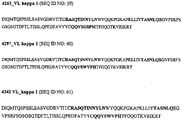
- MOR04283 represents an antibody having a variable heavy region corresponding to SEQ ID NO: 45 (DNA)/SEQ ID NO: 50 (protein) and a variable light region corresponding to SEQ ID NO: 54 (DNA)/SEQ ID NO: 59 (protein).
- MOR04297 represents an antibody having a variable heavy region corresponding to SEQ ID NO: 46 (DNA)/SEQ ID NO: 51 (protein) and a variable light region corresponding to SEQ ID NO: 55 (DNA)/SEQ ID NO: 60 (protein).
- MOR04342 represents an antibody having a variable heavy region corresponding to SEQ ID NO: 47 (DNA)/SEQ ID NO: 52 (protein) and a variable light region corresponding to SEQ ID NO: 56 (DNA)/SEQ ID NO: 61 (protein).
- the invention provides antibodies having an antigen-binding region that can bind specifically to or has a high affinity for GM-CSF.
- An antibody is said to have a "high affinity" for an antigen if the affinity measurement is at least 100 nM (monovalent affinity of Fab fragment).
- An inventive antibody or antigen-binding region preferably can bind to GM-CSF with an affinity of about less than 100 nM, more preferably less than about 60 nM, and still more preferably less than about 30 nM.
- Further preferred are antibodies that bind to GM-CSF with an affinity of less than about 10 nM, and more preferably less than about 3 nM.
- the affinity of an antibody of the invention against GM-CSF may be about 10.0 nM or 1 pM (monovalent affinity of Fab fragment).
- Table 1 provides a summary of affinities of representative antibodies, as determined by surface plasmon resonance (Biacore) and Solution Equilibrium Titration (SET) analysis: Table 1: Antibody Affinities Biacore SET MOR0 K D (pM) K D (pM) 3684 6420 16000 4251 70 7.4 3929 4260 2000 4302 174 63.5 4287 nd 17.9 4252 55 6 4290 122 11.1 4350 19 1.1 4354 21 2.8 4357 7 0.4 3682 nd 11406 4283 nd 113 4297 nd 49.2 4342 nd 4.9 "nd": not determined
- MOR03684, 04251, 03929, 04252, 04357, 04290, 04302, 04350 and 04354 was measured by surface plasmon resonance (Biacore) on immobilized recombinant GM-CSF.
- the Fab format of MOR03684, 04251, 03929, 04252, 04357, 04290, 04302, 04350 and 04354 exhibit a monovalent affinity range between about 6420 and 7 pM.
- the Fab format was also used for the determination of the affinities by solution equilibrium titration (SET).
- SET solution equilibrium titration
- An antibody of the invention preferably is species cross-reactive with humans and at least one other species, which may be a rodent species or a non-human primate.
- the non-human primate can be rhesus.
- the rodent species can be rat.
- An antibody that is cross reactive with at least one rodent species, for example, can provide greater flexibility and benefits over known anti-GM-CSF antibodies, for purposes of conducting in vivo studies in multiple species with the same antibody.
- an antibody of the invention not only is able to bind to GM-CSF, but also is able to block the interaction of human GM-CSF with the alpha chain of human GM-CSF receptor expressed on CHO-K1 cells by at least 25%, preferably by at least 50%, more preferably by at least 60%, more preferably by at least 70%, preferably by at least 85% and most preferably by at least 100%.
- an antibody of the invention is able to block interaction of 0.5 ⁇ g/ml human GM-CSF with the alpha chain of human GM-CSF receptor expressed on about 2 ⁇ 10 5 CHO-K1 cells by at least 50% under the following conditions: the concentration of the human GM-CSF receptor alpha chain expressed on the CHO-K1 cells is similar to the concentration of human GM-CSF receptor alpha chain expressed on about 2 ⁇ 10 5 CHO-GMRa#11 cells, and the concentration of the inventive antibody is about 5 ⁇ g/ml.
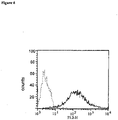
- the skilled worker can obtain CHO-K1 cells expressing human GM-CSF receptor alpha at a concentration similar to that which is expressed on about 2 ⁇ 10 5 CHO-GMRa#11 cells by, e.g., by transfecting a population of CHO-K1 cells with a suitable expression vector encoding GM-CSF receptor alpha to generate different stable cell lines expressing defined levels GM-CSF receptor alpha; then, the stable cell lines are analyzed in FACS analysis to determine GM-CSF receptor alpha expression levels according to the protocol essentially as described in Example 3C; a cell line that expresses human GM-CSF receptor alpha at a concentration similar to that which is expressed on about 2 ⁇ 10 5 CHO-GMRa#11 cells is identified by comparing the median fluorescence value (MFL) of such transfected cells to the MFL value set forth in Example 3C.
- MFL median fluorescence value
- a cell line is defined as expressing GM-CSF receptor alpha at a concentration "similar” to that which is expressed on about 2 ⁇ 10 5 CHO-GMRa#11 cells” if the MFL value of the transfected cell line does not deviate by more than a two-fold factor from the MFL value for the CHO-GMRa#11 cell as set forth in Example 3C.
- an antibody of the invention is able to neutralize human GM-CSF in a TF-1 proliferation assay with a lower IC 50 value than the reference antibody BVD2-21C11 and/or MAB215, preferably an at least five-fold lower IC 50 value, more preferably with an at least 10-fold lower IC 50 value than the reference antibody BVD2-21C11 and/or MAB215, more preferably with an at least 15-fold lower IC 50 value than the reference antibody BVD2-21C11 and/or MAB215, more preferably with an at least 20-fold lower IC 50 value than the reference antibody BVD2-21C11 and/or MAB215, more preferably with an at least 30-fold lower IC 50 value than the reference antibody BVD2-21C11 and/or MAB215, more preferably with an at least 50-fold lower IC 50 value than the reference antibody BVD2-21C11 and/or MAB215, more preferably with an at least 100-fold lower IC 50 value than the reference
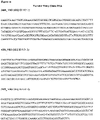
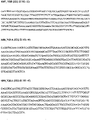
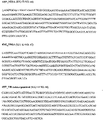
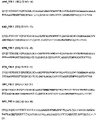
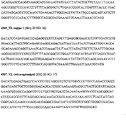
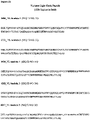
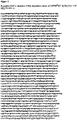
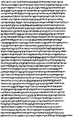
- DNA molecules that encode an antibody of the invention include, but are not limited to, those DNA molecules set forth in Figures 1a and 2a .
- DNA can be used to identify its complement and, since DNA is double stranded, its equivalent or homolog, using nucleic acid hybridization techniques. It also will be recognized that hybridization can occur with less than 100% complementarity. However, given appropriate choice of conditions, hybridization techniques can be used to differentiate among DNA sequences based on their structural relatedness to a particular probe. For guidance regarding such conditions see, Sambrook et al., 1989 ( Sambrook, J., Fritsch, E. F. and Maniatis, T. (1989) Molecular Cloning: A laboratory manual, Cold Spring Harbor Laboratory Press, Cold Spring Harbor, USA ) and Ausubel et al., 1995 ( Ausubel, F. M., Brent, R., guitarist, R. E., Moore, D. D., Sedman, J. G., Smith, J. A., & Struhl, K. eds. (1995). Current Protocols in Molecular Biology. New York: John Wiley and Sons ).
- Structural similarity between two polynucleotide sequences can be expressed as a function of "stringency" of the conditions under which the two sequences will hybridize with one another.
- stringency refers to the extent that the conditions disfavor hybridization. Stringent conditions strongly disfavor hybridization, and only the most structurally related molecules will hybridize to one another under such conditions. Conversely, non-stringent conditions favor hybridization of molecules displaying a lesser degree of structural relatedness. Hybridization stringency, therefore, directly correlates with the structural relationships of two nucleic acid sequences. The following relationships are useful in correlating hybridization and relatedness (where T m is the melting temperature of a nucleic acid duplex):
- Hybridization stringency is a function of many factors, including overall DNA concentration, ionic strength, temperature, probe size and the presence of agents which disrupt hydrogen bonding. Factors promoting hybridization include high DNA concentrations, high ionic strengths, low temperatures, longer probe size and the absence of agents that disrupt hydrogen bonding. Hybridization typically is performed in two phases: the "binding" phase and the “washing” phase.
- the probe is bound to the target under conditions favoring hybridization.
- Stringency is usually controlled at this stage by altering the temperature.
- the temperature is usually between 65°C and 70°C, unless short ( ⁇ 20 nt) oligonucleotide probes are used.
- a representative hybridization solution comprises 6X SSC, 0.5% SDS, 5X Denhardt's solution and 100 ⁇ g of nonspecific carrier DNA. See Ausubel et al., section 2.9, supplement 27 (1994). Of course, many different, yet functionally equivalent, buffer conditions are known. Where the degree of relatedness is lower, a lower temperature may be chosen.
- Low stringency binding temperatures are between about 25°C and 40°C.
- Medium stringency is between at least about 40°C to less than about 65°C.
- High stringency is at least about 65°C.
- washing solutions typically contain lower salt concentrations.
- One exemplary medium stringency solution contains 2X SSC and 0.1% SDS.
- a high stringency wash solution contains the equivalent (in ionic strength) of less than about 0.2X SSC, with a preferred stringent solution containing about 0.1X SSC.
- the temperatures associated with various stringencies are the same as discussed above for "binding.”
- the washing solution also typically is replaced a number of times during washing. For example, typical high stringency washing conditions comprise washing twice for 30 minutes at 55° C and three times for 15 minutes at 60° C.
- variants of DNA molecules provided herein can be constructed in several different ways. For example, they may be constructed as completely synthetic DNAs. Methods of efficiently synthesizing oligonucleotides in the range of 20 to about 150 nucleotides are widely available. See Ausubel et al., section 2.11, Supplement 21 (1993). Overlapping oligonucleotides may be synthesized and assembled in a fashion first reported by Khorana et al., J. Mol. Biol. 72:209-217 (1971 ); see also Ausubel et al., supra, Section 8.2. Synthetic DNAs preferably are designed with convenient restriction sites engineered at the 5' and 3' ends of the gene to facilitate cloning into an appropriate vector.
- a method of generating variants is to start with one of the DNAs disclosed herein and then to conduct site-directed mutagenesis. See Ausubel et al., supra, chapter 8, Supplement 37 (1997).
- a target DNA is cloned into a single-stranded DNA bacteriophage vehicle.
- Single-stranded DNA is isolated and hybridized with an oligonucleotide containing the desired nucleotide alteration(s).
- the complementary strand is synthesized and the double stranded phage is introduced into a host.
- Some of the resulting progeny will contain the desired mutant, which can be confirmed using DNA sequencing.
- various methods are available that increase the probability that the progeny phage will be the desired mutant. These methods are well known to those in the field and kits are commercially available for generating such mutants.
- the present disclosure further provides recombinant DNA constructs comprising one or more of the nucleotide sequences of the disclosure.
- the recombinant constructs are used in connection with a vector, such as a plasmid, phagemid, phage or viral vector, into which a DNA molecule encoding an antibody of the invention is inserted.
- the encoded gene may be produced by techniques described in Sambrook et al., 1989, and Ausubel et al., 1989.
- the DNA sequences may be chemically synthesized using, for example, synthesizers. See, for example, the techniques described in OLIGONUCLEOTIDE SYNTHESIS (1984, Gait, ed., IRL Press, Oxford ).
- Recombinant constructs of the disclosure are comprised with expression vectors that are capable of expressing the RNA and/or protein products of the encoded DNA(s).
- the vector may further comprise regulatory sequences, including a promoter operably linked to the open reading frame (ORF).
- the vector may further comprise a selectable marker sequence. Specific initiation and bacterial secretory signals also may be required for efficient translation of inserted target gene coding sequences.
- the present disclosure further provides host cells containing at least one of the DNAs of the present disclosure.
- the host cell can be virtually any cell for which expression vectors are available. It may be, for example, a higher eukaryotic host cell, such as a mammalian cell, a lower eukaryotic host cell, such as a yeast cell or a prokaryotic cell, such as a bacterial cell.
- Introduction of the recombinant construct into the host cell can be effected by calcium phosphate transfection, DEAE, dextran mediated transfection, electroporation or phage infection.
- Useful expression vectors for bacterial use are constructed by inserting a structural DNA sequence encoding a desired protein together with suitable translation initiation and termination signals in operable reading phase with a functional promoter.
- the vector will comprise one or more phenotypic selectable markers and an origin of replication to ensure maintenance of the vector and, if desirable, to provide amplification within the host.
- Suitable prokaryotic hosts for transformation include E. coli, Bacillus subtilis, Salmonella typhimurium and various species within the genera Pseudomonas, Streptomyces, and Staphylococcus.
- Bacterial vectors may be, for example, bacteriophage-, plasmid- or phagemid-based. These vectors can contain a selectable marker and bacterial origin of replication derived from commercially available plasmids typically containing elements of the well known cloning vector pBR322 (ATCC 37017). Following transformation of a suitable host strain and growth of the host strain to an appropriate cell density, the selected promoter is de-repressed/induced by appropriate means (e.g., temperature shift or chemical induction) and cells are cultured for an additional period. Cells are typically harvested by centrifugation, disrupted by physical or chemical means, and the resulting crude extract retained for further purification.
- appropriate means e.g., temperature shift or chemical induction
- a number of expression vectors may be advantageously selected depending upon the use intended for the protein being expressed. For example, when a large quantity of such a protein is to be produced, for the generation of antibodies or to screen peptide libraries, for example, vectors which direct the expression of high levels of fusion protein products that are readily purified may be desirable.
- Therapeutic methods involve administering to a subject in need of treatment a therapeutically effective amount of an antibody contemplated by the invention.
- a "therapeutically effective" amount hereby is defined as the amount of an antibody that is of sufficient quantity to effectively block the interaction between GM-CSF and its receptor in a treated area of a subject-either as a single dose or according to a multiple dose regimen, alone or in combination with other agents, which leads to the alleviation of an adverse condition, yet which amount is toxicologically tolerable.
- the subject may be a human or non-human animal (e.g., rat or rhesus).
- An antibody of the invention might be co-administered with known medicaments, and in some instances the antibody might itself be modified.
- an antibody could be conjugated to an immunotoxin or radioisotope to potentially further increase efficacy.
- the inventive antibodies can be used as a therapeutic or a diagnostic tool in a variety of situations where GM-CSF is undesirably expressed or found.
- Disorders and conditions particularly suitable for treatment with an antibody of the inventions are inflammatory diseases such as rheumatoid arthritis (RA), multiple sclerosis, Crohn's disease, psoriasis, asthma, atopic dermatitis or shock.
- RA rheumatoid arthritis
- multiple sclerosis Crohn's disease
- psoriasis asthma
- atopic dermatitis or shock atopic dermatitis or shock.
- compositions for use in accordance with the present invention may be formulated in a conventional manner using one or more physiologically acceptable carriers or excipients.
- An antibody of the invention can be administered by any suitable means, which can vary, depending on the type of disorder being treated. Possible administration routes include parenteral (e.g., intramuscular, intravenous, intraarterial, intraperitoneal, or subcutaneous), intrapulmonary and intranasal, and, if desired for local immunosuppressive treatment, intralesional administration.
- an antibody of the invention might be administered by pulse infusion, with, e.g., declining doses of the antibody.
- the dosing is given by injections, most preferably intravenous or subcutaneous injections, depending in part on whether the administration is brief or chronic.
- the amount to be administered will depend on a variety of factors such as the clinical symptoms, weight of the individual, whether other drugs are administered. The skilled artisan will recognize that the route of administration will vary depending on the disorder or condition to be treated.
- Determining a therapeutically effective amount of the novel polypeptide largely will depend on particular patient characteristics, route of administration, and the nature of the disorder being treated. General guidance can be found, for example, in the publications of the International Conference on Harmonisation and in REMINGTON'S PHARMACEUTICAL SCIENCES, chapters 27 and 28, pp. 484-528 (18th ed., Alfonso R. Gennaro, Ed., Easton, Pa.: Mack Pub. Co., 1990 ). More specifically, determining a therapeutically effective amount will depend on such factors as toxicity and efficacy of the medicament. Toxicity may be determined using methods well known in the art and found in the foregoing references. Efficacy may be determined utilizing the same guidance in conjunction with the methods described below in the Examples.
- GM-CSF is expressed by various cell types including lymphocytes, monocytes, endothelial cells, fibroblasts and some malignant cells; thus, an anti-GM-CSF antibody of the invention may be employed in order to image or visualize a site of possible accumulation of GM-CSF in different tissues in a patient.
- an antibody can be detectably labeled, through the use of radioisotopes, affinity labels (such as biotin, avidin, etc.) fluorescent labels, paramagnetic atoms, etc. Procedures for accomplishing such labeling are well known to the art. Clinical application of antibodies in diagnostic imaging are reviewed by Grossman, H. B., Urol. Clin. North Amer. 13:465-474 (1986 )), Unger, E. C. et al., Invest. Radiol. 20:693-700 (1985 )), and Khaw, B. A. et al., Science 209:295-297 (1980 )).
- the detection of foci of such detectably labeled antibodies might be indicative of a site of inflammation, for example.
- this examination is done by removing samples of tissue or blood and incubating such samples in the presence of the detectably labeled antibodies.
- this technique is done in a non-invasive manner through the use of magnetic imaging, fluorography, etc. Such a diagnostic test may be employed in monitoring the success of treatment of diseases, where presence or absence of GM-CSF is a relevant indicator
- the antibodies of the present invention can be formulated according to known methods to prepare pharmaceutically useful compositions, wherein an antibody of the invention is combined in a mixture with a pharmaceutically acceptable carrier vehicle.
- Suitable vehicles and their formulation are described, for example, in REMINGTON'S PHARMACEUTICAL SCIENCES (18th ed., Alfonso R. Gennaro, Ed., Easton, Pa.: Mack Pub. Co., 1990 ).
- REMINGTON'S PHARMACEUTICAL SCIENCES 18th ed., Alfonso R. Gennaro, Ed., Easton, Pa.: Mack Pub. Co., 1990 .
- Such compositions will contain an effective amount of one or more of the antibodies of the present invention, together with a suitable amount of carrier vehicle.
- Preparations may be suitably formulated to give controlled-release of the active compound.
- Controlled-release preparations may be achieved through the use of polymers to complex or absorb anti- GM-CSF antibody.
- the controlled delivery may be exercised by selecting appropriate macromolecules (for example polyesters, polyamino acids, polyvinyl, pyrrolidone, ethylenevinyl-acetate, methylcellulose, carboxymethylcellulose, or protamine, sulfate) and the concentration of macromolecules as well as the methods of incorporation in order to control release.
- Another possible method to control the duration of action by controlled release preparations is to incorporate anti-GM-CSF antibody into particles of a polymeric material such as polyesters, polyamino acids, hydrogels, poly(lactic acid) or ethylene vinylacetate copolymers.
- a polymeric material such as polyesters, polyamino acids, hydrogels, poly(lactic acid) or ethylene vinylacetate copolymers.
- colloidal drug delivery systems for example, liposomes, albumin microspheres, microemulsions, nanoparticles, and nanocapsules or
- the compounds may be formulated for parenteral administration by injection, e.g., by bolus injection or continuous infusion.
- Formulations for injection may be presented in unit dosage form, e.g., in ampules, or in multi-dose containers, with an added preservative.
- the compositions may take such forms as suspensions, solutions or emulsions in oily or aqueous vehicles, and may contain formulatory agents such as suspending, stabilizing and/or dispersing agents.
- the active ingredient may be in powder form for constitution with a suitable vehicle, e.g., sterile pyrogen-free water, before use.
- compositions may, if desired, be presented in a pack or dispenser device, which may contain one or more unit dosage forms containing the active ingredient.
- the pack may for example comprise metal or plastic foil, such as a blister pack.
- the pack or dispenser device may be accompanied by instructions for administration.
- HuCAL GOLD ® library was amplified in 2xYT medium containing 34 ⁇ g/ml chloramphenicol and 1 % glucose (2xYT-CG). After helper phage infection (VCSM13) at an OD 600 of 0.5 (30 min at 37°C without shaking; 30 min at 37°C shaking at 250 rpm), cells were spun down (4120 g; 5 min; 4°C), resuspended in 2 ⁇ YT/ 34 ⁇ g/ml chloramphenicol / 50 ⁇ g/ml kanamycin / 0.25mM IPTG and grown overnight at 22°C.
- helper phage infection VCSM13
- OD 600 0.5
- cells were spun down (4120 g; 5 min; 4°C), resuspended in 2 ⁇ YT/ 34 ⁇ g/ml chloramphenicol / 50 ⁇ g/ml kanamycin / 0.25mM IPTG and grown overnight at 22°C.
- Phages were PEG-precipitated from the supernatant, resuspended in PBS / 20 % glycerol and stored at -80°C. Phage amplification between two panning rounds was conducted as follows: mid-log phase E. coli TG1 cells were infected with eluted phages and plated onto LB-agar supplemented with 1 % of glucose and 34 ⁇ g/ml of chloramphenicol. After overnight incubation at 30°C, colonies were scraped off and used to inoculate 2xYT-CG until an OD 600nm of 0.5 was reached and helper phage added as described above.
- HuCAL GOLD ® antibody-phages were divided into three pools comprising different VH master genes. These pools were individually subjected to either a) a solid phase panning on biotinylated human GM-CSF protein (custom made by R&D Systems, Minneapolis, MN) directly coated on neutravidin coated 96well plates (Pierce, Rockford, IL) as solid support for three rounds or b) a solution panning on biotinylated human GM-CSF protein captured onto streptavidin coated Dynabeads (Dynal, Oslo, Norway) for three rounds.
- HuCAL GOLD ® phages Prior to the selections, 100 ⁇ l of HuCAL GOLD ® phages were pre-adsorbed in 100 ⁇ l blocking buffer containing 0.4 ⁇ l 25% Tween20 for 0.5 h at RT. Blocked phages were transferred in 100 ⁇ l aliquots to wells of a neutravidin plate for 0.5 h at RT. This step was repeated twice for pre-absorption.
- Bound phages were eluted by adding 120 ⁇ l of 20 mM DTT in 10 mM Tris pH 8.0 per well for 10 min at RT. The eluate was removed and added to 14 ml E. coli TG1 grown to an OD 600nm of 0.6-0.8. Wells were additionally washed with 200 ⁇ l PBS and this solution was also added to the TG1 cells. Phage infection of E. coli was allowed for 45 min at 37°C without shaking. Additionally, 200 ⁇ l of TG1 cells grown to an OD 600nm of 0.6-0.8 were added to the selection wells for 45 minutes at 37°C without shaking.
- TG-1 cells were added to the 14ml culture already containing the phages from the first elution step. After centrifugation for 10 min at 5000rpm, the bacterial pellets were each resuspended in 500 ⁇ l 2xYT medium, plated on 2xYT-CG agar plates and incubated overnight at 30°C. Colonies were then scraped from the plates and phages were rescued and amplified as described above.
- the second and third rounds of selection were performed in an identical way to the first round of selection with the only difference that the washing conditions after binding of phage were more stringent. Additionally, in the third round of selection, phages were submitted to an additional preadsorption step on streptavidin-coated beads (Dynabeads M-280; Dynal). Eppendorf tubes were blocked with Chemiblocker solution by incubation for 30 min at RT. Of each phage pool 0.3ml were mixed 1:1 with 2xChemiblocker solution containing 0.05% Tween20 and incubated for 1h at RT in the blocked Eppendorf tubes on a rotator.
- Blocked phages were then transferred to newly blocked Eppendorf tubes and 50 ⁇ l of Dynabeads M-280 were added for another 30min for preadsorption. Beads were removed using a magnetic device (Dynal MPC-E). Aliquots of 150 ⁇ l of phages were then transferred to neutravidin plates for further preadsorption as in round 1 and 2 (see above).
- Phages diluted in 500 ⁇ l PBS for each panning condition were mixed with 500 ⁇ l 2xChemiblocker / 0.1% Tween 1 h at RT (rotator). Preadsorption of phages was performed twice: 50 ⁇ l of blocked Streptavidin magnetic beads were added to the blocked phages and incubated for 30 min at RT on a rotator. After separation of beads via a magnetic device (Dynal MPC-E) the phage supernatant ( ⁇ 1ml) was transferred to a new blocked tube and preadsorption was repeated on 50 ⁇ l blocked beads for 30 min.
- biotinylated hGM-CSF was added to blocked phages in a new blocked 1.5 ml tube and incubated for 1 h at RT on a rotator.
- 100 ⁇ l of blocked streptavidin magnetic beads were added to each panning phage pool and incubated 10 min at RT on a rotator.
- Phage bound to biotinylated GM-CSF and therefore immobilized to the magnetic beads were collected with a magnetic particle separator (Dynal MPC-E). Beads were then washed 7x in PBS/0.05% Tween using a rotator, followed by washing another three times with PBS.
- Elution of phage from the Dynabeads was performed adding 300 ⁇ l 20mM DTT in 10mM Tris/HCI pH8 to each tube for 10 min. Dynabeads were removed by the magnetic particle separator and the supernatant was added to 14ml of a E.coli TG-1 culture grown to OD 600nm of 0.6-0.8. Beads were then washed once with 200 ⁇ l PBS and PBS containing additional removed phage was added to the 14 ml E.coli TG-1 culture.
- the bacterial pellets were each resuspended in 500 ⁇ l 2xYT medium, plated on 2xYT-CG agar plates and incubated overnight at 30°C. Colonies were then scraped from the plates and phages were rescued and amplified as described above.
- the second and third rounds of the solution panning on biotinylated GM-CSF was performed according to the protocol of the first round except for increasing the stringency of the washing procedure.
- the Fab encoding inserts of the selected HuCAL GOLD ® phagemids were subcloned into the expression vector pMORPH ® X9_Fab_FH ( Fig 5 ) to facilitate rapid expression of soluble Fab.
- the DNA of the selected clones was digested with Xba l and Eco RI, thereby cutting out the Fab encoding insert (ompA-VLCL and phoA-Fd), and cloned into the Xba l / Eco RI digested vector pMORPH ® X9_Fab_FH.
- Fabs expressed in these vectors carry two C-terminal tags (FLAG TM and 6xHis, respectively) for detection and purification.
- BEL buffer (2xBBS/EDTA: 24.7 g/l boric acid, 18.7 g NaCl/l, 1.49 g EDTA/I, pH8) was added containing 2.5 mg/ml lysozyme and incubated for 1 h at 22°C on a microtiter plate shaker (400 rpm).
- BEL extracts were used for binding analysis by ELISA or a BioVeris M-series ® 384 analyzer (see Example 2).
- Fab fragments encoded by pMORPH ® X9_Fab_FH in TG-1 cells were carried out in shaker flask cultures with 1 I of 2 ⁇ YT medium supplemented with 34 ⁇ g/ml chloramphenicol. After induction with 0.5 mM IPTG, cells were grown at 22°C for 16 h. Whole cell extracts of cell pellets were prepared by French Press and Fab fragments isolated by nickel/NTA chromatography (Qiagen, Hilden, Germany). Concentrations were determined by UV-spectrophotometry (Krebs et al., 2001).
- BEL extracts of individual E. coli clones selected by the above mentioned panning strategies were analyzed by ELISA or BioVeris (BioVeris M-series ® 384 analyzer) in order to identify clones encoding hGM-CSF specific Fabs.
- fluorogenic substrates like AttoPhos (Roche) were used according to the instructions by the manufacturer. Between all incubation steps, the wells of the microtiter plate were washed with PBS-T three times and three times after the final incubation with secondary antibody. Fluorescence was measured in a TECAN Spectrafluor plate reader.
- BEL extract was diluted at least 1:50 and maximally 1:1000 in assay buffer (PBS/0,05%Tween20/0.5%BSA) for use in BioVeris screening.
- Biotinylated GM-CSF R&D Systems
- Dynabeads Dynal
- Per well of a 96 or 384 well plate 25 or 15 ⁇ l of a 1:25 dilution of the Dynabead-stock solution was used. Beads were washed three times with assay buffer before adding biotinylated GM-CSF for 30 min at RT on a shaker.
- coli expression cultures containing Fab antibodies was filled into wells of a 96 or 384 well plate and, respectively, 25 or 15 ⁇ l of the GM-CSF coupled beads plus anti-Fab-BV-tag TM secondary antibody mix was added to each well and incubated for 2h at RT on a plate shaking device. The plates were analyzed in a BioVeris M-SERIES ® 384 Analyzer.
- Crossreactivity of the anti-hGM-CSF antibodies was determined to the following analytes: rat and mouse GM-CSF, human IL-3, human IL-4, , human IL-5, , human IL-13, , human M-CSF (all from Peprotech, London, UK). This was performed in a capture set-up by surface plasmon resonance (Biacore 3000, Uppsala, Sweden).
- CM5 chips (Biacore, Sweden) were coated with 5000-6000RU anti-F(ab) 2 (Dianova, Affinipure F(ab) 2 Fragment Goat Anti-Human IgG, F(ab) 2 Fragment specific); 80 ⁇ g/ml 10mM acetate buffer, pH4 on all 4 flow cells, using standard EDC-NHS amine coupling chemistry.
- the analyte growth factor was injected (20 ⁇ l, flow rate 20 ⁇ l/min) at a concentration range between 15 and 2000nM for the determination of the specific signal. Afterwards the achieved buffer sensogram was manually subtracted from the specific one. After each cycle, the flow cells were regenerated with 100mM HCI (5 ⁇ l).
- HuCAL ® anti-hGM-CSF antibodies including MOR03684 and MOR03682 were tested and were specific for human GM-CSF and did not bind to any of the other cytokines or mouse or rat GM-CSF .
- Fab MOR03929 showed significant cross reactivity to rat GM-CSF.
- Example 3 Identification of anti-human GM-CSF Fab candidates that inhibit the interaction between GM-CSF and the GM-CSF receptor alpha
- hGM-CSF specific antibodies which were selected from the HuCAL GOLD ® library were tested for the potency to inhibit the interaction between hGM-CSF and its receptor.
- the interaction was tested in two ways, (i) one being a proliferation assay using the GM-CSF dependent TF-1 cell line (Kitamura et al., 1989) and (ii) the other being a FACS analysis with a recombinant CHO cell line expressing the alpha chain of the GM-CSF receptor.
- the TF-1 proliferation assay the ability of the anti-GM-CSF antibodies to block the interaction of GM-CSF with the endogenous GM-CSF receptor consisting of the alpha and beta chain was analyzed leading to reduction in cell proliferation.
- the FACS assay the specific inhibition of the interaction between GM-CSF and the alpha chain of the GM-CSF receptor was determined.
- Macaca mulatta GM-CSF full-length cDNA (GenBank accession no.: AY007376) was synthesized by gene synthesis (geneART GmbH, Regensburg, Germany) and cloned into the pCR-Script-Amp vector (Stratagene, LaJolla, CA, USA). Subsequently the cDNA was cloned into the eukaryotic expression vector pcDNA3.1 (+) (Invitrogen, Paisley, UK) yielding pcDNA-macGM-CSF.
- the cDNA of human GM-CSF (Genbank accession number NP_000749 ) was cloned by RT-PCR technique from RNA isolated from 1 ⁇ 10e7 TF-1 cells using the RNeasy kit from Qiagen (Hilden, Germany). Reverse transcription was performed with the SuperscriptII kit using random hexamers (Gibco) followed amplification of the GM-CSF cDNA by PCR. The obtained PCR-product was cloned into expression vector pcDNA3.1(+) yielding pcDNA-huGM-CSF.
- HEK293 cells were transiently transfected with these expression vectors respectively using lipofectamine (Stratagene, LaJolla, USA).
- lipofectamine Stratagene, LaJolla, USA.
- the medium containing the secreted recombinant macaca or human GM-CSF was harvested 4 days after transfection.
- TF-1 (Kitamura et al., 1989) cells were grown according to the provider's protocol (DSMZ, Braunschweig, Germany; DSMZ No. ACC 334). TF-1 cells were washed twice with RPMI1640 medium (10% FCS) and then seeded at a concentration of 2 ⁇ 10 5 cells/ml in 50 ⁇ l per well of a flat bottom 96well cell culture dish.
- GM-CSF Human recombinant GM-CSF ("Leucomax", ESSEX Pharma, Ober) at 0.5ng/ml and HuCAL ® Fab antibodies (200ng/ml - 200 ⁇ g/ml diluted in RPMI1640 medium, 10% FCS) were mixed for 30 min and 50 ⁇ l of the mix was added to the TF-1 cells, so that the final concentration of GM-CSF was 0.25ng/ml. Maximal cell proliferation (0% inhibition) was measured incubating TF-1 cells at a final GM-CSF of concentration of 0.25ng/ml, without the addition of antibody.
- TF-1 proliferation 100% inhibition was measured by omitting GM-CSF from the assay and keeping the cells in RPMI1640 medium (10% FCS) only. TF1 cells were then incubated for 72 hours at 37°C with 5% CO 2 in a humidified chamber. Cell vitality was measured by adding MTT or XTT reagent (Roche, Mannheim, Germany) according to the manufacturer's recommendation. Overall 19 Fab were identified that showed significant inhibition of TF-1 proliferation.
- the binders MOR03682, MOR03684 and MOR03929 showed consistent inhibition of TF1 cell proliferation of greater than 50% at a concentration of 2 ⁇ M.
- binding of MOR03682 and MOR03684 to native human GM-CSF was tested in the TF-1 proliferation assay. Instead of adding purified human recombinant GM-CSF to the TF-1 cells a supernatant of 5637 cells (DSMZ No. ACC 35) that secrete native human GM-CSF into the medium was used. From a dose response curve comparing the effect of recombinant human GM-CSF with different dilutions of the 5637 supernatant it was determined that the medium contained ⁇ 5 ng/ml of native human GM-CSF.
- TF-1 proliferation assay instead of adding purified human GM-CSF to the TF-1 cells a supernatant of transfected HEK293 cells that secrete recombinant macaca GM-CSF into the medium was used.
- TF-1 cells proliferated in the presence of macaca GM-CSF containing supernatant but not in the presence of supernatant from untransfected HEK293 cells. From a dose response curve comparing the effect of recombinant human GM-CSF with different dilutions of the HEK-293 medium it was determined that the medium of the transfected cells contained ⁇ 2 ⁇ g/ml macaca GM-CSF. By preincubation of the macaca GM-CSF supernatant with anti-human GM-CSF Fab MOR03682 or MOR03684 the binding of macaca GM-CSF to the TF-1 cells was blocked so that the viability of cells was significantly reduced. MOR03682 and MOR03684_thus are cross-reactive with macaca GM-CSF. Fab MOR03929 was not tested in this assay.
- GM-CSF GM-CSF receptor alpha chain
- cDNA was cloned into an expression vector and stably transfected into CHO-K1 cells (DSMZ ACC 110).
- the PCR reaction yielded a product of ⁇ 1250bp which was digested with Eco RI and Bam HI (New England BioLabs).
- the expression vector pcDNA3.1(+) (Invitrogen, Paisley, UK) was digested with the same enzymes. After purification of the digested vector and PCR product, the fragments were ligated and transformed by electroporation into E.coli DH10B cells. Correct clones were identified after preparation of plasmid DNA and sequencing. Correct clones (pcDNA3.1(+)-GM-CSFRalpha) contained the full length human GM-CSF receptor alpha cDNA.
- CHO-K1 cells were grown according to the provider's protocol (DSZM, Braunschweig, Germany; DSMZ No. ACC 110).
- DSMZ No. ACC 110 For transfection cells were grown to 80% confluence in a 6-well plate and incubated with 5 ⁇ g DNA of pcDNA3.1(+)-GM-CSFRalpha mixed with 10 ⁇ l of the Lipofectamine 2000 reagent (Invitrogen). After 48h cells were fed with 1mg/ml G418 (Gibco) and after another 24h medium was replaced with such containing 2mg/ml G418. After two weeks single cells were seeded into wells of a 96-well culture dish.
- Single clones were grown up and 5 ⁇ 10 5 cells of each clone were tested for GM-CSFR-alpha expression by FACS analysis using murine IgG MAB1006 (Chemicon International, Temecula, CA) as primary antibody at a concentration of 1 ⁇ g/ml and (R-PE-AffiniPure (Fab') 2 Goat-anti-mouse-IgG (Dianova) as secondary antibody at a 1:200 dilution. Primary and secondary antibodies were incubated with the cells for 1h sequentially, while cells were washed in FACS buffer (PBS, 3%FCS) between these steps. Fluorescence of stained cells was quantified in the FL2 channel using a FACSCalibur system (Becton Dickinson).
- FACSCalibur system Becton Dickinson
- antibodies at increasing concentrations Prior to adding to cells, antibodies at increasing concentrations (0.1 to 100 ⁇ g/ml) were co-incubated with biotinylated GM-CSF (0.5 ⁇ g/ml) in FACS buffer (PBS/3%FBS/NaN 3 0,05%) for 30min at RT.
- IC 50 values were determined from the dose response curves obtained using GraphPad Prism v3.03 software applying a non-linear regression curve fit.
- Fab antibodies MOR03682, MOR03684 and MOR03929 showed significant inhibition of GM-CSF binding to the cell surface expressed GM-CSF receptor alpha.
- one phage antibody Fab library was generated where the L-CDR3 of each parental was replaced by a repertoire of individual lambda light chain CDR3 sequences.
- the H-CDR2 region was replaced by a repertoire of individual heavy chain CDR2 sequences.
- Affinity maturation libraries were generated by transforming the diversified clones into E. coli TOP10F' (Invitrogen). Phages were prepared as described in Example 1A. Both L-CDR3 libraries of MOR03684 and MOR03682 were pooled and both H-CDR2 libraries derived from MOR03684 and MOR03682 were pooled, while the L-CDR3 and H-CDR2 libraries derived from MOR03929 were kept separately during the selection procedure. Pannings were performed on biotinylated GM-CSF in solution for three rounds essentially as described in Example1B and applying more stringent selection conditions.
- Electrochemiluminescence (ECL) based affinity determination in solution and data evaluation were basically performed as described by Haenel et al., 2005: A constant amount of Fab was equilibrated with different concentrations (serial 5 n dilutions) of human GM-CSF ( Leucomax ) in solution.
- Biotinylated human GM-CSF R&D Systems coupled to paramagnetic beads (M-280 Streptavidin, Dynal) and BV-tag TM (BioVeris Europe, Witney, Oxforfshire, UK) labeled anti-human (Fab)' 2 (Dianova) was added and incubated for 15 - 30 min. Subsequently, the concentration of unbound Fab was quantified via ECL detection using a M- SERIES ® 384 analyzer (BioVeris Europe).
- Association phase was set to 60 s and dissociation phase to 120 s (parental) or up to 600 s (affinity optimized).
- dissociation phase was set to 60 s and dissociation phase to 120 s (parental) or up to 600 s (affinity optimized).
- the following conditions basically according to Drake et al., (2004) were used: Fab was applied in a single concentration of 200 nM; flow rate was set to 100 ⁇ l/min and dissociation phase to 6000 - 18.000 s.
- affinities for the Fabs were estimated, which are shown in table 4.
- Table 4 Affinities of anti-hGM-CSF Fabs determined by Biacore and solution equilibrium titration (SET) Biacore SET MOR0 K D (pM) K D (pM) 3684 6420 16000 4251 70 7.4 3929 4260 2000 4302 174 63.5 4287 nd 17.9 4252 55 6 4290 122 11.1 4350 19 1.1 4354 21 2.8 4357 7 0.4 3682 nd 11406 4283 nd 113 4297 nd 49.2 4342 nd 4.9
- the GM-CSF receptor binding assay was performed as described above (Example 3C) using 0.5 ⁇ g/ml (35nM) of biotinylated GM-CSF. Maximal binding of GM-CSF to CHO-GMRa#11 cells (0% inhibition) was measured by incubating cells at a final GM-CSF concentration of 05 ⁇ g/ml of biotinylated GM-CSF, without the addition of antibody. 100% inhibition of GM-CSF binding was measured by omitting GM-CSF from the assay. IC 50 values were determined from the dose response curves obtained using GraphPad Prism v3.03 software applying a non-linear regression curve fit.
- Table 5 IC 50 values of anti-hGM-CSF Fabs in receptor inhibition assay MORO# 4251 4357 4354 4350 4252 4287 4290 4302 3684 3929 Mab215 21C11 IC 50 (nM) 53 26 26 24 26 25 27 24 >400 35 no fit* 9 % inhibition at 5 ⁇ g/ml antibody ⁇ 100% ⁇ 75% ⁇ 75% ⁇ 75% ⁇ 75% ⁇ 75% ⁇ 75% ⁇ 25% ⁇ 60% ⁇ 50% ⁇ 100% *no sigmoidal dose response curve could be fitted in this case
- This assay qualitatively showed that the Fabs obtained from affinity maturation and X-cloning prevent GM-CSF from binding to the GM-CSF receptor alpha chain and therefore retained the blocking mechanism of their parental Fabs.
- the assay needed to be performed with a concentration of 35nM (0.5 ⁇ g/ml) biotinylated GM-CSF in order to obtain a significant signal in FACS. Therefore 17.5 nM Fab (or 8.75 nM IgG) is theoretically needed to block 50% of the GM-CSF, thus setting a limit for determination of IC 50 values.
- TF-1 proliferation assay was performed as described in Example 3B. Fab with improved affinities and the parental Fabs as well as monoclonal reference IgGs were analyzed. IC 50 values were determined from the dose response curves obtained using GraphPad Prism v3.03 software applying a non-linear regression curve fit. Table 6 summarizes the IC 50 values obtained in these assays.
- Table 6 IC 50 values of anti-hGM-CSF Fabs and control IgGs in TF-1 proliferation assay MORO# 4251 4357 4354 4350 4252 4287 4290 4302 3684 3929 Mab215 BVD2-21C11 IC 50 ( pM ) 463 90 56 82 2010 3382 696 10678 >200000 >200000 4315 6560 IC 50 x-fold improved compared to Mab215 9.3 47.9 77.1 52.6 2.1 1.3 6.2 - - - - - IC 50 x-fold improved compared to BVD2-21C11 14.2 72.9 117.1 80.0 3.2 1.9 9.4 - - - 1.5 -
- IC 50 values in the TF-1 proliferation assay were determined for the parental Fab MOR03682, its affinity matured derivatives MOR04283, MOR04297 and the x-cloned variant MOR04342.
- Table 7 summarizes the IC 50 values obtained in these assays. Table 7: IC 50 values of anti-hGM-CSF Fabs in TF-1 proliferation assay MOR0 # 4342 4283 4297 3682 IC 50 ( pM ) 80 17293 13975 >200000
- GeneOptimizer TM software from Geneart (Regensburg, Germany ) was utilized to define such optimized VH and VL DNA sequences, which were gene synthesized at Geneart (Regensburg, Germany) and cloned into pPCR-Script vectors yielding 055906pPCR-Script and 055907pPCR-Script .
- SEQ ID NO: 48 shows the respective VH sequence
- SEQ ID NO: 57 shows the respective VL sequence.
- variable domain fragments of the gene optimized heavy (VH) and light chains (VL) were subcloned from the pPCR-Script vectors (Example5a) into the the pMORPH ® 2_h_Ig vector series for human IgG1.
- Codon-optimized VH of MOR04357 was isolated from 055906pPCR-Script via Nhe l/ BIp l digestion and inserted into pMorph2_h_IgG1f master vector cut with the same restriction enzymes. This vector already contained a human gamma 1 constant region.
- the resulting expression plasmid was termed pMorph2_h_IgG1f_MOR04357_co.
- Codon-optimized VL of MOR04357 was isolated from 055907pPCR-Script via Nhe l/ Hpa l digestion and inserted into pMorph2_h_Iglambda2 master vector cut with the same restriction enzymes. This vector already contained a human lambda constant region.
- the resulting expression plasmid was termed pM2_h_Iglambda2_MOR04357_co.
- Eukaryotic HKB11 cells were transfected with an equimolar amount of IgG heavy and light chain expression vector DNA.
- Cell culture supernatant was harvested from 3 to 7 days post transfection. After adjusting the pH of the supernatant to 8.0 and sterile filtration, the solution was subjected to standard protein A affinity chromatography (rProteinA FF or MabSelect SURE, GE Healthcare). Buffer exchange was performed to 1 x Dulbcecco's PBS (pH 7,2, Invitrogen) and samples were sterile filtered (0,2 ⁇ m).
- MOR04357 IgG1 was dialysed against 1 x Dulbcecco's PBS (pH 6,5, Invitrogen). Purity of IgG was analysed under denaturing, reducing conditions in SDS-PAGE or by using Agilent BioAnalyzer and in native state by SE-HPLC.
- K D determination monomer fractions (at least 90% monomer content, analyzed by analytical SEC; Superdex75, Amersham Pharmacia) of IgG1 were used. Electrochemiluminescence (ECL) based affinity determination in solution and data evaluation were basically performed as described by Haenel et al., 2005 and as described in Example4B. The K D values for MOR04357 IgG1 against human recombinant GM-CSF was determined to be 1.1 pM.
- Affinity determination to rat GM-CSF was done essentially as described in Example 4D using rat-GM-CSF (Peprotech) as analyte in solution instead of human GM-CSF. Affinities were calculated according to Haenel et al (2005). The K D value for the MOR04357 IgG1 against rat recombinant GM-CSF was determined to be 130 pM.
- TF-1 proliferation assay was performed as described in Example 3B.
- MOR04357 was analyzed in IgG1 format and as control monoclonal reference IgGs were analyzed.
- IC 50 values were determined from the dose response curves obtained using GraphPad Prism v3.03 software applying a non-linear regression curve fit. Table 8 summarizes the IC 50 values obtained in these assays.
- GM-CSF Three different variants of GM-CSF were used in this assay: Firstly, recombinant human GM-CSF at a concentration of 0.25 ng/ml, produced in E.coli , secondly, culture supernatant from HEK293 which have been transiently transfected with pcDNA-huGM-CSF (see Example 3A), containing recombinant human GM-CSF and thirdly, culture supernatant from HEK293 cells which have been transiently transfected with pcDNA-macGM-CSF (see Example 3A), containing recombinant macaca mulatta (rhesus) GM-CSF.
- TF-1 proliferation assays the HEK293 culture supernatants were used as a source of the respective GM-CSF in such dilutions that TF-1 cells showed a similar proliferation as compared to proliferation given at the defined concentration of 0.25 ng/ml purified recombinant human GM-CSF produced in E.coli.
- Table 8 IC 50 values of MOR04357 IgG and control IgGs in TF-1 proliferation assay IC 50 (pM) human GM-CSF (E.coli) human GM-CSF (HEK293) macaca GM-CSF (HEK293) MOR04357 IgG1 48 11 15 21C11 1668 144 128 Mab215 625 54 190
Landscapes
- Health & Medical Sciences (AREA)
- Chemical & Material Sciences (AREA)
- Organic Chemistry (AREA)
- Life Sciences & Earth Sciences (AREA)
- Medicinal Chemistry (AREA)
- General Health & Medical Sciences (AREA)
- Chemical Kinetics & Catalysis (AREA)
- General Chemical & Material Sciences (AREA)
- Nuclear Medicine, Radiotherapy & Molecular Imaging (AREA)
- Pharmacology & Pharmacy (AREA)
- Veterinary Medicine (AREA)
- Animal Behavior & Ethology (AREA)
- Public Health (AREA)
- Bioinformatics & Cheminformatics (AREA)
- Engineering & Computer Science (AREA)
- Immunology (AREA)
- Biochemistry (AREA)
- Proteomics, Peptides & Aminoacids (AREA)
- Molecular Biology (AREA)
- Genetics & Genomics (AREA)
- Biophysics (AREA)
- Dermatology (AREA)
- Pulmonology (AREA)
- Rheumatology (AREA)
- Diabetes (AREA)
- Hematology (AREA)
- Neurosurgery (AREA)
- Neurology (AREA)
- Biomedical Technology (AREA)
- Pain & Pain Management (AREA)
- Orthopedic Medicine & Surgery (AREA)
- Physical Education & Sports Medicine (AREA)
- Peptides Or Proteins (AREA)
- Medicines Containing Antibodies Or Antigens For Use As Internal Diagnostic Agents (AREA)
- Medicines That Contain Protein Lipid Enzymes And Other Medicines (AREA)
- Micro-Organisms Or Cultivation Processes Thereof (AREA)
- Preparation Of Compounds By Using Micro-Organisms (AREA)
Priority Applications (3)
| Application Number | Priority Date | Filing Date | Title |
|---|---|---|---|
| HRP20220755TT HRP20220755T3 (hr) | 2005-05-18 | 2006-05-17 | Anti-gm-csf antitijela i njihova uporaba |
| RS20220609A RS63382B1 (sr) | 2005-05-18 | 2006-05-17 | Anti-gm-csf antitela i njihova upotreba |
| SI200632423T SI3620171T1 (sl) | 2005-05-18 | 2006-05-17 | Protitelesa proti GM-CSF in uporabe zanje |
Applications Claiming Priority (5)
| Application Number | Priority Date | Filing Date | Title |
|---|---|---|---|
| US68200905P | 2005-05-18 | 2005-05-18 | |
| EP06742970.4A EP1888643B1 (en) | 2005-05-18 | 2006-05-17 | Anti-gm-csf antibodies and uses therefor |
| EP11187236A EP2468773A3 (en) | 2005-05-18 | 2006-05-17 | Anti-GM-CSF Antibodies and uses therefor |
| EP16162171.9A EP3150221A1 (en) | 2005-05-18 | 2006-05-17 | Anti-gm-csf antibodies and uses therefor |
| PCT/EP2006/004696 WO2006122797A2 (en) | 2005-05-18 | 2006-05-17 | Anti-gm-csf antibodies and uses therefor |
Related Parent Applications (4)
| Application Number | Title | Priority Date | Filing Date |
|---|---|---|---|
| EP06742970.4A Division EP1888643B1 (en) | 2005-05-18 | 2006-05-17 | Anti-gm-csf antibodies and uses therefor |
| EP16162171.9A Division EP3150221A1 (en) | 2005-05-18 | 2006-05-17 | Anti-gm-csf antibodies and uses therefor |
| EP16162171.9A Previously-Filed-Application EP3150221A1 (en) | 2005-05-18 | 2006-05-17 | Anti-gm-csf antibodies and uses therefor |
| EP11187236A Division EP2468773A3 (en) | 2005-05-18 | 2006-05-17 | Anti-GM-CSF Antibodies and uses therefor |
Publications (2)
| Publication Number | Publication Date |
|---|---|
| EP3620171A1 EP3620171A1 (en) | 2020-03-11 |
| EP3620171B1 true EP3620171B1 (en) | 2022-04-20 |
Family
ID=37114333
Family Applications (4)
| Application Number | Title | Priority Date | Filing Date |
|---|---|---|---|
| EP19180152.1A Active EP3620171B1 (en) | 2005-05-18 | 2006-05-17 | Anti-gm-csf antibodies and uses therefor |
| EP06742970.4A Active EP1888643B1 (en) | 2005-05-18 | 2006-05-17 | Anti-gm-csf antibodies and uses therefor |
| EP16162171.9A Withdrawn EP3150221A1 (en) | 2005-05-18 | 2006-05-17 | Anti-gm-csf antibodies and uses therefor |
| EP11187236A Withdrawn EP2468773A3 (en) | 2005-05-18 | 2006-05-17 | Anti-GM-CSF Antibodies and uses therefor |
Family Applications After (3)
| Application Number | Title | Priority Date | Filing Date |
|---|---|---|---|
| EP06742970.4A Active EP1888643B1 (en) | 2005-05-18 | 2006-05-17 | Anti-gm-csf antibodies and uses therefor |
| EP16162171.9A Withdrawn EP3150221A1 (en) | 2005-05-18 | 2006-05-17 | Anti-gm-csf antibodies and uses therefor |
| EP11187236A Withdrawn EP2468773A3 (en) | 2005-05-18 | 2006-05-17 | Anti-GM-CSF Antibodies and uses therefor |
Country Status (26)
| Country | Link |
|---|---|
| US (5) | US7867495B2 (pl) |
| EP (4) | EP3620171B1 (pl) |
| JP (2) | JP5295759B2 (pl) |
| KR (1) | KR101308087B1 (pl) |
| CN (2) | CN103087190B (pl) |
| AR (1) | AR053608A1 (pl) |
| AU (1) | AU2006249062B2 (pl) |
| BR (1) | BRPI0610796B8 (pl) |
| CA (1) | CA2608498C (pl) |
| CY (2) | CY1115920T1 (pl) |
| DK (2) | DK3620171T3 (pl) |
| ES (2) | ES2918209T3 (pl) |
| HR (2) | HRP20220755T3 (pl) |
| HU (1) | HUE058876T2 (pl) |
| IL (1) | IL187375A (pl) |
| LT (1) | LT3620171T (pl) |
| ME (1) | ME02059B (pl) |
| NO (1) | NO344992B1 (pl) |
| NZ (1) | NZ564027A (pl) |
| PL (2) | PL3620171T3 (pl) |
| PT (2) | PT1888643E (pl) |
| RS (2) | RS53743B1 (pl) |
| RU (1) | RU2447085C2 (pl) |
| SI (2) | SI1888643T1 (pl) |
| TW (1) | TWI477512B (pl) |
| WO (1) | WO2006122797A2 (pl) |
Families Citing this family (56)
| Publication number | Priority date | Publication date | Assignee | Title |
|---|---|---|---|---|
| EP2468774A3 (en) | 2005-04-18 | 2013-01-02 | Amgen Research (Munich) GmbH | Antibody neutralizers of human granulocyte macrophage colony stimulating factor |
| EP3620171B1 (en) | 2005-05-18 | 2022-04-20 | MorphoSys AG | Anti-gm-csf antibodies and uses therefor |
| JP4736037B2 (ja) | 2005-10-26 | 2011-07-27 | 株式会社イーベック | ヒトgm−csfに結合するヒトのモノクローナル抗体並びにその抗原結合部分 |
| CA2641169C (en) * | 2006-02-08 | 2017-05-02 | Morphotek, Inc. | Antigenic gm-csf peptides and antibodies to gm-csf |
| US20080171038A1 (en) * | 2006-11-08 | 2008-07-17 | Kalobios Pharmaceuticals, Inc. | Methods of treating idiopathic thrombocytopenia purpura using a gm-csf antagonist |
| US8398972B2 (en) | 2006-11-21 | 2013-03-19 | Kalobios Pharmaceuticals, Inc. | Methods of treating dementia using a GM-CSF antagonist |
| US20080206241A1 (en) | 2006-11-21 | 2008-08-28 | Kalobios Pharmaceuticals Inc. | Methods of Treating Chronic Inflammatory Diseases Using a GM-CSF Antagonist |
| WO2008141391A1 (en) * | 2007-05-23 | 2008-11-27 | Crc For Asthma And Airways Ltd | Neutralizing antibodies |
| TW200918553A (en) * | 2007-09-18 | 2009-05-01 | Amgen Inc | Human GM-CSF antigen binding proteins |
| EP2217626A4 (en) * | 2007-11-12 | 2011-06-22 | Crc For Asthma And Airways Ltd | EPITOP FOR NEUTRALIZING ANTIBODIES |
| PE20091420A1 (es) * | 2007-11-13 | 2009-10-17 | Evec Inc | ANTICUERPOS MONOCLONALES ANTI hGM-CSF |
| EP3103814A1 (en) | 2007-11-26 | 2016-12-14 | Bayer Intellectual Property GmbH | Anti-mesothelin antibodies and uses therefor |
| EP2088432A1 (en) * | 2008-02-11 | 2009-08-12 | MorphoSys AG | Methods for identification of an antibody or a target |
| NZ588850A (en) * | 2008-04-28 | 2012-12-21 | Kalobios Pharmaceuticals Inc | Antibodies to granulocyte-macrophage colony-stimulating factor |
| US8455623B2 (en) | 2008-05-21 | 2013-06-04 | Oncomed Pharmaceuticals, Inc. | Compositions and methods for diagnosing and treating cancer |
| CN102171247A (zh) * | 2008-07-02 | 2011-08-31 | 特鲁比昂药品公司 | TNF-α拮抗剂多靶点结合蛋白 |
| EP3056217B1 (en) * | 2008-12-22 | 2021-06-30 | The University of Melbourne | Osteoarthritis treatment |
| RU2630969C2 (ru) * | 2008-12-22 | 2017-09-15 | Де Юниверсити Оф Мельбурн | Лечение боли |
| CN102459340A (zh) * | 2009-04-23 | 2012-05-16 | 特罗科隆科学有限公司 | 粒性白血细胞-巨噬细胞菌落-刺激因子(gm-csf)中和抗体 |
| AR076284A1 (es) | 2009-04-29 | 2011-06-01 | Bayer Schering Pharma Ag | Inmunoconjugados de antimesotelina y usos de los mismos |
| WO2010128035A1 (en) * | 2009-05-05 | 2010-11-11 | Morphosys Ag | Treatment for multiple sclerosis |
| EP2729498A1 (en) * | 2011-07-06 | 2014-05-14 | MorphoSys AG | Therapeutic combinations of anti -cd20 and anti - gm - csf antibodies and uses thereof |
| WO2013026059A1 (en) * | 2011-08-18 | 2013-02-21 | New York University | Inhibition of oncogenic kras-induced gm-csf production and function |
| WO2013090989A1 (en) | 2011-12-22 | 2013-06-27 | Csl Limited | Method of treating inflammatory bowel disease |
| EP2843051B1 (en) | 2012-04-23 | 2018-06-06 | GeneFrontier Corporation | Anti-human cd69 antibody, and use thereof for medical purposes |
| CA2878814C (en) | 2012-08-17 | 2023-03-14 | Morphosys Ag | Complex-specific antibodies and antibody fragments and its use |
| KR20210021153A (ko) * | 2012-09-20 | 2021-02-24 | 모르포시스 아게 | 류마티스 관절염에 대한 치료 |
| EP3345923A1 (en) * | 2012-09-20 | 2018-07-11 | MorphoSys AG | Treatment for rheumatoid arthritis with anti-gm-csf antibody |
| AR093297A1 (es) | 2012-10-31 | 2015-05-27 | Amgen Res Munich Gmbh | Formulacion liquida que comprende un compuesto neutralizante de gm-csf |
| EP2914289B1 (en) | 2012-10-31 | 2019-05-22 | Takeda GmbH | Lyophilized formulation comprising gm-csf neutralizing compound |
| CA3126108A1 (en) | 2012-11-09 | 2014-05-15 | Genefrontier Corporation | Anti-adam28 antibody for treating cancer |
| US20160024200A1 (en) * | 2013-03-14 | 2016-01-28 | John Schrader | Human monoclonal antibodies that neutralize bioactivity of granulocyte macrophage colony-stimulating factor and methods and uses thereof |
| US10745475B2 (en) | 2013-08-30 | 2020-08-18 | Takeda Gmbh | Antibodies neutralizing GM-CSF for use in the treatment of rheumatoid arthritis or as analgesics |
| JP6202339B2 (ja) | 2013-12-19 | 2017-09-27 | 国立研究開発法人国立精神・神経医療研究センター | GM−CSF産生T細胞制御剤、及びTh1/Th2免疫バランス調節剤 |
| EP3139960B1 (en) | 2014-05-07 | 2024-01-17 | Takeda Pharmaceutical Company Limited | Liquid formulation comprising gm-csf neutralizing compound |
| JP6490419B2 (ja) * | 2014-12-24 | 2019-03-27 | 学校法人関西医科大学 | 制御性t細胞分化誘導剤 |
| GB201503139D0 (en) * | 2015-02-25 | 2015-04-08 | Univ Leicester | Diagnostic and therapeutic target |
| US10329358B2 (en) | 2015-03-06 | 2019-06-25 | Genefrontier Corporation | Anti-human membrane-type ADAM28 antibody |
| MX2019003019A (es) * | 2016-09-19 | 2019-09-19 | I Mab | Anticuerpos anti-gm-csf y usos de los mismos. |
| CN107840886B (zh) * | 2016-09-19 | 2020-11-10 | 天境生物科技(上海)有限公司 | Gm-csf抗体及其用途 |
| US10927168B2 (en) | 2017-10-02 | 2021-02-23 | Humanicen, Inc. | Method of reducing tumor relapse rate in immunotherapy by administration of lenzilumab |
| US11130805B2 (en) | 2017-10-02 | 2021-09-28 | Humanigen, Inc. | Methods of treating CART-T cell therapy-induced neuroinflammation using a GM-CSF antagonist |
| EP3691663A4 (en) | 2017-10-02 | 2021-08-18 | Humanigen, Inc. | METHODS OF TREATMENT OF TOXICITY ASSOCIATED WITH IMMUNOTHERAPIES USING A GM-CSF ANTAGONIST |
| US10899831B2 (en) | 2017-10-02 | 2021-01-26 | Humanigen, Inc. | Method of reducing the level of non-GM-CSF cytokines/chemokines in immunotherapy-related toxicity |
| US11655293B2 (en) | 2018-02-22 | 2023-05-23 | Universitat Zurich | Ligands to GM-CSF or GM-CSF-receptor for use in leukemia in a patient having undergone allo-HCT |
| EP3623382A1 (en) | 2018-09-14 | 2020-03-18 | Universität Zürich | Ligands to gm-csf or gm-csf-receptor for use in leukemia in a patient having undergone allo-hct |
| CN112805301B (zh) | 2018-10-15 | 2023-07-21 | 安立玺荣生医(香港)有限公司 | 粒细胞-巨噬细胞集落刺激因子的抗体及其用途 |
| US11078264B2 (en) | 2018-10-17 | 2021-08-03 | University Of Connecticut | Inhibiting granulocyte macrophage-colony stimulating factor (GM-CSF) prevents preterm birth |
| US20220010007A1 (en) | 2018-11-09 | 2022-01-13 | Kiniksa Pharmaeuticals, Ltd. | Treatment for Giant Cell Arteritis |
| US20220096548A1 (en) * | 2019-01-07 | 2022-03-31 | Hunan Siweikang Therapeutics Co. Ltd. | Modified immune cells co-expressing chimeric antigen receptor and il-6 antagonist for reducing toxicity and uses thereof in adoptive cell therapy |
| CN118949031A (zh) | 2019-06-03 | 2024-11-15 | 基尼克萨制药股份有限公司 | 用gm-csf拮抗剂治疗癌症 |
| US20210284744A1 (en) | 2020-03-15 | 2021-09-16 | Kiniksa Pharmaceuticals, Ltd. | Treatment of cytokine release syndrome with gm-csf antagonists |
| WO2021204649A1 (en) | 2020-04-06 | 2021-10-14 | Glaxosmithkline Intellectual Property Development Limited | Gm-csf antagonists for use in the treatment of severe pulmonary covid-19, cytokine release syndrome and/or acute respiratory distress syndrome |
| JP2023546657A (ja) | 2020-10-26 | 2023-11-07 | キニクサ ファーマシューティカルズ, リミテッド | Gm-csf拮抗薬を用いたがんの治療 |
| NL2036015B1 (en) | 2023-10-12 | 2025-04-30 | Micronit Holding B V | A method of manufacturing a nozzle assembly, comprising weakening a wafer at at least two focal zones in the depth direction by focusing a laser beam |
| WO2025149667A1 (en) | 2024-01-12 | 2025-07-17 | Pheon Therapeutics Ltd | Antibody drug conjugates and uses thereof |
Family Cites Families (11)
| Publication number | Priority date | Publication date | Assignee | Title |
|---|---|---|---|---|
| US5530101A (en) * | 1988-12-28 | 1996-06-25 | Protein Design Labs, Inc. | Humanized immunoglobulins |
| US5859205A (en) * | 1989-12-21 | 1999-01-12 | Celltech Limited | Humanised antibodies |
| WO1994009149A1 (en) * | 1990-08-10 | 1994-04-28 | Amrad Corporation Limited | Monoclonal antibody |
| CA2060741A1 (en) | 1991-02-11 | 1992-08-12 | Robert S. Greenfield | Gm-csf inhibiting oligopeptides |
| AU725609C (en) | 1995-08-18 | 2002-01-03 | Morphosys Ag | Protein/(poly)peptide libraries |
| AUPP525198A0 (en) * | 1998-08-13 | 1998-09-03 | Medvet Science Pty. Ltd. | Monoclonal antibody inhibitor of GM-CSF, IL-3 and IL-5 and other cytokines and uses thereof |
| ES2327382T3 (es) | 1999-07-20 | 2009-10-29 | Morphosys Ag | Metodos para presentar (poli)peptidos/proteinas en particulas de bacteriofagos a traves de enlaces disulfuro. |
| US7381801B2 (en) | 2002-02-13 | 2008-06-03 | Ludwig Institute For Cancer Research | Chimerized GM-CSF antibodies |
| CA2506127C (en) | 2002-11-15 | 2013-07-09 | Morphotek, Inc. | Methods of generating high-production of antibodies from hybridomas created by in vitro immunization |
| EP1593690B1 (en) | 2004-05-05 | 2009-07-01 | Micromet AG | Preparation of ScFv antibody fragments |
| EP3620171B1 (en) * | 2005-05-18 | 2022-04-20 | MorphoSys AG | Anti-gm-csf antibodies and uses therefor |
-
2006
- 2006-05-17 EP EP19180152.1A patent/EP3620171B1/en active Active
- 2006-05-17 PL PL19180152.1T patent/PL3620171T3/pl unknown
- 2006-05-17 KR KR1020077029189A patent/KR101308087B1/ko active Active
- 2006-05-17 CN CN201210510236.0A patent/CN103087190B/zh active Active
- 2006-05-17 SI SI200631880T patent/SI1888643T1/sl unknown
- 2006-05-17 JP JP2008511635A patent/JP5295759B2/ja not_active Expired - Fee Related
- 2006-05-17 WO PCT/EP2006/004696 patent/WO2006122797A2/en not_active Ceased
- 2006-05-17 BR BRPI0610796A patent/BRPI0610796B8/pt not_active IP Right Cessation
- 2006-05-17 ES ES19180152T patent/ES2918209T3/es active Active
- 2006-05-17 PT PT67429704T patent/PT1888643E/pt unknown
- 2006-05-17 EP EP06742970.4A patent/EP1888643B1/en active Active
- 2006-05-17 ME MEP-2015-5A patent/ME02059B/me unknown
- 2006-05-17 HR HRP20220755TT patent/HRP20220755T3/hr unknown
- 2006-05-17 PL PL06742970T patent/PL1888643T3/pl unknown
- 2006-05-17 CA CA2608498A patent/CA2608498C/en active Active
- 2006-05-17 US US11/914,599 patent/US7867495B2/en active Active
- 2006-05-17 LT LTEP19180152.1T patent/LT3620171T/lt unknown
- 2006-05-17 PT PT191801521T patent/PT3620171T/pt unknown
- 2006-05-17 DK DK19180152.1T patent/DK3620171T3/da active
- 2006-05-17 RS RS20150018A patent/RS53743B1/sr unknown
- 2006-05-17 HR HRP20150023TT patent/HRP20150023T1/hr unknown
- 2006-05-17 SI SI200632423T patent/SI3620171T1/sl unknown
- 2006-05-17 DK DK06742970.4T patent/DK1888643T3/en active
- 2006-05-17 CN CN2006800249817A patent/CN101218255B/zh active Active
- 2006-05-17 RU RU2007147870/10A patent/RU2447085C2/ru active
- 2006-05-17 NZ NZ564027A patent/NZ564027A/en not_active IP Right Cessation
- 2006-05-17 EP EP16162171.9A patent/EP3150221A1/en not_active Withdrawn
- 2006-05-17 ES ES06742970.4T patent/ES2527428T3/es active Active
- 2006-05-17 HU HUE19180152A patent/HUE058876T2/hu unknown
- 2006-05-17 EP EP11187236A patent/EP2468773A3/en not_active Withdrawn
- 2006-05-17 RS RS20220609A patent/RS63382B1/sr unknown
- 2006-05-17 AU AU2006249062A patent/AU2006249062B2/en not_active Ceased
- 2006-05-18 AR ARP060102017A patent/AR053608A1/es unknown
- 2006-05-18 TW TW095117745A patent/TWI477512B/zh active
-
2007
- 2007-11-14 IL IL187375A patent/IL187375A/en active IP Right Grant
- 2007-12-13 NO NO20076437A patent/NO344992B1/no unknown
-
2010
- 2010-09-16 US US12/923,363 patent/US9751939B2/en active Active
-
2013
- 2013-03-06 JP JP2013044573A patent/JP5769744B2/ja not_active Expired - Fee Related
-
2015
- 2015-01-14 CY CY20151100030T patent/CY1115920T1/el unknown
-
2016
- 2016-12-21 US US15/386,152 patent/US10377820B2/en active Active
-
2019
- 2019-06-17 US US16/442,779 patent/US11028165B2/en active Active
-
2021
- 2021-05-07 US US17/314,198 patent/US20210347879A1/en not_active Abandoned
-
2022
- 2022-06-22 CY CY20221100427T patent/CY1125427T1/el unknown
Also Published As
Similar Documents
| Publication | Publication Date | Title |
|---|---|---|
| US11028165B2 (en) | Nucleic acid encoding anti-GM-CSF antibodies | |
| CN101827610A (zh) | 抗mcp-1抗体、组合物、方法和用途 | |
| HK40013877B (en) | Anti-gm-csf antibodies and uses therefor | |
| HK40013877A (en) | Anti-gm-csf antibodies and uses therefor | |
| HK1229714A1 (en) | Anti-gm-csf antibodies and uses therefor | |
| Class et al. | Patent application title: ANTI-GM-CSF ANTIBODIES Inventors: Stefan Steidl (Munich, DE) Stefan Steidl (Munich, DE) Elisabeth Thomassen-Wolf (Gauting, DE) | |
| AU2013201224A1 (en) | Anti-GM-CSF antibodies and uses therefor | |
| HK1114620B (en) | Anti-gm-csf antibodies and uses therefor |
Legal Events
| Date | Code | Title | Description |
|---|---|---|---|
| REG | Reference to a national code |
Ref country code: HR Ref legal event code: TUEP Ref document number: P20220755T Country of ref document: HR |
|
| PUAI | Public reference made under article 153(3) epc to a published international application that has entered the european phase |
Free format text: ORIGINAL CODE: 0009012 |
|
| STAA | Information on the status of an ep patent application or granted ep patent |
Free format text: STATUS: REQUEST FOR EXAMINATION WAS MADE |
|
| 17P | Request for examination filed |
Effective date: 20190614 |
|
| AC | Divisional application: reference to earlier application |
Ref document number: 1888643 Country of ref document: EP Kind code of ref document: P Ref document number: 2468773 Country of ref document: EP Kind code of ref document: P Ref document number: 3150221 Country of ref document: EP Kind code of ref document: P |
|
| AK | Designated contracting states |
Kind code of ref document: A1 Designated state(s): AT BE BG CH CY CZ DE DK EE ES FI FR GB GR HU IE IS IT LI LT LU LV MC NL PL PT RO SE SI SK TR |
|
| AX | Request for extension of the european patent |
Extension state: AL BA HR MK YU |
|
| REG | Reference to a national code |
Ref country code: HK Ref legal event code: DE Ref document number: 40013877 Country of ref document: HK |
|
| STAA | Information on the status of an ep patent application or granted ep patent |
Free format text: STATUS: EXAMINATION IS IN PROGRESS |
|
| 17Q | First examination report despatched |
Effective date: 20201016 |
|
| GRAP | Despatch of communication of intention to grant a patent |
Free format text: ORIGINAL CODE: EPIDOSNIGR1 |
|
| STAA | Information on the status of an ep patent application or granted ep patent |
Free format text: STATUS: GRANT OF PATENT IS INTENDED |
|
| INTG | Intention to grant announced |
Effective date: 20210809 |
|
| GRAJ | Information related to disapproval of communication of intention to grant by the applicant or resumption of examination proceedings by the epo deleted |
Free format text: ORIGINAL CODE: EPIDOSDIGR1 |
|
| STAA | Information on the status of an ep patent application or granted ep patent |
Free format text: STATUS: EXAMINATION IS IN PROGRESS |
|
| GRAP | Despatch of communication of intention to grant a patent |
Free format text: ORIGINAL CODE: EPIDOSNIGR1 |
|
| STAA | Information on the status of an ep patent application or granted ep patent |
Free format text: STATUS: GRANT OF PATENT IS INTENDED |
|
| INTC | Intention to grant announced (deleted) | ||
| INTG | Intention to grant announced |
Effective date: 20211123 |
|
| GRAS | Grant fee paid |
Free format text: ORIGINAL CODE: EPIDOSNIGR3 |
|
| GRAA | (expected) grant |
Free format text: ORIGINAL CODE: 0009210 |
|
| STAA | Information on the status of an ep patent application or granted ep patent |
Free format text: STATUS: THE PATENT HAS BEEN GRANTED |
|
| AC | Divisional application: reference to earlier application |
Ref document number: 1888643 Country of ref document: EP Kind code of ref document: P Ref document number: 2468773 Country of ref document: EP Kind code of ref document: P Ref document number: 3150221 Country of ref document: EP Kind code of ref document: P |
|
| AK | Designated contracting states |
Kind code of ref document: B1 Designated state(s): AT BE BG CH CY CZ DE DK EE ES FI FR GB GR HU IE IS IT LI LT LU LV MC NL PL PT RO SE SI SK TR |
|
| REG | Reference to a national code |
Ref country code: GB Ref legal event code: FG4D |
|
| REG | Reference to a national code |
Ref country code: CH Ref legal event code: EP |
|
| REG | Reference to a national code |
Ref country code: DE Ref legal event code: R096 Ref document number: 602006060322 Country of ref document: DE |
|
| REG | Reference to a national code |
Ref country code: IE Ref legal event code: FG4D |
|
| REG | Reference to a national code |
Ref country code: AT Ref legal event code: REF Ref document number: 1484656 Country of ref document: AT Kind code of ref document: T Effective date: 20220515 |
|
| REG | Reference to a national code |
Ref country code: SE Ref legal event code: TRGR Ref country code: DK Ref legal event code: T3 Effective date: 20220602 |
|
| REG | Reference to a national code |
Ref country code: RO Ref legal event code: EPE Ref country code: PT Ref legal event code: SC4A Ref document number: 3620171 Country of ref document: PT Date of ref document: 20220630 Kind code of ref document: T Free format text: AVAILABILITY OF NATIONAL TRANSLATION Effective date: 20220623 |
|
| REG | Reference to a national code |
Ref country code: FI Ref legal event code: FGE |
|
| REG | Reference to a national code |
Ref country code: ES Ref legal event code: FG2A Ref document number: 2918209 Country of ref document: ES Kind code of ref document: T3 Effective date: 20220714 |
|
| REG | Reference to a national code |
Ref country code: NL Ref legal event code: FP |
|
| REG | Reference to a national code |
Ref country code: EE Ref legal event code: FG4A Ref document number: E022400 Country of ref document: EE Effective date: 20220620 |
|
| REG | Reference to a national code |
Ref country code: GR Ref legal event code: EP Ref document number: 20220401301 Country of ref document: GR Effective date: 20220808 |
|
| REG | Reference to a national code |
Ref country code: HR Ref legal event code: ODRP Ref document number: P20220755T Country of ref document: HR Payment date: 20220614 Year of fee payment: 17 |
|
| REG | Reference to a national code |
Ref country code: HR Ref legal event code: T1PR Ref document number: P20220755 Country of ref document: HR |
|
| REG | Reference to a national code |
Ref country code: HU Ref legal event code: AG4A Ref document number: E058876 Country of ref document: HU |
|
| REG | Reference to a national code |
Ref country code: HU Ref legal event code: HC9C Owner name: MORPHOSYS AG, DE |
|
| REG | Reference to a national code |
Ref country code: DE Ref legal event code: R097 Ref document number: 602006060322 Country of ref document: DE |
|
| PLBE | No opposition filed within time limit |
Free format text: ORIGINAL CODE: 0009261 |
|
| STAA | Information on the status of an ep patent application or granted ep patent |
Free format text: STATUS: NO OPPOSITION FILED WITHIN TIME LIMIT |
|
| 26N | No opposition filed |
Effective date: 20230123 |
|
| REG | Reference to a national code |
Ref country code: HR Ref legal event code: ODRP Ref document number: P20220755 Country of ref document: HR Payment date: 20230511 Year of fee payment: 18 |
|
| P01 | Opt-out of the competence of the unified patent court (upc) registered |
Effective date: 20230331 |
|
| PGFP | Annual fee paid to national office [announced via postgrant information from national office to epo] |
Ref country code: LU Payment date: 20240418 Year of fee payment: 19 |
|
| PGFP | Annual fee paid to national office [announced via postgrant information from national office to epo] |
Ref country code: NL Payment date: 20240418 Year of fee payment: 19 |
|
| REG | Reference to a national code |
Ref country code: HR Ref legal event code: ODRP Ref document number: P20220755 Country of ref document: HR Payment date: 20240425 Year of fee payment: 19 |
|
| PGFP | Annual fee paid to national office [announced via postgrant information from national office to epo] |
Ref country code: IS Payment date: 20240419 Year of fee payment: 19 |
|
| PGFP | Annual fee paid to national office [announced via postgrant information from national office to epo] |
Ref country code: IE Payment date: 20240419 Year of fee payment: 19 |
|
| PGFP | Annual fee paid to national office [announced via postgrant information from national office to epo] |
Ref country code: GB Payment date: 20240419 Year of fee payment: 19 |
|
| PGFP | Annual fee paid to national office [announced via postgrant information from national office to epo] |
Ref country code: LT Payment date: 20240418 Year of fee payment: 19 |
|
| PGFP | Annual fee paid to national office [announced via postgrant information from national office to epo] |
Ref country code: DE Payment date: 20240418 Year of fee payment: 19 |
|
| PGFP | Annual fee paid to national office [announced via postgrant information from national office to epo] |
Ref country code: MC Payment date: 20240422 Year of fee payment: 19 Ref country code: DK Payment date: 20240418 Year of fee payment: 19 |
|
| PGFP | Annual fee paid to national office [announced via postgrant information from national office to epo] |
Ref country code: GR Payment date: 20240419 Year of fee payment: 19 |
|
| REG | Reference to a national code |
Ref country code: AT Ref legal event code: UEP Ref document number: 1484656 Country of ref document: AT Kind code of ref document: T Effective date: 20220420 |
|
| PGFP | Annual fee paid to national office [announced via postgrant information from national office to epo] |
Ref country code: CH Payment date: 20240602 Year of fee payment: 19 |
|
| PGFP | Annual fee paid to national office [announced via postgrant information from national office to epo] |
Ref country code: ES Payment date: 20240603 Year of fee payment: 19 |
|
| PGFP | Annual fee paid to national office [announced via postgrant information from national office to epo] |
Ref country code: AT Payment date: 20240419 Year of fee payment: 19 Ref country code: CZ Payment date: 20240423 Year of fee payment: 19 |
|
| PGFP | Annual fee paid to national office [announced via postgrant information from national office to epo] |
Ref country code: SK Payment date: 20240423 Year of fee payment: 19 |
|
| PGFP | Annual fee paid to national office [announced via postgrant information from national office to epo] |
Ref country code: RO Payment date: 20240515 Year of fee payment: 19 Ref country code: IT Payment date: 20240418 Year of fee payment: 19 Ref country code: FR Payment date: 20240418 Year of fee payment: 19 Ref country code: FI Payment date: 20240418 Year of fee payment: 19 Ref country code: EE Payment date: 20240418 Year of fee payment: 19 Ref country code: CY Payment date: 20240419 Year of fee payment: 19 Ref country code: BG Payment date: 20240425 Year of fee payment: 19 Ref country code: SI Payment date: 20240425 Year of fee payment: 19 |
|
| PGFP | Annual fee paid to national office [announced via postgrant information from national office to epo] |
Ref country code: PL Payment date: 20240423 Year of fee payment: 19 Ref country code: PT Payment date: 20240423 Year of fee payment: 19 |
|
| PGFP | Annual fee paid to national office [announced via postgrant information from national office to epo] |
Ref country code: TR Payment date: 20240426 Year of fee payment: 19 Ref country code: SE Payment date: 20240418 Year of fee payment: 19 Ref country code: LV Payment date: 20240422 Year of fee payment: 19 Ref country code: HU Payment date: 20240509 Year of fee payment: 19 Ref country code: BE Payment date: 20240418 Year of fee payment: 19 |
|
| REG | Reference to a national code |
Ref country code: HR Ref legal event code: PBON Ref document number: P20220755 Country of ref document: HR Effective date: 20250517 |
|
| REG | Reference to a national code |
Ref country code: DE Ref legal event code: R119 Ref document number: 602006060322 Country of ref document: DE |
|
| PG25 | Lapsed in a contracting state [announced via postgrant information from national office to epo] |
Ref country code: PT Free format text: LAPSE BECAUSE OF NON-PAYMENT OF DUE FEES Effective date: 20251117 |
|
| REG | Reference to a national code |
Ref country code: LT Ref legal event code: MM4D Effective date: 20250517 |
|
| REG | Reference to a national code |
Ref country code: DK Ref legal event code: EBP Effective date: 20250531 |
|
| REG | Reference to a national code |
Ref country code: CH Ref legal event code: H13 Free format text: ST27 STATUS EVENT CODE: U-0-0-H10-H13 (AS PROVIDED BY THE NATIONAL OFFICE) Effective date: 20251223 |
|
| REG | Reference to a national code |
Ref country code: NL Ref legal event code: MM Effective date: 20250601 |
|
| PG25 | Lapsed in a contracting state [announced via postgrant information from national office to epo] |
Ref country code: LT Free format text: LAPSE BECAUSE OF NON-PAYMENT OF DUE FEES Effective date: 20250517 |
|
| PG25 | Lapsed in a contracting state [announced via postgrant information from national office to epo] |
Ref country code: AT Free format text: LAPSE BECAUSE OF NON-PAYMENT OF DUE FEES Effective date: 20250517 |
|
| PG25 | Lapsed in a contracting state [announced via postgrant information from national office to epo] |
Ref country code: FI Free format text: LAPSE BECAUSE OF NON-PAYMENT OF DUE FEES Effective date: 20250517 |
|
| REG | Reference to a national code |
Ref country code: SK Ref legal event code: MM4A Ref document number: E 40075 Country of ref document: SK Effective date: 20250517 |
|
| PG25 | Lapsed in a contracting state [announced via postgrant information from national office to epo] |
Ref country code: HU Free format text: LAPSE BECAUSE OF NON-PAYMENT OF DUE FEES Effective date: 20250518 Ref country code: LU Free format text: LAPSE BECAUSE OF NON-PAYMENT OF DUE FEES Effective date: 20250517 |
|
| REG | Reference to a national code |
Ref country code: AT Ref legal event code: MM01 Ref document number: 1484656 Country of ref document: AT Kind code of ref document: T Effective date: 20250517 |
|
| PG25 | Lapsed in a contracting state [announced via postgrant information from national office to epo] |
Ref country code: GR Free format text: LAPSE BECAUSE OF NON-PAYMENT OF DUE FEES Effective date: 20251205 |
|
| PG25 | Lapsed in a contracting state [announced via postgrant information from national office to epo] |
Ref country code: CH Free format text: LAPSE BECAUSE OF NON-PAYMENT OF DUE FEES Effective date: 20250531 |
|
| PG25 | Lapsed in a contracting state [announced via postgrant information from national office to epo] |
Ref country code: CY Free format text: LAPSE BECAUSE OF NON-PAYMENT OF DUE FEES Effective date: 20250517 Ref country code: SE Free format text: LAPSE BECAUSE OF NON-PAYMENT OF DUE FEES Effective date: 20250518 Ref country code: CZ Free format text: LAPSE BECAUSE OF NON-PAYMENT OF DUE FEES Effective date: 20250517 |
|
| PG25 | Lapsed in a contracting state [announced via postgrant information from national office to epo] |
Ref country code: LV Free format text: LAPSE BECAUSE OF NON-PAYMENT OF DUE FEES Effective date: 20250517 |
|
| PG25 | Lapsed in a contracting state [announced via postgrant information from national office to epo] |
Ref country code: BG Free format text: LAPSE BECAUSE OF NON-PAYMENT OF DUE FEES Effective date: 20250517 |
|
| PG25 | Lapsed in a contracting state [announced via postgrant information from national office to epo] |
Ref country code: EE Free format text: LAPSE BECAUSE OF NON-PAYMENT OF DUE FEES Effective date: 20250531 |
|
| PG25 | Lapsed in a contracting state [announced via postgrant information from national office to epo] |
Ref country code: SK Free format text: LAPSE BECAUSE OF NON-PAYMENT OF DUE FEES Effective date: 20250517 Ref country code: RO Free format text: LAPSE BECAUSE OF NON-PAYMENT OF DUE FEES Effective date: 20250517 |
|
| REG | Reference to a national code |
Ref country code: SE Ref legal event code: EUG |
|
| GBPC | Gb: european patent ceased through non-payment of renewal fee |
Effective date: 20250517 |
|
| REG | Reference to a national code |
Ref country code: BE Ref legal event code: MM Effective date: 20250531 |
|
| PG25 | Lapsed in a contracting state [announced via postgrant information from national office to epo] |
Ref country code: MC Free format text: LAPSE BECAUSE OF NON-PAYMENT OF DUE FEES Effective date: 20250602 |
|
| PG25 | Lapsed in a contracting state [announced via postgrant information from national office to epo] |
Ref country code: NL Free format text: LAPSE BECAUSE OF NON-PAYMENT OF DUE FEES Effective date: 20250601 |
|
| PG25 | Lapsed in a contracting state [announced via postgrant information from national office to epo] |
Ref country code: GB Free format text: LAPSE BECAUSE OF NON-PAYMENT OF DUE FEES Effective date: 20250517 |
|
| PG25 | Lapsed in a contracting state [announced via postgrant information from national office to epo] |
Ref country code: DK Free format text: LAPSE BECAUSE OF NON-PAYMENT OF DUE FEES Effective date: 20250531 Ref country code: DE Free format text: LAPSE BECAUSE OF NON-PAYMENT OF DUE FEES Effective date: 20251202 Ref country code: IE Free format text: LAPSE BECAUSE OF NON-PAYMENT OF DUE FEES Effective date: 20250517 |
|
| PG25 | Lapsed in a contracting state [announced via postgrant information from national office to epo] |
Ref country code: IT Free format text: LAPSE BECAUSE OF NON-PAYMENT OF DUE FEES Effective date: 20250517 Ref country code: BE Free format text: LAPSE BECAUSE OF NON-PAYMENT OF DUE FEES Effective date: 20250531 |
|
| PG25 | Lapsed in a contracting state [announced via postgrant information from national office to epo] |
Ref country code: FR Free format text: LAPSE BECAUSE OF NON-PAYMENT OF DUE FEES Effective date: 20250531 |