EP3618263B1 - Motor mit permanentmagnetelektromaschine - Google Patents
Motor mit permanentmagnetelektromaschine Download PDFInfo
- Publication number
- EP3618263B1 EP3618263B1 EP19192497.6A EP19192497A EP3618263B1 EP 3618263 B1 EP3618263 B1 EP 3618263B1 EP 19192497 A EP19192497 A EP 19192497A EP 3618263 B1 EP3618263 B1 EP 3618263B1
- Authority
- EP
- European Patent Office
- Prior art keywords
- electric machine
- permanent magnet
- magnet electric
- engine
- permanent magnets
- Prior art date
- Legal status (The legal status is an assumption and is not a legal conclusion. Google has not performed a legal analysis and makes no representation as to the accuracy of the status listed.)
- Active
Links
Images



Classifications
-
- H—ELECTRICITY
- H02—GENERATION; CONVERSION OR DISTRIBUTION OF ELECTRIC POWER
- H02P—CONTROL OR REGULATION OF ELECTRIC MOTORS, ELECTRIC GENERATORS OR DYNAMO-ELECTRIC CONVERTERS; CONTROLLING TRANSFORMERS, REACTORS OR CHOKE COILS
- H02P9/00—Arrangements for controlling electric generators for the purpose of obtaining a desired output
- H02P9/006—Means for protecting the generator by using control
-
- F—MECHANICAL ENGINEERING; LIGHTING; HEATING; WEAPONS; BLASTING
- F02—COMBUSTION ENGINES; HOT-GAS OR COMBUSTION-PRODUCT ENGINE PLANTS
- F02C—GAS-TURBINE PLANTS; AIR INTAKES FOR JET-PROPULSION PLANTS; CONTROLLING FUEL SUPPLY IN AIR-BREATHING JET-PROPULSION PLANTS
- F02C6/00—Plural gas-turbine plants; Combinations of gas-turbine plants with other apparatus; Adaptations of gas-turbine plants for special use
-
- F—MECHANICAL ENGINEERING; LIGHTING; HEATING; WEAPONS; BLASTING
- F01—MACHINES OR ENGINES IN GENERAL; ENGINE PLANTS IN GENERAL; STEAM ENGINES
- F01D—NON-POSITIVE DISPLACEMENT MACHINES OR ENGINES, e.g. STEAM TURBINES
- F01D15/00—Adaptations of machines or engines for special use; Combinations of engines with devices driven thereby
- F01D15/10—Adaptations for driving, or combinations with, electric generators
-
- H—ELECTRICITY
- H02—GENERATION; CONVERSION OR DISTRIBUTION OF ELECTRIC POWER
- H02K—DYNAMO-ELECTRIC MACHINES
- H02K1/00—Details of the magnetic circuit
- H02K1/06—Details of the magnetic circuit characterised by the shape, form or construction
- H02K1/22—Rotating parts of the magnetic circuit
- H02K1/28—Means for mounting or fastening rotating magnetic parts on to, or to, the rotor structures
-
- H—ELECTRICITY
- H02—GENERATION; CONVERSION OR DISTRIBUTION OF ELECTRIC POWER
- H02K—DYNAMO-ELECTRIC MACHINES
- H02K21/00—Synchronous motors having permanent magnets; Synchronous generators having permanent magnets
- H02K21/12—Synchronous motors having permanent magnets; Synchronous generators having permanent magnets with stationary armatures and rotating magnets
- H02K21/14—Synchronous motors having permanent magnets; Synchronous generators having permanent magnets with stationary armatures and rotating magnets with magnets rotating within the armatures
- H02K21/145—Synchronous motors having permanent magnets; Synchronous generators having permanent magnets with stationary armatures and rotating magnets with magnets rotating within the armatures having an annular armature coil
-
- H—ELECTRICITY
- H02—GENERATION; CONVERSION OR DISTRIBUTION OF ELECTRIC POWER
- H02K—DYNAMO-ELECTRIC MACHINES
- H02K7/00—Arrangements for handling mechanical energy structurally associated with dynamo-electric machines, e.g. structural association with mechanical driving motors or auxiliary dynamo-electric machines
- H02K7/18—Structural association of electric generators with mechanical driving motors, e.g. with turbines
- H02K7/1807—Rotary generators
- H02K7/1823—Rotary generators structurally associated with turbines or similar engines
-
- H—ELECTRICITY
- H02—GENERATION; CONVERSION OR DISTRIBUTION OF ELECTRIC POWER
- H02K—DYNAMO-ELECTRIC MACHINES
- H02K9/00—Arrangements for cooling or ventilating
- H02K9/19—Arrangements for cooling or ventilating for machines with closed casing and closed-circuit cooling using a liquid cooling medium, e.g. oil
-
- H—ELECTRICITY
- H02—GENERATION; CONVERSION OR DISTRIBUTION OF ELECTRIC POWER
- H02P—CONTROL OR REGULATION OF ELECTRIC MOTORS, ELECTRIC GENERATORS OR DYNAMO-ELECTRIC CONVERTERS; CONTROLLING TRANSFORMERS, REACTORS OR CHOKE COILS
- H02P29/00—Arrangements for regulating or controlling electric motors, appropriate for both AC and DC motors
- H02P29/02—Providing protection against overload without automatic interruption of supply
- H02P29/024—Detecting a fault condition, e.g. short circuit, locked rotor, open circuit or loss of load
- H02P29/028—Detecting a fault condition, e.g. short circuit, locked rotor, open circuit or loss of load the motor continuing operation despite the fault condition, e.g. eliminating, compensating for or remedying the fault
-
- H—ELECTRICITY
- H02—GENERATION; CONVERSION OR DISTRIBUTION OF ELECTRIC POWER
- H02P—CONTROL OR REGULATION OF ELECTRIC MOTORS, ELECTRIC GENERATORS OR DYNAMO-ELECTRIC CONVERTERS; CONTROLLING TRANSFORMERS, REACTORS OR CHOKE COILS
- H02P9/00—Arrangements for controlling electric generators for the purpose of obtaining a desired output
- H02P9/10—Control effected upon generator excitation circuit to reduce harmful effects of overloads or transients, e.g. sudden application of load, sudden removal of load, sudden change of load
- H02P9/12—Control effected upon generator excitation circuit to reduce harmful effects of overloads or transients, e.g. sudden application of load, sudden removal of load, sudden change of load for demagnetising; for reducing effects of remanence; for preventing pole reversal
-
- F—MECHANICAL ENGINEERING; LIGHTING; HEATING; WEAPONS; BLASTING
- F05—INDEXING SCHEMES RELATING TO ENGINES OR PUMPS IN VARIOUS SUBCLASSES OF CLASSES F01-F04
- F05D—INDEXING SCHEME FOR ASPECTS RELATING TO NON-POSITIVE-DISPLACEMENT MACHINES OR ENGINES, GAS-TURBINES OR JET-PROPULSION PLANTS
- F05D2220/00—Application
- F05D2220/70—Application in combination with
- F05D2220/76—Application in combination with an electrical generator
- F05D2220/768—Application in combination with an electrical generator equipped with permanent magnets
-
- F—MECHANICAL ENGINEERING; LIGHTING; HEATING; WEAPONS; BLASTING
- F05—INDEXING SCHEMES RELATING TO ENGINES OR PUMPS IN VARIOUS SUBCLASSES OF CLASSES F01-F04
- F05D—INDEXING SCHEME FOR ASPECTS RELATING TO NON-POSITIVE-DISPLACEMENT MACHINES OR ENGINES, GAS-TURBINES OR JET-PROPULSION PLANTS
- F05D2260/00—Function
- F05D2260/80—Diagnostics
-
- H—ELECTRICITY
- H02—GENERATION; CONVERSION OR DISTRIBUTION OF ELECTRIC POWER
- H02K—DYNAMO-ELECTRIC MACHINES
- H02K1/00—Details of the magnetic circuit
- H02K1/06—Details of the magnetic circuit characterised by the shape, form or construction
- H02K1/12—Stationary parts of the magnetic circuit
- H02K1/17—Stator cores with permanent magnets
-
- H—ELECTRICITY
- H02—GENERATION; CONVERSION OR DISTRIBUTION OF ELECTRIC POWER
- H02K—DYNAMO-ELECTRIC MACHINES
- H02K1/00—Details of the magnetic circuit
- H02K1/06—Details of the magnetic circuit characterised by the shape, form or construction
- H02K1/22—Rotating parts of the magnetic circuit
- H02K1/27—Rotor cores with permanent magnets
- H02K1/2706—Inner rotors
- H02K1/272—Inner rotors the magnetisation axis of the magnets being perpendicular to the rotor axis
- H02K1/274—Inner rotors the magnetisation axis of the magnets being perpendicular to the rotor axis the rotor consisting of two or more circumferentially positioned magnets
- H02K1/2753—Inner rotors the magnetisation axis of the magnets being perpendicular to the rotor axis the rotor consisting of two or more circumferentially positioned magnets the rotor consisting of magnets or groups of magnets arranged with alternating polarity
- H02K1/276—Magnets embedded in the magnetic core, e.g. interior permanent magnets [IPM]
- H02K1/2766—Magnets embedded in the magnetic core, e.g. interior permanent magnets [IPM] having a flux concentration effect
-
- H—ELECTRICITY
- H02—GENERATION; CONVERSION OR DISTRIBUTION OF ELECTRIC POWER
- H02K—DYNAMO-ELECTRIC MACHINES
- H02K15/00—Processes or apparatus specially adapted for manufacturing, assembling, maintaining or repairing of dynamo-electric machines
- H02K15/02—Processes or apparatus specially adapted for manufacturing, assembling, maintaining or repairing of dynamo-electric machines of stator or rotor bodies
- H02K15/03—Processes or apparatus specially adapted for manufacturing, assembling, maintaining or repairing of dynamo-electric machines of stator or rotor bodies having permanent magnets
-
- H—ELECTRICITY
- H02—GENERATION; CONVERSION OR DISTRIBUTION OF ELECTRIC POWER
- H02K—DYNAMO-ELECTRIC MACHINES
- H02K21/00—Synchronous motors having permanent magnets; Synchronous generators having permanent magnets
- H02K21/12—Synchronous motors having permanent magnets; Synchronous generators having permanent magnets with stationary armatures and rotating magnets
- H02K21/14—Synchronous motors having permanent magnets; Synchronous generators having permanent magnets with stationary armatures and rotating magnets with magnets rotating within the armatures
-
- H—ELECTRICITY
- H02—GENERATION; CONVERSION OR DISTRIBUTION OF ELECTRIC POWER
- H02K—DYNAMO-ELECTRIC MACHINES
- H02K2213/00—Specific aspects, not otherwise provided for and not covered by codes H02K2201/00 - H02K2211/00
- H02K2213/03—Machines characterised by numerical values, ranges, mathematical expressions or similar information
Definitions
- the present subject matter relates generally to an engine having a permanent magnet electric machine.
- Typical aircraft propulsion systems include one or more gas turbine engines.
- the gas turbine engines generally include a fan and a core arranged in flow communication with one another.
- the core of the gas turbine engine general includes, in serial flow order, a compressor section, a combustion section, a turbine section, and an exhaust section.
- air is provided from the fan to an inlet of the compressor section where one or more axial compressors progressively compress the air until it reaches the combustion section.
- Fuel is mixed with the compressed air and burned within the combustion section to provide combustion gases.
- the combustion gases are routed from the combustion section to the turbine section.
- the flow of combustion gasses through the turbine section drives the turbine section and is then routed through the exhaust section, e.g., to atmosphere.
- At least certain propulsion systems including the above gas turbine engines, it may be beneficial to include an electric fan to supplement propulsive power provided by the one or more gas turbine engines included with the propulsion system.
- inclusion of a sufficient amount of energy storage devices with the propulsion system to power the electric fan may be space and weight prohibitive.
- at least certain propulsion systems include one or more electric machines rotatable with one or more of the gas turbine engines to generate electrical power during operation to drive the electric fan.
- utilizing permanent magnet electric machines like for example the one used in JP2004 194406A may have certain benefits over other configurations of electric machines. Such benefits may include power density, efficiency and simplicity.
- One negative characteristic of permanent magnet electric machines relates to their behavior after an internal coil fault has occurred. Specifically, after such an event, the permanent magnet electric machine may generate into the fault so long as the rotor is spinning, potentially causing significant drag on the driving engine and generating heat within the faulted coil. This unwanted generation may have negative consequences, and in the current art the only way to halt such unwanted generation is to stop rotation (i.e. turn the driving engine off). This action may cause further negative consequences, namely loss of thrust and power. Other types of electric machines do not have this same issue, as their rotor can be effectively deactivated.
- EP 2 372 901 A2 discloses an electrical machine system comprising a permanent magnet assembly having a magnetic field, a plurality of conductive coils, and a current injector electrically connected to said coils and arranged selectively to supply a current signal thereto.
- the current signal being asynchronous with the frequency of rotation between the permanent magnet assembly and coils so as to heat and thereby demagnetise one or more magnet within said permanent magnet assembly.
- a method for operating a permanent magnet electric machine of an engine includes determining a fault condition of the permanent magnet electric machine; and reducing a magnetism of one or more permanent magnets of the permanent magnet electric machine by increasing a temperature of the one or more permanent magnets to irreversibly reduce or extinguish a magnetism of the one or more permanent magnets in response to determining the fault condition of the permanent magnet electric machine.
- the reducing of the magnetism of the one or more permanent magnets by increasing the temperature of the one or more permanent magnets comprises providing a heating fluid to the permanent magnet electric machine.
- the engine is a combustion engine.
- the engine is at least one of a turboshaft engine, a turboprop engine, or a turbofan engine.
- reducing the magnetism of the one or more permanent magnets by increasing the temperature of the one or more permanent magnets includes injecting a fluid into an air gap of the permanent magnet electric machine.
- forward and aft refer to relative positions within a component or system, and refer to the normal operational attitude of the component or system.
- forward refers to a position closer to a distal end of the robotic arm and aft refers to a position closer to a root end of the robotic arm.
- Coupled refers to both direct coupling, fixing, or attaching, as well as indirect coupling, fixing, or attaching through one or more intermediate components or features, unless otherwise specified herein.
- Approximating language is applied to modify any quantitative representation that could permissibly vary without resulting in a change in the basic function to which it is related. Accordingly, a value modified by a term or terms, such as “about”, “approximately”, and “substantially”, are not to be limited to the precise value specified. In at least some instances, the approximating language may correspond to the precision of an instrument for measuring the value, or the precision of the methods or machines for constructing or manufacturing the components and/or systems. For example, the approximating language may refer to being within a 10 percent margin.
- the fan section 14 includes a variable pitch fan 38 having a plurality of fan blades 40 coupled to a disk 42 in a spaced apart manner.
- the fan blades 40 extend outwardly from disk 42 generally along the radial direction R.
- Each fan blade 40 is rotatable relative to the disk 42 about a pitch axis P by virtue of the fan blades 40 being operatively coupled to a suitable actuation member 44 configured to collectively vary the pitch of the fan blades 40 in unison.
- the fan blades 40, disk 42, and actuation member 44 are together rotatable about the longitudinal axis 12 by LP shaft 36 across a power gear box 46.
- the power gear box 46 includes a plurality of gears for stepping down the rotational speed of the LP shaft 36 to a more efficient rotational fan speed.
- the disk 42 is covered by rotatable front nacelle 48 aerodynamically contoured to promote an airflow through the plurality of fan blades 40.
- the exemplary fan section 14 includes an annular fan casing or outer nacelle 50 that circumferentially surrounds the fan 38 and/or at least a portion of the turbomachine 16. It should be appreciated that for the embodiment depicted, the nacelle 50 is supported relative to the turbomachine 16 by a plurality of circumferentially-spaced outlet guide vanes 52. Moreover, a downstream section 54 of the nacelle 50 extends over an outer portion of the turbomachine 16 so as to define a bypass airflow passage 56 therebetween.
- an axis of the permanent magnet electric machine 80 may be offset radially from the axis of the LP shaft 36 and further may be oblique to the axis of the LP shaft 36, such that the permanent magnet electric machine 80 may be positioned at any suitable location at least partially inward of the core air flowpath 37.
- the permanent magnet electric machine 80 includes a rotor assembly 82 and a stator assembly 84.
- the rotor assembly 82 may generally include a plurality of permanent magnets 88, such that it may be referred to as a permanent magnet rotor assembly 82.
- the stator assembly 84 may generally include a plurality of coils 86 operable with the plurality of permanent magnets 88 of the rotor assembly 82.
- the permanent magnet electric machine 80 may operate to add torque to the turbofan 10 through the LP shaft 36.
- the plurality of coils 86 of the stator assembly 84 may operate to extract electrical power, converting torque of the turbofan 10, and more specifically, of the LP shaft 36, into electrical power.
- the turbofan engine 10 may be integrated into a propulsion system.
- the permanent magnet electric machine 80 may be electrically connected, or connectable, to one or more electric propulsion devices of the propulsion system (such as one or more electric fans), one or more power storage devices, etc.
- turbofan engine 10 depicted in Fig. 1 is by way of example only, and that in other exemplary embodiments, the turbofan engine 10 may have any other suitable configuration.
- the turbine fan engine 10 may include any other suitable number or configuration of shafts or spools, compressors, turbines, etc., and/or may exclude, e.g., the power gearbox 46 and/or the pitch change mechanism 44, etc.
- the turbofan engine 10 may instead be configured as a direct drive turbofan engine, a fixed pitch turbofan engine, etc.
- the turbofan engine 10 may be configured as any other suitable gas turbine engine, such as a turbojet engine, a turboshaft engine, a turboprop engine, etc.
- the turbofan engine may be configured as any other suitable engine, such as an electric propulsion fan for an aircraft propulsion system or any form of combustion engine (e.g., an internal combustion engine).
- the engine may not include any of the turbomachinery, and instead may generally include the fan 38 and the permanent magnet electric machine 80.
- a close-up, schematic view of the exemplary permanent magnet electric machine 80 of Fig. 1 , embedded within the engine of Fig. 1 is provided. More particularly, for the embodiment depicted and as noted above, the permanent magnet electric machine 80 is embedded within the turbine section of the turbofan engine 10, at a location inward of a core air flowpath 37 and positioned at least partially within or aft of the turbine section along an axial direction A.
- the permanent magnet electric machine 80 is positioned inward of the core air flowpath 37, and at least partially aft of the LP turbine 30 of the turbine section of the turbofan engine 10.
- the exemplary LP turbine 30 depicted generally includes a plurality of LP turbine rotor blades 90 and a plurality of LP turbine stator vanes 92 (although only one is shown).
- the plurality of LP turbine rotor blades 90 are each generally coupled to a respective rotor 94, with the plurality of respective rotors 94 coupled to, or otherwise rotatable with, the LP shaft 36.
- the turbofan engine 10 generally includes a rotary component and a stationary component.
- the rotary component is rotatable with a compressor within the compressor section (not shown) of the turbofan engine 10 and/or a turbine within the turbine section of the turbofan engine 10.
- the stationary component may be any suitable component which is configured to remain stationary relative to the various rotating components of the compressors and turbines.
- the stationary component is part of a structural support member 96 of the turbofan engine 10, the structural support member 96 being configured as part of an aft frame assembly and extending from an aft frame strut 98 of the aft frame assembly.
- the aft strut 98 extends through the core air flowpath 37 of the turbofan engine 10, and is configured to provide structural support for the turbofan engine 10.
- the structural support member 96 also extends forward to support an aft engine bearing 100-the aft engine bearing 100 rotatably supporting an aft end of the LP shaft 36.
- the permanent magnet electric machine 80 generally includes the rotor assembly 82 and the stator assembly 84.
- the rotor assembly 82 is coupled to the rotary component of the gas turbine engine and the stator assembly 84 is coupled to the stationary component of the turbofan engine 10. More particularly, for the embodiment depicted the rotary component to which the rotor assembly 82 is coupled is the LP shaft 36 of the turbofan engine 10, such that the rotor assembly 82 is rotatable with the LP shaft 36.
- the stationary component to which the stator assembly 84 is coupled is the structural support member 96 of the turbine section.
- the rotor assembly 82 generally includes a rotor 102 and a shaft 104.
- the rotor 102 may be formed of a plurality of sequentially arranged laminations 142 (see callout Circle A of Fig. 3 , below) arranged, e.g. axially, on the shaft 104, with these plurality of sequentially arranged laminations 142 mounting a plurality of permanent magnets 88 of the rotor assembly 82.
- the plurality of permanent magnets 88 may be arranged circumferentially about an axis of the permanent magnet electric machine 80 (which for the embodiment depicted is aligned with axis 12 of the turbofan engine 10).
- the stator assembly 84 generally includes a stator 106 and a shaft 108.
- the stator 106 includes the plurality of coils 86, which may also be arranged circumferentially about the axis of the permanent magnet electric machine 80.
- the rotor assembly 82 is rotatable relative to the stator assembly 84 during operation, and is rotatably supported relative to the stator assembly 84 by, for the embodiment depicted, a forward roller bearing 110 and an aft ball bearing 112.
- any other suitable configuration may be provided for rotatably supporting the rotor assembly 82 relative to the stator assembly 84 (e.g., any other suitable configuration of mechanical bearings, use of suitable air bearings, etc.).
- electric transfer bus 114 includes one or more sensors operable with the electric line 116, the power electronics 118, or both. More specifically, for the embodiment shown, the electric transfer bus 114 includes a first sensor 120 operable with the electric line 116 (i.e., to sense data from the electric line 116) and a second sensor 122 operable with the power electronics 118 (i.e., to sense data from the power electronics 118). The first sensor 120, the second sensor 122, or both may be configured to sense various parameters of the electric transfer bus 114 and/or the power electronics 118 to determine one or more operability parameters of the permanent magnet electric machine 80.
- a controller 124 is also provided in operable communication with the electric transfer bus 114.
- the controller 124 is depicted as being positioned physically separate from the turbofan engine 10 and permanent magnet electric machine 80, in other embodiments, the controller 124 may be positioned, or otherwise integrated into, the turbofan engine 10, an aircraft incorporating the turbofan engine 10, the permanent magnet electric machine 80, etc.
- the exemplary controller 124 generally includes a network interface 126.
- the network interface 126 may be operable with any suitable wired or wireless communications network for communicating data with other components of, e.g., the turbofan engine 10, the permanent magnet electric machine 80, the electric transfer bus 114, and/or other components or systems not depicted.
- the network interface 126 utilizes a wireless communication network to communicate data with other components, including the first sensor 120, the second sensor 122, and the power electronics 118. In such a manner, the controller 124 may control operation of the power electronics 118.
- the network interface 126 may instead utilize a wired communication network, or a combination of wired and wireless communication networks.
- the exemplary controller 124 further includes one or more processors 128 and memory 130.
- the memory 130 stores data 132 accessible by the one or more processors 128.
- the one or more processor(s) 128 can include any suitable processing device, such as a microprocessor, microcontroller 124, integrated circuit, logic device, and/or other suitable processing device.
- the one or more memory device(s) 130 can include one or more computer-readable media, including, but not limited to, non-transitory computer-readable media, RAM, ROM, hard drives, flash drives, and/or other memory devices.
- the data 132 may include instructions that when executed by the one or more processors 128 cause the system 204 to perform functions.
- the instructions within the data 132 can be any set of instructions that when executed by the one or more processor(s) 128, cause the one or more processor(s) 128 to perform operations.
- the instructions within the data 132 can be software written in any suitable programming language or can be implemented in hardware. Additionally, and/or alternatively, the instructions can be executed in logically and/or virtually separate threads on processor(s) 128.
- the memory device(s) 130 can further store other data 132 that can be accessed by the processor(s) 128.
- the exemplary electric transfer bus 114 (including the power electronics 118 and electric line 116), controller 124, and sensors 120, 122 are provided by way of example only. In other exemplary embodiments, one or more of these components may be configured in any other suitable manner, and/or any other suitable configuration may be provided for controlling operations related to the permanent magnetic electric machine 80.
- the permanent magnet electric machine 80 may be configured to extract a relatively high amount of power from the turbofan engine 10.
- the turbofan engine 10, or rather, the turbomachine 16 of the turbofan engine 10 may be configured to generate a maximum amount of power during operation. This maximum amount of power may be a rated power level of the turbomachine 16.
- the permanent magnet electric machine 80 may be capable extracting a maximum amount of power from the turbofan engine 10, or rather, the turbomachine 16 of the turbofan engine 10, during operation.
- the maximum amount of power the permanent magnet electric machine 80 is capable of extracting may be set based on design parameters of the permanent magnet electric machine 80 designed to allow the permanent magnet electric machine 80 to operate without significantly degrading.
- the maximum amount of power the permanent magnet electric machine 80 is capable extracting from the turbofan engine 10, or rather, the turbomachine 16, is between about 2.5 percent and about seventy-five percent (75%) of the maximum amount of power the turbofan engine 10, or rather, the turbomachine 16 of the turbofan engine 10, is configured to generate during operation.
- the maximum amount of power the permanent magnet electric machine 80 is capable of extracting from the turbofan engine 10 is greater than about three percent (3%) of the maximum amount of power the turbofan engine 10 is configured to generate during operation, such as greater than about five percent (5%), such as greater than about ten percent (10%), such as greater than about twenty-five percent (25%).
- the system of the present disclosure is configured to reduce a magnetism of one or more permanent magnets 88 of the permanent magnet electric machine 80, or more specifically, to reduce a magnetism of the permanent magnets 88 of the rotor assembly 82 of the permanent magnet electric machine 80, in response to determining the fault condition of the permanent magnet electric machine 80 (e.g., the internal coil fault - although it may also be appropriate in the event of other fault conditions of the permanent magnetic electric machine 80).
- the fault condition of the permanent magnet electric machine 80 e.g., the internal coil fault - although it may also be appropriate in the event of other fault conditions of the permanent magnetic electric machine 80.
- the system of the present disclosure is configured to reduce the magnetism of the permanent magnets 88 by increasing a temperature of the rotor assembly 82 of the permanent magnet electric machine 80, and more specifically, of the permanent magnets 88 of the rotor assembly 82.
- the system is configured to reduce the magnetism of the permanent magnets 88 utilizing electricity/induction.
- the system is configured to increase the temperature the one or more permanent magnets 88 by driving current through the stator 106 of the stator assembly 84 of the permanent magnet electric machine 80 to induce eddy current losses.
- the permanent magnet electric machine 80 may define a designed current frequency operating range.
- the term "designed current frequency operating range" refers to a current frequency range for electric power that the permanent magnet electric machine 80 is configured to generate when extracting power from the turbofan engine 10, and/or is configured to receive during normal operations when adding power to the turbofan engine 10.
- the system in order to increase the temperature of the permanent magnets 88 of the permanent magnet electric machine 80, the system may add between about five (5) kilowatts and about five hundred (500) kilowatts of heat energy to the permanent magnet electric machine 80. More specifically, in at least some embodiments, the system may add at least about ten (10) kilowatts of heat energy, such as at least about twenty-five (25) kilowatts of heat energy.
- turbofan engine 10 and permanent magnet electric machine 80 described above with reference to Figs. 1 and 2 is provided by way of example only.
- the turbofan engine 10 and permanent magnet electric machine 80 may instead have any other suitable configuration.
- any other suitable means may be provided for increasing the temperature of the one or more permanent magnets 88 of the permanent magnet electric machine 80 to reduce the magnetism of such permanent magnets 88 in response to determining a fault condition of the permanent magnet electric machine 80.
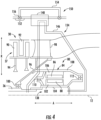
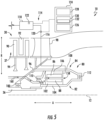
- Figs. 3 through 5 provide various alternative exemplary embodiments of the turbofan engine 10 and permanent magnet electric machine 80 described above with reference to Figs. 1 and 2 .
- Each of the embodiments of Figs. 3 through 5 may generally be configured in substantially the same manner as the embodiment described above with reference to Figs. 1 and 2 .
- each of the exemplary turbofan engines 10 depicted in Figs. 3 through 5 generally include a permanent magnet electric machine 80 having a rotor assembly 82 coupled to a rotary component of the turbofan engine 10 (i.e., an LP shaft 36 for the embodiments shown) and a stator assembly 84 coupled to a stationary component of the turbofan engine 10 (i.e., a structural support member 96 for the embodiments shown).
- the turbofan engine 10 further includes a thermal management system 134 for the permanent magnet electric machine 80.
- the thermal management system 134 utilizes a cooling airflow to maintain a temperature of the permanent magnet electric machine 80 within a desired operating temperature range during normal operations.
- the thermal management system 134 generally includes an inlet conduit 136 which may receive a bleed airflow from, e.g., the compressor section of the turbofan engine 10.
- the thermal management system 134 may further include a heat exchanger (not shown) for reducing a temperature of such bleed airflow.
- the rotor 102 is formed of a plurality of laminations 142 tightly fitted to the rotor shaft 104. Torque of the permanent magnet electric machine 80 is transferred through this connection between the rotor shaft 104 and laminations 142 of the rotor 102. Additionally, given this relatively tight fit, heat may be transferred through conduction between the laminations 142 of the rotor 102 and the rotor shaft 104, and thus to the cooling fluid flowing through the opening 138 in the rotor shaft 104.
- the system may reduce a cooling of the permanent magnet electric machine 80 using the thermal management system 134 (i.e., reduce an operability of the thermal management system 134). For example, the system may shut off or reduce a flow of cooling airflow through the inlet conduit 136 to the opening 138 of the rotor shaft 104, allowing the permanent magnets 88 of the rotor assembly 82 to increase in temperature and lose magnetization. Additionally, or alternatively, the system may bypass a heat exchanger cooling the air provided through the inlet conduit 136.
- a valve 142 is provided within, or otherwise operable with, the inlet conduit 136 of the thermal management system 134.
- the valve 142 may also be operably connected to a controller 124 through a wireless communication network. The valve may shut off, or reduce the cooling airflow through the inlet conduit 136 to provide for such increase in temperature of the permanent magnets 88.
- the thermal management system 134 is configured to provide a heating fluid to the permanent magnet electric machine 80 to increase the temperature of the permanent magnets 88. More specifically, for the embodiment depicted, the thermal management system 134 is selectively in airflow communication with a high-temperature fluid source through a high temperature fluid conduit 144, and more specifically, with a high temperature bleed airflow source through the high temperature fluid conduit 144.
- the high temperature bleed airflow source is the turbine section of the turbofan engine 10.
- the valve 142 of the thermal management system 134 may switch the airflow source from a relatively cool airflow source (providing the cooling airflow discussed above) to the high temperature bleed airflow source, such that the thermal management system 134 provides a heating fluid/heating airflow/high-temperature bleed airflow to the permanent magnet electric machine 80, and more specifically, to the opening 138 through the rotor shaft 104 of the rotor assembly 82.
- the high temperature fluid source may be any other suitable high temperature fluid source (e.g., exhaust, compressor, etc.).
- the exemplary turbofan engine 10 again includes a thermal management system 134 for the permanent magnet electric machine 80.
- the thermal management system 134 is configured to provide a cooling fluid to an opening 138 through the rotor shaft 104 of the rotor assembly 82 of the permanent magnet electric machine 80.
- the thermal management system 134 depicted is configured as a closed loop system, circulating and reusing the cooling fluid through a thermal bus 146.
- the cooling fluid may be a lubrication oil, such that the thermal management system 134 shares functionality with, e.g., a lubrication oil system for one or more sections of the turbofan engine 10.
- the thermal management system 134 additionally includes a heat sink heat exchanger 148 in thermal communication with the cooling fluid flowing through the thermal bus 146.
- the heat sink heat exchanger 148 is additionally in thermal communication with a heat sink system 150.
- the heat sink system 150 may include any suitable source of relatively cool fluid, such as bypass airflow, compressor bleed airflow, fuel, etc.
- the heat sink heat exchanger 148 is therefore configured to transfer heat from the cooling fluid in the thermal bus 146 of the thermal management system 134 to the relatively cool fluid of the heat sink system 150. In such a manner, the thermal management system 134 may maintain a temperature of the permanent magnet electric machine 80 within a desired operating temperature range.
- the heat sink system 150 includes a main line 152, a bypass line 154, and a bypass valve 156 (or rather a pair of bypass valves 156).
- the system may again reduce a cooling of the permanent magnets 88 of the permanent magnet electric machine 80 using the thermal management system 134 (i.e., reduce an operability of the thermal management system 134).
- the system may actuate the bypass valve 156 of the heat sink system 150 such that the relatively cool fluid through the main line 152 of the heat sink system 150 flows through the bypass line 154, bypassing the heat sink heat exchanger 148 of the thermal management system 134.
- the cooling fluid flowing through the thermal bus 146 of the thermal management system 134 may be unable to reject heat from the permanent magnet electric machine 80.
- the cooling fluid, and thus the permanent magnet electric machine 80 may therefore continue to rise in temperature and a magnetism of the permanent magnets 88 may be reduced or eliminated.
- bypass functionality is provided by the heat sink system 150 for the embodiment shown, in other embodiments, the bypass functionality may instead be built into the thermal bus 146 of the thermal management system 134. Additionally, in certain exemplary embodiments, instead of bypassing the heat sink heat exchanger, the system may reduce a flow of cooling fluid through the heat sink system 150, reduce a flow of cooling fluid through the thermal bus 146, or both.
- the exemplary permanent magnet electric machine 80 includes a stator assembly 84 having a stator 106 and a rotor assembly 82 having a rotor 102. Further, as will be appreciated from, e.g., Fig. 5 , the stator 106 of the stator assembly 84 and rotor 102 of the rotor assembly 82 together define an airgap 158 therebetween, generally along a radial direction R of the exemplary turbofan engine 10. During operation of the permanent magnet electric machine 80, the rotor assembly 82 will be rotating relatively quickly relative to the stator assembly 84. Additionally, the airgap 158 defined between the stator 106 and the rotor 102 may be relatively small. Further, the system generally includes a fluid duct 160 in fluid communication with the airgap 158.
- the permanent magnetic electric machine 80 depicted is provided by way of example only.
- the permanent magnetic electric machine 80 may be configured as an "outrunner" electric machine (with the rotor assembly arranged outward of the stator assembly), the permanent magnet electric machine 80 may be configured as an axial flow electric machine (with the rotor and stator being arranged along an axial direction and having an airgap with a substantially circular shape therebetween), etc.
- the method 200 generally includes at (202) determining a fault condition of the permanent magnet electric machine. More specifically, for the exemplary aspect depicted, determining the fault condition of the permanent magnet electric machine at (202) includes at (204) determining an internal coil fault of the permanent magnet electric machine.
- the internal coil fault may refer to a stator winding short circuit fault, described in greater detail above.
- the fault condition may be any other suitable fault condition.
- determining the fault condition of the permanent magnet electric machine at (202) may include receiving data indicative of the fault condition through one or more sensors operably coupled to a stator assembly of the permanent magnet electric machine, to an electric line of an electric transfer bus (the electric line electrically coupled to the permanent magnet electric machine), to various power electronics of the electric transfer bus, etc.
- this data may be used in conjunction with various operating conditions of the engine to determine the fault condition, such as rotational speeds of the engine (e.g., of one or more shafts of the engine), temperatures within the engine (e.g., compressor inlet temperature, compressor exhaust temperature, turbine inlet temperature, turbine exhaust temperature, etc.), pressures within the engine, etc.
- rotational speeds of the engine e.g., of one or more shafts of the engine
- temperatures within the engine e.g., compressor inlet temperature, compressor exhaust temperature, turbine inlet temperature, turbine exhaust temperature, etc.
- pressures within the engine e.g., if the engine is operating in a manner consistent with a large drag on the engine, yet an
- the method 200 further includes at (206) reducing a magnetism of one or more permanent magnets of the permanent magnet electric machine by increasing a temperature of the one or more permanent magnets in response to determining the fault condition of the permanent magnet electric machine at (202). More specifically, for the exemplary aspect depicted, reducing the magnetism of the one or more permanent magnets by increasing the temperature of the one or more permanent magnets at (206) includes at (208) increasing a temperature of a rotor assembly of the permanent magnet electric machine, the rotor assembly including the one or more permanent magnets.
- the rotor assembly may include a rotor formed of a plurality of axially arranged laminations configured to mount a plurality of circumferentially arranged permanent magnets therein.
- the plurality of axially arranged laminations may be fitted to a rotor shaft, as discussed in greater detail above with reference to Figs. 1 through 5 .
- reducing the magnetism of the one or more permanent magnets by increasing the temperature of the one or more permanent magnets at (206) includes at (210) adding between about 5 kilowatts of heat and about 500 kilowatts of heat.
- the amount of heat added to increase the temperature of the one or more permanent magnets and decrease the magnetism of the one or more permanent magnets may be sufficient to increase the temperature of the one or more permanent magnets to a temperature approaching or exceeding a Curie temperature for such permanent magnets. In such a manner, the permanent magnets may irreversibly demagnetize or reduce in magnetization.
- reducing the magnetism of the one or more permanent magnets by increasing the temperature of the one or more permanent magnets at (206) may include at (212) driving current through a stator assembly of the permanent magnet electric machine to induce eddy current losses.
- the permanent magnet electric machine defines a designed current frequency operating range and driving current through the stator assembly of the permanent magnet electric machine to induce eddy current losses at (212) may include driving current through the stator assembly of the permanent magnet electric machine at a frequency other than the designed current frequency operating range, and more specifically at (214) driving current through the stator assembly of the permanent magnet electric machine at a frequency greater than the designed current frequency operating range.
- the relatively high frequency electric current provided to the stator assembly will, as noted, induce eddy current losses within the permanent magnet electric machine, increasing a temperature of the permanent magnet electric machine.
- reducing the magnetism of the one or more permanent magnets by increasing the temperature of the one or more permanent magnets at (206) includes at (216) providing a heating fluid to the permanent magnet electric machine.
- providing the heating fluid to the permanent magnet electric machine at (216) may include at (218) providing a bleed airflow to the permanent magnet electric machine.
- the bleed airflow may be relatively high temperature airflow bled off of, e.g., a compressor within a compressor section of the engine, a turbine within a turbine section of the engine, or an exhaust of the engine.
- decreasing the contact pressure between the plurality of laminations and the shaft at (226) may be accomplished by forming the laminations and the shaft of specific materials having desired coefficients of thermal expansion.
- the laminations may be designed to expand more than the shaft at certain temperatures, such that once the shaft and laminations reach such temperatures, which may be indicative of a fault condition of the permanent magnet electric machine, the contact pressure between the plurality of laminations in the shaft decreases (potentially even forming a gap therebetween), thereby further increasing a temperature of the laminations and the plurality of permanent magnets as desired.
Landscapes
- Engineering & Computer Science (AREA)
- Power Engineering (AREA)
- Mechanical Engineering (AREA)
- General Engineering & Computer Science (AREA)
- Chemical & Material Sciences (AREA)
- Combustion & Propulsion (AREA)
- Structures Of Non-Positive Displacement Pumps (AREA)
- Control Of Eletrric Generators (AREA)
- Load-Engaging Elements For Cranes (AREA)
- Hard Magnetic Materials (AREA)
Claims (14)
- Verfahren (200) zum Betreiben einer elektrischen Permanentmagnetmaschine eines Triebwerks, wobei das Verfahren umfasst:(202) Bestimmen eines Fehlerzustands der elektrischen Permanentmagnetmaschine und(206) Reduzieren eines Magnetismus eines oder mehrerer Permanentmagnete der elektrischen Permanentmagnetmaschine durch Erhöhen einer Temperatur des einen oder der mehreren Permanentmagnete, um einen Magnetismus des einen oder der mehreren Permanentmagnete als Reaktion auf das Bestimmen des Fehlerzustands der elektrischen Permanentmagnetmaschine irreversibel zu reduzieren oder abzuschalten;gekennzeichnet durch das Reduzieren des Magnetismus des einen oder der mehreren Permanentmagnete durch Erhöhen der Temperatur des einen oder der mehreren Permanentmagnete umfasst (216) das Bereitstellen eines Heizfluids für die elektrische Permanentmagnetmaschine.
- Verfahren nach Anspruch 1, wobei das Triebwerk eine Brennkraftmaschine ist.
- Verfahren nach Anspruch 1 oder 2, wobei das Triebwerk mindestens eines von einem Wellentriebwerk, einem Turboproptriebwerk oder einem Mantelstromtriebwerk ist.
- Verfahren nach einem der Ansprüche 1 bis 3, wobei das Triebwerk konfiguriert ist, um während des Betriebs eine maximale Menge an mechanischer Leistung zu erzeugen, wobei die elektrische Permanentmagnetmaschine in der Lage ist, eine maximale Menge an elektrischer Leistung aus dem Triebwerk zu gewinnen, und wobei die maximale Menge an elektrischer Leistung, die die elektrische Permanentmagnetmaschine aus dem Triebwerk gewinnen kann, zwischen etwa 2,5 % und etwa 75 % der maximalen Menge an mechanischer Leistung beträgt, für dessen Erzeugung während des Betriebs das Triebwerk konfiguriert ist.
- Verfahren nach Anspruch 4, wobei die maximale Menge an elektrischer Leistung, die die elektrische Permanentmagnetmaschine aus dem Triebwerk gewinnen kann, größer ist als etwa 25 % der maximalen Menge an mechanischer Leistung, für dessen Erzeugung während des Betriebs das Triebwerk konfiguriert ist.
- Verfahren nach einem der Ansprüche 1 bis 5, wobei das Bestimmen des Fehlerzustands der elektrischen Permanentmagnetmaschine (204) das Bestimmen eines internen Spulenfehlers der elektrischen Permanentmagnetmaschine umfasst.
- Verfahren nach einem der Ansprüche 1 bis 6, wobei das Reduzieren des Magnetismus des einen oder der mehreren Permanentmagnete durch Erhöhen der Temperatur des einen oder der mehreren Permanentmagnete (212) das Leiten von Strom durch eine Statoranordnung der elektrischen Permanentmagnetmaschine umfasst, um Wirbelstromverluste in einer Rotoranordnung der elektrischen Permanentmagnetmaschine zu induzieren.
- Verfahren nach Anspruch 7, wobei die elektrische Permanentmagnetmaschine einen vorgesehenen Stromfrequenzbetriebsbereich definiert und wobei das Leiten von Strom durch die Statoranordnung der elektrischen Permanentmagnetmaschine zum Induzieren von Wirbelstromverlusten (214) das Leiten von Strom durch die Statoranordnung der elektrischen Permanentmagnetmaschine bei einer anderen Frequenz als dem vorgesehenen Stromfrequenzbetriebsbereich umfasst.
- Verfahren nach einem der Ansprüche 1 bis 8, wobei das Bereitstellen des Heizfluids an die elektrische Permanentmagnetmaschine (218) das Bereitstellen von Zapfluft an die elektrische Permanentmagnetmaschine umfasst.
- Verfahren nach einem der Ansprüche 1 bis 9, wobei das Reduzieren des Magnetismus des einen oder der mehreren Permanentmagnete durch Erhöhen der Temperatur des einen oder der mehreren Permanentmagnete (220) das Reduzieren einer Kühlung der elektrischen Permanentmagnetmaschine unter Verwendung eines Wärmemanagementsystems umfasst.
- Verfahren nach Anspruch 10, wobei das Reduzieren der Kühlung der elektrischen Permanentmagnetmaschine unter Verwendung des Wärmemanagementsystems (222) das Umgehen eines Kühlkörperwärmetauschers des Wärmemanagementsystems umfasst.
- Verfahren nach einem der Ansprüche 1 bis 11, wobei das Reduzieren des Magnetismus des einen oder der mehreren Permanentmagnete durch Erhöhen der Temperatur des einen oder der mehreren Permanentmagnete (224) das Einspritzen eines Fluids in einen Luftspalt der elektrischen Permanentmagnetmaschine umfasst.
- Verfahren nach Anspruch 12, wobei das Fluid eine Viskosität definiert, die größer als die Viskosität von Luft ist.
- Triebwerk, das eine Achse definiert und umfasst:eine stationäre Komponente;eine rotierende Komponente, die relativ zur stationären Komponente um die Achse des Triebwerks drehbar ist;eine elektrische Permanentmagnetmaschine (80), die eine mit der stationären Komponente gekoppelte Statoranordnung (84) und eine mit der rotierenden Komponente gekoppelte Rotoranordnung (82) umfasst, wobei die Rotoranordnung (82) einen oder mehrere Permanentmagnete (88) umfasst;eine Steuerung (124), die betriebsfähig ist zum:Bestimmen (202) eines Fehlerzustands der elektrischen Permanentmagnetmaschine (80);Reduzieren (206) eines Magnetismus des einen oder der mehreren Permanentmagnete (88) der elektrischen Permanentmagnetmaschine (80) durch Verursachen eines Temperaturanstiegs des einen oder der mehreren Permanentmagnete (88), um einen Magnetismus des einen oder der mehreren Permanentmagnete (88) als Reaktion auf das Bestimmen (202) des Fehlerzustands der elektrischen Permanentmagnetmaschine (80) irreversibel zu reduzieren oder abzuschalten;dadurch gekennzeichnet, dass das Reduzieren des Magnetismus des einen oder der mehreren Permanentmagnete (88) durch Erhöhen der Temperatur des einen oder der mehreren Permanentmagnete (88) das Bereitstellen (216) eines Heizfluids an die elektrische Permanentmagnetmaschine (80) umfasst.
Priority Applications (1)
| Application Number | Priority Date | Filing Date | Title |
|---|---|---|---|
| EP25179218.0A EP4586432A3 (de) | 2018-08-27 | 2019-08-20 | Motor mit einer permanentmagnetischen elektrischen maschine |
Applications Claiming Priority (1)
| Application Number | Priority Date | Filing Date | Title |
|---|---|---|---|
| US16/113,401 US10978934B2 (en) | 2018-08-27 | 2018-08-27 | Engine with a permanent magnet electric machine |
Related Child Applications (2)
| Application Number | Title | Priority Date | Filing Date |
|---|---|---|---|
| EP25179218.0A Division EP4586432A3 (de) | 2018-08-27 | 2019-08-20 | Motor mit einer permanentmagnetischen elektrischen maschine |
| EP25179218.0A Division-Into EP4586432A3 (de) | 2018-08-27 | 2019-08-20 | Motor mit einer permanentmagnetischen elektrischen maschine |
Publications (2)
| Publication Number | Publication Date |
|---|---|
| EP3618263A1 EP3618263A1 (de) | 2020-03-04 |
| EP3618263B1 true EP3618263B1 (de) | 2025-07-09 |
Family
ID=67659422
Family Applications (2)
| Application Number | Title | Priority Date | Filing Date |
|---|---|---|---|
| EP25179218.0A Pending EP4586432A3 (de) | 2018-08-27 | 2019-08-20 | Motor mit einer permanentmagnetischen elektrischen maschine |
| EP19192497.6A Active EP3618263B1 (de) | 2018-08-27 | 2019-08-20 | Motor mit permanentmagnetelektromaschine |
Family Applications Before (1)
| Application Number | Title | Priority Date | Filing Date |
|---|---|---|---|
| EP25179218.0A Pending EP4586432A3 (de) | 2018-08-27 | 2019-08-20 | Motor mit einer permanentmagnetischen elektrischen maschine |
Country Status (3)
| Country | Link |
|---|---|
| US (1) | US10978934B2 (de) |
| EP (2) | EP4586432A3 (de) |
| CN (2) | CN110868132B (de) |
Families Citing this family (12)
| Publication number | Priority date | Publication date | Assignee | Title |
|---|---|---|---|---|
| DE102017220941A1 (de) * | 2017-11-23 | 2019-05-23 | Siemens Aktiengesellschaft | Elektrische Maschine mit erhöhter Betriebssicherheit |
| US11735988B2 (en) * | 2019-01-31 | 2023-08-22 | General Electric Company | Dual rotor electric machine |
| US11165309B2 (en) * | 2019-05-10 | 2021-11-02 | Hamilton Sundstrand Corporation | Motor cooling system and method |
| FR3107088B1 (fr) * | 2020-02-10 | 2022-12-09 | Safran | Dispositif et procédé d’arrêt de machine électrique pour une turbomachine |
| FR3108654B1 (fr) * | 2020-03-25 | 2022-03-04 | Safran Aircraft Engines | Turbomachine d’aeronef equipee d’une machine electrique |
| EP3968503B1 (de) * | 2020-08-31 | 2025-02-12 | General Electric Company | Mit einer eingebetteten elektrischen maschine mit segmentiertem und beweglichem stator ausgestattete turbomaschine |
| US11901799B2 (en) * | 2021-02-08 | 2024-02-13 | General Electric Company | Electrical machines for integration into a propulsion engine |
| EP4148264A1 (de) * | 2021-09-08 | 2023-03-15 | Rolls-Royce plc | Verbessertes gasturbinentriebwerk |
| EP4148250B1 (de) | 2021-09-08 | 2025-08-06 | Rolls-Royce plc | Verbesserter gasturbinenmotor |
| EP4148263A1 (de) | 2021-09-08 | 2023-03-15 | Rolls-Royce plc | Verbessertes gasturbinentriebwerk |
| FR3132601B1 (fr) * | 2022-02-04 | 2025-07-04 | Safran | Procede d’arret d’une generatrice electrique a aimants permanents par demagnetisation |
| US20250289575A1 (en) * | 2024-03-18 | 2025-09-18 | General Electric Company | Fault tolerant thermal management system for hybrid electric system |
Citations (1)
| Publication number | Priority date | Publication date | Assignee | Title |
|---|---|---|---|---|
| EP2372901A2 (de) * | 2010-03-29 | 2011-10-05 | Rolls-Royce plc | Elektrisches Maschinensicherheitssystem |
Family Cites Families (24)
| Publication number | Priority date | Publication date | Assignee | Title |
|---|---|---|---|---|
| US2767339A (en) * | 1950-07-14 | 1956-10-16 | Bodine Electric Company | Dynamoelectric rotor |
| JPH07183124A (ja) * | 1993-12-24 | 1995-07-21 | Toshiba Corp | 永久磁石の着磁装置及び着磁方法 |
| US5889338A (en) | 1997-06-09 | 1999-03-30 | Richmond; Tom A. | Demagnetizing apparatus for an automotive engine |
| US6441521B1 (en) | 2000-05-12 | 2002-08-27 | Reliance Electric Technologies, Llc | Hybrid superconducting motor/generator |
| US7330016B2 (en) | 2001-10-01 | 2008-02-12 | Colley Bruce H | Induction generator power supply |
| JP4102177B2 (ja) | 2002-12-10 | 2008-06-18 | トヨタ自動車株式会社 | 永久磁石モータの制御装置および制御方法 |
| US7119461B2 (en) * | 2003-03-25 | 2006-10-10 | Pratt & Whitney Canada Corp. | Enhanced thermal conductivity ferrite stator |
| US6895741B2 (en) * | 2003-06-23 | 2005-05-24 | Pratt & Whitney Canada Corp. | Differential geared turbine engine with torque modulation capability |
| CN100480488C (zh) * | 2004-12-28 | 2009-04-22 | 蒋子刚 | 流体机械的揉动变容方法及其机构与用途 |
| JP4572907B2 (ja) | 2007-03-29 | 2010-11-04 | トヨタ自動車株式会社 | モータ制御装置、制御方法及び制御プログラム |
| JP2009106025A (ja) | 2007-10-22 | 2009-05-14 | Toyota Motor Corp | モータ制御装置 |
| WO2010053179A1 (ja) * | 2008-11-10 | 2010-05-14 | 住友重機械工業株式会社 | ハイブリッド型建設機械 |
| US20110074231A1 (en) | 2009-09-25 | 2011-03-31 | Soderberg Rod F | Hybrid and electic vehicles magetic field and electro magnetic field interactice systems |
| US8941970B2 (en) | 2011-10-18 | 2015-01-27 | Siemens Energy, Inc. | Method and apparatus for demagnetizing generator components prior to electromagnetic core imperfection testing or EL-CID testing |
| JP5635581B2 (ja) * | 2012-11-02 | 2014-12-03 | 本田技研工業株式会社 | 回転電機の磁石温度推定装置及び磁石温度推定方法 |
| DE102013109587B4 (de) * | 2013-09-03 | 2024-03-07 | Illinois Tool Works Inc. | Thermostatventil für eine Verbrennungskraftmaschine |
| US9698660B2 (en) * | 2013-10-25 | 2017-07-04 | General Electric Company | System and method for heating ferrite magnet motors for low temperatures |
| US20160023773A1 (en) * | 2014-07-23 | 2016-01-28 | Hamilton Sundstrand Corporation | Hybrid electric pulsed-power propulsion system for aircraft |
| US9602043B2 (en) * | 2014-08-29 | 2017-03-21 | General Electric Company | Magnet management in electric machines |
| DE112015004320T5 (de) | 2014-11-14 | 2017-07-27 | Aisin Aw Co., Ltd. | Wechselrichtersteuerungsvorrichtung und fahrzeugsteuerungsvorrichtung |
| US20170126087A1 (en) | 2015-10-30 | 2017-05-04 | Rod F. Soderberg | Device including material originating from magnetic particles providing structural and magnetic capabilities |
| DE102016207392B4 (de) | 2016-04-29 | 2021-01-28 | Vitesco Technologies GmbH | Verfahren und Vorrichtung zum Entmagnetisieren mindestens einer Erregerwicklung insbesondere eines Rotors eines Elektromotors |
| GB201704579D0 (en) * | 2017-03-23 | 2017-05-10 | Rolls Royce Plc | An electrical machine |
| JP6701158B2 (ja) * | 2017-12-22 | 2020-05-27 | 株式会社Subaru | 車両の制御装置及び車両の制御方法 |
-
2018
- 2018-08-27 US US16/113,401 patent/US10978934B2/en active Active
-
2019
- 2019-08-20 EP EP25179218.0A patent/EP4586432A3/de active Pending
- 2019-08-20 EP EP19192497.6A patent/EP3618263B1/de active Active
- 2019-08-26 CN CN201910791301.3A patent/CN110868132B/zh active Active
- 2019-08-26 CN CN202310682178.8A patent/CN116683831A/zh active Pending
Patent Citations (1)
| Publication number | Priority date | Publication date | Assignee | Title |
|---|---|---|---|---|
| EP2372901A2 (de) * | 2010-03-29 | 2011-10-05 | Rolls-Royce plc | Elektrisches Maschinensicherheitssystem |
Also Published As
| Publication number | Publication date |
|---|---|
| EP4586432A3 (de) | 2025-09-17 |
| US10978934B2 (en) | 2021-04-13 |
| CN110868132B (zh) | 2023-07-04 |
| CN110868132A (zh) | 2020-03-06 |
| EP4586432A2 (de) | 2025-07-16 |
| US20200067383A1 (en) | 2020-02-27 |
| CN116683831A (zh) | 2023-09-01 |
| EP3618263A1 (de) | 2020-03-04 |
Similar Documents
| Publication | Publication Date | Title |
|---|---|---|
| EP3618263B1 (de) | Motor mit permanentmagnetelektromaschine | |
| JP7581446B2 (ja) | 航空機用推進システム | |
| EP4151837B1 (de) | Gasturbinenmotor mit integrierter elektrischer maschine | |
| CA2747614C (en) | Fan embedded power generator | |
| JP7226924B2 (ja) | 航空機用推進システム | |
| CN114790942B (zh) | 嵌入式电机 | |
| EP3569825B1 (de) | Elektrische heizung für die abstandsregelung von turbomaschinen | |
| JPWO2021014667A1 (ja) | ターボファンエンジンの発電機冷却システム | |
| US12374975B2 (en) | Electric machine | |
| EP2971517B1 (de) | Enteisung durch integrierte elektrische wärmeerzeugung | |
| US9963981B2 (en) | Pitch change mechanism for shrouded fan with low fan pressure ratio | |
| EP3422533B1 (de) | Elektromaschinenvorrichtung | |
| US11739694B2 (en) | Embedded electric motor assembly | |
| EP3444464A1 (de) | System und verfahren zum drehen eines gasturbinenmotors während eines motorzyklus | |
| CN114109600B (zh) | 配备有具有分段和可移动定子的嵌入式电机的涡轮机 | |
| US20230095723A1 (en) | Turbine engine with variable pitch fan | |
| CN117469028A (zh) | 热管理系统 | |
| US20230184175A1 (en) | Systems and methods for aligning a gearbox of a gas turbine engine | |
| US12388321B2 (en) | Gas turbine engine equipped with a control system for management of rotor modes using an electric machine | |
| CN115126554B (zh) | 配有使用电机管理转子模式的控制系统的燃气涡轮发动机 | |
| CN116255245A (zh) | 用于对准燃气涡轮发动机的变速箱的系统和方法 |
Legal Events
| Date | Code | Title | Description |
|---|---|---|---|
| PUAI | Public reference made under article 153(3) epc to a published international application that has entered the european phase |
Free format text: ORIGINAL CODE: 0009012 |
|
| STAA | Information on the status of an ep patent application or granted ep patent |
Free format text: STATUS: THE APPLICATION HAS BEEN PUBLISHED |
|
| AK | Designated contracting states |
Kind code of ref document: A1 Designated state(s): AL AT BE BG CH CY CZ DE DK EE ES FI FR GB GR HR HU IE IS IT LI LT LU LV MC MK MT NL NO PL PT RO RS SE SI SK SM TR |
|
| AX | Request for extension of the european patent |
Extension state: BA ME |
|
| STAA | Information on the status of an ep patent application or granted ep patent |
Free format text: STATUS: REQUEST FOR EXAMINATION WAS MADE |
|
| 17P | Request for examination filed |
Effective date: 20200904 |
|
| RBV | Designated contracting states (corrected) |
Designated state(s): AL AT BE BG CH CY CZ DE DK EE ES FI FR GB GR HR HU IE IS IT LI LT LU LV MC MK MT NL NO PL PT RO RS SE SI SK SM TR |
|
| RIN1 | Information on inventor provided before grant (corrected) |
Inventor name: PAN, DI Inventor name: GEMIN, PAUL Inventor name: HON, ROBERT Inventor name: GALARZA, PABLO |
|
| RIC1 | Information provided on ipc code assigned before grant |
Ipc: H02P 9/00 20060101AFI20201221BHEP Ipc: F02C 6/04 20060101ALN20201221BHEP Ipc: H02H 7/06 20060101ALI20201221BHEP Ipc: H02K 21/14 20060101ALN20201221BHEP Ipc: F01D 15/10 20060101ALN20201221BHEP Ipc: H02K 9/19 20060101ALN20201221BHEP Ipc: H02K 1/28 20060101ALN20201221BHEP Ipc: H02K 7/18 20060101ALN20201221BHEP |
|
| STAA | Information on the status of an ep patent application or granted ep patent |
Free format text: STATUS: EXAMINATION IS IN PROGRESS |
|
| 17Q | First examination report despatched |
Effective date: 20210225 |
|
| GRAP | Despatch of communication of intention to grant a patent |
Free format text: ORIGINAL CODE: EPIDOSNIGR1 |
|
| STAA | Information on the status of an ep patent application or granted ep patent |
Free format text: STATUS: GRANT OF PATENT IS INTENDED |
|
| RIC1 | Information provided on ipc code assigned before grant |
Ipc: H02K 21/14 20060101ALN20250117BHEP Ipc: H02K 9/19 20060101ALN20250117BHEP Ipc: H02K 7/18 20060101ALN20250117BHEP Ipc: H02K 1/28 20060101ALN20250117BHEP Ipc: F01D 15/10 20060101ALN20250117BHEP Ipc: F02C 6/04 20060101ALN20250117BHEP Ipc: H02H 7/06 20060101ALI20250117BHEP Ipc: H02P 9/00 20060101AFI20250117BHEP |
|
| INTG | Intention to grant announced |
Effective date: 20250131 |
|
| RIC1 | Information provided on ipc code assigned before grant |
Ipc: H02K 21/14 20060101ALN20250124BHEP Ipc: H02K 9/19 20060101ALN20250124BHEP Ipc: H02K 7/18 20060101ALN20250124BHEP Ipc: H02K 1/28 20060101ALN20250124BHEP Ipc: F01D 15/10 20060101ALN20250124BHEP Ipc: F02C 6/04 20060101ALN20250124BHEP Ipc: H02H 7/06 20060101ALI20250124BHEP Ipc: H02P 9/00 20060101AFI20250124BHEP |
|
| GRAS | Grant fee paid |
Free format text: ORIGINAL CODE: EPIDOSNIGR3 |
|
| GRAA | (expected) grant |
Free format text: ORIGINAL CODE: 0009210 |
|
| STAA | Information on the status of an ep patent application or granted ep patent |
Free format text: STATUS: THE PATENT HAS BEEN GRANTED |
|
| RAP3 | Party data changed (applicant data changed or rights of an application transferred) |
Owner name: GENERAL ELECTRIC COMPANY |
|
| AK | Designated contracting states |
Kind code of ref document: B1 Designated state(s): AL AT BE BG CH CY CZ DE DK EE ES FI FR GB GR HR HU IE IS IT LI LT LU LV MC MK MT NL NO PL PT RO RS SE SI SK SM TR |
|
| P01 | Opt-out of the competence of the unified patent court (upc) registered |
Free format text: CASE NUMBER: APP_26434/2025 Effective date: 20250604 |
|
| REG | Reference to a national code |
Ref country code: GB Ref legal event code: FG4D |
|
| REG | Reference to a national code |
Ref country code: CH Ref legal event code: EP |
|
| REG | Reference to a national code |
Ref country code: IE Ref legal event code: FG4D |
|
| REG | Reference to a national code |
Ref country code: DE Ref legal event code: R096 Ref document number: 602019072221 Country of ref document: DE |
|
| PGFP | Annual fee paid to national office [announced via postgrant information from national office to epo] |
Ref country code: DE Payment date: 20250724 Year of fee payment: 7 |
|
| PGFP | Annual fee paid to national office [announced via postgrant information from national office to epo] |
Ref country code: GB Payment date: 20250820 Year of fee payment: 7 |
|
| PGFP | Annual fee paid to national office [announced via postgrant information from national office to epo] |
Ref country code: FR Payment date: 20250820 Year of fee payment: 7 |
|
| REG | Reference to a national code |
Ref country code: NL Ref legal event code: MP Effective date: 20250709 |
|
| PG25 | Lapsed in a contracting state [announced via postgrant information from national office to epo] |
Ref country code: PT Free format text: LAPSE BECAUSE OF FAILURE TO SUBMIT A TRANSLATION OF THE DESCRIPTION OR TO PAY THE FEE WITHIN THE PRESCRIBED TIME-LIMIT Effective date: 20251110 |
|
| PG25 | Lapsed in a contracting state [announced via postgrant information from national office to epo] |
Ref country code: NL Free format text: LAPSE BECAUSE OF FAILURE TO SUBMIT A TRANSLATION OF THE DESCRIPTION OR TO PAY THE FEE WITHIN THE PRESCRIBED TIME-LIMIT Effective date: 20250709 |
|
| REG | Reference to a national code |
Ref country code: AT Ref legal event code: MK05 Ref document number: 1812837 Country of ref document: AT Kind code of ref document: T Effective date: 20250709 |
|
| PG25 | Lapsed in a contracting state [announced via postgrant information from national office to epo] |
Ref country code: IS Free format text: LAPSE BECAUSE OF FAILURE TO SUBMIT A TRANSLATION OF THE DESCRIPTION OR TO PAY THE FEE WITHIN THE PRESCRIBED TIME-LIMIT Effective date: 20251109 |
|
| PG25 | Lapsed in a contracting state [announced via postgrant information from national office to epo] |
Ref country code: NO Free format text: LAPSE BECAUSE OF FAILURE TO SUBMIT A TRANSLATION OF THE DESCRIPTION OR TO PAY THE FEE WITHIN THE PRESCRIBED TIME-LIMIT Effective date: 20251009 |
|
| REG | Reference to a national code |
Ref country code: LT Ref legal event code: MG9D |
|
| PG25 | Lapsed in a contracting state [announced via postgrant information from national office to epo] |
Ref country code: AT Free format text: LAPSE BECAUSE OF FAILURE TO SUBMIT A TRANSLATION OF THE DESCRIPTION OR TO PAY THE FEE WITHIN THE PRESCRIBED TIME-LIMIT Effective date: 20250709 |
|
| PG25 | Lapsed in a contracting state [announced via postgrant information from national office to epo] |
Ref country code: FI Free format text: LAPSE BECAUSE OF FAILURE TO SUBMIT A TRANSLATION OF THE DESCRIPTION OR TO PAY THE FEE WITHIN THE PRESCRIBED TIME-LIMIT Effective date: 20250709 |
|
| PG25 | Lapsed in a contracting state [announced via postgrant information from national office to epo] |
Ref country code: HR Free format text: LAPSE BECAUSE OF FAILURE TO SUBMIT A TRANSLATION OF THE DESCRIPTION OR TO PAY THE FEE WITHIN THE PRESCRIBED TIME-LIMIT Effective date: 20250709 |
|
| PG25 | Lapsed in a contracting state [announced via postgrant information from national office to epo] |
Ref country code: GR Free format text: LAPSE BECAUSE OF FAILURE TO SUBMIT A TRANSLATION OF THE DESCRIPTION OR TO PAY THE FEE WITHIN THE PRESCRIBED TIME-LIMIT Effective date: 20251010 |
|
| PG25 | Lapsed in a contracting state [announced via postgrant information from national office to epo] |
Ref country code: SE Free format text: LAPSE BECAUSE OF FAILURE TO SUBMIT A TRANSLATION OF THE DESCRIPTION OR TO PAY THE FEE WITHIN THE PRESCRIBED TIME-LIMIT Effective date: 20250709 |
|
| PG25 | Lapsed in a contracting state [announced via postgrant information from national office to epo] |
Ref country code: LV Free format text: LAPSE BECAUSE OF FAILURE TO SUBMIT A TRANSLATION OF THE DESCRIPTION OR TO PAY THE FEE WITHIN THE PRESCRIBED TIME-LIMIT Effective date: 20250709 |
|
| PG25 | Lapsed in a contracting state [announced via postgrant information from national office to epo] |
Ref country code: PL Free format text: LAPSE BECAUSE OF FAILURE TO SUBMIT A TRANSLATION OF THE DESCRIPTION OR TO PAY THE FEE WITHIN THE PRESCRIBED TIME-LIMIT Effective date: 20250709 Ref country code: BG Free format text: LAPSE BECAUSE OF FAILURE TO SUBMIT A TRANSLATION OF THE DESCRIPTION OR TO PAY THE FEE WITHIN THE PRESCRIBED TIME-LIMIT Effective date: 20250709 |
|
| PG25 | Lapsed in a contracting state [announced via postgrant information from national office to epo] |
Ref country code: RS Free format text: LAPSE BECAUSE OF FAILURE TO SUBMIT A TRANSLATION OF THE DESCRIPTION OR TO PAY THE FEE WITHIN THE PRESCRIBED TIME-LIMIT Effective date: 20251009 |
|
| PG25 | Lapsed in a contracting state [announced via postgrant information from national office to epo] |
Ref country code: ES Free format text: LAPSE BECAUSE OF FAILURE TO SUBMIT A TRANSLATION OF THE DESCRIPTION OR TO PAY THE FEE WITHIN THE PRESCRIBED TIME-LIMIT Effective date: 20250709 |
|
| PG25 | Lapsed in a contracting state [announced via postgrant information from national office to epo] |
Ref country code: RO Free format text: LAPSE BECAUSE OF FAILURE TO SUBMIT A TRANSLATION OF THE DESCRIPTION OR TO PAY THE FEE WITHIN THE PRESCRIBED TIME-LIMIT Effective date: 20250709 |
|
| REG | Reference to a national code |
Ref country code: CH Ref legal event code: H13 Free format text: ST27 STATUS EVENT CODE: U-0-0-H10-H13 (AS PROVIDED BY THE NATIONAL OFFICE) Effective date: 20260324 |