EP3617040A1 - Fahrerhausfrontmodul und verfahren zur herstellung eines fahrerhauses - Google Patents
Fahrerhausfrontmodul und verfahren zur herstellung eines fahrerhauses Download PDFInfo
- Publication number
- EP3617040A1 EP3617040A1 EP19192466.1A EP19192466A EP3617040A1 EP 3617040 A1 EP3617040 A1 EP 3617040A1 EP 19192466 A EP19192466 A EP 19192466A EP 3617040 A1 EP3617040 A1 EP 3617040A1
- Authority
- EP
- European Patent Office
- Prior art keywords
- cab
- driver
- module
- floor structure
- front module
- Prior art date
- Legal status (The legal status is an assumption and is not a legal conclusion. Google has not performed a legal analysis and makes no representation as to the accuracy of the status listed.)
- Granted
Links
Images
Classifications
-
- B—PERFORMING OPERATIONS; TRANSPORTING
- B62—LAND VEHICLES FOR TRAVELLING OTHERWISE THAN ON RAILS
- B62D—MOTOR VEHICLES; TRAILERS
- B62D33/00—Superstructures for load-carrying vehicles
- B62D33/06—Drivers' cabs
-
- B—PERFORMING OPERATIONS; TRANSPORTING
- B62—LAND VEHICLES FOR TRAVELLING OTHERWISE THAN ON RAILS
- B62D—MOTOR VEHICLES; TRAILERS
- B62D25/00—Superstructure or monocoque structure sub-units; Parts or details thereof not otherwise provided for
- B62D25/08—Front or rear portions
- B62D25/082—Engine compartments
- B62D25/085—Front-end modules
-
- B—PERFORMING OPERATIONS; TRANSPORTING
- B62—LAND VEHICLES FOR TRAVELLING OTHERWISE THAN ON RAILS
- B62D—MOTOR VEHICLES; TRAILERS
- B62D25/00—Superstructure or monocoque structure sub-units; Parts or details thereof not otherwise provided for
- B62D25/08—Front or rear portions
- B62D25/14—Dashboards as superstructure sub-units
-
- B—PERFORMING OPERATIONS; TRANSPORTING
- B62—LAND VEHICLES FOR TRAVELLING OTHERWISE THAN ON RAILS
- B62D—MOTOR VEHICLES; TRAILERS
- B62D65/00—Designing, manufacturing, e.g. assembling, facilitating disassembly, or structurally modifying motor vehicles or trailers, not otherwise provided for
- B62D65/02—Joining sub-units or components to, or positioning sub-units or components with respect to, body shell or other sub-units or components
- B62D65/04—Joining preassembled modular units composed of sub-units performing diverse functions, e.g. engine and bonnet
Definitions
- the invention relates to a cab front module for a cab of a commercial vehicle and a method for producing a cab of a commercial vehicle.
- Cabs or driver's cabs of trucks are usually formed with a closed structural cell, which is completed in further steps with components which are attached to the structural cell on the outside or inside.
- the risk of damage to the driver's cab increases due to the components possibly bumping into the driver's cab. Due to the spatial conditions when assembling components inside the driver's cab, compromises must be made with regard to assembly ergonomics.
- the WO 92/07749 A1 discloses a robot assembly of a truck.
- the robot assembly of the truck is done by mounting a dashboard and a wire harness in a front part through an open rear end thereof, while the seats and a wire harness are mounted in a rear part through an open front end thereof with robotic means.
- No floor is installed in the front of the truck. Then the parts are aligned and connected by gluing.
- Corresponding circuit board connection technologies are used for the complex cabling and wiring.
- the US 5,863,093 A discloses a fire protection dashboard assembly.
- the fire protection dashboard assembly is constructed prior to assembly on the truck cabin.
- a front wall section of the fire protection dashboard assembly is attached to protruding side members of a floor of the truck cabin.
- the invention is based on the object of creating an alternative and / or improved driver's cab front module.
- the invention creates a driver's cab front module for a driver's cab of a commercial vehicle (for example a truck).
- the driver's cab front module is preferably prefabricated and / or pre-assembled (e.g. separately from a driver's cab main module of the driver's cab).
- the cab front module has a (for example essentially vertically oriented) cab front wall structure and a (for example essentially horizontally aligned) cab floor structure.
- the driver's cab floor structure is connected to the driver's cab front wall, partially forms a driver's cab floor and has a support structure with at least one attachment area for the load-bearing attachment of the driver's cab front module to a further driver's cab floor structure.
- the present disclosure thus describes a driver's cab front module which is designed as a front and partial floor module, which expediently has both the predominantly vertically oriented cabin front as the driver's cab front wall structure and a front section of the cabin floor as the driver's cab partial floor structure.
- This results in new degrees of freedom in the assembly of components on the cab front module, which is carried out independently of the rest of the cab, with the possibility of a considerable optimization of the ergonomics and the assembly times.
- further essential components of the driver's cab can be included in the prefabricated and preassembled driver's cab front module, in particular those that are at least partially attached to or in the driver's cab floor structure. This can be, for example, a steering joint shaft or a steering angle gear.
- a mounting area can expediently have one or more screwing points, bonding points and / or welding points.
- the support structure has one or more longitudinal members and / or cross members and / or one or more support plates.
- the cab front module can be understood it is suitable to attach the driver's cab front module to another driver's cab floor structure.
- the at least one attachment region is arranged on a free end of the support structure and / or on an end of the support structure opposite the cab front wall structure.
- the at least one attachment area prefferably be formed, for example, by a plurality of screw holes.
- the driver's cab front module also has at least one equipment component which is attached in or on the driver's cab floor structure and / or the support structure. This is made possible by the fact that the driver's cab front module now includes the driver's cab floor structure.
- the cab front module has a steering angle transmission which is attached to the cab floor structure.
- the cab front module also has a steering joint shaft which is arranged below and / or within the cab floor structure.
- the steering angle transmission can expediently be connected in a driving manner to the steering joint shaft.
- the steering joint shaft can be connected to the steering angle transmission and / or extend in a direction away from the cab front wall structure.
- the driver's cab front module also has (for example, front) underride protection which is attached to or integrated in the driver's cab front wall structure and / or the driver's cab floor structure.
- the underride protection can expediently extend over an entire width of the cab front module and / or form a front lower edge of the cab front module and / or be designed as a cross member.
- the cab front module also has at least one towing device which is integrated in the cab front wall structure and / or the cab sub-floor structure.
- the at least one towing device can expediently be arranged on a front of the driver's cab front module.
- the at least one towing device for connection to a towing eye and / or as a threaded hole, e.g. B. for screwing in a towing eye.
- the at least one towing device is integrated in the underrun protection.
- the cab front module also has an air duct (e.g. cooling air / air duct) which extends between an opening on a front of the cab front wall structure and an opening on a bottom of the cab floor structure, preferably in an obliquely downward direction.
- an air duct e.g. cooling air / air duct
- the cab front module also has a heat exchanger, preferably an air conditioning condenser, which is preferably arranged in the air duct in an essentially horizontal orientation or in an inclined orientation at an angle to a horizontal axis of less than or equal to 45 °. This can be particularly useful for reasons of installation space.
- a heat exchanger preferably an air conditioning condenser, which is preferably arranged in the air duct in an essentially horizontal orientation or in an inclined orientation at an angle to a horizontal axis of less than or equal to 45 °. This can be particularly useful for reasons of installation space.
- the heat exchanger can expediently be arranged within the driver's cab floor structure, e.g. B. in or adjacent to the opening of the air duct on the underside of the cab floor structure.
- the driver's cab front module also has a blower, which is arranged in the air duct, preferably in an inclined orientation.
- the fan it is possible for the fan to be arranged upstream or downstream of the heat exchanger.
- the cab front module also has at least one front headlight which is attached to the cab front wall structure, and / or an environmental detection sensor system, preferably comprising a radar sensor, which is attached to the cab front wall structure and / or the cab sub-floor structure.
- the cab front module has at least one of a central electrical system, a heating and air conditioning unit, a heating circuit, a coolant pump, an expansion tank, an instrument panel, a pedals, a steering column and a user interface, which is preferably on the cab front wall structure and / or Cab floor structure is or are attached.
- the front wall structure of the cab is delimited in an upward vertical direction by a lower edge of a windshield profile or an upper edge profile of a windshield, or extends beyond an upper edge of a windshield profile in an upward vertical direction.
- the cab front wall structure is oriented essentially vertically and / or the cab part floor structure is aligned essentially horizontally.
- the cab front wall structure and / or the cab sub-floor structure and / or the support structure essentially extend along an entire width of the cab front module.
- the cab front wall structure and / or the cab sub-floor structure is formed by a lattice frame and / or by pressed sheet metal parts.
- a lattice frame can expediently be formed by elongated supporting elements which are connected to one another at nodes, for example rod elements, tubular elements and / or profile elements.
- the part of the driver's cab floor structure and / or the support structure has one or more floor panels on the upper side thereof.
- the invention also relates to a utility vehicle, preferably a truck, or a driver's cab for a utility vehicle, comprising a driver's cabin main module and a driver's cab front module as disclosed herein.
- the cab front module is attached (for example rigidly) to the cab main module by means of the at least one attachment area.
- the cab front module is additionally attached to the cab main module by means of at least one attachment area of the cab front wall structure.
- the cab front module can expediently have, for example, a cab floor structure, cab sidewall structures, a cab roof structure and / or a cab rear wall structure.
- the main cab module has a sub-floor structure that is attached to the attachment area of the support structure of the sub-floor structure of the front module.
- the driver's cab floor structure of the driver's cabin main module has a substantially flat front that faces the attachment area; So in particular no significantly protruding side members to reduce the risk of accidents during assembly.
- the driver's cab floor structure of the driver's cabin main module is only attached to the driver's cab floor structure of the driver's cab front module.
- the driver's cab floor structure of the driver's cab front module forms greater than or equal to 10% and / or less than or equal to 30%, preferably approximately 20%, of the (e.g. entire) driver's cab floor.
- the driver's cab floor structure of the driver's cabin main module forms greater than or equal to 70% and / or less than or equal to 90%, preferably approximately 80%, of the (e.g. entire) driver's cab floor.
- the invention also relates to a method for producing a driver's cab of a commercial vehicle, comprising prefabricating and preassembling a driver's cab front module as disclosed herein (e.g. with the steering angle gear, the steering joint shaft, the underrun protection, the towing device, the air duct, the blower, the heat exchanger, the headlight and / or the ambient detection sensor system, etc.).
- the method further comprises attaching (e.g. screwing, gluing, welding, etc.) the prefabricated and preassembled cab front module to a cab main module of the cab by means of the at least one attachment area of the support structure of the cab sub-floor structure of the cab front module.
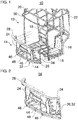
- Figure 1 shows an unequipped cab 10 of a commercial vehicle, for. B. a truck, as shown, or a bus.
- Figure 2 shows a cab front module 14 of the commercial vehicle.
- the utility vehicle can preferably be an electric utility vehicle that is driven solely by means of electrical energy, or a hybrid utility vehicle that can also be driven by electrical energy.
- the driver's cab 10 can be designed for rigid or non-resilient rear mounting on a vehicle frame.
- the cab 10 can limit the commercial vehicle downwards and have a ground clearance that is comparatively small, for. B. less than 50 cm or less than 40 cm to allow easy entry and exit and an improved view.
- the driver's cab 10 has a driver's cab main module 12 and a driver's cab front module 14.
- the driver's cab main module 12 has a driver's cab floor structure 16, driver's cab side wall structures 18, a driver's cab roof structure 20 and a driver's cab rear wall structure 22. Structures 16-22 are interconnected to form a cab shell.
- the cab floor structure 16 forms only part of a cab floor of the cab.
- the front of the main cab module 12 has a large opening through which a large number of equipment components (not shown) can be introduced into the main cab module 12.
- the driver's cabin main module 12 can thus be prefabricated and pre-assembled before the driver's cab front module 14 is installed.
- the cab front module 14 is prefabricated and pre-assembled separately from the cab main module 12. After the pre-assembly of a variety of equipment components (not in the Figures 1 and 2 shown), the cab front module 14 is attached to the cab main module 12, preferably detachably, e.g. B. screwed, glued, welded and / or otherwise joined.
- the cab front module 14 has a cab front wall structure (cabin front) 24 and a cab floor structure 26.
- the cab front wall structure 24 is limited at the top by a lower window edge profile 28 of the cab front wall structure 24.
- the upper front wall structure of the cab front it is also possible, for example, for the upper front wall structure of the cab front to be delimited by an upper edge of the windshield profile 30 of the upper front wall structure 24 of the cab or to extend upward beyond the upper edge profile of the windshield 30.
- the upper edge of the windshield profile 30 is included in the cab roof structure 20 of the main cab module 12.
- the cab front wall structure 24 is oriented essentially vertically.
- the cab front wall structure 24 can be convex with respect to a forward direction of travel of the commercial vehicle, as shown.
- the cab front wall structure 24 can be attached in particular to outer vertical supports of the cab front wall structure 24 to the cab side wall structures 18, e.g. B. welded, glued, screwed, etc.
- the cab floor structure 26 is arranged and connected to the cab front wall structure 24, z. B glued, welded, screwed and / or otherwise joined.
- the driver's cab floor structure 26 forms a front or front part of the driver's cab floor of the driver's cab 10.
- the driver's cab floor structure 26 preferably forms between 10% and 30%, in particular around 20%, of the entire driver's cab floor.
- the driver's cab floor structure 16 of the driver's cabin main module 12 can thus form a rear part of the driver's cab floor of the driver's cab 10, e.g. B. between 70% and 90%, in particular around 80%, of the entire cab floor.
- the driver's cab floor structure 26 has a support structure 32 made of longitudinal and cross members, which are essentially aligned in a horizontal plane.
- the support structure 32 has one or more attachment areas 34, e.g. B in the form of screwing points, gluing points and / or welding points.
- the attachment regions 34 are arranged on a side of the cab floor structure 26 facing away from the cab wall structure 24. By means of the attachment areas 34, the driver's cab floor structure 26 can be attached to the driver's cab floor structure 16 of the driver's cabin main module 12.
- the provision of the driver's cab floor structure 26 on the driver's cab front module 14 means that it is not necessary to have longitudinal members protrude on the driver's cab floor structure 16 of the driver's cabin main module 12 in a direction toward the driver's cab front module 14 for mounting on the driver's cab front wall structure 24.
- the driver's cab floor structure 16 of the driver's cabin main module 12 can be mounted on the attachment areas 34 with a substantially flat front facing the driver's cab floor structure 26 of the driver's cab front module 14. An essential accident risk point during assembly can be prevented by parts protruding from the driver's cabin main module 12.
- the cab front wall structure 24 and the cab floor structure 26 are designed in a lattice frame construction from interconnected longitudinal, transverse and vertical girders, which can be advantageous particularly in the case of small quantities.
- the driver's cab front wall structure 24 and / or the driver's cab floor structure 26 can have pressed sheet metal parts, for example.
- driver's cab front module 14 has the driver's cab floor structure 26 creates new degrees of freedom with regard to the possibility of mounting further equipment components on the driver's cab front module 14 even before the driver's cab front module 14 is mounted on the driver's cabin main module 12.
- the driver's cab front module 14 can have a steering angle transmission 36 and expediently additionally have a steering joint shaft 38 connected to it.
- the steering angle transmission 36 can be fastened to the driver's cab floor structure 26.
- the steering joint shaft 38 may extend through or under the cab floor structure 26.
- the steering joint shaft 38 is driven by the steering angle gear 36. Due to the provision of the driver's cab floor structure 26, further components of a steering device of the utility vehicle can thus be included in the driver's cab front module 14 in addition to a steering wheel 40 and a steering column 42.
- the cab front module 14 can have an underride protection 44 on the front.
- the underride protection 44 is integrated into the front wall structure 24 of the cab and / or the floor structure 26 of the cab part in such a way that it forms a lower front edge of the front cab module 14.
- the underride guard 44 can be designed as a one-piece or multi-piece cross member.
- the cross member can be convexly curved with respect to the forward direction of travel.
- the cab front module 14 may have one or more towing devices 46.
- the towing device 46 can be arranged on a front side of the cab front module 14.
- the towing device 46 can be integrated directly in a cross member of the cab front wall structure 24 and / or the cab floor structure 26.
- the towing device 46 can be designed, for example, as a threaded hole for screwing in a towing eye.
- the cab front module 14 can have an air duct 48 for cooling air.
- the air duct 48 extends obliquely downwards between an opening on a front side of the cab front wall structure 24 to an opening in a bottom side of the cab floor structure 26.
- the air duct 48 can expediently be arranged centrally in the cab front module 14 with respect to a transverse axis of the cab front module 14 (ie, transverse axis of the commercial vehicle) .
- a dynamic pressure area is created while the commercial vehicle is traveling.
- An underpressure can develop on the underside while the commercial vehicle is traveling.
- a fan 50 and a heat exchanger 52 can be arranged in the air duct 48.
- the blower 50 can be activated, for example, when the commercial vehicle is stationary or insufficient cooling air is flowing through the air duct 48.
- the heat exchanger 52 can in particular be an air conditioning condenser of an air conditioning system of the commercial vehicle. For reasons of installation space, it may be expedient to install the heat exchanger 52 in the air duct 48 in a horizontal orientation or an orientation which is inclined up to a maximum of 45 ° to a horizontal axis.
- the heat exchanger 52 can in particular be arranged in or adjacent to the opening on the underside of the driver's cab floor structure 26, expediently in a substantially horizontal orientation.
- the cab front module 14 can have further equipment components, such as headlights 54 and / or an environmental detection sensor system 56 (for example with a radar sensor, for example for automatic distance control (ACC - adaptive cruise control)). It is also possible for the driver's cab front module 14, for example, a central electrical system 58, a heating and air conditioning device 60, a heating circuit 62, a coolant pump 64, an expansion tank 66, an instrument panel 68, a pedals (e.g. gas and brake pedals) 70 and / or one or more user interfaces 72, e.g. B. for radio, navigation device, air conditioning, etc., has. Depending on the preferred arrangement, the further equipment components can be attached to the cab front wall structure 24 and / or the cab sub-floor structure 26.
- the further equipment components can be attached to the cab front wall structure 24 and / or the cab sub-floor structure 26.
- the driver's cab floor structure 26 may additionally have one or more floor panels 74 on the upper side thereof.
- a driver-side floor panel 74 and a passenger-side floor panel 74 can be included.
- the driver's floor panel 74 may have a recess for the steering device.
- the air duct 48 can be arranged between the driver's side and the passenger's side floor panel.
- the driver's cab front module 14 is prefabricated and preassembled, preferably with all equipment components 36 to 74.
- the driver's cab main module 12 can be prefabricated separately and preassembled with corresponding equipment components.
- the equipped cab front module 14 is then attached to the equipped cab main module 12, e.g. B. screwed, glued and / or welded.
- the at least one attachment area 34 of the driver's cab floor structure 26 of the driver's cab front module 14 is attached to the driver's cab floor structure 16 of the driver's cabin main module 12.
- the invention is not restricted to the preferred exemplary embodiments described above. Rather, a large number of variants and modifications are possible which also make use of the inventive idea and therefore fall within the scope of protection.
- the invention also claims protection for the subject and the features of the subclaims independently of the claims referred to.
- the features of independent claim 1 are disclosed independently of one another.
- the features of the subclaims are also disclosed independently of all the features of independent claim 1 and, for example, independently of the features relating to the presence and / or configuration of the cab front wall structure and / or the cab sub-floor structure of independent claim 1. All of the range indications herein are to be understood as meaning that, as it were, all values falling within the respective range are disclosed individually, e.g. B. also as the respective preferred narrower external borders of the respective area.
Landscapes
- Engineering & Computer Science (AREA)
- Chemical & Material Sciences (AREA)
- Combustion & Propulsion (AREA)
- Transportation (AREA)
- Mechanical Engineering (AREA)
- Manufacturing & Machinery (AREA)
- Body Structure For Vehicles (AREA)
Abstract
Description
- Die Erfindung betrifft ein Fahrerhausfrontmodul für ein Fahrerhaus eines Nutzfahrzeugs und ein Verfahren zur Herstellung eines Fahrerhauses eines Nutzfahrzeugs.
- Fahrerhäuser bzw. Fahrerkabinen von Lastkraftwagen werden üblicherweise mit einer geschlossenen Strukturzelle gebildet, die in weiteren Schritten mit Komponenten vervollständigt wird, die an der Strukturzelle außen oder innen angebracht werden. Dies erzwingt ein Einbringen von großen Einzelkomponenten oder Vormontagebaugruppen über die vorhandenen Öffnungen der Strukturzelle, wie beispielsweise die Türausschnitte oder den Frontscheibenausschnitt. Aufgrund der nutzbaren Öffnungen in der Tragstruktur zum Einbringen von Komponenten sind diese in der Größe beschränkt. Mit zunehmender Größe der Komponenten steigt zunehmend die Beschädigungsgefahr der Fahrerkabine durch ein eventuelles Anstoßen der Bauteile beim Einbringen in die Fahrerkabine. Aufgrund der räumlichen Gegebenheiten bei der Montage von Komponenten innerhalb der Fahrerkabine sind daher hinsichtlich der Montageergonomie Kompromisse einzugehen.
- In der
DE 195 13 089 A1 wird eine Fahrerhauskabine beschrieben, die über eine Rückwand, Seitenwände, Boden und Dach verfügt und dann mit einem separat ausgestatteten Fahrerhausfrontmodul vervollständigt wird, an welchem mehrere Komponenten vor der Montage des Fahrerhausfrontmoduls an diesem vorgruppiert werden. - Die
WO 92/07749 A1 - Die
US 5,863,093 A offenbart eine Brandschutz-Armaturenbrettbaugruppe. Die Brandschutz-Armaturenbrett-Baugruppe wird vor der Montage an der Lastkraftwagenkabine konstruiert. Ein Vorderwandabschnitt der Brandschutz-Armaturenbrett-Baugruppe wird hierzu an vorstehenden Längsträgern eines Bodens der Lastkraftwagenkabine angebracht. - Der Erfindung liegt die Aufgabe zu Grunde, ein alternatives und/oder verbessertes Fahrerhausfrontmodul zu schaffen.
- Die Aufgabe wird gelöst durch die Merkmale des unabhängigen Anspruchs 1. Vorteilhafte Weiterbildungen sind in den abhängigen Ansprüchen und der Beschreibung angegeben.
- Die Erfindung schafft ein Fahrerhausfrontmodul für ein Fahrerhaus eines Nutzfahrzeugs (z. B. Lastkraftwagen). Das Fahrerhausfrontmodul ist vorzugsweise (z. B. separat zu einem Fahrerhaushauptmodul des Fahrerhauses) vorgefertigt und/oder vormontiert. Das Fahrerhausfrontmodul weist eine (z. B. im Wesentlichen vertikal ausgerichtete) Fahrerhausvorderwandstruktur und eine (z. B. im Wesentlichen horizontal ausgerichtete) Fahrerhausteilbodenstruktur auf. Die Fahrerhausteilbodenstruktur ist mit der Fahrerhausvorderwandstruktur verbunden, bildet teilweise einen Fahrerhausboden und weist eine Trägerkonstruktion mit mindestens einem Anbringungsbereich zur tragenden Anbringung des Fahrerhausfrontmoduls an eine weitere Fahrerhausteilbodenstruktur des Fahrerhauses auf.
- Die vorliegende Offenbarung beschreibt somit ein Fahrerhausfrontmodul, das als ein Front- und Teilbodenmodul ausgeführt ist, welches zweckmäßig sowohl die vorwiegend vertikal ausgerichtete Kabinenfront als Fahrerhausvorderwandstruktur als auch einen vorderen Teilbereich des Kabinenbodens als Fahrerhausteilbodenstruktur aufweist. Dadurch ergeben sich bei der Montage von Komponenten an dem Fahrerhausfrontmodul, die unabhängig vom restlichen Teil des Fahrerhauses ausgeführt wird, neue Freiheitsgrade, mit der Möglichkeit einer erheblichen Optimierung der Ergonomie und der Montagezeiten. Zweckmäßig können weitere wesentliche Komponenten des Fahrerhauses in das vorgefertigte und vormontierte Fahrerhausfrontmodul aufgenommen werden, insbesondere solche, die zumindest teilweise an oder in der Fahrerhausteilbodenstruktur angebracht sind. Dies können beispielsweise eine Lenkgelenkwelle oder ein Lenkwinkelgetriebe sein.
- Zweckmäßig kann ein Anbringungsbereich einen oder mehrere Verschraubungspunkte, Verklebungspunkte und/oder Schweißpunkte aufweisen.
- In einem Ausführungsbeispiel weist die Trägerkonstruktion einen oder mehrere Längsträger, und/oder Querträger und/oder eines oder mehrere Tragbleche auf.
- Zweckmäßig kann hierin unter einem Tragblech eine tragende Blechstruktur, z. B. in Form eines tragenden Blechpressteils, des Fahrerhausfrontmoduls verstanden werden, die dazu geeignet ist, das Fahrerhausfrontmodul tragend an eine weitere Fahrerhausteilbodenstruktur des Fahrerhauses anzubringen.
- In einem weiteren Ausführungsbeispiel ist der mindestens eine Anbringungsbereich an einem freien Ende der Trägerkonstruktion und/oder an einem der Fahrerhausvorderwandstruktur entgegengesetzten Ende der Trägerkonstruktion angeordnet.
- Es ist möglich, dass der mindestens eine Anbringungsbereich bspw. durch mehrere Schraubenlöcher gebildet ist.
- In einem weiteren Ausführungsbeispiel weist das Fahrerhausfrontmodul ferner mindestens eine Ausstattungskomponente auf, die in oder an der Fahrerhausteilbodenstruktur und/oder der Trägerkonstruktion angebracht ist. Dies wird dadurch ermöglicht, dass das Fahrerhausfrontmodul nunmehr die Fahrerhausteilbodenstruktur umfasst.
- In einer Ausführungsform weist das Fahrerhausfrontmodul ein Lenkwinkelgetriebe auf, das an der Fahrerhausteilbodenstruktur angebracht ist.
- In einer weiteren Ausführungsform weist das Fahrerhausfrontmodul ferner eine Lenkgelenkwelle auf, die unterhalb und/oder innerhalb der Fahrerhausteilbodenstruktur angeordnet ist.
- Somit können bspw. zusätzlich zum Lenkrad und zur Lenksäule, die zweckmäßig an der Fahrerhausvorderwandstruktur angebracht sind, weitere Komponenten einer Lenkvorrichtung des Nutzfahrzeugs an dem Fahrerhausfrontmodul vormontiert werden.
- Zweckmäßig kann das Lenkwinkelgetriebe antreibend mit der Lenkgelenkwelle verbunden sein.
- Beispielsweise kann die Lenkgelenkwelle an das Lenkwinkelgetriebe angeschlossen sein und/oder sich in einer Richtung weg von der Fahrerhausvorderwandstruktur erstrecken.
- In einer Ausführungsvariante weist das Fahrerhausfrontmodul ferner einen (z. B. frontseitigen) Unterfahrschutz auf, der an der Fahrerhausvorderwandstruktur und/oder der Fahrerhausteilbodenstruktur angebracht oder darin integriert ist.
- Zweckmäßig kann sich der Unterfahrschutz über eine gesamte Breite des Fahrerhausfrontmoduls erstrecken und/oder eine frontseitige Unterkante des Fahrerhausfrontmoduls bilden und/oder als ein Querträger ausgeführt sein.
- In einer weiteren Ausführungsvariante weist das Fahrerhausfrontmodul ferner mindestens eine Abschleppvorrichtung auf, die in die Fahrerhausvorderwandstruktur und/oder die Fahrerhausteilbodenstruktur integriert ist.
- Zweckmäßig kann die mindestens eine Abschleppvorrichtung an einer Vorderseite des Fahrerhausfrontmoduls angeordnet sein.
- Beispielsweise kann die mindestens eine Abschleppvorrichtung zur Verbindung mit einer Abschleppöse und/oder als ein Gewindeloch, z. B. zum Einschrauben einer Abschleppöse, ausgebildet sein.
- Es ist möglich, dass die mindestens eine Abschleppvorrichtung in den Unterfahrschutz integriert ist.
- In einem Ausführungsbeispiel weist das Fahrerhausfrontmodul ferner einen Luftführungskanal (z. B. Kühlluft-Luftführungskanal) auf, der sich zwischen einer Öffnung an einer Vorderseite der Fahrerhausvorderwandstruktur und einer Öffnung an einer Unterseite der Fahrerhausteilbodenstruktur erstreckt, vorzugsweise in einer Richtung schräg nach unten.
- In einer Weiterbildung weist das Fahrerhausfrontmodul ferner einen Wärmetauscher, vorzugsweise einen Klimaanlagen-Kondensator, auf, der vorzugsweise in dem Luftführungskanal in einer im Wesentlichen horizontalen Ausrichtung oder in einer geneigten Ausrichtung mit einem Winkel zu einer Horizontalachse von kleiner oder gleich 45° angeordnet ist. Dies kann insbesondere aus Bauraumgründen sinnvoll sein.
- Zweckmäßig kann der Wärmetauscher innerhalb der Fahrerhausteilbodenstruktur angeordnet sein, z. B. in oder benachbart zu der Öffnung des Luftführungskanals an der Unterseite der Fahrerhausteilbodenstruktur.
- In einem weiteren Ausführungsbeispiel weist das Fahrerhausfrontmodul ferner ein Gebläse auf, das in dem Luftführungskanal angeordnet ist, vorzugsweise in einer geneigten Ausrichtung.
- Es ist bspw. möglich, dass das Gebläse stromaufwärts oder stromabwärts des Wärmetauschers angeordnet ist.
- In einem weiteren Ausführungsbeispiel weist das Fahrerhausfrontmodul ferner mindestens einen Frontscheinwerfer, der an der Fahrerhausvorderwandstruktur angebracht ist, und/oder eine Umgebungserfassungssensorik, vorzugsweise umfassend einen Radarsensor, die an der Fahrerhausvorderwandstruktur und/oder der Fahrerhausteilbodenstruktur angebracht ist, auf.
- In einer Ausführungsform weist das Fahrerhausfrontmodul mindestens eines von einer Zentralelektrik, einem Heiz-Klimagerät, einem Heizungskreislauf, einer Kühlmittelpumpe, einem Ausgleichsbehälter, einer Instrumententafel, einer Pedalerie, einer Lenksäule und einer Benutzerschnittstelle auf, das oder die vorzugsweise an der Fahrerhausvorderwandstruktur und/oder der Fahrerhausbodenstruktur angebracht ist oder sind.
- In einer weiteren Ausführungsform ist die Fahrerhausvorderwandstruktur in einer Vertikalrichtung nach oben durch ein Windschutzscheibenunterkantenprofil oder ein Windschutzscheibenoberkantenprofil begrenzt oder erstreckt sich über ein Windschutzscheibenoberkantenprofil hinaus in einer Vertikalrichtung nach oben.
- In einer Ausführungsvariante ist die Fahrerhausvorderwandstruktur im Wesentlichen vertikal und/oder die Fahrerhausteilbodenstruktur im Wesentlichen horizontal ausgerichtet.
- In einer weiteren Ausführungsvariante erstrecken sich die Fahrerhausvorderwandstruktur und/oder die Fahrerhausteilbodenstruktur und/oder die Trägerkonstruktion im Wesentlichen entlang einer gesamten Breite des Fahrerhausfrontmoduls.
- In einem Ausführungsbeispiel ist die Fahrerhausvorderwandstruktur und/oder die Fahrerhausteilbodenstruktur durch einen Gitterrahmen und/oder durch Blechpressteile gebildet.
- Zweckmäßig kann ein Gitterrahmen durch in Knotenpunkten miteinander verbundene längliche Tragelemente, zum Beispiel Stabelemente, Rohrelemente und/oder Profilelemente, gebildet sein.
- In einem weiteren Ausführungsbeispiel weist die Fahrerhausteilbodenstruktur und/oder die Trägerkonstruktion an deren Oberseite eines oder mehrere Fußbodenbleche auf.
- Die Erfindung betrifft auch ein Nutzfahrzeug, vorzugsweise einen Lastkraftwagen, oder ein Fahrerhaus für ein Nutzfahrzeug, aufweisend ein Fahrerhaushauptmodul und ein Fahrerhausfrontmodul wie hierin offenbart. Das Fahrerhausfrontmodul ist mittels des mindestens einen Anbringungsbereichs an dem Fahrerhaushauptmodul (zum Beispiel starr) angebracht.
- Es ist möglich, dass das Fahrerhausfrontmodul zusätzlich mittels mindestens einen Anbringungsbereichs der Fahrerhausvorderwandstruktur an dem Fahrerhaushauptmodul angebracht ist.
- Zweckmäßig kann das Fahrerhausfrontmodul bspw. eine Fahrerhausteilbodenstruktur, Fahrerhausseitenwandstrukturen, eine Fahrerhausdachstruktur und/oder eine Fahrerhausrückwandstruktur aufweisen.
- In einer Ausführungsform weist das Fahrerhaushauptmodul eine Fahrerhausteilbodenstruktur auf, die an dem Anbringungsbereich der Trägerkonstruktion der Fahrerhausteilbodenstruktur des Fahrerhausfrontmoduls angebracht ist.
- In einer Weiterbildung weist die Fahrerhausteilbodenstruktur des Fahrerhaushauptmoduls eine im Wesentlichen ebene Vorderseite, die dem Anbringungsbereich zugewandt ist, auf; also insbesondere keine wesentlich vorstehenden Längsträger zur Verringerung des Unfallrisikos bei der Montage.
- In einer weiteren Ausführungsform ist die Fahrerhausteilbodenstruktur des Fahrerhaushauptmoduls lediglich an der Fahrerhausteilbodenstruktur der Fahrerhausfrontmoduls angebracht.
- In einer Ausführungsvariante bildet die Fahrerhausteilbodenstruktur des Fahrerhausfrontmoduls größer oder gleich 10 % und/oder kleiner oder gleich 30 %, vorzugsweise ungefähr 20 %, des (z. B. gesamten) Fahrerhausbodens des Fahrerhauses.
- In einer weiteren Ausführungsvariante bildet die Fahrerhausteilbodenstruktur des Fahrerhaushauptmoduls größer oder gleich 70 % und/oder kleiner oder gleich 90 %, vorzugsweise ungefähr 80 %, des (z. B. gesamten) Fahrerhausbodens des Fahrerhauses.
- Die Erfindung betrifft auch ein Verfahren zur Herstellung eines Fahrerhauses eines Nutzfahrzeugs, aufweisend ein Vorfertigen und Vormontieren eines Fahrerhausfrontmoduls wie hierin offenbart (z. B. mit dem Lenkwinkelgetriebe, der Lenkgelenkwelle, dem Unterfahrschutz, der Abschleppvorrichtung, dem Luftführungskanal, dem Gebläse, dem Wärmeübertrager, dem Frontscheinwerfer und/oder der Umgebungserfassungssensorik usw.). Das Verfahren weist ferner ein Anbringen (z. B. Verschrauben, Verkleben, Verschweißen usw.) des vorgefertigten und vormontierten Fahrerhausfrontmoduls an ein Fahrerhaushauptmodul des Fahrerhauses mittels des mindestens einen Anbringungsbereichs der Trägerkonstruktion der Fahrerhausteilbodenstruktur des Fahrerhausfrontmoduls auf.
- Die zuvor beschriebenen bevorzugten Ausführungsformen und Merkmale der Erfindung sind beliebig miteinander kombinierbar. Weitere Einzelheiten und Vorteile der Erfindung werden im Folgenden unter Bezug auf die beigefügten Zeichnungen beschrieben. Es zeigen:
- Figur 1
- eine Explosionsdarstellung eines beispielhaften Fahrerhauses gemäß der vorliegenden Offenbarung, das rein beispielhaft aus einem Fahrerhausfrontmodul und einem Fahrerhaushauptmodul gebildet ist;
- Figur 2
- eine perspektivische Darstellung des beispielhaften Fahrerhausfrontmoduls, im Wesentlichen ohne Anbauteile;
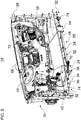
- Figur 3
- eine weitere perspektivische Darstellung des beispielhaften Fahrerhausfrontmoduls mit Anbauteilen bzw. Ausstattungskomponenten; und
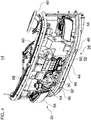
- Figur 4
- eine weitere andere perspektivische Darstellung des beispielhaften Fahrerhausfrontmoduls mit Anbauteilen bzw. Ausstattungskomponenten.
- Die in den Figuren gezeigten Ausführungsformen stimmen zumindest teilweise überein, so dass ähnliche oder identische Teile mit den gleichen Bezugszeichen versehen sind und zu deren Erläuterung auch auf die Beschreibung der anderen Ausführungsformen bzw. Figuren verwiesen wird, um Wiederholungen zu vermeiden.
-
Figur 1 zeigt ein unausgestattetes Fahrerhaus 10 eines Nutzfahrzeugs, z. B. eines Lastkraftwagens, wie dargestellt ist, oder eines Omnibusses.Figur 2 zeigt ein Fahrerhausfrontmodul 14 des Nutzfahrzeugs. Das Nutzfahrzeug kann vorzugsweise ein Elektro-Nutzfahrzeug, das einzig mittels elektrischen Energie angetrieben wird, oder ein Hybrid-Nutzfahrzeug, das auch mit elektrischer Energie antreibbar ist, sein. Wie dargestellt ist, kann das Fahrerhaus 10 zur starren bzw. nicht-federnden rückseitigen Lagerung an einem Fahrzeugrahmen ausgeführt sein. Das Fahrerhaus 10 kann das Nutzfahrzeug nach unten hin begrenzen und einen Bodenabstand aufweisen, der vergleichsweise gering ist, z. B. kleiner als 50 cm oder kleiner als 40 cm, um einen bequemen Ein- und Ausstieg und eine verbesserte Sicht zu ermöglichen. - Das Fahrerhaus 10 weist ein Fahrerhaushauptmodul 12 und ein Fahrerhausfrontmodul 14 auf.
- Das Fahrerhaushauptmodul 12 weist eine Fahrerhausteilbodenstruktur 16, Fahrerhausseitenwandstrukturen 18, eine Fahrerhausdachstruktur 20 und eine Fahrerhausrückwandstruktur 22 auf. Die Strukturen 16-22 sind miteinander zum Bilden eines Fahrerhausrohbaus verbunden.
- Die Fahrerhausteilbodenstruktur 16 bildet nur einen Teil eines Fahrerhausbodens des Fahrerhauses auf. An einer Vorderseite weist das Fahrerhaushauptmodul 12 eine große Öffnung auf, durch die hindurch eine Vielzahl von Ausstattungskomponenten (nicht dargestellt) in das Fahrerhaushauptmodul 12 eingebracht werden können. Somit kann das Fahrerhaushauptmodul 12 vor der Montage des Fahrerhausfrontmoduls 14 vorgefertigt und vormontiert werden. Alternativ zum Fahrerhaushauptmodul 12 könnten bspw. auch mehrere separate, miteinander verbindbare Fahrerhausteilmodule vorgesehen sein, z. B. umfassend ein Fahrerhausteilbodenmodul, Fahrerhausseitenwandmodule, eine Fahrerhausdachmodul und/oder ein Fahrerhausrückwandmodul.
- Das Fahrerhausfrontmodul 14 wird separat von dem Fahrerhaushauptmodul 12 vorgefertigt und vormontiert. Nach der Vormontage einer Vielzahl von Ausstattungskomponenten (nicht in den
Figuren 1 und 2 dargestellt) wird das Fahrerhausfrontmodul 14 an das Fahrerhaushauptmodul 12, vorzugsweise lösbar, angebracht, z. B. geschraubt, geklebt, geschweißt und/oder anderweitig gefügt. - Das Fahrerhausfrontmodul 14 weist eine Fahrerhausvorderwandstruktur (Kabinenfront) 24 und eine Fahrerhausteilbodenstruktur 26 auf.
- Die Fahrerhausvorderwandstruktur 24 ist im dargestellten Ausführungsbeispiel nach oben durch ein Windschutzscheibenunterkantenprofil 28 der Fahrerhausvorderwandstruktur 24 begrenzt. Es ist allerdings bspw. auch möglich, das die Fahrerhausvorderwandstruktur nach oben durch ein Windschutzscheibenoberkantenprofil 30 der Fahrerhausvorderwandstruktur 24 begrenzt ist oder sich über das Windschutzscheibenoberkantenprofil 30 hinaus nach oben erstreckt. Im dargestellten Ausführungsbeispiel ist das Windschutzscheibenoberkantenprofil 30 in der Fahrerhausdachstruktur 20 des Fahrerhaushauptmoduls 12 umfasst.
- Die Fahrerhausvorderwandstruktur 24 ist im Wesentlichen vertikal ausgerichtet. Die Fahrerhausvorderwandstruktur 24 kann bezüglich einer Vorwärtsfahrtrichtung des Nutzfahrzeugs konvex ausgeführt sein, wie dargestellt ist. Die Fahrerhausvorderwandstruktur 24 kann insbesondere an äußeren Vertikalträgern der Fahrerhausvorderwandstruktur 24 an die Fahrerhausseitenwandstrukturen 18 angebracht werden, z. B. geschweißt, geklebt, geschraubt usw.. An einem unteren Bereich der Fahrerhausvorderwandstruktur 24 ist die Fahrerhausteilbodenstruktur 26 angeordnet und mit der Fahrerhausvorderwandstruktur 24 verbunden, z. B verklebt, verschweißt, verschraubt und/oder anderweitig gefügt.
- Die Fahrerhausteilbodenstruktur 26 bildet einen vorderen oder frontseitigen Teil des Fahrerhausbodens des Fahrerhauses 10 aus. Vorzugsweise bildet die Fahrerhausteilbodenstruktur 26 zwischen 10 % und 30 %, insbesondere rund 20 %, des gesamten Fahrerhausbodens aus. Damit kann die Fahrerhausteilbodenstruktur 16 des Fahrerhaushauptmoduls 12 einen hinteren Teil des Fahrerhausbodens des Fahrerhauses 10 ausbilden, z. B. zwischen 70 % und 90 %, insbesondere rund 80 %, des gesamten Fahrerhausbodens.
- Die Fahrerhausteilbodenstruktur 26 weist eine Trägerkonstruktion 32 aus Längs- und Querträgern auf, die im Wesentlichen in einer Horizontalebene ausgerichtet sind. Die Trägerkonstruktion 32 weist einen oder mehrere Anbringungsbereiche 34, z. B in Form von Verschraubungspunkten, Verklebungspunkten und/oder Schweißpunkten, auf. Die Anbringungsbereiche 34 sind auf einer der Fahrerhausvorderwandstruktur 24 abgewandten Seite der Fahrerhausteilbodenstruktur 26 angeordnet. Mittels der Anbringungsbereiche 34 kann die Fahrerhausteilbodenstruktur 26 tragend an der Fahrerhausteilbodenstruktur 16 des Fahrerhaushauptmoduls 12 angebracht werden. Durch das Vorsehen der Fahrerhausteilbodenstruktur 26 am Fahrerhausfrontmodul 14 ist es nicht notwendig, Längsträger an der Fahrerhausteilbodenstruktur 16 des Fahrerhaushauptmoduls 12 in einer Richtung zum Fahrerhausfrontmodul 14 zur Montage an der Fahrerhausvorderwandstruktur 24 vorstehen zu lassen. Die Fahrerhausteilbodenstruktur 16 des Fahrerhaushauptmoduls 12 kann mit einer im Wesentlichen ebenen Vorderseite, die der Fahrerhausteilbodenstruktur 26 des Fahrerhausfrontmoduls 14 zugewandt ist, an den Anbringungsbereiche 34 montiert werden. Damit kann ein wesentlicher Unfallgefahrenpunkt bei der Montage durch vom Fahrerhaushauptmodul 12 vorstehende Teile verhindert werden.
- Die Fahrerhausvorderwandstruktur 24 und die Fahrerhausteilbodenstruktur 26 sind in einer Gitterrahmenbauweise aus miteinander verbundenen Längs-, Quer und Vertikalträgern ausgeführt, was insbesondere bei kleinen Stückzahlen vorteilhaft sein kann. Alternativ oder zusätzlich kann die Fahrerhausvorderwandstruktur 24 und/oder die Fahrerhausteilbodenstruktur 26 bspw. tragende Blechpressteile aufweisen.
- Dadurch, dass das Fahrerhausfrontmodul 14 die Fahrerhausteilbodenstruktur 26 aufweist, entstehen neue Freiheitsgrade bezüglich der Möglichkeit der Montage weiterer Ausstattungskomponenten an dem Fahrerhausfrontmodul 14 noch vor der Montage des Fahrerhausfrontmodul 14 an das Fahrerhaushauptmodul 12.
- Nachfolgend sind unter Bezugnahme auf die
Figuren 1 bis 4 Ausstattungskomponenten erklärt, die bevorzugt an dem Fahrerhausfrontmodul 14 vormontierbar sind. Mit jeder zusätzlich in dem Fahrerhausfrontmodul 14 umfassten Ausstattungskomponenten erhöht sich die Funktionsintegration des Fahrerhausfrontmoduls 14 und die Montage der Ausstattungskomponente wird aufgrund der guten Zugänglichkeit des Fahrerhausfrontmoduls 14 bei dessen Vormontage erleichtert. - Das Fahrerhausfrontmodul 14 kann ein Lenkwinkelgetriebe 36 und zweckmäßig zusätzlich eine daran angeschlossene Lenkgelenkwelle 38 aufweisen. Das Lenkwinkelgetriebe 36 kann an der Fahrerhausteilbodenstruktur 26 befestigt sein. Die Lenkgelenkwelle 38 kann sich durch oder unter der Fahrerhausteilbodenstruktur 26 erstrecken. Die Lenkgelenkwelle 38 wird von dem Lenkwinkelgetriebe 36 angetrieben. Aufgrund des Vorsehens der Fahrerhausteilbodenstruktur 26 können somit weitere Komponenten einer Lenkvorrichtung des Nutzfahrzeugs zusätzlich zu einem Lenkrad 40 und einer Lenksäule 42 in dem Fahrerhausfrontmodul 14 umfasst sein.
- Das Fahrerhausfrontmodul 14 kann einen frontseitigen Unterfahrschutz 44 aufweisen. Der Unterfahrschutz 44 ist so in die Fahrerhausvorderwandstruktur 24 und/oder der Fahrerhausteilbodenstruktur 26 integriert, dass er eine untere Vorderkante des Fahrerhausfrontmoduls 14 bildet. Der Unterfahrschutz 44 kann als ein einteiliger oder mehrteiliger Querträger ausgebildet sein. Der Querträger kann bezüglich der Vorwärtsfahrtrichtung konvex gebogen sein.
- Das Fahrerhausfrontmodul 14 kann eine oder mehrere Abschleppvorrichtungen 46 aufweisen. Die Abschleppvorrichtung 46 kann an einer Vorderseite des Fahrerhausfrontmoduls 14 angeordnet sein. Die Abschleppvorrichtung 46 kann direkt in einem Querträger der Fahrerhausvorderwandstruktur 24 und/oder der Fahrerhausteilbodenstruktur 26 integriert sein. Die Abschleppvorrichtung 46 kann bspw. als ein Gewindeloch zum Einschrauben einer Abschleppöse ausgebildet sein. Durch die bodennahe Integration der Abschleppvorrichtung kann ein Kraftfluss beim Abschleppen zweckmäßig direkt in die Fahrerhausteilbodenstruktur 26 eingeleitet werden, die die auftretenden Kräfte in die Fahrerhausteilbodenstruktur 16 weiterleitet.
- Das Fahrerhausfrontmodul 14 kann einen Luftführungskanal 48 für Kühlluft aufweisen. Der Luftführungskanal 48 erstreckt sich zwischen einer Öffnung an einer Vorderseite der Fahrerhausvorderwandstruktur 24 schräg nach unten zu einer Öffnung in einer Unterseite der Fahrerhausteilbodenstruktur 26. Der Luftführungskanal 48 kann zweckmäßig bezüglich einer Querachse des Fahrerhausfrontmoduls 14 (d.h. Querachse des Nutzfahrzeugs) mittig im Fahrerhausfrontmodul 14 angeordnet sein. Im Bereich der Öffnung an der Vorderseite entsteht während der Fahrt des Nutzfahrzeugs ein Staudruckgebiet. Im Bereich der Öffnung an der Unterseite kann während der Fahrt des Nutzfahrzeugs ein Unterdruck entstehen. Im Luftführungskanal 48 können ein Gebläse 50 und ein Wärmetauscher 52 angeordnet sein. Das Gebläse 50 kann beispielsweise aktiviert werden, wenn das Nutzfahrzeug steht oder nicht genügend Kühlluft durch den Luftführungskanal 48 strömt. Der Wärmetauscher 52 kann insbesondere ein Klimaanlagen-Kondensator einer Klimaanlage des Nutzfahrzeugs sein. Aus Bauraumgründen kann es günstig sein, den Wärmetauscher 52 in einer horizontalen Ausrichtung oder einer Ausrichtung, die bis zu maximal 45° geneigt zu einer Horizontalachse ist, in dem Luftführungskanal 48 einzubauen. Der Wärmetauscher 52 kann insbesondere in oder benachbart zu der Öffnung an der Unterseite der Fahrerhausteilbodenstruktur 26 angeordnet sein, zweckmäßig im in Wesentlichen horizontaler Ausrichtung.
- Das Fahrerhausfrontmodul 14 kann weitere Ausstattungskomponenten aufweisen, wie beispielsweise Frontscheinwerfer 54 und/oder eine Umgebungserfassungssensorik 56 (zum Beispiel mit einem Radarsensor, z. B. für eine automatische Distanzregelung (engl. ACC - adaptive cruise control)). Es ist auch möglich, dass das Fahrerhausfrontmodul 14 bspw. eine Zentralelektrik 58, ein Heiz-Klimagerät 60, einen Heizungskreislauf 62, eine Kühlmittelpumpe 64, einen Ausgleichsbehälter 66, eine Instrumententafel 68, eine Pedalerie (z. B. Gas- und Bremspedale) 70 und/oder eine oder mehrere Benutzerschnittstellen 72, z. B. für Radio, Navigationsgerät, Klimaanlage usw., aufweist. Die weiteren Ausstattungskomponenten können je nach bevorzugter Anordnung an der Fahrerhausvorderwandstruktur 24 und/oder der Fahrerhausteilbodenstruktur 26 angebracht sein.
- Wie dargestellt ist, kann die Fahrerhausteilbodenstruktur 26 an deren Oberseite zusätzlich eines oder mehrere Fußbodenbleche 74 aufweisen. Beispielsweise können ein fahrerseitiges Fußbodenblech 74 und ein beifahrerseitiges Fußbodenblech 74 umfasst sein. Das fahrerseitige Fußbodenblech 74 kann eine Aussparung für die Lenkvorrichtung aufweisen. Zwischen dem fahrerseitigen und dem beifahrerseitigen Fußbodenblech kann der Luftführungskanal 48 angeordnet sein.
- Gemäß einem beispielhaften Verfahren zur Herstellung des Fahrerhauses 10 wird das Fahrerhausfrontmodul 14 separat vorgefertigt und vormontiert, vorzugsweise mit allen Ausstattungskomponenten 36 bis 74. Ebenso kann das Fahrerhaushauptmodul 12 separat vorgefertigt und mit entsprechenden Ausstattungskomponenten vormontiert sein. Das ausgestattete Fahrerhausfrontmodul 14 wird anschließend an das ausgestattete Fahrerhaushauptmodul 12 angebracht, z. B. verschraubt, verklebt und/oder verschweißt. Dabei wird zweckmäßig der mindestens eine Anbringungsbereich 34 der Fahrerhausteilbodenstruktur 26 des Fahrerhausfrontmoduls 14 an der Fahrerhausbodenstruktur 16 des Fahrerhaushauptmoduls 12 angebracht.
- Die Erfindung ist nicht auf die vorstehend beschriebenen bevorzugten Ausführungsbeispiele beschränkt. Vielmehr ist eine Vielzahl von Varianten und Abwandlungen möglich, die ebenfalls von dem Erfindungsgedanken Gebrauch machen und deshalb in den Schutzbereich fallen. Insbesondere beansprucht die Erfindung auch Schutz für den Gegenstand und die Merkmale der Unteransprüche unabhängig von den in Bezug genommenen Ansprüchen. Insbesondere sind die Merkmale des unabhängigen Anspruchs 1 unabhängig voneinander offenbart. Zusätzlich sind auch die Merkmale der Unteransprüche unabhängig von sämtlichen Merkmalen des unabhängigen Anspruchs 1 und beispielsweise unabhängig von den Merkmalen bezüglich des Vorhandenseins und/oder der Konfiguration der Fahrerhausvorderwandstruktur und/oder der Fahrerhausteilbodenstruktur des unabhängigen Anspruchs 1 offenbart. Alle Bereichsangaben hierin sind derart offenbart zu verstehen, dass gleichsam alle in den jeweiligen Bereich fallenden Werte einzeln offenbart sind, z. B. auch als jeweilige bevorzugte engere Außengrenzen des jeweiligen Bereichs.
-
- 10
- Fahrerhaus
- 12
- Fahrerhaushauptmodul
- 14
- Fahrerhausfrontmodul
- 16
- Fahrerhausteilbodenstruktur
- 18
- Fahrerhausseitenwandstruktur
- 20
- Fahrerhausdachstruktur
- 22
- Fahrerhausrückwandstruktur
- 24
- Fahrerhausvorderwandstruktur
- 26
- Fahrerhausteilbodenstruktur
- 28
- Windschutzscheibenunterkantenprofil
- 30
- Windschutzscheibenoberkantenprofil
- 32
- Trägerkonstruktion
- 34
- Anbringungsbereich
- 36
- Lenkwinkelgetriebe
- 38
- Lenkgelenkwelle
- 40
- Lenkrad
- 42
- Lenksäule
- 44
- Unterfahrschutz
- 46
- Abschleppvorrichtung
- 48
- Luftführungskanal
- 50
- Gebläse
- 52
- Wärmetauscher
- 54
- Frontscheinwerfer
- 56
- Umgebungserfassungssensorik
- 58
- Zentralelektrik
- 60
- Heiz-Klimagerät
- 62
- Heizungskreislauf
- 64
- Kühlmittelpumpe
- 66
- Ausgleichsbehälter
- 68
- Instrumententafel
- 70
- Pedalerie
- 72
- Benutzerschnittstelle
- 74
- Fußbodenblech
Claims (15)
- Fahrerhausfrontmodul (14) für ein Fahrerhaus (10) eines Nutzfahrzeugs, wobei das Fahrerhausfrontmodul (14) vorgefertigt und vormontiert ist und aufweist:eine Fahrerhausvorderwandstruktur (24); undeine Fahrerhausteilbodenstruktur (26), die mit der Fahrerhausvorderwandstruktur (24) verbunden ist, teilweise einen Fahrerhausboden bildet und eine Trägerkonstruktion (32) mit mindestens einem Anbringungsbereich (34) zur tragenden Anbringung des Fahrerhausfrontmoduls (14) an eine weitere Fahrerhausteilbodenstruktur (16) des Fahrerhauses (10) aufweist.
- Fahrerhausfrontmodul (14) nach Anspruch 1, wobei:die Trägerkonstruktion (32) einen oder mehrere Längsträger und/oder Querträger und/oder eines oder mehrere Tragbleche aufweist; und/oderder mindestens eine Anbringungsbereich (34) an einem freien Ende der Trägerkonstruktion (32) und/oder an einem der Fahrerhausvorderwandstruktur (24) entgegengesetzten Ende der Trägerkonstruktion (32) angeordnet ist.
- Fahrerhausfrontmodul (14) nach Anspruch 1 oder Anspruch 2, ferner aufweisend:
mindestens eine Ausstattungskomponente, die in oder an der Fahrerhausteilbodenstruktur (26) und/oder der Trägerkonstruktion (32) angebracht ist. - Fahrerhausfrontmodul (14) nach einem der vorherigen Ansprüche, ferner aufweisend:
ein Lenkwinkelgetriebe (36), das an der Fahrerhausteilbodenstruktur (26) angebracht ist. - Fahrerhausfrontmodul (14) nach einem der vorherigen Ansprüche, ferner aufweisend:
eine Lenkgelenkwelle (38), die unterhalb und/oder innerhalb der Fahrerhausteilbodenstruktur (26) angeordnet ist. - Fahrerhausfrontmodul (14) nach einem der vorherigen Ansprüche, ferner aufweisend:
einen Unterfahrschutz (44), der an der Fahrerhausvorderwandstruktur (24) und/oder der Fahrerhausteilbodenstruktur (26) angebracht oder integriert ist. - Fahrerhausfrontmodul (14) nach einem der vorherigen Ansprüche, ferner aufweisend:
mindestens eine Abschleppvorrichtung (46), die in die Fahrerhausvorderwandstruktur (24) und/oder die Fahrerhausteilbodenstruktur (26) integriert ist. - Fahrerhausfrontmodul (14) nach einem der vorherigen Ansprüche, ferner aufweisend:
einen Luftführungskanal (48), der sich zwischen einer Öffnung an einer Vorderseite der Fahrerhausvorderwandstruktur (24) und einer Öffnung an einer Unterseite der Fahrerhausteilbodenstruktur (26) erstreckt, vorzugsweise in einer Richtung schräg nach unten. - Fahrerhausfrontmodul (14) nach Anspruch 8, ferner aufweisend:einen Wärmetauscher (52), vorzugsweise einen Klimaanlagen-Kondensator, der in dem Luftführungskanal (48) in einer im Wesentlichen horizontalen Ausrichtung oder in einer geneigten Ausrichtung mit einem Winkel zu einer Horizontalachse von kleiner oder gleich 45° angeordnet ist; und/oderein Gebläse (50), das in dem Luftführungskanal (48) angeordnet ist, vorzugsweise in einer geneigten Ausrichtung.
- Fahrerhausfrontmodul (14) nach einem der vorherigen Ansprüche, ferner aufweisend:mindestens einen Frontscheinwerfer (54), der an der Fahrerhausvorderwandstruktur (24) angebracht ist; und/odereine Umgebungserfassungssensorik (56), vorzugsweise umfassend einen Radarsensor, die an der Fahrerhausvorderwandstruktur (24) und/oder der Fahrerhausteilbodenstruktur (26) angebracht ist.
- Fahrerhausfrontmodul (14) nach einem der vorherigen Ansprüche, ferner aufweisend mindestens eines von:
einer Zentralelektrik (58), einem Heiz-Klimagerät (60), einem Heizungskreislauf (62), einer Kühlmittelpumpe (64), einem Ausgleichsbehälter (66), einer Instrumententafel (68), einer Pedalerie (70), einer Lenksäule (42) und einer Benutzerschnittstelle (72), das oder die an der Fahrerhausvorderwandstruktur (24) und/oder der Fahrerhausteilbodenstruktur angebracht ist oder sind. - Fahrerhausfrontmodul (14) nach einem der vorherigen Ansprüche, wobei
die Fahrerhausvorderwandstruktur (24) in einer Vertikalrichtung nach oben durch ein Windschutzscheibenunterkantenprofil (28) oder ein Windschutzscheibenoberkantenprofil (30) begrenzt ist oder sich über ein Windschutzscheibenoberkantenprofil (30) in einer Vertikalrichtung nach oben hinaus erstreckt, und/oder
die Fahrerhausvorderwandstruktur (24) im Wesentlichen vertikal und/oder die Fahrerhausteilbodenstruktur (26) im Wesentlichen horizontal ausgerichtet ist; und/oder
die Fahrerhausvorderwandstruktur (24) und/oder die Fahrerhausteilbodenstruktur (26) und/oder die Trägerkonstruktion (32) sich im Wesentlichen entlang einer gesamten Breite des Fahrerhausfrontmoduls (14) erstrecken; und/oder
die Fahrerhausvorderwandstruktur (24) und/oder die Fahrerhausteilbodenstruktur (26) durch einen Gitterrahmen und/oder durch Blechpressteile gebildet ist; und/oder
die Fahrerhausteilbodenstruktur (26) und/oder die Trägerkonstruktion (32) an deren Oberseite eines oder mehrere Fußbodenbleche (74) aufweist. - Nutzfahrzeug, vorzugsweise Lastkraftwagen, oder Fahrerhaus (10) für ein Nutzfahrzeug, aufweisend:ein Fahrerhaushauptmodul (12); undein Fahrerhausfrontmodul (14) gemäß einem der vorherigen Ansprüche, das mittels des mindestens einen Anbringungsbereichs (34) an dem Fahrerhaushauptmodul (12) angebracht ist.
- Nutzfahrzeug oder Fahrerhaus (10) nach Anspruch 13, wobei:
das Fahrerhaushauptmodul (12) eine Fahrerhausteilbodenstruktur (26) aufweist, die an dem Anbringungsbereich (34) der Trägerkonstruktion (32) der Fahrerhausteilbodenstruktur (26) des Fahrerhausfrontmoduls (14) angebracht ist,
wobei:die Fahrerhausteilbodenstruktur (16) des Fahrerhaushauptmoduls (12) eine im Wesentlichen ebene Vorderseite, die dem Anbringungsbereich (34) zugewandt ist, aufweist, und/oderdie Fahrerhausteilbodenstruktur (16) des Fahrerhaushauptmoduls (12) lediglich an der Fahrerhausteilbodenstruktur (26) der Fahrerhausfrontmoduls (14) angebracht ist; und/oderdie Fahrerhausteilbodenstruktur (26) des Fahrerhausfrontmoduls (14) größer oder gleich 10 % und/oder kleiner oder gleich 30 %, vorzugsweise ungefähr 20 %, des Fahrerhausbodens des Fahrerhauses (10) bildet; und/oderdie Fahrerhausteilbodenstruktur (16) des Fahrerhaushauptmoduls (12) größer oder gleich 70 % und/oder kleiner oder gleich 90 %, vorzugsweise ungefähr 80 %, des Fahrerhausbodens des Fahrerhauses (10) bildet. - Verfahren zur Herstellung eines Fahrerhauses (10) eines Nutzfahrzeugs, aufweisend:Vorfertigen und Vormontieren eines Fahrerhausfrontmoduls (14) nach einem der Ansprüche 1 bis 12; undAnbringen des vorgefertigten und vormontierten Fahrerhausfrontmoduls (14) an ein Fahrerhaushauptmodul (12) des Fahrerhauses (10) mittels des mindestens einen Anbringungsbereichs (34) der Trägerkonstruktion (32) der Fahrerhausteilbodenstruktur (26) des Fahrerhausfrontmoduls (14).
Applications Claiming Priority (1)
| Application Number | Priority Date | Filing Date | Title |
|---|---|---|---|
| DE102018121211.9A DE102018121211A1 (de) | 2018-08-30 | 2018-08-30 | Fahrerhausfrontmodul und Verfahren zur Herstellung eines Fahrerhauses |
Publications (2)
| Publication Number | Publication Date |
|---|---|
| EP3617040A1 true EP3617040A1 (de) | 2020-03-04 |
| EP3617040B1 EP3617040B1 (de) | 2022-07-20 |
Family
ID=67659403
Family Applications (1)
| Application Number | Title | Priority Date | Filing Date |
|---|---|---|---|
| EP19192466.1A Active EP3617040B1 (de) | 2018-08-30 | 2019-08-20 | Fahrerhausfrontmodul und verfahren zur herstellung eines fahrerhauses |
Country Status (2)
| Country | Link |
|---|---|
| EP (1) | EP3617040B1 (de) |
| DE (1) | DE102018121211A1 (de) |
Cited By (2)
| Publication number | Priority date | Publication date | Assignee | Title |
|---|---|---|---|---|
| CN113911213A (zh) * | 2020-07-10 | 2022-01-11 | 沃尔沃卡车集团 | 包括具有下横梁和上横梁的驾驶室本体防火墙的机动车辆 |
| WO2022106490A1 (de) * | 2020-11-18 | 2022-05-27 | General Dynamics European Land Systems-Mowag Gmbh | Kabinenteilstruktur für eine fahrerkabine eines kraftfahrzeugs und vorzugsweise eines nutzfahrzeugs |
Families Citing this family (3)
| Publication number | Priority date | Publication date | Assignee | Title |
|---|---|---|---|---|
| BR102021008519A2 (pt) * | 2021-04-30 | 2022-11-16 | Marcopolo Sa | Estrutura de posto do motorista para veículo de transporte coletivo, ônibus e processo de montagem de uma estrutura de posto do motorista para veículo de transporte coletivo |
| DE102023131947A1 (de) * | 2023-11-16 | 2025-05-22 | Man Truck & Bus Se | Fahrerhaus mit Frontmaske und Nutzfahrzeug mit dem Fahrerhaus |
| DE102024126360A1 (de) * | 2024-09-12 | 2026-03-12 | Rheinmetall MAN Military Vehicles Österreich GesmbH | Nutzfahrzeug |
Citations (8)
| Publication number | Priority date | Publication date | Assignee | Title |
|---|---|---|---|---|
| DE1090980B (de) * | 1959-12-15 | 1960-10-13 | Maschf Augsburg Nuernberg Ag | Einrichtung fuer das Fahrerhaus eines Kraftfahrzeuges |
| GB1225304A (de) * | 1968-07-04 | 1971-03-17 | ||
| WO1992007749A1 (en) | 1990-10-24 | 1992-05-14 | Insinööritoimisto Joel Majurinen Ky | Assembly method for motor vehicles |
| DE19513089A1 (de) | 1995-04-07 | 1996-10-10 | Man Nutzfahrzeuge Ag | Fahrerhaus eines Frontlenker-Lastkraftwagen |
| US5863093A (en) | 1996-10-24 | 1999-01-26 | Freightliner Corporation | Truck cab front opening and firewall assembly |
| DE10118344A1 (de) * | 2001-04-12 | 2002-10-17 | Daimler Chrysler Ag | Modular aufgebaute Fahrerhaus-Baureihe für Lastkraftwagen |
| DE60009899T2 (de) * | 1999-05-26 | 2005-03-17 | International Truck Intellectual Property Co., LLC, Warrenville | Armaturenbrett mit symmetrischem unterbau |
| WO2006071160A1 (en) * | 2004-12-30 | 2006-07-06 | Volvo Lastvagnar Ab | Method for building a cab for a truck and cab built according to the method, together with system for constructing the cab |
Family Cites Families (9)
| Publication number | Priority date | Publication date | Assignee | Title |
|---|---|---|---|---|
| DE4032823A1 (de) * | 1990-10-16 | 1992-04-23 | Man Nutzfahrzeuge Ag | Verteilerfahrzeug |
| US6029764A (en) * | 1997-11-12 | 2000-02-29 | Case Corporation | Coordinated control of an active suspension system for a work vehicle |
| DE10218926A1 (de) * | 2002-04-27 | 2003-12-04 | Daimler Chrysler Ag | Bodengruppe für ein Fahrerhaus |
| DE102004038487A1 (de) * | 2004-08-07 | 2006-03-16 | Man Nutzfahrzeuge Ag | Fahrgestell für ein Nutzfahrzeug |
| DE102005038981A1 (de) * | 2005-08-18 | 2007-02-22 | Man Nutzfahrzeuge Ag | Fahrzeugrahmen für ein Nutzfahrzeug |
| CA2692931A1 (en) * | 2009-02-16 | 2010-08-16 | Vehicules Nemo Inc. | Vehicle monocoque body assembly |
| US8443921B2 (en) * | 2010-11-09 | 2013-05-21 | GM Global Technology Operations LLC | System and method for increasing operating efficiency of a powertrain by controlling an aero shutter |
| DE102012008150A1 (de) * | 2012-04-24 | 2013-10-24 | Man Truck & Bus Ag | Fahrerhauslagerung |
| DE102016013703A1 (de) * | 2016-11-17 | 2018-05-17 | Man Truck & Bus Ag | Verfahren und Vorrichtung zur Steuerung oder Regelung einer Fahrerhauslagerung eines Kraftfahrzeugs |
-
2018
- 2018-08-30 DE DE102018121211.9A patent/DE102018121211A1/de not_active Withdrawn
-
2019
- 2019-08-20 EP EP19192466.1A patent/EP3617040B1/de active Active
Patent Citations (8)
| Publication number | Priority date | Publication date | Assignee | Title |
|---|---|---|---|---|
| DE1090980B (de) * | 1959-12-15 | 1960-10-13 | Maschf Augsburg Nuernberg Ag | Einrichtung fuer das Fahrerhaus eines Kraftfahrzeuges |
| GB1225304A (de) * | 1968-07-04 | 1971-03-17 | ||
| WO1992007749A1 (en) | 1990-10-24 | 1992-05-14 | Insinööritoimisto Joel Majurinen Ky | Assembly method for motor vehicles |
| DE19513089A1 (de) | 1995-04-07 | 1996-10-10 | Man Nutzfahrzeuge Ag | Fahrerhaus eines Frontlenker-Lastkraftwagen |
| US5863093A (en) | 1996-10-24 | 1999-01-26 | Freightliner Corporation | Truck cab front opening and firewall assembly |
| DE60009899T2 (de) * | 1999-05-26 | 2005-03-17 | International Truck Intellectual Property Co., LLC, Warrenville | Armaturenbrett mit symmetrischem unterbau |
| DE10118344A1 (de) * | 2001-04-12 | 2002-10-17 | Daimler Chrysler Ag | Modular aufgebaute Fahrerhaus-Baureihe für Lastkraftwagen |
| WO2006071160A1 (en) * | 2004-12-30 | 2006-07-06 | Volvo Lastvagnar Ab | Method for building a cab for a truck and cab built according to the method, together with system for constructing the cab |
Cited By (4)
| Publication number | Priority date | Publication date | Assignee | Title |
|---|---|---|---|---|
| CN113911213A (zh) * | 2020-07-10 | 2022-01-11 | 沃尔沃卡车集团 | 包括具有下横梁和上横梁的驾驶室本体防火墙的机动车辆 |
| EP3936416A1 (de) * | 2020-07-10 | 2022-01-12 | Volvo Truck Corporation | Kraftfahrzeug mit einer fahrerhausaufsatzfeuerwand mit einem unteren querträger und einem oberen querträger |
| US11560123B2 (en) | 2020-07-10 | 2023-01-24 | Volvo Truck Corporation | Motor vehicle comprising a cab body firewall with a lower crossbeam and an upper crossbeam |
| WO2022106490A1 (de) * | 2020-11-18 | 2022-05-27 | General Dynamics European Land Systems-Mowag Gmbh | Kabinenteilstruktur für eine fahrerkabine eines kraftfahrzeugs und vorzugsweise eines nutzfahrzeugs |
Also Published As
| Publication number | Publication date |
|---|---|
| EP3617040B1 (de) | 2022-07-20 |
| DE102018121211A1 (de) | 2020-03-05 |
Similar Documents
| Publication | Publication Date | Title |
|---|---|---|
| EP3617040B1 (de) | Fahrerhausfrontmodul und verfahren zur herstellung eines fahrerhauses | |
| AT522671B1 (de) | Fahrzeugkarosserie-Plattform für ein Automobil und Automobil, das eine solche Fahrzeugkarosserie-Plattform umfasst | |
| EP0981474B1 (de) | Baugruppe für einen cockpit-bereich eines fahrzeuges | |
| EP2069187B1 (de) | Trägerteil für ein frontendmodul eines personenkraftwagens | |
| EP2128000B1 (de) | Radkraftfahrzeug und Fahrzeugtragstruktur hierfür | |
| DE102013113855B4 (de) | Motorhaubenstruktur eines Kraftfahrzeugs | |
| EP1912850B1 (de) | Kraftfahrzeugkarosserie mit einer federbeinaufnahme | |
| EP1532040A1 (de) | Kraftwagen-karosserie mit einer tragstruktur aus grossformatigen teilmodulen | |
| EP2325065A2 (de) | Fahrerhaus eines Nutzfahrzeugs mit Mittendachmodul | |
| EP0171576B1 (de) | Vormontierte Baugruppe für den Unterbau von Kraftfahrzeugen, insbesondere Personenkraftwagen, Verfahren zur Herstellung einer solchen Baugruppe und Verwendung einer solchen | |
| EP4247691B1 (de) | Kabinenteilstruktur für eine fahrerkabine eines kraftfahrzeugs und vorzugsweise eines nutzfahrzeugs | |
| DE10029813B4 (de) | Querträger | |
| DE102006033770B4 (de) | Vorderwagen einer Kraftfahrzeugkarosserie mit einem Verbund aus einem Leichtmetallgussbauteil und mehreren Stahlbauteilen | |
| EP2615014A2 (de) | Fahrerhaus für ein Kraftfahrzeug | |
| DE10132969A1 (de) | Unterbodenabdeckung | |
| DE10254348A1 (de) | Baugruppe für einen Cockpit-Bereich | |
| DE10016883B4 (de) | Kraftfahrzeug | |
| DE4304920B4 (de) | Vorderwagen für ein Kraftfahrzeug | |
| DE102008061391B4 (de) | Kraftfahrzeug mit Luftleitvorrichtung | |
| DE102004035530B4 (de) | Fahrzeugkarosserie mit zumindest einem Vorderwagen und einer Fahrgastzelle | |
| EP3617041B1 (de) | Fahrerhaus für ein nutzfahrzeug | |
| DE102018125705A1 (de) | Unterflureinrichtung für einen Kraftwagen | |
| EP3617044B1 (de) | Fahrerhaus mit mindestens einer abschleppvorrichtung | |
| EP3617045B1 (de) | Kraftfahrzeug mit einer fahrerhaustragvorrichtung | |
| DE102011012521A1 (de) | Fahrzeugkarosseriestruktur eines Kraftfahrzeuges |
Legal Events
| Date | Code | Title | Description |
|---|---|---|---|
| PUAI | Public reference made under article 153(3) epc to a published international application that has entered the european phase |
Free format text: ORIGINAL CODE: 0009012 |
|
| STAA | Information on the status of an ep patent application or granted ep patent |
Free format text: STATUS: THE APPLICATION HAS BEEN PUBLISHED |
|
| AK | Designated contracting states |
Kind code of ref document: A1 Designated state(s): AL AT BE BG CH CY CZ DE DK EE ES FI FR GB GR HR HU IE IS IT LI LT LU LV MC MK MT NL NO PL PT RO RS SE SI SK SM TR |
|
| AX | Request for extension of the european patent |
Extension state: BA ME |
|
| STAA | Information on the status of an ep patent application or granted ep patent |
Free format text: STATUS: REQUEST FOR EXAMINATION WAS MADE |
|
| 17P | Request for examination filed |
Effective date: 20200824 |
|
| RBV | Designated contracting states (corrected) |
Designated state(s): AL AT BE BG CH CY CZ DE DK EE ES FI FR GB GR HR HU IE IS IT LI LT LU LV MC MK MT NL NO PL PT RO RS SE SI SK SM TR |
|
| GRAP | Despatch of communication of intention to grant a patent |
Free format text: ORIGINAL CODE: EPIDOSNIGR1 |
|
| STAA | Information on the status of an ep patent application or granted ep patent |
Free format text: STATUS: GRANT OF PATENT IS INTENDED |
|
| RIC1 | Information provided on ipc code assigned before grant |
Ipc: B62D 65/04 20060101ALI20220120BHEP Ipc: B62D 33/06 20060101ALI20220120BHEP Ipc: B62D 25/14 20060101ALI20220120BHEP Ipc: B62D 25/08 20060101AFI20220120BHEP |
|
| INTG | Intention to grant announced |
Effective date: 20220221 |
|
| GRAS | Grant fee paid |
Free format text: ORIGINAL CODE: EPIDOSNIGR3 |
|
| GRAA | (expected) grant |
Free format text: ORIGINAL CODE: 0009210 |
|
| STAA | Information on the status of an ep patent application or granted ep patent |
Free format text: STATUS: THE PATENT HAS BEEN GRANTED |
|
| AK | Designated contracting states |
Kind code of ref document: B1 Designated state(s): AL AT BE BG CH CY CZ DE DK EE ES FI FR GB GR HR HU IE IS IT LI LT LU LV MC MK MT NL NO PL PT RO RS SE SI SK SM TR |
|
| REG | Reference to a national code |
Ref country code: CH Ref legal event code: EP |
|
| REG | Reference to a national code |
Ref country code: DE Ref legal event code: R096 Ref document number: 502019004995 Country of ref document: DE |
|
| REG | Reference to a national code |
Ref country code: AT Ref legal event code: REF Ref document number: 1505382 Country of ref document: AT Kind code of ref document: T Effective date: 20220815 |
|
| REG | Reference to a national code |
Ref country code: NL Ref legal event code: FP |
|
| REG | Reference to a national code |
Ref country code: IE Ref legal event code: FG4D Free format text: LANGUAGE OF EP DOCUMENT: GERMAN |
|
| REG | Reference to a national code |
Ref country code: SE Ref legal event code: TRGR |
|
| REG | Reference to a national code |
Ref country code: LT Ref legal event code: MG9D |
|
| PG25 | Lapsed in a contracting state [announced via postgrant information from national office to epo] |
Ref country code: RS Free format text: LAPSE BECAUSE OF FAILURE TO SUBMIT A TRANSLATION OF THE DESCRIPTION OR TO PAY THE FEE WITHIN THE PRESCRIBED TIME-LIMIT Effective date: 20220720 Ref country code: PT Free format text: LAPSE BECAUSE OF FAILURE TO SUBMIT A TRANSLATION OF THE DESCRIPTION OR TO PAY THE FEE WITHIN THE PRESCRIBED TIME-LIMIT Effective date: 20221121 Ref country code: NO Free format text: LAPSE BECAUSE OF FAILURE TO SUBMIT A TRANSLATION OF THE DESCRIPTION OR TO PAY THE FEE WITHIN THE PRESCRIBED TIME-LIMIT Effective date: 20221020 Ref country code: LV Free format text: LAPSE BECAUSE OF FAILURE TO SUBMIT A TRANSLATION OF THE DESCRIPTION OR TO PAY THE FEE WITHIN THE PRESCRIBED TIME-LIMIT Effective date: 20220720 Ref country code: LT Free format text: LAPSE BECAUSE OF FAILURE TO SUBMIT A TRANSLATION OF THE DESCRIPTION OR TO PAY THE FEE WITHIN THE PRESCRIBED TIME-LIMIT Effective date: 20220720 Ref country code: FI Free format text: LAPSE BECAUSE OF FAILURE TO SUBMIT A TRANSLATION OF THE DESCRIPTION OR TO PAY THE FEE WITHIN THE PRESCRIBED TIME-LIMIT Effective date: 20220720 Ref country code: ES Free format text: LAPSE BECAUSE OF FAILURE TO SUBMIT A TRANSLATION OF THE DESCRIPTION OR TO PAY THE FEE WITHIN THE PRESCRIBED TIME-LIMIT Effective date: 20220720 |
|
| PG25 | Lapsed in a contracting state [announced via postgrant information from national office to epo] |
Ref country code: PL Free format text: LAPSE BECAUSE OF FAILURE TO SUBMIT A TRANSLATION OF THE DESCRIPTION OR TO PAY THE FEE WITHIN THE PRESCRIBED TIME-LIMIT Effective date: 20220720 Ref country code: IS Free format text: LAPSE BECAUSE OF FAILURE TO SUBMIT A TRANSLATION OF THE DESCRIPTION OR TO PAY THE FEE WITHIN THE PRESCRIBED TIME-LIMIT Effective date: 20221120 Ref country code: HR Free format text: LAPSE BECAUSE OF FAILURE TO SUBMIT A TRANSLATION OF THE DESCRIPTION OR TO PAY THE FEE WITHIN THE PRESCRIBED TIME-LIMIT Effective date: 20220720 Ref country code: GR Free format text: LAPSE BECAUSE OF FAILURE TO SUBMIT A TRANSLATION OF THE DESCRIPTION OR TO PAY THE FEE WITHIN THE PRESCRIBED TIME-LIMIT Effective date: 20221021 |
|
| REG | Reference to a national code |
Ref country code: CH Ref legal event code: PL |
|
| REG | Reference to a national code |
Ref country code: DE Ref legal event code: R097 Ref document number: 502019004995 Country of ref document: DE |
|
| PG25 | Lapsed in a contracting state [announced via postgrant information from national office to epo] |
Ref country code: SM Free format text: LAPSE BECAUSE OF FAILURE TO SUBMIT A TRANSLATION OF THE DESCRIPTION OR TO PAY THE FEE WITHIN THE PRESCRIBED TIME-LIMIT Effective date: 20220720 Ref country code: RO Free format text: LAPSE BECAUSE OF FAILURE TO SUBMIT A TRANSLATION OF THE DESCRIPTION OR TO PAY THE FEE WITHIN THE PRESCRIBED TIME-LIMIT Effective date: 20220720 Ref country code: MC Free format text: LAPSE BECAUSE OF FAILURE TO SUBMIT A TRANSLATION OF THE DESCRIPTION OR TO PAY THE FEE WITHIN THE PRESCRIBED TIME-LIMIT Effective date: 20220720 Ref country code: LU Free format text: LAPSE BECAUSE OF NON-PAYMENT OF DUE FEES Effective date: 20220820 Ref country code: LI Free format text: LAPSE BECAUSE OF NON-PAYMENT OF DUE FEES Effective date: 20220831 Ref country code: DK Free format text: LAPSE BECAUSE OF FAILURE TO SUBMIT A TRANSLATION OF THE DESCRIPTION OR TO PAY THE FEE WITHIN THE PRESCRIBED TIME-LIMIT Effective date: 20220720 Ref country code: CZ Free format text: LAPSE BECAUSE OF FAILURE TO SUBMIT A TRANSLATION OF THE DESCRIPTION OR TO PAY THE FEE WITHIN THE PRESCRIBED TIME-LIMIT Effective date: 20220720 Ref country code: CH Free format text: LAPSE BECAUSE OF NON-PAYMENT OF DUE FEES Effective date: 20220831 |
|
| REG | Reference to a national code |
Ref country code: BE Ref legal event code: MM Effective date: 20220831 |
|
| PLBE | No opposition filed within time limit |
Free format text: ORIGINAL CODE: 0009261 |
|
| STAA | Information on the status of an ep patent application or granted ep patent |
Free format text: STATUS: NO OPPOSITION FILED WITHIN TIME LIMIT |
|
| PG25 | Lapsed in a contracting state [announced via postgrant information from national office to epo] |
Ref country code: SK Free format text: LAPSE BECAUSE OF FAILURE TO SUBMIT A TRANSLATION OF THE DESCRIPTION OR TO PAY THE FEE WITHIN THE PRESCRIBED TIME-LIMIT Effective date: 20220720 Ref country code: EE Free format text: LAPSE BECAUSE OF FAILURE TO SUBMIT A TRANSLATION OF THE DESCRIPTION OR TO PAY THE FEE WITHIN THE PRESCRIBED TIME-LIMIT Effective date: 20220720 |
|
| 26N | No opposition filed |
Effective date: 20230421 |
|
| PG25 | Lapsed in a contracting state [announced via postgrant information from national office to epo] |
Ref country code: AL Free format text: LAPSE BECAUSE OF FAILURE TO SUBMIT A TRANSLATION OF THE DESCRIPTION OR TO PAY THE FEE WITHIN THE PRESCRIBED TIME-LIMIT Effective date: 20220720 |
|
| PG25 | Lapsed in a contracting state [announced via postgrant information from national office to epo] |
Ref country code: IE Free format text: LAPSE BECAUSE OF NON-PAYMENT OF DUE FEES Effective date: 20220820 |
|
| PG25 | Lapsed in a contracting state [announced via postgrant information from national office to epo] |
Ref country code: SI Free format text: LAPSE BECAUSE OF FAILURE TO SUBMIT A TRANSLATION OF THE DESCRIPTION OR TO PAY THE FEE WITHIN THE PRESCRIBED TIME-LIMIT Effective date: 20220720 |
|
| PG25 | Lapsed in a contracting state [announced via postgrant information from national office to epo] |
Ref country code: BE Free format text: LAPSE BECAUSE OF NON-PAYMENT OF DUE FEES Effective date: 20220831 |
|
| PG25 | Lapsed in a contracting state [announced via postgrant information from national office to epo] |
Ref country code: HU Free format text: LAPSE BECAUSE OF FAILURE TO SUBMIT A TRANSLATION OF THE DESCRIPTION OR TO PAY THE FEE WITHIN THE PRESCRIBED TIME-LIMIT; INVALID AB INITIO Effective date: 20190820 |
|
| GBPC | Gb: european patent ceased through non-payment of renewal fee |
Effective date: 20230820 |
|
| PG25 | Lapsed in a contracting state [announced via postgrant information from national office to epo] |
Ref country code: CY Free format text: LAPSE BECAUSE OF FAILURE TO SUBMIT A TRANSLATION OF THE DESCRIPTION OR TO PAY THE FEE WITHIN THE PRESCRIBED TIME-LIMIT Effective date: 20220720 |
|
| PG25 | Lapsed in a contracting state [announced via postgrant information from national office to epo] |
Ref country code: MK Free format text: LAPSE BECAUSE OF FAILURE TO SUBMIT A TRANSLATION OF THE DESCRIPTION OR TO PAY THE FEE WITHIN THE PRESCRIBED TIME-LIMIT Effective date: 20220720 |
|
| PG25 | Lapsed in a contracting state [announced via postgrant information from national office to epo] |
Ref country code: GB Free format text: LAPSE BECAUSE OF NON-PAYMENT OF DUE FEES Effective date: 20230820 |
|
| PG25 | Lapsed in a contracting state [announced via postgrant information from national office to epo] |
Ref country code: GB Free format text: LAPSE BECAUSE OF NON-PAYMENT OF DUE FEES Effective date: 20230820 Ref country code: BG Free format text: LAPSE BECAUSE OF FAILURE TO SUBMIT A TRANSLATION OF THE DESCRIPTION OR TO PAY THE FEE WITHIN THE PRESCRIBED TIME-LIMIT Effective date: 20220720 |
|
| PG25 | Lapsed in a contracting state [announced via postgrant information from national office to epo] |
Ref country code: MT Free format text: LAPSE BECAUSE OF FAILURE TO SUBMIT A TRANSLATION OF THE DESCRIPTION OR TO PAY THE FEE WITHIN THE PRESCRIBED TIME-LIMIT Effective date: 20220720 |
|
| PGFP | Annual fee paid to national office [announced via postgrant information from national office to epo] |
Ref country code: NL Payment date: 20250825 Year of fee payment: 7 |
|
| PGFP | Annual fee paid to national office [announced via postgrant information from national office to epo] |
Ref country code: DE Payment date: 20250827 Year of fee payment: 7 |
|
| PGFP | Annual fee paid to national office [announced via postgrant information from national office to epo] |
Ref country code: IT Payment date: 20250825 Year of fee payment: 7 |
|
| REG | Reference to a national code |
Ref country code: AT Ref legal event code: MM01 Ref document number: 1505382 Country of ref document: AT Kind code of ref document: T Effective date: 20240820 |
|
| PG25 | Lapsed in a contracting state [announced via postgrant information from national office to epo] |
Ref country code: AT Free format text: LAPSE BECAUSE OF NON-PAYMENT OF DUE FEES Effective date: 20240820 |
|
| PGFP | Annual fee paid to national office [announced via postgrant information from national office to epo] |
Ref country code: FR Payment date: 20250825 Year of fee payment: 7 |
|
| PGFP | Annual fee paid to national office [announced via postgrant information from national office to epo] |
Ref country code: SE Payment date: 20250825 Year of fee payment: 7 |
|
| PG25 | Lapsed in a contracting state [announced via postgrant information from national office to epo] |
Ref country code: TR Free format text: LAPSE BECAUSE OF FAILURE TO SUBMIT A TRANSLATION OF THE DESCRIPTION OR TO PAY THE FEE WITHIN THE PRESCRIBED TIME-LIMIT Effective date: 20220720 |
|
| PGFP | Annual fee paid to national office [announced via postgrant information from national office to epo] |
Ref country code: AT Payment date: 20260410 Year of fee payment: 5 |