EP3614860B1 - Süsse- und geschmackverbesserung von steviolglycosid- oder mogrosidsüssstoffen mit dihydrochalconen - Google Patents
Süsse- und geschmackverbesserung von steviolglycosid- oder mogrosidsüssstoffen mit dihydrochalconen Download PDFInfo
- Publication number
- EP3614860B1 EP3614860B1 EP18790170.7A EP18790170A EP3614860B1 EP 3614860 B1 EP3614860 B1 EP 3614860B1 EP 18790170 A EP18790170 A EP 18790170A EP 3614860 B1 EP3614860 B1 EP 3614860B1
- Authority
- EP
- European Patent Office
- Prior art keywords
- beverage
- ppm
- dihydrochalcone
- sweetener
- acid
- Prior art date
- Legal status (The legal status is an assumption and is not a legal conclusion. Google has not performed a legal analysis and makes no representation as to the accuracy of the status listed.)
- Active
Links
Images
Classifications
-
- A—HUMAN NECESSITIES
- A23—FOODS OR FOODSTUFFS; TREATMENT THEREOF, NOT COVERED BY OTHER CLASSES
- A23L—FOODS, FOODSTUFFS OR NON-ALCOHOLIC BEVERAGES, NOT OTHERWISE PROVIDED FOR; PREPARATION OR TREATMENT THEREOF
- A23L27/00—Spices; Flavouring agents or condiments; Artificial sweetening agents; Table salts; Dietetic salt substitutes; Preparation or treatment thereof
- A23L27/30—Artificial sweetening agents
-
- A—HUMAN NECESSITIES
- A23—FOODS OR FOODSTUFFS; TREATMENT THEREOF, NOT COVERED BY OTHER CLASSES
- A23L—FOODS, FOODSTUFFS OR NON-ALCOHOLIC BEVERAGES, NOT OTHERWISE PROVIDED FOR; PREPARATION OR TREATMENT THEREOF
- A23L2/00—Non-alcoholic beverages; Dry compositions or concentrates therefor; Preparation or treatment thereof
- A23L2/02—Non-alcoholic beverages; Dry compositions or concentrates therefor; Preparation or treatment thereof containing fruit or vegetable juices
-
- A—HUMAN NECESSITIES
- A23—FOODS OR FOODSTUFFS; TREATMENT THEREOF, NOT COVERED BY OTHER CLASSES
- A23L—FOODS, FOODSTUFFS OR NON-ALCOHOLIC BEVERAGES, NOT OTHERWISE PROVIDED FOR; PREPARATION OR TREATMENT THEREOF
- A23L2/00—Non-alcoholic beverages; Dry compositions or concentrates therefor; Preparation or treatment thereof
- A23L2/52—Adding ingredients
- A23L2/54—Mixing with gases
-
- A—HUMAN NECESSITIES
- A23—FOODS OR FOODSTUFFS; TREATMENT THEREOF, NOT COVERED BY OTHER CLASSES
- A23L—FOODS, FOODSTUFFS OR NON-ALCOHOLIC BEVERAGES, NOT OTHERWISE PROVIDED FOR; PREPARATION OR TREATMENT THEREOF
- A23L2/00—Non-alcoholic beverages; Dry compositions or concentrates therefor; Preparation or treatment thereof
- A23L2/52—Adding ingredients
- A23L2/56—Flavouring or bittering agents
-
- A—HUMAN NECESSITIES
- A23—FOODS OR FOODSTUFFS; TREATMENT THEREOF, NOT COVERED BY OTHER CLASSES
- A23L—FOODS, FOODSTUFFS OR NON-ALCOHOLIC BEVERAGES, NOT OTHERWISE PROVIDED FOR; PREPARATION OR TREATMENT THEREOF
- A23L2/00—Non-alcoholic beverages; Dry compositions or concentrates therefor; Preparation or treatment thereof
- A23L2/52—Adding ingredients
- A23L2/60—Sweeteners
-
- A—HUMAN NECESSITIES
- A23—FOODS OR FOODSTUFFS; TREATMENT THEREOF, NOT COVERED BY OTHER CLASSES
- A23L—FOODS, FOODSTUFFS OR NON-ALCOHOLIC BEVERAGES, NOT OTHERWISE PROVIDED FOR; PREPARATION OR TREATMENT THEREOF
- A23L27/00—Spices; Flavouring agents or condiments; Artificial sweetening agents; Table salts; Dietetic salt substitutes; Preparation or treatment thereof
- A23L27/30—Artificial sweetening agents
- A23L27/33—Artificial sweetening agents containing sugars or derivatives
- A23L27/36—Terpene glycosides
-
- A—HUMAN NECESSITIES
- A23—FOODS OR FOODSTUFFS; TREATMENT THEREOF, NOT COVERED BY OTHER CLASSES
- A23L—FOODS, FOODSTUFFS OR NON-ALCOHOLIC BEVERAGES, NOT OTHERWISE PROVIDED FOR; PREPARATION OR TREATMENT THEREOF
- A23L27/00—Spices; Flavouring agents or condiments; Artificial sweetening agents; Table salts; Dietetic salt substitutes; Preparation or treatment thereof
- A23L27/88—Taste or flavour enhancing agents
-
- C—CHEMISTRY; METALLURGY
- C07—ORGANIC CHEMISTRY
- C07C—ACYCLIC OR CARBOCYCLIC COMPOUNDS
- C07C49/00—Ketones; Ketenes; Dimeric ketenes; Ketonic chelates
- C07C49/20—Unsaturated compounds containing keto groups bound to acyclic carbon atoms
- C07C49/24—Unsaturated compounds containing keto groups bound to acyclic carbon atoms containing hydroxy groups
- C07C49/245—Unsaturated compounds containing keto groups bound to acyclic carbon atoms containing hydroxy groups containing six-membered aromatic rings
-
- C—CHEMISTRY; METALLURGY
- C07—ORGANIC CHEMISTRY
- C07H—SUGARS; DERIVATIVES THEREOF; NUCLEOSIDES; NUCLEOTIDES; NUCLEIC ACIDS
- C07H15/00—Compounds containing hydrocarbon or substituted hydrocarbon radicals directly attached to hetero atoms of saccharide radicals
- C07H15/20—Carbocyclic rings
- C07H15/24—Condensed ring systems having three or more rings
-
- C—CHEMISTRY; METALLURGY
- C07—ORGANIC CHEMISTRY
- C07H—SUGARS; DERIVATIVES THEREOF; NUCLEOSIDES; NUCLEOTIDES; NUCLEIC ACIDS
- C07H15/00—Compounds containing hydrocarbon or substituted hydrocarbon radicals directly attached to hetero atoms of saccharide radicals
- C07H15/20—Carbocyclic rings
- C07H15/24—Condensed ring systems having three or more rings
- C07H15/256—Polyterpene radicals
-
- A—HUMAN NECESSITIES
- A23—FOODS OR FOODSTUFFS; TREATMENT THEREOF, NOT COVERED BY OTHER CLASSES
- A23V—INDEXING SCHEME RELATING TO FOODS, FOODSTUFFS OR NON-ALCOHOLIC BEVERAGES AND LACTIC OR PROPIONIC ACID BACTERIA USED IN FOODSTUFFS OR FOOD PREPARATION
- A23V2002/00—Food compositions, function of food ingredients or processes for food or foodstuffs
Definitions
- the present invention relates generally to compositions and consumables containing certain steviol glycoside and/or mogroside sweeteners and at least one dihydrochalcone.
- Natural caloric sugars such as sucrose, fructose and glucose, are used to provide a pleasant taste to beverages, foods, pharmaceuticals, and oral hygienic/cosmetic products.
- Sucrose in particular, imparts a taste preferred by consumers.
- sucrose provides superior sweetness characteristics, it is disadvantageously caloric.
- non-caloric or low caloric sweeteners differ from natural caloric sugars in ways that frustrate consumers.
- non-caloric or low caloric sweeteners exhibit a temporal profile, maximal response, flavor profile, mouth feel, and/or adaptation behavior that differ from sugar.
- non-caloric or low caloric sweeteners exhibit delayed sweetness onset, lingering sweet aftertaste, bitter taste, metallic taste, astringent taste, cooling taste and/or licorice-like taste.
- many non-caloric or low caloric sweeteners are synthetic chemicals. Consumer desire remains high for natural non-caloric or low caloric sweeteners that tastes like sucrose.
- Stevia rebaudiana Bertoni is a perennial shrub of the Asteraceae ( Compositae ) family native to certain regions of South America. Its leaves have been used for hundreds of years in Paraguay and Brazil to sweeten local teas and medicines. The plant is commercially cultivated in Japan, Singapore, Taiwan, Malaysia, South Korea, China, Israel, India, Brazil, Australia and Paraguay.
- the leaves of the plant contain a mixture containing diterpene glycosides in an amount ranging from about 10% to 15% of the total dry weight. These diterpene glycosides are about 30 to 450 times sweeter than sugar. Structurally, the diterpene glycosides are characterized by a single base, steviol, and differ by the presence of carbohydrate residues at positions C13 and C19. Typically, on a dry weight basis, the four major steviol glycosides found in the leaves of Stevia are dulcoside A (0.3%), rebaudioside C (0.6-1.0%), rebaudioside A (3.8%) and stevioside (9.1%). Other glycosides identified in Stevia extract include rebaudioside B, D, E, and F, steviolbioside and rubusoside. Among these, only stevioside and rebaudioside A are available on a commercial scale.
- Mogrosides are derived from Luo Han Guo, the common name for the sweet extract made from the fruit of Siraitia grosvenorii, a herbaceous perennial vine of the Cucurbitaceae family native to Southern China and Northern Thailand. Luo Han Guo extracts are nearly 250 times sweeter than sugar and non-caloric. The sweetness of Luo Han Guo is generally attributed to mogrosides.
- steviol glycosides and mogrosides have been limited to date by certain undesirable taste properties, including licorice taste, bitterness, astringency, sweet aftertaste, bitter aftertaste and licorice aftertaste, which become more prominent at increased concentrations and impart a taste distinct from sucrose to consumables (e.g., beverages) to which they are added.
- maximal sweetness of most steviol glycoside and mogrosides is generally less than what is acceptable for traditional beverage formulations in sweetened consumables (e.g., beverages).
- WO 2013/074811 discloses taste modifiers which can be used in foods, beverages, and pharmaceutical applications, and the use of taste modifiers to alleviate negative flavor attributes.
- the present invention generally relates to dihydrochalcone compounds useful for enhancing the sweetness and/or modulating the flavor of sweetened consumables, such as beverages.
- the present invention provides a beverage comprising at least one sweetener and at least one dihydrochalcone, wherein the dihydrochalcone is selected from hesperetin dihydrochalcone and hesperetin dihydrochalcone-4'- ⁇ -D-glucoside, and wherein the sweetener comprises Rebaudioside M in a sweetening amount or at least one of siamenoside I and the 1,6- ⁇ isomer of siamenoside I in a sweetening amount.
- the dihydrochalcone is present in an amount at or below its sweetness recognition threshold concentration.
- the sweetener comprises rebaudioside M in a sweetening amount.
- the sweetener comprises siamenoside I in a sweetening amount.
- the sweetener comprises the 1,6- ⁇ isomer of siamenoside I in a sweetening amount.
- the at least one dihydrochalcone is present in the beverage in an amount effective to enhance the sucrose equivalence (SE) of the beverage by at least about 1.2-fold compared to the SE of the beverage in the absence of the at least one dihydrochalcone.
- SE sucrose equivalence
- the at least one dihydrochalcone is present in the beverage in an amount effective to modulate one or more taste attributes of the sweetener making the consumable taste more like a sucrose-sweetened beverage compared to the beverage in the absence of the at least one dihydrochalcone.
- the at least one dihydrochalcone is present in the beverage in a concentration from about 1 ppm to about 50 ppm.
- the sweetener is present in the beverage in a concentration from about 50 ppm to about 600 ppm.
- the beverage can be a full-calorie, mid-calorie, low-calorie or zero-calorie beverage.
- a method of enhancing the sweetness of a consumable comprises (i) providing a consumable comprising a sweetener described herein and (ii) adding at least one dihydrochalcone of the formulae detailed herein to the consumable.
- the SE of the consumable comprising the at least one dihydrochalcone is enhanced by at least about 1.2-fold compared to the SE of the consumable in the absence of the at least one dihydrochalcone.
- a method of enhancing the sweetness of a consumable comprises (i) providing a consumable matrix and (ii) adding at least one sweetener and at least one dihydrochalcone of the formulae detailed herein to the consumable matrix to provide a consumable.
- the at least one dihydrochalcone is added to the consumable matrix in an amount effective to enhance the SE of the consumable by at least about 1.2-fold compared to the SE of the consumable in the absence of the at least one dihydrochalcone.
- a method of making a consumable taste more like a sucrose-sweetened consumable comprises (i) providing a consumable comprising at least one sweetener described hereinabove and (ii) adding at least one dihydrochalcone of the formulae detailed herein to the consumable in an amount effective to modulate one or more taste attributes of the sweetener to make the consumable taste more like a sucrose-sweetened consumable when compared to the consumable in the absence of the at least one dihydrochalcone.
- a method of making a consumable taste more like a sucrose-sweetened consumable comprises (i) providing a consumable matrix and (ii) adding at least one sweetener and at least one dihydrochalcone of the formulae detailed herein to the consumable matrix to provide a consumable.
- the at least one dihydrochalcone is added to the consumable matrix in an amount effective to modulate one or more taste attributes of the sweetener to make the consumable taste more like a sucrose-sweetened consumable when compared to a consumable in the absence of the at least one dihydrochalcone.
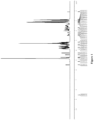
- FIG. 1 shows the 1 H NMR spectrum (500 MHz, 296K) of the 1,6- ⁇ isomer of Siamenoside I (mogro-3-O-[ ⁇ -D-glucopyranoside]-24-O- ⁇ [ ⁇ -D-glucopyranosyl-(1 ⁇ 2)]-[ ⁇ -D-glucopyranosyl-(1 ⁇ 6)]- ⁇ -D-glucopyranoside ⁇ ) in CD 3 OD.
- the present invention is based on the surprising finding that certain dihydrochalcones can also enhance the sweetness of certain steviol glycoside and mogroside sweeteners, and moreover, can optionally improve the sweetness profile of the steviol glycoside or mogroside sweetener.
- the present invention generally relates to dihydrochalcone compounds useful for enhancing the sweetness and/or modulating the taste of certain sweeteners, particularly sweeteners in consumables such as beverages.
- the present invention also generally relates to methods of enhancing the sweetness and/or modulating the taste of certain sweeteners in consumables, such as beverages, using dihydrochalcone compounds.
- Alkyl generally refers to a noncyclic, cyclic, linear or branched, unsaturated or saturated hydrocarbon such as those containing from 1 to 22 carbon atoms, and specifically includes methyl, ethyl, propyl, isopropyl, cyclopropyl, butyl, isobutyl, t-butyl, pentyl, cyclopentyl, isopentyl, neopentyl, hexyl, isohexyl, cyclohexyl, cyclohexylmethyl, 3-methylpentyl, 2,2-dimethylbutyl, and 2,3-dimethylbutyl.
- Alkyl groups can be optionally substituted with one or more moieties selected from, for example, hydroxyl, amino, halo, deutero, alkylamino, arylamino, alkoxy, aryloxy, nitro, cyano, sulfonic acid, sulfate, phosphonic acid, phosphate, or phosphonate, or any other viable functional group, either unprotected, or protected, as necessary, as known to those skilled in the art, for example, as taught in T. W. Greene and P. G. M. Wuts, "Protective Groups in Organic Synthesis," 3ed., John Wiley & Sons, 1999.
- lower alkyl refers to a C1 to C5 saturated straight, branched, or if appropriate, a cyclic (for example, cyclopropyl) alkyl group, including both substituted and unsubstituted forms. Unless otherwise specifically stated in this application, when alkyl is a suitable moiety, lower alkyl is preferred.
- Constants mean substances which are contacted with the mouth of man or animal, including substances which are taken into and subsequently ejected from the mouth and substances which are drunk, eaten, swallowed or otherwise ingested, and are safe for human or animal consumption when used in a generally acceptable range.
- “Sweetness enhancer” refers to a compound that enhances, amplifies or potentiates the perception of sweetness of a consumable (e.g. a beverage) when said compound is present in the consumable in a concentration at or below the compound's sweetener recognition threshold, i.e. a concentration at which the compound does not contribute any noticeable sweet taste in the absence of additional sweetener(s).
- the term "sweetness recognition threshold concentration,” as generally used herein, is the lowest known concentration of a compound that is perceivable by the human sense of taste as sweet. The sweetness recognition threshold concentration is specific for a particular compound, and can vary based on temperature, matrix, ingredients and/or flavor system.
- sweetness enhancer is synonymous with the terms “sweet taste potentiator,” “sweetness potentiator,” “sweetness amplifier,” and “sweetness intensifier.”
- “Sweetener component”, as used herein, refers to the compound or mixture of compounds that provides detectable sweetness when added to a consumable, i.e. the compound or mixture of sweet compounds present in the consumable in an amount above their sweetness recognition threshold concentration.
- Taste modulator refers to a compound that positively impacts the perception of a non-sucrose sweetener in a consumable (e.g. a beverage) in such a way that the consumable tastes more like a sucrose-sweetened beverage.
- a consumable e.g. a beverage
- taste modulators e.g. bitterness, sourness, astringency, saltiness and metallic notes.
- mouthfeel can be improved.
- sweetness linger can be decreased.
- sweetness onset can be increased.
- sweetness onset can be improved.
- the bitterness linger can be improved.
- dihydrochalcone compounds of the formulae described herein are sweetness enhancers.
- dihydrochalcone compounds of the formulae described herein are taste modulators, with or without simultaneously acting as sweetness enhancers. That is, in some embodiments, a dihydrochalcone compound enhances sweetness and modulates one or more taste attributes of the sweetener. In other embodiments, a dihydrochalcone compound enhances the sweetness of the sweetener without modulating one or more taste attributes of the sweetener. In still other embodiments, a dihydrochalcone compound modulates one or more taste attributes of the sweetener without enhancing the sweetness of the sweetener.
- Dihydrochalcone compounds of Formula I are useful as a sweetness enhancers and/or taste modulators: wherein R 1 , R 2 , R 3 , R 4 and R 5 are each independently selected from H, OH, OR 6 , alkyl and substituted alkyl, wherein R 6 is selected from alkyl, substituted alkyl and a saccharide.
- saccharide refers to monosaccharides, disaccharides, oligosaccharides and polysaccharides.
- a saccharide comprises at least one carbohydrate.
- Exemplary carbohydrates include, but are not limited to, sucrose, glyceraldehyde, dihydroxyacetone, erythrose, threose, erythrulose, arabinose, lyxose, ribose, xylose, ribulose, xylulose, allose, altrose, galactose, glucose, gulose, idose, mannose, talose, fructose, psicose, sorbose, tagatose, mannoheptulose, sedoheltulose, octolose, fucose, rhamnose, arabinose, turanose and sialose.
- the dihydrochalcone is hesperetin dihydrochalcone:
- the dihydrochalcone is hesperetin dihydrochalcone-4'- ⁇ -D-glucoside:
- the dihydrochalcone compounds described herein can be provided in pure form or as part of mixture.
- the mixture can be an extract prepared from the plant or portion of a plant, or commercially available.
- the dihydrochalcone compound comprises at least about 50% by weight of a mixture, such as, for example, at least about 60%, at least about 70%, at least about 80%, at least about 90% or at least about 95%. In a more particular embodiment, the dihydrochalcone compound comprises at least about 96%, at least about 97%, at least about 98% or at least about 99% by weight of a mixture.
- At least two dihydrochalcone compounds of the formulae described herein are also contemplated, such as, for example, at least three, at least four, at least five and at least six dihydrochalcone compounds.
- the at least two dihydrochalcone compounds can each independently be provided either in pure form or as part of a mixture.
- the at least two dihydrochalcone compounds comprise at least about 50% by weight of a mixture, such as, for example, at least about 60%, at least about 70%, at least about 80%, at least about 90% or at least about 95%.
- the at least two dihydrochalcone compounds comprise at least about 96%, at least about 97%, at least about 98% or at least about 99% by weight of a mixture.
- the dihydrochalcone compounds of the present invention enhance and/or modulate the taste of at least one sweetener, particularly certain steviol glycoside and certain mogroside sweeteners.
- the sweetener comprises at least one steviol glycoside, wherein the steviol glycoside is rebaudioside M, wherein the at least one steviol glycoside is present in a sweetening amount.
- “Sweetening amount”, as used herein, refers to the amount of compound required to provide detectable sweetness when present in a consumable, e.g. a beverage.
- the steviol glycoside can be natural, synthetic or a combination of natural and synthetic.
- the steviol glycoside can be provided in pure form or as part of a mixture, i.e. a steviol glycoside blend.
- Exemplary other steviol glycosides include, but are not limited to, rebaudioside D, rebaudioside A, rebaudioside N, rebaudioside O, rebaudioside E, steviolmonoside, steviolbioside, rubusoside, dulcoside B, dulcoside A, rebaudioside B, rebaudioside G, stevioside, rebaudioside C, rebaudioside F, rebaudioside I, rebaudioside H, rebaudioside L, rebaudioside K, rebaudioside J, rebaudioside M2, rebaudioside D2, rebaudioside S, rebaudioside T, rebaudioside U, rebaudioside V, rebaudioside W, rebaudioside Z1, rebaudioside Z2, rebaudioside IX, enzymatically glucosylated steviol glycosides and combinations thereof.
- a steviol glycoside blend comprises at least about 5% of the steviol glycoside by weight, such as, for example, at least about 10%, at least about 20%, at least about 30%, at least about 40%, at least about 50%, at least about 60%, at least about 70%, at least about 80%, at least about 90%, at least about 95% or at least about 97%.
- the steviol glycoside blend comprises at least about 50% of the steviol glycoside by weight, such as, for example, from about 50% to about 90%, from about 50% to about 80%, from about 50% to about 70%, from about 50% to about 60%, from about 60% to about 90%, from about 60% to about 80%, from about 60% to about 70%, from about 70% to about 90%, from about 70% to about 80% and from about 80% to about 90%.
- the sweetener is a steviol glycoside blend comprising rebaudioside M in a sweetening amount.
- the steviol glycoside blend comprises at least about 5% rebaudioside M by weight, such as, for example, at least about 10%, at least about 20%, at least about 30%, at least about 40%, at least about 50%, at least about 60%, at least about 70%, at least about 80%, at least about 90%, at least about 95% or at least about 97%.
- the steviol glycoside blend sweetener typically has a total steviol glycoside content of about 95% by weight or greater on a dry basis. The remaining 5% comprises other non-steviol glycoside compounds, e.g. by-products from extraction or purification processes. In some embodiments, the steviol glycoside blend sweetener has a total steviol glycoside content of about 96% or greater, about 97% or greater, about 98% or greater or about 99% or greater.
- Total steviol glycoside content refers to the sum of the relative weight contributions of each steviol glycoside in a sample.
- the weight ratio of the at least one sweetener described hereinabove to at least one dihydrochalcone of the formulae described herein can vary.
- the weight ratio of at least one sweetener to at least one dihydrochalcone is from about 500:1 to about 2:1, such as, for example, from about 100:1 to about 2:1, from about 50:1 to about 2:1, from about 25:1 to about 2:1, from about 10:1 to about 2:1, from about 5:1 to about 2:1, from about 500:1 to about 400:1, from about 500:1 to about 300:1, from about 500:1 to about 200: 1, from about 500:1 to about 100:1, from about 500:1 to about 50:1, from about 500:1 to about 25:1, from about 500:1 to about 10:1, from about 400:1 to about 300:1, from about 400:1 to about 200:1, from about 400:1 to about 100:1, from about 400:1 to about 50:1, from about 400:1 to about 25:1, from about 400:1 to about 10:1, from about 400:1
- the sweetener comprises at least one mogroside, wherein the mogroside is siamenoside I or the 1,6- ⁇ isomer of siamenoside I, and wherein the at least one mogroside is present in a sweetening amount.
- the mogroside can be natural, synthetic or a combination of natural and synthetic.
- the mogroside can be provided in pure form or as part of mixture, i.e. a mogroside blend.
- exemplary other mogrosides include, but are not limited to, any of grosmogroside I, mogroside IA, mogroside IE, 11-oxomogroside IA, mogroside II, mogroside II A, mogroside II B, mogroside II E, 7-oxomogroside II E, mogroside III, Mogroside IIIe, 11-oxomogroside IIIE, 11-deoxymogroside III, mogroside IV, Mogroside IVA 11-oxomogroside IV, 11-oxomogroside IVA, mogroside V, isomogroside V, 11-deoxymogroside V, 7-oxomogroside V, 11-oxomogroside V, isomogroside V, mogroside VI, mogrol, 11-oxomogrol, and combinations thereof.
- mogrosides include those described in U.S. Patent Application Publication 2016039864 .
- Other mogrosides include (3 ⁇ ,9 ⁇ ,10 ⁇ ,11 ⁇ ,24R)-3-[(4-O- ⁇ -D-glucospyranosyl-6-O- ⁇ -D-glucopyranosyl]-25-hydroxyl-9-methyl-19-norlanost-5-en-24-yl-[2-O- ⁇ -D-glucopyranosyl-6-O- ⁇ -D-glucopyranosyl]- ⁇ -D-glucopyranoside); (3 ⁇ , 9 ⁇ , 10 ⁇ , 11 ⁇ , 24R)-[(2-O- ⁇ -D-glucopyranosyl-6-O- ⁇ -D-glucopyranosyl- ⁇ -D- glucopyranosyl)oxy]-25-hydroxy-9-methyl-19-norlanost-5-en-24-yl-[2-O- ⁇ -D-glucopyranosyl-6-O- ⁇ -
- the mogroside blend comprises at least one mogroside in a sweetening amount.
- a mogroside blend comprises at least about 5% of the mogroside by weight, such as, for example, at least about 10%, at least about 20%, at least about 30%, at least about 40%, at least about 50%, at least about 60%, at least about 70%, at least about 80%, at least about 90%, at least about 95% or at least about 97%.
- the mogroside blend has a total mogroside content of about 95% by weight or greater on a dry basis.
- the mogroside blend sweetener has a total mogroside content of about 96% or greater, about 97% or greater, about 98% or greater or about 99% or greater.
- Total mogroside content refers to the sum of the relative weight contributions of each mogroside in a sample.
- the sweetener is a mogroside blend comprising siamenoside I in a sweetening amount.
- the mogroside blend comprises at least about 5% siamenoside I by weight, such as, for example, at least about 10%, at least about 20%, at least about 30%, at least about 40%, at least about 50%, at least about 60%, at least about 70%, at least about 80%, at least about 90%, at least about 95% or at least about 97%.
- the weight ratio of the at least one sweetener described hereinabove to at least one dihydrochalcone of the formulae described herein can vary.
- the weight ratio of at least one sweetener to at least one dihydrochalcone is from about 500:1 to about 2:1, such as, for example, from about 100:1 to about 2:1, from about 50:1 to about 2:1, from about 25:1 to about 2:1, from about 10:1 to about 2:1, from about 5:1 to about 2:1, from about 500:1 to about 400:1, from about 500:1 to about 300:1, from about 500:1 to about 200: 1, from about 500:1 to about 100:1, from about 500:1 to about 50:1, from about 500:1 to about 25:1, from about 500:1 to about 10:1, from about 400:1 to about 300:1, from about 400:1 to about 200:1, from about 400:1 to about 100:1, from about 400:1 to about 50:1, from about 400:1 to about 25:1, from about 400:1 to about 10:1, from about 400:1
- one of the sweeteners described above is the only sweetener in the beverage.
- a beverage comprises a sweetener component containing one of the sweeteners described above and one or more additional sweeteners.
- a sweetener of the present invention comprises at least about 50% by weight of the sweetener component, such as for example, at least about 60%, at least about 70%, at least about 80%, at least about 90% and at least about 95%.
- a sweetener of the present invention comprises at least about 96%, at least about 97%, at least about 98% or at least about 99% of the sweetener component.
- the additional sweetener used in the sweetener component can be any known sweetener, e.g. a natural sweetener, a natural high potency sweetener, a synthetic sweetener.
- natural high potency sweetener refers to any sweetener found naturally in nature and characteristically has a sweetness potency greater than sucrose, fructose, or glucose, yet has less calories.
- the natural high potency sweetener can be provided as a pure compound or, alternatively, as part of an extract.
- synthetic sweetener refers to any composition which is not found naturally in nature and characteristically has a sweetness potency greater than sucrose, fructose, or glucose, yet has less calories.
- the additional sweetener is at least one carbohydrate sweetener.
- suitable carbohydrate sweeteners are selected from, but not limited to, the group consisting of sucrose, glyceraldehyde, dihydroxyacetone, erythrose, threose, erythrulose, arabinose, lyxose, ribose, xylose, ribulose, xylulose, allose, altrose, galactose, glucose, gulose, idose, mannose, talose, fructose, psicose, sorbose, tagatose, mannoheptulose, sedoheltulose, octolose, fucose, rhamnose, arabinose, turanose, sialose and combinations thereof.
- the sweetener component does not comprise a carbohydrate sweetener.
- Suitable additional sweeteners include siamenoside I, monatin and its salts (monatin SS, RR, RS, SR), curculin, glycyrrhizic acid and its salts, thaumatin, monellin, mabinlin, brazzein, hernandulcin, phyllodulcin, glycyphyllin, phloridzin, trilobatin, baiyunoside, osladin, polypodoside A, pterocaryoside A, pterocaryoside B, mukurozioside, phlomisoside I, periandrin I, abrusoside A, steviolbioside and cyclocarioside I, sugar alcohols such as erythritol, sucralose, potassium acesulfame, acesulfame acid and salts thereof, aspartame, alitame, saccharin and salts thereof, neohes
- the additional sweetener is a caloric sweetener or mixture of caloric sweeteners.
- the caloric sweetener is selected from sucrose, fructose, glucose, high fructose corn/starch syrup, a beet sugar, a cane sugar, and combinations thereof.
- the additional sweetener is a rare sugar selected from sorbose, lyxose, ribulose, xylose, xylulose, D-allose, L-ribose, D-tagatose, L-glucose, L-fucose, L-arabinose, turanose and combinations thereof.
- the rare sugars can be present in the sweetener compositions in an amount from about 0.5% to about 3.0%, such as, for example, about 0.5% to about 2.5%, about 0.5% to about 2.0%, about 0.5% to about 1.5%, about 0.5% to about 1.0%, about 1.0% to about 3.0%, about 1.0% to about 2.5%, about 1.0% to about 2.0%, about 1.0% to about 1.5%, about 2.0% to about 3.0% and about 2.0% to about 2.5%.
- the at least one dihydrochalcone described herein may be present in a composition in an amount such that, when the composition added to a consumable, the Brix of the consumable increases by at least 1 degree, such as, for example, at least 2 degrees Brix, at least 3 degrees Brix, at least 4 degrees Brix or at least 5 degrees Brix.
- comparisons are between (i) the consumable containing the at least one sweetener and at least one dihydrochalcone and (ii) the consumable containing the at least one sweetener - but not the at least one dihydrochalcone.
- the at least one dihydrochalcone is present in the consumable in a concentration from about 5 ppm to about 40 ppm, such as, for example, from about 5 ppm to about 35 ppm, from about 5 ppm to about 20 ppm, from about 20 to about 40 ppm, from about 20 ppm to about 30 ppm or from about 30 ppm to about 40 ppm.
- the at least one sweetener described herein is present in the consumable in a concentration from about 50 ppm to about 600 ppm, such as, for example, about 50 ppm to about 500 ppm, from about 50 ppm to about 400 ppm, from about 50 ppm to about 300 ppm, from about 50 ppm to about 300 ppm, from about 50 ppm to about 200 ppm, from about 50 ppm to about 100 ppm, about 100 ppm to about 600 ppm, about 100 ppm to about 500 ppm, about 100 ppm to about 400 ppm, about 100 ppm to about 300 ppm, about 100 ppm to about 200 ppm, about 200 ppm to about 600 ppm, about 200 ppm to about 500 ppm, about 200 ppm to about 400 ppm, about 200 ppm to about 300 ppm, about 300 ppm to about 600 ppm, about 300 ppm to about 500 ppm, about 200 ppm to
- the weight ratio of at least one sweetener described herein to the at least one dihydrochalcone of the formulae described herein can also vary, as discussed above.
- the consumable is a beverage.
- Other exemplary consumables include, but are not limited to edible gel mixes and compositions, dental compositions, foodstuffs (confections, condiments, chewing gum, cereal compositions, baked goods, dairy products, and tabletop sweetener compositions).
- Edible gels are gels that can be eaten.
- a gel is a colloidal system in which a network of particles spans the volume of a liquid medium.
- gels mainly are composed of liquids, and thus exhibit densities similar to liquids, gels have the structural coherence of solids due to the network of particles that spans the liquid medium. For this reason, gels generally appear to be solid, jelly-like materials.
- Gels can be used in a number of applications. For example, gels can be used in foods, paints, and adhesives.
- confection can mean a sweet, a lollie, a confectionery, or similar term.
- the confection generally contains a base composition component and a sweetener component.
- the confection may be in the form of any food that is typically perceived to be rich in sugar or is typically sweet.
- the confections may be bakery products such as pastries; desserts such as yogurt, jellies, drinkable jellies, puddings, Bavarian cream, blancmange, cakes, brownies, mousse and the like, sweetened food products eaten at tea time or following meals; frozen foods; cold confections, e.g.
- ice cream such as ice cream, ice milk, lacto-ice and the like (food products in which sweeteners and various other types of raw materials are added to milk products, and the resulting mixture is agitated and frozen), and ice confections such as sherbets, dessert ices and the like (food products in which various other types of raw materials are added to a sugary liquid, and the resulting mixture is agitated and frozen); general confections, e.g., baked confections or steamed confections such as crackers, biscuits, buns with bean-jam filling, halvah, alfajor, and the like; rice cakes and snacks; table top products; general sugar confections such as chewing gum (e.g.
- compositions which comprise a substantially water-insoluble, chewable gum base such as chicle or substitutes thereof, including jetulong, guttakay rubber or certain comestible natural synthetic resins or waxes), hard candy, soft candy, mints, nougat candy, jelly beans, fudge, toffee, taffy, Swiss milk tablet, licorice candy, chocolates, gelatin candies, marshmallow, marzipan, divinity, cotton candy, and the like; sauces including fruit flavored sauces, chocolate sauces and the like; edible gels; crèmes including butter crèmes, flour pastes, whipped cream and the like; jams including strawberry jam, marmalade and the like; and breads including sweet breads and the like or other starch products, and combinations thereof.
- a substantially water-insoluble, chewable gum base such as chicle or substitutes thereof, including jetulong, guttakay rubber or certain comestible natural synthetic resins or waxes
- hard candy soft candy, mints, nougat candy, jelly beans, fudge, toffee
- Chewing gum compositions generally comprise a water-soluble portion and a water-insoluble chewable gum base portion.
- the water soluble portion dissipates with a portion of the flavoring agent over a period of time during chewing while the insoluble gum base portion is retained in the mouth.
- the insoluble gum base generally determines whether a gum is considered chewing gum, bubble gum, or a functional gum.
- Cereal compositions typically are eaten either as staple foods or as snacks.
- Non-limiting examples of cereal compositions for use in particular embodiments include ready-to-eat cereals as well as hot cereals.
- Ready-to-eat cereals are cereals which may be eaten without further processing (i.e. cooking) by the consumer.
- Examples of ready-to-eat cereals include breakfast cereals and snack bars.
- Breakfast cereals typically are processed to produce a shredded, flaky, puffy, or extruded form.
- Breakfast cereals generally are eaten cold and are often mixed with milk and/or fruit.
- Snack bars include, for example, energy bars, rice cakes, granola bars, and nutritional bars.
- Hot cereals generally are cooked, usually in either milk or water, before being eaten.
- Non-limiting examples of hot cereals include grits, porridge, polenta, rice, and rolled oats.
- Cereal compositions generally comprise at least one cereal ingredient.
- the term "cereal ingredient” denotes materials such as whole or part grains, whole or part seeds, and whole or part grass.
- Non-limiting examples of cereal ingredients for use in particular embodiments include maize, wheat, rice, barley, bran, bran endosperm, bulgur, soghums, millets, oats, rye, triticale, buchwheat, fonio, quinoa, bean, soybean, amaranth, teff, spelt, and kaniwa.
- baked goods include ready to eat and all ready to bake products, flours, and mixes requiring preparation before serving.
- Non-limiting examples of baked goods include cakes, crackers, cookies, brownies, muffins, rolls, bagels, donuts, strudels, pastries, croissants, biscuits, bread, bread products, and buns.
- Baked goods in accordance with particular embodiments generally comprise a combination of sweetener, water, and fat.
- Dairy products and processes for making dairy products suitable for use in this invention are well known to those of ordinary skill in the art.
- Dairy products, as used herein comprise milk or foodstuffs produced from milk.
- Non-limiting examples of dairy products suitable for use in embodiments of this invention include milk, milk cream, sour cream, crème fraiche, buttermilk, cultured buttermilk, milk powder, condensed milk, evaporated milk, butter, cheese, cottage cheese, cream cheese, yogurt, ice cream, frozen custard, frozen yogurt, gelato, vla, piima, filmjölk, kajmak, kephir, viili, kumiss, airag, ice milk, casein, ayran, lassi, kara, or combinations thereof.
- the processing of the dairy product from raw milk generally comprises the steps of pasteurizing, creaming, and homogenizing.
- raw milk may be consumed without pasteurization, it usually is pasteurized to destroy harmful microorganisms such as bacteria, viruses, protozoa, molds, and yeasts.
- Pasteurizing generally comprises heating the milk to a high temperature for a short period of time to substantially reduce the number of microorganisms, thereby reducing the risk of disease.
- dairy products produced from milk by additional processing steps comprise dairy products produced from milk by additional processing steps.
- cream may be skimmed from the top of milk or separated from the milk using machine-centrifuges.
- the dairy product comprises sour cream, a dairy product rich in fats that is obtained by fermenting cream using a bacterial culture. The bacteria produce lactic acid during fermentation, which sours and thickens the cream.
- the dairy product comprises crème fraiche, a heavy cream slightly soured with bacterial culture in a similar manner to sour cream. Crème fraiche ordinarily is not as thick or as sour as sour cream.
- the dairy product comprises cultured buttermilk. Cultured buttermilk is obtained by adding bacteria to milk.
- the dairy products comprise milk powder, condensed milk, evaporated milk, or combinations thereof.
- Milk powder, condensed milk, and evaporated milk generally are produced by removing water from milk.
- the dairy product comprises a milk powder comprising dried milk solids with a low moisture content.
- the dairy product comprises condensed milk.
- Condensed milk generally comprises milk with a reduced water content and added sweetener, yielding a thick, sweet product with a long shelf-life.
- the dairy product comprises evaporated milk.
- “Beverage product”, as used herein, is a ready-to-drink beverage, a beverage concentrate, a beverage syrup, or a powdered beverage.
- Suitable ready-to-drink beverages include carbonated and non-carbonated beverages.
- Carbonated beverages include, but are not limited to, frozen carbonated beverages, enhanced sparkling beverages, cola, fruit-flavored sparkling beverages (e.g. lemon-lime, orange, grape, strawberry and pineapple), ginger-ale, soft drinks and root beer.
- Beverages comprise a matrix, i.e. the basic ingredient in which the ingredients - including the compositions of the present invention - are dissolved.
- a beverage comprises water of beverage quality as the matrix, such as, for example deionized water, distilled water, reverse osmosis water, carbon-treated water, purified water, demineralized water and combinations thereof, can be used.
- Additional suitable matrices include, but are not limited to phosphoric acid, phosphate buffer, citric acid, citrate buffer and carbon-treated water.
- the titratable acidity of a beverage may, for example, range from about 0.01 to about 1.0% by weight of beverage.
- the beverage can be a mid-calorie beverage that has up to about 60 calories per 8 oz. serving.
- the consumable is a cola beverage.
- the cola beverage can be a low-, mid- or zero-calorie beverage.
- the cola beverage further comprises allulose and/or erythritol.
- the present invention provides a beverage comprising hesperetin dihydrochalcone and a sweetener comprising a sweetening amount of rebaudioside M.
- concentration of the hesperetin dihydrochalcone is from about 1 ppm to about 50 ppm, more particularly from about 5 ppm to about 40 ppm, from about 5 ppm to about 35 ppm or from about 10 ppm to about 35 ppm.
- the concentration of the sweetener comprising a sweetening amount of rebaudioside M is from about 100 ppm to about 600 ppm, more particularly from about 100 ppm to about 400 ppm or about 250 ppm to about 350 ppm.
- the Brix of the beverage comprising the 1,6- ⁇ -isomer of siamenoside I and hesperetin dihydrochalcone-4'- ⁇ -D-glucoside is at least 1 degree more than the Brix of the beverage without the hesperetin dihydrochalcone-4'- ⁇ -D-glucoside, such as, for example, at least 2 degrees Brix.
- the beverage comprising the 1,6- ⁇ -isomer of siamenoside I and hesperetin dihydrochalcone-4'- ⁇ -D-glucoside has at least one improved taste attribute compared to the taste attributes of a beverage without the hesperetin dihydrochalcone-4'- ⁇ -D-glucoside.
- the beverage exhibits one or more of the following: improved mouthfeel, a more sucrose-like taste, less sweetness linger, less licorice aftertaste, or less bitterness.
- Other consumables include, but are not limited to, livestock products or seafood; processed meat products such as sausage and the like; retort food products, pickles, preserves boiled in soy sauce, delicacies, side dishes; soups; snacks such as potato chips, cookies, or the like; as shredded filler, leaf, stem, stalk, homogenized leaf cured and animal feed.
- the consumable can optionally include additives, functional ingredients and combinations thereof, as described herein. Any of the additives and/or functional ingredients described above can be present in the consumable.
- a polyol also may be a sugar alcohol, polyhydric alcohol, or polyalcohol which is a reduced form of carbohydrate, wherein the carbonyl group (aldehyde or ketone, reducing sugar) has been reduced to a primary or secondary hydroxyl group.
- Non-limiting examples of polyols in some embodiments include maltitol, mannitol, sorbitol, lactitol, xylitol, isomalt, propylene glycol, glycerol (glycerin), threitol, galactitol, palatinose, reduced isomalto-oligosaccharides, reduced xylo-oligosaccharides, reduced gentio-oligosaccharides, reduced maltose syrup, reduced glucose syrup, and sugar alcohols or any other carbohydrates capable of being reduced which do not adversely affect taste.
- Suitable polyamino acid additives include poly-L-aspartic acid, poly-L-lysine (e.g., poly-L- ⁇ -lysine or poly-L- ⁇ -lysine), poly-L-ornithine (e.g., poly-L- ⁇ -ornithine or poly-L- ⁇ -ornithine), poly-L-arginine, other polymeric forms of amino acids, and salt forms thereof (e.g. , calcium, potassium, sodium, or magnesium salts such as L-glutamic acid mono sodium salt).
- the poly-amino acid additives also may be in the D- or L-configuration.
- the amino acid is present in the consumable in an amount from about 10 ppm to about 50,000 ppm. In another embodiment, the amino acid is present in the consumable in an amount from about 1,000 ppm to about 10,000 ppm, such as, for example, from about 2,500 ppm to about 5,000 ppm or from about 250 ppm to about 7,500 ppm.
- Suitable sugar acid additives include, but are not limited to, aldonic, uronic, aldaric, alginic, gluconic, glucuronic, glucaric, galactaric, galacturonic, and salts thereof (e.g., sodium, potassium, calcium, magnesium salts or other physiologically acceptable salts), and combinations thereof.
- nucleotides described herein also may comprise nucleotide-related additives, such as nucleosides or nucleic acid bases (e.g. , guanine, cytosine, adenine, thymine, uracil).
- nucleosides or nucleic acid bases e.g. , guanine, cytosine, adenine, thymine, uracil.
- Suitable organic acid additives include any compound which comprises a -COOH moiety, such as, for example, C2-C30 carboxylic acids, substituted hydroxyl C2-C30 carboxylic acids, butyric acid (ethyl esters), substituted butyric acid (ethyl esters), benzoic acid, substituted benzoic acids (e.g.
- organic acid additives also may be in either the D- or L-configuration.
- Suitable organic acid additive salts include, but are not limited to, sodium, calcium, potassium, and magnesium salts of all organic acids, such as salts of citric acid, malic acid, tartaric acid, fumaric acid, lactic acid (e.g., sodium lactate), alginic acid (e.g., sodium alginate), ascorbic acid (e.g., sodium ascorbate), benzoic acid (e.g., sodium benzoate or potassium benzoate), sorbic acid and adipic acid.
- organic acids such as salts of citric acid, malic acid, tartaric acid, fumaric acid, lactic acid (e.g., sodium lactate), alginic acid (e.g., sodium alginate), ascorbic acid (e.g., sodium ascorbate), benzoic acid (e.g., sodium benzoate or potassium benzoate), sorbic acid and adipic acid.
- Suitable inorganic acid additives include, but are not limited to, phosphoric acid, phosphorous acid, polyphosphoric acid, hydrochloric acid, sulfuric acid, carbonic acid, sodium dihydrogen phosphate, and alkali or alkaline earth metal salts thereof (e.g. , inositol hexaphosphate Mg/Ca).
- the inorganic acid additive is present in the consumable in a concentration from about 25 ppm to about 25,000 ppm.
- Suitable bitter compound additives include, but are not limited to, caffeine, quinine, urea, bitter orange oil, naringin, quassia, and salts thereof.
- the bitter compound is present in the consumable in a concentration from about 25 ppm to about 25,000 ppm.
- Suitable flavorants and flavoring ingredient additives include, but are not limited to, vanillin, vanilla extract, mango extract, cinnamon, citrus, coconut, ginger, viridiflorol, almond, menthol (including menthol without mint), grape skin extract, and grape seed extract.
- Flavorant and “flavoring ingredient” are synonymous and can include natural or synthetic substances or combinations thereof. Flavorants also include any other substance which imparts flavor and may include natural or non-natural (synthetic) substances which are safe for human or animals when used in a generally accepted range.
- Non-limiting examples of proprietary flavorants include Döhler TM Natural Flavoring Sweetness Enhancer K14323 (Döhler TM , Darmstadt, Germany), Symrise TM Natural Flavor Mask for Sweeteners 161453 and 164126 (Symrise TM , Holzminden, Germany), Natural Advantage TM Bitterness Blockers 1, 2, 9 and 10 (Natural Advantage TM , Freehold, New Jersey, U.S.A.), and Sucramask TM (Creative Research Management, Stockton, California, U.S.A.).
- the flavorant is present in the consumable in a concentration from about 0.1 ppm to about 4,000 ppm.
- Suitable polymer additives include, but are not limited to, chitosan, pectin, pectic, pectinic, polyuronic, polygalacturonic acid, starch, food hydrocolloid or crude extracts thereof (e.g., gum acacia senegal (Fibergum TM ), gum acacia seyal, carageenan), poly-L-lysine (e.g., poly-L- ⁇ -lysine or poly-L- ⁇ -lysine), poly-L-ornithine (e.g., poly-L- ⁇ -ornithine or poly-L- ⁇ -ornithine), polypropylene glycol, polyethylene glycol, poly(ethylene glycol methyl ether), polyarginine, polyaspartic acid, polyglutamic acid, polyethylene imine, alginic acid, sodium alginate, propylene glycol alginate, and sodium polyethyleneglycolalginate, sodium hexametaphosphate and
- the polymer is present in the consumable a concentration from about 30 ppm to about 2,000 ppm.
- Suitable protein or protein hydrolysate additives include, but are not limited to, bovine serum albumin (BSA), whey protein (including fractions or concentrates thereof such as 90% instant whey protein isolate, 34% whey protein, 50% hydrolyzed whey protein, and 80% whey protein concentrate), soluble rice protein, soy protein, protein isolates, protein hydrolysates, reaction products of protein hydrolysates, glycoproteins, and/or proteoglycans containing amino acids (e.g., glycine, alanine, serine, threonine, asparagine, glutamine, arginine, valine, isoleucine, leucine, norvaline, methionine, proline, tyrosine, hydroxyproline, and the like), collagen (e.g., gelatin), partially hydrolyzed collagen (e.g., hydrolyzed fish collagen), and collagen hydrolysates (e.g., porcine collagen hydrolysate).
- BSA bovine
- Waxes are esters of ethylene glycol and two fatty acids, generally occurring as a hydrophobic liquid that is insoluble in water.
- Inulins comprise naturally occurring oligosaccharides belonging to a class of carbohydrates known as fructans. They generally are comprised of fructose units joined by ⁇ (2-1) glycosidic linkages with a terminal glucose unit. Oligosaccharides are saccharide polymers containing typically three to six component sugars. They are generally found either O- or N-linked to compatible amino acid side chains in proteins or to lipid molecules. Fructooligosaccharides are oligosaccharides consisting of short chains of fructose molecules.
- dietary fiber generally is derived from plant sources, indigestible animal products such as chitins are also classified as dietary fiber.
- Chitin is a polysaccharide composed of units of acetylglucosamine joined by ⁇ (1-4) linkages, similar to the linkages of cellulose.
- Sources of dietary fiber often are divided into categories of soluble and insoluble fiber based on their solubility in water. Both soluble and insoluble fibers are found in plant foods to varying degrees depending upon the characteristics of the plant. Although insoluble in water, insoluble fiber has passive hydrophilic properties that help increase bulk, soften stools, and shorten transit time of fecal solids through the intestinal tract.
- soluble fiber Unlike insoluble fiber, soluble fiber readily dissolves in water. Soluble fiber undergoes active metabolic processing via fermentation in the colon, increasing the colonic microflora and thereby increasing the mass of fecal solids. Fermentation of fibers by colonic bacteria also yields end-products with significant health benefits. For example, fermentation of the food masses produces gases and short-chain fatty acids. Acids produced during fermentation include butyric, acetic, propionic, and valeric acids that have various beneficial properties such as stabilizing blood glucose levels by acting on pancreatic insulin release and providing liver control by glycogen breakdown. In addition, fiber fermentation may reduce atherosclerosis by lowering cholesterol synthesis by the liver and reducing blood levels of LDL and triglycerides.
- the acids produced during fermentation lower colonic pH, thereby protecting the colon lining from cancer polyp formation.
- the lower colonic pH also increases mineral absorption, improves the barrier properties of the colonic mucosal layer, and inhibits inflammatory and adhesion irritants. Fermentation of fibers also may benefit the immune system by stimulating production of T-helper cells, antibodies, leukocytes, splenocytes, cytokinins and lymphocytes.
- the functional ingredient is at least one fatty acid.
- the at least one fatty acid may be single fatty acid or a plurality of fatty acids as a functional ingredient for the compositions provided herein.
- the at least one fatty acid is present in the composition in an amount sufficient to promote health and wellness.
- fatty acid refers to any straight chain monocarboxylic acid and includes saturated fatty acids, unsaturated fatty acids, long chain fatty acids, medium chain fatty acids, short chain fatty acids, fatty acid precursors (including omega-9 fatty acid precursors), and esterified fatty acids.
- long chain polyunsaturated fatty acid refers to any polyunsaturated carboxylic acid or organic acid with a long aliphatic tail.
- omega-3 fatty acid refers to any polyunsaturated fatty acid having a first double bond as the third carbon-carbon bond from the terminal methyl end of its carbon chain.
- the omega-3 fatty acid may comprise a long chain omega-3 fatty acid.
- omega-6 fatty acid any polyunsaturated fatty acid having a first double bond as the sixth carbon-carbon bond from the terminal methyl end of its carbon chain.
- suitable omega-3 fatty acids may be derived from commercially available omega-3 fatty acid oils such as Microalgae DHA oil (from Martek, Columbia, MD), OmegaPure (from Omega Protein, Houston, TX), Marinol C-38 (from Lipid Nutrition, Channahon, IL), Bonito oil and MEG-3 (from Ocean Nutrition, Dartmouth, NS), Evogel (from Symrise, Holzminden, Germany), Marine Oil, from tuna or salmon (from Arista Wilton, CT), OmegaSource 2000, Marine Oil, from menhaden and Marine Oil, from cod (from OmegaSource, RTP, NC).
- omega-3 fatty acid oils such as Microalgae DHA oil (from Martek, Columbia, MD), OmegaPure (from Omega Protein, Houston, TX), Marinol C-38 (from Lipid Nutrition, Channahon, IL), Bonito oil and MEG-3 (from Ocean Nutrition, Dartmouth, NS), Evogel (from Symrise, Holzminden, Germany), Marine Oil, from tuna or salmon (
- Suitable omega-6 fatty acids include, but are not limited to, linoleic acid, gamma-linolenic acid, dihommo-gamma-linolenic acid, arachidonic acid, eicosadienoic acid, docosadienoic acid, adrenic acid, docosapentaenoic acid and combinations thereof.
- Suitable esterified fatty acids for embodiments of the present invention may include, but are not limited to, monoacylgycerols containing omega-3 and/or omega-6 fatty acids, diacylgycerols containing omega-3 and/or omega-6 fatty acids, or triacylgycerols containing omega-3 and/or omega-6 fatty acids and combinations thereof.
- the functional ingredient is at least one vitamin.
- the at least one vitamin may be single vitamin or a plurality of vitamins as a functional ingredient for the compositions provided herein.
- the at least one vitamin is present in the composition in an amount sufficient to promote health and wellness.
- Vitamins are organic compounds that the human body needs in small quantities for normal functioning. The body uses vitamins without breaking them down, unlike other nutrients such as carbohydrates and proteins. To date, thirteen vitamins have been recognized, and one or more can be used in the compositions herein. Suitable vitamins include, vitamin A, vitamin D, vitamin E, vitamin K, vitamin B1, vitamin B2, vitamin B3, vitamin B5, vitamin B6, vitamin B7, vitamin B9, vitamin B12, and vitamin C.
- vitamin includes pseudo-vitamins.
- the vitamin is a fat-soluble vitamin chosen from vitamin A, D, E, K and combinations thereof.
- the vitamin is a water-soluble vitamin chosen from vitamin B1, vitamin B2, vitamin B3, vitamin B6, vitamin B12, folic acid, biotin, pantothenic acid, vitamin C and combinations thereof.
- the functional ingredient is glucosamine.
- glucosamine is present in the compositions in an amount sufficient to promote health and wellness.
- Glucosamine also called chitosamine, is an amino sugar that is believed to be an important precursor in the biochemical synthesis of glycosylated proteins and lipids. D-glucosamine occurs naturally in the cartilage in the form of glucosamine-6-phosphate, which is synthesized from fructose-6-phosphate and glutamine. However, glucosamine also is available in other forms, non-limiting examples of which include glucosamine hydrochloride, glucosamine sulfate, N-acetyl-glucosamine, or any other salt forms or combinations thereof.
- Glucosamine may be obtained by acid hydrolysis of the shells of lobsters, crabs, shrimps, or prawns using methods well known to those of ordinary skill in the art.
- glucosamine may be derived from fungal biomass containing chitin, as described in U.S. Patent Publication No. 2006/0172392 .
- compositions can further comprise chondroitin sulfate.
- the preservative is chosen from antimicrobials, antioxidants, antienzymatics or combinations thereof.
- antimicrobials include sulfites, propionates, benzoates, sorbates, nitrates, nitrites, bacteriocins, salts, sugars, acetic acid, dimethyl dicarbonate (DMDC), ethanol, and ozone.
- the preservative is a propionate.
- Propionates include, but are not limited to, propionic acid, calcium propionate, and sodium propionate.
- the preservative is a benzoate.
- Benzoates include, but are not limited to, sodium benzoate and benzoic acid.
- the preservative is a sorbate.
- Sorbates include, but are not limited to, potassium sorbate, sodium sorbate, calcium sorbate, and sorbic acid.
- the preservative is ethanol.
- the preservative is ozone.
- Non-limiting examples of antienzymatics suitable for use as preservatives in particular embodiments of the invention include ascorbic acid, citric acid, and metal chelating agents such as ethylenediaminetetraacetic acid (EDTA).
- ascorbic acid citric acid
- metal chelating agents such as ethylenediaminetetraacetic acid (EDTA).
- the functional ingredient is at least one hydration agent.
- Non-limiting examples of salts for use in particular embodiments include chlorides, carbonates, sulfates, acetates, bicarbonates, citrates, phosphates, hydrogen phosphates, tartrates, sorbates, citrates, benzoates, or combinations thereof.
- the electrolytes are provided by juice, fruit extracts, vegetable extracts, tea, or teas extracts.
- Probiotics in accordance with the teachings of this invention, comprise microorganisms that benefit health when consumed in an effective amount. Desirably, probiotics beneficially affect the human body's naturally-occurring gastrointestinal microflora and impart health benefits apart from nutrition. Probiotics may include, without limitation, bacteria, yeasts, and fungi.
- Probiotics that may be used in accordance with this invention are well-known to those of skill in the art.
- Non-limiting examples of foodstuffs comprising probiotics include yogurt, sauerkraut, kefir, kimchi, fermented vegetables, and other foodstuffs containing a microbial element that beneficially affects the host animal by improving the intestinal microbalance.
- Prebiotics include, without limitation, mucopolysaccharides, oligosaccharides, polysaccharides, amino acids, vitamins, nutrient precursors, proteins and combinations thereof.
- the prebiotic is chosen from dietary fibers, including, without limitation, polysaccharides and oligosaccharides. These compounds have the ability to increase the number of probiotics, which leads to the benefits conferred by the probiotics.
- oligosaccharides that are categorized as prebiotics in accordance with particular embodiments of this invention include fructooligosaccharides, inulins, isomalto-oligosaccharides, lactilol, lactosucrose, lactulose, pyrodextrins, soy oligosaccharides, transgalacto-oligosaccharides, and xylo-oligosaccharides.
- Prebiotics are found naturally in a variety of foods including, without limitation, bananas, berries, asparagus, garlic, wheat, oats, barley (and other whole grains), flaxseed, tomatoes, Jerusalem artichoke, onions and chicory, greens (e.g., dandelion greens, spinach, collard greens, chard, kale, mustard greens, turnip greens), and legumes (e.g., lentils, kidney beans, chickpeas, navy beans, white beans, black beans).
- the functional ingredient is at least one weight management agent.
- the at least one weight management agent may be single weight management agent or a plurality of weight management agents as a functional ingredient for the compositions provided herein.
- the at least one weight management agent is present in the composition in an amount sufficient to promote health and wellness.
- a weight management agent includes an appetite suppressant and/or a thermogenesis agent.
- appetite suppressant includes an appetite suppressant and/or a thermogenesis agent.
- appetite suppressant includes an appetite suppressant and/or a thermogenesis agent.
- appetite suppressant includes an appetite suppressant and/or a thermogenesis agent.
- appetite suppressant includes an appetite suppressant and/or a thermogenesis agent.
- appetite suppressant includes an appetite suppressant and/or a thermogenesis agent.
- appetite suppressant describes macronutrients, herbal extracts, exogenous hormones, anorectics, anorexigenics, pharmaceutical drugs, and combinations thereof, that when delivered in an effective amount, suppress, inhibit, reduce, or otherwise curtail a person's appetite.
- Suitable macronutrient weight management agents also include carbohydrates.
- Carbohydrates generally comprise sugars, starches, cellulose and gums that the body converts into glucose for energy. Carbohydrates often are classified into two categories, digestible carbohydrates (e.g., monosaccharides, disaccharides, and starch) and non-digestible carbohydrates (e.g., dietary fiber). Studies have shown that non-digestible carbohydrates and complex polymeric carbohydrates having reduced absorption and digestibility in the small intestine stimulate physiologic responses that inhibit food intake. Accordingly, the carbohydrates embodied herein desirably comprise non-digestible carbohydrates or carbohydrates with reduced digestibility.
- the weight management agent is an herbal extract. Extracts from numerous types of plants have been identified as possessing appetite suppressant properties. Non-limiting examples of plants whose extracts have appetite suppressant properties include plants of the genus Hoodia, Trichocaulon, Caralluma, Stapelia, Orbea, Asclepias, and Camelia. Other embodiments include extracts derived from Gymnema Sylvestre, Kola Nut, Citrus Auran tium, Yerba Mate, Griffonia Simplicifolia, Guarana, myrrh, guggul Lipid, and black current seed oil.
- the herbal extract is derived from a plant of the genus Stapelia or Orbea, species of which include S. gigantean and O. variegate, respectively. Both Stapelia and Orbea plants belong to the same Subfamily as Hoodia, Asclepiadaceae.
- saponins such as pregnane glycosides, which include stavarosides A, B, C, D, E, F, G, H, I, J, and K.
- the herbal extract is derived from a plant of the genus Asclepias.
- Asclepias plants also belong to the Asclepiadaceae family of plants.
- Non-limiting examples of Asclepias plants include A. incarnate, A. curassayica, A. syriaca, and A. tuberose.
- the extracts comprise steroidal compounds, such as pregnane glycosides and pregnane aglycone, having appetite suppressant effects.
- the weight management agent is an exogenous hormone having a weight management effect.
- hormones include CCK, peptide YY, ghrelin, bombesin and gastrin-releasing peptide (GRP), enterostatin, apolipoprotein A-IV, GLP-1, amylin, somastatin, and leptin.
- the weight management agent is a pharmaceutical drug.
- Non-limiting examples include phentenime, diethylpropion, phendimetrazine, sibutramine, rimonabant, oxyntomodulin, floxetine hydrochloride, ephedrine, phenethylamine, or other stimulants.
- the functional ingredient is at least one osteoporosis management agent.
- the at least one osteoporosis management agent may be single osteoporosis management agent or a plurality of osteoporosis management agent as a functional ingredient for the compositions provided herein.
- the at least one osteoporosis management agent is present in the composition in an amount sufficient to promote health and wellness.
- the osteoporosis management agent is at least one calcium source.
- the calcium source is any compound containing calcium, including salt complexes, solubilized species, and other forms of calcium.
- Non-limiting examples of calcium sources include amino acid chelated calcium, calcium carbonate, calcium oxide, calcium hydroxide, calcium sulfate, calcium chloride, calcium phosphate, calcium hydrogen phosphate, calcium dihydrogen phosphate, calcium citrate, calcium malate, calcium citrate malate, calcium gluconate, calcium tartrate, calcium lactate, solubilized species thereof, and combinations thereof.
- Suitable plants and plant extracts as osteoporosis management agents include species of the genus Taraxacum and Amelanchier, as disclosed in U.S. Patent Publication No.
- the functional ingredient is at least one phytosterol, phytostanol or combination thereof.
- addition of the at least one dihydrochalcone to the consumable or consumable matrix increases the degrees Brix by at least 1 degree Brix compared to the Brix of the consumable without the dihydrochalcone, such as, for example, at least 2 degrees Brix, at least 3 degrees Brix or at least 4 degrees Brix.
- Beverage #1 was similar in overall sweetness to the control with 472 ppm of Reb-M. However, beverage #1 had more mouthfeel with significant reduction of sweet lingering and licorice aftertaste.
- Steviol glycosides namely Reb-J, Reb-N, Reb-M, Reb-O with 95% purity were purchased from commercial sources.
- CC-00800 hesperitin dihydrochalcone, "HDC”
- PG propylene glycol
- Acidified mock beverages (100 grams) were made using the following ingredients (in grams) in order: Ingredients Bev. #1 Bev. #2 Bev. #3 Bev. #4 Bev. #5 Bev. #6 Bev. #7 Bev. #8 200 ppm Reb-J 10 ppm CC-00800 + 200 ppm Reb-J 200 ppm Reb-N 10 ppm CC-00800 + 200 ppm Reb-N 200 ppm Reb-O 10 ppm CC-00800 + 200 ppm Reb-O 200 ppm Reb-M 10 ppm CC-00800 + 200 ppm Reb-M Water 99.84 99.82 99.84 99.82 99.84 99.82 99.84 99.82 99.84 99.82 99.84 99.82 99.84 99.82 99.84 99.82 99.84 99.82 99.84 99.82 99.84 99.82 99.82 99.82 99.82 99.82 99.82 99.82 99.82 99.82 99.82 99.82 99.
- Hesperetin dihydrochalcone was selectively extracted from the aqueous phase with a mixture of Et 2 O and hexane (1:1, v/v), while hesperetin dihydrochalcone 4'- ⁇ -D-glucoside was extracted with EtOAc. Each product was purified separately by flash column chromatography on silica gel. Hesperetin dihydrochalcone was further purified by crystallization/precipitation twice from EtOH and water (1:2, v/v) at room temperature. Hesperetin dihydrochalcone 4'- ⁇ -D-glucoside was purified by crystallization from EtOH and then by preparative HPLC.
- the third batch of hesperetin dihydrochalcone was prepared by complete hydrolysis of two batches of NHDC under different conditions.
- the first batch of NHDC (152.50 g) was hydrolyzed using 2.0 M hydrochloric acid in EtOH (1:1, v/v) at 85 °C over 24h under a nitrogen atmosphere.
- the second batch of NHDC (200.50 g) was hydrolyzed using 2.5 M hydrochloric acid in EtOH (1:1, v/v) at 85 °C over 8h under a nitrogen atmosphere. The intense red coloration of the reaction mixtures was observed.
- Sample were prepared with the following ingredients: Table 1: 40 ppm of Hespertin dihydrochalcone in acidic water Ingredient Amount Hespertin dihydrochalcone 10 mg Propylene glycol 0.5 g Citric acid 62.5 mg Water 249.5 g Table 2: Acidic water Ingredient Amount Propylene glycol 0.5 g Citric acid 62.5 mg Water 249.5 g Table 3: 200 ppm of Isomer of Siamenoside I in acidic water Ingredient Amount Isomer of Siamenoside I 1 mg Acidic water (Table 2) 5 g Table 4: 100 ppm of Isomer of Siamenoside I in acidic water Ingredient Amount 200 ppm of Isomer of Siamenoside I in acidic water (Table 3) 2.5 g Acidic water (Table 2) 2.5 g Table 5: 20 ppm of Hespertin dihydrochalcone and 100 ppm of Isomer of Siamenoside I in acidic water Ingredient Amount 200 ppm of Isomer of Siameno
- the samples were stored at 4°C. Taste tests were carried out with one panelist. The samples were removed from the refrigerator and about 5 ml of beverage was poured into 1 oz-plastic cups. Panelist was given mineral water to rinse their mouth before tasting and between tasting different samples. Unsalted crackers were also given to panelist to eat followed by rinsing the mouth with mineral water before tasting the next sample.
- sucrose solutions a sample of Isomer of Siamenoside I in acidic water and a sample of Hespertin dihydrochalcone and Isomer of Siamenoside I in acidic water were given to the panelist.
- the panelist was asked to evaluate the sweetness of the samples against the 3%, 5%, and 8% sucrose solutions and describe the taste profiles.
- the panelist was instructed to sip, evaluate the sweetness, and then spit the samples in cups provided for that purpose.
- EXAMPLE 8 ENHANCEMENT OF REBAUDIOSIDE M WITH HESPERETIN DIHYDROCHALCONE-4'- ⁇ -D-GLUCOSIDE
- Hesperetin dihydrochalcone-4'-beta-D-glucoside in PG was measured in weighing boat and added to the Rebaudioside M solution while stirring. The weighing boat was rinsed with Rebaudioside M solution. The solution was stirred visibly clear and the sample was poured into a glass bottle and stored at 4°C.
- Bottles were removed from the refrigerator and about 25 ml of beverage was poured into 4 oz- plastic cups. Panelists were given mineral water to rinse their mouth before tasting and between tasting different samples. Unsalted crackers were also given to panelists to eat followed by rinsing their mouth with mineral water before tasting the next sample.
- Rebaudioside M in acidic water A sample of Rebaudioside M in acidic water and a sample of Hesperetin dihydrochalcone-4'-beta-D-glucoside and Rebaudioside M in acidic water were given to panelists. Panelists were asked to evaluate the sweetness of samples and describe the difference of taste profile. Panelists were instructed to sip, evaluate the sweetness, and then spit the samples in cups provided for that purpose.
- EXAMPLE 9 ENHANCEMENT OF SIAMENOSIDE I WITH HESPERETIN DIHYDROCHALCONE-4'- ⁇ -D-GLUCOSIDE
- Bottles were removed from the refrigerator and about 25 ml of beverage was poured into 4 oz- plastic cups. Panelists were given mineral water to rinse their mouth before tasting and between tasting different samples. Unsalted crackers were also given to panelists to eat followed by rinsing their mouth with mineral water before tasting the next sample.
- EXAMPLE 10 ENHANCEMENT OF THE 1,6- ⁇ ISOMER OF SIAMENOSIDE I WITH HESPERETIN DIHYDROCHALCONE-4'- ⁇ -D-GLUCOSIDE
- Samples were prepared with the following ingredients: Table 1: 2% of Hesperetin dihydrochalcone-4'-beta-D- glucoside in PG Ingredient Amount Hesperetin dihydrochalcone-4'-beta-D-glucoside 50 mg Propylene glycol 2.5 g Table 2: 250 ppm of 1,6- ⁇ -isomer of Siamenoside I in acidic water Ingredient Amount 1,6- ⁇ -isomer of Siamenoside I 25 mg Water 100 g Citric acid 25 mg Table 3: 20 ppm of Hesperetin dihydrochalcone-4'-beta-D-glucoside and 250 ppm of 1,6- ⁇ -isomer of Siamenoside I in acidic water Ingredient Amount 250 ppm of 1,6- ⁇ -isomer of Siamenoside I in acidic water (Table 2) 50 g Hesperetin dihydrochalcone-4'-beta-D-glucoside in PG (Table 1) 0.05
- Hesperetin dihydrochalcone-4'- ⁇ -D-glucoside in PG was measured in a weighing boat and added to 1,6- ⁇ -isomer of Siamenoside I solution while stirring. The weighing boat is rinsed with 1,6- ⁇ -isomer of Siamenoside I solution. The solution was stirred visibly clear and the sample was poured into a glass bottle and stored at 4°C.
- Bottles were removed from the refrigerator and about 25 ml of beverage was poured into 4 oz- plastic cups. Panelists were given mineral water to rinse their mouth before tasting and between tasting different samples. Unsalted crackers were also given to panelists to eat followed by rinsing their mouth with mineral water before tasting the next sample.
- a sample of 1,6- ⁇ -isomer of Siamenoside I in acidic water and a sample of hesperetin dihydrochalcone-4'- ⁇ -D-glucoside and 1,6- ⁇ -isomer of Siamenoside I in acidic water were given to panelists. Panelists were asked to evaluate the sweetness of samples and describe the difference of taste profile. Panelists were instructed to sip, evaluate the sweetness, and then spit the samples in cups provided for that purpose.
Landscapes
- Chemical & Material Sciences (AREA)
- Life Sciences & Earth Sciences (AREA)
- Health & Medical Sciences (AREA)
- Engineering & Computer Science (AREA)
- Nutrition Science (AREA)
- Food Science & Technology (AREA)
- Polymers & Plastics (AREA)
- Organic Chemistry (AREA)
- Biochemistry (AREA)
- Biotechnology (AREA)
- General Health & Medical Sciences (AREA)
- Genetics & Genomics (AREA)
- Molecular Biology (AREA)
- Proteomics, Peptides & Aminoacids (AREA)
- Seasonings (AREA)
- Saccharide Compounds (AREA)
Claims (15)
- Getränk, das mindestens einen Süßstoff und mindestens ein Dihydrochalcon umfasst, wobei das Dihydrochalcon aus Hesperetin-Dihydrochalcon und Hesperetin-Dihydrochalcon-4'-β-D-glucosid ausgewählt ist, und
wobei der Süßstoff Rebaudiosid M in einer süßenden Menge oder Siamenosid I und/oder das 1, 6-α-Isomer von Siamenosid I in einer süßenden Menge umfasst. - Getränk nach Anspruch 1, wobei das Dihydrochalcon Hesperetin-Dihydrochalcon ist und der Süßstoff Rebaudiosid M umfasst.
- Getränk nach Anspruch 2, wobei die Konzentration an Hesperetin-Dihydrochalcon etwa 1 ppm bis etwa 50 ppm beträgt und die Konzentration des Süßstoffs etwa 100 ppm bis etwa 600 ppm beträgt.
- Getränk nach Anspruch 2, wobei die Konzentration an Hesperetin-Dihydrochalcon etwa 10 ppm bis etwa 35 ppm beträgt und die Konzentration des Süßstoffs etwa 250 ppm bis etwa 350 ppm beträgt.
- Getränk nach Anspruch 1, wobei das Dihydrochalcon Hesperetin-Dihydrochalcon ist und der Süßstoffs Siamenosid I umfasst.
- Getränk nach Anspruch 1, wobei das Dihydrochalcon Hesperetin-Dihydrochalcon ist und der Süßstoff das 1,6-α-Isomer von Siamenosid I umfasst.
- Getränk nach Anspruch 1, wobei das Dihydrochalcon Hesperetin-Dihydrochalcon-4'-β-D-glucosid ist und der Süßstoff Rebaudiosid M umfasst.
- Getränk nach Anspruch 1, wobei das Dihydrochalcon Hesperetin-Dihydrochalcon-4'-β-D-glucosid ist und der Süßstoff Siamenosid I umfasst.
- Getränk nach Anspruch 1, wobei das Dihydrochalcon Hesperetin-Dihydrochalcon-4'-β-D-glucosid ist und der Süßstoff das 1,6-α-Isomer von Siamenosid I umfasst.
- Getränk nach einem der Ansprüche 5-9, wobei die Saccharoseäquivalenz des Getränks im Vergleich zu der Saccharoseäquivalenz eines Getränks ohne das mindestens eine Dihydrochalcon um mindestens etwa das 1,2-fache erhöht ist.
- Getränk nach Anspruch 10, wobei mindestens ein Geschmacksattribut des Getränks im Vergleich zu dem mindestens einen Geschmacksattribut eines Getränks ohne das mindestens eine Dihydrochalcon verbessert ist.
- Getränk nach einem der Ansprüche 1-11, wobei das Getränk ein kalorienarmes oder kalorienfreies Getränk, vorzugsweise ein kalorienfreies Getränk, ist.
- Getränk nach einem der Ansprüche 1-12, wobei das Getränk aus der aus einem gefrorenen kohlensäurehaltigen Getränk, einem verbesserten Schaumgetränk, Cola, einem Schaumgetränk mit Fruchtgeschmack, einem Ingwerbier, einem alkoholfreiem Getränk, einem Wurzelbier, einem Fruchtsaft, einem Saft mit Fruchtgeschmack, einem Saftgetränk, einem Nektar, einem Gemüsesaft, einem Saft mit Gemüsegeschmack, einem Sportgetränk, einem Energiegetränk, einem verbesserten Wassergetränk, einem verbesserten Wasser mit Vitaminen, Near Water Drink, Kokoswasser, einem Teegetränk, Kaffee, einem Kakaogetränk, einem Milchbestandteile enthaltendem Getränk, einem Getreideextrakt enthaltendem Getränk und einem Smoothie bestehenden Gruppe ausgewählt ist.
- Getränk nach Anspruch 13, wobei das Getränk ein kalorienarmes oder kalorienfreies Schaumgetränk mit Fruchtgeschmack ist oder wobei das Getränk ein verbessertes Wassergetränk ist.
- Getränk nach Anspruch 13, wobei das Getränk Wasser, natürliches Cola-Aroma, einen Farbstoff, der Karamell umfasst, ein Säuerungsmittel und Coffein umfasst.
Applications Claiming Priority (2)
| Application Number | Priority Date | Filing Date | Title |
|---|---|---|---|
| US201762489845P | 2017-04-25 | 2017-04-25 | |
| PCT/US2018/029343 WO2018200663A1 (en) | 2017-04-25 | 2018-04-25 | Sweetness and taste improvement of steviol glycoside and mogroside sweeteners with dihydrochalcones |
Publications (3)
| Publication Number | Publication Date |
|---|---|
| EP3614860A1 EP3614860A1 (de) | 2020-03-04 |
| EP3614860A4 EP3614860A4 (de) | 2021-01-13 |
| EP3614860B1 true EP3614860B1 (de) | 2025-07-02 |
Family
ID=63918686
Family Applications (1)
| Application Number | Title | Priority Date | Filing Date |
|---|---|---|---|
| EP18790170.7A Active EP3614860B1 (de) | 2017-04-25 | 2018-04-25 | Süsse- und geschmackverbesserung von steviolglycosid- oder mogrosidsüssstoffen mit dihydrochalconen |
Country Status (7)
| Country | Link |
|---|---|
| US (1) | US20200054058A1 (de) |
| EP (1) | EP3614860B1 (de) |
| CN (2) | CN111031805B (de) |
| CA (1) | CA3061045A1 (de) |
| ES (1) | ES3042101T3 (de) |
| MX (2) | MX2019012615A (de) |
| WO (1) | WO2018200663A1 (de) |
Families Citing this family (23)
| Publication number | Priority date | Publication date | Assignee | Title |
|---|---|---|---|---|
| MY190296A (en) | 2015-10-29 | 2022-04-12 | Firmenich Incorporated | High intensity sweeteners |
| CN111108213B (zh) * | 2017-05-03 | 2024-12-13 | 弗门尼舍公司 | 制备高强度甜味剂的方法 |
| JP7285788B2 (ja) | 2017-05-19 | 2023-06-02 | ザ コカ・コーラ カンパニー | シアメノシドi甘味料入り組成物及びその使用 |
| US20200260767A1 (en) | 2017-10-06 | 2020-08-20 | Cargill, Incorporated | Readily dissolvable steviol glycoside compositions |
| GB201805576D0 (en) * | 2018-04-04 | 2018-05-16 | Optibiotix Ltd | Sweeteners and methods of production thereof |
| CN113330018A (zh) * | 2018-10-24 | 2021-08-31 | 可口可乐公司 | 来自红冬蛇菰中的二氢查耳酮 |
| WO2020096907A1 (en) * | 2018-11-07 | 2020-05-14 | Firmenich Incorporated | Methods for making high intensity sweeteners |
| US12338476B2 (en) | 2018-11-07 | 2025-06-24 | Firmenich Incorporated | Methods for making high intensity sweeteners |
| EP3704954A1 (de) * | 2019-03-05 | 2020-09-09 | Symrise AG | Mischung aus d-allulose und geschmacksverändernden verbindungen |
| BR112021019811A2 (pt) | 2019-04-06 | 2021-12-07 | Cargill Inc | Composição de glicosídeo de esteviol, bebida, métodos para reduzir um atributo sensorial indesejável de uma solução aquosa de glicosídeo de esteviol, para reduzir a persistência de doçura de um componente de glicosídeo de esteviol em uma composição comestível e para reduzir o amargor de um componente de glicosídeo de esteviol em uma composição comestível, e, soluções aquosa de glicosídeo de esteviol com reduzida persistência de doçura e aquosa de glicosídeo de esteviol com reduzido amargor |
| CN110343141B (zh) * | 2019-07-22 | 2021-09-07 | 湖南艾达伦科技有限公司 | 一种高含量罗汉果皂苷单体产品的制备方法及其应用 |
| CA3155670A1 (en) * | 2019-09-27 | 2021-04-01 | The Coca-Cola Company | Sweetener blends with improved taste |
| EP3858155A1 (de) * | 2020-01-30 | 2021-08-04 | Analyticon Discovery GmbH | Süssstoff- oder süsskraftverstärkerzusammensetzung |
| US20230061835A1 (en) * | 2020-03-05 | 2023-03-02 | Firmenich Sa | 11-oxo cucurbitanes and their use as flavor modifiers |
| EP4138574A1 (de) * | 2020-04-20 | 2023-03-01 | Givaudan SA | Zusammensetzungen |
| CN116600658B (zh) * | 2020-12-17 | 2025-07-15 | 奇华顿股份有限公司 | 用于调味的组合物和方法 |
| WO2022155667A1 (en) * | 2021-01-15 | 2022-07-21 | Firmenich Incorporated | Sweetener compositions comprising mogrosides and uses thereof |
| EP4333645B1 (de) * | 2021-06-29 | 2025-03-05 | Firmenich Incorporated | Mogrosidverbindungen und deren verwendung als lebensmittel |
| CN113892627B (zh) * | 2021-09-28 | 2023-11-17 | 深圳市真味生物科技有限公司 | 一种多级复配甜味剂及其制备工艺 |
| WO2023138777A1 (en) * | 2022-01-21 | 2023-07-27 | Symrise Ag | Method for producing hesperetin dihydrochalcone |
| CN116649558B (zh) * | 2023-05-26 | 2025-10-10 | 上海百润投资控股集团股份有限公司 | 一种口感修饰香精 |
| WO2025056372A1 (en) * | 2023-09-12 | 2025-03-20 | Givaudan Sa | Compositions |
| WO2025093497A1 (en) * | 2023-11-02 | 2025-05-08 | Givaudan Sa | Compositions comprising a dihydrochalcone |
Family Cites Families (42)
| Publication number | Priority date | Publication date | Assignee | Title |
|---|---|---|---|---|
| US3429873A (en) * | 1966-10-14 | 1969-02-25 | Us Agriculture | Preparation of hesperetin dihydrochalcone glucoside |
| US3739064A (en) * | 1970-09-30 | 1973-06-12 | Procter & Gamble | Dihydrochalcone sweetening agents |
| US3751270A (en) * | 1970-09-30 | 1973-08-07 | Procter & Gamble | Sugar compositions containing aglyconic dihydrochalcones |
| US4001453A (en) * | 1973-10-05 | 1977-01-04 | Givaudan Corporation | Sweetening compositions |
| JPS5122862A (de) * | 1974-08-14 | 1976-02-23 | Toray Industries | |
| SE427983B (sv) | 1980-02-15 | 1983-05-30 | Pripps Bryggerier Ab | Dryckesprodukt |
| US4283434A (en) * | 1980-04-14 | 1981-08-11 | Dubois Grant E | Sulfamo dihydrochalcone sweeteners |
| FI89761C (fi) | 1986-10-16 | 1993-11-25 | Sinebrychoff Ab | Anvaendning av aeppelsyra foer framstaellning av motionsdryckpulver |
| US5464619A (en) | 1994-06-03 | 1995-11-07 | The Procter & Gamble Company | Beverage compositions containing green tea solids, electrolytes and carbohydrates to provide improved cellular hydration and drinkability |
| FI111513B (fi) | 1998-05-06 | 2003-08-15 | Raisio Benecol Oy | Uudet fytosteroli- ja fytostanolirasvahappoesterikoostumukset, niitä sisältävät tuotteet sekä menetelmät niiden valmistamiseksi |
| US6410758B2 (en) | 1999-05-24 | 2002-06-25 | Mcneil-Ppc, Inc. | Preparation of sterol and stanol-esters |
| US7923437B2 (en) | 2001-02-16 | 2011-04-12 | Cargill, Incorporated | Water soluble β-glucan, glucosamine, and N-acetylglucosamine compositions and methods for making the same |
| US6989171B2 (en) | 2001-04-02 | 2006-01-24 | Pacifichealth Laboratories, Inc. | Sports drink composition for enhancing glucose uptake into the muscle and extending endurance during physical exercise |
| EP1325682A1 (de) | 2001-12-11 | 2003-07-09 | Societe Des Produits Nestle S.A. | Lebensmittel- oder Tierfutterzusammensetzung enthaltend Pflanzenextracte für den Erhalt der Knochen und die Vorbeugung oder Heilung von Knochenkrankheiten |
| EP1325681A1 (de) | 2001-12-11 | 2003-07-09 | Société des Produits Nestlé S.A. | Zusammensetzung für die Förderung des Knochenwachstums und die Erhaltung der Knochen |
| WO2003075939A1 (en) | 2002-03-14 | 2003-09-18 | Fuji Oil Company, Limited | Soybean saponin-containing material and process for producing the same |
| US20030045473A1 (en) | 2002-07-19 | 2003-03-06 | Sarama Robert Joseph | Compositions, kits, and methods for cardiovascular health |
| US20050220868A1 (en) | 2004-03-31 | 2005-10-06 | Marcor Development Corporation | Policosanol composition and its use in treatment of hypercholesterolemia |
| EP2368442B1 (de) * | 2005-07-27 | 2014-12-17 | Symrise AG | Verwendung von Hesperetin zur Verstärkung von süßem Geschmack |
| US20080226799A1 (en) * | 2007-03-14 | 2008-09-18 | Concentrate Manufacturing Company Of Ireland | Diet Cola Beverages |
| US20100178389A1 (en) * | 2007-06-08 | 2010-07-15 | Givaudan Sa | Consumables |
| US9844224B2 (en) * | 2008-05-23 | 2017-12-19 | Givaudan Sa | Bitter alkaloid containing consumables comprising bitter blockers |
| CN102481007A (zh) * | 2009-05-28 | 2012-05-30 | 嘉吉公司 | 储存稳定的莫纳汀增甜饮料 |
| CN102084982B (zh) * | 2009-12-02 | 2012-10-03 | 桂林莱茵生物科技股份有限公司 | 一种甜味剂组合物 |
| EP2353403B1 (de) * | 2010-02-01 | 2012-07-11 | Symrise AG | Verwendung von 1-(2,4-Dihydroxy-phenyl)-3-(3-hydroxy-4-methoxy-phenyl)-propan-1-on |
| US9000054B2 (en) * | 2010-08-12 | 2015-04-07 | Senomyx, Inc. | Method of improving stability of sweet enhancer and composition containing stabilized sweet enhancer |
| CN103096731B (zh) * | 2010-09-13 | 2015-04-08 | 奇华顿股份有限公司 | 增强味道的方法 |
| US20120282377A1 (en) * | 2011-05-05 | 2012-11-08 | Mani Upreti | Methods and Formulations for Inhibiting Degradation of Photosensitive Sweeteners and Sweetener Enhancers |
| US20130316060A1 (en) * | 2011-11-15 | 2013-11-28 | Dr Pepper/Seven Up, Inc. | Taste modifiers |
| WO2013092657A1 (en) * | 2011-12-19 | 2013-06-27 | Givaudan Sa | Sweetened beverages |
| WO2014029006A1 (en) * | 2012-08-20 | 2014-02-27 | Leahy Orchards Inc. | System and process for extraction of products from apple peel |
| US9717267B2 (en) * | 2013-03-14 | 2017-08-01 | The Coca-Cola Company | Beverages containing rare sugars |
| WO2014146089A2 (en) | 2013-03-15 | 2014-09-18 | The Coca-Cola Company | Novel mogrosides, compositions and purification methods |
| US10905146B2 (en) * | 2013-07-12 | 2021-02-02 | The Coca-Cola Company | Compositions for improving rebaudioside M solubility |
| US20160213039A1 (en) * | 2013-07-31 | 2016-07-28 | Dsm Ip Assets B.V. | Steviol glycosides |
| CA2919390A1 (en) * | 2013-08-15 | 2015-02-19 | Cargill, Incorporated | Sweetener and sweetened compositions incorporating rebaudoside n |
| EP3936513B1 (de) * | 2014-09-02 | 2024-05-22 | PureCircle USA Inc. | In rebaudiosid d, e, n und/oder o angereicherte stevia-extrakte und verfahren zu ihrer herstellung |
| US9850270B2 (en) * | 2014-10-03 | 2017-12-26 | Conagen Inc. | Non-caloric sweeteners and methods for synthesizing |
| CN107532189B (zh) * | 2015-03-10 | 2021-12-17 | 格罗宁根大学 | 甜菊醇糖苷的酶修饰的方法、由此可获得的修饰的甜菊醇糖苷及其作为甜味剂的用途 |
| CN104705618B (zh) * | 2015-04-09 | 2017-03-15 | 佛山市金骏康健康科技有限公司 | 一种新型复配甜味剂的制作方法 |
| MY190296A (en) * | 2015-10-29 | 2022-04-12 | Firmenich Incorporated | High intensity sweeteners |
| BR112018077431A2 (pt) * | 2016-06-30 | 2019-04-02 | Firmenich S.A. | produtos alimentícios e bebidas saborizados |
-
2018
- 2018-04-25 EP EP18790170.7A patent/EP3614860B1/de active Active
- 2018-04-25 CN CN201880036537.XA patent/CN111031805B/zh active Active
- 2018-04-25 WO PCT/US2018/029343 patent/WO2018200663A1/en not_active Ceased
- 2018-04-25 CA CA3061045A patent/CA3061045A1/en active Pending
- 2018-04-25 MX MX2019012615A patent/MX2019012615A/es unknown
- 2018-04-25 CN CN202311444535.3A patent/CN117752032A/zh active Pending
- 2018-04-25 ES ES18790170T patent/ES3042101T3/es active Active
- 2018-04-25 US US16/606,329 patent/US20200054058A1/en active Pending
-
2019
- 2019-10-22 MX MX2024001451A patent/MX2024001451A/es unknown
Also Published As
| Publication number | Publication date |
|---|---|
| CA3061045A1 (en) | 2018-11-01 |
| US20200054058A1 (en) | 2020-02-20 |
| ES3042101T3 (en) | 2025-11-18 |
| MX2019012615A (es) | 2020-02-05 |
| WO2018200663A1 (en) | 2018-11-01 |
| CN117752032A (zh) | 2024-03-26 |
| EP3614860A4 (de) | 2021-01-13 |
| EP3614860A1 (de) | 2020-03-04 |
| CN111031805B (zh) | 2023-11-17 |
| CN111031805A (zh) | 2020-04-17 |
| MX2024001451A (es) | 2024-02-27 |
Similar Documents
| Publication | Publication Date | Title |
|---|---|---|
| AU2023202698B2 (en) | Sweetness and taste improvement of steviol glycoside or mogroside sweeteners with flavonoids | |
| EP3614860B1 (de) | Süsse- und geschmackverbesserung von steviolglycosid- oder mogrosidsüssstoffen mit dihydrochalconen | |
| EP3355720B1 (de) | Steviol-glycosid-süssstoffe mit verbesserten geschmacksprofilen | |
| EP3189065B1 (de) | In rebaudiosid d, e, n, und/oder o angereicherten stevia-extrakten und verfahren zu deren herstellung | |
| US11751592B2 (en) | Sweetness and taste improvement of steviol glycoside or mogroside sweeteners | |
| US12144301B2 (en) | Stevia plant and uses thereof | |
| EP3644745B1 (de) | Orale süssstoffzusammensetzungen und verfahren | |
| EP3340807B1 (de) | Steviaextrakte | |
| HK40028167B (zh) | 二氢查耳酮对甜菊醇糖苷和罗汉果苷甜味剂的甜度和味道改善 | |
| HK40028167A (en) | Sweetness and taste improvement of steviol glycoside and mogroside sweeteners with dihydrochalcones |
Legal Events
| Date | Code | Title | Description |
|---|---|---|---|
| STAA | Information on the status of an ep patent application or granted ep patent |
Free format text: STATUS: THE INTERNATIONAL PUBLICATION HAS BEEN MADE |
|
| PUAI | Public reference made under article 153(3) epc to a published international application that has entered the european phase |
Free format text: ORIGINAL CODE: 0009012 |
|
| STAA | Information on the status of an ep patent application or granted ep patent |
Free format text: STATUS: REQUEST FOR EXAMINATION WAS MADE |
|
| 17P | Request for examination filed |
Effective date: 20191122 |
|
| AK | Designated contracting states |
Kind code of ref document: A1 Designated state(s): AL AT BE BG CH CY CZ DE DK EE ES FI FR GB GR HR HU IE IS IT LI LT LU LV MC MK MT NL NO PL PT RO RS SE SI SK SM TR |
|
| AX | Request for extension of the european patent |
Extension state: BA ME |
|
| DAV | Request for validation of the european patent (deleted) | ||
| DAX | Request for extension of the european patent (deleted) | ||
| A4 | Supplementary search report drawn up and despatched |
Effective date: 20201210 |
|
| RIC1 | Information provided on ipc code assigned before grant |
Ipc: C07G 3/00 20060101ALI20201204BHEP Ipc: A23L 27/30 20160101ALI20201204BHEP Ipc: C07H 15/256 20060101ALI20201204BHEP Ipc: A23L 27/00 20160101ALI20201204BHEP Ipc: A23L 2/60 20060101AFI20201204BHEP Ipc: C07H 15/24 20060101ALI20201204BHEP |
|
| STAA | Information on the status of an ep patent application or granted ep patent |
Free format text: STATUS: EXAMINATION IS IN PROGRESS |
|
| 17Q | First examination report despatched |
Effective date: 20240311 |
|
| GRAP | Despatch of communication of intention to grant a patent |
Free format text: ORIGINAL CODE: EPIDOSNIGR1 |
|
| STAA | Information on the status of an ep patent application or granted ep patent |
Free format text: STATUS: GRANT OF PATENT IS INTENDED |
|
| INTG | Intention to grant announced |
Effective date: 20250123 |
|
| GRAS | Grant fee paid |
Free format text: ORIGINAL CODE: EPIDOSNIGR3 |
|
| GRAA | (expected) grant |
Free format text: ORIGINAL CODE: 0009210 |
|
| STAA | Information on the status of an ep patent application or granted ep patent |
Free format text: STATUS: THE PATENT HAS BEEN GRANTED |
|
| AK | Designated contracting states |
Kind code of ref document: B1 Designated state(s): AL AT BE BG CH CY CZ DE DK EE ES FI FR GB GR HR HU IE IS IT LI LT LU LV MC MK MT NL NO PL PT RO RS SE SI SK SM TR |
|
| P01 | Opt-out of the competence of the unified patent court (upc) registered |
Free format text: CASE NUMBER: APP_25268/2025 Effective date: 20250527 |
|
| REG | Reference to a national code |
Ref country code: GB Ref legal event code: FG4D |
|
| REG | Reference to a national code |
Ref country code: CH Ref legal event code: EP |
|
| REG | Reference to a national code |
Ref country code: DE Ref legal event code: R096 Ref document number: 602018083218 Country of ref document: DE |
|
| REG | Reference to a national code |
Ref country code: IE Ref legal event code: FG4D |
|
| REG | Reference to a national code |
Ref country code: NL Ref legal event code: MP Effective date: 20250702 |
|
| REG | Reference to a national code |
Ref country code: ES Ref legal event code: FG2A Ref document number: 3042101 Country of ref document: ES Kind code of ref document: T3 Effective date: 20251118 |
|
| PG25 | Lapsed in a contracting state [announced via postgrant information from national office to epo] |
Ref country code: PT Free format text: LAPSE BECAUSE OF FAILURE TO SUBMIT A TRANSLATION OF THE DESCRIPTION OR TO PAY THE FEE WITHIN THE PRESCRIBED TIME-LIMIT Effective date: 20251103 |
|
| PG25 | Lapsed in a contracting state [announced via postgrant information from national office to epo] |
Ref country code: NL Free format text: LAPSE BECAUSE OF FAILURE TO SUBMIT A TRANSLATION OF THE DESCRIPTION OR TO PAY THE FEE WITHIN THE PRESCRIBED TIME-LIMIT Effective date: 20250702 |
|
| REG | Reference to a national code |
Ref country code: AT Ref legal event code: MK05 Ref document number: 1808151 Country of ref document: AT Kind code of ref document: T Effective date: 20250702 |
|
| PG25 | Lapsed in a contracting state [announced via postgrant information from national office to epo] |
Ref country code: IS Free format text: LAPSE BECAUSE OF FAILURE TO SUBMIT A TRANSLATION OF THE DESCRIPTION OR TO PAY THE FEE WITHIN THE PRESCRIBED TIME-LIMIT Effective date: 20251102 |
|
| PG25 | Lapsed in a contracting state [announced via postgrant information from national office to epo] |
Ref country code: NO Free format text: LAPSE BECAUSE OF FAILURE TO SUBMIT A TRANSLATION OF THE DESCRIPTION OR TO PAY THE FEE WITHIN THE PRESCRIBED TIME-LIMIT Effective date: 20251002 |
|
| REG | Reference to a national code |
Ref country code: LT Ref legal event code: MG9D |
|
| PG25 | Lapsed in a contracting state [announced via postgrant information from national office to epo] |
Ref country code: AT Free format text: LAPSE BECAUSE OF FAILURE TO SUBMIT A TRANSLATION OF THE DESCRIPTION OR TO PAY THE FEE WITHIN THE PRESCRIBED TIME-LIMIT Effective date: 20250702 |
|
| PG25 | Lapsed in a contracting state [announced via postgrant information from national office to epo] |
Ref country code: FI Free format text: LAPSE BECAUSE OF FAILURE TO SUBMIT A TRANSLATION OF THE DESCRIPTION OR TO PAY THE FEE WITHIN THE PRESCRIBED TIME-LIMIT Effective date: 20250702 |
|
| PG25 | Lapsed in a contracting state [announced via postgrant information from national office to epo] |
Ref country code: HR Free format text: LAPSE BECAUSE OF FAILURE TO SUBMIT A TRANSLATION OF THE DESCRIPTION OR TO PAY THE FEE WITHIN THE PRESCRIBED TIME-LIMIT Effective date: 20250702 |
|
| PG25 | Lapsed in a contracting state [announced via postgrant information from national office to epo] |
Ref country code: GR Free format text: LAPSE BECAUSE OF FAILURE TO SUBMIT A TRANSLATION OF THE DESCRIPTION OR TO PAY THE FEE WITHIN THE PRESCRIBED TIME-LIMIT Effective date: 20251003 |
|
| PG25 | Lapsed in a contracting state [announced via postgrant information from national office to epo] |
Ref country code: SE Free format text: LAPSE BECAUSE OF FAILURE TO SUBMIT A TRANSLATION OF THE DESCRIPTION OR TO PAY THE FEE WITHIN THE PRESCRIBED TIME-LIMIT Effective date: 20250702 Ref country code: CZ Free format text: LAPSE BECAUSE OF FAILURE TO SUBMIT A TRANSLATION OF THE DESCRIPTION OR TO PAY THE FEE WITHIN THE PRESCRIBED TIME-LIMIT Effective date: 20250702 |
|
| PG25 | Lapsed in a contracting state [announced via postgrant information from national office to epo] |
Ref country code: LV Free format text: LAPSE BECAUSE OF FAILURE TO SUBMIT A TRANSLATION OF THE DESCRIPTION OR TO PAY THE FEE WITHIN THE PRESCRIBED TIME-LIMIT Effective date: 20250702 |
|
| PG25 | Lapsed in a contracting state [announced via postgrant information from national office to epo] |
Ref country code: PL Free format text: LAPSE BECAUSE OF FAILURE TO SUBMIT A TRANSLATION OF THE DESCRIPTION OR TO PAY THE FEE WITHIN THE PRESCRIBED TIME-LIMIT Effective date: 20250702 Ref country code: BG Free format text: LAPSE BECAUSE OF FAILURE TO SUBMIT A TRANSLATION OF THE DESCRIPTION OR TO PAY THE FEE WITHIN THE PRESCRIBED TIME-LIMIT Effective date: 20250702 |
|
| PG25 | Lapsed in a contracting state [announced via postgrant information from national office to epo] |
Ref country code: RS Free format text: LAPSE BECAUSE OF FAILURE TO SUBMIT A TRANSLATION OF THE DESCRIPTION OR TO PAY THE FEE WITHIN THE PRESCRIBED TIME-LIMIT Effective date: 20251002 |