EP3614263B1 - Computerclusteranordnung zur verarbeitung einer berechnungsaufgabe und verfahren zum betrieb davon - Google Patents
Computerclusteranordnung zur verarbeitung einer berechnungsaufgabe und verfahren zum betrieb davon Download PDFInfo
- Publication number
- EP3614263B1 EP3614263B1 EP19179073.2A EP19179073A EP3614263B1 EP 3614263 B1 EP3614263 B1 EP 3614263B1 EP 19179073 A EP19179073 A EP 19179073A EP 3614263 B1 EP3614263 B1 EP 3614263B1
- Authority
- EP
- European Patent Office
- Prior art keywords
- computation
- assignment
- boosters
- nodes
- booster
- Prior art date
- Legal status (The legal status is an assumption and is not a legal conclusion. Google has not performed a legal analysis and makes no representation as to the accuracy of the status listed.)
- Active
Links
Images



Classifications
-
- G—PHYSICS
- G06—COMPUTING OR CALCULATING; COUNTING
- G06F—ELECTRIC DIGITAL DATA PROCESSING
- G06F9/00—Arrangements for program control, e.g. control units
- G06F9/06—Arrangements for program control, e.g. control units using stored programs, i.e. using an internal store of processing equipment to receive or retain programs
- G06F9/46—Multiprogramming arrangements
- G06F9/50—Allocation of resources, e.g. of the central processing unit [CPU]
- G06F9/5061—Partitioning or combining of resources
- G06F9/5072—Grid computing
-
- G—PHYSICS
- G06—COMPUTING OR CALCULATING; COUNTING
- G06F—ELECTRIC DIGITAL DATA PROCESSING
- G06F9/00—Arrangements for program control, e.g. control units
- G06F9/06—Arrangements for program control, e.g. control units using stored programs, i.e. using an internal store of processing equipment to receive or retain programs
- G06F9/46—Multiprogramming arrangements
- G06F9/50—Allocation of resources, e.g. of the central processing unit [CPU]
- G06F9/5061—Partitioning or combining of resources
-
- G—PHYSICS
- G06—COMPUTING OR CALCULATING; COUNTING
- G06F—ELECTRIC DIGITAL DATA PROCESSING
- G06F9/00—Arrangements for program control, e.g. control units
- G06F9/06—Arrangements for program control, e.g. control units using stored programs, i.e. using an internal store of processing equipment to receive or retain programs
- G06F9/46—Multiprogramming arrangements
- G06F9/50—Allocation of resources, e.g. of the central processing unit [CPU]
- G06F9/5005—Allocation of resources, e.g. of the central processing unit [CPU] to service a request
- G06F9/5027—Allocation of resources, e.g. of the central processing unit [CPU] to service a request the resource being a machine, e.g. CPUs, Servers, Terminals
-
- H—ELECTRICITY
- H04—ELECTRIC COMMUNICATION TECHNIQUE
- H04L—TRANSMISSION OF DIGITAL INFORMATION, e.g. TELEGRAPHIC COMMUNICATION
- H04L67/00—Network arrangements or protocols for supporting network services or applications
-
- G—PHYSICS
- G06—COMPUTING OR CALCULATING; COUNTING
- G06F—ELECTRIC DIGITAL DATA PROCESSING
- G06F2209/00—Indexing scheme relating to G06F9/00
- G06F2209/50—Indexing scheme relating to G06F9/50
- G06F2209/509—Offload
Definitions
- the present invention is directed towards a computer cluster arrangement.
- it relates to a computer cluster arrangement with improved resource management as regards the application of computing nodes for processing scalable computation tasks as well as complex computation tasks. It is especially directed towards a computer cluster arrangement for processing a computation task and a method for operating the computer cluster arrangement.
- the computer cluster arrangement in accordance with the present invention makes use of acceleration functionality, which assist the computing nodes to accomplish a given computation task.
- the present invention is furthermore directed towards a computer program product being configured for accomplishing the method as well as a computer readable medium for storing the computer program product.
- Known in the art are computer cluster arrangements comprising computing nodes including at least one processor as well as accelerators being tightly coupled to the computing nodes for outsourcing computations of high resource requirements.
- a tight coupling of accelerators to computing nodes results in a static assignment and leads to over- or under subscription of accelerators. This may lead to a lack of resources or may lead to an excessive supply of resources.
- Such a static assignment of accelerators to computing nodes does furthermore not provide fault tolerance in case of accelerator failures.
- MapReduce Simplified Data Processing on Large Clusters
- the patent publication US 2010 058 036 discloses a computer cluster architecture comprising computation nodes and accelerator nodes.
- the accelerator nodes implement a pre-processing stage whose output is sent to the the computation nodes.
- a computer cluster arrangement for processing a computation task comprising:
- acceleration functionality is being provided by independent boosters.
- the described computer cluster arrangement allows a loose coupling of those boosters to computation nodes, which may also be referred to as compute nodes.
- a sharing of accelerators, here in form of boosters, by computation nodes is feasible.
- a resource manager in the form of a resource manager module or resource manager node, may be provided.
- the resource manager may establish a static assignment at start of a processing of a computation task. Alternatively or additionally it may establish a dynamic assignment at runtime, which means during processing of the computation task.
- the resource manager is arranged to provide assignment information to the computation nodes for outsourcing parts of the computation tasks from at least one computation node to at least one booster.
- the resource manager may be implemented as a specific hardware unit, a virtual unit or be compound of any of them.
- the resource manager may be formed by anyone of: a microprocessor, a hardware component, a virtualized hardware component or a daemon.
- parts of the resource manager may be distributed over the system and communicate via a communication infrastructure.
- the determined assignment metric is formed according to at least one of group of metric specification techniques, the group comprising: a temporal logic, an assignment matrix, an assignment table, a probability function and a cost function.
- group of metric specification techniques the group comprising: a temporal logic, an assignment matrix, an assignment table, a probability function and a cost function.
- temporal dependencies may be considered for assigning the boosters. It may be the case, that a temporal order is defined on the boosters, which makes sure that a specific booster is always assigned to a computation node in case a further booster failed to solve at least a part of the computation task.
- An assignment metric may name an identification of a computation node and may furthermore define identifications of compatible boosters which can be assigned.
- a computation history also referred to as computation log record, may also be applied for dynamic assignment.
- computation tasks can be empirically evaluated by computation on at least one first booster and recording response times and furthermore by processing the same computation task on at least one further booster and recording response times.
- capacities of boosters can be recorded, empirically evaluated and therefore be assigned to computation nodes as a function of required capacities and their provided capacities.
- Specific computation tasks may comprise priority information, which indicates how urgently this specific computation task has to be computed. It may also be the case that specific computation nodes provide a priority, which indicates how urgent a processing of a computation task, or at least a part of a computation task, is compared to other parts of computation tasks being originated from other computation nodes. Hence, it is possible to provide priority information as regards single parts of the computation task as well as priority information referring to computation nodes.
- the booster processes specific parts of a computation task. This may be accomplished by a remote procedure call, a parameter handover or data transmission.
- the complexity of the part of the computation task may be evaluated as a function of a parameter handover. In case a parameter contains a matrix, the complexity of the parameter handover can be evaluated by the number of dimensions of the matrix.
- an interfacing unit may be provided, which is arranged between one computation node and the communication infrastructure.
- a further interfacing unit being different from the first interfacing unit, may be arrange between the booster and the communication infrastructure.
- the interfacing unit can be different from the computation node and is also different from the booster.
- the interfacing unit merely provides network functionality, without being arranged to process parts of the computation task.
- the interfacing unit merely provides functionality as regards the administration and communication issues of the computation tasks. It may for example provide functionality as regards routing and transmission of data referring to the computation task.
- acceleration can also be performed reversely by outsourcing at least a part of the computation task from at least one booster to at least one computation node.
- control and information flow is reversed as regards the above introduced aspects of the invention.
- the predetermined assignment may be formed according to at least one group of matrix specification techniques, the group comprising: a temporal logic, an assignment matrix, an assignment table, a probability function and a cost function.
- a group of matrix specification techniques comprising: a temporal logic, an assignment matrix, an assignment table, a probability function and a cost function.
- the predetermined assignment metric is specified as a function of at least one of a group of assignment parameters, the group comprising: resource information, cost information, complexity information, scalability information, a computation log record, compiler information, priority information and a time stamp.
- the assignment of at least one booster to one of the plurality of computation nodes triggers at least one of a group of signals, the group comprising: a remote procedure call, a parameter handover and a data transmission.
- a group of signals the group comprising: a remote procedure call, a parameter handover and a data transmission.
- each computation node and each booster interfaces the communication infrastructure respectively via an interfacing unit.
- This may provide the advantage that data can be communicated via the communication infrastructure without the necessity of an intermediate computation node. Hence, it is not required to couple a booster with a computation node directly but a dynamic assignment is reached.
- the interfacing unit comprises at least one group of components, the group comprising: a virtual interface, a stub, a socket, a network controller and a network device.
- communication and infrastructure comprises at least one of a group of components, the group comprising: a bus, a communication link, a switching unit, a router and a high speed network.
- each computation node comprises at least one of a group of components, the group comprising: a multi core processor, a cluster, a computer, a workstation and a multipurpose processor. This may provide the advantage that the computation nodes are highly scalable.
- the at least one booster comprises at least one group of components, the group comprising: a many-core-processor, a scalar processor, a co-processor, a graphical processing unit, a cluster of many-core-processors and a monolithic processor. This may provide the advantage that the boosters are implemented to process specific problems at high speed.
- Computation nodes typically apply processors comprising an extensive control unit as several computation tasks have to be processed simultaneously.
- Processors being applied in boosters typically comprise an extensive arithmetic logic unit and a simple control structure when being compared to computation nodes processors. For instance SIMD, also refer to as single instruction multiple data computers, may find application in boosters.
- SIMD also refer to as single instruction multiple data computers
- processors being applied in computation nodes differ in their processor design compared to processors being applied in boosters.
- the resource manager is arranged to update said predetermined assignment metric during computation of at least a part of said computation task. This may provide the advantage that the assignment of boosters to computation nodes can be performed dynamically at runtime.
- a method for operating a computer cluster arrangement for processing a computation task, the method comprising:
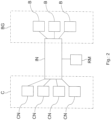
- Fig. 2 shows a computer cluster arrangement comprising a cluster C as well as a booster group BG.
- the cluster comprises in the present embodiment four computation nodes, also referred as CN, as well as three boosters, also referred to as B.
- a flexible coupling of boosters to computation nodes is established by a communication infrastructure IN, such as a so called interconnect.
- This kind of communication infrastructure IN can be implemented for instance by using infiniBand.
- each of the boosters B can be shared by any of the computation nodes CN.
- a virtualization on cluster level can be accomplished.
- Each booster, or at least a part of the boosters can be virtualized and made available to the computation nodes virtually.
- computation tasks are processed by at least one of the computation nodes CN and at least a part of the computation tasks may be forwarded to at least one of the boosters B.
- the boosters B are arranged to compute specific problems and provide specific processing power. Hence, problems can be outsourced from one of the computation nodes CN to the boosters B, be computed by the booster and the result may be delivered back to the computation node.
- the assignment of boosters ESB to computation nodes CN can be accomplished by a resource manager, also referred to as RM.
- the resource manager initializes a first assignment and further on establishes a dynamic assignment of boosters B to computation nodes CN.
- an application programming interface also referred to as API
- the boosters B may be controlled transparently by the computation nodes through the respective API function calls.
- the API abstracts and enhances actual native programming models of the boosters.
- the API may provide means for fault tolerance in case of a booster failure.
- a communication protocol involved in API calls may be layered on top of a communication layer.
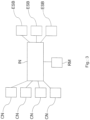
- Fig. 3 shows a further cluster arrangement according to an aspect of the present invention.
- the depicted computer cluster arrangement is arranged to compute scientific computation tasks, especially in the context of high performance cluster technology.
- a closer analysis of the characteristics of the portfolio of scientific high performance cluster application codes reveals that many codes with Exascale needs include, on the one hand, code blocks that are well suited for Exascaling, and, on the other hand, such code blocks that are too complex to be so scalable.
- highly scalable and complex is made on the level of code blocks, and we introduce the notions Exascale Code Blocks (ECB) and complex Code Blocks (CCB).
- ECCB Exascale Code Blocks
- CCB complex Code Blocks
- a coarse-grained architectural model emerges, where the highly scalable parts or ECBs of an application code are executed on a parallel many-core architecture, which is accessed dynamically, while the CCBs are executed on a traditional cluster system suitable dimensioned, including the connectivity along with a refined dynamical resource allocation system.
- Clusters at Exascale require virtualization elements in order to guarantee resilience and reliability. While local accelerators, in principle, allow for a simple view on the entire system and in particular can utilize the extremely high local bandwidth, they are absolutely static hardware elements, well suited for farming or master-slave parallelization. Hence, it would be difficult to include them in a virtualization software layer. In addition, there would be no fault tolerance if an accelerator fails, and there was no tolerance for over or under subscription.
- the cluster's computation nodes CN are internally coupled by a standard cluster interconnect, e.g. Mellanox InfiniBand.
- This network is extended to include the booster (ESB) as well.
- the ESBs each consist of a multitude of many-core accelerators connected by a specific fast low-latency network.
- KC Intel's many-core processor Knight's Corner
- the KC-chip will consist of more than 50 cores and is expected to provide a DP compute capacity of over 1 Teraflop/s per chip. With10.000 elements a total performance of 10 Petaflop/s would be in reach.
- the predecessor of KC the Knight's Ferry processor (KF) will be used in the project to create a PCle-based pilot system to study the cluster-booster (CN -ESB) concept.
- the intra-ESB communication system has to be dimensioned accordingly.
- the ESB's communication system requires at least 1 Terabit/s per card (duplex).
- the communication system EXTOLL may be used as an implementation of a bus system, which provides a communication rate of 1.44 Terabit/s per card. It realizes a 3d topology providing 6 links per card. Concerning its simplicity, this topology appears to be applicable for a booster based on many-core accelerators. Even with two directions reserved for cut-through routing, EXTOLL can saturate the PCI Express performance as far as the data rate is concerned. The latency can reach 0.3 ⁇ s, when based on an ASIC realization.
- EXTOLL is realized by means of FPGAs.
- Fig. 4 shows a flow diagram for illustrating an aspect of a method for operating a computer cluster arrangement according to the present invention.
- a first step 100 at least the first part of a computation task is computed by at least two of the plurality of computation nodes CN, each computation node CN interfacing a communication infrastructure IN.
- computing of at least a second part of the computation task in step 101 by at least one booster B is performed, each booster B interfacing the communication infrastructure IN.
- assigning at least one booster B to one of the plurality of computation nodes CN in step 102 by a resource manager RM, for computation of the second part of the computation task is performed.
- the right arrow in Fig. 4 indicates the control flow may point back to step 100.
- the assignment can be communicated to a computation node CN, which uses the transmitted assignment in further outsourcing steps.
- computing at least a second part of the computation task is performed in step 101 as a function of the assignment step 102.
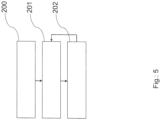
- Fig. 5 shows a flow diagram illustrating a method for operating a computer cluster arrangement according to an aspect of the present invention.
- the step of computing 201 at least a second part of the computation task is performed.
- a booster B computes the at least second part of the computation task.
- This may be of advantage in case the at least second part of the computation task is forwarded to the resource manager RM, which assigns a booster B to the second part of the computation task.
- the resource manager RM can then transmit the second part of the computation task to the booster B, without the necessity that the computation node CN directly contacts the booster B.
- step 102 may be performed before step 101, which results in a computation of a first part of the computation task, an assignment of one booster to one computation node and finally computation of the second part of the computation task.
- step 102 may comprise sub steps such as returning the computed at least second part of the computation task back to the computation node CN.
- the booster B returns the computed result back to the computation nodes CN.
- the computation nodes CN may use the returned value for computation of further computation tasks and may again forward at least a further part of a computation task to at least one of the boosters B.
- Fig. 6 shows a block diagram of control flow of a computer cluster arrangement according to an aspect of the present invention.
- a computation node CN receives a computation task and requests a booster B for outsourcing at least a part of the received computation task. Therefore, a resource manager RM is accessed, which forwards the part of the computation task to a selected booster B.
- the booster B computes the part of the computation task and returns a result, which is indicated by the most right arrow.
- the return value can be passed back to the computation node CN.
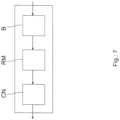
- Fig. 7 shows a block diagram of control flow, implementing reverse acceleration, of a computer cluster arrangement according to an aspect of the present invention.
- an acceleration of computation of computation tasks being computed by at least one booster B is performed by assigning at least one computation node CN to at least one booster B.
- the control and information flow is reversed as regards the embodiment being shown in Fig. 6 .
- Computation of tasks can therefore be accelerated by outsourcing computation tasks from the boosters B to at least one computation node CN.
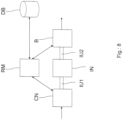
- Fig. 8 shows a block diagram of control flow of a computer cluster arrangement according to a further aspect of the present invention.
- the resource manager RM does not pass the at least one part of the computation task to the booster B, but the computation node CN requests an address or a further identification of a booster B, which is arranged to compute the specific at least one part of the computation task.
- the resource manager RM returns the required address to the computation node CN.
- the computation node CN is now able to directly access the booster B by means of the communication infrastructure IN.
- the communication infrastructure IN is accessed via interfacing units.
- the computation nodes CN accesses the communication infrastructure IN by interfacing unit IU1 and the booster B interfaces the communication infrastructure IN by interfacing unit IU2.
- the resource manager RM is arranged to evaluate the resource capacities of the booster B and performs the assignment, which means the selection of the booster B, as a function of the evaluated resource capacities of each of the boosters B. For doing so the resource manager RM may access the assignment metric, which may be stored in a database DB or any kind of data source. The resource manager RM is arranged to update the assignment metric, which can be performed under usage of a database management system.
- the database DB can be implemented as any kind of storage. It may for instance be implemented as a table, a register or a cache.
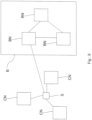
- Fig. 9 shows a schematic illustration of network topology of a computer cluster arrangement according to an aspect of the present invention.
- the computation nodes share a common, first, communication infrastructure, for instance a star topology with a central switching unit S.
- a further, second, communication infrastructure is provided for communication of the computation nodes CN with booster nodes BN.
- a third communication infrastructure is provided for communication among booster nodes BN.
- a high speed network interface for communication among booster nodes BN can be provided with a specific BN-BN communication interface.
- the BN-BN communication infrastructure can be implemented as a 3d topology.
- two communication infrastructures are provided, one for communication among computation nodes CN and one further communication infrastructure for communication among booster nodes BN. Both communication infrastructures can be coupled by at least one communication link from the first network to the second network or from the second network to the first network. Hence, one selected computation node CN or one selected booster node BN is connected with the respectively other network. In the present Fig. 9 one booster node BN is connected with the communication infrastructure of the computation nodes CN under usage of a switching unit S.
- the booster group BG itself may be connected to the communication infrastructure of the computation nodes CN or an intermediate communication infrastructure.
- the communication infrastructures may generally differ among other characteristics in their topology, bandwidth, communication protocols, throughput and message exchange.
- a booster B may for example comprise 1 to 10.000 booster nodes BN, but is not restricted to this range.
- the resource manager RM may generally manage parts of the booster nodes BN and can therefore partition the overall number of booster nodes BN and dynamically form boosters B out of said number of booster nodes BN.
- the switching unit S may be implemented by a switch, a router or any network device.
- the database DB may be accessed by further components, respectively nodes of the computer cluster arrangement.
- the illustrated computation nodes CN as well as the illustrated booster group BG may be one of many further computation nodes CN as well as one of many booster groups BG, respectively, which access the resource manager RM and/or the communication infrastructure IN.
- acceleration can also be performed reversely by outsourcing at least a part of the computation task from at least one booster B to at least one computation node.
Landscapes
- Engineering & Computer Science (AREA)
- Software Systems (AREA)
- Theoretical Computer Science (AREA)
- Physics & Mathematics (AREA)
- General Engineering & Computer Science (AREA)
- General Physics & Mathematics (AREA)
- Computer Networks & Wireless Communication (AREA)
- Signal Processing (AREA)
- Mathematical Physics (AREA)
- Multi Processors (AREA)
- Data Exchanges In Wide-Area Networks (AREA)
- Computer And Data Communications (AREA)
- Hardware Redundancy (AREA)
- Debugging And Monitoring (AREA)
- Advance Control (AREA)
- Apparatus For Radiation Diagnosis (AREA)
- Electrotherapy Devices (AREA)
- Complex Calculations (AREA)
- Stored Programmes (AREA)
Claims (11)
- Computerclusteranordnung zum Verarbeiten einer Berechnungsaufgabe, umfassend:eine Vielzahl von Rechenknoten (CN), von denen jeder mit einer Kommunikationsinfrastruktur (IN) verbunden ist, wobei mindestens zwei aus der Vielzahl von Rechenknoten (CN) angeordnet sind, um gemeinsam zumindest einen ersten Teil der Berechnungsaufgabe zu berechnen;eine Vielzahl von Boostern (B), die auch mit der Kommunikationsinfrastruktur (IN) verbunden sind; undeinen Ressourcenmanager (RM), der eingerichtet ist, eine Zuweisung von mindestens einem aus der Vielzahl von Boostern (B) zu mindestens einem aus der Vielzahl von Rechenknoten (CN) für eine Berechnung eines zweiten Teils der Berechnungsaufgabe durchzuführen;wobei der zweite Teil der Berechnungsaufgabe von einem des mindestens einen aus der Vielzahl von Rechenknoten (CN) zu dem mindestens einen aus der Vielzahl von Boostern (B) weitergeleitet wird und das Ergebnis, das von dem mindestens einen aus der Vielzahl von Boostern (B) berechnet wird, zurück zu dem einen des mindestens einen aus der Vielzahl von Rechenknoten (CN) geliefert wird;wobei die Zuweisung, die vom Ressourcenmanager durchgeführt wird, eine dynamische Zuweisung ist, die unter Verwendung einer Zuweisungsmetrik durchgeführt wird, die während dem Verarbeiten der Berechnungsaufgabe aktualisiert wird, wobei die Zuweisungsmetrik ein Satz von Regeln ist.
- Computerclusteranordnung nach Anspruch 1, wobei das Aktualisieren die Berechnungskapazitäten der Booster und die Anforderungen der Berechnungsaufgaben berücksichtigt.
- Computerclusteranordnung nach Anspruch 1 oder 2, wobei der Ressourcenmanager eingerichtet ist, die Booster in Abhängigkeit von einer Verarbeitung einer spezifischen Berechnungsaufgabe zu den Rechenknoten zuzuweisen.
- Computerclusteranordnung nach Anspruch 3, wobei der
Ressourcenmanager eingerichtet ist zum Verwalten der Zuweisungsmetrik, um die Zuweisungsregeln beizubehalten, die mindestens einen Booster benennen, der einem Rechenknoten zugewiesen wurde, wobei die Zuweisungsregeln als eine Funktion einer Arbeitslastverteilung erzeugt werden, die eine Arbeitslast der Computerclusteranordnung erkennt. - Computerclusteranordnung nach Anspruch 4, wobei der
Ressourcenmanager eingerichtet ist zum Zuweisen eines ausgewählten Boosters zu einem Rechenknoten, unter Verwendung eines Erkennens von Berechnungskapazitäten der Booster, um eine erforderliche Berechnungskapazität für den Rechenknoten bereitzustellen. - Computerclusteranordnung nach einem der vorhergehenden Ansprüche, wobei zu Beginn des Verarbeitens der Berechnungsaufgabe eine statische Zuweisung von Boostern zu Rechenknoten bereitgestellt wird und die dynamische Zuweisung während der Laufzeit bereitgestellt wird.
- Computerclusteranordnung nach einem der vorhergehenden Ansprüche, wobei die Zuweisungsmetrik gemäß mindestens einer aus einer Gruppe von Metrikspezifizierungstechniken gebildet wird, wobei die Gruppe umfasst: eine zeitliche Logik, eine Zuweisungsmatrix, eine Zuweisungstabelle, eine Wahrscheinlichkeitsfunktion und eine Kostenfunktion.
- Computerclusteranordnung nach einem der vorhergehenden Ansprüche, wobei die Zuweisungsmetrik als eine Funktion von mindestens einem aus einer Gruppe von Zuweisungsparametern spezifiziert wird, wobei die Gruppe umfasst: Ressourceninformationen, Kosteninformationen, Komplexitätsinformationen, Skalierbarkeitsinformationen, einen Berechnungsprotokolldatensatz, Compiler-Informationen, Prioritätsinformationen und eine Zeitmarke.
- Computerclusteranordnung nach einem der vorhergehenden Ansprüche, wobei jeder Rechenknoten (CN) bzw. jeder Booster (B) über eine Schnittstelleneinheit (IU1; IU2) mit der Kommunikationsinfrastruktur (IN) verbunden sind.
- Computerclusteranordnung nach einem der vorhergehenden Ansprüche, wobei der Ressourcenmanager (RM) eingerichtet ist zum Aktualisieren der vorbestimmten Zuweisungsmetrik während einer Berechnung von zumindest einem Teil der Berechnungsaufgabe.
- Verfahren zum Betreiben einer Computerclusteranordnung für ein Verarbeiten einer Berechnungsaufgabe, wobei das Verfahren umfasst:Berechnen (100) zumindest eines ersten Teils der Berechnungsaufgabe durch mindestens zwei aus einer Vielzahl von Rechenknoten (CN), wobei jeder Rechenknoten (CN) mit einer Kommunikationsinfrastruktur (IN) verbunden ist;Zuweisen (102) mindestens eines aus einer Vielzahl von Boostern (B) zu einem aus der Vielzahl von Rechenknoten (CN) durch einen Ressourcenmanager (RM) für eine Berechnung eines zweiten Teils der Berechnungsaufgabe, wobei jeder Booster (B) mit der Kommunikationsinfrastruktur (IN) verbunden ist; undWeiterleiten des zweiten Teils der Berechnungsaufgabe von dem einen aus der Vielzahl von Rechenknoten (CN) zu dem mindestens einen aus der Vielzahl von Boostern (B);Berechnen (101) des zweiten Teils der Berechnungsaufgabe durch den mindestens einen aus der Vielzahl von Boostern (B),Zurücksenden des Ergebnisses zu dem einen aus der Vielzahl von Rechenknoten (CN);wobei die Zuweisung eine dynamische Zuweisung ist, die unter Verwendung einer Zuweisungsmetrik durchgeführt wird, die während eines Verarbeitens der Berechnungsaufgabe aktualisiert wird, wobei die Zuweisungsmetrik ein Satz von Regeln ist.
Priority Applications (2)
| Application Number | Priority Date | Filing Date | Title |
|---|---|---|---|
| HRP20251046TT HRP20251046T1 (hr) | 2010-10-13 | 2011-10-13 | Sklop računalnog klastera za obradu računalnog zadatka i način njegova rada |
| EP25184845.3A EP4610826A3 (de) | 2010-10-13 | 2011-10-13 | Computerclusteranordnung zur verarbeitung einer berechnungsaufgabe und betriebsverfahren dafür |
Applications Claiming Priority (3)
| Application Number | Priority Date | Filing Date | Title |
|---|---|---|---|
| EP10187436A EP2442228A1 (de) | 2010-10-13 | 2010-10-13 | Computerclusteranordnung zur Verarbeitung einer Berechnungsaufgabe und Betriebsverfahren dafür |
| PCT/EP2011/067888 WO2012049247A1 (en) | 2010-10-13 | 2011-10-13 | A computer cluster arrangement for processing a computation task and method for operation thereof |
| EP11768015.7A EP2628080B1 (de) | 2010-10-13 | 2011-10-13 | Computerclusteranordnung zur verarbeitung einer berechnungsaufgabe und betriebsverfahren dafür |
Related Parent Applications (1)
| Application Number | Title | Priority Date | Filing Date |
|---|---|---|---|
| EP11768015.7A Division EP2628080B1 (de) | 2010-10-13 | 2011-10-13 | Computerclusteranordnung zur verarbeitung einer berechnungsaufgabe und betriebsverfahren dafür |
Related Child Applications (1)
| Application Number | Title | Priority Date | Filing Date |
|---|---|---|---|
| EP25184845.3A Division EP4610826A3 (de) | 2010-10-13 | 2011-10-13 | Computerclusteranordnung zur verarbeitung einer berechnungsaufgabe und betriebsverfahren dafür |
Publications (4)
| Publication Number | Publication Date |
|---|---|
| EP3614263A2 EP3614263A2 (de) | 2020-02-26 |
| EP3614263A3 EP3614263A3 (de) | 2021-10-06 |
| EP3614263B1 true EP3614263B1 (de) | 2025-06-25 |
| EP3614263C0 EP3614263C0 (de) | 2025-06-25 |
Family
ID=43831684
Family Applications (4)
| Application Number | Title | Priority Date | Filing Date |
|---|---|---|---|
| EP10187436A Pending EP2442228A1 (de) | 2010-10-13 | 2010-10-13 | Computerclusteranordnung zur Verarbeitung einer Berechnungsaufgabe und Betriebsverfahren dafür |
| EP11768015.7A Active EP2628080B1 (de) | 2010-10-13 | 2011-10-13 | Computerclusteranordnung zur verarbeitung einer berechnungsaufgabe und betriebsverfahren dafür |
| EP25184845.3A Pending EP4610826A3 (de) | 2010-10-13 | 2011-10-13 | Computerclusteranordnung zur verarbeitung einer berechnungsaufgabe und betriebsverfahren dafür |
| EP19179073.2A Active EP3614263B1 (de) | 2010-10-13 | 2011-10-13 | Computerclusteranordnung zur verarbeitung einer berechnungsaufgabe und verfahren zum betrieb davon |
Family Applications Before (3)
| Application Number | Title | Priority Date | Filing Date |
|---|---|---|---|
| EP10187436A Pending EP2442228A1 (de) | 2010-10-13 | 2010-10-13 | Computerclusteranordnung zur Verarbeitung einer Berechnungsaufgabe und Betriebsverfahren dafür |
| EP11768015.7A Active EP2628080B1 (de) | 2010-10-13 | 2011-10-13 | Computerclusteranordnung zur verarbeitung einer berechnungsaufgabe und betriebsverfahren dafür |
| EP25184845.3A Pending EP4610826A3 (de) | 2010-10-13 | 2011-10-13 | Computerclusteranordnung zur verarbeitung einer berechnungsaufgabe und betriebsverfahren dafür |
Country Status (19)
| Country | Link |
|---|---|
| US (4) | US10142156B2 (de) |
| EP (4) | EP2442228A1 (de) |
| JP (3) | JP6494161B2 (de) |
| KR (3) | KR101823505B1 (de) |
| CN (2) | CN109491795A (de) |
| CA (3) | CA3145494A1 (de) |
| CY (1) | CY1122108T1 (de) |
| DK (1) | DK2628080T3 (de) |
| ES (2) | ES2743469T3 (de) |
| HR (2) | HRP20191640T1 (de) |
| HU (1) | HUE044788T2 (de) |
| LT (1) | LT2628080T (de) |
| PL (2) | PL2628080T3 (de) |
| PT (1) | PT2628080T (de) |
| RS (1) | RS59165B1 (de) |
| RU (1) | RU2597556C2 (de) |
| SI (1) | SI2628080T1 (de) |
| SM (1) | SMT201900477T1 (de) |
| WO (1) | WO2012049247A1 (de) |
Families Citing this family (24)
| Publication number | Priority date | Publication date | Assignee | Title |
|---|---|---|---|---|
| EP2442228A1 (de) * | 2010-10-13 | 2012-04-18 | Thomas Lippert | Computerclusteranordnung zur Verarbeitung einer Berechnungsaufgabe und Betriebsverfahren dafür |
| JP2014078214A (ja) * | 2012-09-20 | 2014-05-01 | Nec Corp | スケジュールシステム、スケジュール方法、スケジュールプログラム、及び、オペレーティングシステム |
| WO2014188643A1 (ja) * | 2013-05-24 | 2014-11-27 | 日本電気株式会社 | スケジュールシステム、スケジュール方法、及び、記録媒体 |
| KR20140093595A (ko) * | 2013-01-18 | 2014-07-28 | 서울대학교산학협력단 | 클러스터 시스템의 계산 디바이스 가상화 방법 및 그 시스템 |
| WO2014188642A1 (ja) * | 2013-05-22 | 2014-11-27 | 日本電気株式会社 | スケジュールシステム、スケジュール方法、及び、記録媒体 |
| KR101594915B1 (ko) | 2014-01-23 | 2016-02-17 | 서울대학교산학협력단 | 매니코어 클러스터 시스템 상에서 병렬 프로그래밍을 수행하는 방법 및 매니코어 클러스터 시스템 |
| US11809451B2 (en) | 2014-02-19 | 2023-11-07 | Snowflake Inc. | Caching systems and methods |
| US9584594B2 (en) | 2014-04-11 | 2017-02-28 | Maxeler Technologies Ltd. | Dynamic provisioning of processing resources in a virtualized computational architecture |
| US10715587B2 (en) | 2014-04-11 | 2020-07-14 | Maxeler Technologies Ltd. | System and method for load balancing computer resources |
| US9501325B2 (en) | 2014-04-11 | 2016-11-22 | Maxeler Technologies Ltd. | System and method for shared utilization of virtualized computing resources |
| CN105681366A (zh) * | 2014-09-26 | 2016-06-15 | 广西盛源行电子信息有限公司 | 一种把上万台北斗终端接入同一台服务器的算法 |
| CN105357258B (zh) | 2015-09-28 | 2020-06-26 | 华为技术有限公司 | 一种加速管理节点、加速节点、客户端及方法 |
| US10432450B2 (en) * | 2016-06-30 | 2019-10-01 | Microsoft Technology Licensing, Llc. | Data plane API in a distributed computing network |
| EP3523723B8 (de) | 2016-10-05 | 2021-07-28 | ParTec AG | Hochleistungsrechensystem und -verfahren |
| US11049025B2 (en) * | 2017-03-15 | 2021-06-29 | Salesforce.Com, Inc. | Systems and methods for compute node management protocols |
| KR101985899B1 (ko) * | 2017-09-29 | 2019-06-04 | 주식회사 트레드링스 | 작업 할당 시스템, 방법, 및 컴퓨터 프로그램 |
| WO2019061501A1 (en) * | 2017-09-30 | 2019-04-04 | Intel Corporation | ACCELERATOR RESOURCE MANAGEMENT TECHNOLOGIES BY A RESOURCE MANAGER IN THE CLOUD |
| KR102884934B1 (ko) * | 2018-01-23 | 2025-11-12 | 파르텍 클러스터 컴피턴스 센터 게엠베하 | 응용 프로그램 런타임 결정된 이기종 계산 리소스의 동적 할당 |
| CN110390516B (zh) * | 2018-04-20 | 2023-06-06 | 伊姆西Ip控股有限责任公司 | 用于数据处理的方法、装置和计算机存储介质 |
| CA3097289A1 (en) | 2018-05-15 | 2019-11-21 | Partec Cluster Competence Center Gmbh | Apparatus and method for efficient parallel computation |
| KR20220002284A (ko) * | 2019-04-30 | 2022-01-06 | 베른하르트 프로비터 | 병렬 계산들을 동적으로 최적화하기 위한 장치 및 방법 |
| EP4435591A1 (de) | 2023-03-20 | 2024-09-25 | BF exaQC AG | Rechnersystem zur verarbeitung gemischter präzision einer rechenaufgabe und verfahren dafür |
| CN121175670A (zh) | 2023-05-24 | 2025-12-19 | Bf精准质控股份公司 | 用于制定并提供技术解决方案,特别是创造性解决方案的整体计算系统和方法 |
| WO2025153598A2 (en) | 2024-01-19 | 2025-07-24 | Bf Exaqc Ag | Modular and expandable high performance computing system |
Citations (1)
| Publication number | Priority date | Publication date | Assignee | Title |
|---|---|---|---|---|
| US8631410B2 (en) * | 2009-02-27 | 2014-01-14 | International Business Machines Corporation | Scheduling jobs in a cluster having multiple computing nodes by constructing multiple sub-cluster based on entry and exit rules |
Family Cites Families (39)
| Publication number | Priority date | Publication date | Assignee | Title |
|---|---|---|---|---|
| JPH0744504A (ja) * | 1993-07-27 | 1995-02-14 | Hitachi Ltd | Cpuと複数のpu,fpuから成る演算ユニット |
| JP3993634B2 (ja) | 1994-03-22 | 2007-10-17 | ハイパーチップ インコーポレイテッド | システムオペレータとの直接通信のための手段を有する完全集積システムをサポートする効率的なダイレクトセル交換フォールトトレラントアーキテクチャ |
| US7051188B1 (en) | 1999-09-28 | 2006-05-23 | International Business Machines Corporation | Dynamically redistributing shareable resources of a computing environment to manage the workload of that environment |
| US7418470B2 (en) * | 2000-06-26 | 2008-08-26 | Massively Parallel Technologies, Inc. | Parallel processing systems and method |
| JP2002084302A (ja) * | 2000-09-06 | 2002-03-22 | Nippon Telegr & Teleph Corp <Ntt> | ネットワークによる通信方法及び装置 |
| RU2188451C2 (ru) * | 2000-10-25 | 2002-08-27 | Курский государственный технический университет | Система взаимораспределения ресурсов |
| US7739398B1 (en) * | 2000-11-21 | 2010-06-15 | Avaya Inc. | Dynamic load balancer |
| US6922832B2 (en) | 2000-12-12 | 2005-07-26 | Lockheed Martin Corporation | Execution of dynamic services in a flexible architecture for e-commerce |
| US20030164842A1 (en) * | 2002-03-04 | 2003-09-04 | Oberoi Ranjit S. | Slice blend extension for accumulation buffering |
| US8397269B2 (en) * | 2002-08-13 | 2013-03-12 | Microsoft Corporation | Fast digital channel changing |
| US7395536B2 (en) * | 2002-11-14 | 2008-07-01 | Sun Microsystems, Inc. | System and method for submitting and performing computational tasks in a distributed heterogeneous networked environment |
| US7137040B2 (en) | 2003-02-12 | 2006-11-14 | International Business Machines Corporation | Scalable method of continuous monitoring the remotely accessible resources against the node failures for very large clusters |
| CN1754146B (zh) * | 2003-02-24 | 2010-04-28 | Bea系统公司 | 用于服务器负载均衡和服务器亲缘关系的系统和方法 |
| US7093147B2 (en) | 2003-04-25 | 2006-08-15 | Hewlett-Packard Development Company, L.P. | Dynamically selecting processor cores for overall power efficiency |
| US7714870B2 (en) * | 2003-06-23 | 2010-05-11 | Intel Corporation | Apparatus and method for selectable hardware accelerators in a data driven architecture |
| US7996839B2 (en) | 2003-07-16 | 2011-08-09 | Hewlett-Packard Development Company, L.P. | Heterogeneous processor core systems for improved throughput |
| US20050097300A1 (en) * | 2003-10-30 | 2005-05-05 | International Business Machines Corporation | Processing system and method including a dedicated collective offload engine providing collective processing in a distributed computing environment |
| US9264384B1 (en) | 2004-07-22 | 2016-02-16 | Oracle International Corporation | Resource virtualization mechanism including virtual host bus adapters |
| US7437581B2 (en) | 2004-09-28 | 2008-10-14 | Intel Corporation | Method and apparatus for varying energy per instruction according to the amount of available parallelism |
| JP2006277458A (ja) | 2005-03-30 | 2006-10-12 | Hitachi Ltd | リソース割当管理装置およびリソース割当方法 |
| WO2007038445A2 (en) * | 2005-09-26 | 2007-04-05 | Advanced Cluster Systems, Llc | Clustered computer system |
| US7490223B2 (en) | 2005-10-31 | 2009-02-10 | Sun Microsystems, Inc. | Dynamic resource allocation among master processors that require service from a coprocessor |
| US7441224B2 (en) * | 2006-03-09 | 2008-10-21 | Motorola, Inc. | Streaming kernel selection for reconfigurable processor |
| US8713574B2 (en) * | 2006-06-05 | 2014-04-29 | International Business Machines Corporation | Soft co-processors to provide a software service function off-load architecture in a multi-core processing environment |
| JP4936517B2 (ja) * | 2006-06-06 | 2012-05-23 | 学校法人早稲田大学 | ヘテロジニアス・マルチプロセッサシステムの制御方法及びマルチグレイン並列化コンパイラ |
| US8589935B2 (en) | 2007-05-08 | 2013-11-19 | L-3 Communications Corporation | Heterogeneous reconfigurable agent compute engine (HRACE) |
| US8250578B2 (en) * | 2008-02-22 | 2012-08-21 | International Business Machines Corporation | Pipelining hardware accelerators to computer systems |
| US7953912B2 (en) * | 2008-02-22 | 2011-05-31 | International Business Machines Corporation | Guided attachment of accelerators to computer systems |
| US8615647B2 (en) | 2008-02-29 | 2013-12-24 | Intel Corporation | Migrating execution of thread between cores of different instruction set architecture in multi-core processor and transitioning each core to respective on / off power state |
| US8434087B2 (en) * | 2008-08-29 | 2013-04-30 | International Business Machines Corporation | Distributed acceleration devices management for streams processing |
| US9104617B2 (en) * | 2008-11-13 | 2015-08-11 | International Business Machines Corporation | Using accelerators in a hybrid architecture for system checkpointing |
| FR2938943B1 (fr) * | 2008-11-21 | 2010-11-12 | Thales Sa | Systeme multiprocesseur. |
| CN101441564B (zh) * | 2008-12-04 | 2011-07-20 | 浙江大学 | 为程序定制的可重构加速器实现方法 |
| US9588806B2 (en) * | 2008-12-12 | 2017-03-07 | Sap Se | Cluster-based business process management through eager displacement and on-demand recovery |
| US8869160B2 (en) * | 2009-12-24 | 2014-10-21 | International Business Machines Corporation | Goal oriented performance management of workload utilizing accelerators |
| CN101763288B (zh) * | 2010-01-19 | 2012-09-05 | 湖南大学 | 考虑硬件预配置因素的动态软硬件划分方法 |
| US8875152B2 (en) * | 2010-04-22 | 2014-10-28 | Salesforce.Com, Inc. | System, method and computer program product for dynamically increasing resources utilized for processing tasks |
| US8739171B2 (en) * | 2010-08-31 | 2014-05-27 | International Business Machines Corporation | High-throughput-computing in a hybrid computing environment |
| EP2442228A1 (de) * | 2010-10-13 | 2012-04-18 | Thomas Lippert | Computerclusteranordnung zur Verarbeitung einer Berechnungsaufgabe und Betriebsverfahren dafür |
-
2010
- 2010-10-13 EP EP10187436A patent/EP2442228A1/de active Pending
-
2011
- 2011-10-13 KR KR1020137011931A patent/KR101823505B1/ko active Active
- 2011-10-13 HR HRP20191640 patent/HRP20191640T1/hr unknown
- 2011-10-13 RS RSP20191093 patent/RS59165B1/sr unknown
- 2011-10-13 EP EP11768015.7A patent/EP2628080B1/de active Active
- 2011-10-13 ES ES11768015T patent/ES2743469T3/es active Active
- 2011-10-13 RU RU2013121560/12A patent/RU2597556C2/ru active
- 2011-10-13 PT PT11768015T patent/PT2628080T/pt unknown
- 2011-10-13 KR KR1020197005913A patent/KR102074468B1/ko active Active
- 2011-10-13 SM SM20190477T patent/SMT201900477T1/it unknown
- 2011-10-13 ES ES19179073T patent/ES3039632T3/es active Active
- 2011-10-13 DK DK11768015.7T patent/DK2628080T3/da active
- 2011-10-13 HR HRP20251046TT patent/HRP20251046T1/hr unknown
- 2011-10-13 CA CA3145494A patent/CA3145494A1/en active Pending
- 2011-10-13 HU HUE11768015 patent/HUE044788T2/hu unknown
- 2011-10-13 SI SI201131773T patent/SI2628080T1/sl unknown
- 2011-10-13 PL PL11768015T patent/PL2628080T3/pl unknown
- 2011-10-13 CA CA2814309A patent/CA2814309C/en active Active
- 2011-10-13 KR KR1020187002295A patent/KR102103596B1/ko active Active
- 2011-10-13 EP EP25184845.3A patent/EP4610826A3/de active Pending
- 2011-10-13 CN CN201811402100.1A patent/CN109491795A/zh active Pending
- 2011-10-13 WO PCT/EP2011/067888 patent/WO2012049247A1/en not_active Ceased
- 2011-10-13 LT LTEP11768015.7T patent/LT2628080T/lt unknown
- 2011-10-13 PL PL19179073.2T patent/PL3614263T3/pl unknown
- 2011-10-13 CN CN201180056850.8A patent/CN103229146B/zh active Active
- 2011-10-13 CA CA3027973A patent/CA3027973C/en active Active
- 2011-10-13 EP EP19179073.2A patent/EP3614263B1/de active Active
- 2011-10-13 JP JP2013533215A patent/JP6494161B2/ja active Active
-
2013
- 2013-04-12 US US13/861,429 patent/US10142156B2/en active Active
-
2017
- 2017-08-04 JP JP2017152006A patent/JP6433554B2/ja active Active
-
2018
- 2018-11-06 JP JP2018208953A patent/JP6653366B2/ja active Active
- 2018-11-15 US US16/191,973 patent/US10951458B2/en active Active
-
2019
- 2019-09-11 CY CY20191100948T patent/CY1122108T1/el unknown
-
2021
- 2021-03-09 US US17/196,665 patent/US11934883B2/en active Active
-
2024
- 2024-01-31 US US18/429,370 patent/US20240168823A1/en active Pending
Patent Citations (1)
| Publication number | Priority date | Publication date | Assignee | Title |
|---|---|---|---|---|
| US8631410B2 (en) * | 2009-02-27 | 2014-01-14 | International Business Machines Corporation | Scheduling jobs in a cluster having multiple computing nodes by constructing multiple sub-cluster based on entry and exit rules |
Non-Patent Citations (1)
| Title |
|---|
| DEAN JEFFREY: "MapReduce: Simplified Data Processing on Large Clusters", 31 December 2004 (2004-12-31), XP093134837, Retrieved from the Internet <URL:https://static.googleusercontent.com/media/research.google.com/en//archive/mapreduce-osdi04.pdf> [retrieved on 20240226] * |
Also Published As
Similar Documents
| Publication | Publication Date | Title |
|---|---|---|
| US11934883B2 (en) | Computer cluster arrangement for processing a computation task and method for operation thereof | |
| KR20160087706A (ko) | 가상화 플랫폼을 고려한 분산 데이터 처리 시스템의 자원 할당 장치 및 할당 방법 | |
| US7716336B2 (en) | Resource reservation for massively parallel processing systems | |
| US11138146B2 (en) | Hyperscale architecture | |
| HK40007444A (en) | A computer cluster arrangement for processing a computation task and method for operation thereof | |
| HK1187431A (en) | A computer cluster arrangement for processing a computation task and method for operation thereof | |
| HK1187431B (zh) | 用於处理计算任务的计算机集群布置及其操作方法 | |
| KR20250103201A (ko) | 다중 pe pim 아키텍처에서의 자원 관리 장치 및 방법 | |
| Misawa et al. | Dynamic Reconfiguration of Computer Platforms at the Hardware Device Level for High Performance Computing Infrastructure as a Service | |
| CN120994353A (zh) | 任务处理方法、装置、计算系统及计算设备 |
Legal Events
| Date | Code | Title | Description |
|---|---|---|---|
| PUAI | Public reference made under article 153(3) epc to a published international application that has entered the european phase |
Free format text: ORIGINAL CODE: 0009012 |
|
| STAA | Information on the status of an ep patent application or granted ep patent |
Free format text: STATUS: THE APPLICATION HAS BEEN PUBLISHED |
|
| AC | Divisional application: reference to earlier application |
Ref document number: 2628080 Country of ref document: EP Kind code of ref document: P |
|
| AK | Designated contracting states |
Kind code of ref document: A2 Designated state(s): AL AT BE BG CH CY CZ DE DK EE ES FI FR GB GR HR HU IE IS IT LI LT LU LV MC MK MT NL NO PL PT RO RS SE SI SK SM TR |
|
| PUAL | Search report despatched |
Free format text: ORIGINAL CODE: 0009013 |
|
| AK | Designated contracting states |
Kind code of ref document: A3 Designated state(s): AL AT BE BG CH CY CZ DE DK EE ES FI FR GB GR HR HU IE IS IT LI LT LU LV MC MK MT NL NO PL PT RO RS SE SI SK SM TR |
|
| RIC1 | Information provided on ipc code assigned before grant |
Ipc: G06F 9/50 20060101AFI20210827BHEP |
|
| STAA | Information on the status of an ep patent application or granted ep patent |
Free format text: STATUS: REQUEST FOR EXAMINATION WAS MADE |
|
| 17P | Request for examination filed |
Effective date: 20220404 |
|
| RBV | Designated contracting states (corrected) |
Designated state(s): AL AT BE BG CH CY CZ DE DK EE ES FI FR GB GR HR HU IE IS IT LI LT LU LV MC MK MT NL NO PL PT RO RS SE SI SK SM TR |
|
| RAP3 | Party data changed (applicant data changed or rights of an application transferred) |
Owner name: PARTEC AG |
|
| STAA | Information on the status of an ep patent application or granted ep patent |
Free format text: STATUS: EXAMINATION IS IN PROGRESS |
|
| 17Q | First examination report despatched |
Effective date: 20241004 |
|
| GRAP | Despatch of communication of intention to grant a patent |
Free format text: ORIGINAL CODE: EPIDOSNIGR1 |
|
| STAA | Information on the status of an ep patent application or granted ep patent |
Free format text: STATUS: GRANT OF PATENT IS INTENDED |
|
| GRAS | Grant fee paid |
Free format text: ORIGINAL CODE: EPIDOSNIGR3 |
|
| GRAA | (expected) grant |
Free format text: ORIGINAL CODE: 0009210 |
|
| STAA | Information on the status of an ep patent application or granted ep patent |
Free format text: STATUS: THE PATENT HAS BEEN GRANTED |
|
| INTG | Intention to grant announced |
Effective date: 20250512 |
|
| AC | Divisional application: reference to earlier application |
Ref document number: 2628080 Country of ref document: EP Kind code of ref document: P |
|
| AK | Designated contracting states |
Kind code of ref document: B1 Designated state(s): AL AT BE BG CH CY CZ DE DK EE ES FI FR GB GR HR HU IE IS IT LI LT LU LV MC MK MT NL NO PL PT RO RS SE SI SK SM TR |
|
| REG | Reference to a national code |
Ref country code: GB Ref legal event code: FG4D |
|
| REG | Reference to a national code |
Ref country code: CH Ref legal event code: EP |
|
| REG | Reference to a national code |
Ref country code: CH Ref legal event code: EP |
|
| REG | Reference to a national code |
Ref country code: IE Ref legal event code: FG4D |
|
| U01 | Request for unitary effect filed |
Effective date: 20250625 |
|
| U07 | Unitary effect registered |
Designated state(s): AT BE BG DE DK EE FI FR IT LT LU LV MT NL PT RO SE SI Effective date: 20250701 |
|
| U30 | Action lodged before the upc [information provided by the upc] |
Free format text: ACTION-TYPE: INFRINGEMENT ACTION; CASE-NUMBER: ACT_34542/2025 Effective date: 20250808 |
|
| PGFP | Annual fee paid to national office [announced via postgrant information from national office to epo] |
Ref country code: GR Payment date: 20250925 Year of fee payment: 15 |
|
| PGFP | Annual fee paid to national office [announced via postgrant information from national office to epo] |
Ref country code: TR Payment date: 20250916 Year of fee payment: 15 |
|
| PGFP | Annual fee paid to national office [announced via postgrant information from national office to epo] |
Ref country code: HR Payment date: 20250828 Year of fee payment: 15 |
|
| PG25 | Lapsed in a contracting state [announced via postgrant information from national office to epo] |
Ref country code: RS Free format text: LAPSE BECAUSE OF FAILURE TO SUBMIT A TRANSLATION OF THE DESCRIPTION OR TO PAY THE FEE WITHIN THE PRESCRIBED TIME-LIMIT Effective date: 20250925 |
|
| PGFP | Annual fee paid to national office [announced via postgrant information from national office to epo] |
Ref country code: CZ Payment date: 20250820 Year of fee payment: 15 Ref country code: IE Payment date: 20250924 Year of fee payment: 15 |
|
| REG | Reference to a national code |
Ref country code: ES Ref legal event code: FG2A Ref document number: 3039632 Country of ref document: ES Kind code of ref document: T3 Effective date: 20251023 |
|
| REG | Reference to a national code |
Ref country code: HR Ref legal event code: ODRP Ref document number: P20251046 Country of ref document: HR Payment date: 20250828 Year of fee payment: 15 Ref country code: HR Ref legal event code: T1PR Ref document number: P20251046 Country of ref document: HR |
|
| PGFP | Annual fee paid to national office [announced via postgrant information from national office to epo] |
Ref country code: IS Payment date: 20250922 Year of fee payment: 15 |
|
| REG | Reference to a national code |
Ref country code: GR Ref legal event code: EP Ref document number: 20250401886 Country of ref document: GR Effective date: 20251009 |
|
| REG | Reference to a national code |
Ref country code: SK Ref legal event code: T3 Ref document number: E 47133 Country of ref document: SK Ref country code: CH Ref legal event code: U11 Free format text: ST27 STATUS EVENT CODE: U-0-0-U10-U11 (AS PROVIDED BY THE NATIONAL OFFICE) Effective date: 20251112 |
|
| PGFP | Annual fee paid to national office [announced via postgrant information from national office to epo] |
Ref country code: HU Payment date: 20251007 Year of fee payment: 15 |
|
| U1N | Appointed representative for the unitary patent procedure changed after the registration of the unitary effect |
Representative=s name: LESKE, THOMAS; DE |
|
| U20 | Renewal fee for the european patent with unitary effect paid |
Year of fee payment: 15 Effective date: 20251031 |