EP3608379A1 - Oxide chemical mechanical planarization (cmp) polishing compositions - Google Patents
Oxide chemical mechanical planarization (cmp) polishing compositions Download PDFInfo
- Publication number
- EP3608379A1 EP3608379A1 EP19191134.6A EP19191134A EP3608379A1 EP 3608379 A1 EP3608379 A1 EP 3608379A1 EP 19191134 A EP19191134 A EP 19191134A EP 3608379 A1 EP3608379 A1 EP 3608379A1
- Authority
- EP
- European Patent Office
- Prior art keywords
- group
- ceria
- polishing
- bsa
- additive
- Prior art date
- Legal status (The legal status is an assumption and is not a legal conclusion. Google has not performed a legal analysis and makes no representation as to the accuracy of the status listed.)
- Granted
Links
- IXHQGEWCUKGEQY-UHFFFAOYSA-N CC1C=CC=CC1N=O Chemical compound CC1C=CC=CC1N=O IXHQGEWCUKGEQY-UHFFFAOYSA-N 0.000 description 1
- 0 CNC(C1O)OC(*)C(*)C1N=O Chemical compound CNC(C1O)OC(*)C(*)C1N=O 0.000 description 1
Images



Classifications
-
- C—CHEMISTRY; METALLURGY
- C09—DYES; PAINTS; POLISHES; NATURAL RESINS; ADHESIVES; COMPOSITIONS NOT OTHERWISE PROVIDED FOR; APPLICATIONS OF MATERIALS NOT OTHERWISE PROVIDED FOR
- C09G—POLISHING COMPOSITIONS; SKI WAXES
- C09G1/00—Polishing compositions
- C09G1/02—Polishing compositions containing abrasives or grinding agents
-
- B—PERFORMING OPERATIONS; TRANSPORTING
- B24—GRINDING; POLISHING
- B24B—MACHINES, DEVICES, OR PROCESSES FOR GRINDING OR POLISHING; DRESSING OR CONDITIONING OF ABRADING SURFACES; FEEDING OF GRINDING, POLISHING, OR LAPPING AGENTS
- B24B1/00—Processes of grinding or polishing; Use of auxiliary equipment in connection with such processes
-
- B—PERFORMING OPERATIONS; TRANSPORTING
- B24—GRINDING; POLISHING
- B24B—MACHINES, DEVICES, OR PROCESSES FOR GRINDING OR POLISHING; DRESSING OR CONDITIONING OF ABRADING SURFACES; FEEDING OF GRINDING, POLISHING, OR LAPPING AGENTS
- B24B37/00—Lapping machines or devices; Accessories
- B24B37/04—Lapping machines or devices; Accessories designed for working plane surfaces
- B24B37/042—Lapping machines or devices; Accessories designed for working plane surfaces operating processes therefor
- B24B37/044—Lapping machines or devices; Accessories designed for working plane surfaces operating processes therefor characterised by the composition of the lapping agent
-
- C—CHEMISTRY; METALLURGY
- C09—DYES; PAINTS; POLISHES; NATURAL RESINS; ADHESIVES; COMPOSITIONS NOT OTHERWISE PROVIDED FOR; APPLICATIONS OF MATERIALS NOT OTHERWISE PROVIDED FOR
- C09G—POLISHING COMPOSITIONS; SKI WAXES
- C09G1/00—Polishing compositions
-
- C—CHEMISTRY; METALLURGY
- C09—DYES; PAINTS; POLISHES; NATURAL RESINS; ADHESIVES; COMPOSITIONS NOT OTHERWISE PROVIDED FOR; APPLICATIONS OF MATERIALS NOT OTHERWISE PROVIDED FOR
- C09G—POLISHING COMPOSITIONS; SKI WAXES
- C09G1/00—Polishing compositions
- C09G1/04—Aqueous dispersions
-
- C—CHEMISTRY; METALLURGY
- C09—DYES; PAINTS; POLISHES; NATURAL RESINS; ADHESIVES; COMPOSITIONS NOT OTHERWISE PROVIDED FOR; APPLICATIONS OF MATERIALS NOT OTHERWISE PROVIDED FOR
- C09G—POLISHING COMPOSITIONS; SKI WAXES
- C09G1/00—Polishing compositions
- C09G1/06—Other polishing compositions
-
- C—CHEMISTRY; METALLURGY
- C09—DYES; PAINTS; POLISHES; NATURAL RESINS; ADHESIVES; COMPOSITIONS NOT OTHERWISE PROVIDED FOR; APPLICATIONS OF MATERIALS NOT OTHERWISE PROVIDED FOR
- C09K—MATERIALS FOR MISCELLANEOUS APPLICATIONS, NOT PROVIDED FOR ELSEWHERE
- C09K13/00—Etching, surface-brightening or pickling compositions
-
- C—CHEMISTRY; METALLURGY
- C09—DYES; PAINTS; POLISHES; NATURAL RESINS; ADHESIVES; COMPOSITIONS NOT OTHERWISE PROVIDED FOR; APPLICATIONS OF MATERIALS NOT OTHERWISE PROVIDED FOR
- C09K—MATERIALS FOR MISCELLANEOUS APPLICATIONS, NOT PROVIDED FOR ELSEWHERE
- C09K3/00—Materials not provided for elsewhere
- C09K3/14—Anti-slip materials; Abrasives
- C09K3/1436—Composite particles, e.g. coated particles
-
- C—CHEMISTRY; METALLURGY
- C09—DYES; PAINTS; POLISHES; NATURAL RESINS; ADHESIVES; COMPOSITIONS NOT OTHERWISE PROVIDED FOR; APPLICATIONS OF MATERIALS NOT OTHERWISE PROVIDED FOR
- C09K—MATERIALS FOR MISCELLANEOUS APPLICATIONS, NOT PROVIDED FOR ELSEWHERE
- C09K3/00—Materials not provided for elsewhere
- C09K3/14—Anti-slip materials; Abrasives
- C09K3/1454—Abrasive powders, suspensions and pastes for polishing
-
- C—CHEMISTRY; METALLURGY
- C09—DYES; PAINTS; POLISHES; NATURAL RESINS; ADHESIVES; COMPOSITIONS NOT OTHERWISE PROVIDED FOR; APPLICATIONS OF MATERIALS NOT OTHERWISE PROVIDED FOR
- C09K—MATERIALS FOR MISCELLANEOUS APPLICATIONS, NOT PROVIDED FOR ELSEWHERE
- C09K3/00—Materials not provided for elsewhere
- C09K3/14—Anti-slip materials; Abrasives
- C09K3/1454—Abrasive powders, suspensions and pastes for polishing
- C09K3/1463—Aqueous liquid suspensions
-
- H—ELECTRICITY
- H10—SEMICONDUCTOR DEVICES; ELECTRIC SOLID-STATE DEVICES NOT OTHERWISE PROVIDED FOR
- H10P—GENERIC PROCESSES OR APPARATUS FOR THE MANUFACTURE OR TREATMENT OF DEVICES COVERED BY CLASS H10
- H10P52/00—Grinding, lapping or polishing of wafers, substrates or parts of devices
-
- H—ELECTRICITY
- H10—SEMICONDUCTOR DEVICES; ELECTRIC SOLID-STATE DEVICES NOT OTHERWISE PROVIDED FOR
- H10P—GENERIC PROCESSES OR APPARATUS FOR THE MANUFACTURE OR TREATMENT OF DEVICES COVERED BY CLASS H10
- H10P52/00—Grinding, lapping or polishing of wafers, substrates or parts of devices
- H10P52/40—Chemomechanical polishing [CMP]
- H10P52/402—Chemomechanical polishing [CMP] of semiconductor materials
-
- H—ELECTRICITY
- H10—SEMICONDUCTOR DEVICES; ELECTRIC SOLID-STATE DEVICES NOT OTHERWISE PROVIDED FOR
- H10P—GENERIC PROCESSES OR APPARATUS FOR THE MANUFACTURE OR TREATMENT OF DEVICES COVERED BY CLASS H10
- H10P52/00—Grinding, lapping or polishing of wafers, substrates or parts of devices
- H10P52/40—Chemomechanical polishing [CMP]
- H10P52/403—Chemomechanical polishing [CMP] of conductive or resistive materials
-
- H—ELECTRICITY
- H10—SEMICONDUCTOR DEVICES; ELECTRIC SOLID-STATE DEVICES NOT OTHERWISE PROVIDED FOR
- H10P—GENERIC PROCESSES OR APPARATUS FOR THE MANUFACTURE OR TREATMENT OF DEVICES COVERED BY CLASS H10
- H10P95/00—Generic processes or apparatus for manufacture or treatments not covered by the other groups of this subclass
- H10P95/06—Planarisation of inorganic insulating materials
- H10P95/062—Planarisation of inorganic insulating materials involving a dielectric removal step
-
- C—CHEMISTRY; METALLURGY
- C09—DYES; PAINTS; POLISHES; NATURAL RESINS; ADHESIVES; COMPOSITIONS NOT OTHERWISE PROVIDED FOR; APPLICATIONS OF MATERIALS NOT OTHERWISE PROVIDED FOR
- C09K—MATERIALS FOR MISCELLANEOUS APPLICATIONS, NOT PROVIDED FOR ELSEWHERE
- C09K13/00—Etching, surface-brightening or pickling compositions
- C09K13/04—Etching, surface-brightening or pickling compositions containing an inorganic acid
Definitions
- This application relates to oxide or doped-oxide film chemical mechanical planarization (CMP) compositions and chemical mechanical planarization (CMP) methods and systems for polishing oxide or doped oxide films.
- CMP chemical mechanical planarization
- polishing especially surfaces for chemical-mechanical polishing/planarization for recovering a selected material and/or planarizing the structure.
- a SiN layer may be deposited under a SiO 2 layer to serve as a polish stop layer.
- the role of such a polish stop is particularly important in Shallow Trench Isolation (STI) structures.
- Selectivity is characteristically expressed as the ratio of the oxide polish rate to the nitride polish rate.
- An example is an increased polishing selectivity rate of silicon dioxide (SiO 2 ) as compared to silicon nitride (SiN).
- US Patent 5,876,490 discloses the polishing compositions containing abrasive particles and exhibiting normal stress effects.
- the slurry further contains non-polishing particles resulting in reduced polishing rate at recesses, while the abrasive particles maintain high polish rates at elevations. This leads to improved planarization.
- the slurry comprises cerium oxide particles and polymeric electrolyte, and can be used for Shallow Trench Isolation (STI) polishing applications.
- STI Shallow Trench Isolation
- US Patent 6,964,923 teaches the polishing compositions containing cerium oxide particles and polymeric electrolyte for Shallow Trench Isolation (STI) polishing applications.
- Polymeric electrolyte being used includes the salts of polyacrylic acid, similar as those in US Patent 5,876,490 .
- Ceria, alumina, silica & zirconia are used as abrasives.
- the molecular weights for such polyelectrolyte is from 300 to 20,000, but overall, less than 100,000.
- US Patent 6,616,514 B1 discloses a chemical mechanical polishing slurry for use in removing a first substance from a surface of an article in preference to silicon nitride by chemical mechanical polishing.
- the chemical mechanical polishing slurry according to the invention includes an abrasive which is calcined ceria particles, an aqueous medium, and an organic polyol that does not dissociate protons, said organic polyol including a compound having at least three hydroxyl groups that are not dissociable in the aqueous medium, or a polymer formed from at least one monomer having at least three hydroxyl groups that are not dissociable in the aqueous medium.
- the polyols used as chemical additives included mannitol, mannose, xylitol, sorbose etc.
- This prior art claimed the high oxide: SiN selectivity was achieved by using these chemical additives plus calcined ceria abrasives in the polishing compositions.
- the polishing test results using two chemical additives at the concentrations listed in this prior art showed very low oxide removal rates at pH 9.5 and with 1.0% calcined ceria and 2.0% chemical additive(s). There was no patterned wafer data being listed at all in this prior art.
- US Patent 9,293,344 B2 discloses a chemical mechanical polishing slurry which used calcined ceria as abrasives, and water-soluble polymer as chemical additive, such water-soluble polymer was prepared using a monomer containing at least one of a carboxylic acid having a double bond and the salt. Such slurry is for use in removing a first substance of dielectric films from a surface of an article in preference to silicon nitride by chemical mechanical polishing.
- the chemical mechanical polishing slurry according to the invention includes an abrasive, an aqueous medium, and water-soluble organic polymer.
- US Patent 7,091,164 B2 discloses a chemical mechanical polishing slurry which used ceria/or titania as abrasives, and chemical additives with a carboxylic group and an electrophilic functional group. Mainly these chemical additives are amino acids or amino acid derivatives. About 5:1 oxide: SiN selectivity was achieved in this prior art. The pH range listed in this prior art was from 6 to about 11.
- US Patent Application 2019/0062593 A1 discloses a chemical mechanical polishing slurry which used elongated, bent, or nodular silica particles as abrasives in the 0.5 to 30 weight percent range and a cationic polymer (diallylalkylamine salt, diallylalkylammonium chloride) or a mixed copolymer chemical additive with a carboxylic group and an electrophilic functional group.
- a chemical mechanical polishing slurry which used elongated, bent, or nodular silica particles as abrasives in the 0.5 to 30 weight percent range and a cationic polymer (diallylalkylamine salt, diallylalkylammonium chloride) or a mixed copolymer chemical additive with a carboxylic group and an electrophilic functional group.
- a cationic polymer diallylalkylamine salt, diallylalkylammonium chloride
- Such polishing slurry afforded good oxide: SiN selectivity
- Shallow Trench Isolation (STI) polishing compositions did not address the importance of oxide film removal rates, SiN film removal rate suppressing and oxide trench dishing reducing at the same polishing process and more uniform oxide trench dishing on the polished patterned wafers along with the high oxide versus nitride selectivity.
- compositions, methods and systems of STI chemical mechanical polishing that can provide increased oxide film removal rates, reduced SiN film removal rates and the reduced oxide trench dishing and more uniformed oxide trench dishing across various sized oxide trench features on polishing patterned wafers in a STI chemical and mechanical polishing (CMP) process, in addition to high removal rate of silicon dioxide as well as high selectivity for silicon dioxide to silicon nitride.
- CMP chemical and mechanical polishing
- oxide or doped-oxide film polishing compositions providing increased oxide film removal rates, suppressed SiN film removal rates, increased TEOS: SiN selectivity and reduced oxide trench dishing on the polished patterned wafers.
- the present invented oxide or doped-oxide film CMP polishing compositions also provides high oxide vs nitride selectivity by introducing two different types of chemical additives as oxide film removal rate boosting agents, SiN film removal rate suppressing agents and oxide trenching dishing reducers in the Chemical mechanical polishing (CMP) compositions for Shallow Trench Isolation (STI) CMP applications at wide pH range including acidic, neutral and alkaline pH conditions.
- CMP Chemical mechanical polishing
- CMP compositions for oxide or doped-oxide film CMP polishing applications have a unique combination of using ceria-coated inorganic oxide as abrasive particles and suitable chemical additives as oxide trench dishing reducing agents, oxide film removal rate boosting agents and nitride suppressing agents.
- CMP polishing compositions for polishing oxide material and related methods and systems that satisfy the need for polishing semiconductor wafers comprising silicon oxide structures.
- suppressing SiN removal rates and reducing oxide trench dishing across various sized oxide trench features are key factors to be considered.
- the lower trench oxide loss will prevent electrical current leaking between adjacent transistors.
- Non-uniform trench oxide loss across die (within Die) will affect transistor performance and device fabrication yields.
- Severe trench oxide loss high oxide trench dishing
- This invention relates to the Chemical mechanical polishing (CMP) compositions for oxide or doped-oxide film polishing CMP applications.
- CMP compositions disclosed herein are particularly suited for planarization of patterned STI structures.
- the disclosed chemical mechanical polishing (CMP) composition for polishing oxide or doped-oxide film CMP applications has a unique formulation comprising an abrasive and two types of additives that function as oxide trench dishing reducing agents, oxide film removal rate boosting agents and nitride removal rate suppressing agents.
- the CMP composition also comprises a solvent.
- Other optional ingredients such as biocides, pH adjusters may also be present in the formulation.
- the abrasive comprises ceria-coated inorganic oxide particles or ceria-coated organic polymer particles.
- the first additive is a non-ionic and non-aromatic organic molecule bearing multiple hydroxyl functional groups and the second additive is an organic aromatic molecule bearing sulfonic acid or sulfonate salt functional groups.
- the abrasive comprises ceria-coated organic polymer particles include, but are not limited to, ceria-coated polystyrene particles, ceria-coated polyurethane particle, ceria-coated polyacrylate particles, or any other ceria-coated organic polymer particles.
- the abrasive comprises ceria-coated inorganic oxide particles including, but not limited to, ceria-coated colloidal silica, ceria-coated high purity colloidal silica, ceria-coated alumina, ceria-coated titania, ceria-coated zirconia, or any other ceria-coated inorganic oxide particles.
- Preferred ceria-coated inorganic oxide particles are ceria-coated colloidal silica particles.
- the particle size of the ceria-coated inorganic metal oxide particles ranges from 2 to 1,000 nanometers.
- the preferred mean particle size ranges from 5 to 500 nanometers, more preferably from 20 to 250 nanometers.
- the concentration of the ceria-coated inorganic metal oxide particles ranges from 0.01 to 20 weight percent, based on the total weight of the CMP composition. Preferably, the concentration ranged from 0.05 to 10 weight percent, more preferably from 0.1 to 5 weight percent.
- the First Additive is a non-ionic and non-aromatic organic molecule bearing multiple hydroxyl functional groups.
- First Additive comprises the general molecular structure: where n is selected from 2 to 5,000, preferably from 3 to 12 and more preferably from 4 to 7.
- R1, R3 and each occurrence of R2 are independently selected from the group consisting of hydrogen, an alkyl group, an alkoxy group, an organic group with one or more hydroxyl groups, a substituted organic sulfonic acid, a substituted organic sulfonic acid salt, a substituted organic carboxylic acid, a substituted organic carboxylic acid salt, an organic carboxylic ester, an organic amine group.
- R1, R2 and R3 may be the same or different groups.
- two or more occurrences of R1, R2 and R3 are hydrogen atoms. More preferably, four or more occurrences of R1, R2 and R3 are hydrogen atoms.
- the chemical additive bears multiple hydroxyl functional groups.
- Preferred examples of the First Additive having the general molecular structure of Formula 1 include, but are not limited to, ribitol, xylitol, meso-erythritol, D-sorbitol, mannitol, dulcitol, and iditol.
- the First Additive comprises the general molecular structure:
- a carbonyl (CHO) functional group is located at one end of the molecule as the terminal functional group and n ranges from 2 to 5,000, preferably from 3 to 12, and more preferably from 4 to 7.
- R2 and each occurrence of R1 are independently selected from the group consisting of hydrogen, an alkyl group, an alkoxy group, an organic group with one or more hydroxyl groups, a substituted organic sulfonic acid, a substituted organic sulfonic acid salt, a substituted organic carboxylic acid, a substituted organic carboxylic acid salt, an organic carboxylic ester, an organic amine group, and combinations thereof.
- the First Additive is D-arabinose or L-arabinose.
- the First Additive is D-mannose or L-mannose.
- the First Additives has a general molecular structure selected from the group consisting of: and combinations thereof, wherein R1, R2, R3, R4, R5, R6, R7, R8, R9, R10, R11, R12, R13, and R14 are independently selected from the group consisting of hydrogen, an alkyl group, an alkoxy group, an organic group with one or more hydroxyl groups, a substituted organic sulfonic acid, a substituted organic sulfonic acid salt, a substituted organic carboxylic acid, a substituted organic carboxylic acid salt, an organic carboxylic ester, and an organic amine group, with the proviso that at least two occurrences of R1 through R14 in each structure are hydrogen.
- at least three occurrences of R1 through R14 in each structure are hydrogen. More preferably, at least four occurrences of R1 through R14 in each structure (where possible) are hydrogen.
- Preferred examples of First Additives having the structure of this embodiment include, but are not limited to D-(-)-fructose, sorbitan, sucrose, beta-lactose, D-ribose, inositol, and glucose.
- the First Additive contains at least one six-member ring ether structural motif bonded to at least one polyol molecular unit containing multiple hydroxyl functional groups in the molecular unit structures, or at least one polyol molecular unit containing multiple hydroxyl functional groups in the molecular unit structures and at least one six-member ring polyol.
- a polyol is an organic compound containing more than two hydroxyl groups.
- R1, R2, R3, R4, and R5 are independently selected from the group consisting of hydrogen, an alkyl group, an alkoxy group, an organic group with one or more hydroxyl groups, a substituted organic sulfonic acid, a substituted organic sulfonic acid salt, a substituted organic carboxylic acid, a substituted organic carboxylic acid salt, an organic carboxylic ester, and an organic amine group.
- At least one R in the group of R1 to R5 in the general molecular structure (d) is a polyol molecular unit having a structure shown in (e): wherein n and m are independently selected from 1 to 5, preferably from 1 to 4, more preferably from 1 to 3, and most preferably from 1 to 2.
- R6, R7, R8 and R9 are independently selected from the group consisting of hydrogen, an alkyl group, an alkoxy group, an organic group with one or more hydroxyl groups, a substituted organic sulfonic acid, a substituted organic sulfonic acid salt, a substituted organic carboxylic acid, a substituted organic carboxylic acid salt, an organic carboxylic ester, and an organic amine group.
- At least one R in the group of R1 to R5 in the general molecular structure (d) is a polyol molecular unit having a structure shown in (e); at least one R in the group of R1 to R5 in the general molecular structure is a six-member ring polyol as shown in (f): wherein each of R10, R11, R12, R13 and R14 is independently selected from the group consisting of hydrogen, an alkyl group, an alkoxy group, an organic group with one or more hydroxyl groups, a substituted organic sulfonic acid, a substituted organic sulfonic acid salt, a substituted organic carboxylic acid, a substituted organic carboxylic acid salt, an organic carboxylic ester, and an organic amine group.
- R in the group of R1 to R9 are hydrogen atoms.
- Preferred first additives include, but are not limited to, maltitol, lactitol, maltotritol, ribitol, D-sorbitol, mannitol, dulcitol, iditol, D- (-)-Fructose, sorbitan, sucrose, ribose, Inositol, glucose, D-arabinose, L-arabinose, D-mannose, L-mannose, meso-erythritol, beta-lactose, arabinose, and combinations thereof.
- the preferred chemical additives are maltitol, lactitol, maltotritol, D-sorbitol, mannitol, dulcitol, iditol, D- (-)-Fructose, sucrose, ribose, Inositol, glucose. D-(+)-mannose, beta-lactose, and combinations thereof.
- the more preferred chemical additives are maltitol, lactitol, maltotritol, D-sorbitol, mannitol, dulcitol, D- (-)-Fructose, beta-lactose, and combinations thereof.
- the CMP composition contains 0.0001 wt.% to 2.0% wt.%, preferably 0.001 wt.% to 1.0 wt.%, and more preferably 0.0025 wt.% to 0.5 wt.%, and more preferably 0.005 to 1.0 wt.% of the First additive, based on the total weight of the CMP composition.
- the second additive is an organic aromatic molecule with sulfonic acid or sulfonate functional groups represented by the general structural formulas: where -R can be hydrogen atom or a metal ion; or where -R' can be hydrogen atom or a metal ion; and n can be range from 1 to 12 which represents the various length of alkyl linkage group -CH 2 -; and combinations of (g) and (h).
- R or -R' is hydrogen atom
- the chemical additive is benzenesulfonic acid.
- -R or-R' is a metal ion such as sodium ion, potassium ion, or ammonium ion
- the chemical additive is a salt of benzenesulfonate.
- the general molecular structure (i) for the second group of chemical additives is an organic aromatic molecule with sulfonic acid or sulfonate functional groups connected to one location of aromatic rings and at other location of the aromatic rings, other functional groups as shown in formula (i): where -R can be hydrogen atom or a metal ion; when -R is a hydrogen ion, the additive is a benzenesulfonic acid molecular derivatives; When -R can be a metal ion, such as sodium ion, potassium ion or ammonium ion, the additive is a benzenesulfonate molecular derivative.
- -R' is another functional group which can be connected at alpha, meta, or para-positions towards sulfonic acid or sulfonate groups.
- -R' is an alkyl group with -CnH2n+1 structure, the carbon chain length can range from -C1 to -C18.
- second group chemical additives are 4-dodecylbenzenesulfonic acid and 4-methylbenzene sulfonic acid or their ammonium, sodium or potassium salt.
- the CMP composition may contain 0.0001 wt.% to 2.0% wt.%, preferably 0.001 wt.% to 1.5 wt.%, and preferably 0.002 wt.% to 1.0 wt.% of the Second Additive.
- the CMP formulation comprises a solvent.
- the solvent is water or a water-soluble solvent.
- Preferred solvents include, but are not limited to, deionized (DI) water, distilled water, and alcohols. A more preferred solvent is DI water.
- the CMP composition comprises a biocide.
- Preferred biocides include, but are not limited to, KathonTM, KathonTM CG/ICP II and Bioban, available from Dupont/Dow Chemical Co.
- the preferred biocides comprise at least one of the active ingredients 5-chloro-2-methyl-4-isothiazolin-3-one and 2-methyl-4-isothiazolin-3-one.
- the STI CMP composition may contain a biocide in an amount of from 0.0001 wt.% to 0.05 wt.%; preferably from 0.0005 wt.% to 0.025 wt.%, and more preferably from 0.001 wt.% to 0.01 wt.%.
- the STI CMP composition may optionally contain a pH adjusting agent.
- An acidic or basic pH adjusting agent can be used to adjust the STI polishing compositions to the optimized pH value.
- Preferred pH adjusting agents include, but are not limited to nitric acid, hydrochloric acid, sulfuric acid, phosphoric acid, other inorganic or organic acids, and mixtures thereof.
- Preferred pH adjusting agents also include basic pH adjusting agents, such as sodium hydride, potassium hydroxide, ammonium hydroxide, tetraalkyl ammonium hydroxide, organic quaternary ammonium hydroxide compounds, organic amines, and other chemical reagents that can be used to adjust pH towards the more alkaline direction.
- the CMP composition may contain 0 wt.% to 1 wt.%; preferably 0.01 wt.% to 0.5 wt.%; more preferably 0.1 wt.% to 0.25 wt.% pH adjusting agent.
- the CMP polishing compositions can be made into two or more components and mixed at the point of use.
- CMP chemical mechanical polishing
- the polished oxide films can be Chemical vapor deposition (CVD), Plasma Enhance CVD (PECVD), High Density Deposition CVD(HDP), spin on oxide films or flowable CVD oxide film, carbon doped oxide film, or nitrogen doped oxide film.
- CVD Chemical vapor deposition
- PECVD Plasma Enhance CVD
- HDP High Density Deposition
- spin on oxide films or flowable CVD oxide film carbon doped oxide film, or nitrogen doped oxide film.
- the substrate disclosed above can further comprises a silicon nitride surface.
- the removal selectivity of SiO 2 : SiN is preferably greater than 30, more preferably greater than 60, and more preferably greater than 80.
- CMP chemical mechanical polishing
- STI Shallow Trench Isolation
- Ceria-coated Silica used as abrasive having a particle size of approximately 100 nanometers (nm); such ceria-coated silica particles can have a particle size of ranged from approximately 2 nanometers (nm) to 1000 nanometers (nm);
- Chemical additives such as benzenesulfonic acids or its salts; and maltitol, D-Fructose, Dulcitol, D-sorbitol and other chemical raw materials were supplied by Sigma-Aldrich, St. Louis, MO.
- TEOS tetraethyl orthosilicate Polishing Pad: Polishing pad, IC1010, IC1000 and other pads were used during CMP, supplied by DOW, Inc.
- TEOS or HDP Removal Rates Measured TEOS or HDP removal rate at a given down pressure.
- the down pressure of the CMP tool was 3.0 psi in the examples listed above.
- SiN Removal Rates Measured SiN removal rate at a given down pressure.
- the down pressure of the CMP tool was 3.0 psi in the examples listed.
- ResMap CDE model 168, manufactured by Creative Design Engineering, Inc, 20565 Alves Dr., Cupertino, CA, 95014.
- the ResMap tool is a four-point probe sheet resistance tool. Forty-nine-point diameter scan at 5mm edge exclusion for film was taken.
- the CMP tool that was used is a 200mm Mirra, or 300mm Reflexion manufactured by Applied Materials, 3050 Boweres Avenue, Santa Clara, California, 95054.
- An IC1000 pad supplied by DOW, Inc, 451 Bellevue Rd., Newark, DE 19713 was used on platen 1 for blanket and pattern wafer studies.
- the IC1010 pad or other pad was broken in by conditioning the pad for 18 mins. At 7 lbs. down force on the conditioner. To qualify the tool settings and the pad break-in two tungsten monitors and two TEOS monitors were polished with Versum® STI2305 composition, supplied by Versum Materials Inc. at baseline conditions.
- Polishing experiments were conducted using PECVD or LECVD or HD TEOS wafers. These blanket wafers were purchased from Silicon Valley Microelectronics, 2985 Kifer Rd., Santa Clara, CA 95051.
- oxide blanket wafers, and SiN blanket wafers were polished at baseline conditions.
- the tool baseline conditions were: table speed; 87 rpm, head speed: 93 rpm, membrane pressure; 3.0 psi DF, composition flow; 200 ml/min.
- the polishing pad used for testing was IC1010 pad which was supplied by Dow Chemicals.
- Deionized water was used as the solvent in the compositions in the working examples.
- the composition was used in polishing experiments on patterned wafers (MIT860), supplied by SWK Associates, Inc. 2920 Scott Boulevard. Santa Clara, CA 95054). These wafers were measured on the Veeco VX300 profiler/AFM instrument. The 3 different sized pitch structures were used for oxide dishing measurement. The wafer was measured at center, middle, and edge die positions.
- TEOS SiN Selectivity: (removal rate of TEOS)/ (removal rate of SiN) obtained from the STI CMP polishing compositions were tunable.
- a STI polishing composition comprising 0.2 wt.% cerium-coated silica particles, a biocide ranging from 0.0001 wt.% to 0.05 wt.%, and deionized water with pH being adjusted to 5.35 was prepared as reference(ref.) or other selected pH conditions.
- the polishing compositions were prepared with the reference (0.2 wt.% cerium-coated silica, a biocide ranging from 0.0001 wt.% to 0.05 wt.%, and deionized water) and a first type of chemical additive or a second type of chemical additive or the mixed first type and second type of chemical additives with pH valued at 5.35 respectively or at other selected pH conditions.
- Example 1 the polishing compositions used for oxide polishing were shown in Table 1.
- the reference sample was made by using 0.2 wt.% ceria-coated silica particles, very low concentration of biocide, and DI water.
- the first type of chemical additive, D-sorbitol, was used at 0.15 wt.% and mixed with reference sample.
- the second type of chemical additive, benzenesulfonic acid was used at 0.10 wt.% and mixed with reference sample.
- the first type of chemical additive D-sorbitol was used at 0.15 wt.% and second type of chemical additive benzenesulfonic acid was used at 0.10 wt.% and mixed with reference sample.
- polishing step conditions used were: Dow's IC1010 pad at 3.0psi DF with table/head speed at 87/93rpm and ex-situ conditioning.
- Example 2 the polishing compositions used for polishing tests were shown in Table 2.
- the reference sample was made by using 0.2 wt.% ceria-coated silica particles, very low concentration of biocide, and deionized wafer at pH 5.35.
- D-sorbitol or benzenesulfonic acid was used alone or used together at 0.15 wt.% or 0.1 wt.% respectively in the testing samples.
- second type of additive BSA provided slightly worse oxide trench dishing vs over polishing times than that from reference sample.
- the dual chemical additives based polishing composition provided more stable over polishing window which comparing that using each of these two additives alone.
- polishing conditions used for patterned wafer polishing were: Dow's IC1010 pad with 3.0psi down force with table/head speeds at 87/93rpm, and with in situ conditioning.
- polishing conditions used for patterned wafer polishing were: Dow's IC1010 pad with 3.0psi down force with table/head speeds at 87/93rpm, and with in situ conditioning.
- the addition of second type of additive BSA into the polishing composition provided increased oxide trench dishing rate than that from reference sample.
- polishing conditions used for patterned wafer polishing were: Dow's IC1010 pad with 3.0psi down force with table/head speeds at 87/93rpm, and with in situ conditioning.
- polishing conditions used for patterned wafer polishing were: Dow's IC1010 pad with 3.0psi down force with table/head speeds at 87/93rpm, and with in situ conditioning.
- Example 3 the polishing compositions used for polishing tests were shown in Table 7.
- the reference sample was made by using 0.2 wt.% ceria-coated silica particles, very low concentration of biocide, and deionized water. Maltitol and BSA were used alone or used together at 0.28 wt.%, and 0.10 wt.% respectively in the testing samples.
- the polishing parts and conditions were: Dow's IC1010 polishing pad, 3.0psi DF, ex-situ conditioning and with 87/93rpm table/head speeds. Table 7. Effects of Maltitol & BSA on Film RR (A/min.) & TEOS: SiN Selectivity Compositions TEOS RR (A/min) HDP RR (A/min.) PECVD SiN RR (A/min) TEOS: SiN Selectivity 0.2% Ceria-coated Silica pH 5.35 Ref.
- benzenesulfonic acid (BSA) as second type of chemical additive into the polishing composition was not only suppressed SiN film removal rates, but also boosted both TEOS and HDP film removal rates. Thus, further increased TEOS: SiN selectivity was achieved while comparing to the selectivity obtained from reference sample.
- both TEOS and HPD film removal rates were still being boosted and SiN film removal rates were being further suppressed.
- the highest TEOS: SiN selectivity was achieved while using both types of additives in the same polishing composition comparing to the TEOS: SiN selectivity obtained while using these additives alone or without using any of them.
- Example 4 the polishing compositions used for polishing tests were shown in Table 8.
- the reference sample was made by using 0.2 wt.% ceria-coated silica particles, very low concentration of biocide and deionized wafer. Maltitol and BSA were used alone or used together at 0.28 wt.%, and 0.10 wt.% respectively in the testing samples.
- second type of additive BSA provided slightly worse oxide trench dishing vs the over polishing times than that from reference sample.
- polishing conditions used for patterned wafer polishing were: Dow's IC1010 pad with 3.0psi down force with table/head speeds at 87/93rpm, and with in situ conditioning.
- polishing conditions used for patterned wafer polishing were: Dow's IC1010 pad with 3.0psi down force with table/head speeds at 87/93rpm, and with in situ conditioning.
- polishing conditions used for patterned wafer polishing were: Dow's IC1010 pad with 3.0psi down force with table/head speeds at 87/93rpm, and with in situ conditioning.
- polishing conditions used for patterned wafer polishing were: Dow's IC1010 pad with 3.0psi down force with table/head speeds at 87/93rpm, and with in situ conditioning.
- the invented herein the oxide or doped-oxide CMP polishing compositions can be used in wide pH windows to afford high oxide film removal rates, suppressed SiN removal rates, increased Oxide: SiN selectivity, and low oxide trenching dishing.
- Example 5 the invented polishing compositions were tested at acidic pH condition of 4.5.
- Example 5 the polishing compositions used for polishing tests were shown in Table 13.
- the reference sample was made by using 0.2 wt.% ceria-coated silica particles, very low concentration of biocide, and deionized wafer at pH 4.5.
- D-sorbitol or benzenesulfonic acid was used alone or used together at 0.15 wt.% or 0.1 wt.% respectively in the testing samples.
- polishing step conditions used were: Dow's IC1010 pad at 3.0psi DF with table/head speed at 87/93rpm and ex-situ conditioning.
- both first type of additive D-sorbitol and second type of additive BSA were added into the same polishing composition at pH 4.5, both TEOS and HPD film removal rates were still being boosted and SiN film removal rates were being further suppressed.
- the highest TEOS: SiN selectivity was achieved while using both types of additives in the same polishing composition while comparing the TEOS: SiN selectivity obtained using these additives alone or without using any of them at pH 4.5.
- polishing composition using both chemical additives afforded 132:1 selectivity which is much higher than 8:1 selectivity obtained from reference sample at pH 4.5.
- Example 5 maltitol was used as oxide trenching dishing reducer plus BSA as oxide film removal rate booster in the polishing compositions used for polishing tests were shown in Table 14.
- the reference sample was made by using 0.2 wt.% ceria-coated silica particles, very low concentration of biocide, and deionized wafer at pH 4.5.
- Maltitol was used alone or used together with benzenesulfonic acid (BSA) at 0.28 wt.% or/and 0.1 wt.% respectively in the testing samples at pH 4.5.
- BSA benzenesulfonic acid
- both TEOS and HPD film removal rates were still being boosted and SiN film removal rates were being further suppressed.
- the highest TEOS: SiN selectivity was achieved while using both types of additives in the same polishing composition while comparing the TEOS: SiN selectivity obtained using these additives alone or without using any of them at pH 4.5.
- Example 5 the effects of D-sorbitol or benzenesulfonic acid (BSA) or D-sorbitol + BSA at pH 4.5 on the oxide trenching dishing vs different over polishing times were tested and the results were listed in Table 15. Table 15.
- the dual chemical additives based polishing composition provided more stable over polishing window at pH 4.5 while comparing that using each of these two additives alone.
- Example 5 the effects of maltitol or benzenesulfonic acid (BSA) or maltitol + BSA at pH 4.5 on the oxide trenching dishing vs different over polishing times were tested and the results were listed in Table 16. Table 16.
- the dual chemical additives based polishing composition provided more stable over polishing window at pH 4.5 while comparing that using each of these two additives alone.
- Example 5 the effects of D-sorbitol or benzenesulfonic acid (BSA) or D-sorbitol + BSA at pH 4.5 on the oxide trenching loss rates ( ⁇ /sec.) were tested and the results were listed in Table 17. Table 17.
- polishing conditions used for patterned wafer polishing were: Dow's IC1010 pad with 3.0psi down force with table/head speeds at 87/93rpm, and with in situ conditioning.
- Example 5 the effects of maltitol or benzenesulfonic acid (BSA) or maltitol + BSA at pH 4.5 on the oxide trenching loss rates ( ⁇ /sec.) were tested and the results were listed in Table 18.
- Table 18 Effects of Maltitol & BSA Additives at pH 4.5 on Oxide Trench Loss Rates ( ⁇ /sec.) Compositions P100 Trench Loss Rate ( ⁇ /sec.) P200 Trench Loss Rate ( ⁇ /sec.) 0.2% Ceria-coated Silica pH 4.5 13.7 13.6 0.2% Ceria-coated Silica + 0.1% BSA pH 4.5 21.8 23 0.2% Ceria-coated Silica + 0.28% Maltitol pH 4.5 2.6 3.0 0.2% Ceria-coated Silica + 0.1% BSA + 0.28% Maltitol pH 4.5 2.6 2.7
- polishing conditions used for patterned wafer polishing were: Dow's IC1010 pad with 3.0psi down force with table/head speeds at 87/93rpm, and with in situ conditioning.
- Example 5 the effects of D-sorbitol or benzenesulfonic acid (BSA) or D-sorbitol + BSA at pH 4.5 on the SiN loss rates ( ⁇ /min.) on different sized patterned features were tested and the results were listed in Table 19. Table 19.
- Example 5 the effects of D-sorbitol or benzenesulfonic acid (BSA) or D-sorbitol + BSA at pH 4.5 on the oxide trench dishing rates ( ⁇ /min.) on different sized patterned features were tested and the results were listed in Table 20. Table 20.
- polishing conditions used for patterned wafer polishing were: Dow's IC1010 pad with 3.0psi down force with table/head speeds at 87/93rpm, and with in situ conditioning.
- Example 5 the effects of D-sorbitol or benzenesulfonic acid (BSA) or D-sorbitol + BSA at pH 4.5 on the slopes of trench dishing vs the over polishing removal amounts on different sized patterned features were tested and the results were listed in Table 21. Table 21. Effects of D-Sorbitol & BSA at pH 4.5 on Slopes of Dishing vs OP Amounts Compositions P100 Dishing/OP Amt. Slope P200 Dishing/OP Amt.
- polishing conditions used for patterned wafer polishing were: Dow's IC1010 pad with 3.0psi down force with table/head speeds at 87/93rpm, and with in situ conditioning.
- the invented herein the oxide or doped-oxide CMP polishing compositions can be used in wide pH windows to afford high oxide film removal rates, suppressed SiN removal rates, increased Oxide: SiN selectivity, and low oxide trenching dishing.
- Example 6 the invented polishing compositions were tested at alkaline pH condition of 7.5.
- Example 6 the polishing compositions used for polishing tests were shown in Table 22.
- the reference sample was made by using 0.2 wt.% ceria-coated silica particles, very low concentration of biocide, and deionized wafer at pH 7.5.
- D-sorbitol or benzenesulfonic acid was used alone or used together at 0.15 wt.% or/and 0.1 wt.% respectively in the testing samples.
- polishing step conditions used were: Dow's IC1010 pad at 3.0psi DF with table/head speed at 87/93rpm and ex-situ conditioning.
- both first type of additive D-sorbitol and second type of additive BSA were added into the same polishing composition at pH 7.5, both TEOS and HPD film removal rates were still being boosted and SiN film removal rates were being further suppressed.
- the highest TEOS: SiN selectivity was achieved while using both types of additives in the same polishing composition while comparing the TEOS: SiN selectivity obtained using these additives alone or without using any of them at pH 7.5.
- polishing composition using both chemical additives afforded 89:1 selectivity which is much higher than 8:1 selectivity obtained from reference sample at pH 7.5.
- Example 6 maltitol was used as oxide trenching dishing reducer plus BSA as oxide film removal rate booster in the polishing compositions at pH 7.5 used for polishing tests were shown in Table 23.
- the reference sample was made by using 0.2 wt.% ceria-coated silica particles, very low concentration of biocide, and deionized wafer at pH 7.5.
- Maltitol was used alone or used together with benzenesulfonic acid (BSA) at 0.28 wt.% or/and 0.1 wt.% respectively in the testing samples.
- BSA benzenesulfonic acid
- both TEOS and HPD film removal rates were still being boosted and SiN film removal rates were being further suppressed.
- the highest TEOS: SiN selectivity was achieved while using both types of additives in the same polishing composition at pH 7.5 while comparing the TEOS: SiN selectivity obtained using these additives alone or without using any of them at pH 7.5.
- polishing composition using both chemical additives afforded 83:1 selectivity which is much higher than 8:1 selectivity obtained from reference sample at pH 7.5.
- Example 6 the effects of D-sorbitol or benzenesulfonic acid (BSA) or D-sorbitol + BSA at pH 7.5 on the oxide trenching dishing vs different over polishing times were tested and the results were listed in Table 24. Table 24.
- the dual chemical additives based polishing composition provided more stable over polishing window at pH 7.5 while comparing that using each of these two additives alone.
- Example 6 the effects of maltitol or benzenesulfonic acid (BSA) or maltitol + BSA at pH 7.5 on the oxide trenching dishing vs different over polishing times were tested and the results were listed in Table 25. Table 25.
- the dual chemical additives based polishing composition provided more stable over polishing window at pH 7.5 while comparing that using each of these two additives alone.
- Example 6 the effects of D-sorbitol or benzenesulfonic acid (BSA) or D-sorbitol + BSA at pH 7.5 on the oxide trenching loss rates ( ⁇ /sec.) were tested and the results were listed in Table 26. Table 26.
- polishing conditions used for patterned wafer polishing were: Dow's IC1010 pad with 3.0psi down force with table/head speeds at 87/93rpm, and with in situ conditioning.
- Example 6 the effects of maltitol or benzenesulfonic acid (BSA) or maltitol + BSA at pH 7.5 on the oxide trenching loss rates ( ⁇ /sec.) were tested and the results were listed in Table 27. Table 27.
- polishing conditions used for patterned wafer polishing were: Dow's IC1010 pad with 3.0psi down force with table/head speeds at 87/93rpm, and with in situ conditioning.
- Example 6 the effects of D-sorbitol or benzenesulfonic acid (BSA) or D-sorbitol + BSA at pH 7.5 on the SiN loss rates ( ⁇ /min.) on different sized patterned features were tested and the results were listed in Table 28. Table 28.
- Example 6 the effects of D-sorbitol or benzenesulfonic acid (BSA) or D-sorbitol + BSA at pH 7.5 on the oxide trench dishing rates ( ⁇ /min.) on different sized patterned features were tested and the results were listed in Table 29. Table 29.
- polishing conditions used for patterned wafer polishing were: Dow's IC1010 pad with 3.0psi down force with table/head speeds at 87/93rpm, and with in situ conditioning.
- Example 6 the effects of D-sorbitol or benzenesulfonic acid (BSA) or D-sorbitol + BSA at pH 7.5 on the slopes of trench dishing vs the over polishing removal amounts on different sized patterned features were tested and the results were listed in Table 30. Table 30. Effects of D-Sorbitol & BSA at pH 7.5 on Slopes of Dishing vs OP Amounts Compositions P100 Dishing/OP Amt. Slope P200 Dishing/OP Amt.
- polishing conditions used for patterned wafer polishing were: Dow's IC1010 pad with 3.0psi down force with table/head speeds at 87/93rpm, and with in situ conditioning.
Landscapes
- Chemical & Material Sciences (AREA)
- Organic Chemistry (AREA)
- Engineering & Computer Science (AREA)
- Materials Engineering (AREA)
- Mechanical Engineering (AREA)
- Composite Materials (AREA)
- Dispersion Chemistry (AREA)
- Mechanical Treatment Of Semiconductor (AREA)
- Finish Polishing, Edge Sharpening, And Grinding By Specific Grinding Devices (AREA)
- Chemical Kinetics & Catalysis (AREA)
- Inorganic Chemistry (AREA)
- Life Sciences & Earth Sciences (AREA)
- Environmental Sciences (AREA)
Abstract
Description
- This application relates to oxide or doped-oxide film chemical mechanical planarization (CMP) compositions and chemical mechanical planarization (CMP) methods and systems for polishing oxide or doped oxide films.
- In the fabrication of microelectronics devices, an important step is polishing, especially surfaces for chemical-mechanical polishing/planarization for recovering a selected material and/or planarizing the structure.
- For example, a SiN layer may be deposited under a SiO2 layer to serve as a polish stop layer. The role of such a polish stop is particularly important in Shallow Trench Isolation (STI) structures. Selectivity is characteristically expressed as the ratio of the oxide polish rate to the nitride polish rate. An example is an increased polishing selectivity rate of silicon dioxide (SiO2) as compared to silicon nitride (SiN).
- In the global planarization of patterned STI structures, increasing oxide film removal rates, reducing SiN film removal rates and reducing oxide trench dishing are three key factors to be considered. The lower trench oxide loss will prevent electrical current leaking between adjacent transistors. Non-uniform trench oxide loss across die (within Die) will affect transistor performance and device fabrication yields. Severe trench oxide loss (high oxide trench dishing) will cause poor isolation of transistor resulting in device failure. Therefore, there is a need to reduce trench oxide loss by reducing oxide trench dishing in oxide or doped-oxide film CMP polishing compositions.
-
US Patent 5,876,490 discloses the polishing compositions containing abrasive particles and exhibiting normal stress effects. The slurry further contains non-polishing particles resulting in reduced polishing rate at recesses, while the abrasive particles maintain high polish rates at elevations. This leads to improved planarization. More specifically, the slurry comprises cerium oxide particles and polymeric electrolyte, and can be used for Shallow Trench Isolation (STI) polishing applications. -
US Patent 6,964,923 teaches the polishing compositions containing cerium oxide particles and polymeric electrolyte for Shallow Trench Isolation (STI) polishing applications. Polymeric electrolyte being used includes the salts of polyacrylic acid, similar as those inUS Patent 5,876,490 . Ceria, alumina, silica & zirconia are used as abrasives. The molecular weights for such polyelectrolyte is from 300 to 20,000, but overall, less than 100,000. -
US Patent 6,616,514 B1 discloses a chemical mechanical polishing slurry for use in removing a first substance from a surface of an article in preference to silicon nitride by chemical mechanical polishing. The chemical mechanical polishing slurry according to the invention includes an abrasive which is calcined ceria particles, an aqueous medium, and an organic polyol that does not dissociate protons, said organic polyol including a compound having at least three hydroxyl groups that are not dissociable in the aqueous medium, or a polymer formed from at least one monomer having at least three hydroxyl groups that are not dissociable in the aqueous medium. The polyols used as chemical additives included mannitol, mannose, xylitol, sorbose etc. This prior art claimed the high oxide: SiN selectivity was achieved by using these chemical additives plus calcined ceria abrasives in the polishing compositions. But the polishing test results using two chemical additives at the concentrations listed in this prior art showed very low oxide removal rates at pH 9.5 and with 1.0% calcined ceria and 2.0% chemical additive(s). There was no patterned wafer data being listed at all in this prior art. -
US Patent 9,293,344 B2 -
US Patent 7,091,164 B2 discloses a chemical mechanical polishing slurry which used ceria/or titania as abrasives, and chemical additives with a carboxylic group and an electrophilic functional group. Mainly these chemical additives are amino acids or amino acid derivatives. About 5:1 oxide: SiN selectivity was achieved in this prior art. The pH range listed in this prior art was from 6 to about 11. -
US Patent Application 2019/0062593 A1 discloses a chemical mechanical polishing slurry which used elongated, bent, or nodular silica particles as abrasives in the 0.5 to 30 weight percent range and a cationic polymer (diallylalkylamine salt, diallylalkylammonium chloride) or a mixed copolymer chemical additive with a carboxylic group and an electrophilic functional group. Such polishing slurry afforded good oxide: SiN selectivity. - However, those prior disclosed Shallow Trench Isolation (STI) polishing compositions did not address the importance of oxide film removal rates, SiN film removal rate suppressing and oxide trench dishing reducing at the same polishing process and more uniform oxide trench dishing on the polished patterned wafers along with the high oxide versus nitride selectivity.
- Therefore, it should be readily apparent from the foregoing that there remains a need within the art for compositions, methods and systems of STI chemical mechanical polishing that can provide increased oxide film removal rates, reduced SiN film removal rates and the reduced oxide trench dishing and more uniformed oxide trench dishing across various sized oxide trench features on polishing patterned wafers in a STI chemical and mechanical polishing (CMP) process, in addition to high removal rate of silicon dioxide as well as high selectivity for silicon dioxide to silicon nitride.
- This Summary is provided to introduce a selection of concepts in a simplified form that are further described below in the Detailed Description. This Summary is not intended to identify key features or essential features of the claimed subject matter, nor is it intended to be used to limit the scope of the claimed subject matter.
- Described embodiments, as described below and as defined by the claims which follow, comprise oxide or doped-oxide film polishing compositions providing increased oxide film removal rates, suppressed SiN film removal rates, increased TEOS: SiN selectivity and reduced oxide trench dishing on the polished patterned wafers.
- The present invented oxide or doped-oxide film CMP polishing compositions also provides high oxide vs nitride selectivity by introducing two different types of chemical additives as oxide film removal rate boosting agents, SiN film removal rate suppressing agents and oxide trenching dishing reducers in the Chemical mechanical polishing (CMP) compositions for Shallow Trench Isolation (STI) CMP applications at wide pH range including acidic, neutral and alkaline pH conditions.
- The disclosed chemical mechanical polishing (CMP) compositions for oxide or doped-oxide film CMP polishing applications have a unique combination of using ceria-coated inorganic oxide as abrasive particles and suitable chemical additives as oxide trench dishing reducing agents, oxide film removal rate boosting agents and nitride suppressing agents.
- In addition, several specific aspects of the systems and methods of the subject matter disclosed.
- Aspect 1: A chemical mechanical planarization (CMP) composition comprising:
- a. an abrasive;
- b. a first additive consisting of an organic compound comprising a plurality of hydroxyl functional groups;
- c. a second additive consisting of an aromatic organic compound comprising sulfonate or sulfonic acid functional groups;
- d. a solvent.
- Aspect 2: The CMP composition of Aspect 1, wherein the abrasive is selected from the group consisting of ceria-coated inorganic oxides, ceria coated organic polymer particles, and combinations thereof.
- Aspect 3: The CMP composition of
Aspect 2, wherein the abrasive is a ceria-coated inorganic oxide selected from the group consisting of: ceria-coated colloidal silica; ceria-coated high purity colloidal silica; ceria-coated alumina; ceria-coated titania; ceria-coated zirconia; and combinations thereof. - Aspect 4: The CMP composition of any of Aspects 1-3, wherein the abrasive ranges from 0.05 to 10 percent by weight of the CMP composition, based on the total weight of the composition.
- Aspect 5: The CMP composition of any of Aspects 1-4, wherein the aromatic organic compound comprising sulfonate or sulfonic acid functional groups comprises sulfonate or sulfonic acid functional groups directly bonded to aromatic rings or linked to aromatic rings through alkyl bridging groups.
- Aspect 6: The CMP composition of any of Aspects 1-5, wherein the solvent is selected from the group consisting of water, ethers and alcohols.
- Aspect 7: The CMP composition of any of Aspects 1-6, further comprising at least one of a biocide and a pH adjuster.
- Aspect 8: The CMP composition of any of Aspects 1-7, wherein the composition comprises a pH ranging from 3 to 10.
- Aspect 9: The CMP composition of any of Aspects 1-8, wherein the composition comprises a pH ranging from 4.5 to 7.5.
- Aspect 10: The CMP composition of any of Aspects 1-9, wherein the first additive has a general molecular structure of:

- Aspect 11: The CMP composition of
Aspect 10, wherein R1, R2, and R3 are hydrogen. - Aspect 12: The CMP composition of
Aspect 10, wherein n is selected from 3 through 12. - Aspect 13: The CMP composition of
Aspect 10, wherein the first additive is selected from the group consisting of: ribitol, xylitol, meso-erythritol, D-sorbitol, mannitol, dulcitol, iditol and combinations thereof. - Aspect 14: The CMP composition of any of Aspects 1-13, wherein the first additive has a general molecular structure of:

- Aspect 15: The CMP composition of Aspect 14, wherein n is selected from 3 through 12.
- Aspect 16: The CMP composition of Aspect 14, wherein R1 and R2 are hydrogen and n is selected from 3 through 4.
- Aspect 17: The CMP composition of any of Aspects 1-16, wherein the first additive has a general molecular structure selected from the group consisting of:


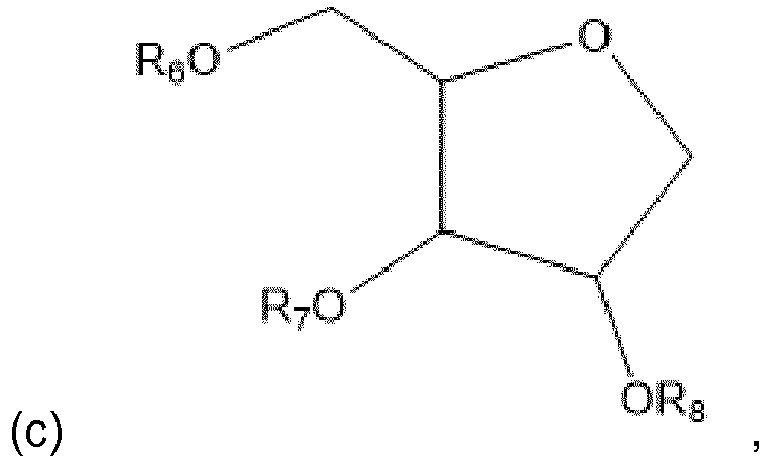
- Aspect 18: The CMP composition of Aspect 17, wherein the first additive is selected from the group consisting of: D-(-)-fructose, sorbitan, sucrose, beta-lactose, D-ribose, inositol, glucose and combinations thereof.
- Aspect 19: The CMP composition of any of Aspects 1-17, wherein the first additive has a general molecular structure:

- Aspect 20: The CMP composition of Aspect 19 wherein at least one of R1 through R5 is a polyol molecular unit having the structure:

- Aspect 21: The CMP composition of
Aspect 20, wherein n and m are independently selected from 1 through 3. - Aspect 22: The CMP composition of
Aspect 20, wherein at least one of R1 through R5 is a six-member ring polyol having the structure:
- Aspect 23: The CMP composition of Aspect 22, wherein at least two of R1 to R9 are hydrogen atoms.
- Aspect 24: The CMP composition of Aspect 22, wherein at least six of R1 to R9 are hydrogen atoms.
- Aspect 25: The CMP composition of Aspect 19, wherein the first additive is selected from the group consisting of: maltitol, lactitol and maltotritol.
- Aspect 26: The CMP composition of any of Aspects 1-25, wherein the first additive ranges from 0.005 to 1.0 weight percent based on the total weight of the composition.
- Aspect 27: The CMP composition of any of Aspects 1-26, wherein the second additive has a general molecular structure:

- Aspect 28: The CMP composition of Aspect 27, wherein the second additive is selected from the group consisting of: 4-dodecylbenzenesulfonic acid or its ammonium, sodium or potassium salt; 4-methylbenzene sulfonic acid or its ammonium, sodium or potassium salt; and combinations thereof.
- Aspect 29: A method of chemical mechanical polishing (CMP) a semiconductor substrate having at least one surface comprising a silicon oxide film, comprising:
- a. contacting the at least one surface comprising a silicon oxide with a CMP polishing pad and the CMP composition of any of Aspects 1 through 28; and
- b. polishing the least one surface comprising silicon dioxide.
- Aspect 30: The method of Aspect 29; wherein the silicon oxide film is selected from the group consisting of Chemical vapor deposition (CVD), Plasma Enhance CVD (PECVD), High Density Deposition CVD (HDP), and spin on silicon oxide film.
- Aspect 31: The method of
Aspect 30, wherein the silicon oxide film is SiO2 film. - Aspect 32: The method of Aspect 31; wherein the semiconductor substrate further comprises a silicon nitride surface; and the step (b) comprises polishing the least one surface comprising silicon dioxide at a removal selectivity of silicon oxide: silicon nitride greater than 60.
-
-
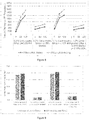
Figure 1 . Effects of Chemical Additives on Film RR (Å /min.) & TEOS: SiN Selectivity. -
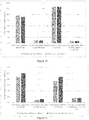
Figure 2 . Effects of D-Sorbitol & BSA Additives on Oxide Trench Dishing (Å) vs. OP Times (Sec). -
Figure 3 . Effects of D-sorbitol & BSA Additives on Oxide Trench Loss Rates (Å/sec.). -
Figure 4 . Effects of D-Sorbitol & BSA Additives on SiN Loss Rates (Å/sec). -
Figure 5 . Effects of D-Sorbitol & BSA Additives on Oxide Trench Dishing Rates (Å/sec). -
Figure 6 . Effects of D-Sorbitol & BSA on Slopes of Dishing vs. OP Amounts. -
Figure 7 . Effects of Maltitol & BSA on Film RR (A/min.) & TEOS: SiN Selectivity. -
Figure 8 . Effects of Maltitol & BSA Additives on Oxide Trench Dishing (Å) vs. OP Times (Sec). -
Figure 9 . Effects of Maltitol & BSA Additives on Oxide Trench Loss Rates (Å/sec). -
Figure 10 . Effects of Maltitol & BSA Additives on SiN Loss Rates (Å/sec). -
Figure 11 . Effects of Maltitol & BSA Additives on Oxide Trench Dishing Rates (Å/sec). -
Figure 12 . Effects of Maltitol & BSA on Slopes of Dishing vs OP Amounts. - The ensuing detailed description provides preferred exemplary embodiments only, and is not intended to limit the scope, applicability, or configuration of the claimed invention. Rather, the ensuing detailed description of the preferred exemplary embodiments will provide those skilled in the art with an enabling description for implementing the preferred exemplary embodiments. Various changes may be made in the function and arrangement of elements without departing from the spirit and scope of the invention, as set forth in the appended claims.
- All terms defined herein should be afforded their broadest possible interpretation, including any implied meanings as dictated by a reading of the specification as well as any words that a person having skill in the art and/or a dictionary, treatise, or similar authority would assign particular meaning. Further, it should be noted that, as recited in the specification and in the claims appended hereto, the singular forms "a," "an," and "the" include the plural referents unless otherwise stated. Additionally, the terms "comprises" and "comprising" when used herein specify that certain features are present in that embodiment, but should not be interpreted to preclude the presence or addition of additional features, components, operations, and/or groups thereof.
- Disclosed herein are CMP polishing compositions for polishing oxide material, and related methods and systems that satisfy the need for polishing semiconductor wafers comprising silicon oxide structures. In the global planarization of patterned STI structures, suppressing SiN removal rates and reducing oxide trench dishing across various sized oxide trench features are key factors to be considered. The lower trench oxide loss will prevent electrical current leaking between adjacent transistors. Non-uniform trench oxide loss across die (within Die) will affect transistor performance and device fabrication yields. Severe trench oxide loss (high oxide trench dishing) will cause poor isolation of transistor resulting in device failure. Therefore, it is important to reduce trench oxide loss by reducing oxide trench dishing in STI CMP polishing compositions.
- This invention relates to the Chemical mechanical polishing (CMP) compositions for oxide or doped-oxide film polishing CMP applications. The CMP compositions disclosed herein are particularly suited for planarization of patterned STI structures.
- More specifically, the disclosed chemical mechanical polishing (CMP) composition for polishing oxide or doped-oxide film CMP applications has a unique formulation comprising an abrasive and two types of additives that function as oxide trench dishing reducing agents, oxide film removal rate boosting agents and nitride removal rate suppressing agents. The CMP composition also comprises a solvent. Other optional ingredients such as biocides, pH adjusters may also be present in the formulation.
- Preferably, the abrasive comprises ceria-coated inorganic oxide particles or ceria-coated organic polymer particles. Preferably, the first additive is a non-ionic and non-aromatic organic molecule bearing multiple hydroxyl functional groups and the second additive is an organic aromatic molecule bearing sulfonic acid or sulfonate salt functional groups.
- The components of the CMP formulation are discussed in greater detail below. The paragraph headings that follow are solely to provide organization to the disclosure and are not intended to limit the scope of the claimed invention in any way.
- Preferably, the abrasive comprises ceria-coated organic polymer particles include, but are not limited to, ceria-coated polystyrene particles, ceria-coated polyurethane particle, ceria-coated polyacrylate particles, or any other ceria-coated organic polymer particles.
- It is preferred that the abrasive comprises ceria-coated inorganic oxide particles including, but not limited to, ceria-coated colloidal silica, ceria-coated high purity colloidal silica, ceria-coated alumina, ceria-coated titania, ceria-coated zirconia, or any other ceria-coated inorganic oxide particles. Preferred ceria-coated inorganic oxide particles are ceria-coated colloidal silica particles.
- In embodiments, the particle size of the ceria-coated inorganic metal oxide particles ranges from 2 to 1,000 nanometers. The preferred mean particle size ranges from 5 to 500 nanometers, more preferably from 20 to 250 nanometers.
- In embodiments, the concentration of the ceria-coated inorganic metal oxide particles ranges from 0.01 to 20 weight percent, based on the total weight of the CMP composition. Preferably, the concentration ranged from 0.05 to 10 weight percent, more preferably from 0.1 to 5 weight percent.
- Preferably the First Additive is a non-ionic and non-aromatic organic molecule bearing multiple hydroxyl functional groups.
- In an embodiment, First Additive comprises the general molecular structure:
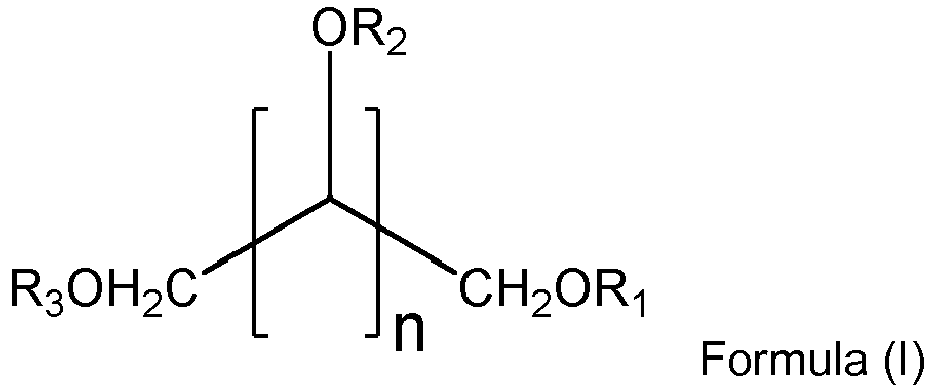
- Preferred examples of the First Additive having the general molecular structure of Formula 1 include, but are not limited to, ribitol, xylitol, meso-erythritol, D-sorbitol, mannitol, dulcitol, and iditol.
- In another embodiment, the First Additive comprises the general molecular structure:

- In this embodiment, a carbonyl (CHO) functional group is located at one end of the molecule as the terminal functional group and n ranges from 2 to 5,000, preferably from 3 to 12, and more preferably from 4 to 7. R2 and each occurrence of R1 are independently selected from the group consisting of hydrogen, an alkyl group, an alkoxy group, an organic group with one or more hydroxyl groups, a substituted organic sulfonic acid, a substituted organic sulfonic acid salt, a substituted organic carboxylic acid, a substituted organic carboxylic acid salt, an organic carboxylic ester, an organic amine group, and combinations thereof.
- In a preferred embodiment, n=3, and R2 and all occurrences of R1 are hydrogen atoms. In this embodiment the First Additive is D-arabinose or L-arabinose. In another preferred embodiment, n=4, and R2 and all occurrences of R1 are hydrogen atoms. In this embodiment the First Additive is D-mannose or L-mannose.
- In another embodiment, the First Additives has a general molecular structure selected from the group consisting of:


- Preferred examples of First Additives having the structure of this embodiment include, but are not limited to D-(-)-fructose, sorbitan, sucrose, beta-lactose, D-ribose, inositol, and glucose.
- In another embodiment, the First Additive contains at least one six-member ring ether structural motif bonded to at least one polyol molecular unit containing multiple hydroxyl functional groups in the molecular unit structures, or at least one polyol molecular unit containing multiple hydroxyl functional groups in the molecular unit structures and at least one six-member ring polyol. As used herein a polyol is an organic compound containing more than two hydroxyl groups.
- The general molecular structure for the First Additive of this embodiment is:

- In a preferred embodiment, at least one R in the group of R1 to R5 in the general molecular structure (d) is a polyol molecular unit having a structure shown in (e):

- In another embodiment, at least one R in the group of R1 to R5 in the general molecular structure (d) is a polyol molecular unit having a structure shown in (e); at least one R in the group of R1 to R5 in the general molecular structure is a six-member ring polyol as shown in (f):

- In the general molecular structure, at least two, preferably four, more preferably six occurrences of R in the group of R1 to R9 are hydrogen atoms. When only one R, such as R5 in the group of R1 to R5 in the general molecular structure is a polyol molecular unit (b) having n = 2 and m =1; and all rest of Rs in the group of R1 to R9 are all hydrogen atoms, the following two chemical additives are obtained: maltitol and lactitol.
- When one R, such as R5 is a polyol molecular unit (b) having n = 2 and m =1; and one R, such as R2 is a six-member ring polyol; and all rest of Rs in the group of R1 to R14 are all hydrogen atoms, the following chemical additive is obtained: maltotritol.
- Preferred first additives include, but are not limited to, maltitol, lactitol, maltotritol, ribitol, D-sorbitol, mannitol, dulcitol, iditol, D- (-)-Fructose, sorbitan, sucrose, ribose, Inositol, glucose, D-arabinose, L-arabinose, D-mannose, L-mannose, meso-erythritol, beta-lactose, arabinose, and combinations thereof. The preferred chemical additives are maltitol, lactitol, maltotritol, D-sorbitol, mannitol, dulcitol, iditol, D- (-)-Fructose, sucrose, ribose, Inositol, glucose. D-(+)-mannose, beta-lactose, and combinations thereof. The more preferred chemical additives are maltitol, lactitol, maltotritol, D-sorbitol, mannitol, dulcitol, D- (-)-Fructose, beta-lactose, and combinations thereof.
- The CMP composition contains 0.0001 wt.% to 2.0% wt.%, preferably 0.001 wt.% to 1.0 wt.%, and more preferably 0.0025 wt.% to 0.5 wt.%, and more preferably 0.005 to 1.0 wt.% of the First additive, based on the total weight of the CMP composition.
- In a preferred embodiment the second additive is an organic aromatic molecule with sulfonic acid or sulfonate functional groups represented by the general structural formulas:


- In another embodiment, the general molecular structure (i) for the second group of chemical additives is an organic aromatic molecule with sulfonic acid or sulfonate functional groups connected to one location of aromatic rings and at other location of the aromatic rings, other functional groups as shown in formula (i):

- Some examples of second group chemical additives are 4-dodecylbenzenesulfonic acid and 4-methylbenzene sulfonic acid or their ammonium, sodium or potassium salt.
- The CMP composition may contain 0.0001 wt.% to 2.0% wt.%, preferably 0.001 wt.% to 1.5 wt.%, and preferably 0.002 wt.% to 1.0 wt.% of the Second Additive.
- The CMP formulation comprises a solvent. Preferably, the solvent is water or a water-soluble solvent. Preferred solvents include, but are not limited to, deionized (DI) water, distilled water, and alcohols. A more preferred solvent is DI water.
- Optionally, the CMP composition comprises a biocide. Preferred biocides include, but are not limited to, Kathon™, Kathon™ CG/ICP II and Bioban, available from Dupont/Dow Chemical Co. The preferred biocides comprise at least one of the active ingredients 5-chloro-2-methyl-4-isothiazolin-3-one and 2-methyl-4-isothiazolin-3-one. The STI CMP composition may contain a biocide in an amount of from 0.0001 wt.% to 0.05 wt.%; preferably from 0.0005 wt.% to 0.025 wt.%, and more preferably from 0.001 wt.% to 0.01 wt.%.
- The STI CMP composition may optionally contain a pH adjusting agent. An acidic or basic pH adjusting agent can be used to adjust the STI polishing compositions to the optimized pH value. Preferred pH adjusting agents include, but are not limited to nitric acid, hydrochloric acid, sulfuric acid, phosphoric acid, other inorganic or organic acids, and mixtures thereof. Preferred pH adjusting agents also include basic pH adjusting agents, such as sodium hydride, potassium hydroxide, ammonium hydroxide, tetraalkyl ammonium hydroxide, organic quaternary ammonium hydroxide compounds, organic amines, and other chemical reagents that can be used to adjust pH towards the more alkaline direction. When a pH adjusting agent is present, the CMP composition may contain 0 wt.% to 1 wt.%; preferably 0.01 wt.% to 0.5 wt.%; more preferably 0.1 wt.% to 0.25 wt.% pH adjusting agent.
- In some embodiments, the CMP polishing compositions can be made into two or more components and mixed at the point of use.
- In an embodiment, there is provided a method of chemical mechanical polishing (CMP) a substrate having at least one surface comprising silicon dioxide using the chemical mechanical polishing (CMP) composition described above in Shallow Trench Isolation (STI) process.
- The polished oxide films can be Chemical vapor deposition (CVD), Plasma Enhance CVD (PECVD), High Density Deposition CVD(HDP), spin on oxide films or flowable CVD oxide film, carbon doped oxide film, or nitrogen doped oxide film.
- The substrate disclosed above can further comprises a silicon nitride surface. The removal selectivity of SiO2: SiN is preferably greater than 30, more preferably greater than 60, and more preferably greater than 80.
- In another aspect, there is provided a method of chemical mechanical polishing (CMP) a substrate having at least one surface comprising silicon dioxide using the chemical mechanical polishing (CMP) composition described above in Shallow Trench Isolation (STI) process. The polished oxide films can be CVD oxide, PECVD oxide, High density oxide, or Spin on oxide films.
- The following non-limiting examples are presented to further illustrate the present invention.
- In the examples presented below, CMP experiments were run using the procedures and experimental conditions given below.
- Ceria-coated Silica: used as abrasive having a particle size of approximately 100 nanometers (nm); such ceria-coated silica particles can have a particle size of ranged from approximately 2 nanometers (nm) to 1000 nanometers (nm);
- Ceria-coated Silica particles (with varied sizes) were supplied by JGC Inc. in Japan.
- Chemical additives, such as benzenesulfonic acids or its salts; and maltitol, D-Fructose, Dulcitol, D-sorbitol and other chemical raw materials were supplied by Sigma-Aldrich, St. Louis, MO.
- TEOS: tetraethyl orthosilicate
Polishing Pad: Polishing pad, IC1010, IC1000 and other pads were used during CMP, supplied by DOW, Inc. - Å or A: angstrom(s) - a unit of length
BP: back pressure, in psi units
BSA: benzenesulfonic acid
CMP: chemical mechanical planarization = chemical mechanical polishing
CS: carrier speed
DF: Down force: pressure applied during CMP, units psi
min: minute(s)
ml: milliliter(s)
mV: millivolt(s)
psi: pounds per square inch
PS: platen rotational speed of polishing tool, in rpm (revolution(s) per minute)
SF: composition flow, ml/min
Wt. %: weight percentage (of a listed component)
TEOS: SiN Selectivity: (removal rate of TEOS)/ (removal rate of SiN)
HDP: high density plasma deposited TEOS - TEOS or HDP Removal Rates: Measured TEOS or HDP removal rate at a given down pressure. The down pressure of the CMP tool was 3.0 psi in the examples listed above.
- SiN Removal Rates: Measured SiN removal rate at a given down pressure. The down pressure of the CMP tool was 3.0 psi in the examples listed.
- Films were measured with a ResMap CDE, model 168, manufactured by Creative Design Engineering, Inc, 20565 Alves Dr., Cupertino, CA, 95014. The ResMap tool is a four-point probe sheet resistance tool. Forty-nine-point diameter scan at 5mm edge exclusion for film was taken.
- The CMP tool that was used is a 200mm Mirra, or 300mm Reflexion manufactured by Applied Materials, 3050 Boweres Avenue, Santa Clara, California, 95054. An IC1000 pad supplied by DOW, Inc, 451 Bellevue Rd., Newark, DE 19713 was used on platen 1 for blanket and pattern wafer studies.
- The IC1010 pad or other pad was broken in by conditioning the pad for 18 mins. At 7 lbs. down force on the conditioner. To qualify the tool settings and the pad break-in two tungsten monitors and two TEOS monitors were polished with Versum® STI2305 composition, supplied by Versum Materials Inc. at baseline conditions.
- Polishing experiments were conducted using PECVD or LECVD or HD TEOS wafers. These blanket wafers were purchased from Silicon Valley Microelectronics, 2985 Kifer Rd., Santa Clara, CA 95051.
- In blanket wafer studies, oxide blanket wafers, and SiN blanket wafers were polished at baseline conditions. The tool baseline conditions were: table speed; 87 rpm, head speed: 93 rpm, membrane pressure; 3.0 psi DF, composition flow; 200 ml/min. The polishing pad used for testing was IC1010 pad which was supplied by Dow Chemicals.
- The composition was used in polishing experiments on patterned wafers (MIT860), supplied by SWK Associates, Inc. 2920 Scott Blvd. Santa Clara, CA 95054). These wafers were measured on the Veeco VX300 profiler/AFM instrument. The 3 different sized pitch structures were used for oxide dishing measurement. The wafer was measured at center, middle, and edge die positions.
- TEOS: SiN Selectivity: (removal rate of TEOS)/ (removal rate of SiN) obtained from the STI CMP polishing compositions were tunable.
- In the following working examples, a STI polishing composition comprising 0.2 wt.% cerium-coated silica particles, a biocide ranging from 0.0001 wt.% to 0.05 wt.%, and deionized water with pH being adjusted to 5.35 was prepared as reference(ref.) or other selected pH conditions.
- The polishing compositions were prepared with the reference (0.2 wt.% cerium-coated silica, a biocide ranging from 0.0001 wt.% to 0.05 wt.%, and deionized water) and a first type of chemical additive or a second type of chemical additive or the mixed first type and second type of chemical additives with pH valued at 5.35 respectively or at other selected pH conditions.
- In Example 1, the polishing compositions used for oxide polishing were shown in Table 1. The reference sample was made by using 0.2 wt.% ceria-coated silica particles, very low concentration of biocide, and DI water.
- The first type of chemical additive, D-sorbitol, was used at 0.15 wt.% and mixed with reference sample.
- The second type of chemical additive, benzenesulfonic acid, was used at 0.10 wt.% and mixed with reference sample.
- The first type of chemical additive D-sorbitol was used at 0.15 wt.% and second type of chemical additive benzenesulfonic acid was used at 0.10 wt.% and mixed with reference sample.
- All reference sample and testing samples had same pH values at around 5.35.
- The removal rates (RR at Å/min) for polishing different films were tested. The effects of chemical additives on the film removal rates and TEOS: SiN film selectivity were observed and listed in Table 1 and depicted in
Figure 1 .Table 1. Effects of Chemical Additives on Film RR (Å/min.) & TEOS: SiN Selectivity Compositions TEOS RR(Å/min.) HDP RR(Å/min.) PECVD SiN RR(Å/min.) TEOS: SiN Selectivity 0.2% Ceria-coated Silica pH 5.35 Ref. 3279 2718 349 9.4 0.2% Ceria-coated Silica + 0.15% D-Sorbitol 2489 3229 65 38.3 0.2% Ceria-coated Silica + 0.10% BSA 3744 3497 81 46.2 0.2% Ceria-coated Silica + 0.15% D-Sorbitol + 0.10% BSA 3584 3399 49 73.1 - The polishing step conditions used were: Dow's IC1010 pad at 3.0psi DF with table/head speed at 87/93rpm and ex-situ conditioning.
- As the results shown in Table 1 and
Figure 1 , the addition of D-sorbitol as chemical additive into the polishing composition effectively suppressed SiN film removal rates, and boosted HDP film removal rates. Thus, the TEOS: SiN selectivity was increased significantly. - The addition of benzenesulfonic acid into the polishing composition was not only suppressed SiN film removal rates, but also boosted both TEOS and HDP film removal rates. Thus, further increased TEOS: SiN selectivity was achieved while comparing the selectivity obtained from reference sample.
- When both first type of additive D-sorbitol and second type of additive BSA were added into the same polishing composition, both TEOS and HPD film removal rates were still being boosted and SiN film removal rates were being further suppressed. Thus, the highest TEOS: SiN selectivity was achieved while using both types of additives in the same polishing composition while comparing the TEOS: SiN selectivity obtained using these additives alone or without using any of them.
Table 2. Effects of D-Sorbitol & BSA Additives on Oxide Trench Dishing (Å) vs OP Times (Sec.) Compositions OP Times (Sec.) 100um pitch dishing 200um pitch dishing 0.2% Ceria-coated Silica pH 5.35 Ref. 0 165 291 60 857 1096 120 1207 1531 0.2% Ceria-coated Silica + 0.15% D- Sorbitol 0 98 184 60 261 383 120 418 583 0.2% Ceria-coated Silica + 0.10 % BSA 0 343 523 60 1042 1306 120 1220 1573 0.2% Ceria-coated Silica + 0.15% D-Sorbitol + 0.10 % BSA 0 341 477 60 390 560 120 469 653 - While comparing the TEOS: SiN selectivity, the polishing composition using both chemical additives afforded 73:1 selectivity which is much higher than 9:1 selectivity obtained from reference sample.
- In Example 2, the polishing compositions used for polishing tests were shown in Table 2. The reference sample was made by using 0.2 wt.% ceria-coated silica particles, very low concentration of biocide, and deionized wafer at pH 5.35.
- D-sorbitol or benzenesulfonic acid (BSA) was used alone or used together at 0.15 wt.% or 0.1 wt.% respectively in the testing samples.
- All reference sample and testing samples had same pH values at around 5.35.
- The effects of D-sorbitol or benzenesulfonic acid (BSA) or D-sorbitol + BSA on the oxide trenching dishing vs different over polishing times were tested and the results were listed in Table 2 and depicted in
Figure 2 . - As the results shown in Table 2 and
Figure 2 , the addition of first type of additive D-sorbitol as the chemical additive in the polishing composition reduced oxide trench dishing significantly vs different over polishing times while comparing the oxide trench dishing obtained vs different over polishing times obtained from reference sample. - The addition of second type of additive BSA provided slightly worse oxide trench dishing vs over polishing times than that from reference sample.
- When using D-sorbitol and BSA as dual chemical additives in the same polishing composition, significant oxide trench dishing reductions vs over polishing times were achieved vs reference sample.
- The dual chemical additives based polishing composition provided more stable over polishing window which comparing that using each of these two additives alone.
- The effects of D-sorbitol or benzenesulfonic acid (BSA) or D-sorbitol + BSA on the oxide trenching loss rates (Å/sec.) were tested and the results were listed in Table 3 and depicted in
Figure 3 .Table 3. Effects of D-sorbitol & BSA Additives on Oxide Trench Loss Rates (Å/sec.) Compositions P100 trench loss rate (Å/sec.) P200 trench loss rate (Å/sec.) 0.2% Ceria-coated Silica pH 5.35 Ref. 18.5 19.3 0.2% Ceria-coated Silica + 0.15% D-Sorbitol 2.6 2.6 0.2% Ceria-coated Silica + 0.10% BSA 19.4 20.7 0.2% Ceria-coated Silica + 0.15% D-Sorbitol + 0.10% BSA 1.8 1.9 - As the results shown in Table 3 and
Figure 3 , the addition of first type of additive D-sorbitol as the chemical additive in the polishing composition reduced oxide trench loss rates significantly while comparing the oxide trench loss rate obtained from reference sample. - The addition of second type of additive BSA into the polishing composition provided slightly increased oxide trench loss rates than that from reference sample.
- When using D-sorbitol and BSA as dual chemical additives in the same polishing composition, significant oxide trench loss rate reductions were achieved vs reference sample. The dual chemical additives in the same polishing composition afforded the lowest oxide trench loss rate among all tested polishing compositions and reference sample.
- The polishing conditions used for patterned wafer polishing were: Dow's IC1010 pad with 3.0psi down force with table/head speeds at 87/93rpm, and with in situ conditioning.
- The effects of D-sorbitol or benzenesulfonic acid (BSA) or D-sorbitol + BSA on the SiN loss rates (Å/min.) on different sized patterned features were tested and the results were listed in Table 4 and depicted in
Figure 4 .Table 4. Effects of D-Sorbitol & BSA Additives on SiN Loss Rates (Å/sec.) Compositions P100 SiN loss rate (Å/sec.) P200 SiN loss rate (Å/sec.) 0.2% Ceria-coated Silica pH 5.35 Ref. 9.6 9.2 0.2% Ceria-coated Silica + 0.15% D-Sorbitol 1.0 1.0 0.2% Ceria-coated Silica + 0.10% BSA 12.7 12.7 0.2% Ceria-coated Silica + 0.15% D-Sorbitol + 0.10% BSA 0.7 0.7 - As the results shown in Table 4 and
Figure 4 , the addition of first type of additive D-sorbitol as the chemical additive in the polishing composition reduced SiN film loss rates significantly while comparing the SiN film loss rates obtained from reference sample. - The addition of second type of additive BSA into the polishing composition provided increased SiN film loss rates than that from reference sample.
- When using D-sorbitol and BSA as dual chemical additives in the same polishing composition, significant SiN film loss rate reductions were achieved vs reference sample. The dual chemical additives in the same polishing composition afforded the lowest SiN film loss rate among all tested polishing compositions and reference sample.
- The polishing conditions used for patterned wafer polishing were: Dow's IC1010 pad with 3.0psi down force with table/head speeds at 87/93rpm, and with in situ conditioning.
- The effects of D-sorbitol or benzenesulfonic acid (BSA) or D-sorbitol + BSA on oxide trench dishing rates (Å/min.) on different sized patterned features were tested and the results were listed in Table 5 and depicted in
Figure 5 .Table 5. Effects of D-Sorbitol & BSA Additives on Oxide Trench Dishing Rates (Å/sec.) Compositions 100um pitch dishing rate (Å/sec.) 200um pitch dishing rate (Å/sec.) 0.2% Ceria-coated Silica pH 5.35 Ref. 8.7 10.0 0.2% Ceria-coated Silica + 0.15% D-Sorbitol 1.5 1.7 0.2% Ceria-coated Silica + 0.10% BSA 7.3 8.8 0.2% Ceria-coated Silica + 0.15% D-Sorbitol + 0.10% BSA 1.1 0.9 - As the results shown in Table 5 and
Figure 5 , the addition of first type of additive D-sorbitol as the chemical additive in the polishing composition significantly reduced oxide trench dishing rate while comparing the oxide trench dishing rate obtained from reference sample. - The addition of second type of additive BSA into the polishing composition provided increased oxide trench dishing rate than that from reference sample.
- When using D-sorbitol and BSA as dual chemical additives in the polishing composition, significant oxide trench dishing rate reductions were achieved vs reference sample. The dual chemical additives in the same polishing composition afforded the lowest oxide trench dishing rate among all tested polishing compositions and reference sample.
- The polishing conditions used for patterned wafer polishing were: Dow's IC1010 pad with 3.0psi down force with table/head speeds at 87/93rpm, and with in situ conditioning.
- The effects of D-sorbitol or benzenesulfonic acid (BSA) or D-sorbitol + BSA on the slopes of trench dishing vs the over polishing removal amounts on different sized patterned features were tested and the results were listed in Table 6 and depicted in
Figure 6 .Table 6. Effects of D-Sorbitol & BSA on Slopes of Dishing vs OP Amounts Compositions 100um pitch dishing/OP Amt. Slope 200um pitch dishing/OP Amt. Slope 0.2% Ceria-coated Silica pH 5.35 Ref. 0.19 0.23 0.2% Ceria-coated Silica + 0.15% D-Sorbitol 0.06 0.07 0.2% Ceria-coated Silica + 0.10% BSA 0.01 0.02 0.2% Ceria-coated Silica + 0.15% D-Sorbitol + 0.10% BSA 0.02 0.02 - As the results shown in Table 6 and
Figure 6 , the addition of first type of additive D-sorbitol or the second type of additive BSA into the polishing compositions, whether being used alone or used together as chemical additives in the polishing compositions, the slopes of trench dishing vs the over polishing amounts were significant reduced while comparing that obtained from reference sample. - The polishing conditions used for patterned wafer polishing were: Dow's IC1010 pad with 3.0psi down force with table/head speeds at 87/93rpm, and with in situ conditioning.
- In Example 3, the polishing compositions used for polishing tests were shown in Table 7. The reference sample was made by using 0.2 wt.% ceria-coated silica particles, very low concentration of biocide, and deionized water. Maltitol and BSA were used alone or used together at 0.28 wt.%, and 0.10 wt.% respectively in the testing samples.
- All reference sample and testing samples had same pH values at around 5.35.
- The removal rates (RR at Å/min) for polishing different films were tested. The effects of the chemical additives Maltitol and BSA on the film removal rates and TEOS: SiN selectivity were observed and listed in Table 7 and depicted in
Figure 7 . - The polishing parts and conditions were: Dow's IC1010 polishing pad, 3.0psi DF, ex-situ conditioning and with 87/93rpm table/head speeds.
Table 7. Effects of Maltitol & BSA on Film RR (A/min.) & TEOS: SiN Selectivity Compositions TEOS RR (A/min) HDP RR (A/min.) PECVD SiN RR (A/min) TEOS: SiN Selectivity 0.2% Ceria-coated Silica pH 5.35 Ref. 3279 2718 349 9.4 0.2% Ceria-coated Silica + 0.28% Maltitol 2926 2826 55 53.2 0.2% Ceria-coated Silica + 0.10% BSA 3744 3497 81 46.2 0.2% Ceria-coated Silica + 0.28% Maltitol + 0.10 % BSA 3700 3599 46 80.4 - As the results shown in Table 7 and
Figure 7 , the addition of maltitol as the first type of chemical additive into the polishing composition effectively suppressed SiN film removal rates, and slightly boosted HDP film removal rates. Thus, the TEOS: SiN selectivity was increased significantly. - The addition of benzenesulfonic acid (BSA) as second type of chemical additive into the polishing composition was not only suppressed SiN film removal rates, but also boosted both TEOS and HDP film removal rates. Thus, further increased TEOS: SiN selectivity was achieved while comparing to the selectivity obtained from reference sample.
- When both first type of additive maltitol and second type of additive BSA were added into the same polishing composition, both TEOS and HPD film removal rates were still being boosted and SiN film removal rates were being further suppressed. Thus, the highest TEOS: SiN selectivity was achieved while using both types of additives in the same polishing composition comparing to the TEOS: SiN selectivity obtained while using these additives alone or without using any of them.
- While comparing the TEOS: SiN selectivity, the polishing composition using both chemical additives afforded 80:1 selectivity which is much higher than 9:1 selectivity obtained from reference sample.
-
Table 8. Effects of Maltitol & BSA Additives on Oxide Trench Dishing (Å) vs OP Times (Sec.) Compositions OP Times (Sec.) 100um pitch dishing 200um pitch dishing 0.2% Ceria-coated Silica pH 5.35 Ref. 0 165 291 60 857 1096 120 1207 1531 0.2% Ceria-coated Silica + 0.28 % Maltitol 0 316 477 60 402 560 120 468 653 0.2% Ceria-coated Silica + 0.10 % BSA 0 343 523 60 1042 1306 120 1220 1573 0.2% Ceria-coated Silica + 0.28% Maltitol + 0.10 % BSA 0 287 462 60 357 519 120 398 593 - In Example 4, the polishing compositions used for polishing tests were shown in Table 8. The reference sample was made by using 0.2 wt.% ceria-coated silica particles, very low concentration of biocide and deionized wafer. Maltitol and BSA were used alone or used together at 0.28 wt.%, and 0.10 wt.% respectively in the testing samples.
- All reference sample and testing samples had same pH values at around 5.35.
- The effects of maltitol or benzenesulfonic acid (BSA) or maltitol + BSA on the oxide trenching dishing vs different over polishing times were tested and the results were listed in Table 8 and depicted in
Figure 8 . - As the results shown in Table 8 and
Figure 8 , the addition of first type of additive maltitol as the chemical additive in the polishing compositions reduced oxide trench dishing significantly vs different over polishing times while comparing the oxide trench dishing vs different over polishing times obtained from reference sample. - The addition of second type of additive BSA provided slightly worse oxide trench dishing vs the over polishing times than that from reference sample.
- When using maltitol and BSA as dual chemical additives in the same polishing composition, significant oxide trench dishing reductions vs different over polishing times were achieved vs reference sample across different sized patterned features.
- The effects of maltitol or benzenesulfonic acid (BSA) or maltitol + BSA on the oxide trenching loss rates (Å/sec.) were tested and the results were listed in Table 9 and depicted in
Figure 9 .Table 9. Effects of Maltitol & BSA Additives on Oxide Trench Loss Rates (Å/sec.) Compositions P100 trench loss rate (Å/sec.) P200 trench loss rate (Å/sec.) 0.2% Ceria-coated Silica pH 5.35 Ref. 18.5 19.3 0.2% Ceria-coated Silica + 0.28% Maltitol 1.7 1.9 0.2% Ceria-coated Silica + 0.10% BSA 19.4 20.7 0.2% Ceria-coated Silica + 0.28% Maltitol + 0.10% BSA 2.6 2.7 - As the results shown in Table 9 and
Figure 9 , the addition of first type of additive maltitol as the chemical additive in the polishing composition reduced oxide trench loss rates significantly while comparing the oxide trench loss rate obtained from reference sample. - The addition of second type of additive BSA into the polishing composition provided slightly increased oxide trench loss rates than that from reference sample.
- When using maltitol and BSA as dual chemical additives in the polishing composition, significant oxide trench loss rate reductions were achieved vs reference sample.
- The polishing conditions used for patterned wafer polishing were: Dow's IC1010 pad with 3.0psi down force with table/head speeds at 87/93rpm, and with in situ conditioning.
- The effects of maltitol or benzenesulfonic acid (BSA) or maltitol + BSA on SiN loss rates (Å/min.) on different sized patterned features were tested and the results were listed in Table 10 and depicted in
Figure 10 .Table 10. Effects of Maltitol & BSA Additives on SiN Loss Rates (Å/sec.) Compositions P100 SiN loss rate (Å/sec.) P200 SiN loss rate (Å/sec.) 0.2% Ceria-coated Silica pH 5.35 Ref. 9.6 9.2 0.2% Ceria-coated Silica + 0.28% Maltitol 0.9 0.9 0.2% Ceria-coated Silica + 0.10% BSA 12.7 12.7 0.2% Ceria-coated Silica + 0.28% Maltitol + 0.10% BSA 0.7 0.7 - As the results shown in Table 10 and
Figure 10 , the addition of first type of additive maltitol as the chemical additive in the polishing composition reduced SiN film loss rates significantly while comparing the SiN film loss rates obtained from reference sample. - The addition of second type of additive BSA into the polishing composition provided increased SiN film loss rates than that from reference sample.
- When using maltitol and BSA as dual chemical additives in the same polishing composition, significant SiN film loss rate reductions were achieved vs reference sample. The dual chemical additives in the same polishing composition afforded the lowest SiN film loss rate among all tested polishing compositions and reference sample.
- The polishing conditions used for patterned wafer polishing were: Dow's IC1010 pad with 3.0psi down force with table/head speeds at 87/93rpm, and with in situ conditioning.
- The effects of maltitol or benzenesulfonic acid (BSA) or maltitol + BSA on oxide trench dishing rates (Å/min.) on different sized patterned features were tested and the results were listed in Table 11 and depicted in
Figure 11 .Table 11. Effects of Maltitol & BSA Additives on Oxide Trench Dishing Rates (Å/sec.) Compositions 100um pitch dishing rate (Å/sec.) 200um pitch dishing rate (Å/sec.) 0.2% Ceria-coated Silica pH 5.35 Ref. 8.7 10.0 0.2% Ceria-coated Silica + 0.28% Maltitol 0.9 1.1 0.2% Ceria-coated Silica + 0.10% BSA 7.3 8.8 0.2% Ceria-coated Silica + 0.28% Maltitol + 0.10% BSA 1.5 1.5 - As the results shown in Table 11 and
Figure 11 , the addition of first type of additive maltitol as the chemical additive in the polishing composition significantly reduced oxide trench dishing rates while comparing the oxide trench dishing rate obtained from reference sample. - The addition of second type of additive BSA into the polishing composition provided slightly reduced oxide trench dishing rates than that from reference sample.
- When using maltitol and BSA as dual chemical additives in the same polishing composition, significant oxide trench dishing rate reductions were achieved vs reference sample.
- The polishing conditions used for patterned wafer polishing were: Dow's IC1010 pad with 3.0psi down force with table/head speeds at 87/93rpm, and with in situ conditioning.
- The effects of maltitol or benzenesulfonic acid (BSA) or maltitol + BSA on the slopes of trench dishing vs the over polishing removal amounts on different sized patterned features were tested and the results were listed in Table 12 and depicted in
Figure 12 .Table 12. Effects of Maltitol & BSA on Slopes of Dishing vs OP Amounts Compositions 100um pitch dishing/OP Amt. Slope 100um pitch dishing/OP Amt. Slope 0.2% Ceria-coated Silica pH 5.35 Ref. 0.19 0.23 0.2% Ceria-coated Silica + 0.28% Maltitol 0.03 0.03 0.2% Ceria-coated Silica + 0.10% BSA 0.01 0.02 0.2% Ceria-coated Silica + 0.28% Maltitol + 0.10% BSA 0.02 0.02 - As the results shown in Table 12 and
Figure 12 , the addition of first type of additive maltitol or the second type of additive BSA, whether being used alone or used together as chemical additives in the polishing compositions, the slopes of trench dishing vs the over polishing amounts were significant reduced while comparing that obtained from reference sample. - The polishing conditions used for patterned wafer polishing were: Dow's IC1010 pad with 3.0psi down force with table/head speeds at 87/93rpm, and with in situ conditioning.
- As pointed out in previous descriptions, the invented herein the oxide or doped-oxide CMP polishing compositions can be used in wide pH windows to afford high oxide film removal rates, suppressed SiN removal rates, increased Oxide: SiN selectivity, and low oxide trenching dishing.
- In Example 5, the invented polishing compositions were tested at acidic pH condition of 4.5.
- In Example 5, the polishing compositions used for polishing tests were shown in Table 13. The reference sample was made by using 0.2 wt.% ceria-coated silica particles, very low concentration of biocide, and deionized wafer at pH 4.5.
- D-sorbitol or benzenesulfonic acid (BSA) was used alone or used together at 0.15 wt.% or 0.1 wt.% respectively in the testing samples.
- All reference sample and testing samples had same pH values at around 4.5.
- The effects of D-sorbitol or benzenesulfonic acid (BSA) or D-sorbitol + BSA on various types of film removal rates and TEOS: SiN selectivity were tested, and the results were listed in Table 13.
Table 13. Effects of Chemical Additives on Film RR (Å /min.) & TEOS: SiN Selectivity at pH 4.5 Compositions TEOS RR (Å/min.) HDP RR (Å/min.) SiN RR (Å/min.) TEOS: SiN Selectivity 0.2% Ceria-coated Silica pH 4.5 2807 2438 336 8.4:1 0.2% Ceria-coated Silica + 0.1% BSA pH 4.5 3734 3138 696 5.4:1 0.2% Ceria-coated Silica + 0.15% D-sorbitol pH 4.5 2640 2775 41 64.4:1 0.2% Ceria-coated Silica + 0.1% BSA pH 4.5 + 0.15% D-sorbitol 3435 3243 26 132.1:1 - The polishing step conditions used were: Dow's IC1010 pad at 3.0psi DF with table/head speed at 87/93rpm and ex-situ conditioning.
- As the results shown in Table 13, the addition of D-sorbitol as chemical additive into the polishing composition effectively suppressed SiN film removal rates, and boosted HDP film removal rates. Thus, the TEOS: SiN selectivity was increased significantly.
- The addition of benzenesulfonic acid into the polishing composition as a sole chemical additive was not only boosted SiN film removal rates, but also boosted both TEOS and HDP film removal rates. Thus, further reduced TEOS: SiN selectivity was achieved while comparing the selectivity obtained from reference sample.
- When both first type of additive D-sorbitol and second type of additive BSA were added into the same polishing composition at pH 4.5, both TEOS and HPD film removal rates were still being boosted and SiN film removal rates were being further suppressed. Thus, the highest TEOS: SiN selectivity was achieved while using both types of additives in the same polishing composition while comparing the TEOS: SiN selectivity obtained using these additives alone or without using any of them at pH 4.5.
- While comparing the TEOS: SiN selectivity, the polishing composition using both chemical additives afforded 132:1 selectivity which is much higher than 8:1 selectivity obtained from reference sample at pH 4.5.
- Also, in Example 5, maltitol was used as oxide trenching dishing reducer plus BSA as oxide film removal rate booster in the polishing compositions used for polishing tests were shown in Table 14. The reference sample was made by using 0.2 wt.% ceria-coated silica particles, very low concentration of biocide, and deionized wafer at pH 4.5.
- Maltitol was used alone or used together with benzenesulfonic acid (BSA) at 0.28 wt.% or/and 0.1 wt.% respectively in the testing samples at pH 4.5.
- All reference sample and testing samples had same pH values at around 4.5.
- The effects of maltitol or maltitol plus benzenesulfonic acid (BSA) on the film removal rates and TEOS: SiN selectivity were tested, and the results were listed in Table 14.
Table 14. Effects of Chemical Additives on Film RR (Å /min.) & TEOS: SiN Selectivity at pH 4.5. Compositions TEOS RR (Å/min.) HDP RR (Å/min.) SiN RR (Å/min.) TEOS: SiN Selectivity 0.2% Ceria-coated Silica pH 4.5 2807 2438 336 8.4:1 0.2% Ceria-coated Silica + 0.1% BSA pH 4.5 3734 3138 696 5.4:1 0.2% Ceria-coated Silica + 0.28% Maltitol pH 4.5 3297 3122 41 80.4:1 0.2% Ceria-coated Silica + 0.1% BSA + 0.28% Maltitol pH 4.5 3530 3273 38 92.9:1 - As the results shown in Table 14, the addition of maltitol as chemical additive into the polishing composition effectively suppressed SiN film removal rates, and boosted HDP film removal rates. Thus, the TEOS: SiN selectivity was increased significantly.
- The addition of benzenesulfonic acid into the polishing composition at pH 4.5 as a sole chemical additive was not only boosted SiN film removal rates, but also boosted both TEOS and HDP film removal rates. Thus, further reduced TEOS: SiN selectivity was obtained while comparing the selectivity obtained from reference sample.
- When both first type of additive maltitol and second type of additive BSA were added into the same polishing composition at pH 4.5, both TEOS and HPD film removal rates were still being boosted and SiN film removal rates were being further suppressed. Thus, the highest TEOS: SiN selectivity was achieved while using both types of additives in the same polishing composition while comparing the TEOS: SiN selectivity obtained using these additives alone or without using any of them at pH 4.5.
- While comparing the TEOS: SiN selectivity, the polishing composition using both chemical additives afforded 93:1 selectivity which is much higher than 8:1 selectivity obtained from reference sample at pH 4.5.
- In Example 5, the effects of D-sorbitol or benzenesulfonic acid (BSA) or D-sorbitol + BSA at pH 4.5 on the oxide trenching dishing vs different over polishing times were tested and the results were listed in Table 15.
Table 15. Effects of D-Sorbitol & BSA Additives on Oxide Trench Dishing (Å) vs OP Times (Sec.) at pH 4.5 Compositions OP Times (Sec.) 100µm Pitch Dishing (Å) 200µm Pitch Dishing (Å) 0.2% Ceria-coated Silica pH 4.5 0 245 372 60 671 814 120 1053 1227 0.2% Ceria-coated Silica + 0.1% BSA pH 4.5 0 126 176 60 933 1110 120 1231 1538 0.2% Ceria-coated Silica + 0.15% D-sorbitol pH 4.5 0 86 251 60 174 369 120 286 510 0.2% Ceria-coated Silica + 0.15% D-sorbitol pH 4.5 0 187 264 60 247 392 120 319 498 - As the results shown in Table 15, the addition of first type of additive D-sorbitol at pH 4.5 as the chemical additive in the polishing composition significantly reduced oxide trench dishing vs different over polishing times while comparing the oxide trench dishing obtained vs different over polishing times obtained from reference sample.
- The addition of second type of additive BSA at pH 4.5 provided worse oxide trench dishing vs over polishing times than that from reference sample.
- When using D-sorbitol and BSA as dual chemical additives in the same polishing composition at pH 4.5, significant oxide trench dishing reductions vs over polishing times were achieved vs reference sample.
- The dual chemical additives based polishing composition provided more stable over polishing window at pH 4.5 while comparing that using each of these two additives alone.
- In Example 5, the effects of maltitol or benzenesulfonic acid (BSA) or maltitol + BSA at pH 4.5 on the oxide trenching dishing vs different over polishing times were tested and the results were listed in Table 16.
Table 16. Effects of Maltitol & BSA Additives on Oxide Trench Dishing (Å) vs OP Times (Sec.) at pH 4.5 Compositions OP Times (Sec.) 100µm Pitch Dishing (Å) 200µm Pitch Dishing (Å) 0.2% Ceria-coated Silica pH 4.5 0 245 372 60 671 814 120 1053 1227 0.2% Ceria-coated Silica + 0.1% BSA pH 4.5 0 126 176 60 933 1110 120 1231 1538 0.2% Ceria-coated Silica + 0.28% Maltitol pH 4.5 0 147 264 60 244 392 120 339 498 0.2% Ceria-coated Silica + 0.28% Maltitol pH 4.5 0 160 265 60 248 364 120 351 481 - As the results shown in Table 16, the addition of first type of additive maltitol at pH 4.5 as the chemical additive in the polishing composition significantly reduced oxide trench dishing vs different over polishing times while comparing the oxide trench dishing vs different over polishing times obtained from reference sample.
- The addition of second type of additive BSA at pH 4.5 provided worse oxide trench dishing vs over polishing times than that from reference sample.
- When using maltitol and BSA as dual chemical additives in the same polishing composition at pH 4.5, significant oxide trench dishing reductions vs over polishing times were achieved vs reference sample.
- The dual chemical additives based polishing composition provided more stable over polishing window at pH 4.5 while comparing that using each of these two additives alone.
- In Example 5, the effects of D-sorbitol or benzenesulfonic acid (BSA) or D-sorbitol + BSA at pH 4.5 on the oxide trenching loss rates (Å/sec.) were tested and the results were listed in Table 17.
Table 17. Effects of D-sorbitol & BSA Additives at pH 4.5 on Oxide Trench Loss Rates (Å/sec.) Compositions P100 Trench Loss Rate (Å/sec.) P200 Trench Loss Rate (Å/sec.) 0.2% Ceria-coated Silica pH 4.5 13.7 13.6 0.2% Ceria-coated Silica + 0.1% BSA pH 4.5 21.8 23 0.2% Ceria-coated Silica + 0.15% D-sorbitol pH 4.5 3.1 4.1 0.2% Ceria-coated Silica + 0.1% BSA pH 4.5 + 0.15% D-sorbitol 1.8 1.9 - As the results shown in Table 17, the addition of first type of additive D-sorbitol as the chemical additive at pH 4.5 in the polishing composition reduced oxide trench loss rates significantly while comparing the oxide trench loss rate obtained from reference sample.
- The addition of second type of additive BSA at pH 4.5 into the polishing composition provided largely increased oxide trench loss rates than that from reference sample.
- When using D-sorbitol and BSA as dual chemical additives in the same polishing composition at pH 4.5, significant oxide trench loss rate reductions were achieved vs reference sample. The dual chemical additives in the same polishing composition afforded the lowest oxide trench loss rate among all tested polishing compositions and reference sample.
- The polishing conditions used for patterned wafer polishing were: Dow's IC1010 pad with 3.0psi down force with table/head speeds at 87/93rpm, and with in situ conditioning.
- In Example 5, the effects of maltitol or benzenesulfonic acid (BSA) or maltitol + BSA at pH 4.5 on the oxide trenching loss rates (Å/sec.) were tested and the results were listed in Table 18.
Table 18. Effects of Maltitol & BSA Additives at pH 4.5 on Oxide Trench Loss Rates (Å/sec.) Compositions P100 Trench Loss Rate (Å/sec.) P200 Trench Loss Rate (Å/sec.) 0.2% Ceria-coated Silica pH 4.5 13.7 13.6 0.2% Ceria-coated Silica + 0.1% BSA pH 4.5 21.8 23 0.2% Ceria-coated Silica + 0.28% Maltitol pH 4.5 2.6 3.0 0.2% Ceria-coated Silica + 0.1% BSA + 0.28% Maltitol pH 4.5 2.6 2.7 - As the results shown in Table 18, the addition of first type of additive maltitol as the chemical additive at pH 4.5 in the polishing composition reduced oxide trench loss rates significantly while comparing the oxide trench loss rate obtained from reference sample.
- The addition of second type of additive BSA at pH 4.5 into the polishing composition provided largely increased oxide trench loss rates than that from reference sample.
- When using maltitol and BSA as dual chemical additives in the same polishing composition at pH 4.5, significant oxide trench loss rate reductions were achieved vs reference sample. The dual chemical additives in the same polishing composition afforded the lowest oxide trench loss rate among all tested polishing compositions and reference sample.
- The polishing conditions used for patterned wafer polishing were: Dow's IC1010 pad with 3.0psi down force with table/head speeds at 87/93rpm, and with in situ conditioning.
- In Example 5, the effects of D-sorbitol or benzenesulfonic acid (BSA) or D-sorbitol + BSA at pH 4.5 on the SiN loss rates (Å/min.) on different sized patterned features were tested and the results were listed in Table 19.
Table 19. Effects of D-Sorbitol & BSA Additives at pH 4.5 on SiN Loss Rates (Å/sec.) Compositions P100 SiN Loss Rate (Å/sec.) P200 SiN Loss Rate (Å/sec.) 0.2% Ceria-coated Silica pH 4.5 6.3 6.0 0.2% Ceria-coated Silica + 0.1% BSA pH 4.5 12.1 11.7 0.2% Ceria-coated Silica + 0.15% D-sorbitol pH 4.5 1.1 1.3 0.2% Ceria-coated Silica + 0.1% BSA pH 4.5 + 0.15% D-sorbitol 0.6 0.7 - As the results shown in Table 19, the addition of first type of additive D-sorbitol as the chemical additive in the polishing composition at pH 4.5 reduced SiN film loss rates significantly while comparing the SiN film loss rates obtained from reference sample.
- The addition of second type of additive BSA into the polishing composition provided increased SiN film loss rates than that from reference sample.
- When using D-sorbitol and BSA as dual chemical additives in the same polishing composition at pH 4.5, significant SiN film loss rate reductions were achieved vs reference sample. The dual chemical additives in the same polishing composition afforded the lowest SiN film loss rate among all tested polishing compositions and reference sample.
- In Example 5, the effects of D-sorbitol or benzenesulfonic acid (BSA) or D-sorbitol + BSA at pH 4.5 on the oxide trench dishing rates (Å/min.) on different sized patterned features were tested and the results were listed in Table 20.
Table 20. Effects of D-Sorbitol & BSA Additives at pH 4.5 on Oxide Trench Dishing Rates (Å/sec.) Compositions P100 Oxide Trench Dishing Rate (Å/sec.) P200 Oxide Trench Dishing Rate (Å/sec.) 0.2% Ceria-coated Silica pH 4.5 6.7 7.1 0.2% Ceria-coated Silica + 0.1% BSA pH 4.5 9.2 11.4 0.2% Ceria-coated Silica + 0.15% D-sorbitol pH 4.5 1.7 2.2 0.2% Ceria-coated Silica + 0.1% BSA + 0.15% D-sorbitol pH 4.51 1.1 1.2 - As the results shown in Table 20, the addition of first type of additive D-sorbitol at pH 4.5 as the chemical additive in the polishing composition significantly reduced oxide trench dishing rate while comparing the oxide trench dishing rate obtained from reference sample.
- The addition of second type of additive BSA at pH 4.5 into the polishing composition provided largely oxide trench dishing rate than that from reference sample.
- When using D-sorbitol and BSA as dual chemical additives at pH 4.5 in the polishing composition, significant oxide trench dishing rate reductions were achieved vs reference sample. The dual chemical additives in the same polishing composition afforded the lowest oxide trench dishing rate among all tested polishing compositions and reference sample.
- The polishing conditions used for patterned wafer polishing were: Dow's IC1010 pad with 3.0psi down force with table/head speeds at 87/93rpm, and with in situ conditioning.
- In Example 5, the effects of D-sorbitol or benzenesulfonic acid (BSA) or D-sorbitol + BSA at pH 4.5 on the slopes of trench dishing vs the over polishing removal amounts on different sized patterned features were tested and the results were listed in Table 21.
Table 21. Effects of D-Sorbitol & BSA at pH 4.5 on Slopes of Dishing vs OP Amounts Compositions P100 Dishing/OP Amt. Slope P200 Dishing/OP Amt. Slope 0.2% Ceria-coated Silica pH 4.5 0.17 0.18 0.2% Ceria-coated Silica + 0.1% BSA pH 4.5 0.18 0.22 0.2% Ceria-coated Silica + 0.15% D-sorbitol pH 4.5 0.04 0.05 0.2% Ceria-coated Silica + 0.1% BSA + 0.15% D-sorbitol pH 4.5 0.02 0.02 - As the results shown in Table 21, the addition of first type of additive D-sorbitol at pH 4.5 into the polishing composition as chemical additive in the polishing compositions, the slopes of trench dishing vs the over polishing amounts were significant reduced while comparing that obtained from reference sample.
- The addition of second type of additive BSA at pH 4.5 into the polishing composition as chemical additive in the polishing compositions, the slopes of trench dishing vs the over polishing amounts were increased while comparing that obtained from reference sample.
- When using D-sorbitol and BSA as dual chemical additives at pH 4.5 in the polishing composition, the slopes of oxide trench dishing vs over polishing amount of oxide film were significantly reduced vs that from reference sample. The dual chemical additives in the same polishing composition afforded the lowest slope of oxide dishing vs over polishing amount of oxide film among all tested polishing compositions and reference sample.
- The polishing conditions used for patterned wafer polishing were: Dow's IC1010 pad with 3.0psi down force with table/head speeds at 87/93rpm, and with in situ conditioning.
- As pointed out in previous descriptions, the invented herein the oxide or doped-oxide CMP polishing compositions can be used in wide pH windows to afford high oxide film removal rates, suppressed SiN removal rates, increased Oxide: SiN selectivity, and low oxide trenching dishing.
- In Example 6, the invented polishing compositions were tested at alkaline pH condition of 7.5.
- In Example 6, the polishing compositions used for polishing tests were shown in Table 22. The reference sample was made by using 0.2 wt.% ceria-coated silica particles, very low concentration of biocide, and deionized wafer at pH 7.5.
- D-sorbitol or benzenesulfonic acid (BSA) was used alone or used together at 0.15 wt.% or/and 0.1 wt.% respectively in the testing samples.
- All reference sample and testing samples had same pH values at around 7.5.
- The effects of D-sorbitol or benzenesulfonic acid (BSA) or D-sorbitol + BSA on various types of film removal rates and TEOS: SiN selectivity at pH 7.5 were tested and the results were listed in Table 22.
Table 22. Effects of Chemical Additives on Film RR (Å/min.) & TEOS: SiN Selectivity at pH 7.5 Compositions TEOS RR (Å/min.) HDP RR (Å/min.) SiN RR (Å/min.) TEOS: SiN Selectivity 0.2% Ceria-coated Silica pH 7.5 2513 2188 313 8.0:1 0.2% Ceria-coated Silica + 0.1% BSA pH 7.5 2955 2610 658 4.5:1 0.2% Ceria-coated Silica + 0.15% D-sorbitol pH 7.5 2067 1834 41 50.4:1 0.2% Ceria-coated Silica + 0.1% BSA + 0.15% D-sorbitol pH 7.5 3012 2767 34 88.6:1 - The polishing step conditions used were: Dow's IC1010 pad at 3.0psi DF with table/head speed at 87/93rpm and ex-situ conditioning.
- As the results shown in Table 22, the addition of D-sorbitol as chemical additive into the polishing composition at pH 7.5 effectively suppressed SiN film removal rates. Thus, the TEOS: SiN selectivity was increased significantly.
- The addition of benzenesulfonic acid into the polishing composition at pH 7.5 as a sole chemical additive was not only boosted SiN film removal rates, but also boosted both TEOS and HDP film removal rates. Thus, further reduced TEOS: SiN selectivity was observed while comparing the selectivity obtained from reference sample.
- When both first type of additive D-sorbitol and second type of additive BSA were added into the same polishing composition at pH 7.5, both TEOS and HPD film removal rates were still being boosted and SiN film removal rates were being further suppressed. Thus, the highest TEOS: SiN selectivity was achieved while using both types of additives in the same polishing composition while comparing the TEOS: SiN selectivity obtained using these additives alone or without using any of them at pH 7.5.
- While comparing the TEOS: SiN selectivity, the polishing composition using both chemical additives afforded 89:1 selectivity which is much higher than 8:1 selectivity obtained from reference sample at pH 7.5.
- Also, in Example 6, maltitol was used as oxide trenching dishing reducer plus BSA as oxide film removal rate booster in the polishing compositions at pH 7.5 used for polishing tests were shown in Table 23. The reference sample was made by using 0.2 wt.% ceria-coated silica particles, very low concentration of biocide, and deionized wafer at pH 7.5.
- Maltitol was used alone or used together with benzenesulfonic acid (BSA) at 0.28 wt.% or/and 0.1 wt.% respectively in the testing samples.
- All reference sample and testing samples had same pH values at around 7.5.
- The effects of maltitol or BSA or maltitol plus benzenesulfonic acid (BSA) on the film removal rates and TEOS: SiN selectivity were tested, and the results were listed in Table 23.
Table 23. Effects of Chemical Additives on Film RR (Å/min.) & TEOS: SiN Selectivity at pH 7.5 Compositions TEOS RR (Å/min.) HDP RR (Å/min.) SiN RR (Å/min.) TEOS: SiN Selectivity 0.2% Ceria-coated Silica pH 7.5 2513 2188 313 8.0:1 0.2% Ceria-coated Silica + 0.1% BSA pH 7.5 2955 2610 658 4.5:1 0.2% Ceria-coated Silica + 0.28% Maltitol pH 7.5 2360 2293 40 59.0:1 0.2% Ceria-coated Silica + 0.1% BSA + 0.28% Maltito pH 7.5 2918 2653 35 83.4:1 - As the results shown in Table 23, the addition of maltitol as chemical additive into the polishing composition at pH 7.5 effectively suppressed SiN film removal rates. Thus, the TEOS: SiN selectivity was increased significantly.
- The addition of benzenesulfonic acid into the polishing composition at pH 7.5 as a sole chemical additive was not only boosted SiN film removal rates, but also boosted both TEOS and HDP film removal rates. Thus, further reduced TEOS: SiN selectivity was observed while comparing the selectivity obtained from reference sample.
- When both first type of additive maltitol and second type of additive BSA were added into the same polishing composition at pH 7.5, both TEOS and HPD film removal rates were still being boosted and SiN film removal rates were being further suppressed. Thus, the highest TEOS: SiN selectivity was achieved while using both types of additives in the same polishing composition at pH 7.5 while comparing the TEOS: SiN selectivity obtained using these additives alone or without using any of them at pH 7.5.
- While comparing the TEOS: SiN selectivity, the polishing composition using both chemical additives afforded 83:1 selectivity which is much higher than 8:1 selectivity obtained from reference sample at pH 7.5.
- In Example 6, the effects of D-sorbitol or benzenesulfonic acid (BSA) or D-sorbitol + BSA at pH 7.5 on the oxide trenching dishing vs different over polishing times were tested and the results were listed in Table 24.
Table 24. Effects of D-Sorbitol & BSA Additives on Oxide Trench Dishing (Å) vs OP Times (Sec.) at pH 7.5 Compositions OP Times (Sec.) 100µm Pitch Dishing (Å) 200µm Pitch Dishing (Å) 0.2% Ceria-coated Silica pH 7.5 0 211 305 60 699 811 120 1072 1234 0.2% Ceria-coated Silica + 0.1% BSA pH 7.5 0 299 441 60 1078 1266 120 1309 1607 0.2% Ceria-coated Silica + 0.15% D-sorbitol pH 7.5 0 191 318 60 323 468 120 473 630 0.2% Ceria-coated Silica + 0.15% D-sorbitol pH 7.5 0 220 369 60 311 450 120 414 558 - As the results shown in Table 24, the addition of first type of additive D-sorbitol at pH 7.5 as the chemical additive in the polishing composition significantly reduced oxide trench dishing vs different over polishing times while comparing the oxide trench dishing vs different over polishing times obtained from reference sample.
- The addition of second type of additive BSA at pH 7.5 provided worse oxide trench dishing vs over polishing times than that from reference sample.
- When using D-sorbitol and BSA as dual chemical additives in the same polishing composition at pH 7.5, significant oxide trench dishing reductions vs over polishing times were achieved vs reference sample.
- The dual chemical additives based polishing composition provided more stable over polishing window at pH 7.5 while comparing that using each of these two additives alone.
- In Example 6, the effects of maltitol or benzenesulfonic acid (BSA) or maltitol + BSA at pH 7.5 on the oxide trenching dishing vs different over polishing times were tested and the results were listed in Table 25.
Table 25. Effects of Maltitol & BSA Additives on Oxide Trench Dishing (Å) vs OP Times (Sec.) at pH 7.5 Compositions OP Times (Sec.) 100µm Pitch Dishing (Å) 200µm Pitch Dishing (Å) 0.2% Ceria-coated Silica pH 7.5 0 211 305 60 699 811 120 1072 1234 0.2% Ceria-coated Silica + 0.1% BSA pH 7.5 0 299 441 60 1078 1266 120 1309 1607 0.2% Ceria-coated Silica + 0.28% Maltitol pH 7.5 0 159 358 60 310 531 120 472 746 0.2% Ceria-coated Silica + 0.28% Maltitol pH 7.5 0 86 282 60 194 431 120 331 576 - As the results shown in Table 25, the addition of first type of additive maltitol at pH 7.5 as the chemical additive in the polishing composition significantly reduced oxide trench dishing vs different over polishing times while comparing the oxide trench dishing obtained vs different over polishing times obtained from reference sample.
- The addition of second type of additive BSA at pH 7.5 provided worse oxide trench dishing vs over polishing times than that from reference sample.
- When using maltitol and BSA as dual chemical additives in the same polishing composition at pH 7.5, significant oxide trench dishing reductions vs over polishing times were achieved vs reference sample.
- The dual chemical additives based polishing composition provided more stable over polishing window at pH 7.5 while comparing that using each of these two additives alone.
- In Example 6, the effects of D-sorbitol or benzenesulfonic acid (BSA) or D-sorbitol + BSA at pH 7.5 on the oxide trenching loss rates (Å/sec.) were tested and the results were listed in Table 26.
Table 26. Effects of D-sorbitol & BSA Additives at pH 7.5 on Oxide Trench Loss Rates (Å/sec.) Compositions P100 Trench Loss Rate (Å/sec.) P200 Trench Loss Rate (Å/sec.) 0.2% Ceria-coated Silica pH 7.5 14.1 14.2 0.2% Ceria-coated Silica + 0.1% BSA pH 7.5 21.4 22.2 0.2% Ceria-coated Silica + 0.15% D-sorbitol pH 7.5 3.7 3.9 0.2% Ceria-coated Silica + 0.1% BSA + 0.15% D-sorbitol pH 7.5 2.5 2.5 - As the results shown in Table 26, the addition of first type of additive D-sorbitol as the chemical additive at pH 7.5 in the polishing composition reduced oxide trench loss rates significantly while comparing the oxide trench loss rate obtained from reference sample.
- The addition of second type of additive BSA at pH 7.5 into the polishing composition provided significantly increased oxide trench loss rates than that from reference sample.
- When using D-sorbitol and BSA as dual chemical additives in the same polishing composition at pH 7.5, significant oxide trench loss rate reductions were achieved vs reference sample. The dual chemical additives in the same polishing composition afforded the lowest oxide trench loss rate among all tested polishing compositions and reference sample at pH 7.5.
- The polishing conditions used for patterned wafer polishing were: Dow's IC1010 pad with 3.0psi down force with table/head speeds at 87/93rpm, and with in situ conditioning.
- In Example 6, the effects of maltitol or benzenesulfonic acid (BSA) or maltitol + BSA at pH 7.5 on the oxide trenching loss rates (Å/sec.) were tested and the results were listed in Table 27.
Table 27. Effects of Maltitol & BSA Additives at pH 7.5 on Oxide Trench Loss Rates (Å/sec.) Compositions P100 Trench Loss Rate (Å/sec.) P200 Trench Loss Rate (Å/sec.) 0.2% Ceria-coated Silica pH 7.5 14.1 14.2 0.2% Ceria-coated Silica + 0.1% BSA pH 7.5 21.4 22.2 0.2% Ceria-coated Silica + 0.28% Maltitol pH 7.5 3.7 4.6 0.2% Ceria-coated Silica + 0.1% BSA + 0.28% Maltitol pH 7.5 3.1 3.8 - As the results shown in Table 27, the addition of first type of additive maltitol as the chemical additive at pH 7.5 in the polishing composition reduced oxide trench loss rates significantly while comparing the oxide trench loss rate obtained from reference sample.
- The addition of second type of additive BSA at pH 7.5 into the polishing composition provided significantly increased oxide trench loss rates than that from reference sample.
- When using maltitol and BSA as dual chemical additives in the same polishing composition at pH 7.5, significant oxide trench loss rate reductions were achieved vs reference sample. The dual chemical additives in the same polishing composition afforded the lowest oxide trench loss rate among all tested polishing compositions and reference sample at pH 7.5.
- The polishing conditions used for patterned wafer polishing were: Dow's IC1010 pad with 3.0psi down force with table/head speeds at 87/93rpm, and with in situ conditioning.
- In Example 6, the effects of D-sorbitol or benzenesulfonic acid (BSA) or D-sorbitol + BSA at pH 7.5 on the SiN loss rates (Å/min.) on different sized patterned features were tested and the results were listed in Table 28.
Table 28. Effects of D-Sorbitol & BSA Additives at pH 7.5 on SiN Loss Rates (Å/sec.) Compositions P100 SiN Loss Rate (Å/sec.) P200 SiN Loss Rate (Å/sec.) 0.2% Ceria-coated Silica pH 7.5 6.6 6.2 0.2% Ceria-coated Silica + 0.1% BSA pH 7.5 12.7 12.5 0.2% Ceria-coated Silica + 0.15% D-sorbitol pH 7.5 1.1 1.1 0.2% Ceria-coated Silica + 0.1% BSA + 0.15% D-sorbitol pH 7.5 0.9 0.9 - As the results shown in Table 28, the addition of first type of additive D-sorbitol as the chemical additive in the polishing composition at pH 7.5 reduced SiN film loss rates significantly while comparing the SiN film loss rates obtained from reference sample.
- The addition of second type of additive BSA into the polishing composition at pH 7.5 provided increased SiN film loss rates than that from reference sample.
- When using D-sorbitol and BSA as dual chemical additives in the same polishing composition at pH 7.5, significant SiN film loss rate reductions were achieved vs reference sample. The dual chemical additives in the same polishing composition afforded the lowest SiN film loss rate among all tested polishing compositions and reference sample.
- In Example 6, the effects of D-sorbitol or benzenesulfonic acid (BSA) or D-sorbitol + BSA at pH 7.5 on the oxide trench dishing rates (Å/min.) on different sized patterned features were tested and the results were listed in Table 29.
Table 29. Effects of D-Sorbitol & BSA Additives at pH 7.5 on Oxide Trench Dishing Rates (Å/sec.) Compositions P100 Oxide Trench Dishing Rate (Å/sec.) P200 Oxide Trench Dishing Rate (Å/sec.) 0.2% Ceria-coated Silica pH 7.5 7.2 7.7 0.2% Ceria-coated Silica + 0.1% BSA pH 7.5 8.4 9.7 0.2% Ceria-coated Silica + 0.15% D-sorbitol pH 7.5 2.4 2.6 0.2% Ceria-coated Silica + 0.1% BSA + 0.15% D-sorbitol pH 7.5 1.6 1.6 - As the results shown in Table 29, the addition of first type of additive D-sorbitol at pH 7.5 as the chemical additive in the polishing composition significantly reduced oxide trench dishing rate while comparing the oxide trench dishing rate obtained from reference sample.
- The addition of second type of additive BSA at pH 7.5 into the polishing composition provided increased oxide trench dishing rate than that from reference sample.
- When using D-sorbitol and BSA as dual chemical additives at pH 7.5 in the polishing composition, significant oxide trench dishing rate reductions were achieved vs reference sample. The dual chemical additives in the same polishing composition at pH 7.5 afforded the lowest oxide trench dishing rate among all tested polishing compositions and reference sample.
- The polishing conditions used for patterned wafer polishing were: Dow's IC1010 pad with 3.0psi down force with table/head speeds at 87/93rpm, and with in situ conditioning.
- In Example 6, the effects of D-sorbitol or benzenesulfonic acid (BSA) or D-sorbitol + BSA at pH 7.5 on the slopes of trench dishing vs the over polishing removal amounts on different sized patterned features were tested and the results were listed in Table 30.
Table 30. Effects of D-Sorbitol & BSA at pH 7.5 on Slopes of Dishing vs OP Amounts Compositions P100 Dishing/OP Amt. Slope P200 Dishing/OP Amt. Slope 0.2% Ceria-coated Silica pH 7.5 0.23 0.25 0.2% Ceria-coated Silica + 0.1% BSA pH 7.5 0.19 0.22 0.2% Ceria-coated Silica + 0.15% D-sorbitol pH 7.5 0.06 0.07 0.2% Ceria-coated Silica + 0.1% BSA + 0.15% D-sorbitol pH 7.5 0.04 0.03 - As the results shown in Table 30, the addition of first type of additive D-sorbitol at pH 7.5 into the polishing composition as chemical additive in the polishing compositions, the slopes of trench dishing vs the over polishing amounts were significant reduced while comparing that obtained from reference sample.
- The addition of second type of additive BSA at pH 7.5 into the polishing composition as chemical additive in the polishing compositions, the slopes of trench dishing vs the over polishing amounts were slightly reduced while comparing that obtained from reference sample.
- When using D-sorbitol and BSA as dual chemical additives at pH 7.5 in the polishing composition, the slopes of oxide trench dishing vs over polishing amount of oxide film were significantly reduced vs that from reference sample. The dual chemical additives in the same polishing composition at pH 7.5 afforded the lowest slope of oxide dishing vs over polishing amount of oxide film among all tested polishing compositions and reference sample.
- The polishing conditions used for patterned wafer polishing were: Dow's IC1010 pad with 3.0psi down force with table/head speeds at 87/93rpm, and with in situ conditioning.
- The embodiments of this invention listed above, including the working example, are exemplary of numerous embodiments that may be made of this invention. It is contemplated that numerous other configurations of the process may be used, and the materials used in the process may be elected from numerous materials other than those specifically disclosed.
Claims (15)
- A chemical mechanical planarization (CMP) composition comprising:a. 0.05 to 10 weight percent of an abrasive selected from the group consisting of ceria-coated inorganic oxides, ceria coated organic polymer particles, and combinations thereof.b. 0.005 to 1.0 weight percent of a first additive consisting of an organic compound comprising a plurality of hydroxyl functional groups;c. a second additive consisting of an aromatic organic compound comprising sulfonate or sulfonic acid functional groups;d. a solvent selected from the group consisting of water, ethers and alcohols; and optionallye. a biocide and a pH adjuster;wherein the composition comprises a pH ranging from 3 to 10.
- The CMP composition of claim 1, wherein the abrasive is a ceria-coated inorganic oxide selected from the group consisting of: ceria-coated colloidal silica; ceria-coated high purity colloidal silica; ceria-coated alumina; ceria-coated titania; ceria-coated zirconia; and combinations thereof and/or wherein the aromatic organic compound comprising sulfonate or sulfonic acid functional groups comprises sulfonate or sulfonic acid functional groups directly bonded to aromatic rings or linked to aromatic rings through alkyl bridging groups.
- The CMP composition of claim 1 or claim 2, wherein the first additive has a general molecular structure of:

- The CMP composition of claim 3, wherein the first additive is selected from the group consisting of: ribitol, xylitol, meso-erythritol, D-sorbitol, mannitol, dulcitol, iditol and combinations thereof.
- The CMP composition of claim 1 or claim 2, wherein the first additive has a general molecular structure of:

- The CMP composition of claim 1 or claim 2, wherein the first additive has a general molecular structure selected from the group consisting of:


- The CMP composition of claim 6, wherein the first additive is selected from the group consisting of: D-(-)-fructose, sorbitan, sucrose, beta-lactose, D-ribose, inositol, glucose and combinations thereof.
- The CMP composition of claim 6, wherein the first additive has a general molecular structure:


- The CMP composition of claim 8, wherein at least two of R1 to R9 are hydrogen atoms; and preferably wherein at least six of R1 to R9 are hydrogen atoms.
- The CMP composition of claim 8, wherein the first additive is selected from the group consisting of: maltitol, lactitol and maltotritol.
- The CMP composition of any preceding claim, wherein the second additive has a general molecular structure:

- The CMP composition of claim 11, wherein the second additive is selected from the group consisting of: 4-dodecylbenzenesulfonic acid or its ammonium, sodium or potassium salt; 4-methylbenzene sulfonic acid or its ammonium, sodium or potassium salt; and combinations thereof.
- A method of chemical mechanical polishing (CMP) a semiconductor substrate having at least one surface comprising a silicon oxide film, comprising:a. contacting the at least one surface comprising a silicon oxide with a CMP polishing pad and the CMP composition of any one of claims 1 to 12; andb. polishing the least one surface comprising silicon dioxide.
- The method of claim 13; wherein the silicon oxide film is selected from the group consisting of Chemical vapor deposition (CVD), Plasma Enhance CVD (PECVD), High Density Deposition CVD (HDP), and spin on silicon oxide film; and wherein the silicon oxide film is preferably a SiO2 film.
- The method of claim 14; wherein the semiconductor substrate further comprises a silicon nitride surface; and the step (b) comprises polishing the least one surface comprising silicon dioxide at a removal selectivity of silicon oxide: silicon nitride greater than 60.
Applications Claiming Priority (2)
| Application Number | Priority Date | Filing Date | Title |
|---|---|---|---|
| US201862716784P | 2018-08-09 | 2018-08-09 | |
| US201862716769P | 2018-08-09 | 2018-08-09 |
Publications (2)
| Publication Number | Publication Date |
|---|---|
| EP3608379A1 true EP3608379A1 (en) | 2020-02-12 |
| EP3608379B1 EP3608379B1 (en) | 2024-07-03 |
Family
ID=67587687
Family Applications (2)
| Application Number | Title | Priority Date | Filing Date |
|---|---|---|---|
| EP19191134.6A Active EP3608379B1 (en) | 2018-08-09 | 2019-08-09 | Oxide chemical mechanical planarization (cmp) polishing compositions |
| EP19191128.8A Active EP3608378B1 (en) | 2018-08-09 | 2019-08-09 | Chemical mechanical planarization composition for polishing oxide materials and method of use thereof |
Family Applications After (1)
| Application Number | Title | Priority Date | Filing Date |
|---|---|---|---|
| EP19191128.8A Active EP3608378B1 (en) | 2018-08-09 | 2019-08-09 | Chemical mechanical planarization composition for polishing oxide materials and method of use thereof |
Country Status (7)
| Country | Link |
|---|---|
| US (2) | US11549034B2 (en) |
| EP (2) | EP3608379B1 (en) |
| JP (2) | JP2020026532A (en) |
| KR (2) | KR102797904B1 (en) |
| CN (2) | CN110819238A (en) |
| SG (2) | SG10201907380RA (en) |
| TW (2) | TWI827643B (en) |
Families Citing this family (33)
| Publication number | Priority date | Publication date | Assignee | Title |
|---|---|---|---|---|
| KR102814738B1 (en) * | 2019-08-06 | 2025-05-30 | 삼성디스플레이 주식회사 | Polishing slurry, method for manufacturing a display device using the same and disple device |
| JP7557532B2 (en) * | 2019-10-24 | 2024-09-27 | バーサム マテリアルズ ユーエス,リミティド ライアビリティ カンパニー | Shallow trench isolation chemical mechanical planarization compositions having high oxide removal rates - Patents.com |
| KR20210116775A (en) * | 2020-03-13 | 2021-09-28 | 삼성디스플레이 주식회사 | Display device and manufacturing method thereof |
| JP7398304B2 (en) * | 2020-03-19 | 2023-12-14 | 株式会社フジミインコーポレーテッド | Polishing composition, polishing method, and semiconductor substrate manufacturing method |
| WO2021231090A1 (en) * | 2020-05-11 | 2021-11-18 | Versum Materials Us, Llc | Novel pad-1 n-a-bottle (pib) technology for advanced chemical-mechanical planarization (cmp) slurries and processes |
| WO2021242755A1 (en) * | 2020-05-29 | 2021-12-02 | Versum Materials Us, Llc | Low dishing oxide cmp polishing compositions for shallow trench isolation applications and methods of making thereof |
| KR102422148B1 (en) | 2020-06-12 | 2022-07-15 | 성균관대학교산학협력단 | Preparing method of polishing composition |
| JP7754817B2 (en) * | 2020-07-31 | 2025-10-15 | 株式会社トクヤマ | Silicon etching solution, and method for manufacturing silicon devices and method for treating silicon substrates using said etching solution |
| JP7803675B2 (en) * | 2020-10-05 | 2026-01-21 | 花王株式会社 | Polishing liquid composition for silicon oxide film |
| KR102373919B1 (en) * | 2020-10-26 | 2022-03-15 | 솔브레인 주식회사 | Chemical-mechanical polishing slurry composition and method for manufacturing semiconductor by using the same |
| US11680186B2 (en) * | 2020-11-06 | 2023-06-20 | Fujifilm Electronic Materials U.S.A., Inc. | Polishing compositions and methods of using same |
| JP7279850B2 (en) * | 2020-11-11 | 2023-05-23 | 株式会社レゾナック | Polishing liquid and polishing method |
| CN112375498A (en) * | 2020-11-13 | 2021-02-19 | 镇江丰成特种工具有限公司 | Sapphire wafer grinding fluid and preparation method thereof |
| CN117120563B (en) * | 2020-12-21 | 2026-03-27 | Cmc材料有限责任公司 | Self-stopping polishing composition and method for high morphology selectivity |
| JPWO2022138754A1 (en) * | 2020-12-24 | 2022-06-30 | ||
| JP7663386B2 (en) * | 2021-03-24 | 2025-04-16 | 株式会社フジミインコーポレーテッド | Polishing composition, polishing method, and method for producing semiconductor substrate |
| JP7682008B2 (en) * | 2021-04-16 | 2025-05-23 | 花王株式会社 | Polishing liquid composition for silicon oxide film |
| JP7727510B2 (en) * | 2021-12-02 | 2025-08-21 | 花王株式会社 | Polishing liquid composition for silicon oxide film |
| US20230242791A1 (en) * | 2022-02-03 | 2023-08-03 | Cmc Materials, Inc. | Ceria-based slurry compositions for selective and nonselective cmp of silicon oxide, silicon nitride, and polysilicon |
| JP2023142078A (en) * | 2022-03-24 | 2023-10-05 | 花王株式会社 | Polishing liquid composition for silicon oxide film |
| JP7835591B2 (en) * | 2022-03-24 | 2026-03-25 | 花王株式会社 | Polishing liquid composition for silicon oxide film |
| WO2024111032A1 (en) * | 2022-11-21 | 2024-05-30 | 株式会社レゾナック | Cmp polishing liquid, cmp polishing liquid set, and polishing method |
| CN118185477A (en) * | 2022-12-13 | 2024-06-14 | 安集微电子科技(上海)股份有限公司 | A chemical mechanical polishing liquid and its use |
| CN115960540A (en) * | 2022-12-23 | 2023-04-14 | 昂士特科技(深圳)有限公司 | Chemical mechanical polishing composition with improved particles |
| CN118256150A (en) * | 2022-12-28 | 2024-06-28 | 安集微电子科技(上海)股份有限公司 | A chemical mechanical polishing liquid |
| KR102864048B1 (en) * | 2023-01-04 | 2025-09-23 | 에스케이엔펄스 주식회사 | Polishing composition for semiconductor process and polishing method of substrate |
| US20250033160A1 (en) * | 2023-07-26 | 2025-01-30 | Sk Enpulse Co., Ltd. | Polishing pad with reduced defect and method of preparing a semiconductor device using the same |
| WO2025111136A1 (en) | 2023-11-21 | 2025-05-30 | Versum Materials Us, Llc | Eco-friendly biocides for chemical mechanical planarization (cmp) polishing compositions |
| WO2026024385A1 (en) * | 2024-07-24 | 2026-01-29 | Versum Materials Us, Llc | Oxide polishing compositions and polishing methods |
| KR102945824B1 (en) * | 2024-08-14 | 2026-03-30 | 와이씨켐 주식회사 | polishing particle dispersion for semiconductor polishing process, polishing slurry composition and method for manufacturing semiconductor devices |
| WO2026042183A1 (en) * | 2024-08-20 | 2026-02-26 | 株式会社レゾナック | Slurry, multi-liquid slurry, polishing method, and component production method |
| CN119432234A (en) * | 2024-10-31 | 2025-02-14 | 西北工业大学宁波研究院 | A cerium oxide polishing liquid and polishing conditions for STI technology |
| CN119875518B (en) * | 2025-03-28 | 2025-07-18 | 内蒙古大学 | Modified cerium oxide polishing solution for shallow trench isolation and preparation method thereof |
Citations (8)
| Publication number | Priority date | Publication date | Assignee | Title |
|---|---|---|---|---|
| US5876490A (en) | 1996-12-09 | 1999-03-02 | International Business Machines Corporatin | Polish process and slurry for planarization |
| US6616514B1 (en) | 2002-06-03 | 2003-09-09 | Ferro Corporation | High selectivity CMP slurry |
| US6964923B1 (en) | 2000-05-24 | 2005-11-15 | International Business Machines Corporation | Selective polishing with slurries containing polyelectrolytes |
| US7091164B2 (en) | 1999-12-08 | 2006-08-15 | Eastman Kodak Company | Slurry for chemical mechanical polishing silicon dioxide |
| US9293344B2 (en) | 2004-07-23 | 2016-03-22 | Hitachi Chemical Company, Ltd. | Cmp polishing slurry and method of polishing substrate |
| EP3231848A1 (en) * | 2016-03-31 | 2017-10-18 | Versum Materials US, LLC | Composite particles, method of refining and use thereof |
| JP2018059054A (en) * | 2016-09-29 | 2018-04-12 | 花王株式会社 | Polishing liquid composition |
| US20190062593A1 (en) | 2017-08-30 | 2019-02-28 | Rohm And Haas Electronic Materials Cmp Holdings, Inc. | Aqueous silica slurry compositions for use in shallow trench isolation and methods of using them |
Family Cites Families (53)
| Publication number | Priority date | Publication date | Assignee | Title |
|---|---|---|---|---|
| JPS5616636A (en) | 1979-07-19 | 1981-02-17 | Sumitomo Chem Co Ltd | Aluminous fiber-reinforced metal-base composite material having high formability |
| US5230833A (en) | 1989-06-09 | 1993-07-27 | Nalco Chemical Company | Low sodium, low metals silica polishing slurries |
| ES2216490T3 (en) * | 1998-02-24 | 2004-10-16 | Showa Denko Kabushiki Kaisha | ABRASIVE COMPOSITION TO POLISH A SEMICONDUCTOR DEVICE AND PROCEDURE TO PRODUCE A SEMICONDUCTOR DEVICE WITH THE SAME. |
| US20020025762A1 (en) | 2000-02-16 | 2002-02-28 | Qiuliang Luo | Biocides for polishing slurries |
| US6740589B2 (en) * | 2000-11-30 | 2004-05-25 | Showa Denko Kabushiki Kaisha | Composition for polishing semiconductor wafer, semiconductor circuit wafer, and method for producing the same |
| KR100464429B1 (en) * | 2002-08-16 | 2005-01-03 | 삼성전자주식회사 | Chemical mechanical polishing slurry and chemical mechanical polishing method using the same |
| US20030118824A1 (en) | 2001-12-20 | 2003-06-26 | Tokarz Bozena Stanislawa | Coated silica particles and method for production thereof |
| US6645265B1 (en) | 2002-07-19 | 2003-11-11 | Saint-Gobain Ceramics And Plastics, Inc. | Polishing formulations for SiO2-based substrates |
| WO2004061925A1 (en) * | 2002-12-31 | 2004-07-22 | Sumitomo Mitsubishi Silicon Corporation | Slurry composition for chemical mechanical polishing, method for planarization of surface of semiconductor element using the same, and method for controlling selection ratio of slurry composition |
| US7071105B2 (en) * | 2003-02-03 | 2006-07-04 | Cabot Microelectronics Corporation | Method of polishing a silicon-containing dielectric |
| KR100574225B1 (en) | 2003-10-10 | 2006-04-26 | 요업기술원 | Chemical mechanical polishing abrasives coated with ceria / silica on silica and manufacturing method thereof |
| JP2005285944A (en) | 2004-03-29 | 2005-10-13 | Hitachi Chem Co Ltd | Polishing solution for metal, and polishing method |
| KR100637772B1 (en) * | 2004-06-25 | 2006-10-23 | 제일모직주식회사 | High selectivity CPM slurry composition for semiconductor STI process |
| US20060219663A1 (en) * | 2005-03-31 | 2006-10-05 | Applied Materials, Inc. | Metal CMP process on one or more polishing stations using slurries with oxidizers |
| WO2007135794A1 (en) | 2006-05-19 | 2007-11-29 | Hitachi Chemical Company, Ltd. | Slurry for chemical mechanical polishing, method of chemical mechanical polishing and process for manufacturing electronic device |
| KR100851235B1 (en) * | 2007-03-13 | 2008-08-14 | 테크노세미켐 주식회사 | Chemical Mechanical Polishing Composition Containing Flatness Enhancer and Polishing Method Using The Same |
| JP5326492B2 (en) | 2008-02-12 | 2013-10-30 | 日立化成株式会社 | Polishing liquid for CMP, polishing method for substrate, and electronic component |
| EP2438133B1 (en) * | 2009-06-05 | 2018-07-11 | Basf Se | Polishing slurry containing raspberry-type metal oxide nanostructures coated with CeO2 |
| CN102802875A (en) | 2009-06-25 | 2012-11-28 | 赢创德固赛有限公司 | Dispersion comprising cerium oxide and silicon dioxide |
| JP2013540850A (en) | 2010-09-08 | 2013-11-07 | ビーエーエスエフ ソシエタス・ヨーロピア | Aqueous abrasive composition containing N-substituted diazenium dioxide and / or N'-hydroxydiazenium oxide salt |
| KR101908280B1 (en) * | 2010-09-08 | 2018-10-16 | 바스프 에스이 | Aqueous polishing composition and process for chemically mechanically polishing substrates for electrical, mechanical and optical devices |
| JP5953762B2 (en) | 2011-01-25 | 2016-07-20 | 日立化成株式会社 | CMP polishing liquid, manufacturing method thereof, and substrate polishing method |
| TWI573864B (en) | 2012-03-14 | 2017-03-11 | 卡博特微電子公司 | CMP composition selective for oxides and nitrides with high removal rate and low defect rate |
| US8999193B2 (en) | 2012-05-10 | 2015-04-07 | Air Products And Chemicals, Inc. | Chemical mechanical polishing composition having chemical additives and methods for using same |
| JP6139975B2 (en) | 2013-05-15 | 2017-05-31 | 株式会社フジミインコーポレーテッド | Polishing composition |
| EP2997104A4 (en) * | 2013-05-15 | 2017-01-25 | Basf Se | Use of a chemical-mechanical polishing (cmp) composition for polishing a substrate or layer containing at least one iii-v material |
| JP2016175949A (en) | 2013-08-09 | 2016-10-06 | コニカミノルタ株式会社 | Polishing liquid for CMP |
| CN104673473A (en) * | 2013-11-30 | 2015-06-03 | 鸿富锦精密工业(深圳)有限公司 | Water-based grinding fluid and preparation method thereof |
| JP6285775B2 (en) | 2014-03-31 | 2018-02-28 | 日揮触媒化成株式会社 | Metal-supported metal oxide particles for polishing and abrasives |
| JP2016056292A (en) * | 2014-09-10 | 2016-04-21 | 株式会社フジミインコーポレーテッド | Polishing composition and production process therefor, polishing method, and substrate and production process therefor |
| JP6371193B2 (en) | 2014-10-22 | 2018-08-08 | 日揮触媒化成株式会社 | Method for producing silica-based composite particle dispersion |
| JP6510812B2 (en) | 2014-12-26 | 2019-05-08 | 花王株式会社 | Polishing particles for polishing silicon oxide film |
| SG11201705202PA (en) * | 2014-12-26 | 2017-07-28 | Kao Corp | Polishing solution composition for silicon oxide film polishing |
| CN107109136A (en) | 2015-01-12 | 2017-08-29 | 弗萨姆材料美国有限责任公司 | Composite abrasive particles for chemical mechanical planarization compositions and methods of use thereof |
| JP6603142B2 (en) | 2015-01-20 | 2019-11-06 | 日揮触媒化成株式会社 | Silica composite fine particle dispersion, method for producing the same, and polishing slurry containing silica composite fine particle dispersion |
| WO2016129476A1 (en) | 2015-02-10 | 2016-08-18 | 堺化学工業株式会社 | Composite particles for polishing, method for producing composite particles for polishing, and slurry for polishing |
| US9505952B2 (en) * | 2015-03-05 | 2016-11-29 | Cabot Microelectronics Corporation | Polishing composition containing ceria abrasive |
| EP3279142B1 (en) | 2015-03-31 | 2021-01-06 | JGC Catalysts and Chemicals Ltd. | Silica-based composite fine-particle dispersion, method for producing same, and polishing slurry including silica-based composite fine-particle dispersion |
| US10032644B2 (en) * | 2015-06-05 | 2018-07-24 | Versum Materials Us, Llc | Barrier chemical mechanical planarization slurries using ceria-coated silica abrasives |
| US10144850B2 (en) | 2015-09-25 | 2018-12-04 | Versum Materials Us, Llc | Stop-on silicon containing layer additive |
| CN105462504A (en) * | 2015-12-11 | 2016-04-06 | 蓝思科技(长沙)有限公司 | C-direction sapphire polishing solution and preparation method thereof |
| KR20170076058A (en) * | 2015-12-24 | 2017-07-04 | 주식회사 케이씨텍 | Abrasive particle-dispersion layer complex and polishing slurry composition comprising the same |
| KR102394895B1 (en) * | 2016-04-22 | 2022-05-04 | 니끼 쇼꾸바이 카세이 가부시키가이샤 | Silica-based composite fine particle dispersion and method for preparing the same |
| JP6703437B2 (en) | 2016-04-22 | 2020-06-03 | 日揮触媒化成株式会社 | Silica-based composite fine particle dispersion, method for producing the same, and polishing slurry containing the silica-based composite fine particle dispersion |
| JP6710100B2 (en) | 2016-05-18 | 2020-06-17 | 日揮触媒化成株式会社 | Method for producing silica-based composite fine particle dispersion |
| JP6829007B2 (en) | 2016-05-18 | 2021-02-10 | 日揮触媒化成株式会社 | A polishing slurry containing a silica-based composite fine particle dispersion, a method for producing the same, and a silica-based composite fine particle dispersion. |
| CN109863579A (en) * | 2016-09-29 | 2019-06-07 | 花王株式会社 | Slurry composition |
| EP3539926B1 (en) | 2016-11-14 | 2023-07-12 | JGC Catalysts and Chemicals Ltd. | Ceria composite particle dispersion, method for producing same, and polishing abrasive grain dispersion comprising ceria composite particle dispersion |
| CN106848606B (en) | 2016-12-29 | 2021-01-05 | 上海华为技术有限公司 | Antenna system |
| SG11201906571TA (en) * | 2017-01-16 | 2019-08-27 | Jgc Catalysts & Chemicals Ltd | Polishing composition |
| US10491475B2 (en) * | 2017-07-31 | 2019-11-26 | Bank Of America Corporation | Proxy automatic configuration file manager |
| US20190127607A1 (en) | 2017-10-27 | 2019-05-02 | Versum Materials Us, Llc | Composite Particles, Method of Refining and Use Thereof |
| KR20200025542A (en) * | 2018-08-30 | 2020-03-10 | 삼성전자주식회사 | Slurry composition for chemical mechanical polishing |
-
2019
- 2019-08-06 US US16/533,542 patent/US11549034B2/en active Active
- 2019-08-06 US US16/533,381 patent/US11718767B2/en active Active
- 2019-08-09 EP EP19191134.6A patent/EP3608379B1/en active Active
- 2019-08-09 TW TW108128418A patent/TWI827643B/en active
- 2019-08-09 KR KR1020190097322A patent/KR102797904B1/en active Active
- 2019-08-09 TW TW108128417A patent/TWI723487B/en active
- 2019-08-09 CN CN201910738977.6A patent/CN110819238A/en active Pending
- 2019-08-09 EP EP19191128.8A patent/EP3608378B1/en active Active
- 2019-08-09 JP JP2019147737A patent/JP2020026532A/en active Pending
- 2019-08-09 KR KR1020190097321A patent/KR102939955B1/en active Active
- 2019-08-09 JP JP2019147656A patent/JP7469006B2/en active Active
- 2019-08-09 CN CN201910735247.0A patent/CN110857380A/en active Pending
- 2019-08-10 SG SG10201907380RA patent/SG10201907380RA/en unknown
- 2019-08-10 SG SG10201907379WA patent/SG10201907379WA/en unknown
Patent Citations (8)
| Publication number | Priority date | Publication date | Assignee | Title |
|---|---|---|---|---|
| US5876490A (en) | 1996-12-09 | 1999-03-02 | International Business Machines Corporatin | Polish process and slurry for planarization |
| US7091164B2 (en) | 1999-12-08 | 2006-08-15 | Eastman Kodak Company | Slurry for chemical mechanical polishing silicon dioxide |
| US6964923B1 (en) | 2000-05-24 | 2005-11-15 | International Business Machines Corporation | Selective polishing with slurries containing polyelectrolytes |
| US6616514B1 (en) | 2002-06-03 | 2003-09-09 | Ferro Corporation | High selectivity CMP slurry |
| US9293344B2 (en) | 2004-07-23 | 2016-03-22 | Hitachi Chemical Company, Ltd. | Cmp polishing slurry and method of polishing substrate |
| EP3231848A1 (en) * | 2016-03-31 | 2017-10-18 | Versum Materials US, LLC | Composite particles, method of refining and use thereof |
| JP2018059054A (en) * | 2016-09-29 | 2018-04-12 | 花王株式会社 | Polishing liquid composition |
| US20190062593A1 (en) | 2017-08-30 | 2019-02-28 | Rohm And Haas Electronic Materials Cmp Holdings, Inc. | Aqueous silica slurry compositions for use in shallow trench isolation and methods of using them |
Also Published As
| Publication number | Publication date |
|---|---|
| TW202009286A (en) | 2020-03-01 |
| EP3608378A1 (en) | 2020-02-12 |
| JP2020026532A (en) | 2020-02-20 |
| EP3608378B1 (en) | 2025-09-24 |
| TW202009287A (en) | 2020-03-01 |
| KR20200018338A (en) | 2020-02-19 |
| SG10201907380RA (en) | 2020-03-30 |
| US11718767B2 (en) | 2023-08-08 |
| US20200048496A1 (en) | 2020-02-13 |
| TWI723487B (en) | 2021-04-01 |
| JP2020029554A (en) | 2020-02-27 |
| US20200048551A1 (en) | 2020-02-13 |
| SG10201907379WA (en) | 2020-03-30 |
| JP7469006B2 (en) | 2024-04-16 |
| CN110857380A (en) | 2020-03-03 |
| TWI827643B (en) | 2024-01-01 |
| KR102797904B1 (en) | 2025-04-17 |
| US11549034B2 (en) | 2023-01-10 |
| KR102939955B1 (en) | 2026-03-16 |
| KR20200018339A (en) | 2020-02-19 |
| EP3608379B1 (en) | 2024-07-03 |
| CN110819238A (en) | 2020-02-21 |
Similar Documents
| Publication | Publication Date | Title |
|---|---|---|
| EP3608379B1 (en) | Oxide chemical mechanical planarization (cmp) polishing compositions | |
| EP3587525B1 (en) | Low oxide trench dishing chemical mechanical polishing | |
| US20240297049A1 (en) | High Oxide Removal Rates Shallow Trench Isolation Chemical Mechanical Planarization Compositions | |
| EP3686257B1 (en) | Shallow trench isolation (sti) chemical mechanical planarization (cmp) polishing with low abrasive concentration and a combination of chemical additives | |
| TWI791862B (en) | Low oxide trench dishing chemical mechanical polishing composition, method and system | |
| EP3647384B1 (en) | Suppressing sin removal rates and reducing oxide trench dishing for shallow trench isolation (sti) process | |
| EP3628713B1 (en) | High oxide vs nitride selectivity, low and uniform oxide trench dishing in shallow trench isolation (sti) chemical mechanical planarization polishing (cmp) | |
| EP3587523A1 (en) | Low oxide trench dishing chemical mechanical polishing | |
| WO2023059999A1 (en) | Chemical mechanical planarization polishing for shallow trench isolation | |
| EP3689988B1 (en) | Shallow trench isolation (sti) chemical mechanical planarization (cmp) polishing with tunable silicon oxide and silicon nitride removal rates | |
| WO2026024385A1 (en) | Oxide polishing compositions and polishing methods | |
| KR20250150100A (en) | Chemical mechanical planarization for shallow trench insulation | |
| US20210179890A1 (en) | Low Oxide Trench Dishing Shallow Trench Isolation Chemical Mechanical Planarization Polishing |
Legal Events
| Date | Code | Title | Description |
|---|---|---|---|
| PUAI | Public reference made under article 153(3) epc to a published international application that has entered the european phase |
Free format text: ORIGINAL CODE: 0009012 |
|
| STAA | Information on the status of an ep patent application or granted ep patent |
Free format text: STATUS: THE APPLICATION HAS BEEN PUBLISHED |
|
| AK | Designated contracting states |
Kind code of ref document: A1 Designated state(s): AL AT BE BG CH CY CZ DE DK EE ES FI FR GB GR HR HU IE IS IT LI LT LU LV MC MK MT NL NO PL PT RO RS SE SI SK SM TR |
|
| AX | Request for extension of the european patent |
Extension state: BA ME |
|
| STAA | Information on the status of an ep patent application or granted ep patent |
Free format text: STATUS: REQUEST FOR EXAMINATION WAS MADE |
|
| 17P | Request for examination filed |
Effective date: 20200810 |
|
| RBV | Designated contracting states (corrected) |
Designated state(s): AL AT BE BG CH CY CZ DE DK EE ES FI FR GB GR HR HU IE IS IT LI LT LU LV MC MK MT NL NO PL PT RO RS SE SI SK SM TR |
|
| STAA | Information on the status of an ep patent application or granted ep patent |
Free format text: STATUS: EXAMINATION IS IN PROGRESS |
|
| P01 | Opt-out of the competence of the unified patent court (upc) registered |
Effective date: 20230602 |
|
| 17Q | First examination report despatched |
Effective date: 20230623 |
|
| GRAP | Despatch of communication of intention to grant a patent |
Free format text: ORIGINAL CODE: EPIDOSNIGR1 |
|
| STAA | Information on the status of an ep patent application or granted ep patent |
Free format text: STATUS: GRANT OF PATENT IS INTENDED |
|
| RIC1 | Information provided on ipc code assigned before grant |
Ipc: H01L 21/3105 20060101ALI20240322BHEP Ipc: C09K 3/14 20060101ALI20240322BHEP Ipc: C09G 1/02 20060101AFI20240322BHEP |
|
| GRAS | Grant fee paid |
Free format text: ORIGINAL CODE: EPIDOSNIGR3 |
|
| INTG | Intention to grant announced |
Effective date: 20240425 |
|
| GRAA | (expected) grant |
Free format text: ORIGINAL CODE: 0009210 |
|
| STAA | Information on the status of an ep patent application or granted ep patent |
Free format text: STATUS: THE PATENT HAS BEEN GRANTED |
|
| AK | Designated contracting states |
Kind code of ref document: B1 Designated state(s): AL AT BE BG CH CY CZ DE DK EE ES FI FR GB GR HR HU IE IS IT LI LT LU LV MC MK MT NL NO PL PT RO RS SE SI SK SM TR |
|
| REG | Reference to a national code |
Ref country code: CH Ref legal event code: EP |
|
| REG | Reference to a national code |
Ref country code: DE Ref legal event code: R096 Ref document number: 602019054475 Country of ref document: DE |
|
| REG | Reference to a national code |
Ref country code: LT Ref legal event code: MG9D |
|
| REG | Reference to a national code |
Ref country code: NL Ref legal event code: MP Effective date: 20240703 |
|
| PG25 | Lapsed in a contracting state [announced via postgrant information from national office to epo] |
Ref country code: PT Free format text: LAPSE BECAUSE OF FAILURE TO SUBMIT A TRANSLATION OF THE DESCRIPTION OR TO PAY THE FEE WITHIN THE PRESCRIBED TIME-LIMIT Effective date: 20241104 |
|
| REG | Reference to a national code |
Ref country code: AT Ref legal event code: MK05 Ref document number: 1699802 Country of ref document: AT Kind code of ref document: T Effective date: 20240703 |
|
| PG25 | Lapsed in a contracting state [announced via postgrant information from national office to epo] |
Ref country code: NL Free format text: LAPSE BECAUSE OF FAILURE TO SUBMIT A TRANSLATION OF THE DESCRIPTION OR TO PAY THE FEE WITHIN THE PRESCRIBED TIME-LIMIT Effective date: 20240703 |
|
| PG25 | Lapsed in a contracting state [announced via postgrant information from national office to epo] |
Ref country code: PT Free format text: LAPSE BECAUSE OF FAILURE TO SUBMIT A TRANSLATION OF THE DESCRIPTION OR TO PAY THE FEE WITHIN THE PRESCRIBED TIME-LIMIT Effective date: 20241104 Ref country code: NL Free format text: LAPSE BECAUSE OF FAILURE TO SUBMIT A TRANSLATION OF THE DESCRIPTION OR TO PAY THE FEE WITHIN THE PRESCRIBED TIME-LIMIT Effective date: 20240703 |
|
| PG25 | Lapsed in a contracting state [announced via postgrant information from national office to epo] |
Ref country code: NO Free format text: LAPSE BECAUSE OF FAILURE TO SUBMIT A TRANSLATION OF THE DESCRIPTION OR TO PAY THE FEE WITHIN THE PRESCRIBED TIME-LIMIT Effective date: 20241003 |
|
| PG25 | Lapsed in a contracting state [announced via postgrant information from national office to epo] |
Ref country code: GR Free format text: LAPSE BECAUSE OF FAILURE TO SUBMIT A TRANSLATION OF THE DESCRIPTION OR TO PAY THE FEE WITHIN THE PRESCRIBED TIME-LIMIT Effective date: 20241004 Ref country code: FI Free format text: LAPSE BECAUSE OF FAILURE TO SUBMIT A TRANSLATION OF THE DESCRIPTION OR TO PAY THE FEE WITHIN THE PRESCRIBED TIME-LIMIT Effective date: 20240703 Ref country code: PL Free format text: LAPSE BECAUSE OF FAILURE TO SUBMIT A TRANSLATION OF THE DESCRIPTION OR TO PAY THE FEE WITHIN THE PRESCRIBED TIME-LIMIT Effective date: 20240703 |
|
| PG25 | Lapsed in a contracting state [announced via postgrant information from national office to epo] |
Ref country code: BG Free format text: LAPSE BECAUSE OF FAILURE TO SUBMIT A TRANSLATION OF THE DESCRIPTION OR TO PAY THE FEE WITHIN THE PRESCRIBED TIME-LIMIT Effective date: 20240703 |
|
| PG25 | Lapsed in a contracting state [announced via postgrant information from national office to epo] |
Ref country code: LV Free format text: LAPSE BECAUSE OF FAILURE TO SUBMIT A TRANSLATION OF THE DESCRIPTION OR TO PAY THE FEE WITHIN THE PRESCRIBED TIME-LIMIT Effective date: 20240703 |
|
| PG25 | Lapsed in a contracting state [announced via postgrant information from national office to epo] |
Ref country code: AT Free format text: LAPSE BECAUSE OF FAILURE TO SUBMIT A TRANSLATION OF THE DESCRIPTION OR TO PAY THE FEE WITHIN THE PRESCRIBED TIME-LIMIT Effective date: 20240703 Ref country code: IS Free format text: LAPSE BECAUSE OF FAILURE TO SUBMIT A TRANSLATION OF THE DESCRIPTION OR TO PAY THE FEE WITHIN THE PRESCRIBED TIME-LIMIT Effective date: 20241103 |
|
| PG25 | Lapsed in a contracting state [announced via postgrant information from national office to epo] |
Ref country code: HR Free format text: LAPSE BECAUSE OF FAILURE TO SUBMIT A TRANSLATION OF THE DESCRIPTION OR TO PAY THE FEE WITHIN THE PRESCRIBED TIME-LIMIT Effective date: 20240703 Ref country code: CZ Free format text: LAPSE BECAUSE OF FAILURE TO SUBMIT A TRANSLATION OF THE DESCRIPTION OR TO PAY THE FEE WITHIN THE PRESCRIBED TIME-LIMIT Effective date: 20240703 |
|
| PG25 | Lapsed in a contracting state [announced via postgrant information from national office to epo] |
Ref country code: ES Free format text: LAPSE BECAUSE OF FAILURE TO SUBMIT A TRANSLATION OF THE DESCRIPTION OR TO PAY THE FEE WITHIN THE PRESCRIBED TIME-LIMIT Effective date: 20240703 Ref country code: RS Free format text: LAPSE BECAUSE OF FAILURE TO SUBMIT A TRANSLATION OF THE DESCRIPTION OR TO PAY THE FEE WITHIN THE PRESCRIBED TIME-LIMIT Effective date: 20241003 |
|
| PG25 | Lapsed in a contracting state [announced via postgrant information from national office to epo] |
Ref country code: RS Free format text: LAPSE BECAUSE OF FAILURE TO SUBMIT A TRANSLATION OF THE DESCRIPTION OR TO PAY THE FEE WITHIN THE PRESCRIBED TIME-LIMIT Effective date: 20241003 Ref country code: PL Free format text: LAPSE BECAUSE OF FAILURE TO SUBMIT A TRANSLATION OF THE DESCRIPTION OR TO PAY THE FEE WITHIN THE PRESCRIBED TIME-LIMIT Effective date: 20240703 Ref country code: NO Free format text: LAPSE BECAUSE OF FAILURE TO SUBMIT A TRANSLATION OF THE DESCRIPTION OR TO PAY THE FEE WITHIN THE PRESCRIBED TIME-LIMIT Effective date: 20241003 Ref country code: LV Free format text: LAPSE BECAUSE OF FAILURE TO SUBMIT A TRANSLATION OF THE DESCRIPTION OR TO PAY THE FEE WITHIN THE PRESCRIBED TIME-LIMIT Effective date: 20240703 Ref country code: IS Free format text: LAPSE BECAUSE OF FAILURE TO SUBMIT A TRANSLATION OF THE DESCRIPTION OR TO PAY THE FEE WITHIN THE PRESCRIBED TIME-LIMIT Effective date: 20241103 Ref country code: HR Free format text: LAPSE BECAUSE OF FAILURE TO SUBMIT A TRANSLATION OF THE DESCRIPTION OR TO PAY THE FEE WITHIN THE PRESCRIBED TIME-LIMIT Effective date: 20240703 Ref country code: GR Free format text: LAPSE BECAUSE OF FAILURE TO SUBMIT A TRANSLATION OF THE DESCRIPTION OR TO PAY THE FEE WITHIN THE PRESCRIBED TIME-LIMIT Effective date: 20241004 Ref country code: FI Free format text: LAPSE BECAUSE OF FAILURE TO SUBMIT A TRANSLATION OF THE DESCRIPTION OR TO PAY THE FEE WITHIN THE PRESCRIBED TIME-LIMIT Effective date: 20240703 Ref country code: ES Free format text: LAPSE BECAUSE OF FAILURE TO SUBMIT A TRANSLATION OF THE DESCRIPTION OR TO PAY THE FEE WITHIN THE PRESCRIBED TIME-LIMIT Effective date: 20240703 Ref country code: CZ Free format text: LAPSE BECAUSE OF FAILURE TO SUBMIT A TRANSLATION OF THE DESCRIPTION OR TO PAY THE FEE WITHIN THE PRESCRIBED TIME-LIMIT Effective date: 20240703 Ref country code: BG Free format text: LAPSE BECAUSE OF FAILURE TO SUBMIT A TRANSLATION OF THE DESCRIPTION OR TO PAY THE FEE WITHIN THE PRESCRIBED TIME-LIMIT Effective date: 20240703 Ref country code: AT Free format text: LAPSE BECAUSE OF FAILURE TO SUBMIT A TRANSLATION OF THE DESCRIPTION OR TO PAY THE FEE WITHIN THE PRESCRIBED TIME-LIMIT Effective date: 20240703 |
|
| REG | Reference to a national code |
Ref country code: CH Ref legal event code: PL |
|
| REG | Reference to a national code |
Ref country code: DE Ref legal event code: R097 Ref document number: 602019054475 Country of ref document: DE |
|
| PG25 | Lapsed in a contracting state [announced via postgrant information from national office to epo] |
Ref country code: DK Free format text: LAPSE BECAUSE OF FAILURE TO SUBMIT A TRANSLATION OF THE DESCRIPTION OR TO PAY THE FEE WITHIN THE PRESCRIBED TIME-LIMIT Effective date: 20240703 Ref country code: SM Free format text: LAPSE BECAUSE OF FAILURE TO SUBMIT A TRANSLATION OF THE DESCRIPTION OR TO PAY THE FEE WITHIN THE PRESCRIBED TIME-LIMIT Effective date: 20240703 Ref country code: RO Free format text: LAPSE BECAUSE OF FAILURE TO SUBMIT A TRANSLATION OF THE DESCRIPTION OR TO PAY THE FEE WITHIN THE PRESCRIBED TIME-LIMIT Effective date: 20240703 |
|
| PG25 | Lapsed in a contracting state [announced via postgrant information from national office to epo] |
Ref country code: LU Free format text: LAPSE BECAUSE OF NON-PAYMENT OF DUE FEES Effective date: 20240809 |
|
| PG25 | Lapsed in a contracting state [announced via postgrant information from national office to epo] |
Ref country code: MC Free format text: LAPSE BECAUSE OF FAILURE TO SUBMIT A TRANSLATION OF THE DESCRIPTION OR TO PAY THE FEE WITHIN THE PRESCRIBED TIME-LIMIT Effective date: 20240703 Ref country code: CH Free format text: LAPSE BECAUSE OF NON-PAYMENT OF DUE FEES Effective date: 20240831 Ref country code: EE Free format text: LAPSE BECAUSE OF FAILURE TO SUBMIT A TRANSLATION OF THE DESCRIPTION OR TO PAY THE FEE WITHIN THE PRESCRIBED TIME-LIMIT Effective date: 20240703 |
|
| PG25 | Lapsed in a contracting state [announced via postgrant information from national office to epo] |
Ref country code: IT Free format text: LAPSE BECAUSE OF FAILURE TO SUBMIT A TRANSLATION OF THE DESCRIPTION OR TO PAY THE FEE WITHIN THE PRESCRIBED TIME-LIMIT Effective date: 20240703 Ref country code: SK Free format text: LAPSE BECAUSE OF FAILURE TO SUBMIT A TRANSLATION OF THE DESCRIPTION OR TO PAY THE FEE WITHIN THE PRESCRIBED TIME-LIMIT Effective date: 20240703 |
|
| PLBE | No opposition filed within time limit |
Free format text: ORIGINAL CODE: 0009261 |
|
| STAA | Information on the status of an ep patent application or granted ep patent |
Free format text: STATUS: NO OPPOSITION FILED WITHIN TIME LIMIT |
|
| 26N | No opposition filed |
Effective date: 20250404 |
|
| GBPC | Gb: european patent ceased through non-payment of renewal fee |
Effective date: 20241003 |
|
| REG | Reference to a national code |
Ref country code: BE Ref legal event code: MM Effective date: 20240831 |
|
| PG25 | Lapsed in a contracting state [announced via postgrant information from national office to epo] |
Ref country code: GB Free format text: LAPSE BECAUSE OF NON-PAYMENT OF DUE FEES Effective date: 20241003 |
|
| PG25 | Lapsed in a contracting state [announced via postgrant information from national office to epo] |
Ref country code: BE Free format text: LAPSE BECAUSE OF NON-PAYMENT OF DUE FEES Effective date: 20240831 |
|
| PG25 | Lapsed in a contracting state [announced via postgrant information from national office to epo] |
Ref country code: SE Free format text: LAPSE BECAUSE OF FAILURE TO SUBMIT A TRANSLATION OF THE DESCRIPTION OR TO PAY THE FEE WITHIN THE PRESCRIBED TIME-LIMIT Effective date: 20240703 |
|
| PGFP | Annual fee paid to national office [announced via postgrant information from national office to epo] |
Ref country code: DE Payment date: 20250724 Year of fee payment: 7 |
|
| PGFP | Annual fee paid to national office [announced via postgrant information from national office to epo] |
Ref country code: FR Payment date: 20250723 Year of fee payment: 7 |
|
| PGFP | Annual fee paid to national office [announced via postgrant information from national office to epo] |
Ref country code: IE Payment date: 20250725 Year of fee payment: 7 |
|
| PG25 | Lapsed in a contracting state [announced via postgrant information from national office to epo] |
Ref country code: CY Free format text: LAPSE BECAUSE OF FAILURE TO SUBMIT A TRANSLATION OF THE DESCRIPTION OR TO PAY THE FEE WITHIN THE PRESCRIBED TIME-LIMIT; INVALID AB INITIO Effective date: 20190809 |
|
| PG25 | Lapsed in a contracting state [announced via postgrant information from national office to epo] |
Ref country code: HU Free format text: LAPSE BECAUSE OF FAILURE TO SUBMIT A TRANSLATION OF THE DESCRIPTION OR TO PAY THE FEE WITHIN THE PRESCRIBED TIME-LIMIT; INVALID AB INITIO Effective date: 20190809 |