EP3607048B1 - Pseudomonas putida stamm - Google Patents
Pseudomonas putida stamm Download PDFInfo
- Publication number
- EP3607048B1 EP3607048B1 EP18716220.1A EP18716220A EP3607048B1 EP 3607048 B1 EP3607048 B1 EP 3607048B1 EP 18716220 A EP18716220 A EP 18716220A EP 3607048 B1 EP3607048 B1 EP 3607048B1
- Authority
- EP
- European Patent Office
- Prior art keywords
- strain
- cect8538
- plant
- putida
- mutant
- Prior art date
- Legal status (The legal status is an assumption and is not a legal conclusion. Google has not performed a legal analysis and makes no representation as to the accuracy of the status listed.)
- Active
Links
Images
Classifications
-
- A—HUMAN NECESSITIES
- A01—AGRICULTURE; FORESTRY; ANIMAL HUSBANDRY; HUNTING; TRAPPING; FISHING
- A01N—PRESERVATION OF BODIES OF HUMANS OR ANIMALS OR PLANTS OR PARTS THEREOF; BIOCIDES, e.g. AS DISINFECTANTS, AS PESTICIDES OR AS HERBICIDES; PEST REPELLANTS OR ATTRACTANTS; PLANT GROWTH REGULATORS
- A01N63/00—Biocides, pest repellants or attractants, or plant growth regulators containing microorganisms, viruses, microbial fungi, animals or substances produced by, or obtained from, microorganisms, viruses, microbial fungi or animals, e.g. enzymes or fermentates
- A01N63/20—Bacteria; Substances produced thereby or obtained therefrom
- A01N63/27—Pseudomonas
-
- C—CHEMISTRY; METALLURGY
- C12—BIOCHEMISTRY; BEER; SPIRITS; WINE; VINEGAR; MICROBIOLOGY; ENZYMOLOGY; MUTATION OR GENETIC ENGINEERING
- C12N—MICROORGANISMS OR ENZYMES; COMPOSITIONS THEREOF; PROPAGATING, PRESERVING, OR MAINTAINING MICROORGANISMS; MUTATION OR GENETIC ENGINEERING; CULTURE MEDIA
- C12N1/00—Microorganisms; Compositions thereof; Processes of propagating, maintaining or preserving microorganisms or compositions thereof; Processes of preparing or isolating a composition containing a microorganism; Culture media therefor
- C12N1/20—Bacteria; Culture media therefor
- C12N1/205—Bacterial isolates
-
- C—CHEMISTRY; METALLURGY
- C12—BIOCHEMISTRY; BEER; SPIRITS; WINE; VINEGAR; MICROBIOLOGY; ENZYMOLOGY; MUTATION OR GENETIC ENGINEERING
- C12N—MICROORGANISMS OR ENZYMES; COMPOSITIONS THEREOF; PROPAGATING, PRESERVING, OR MAINTAINING MICROORGANISMS; MUTATION OR GENETIC ENGINEERING; CULTURE MEDIA
- C12N1/00—Microorganisms; Compositions thereof; Processes of propagating, maintaining or preserving microorganisms or compositions thereof; Processes of preparing or isolating a composition containing a microorganism; Culture media therefor
- C12N1/20—Bacteria; Culture media therefor
-
- C—CHEMISTRY; METALLURGY
- C12—BIOCHEMISTRY; BEER; SPIRITS; WINE; VINEGAR; MICROBIOLOGY; ENZYMOLOGY; MUTATION OR GENETIC ENGINEERING
- C12R—INDEXING SCHEME ASSOCIATED WITH SUBCLASSES C12C - C12Q, RELATING TO MICROORGANISMS
- C12R2001/00—Microorganisms ; Processes using microorganisms
- C12R2001/01—Bacteria or Actinomycetales ; using bacteria or Actinomycetales
- C12R2001/38—Pseudomonas
- C12R2001/40—Pseudomonas putida
Definitions
- the present invention relates to the field of phytosanitary products, specifically to a new strain of Pseudomonas putida and its use in the biological control of fungal and bacterial diseases in crops of agricultural interest.
- antibiotics are considered the phytosanitary products with the greatest effectiveness in controlling bacterial diseases in plants, its prolonged use favours the generation of resistant strains, which compromises its effectiveness. Moreover, the antibiotic resistance generated in these strains can be transferred to other bacteria, including human pathogens. This fact explains the ban on its use in agriculture in many countries, including the European Union.
- An alternative to antibiotics are broad spectrum antimicrobials such as copper-based compounds, but in this case they have limited efficacy and adverse environmental impact due to their toxicity and accumulation in the environment.
- Soil-borne, non-pathogenic bacteria strains with the ability to antagonize fungal and bacterial phytopathogens have been reported in the state of the art as an alternative to chemical pesticides.
- these bacteria strains have some drawbacks. Examples of that are toxic secondary metabolites production and the lack of an appropriate ecological aptitude for plant colonisation; or certain instability over time, which makes difficult the formulation of these strains into compositions of long shelf life.
- the inventors have isolated a new strain of the species Pseudomonas putida, isolated from Gavá (Barcelona, Northeast of Spain), which is characterised by having a broad spectrum of activity, thus controlling various fungal and bacterial pathogens, in a wide range of soil pH.
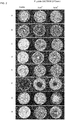
- the strain of the invention is characterized by showing an antagonistic activity against fungal strains of Botrytis aclada, Pythium ultimum, Rhizoctonia solani, Sclerotinia sclerotiorum, Colletotrichum coccodes, Fusarium oxysporum, Alternaria porri, and against bacterial strain of Erwinia carotovora subsp. atroseptica ( FIG. 2 and Tables 4 and 5).
- the present inventors have also found that the strain of the invention is able to inhibit infections caused by Erwinia carotovora subsp. atroseptica in plants under crop conditions (Table 4).
- the strain of the invention presents leucine arylamidase and alkaline phosphatase activities, both having remediious impact on plant growth, development and reproduction.
- Leucine arylamidase liberates amino acids from polymeric high-molecular-mass compounds providing a source of dissolved organic nitrogen that is an essential nutrient for the plant.
- the alkaline phosphatase activity plays an important role in solubilization of bound phosphates, making them available to plants and also helping to its growth and development.
- the strain of the invention has the capacity to antagonize different phytopathogenic agents.
- the strain of the invention can antagonize more effectively the growth of the fungus Botrytis aclada than other P. putida strains, having a higher and long lasting effect.
- the effectiveness of the strain of the invention can allow its use in lower concentrations in order to reach the biocontrol activity. This may result in advantages in formulating different compositions that comprise the strain of the invention, as well as a reduction in costs related to its industrial production.
- the antagonistic activity of the strain of the invention may be partly due to the expression of esterase (C 4 ) enzyme (Table 3), which has been related to biocontrol capacity due to its activity detoxifying some microbial phytotoxins, inhibiting fungal penetration into plant cells, and/or as elicitor of plant defence responses.
- esterase (C 4 ) enzyme Table 3
- the strain of the invention does not express nor synthetize the antimicrobial compounds pyrrolnitrin, 2,4-diacetylphloroglucinol (2,4-DAPG), pyoluteorin and pyocyanin as described in examples 4 A and B.
- These metabolites are known as being the most common antimicrobial compounds produced by Pseudomonas spp. and are involved in the appearance of resistance in strains which are pathogenic for humans or animals.
- the lack of expression of these metabolites by the strain of the invention confers to it a safer profile.
- strain of the invention has the ability to colonise and survive in soils with pH ranging from 4 to 10 (Table 2).
- the pH range of soils can range from ultra-acidic, which are soils that have pH lower than 3.5, to very strongly alkaline soils, which have pHs higher than 9. Plants growth is dependent on micronutrients and macronutrients availability. The soil pH has a clear impact on nutrients availability. This is the reason why there are some species that can grow in some soils, and other that cannot depending on their growth requirements. On the other hand, it is well-recognized by the skilled person in the art that environment conditions such as pH can negatively affect the viability/activity of a particular microorganism. The inventors have surprisingly found that the strain of the invention can survive at very extreme pH values, between 4 and 10. That is, the effectiveness of the strain of the invention is not negatively affected by the pH of the soil, which is a further valuable advantage because it means that the strain of the invention can exert its function in any type of plant crop.
- the strain of the invention is a safe and versatile strain that can efficiently exert its action as pesticide independently of the nature of the soil, contrary to other P. putida strains.
- the present invention provides, in a first aspect, a strain of Pseudomonas putida deposited in the Spanish Type Culture Collection (CECT) with the access number CECT8538, or a mutant thereof, wherein said mutant strain is obtained using the CECT8538 of Pseudomonas putida and also maintains the following features of the starting strain: (a) antagonistic activity of the starting strain against Erwinia carotovora subsp atroseptica, Botrytis aclada, Pythium ultimum, Rhizoctonia solani, Sclerotinia sclerotiorum, Colletotrichum coccodes, Fusarium oxysporum and Alternaria porri and (b) ability to colonise or survive in an aerial part or the roots of a plant.
- CECT Spanish Type Culture Collection
- the strain of Pseudomonas putida of the invention isolated from soil in Gavá (Barcelona, Northeast of Spain), was deposited by the applicant, according to the Budapest Treaty, on January 21 th 2014 in the Spanish Type Culture Collection (CECT), located at the University of Valencia, Edificio de Investigative, Campus de Burjassot, 46100 Burjassot, Valencia, Spain. The strain was given the access number CECT8538 after it was considered viable.
- CECT Spanish Type Culture Collection
- the present invention provides the use of the strain CECT8538 of P. putida or a mutant thereof as defined in the first aspect of the invention, as a pesticide.
- Example 5 With regard to its use as a pesticide in plants, it is important to obtain large quantities of viable cells of the strain. As shown in Example 5, once concentrated and lyophilised, the composition shows >90% cell viability, which is maintained during storage.
- the present invention provides a process for obtaining a viable cell suspension derived from the strain CECT8538 of Pseudomonas putida or a mutant thereof as defined in the first aspect of the invention, the process comprising: (i) inoculating the strain in a culture medium, (ii) subjecting the inoculated culture medium of step (i) to conditions suitable for growth of the strain, and (iii) optionally subjecting the medium resulting from step (ii) to a concentration step.
- the disclosure provides a cell-free extract derived from the strain CECT8538 of Pseudomonas putida or a mutant thereof as defined in the first aspect of the invention, said extract being obtainable by a process comprising: (i) inoculating the strain in a suitable culture medium; (ii) subjecting the inoculated culture medium to suitable growth conditions; (iii) separating the cells from the culture medium of step (ii); (iv) collecting the cell-free extract; and (v) optionally subjecting the cell-free extract to a concentration step.
- the resulting inoculation product can be subjected to an inactivation step of the microorganism.
- the invention provides an inoculation product comprising the strain of the invention inactivated.
- the inoculation product of the fifth aspect of the invention can exert the antagonist effect due to the secretion, during the growth step, of the metabolites responsible of that effect.
- the present invention provides a composition comprising the strain CECT8538 of Pseudomonas putida or a mutant thereof as defined in the first aspect of the invention, or an inoculation product as defined in the fifth aspect, and one or more agriculturally acceptable compounds.
- the present invention provides the use of the strain of the invention or a mutant thereof as defined in the first aspect of the invention, or the inoculation product as defined in the fifth aspect of the invention, or a composition as defined in the sixth aspect of the invention as a pesticide.
- the present invention provides a method for controlling an infection caused by a bacterial or fungal pathogen in a plant, comprising administering the strain of the invention or a mutant thereof as defined in the first aspect, the inoculation product as defined in the fifth aspect or the composition as defined in the sixth aspect, to the plant.
- the present invention relates a strain of Pseudomonas putida deposited in the Spanish Type Culture Collection (CECT) with the access number CECT8538, or a mutant thereof.
- CECT Spanish Type Culture Collection
- mutant it is understood a bacterium that is obtained using, as starting material, the strain CECT8538 of P. putida of the invention, and that maintains the properties of said deposited strain, concerning its antagonistic activity and the ability to colonise or survive in a part of a plant.
- the antagonistic activity against different phytopathogens can be analysed through different methods. These methods are commonly based on the analysis of the growth capacity of the pathogens in contact with the active ingredient or the BCA, or the assessment of the severity of the disease caused by the pathogen infection after the exposition to the active ingredient or the BCA. Some routinary protocols to assess this activity are the poisoned food technique and bacterial soft rot severity analysis among others. Briefly, the poisoned food technique consists in the generation of a potato dextrose agar plate containing the biocontrol agent, the exposition of this plate to a previously prepared mycelium culture of the pathogen strains, and the assessment of the pathogenic strains growth over the time.
- the protocol consist in the following steps: (i) disinfection and sowing of seeds; (ii) allow seedlings growth for 4 weeks; (iii) expose the resulting plant to the pathogenic strain; (iv) incubate the plant with the biocontrol agent; and (v) assessment of the disease severity after further incubation for 4 weeks.
- Examples 6 A-C below the capacity to antagonize different phytopathogenic agents by the strain of the invention is shown.
- FIG. 2 and Tables 4 and 5 illustrate that the strain of the invention not only can antagonize different fungal strains more effectively than other P. putida strains, but also that it is effective against bacterial growth, such as Erwinia carotovora subsp.
- Colonization capacity is necessary for a BCA to perform properly its function. This ability can be studied using several techniques comprising the swarming assay, or functional assays such as the assessment of the antagonistic activity under crop like conditions.
- swarming motility assessment bacterial strains are plated in specific media (M9 or BM2) plates and incubated overnight at a desired temperature. After the incubation, the multicellular bacterial surface movement is analysed.
- M9 or BM2 specific media
- the capacity to colonize there are other capacities also involved in the adaptation to different environment conditions, such as pH and temperature tolerances.
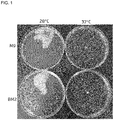
- the strain of the invention shows the ability to colonize different substrates at 26°C ( FIG 1 ), as well as the ability to act against bacterial infection when it is applied to the infected plant (Table 4), and it can survive in a broad range of pH, from 4-10 (Table 2).
- a “mutant” of CECT8538 of P. putida is also understood as a "variant” of CECT8538 of P. putida.
- mutants retaining the characteristics and relevant advantages described herein can be obtained routinely, for example by spontaneous mutagenesis or directed mutation, using the strain of the invention as starting material. Methods for obtaining mutants of a specific bacterial strain are known in the art. An example can be found in Sambrook, J. and Russell, D.W. "Molecular Cloning: A Laboratory Manual”, Chapter 13, “Mutagenesis”, Cold Spring Harbor, 3rd Ed, 2001 . From now on, when reference is made in the present invention to the expression “strain of the invention", it encompasses the P. putida strain CECT8538 and the mutants thereof.
- the plant may be a tuber, such as potatoes, or a tree, in particular, a fruit tree, such as a pear tree, tomato, cauliflower or pepper, among others.
- the terms "pest control”, and “biological pest control” are used herein interchangeably and refer to integrated pest control.
- the invention refers to the use of the strain CECT8538 of P. putida or a mutant thereof, as a pesticide in plants.
- the term "pesticide” is understood by its usual meaning in the field of agronomy as a product intended to kill, repel, regulate or disrupt the growth of living organisms that are considered pests.
- pesticide is a biological or ecological (organic) pesticide, also called biopesticide.
- biopesticide is a biological or ecological (organic) pesticide, also called biopesticide.
- the term “pesticide” would have the same meaning as the term “phytosanitary”.
- control of the disease means that it prevents, reduces, cures or eradicates the disease.
- the strain is used in preventing infections caused by bacteria or fungi in plants.
- the present invention relates to a process for obtaining a viable cell suspension derived from the strain of the invention comprising: (i) inoculating the strain of the invention in a suitable culture medium, (ii) subjecting the inoculated culture medium of step (i) to appropriate conditions to the growth of the strain, and (iii) optionally subjecting the medium resulting from step (ii) to a concentration step.
- the term "derived from the strain of the invention" means that the suspension is obtained from the strain object of the present invention.
- the strain of the invention may be inoculated in the culture medium at a final concentration comprised from 5 to 7% v/v.
- the inoculated culture is in an exponential growth phase.
- Cell growth will slow on achieving, preferably, a cell concentration comprised from 1,0x10 9 to 1,0x10 10 CFU/mL.
- Suitable culture media for the growth of the strain of the invention are synthetic media, such as LB (lysogenic broth) and PM (saline production medium), or media of plant origin such as molasses (e.g. from sugar cane, beets and others).
- Suitable conditions for strain's growth are temperatures comprised from 25 to 35°C, pH comprised 6 to 8, and oxygen concentration comprised from 50 to 100%.
- the growth of the strain of the invention is produced by stirring. An example of the detailed method for obtaining cells from the strain of the invention is reflected in Example 5.
- cells are separated from the medium to obtain a concentrated suspension.
- Suitable separation techniques include centrifugation or filtration of the culture. Carrying out the centrifugation of the culture, for example, at a minimum of 5000 rpm, cells are obtained in the pellet, which are resuspended in part of the culture medium or in a suitable buffered medium such that the strain concentration is approximately about 1x10 11 CFU/mL.
- the suspension may be subjected to a dehydration step.
- Dehydration can be carried out through a lyophilisation process.
- the suspension can be dehydrated by fluidised bed drying.
- Another option is to dehydrate the suspension by spray drying or drying in an oven under vacuum.
- an inert osmotic protector ingredient can be added to the suspension before carrying out the dehydration process.
- the process comprises resuspending the cells resulting from the separation step in a suitable buffer to yield a cell concentrated suspension.
- the disclosure provides a cell-free extract derived from the strain CECT8538 of P. putida or a mutant thereof as defined in the first aspect of the invention, said extract being obtainable by a process comprising: (i) inoculating the strain in a suitable culture medium; (ii) subjecting the inoculated culture medium to suitable growth conditions; (iii) separating the cells from the culture medium of step (ii); (iv) collecting the cell-free extract; and (v) optionally subjecting the cell-free extract to a concentration step.
- the cell-free medium obtained by the separation processes described above could be used and/or introduced to an appropriated formulation directly or subjected to a concentration step to reach a more suitable composition.
- the disclosure relates different protocols to concentrate the cell-free extract that can be used, such as dehydration, filtration, ultra-filtration, centrifugation, ultra-centrifugation, precipitation, or chromatography.
- the invention provides in a fifth aspect an inoculation product comprising the strain of the invention.
- inoculation product it is understood a product obtained after inoculating the strain in a suitable culture medium, subjecting the inoculated culture medium to suitable growth conditions.
- the inoculation product is in a concentrated form.
- the inoculation product is in a dried-concentrated form. Techniques for concentrating and drying the inoculation product are routine and have been provided above.
- the inoculation product comprises the strain of the invention inactivated.
- the present invention provides a composition comprising the strain as defined in the first aspect of the invention, or an inoculation product as defined in the fifth aspect, and one or more agriculturally acceptable compounds.
- pesticide agents are usually formulated into compositions also including suitable additives for agricultural use.
- compositions of the invention may be solid (including, for example, dehydrated bacteria concentrate) or liquid (including bacteria concentrated suspensions).
- Agriculturally acceptable compounds refers to those compounds and/or materials, which are suitable for use in agriculture. In general, said compounds should be non-toxic to humans and preferably should be environment-friendly.
- the pesticidal compositions of the invention may contain compounds for improving the adhesion of the strains in the plants to be treated, as well as phytostrengthener compounds, nutrients, wetting agents, stabilizers, osmotic protectors, antioxidants, sunscreens, buffering compounds or combinations thereof.
- examples of adhesion products are gelatin, starch, pectins, alginates and various types of gums such as xanthan. Many of these compounds are also wetting agents.
- Congo red In the case of sunscreens, Congo red, calcium carbonate and wax emulsions can be used.
- the phytostrengtheners are compounds that can facilitate make crops develop robustness or tolerance towards pathogens or adverse environmental conditions, for example, jasmonic acid analogues and some plant defense stimulants such as harpins, chitosans, and laminarins.
- examples of osmotic protectors are trehalose, betaines and amino acids.
- ascorbic acid and glutathione are included among antioxidants.
- the composition comprises at least one additional pesticidal agent, said additional pesticide not adversely affecting the activity of the strain CECT8538.
- the additional pesticidal agent is selected from the group consisting of a bacterial strain effective in controlling a bacterial or fungal infection, a fungicide, a bactericide, an herbicide, an insecticide or a nematicide.
- compositions of the sixth aspect of the invention can be prepared by routine protocols, such as mixing of the different ingredients.
- the invention directs to the use of the strain of the invention as defined in the first aspect of the invention, or the inoculation product as defined in the fifth aspect of the invention, or the compositions as defined in the sixth aspect of the invention as a pesticide in plants.
- the invention refers to the use of the compositions of the sixth aspect to control diseases caused by fungal or bacterial pathogens in plants.
- the invention provides a method comprising administering the strain of the invention or the mutants thereof as defined in the first aspect, or the inoculation product defined in the fifth aspect, or the compositions defined in the sixth aspect, to the affected part of the plant and/or the seed, or to the substrate or soil used for growing of said plant, for preventing, curing, reducing or eradicating a disease caused by bacterial or fungal infection.
- samples of soil collected from Spain region All samples were from fields and natural environment of Mediterranean climate.
- the samples were processed by conventional microbiological methods ( Mora et al., "Antimicrobial peptide genes in Bacillus strains from plant environments", International Microbiology, 2011, vol. 14, pp. 213-223 ), and bacteria of the genus Pseudomonas were isolated in NA medium at 28°C for 24 h, forming a collection of 2.400 isolates.
- CECT8538 was initially identified by 16S rDNA sequencing.
- 16S rDNA was amplified using the bacterial forward primer 8f, with the sequence SEQ ID NO:1 (forward primer 8f: AGTTTGATCCTGGCTCAG), and the universal reverse-complementary primer 1492r, with SEQ ID NO:2 (reverse primer 1492r: ACGGTTACCTTGTTACGACTT), using colony PCR (a single colony from a solid culture in NA was picked with an sterile pipette tip; the tip was dipped in 50 ⁇ L sterile water, boiled for 10 min at 98°C, and placed immediately on ice until use as PCR template) with a high fidelity DNA polymerase (Biotaq, Bioline, London, UK) following manufacturer's instructions.
- colony PCR a single colony from a solid culture in NA was picked with an sterile pipette tip; the tip was dipped in 50 ⁇ L sterile water, boiled for 10 min at 98°C, and placed immediately on ice until use as PCR template
- the amplicon SEQ ID NO:3 (corresponding to the subunit 16S rDNA of the strain of the invention CECT8538) was purified and sequenced using the 8f primer. The sequence was then submitted to BLASTn homology search against the whole NCBI nucleotide database. On the basis of the 16S rDNA nucleotide sequence the bacterial isolate was initially identified as a Psudomonas sp. strain closely related to the so-called "P. putida complex" ( P. putida / plecoglossicida / taiwanensis ).
- the rpoD and gyrB nucleotide sequences which are reported to be more discriminating within this genus, were retrieved from the whole genome shotgun sequence (WGS) and analyzed as for the 16S except that the target database was limited to Pseudomonas spp. entries (taxid:286).
- the rpoD (SEQ ID:4) and gyrB (SEQ ID:5) nucleotide sequences show that CECT8538 is a P. putida strain belonging to P. putida biovar A or C. As opposed to biovar C, biovar A P. putida strains are unable to grow at 4°C. Since CECT8538 was not able to grow at 4°C, it was concluded that it was a biovar A P. putida strain.
- the data generated were analyzed by Sequentia Biotech (Barcelona, Spain) by applying a proprietary workflow, RECONSTRUCTOR, which generates an annotated whole genome shotgun (WGS) sequence using a combined de-novo and reference-assisted assembly approach.
- WLS whole genome shotgun
- the WGS sequence was annotated using RAST.
- the online tool WebMGA was used (http://weizhong-lab.ucsd.edu/metagenomic-analysis/).
- WebMGA was used (http://weizhong-lab.ucsd.edu/metagenomic-analysis/).
- tRNAs ARAGORN v1.2.36 was used.
- the oriC and related sequences were identified using Ori-Finder and the DoriC database. Genomic islands were identified using IslandViewer 3.
- the assembly of the CECT8538 genome sequence resulted in 186 scaffolds, containing 6315656 nucleotides, built from contigs with either no BLAST hit (e-val. cut-off 0.01) or best BLAST hits in Pseudomonas spp.
- the first one (herein referred to as "the chromosome”) includes 5860165 bases, i.e. 92.8 % of all bases sequenced.
- the overall GC content of the CECT8538 genome is 61.7 %.
- IslandViewer predicts 12 genomic islands (Gls) in the chromosome, some of them matching GC-skewed regions, from which at least 5 bear prophage-related sequences. One of these Gls spans about 700 kbp and includes over 600 CDSs.
- the CECT8538 WGS includes sequences encoding for 67 tRNAs. From these, 57 are encoded in the chromosome, and include tRNAs for 22 aminoacids, including seC (selenocysteine) and an ambiguous tRNA (for seC or Val).
- the oriC sequence of the CECT8538 genome comprises 573 nucleotides, flanked by the rpmH and dnaA genes, and comprises 4 dnaA boxes and two additional sequences with 1 and 2 unmatched sites, respectively.
- the RAST annotation tool predicted 5892 CDSs encoded in 5595813 nucleotides (i.e. the coding regions cover 88.6 % of the genome), with the CDS length ranging from 60 to 14394 nucleotides, mean and median CDS lengths of 950 and 819 nucleotides, respectively, and N50 CDS length of 1197 nucleotides. From all the CDSs, 50 % were classified as hypothetical proteins.
- Sequentia Biotech performed a variant calling analysis to unravel single nucleotide polymorphisms (SNPs), small insertion or deletions (INDELs) and large structural variants (SVs) in CECT8538 as compared to the reference genome (KT2440; DSM6125). After filtering by variant quality and genotype depth, CECT8538 shows 112931 SNPs and 867 INDELs (332 small deletions and 535 small insertions) as compared to KT2440. In addition, from all the CECT8538 reads obtained in the experiment, 22.3 % did not map to the KT2440 genome. These reads were de novo assembled and from the assembled scaffolds 512 ORFs were predicted, including 402 complete proteins. The megablast algorithm, with default settings, did not show significant alignment with any nucleotide sequence in the NCBI database for over 200 of these ORFs, indicating that CECT8538 is not only different to the KT2440, but also from other strains.
- SNPs single nucleot
- NA nutrient agar
- M9 Casamino Acids
- 2 mM MgSO 4 0.1 mM CaCl 2 supplemented with 0.4% glucose and solidified with 0.5% agar
- the strain of the invention was plated in NA plates at a 10 8 concentration (CFUs ml -1 ), and incubated at different temperatures (i.e. 4°C, 26°C, 37°C and 42°C) for 5 days. Temperatures of 26°C and 37°C were found optimum for the growth of the isolate CECT8538 while it did not grow at 4°C and 42°C after 24h incubation (see Table 1). As described above, CECT8538 was clustering as P. putida biovar A or C based on the rpoD and gyrB nucleotide sequences. Contrary to biovar C, the ability of P. putida biovar A strains to growth at 4°C is relatively rare, supporting that the strain of the invention belongs to biovar A.
- the antibiotic sensitivity was determined by incorporating 15 ⁇ g/ml of nalidixic acid, 50 ⁇ g/ml of chloramphenicol, 50 ⁇ g/ml of streptomycin sulfate, 50 ⁇ g/ml of oxytetracicline, or 50 ⁇ g/ml of nitrofurantoin in NA medium. Also the ability to grow in NA containing 5% of NaCI was determined. In all conditions the plates were incubated 48h at 26°C. P. putida CECT8538 was resistant to 15 ⁇ g/ml of nalidixic acid and 50 ⁇ g/ml of chloramphenicol.
- the strain of the invention was not able to growth in NA containing 50 ⁇ g/ml of streptomycin sulfate, 50 ⁇ g/ml of oxytetracycline, or 5% NaCl.
- the antibiotic nitrofurantoin showed a lightly effect on the bacterium growth at 50 ⁇ g/ml (see Table 1).
- the colonization capacity is a crucial feature for biocontrol agents to adequately compete within the environment of the rhizosphere.
- This capacity of the strain of the invention its bacterial swarming motility was assessed. Swarming is a specialized multicellular movement that facilitates the coordinated colonization of surfaces by bacteria. Briefly, a preculture of the strain of the invention was inoculated in plates containing either M9 or BM2 media, and incubated for 30h at 28°C or 37°C ( FIG 1 ). As shown in FIG 1 the strain of the invention has a high swarming capacity at 28°C, but not at 37°C. This indicates that the strain of the invention is metabolically active at 28°C, which is the soil average temperature, and it does not have it at 37°C, which is the optimal colonization temperature of human pathogenic microorganisms.
- the strain of the invention CECT8538, and the reference P. putida strains CECT324 and DSM6125 (KT2440) were pre-cultured on a shaker at 28°C and 120 rpm overnight. These precultures were seeded in NA petri plates with the desired adjusted pHs (see table 2), and incubated for 24h at 28°C. pH adjustment was performed after sterilization of the NA medium, just before pouring the medium into the plates. Table 2 shows the results observed after 24h of incubation. CECT8538 was the strain which was able to survive in a broader pH range when compared to the other P.
- Example 4 Analysis of antimicrobial production by the strain of the invention.
- Example 4A HPLC analysis for evidence of metabolite production by P. putida CECT8538.
- the most common antimicrobial metabolites produced by Pseudomonas spp. are pyrrolnitrin, 2,4-DAPG, pyoluteorin, and phenazines that play an important role in biocontrol. These metabolites can be synthetized by Pseudomonas spp. during the late logarithmic or stationary phase of growth.
- the strain of the invention was subject to a fermentation process to grow.
- Large scale cultivations were done in an industrial bioreactor F3-100 (F3-industrial model, Bionet) with a working volume of 100 litres, using LB culture medium, temperature adjusted at 28°C ⁇ 1°C, aeration of 8L/min, Dissolved oxygen at > 50% and stirred at 200-400 rpm .
- the culture was inoculated at 5% v/v with a preculture grown for 24 hours in a lab bioreactor F1-5 (F1-lab model, Bionet) under the same parameters of industrial bioreactor.
- HPLC chromatograms of the different samples from the strain of the invention were compared with the chromatogram obtained for the standards metabolites pyrrolnitrin, 2,4-DAPG, pyoluteorin, and pyocyanin. The four peaks corresponding of each metabolite were absent in the chromatograms obtained from the strain of the invention.
- Example 4B Genomic analysis to determine the ability to synthesize pyrrolnitrin, 2,4-DAPG, pyoluteorin, and pyocyanin metabolites by the strain of the invention
- CECT8538 comprises the genetic machinery to synthesize these metabolites under other growth/storage particular conditions.
- the core biosynthetic pathways for each metabolite in Pseudomonas spp. were retrieved from the NCBI database.
- the homologues to pyrrolnitrin, 2,4-DAPG, pyoluteorin and pyocyanin biosynthetic enzymes were searched in the WGS of CECT8538, and protein-protein alignments were performed using BLASTp.
- the pyrrolnitrin biosynthetic enzymes are encoded by genes located in the prn operon, which includes prnA (encoding a tryptophan halogenase), prnB (encoding a monodechloroaminopyrrolnitrin synthase), prnC (encoding an halogenase), and prnD (encoding an aminopyrrolnitrin oxygenase).
- prnA encoding a tryptophan halogenase
- prnB encoding a monodechloroaminopyrrolnitrin synthase
- prnC encoding an halogenase
- prnD encoding an aminopyrrolnitrin oxygenase
- the core biosynthetic pathway of 2,4-DAPG is encoded by genes in the phl locus, including phlA (encoding a ⁇ -ketoacyl-ACP synthase III), phlB (encoding a putative nucleic-acid binding enzyme), phlC (encoding a condensing enzyme), and phlD (encoding a type III polyketide synthase; PKS).
- Some PhID proteins in Pseudomonas spp. showed a homologue in CECT8538, but no PhIA, PhIB or PhIC homologues were found in the strain of invention (Table 3). Thus, it is derived that CECT8538 is not able to synthetize 2,4-DAPG.
- Pyoluteorin biosynthetic genes in P. fluorescens Pf-5, are grouped in the plt gene cluster. This includes 10 genes although only 7 constitute the core pyoluteorin biosynthetic pathway: pltF (encoding a acyl-CoA synthase), pltE (encoding a acyl-CoA dedehydrogenase), pltA and pltM (both encoding halogenases), pltB (PKS), pltC (PKS) and pltG (thioesterase).
- PltF had a homologue in CECT8538; only in some species/strains PltA, PltB, PltC, PltE, and PltM showed homology with a CECT8538 protein; and no PltG had a homologue in the strain of invention.
- the thioesterase PltG is probably responsible for termination of polyketide assembly, thus the absence of pltG suggests that CECT8538 is not able to synthetize pyoluteorin.
- Phenazines such as phenazine-1-carboxylic acid (PCA) and pyocyanin, are virulence factors in P . aeruginosa. Both stimulate a neutrophilic inflammatory response and up-regulate chemokines (IL-8) and adhesion molecules (ICAM-1) by oxidant-dependent mechanisms.
- IL-8 up-regulate chemokines
- IAM-1 adhesion molecules
- the biosynthesis of pyocyanin is achieved by the combined action of the core phenazine biosynthetic pathway leading to PCA, and pyocyanin -specific biosynthetic reactions that allow the conversion of PCA into pyocyanin. These two sets of reactions are catalyzed by enzymes encoded in two respective operons.
- phzA is a non functional copy of phzB
- phzD encoding isochorismatase
- phzE similar to anthranylate synthase
- phzF encoding a trans-2,3-dihydro-3-hydroxyanthranilate isomerase
- phzG encoding a flavin-dependent oxidase
- PhzD proteins from P. aeruginosa PAO1 showed a homologue in CECT8538, and the same was observed with PhzD proteins from P. aeruginosa PAO1.
- PhzA and PhzB did not show homologues in CECT8538, neither the sequences from P. putida FDAARGOS, nor those from P . aeruginosa PAO1.
- Example 5 Industrial scale production of a composition of the invention.
- optimal fermentation conditions described below using a F3-100 type bioreactor in liquid medium can be used, although techniques based on solid media fermentation may also be used, all of them being standard methods used in the microbiological industry.
- a F1-F5 bioreactor was used with 10LLB medium at 28°C, pH 7,0, pO 2 >50% ramp, and stirring at 200- 400 rpm.
- An exponential culture of the P. putida CECT8538 was inoculated at 5% v/v and the operational parameters of the bioreactor were monitored, the growth ending in steady phase in 12 h and getting cellular concentrations of 2,0x10 9 CFU/mL.
- the culture was centrifuged in Hitachi CR22N centrifuge at 5000 rpm and cells were collected aseptically.
- the biomass was concentrated by resuspending in 500ml buffer, obtaining about 1 litres of 2,0x10 10 CFU/mL concentrate.
- An inert osmotic protector ingredient (1L) was added later to the concentrate and dehydrated in a Heto Power Dry LL 3000 lyophiliser under standard conditions for 72 h, obtaining about 100 g dry weight (50% active material), with a concentration of 1,0x10 11 CFU/g p.s..
- Example 6A Activity assessment of the strain of the invention against Erwinia carotova subsp. atroseptica on potato crop
- Biobactericide activity was assessed by in-house Method of Analysis (MA 10 "Determination of biocide or biostatic activity in vivo", Futureco Bioscience).
- TGAI Technical Grade Active Ingredient
- WP wettable powder formulation
- WP wettable powder formulation
- OD oil dispersible formulation
- the testing substances were applied three times throughout each bioassay.
- First test application (A) was performed 24h after transplant (6 days before pathogen challenge) by adding 20 mL containing different concentrations of the test substances on the substrate (see Table 4). Inoculation with the pathogen was performed 7 days after transplant by adding 20mL of a pathogen bacterial suspension (2x10 9 CFU/mL; 4x10 7 CFU/plant) from a 24 h pre-culture per plant.
- a control infected with the pathogen but not treated with the strain of the invention was included.
- Plants were maintained in growth chamber conditions (Fitoclima 20000, ARALAB) during 4 weeks (20°C (day), 18°C (night); 60-70% HR; 13h:11h day:night; 270-300 PAR) and watered daily. Twenty two days after transplant to the 1L pots, plants were rated for Bacteria Soft Rot disease Severity (Percentage of BSR as necrotic vascular lesion). Efficacy was assessed by measuring the percentage of damage stem as brown rot related to the total length of the stem 7 days after last application (7 DAC, days after C treatment ).
- the strain of the invention has the capability to colonize potato's crops and act as a biocontrol agent against the bacteria Erwinia carotovora subsp. atroseptica.
- Example 6B In vitro antifungal activity of Pseudomonas putida strain CECT8538
- the fungal inhibition tests were performed against the indicated phytopathogens by the Poisoned Food technique. Briefly, bacterium was overnight cultured in LB medium at 28°C and 200 rpm. From this stationary culture, a solution of the biocontrol agent CECT8538 was pipetted aseptically into temperate potato dextrose agar (PDA) to reach two final bacterial concentrations, 3x10 6 and 3x10 7 CFUs ml -1 .
- PDA potato dextrose agar
- the medium was poured into 9 cm Petri plates and, after solidification, agar discs (6 mm diameter) containing mycelium from the active growing edge of 7 days-old cultures of the pathogen strains were placed on the centre of each plate in an inverted position to achieve greater contact of the mycelium with the poisoned media.
- agar discs (6 mm diameter) containing mycelium from the active growing edge of 7 days-old cultures of the pathogen strains were placed on the centre of each plate in an inverted position to achieve greater contact of the mycelium with the poisoned media.
- Each treatment was done by triplicate. Plates were incubated at 26°C in the dark and the radial mycelial growth of fungal colony was followed by measurement of the shorter and longer radius at different days.
- the assay was repeated at least twice for each pathogen.
- the effect of CECT8538 in vitro was compared to control plates (PDA without the bacteria amendment).
- the strain of the invention showed strong antagonistic activity against all the fungal pathogens tested ( FIG. 2 ). Differences in growth area between fungi growing in PDA with bacterium and control (PDA alone) were observed after 3 days of incubation and this growth inhibition was better when the higher dosage of CECT8538 was used.
- Example 6C Comparative analysis of B . aclada antagonistic activity between different P. putida strains.
- Botritys aclada is one of the causal agents of onion neck rot, and the one responsible for the higher losses in terms of production. Although the symptoms related to B. aclada infection appear during onion storage, the infection takes place in the field. It is known that some P. putida strains, such as WCS3558 can inhibit other Botrytis species like B. cinerea, which affect other kind of fruits crops like grapes.
- the strain of invention has the capacity to inhibit B. aclada CECT 2851 growth (example 6B), but it was not clear if this capacity was specific of the strain of the invention or other P. putida strains could have the same effect.
- a comparison analysis using the strain of the invention and the reference P .putida strains, CECT324 and DSM6125 (KT2440) was performed.
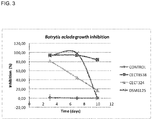
- the growth inhibition capacity was measured by the poisoned food technique and fungal growth was monitored at 3, 7, and 10 days (see FIG. 3 and Table 5).
- Table 5 shows the final results 10 days after P .putida strains inoculation.
- the strain of the invention was the unique P .putida strain which maintained a significant effect on B. aclada growth after 10 days of incubation.
- the reference strains also had the capacity to inhibit the growth of B. aclada 3 days after inoculation but they lose their effect at 7 and 10 days after inoculation ( FIG. 3 ). Therefore, although the three tested strains had an inhibitory effect at the beginning of the assay, only the strain of the invention had a long lasting effect on B. aclada's growth.
- the amount of the strain of the invention was of the same order as the amount of the comparative strains, and the inhibitory effect obtained with the strain of the invention was remarkably improved.
- Table 5 Comparative analysis of growth inhibition of B. aclada by the different tested P . putida strains. Concentration (ufc/mL) Strain Growth (%) Inhibition (%) 3.9 x10 7 CECT8538 16,01 83,99 1.2 x10 7 CECT324 83,35 16,65 2.79 x10 7 DSM6125 100 0
Landscapes
- Life Sciences & Earth Sciences (AREA)
- Engineering & Computer Science (AREA)
- Health & Medical Sciences (AREA)
- Zoology (AREA)
- Chemical & Material Sciences (AREA)
- Wood Science & Technology (AREA)
- Biotechnology (AREA)
- General Health & Medical Sciences (AREA)
- Organic Chemistry (AREA)
- Genetics & Genomics (AREA)
- Bioinformatics & Cheminformatics (AREA)
- Microbiology (AREA)
- Virology (AREA)
- Biomedical Technology (AREA)
- Biochemistry (AREA)
- Medicinal Chemistry (AREA)
- Tropical Medicine & Parasitology (AREA)
- General Engineering & Computer Science (AREA)
- Plant Pathology (AREA)
- Pest Control & Pesticides (AREA)
- Dentistry (AREA)
- Environmental Sciences (AREA)
- Agronomy & Crop Science (AREA)
- Micro-Organisms Or Cultivation Processes Thereof (AREA)
- Agricultural Chemicals And Associated Chemicals (AREA)
- Catching Or Destruction (AREA)
- Pretreatment Of Seeds And Plants (AREA)
Claims (12)
- Ein bei der spanischen Artenkultursammlung (CECT) mit der Hinterlegungsnummer CECT8538 hinterlegter Stamm von Pseudomonas putida, oder ein Mutant davon, wobei der mutante Stamm unter Verwendung von CECT8538 von Pseudomonas putida erhalten wird und folgende Merkmale des Ausgangsstamms behält:- antagonistische Aktivität des Ausgangsstamms gegen Erwinia carotovora subsp atroseptica, Botrytis aclada, Pythium ultimum, Rhizoctonia solani, Sclerotinia sclerotiorum, Colletotrichum coccodes, Fusarium oxysporum, und Alternaria porri; und;- Fähigkeit zur Kolonienbildung und zum Überleben in einem oberirdischen Teil oder den Wurzeln einer Pflanze.
- Verwendung des CECT8538-Stamms von Pseudomonas putida oder eines Mutanten davon wie in Anspruch 1 definiert als Pestizid für Pflanzen.
- Die Verwendung nach Anspruch 2 zur Kontrolle von einer durch eine Bakterie oder einen Pilz verursachten Krankheit bei einer Pflanze.
- Ein Verfahren zur Herstellung von einer lebensfähigen aus dem wie in Anspruch 1 definierten CECT8538-Stamm von Pseudomonas putida oder eines Mutanten davon abgeleiteten Zellensuspension, wobei das Verfahren folgendes umfasst:
(i) inokulieren des Stamms in ein Nährmedium, (ii) aussetzen des in Schritt (i) inokulierten Nährmediums Bedingungen, die zum Wachstum des Stamms geeignet sind, und (iii) wahlweise aussetzen des aus dem Schritt (ii) erhaltenen Mediums einem Konzentrierungsschritt. - Ein Inokulationsprodukt umfassend den Stamm wie in Anspruch 1 definiert.
- Eine Zusammensetzung umfassend den wie in Anspruch 1 definierten CECT8538-Stamm von Pseudomonas putida oder eines Mutanten davon, oder ein Inokulationsprodukt wie in Anspruch 5 definiert, und eine oder mehre landwirtschaftlich akzeptable Verbindungen.
- Die Zusammensetzung nach Anspruch 6, wobei die eine oder die mehreren landwirtschaftlich akzeptablen Verbindungen aus der Gruppe bestehend aus Pflanzenstärkungsmitteln, Nährstoffen, Netzmitteln, Verbindungen, welche die Haftfähigkeit verbessern, Puffermitteln, Stabilisatoren, Antioxidationsmitteln, osmotische Schutzmitteln und Sonnenschutzmitteln ausgewählt ist bzw. sind.
- Die Zusammensetzung nach einem der Ansprüche 6 bis 7, umfassend mindestens ein weiteres Pestizid.
- Die Zusammensetzung nach Anspruch 8, wobei das zusätzliche Pestizid ausgewählt ist aus der Gruppe bestehend aus einem bakteriellen Stamm mit antimykotischer und/oder antibakterieller Wirkung, einem Antimykotikum, einem Bakterizid, einem Herbizid, einem Insektizid oder einem Nematizid.
- Verwendung des Stamms wie in Anspruch 1 definiert, oder des Inokulationsprodukts wie in Anspruch 5 definiert, oder der Zusammensetzung wie in einem der Ansprüche 6 bis 9 definiert als Pestizid bei einer Pflanze.
- Die Verwendung nach Anspruch 10 zur Kontrolle von Pilzerregern und bakteriellen Erregern bei einer Pflanze.
- Ein Verfahren zur Kontrolle von einer durch einen bakteriellen Erreger oder einen Pilzerreger verursachten Infektion einer Pflanze, umfassend die Anwendung des wie in Anspruch 1 definierten Stamms oder eines Mutanten davon, oder des wie in Anspruch 5 definierten Inokulationsprodukts, oder der wie in einem der Ansprüche 6 bis 9 definierten Zusammensetzung an dem betroffenen Teil der Pflanze und/oder am Saatgut oder am Substrat oder in der zum Anbau der Pflanze verwendeten Erde.
Applications Claiming Priority (2)
| Application Number | Priority Date | Filing Date | Title |
|---|---|---|---|
| EP17382188.5A EP3385370A1 (de) | 2017-04-06 | 2017-04-06 | Pseudomonas-putida-stamm und dessen verwendung zur bekämpfung von durch bakterien und pilzen in pflanzen verursachten krankheiten |
| PCT/EP2018/058567 WO2018185139A1 (en) | 2017-04-06 | 2018-04-04 | A strain of pseudomonas putida and its use in the control of diseases caused by bacteria and fungi in plants |
Publications (2)
| Publication Number | Publication Date |
|---|---|
| EP3607048A1 EP3607048A1 (de) | 2020-02-12 |
| EP3607048B1 true EP3607048B1 (de) | 2021-04-21 |
Family
ID=58544890
Family Applications (2)
| Application Number | Title | Priority Date | Filing Date |
|---|---|---|---|
| EP17382188.5A Withdrawn EP3385370A1 (de) | 2017-04-06 | 2017-04-06 | Pseudomonas-putida-stamm und dessen verwendung zur bekämpfung von durch bakterien und pilzen in pflanzen verursachten krankheiten |
| EP18716220.1A Active EP3607048B1 (de) | 2017-04-06 | 2018-04-04 | Pseudomonas putida stamm |
Family Applications Before (1)
| Application Number | Title | Priority Date | Filing Date |
|---|---|---|---|
| EP17382188.5A Withdrawn EP3385370A1 (de) | 2017-04-06 | 2017-04-06 | Pseudomonas-putida-stamm und dessen verwendung zur bekämpfung von durch bakterien und pilzen in pflanzen verursachten krankheiten |
Country Status (6)
| Country | Link |
|---|---|
| US (1) | US11332709B2 (de) |
| EP (2) | EP3385370A1 (de) |
| JP (1) | JP7049689B2 (de) |
| ES (1) | ES2879322T3 (de) |
| MA (1) | MA49037B1 (de) |
| WO (1) | WO2018185139A1 (de) |
Families Citing this family (7)
| Publication number | Priority date | Publication date | Assignee | Title |
|---|---|---|---|---|
| CN112111426B (zh) * | 2020-09-22 | 2022-10-21 | 河南科技学院 | 一种亚麻假单胞菌及其在大葱紫斑病生防中的应用 |
| EP4225894A1 (de) * | 2020-10-05 | 2023-08-16 | T3 Bioscience, LLC | Pseudomonas-stämme und ihre metaboliten zur bekämpfung von pflanzenkrankheiten |
| KR20230079416A (ko) * | 2020-10-05 | 2023-06-07 | 티3 바이오사이언스, 엘엘씨 | 식물 질병을 방제하기 위한 슈도모나스 균주 및 이의 대사산물 |
| JP7508106B2 (ja) * | 2020-12-14 | 2024-07-01 | 国立研究開発法人農業・食品産業技術総合研究機構 | 植物成長促進又は植物保護の能力を有する微生物 |
| CN114085788B (zh) * | 2021-10-27 | 2023-09-01 | 天津市农业科学院 | 一株雅马纳假单胞菌菌株及其应用 |
| CN116622569B (zh) * | 2023-05-19 | 2024-01-16 | 云南省农业科学院农业环境资源研究所 | 恶臭假单胞菌及其应用 |
| CN116769662B (zh) * | 2023-06-16 | 2024-01-23 | 云南省农业科学院农业环境资源研究所 | 恶臭假单胞菌、菌剂和生物制剂及其应用 |
Family Cites Families (4)
| Publication number | Priority date | Publication date | Assignee | Title |
|---|---|---|---|---|
| US20020028228A1 (en) * | 1997-07-22 | 2002-03-07 | Gary C. Bergstrom | Biocontrol for plants with paenibacillus macerans, pseudomonas putida, and sporobolomyces roseus |
| EP1241247A1 (de) | 2001-03-13 | 2002-09-18 | C.C.H. S.A. | Isolierte Bakterien zum Schutz von Pflanzen gegen phytopathogene Pilze und Bakterien |
| JP2005330183A (ja) | 2004-05-18 | 2005-12-02 | Mitsui Chemicals Inc | 防除微生物として細菌を含有する生物農薬を用いる防除方法 |
| NZ701463A (en) * | 2012-04-03 | 2016-06-24 | Bio Start Ltd | Anti-phytopathogenic composition |
-
2017
- 2017-04-06 EP EP17382188.5A patent/EP3385370A1/de not_active Withdrawn
-
2018
- 2018-04-04 MA MA49037A patent/MA49037B1/fr unknown
- 2018-04-04 US US16/603,203 patent/US11332709B2/en active Active
- 2018-04-04 WO PCT/EP2018/058567 patent/WO2018185139A1/en not_active Ceased
- 2018-04-04 EP EP18716220.1A patent/EP3607048B1/de active Active
- 2018-04-04 ES ES18716220T patent/ES2879322T3/es active Active
- 2018-04-04 JP JP2019553949A patent/JP7049689B2/ja active Active
Non-Patent Citations (1)
| Title |
|---|
| None * |
Also Published As
| Publication number | Publication date |
|---|---|
| ES2879322T3 (es) | 2021-11-22 |
| US11332709B2 (en) | 2022-05-17 |
| US20200178541A1 (en) | 2020-06-11 |
| JP2020515273A (ja) | 2020-05-28 |
| MA49037B1 (fr) | 2021-07-29 |
| MA49037A (fr) | 2020-02-12 |
| EP3607048A1 (de) | 2020-02-12 |
| EP3385370A1 (de) | 2018-10-10 |
| WO2018185139A1 (en) | 2018-10-11 |
| JP7049689B2 (ja) | 2022-04-07 |
Similar Documents
| Publication | Publication Date | Title |
|---|---|---|
| US11332709B2 (en) | Strain of Pseudomonas putida and its use in the control of diseases caused by bacteria and fungi in plants | |
| KR101569737B1 (ko) | 벼 근권에서 분리된 신규 식물 내생세균 바실러스 오리지콜라 및 이를 이용한 천연식물 보호 및 식물 강화제 개발 | |
| US8202514B2 (en) | Bacillus subtilis strain having antagonistic activity for controlling plant diseases | |
| Cao et al. | An endophytic Streptomyces sp. strain DHV3-2 from diseased root as a potential biocontrol agent against Verticillium dahliae and growth elicitor in tomato (Solanum lycopersicum) | |
| JPWO2008056653A1 (ja) | 植物病害に対する防除能を有する微生物、及び該微生物を用いた植物病害の防除剤 | |
| US20220132862A1 (en) | Pseudomonas sp. strain, composition comprising the same, and uses thereof | |
| US11390844B2 (en) | Use of compositions containing Streptomyces melanosporofaciens AGL225 in controlling plant diseases | |
| KR20170127546A (ko) | 바실러스 아밀로리퀘파시엔스의 균주 및 식물에서 박테리아 및 진균류에 의해서 야기되는 질병의 조절에 있어서 그 용도 | |
| US20250302048A1 (en) | Nematicidal Composition Comprising Bacillus Subtilis | |
| AU2019347770B2 (en) | Methods and compositions for bioprotection of potatoes from Streptomyces scabies | |
| KR101936471B1 (ko) | 바실러스 아밀로리퀴파시엔스 kbc1109 및 이의 배양액을 유효성분으로 함유하는 식물 병해충 방제용 조성물 | |
| KR100896041B1 (ko) | 신규한 스타필로코커스속에 속하는 신규균주 및 그 균주를 포함하는 토마토 또는 감자역병 방제용 조성물 | |
| AU2019347771B2 (en) | Methods and compositions for bioprotection of tomatoes from Clavibacter michiganensis subsp. michiganensis | |
| WO2005045004A1 (ja) | アブラナ科植物病害の防除剤および防除方法 | |
| BG67726B1 (bg) | Ризосферен щам bacillus velezensis r22 с комбинирано антибактериално, фунгицидно и растително-стимулиращо действие | |
| Sekar et al. | Potential of Finger Millet Indigenous | |
| WO2007055064A1 (ja) | 土壌病害防除剤 | |
| CA2985657C (en) | Bacterial and fungal metabolites possessing anti-microbial activity against xanthomonas species, compositions, methods, kits and uses relating to same |
Legal Events
| Date | Code | Title | Description |
|---|---|---|---|
| STAA | Information on the status of an ep patent application or granted ep patent |
Free format text: STATUS: UNKNOWN |
|
| STAA | Information on the status of an ep patent application or granted ep patent |
Free format text: STATUS: THE INTERNATIONAL PUBLICATION HAS BEEN MADE |
|
| PUAI | Public reference made under article 153(3) epc to a published international application that has entered the european phase |
Free format text: ORIGINAL CODE: 0009012 |
|
| STAA | Information on the status of an ep patent application or granted ep patent |
Free format text: STATUS: REQUEST FOR EXAMINATION WAS MADE |
|
| 17P | Request for examination filed |
Effective date: 20191106 |
|
| AK | Designated contracting states |
Kind code of ref document: A1 Designated state(s): AL AT BE BG CH CY CZ DE DK EE ES FI FR GB GR HR HU IE IS IT LI LT LU LV MC MK MT NL NO PL PT RO RS SE SI SK SM TR |
|
| AX | Request for extension of the european patent |
Extension state: BA ME |
|
| DAX | Request for extension of the european patent (deleted) | ||
| RAV | Requested validation state of the european patent: fee paid |
Extension state: MA Effective date: 20191106 |
|
| GRAP | Despatch of communication of intention to grant a patent |
Free format text: ORIGINAL CODE: EPIDOSNIGR1 |
|
| STAA | Information on the status of an ep patent application or granted ep patent |
Free format text: STATUS: GRANT OF PATENT IS INTENDED |
|
| RIC1 | Information provided on ipc code assigned before grant |
Ipc: C12N 1/20 20060101AFI20201026BHEP Ipc: C12R 1/40 20060101ALN20201026BHEP Ipc: A01N 63/27 20200101ALI20201026BHEP |
|
| RIC1 | Information provided on ipc code assigned before grant |
Ipc: C12R 1/40 20060101ALN20201102BHEP Ipc: C12N 1/20 20060101AFI20201102BHEP Ipc: A01N 63/27 20200101ALI20201102BHEP |
|
| INTG | Intention to grant announced |
Effective date: 20201124 |
|
| GRAS | Grant fee paid |
Free format text: ORIGINAL CODE: EPIDOSNIGR3 |
|
| GRAA | (expected) grant |
Free format text: ORIGINAL CODE: 0009210 |
|
| STAA | Information on the status of an ep patent application or granted ep patent |
Free format text: STATUS: THE PATENT HAS BEEN GRANTED |
|
| AK | Designated contracting states |
Kind code of ref document: B1 Designated state(s): AL AT BE BG CH CY CZ DE DK EE ES FI FR GB GR HR HU IE IS IT LI LT LU LV MC MK MT NL NO PL PT RO RS SE SI SK SM TR |
|
| REG | Reference to a national code |
Ref country code: GB Ref legal event code: FG4D |
|
| REG | Reference to a national code |
Ref country code: CH Ref legal event code: EP |
|
| REG | Reference to a national code |
Ref country code: DE Ref legal event code: R096 Ref document number: 602018015872 Country of ref document: DE |
|
| REG | Reference to a national code |
Ref country code: IE Ref legal event code: FG4D |
|
| REG | Reference to a national code |
Ref country code: AT Ref legal event code: REF Ref document number: 1384676 Country of ref document: AT Kind code of ref document: T Effective date: 20210515 |
|
| REG | Reference to a national code |
Ref country code: NL Ref legal event code: FP |
|
| REG | Reference to a national code |
Ref country code: MA Ref legal event code: VAGR Ref document number: 49037 Country of ref document: MA Kind code of ref document: B1 |
|
| REG | Reference to a national code |
Ref country code: LT Ref legal event code: MG9D |
|
| REG | Reference to a national code |
Ref country code: GR Ref legal event code: EP Ref document number: 20210401812 Country of ref document: GR Effective date: 20210813 |
|
| REG | Reference to a national code |
Ref country code: AT Ref legal event code: MK05 Ref document number: 1384676 Country of ref document: AT Kind code of ref document: T Effective date: 20210421 |
|
| PG25 | Lapsed in a contracting state [announced via postgrant information from national office to epo] |
Ref country code: AT Free format text: LAPSE BECAUSE OF FAILURE TO SUBMIT A TRANSLATION OF THE DESCRIPTION OR TO PAY THE FEE WITHIN THE PRESCRIBED TIME-LIMIT Effective date: 20210421 Ref country code: BG Free format text: LAPSE BECAUSE OF FAILURE TO SUBMIT A TRANSLATION OF THE DESCRIPTION OR TO PAY THE FEE WITHIN THE PRESCRIBED TIME-LIMIT Effective date: 20210721 Ref country code: FI Free format text: LAPSE BECAUSE OF FAILURE TO SUBMIT A TRANSLATION OF THE DESCRIPTION OR TO PAY THE FEE WITHIN THE PRESCRIBED TIME-LIMIT Effective date: 20210421 Ref country code: HR Free format text: LAPSE BECAUSE OF FAILURE TO SUBMIT A TRANSLATION OF THE DESCRIPTION OR TO PAY THE FEE WITHIN THE PRESCRIBED TIME-LIMIT Effective date: 20210421 Ref country code: LT Free format text: LAPSE BECAUSE OF FAILURE TO SUBMIT A TRANSLATION OF THE DESCRIPTION OR TO PAY THE FEE WITHIN THE PRESCRIBED TIME-LIMIT Effective date: 20210421 |
|
| REG | Reference to a national code |
Ref country code: ES Ref legal event code: FG2A Ref document number: 2879322 Country of ref document: ES Kind code of ref document: T3 Effective date: 20211122 |
|
| PG25 | Lapsed in a contracting state [announced via postgrant information from national office to epo] |
Ref country code: NO Free format text: LAPSE BECAUSE OF FAILURE TO SUBMIT A TRANSLATION OF THE DESCRIPTION OR TO PAY THE FEE WITHIN THE PRESCRIBED TIME-LIMIT Effective date: 20210721 Ref country code: PL Free format text: LAPSE BECAUSE OF FAILURE TO SUBMIT A TRANSLATION OF THE DESCRIPTION OR TO PAY THE FEE WITHIN THE PRESCRIBED TIME-LIMIT Effective date: 20210421 Ref country code: LV Free format text: LAPSE BECAUSE OF FAILURE TO SUBMIT A TRANSLATION OF THE DESCRIPTION OR TO PAY THE FEE WITHIN THE PRESCRIBED TIME-LIMIT Effective date: 20210421 Ref country code: PT Free format text: LAPSE BECAUSE OF FAILURE TO SUBMIT A TRANSLATION OF THE DESCRIPTION OR TO PAY THE FEE WITHIN THE PRESCRIBED TIME-LIMIT Effective date: 20210823 Ref country code: SE Free format text: LAPSE BECAUSE OF FAILURE TO SUBMIT A TRANSLATION OF THE DESCRIPTION OR TO PAY THE FEE WITHIN THE PRESCRIBED TIME-LIMIT Effective date: 20210421 Ref country code: RS Free format text: LAPSE BECAUSE OF FAILURE TO SUBMIT A TRANSLATION OF THE DESCRIPTION OR TO PAY THE FEE WITHIN THE PRESCRIBED TIME-LIMIT Effective date: 20210421 Ref country code: IS Free format text: LAPSE BECAUSE OF FAILURE TO SUBMIT A TRANSLATION OF THE DESCRIPTION OR TO PAY THE FEE WITHIN THE PRESCRIBED TIME-LIMIT Effective date: 20210821 |
|
| REG | Reference to a national code |
Ref country code: DE Ref legal event code: R097 Ref document number: 602018015872 Country of ref document: DE |
|
| PG25 | Lapsed in a contracting state [announced via postgrant information from national office to epo] |
Ref country code: DK Free format text: LAPSE BECAUSE OF FAILURE TO SUBMIT A TRANSLATION OF THE DESCRIPTION OR TO PAY THE FEE WITHIN THE PRESCRIBED TIME-LIMIT Effective date: 20210421 Ref country code: CZ Free format text: LAPSE BECAUSE OF FAILURE TO SUBMIT A TRANSLATION OF THE DESCRIPTION OR TO PAY THE FEE WITHIN THE PRESCRIBED TIME-LIMIT Effective date: 20210421 Ref country code: RO Free format text: LAPSE BECAUSE OF FAILURE TO SUBMIT A TRANSLATION OF THE DESCRIPTION OR TO PAY THE FEE WITHIN THE PRESCRIBED TIME-LIMIT Effective date: 20210421 Ref country code: SK Free format text: LAPSE BECAUSE OF FAILURE TO SUBMIT A TRANSLATION OF THE DESCRIPTION OR TO PAY THE FEE WITHIN THE PRESCRIBED TIME-LIMIT Effective date: 20210421 Ref country code: SM Free format text: LAPSE BECAUSE OF FAILURE TO SUBMIT A TRANSLATION OF THE DESCRIPTION OR TO PAY THE FEE WITHIN THE PRESCRIBED TIME-LIMIT Effective date: 20210421 Ref country code: EE Free format text: LAPSE BECAUSE OF FAILURE TO SUBMIT A TRANSLATION OF THE DESCRIPTION OR TO PAY THE FEE WITHIN THE PRESCRIBED TIME-LIMIT Effective date: 20210421 |
|
| PLBE | No opposition filed within time limit |
Free format text: ORIGINAL CODE: 0009261 |
|
| STAA | Information on the status of an ep patent application or granted ep patent |
Free format text: STATUS: NO OPPOSITION FILED WITHIN TIME LIMIT |
|
| 26N | No opposition filed |
Effective date: 20220124 |
|
| PG25 | Lapsed in a contracting state [announced via postgrant information from national office to epo] |
Ref country code: IS Free format text: LAPSE BECAUSE OF FAILURE TO SUBMIT A TRANSLATION OF THE DESCRIPTION OR TO PAY THE FEE WITHIN THE PRESCRIBED TIME-LIMIT Effective date: 20210821 Ref country code: AL Free format text: LAPSE BECAUSE OF FAILURE TO SUBMIT A TRANSLATION OF THE DESCRIPTION OR TO PAY THE FEE WITHIN THE PRESCRIBED TIME-LIMIT Effective date: 20210421 |
|
| REG | Reference to a national code |
Ref country code: CH Ref legal event code: PL |
|
| PG25 | Lapsed in a contracting state [announced via postgrant information from national office to epo] |
Ref country code: MC Free format text: LAPSE BECAUSE OF FAILURE TO SUBMIT A TRANSLATION OF THE DESCRIPTION OR TO PAY THE FEE WITHIN THE PRESCRIBED TIME-LIMIT Effective date: 20210421 Ref country code: LU Free format text: LAPSE BECAUSE OF NON-PAYMENT OF DUE FEES Effective date: 20220404 Ref country code: LI Free format text: LAPSE BECAUSE OF NON-PAYMENT OF DUE FEES Effective date: 20220430 Ref country code: CH Free format text: LAPSE BECAUSE OF NON-PAYMENT OF DUE FEES Effective date: 20220430 |
|
| PG25 | Lapsed in a contracting state [announced via postgrant information from national office to epo] |
Ref country code: IE Free format text: LAPSE BECAUSE OF NON-PAYMENT OF DUE FEES Effective date: 20220404 |
|
| PG25 | Lapsed in a contracting state [announced via postgrant information from national office to epo] |
Ref country code: MK Free format text: LAPSE BECAUSE OF FAILURE TO SUBMIT A TRANSLATION OF THE DESCRIPTION OR TO PAY THE FEE WITHIN THE PRESCRIBED TIME-LIMIT Effective date: 20210421 Ref country code: CY Free format text: LAPSE BECAUSE OF FAILURE TO SUBMIT A TRANSLATION OF THE DESCRIPTION OR TO PAY THE FEE WITHIN THE PRESCRIBED TIME-LIMIT Effective date: 20210421 |
|
| PG25 | Lapsed in a contracting state [announced via postgrant information from national office to epo] |
Ref country code: HU Free format text: LAPSE BECAUSE OF FAILURE TO SUBMIT A TRANSLATION OF THE DESCRIPTION OR TO PAY THE FEE WITHIN THE PRESCRIBED TIME-LIMIT; INVALID AB INITIO Effective date: 20180404 |
|
| PG25 | Lapsed in a contracting state [announced via postgrant information from national office to epo] |
Ref country code: TR Free format text: LAPSE BECAUSE OF FAILURE TO SUBMIT A TRANSLATION OF THE DESCRIPTION OR TO PAY THE FEE WITHIN THE PRESCRIBED TIME-LIMIT Effective date: 20210421 |
|
| PG25 | Lapsed in a contracting state [announced via postgrant information from national office to epo] |
Ref country code: MT Free format text: LAPSE BECAUSE OF FAILURE TO SUBMIT A TRANSLATION OF THE DESCRIPTION OR TO PAY THE FEE WITHIN THE PRESCRIBED TIME-LIMIT Effective date: 20210421 |
|
| VSFP | Annual fee paid to validation state [announced via postgrant information from national office to epo] |
Ref country code: MA Payment date: 20230323 Year of fee payment: 6 |
|
| VSFP | Annual fee paid to validation state [announced via postgrant information from national office to epo] |
Ref country code: MA Payment date: 20240328 Year of fee payment: 7 Ref country code: MA Payment date: 20220411 Year of fee payment: 5 |
|
| VSFP | Annual fee paid to validation state [announced via postgrant information from national office to epo] |
Ref country code: MA Payment date: 20250402 Year of fee payment: 8 |
|
| VSFP | Annual fee paid to validation state [announced via postgrant information from national office to epo] |
Ref country code: MA Payment date: 20260409 Year of fee payment: 9 |
|
| PGFP | Annual fee paid to national office [announced via postgrant information from national office to epo] |
Ref country code: NL Payment date: 20260426 Year of fee payment: 9 |
|
| PGFP | Annual fee paid to national office [announced via postgrant information from national office to epo] |
Ref country code: ES Payment date: 20260502 Year of fee payment: 9 |
|
| PGFP | Annual fee paid to national office [announced via postgrant information from national office to epo] |
Ref country code: GB Payment date: 20260427 Year of fee payment: 9 |
|
| PGFP | Annual fee paid to national office [announced via postgrant information from national office to epo] |
Ref country code: GR Payment date: 20260430 Year of fee payment: 9 Ref country code: IT Payment date: 20260421 Year of fee payment: 9 |
|
| PGFP | Annual fee paid to national office [announced via postgrant information from national office to epo] |
Ref country code: DE Payment date: 20260429 Year of fee payment: 9 |
|
| PGFP | Annual fee paid to national office [announced via postgrant information from national office to epo] |
Ref country code: BE Payment date: 20260427 Year of fee payment: 9 |
|
| PGFP | Annual fee paid to national office [announced via postgrant information from national office to epo] |
Ref country code: FR Payment date: 20260427 Year of fee payment: 9 |