EP3605915B1 - Verbesserte protokollsynchronisation für harq - Google Patents
Verbesserte protokollsynchronisation für harq Download PDFInfo
- Publication number
- EP3605915B1 EP3605915B1 EP19183543.8A EP19183543A EP3605915B1 EP 3605915 B1 EP3605915 B1 EP 3605915B1 EP 19183543 A EP19183543 A EP 19183543A EP 3605915 B1 EP3605915 B1 EP 3605915B1
- Authority
- EP
- European Patent Office
- Prior art keywords
- protocol data
- data unit
- received
- transmitter
- receiver
- Prior art date
- Legal status (The legal status is an assumption and is not a legal conclusion. Google has not performed a legal analysis and makes no representation as to the accuracy of the status listed.)
- Active
Links
Images





Classifications
-
- H—ELECTRICITY
- H04—ELECTRIC COMMUNICATION TECHNIQUE
- H04L—TRANSMISSION OF DIGITAL INFORMATION, e.g. TELEGRAPHIC COMMUNICATION
- H04L7/00—Arrangements for synchronising receiver with transmitter
- H04L7/0079—Receiver details
-
- H—ELECTRICITY
- H04—ELECTRIC COMMUNICATION TECHNIQUE
- H04L—TRANSMISSION OF DIGITAL INFORMATION, e.g. TELEGRAPHIC COMMUNICATION
- H04L1/00—Arrangements for detecting or preventing errors in the information received
- H04L1/08—Arrangements for detecting or preventing errors in the information received by repeating transmission, e.g. Verdan system
-
- H—ELECTRICITY
- H04—ELECTRIC COMMUNICATION TECHNIQUE
- H04L—TRANSMISSION OF DIGITAL INFORMATION, e.g. TELEGRAPHIC COMMUNICATION
- H04L1/00—Arrangements for detecting or preventing errors in the information received
- H04L1/12—Arrangements for detecting or preventing errors in the information received by using return channel
- H04L1/16—Arrangements for detecting or preventing errors in the information received by using return channel in which the return channel carries supervisory signals, e.g. repetition request signals
- H04L1/1607—Details of the supervisory signal
-
- H—ELECTRICITY
- H04—ELECTRIC COMMUNICATION TECHNIQUE
- H04L—TRANSMISSION OF DIGITAL INFORMATION, e.g. TELEGRAPHIC COMMUNICATION
- H04L1/00—Arrangements for detecting or preventing errors in the information received
- H04L1/12—Arrangements for detecting or preventing errors in the information received by using return channel
- H04L1/16—Arrangements for detecting or preventing errors in the information received by using return channel in which the return channel carries supervisory signals, e.g. repetition request signals
- H04L1/18—Automatic repetition systems, e.g. Van Duuren systems
- H04L1/1812—Hybrid protocols; Hybrid automatic repeat request [HARQ]
-
- H—ELECTRICITY
- H04—ELECTRIC COMMUNICATION TECHNIQUE
- H04L—TRANSMISSION OF DIGITAL INFORMATION, e.g. TELEGRAPHIC COMMUNICATION
- H04L1/00—Arrangements for detecting or preventing errors in the information received
- H04L1/12—Arrangements for detecting or preventing errors in the information received by using return channel
- H04L1/16—Arrangements for detecting or preventing errors in the information received by using return channel in which the return channel carries supervisory signals, e.g. repetition request signals
- H04L1/18—Automatic repetition systems, e.g. Van Duuren systems
- H04L1/1867—Arrangements specially adapted for the transmitter end
- H04L1/1887—Scheduling and prioritising arrangements
-
- H—ELECTRICITY
- H04—ELECTRIC COMMUNICATION TECHNIQUE
- H04W—WIRELESS COMMUNICATION NETWORKS
- H04W56/00—Synchronisation arrangements
- H04W56/001—Synchronization between nodes
-
- H—ELECTRICITY
- H04—ELECTRIC COMMUNICATION TECHNIQUE
- H04L—TRANSMISSION OF DIGITAL INFORMATION, e.g. TELEGRAPHIC COMMUNICATION
- H04L69/00—Network arrangements, protocols or services independent of the application payload and not provided for in the other groups of this subclass
- H04L69/30—Definitions, standards or architectural aspects of layered protocol stacks
- H04L69/32—Architecture of open systems interconnection [OSI] 7-layer type protocol stacks, e.g. the interfaces between the data link level and the physical level
- H04L69/322—Intralayer communication protocols among peer entities or protocol data unit [PDU] definitions
- H04L69/324—Intralayer communication protocols among peer entities or protocol data unit [PDU] definitions in the data link layer [OSI layer 2], e.g. HDLC
Definitions
- the present invention relates to automatic retransmission protocols, and more particularly to improved link layer protocol synchronization associated with automatic retransmission protocols.
- the purpose of a wireless communication system is to successfully transmit information from a transmitter to a receiver over a communication channel.
- bit errors occur during transmission due to noise and multi-path fading.
- a variety of error control techniques are available for combating transmission errors and reducing bit errors.
- the hybrid automatic repeat request (HARQ) protocol which combines ARQ with forward error correction (FEC), represents one exemplary error control technique.
- ARQ adds redundant bits or check bits to a protocol data unit (PDU) to enable detection of errors at the receiver. If the receiver detects errors in the received PDU, the receiver may send a feedback message, (e.g., a NACK) on a control channel that request a repeat transmission of the PDU.
- FEC uses error-correcting codes to combat errors by adding redundancy to the PDU before it is transmitted. The added redundancy enables the receiver to detect and correct most errors that occur during transmission.
- HARQ provides robustness against link adaptation errors for high-speed downlink packet access (HSDPA) channels and enhanced uplink channels
- problems may occur when the feedback message is erroneously interpreted by the transmitter.
- Such interpretation errors may lead to residual errors after HARQ operations.
- Further, such interpretation errors may lead to the loss of link layer protocol synchronization between the transmitter and receiver. For example, if the transmitter misinterprets a NACK associated with a PDU as an ACK, the transmitter will transmit a new protocol data unit (PDU) instead of retransmitting the previous PDU. Because the receiver does not receive the expected retransmission, the receiver loses link layer protocol synchronization with the transmitter.
- PDU protocol data unit
- EP 1 1557 968 A1 relates to a method for controlling the transmission timing of data retransmissions in a wireless communication system wherein a HARQ retransmission protocol is used to retransmit data from a transmitting entity to a receiving entity via a data channel.
- This document relates to a base station, a mobile terminal and a communication system employing the preceding method.
- the teaching of this document is to introduce additional feedback signaling to a new HARQ protocol.
- the new NACK-S indicates to the transmitting entity to stop the synchronously transmitting retransmissions but to await a scheduling assignment for the retransmission from the receiving entity instead.
- One embodiment detects lost synchronization errors for NDI-based retransmission protocols and restores synchronization by sending an explicit RESET message.
- the transmitter aborts the transmission of a current PDU and transmits a new PDU and corresponding NDI.
- the receiver may further distinguish between recoverable and unrecoverable synchronization errors, and limit transmission of the RESET message to situations where the protocol synchronization error is unrecoverable.
- An embodiment of the present invention prevents protocol synchronization errors by sending subsequent explicit scheduling grants for each PDU.
- the receiver sends a subsequent explicit scheduling grant to the transmitter to explicitly authorize the transmitter to send the next PDU.
- the transmitter will not send the next PDU unless it receives the subsequent explicit scheduling grant.
- the subsequent explicit scheduling grant may include an indicator that indicates to the transmitter whether the next transmission should comprise a retransmission of a current PDU or a transmission of a new PDU.
- the present invention is described herein in the context of a transmitter and a receiver in a wireless communication system that relies on retransmission protocols, such as HARQ protocols.
- the transmitter and/or receiver described herein may be disposed in a mobile station, a base station, or other network entity.
- the wireless system operates according to a predefined communication protocol, including but not limited to, UMTS, GSM, etc.
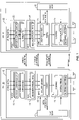
- Fig. 1 illustrates an exemplary transmitter 10 for transmitting protocol data units (PDUs) to a receiver 20.
- the various blocks in Fig. 1 represent functions of the transmit processor and receive processor. Some functions not material to the present invention have been omitted for the sake of clarity. Thus, other functions may be present in addition to those illustrated in Fig. 1 .
- the illustrated functions can be implemented in one or more microprocessors, microcontrollers, hardware, or a combination thereof.
- Transmit processor 12 includes a Packet Data Convergence Protocol (PDCP) module 13, a Radio Link Control (RLC) module 14, a Medium Access Control (MAC) module 15, a Physical Layer (PL) module 16, and a MAC scheduler 17.
- PDCP Packet Data Convergence Protocol
- RLC Radio Link Control
- MAC Medium Access Control
- PL Physical Layer
- MAC scheduler 17 Data to be transmitted in the form of IP packets enters the PDCP module 13 where the IP headers may be compressed to reduce the number of bits transmitted over the air interface.
- the PDCP module 13 also performs ciphering and deciphering of the IP packets for security.
- the RLC module 14 ensures almost error free, in sequence delivery of packets to higher layers, which is needed for certain types of communication.
- the RLC module 14 performs segmentation/concatenation, and handles retransmission of erroneously received packets.
- the IP packets from the PDCP module 13 are used to create RLC PDUs, which may comprise divided (segmented) IP packets, concatenated IP packets, or a single IP packet.
- the MAC module 15 offers services to the RLC module 14 in the form of logical channels.
- the MAC module 15 maps data received on various logical channels from the RLC module 14 to corresponding transport channels.
- the MAC scheduler 17 is responsible for uplink and downlink scheduling, which typically occurs at the base station. According to the present invention, the MAC scheduler 17 also receives feedback from the Hybrid ARQ (HARQ) protocol process, as described in more detail below. Transport blocks are fed by the MAC module 15 to the PL module 16.
- HARQ Hybrid ARQ
- the PL module 16 handles coding/decoding, modulation/demodulation, interleaving, and spreading prior to transmission of one or more PDUs.
- a PDU represents a block of data including both a body and a header.
- the PDU comprises a MAC PDU, and may comprise a single block of data, a segmented block of data, or a multiple concatenated blocks of data.
- the HARQ protocol enables the receiver 20 to request retransmission of erroneously received PDUs.
- the receive processor 22 sends an HARQ feedback message on a control channel to the transmitter 10 to indicate whether a current PDU was successfully received by the receiver 20. For example, when the receiver 20 successfully receives the PDU, the receive processor 22 sends an ACK message to the transmitter 10. In response to the ACK message, the transmit processor 12 transmits the succeeding PDU.
- the receive processor 22 sends a NACK message to the transmitter 10 to request that the transmit processor 12 retransmit the current PDU.
- the ACK or NACK feedback message is misinterpreted at the transmitter 10, the subsequently transmitted PDU may differ from that expected by the receiver 20, which leads to link layer protocol synchronization errors.
- the NDI is associated with a PDU, but is generally transmitted separately from the PDU on an uplink control channel.
- the transmitter 10 may transmit the NDI on a physical downlink control channel (PDCCH). This enables the receiver to interpret the NDI even when the receiver cannot decode the received PDU.
- the NDI may comprise a single bit that toggles each time a new PDU is transmitted from the transmitter to the receiver.
- the NDI may comprise multiple bits, where the same predetermined value is used each time the transmitter transmits a new PDU. It will be appreciated that the following description applies to both single-bit and multiple bit NDIs.
- Figure 2 illustrates one example of a packet data communication between a transmitter and a receiver that uses a one-bit NDI to facilitate protocol synchronization.
- the receiver sends a scheduling grant to the transmitter (A) on a downlink control channel, such as the PDCCH.
- the scheduling grant comprises a multiple bit message with error protection, such as CRC, that identifies the transmitter, any retransmission protocols, such as HARQ, and the allocated wireless resources for transmitting the PDUs, such as modulation, data rate, etc.
- the receiver recognizes that the NDI value does not match the expected NDI value, the receiver assumes the new NDI value was caused by an ACK/NACK error, and therefore, assumes the received PDU is a third PDU instead of a retransmission of the second PDU. Thus, the link layer protocol synchronization between the receiver and transmitter has been lost.
- the RESET message may comprise a 1-bit message that is CRC protected and sent on a downlink channel, such as the PDCCH, as part of a MAC control unit.
- the transmitter aborts transmission of a current PDU and transmits a new PDU and corresponding NDI. Because the receiver 20 expects a new PDU and new NDI after sending the RESET message to the transmitter 10, the RESET message successfully restores protocol synchronization between the transmitter 10 and the receiver 20.
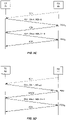
- Figures 3A and 3B show exemplary synchronization correction processes 100 and 150 for a receiver 20 and transmitter 10, respectively, for a retransmission protocol.
- the receiver 20 receives a first PDU and a corresponding NDI (block 110).
- the receive processor 22 evaluates the received NDI to determine if a protocol synchronization error has occurred.
- the receiver 20 transmits a RESET message to the transmitter 10 (block 130). If no protocol synchronization error is detected (block 120), the receiver 20 transmits an ACK/NACK message to the transmitter 10 (block 140).
- transmitter 10 transmits the first PDU with the predetermined NDI (block 160).
- the transmitter 10 If the transmitter 10 receives a RESET message (block 170), the transmitter 10 abandons the first PDU and transmits a second PDU with a new NDI (block 160). If the transmitter 10 does not receive a RESET message (block 170), the transmitter 10 implements conditional retransmission operations based on the received ACK/NACK message (block 180).
- a modified version of this embodiment distinguishes between recoverable and unrecoverable protocol synchronization errors, and limits transmission of the RESET message to situations where the protocol synchronization error comprises an unrecoverable error.
- the receiver 20 first determines the type of protocol synchronization error. When the protocol synchronization error comprises a recoverable error, the receive processor 22 in the receiver 20 corrects the error at the receiver 20 and continues with normal operations. When the protocol synchronization error comprises an unrecoverable error, the receive processor 22 sends the RESET message to the transmitter 10.
- Figure 4 shows one exemplary receive processor 22 comprising an error unit 24 for determining the type of protocol synchronization error.
- the error unit 24 processes a current PDU with a previously received PDU to determine the type of protocol synchronization error.
- the current and previously received PDUs comprise sequentially received PDUs.
- error unit 24 comprises a soft combiner 26 that soft combines the current PDU with the previously received PDU. Based on the received NDI, the expected NDI, and whether or not the soft combined PDUs are decodable, the receive processor 22 determines whether the protocol synchronization error is recoverable or unrecoverable. Table 1 shows exemplary scenarios for determining the type of protocol synchronization error.
- Figures 5A - 5D illustrate examples of the various scenarios shown in Table 1 for detecting and correcting recoverable and unrecoverable protocol synchronization errors.
- the transmitter 10 incorrectly interprets the ACK sent by the receiver 20 as a NACK.
- the receiver 20 is expecting a new PDU, the receiver expects the NDI to toggle from 0 to 1.
- the error unit 24 soft combines PDU 1 and PDU 2 based on the expected type of redundancy used to retransmit PDU 1 as PDU 2 . Because the resulting soft combination is decodable, the receive processor 22 determines that the protocol synchronization error comprises a recoverable ACK/NACK error. To restore protocol synchronization, the receive processor 22 retransmits an ACK to the transmitter 10. The receiver 20 subsequently processes PDU 1 , PDU 2 , or some combination thereof according to conventional techniques to recover the corresponding data. While not required, it will be appreciated that the receive processor 22 may alternatively transmit a RESET message to the transmitter 10.
- receiver 20 does not successfully receive PDU 1 , and therefore, sends a NACK to the transmitter 10.
- the error unit 24 soft combines PDU 1 and PDU 2 . Because the resulting soft combination is not decodable, the receive processor 22 determines that the protocol synchronization error comprises an unrecoverable ACK/NACK error. To restore protocol synchronization, the receive processor 22 transmits a RESET message to transmitter 10.
- the receive processor 22 determines that the protocol synchronization error comprises a recoverable NDI error. To restore protocol synchronization, the receive processor 22 resets the NDI value to 1 at the receiver 20, transmits an ACK to the transmitter 10, and processes the received PDU 2 using conventional decoding techniques.
- receiver 20 does not successfully receive PDU 1 , and therefore sends a NACK to the transmitter 10.
- the transmitted NDI toggles during transmission, causing the received NDI to equal 1.
- the receive processor 22 recognizes that either an unrecoverable ACK/NACK or a recoverable NDI error has occurred.
- the error unit 24 soft combines PDU 1 and PDU 2 . Because the resulting soft combination is decodable, the receive processor 22 determines that the protocol synchronization error comprises a recoverable NDI error. To restore protocol synchronization, the receive processor 22 resets the NDI value to 0 at the receiver 20, transmits an ACK to the transmitter 10, and processes the received PDU 1 combined with PDU 2 using conventional decoding techniques.
- the error unit 24 may process three or more received PDUs to identify each protocol synchronization error.
- An embodiment of the present invention eliminates the NDI and prevents protocol synchronization errors using subsequent explicit scheduling grants. More particularly, when the transmitter 10 receives a scheduling grant, the transmitter 10 transmits only the one PDU.
- the HARQ unit in the MAC module 15 evaluates the received PDU for errors and sends HARQ feedback information to the MAC scheduler 17.
- the MAC scheduler 27 in the receive processor 22 sends a subsequent explicit scheduling grant to the transmitter 10 based on the error evaluation. For example, when the receiver 20 successfully receives a PDU, the receiver 20 sends a subsequent explicit scheduling grant to the transmitter 10 to authorize the transmitter 10 to transmit the next PDU. Because scheduling grants comprise multiple bit messages that include error protection, such as CRC, they are not as susceptible to errors as single bit ACK messages. Thus, using subsequent explicit scheduling grants for each PDU significantly reduces the protocol synchronization errors associated with misinterpreted ACK/NACK messages. Further, using the explicit scheduling grants eliminates data associated uplink control signaling, such as NDIs.
- Figures 6A and 6B show exemplary HARQ processes 200 and 250 for the receiver 20 and transmitter 10, respectively, according to this embodiment.
- the receiver 20 schedules one MAC PDU (block 210) and sends the corresponding scheduling grant to the transmitter 10 (block 220) as discussed above.
- the receiver 20 receives the PDU (block 230) responsive to the explicit scheduling grant.
- the receiver 20 requests retransmission, e.g., transmits a NACK message to the transmitter 10 (block 250). If no errors are detected (block 240), the receiver 20 schedules another PDU (block 210) and sends a subsequent explicit scheduling grant to the transmitter 10 (block 220) to authorize the transmission of the next PDU.
- the receiver 20 may also transmit an ACK message to the transmitter 10. However, an ACK message does not authorize transmission of the next PDU unless the ACK message is accompanied by the subsequent explicit scheduling grant.
- the transmitter 10 transmits a PDU responsive to an explicit scheduling grant (block 260). Before transmitting the next PDU, the transmitter 10 waits for an explicit scheduling grant. If the transmitter 10 receives a subsequent explicit scheduling grant (block 270), the transmitter 10 transmits the next PDU (block 260). If the transmitter 10 does not receive the subsequent explicit scheduling grant (block 270), the transmitter 10 may implement conditional retransmission operations based on the received ACK/NACK message (block 280), as discussed further below.
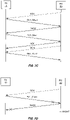
- FIGs 7A - 7D illustrate multiple scenarios for sending successive PDUs using subsequent explicit scheduling grants.
- transmitter 10 transmits redundancy version 1 of a PDU responsive to an explicit scheduling grant.
- the receiver 20 successfully receives the PDU, and therefore, sends the subsequent explicit scheduling grant and sends an ACK message to the transmitter 10.
- transmitter 10 transmits version 1 of the next PDU.
- transmitter 10 transmits redundancy version 1 of a PDU responsive to an explicit scheduling grant.
- the receiver 20 successfully receives the PDU, and therefore, sends a subsequent explicit scheduling grant and sends an ACK message to the transmitter 10.
- the transmitter 10 incorrectly interprets the ACK sent by the receiver 20 as a NACK, and therefore, the received HARQ feedback message is inconsistent with the received scheduling grant.
- the explicit scheduling grant overrides the HARQ feedback message, and the transmitter 10 transmits version 1 of the next succeeding PDU. Because the scheduling grant has better error protection than an ACK/NACK signal, the use of the scheduling grant to trigger the transmission of a succeeding PDU avoids the protocol synchronization problems associated with the misinterpreted ACK message.
- transmitter 10 transmits redundancy version 1 of a PDU responsive to an explicit scheduling grant.
- the receiver 20 does not successfully receive the PDU, and therefore, sends a NACK message to the transmitter 10.
- the transmitter 10 retransmits redundancy version 2 of the PDU.
- the receiver 20 successfully receives the retransmitted PDU, and therefore, sends a subsequent explicit scheduling grant and an ACK message to the transmitter 10.
- the transmitter 10 correctly interprets the subsequent explicit scheduling grant, and therefore, transmits redundancy version 1 of the next PDU to the receiver 20.
- FIGs 7D and 7E illustrate how the scheduling grant embodiment may handle an incorrectly interpreted NACK message.
- Transmitter 10 transmits redundancy version 1 of a PDU responsive to an explicit scheduling grant.
- the receiver 20 does not successfully receive the PDU, and therefore, sends a NACK message to the transmitter 10.
- Transmitter 10 incorrectly interprets the NACK message as an ACK message.
- the transmitter 10 does not send the next PDU.
- Figure 7D when receiver 20 fails to receive the expected retransmission, the receiver 20 may abort all processing operations associated with the current PDU. Alternatively, the receiver 20 may send additional NACK messages, as shown in Figure 7E . If the receiver 20 fails to receive a retransmission after sending some predetermined number of NACK messages, the receiver 20 may abort all processing operations associated with the current PDU.
- subsequent explicit scheduling grants may be used to explicitly request retransmission of a current PDU.
- the subsequent explicit scheduling grants may include an indicator that indicates whether the transmitter 10 should transmit the next PDU or should retransmit a current PDU.
- the transmitter 10 either transmits a new PDU or a retransmitted version of a current PDU based on the value of the indicator, regardless of the presence of an ACK or a NACK.
- RV redundancy version
- the subsequent explicit scheduling grants may include a single-bit or multi-bit transmission flag that indicates a request for the next PDU transmission when the flag is set to a first predetermined value, and indicates a request for a retransmission when the flag is set to a different predetermined value.
- NDF New Data Flag
Landscapes
- Engineering & Computer Science (AREA)
- Computer Networks & Wireless Communication (AREA)
- Signal Processing (AREA)
- Detection And Prevention Of Errors In Transmission (AREA)
- Mobile Radio Communication Systems (AREA)
- Communication Control (AREA)
- Synchronisation In Digital Transmission Systems (AREA)
Claims (21)
- Verfahren zur HARQ-Sicherungsschicht-Protokollsynchronisation für eine Uplink-Übertragung zwischen einem Sender (10) und einem Empfänger (20) in einem drahtlosen Kommunikationssystem, wobei das Verfahren umfasst:- Senden (260) einer ersten Protokolldateneinheit in Reaktion auf eine empfangene explizite Scheduling-Freigabe,- Empfangen einer HARQ-Rückmeldenachricht für die gesendete erste Protokolldateneinheit,- Senden (260) einer von der ersten Protokolldateneinheit verschiedenen nachfolgenden zweiten Protokolldateneinheit in Reaktion auf eine nachfolgende explizite Scheduling-Freigabe, die zusätzlich zur HARQ-Rückmeldenachricht empfangen wird, wobei die nachfolgende explizite Scheduling-Freigabe dem Sender (10) anzeigt, dass sie zum Senden der zweiten Protokolldateneinheit autorisiert ist, und- erneutes Senden (280) der ersten Protokolldateneinheit bei Ausbleiben des Empfangs einer nachfolgenden expliziten Scheduling-Freigabe, bei Auslegung der HARQ-Rückmeldenachricht als negative Bestätigung für die gesendete erste Protokolldateneinheit.
- Verfahren nach Anspruch 1, wobei die HARQ-Rückmeldenachricht eine positive Bestätigung für die gesendete erste Protokolldateneinheit ist.
- Verfahren nach einem der vorhergehenden Ansprüche, wobei das Verfahren ferner umfasst:- Empfangen einer weiteren HARQ-Rückmeldenachricht für die erste Protokolldateneinheit,- Auslegen der weiteren HARQ-Rückmeldenachricht als positive Bestätigung für die gesendete erste Protokolldateneinheit, und- Warten auf die nachfolgende explizite Scheduling-Freigabe vor dem Senden der zweiten Protokolldateneinheit.
- Verfahren nach einem der vorhergehenden Ansprüche, wobei aufeinanderfolgende Protokolldateneinheiten in Reaktion auf empfangene nachfolgende explizite Scheduling-Freigaben gesendet werden.
- Verfahren nach einem der vorhergehenden Ansprüche, wobei jede Protokolldateneinheit eine nach der anderen in Reaktion auf eine empfangene Scheduling-Freigabe gesendet wird.
- Verfahren nach einem der vorhergehenden Ansprüche, wobei die gesendete erste Protokolldateneinheit eine Redundanzversion von eins aufweist, wobei die erneut gesendete erste Protokolldateneinheit eine Redundanzversion von zwei aufweist, und/oder wobei die gesendete zweite Protokolldateneinheit eine Redundanzversion von eins aufweist.
- Verfahren nach einem der vorhergehenden Ansprüche, wobei das Verfahren für einen HARQ-Prozess gilt.
- Verfahren nach einem der vorhergehenden Ansprüche, wobei das Verfahren vom Sender (10) durchgeführt wird.
- Verfahren nach einem der vorhergehenden Ansprüche, wobei der Sender (10) eine Mobilstation ist.
- Verfahren zur HARQ-Sicherungsschicht-Protokollsynchronisation für eine Uplink-Übertragung zwischen einem Sender (10) und einem Empfänger (20) in einem drahtlosen Kommunikationssystem, wobei das Verfahren umfasst:- Empfangen (230) einer ersten Protokolldateneinheit in Reaktion auf eine gesendete explizite Scheduling-Freigabe,- Auswerten (240) der empfangenen ersten Protokolldateneinheit bezüglich Fehler,- Senden (250) einer HARQ-Rückmeldenachricht für die empfangene erste Protokolldateneinheit basierend auf der Fehlerauswertung, wobei die HARQ-Rückmeldenachricht eine positive Bestätigung für die empfangene erste Protokolldateneinheit ist, und Senden einer nachfolgenden expliziten Scheduling-Freigabe an den Sender,- Empfangen (230) einer von der ersten Protokolldateneinheit verschiedenen nachfolgenden zweiten Protokolldateneinheit in Reaktion auf die nachfolgende explizite Scheduling-Freigabe, die zusätzlich zur HARQ-Rückmeldenachricht gesendet wird, wobei die nachfolgende explizite Scheduling-Freigabe dem Sender (10) anzeigt, dass sie zum Senden der zweiten Protokolldateneinheit autorisiert ist, und- Empfangen einer erneut gesendeten ersten Protokolldateneinheit bei Ausbleiben des Sendens einer nachfolgenden expliziten Scheduling-Freigabe.
- Verfahren nach Anspruch 10, wobei die nachfolgende explizite Scheduling-Freigabe gesendet wird, wenn keine Fehler in der empfangenen ersten Protokolldateneinheit erkannt werden.
- Verfahren nach Anspruch 10 oder 11, wobei das Verfahren ferner umfasst:- Senden einer weiteren HARQ-Rückmeldenachricht für eine empfangene weitere Protokolldateneinheit basierend auf einer Fehlerauswertung, wobei die weitere HARQ-Rückmeldenachricht eine negative Bestätigung für die empfangene weitere Protokolldateneinheit ist,- Erkennen, dass die erneut gesendete weitere Protokolldateneinheit nicht in Reaktion auf die gesendete weitere HARQ-Rückmeldenachricht empfangen wird, und- Abbrechen von Verarbeitungsvorgängen für die empfangene weitere Protokolldateneinheit.
- Verfahren nach einem der Ansprüche 10 bis 12, wobei das Verfahren ferner umfasst:- Senden einer Anzahl von nachfolgenden weiteren HARQ-Rückmeldenachrichten für eine empfangene weitere Protokolldateneinheit basierend auf einer Fehlerauswertung, wobei jede der nachfolgenden weiteren HARQ-Rückmeldenachrichten eine negative Bestätigung für die empfangene weitere Protokolldateneinheit ist,- Erkennen, dass eine erneut gesendete weitere Protokolldateneinheit nicht in Reaktion auf die gesendeten weiteren HARQ-Rückmeldenachrichten empfangen wird, und- Abbrechen von Verarbeitungsvorgängen für die empfangene weitere Protokolldateneinheit.
- Verfahren nach einem der Ansprüche 10 bis 13, wobei aufeinanderfolgende Protokolldateneinheiten in Reaktion auf gesendete nachfolgende explizite Scheduling-Freigaben empfangen werden.
- Verfahren nach einem der Ansprüche 10 bis 14, wobei jede Protokolldateneinheit eine nach der anderen in Reaktion auf eine gesendete Scheduling-Freigabe empfangen wird.
- Verfahren nach einem der Ansprüche 10 bis 15, wobei die empfangene erste Protokolldateneinheit eine Redundanzversion von eins aufweist, wobei die empfangene erneut gesendete erste Protokolldateneinheit eine Redundanzversion von zwei aufweist, und/oder wobei die empfangene zweite Protokolldateneinheit eine Redundanzversion von eins aufweist.
- Verfahren nach einem der Ansprüche 10 bis 16, wobei das Verfahren für einen HARQ-Prozess gilt.
- Verfahren nach einem der Ansprüche 10 bis 17, wobei das Verfahren vom Empfänger durchgeführt wird.
- Verfahren nach einem der Ansprüche 10 bis 18, wobei der Empfänger (20) als eine Basisstation ausgelegt ist.
- Sender (10) zur HARQ-Sicherungsschicht-Protokollsynchronisation für eine Uplink-Übertragung zwischen dem Sender (10) und einem Empfänger (10) in einem drahtlosen Kommunikationssystem, wobei der Sender (10) zum Durchführen eines Verfahrens nach einem der Ansprüche 1 bis 9 ausgelegt ist.
- Empfänger (20) zur HARQ-Sicherungsschicht-Protokollsynchronisation für eine Uplink-Übertragung zwischen einem Sender (10) und dem Empfänger (20) in einem drahtlosen Kommunikationssystem, wobei der Empfänger zum Durchführen eines Verfahrens nach einem der Ansprüche 10 bis 19 ausgelegt ist.
Priority Applications (1)
| Application Number | Priority Date | Filing Date | Title |
|---|---|---|---|
| EP22193691.7A EP4167511A1 (de) | 2006-10-09 | 2007-10-09 | Verbesserte protokollsynchronisation für harq |
Applications Claiming Priority (5)
| Application Number | Priority Date | Filing Date | Title |
|---|---|---|---|
| SE0602182 | 2006-10-09 | ||
| EP16165965.1A EP3104544B1 (de) | 2006-10-09 | 2007-10-09 | Ndi-lose protokollsynchronisation für harq |
| PCT/SE2007/050721 WO2008044993A2 (en) | 2006-10-09 | 2007-10-09 | Improved protocol synchronization for harq |
| EP14170083.1A EP2782285B1 (de) | 2006-10-09 | 2007-10-09 | NDI-lose Protokollsynchronisation für HARQ |
| EP07835306.7A EP2074734B1 (de) | 2006-10-09 | 2007-10-09 | Verbesserte protokollsynchronisation für harq |
Related Parent Applications (3)
| Application Number | Title | Priority Date | Filing Date |
|---|---|---|---|
| EP16165965.1A Division EP3104544B1 (de) | 2006-10-09 | 2007-10-09 | Ndi-lose protokollsynchronisation für harq |
| EP14170083.1A Division EP2782285B1 (de) | 2006-10-09 | 2007-10-09 | NDI-lose Protokollsynchronisation für HARQ |
| EP07835306.7A Division EP2074734B1 (de) | 2006-10-09 | 2007-10-09 | Verbesserte protokollsynchronisation für harq |
Related Child Applications (2)
| Application Number | Title | Priority Date | Filing Date |
|---|---|---|---|
| EP22193691.7A Division-Into EP4167511A1 (de) | 2006-10-09 | 2007-10-09 | Verbesserte protokollsynchronisation für harq |
| EP22193691.7A Division EP4167511A1 (de) | 2006-10-09 | 2007-10-09 | Verbesserte protokollsynchronisation für harq |
Publications (2)
| Publication Number | Publication Date |
|---|---|
| EP3605915A1 EP3605915A1 (de) | 2020-02-05 |
| EP3605915B1 true EP3605915B1 (de) | 2022-12-07 |
Family
ID=39283295
Family Applications (5)
| Application Number | Title | Priority Date | Filing Date |
|---|---|---|---|
| EP19183543.8A Active EP3605915B1 (de) | 2006-10-09 | 2007-10-09 | Verbesserte protokollsynchronisation für harq |
| EP07835306.7A Not-in-force EP2074734B1 (de) | 2006-10-09 | 2007-10-09 | Verbesserte protokollsynchronisation für harq |
| EP16165965.1A Active EP3104544B1 (de) | 2006-10-09 | 2007-10-09 | Ndi-lose protokollsynchronisation für harq |
| EP14170083.1A Active EP2782285B1 (de) | 2006-10-09 | 2007-10-09 | NDI-lose Protokollsynchronisation für HARQ |
| EP22193691.7A Pending EP4167511A1 (de) | 2006-10-09 | 2007-10-09 | Verbesserte protokollsynchronisation für harq |
Family Applications After (4)
| Application Number | Title | Priority Date | Filing Date |
|---|---|---|---|
| EP07835306.7A Not-in-force EP2074734B1 (de) | 2006-10-09 | 2007-10-09 | Verbesserte protokollsynchronisation für harq |
| EP16165965.1A Active EP3104544B1 (de) | 2006-10-09 | 2007-10-09 | Ndi-lose protokollsynchronisation für harq |
| EP14170083.1A Active EP2782285B1 (de) | 2006-10-09 | 2007-10-09 | NDI-lose Protokollsynchronisation für HARQ |
| EP22193691.7A Pending EP4167511A1 (de) | 2006-10-09 | 2007-10-09 | Verbesserte protokollsynchronisation für harq |
Country Status (7)
| Country | Link |
|---|---|
| US (6) | US8489951B2 (de) |
| EP (5) | EP3605915B1 (de) |
| DK (2) | DK3605915T3 (de) |
| ES (2) | ES2748723T3 (de) |
| HU (1) | HUE046678T2 (de) |
| PL (1) | PL3104544T3 (de) |
| WO (1) | WO2008044993A2 (de) |
Families Citing this family (33)
| Publication number | Priority date | Publication date | Assignee | Title |
|---|---|---|---|---|
| WO2007052719A1 (ja) * | 2005-11-01 | 2007-05-10 | Ntt Docomo, Inc. | 再送制御方法及び受信側装置 |
| EP3605915B1 (de) | 2006-10-09 | 2022-12-07 | Telefonaktiebolaget LM Ericsson (publ) | Verbesserte protokollsynchronisation für harq |
| WO2008155733A2 (en) * | 2007-06-18 | 2008-12-24 | Nokia Corporation | Acknowledgement aided space domain user scheduling for multi-user mimo |
| KR101520683B1 (ko) * | 2007-09-13 | 2015-05-15 | 엘지전자 주식회사 | 페이징 과정을 이용한 제어 정보 제공 방법 |
| KR101441138B1 (ko) * | 2007-09-28 | 2014-09-18 | 엘지전자 주식회사 | 무선통신 시스템에서 상향링크 시간 동기 수행 방법 |
| KR101473010B1 (ko) * | 2007-10-17 | 2014-12-15 | 엘지전자 주식회사 | 패킷망을 이용하여 서킷서비스를 제공하는 방법 |
| KR101532789B1 (ko) * | 2008-01-04 | 2015-07-09 | 엘지전자 주식회사 | 재전송 데이터를 처리하는 harq 동작 방법 |
| KR101514079B1 (ko) * | 2008-01-07 | 2015-04-21 | 엘지전자 주식회사 | 상향링크 시간 동기 타이머의 재구성 방법 |
| WO2010002130A2 (en) | 2008-07-03 | 2010-01-07 | Lg Electronics Inc. | Method for processing ndi in random access procedure and a method for transmitting and receiving a signal using the same |
| WO2010016669A2 (en) | 2008-08-04 | 2010-02-11 | Samsung Electronics Co., Ltd. | Signal transmission method and apparatus for user equipment in mobile communication system |
| US9094202B2 (en) * | 2008-08-08 | 2015-07-28 | Qualcomm Incorporated | Utilizing HARQ for uplink grants received in wireless communications |
| JP5703227B2 (ja) * | 2008-10-22 | 2015-04-15 | ゼットティーイー(ユーエスエー)インコーポレーテッド | 逆方向リンク肯定応答シグナリング |
| WO2010103602A1 (ja) * | 2009-03-09 | 2010-09-16 | 富士通株式会社 | 伝送データのエラーチェック装置および方法 |
| CN102422569B (zh) | 2009-05-08 | 2015-04-15 | 中兴通讯(美国)公司 | 用于无线通信系统的反向链路信令技术 |
| JP5609443B2 (ja) * | 2009-09-30 | 2014-10-22 | 富士通株式会社 | 再送制御を行う装置及び方法 |
| CN102238624A (zh) * | 2010-04-30 | 2011-11-09 | 北京三星通信技术研究有限公司 | 一种获取上行数据接收状况的方法 |
| US8675474B2 (en) * | 2010-12-10 | 2014-03-18 | Htc Corporation | Method and system for handling error in LPP messages exchange |
| US9578652B2 (en) * | 2011-07-25 | 2017-02-21 | Lg Electronics Inc. | Method and apparatus for transmitting data in a wireless communication system |
| US9019843B2 (en) * | 2012-09-13 | 2015-04-28 | International Business Machines Corporation | Utilizing stored data to reduce packet data loss in a mobile data network with data breakout at the edge |
| US9369247B2 (en) | 2013-03-15 | 2016-06-14 | Blackberry Limited | Simultaneously accessing shared resources |
| JP2017508408A (ja) * | 2014-03-19 | 2017-03-23 | 華為技術有限公司Huawei Technologies Co.,Ltd. | データ送信及びフィードバック処理方法並びに装置 |
| US9438383B2 (en) * | 2014-04-18 | 2016-09-06 | Verizon Patent And Licensing Inc. | Resolving falsely decoded acknowledgments |
| CN113364562B (zh) * | 2015-01-23 | 2024-02-20 | Lg电子株式会社 | 无线通信系统中收发d2d通信终端的信号的方法和设备 |
| US9954649B2 (en) | 2015-04-29 | 2018-04-24 | At&T Intellectual Property I, L.P. | System and method for HARQ in cloud RAN with large front haul latency |
| EP3319255B1 (de) * | 2015-07-02 | 2020-04-08 | LG Electronics Inc. | Verfahren zum senden und empfangen von uplink-daten in einem drahtloskommunikationssystem und vorrichtung dafür |
| WO2017061662A1 (ko) * | 2015-10-07 | 2017-04-13 | 엘지전자 주식회사 | 무선 통신 시스템에서 harq를 사용하여 재전송 데이터를 전송하는 방법 및 장치 |
| US10517051B2 (en) * | 2016-03-09 | 2019-12-24 | Lg Electronics Inc. | Method for receiving downlink signal by terminal in wireless communication system, and device therefor |
| US10389487B2 (en) | 2017-01-17 | 2019-08-20 | At&T Intellectual Property I, L.P. | Adaptive downlink control channel structure for 5G or other next generation networks |
| WO2018232207A1 (en) * | 2017-06-16 | 2018-12-20 | Mediatek Singapore Pte. Ltd. | Method and apparatus for handling data duplication in mobile communications |
| US11038628B2 (en) * | 2019-05-04 | 2021-06-15 | Qualcomm Incorporated | Procedures for configured grants |
| EP4106469B1 (de) * | 2020-04-10 | 2025-06-04 | LG Electronics Inc. | Verfahren und vorrichtung zur bestimmung des ndi-wertes auf sci in nr v2x |
| US20250323759A1 (en) * | 2024-04-12 | 2025-10-16 | Qualcomm Incorporated | Identifying unsuccessful terminations of hybrid automatic repeat request processes |
| US20250323758A1 (en) * | 2024-04-12 | 2025-10-16 | Qualcomm Incorporated | Unsuccessful termination of a hybrid automatic repeat request process associated with a semi-persistent scheduling transmission |
Family Cites Families (16)
| Publication number | Priority date | Publication date | Assignee | Title |
|---|---|---|---|---|
| DE10132577A1 (de) * | 2001-07-10 | 2003-01-30 | Philips Corp Intellectual Pty | Verfahren zur Übertragung von Datenpaketen |
| US7379434B2 (en) * | 2001-10-19 | 2008-05-27 | Koninklijke Philips Electronics N.V. | Radio communication system |
| WO2003096567A1 (en) * | 2002-05-10 | 2003-11-20 | Interdigital Technology Corporation | Method for monitoring transmission sequence numbers assigned to protocol data units to detect and correct transmission errors |
| US7414989B2 (en) * | 2003-05-07 | 2008-08-19 | Motorola, Inc. | ACK/NACK determination reliability for a communication device |
| US7190893B2 (en) | 2003-06-27 | 2007-03-13 | Valeo Electrical Systems, Inc. | Fluid heater with low porosity thermal mass |
| US8798015B2 (en) * | 2003-07-11 | 2014-08-05 | Koninklijke Philips N.V. | Transmission of data packets from a transmitter to a receiver |
| ATE424066T1 (de) * | 2004-01-22 | 2009-03-15 | Panasonic Corp | Verfahren und vorrichtungen zum umschalten zwischen asynchronen und synchronen harq- wiederübertragungsmoden |
| JP4677988B2 (ja) * | 2004-08-10 | 2011-04-27 | 日本電気株式会社 | 通信制御方法、無線通信システム、基地局及び移動局 |
| EP1655879B1 (de) * | 2004-11-03 | 2008-12-10 | Panasonic Corporation | HARQ Protokolloptimierung für Paketdatenübertragung |
| WO2006051827A1 (ja) * | 2004-11-09 | 2006-05-18 | Ntt Docomo, Inc. | 移動通信システム、移動局、無線基地局及び無線回線制御局 |
| CA2590858C (en) * | 2004-12-27 | 2014-08-19 | Lg Electronics Inc. | Supporting hybrid automatic retransmission request in orthogonal frequency division multiplexing access radio access system |
| PL1980044T3 (pl) * | 2006-02-03 | 2012-09-28 | Nokia Technologies Oy | Sposób, urządzenie oraz program komputerowy do obsługi awarii hybrydowego automatycznego powtarzania żądania |
| US7502981B2 (en) * | 2006-04-19 | 2009-03-10 | Motorola, Inc. | Automatic repeat request (ARQ) scheme |
| US20080045255A1 (en) * | 2006-08-21 | 2008-02-21 | Motorola, Inc. | Method of transmitting scheduling information by a wireless communication device and a wireless communication device |
| CN101611585B (zh) * | 2006-10-02 | 2014-03-26 | Lg电子株式会社 | 多载波系统中重传数据的方法 |
| EP3605915B1 (de) * | 2006-10-09 | 2022-12-07 | Telefonaktiebolaget LM Ericsson (publ) | Verbesserte protokollsynchronisation für harq |
-
2007
- 2007-10-09 EP EP19183543.8A patent/EP3605915B1/de active Active
- 2007-10-09 DK DK19183543.8T patent/DK3605915T3/da active
- 2007-10-09 ES ES16165965T patent/ES2748723T3/es active Active
- 2007-10-09 WO PCT/SE2007/050721 patent/WO2008044993A2/en not_active Ceased
- 2007-10-09 US US12/444,915 patent/US8489951B2/en not_active Expired - Fee Related
- 2007-10-09 EP EP07835306.7A patent/EP2074734B1/de not_active Not-in-force
- 2007-10-09 ES ES19183543T patent/ES2937920T3/es active Active
- 2007-10-09 PL PL16165965T patent/PL3104544T3/pl unknown
- 2007-10-09 EP EP16165965.1A patent/EP3104544B1/de active Active
- 2007-10-09 EP EP14170083.1A patent/EP2782285B1/de active Active
- 2007-10-09 EP EP22193691.7A patent/EP4167511A1/de active Pending
- 2007-10-09 DK DK16165965.1T patent/DK3104544T3/da active
- 2007-10-09 HU HUE16165965A patent/HUE046678T2/hu unknown
-
2013
- 2013-06-18 US US13/920,467 patent/US9485059B2/en active Active
-
2016
- 2016-09-16 US US15/267,773 patent/US10033522B2/en active Active
-
2018
- 2018-06-29 US US16/022,832 patent/US10992448B2/en active Active
-
2021
- 2021-04-02 US US17/301,424 patent/US11849017B2/en active Active
-
2023
- 2023-11-13 US US18/389,023 patent/US12206754B2/en active Active
Also Published As
| Publication number | Publication date |
|---|---|
| EP3104544A1 (de) | 2016-12-14 |
| US20170005783A1 (en) | 2017-01-05 |
| WO2008044993A2 (en) | 2008-04-17 |
| DK3104544T3 (da) | 2019-10-07 |
| WO2008044993A3 (en) | 2008-06-05 |
| EP2074734A4 (de) | 2014-02-05 |
| EP2074734B1 (de) | 2016-05-04 |
| US9485059B2 (en) | 2016-11-01 |
| ES2937920T3 (es) | 2023-04-03 |
| EP2074734A2 (de) | 2009-07-01 |
| US10992448B2 (en) | 2021-04-27 |
| US20240080175A1 (en) | 2024-03-07 |
| PL3104544T3 (pl) | 2020-01-31 |
| EP2782285A1 (de) | 2014-09-24 |
| EP3605915A1 (de) | 2020-02-05 |
| US20210226765A1 (en) | 2021-07-22 |
| EP3104544B1 (de) | 2019-07-03 |
| EP2782285B1 (de) | 2016-12-07 |
| HUE046678T2 (hu) | 2020-03-30 |
| US10033522B2 (en) | 2018-07-24 |
| US20100077272A1 (en) | 2010-03-25 |
| US12206754B2 (en) | 2025-01-21 |
| EP4167511A1 (de) | 2023-04-19 |
| US11849017B2 (en) | 2023-12-19 |
| US8489951B2 (en) | 2013-07-16 |
| US20180323954A1 (en) | 2018-11-08 |
| US20130266001A1 (en) | 2013-10-10 |
| DK3605915T3 (da) | 2023-01-09 |
| ES2748723T3 (es) | 2020-03-17 |
Similar Documents
| Publication | Publication Date | Title |
|---|---|---|
| US12206754B2 (en) | Protocol synchronization for HARQ | |
| US7187677B2 (en) | Avoiding stall conditions and sequence number ambiguity in an automatic repeat request protocol | |
| EP1743445B1 (de) | Paketdatenübertragungsverfahren und mobilkommunikationssystem damit | |
| EP1317811B1 (de) | Hybrid-arq-verfahren für paketdatenübertragung | |
| EP2860900B1 (de) | Automatische Wiederholungsanfrage (ARQ)-Protokoll mit mehreren komplementären Rückkopplungsmechanismen | |
| EP2229745B2 (de) | Statusberichtigung für wiederübertragungsprotokoll | |
| US20030174662A1 (en) | Control information signaling method and network element | |
| US20090271679A1 (en) | Retransmission control method and receiving-end apparatus | |
| US8761135B2 (en) | Methods and arrangements in a wireless telecommunication system | |
| EP1440534B1 (de) | Vermeidung von standbedingungen und sequenznummermehrdeutigkeit in einem protokoll für automatische wiederholungsanforderungen | |
| CN101296059A (zh) | 通信系统的错误检测方法与通信台和通信装置 | |
| HK1208974B (en) | Automatic repeat request (arq) protocol having multiple complementary feedback mechanisms |
Legal Events
| Date | Code | Title | Description |
|---|---|---|---|
| PUAI | Public reference made under article 153(3) epc to a published international application that has entered the european phase |
Free format text: ORIGINAL CODE: 0009012 |
|
| STAA | Information on the status of an ep patent application or granted ep patent |
Free format text: STATUS: THE APPLICATION HAS BEEN PUBLISHED |
|
| AC | Divisional application: reference to earlier application |
Ref document number: 3104544 Country of ref document: EP Kind code of ref document: P Ref document number: 2074734 Country of ref document: EP Kind code of ref document: P Ref document number: 2782285 Country of ref document: EP Kind code of ref document: P |
|
| AK | Designated contracting states |
Kind code of ref document: A1 Designated state(s): AT BE BG CH CY CZ DE DK EE ES FI FR GB GR HU IE IS IT LI LT LU LV MC MT NL PL PT RO SE SI SK TR |
|
| STAA | Information on the status of an ep patent application or granted ep patent |
Free format text: STATUS: REQUEST FOR EXAMINATION WAS MADE |
|
| 17P | Request for examination filed |
Effective date: 20200805 |
|
| RBV | Designated contracting states (corrected) |
Designated state(s): AT BE BG CH CY CZ DE DK EE ES FI FR GB GR HU IE IS IT LI LT LU LV MC MT NL PL PT RO SE SI SK TR |
|
| GRAP | Despatch of communication of intention to grant a patent |
Free format text: ORIGINAL CODE: EPIDOSNIGR1 |
|
| STAA | Information on the status of an ep patent application or granted ep patent |
Free format text: STATUS: GRANT OF PATENT IS INTENDED |
|
| INTG | Intention to grant announced |
Effective date: 20211130 |
|
| GRAJ | Information related to disapproval of communication of intention to grant by the applicant or resumption of examination proceedings by the epo deleted |
Free format text: ORIGINAL CODE: EPIDOSDIGR1 |
|
| STAA | Information on the status of an ep patent application or granted ep patent |
Free format text: STATUS: REQUEST FOR EXAMINATION WAS MADE |
|
| GRAP | Despatch of communication of intention to grant a patent |
Free format text: ORIGINAL CODE: EPIDOSNIGR1 |
|
| STAA | Information on the status of an ep patent application or granted ep patent |
Free format text: STATUS: GRANT OF PATENT IS INTENDED |
|
| INTC | Intention to grant announced (deleted) | ||
| INTG | Intention to grant announced |
Effective date: 20220511 |
|
| GRAS | Grant fee paid |
Free format text: ORIGINAL CODE: EPIDOSNIGR3 |
|
| GRAA | (expected) grant |
Free format text: ORIGINAL CODE: 0009210 |
|
| STAA | Information on the status of an ep patent application or granted ep patent |
Free format text: STATUS: THE PATENT HAS BEEN GRANTED |
|
| AC | Divisional application: reference to earlier application |
Ref document number: 2074734 Country of ref document: EP Kind code of ref document: P Ref document number: 2782285 Country of ref document: EP Kind code of ref document: P Ref document number: 3104544 Country of ref document: EP Kind code of ref document: P |
|
| AK | Designated contracting states |
Kind code of ref document: B1 Designated state(s): AT BE BG CH CY CZ DE DK EE ES FI FR GB GR HU IE IS IT LI LT LU LV MC MT NL PL PT RO SE SI SK TR |
|
| REG | Reference to a national code |
Ref country code: GB Ref legal event code: FG4D |
|
| REG | Reference to a national code |
Ref country code: CH Ref legal event code: EP Ref country code: AT Ref legal event code: REF Ref document number: 1536939 Country of ref document: AT Kind code of ref document: T Effective date: 20221215 |
|
| REG | Reference to a national code |
Ref country code: DE Ref legal event code: R096 Ref document number: 602007061610 Country of ref document: DE |
|
| REG | Reference to a national code |
Ref country code: IE Ref legal event code: FG4D |
|
| REG | Reference to a national code |
Ref country code: DK Ref legal event code: T3 Effective date: 20230103 |
|
| REG | Reference to a national code |
Ref country code: SE Ref legal event code: TRGR |
|
| REG | Reference to a national code |
Ref country code: NL Ref legal event code: FP |
|
| REG | Reference to a national code |
Ref country code: LT Ref legal event code: MG9D |
|
| REG | Reference to a national code |
Ref country code: ES Ref legal event code: FG2A Ref document number: 2937920 Country of ref document: ES Kind code of ref document: T3 Effective date: 20230403 |
|
| PG25 | Lapsed in a contracting state [announced via postgrant information from national office to epo] |
Ref country code: LT Free format text: LAPSE BECAUSE OF FAILURE TO SUBMIT A TRANSLATION OF THE DESCRIPTION OR TO PAY THE FEE WITHIN THE PRESCRIBED TIME-LIMIT Effective date: 20221207 Ref country code: FI Free format text: LAPSE BECAUSE OF FAILURE TO SUBMIT A TRANSLATION OF THE DESCRIPTION OR TO PAY THE FEE WITHIN THE PRESCRIBED TIME-LIMIT Effective date: 20221207 |
|
| REG | Reference to a national code |
Ref country code: AT Ref legal event code: MK05 Ref document number: 1536939 Country of ref document: AT Kind code of ref document: T Effective date: 20221207 |
|
| PG25 | Lapsed in a contracting state [announced via postgrant information from national office to epo] |
Ref country code: PL Free format text: LAPSE BECAUSE OF FAILURE TO SUBMIT A TRANSLATION OF THE DESCRIPTION OR TO PAY THE FEE WITHIN THE PRESCRIBED TIME-LIMIT Effective date: 20221207 Ref country code: LV Free format text: LAPSE BECAUSE OF FAILURE TO SUBMIT A TRANSLATION OF THE DESCRIPTION OR TO PAY THE FEE WITHIN THE PRESCRIBED TIME-LIMIT Effective date: 20221207 Ref country code: GR Free format text: LAPSE BECAUSE OF FAILURE TO SUBMIT A TRANSLATION OF THE DESCRIPTION OR TO PAY THE FEE WITHIN THE PRESCRIBED TIME-LIMIT Effective date: 20230308 |
|
| PG25 | Lapsed in a contracting state [announced via postgrant information from national office to epo] |
Ref country code: RO Free format text: LAPSE BECAUSE OF FAILURE TO SUBMIT A TRANSLATION OF THE DESCRIPTION OR TO PAY THE FEE WITHIN THE PRESCRIBED TIME-LIMIT Effective date: 20221207 Ref country code: PT Free format text: LAPSE BECAUSE OF FAILURE TO SUBMIT A TRANSLATION OF THE DESCRIPTION OR TO PAY THE FEE WITHIN THE PRESCRIBED TIME-LIMIT Effective date: 20230410 Ref country code: EE Free format text: LAPSE BECAUSE OF FAILURE TO SUBMIT A TRANSLATION OF THE DESCRIPTION OR TO PAY THE FEE WITHIN THE PRESCRIBED TIME-LIMIT Effective date: 20221207 Ref country code: CZ Free format text: LAPSE BECAUSE OF FAILURE TO SUBMIT A TRANSLATION OF THE DESCRIPTION OR TO PAY THE FEE WITHIN THE PRESCRIBED TIME-LIMIT Effective date: 20221207 Ref country code: AT Free format text: LAPSE BECAUSE OF FAILURE TO SUBMIT A TRANSLATION OF THE DESCRIPTION OR TO PAY THE FEE WITHIN THE PRESCRIBED TIME-LIMIT Effective date: 20221207 |
|
| PG25 | Lapsed in a contracting state [announced via postgrant information from national office to epo] |
Ref country code: SK Free format text: LAPSE BECAUSE OF FAILURE TO SUBMIT A TRANSLATION OF THE DESCRIPTION OR TO PAY THE FEE WITHIN THE PRESCRIBED TIME-LIMIT Effective date: 20221207 Ref country code: IS Free format text: LAPSE BECAUSE OF FAILURE TO SUBMIT A TRANSLATION OF THE DESCRIPTION OR TO PAY THE FEE WITHIN THE PRESCRIBED TIME-LIMIT Effective date: 20230407 |
|
| REG | Reference to a national code |
Ref country code: DE Ref legal event code: R097 Ref document number: 602007061610 Country of ref document: DE |
|
| PLBE | No opposition filed within time limit |
Free format text: ORIGINAL CODE: 0009261 |
|
| STAA | Information on the status of an ep patent application or granted ep patent |
Free format text: STATUS: NO OPPOSITION FILED WITHIN TIME LIMIT |
|
| 26N | No opposition filed |
Effective date: 20230908 |
|
| PG25 | Lapsed in a contracting state [announced via postgrant information from national office to epo] |
Ref country code: SI Free format text: LAPSE BECAUSE OF FAILURE TO SUBMIT A TRANSLATION OF THE DESCRIPTION OR TO PAY THE FEE WITHIN THE PRESCRIBED TIME-LIMIT Effective date: 20221207 |
|
| PG25 | Lapsed in a contracting state [announced via postgrant information from national office to epo] |
Ref country code: MC Free format text: LAPSE BECAUSE OF FAILURE TO SUBMIT A TRANSLATION OF THE DESCRIPTION OR TO PAY THE FEE WITHIN THE PRESCRIBED TIME-LIMIT Effective date: 20221207 |
|
| REG | Reference to a national code |
Ref country code: BE Ref legal event code: MM Effective date: 20231031 |
|
| PG25 | Lapsed in a contracting state [announced via postgrant information from national office to epo] |
Ref country code: LU Free format text: LAPSE BECAUSE OF NON-PAYMENT OF DUE FEES Effective date: 20231009 |
|
| PG25 | Lapsed in a contracting state [announced via postgrant information from national office to epo] |
Ref country code: LU Free format text: LAPSE BECAUSE OF NON-PAYMENT OF DUE FEES Effective date: 20231009 |
|
| PG25 | Lapsed in a contracting state [announced via postgrant information from national office to epo] |
Ref country code: BE Free format text: LAPSE BECAUSE OF NON-PAYMENT OF DUE FEES Effective date: 20231031 |
|
| PG25 | Lapsed in a contracting state [announced via postgrant information from national office to epo] |
Ref country code: IE Free format text: LAPSE BECAUSE OF NON-PAYMENT OF DUE FEES Effective date: 20231009 |
|
| PG25 | Lapsed in a contracting state [announced via postgrant information from national office to epo] |
Ref country code: IE Free format text: LAPSE BECAUSE OF NON-PAYMENT OF DUE FEES Effective date: 20231009 |
|
| PG25 | Lapsed in a contracting state [announced via postgrant information from national office to epo] |
Ref country code: BG Free format text: LAPSE BECAUSE OF FAILURE TO SUBMIT A TRANSLATION OF THE DESCRIPTION OR TO PAY THE FEE WITHIN THE PRESCRIBED TIME-LIMIT Effective date: 20221207 |
|
| PG25 | Lapsed in a contracting state [announced via postgrant information from national office to epo] |
Ref country code: BG Free format text: LAPSE BECAUSE OF FAILURE TO SUBMIT A TRANSLATION OF THE DESCRIPTION OR TO PAY THE FEE WITHIN THE PRESCRIBED TIME-LIMIT Effective date: 20221207 |
|
| PG25 | Lapsed in a contracting state [announced via postgrant information from national office to epo] |
Ref country code: CY Free format text: LAPSE BECAUSE OF FAILURE TO SUBMIT A TRANSLATION OF THE DESCRIPTION OR TO PAY THE FEE WITHIN THE PRESCRIBED TIME-LIMIT; INVALID AB INITIO Effective date: 20071009 |
|
| PG25 | Lapsed in a contracting state [announced via postgrant information from national office to epo] |
Ref country code: HU Free format text: LAPSE BECAUSE OF FAILURE TO SUBMIT A TRANSLATION OF THE DESCRIPTION OR TO PAY THE FEE WITHIN THE PRESCRIBED TIME-LIMIT; INVALID AB INITIO Effective date: 20071009 |
|
| PGFP | Annual fee paid to national office [announced via postgrant information from national office to epo] |
Ref country code: TR Payment date: 20250925 Year of fee payment: 19 |
|
| REG | Reference to a national code |
Ref country code: CH Ref legal event code: U11 Free format text: ST27 STATUS EVENT CODE: U-0-0-U10-U11 (AS PROVIDED BY THE NATIONAL OFFICE) Effective date: 20251101 |
|
| PGFP | Annual fee paid to national office [announced via postgrant information from national office to epo] |
Ref country code: NL Payment date: 20251026 Year of fee payment: 19 |
|
| PGFP | Annual fee paid to national office [announced via postgrant information from national office to epo] |
Ref country code: DE Payment date: 20251029 Year of fee payment: 19 |
|
| PGFP | Annual fee paid to national office [announced via postgrant information from national office to epo] |
Ref country code: GB Payment date: 20251027 Year of fee payment: 19 |
|
| PGFP | Annual fee paid to national office [announced via postgrant information from national office to epo] |
Ref country code: IT Payment date: 20251021 Year of fee payment: 19 Ref country code: DK Payment date: 20251027 Year of fee payment: 19 |
|
| PGFP | Annual fee paid to national office [announced via postgrant information from national office to epo] |
Ref country code: FR Payment date: 20251027 Year of fee payment: 19 |
|
| PGFP | Annual fee paid to national office [announced via postgrant information from national office to epo] |
Ref country code: SE Payment date: 20251027 Year of fee payment: 19 Ref country code: CH Payment date: 20251101 Year of fee payment: 19 |
|
| PGFP | Annual fee paid to national office [announced via postgrant information from national office to epo] |
Ref country code: ES Payment date: 20251103 Year of fee payment: 19 |