EP3603248B1 - Vorrichtungen und verfahren zur strahlidentifikation durch einen physikalischen direktzugriffskanal (prach) und effiziente prach-ressourcennutzung - Google Patents
Vorrichtungen und verfahren zur strahlidentifikation durch einen physikalischen direktzugriffskanal (prach) und effiziente prach-ressourcennutzung Download PDFInfo
- Publication number
- EP3603248B1 EP3603248B1 EP18772121.2A EP18772121A EP3603248B1 EP 3603248 B1 EP3603248 B1 EP 3603248B1 EP 18772121 A EP18772121 A EP 18772121A EP 3603248 B1 EP3603248 B1 EP 3603248B1
- Authority
- EP
- European Patent Office
- Prior art keywords
- prach
- resources
- csi
- downlink reference
- blocks
- Prior art date
- Legal status (The legal status is an assumption and is not a legal conclusion. Google has not performed a legal analysis and makes no representation as to the accuracy of the status listed.)
- Active
Links
Images







Classifications
-
- H—ELECTRICITY
- H04—ELECTRIC COMMUNICATION TECHNIQUE
- H04W—WIRELESS COMMUNICATION NETWORKS
- H04W16/00—Network planning, e.g. coverage or traffic planning tools; Network deployment, e.g. resource partitioning or cells structures
- H04W16/24—Cell structures
- H04W16/28—Cell structures using beam steering
-
- H—ELECTRICITY
- H04—ELECTRIC COMMUNICATION TECHNIQUE
- H04L—TRANSMISSION OF DIGITAL INFORMATION, e.g. TELEGRAPHIC COMMUNICATION
- H04L5/00—Arrangements affording multiple use of the transmission path
- H04L5/003—Arrangements for allocating sub-channels of the transmission path
- H04L5/0048—Allocation of pilot signals, i.e. of signals known to the receiver
- H04L5/005—Allocation of pilot signals, i.e. of signals known to the receiver of common pilots, i.e. pilots destined for multiple users or terminals
-
- H—ELECTRICITY
- H04—ELECTRIC COMMUNICATION TECHNIQUE
- H04W—WIRELESS COMMUNICATION NETWORKS
- H04W72/00—Local resource management
- H04W72/04—Wireless resource allocation
- H04W72/044—Wireless resource allocation based on the type of the allocated resource
- H04W72/046—Wireless resource allocation based on the type of the allocated resource the resource being in the space domain, e.g. beams
-
- H—ELECTRICITY
- H04—ELECTRIC COMMUNICATION TECHNIQUE
- H04L—TRANSMISSION OF DIGITAL INFORMATION, e.g. TELEGRAPHIC COMMUNICATION
- H04L5/00—Arrangements affording multiple use of the transmission path
- H04L5/0001—Arrangements for dividing the transmission path
- H04L5/0014—Three-dimensional division
- H04L5/0023—Time-frequency-space
-
- H—ELECTRICITY
- H04—ELECTRIC COMMUNICATION TECHNIQUE
- H04L—TRANSMISSION OF DIGITAL INFORMATION, e.g. TELEGRAPHIC COMMUNICATION
- H04L5/00—Arrangements affording multiple use of the transmission path
- H04L5/003—Arrangements for allocating sub-channels of the transmission path
- H04L5/0048—Allocation of pilot signals, i.e. of signals known to the receiver
-
- H—ELECTRICITY
- H04—ELECTRIC COMMUNICATION TECHNIQUE
- H04L—TRANSMISSION OF DIGITAL INFORMATION, e.g. TELEGRAPHIC COMMUNICATION
- H04L5/00—Arrangements affording multiple use of the transmission path
- H04L5/003—Arrangements for allocating sub-channels of the transmission path
- H04L5/0053—Allocation of signalling, i.e. of overhead other than pilot signals
- H04L5/0055—Physical resource allocation for ACK/NACK
-
- H—ELECTRICITY
- H04—ELECTRIC COMMUNICATION TECHNIQUE
- H04W—WIRELESS COMMUNICATION NETWORKS
- H04W74/00—Wireless channel access
- H04W74/002—Transmission of channel access control information
- H04W74/006—Transmission of channel access control information in the downlink, i.e. towards the terminal
-
- H—ELECTRICITY
- H04—ELECTRIC COMMUNICATION TECHNIQUE
- H04W—WIRELESS COMMUNICATION NETWORKS
- H04W74/00—Wireless channel access
- H04W74/08—Non-scheduled access, e.g. ALOHA
- H04W74/0833—Random access procedures, e.g. with 4-step access
Definitions
- the application generally relates to Physical Random Access Channel (PRACH) designs and, more particularly, to apparatuses and methods for beam identification through the PRACH and efficient PRACH resource utilization.
- PRACH Physical Random Access Channel
- the fifth generation (5G) New Radio (NR) technology is an improvement upon the fourth generation (4G) Long Term Evolution (LTE) technology, which provides extreme data speeds and capacity by utilizing higher, unlicensed spectrum bands (e.g., above 30 GHz, loosely known as millimeter Wave (mmWave)), for wireless broadband communications. Due to the huge path and penetration losses at millimeter wavelengths, a technique called "beamforming" is employed and it assumes an important role in establishing and maintaining a robust communication link.
- 4G Long Term Evolution
- mmWave millimeter Wave Due to the huge path and penetration losses at millimeter wavelengths, a technique called “beamforming" is employed and it assumes an important role in establishing and maintaining a robust communication link.
- Beamforming generally requires one or more antenna arrays, each comprising a plurality of antennas.
- antenna weights that define the contribution of each one of the antennas to a transmission or reception operation, it becomes possible to shape the sensitivity of the transmission/reception to a particularly high value in a specific beamformed direction.
- different antenna weights By applying different antenna weights, different beam patterns can be achieved, e.g., different directive beams can be sequentially employed.
- beamforming may direct the signal towards a receiver of interest.
- beamforming may provide a high sensitivity in receiving a signal originating from a sender of interest. Since transmission power may be anisotropically focused, e.g., into a solid angle of interest, beamforming may provide better link budgets due to lower required Tx power and higher received signal power, when compared to conventional practice, which does not employ beamforming and relies on more or less isotropic transmission.
- the technique mentioned above faces certain challenges.
- the movement of a User Equipment (UE), the angular rotation of the UE, or line-of-sight blocking terrain may cause degradation of the signal quality of the active beams.
- signal quality may degrade rapidly and there may not be enough time to switch beams, and consequently, beam failure may occur. Therefore, it is desirable to have a mechanism to recover from beam failure.
- PRACH preambles may be used for uplink requests when Timing Advance (TA) command and temporary Cell Radio Network Temporary Identifier (C-RNTI) are not required to be transmitted in the responses to the uplink requests. Therefore, it is desirable to improve the PRACH design to adapt to such situations in a more efficient way of PRACH resource utilization.
- TA Timing Advance
- C-RNTI Cell Radio Network Temporary Identifier
- WO2016/086144A1 discloses a method in which an RA procedure is initiated based on a selected multiple RA resource set.
- PRACH resources e.g. sequences
- the present application proposes to recover from beam failures through the PRACH.
- an association between downlink reference signals such as the Channel State Information-Reference Signal (CSI-RS) resources, Synchronization Signal (SS) blocks, or Physical Broadcast Channel (PBCH) blocks
- PRACH resources such as PRACH preambles, RACH occasions, or a combination of the above
- CSI-RS Channel State Information-Reference Signal
- SS Synchronization Signal
- PBCH Physical Broadcast Channel
- PRACH resources such as PRACH preambles, RACH occasions, or a combination of the above
- different preambles may be flexibly split for asynchronous and synchronous transmissions within a PRACH time-frequency resource, and/or the bandwidth and/or cyclic shift used for synchronous transmission may be reduced to be smaller than those used for asynchronous transmission.
- a User Equipment comprising a wireless transceiver and a controller.
- the wireless transceiver is configured to perform wireless transmission and reception to and from a cellular station.
- the controller is configured to select a downlink reference signal associated with a candidate beam among a plurality of downlink reference signals comprising a combination of Channel State Information-Reference Signal (CSI-RS) resources, Synchronization Signal (SS) blocks, and Physical Broadcast Channel (PBCH) blocks, determine one set from a plurality of sets of Physical Random Access Channel (PRACH) preambles and RACH occasions for the selected downlink reference signal according to an association configured between the downlink reference signals and PRACH resources, and use the determined set of PRACH preamble and RACH occasion to perform a PRACH transmission to the cellular station via the wireless transceiver.
- CSI-RS Channel State Information-Reference Signal
- SS Synchronization Signal
- PBCH Physical Broadcast Channel
- the association configured between the downlink reference signals and the PRACH resources associates one CSI-RS resource, SS block, or PBCH block to one set of PRACH resource, or associates multiple CSI-RS resources, SS blocks, or PBCH blocks to one set of PRACH resource, wherein, when the association configured between the downlink reference signals and the PRACH resources associates multiple CSI-RS resources, SS blocks, or PBCH blocks to one set of PRACH resource, the controller is further configured to transmit an uplink transmission to the cellular station via the wireless transceiver for identifying which one of the multiple CSI-RS resources, SS blocks, or PBCH blocks is associated with the candidate beam.
- a method for beam identification through a PRACH executed by a UE wirelessly connected to a cellular station.
- the method for beam identification through a PRACH comprises the steps of: selecting a downlink reference signal associated with a candidate beam among a plurality of downlink reference signals comprising a combination of CSI-RS resources, SS blocks, and PBCH blocks; determining one set from a plurality of sets of PRACH preambles and RACH occasions for the selected downlink reference signal according to an association configured between the downlink reference signals and PRACH resources; and using the determined set of PRACH preamble and RACH occasion to perform a PRACH transmission to the cellular station.
- the association configured between the downlink reference signals and the PRACH resources associates one CSI-RS resource, SS block, or PBCH block to one set of PRACH resource, or associates multiple CSI-RS resources, SS blocks, or PBCH blocks to one set of PRACH resource, wherein, when the association configured between the downlink reference signals and the PRACH resources associates multiple CSI-RS resources, SS blocks, or PBCH blocks to one set of PRACH resource, the controller is further configured to transmit an uplink transmission to the cellular station via the wireless transceiver for identifying which one of the multiple CSI-RS resources, SS blocks, or PBCH blocks is associated with the candidate beam.
- Fig. 1 is a block diagram of a wireless communication environment according to the application.
- the wireless communication environment 100 includes a User Equipment (UE) 110 and a 5G NR network 120, wherein the UE 110 may initiate a random access procedure for beam failure recovery, beam handover, or uplink request, and may be wirelessly connected to the 5G NR network 120 for obtaining mobile services.
- UE User Equipment
- the UE 110 may be a feature phone, a smartphone, a panel Personal Computer (PC), a laptop computer, or any wireless communication device supporting the cellular technology (i.e., the 5G NR technology) utilized by the 5G NR network 120.
- the wireless communication device employs the beamforming technique for wireless transmission and/or reception.
- the 5G NR network 120 includes a Radio Access Network (RAN) 121 and a Next Generation Core Network (NG-CN) 122.
- RAN Radio Access Network
- NG-CN Next Generation Core Network
- the RAN 121 is responsible for processing radio signals, terminating radio protocols, and connecting the UE 110 with the NG-CN 122. In addition, the RAN 121 is responsible for periodically broadcasting the minimum SI, and providing the other SI by periodic broadcasting or at the request of the UE 110.
- the RAN 121 may include one or more cellular stations, such as gNBs, which support high frequency bands (e.g., above 24GHz), and each gNB may further include one or more Transmission Reception Points (TRPs), wherein each gNB or TRP may be referred to as a 5G cellular station.
- TRPs Transmission Reception Points
- Some gNB functions may be distributed across different TRPs, while others may be centralized, leaving the flexibility and scope of specific deployments to fulfill the requirements for specific cases.
- the NG-CN 122 generally consists of various network functions, including Access and Mobility Function (AMF), Session Management Function (SMF), Policy Control Function (PCF), Application Function (AF), Authentication Server Function (AUSF), User Plane Function (UPF), and User Data Management (UDM), wherein each network function may be implemented as a network element on a dedicated hardware, or as a software instance running on a dedicated hardware, or as a virtualized function instantiated on an appropriate platform, e.g., a cloud infrastructure.
- AMF Access and Mobility Function
- SMF Session Management Function
- PCF Policy Control Function
- AF Application Function
- AUSF Authentication Server Function
- UPF User Plane Function
- UDM User Data Management
- the AMF provides UE-based authentication, authorization, mobility management, etc.
- the SMF is responsible for session management and allocates Internet Protocol (IP) addresses to UEs. It also selects and controls the UPF for data transfer. If a UE has multiple sessions, different SMFs may be allocated to each session to manage them individually and possibly provide different functions per session.
- the AF provides information on the packet flow to PCF responsible for policy control in order to support Quality of Service (QoS). Based on the information, the PCF determines policies about mobility and session management to make the AMF and the SMF operate properly.
- the AUSF stores data for authentication of UEs, while the UDM stores subscription data of UEs.
- the 5G NR network 120 depicted in Fig. 1 is for illustrative purposes only and is not intended to limit the scope of the application.
- the application may also be applied to other cellular technologies, such as a future enhancement of the 5G NR technology.
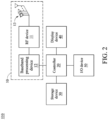
- Fig. 2 is a block diagram illustrating the UE 110 according to an embodiment of the application.
- the UE 110 includes a wireless transceiver 10, a controller 20, a storage device 30, a display device 40, and an Input/Output (I/O) device 50.
- I/O Input/Output
- the wireless transceiver 10 is configured to perform wireless transmission and reception to and from the RAN 121.
- the wireless transceiver 10 includes a Radio Frequency (RF) device 11, a baseband processing device 12, and antenna(s) 13, wherein the antenna(s) 13 may include one or more antennas for beamforming.
- the baseband processing device 12 is configured to perform baseband signal processing and control the communications between subscriber identity card(s) (not shown) and the RF device 11.
- the baseband processing device 12 may contain multiple hardware components to perform the baseband signal processing, including Analog-to-Digital Conversion (ADC)/Digital-to-Analog Conversion (DAC), gain adjusting, modulation/demodulation, encoding/decoding, and so on.
- ADC Analog-to-Digital Conversion
- DAC Digital-to-Analog Conversion
- the RF device 11 may receive RF wireless signals via the antenna(s) 13, convert the received RF wireless signals to baseband signals, which are processed by the baseband processing device 12, or receive baseband signals from the baseband processing device 12 and convert the received baseband signals to RF wireless signals, which are later transmitted via the antenna(s) 13.
- the RF device 11 may also contain multiple hardware devices to perform radio frequency conversion.
- the RF device 11 may include a mixer to multiply the baseband signals with a carrier oscillated in the radio frequency of the supported cellular technologies, wherein the radio frequency may be any radio frequency (e.g., 30GHz ⁇ 300GHz for mmWave) utilized in the 5G NR technology, or another radio frequency, depending on the cellular technology in use.
- the controller 20 may be a general-purpose processor, a Micro Control Unit (MCU), an application processor, a Digital Signal Processor (DSP), or the like, which includes various circuits for providing the functions of data processing and computing, controlling the wireless transceiver 10 for wireless communications with the RAN 121, storing and retrieving data (e.g., program code) to and from the storage device 30, sending a series of frame data (e.g. representing text messages, graphics, images, etc.) to the display device 40, and receiving signals from the I/O device 50.
- the controller 20 coordinates the aforementioned operations of the wireless transceiver 10, the storage device 30, the display device 40, and the I/O device 50 for performing the method for beam identification through the PRACH and the method for efficient PRACH utilization.
- controller 20 may be incorporated into the baseband processing device 12, to serve as a baseband processor.
- the circuits of the controller 20 will typically include transistors that are configured in such a way as to control the operation of the circuits in accordance with the functions and operations described herein.
- the specific structure or interconnections of the transistors will typically be determined by a compiler, such as a Register Transfer Language (RTL) compiler.
- RTL compilers may be operated by a processor upon scripts that closely resemble assembly language code, to compile the script into a form that is used for the layout or fabrication of the ultimate circuitry. Indeed, RTL is well known for its role and use in the facilitation of the design process of electronic and digital systems.
- the storage device 30 is a non-transitory machine-readable storage medium, including a memory, such as a FLASH memory or a Non-Volatile Random Access Memory (NVRAM), or a magnetic storage device, such as a hard disk or a magnetic tape, or an optical disc, or any combination thereof for storing instructions and/or program code of applications, communication protocols, and/or the methods for beam identification through the PRACH and for efficient PRACH utilization.
- NVRAM Non-Volatile Random Access Memory
- the display device 40 may be a Liquid-Crystal Display (LCD), a Light-Emitting Diode (LED) display, or an Electronic Paper Display (EPD), etc., for providing a display function.
- the display device 40 may further include one or more touch sensors disposed thereon or thereunder for sensing touches, contacts, or approximations of objects, such as fingers or styluses.
- the I/O device 50 may include one or more buttons, a keyboard, a mouse, a touch pad, a video camera, a microphone, and/or a speaker, etc., to serve as the Man-Machine Interface (MMI) for interaction with users.
- MMI Man-Machine Interface
- the UE 110 may include more components, such as a power supply, or a Global Positioning System (GPS) device, wherein the power supply may be a mobile/replaceable battery providing power to all the other components of the UE 110, and the GPS device may provide the location information of the UE 110 for use of some location-based services or applications.
- a power supply may be a mobile/replaceable battery providing power to all the other components of the UE 110
- GPS device may provide the location information of the UE 110 for use of some location-based services or applications.
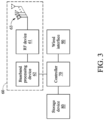
- Fig. 3 is a block diagram illustrating a cellular station according to the application.
- the cellular station may be a 5G cellular station, such as a gNB or TRP.
- the cellular station includes a wireless transceiver 60, a controller 70, a storage device 80, and a wired interface 90.
- the wireless transceiver 60 is configured to perform wireless transmission and reception to and from the UE 110.
- the wireless transceiver 60 includes an RF device 61, a baseband processing device 62, and antenna(s) 63, wherein the antenna(s) 63 may include one or more antennas for beamforming.
- the functions of the RF device 61, the baseband processing device 62, and the antenna(s) 63 are similar to those of the RF device 11, the baseband processing device 12, and the antenna(s) 13 as described in the embodiment of Fig. 2 , and thus, the detailed description is not repeated herein for brevity.
- the controller 70 may be a general-purpose processor, an MCU, an application processor, a DSP, or the like, which includes various circuits for providing the functions of data processing and computing, controlling the wireless transceiver 60 for wireless communications with the UE 110, storing and retrieving data (e.g., program code) to and from the storage device 80, and sending/receiving messages to/from other network entities (e.g., other cellular stations in the RAN 121 or other network entities in the NG-CN 122) through the wired interface 90.
- the controller 70 coordinates the aforementioned operations of the wireless transceiver 60, the storage device 80, and the wired interface 90 to perform the method for beam identification through the PRACH and the method for efficient PRACH utilization.
- controller 70 may be incorporated into the baseband processing device 62, to serve as a baseband processor.
- the circuits of the controller 70 will typically include transistors that are configured in such a way as to control the operation of the circuits in accordance with the functions and operations described herein.
- the specific structure or interconnections of the transistors will typically be determined by a compiler, such as an RTL compiler.
- RTL compilers may be operated by a processor upon scripts that closely resemble assembly language code, to compile the script into a form that is used for the layout or fabrication of the ultimate circuitry. Indeed, RTL is well known for its role and use in the facilitation of the design process of electronic and digital systems.
- the storage device 80 may be a memory, such as a FLASH memory or an NVRAM, or a magnetic storage device, such as a hard disk or a magnetic tape, or an optical disc, or any combination thereof for storing instructions and/or program code of applications, communication protocols, and/or the methods for beam identification through the PRACH and for efficient PRACH utilization.
- a memory such as a FLASH memory or an NVRAM
- a magnetic storage device such as a hard disk or a magnetic tape, or an optical disc, or any combination thereof for storing instructions and/or program code of applications, communication protocols, and/or the methods for beam identification through the PRACH and for efficient PRACH utilization.
- the wired interface 90 is responsible for providing wired communications with other network entities, such as other cellular stations in the RAN 121, or other network entities in the NG-CN 122.
- the wired interface 90 may include a cable modem, an Asymmetric Digital Subscriber Line (ADSL) modem, a Fiber-Optic Modem (FOM), and/or an Ethernet interface.
- ADSL Asymmetric Digital Subscriber Line
- FOM Fiber-Optic Modem
- the cellular station may further include other functional devices, such as a display device (e.g., LCD, LED display, or EPD, etc.), an I/O device (e.g., button, keyboard, mouse, touch pad, video camera, microphone, speaker, etc.), and/or a power supply, etc.
- a display device e.g., LCD, LED display, or EPD, etc.
- I/O device e.g., button, keyboard, mouse, touch pad, video camera, microphone, speaker, etc.
- a power supply e.g., a power supply, etc.
- an association between the downlink reference signals and the PRACH preambles and RACH occasions (e.g., time-frequency resources) is configured for indicating the downlink reference signal selected by UE to the cellular station when a PRACH preamble is transmitted by the UE and detected by the cellular station.
- a RACH occasion is defined as the time-frequency resource on which a PRACH message 1 is transmitted using the configured PRACH preamble format with a single particular TX beam.
- the usage of PRACH transmission includes new candidate beam identification to recover from beam failures or to facilitate handovers from one cell to another.
- a downlink reference signal associated with a candidate beam will be selected among the set of downlink reference signals associated with all beams, wherein the set of downlink reference signals includes CSI-RS resources, SS blocks, or PBCH blocks, or any combination thereof.
- the PRACH preambles and RACH occasions corresponding to the newly selected downlink reference signal (i.e., CSI-RS resource or SS/PBCH block) of the candidate beam may be determined, and the UE may transmit a random access preamble according to the determined PRACH preamble on the determined RACH occasion to the gNB.
- the gNB when receiving the random access preamble, the gNB knows that a beam failure occurs or a cell handover is triggered, and knows which beam is the new candidate beam selected by the UE, when receiving the random access preamble, based on the association.
- Fig. 4 is a schematic diagram illustrating the associations between CSI-RS resources, SS/PBCH blocks, and a plurality sets of PRACH preambles and RACH occasions according to an embodiment of the application
- the beam width of each CSI-RS resource is substantially the same as the beam width of each SS/PBCH block, and thus, the association between CSI-RS resources and PRACH preambles and RACH occasions can be the same as the association between the SS/PBCH blocks and the PRACH preambles and RACH occasions. That is, the association associates one CSI-RS resource or SS/PBCH block to one set of PRACH preambles and RACH occasions.
- the first SS/PBCH block and the first CSI-RS resource are corresponding to the first set of PRACH preambles and RACH occasions according to the associations, and thus, the beams used for the first SS/PBCH block and the first CSI-RS resource are corresponding to the beam used for the first set of PRACH preambles and RACH occasions.
- the second SS/PBCH block and the second CSI-RS resource are corresponding to the second set of PRACH preambles and RACH occasions according to the associations, and thus, the beams used for the second SS/PBCH block and the second CSI-RS resource are corresponding to the beam used for the second set of PRACH preambles and RACH occasions.
- the third blocks/PBCH block and the third CSI-RS resource are corresponding to the third set of PRACH preambles and RACH occasions according to the associations, and thus, the beams used for the third SS/PBCH block and the third CSI-RS are corresponding to the beam used for the third set of PRACH preambles and RACH occasions.
- the fourth SS/PBCH block and the fourth CSI-RS resource are corresponding to the fourth set of PRACH preambles and RACH occasions according to the associations, and thus, the beams used for the fourth SS/PBCH block and the fourth CSI-RS resource are corresponding to the beam used for the fourth set of PRACH preambles and RACH occasions.
- the associations are configured between CSI-RS resources and the PRACH preambles.
- the first CSI-RS resource is associated with the first set of PRACH preamble(s)
- the second CSI-RS resource is associated with the second set of PRACH preamble(s), and so on.
- the associations are configured between SS/PBCH blocks and the PRACH preambles.
- the first SS/PBCH block is associated with the first set of PRACH preamble(s)
- the second SS/PBCH block is associated with the second set of PRACH preamble(s), and so on.
- the associations are configured between CSI-RS resources and the RACH occasions.
- the first CSI-RS resource is associated with the first RACH occasion(s)
- the second CSI-RS resource is associated with the second RACH occasion(s), and so on.
- the associations are configured between SS/PBCH blocks and the RACH occasions.
- the first SS/PBCH block is associated with the first RACH occasion(s)
- the second SS/PBCH block is associated with the second RACH occasion(s), and so on.
- the associations are configured between CSI-RS resources and both the PRACH preambles and the RACH occasions.
- the first CSI-RS resource is associated with the first set of PRACH preamble(s) and the first RACH occasion(s)
- the second CSI-RS resource is associated with the second set of PRACH preamble(s) and the second RACH occasion(s)
- the associations are configured between SS/PBCH blocks and both the PRACH preambles and the RACH occasions.
- the first SS/PBCH block is associated with the first set of PRACH preamble(s) and the first RACH occasion(s)
- the second SS/PBCH block is associated with the second set of PRACH preamble(s) and the second RACH occasion(s), and so on.
- association configured between (1) the CSI-RS resources and RACH resources including preambles, occasions (e.g., time-frequency resources), or a combination thereof, (2) the SS/PBCH blocks and RACH resources including preambles, occasions (e.g., time-frequency resources), or a combination thereof, or (3) the CSI-RS resources and the SS/PBCH blocks and RACH resources including preambles, occasions (e.g., time-frequency resources), or a combination thereof.
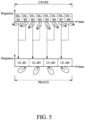
- Fig. 5 is a schematic diagram illustrating the association between CSI-RS resources and a plurality sets of PRACH preambles and RACH occasions according to an embodiment of the application.
- the beam width of each CSI-RS resources is narrower than the beam width of the downlink reference signals (e.g. SS/PBCH blocks) that PRACH preambles and RACH occasions are configured to be associated with.
- the beam width of each CSI-RS resources is substantially half the beam width of the downlink reference signals that PRACH preambles and RACH occasions are associated with. That is, the association associates multiple (e.g., two) CSI-RS resources to one set of PRACH preambles and RACH occasions.
- the first and second CSI-RS resources are corresponding to the first set of PRACH preambles and RACH occasions according to the association, and thus, the beams used for the first and second CSI-RS resources are corresponding to the beam used for the first set of PRACH preambles and RACH occasions.
- the third and fourth CSI-RS resources are corresponding to the second set of PRACH preambles and RACH occasions according to the association, and thus, the beams used for the third and fourth CSI-RS resources are corresponding to the beam used for the second set of PRACH preambles and RACH occasions.
- the fifth and sixth CSI-RS resources are corresponding to the third set of PRACH preambles and RACH occasions according to the association, and thus, the beams used for the fifth and sixth CSI-RS resources are corresponding to the beam used for the third set of PRACH preambles and RACH occasions.
- the seventh and eighth CSI-RS resources are corresponding to the fourth set of PRACH preambles and RACH occasions according to the association, and thus, the beams used for the seventh and eighth CSI-RS resources are corresponding to the beam used for the fourth set of PRACH preambles and RACH occasions.
- the associations are configured between CSI-RS resources and the PRACH preambles.
- the first and the second CSI-RS resources are associated with the first set of PRACH preamble(s)
- the third and fourth CSI-RS resources are associated with the second set of PRACH preamble(s)
- the associations are configured between CSI-RS resources and the RACH occasions.
- the first and second CSI-RS resources are associated with the first RACH occasion(s)
- the third and fourth CSI-RS resources are associated with the second RACH occasion(s), and so on.
- association configured between the CSI-RS resources and RACH resources including preambles, occasions (e.g., time-frequency resources), or a combination thereof.
- the advantage of this kind of association is that fewer PRACH resources are required.
- the disadvantages of this kind of association are that the new beam information is only partially conveyed through the first step of a random access procedure and wider beams are used for the messages in the third step (i.e., scheduling request) and the fourth step (i.e., contention resolution) of a contention-based random access procedure.
- the conveyance of the new beam information may be completed through the message of the third step (i.e., uplink transmission) of a contention-based random access procedure.
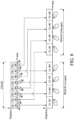
- Fig. 6 is a schematic diagram illustrating the association between CSI-RS resources and a plurality sets of PRACH preambles and RACH occasions according to another embodiment of the application.
- the association associates the CSI-RS resources to the sets of PRACH preambles and RACH occasions by Code Division Multiplexing (CDM).
- CDM Code Division Multiplexing
- preambles from the two PRACH preamble sets may be differentiated at the code domain (i.e., preamble domain).
- the first and second CSI-RS resources are corresponding to the first and second PRACH preamble sets within the first RACH occasion, respectively.
- the third and fourth CSI-RS resources are corresponding to the first and second PRACH preamble sets within the second RACH occasion, respectively.
- the fifth and sixth CSI-RS resources are corresponding to the first and second PRACH preamble sets within the third RACH occasion, respectively.
- the seventh and eighth CSI-RS resources are corresponding to the first and second PRACH preamble sets within the fourth RACH occasion, respectively.
- Fig. 7 is a schematic diagram illustrating the association between CSI-RS resources and a plurality of PRACH preambles and RACH occasions according to yet another embodiment of the application.
- the association associates one CSI-RS resource to one set of RACH occasions by Frequency Division Multiplexing (FDM).
- FDM Frequency Division Multiplexing
- the first and second CSI-RS resources are corresponding to the first and second RACH occasions within the first PRACH time period, respectively.
- the third and fourth CSI-RS resources are corresponding to the first and second RACH occasions within the second PRACH time period, respectively.
- the fifth and sixth CSI-RS resources are corresponding to the first and second RACH occasions within the third PRACH time period, respectively.
- the seventh and eighth CSI-RS resources are corresponding to the first and second RACH occasions within the fourth PRACH time period, respectively.
- Fig. 8 is a schematic diagram illustrating the association between CSI-RS resources and a plurality of PRACH preambles and RACH occasions according to still another embodiment of the application.
- the association associates one CSI-RS resource to one set of PRACH preambles and RACH occasions by Time Division Multiplexing (TDM).
- TDM Time Division Multiplexing
- the four RACH occasions are duplicated at the time domain, wherein each of the eight RACH occasions may be differentiated at the time domain with the same frequency range.
- the first and second CSI-RS resources are corresponding to the first RACH occasion within the first span of the time domain and the first RACH occasion within the second span of the time domain, respectively.
- the third and fourth CSI-RS resources are corresponding to the second RACH occasion within the first span of the time domain and the second RACH occasion within the second span of the time domain, respectively.
- the fifth and sixth CSI-RS resources are corresponding to the third RACH occasion within the first span of the time domain and the third RACH occasion within the second span of the time domain, respectively.
- the seventh and eighth CSI-RS resources are corresponding to the fourth RACH occasion within the first span of the time domain and the fourth RACH occasion within the second span of the time domain, respectively.
- the new beam information may be fully conveyed through the first step of a random access procedure and narrower beams may be used for the messages of the third step (i.e., uplink transmission) and fourth step (e.g.., contention resolution) of a contention-based random access procedure (narrower beam may render better spectral efficiency).
- fourth step e.g.., contention resolution
- the association between downlink reference signals (i.e., CSI-RS resources and/or SS/PBCH blocks) and a plurality sets of PRACH preambles and/or RACH occasions can be based on any combination of the above mentioned CDM, FDM, and TDM methods.
- Fig. 9 is a schematic diagram illustrating a joint PRACH design for beam failure recovery and other uplink requests or indication according to the application.
- a dedicated preamble may be allocated for beam failure recovery and other uplink requests or indication, such as scheduling request or an acknowledgement (ACK) or non-acknowledgement (NACK) signal.
- ACK acknowledgement
- NACK non-acknowledgement
- the dedicated preamble when transmitted on one of the serving beam(s) (denoted as Beam1 in Fig. 9 ), the dedicated preamble serves as a scheduling request or an ACK/NACK signal.
- the dedicated preamble When transmitted on one of the non-serving beams (denoted as Beam2 to Beam4 in Fig. 9 ), the dedicated preamble serves as a request for beam failure recovery.
- the preamble may serve as a scheduling request when it is transmitted on Beam1 (i.e., the serving beam), and may serve as a request for beam failure recovery when it is transmitted on Beam 4 (i.e., a non-serving beam).
- different preambles may be flexibly split for asynchronous and synchronous transmissions within a RACH occasion, and/or the bandwidth by utilizing a preamble format with a smaller sequence length or by configuring a smaller sub-carrier spacing, and/or cyclic shift used for synchronous transmission may be reduced to be smaller than those used for asynchronous transmission.
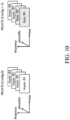
- Fig. 10 is a schematic diagram illustrating a PRACH resource utilization for asynchronous and synchronous transmissions according to the application.
- Fig. 10 there are four different PRACH configurations for the same PRACH time-frequency resource.
- the preambles generated using all Zadoff-Chu (ZC) roots are for asynchronous transmissions
- the PRACH resource blocks for asynchronous transmissions using different preambles are denoted as Async.B 1 to Async.B4.
- the preambles generated using all ZC roots are split for asynchronous and synchronous transmissions within the same PRACH time-frequency resource, and the PRACH resource blocks for asynchronous transmissions using different preambles are denoted as Async.B5 to Async.B6, while the PRACH resource blocks for synchronous transmissions using different preambles are denoted as Sync.B 1 to Sync.B2.
- Table 1 An example of the preambles and the number of ZC roots used for asynchronous and synchronous transmissions in each PRACH configuration is provided in table 1 as follows (assuming that the PRACH Subcarrier Spacing (SCS) is 30 KHz, and the Inter-Site Distance (ISD) is 500 meters). Table 1. Configuration # # of ZC roots for Asyn. Tx # of preambles for Asyn. Tx (upper bound) # of ZC roots for Syn. Tx # of preambles for Syn. Tx (upper bound) 0 6 60 0 0 1 5 50 1 33 2 4 40 2 66 3 3 30 3 99
- the gNB does not need to include the Timing Advance (TA) command and the temporary Cell Radio Network Temporary Identifier (C-RNTI) in the response to these PRACH attempts.
- TA Timing Advance
- C-RNTI Cell Radio Network Temporary Identifier
- Fig. 11 is a schematic diagram illustrating the PRACH preamble bandwidths for asynchronous and synchronous transmissions according to the application.
- the PRACH time-frequency resource used for asynchronous transmissions is shown on the left side of Fig. 11 , in which the number of ZC roots is 8 and the length of preamble sequences is 839.
- the PRACH time-frequency resource used for synchronous transmissions (where TA estimation is not required) is shown on the right side of Fig. 11 , in which the number of ZC roots is 2 and the length of preamble sequences is 139. That is, the PRACH preamble bandwidth for synchronous transmission is narrower than the PRACH preamble bandwidth for asynchronous transmission. In other words, the PRACH bandwidth can be reduced by configuring a preamble format with a smaller sequence length or by configuring a smaller sub-carrier spacing.
- the Multiple Access Interference (MAI) from other root sequences may be reduced.
- the cyclic shift does not need to cover the round-trip propagation delay, and the cyclic shift applied for generating the preambles may be reduced.
- the PRACH preamble bandwidth and the cyclic shift used for synchronous transmission may be reduced to be smaller than those used for asynchronous transmission.
- Fig. 12 is a schematic diagram illustrating a PRACH resource utilization for asynchronous and synchronous transmissions according to the application.
- the PRACH time-frequency resource for asynchronous transmissions is shown on the left side of Fig. 12 , in which the number of ZC roots is 8, the length of preamble sequences is 839, and the cyclic shift is 9.
- the PRACH time-frequency resources for synchronous transmissions are shown on the right side of Fig. 12 , in which the number of ZC roots is 2, the length of preamble sequences is 139, and the cyclic shift is 2.
- Fig. 12 there may be multiple PRACH time-frequency resources for synchronous transmissions allocated within the same PRACH time period.
- this allocation may achieve the target preamble opportunities without introducing severe MAI from other root sequences.
- the present application realizes beam failure recovery or beam handover through the PRACH, by providing an association between the downlink reference signals (e.g., CSI-RS resources, and/or SS/PBCH blocks) and the PRACH resources (including the sets of PRACH preambles, RACH occasions, or any combination thereof) for beam identification. Also, the present application realizes more flexible PRACH designs, by allowing different preambles to be flexibly split for asynchronous and synchronous transmissions within a PRACH time-frequency resource, and/or reducing the bandwidth and/or cyclic shift used for synchronous transmission to be smaller than those used for asynchronous transmission. Advantageously, spectral efficiency and the efficiency of PRACH utilization may be significantly improved.
Landscapes
- Engineering & Computer Science (AREA)
- Signal Processing (AREA)
- Computer Networks & Wireless Communication (AREA)
- Mobile Radio Communication Systems (AREA)
Claims (7)
- Teilnehmerausrüstung, UE (110), aufweisend:einen Funksendeempfänger (11), der eingerichtet ist, ein drahtloses Senden und Empfangen zu und von einer Mobilfunkstation auszuführen; undeine Steuerung (20), die eingerichtet ist zumAuswählen eines Downlink-Referenzsignals, das mit einem Kandidatenstrahl verknüpft ist, aus einer Mehrzahl von Downlink-Referenzsignalen, die eine Kombination von Kanalzustandsinformation-Referenzsignal-, CSI-RS-, Ressourcen, Synchronisationssignal-, SS-, Blöcken und physikalischer-Broadcast-Kanal-, PBCH-, Blöcken umfasst,Bestimmen eines Satzes von einer Mehrzahl von Sätzen von physikalischer-Zufallszugriffskanal-, PRACH-, Präambeln und RACH-Gelegenheiten für das ausgewählte Downlink-Referenzsignal gemäß einer Verknüpfung, die zwischen den Downlink-Referenzsignalen und PRACH-Ressourcen konfiguriert ist, undVerwenden des bestimmten Satzes von PRACH-Präambel und RACH-Gelegenheit, um eine PRACH-Übertragung über den Funksendeempfänger zu der Mobilfunkstation auszuführen,dadurch gekennzeichnet, dassdie Verknüpfung, die zwischen den Downlink-Referenzsignalen und den PRACH-Ressourcen konfiguriert ist, eine CSI-RS-Ressource, einen SS-Block oder einen PBCH-Block mit einem Satz von PRACH-Ressourcen verknüpft oder mehrere CSI-RS-Ressourcen, SS-Blöcke oder PBCH-Blöcke mit einem Satz von PRACH-Ressourcen verknüpft,wobei, wenn die Verknüpfung, die zwischen den Downlink-Referenzsignalen und den PRACH-Ressourcen konfiguriert ist, mehrere CSI-RS-Ressourcen, SS-Blöcke oder PBCH-Blöcke mit einem Satz von PRACH-Ressourcen verknüpft, die Steuerung (20) weiter eingerichtet ist, eine Uplink-Übertragung über den Funksendeempfänger (11) an die Mobilfunkstation zu senden, um zu identifizieren, welche der mehreren CSI-RS-Ressourcen, SS-Blöcke oder PBCH-Blöcke mit dem Kandidatenstrahl verknüpft ist.
- Verfahren für eine Strahlidentifikation durch einen PRACH, ausgeführt durch eine UE (110), die drahtlos mit einer Mobilfunkstation verbunden ist, wobei das Verfahren umfasst:Auswählen eines Downlink-Referenzsignals, das mit einem Kandidatenstrahl verknüpft ist, aus einer Mehrzahl von Downlink-Referenzsignalen, die eine Kombination von CSI-RS-Ressourcen, SS-Blöcken und PBCH-Blöcken umfasst;Bestimmen eines Satzes von einer Mehrzahl von Sätzen von PRACH-Präambeln und RACH-Gelegenheiten für das ausgewählte Downlink-Referenzsignal gemäß einer Verknüpfung, die zwischen den Downlink-Referenzsignalen und PRACH-Ressourcen konfiguriert ist; undVerwenden des bestimmten Satzes von PRACH-Präambel und RACH-Gelegenheit, um eine PRACH-Übertragung zu der Mobilfunkstation auszuführen,dadurch gekennzeichnet, dassdie Verknüpfung, die zwischen den Downlink-Referenzsignalen und den PRACH-Ressourcen konfiguriert ist, eine CSI-RS-Ressource, einen SS-Block oder einen PBCH-Block mit einem Satz von PRACH-Ressourcen verknüpft oder mehrere CSI-RS-Ressourcen, SS-Blöcke oder PBCH-Blöcke mit einem Satz von PRACH-Ressourcen verknüpft,wobei, wenn die Verknüpfung, die zwischen den Downlink-Referenzsignalen und den PRACH-Ressourcen konfiguriert ist, mehrere CSI-RS-Ressourcen, SS-Blöcke oder PBCH-Blöcke mit einem Satz von PRACH-Ressourcen verknüpft, die Steuerung (20) weiter eingerichtet ist, eine Uplink-Übertragung über den Funksendeempfänger (11) an die Mobilfunkstation zu senden, um zu identifizieren, welche der mehreren CSI-RS-Ressourcen, SS-Blöcke oder PBCH-Blöcke mit dem Kandidatenstrahl verknüpft ist.
- UE (110) gemäß Anspruch 1 oder Verfahren gemäß Anspruch 2, wobei der Kandidatenstrahl für eine Strahlfehlerwiederherstellung oder für eine Übergabe von einer Zelle an eine andere Zelle verwendet wird.
- UE (110) gemäß Anspruch 1 oder Verfahren gemäß Anspruch 2, wobei die PRACH-Ressourcen die PRACH-Präambeln, die RACH-Gelegenheiten oder eine Kombination davon umfassen, und die Verknüpfung zwischen den Downlink-Referenzsignalen und den PRACH-Präambeln, den RACH-Gelegenheiten oder einer Kombination davon konfiguriert ist.
- UE (110) gemäß Anspruch 1 oder Verfahren gemäß Anspruch 2, wobei, wenn die PRACH-Übertragung ein Übertragen einer ersten PRACH-Präambel umfasst, das eine erste RACH-Gelegenheit verwendet, welche zu dem ausgewählten Downlink-Referenzsignal korrespondiert, die erste PRACH-Präambel für einen Zweck verwendet wird; und wenn die PRACH-Übertragung ein Übertragen der ersten PRACH-Präambel umfasst, die eine zweite RACH-Gelegenheit verwendet, welche zu einem anderen Downlink-Referenzsignal korrespondiert, die erste PRACH-Präambel für einen anderen Zweck verwendet wird.
- UE (110) oder Verfahren gemäß Anspruch 5, wobei, wenn die erste PRACH-Präambel auf einem bedienenden Strahl übertragen wird, die erste PRACH-Präambel als eine Zeiteinteilungsanfrage oder ein Bestätigung-, ACK-, oder eine Nicht-Bestätigung-, NACK-, Signal dient, und wenn die erste PRACH-Präambel auf dem Kandidatenstrahl übertragen wird, die erste PRACH-Präambel als eine Anforderung für eine Strahlfehlerwiederherstellung dient.
- UE (110) gemäß Anspruch 1 oder Verfahren gemäß Anspruch 2, wobei die Verknüpfung, die zwischen den Downlink-Referenzsignalen und den PRACH-Ressourcen konfiguriert ist, eine CSI-RS-Ressource, einen SS-Block oder einen PBCH-Block mit einem Satz von PRACH-Ressourcen verknüpft durch mindestens eins von: Codemultiplex, CDM, Frequenzmultiplex, FDM, und Zeitmultiplex, TDM.
Applications Claiming Priority (3)
| Application Number | Priority Date | Filing Date | Title |
|---|---|---|---|
| US201762475966P | 2017-03-24 | 2017-03-24 | |
| US201762475970P | 2017-03-24 | 2017-03-24 | |
| PCT/CN2018/080523 WO2018171802A1 (en) | 2017-03-24 | 2018-03-26 | Apparatuses and methods for beam identification through the physical random access channel (prach) and efficient prach resource utilization |
Publications (3)
| Publication Number | Publication Date |
|---|---|
| EP3603248A1 EP3603248A1 (de) | 2020-02-05 |
| EP3603248A4 EP3603248A4 (de) | 2021-01-13 |
| EP3603248B1 true EP3603248B1 (de) | 2024-05-01 |
Family
ID=63583218
Family Applications (2)
| Application Number | Title | Priority Date | Filing Date |
|---|---|---|---|
| EP18772121.2A Active EP3603248B1 (de) | 2017-03-24 | 2018-03-26 | Vorrichtungen und verfahren zur strahlidentifikation durch einen physikalischen direktzugriffskanal (prach) und effiziente prach-ressourcennutzung |
| EP18772195.6A Active EP3602972B1 (de) | 2017-03-24 | 2018-03-26 | Vorrichtungen und verfahren zur strahlidentifikation durch physikalischen direktzugriffskanal (prach) und effiziente prach-ressourcennutzung |
Family Applications After (1)
| Application Number | Title | Priority Date | Filing Date |
|---|---|---|---|
| EP18772195.6A Active EP3602972B1 (de) | 2017-03-24 | 2018-03-26 | Vorrichtungen und verfahren zur strahlidentifikation durch physikalischen direktzugriffskanal (prach) und effiziente prach-ressourcennutzung |
Country Status (5)
| Country | Link |
|---|---|
| US (3) | US10708789B2 (de) |
| EP (2) | EP3603248B1 (de) |
| CN (3) | CN114980341B (de) |
| TW (2) | TWI695644B (de) |
| WO (2) | WO2018171801A1 (de) |
Families Citing this family (42)
| Publication number | Priority date | Publication date | Assignee | Title |
|---|---|---|---|---|
| CN114786269A (zh) * | 2017-03-27 | 2022-07-22 | 中兴通讯股份有限公司 | 一种随机接入物理资源的指示方法及装置 |
| WO2018210202A1 (en) * | 2017-05-14 | 2018-11-22 | Fg Innovation Ip Company Limited | Methods, devices, and systems for beam refinement during handover |
| WO2018227544A1 (zh) | 2017-06-16 | 2018-12-20 | Oppo广东移动通信有限公司 | 随机接入信号传输方法及相关产品 |
| US11477824B2 (en) * | 2017-09-07 | 2022-10-18 | Futurewei Technologies, Inc. | System and method for request multiplexing |
| CN109792660B (zh) * | 2017-09-27 | 2020-08-04 | Oppo广东移动通信有限公司 | 一种信息指示方法及装置、网络设备、终端设备 |
| US11032851B2 (en) * | 2018-02-17 | 2021-06-08 | Mediatek Inc. | QCL in rach different from that in other signals |
| US11197324B2 (en) * | 2018-02-23 | 2021-12-07 | Qualcomm Incorporated | NR RACH MSG3 and MSG4 resource configuration for CV2X |
| CN114916086A (zh) * | 2018-08-07 | 2022-08-16 | 华为技术有限公司 | 随机接入方法、通信装置、芯片及存储介质 |
| KR102107714B1 (ko) * | 2018-08-22 | 2020-05-07 | 엘지전자 주식회사 | 무선 통신 시스템에서 상향링크 전송을 수행하는 방법 및 이를 위한 장치 |
| US10834773B2 (en) * | 2018-09-28 | 2020-11-10 | At&T Intellectual Property I, L.P. | On-demand backhaul link management measurements for integrated access backhaul for 5G or other next generation network |
| CN111132326A (zh) * | 2018-11-01 | 2020-05-08 | 北京三星通信技术研究有限公司 | 随机接入方法、终端设备及计算机存储介质 |
| CN111294787B (zh) * | 2018-12-10 | 2024-03-12 | 中兴通讯股份有限公司 | 一种用户设备ue定位方法及装置 |
| CN113302964A (zh) * | 2019-01-09 | 2021-08-24 | 株式会社Ntt都科摩 | 用户终端以及无线通信方法 |
| CN109863813B (zh) * | 2019-01-10 | 2022-11-15 | 北京小米移动软件有限公司 | 随机接入方法及装置 |
| CN113455038B (zh) * | 2019-01-11 | 2023-04-28 | 联想(北京)有限公司 | 用于波束故障恢复的方法及设备 |
| WO2020168538A1 (en) * | 2019-02-22 | 2020-08-27 | Qualcomm Incorporated | Random access channel occasion configuration |
| US11412422B2 (en) | 2019-03-14 | 2022-08-09 | Ofinno, Llc | Handover in unlicensed band |
| CN111436158B (zh) | 2019-03-22 | 2023-03-28 | 维沃移动通信有限公司 | 传输物理随机接入信道信号的方法、装置和电子设备 |
| US11363516B2 (en) | 2019-03-27 | 2022-06-14 | Mediatek Singapore Pte. Ltd. | Electronic device and method for beam failure recovery |
| US11483870B2 (en) * | 2019-03-28 | 2022-10-25 | Qualcomm Incorporated | Resource mapping and waveform generation for uplink transmission |
| WO2020213127A1 (ja) * | 2019-04-18 | 2020-10-22 | 株式会社Nttドコモ | ユーザ端末及び無線通信方法 |
| CN111867136B (zh) * | 2019-04-30 | 2022-08-26 | 大唐移动通信设备有限公司 | 一种波束切换方法和设备 |
| CN113767714B (zh) * | 2019-05-02 | 2025-03-18 | 诺基亚技术有限公司 | 用于使用非服务小区的鲁棒波束故障恢复过程 |
| EP3963983B1 (de) * | 2019-05-03 | 2023-03-29 | Telefonaktiebolaget LM Ericsson (publ) | Verfahren und vorrichtung für direktzugriff |
| CN112260797B (zh) | 2019-07-22 | 2022-06-14 | 华为技术有限公司 | 一种信道状态信息传输方法及装置 |
| US12041667B2 (en) | 2019-08-30 | 2024-07-16 | Qualcomm Incorporated | Root set selection for multi-root preamble |
| EP4040883A4 (de) | 2019-09-30 | 2022-10-05 | Fujitsu Limited | Dirktzugriffsverfahren und vorrichtung sowie kommunikationssystem |
| CN114503725B (zh) * | 2019-09-30 | 2025-05-16 | 上海诺基亚贝尔股份有限公司 | 服务小区的波束故障恢复 |
| ES2967711T3 (es) * | 2019-11-05 | 2024-05-03 | Nokia Technologies Oy | Mejora en la ocasión de canal de acceso aleatorio y la asociación de bloque de ss/pbch |
| CN114731614B (zh) * | 2019-12-05 | 2025-03-11 | 高通股份有限公司 | 探测参考信号(srs)与多个频域交错的随机接入信道(rach)资源的关联 |
| CN115004635A (zh) * | 2020-01-07 | 2022-09-02 | 华为技术有限公司 | 签约信息获取方法及装置 |
| US11683773B2 (en) * | 2020-01-10 | 2023-06-20 | Qualcomm Incorporated | Timing advance update for non-serving cell |
| EP4022794A1 (de) | 2020-01-14 | 2022-07-06 | Sony Group Corporation | Strahlverwaltung während des anfänglichen zugriffs |
| CN113395767B (zh) * | 2020-03-12 | 2022-07-01 | 上海朗帛通信技术有限公司 | 一种被用于无线通信的节点中的方法和装置 |
| US11622391B2 (en) * | 2020-10-16 | 2023-04-04 | Qualcomm Incorporated | Beam-based random access occasions |
| JP7769707B2 (ja) | 2021-01-07 | 2025-11-13 | ノキア テクノロジーズ オサケユイチア | 非アクティブモードのデバイスのビーム管理 |
| US12317327B2 (en) | 2021-05-03 | 2025-05-27 | Samsung Electronics Co., Ltd. | Radio frequency exposure mitigation via beam selection and power control for random access procedure |
| EP4338533A1 (de) * | 2021-05-10 | 2024-03-20 | Telefonaktiebolaget LM Ericsson (publ) | Systeme und verfahren zur früherkennung mehrerer merkmale |
| CN115515250B (zh) * | 2021-06-07 | 2024-11-01 | 维沃移动通信有限公司 | 传输处理方法、终端及网络侧设备 |
| US11729838B2 (en) * | 2021-10-07 | 2023-08-15 | Qualcomm Incorporated | Four-step random access channel procedure |
| CN117377118A (zh) * | 2022-06-23 | 2024-01-09 | 夏普株式会社 | 由用户设备执行的方法及用户设备 |
| WO2024196230A1 (ko) * | 2023-03-21 | 2024-09-26 | 한국전자통신연구원 | 무선 통신 시스템에서 노드의 도달 영역을 넓히기 위한 장치 및 방법 |
Family Cites Families (40)
| Publication number | Priority date | Publication date | Assignee | Title |
|---|---|---|---|---|
| US5136582A (en) * | 1990-05-29 | 1992-08-04 | Advanced Micro Devices, Inc. | Memory management system and method for network controller |
| US9380503B2 (en) | 2007-04-30 | 2016-06-28 | Google Technology Holdings LLC | Method and apparatus for handover in a wireless communication system |
| CN101478780B (zh) * | 2008-01-04 | 2012-07-18 | 中兴通讯股份有限公司 | 一种蜂窝通讯系统中随机接入的方法 |
| JP5348490B2 (ja) * | 2009-08-13 | 2013-11-20 | ソニー株式会社 | 信号処理装置および方法、並びに受信システム |
| US8462721B2 (en) | 2010-10-04 | 2013-06-11 | Intel Mobile Communications GmbH | Radio base stations, mobile radio terminals, methods for controlling a radio base station, and methods for controlling a mobile radio terminal |
| KR101482487B1 (ko) | 2011-04-21 | 2015-01-13 | 엘지전자 주식회사 | 무선 통신 시스템에서 지연과 함께 무선 접속을 수행하는 방법 및 장치 |
| WO2013043008A2 (ko) | 2011-09-23 | 2013-03-28 | 엘지전자 주식회사 | 무선 통신 시스템에서 랜덤 액세스 방법 및 장치 |
| CN103108405B (zh) * | 2011-11-15 | 2017-09-08 | 中兴通讯股份有限公司 | 无线通信方法和系统 |
| CN103220811B (zh) * | 2012-01-19 | 2018-04-27 | 中兴通讯股份有限公司 | 信息处理方法、mtc ue随机接入lte系统的方法 |
| JP5312629B2 (ja) * | 2012-03-14 | 2013-10-09 | シャープ株式会社 | 移動局装置、基地局装置、通信方法、集積回路および無線通信システム |
| CN104521311B (zh) * | 2012-08-10 | 2019-07-12 | 瑞典爱立信有限公司 | 用于在电信系统中处置连接设置的方法和设备 |
| US9609663B2 (en) | 2012-11-02 | 2017-03-28 | Qualcomm Incorporated | Techniques for decoupling downlink and uplink operations |
| CN103874126A (zh) | 2012-12-17 | 2014-06-18 | 华为技术有限公司 | 一种接入控制方法、用户设备、接入网及通信系统 |
| KR102118693B1 (ko) | 2013-06-24 | 2020-06-03 | 삼성전자주식회사 | 무선 통신 시스템에서 랜덤 액세스를 위한 적응적 송신 빔 패턴 결정 장치 및 방법 |
| RU2638181C2 (ru) | 2013-09-16 | 2017-12-12 | Хуавей Текнолоджиз Ко., Лтд. | Способ предварительного определения ресурса при произвольном доступе, пользовательское устройство и базовая станция |
| US11743897B2 (en) * | 2013-12-20 | 2023-08-29 | Qualcomm Incorporated | Techniques for configuring uplink channels in unlicensed radio frequency spectrum bands |
| CN104918336A (zh) * | 2014-03-12 | 2015-09-16 | 中兴通讯股份有限公司 | 一种干扰环境下随机接入信号的检测方法、装置和系统 |
| EP3120485B1 (de) * | 2014-03-20 | 2018-02-14 | Interdigital Patent Holdings, Inc. | Verfahren und vorrichtung für nichtorthogonalen zugang in einem lte-system |
| AU2014387275B2 (en) | 2014-03-21 | 2017-12-21 | Huawei Technologies Co., Ltd. | Random access response method, base station, and terminal |
| WO2015145400A1 (en) | 2014-03-27 | 2015-10-01 | Telefonaktiebolaget L M Ericsson (Publ) | Random access procedures for machine-type communications |
| CN110855416A (zh) * | 2014-04-30 | 2020-02-28 | Oppo广东移动通信有限公司 | 设备到设备通信的方法、用户设备、网络节点及存储介质 |
| JP6372215B2 (ja) * | 2014-07-16 | 2018-08-15 | 沖電気工業株式会社 | 無線送信装置、無線受信装置、無線送信プログラム、無線受信プログラム及び無線通信システム |
| US9730245B2 (en) * | 2014-10-09 | 2017-08-08 | Qualcomm Incorporated | Random access procedure in a cellular internet of things system |
| JP6398605B2 (ja) * | 2014-10-23 | 2018-10-03 | 沖電気工業株式会社 | 無線通信装置、無線通信プログラム及び無線通信システム |
| CN107211451B (zh) * | 2014-11-26 | 2022-08-26 | Idac控股公司 | 高频无线系统中的初始接入 |
| US9907093B2 (en) | 2014-12-29 | 2018-02-27 | Electronics And Telecommunications Research Institute | Method and apparatus for random access in communications system |
| TW201628429A (zh) | 2015-01-26 | 2016-08-01 | 華碩電腦股份有限公司 | 無線通訊系統中增進波束找尋的方法及裝置 |
| CN107534952B (zh) | 2015-01-30 | 2020-09-08 | 华为技术有限公司 | 一种异步上行的方法、终端及基站 |
| CN107005858B (zh) | 2015-02-13 | 2020-09-29 | 联发科技(新加坡)私人有限公司 | 波束追踪以及恢复的方法以及用户设备 |
| US20160309507A1 (en) | 2015-04-14 | 2016-10-20 | Electronics And Telecommunications Research Institute | Method and apparatus for random access in machine type communication network |
| WO2016165128A1 (zh) * | 2015-04-17 | 2016-10-20 | 华为技术有限公司 | 传输信息的方法、基站和用户设备 |
| WO2016198909A1 (en) | 2015-06-11 | 2016-12-15 | Intel IP Corporation | Low overhead system information acquisition for wireless communication |
| US9954633B2 (en) | 2015-06-18 | 2018-04-24 | Nxp Usa, Inc. | Apparatus and method of performing a decimation on a signal for pattern detection |
| WO2017023352A1 (en) | 2015-08-06 | 2017-02-09 | Intel IP Corporation | Performing mission critical communications at a user equipment (ue) |
| US10375739B2 (en) | 2015-08-26 | 2019-08-06 | Panasonic Intellectual Property Corporation Of America | Random access procedure for unlicensed cells |
| US9763158B2 (en) | 2016-01-13 | 2017-09-12 | Qualcomm Incorporated | Base station identity code and system information collection |
| US10334542B2 (en) * | 2016-02-03 | 2019-06-25 | Telefonaktiebolaget Lm Ericsson (Publ) | Wireless device, a first access node and methods therein |
| US10278160B2 (en) * | 2016-02-26 | 2019-04-30 | Samsung Electronics Co., Ltd. | Apparatus and method for performing random access in beam-formed system |
| US9900891B1 (en) * | 2016-12-20 | 2018-02-20 | Qualcomm Incorporated | Fallback beam selection procedure during failure of beam change instruction reception |
| US10397958B2 (en) * | 2017-03-17 | 2019-08-27 | Asustek Computer Inc. | Method and apparatus for backoff mechanism applied for random access procedure in a wireless communication system |
-
2018
- 2018-03-26 EP EP18772121.2A patent/EP3603248B1/de active Active
- 2018-03-26 US US15/935,386 patent/US10708789B2/en active Active
- 2018-03-26 CN CN202210672874.6A patent/CN114980341B/zh active Active
- 2018-03-26 WO PCT/CN2018/080514 patent/WO2018171801A1/en not_active Ceased
- 2018-03-26 TW TW107110287A patent/TWI695644B/zh active
- 2018-03-26 WO PCT/CN2018/080523 patent/WO2018171802A1/en not_active Ceased
- 2018-03-26 US US15/935,400 patent/US10716014B2/en active Active
- 2018-03-26 CN CN201880010841.7A patent/CN110268766B/zh active Active
- 2018-03-26 EP EP18772195.6A patent/EP3602972B1/de active Active
- 2018-03-26 CN CN201880020645.8A patent/CN110463143B/zh active Active
- 2018-03-26 TW TW107110288A patent/TWI713345B/zh active
-
2020
- 2020-06-03 US US16/891,885 patent/US11290894B2/en active Active
Also Published As
| Publication number | Publication date |
|---|---|
| WO2018171802A1 (en) | 2018-09-27 |
| EP3603248A4 (de) | 2021-01-13 |
| WO2018171801A1 (en) | 2018-09-27 |
| BR112019019944A2 (pt) | 2020-04-28 |
| EP3603248A1 (de) | 2020-02-05 |
| CN110268766B (zh) | 2024-07-05 |
| US10708789B2 (en) | 2020-07-07 |
| TW201841487A (zh) | 2018-11-16 |
| US20200296602A1 (en) | 2020-09-17 |
| US10716014B2 (en) | 2020-07-14 |
| US20180279379A1 (en) | 2018-09-27 |
| CN110463143B (zh) | 2022-07-05 |
| EP3602972A1 (de) | 2020-02-05 |
| TWI695644B (zh) | 2020-06-01 |
| TW201841542A (zh) | 2018-11-16 |
| BR112019019932A2 (pt) | 2020-04-22 |
| CN110268766A (zh) | 2019-09-20 |
| EP3602972A4 (de) | 2021-01-13 |
| US20180279136A1 (en) | 2018-09-27 |
| TWI713345B (zh) | 2020-12-11 |
| CN114980341B (zh) | 2025-06-27 |
| EP3602972B1 (de) | 2024-05-01 |
| CN114980341A (zh) | 2022-08-30 |
| CN110463143A (zh) | 2019-11-15 |
| US11290894B2 (en) | 2022-03-29 |
Similar Documents
| Publication | Publication Date | Title |
|---|---|---|
| EP3603248B1 (de) | Vorrichtungen und verfahren zur strahlidentifikation durch einen physikalischen direktzugriffskanal (prach) und effiziente prach-ressourcennutzung | |
| EP3610686B1 (de) | Vorrichtungen und verfahren zur neuübertragung eines physikalischen direktzugriffskanals (prach) | |
| US20220232504A1 (en) | Uplink transmission timing in non-terrestrial networks | |
| CN116783840A (zh) | 对多trp场景中波束组报告的增强 | |
| WO2018206011A1 (en) | Apparatuses and methods for beam selection during a physical random access channel (prach) transmission or retransmission | |
| US11140677B2 (en) | Guard period between subframe portions of same link direction in wireless networks | |
| WO2021012981A1 (en) | Methods and apparatuses of sounding reference signal transmission | |
| US11075674B2 (en) | Method, system and apparatus | |
| JP2019509660A5 (de) | ||
| EP3301846A1 (de) | Verfahren, system und vorrichtung | |
| US20230354321A1 (en) | Method for duplex operation and user equipment using the same | |
| EP3361647B1 (de) | Vorrichtungen und verfahren zur strahlabtastung in einem drahtloskommunikationssystem | |
| WO2024060217A1 (en) | Systems, methods, and apparatuses for enabling multiple timing advances for multiple transmission reception points in wireless communication | |
| US12531622B2 (en) | Enhancements for beam group reporting in multi-TRP scenarios | |
| WO2024060226A1 (en) | Systems, methods, and apparatuses for enabling multiple timing advances for multiple transmission reception points in wireless communication | |
| BR112019019932B1 (pt) | Equipamento de usuário, método para utilização eficiente de prach e estação celular | |
| BR112019019944B1 (pt) | Aparelhos e métodos para identificação de feixe através do canal de acesso aleatório físico (prach) e utilização eficiente de recursos prach |
Legal Events
| Date | Code | Title | Description |
|---|---|---|---|
| STAA | Information on the status of an ep patent application or granted ep patent |
Free format text: STATUS: THE INTERNATIONAL PUBLICATION HAS BEEN MADE |
|
| PUAI | Public reference made under article 153(3) epc to a published international application that has entered the european phase |
Free format text: ORIGINAL CODE: 0009012 |
|
| STAA | Information on the status of an ep patent application or granted ep patent |
Free format text: STATUS: REQUEST FOR EXAMINATION WAS MADE |
|
| 17P | Request for examination filed |
Effective date: 20191024 |
|
| AK | Designated contracting states |
Kind code of ref document: A1 Designated state(s): AL AT BE BG CH CY CZ DE DK EE ES FI FR GB GR HR HU IE IS IT LI LT LU LV MC MK MT NL NO PL PT RO RS SE SI SK SM TR |
|
| AX | Request for extension of the european patent |
Extension state: BA ME |
|
| DAV | Request for validation of the european patent (deleted) | ||
| DAX | Request for extension of the european patent (deleted) | ||
| REG | Reference to a national code |
Ref country code: DE Ref legal event code: R079 Free format text: PREVIOUS MAIN CLASS: H04W0072020000 Ipc: H04W0074080000 Ref document number: 602018068952 Country of ref document: DE |
|
| A4 | Supplementary search report drawn up and despatched |
Effective date: 20201215 |
|
| RIC1 | Information provided on ipc code assigned before grant |
Ipc: H04W 16/28 20090101ALN20201209BHEP Ipc: H04L 5/00 20060101ALI20201209BHEP Ipc: H04W 74/00 20090101ALN20201209BHEP Ipc: H04W 74/08 20090101AFI20201209BHEP |
|
| STAA | Information on the status of an ep patent application or granted ep patent |
Free format text: STATUS: EXAMINATION IS IN PROGRESS |
|
| 17Q | First examination report despatched |
Effective date: 20220503 |
|
| P01 | Opt-out of the competence of the unified patent court (upc) registered |
Effective date: 20230607 |
|
| GRAP | Despatch of communication of intention to grant a patent |
Free format text: ORIGINAL CODE: EPIDOSNIGR1 |
|
| STAA | Information on the status of an ep patent application or granted ep patent |
Free format text: STATUS: GRANT OF PATENT IS INTENDED |
|
| INTG | Intention to grant announced |
Effective date: 20231130 |
|
| RIC1 | Information provided on ipc code assigned before grant |
Ipc: H04W 16/28 20090101ALN20231117BHEP Ipc: H04W 74/00 20090101ALN20231117BHEP Ipc: H04L 5/00 20060101ALI20231117BHEP Ipc: H04W 74/08 20090101AFI20231117BHEP |
|
| GRAS | Grant fee paid |
Free format text: ORIGINAL CODE: EPIDOSNIGR3 |
|
| GRAA | (expected) grant |
Free format text: ORIGINAL CODE: 0009210 |
|
| STAA | Information on the status of an ep patent application or granted ep patent |
Free format text: STATUS: THE PATENT HAS BEEN GRANTED |
|
| AK | Designated contracting states |
Kind code of ref document: B1 Designated state(s): AL AT BE BG CH CY CZ DE DK EE ES FI FR GB GR HR HU IE IS IT LI LT LU LV MC MK MT NL NO PL PT RO RS SE SI SK SM TR |
|
| REG | Reference to a national code |
Ref country code: GB Ref legal event code: FG4D |
|
| REG | Reference to a national code |
Ref country code: CH Ref legal event code: EP |
|
| REG | Reference to a national code |
Ref country code: DE Ref legal event code: R096 Ref document number: 602018068952 Country of ref document: DE |
|
| REG | Reference to a national code |
Ref country code: IE Ref legal event code: FG4D |
|
| REG | Reference to a national code |
Ref country code: LT Ref legal event code: MG9D |
|
| REG | Reference to a national code |
Ref country code: NL Ref legal event code: MP Effective date: 20240501 |
|
| PG25 | Lapsed in a contracting state [announced via postgrant information from national office to epo] |
Ref country code: IS Free format text: LAPSE BECAUSE OF FAILURE TO SUBMIT A TRANSLATION OF THE DESCRIPTION OR TO PAY THE FEE WITHIN THE PRESCRIBED TIME-LIMIT Effective date: 20240901 |
|
| PG25 | Lapsed in a contracting state [announced via postgrant information from national office to epo] |
Ref country code: BG Free format text: LAPSE BECAUSE OF FAILURE TO SUBMIT A TRANSLATION OF THE DESCRIPTION OR TO PAY THE FEE WITHIN THE PRESCRIBED TIME-LIMIT Effective date: 20240501 |
|
| PG25 | Lapsed in a contracting state [announced via postgrant information from national office to epo] |
Ref country code: FI Free format text: LAPSE BECAUSE OF FAILURE TO SUBMIT A TRANSLATION OF THE DESCRIPTION OR TO PAY THE FEE WITHIN THE PRESCRIBED TIME-LIMIT Effective date: 20240501 Ref country code: HR Free format text: LAPSE BECAUSE OF FAILURE TO SUBMIT A TRANSLATION OF THE DESCRIPTION OR TO PAY THE FEE WITHIN THE PRESCRIBED TIME-LIMIT Effective date: 20240501 |
|
| PG25 | Lapsed in a contracting state [announced via postgrant information from national office to epo] |
Ref country code: GR Free format text: LAPSE BECAUSE OF FAILURE TO SUBMIT A TRANSLATION OF THE DESCRIPTION OR TO PAY THE FEE WITHIN THE PRESCRIBED TIME-LIMIT Effective date: 20240802 |
|
| PG25 | Lapsed in a contracting state [announced via postgrant information from national office to epo] |
Ref country code: PT Free format text: LAPSE BECAUSE OF FAILURE TO SUBMIT A TRANSLATION OF THE DESCRIPTION OR TO PAY THE FEE WITHIN THE PRESCRIBED TIME-LIMIT Effective date: 20240902 |
|
| REG | Reference to a national code |
Ref country code: AT Ref legal event code: MK05 Ref document number: 1684117 Country of ref document: AT Kind code of ref document: T Effective date: 20240501 |
|
| PG25 | Lapsed in a contracting state [announced via postgrant information from national office to epo] |
Ref country code: NL Free format text: LAPSE BECAUSE OF FAILURE TO SUBMIT A TRANSLATION OF THE DESCRIPTION OR TO PAY THE FEE WITHIN THE PRESCRIBED TIME-LIMIT Effective date: 20240501 |
|
| PG25 | Lapsed in a contracting state [announced via postgrant information from national office to epo] |
Ref country code: ES Free format text: LAPSE BECAUSE OF FAILURE TO SUBMIT A TRANSLATION OF THE DESCRIPTION OR TO PAY THE FEE WITHIN THE PRESCRIBED TIME-LIMIT Effective date: 20240501 |
|
| PG25 | Lapsed in a contracting state [announced via postgrant information from national office to epo] |
Ref country code: AT Free format text: LAPSE BECAUSE OF FAILURE TO SUBMIT A TRANSLATION OF THE DESCRIPTION OR TO PAY THE FEE WITHIN THE PRESCRIBED TIME-LIMIT Effective date: 20240501 |
|
| PG25 | Lapsed in a contracting state [announced via postgrant information from national office to epo] |
Ref country code: PL Free format text: LAPSE BECAUSE OF FAILURE TO SUBMIT A TRANSLATION OF THE DESCRIPTION OR TO PAY THE FEE WITHIN THE PRESCRIBED TIME-LIMIT Effective date: 20240501 |
|
| PG25 | Lapsed in a contracting state [announced via postgrant information from national office to epo] |
Ref country code: LV Free format text: LAPSE BECAUSE OF FAILURE TO SUBMIT A TRANSLATION OF THE DESCRIPTION OR TO PAY THE FEE WITHIN THE PRESCRIBED TIME-LIMIT Effective date: 20240501 |
|
| PG25 | Lapsed in a contracting state [announced via postgrant information from national office to epo] |
Ref country code: PT Free format text: LAPSE BECAUSE OF FAILURE TO SUBMIT A TRANSLATION OF THE DESCRIPTION OR TO PAY THE FEE WITHIN THE PRESCRIBED TIME-LIMIT Effective date: 20240902 Ref country code: PL Free format text: LAPSE BECAUSE OF FAILURE TO SUBMIT A TRANSLATION OF THE DESCRIPTION OR TO PAY THE FEE WITHIN THE PRESCRIBED TIME-LIMIT Effective date: 20240501 Ref country code: NO Free format text: LAPSE BECAUSE OF FAILURE TO SUBMIT A TRANSLATION OF THE DESCRIPTION OR TO PAY THE FEE WITHIN THE PRESCRIBED TIME-LIMIT Effective date: 20240801 Ref country code: NL Free format text: LAPSE BECAUSE OF FAILURE TO SUBMIT A TRANSLATION OF THE DESCRIPTION OR TO PAY THE FEE WITHIN THE PRESCRIBED TIME-LIMIT Effective date: 20240501 Ref country code: LV Free format text: LAPSE BECAUSE OF FAILURE TO SUBMIT A TRANSLATION OF THE DESCRIPTION OR TO PAY THE FEE WITHIN THE PRESCRIBED TIME-LIMIT Effective date: 20240501 Ref country code: IS Free format text: LAPSE BECAUSE OF FAILURE TO SUBMIT A TRANSLATION OF THE DESCRIPTION OR TO PAY THE FEE WITHIN THE PRESCRIBED TIME-LIMIT Effective date: 20240901 Ref country code: HR Free format text: LAPSE BECAUSE OF FAILURE TO SUBMIT A TRANSLATION OF THE DESCRIPTION OR TO PAY THE FEE WITHIN THE PRESCRIBED TIME-LIMIT Effective date: 20240501 Ref country code: GR Free format text: LAPSE BECAUSE OF FAILURE TO SUBMIT A TRANSLATION OF THE DESCRIPTION OR TO PAY THE FEE WITHIN THE PRESCRIBED TIME-LIMIT Effective date: 20240802 Ref country code: FI Free format text: LAPSE BECAUSE OF FAILURE TO SUBMIT A TRANSLATION OF THE DESCRIPTION OR TO PAY THE FEE WITHIN THE PRESCRIBED TIME-LIMIT Effective date: 20240501 Ref country code: ES Free format text: LAPSE BECAUSE OF FAILURE TO SUBMIT A TRANSLATION OF THE DESCRIPTION OR TO PAY THE FEE WITHIN THE PRESCRIBED TIME-LIMIT Effective date: 20240501 Ref country code: BG Free format text: LAPSE BECAUSE OF FAILURE TO SUBMIT A TRANSLATION OF THE DESCRIPTION OR TO PAY THE FEE WITHIN THE PRESCRIBED TIME-LIMIT Effective date: 20240501 Ref country code: AT Free format text: LAPSE BECAUSE OF FAILURE TO SUBMIT A TRANSLATION OF THE DESCRIPTION OR TO PAY THE FEE WITHIN THE PRESCRIBED TIME-LIMIT Effective date: 20240501 Ref country code: RS Free format text: LAPSE BECAUSE OF FAILURE TO SUBMIT A TRANSLATION OF THE DESCRIPTION OR TO PAY THE FEE WITHIN THE PRESCRIBED TIME-LIMIT Effective date: 20240801 |
|
| PG25 | Lapsed in a contracting state [announced via postgrant information from national office to epo] |
Ref country code: DK Free format text: LAPSE BECAUSE OF FAILURE TO SUBMIT A TRANSLATION OF THE DESCRIPTION OR TO PAY THE FEE WITHIN THE PRESCRIBED TIME-LIMIT Effective date: 20240501 |
|
| PG25 | Lapsed in a contracting state [announced via postgrant information from national office to epo] |
Ref country code: EE Free format text: LAPSE BECAUSE OF FAILURE TO SUBMIT A TRANSLATION OF THE DESCRIPTION OR TO PAY THE FEE WITHIN THE PRESCRIBED TIME-LIMIT Effective date: 20240501 |
|
| PG25 | Lapsed in a contracting state [announced via postgrant information from national office to epo] |
Ref country code: CZ Free format text: LAPSE BECAUSE OF FAILURE TO SUBMIT A TRANSLATION OF THE DESCRIPTION OR TO PAY THE FEE WITHIN THE PRESCRIBED TIME-LIMIT Effective date: 20240501 |
|
| PG25 | Lapsed in a contracting state [announced via postgrant information from national office to epo] |
Ref country code: SK Free format text: LAPSE BECAUSE OF FAILURE TO SUBMIT A TRANSLATION OF THE DESCRIPTION OR TO PAY THE FEE WITHIN THE PRESCRIBED TIME-LIMIT Effective date: 20240501 Ref country code: RO Free format text: LAPSE BECAUSE OF FAILURE TO SUBMIT A TRANSLATION OF THE DESCRIPTION OR TO PAY THE FEE WITHIN THE PRESCRIBED TIME-LIMIT Effective date: 20240501 |
|
| PG25 | Lapsed in a contracting state [announced via postgrant information from national office to epo] |
Ref country code: SM Free format text: LAPSE BECAUSE OF FAILURE TO SUBMIT A TRANSLATION OF THE DESCRIPTION OR TO PAY THE FEE WITHIN THE PRESCRIBED TIME-LIMIT Effective date: 20240501 |
|
| PG25 | Lapsed in a contracting state [announced via postgrant information from national office to epo] |
Ref country code: SM Free format text: LAPSE BECAUSE OF FAILURE TO SUBMIT A TRANSLATION OF THE DESCRIPTION OR TO PAY THE FEE WITHIN THE PRESCRIBED TIME-LIMIT Effective date: 20240501 Ref country code: SK Free format text: LAPSE BECAUSE OF FAILURE TO SUBMIT A TRANSLATION OF THE DESCRIPTION OR TO PAY THE FEE WITHIN THE PRESCRIBED TIME-LIMIT Effective date: 20240501 Ref country code: RO Free format text: LAPSE BECAUSE OF FAILURE TO SUBMIT A TRANSLATION OF THE DESCRIPTION OR TO PAY THE FEE WITHIN THE PRESCRIBED TIME-LIMIT Effective date: 20240501 Ref country code: EE Free format text: LAPSE BECAUSE OF FAILURE TO SUBMIT A TRANSLATION OF THE DESCRIPTION OR TO PAY THE FEE WITHIN THE PRESCRIBED TIME-LIMIT Effective date: 20240501 Ref country code: DK Free format text: LAPSE BECAUSE OF FAILURE TO SUBMIT A TRANSLATION OF THE DESCRIPTION OR TO PAY THE FEE WITHIN THE PRESCRIBED TIME-LIMIT Effective date: 20240501 Ref country code: CZ Free format text: LAPSE BECAUSE OF FAILURE TO SUBMIT A TRANSLATION OF THE DESCRIPTION OR TO PAY THE FEE WITHIN THE PRESCRIBED TIME-LIMIT Effective date: 20240501 |
|
| REG | Reference to a national code |
Ref country code: DE Ref legal event code: R097 Ref document number: 602018068952 Country of ref document: DE |
|
| PG25 | Lapsed in a contracting state [announced via postgrant information from national office to epo] |
Ref country code: IT Free format text: LAPSE BECAUSE OF FAILURE TO SUBMIT A TRANSLATION OF THE DESCRIPTION OR TO PAY THE FEE WITHIN THE PRESCRIBED TIME-LIMIT Effective date: 20240501 |
|
| PLBE | No opposition filed within time limit |
Free format text: ORIGINAL CODE: 0009261 |
|
| STAA | Information on the status of an ep patent application or granted ep patent |
Free format text: STATUS: NO OPPOSITION FILED WITHIN TIME LIMIT |
|
| 26N | No opposition filed |
Effective date: 20250204 |
|
| PGFP | Annual fee paid to national office [announced via postgrant information from national office to epo] |
Ref country code: DE Payment date: 20250214 Year of fee payment: 8 |
|
| PG25 | Lapsed in a contracting state [announced via postgrant information from national office to epo] |
Ref country code: SI Free format text: LAPSE BECAUSE OF FAILURE TO SUBMIT A TRANSLATION OF THE DESCRIPTION OR TO PAY THE FEE WITHIN THE PRESCRIBED TIME-LIMIT Effective date: 20240501 |
|
| PGFP | Annual fee paid to national office [announced via postgrant information from national office to epo] |
Ref country code: GB Payment date: 20250213 Year of fee payment: 8 |
|
| PG25 | Lapsed in a contracting state [announced via postgrant information from national office to epo] |
Ref country code: SE Free format text: LAPSE BECAUSE OF FAILURE TO SUBMIT A TRANSLATION OF THE DESCRIPTION OR TO PAY THE FEE WITHIN THE PRESCRIBED TIME-LIMIT Effective date: 20240501 |
|
| PG25 | Lapsed in a contracting state [announced via postgrant information from national office to epo] |
Ref country code: MC Free format text: LAPSE BECAUSE OF FAILURE TO SUBMIT A TRANSLATION OF THE DESCRIPTION OR TO PAY THE FEE WITHIN THE PRESCRIBED TIME-LIMIT Effective date: 20240501 |
|
| REG | Reference to a national code |
Ref country code: CH Ref legal event code: H13 Free format text: ST27 STATUS EVENT CODE: U-0-0-H10-H13 (AS PROVIDED BY THE NATIONAL OFFICE) Effective date: 20251023 |
|
| PG25 | Lapsed in a contracting state [announced via postgrant information from national office to epo] |
Ref country code: LU Free format text: LAPSE BECAUSE OF NON-PAYMENT OF DUE FEES Effective date: 20250326 |
|
| REG | Reference to a national code |
Ref country code: BE Ref legal event code: MM Effective date: 20250331 |
|
| PGFP | Annual fee paid to national office [announced via postgrant information from national office to epo] |
Ref country code: FR Payment date: 20251231 Year of fee payment: 9 |