EP3601548B1 - Rekombinante glycoproteine mit fucosylierung mit reduzierten antennen - Google Patents
Rekombinante glycoproteine mit fucosylierung mit reduzierten antennen Download PDFInfo
- Publication number
- EP3601548B1 EP3601548B1 EP18711336.0A EP18711336A EP3601548B1 EP 3601548 B1 EP3601548 B1 EP 3601548B1 EP 18711336 A EP18711336 A EP 18711336A EP 3601548 B1 EP3601548 B1 EP 3601548B1
- Authority
- EP
- European Patent Office
- Prior art keywords
- cell line
- glycoprotein
- st3gal4
- st6gal1
- cap
- Prior art date
- Legal status (The legal status is an assumption and is not a legal conclusion. Google has not performed a legal analysis and makes no representation as to the accuracy of the status listed.)
- Active
Links
Images



Classifications
-
- C—CHEMISTRY; METALLURGY
- C12—BIOCHEMISTRY; BEER; SPIRITS; WINE; VINEGAR; MICROBIOLOGY; ENZYMOLOGY; MUTATION OR GENETIC ENGINEERING
- C12P—FERMENTATION OR ENZYME-USING PROCESSES TO SYNTHESISE A DESIRED CHEMICAL COMPOUND OR COMPOSITION OR TO SEPARATE OPTICAL ISOMERS FROM A RACEMIC MIXTURE
- C12P21/00—Preparation of peptides or proteins
- C12P21/005—Glycopeptides, glycoproteins
-
- C—CHEMISTRY; METALLURGY
- C12—BIOCHEMISTRY; BEER; SPIRITS; WINE; VINEGAR; MICROBIOLOGY; ENZYMOLOGY; MUTATION OR GENETIC ENGINEERING
- C12N—MICROORGANISMS OR ENZYMES; COMPOSITIONS THEREOF; PROPAGATING, PRESERVING, OR MAINTAINING MICROORGANISMS; MUTATION OR GENETIC ENGINEERING; CULTURE MEDIA
- C12N9/00—Enzymes; Proenzymes; Compositions thereof; Processes for preparing, activating, inhibiting, separating or purifying enzymes
- C12N9/10—Transferases (2.)
- C12N9/1048—Glycosyltransferases (2.4)
- C12N9/1081—Glycosyltransferases (2.4) transferring other glycosyl groups (2.4.99)
-
- C—CHEMISTRY; METALLURGY
- C07—ORGANIC CHEMISTRY
- C07K—PEPTIDES
- C07K14/00—Peptides having more than 20 amino acids; Gastrins; Somatostatins; Melanotropins; Derivatives thereof
- C07K14/81—Protease inhibitors
- C07K14/8107—Endopeptidase (E.C. 3.4.21-99) inhibitors
- C07K14/811—Serine protease (E.C. 3.4.21) inhibitors
- C07K14/8121—Serpins
-
- C—CHEMISTRY; METALLURGY
- C07—ORGANIC CHEMISTRY
- C07K—PEPTIDES
- C07K14/00—Peptides having more than 20 amino acids; Gastrins; Somatostatins; Melanotropins; Derivatives thereof
- C07K14/81—Protease inhibitors
- C07K14/8107—Endopeptidase (E.C. 3.4.21-99) inhibitors
- C07K14/811—Serine protease (E.C. 3.4.21) inhibitors
- C07K14/8121—Serpins
- C07K14/8125—Alpha-1-antitrypsin
-
- C—CHEMISTRY; METALLURGY
- C12—BIOCHEMISTRY; BEER; SPIRITS; WINE; VINEGAR; MICROBIOLOGY; ENZYMOLOGY; MUTATION OR GENETIC ENGINEERING
- C12N—MICROORGANISMS OR ENZYMES; COMPOSITIONS THEREOF; PROPAGATING, PRESERVING, OR MAINTAINING MICROORGANISMS; MUTATION OR GENETIC ENGINEERING; CULTURE MEDIA
- C12N5/00—Undifferentiated human, animal or plant cells, e.g. cell lines; Tissues; Cultivation or maintenance thereof; Culture media therefor
- C12N5/10—Cells modified by introduction of foreign genetic material
- C12N5/12—Fused cells, e.g. hybridomas
- C12N5/16—Animal cells
-
- C—CHEMISTRY; METALLURGY
- C12—BIOCHEMISTRY; BEER; SPIRITS; WINE; VINEGAR; MICROBIOLOGY; ENZYMOLOGY; MUTATION OR GENETIC ENGINEERING
- C12Y—ENZYMES
- C12Y204/00—Glycosyltransferases (2.4)
- C12Y204/99—Glycosyltransferases (2.4) transferring other glycosyl groups (2.4.99)
- C12Y204/99004—Beta-galactoside alpha-2,3-sialyltransferase (2.4.99.4)
-
- C—CHEMISTRY; METALLURGY
- C12—BIOCHEMISTRY; BEER; SPIRITS; WINE; VINEGAR; MICROBIOLOGY; ENZYMOLOGY; MUTATION OR GENETIC ENGINEERING
- C12Y—ENZYMES
- C12Y204/00—Glycosyltransferases (2.4)
- C12Y204/99—Glycosyltransferases (2.4) transferring other glycosyl groups (2.4.99)
- C12Y204/99001—Beta-galactoside alpha-2,6-sialyltransferase (2.4.99.1)
Definitions
- the present invention relates to methods for reducing antennary fucosylation of complex N-glycans in recombinantly expressed glycoproteins, cell lines that can be used in said methods, and methods for expressing respective recombinant glycoproteins in said cell lines.
- glycoproteins Most current recombinant therapeutic proteins are glycoproteins. They have sugar residues attached to the amino-group of an asparagine (N-linked glycans) or the hydroxyl-group of a serine or threonine (O-linked glycans).
- N-linked glycans Asparagine
- O-linked glycans The structure of the glycans is highly variable, depending on the specific protein and the host cell used for recombinant expression.
- N-glycans found on glycoproteins expressed with mammalian expression platforms are so-called complex N-glycans, characterized by the core sugar sequence Man ⁇ 1-6(Man ⁇ 1-3)Man ⁇ 1-4GIcNAc ⁇ 1-4GIcNAc ⁇ 1-Asn-. This core structure is extended by "antennae" which are initiated by N-acetylglucosamine (GlcNAc).
- complex type N-glycans typically have two, three, or four antennae, but in rare cases five or six antennae can be found.
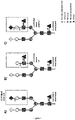
- a typical structure of a di-antennary complex type N-glycan is depicted in Fig. 1A .
- fucose is either linked to the proximal GIcNAc by ⁇ 1-6 linkage (core fucose) or to a distal GIcNAc on one or several of the antennae by ⁇ 1-3 linkage (antennary fucose; also called Lewis x antigen (Le x ), CD15, or SSEA-1), displayed in Fig. 1B .
- Lewis x structure (Gal( ⁇ -4)[Fuc( ⁇ )]GIcNAc-R) harbors an additional sialic acid
- the resulting structure is called sialyl-Lewis x , sialyl-Le x , or SLe x (NeuAc( ⁇ 1->4)Gal(B-4)[Fuc( ⁇ 1->3)]GIcNAc-R), displayed in Fig. 1C .
- Sialyl Lewis x structures emerge by the fucosylation of sialylated complex type N-glycans at the distal GIcNAc catalyzed by various fucosyltransferases. The role of core ⁇ 1-6 fucosylation has been extensively studied for antibodies.
- Antibodies of the IgG class typically carry an N-glycan in the CH2 domain of the Fc region.
- the presence of a core fucose on these N-glycans significantly reduces the ADCC (antibody dependent cellular cytotoxicity) response mediated by the antibody in vivo.
- ADCC antibody dependent cellular cytotoxicity
- the highly immunogenic core ⁇ 1-3 linked fucose structure only exists in plants and in invertebrates and is absent in human cells.
- antennary fucose typically no antennary fucose is found, however Lewis x or sialyl-Lewis x structures are easily detected on other serum-glycoproteins. Up to date little is known about its physiological role. There is evidence that antennary fucose might increase targeting to sites of inflammation via selectin interactions, but apart from that relatively little is known about the physiological role of antennary fucosylation.
- the product When plasma proteins are recombinantly expressed, the product often shows an elevated level of antennary fucose as compared to the naturally occurring counterpart in the plasma. In order to reduce potential immunogenic effects of recombinant proteins used in replacement therapy, it is desirable that they are as similar to the endogenous protein as possible. A reduction of antennary fucose on recombinant therapeutic proteins is an important step towards this goal.
- the technical problem underlying the present invention is to provide means for reducing antennary fucosylation (Le x or SLe x ) of complex N-glycans in recombinantly expressed glycoproteins, as well as means for producing the same.
- the present invention relates to a method for reducing antennary fucosylation of complex N-glycans, either Le x or sialyl-Le x in a glycoprotein that is recombinantly expressed in a human primary amniocyte cell line comprising at least one nucleic acid encoding the gene products of the adenoviral E1 and pIX regions, comprising the step of overexpressing together with the glycoprotein ⁇ -galactoside ⁇ -2,6-sialyltransferase 1 (ST6Gal1) and/or ⁇ -2,3-sialyltransferase 4 (ST3Gal4).
- ST6Gal1 glycoprotein ⁇ -galactoside ⁇ -2,6-sialyltransferase 1
- ST3Gal4 ⁇ -2,3-sialyltransferase 4
- complex N-glycans relates to N-glycans that are characterized by the core sugar sequence Man ⁇ 1-6(Man ⁇ 1-3)Man ⁇ 1-4GIcNAc ⁇ 1-4GIcNAc ⁇ 1-Asn-.
- This complex N-glycan core sugar sequence can be extended by 2 to 6 antennae which are initiated by N-acetylglucosamine (GIcNAc), wherein two, three or four antennae are typical. Said antennae are sometimes referred to herein as "complex N-glycan antennae”.
- the term "antennary fucosylation of complex N-glycans” refers to ⁇ 1-3 linkage of fucose to a distal GIcNAc on at least one of the complex N-glycan antennae.
- distal GIcNAc refers to any GIcNAc present in an antenna other than the glycan's initial GIcNAcs.
- reducing antennary fucosylation of complex N-glycans relates to the fact that according to the present invention, by way of overexpressing ST6Gal1 and/or ST3Gal4 together with the glycoprotein, recombinant glycoprotein is generated that has a lower amount of fucosylated complex N-glycan antennae as compared to a conventional recombinant glycoprotein.
- recombinant glycoprotein is characterized by a significantly reduced antennary fucosylation of complex N-glycans as compared to the same recombinant glycoprotein expressed without overexpression of ST6Gal1 and/or ST3Gal4.
- At least 80%, more preferably at least 90%, and most preferably at least 95%, or more, of the complex N-glycan antennae of the recombinantly expressed glycoprotein are not fucosylated.
- the glycoprotein to be subject to the methods of the present invention is not particularly limited, provided that it is a glycoprotein having complex N-glycans and respective complex N-glycan antennae.
- the glycoprotein is selected from the group consisting of ⁇ 1-antitrypsin (AAT), hepatocyte growth factor (HGF), Factor VII (FVII), Factor VIII (FVIII), Factor IX (FIX), von Willebrand-Factor (vWF), alkaline phosphatase, and C1 esterase inhibitor (C1-inhibitor; C1 Inh).
- AAT ⁇ 1-antitrypsin
- HGF hepatocyte growth factor
- FVII Factor VII
- FVIII Factor VIII
- FIX Factor IX
- vWF von Willebrand-Factor
- alkaline phosphatase and C1 esterase inhibitor
- C1-inhibitor C1 Inh
- the glycoprotein is preferably a mammalian, more
- glycoprotein As used herein, the term "recombinantly expressed glycoprotein” relates to glycoproteins that are biotechnologically produced in genetically modified organisms or cells.
- both ST6Gal1 and ST3Gal4 are overexpressed together with the recombinant glycoprotein.
- ⁇ -galactoside ⁇ -2,3-sialyltransferase 1 ST3Gal1
- ST3Gal1 ⁇ -galactoside ⁇ -2,3-sialyltransferase 1
- ST3Gal1 ⁇ -galactoside ⁇ -2,3-sialyltransferase 1
- the expression of ⁇ -1,3-mannosyl-glycoprotein 4- ⁇ -N-acetylglucosaminyltransferase A GnTIVa
- ⁇ -1,3-mannosyl-glycoprotein 4- ⁇ -N-acetylglucosaminyltransferase B GnTIVb
- ⁇ -1,6-mannosylglycoprotein 6- ⁇ -N-acetylglucosaminyltransferase A GnTV
- ST3Gal1 is not overexpressed together with the recombinant glycoprotein
- ST3Gal1 expression is not increased in any manner as compared to native ST3Gal1 expression.
- ST3Gal1 is not expressed at all.
- expression of GnTIVa, GnTIVb, and GnTV is not reduced” relates to the fact that expression of said proteins is not decreased in any manner as compared to native expression of said proteins.
- the present invention relates to a cell line that is genetically modified to overexpress ⁇ -galactoside ⁇ -2,6-sialyltransferase 1 (ST6Gal1) and/or ⁇ -2,3-sialyltransferase 4 (ST3Gal4), wherein the cell line is a human primary amniocyte cell line comprising at least one nucleic acid encoding the gene products of the adenoviral E1 and pIX regions.
- ST6Gal1 ⁇ -galactoside ⁇ -2,6-sialyltransferase 1
- ST3Gal4 ⁇ -2,3-sialyltransferase 4
- cell line that is genetically modified to overexpress ST6Gal1 and/or ST3Gal4" indicates that upon genetic modification, the individual cells of the cell line display a higher expression of the respective sialyltransferase(s) than they did before the genetic modification.
- the cell line comprises endogenous gene(s) encoding ST6Gal1 and/or ST3Gal4, such as e.g. human cell lines.
- the cells can be genetically modified by inserting a promoter, enhancing element, and/or stabilizing element into the genome of the cells in a position suitable to cause overexpression of said nucleic acid. This can be done by homologous recombination using TALENS, Zn-finger proteins, CRISPR-CAS9, or other methods known in the art.
- the cell line comprises endogenous gene(s) encoding ST6Gal1 and/or ST3Gal4, and further has at least one genetic element, selected from the group consisting of a promoter, an enhancing element, and a stabilizing element inserted into the genome in one or more position(s) suitable to cause overexpression of ST6Gal1 and/or ST3Gal4.
- Suitable promoters, enhancing elements and stabilizing elements are not particularly limited and are known in the art.
- promoters include constitutive promoters, e.g. a CMV, EF1 alpha, SV40, RSV, UbC, CAG, BOS or PGK promoter, and inducible promoters, e.g.
- enhancing elements include CMV enhancer, ⁇ -globin enhancer, immunoglobulin enhancer, and PGK-enhancer.
- stabilizing elements include matrix attachment regions (MARS), locus control regions (LCRs), and ubiquitously acting chromatin opening elements (UCOEs).
- nucleic acid(s), encoding ST6Gal1 and/or ST3Gal4 into the cells.
- Methods for introducing nucleic acids into cells are not particularly limited and are known in the art.
- said nucleic acids could be introduced in circular or linearized form into the cells by electroporation, nucleofection, microinjection, via viral vectors, e.g. lentiviral vectors, reagent based methods, e.g.
- the nucleic acids can be transiently or stably introduced into the cell by episomal systems or by stable integration of the nucleic acid into the genome.
- Said nucleic acids can be present in the cells in the form of one or more expression vector(s), e.g. pcDNA, pCEP, pLenti, pEntr, pDest, pEF, pEAK, pCMV, pStbl, or other expression vectors known in the art.
- Expression of ST6Gal1 and/or ST3Gal4 can be under the control of a constitutive promoter, e.g.
- nucleic acids encoding ST6Gal1 and/or ST3Gal4 can be present as one continuous nucleic acid, or can be present as separate nucleic acids, e.g. as separate expression vectors.
- Said nucleic acids can contain, in addition to the coding region and a promoter, suitable restriction sites, Kozak sequences, ribosomal binding sites, chromatin modulating elements, selection cassettes, episomal replication systems, e.g. Epstein-Barr Nuclear Antigen and ori P, or SV40 ori and SV40 T-large antigen, internal ribosomal entry sites (IRES), splicing signals, and polyadenylation signals known in the art.
- the cell line comprises exogenous nucleic acid(s) encoding ST6Gal1 and/or ST3Gal4.
- Suitable genes encoding ST6Gal1 and/or ST3Gal4 for transfection of cell lines are not particularly limited and include any genes from any origin that encode proteins having ST6Gal1 or ST3Gal4 activity.
- such genes are mammalian, more preferably human, ST6Gal1 and ST3Gal4 genes.
- the cell lines according to the present invention are human amniocytes (CAP; cf. EP 1 230 354 B1 ), wherein CAP cells are preferred.
- CAP cells are permanent amniocytic cell lines comprising a nucleic acid encoding the gene products of the adenovirus, in particular adenovirus type 5 (Ad5), E1A and E1B regions.
- CAP cells are derived from primary human amniocytes that are transformed with a nucleic acid encoding Ad5 E1A and E1B.
- the cell lines according to the present invention are human primary amniocytes comprising at least one nucleic acid encoding the gene products of the adenoviral E1 and pIX region, preferably E1 and pIX region of adenovirus type 5 (Ad5) from nt. 505 to 4079, in which E1A is under the control of the murine phosphoglycerate kinase (pgk) promoter, while E1B and pIX expression is controlled from their natural promoters.
- the E1B downstream intron, splice acceptor and polyA signal are replaced by corresponding motifs from SV40.
- the cell line of the present invention is genetically modified to overexpress both ST6Gal1 and ST3Gal4.
- the cell line of the present invention is not genetically modified to (i) overexpress ⁇ -galactoside ⁇ -2,3-sialyltransferase 1 (ST3Gal1), and/or (ii) reduce the expression of ⁇ -1,3-mannosyl-glycoprotein 4- ⁇ -N-acetylglucosaminyltransferase A (GnTIVa), ⁇ -1,3-mannosyl-glycoprotein 4- ⁇ -N-acetylglucosaminyltransferase B (GnTIVb), and ⁇ -1,6-mannosylglycoprotein 6- ⁇ -N-acetylglucosaminyltransferase A (GnTV).
- ST3Gal1 overexpress ⁇ -galactoside ⁇ -2,3-sialyltransferase 1
- ST3Gal1 overexpress ⁇ -galactoside ⁇ -2,3-sialyltrans
- the term “the cell line is not genetically modified to overexpress ST3Gal1” relates to the fact that ST3Gal1 expression is not increased in any manner as compared to the cell line's native ST3Gal1 expression. In particular embodiments, ST3Gal1 is not expressed at all. Further, the term “the cell line is not genetically modified to reduce the expression of GnTIVa, GnTIVb, and GnTV” relates to the fact that expression of said proteins is not decreased in any manner as compared to native expression of said proteins in the cell line.
- the cell lines according to this second aspect of the present invention are capable of reducing antennary fucosylation of complex N-glycans in recombinant glycoproteins expressed in said cell lines.
- Described herein is a recombinant glycoprotein having complex N-glycans, wherein antennary fucosylation of the complex N-glycans is reduced, so that at least 80%, more preferably at least 90%, and most preferably at least 95%, or more, of the complex N-glycan antennae of the recombinant glycoprotein are not fucosylated.
- Respective recombinant glycoproteins can be produced as described herein, e.g. by overexpression of ST6Gal1 and/or ST3Gal4 together with the recombinant glycoprotein.
- said glycoproteins are produced in a cell line according to the present invention as described herein.
- the present invention relates to a method for the expression of a recombinant glycoprotein as described herein, comprising the steps of:
- Means for the expression of proteins in the cell lines of the present invention are not particularly limited and are known in the art.
- the step (b) of expressing the glycoprotein of interest in said cell line encompasses the transfection of a respective coding nucleic acid into said cell line prior to the actual expression of the glycoprotein.
- means for isolating a glycoprotein of interest from a cell culture are not particularly limited and are known in the art.
- Described herein is the use of a cell line according to the present invention for the production of recombinant glycoproteins as described above.
- the permanent human amniocyte cell line CAP 1D5 was cultured in suspension, either in chemically defined, animal component free CAP-CDM medium (CEVEC Pharmaceuticals, Germany) supplemented with 6 mM stable glutamine (Biochrom, Germany), or in serum free PEM media (Life Technologies) supplemented with 4 mM stable glutamine (Biochrom, Germany).
- CAP cells were cultivated at 37 °C in shaker flasks (Corning, #431143, 125 mL (25 mL wv) or #431252, 3000 mL (1000 mL wv)) at 5% CO 2 , and 185 rpm. During fermentation, CAP cells were fed at d3, d5, and d7 with 10 % CAP-CDM feed solution (CEVEC Pharmaceuticals, Germany) and 4 mM stable glutamine (Biochrom, Germany).
- sequence information of the precursor protein and mature protein was based on the database entry UniProt Q11206 (SEQ ID NO: 1).
- a Clal restriction site and a Kozak sequence were added 5' of the start codon of the human ST3Gal4 cDNA and an EcoRV restriction site was added 3' of the stop codon to be inserted between the Clal and EcoRV restriction sites in the pStbl-Neo-CMV-MCS(-) vector resulting in the expression plasmid pStbl-Neo-CMV-ST3Gal4.
- This vector contains a CMV promoter driving the expression of the gene of interest, followed by an SV40 intron for improved, splicing-mediated mRNA transport and a multiple cloning site for the insertion of the gene of interest.
- the selection marker is driven by the human ubiquitin (UbC) promoter.
- UbC human ubiquitin
- sialyltransferase(s) CAP / / CAP-AAT AAT / CAP-AAT-ST3Gal4 AAT ST3Gal4 CAP-AAT-ST6Gal1 AAT ST6Gal1 CAP-C1 Inh C1 Inh / CAP-C1 Inh-ST3Gal1 C1 Inh ST3Gal4 CAP-C1 Inh-ST3Gal4 C1 Inh ST6Gal1
- sequence information of the precursor protein and mature protein was based on the database entry UniProt P15907 (SEQ ID NO: 2).
- a Clal restriction site and a Kozak sequence were added 5' of the start codon of the human ST6Gal1 cDNA and an EcoRV restriction site was added 3' of the stop codon to be inserted between the Clal and EcoRV restriction sites in the pStbl-Neo-CMV-MCS(-) vector resulting in the expression plasmid pStbl-Neo-CMV-ST6Gal1.
- cDNA synthesis was performed at GeneArt (Germany, Life Technologies).
- Nucleofection was performed using a Nucleofector II (LONZA) with the appropriate Nucleofector Kit (KitV) according to the manufacturer's protocol. Briefly, during exponential growth phase of the culture 1 ⁇ 10 7 cells were harvested via centrifugation (150 g for 5 min) and re-suspended in 100 ⁇ l complete Nucleofector solution and mixed with a total of 5 ⁇ g plasmid. Nucleofection was performed using the X001 program. After the pulse, cells were recovered in 12 ml complete cell culture media in a 125 ml shaking flask. The cells were cultured as before at 37 °C, 5% CO 2 , and 185 rpm.
- LONZA Nucleofector II
- KitV Nucleofector Kit
- 72 to 96 h post-nucleofection cells were selected with 200 ⁇ g/ml neomycin in order to generate stable pools.
- Purified protein solutions were separated on a NuPAGE Novex 4-12 % Bis-Tris Gel under reducing conditions, according to the manufacturer's instructions.
- the separated proteins were transferred via a Blot Module (Invitrogen) (30 V for 60 min at RT) onto an Amersham Hybond ECL membrane (100 V for 60 min at RT).
- HRP horseradish peroxidase
- the proteins were detected using the Pierce ECL WB Substrate Kit via a chemiluminescence detector (INTAS).
- Lectins are proteins that bind specific carbohydrate structures. Biotin-coupled lectins can therefore be used to analyze N-linked glycans. Erythrina crista-galli (ECL) lectin detects ⁇ 1-4 linked terminal galactose on N-linked glycans, Sambucus nigra agglutinin (SNA) preferentially binds to ⁇ 2,6-linked sialic acid, whereas Maackia amurensis lectin (MAL) preferentially binds to ⁇ 2,3-linked sialic acids.
- ECL Erythrina crista-galli
- SNA Sambucus nigra agglutinin
- MAL Maackia amurensis lectin
- ⁇ 1-3 linked fucose is detected by Lotus tetragonolobus agglutinin (LTA) and Aleuria aurantia lectin (AAL) detects ⁇ 1 -2-, -3, or -6 linked fucose.
- LTA Lotus tetragonolobus agglutinin
- AAL Aleuria aurantia lectin
- Purified protein solutions from parental CAP cells with or without co-expression of ST3Gal4 and/or ST6Gal1 were separated as described above and blotted onto Amersham Hybond ECL nitrocellulose membrane (GE healthcare).
- the membrane was stained with streptavidin-coupled horseradish peroxidase (HRP) for 1 h at RT (diluted in PBSTB).
- HRP horseradish peroxidase
- the HRP signal was amplified using anti-streptavidin IgG and anti IgG-HRP.
- the proteins were detected using the Pierce ECL WB Substrate Kit via a chemiluminescence detector (INTAS).
- Isoelectric focusing (IEF) analysis Isoelectric focusing
- IEF isoelectric focusing
- pI isoelectric point
- IEF analysis was done according to the manufacturers protocol (Invitrogen). Briefly, 5 ⁇ g of purified protein were loaded on pH 3-7 gels and subjected to electrophoresis (1h 100 V, 1 h 200 V, 30 min 500 V). Proteins were stained with SimplyBlue SafeStain according to the manufacturer's protocol (Invitrogen).
- AAT ⁇ 1-Antitrypsin
- serpin superfamily AAT is a protease inhibitor belonging to the serpin superfamily. AAT is a potent inhibitor of serine proteases, in particular neutrophil elastase. AAT is a 52 kDa glycoprotein carrying 3 N-glycosylation sites.
- Cells of the human amniocyte cell line CAP already stably expressing human AAT were additionally stably transfected with a plasmid encoding either the sialyltransferase ST3Gal4 to achieve an increase in 2,3-linked sialylation of terminal galactose of N-glycans or the sialyltransferase ST6Gal1 to achieve an increase in 2,6-sialylation of terminal galactose of N-glycans.
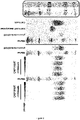
- Enhanced 2,3- or 2,6-sialylation upon overexpression of sialyltransferase ST3Gal4 or ST6Gal1 were determined by isoelectric focusing (IEF) analysis of purified hAAT ( Figure 2 ).
- ST6Gal1 catalyzes sialylation of the primary branches of N-glycans
- ST3Gal4 catalyzes the sialylation of the primary branches of N-glycan as well as the additional branches of tri- and tetra-antennary N-glycans. Therefore, ST3Gal4 has more acceptor substrate available than ST6Gal1.
- AAT derived from ST6Gal1 or ST3Gal4 overexpressing CAP cells showed a strong reduction or complete absence of the ECL signal, indicating that only minimal amounts of unsialylated ⁇ 1-4 linked galactose on the N-linked glycan exist in these preparations ( Figure 3 ).
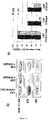
- the degree of antennary fucose (Lewis x antigen) is reduced on rhAAT upon co-expression of ST6Gal1 or ST3Gal4 as proven by the reduced signal intensity in the Lotus tetragonolobus agglutinin (LTA Lectin) blot analysis in Figure 3 .
- Lotus tetragonolobus agglutinin (LTA) specifically detects the ⁇ 1-3 linked antennary fucose. Therefore, overexpression of the sialyltransferases ST3Gal4 and ST6Gal1 is an unexpected but appropriate way to significantly reduce the amount of the unwanted and potentially immunogenic Lewis x structures on N-linked glycans.
- CAP-hAAT-ST3Gal4 or CAP-hAAT-ST6Gal1 cells were stained with different antibodies and lectins to analyze sugar epitopes on the surface of the cells.
- 1 ⁇ 10 7 cells were centrifuged for 10 min at 140 ⁇ g and re-suspended into 100 ⁇ l PBS/BSA.
- 10 ⁇ l (10 6 cells) were mixed with 10 ⁇ l of antibody or lectin (1 mg/ml; FITC conjugated or DIG coupled in combination with a FITC coupled anti-DIG antibody) and 90 ⁇ l PBS/BSA were added. After 10 min at 4 °C, the cells were washed with PBS/BSA.
- Cell pellets were re-suspended into 500 ⁇ l PBS/BSA and subjected to FACS analysis on a Becton Dickinson FACSCalibur flow cytometer. Dead cells were identified and excluded by staining with propidium iodide. Typically, 30000 events were counted and analyzed. FITC or PE stained cells were graphically overlaid with unstained cells.
- Figure 4 shows parental CAP-hAAT cells or CAP-hAAT cells stably expressing ⁇ 2,3 (CAP-hAAT+ST3Gal4) or ⁇ 2,6 (CAP-hAAT+ST6Gal1) sialyltransferase, respectively.
- Cells were either stained with lectins specific for ⁇ 2,3 coupled neuraminic acid, MAA ( Maackia amurensis agglutinin), or ⁇ 2,6 coupled neuraminic acid residues, SNA ( Sambucus nigra agglutinin), or with LTA ( Lotus tetragonolobus agglutinin) recognizing ⁇ 1,3 linked fucose residues (Le x ).
- Parental CAP-hAAT, HL60 (Le x pos.), Le x negative HEK293 cells (Le x neg.) as well as cells incubated with the FITC coupled anti-DIG antibody only are shown as controls.
- HPAEC PAD pulsed amperometric detection
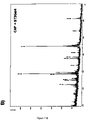
- Figure 5 shows the relative amounts of sialic acid and fucose as determined by monosaccharide analysis via HPAEC-PAD in CAP-hAAT cells either stably transfected with a plasmid encoding ST3Gal4 or ST6Gal1.
- Figure 5 reveals that by expressing human sialyltransferases, sialic acid content is elevated, whereas the amount of fucose per rhAAT molecule is significantly reduced relative to an un-transfected control, indicating that the amount of the non-preferred Le x or sialyl-Le x structure is reduced upon overexpression of sialyltransferases.
- the total amount of fucose was determined without differentiating between antennary fucose residues ( ⁇ 1-3 linked fucose) and core fucose ( ⁇ 1-6 linked fucose) of N-glycans.
- sialyltransferases only affects the amount of antennary ⁇ 1-3 linked fucose but not the relatively abundant core fucose
- the determined overall reduction of fucose upon overexpression of sialyltransferases of 25 % (ST6Gal1) and 30 % (ST3Gal4) indicates a pronounced reduction in the absolute amount of antennary ⁇ 1-3 linked fucose.
- Cells of the human amniocyte cell line CAP-hC1 Inh were stably transfected with a plasmid encoding either the sialyltransferase ST3Gal4 to achieve increased ⁇ 2,3-linked sialylation of terminal galactose of N-glycans or sialyltransferase ST6Gal1 to achieve increased ⁇ 2,6-sialylation of terminal galactose of N-glycans.
- ST6Gal1 also results in an increased sialylation of terminal galactose on N-linked glycans in comparison to the non-glycomodified C1-Inh, although the effect is not as pronounced as upon overexpression of ST3Gal4. This is most likely due to the different substrate affinities of ST3Gal4 and ST6Gal1 as explained in Example 1.
- the amount of antennary ⁇ 1-3 linked fucose in the different C1 Inh protein preparations was determined by the Lotus tetragonolobus agglutinin (LTA) blot analysis.
- LTA Lotus tetragonolobus agglutinin
- the present invention relates to the following amino acid sequences.
Landscapes
- Chemical & Material Sciences (AREA)
- Organic Chemistry (AREA)
- Health & Medical Sciences (AREA)
- Life Sciences & Earth Sciences (AREA)
- Genetics & Genomics (AREA)
- Engineering & Computer Science (AREA)
- Zoology (AREA)
- Wood Science & Technology (AREA)
- Biochemistry (AREA)
- General Health & Medical Sciences (AREA)
- Bioinformatics & Cheminformatics (AREA)
- Molecular Biology (AREA)
- General Engineering & Computer Science (AREA)
- Biotechnology (AREA)
- Medicinal Chemistry (AREA)
- Microbiology (AREA)
- Biomedical Technology (AREA)
- Gastroenterology & Hepatology (AREA)
- Biophysics (AREA)
- Proteomics, Peptides & Aminoacids (AREA)
- General Chemical & Material Sciences (AREA)
- Chemical Kinetics & Catalysis (AREA)
- Cell Biology (AREA)
- Micro-Organisms Or Cultivation Processes Thereof (AREA)
- Preparation Of Compounds By Using Micro-Organisms (AREA)
- Peptides Or Proteins (AREA)
Claims (13)
- Verfahren zur Verringerung der antennären Fucosylierung komplexer N-Glykane in einem Glykoprotein, das rekombinant in einer menschlichen primären Amniozyten-Zelllinie exprimiert wird, wobei die Zelllinie mindestens eine Nukleinsäure umfasst, die für die Genprodukte der adenoviralen E1- und pIX-Regionen kodiert, und wobei die Zelllinie genetisch verändert ist, um β-Galactosid-α-2,6-Sialyltransferase 1 (ST6Gal1) und/oder β-Galactosid-α-2,3-Sialyltransferase 4 (ST3Gal4) im Vergleich mit dem Level der Sialyltransferaseexpression vor der genetischen Veränderung überzuexprimieren.
- Verfahren nach Anspruch 1, wobei das Glykoprotein durch eine signifikant reduzierte antennäre Fucosylierung komplexer N-Glykane im Vergleich zu demselben rekombinanten Glykoprotein, das ohne Überexpression von ST6Gal1 und/oder ST3Gal4 exprimiert wird, gekennzeichnet ist.
- Verfahren nach Anspruch 1 oder Anspruch 2, wobei mindestens 80% der Antennen komplexer N-Glykane des rekombinant exprimierten Glykoproteins nicht fucosyliert sind.
- Verfahren nach einem der Ansprüche 1 bis 3, wobei das Glykoprotein ausgewählt ist aus der Gruppe, bestehend aus α1-Antitrypsin (AAT), Hepatozyten-Wachstumsfaktor (HGF), Faktor VII (FVII), Faktor VIII (FVIII), Faktor IX (FIX), von Willebrand-Faktor (vWF), alkalischer Phosphatase und C1-Esterase-lnhibitor (C1-Inhibitor; C1 Inh).
- Verfahren nach einem der Ansprüche 1 bis 4, wobei das Glykoprotein ein Säugetier-, vorzugsweise ein menschliches Glykoprotein ist.
- Verfahren nach einem der Ansprüche 1 bis 5, wobei(i) β-Galactosid-α-2,3-Sialyltransferase 1 (ST3Gal1) nicht zusammen mit dem Glykoprotein überexprimiert wird, und/oder(ii) die Expression von α-1,3-Mannosyl-Glycoprotein-4-β-N-Acetylglucosaminyltransferase A (GnTIVa), α-1,3-Mannosyl-Glycoprotein-4-β-N-Acetylglucosaminyltransferase B (GnTIVb) und α-1,6-Mannosyl-Glycoprotein-6-β-N-Acetylglucosaminyltransferase A (GnTV) nicht reduziert ist.
- Zelllinie, die genetisch verändert ist, um ST6Gal1 und/oder ST3Gal4 überzuexprimieren, wobei die Zelllinie eine menschliche primäre Amniozyten-Zelllinie ist, die mindestens eine Nukleinsäure umfasst, die für die Genprodukte der adenoviralen E1- und pIX-Regionen kodiert.
- Zelllinie nach Anspruch 7, wobei die Zelllinie (ein) endogene(s) Gen(e) umfasst, das/die für ST6Gal1 und/oder ST3Gal4 kodiert/kodieren, und weiter mindestens ein genetisches Element aufweist, ausgewählt aus der Gruppe, bestehend aus einem Promotor, einem verstärkenden Element und einem stabilisierenden Element, der/das in das Genom an einer oder mehreren Position(en) eingefügt ist, die geeignet ist/sind, eine Überexpression von ST6Gal1 und/oder ST3Gal4 zu bewirken.
- Zelllinie nach Anspruch 7 oder Anspruch 8, wobei die Zelllinie exogene Nukleinsäure(n) umfasst, die ST6Gal1 und/oder ST3Gal4 kodieren.
- Zelllinie nach einem der Ansprüche 7 bis 9, wobei die Zelllinie die humane Amniozyten-Zelllinie CAP ist.
- Zelllinie nach einem der Ansprüche 7 bis 10, wobei die Zelllinie nicht genetisch verändert ist, um(i) ST3Gal1 überzuexprimieren, und/oder(ii) die Expression von GnTIVa, GnTIVb und GnTV zu reduzieren.
- Verfahren zur Expression eines rekombinanten Glykoproteins, das komplexe N-Glykane aufweist, wobei die antennäre Fucosylierung der komplexen N-Glykane reduziert ist, so dass mindestens 80 % der Antennen komplexer N-Glykane des rekombinanten Glykoproteins nicht fucosyliert sind, umfassend die Schritte:(a) Bereitstellen einer Zelllinie nach einem der Ansprüche 7 bis 11,(b) Exprimieren des rekombinanten Glykoproteins in der Zelllinie; und(c) Isolieren des rekombinanten Glykoproteins aus den Zellen oder dem Zellkulturüberstand.
- Verfahren nach Anspruch 12, wobei das Glykoprotein ausgewählt ist aus der Gruppe, bestehend aus AAT, HGF, FVII, FVIII, FIX, vWF, alkalischer Phosphatase und C1 Inh.
Applications Claiming Priority (2)
| Application Number | Priority Date | Filing Date | Title |
|---|---|---|---|
| EP17000521.9A EP3382014A1 (de) | 2017-03-29 | 2017-03-29 | Rekombinante glycoproteine mit fucosylierung mit reduzierten antennen |
| PCT/EP2018/056502 WO2018177758A1 (en) | 2017-03-29 | 2018-03-15 | Recombinant glycoproteins with reduced antennary fucosylation |
Publications (2)
| Publication Number | Publication Date |
|---|---|
| EP3601548A1 EP3601548A1 (de) | 2020-02-05 |
| EP3601548B1 true EP3601548B1 (de) | 2022-05-04 |
Family
ID=58489119
Family Applications (2)
| Application Number | Title | Priority Date | Filing Date |
|---|---|---|---|
| EP17000521.9A Withdrawn EP3382014A1 (de) | 2017-03-29 | 2017-03-29 | Rekombinante glycoproteine mit fucosylierung mit reduzierten antennen |
| EP18711336.0A Active EP3601548B1 (de) | 2017-03-29 | 2018-03-15 | Rekombinante glycoproteine mit fucosylierung mit reduzierten antennen |
Family Applications Before (1)
| Application Number | Title | Priority Date | Filing Date |
|---|---|---|---|
| EP17000521.9A Withdrawn EP3382014A1 (de) | 2017-03-29 | 2017-03-29 | Rekombinante glycoproteine mit fucosylierung mit reduzierten antennen |
Country Status (12)
| Country | Link |
|---|---|
| US (1) | US11193156B2 (de) |
| EP (2) | EP3382014A1 (de) |
| JP (1) | JP2020515254A (de) |
| KR (1) | KR102605267B1 (de) |
| CN (1) | CN110382691B (de) |
| AU (1) | AU2018246903B2 (de) |
| BR (1) | BR112019020279A2 (de) |
| CA (1) | CA3052366A1 (de) |
| DK (1) | DK3601548T3 (de) |
| ES (1) | ES2916409T3 (de) |
| SG (1) | SG11201906537SA (de) |
| WO (1) | WO2018177758A1 (de) |
Families Citing this family (4)
| Publication number | Priority date | Publication date | Assignee | Title |
|---|---|---|---|---|
| WO2020204814A1 (en) * | 2019-03-29 | 2020-10-08 | Agency For Science, Technology And Research | Method of sialylating a protein |
| US12234472B2 (en) | 2021-10-18 | 2025-02-25 | Regeneron Pharmaceuticals, Inc. | Eukaryotic cells comprising adenovirus-associated virus polynucleotides |
| CN113960232B (zh) * | 2021-10-28 | 2024-02-20 | 苏州大学 | 一种基于唾液特异性岩藻糖基化结构糖谱及其检测方法和应用 |
| CN115772502B (zh) * | 2022-06-28 | 2024-03-15 | 中国生物技术股份有限公司 | 唾液酸转移酶基因缺失的mdck细胞株及构建方法和应用 |
Family Cites Families (22)
| Publication number | Priority date | Publication date | Assignee | Title |
|---|---|---|---|---|
| US5262308A (en) | 1992-01-28 | 1993-11-16 | Thomas Jefferson University | Cell lines which constitutively express IGF-1 and IGF-1 R |
| WO2003050286A1 (en) * | 2001-10-29 | 2003-06-19 | Crucell Holland B.V. | Methods and means for producing proteins with predetermined post-translational modifications |
| DE19955558C2 (de) | 1999-11-18 | 2003-03-20 | Stefan Kochanek | Permanente Amniozyten-Zelllinie, ihre Herstellung und Verwendung zur Herstellung von Gentransfervektoren |
| AU2007200052B9 (en) * | 2001-06-22 | 2008-10-09 | F. Hoffmann-La Roche Ag | A soluble complex comprising a retroviral surface glycoprotein |
| CN101090973B (zh) * | 2004-12-30 | 2012-03-28 | 克鲁塞尔荷兰公司 | 从表达腺病毒e1a蛋白的细胞中获得唾液酸化增加的重组蛋白质的方法及由此获得的蛋白质 |
| JP2010512766A (ja) | 2006-12-22 | 2010-04-30 | エフ.ホフマン−ラ ロシュ アーゲー | α−1,6−フコシルトランスフェラーゼの発現のSHRNA媒介抑制 |
| CA2679732A1 (en) | 2007-03-07 | 2008-09-18 | Glycofi, Inc. | Production of glycoproteins with modified fucosylation |
| TWI488640B (zh) * | 2008-04-16 | 2015-06-21 | 菲瑞茵國際中心股份有限公司 | 藥學製劑 |
| EP2192197A1 (de) * | 2008-11-27 | 2010-06-02 | Vereniging voor christelijk hoger onderwijs, wetenschappelijk onderzoek en patiëntenzorg | Vorhersage der klinischen Reaktion auf die Behandlung mit einem löslichen TNF-Antagonisten oder TNF oder ein TNF-Rezeptoragonist |
| CN101613678A (zh) | 2009-01-14 | 2009-12-30 | 中国农业科学院哈尔滨兽医研究所 | 稳定表达β-半乳糖苷α-2,3-唾液酸转移酶I(ST3GAL I)的MDCK细胞系的建立 |
| DE102009003439A1 (de) | 2009-02-05 | 2010-08-26 | Cevec Pharmaceuticals Gmbh | Neue permanente humane Zelllinie |
| DK2421895T3 (en) * | 2009-04-23 | 2016-01-25 | Crucell Holland Bv | Recombinant human alpha 1-antitrypsin |
| JP5914363B2 (ja) | 2010-02-16 | 2016-05-11 | ノヴォ ノルディスク アー/エス | 低減されたvwf結合を有する因子viii分子 |
| WO2011109600A1 (en) | 2010-03-05 | 2011-09-09 | Alnylam Pharmaceuticals, Inc. | Compositions and methods for modifying the glycosylation pattern of a polypeptide |
| TW201209160A (en) | 2010-04-27 | 2012-03-01 | Lonza Ag | Improved glycosylation of proteins in host cells |
| WO2012077128A1 (en) | 2010-12-07 | 2012-06-14 | Intas Biopharmaceuticals Limited | A novel cell line development process to produce recombinant proteins using twin vector expression system |
| KR101041496B1 (ko) * | 2011-01-03 | 2011-06-16 | 주식회사 디아이랩 | 영상처리를 기반으로 한 꼬리물기 단속 시스템 및 그 방법 |
| WO2013093760A2 (en) * | 2011-12-19 | 2013-06-27 | Grifols, S.A. | Compositions, methods, and kits for preparing sialylated recombinant proteins |
| WO2014015227A1 (en) | 2012-07-19 | 2014-01-23 | The Scripps Research Institute | Engineering cell surfaces for orthogonal selectability |
| BR112015019348A2 (pt) | 2013-02-13 | 2017-08-22 | Lab Francais Du Fractionnement | Métodos para produção de proteína com glicosilação modificada e com sialilação aumentada, para aumentar a atividade de sialil transferase na glândula mamária e para produzir sialil transferase, proteína com glicosilação modificada ou proteína com sialilação aumentada, composição, sialil transferase, mamífero transgênico, e, célula epitelial mamária |
| BR112016020287B1 (pt) | 2014-03-04 | 2022-06-28 | Sigma-Aldrich Co. Llc | Uso de uma linhagem celular de ovário de hamster chinês (cho) geneticamente modificada, composição e métodos para reduzir o risco de contaminação viral de um sistema de produção biológico e para reduzir ou prevenir a contaminação viral de um produto de proteína recombinante |
| EP3042952A1 (de) | 2015-01-07 | 2016-07-13 | CEVEC Pharmaceuticals GmbH | O-Glycansialylierte rekombinante Glykoproteine und Zelllinien zur Herstellung davon |
-
2017
- 2017-03-29 EP EP17000521.9A patent/EP3382014A1/de not_active Withdrawn
-
2018
- 2018-03-15 DK DK18711336.0T patent/DK3601548T3/da active
- 2018-03-15 WO PCT/EP2018/056502 patent/WO2018177758A1/en not_active Ceased
- 2018-03-15 JP JP2019552986A patent/JP2020515254A/ja active Pending
- 2018-03-15 KR KR1020197026610A patent/KR102605267B1/ko active Active
- 2018-03-15 AU AU2018246903A patent/AU2018246903B2/en active Active
- 2018-03-15 ES ES18711336T patent/ES2916409T3/es active Active
- 2018-03-15 BR BR112019020279-0A patent/BR112019020279A2/pt not_active Application Discontinuation
- 2018-03-15 US US16/496,113 patent/US11193156B2/en active Active
- 2018-03-15 CA CA3052366A patent/CA3052366A1/en active Pending
- 2018-03-15 EP EP18711336.0A patent/EP3601548B1/de active Active
- 2018-03-15 SG SG11201906537SA patent/SG11201906537SA/en unknown
- 2018-03-15 CN CN201880015848.8A patent/CN110382691B/zh active Active
Also Published As
| Publication number | Publication date |
|---|---|
| DK3601548T3 (da) | 2022-06-13 |
| US20200032311A1 (en) | 2020-01-30 |
| EP3382014A1 (de) | 2018-10-03 |
| SG11201906537SA (en) | 2019-08-27 |
| BR112019020279A2 (pt) | 2020-05-12 |
| JP2020515254A (ja) | 2020-05-28 |
| ES2916409T3 (es) | 2022-06-30 |
| AU2018246903A1 (en) | 2019-08-01 |
| CN110382691A (zh) | 2019-10-25 |
| CA3052366A1 (en) | 2018-10-04 |
| KR20190133675A (ko) | 2019-12-03 |
| WO2018177758A1 (en) | 2018-10-04 |
| US11193156B2 (en) | 2021-12-07 |
| EP3601548A1 (de) | 2020-02-05 |
| AU2018246903B2 (en) | 2021-01-28 |
| KR102605267B1 (ko) | 2023-11-24 |
| CN110382691B (zh) | 2023-11-10 |
Similar Documents
| Publication | Publication Date | Title |
|---|---|---|
| US10793839B2 (en) | O-glycan sialylated recombinant glycoproteins | |
| US11193156B2 (en) | Recombinant glycoproteins with reduced antennary fucosylation | |
| CN108699530B (zh) | 用于产生具有二触角n-聚糖的重组糖蛋白的细胞系、使用其的方法及重组糖蛋白 | |
| HK1243728B (zh) | O-聚糖唾液酸化的重组糖蛋白及用於生产其的细胞系 | |
| CN101090973B (zh) | 从表达腺病毒e1a蛋白的细胞中获得唾液酸化增加的重组蛋白质的方法及由此获得的蛋白质 |
Legal Events
| Date | Code | Title | Description |
|---|---|---|---|
| STAA | Information on the status of an ep patent application or granted ep patent |
Free format text: STATUS: UNKNOWN |
|
| STAA | Information on the status of an ep patent application or granted ep patent |
Free format text: STATUS: THE INTERNATIONAL PUBLICATION HAS BEEN MADE |
|
| PUAI | Public reference made under article 153(3) epc to a published international application that has entered the european phase |
Free format text: ORIGINAL CODE: 0009012 |
|
| STAA | Information on the status of an ep patent application or granted ep patent |
Free format text: STATUS: REQUEST FOR EXAMINATION WAS MADE |
|
| 17P | Request for examination filed |
Effective date: 20190829 |
|
| AK | Designated contracting states |
Kind code of ref document: A1 Designated state(s): AL AT BE BG CH CY CZ DE DK EE ES FI FR GB GR HR HU IE IS IT LI LT LU LV MC MK MT NL NO PL PT RO RS SE SI SK SM TR |
|
| AX | Request for extension of the european patent |
Extension state: BA ME |
|
| DAV | Request for validation of the european patent (deleted) | ||
| DAX | Request for extension of the european patent (deleted) | ||
| STAA | Information on the status of an ep patent application or granted ep patent |
Free format text: STATUS: EXAMINATION IS IN PROGRESS |
|
| 17Q | First examination report despatched |
Effective date: 20201113 |
|
| GRAP | Despatch of communication of intention to grant a patent |
Free format text: ORIGINAL CODE: EPIDOSNIGR1 |
|
| STAA | Information on the status of an ep patent application or granted ep patent |
Free format text: STATUS: GRANT OF PATENT IS INTENDED |
|
| INTG | Intention to grant announced |
Effective date: 20220121 |
|
| GRAS | Grant fee paid |
Free format text: ORIGINAL CODE: EPIDOSNIGR3 |
|
| GRAA | (expected) grant |
Free format text: ORIGINAL CODE: 0009210 |
|
| STAA | Information on the status of an ep patent application or granted ep patent |
Free format text: STATUS: THE PATENT HAS BEEN GRANTED |
|
| AK | Designated contracting states |
Kind code of ref document: B1 Designated state(s): AL AT BE BG CH CY CZ DE DK EE ES FI FR GB GR HR HU IE IS IT LI LT LU LV MC MK MT NL NO PL PT RO RS SE SI SK SM TR |
|
| REG | Reference to a national code |
Ref country code: GB Ref legal event code: FG4D |
|
| REG | Reference to a national code |
Ref country code: SE Ref legal event code: TRGR |
|
| REG | Reference to a national code |
Ref country code: CH Ref legal event code: EP |
|
| REG | Reference to a national code |
Ref country code: AT Ref legal event code: REF Ref document number: 1489092 Country of ref document: AT Kind code of ref document: T Effective date: 20220515 |
|
| REG | Reference to a national code |
Ref country code: DE Ref legal event code: R096 Ref document number: 602018034888 Country of ref document: DE |
|
| REG | Reference to a national code |
Ref country code: IE Ref legal event code: FG4D |
|
| REG | Reference to a national code |
Ref country code: DK Ref legal event code: T3 Effective date: 20220609 |
|
| REG | Reference to a national code |
Ref country code: NL Ref legal event code: FP |
|
| REG | Reference to a national code |
Ref country code: ES Ref legal event code: FG2A Ref document number: 2916409 Country of ref document: ES Kind code of ref document: T3 Effective date: 20220630 |
|
| REG | Reference to a national code |
Ref country code: LT Ref legal event code: MG9D |
|
| PG25 | Lapsed in a contracting state [announced via postgrant information from national office to epo] |
Ref country code: PT Free format text: LAPSE BECAUSE OF FAILURE TO SUBMIT A TRANSLATION OF THE DESCRIPTION OR TO PAY THE FEE WITHIN THE PRESCRIBED TIME-LIMIT Effective date: 20220905 Ref country code: NO Free format text: LAPSE BECAUSE OF FAILURE TO SUBMIT A TRANSLATION OF THE DESCRIPTION OR TO PAY THE FEE WITHIN THE PRESCRIBED TIME-LIMIT Effective date: 20220804 Ref country code: LT Free format text: LAPSE BECAUSE OF FAILURE TO SUBMIT A TRANSLATION OF THE DESCRIPTION OR TO PAY THE FEE WITHIN THE PRESCRIBED TIME-LIMIT Effective date: 20220504 Ref country code: HR Free format text: LAPSE BECAUSE OF FAILURE TO SUBMIT A TRANSLATION OF THE DESCRIPTION OR TO PAY THE FEE WITHIN THE PRESCRIBED TIME-LIMIT Effective date: 20220504 Ref country code: GR Free format text: LAPSE BECAUSE OF FAILURE TO SUBMIT A TRANSLATION OF THE DESCRIPTION OR TO PAY THE FEE WITHIN THE PRESCRIBED TIME-LIMIT Effective date: 20220805 Ref country code: FI Free format text: LAPSE BECAUSE OF FAILURE TO SUBMIT A TRANSLATION OF THE DESCRIPTION OR TO PAY THE FEE WITHIN THE PRESCRIBED TIME-LIMIT Effective date: 20220504 Ref country code: BG Free format text: LAPSE BECAUSE OF FAILURE TO SUBMIT A TRANSLATION OF THE DESCRIPTION OR TO PAY THE FEE WITHIN THE PRESCRIBED TIME-LIMIT Effective date: 20220804 |
|
| PG25 | Lapsed in a contracting state [announced via postgrant information from national office to epo] |
Ref country code: RS Free format text: LAPSE BECAUSE OF FAILURE TO SUBMIT A TRANSLATION OF THE DESCRIPTION OR TO PAY THE FEE WITHIN THE PRESCRIBED TIME-LIMIT Effective date: 20220504 Ref country code: PL Free format text: LAPSE BECAUSE OF FAILURE TO SUBMIT A TRANSLATION OF THE DESCRIPTION OR TO PAY THE FEE WITHIN THE PRESCRIBED TIME-LIMIT Effective date: 20220504 Ref country code: LV Free format text: LAPSE BECAUSE OF FAILURE TO SUBMIT A TRANSLATION OF THE DESCRIPTION OR TO PAY THE FEE WITHIN THE PRESCRIBED TIME-LIMIT Effective date: 20220504 Ref country code: IS Free format text: LAPSE BECAUSE OF FAILURE TO SUBMIT A TRANSLATION OF THE DESCRIPTION OR TO PAY THE FEE WITHIN THE PRESCRIBED TIME-LIMIT Effective date: 20220904 |
|
| PG25 | Lapsed in a contracting state [announced via postgrant information from national office to epo] |
Ref country code: SM Free format text: LAPSE BECAUSE OF FAILURE TO SUBMIT A TRANSLATION OF THE DESCRIPTION OR TO PAY THE FEE WITHIN THE PRESCRIBED TIME-LIMIT Effective date: 20220504 Ref country code: SK Free format text: LAPSE BECAUSE OF FAILURE TO SUBMIT A TRANSLATION OF THE DESCRIPTION OR TO PAY THE FEE WITHIN THE PRESCRIBED TIME-LIMIT Effective date: 20220504 Ref country code: RO Free format text: LAPSE BECAUSE OF FAILURE TO SUBMIT A TRANSLATION OF THE DESCRIPTION OR TO PAY THE FEE WITHIN THE PRESCRIBED TIME-LIMIT Effective date: 20220504 Ref country code: EE Free format text: LAPSE BECAUSE OF FAILURE TO SUBMIT A TRANSLATION OF THE DESCRIPTION OR TO PAY THE FEE WITHIN THE PRESCRIBED TIME-LIMIT Effective date: 20220504 Ref country code: CZ Free format text: LAPSE BECAUSE OF FAILURE TO SUBMIT A TRANSLATION OF THE DESCRIPTION OR TO PAY THE FEE WITHIN THE PRESCRIBED TIME-LIMIT Effective date: 20220504 |
|
| REG | Reference to a national code |
Ref country code: DE Ref legal event code: R097 Ref document number: 602018034888 Country of ref document: DE |
|
| PLBE | No opposition filed within time limit |
Free format text: ORIGINAL CODE: 0009261 |
|
| STAA | Information on the status of an ep patent application or granted ep patent |
Free format text: STATUS: NO OPPOSITION FILED WITHIN TIME LIMIT |
|
| PG25 | Lapsed in a contracting state [announced via postgrant information from national office to epo] |
Ref country code: AL Free format text: LAPSE BECAUSE OF FAILURE TO SUBMIT A TRANSLATION OF THE DESCRIPTION OR TO PAY THE FEE WITHIN THE PRESCRIBED TIME-LIMIT Effective date: 20220504 |
|
| 26N | No opposition filed |
Effective date: 20230207 |
|
| PG25 | Lapsed in a contracting state [announced via postgrant information from national office to epo] |
Ref country code: SI Free format text: LAPSE BECAUSE OF FAILURE TO SUBMIT A TRANSLATION OF THE DESCRIPTION OR TO PAY THE FEE WITHIN THE PRESCRIBED TIME-LIMIT Effective date: 20220504 |
|
| P01 | Opt-out of the competence of the unified patent court (upc) registered |
Effective date: 20230430 |
|
| PG25 | Lapsed in a contracting state [announced via postgrant information from national office to epo] |
Ref country code: MC Free format text: LAPSE BECAUSE OF FAILURE TO SUBMIT A TRANSLATION OF THE DESCRIPTION OR TO PAY THE FEE WITHIN THE PRESCRIBED TIME-LIMIT Effective date: 20220504 |
|
| PG25 | Lapsed in a contracting state [announced via postgrant information from national office to epo] |
Ref country code: LU Free format text: LAPSE BECAUSE OF NON-PAYMENT OF DUE FEES Effective date: 20230315 |
|
| REG | Reference to a national code |
Ref country code: IE Ref legal event code: MM4A |
|
| PG25 | Lapsed in a contracting state [announced via postgrant information from national office to epo] |
Ref country code: IE Free format text: LAPSE BECAUSE OF NON-PAYMENT OF DUE FEES Effective date: 20230315 |
|
| REG | Reference to a national code |
Ref country code: AT Ref legal event code: UEP Ref document number: 1489092 Country of ref document: AT Kind code of ref document: T Effective date: 20220504 |
|
| PG25 | Lapsed in a contracting state [announced via postgrant information from national office to epo] |
Ref country code: BG Free format text: LAPSE BECAUSE OF FAILURE TO SUBMIT A TRANSLATION OF THE DESCRIPTION OR TO PAY THE FEE WITHIN THE PRESCRIBED TIME-LIMIT Effective date: 20220504 |
|
| PG25 | Lapsed in a contracting state [announced via postgrant information from national office to epo] |
Ref country code: BG Free format text: LAPSE BECAUSE OF FAILURE TO SUBMIT A TRANSLATION OF THE DESCRIPTION OR TO PAY THE FEE WITHIN THE PRESCRIBED TIME-LIMIT Effective date: 20220504 |
|
| PGFP | Annual fee paid to national office [announced via postgrant information from national office to epo] |
Ref country code: DK Payment date: 20250325 Year of fee payment: 8 Ref country code: NL Payment date: 20250325 Year of fee payment: 8 |
|
| PGFP | Annual fee paid to national office [announced via postgrant information from national office to epo] |
Ref country code: AT Payment date: 20250318 Year of fee payment: 8 Ref country code: BE Payment date: 20250325 Year of fee payment: 8 |
|
| PGFP | Annual fee paid to national office [announced via postgrant information from national office to epo] |
Ref country code: IT Payment date: 20250321 Year of fee payment: 8 |
|
| PGFP | Annual fee paid to national office [announced via postgrant information from national office to epo] |
Ref country code: ES Payment date: 20250417 Year of fee payment: 8 |
|
| PGFP | Annual fee paid to national office [announced via postgrant information from national office to epo] |
Ref country code: CH Payment date: 20250401 Year of fee payment: 8 |
|
| PG25 | Lapsed in a contracting state [announced via postgrant information from national office to epo] |
Ref country code: CY Free format text: LAPSE BECAUSE OF FAILURE TO SUBMIT A TRANSLATION OF THE DESCRIPTION OR TO PAY THE FEE WITHIN THE PRESCRIBED TIME-LIMIT; INVALID AB INITIO Effective date: 20180315 |
|
| PG25 | Lapsed in a contracting state [announced via postgrant information from national office to epo] |
Ref country code: HU Free format text: LAPSE BECAUSE OF FAILURE TO SUBMIT A TRANSLATION OF THE DESCRIPTION OR TO PAY THE FEE WITHIN THE PRESCRIBED TIME-LIMIT; INVALID AB INITIO Effective date: 20180315 |
|
| REG | Reference to a national code |
Ref country code: DE Ref legal event code: R081 Ref document number: 602018034888 Country of ref document: DE Owner name: CEVEC PHARMACEUTICALS GMBH, DE Free format text: FORMER OWNER: CEVEC PHARMACEUTICALS GMBH, 51105 KOELN, DE |
|
| PG25 | Lapsed in a contracting state [announced via postgrant information from national office to epo] |
Ref country code: TR Free format text: LAPSE BECAUSE OF FAILURE TO SUBMIT A TRANSLATION OF THE DESCRIPTION OR TO PAY THE FEE WITHIN THE PRESCRIBED TIME-LIMIT Effective date: 20220504 |
|
| PGFP | Annual fee paid to national office [announced via postgrant information from national office to epo] |
Ref country code: SE Payment date: 20260323 Year of fee payment: 9 |
|
| PGFP | Annual fee paid to national office [announced via postgrant information from national office to epo] |
Ref country code: GB Payment date: 20260319 Year of fee payment: 9 |
|
| PGFP | Annual fee paid to national office [announced via postgrant information from national office to epo] |
Ref country code: DE Payment date: 20260320 Year of fee payment: 9 |
|
| PGFP | Annual fee paid to national office [announced via postgrant information from national office to epo] |
Ref country code: FR Payment date: 20260323 Year of fee payment: 9 |