EP3592016A1 - Verfahren und vorrichtung zur auswahl einer kernnetzwerkvorrichtung - Google Patents
Verfahren und vorrichtung zur auswahl einer kernnetzwerkvorrichtung Download PDFInfo
- Publication number
- EP3592016A1 EP3592016A1 EP17901991.4A EP17901991A EP3592016A1 EP 3592016 A1 EP3592016 A1 EP 3592016A1 EP 17901991 A EP17901991 A EP 17901991A EP 3592016 A1 EP3592016 A1 EP 3592016A1
- Authority
- EP
- European Patent Office
- Prior art keywords
- management device
- mobility management
- group
- type
- identifier
- Prior art date
- Legal status (The legal status is an assumption and is not a legal conclusion. Google has not performed a legal analysis and makes no representation as to the accuracy of the status listed.)
- Granted
Links
Images



Classifications
-
- H—ELECTRICITY
- H04—ELECTRIC COMMUNICATION TECHNIQUE
- H04W—WIRELESS COMMUNICATION NETWORKS
- H04W48/00—Access restriction; Network selection; Access point selection
- H04W48/18—Selecting a network or a communication service
-
- H—ELECTRICITY
- H04—ELECTRIC COMMUNICATION TECHNIQUE
- H04W—WIRELESS COMMUNICATION NETWORKS
- H04W76/00—Connection management
- H04W76/10—Connection setup
-
- H—ELECTRICITY
- H04—ELECTRIC COMMUNICATION TECHNIQUE
- H04W—WIRELESS COMMUNICATION NETWORKS
- H04W16/00—Network planning, e.g. coverage or traffic planning tools; Network deployment, e.g. resource partitioning or cells structures
- H04W16/02—Resource partitioning among network components, e.g. reuse partitioning
-
- H—ELECTRICITY
- H04—ELECTRIC COMMUNICATION TECHNIQUE
- H04W—WIRELESS COMMUNICATION NETWORKS
- H04W8/00—Network data management
- H04W8/02—Processing of mobility data, e.g. registration information at HLR [Home Location Register] or VLR [Visitor Location Register]; Transfer of mobility data, e.g. between HLR, VLR or external networks
- H04W8/06—Registration at serving network Location Register, VLR or user mobility server
- H04W8/065—Registration at serving network Location Register, VLR or user mobility server involving selection of the user mobility server
Definitions
- This application relates to the field of communications technologies, and in particular, to a core network device selection method and apparatus.
- a same set of physical devices of a core network in a network may be sliced into a plurality of logical core network slice instances by using a slicing technology, and each core network slice instance may be customized based on a specific business scenario or user requirement, so as to meet diverse services, and ensure mutual isolation between network slice instances. Therefore, an operator may customize different network slice instances by freely and flexibly combining network performance indicators, such as a rate, a capacity, coverage, a delay, reliability, security, and availability, so as to meet a specific requirement of each service.
- a plurality of dedicated core networks (Dedicated Core Network, DCN) are deployed in a network, and the dedicated core networks refer to the foregoing core network slice instances.
- DCN Dedicated Core Network
- Each DCN serves a type of or a group of users.
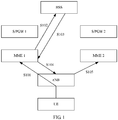
- a usage type (Usage Type) is defined for each user belonging to the type of or the group of users. As shown in FIG. 1 , the following steps are included.
- Step 101 An eNB sends a NAS request message of UE to an MME 1.
- Step 102 The MME 1 queries, an HSS based on a usage type of the UE, whether the MME 1 can provide a service for the UE.
- Step 103 The HSS returns a query result to the MME 1, where the query result indicates that the MME 1 cannot provide a service for the UE, and carries identifier information of an MME that can provide a service for the UE, which is an MME 2.
- Step 104 The MME 2 sends a redirection instruction to the eNB, where the redirection instruction carries the identifier information of the MME 2.
- Step 105 The eNB sends the NAS request of a terminal to the MME 2 based on the identifier information of the MME 2.
- the dedicated core network determines, based on a usage type of the terminal, a dedicated core network that can serve the terminal. If the dedicated core network that can serve the terminal is the dedicated core network itself, the dedicated core network continues to provide a service for the terminal. Alternatively, if the dedicated core network that can serve the terminal is not the dedicated core network itself, the dedicated core network notifies the radio access network node of an identifier of a correct dedicated core network, and the radio access network node forwards an access request of the terminal to the correct dedicated core network.
- the dedicated core network needs to determine whether the accessed dedicated core network is correct.
- the access request of the terminal is forwarded to the correct dedicated core network by using a redirection process. Therefore, extra signaling overheads are generated, and an increase in an access delay is caused.
- Embodiments of this application provide a core network device selection method and apparatus, to resolve prior-art problems of extra signaling overheads and an increase in an access delay of a terminal that are caused by a redirection process.
- an embodiment of this application provides a core network device selection method.
- the method includes: receiving, by an access network node, an access stratum message sent by a terminal, where the access stratum message includes a NAS request message and a network selection auxiliary parameter; querying, by the access network node, configuration information based on the network selection auxiliary parameter, and determining a group identifier of at least one mobility management device group; determining a device identifier of a target mobility management device based on the group identifier of the at least one mobility management device group, where the configuration information includes a correspondence between a network selection auxiliary parameter and a group identifier of a mobility management device group; and sending, by the access network node, the NAS request message to a mobility management device indicated by the device identifier of the target mobility management device. Therefore, based on the method provided in this embodiment of this application, a redirection process can be effectively avoided, so that signaling interaction between network devices is reduced, and a network access delay of the terminal is reduced.
- the network selection auxiliary parameter includes a mobility management device type
- the configuration information includes a correspondence between a mobility management device type and a group identifier of a mobility management device group
- the querying, by the access network node, configuration information based on the network selection auxiliary parameter, and determining a group identifier of at least one mobility management device group includes: querying, by the access network node, the correspondence between a mobility management device type and a group identifier of a mobility management device group based on the mobility management device type, and determining the group identifier of the at least one mobility management device group. Therefore, when matching is performed for the mobility management device type, a matching success rate is relatively high, and the access network node may relatively easily select a mobility management device for the terminal.
- the network selection auxiliary parameter includes at least one slice type
- the configuration information includes a correspondence between a slice type and a group identifier of a mobility management device group
- the querying, by the access network node, configuration information based on the network selection auxiliary parameter, and determining a group identifier of at least one mobility management device group includes: querying, by the access network node, the correspondence between a slice type and a group identifier of a mobility management device group based on the at least one slice type, and determining the group identifier of the at least one mobility management device group. Therefore, when matching is performed for the slice type, a matching success rate is relatively high, and the access network node may relatively easily select a mobility management device for the terminal.
- the network selection auxiliary parameter includes a mobility management device type and at least one slice type;
- the configuration information includes a correspondence among a mobility management device type, a slice type, and a group identifier of a mobility management device group;
- the configuration information further includes indication information, and the indication information indicates that the access network node selects a mobility management device group based on the network selection auxiliary parameter;
- the querying, by the access network node, configuration information based on the network selection auxiliary parameter, and determining a group identifier of at least one mobility management device group includes: when the indication information indicates that the access network node selects a mobility management device group based on the mobility management device type in the network selection auxiliary parameter, querying, by the access network node, a correspondence between a mobility management device type and a group identifier of a mobility management device group based on the mobility management device type, and determining the group identifier of the at least one mobility management device group; or when the indication information indicates that the access network node selects a mobility management
- the network selection auxiliary parameter includes a mobility management device type and at least one slice type;
- the configuration information includes a correspondence among a mobility management device type, a slice type, and a group identifier of a mobility management device group;
- the querying, by the access network node, configuration information based on the network selection auxiliary parameter, and determining a group identifier of at least one mobility management device group includes: querying, by the access network node, a correspondence between a mobility management device type and a group identifier of a mobility management device group based on the mobility management device type, and determining a group identifier of at least one mobility management device group as a first group identifier group; querying, by the access network node, a correspondence between a slice type and a group identifier of a mobility management device group based on the at least one slice type, and determining a group identifier of at least one mobility management device group as a second group identifier group; and determining, by the access network node, the
- the at least one slice type includes a default slice type, and the default slice type is designated by the terminal or is set in a network configuration; and the querying, by the access network node, a correspondence between a slice type and a group identifier of a mobility management device group based on the at least one slice type, and determining the group identifier of the at least one mobility management device group includes: querying, by the access network node, the correspondence between a slice type and a group identifier of a mobility management device group based on the default slice type, and determining the group identifier of the at least one mobility management device group. Therefore, the group identifier of the mobility management device group is determined based on the default slice type, so that a basic requirement of the terminal can be effectively met, and a network access delay of the terminal is reduced.
- the configuration information is sent by each mobility management device to the access network node, or is configured by a network management device for the access network node. Therefore, the access network node may more flexibly obtain the configuration information in a plurality of manners.
- the determining, by the access network node, a device identifier of a target mobility management device based on the group identifier of the at least one mobility management device includes: selecting, by the access network node, a target mobility management device group from the at least one mobility management device group; and executing a NAS node selection function on each mobility management device in the target mobility management device group, and determining the device identifier of the target mobility management device. Therefore, the access network node may determine the device identifier of the target mobility management device by using the prior art, so that compatibility with the prior art is relatively desirable.
- the configuration information further includes weight information of each mobility management device group corresponding to a mobility management device type; and the selecting, by the access network node, a target mobility management device group from the at least one mobility management device group includes: selecting, by the access network node, the target mobility management device group from the at least one mobility management device group based on the weight information of each mobility management device group, of the at least one mobility management device group, corresponding to the mobility management device type. Therefore, the access network node determines the target mobility management device group based on the weight information of each mobility management device group, of the at least one mobility management device group, corresponding to the mobility management device type, to ensure a load balance of each mobility management device group.
- the configuration information further includes weight information of each mobility management device group corresponding to a slice type; the at least one slice type includes a default slice type, and the default slice type is designated by the terminal or is set in a network configuration; and the selecting, by the access network node, a target mobility management device group from the at least one mobility management device group includes: selecting, by the access network node, the target mobility management device group from the at least one mobility management device group based on weight information of each mobility management device group, of the at least one mobility management device group, corresponding to the default slice type.
- the access network node determines the target mobility management device group based on the weight information of each mobility management device group, of the at least one mobility management device group, corresponding to the default slice type, to ensure a load balance of each mobility management device group.
- this application provides a core network device selection apparatus, configured to perform the method in any one of the first aspect or the possible designs of the first aspect.
- the apparatus includes a unit configured to perform the method in any one of the first aspect or the possible designs of the first aspect.
- this application provides an access network node, including a transceiver, a processor, and a memory.
- the transceiver, the processor, and the memory may be connected by using a bus system.
- the memory is configured to store a program, an instruction, or code
- the processor is configured to execute the program, the instruction, or the code in the memory, to complete the method in any one of the first aspect or the possible implementations of the first aspect.
- an embodiment of the present invention provides a communications system, where the system includes the access network node in the third aspect.
- the system may further include another device interacting with the access network node in the solutions provided in the embodiments of this application.
- this application provides a computer readable storage medium, where the computer readable storage medium stores an instruction, and when the instruction runs on a computer, the computer performs the method in any one of the first aspect or the possible designs of the first aspect.
- this application further provides a computer program product that includes an instruction.
- the computer program product runs on a computer, the computer performs the methods in the foregoing aspects.
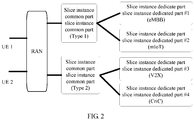
- FIG. 2 is a schematic diagram of a specific application scenario of this application. It should be known that core network slice instances in FIG. 2 are merely an example, and this application is not limited thereto.
- eMBB enhanced mobile broadband
- mIoT massive internet of things
- Vehicle to X V2X
- ultra-reliable and low latency communications Ultra Reliable & Low Latency Communication, uRLLC
- Core network slice instances of the eMBB and the mIoT share a control plane function that is marked as a common CP 1.
- Core network slice instances of the V2X and the URLLC also share a control plane function that is marked as a common CP 2.
- a RAN node is shared by all the core network slice instances.
- the UE 1 when UE 1 has a service requirement for accessing both the eMBB and the mIoT, the UE 1 may first access the common CP 1 by using the RAN node; when UE 2 has a service requirement for accessing both the V2X and the URLLC, the UE 2 may first access the common CP 2 by using the RAN node.
- a terminal in this application is a terminal device supporting a 5G network.
- a terminal to which this application can be applied is not limited thereto, and this application may be further applied to all types of terminal devices, including a mobile phone, an internet of things device, a smart household device, an industrial control device, a vehicle device, and the like.
- the RAN node in this application is an access network node, and the access network node may be a 3GPP radio access network node or a non-3GPP access point, such as a Wi-Fi access point or a fixed network access point.
- a slice instance common part is a control plane device or network function shared by one or more slice instances, for example, a mobility management device or network function (Mobility Management Function, MMF).
- MMF mobility management device or network function
- a slice instance dedicated part is a control plane device or network function dedicatedly used by a core network slice instance, for example, a session management device or network function (Session Management Function, SMF).
- SMF Session Management Function
- an embodiment of this application provides a core network device selection method.
- the method includes the following steps.
- Step 300 An access network node receives a message sent by a terminal, where the access stratum message includes a non-access stratum (Non-access Stratum, NAS) request message and a network selection auxiliary parameter; the network selection auxiliary parameter is used to instruct the access network node to select a mobility management device for the terminal.
- NAS Non-access Stratum
- the access stratum message herein may be a radio resource control (Radio Resource Control, RRC) message.
- RRC Radio Resource Control
- Step 310 The access network node queries configuration information based on the network selection auxiliary parameter, and determines a group identifier of at least one mobility management device group, where the configuration information includes a correspondence between a network selection auxiliary parameter and a group identifier of a mobility management device group.
- Step 320 The access network node determines a device identifier of a target mobility management device based on the group identifier of the at least one mobility management device group.
- Step 330 The access network node sends the NAS request message to a mobility management device indicated by the device identifier of the target mobility management device.
- the access network node before performing step 300, obtains the configuration information. Specifically, the configuration information is sent by each mobility management device to the access network node, or is configured by a network management device for the access network node.
- the access network node may determine the device identifier of the target mobility management device based on the group identifier of the at least one mobility management device by using the following method: the access network node selects a target mobility management device group from the at least one mobility management device group, executes a NAS node selection function on each mobility management device in the target mobility management device group, and determines the device identifier of the target mobility management device.
- each mobility management device in a mobility management device group configures weight information of the mobility management device for the access network node, and the access network node determines a mobility management device according to a load balancing rule.
- one mobility management device group includes three mobility management devices A1, A2, and A3, and weight information of A1, A2, and A3 is respectively 10%, 60%, and 30%. Therefore, in every 10 NAS request messages allocated to the mobility management device group, the RAN node allocates one NAS request message to A1, six NAS request messages to A2, and three NAS request messages to A3.
- a mobility management device type mentioned in this application is used to indicate a processing mechanism or behavior of a mobility management device, to support a function and a service provided by one or more slices, such as a type of MMF, or an AMF type.
- a slice type is used to indicate a processing mechanism or behavior of a network slice, to support a function and a service that are provided by the slice, such as a type of SMF, a slice type, or a service type.
- a group identifier of a mobility management device group may be represented by using an MMF group ID.
- a device identifier of a mobility management device may be represented by using an MMF instance ID.
- a device identifier of each mobility management device may be carried when the mobility management device sends the configuration information to the access network node, or may be carried when the network management device configures the configuration information for the access network node.
- the terminal may obtain the mobility management device type and/or the slice type by using the mobility management device, or the terminal configures the mobility management device type and/or the slice type in advance.
- the mobility management device mentioned in this application may also be an access and mobility management device (Core Access and Mobility Management Function, AMF).
- the mobility management device type may also be the AMF type.
- the group identifier of the mobility management device group may be represented by using an AMF group ID
- the device identifier of the mobility management device may be represented by using an AMF instance ID.
- step 310 in this embodiment of this application is described below.
- the network selection auxiliary parameter includes a mobility management device type
- the configuration information includes a correspondence between a mobility management device type and a group identifier of a mobility management device group.
- the access network node queries the correspondence between a mobility management device type and a group identifier of a mobility management device group based on the mobility management device type, and determines the group identifier of the at least one mobility management device group.
- Table 1 (Type of MMF) eMBB+mIoT MMF 1 group ID (Type of MMF) V2X+URLLC MMF 2 group ID
- the fields eMBB+mIoT and V2X+URLLC are provided merely for ease of understanding.
- a value or a scalar may be used for representation.
- the eMBB+mIoT is represented by using C001
- the eMBB is represented by using D001
- the mIoT is represented by using D002. It should be understood that a plurality of pieces of information listed in Table 1 are merely examples, and do not constitute any limitation on this application.
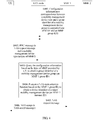
- FIG. 4 A specific implementation procedure of the first implementation is described below by using FIG. 4 as an example.
- a RAN node receives configuration messages sent by an MMF 1 and an MMF 2.
- MMFs currently connected to the RAN node include the MMF 1 and the MMF 2, the MMF 1 and the MMF 2 send the configuration messages to the RAN node, the configuration message sent by the MMF 1 includes a correspondence between a type of MMF supported by the MMF 1 and an MMF group ID, and the configuration message sent by the MMF 2 includes a correspondence between a type of MMF supported by the MMF 2 and an MMF group ID, as shown in Table 1. It is assumed herein that an MMF 1 group includes only one mobility management device MMF 1, and an MMF 1 group includes only one mobility management device MMF 2.
- each mobility management device in the MMF 1 group sends configuration information to the RAN node.
- the RAN node collects statistics about a quantity of MMFs that send same configuration information, to obtain a quantity of MMFs included in the MMF 1 group and an instance ID of each MMF. It should be known that only an example in which each MMF sends the configuration information to the RAN node is used herein for description. Alternatively, the configuration information may be configured by the network management device for the RAN node in advance.
- S402 UE sends an RRC message to the RAN node, where the RRC message includes a NAS request message and a type of MMF.
- the type of MMF is the eMBB+mIoT.
- step 300 For details of S402, refer to step 300.
- the RAN node queries the configuration information based on the type of MMF provided by the UE, to be specific, Table 1, to obtain an MMF 1 group ID.
- the RAN node executes the NAS node selection function based on the MMF 1 group ID, to obtain an MMF 1 instance ID.
- step 320 For details of S404, refer to step 320.
- S405 The RAN node forwards the NAS request message of the UE to an MMF indicated by the MMF 1 instance ID.
- step 330 For details of S405, refer to step 330.
- the MMF 1 sends a NAS accept (NAS accept) message to the UE, where the NAS accept message includes the type of MMF.
- the NAS information may be consistent or inconsistent with the type of MMF provided by the UE. For example, the MMF 1 needs to update the type of MMF.
- the RAN node may execute the NAS node selection function based on a default MMF group, to obtain an MMF instance ID, and forward the NAS request message of the UE to an MMF indicated by the MMF instance ID.
- the NAS node selection function is consistent with a NAS node selection function in the prior art, and repeated content is not described.
- the network selection auxiliary parameter in this case may further include at least one slice type
- the configuration information further includes a correspondence between a slice type and a group identifier of a mobility management device group.
- the RAN node may query the correspondence between a slice type and a group identifier of a mobility management device group based on the at least one slice type, and determine the group identifier of the at least one mobility management device group. For details, refer to a second implementation.
- the configuration information further includes weight information of each mobility management device group corresponding to a mobility management device type.
- the access network node may select the target mobility management device group from the at least one mobility management device group by using the following method: the access network node selects the target mobility management device group from the at least one mobility management device group based on the weight information of each mobility management device group, of the at least one mobility management device group, corresponding to the mobility management device type.
- three determined mobility management device groups are respectively G1, G2, and G3.
- the three mobility management devices have a same type.
- Weight information of G1, G2, and G3 corresponding to the mobility management device type is respectively 20%, 50%, and 30%. Therefore, in every 10 NAS request messages allocated to the type of mobility management device groups, the RAN node allocates two NAS request messages to G1, five NAS request messages to G2, and three NAS request messages to G3.
- the network selection auxiliary parameter includes at least one slice type
- the configuration information includes a correspondence between a slice type and a group identifier of a mobility management device group.
- the access network node queries the correspondence between a slice type and a group identifier of a mobility management device group based on the at least one slice type, and determines the group identifier of the at least one mobility management device group.
- Table 2 The correspondence between a slice type and a group identifier and a mobility management device group is shown in Table 2.
- Table 2 (Type of SMF #1) eMBB MMF 1 group ID (Type of SMF #2) mIoT (Type of SMF #3) V2X MMF 2 group ID (Type of SMF #4) URLLC
- the RAN node selects the MMF for the UE based on the type of MMF.
- the MMF can be selected for the terminal by using an embodiment in FIG. 5 .
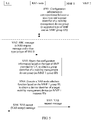
- FIG. 5 A specific implementation procedure of the second implementation is described below by using FIG. 5 as an example.
- a RAN node receives configuration messages sent by an MMF 1 and an MMF 2.
- MMFs currently connected to the RAN node include the MMF 1 and the MMF 2, the MMF 1 and the MMF 2 send the configuration messages to the RAN node, the configuration message sent by the MMF 1 includes a correspondence between a type of SMF supported by the MMF 1 and an MMF group ID, and the configuration message sent by the MMF 2 includes a correspondence between a type of SMF supported by the MMF 2 and an MMF group ID, as shown in Table 2.
- the configuration information may be configured by the network management device for the RAN node in advance.
- S502 UE sends an RRC message to the RAN node, where the RRC message includes a NAS request message and a type of SMF.
- the type of SMF is the eMBB.
- step 300 For details of S502, refer to step 300.
- the RAN node queries the configuration information based on the type of SMF provided by the UE, to be specific, Table 2, to obtain an MMF 1 group ID.
- the RAN node executes the NAS node selection function based on the MMF 1 group ID, to obtain an MMF 1 instance ID.
- step 320 For details of S504, refer to step 320.
- S505 The RAN node forwards the NAS request message of the UE to an MMF indicated by the MMF 1 instance ID.
- step 330 For details of S505, refer to step 330.
- the MMF 1 sends a NAS accept message to the UE, where the NAS accept message includes the type of MMF.
- the UE may obtain the mobility management device type by using S506, and when the UE sends the access stratum message to the RAN node next time, RRC may include the NAS request message and the type of MMF.
- the network selection auxiliary parameter in this case may further include the mobility management device type, and the configuration information includes a correspondence between a mobility management device type and a group identifier of a mobility management device group.
- the RAN node may query the correspondence between a mobility management device type and a group identifier of a mobility management device group based on the mobility management device type, and determine the group identifier of the at least one mobility management device group. For details, refer to the first implementation.
- the at least one slice type includes a default slice type, and the default slice type is designated by the terminal or is set in a network configuration.
- the access network node queries the correspondence between a slice type and a group identifier of a mobility management device group based on the default slice type, and determines the group identifier of the at least one mobility management device group. In this case, considering that a requirement of the terminal for accessing a slice of the default slice type needs to be met first, the group identifier of the at least one mobility management device group is determined for the terminal based on the default slice type.
- the UE sends an RRC message to the RAN node, and the RRC message includes a NAS request message and a type of SMF.
- the type of SMF includes the eMBB and the V2X, and the eMBB is the default slice type.
- the access network node may query the correspondence between a slice type and a group identifier of a mobility management device group based on the eMBB, and determine the group identifier of the at least one mobility management device group.
- the eMBB being the default slice type herein may be designated by the terminal or set in a network configuration.
- the configuration information further includes weight information of each mobility management device group corresponding to a slice type.
- the access network node may select the target mobility management device group from the at least one mobility management device group based on weight information of each mobility management device group, of the at least one mobility management device group, corresponding to the default slice type.
- FIG. 6 describes how to determine the target mobility management device group when the configuration information further includes the weight information of each mobility management device group corresponding to the slice type.
- a RAN node receives configuration messages sent by an MMF 1, an MMF 2, and an MMF 3, as shown in Table 3.
- configuration information sent by each MMF further includes weight information of the MMF corresponding to a slice type, for example, load information (Weight Factor per SMF type) in FIG. 6 .
- Table 3 (Type of SMF #1) eMBB MMF 1 group ID (Type of SMF #2) mIoT (Type of SMF #3) V2X MMF 2 group ID (Type of SMF #4) URLLC (Type of SMF #5) eMBB MMF 3 group ID (Type of SMF #6) V2X
- S602 UE sends an RRC message to the RAN node, where the RRC message includes a NAS request message and a type of SMF.
- the type of SMF is the eMBB.
- step 300 For details of S602, refer to step 300.
- the RAN node queries the configuration information based on the type of SMF provided by the UE, to be specific, Table 3, to obtain an MMF 1 group ID and an MMF 3 group ID.
- step 310 For details of S603, refer to step 310.
- the RAN node selects the MMF 3 group ID based on weight information of the MMF 1 group ID and the MMF 3 group ID separately corresponding to the eMBB, to be specific, weight factors.
- the RAN node hands eMBB services accounting for 30% of the total over to the MMF 1 for processing, and hands eMBB services accounting for 70% of the total over to the MMF 3 for processing.
- the RAN node executes the NAS node selection function based on the MMF 3 group ID, to obtain an MMF 3 instance ID.
- step 320 For details of S604 and S605, refer to step 320.
- S606 The RAN node forwards the NAS request message of the UE to an MMF indicated by the MMF 3 instance ID.
- step 330 For details of S606, refer to step 330.
- the MMF 3 sends a NAS accept message to the UE, where the NAS accept message includes the type of MMF.
- the type of SMF includes a slice type, and the slice type may be directly used as a default slice type.
- a default slice type needs to be determined.
- the type of SMF includes the eMBB and the URLLC, Table 3 is queried based on the eMBB to obtain the MMF 1 group ID and the MMF 3 group ID, and Table 3 is queried based on the URLLC to obtain the MMF 2 group ID.
- the eMBB is the default slice type
- the MMF is determined by using the method shown in FIG. 6 .
- the RAN node executes the NAS node selection function based on the MMF 2 group ID, to obtain the device identifier of the target mobility management device.
- the type of SMF includes the eMBB and the URLLC
- Table 3 is first queried based on the default slice type to determine the group identifier of the at least one mobility management device group, and then a group identifier of the target mobility device group is further determined by using the method shown in FIG. 6 .
- the network selection auxiliary parameter includes a mobility management device type and at least one slice type; the configuration information includes a correspondence among a mobility management device type, a slice type, and a group identifier of a mobility management device group; the configuration information further includes indication information, and the indication information indicates that the access network node selects a mobility management device group based on the network selection auxiliary parameter.
- the configuration information herein may include the correspondence among a mobility management device type, a slice type, and a group identifier of a mobility management device group, or the configuration information herein may include a correspondence between a mobility management device type and a group identifier of a mobility management device group, and a correspondence between a slice type and a group identifier of a mobility management device group.
- the access network node queries the correspondence between a mobility management device type and a group identifier of a mobility management device group based on the mobility management device type, and determines the group identifier of the at least one mobility management device group.
- a specific implementation method of the first case is consistent with the first implementation.
- the access network node queries the correspondence between a slice type and a group identifier of a mobility management device group based on the at least one slice type, and determines the group identifier of the at least one mobility management device group.
- a specific implementation method of the second case is consistent with the second implementation.
- the access network node when the indication information indicates that the access network node selects a mobility management device group based on the mobility management device type and the at least one slice type that are in the network selection auxiliary parameter, the access network node queries the correspondence between a mobility management device type and a group identifier of a mobility management device group based on the mobility management device type, and determines a group identifier of at least one mobility management device group as a first group identifier group; the access network node queries the correspondence between a slice type and a group identifier of a mobility management device group based on the at least one slice type, and determines a group identifier of at least one mobility management device group as a second group identifier group; the access network node determines the group identifier of the at least one mobility management device group based on an intersection set or a union set of the first group identifier group and the second group identifier group.
- an order in which the access network node determines the first group identifier group and the second group identifier group is not limited.
- Table 4 (Type of MMF) eMBB+mIoT (Type of SMF #1) eMBB MMF 1 group ID (Type of SMF #2) mIoT (Type of MMF) V2X+URLLC (Type of SMF #3) V2X MMF 2 group ID (Type of SMF #4) URLLC (Type of MMF) eMBB+V2X (Type of SMF #5) eMBB MMF 3 group ID (Type of SMF #6) V2X
- the configuration information includes the correspondence among a mobility management device type, a slice type, and a group identifier of a mobility management device group.
- the UE sends an RRC message to the RAN node, and the RRC message includes a NAS request message, a type of SMF, and a type of MMF.
- the type of MMF is the eMBB+mIoT
- the type of SMF is the eMBB.
- the RAN node queries Table 4 based on the type of MMF provided by the UE, to obtain the MMF 1 group ID.
- the RAN node obtains an intersection set based on the query result, and determines the MMF 1 group ID as an MMF group with a highest matching degree.
- the UE sends an RRC message to the RAN node, and the RRC message includes a NAS request message, a type of SMF, and a type of MMF.
- the type of MMF is the eMBB
- the type of SMF is the eMBB.
- the RAN node queries Table 4 based on the type of MMF provided by the UE, and cannot obtain a suitable MMF group through matching, because during actual application, each type of MMF is usually represented by using a value or a scalar, a defined value of the eMBB+mIoT is 003, and a defined value of the eMBB is 002.
- the RAN node obtains no intersection set based on the foregoing query result, obtains a union set based on the query result, and determines that the MMF 1 group ID and the MMF 3 group ID are MMF groups with a highest matching degree.
- the configuration information further includes the weight information of each mobility management device group corresponding to the slice type, the access network node selects the target mobility management device group from the at least one mobility management device group.
- the indication information may alternatively be configured on the RAN node by default, the RAN node performs the foregoing procedure according to a default configuration rule, and configuration information sent by each MMF does not need to include an indication.
- FIG. 7 A specific implementation procedure of the third implementation is described below by using FIG. 7 as an example.
- a RAN node receives configuration messages sent by an MMF 1, an MMF 2, and an MMF 3, as shown in Table 4.
- each piece of configuration information further includes same indication information.
- S702 UE sends an RRC message to the RAN node, where the RRC message includes a NAS request message, a type of SMF, and a type of MMF.
- the type of MMF is the eMBB+mIoT
- the type of SMF is the eMBB.
- step 300 For details of S702, refer to step 300.
- the RAN node determines, based on the indication information, one or more specific network selection auxiliary parameters based on which a mobility management device group is to be selected, to obtain an MMF 1 group ID.
- the RAN node queries Table 4, to obtain the MMF 1 group ID.
- the RAN node queries Table 4, to obtain the MMF 1 group ID and the MMF 3 group ID.
- the RAN node queries Table 4, the first group identifier group includes the MMF 1 group ID, the second group identifier group includes the MMF 1 group ID and the MMF 3 group ID, and the RAN node obtains the intersection set of the first group identifier group and the second group identifier group, to obtain the MMF 1 group ID, or obtains the union set of the first group identifier group and the second group identifier group, to obtain the MMF 1 group ID and the MMF 3 group ID.
- MMF 1 group ID is used as an example herein for description.
- MMF 3 group ID may be further used as an example for description.
- the RAN node executes the NAS node selection function based on the MMF 1 group ID, to obtain an MMF 1 instance ID.
- step 320 For details of S704, refer to step 320.
- S705 The RAN node forwards the NAS request message of the UE to an MMF indicated by the MMF 1 instance ID.
- step 330 For details of S505, refer to step 330.
- the MMF 1 sends a NAS accept message to the UE, where the NAS accept message includes the type of MMF.
- the network selection auxiliary parameter includes a mobility management device type and at least one slice type; the configuration information includes a correspondence among a mobility management device type, a slice type, and a group identifier of a mobility management device group.
- step 310 may specifically include the following two cases.
- the access network node queries a correspondence between a mobility management device type and a group identifier of a mobility management device group based on the mobility management device type, and determines a group identifier of at least one mobility management device group as a first group identifier group; the access network node queries a correspondence between a slice type and a group identifier of a mobility management device group based on the at least one slice type, and determines a group identifier of at least one mobility management device group as a second group identifier group; and the access network node determines the group identifier of the at least one mobility management device group based on an intersection set or a union set of the first group identifier group and the second group identifier group.
- a specific implementation method of the first case is consistent with the third case in the third implementation, but an MMF does not need to send indication information.
- the access network node when querying a correspondence between a mobility management device type and a group identifier of a mobility management device group based on the mobility management device type, and determining a group identifier of at least one mobility management device group as a first group identifier group, the access network node skips querying a correspondence between a slice type and a group identifier of a mobility management device group based on the at least one slice type, and uses a group identifier of at least one mobility management device group included in the first group identifier group as the finally determined group identifier of the at least one mobility management device group.
- the access network node may first query the correspondence between a mobility management device type and a group identifier of a mobility management device group based on the mobility management device type, and if the access network node obtains the group identifier of the at least one mobility management device group through querying, does not need to further query the correspondence between a slice type and a group identifier of a mobility management device group based on the at least one slice type. Therefore, a matching manner is more convenient and more flexible, and matching efficiency is higher.
- the access network node may alternatively first query the correspondence between a slice type and a group identifier of a mobility management device group based on the at least one slice type, and if the access network node obtains the group identifier of the at least one mobility management device group through querying, does not need to further query the correspondence between a mobility management device type and a group identifier of a mobility management device group based on the mobility management device type. Therefore, whether to first perform matching for the mobility management device type or the slice type may be flexibly configured depending on an actual network requirement.
- this application further provides a core network device selection apparatus.
- the apparatus may be configured to perform the steps performed by the access network node device in FIG. 3 . Therefore, for implementations of the core network device selection apparatus provided in an embodiment of this application, refer to the implementations of the method.
- a core network device selection apparatus includes:
- the network selection auxiliary parameter includes a mobility management device type
- the configuration information includes a correspondence between a mobility management device type and a group identifier of a mobility management device group
- the processing unit 820 is specifically configured to: query the correspondence between a mobility management device type and a group identifier of a mobility management device group based on the mobility management device type, and determine the group identifier of the at least one mobility management device group.
- the network selection auxiliary parameter includes at least one slice type
- the configuration information includes a correspondence between a slice type and a group identifier of a mobility management device group; and when querying the configuration information based on the network selection auxiliary parameter, and determining the group identifier of the at least one mobility management device group, the processing unit 820 is specifically configured to: query the correspondence between a slice type and a group identifier of a mobility management device group based on the at least one slice type, and determine the group identifier of the at least one mobility management device group.
- the network selection auxiliary parameter includes a mobility management device type and at least one slice type;
- the configuration information includes a correspondence among a mobility management device type, a slice type, and a group identifier of a mobility management device group;
- the configuration information further includes indication information, and the indication information indicates that the access network node queries the configuration information based on the network selection auxiliary parameter indicated by the indication information; and when querying the configuration information based on the network selection auxiliary parameter, and determining the group identifier of the at least one mobility management device group, the processing unit 820 is specifically configured to:
- the network selection auxiliary parameter includes a mobility management device type and at least one slice type
- the configuration information includes a correspondence among a mobility management device type, a slice type, and a group identifier of a mobility management device group
- the processing unit 820 is specifically configured to:
- the at least one slice type includes a default slice type, and the default slice type is designated by the terminal or is set in a network configuration; and when querying the correspondence between a slice type and a group identifier of a mobility management device group based on the at least one slice type, and determining the group identifier of the at least one mobility management device group, the processing unit 820 is specifically configured to: query the correspondence between a slice type and a group identifier of a mobility management device group based on the default slice type, and determine the group identifier of the at least one mobility management device group.
- the configuration information is sent by each mobility management device to the apparatus, or is configured by a network management device for the apparatus.
- the processing unit 820 when determining the device identifier of the target mobility management device based on the group identifier of the at least one mobility management device, is specifically configured to:
- the configuration information further includes weight information of each mobility management device group corresponding to a mobility management device type; and when selecting the target mobility management device group from the at least one mobility management device group, the processing unit 820 is specifically configured to: select the target mobility management device group from the at least one mobility management device group based on the weight information of each mobility management device group, of the at least one mobility management device group, corresponding to the mobility management device type.
- the configuration information further includes weight information of each mobility management device group corresponding to a slice type; the at least one slice type includes a default slice type, and the default slice type is designated by the terminal or is set in a network configuration; and when selecting the target mobility management device group from the at least one mobility management device group, the processing unit 820 is specifically configured to: select the target mobility management device group from the at least one mobility management device group based on weight information of each mobility management device group, of the at least one mobility management device group, corresponding to the default slice type.
- this application further provides an access network node.
- the device may be configured to perform the steps performed by the access network node in FIG. 3 . Therefore, for implementations of the access network node provided in an embodiment of this application, refer to the implementations of the method. Repeated content is not described again.
- an embodiment of this application provides an access network node 900.
- the device includes a transceiver 910, a processor 920, and a memory 930.
- the transceiver 910, the processor 920, and the memory 930 may be connected by using a bus system.
- the memory 930 is configured to store a program, an instruction, or code.
- the processor 920 is configured to execute the program, the instruction, or the code in the memory 930, to specifically: receive, by using the transceiver 910, a radio resource control access stratum message sent by a terminal, where the access stratum message includes a non-access stratum NAS request message and a network selection auxiliary parameter; query configuration information based on the network selection auxiliary parameter, and determine a group identifier of at least one mobility management device group, where the configuration information includes a correspondence between a network selection auxiliary parameter and a group identifier of a mobility management device group; determine a device identifier of a target mobility management device based on the group identifier of the at least one mobility management device group; and send, by using the transceiver 910, the NAS request message to a mobility management device indicated by the device identifier of the target mobility management device.
- the functions of the receiving unit 810 and the sending unit 830 in FIG. 8 may be implemented by using the transceiver 910 in FIG. 9
- the functions of the processing unit 820 in FIG. 8 may be implemented by using the processor 920 in FIG. 9 .
- a redirection process can be effectively avoided, so that signaling interaction between network devices is reduced, and a network access delay of the terminal is reduced.
- a matching success rate is relatively high, and the access network node may relatively easily select a mobility management device for the terminal, but may not fully meet an access requirement of the terminal.
- a matching success rate is relatively low, and the access network node may not select a mobility management device meeting a condition for the terminal.
- the access network node may set a default mobility management device, or select a group identifier of a mobility management device group from the first group identifier group or the second group identifier group.
- the terminal may access only one core network slice instance, and a requirement and a capability of some complex terminals for further accessing a plurality of core network slice instances cannot be met. Based on the method provided in the embodiments of this application, a scenario in which the terminal accesses a plurality of core network slice instances can be supported.
- All or some of the foregoing embodiments may be implemented by using of software, hardware, firmware, or any combination thereof.
- the embodiments may be implemented completely or partially in a form of a computer program product.
- the computer program product includes one or more computer instructions.
- the computer may be a general-purpose computer, a dedicated computer, a computer network, or other programmable apparatuses.
- the computer instructions may be stored in a computer readable storage medium or may be transmitted from a computer readable storage medium to another computer readable storage medium.
- the computer instructions may be transmitted from a website, computer, server, or data center to another website, computer, server, or data center in a wired (for example, a coaxial cable, an optical fiber, or a digital subscriber line (DSL)) or wireless (for example, infrared, radio, or microwave) manner.
- the computer readable storage medium may be any usable medium accessible by a computer, or a data storage device, such as a server or a data center, integrating one or more usable media.
- the usable medium may be a magnetic medium (such as a floppy disk, a hard disk, or a magnetic tape), an optical medium (for example, a DVD), a semiconductor medium (for example, a solid state disk Solid State Disk (SSD)), or the like.
- a magnetic medium such as a floppy disk, a hard disk, or a magnetic tape
- an optical medium for example, a DVD
- a semiconductor medium for example, a solid state disk Solid State Disk (SSD)
- These computer program instructions may be provided for a general-purpose computer, a dedicated computer, an embedded processor, or a processor of any other programmable data processing device to generate a machine, so that the instructions executed by a computer or a processor of any other programmable data processing device generate an apparatus for implementing a specific function in one or more processes in the flowcharts and/or in one or more blocks in the block diagrams.
- These computer program instructions may be stored in a computer readable memory that can instruct the computer or any other programmable data processing device to work in a specific manner, so that the instructions stored in the computer readable memory generate an artifact that includes an instruction apparatus.
- the instruction apparatus implements a specific function in one or more processes in the flowcharts and/or in one or more blocks in the block diagrams.
- These computer program instructions may be loaded onto a computer or another programmable data processing device, so that a series of operations and steps are performed on the computer or the another programmable device, thereby generating computer-implemented processing. Therefore, the instructions executed on the computer or the another programmable device provide steps for implementing a specific function in one or more processes in the flowcharts and/or in one or more blocks in the block diagrams.
Landscapes
- Engineering & Computer Science (AREA)
- Computer Networks & Wireless Communication (AREA)
- Signal Processing (AREA)
- Databases & Information Systems (AREA)
- Computer Security & Cryptography (AREA)
- Mobile Radio Communication Systems (AREA)
Applications Claiming Priority (1)
| Application Number | Priority Date | Filing Date | Title |
|---|---|---|---|
| PCT/CN2017/077586 WO2018170748A1 (zh) | 2017-03-21 | 2017-03-21 | 一种选择核心网设备的方法及装置 |
Publications (3)
| Publication Number | Publication Date |
|---|---|
| EP3592016A1 true EP3592016A1 (de) | 2020-01-08 |
| EP3592016A4 EP3592016A4 (de) | 2020-02-19 |
| EP3592016B1 EP3592016B1 (de) | 2021-09-22 |
Family
ID=63586245
Family Applications (1)
| Application Number | Title | Priority Date | Filing Date |
|---|---|---|---|
| EP17901991.4A Active EP3592016B1 (de) | 2017-03-21 | 2017-03-21 | Verfahren und vorrichtung zur auswahl einer kernnetzwerkvorrichtung |
Country Status (4)
| Country | Link |
|---|---|
| US (1) | US11129211B2 (de) |
| EP (1) | EP3592016B1 (de) |
| CN (1) | CN110431865B (de) |
| WO (1) | WO2018170748A1 (de) |
Families Citing this family (2)
| Publication number | Priority date | Publication date | Assignee | Title |
|---|---|---|---|---|
| CN110994565A (zh) * | 2019-12-02 | 2020-04-10 | 中国联合网络通信集团有限公司 | 一种继电保护方法及装置 |
| CN112333058B (zh) * | 2020-09-15 | 2023-06-30 | 深圳Tcl新技术有限公司 | 设备监控方法、装置、系统与计算机可读存储介质 |
Family Cites Families (16)
| Publication number | Priority date | Publication date | Assignee | Title |
|---|---|---|---|---|
| US8144696B2 (en) * | 2009-06-18 | 2012-03-27 | Nokia Siemens Networks Oy | Mobile management entity operating in communications network and selection method therefor |
| US8331224B2 (en) * | 2009-11-23 | 2012-12-11 | Telefonaktiebolaget L M Ericsson (Publ) | Self-management of mobility management entity (MME) pools |
| JP5421419B2 (ja) * | 2012-03-28 | 2014-02-19 | 株式会社Nttドコモ | 基地局測位要求先決定装置 |
| US9565572B2 (en) * | 2012-07-23 | 2017-02-07 | Lg Electronics Inc. | Method for operating serving cell in wireless communication system to which carrier aggregation scheme is applied and device for same |
| TW201807961A (zh) * | 2012-09-27 | 2018-03-01 | 內數位專利控股公司 | 在噓擬網路中端對端架構、api框架、發現及存取 |
| EP3145244B1 (de) * | 2014-06-17 | 2020-01-01 | Huawei Technologies Co. Ltd. | Verfahren zur mme-neuauswahl und mme |
| MX368402B (es) * | 2015-01-13 | 2019-09-27 | Nec Corp | Sistema de comunicación. |
| CN106375987B (zh) * | 2015-07-22 | 2021-08-20 | 中兴通讯股份有限公司 | 一种网络切片的选择方法及系统 |
| WO2017018663A1 (ko) * | 2015-07-24 | 2017-02-02 | 엘지전자 주식회사 | Pdn 연결 관리 방법 및 네트워크 엔티티 |
| US10425830B2 (en) * | 2015-09-07 | 2019-09-24 | Electronics And Telecommunications Research Institute | Mobile communication network system and method for composing network component configurations |
| US10129108B2 (en) * | 2015-11-13 | 2018-11-13 | Huawei Technologies Co., Ltd. | System and methods for network management and orchestration for network slicing |
| JP6812457B2 (ja) * | 2016-04-20 | 2021-01-13 | コンヴィーダ ワイヤレス, エルエルシー | システム情報プロビジョニングおよびライトウェイト接続シグナリング |
| CN106060900B (zh) * | 2016-05-13 | 2019-12-10 | 宇龙计算机通信科技(深圳)有限公司 | 网络切片的接入控制方法及装置、终端化小区和sdn控制器 |
| US10257327B2 (en) * | 2016-06-29 | 2019-04-09 | Cisco Technology, Inc. | Information centric networking for long term evolution |
| CN106412905A (zh) * | 2016-12-12 | 2017-02-15 | 中国联合网络通信集团有限公司 | 网络切片选择方法、ue、mme和系统 |
| EP3593589B1 (de) * | 2017-03-10 | 2023-09-20 | Hughes Network Systems, LLC | Gemeinsame netzwerkverwendung durch mehrere dienstanbieter in einer 3gpp-umgebung unter verwendung eines einzigen kernnetzwerks |
-
2017
- 2017-03-21 WO PCT/CN2017/077586 patent/WO2018170748A1/zh not_active Ceased
- 2017-03-21 EP EP17901991.4A patent/EP3592016B1/de active Active
- 2017-03-21 CN CN201780088461.0A patent/CN110431865B/zh active Active
-
2019
- 2019-09-20 US US16/577,878 patent/US11129211B2/en active Active
Also Published As
| Publication number | Publication date |
|---|---|
| EP3592016B1 (de) | 2021-09-22 |
| WO2018170748A1 (zh) | 2018-09-27 |
| US20200015290A1 (en) | 2020-01-09 |
| CN110431865A (zh) | 2019-11-08 |
| CN110431865B (zh) | 2022-02-01 |
| US11129211B2 (en) | 2021-09-21 |
| EP3592016A4 (de) | 2020-02-19 |
Similar Documents
| Publication | Publication Date | Title |
|---|---|---|
| US11496197B2 (en) | Wireless communication method and device | |
| US11803409B2 (en) | Mobile edge computing method and apparatus | |
| EP3783947B1 (de) | Vorrichtung und verfahren zum melden der trägeraggregationsfähigkeit und zur messung eines trägers | |
| US11470467B2 (en) | Capability management method and communications device | |
| EP3849242A1 (de) | Verfahren und vorrichtung zur dynamischen einstellung einer pdu-sitzung | |
| EP3537751A1 (de) | Verfahren und vorrichtung zur automatischen konfiguration und basisstation | |
| CN113676896A (zh) | 通信方法及相关设备 | |
| CN110944361B (zh) | 用于负载均衡的方法与网元 | |
| US9220000B1 (en) | Temporary device numbers for text messaging | |
| EP3793263A1 (de) | Kommunikationsverfahren und -vorrichtung | |
| JP2019501604A (ja) | キャリアアグリケーション方法、ネットワーク側機器とコンピュータ記憶媒体 | |
| JP2015520568A (ja) | サービス指示メッセージ報告方法、装置、およびシステム | |
| CN112188554B (zh) | 信息传输方法及装置 | |
| US11129211B2 (en) | Core network device selection method and apparatus | |
| EP3068169B1 (de) | Verfahren und basisstation zum umschalten zwischen identifikatoren eines öffentlichen landfunknetzes | |
| CN108924883B (zh) | 一种接入网络切片的方法和装置 | |
| EP3700263A1 (de) | Drahtloskommunikationsverfahren und -vorrichtung | |
| EP3806372A1 (de) | Kommunikationsverfahren und -vorrichtung | |
| US10164903B2 (en) | Method for controlling access of application to network, and device | |
| EP4044752B1 (de) | Kommunikationsverfahren, kommunikationsvorrichtungen, computerspeichermedium und computerprogrammprodukt | |
| EP4033818A1 (de) | Kommunikationsverfahren und gerät sowie vorrichtung | |
| GB2629230A (en) | Method for controlling network slice, information processing apparatus, and system | |
| US11096164B2 (en) | Data transmission method using fractional physical resource blocks, and device therefor | |
| EP4354952A2 (de) | Lastausgleichsverfahren und netzwerkelement | |
| US12177815B2 (en) | Resource determination method and device |
Legal Events
| Date | Code | Title | Description |
|---|---|---|---|
| STAA | Information on the status of an ep patent application or granted ep patent |
Free format text: STATUS: THE INTERNATIONAL PUBLICATION HAS BEEN MADE |
|
| PUAI | Public reference made under article 153(3) epc to a published international application that has entered the european phase |
Free format text: ORIGINAL CODE: 0009012 |
|
| STAA | Information on the status of an ep patent application or granted ep patent |
Free format text: STATUS: REQUEST FOR EXAMINATION WAS MADE |
|
| 17P | Request for examination filed |
Effective date: 20191001 |
|
| AK | Designated contracting states |
Kind code of ref document: A1 Designated state(s): AL AT BE BG CH CY CZ DE DK EE ES FI FR GB GR HR HU IE IS IT LI LT LU LV MC MK MT NL NO PL PT RO RS SE SI SK SM TR |
|
| AX | Request for extension of the european patent |
Extension state: BA ME |
|
| A4 | Supplementary search report drawn up and despatched |
Effective date: 20200121 |
|
| RIC1 | Information provided on ipc code assigned before grant |
Ipc: H04W 8/06 20090101ALN20200115BHEP Ipc: H04W 48/18 20090101AFI20200115BHEP |
|
| DAV | Request for validation of the european patent (deleted) | ||
| DAX | Request for extension of the european patent (deleted) | ||
| REG | Reference to a national code |
Ref country code: DE Ref legal event code: R079 Ref document number: 602017046594 Country of ref document: DE Free format text: PREVIOUS MAIN CLASS: H04W0008260000 Ipc: H04W0048180000 |
|
| GRAP | Despatch of communication of intention to grant a patent |
Free format text: ORIGINAL CODE: EPIDOSNIGR1 |
|
| STAA | Information on the status of an ep patent application or granted ep patent |
Free format text: STATUS: GRANT OF PATENT IS INTENDED |
|
| RIC1 | Information provided on ipc code assigned before grant |
Ipc: H04W 8/06 20090101ALN20210409BHEP Ipc: H04W 48/18 20090101AFI20210409BHEP |
|
| INTG | Intention to grant announced |
Effective date: 20210506 |
|
| GRAS | Grant fee paid |
Free format text: ORIGINAL CODE: EPIDOSNIGR3 |
|
| GRAA | (expected) grant |
Free format text: ORIGINAL CODE: 0009210 |
|
| STAA | Information on the status of an ep patent application or granted ep patent |
Free format text: STATUS: THE PATENT HAS BEEN GRANTED |
|
| AK | Designated contracting states |
Kind code of ref document: B1 Designated state(s): AL AT BE BG CH CY CZ DE DK EE ES FI FR GB GR HR HU IE IS IT LI LT LU LV MC MK MT NL NO PL PT RO RS SE SI SK SM TR |
|
| REG | Reference to a national code |
Ref country code: GB Ref legal event code: FG4D |
|
| REG | Reference to a national code |
Ref country code: IE Ref legal event code: FG4D |
|
| REG | Reference to a national code |
Ref country code: DE Ref legal event code: R096 Ref document number: 602017046594 Country of ref document: DE |
|
| REG | Reference to a national code |
Ref country code: CH Ref legal event code: EP Ref country code: AT Ref legal event code: REF Ref document number: 1433345 Country of ref document: AT Kind code of ref document: T Effective date: 20211015 |
|
| REG | Reference to a national code |
Ref country code: LT Ref legal event code: MG9D |
|
| REG | Reference to a national code |
Ref country code: NL Ref legal event code: MP Effective date: 20210922 |
|
| PG25 | Lapsed in a contracting state [announced via postgrant information from national office to epo] |
Ref country code: HR Free format text: LAPSE BECAUSE OF FAILURE TO SUBMIT A TRANSLATION OF THE DESCRIPTION OR TO PAY THE FEE WITHIN THE PRESCRIBED TIME-LIMIT Effective date: 20210922 Ref country code: FI Free format text: LAPSE BECAUSE OF FAILURE TO SUBMIT A TRANSLATION OF THE DESCRIPTION OR TO PAY THE FEE WITHIN THE PRESCRIBED TIME-LIMIT Effective date: 20210922 Ref country code: RS Free format text: LAPSE BECAUSE OF FAILURE TO SUBMIT A TRANSLATION OF THE DESCRIPTION OR TO PAY THE FEE WITHIN THE PRESCRIBED TIME-LIMIT Effective date: 20210922 Ref country code: SE Free format text: LAPSE BECAUSE OF FAILURE TO SUBMIT A TRANSLATION OF THE DESCRIPTION OR TO PAY THE FEE WITHIN THE PRESCRIBED TIME-LIMIT Effective date: 20210922 Ref country code: LT Free format text: LAPSE BECAUSE OF FAILURE TO SUBMIT A TRANSLATION OF THE DESCRIPTION OR TO PAY THE FEE WITHIN THE PRESCRIBED TIME-LIMIT Effective date: 20210922 Ref country code: BG Free format text: LAPSE BECAUSE OF FAILURE TO SUBMIT A TRANSLATION OF THE DESCRIPTION OR TO PAY THE FEE WITHIN THE PRESCRIBED TIME-LIMIT Effective date: 20211222 Ref country code: NO Free format text: LAPSE BECAUSE OF FAILURE TO SUBMIT A TRANSLATION OF THE DESCRIPTION OR TO PAY THE FEE WITHIN THE PRESCRIBED TIME-LIMIT Effective date: 20211222 |
|
| REG | Reference to a national code |
Ref country code: AT Ref legal event code: MK05 Ref document number: 1433345 Country of ref document: AT Kind code of ref document: T Effective date: 20210922 |
|
| PG25 | Lapsed in a contracting state [announced via postgrant information from national office to epo] |
Ref country code: LV Free format text: LAPSE BECAUSE OF FAILURE TO SUBMIT A TRANSLATION OF THE DESCRIPTION OR TO PAY THE FEE WITHIN THE PRESCRIBED TIME-LIMIT Effective date: 20210922 Ref country code: GR Free format text: LAPSE BECAUSE OF FAILURE TO SUBMIT A TRANSLATION OF THE DESCRIPTION OR TO PAY THE FEE WITHIN THE PRESCRIBED TIME-LIMIT Effective date: 20211223 |
|
| PG25 | Lapsed in a contracting state [announced via postgrant information from national office to epo] |
Ref country code: AT Free format text: LAPSE BECAUSE OF FAILURE TO SUBMIT A TRANSLATION OF THE DESCRIPTION OR TO PAY THE FEE WITHIN THE PRESCRIBED TIME-LIMIT Effective date: 20210922 |
|
| PG25 | Lapsed in a contracting state [announced via postgrant information from national office to epo] |
Ref country code: IS Free format text: LAPSE BECAUSE OF FAILURE TO SUBMIT A TRANSLATION OF THE DESCRIPTION OR TO PAY THE FEE WITHIN THE PRESCRIBED TIME-LIMIT Effective date: 20220122 Ref country code: SK Free format text: LAPSE BECAUSE OF FAILURE TO SUBMIT A TRANSLATION OF THE DESCRIPTION OR TO PAY THE FEE WITHIN THE PRESCRIBED TIME-LIMIT Effective date: 20210922 Ref country code: RO Free format text: LAPSE BECAUSE OF FAILURE TO SUBMIT A TRANSLATION OF THE DESCRIPTION OR TO PAY THE FEE WITHIN THE PRESCRIBED TIME-LIMIT Effective date: 20210922 Ref country code: PT Free format text: LAPSE BECAUSE OF FAILURE TO SUBMIT A TRANSLATION OF THE DESCRIPTION OR TO PAY THE FEE WITHIN THE PRESCRIBED TIME-LIMIT Effective date: 20220124 Ref country code: PL Free format text: LAPSE BECAUSE OF FAILURE TO SUBMIT A TRANSLATION OF THE DESCRIPTION OR TO PAY THE FEE WITHIN THE PRESCRIBED TIME-LIMIT Effective date: 20210922 Ref country code: NL Free format text: LAPSE BECAUSE OF FAILURE TO SUBMIT A TRANSLATION OF THE DESCRIPTION OR TO PAY THE FEE WITHIN THE PRESCRIBED TIME-LIMIT Effective date: 20210922 Ref country code: ES Free format text: LAPSE BECAUSE OF FAILURE TO SUBMIT A TRANSLATION OF THE DESCRIPTION OR TO PAY THE FEE WITHIN THE PRESCRIBED TIME-LIMIT Effective date: 20210922 Ref country code: EE Free format text: LAPSE BECAUSE OF FAILURE TO SUBMIT A TRANSLATION OF THE DESCRIPTION OR TO PAY THE FEE WITHIN THE PRESCRIBED TIME-LIMIT Effective date: 20210922 Ref country code: CZ Free format text: LAPSE BECAUSE OF FAILURE TO SUBMIT A TRANSLATION OF THE DESCRIPTION OR TO PAY THE FEE WITHIN THE PRESCRIBED TIME-LIMIT Effective date: 20210922 Ref country code: AL Free format text: LAPSE BECAUSE OF FAILURE TO SUBMIT A TRANSLATION OF THE DESCRIPTION OR TO PAY THE FEE WITHIN THE PRESCRIBED TIME-LIMIT Effective date: 20210922 |
|
| REG | Reference to a national code |
Ref country code: DE Ref legal event code: R097 Ref document number: 602017046594 Country of ref document: DE |
|
| PG25 | Lapsed in a contracting state [announced via postgrant information from national office to epo] |
Ref country code: DK Free format text: LAPSE BECAUSE OF FAILURE TO SUBMIT A TRANSLATION OF THE DESCRIPTION OR TO PAY THE FEE WITHIN THE PRESCRIBED TIME-LIMIT Effective date: 20210922 |
|
| PLBE | No opposition filed within time limit |
Free format text: ORIGINAL CODE: 0009261 |
|
| STAA | Information on the status of an ep patent application or granted ep patent |
Free format text: STATUS: NO OPPOSITION FILED WITHIN TIME LIMIT |
|
| 26N | No opposition filed |
Effective date: 20220623 |
|
| PG25 | Lapsed in a contracting state [announced via postgrant information from national office to epo] |
Ref country code: MC Free format text: LAPSE BECAUSE OF FAILURE TO SUBMIT A TRANSLATION OF THE DESCRIPTION OR TO PAY THE FEE WITHIN THE PRESCRIBED TIME-LIMIT Effective date: 20210922 |
|
| REG | Reference to a national code |
Ref country code: CH Ref legal event code: PL |
|
| GBPC | Gb: european patent ceased through non-payment of renewal fee |
Effective date: 20220321 |
|
| PG25 | Lapsed in a contracting state [announced via postgrant information from national office to epo] |
Ref country code: SI Free format text: LAPSE BECAUSE OF FAILURE TO SUBMIT A TRANSLATION OF THE DESCRIPTION OR TO PAY THE FEE WITHIN THE PRESCRIBED TIME-LIMIT Effective date: 20210922 |
|
| REG | Reference to a national code |
Ref country code: BE Ref legal event code: MM Effective date: 20220331 |
|
| PG25 | Lapsed in a contracting state [announced via postgrant information from national office to epo] |
Ref country code: LU Free format text: LAPSE BECAUSE OF NON-PAYMENT OF DUE FEES Effective date: 20220321 Ref country code: LI Free format text: LAPSE BECAUSE OF NON-PAYMENT OF DUE FEES Effective date: 20220331 Ref country code: IT Free format text: LAPSE BECAUSE OF FAILURE TO SUBMIT A TRANSLATION OF THE DESCRIPTION OR TO PAY THE FEE WITHIN THE PRESCRIBED TIME-LIMIT Effective date: 20210922 Ref country code: IE Free format text: LAPSE BECAUSE OF NON-PAYMENT OF DUE FEES Effective date: 20220321 Ref country code: GB Free format text: LAPSE BECAUSE OF NON-PAYMENT OF DUE FEES Effective date: 20220321 Ref country code: FR Free format text: LAPSE BECAUSE OF NON-PAYMENT OF DUE FEES Effective date: 20220331 Ref country code: CH Free format text: LAPSE BECAUSE OF NON-PAYMENT OF DUE FEES Effective date: 20220331 |
|
| PG25 | Lapsed in a contracting state [announced via postgrant information from national office to epo] |
Ref country code: BE Free format text: LAPSE BECAUSE OF NON-PAYMENT OF DUE FEES Effective date: 20220331 |
|
| P01 | Opt-out of the competence of the unified patent court (upc) registered |
Effective date: 20230524 |
|
| PG25 | Lapsed in a contracting state [announced via postgrant information from national office to epo] |
Ref country code: SM Free format text: LAPSE BECAUSE OF FAILURE TO SUBMIT A TRANSLATION OF THE DESCRIPTION OR TO PAY THE FEE WITHIN THE PRESCRIBED TIME-LIMIT Effective date: 20210922 Ref country code: MK Free format text: LAPSE BECAUSE OF FAILURE TO SUBMIT A TRANSLATION OF THE DESCRIPTION OR TO PAY THE FEE WITHIN THE PRESCRIBED TIME-LIMIT Effective date: 20210922 Ref country code: CY Free format text: LAPSE BECAUSE OF FAILURE TO SUBMIT A TRANSLATION OF THE DESCRIPTION OR TO PAY THE FEE WITHIN THE PRESCRIBED TIME-LIMIT Effective date: 20210922 |
|
| PG25 | Lapsed in a contracting state [announced via postgrant information from national office to epo] |
Ref country code: HU Free format text: LAPSE BECAUSE OF FAILURE TO SUBMIT A TRANSLATION OF THE DESCRIPTION OR TO PAY THE FEE WITHIN THE PRESCRIBED TIME-LIMIT; INVALID AB INITIO Effective date: 20170321 |
|
| PG25 | Lapsed in a contracting state [announced via postgrant information from national office to epo] |
Ref country code: MT Free format text: LAPSE BECAUSE OF FAILURE TO SUBMIT A TRANSLATION OF THE DESCRIPTION OR TO PAY THE FEE WITHIN THE PRESCRIBED TIME-LIMIT Effective date: 20210922 |
|
| PGFP | Annual fee paid to national office [announced via postgrant information from national office to epo] |
Ref country code: DE Payment date: 20250204 Year of fee payment: 9 |
|
| PG25 | Lapsed in a contracting state [announced via postgrant information from national office to epo] |
Ref country code: TR Free format text: LAPSE BECAUSE OF FAILURE TO SUBMIT A TRANSLATION OF THE DESCRIPTION OR TO PAY THE FEE WITHIN THE PRESCRIBED TIME-LIMIT Effective date: 20210922 |