EP3586911B1 - Implantierbarer neuromuskulärer stimulator für extraokularen muskel und parametereinstellverfahren dafür - Google Patents
Implantierbarer neuromuskulärer stimulator für extraokularen muskel und parametereinstellverfahren dafür Download PDFInfo
- Publication number
- EP3586911B1 EP3586911B1 EP17897519.9A EP17897519A EP3586911B1 EP 3586911 B1 EP3586911 B1 EP 3586911B1 EP 17897519 A EP17897519 A EP 17897519A EP 3586911 B1 EP3586911 B1 EP 3586911B1
- Authority
- EP
- European Patent Office
- Prior art keywords
- muscle
- implantable
- extraocular
- pulse generator
- eye
- Prior art date
- Legal status (The legal status is an assumption and is not a legal conclusion. Google has not performed a legal analysis and makes no representation as to the accuracy of the status listed.)
- Active
Links
Images

Classifications
-
- A—HUMAN NECESSITIES
- A61—MEDICAL OR VETERINARY SCIENCE; HYGIENE
- A61N—ELECTROTHERAPY; MAGNETOTHERAPY; RADIATION THERAPY; ULTRASOUND THERAPY
- A61N1/00—Electrotherapy; Circuits therefor
- A61N1/18—Applying electric currents by contact electrodes
- A61N1/32—Applying electric currents by contact electrodes alternating or intermittent currents
- A61N1/36—Applying electric currents by contact electrodes alternating or intermittent currents for stimulation
- A61N1/36046—Applying electric currents by contact electrodes alternating or intermittent currents for stimulation of the eye
-
- A—HUMAN NECESSITIES
- A61—MEDICAL OR VETERINARY SCIENCE; HYGIENE
- A61N—ELECTROTHERAPY; MAGNETOTHERAPY; RADIATION THERAPY; ULTRASOUND THERAPY
- A61N1/00—Electrotherapy; Circuits therefor
- A61N1/18—Applying electric currents by contact electrodes
- A61N1/32—Applying electric currents by contact electrodes alternating or intermittent currents
- A61N1/36—Applying electric currents by contact electrodes alternating or intermittent currents for stimulation
- A61N1/3605—Implantable neurostimulators for stimulating central or peripheral nerve system
- A61N1/3606—Implantable neurostimulators for stimulating central or peripheral nerve system adapted for a particular treatment
-
- A—HUMAN NECESSITIES
- A61—MEDICAL OR VETERINARY SCIENCE; HYGIENE
- A61N—ELECTROTHERAPY; MAGNETOTHERAPY; RADIATION THERAPY; ULTRASOUND THERAPY
- A61N1/00—Electrotherapy; Circuits therefor
- A61N1/18—Applying electric currents by contact electrodes
- A61N1/32—Applying electric currents by contact electrodes alternating or intermittent currents
- A61N1/36—Applying electric currents by contact electrodes alternating or intermittent currents for stimulation
- A61N1/3605—Implantable neurostimulators for stimulating central or peripheral nerve system
- A61N1/36125—Details of circuitry or electric components
-
- A—HUMAN NECESSITIES
- A61—MEDICAL OR VETERINARY SCIENCE; HYGIENE
- A61N—ELECTROTHERAPY; MAGNETOTHERAPY; RADIATION THERAPY; ULTRASOUND THERAPY
- A61N1/00—Electrotherapy; Circuits therefor
- A61N1/18—Applying electric currents by contact electrodes
- A61N1/32—Applying electric currents by contact electrodes alternating or intermittent currents
- A61N1/36—Applying electric currents by contact electrodes alternating or intermittent currents for stimulation
- A61N1/3605—Implantable neurostimulators for stimulating central or peripheral nerve system
- A61N1/36128—Control systems
- A61N1/36135—Control systems using physiological parameters
- A61N1/36139—Control systems using physiological parameters with automatic adjustment
-
- A—HUMAN NECESSITIES
- A61—MEDICAL OR VETERINARY SCIENCE; HYGIENE
- A61N—ELECTROTHERAPY; MAGNETOTHERAPY; RADIATION THERAPY; ULTRASOUND THERAPY
- A61N1/00—Electrotherapy; Circuits therefor
- A61N1/18—Applying electric currents by contact electrodes
- A61N1/32—Applying electric currents by contact electrodes alternating or intermittent currents
- A61N1/36—Applying electric currents by contact electrodes alternating or intermittent currents for stimulation
- A61N1/372—Arrangements in connection with the implantation of stimulators
- A61N1/375—Constructional arrangements, e.g. casings
- A61N1/3752—Details of casing-lead connections
-
- A—HUMAN NECESSITIES
- A61—MEDICAL OR VETERINARY SCIENCE; HYGIENE
- A61B—DIAGNOSIS; SURGERY; IDENTIFICATION
- A61B3/00—Apparatus for testing the eyes; Instruments for examining the eyes
- A61B3/02—Subjective types, i.e. testing apparatus requiring the active assistance of the patient
- A61B3/08—Subjective types, i.e. testing apparatus requiring the active assistance of the patient for testing binocular or stereoscopic vision, e.g. strabismus
- A61B3/085—Subjective types, i.e. testing apparatus requiring the active assistance of the patient for testing binocular or stereoscopic vision, e.g. strabismus for testing strabismus
-
- A—HUMAN NECESSITIES
- A61—MEDICAL OR VETERINARY SCIENCE; HYGIENE
- A61N—ELECTROTHERAPY; MAGNETOTHERAPY; RADIATION THERAPY; ULTRASOUND THERAPY
- A61N1/00—Electrotherapy; Circuits therefor
- A61N1/02—Details
- A61N1/04—Electrodes
- A61N1/05—Electrodes for implantation or insertion into the body, e.g. heart electrode
- A61N1/0526—Head electrodes
-
- A—HUMAN NECESSITIES
- A61—MEDICAL OR VETERINARY SCIENCE; HYGIENE
- A61N—ELECTROTHERAPY; MAGNETOTHERAPY; RADIATION THERAPY; ULTRASOUND THERAPY
- A61N1/00—Electrotherapy; Circuits therefor
- A61N1/18—Applying electric currents by contact electrodes
- A61N1/32—Applying electric currents by contact electrodes alternating or intermittent currents
- A61N1/36—Applying electric currents by contact electrodes alternating or intermittent currents for stimulation
- A61N1/3605—Implantable neurostimulators for stimulating central or peripheral nerve system
- A61N1/36128—Control systems
- A61N1/36146—Control systems specified by the stimulation parameters
-
- A—HUMAN NECESSITIES
- A61—MEDICAL OR VETERINARY SCIENCE; HYGIENE
- A61N—ELECTROTHERAPY; MAGNETOTHERAPY; RADIATION THERAPY; ULTRASOUND THERAPY
- A61N1/00—Electrotherapy; Circuits therefor
- A61N1/18—Applying electric currents by contact electrodes
- A61N1/32—Applying electric currents by contact electrodes alternating or intermittent currents
- A61N1/36—Applying electric currents by contact electrodes alternating or intermittent currents for stimulation
- A61N1/372—Arrangements in connection with the implantation of stimulators
- A61N1/37205—Microstimulators, e.g. implantable through a cannula
Definitions
- the present application relates to the field of miniature medical equipment, and particularly relates to an implantable extraocular-muscle neuromuscular stimulator and its parameter setting method.
- Nystagmus is involuntary, rhythmic and reciprocal eyeball swinging or jumping, and it has complicated clinical manifestation, and is frequently accompanied with visual impairment of both eyes. According to the primary diseases of nystagmus, nystagmus is classified as types such as ocular nystagmus, vetibular nystagmus, central nystagmus and cryptogenic nystagmus.
- ocular nystagmus is clinically closely relevant to ophthalmology, and is mainly congenital nystagmus (CN), which frequently emerges at birth or within 4 months after birth. According to statistics, its prevalence rate among children is 1/1000-1/1500, and globally there are approximately millions of patients. According to the etiologies, it is classified as: Sensory Defect Nystagmus (SDN) and Congenital Idiopathic Nystagmus (CIN).
- SDN Sensory Defect Nystagmus
- CIN Congenital Idiopathic Nystagmus
- CIN congenital defective outgoing-mechanism and normal passing mechanism, and the abnormality of non-closing eyes is frequently expressed as impulsive nystagmus.
- the main harm of CIN is resulting in amblyopia. According to statistics, among the patients, the cases of illness of amblyopia account for 86.7%, wherein moderate and severe amblyopia account for 20.2%, and moderate amblyopia accounts for 52.3%. Accordingly, it can be seen that, CIN affects vision widespreadly.
- Implantable medical-treatment instruments are diverse, such as cardiac pacemaker, defibrillator and implantable muscle stimulator.
- the present application relates to an implantable extraocular-muscle neuromuscular stimulator and its parameter setting method for treating congenital idiopathic nystagmus.
- US Pat. Pub. 2009/005756 relates to generating stimulus to treat strabismus with stimulator, and applying stimulus to stimulation site within patient, where site includes cranial nerve for innervating extraocular muscle.
- the present application proposes an implantable extraocular-muscle neuromuscular stimulator and its parameter setting method, for treating congenital idiopathic nystagmus.
- the stimulator by detecting the contraction state of the extraocular muscle and the stimulating signal, supplies the extraocular muscle the corresponding stimulation and contraction, to balance the nerve stimulation and counteract the contraction, to enable the eyeballs to maintain fixed staring and not to have nystagmus.
- the present application provides an implantable extraocular-muscle neuromuscular stimulator, comprising an implantable pulse generator, an extracorporeal remote controller and an electrode, wherein the implantable pulse generator is provided in a created subcutaneous pouch, the implantable pulse generator is connected to an extraocular muscle by the electrode, and the implantable pulse generator is for generating an pulse stimulating signal;
- the electrode comprises a lead and a contact-pin connector and a contact that are provided at two ends of the lead, wherein the contact-pin connector is connected to the implantable pulse generator, the lead is provided in a created subcutaneous tunnel, and the contact is connected to the extraocular muscle;
- the extracorporeal remote controller is connected to the implantable pulse generator by a wireless signal, and is for setting the pulse stimulating signal of the implantable pulse generator; wherein the implantable pulse generator is for sensing a contraction state of an eye muscle by using the electrode, and according to the contraction state of the eye muscle generating an eye-muscle stimulating signal, and sending the
- the implantable pulse generator comprises a receiver, a transmitter, a wireless energy transfer module, a power management module, a digital processing module and an electrical-stimulation driver, and the wireless energy transfer module transmits energy to the power management module, the receiver and the transmitter; and the implantable pulse generator wirelessly receives the signal by using the receiver, and transmits an output to the digital processing module, the signal is transmitted to the electrical-stimulation driver via a current generating circuit and a waveform time-sequence circuit, and the electrical-stimulation driver is connected to the electrode.
- the extracorporeal remote controller comprises a receiver, a transmitter, a frequency synthesizer, a digital processing module, a data analysis module, a data storage module, a display and a processor, the processor is connected to the data analysis module, the data storage module, a controlling program and the display, and the frequency synthesizer is connected to the digital processing module, the receiver and the transmitter;
- the extracorporeal remote controller wirelessly receives the signal by using the receiver, and transmits the signal to the digital processing module, and the signal is transmitted to the processor via a digital interface circuit; and the processor transmits the signal to the data analysis module, and stores an analysis result to the data storage module, and the processor transmits the analysis result to the implantable pulse generator via the digital interface circuit, the digital processing module and the transmitter.
- the contact on the electrode is a plurality of contacts, and when the contacts are connected to the extraocular muscle, at least one of the contacts is connected to the extraocular muscle; and the contact is connected to the extraocular muscle by binding or insertion.
- the setting of the pulse stimulating signal comprises: pulse amplitude setting, pulse width setting and pulse frequency setting.
- the pulse amplitude setting comprises a voltage mode and a current mode, wherein when a pulse amplitude is set in the voltage mode, a voltage range is 0-10V, and an adjustment step length is 1V or 0.1V; and when a pulse amplitude is set in the current mode, a current range is 0-25mA, and an adjustment step length is 1mA or 0.1mA.
- a range of the pulse width setting is 30-450ms, and an adjustment step length is 10ms.
- a range of the pulse frequency setting is 1-500Hz.
- the present application further discloses a method for setting a parameter of the implantable extraocular-muscle neuromuscular stimulator, wherein the setting the pulse stimulating signal of the implantable pulse generator by using the extracorporeal remote controller comprises: pulse amplitude setting, pulse width setting and pulse frequency setting.
- the pulse amplitude setting comprises a voltage mode and a current mode, wherein when a pulse amplitude is set in the voltage mode, a voltage range is 0-10V, and an adjustment step length is 1V or 0.1V; and when a pulse amplitude is set in the current mode, a current range is 0-25mA, and an adjustment step length is 1mA or 0.1mA; a range of the pulse width setting is 30-450ms, and an adjustment step length is 10ms; and a range of the pulse frequency setting is 1-500Hz.
- the implantable extraocular-muscle neuromuscular stimulator and its parameter setting method provided by the present application are applied to the treatment of congenital idiopathic nystagmus.
- the stimulator by detecting the contraction state of the extraocular muscle and the stimulating signal, supplies the extraocular muscle the corresponding stimulation and contraction, to balance the nerve stimulation and counteract the contraction, to enable the eyeballs to maintain fixed staring and not to have nystagmus.
- the reference numbers indicate the following components: 1. implantable pulse generator; 2. extracorporeal remote controller; 3. electrode; 4. extraocular muscle; 5. contact-pin connector; 6. contact; and 7. lead.
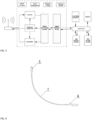
- Fig. 1 shows a schematic structural diagram of the implantable extraocular-muscle neuromuscular stimulator. It comprises an implantable pulse generator 1, an extracorporeal remote controller 2 and an electrode 3.
- the implantable pulse generator 1 is provided in a created subcutaneous pouch, the implantable pulse generator 1 is connected to an extraocular muscle 4 by the electrode 3, and the implantable pulse generator 1 is for generating an pulse stimulating signal.
- the extracorporeal remote controller 2 is connected to the implantable pulse generator 1 by a wireless signal, and is for setting the pulse stimulating signal of the implantable pulse generator 1.
- Fig. 2 is a module diagram of the implantable pulse generator of the present application. It comprises a receiver, a transmitter, a wireless energy transfer module, a power management module, a digital processing module and an electrical-stimulation driver, and the wireless energy transfer module transmits energy to the power management module, the receiver and the transmitter; and the implantable pulse generator 1 wirelessly receives the signal by using the receiver, and transmits an output to the digital processing module, the signal is transmitted to the electrical-stimulation driver via a current generating circuit and a waveform time-sequence circuit, and the electrical-stimulation driver is connected to the electrode 3.
- Fig. 3 is a module diagram of the extracorporeal remote controller of the present application.
- the extracorporeal remote controller 2 comprises a receiver, a transmitter, a frequency synthesizer, a digital processing module, a data analysis module, a data storage module, a display and a processor, the processor is connected to the data analysis module, the data storage module, a controlling program and the display, and the frequency synthesizer is connected to the digital processing module, the receiver and the transmitter;
- the extracorporeal remote controller 2 wirelessly receives the signal by using the receiver, and transmits the signal to the digital processing module, and the signal is transmitted to the processor via a digital interface circuit; and the processor transmits the signal to the data analysis module, and stores an analysis result to the data storage module, and the processor transmits the analysis result to the implantable pulse generator 1 via the digital interface circuit, the digital processing module and the transmitter.
- Fig. 4 is a schematic structural diagram of the electrode of the present application.
- the electrode 3 comprises a lead 7 and a contact-pin connector 5 and a contact 6 that are provided at two ends of the lead 7, wherein the contact-pin connector 5 is connected to a top cover of the implantable pulse generator 1, the lead 7 is provided in a created subcutaneous tunnel, and the contact 6 is connected to the extraocular muscle 4.
- the contact 6 on the electrode 3 is a plurality of contacts, and when the contacts 6 are connected to the extraocular muscle 4, at least one of the contacts 6 is connected to the extraocular muscle 4; and the contact 6 is connected to the extraocular muscle 4 by binding or insertion.
- the lead 7 is also referred to as an electrode main body, and the length of the lead is generally 20cm-60cm.
- the present application further provides a method for setting a parameter of the implantable extraocular-muscle neuromuscular stimulator, wherein the setting the pulse stimulating signal by using the extracorporeal remote controller 2 comprises: pulse amplitude setting, pulse width setting and pulse frequency setting.
- the pulse amplitude setting comprises a voltage mode and a current mode, wherein when a pulse amplitude is set in the voltage mode, a voltage range is 0-10V, and an adjustment step length is 1V or 0.1V; and when a pulse amplitude is set in the current mode, a current range is 0-25mA, and an adjustment step length is 1mA or 0.1mA.
- a range of the pulse width setting is 30-450ms, and an adjustment step length is 10ms; and a range of the pulse frequency setting is 1-500Hz.
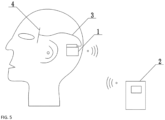
- Fig. 5 is a schematic diagram of the application in nystagmus of the present application.
- the application comprises providing the implantable pulse generator 1 in a subcutaneous pouch behind an ear, binding or inserting the electrode 3 on a peeled extraocular muscle, adjusting the direction of the electrode 3, to avoid the pulling and stress of the electrode 3, and fixing the electrode 3 on the sclera by stitching.
- the particular method for treating nystagmus by using the implantable extraocular-muscle neuromuscular stimulator is as follows: Firstly, when an eyeball of a patient will involuntarily inwardly rotate or outwardly rotate, one of the eye muscles contracts, the implantable pulse generator 1 senses the state of the contraction of that eye muscle by using the electrode 3, analyzes by using the digital processing module on the implantable pulse generator 1 to obtain the degree of the contraction of that eye muscle, and emits an eye-muscle stimulating signal by using the transmitter.
- the receiver on the extracorporeal remote controller 2 receives the eye-muscle stimulating signal wirelessly, the digital processing module processes the signal, and transmits to the processor, the processor analyzes the eye-muscle stimulating signal by using the data analysis module, and the transmitter on the extracorporeal remote controller 2 transmits an opposite stimulating signal.
- the implantable pulse generator 1 receives the opposite stimulating signal transmitted by the extracorporeal remote controller 2 by using the receiver, and the digital processing module analyzes the signal, and outputs the magnitude and the direction of the stimulating signal that is supplied to the eye muscle.
- the electrical-stimulation driver is started up, and the electrode 3 connected to the electrical-stimulation driver supplies the other eye muscle a stimulating signal of the same magnitude and an opposite direction, to cause the other eye muscle to move in the opposite direction and at the same time contract, whereby the forces of the two eye muscles are counteracted, and the eyeball maintains fixed, and does not have nystagmus. Accordingly, the method balances the stimulation on the eye muscles, counteracts the contraction of the eye muscles, and reaches the purpose of treating nystagmus.
- the implantable pulse generator 1 senses a contraction signal of the medial rectus, and simultaneously the implantable pulse generator 1 supplies the lateral rectus a stimulating signal of the same magnitude, to cause the lateral rectus to simultaneously contract, whereby the forces of the medial rectus and the lateral rectus are counteracted, and the eyeball maintains fixed, and does not have nystagmus.
- the implantable pulse generator 1 senses a contraction signal of the lateral rectus, and simultaneously the implantable pulse generator 1 supplies the medial rectus a stimulating signal of the same magnitude, to cause the medial rectus to simultaneously contract, whereby the forces of the lateral rectus and the medial rectus are counteracted, and the eyeball maintains fixed, and does not have nystagmus.
- the steps of the surgical method for treating congenital idiopathic nystagmus by using the implantable extraocular-muscle neuromuscular stimulator of the present application are as follows:
- the stimulator by detecting the contraction state of the extraocular muscle and the stimulating signal, supplies the extraocular muscle the corresponding stimulation and contraction, to balance the nerve stimulation and counteract the contraction, to enable the eyeballs to maintain fixed staring and not to have nystagmus, which effectively treats the disease of congenital idiopathic nystagmus.
- the implantable extraocular-muscle neuromuscular stimulator and its parameter setting method provided by the present application are applied to the treatment of congenital idiopathic nystagmus.
- the stimulator by detecting the contraction state of the extraocular muscle and the stimulating signal, supplies the extraocular muscle the corresponding stimulation and contraction, to balance the nerve stimulation and counteract the contraction, to enable the eyeballs to maintain fixed staring and not to have nystagmus.
Landscapes
- Health & Medical Sciences (AREA)
- Life Sciences & Earth Sciences (AREA)
- Public Health (AREA)
- Veterinary Medicine (AREA)
- Radiology & Medical Imaging (AREA)
- Biomedical Technology (AREA)
- Animal Behavior & Ethology (AREA)
- General Health & Medical Sciences (AREA)
- Engineering & Computer Science (AREA)
- Nuclear Medicine, Radiotherapy & Molecular Imaging (AREA)
- Neurology (AREA)
- Neurosurgery (AREA)
- Ophthalmology & Optometry (AREA)
- Biophysics (AREA)
- Physiology (AREA)
- Electrotherapy Devices (AREA)
Claims (8)
- Ein implantierbarer neuromuskulärer Stimulator für den extraokularen Muskel, umfassend: einen implantierbaren Impulsgeber (1), einen extrakorporale Programmierer (2) und Elektroden (3), dadurch gekennzeichnet, dassder implantierbare Impulsgeber (1) umfassed: einen Empfänger, einen Sender, ein Modul für die drahtlose Energieübertragung, ein Energieverwaltungsmodul, ein digitales Verarbeitungsmodul und einen Treiber für die elektrische Stimulation;der extrakorporale Programmierer (2) umfassend: Empfänger, Sender, Frequenzsynthesizer, digitale Verarbeitungsmodule, Datenanalysemodule, Datenspeichermodule, Monitor und Prozessoren;der Prozessor mit Datenanalysemodul, Datenspeichermodul, Steuerprogramm und Monitor verbunden ist;der Frequenzsynthesizer mit einem digitalen Verarbeitungsmodul, einem Empfänger und einem Sender verbunden ist;der extrakorporale Programmierer (2) Signale drahtlos über einen Empfänger empfängt und sie an ein digitales Verarbeitungsmodul sendet, wo die Signale über eine digitale Schnittstellenschaltung an einen Prozessor übertragen werden;der Prozessor das Signal an ein Datenanalysemodul überträgt und die Ergebnisse der Analyse in einem Datenspeichermodul speichert, der Prozessor die Ergebnisse der Analyse an den implantierbaren Impulsgeber (1) über eine digitale Schnittstellenschaltung, ein digitales Verarbeitungsmodul, einen Sender überträgt;das Modul für die drahtlose Energieübertragung Energie für das Energiemanagementmodul, den Empfänger und den Sender überträgt;der implantierbare Impulsgeber (1) in der geschaffenen subkutanen Tasche vorgesehen ist, und der implantierbare Impulsgeber (1) über Elektroden (3) mit den extraokularen Muskeln (4) verbunden ist, und der implantierbare Impulsgeber (1) zur Erzeugung eines Impulsstimulationssignals verwendet wird;die Elektrode (3) einen Draht (7) und jeweils an jedem Ende des Drahtes angeordnet Stiftverbinder (5) und Kontakt (6) umfasst, wobei der Stiftverbinder (5) mit dem implantierbaren Impulsgeber (1) verbunden ist, der Draht (7) in einem geschaffenen subkutanen Tunnel angeordnet ist und der Kontakt (6) mit dem extraokularen Muskel (4) verbunden ist;der extrakorporale Programmierer (2) drahtlos mit dem implantierbaren Impulsgeber (1) verbunden ist, um das Impulsstimulationssignal für den implantierbaren Impulsgeber (1) einzustellen;wobei der implantierbare Impulsgeber (1) verwendet wird, um eine Kontraktion eines extraokularen Muskels mittels einer Elektrode (3) zu erfassen, und das digitale Verarbeitungsmodul auf dem implantierbaren Impulsgeber (1) verwendet wird, um ein erstes extraokulares Muskelstimulationssignal basierend auf dem Grad der Kontraktion des extraokularen Muskels und über einen Sender zu übertragen; die Amplitude und die Richtung des ersten extraokularen Muskelstimulationssignals die gleichen wie die Amplitude und die Richtung des Kontraktionsgrades der extraokularen Muskeln sind; das Modul für die drahtlose Energieübertragung verwendet wird, um das erste extraokulare Muskelstimulationssignal an den extrakorporale Programmierer (2) auszugeben;der extrakorporale Programmierer (2) auch dazu dient, das erste extraokulare Muskelstimulationssignal zu analysieren und ein zweites extraokulares Muskelstimulationssignal mit derselben Amplitude und in entgegengesetzter Richtung zum ersten extraokularen Muskelstimulationssignal abzugeben;das digitale Verarbeitungsmodul des implantierbaren Impulsgebers (1) auch dazu dient, das zweite extraokulare Muskelstimulationssignal zu empfangen, das von dem extrakorporalen Programmierer ausgegeben wird, und das zweite extraokulare Muskelstimulationssignal an den anderen extraokularen Muskel auszugeben;das zweite Stimulierungssignal des extraokularen Muskels ein Stimulierungssignal ist, das den anderen extraokularen Muskel veranlasst, sich in der entgegengesetzten Richtung zusammenzuziehen, um das Auge fixiert zu halten.
- Implantierbarer neuromuskulärer Stimulator nach Anspruch 1, dadurch gekennzeichnet, dass die Elektrode (3) eine Vielzahl von Kontakten (6) aufweist, und wenn mindestens einer der Kontakte (6) eine Verbindung mit dem extraokularen Muskel (4) herstellt, sind mindestens ein Kontakt (6) mit dem extraokularen Muskel (4) verbunden; die Kontakte (6) mit dem extraokularen Muskel (4) so verbunden sind, dass sie gebündelt oder eingesetzt sind.
- Implantierbarer neuromuskulärer Stimulator nach Anspruch 1, dadurch gekennzeichnet, dass die besagten Einstellungen des Impulsstimulationssignals die Einstellung der Impulsamplitude, der Impulsbreite und der Impulsfrequenz umfasst.
- Implantierbarer neuromuskulärer Stimulator nach Anspruch 3, dadurch gekennzeichnet, dass die Einstellung der Impulsamplitude einen Spannungsmodus und einen Strommodus umfasst; beim Einstellen der Impulsamplitude im Spannungsmodus der Spannungsbereich 0-10 V beträgt, und der Einstellschritt 1 V oder 0,1 V ist; beim Einstellen der Impulsamplitude im Strommodus der Strombereich 0-25 mA beträgt, und der Einstellschritt 1 mA oder 0,1 mA ist.
- Implantierbarer neuromuskulärer Stimulator nach Anspruch 3, dadurch gekennzeichnet, dass der Einstellungsbereich der Impulsbreite 30-450ms beträgt mit einem Einstellschritt von 10ms.
- Implantierbarer neuromuskulärer Stimulator nach Anspruch 3, dadurch gekennzeichnet, dass der Einstellungsbereich der besagten Impulsfrequenz 1-500Hz beträgt.
- Verfahren zur Einstellung der Parameter eines implantierbaren neuromuskulären Stimulators für den extraokularen Muskel nach einem der Ansprüche 1-6, dadurch gekennzeichnet, dass die Einstellung von Pulsstimulationssignalen für den implantierbaren Impulsgeber (1) mittels eines extrakorporalen Programmierers (2), einschließlich: Einstellung der Impulsamplitude, der Impulsbreite und der Impulsfrequenz.
- Verfahren zur Einstellung der Parameter eines implantierbaren neuromuskulären Stimulators für den extraokularen Muskel nach Anspruch 7, dadurch gekennzeichnet, dass die Einstellung der Impulsamplitude einen Spannungsmodus und einen Strommodus umfasst; beim Einstellen der Impulsamplitude im Spannungsmodus der Spannungsbe-reich 0-10 V beträgt, und der Einstellschritt 1 V oder 0,1 V ist; beim Einstellen der Impulsamplitude im Strommodus der Strombereich 0-25 mA beträgt, und der Einstellschritt 1 mA oder 0,1 mA ist;der Einstellungsbereich der Impulsbreite 30-450ms beträgt mit einem Einstellschritt von 10ms;der Einstellungsbereich der besagten Impulsfrequenz 1-500Hz beträgt.
Applications Claiming Priority (2)
| Application Number | Priority Date | Filing Date | Title |
|---|---|---|---|
| CN201710092691.6A CN106861041B (zh) | 2017-02-21 | 2017-02-21 | 植入式眼外肌神经肌肉刺激器及其参数设置方法 |
| PCT/CN2017/081942 WO2018152954A1 (zh) | 2017-02-21 | 2017-04-26 | 植入式眼外肌神经肌肉刺激器及其参数设置方法 |
Publications (4)
| Publication Number | Publication Date |
|---|---|
| EP3586911A1 EP3586911A1 (de) | 2020-01-01 |
| EP3586911A4 EP3586911A4 (de) | 2021-01-13 |
| EP3586911C0 EP3586911C0 (de) | 2024-01-03 |
| EP3586911B1 true EP3586911B1 (de) | 2024-01-03 |
Family
ID=59166496
Family Applications (1)
| Application Number | Title | Priority Date | Filing Date |
|---|---|---|---|
| EP17897519.9A Active EP3586911B1 (de) | 2017-02-21 | 2017-04-26 | Implantierbarer neuromuskulärer stimulator für extraokularen muskel und parametereinstellverfahren dafür |
Country Status (5)
| Country | Link |
|---|---|
| US (1) | US20190374774A1 (de) |
| EP (1) | EP3586911B1 (de) |
| JP (1) | JP6748308B2 (de) |
| CN (1) | CN106861041B (de) |
| WO (1) | WO2018152954A1 (de) |
Families Citing this family (7)
| Publication number | Priority date | Publication date | Assignee | Title |
|---|---|---|---|---|
| CN111388189A (zh) * | 2020-03-27 | 2020-07-10 | 王乐今 | 用于降低眼压的引流装置 |
| CN111744107B (zh) * | 2020-07-29 | 2025-11-18 | 超目科技(北京)有限公司 | 刺激引线和包括其的刺激系统 |
| KR102557813B1 (ko) * | 2021-10-13 | 2023-07-19 | 고려대학교 산학협력단 | 마비사시에 적용하기 위한 신경 자극 장치 및 전류 조절 방법 |
| CN115040783B (zh) * | 2022-06-23 | 2024-11-12 | 上海交通大学医学院附属第九人民医院 | 眼皮除颤系统 |
| CN117839077A (zh) * | 2024-03-07 | 2024-04-09 | 超目科技(北京)有限公司 | 眼球震颤电刺激装置及其操作方法 |
| KR102801347B1 (ko) | 2024-08-26 | 2025-04-30 | 주식회사 에너지마이닝 | 전자약을 위한 다층으로 구성된 마찰전기 발전소자 |
| KR102772920B1 (ko) * | 2024-08-09 | 2025-02-26 | (주)에너지마이닝 | 신경 자극 전자약을 포함하는 시스템 및 이의 동작 방법 |
Family Cites Families (8)
| Publication number | Priority date | Publication date | Assignee | Title |
|---|---|---|---|---|
| US20090312817A1 (en) * | 2003-11-26 | 2009-12-17 | Wicab, Inc. | Systems and methods for altering brain and body functions and for treating conditions and diseases of the same |
| CN100469401C (zh) * | 2005-10-28 | 2009-03-18 | 清华大学 | 一种植入式神经电脉冲刺激系统 |
| US20090005756A1 (en) * | 2007-06-29 | 2009-01-01 | Boston Scientific Neuromodulation Corporation | Methods and Systems of Treating Strabismus |
| US8352026B2 (en) * | 2007-10-03 | 2013-01-08 | Ethicon, Inc. | Implantable pulse generators and methods for selective nerve stimulation |
| US9242094B2 (en) * | 2010-01-12 | 2016-01-26 | The Johns Hopkins University | Implantable vestibular prosthesis |
| US9302103B1 (en) * | 2010-09-10 | 2016-04-05 | Cornell University | Neurological prosthesis |
| AU2012239966B2 (en) * | 2011-04-07 | 2015-11-26 | Oculeve, Inc. | Stimulation devices and methods |
| US20150224318A1 (en) * | 2014-02-12 | 2015-08-13 | Pacesetter, Inc. | Methods and systems for neurostimulation using paddle lead |
-
2017
- 2017-02-21 CN CN201710092691.6A patent/CN106861041B/zh active Active
- 2017-04-26 JP JP2019546319A patent/JP6748308B2/ja active Active
- 2017-04-26 WO PCT/CN2017/081942 patent/WO2018152954A1/zh not_active Ceased
- 2017-04-26 EP EP17897519.9A patent/EP3586911B1/de active Active
-
2019
- 2019-08-21 US US16/546,309 patent/US20190374774A1/en active Pending
Also Published As
| Publication number | Publication date |
|---|---|
| CN106861041B (zh) | 2018-08-31 |
| WO2018152954A1 (zh) | 2018-08-30 |
| JP6748308B2 (ja) | 2020-08-26 |
| EP3586911A1 (de) | 2020-01-01 |
| EP3586911A4 (de) | 2021-01-13 |
| US20190374774A1 (en) | 2019-12-12 |
| CN106861041A (zh) | 2017-06-20 |
| EP3586911C0 (de) | 2024-01-03 |
| JP2020508176A (ja) | 2020-03-19 |
Similar Documents
| Publication | Publication Date | Title |
|---|---|---|
| US20190374774A1 (en) | Implantable extraocular muscle neuromuscular stimulator and parameter setting method therefor | |
| US11103706B2 (en) | Systems and methods for enhancing function of spine stabilization muscles associated with a spine surgery intervention | |
| CN103313754B (zh) | 用于治疗干眼的系统和方法 | |
| US12121728B2 (en) | Systems and methods for enhancing function of spine stabilization muscles associated with a spine surgery intervention | |
| US10105263B2 (en) | Visual prosthesis | |
| CN111356402B (zh) | 用于可植入神经刺激器的可定制滴定 | |
| US12285612B1 (en) | Systems and methods for restoring muscle function to the lumbar spine | |
| JP2008522725A (ja) | 迷走神経耳介枝用刺激装置 | |
| US11331488B2 (en) | Systems and methods for enhancing function of spine stabilization muscles associated with a spine surgery intervention | |
| US7974699B2 (en) | Vision regeneration assisting device | |
| US12263343B2 (en) | Neurostimulator with titration assist | |
| US20120143080A1 (en) | Method and Apparatus for Fitting a Visual Prosthesis Using Electrically Evoked Electroretinograms | |
| JP4873897B2 (ja) | 視覚再生補助装置 | |
| CN207356362U (zh) | 植入式眼外肌神经肌肉刺激器 | |
| EP2056929B1 (de) | System zur verringerung von behandlungsschmerzen | |
| CN213852762U (zh) | 刺激引线和包括其的刺激系统 | |
| CN111744107A (zh) | 刺激引线和包括其的刺激系统 | |
| JP2025131288A (ja) | 生体刺激装置 | |
| BR112013012122A2 (pt) | sistemas e métodos para tratamento de olho seco |
Legal Events
| Date | Code | Title | Description |
|---|---|---|---|
| STAA | Information on the status of an ep patent application or granted ep patent |
Free format text: STATUS: THE INTERNATIONAL PUBLICATION HAS BEEN MADE |
|
| PUAI | Public reference made under article 153(3) epc to a published international application that has entered the european phase |
Free format text: ORIGINAL CODE: 0009012 |
|
| STAA | Information on the status of an ep patent application or granted ep patent |
Free format text: STATUS: REQUEST FOR EXAMINATION WAS MADE |
|
| 17P | Request for examination filed |
Effective date: 20190917 |
|
| AK | Designated contracting states |
Kind code of ref document: A1 Designated state(s): AL AT BE BG CH CY CZ DE DK EE ES FI FR GB GR HR HU IE IS IT LI LT LU LV MC MK MT NL NO PL PT RO RS SE SI SK SM TR |
|
| AX | Request for extension of the european patent |
Extension state: BA ME |
|
| DAV | Request for validation of the european patent (deleted) | ||
| DAX | Request for extension of the european patent (deleted) | ||
| A4 | Supplementary search report drawn up and despatched |
Effective date: 20201211 |
|
| RIC1 | Information provided on ipc code assigned before grant |
Ipc: A61B 3/08 20060101ALI20201207BHEP Ipc: A61N 1/36 20060101AFI20201207BHEP Ipc: A61N 1/372 20060101ALI20201207BHEP |
|
| STAA | Information on the status of an ep patent application or granted ep patent |
Free format text: STATUS: EXAMINATION IS IN PROGRESS |
|
| 17Q | First examination report despatched |
Effective date: 20220502 |
|
| GRAP | Despatch of communication of intention to grant a patent |
Free format text: ORIGINAL CODE: EPIDOSNIGR1 |
|
| STAA | Information on the status of an ep patent application or granted ep patent |
Free format text: STATUS: GRANT OF PATENT IS INTENDED |
|
| RIC1 | Information provided on ipc code assigned before grant |
Ipc: A61N 1/372 20060101ALI20230714BHEP Ipc: A61B 3/08 20060101ALI20230714BHEP Ipc: A61N 1/36 20060101AFI20230714BHEP |
|
| INTG | Intention to grant announced |
Effective date: 20230801 |
|
| GRAS | Grant fee paid |
Free format text: ORIGINAL CODE: EPIDOSNIGR3 |
|
| GRAA | (expected) grant |
Free format text: ORIGINAL CODE: 0009210 |
|
| STAA | Information on the status of an ep patent application or granted ep patent |
Free format text: STATUS: THE PATENT HAS BEEN GRANTED |
|
| RAP1 | Party data changed (applicant data changed or rights of an application transferred) |
Owner name: CHAOMU TECHNOLOGY (BEIJING) CO., LTD. |
|
| AK | Designated contracting states |
Kind code of ref document: B1 Designated state(s): AL AT BE BG CH CY CZ DE DK EE ES FI FR GB GR HR HU IE IS IT LI LT LU LV MC MK MT NL NO PL PT RO RS SE SI SK SM TR |
|
| REG | Reference to a national code |
Ref country code: GB Ref legal event code: FG4D |
|
| REG | Reference to a national code |
Ref country code: CH Ref legal event code: EP |
|
| REG | Reference to a national code |
Ref country code: DE Ref legal event code: R096 Ref document number: 602017078223 Country of ref document: DE |
|
| REG | Reference to a national code |
Ref country code: IE Ref legal event code: FG4D |
|
| U01 | Request for unitary effect filed |
Effective date: 20240129 |
|
| U07 | Unitary effect registered |
Designated state(s): AT BE BG DE DK EE FI FR IT LT LU LV MT NL PT SE SI Effective date: 20240202 |
|
| U20 | Renewal fee for the european patent with unitary effect paid |
Year of fee payment: 8 Effective date: 20240305 |
|
| PG25 | Lapsed in a contracting state [announced via postgrant information from national office to epo] |
Ref country code: ES Free format text: LAPSE BECAUSE OF FAILURE TO SUBMIT A TRANSLATION OF THE DESCRIPTION OR TO PAY THE FEE WITHIN THE PRESCRIBED TIME-LIMIT Effective date: 20240103 |
|
| PG25 | Lapsed in a contracting state [announced via postgrant information from national office to epo] |
Ref country code: ES Free format text: LAPSE BECAUSE OF FAILURE TO SUBMIT A TRANSLATION OF THE DESCRIPTION OR TO PAY THE FEE WITHIN THE PRESCRIBED TIME-LIMIT Effective date: 20240103 |
|
| PG25 | Lapsed in a contracting state [announced via postgrant information from national office to epo] |
Ref country code: IS Free format text: LAPSE BECAUSE OF FAILURE TO SUBMIT A TRANSLATION OF THE DESCRIPTION OR TO PAY THE FEE WITHIN THE PRESCRIBED TIME-LIMIT Effective date: 20240503 |
|
| PG25 | Lapsed in a contracting state [announced via postgrant information from national office to epo] |
Ref country code: GR Free format text: LAPSE BECAUSE OF FAILURE TO SUBMIT A TRANSLATION OF THE DESCRIPTION OR TO PAY THE FEE WITHIN THE PRESCRIBED TIME-LIMIT Effective date: 20240404 |
|
| PG25 | Lapsed in a contracting state [announced via postgrant information from national office to epo] |
Ref country code: RS Free format text: LAPSE BECAUSE OF FAILURE TO SUBMIT A TRANSLATION OF THE DESCRIPTION OR TO PAY THE FEE WITHIN THE PRESCRIBED TIME-LIMIT Effective date: 20240403 Ref country code: HR Free format text: LAPSE BECAUSE OF FAILURE TO SUBMIT A TRANSLATION OF THE DESCRIPTION OR TO PAY THE FEE WITHIN THE PRESCRIBED TIME-LIMIT Effective date: 20240103 |
|
| PG25 | Lapsed in a contracting state [announced via postgrant information from national office to epo] |
Ref country code: CZ Free format text: LAPSE BECAUSE OF FAILURE TO SUBMIT A TRANSLATION OF THE DESCRIPTION OR TO PAY THE FEE WITHIN THE PRESCRIBED TIME-LIMIT Effective date: 20240103 |
|
| PG25 | Lapsed in a contracting state [announced via postgrant information from national office to epo] |
Ref country code: RS Free format text: LAPSE BECAUSE OF FAILURE TO SUBMIT A TRANSLATION OF THE DESCRIPTION OR TO PAY THE FEE WITHIN THE PRESCRIBED TIME-LIMIT Effective date: 20240403 Ref country code: NO Free format text: LAPSE BECAUSE OF FAILURE TO SUBMIT A TRANSLATION OF THE DESCRIPTION OR TO PAY THE FEE WITHIN THE PRESCRIBED TIME-LIMIT Effective date: 20240403 Ref country code: IS Free format text: LAPSE BECAUSE OF FAILURE TO SUBMIT A TRANSLATION OF THE DESCRIPTION OR TO PAY THE FEE WITHIN THE PRESCRIBED TIME-LIMIT Effective date: 20240503 Ref country code: HR Free format text: LAPSE BECAUSE OF FAILURE TO SUBMIT A TRANSLATION OF THE DESCRIPTION OR TO PAY THE FEE WITHIN THE PRESCRIBED TIME-LIMIT Effective date: 20240103 Ref country code: GR Free format text: LAPSE BECAUSE OF FAILURE TO SUBMIT A TRANSLATION OF THE DESCRIPTION OR TO PAY THE FEE WITHIN THE PRESCRIBED TIME-LIMIT Effective date: 20240404 Ref country code: CZ Free format text: LAPSE BECAUSE OF FAILURE TO SUBMIT A TRANSLATION OF THE DESCRIPTION OR TO PAY THE FEE WITHIN THE PRESCRIBED TIME-LIMIT Effective date: 20240103 |
|
| PG25 | Lapsed in a contracting state [announced via postgrant information from national office to epo] |
Ref country code: PL Free format text: LAPSE BECAUSE OF FAILURE TO SUBMIT A TRANSLATION OF THE DESCRIPTION OR TO PAY THE FEE WITHIN THE PRESCRIBED TIME-LIMIT Effective date: 20240103 |
|
| PG25 | Lapsed in a contracting state [announced via postgrant information from national office to epo] |
Ref country code: PL Free format text: LAPSE BECAUSE OF FAILURE TO SUBMIT A TRANSLATION OF THE DESCRIPTION OR TO PAY THE FEE WITHIN THE PRESCRIBED TIME-LIMIT Effective date: 20240103 |
|
| REG | Reference to a national code |
Ref country code: DE Ref legal event code: R097 Ref document number: 602017078223 Country of ref document: DE |
|
| PG25 | Lapsed in a contracting state [announced via postgrant information from national office to epo] |
Ref country code: SM Free format text: LAPSE BECAUSE OF FAILURE TO SUBMIT A TRANSLATION OF THE DESCRIPTION OR TO PAY THE FEE WITHIN THE PRESCRIBED TIME-LIMIT Effective date: 20240103 |
|
| PG25 | Lapsed in a contracting state [announced via postgrant information from national office to epo] |
Ref country code: SK Free format text: LAPSE BECAUSE OF FAILURE TO SUBMIT A TRANSLATION OF THE DESCRIPTION OR TO PAY THE FEE WITHIN THE PRESCRIBED TIME-LIMIT Effective date: 20240103 |
|
| PG25 | Lapsed in a contracting state [announced via postgrant information from national office to epo] |
Ref country code: SM Free format text: LAPSE BECAUSE OF FAILURE TO SUBMIT A TRANSLATION OF THE DESCRIPTION OR TO PAY THE FEE WITHIN THE PRESCRIBED TIME-LIMIT Effective date: 20240103 Ref country code: SK Free format text: LAPSE BECAUSE OF FAILURE TO SUBMIT A TRANSLATION OF THE DESCRIPTION OR TO PAY THE FEE WITHIN THE PRESCRIBED TIME-LIMIT Effective date: 20240103 Ref country code: RO Free format text: LAPSE BECAUSE OF FAILURE TO SUBMIT A TRANSLATION OF THE DESCRIPTION OR TO PAY THE FEE WITHIN THE PRESCRIBED TIME-LIMIT Effective date: 20240103 |
|
| REG | Reference to a national code |
Ref country code: GB Ref legal event code: 732E Free format text: REGISTERED BETWEEN 20241010 AND 20241016 |
|
| PLBE | No opposition filed within time limit |
Free format text: ORIGINAL CODE: 0009261 |
|
| STAA | Information on the status of an ep patent application or granted ep patent |
Free format text: STATUS: NO OPPOSITION FILED WITHIN TIME LIMIT |
|
| PG25 | Lapsed in a contracting state [announced via postgrant information from national office to epo] |
Ref country code: MC Free format text: LAPSE BECAUSE OF FAILURE TO SUBMIT A TRANSLATION OF THE DESCRIPTION OR TO PAY THE FEE WITHIN THE PRESCRIBED TIME-LIMIT Effective date: 20240103 |
|
| U1N | Appointed representative for the unitary patent procedure changed after the registration of the unitary effect |
Representative=s name: CHUNG, HOI KAN; GB |
|
| U1K | Transfer of rights of the unitary patent after the registration of the unitary effect |
Owner name: WANG, LEJIN; CN |
|
| PG25 | Lapsed in a contracting state [announced via postgrant information from national office to epo] |
Ref country code: MC Free format text: LAPSE BECAUSE OF FAILURE TO SUBMIT A TRANSLATION OF THE DESCRIPTION OR TO PAY THE FEE WITHIN THE PRESCRIBED TIME-LIMIT Effective date: 20240103 |
|
| REG | Reference to a national code |
Ref country code: CH Ref legal event code: PL |
|
| 26N | No opposition filed |
Effective date: 20241007 |
|
| PG25 | Lapsed in a contracting state [announced via postgrant information from national office to epo] |
Ref country code: CH Free format text: LAPSE BECAUSE OF NON-PAYMENT OF DUE FEES Effective date: 20240430 |
|
| U1K | Transfer of rights of the unitary patent after the registration of the unitary effect |
Owner name: PEKING UNIVERSITY PEOPLE'S HOSPITAL; CN |
|
| REG | Reference to a national code |
Ref country code: GB Ref legal event code: 732E Free format text: REGISTERED BETWEEN 20250206 AND 20250212 |
|
| U20 | Renewal fee for the european patent with unitary effect paid |
Year of fee payment: 9 Effective date: 20250325 |
|
| PGFP | Annual fee paid to national office [announced via postgrant information from national office to epo] |
Ref country code: GB Payment date: 20250417 Year of fee payment: 9 |
|
| PG25 | Lapsed in a contracting state [announced via postgrant information from national office to epo] |
Ref country code: CY Free format text: LAPSE BECAUSE OF FAILURE TO SUBMIT A TRANSLATION OF THE DESCRIPTION OR TO PAY THE FEE WITHIN THE PRESCRIBED TIME-LIMIT; INVALID AB INITIO Effective date: 20170426 |
|
| PG25 | Lapsed in a contracting state [announced via postgrant information from national office to epo] |
Ref country code: HU Free format text: LAPSE BECAUSE OF FAILURE TO SUBMIT A TRANSLATION OF THE DESCRIPTION OR TO PAY THE FEE WITHIN THE PRESCRIBED TIME-LIMIT; INVALID AB INITIO Effective date: 20170426 |
|
| REG | Reference to a national code |
Ref country code: GB Ref legal event code: 732E Free format text: REGISTERED BETWEEN 20250807 AND 20250813 |
|
| U1K | Transfer of rights of the unitary patent after the registration of the unitary effect |
Owner name: CHAOMU TECHNOLOGY (BEIJING) CO., LTD.; CN |
|
| PGFP | Annual fee paid to national office [announced via postgrant information from national office to epo] |
Ref country code: IE Payment date: 20260323 Year of fee payment: 10 |
|
| U20 | Renewal fee for the european patent with unitary effect paid |
Year of fee payment: 10 Effective date: 20260326 |