EP3584050B1 - Baumaterial und verfahren zur herstellung des baumaterials - Google Patents
Baumaterial und verfahren zur herstellung des baumaterials Download PDFInfo
- Publication number
- EP3584050B1 EP3584050B1 EP18860337.7A EP18860337A EP3584050B1 EP 3584050 B1 EP3584050 B1 EP 3584050B1 EP 18860337 A EP18860337 A EP 18860337A EP 3584050 B1 EP3584050 B1 EP 3584050B1
- Authority
- EP
- European Patent Office
- Prior art keywords
- sieve sheet
- powder raw
- edge part
- template
- plant
- Prior art date
- Legal status (The legal status is an assumption and is not a legal conclusion. Google has not performed a legal analysis and makes no representation as to the accuracy of the status listed.)
- Active
Links
Images




Classifications
-
- B—PERFORMING OPERATIONS; TRANSPORTING
- B28—WORKING CEMENT, CLAY, OR STONE
- B28B—SHAPING CLAY OR OTHER CERAMIC COMPOSITIONS; SHAPING SLAG; SHAPING MIXTURES CONTAINING CEMENTITIOUS MATERIAL, e.g. PLASTER
- B28B1/00—Producing shaped prefabricated articles from the material
- B28B1/52—Producing shaped prefabricated articles from the material specially adapted for producing articles from mixtures containing fibres, e.g. asbestos cement
-
- E—FIXED CONSTRUCTIONS
- E04—BUILDING
- E04F—FINISHING WORK ON BUILDINGS, e.g. STAIRS, FLOORS
- E04F13/00—Coverings or linings, e.g. for walls or ceilings
- E04F13/07—Coverings or linings, e.g. for walls or ceilings composed of covering or lining elements; Sub-structures therefor; Fastening means therefor
- E04F13/08—Coverings or linings, e.g. for walls or ceilings composed of covering or lining elements; Sub-structures therefor; Fastening means therefor composed of a plurality of similar covering or lining elements
- E04F13/18—Coverings or linings, e.g. for walls or ceilings composed of covering or lining elements; Sub-structures therefor; Fastening means therefor composed of a plurality of similar covering or lining elements of organic plastics with or without reinforcements or filling materials or with an outer layer of organic plastics with or without reinforcements or filling materials; plastic tiles
-
- B—PERFORMING OPERATIONS; TRANSPORTING
- B28—WORKING CEMENT, CLAY, OR STONE
- B28B—SHAPING CLAY OR OTHER CERAMIC COMPOSITIONS; SHAPING SLAG; SHAPING MIXTURES CONTAINING CEMENTITIOUS MATERIAL, e.g. PLASTER
- B28B1/00—Producing shaped prefabricated articles from the material
- B28B1/52—Producing shaped prefabricated articles from the material specially adapted for producing articles from mixtures containing fibres, e.g. asbestos cement
- B28B1/525—Producing shaped prefabricated articles from the material specially adapted for producing articles from mixtures containing fibres, e.g. asbestos cement containing organic fibres, e.g. wood fibres
-
- B—PERFORMING OPERATIONS; TRANSPORTING
- B27—WORKING OR PRESERVING WOOD OR SIMILAR MATERIAL; NAILING OR STAPLING MACHINES IN GENERAL
- B27N—MANUFACTURE BY DRY PROCESSES OF ARTICLES, WITH OR WITHOUT ORGANIC BINDING AGENTS, MADE FROM PARTICLES OR FIBRES CONSISTING OF WOOD OR OTHER LIGNOCELLULOSIC OR LIKE ORGANIC MATERIAL
- B27N3/00—Manufacture of substantially flat articles, e.g. boards, from particles or fibres
- B27N3/002—Manufacture of substantially flat articles, e.g. boards, from particles or fibres characterised by the type of binder
-
- B—PERFORMING OPERATIONS; TRANSPORTING
- B27—WORKING OR PRESERVING WOOD OR SIMILAR MATERIAL; NAILING OR STAPLING MACHINES IN GENERAL
- B27N—MANUFACTURE BY DRY PROCESSES OF ARTICLES, WITH OR WITHOUT ORGANIC BINDING AGENTS, MADE FROM PARTICLES OR FIBRES CONSISTING OF WOOD OR OTHER LIGNOCELLULOSIC OR LIKE ORGANIC MATERIAL
- B27N3/00—Manufacture of substantially flat articles, e.g. boards, from particles or fibres
- B27N3/08—Moulding or pressing
- B27N3/10—Moulding of mats
-
- B—PERFORMING OPERATIONS; TRANSPORTING
- B27—WORKING OR PRESERVING WOOD OR SIMILAR MATERIAL; NAILING OR STAPLING MACHINES IN GENERAL
- B27N—MANUFACTURE BY DRY PROCESSES OF ARTICLES, WITH OR WITHOUT ORGANIC BINDING AGENTS, MADE FROM PARTICLES OR FIBRES CONSISTING OF WOOD OR OTHER LIGNOCELLULOSIC OR LIKE ORGANIC MATERIAL
- B27N3/00—Manufacture of substantially flat articles, e.g. boards, from particles or fibres
- B27N3/08—Moulding or pressing
- B27N3/10—Moulding of mats
- B27N3/12—Moulding of mats from fibres
-
- B—PERFORMING OPERATIONS; TRANSPORTING
- B27—WORKING OR PRESERVING WOOD OR SIMILAR MATERIAL; NAILING OR STAPLING MACHINES IN GENERAL
- B27N—MANUFACTURE BY DRY PROCESSES OF ARTICLES, WITH OR WITHOUT ORGANIC BINDING AGENTS, MADE FROM PARTICLES OR FIBRES CONSISTING OF WOOD OR OTHER LIGNOCELLULOSIC OR LIKE ORGANIC MATERIAL
- B27N3/00—Manufacture of substantially flat articles, e.g. boards, from particles or fibres
- B27N3/08—Moulding or pressing
- B27N3/10—Moulding of mats
- B27N3/14—Distributing or orienting the particles or fibres
-
- B—PERFORMING OPERATIONS; TRANSPORTING
- B27—WORKING OR PRESERVING WOOD OR SIMILAR MATERIAL; NAILING OR STAPLING MACHINES IN GENERAL
- B27N—MANUFACTURE BY DRY PROCESSES OF ARTICLES, WITH OR WITHOUT ORGANIC BINDING AGENTS, MADE FROM PARTICLES OR FIBRES CONSISTING OF WOOD OR OTHER LIGNOCELLULOSIC OR LIKE ORGANIC MATERIAL
- B27N5/00—Manufacture of non-flat articles
-
- B—PERFORMING OPERATIONS; TRANSPORTING
- B28—WORKING CEMENT, CLAY, OR STONE
- B28B—SHAPING CLAY OR OTHER CERAMIC COMPOSITIONS; SHAPING SLAG; SHAPING MIXTURES CONTAINING CEMENTITIOUS MATERIAL, e.g. PLASTER
- B28B1/00—Producing shaped prefabricated articles from the material
- B28B1/001—Rapid manufacturing of 3D objects by additive depositing, agglomerating or laminating of material
-
- B—PERFORMING OPERATIONS; TRANSPORTING
- B28—WORKING CEMENT, CLAY, OR STONE
- B28B—SHAPING CLAY OR OTHER CERAMIC COMPOSITIONS; SHAPING SLAG; SHAPING MIXTURES CONTAINING CEMENTITIOUS MATERIAL, e.g. PLASTER
- B28B1/00—Producing shaped prefabricated articles from the material
- B28B1/004—Devices for shaping artificial aggregates from ceramic mixtures or from mixtures containing hydraulic binder
-
- B—PERFORMING OPERATIONS; TRANSPORTING
- B28—WORKING CEMENT, CLAY, OR STONE
- B28B—SHAPING CLAY OR OTHER CERAMIC COMPOSITIONS; SHAPING SLAG; SHAPING MIXTURES CONTAINING CEMENTITIOUS MATERIAL, e.g. PLASTER
- B28B1/00—Producing shaped prefabricated articles from the material
- B28B1/52—Producing shaped prefabricated articles from the material specially adapted for producing articles from mixtures containing fibres, e.g. asbestos cement
- B28B1/526—Producing shaped prefabricated articles from the material specially adapted for producing articles from mixtures containing fibres, e.g. asbestos cement by delivering the materials on a conveyor of the endless-belt type
-
- B—PERFORMING OPERATIONS; TRANSPORTING
- B28—WORKING CEMENT, CLAY, OR STONE
- B28B—SHAPING CLAY OR OTHER CERAMIC COMPOSITIONS; SHAPING SLAG; SHAPING MIXTURES CONTAINING CEMENTITIOUS MATERIAL, e.g. PLASTER
- B28B13/00—Feeding the unshaped material to moulds or apparatus for producing shaped articles; Discharging shaped articles from such moulds or apparatus
- B28B13/02—Feeding the unshaped material to moulds or apparatus for producing shaped articles
- B28B13/029—Feeding the unshaped material to moulds or apparatus for producing shaped articles through a sieve or grid, e.g. to ensure evenly filling of cavities
-
- B—PERFORMING OPERATIONS; TRANSPORTING
- B28—WORKING CEMENT, CLAY, OR STONE
- B28B—SHAPING CLAY OR OTHER CERAMIC COMPOSITIONS; SHAPING SLAG; SHAPING MIXTURES CONTAINING CEMENTITIOUS MATERIAL, e.g. PLASTER
- B28B5/00—Producing shaped articles from the material in moulds or on moulding surfaces, carried or formed by, in or on conveyors irrespective of the manner of shaping
- B28B5/02—Producing shaped articles from the material in moulds or on moulding surfaces, carried or formed by, in or on conveyors irrespective of the manner of shaping on conveyors of the endless-belt or chain type
- B28B5/026—Producing shaped articles from the material in moulds or on moulding surfaces, carried or formed by, in or on conveyors irrespective of the manner of shaping on conveyors of the endless-belt or chain type the shaped articles being of indefinite length
- B28B5/027—Producing shaped articles from the material in moulds or on moulding surfaces, carried or formed by, in or on conveyors irrespective of the manner of shaping on conveyors of the endless-belt or chain type the shaped articles being of indefinite length the moulding surfaces being of the indefinite length type, e.g. belts, and being continuously fed
-
- B—PERFORMING OPERATIONS; TRANSPORTING
- B32—LAYERED PRODUCTS
- B32B—LAYERED PRODUCTS, i.e. PRODUCTS BUILT-UP OF STRATA OF FLAT OR NON-FLAT, e.g. CELLULAR OR HONEYCOMB, FORM
- B32B13/00—Layered products comprising a a layer of water-setting substance, e.g. concrete, plaster, asbestos cement, or like builders' material
- B32B13/02—Layered products comprising a a layer of water-setting substance, e.g. concrete, plaster, asbestos cement, or like builders' material with fibres or particles being present as additives in the layer
-
- B—PERFORMING OPERATIONS; TRANSPORTING
- B32—LAYERED PRODUCTS
- B32B—LAYERED PRODUCTS, i.e. PRODUCTS BUILT-UP OF STRATA OF FLAT OR NON-FLAT, e.g. CELLULAR OR HONEYCOMB, FORM
- B32B13/00—Layered products comprising a a layer of water-setting substance, e.g. concrete, plaster, asbestos cement, or like builders' material
- B32B13/04—Layered products comprising a a layer of water-setting substance, e.g. concrete, plaster, asbestos cement, or like builders' material comprising such water setting substance as the main or only constituent of a layer, which is next to another layer of the same or of a different material
-
- B—PERFORMING OPERATIONS; TRANSPORTING
- B32—LAYERED PRODUCTS
- B32B—LAYERED PRODUCTS, i.e. PRODUCTS BUILT-UP OF STRATA OF FLAT OR NON-FLAT, e.g. CELLULAR OR HONEYCOMB, FORM
- B32B3/00—Layered products comprising a layer with external or internal discontinuities or unevennesses, or a layer of non-planar shape; Layered products comprising a layer having particular features of form
- B32B3/26—Layered products comprising a layer with external or internal discontinuities or unevennesses, or a layer of non-planar shape; Layered products comprising a layer having particular features of form characterised by a particular shape of the outline of the cross-section of a continuous layer; characterised by a layer with cavities or internal voids ; characterised by an apertured layer
- B32B3/30—Layered products comprising a layer with external or internal discontinuities or unevennesses, or a layer of non-planar shape; Layered products comprising a layer having particular features of form characterised by a particular shape of the outline of the cross-section of a continuous layer; characterised by a layer with cavities or internal voids ; characterised by an apertured layer characterised by a layer formed with recesses or projections, e.g. hollows, grooves, protuberances, ribs
-
- C—CHEMISTRY; METALLURGY
- C04—CEMENTS; CONCRETE; ARTIFICIAL STONE; CERAMICS; REFRACTORIES
- C04B—LIME, MAGNESIA; SLAG; CEMENTS; COMPOSITIONS THEREOF, e.g. MORTARS, CONCRETE OR LIKE BUILDING MATERIALS; ARTIFICIAL STONE; CERAMICS; REFRACTORIES; TREATMENT OF NATURAL STONE
- C04B14/00—Use of inorganic materials as fillers, e.g. pigments, for mortars, concrete or artificial stone; Treatment of inorganic materials specially adapted to enhance their filling properties in mortars, concrete or artificial stone
- C04B14/02—Granular materials, e.g. microballoons
- C04B14/04—Silica-rich materials; Silicates
- C04B14/14—Minerals of vulcanic origin
- C04B14/18—Perlite
-
- C—CHEMISTRY; METALLURGY
- C04—CEMENTS; CONCRETE; ARTIFICIAL STONE; CERAMICS; REFRACTORIES
- C04B—LIME, MAGNESIA; SLAG; CEMENTS; COMPOSITIONS THEREOF, e.g. MORTARS, CONCRETE OR LIKE BUILDING MATERIALS; ARTIFICIAL STONE; CERAMICS; REFRACTORIES; TREATMENT OF NATURAL STONE
- C04B14/00—Use of inorganic materials as fillers, e.g. pigments, for mortars, concrete or artificial stone; Treatment of inorganic materials specially adapted to enhance their filling properties in mortars, concrete or artificial stone
- C04B14/02—Granular materials, e.g. microballoons
- C04B14/04—Silica-rich materials; Silicates
- C04B14/20—Mica; Vermiculite
-
- C—CHEMISTRY; METALLURGY
- C04—CEMENTS; CONCRETE; ARTIFICIAL STONE; CERAMICS; REFRACTORIES
- C04B—LIME, MAGNESIA; SLAG; CEMENTS; COMPOSITIONS THEREOF, e.g. MORTARS, CONCRETE OR LIKE BUILDING MATERIALS; ARTIFICIAL STONE; CERAMICS; REFRACTORIES; TREATMENT OF NATURAL STONE
- C04B14/00—Use of inorganic materials as fillers, e.g. pigments, for mortars, concrete or artificial stone; Treatment of inorganic materials specially adapted to enhance their filling properties in mortars, concrete or artificial stone
- C04B14/38—Fibrous materials; Whiskers
-
- C—CHEMISTRY; METALLURGY
- C04—CEMENTS; CONCRETE; ARTIFICIAL STONE; CERAMICS; REFRACTORIES
- C04B—LIME, MAGNESIA; SLAG; CEMENTS; COMPOSITIONS THEREOF, e.g. MORTARS, CONCRETE OR LIKE BUILDING MATERIALS; ARTIFICIAL STONE; CERAMICS; REFRACTORIES; TREATMENT OF NATURAL STONE
- C04B16/00—Use of organic materials as fillers, e.g. pigments, for mortars, concrete or artificial stone; Treatment of organic materials specially adapted to enhance their filling properties in mortars, concrete or artificial stone
- C04B16/04—Macromolecular compounds
- C04B16/08—Macromolecular compounds porous, e.g. expanded polystyrene beads or microballoons
-
- C—CHEMISTRY; METALLURGY
- C04—CEMENTS; CONCRETE; ARTIFICIAL STONE; CERAMICS; REFRACTORIES
- C04B—LIME, MAGNESIA; SLAG; CEMENTS; COMPOSITIONS THEREOF, e.g. MORTARS, CONCRETE OR LIKE BUILDING MATERIALS; ARTIFICIAL STONE; CERAMICS; REFRACTORIES; TREATMENT OF NATURAL STONE
- C04B18/00—Use of agglomerated or waste materials or refuse as fillers for mortars, concrete or artificial stone; Treatment of agglomerated or waste materials or refuse, specially adapted to enhance their filling properties in mortars, concrete or artificial stone
- C04B18/04—Waste materials; Refuse
- C04B18/06—Combustion residues, e.g. purification products of smoke, fumes or exhaust gases
- C04B18/061—Ashes from fluidised bed furnaces
-
- C—CHEMISTRY; METALLURGY
- C04—CEMENTS; CONCRETE; ARTIFICIAL STONE; CERAMICS; REFRACTORIES
- C04B—LIME, MAGNESIA; SLAG; CEMENTS; COMPOSITIONS THEREOF, e.g. MORTARS, CONCRETE OR LIKE BUILDING MATERIALS; ARTIFICIAL STONE; CERAMICS; REFRACTORIES; TREATMENT OF NATURAL STONE
- C04B18/00—Use of agglomerated or waste materials or refuse as fillers for mortars, concrete or artificial stone; Treatment of agglomerated or waste materials or refuse, specially adapted to enhance their filling properties in mortars, concrete or artificial stone
- C04B18/04—Waste materials; Refuse
- C04B18/06—Combustion residues, e.g. purification products of smoke, fumes or exhaust gases
- C04B18/10—Burned or pyrolised refuse
-
- C—CHEMISTRY; METALLURGY
- C04—CEMENTS; CONCRETE; ARTIFICIAL STONE; CERAMICS; REFRACTORIES
- C04B—LIME, MAGNESIA; SLAG; CEMENTS; COMPOSITIONS THEREOF, e.g. MORTARS, CONCRETE OR LIKE BUILDING MATERIALS; ARTIFICIAL STONE; CERAMICS; REFRACTORIES; TREATMENT OF NATURAL STONE
- C04B18/00—Use of agglomerated or waste materials or refuse as fillers for mortars, concrete or artificial stone; Treatment of agglomerated or waste materials or refuse, specially adapted to enhance their filling properties in mortars, concrete or artificial stone
- C04B18/04—Waste materials; Refuse
- C04B18/18—Waste materials; Refuse organic
- C04B18/24—Vegetable refuse, e.g. rice husks, maize-ear refuse; Cellulosic materials, e.g. paper, cork
- C04B18/26—Wood, e.g. sawdust, wood shavings
-
- C—CHEMISTRY; METALLURGY
- C04—CEMENTS; CONCRETE; ARTIFICIAL STONE; CERAMICS; REFRACTORIES
- C04B—LIME, MAGNESIA; SLAG; CEMENTS; COMPOSITIONS THEREOF, e.g. MORTARS, CONCRETE OR LIKE BUILDING MATERIALS; ARTIFICIAL STONE; CERAMICS; REFRACTORIES; TREATMENT OF NATURAL STONE
- C04B28/00—Compositions of mortars, concrete or artificial stone, containing inorganic binders or the reaction product of an inorganic and an organic binder, e.g. polycarboxylate cements
- C04B28/02—Compositions of mortars, concrete or artificial stone, containing inorganic binders or the reaction product of an inorganic and an organic binder, e.g. polycarboxylate cements containing hydraulic cements other than calcium sulfates
-
- C—CHEMISTRY; METALLURGY
- C04—CEMENTS; CONCRETE; ARTIFICIAL STONE; CERAMICS; REFRACTORIES
- C04B—LIME, MAGNESIA; SLAG; CEMENTS; COMPOSITIONS THEREOF, e.g. MORTARS, CONCRETE OR LIKE BUILDING MATERIALS; ARTIFICIAL STONE; CERAMICS; REFRACTORIES; TREATMENT OF NATURAL STONE
- C04B28/00—Compositions of mortars, concrete or artificial stone, containing inorganic binders or the reaction product of an inorganic and an organic binder, e.g. polycarboxylate cements
- C04B28/02—Compositions of mortars, concrete or artificial stone, containing inorganic binders or the reaction product of an inorganic and an organic binder, e.g. polycarboxylate cements containing hydraulic cements other than calcium sulfates
- C04B28/04—Portland cements
-
- C—CHEMISTRY; METALLURGY
- C04—CEMENTS; CONCRETE; ARTIFICIAL STONE; CERAMICS; REFRACTORIES
- C04B—LIME, MAGNESIA; SLAG; CEMENTS; COMPOSITIONS THEREOF, e.g. MORTARS, CONCRETE OR LIKE BUILDING MATERIALS; ARTIFICIAL STONE; CERAMICS; REFRACTORIES; TREATMENT OF NATURAL STONE
- C04B40/00—Processes, in general, for influencing or modifying the properties of mortars, concrete or artificial stone compositions, e.g. their setting or hardening ability
- C04B40/0028—Aspects relating to the mixing step of the mortar preparation
- C04B40/0039—Premixtures of ingredients
- C04B40/0042—Powdery mixtures
-
- C—CHEMISTRY; METALLURGY
- C04—CEMENTS; CONCRETE; ARTIFICIAL STONE; CERAMICS; REFRACTORIES
- C04B—LIME, MAGNESIA; SLAG; CEMENTS; COMPOSITIONS THEREOF, e.g. MORTARS, CONCRETE OR LIKE BUILDING MATERIALS; ARTIFICIAL STONE; CERAMICS; REFRACTORIES; TREATMENT OF NATURAL STONE
- C04B40/00—Processes, in general, for influencing or modifying the properties of mortars, concrete or artificial stone compositions, e.g. their setting or hardening ability
- C04B40/0028—Aspects relating to the mixing step of the mortar preparation
- C04B40/0039—Premixtures of ingredients
- C04B40/0046—Premixtures of ingredients characterised by their processing, e.g. sequence of mixing the ingredients when preparing the premixtures
-
- E—FIXED CONSTRUCTIONS
- E04—BUILDING
- E04F—FINISHING WORK ON BUILDINGS, e.g. STAIRS, FLOORS
- E04F13/00—Coverings or linings, e.g. for walls or ceilings
- E04F13/07—Coverings or linings, e.g. for walls or ceilings composed of covering or lining elements; Sub-structures therefor; Fastening means therefor
- E04F13/08—Coverings or linings, e.g. for walls or ceilings composed of covering or lining elements; Sub-structures therefor; Fastening means therefor composed of a plurality of similar covering or lining elements
-
- E—FIXED CONSTRUCTIONS
- E04—BUILDING
- E04F—FINISHING WORK ON BUILDINGS, e.g. STAIRS, FLOORS
- E04F13/00—Coverings or linings, e.g. for walls or ceilings
- E04F13/07—Coverings or linings, e.g. for walls or ceilings composed of covering or lining elements; Sub-structures therefor; Fastening means therefor
- E04F13/08—Coverings or linings, e.g. for walls or ceilings composed of covering or lining elements; Sub-structures therefor; Fastening means therefor composed of a plurality of similar covering or lining elements
- E04F13/14—Coverings or linings, e.g. for walls or ceilings composed of covering or lining elements; Sub-structures therefor; Fastening means therefor composed of a plurality of similar covering or lining elements stone or stone-like materials, e.g. ceramics concrete; of glass or with an outer layer of stone or stone-like materials or glass
-
- E—FIXED CONSTRUCTIONS
- E04—BUILDING
- E04F—FINISHING WORK ON BUILDINGS, e.g. STAIRS, FLOORS
- E04F15/00—Flooring
- E04F15/02—Flooring or floor layers composed of a number of similar elements
- E04F15/08—Flooring or floor layers composed of a number of similar elements only of stone or stone-like material, e.g. ceramics, concrete; of glass or with a top layer of stone or stone-like material, e.g. ceramics, concrete or glass
-
- B—PERFORMING OPERATIONS; TRANSPORTING
- B32—LAYERED PRODUCTS
- B32B—LAYERED PRODUCTS, i.e. PRODUCTS BUILT-UP OF STRATA OF FLAT OR NON-FLAT, e.g. CELLULAR OR HONEYCOMB, FORM
- B32B2250/00—Layers arrangement
- B32B2250/04—4 layers
-
- B—PERFORMING OPERATIONS; TRANSPORTING
- B32—LAYERED PRODUCTS
- B32B—LAYERED PRODUCTS, i.e. PRODUCTS BUILT-UP OF STRATA OF FLAT OR NON-FLAT, e.g. CELLULAR OR HONEYCOMB, FORM
- B32B2264/00—Composition or properties of particles which form a particulate layer or are present as additives
- B32B2264/02—Synthetic macromolecular particles
- B32B2264/0214—Particles made of materials belonging to B32B27/00
-
- B—PERFORMING OPERATIONS; TRANSPORTING
- B32—LAYERED PRODUCTS
- B32B—LAYERED PRODUCTS, i.e. PRODUCTS BUILT-UP OF STRATA OF FLAT OR NON-FLAT, e.g. CELLULAR OR HONEYCOMB, FORM
- B32B2264/00—Composition or properties of particles which form a particulate layer or are present as additives
- B32B2264/06—Vegetal particles
- B32B2264/062—Cellulose particles, e.g. cotton
-
- B—PERFORMING OPERATIONS; TRANSPORTING
- B32—LAYERED PRODUCTS
- B32B—LAYERED PRODUCTS, i.e. PRODUCTS BUILT-UP OF STRATA OF FLAT OR NON-FLAT, e.g. CELLULAR OR HONEYCOMB, FORM
- B32B2264/00—Composition or properties of particles which form a particulate layer or are present as additives
- B32B2264/06—Vegetal particles
- B32B2264/062—Cellulose particles, e.g. cotton
- B32B2264/065—Lignocellulosic particles, e.g. jute, sisal, hemp, flax, bamboo
-
- B—PERFORMING OPERATIONS; TRANSPORTING
- B32—LAYERED PRODUCTS
- B32B—LAYERED PRODUCTS, i.e. PRODUCTS BUILT-UP OF STRATA OF FLAT OR NON-FLAT, e.g. CELLULAR OR HONEYCOMB, FORM
- B32B2264/00—Composition or properties of particles which form a particulate layer or are present as additives
- B32B2264/06—Vegetal particles
- B32B2264/062—Cellulose particles, e.g. cotton
- B32B2264/067—Wood particles
-
- B—PERFORMING OPERATIONS; TRANSPORTING
- B32—LAYERED PRODUCTS
- B32B—LAYERED PRODUCTS, i.e. PRODUCTS BUILT-UP OF STRATA OF FLAT OR NON-FLAT, e.g. CELLULAR OR HONEYCOMB, FORM
- B32B2264/00—Composition or properties of particles which form a particulate layer or are present as additives
- B32B2264/10—Inorganic particles
-
- B—PERFORMING OPERATIONS; TRANSPORTING
- B32—LAYERED PRODUCTS
- B32B—LAYERED PRODUCTS, i.e. PRODUCTS BUILT-UP OF STRATA OF FLAT OR NON-FLAT, e.g. CELLULAR OR HONEYCOMB, FORM
- B32B2264/00—Composition or properties of particles which form a particulate layer or are present as additives
- B32B2264/10—Inorganic particles
- B32B2264/102—Oxide or hydroxide
-
- B—PERFORMING OPERATIONS; TRANSPORTING
- B32—LAYERED PRODUCTS
- B32B—LAYERED PRODUCTS, i.e. PRODUCTS BUILT-UP OF STRATA OF FLAT OR NON-FLAT, e.g. CELLULAR OR HONEYCOMB, FORM
- B32B2264/00—Composition or properties of particles which form a particulate layer or are present as additives
- B32B2264/10—Inorganic particles
- B32B2264/104—Oxysalt, e.g. carbonate, sulfate, phosphate or nitrate particles
-
- B—PERFORMING OPERATIONS; TRANSPORTING
- B32—LAYERED PRODUCTS
- B32B—LAYERED PRODUCTS, i.e. PRODUCTS BUILT-UP OF STRATA OF FLAT OR NON-FLAT, e.g. CELLULAR OR HONEYCOMB, FORM
- B32B2264/00—Composition or properties of particles which form a particulate layer or are present as additives
- B32B2264/10—Inorganic particles
- B32B2264/107—Ceramic
- B32B2264/108—Carbon, e.g. graphite particles
-
- B—PERFORMING OPERATIONS; TRANSPORTING
- B32—LAYERED PRODUCTS
- B32B—LAYERED PRODUCTS, i.e. PRODUCTS BUILT-UP OF STRATA OF FLAT OR NON-FLAT, e.g. CELLULAR OR HONEYCOMB, FORM
- B32B2264/00—Composition or properties of particles which form a particulate layer or are present as additives
- B32B2264/12—Mixture of at least two particles made of different materials
-
- B—PERFORMING OPERATIONS; TRANSPORTING
- B32—LAYERED PRODUCTS
- B32B—LAYERED PRODUCTS, i.e. PRODUCTS BUILT-UP OF STRATA OF FLAT OR NON-FLAT, e.g. CELLULAR OR HONEYCOMB, FORM
- B32B2307/00—Properties of the layers or laminate
- B32B2307/70—Other properties
- B32B2307/726—Permeability to liquids, absorption
- B32B2307/7265—Non-permeable
-
- B—PERFORMING OPERATIONS; TRANSPORTING
- B32—LAYERED PRODUCTS
- B32B—LAYERED PRODUCTS, i.e. PRODUCTS BUILT-UP OF STRATA OF FLAT OR NON-FLAT, e.g. CELLULAR OR HONEYCOMB, FORM
- B32B2307/00—Properties of the layers or laminate
- B32B2307/70—Other properties
- B32B2307/748—Releasability
-
- B—PERFORMING OPERATIONS; TRANSPORTING
- B32—LAYERED PRODUCTS
- B32B—LAYERED PRODUCTS, i.e. PRODUCTS BUILT-UP OF STRATA OF FLAT OR NON-FLAT, e.g. CELLULAR OR HONEYCOMB, FORM
- B32B2419/00—Buildings or parts thereof
- B32B2419/04—Tiles for floors or walls
-
- Y—GENERAL TAGGING OF NEW TECHNOLOGICAL DEVELOPMENTS; GENERAL TAGGING OF CROSS-SECTIONAL TECHNOLOGIES SPANNING OVER SEVERAL SECTIONS OF THE IPC; TECHNICAL SUBJECTS COVERED BY FORMER USPC CROSS-REFERENCE ART COLLECTIONS [XRACs] AND DIGESTS
- Y02—TECHNOLOGIES OR APPLICATIONS FOR MITIGATION OR ADAPTATION AGAINST CLIMATE CHANGE
- Y02W—CLIMATE CHANGE MITIGATION TECHNOLOGIES RELATED TO WASTEWATER TREATMENT OR WASTE MANAGEMENT
- Y02W30/00—Technologies for solid waste management
- Y02W30/50—Reuse, recycling or recovery technologies
- Y02W30/91—Use of waste materials as fillers for mortars or concrete
Definitions
- the present invention relates to a building material and a method for manufacturing a building material.
- building materials of buildings include inorganic boards such as fiber reinforced cement siding boards and ceramic boards.
- Patent Literature 1 describes a so-called dry manufacturing method in which a building mat is formed while scattering powder raw materials onto a receiver and causing the powder raw materials to accumulate starting with fine powder raw materials.
- a forming device such as that shown in Fig. 11 is used.
- the device of Fig. 11 includes a forming chamber A provided with a conveying belt conveyor B at a bottom portion and a supplying belt conveyor D at a top portion.
- a template C having a concavo-convex pattern is disposed on a surface of the conveying belt conveyor B and is conveyed by the conveying belt conveyor B.
- a main fan E is disposed in a conveying direction of the template C, and, inside the forming chamber A, wind is blown in a direction opposite to the conveying direction of the template C.
- a sifting frame F is also disposed inside the forming chamber A.
- the powder raw materials in which, for example, cement and a wood reinforced material are mixed fall into the forming chamber A via the supplying belt conveyor D.
- the main fan E By blowing air against the powder raw materials that have fallen by using the main fan E, very fine powder raw materials are supplied in a direction opposite to a conveying direction X1. Since the powder raw materials against which the air has been blown are sifted by the sifting frame F, the fine powder raw materials fall and accumulate on the template C on an upstream side in the conveying direction X1, and any coarse powder raw materials remaining on the sifting frame F fall and accumulate on the template C on a downstream side in the conveying direction X1.
- a mat having a structure in which particle sizes decrease towards the bottom is formed on the template C.
- a lower side of the mat is a surface, and a concavo-convex portion originating from the template C is formed on the surface.
- convex parts having the concavo-convex pattern of the template become barriers to the wind that is blown from the main fan and an opposite side N of each template convex part C1 that is opposite to the conveying direction X1 is not easily filled with fine powder raw materials, as a result of which a problem that coarse powder raw materials are exposed on the lower side of the mat and a rough surface is formed occurs.
- Patent Literature 1 discloses a different building material manufacturing device shown in Fig. 13 . It is disclosed that, in the building material manufacturing device shown in Fig. 13 , an auxiliary fan G that blows wind in the conveying direction X1 of the template C is disposed and wind is also blown from an opposite side to also fill the opposite side of each template convex part C that is opposite to the template conveying direction X1.
- the pattern is required to have depth and to be diverse, and it is becoming difficult to sufficiently cover the opposite side N of each template convex part C that is opposite to the conveying direction X1 with fine powder raw materials by only using the auxiliary fan G.
- the piece of wood In order to improve the performance of the inorganic board that is acquired, a piece of wood is used.
- the piece of wood has low bulk specific gravity, and a hydraulic material, such as cement, has high bulk specific gravity. Therefore, in a classification using wind, the raw materials may not accumulate uniformly due to differences in the bulk specific gravities of the raw materials.
- the hydraulic material since the hydraulic material has high bulk specific gravity and is not easily blown away by a large distance, the hydraulic material tends to accumulate on a conveying-direction side M of each convex part of the template C.
- the piece of wood since the piece of wood has low bulk specific gravity, the piece of wood is blown away by a large distance, and since the piece of wood is blown by the wind from the auxiliary fan G, the piece of wood tends to accumulate on the opposite side N of each convex part of the template C that is opposite to the conveying direction.
- the accumulation speed per hour of the powder raw materials that are blown by the wind from the main fan E and that accumulate is increased.
- the direction of the wind from the auxiliary fan G is the same as the conveying direction of the template C, the accumulation speed per hour of the powder raw materials that are blown by the wind from the auxiliary fan G and that accumulate is lower than in the case of the main fan.
- Holes are easily formed between the powder raw materials that have accumulated on the template. Even after a pressing operation in a subsequent step, the holes remain in a portion where a large quantity of the piece of wood accumulates and a portion where a small quantity of the powder raw material accumulates. Since these holes suck water, durability may be reduced.
- JP 2017 007229 A discloses a building material and a method of manufacturing said building material, wherein the building material comprises three core layers stacked upon each other on inner sides of two respective surface layers, and wherein the two respective surface layers are front and rear layers of the respective building material.
- the present invention provides a building material having excellent durability.
- a building material according to claim 1 has a convex part formed on a surface thereof, the convex part including a first lateral surface part and a second lateral surface part corresponding to the first lateral surface part.
- the building material is formed from a mixture containing a hydraulic material, an admixture, and a plant-based reinforcing material.
- the plant-based reinforcing material at least in the convex part is distributed in the mixture with the hydraulic material and the admixture attached to the plant-based reinforcing material.
- a distribution of the plant-based reinforcing material in the first lateral surface part and a distribution of the plant-based reinforcing material in the second lateral surface part are substantially the same.
- the plant-based reinforcing material is distributed in the mixture with the hydraulic material and the admixture attached to the plant-based reinforcing material
- the attached hydraulic material and admixture suppress absorption of moisture of the plant-based reinforcing material and absorption of water of the plant-based reinforcing material to improve the durability of the present building material.
- the plant-based reinforcing material with the hydraulic material and the admixture attached thereto is distributed in the mixture containing the hydraulic material and the admixture, holes are not easily formed between the plant-based reinforcing material and the mixture containing the hydraulic material and the admixture. Therefore, absorption of water of the present building material is suppressed to improve the durability of the present building material.
- the distribution of the plant-based reinforcing material at the first lateral surface part and the distribution of the plant-based reinforcing material at the second lateral surface part are substantially the same.
- the distributions are substantially the same means that, in a predetermined range, the sizes and numbers of holes are the same or close to each other.
- the plant-based reinforcing material with the hydraulic material and the admixture attached thereto is such that absorption of water is suppressed and holes are not easily formed, when, at the convex part, the distribution of the plant-based reinforcing material at the first lateral surface part and the distribution of the plant-based reinforcing material at the second lateral surface part are substantially the same, absorption of water on both sides is suppressed, as a result of which the durability of the present building material is improved.
- the building material according to the present invention is such that absorption of water is suppressed, and is suitable for realizing excellent durability.
- the building material according to the present invention is such that the convex part includes a first edge part that is an edge part of the first lateral surface part and a second edge part that is an edge part of the second lateral surface part and that corresponds to the first edge part and is such that a distribution of holes formed in the first edge part and a distribution of holes formed in the second edge part are substantially the same.
- the first edge part and the second edge part are locations where holes are most easily formed. Since, at the first lateral surface part and the second lateral surface part of the building material according to the second form, the plant-based reinforcing material with the hydraulic material and the admixture attached thereto has substantially the same distribution in the mixture containing the hydraulic material and the admixture, even at the first edge part and the second edge part, the plant-based reinforcing material with the hydraulic material and the admixture attached thereto has substantially the same distribution in the mixture containing the hydraulic material and the admixture.
- a building material according to a first aspect of the present invention is based on the first form, and is such that the convex part includes a first edge part that is an edge part of the first lateral surface part and a second edge part that is an edge part of the second lateral surface part and that corresponds to the first edge part and is such that water absorbency of the first edge part and water absorbency of the second edge part are substantially the same.
- the plant-based reinforcing material with the hydraulic material and the admixture attached thereto has substantially the same distribution in the mixture containing the hydraulic material and the admixture.
- the water absorbency of the first edge part and the water absorbency of the second edge part are substantially the same, absorption of water from the first edge part and absorption of water from the second edge part are suppressed, as a result of which the durability of the present building material is improved.
- a building material according to a second aspect of the present invention is based on the first form, and is such that the convex part includes a first edge part that is an edge part of the first lateral surface part and a second edge part that is an edge part of the second lateral surface part and that corresponds to the first edge part and is such that freeze-thaw durability of the first edge part and freeze-thaw durability of the second edge part are substantially the same.
- the plant-based reinforcing material with the hydraulic material and the admixture attached thereto has substantially the same distribution in the mixture containing the hydraulic material and the admixture.
- the freeze-thaw durability of the first edge part and the freeze-thaw durability of the second edge part are substantially the same, deterioration from the first edge part and the second edge part due to freezing/thawing is suppressed, as a result of which the durability of the present building material is improved.
- a building material according to a third aspect of the present invention is such that the admixture is at least one of coal ash, mica, wollastonite, perlite, and resin bead. Since such an admixture can be attached to the plant-based reinforcing material and can be mixed with the hydraulic material, holes are not easily formed in the building material that is acquired. Coal ash, mica, and wollastonite are suitable for realizing a building material having high strength and excellent dimensional stability, and perlite and resin bead are suitable for realizing a light building material.
- a method for manufacturing a building material according to claim 5 includes supplying a powder raw material to a sifting machine including a meshed sieve sheet, the powder raw material containing a hydraulic material, an admixture, and a plant-based reinforcing material with the hydraulic material and the inorganic admixture attached thereto; and by repeatedly pulling and bending the sieve sheet, causing the powder raw material to fall from a mesh of the sieve sheet and to accumulate on a template disposed below the sifting machine.
- the building material has a convex part formed on a surface thereof, the convex part including a first lateral surface part and a second lateral surface part corresponding to the first lateral surface part.
- the template includes a concave part for forming the convex part.
- the plant-based reinforcing material at least in the convex part is distributed in the mixture with the hydraulic material and the admixture attached to the plant-based reinforcing material, and a distribution of the plant-based reinforcing material in the first lateral surface part and a distribution of the plant-based reinforcing material in the second lateral surface part are substantially the same.
- a building material is manufactured by causing powder raw materials to accumulate on the template while sifting the powder raw materials by using a sifting machine in which a meshed sieve sheet is repeatedly pulled and bent.
- the sieve sheet contains an elastic material and is capable of stretching and contracting.
- the sieve sheet vibrates vertically due to the sieve sheet being stretched and contracted so that the sieve sheet is repeatedly and alternately pulled and bent in a direction parallel to the template, and the vertical vibration of the sieve sheet causes powder raw materials to be thrown up and to fall repeatedly. Therefore, even if the powder raw materials come into close contact with each other and become a coarse lump, shock produced when the vertically vibrating sieve sheet causes the powder raw materials to be thrown up and fall loosens the raw-material lump and separates the powder raw materials into powder raw materials having the proper sizes, as a result of which the powder raw materials are formed so as to be passable through the sieve sheet.
- the template includes a concave part for forming the convex part on the building material, and is disposed below the sifting machine with its surface including the concave part facing upward.
- the convex part including the first lateral surface part and the second lateral surface part corresponding to the first lateral surface part is formed on a surface of the manufactured building material.
- the plant-based reinforcing material is distributed in the mixture with the hydraulic material and the admixture attached thereto, the attached hydraulic material and admixture suppress absorption of moisture of the plant-based reinforcing material and absorption of water of the plant-based reinforcing material to improve the durability of the present building material.
- the distribution of the plant-based reinforcing material at the first lateral surface part and the distribution of the plant-based reinforcing material at the second lateral surface part are substantially the same.
- the distributions are substantially the same means that, in a predetermined range, the sizes and numbers of holes are the same or close to each other.
- holes are not easily formed between the plant-based reinforcing material with the hydraulic material and the admixture attached thereto and the mixture containing the hydraulic material and the admixture, and, at the convex part, since the distribution of the plant-based reinforcing material at the first lateral surface part and the distribution of the plant-based reinforcing material at the second lateral surface part are substantially the same, absorption of water from the first lateral surface part and absorption of water from the second lateral surface part are suppressed to improve the durability of the present building material.
- the method for manufacturing a building material according to the present invention is such that the sifting machine includes a plurality of the meshes having a plurality of sizes and the template is movable at a location below the sifting machine. By moving the template and by causing the powder raw materials to fall from the meshes having the plurality of sizes of the sifting machine, the powder raw materials are caused to accumulate on the template.
- the sifting machine includes a plurality of the meshes having a plurality of sizes
- the template is movable at a location below the sifting machine
- a conveying device such as a belt conveyor
- powder raw materials are caused to accumulate on the template by causing the powder raw materials to fall from the differently sized meshes of the sifting machine, it is possible to successively accumulate the powder raw materials having different sizes. It is possible to cause fine powder raw materials to accumulate on a surface side of the template and to improve the durability of the building material that is manufactured.
- the powder raw material is manufactured by adding and mixing water to and with the plant-based reinforcing material and then by adding and mixing the hydraulic material and the inorganic admixture.
- the hydraulic material and the admixture can be efficiently attached to the plant-based reinforcing material. Since the plant-based reinforcing material with the hydraulic material and the admixture attached thereto is such that absorption of water is suppressed and holes are not easily formed between the plant-based reinforcing material and the mixture containing the hydraulic material and the admixture, the durability of the building material that is manufactured is improved.
- the building material and the method for manufacturing the building material of present invention it is possible to provide a building material having excellent durability.
- Fig. 1 is a schematic view illustrating a method for manufacturing a wall material of a first embodiment.
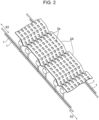
- Fig. 2 is a view illustrating a sifting machine in detail.
- Fig. 3 is a schematic view illustrating vertical vibration of a sieve sheet and movements of powder raw materials.
- an illustrated sifting machine 10 and an illustrated conveying device 20 disposed below the sifting machine 10 are used.
- the sifting machine 10 includes a sieve sheet unit 2 that includes a first sieve sheet 2A and a second sieve sheet 2B arranged side by side, and a raw-material supplying part 3 that supplies powder raw materials to the first sieve sheet 2A, the first sieve sheet 2A having relatively fine meshes and the second sieve sheet 2B having relatively coarse meshes.
- Each of the sieve sheets 2A and 2B is made of, for example, an elastic material, such as urethane, and is capable of expanding and contracting.
- Each of the sieve sheets 2A and 2B is capable of vibrating vertically (Y2 directions).
- two cross beams 1 and 1 that are arranged side by side each support at a predetermined interval the sieve sheet 2A (2B) having a plurality of meshes 2a.
- the cross beams 1 and 1 slide in opposite directions (X2 directions) with respect to each other by using an actuator (not shown), at the same time that a portion of the sieve sheet 2A (2B) supported by each of the cross beams 1 and 1 is bent, the other portion of the sieve sheet 2A (2B) supported by each of the cross beams 1 and 1 is pulled.
- a form in which only one of the cross beams 1 and 1 is reciprocated by the actuator may be used.
- the conveying device 20 disposed below the sifting machine 10 includes a belt conveyor 23 that moves due to rotation of a main rotating roller 21 and an auxiliary rotating roller 22, and the movement of the belt conveyor 23 allows a template 4 installed thereon to travel continuously at a constant speed and in a constant direction (X1 direction).
- the template 4 is caused to travel by the conveying device 20 with its surface (not shown) having a concavo-convex portion facing upward.
- the sieve sheet unit 2 is disposed so as to be inclined downward with respect to a travel direction (X1 direction) of the template 4 so that the first sieve sheet 2A is on a higher side of the inclination (inclination angle ⁇ ).
- the inclination angle ⁇ of the sieve sheet unit 2 is set at an angle that allows the powder raw materials F to roll down naturally along the inclination, and, though depending upon the powder raw materials used, may be set in a range of, for example, 12 degrees to 21 degrees.
- Examples of the hydraulic material include Portland cement, early strength cement, alumina cement, blast furnace cement, fly ash cement, silica fume cement, and other types of cement; anhydrous gypsum, hemihydrate gypsum, dihydrate gypsum, and other types of gypsum; and a blast furnace slag, a converter slag, and other types of slag.
- Examples of the admixture include quartz sand, silica rock powder, silica powder, coal ash, paper sludge ash, perlite, silica fume, mica, calcium carbonate, magnesium hydroxide, aluminum hydroxide, vermiculite, sepiolite, xonotlite, diatomaceous earth, kaolinite, zeolite, wollastonite, and a recycled raw material in which a wood cement board is pulverized.
- Coal ash, mica, and wollastonite are desirable in that they are suitable for realizing a wall material having high strength and excellent dimensional stability.
- Perlite and resin bead are desirable in that they are suitable for realizing a light wall material.
- Examples of the plant-based reinforcing material include a piece of wood, a piece of bamboo, wood powder, used paper, Nadelholz unbleached kraft pulp, Nadelholz bleached kraft pulp, Laubholz unbleached kraft pulp, and Laubholz bleached kraft pulp.
- the powder raw materials may contain other materials in addition to the aforementioned materials.
- the other materials include a waterproofing agent and a hardening accelerator.
- the sifting machine 10 and the conveying device 20 are moved to form a wall-material mat on the template 4 that moves.
- powder raw materials are caused to fall from the raw-material supplying part 3 onto the first sieve sheet 2A (Y1 direction) that is vibrating vertically (Y2 directions).
- the powder raw materials supplied to the first sieve sheet 2A that is vibrating vertically (Y2 directions) are reduced to powder due to the vertical vibration of the first sieve sheet 2A, and only powder raw materials having sizes that can pass through the meshes 2a pass through the meshes 2a of the first sieve sheet 2A, and fall due to their own weight (Y3 direction) and accumulate in the form of a layer on the template 4 that travels.
- the plant-based reinforcing with the hydraulic material and the admixture attached thereto can accumulate on the template 4. Since the hydraulic material, the admixture, and the plant-based reinforcing material with the hydraulic material and the admixture attached thereto accumulate on the template by falling onto the template 4 due to their own weight, the hydraulic material, the admixture, and the plant-based reinforcing material with the hydraulic material and the admixture attached thereto accumulate in a concave part of the template in substantially the same ratio and in substantially the same amount.
- a core layer 6 formed from the powder raw materials that have passed through the meshes of the second sieve sheet 2B and that have relatively large sizes is formed on a surface layer 5 that has already been formed on the template 4, as a result of which a wall-material mat 7 including the surface layer 5 and the core layer 6 is formed.
- the plant-based reinforcing with the hydraulic material and the admixture attached thereto can accumulate on the template. Since the hydraulic material, the admixture, and the plant-based reinforcing material with the hydraulic material and the admixture attached thereto accumulate on the template by falling onto the template due to their own weight, the hydraulic material, the admixture, and the plant-based reinforcing material with the hydraulic material and the admixture attached thereto accumulate over the entire surface of the template in substantially the same ratio and in substantially the same amount.
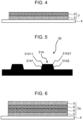
- Fig. 4 is a sectional schematic view of the wall-material mat formed in the first embodiment.
- the surface layer 5 formed from the powder raw materials that have passed through the meshes 2a of the first sieve sheet 2A and that have relatively small sizes is formed on the template 4
- the core layer 6 formed from the powder raw materials that have passed through the meshes of the second sieve sheet 2B and that have relatively large sizes is formed on the surface layer 5.
- the template 4 and the surface layer 5 each have a concavo-convex portion on its surface, the concavo-convex portions are not shown in Fig. 4 .
- the surface layer 5 is a fine layer that is highly water resistant, and since the core layer 6 has low density and is light, the core layer 6 becomes a layer having cushioning properties. Therefore, the wall-material mat 7 in which the light core layer 6 having cushioning properties is formed on an inner side of the fine surface layer 5 that is highly water resistant is formed.
- the formed wall-material mat 7 and the template 4 are pressed to manufacture a wall material by curing.
- Fig. 5 shows a cross section of the vicinity of a surface of a wall material 30 manufactured by the first embodiment.
- a plurality of convex parts 31A are formed on a surface of the wall material 30 by the concavo-convex portion of the template 4.
- Each convex part 31A includes a first lateral surface part 31A1, a second lateral surface part 31A2 corresponding to the first lateral surface part 31A1, and a top surface part that connects the first lateral surface part 31A1 and the second lateral surface part 31A2 to each other.
- An edge part of the first lateral surface part 31A1 is a first edge part 31A11
- an edge part of the second lateral surface part 31A2 is a second edge part 31A21.
- the first edge part 31A11 and the second edge part 31A21 oppose each other with the top surface part interposed therebetween.
- the wall material 30 is manufactured by causing the powder raw materials in a loosened state to fall due to their own weight towards the template from the sieve sheets, at the wall material 30, the plant-based reinforcing material with the hydraulic material and the admixture attached thereto is distributed uniformly in a mixture containing the hydraulic material and the admixture. Since the powder raw materials in the loosened state also fall due to their own weight into concave parts of the template that form the convex parts 31A of the wall material 30, at the convex parts 31A of the wall material 30, the plant-based reinforcing material with the hydraulic material and the admixture attached thereto is uniformly distributed in the mixture of the hydraulic material and the admixture.
- the wall material 30 Since the hydraulic material, the admixture, and the plant-based reinforcing material with the hydraulic material and the admixture attached thereto accumulate over the entire surface of the template in substantially the same ratio and in substantially the same amount, the wall material 30 is manufactured. Since the hydraulic material, the admixture, and the plant-based reinforcing material with the hydraulic material and the admixture attached thereto also accumulate in substantially the same ratio and in substantially the same amount in the concave parts of the template that form the convex parts 31A of the wall material 30, the distribution of the plant-based reinforcing material at the first lateral surface part 31A1 of each convex part 31A and the distribution of the plant-based reinforcing material at the second lateral surface part 31A2 of each convex part 31A are substantially the same.
- the plant-based reinforcing material with the hydraulic material and the admixture attached thereto is such that the hydraulic material and the admixture suppress absorption of moisture of the plant-based reinforcing material and gaps are not easily formed between the plant-based reinforcing material and the mixture containing the hydraulic material and the admixture, absorption of water of each first lateral surface part 31A1 and absorption of water of each second lateral surface part 31A2 are suppressed, as a result of which the wall material 30 has excellent durability.
- the distribution of holes formed in the first edge part 31A11 of each convex part 31A and the distribution of holes formed in the second edge part 31A21 of each convex part 31A are substantially the same, absorption of water of each first edge part 31A11 and absorption of water of each second edge part 31A21 are suppressed, as a result of which the wall material 30 has excellent durability.
- the water absorbency of the first edge part 31A11 of each convex part 31A and the water absorbency of the second edge part 31A21 of each convex part 31A are substantially the same. Since the plant-based reinforcing material that is distributed at each first edge part 31A11 and each second edge part 31A21 is such that absorption of moisture of the plant-based reinforcing material is suppressed due to the attachment of the hydraulic material and the admixture thereto, absorption of water of each first edge part 31A11 and absorption of water of each second edge part 31A21 are suppressed, as a result of which the wall material 30 has excellent durability.
- the wall material 30 has excellent durability.
- Fig. 1 in a second embodiment, in Fig. 1 , after the template 4 has reached an edge part of the second sieve sheet 2B and a layered structure of the surface layer 5 and the core layer 6, which is shown in Fig. 4 , has been formed, next, the conveying device 20 is caused to convey in an opposite direction and the template 4 is moved in the opposite direction (X1' direction) to further form a wall-material mat having a multilayer structure.
- a separate core layer 6 is separately formed on the core layer 6 as shown in Fig. 6 .
- the template 4 and the surface layer 5 that is in contact with the template 4 each have a concavo-convex portion on its surface, the concavo-convex portions are not shown in Fig. 6 .
- a separate surface layer 5 is formed on the separate core layer 6, and a wall-material mat 7A in which two core layers 6 are formed between the surface layers 5, which are front and rear layers, is formed.
- the wall-material mat 7A and the template 4 are pressed to manufacture a wall material by curing.
- a plurality of convex parts are formed on a surface of the wall material manufactured by the second embodiment by the concavo-convex portion of the template 4.
- Each convex part includes a first lateral surface part, a second lateral surface part, a top surface part, a first edge part, and a second edge part.
- the wall material manufactured by the second embodiment is manufactured by causing powder raw materials in a loosened state to fall due to their own weight towards the template 4 from the sieve sheets. Therefore, at each convex part, a plant-based reinforcing material with a hydraulic material and an admixture attached thereto is distributed uniformly in a mixture of the hydraulic material and the admixture, and at the first lateral surface part of each convex part and at the second lateral surface part of each convex part, the plant-based reinforcing material has substantially the same distribution, as a result of which the durability is excellent.
- the wall material manufactured by the second embodiment is manufactured by causing the hydraulic material, the admixture, and the plant-based reinforcing material with the hydraulic material and the admixture attached thereto to accumulate over the entire surface of the template in substantially the same ratio and in substantially the same amount. Therefore, the distribution of holes, the water absorbencies, and the freeze-thaw durability of the first edge parts of the convex parts and the distribution of holes, the water absorbencies, and the freeze-thaw durabilities of the second edge parts of the convex parts are substantially the same, as a result of which the wall material manufactured by the second embodiment has excellent durability.
- both surfaces of the wall material manufactured by the second embodiment are fine surfaces that are highly water resistant, the wall material manufactured by the second embodiment excels in durability compared to the wall material manufactured by the first embodiment.
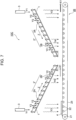
- Fig. 7 is a schematic view illustrating a method for manufacturing a wall material of a third embodiment.
- a wall-material mat is manufactured by using a sifting machine 10C including a first sieve sheet unit 2' and a second sieve sheet unit 2".
- the first sieve sheet unit 2' includes a first sieve sheet 2A and a second sieve sheet 2B.
- the second sieve sheet unit 2" includes a third sieve sheet 2A and a fourth sieve sheet 2B.
- first sieve sheet unit 2' is disposed on an upstream side in the travel direction (X1 direction) of a template 4, and the second sieve sheet unit 2" is disposed on a downstream side.
- the first sieve sheet unit 2' is disposed so as to be inclined downward with respect to the travel direction (X1 direction) of the template 4 so that the first sieve sheet 2A is on a higher side of the inclination.
- the second sieve sheet unit 2" is disposed so as to be inclined upward with respect to the travel direction (X1 direction) of the template 4 so that the third sieve sheet 2A is on a higher side of the inclination.
- the sieve sheet units 2' and 2" are disposed so as to form a V shape.
- water is added to and mixed with a plant-based reinforcing material.
- a hydraulic material By mixing the acquired plant-based reinforcing material, a hydraulic material, and an admixture with each other, powder raw materials are manufactured.
- the hydraulic material, the admixture, and the plant-based reinforcing material those indicated in the first embodiment can be used.
- water so as to be 30 to 45 parts by mass with respect to 100 parts by mass of the total solid content of the powder raw materials because the hydraulic material and the admixture can be efficiently attached to the plant-based reinforcing material.
- water may be further added and mixed when mixing the plant-based reinforcing material with which the water has been mixed, the hydraulic material, and the admixture.
- the acquired powder raw materials are manufactured so that the water is contained by 30 parts by mass to 45 parts by mass with respect to 100 parts by mass of the total solid content of the powder raw materials.
- a surface layer 5 is formed on the template 4 as shown in Fig. 4 .
- a core layer 6 is formed as shown in Fig. 4 .
- the template 4 is moved to the second sieve sheet unit 2" by the conveying device 20.
- powder raw materials are supplied to the third sieve sheet 2A, powder raw materials that pass through meshes of the third sieve sheet 2A are caused to fall (Y3 direction), any powder raw material remaining on the third sieve sheet 2A without passing therethrough is caused to roll down along the inclination to the fourth sieve sheet 2B, and powder raw materials that pass through meshes of the fourth sieve sheet 2B are caused to fall (Y4 direction).
- the powder raw materials that have passed through the meshes of the third sieve sheet 2A fall, and a separate surface layer 5 is formed on the separate core layer 6 that has already been formed as shown in Fig. 6 .
- a wall-material mat 7A including two core layers 6 that are stacked upon each other on inner sides of the two respective surface layers 5, which are front and rear layers.
- combinations (sets) of the wall-material mat 7A and the template 4 are stacked upon each other and pressed to manufacture a wall material by curing.
- a plurality of convex parts are formed on a surface of the wall material manufactured by the third embodiment by a concavo-convex portion of the template 4.
- Each convex part includes a first lateral surface part, a second lateral surface part, a top surface part, a first edge part, and a second edge part.
- the wall material manufactured by the third embodiment is also manufactured by causing the powder raw materials in a loosened state to fall due to their own weight towards the template from the sieve sheets. Therefore, at the convex parts, the plant-based reinforcing material with the hydraulic material and the admixture attached thereto is distributed uniformly in a mixture containing the hydraulic material and the admixture, and the distribution of the plant-based reinforcing material of the first lateral surface part of each convex part and the distribution of the plant-based reinforcing material of the second lateral surface part of each convex part are substantially the same, as a result of which the durability is excellent.
- the wall material manufactured by the third embodiment is also manufactured by causing the hydraulic material, the admixture, and the plant-based reinforcing material with the hydraulic material and the admixture attached thereto to accumulate over the entire surface of the template in substantially the same ratio and in substantially the same amount. Therefore, the distribution of holes, the water absorbencies, and the freeze-thaw durability are substantially the same at the first edge part of each convex part as at the second edge part of each convex part, as a result of which the wall material manufactured by the third embodiment has excellent durability.
- both surfaces of the wall material manufactured by the third embodiment are fine surfaces that are highly water resistant, the wall material manufactured by the third embodiment excels in durability compared to the wall material manufactured by the first embodiment.
- Fig. 8 is a schematic view illustrating a method for manufacturing a wall material of a fourth embodiment.
- a wall-material mat is manufactured by using a sifting machine 10D in which a central raw-material supplying part 8 is disposed above the first sieve sheet unit 2' of the sifting machine 10C used in the method for manufacturing a wall material of the third embodiment. More specifically, in the sifting machine 10D, the central raw-material supplying part 8 is disposed above the second sieve sheet 2B of the first sieve sheet unit 2'.
- Powder raw materials used in the fourth embodiment and the manufacturing method therefor are the same as those of the third embodiment.
- a surface layer 5 is formed on the template 4. Then, when the template 4 passes below the sieve sheet 2A of the first sieve sheet unit 2', of powder raw materials remaining on the first sieve sheet 2A that have been moved along an inclination to the second sieve sheet 2B and of powder raw materials that have been supplied from the central raw-material supplying part 8, powder raw materials that have passed through the second sieve sheet 2B form a core layer 6A.
- the template 4 and the surface layer 5 that is in contact with the template 4 each have a concavo-convex portion on its surface, the concavo-convex portions are not shown in Fig. 9 .
- a separate core layer 6 and a separate surface layer 5 are formed and a wall-material mat 7C including two core layers 6A and 6 that are stacked upon each other on inner sides of the two respective surface layers 5, which are front and rear layers, is formed.
- the core layer 6A contains the powder raw materials supplied from the central raw-material supplying part 8 (Y5 direction), powder raw materials having sizes that are relatively smaller than those of the core layer 6 are mixed.
- combinations (sets) of the wall-material mat 7C and the template 4 are stacked upon each other and pressed to manufacture a wall material by curing.
- a plurality of convex parts are formed on a surface of the wall material manufactured by the fourth embodiment by the concavo-convex portion of the template 4.
- Each convex part includes a first lateral surface part, a second lateral surface part, a top surface part, a first edge part, and a second edge part.
- the wall material manufactured by the fourth embodiment is also manufactured by causing the powder raw materials in a loosened state to fall due to their own weight towards the template 4 from the sieve sheets. Therefore, at the convex parts, a plant-based reinforcing material with a hydraulic material and an admixture attached thereto is distributed uniformly in a mixture of the hydraulic material and the admixture, and the distribution of the plant-based reinforcing material of the first lateral surface part of each convex part and the distribution of the plant-based reinforcing material of the second lateral surface part of each convex part are substantially the same, as a result of which the durability is excellent.
- the wall material manufactured by the fourth embodiment is also manufactured by causing the hydraulic material, the admixture, and the plant-based reinforcing material with the hydraulic material and the admixture attached thereto to accumulate over the entire surface of the template in substantially the same ratio and in substantially the same amount. Therefore, the distribution of holes, the water absorbencies, and the freeze-thaw durability are substantially the same at the first edge part of each convex part as at the second edge part of each convex part, as a result of which the wall material manufactured by the fourth embodiment has excellent durability.
- both surfaces of the wall material manufactured by the fourth embodiment are fine surfaces that are highly water resistant, the wall material manufactured by the fourth embodiment excels in durability compared to the wall material manufactured by the first embodiment.
- the present inventor et al. confirmed the effects.
- three wall materials were manufactured under the same conditions by using the method for manufacturing a wall material of the fourth embodiment (samples 1 to 3).
- three wall materials were manufactured under the same conditions by using a device shown in Fig. 13 that blows away and sifts powder raw materials by using air (samples 4 to 6).
- powder raw materials were manufactured by adding and mixing Portland cement, coal ash, a recycled raw material in a which a wood cement board was pulverized, and calcium formate to and with a piece of wood acquired by adding and mixing water.
- the total solid content of the powder raw materials was such that the content of Portland cement was 30 mass%, the content of coal ash was 30 mass%, the content of the piece of wood was 15 mass%, and the content of the recycled raw material in which the wood cement board was pulverized was 25 mass%.
- Water and calcium formate were added so that the water content became 30 mass% and the content of calcium formate became 5 mass% with respect to the total solid content of the powder raw materials.
- Fig. 10 shows the relationship between a wall material, which is a sample, and the template 4.
- Fig. 10 is a sectional schematic view of a wall material before removal from the template.
- convex parts 31B of a wall material 30A are formed by concave parts of the template.
- Each convex part 31B includes a first edge part 31B11 that is an edge part of a first lateral surface part and a second edge part 31B21 that is an edge part of a second lateral surface part and that corresponds to the first edge part 31B11.
- each first edge part 31B11 is an edge part of the lateral surface part formed by an inclined surface of a template concave part inclined in the conveying direction X1 of the template.
- each second edge part 31B21 is an edge part of the lateral surface part formed by an inclined surface of the template concave part inclined in a direction opposite to the conveying direction X1 of the template.
- the sizes and numbers of holes were measured, and a water absorption test using a cylinder method and a freeze-thaw durability test were performed.
- WHX-5000 manufactured by Keyence Corporation was used to observe the sizes and the numbers of holes formed in each first edge part 31B11 and each second edge part 31B21 at a field magnification of 50X.
- the observation range was a range having a width of 108 mm.
- the holes were classified into three types by size; and when the number of holes having a corresponding size was 0 to 2, the number of holes was evaluated as "O" (few), when the number of holes having a corresponding size was 3 to 6, the number of holes was evaluated as " ⁇ " (somewhat few), when the number of holes having a corresponding size was 7 to 9, the number of holes was evaluated as " ⁇ " (somewhat many), and when the number of holes having a corresponding size was 10 or more, the number of holes was evaluated as " ⁇ " (many).
- the acquired wood cement boards were coated with 90 g/m 2 of silicone-acrylic-emulsion-based coating and then the cylinder-method test prescribed in JIS A 5422 was performed on each first edge part 31B11 and each second edge part 31B21 to measure the height of reduced water.
- the acquired wood cement boards were each coated with 90 g/m 2 of silicone-acrylic-emulsion-based coating and then an air-freezing water-dissolution method prescribed in JIS A 1435 was performed for 720 cycles. Then, the microscope "WHX-5000" manufactured by Keyence Corporation was used to observe each first edge part 31B11 and each second edge part 31B21 at a field magnification of 50X and confirm whether or not there were any cracks in the coatings. The observation range was a range having a width of 108 mm.
- the numbers of holes having a size of 1.0 mm or larger were all O (few)
- the numbers of holes having a size of 0.5 mm to 1.0 mm were such that there were one ⁇ (few), one ⁇ (somewhat few), and one 1 (somewhat many)
- the numbers of holes having a size of 0 to 0.5 mm were such that there were one 1 (somewhat many) and two ⁇ (many).
- the numbers of holes having a size of 1.0 mm or larger were all O (few)
- the numbers of holes having a size of 0.5 to 1.0 mm were such that there were two ⁇ (somewhat few) and one 1 (somewhat many)
- the numbers of holes having a size of 0 to 0.5 mm were such that there were two 1 (somewhat many) and one ⁇ (many).
- the results show that, in the example, the distribution of holes of each first edge part and the distribution of holes of each second edge part are substantially the same.
- the heights of reduced water in the water absorption test using the cylinder method were 0 to 1 mm.
- the heights of reduced water in the water absorption test using the cylinder method were 0 to 2 mm.
- the freeze-thaw durability test was such that there were two ⁇ (none) and one ⁇ (few).
- the freeze-thaw durability test was such that the numbers of cracks were all ⁇ (none). The results show that, in the example, the freeze-thaw durability of each first edge part and the freeze-thaw durability of each second edge part are substantially the same.
- the numbers of holes having a size of 1.0 mm or larger were all O (few)
- the numbers of holes having a size of 0.5 to 1.0 mm were all ⁇ (somewhat few)
- the numbers of holes having a size of 0 to 0.5 mm were such that there were one ⁇ (somewhat many) and two ⁇ (many).
- the numbers of holes having a size of 1.0 mm or larger were all ⁇ (somewhat few)
- the numbers of holes having a size of 0.5 to 1.0 mm were such that there were two ⁇ (somewhat few) and one 1 (somewhat many)
- the numbers of holes having a size of 0 to 0.5 mm were all ⁇ (many).
- the results show that, in the comparative example, the distribution of holes of each first edge part and the distribution of holes of each second edge part differ from each other.
- the heights of reduced water in the water absorption test using the cylinder method were 0 to 1 mm.
- the heights of reduced water in the water absorption test using the cylinder method were 2 to 5 mm. The results show that, in the comparative example, the water absorbency of each first edge part and the water absorbency of each second edge part differ from each other.
- the freeze-thaw durability test was such that there were one ⁇ (none) and two ⁇ (few).
- the freeze-thaw durability test was such that there were two ⁇ (few) and one ⁇ (many). The results show that, in the comparative example, the freeze-thaw durability of each first edge part and the freeze-thaw durability of each second edge part differ from each other.
- the numbers of holes having a size of 1.0 mm or larger were all ⁇ (few)
- the numbers of holes having a size of 0.5 to 1.0 mm were such that there were two ⁇ (somewhat few) and one ⁇ (somewhat many)
- the numbers of holes having a size of 0 to 0.5 mm were such that there were two ⁇ (somewhat many) and one ⁇ (many).
- the numbers of holes having a size of 1.0 mm or larger were all ⁇ (somewhat few)
- the numbers of holes having a size of 0.5 to 1.0 mm were such that there were two ⁇ (somewhat few) and one ⁇ (somewhat many)
- the numbers of holes having a size of 0 to 0.5 mm were all ⁇ (many).
- the results show that the distribution of the holes of each second edge part of the example and the distribution of the holes of each second edge part of the comparative example differ from each other and that the number of holes of each second edge part of the example is less than the number of holes of each second edge part of the comparative example.
- the heights of reduced water in the water absorption test using the cylinder method were 0 to 2 mm.
- the heights of reduced water in the water absorption test using the cylinder method were 2 to 5 mm.
- the freeze-thaw durability test was such that the numbers of cracks were all ⁇ (none).
- the freeze-thaw durability test was such that there were two ⁇ (few) and one ⁇ (many). The results show that the freeze-thaw durability of each second edge part of the example and the freeze-thaw durability of each second edge part of the comparative example differ from each other and that the freeze-thaw durability of each second edge part of the example is better than the freeze-thaw durability of each second edge part of the comparative example.
Landscapes
- Engineering & Computer Science (AREA)
- Chemical & Material Sciences (AREA)
- Ceramic Engineering (AREA)
- Structural Engineering (AREA)
- Organic Chemistry (AREA)
- Materials Engineering (AREA)
- Civil Engineering (AREA)
- Manufacturing & Machinery (AREA)
- Life Sciences & Earth Sciences (AREA)
- Architecture (AREA)
- Environmental & Geological Engineering (AREA)
- Mechanical Engineering (AREA)
- Wood Science & Technology (AREA)
- Forests & Forestry (AREA)
- Combustion & Propulsion (AREA)
- Chemical Kinetics & Catalysis (AREA)
- Inorganic Chemistry (AREA)
- Press-Shaping Or Shaping Using Conveyers (AREA)
- Finishing Walls (AREA)
- Devices For Post-Treatments, Processing, Supply, Discharge, And Other Processes (AREA)
- Curing Cements, Concrete, And Artificial Stone (AREA)
- Producing Shaped Articles From Materials (AREA)
Claims (6)
- Baumaterial (30A), aufweisend einen konvexen Teil (31B), der auf seiner Vorderfläche ausgebildet ist, wobei der konvexe Teil (31B) einen ersten Seitenflächenteil und einen zweiten Seitenflächenteil, der dem ersten Seitenflächenteil entspricht, aufweist, wobeidas Baumaterial (30A) aus einem Gemisch gebildet ist, das ein hydraulisches Material, eine Beimengung und ein pflanzliches Verstärkungsmaterial enthält,das pflanzliche Verstärkungsmaterial mindestens in dem konvexen Teil (31B) in dem Gemisch verteilt ist, wobei das hydraulische Material und die Beimengung an dem pflanzlichen Verstärkungsmaterial anhaften,eine Verteilung des pflanzlichen Verstärkungsmaterials in dem ersten Seitenflächenteil und eine Verteilung des pflanzlichen Verstärkungsmaterials in dem zweiten Seitenflächenteil im Wesentlichen gleich sind unddas Baumaterial (30A) eine erste Oberflächenschicht (5), eine erste Kernschicht (6A), die auf der ersten Oberflächenschicht (5) ausgebildet ist, eine zweite Kernschicht (6), die auf der ersten Kernschicht (6A) ausgebildet ist, und eine zweite Oberflächenschicht (5), die auf der zweiten Kernschicht (6) ausgebildet ist, aufweist und die erste Kernschicht (6A) aus pulverförmigen Rohmaterialien gebildet ist, die Größen aufweisen, die relativ kleiner als die der zweiten Kernschicht (6) sind, wobei die zwei Kernschichten (6A, 6) an Innenseiten der zwei jeweiligen Oberflächenschichten (5) übereinander gestapelt sind und wobei die zwei jeweiligen Oberflächenschichten (5) eine vordere und eine hintere Schicht sind;wobeider konvexe Teil (31B) einen ersten Randteil (31B11), der ein Randteil des ersten Seitenflächenteils ist, und einen zweiten Randteil (31B21), der ein Randteil des zweiten Seitenflächenteils ist und dem ersten Randteil (31B11) entspricht, aufweist undeine Verteilung von Löchern, die in dem ersten Randteil (31B11) ausgebildet sind, und eine Verteilung von Löchern, die in dem zweiten Randteil (31B21) ausgebildet sind, im Wesentlichen gleich sind.
- Baumaterial nach Anspruch 1, wobei die Wasseraufnahmefähigkeit des ersten Randteils (31B11) und die Wasseraufnahmefähigkeit des zweiten Randteils (31B21) im Wesentlichen gleich sind.
- Baumaterial nach Anspruch 1, wobei die Frost-Tau-Beständigkeit des ersten Randteils (31B11) und die Frost-Tau-Beständigkeit des zweiten Randteils (31B21) im Wesentlichen gleich sind.
- Baumaterial nach Anspruch 1, wobei die Beimengung mindestens eines von Kohleasche, Glimmer, Wollastonit, Perlit und Harzperlen ist.
- Verfahren zum Herstellen eines Baumaterials (30A), wobei das Verfahren umfasst:Bewegen einer Schablone (4) an einer Stelle unterhalb einer Siebmaschine (10D), wobei die Siebmaschine (10D) eine erste Siebblecheinheit (2') aufweist, die ein erstes Siebblech (2A) und ein zweiten Siebblech (2B) aufweist, wobei das erste Siebblech (2A) relativ feine Maschen aufweist und das zweite Siebblech (2B) relativ grobe Maschen aufweist und die erste Siebblecheinheit (2') so angeordnet ist, dass sie in Bezug auf eine Bewegungsrichtung (X1) der Schablone (4) nach unten geneigt ist, so dass sich das erste Siebblech (2A) auf einer höheren Seite der Neigung befindet;Zuführen eines pulverförmigen Rohmaterials (F) von einem ersten Rohmaterial-Zufuhrteil (3) zu dem ersten Siebblech (2A) der ersten Siebblecheinheit (2') der Siebmaschine (10D), wobei das pulverförmige Rohmaterial (F) ein hydraulisches Material, eine Beimengung und ein pflanzliches Verstärkungsmaterial, an dem das hydraulische Material und die Beimengung anhaften, enthält;Zuführen eines pulverförmigen Rohmaterials (F) von einem zweiten Rohmaterial-Zufuhrteil (8) zu dem zweiten Siebblech (2B) der ersten Siebblecheinheit (2') der Siebmaschine (10D), wobei das pulverförmige Rohmaterial (F) das hydraulische Material, die Beimengung und das pflanzliche Verstärkungsmaterial, an dem das hydraulische Material und die Beimengung anhaften, enthält;Versetzen des ersten und des zweiten Siebblechs (2A, 2B) in Vibrationdergestalt, dass pulverförmige Rohmaterialien, die die Maschen des ersten Siebblechs (2A) passieren, aufgrund ihres Eigengewichts von dem ersten Siebblech (2A) in Richtung der Schablone (4) fallen unddergestalt, dass von pulverförmigen Rohmaterialien, die zu dem zweiten Siebblech (2B) bewegt wurden und auf dem ersten Siebblech (2A) zurückgeblieben sind, und von pulverförmigen Rohmaterialien, die von dem zweiten Rohmaterial-Zufuhrteil (8) zugeführt wurden, pulverförmige Rohmaterialien, die die Maschen des zweiten Siebblechs (2B) passieren, aufgrund ihres Eigengewichts von dem zweiten Siebblech (2B) zu der Schablone (4) fallen undauf diese Weise das pulverförmige Rohmaterial (F) in einem gelockerten Zustand aufgrund seines Eigengewichts von den Siebblechen (2A, 2B) herunterfällt und sich auf der unterhalb der Siebmaschine (10D) angeordneten Schablone (4) sammelt;durch Veranlassen, dass die pulverförmigen Rohmaterialien, die die Maschen des ersten Siebblechs (2A) passieren, auf die Schablone (4) fallen, Bilden einer ersten Oberflächenschicht (5) auf der Schablone (4) unddurch Veranlassen, dass die pulverförmigen Rohmaterialien, die die Maschen des zweiten Siebblechs (2B) passieren, auf die erste Oberflächenschicht (5) fallen, Bilden einer ersten Kernschicht (6A) aus den pulverförmigen Rohmaterialien, die die Maschen des zweiten Siebblechs (2B) passiert haben;wobeidas Baumaterial (30A) einen konvexen Teil (31B) aufweist, der auf seiner Oberfläche ausgebildet ist, wobei der konvexe Teil (31B) einen ersten Seitenflächenteil und einen zweiten Seitenflächenteil, der dem ersten Seitenflächenteil entspricht, aufweist,die Schablone (4) einen konkaven Teil zum Ausbilden des konvexen Teils (31B) aufweist,das Baumaterial (30A) von einem Gemisch gebildet ist, das das hydraulische Material, die Beimengung und das pflanzliche Verstärkungsmaterial enthält, wobei das Gemisch von den aufgrund ihres Eigengewichts herabgefallenen, gelockerten pulverförmigen Rohmaterialien (F) gebildet ist, das pflanzliche Verstärkungsmaterial mindestens in dem konvexen Teil (31B) in dem Gemisch verteilt ist, wobei das hydraulische Material und die Beimengung an dem pflanzlichen Verstärkungsmaterial anhaften, undeine Verteilung des pflanzlichen Verstärkungsmaterials in dem ersten Seitenflächenteil und eine Verteilung des pflanzlichen Verstärkungsmaterials in dem zweiten Seitenflächenteil im Wesentlichen gleich sind; und wobei der konvexe Teil (31B) des Baumaterials (30A) einen ersten Randteil (31B11), der ein Randteil des ersten Seitenflächenteils ist, und einen zweiten Randteil (31B21), der ein Randteil des zweiten Seitenflächenteils ist und dem ersten Randteil (31B11) entspricht, aufweist, undeine Verteilung von Löchern, die in dem ersten Randteil (31B11) ausgebildet sind, und eine Verteilung von Löchern, die in dem zweiten Randteil (31B21) ausgebildet sind, im Wesentlichen gleich sind,wobei die Siebmaschine (10D) eine zweite Siebblecheinheit (2") aufweist, die ein drittes Siebblech (2A) und ein viertes Siebblech (2B) aufweist, das dritte Siebblech (2A) feinere Maschen aufweist als das vierte Siebblech (2B), die zweite Siebblecheinheit (2") so angeordnet ist, dass sie in Bezug auf die Bewegungsrichtung (X1) der Schablone (4) nach oben geneigt, so dass sich das dritte Siebblech (2A) auf einer höheren Seite der Neigung befindet, und die erste Siebblecheinheit (2') auf einer stromaufwärtigen Seite in der Bewegungsrichtung (X1) der Schablone (4) angeordnet ist und die zweite Siebblecheinheit (2") auf einer stromabwärtigen Seite angeordnet ist;wobei das Verfahren des Weiteren umfasst:Zuführen eines pulverförmigen Rohmaterials (F) von einem dritten Rohmaterial-Zufuhrteil (3) zu dem dritten Siebblech (2A) der zweiten Siebblecheinheit (2) der Siebmaschine (10D), wobei das pulverförmige Rohmaterial (F) das hydraulische Material, die Beimengung und das pflanzliche Verstärkungsmaterial, an dem das hydraulische Material und die Beimengung anhaften, enthält;Versetzen des dritten und des vierten Siebblechs (2A, 2B) in Vibration
dergestalt, dass pulverförmige Rohmaterialien, die Maschen des dritten Siebblechs (2A) passieren, aufgrund ihres Eigengewichts von dem dritten Siebblech (2A) in Richtung der Schablone (4) fallen und dergestalt, dass pulverförmige Rohmaterialien, die zu dem vierten Siebblech (2B) bewegt wurden und auf dem dritten Siebblech (2A) zurückgeblieben sind und Maschen des vierten Siebblechs (2B) passieren, aufgrund ihres Eigengewichts von dem vierten Siebblech (2B) in Richtung der Schablone (4) fallen;durch Veranlassen, dass die pulverförmigen Rohmaterialien, die die Maschen des vierten Siebblechs (2B) passieren, herabfallen, Bilden einer zweiten Kernschicht (6) auf der ersten Kernschicht (6A) aus den pulverförmigen Rohmaterialien, die die Maschen des vierten Siebblechs (2B) passiert haben; unddurch Veranlassen, dass die pulverförmigen Rohmaterialien, die die Maschen des dritten Siebblechs (2A) passieren, herabfallen, Bilden einer zweiten Oberflächenschicht (5) auf der zweiten Kernschicht (6). - Verfahren zum Herstellen eines Baumaterials nach Anspruch 5, wobei
das pulverförmige Rohmaterial (F) ein Material ist, wobei dem pflanzlichen Verstärkungsmaterial Wasser zugesetzt und beigemischt wird und anschließend das hydraulische Material und die anorganische Beimengung zugesetzt und beigemischt werden.
Applications Claiming Priority (2)
| Application Number | Priority Date | Filing Date | Title |
|---|---|---|---|
| JP2017192260A JP7197261B2 (ja) | 2017-09-30 | 2017-09-30 | 木質系セメント板及びその製造方法 |
| PCT/JP2018/033321 WO2019065167A1 (ja) | 2017-09-30 | 2018-09-07 | 建材、及び建材の製造方法 |
Publications (3)
| Publication Number | Publication Date |
|---|---|
| EP3584050A1 EP3584050A1 (de) | 2019-12-25 |
| EP3584050A4 EP3584050A4 (de) | 2020-12-30 |
| EP3584050B1 true EP3584050B1 (de) | 2024-08-21 |
Family
ID=65902449
Family Applications (1)
| Application Number | Title | Priority Date | Filing Date |
|---|---|---|---|
| EP18860337.7A Active EP3584050B1 (de) | 2017-09-30 | 2018-09-07 | Baumaterial und verfahren zur herstellung des baumaterials |
Country Status (9)
| Country | Link |
|---|---|
| US (2) | US11504880B2 (de) |
| EP (1) | EP3584050B1 (de) |
| JP (2) | JP7197261B2 (de) |
| KR (1) | KR102730571B1 (de) |
| CN (2) | CN121912481A (de) |
| AU (2) | AU2018343679B2 (de) |
| CA (1) | CA3056575A1 (de) |
| MX (1) | MX2019011075A (de) |
| WO (1) | WO2019065167A1 (de) |
Families Citing this family (5)
| Publication number | Priority date | Publication date | Assignee | Title |
|---|---|---|---|---|
| JP7352367B2 (ja) | 2019-03-29 | 2023-09-28 | ニチハ株式会社 | 建材製造装置および建材製造方法 |
| JP7378256B2 (ja) | 2019-09-26 | 2023-11-13 | ニチハ株式会社 | 建材製造装置 |
| KR102159755B1 (ko) * | 2020-06-01 | 2020-09-24 | 장재원 | 석탄폐석을 이용한 아스팔트 포장용 채움재의 제조방법 및 이에 따라 제조된 아스팔트 포장용 채움재 |
| CN112518943B (zh) * | 2020-10-28 | 2022-02-11 | 蒙城县佰世达木业有限公司 | 一种中高密度纤维板制备装置及其制备纤维板的方法 |
| CN115592790A (zh) * | 2022-09-07 | 2023-01-13 | 佛山市蓝之鲸科技有限公司(Cn) | 皮带式陶瓷粉料布料系统 |
Family Cites Families (20)
| Publication number | Priority date | Publication date | Assignee | Title |
|---|---|---|---|---|
| JPS5354219A (en) * | 1976-10-28 | 1978-05-17 | Asahi Glass Co Ltd | Continuous process for production of f r c and apparatus therefor |
| JPS6223489A (ja) | 1985-07-22 | 1987-01-31 | 川崎重工業株式会社 | 傾斜振動篩 |
| JPH0628849B2 (ja) | 1990-06-01 | 1994-04-20 | ニチハ株式会社 | フォーミング装置 |
| JP3300039B2 (ja) * | 1992-07-03 | 2002-07-08 | 株式会社エーアンドエーマテリアル | 繊維補強無機質硬化体の製造方法および製造装置 |
| JP2931746B2 (ja) * | 1993-10-29 | 1999-08-09 | ニチハ株式会社 | 無機質成形板の製造方法 |
| JPH08103726A (ja) * | 1994-10-04 | 1996-04-23 | Shinko Electric Co Ltd | 資源ゴミの予備選別装置 |
| JP3195730B2 (ja) * | 1995-12-20 | 2001-08-06 | ニチハ株式会社 | 無機質板の製造方法 |
| US6176920B1 (en) * | 1998-06-12 | 2001-01-23 | Smartboard Building Products Inc. | Cementitious structural panel and method of its manufacture |
| CA2353886A1 (en) * | 1998-12-11 | 2000-06-22 | Ibiden Co., Ltd. | Composite building materials |
| JP2004058350A (ja) * | 2002-07-26 | 2004-02-26 | Matsushita Electric Works Ltd | 無機質外装材及びその製造方法 |
| JP2004358880A (ja) | 2003-06-06 | 2004-12-24 | Daiken Trade & Ind Co Ltd | 木質繊維混入セメント板の製造方法およびその製造装置 |
| JP5348921B2 (ja) * | 2008-03-31 | 2013-11-20 | ニチハ株式会社 | 木質セメント板の製造方法 |
| WO2010051345A2 (en) * | 2008-10-31 | 2010-05-06 | Corning Incorporated | Methods and apparatus for casting ceramic sheets |
| CN101619598B (zh) * | 2009-08-04 | 2011-10-05 | 王建国 | 生态防火保温板材及其制作方法 |
| CN102454247A (zh) * | 2010-10-21 | 2012-05-16 | 旭化成建材株式会社 | 调湿建材及其制造方法 |
| JP5118738B2 (ja) | 2010-10-29 | 2013-01-16 | ニチハ株式会社 | 木質セメント板、及びその製造方法 |
| CN102433979A (zh) * | 2011-12-01 | 2012-05-02 | 南京倍立达实业有限公司 | 一种纤维增强倍力石装饰制品及其制作方法 |
| JP6084383B2 (ja) * | 2012-06-29 | 2017-02-22 | ニチハ株式会社 | 無機質板、及び無機質板の製造方法 |
| JP6232400B2 (ja) | 2015-06-23 | 2017-11-15 | ニチハ株式会社 | 建材の製造方法 |
| JP6401339B2 (ja) | 2017-05-25 | 2018-10-10 | ニチハ株式会社 | 建材の製造装置 |
-
2017
- 2017-09-30 JP JP2017192260A patent/JP7197261B2/ja active Active
-
2018
- 2018-09-07 CA CA3056575A patent/CA3056575A1/en active Pending
- 2018-09-07 CN CN202610118216.0A patent/CN121912481A/zh active Pending
- 2018-09-07 MX MX2019011075A patent/MX2019011075A/es unknown
- 2018-09-07 EP EP18860337.7A patent/EP3584050B1/de active Active
- 2018-09-07 KR KR1020197026608A patent/KR102730571B1/ko active Active
- 2018-09-07 AU AU2018343679A patent/AU2018343679B2/en active Active
- 2018-09-07 WO PCT/JP2018/033321 patent/WO2019065167A1/ja not_active Ceased
- 2018-09-07 US US16/497,308 patent/US11504880B2/en active Active
- 2018-09-07 CN CN201880018083.3A patent/CN110418702A/zh active Pending
-
2022
- 2022-10-04 US US17/959,498 patent/US12049021B2/en active Active
- 2022-12-12 JP JP2022197642A patent/JP7523513B2/ja active Active
-
2024
- 2024-10-10 AU AU2024227240A patent/AU2024227240B2/en active Active
Also Published As
| Publication number | Publication date |
|---|---|
| EP3584050A1 (de) | 2019-12-25 |
| US11504880B2 (en) | 2022-11-22 |
| MX2019011075A (es) | 2020-02-05 |
| KR20200064953A (ko) | 2020-06-08 |
| JP7523513B2 (ja) | 2024-07-26 |
| JP2019064166A (ja) | 2019-04-25 |
| RU2019130118A (ru) | 2021-11-01 |
| AU2018343679B2 (en) | 2024-10-24 |
| US12049021B2 (en) | 2024-07-30 |
| US20230043291A1 (en) | 2023-02-09 |
| JP2023021258A (ja) | 2023-02-10 |
| RU2019130118A3 (de) | 2021-11-30 |
| CN110418702A (zh) | 2019-11-05 |
| AU2018343679A1 (en) | 2019-10-10 |
| AU2024227240A1 (en) | 2024-10-31 |
| WO2019065167A1 (ja) | 2019-04-04 |
| CN121912481A (zh) | 2026-04-24 |
| EP3584050A4 (de) | 2020-12-30 |
| CA3056575A1 (en) | 2019-04-04 |
| JP7197261B2 (ja) | 2022-12-27 |
| KR102730571B1 (ko) | 2024-11-18 |
| US20200215718A1 (en) | 2020-07-09 |
| AU2024227240B2 (en) | 2025-05-15 |
Similar Documents
| Publication | Publication Date | Title |
|---|---|---|
| AU2024227240B2 (en) | Building material and method for manufacturing building material | |
| US12053907B2 (en) | Building material manufacturing apparatus and building material manufacturing method | |
| US12246469B2 (en) | Building material manufacturing apparatus | |
| JP6232400B2 (ja) | 建材の製造方法 | |
| US7993563B2 (en) | Production method of wood cement board | |
| JP6401339B2 (ja) | 建材の製造装置 | |
| US20090242728A1 (en) | Wood cement board | |
| KR102582315B1 (ko) | 건축재 제조 장치 및 건축재 제조 방법 | |
| RU2775678C2 (ru) | Строительный материал и способ изготовления строительного материала | |
| RU2800656C2 (ru) | Устройство для изготовления строительного материала и способ изготовления строительного материала | |
| JPH07124926A (ja) | 無機質成形板の製造方法 |
Legal Events
| Date | Code | Title | Description |
|---|---|---|---|
| STAA | Information on the status of an ep patent application or granted ep patent |
Free format text: STATUS: THE INTERNATIONAL PUBLICATION HAS BEEN MADE |
|
| PUAI | Public reference made under article 153(3) epc to a published international application that has entered the european phase |
Free format text: ORIGINAL CODE: 0009012 |
|
| STAA | Information on the status of an ep patent application or granted ep patent |
Free format text: STATUS: REQUEST FOR EXAMINATION WAS MADE |
|
| 17P | Request for examination filed |
Effective date: 20190917 |
|
| AK | Designated contracting states |
Kind code of ref document: A1 Designated state(s): AL AT BE BG CH CY CZ DE DK EE ES FI FR GB GR HR HU IE IS IT LI LT LU LV MC MK MT NL NO PL PT RO RS SE SI SK SM TR |
|
| AX | Request for extension of the european patent |
Extension state: BA ME |
|
| A4 | Supplementary search report drawn up and despatched |
Effective date: 20201201 |
|
| RIC1 | Information provided on ipc code assigned before grant |
Ipc: B28B 13/02 20060101ALI20201125BHEP Ipc: B28B 5/02 20060101ALI20201125BHEP Ipc: E04F 13/14 20060101ALI20201125BHEP Ipc: E04F 13/08 20060101ALI20201125BHEP Ipc: B27N 3/12 20060101ALI20201125BHEP Ipc: B32B 13/00 20060101ALI20201125BHEP Ipc: B27N 3/00 20060101ALI20201125BHEP Ipc: B27N 3/14 20060101ALI20201125BHEP Ipc: B27N 3/10 20060101ALI20201125BHEP Ipc: B28B 1/52 20060101AFI20201125BHEP Ipc: B27N 5/00 20060101ALI20201125BHEP |
|
| DAV | Request for validation of the european patent (deleted) | ||
| DAX | Request for extension of the european patent (deleted) | ||
| STAA | Information on the status of an ep patent application or granted ep patent |
Free format text: STATUS: EXAMINATION IS IN PROGRESS |
|
| 17Q | First examination report despatched |
Effective date: 20220901 |
|
| RIC1 | Information provided on ipc code assigned before grant |
Ipc: C04B 28/04 20060101ALI20240319BHEP Ipc: B32B 3/30 20060101ALI20240319BHEP Ipc: B32B 13/04 20060101ALI20240319BHEP Ipc: B32B 13/02 20060101ALI20240319BHEP Ipc: B27N 5/00 20060101ALI20240319BHEP Ipc: B27N 3/14 20060101ALI20240319BHEP Ipc: B27N 3/12 20060101ALI20240319BHEP Ipc: B27N 3/10 20060101ALI20240319BHEP Ipc: B27N 3/00 20060101ALI20240319BHEP Ipc: B28B 13/02 20060101ALI20240319BHEP Ipc: B28B 5/02 20060101ALI20240319BHEP Ipc: E04F 13/14 20060101ALI20240319BHEP Ipc: E04F 13/08 20060101ALI20240319BHEP Ipc: B28B 1/52 20060101AFI20240319BHEP |
|
| GRAP | Despatch of communication of intention to grant a patent |
Free format text: ORIGINAL CODE: EPIDOSNIGR1 |
|
| STAA | Information on the status of an ep patent application or granted ep patent |
Free format text: STATUS: GRANT OF PATENT IS INTENDED |
|
| INTG | Intention to grant announced |
Effective date: 20240506 |
|
| GRAS | Grant fee paid |
Free format text: ORIGINAL CODE: EPIDOSNIGR3 |
|
| GRAA | (expected) grant |
Free format text: ORIGINAL CODE: 0009210 |
|
| STAA | Information on the status of an ep patent application or granted ep patent |
Free format text: STATUS: THE PATENT HAS BEEN GRANTED |
|
| AK | Designated contracting states |
Kind code of ref document: B1 Designated state(s): AL AT BE BG CH CY CZ DE DK EE ES FI FR GB GR HR HU IE IS IT LI LT LU LV MC MK MT NL NO PL PT RO RS SE SI SK SM TR |
|
| REG | Reference to a national code |
Ref country code: GB Ref legal event code: FG4D |
|
| REG | Reference to a national code |
Ref country code: CH Ref legal event code: EP |
|
| REG | Reference to a national code |
Ref country code: IE Ref legal event code: FG4D |
|
| REG | Reference to a national code |
Ref country code: DE Ref legal event code: R096 Ref document number: 602018073461 Country of ref document: DE |
|
| RAP4 | Party data changed (patent owner data changed or rights of a patent transferred) |
Owner name: NICHIHA CORPORATION |
|
| PGFP | Annual fee paid to national office [announced via postgrant information from national office to epo] |
Ref country code: BE Payment date: 20240918 Year of fee payment: 7 |
|
| REG | Reference to a national code |
Ref country code: LT Ref legal event code: MG9D |
|
| REG | Reference to a national code |
Ref country code: NL Ref legal event code: MP Effective date: 20240821 |
|
| PG25 | Lapsed in a contracting state [announced via postgrant information from national office to epo] |
Ref country code: NO Free format text: LAPSE BECAUSE OF FAILURE TO SUBMIT A TRANSLATION OF THE DESCRIPTION OR TO PAY THE FEE WITHIN THE PRESCRIBED TIME-LIMIT Effective date: 20241121 |
|
| REG | Reference to a national code |
Ref country code: AT Ref legal event code: MK05 Ref document number: 1715112 Country of ref document: AT Kind code of ref document: T Effective date: 20240821 |
|
| PG25 | Lapsed in a contracting state [announced via postgrant information from national office to epo] |
Ref country code: PL Free format text: LAPSE BECAUSE OF FAILURE TO SUBMIT A TRANSLATION OF THE DESCRIPTION OR TO PAY THE FEE WITHIN THE PRESCRIBED TIME-LIMIT Effective date: 20240821 Ref country code: PT Free format text: LAPSE BECAUSE OF FAILURE TO SUBMIT A TRANSLATION OF THE DESCRIPTION OR TO PAY THE FEE WITHIN THE PRESCRIBED TIME-LIMIT Effective date: 20241223 Ref country code: NL Free format text: LAPSE BECAUSE OF FAILURE TO SUBMIT A TRANSLATION OF THE DESCRIPTION OR TO PAY THE FEE WITHIN THE PRESCRIBED TIME-LIMIT Effective date: 20240821 Ref country code: GR Free format text: LAPSE BECAUSE OF FAILURE TO SUBMIT A TRANSLATION OF THE DESCRIPTION OR TO PAY THE FEE WITHIN THE PRESCRIBED TIME-LIMIT Effective date: 20241122 Ref country code: FI Free format text: LAPSE BECAUSE OF FAILURE TO SUBMIT A TRANSLATION OF THE DESCRIPTION OR TO PAY THE FEE WITHIN THE PRESCRIBED TIME-LIMIT Effective date: 20240821 |
|
| PG25 | Lapsed in a contracting state [announced via postgrant information from national office to epo] |
Ref country code: BG Free format text: LAPSE BECAUSE OF FAILURE TO SUBMIT A TRANSLATION OF THE DESCRIPTION OR TO PAY THE FEE WITHIN THE PRESCRIBED TIME-LIMIT Effective date: 20240821 |
|
| PG25 | Lapsed in a contracting state [announced via postgrant information from national office to epo] |
Ref country code: LV Free format text: LAPSE BECAUSE OF FAILURE TO SUBMIT A TRANSLATION OF THE DESCRIPTION OR TO PAY THE FEE WITHIN THE PRESCRIBED TIME-LIMIT Effective date: 20240821 |
|
| PG25 | Lapsed in a contracting state [announced via postgrant information from national office to epo] |
Ref country code: IS Free format text: LAPSE BECAUSE OF FAILURE TO SUBMIT A TRANSLATION OF THE DESCRIPTION OR TO PAY THE FEE WITHIN THE PRESCRIBED TIME-LIMIT Effective date: 20241221 Ref country code: AT Free format text: LAPSE BECAUSE OF FAILURE TO SUBMIT A TRANSLATION OF THE DESCRIPTION OR TO PAY THE FEE WITHIN THE PRESCRIBED TIME-LIMIT Effective date: 20240821 |
|
| PG25 | Lapsed in a contracting state [announced via postgrant information from national office to epo] |
Ref country code: HR Free format text: LAPSE BECAUSE OF FAILURE TO SUBMIT A TRANSLATION OF THE DESCRIPTION OR TO PAY THE FEE WITHIN THE PRESCRIBED TIME-LIMIT Effective date: 20240821 |
|
| PG25 | Lapsed in a contracting state [announced via postgrant information from national office to epo] |
Ref country code: RS Free format text: LAPSE BECAUSE OF FAILURE TO SUBMIT A TRANSLATION OF THE DESCRIPTION OR TO PAY THE FEE WITHIN THE PRESCRIBED TIME-LIMIT Effective date: 20241121 Ref country code: ES Free format text: LAPSE BECAUSE OF FAILURE TO SUBMIT A TRANSLATION OF THE DESCRIPTION OR TO PAY THE FEE WITHIN THE PRESCRIBED TIME-LIMIT Effective date: 20240821 |
|
| PG25 | Lapsed in a contracting state [announced via postgrant information from national office to epo] |
Ref country code: RS Free format text: LAPSE BECAUSE OF FAILURE TO SUBMIT A TRANSLATION OF THE DESCRIPTION OR TO PAY THE FEE WITHIN THE PRESCRIBED TIME-LIMIT Effective date: 20241121 Ref country code: PT Free format text: LAPSE BECAUSE OF FAILURE TO SUBMIT A TRANSLATION OF THE DESCRIPTION OR TO PAY THE FEE WITHIN THE PRESCRIBED TIME-LIMIT Effective date: 20241223 Ref country code: PL Free format text: LAPSE BECAUSE OF FAILURE TO SUBMIT A TRANSLATION OF THE DESCRIPTION OR TO PAY THE FEE WITHIN THE PRESCRIBED TIME-LIMIT Effective date: 20240821 Ref country code: NO Free format text: LAPSE BECAUSE OF FAILURE TO SUBMIT A TRANSLATION OF THE DESCRIPTION OR TO PAY THE FEE WITHIN THE PRESCRIBED TIME-LIMIT Effective date: 20241121 Ref country code: NL Free format text: LAPSE BECAUSE OF FAILURE TO SUBMIT A TRANSLATION OF THE DESCRIPTION OR TO PAY THE FEE WITHIN THE PRESCRIBED TIME-LIMIT Effective date: 20240821 Ref country code: LV Free format text: LAPSE BECAUSE OF FAILURE TO SUBMIT A TRANSLATION OF THE DESCRIPTION OR TO PAY THE FEE WITHIN THE PRESCRIBED TIME-LIMIT Effective date: 20240821 Ref country code: IS Free format text: LAPSE BECAUSE OF FAILURE TO SUBMIT A TRANSLATION OF THE DESCRIPTION OR TO PAY THE FEE WITHIN THE PRESCRIBED TIME-LIMIT Effective date: 20241221 Ref country code: HR Free format text: LAPSE BECAUSE OF FAILURE TO SUBMIT A TRANSLATION OF THE DESCRIPTION OR TO PAY THE FEE WITHIN THE PRESCRIBED TIME-LIMIT Effective date: 20240821 Ref country code: GR Free format text: LAPSE BECAUSE OF FAILURE TO SUBMIT A TRANSLATION OF THE DESCRIPTION OR TO PAY THE FEE WITHIN THE PRESCRIBED TIME-LIMIT Effective date: 20241122 Ref country code: FI Free format text: LAPSE BECAUSE OF FAILURE TO SUBMIT A TRANSLATION OF THE DESCRIPTION OR TO PAY THE FEE WITHIN THE PRESCRIBED TIME-LIMIT Effective date: 20240821 Ref country code: ES Free format text: LAPSE BECAUSE OF FAILURE TO SUBMIT A TRANSLATION OF THE DESCRIPTION OR TO PAY THE FEE WITHIN THE PRESCRIBED TIME-LIMIT Effective date: 20240821 Ref country code: BG Free format text: LAPSE BECAUSE OF FAILURE TO SUBMIT A TRANSLATION OF THE DESCRIPTION OR TO PAY THE FEE WITHIN THE PRESCRIBED TIME-LIMIT Effective date: 20240821 Ref country code: AT Free format text: LAPSE BECAUSE OF FAILURE TO SUBMIT A TRANSLATION OF THE DESCRIPTION OR TO PAY THE FEE WITHIN THE PRESCRIBED TIME-LIMIT Effective date: 20240821 |
|
| PGFP | Annual fee paid to national office [announced via postgrant information from national office to epo] |
Ref country code: CH Payment date: 20241001 Year of fee payment: 7 |
|
| PG25 | Lapsed in a contracting state [announced via postgrant information from national office to epo] |
Ref country code: DK Free format text: LAPSE BECAUSE OF FAILURE TO SUBMIT A TRANSLATION OF THE DESCRIPTION OR TO PAY THE FEE WITHIN THE PRESCRIBED TIME-LIMIT Effective date: 20240821 Ref country code: RO Free format text: LAPSE BECAUSE OF FAILURE TO SUBMIT A TRANSLATION OF THE DESCRIPTION OR TO PAY THE FEE WITHIN THE PRESCRIBED TIME-LIMIT Effective date: 20240821 Ref country code: SM Free format text: LAPSE BECAUSE OF FAILURE TO SUBMIT A TRANSLATION OF THE DESCRIPTION OR TO PAY THE FEE WITHIN THE PRESCRIBED TIME-LIMIT Effective date: 20240821 |
|
| PG25 | Lapsed in a contracting state [announced via postgrant information from national office to epo] |
Ref country code: EE Free format text: LAPSE BECAUSE OF FAILURE TO SUBMIT A TRANSLATION OF THE DESCRIPTION OR TO PAY THE FEE WITHIN THE PRESCRIBED TIME-LIMIT Effective date: 20240821 |
|
| PG25 | Lapsed in a contracting state [announced via postgrant information from national office to epo] |
Ref country code: CZ Free format text: LAPSE BECAUSE OF FAILURE TO SUBMIT A TRANSLATION OF THE DESCRIPTION OR TO PAY THE FEE WITHIN THE PRESCRIBED TIME-LIMIT Effective date: 20240821 |
|
| PG25 | Lapsed in a contracting state [announced via postgrant information from national office to epo] |
Ref country code: SK Free format text: LAPSE BECAUSE OF FAILURE TO SUBMIT A TRANSLATION OF THE DESCRIPTION OR TO PAY THE FEE WITHIN THE PRESCRIBED TIME-LIMIT Effective date: 20240821 Ref country code: IT Free format text: LAPSE BECAUSE OF FAILURE TO SUBMIT A TRANSLATION OF THE DESCRIPTION OR TO PAY THE FEE WITHIN THE PRESCRIBED TIME-LIMIT Effective date: 20240821 |
|
| PG25 | Lapsed in a contracting state [announced via postgrant information from national office to epo] |
Ref country code: LU Free format text: LAPSE BECAUSE OF NON-PAYMENT OF DUE FEES Effective date: 20240907 |
|
| REG | Reference to a national code |
Ref country code: DE Ref legal event code: R097 Ref document number: 602018073461 Country of ref document: DE |
|
| PLBE | No opposition filed within time limit |
Free format text: ORIGINAL CODE: 0009261 |
|
| STAA | Information on the status of an ep patent application or granted ep patent |
Free format text: STATUS: NO OPPOSITION FILED WITHIN TIME LIMIT |
|
| PG25 | Lapsed in a contracting state [announced via postgrant information from national office to epo] |
Ref country code: MC Free format text: LAPSE BECAUSE OF FAILURE TO SUBMIT A TRANSLATION OF THE DESCRIPTION OR TO PAY THE FEE WITHIN THE PRESCRIBED TIME-LIMIT Effective date: 20240821 |
|
| PG25 | Lapsed in a contracting state [announced via postgrant information from national office to epo] |
Ref country code: IE Free format text: LAPSE BECAUSE OF NON-PAYMENT OF DUE FEES Effective date: 20240907 |
|
| 26N | No opposition filed |
Effective date: 20250522 |
|
| PG25 | Lapsed in a contracting state [announced via postgrant information from national office to epo] |
Ref country code: SE Free format text: LAPSE BECAUSE OF FAILURE TO SUBMIT A TRANSLATION OF THE DESCRIPTION OR TO PAY THE FEE WITHIN THE PRESCRIBED TIME-LIMIT Effective date: 20240821 |
|
| PGFP | Annual fee paid to national office [announced via postgrant information from national office to epo] |
Ref country code: DE Payment date: 20250730 Year of fee payment: 8 |
|
| PGFP | Annual fee paid to national office [announced via postgrant information from national office to epo] |
Ref country code: GB Payment date: 20250731 Year of fee payment: 8 |
|
| PGFP | Annual fee paid to national office [announced via postgrant information from national office to epo] |
Ref country code: FR Payment date: 20250808 Year of fee payment: 8 |
|
| PG25 | Lapsed in a contracting state [announced via postgrant information from national office to epo] |
Ref country code: CY Free format text: LAPSE BECAUSE OF FAILURE TO SUBMIT A TRANSLATION OF THE DESCRIPTION OR TO PAY THE FEE WITHIN THE PRESCRIBED TIME-LIMIT; INVALID AB INITIO Effective date: 20180907 |
|
| PG25 | Lapsed in a contracting state [announced via postgrant information from national office to epo] |
Ref country code: HU Free format text: LAPSE BECAUSE OF FAILURE TO SUBMIT A TRANSLATION OF THE DESCRIPTION OR TO PAY THE FEE WITHIN THE PRESCRIBED TIME-LIMIT; INVALID AB INITIO Effective date: 20180907 |
|
| REG | Reference to a national code |
Ref country code: CH Ref legal event code: H13 Free format text: ST27 STATUS EVENT CODE: U-0-0-H10-H13 (AS PROVIDED BY THE NATIONAL OFFICE) Effective date: 20260504 |