EP3578176A1 - Non-platinum-based anti-cancer compounds for use in targeted chemotherapy - Google Patents
Non-platinum-based anti-cancer compounds for use in targeted chemotherapy Download PDFInfo
- Publication number
- EP3578176A1 EP3578176A1 EP19188591.2A EP19188591A EP3578176A1 EP 3578176 A1 EP3578176 A1 EP 3578176A1 EP 19188591 A EP19188591 A EP 19188591A EP 3578176 A1 EP3578176 A1 EP 3578176A1
- Authority
- EP
- European Patent Office
- Prior art keywords
- cancer
- compound
- cells
- npb
- group
- Prior art date
- Legal status (The legal status is an assumption and is not a legal conclusion. Google has not performed a legal analysis and makes no representation as to the accuracy of the status listed.)
- Withdrawn
Links
- 150000001875 compounds Chemical class 0.000 title claims abstract description 302
- BASFCYQUMIYNBI-UHFFFAOYSA-N platinum Substances [Pt] BASFCYQUMIYNBI-UHFFFAOYSA-N 0.000 title claims abstract description 69
- 229910052697 platinum Inorganic materials 0.000 title claims abstract description 21
- 230000001093 anti-cancer Effects 0.000 title abstract description 86
- 238000002512 chemotherapy Methods 0.000 title abstract description 53
- 206010028980 Neoplasm Diseases 0.000 claims abstract description 174
- 201000011510 cancer Diseases 0.000 claims abstract description 139
- 238000011282 treatment Methods 0.000 claims abstract description 89
- 125000003118 aryl group Chemical group 0.000 claims abstract description 73
- 125000001072 heteroaryl group Chemical group 0.000 claims abstract description 55
- -1 cycloalkynyl Chemical group 0.000 claims abstract description 53
- 125000000217 alkyl group Chemical group 0.000 claims abstract description 51
- 125000003545 alkoxy group Chemical group 0.000 claims abstract description 47
- 125000000304 alkynyl group Chemical group 0.000 claims abstract description 47
- 125000003342 alkenyl group Chemical group 0.000 claims abstract description 45
- 125000000392 cycloalkenyl group Chemical group 0.000 claims abstract description 44
- 125000000753 cycloalkyl group Chemical group 0.000 claims abstract description 44
- 125000000623 heterocyclic group Chemical group 0.000 claims abstract description 44
- 208000037265 diseases, disorders, signs and symptoms Diseases 0.000 claims abstract description 37
- 229910052736 halogen Inorganic materials 0.000 claims abstract description 35
- 150000002367 halogens Chemical group 0.000 claims abstract description 34
- 150000003839 salts Chemical class 0.000 claims abstract description 15
- 229910052794 bromium Inorganic materials 0.000 claims abstract description 13
- 229910052740 iodine Inorganic materials 0.000 claims abstract description 13
- 229910052731 fluorine Inorganic materials 0.000 claims abstract description 12
- 125000002924 primary amino group Chemical group [H]N([H])* 0.000 claims abstract description 10
- RTZKZFJDLAIYFH-UHFFFAOYSA-N Diethyl ether Chemical compound CCOCC RTZKZFJDLAIYFH-UHFFFAOYSA-N 0.000 claims abstract description 8
- 125000000524 functional group Chemical group 0.000 claims abstract description 6
- 150000001299 aldehydes Chemical class 0.000 claims abstract description 4
- 125000003368 amide group Chemical group 0.000 claims abstract description 4
- 125000004093 cyano group Chemical group *C#N 0.000 claims abstract description 4
- 150000002148 esters Chemical class 0.000 claims abstract description 4
- 125000002887 hydroxy group Chemical group [H]O* 0.000 claims abstract description 4
- 150000002576 ketones Chemical class 0.000 claims abstract description 4
- 239000002246 antineoplastic agent Substances 0.000 claims description 58
- 206010008342 Cervix carcinoma Diseases 0.000 claims description 29
- 208000006105 Uterine Cervical Neoplasms Diseases 0.000 claims description 29
- 201000010881 cervical cancer Diseases 0.000 claims description 29
- 230000005855 radiation Effects 0.000 claims description 19
- 229940041181 antineoplastic drug Drugs 0.000 claims description 15
- 239000008194 pharmaceutical composition Substances 0.000 claims description 15
- 206010006187 Breast cancer Diseases 0.000 claims description 13
- 208000026310 Breast neoplasm Diseases 0.000 claims description 13
- 206010058467 Lung neoplasm malignant Diseases 0.000 claims description 12
- 201000005202 lung cancer Diseases 0.000 claims description 12
- 208000020816 lung neoplasm Diseases 0.000 claims description 12
- 206010033128 Ovarian cancer Diseases 0.000 claims description 10
- 206010061535 Ovarian neoplasm Diseases 0.000 claims description 10
- 229940127089 cytotoxic agent Drugs 0.000 claims description 8
- 230000000973 chemotherapeutic effect Effects 0.000 claims description 7
- 208000014829 head and neck neoplasm Diseases 0.000 claims description 7
- 239000003085 diluting agent Substances 0.000 claims description 6
- 238000011275 oncology therapy Methods 0.000 claims description 6
- 239000000546 pharmaceutical excipient Substances 0.000 claims description 5
- 206010009944 Colon cancer Diseases 0.000 claims description 4
- 208000011231 Crohn disease Diseases 0.000 claims description 4
- 201000004681 Psoriasis Diseases 0.000 claims description 4
- 239000003937 drug carrier Substances 0.000 claims description 4
- 201000006417 multiple sclerosis Diseases 0.000 claims description 4
- 206010005003 Bladder cancer Diseases 0.000 claims description 3
- 206010061902 Pancreatic neoplasm Diseases 0.000 claims description 3
- 206010060862 Prostate cancer Diseases 0.000 claims description 3
- 208000000236 Prostatic Neoplasms Diseases 0.000 claims description 3
- 201000001263 Psoriatic Arthritis Diseases 0.000 claims description 3
- 208000036824 Psoriatic arthropathy Diseases 0.000 claims description 3
- 208000005718 Stomach Neoplasms Diseases 0.000 claims description 3
- 208000024313 Testicular Neoplasms Diseases 0.000 claims description 3
- 206010057644 Testis cancer Diseases 0.000 claims description 3
- 208000007097 Urinary Bladder Neoplasms Diseases 0.000 claims description 3
- 206010017758 gastric cancer Diseases 0.000 claims description 3
- 208000032839 leukemia Diseases 0.000 claims description 3
- 208000015486 malignant pancreatic neoplasm Diseases 0.000 claims description 3
- 208000026037 malignant tumor of neck Diseases 0.000 claims description 3
- 208000002154 non-small cell lung carcinoma Diseases 0.000 claims description 3
- 201000002528 pancreatic cancer Diseases 0.000 claims description 3
- 208000008443 pancreatic carcinoma Diseases 0.000 claims description 3
- 206010039073 rheumatoid arthritis Diseases 0.000 claims description 3
- 201000011549 stomach cancer Diseases 0.000 claims description 3
- 201000003120 testicular cancer Diseases 0.000 claims description 3
- 208000029729 tumor suppressor gene on chromosome 11 Diseases 0.000 claims description 3
- 201000005112 urinary bladder cancer Diseases 0.000 claims description 3
- 208000003174 Brain Neoplasms Diseases 0.000 claims description 2
- 201000009030 Carcinoma Diseases 0.000 claims description 2
- 208000001333 Colorectal Neoplasms Diseases 0.000 claims description 2
- 206010014733 Endometrial cancer Diseases 0.000 claims description 2
- 206010014759 Endometrial neoplasm Diseases 0.000 claims description 2
- 208000000461 Esophageal Neoplasms Diseases 0.000 claims description 2
- 208000022072 Gallbladder Neoplasms Diseases 0.000 claims description 2
- 208000007766 Kaposi sarcoma Diseases 0.000 claims description 2
- 208000008839 Kidney Neoplasms Diseases 0.000 claims description 2
- 206010025323 Lymphomas Diseases 0.000 claims description 2
- 208000003445 Mouth Neoplasms Diseases 0.000 claims description 2
- 206010030155 Oesophageal carcinoma Diseases 0.000 claims description 2
- 206010035226 Plasma cell myeloma Diseases 0.000 claims description 2
- 208000015634 Rectal Neoplasms Diseases 0.000 claims description 2
- 206010038389 Renal cancer Diseases 0.000 claims description 2
- 206010039491 Sarcoma Diseases 0.000 claims description 2
- 208000000453 Skin Neoplasms Diseases 0.000 claims description 2
- 208000024770 Thyroid neoplasm Diseases 0.000 claims description 2
- 208000002495 Uterine Neoplasms Diseases 0.000 claims description 2
- 201000005188 adrenal gland cancer Diseases 0.000 claims description 2
- 208000024447 adrenal gland neoplasm Diseases 0.000 claims description 2
- 208000029742 colonic neoplasm Diseases 0.000 claims description 2
- 201000004101 esophageal cancer Diseases 0.000 claims description 2
- 201000010175 gallbladder cancer Diseases 0.000 claims description 2
- 201000010982 kidney cancer Diseases 0.000 claims description 2
- 208000012987 lip and oral cavity carcinoma Diseases 0.000 claims description 2
- 201000007270 liver cancer Diseases 0.000 claims description 2
- 208000014018 liver neoplasm Diseases 0.000 claims description 2
- 201000001441 melanoma Diseases 0.000 claims description 2
- 201000000050 myeloid neoplasm Diseases 0.000 claims description 2
- 206010038038 rectal cancer Diseases 0.000 claims description 2
- 201000001275 rectum cancer Diseases 0.000 claims description 2
- 201000000849 skin cancer Diseases 0.000 claims description 2
- 201000011096 spinal cancer Diseases 0.000 claims description 2
- 208000014618 spinal cord cancer Diseases 0.000 claims description 2
- 201000002510 thyroid cancer Diseases 0.000 claims description 2
- 206010046766 uterine cancer Diseases 0.000 claims description 2
- 206010025135 lupus erythematosus Diseases 0.000 claims 2
- 208000034176 Neoplasms, Germ Cell and Embryonal Diseases 0.000 claims 1
- 201000010536 head and neck cancer Diseases 0.000 claims 1
- 231100000956 nontoxicity Toxicity 0.000 abstract description 10
- 231100000324 minimal toxicity Toxicity 0.000 abstract description 7
- 210000004027 cell Anatomy 0.000 description 257
- 230000027756 respiratory electron transport chain Effects 0.000 description 57
- DQLATGHUWYMOKM-UHFFFAOYSA-L cisplatin Chemical compound N[Pt](N)(Cl)Cl DQLATGHUWYMOKM-UHFFFAOYSA-L 0.000 description 52
- 229960004316 cisplatin Drugs 0.000 description 50
- 238000000034 method Methods 0.000 description 50
- UHOVQNZJYSORNB-UHFFFAOYSA-N Benzene Chemical compound C1=CC=CC=C1 UHOVQNZJYSORNB-UHFFFAOYSA-N 0.000 description 37
- 239000003814 drug Substances 0.000 description 37
- 238000006243 chemical reaction Methods 0.000 description 34
- 230000000694 effects Effects 0.000 description 33
- 230000004083 survival effect Effects 0.000 description 32
- 239000003795 chemical substances by application Substances 0.000 description 25
- 201000010099 disease Diseases 0.000 description 25
- 231100000002 MTT assay Toxicity 0.000 description 24
- 238000000134 MTT assay Methods 0.000 description 24
- 230000006907 apoptotic process Effects 0.000 description 24
- 231100000331 toxic Toxicity 0.000 description 24
- 230000002588 toxic effect Effects 0.000 description 24
- 229940079593 drug Drugs 0.000 description 23
- LFQSCWFLJHTTHZ-UHFFFAOYSA-N Ethanol Chemical compound CCO LFQSCWFLJHTTHZ-UHFFFAOYSA-N 0.000 description 22
- 238000000338 in vitro Methods 0.000 description 22
- 241000699670 Mus sp. Species 0.000 description 21
- 230000035899 viability Effects 0.000 description 21
- JUJWROOIHBZHMG-UHFFFAOYSA-N Pyridine Chemical compound C1=CC=NC=C1 JUJWROOIHBZHMG-UHFFFAOYSA-N 0.000 description 20
- 230000005880 cancer cell killing Effects 0.000 description 20
- 230000005782 double-strand break Effects 0.000 description 20
- KYQCOXFCLRTKLS-UHFFFAOYSA-N Pyrazine Chemical compound C1=CN=CC=N1 KYQCOXFCLRTKLS-UHFFFAOYSA-N 0.000 description 18
- 125000006413 ring segment Chemical group 0.000 description 18
- 108020004414 DNA Proteins 0.000 description 17
- 238000001727 in vivo Methods 0.000 description 17
- 230000001988 toxicity Effects 0.000 description 17
- 231100000419 toxicity Toxicity 0.000 description 17
- 229940126062 Compound A Drugs 0.000 description 16
- NLDMNSXOCDLTTB-UHFFFAOYSA-N Heterophylliin A Natural products O1C2COC(=O)C3=CC(O)=C(O)C(O)=C3C3=C(O)C(O)=C(O)C=C3C(=O)OC2C(OC(=O)C=2C=C(O)C(O)=C(O)C=2)C(O)C1OC(=O)C1=CC(O)=C(O)C(O)=C1 NLDMNSXOCDLTTB-UHFFFAOYSA-N 0.000 description 16
- 239000000460 chlorine Substances 0.000 description 16
- 108091003079 Bovine Serum Albumin Proteins 0.000 description 15
- 239000012091 fetal bovine serum Substances 0.000 description 15
- 230000005778 DNA damage Effects 0.000 description 14
- 231100000277 DNA damage Toxicity 0.000 description 14
- 230000002354 daily effect Effects 0.000 description 14
- 241001465754 Metazoa Species 0.000 description 13
- 125000004432 carbon atom Chemical group C* 0.000 description 13
- 239000000203 mixture Substances 0.000 description 13
- 125000001424 substituent group Chemical group 0.000 description 13
- 238000002560 therapeutic procedure Methods 0.000 description 13
- 241000699666 Mus <mouse, genus> Species 0.000 description 12
- 229910052799 carbon Inorganic materials 0.000 description 12
- 125000005842 heteroatom Chemical group 0.000 description 12
- 239000002609 medium Substances 0.000 description 12
- LVTJOONKWUXEFR-FZRMHRINSA-N protoneodioscin Natural products O(C[C@@H](CC[C@]1(O)[C@H](C)[C@@H]2[C@]3(C)[C@H]([C@H]4[C@@H]([C@]5(C)C(=CC4)C[C@@H](O[C@@H]4[C@H](O[C@H]6[C@@H](O)[C@@H](O)[C@@H](O)[C@H](C)O6)[C@@H](O)[C@H](O[C@H]6[C@@H](O)[C@@H](O)[C@@H](O)[C@H](C)O6)[C@H](CO)O4)CC5)CC3)C[C@@H]2O1)C)[C@H]1[C@H](O)[C@H](O)[C@H](O)[C@@H](CO)O1 LVTJOONKWUXEFR-FZRMHRINSA-N 0.000 description 12
- 239000000126 substance Substances 0.000 description 12
- 102000047934 Caspase-3/7 Human genes 0.000 description 10
- 108700037887 Caspase-3/7 Proteins 0.000 description 10
- JGSARLDLIJGVTE-MBNYWOFBSA-N Penicillin G Chemical compound N([C@H]1[C@H]2SC([C@@H](N2C1=O)C(O)=O)(C)C)C(=O)CC1=CC=CC=C1 JGSARLDLIJGVTE-MBNYWOFBSA-N 0.000 description 10
- 230000007246 mechanism Effects 0.000 description 10
- 230000002265 prevention Effects 0.000 description 10
- UMJSCPRVCHMLSP-UHFFFAOYSA-N pyridine Natural products COC1=CC=CN=C1 UMJSCPRVCHMLSP-UHFFFAOYSA-N 0.000 description 10
- UCSJYZPVAKXKNQ-HZYVHMACSA-N streptomycin Chemical compound CN[C@H]1[C@H](O)[C@@H](O)[C@H](CO)O[C@H]1O[C@@H]1[C@](C=O)(O)[C@H](C)O[C@H]1O[C@@H]1[C@@H](NC(N)=N)[C@H](O)[C@@H](NC(N)=N)[C@H](O)[C@H]1O UCSJYZPVAKXKNQ-HZYVHMACSA-N 0.000 description 10
- 210000004881 tumor cell Anatomy 0.000 description 10
- AZKSAVLVSZKNRD-UHFFFAOYSA-M 3-(4,5-dimethylthiazol-2-yl)-2,5-diphenyltetrazolium bromide Chemical compound [Br-].S1C(C)=C(C)N=C1[N+]1=NC(C=2C=CC=CC=2)=NN1C1=CC=CC=C1 AZKSAVLVSZKNRD-UHFFFAOYSA-M 0.000 description 9
- OKTJSMMVPCPJKN-UHFFFAOYSA-N Carbon Chemical compound [C] OKTJSMMVPCPJKN-UHFFFAOYSA-N 0.000 description 9
- PCNDJXKNXGMECE-UHFFFAOYSA-N Phenazine Natural products C1=CC=CC2=NC3=CC=CC=C3N=C21 PCNDJXKNXGMECE-UHFFFAOYSA-N 0.000 description 9
- 238000011579 SCID mouse model Methods 0.000 description 9
- 230000007059 acute toxicity Effects 0.000 description 9
- 231100000403 acute toxicity Toxicity 0.000 description 9
- 210000004369 blood Anatomy 0.000 description 9
- 239000008280 blood Substances 0.000 description 9
- 230000037396 body weight Effects 0.000 description 9
- 239000003153 chemical reaction reagent Substances 0.000 description 9
- 229910052801 chlorine Inorganic materials 0.000 description 9
- 239000002552 dosage form Substances 0.000 description 9
- 239000007924 injection Substances 0.000 description 9
- 238000002347 injection Methods 0.000 description 9
- 230000002829 reductive effect Effects 0.000 description 9
- 229920006395 saturated elastomer Polymers 0.000 description 9
- 238000012360 testing method Methods 0.000 description 9
- 229940124597 therapeutic agent Drugs 0.000 description 9
- 208000030453 Drug-Related Side Effects and Adverse reaction Diseases 0.000 description 8
- 206010070863 Toxicity to various agents Diseases 0.000 description 8
- DDRJAANPRJIHGJ-UHFFFAOYSA-N creatinine Chemical compound CN1CC(=O)NC1=N DDRJAANPRJIHGJ-UHFFFAOYSA-N 0.000 description 8
- 238000001514 detection method Methods 0.000 description 8
- 239000003792 electrolyte Substances 0.000 description 8
- 239000001963 growth medium Substances 0.000 description 8
- 231100000304 hepatotoxicity Toxicity 0.000 description 8
- 230000001939 inductive effect Effects 0.000 description 8
- 239000000463 material Substances 0.000 description 8
- 231100000417 nephrotoxicity Toxicity 0.000 description 8
- 229910052760 oxygen Inorganic materials 0.000 description 8
- 238000007911 parenteral administration Methods 0.000 description 8
- 238000001959 radiotherapy Methods 0.000 description 8
- XQFRJNBWHJMXHO-RRKCRQDMSA-N IDUR Chemical compound C1[C@H](O)[C@@H](CO)O[C@H]1N1C(=O)NC(=O)C(I)=C1 XQFRJNBWHJMXHO-RRKCRQDMSA-N 0.000 description 7
- 230000001640 apoptogenic effect Effects 0.000 description 7
- 238000003556 assay Methods 0.000 description 7
- 230000030833 cell death Effects 0.000 description 7
- 230000003833 cell viability Effects 0.000 description 7
- 238000002474 experimental method Methods 0.000 description 7
- 229960004716 idoxuridine Drugs 0.000 description 7
- 231100000252 nontoxic Toxicity 0.000 description 7
- 230000003000 nontoxic effect Effects 0.000 description 7
- 230000009257 reactivity Effects 0.000 description 7
- BOLDJAUMGUJJKM-LSDHHAIUSA-N renifolin D Natural products CC(=C)[C@@H]1Cc2c(O)c(O)ccc2[C@H]1CC(=O)c3ccc(O)cc3O BOLDJAUMGUJJKM-LSDHHAIUSA-N 0.000 description 7
- IAZDPXIOMUYVGZ-UHFFFAOYSA-N Dimethylsulphoxide Chemical compound CS(C)=O IAZDPXIOMUYVGZ-UHFFFAOYSA-N 0.000 description 6
- KFZMGEQAYNKOFK-UHFFFAOYSA-N Isopropanol Chemical compound CC(C)O KFZMGEQAYNKOFK-UHFFFAOYSA-N 0.000 description 6
- 125000004429 atom Chemical group 0.000 description 6
- 150000002430 hydrocarbons Chemical group 0.000 description 6
- 238000007912 intraperitoneal administration Methods 0.000 description 6
- 230000002147 killing effect Effects 0.000 description 6
- 238000005259 measurement Methods 0.000 description 6
- 125000000956 methoxy group Chemical group [H]C([H])([H])O* 0.000 description 6
- 230000007935 neutral effect Effects 0.000 description 6
- CAFSXVAFGILCCI-UHFFFAOYSA-N pyrazine-2,3-diamine Chemical compound NC1=NC=CN=C1N CAFSXVAFGILCCI-UHFFFAOYSA-N 0.000 description 6
- 239000000243 solution Substances 0.000 description 6
- 239000011550 stock solution Substances 0.000 description 6
- 229910052717 sulfur Inorganic materials 0.000 description 6
- 229910001868 water Inorganic materials 0.000 description 6
- WOVKYSAHUYNSMH-RRKCRQDMSA-N 5-bromodeoxyuridine Chemical compound C1[C@H](O)[C@@H](CO)O[C@H]1N1C(=O)NC(=O)C(Br)=C1 WOVKYSAHUYNSMH-RRKCRQDMSA-N 0.000 description 5
- 108090000397 Caspase 3 Proteins 0.000 description 5
- 108090000567 Caspase 7 Proteins 0.000 description 5
- 102100029855 Caspase-3 Human genes 0.000 description 5
- 102100038902 Caspase-7 Human genes 0.000 description 5
- 102000011727 Caspases Human genes 0.000 description 5
- 108010076667 Caspases Proteins 0.000 description 5
- 241000282412 Homo Species 0.000 description 5
- 206010027476 Metastases Diseases 0.000 description 5
- 230000004913 activation Effects 0.000 description 5
- 150000001450 anions Chemical class 0.000 description 5
- 238000013459 approach Methods 0.000 description 5
- 238000002648 combination therapy Methods 0.000 description 5
- 208000035475 disorder Diseases 0.000 description 5
- 230000001965 increasing effect Effects 0.000 description 5
- 239000007788 liquid Substances 0.000 description 5
- 230000009401 metastasis Effects 0.000 description 5
- 229940056360 penicillin g Drugs 0.000 description 5
- 125000003367 polycyclic group Chemical group 0.000 description 5
- 230000009467 reduction Effects 0.000 description 5
- 229960005322 streptomycin Drugs 0.000 description 5
- 230000004614 tumor growth Effects 0.000 description 5
- 201000004384 Alopecia Diseases 0.000 description 4
- 208000012766 Growth delay Diseases 0.000 description 4
- 206010019851 Hepatotoxicity Diseases 0.000 description 4
- 206010029155 Nephropathy toxic Diseases 0.000 description 4
- 238000008050 Total Bilirubin Reagent Methods 0.000 description 4
- XSQUKJJJFZCRTK-UHFFFAOYSA-N Urea Chemical compound NC(N)=O XSQUKJJJFZCRTK-UHFFFAOYSA-N 0.000 description 4
- 238000002835 absorbance Methods 0.000 description 4
- 230000001154 acute effect Effects 0.000 description 4
- 239000012298 atmosphere Substances 0.000 description 4
- 239000004202 carbamide Substances 0.000 description 4
- 150000001721 carbon Chemical class 0.000 description 4
- 238000004113 cell culture Methods 0.000 description 4
- 230000008859 change Effects 0.000 description 4
- 229940044683 chemotherapy drug Drugs 0.000 description 4
- 229940109239 creatinine Drugs 0.000 description 4
- 230000012010 growth Effects 0.000 description 4
- 229910001385 heavy metal Inorganic materials 0.000 description 4
- 230000007686 hepatotoxicity Effects 0.000 description 4
- NOESYZHRGYRDHS-UHFFFAOYSA-N insulin Chemical compound N1C(=O)C(NC(=O)C(CCC(N)=O)NC(=O)C(CCC(O)=O)NC(=O)C(C(C)C)NC(=O)C(NC(=O)CN)C(C)CC)CSSCC(C(NC(CO)C(=O)NC(CC(C)C)C(=O)NC(CC=2C=CC(O)=CC=2)C(=O)NC(CCC(N)=O)C(=O)NC(CC(C)C)C(=O)NC(CCC(O)=O)C(=O)NC(CC(N)=O)C(=O)NC(CC=2C=CC(O)=CC=2)C(=O)NC(CSSCC(NC(=O)C(C(C)C)NC(=O)C(CC(C)C)NC(=O)C(CC=2C=CC(O)=CC=2)NC(=O)C(CC(C)C)NC(=O)C(C)NC(=O)C(CCC(O)=O)NC(=O)C(C(C)C)NC(=O)C(CC(C)C)NC(=O)C(CC=2NC=NC=2)NC(=O)C(CO)NC(=O)CNC2=O)C(=O)NCC(=O)NC(CCC(O)=O)C(=O)NC(CCCNC(N)=N)C(=O)NCC(=O)NC(CC=3C=CC=CC=3)C(=O)NC(CC=3C=CC=CC=3)C(=O)NC(CC=3C=CC(O)=CC=3)C(=O)NC(C(C)O)C(=O)N3C(CCC3)C(=O)NC(CCCCN)C(=O)NC(C)C(O)=O)C(=O)NC(CC(N)=O)C(O)=O)=O)NC(=O)C(C(C)CC)NC(=O)C(CO)NC(=O)C(C(C)O)NC(=O)C1CSSCC2NC(=O)C(CC(C)C)NC(=O)C(NC(=O)C(CCC(N)=O)NC(=O)C(CC(N)=O)NC(=O)C(NC(=O)C(N)CC=1C=CC=CC=1)C(C)C)CC1=CN=CN1 NOESYZHRGYRDHS-UHFFFAOYSA-N 0.000 description 4
- 230000003834 intracellular effect Effects 0.000 description 4
- 230000005865 ionizing radiation Effects 0.000 description 4
- 238000004519 manufacturing process Methods 0.000 description 4
- 238000004949 mass spectrometry Methods 0.000 description 4
- VMGAPWLDMVPYIA-HIDZBRGKSA-N n'-amino-n-iminomethanimidamide Chemical compound N\N=C\N=N VMGAPWLDMVPYIA-HIDZBRGKSA-N 0.000 description 4
- 230000007694 nephrotoxicity Effects 0.000 description 4
- 229910052757 nitrogen Inorganic materials 0.000 description 4
- 231100001092 no hepatotoxicity Toxicity 0.000 description 4
- 231100001095 no nephrotoxicity Toxicity 0.000 description 4
- 239000002534 radiation-sensitizing agent Substances 0.000 description 4
- 230000009885 systemic effect Effects 0.000 description 4
- AOUOVFRSCMDPFA-QSDJMHMYSA-N (2s)-2-[[(2s)-2-[[(2s)-2-[[(2s)-2-amino-3-carboxypropanoyl]amino]-4-carboxybutanoyl]amino]-3-methylbutanoyl]amino]butanedioic acid Chemical compound OC(=O)C[C@@H](C(O)=O)NC(=O)[C@H](C(C)C)NC(=O)[C@H](CCC(O)=O)NC(=O)[C@@H](N)CC(O)=O AOUOVFRSCMDPFA-QSDJMHMYSA-N 0.000 description 3
- KZDCMKVLEYCGQX-UDPGNSCCSA-N 2-(diethylamino)ethyl 4-aminobenzoate;(2s,5r,6r)-3,3-dimethyl-7-oxo-6-[(2-phenylacetyl)amino]-4-thia-1-azabicyclo[3.2.0]heptane-2-carboxylic acid;hydrate Chemical compound O.CCN(CC)CCOC(=O)C1=CC=C(N)C=C1.N([C@H]1[C@H]2SC([C@@H](N2C1=O)C(O)=O)(C)C)C(=O)CC1=CC=CC=C1 KZDCMKVLEYCGQX-UDPGNSCCSA-N 0.000 description 3
- WOVKYSAHUYNSMH-UHFFFAOYSA-N BROMODEOXYURIDINE Natural products C1C(O)C(CO)OC1N1C(=O)NC(=O)C(Br)=C1 WOVKYSAHUYNSMH-UHFFFAOYSA-N 0.000 description 3
- 0 Cc1cc(N)c(*)nc1Cl Chemical compound Cc1cc(N)c(*)nc1Cl 0.000 description 3
- 230000009471 action Effects 0.000 description 3
- 230000015572 biosynthetic process Effects 0.000 description 3
- 229950004398 broxuridine Drugs 0.000 description 3
- 125000004122 cyclic group Chemical group 0.000 description 3
- 231100000673 dose–response relationship Toxicity 0.000 description 3
- 125000001495 ethyl group Chemical group [H]C([H])([H])C([H])([H])* 0.000 description 3
- 238000000799 fluorescence microscopy Methods 0.000 description 3
- 238000009650 gentamicin protection assay Methods 0.000 description 3
- 230000036541 health Effects 0.000 description 3
- 230000001506 immunosuppresive effect Effects 0.000 description 3
- 230000005764 inhibitory process Effects 0.000 description 3
- 239000007928 intraperitoneal injection Substances 0.000 description 3
- 150000002500 ions Chemical class 0.000 description 3
- 238000001307 laser spectroscopy Methods 0.000 description 3
- 231100001231 less toxic Toxicity 0.000 description 3
- 210000004185 liver Anatomy 0.000 description 3
- 125000002496 methyl group Chemical group [H]C([H])([H])* 0.000 description 3
- 230000009456 molecular mechanism Effects 0.000 description 3
- 125000002950 monocyclic group Chemical group 0.000 description 3
- 210000000056 organ Anatomy 0.000 description 3
- 238000002360 preparation method Methods 0.000 description 3
- 108090000765 processed proteins & peptides Proteins 0.000 description 3
- XSCHRSMBECNVNS-UHFFFAOYSA-N quinoxaline Chemical compound N1=CC=NC2=CC=CC=C21 XSCHRSMBECNVNS-UHFFFAOYSA-N 0.000 description 3
- 230000004044 response Effects 0.000 description 3
- 238000012216 screening Methods 0.000 description 3
- 239000002904 solvent Substances 0.000 description 3
- 238000001228 spectrum Methods 0.000 description 3
- 238000007920 subcutaneous administration Methods 0.000 description 3
- 238000001356 surgical procedure Methods 0.000 description 3
- 208000024891 symptom Diseases 0.000 description 3
- 230000001225 therapeutic effect Effects 0.000 description 3
- 210000001519 tissue Anatomy 0.000 description 3
- 238000012546 transfer Methods 0.000 description 3
- 230000001052 transient effect Effects 0.000 description 3
- 238000011269 treatment regimen Methods 0.000 description 3
- 229910021642 ultra pure water Inorganic materials 0.000 description 3
- 239000012498 ultrapure water Substances 0.000 description 3
- XLYOFNOQVPJJNP-UHFFFAOYSA-N water Substances O XLYOFNOQVPJJNP-UHFFFAOYSA-N 0.000 description 3
- 125000004169 (C1-C6) alkyl group Chemical group 0.000 description 2
- UWXPRSOEIMNKQW-UHFFFAOYSA-N 1-N,2-N-dibromobenzene-1,2-diamine Chemical compound BrNC1=C(C=CC=C1)NBr UWXPRSOEIMNKQW-UHFFFAOYSA-N 0.000 description 2
- JIVQZEYXNZTAEM-UHFFFAOYSA-N 3,4-dibromobenzene-1,2-diamine Chemical compound NC1=CC=C(Br)C(Br)=C1N JIVQZEYXNZTAEM-UHFFFAOYSA-N 0.000 description 2
- PBVBFKPJZFNFNY-UHFFFAOYSA-N 3,4-dichlorobenzene-1,2-diamine Chemical compound NC1=CC=C(Cl)C(Cl)=C1N PBVBFKPJZFNFNY-UHFFFAOYSA-N 0.000 description 2
- WJLQWHVSEONCRS-UHFFFAOYSA-N 3,4-diiodobenzene-1,2-diamine Chemical compound NC1=CC=C(I)C(I)=C1N WJLQWHVSEONCRS-UHFFFAOYSA-N 0.000 description 2
- VWYTZNPMXYCBPK-UHFFFAOYSA-N 3-bromobenzene-1,2-diamine Chemical compound NC1=CC=CC(Br)=C1N VWYTZNPMXYCBPK-UHFFFAOYSA-N 0.000 description 2
- 208000023761 AL amyloidosis Diseases 0.000 description 2
- 206010002556 Ankylosing Spondylitis Diseases 0.000 description 2
- 206010065553 Bone marrow failure Diseases 0.000 description 2
- 206010006895 Cachexia Diseases 0.000 description 2
- YLQBMQCUIZJEEH-UHFFFAOYSA-N Furan Chemical compound C=1C=COC=1 YLQBMQCUIZJEEH-UHFFFAOYSA-N 0.000 description 2
- 102100034533 Histone H2AX Human genes 0.000 description 2
- 101001067891 Homo sapiens Histone H2AX Proteins 0.000 description 2
- 206010020751 Hypersensitivity Diseases 0.000 description 2
- 208000005531 Immunoglobulin Light-chain Amyloidosis Diseases 0.000 description 2
- 206010062016 Immunosuppression Diseases 0.000 description 2
- 206010061218 Inflammation Diseases 0.000 description 2
- 102000004877 Insulin Human genes 0.000 description 2
- 108090001061 Insulin Proteins 0.000 description 2
- 206010024264 Lethargy Diseases 0.000 description 2
- 206010028116 Mucosal inflammation Diseases 0.000 description 2
- 201000010927 Mucositis Diseases 0.000 description 2
- 238000005481 NMR spectroscopy Methods 0.000 description 2
- UFWIBTONFRDIAS-UHFFFAOYSA-N Naphthalene Chemical compound C1=CC=CC2=CC=CC=C21 UFWIBTONFRDIAS-UHFFFAOYSA-N 0.000 description 2
- 208000002193 Pain Diseases 0.000 description 2
- 206010033661 Pancytopenia Diseases 0.000 description 2
- BELBBZDIHDAJOR-UHFFFAOYSA-N Phenolsulfonephthalein Chemical compound C1=CC(O)=CC=C1C1(C=2C=CC(O)=CC=2)C2=CC=CC=C2S(=O)(=O)O1 BELBBZDIHDAJOR-UHFFFAOYSA-N 0.000 description 2
- 239000012980 RPMI-1640 medium Substances 0.000 description 2
- 206010039710 Scleroderma Diseases 0.000 description 2
- FAPWRFPIFSIZLT-UHFFFAOYSA-M Sodium chloride Chemical compound [Na+].[Cl-] FAPWRFPIFSIZLT-UHFFFAOYSA-M 0.000 description 2
- 229940123237 Taxane Drugs 0.000 description 2
- YTPLMLYBLZKORZ-UHFFFAOYSA-N Thiophene Chemical compound C=1C=CSC=1 YTPLMLYBLZKORZ-UHFFFAOYSA-N 0.000 description 2
- 206010047700 Vomiting Diseases 0.000 description 2
- 238000010521 absorption reaction Methods 0.000 description 2
- DZBUGLKDJFMEHC-UHFFFAOYSA-N acridine Chemical compound C1=CC=CC2=CC3=CC=CC=C3N=C21 DZBUGLKDJFMEHC-UHFFFAOYSA-N 0.000 description 2
- 238000011374 additional therapy Methods 0.000 description 2
- 125000001931 aliphatic group Chemical group 0.000 description 2
- 239000002168 alkylating agent Substances 0.000 description 2
- 229940100198 alkylating agent Drugs 0.000 description 2
- 231100000360 alopecia Toxicity 0.000 description 2
- 238000004458 analytical method Methods 0.000 description 2
- 125000000129 anionic group Chemical group 0.000 description 2
- MWPLVEDNUUSJAV-UHFFFAOYSA-N anthracene Chemical compound C1=CC=CC2=CC3=CC=CC=C3C=C21 MWPLVEDNUUSJAV-UHFFFAOYSA-N 0.000 description 2
- 239000003242 anti bacterial agent Substances 0.000 description 2
- 230000000340 anti-metabolite Effects 0.000 description 2
- 230000000259 anti-tumor effect Effects 0.000 description 2
- 229940100197 antimetabolite Drugs 0.000 description 2
- 239000002256 antimetabolite Substances 0.000 description 2
- 230000036528 appetite Effects 0.000 description 2
- 235000019789 appetite Nutrition 0.000 description 2
- 230000008901 benefit Effects 0.000 description 2
- 238000002306 biochemical method Methods 0.000 description 2
- 230000004071 biological effect Effects 0.000 description 2
- 210000004204 blood vessel Anatomy 0.000 description 2
- 230000009702 cancer cell proliferation Effects 0.000 description 2
- 230000000747 cardiac effect Effects 0.000 description 2
- 239000006143 cell culture medium Substances 0.000 description 2
- 230000004663 cell proliferation Effects 0.000 description 2
- 238000003570 cell viability assay Methods 0.000 description 2
- 238000009833 condensation Methods 0.000 description 2
- 230000005494 condensation Effects 0.000 description 2
- 230000000875 corresponding effect Effects 0.000 description 2
- 239000013078 crystal Substances 0.000 description 2
- 208000024389 cytopenia Diseases 0.000 description 2
- 238000013480 data collection Methods 0.000 description 2
- 238000010494 dissociation reaction Methods 0.000 description 2
- 230000005593 dissociations Effects 0.000 description 2
- 239000003534 dna topoisomerase inhibitor Substances 0.000 description 2
- 231100000371 dose-limiting toxicity Toxicity 0.000 description 2
- 239000000839 emulsion Substances 0.000 description 2
- 230000002124 endocrine Effects 0.000 description 2
- 230000008029 eradication Effects 0.000 description 2
- 238000011156 evaluation Methods 0.000 description 2
- 230000001747 exhibiting effect Effects 0.000 description 2
- 206010016256 fatigue Diseases 0.000 description 2
- 210000002950 fibroblast Anatomy 0.000 description 2
- 230000005021 gait Effects 0.000 description 2
- 210000001035 gastrointestinal tract Anatomy 0.000 description 2
- 208000024963 hair loss Diseases 0.000 description 2
- 230000003676 hair loss Effects 0.000 description 2
- 125000005843 halogen group Chemical group 0.000 description 2
- 150000005694 halopyrimidines Chemical class 0.000 description 2
- 230000006882 induction of apoptosis Effects 0.000 description 2
- 230000004054 inflammatory process Effects 0.000 description 2
- 239000004615 ingredient Substances 0.000 description 2
- 239000003112 inhibitor Substances 0.000 description 2
- 229940125396 insulin Drugs 0.000 description 2
- 238000001361 intraarterial administration Methods 0.000 description 2
- 238000001990 intravenous administration Methods 0.000 description 2
- AWJUIBRHMBBTKR-UHFFFAOYSA-N isoquinoline Chemical compound C1=NC=CC2=CC=CC=C21 AWJUIBRHMBBTKR-UHFFFAOYSA-N 0.000 description 2
- 230000000670 limiting effect Effects 0.000 description 2
- 230000007056 liver toxicity Effects 0.000 description 2
- 210000004072 lung Anatomy 0.000 description 2
- 230000004048 modification Effects 0.000 description 2
- 238000012986 modification Methods 0.000 description 2
- 230000000926 neurological effect Effects 0.000 description 2
- 125000006574 non-aromatic ring group Chemical group 0.000 description 2
- 230000001590 oxidative effect Effects 0.000 description 2
- 229960003531 phenolsulfonphthalein Drugs 0.000 description 2
- 238000002428 photodynamic therapy Methods 0.000 description 2
- 230000003389 potentiating effect Effects 0.000 description 2
- 238000002203 pretreatment Methods 0.000 description 2
- 230000008569 process Effects 0.000 description 2
- 230000002062 proliferating effect Effects 0.000 description 2
- 230000002685 pulmonary effect Effects 0.000 description 2
- 208000016691 refractory malignant neoplasm Diseases 0.000 description 2
- 230000008439 repair process Effects 0.000 description 2
- 230000001850 reproductive effect Effects 0.000 description 2
- 238000011160 research Methods 0.000 description 2
- 238000007423 screening assay Methods 0.000 description 2
- 239000011780 sodium chloride Substances 0.000 description 2
- 230000007928 solubilization Effects 0.000 description 2
- 238000005063 solubilization Methods 0.000 description 2
- 238000010254 subcutaneous injection Methods 0.000 description 2
- 239000000758 substrate Substances 0.000 description 2
- 239000000725 suspension Substances 0.000 description 2
- 201000000596 systemic lupus erythematosus Diseases 0.000 description 2
- 230000008685 targeting Effects 0.000 description 2
- 229940044693 topoisomerase inhibitor Drugs 0.000 description 2
- 238000003026 viability measurement method Methods 0.000 description 2
- 208000016261 weight loss Diseases 0.000 description 2
- 238000012447 xenograft mouse model Methods 0.000 description 2
- 125000000069 2-butynyl group Chemical group [H]C([H])([H])C#CC([H])([H])* 0.000 description 1
- 125000000474 3-butynyl group Chemical group [H]C#CC([H])([H])C([H])([H])* 0.000 description 1
- TTXGKCVKGXHPRI-UHFFFAOYSA-N 4,5-dibromobenzene-1,2-diamine Chemical compound NC1=CC(Br)=C(Br)C=C1N TTXGKCVKGXHPRI-UHFFFAOYSA-N 0.000 description 1
- IWFHBRFJOHTIPU-UHFFFAOYSA-N 4,5-dichlorobenzene-1,2-diamine Chemical compound NC1=CC(Cl)=C(Cl)C=C1N IWFHBRFJOHTIPU-UHFFFAOYSA-N 0.000 description 1
- DIBFUNSINNCILZ-UHFFFAOYSA-N 4,5-diiodobenzene-1,2-diamine Chemical compound NC1=CC(I)=C(I)C=C1N DIBFUNSINNCILZ-UHFFFAOYSA-N 0.000 description 1
- SPXOTSHWBDUUMT-UHFFFAOYSA-M 4-nitrobenzenesulfonate Chemical compound [O-][N+](=O)C1=CC=C(S([O-])(=O)=O)C=C1 SPXOTSHWBDUUMT-UHFFFAOYSA-M 0.000 description 1
- 125000006163 5-membered heteroaryl group Chemical group 0.000 description 1
- 241001580947 Adscita statices Species 0.000 description 1
- 102100036475 Alanine aminotransferase 1 Human genes 0.000 description 1
- 108010082126 Alanine transaminase Proteins 0.000 description 1
- 102000002260 Alkaline Phosphatase Human genes 0.000 description 1
- 108020004774 Alkaline Phosphatase Proteins 0.000 description 1
- IJGRMHOSHXDMSA-UHFFFAOYSA-N Atomic nitrogen Chemical group N#N IJGRMHOSHXDMSA-UHFFFAOYSA-N 0.000 description 1
- 208000023275 Autoimmune disease Diseases 0.000 description 1
- 241000283690 Bos taurus Species 0.000 description 1
- 125000000882 C2-C6 alkenyl group Chemical group 0.000 description 1
- 241000283707 Capra Species 0.000 description 1
- 208000005623 Carcinogenesis Diseases 0.000 description 1
- KZBUYRJDOAKODT-UHFFFAOYSA-N Chlorine Chemical compound ClCl KZBUYRJDOAKODT-UHFFFAOYSA-N 0.000 description 1
- ZAMOUSCENKQFHK-UHFFFAOYSA-N Chlorine atom Chemical compound [Cl] ZAMOUSCENKQFHK-UHFFFAOYSA-N 0.000 description 1
- 231100001074 DNA strand break Toxicity 0.000 description 1
- 206010059866 Drug resistance Diseases 0.000 description 1
- 241000196324 Embryophyta Species 0.000 description 1
- 241000283073 Equus caballus Species 0.000 description 1
- 241000282326 Felis catus Species 0.000 description 1
- PXGOKWXKJXAPGV-UHFFFAOYSA-N Fluorine Chemical compound FF PXGOKWXKJXAPGV-UHFFFAOYSA-N 0.000 description 1
- 208000003084 Graves Ophthalmopathy Diseases 0.000 description 1
- 208000034970 Heterotopic Ossification Diseases 0.000 description 1
- 206010021143 Hypoxia Diseases 0.000 description 1
- 206010023330 Keloid scar Diseases 0.000 description 1
- 241000124008 Mammalia Species 0.000 description 1
- AFVFQIVMOAPDHO-UHFFFAOYSA-N Methanesulfonic acid Chemical compound CS(O)(=O)=O AFVFQIVMOAPDHO-UHFFFAOYSA-N 0.000 description 1
- JBXSCRCZWLWEIB-UHFFFAOYSA-N Nc(c(N)n1)cc(F)c1F Chemical compound Nc(c(N)n1)cc(F)c1F JBXSCRCZWLWEIB-UHFFFAOYSA-N 0.000 description 1
- 241000283973 Oryctolagus cuniculus Species 0.000 description 1
- ZCQWOFVYLHDMMC-UHFFFAOYSA-N Oxazole Chemical compound C1=COC=N1 ZCQWOFVYLHDMMC-UHFFFAOYSA-N 0.000 description 1
- 229910019142 PO4 Inorganic materials 0.000 description 1
- 208000002774 Paraproteinemias Diseases 0.000 description 1
- 241001494479 Pecora Species 0.000 description 1
- 241000009328 Perro Species 0.000 description 1
- 241000288906 Primates Species 0.000 description 1
- 201000002154 Pterygium Diseases 0.000 description 1
- KAESVJOAVNADME-UHFFFAOYSA-N Pyrrole Chemical compound C=1C=CNC=1 KAESVJOAVNADME-UHFFFAOYSA-N 0.000 description 1
- 241000700159 Rattus Species 0.000 description 1
- 201000008754 Tenosynovial giant cell tumor Diseases 0.000 description 1
- 229940122803 Vinca alkaloid Drugs 0.000 description 1
- 230000001594 aberrant effect Effects 0.000 description 1
- 238000000862 absorption spectrum Methods 0.000 description 1
- 238000009825 accumulation Methods 0.000 description 1
- 208000004064 acoustic neuroma Diseases 0.000 description 1
- 230000002411 adverse Effects 0.000 description 1
- 150000001298 alcohols Chemical group 0.000 description 1
- 229930013930 alkaloid Natural products 0.000 description 1
- 208000026935 allergic disease Diseases 0.000 description 1
- 230000004075 alteration Effects 0.000 description 1
- 150000001412 amines Chemical class 0.000 description 1
- 235000001014 amino acid Nutrition 0.000 description 1
- 150000001413 amino acids Chemical class 0.000 description 1
- 239000002260 anti-inflammatory agent Substances 0.000 description 1
- 229940121363 anti-inflammatory agent Drugs 0.000 description 1
- 230000000118 anti-neoplastic effect Effects 0.000 description 1
- 229940088710 antibiotic agent Drugs 0.000 description 1
- 229940034982 antineoplastic agent Drugs 0.000 description 1
- 239000003972 antineoplastic antibiotic Substances 0.000 description 1
- 239000003963 antioxidant agent Substances 0.000 description 1
- 230000003078 antioxidant effect Effects 0.000 description 1
- 238000003782 apoptosis assay Methods 0.000 description 1
- 125000006615 aromatic heterocyclic group Chemical group 0.000 description 1
- 150000004945 aromatic hydrocarbons Chemical group 0.000 description 1
- 210000001367 artery Anatomy 0.000 description 1
- 206010003246 arthritis Diseases 0.000 description 1
- 238000003149 assay kit Methods 0.000 description 1
- 239000011230 binding agent Substances 0.000 description 1
- 230000003115 biocidal effect Effects 0.000 description 1
- 239000000090 biomarker Substances 0.000 description 1
- 238000001815 biotherapy Methods 0.000 description 1
- 238000010504 bond cleavage reaction Methods 0.000 description 1
- 210000001185 bone marrow Anatomy 0.000 description 1
- 210000004556 brain Anatomy 0.000 description 1
- 210000000481 breast Anatomy 0.000 description 1
- 230000004611 cancer cell death Effects 0.000 description 1
- 230000036952 cancer formation Effects 0.000 description 1
- 208000035269 cancer or benign tumor Diseases 0.000 description 1
- 239000002775 capsule Substances 0.000 description 1
- 239000011203 carbon fibre reinforced carbon Substances 0.000 description 1
- 231100000504 carcinogenesis Toxicity 0.000 description 1
- 239000000969 carrier Substances 0.000 description 1
- 230000032823 cell division Effects 0.000 description 1
- 230000010261 cell growth Effects 0.000 description 1
- 230000022534 cell killing Effects 0.000 description 1
- 210000000170 cell membrane Anatomy 0.000 description 1
- 230000012292 cell migration Effects 0.000 description 1
- 239000013043 chemical agent Substances 0.000 description 1
- 239000007806 chemical reaction intermediate Substances 0.000 description 1
- WCZVZNOTHYJIEI-UHFFFAOYSA-N cinnoline Chemical compound N1=NC=CC2=CC=CC=C21 WCZVZNOTHYJIEI-UHFFFAOYSA-N 0.000 description 1
- 208000034404 cisplatin toxicity Diseases 0.000 description 1
- 238000009643 clonogenic assay Methods 0.000 description 1
- 231100000096 clonogenic assay Toxicity 0.000 description 1
- 230000003021 clonogenic effect Effects 0.000 description 1
- 238000009096 combination chemotherapy Methods 0.000 description 1
- 238000011284 combination treatment Methods 0.000 description 1
- 239000012141 concentrate Substances 0.000 description 1
- 230000003750 conditioning effect Effects 0.000 description 1
- 230000002596 correlated effect Effects 0.000 description 1
- 231100000433 cytotoxic Toxicity 0.000 description 1
- 230000001472 cytotoxic effect Effects 0.000 description 1
- 231100000135 cytotoxicity Toxicity 0.000 description 1
- 230000003013 cytotoxicity Effects 0.000 description 1
- 238000007405 data analysis Methods 0.000 description 1
- 230000034994 death Effects 0.000 description 1
- 230000003247 decreasing effect Effects 0.000 description 1
- 230000002939 deleterious effect Effects 0.000 description 1
- 238000013461 design Methods 0.000 description 1
- 238000010586 diagram Methods 0.000 description 1
- 150000001983 dialkylethers Chemical group 0.000 description 1
- 208000035647 diffuse type tenosynovial giant cell tumor Diseases 0.000 description 1
- 229910001873 dinitrogen Inorganic materials 0.000 description 1
- 238000009510 drug design Methods 0.000 description 1
- 238000007876 drug discovery Methods 0.000 description 1
- 238000002651 drug therapy Methods 0.000 description 1
- 230000008030 elimination Effects 0.000 description 1
- 238000003379 elimination reaction Methods 0.000 description 1
- 125000001301 ethoxy group Chemical group [H]C([H])([H])C([H])([H])O* 0.000 description 1
- 230000003203 everyday effect Effects 0.000 description 1
- 230000005284 excitation Effects 0.000 description 1
- 230000005281 excited state Effects 0.000 description 1
- 239000000945 filler Substances 0.000 description 1
- 239000011737 fluorine Substances 0.000 description 1
- 238000009472 formulation Methods 0.000 description 1
- 239000012634 fragment Substances 0.000 description 1
- 238000013467 fragmentation Methods 0.000 description 1
- 238000006062 fragmentation reaction Methods 0.000 description 1
- 239000012737 fresh medium Substances 0.000 description 1
- 230000004927 fusion Effects 0.000 description 1
- 210000004602 germ cell Anatomy 0.000 description 1
- 230000009036 growth inhibition Effects 0.000 description 1
- 150000004820 halides Chemical group 0.000 description 1
- 125000001188 haloalkyl group Chemical group 0.000 description 1
- 210000003128 head Anatomy 0.000 description 1
- 230000005802 health problem Effects 0.000 description 1
- 210000003958 hematopoietic stem cell Anatomy 0.000 description 1
- 230000007941 heterotopic ossification Effects 0.000 description 1
- 125000004051 hexyl group Chemical group [H]C([H])([H])C([H])([H])C([H])([H])C([H])([H])C([H])([H])C([H])([H])* 0.000 description 1
- 238000001794 hormone therapy Methods 0.000 description 1
- BHEPBYXIRTUNPN-UHFFFAOYSA-N hydridophosphorus(.) (triplet) Chemical compound [PH] BHEPBYXIRTUNPN-UHFFFAOYSA-N 0.000 description 1
- 239000001257 hydrogen Substances 0.000 description 1
- 229910052739 hydrogen Inorganic materials 0.000 description 1
- 125000004435 hydrogen atom Chemical class [H]* 0.000 description 1
- 230000001146 hypoxic effect Effects 0.000 description 1
- 238000003384 imaging method Methods 0.000 description 1
- 230000005847 immunogenicity Effects 0.000 description 1
- 239000000411 inducer Substances 0.000 description 1
- 238000001802 infusion Methods 0.000 description 1
- 230000002401 inhibitory effect Effects 0.000 description 1
- 150000002485 inorganic esters Chemical group 0.000 description 1
- 238000007918 intramuscular administration Methods 0.000 description 1
- 238000011835 investigation Methods 0.000 description 1
- 230000007794 irritation Effects 0.000 description 1
- 125000000959 isobutyl group Chemical group [H]C([H])([H])C([H])(C([H])([H])[H])C([H])([H])* 0.000 description 1
- 125000001449 isopropyl group Chemical group [H]C([H])([H])C([H])(*)C([H])([H])[H] 0.000 description 1
- 231100000518 lethal Toxicity 0.000 description 1
- 230000001665 lethal effect Effects 0.000 description 1
- 230000007774 longterm Effects 0.000 description 1
- 231100000053 low toxicity Toxicity 0.000 description 1
- 239000003120 macrolide antibiotic agent Substances 0.000 description 1
- 210000002540 macrophage Anatomy 0.000 description 1
- 230000001404 mediated effect Effects 0.000 description 1
- 239000012528 membrane Substances 0.000 description 1
- 239000003094 microcapsule Substances 0.000 description 1
- 230000005012 migration Effects 0.000 description 1
- 238000013508 migration Methods 0.000 description 1
- 230000011278 mitosis Effects 0.000 description 1
- 230000036457 multidrug resistance Effects 0.000 description 1
- 230000007886 mutagenicity Effects 0.000 description 1
- 231100000299 mutagenicity Toxicity 0.000 description 1
- 230000035772 mutation Effects 0.000 description 1
- 125000004108 n-butyl group Chemical group [H]C([H])([H])C([H])([H])C([H])([H])C([H])([H])* 0.000 description 1
- 210000003739 neck Anatomy 0.000 description 1
- 230000009826 neoplastic cell growth Effects 0.000 description 1
- 230000001613 neoplastic effect Effects 0.000 description 1
- 150000002823 nitrates Chemical group 0.000 description 1
- 125000004433 nitrogen atom Chemical group N* 0.000 description 1
- 108020004707 nucleic acids Proteins 0.000 description 1
- 102000039446 nucleic acids Human genes 0.000 description 1
- 150000007523 nucleic acids Chemical class 0.000 description 1
- 150000002894 organic compounds Chemical class 0.000 description 1
- 230000002611 ovarian Effects 0.000 description 1
- 125000004430 oxygen atom Chemical group O* 0.000 description 1
- 239000002245 particle Substances 0.000 description 1
- 125000002409 penten-3-yl group Chemical group C=CC(CC)* 0.000 description 1
- 125000002262 penten-4-yl group Chemical group C=CCC(C)* 0.000 description 1
- 229940124531 pharmaceutical excipient Drugs 0.000 description 1
- 238000009522 phase III clinical trial Methods 0.000 description 1
- YNPNZTXNASCQKK-UHFFFAOYSA-N phenanthrene Chemical compound C1=CC=C2C3=CC=CC=C3C=CC2=C1 YNPNZTXNASCQKK-UHFFFAOYSA-N 0.000 description 1
- 235000021317 phosphate Nutrition 0.000 description 1
- 150000003013 phosphoric acid derivatives Chemical group 0.000 description 1
- 238000006303 photolysis reaction Methods 0.000 description 1
- 239000003504 photosensitizing agent Substances 0.000 description 1
- 230000015843 photosynthesis, light reaction Effects 0.000 description 1
- LFSXCDWNBUNEEM-UHFFFAOYSA-N phthalazine Chemical compound C1=NN=CC2=CC=CC=C21 LFSXCDWNBUNEEM-UHFFFAOYSA-N 0.000 description 1
- 230000004962 physiological condition Effects 0.000 description 1
- 208000007420 pigmented villonodular synovitis Diseases 0.000 description 1
- 208000010626 plasma cell neoplasm Diseases 0.000 description 1
- 239000002798 polar solvent Substances 0.000 description 1
- 239000000843 powder Substances 0.000 description 1
- 239000002243 precursor Substances 0.000 description 1
- 150000003141 primary amines Chemical class 0.000 description 1
- 230000035755 proliferation Effects 0.000 description 1
- 230000002035 prolonged effect Effects 0.000 description 1
- 125000001436 propyl group Chemical group [H]C([*])([H])C([H])([H])C([H])([H])[H] 0.000 description 1
- 210000002307 prostate Anatomy 0.000 description 1
- 235000018102 proteins Nutrition 0.000 description 1
- 102000004169 proteins and genes Human genes 0.000 description 1
- 108090000623 proteins and genes Proteins 0.000 description 1
- 238000004445 quantitative analysis Methods 0.000 description 1
- JWVCLYRUEFBMGU-UHFFFAOYSA-N quinazoline Chemical compound N1=CN=CC2=CC=CC=C21 JWVCLYRUEFBMGU-UHFFFAOYSA-N 0.000 description 1
- LISFMEBWQUVKPJ-UHFFFAOYSA-N quinolin-2-ol Chemical compound C1=CC=C2NC(=O)C=CC2=C1 LISFMEBWQUVKPJ-UHFFFAOYSA-N 0.000 description 1
- 238000003608 radiolysis reaction Methods 0.000 description 1
- 230000003439 radiotherapeutic effect Effects 0.000 description 1
- 230000001105 regulatory effect Effects 0.000 description 1
- 208000037803 restenosis Diseases 0.000 description 1
- 238000012552 review Methods 0.000 description 1
- 239000000523 sample Substances 0.000 description 1
- 210000003752 saphenous vein Anatomy 0.000 description 1
- 125000002914 sec-butyl group Chemical group [H]C([H])([H])C([H])([H])C([H])(*)C([H])([H])[H] 0.000 description 1
- 150000003335 secondary amines Chemical class 0.000 description 1
- 231100000004 severe toxicity Toxicity 0.000 description 1
- 231100000161 signs of toxicity Toxicity 0.000 description 1
- 239000007787 solid Substances 0.000 description 1
- 241000894007 species Species 0.000 description 1
- 210000000278 spinal cord Anatomy 0.000 description 1
- 230000000087 stabilizing effect Effects 0.000 description 1
- 210000002784 stomach Anatomy 0.000 description 1
- 238000006467 substitution reaction Methods 0.000 description 1
- 150000003871 sulfonates Chemical class 0.000 description 1
- 239000006228 supernatant Substances 0.000 description 1
- 230000002195 synergetic effect Effects 0.000 description 1
- 230000007761 synergistic anti-cancer Effects 0.000 description 1
- 239000011885 synergistic combination Substances 0.000 description 1
- 230000009897 systematic effect Effects 0.000 description 1
- 231100000057 systemic toxicity Toxicity 0.000 description 1
- 238000002626 targeted therapy Methods 0.000 description 1
- DKPFODGZWDEEBT-QFIAKTPHSA-N taxane Chemical class C([C@]1(C)CCC[C@@H](C)[C@H]1C1)C[C@H]2[C@H](C)CC[C@@H]1C2(C)C DKPFODGZWDEEBT-QFIAKTPHSA-N 0.000 description 1
- 150000003505 terpenes Chemical class 0.000 description 1
- 125000000999 tert-butyl group Chemical group [H]C([H])([H])C(*)(C([H])([H])[H])C([H])([H])[H] 0.000 description 1
- 150000003512 tertiary amines Chemical class 0.000 description 1
- 229930192474 thiophene Natural products 0.000 description 1
- JOXIMZWYDAKGHI-UHFFFAOYSA-M toluene-4-sulfonate Chemical compound CC1=CC=C(S([O-])(=O)=O)C=C1 JOXIMZWYDAKGHI-UHFFFAOYSA-M 0.000 description 1
- 238000011200 topical administration Methods 0.000 description 1
- 231100000820 toxicity test Toxicity 0.000 description 1
- 231100000041 toxicology testing Toxicity 0.000 description 1
- 238000006276 transfer reaction Methods 0.000 description 1
- ITMCEJHCFYSIIV-UHFFFAOYSA-M triflate Chemical compound [O-]S(=O)(=O)C(F)(F)F ITMCEJHCFYSIIV-UHFFFAOYSA-M 0.000 description 1
- 206010044652 trigeminal neuralgia Diseases 0.000 description 1
- 229940121358 tyrosine kinase inhibitor Drugs 0.000 description 1
- 239000005483 tyrosine kinase inhibitor Substances 0.000 description 1
- 150000004917 tyrosine kinase inhibitor derivatives Chemical class 0.000 description 1
- 230000002792 vascular Effects 0.000 description 1
- 239000003981 vehicle Substances 0.000 description 1
- 210000003462 vein Anatomy 0.000 description 1
- 125000000391 vinyl group Chemical group [H]C([*])=C([H])[H] 0.000 description 1
Images












Classifications
-
- C—CHEMISTRY; METALLURGY
- C07—ORGANIC CHEMISTRY
- C07C—ACYCLIC OR CARBOCYCLIC COMPOUNDS
- C07C211/00—Compounds containing amino groups bound to a carbon skeleton
- C07C211/43—Compounds containing amino groups bound to a carbon skeleton having amino groups bound to carbon atoms of six-membered aromatic rings of the carbon skeleton
- C07C211/44—Compounds containing amino groups bound to a carbon skeleton having amino groups bound to carbon atoms of six-membered aromatic rings of the carbon skeleton having amino groups bound to only one six-membered aromatic ring
- C07C211/52—Compounds containing amino groups bound to a carbon skeleton having amino groups bound to carbon atoms of six-membered aromatic rings of the carbon skeleton having amino groups bound to only one six-membered aromatic ring the carbon skeleton being further substituted by halogen atoms or by nitro or nitroso groups
-
- A—HUMAN NECESSITIES
- A61—MEDICAL OR VETERINARY SCIENCE; HYGIENE
- A61K—PREPARATIONS FOR MEDICAL, DENTAL OR TOILETRY PURPOSES
- A61K31/00—Medicinal preparations containing organic active ingredients
- A61K31/33—Heterocyclic compounds
- A61K31/395—Heterocyclic compounds having nitrogen as a ring hetero atom, e.g. guanethidine or rifamycins
- A61K31/495—Heterocyclic compounds having nitrogen as a ring hetero atom, e.g. guanethidine or rifamycins having six-membered rings with two or more nitrogen atoms as the only ring heteroatoms, e.g. piperazine or tetrazines
- A61K31/4965—Non-condensed pyrazines
-
- A—HUMAN NECESSITIES
- A61—MEDICAL OR VETERINARY SCIENCE; HYGIENE
- A61K—PREPARATIONS FOR MEDICAL, DENTAL OR TOILETRY PURPOSES
- A61K31/00—Medicinal preparations containing organic active ingredients
- A61K31/13—Amines
- A61K31/135—Amines having aromatic rings, e.g. ketamine, nortriptyline
- A61K31/136—Amines having aromatic rings, e.g. ketamine, nortriptyline having the amino group directly attached to the aromatic ring, e.g. benzeneamine
-
- A—HUMAN NECESSITIES
- A61—MEDICAL OR VETERINARY SCIENCE; HYGIENE
- A61K—PREPARATIONS FOR MEDICAL, DENTAL OR TOILETRY PURPOSES
- A61K31/00—Medicinal preparations containing organic active ingredients
- A61K31/33—Heterocyclic compounds
- A61K31/395—Heterocyclic compounds having nitrogen as a ring hetero atom, e.g. guanethidine or rifamycins
- A61K31/435—Heterocyclic compounds having nitrogen as a ring hetero atom, e.g. guanethidine or rifamycins having six-membered rings with one nitrogen as the only ring hetero atom
- A61K31/44—Non condensed pyridines; Hydrogenated derivatives thereof
-
- A—HUMAN NECESSITIES
- A61—MEDICAL OR VETERINARY SCIENCE; HYGIENE
- A61K—PREPARATIONS FOR MEDICAL, DENTAL OR TOILETRY PURPOSES
- A61K31/00—Medicinal preparations containing organic active ingredients
- A61K31/33—Heterocyclic compounds
- A61K31/395—Heterocyclic compounds having nitrogen as a ring hetero atom, e.g. guanethidine or rifamycins
- A61K31/495—Heterocyclic compounds having nitrogen as a ring hetero atom, e.g. guanethidine or rifamycins having six-membered rings with two or more nitrogen atoms as the only ring heteroatoms, e.g. piperazine or tetrazines
-
- A—HUMAN NECESSITIES
- A61—MEDICAL OR VETERINARY SCIENCE; HYGIENE
- A61P—SPECIFIC THERAPEUTIC ACTIVITY OF CHEMICAL COMPOUNDS OR MEDICINAL PREPARATIONS
- A61P1/00—Drugs for disorders of the alimentary tract or the digestive system
- A61P1/06—Anti-spasmodics, e.g. drugs for colics, esophagic dyskinesia
-
- A—HUMAN NECESSITIES
- A61—MEDICAL OR VETERINARY SCIENCE; HYGIENE
- A61P—SPECIFIC THERAPEUTIC ACTIVITY OF CHEMICAL COMPOUNDS OR MEDICINAL PREPARATIONS
- A61P17/00—Drugs for dermatological disorders
- A61P17/06—Antipsoriatics
-
- A—HUMAN NECESSITIES
- A61—MEDICAL OR VETERINARY SCIENCE; HYGIENE
- A61P—SPECIFIC THERAPEUTIC ACTIVITY OF CHEMICAL COMPOUNDS OR MEDICINAL PREPARATIONS
- A61P19/00—Drugs for skeletal disorders
- A61P19/02—Drugs for skeletal disorders for joint disorders, e.g. arthritis, arthrosis
-
- A—HUMAN NECESSITIES
- A61—MEDICAL OR VETERINARY SCIENCE; HYGIENE
- A61P—SPECIFIC THERAPEUTIC ACTIVITY OF CHEMICAL COMPOUNDS OR MEDICINAL PREPARATIONS
- A61P25/00—Drugs for disorders of the nervous system
-
- A—HUMAN NECESSITIES
- A61—MEDICAL OR VETERINARY SCIENCE; HYGIENE
- A61P—SPECIFIC THERAPEUTIC ACTIVITY OF CHEMICAL COMPOUNDS OR MEDICINAL PREPARATIONS
- A61P35/00—Antineoplastic agents
-
- A—HUMAN NECESSITIES
- A61—MEDICAL OR VETERINARY SCIENCE; HYGIENE
- A61P—SPECIFIC THERAPEUTIC ACTIVITY OF CHEMICAL COMPOUNDS OR MEDICINAL PREPARATIONS
- A61P37/00—Drugs for immunological or allergic disorders
- A61P37/02—Immunomodulators
- A61P37/06—Immunosuppressants, e.g. drugs for graft rejection
-
- C—CHEMISTRY; METALLURGY
- C07—ORGANIC CHEMISTRY
- C07D—HETEROCYCLIC COMPOUNDS
- C07D213/00—Heterocyclic compounds containing six-membered rings, not condensed with other rings, with one nitrogen atom as the only ring hetero atom and three or more double bonds between ring members or between ring members and non-ring members
- C07D213/02—Heterocyclic compounds containing six-membered rings, not condensed with other rings, with one nitrogen atom as the only ring hetero atom and three or more double bonds between ring members or between ring members and non-ring members having three double bonds between ring members or between ring members and non-ring members
- C07D213/04—Heterocyclic compounds containing six-membered rings, not condensed with other rings, with one nitrogen atom as the only ring hetero atom and three or more double bonds between ring members or between ring members and non-ring members having three double bonds between ring members or between ring members and non-ring members having no bond between the ring nitrogen atom and a non-ring member or having only hydrogen or carbon atoms directly attached to the ring nitrogen atom
- C07D213/60—Heterocyclic compounds containing six-membered rings, not condensed with other rings, with one nitrogen atom as the only ring hetero atom and three or more double bonds between ring members or between ring members and non-ring members having three double bonds between ring members or between ring members and non-ring members having no bond between the ring nitrogen atom and a non-ring member or having only hydrogen or carbon atoms directly attached to the ring nitrogen atom with hetero atoms or with carbon atoms having three bonds to hetero atoms with at the most one bond to halogen, e.g. ester or nitrile radicals, directly attached to ring carbon atoms
- C07D213/72—Nitrogen atoms
- C07D213/73—Unsubstituted amino or imino radicals
-
- C—CHEMISTRY; METALLURGY
- C07—ORGANIC CHEMISTRY
- C07D—HETEROCYCLIC COMPOUNDS
- C07D241/00—Heterocyclic compounds containing 1,4-diazine or hydrogenated 1,4-diazine rings
- C07D241/02—Heterocyclic compounds containing 1,4-diazine or hydrogenated 1,4-diazine rings not condensed with other rings
- C07D241/10—Heterocyclic compounds containing 1,4-diazine or hydrogenated 1,4-diazine rings not condensed with other rings having three double bonds between ring members or between ring members and non-ring members
- C07D241/14—Heterocyclic compounds containing 1,4-diazine or hydrogenated 1,4-diazine rings not condensed with other rings having three double bonds between ring members or between ring members and non-ring members with hetero atoms or with carbon atoms having three bonds to hetero atoms with at the most one bond to halogen, e.g. ester or nitrile radicals, directly attached to ring carbon atoms
- C07D241/20—Nitrogen atoms
Definitions
- Chemotherapy is one of the major modalities for cancer therapy and generally refers to the treatment of cancer with the use of one or more anti-cancer agents (chemotherapeutic agents). Some chemotherapeutic agents are also used to treat other diseases and conditions, such as arthritis, systemic lupus erythematosus, AL amyloidosis, ankylosing spondylitis, multiple sclerosis, Crohn's disease, psoriasis, and scleroderma.
- chemotherapeutic agents are also used to treat other diseases and conditions, such as arthritis, systemic lupus erythematosus, AL amyloidosis, ankylosing spondylitis, multiple sclerosis, Crohn's disease, psoriasis, and scleroderma.
- anti-cancer agents act by impairing mitosis and thereby target rapidly-dividing cells, a hallmark property of most cancer cells. Some agents stop the cells from dividing and others kill the cells, e.g. by triggering apoptosis. Certain newer agents (e.g., various monoclonal antibodies) are being developed to provide a more targeted therapy (as distinct from traditional chemotherapy), for example, those targeting specific proteins that are over expressed in certain types of cancer cells and essential for their growth. Such treatments are often used in combination with traditional chemotherapeutic agents in antineoplastic treatment regimens.
- Chemotherapy may employ one anti-cancer agent at a time (single-agent chemotherapy or mono-chemotherapy) or multiple agents at once (combination chemotherapy).
- Chemical agents that enhance the radiosensitivity of cancer to radiation therapy (ionizing radiation) are called radiosensitizers.
- Treatment using chemical substances (called photosensitizers) that convert to cytotoxic activity only upon exposure to light is called photodynamic therapy.
- Chemotherapy generally causes significant, and often dangerous, side effects, including kidney toxicity, liver toxicity, severe nausea and vomiting, bone marrow depression, myelosuppresion/ immunosuppression, mucositis (inflammation of the lining of the digestive tract), alopecia (hair loss), cytopenia, pain and fatigue. Additional side-effects can include cachexia, cutaneous complications, such as hypersensitivity reactions, as well as neurological, pulmonary, cardiac, reproductive and endocrine complications. Side effects associated with anti-cancer agents are generally the major factor in defining a dose-limiting toxicity (DLT) for the agent. Managing the adverse side effects induced by chemotherapy is of major and critical importance in the clinical management of cancer treatment. In addition, many tumor cells are resistant, or develop resistance, to anti-cancer agents, e.g. through multi-drug resistance.
- DLT dose-limiting toxicity
- Cisplatin ( cis -Pt(NH3) 2 Cl 2 ) is a platinum-based antineoplastic drug and is one of the most widely used drugs for cancer treatment. Cisplatin has also been used as a radiosensitizer to enhance the radiosensitivity of cancer cells to ionizing radiation [Rose et al., 1999]. Despite its widespread use, cisplatin has two major drawbacks: severe toxic side effects and both intrinsic and acquired resistance. These drawbacks even led to a call for terminating the clinical applications of heavy-metal Pt-based anticancer drugs [Reese, 1995]. There remains a need to identify less toxic analogues that reduce cisplatin toxicity and/or prevent or overcome drug resistance.
- FMD femtomedicine
- FMD studies by the inventor have led to the discoveries of a reductive damaging mechanism in the cell, which may be closely related to human diseases notably cancer [Lu et al., 2013], and a dissociative electron transfer (DET) reaction mechanism of cisplatin as both an anti-cancer drug and a radiosensitizer in combination with radiotherapy [Lu, 2007; Lu et al., 2007; Lu, 2010].
- EDT dissociative electron transfer
- PCT/CA2013/051005 (to the present inventor), entitled Radiosensitizer Compounds for Use in Combination With Radiation, discloses a class of non-platinum based compounds in combination with radiation therapy, using ionizing radiation, to enhance the anti-cancer efficacy of radiotherapy. The compounds were shown to enhance the radiosensitivity of cancer cells to ionizing radiation (also see, Lu, 2014).
- the present disclosure relates to a class of non-platinum-based anti-cancer compounds (abbreviated as NPBs hereafter) discovered through the femtomedicine approach.
- NPBs non-platinum-based anti-cancer compounds
- the compounds induce anti-cancer effects in vitro and in vivo and were found to have little to no toxicity to normal cells.
- the compounds can be used as anti-cancer agents in targeted chemotherapy since they have the ability to kill cancer cells while having minimal toxicity toward normal cells.
- the present disclosure also relates to a targeted chemotherapy for cancer and other conditions treatable by chemotherapy.
- an NPB anti-cancer compound having the general formula I: wherein A represents an aromatic core; at least one of R a and R b is an electron transfer promoter as defined herein; and at least one of R c is a leaving group as defined herein.
- the NPB anti-cancer compound has the general formula I: wherein A is a 5- or 6-membered aryl or heteroaryl ring containing 0-2 ring heteroatoms selected from the group consisting of N, O and S, the remaining ring atoms being carbon; R a and R b are, independently, H, OH, alkyl, alkoxy, alkenyl, alkynyl, cycloalkyl, cycloalkenyl, cycloalkynyl, aryl, heterocyclyl, heteroaryl or an electron transfer promoter, wherein at least one of R a and R b is an electron transfer promoter; R c is, independently for each occurrence, H, OH, alkyl, alkoxy, alkenyl, alkynyl, cycloalkyl, cycloalkenyl, cycloalkynyl, aryl, heterocyclyl, heteroaryl, or a leaving group, or two adjacent R c groups
- NPB anti-cancer compound having the general formula II: wherein: X and Y are independently C-R 3 or N; R 3 is H, OH, halogen, alkyl, alkoxy, alkenyl, alkynyl, cycloalkyl, cycloalkenyl, cycloalkynyl, aryl, heterocyclyl, or heteroaryl; R a and R b are, independently, H, OH, alkyl, alkoxy, alkenyl, alkynyl, cycloalkyl, cycloalkenyl, cycloalkynyl, aryl, heterocyclyl, heteroaryl or an electron transfer promoter, wherein at least one of R a and R b is an electron transfer promoter; R 1 and R 2 are, independently, H, OH, alkyl, alkoxy, alkenyl, alkynyl, cycloalkyl, cycloalkenyl, X and Y are independently C-
- NPB anti-cancer compound having the general formula III, wherein X and Y are independently C-R 3 or N; R 3 is H, OH, halogen, alkyl, alkoxy, alkenyl, alkynyl, cycloalkyl, cycloalkenyl, cycloalkynyl, aryl, heterocyclyl, or heteroaryl; R 1 and R 2 are, independently, H, OH, alkyl, alkoxy, alkenyl, alkynyl, cycloalkyl, cycloalkenyl, cycloalkynyl, aryl, heterocyclyl, heteroaryl, or a leaving group; wherein at least one of R 1 and R 2 is a leaving group, wherein each of the alkyl, alkoxy, alkenyl, alkynyl, cycloalkyl, cycloalkenyl, cycloalkynyl, aryl, heterocycly
- each of R a and R b is an electron transfer promoter.
- the electron transfer promoter is selected from the group consisting of -NH 2 , -NHR, -NR 2 , -OH, -NHCOCH 3 , -NHCOR, -OCH 3 , and-OR.
- the electron transfer promoter is -NH 2 , -NHR, or -NR 2 .
- R is substituted or unsubstituted alkyl.
- R a and R b are each electron transfer promoters.
- R a and R b are on adjacent ring carbon atoms.
- the electron transfer promoter is -NH 2 .
- the leaving group is halogen.
- one or two R c groups on Ring A are halogen.
- two R c groups on Ring A are halogen.
- the halogen is Cl, Br, I or F.
- the halogen is Cl, Br or I.
- Ring A is a 6-membered aryl or heteroaryl ring, such as, benzene, pyridine or pyrazine. In some embodiments Ring A is benzene.
- Ring A is benzene, pyridine or pyrazine; each of R a and R b are NH 2 ; two R c substituents on Ring A are halogen each positioned meta to R a and R b on Ring A; and any remaining R c groups are as defined herein.
- Ring A is benzene and, in some further embodiments, the remaining carbons on Ring A are unsubstituted carbon.
- Ring A is pyridine and, in further embodiments, the remaining carbon on Ring A is unsubstituted.
- Ring A is pyrazine.
- R 1 and R 2 are both leaving groups, such as halogen.
- each halogen is selected from the group consisting of Cl, Br, I or F.
- X and Y are C-R 3 .
- X is C-R 3 and Y is N.
- R 3 is H, OH, halogen, alkyl, alkoxy, alkenyl, alkynyl, cycloalkyl, cycloalkenyl, cycloalkynyl, aryl, heterocyclyl, or heteroaryl.
- R is H.
- X and Y are each N.
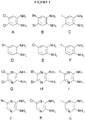
- the NPB compound is a compound selected from the group consisting of:
- the NPB compounds disclosed herein have an electron affinity greater than 0 eV. In some embodiments, the compounds disclosed herein have an electron affinity between about +0.0 eV to +5 eV. In some embodiments, the compounds disclosed herein have an electron affinity between about +0.5 eV and about +2.5 eV.
- NPB compounds as defined herein for use in treating a cancer cell (e.g. to induce an anti-cancer effect in a cancer cell).
- NPB compounds as defined herein for use for use in treating a disease or condition treatable by chemotherapy in a subject.
- the disease or condition may be a non-caner disease or condition.
- NPB compounds as defined herein for use in the treatment of cancer in a subject.
- the method may be for prevention, control, inhibition, or complete cure of cancer in a subject.
- NPB compounds as defined herein for use in the manufacture of a medicament for the treatment of cancer in a subject.
- the disease or condition may be a non-cancer disease or condition such as those recited elsewhere herein.
- the disease or condition is cancer.
- NPB compound as defined herein in the treatment of cancer in a subject.
- a use of a NPB compound as defined herein in the manufacture of a medicament for the treatment of cancer in a subject in another aspect.
- a pharmaceutical composition for use in the treatment of cancer or another disease or condition treatable by chemotherapy comprising: an effective amount of a NPB compound as defined herein; and a pharmaceutically acceptable carrier or diluent.
- a targeted chemotherapy for cancer comprising a NPB compound as defined herein.
- a method of treating cancer or another disease or condition treatable by chemotherapy in a subject in need thereof comprising: administering an effective amount of an anti-cancer compound as defined herein.
- a method of inducing an anti-cancer effect in a cancer cell comprising: administering to the cancer cell an effective amount of a NPB compound as defined herein.
- the anti-cancer effect is killing of the cancer cell.
- the cancer cell is a tumour cell.
- a method of inducing apoptosis in a cancer cell comprising, administering to the cell an effective amount of a compound as defined herein.
- a method of generating chemotherapeutic effects in a subject in need thereof comprising: administering an effective amount of a compound as defined herein.
- a combination therapy for treating cancer or another disease treatable by chemotherapy comprising: administering an effective amount of a compound as defined as defined herein to the subject; and administering one or more additional therapeutic agents to the subject.
- the therapeutic agent is a chemotherapeutic agent.
- kits comprising a NPB compound as defined herein; and instructions for use in chemotherapy.
- the treatment excludes radiation.
- the compounds are used in the absence of radiation such that they are used as anti-cancer agents rather than radiosensitizers. This means that the subject is not receiving radiation treatment in a manner that would interact with the NPB anti-cancer activity. The subject may however receive radiation treatment at another time that does not interact with the compounds of the invention.
- the cancer is sensitive to Pt-based anti-cancer drugs (e.g., cisplatin) or other anti-cancer drugs that have toxic side effects. In some embodiments, the cancer is resistant to Pt-based anti-cancer drugs (e.g., cisplatin) or other anti-cancer drugs that have toxic side effects.
- Pt-based anti-cancer drugs e.g., cisplatin
- the cancer is resistant to Pt-based anti-cancer drugs (e.g., cisplatin) or other anti-cancer drugs that have toxic side effects.
- the present disclosure relates to a class of non-platinum-based (NPB) anti-cancer compounds discovered through the femtomedicine approach.
- NPB non-platinum-based
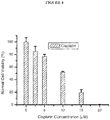
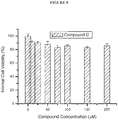
- the compounds induce anti-cancer effects in vitro and in vivo and were found to have little to no toxicity to normal cells. They were strikingly found to be much less toxic to normal cells than the platinum-containing anti-cancer drug, cisplatin, even at doses up to 200 ⁇ M.
- the compounds can be used as anti-cancer agents for targeted chemotherapy since they have the ability to kill cancer cells while having minimal toxicity toward normal cells. Accordingly, the present disclosure also relates to a targeted chemotherapy for cancer and other conditions treatable by chemotherapy. Also disclosed herein are compositions, dosage forms, methods, uses, commercial packages and kits relating to the NPB compounds disclosed herein.
- NPB NON-PLATINUM-BASED
- NPB compound refers to a non-platinum-containing anti-cancer compound as defined herein that may be used to generate anti-cancer effects in vitro or in vivo, for example, in the treatment of cancer cells or in the treatment of cancer or other disorders treatable by chemotherapy.
- the compounds may essentially be thought of as cisplatin analogues without the platinum core.
- compound molecule
- agent may be used interchangeably herein.
- the NPB compounds of the present disclosure are capable of generating the anti-cancer effects effect while having minimal toxicity.
- the NPB compounds are believed to be highly reactive with weakly-bound electrons, which are intrinsically rich in the characteristic reductive microenvironment of cancer cells. The latter was recently unraveled by the inventor [Lu et al., 2013].
- Some general features of the compounds of the present disclosure are that they comprise an aromatic ring (rather than a platinum coordinating ion), coupled to one or more electron transfer promoters, such as NH 2 groups, and one or more electron-accepting leaving groups, such as halogen.
- the NPB compounds disclosed herein are non-toxic toward normal cells, even at very high doses up to 200 ⁇ M, while they alone can induce significant DNA double-strand breaks and apoptosis and effectively kill the cancer cells in vitro or in vivo.
- the compounds are essentially inert to normal cells, possibly due to the lack of weakly-bound electrons (i.e., a reductive intracellular environment) within normal cells [Lu et al., 2013], and therefore have no or low systemic or acute toxicity in the body.
- They are highly effective anti-cancer agents that can preferentially kill cancer cells and are therefore useful for natural targeted chemotherapy of cancer and potentially other disorders treatable by chemotherapy.
- the disclosed compounds are expected to be superior to cisplatin, which is highly toxic due to the containing of the heavy metal (Pt), and halopyrimidines, which are ineffective as anti-cancer agents [Prados et al., 1999] due to the lack in their structures of an electron-transfer promoter (such as, e.g., diamino) for effective DET reactions [Lu, 2007, 2010].
- Pt heavy metal
- halopyrimidines which are ineffective as anti-cancer agents
- the NPB anti-cancer compound has the general formula I: wherein A is a 5- or 6-membered aryl or heteroaryl ring containing 0-2 ring heteroatoms selected from the group consisting of N, O and S, the remaining ring atoms being carbon, R a and R b are, independently, H, OH, alkyl, alkoxy, alkenyl, alkynyl, cycloalkyl, cycloalkenyl, cycloalkynyl, aryl, heterocyclyl, heteroaryl or an electron transfer promoter, wherein at least one of R a and R b is an electron transfer promoter; R c is, independently for each occurrence, H, OH, alkyl, alkoxy, alkenyl, alkynyl, cycloalkyl, cycloalkenyl, cycloalkynyl, aryl, heterocyclyl, heteroaryl, a leaving group, or two adjacent R c groups
- the NPB anti-cancer compound has the general formula II: wherein: X and Y are independently C-R 3 or N; R 3 is H, OH, halogen, alkyl, alkoxy, alkenyl, alkynyl, cycloalkyl, cycloalkenyl, cycloalkynyl, aryl, heterocyclyl, or heteroaryl; R a and R b are, independently, H, OH, alkyl, alkoxy, alkenyl, alkynyl, cycloalkyl, cycloalkenyl, cycloalkynyl, aryl, heterocyclyl, heteroaryl or an electron transfer promoter, wherein at least one of R a and R b is an electron transfer promoter; R 1 and R 2 are, independently, H, OH, alkyl, alkoxy, alkenyl, alkynyl, cycloalkyl, cycloalkenyl, cycloal
- the NPB anti-cancer compound has the general formula III, wherein X and Y are independently C-R 3 or N; R 3 is H, OH, halogen, alkyl, alkoxy, alkenyl, alkynyl, cycloalkyl, cycloalkenyl, cycloalkynyl, aryl, heterocyclyl, or heteroaryl; R 1 and R 2 are, independently, H, OH, alkyl, alkoxy, alkenyl, alkynyl, cycloalkyl, cycloalkenyl, cycloalkynyl, aryl, heterocyclyl, heteroaryl, or a leaving group; wherein at least one of R 1 and R 2 is a leaving group, wherein each of the alkyl, alkoxy, alkenyl, alkynyl, cycloalkyl, cycloalkenyl, cycloalkynyl, aryl, heterocyclyl and hetero
- the core of the molecule is a conjugated or aromatic ring system that may consist of one aryl or heteroaryl ring (monocyclic), or may consist of a multiple rings (polycyclic).
- the aromatic core may comprise 2 or 3 fused rings to form a bi-cyclic, or tri-cyclic core, respectively.
- Aromatic ring systems are capable of transporting an electron transiently stabilized by the electron transfer promoter, such as NH 2 groups, acquired through reaction with a weakly-bound electron, to the site of a leaving group. When a temporary anion of the molecule is formed, it can rapidly cause a loss of the leaving group, such as a stable anion, and produce a highly reactive radical.
- the aromatic core may be single 5- or 6-membered aromatic ring, such as aryl or heteroaryl.
- 6-membered mono-cyclic rings include, but are not limited to, benzene, pyridine, and pyrazine.
- 5-membered heteroaryl rings include, but are not limited to, furan, pyrole, thiophene and oxazole.
- the compound comprises a 5- or 6-membered aryl or heteroaryl ring containing 0-2 ring heteroatoms selected from the group consisting of N, O and S, the remaining ring atoms being carbon.
- the core is a 6-membered aromatic ring containing 0, 1 or 2 ring heteroatoms selected from N, such as benzene (0 N), pyridine (1 N), or pyrazine (2 N).
- the core is a 6-membered aryl ring containing 0 ring heteroatoms, such as benzene.
- the core is a 6-membered heteroaryl ring containing 1 or 2 ring heteroatoms selected from N, such as pyridine (1 N) or pyrazine (2 N).
- substituents adjacent one another on the core ring may, together with the ring atoms to which they are attached, form a 5- or 6-membered saturated, partially saturated or unsaturated ring, thereby forming a polycyclic ring system.
- fused bi-cyclic 6-membered rings include, but are not limited to, naphthalene, quinolone, isoquinoline, quinoxaline, quinazoline, cinnoline and phthalazine.
- fused tri-cyclic 6-membered rings include, but are not limited to, anthracene, phenanthracene, and acridine.
- a polycyclic ring system may comprise a combination of 5- and 6-membered ring moieties.
- the core is a polycyclic ring system, it is desirable that the compound as a whole retain its ability to transiently stabilize and transport an electron to the site of a leaving group such that a reactive radical to generate biological effects can be formed.
- the anti-cancer compounds of the present disclosure comprise one or more electron transfer promoters coupled to the aromatic ring system (e.g. one or both of R a and R b in Formula I or II, and -NH 2 in Formula III).
- An "electron transfer promoter”, as used herein, is an atom or functional group that assists in capturing and transiently stabilizing a weakly-bound electron. The electron is then transported through the aromatic ring system to cause breakage of a bond between a ring carbon atom and a leaving group. Once the leaving group breaks away from the ring, the resulting neutral radical is highly reactive, e.g. with DNA to cause DNA damage and death of a cancer cell.
- the electron transfer promoter preferably two electron transfer promoters in close proximity to one another, enhances the electron-attracting ability of the NPB molecule, making it more reactive with a weakly-bound electron existing in a cancer cell.
- the electron transfer promoters may be the same or different. In some embodiments, the electron transfer promoters are the same. In preferred embodiments, two electron transfer promoters are positioned in close proximity to one another on the ring, e.g. on adjacent ring carbons. This is a particularly effective arrangement for capturing and transferring electrons, particularly when strong leaving groups are present on the ring.
- electron transfer promoters include but are not limited to -NH 2 , -NHR,-NR 2 , -OH, -OR, -O-, -NHCOCH 3 , -NHCOR, -OCH 3 ,-OR, -CH 3 , -C 2 H 5 , R, and -C 6 H 5 .
- the electron transfer promoter is selected from the group consisting of -NH 2 , -NHR, -NR 2 , -OH, -OR, -O-, -NHCOCH 3 ,-NHCOR, -OCH 3 ,-OR, -CH 3 , -C 2 H 5 , R, and -C 6 H 5 .
- the electron transfer promoter is selected from the group consisting of -NH 2 , -NHR,-NR 2 , -OH, -NHCOCH 3 , -NHCOR, -OCH 3 , and -OR.
- the electron transfer promoter is a selected form the group consisting of -NH 2 ,-NHR, -NR 2 , -OH, and -O-. In some embodiments, the electron transfer promoter is selected from the group consisting of -NH 2 , -NHR, -NR 2 , and -OH. In some embodiments, the electron transfer promoter is selected form the group consisting of -NH 2 , -NHR, -NR 2 . In some embodiments, the electron transfer promoter is -NH 2 . In some embodiments, the electron transfer promoter is -NHR. In some embodiments, the electron transfer promoter is -NR 2 . In some embodiments, e.g. of Formula I, II or II, the electron transfer promoter is selected from the group consisting of -NHCOCH 3 , -NHCOR, -OCH 3 , and -OR.
- R in any of the above may, for example, be substituted or unsubstituted alkyl, alkoxy, alkenyl, alkynyl, cycloalkyl, cycloalkenyl, cycloalkynyl, aryl, heterocyclyl or heteroaryl groups.
- each R may be the same or different.
- R is substituted or unsubstituted alkyl.
- R a and R b are an electron transfer promoter. In some embodiments, both of R a and R b is an electron transfer promoter. In some embodiments, both of R a and R b are the same electron transfer promoter. In some embodiments, R a and R b are positioned on adjacent ring atoms. In some embodiments, a leaving group is positioned meta, ortho or para to the electron transfer promoter. In some embodiments, a leaving group is positioned meta to the electron transfer promoter. In some embodiments, a leaving group is positioned ortho to the electron transfer promoter. In some embodiments, a leaving group is positioned para to the electron transfer promoter.
- the NPB compounds of the present disclosure comprise one or more leaving groups coupled to the aromatic ring system (e.g. one or both of R 1 and R 2 in Formula I, II or III). Additional leaving groups may also be provided as substituents on the aromatic ring. Where there are multiple leaving groups, the leaving groups may be the same or different. In some embodiments, the leaving groups are the same.
- a strong leaving group e.g., a highly oxidizing atom, such as a halogen atom
- a leaving group is a molecular fragment that departs from the heterolytic bond cleavage. It can be an anion or neutral atom/molecule, but in either case it is crucial that the bond breakage (dissociation) of the NPB molecule, i.e., the formation of a leaving group, results in an unpaired electron at the remaining (the ring) part or the leaving group (e.g., a halogen atom) of the NPB molecule, that is, forming a reactive radical.
- Common anionic leaving groups include, but are not limited to, halides, such as, Cl, Br, I and F (e.g.
- sulfonate esters such as tosylate, nosylate, mesylate and triflate.
- Other leaving groups include, but are not limited to, dinitrogen, dialkyl ethers, alcohols, nitrates, phosphates, and other inorganic esters.
- the leaving group is an anionic leaving group.
- the leaving group is halogen.
- the leaving group is Cl, Br, I or F.
- the leaving group is Cl.
- the leaving group is Br.
- the leaving group is I.
- the leaving group is F.
- the leaving groups are halogen selected from the group consisting of Cl, Br and I.
- the leaving group is a neutral species of one of these leaving groups.
- one or two R c groups on Ring A are leaving groups. In some embodiments of Formula I, two R c groups on Ring A are leaving groups.
- Ring A is a 6-membered aryl or heteroaryl ring, such as benzene, pyridine or pyrazine, each of R a and R b are NH 2 ; two R c substituents on Ring A are halogen each positioned meta to one of R a and R b on Ring A; and any remaining R c groups are as defined herein.
- Ring A is benzene. In some embodiments, where Ring A is benzene, the remaining carbons on Ring A are unsubstituted carbon. In some embodiments, Ring A is pyridine. In some embodiments, where Ring A is pyridine, the remaining carbon on Ring A is unsubstituted. In some embodiments, Ring A is pyrazine.
- the leaving group is positioned ortho (e.g. within 1 ring atom), meta (e.g. within 2 ring atoms) or para (e.g. within 3 ring atoms) to the electron transfer promoter.
- carbon atoms may be unsubstituted or substituted, unless otherwise specified.
- ring carbon atoms may be unsubstituted or substituted.
- Substituents may include, for example, OH, halogen, alkyl, alkoxy, alkenyl, alkynyl, cycloalkyl, cycloalkenyl, cycloalkynyl, aryl, heterocyclyl or heteroaryl groups.
- Each of the carbon-based substituents e.g. alkyl, alkoxy, alkenyl, alkynyl, cycloalkyl, cycloalkenyl, cycloalkynyl, aryl, heterocyclyl or heteroaryl
- R c is, independently for each occurrence, H, OH, alkyl, alkoxy, alkenyl, alkynyl, cycloalkyl, cycloalkenyl, cycloalkynyl, aryl, heterocyclyl, heteroaryl, a leaving group, or two adjacent R c groups taken together with the ring atoms to which they are attached form a 5- or 6- membered saturated, partially saturated or unsaturated ring which contains 0-2 ring heteroatoms selected from N, O and S and which can be optionally substituted with 1-4 R d ; wherein at least one R c is a leaving group.
- n 1-4 (e.g. 1, 2, 3 or 4).
- Each of the alkyl, alkoxy, alkenyl, alkynyl, cycloalkyl, cycloalkenyl, cycloalkynyl, aryl, heterocyclyl and heteroaryl moieties may be optionally substituted.
- R a and R b are, independently, H, OH, alkyl, alkoxy, alkenyl, alkynyl, cycloalkyl, cycloalkenyl, cycloalkynyl, aryl, heterocyclyl, heteroaryl or an electron transfer promoter, wherein at least one of R a and R b is an electron transfer promoter.
- Each of the alkyl, alkoxy, alkenyl, alkynyl, cycloalkyl, cycloalkenyl, cycloalkynyl, aryl, heterocyclyl and heteroaryl moieties may be optionally substituted.
- R 3 may be H, OH, halogen, alkyl, alkoxy, alkenyl, alkynyl, cycloalkyl, cycloalkenyl, cycloalkynyl, aryl, heterocyclyl, or heteroaryl.
- alkyl, alkoxy, alkenyl, alkynyl, cycloalkyl, cycloalkenyl, cycloalkynyl, aryl, heterocyclyl and heteroaryl moieties may be optionally substituted.
- R 1 and R 2 are, independently, H, OH, alkyl, alkoxy, alkenyl, alkynyl, cycloalkyl, cycloalkenyl, cycloalkynyl, aryl, heterocyclyl, heteroaryl, or a leaving group.
- Each of the alkyl, alkoxy, alkenyl, alkynyl, cycloalkyl, cycloalkenyl, cycloalkynyl, aryl, heterocyclyl and heteroaryl moieties may be optionally substituted.
- at least one of R 1 and R 2 is a leaving group. In some embodiments, both R 1 and R 2 are leaving groups, where R 1 and R 2 may be the same or different.
- optionally substituted carbon-based groups above may further include one or more functional groups on the substituent, such as hydroxyl, amino, amido, cyano, nitro, carboxyl, ester, ether, ketone, aldehyde, aryl, and heteroaryl, or a combination thereof.
- the compound comprises a 6-membered aryl or heteroaryl ring selected from benzene, pyridine and pyrazine; two NH 2 electron transfer promoter groups positioned adjacent to one another on the ring, and at least one halogen leaving group positioned meta to one of the NH 2 groups.
- a halogen leaving group is positioned meta to each of the NH 2 groups. It has been found that compounds having this structure are highly effective anti-cancer agents.
- the NPB compound is selected from the group consisting of:
- the NPB compound is selected from the group consisting of:
- the NPB compound is selected from the group consisting of:
- the NPB compound is selected from the group consisting of:
- the NPB compound is selected from the group consisting of:
- the NPB compound is selected from the group consisting of:
- the NPB compound is selected from the group consisting of:
- the electron affinity (E A ) of an atom or molecule is generally defined as the energy change when an electron is added to a neutral atom or molecule to form a negative ion: X + e - ⁇ X - + energy.
- Molecules having a positive electron affinity are more susceptible to receiving electrons than molecules having a negative electron affinity (e.g. ⁇ 0.0 eV).
- a positive electron affinity is a desirable property as it relates to the reactivity of the NPB compounds with weakly-bound electrons existing in a cancer cell. It is therefore preferable that the NPB compounds have an electron affinity greater than 0.0 eV.
- the electron affinity of the NPB compounds disclosed herein is positive (e.g. > 0.0 eV). In some embodiments, the electron affinity of the NPB is between about 0.0 eV and about +5.0 eV, between about 0.0 eV and about +4.0 eV, between about 0.0 eV and about +3.0 eV, or between about 0.0 eV and about +2.5 eV.
- the electron affinity of the NPB is between about +0.2 eV and about +5.0 eV, or between about +0.2 eV and about +4.0 eV, or between about +0.2 eV and about +3.0, or between about +0.2 eV and about +2.0 eV.
- the electron affinity of the NPB is between about +0.5 eV and about +3.0 eV, between about +0.5 eV and about +2.5 eV, between about +0.5 eV and about +2.0 eV, or between about +0.5 eV and about +1.5 eV.
- the electron affinity of a molecule may be determined by skilled persons using methods known in the art.
- the NPB compounds of the present disclosure may be radiolabelled, i.e., said compounds may contain one or more atoms containing an atomic mass or mass number different from the atomic mass or mass number: ordinarily found in nature.
- exemplary radioisotopes of hydrogen, carbon, phosphorous, fluorine and chlorine include 3 H, 14 C, 32 P, 35 S, 43 F and 36 Cl, respectively.
- Radiolabelled compounds can generally be prepared by methods well known to those skilled in the art. In some cases, such radiolabelled compounds can be prepared by carrying out general synthetic procedures and substituting a readily available radiolabelled reagent for a non-radiolabelled reagent.
- aryl means a substituted or unsubstituted aromatic hydrocarbon ring system having 6-14 ring atoms, e.g. 6 ring atoms, which may be a mono-, bi- or tri-cyclic aromatic ring system, including but not limited to those aryl groups in the molecules disclosed or exemplified herein.
- aryl denotes a 6-membered aromatic ring, which may optionally be fused to one or more aromatic or non-aromatic rings.
- alkyl denotes a saturated linear or branched hydrocarbon group containing, e.g., from 1 to 10 carbon atoms, e.g. from 1 to 6 carbon atoms or from 1 to 4 carbon atoms, for example, methyl, ethyl, propyl, isopropyl, n-butyl, i-butyl, 2-butyl, t-butyl including but not limited to those alkyl groups in the molecules disclosed or exemplified herein.
- the term “lower alkyl” may also be used and it typically refers to a linear or branched hydrocarbon group containing 1-6 carbon atoms (e.g. C 1 -C 6 alkyl).
- C 1 -C 6 alkyl is intended to include C 1 , C 2 , C 3 , C 4 , C 5 , and C 6 alkyl groups.
- alkyl groups may be substituted or unsubstituted.
- alkoxy denotes a group wherein the alkyl residues are as defined above, and which is attached via an oxygen atom, e.g. methoxy and ethoxy. Alkoxy can optionally be substituted with one or more substituents.
- alkoxy refers to groups -O-alkyl, wherein the alkyl group is as defined above. Examples of “alkoxy” include, but are not limited to, methoxy, ethoxy, n-propoxy, i-propoxy, t-butoxy, n-butoxy, s-pentoxy and the like.
- alkoxy groups may be substituted or unsubstituted.
- alkenyl denotes a carbon chain of from 2 to 12, e.g. from 2 to 6, carbon atoms comprising a double bond in its chain.
- C 2-6 -alkenyl groups include, e.g., ethenyl, propen-1-yl, propen-2-yl, buten-1-yl, buten-3-yl, penten-1-yl, penten-2-yl, penten-3-yl, penten-4-yl, hexen-1-yl, hexen-2-yl, hexen-3-yl, hexen-4-yl and hexen-5-yl.
- alkenyl groups may be substituted or unsubstituted.
- alkynyl is intended to include hydrocarbon chains of either linear or branched configuration, having one or more carbon-carbon triple bonds that may occur in any stable point along the chain.
- alkynyl groups refer refers to groups having 2 to 8, e.g. 2 to 6 carbons. Examples of “alkynyl” include, but are not limited to prop-2-ynyl, but-2-ynyl, but-3-ynyl, pent-2-ynyl, 3-methylpent-4-ynyl, hex-2-ynyl, hex-5-ynyl, etc.
- alkynyl groups may be substituted or unsubstituted.
- cycloalkyl denotes any stable cyclic or polycyclic hydrocarbon group containing 3 to 13 carbons, e.g., e.g. from 3 to 6 carbons. As in the case of other alkyl moieties, cycloalkyl can optionally be substituted with one or more substituents.
- cycloalkenyl includes any stable cyclic or polycyclic hydrocarbon groups of from 3 to 13 carbon atoms, e.g. 5 to 8 carbon atoms, which contains one or more unsaturated carbon-carbon double bonds that may occur in any point along the cycle. As in the case of other alkenyl moieties, cycloalkenyl may optionally be substituted.
- Cycloalkynyl includes any stable cyclic or polycyclic hydrocarbon groups of from 5 to 13 carbon atoms, which contains one or more unsaturated carbon-carbon triple bonds that may occur in any point along the cycle. As in the case of other alkynyl moieties, cycloalkynyl may optionally be substituted.
- heterocyclyl refers to non-aromatic ring systems having five to fourteen ring atoms, e.g. 5 to 10 ring atoms, in which one or more ring carbons, e.g. 1 to 4, are each replaced by a heteroatom such as N, O, or S, the rest of the ring members being carbon atoms.
- the heterocyclyl can optionally be substituted with one or more substituents, independently at each position.
- heteroaryl refers to a mono-or polycyclic aromatic ring system having 5 - 14 ring atoms, e.g. 5 or 6 ring atoms, containing at least one ring heteroatom selected from N, O, or S, the rest of the ring members being carbon atoms. Heteroaryl moieties can optionally be substituted, independently at each position. Examples of heteroaryl moieties include but are not limited to those in the molecules disclosed or exemplified herein.
- aliphatic group refers to, e.g., alkyl, alkenyl, alkynyl, alkoxy, haloalkyl, cycloalkyl, cycloalkenyl, cycloalkynyl or non-aromatic heterocyclic groups. Aliphatic groups may contain one or more substituents.
- amine may refer to an organic compound or functional group (i.e. amino) that contains a basic nitrogen atom with a lone electron pair, including, primary amine (NRH 2 ), secondary amine (NR 1 R 2 H), and tertiary amine (NR 1 R 2 R 3 ) where each R may be the same or different. Also, two R groups may denote members of a ring, e.g., where N is a heteroatom in a heterocyclic or heteroaryl ring.
- NPB compounds disclosed herein may be present in a pharmaceutical composition, or in one of various pharmaceutical dosage forms, suitable for administration to a subject.
- Pharmaceutical compositions and dosage forms comprising the NPB compounds of the present disclosure are useful for targeted chemotherapy.
- a “pharmaceutical composition” refers to a combination of ingredients that facilitates administration of one or more agents of interest (e.g. a NPB compound) to a subject.
- a pharmaceutical composition generally comprises one or more agents of interest in admixture with one or more pharmaceutically acceptable carriers or diluents.
- Many pharmaceutically-acceptable “carriers” and “diluents” are known in the art and these generally refer to a pharmaceutically-acceptable materials, compositions, or vehicles, including liquid or solid fillers, diluents, excipients, solvents, binders, or encapsulating materials.
- each component in the composition must be “pharmaceutically acceptable” in the sense of being compatible with the other ingredients of a pharmaceutical formulation.
- Each component the composition, including the NPB compound must also be “biocompatible", such that the composition is suitable for contact with the tissues or organs of a subject without excessive toxicity, irritation, allergic response, immunogenicity, or other problems or complications, commensurate with a reasonable benefit/risk ratio.
- compositions disclosed herein may be formulated in any suitable dosage form, including single-unit and multiple-unit dosage forms.
- Exemplary dosage forms include, for example, a liquid, a solution, a suspension, an emulsion, a concentrate, a powder, a paste, a gel, a gum, a drop, a tablet, a capsule or a microcapsule.
- the dosage form is a liquid.
- the liquid is a solution, a suspension, or an emulsion.
- the NPB compounds and pharmaceutical compositions containing them may be administered by any suitable route of administration.
- the NPB compound be administered locally (e.g. into a tumor), regionally (e.g. into a body cavity) or systemically (e.g. into a blood vessel, such as a vein or artery).
- the NPB compound is formulated for enteral administration, topical administration, parenteral administration, or nasal administration.
- Enteral administration may comprise, for example, oral administration.
- the NPB compound or composition is formulated for parenteral administration.
- Parenteral administration may comprise, for example, intravenous, intraarterial, intracerebral, intraperitoneal, intramuscular, subcutaneous, intracardiac, or intraosseous administration.
- the parenteral administration is intravenous administration, e.g. injection or infusion.
- the parenteral administration is intraarterial administration.
- the parenteral administration is intraperitoneal administration.
- the parenteral administration is systemic or regional. In some embodiments, the parenteral administration is systemic. In some embodiments, the NPB compound or composition is administered intravenously.
- the NPB compound or composition may be administered according to any treatment regimen deemed appropriate by the skilled worker (e.g. clinician).
- the dosage requirements of the NPB compounds and pharmaceutical compositions containing them will vary with the particular compounds or combinations employed, the route of administration, the particular disease or condition to be treated, including cancer and other diseases or conditions, and the patient to be treated. Treatment will generally be initiated with small dosages less than the optimum dose of the compound. Thereafter, the dosage is increased until the optimum effect under the circumstances is reached.
- the NPB compounds and compositions according to the present invention are administered at a concentration that will afford effective results without causing harmful or deleterious side effects. As with any chemotherapy, a certain degree of toxic side effects may be considered acceptable.
- a sufficient amount of the NPB compound should be employed to effectively kill cancer cells.
- a dose of the NPB compound will be selected such that the NPB compound does not contribute significant unwanted effects to the therapy (the subject).
- the effective dosage of the NPB compound may vary depending upon the particular compound utilized, the mode of administration, the condition, and severity thereof, of the condition being treated, as well as the various physical factors related to the individual being treated. In many cases, satisfactory results may be obtained when the compound is administered in a daily dosage of between about 0.01 mg/kg and about 500 mg/kg, between about 0.1 mg/kg and about 125 mg/kg, between 1 mg/kg and about 50 mg/kg, between 1 mg/kg and about 25 mg/kg, between about 0.3 mg/kg and about 15mg/kg, or between about 0.5 mg/kg and 5 mg/kg, or between about 5 mg/kg and 10 mg/kg.
- the subject may receive a single-dose treatment or multiple-dose treatments.
- the NPB compounds are substantially non-toxic to normal cells and therefore may be tolerated at relatively high doses (e.g. 10 mg/kg - about 50 mg/kg, or between about 10 mg/kg to about 30 mg/kg).
- the projected daily dosages are expected to vary with route of administration. Thus, parenteral dosing will often be at levels of roughly 10% to 20% of oral dosing levels.
- the present disclosure encompasses methods of treating cancer and other diseases and conditions treatable (or believed to be treatable) by chemotherapy.
- the present disclosure relates to methods of treating cancer.
- the present disclosure relates a targeted chemotherapy for cancer.
- the methods and targeted chemotherapies disclosed herein are typically administered to individuals who have been diagnosed with cancer.
- the targeted chemotherapy may be administered to individuals who do not yet show clinical signs of cancer, but who are at risk of developing cancer, or to subjects who have previously been diagnosed with cancer but are in a period of remission or at risk of a relapse.
- the present disclosure also relates to methods of preventing or reducing the risk of developing cancer, as well as methods of treating a relapse or prolonging a remission.
- a method of generating chemotherapeutic effects in a subject in need thereof comprising administering an effective amount of a compound as defined herein.
- the present disclosure relates to methods of treating cancer in a subject in need thereof by administering an effective amount of a NPB compound as defined herein to a subject.
- the method may be for prevention, control, inhibition, or complete cure of cancer in a subject.
- the treatment excludes radiation.
- the compounds are used in the absence of radiation such that they are used as anti-cancer agents rather than radiosensitizers. This means that the subject is not receiving radiation treatment in a manner that would interact with the NPB anti-cancer activity. The subject may however receive radiation treatment at another time that does not interact with the compounds of the invention.
- the cancer is one that is sensitive to a Pt-based anti-cancer drug (e.g. cisplatin) or another cancer therapy with toxic side effects. In some embodiments, the cancer is one that is resistant to a Pt-based anti-cancer drug (e.g. cisplatin) or another cancer therapy with toxic side effects.
- a Pt-based anti-cancer drug e.g. cisplatin
- the cancer is one that is resistant to a Pt-based anti-cancer drug (e.g. cisplatin) or another cancer therapy with toxic side effects.
- the compounds disclosed herein may also be used to treat other diseases or conditions treatable by chemotherapy, for example, AL amyloidosis, ankylosing spondylitis, multiple sclerosis, Crohn's disease, psoriasis, psoriatic arthritis, systemic lupus erythematosus, rheumatoid arthritis, scleroderma, autoimmune disorders, noncancerous plasma cell dyscrasia, trigeminal neuralgia, acoustic neuromas, severe thyroid eye disease, pterygium, pigmented villonodular synovitis, and prevention of keloid scar growth, vascular restenosis, and heterotopic ossification.
- chemotherapy for example, AL amyloidosis, ankylosing spondylitis, multiple sclerosis, Crohn's disease, psoriasis, psoriatic arthritis, systemic lupus erythematosus, rheumatoid arthritis,
- the NPB compounds may also be used in conditioning regimens prior to bone marrow transplant (hematopoietic stem cell transplant).
- a method of treating a disease or condition treatable by chemotherapy in a subject by administering an effective amount of a NPB compound as defined herein to the subject.
- the disease or condition may be a non-cancer disease or condition.
- the disease is cancer.
- a method of reducing or overcoming Pt-based drug (e.g., cisplatin) toxicity wherein any of the methods described above are applied to a cell or a cancer that is sensitive to Pt-based drug (cisplatin) treatment, or are applied to a subject having a cell or a cancer that is sensitive to Pt-based drug (cisplatin) treatment.
- Pt-based drug e.g., cisplatin
- a method of overcoming Pt-based drug (e.g., cisplatin) resistance wherein any of the methods described above are applied to a cell or a cancer that is resistant to Pt-based drug (cisplatin) treatment, or are applied to a subject having a cell or a cancer that is resistant to Pt-based drug (cisplatin) treatment.
- Pt-based drug e.g., cisplatin
- the method comprises administering to a subject in need thereof a therapeutically effective amount of a compound highly reactive with an electron.
- the agent is capable of showing an anticancer effect and no systemic or acute toxic effects.
- a method of inducing an anti-cancer effect in a cancer cell comprising: administering to the cancer cell an effective amount of a NPB compound as defined herein.
- the anti-cancer effect is killing of the cancer cell.
- the cancer cell is a tumour cell.
- a method of inducing apoptosis in a cancer cell comprising, administering to the cell an effective amount of a compound as defined herein.
- the therapy is administered in a therapeutically effective amount.
- the features of the chemotherapy are as described in any of the embodiments disclosed herein.
- subject refers to a human or an animal to be treated, in particular, a mammal.
- Mammalian animals may include, for example, primate, cow, sheep, goat, horse, dog, cat, rabbit, rat, or mouse.
- the subject is a human, although the compounds disclosed herein are useful for vertinary applications as well.
- subject and patient may be used interchangeably.
- disorder and “disease” may be used interchangeably herein and may include conditions.
- cancer e.g. neoplastic disorder
- cancer cells e.g. neoplastic disorder
- proliferation or division e.g. neoplasia
- a "tumour” e.g. neoplasm
- the methods and combinations disclosed herein may be used in the treatment of cancer, cancer cells, tumors and/or symptoms associated therewith.
- Exemplary types of cancer that may be treated in accordance with the methods, uses and combinations of the present disclosure include, but are not limited to, testicular cancer, bladder cancer, cervical cancer, ovarian cancer, breast cancer, prostate cancer, head cancer, neck cancer, lung cancer (e.g. non small cell lung cancer), endometrial cancer, pancreatic cancer, Kaposi's sarcoma, adrenal cancer, leukemia, stomach cancer, colon cancer, rectal cancer, liver cancer, stomach cancer, esophageal cancer, renal cancer, thyroid cancer, uterine cancer, skin cancer, oral cancer, brain cancer, spinal cord cancer, gallbladder cancer.
- testicular cancer bladder cancer, cervical cancer, ovarian cancer, breast cancer, prostate cancer, head cancer, neck cancer, lung cancer (e.g. non small cell lung cancer), endometrial cancer, pancreatic cancer, Kaposi's sarcoma, adrenal cancer, leukemia, stomach cancer, colon cancer, rectal cancer, liver cancer, stomach cancer, esophageal cancer, renal cancer, thyroid cancer,
- the cancer may, for example, include sarcoma, carcinoma, melanoma, lymphoma, myeloma, or germ cell tumours.
- the cancer is testicular cancer, bladder cancer, cervical cancer, ovarian cancer, breast cancer, prostate cancer, head cancer, neck cancer, or lung cancer (e.g. non small cell lung cancer).
- an “anti-cancer agent” refers to a therapeutic agent that directly or indirectly kills cancer cells, for example, by triggering apoptosis, or directly or indirectly prevents, stops or reduces the proliferation of cancer cells.
- an “anti-antineoplastic agent” may include more than one therapeutic agent.
- a side effect refers to one of the effects of chemotherapy, such as kidney toxicity, liver toxicity, severe nausea and vomiting, bone marrow depression, myelosuppresion / immunosuppression, mucositis (inflammation of the lining of the digestive tract), alopecia (hair loss), cytopenia, pain, fatigue, cachexia, cutaneous complications, such as hypersensitivity reactions, and neurological, pulmonary, cardiac, reproductive and endocrine complications.
- chemotherapy such as kidney toxicity, liver toxicity, severe nausea and vomiting, bone marrow depression, myelosuppresion / immunosuppression, mucositis (inflammation of the lining of the digestive tract), alopecia (hair loss), cytopenia, pain, fatigue, cachexia, cutaneous complications, such as hypersensitivity reactions, and neurological, pulmonary, cardiac, reproductive and endocrine complications.
- the terms “treat,” “treating” and “treatment” generally include prevention, reduction or eradication of a symptom of a disease or condition to be treated.
- the terms “treat,” “treating” and “treatment” may include, for example, the prevention, eradication, removal, amelioration, modification, reduction, management or control of a tumor, cancer (tumor) cells or cancer, the minimization, prevention or delay of metastasis, the prevention or delay of onset of relapse, or the prolongation of survival of the subject.
- Metastasis refers to the dissemination of tumor cells via lymphatics or blood vessels. Metastasis also refers to the migration of tumor cells by direct extension through serous cavities, or subarachnoid or other spaces. Through the process of metastasis, tumor cell migration to other areas of the body establishes neoplasms in areas away from the site of initial appearance.
- an effective amount or “therapeutically effective amount” is intended to mean that amount of a therapeutic component, or components in a combination therapy, that will elicit a desired biological or medical response in a cell, tissue, tumor, system, or subject, which result is generally sought by a researcher, veterinarian, doctor or other clinician or technician.
- the effective amount of a NPB anti-cancer compound may be an amount sufficient to provide a desired anti-cancer effect.
- an “anticancer effect” may include, but is not limited to, reduction, prevention, inhibited growth or elimination of cancer cells, a tumor, or cancer; reduced or inhibited cancer cell proliferation; increased or enhanced killing or apoptosis of cancer cells; reduction or prevention of metastasis, and/or prolonged survival of a subject.
- a desired biological or medical response may be amelioration, alleviation, lessening, or removing of one or more symptoms of cancer, or reduction in one or more toxic side effects associated with a particular cancer treatment.
- inhibiting or “reducing”, e.g. cancer cell proliferation, it is generally meant to slow down, to decrease, or, for example, to stop the amount of cell proliferation, as measured using methods known to those of ordinary skill in the art, by, for example, 10%, 20%, 30%, 40%, 50%, 60%, 70%, 80%, 90%, 95%, or 100%, when compared to proliferating cells that are either not treated or are not subjected to the methods and combinations of the present application.
- reducing a tumor it is generally meant to reduce the size of a tumour, as measured using methods known to those of ordinary skill in the art, by, for example, 10%, 20%, 30%, 40%, 50%, 60%, 70%, 80%, 90%, 95%, or 100%, when compared to tumor size before treatment or compared to tumors that are not subjected to the methods and the NPB anti-cancer compounds of the present application.
- “increased” or “enhanced” killing or apoptosis of cancer cells it is generally meant an increase in the number of dead or apoptotic cells, as measured using methods known to those of ordinary skill in the art, by, for example, 10%, 20%, 30%, 40%, 50%, 60%, 70%, 80%, 90%, 95%, 100%, 200%, 300% or more, when compared to cells that are either not treated or are not subjected to the methods and the NPB anti-cancer compounds of the present application.
- An increase in cell killing or apoptosis could also be measured as a decrease in cell viability, as measured using a standard cell viability assay.
- apoptosis refers to an intrinsic cell self-destruction or suicide program.
- cells undergo a cascade of events including cell shrinkage, blebbing of cell membranes and chromatic condensation and fragmentation. These events culminate in cell conversion to clusters of membrane-bound particles (apoptotic bodies), which are thereafter engulfed by macrophages.
- the NPB anti-cancer compounds disclosed herein may be administered as a sole therapy or may be used in conjunction with one or more additional therapies, such as surgery or drug or radiation therapy.
- the additional therapy may be a cancer therapy including surgery, e.g. to remove a primary tumor, or a therapeutic agent, e.g., an antibiotic, anti-inflammatory agent or anticancer agent.
- Anticancer agents may include, for example, classic chemotherapeutic agents, as well as molecular targeted therapeutic agents, biologic therapy agents, and radiotherapeutic agents.
- Anticancer agents used in further combination with the chemotherapy of present disclosure may include agents selected from any of the classes known to those of ordinary skill in the art, including, for example, electron-donating agents, alkylating agents, anti-metabolites, plant alkaloids and terpenoids (e.g., taxanes), topoisomerase inhibitors, anti-tumor antibiotics, hormonal therapies, molecular targeted agents, and the like.
- the anticancer agent is an alkylating agent, an antimetabolite, an electron-donating agent, a vinca alkaloid, a taxane, a topoisomerase inhibitor, an anti-tumor antibiotic, a tyrosine kinase inhibitor, or an immunosuppressive macrolide. It will be understood that the additional agents selected should not significantly reduce effectiveness of the NPB compounds or induce/enhance unwanted toxic side effects.
- the present disclosure provides a combination therapy comprising a NPB compound as disclosed herein and another therapeutic agent or therapy (e.g. surgery or radiation).
- the combinations have a net anti-cancer effect that is greater than the anticancer effect of the individual components of the combination when administered alone.
- the anticancer effect is increased without a concomitant increase in toxic side effects.
- a combination therapy for treating cancer or another disease treatable by chemotherapy comprising administering an effective amount of a compound as defined as defined herein to the subject; and administering one or more additional therapeutic agents to the subject.
- the therapeutic agent is a chemotherapeutic agent.
- Synergistic combinations are particularly desirable.
- the combination exhibits a synergistic anti-cancer effect.
- the terms “synergistic” and “synergy” imply that the effect of the combined components of the combination is greater than the sum of the effects of the individual components when administered alone.
- NPB anti-cancer compounds disclosed herein can be used for targeted chemotherapy, e.g. for generating anti-cancer effects in the subject receiving the treatment with minimal toxicity.
- anti-cancer compounds as defined herein for use in generating anti-cancer effects of chemotherapy in a subject are provided.
- NPB anti-cancer compounds as defined herein for use in the treatment of cancer in a subject.
- NPB anti-cancer compounds as defined herein for use in combination with another agent/therapy in the treatment of cancer.
- NPB anti-cancer compounds as defined herein for use in the manufacture of a medicament for the treatment of cancer.
- NPB anti-cancer compounds as defined herein for use in the manufacture of a medicament for use in combination with another agent/therapy for the treatment of cancer.
- NPB anti-cancer compounds as defined herein for use in treating a disease or condition treatable by chemotherapy in a subject are provided.
- the use excludes radiation.
- the subject has a cancer that is sensitive to platinum-based agent (e.g., cisplatin) treatment but with significant toxic effects. In some embodiments, the subject has a cancer that is resistant to platinum-based agent (e.g., cisplatin) treatment.
- platinum-based agent e.g., cisplatin
- the chemotherapy is for administration in a therapeutically effective amount.
- NPB anti-cancer compounds disclosed herein can be used in vitro or in vivo to induce anti-cancer effects.
- NPB anti-cancer compounds as defined herein for use in treating a cancer cell e.g. to induce an anti-cancer effect in a cancer cell.
- kits and commercial packages related to the NPB anti-cancer compounds as disclosed herein for use in chemotherapy.
- a kit or commercial package is provided comprising a NPB compound as disclosed herein.
- the instructions are for use in combination with another agent/therapy in the treatment of cancer.
- the present inventor recently deduced the molecular mechanism of action of cisplatin in chemotherapy and in combination with radiotherapy [Lu, 2007; 2010; Lu et al. 2007]. Although cisplatin is a well-known DNA-attacking agent, its precise molecular mechanism of action had remained elusive.
- cisplatin is a very effective molecule for the dissociative-electron transfer (DET) reaction with a weakly-bound electron, e.g., a prehydrated electron (e pre - ) generated by radiolysis of water: e pre - + Pt ( NH 3 ) 2 Cl 2 ⁇ [ Pt ( NH 3 ) 2 Cl 2 ] * - ⁇ Cl - + Pt ( NH 3 ) 2 Cl • e pre - + Pt ( NH 3 ) 2 Cl ⁇ [ Pt ( NH 3 ) 2 Cl ] *- ⁇ Cl - + Pt ( NH 3 ) 2 • (1) .
- fs-TRLS femtosecond time-resolved laser spectroscopy
- NPB anti-cancer compounds of the present disclosure comprise an aromatic ring (rather than a platinum coordinating ion), coupled to one or more electron transfer promoters, such as NH 2 groups, and one or more leaving groups, such as halogen. Such compounds are demonstrated herein to be effective anti-tumor compounds for chemotherapy.
- such compounds are also demonstrated herein to be significantly less toxic to normal cells than a Pt-based agent (e.g., cisplatin).
- a Pt-based agent e.g., cisplatin
- the examples provided herein demonstrate that the exemplary compounds are substantially non-toxic to normal cells, even at very high doses (200 ⁇ M).
- contacting cancer cells with a non-platinum-based NPB anti-cancer compound of the disclosure in vitro or in vivo provides an anti-cancer efficacy of chemotherapy, while the compound itself is substantially non-toxic within the usable doses.
- NPB non-platinum-based anti-cancer compound
- This DET reaction mechanism is schematically shown in Figure 2 .
- the resultant radical can effectively lead to DNA damage and apoptosis (cell death), e.g. DNA damage and cell death in a cancer cell or tumor.
- NPB anti-cancer compounds Compounds A, B, C and D
- these NPBs are expected to induce few or no toxic side effects, in contrast to the heavy-metal (Pt)-based chemotherapeutic drug (cisplatin) in animals and humans.
- the viability of cells was measured by MTT assay, one of the most commonly used cell viability assays.
- This method involves the conversion of MTT (3-(4,5-dimethylthiazol-2-yl)-2,5-diphenyltetrazolium bromide) to an insoluble formazan by metabolically-active cells (live cells).
- MTT 3-(4,5-dimethylthiazol-2-yl)-2,5-diphenyltetrazolium bromide
- live cells metabolically-active cells
- solubilizing agent the formazan is dissolved and its absorbance measured, giving indication to the number of cells that survive.
- NPBs human cervical cancer
- MDA-MB-231 breast cancer
- lung cancer A549) cell lines
- cisplatin-resistant human ovarian cancer NIH:OVCAR-3, HTB-161 cell line
- Figures 9-27 show cell survival rates of various human cancer cells after the treatment with each NPB at various concentrations for 96 hr. These results show that Compounds A, B, C and D led to effective killing of cancer cells in a dose dependent manner.
- Significant anti-cancer effects of NPBs were clearly observed. For example, nearly all cervical cancer cells (ME-180) or breast cancer cells (MDA-MB-231) were killed with the presence of about 150-200 ⁇ M Compound B or C or D, which showed no toxicity against human normal cells.
- the DNA double-strand breaks (DSBs) and apoptosis induced by Compound B as an exemplary NPB compound were investigated in human cervical cancer (ME-180) cell line, as outlined in Examples 4 and 5.
- the DNA DSBs and apoptosis in the treated cancer cells were detected by the ⁇ H2AX DNA damage assay and the CellEventTM Caspase-3/7 Green Detection Kit (both were purchased from Invitrogen), respectively.
- Figure 28 shows that Compound B induced a significant amount of DNA DSBs in the treated cancer cells
- Figure 29 shows that it also correspondingly resulted in a significant percent of apoptosis in the cancer cells treated by 0-200 ⁇ M compound B.
- Example 6 The in vivo anti-cancer effects of Compound B, as an exemplary NPB compound, were investigated in the xenograft mouse tumor model of human cervical cancer (ME-180), as outlined in Example 6.
- the administration of Compound B significantly suppressed tumor growth, compared with the control group receiving no compounds in the tumor model, as can be seen from the tumor (volume) growth curves shown in Figure 30 . All of these results show that Compound B resulted in a significant growth inhibition and regrowth delay of the tumor in mice.
- the overall drug toxicity was studied in 6-8 week SCID mice through a survival assay and body weight measurements, and the acute drug toxicity was measured through the following parameters: blood collection and histology, as outlined in Example 7.
- the hepatotoxicity (ALT, ALP, total bilirubin), nephrotoxicity (blood urea, creatinine), and electrolytes (Na, K, Cl) were analyzed by biochemical methods or HPLC-mass spectroscopy.
- Compound B as an exemplary NPB compound was intentionally administered by IP injection into mice at 0, and 7 mg/kg daily for 5 days due to the non-toxicity observed in vitro cell line experiments. Mice were observed for any physical toxicity.
- Figure 31 shows that there was no effect on the weight of mice with time, i.e., Compound B exhibited no physical toxicity.
- Effective dosages may vary depending on the type and stage of cancer, the route of administration, the treatment regimen, among other factors. Studies can furthermore be conducted by skilled professionals in order to determine the optimal drug dose to be used.
- NPBs disclosed herein are designed to be preferentially active at tumor cells. This is in contrast to the case in normal cells, where a NPB will have a low reactivity, thus the DET will not occur or its reaction efficiency will be significantly lowered in normal tissue due to the lack of a reductive intracellular environment [Lu et al., 2013].
- the disclosed compounds will make a naturally targeted chemotherapy of multiple types of cancers, including (but not limited to) as cervical, ovarian, breast, lung, prostate, brain and spinal cord, head and neck, liver, stomach, leukemia, and colorectal cancers.
- Some desired characteristics of the NPBs include one or a combination of the following: (1) biocompatible; (2) effective reaction with weakly-bound electrons; (3) effective killing of cancer cells so that certain doses can be used; (4) inert to normal cells and thus minimal toxicity (ideally, substantially non-toxic) at doses to be administered; (5) reactive in a reductive or hypoxic tumor environment; (6) preferentially reactive with cancer cells; (7) capable of entering a cell and preferably nucleus; and/or (8) applicable to multiple types of tumors.
- Example 1 Femtosecond laser spectroscopic observation of the DET reaction of anti-cancer compounds (NPBs) with a weakly-bound electron
- the DET reaction of a new NPB anti-cancer compound with a weakly-bound electron was studied by the fs-TRLS methodology, which was demonstrated previously [Lu, 2007; 2010].
- our fs laser amplifier system Spectra-Physics, Spitfire
- a intense pump pulse at 350 nm was used to generate a weakly-bound electron (e wb - ) by 2-photon excitation of a H 2 O molecule into a higher energy state H 2 O* that then ionizes to produce an e wb - ;
- a probe pulse at 400 nm coming at certain delay was used to monitor the DET reaction with the electron by detecting transient absorbance of the reaction intermediate anion state.
- NPB compounds can indeed enhance their DET reactions with a weakly-bound electron that exists in the reductive intracellular environment of a cancer cell.
- Example 2 In Vitro tests on the toxicity of NPBs in treating human normal cells
- Cisplatin, dichloro-diamino-benzene (Compound A), bromo-diamino-benzene (Compound D), insulin, and 3-(4,5-Dimethylthiazol-2-yl)-2,5-diphenyltetrazolium bromide (MTT) were obtained from Sigma-Aldrich.
- Dibromo-diamino-benzene (Dibromo-phenylenediamine, Compound B) was obtained from TCI-America.
- Diiodo-diaminobenzene (Compound C) was synthesized, purified and crystalized in our laboratory, and the structures and purity were examined by NMR and mass spectrometry.
- MEM and fetal bovine serum (FBS), penicillin G and streptomycin were obtained from Hyclone Laboratories (UT, USA).
- Stock solution of cisplatin was freshly prepared in ultrapure water or saline, and stock solutions of Compounds A, B, C, D were prepared in pure ethanol, where the final concentration of ethanol was ⁇ 1% when treated to cells.
- a human skin diploid fibroblast (GM05757 cell line) was obtained from the Coriell Cell Repository directly. Fetal bovine serum (FBS) was obtained from Hyclone Laboratories (UT, USA). The GM05757 normal cells were cultivated with MEM (Hyclone) supplemented with 10% FBS, 100 units/mL penicillin G and 100 ⁇ g/mL streptomycin (Hyclone). The cells were maintained at 37 °C in a humidified atmosphere containing 5% CO 2 .
- FBS Fetal bovine serum
- NPBs The toxic effects of NPBs on cell viability were determined by the 3-[4,5-dimethylthiazol-2-yl]-2,5-diphenyl tetrazoliumbromide (MTT) assay.
- MTT 3-[4,5-dimethylthiazol-2-yl]-2,5-diphenyl tetrazoliumbromide
- Cells were cultured in 96-well plates (5 x 10 3 cells/well) for 24 h. The culture medium was replaced by fresh culture medium and incubated for 72 or 96 h with varying drug concentrations.
- the MTT assay of cell viability was then conducted. Briefly, 100 ⁇ l new medium without phenol red containing 1.2 mM MTT (sigma) (i.e., adding 10 ⁇ l 12 mM MTT stock solution in PBS) were added to each well and incubated for 4 h.
- the medium was then removed, and the formazan crystals solubilized by 100 ⁇ L/well DMSO (or alternatively by 100 ⁇ l /well SDS and incubated for another 4 h).
- the surviving fraction was determined by measuring the absorbance at 540 nm (570 nm for SDS solubilization) using a Multiskan Spectrum UV/Vis microplate reader (Thermo Scientific), which is directly proportional to the number of viable cells.
- the present inventor hypothesized normal cells due to the lack of a reductive intracellular environment have a low reactivity to the disclosed compounds that are highly oxidizing. Therefore, the NPBs show no or low toxicity towards normal cells.
- the disclosed compounds are in contrast to the clinically used cisplatin which has a high affinity to human normal cells and is highly toxic. Thus, these NPBs have the potential to be excellent non-toxic anticancer agents.
- Cisplatin, dichloro-diamino-benzene (Compound A), bromo-diamino-benzene (Compound D), insulin, and 3-(4,5-Dimethylthiazol-2-yl)-2,5-diphenyltetrazolium bromide (MTT) were obtained from Sigma-Aldrich.
- Dibromo-diamino-benzene (Dibromo-phenylenediamine, Compound B) was obatined from TCI-America.
- Diiodo-diaminobenzene (Compound C) was synthesized, purified and crystalized in our laboratory, and the structures and purity were examined by NMR and mass spectrometry.
- MEM and fetal bovine serum (FBS), penicillin G and streptomycin were obtained from Hyclone Laboratories (UT, USA).
- Stock solution of cisplatin was freshly prepared in ultrapure water or saline, and stock solutions of Compounds A, B, C, D were prepared in pure ethanol, where the final concentration of ethanol was ⁇ 1% when treated to cells.
- a human skin diploid fibroblast (GM05757 cell line) was obtained from the Coriell Cell Repository directly, while the human cervical cancer cell line (HeLa, ATCC#: CCL-2; or ME-180), human breast cancer cell line (MDA-MB-231), human ovarian cancer cell line (NIH:OVCAR-3, ATCC#: HTB-161) and human lung cancer cell line (A549, ATCC#: CCL-185TM), together with RPMI 1640, F-12K, McCoy's 5A and L-15 culture media, were obtained from the American Type Culture Collection (ATCC) directly. Fetal bovine serum (FBS) was obtained from Hyclone Laboratories (UT, USA).
- FBS Fetal bovine serum
- the GM05757 normal cells and HeLa cells were cultivated with MEM (Hyclone) supplemented with 10% FBS, 100 units/mL penicillin G and 100 ⁇ g/mL streptomycin (Hyclone).
- the complete growth media for ME-180, NIH:OVCAR-3, A549 and MDA-MB-231cells were the ATCC-formulated McCoy's 5A Medium supplemented with 10% FBS, RPMI 1640 medium with 20%, F-12K medium with 10% FBS, and L-15 Medium (Leibovitz) with 10% FBS, respectively.
- the cells were maintained at 37 °C in a humidified atmosphere containing 5% CO 2 .
- the anti-cancer effects of NPBs on cell viability were determined by the 3-[4,5-dimethylthiazol-2-yl]-2,5-diphenyl tetrazoliumbromide (MTT) assay.
- MTT 3-[4,5-dimethylthiazol-2-yl]-2,5-diphenyl tetrazoliumbromide
- Cells were cultured in 96-well plates (5 x 10 3 cells/well) for 24 h. The culture medium was replaced by fresh culture medium and incubated for 96 h with varying drug concentrations.
- the MTT assay of cell viability was then conducted. Briefly, 100 ⁇ l new medium without phenol red containing 1.2 mM MTT (sigma) (i.e., adding 10 ⁇ l 12 mM MTT stock solution in PBS) were added to each well and incubated for 4 h.
- the medium was then removed, and the formazan crystals solubilized by 100 ⁇ L/well DMSO (or alternatively by 100 ⁇ l /well SDS and incubated for another 4 h).
- the surviving fraction was determined by measuring the absorbance at 540 nm (570 nm for SDS solubilization) using a Multiskan Spectrum UV/Vis microplate reader (Thermo Scientific), which is directly proportional to the number of viable cells.
- NPBs human cervical cancer
- MDA-MB-231 breast cancer
- lung cancer A549) cell lines
- NIH:OVCAR-3 cisplatin-resistant human ovarian cancer
- Figures 9-27 show cell survival rates of various human cancer cells after the treatment of a NPB with various concentrations for 96 hr.
- Compounds A, B, C and D killed cancer cells in a dose dependent manner, in striking contrast to the results for human normal cells ( Figures 5-8 ). It is clearly seen that the cancer cells were effectively killed by the presence of NPBs.
- nearly all cervical cancer cells (ME-180) and breast cancer cells (MDA-MB-231) were killed with the presence of about 200 ⁇ M Compound B or C or D, which showed no toxicity against human normal cells.
- NPB Compound A/B/C/D
- Example 4 A NPB compound (B) induces DNA double-strand breaks in cancer cells
- the ⁇ H2AX DNA damage assay (Invitrogen) was used to detect DSBs of genomic DNA in cancer cells.
- the phosphorylated H2AX foci are a biomarker of DNA DSB.
- DNA DSBs are measured by specific antibody-based detection of phosphorylated H2AX ( ⁇ H2AX) in the nucleus.
- the human cervical cancer (ME-180) cells were treated with different concentrations of compound B for 12 h under the cell culture conditions described above. Then following the detailed experimental procedures described in the Protocol provided by the manufacturer, we performed the HCS DNA Damage Assay of the treated cells.
- the images of cells were acquired with a Nikon Eclipse TS100 fluorescence microscope; quantitative analyses of activated ⁇ -H2AX (DNA DBS yield) in the cells were performed using an Image J software.
- Example 5 Compound B induces significant apoptosis in human cervical cancer (ME-180) cells
- the CellEventTM Caspase-3/7 Green Detection Kit was purchased from Invitrogen.
- Human cervical cancer (ME-180) cells were purchased from the American Type Culture Collection (ATCC). Cells were cultivated with MEM (Hyclone) supplemented with 10% fetal bovine serum (Hyclone), 100 units/mL penicillin G and 100 ⁇ g/mL streptomycin (Hyclone). The cells were maintained at 37 °C in a humidified atmosphere containing 5% CO 2 .
- the CellEventTM Caspase-3/7 Green Detection Kit (Invitrogen) was used for the detection of activated caspases and apoptotic cells following the vendor's protocol.
- This kit provides a fluorescent inhibitor of caspases (FLICA) specific for caspase -3 and -7; the cells show green fluorescence for activated caspase-3 and -7.
- the reagent consists of a four amino acid peptide (DEVD) conjugated to a nucleic acid binding dye. This cell-permeant substrate is intrinsically non-fluorescent, because the DEVD peptide inhibits the ability of the dye to bind to DNA.
- the DEVD peptide After activation of caspase-3 or caspase-7 in apoptotic cells, the DEVD peptide is cleaved, enabling the dye to bind to DNA and produce green fluorescence.
- the CellEventTM Caspase-3/7 Green Detection Reagent add the substrate to the cells in complete growth medium, incubate for 30 minutes, and image. Apoptotic cells with activated caspase-3/7 show bright green nuclei, while cells without activated caspase 3/7 exhibit minimal fluorescence signal. This robust assay has been shown to be highly specific for caspase-3/7 activation and can be used to monitor caspase-3 or -7 activation with live-cell fluorescence imaging.
- this stain can also provide information on nuclear morphology, including condensed nuclei typical of late-stage apoptosis.
- ME-180 cells were grown to 60% confluence and then treated with 0-200 ⁇ M compound B for 48 h. The fluorescence was detected with a Nikon Eclipse TS100 microscope. Images were captured with an attached camera.
- Example 6 In vivo test of Compound B in the xenograft mouse model of human cervical cancer (ME-180) in female SCID mice
- control article 5% EtOH/medium
- Compound B at 7 mg/kg in 5% EtOH/medium daily for 5 days, as shown in Table 1.
- Table 1 Study Groups in Example 6 Group # Group Name No. mice Drug Dose Admin. Route Volume ( ⁇ L/20g) Schedule 1 Control 5 N/A i.p. 200 Daily for 5 days 2 Compound B 5 7 mg/kg i.p. 200 daily for 5 days
- ME-180 (human cervical cancer) cells were cultured in the ATCC-formulated McCoy's 5A Medium supplemented with 10% FBS. The cells in a flask were maintained at 37 °C in a humidified atmosphere containing 5% CO 2 . The cells were rinsed with PBS, trypsined for detachment from the bottom of the flask, mixed with fresh growth medium, and centrifuged to remove the supernatant. The cells were re-suspend with fresh medium to appropriate concentration for s.c. injection into the mice. Injection volume was 50 ⁇ l (1.5 ⁇ 10 6 cells) per animal.
- ME-180 tumour cells were subcutaneously into female SCID mice (age 6-8 weeks) in a volume of 50 ⁇ L into the left flank using a 27-gauge needle. This was established as a subcutaneous (SC) xenograft mouse model of human cervical cancer.
- mice were individually weighed and injected intraperitoneally according to body weight for an injection concentration as outlined in the study group table above.
- the injection volume was based on 200 ⁇ L per 20 g mouse.
- the skin surface was wiped down with 70% isopropyl alcohol to clean the injection site.
- Tumor size was measured as a function of time to assess tumor growth delay associated with treatment using slide caliper. Animals were also weighed at the time of tumour measurement. Tumours in mice were allowed to grow to a maximum of 1000 mm 3 before termination.
- mice All animals were observed post administration, and at least once a day, more if deemed necessary, during the pre-treatment and treatment periods for mortality and morbidity. In particular, animals were monitored for signs of ill health such as body weight loss, change in appetite, behaviour changes such as altered gait, lethargy and gross manifestations of stress.
- mice The two groups (five 6-8 week SCID mice/group) in the experiment were: (1) control article (in 5% EtOH/medium); and (2) Compound B 7 mg/kg in 5% EtOH/medium, as shown in Table 2. Compound B was injected IP every day for 5 days. Table 2. Study Groups in Example 7 Group # Group Name No. mice TA/CA* Dose (mg/kg) Admin. Route Volume ( ⁇ L/20g) Schedule (Days) 1 Control 5 N/A i.p. 200 Daily for 5 days 2 Compound B 5 7 i.p. 200 Daily for 5 days * TA: Test Article; CA: Control Article
- IP intraperitoneally
- the hepatotoxicity (ALT, ALP, total bilirubin), nephrotoxicity (blood urea, creatinine), and electrolytes (Na, K, Cl) were analyzed by biochemical methods or HPLC-mass spectroscopy. Mice were observed for any physical toxicity. Blood samples were collected from the saphenous vein at various time points after drug injection. At the end of the study, whole organs were harvested in order to assess liver, and kidney toxicity.
- mice All animals were observed post administration, and at least once a day, more if deemed necessary, during the pre-treatment and treatment periods for mortality and morbidity. In particular, animals were monitored for signs of ill health such as body weight loss, change in appetite, behavior changes such as altered gait, lethargy and gross manifestations of stress.
- the overall drug toxicity was studied in 6-8 week SCID mice through a survival assay and body weight measurements, and the acute drug toxicity was studied by measurements of the hepatotoxicity (ALT, ALP, total bilirubin), nephrotoxicity (blood urea, creatinine), and electrolytes (Na, K, CI). As shown in Figure 31 , Compound B showed no effect on the weight of mice with time, exhibiting no physical toxicity.
Landscapes
- Health & Medical Sciences (AREA)
- Chemical & Material Sciences (AREA)
- Organic Chemistry (AREA)
- Public Health (AREA)
- Pharmacology & Pharmacy (AREA)
- Veterinary Medicine (AREA)
- General Health & Medical Sciences (AREA)
- Medicinal Chemistry (AREA)
- Animal Behavior & Ethology (AREA)
- Life Sciences & Earth Sciences (AREA)
- Bioinformatics & Cheminformatics (AREA)
- Nuclear Medicine, Radiotherapy & Molecular Imaging (AREA)
- General Chemical & Material Sciences (AREA)
- Engineering & Computer Science (AREA)
- Chemical Kinetics & Catalysis (AREA)
- Epidemiology (AREA)
- Immunology (AREA)
- Biomedical Technology (AREA)
- Neurosurgery (AREA)
- Neurology (AREA)
- Dermatology (AREA)
- Orthopedic Medicine & Surgery (AREA)
- Rheumatology (AREA)
- Physical Education & Sports Medicine (AREA)
- Transplantation (AREA)
- Acyclic And Carbocyclic Compounds In Medicinal Compositions (AREA)
- Pharmaceuticals Containing Other Organic And Inorganic Compounds (AREA)
- Organic Low-Molecular-Weight Compounds And Preparation Thereof (AREA)
- Pyridine Compounds (AREA)
- Medicines That Contain Protein Lipid Enzymes And Other Medicines (AREA)
Applications Claiming Priority (3)
| Application Number | Priority Date | Filing Date | Title |
|---|---|---|---|
| US201361887988P | 2013-10-08 | 2013-10-08 | |
| EP14852850.8A EP3055287B1 (en) | 2013-10-08 | 2014-10-08 | Non-platinum-based anti-cancer compounds for use in targeted chemotherapy |
| PCT/CA2014/050974 WO2015051458A1 (en) | 2013-10-08 | 2014-10-08 | Non-platimun-based anti-cancer compounds for use in targeted chemotherapy |
Related Parent Applications (2)
| Application Number | Title | Priority Date | Filing Date |
|---|---|---|---|
| EP14852850.8A Division-Into EP3055287B1 (en) | 2013-10-08 | 2014-10-08 | Non-platinum-based anti-cancer compounds for use in targeted chemotherapy |
| EP14852850.8A Division EP3055287B1 (en) | 2013-10-08 | 2014-10-08 | Non-platinum-based anti-cancer compounds for use in targeted chemotherapy |
Publications (1)
| Publication Number | Publication Date |
|---|---|
| EP3578176A1 true EP3578176A1 (en) | 2019-12-11 |
Family
ID=52812401
Family Applications (2)
| Application Number | Title | Priority Date | Filing Date |
|---|---|---|---|
| EP19188591.2A Withdrawn EP3578176A1 (en) | 2013-10-08 | 2014-10-08 | Non-platinum-based anti-cancer compounds for use in targeted chemotherapy |
| EP14852850.8A Active EP3055287B1 (en) | 2013-10-08 | 2014-10-08 | Non-platinum-based anti-cancer compounds for use in targeted chemotherapy |
Family Applications After (1)
| Application Number | Title | Priority Date | Filing Date |
|---|---|---|---|
| EP14852850.8A Active EP3055287B1 (en) | 2013-10-08 | 2014-10-08 | Non-platinum-based anti-cancer compounds for use in targeted chemotherapy |
Country Status (8)
| Country | Link |
|---|---|
| US (2) | US10463662B2 (https=) |
| EP (2) | EP3578176A1 (https=) |
| JP (1) | JP6765302B2 (https=) |
| KR (1) | KR102307387B1 (https=) |
| CN (2) | CN114380700A (https=) |
| AU (1) | AU2014334461B2 (https=) |
| CA (1) | CA2926571C (https=) |
| WO (1) | WO2015051458A1 (https=) |
Families Citing this family (8)
| Publication number | Priority date | Publication date | Assignee | Title |
|---|---|---|---|---|
| EP3319968A1 (en) | 2015-07-06 | 2018-05-16 | Rodin Therapeutics, Inc. | Heterobicyclic n-aminophenyl-amides as inhibitors of histone deacetylase |
| WO2017007756A1 (en) | 2015-07-06 | 2017-01-12 | Rodin Therapeutics, Inc | Hetero-halo inhibitors of histone deacetylase |
| MX388576B (es) | 2016-06-07 | 2025-03-20 | Jacobio Pharmaceuticals Co Ltd | Derivados heterociclicos novedosos utiles como inhibidores de shp2. |
| US11168068B2 (en) | 2016-07-18 | 2021-11-09 | Janssen Pharmaceutica Nv | Tau PET imaging ligands |
| HUE057849T2 (hu) | 2017-01-11 | 2022-06-28 | Alkermes Inc | Hiszton deacetiláz biciklusos gátlói |
| EA202190196A1 (ru) | 2017-03-23 | 2021-08-31 | Джакобио Фармасьютикалс Ко., Лтд. | Новые гетероциклические производные, применимые в качестве ингибиторов shp2 |
| LT3664802T (lt) | 2017-08-07 | 2022-06-27 | Alkermes, Inc. | Bicikliniai histonų deacetilazės inhibitoriai |
| US20210393623A1 (en) | 2018-09-26 | 2021-12-23 | Jacobio Pharmaceuticals Co., Ltd. | Novel Heterocyclic Derivatives Useful as SHP2 Inhibitors |
Citations (4)
| Publication number | Priority date | Publication date | Assignee | Title |
|---|---|---|---|---|
| US20030219440A1 (en) * | 2002-04-17 | 2003-11-27 | Annette Tobia | 3-deoxyglucosone and skin |
| US20060089316A1 (en) * | 2004-10-25 | 2006-04-27 | Brown Truman R | Method for reducing a susceptibility to tumor formation induced by 3-deoxyglucosone and precursors thereof |
| WO2006088920A1 (en) * | 2005-02-16 | 2006-08-24 | Schering Corporation | Amine-linked pyridyl and phenyl substituted piperazine-piperidines with cxcr3 antagonist activity |
| WO2014094178A1 (en) | 2012-12-20 | 2014-06-26 | Lu qing-bin | Radiosensitizer compounds for use in combination with radiation |
Family Cites Families (10)
| Publication number | Priority date | Publication date | Assignee | Title |
|---|---|---|---|---|
| US3822261A (en) * | 1972-10-30 | 1974-07-02 | Dow Chemical Co | 5,6-dihalo-2-fluoroalkyl-1h-imidazo(4,5-b)pyrazines |
| EP0743855A1 (en) * | 1994-01-03 | 1996-11-27 | Acea Pharmaceuticals, Inc. | 8-aza, 6-aza and 6,8-diaza-1,4-dihydroquinoxaline-2,3-diones and the use thereof as antagonists for the glycine/nmda receptor |
| DE102004054545A1 (de) * | 2004-09-16 | 2006-04-06 | Max-Delbrück-Centrum für Molekulare Medizin | Änderung des Beladungszustandes von MHC-Molekülen |
| GB0428082D0 (en) | 2004-12-22 | 2005-01-26 | Welcome Trust The Ltd | Therapeutic compounds |
| CN101611007A (zh) | 2006-12-20 | 2009-12-23 | 先灵公司 | 新颖的jnk抑制剂 |
| MX2009013332A (es) * | 2007-06-08 | 2010-01-25 | Mannkind Corp | Inhibidores de ire-1 alfa. |
| ATE551336T1 (de) * | 2007-08-16 | 2012-04-15 | Hoffmann La Roche | Substituierte hydantoine |
| DK200801600A (en) | 2008-11-17 | 2010-05-18 | Engkilde Kaare | Method for treatment of inflammatory diseases |
| EP2493862B1 (en) * | 2009-10-28 | 2016-10-05 | Newlink Genetics Corporation | Imidazole derivatives as ido inhibitors |
| WO2012096813A1 (en) * | 2011-01-11 | 2012-07-19 | Merck Sharp & Dohme Corp. | Imidazole derivatives |
-
2014
- 2014-10-08 CN CN202111465211.9A patent/CN114380700A/zh active Pending
- 2014-10-08 CN CN201480066862.2A patent/CN106232581A/zh active Pending
- 2014-10-08 AU AU2014334461A patent/AU2014334461B2/en not_active Ceased
- 2014-10-08 CA CA2926571A patent/CA2926571C/en active Active
- 2014-10-08 US US15/028,169 patent/US10463662B2/en active Active
- 2014-10-08 WO PCT/CA2014/050974 patent/WO2015051458A1/en not_active Ceased
- 2014-10-08 EP EP19188591.2A patent/EP3578176A1/en not_active Withdrawn
- 2014-10-08 JP JP2016522040A patent/JP6765302B2/ja not_active Expired - Fee Related
- 2014-10-08 KR KR1020167012036A patent/KR102307387B1/ko not_active Expired - Fee Related
- 2014-10-08 EP EP14852850.8A patent/EP3055287B1/en active Active
-
2019
- 2019-09-18 US US16/574,800 patent/US11446294B2/en active Active
Patent Citations (4)
| Publication number | Priority date | Publication date | Assignee | Title |
|---|---|---|---|---|
| US20030219440A1 (en) * | 2002-04-17 | 2003-11-27 | Annette Tobia | 3-deoxyglucosone and skin |
| US20060089316A1 (en) * | 2004-10-25 | 2006-04-27 | Brown Truman R | Method for reducing a susceptibility to tumor formation induced by 3-deoxyglucosone and precursors thereof |
| WO2006088920A1 (en) * | 2005-02-16 | 2006-08-24 | Schering Corporation | Amine-linked pyridyl and phenyl substituted piperazine-piperidines with cxcr3 antagonist activity |
| WO2014094178A1 (en) | 2012-12-20 | 2014-06-26 | Lu qing-bin | Radiosensitizer compounds for use in combination with radiation |
Non-Patent Citations (18)
| Title |
|---|
| "Pharmaceutical Preformulation and Formulation", 2004, CRC PRESS LLC |
| "Remington: The Science and Practice of Pharmacy", 2005, THE PHARMACEUTICAL PRESS AND THE AMERICAN PHARMACEUTICAL ASSOCIATION |
| "The Challenge of Cancer", SCIENCE, vol. 331, 2011, pages 1491 |
| A. CHOUDHURY ET AL.: "Targeting homologous recombination using imatinib results in enhanced tumor cell chemosensitivity and radiosensitivity", MOL CANCER THER, vol. 8, 2009, pages 203 - 2013 |
| A. H. ZEWAIL: "Femtochemistry: Atomic-Scale Dynamics of the Chemical bond using ultrafast lasers (Nobel Lecture)", ANGEW. CHEM. INT. ED., vol. 39, 2000, pages 2587 - 2631 |
| B. ALBERTS: "The Promise of Cancer Research", SCIENCE, vol. 320, 2008, pages 19 |
| D. M. REESE: "Anticancer drugs", NATURE, vol. 378, 1995, pages 532 |
| H. VARMUS: "The New Era in Cancer Research", SCIENCE, vol. 312, 2006, pages 1162 |
| L.Y. LUN. OUQ.-B. LU: "Antioxidant Induces DNA Damage, Cell Death and Mutagenicity in Human Lung and Skin Normal Cells", SCI. REP., vol. 3, no. 1-11, 2013, pages 3169 |
| LU QIN-BIN ET AL: "SUPPLEMENTAL INFORMATION THIS SUPPLEMENTARY INFORMATION INCLUDES MATERIALS AND EXTENDED METHODS, TABLE S1 AND FIGURES S1 AND S2. MATERIALS AND EXTENDED METHODS", EBIOMEDICINE, 1 June 2015 (2015-06-01), pages 1 - 7, XP055351679, Retrieved from the Internet <URL:https://www.ncbi.nlm.nih.gov/pmc/articles/PMC4551467/bin/mmc1.pdf> [retrieved on 20170306] * |
| M. D. PRADOS ET AL.: "A phase 3 randomized study of radiotherapy plus procarbazine, CCNU, and vincristine (PCV) with or without BUdR for the treatment of anaplastic astrocytoma: a preliminary report of RTOG 9404", INT. J. RADIAT. ONCOL. BIOL. PHYS., vol. 45, 1999, pages 1109 |
| P. G. ROSEB. N. BUNDYE. B. WATKINSJ. T. THIGPENG. DEPPEM. A. MAIMAND. L. CLARKE-PEARSONS. INSALACO: "Concurrent cisplatin-based radiotherapy and chemotherapy for locally advanced cervical cancer", N. ENGL. J. MED., vol. 340, 1999, pages 1144 - 53 |
| Q.-B. LU: "Effects of Ultrashort-Lived Prehydrated Electrons in Radiation Biology and Their Applications for Radiotherapy of Cancer", MUTAT. RES.: REV. MUTAT. RES., vol. 704, 2010, pages 190 - 199, XP027045278 |
| Q.-B. LU: "Molecular Reaction Mechanisms of Combination Treatments of Low-Dose Cisplatin with Radiotherapy and Photodynamic Therapy", J. MED. CHEM., vol. 50, 2007, pages 2601 - 2604 |
| Q.-B. LUS. KALANTARIC.-R. WANG: "Electron Transfer Reaction Mechanism of Cisplatin with DNA at the Molecular Level", MOL. PHARMACEUTICS, vol. 4, 2007, pages 624 - 628 |
| QING-BIN LU ET AL: "In Vitro and In Vivo Studies of Non-Platinum-Based Halogenated Compounds as Potent Antitumor Agents for Natural Targeted Chemotherapy of Cancers", EBIOMEDICINE, vol. 2, no. 6, 1 June 2015 (2015-06-01), pages 544 - 553, XP055351614, ISSN: 2352-3964, DOI: 10.1016/j.ebiom.2015.04.011 * |
| ROBERT GODEMANN ET AL: "Fragment-Based Discovery of BACE1 Inhibitors Using Functional Assays", BIOCHEMISTRY, vol. 48, no. 45, 17 November 2009 (2009-11-17), pages 10743 - 10751, XP055332800, ISSN: 0006-2960, DOI: 10.1021/bi901061a * |
| YOSHINORI KIDANI ET AL: "SYNTHESIS OF PLATINUM II COMPLEXES OF 4 SUBSTITUTED O PHENYLENEDIAMINE DERIVATIVES AND DETERMINATION OF THEIR ANTI TUMOR ACTIVITY", CHEM. PHARM. BULL., 1 January 1979 (1979-01-01), pages 2577 - 2581, XP055351546, Retrieved from the Internet <URL:https://www.jstage.jst.go.jp/article/cpb1958/27/11/27_11_2577/_pdf> [retrieved on 20170303] * |
Also Published As
| Publication number | Publication date |
|---|---|
| US20200009133A1 (en) | 2020-01-09 |
| EP3055287B1 (en) | 2019-11-06 |
| KR102307387B1 (ko) | 2021-09-30 |
| AU2014334461A1 (en) | 2016-04-28 |
| EP3055287A1 (en) | 2016-08-17 |
| KR20160070784A (ko) | 2016-06-20 |
| CN106232581A (zh) | 2016-12-14 |
| JP6765302B2 (ja) | 2020-10-07 |
| EP3055287A4 (en) | 2017-04-12 |
| CN114380700A (zh) | 2022-04-22 |
| JP2016534048A (ja) | 2016-11-04 |
| US10463662B2 (en) | 2019-11-05 |
| WO2015051458A1 (en) | 2015-04-16 |
| US20160235743A1 (en) | 2016-08-18 |
| CA2926571A1 (en) | 2015-04-16 |
| CA2926571C (en) | 2022-05-17 |
| US11446294B2 (en) | 2022-09-20 |
| AU2014334461B2 (en) | 2019-06-13 |
Similar Documents
| Publication | Publication Date | Title |
|---|---|---|
| US11446294B2 (en) | Non-platinum-based anti-cancer compounds for use in targeted chemotherapy | |
| EP2935215B1 (en) | Radiosensitizer compounds for use in combination with radiation | |
| Rodríguez‐Enríquez et al. | Targeting of cancer energy metabolism | |
| Gottumukkala et al. | Synthesis, cellular uptake and animal toxicity of a tetra (carboranylphenyl)-tetrabenzoporphyrin | |
| Krasnovskaya et al. | Novel copper-containing cytotoxic agents based on 2-thioxoimidazolones | |
| CN102231984A (zh) | 使用选择性细胞周期蛋白依赖性激酶4/6抑制剂对抗化疗化合物的造血防护 | |
| KR20220008869A (ko) | 항암 핵 호르몬 수용체-표적화 화합물 | |
| WO2012064898A1 (en) | Singleton inhibitors of sumoylation enzymes and methods for their use | |
| Shao et al. | Biotinylated curcumin as a novel chemosensitizer enhances naphthalimide-induced autophagic cell death in breast cancer cells | |
| Wang et al. | Locally unlocks prodrugs by radiopharmaceutical in tumor for cancer therapy | |
| EP2890374B1 (en) | Compositions and methods for drug-sensitization or inhibition of a cancer cell | |
| US20120156311A1 (en) | Combination therapy for cancer comprising a platinum-based antineoplastic agent and a biocompatible electron donor | |
| Lv et al. | Hypoxia-responsive paclitaxel prodrugs: linker evaluation and NIR-triggered self-amplifying photodynamic-chemotherapy nanoplatform | |
| Pei et al. | A novel photosensitizer berberine derivative B12 induces apoptosis and suppresses HIF-1α expression in colorectal cancer cells via mitochondria-to-nucleus sequential-targeting | |
| WO2026089661A1 (en) | Cascade x-ray energy transfer-based radio-afterglow nanoparticles for cancer theranostics | |
| WO2025193796A1 (en) | Ros-activatable prodrugs of doxazolidine as novel cancer therapy paradigm | |
| Firman | Defining the chemical and molecular mechanisms of cytotoxicity Induced by the endoperoxide class of antimalarials |
Legal Events
| Date | Code | Title | Description |
|---|---|---|---|
| PUAI | Public reference made under article 153(3) epc to a published international application that has entered the european phase |
Free format text: ORIGINAL CODE: 0009012 |
|
| STAA | Information on the status of an ep patent application or granted ep patent |
Free format text: STATUS: THE APPLICATION HAS BEEN PUBLISHED |
|
| AC | Divisional application: reference to earlier application |
Ref document number: 3055287 Country of ref document: EP Kind code of ref document: P |
|
| AK | Designated contracting states |
Kind code of ref document: A1 Designated state(s): AL AT BE BG CH CY CZ DE DK EE ES FI FR GB GR HR HU IE IS IT LI LT LU LV MC MK MT NL NO PL PT RO RS SE SI SK SM TR |
|
| STAA | Information on the status of an ep patent application or granted ep patent |
Free format text: STATUS: THE APPLICATION IS DEEMED TO BE WITHDRAWN |
|
| 18D | Application deemed to be withdrawn |
Effective date: 20200613 |