EP3576639B1 - Fil chirurgical biorésorbable et procédé de fabrication d'un tel fil - Google Patents
Fil chirurgical biorésorbable et procédé de fabrication d'un tel fil Download PDFInfo
- Publication number
- EP3576639B1 EP3576639B1 EP18702771.9A EP18702771A EP3576639B1 EP 3576639 B1 EP3576639 B1 EP 3576639B1 EP 18702771 A EP18702771 A EP 18702771A EP 3576639 B1 EP3576639 B1 EP 3576639B1
- Authority
- EP
- European Patent Office
- Prior art keywords
- sleeve
- wire
- caprolactone
- polymer
- copolymers
- Prior art date
- Legal status (The legal status is an assumption and is not a legal conclusion. Google has not performed a legal analysis and makes no representation as to the accuracy of the status listed.)
- Active
Links
Images


Classifications
-
- A—HUMAN NECESSITIES
- A61—MEDICAL OR VETERINARY SCIENCE; HYGIENE
- A61L—METHODS OR APPARATUS FOR STERILISING MATERIALS OR OBJECTS IN GENERAL; DISINFECTION, STERILISATION OR DEODORISATION OF AIR; CHEMICAL ASPECTS OF BANDAGES, DRESSINGS, ABSORBENT PADS OR SURGICAL ARTICLES; MATERIALS FOR BANDAGES, DRESSINGS, ABSORBENT PADS OR SURGICAL ARTICLES
- A61L17/00—Materials for surgical sutures or for ligaturing blood vessels ; Materials for prostheses or catheters
- A61L17/005—Materials for surgical sutures or for ligaturing blood vessels ; Materials for prostheses or catheters containing a biologically active substance, e.g. a medicament or a biocide
-
- A—HUMAN NECESSITIES
- A61—MEDICAL OR VETERINARY SCIENCE; HYGIENE
- A61B—DIAGNOSIS; SURGERY; IDENTIFICATION
- A61B17/00—Surgical instruments, devices or methods
- A61B17/04—Surgical instruments, devices or methods for suturing wounds; Holders or packages for needles or suture materials
- A61B17/06—Needles ; Sutures; Needle-suture combinations; Holders or packages for needles or suture materials
- A61B17/06166—Sutures
-
- A—HUMAN NECESSITIES
- A61—MEDICAL OR VETERINARY SCIENCE; HYGIENE
- A61L—METHODS OR APPARATUS FOR STERILISING MATERIALS OR OBJECTS IN GENERAL; DISINFECTION, STERILISATION OR DEODORISATION OF AIR; CHEMICAL ASPECTS OF BANDAGES, DRESSINGS, ABSORBENT PADS OR SURGICAL ARTICLES; MATERIALS FOR BANDAGES, DRESSINGS, ABSORBENT PADS OR SURGICAL ARTICLES
- A61L17/00—Materials for surgical sutures or for ligaturing blood vessels ; Materials for prostheses or catheters
- A61L17/06—At least partially resorbable materials
- A61L17/10—At least partially resorbable materials containing macromolecular materials
-
- A—HUMAN NECESSITIES
- A61—MEDICAL OR VETERINARY SCIENCE; HYGIENE
- A61L—METHODS OR APPARATUS FOR STERILISING MATERIALS OR OBJECTS IN GENERAL; DISINFECTION, STERILISATION OR DEODORISATION OF AIR; CHEMICAL ASPECTS OF BANDAGES, DRESSINGS, ABSORBENT PADS OR SURGICAL ARTICLES; MATERIALS FOR BANDAGES, DRESSINGS, ABSORBENT PADS OR SURGICAL ARTICLES
- A61L17/00—Materials for surgical sutures or for ligaturing blood vessels ; Materials for prostheses or catheters
- A61L17/06—At least partially resorbable materials
- A61L17/10—At least partially resorbable materials containing macromolecular materials
- A61L17/105—Polyesters not covered by A61L17/12
-
- A—HUMAN NECESSITIES
- A61—MEDICAL OR VETERINARY SCIENCE; HYGIENE
- A61L—METHODS OR APPARATUS FOR STERILISING MATERIALS OR OBJECTS IN GENERAL; DISINFECTION, STERILISATION OR DEODORISATION OF AIR; CHEMICAL ASPECTS OF BANDAGES, DRESSINGS, ABSORBENT PADS OR SURGICAL ARTICLES; MATERIALS FOR BANDAGES, DRESSINGS, ABSORBENT PADS OR SURGICAL ARTICLES
- A61L17/00—Materials for surgical sutures or for ligaturing blood vessels ; Materials for prostheses or catheters
- A61L17/06—At least partially resorbable materials
- A61L17/10—At least partially resorbable materials containing macromolecular materials
- A61L17/12—Homopolymers or copolymers of glycolic acid or lactic acid
-
- A—HUMAN NECESSITIES
- A61—MEDICAL OR VETERINARY SCIENCE; HYGIENE
- A61B—DIAGNOSIS; SURGERY; IDENTIFICATION
- A61B17/00—Surgical instruments, devices or methods
- A61B2017/00004—(bio)absorbable, (bio)resorbable or resorptive
-
- A—HUMAN NECESSITIES
- A61—MEDICAL OR VETERINARY SCIENCE; HYGIENE
- A61B—DIAGNOSIS; SURGERY; IDENTIFICATION
- A61B17/00—Surgical instruments, devices or methods
- A61B2017/00526—Methods of manufacturing
-
- A—HUMAN NECESSITIES
- A61—MEDICAL OR VETERINARY SCIENCE; HYGIENE
- A61B—DIAGNOSIS; SURGERY; IDENTIFICATION
- A61B17/00—Surgical instruments, devices or methods
- A61B2017/00743—Type of operation; Specification of treatment sites
- A61B2017/00792—Plastic surgery
-
- A—HUMAN NECESSITIES
- A61—MEDICAL OR VETERINARY SCIENCE; HYGIENE
- A61B—DIAGNOSIS; SURGERY; IDENTIFICATION
- A61B17/00—Surgical instruments, devices or methods
- A61B2017/00831—Material properties
- A61B2017/00893—Material properties pharmaceutically effective
-
- A—HUMAN NECESSITIES
- A61—MEDICAL OR VETERINARY SCIENCE; HYGIENE
- A61B—DIAGNOSIS; SURGERY; IDENTIFICATION
- A61B17/00—Surgical instruments, devices or methods
- A61B2017/00831—Material properties
- A61B2017/00964—Material properties composite
-
- A—HUMAN NECESSITIES
- A61—MEDICAL OR VETERINARY SCIENCE; HYGIENE
- A61B—DIAGNOSIS; SURGERY; IDENTIFICATION
- A61B17/00—Surgical instruments, devices or methods
- A61B17/04—Surgical instruments, devices or methods for suturing wounds; Holders or packages for needles or suture materials
- A61B17/06—Needles ; Sutures; Needle-suture combinations; Holders or packages for needles or suture materials
- A61B17/06166—Sutures
- A61B2017/06176—Sutures with protrusions, e.g. barbs
-
- A—HUMAN NECESSITIES
- A61—MEDICAL OR VETERINARY SCIENCE; HYGIENE
- A61B—DIAGNOSIS; SURGERY; IDENTIFICATION
- A61B90/00—Instruments, implements or accessories specially adapted for surgery or diagnosis and not covered by any of the groups A61B1/00 - A61B50/00, e.g. for luxation treatment or for protecting wound edges
- A61B90/39—Markers, e.g. radio-opaque or breast lesions markers
- A61B2090/3966—Radiopaque markers visible in an X-ray image
Definitions
- the present invention relates generally to a bioresorbable surgical support wire intended in particular to be used in reconstructive surgery, which exhibits improved mechanical properties and which degrade slowly over time.
- tissue maintenance and more particularly the maintenance of the skin, constitutes 13% of reconstructive surgery interventions.
- Performing this type of surgery requires medical devices, generally support wires implanted in the tissue.
- DM medical devices
- DMB bioabsorbable medical devices
- the latter degrade gradually, generally by a hydrolytic process, over a month to four years. This property of degradation over time is certainly interesting for the patient within the framework of a surgical procedure, because the use of a DMB does not imply any post-operative intervention to eliminate it from the patient's body, the latter. ci gradually being eliminated.
- bioabsorbable MDs have many drawbacks, such as: the high cost of their raw material (3000 to 6000 € / kg vs. 300 to 1000 € / kg for medical silicone), the degradation of their mechanical properties during their shaping, the intrinsic rigidity of the polymers used, the progressive loss of their mechanical properties after implantation in the human body, and finally a significant risk of inflammatory reaction.
- Support threads typically have a sleeve with nubs that pull and hang the fabrics.
- the principle of action of these threads is to stretch, thanks to the pins, the tissues in order to allow their reorganization, that is to say the generation of collagen between the tissues, which has disappeared due to the aging of the person.
- the remodeling of the fabric will be all the more effective when the support thread can keep its mechanical properties as long as possible.
- the effect of reconstructive surgery can be prolonged for a longer time.
- the wire For its implantation, the wire must be both flexible (deformation of 10 to 20%) and resistant to the mechanical stresses of the surgeon (8 N).
- support threads are bioabsorbable.
- support yarns which are marketed by the American company SINCLAIR under the “Silhouette Soft® ” and “Silhouette Lift®” brands.
- This commercial yarn is composed of an L-polylactic acid (PLLA) monofilament on which poly (lactic-co-glycolic) (PLGA) cones are overmolded.
- PLLA L-polylactic acid
- Mention may also be made of the support threads marketed by the Russian company Aptos under the brand “Aptos thread ® " and by the Italian company PromoItalia under the brand "Happy Lift ® ".
- poly (lactic-co-caprolactone) or P (LA-CL)
- these products are characterized by a relatively rapid degradation of their mechanical properties.
- the effect of reconstructive surgery is limited to 1 year at most, and thus forces the patient to undergo a new operation.
- Materials used in medical devices exhibit a complete degradation time of 3 to 6 months for PLGA, 6 to 12 months for PDO, 12 to 18 months for P (LA-CL) and 1 to 2 years for PLLA .
- PDO and P-based (LA-CL) sutures lose 50% of their mechanical strength at 3 and 6 weeks for a complete degradation time of 26 weeks. Normally, the degradation time should be on the order of at least 52 weeks. The difference arises from the degradation of the material during its transformation. Generally, the wire is produced by extrusion which requires heating the material for a fairly long time.
- the Applicant has developed a bioresorbable support yarn, a core yarn made up of a wound filament molded in a flexible sleeve of bioresorbable polymer surrounding the core yarn along which are arranged pimples.
- Bioresorbable polymer surgical threads are known to those skilled in the art.
- the US patent application US 2007/219587 describes a bioresorbable yarn having on its surface projections, inclined spines, hooks or protrusions of multiple shapes (similar to pins), which are distributed in a spiral around the yarn.
- this surgical wire may consist of a straight wire with pins, around which another external wire is wound to provide a “spring” effect. The pins are therefore partially or completely hidden by the outer thread (s).
- the European patent application EP 2687238 discloses a bioabsorbable suture thread comprising a core thread of a low melting point bioabsorbable component, and a plurality of winding threads of a higher melting temperature bioabsorbable component, these winding threads being wound around the soul thread.
- This suture thread has the major drawback of not having external pins, used to pull and suspend the tissues.
- EP2815771 describes a surgical suture comprising a core thread and a sleeve with barbs which may be made from bioabsorbable polymers.
- the suture can be coated or impregnated with an active principle.
- the bioresorbable surgical thread according to the invention exhibits the following properties: ( i ) flexibility during handling, ( ii ) satisfactory mechanical strength after 6 months of degradation in vitro, ( iii ) satisfactory mechanical strength for its implantation.
- the polymer constituting the core thread can be a polyester chosen from the group of polylactic acids (PLA), glycolic acids (PGA), copolymers of said polylactic acids (PLA) and glycolics (PGA), copolymers ⁇ -caprolactone, copolymers of ⁇ -caprolactone and lactic acid, and mixtures thereof.
- L-polylactic acid will preferably be used as the polymer constituting the core thread.
- PLLA is characterized by a high Young's modulus but low elongation. The degradation time is greater than one year [1] .
- the polymer constituting the sleeve can be ⁇ -polycaprolactone or a copolymer of ⁇ -caprolactone.
- PCL and its copolymers are characterized by a low Young's modulus but a high elongation [1] .
- the copolymer of ⁇ -polycaprolactone and of lactic acid molar ratio of between 20/80 and 40/60, and preferably of the order of 30/70, may be used as constituent polymer of the sleeve.
- the flexible sleeve made of bioresorbable polymer can also comprise an active principle and / or a contrast agent.
- the pins of the sleeve can be arranged in the same plane symmetrically on either side of the cross section of the sleeve wire, these pins being inclined with the same angle of inclination ⁇ with respect to a straight section.
- the surgical thread according to the invention can further comprise at least one additional pin arranged in a plane perpendicular to the plane containing the other pins and the cross section.
- the process according to the invention has the advantage of being a manufacturing process that can be easily industrialized.
- the bioresorbable polymer which can be used in the context of the process according to the invention for producing the sleeve is as defined above.
- ⁇ -polycaprolactone (or PCL) or an ⁇ -caprolactone copolymer can be used as the bioresorbable polymer for producing the sleeve.
- the copolymer of ⁇ -polycaprolactone and lactic acid with a molar ratio of between 20/80 and 40/60, and preferably of the order of 30/70 may be used as the constituent polymer of the sleeve.
- step A3) of the process according to the invention it is also possible to introduce, into the impression, an active principle and / or a contrast agent.
- a flexible mold can be used, which makes it possible to avoid the use of a mold release agent.
- an active principle and / or a contrast agent is added to the impression, at the same time as the bioresorbable polymer in powder form.
- the contrast agent or the active principle can be mixed with the bioresorbable polymer, with or without the aid of a dispersant, before depositing in the impression.
- active ingredients which can be used in the context of the present invention, mention may in particular be made of antibacterial or analgesic agents.
- a dispersing agent can also be added.
- the polymer which can be used in the context of the process according to the invention as core thread is also as defined above.
- the polymer constituting the core yarn can be a polyester chosen from the group of polylactic acids (PLA), glycolic acids (PGA), copolymers of said polylactic (PLA) and glycolic (PGA) acids, copolymers of ⁇ -caprolactone, copolymers of ⁇ -caprolactone and of lactic acid, and mixtures thereof.
- L-polylactic acid (PLLA) will preferably be used as the polymer constituting the core thread.
- the mandrel facilitates the positioning of the core wire in the sleeve.
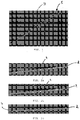
- the figure 1 is a photograph representing a surgical thread 1 consisting solely of a sleeve made of poly (lactic-caprolactone) (or P (LA-CL)) acid: the tests carried out in the examples below (see also the figures 8 and 9 ) show that such a surgical thread degrades faster over time than a surgical thread according to the invention.
- the wire shown on the figure 1 differs from a surgical wire according to the invention by the absence of core wire 3 overmolded in the sleeve 3.
- the core wire 2 consists of a filament wound (in accordance with step A0 of the method according to the invention) on a mandrel, for different windings on the mandrel.
- the diameter of the mandrel is 0.3 mm, the wire was wound with a pitch of 1.5 with 4 passes; on the figure 2b , the diameter of the mandrel is also 0.3 mm, the wire was wound with a pitch of 1.5 with 6 passes; on the figure 2c , the diameter of the mandrel is 0.2mm, the wire was wound with a pitch of 1.5 with 0.6 passes.
- the winding makes it possible to increase the breaking force of the core wire 2.
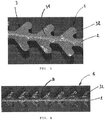
- the figure 3 shows an absorbable surgical thread according to the invention comprising a core thread of PLLA and a sleeve of PCL.
- This figure shows that the core wire is perfectly centered in the middle of the sleeve.
- the tests carried out in the examples below show that such a surgical thread have improved properties in terms of aging and tensile strength compared to the threads shown in the figures 1 and 2 (corresponding respectively to the sleeve alone and to the core wire alone).
- the wire without the sleeve degrades (mechanically) faster than with the sleeve.
- the figure 4 shows the molding of the mandrel on which a PLLA filament has been wound (according to step B1), in a PCL sleeve.
- the bioresorbable support wire according to the invention is obtained, shown in figures 5a and 5b .
- the overmolding of the mandrel around which the core wire is wound facilitates penetration into the sleeve.
- the core wire in the sleeve without going through a preliminary preparation step by winding a filament 21 around a mandrel 4.
- the figures 6a and 6b show the molding of a mandrel-less PLLA core wire in a PCL sleeve.
- the placement of the core wire in the sleeve is a bit more delicate and complicated than with the mandrel.
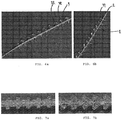
- the figures 7a and 7b are two photographs showing a surgical wire according to the invention with a core wire in PLLA and a sleeve in poly (lactic-caprolactone) (or P (LA-LC)) acid, comprising pins arranged in two perpendicular planes.
- a surgical wire according to the invention with a core wire in PLLA and a sleeve in poly (lactic-caprolactone) (or P (LA-LC)) acid, comprising pins arranged in two perpendicular planes.
- two sleeves have been molded around the core wire.
- each mold is provided with a guide.
- the polymer material constituting the sleeve is introduced into the two molds, then spatula.
- the core wire is then introduced into the first mold during cooling, and then the second mold is added. Then, the two molds are compressed using a press.
- the solution was renewed after 3 weeks.
- the volume was maintained at 7L by occasional addition of PBS.
- the threads according to the invention are also subjected to a force of 1 N: a mass (92 ⁇ 1 g) was attached to the end of the threads placed in the solution of PBS.
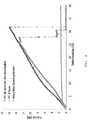
- the figure 9 shows the results of the tensile tests for the bioresorbable yarn according to the invention, which are compared with those of its sleeve 3 alone on the one hand, and with those carried out on the core yarn 2 on the other hand.
- the core wire 2 in PLLA gives the DM its mechanical strength.
- the yarn is braided.
- the braiding parameters (pitch, number of passes) influence the resulting properties.
- the mechanical properties of the wire 1 have been optimized (the P-sleeve (LA-CL) having low mechanical properties compared to the core wire).
- the breaking force of the braided yarn reaches 14 N while that of an un-braided yarn is 4 N.
- the wire shaping process which does not require any heat source, does not degrade the initial properties of the yarn .
- the winding of the thread can be optimized according to the mass of fabrics to be supported.
- the sleeve 3 provides the support wire (or DM) with the pins necessary for maintaining the tissues.
- the sleeve is molded at a very controlled temperature, slightly above the melting temperature, so as not to degrade the material and therefore its properties. It is made from a commercial bioresorbable copolymer which has a complete degradation time of between 12 and 18 months. This material exhibits viscoelastic behavior, characterized by significant elongation.
Landscapes
- Health & Medical Sciences (AREA)
- Life Sciences & Earth Sciences (AREA)
- Engineering & Computer Science (AREA)
- Surgery (AREA)
- Veterinary Medicine (AREA)
- Animal Behavior & Ethology (AREA)
- Public Health (AREA)
- General Health & Medical Sciences (AREA)
- Materials Engineering (AREA)
- Chemical & Material Sciences (AREA)
- Vascular Medicine (AREA)
- Epidemiology (AREA)
- Molecular Biology (AREA)
- Biomedical Technology (AREA)
- Medical Informatics (AREA)
- Heart & Thoracic Surgery (AREA)
- Nuclear Medicine, Radiotherapy & Molecular Imaging (AREA)
- Materials For Medical Uses (AREA)
Description
- La présente invention concerne de manière générale un fil chirurgical biorésorbable de soutien destiné à être notamment utilisé en chirurgie reconstructive, qui présente des propriétés mécaniques améliorées et se dégradent lentement dans le temps.
- La chirurgie reconstructive est un domaine en croissance depuis son apparition après la première guerre mondiale. Le marché mondial de cette chirurgie représentait 5,5 milliards d'euros en 2013 dont 1,3 milliards d'euros en Europe et devrait être multiplié par deux d'ici 2019.
- La régénération du maintien des tissus, et plus particulièrement le maintien de la peau, constituent 13% des interventions en chirurgie reconstructive. La réalisation de ce type de chirurgie nécessite des dispositifs médicaux, généralement des fils de soutien implantés dans les tissus.
- Parmi les dispositifs médicaux (désignés ci-après par l'acronyme DM), on distingue dispositifs médicaux permanents des dispositifs médicaux biorésorbables (désignés ci-après par l'acronyme DMB). Ces derniers se dégradent progressivement, généralement selon un procédé hydrolytique, selon un mois à quatre ans. Cette propriété de dégradation au cours du temps est certes intéressante pour le patient dans le cadre d'une procédure chirurgicale, car l'utilisation d'un DMB n'implique aucune intervention post-opératoire pour l'éliminer du corps du patient, celui-ci s'éliminant progressivement. Mais, les DM biorésorbables présentent de nombreux inconvénients, tels que : le coût élevé de leur matière première (3000 à 6000 €/kg vs. 300 à 1000€/kg pour du silicone médical), la dégradation de leurs propriétés mécaniques lors de leur mise en forme, la rigidité intrinsèque des polymères utilisés, la perte progressive de leurs propriétés mécaniques après implantation dans le corps humain, et enfin un risque non négligeable de réaction inflammatoire.
- A l'heure actuelle, environ 200 000 interventions de chirurgie reconstructive sont réalisées par an dans le monde, qui nécessitent chacune environ six fils de soutien. Les fils de soutien comportent typiquement un manchon avec des picots qui permettent de tirer et suspendre les tissus. Le principe d'action de ces fils est de tendre, grâce aux picots, les tissus afin de permettre leur réorganisation, c'est-à-dire la génération de collagène entre les tissus, qui a disparu en raison du vieillissement de la personne. Le remodelage du tissu sera d'autant plus efficace que le fil de soutien pourra garder ses propriétés mécaniques le plus longtemps possible. Ainsi l'effet de la chirurgie reconstructrice pourra être d'autant plus longtemps prolongé. Pour son implantation, le fil doit être à la fois souple (déformation de 10 à 20%) et résistant aux sollicitations mécaniques du chirurgien (8 N).
- Actuellement, 80% des fils de soutien sont biorésorbables. On connait notamment quatre types de fils de soutien actuellement disponibles dans le commerce. En particulier, on peut notamment citer les fils de soutien biorésorbables, qui sont commercialisés par la société américaine SINCLAIR sous la marque «Silhouette Soft ®» et « Silhouette Lift® ». Ce fil commercial est composé d'un monofilament en acide L-polylactique (PLLA) sur lequel sont surmoulés des cônes acide poly(lactique-co-glycolique) (PLGA). On peut encore citer les fils de soutien commercialisés par la société russe Aptos sous la marque «Aptos thread®» et par la société italienne PromoItalia sous la marque «Happy Lift®». Il s'agit dans les deux cas de fils avec picots en acide poly(lactique-co-caprolactone) (ou P(LA-CL)). De par la nature de leurs polymères et la probable diminution des propriétés du matériau lors de leur mise en forme, ces produits sont caractérisés par une dégradation relativement rapide de leurs propriétés mécaniques. Il en résulte que l'effet de la chirurgie reconstructive est limité à 1 an au plus, et oblige ainsi le patient à subir une nouvelle intervention. Les matériaux utilisés dans dispositifs médicaux présentent un temps de dégradation complet de 3 à 6 mois pour le PLGA, 6 à 12 mois pour le PDO, 12 à 18 mois pour le P(LA-CL) et de 1 à 2 ans pour le PLLA. Les fils de suture à base de PDO et P(LA-CL) perdent 50% de leur tenue mécanique à 3 et 6 semaines pour un temps de dégradation complet de 26 semaines. Normalement, le temps de dégradation devrait être de l'ordre d'au moins 52 semaines. La différence est issue de la dégradation de la matière lors de sa transformation. Généralement, le fil est fabriqué par extrusion ce qui nécessite de chauffer assez longuement la matière.
- Malgré la perte rapide des propriétés mécaniques après implantation, ces fils de soutien sont quand même intéressants car ils sont souples et permettent leur bonne maniabilité du DM par le chirurgien. A contrario, Les matériaux biorésorbables, qui conservent leurs propriétés mécaniques après plusieurs mois d'implantation comme les PLLA de haut poids moléculaire, sont caractérisés par une grande rigidité ce qui est en inadéquation avec le besoin de souplesse nécessaire à l'implantation du fil de soutien. En outre, le besoin de souplesse limite la masse de tissu que peut supporter le fil de soutien. Il est donc nécessaire d'utiliser plusieurs fils pour une opération.
- Enfin, on peut encore citer la demande de brevet anglais
GB2537033 - Afin de pallier les inconvénients précités, la demanderesse a mis au point un fil de soutien biorésorbable, un fil d'âme constitué d'un filament bobiné moulé dans un manchon souple en polymère biorésorbable entourant le fil d'âme le long duquel sont disposées des picots.
- Les fils chirurgicaux en polymère biorésorbables sont connus de l'homme de l'art. Ainsi, la demande de brevet américain
US 2007/219587 décrit un fil biorésorbable présentant à sa surface des projections, des épines inclinées, des crochets ou des saillies de formes multiples (assimilables à des picots), qui sont distribués en spirale autour du fil. Selon un mode de réalisation particulier, ce fil chirurgical peut être constitué d'un fil droit avec picots, autour duquel est enroulé un autre fil extérieur pour apporter un effet « ressort ». Les picots sont donc partiellement ou complètement cachés par le ou les fils extérieurs. - Par ailleurs, la demande de brevet européen
EP 2687238 décrit un fil de suture bioabsorbable comprenant un fil d'âme en un composant bioabsorbable à bas point de fusion, et une pluralité de fils d'enroulement constitués d'un composant bioabsorbable à température de fusion plus élevée, ces fils d'enroulement étant enroulés autour du fil d'âme. Ce fil de suture a l'inconvénient majeur de ne pas présenter de picots extérieurs, servant à tirer et suspendre les tissus. -
EP2815771 décrit une suture chirurgicale comprenant un fil d'âme et un manchon avec des picots qui peuvent être constitués de polymères biorésorbables. La suture peut être revêtue ou imprégnée d'un principe actif. - La présente invention a donc pour objet un fil chirurgical biorésorbable de soutien, caractérisé en ce qu'il comprend :
- un fil d'âme constitué d'un filament bobiné d'un polymère choisi dans le groupe des polyesters et des polyuréthanes biorésorbables, et
- un manchon en polymère biorésorbable entourant le fil d'âme, ce manchon comprenant une section droite le long de laquelle sont disposées des picots (32) inclinés et contenus dans au moins un plan (33).
- Le fil chirurgical biorésorbable selon l'invention présente les propriétés suivantes : (i) souplesse lors de son maniement, (ii) tenue mécanique satisfaisante après 6 mois de dégradation in vitro, (iii) tenue mécanique satisfaisante pour son implantation.
- De manière avantageuse, le polymère constituant le fil d'âme peut être un polyester choisi dans le groupe des acides polylactiques (PLA), des acides glycoliques (PGA), des copolymères desdits acides polylactiques (PLA) et glycoliques (PGA), des copolymères d'ε-caprolactone, des copolymères d'ε-caprolactone et d'acide lactique, et de leurs mélanges.
- On utilisera de préférence l'acide L-polylactique (PLLA) en tant que polymère constituant le fil d'âme. Le PLLA est caractérisé par un module d'Young élevé mais une élongation faible. Le temps de dégradation est supérieur à un an[1].
- De manière avantageuse, le polymère constituant le manchon peut être le ε-polycaprolactone ou un copolymère d'ε-caprolactone. Le PCL et ses copolymères est caractérisé par un faible module d'Young mais une grande élongation[1]. De manière avantageuse, on pourra utiliser à titre de polymère constitutif du manchon le copolymère d'ε-polycaprolactone et d'acide lactique rapport molaire compris entre 20/80 et 40/60, et de préférence de l'ordre de 30/70.
- De manière avantageuse, le manchon souple en polymère biorésorbable peut en outre comprendre un principe actif et / ou un agent de contraste.
- De manière avantageuse, les picots du manchon peuvent être disposés dans un même plan symétriquement de part et d'autre de la section droite du fil manchon, ces picots étant inclinés avec un même angle d'inclinaison α par rapport à une section droite.
- De manière avantageuse, le fil chirurgical selon l'invention peut en outre comprendre au moins un picot supplémentaire disposé dans un plan perpendiculaire au plan contenant les autres picots et la section droite.
- La présente invention a également pour objet un procédé de fabrication d'un fil chirurgical biorésorbable, caractérisé en ce qu'il comprend les étapes suivantes :
- A) moulage du manchon comprenant les sous-étapes suivantes :
- A1) Fourniture d'un moule présentant une empreinte creuse ayant la forme du manchon ;
- A2) Introduction à froid d'un polymère biorésorbable sous forme pulvérulente (notamment sous forme de granulés ou en poudre) dans l'empreinte ;
- A3) Chauffage jusqu'à ce que le polymère biorésorbable soit dans un état au moins pseudo visqueux ;
- A4) spatulage pour que le polymère biorésorbable remplisse complètement le moule ;
- B) Refroidissement du manchon dans son moule pendant 10 à 30 minutes, jusqu'à solidification du polymère biorésorbable et obtention dudit manchon ;
- C) Démoulage du manchon.
- Le procédé selon l'invention présente l'avantage d'être un procédé de fabrication aisément industrialisable.
- Le polymère biorésorbable utilisable dans le cadre du procédé selon l'invention pour réaliser le manchon est tel que défini précédemment. Ainsi, de manière avantageuse, on pourra utiliser à titre de polymère biorésorbable pour réaliser le manchon le ε-polycaprolactone (ou PCL) ou un copolymère d'ε-caprolactone. De préférence, on pourra utiliser à titre de polymère constitutif du manchon le copolymère d'ε-polycaprolactone et d'acide lactique avec rapport molaire compris entre 20/80 et 40/60, et de préférence de l'ordre de 30/70.
- De manière avantageuse, on peut lors de l'étape A3) du procédé selon l'invention, introduire en outre, dans l'empreinte, un principe actif et / ou un agent de contraste.
- De manière avantageuse, on peut utiliser un moule souple, ce qui permet d'éviter l'utilisation de démoulant.
- De manière avantageuse, on peut immerger (étape B1) un fil d'âme dans le moule tant que le manchon est à l'état pseudo-visqueux.
- De manière avantageuse lors de l'étape A2, on ajoute dans l'empreinte, en même temps que le polymère biorésorbable sous forme pulvérulente, un principe actif et/ou un agent de contraste.
- De manière avantageuse, l'agent de contraste ou le principe actif peuvent être mélangés au polymère biorésorbable, à l'aide ou non d'un dispersant, avant le dépôt dans l'empreinte.
- A titre de principes actifs utilisables dans le cadre de la présente invention, on peut notamment citer des agents antibactériens ou antalgiques. Afin d'améliorer le mélange du principe actif ou agent de contraste, un agent dispersant peut aussi être ajouté.
- Le polymère utilisable dans le cadre du procédé selon l'invention à titre de fil d'âme est également tel que défini précédemment.
- Ainsi, de manière avantageuse, le polymère constituant le fil d'âme peut être un polyester choisi dans le groupe des acides polylactiques (PLA), des acides glycoliques (PGA), des copolymères desdits acides polylactiques (PLA) et glycoliques (PGA), des copolymères d'ε-caprolactone, des copolymères d'ε-caprolactone et d'acide lactique, et de leurs mélanges. On utilisera de préférence l'acide L-polylactique (PLLA) en tant que polymère constituant le fil d'âme.
- De préférence, le procédé selon l'invention peut en outre comprendre les étapes suivantes :
- préalablement à l'étape A) de moulage du manchon, une étape A0) de préparation d'un fil d'âme par bobinage d'un filament autour d'un mandrin ;
- après le démoulage C) du manchon intégrant le fil d'âme autour du mandrin (4), une étape de retrait D) du mandrin.
- Le mandrin permet de faciliter le positionnement du fil d'âme dans le manchon.
- D'autres caractéristiques et avantages de la présente invention apparaîtront plus clairement à la lecture de la description suivante donnée à titre d'exemple illustratif et non limitatif et faite référence aux figures annexées dans lesquelles :
- La
figure 1 est une photographie représentant un fil chirurgical constitué uniquement d'un manchon en P(LA-CL) ; - La
figure 2 regroupe trois photographies (figures 2a, 2b et 2c ) d'un fil d'âme pour un fil chirurgical selon l'invention, ce fil d'âme étant constitué d'un filament bobiné sur un mandrin, pour différents bobinages sur le mandrin ; - La
figure 3 est une photographie représentant un fil chirurgical résorbable selon l'invention ; - La
figure 4 montre le moulage du mandrin sur lequel un filament en PLLA a été bobiné, dans un manchon en PCL ; - Les
figures 5a et 5b montrent le fil d'âme surmoulé dans le manchon en PCL de lafigure 4 , obtenu après retrait du mandrin ; - Les
figures 6a et 6b montrent le moulage d'un fil d'âme en PLLA sans mandrin dans un manchon en PCL ; - Les
figures 7a et 7b sont deux photographies représentant un fil chirurgical selon l'invention avec un fil d'âme en PLLA et un manchon en PCL, comportant des picots disposés dans deux plans perpendiculaires ; - La
figure 8 montre l'évolution au cours du temps d'un fil de soutien selon l'invention, lors d'un test de vieillissement ; - La
figure 9 montre l'évolution de la force de rupture mesurée lors d'essais mécaniques de traction réalisés pour un fil de soutien selon l'invention, un manchon sans fil d'âme, et le fil d'âme lui-même. - Dans les figures, on utilise les mêmes références numériques pour désigner les mêmes éléments.
- La
figure 1 est une photographie représentant un fil 1 chirurgical constitué uniquement d'un manchon en acide poly(lactique-caprolactone) (ou P(LA-CL)) : les tests réalisés dans les exemples ci-après (cf. également lesfigures 8 et9 ) montrent qu'un tel fil chirurgical se dégrade plus vite dans le temps qu'un fil chirurgical selon l'invention. Le fil illustré sur lafigure 1 se différencie d'un fil chirurgical selon l'invention par l'absence de fil d'âme 3 surmoulé dans le manchon 3. - Un tel fil d'âme 2 est illustré (non moulé dans un manchon) par les photographies des
figures 2a, 2b et 2c : le fil d'âme 2 est constitué d'un filament bobiné (conformément à l'étape A0 du procédé selon l'invention) sur un mandrin, pour différents bobinages sur le mandrin. Sur lafigure 2a , le diamètre du mandrin est de 0,3 mm, le fil a été bobiné avec un pas de 1,5 avec 4 passages ; sur lafigure 2b , le diamètre du mandrin est de 0,3 mm également, le fil a été bobiné avec un pas de 1,5 avec 6 passages ; sur lafigure 2c , le diamètre du mandrin est de 0,2 mm, le fil a été bobiné avec un pas de 1,5 avec 0,6 passages. Le bobinage permet d'augmenter la force à la rupture du fil d'âme 2. - La
figure 3 montre un fil chirurgical résorbable selon l'invention comprenant en fil d'âme en PLLA et un manchon en PCL. Cette figure montre que le fil d'âme est parfaitement centré au milieu du manchon. Les tests réalisés dans les exemples ci-après (cf. également lesfigures 8 et9 ) montrent qu'un tel fil chirurgical présentent des propriétés améliorées en termes de vieillissement et de résistance à la traction par rapport aux fils représentés sur lesfigures 1 et 2 (correspondant respectivement au manchon seul et au fil d'âme seul). Le fil sans le manchon se dégrade (mécaniquement) plus vite qu'avec le manchon. - La
figure 4 montre le moulage du mandrin sur lequel un filament en PLLA a été bobiné (conformément à l'étape B1), dans un manchon en PCL. - Après retrait du mandrin (conformément à l'étape D du procédé selon l'invention), on obtient le fil de soutien biorésorbable selon l'invention représenté sur les
figures 5a et 5b . Le surmoulage du mandrin autour duquel est enroulé le fil d'âme facilite la pénétration dans le manchon. - Il est possible de placer, lors de l'étape B1 du procédé selon l'invention, le fil d'âme dans le manchon sans passer par une étape préalable de préparation par enroulement d'un filament 21 autour d'un mandrin 4. En effet, les
figures 6a et 6b montrent le moulage d'un fil d'âme en PLLA sans mandrin dans un manchon en PCL. Toutefois, le placement du fil d'âme dans le manchon est un peu plus délicat et compliqué qu'avec le mandrin. - Les
figures 7a et 7b sont deux photographies représentant un fil chirurgical selon l'invention avec un fil d'âme en PLLA et un manchon en acide poly(lactique-caprolactone) (ou P(LA-LC)), comportant des picots disposés dans deux plans perpendiculaires. Pour obtenir cette variante de fil de soutien selon l'invention, deux manchons ont été surmoulés autour du fil d'âme. Pour cela, chaque moule est pourvu d'un guidage. On introduit le matériau polymère constitutif du manchon dans les deux moules, puis on spatule. On introduit alors le fil d'âme dans le premier moule en cours de refroidissement, et ensuite on ajoute le deuxième moule. Puis, on comprime à l'aide d'une presse les deux moules. - Les
figures 8 et9 sont commentées dans les exemples qui suivent, servant à comparer les propriétés mécaniques et de vieillissement de fils de soutien selon l'invention avec des fils commerciaux selon l'art antérieur. - Dans ces exemples, sauf indication contraire, tous les pourcentages et parties sont exprimés en pourcentages massiques.
-
- Fil 1 biorésorbable selon l'invention : il est constitué d'un fil de renfort tressé à partir d'un fil d'âme commercial en PLLA multibrins associé à un manchon réalisé avec de l'acide poly(lactique-co-ε-caprolactone) ou du poly(ε-caprolactone).
- Fil constitué uniquement d'un manchon 3 en P(LA-CL) (ratio 70/30) ;
- Fil d'âme 2 bobiné en acide PLLA ou en P(LA-CL).
- Il s'agit d'essais de dégradation de fils de soutien selon l'invention uniquement.
- Ces fils ont été placés dans une solution tamponnées de phosphate de sodium à 50°C (commercialisée sous la dénomination commerciale PBS AMRESCO, 0780-10L, lot : 1405C066) sous agitation (200 rpm). Pour ce test, en raison de la température, 1 semaine d'immersion correspond à 1 mois (37°C).
- La solution a été renouvelée après 3 semaines. Le volume a été maintenu à 7L par ajout ponctuel de PBS. Afin d'étudier le phénomène de fluage de ces fils, les fils selon l'invention sont également soumis à une force de 1 N : une masse (92 ± 1 g) a été fixé à l'extrémité des fils placés dans la solution de PBS.
- Les essais mécaniques ont été réalisés avec une machine de traction (Chatillon : TCD200) équipée d'un système d'acquisition (Andilog : Center Touch).
- Dans cet essai, une semaine correspond à un mois in vivo. (37°C). La
figure 8 montre que : - Jusqu'à 5 mois, aucune variation significative de la masse du fil de soutien n'a été constatée. Ce résultat confirme que la dégradation de la matière n'a pas été accélérée par sa transformation.
- A 6 mois, la perte de masse est de 16 ± 3 %. La dégradation est visible par le changement d'aspect du fil de soutien. A 6 mois, à la rupture, la force est de 7 ± 0.3 N et la déformation est de 9 ± 3 %.
- Ainsi, à 24 semaines, le fil n'a perdu que 50% de ses propriétés mécaniques et sa force de rupture reste 3 fois supérieure à sa charge en fonctionnement.
- La
figure 9 montre les résultats des essais de traction pour le fil biorésorbable selon l'invention, que l'on compare à ceux de son manchon 3 seul d'une part, et à ceux réalisés sur le fil d'âme 2 d'autre part. - Le fil d'âme 2 en PLLA confère au DM sa résistance mécanique. Afin d'optimiser ses propriétés, le fil est tressé. Les paramètres du tressage (pas, nombre de passage) influencent les propriétés résultantes. Ainsi, grâce à cette conception, les propriétés mécaniques du fil 1 ont été optimisées (le manchon en P(LA-CL) ayant de faibles propriétés mécaniques par rapport au fil d'âme) . La force à la rupture du fil tressé atteint 14 N alors que celle d'un fil non tressé est de 4 N. Le procédé de mise en forme du fil, qui ne nécessite aucune source de chaleur, ne dégrade pas les propriétés initiales du fil. Le bobinage du fil peut être optimisé selon la masse de tissus à soutenir.
- Le manchon 3 apporte au fil de soutien (ou DM) les picots nécessaires au maintien des tissus. Le manchon est moulé à une température très contrôlée, légèrement au-dessus de la température de fusion, afin de ne pas dégrader la matière et donc ses propriétés. Il est réalisé à partir d'un copolymère biorésorbable commercial qui présente un temps de dégradation complet entre 12 et 18 mois. Ce matériau présente un comportement viscoélastique, caractérisé par un allongement important.
- [1] Biomaterials 21 (2000) 2335-2346.
Claims (15)
- Fil chirurgical biorésorbable de soutien (1), caractérisé en ce qu'il comprend :- un fil d'âme (2) constitué d'un filament bobiné d'un polymère choisi dans le groupe des polyesters et des polyuréthanes biorésorbables, et- un manchon (3) souple en polymère biorésorbable entourant le fil d'âme (2), ledit manchon (3) comprenant une section droite (31) le long de laquelle sont disposées des picots (32).
- Fil selon la revendication 1, selon lequel le polymère constituant le fil d'âme (2) est un polyester choisi dans le groupe des acides polylactiques (PLA), des acides glycoliques (PGA), des copolymères desdits acides polylactiques (PLA) et glycoliques (PGA), des copolymères d'ε-caprolactone, des copolymères d'ε-caprolactone et d'acide lactique, et de leurs mélanges, et de préférence l'acide L-polylactique (PLLA).
- Fil selon l'une quelconque des revendications 1 à 2 selon lequel polymère biorésorbable constituant le manchon (3) est le ε-polycaprolactone ou un copolymère d'ε-caprolactone.
- Fil selon la revendication 3, selon lequel le manchon est constitué d'un copolymère d's-polycaprolactone et d'acide lactique avec un rapport molaire compris entre 20/80 et 40/60, et de préférence de l'ordre de 30/70.
- Fil selon la revendication 1, selon lequel le manchon (3) souple en polymère biorésorbable peut en outre comprendre un principe actif et / ou un agent de contraste.
- Fil selon l'une quelconque des revendications 1 à 5, dans lequel les picots (32) du manchon (3) sont disposés dans un même plan (33) symétriquement de part et d'autre de la section droite (31) du fil manchon (3), lesdits picots (32) étant inclinés avec un même angle d'inclinaison α par rapport à ladite section droite (31).
- Fil selon la revendication 6, comprenant en outre au moins un picot (32) supplémentaire disposé dans un plan perpendiculaire audit plan (33).
- Procédé de fabrication d'un fil chirurgical biorésorbable tel que défini selon l'une quelconque des revendications 1 à 3, caractérisé en ce qu'il comprend les étapes suivantes :A) Moulage du manchon (3) comprenant les sous-étapes suivantes :• A1) Fourniture d'un moule présentant une empreinte creuse ayant la forme du manchon (2) ;• A2) Introduction à froid d'un premier polymère sous forme pulvérulente dans l'empreinte ;• A3) Chauffage jusqu'à ce premier polymère soit dans un état au moins pseudo visqueux ;• A4) spatulage pour que ledit premier polymère remplisse complètement le moule ;B) Refroidissement du manchon (3) dans son moule pendant 10 à 30 minutes, jusqu'à solidification dudit premier polymère et obtention du manchon (3) ;C) Démoulage du manchon (3).
- Procédé selon la revendication 8, dans lequel le moule (5) est un moule souple.
- Procédé selon la revendication 8 ou 9, selon lequel polymère biorésorbable constituant le manchon (3) est le ε-polycaprolactone ou un copolymère d'ε-caprolactone, et de préférence un copolymère d'ε-polycaprolactone et d'acide lactique avec un rapport molaire compris entre 20/80 et 40/60, et de préférence de l'ordre de 30/70.
- Procédé selon l'une quelconque des revendications 8 à 10, dans lequel lors de l'étape A3), on introduit en outre, dans l'empreinte, un principe actif et / ou un agent de contraste.
- Procédé selon l'une quelconque des revendications 8 à 11, dans lequel on immerge B1), un fil d'âme (2) dans ledit moule (5) tant que le manchon (3) est à l'état pseudo-visqueux.
- Procédé selon la revendication 12, dans lequel le polymère constituant le fil d'âme (2) est un polyester choisi dans le groupe des acides polylactiques (PLA), des acides glycoliques (PGA), des copolymères desdits acides polylactiques (PLA) et glycoliques (PGA), des copolymères d'ε-caprolactone, des copolymères d'ε-caprolactone et d'acide lactique, et de leurs mélanges, et de préférence est l'acide L-polylactique (PLLA).
- Procédé selon l'une quelconque des revendications 8 à 13, comprenant en outre les étapes suivantes :- préalablement à l'étape A) de moulage du manchon (3), une étape A0) de préparation du fil d'âme (2) par bobinage d'un filament (21) autour d'un mandrin (4) ;- après le démoulage C) du manchon (3) intégrant le fil d'âme (2) autour du mandrin (4), retrait D) dudit mandrin (4).
- Procédé selon l'une quelconque des revendications 8 à 14, dans lequel le polymère constituant le fil d'âme (2) est un polyester choisi dans le groupe des acides polylactiques (PLA), des acides glycoliques (PGA), des copolymères desdits acides polylactiques (PLA) et glycoliques (PGA), des copolymères d'ε-caprolactone, des copolymères d'ε-caprolactone et d'acide lactique, et de leurs mélanges, et de préférence est l'acide L-polylactique (PLLA).
Applications Claiming Priority (2)
| Application Number | Priority Date | Filing Date | Title |
|---|---|---|---|
| FR1750872A FR3062305B1 (fr) | 2017-02-02 | 2017-02-02 | Fil chirurgical bioresorbable et procede de fabrication d'un tel fil |
| PCT/FR2018/050123 WO2018142041A1 (fr) | 2017-02-02 | 2018-01-18 | Fil chirurgical biorésorbable et procédé de fabrication d'un tel fil |
Publications (2)
| Publication Number | Publication Date |
|---|---|
| EP3576639A1 EP3576639A1 (fr) | 2019-12-11 |
| EP3576639B1 true EP3576639B1 (fr) | 2020-12-16 |
Family
ID=59409393
Family Applications (1)
| Application Number | Title | Priority Date | Filing Date |
|---|---|---|---|
| EP18702771.9A Active EP3576639B1 (fr) | 2017-02-02 | 2018-01-18 | Fil chirurgical biorésorbable et procédé de fabrication d'un tel fil |
Country Status (3)
| Country | Link |
|---|---|
| EP (1) | EP3576639B1 (fr) |
| FR (1) | FR3062305B1 (fr) |
| WO (1) | WO2018142041A1 (fr) |
Families Citing this family (1)
| Publication number | Priority date | Publication date | Assignee | Title |
|---|---|---|---|---|
| CN114177343A (zh) * | 2021-11-12 | 2022-03-15 | 长春圣博玛生物材料有限公司 | 一种缝线、制备方法及医用编织物 |
Citations (1)
| Publication number | Priority date | Publication date | Assignee | Title |
|---|---|---|---|---|
| EP2815771A1 (fr) * | 2013-06-18 | 2014-12-24 | Covidien LP | Filament barbelé adhésif |
Family Cites Families (4)
| Publication number | Priority date | Publication date | Assignee | Title |
|---|---|---|---|---|
| US5127413A (en) * | 1990-08-09 | 1992-07-07 | Ebert Edward A | Sinous suture |
| ITRM20040599A1 (it) | 2004-12-06 | 2005-03-06 | Promoitalia Internat S R L | Filo chirurgico per operazioni di chirurgia plastica, dermatologiche, estetiche, e per suture chirurgiche. |
| EP2687238B1 (fr) | 2011-03-15 | 2019-07-10 | Gunze Limited | Fil de suture biorésorbable et procédé de fabrication d'un fil de suture biorésorbable |
| GB2535799B (en) | 2015-02-27 | 2017-02-15 | Sinclair Pharmaceuticals Ltd | Device |
-
2017
- 2017-02-02 FR FR1750872A patent/FR3062305B1/fr active Active
-
2018
- 2018-01-18 WO PCT/FR2018/050123 patent/WO2018142041A1/fr not_active Ceased
- 2018-01-18 EP EP18702771.9A patent/EP3576639B1/fr active Active
Patent Citations (1)
| Publication number | Priority date | Publication date | Assignee | Title |
|---|---|---|---|---|
| EP2815771A1 (fr) * | 2013-06-18 | 2014-12-24 | Covidien LP | Filament barbelé adhésif |
Also Published As
| Publication number | Publication date |
|---|---|
| FR3062305A1 (fr) | 2018-08-03 |
| EP3576639A1 (fr) | 2019-12-11 |
| FR3062305B1 (fr) | 2019-03-15 |
| WO2018142041A1 (fr) | 2018-08-09 |
Similar Documents
| Publication | Publication Date | Title |
|---|---|---|
| EP2473133B1 (fr) | Tissu avec picots revetus d'un materiau hydrosoluble | |
| JP5914493B2 (ja) | 生体吸収性重合化合物、その処理方法、及び医療デバイス | |
| EP1153581B1 (fr) | Implant vasculaire comprenant un déflecteur central | |
| EP2035049B1 (fr) | Dispositifs medicaux implantables en polymeres ramifies | |
| JP2023548523A (ja) | ポリ(グリセロールセバケート)ウレタン繊維、それから形成された布地および繊維の製造方法 | |
| FR2689400A1 (fr) | Matériau pour prothèse osseuse contenant des particules de carbonate de calcium dispersées dans une matrice polymère biorésorbable. | |
| JP7785293B2 (ja) | 生体吸収性繊維状医療材料 | |
| KR20160091960A (ko) | 정밀하게 제어가능한 흡수 속도를 갖는 흡수성 중합체 블렌드 조성물, 가공 방법, 및 그로부터의 치수 안정한 의료 장치 | |
| CA2500089C (fr) | Fil pour endoprothese vasculaire et endoprothese vasculaire utilisant ce fil | |
| WO1998055101A1 (fr) | Implants pour la liberation controlee de principes pharmaceutiquement actifs et procede pour leur fabrication | |
| EP2687238B1 (fr) | Fil de suture biorésorbable et procédé de fabrication d'un fil de suture biorésorbable | |
| JP2021090837A (ja) | 縫合糸 | |
| EP4504323A1 (fr) | Micro-aiguilles biodégradables flexibles | |
| WO2018142041A1 (fr) | Fil chirurgical biorésorbable et procédé de fabrication d'un tel fil | |
| US6150497A (en) | Method for the production of polyglycolic acid | |
| EP0739636B1 (fr) | Façonnage sans solvant d'extrémités de fil de suture chirurgical tress | |
| CN102488931A (zh) | 一种螺旋形尿道支架及其生产方法 | |
| KR20190061944A (ko) | 미세 구조 표면을 가지는 기능성 수술용 봉합사 및 이의 제조하는 방법 | |
| AU2017204828B2 (en) | Manufacturing device of nerve conduits | |
| US20240216582A1 (en) | Engineered nerve grafts, methods of making the same, and methods of treatment using the same | |
| TW202434317A (zh) | 工程化之神經移植物、其製造方法及使用其之處理方法 | |
| JP5170474B2 (ja) | 脈管用ステント | |
| EP3624702B1 (fr) | Procede de fabrication d'un fil chirurgical a picots | |
| FR3004986A1 (fr) | Materiaux composites a base de polymeres bioresorbables et de verre biocompatible | |
| EP2293914B1 (fr) | Procede de moulage de poly(1,4-dioxanone) |
Legal Events
| Date | Code | Title | Description |
|---|---|---|---|
| STAA | Information on the status of an ep patent application or granted ep patent |
Free format text: STATUS: UNKNOWN |
|
| STAA | Information on the status of an ep patent application or granted ep patent |
Free format text: STATUS: THE INTERNATIONAL PUBLICATION HAS BEEN MADE |
|
| PUAI | Public reference made under article 153(3) epc to a published international application that has entered the european phase |
Free format text: ORIGINAL CODE: 0009012 |
|
| STAA | Information on the status of an ep patent application or granted ep patent |
Free format text: STATUS: REQUEST FOR EXAMINATION WAS MADE |
|
| 17P | Request for examination filed |
Effective date: 20190802 |
|
| AK | Designated contracting states |
Kind code of ref document: A1 Designated state(s): AL AT BE BG CH CY CZ DE DK EE ES FI FR GB GR HR HU IE IS IT LI LT LU LV MC MK MT NL NO PL PT RO RS SE SI SK SM TR |
|
| AX | Request for extension of the european patent |
Extension state: BA ME |
|
| DAV | Request for validation of the european patent (deleted) | ||
| DAX | Request for extension of the european patent (deleted) | ||
| GRAP | Despatch of communication of intention to grant a patent |
Free format text: ORIGINAL CODE: EPIDOSNIGR1 |
|
| STAA | Information on the status of an ep patent application or granted ep patent |
Free format text: STATUS: GRANT OF PATENT IS INTENDED |
|
| INTG | Intention to grant announced |
Effective date: 20200930 |
|
| GRAS | Grant fee paid |
Free format text: ORIGINAL CODE: EPIDOSNIGR3 |
|
| GRAA | (expected) grant |
Free format text: ORIGINAL CODE: 0009210 |
|
| STAA | Information on the status of an ep patent application or granted ep patent |
Free format text: STATUS: THE PATENT HAS BEEN GRANTED |
|
| AK | Designated contracting states |
Kind code of ref document: B1 Designated state(s): AL AT BE BG CH CY CZ DE DK EE ES FI FR GB GR HR HU IE IS IT LI LT LU LV MC MK MT NL NO PL PT RO RS SE SI SK SM TR |
|
| REG | Reference to a national code |
Ref country code: GB Ref legal event code: FG4D Free format text: NOT ENGLISH |
|
| REG | Reference to a national code |
Ref country code: IE Ref legal event code: FG4D Free format text: LANGUAGE OF EP DOCUMENT: FRENCH |
|
| REG | Reference to a national code |
Ref country code: DE Ref legal event code: R096 Ref document number: 602018010874 Country of ref document: DE |
|
| REG | Reference to a national code |
Ref country code: AT Ref legal event code: REF Ref document number: 1344843 Country of ref document: AT Kind code of ref document: T Effective date: 20210115 |
|
| PG25 | Lapsed in a contracting state [announced via postgrant information from national office to epo] |
Ref country code: RS Free format text: LAPSE BECAUSE OF FAILURE TO SUBMIT A TRANSLATION OF THE DESCRIPTION OR TO PAY THE FEE WITHIN THE PRESCRIBED TIME-LIMIT Effective date: 20201216 Ref country code: FI Free format text: LAPSE BECAUSE OF FAILURE TO SUBMIT A TRANSLATION OF THE DESCRIPTION OR TO PAY THE FEE WITHIN THE PRESCRIBED TIME-LIMIT Effective date: 20201216 Ref country code: NO Free format text: LAPSE BECAUSE OF FAILURE TO SUBMIT A TRANSLATION OF THE DESCRIPTION OR TO PAY THE FEE WITHIN THE PRESCRIBED TIME-LIMIT Effective date: 20210316 Ref country code: GR Free format text: LAPSE BECAUSE OF FAILURE TO SUBMIT A TRANSLATION OF THE DESCRIPTION OR TO PAY THE FEE WITHIN THE PRESCRIBED TIME-LIMIT Effective date: 20210317 |
|
| REG | Reference to a national code |
Ref country code: AT Ref legal event code: MK05 Ref document number: 1344843 Country of ref document: AT Kind code of ref document: T Effective date: 20201216 |
|
| REG | Reference to a national code |
Ref country code: NL Ref legal event code: MP Effective date: 20201216 |
|
| PG25 | Lapsed in a contracting state [announced via postgrant information from national office to epo] |
Ref country code: LV Free format text: LAPSE BECAUSE OF FAILURE TO SUBMIT A TRANSLATION OF THE DESCRIPTION OR TO PAY THE FEE WITHIN THE PRESCRIBED TIME-LIMIT Effective date: 20201216 Ref country code: SE Free format text: LAPSE BECAUSE OF FAILURE TO SUBMIT A TRANSLATION OF THE DESCRIPTION OR TO PAY THE FEE WITHIN THE PRESCRIBED TIME-LIMIT Effective date: 20201216 Ref country code: BG Free format text: LAPSE BECAUSE OF FAILURE TO SUBMIT A TRANSLATION OF THE DESCRIPTION OR TO PAY THE FEE WITHIN THE PRESCRIBED TIME-LIMIT Effective date: 20210316 |
|
| PG25 | Lapsed in a contracting state [announced via postgrant information from national office to epo] |
Ref country code: NL Free format text: LAPSE BECAUSE OF FAILURE TO SUBMIT A TRANSLATION OF THE DESCRIPTION OR TO PAY THE FEE WITHIN THE PRESCRIBED TIME-LIMIT Effective date: 20201216 Ref country code: HR Free format text: LAPSE BECAUSE OF FAILURE TO SUBMIT A TRANSLATION OF THE DESCRIPTION OR TO PAY THE FEE WITHIN THE PRESCRIBED TIME-LIMIT Effective date: 20201216 |
|
| REG | Reference to a national code |
Ref country code: LT Ref legal event code: MG9D |
|
| PG25 | Lapsed in a contracting state [announced via postgrant information from national office to epo] |
Ref country code: LT Free format text: LAPSE BECAUSE OF FAILURE TO SUBMIT A TRANSLATION OF THE DESCRIPTION OR TO PAY THE FEE WITHIN THE PRESCRIBED TIME-LIMIT Effective date: 20201216 Ref country code: PT Free format text: LAPSE BECAUSE OF FAILURE TO SUBMIT A TRANSLATION OF THE DESCRIPTION OR TO PAY THE FEE WITHIN THE PRESCRIBED TIME-LIMIT Effective date: 20210416 Ref country code: RO Free format text: LAPSE BECAUSE OF FAILURE TO SUBMIT A TRANSLATION OF THE DESCRIPTION OR TO PAY THE FEE WITHIN THE PRESCRIBED TIME-LIMIT Effective date: 20201216 Ref country code: SK Free format text: LAPSE BECAUSE OF FAILURE TO SUBMIT A TRANSLATION OF THE DESCRIPTION OR TO PAY THE FEE WITHIN THE PRESCRIBED TIME-LIMIT Effective date: 20201216 Ref country code: SM Free format text: LAPSE BECAUSE OF FAILURE TO SUBMIT A TRANSLATION OF THE DESCRIPTION OR TO PAY THE FEE WITHIN THE PRESCRIBED TIME-LIMIT Effective date: 20201216 Ref country code: CZ Free format text: LAPSE BECAUSE OF FAILURE TO SUBMIT A TRANSLATION OF THE DESCRIPTION OR TO PAY THE FEE WITHIN THE PRESCRIBED TIME-LIMIT Effective date: 20201216 Ref country code: EE Free format text: LAPSE BECAUSE OF FAILURE TO SUBMIT A TRANSLATION OF THE DESCRIPTION OR TO PAY THE FEE WITHIN THE PRESCRIBED TIME-LIMIT Effective date: 20201216 |
|
| PG25 | Lapsed in a contracting state [announced via postgrant information from national office to epo] |
Ref country code: PL Free format text: LAPSE BECAUSE OF FAILURE TO SUBMIT A TRANSLATION OF THE DESCRIPTION OR TO PAY THE FEE WITHIN THE PRESCRIBED TIME-LIMIT Effective date: 20201216 Ref country code: AT Free format text: LAPSE BECAUSE OF FAILURE TO SUBMIT A TRANSLATION OF THE DESCRIPTION OR TO PAY THE FEE WITHIN THE PRESCRIBED TIME-LIMIT Effective date: 20201216 |
|
| REG | Reference to a national code |
Ref country code: DE Ref legal event code: R097 Ref document number: 602018010874 Country of ref document: DE |
|
| PG25 | Lapsed in a contracting state [announced via postgrant information from national office to epo] |
Ref country code: IS Free format text: LAPSE BECAUSE OF FAILURE TO SUBMIT A TRANSLATION OF THE DESCRIPTION OR TO PAY THE FEE WITHIN THE PRESCRIBED TIME-LIMIT Effective date: 20210416 Ref country code: LU Free format text: LAPSE BECAUSE OF NON-PAYMENT OF DUE FEES Effective date: 20210118 Ref country code: MC Free format text: LAPSE BECAUSE OF FAILURE TO SUBMIT A TRANSLATION OF THE DESCRIPTION OR TO PAY THE FEE WITHIN THE PRESCRIBED TIME-LIMIT Effective date: 20201216 |
|
| REG | Reference to a national code |
Ref country code: BE Ref legal event code: MM Effective date: 20210131 |
|
| PLBE | No opposition filed within time limit |
Free format text: ORIGINAL CODE: 0009261 |
|
| STAA | Information on the status of an ep patent application or granted ep patent |
Free format text: STATUS: NO OPPOSITION FILED WITHIN TIME LIMIT |
|
| PG25 | Lapsed in a contracting state [announced via postgrant information from national office to epo] |
Ref country code: IT Free format text: LAPSE BECAUSE OF FAILURE TO SUBMIT A TRANSLATION OF THE DESCRIPTION OR TO PAY THE FEE WITHIN THE PRESCRIBED TIME-LIMIT Effective date: 20201216 Ref country code: AL Free format text: LAPSE BECAUSE OF FAILURE TO SUBMIT A TRANSLATION OF THE DESCRIPTION OR TO PAY THE FEE WITHIN THE PRESCRIBED TIME-LIMIT Effective date: 20201216 |
|
| 26N | No opposition filed |
Effective date: 20210917 |
|
| PG25 | Lapsed in a contracting state [announced via postgrant information from national office to epo] |
Ref country code: DK Free format text: LAPSE BECAUSE OF FAILURE TO SUBMIT A TRANSLATION OF THE DESCRIPTION OR TO PAY THE FEE WITHIN THE PRESCRIBED TIME-LIMIT Effective date: 20201216 |
|
| PG25 | Lapsed in a contracting state [announced via postgrant information from national office to epo] |
Ref country code: IE Free format text: LAPSE BECAUSE OF NON-PAYMENT OF DUE FEES Effective date: 20210118 Ref country code: ES Free format text: LAPSE BECAUSE OF FAILURE TO SUBMIT A TRANSLATION OF THE DESCRIPTION OR TO PAY THE FEE WITHIN THE PRESCRIBED TIME-LIMIT Effective date: 20201216 |
|
| PG25 | Lapsed in a contracting state [announced via postgrant information from national office to epo] |
Ref country code: SI Free format text: LAPSE BECAUSE OF FAILURE TO SUBMIT A TRANSLATION OF THE DESCRIPTION OR TO PAY THE FEE WITHIN THE PRESCRIBED TIME-LIMIT Effective date: 20201216 |
|
| PG25 | Lapsed in a contracting state [announced via postgrant information from national office to epo] |
Ref country code: IS Free format text: LAPSE BECAUSE OF FAILURE TO SUBMIT A TRANSLATION OF THE DESCRIPTION OR TO PAY THE FEE WITHIN THE PRESCRIBED TIME-LIMIT Effective date: 20210416 |
|
| PG25 | Lapsed in a contracting state [announced via postgrant information from national office to epo] |
Ref country code: BE Free format text: LAPSE BECAUSE OF NON-PAYMENT OF DUE FEES Effective date: 20210131 |
|
| PG25 | Lapsed in a contracting state [announced via postgrant information from national office to epo] |
Ref country code: CY Free format text: LAPSE BECAUSE OF FAILURE TO SUBMIT A TRANSLATION OF THE DESCRIPTION OR TO PAY THE FEE WITHIN THE PRESCRIBED TIME-LIMIT Effective date: 20201216 |
|
| PG25 | Lapsed in a contracting state [announced via postgrant information from national office to epo] |
Ref country code: HU Free format text: LAPSE BECAUSE OF FAILURE TO SUBMIT A TRANSLATION OF THE DESCRIPTION OR TO PAY THE FEE WITHIN THE PRESCRIBED TIME-LIMIT; INVALID AB INITIO Effective date: 20180118 |
|
| PG25 | Lapsed in a contracting state [announced via postgrant information from national office to epo] |
Ref country code: MK Free format text: LAPSE BECAUSE OF FAILURE TO SUBMIT A TRANSLATION OF THE DESCRIPTION OR TO PAY THE FEE WITHIN THE PRESCRIBED TIME-LIMIT Effective date: 20201216 |
|
| PG25 | Lapsed in a contracting state [announced via postgrant information from national office to epo] |
Ref country code: MT Free format text: LAPSE BECAUSE OF FAILURE TO SUBMIT A TRANSLATION OF THE DESCRIPTION OR TO PAY THE FEE WITHIN THE PRESCRIBED TIME-LIMIT Effective date: 20201216 |
|
| PG25 | Lapsed in a contracting state [announced via postgrant information from national office to epo] |
Ref country code: TR Free format text: LAPSE BECAUSE OF FAILURE TO SUBMIT A TRANSLATION OF THE DESCRIPTION OR TO PAY THE FEE WITHIN THE PRESCRIBED TIME-LIMIT Effective date: 20201216 |
|
| REG | Reference to a national code |
Ref country code: CH Ref legal event code: U11 Free format text: ST27 STATUS EVENT CODE: U-0-0-U10-U11 (AS PROVIDED BY THE NATIONAL OFFICE) Effective date: 20260201 |
|
| PGFP | Annual fee paid to national office [announced via postgrant information from national office to epo] |
Ref country code: GB Payment date: 20260121 Year of fee payment: 9 |
|
| PGFP | Annual fee paid to national office [announced via postgrant information from national office to epo] |
Ref country code: DE Payment date: 20260120 Year of fee payment: 9 |
|
| PGFP | Annual fee paid to national office [announced via postgrant information from national office to epo] |
Ref country code: FR Payment date: 20260121 Year of fee payment: 9 |
|
| PGFP | Annual fee paid to national office [announced via postgrant information from national office to epo] |
Ref country code: CH Payment date: 20260201 Year of fee payment: 9 |