EP3573148B1 - Positivelektrode für eine wiederaufladbare lithiumbatterie und wiederaufladbare lithiumbatterie damit - Google Patents
Positivelektrode für eine wiederaufladbare lithiumbatterie und wiederaufladbare lithiumbatterie damit Download PDFInfo
- Publication number
- EP3573148B1 EP3573148B1 EP19174237.8A EP19174237A EP3573148B1 EP 3573148 B1 EP3573148 B1 EP 3573148B1 EP 19174237 A EP19174237 A EP 19174237A EP 3573148 B1 EP3573148 B1 EP 3573148B1
- Authority
- EP
- European Patent Office
- Prior art keywords
- active material
- positive electrode
- positive active
- fluoride
- positive
- Prior art date
- Legal status (The legal status is an assumption and is not a legal conclusion. Google has not performed a legal analysis and makes no representation as to the accuracy of the status listed.)
- Active
Links
Images
Classifications
-
- H—ELECTRICITY
- H01—ELECTRIC ELEMENTS
- H01M—PROCESSES OR MEANS, e.g. BATTERIES, FOR THE DIRECT CONVERSION OF CHEMICAL ENERGY INTO ELECTRICAL ENERGY
- H01M10/00—Secondary cells; Manufacture thereof
- H01M10/05—Accumulators with non-aqueous electrolyte
- H01M10/052—Li-accumulators
-
- H—ELECTRICITY
- H01—ELECTRIC ELEMENTS
- H01M—PROCESSES OR MEANS, e.g. BATTERIES, FOR THE DIRECT CONVERSION OF CHEMICAL ENERGY INTO ELECTRICAL ENERGY
- H01M10/00—Secondary cells; Manufacture thereof
- H01M10/05—Accumulators with non-aqueous electrolyte
- H01M10/052—Li-accumulators
- H01M10/0525—Rocking-chair batteries, i.e. batteries with lithium insertion or intercalation in both electrodes; Lithium-ion batteries
-
- H—ELECTRICITY
- H01—ELECTRIC ELEMENTS
- H01M—PROCESSES OR MEANS, e.g. BATTERIES, FOR THE DIRECT CONVERSION OF CHEMICAL ENERGY INTO ELECTRICAL ENERGY
- H01M4/00—Electrodes
- H01M4/02—Electrodes composed of, or comprising, active material
- H01M4/13—Electrodes for accumulators with non-aqueous electrolyte, e.g. for lithium-accumulators; Processes of manufacture thereof
- H01M4/131—Electrodes based on mixed oxides or hydroxides, or on mixtures of oxides or hydroxides, e.g. LiCoOx
-
- H—ELECTRICITY
- H01—ELECTRIC ELEMENTS
- H01M—PROCESSES OR MEANS, e.g. BATTERIES, FOR THE DIRECT CONVERSION OF CHEMICAL ENERGY INTO ELECTRICAL ENERGY
- H01M4/00—Electrodes
- H01M4/02—Electrodes composed of, or comprising, active material
- H01M4/13—Electrodes for accumulators with non-aqueous electrolyte, e.g. for lithium-accumulators; Processes of manufacture thereof
- H01M4/139—Processes of manufacture
- H01M4/1391—Processes of manufacture of electrodes based on mixed oxides or hydroxides, or on mixtures of oxides or hydroxides, e.g. LiCoOx
-
- H—ELECTRICITY
- H01—ELECTRIC ELEMENTS
- H01M—PROCESSES OR MEANS, e.g. BATTERIES, FOR THE DIRECT CONVERSION OF CHEMICAL ENERGY INTO ELECTRICAL ENERGY
- H01M4/00—Electrodes
- H01M4/02—Electrodes composed of, or comprising, active material
- H01M4/36—Selection of substances as active materials, active masses, active liquids
- H01M4/362—Composites
-
- H—ELECTRICITY
- H01—ELECTRIC ELEMENTS
- H01M—PROCESSES OR MEANS, e.g. BATTERIES, FOR THE DIRECT CONVERSION OF CHEMICAL ENERGY INTO ELECTRICAL ENERGY
- H01M4/00—Electrodes
- H01M4/02—Electrodes composed of, or comprising, active material
- H01M4/36—Selection of substances as active materials, active masses, active liquids
- H01M4/362—Composites
- H01M4/364—Composites as mixtures
-
- H—ELECTRICITY
- H01—ELECTRIC ELEMENTS
- H01M—PROCESSES OR MEANS, e.g. BATTERIES, FOR THE DIRECT CONVERSION OF CHEMICAL ENERGY INTO ELECTRICAL ENERGY
- H01M4/00—Electrodes
- H01M4/02—Electrodes composed of, or comprising, active material
- H01M4/36—Selection of substances as active materials, active masses, active liquids
- H01M4/48—Selection of substances as active materials, active masses, active liquids of inorganic oxides or hydroxides
- H01M4/485—Selection of substances as active materials, active masses, active liquids of inorganic oxides or hydroxides of mixed oxides or hydroxides for inserting or intercalating light metals, e.g. LiTi2O4 or LiTi2OxFy
-
- H—ELECTRICITY
- H01—ELECTRIC ELEMENTS
- H01M—PROCESSES OR MEANS, e.g. BATTERIES, FOR THE DIRECT CONVERSION OF CHEMICAL ENERGY INTO ELECTRICAL ENERGY
- H01M4/00—Electrodes
- H01M4/02—Electrodes composed of, or comprising, active material
- H01M4/36—Selection of substances as active materials, active masses, active liquids
- H01M4/48—Selection of substances as active materials, active masses, active liquids of inorganic oxides or hydroxides
- H01M4/50—Selection of substances as active materials, active masses, active liquids of inorganic oxides or hydroxides of manganese
- H01M4/505—Selection of substances as active materials, active masses, active liquids of inorganic oxides or hydroxides of manganese of mixed oxides or hydroxides containing manganese for inserting or intercalating light metals, e.g. LiMn2O4 or LiMn2OxFy
-
- H—ELECTRICITY
- H01—ELECTRIC ELEMENTS
- H01M—PROCESSES OR MEANS, e.g. BATTERIES, FOR THE DIRECT CONVERSION OF CHEMICAL ENERGY INTO ELECTRICAL ENERGY
- H01M4/00—Electrodes
- H01M4/02—Electrodes composed of, or comprising, active material
- H01M4/36—Selection of substances as active materials, active masses, active liquids
- H01M4/48—Selection of substances as active materials, active masses, active liquids of inorganic oxides or hydroxides
- H01M4/52—Selection of substances as active materials, active masses, active liquids of inorganic oxides or hydroxides of nickel, cobalt or iron
- H01M4/525—Selection of substances as active materials, active masses, active liquids of inorganic oxides or hydroxides of nickel, cobalt or iron of mixed oxides or hydroxides containing iron, cobalt or nickel for inserting or intercalating light metals, e.g. LiNiO2, LiCoO2 or LiCoOxFy
-
- H—ELECTRICITY
- H01—ELECTRIC ELEMENTS
- H01M—PROCESSES OR MEANS, e.g. BATTERIES, FOR THE DIRECT CONVERSION OF CHEMICAL ENERGY INTO ELECTRICAL ENERGY
- H01M4/00—Electrodes
- H01M4/02—Electrodes composed of, or comprising, active material
- H01M4/62—Selection of inactive substances as ingredients for active masses, e.g. binders, fillers
-
- H—ELECTRICITY
- H01—ELECTRIC ELEMENTS
- H01M—PROCESSES OR MEANS, e.g. BATTERIES, FOR THE DIRECT CONVERSION OF CHEMICAL ENERGY INTO ELECTRICAL ENERGY
- H01M4/00—Electrodes
- H01M4/02—Electrodes composed of, or comprising, active material
- H01M4/62—Selection of inactive substances as ingredients for active masses, e.g. binders, fillers
- H01M4/628—Inhibitors, e.g. gassing inhibitors, corrosion inhibitors
-
- H—ELECTRICITY
- H01—ELECTRIC ELEMENTS
- H01M—PROCESSES OR MEANS, e.g. BATTERIES, FOR THE DIRECT CONVERSION OF CHEMICAL ENERGY INTO ELECTRICAL ENERGY
- H01M4/00—Electrodes
- H01M4/02—Electrodes composed of, or comprising, active material
- H01M2004/021—Physical characteristics, e.g. porosity, surface area
-
- H—ELECTRICITY
- H01—ELECTRIC ELEMENTS
- H01M—PROCESSES OR MEANS, e.g. BATTERIES, FOR THE DIRECT CONVERSION OF CHEMICAL ENERGY INTO ELECTRICAL ENERGY
- H01M4/00—Electrodes
- H01M4/02—Electrodes composed of, or comprising, active material
- H01M2004/026—Electrodes composed of, or comprising, active material characterised by the polarity
- H01M2004/028—Positive electrodes
-
- Y—GENERAL TAGGING OF NEW TECHNOLOGICAL DEVELOPMENTS; GENERAL TAGGING OF CROSS-SECTIONAL TECHNOLOGIES SPANNING OVER SEVERAL SECTIONS OF THE IPC; TECHNICAL SUBJECTS COVERED BY FORMER USPC CROSS-REFERENCE ART COLLECTIONS [XRACs] AND DIGESTS
- Y02—TECHNOLOGIES OR APPLICATIONS FOR MITIGATION OR ADAPTATION AGAINST CLIMATE CHANGE
- Y02E—REDUCTION OF GREENHOUSE GAS [GHG] EMISSIONS, RELATED TO ENERGY GENERATION, TRANSMISSION OR DISTRIBUTION
- Y02E60/00—Enabling technologies; Technologies with a potential or indirect contribution to GHG emissions mitigation
- Y02E60/10—Energy storage using batteries
Definitions
- a positive electrode for a rechargeable lithium battery and a rechargeable lithium battery including the same are disclosed.
- a rechargeable lithium battery has recently drawn attention as a power source for small portable electronic devices.
- Such a rechargeable lithium battery includes a positive electrode including a positive active material, a negative electrode including a negative active material, a separator disposed between the positive electrode and the negative electrode, and an electrolyte.
- the negative active material may include various carbon-based materials capable of intercalating/deintercalating lithium such as artificial graphite, natural graphite, hard carbon, and the like, or a Si-based active material.
- the positive active material may include an oxide including lithium and a transition metal and having a structure capable of intercalating lithium ions such as LiCoO 2 , LiMn 2 O 4 , LiNi 1-x Co x O 2 (0 ⁇ x ⁇ 1), LiNi 1-x- yCo x A y O 2 (0 ⁇ x + y ⁇ 1, and A is Mn or Al).
- US 2016/099460 A1 relates to a positive electrode active material for a lithium ion secondary battery.
- WO 2017/057078 A1 relates to a positive electrode material for a lithium ion secondary battery and manufacturing method thereof.
- An embodiment of the present disclosure provides a positive electrode for a rechargeable lithium battery having a positive electrode layer having improved adherence to a current collector.
- a rechargeable lithium battery including the positive electrode has improved cycle-life characteristics and storage characteristics at a high temperature.
- Another embodiment provides a rechargeable lithium battery including the positive electrode.
- An embodiment according to the invention provides a positive electrode for a rechargeable lithium battery as defined in the appended independent claim.
- Another embodiment according to the invention provides a method of manufacturing a positive electrode for a rechargeable lithium battery as defined in the corresponding appended independent claim.
- the positive electrode for a rechargeable lithium battery may provide a rechargeable lithium battery having a positive electrode layer with improved adherence to a current collector in the positive electrode.
- the rechargeable lithium battery may have improved cycle-life characteristics and storage characteristics at a high temperature.
- an average particle diameter indicates a particle diameter where a cumulative volume is about 50 volume% in a particle distribution and measured by PSA (particle size analyzer).
- the terms “upper” and “lower” are defined with reference to the drawings, wherein “upper” may be changed to “lower” and “lower” may be changed to “upper” according to a viewing position, and “on” may include not only positioning directly thereon, but also intervening other structures in the middle. On the other hand, what is referred to as “directly on” refers to positioning without other structures in the middle.
- An embodiment of the present disclosure provides a positive electrode for a rechargeable lithium battery including a current collector and a positive electrode layer disposed on the current collector, wherein the positive electrode layer includes a nickel-based positive active material of Chemical Formula 1 having a BET specific surface area of greater than or equal to about 0.5 m 2 /g, a metal fluoride, a conductive material, and a binder.
- Chemical Formula 1 Li a Ni x Co y A z O 2
- the nickel-based positive active material may be Li 1 Ni 0.91 Co 0.07 Al 0.02 O 2 .
- the BET specific surface area of the nickel-based positive active material of Chemical Formula 1 may be greater than or equal to about 0.5 m 2 /g. For example, it may be about 0.5 m 2 /g to about 2.5 m 2 /g, about 1 m 2 /g to about 2.5 m 2 /g, about 1.5 m /g to about 2.5 m 2 /g, about 2 m 2 /g to about 2.5 m 2 /g, or about 2.1 m 2 /g to about 2.2 m 2 /g (e.g. about 2.11 m 2 /g).
- the positive active material having a Ni content of greater than or equal to about 80 mol% may generate a large amount of gas due to generally presence at an excessive amount of the residual Li by being reacted with an electrolyte on being exposed to a high temperature, so causing problems of deteriorating the thermal stability.
- a treatment in which the positive active material may be washed with water may be performed. For example, when performing the water washing, the specific surface area may be remarkably increased, so causing problems in that the capacity is deteriorated, and the cycle-life is significantly decreased.
- the positive electrode according to an embodiment includes a metal fluoride
- the metal fluoride plays a role of suppressing the side reaction of the electrolyte, it may suppress the capacity deterioration and the cycle-life deterioration of the high Ni positive active material having a BET specific surface area of greater than or equal to about 0.5 m 2 /g and a Ni content of greater than or equal to about 80 mol%.
- the metal fluoride may stabilize the unstable side reaction of the electrolyte and the positive active material surface.
- the high Ni positive active material having a BET specific surface area of greater than or equal to about 0.5 m 2 /g may be used for the positive electrode without performing an additional process such as a heating treatment as having the BET of greater than or equal to about 0.5 m 2 /g.
- the nickel-based positive active material according to an embodiment may be prepared with a water washing process for reducing the residual lithium, for example, a process of washing the active material with water.
- the metal fluoride may be Al fluoride, Mg fluoride, Zr fluoride, Bi fluoride, or a combination thereof, and in an embodiment, may be Al fluoride. Specifically, it may be for example AlF 3 , MgF 2 , BiF 3 , ZrF 4 , or a combination thereof.
- Mg fluoride, Zr fluoride, Bi fluoride capacity and cycle-life improvement effect may be more improved than the case of using a fluoride of Cs, K, Li, and the like.
- An amount of the metal fluoride is about 1 wt% to about 10 wt% based on a total amount of the positive electrode layer ( i.e. based on 100 wt% of the positive electrode layer). According to an embodiment, the amount of the metal fluoride may be about 1 wt% to about 5 wt%, or about 2 wt% to about 5 wt% based on a total amount of the positive electrode layer. When the amount of the metal fluoride is within the above ranges, capacity and cycle-life, particularly room temperature cycle life characteristics, may be further improved while minimizing reduction of initial capacity and efficiency.
- the metal fluoride may have an average particle diameter (D50) of less than or equal to about 3 ⁇ m, and may have specifically an average particle diameter of about 0.1 ⁇ m to about 3 ⁇ m or an average particle diameter of about 0.5 ⁇ m to about 2.5 ⁇ m. Furthermore, it may have a secondary particle shape formed by agglomerating primary particles having an average particle diameter (D50) of less than or equal to about 3 ⁇ m.
- the nickel-based positive active material may have a residual lithium content of about 0.05 wt% to about 0.3 wt% based on 100 wt% of the nickel-based positive active material.
- the nickel-based positive active material may have a residual lithium content of about 0.05 wt% to about 0.2 wt%, about 0.1 wt% to about 0.2 wt%, about 0.1 wt% to about 0.15 wt% (e.g. about 0.12 wt%) based on 100 wt% of the nickel-based positive active material.
- the positive active material may be a mixture of a large-diameter active material and a small-diameter active material.
- the capacity may be further increased.
- the large-diameter active material may have an average particle diameter (D50) of about 15 ⁇ m to about 20 ⁇ m ( e.g. about 18 ⁇ m), and the small-diameter active material may have an average particle diameter (D50) of about 3 ⁇ m to about 5 ⁇ m ( e.g. about 4 ⁇ m).
- D50 average particle diameter
- the large-diameter active material and the small-diameter active material may provide a particle distribution having an appropriate density (g/cc).
- the large-diameter active material and the small-diameter active material may be mixed at a weight ratio of about 60 : 40 to about 80 : 20.
- the mixing ratio of the large-diameter active material and small-diameter active material is within the range, it may provide a very high density (g/cc) on forming a positive electrode layer.
- the metal fluoride may have an average particle diameter (D50) of about 0.5 ⁇ m to about 2.5 ⁇ m.
- the metal fluoride may have an average particle diameter (D50) of about 0.5 ⁇ m to about 1.5 ⁇ m.
- the metal fluoride may have an average particle diameter (D50) of about 1 ⁇ m.
- an amount of the positive active material may be about 86 wt% to about 97 wt% ( e.g. about 86 wt% to about 96 wt%) based on a total weight of the positive electrode layer.
- An amount of the metal fluoride is about 1 wt% to about 10 wt% ( e.g. about 1 wt% to about 5 wt%, or about 2 wt% to about 5 wt%) based on a total weight of the positive electrode layer.
- an amount of the binder may be about 0.5 wt% to about 2 wt% ( e.g. about 1 wt% to about 2 wt%, about 1.5 wt% to about 2 wt%, or about 2 wt%) based on a total weight of the positive electrode layer.
- the binder may include polyvinyl alcohol, carboxymethyl cellulose, hydroxypropyl cellulose, diacetyl cellulose, polyvinylchloride, polyvinylfluoride, polyvinylpyrrolidone, polyurethane, polytetrafluoroethylene, polyvinylidene fluoride, polyethylene, polypropylene, a styrene-butadiene rubber, an acrylated styrene butadiene rubber, an epoxy resin, nylon, and the like, but is not limited thereto.
- an amount of the conductive material may be about 0.5 wt% to about 2 wt% ( e.g. about 1 wt% to about 2 wt%, about 1.5 wt% to about 2 wt%, or about 2 wt%) based on a total weight of the positive electrode layer.
- the conductive material may include a carbon-based material such as natural graphite, artificial graphite, carbon black, acetylene black, ketjen black, a carbon fiber and the like; a metal-based material such as a metal powder or a metal fiber and the like of copper, nickel, aluminium, silver, and the like; a conductive polymer such as a polyphenylene derivative and the like; or a mixture thereof.
- the current collector supports the positive electrode layer.
- the current collector may be an aluminium foil, a nickel foil, or a combination thereof, but is not limited thereto.
- the nickel-based positive active material may be Li 1 Ni 0.91 Co 0.07 Al 0.02 O 2 .
- the amounts of the positive active material, the conductive material, and the binder may be about 86 wt% to about 97 wt%, about 0.5 wt% to about 2 wt%, and about 0.5 wt% to about 2 wt%, respectively, based on the total amount of the nickel-based positive active material, the metal fluoride, the conductive material, and the binder which are the solids of the positive active material composition.
- the amounts of the positive active material, the conductive material, and the binder may be about 86 wt% to about 96 wt%, about 1 wt% to about 2 wt% ( e.g.
- the positive active material, the metal fluoride, the conductive material, the binder, and the current collector may be used as mentioned above.
- the solvent may be an organic solvent such as N-methyl pyrrolidone.
- the positive electrode according to an embodiment may be obtained by adding a metal fluoride while preparing a slurry of a positive active material composition according to the general method of preparing a positive electrode. So an additional process is not required, and the generally-used positive electrode process and devices may be used as it is.
- Another embodiment provides a rechargeable lithium battery including the positive electrode; a negative electrode; and an electrolyte.
- the negative electrode includes a current collector and a negative electrode layer disposed on the current collector and including a negative active material.
- the negative active material includes a material that reversibly intercalates/deintercalates lithium ions, a lithium metal, a lithium metal alloy, a material capable of doping/dedoping lithium, or a transition metal oxide.
- the material that reversibly intercalates/deintercalates lithium ions may be a carbon material that may be any generally-used carbon-based negative active material in a rechargeable lithium ion battery, and examples thereof may be crystalline carbon, amorphous carbon, or a combination thereof.
- the crystalline carbon may be shapeless (unspecified shape), or may be sheet, flake, spherical, or fiber shaped natural graphite or artificial graphite and the amorphous carbon may be soft carbon or hard carbon, a mesophase pitch carbonized product, fired cokes, and the like.
- the lithium metal alloy may be an alloy of lithium and a metal selected from Na, K, Rb, Cs, Fr, Be, Mg, Ca, Sr, Si, Sb, Pb, In, Zn, Ba, Ra, Ge, Al, and Sn.
- the material capable of doping/dedoping lithium may be Si, SiO x (0 ⁇ x ⁇ 2), a Si-Q alloy (wherein Q is an element selected from an alkali metal, an alkaline-earth metal, a Group 13 element, a Group 14 element, a Group 15 element, a Group 16 element, a transition metal, a rare earth element, and a combination thereof, and not Si), Sn, SnO 2 , a Sn-R alloy (wherein R is an element selected from an alkali metal, an alkaline-earth metal, a Group 13 element, a Group 14 element, a Group 15 element, a Group 16 element, a transition metal, a rare earth element, and a combination thereof, and not Sn), and the like.
- Q is an element selected from an alkali metal, an alkaline-earth metal, a Group 13 element, a Group 14 element, a Group 15 element, a Group 16 element, a transition metal, a rare earth element, and
- the elements Q and R may be Mg, Ca, Sr, Ba, Ra, Sc, Y, Ti, Zr, Hf, Rf, V, Nb, Ta, Db, Cr, Mo, W, Sg, Tc, Re, Bh, Fe, Pb, Ru, Os, Hs, Rh, Ir, Pd, Pt, Cu, Ag, Au, Zn, Cd, B, Al, Ga, Sn, In, Tl, Ge, P, As, Sb, Bi, S, Se, Te, Po, and a combination thereof.
- the transition metal oxide may be vanadium oxide, lithium vanadium oxide or lithium titanium oxide.
- an amount of a negative active material may be about 95 wt% to about 99 wt% based on a total amount of the negative electrode layer.
- the negative electrode layer includes a binder, and optionally a conductive material.
- an amount of the binder may be about 1 wt% to about 5 wt% based on a total amount of the negative electrode layer.
- it when it further includes a conductive material, it may include about 90 wt% to about 98 wt% of the negative active material, about 1 wt% to about 5 wt% of the binder, and about 1 wt% to about 5 wt% of the conductive material.
- the binder improves binding properties of negative active material particles with one another and with a current collector.
- the binder includes a non-aqueous binder, an aqueous binder, or a combination thereof.
- the non-aqueous binder may be polyvinylchloride, carboxylated polyvinylchloride, polyvinylfluoride, an ethylene oxide-containing polymer, polyvinylpyrrolidone, polyurethane, polytetrafluoroethylene, polyvinylidene fluoride, polyethylene, polypropylene, polyamideimide, polyimide, or a combination thereof.
- the aqueous binder may be a styrene-butadiene rubber, an acrylated styrene-butadiene rubber (SBR), an acrylonitrile-butadiene rubber, an acrylic rubber, a butyl rubber, a fluorine rubber, an ethylene propylene copolymer, polyepichlorohydrin, polyphosphazene, polyacrylonitrile, polystyrene, an ethylene propylene diene copolymer, polyvinylpyridine, chlorosulfonated polyethylene, latex, a polyester resin, an acrylic resin, a phenolic resin, an epoxy resin, polyvinyl alcohol, or a combination thereof.
- SBR acrylated styrene-butadiene rubber
- an acrylonitrile-butadiene rubber an acrylic rubber, a butyl rubber, a fluorine rubber, an ethylene propylene copolymer, polyepichlorohydrin, polypho
- a cellulose-based compound as a thickener may be further used to provide viscosity.
- the cellulose-based compound includes one or more of carboxymethyl cellulose, hydroxypropylmethyl cellulose, methyl cellulose, or alkali metal salts thereof.
- the alkali metals may be Na, K, or Li.
- Such a thickener may be included in an amount of about 0.1 parts by weight to about 3 parts by weight based on 100 parts by weight of the negative active material.
- the conductive material may include a carbon-based material such as natural graphite, artificial graphite, carbon black, acetylene black, ketjen black, a carbon fiber, and the like; a metal-based material of a metal powder or a metal fiber including copper, nickel, aluminium, silver, and the like; a conductive polymer such as a polyphenylene derivative; or a mixture thereof.
- a carbon-based material such as natural graphite, artificial graphite, carbon black, acetylene black, ketjen black, a carbon fiber, and the like
- a metal-based material of a metal powder or a metal fiber including copper, nickel, aluminium, silver, and the like
- a conductive polymer such as a polyphenylene derivative
- the current collector may include one selected from a copper foil, a nickel foil, a stainless steel foil, a titanium foil, a nickel foam, a copper foam, a polymer substrate coated with a conductive metal, and a combination thereof.
- the negative electrode may be formed by mixing a negative active material, a binder, and optionally a conductive material in a solvent to a slurry type negative active material composition, and coating the negative active material composition on a current collector. After the coating process, drying and compressing processes may be performed and such an electrode manufacturing method is well known and thus is not described in detail in the present specification.
- the solvent includes N-methylpyrrolidone and the like, but is not limited thereto.
- the binder is a water-soluble binder
- the solvent may be water.
- the electrolyte includes a non-aqueous organic solvent and a lithium salt.
- the non-aqueous organic solvent may be dimethyl carbonate (DMC), diethyl carbonate (DEC), dipropyl carbonate (DPC), methylpropyl carbonate (MPC), ethylpropyl carbonate (EPC), methylethyl carbonate (MEC), ethylene carbonate (EC), propylene carbonate (PC), butylene carbonate (BC), methyl acetate, ethyl acetate, n-propyl acetate, dimethyl acetate, methyl propionate, ethyl propionate, decanolide, mevalonolactone, caprolactone, dibutyl ether, tetraglyme, diglyme, dimethoxyethane, 2-methyltetrahydrofuran, tetrahydrofuran, cyclohexanone, ethanol, isopropyl alcohol, nitriles such as R-CN (wherein R is a C2 to C20 linear, branched, or
- the organic solvent may be used alone or in a mixture.
- the mixture ratio may be controlled in accordance with a desirable battery performance.
- the electrolyte may further include an additive for improving the cycle-life characteristics of vinylene carbonate or an ethylene carbonate-based compound.
- the lithium salt dissolved in an organic solvent supplies a battery with lithium ions, basically operates the rechargeable lithium battery, and improves transportation of the lithium ions between a positive electrode and a negative electrode.
- the lithium salt include at least one supporting salt selected from LiPF 6 , LiBF 4 , LiSbF 6 , LiAsF 6 , LiN(SO 2 C 2 F 5 ) 2 , Li(CF 3 SO 2 ) 2 N, LiN (SO 3 C 2 F 5 ) 2 , LiC 4 F 9 SO 3 , LiClO 4 , LiAlO 2 , LiAlCl 4 , LiN(C x F 2x+1 SO 2 )(CyF 2y+1 SO 2 ), wherein, x and y are natural numbers, for example an integer ranging from 1 to 20), LiCl, Lil, and LiB(C 2 O 4 ) 2 (lithium bis(oxalato) borate: LiBOB).
- a concentration of the lithium salt may range from about 0.1 M to about
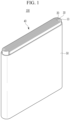
- FIG. 1 is an exploded perspective view of a rechargeable lithium battery according to an embodiment.
- the rechargeable lithium battery according to an embodiment is illustrated as a prismatic battery but is not limited thereto and may include variously-shaped batteries such as a cylindrical battery, a pouch battery, and the like.
- a large-diameter compound of Li 1 Ni 0.91 Co 0.07 Al 0.02 O 2 having an average particle diameter (D50) of 18 ⁇ m and a small-diameter compound of Li 1 Ni 0.91 Co 0.07 Al 0.02 O 2 having an average particle diameter (D50) of 4 ⁇ m were mixed at 70 : 30 wt% to provide a mixture.
- the mixture was washed with water at a room temperature (25°C) for one time to provide a positive active material.
- a positive electrode was prepared in accordance with the same procedure as in Example 1, except that the amount of AlF 3 was changed from 1 wt% to 2 wt%, and 94 wt% of positive active material, 2 wt% of a binder, and 2 wt% of a conductive material were used.
- a positive electrode was prepared in accordance with the same procedure as in Example 1, except that the amount of AlF 3 was changed from 1 wt% to 3 wt%, and 93 wt% of positive active material, 2 wt% of a binder, and 2 wt% of a conductive material were used.
- a positive electrode was prepared in accordance with the same procedure as in Example 1, except that the amount of AlF 3 was changed from 1 wt% to 5 wt%, and 91 wt% of positive active material, 2 wt% of a binder, and 2 wt% of a conductive material were used.
- a positive electrode was prepared in accordance with the same procedure as in Example 1, except that the amount of AlF 3 was changed from 1 wt% to 10 wt%, and 86 wt% of positive active material, 2 wt% of a binder, and 2 wt% of a conductive material were used.
- a positive electrode was prepared in accordance with the same procedure as in Example 2, except that MgF 2 was used instead of AlF 3 .
- a positive electrode was prepared in accordance with the same procedure as in Example 2, except that BiF 3 was used instead of AlF 3 .
- a positive electrode was prepared in accordance with the same procedure as in Example 2, except that ZrF 4 was used instead of AlF 3 .
- a large-diameter compound of Li 1 Ni 0.91 Co 0.07 Al 0.02 O 2 having an average particle diameter (D50) of 18 ⁇ m and a small-diameter compound of Li 1 Ni 0.91 Co 0.07 Al 0.02 O 2 having an average particle diameter (D50) of 4 ⁇ m were mixed at 70 : 30 wt% to provide a positive active material.
- the obtained positive active material was measured for a BET specific surface area, and the results show 0.38 m 2 /g.
- the positive active material was measured for a residual Li content, and the results show 0.55 wt%.
- the positive active material slurry was coated on an Al foil current collector, dried, and pressed to provide a positive electrode including a positive electrode layer formed on the current collector.
- a large-diameter compound of Li 1 Ni 0.91 Co 0.07 Al 0.02 O 2 having an average particle diameter (D50) of 18 ⁇ m and a small-diameter compound of Li 1 Ni 0.91 Co 0.07 Al 0.02 O 2 having an average particle diameter (D50) of 4 ⁇ m were mixed at 70 : 30 wt% to provide a mixture.
- the mixture was washed with water at a room temperature (25°C) for one time to provide a positive active material.
- the obtained positive active material was measured for a BET specific surface area, and the results show 2.11 m 2 /g.
- the positive active material slurry was coated on an Al foil current collector, dried, and pressed to provide a positive electrode including the positive electrode layer formed on the current collector.
- a large-diameter compound of Li 1 Ni 0.91 Co 0.07 Al 0.02 O 2 having an average particle diameter (D50) of 18 ⁇ m and a small-diameter compound of Li 1 Ni 0.91 Co 0.07 Al 0.02 O 2 having an average particle diameter (D50) of 4 ⁇ m were mixed at 70 : 30 wt% to provide a positive active material.
- the obtained positive active material was measured for a BET specific surface area, and the results show 0.38 m 2 /g.
- the positive active material was measured for a residual Li content, and the results show 0.55 wt%.
- the positive active material slurry was coated on an Al foil current collector, dried, and pressed to provide a positive electrode including a positive electrode layer formed on the current collector.
- a positive electrode was prepared in accordance with the same procedure as in Comparative Example 3, except that a Li 1 Ni 0.6 Co 0.2 Mn 0.2 O 2 compound having an average particle diameter (D50) of 10 ⁇ m was used as a positive active material, instead of the large-diameter compound of Li 1 Ni 0.91 Co 0.07 Al 0.02 O 2 having an average particle diameter (D50) of 18 ⁇ m and the small-diameter compound of Li 1 Ni 0.91 Co 0.07 Al 0.02 O 2 having an average particle diameter (D50) of 4 ⁇ m.
- the obtained positive active material was measured for a residual Li content, and the results show 0.07 wt%.
- a positive electrode was prepared in accordance with the same procedure as in Comparative Example 4, except that AlF 3 was not used.
- a positive electrode was prepared in accordance with the same procedure as in Example 1, except the AlF 3 content was changed from 1 wt% to 15 wt%.
- a positive electrode was fabricated in accordance with the same procedure as in Example 1, except the AlF 3 content was changed from 1 wt% to 20 wt%.
- a Li 1 Ni 0.6 Co 0.2 Mn 0.2 O 2 positive active material having an average particle diameter (D50) of 10 ⁇ m and a BET specific surface area of 0.38 m 2 /g was prepared.
- the positive active material slurry was coated on an Al foil current collector, dried, and pressed to provide a positive electrode including the positive electrode layer formed on the current collector.
- a positive electrode was prepared in accordance with the same procedure as in Comparative Example 8, except that AlF 3 was not used.
- the residual lithium content was measured by an acid-base titration. 50 g of the obtained active material was added with 100 ml of ultra-pure water into a beaker and stirred, and then the stirred solution was separated to a solution and powder using a filter paper, and then the obtained solution was performed with a pH titration using 0.1N hydrochloric acid to obtain the same.
- Example 1 95 AlF 3 , 1 2 2 ⁇ 0.12 2.11
- Example 2 94 AlF 3 , 2 2 2 ⁇ 0.12 2.11
- Example 3 93 AlF 3 , 3 2 2 ⁇ 0.12 2.11
- Example 4 91 AlF 3 , 5 2 2 ⁇ 0.12 2.11
- Example 5 86 AlF 3 , 10 2 2 ⁇ 0.12 2.11
- Example 6 94 MgF 2 , 2 2 2 ⁇ 0.12 2.11
- Example 7 94 BiF 3 , 2 2 2 ⁇ 0.12 2.11
- Example 8 94 ZrF 4 , 2 2 2 ⁇ 0.12 2.11 Comparative Example 1 96 X 2 2 X 0.55 0.38 Comparative Example 2 96 X 2 2 ⁇ 0.12 2.11 Comparative Example 3 94 AlF 3 , 2 2 2 X 0.55 0.38 Comparative Example 4 94
- the obtained half-cell was performed with a charge and discharge at a room temperature (25°C) at 1C for 50 times, and a rate of the 50th discharge capacity to the first discharge capacity was calculated, and the results of Examples 1 to 8 and Comparative Examples 1 to 7 are shown in Table 4. Furthermore, the results of Comparative Examples 8 and 9 are shown in Table 5.
- Example 1 AlF 3 1 ⁇ 0.12 2.11 90.7 210.6 89.5 82
- Example 2 AlF 3 2 ⁇ 0.12 2.11 90.6 210.1 90.1 85
- Example 3 AlF 3 , 3 ⁇ 0.12 2.11 90.1 207.3 90.3 87
- Example 4 AlF 3 , 5 ⁇ 0.12 2.11 89.4 205.8 89.2 87
- Example 5 AlF 3 , 10 ⁇ 0.12 2.11 88.7 200.2 88.8 92
- Example 6 MgF 2 , 2 ⁇ 0.12 2.11 90.3 209.8 90.3 86
- Example 7 BiF 3 2 ⁇ 0.12 2.11 90.4 210.4 90.5 88
- Example 8 ZrF 4 2 ⁇ 0.12 2.11 90.3 210.0 90.5 86 Comparative Example 1 X X 0.
- Example 1 and Comparative Example 2 performing the water washing, it is understood that the initial efficiency and the high rate capability were improved by adding AlF 3 , particularly, the cycle-life characteristics were significantly improved. From the results, the effects on improving the battery characteristics caused by adding AlF 3 into the positive active material performed with the water washing are clearly understood.
- NCM622 indicates Li 1 Ni 0.6 Co 0.2 Mn 0.2 O 2 .
Landscapes
- Chemical & Material Sciences (AREA)
- Chemical Kinetics & Catalysis (AREA)
- Electrochemistry (AREA)
- General Chemical & Material Sciences (AREA)
- Engineering & Computer Science (AREA)
- Inorganic Chemistry (AREA)
- Materials Engineering (AREA)
- Manufacturing & Machinery (AREA)
- Composite Materials (AREA)
- Battery Electrode And Active Subsutance (AREA)
Claims (9)
- Positive Elektrode für eine wiederaufladbare Lithiumbatterie, umfassendeinen Stromsammler; undeine Schicht der positiven Elektrode, die auf dem Stromsammler angeordnet ist und ein nickelbasiertes positives aktives Material der chemischen Formel 1 mit einer spezifischen BET-Oberfläche von etwa 0,5 m2/g bis etwa 2,5 m2/g, ein Metallfluorid, das gleichmäßig unter den Teilchen des positiven aktiven Materials verteilt ist, ein leitendes Material und ein Bindemittel umfasst,wobei eine Menge des Metallfluorids etwa 1 Gew.-% bis etwa 10 Gew.-% beträgt, bezogen auf 100 Gew.-% der Schicht der positiven Elektrode,
[Chemische Formel 1] LiaNixCoyAzO2,
wobei in der chemischen Formel 1 0,9 ≤ a ≤ 1,1, 0,9 ≤ x ≤ 0,98, 0,01 ≤ y ≤ 0,1, 0,01 ≤ z ≤ 0,1, x + y + z = 1, und A Mn oder Al ist,wobei das Metallfluorid einen durchschnittlichen Teilchendurchmesser (D50) von 0,5 µm bis 2,5 µm aufweist, wobei der durchschnittliche Teilchendurchmesser (D50) einen Teilchendurchmesser angibt, bei dem ein kumulatives Volumen etwa 50 Volumen-% in einer Teilchenverteilung ausmacht und von einem Teilchengrößenanalysator gemessen wird. - Positive Elektrode nach Anspruch 1, wobei das Metallfluorid Al-Fluorid, Mg-Fluorid, Zr-Fluorid, Bi-Fluorid oder eine Kombination davon ist.
- Positive Elektrode nach einem der Ansprüche 1 bis 2, wobei das positive aktive Material ein Gemisch eines aktiven Materials von großem Durchmesser mit einem durchschnittlichen Teilchendurchmesser (D50) von etwa 15 µm bis etwa 20 µm und eines aktiven Materials von kleinem Durchmesser mit einem durchschnittlichen Teilchendurchmesser (D50) von etwa 3 µm bis etwa 5 µm ist, wobei der durchschnittliche Teilchendurchmesser (D50) einen Teilchendurchmesser angibt, bei dem ein kumulatives Volumen etwa 50 Volumen-% in einer Teilchenverteilung ausmacht und von einem Teilchengrößenanalysator gemessen wird.
- Positive Elektrode nach Anspruch 3, wobei ein Mischverhältnis des aktiven Materials von großem Durchmesser und des aktiven Materials von kleinem Durchmesser ein Gewichtsverhältnis von etwa 60:40 bis etwa 80:20 ist.
- Positive Elektrode nach einem der Ansprüche 1 bis 4, wobei das nickelbasierte positive aktive Material mit Wasser gewaschen wurde.
- Verfahren zur Herstellung einer positiven Elektrode für eine wiederaufladbare Lithiumbatterie, umfassend:das Mischen eines nickelbasierten positiven aktiven Materials der chemischen Formel 1 mit einer spezifischen BET-Oberfläche von etwa 0,5 m2/g bis etwa 2,5 m2/g, eines Metallfluorids, eines Bindemittels und eines leitenden Materials in einem Lösungsmittel, um eine Zusammensetzung eines positiven aktiven Materials herzustellen, wobei das Metallfluorid gleichmäßig unter den Teilchen des positiven aktiven Materials verteilt ist; unddas Beschichten der Zusammensetzung des positiven aktiven Materials auf einen Stromsammler,wobei das Metallfluorid in einer Menge von etwa 1 Gew.-% bis etwa 10 Gew.-% verwendet wird, bezogen auf eine Gesamtmenge, 100 Gew.-%, des nickelbasierten positiven aktiven Materials, des Metallfluorids, des Bindemittels und des leitenden Materials:
[Chemische Formel 1] LiaNixCoyAzO2,
wobei in der chemischen Formel 1 0,9 ≤ a ≤ 1,1, 0,9 ≤ x ≤ 0,98, 0,01 ≤ y ≤ 0,1, 0,01 ≤ z ≤ 0,1, x + y + z = 1, und A Mn oder Al ist,wobei das Metallfluorid einen durchschnittlichen Teilchendurchmesser (D50) von 0,5 µm bis 2,5 µm aufweist, wobei der durchschnittliche Teilchendurchmesser (D50) einen Teilchendurchmesser angibt, bei dem ein kumulatives Volumen etwa 50 Volumen-% in einer Teilchenverteilung ausmacht und von einem Teilchengrößenanalysator gemessen wird. - Verfahren nach Anspruch 6, wobei das Metallfluorid Al-Fluorid, Mg-Fluorid, Zr-Fluorid, Bi-Fluorid oder eine Kombination davon ist.
- Verfahren nach Anspruch 6 oder Anspruch 7, wobei das nickelbasierte positive aktive Material vor dem Herstellen der Zusammensetzung des positiven aktiven Materials mit Wasser gewaschen wird.
- Wiederaufladbare Lithiumbatterie, umfassenddie positive Elektrode nach einem der Ansprüche 1 bis 5;eine negative Elektrode, umfassend ein negatives aktives Material; undeinen Elektrolyten.
Applications Claiming Priority (2)
| Application Number | Priority Date | Filing Date | Title |
|---|---|---|---|
| KR20180058282 | 2018-05-23 | ||
| KR1020190023354A KR20190133594A (ko) | 2018-05-23 | 2019-02-27 | 리튬 이차 전지용 양극 및 이를 포함하는 리튬 이차 전지 |
Publications (2)
| Publication Number | Publication Date |
|---|---|
| EP3573148A1 EP3573148A1 (de) | 2019-11-27 |
| EP3573148B1 true EP3573148B1 (de) | 2025-06-25 |
Family
ID=66542054
Family Applications (1)
| Application Number | Title | Priority Date | Filing Date |
|---|---|---|---|
| EP19174237.8A Active EP3573148B1 (de) | 2018-05-23 | 2019-05-13 | Positivelektrode für eine wiederaufladbare lithiumbatterie und wiederaufladbare lithiumbatterie damit |
Country Status (5)
| Country | Link |
|---|---|
| US (1) | US11631848B2 (de) |
| EP (1) | EP3573148B1 (de) |
| KR (1) | KR102238557B1 (de) |
| CN (1) | CN110534700B (de) |
| PL (1) | PL3573148T3 (de) |
Families Citing this family (5)
| Publication number | Priority date | Publication date | Assignee | Title |
|---|---|---|---|---|
| JP6935380B2 (ja) * | 2018-10-15 | 2021-09-15 | 日本化学工業株式会社 | リチウム二次電池用正極活物質、その製造方法及びリチウム二次電池 |
| CN114556650B (zh) * | 2019-10-09 | 2024-07-16 | 本田技研工业株式会社 | 氟化物离子二次电池 |
| WO2022139521A1 (ko) * | 2020-12-23 | 2022-06-30 | 주식회사 엘지에너지솔루션 | 양극 활물질의 제조방법 |
| CN112928249B (zh) * | 2021-01-21 | 2022-08-05 | 宁德新能源科技有限公司 | 一种正极极片及包含该正极极片的电化学装置和电子装置 |
| US20240363855A1 (en) * | 2023-04-26 | 2024-10-31 | Toyota Jidosha Kabushiki Kaisha | Electrode mixture and lithium-ion battery |
Family Cites Families (12)
| Publication number | Priority date | Publication date | Assignee | Title |
|---|---|---|---|---|
| KR100701532B1 (ko) | 2005-06-21 | 2007-03-29 | 대정화금주식회사 | 불소화합물이 첨가된 리튬이차전지 양극 활물질 및 그제조방법 |
| KR20070117826A (ko) | 2006-06-09 | 2007-12-13 | 한양대학교 산학협력단 | 리튬 이차 전지용 양극, 및 그를 포함하는 리튬 이차 전지 |
| US20100151331A1 (en) * | 2008-12-16 | 2010-06-17 | Enerceramic Inc. | Positive active material and rechargeable lithium battery comprising same |
| JP5526636B2 (ja) * | 2009-07-24 | 2014-06-18 | ソニー株式会社 | 非水電解質二次電池の正極活物質、非水電解質二次電池の正極および非水電解質二次電池 |
| US9034516B2 (en) * | 2012-07-28 | 2015-05-19 | Wildcat Discovery Technologies, Inc. | Materials prepared by metal extraction |
| KR101439638B1 (ko) * | 2012-11-06 | 2014-09-11 | 삼성정밀화학 주식회사 | 양극 활물질, 이의 제조방법 및 이를 포함하는 리튬 이차 전지 |
| KR101706811B1 (ko) | 2013-03-21 | 2017-02-15 | 주식회사 엘지화학 | 양극 활물질 조성물 및 이를 포함하는 리튬 이차전지 |
| KR102202822B1 (ko) * | 2013-07-17 | 2021-01-14 | 스미토모 긴조쿠 고잔 가부시키가이샤 | 비수계 전해질 이차전지용 정극 활물질, 이러한 비수계 전해질 이차전지용 정극 활물질의 제조 방법 및 이러한 비수계 전해질 이차전지용 정극 활물질을 이용한 비수계 전해질 이차전지 |
| WO2015083901A1 (ko) * | 2013-12-02 | 2015-06-11 | 주식회사 엘앤에프신소재 | 리튬 이차 전지용 양극 활물질, 이의 제조방법 및 이를 포함하는 리튬 이차 전지 |
| US10388944B2 (en) * | 2014-10-06 | 2019-08-20 | Hitachi Metals, Ltd. | Positive electrode active material for lithium ion secondary battery, and positive electrode for lithium ion secondary battery and lithium ion secondary battery comprising the same |
| JP6601500B2 (ja) * | 2015-10-02 | 2019-11-06 | 日立金属株式会社 | 正極材料及びその製造方法並びにリチウムイオン二次電池 |
| JP2017139168A (ja) * | 2016-02-04 | 2017-08-10 | 日立マクセル株式会社 | 非水電解質二次電池用正極 |
-
2019
- 2019-05-13 EP EP19174237.8A patent/EP3573148B1/de active Active
- 2019-05-13 PL PL19174237.8T patent/PL3573148T3/pl unknown
- 2019-05-14 KR KR1020190056294A patent/KR102238557B1/ko active Active
- 2019-05-16 US US16/414,629 patent/US11631848B2/en active Active
- 2019-05-21 CN CN201910422778.4A patent/CN110534700B/zh active Active
Also Published As
| Publication number | Publication date |
|---|---|
| PL3573148T3 (pl) | 2025-09-15 |
| CN110534700B (zh) | 2024-01-05 |
| KR102238557B1 (ko) | 2021-04-09 |
| EP3573148A1 (de) | 2019-11-27 |
| US20190363358A1 (en) | 2019-11-28 |
| CN110534700A (zh) | 2019-12-03 |
| US11631848B2 (en) | 2023-04-18 |
| KR20190133601A (ko) | 2019-12-03 |
Similar Documents
| Publication | Publication Date | Title |
|---|---|---|
| US11646422B2 (en) | Negative electrode for lithium secondary battery and lithium secondary battery comprising same | |
| EP3647269B1 (de) | Positives aktivmaterial für eine wiederaufladbare lithiumbatterie, verfahren zur herstellung davon und wiederaufladbare lithiumbatterie damit | |
| US8785049B2 (en) | Negative active material for rechargeable lithium battery and rechargeable lithium battery including same | |
| US10177377B2 (en) | Positive active material for rechargeable lithium battery, method of preparing same and rechargeable lithium battery including same | |
| US8592086B2 (en) | Negative electrode comprising an additive with a ceramic core and carbon disposed on the core for energy storage device and energy storage device including same | |
| US8592083B2 (en) | Negative electrode and negative active material for rechargeable lithium battery, and rechargeable lithium battery including same | |
| EP3573148B1 (de) | Positivelektrode für eine wiederaufladbare lithiumbatterie und wiederaufladbare lithiumbatterie damit | |
| US20200235378A1 (en) | Positive active material | |
| US8889299B2 (en) | Positive active material and method of preparing same and rechargeable lithium battery including same | |
| EP3249721A1 (de) | Positivelektrode für eine wiederaufladbare lithiumbatterie und wiederaufladbare lithiumbatterie damit | |
| US8852809B2 (en) | Positive electrode for rechargeable lithium battery with high voltage and rechargeable lithium battery including same | |
| US8802300B2 (en) | Rechargeable lithium battery | |
| EP3647270A1 (de) | Positiv aktives material für eine wiederaufladbare lithiumbatterie, herstellungsverfahren dafür und wiederaufladbare lithiumbatterie damit | |
| EP2221903B1 (de) | Positive Elektrode für eine wiederaufladbare Lithiumbatterie und wiederaufladbare Lithiumbatterie damit | |
| EP3486977B1 (de) | Positive elektrode für wiederaufladbare lithium-batterie, wiederaufladbare lithium-batterie mit dem gleichen und batterie-modul | |
| KR20120106041A (ko) | 수계 활물질 조성물, 이를 이용하여 제조된 전극 및 리튬 이차 전지 | |
| EP4220775A1 (de) | Negative elektrode für eine wiederaufladbare lithiumbatterie und wiederaufladbare lithiumbatterie damit | |
| EP2660905B1 (de) | Positives Aktivmaterial für eine wiederaufladbare Lithiumbatterie und wiederaufladbare Lithiumbatterie | |
| US9059463B2 (en) | Positive electrode for rechargeable lithium battery and rechargeable lithium battery including same | |
| US20110305947A1 (en) | Positive active material for rechargeable lithium battery, rechargeable lithium battery using the same and method for manufacturing the same | |
| US9023532B2 (en) | Positive active material composition for rechargeable lithium battery, positive electrode for rechargeable lithium battery including the positive active material composition, and rechargeable lithium battery including the positive active material composition | |
| US20200028177A1 (en) | Lithium secondary battery cathode and lithium secondary battery including same | |
| EP3435453B1 (de) | Positives aktivmaterial für wiederaufladbare lithiumbatterie und wiederaufladbare lithiumbatterie dasselbe umfassend | |
| KR20190133594A (ko) | 리튬 이차 전지용 양극 및 이를 포함하는 리튬 이차 전지 | |
| US20250070131A1 (en) | Negative electrode for rechargeable lithium battery and rechargeable lithium battery including same |
Legal Events
| Date | Code | Title | Description |
|---|---|---|---|
| PUAI | Public reference made under article 153(3) epc to a published international application that has entered the european phase |
Free format text: ORIGINAL CODE: 0009012 |
|
| STAA | Information on the status of an ep patent application or granted ep patent |
Free format text: STATUS: REQUEST FOR EXAMINATION WAS MADE |
|
| 17P | Request for examination filed |
Effective date: 20190513 |
|
| AK | Designated contracting states |
Kind code of ref document: A1 Designated state(s): AL AT BE BG CH CY CZ DE DK EE ES FI FR GB GR HR HU IE IS IT LI LT LU LV MC MK MT NL NO PL PT RO RS SE SI SK SM TR |
|
| AX | Request for extension of the european patent |
Extension state: BA ME |
|
| STAA | Information on the status of an ep patent application or granted ep patent |
Free format text: STATUS: EXAMINATION IS IN PROGRESS |
|
| 17Q | First examination report despatched |
Effective date: 20210706 |
|
| GRAP | Despatch of communication of intention to grant a patent |
Free format text: ORIGINAL CODE: EPIDOSNIGR1 |
|
| STAA | Information on the status of an ep patent application or granted ep patent |
Free format text: STATUS: GRANT OF PATENT IS INTENDED |
|
| INTG | Intention to grant announced |
Effective date: 20241223 |
|
| RAP3 | Party data changed (applicant data changed or rights of an application transferred) |
Owner name: SAMSUNG SDI CO., LTD. |
|
| RIN1 | Information on inventor provided before grant (corrected) |
Inventor name: HAN, JUNGMIN Inventor name: CHOI, JAEHO |
|
| GRAS | Grant fee paid |
Free format text: ORIGINAL CODE: EPIDOSNIGR3 |
|
| GRAA | (expected) grant |
Free format text: ORIGINAL CODE: 0009210 |
|
| STAA | Information on the status of an ep patent application or granted ep patent |
Free format text: STATUS: THE PATENT HAS BEEN GRANTED |
|
| AK | Designated contracting states |
Kind code of ref document: B1 Designated state(s): AL AT BE BG CH CY CZ DE DK EE ES FI FR GB GR HR HU IE IS IT LI LT LU LV MC MK MT NL NO PL PT RO RS SE SI SK SM TR |
|
| REG | Reference to a national code |
Ref country code: GB Ref legal event code: FG4D |
|
| REG | Reference to a national code |
Ref country code: CH Ref legal event code: EP |
|
| REG | Reference to a national code |
Ref country code: DE Ref legal event code: R096 Ref document number: 602019071458 Country of ref document: DE |
|
| REG | Reference to a national code |
Ref country code: CH Ref legal event code: EP |
|
| REG | Reference to a national code |
Ref country code: IE Ref legal event code: FG4D |
|
| REG | Reference to a national code |
Ref country code: SE Ref legal event code: TRGR |
|
| PG25 | Lapsed in a contracting state [announced via postgrant information from national office to epo] |
Ref country code: FI Free format text: LAPSE BECAUSE OF FAILURE TO SUBMIT A TRANSLATION OF THE DESCRIPTION OR TO PAY THE FEE WITHIN THE PRESCRIBED TIME-LIMIT Effective date: 20250625 |
|
| REG | Reference to a national code |
Ref country code: LT Ref legal event code: MG9D |
|
| PG25 | Lapsed in a contracting state [announced via postgrant information from national office to epo] |
Ref country code: NO Free format text: LAPSE BECAUSE OF FAILURE TO SUBMIT A TRANSLATION OF THE DESCRIPTION OR TO PAY THE FEE WITHIN THE PRESCRIBED TIME-LIMIT Effective date: 20250925 Ref country code: GR Free format text: LAPSE BECAUSE OF FAILURE TO SUBMIT A TRANSLATION OF THE DESCRIPTION OR TO PAY THE FEE WITHIN THE PRESCRIBED TIME-LIMIT Effective date: 20250926 |
|
| PG25 | Lapsed in a contracting state [announced via postgrant information from national office to epo] |
Ref country code: BG Free format text: LAPSE BECAUSE OF FAILURE TO SUBMIT A TRANSLATION OF THE DESCRIPTION OR TO PAY THE FEE WITHIN THE PRESCRIBED TIME-LIMIT Effective date: 20250625 |
|
| PG25 | Lapsed in a contracting state [announced via postgrant information from national office to epo] |
Ref country code: HR Free format text: LAPSE BECAUSE OF FAILURE TO SUBMIT A TRANSLATION OF THE DESCRIPTION OR TO PAY THE FEE WITHIN THE PRESCRIBED TIME-LIMIT Effective date: 20250625 |
|
| PG25 | Lapsed in a contracting state [announced via postgrant information from national office to epo] |
Ref country code: RS Free format text: LAPSE BECAUSE OF FAILURE TO SUBMIT A TRANSLATION OF THE DESCRIPTION OR TO PAY THE FEE WITHIN THE PRESCRIBED TIME-LIMIT Effective date: 20250925 |
|
| PG25 | Lapsed in a contracting state [announced via postgrant information from national office to epo] |
Ref country code: LV Free format text: LAPSE BECAUSE OF FAILURE TO SUBMIT A TRANSLATION OF THE DESCRIPTION OR TO PAY THE FEE WITHIN THE PRESCRIBED TIME-LIMIT Effective date: 20250625 |
|
| REG | Reference to a national code |
Ref country code: NL Ref legal event code: MP Effective date: 20250625 |
|
| PG25 | Lapsed in a contracting state [announced via postgrant information from national office to epo] |
Ref country code: NL Free format text: LAPSE BECAUSE OF FAILURE TO SUBMIT A TRANSLATION OF THE DESCRIPTION OR TO PAY THE FEE WITHIN THE PRESCRIBED TIME-LIMIT Effective date: 20250625 |