EP3572223A2 - Method and apparatus for manufacturing laminate floor panels comprising a core containing wood/plastic composite, as well as such panels - Google Patents
Method and apparatus for manufacturing laminate floor panels comprising a core containing wood/plastic composite, as well as such panels Download PDFInfo
- Publication number
- EP3572223A2 EP3572223A2 EP19177343.1A EP19177343A EP3572223A2 EP 3572223 A2 EP3572223 A2 EP 3572223A2 EP 19177343 A EP19177343 A EP 19177343A EP 3572223 A2 EP3572223 A2 EP 3572223A2
- Authority
- EP
- European Patent Office
- Prior art keywords
- layer
- core
- wpc
- laminate
- granulate
- Prior art date
- Legal status (The legal status is an assumption and is not a legal conclusion. Google has not performed a legal analysis and makes no representation as to the accuracy of the status listed.)
- Granted
Links
Images

Classifications
-
- B—PERFORMING OPERATIONS; TRANSPORTING
- B27—WORKING OR PRESERVING WOOD OR SIMILAR MATERIAL; NAILING OR STAPLING MACHINES IN GENERAL
- B27N—MANUFACTURE BY DRY PROCESSES OF ARTICLES, WITH OR WITHOUT ORGANIC BINDING AGENTS, MADE FROM PARTICLES OR FIBRES CONSISTING OF WOOD OR OTHER LIGNOCELLULOSIC OR LIKE ORGANIC MATERIAL
- B27N3/00—Manufacture of substantially flat articles, e.g. boards, from particles or fibres
- B27N3/06—Making particle boards or fibreboards, with preformed covering layers, the particles or fibres being compressed with the layers to a board in one single pressing operation
-
- B—PERFORMING OPERATIONS; TRANSPORTING
- B32—LAYERED PRODUCTS
- B32B—LAYERED PRODUCTS, i.e. PRODUCTS BUILT-UP OF STRATA OF FLAT OR NON-FLAT, e.g. CELLULAR OR HONEYCOMB, FORM
- B32B21/00—Layered products comprising a layer of wood, e.g. wood board, veneer, wood particle board
- B32B21/02—Layered products comprising a layer of wood, e.g. wood board, veneer, wood particle board the layer being formed of fibres, chips, or particles, e.g. MDF, HDF, OSB, chipboard, particle board, hardboard
-
- B—PERFORMING OPERATIONS; TRANSPORTING
- B32—LAYERED PRODUCTS
- B32B—LAYERED PRODUCTS, i.e. PRODUCTS BUILT-UP OF STRATA OF FLAT OR NON-FLAT, e.g. CELLULAR OR HONEYCOMB, FORM
- B32B21/00—Layered products comprising a layer of wood, e.g. wood board, veneer, wood particle board
- B32B21/04—Layered products comprising a layer of wood, e.g. wood board, veneer, wood particle board comprising wood as the main or only constituent of a layer, which is next to another layer of the same or of a different material
- B32B21/06—Layered products comprising a layer of wood, e.g. wood board, veneer, wood particle board comprising wood as the main or only constituent of a layer, which is next to another layer of the same or of a different material of paper or cardboard
-
- B—PERFORMING OPERATIONS; TRANSPORTING
- B32—LAYERED PRODUCTS
- B32B—LAYERED PRODUCTS, i.e. PRODUCTS BUILT-UP OF STRATA OF FLAT OR NON-FLAT, e.g. CELLULAR OR HONEYCOMB, FORM
- B32B21/00—Layered products comprising a layer of wood, e.g. wood board, veneer, wood particle board
- B32B21/14—Layered products comprising a layer of wood, e.g. wood board, veneer, wood particle board comprising wood board or veneer
-
- B—PERFORMING OPERATIONS; TRANSPORTING
- B32—LAYERED PRODUCTS
- B32B—LAYERED PRODUCTS, i.e. PRODUCTS BUILT-UP OF STRATA OF FLAT OR NON-FLAT, e.g. CELLULAR OR HONEYCOMB, FORM
- B32B27/00—Layered products comprising a layer of synthetic resin
- B32B27/06—Layered products comprising a layer of synthetic resin as the main or only constituent of a layer, which is next to another layer of the same or of a different material
- B32B27/10—Layered products comprising a layer of synthetic resin as the main or only constituent of a layer, which is next to another layer of the same or of a different material of paper or cardboard
-
- B—PERFORMING OPERATIONS; TRANSPORTING
- B32—LAYERED PRODUCTS
- B32B—LAYERED PRODUCTS, i.e. PRODUCTS BUILT-UP OF STRATA OF FLAT OR NON-FLAT, e.g. CELLULAR OR HONEYCOMB, FORM
- B32B27/00—Layered products comprising a layer of synthetic resin
- B32B27/30—Layered products comprising a layer of synthetic resin comprising vinyl (co)polymers; comprising acrylic (co)polymers
- B32B27/304—Layered products comprising a layer of synthetic resin comprising vinyl (co)polymers; comprising acrylic (co)polymers comprising vinyl halide (co)polymers, e.g. PVC, PVDC, PVF, PVDF
-
- B—PERFORMING OPERATIONS; TRANSPORTING
- B32—LAYERED PRODUCTS
- B32B—LAYERED PRODUCTS, i.e. PRODUCTS BUILT-UP OF STRATA OF FLAT OR NON-FLAT, e.g. CELLULAR OR HONEYCOMB, FORM
- B32B27/00—Layered products comprising a layer of synthetic resin
- B32B27/32—Layered products comprising a layer of synthetic resin comprising polyolefins
-
- B—PERFORMING OPERATIONS; TRANSPORTING
- B32—LAYERED PRODUCTS
- B32B—LAYERED PRODUCTS, i.e. PRODUCTS BUILT-UP OF STRATA OF FLAT OR NON-FLAT, e.g. CELLULAR OR HONEYCOMB, FORM
- B32B3/00—Layered products comprising a layer with external or internal discontinuities or unevennesses, or a layer of non-planar shape; Layered products comprising a layer having particular features of form
- B32B3/02—Layered products comprising a layer with external or internal discontinuities or unevennesses, or a layer of non-planar shape; Layered products comprising a layer having particular features of form characterised by features of form at particular places, e.g. in edge regions
- B32B3/06—Layered products comprising a layer with external or internal discontinuities or unevennesses, or a layer of non-planar shape; Layered products comprising a layer having particular features of form characterised by features of form at particular places, e.g. in edge regions for securing layers together; for attaching the product to another member, e.g. to a support, or to another product, e.g. groove/tongue, interlocking
-
- B—PERFORMING OPERATIONS; TRANSPORTING
- B32—LAYERED PRODUCTS
- B32B—LAYERED PRODUCTS, i.e. PRODUCTS BUILT-UP OF STRATA OF FLAT OR NON-FLAT, e.g. CELLULAR OR HONEYCOMB, FORM
- B32B37/00—Methods or apparatus for laminating, e.g. by curing or by ultrasonic bonding
- B32B37/14—Methods or apparatus for laminating, e.g. by curing or by ultrasonic bonding characterised by the properties of the layers
- B32B37/24—Methods or apparatus for laminating, e.g. by curing or by ultrasonic bonding characterised by the properties of the layers with at least one layer not being coherent before laminating, e.g. made up from granular material sprinkled onto a substrate
-
- B—PERFORMING OPERATIONS; TRANSPORTING
- B32—LAYERED PRODUCTS
- B32B—LAYERED PRODUCTS, i.e. PRODUCTS BUILT-UP OF STRATA OF FLAT OR NON-FLAT, e.g. CELLULAR OR HONEYCOMB, FORM
- B32B5/00—Layered products characterised by the non- homogeneity or physical structure, i.e. comprising a fibrous, filamentary, particulate or foam layer; Layered products characterised by having a layer differing constitutionally or physically in different parts
- B32B5/18—Layered products characterised by the non- homogeneity or physical structure, i.e. comprising a fibrous, filamentary, particulate or foam layer; Layered products characterised by having a layer differing constitutionally or physically in different parts characterised by features of a layer of foamed material
-
- B—PERFORMING OPERATIONS; TRANSPORTING
- B32—LAYERED PRODUCTS
- B32B—LAYERED PRODUCTS, i.e. PRODUCTS BUILT-UP OF STRATA OF FLAT OR NON-FLAT, e.g. CELLULAR OR HONEYCOMB, FORM
- B32B2260/00—Layered product comprising an impregnated, embedded, or bonded layer wherein the layer comprises an impregnation, embedding, or binder material
- B32B2260/02—Composition of the impregnated, bonded or embedded layer
- B32B2260/028—Paper layer
-
- B—PERFORMING OPERATIONS; TRANSPORTING
- B32—LAYERED PRODUCTS
- B32B—LAYERED PRODUCTS, i.e. PRODUCTS BUILT-UP OF STRATA OF FLAT OR NON-FLAT, e.g. CELLULAR OR HONEYCOMB, FORM
- B32B2260/00—Layered product comprising an impregnated, embedded, or bonded layer wherein the layer comprises an impregnation, embedding, or binder material
- B32B2260/04—Impregnation, embedding, or binder material
- B32B2260/048—Natural or synthetic rubber
-
- B—PERFORMING OPERATIONS; TRANSPORTING
- B32—LAYERED PRODUCTS
- B32B—LAYERED PRODUCTS, i.e. PRODUCTS BUILT-UP OF STRATA OF FLAT OR NON-FLAT, e.g. CELLULAR OR HONEYCOMB, FORM
- B32B2262/00—Composition or structural features of fibres which form a fibrous or filamentary layer or are present as additives
- B32B2262/06—Vegetal fibres
- B32B2262/062—Cellulose fibres, e.g. cotton
- B32B2262/067—Wood fibres
-
- B—PERFORMING OPERATIONS; TRANSPORTING
- B32—LAYERED PRODUCTS
- B32B—LAYERED PRODUCTS, i.e. PRODUCTS BUILT-UP OF STRATA OF FLAT OR NON-FLAT, e.g. CELLULAR OR HONEYCOMB, FORM
- B32B2264/00—Composition or properties of particles which form a particulate layer or are present as additives
- B32B2264/06—Vegetal particles
- B32B2264/062—Cellulose particles, e.g. cotton
- B32B2264/067—Wood particles
-
- B—PERFORMING OPERATIONS; TRANSPORTING
- B32—LAYERED PRODUCTS
- B32B—LAYERED PRODUCTS, i.e. PRODUCTS BUILT-UP OF STRATA OF FLAT OR NON-FLAT, e.g. CELLULAR OR HONEYCOMB, FORM
- B32B2305/00—Condition, form or state of the layers or laminate
- B32B2305/70—Scrap or recycled material
-
- B—PERFORMING OPERATIONS; TRANSPORTING
- B32—LAYERED PRODUCTS
- B32B—LAYERED PRODUCTS, i.e. PRODUCTS BUILT-UP OF STRATA OF FLAT OR NON-FLAT, e.g. CELLULAR OR HONEYCOMB, FORM
- B32B2307/00—Properties of the layers or laminate
- B32B2307/70—Other properties
- B32B2307/75—Printability
-
- B—PERFORMING OPERATIONS; TRANSPORTING
- B32—LAYERED PRODUCTS
- B32B—LAYERED PRODUCTS, i.e. PRODUCTS BUILT-UP OF STRATA OF FLAT OR NON-FLAT, e.g. CELLULAR OR HONEYCOMB, FORM
- B32B2317/00—Animal or vegetable based
- B32B2317/12—Paper, e.g. cardboard
-
- B—PERFORMING OPERATIONS; TRANSPORTING
- B32—LAYERED PRODUCTS
- B32B—LAYERED PRODUCTS, i.e. PRODUCTS BUILT-UP OF STRATA OF FLAT OR NON-FLAT, e.g. CELLULAR OR HONEYCOMB, FORM
- B32B2451/00—Decorative or ornamental articles
-
- B—PERFORMING OPERATIONS; TRANSPORTING
- B32—LAYERED PRODUCTS
- B32B—LAYERED PRODUCTS, i.e. PRODUCTS BUILT-UP OF STRATA OF FLAT OR NON-FLAT, e.g. CELLULAR OR HONEYCOMB, FORM
- B32B2471/00—Floor coverings
-
- B—PERFORMING OPERATIONS; TRANSPORTING
- B32—LAYERED PRODUCTS
- B32B—LAYERED PRODUCTS, i.e. PRODUCTS BUILT-UP OF STRATA OF FLAT OR NON-FLAT, e.g. CELLULAR OR HONEYCOMB, FORM
- B32B37/00—Methods or apparatus for laminating, e.g. by curing or by ultrasonic bonding
- B32B37/04—Methods or apparatus for laminating, e.g. by curing or by ultrasonic bonding characterised by the partial melting of at least one layer
-
- B—PERFORMING OPERATIONS; TRANSPORTING
- B32—LAYERED PRODUCTS
- B32B—LAYERED PRODUCTS, i.e. PRODUCTS BUILT-UP OF STRATA OF FLAT OR NON-FLAT, e.g. CELLULAR OR HONEYCOMB, FORM
- B32B37/00—Methods or apparatus for laminating, e.g. by curing or by ultrasonic bonding
- B32B37/08—Methods or apparatus for laminating, e.g. by curing or by ultrasonic bonding characterised by the cooling method
-
- B—PERFORMING OPERATIONS; TRANSPORTING
- B32—LAYERED PRODUCTS
- B32B—LAYERED PRODUCTS, i.e. PRODUCTS BUILT-UP OF STRATA OF FLAT OR NON-FLAT, e.g. CELLULAR OR HONEYCOMB, FORM
- B32B37/00—Methods or apparatus for laminating, e.g. by curing or by ultrasonic bonding
- B32B37/10—Methods or apparatus for laminating, e.g. by curing or by ultrasonic bonding characterised by the pressing technique, e.g. using action of vacuum or fluid pressure
- B32B37/1027—Pressing using at least one press band
-
- Y—GENERAL TAGGING OF NEW TECHNOLOGICAL DEVELOPMENTS; GENERAL TAGGING OF CROSS-SECTIONAL TECHNOLOGIES SPANNING OVER SEVERAL SECTIONS OF THE IPC; TECHNICAL SUBJECTS COVERED BY FORMER USPC CROSS-REFERENCE ART COLLECTIONS [XRACs] AND DIGESTS
- Y10—TECHNICAL SUBJECTS COVERED BY FORMER USPC
- Y10T—TECHNICAL SUBJECTS COVERED BY FORMER US CLASSIFICATION
- Y10T428/00—Stock material or miscellaneous articles
- Y10T428/24—Structurally defined web or sheet [e.g., overall dimension, etc.]
- Y10T428/24802—Discontinuous or differential coating, impregnation or bond [e.g., artwork, printing, retouched photograph, etc.]
-
- Y—GENERAL TAGGING OF NEW TECHNOLOGICAL DEVELOPMENTS; GENERAL TAGGING OF CROSS-SECTIONAL TECHNOLOGIES SPANNING OVER SEVERAL SECTIONS OF THE IPC; TECHNICAL SUBJECTS COVERED BY FORMER USPC CROSS-REFERENCE ART COLLECTIONS [XRACs] AND DIGESTS
- Y10—TECHNICAL SUBJECTS COVERED BY FORMER USPC
- Y10T—TECHNICAL SUBJECTS COVERED BY FORMER US CLASSIFICATION
- Y10T428/00—Stock material or miscellaneous articles
- Y10T428/24—Structurally defined web or sheet [e.g., overall dimension, etc.]
- Y10T428/24802—Discontinuous or differential coating, impregnation or bond [e.g., artwork, printing, retouched photograph, etc.]
- Y10T428/24851—Intermediate layer is discontinuous or differential
-
- Y—GENERAL TAGGING OF NEW TECHNOLOGICAL DEVELOPMENTS; GENERAL TAGGING OF CROSS-SECTIONAL TECHNOLOGIES SPANNING OVER SEVERAL SECTIONS OF THE IPC; TECHNICAL SUBJECTS COVERED BY FORMER USPC CROSS-REFERENCE ART COLLECTIONS [XRACs] AND DIGESTS
- Y10—TECHNICAL SUBJECTS COVERED BY FORMER USPC
- Y10T—TECHNICAL SUBJECTS COVERED BY FORMER US CLASSIFICATION
- Y10T428/00—Stock material or miscellaneous articles
- Y10T428/24—Structurally defined web or sheet [e.g., overall dimension, etc.]
- Y10T428/24802—Discontinuous or differential coating, impregnation or bond [e.g., artwork, printing, retouched photograph, etc.]
- Y10T428/24893—Discontinuous or differential coating, impregnation or bond [e.g., artwork, printing, retouched photograph, etc.] including particulate material
-
- Y—GENERAL TAGGING OF NEW TECHNOLOGICAL DEVELOPMENTS; GENERAL TAGGING OF CROSS-SECTIONAL TECHNOLOGIES SPANNING OVER SEVERAL SECTIONS OF THE IPC; TECHNICAL SUBJECTS COVERED BY FORMER USPC CROSS-REFERENCE ART COLLECTIONS [XRACs] AND DIGESTS
- Y10—TECHNICAL SUBJECTS COVERED BY FORMER USPC
- Y10T—TECHNICAL SUBJECTS COVERED BY FORMER US CLASSIFICATION
- Y10T428/00—Stock material or miscellaneous articles
- Y10T428/24—Structurally defined web or sheet [e.g., overall dimension, etc.]
- Y10T428/24802—Discontinuous or differential coating, impregnation or bond [e.g., artwork, printing, retouched photograph, etc.]
- Y10T428/24893—Discontinuous or differential coating, impregnation or bond [e.g., artwork, printing, retouched photograph, etc.] including particulate material
- Y10T428/24901—Discontinuous or differential coating, impregnation or bond [e.g., artwork, printing, retouched photograph, etc.] including particulate material including coloring matter
-
- Y—GENERAL TAGGING OF NEW TECHNOLOGICAL DEVELOPMENTS; GENERAL TAGGING OF CROSS-SECTIONAL TECHNOLOGIES SPANNING OVER SEVERAL SECTIONS OF THE IPC; TECHNICAL SUBJECTS COVERED BY FORMER USPC CROSS-REFERENCE ART COLLECTIONS [XRACs] AND DIGESTS
- Y10—TECHNICAL SUBJECTS COVERED BY FORMER USPC
- Y10T—TECHNICAL SUBJECTS COVERED BY FORMER US CLASSIFICATION
- Y10T428/00—Stock material or miscellaneous articles
- Y10T428/24—Structurally defined web or sheet [e.g., overall dimension, etc.]
- Y10T428/24802—Discontinuous or differential coating, impregnation or bond [e.g., artwork, printing, retouched photograph, etc.]
- Y10T428/24934—Discontinuous or differential coating, impregnation or bond [e.g., artwork, printing, retouched photograph, etc.] including paper layer
Definitions
- the invention relates to a method of manufacturing laminate floor panels comprising at least a core containing wood/plastic composite (WPC) and a top layer of laminate, including the steps of providing a granulate of WPC in which natural fibres are encapsulated in polymer plastics, forming the core of the panels, attaching the top laminate onto the core to form a sheet and finishing the sheet to form one or more panels.
- WPC wood/plastic composite
- the invention also relates to an apparatus for manufacturing laminate floor panels and to a new type of laminate floor panels.
- the plank described therein comprises a core of WPC and on top of it a print layer and an overlay forming the top laminate.
- the WPC core is made by an extrusion technique to either make an 100% solid core or to make a core having one or more cavities or cells.
- the laminate is formed first and once it is formed it can be applied onto the core and is fixed thereto by an adhesive, preferably a hot melt adhesive such as hot melt glue like hot melt polyurethane glue.
- the invention also has as object to provide laminate floor panels which are easy to manufacture.
- the invention provides a method of manufacturing laminate floor panels, including steps of providing a layer of granulate and melting it and pressing the melted layer for forming the core of the panels.
- a layer of paper, glass fibre, foil or the like is provided on the melted layer of WPC granulate in order to be pressed together with the core sheet.
- This method has the advantage that this layer can be used to provide an attachment base for the top laminate.
- the top laminate is often made of one or more paper layers immersed or impregnated with (melamine) resin and it is not easy to attach such laminate to the WPC core. It requires the use of a separate glue to effect the attachment. According to the invention this glue is not required anymore as a layer of paper or the like, which is melted to the core, forms a proper base to attach the laminate to the core by means of the resin. This is an environmentally favourable manner of attachment.
- the layer also creates a stabile product and may cause a better and more uniform cooling of the WPC material, leading to less internal tension and thus reduced warping.
- the layer may also obviate the need for a fine finishing of the top side of the panel.
- the layer may have such constitution that it only allows passage of heat in one direction.
- This insulating effect (in the direction of the WPC material) can be used to prevent the WPC material to melt again if further layers are attached to the basic layer under heat, for example a DPL laminate is pressed to the basic layer in a hot press which can have a temperature of up to 200°C. This temperature will melt the laminate to the basic layer, but will not reach the WPC core due to the insulating properties of the basic layer.
- the core may be used as a base for foamed PVC or such plastic material which leads to a vinyl-type laminate on a WPC carrier.
- a second layer of paper is provided to the melted layer of WPC granulate on the opposite side so as to form papers layers on both sides of the sheet core. Due to this provision of paper layers on both sides of the core it is easier to control the proper cooling of the panel without the risk of warping of the sheet.
- a further advantage of the paper layers is that they prevent adherence of the polymers of the WPC core to the press, for example to the conveyer belt of a continuous press.
- This method obviates the need to attach the top laminate to the core in a separate step. It enables to manufacture the complete sheet in a single step of pressing the core and attaching the required layers to it in a single step.
- Making and finishing the panels include cutting the sheets into separate panels and also machining and finishing the edges of the panels in order to form coupling members and optionally locking members in order to enable the panels to be coupled to each other.
- the invention also includes an apparatus for manufacturing laminate panels, including a granulate supply to supply a layer of WPC granulate, a heater to heat the granulate to a temperature in which the granulate is substantially in a melted state, and a press to press the granulate into the sheet having the proper dimensions. It preferably comprises means to supply one or more layers of paper or other web-shaped material, such as glass fibre or a foil, to the press in order to be attached to the melted core during pressing.
- the invention includes a laminate panel, comprising a core made of WPC, a basic layer melted to the core and a top laminate comprising at least one layer attached to the basic layer, for example a paper layer impregnated with impregnation material such as melamine resin and attached to the paper basic layer through this impregnation material, or a foamed PVC layer melted to a glass fibre or foil basic layer.
- a laminate panel comprising a core made of WPC, a basic layer melted to the core and a top laminate comprising at least one layer attached to the basic layer, for example a paper layer impregnated with impregnation material such as melamine resin and attached to the paper basic layer through this impregnation material, or a foamed PVC layer melted to a glass fibre or foil basic layer.
- the apparatus includes a granulate supply 1 including a mechanism 2 which is adapted to supply a layer of granulate 3 on a supporting conveyor belt 4.
- the granulate 3 is made from wood/plastic composite which is a material known in the prior art. It may include from about 30 wt% to about 95 wt% of at least one polymeric material and from about 5 wt% to about 80 wt% of at least one natural fibre or flour by weight of the core.
- the polymeric material can be one or more polymers having a polyolefin group, such as polyethylene. Other exemplary polymers include polypropylene, polyvinyl chloride, copolymer of PVC, and also other suitable thermoplastics.
- the polymer material to be processed can be in powder, liquid, cubed, pelletized form and/or any other form.
- the polymeric material can be virgin, recycled or a mixture of both.
- the polymeric material can be incorporated with a blowing agent to make a cellular foam structure core.
- the natural fibres of flour have a specific moisture content, depending on the WPC-board specifications and requirements.
- the natural fibres can be from any wood source, cellulose source, other natural sources, or any combination thereof. Generally, any natural fibre can be used, which is from trees, plants, parts thereof and the like. The specific selection of a particular type of wood and/or wood fibres can have an influence on the properties of the final panel.
- the fibres of an exotic hard wood type could for example be substantially thicker and/or longer than normal fir wood. The bending stiffness will be higher if the WPC core is made with longer fibres.
- Synthetic fibres may also be used to enhance mechanical properties such as flexural and tensile modules of the product.
- the natural fibre or flour can be virgin, recycled or a mixture of both. Furthermore the natural fibres or flour can be incorporated with a foaming agent to make a cellular foam structure core.
- the mechanism 2 may include a system provided by Schilling-Knobel GmbH, as is described in WO 99/26773 , which is incorporated herein by reference thereto, including a hopper which is resting on a metering roller which picks up the material to be scattered on the conveyor belt 4.
- a system provided by Schilling-Knobel GmbH, as is described in WO 99/26773 , which is incorporated herein by reference thereto, including a hopper which is resting on a metering roller which picks up the material to be scattered on the conveyor belt 4.
- Other means are of course conceivable.
- the lower conveyor belt 4 has a greater length than a second, upper conveyor belt 5 which is positioned at a distance from the granulate supply 1.
- the upper and lower conveyor belt 4, 5 run over a certain length parallel to each other and include various zones.
- the first zone in the direction of conveyance of the conveyor belts 4, 5 is a heating zone 6.
- the WPC granulate is heated to such temperature that the granulate melts to a sufficient extent in order to weaken to a mass which can be shaped into a solid continuous sheet.
- the heating temperature depends on the polymer used in the WPC granulate and can for example be between 180° C and 250° C.
- the heating zone 6 is divided in a first heating zone 6A and a second heating zone 6B with nip rollers 7 in between.
- nip rollers 7 are positioned below the transport part of the lower conveyer belt 4 and above the transport part of the upper conveyor 5 to effect a first pressing action on the layer of melted granulate.
- a second set of nip rollers 8 consisting of two pairs of upper and lower nip rollers effects a final pressing action on the layer of melted granulate and determines the final thickness of the sheet to be formed.
- the last zone within the conveyor belts 4, 5 is an annealing zone 9 by which the sheet layer 3 is cooled and brought in its final form.
- the conveyor belts 4, 5 are formed by two reinforced, thermally stable coated belts, for example from glass plus Teflon®.
- the back sides of the belts are in contact with heating platens in the heating zones 6A, 6B and with cooling platens in the annealing zone 9.
- the platens in the upper conveyor belt 5 are movable in vertical direction, while the platens in the lower conveyor belt 4 are rigidly mounted.
- the movability of the platens with the upper conveyor 5 is to create a gap according to the required thickness of the sheet to be formed.
- the heating and cooling platens do no exert pressure on the granulate layer and only the calibrating nip rollers 7, 8 are adapted to exert a pressure on the melted granulate layer to determine the thickness thereof.
- a layer of paper or other absorbing material 10, 11 to the lower and upper side of the layer of granulate 3 in order to be melted thereto, i.e. to be attached thereto through the melted plastic from the granulate.
- the paper layers 10, 11 are supplied by unwinding it from a supply roll.
- the paper layers 10, 11 are interposed between the granulate layer 3 and either the lower conveyor belt 4 or the upper conveyor belt 5, so that they also assist in preventing the granulate layer from sticking to the conveyor belts 4, 5.
- the conveying speed of the paper layers 10, 11 will be adapted to that of the conveyor belts 4, 5 so that they are matching, but it is also possible that the paper is not positively supplied, but is pulled away by the friction between the paper layer and the granulate layer 3 and/or the conveyor belts 4, 5.
- a cutting mechanism 12 At a position downstream of the upper conveyor belt 5 there is arranged a cutting mechanism 12 to cut the continuous sheet web into separate sheets S which are then collected for further processing.
- Figure 2 shows a final panel made in accordance with the method illustrated in Figure 1 , in which the panel includes a core 3 made of WPC granulate.
- the panel according to Figure 2 includes a top laminate on the core 3.
- the top laminate is a high pressure laminate construction comprising at least a printed decorative layer 14 and an impregnated protective overlay 15 pressed together with heat and pressure to become one single layer due to the impregnation material which is preferably a resin such as melamine resin.
- the melamine resin is mixed with urea formaldehyde to obtain advantageous properties such as minimized shrinkage and reduced cloudiness.
- the overlay paper 15 is preferably a high abrasive overlay which preferably has aluminium oxide or other abrasive resistant hard particles embedded in the surface of the paper.
- top laminate or top layer as described above consists of one or more paper layers, but also one or more wood veneer layers, vulcanized cellulose layers or other layers suitable as top layer are conceivable according to the present invention
- the design and overall upper layers can be textured such as embossed in register with the design of the printed decorative layer in order to even better imitate natural material, such as stone, brick, ceramic, wood, marble or the like.
- a backing layer is provided below the core and is fixed to the underside of the core layer 3, possibly with interposition of a paper layer 10.
- the backing layer can be used as a balancing layer and it may also consist moisture resisting properties.
- coupling means 16 to couple adjacent panels together.
- the coupling means also include a mechanical locking system to lock the adjacent panels not only in a direction perpendicular to the surface of the panels, but also in a direction parallel to the surface and perpendicular to the respective side of the panel.
- the invention is not limited thereto at all. All coupling systems, including the use of adhesives is encompassed by the invention.
- An alternative method of manufacturing the panels according to the invention is one in which a top laminate and optionally also a backing layer is fixed directly to the core simultaneously with the formation of the core sheet.
- the top laminate should then be of such structure that it can be supplied in rolls and can be fixed directly to the core through the basic layer thereof.
- the top laminate or top layer may consist of paper layers, but also one or more wood veneer layers or vulcanized cellulose layers are conceivable according to the present invention as long as they withstand the heat during pressing.
- FIG. 3 Another alternative method of forming the panels according to the invention is schematically shown in Fig. 3 .
- This method is intended to directly print a decoration on the WPC core.
- the apparatus includes the granulate supply 1, the layer making mechanism 2, the conveyor belts 4, 5 and the heating and pressing zones 6 - 9. It further includes a chafing device 17 to smoothen at least the upper surface, and preferably both surfaces of the WPC core 3, a corona surface treatment device 18 to increase the surface tension of at least the upper surface, but preferably both surfaces of the WPC core 3 so as to promote adherence of a layer thereon.
- the first layer to be provided on the WPC core 3 is a primer
- a second layer is a covering layer of preferably a white colour
- a third layer is a fond colouring layer having the basic colour of the final décor.
- These layers may be paint layers which are provided by rollers 19, 20 and 21 or other colouring supply means.
- a chafing device 22 In the flow direction behind these rollers is a chafing device 22 followed by rollers 23, 24 and 25 to supply a decor colouring layer, an anti-wear layer and a top layer.
- a cutter 26 to cut the web into smaller sheets and a preceding camera 27 to control the cutter 26.
- the invention provides panels for flooring or other coverings, such as wall and ceiling coverings, which have excellent qualities, such as acoustical characteristics (airborne as well as impact sound), a better water or humidity resistance (in comparison to MDF/HDF board), an anti or a-static behaviour, with maintenance of many of the qualities of MDF/HDF based laminate panels.
- the WPC core 3 with another layer of material.
- the complete core may include a base layer of a material such as HDF and a superposed layer of WPC.
- the connection between these layers can be accomplished after formation of the WPC, or the WPC layer can be formed on the base layer.
- Other layers may be combined with the WPC, either on, below or within the WPC core.
- the WPC core may be formed in more than one pressing steps, for example to create several WPC layers within the core having different characteristics. For example a low density WPC layer may be sandwiched between layers of WPC having a higher density. It is also possible to combine layers of WPC that have been optimized for various purposes: a layer having favourable acoustic properties, a soft upper layer to promote deeper embossing, a soft lower layer to enhance the equalizing capability.
- the decorative print is provided on the (paper) layer that is attached to the WPC core during the formation thereof. No separate laminate is necessary then.
- the print may be provided before or after attachment to the WPC core.
- the layer may be covered by resin and optionally anti-abrasive particles as a finish.
- the WPC material is directly printed with a decorative print, so without interposition of a print layer such as paper.
- the raw WPC material can be embossed and/or chafed/sanded in a particulate pattern to imitate natural materials such as wood or stone.
Landscapes
- Life Sciences & Earth Sciences (AREA)
- Engineering & Computer Science (AREA)
- Wood Science & Technology (AREA)
- Manufacturing & Machinery (AREA)
- Forests & Forestry (AREA)
- Laminated Bodies (AREA)
- Floor Finish (AREA)
Abstract
Description
- The invention relates to a method of manufacturing laminate floor panels comprising at least a core containing wood/plastic composite (WPC) and a top layer of laminate, including the steps of providing a granulate of WPC in which natural fibres are encapsulated in polymer plastics, forming the core of the panels, attaching the top laminate onto the core to form a sheet and finishing the sheet to form one or more panels. The invention also relates to an apparatus for manufacturing laminate floor panels and to a new type of laminate floor panels.
- A method as described above is for example known from
US 2006/0032175 A1 . This document discloses flooring products and methods of making the same. The plank described therein comprises a core of WPC and on top of it a print layer and an overlay forming the top laminate. The WPC core is made by an extrusion technique to either make an 100% solid core or to make a core having one or more cavities or cells. The laminate is formed first and once it is formed it can be applied onto the core and is fixed thereto by an adhesive, preferably a hot melt adhesive such as hot melt glue like hot melt polyurethane glue. - It is an object of the present invention to provide a new method of making such laminate floor panels.
- The invention also has as object to provide laminate floor panels which are easy to manufacture.
- In order to obtain one or more of these objects, the invention provides a method of manufacturing laminate floor panels, including steps of providing a layer of granulate and melting it and pressing the melted layer for forming the core of the panels.
- This is an easy and low cost manner of manufacturing laminate floor panels while this method also enables to produce a high quality core for the panels.
- Preferably a layer of paper, glass fibre, foil or the like is provided on the melted layer of WPC granulate in order to be pressed together with the core sheet.
- This method has the advantage that this layer can be used to provide an attachment base for the top laminate. The top laminate is often made of one or more paper layers immersed or impregnated with (melamine) resin and it is not easy to attach such laminate to the WPC core. It requires the use of a separate glue to effect the attachment. According to the invention this glue is not required anymore as a layer of paper or the like, which is melted to the core, forms a proper base to attach the laminate to the core by means of the resin. This is an environmentally favourable manner of attachment. The layer also creates a stabile product and may cause a better and more uniform cooling of the WPC material, leading to less internal tension and thus reduced warping. The layer may also obviate the need for a fine finishing of the top side of the panel. The layer may have such constitution that it only allows passage of heat in one direction. This insulating effect (in the direction of the WPC material) can be used to prevent the WPC material to melt again if further layers are attached to the basic layer under heat, for example a DPL laminate is pressed to the basic layer in a hot press which can have a temperature of up to 200°C. This temperature will melt the laminate to the basic layer, but will not reach the WPC core due to the insulating properties of the basic layer. If the layer is a glass fibre layer or the like, the core may be used as a base for foamed PVC or such plastic material which leads to a vinyl-type laminate on a WPC carrier.
- An efficient manner of pressing is obtained when the melted WPC layer is pressed in a continuous process to form a continuous sheet web which is cut into separate sheets which are used as a basis to form one or more panels. If a paper layer should be melted to the core, it is advantageous that the paper layer is supplied in the form of a roll of paper which is unrolled in order to be superposed with the melted WPC layer.
- In a further embodiment of the method according to the invention a second layer of paper is provided to the melted layer of WPC granulate on the opposite side so as to form papers layers on both sides of the sheet core. Due to this provision of paper layers on both sides of the core it is easier to control the proper cooling of the panel without the risk of warping of the sheet. A further advantage of the paper layers is that they prevent adherence of the polymers of the WPC core to the press, for example to the conveyer belt of a continuous press.
- As an alternative to attaching a paper layer to the melted core and then attaching a laminate to the paper layer, it is proposed to directly provide the whole top laminate or a part thereof on the melted layer of WPC granulate in order to be pressed together with the core sheet.
- This method obviates the need to attach the top laminate to the core in a separate step. It enables to manufacture the complete sheet in a single step of pressing the core and attaching the required layers to it in a single step.
- Making and finishing the panels include cutting the sheets into separate panels and also machining and finishing the edges of the panels in order to form coupling members and optionally locking members in order to enable the panels to be coupled to each other.
- The invention also includes an apparatus for manufacturing laminate panels, including a granulate supply to supply a layer of WPC granulate, a heater to heat the granulate to a temperature in which the granulate is substantially in a melted state, and a press to press the granulate into the sheet having the proper dimensions. It preferably comprises means to supply one or more layers of paper or other web-shaped material, such as glass fibre or a foil, to the press in order to be attached to the melted core during pressing.
- Furthermore the invention includes a laminate panel, comprising a core made of WPC, a basic layer melted to the core and a top laminate comprising at least one layer attached to the basic layer, for example a paper layer impregnated with impregnation material such as melamine resin and attached to the paper basic layer through this impregnation material, or a foamed PVC layer melted to a glass fibre or foil basic layer.
- The invention will hereafter be further illustrated with reference to the drawing showing an embodiment of the invention by way of example.
-
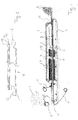
Figure 1 is a very schematic representation of an apparatus for manufacturing laminate panels according to the invention. -
Figure 2 is an enlarged sectional view of a panel made in accordance with the present invention. -
Figure 3 is a very schematic representation of an alternative apparatus for manufacturing another embodiment of the laminate panels according to the invention. - With reference to the drawings and in particular
Figure 1 thereof, there is shown an apparatus for manufacturing laminate sheets S which may include a plurality of panels P (seeFigure 2 ) which are cut from the sheets S and are finished in a manner well known in the prior art. - The apparatus includes a granulate supply 1 including a mechanism 2 which is adapted to supply a layer of
granulate 3 on a supportingconveyor belt 4. - The
granulate 3 is made from wood/plastic composite which is a material known in the prior art. It may include from about 30 wt% to about 95 wt% of at least one polymeric material and from about 5 wt% to about 80 wt% of at least one natural fibre or flour by weight of the core. The polymeric material can be one or more polymers having a polyolefin group, such as polyethylene. Other exemplary polymers include polypropylene, polyvinyl chloride, copolymer of PVC, and also other suitable thermoplastics. The polymer material to be processed can be in powder, liquid, cubed, pelletized form and/or any other form. The polymeric material can be virgin, recycled or a mixture of both. The polymeric material can be incorporated with a blowing agent to make a cellular foam structure core. - The natural fibres of flour have a specific moisture content, depending on the WPC-board specifications and requirements. The natural fibres can be from any wood source, cellulose source, other natural sources, or any combination thereof. Generally, any natural fibre can be used, which is from trees, plants, parts thereof and the like. The specific selection of a particular type of wood and/or wood fibres can have an influence on the properties of the final panel. The fibres of an exotic hard wood type could for example be substantially thicker and/or longer than normal fir wood. The bending stiffness will be higher if the WPC core is made with longer fibres. Synthetic fibres may also be used to enhance mechanical properties such as flexural and tensile modules of the product. The natural fibre or flour can be virgin, recycled or a mixture of both. Furthermore the natural fibres or flour can be incorporated with a foaming agent to make a cellular foam structure core.
- The mechanism 2 may include a system provided by Schilling-Knobel GmbH, as is described in
WO 99/26773 conveyor belt 4. Other means are of course conceivable. - The
lower conveyor belt 4 has a greater length than a second,upper conveyor belt 5 which is positioned at a distance from the granulate supply 1. - The upper and
lower conveyor belt conveyor belts second heating zone 6B withnip rollers 7 in between. Thesenip rollers 7 are positioned below the transport part of thelower conveyer belt 4 and above the transport part of theupper conveyor 5 to effect a first pressing action on the layer of melted granulate. A second set of nip rollers 8 consisting of two pairs of upper and lower nip rollers effects a final pressing action on the layer of melted granulate and determines the final thickness of the sheet to be formed. - The last zone within the
conveyor belts sheet layer 3 is cooled and brought in its final form. Theconveyor belts heating zones 6A, 6B and with cooling platens in the annealing zone 9. The platens in theupper conveyor belt 5 are movable in vertical direction, while the platens in thelower conveyor belt 4 are rigidly mounted. The movability of the platens with theupper conveyor 5 is to create a gap according to the required thickness of the sheet to be formed. In principle, the heating and cooling platens do no exert pressure on the granulate layer and only the calibrating niprollers 7, 8 are adapted to exert a pressure on the melted granulate layer to determine the thickness thereof. - According to the invention, there is supplied a layer of paper or other absorbing material 10, 11 to the lower and upper side of the layer of
granulate 3 in order to be melted thereto, i.e. to be attached thereto through the melted plastic from the granulate. The paper layers 10, 11 are supplied by unwinding it from a supply roll. The paper layers 10, 11 are interposed between thegranulate layer 3 and either thelower conveyor belt 4 or theupper conveyor belt 5, so that they also assist in preventing the granulate layer from sticking to theconveyor belts conveyor belts granulate layer 3 and/or theconveyor belts - At a position downstream of the
upper conveyor belt 5 there is arranged acutting mechanism 12 to cut the continuous sheet web into separate sheets S which are then collected for further processing. -
Figure 2 shows a final panel made in accordance with the method illustrated inFigure 1 , in which the panel includes acore 3 made of WPC granulate. - The panel according to
Figure 2 includes a top laminate on thecore 3. In this example, the top laminate is a high pressure laminate construction comprising at least a printeddecorative layer 14 and an impregnatedprotective overlay 15 pressed together with heat and pressure to become one single layer due to the impregnation material which is preferably a resin such as melamine resin. Preferably the melamine resin is mixed with urea formaldehyde to obtain advantageous properties such as minimized shrinkage and reduced cloudiness. - The
overlay paper 15 is preferably a high abrasive overlay which preferably has aluminium oxide or other abrasive resistant hard particles embedded in the surface of the paper. - The top laminate or top layer as described above consists of one or more paper layers, but also one or more wood veneer layers, vulcanized cellulose layers or other layers suitable as top layer are conceivable according to the present invention
- The design and overall upper layers can be textured such as embossed in register with the design of the printed decorative layer in order to even better imitate natural material, such as stone, brick, ceramic, wood, marble or the like.
- Preferably but not necessarily a backing layer is provided below the core and is fixed to the underside of the
core layer 3, possibly with interposition of a paper layer 10. The backing layer can be used as a balancing layer and it may also consist moisture resisting properties. - At least on two opposite sides of the panels and preferably on all sides are formed coupling means 16 to couple adjacent panels together. Preferably the coupling means also include a mechanical locking system to lock the adjacent panels not only in a direction perpendicular to the surface of the panels, but also in a direction parallel to the surface and perpendicular to the respective side of the panel. However the invention is not limited thereto at all. All coupling systems, including the use of adhesives is encompassed by the invention.
- An alternative method of manufacturing the panels according to the invention is one in which a top laminate and optionally also a backing layer is fixed directly to the core simultaneously with the formation of the core sheet. This means that the (paper) layers 10 and 11 are then formed by the materials for forming the top laminate and the backing layer which are directly fixed to the core by adherence to the melted core. The top laminate should then be of such structure that it can be supplied in rolls and can be fixed directly to the core through the basic layer thereof. The top laminate or top layer may consist of paper layers, but also one or more wood veneer layers or vulcanized cellulose layers are conceivable according to the present invention as long as they withstand the heat during pressing.
- Another alternative method of forming the panels according to the invention is schematically shown in
Fig. 3 . This method is intended to directly print a decoration on the WPC core. The apparatus includes the granulate supply 1, the layer making mechanism 2, theconveyor belts chafing device 17 to smoothen at least the upper surface, and preferably both surfaces of theWPC core 3, a corona surface treatment device 18 to increase the surface tension of at least the upper surface, but preferably both surfaces of theWPC core 3 so as to promote adherence of a layer thereon. The first layer to be provided on theWPC core 3 is a primer, a second layer is a covering layer of preferably a white colour and a third layer is a fond colouring layer having the basic colour of the final décor. These layers may be paint layers which are provided byrollers chafing device 22 followed byrollers cutter 26 to cut the web into smaller sheets and a precedingcamera 27 to control thecutter 26. Thus, this method is used to provide a top laminate of colouring layers directly on the core of WPC. - From the foregoing it follows that the invention provides panels for flooring or other coverings, such as wall and ceiling coverings, which have excellent qualities, such as acoustical characteristics (airborne as well as impact sound), a better water or humidity resistance (in comparison to MDF/HDF board), an anti or a-static behaviour, with maintenance of many of the qualities of MDF/HDF based laminate panels.
- The invention is not limited to the embodiments shown in the drawings and described above, which may be varied in different manners within the scope of the invention. For example it is conceivable to combine the
WPC core 3 with another layer of material. For example the complete core may include a base layer of a material such as HDF and a superposed layer of WPC. The connection between these layers can be accomplished after formation of the WPC, or the WPC layer can be formed on the base layer. Other layers may be combined with the WPC, either on, below or within the WPC core. The WPC core may be formed in more than one pressing steps, for example to create several WPC layers within the core having different characteristics. For example a low density WPC layer may be sandwiched between layers of WPC having a higher density. It is also possible to combine layers of WPC that have been optimized for various purposes: a layer having favourable acoustic properties, a soft upper layer to promote deeper embossing, a soft lower layer to enhance the equalizing capability. - Furthermore, it is possible that the decorative print is provided on the (paper) layer that is attached to the WPC core during the formation thereof. No separate laminate is necessary then. The print may be provided before or after attachment to the WPC core. The layer may be covered by resin and optionally anti-abrasive particles as a finish. In a further alternative embodiment, the WPC material is directly printed with a decorative print, so without interposition of a print layer such as paper. As an alternative or additionally, the raw WPC material can be embossed and/or chafed/sanded in a particulate pattern to imitate natural materials such as wood or stone.
Claims (21)
- Method of manufacturing laminate floor panels comprising at least a core containing wood/plastic composite (WPC) and a top layer of laminate, including the steps of:providing a granulate of WPC in which natural fibres are encapsulated in polymer plastics,providing a layer of granulate and melting it,pressing the melted layer for forming the core of the panels,attaching the top laminate onto the core to form a sheet,finishing the sheet to form one or more panels.
- Method according to claim 1, wherein at least a basic layer of paper, glass fibre or the like is provided on the melted layer of WPC granulate in order to be pressed together with the core sheet.
- Method according to claim 2, wherein the top laminate comprises at least a paper layer impregnated with an impregnation material, such as melamine resin, and wherein the top laminate is attached to the basic layer by means of the impregnation material.
- Method according to one of the preceding claims, wherein the melted WPC layer is pressed in a continuous process to form a continuous web which is cut into separate sheets.
- Method according to claims 2 and 4, wherein the basic layer is supplied in the form of a roll of material which is unrolled to be superposed with the melted WPC layer.
- Method according to claim 2, wherein the top laminate is provided on the melted layer of WPC granulate in order to be pressed together with the core to form a sheet.
- Method according to one of claims 2 - 6, wherein a backing layer of material such as paper is provided to the melted layer of WPC granulate on the opposite side so as to form layers on both sides of the core.
- Method according to one of the preceding claims, wherein the laminate sheet is finished by cutting it into a plurality of panels and to machine the edges of the panels to form coupling and optionally locking members.
- Method of manufacturing laminate floor panels comprising at least a core containing wood/plastic composite (WPC) and a decorative top layer, including the steps of:providing a granulate of WPC in which natural fibres are encapsulated in polymer plastics,providing a layer of granulate and melting it,providing at least a basic layer of paper, glass fibre or the like on the melted layer of WPC granulate,pressing the melted layer for forming the core of the panels with the basic layer thereon,providing a decorative print directly or indirectly on the basic layer before or after its attachment on the WPC core,finishing the sheet to form one or more panels.
- Method of manufacturing laminate floor panels comprising at least a core containing wood/plastic composite (WPC) and a decorative top layer, including the steps of:providing a granulate of WPC in which natural fibres are encapsulated in polymer plastics,providing a layer of granulate and melting it,pressing the melted layer for forming the core of the panels,providing a decorative print directly on the WPC core,finishing the sheet to form one or more panels.
- Apparatus for manufacturing laminate panels, including
a granulate supply to supply a layer of WPC granulate,
a heater to heat the granulate to a temperature in which the granulate is substantially in a melted state,
a press to press the granulate into a sheet having the proper dimensions. - Apparatus according to claim 11, comprising a conveyor belt to receive the layer of granulate and to convey the layer of granulate along the heater and through the press.
- Apparatus according to claim 11 or 12, comprising a supply to supply a layer of material such as paper, glass fibre, foil or the like to the conveyor belt to attach the layer on the melted WPC core.
- Laminate panel, comprising:a core made of WPC,a basic layer melted to the core, anda top laminate comprising at least one layer attached to the basic layer.
- Laminate panel according to claim 14, wherein the at least one layer is a paper layer impregnated with impregnation material, such as melamine resin, and being attached to the basic layer, preferably made of paper, through this impregnation material.
- Laminate panel according to claim 14, wherein the at least one layer is a foamed layer of plastic, such as PVC, attached, in particular melted to the basic layer, preferably made of glass fibre, foil or the like.
- Laminate panel according to one of claims 14 - 16, wherein a second layer of material, such as paper, is attached to the side of the core opposite to that of the laminate.
- Laminate panel, comprising:a core made of WPC,a basic layer attached to the melted core during pressing.
- Laminate panel according to claim 18, wherein at least one further layer bearing a decorative print is attached to the basic layer to form a top laminate.
- Laminate panel according to claim 18, wherein the basic layer is provided with a decorative print.
- Laminate panel, comprising:a core made of WPC,a top laminate comprising a plurality of colouring layers, printed on the top side of the WPC core, preferably directly.
Priority Applications (1)
| Application Number | Priority Date | Filing Date | Title |
|---|---|---|---|
| HRP20260359TT HRP20260359T1 (en) | 2007-04-10 | 2008-04-10 | Method and apparatus for manufacturing laminate floor panels comprising a core containing wood/plastic composite, as well as such panels |
Applications Claiming Priority (3)
| Application Number | Priority Date | Filing Date | Title |
|---|---|---|---|
| EP07007361 | 2007-04-10 | ||
| PCT/EP2008/054365 WO2008122668A1 (en) | 2007-04-10 | 2008-04-10 | Method and apparatus for manufacturing laminate floor panels comprising a core containing wood/plastic composite, as well as such panels |
| EP08736084.8A EP2155485B1 (en) | 2007-04-10 | 2008-04-10 | Method and apparatus for manufacturing laminate floor panels comprising a core containing wood/plastic composite, as well as such panels |
Related Parent Applications (2)
| Application Number | Title | Priority Date | Filing Date |
|---|---|---|---|
| PCT/EP2008/054365 Previously-Filed-Application WO2008122668A1 (en) | 2007-04-10 | 2008-04-10 | Method and apparatus for manufacturing laminate floor panels comprising a core containing wood/plastic composite, as well as such panels |
| EP08736084.8A Division EP2155485B1 (en) | 2007-04-10 | 2008-04-10 | Method and apparatus for manufacturing laminate floor panels comprising a core containing wood/plastic composite, as well as such panels |
Publications (3)
| Publication Number | Publication Date |
|---|---|
| EP3572223A2 true EP3572223A2 (en) | 2019-11-27 |
| EP3572223A3 EP3572223A3 (en) | 2020-01-15 |
| EP3572223B1 EP3572223B1 (en) | 2026-02-25 |
Family
ID=39562995
Family Applications (2)
| Application Number | Title | Priority Date | Filing Date |
|---|---|---|---|
| EP19177343.1A Active EP3572223B1 (en) | 2007-04-10 | 2008-04-10 | Method and apparatus for manufacturing laminate floor panels comprising a core containing wood/plastic composite, as well as such panels |
| EP08736084.8A Active EP2155485B1 (en) | 2007-04-10 | 2008-04-10 | Method and apparatus for manufacturing laminate floor panels comprising a core containing wood/plastic composite, as well as such panels |
Family Applications After (1)
| Application Number | Title | Priority Date | Filing Date |
|---|---|---|---|
| EP08736084.8A Active EP2155485B1 (en) | 2007-04-10 | 2008-04-10 | Method and apparatus for manufacturing laminate floor panels comprising a core containing wood/plastic composite, as well as such panels |
Country Status (14)
| Country | Link |
|---|---|
| US (1) | US8956714B2 (en) |
| EP (2) | EP3572223B1 (en) |
| CN (1) | CN101687386B (en) |
| CA (1) | CA2683707C (en) |
| DK (1) | DK2155485T3 (en) |
| ES (1) | ES2738523T3 (en) |
| HR (2) | HRP20260359T1 (en) |
| HU (1) | HUE044553T2 (en) |
| LT (1) | LT2155485T (en) |
| PL (1) | PL2155485T3 (en) |
| PT (1) | PT2155485T (en) |
| RU (1) | RU2479433C2 (en) |
| SI (1) | SI2155485T1 (en) |
| WO (1) | WO2008122668A1 (en) |
Families Citing this family (62)
| Publication number | Priority date | Publication date | Assignee | Title |
|---|---|---|---|---|
| LT2155485T (en) | 2007-04-10 | 2019-10-10 | Unilin, Bvba | METHOD AND EQUIPMENT FOR MANUFACTURING LAMINATED FLOOR PANELS INCLUDING THE MEDIUM / PLASTIC COMPOSITE, AND THEY |
| WO2010081860A1 (en) | 2009-01-15 | 2010-07-22 | Spanolux N.V. - Div. Balterio | Method of manufacturing floor panels containing wood/plastic composite, as well as such panels |
| CN101531022B (en) * | 2009-04-03 | 2010-12-29 | 杨孝乾 | Production equipment for large-sized plastic-wood board |
| EP3561197B1 (en) | 2009-12-22 | 2023-03-15 | Flooring Industries Limited, SARL | Panel |
| DE102010030752A1 (en) | 2009-12-23 | 2011-06-30 | Surface Technologies GmbH & Co. KG, 15837 | Method and device for producing a double-sided coated decorated plate |
| BE1019501A5 (en) | 2010-05-10 | 2012-08-07 | Flooring Ind Ltd Sarl | FLOOR PANEL AND METHOD FOR MANUFACTURING FLOOR PANELS. |
| US8925275B2 (en) | 2010-05-10 | 2015-01-06 | Flooring Industries Limited, Sarl | Floor panel |
| BE1019331A5 (en) | 2010-05-10 | 2012-06-05 | Flooring Ind Ltd Sarl | FLOOR PANEL AND METHODS FOR MANUFACTURING FLOOR PANELS. |
| EP2402153A1 (en) * | 2010-06-30 | 2012-01-04 | Spanolux N.V. Div. Balterio | A panel comprising a polymeric composite layer and a method of manufacturing a panel |
| EP2402155A1 (en) * | 2010-06-30 | 2012-01-04 | Spanolux N.V. Div. Balterio | A panel comprising a polymeric composite layer and a reinforcement layer |
| CA2804100C (en) | 2010-06-30 | 2019-10-08 | Spanolux N.V.- Div. Balterio | A panel comprising a polymeric composite layer and a method of manufacturing such panel |
| AU2010361006B2 (en) | 2010-09-23 | 2014-06-12 | Flooring Technologies Ltd. | Method for producing panels and panel produced according to the method |
| PL2463116T3 (en) * | 2010-12-08 | 2014-04-30 | Unilin Bvba | A method of manufacturing a panel including a wear resistant layer |
| AT12874U1 (en) * | 2011-11-30 | 2013-01-15 | Extruwood Gmbh | COMPOSITE PROFILE OF WOOD AND WOOD FIBER REINFORCED PLASTIC AND USE OF SUCH A PROFILE |
| UA111997C2 (en) * | 2012-04-02 | 2016-07-11 | Кроноплюс Текнікал Аг | PANEL WITH COVER DIRECTED BY DIRECT PRINTING METHOD |
| BE1020722A3 (en) | 2012-06-01 | 2014-04-01 | Unilin Bvba | PANEL FOR FORMING A FLOOR COVERING AND METHOD FOR MANUFACTURING SUCH PANELS. |
| US9156233B2 (en) | 2012-10-22 | 2015-10-13 | Us Floors, Inc. | Engineered waterproof flooring and wall covering planks |
| DE102013101798B4 (en) * | 2012-11-23 | 2023-01-19 | Hamberger Industriewerke Gmbh | panel |
| AU2013369538B2 (en) | 2012-12-28 | 2016-02-11 | Surface Technologies Gmbh & Co. Kg | Method for producing a printing material and a directly printed decorative panel |
| ES2587766T3 (en) * | 2012-12-28 | 2016-10-26 | Surface Technologies Gmbh & Co. Kg | Procedure for preparing a printing substrate |
| DE102013003947A1 (en) * | 2013-03-07 | 2014-09-11 | Fraunhofer-Gesellschaft zur Förderung der angewandten Forschung e.V. | Process for producing an at least two-layered plate and at least two-layered plate |
| US9566607B2 (en) * | 2013-03-14 | 2017-02-14 | Illinois Tool Works Inc. | Surface appearance simulation systems and methods |
| EP3024669B1 (en) * | 2013-07-22 | 2018-06-27 | Akzenta Paneele + Profile GmbH | Method for producing a decorated wall and floor panel |
| EP2829415A1 (en) * | 2013-07-22 | 2015-01-28 | Akzenta Paneele + Profile GmbH | Method for producing a decorated wall and floor panel |
| DK3055130T3 (en) * | 2013-10-11 | 2017-09-18 | Wpt Gmbh | Elastic floor plate |
| EP3323628B1 (en) | 2014-02-25 | 2022-06-15 | Akzenta Paneele + Profile GmbH | Method for producing decorative panels |
| EP4733513A2 (en) | 2014-03-31 | 2026-04-29 | Ceraloc Innovation AB | Method to produce composite boards and panels |
| DE102014106492A1 (en) * | 2014-05-08 | 2015-11-12 | Akzenta Paneele + Profile Gmbh | paneling |
| EP2942208A1 (en) * | 2014-05-09 | 2015-11-11 | Akzenta Paneele + Profile GmbH | Method for producing a decorated wall or floor panel |
| US10059084B2 (en) | 2014-07-16 | 2018-08-28 | Valinge Innovation Ab | Method to produce a thermoplastic wear resistant foil |
| PL3524429T3 (en) * | 2014-07-31 | 2021-07-19 | Unilin, Bv | A method of producing a product in the form of a floor covering |
| PT3215327T (en) * | 2014-11-06 | 2020-09-10 | Flooring Technologies Ltd | Wooden material panel, in particular in the form of a wood-plastic composite material, and a method for producing the same |
| US10821714B2 (en) | 2014-11-20 | 2020-11-03 | Ivc B.V. | Method for manufacturing a panel including a reinforcement sheet, and a floor panel |
| DE202015100411U1 (en) * | 2015-01-29 | 2015-04-29 | Flooring Technologies Ltd. | Impact sound pad based on a wood-plastic composite material |
| GB2536873B (en) * | 2015-03-11 | 2019-02-06 | Bushboard Ltd | Wall panel system |
| US10563410B2 (en) * | 2015-03-11 | 2020-02-18 | Bushboard Ltd | Impervious wall panel |
| ES2749887T3 (en) * | 2015-08-19 | 2020-03-24 | Akzenta Paneele Profile Gmbh | Procedure for the manufacture of a decorated wall or floor panel |
| BE1023446B1 (en) | 2015-09-14 | 2017-03-22 | Ivc N.V. | Method for manufacturing floor panels and floor panel for forming a floor covering |
| ES2847940T3 (en) * | 2015-09-24 | 2021-08-04 | Akzenta Paneele Profile Gmbh | Procedure for manufacturing a decorated wall or floor panel |
| CN105587103A (en) * | 2015-11-20 | 2016-05-18 | 大块建材开发(江苏)有限公司 | Hard board plastic floor and making method thereof |
| US10233656B2 (en) * | 2016-08-26 | 2019-03-19 | Quickstyle Industries Inc. | Densified foam core (DFC) tile with imitation grout line |
| US10544595B2 (en) * | 2016-08-26 | 2020-01-28 | Quickstyle Industries Inc. | Tile with protected imitation grout line |
| US10132088B2 (en) | 2016-08-26 | 2018-11-20 | Quickstyle Industries Inc. | Stone plastic composite (SPC) tile with imitation grout line |
| US12392139B2 (en) | 2016-08-26 | 2025-08-19 | Quickstyle Industries, Inc. | Tile with imitation grout line |
| US9938726B2 (en) | 2016-08-26 | 2018-04-10 | Quickstyle Industries Inc. | Densified foam core (DFC) tile with imitation grout line |
| EP3516130B1 (en) | 2016-09-23 | 2023-05-10 | Shaw Industries Group, Inc. | Resilient flooring product and methods of making same |
| ES2855111T3 (en) | 2016-10-27 | 2021-09-23 | Akzenta Paneele Profile Gmbh | Procedure for manufacturing a decorated wall or floor panel |
| PL3345774T3 (en) * | 2017-01-04 | 2021-06-14 | Akzenta Paneele + Profile Gmbh | Method for producing a decorated wall or floor panel |
| WO2019111036A1 (en) | 2017-12-04 | 2019-06-13 | Annexair Inc. | Composite panel, composite material, impregnator and method for manufacturing a composite panel |
| WO2019111035A1 (en) | 2017-12-04 | 2019-06-13 | Annexair Inc. | Composite panel, composite material, impregnator and method for manufacturing a composite panel |
| WO2019111037A1 (en) | 2017-12-04 | 2019-06-13 | Annexair Inc. | Composite panel, composite material, impregnator and method for manufacturing a composite panel |
| PL3732041T3 (en) * | 2017-12-29 | 2023-10-23 | Xylo Technologies Ag | LAMINATE WITH SYNCHRONIZED STRUCTURE |
| PT3578384T (en) | 2018-06-05 | 2021-12-09 | Akzenta Paneele Profile Gmbh | Substrate based on a plastic composition and solid composition on mineral basis for decorated wall or floor panels |
| BE1026962B1 (en) * | 2019-01-10 | 2020-08-13 | Ivc Bvba | FLOOR OR WALL PANEL |
| JP2022522708A (en) * | 2019-02-27 | 2022-04-20 | サンライズ エスピーシー テクノロジー、エルエルシー | Adhesive-free and dust-free composite flooring system |
| EP4088928A1 (en) | 2019-03-25 | 2022-11-16 | Flooring Industries Limited, SARL | Panel and method for manufacturing a panel |
| EP3972828A1 (en) * | 2019-05-21 | 2022-03-30 | Minh Tam Do | Multiple-layer composite board of discrete materials and plastic |
| RU201214U1 (en) * | 2019-09-16 | 2020-12-03 | Таркетт Гдл С.А. | HETEROGENEOUS SURFACE COATING, IN PARTICULAR PRESTIGIOUS VINYL TILES, MADE ON THE LUBRICANT COATING LINE BASED ON THERMOPLASTIC MATERIAL |
| CN111421926B (en) * | 2020-03-11 | 2020-11-06 | 华南农业大学 | Continuous fiber cloth three-dimensional reinforced wood-plastic composite material and production method and equipment thereof |
| WO2022180589A1 (en) * | 2021-02-26 | 2022-09-01 | Stora Enso Oyj | Composite product |
| BE1029240B1 (en) | 2021-03-24 | 2022-10-24 | Flooring Ind Ltd Sarl | Panels and method of producing panels |
| US20260218523A1 (en) * | 2023-02-07 | 2026-07-30 | Unilin, Bv | A panel and a method for producing panels |
Citations (2)
| Publication number | Priority date | Publication date | Assignee | Title |
|---|---|---|---|---|
| WO1999026773A1 (en) | 1997-11-21 | 1999-06-03 | Schilling-Knobel Gmbh | Method for producing thermoset webs from particles of thermoplastic polymer materials |
| US20060032175A1 (en) | 2004-07-30 | 2006-02-16 | Mannington Mills, Inc. | Flooring products and methods of making the same |
Family Cites Families (18)
| Publication number | Priority date | Publication date | Assignee | Title |
|---|---|---|---|---|
| FR2542666B1 (en) | 1983-03-17 | 1986-06-20 | Saint Gobain Isover | COMPOSITE MOLDED PANELS |
| FR2589777B1 (en) | 1985-01-23 | 1990-04-06 | Zonca Radiano | NEW MATERIAL BASED ON AGGREGATES OF WOOD AND POLYURETHANE RESIN AND METHOD FOR MANUFACTURING PREFABRICATED ELEMENTS AND MOLDED OBJECTS FOR THE BUILDING, FURNITURE AND SHIPBUILDING INDUSTRY. |
| ES2003935A6 (en) * | 1986-11-18 | 1988-12-01 | Formica Espanola | A translucent and variegated decorative laminate having an effect of depth and method of producing same. |
| JP2886694B2 (en) * | 1991-02-04 | 1999-04-26 | 松下電工株式会社 | Building board manufacturing method |
| CN2122719U (en) | 1992-05-11 | 1992-11-25 | 林文荻 | Antistatic disposable plastic-coated wooden board |
| US5662981A (en) | 1996-04-30 | 1997-09-02 | Owens-Corning Fiberglas Technology Inc. | Molded composite product and method of making |
| US6821614B1 (en) | 1996-12-11 | 2004-11-23 | Boise Cascade Corporation | Apparatus and method for continuous formation of composites having filler and thermoactive materials, and products made by the method |
| US7258913B2 (en) | 2002-10-28 | 2007-08-21 | Certainteed Corp. | Plastic fencing system reinforced with fiberglass reinforced thermoplastic composites |
| SE519791C2 (en) * | 2001-07-27 | 2003-04-08 | Valinge Aluminium Ab | System for forming a joint between two floorboards, floorboards therefore provided with sealing means at the joint edges and ways of manufacturing a core which is processed into floorboards |
| US6844049B2 (en) * | 2002-10-30 | 2005-01-18 | Hossein Amin-Javaheri | Polyvinyl chloride/wood composite having a natural wood grain finish and a method for creating the finish |
| US20050287347A1 (en) * | 2003-06-02 | 2005-12-29 | Pavilion Furniture, Inc. | Polyurethane and rigid substrate composite with fasteners |
| EP1591214A1 (en) | 2004-04-21 | 2005-11-02 | Hans Dr. Korte | Natural material particles coated with plastics |
| DE102004056540A1 (en) | 2004-11-23 | 2006-05-24 | Dakor Melamin Imprägnierungen Gmbh | Underlay for laminar floor panels has top layer of impregnated kraft paper bonded to a sub-layer of e.g. polyurethane foam, felt, cork or rubber |
| DE102005021903B4 (en) | 2005-05-12 | 2008-07-10 | Kronotec Ag | Process for producing a wood-based panel and wood-based panel |
| DE102006018277B4 (en) | 2006-04-20 | 2008-04-17 | Kronotec Ag | Building board and method for producing a building board |
| CN100560314C (en) | 2006-09-07 | 2009-11-18 | 杨孝乾 | A kind of preparation method of plastic wood board |
| LT2155485T (en) | 2007-04-10 | 2019-10-10 | Unilin, Bvba | METHOD AND EQUIPMENT FOR MANUFACTURING LAMINATED FLOOR PANELS INCLUDING THE MEDIUM / PLASTIC COMPOSITE, AND THEY |
| CA2804100C (en) | 2010-06-30 | 2019-10-08 | Spanolux N.V.- Div. Balterio | A panel comprising a polymeric composite layer and a method of manufacturing such panel |
-
2008
- 2008-04-10 LT LTEP08736084.8T patent/LT2155485T/en unknown
- 2008-04-10 PL PL08736084T patent/PL2155485T3/en unknown
- 2008-04-10 SI SI200832078T patent/SI2155485T1/en unknown
- 2008-04-10 EP EP19177343.1A patent/EP3572223B1/en active Active
- 2008-04-10 ES ES08736084T patent/ES2738523T3/en active Active
- 2008-04-10 RU RU2009137470/05A patent/RU2479433C2/en active
- 2008-04-10 HU HUE08736084 patent/HUE044553T2/en unknown
- 2008-04-10 PT PT08736084T patent/PT2155485T/en unknown
- 2008-04-10 HR HRP20260359TT patent/HRP20260359T1/en unknown
- 2008-04-10 US US12/594,989 patent/US8956714B2/en active Active
- 2008-04-10 HR HRP20191352 patent/HRP20191352T1/en unknown
- 2008-04-10 WO PCT/EP2008/054365 patent/WO2008122668A1/en not_active Ceased
- 2008-04-10 CA CA2683707A patent/CA2683707C/en active Active
- 2008-04-10 DK DK08736084.8T patent/DK2155485T3/en active
- 2008-04-10 EP EP08736084.8A patent/EP2155485B1/en active Active
- 2008-04-10 CN CN2008800183471A patent/CN101687386B/en active Active
Patent Citations (2)
| Publication number | Priority date | Publication date | Assignee | Title |
|---|---|---|---|---|
| WO1999026773A1 (en) | 1997-11-21 | 1999-06-03 | Schilling-Knobel Gmbh | Method for producing thermoset webs from particles of thermoplastic polymer materials |
| US20060032175A1 (en) | 2004-07-30 | 2006-02-16 | Mannington Mills, Inc. | Flooring products and methods of making the same |
Also Published As
| Publication number | Publication date |
|---|---|
| CA2683707C (en) | 2016-03-08 |
| CN101687386B (en) | 2013-10-23 |
| EP2155485A1 (en) | 2010-02-24 |
| US20100055420A1 (en) | 2010-03-04 |
| PL2155485T3 (en) | 2019-10-31 |
| EP3572223B1 (en) | 2026-02-25 |
| HUE044553T2 (en) | 2019-11-28 |
| RU2479433C2 (en) | 2013-04-20 |
| EP3572223A3 (en) | 2020-01-15 |
| US8956714B2 (en) | 2015-02-17 |
| LT2155485T (en) | 2019-10-10 |
| CN101687386A (en) | 2010-03-31 |
| HRP20260359T1 (en) | 2026-05-08 |
| ES2738523T3 (en) | 2020-01-23 |
| SI2155485T1 (en) | 2019-09-30 |
| WO2008122668A1 (en) | 2008-10-16 |
| EP2155485B1 (en) | 2019-06-12 |
| HRP20191352T1 (en) | 2019-11-01 |
| RU2009137470A (en) | 2011-05-20 |
| CA2683707A1 (en) | 2008-10-16 |
| DK2155485T3 (en) | 2019-08-12 |
| PT2155485T (en) | 2019-08-23 |
Similar Documents
| Publication | Publication Date | Title |
|---|---|---|
| EP3572223B1 (en) | Method and apparatus for manufacturing laminate floor panels comprising a core containing wood/plastic composite, as well as such panels | |
| EP3575080B1 (en) | A panel comprising a polymeric composite layer and a reinforcement layer | |
| US20110300392A1 (en) | Method of manufacturing floor panels containing wood/plastic composite, as well as such panels | |
| EP2861809B1 (en) | Panel for forming a floor covering and method for manufacturing such panels. | |
| CA2912978C (en) | Method for producing a decorated wall or floor panel | |
| KR101965944B1 (en) | Method for producing a decorated wall or floor panel | |
| EP3640029A2 (en) | Method for manufacturing floor panels and floor panel for forming a floor covering | |
| CN110774706A (en) | Method for manufacturing panel comprising reinforced sheet, and floor | |
| KR102480810B1 (en) | Decorative panel with multi-laminated plastic carrier plate and manufacturing method thereof | |
| KR20170041889A (en) | Method for producing a decorated wall or floor panel |
Legal Events
| Date | Code | Title | Description |
|---|---|---|---|
| REG | Reference to a national code |
Ref country code: HR Ref legal event code: TUEP Ref document number: P20260359T Country of ref document: HR |
|
| PUAI | Public reference made under article 153(3) epc to a published international application that has entered the european phase |
Free format text: ORIGINAL CODE: 0009012 |
|
| STAA | Information on the status of an ep patent application or granted ep patent |
Free format text: STATUS: THE APPLICATION HAS BEEN PUBLISHED |
|
| AC | Divisional application: reference to earlier application |
Ref document number: 2155485 Country of ref document: EP Kind code of ref document: P |
|
| AK | Designated contracting states |
Kind code of ref document: A2 Designated state(s): AT BE BG CH CY CZ DE DK EE ES FI FR GB GR HR HU IE IS IT LI LT LU LV MC MT NL NO PL PT RO SE SI SK TR |
|
| PUAL | Search report despatched |
Free format text: ORIGINAL CODE: 0009013 |
|
| AK | Designated contracting states |
Kind code of ref document: A3 Designated state(s): AT BE BG CH CY CZ DE DK EE ES FI FR GB GR HR HU IE IS IT LI LT LU LV MC MT NL NO PL PT RO SE SI SK TR |
|
| RIC1 | Information provided on ipc code assigned before grant |
Ipc: B27N 3/06 20060101ALI20191210BHEP Ipc: B32B 5/16 20060101AFI20191210BHEP Ipc: B29B 7/92 20060101ALI20191210BHEP Ipc: B32B 21/02 20060101ALI20191210BHEP |
|
| STAA | Information on the status of an ep patent application or granted ep patent |
Free format text: STATUS: REQUEST FOR EXAMINATION WAS MADE |
|
| 17P | Request for examination filed |
Effective date: 20200707 |
|
| RBV | Designated contracting states (corrected) |
Designated state(s): AT BE BG CH CY CZ DE DK EE ES FI FR GB GR HR HU IE IS IT LI LT LU LV MC MT NL NO PL PT RO SE SI SK TR |
|
| STAA | Information on the status of an ep patent application or granted ep patent |
Free format text: STATUS: EXAMINATION IS IN PROGRESS |
|
| 17Q | First examination report despatched |
Effective date: 20200824 |
|
| RAP1 | Party data changed (applicant data changed or rights of an application transferred) |
Owner name: UNILIN, BV |
|
| RAP1 | Party data changed (applicant data changed or rights of an application transferred) |
Owner name: FLOORING INDUSTRIES LIMITED, SARL |
|
| RAP1 | Party data changed (applicant data changed or rights of an application transferred) |
Owner name: UNILIN, BV |
|
| GRAP | Despatch of communication of intention to grant a patent |
Free format text: ORIGINAL CODE: EPIDOSNIGR1 |
|
| STAA | Information on the status of an ep patent application or granted ep patent |
Free format text: STATUS: GRANT OF PATENT IS INTENDED |
|
| GRAS | Grant fee paid |
Free format text: ORIGINAL CODE: EPIDOSNIGR3 |
|
| INTG | Intention to grant announced |
Effective date: 20251218 |
|
| GRAA | (expected) grant |
Free format text: ORIGINAL CODE: 0009210 |
|
| STAA | Information on the status of an ep patent application or granted ep patent |
Free format text: STATUS: THE PATENT HAS BEEN GRANTED |
|
| AC | Divisional application: reference to earlier application |
Ref document number: 2155485 Country of ref document: EP Kind code of ref document: P |
|
| AK | Designated contracting states |
Kind code of ref document: B1 Designated state(s): AT BE BG CH CY CZ DE DK EE ES FI FR GB GR HR HU IE IS IT LI LT LU LV MC MT NL NO PL PT RO SE SI SK TR |
|
| P01 | Opt-out of the competence of the unified patent court (upc) registered |
Free format text: CASE NUMBER: UPC_APP_0001307_3572223/2026 Effective date: 20260115 |
|
| REG | Reference to a national code |
Ref country code: CH Ref legal event code: F10 Free format text: ST27 STATUS EVENT CODE: U-0-0-F10-F00 (AS PROVIDED BY THE NATIONAL OFFICE) Effective date: 20260225 Ref country code: GB Ref legal event code: FG4D |
|
| REG | Reference to a national code |
Ref country code: DE Ref legal event code: R096 Ref document number: 602008065297 Country of ref document: DE |
|
| REG | Reference to a national code |
Ref country code: IE Ref legal event code: FG4D |
|
| REG | Reference to a national code |
Ref country code: HR Ref legal event code: ODRP Ref document number: P20260359T Country of ref document: HR Payment date: 20260401 Year of fee payment: 19 |
|
| REG | Reference to a national code |
Ref country code: HR Ref legal event code: T1PR Ref document number: P20260359 Country of ref document: HR |
|
| REG | Reference to a national code |
Ref country code: NL Ref legal event code: MP Effective date: 20260225 |
|
| PG25 | Lapsed in a contracting state [announced via postgrant information from national office to epo] |
Ref country code: ES Free format text: LAPSE BECAUSE OF FAILURE TO SUBMIT A TRANSLATION OF THE DESCRIPTION OR TO PAY THE FEE WITHIN THE PRESCRIBED TIME-LIMIT Effective date: 20260225 |
|
| PG25 | Lapsed in a contracting state [announced via postgrant information from national office to epo] |
Ref country code: PL Free format text: LAPSE BECAUSE OF FAILURE TO SUBMIT A TRANSLATION OF THE DESCRIPTION OR TO PAY THE FEE WITHIN THE PRESCRIBED TIME-LIMIT Effective date: 20260225 |
|
| PG25 | Lapsed in a contracting state [announced via postgrant information from national office to epo] |
Ref country code: GR Free format text: LAPSE BECAUSE OF FAILURE TO SUBMIT A TRANSLATION OF THE DESCRIPTION OR TO PAY THE FEE WITHIN THE PRESCRIBED TIME-LIMIT Effective date: 20260526 |
|
| REG | Reference to a national code |
Ref country code: LT Ref legal event code: MG9D |
|
| PG25 | Lapsed in a contracting state [announced via postgrant information from national office to epo] |
Ref country code: LT Free format text: LAPSE BECAUSE OF FAILURE TO SUBMIT A TRANSLATION OF THE DESCRIPTION OR TO PAY THE FEE WITHIN THE PRESCRIBED TIME-LIMIT Effective date: 20260225 |
|
| PGFP | Annual fee paid to national office [announced via postgrant information from national office to epo] |
Ref country code: DE Payment date: 20260429 Year of fee payment: 19 |
|
| PG25 | Lapsed in a contracting state [announced via postgrant information from national office to epo] |
Ref country code: NO Free format text: LAPSE BECAUSE OF FAILURE TO SUBMIT A TRANSLATION OF THE DESCRIPTION OR TO PAY THE FEE WITHIN THE PRESCRIBED TIME-LIMIT Effective date: 20260525 |
|
| PG25 | Lapsed in a contracting state [announced via postgrant information from national office to epo] |
Ref country code: FI Free format text: LAPSE BECAUSE OF FAILURE TO SUBMIT A TRANSLATION OF THE DESCRIPTION OR TO PAY THE FEE WITHIN THE PRESCRIBED TIME-LIMIT Effective date: 20260225 Ref country code: AT Free format text: LAPSE BECAUSE OF FAILURE TO SUBMIT A TRANSLATION OF THE DESCRIPTION OR TO PAY THE FEE WITHIN THE PRESCRIBED TIME-LIMIT Effective date: 20260225 Ref country code: SE Free format text: LAPSE BECAUSE OF FAILURE TO SUBMIT A TRANSLATION OF THE DESCRIPTION OR TO PAY THE FEE WITHIN THE PRESCRIBED TIME-LIMIT Effective date: 20260225 |
|
| REG | Reference to a national code |
Ref country code: AT Ref legal event code: MK05 Ref document number: 1890414 Country of ref document: AT Kind code of ref document: T Effective date: 20260225 |
|
| PGFP | Annual fee paid to national office [announced via postgrant information from national office to epo] |
Ref country code: HR Payment date: 20260401 Year of fee payment: 19 |
|
| PG25 | Lapsed in a contracting state [announced via postgrant information from national office to epo] |
Ref country code: IS Free format text: LAPSE BECAUSE OF FAILURE TO SUBMIT A TRANSLATION OF THE DESCRIPTION OR TO PAY THE FEE WITHIN THE PRESCRIBED TIME-LIMIT Effective date: 20260625 Ref country code: PT Free format text: LAPSE BECAUSE OF FAILURE TO SUBMIT A TRANSLATION OF THE DESCRIPTION OR TO PAY THE FEE WITHIN THE PRESCRIBED TIME-LIMIT Effective date: 20260625 |
|
| PG25 | Lapsed in a contracting state [announced via postgrant information from national office to epo] |
Ref country code: NL Free format text: LAPSE BECAUSE OF FAILURE TO SUBMIT A TRANSLATION OF THE DESCRIPTION OR TO PAY THE FEE WITHIN THE PRESCRIBED TIME-LIMIT Effective date: 20260225 |
|
| PGFP | Annual fee paid to national office [announced via postgrant information from national office to epo] |
Ref country code: FR Payment date: 20260427 Year of fee payment: 19 |
|
| PG25 | Lapsed in a contracting state [announced via postgrant information from national office to epo] |
Ref country code: LV Free format text: LAPSE BECAUSE OF FAILURE TO SUBMIT A TRANSLATION OF THE DESCRIPTION OR TO PAY THE FEE WITHIN THE PRESCRIBED TIME-LIMIT Effective date: 20260225 |
|
| PG25 | Lapsed in a contracting state [announced via postgrant information from national office to epo] |
Ref country code: BG Free format text: LAPSE BECAUSE OF FAILURE TO SUBMIT A TRANSLATION OF THE DESCRIPTION OR TO PAY THE FEE WITHIN THE PRESCRIBED TIME-LIMIT Effective date: 20260225 |