EP3570353B1 - Katalytische schichten, die ein fulleren umfassen - Google Patents
Katalytische schichten, die ein fulleren umfassen Download PDFInfo
- Publication number
- EP3570353B1 EP3570353B1 EP19174431.7A EP19174431A EP3570353B1 EP 3570353 B1 EP3570353 B1 EP 3570353B1 EP 19174431 A EP19174431 A EP 19174431A EP 3570353 B1 EP3570353 B1 EP 3570353B1
- Authority
- EP
- European Patent Office
- Prior art keywords
- catalytic
- dry weight
- fullerene
- layer
- ink
- Prior art date
- Legal status (The legal status is an assumption and is not a legal conclusion. Google has not performed a legal analysis and makes no representation as to the accuracy of the status listed.)
- Active
Links
Images


Classifications
-
- H—ELECTRICITY
- H01—ELECTRIC ELEMENTS
- H01M—PROCESSES OR MEANS, e.g. BATTERIES, FOR THE DIRECT CONVERSION OF CHEMICAL ENERGY INTO ELECTRICAL ENERGY
- H01M4/00—Electrodes
- H01M4/86—Inert electrodes with catalytic activity, e.g. for fuel cells
- H01M4/8663—Selection of inactive substances as ingredients for catalytic active masses, e.g. binders, fillers
- H01M4/8673—Electrically conductive fillers
-
- H—ELECTRICITY
- H01—ELECTRIC ELEMENTS
- H01M—PROCESSES OR MEANS, e.g. BATTERIES, FOR THE DIRECT CONVERSION OF CHEMICAL ENERGY INTO ELECTRICAL ENERGY
- H01M4/00—Electrodes
- H01M4/86—Inert electrodes with catalytic activity, e.g. for fuel cells
- H01M4/90—Selection of catalytic material
- H01M4/9008—Organic or organo-metallic compounds
-
- H—ELECTRICITY
- H01—ELECTRIC ELEMENTS
- H01M—PROCESSES OR MEANS, e.g. BATTERIES, FOR THE DIRECT CONVERSION OF CHEMICAL ENERGY INTO ELECTRICAL ENERGY
- H01M4/00—Electrodes
- H01M4/86—Inert electrodes with catalytic activity, e.g. for fuel cells
- H01M4/90—Selection of catalytic material
- H01M4/9041—Metals or alloys
-
- H—ELECTRICITY
- H01—ELECTRIC ELEMENTS
- H01M—PROCESSES OR MEANS, e.g. BATTERIES, FOR THE DIRECT CONVERSION OF CHEMICAL ENERGY INTO ELECTRICAL ENERGY
- H01M4/00—Electrodes
- H01M4/86—Inert electrodes with catalytic activity, e.g. for fuel cells
- H01M4/90—Selection of catalytic material
- H01M4/92—Metals of platinum group
- H01M4/925—Metals of platinum group supported on carriers, e.g. powder carriers
- H01M4/926—Metals of platinum group supported on carriers, e.g. powder carriers on carbon or graphite
-
- Y—GENERAL TAGGING OF NEW TECHNOLOGICAL DEVELOPMENTS; GENERAL TAGGING OF CROSS-SECTIONAL TECHNOLOGIES SPANNING OVER SEVERAL SECTIONS OF THE IPC; TECHNICAL SUBJECTS COVERED BY FORMER USPC CROSS-REFERENCE ART COLLECTIONS [XRACs] AND DIGESTS
- Y02—TECHNOLOGIES OR APPLICATIONS FOR MITIGATION OR ADAPTATION AGAINST CLIMATE CHANGE
- Y02E—REDUCTION OF GREENHOUSE GAS [GHG] EMISSIONS, RELATED TO ENERGY GENERATION, TRANSMISSION OR DISTRIBUTION
- Y02E60/00—Enabling technologies; Technologies with a potential or indirect contribution to GHG emissions mitigation
- Y02E60/30—Hydrogen technology
- Y02E60/50—Fuel cells
Definitions
- the invention relates to the use of fullerene to improve gas diffusion in fuel cell electrode catalytic layers.
- Fuel cells are electrochemical devices that allow the controlled oxidation of a fuel by reduction of an oxidant for the production of electricity.
- the fuel is oxidized on an electrode called an anode, separated from another electrode called a cathode at which the oxidant is reduced.
- the two electrodes are separated so that the fuel and oxidant cannot come into direct contact.
- At least one of the substrates i.e. the fuel or the oxidant
- the by-products of the reactions that take place at the anode and cathode can be gaseous, liquid or ionic.
- the anode and cathode respectively consist of a support permeable to the substrate as well as to the by-products of the reactions and having on its surface an oxidation and/or reduction catalyst in order to facilitate kinetically the reactions. These catalysts make it possible to oxidize fuels in a controlled manner at a temperature close to ambient temperature.
- the most common fuel cells use hydrogen (H 2 ) and oxygen (O 2 ), particularly in the form of air, as fuel and oxidant respectively.
- Other fuel cells use methanol, hydrazine or natural gas as fuel.
- One of the challenges of fuel cells is the supply of catalysts with substrates.
- the substrates diffuse through the electrode to the catalyst.
- the catalyst is generally distributed in a catalytic layer of non-negligible thickness, typically a few microns, with respect to the diffusion phenomena. This diffusion effect can be penalizing at room temperature, when the molecular movements are slow.
- the reactions of many fuel cells produce water which is liquid at room temperature and can hinder the diffusion of substrates and by-products, in particular hydrophobic gases. This is particularly the case for fuel cells using hydrogen and oxygen.
- the materials of the catalytic layers must therefore be permeable to the substrates, in particular to gases. They must also conduct the electricity produced by the oxidation and reduction reactions. They must allow the evacuation of by-products, often ionic. Finally, they must keep the catalysts in their place, stable and intact.
- An aim of the invention is therefore to propose a simple and effective solution for improving the diffusion of gaseous substrate towards the catalytic sites of the electrodes of a fuel cell.
- a first object of the invention is the use of a fullerene or a fullerene derivative as an additive for a catalytic layer of an electrode, in particular a fuel cell, to improve the diffusion of a gaseous substrate, said catalytic layer comprising a catalyst comprising a non-noble metal and a conductive porous support and having a fullerene content of 0.5 to 60% by dry weight relative to the total dry weight of the catalytic layer.
- a fullerene is understood to mean a molecule that is composed entirely of carbon, in the form of a hollow sphere.
- Fullerenes consist of a network of hexagonal and pentagonal or even heptagonal rings. All types of fullerenes can be used in the context of the invention, in particular C 60 , C 70 , C 76 , C 84 fullerenes.
- fullerene derivatives and composites, in particular nanocomposites, of fullerene are used in the context of the invention.
- Non-limiting examples of derivatives include PCBM-type derivatives: [6,6]-phenyl-C 61 -methyl butanoate, [6,6]-phenyl-C 71 -methyl butanoate, [6,6]-phenyl-C 77 -methyl butanoate, [6,6]-phenyl-C 85 -methyl butanoate, n-carbon alkyl chain PCB-Cn-type derivatives of these fullerenes (wherein the methyl chain of the PCBM is replaced by an alkyl chain with n of between 2 and 30, preferably between 2 and 12, plus preferably still between 2 and 6); the PCBM bis-adduct derivatives of these fullerenes and the ICBA indene-C 60 -bis-adduct derivatives.
- Fullerene derivatives also include polymers containing fullerene adducts (Poly-fullerene or polymers with fullerene functions), fullerenes comprising polar groups dissociating hydrogen such as OH or SO 3 H groups as well as metallofullerenes.
- Fullerene composites include in particular fullerenes on the surfaces of which metal atoms have been deposited.
- fullerenes in fuel cells has been proposed before, but never as an additive in the catalytic material.
- the patent application WO 2007/101051 describes methanol fuel cell membranes comprising fullerene to hinder the diffusion of methanol.
- the patent application US 2011/0300063 and the patent US 6,113,673 describe the use of fullerene and fullerene nanostructure as a means of hydrogen ( H2 ) storage, respectively.
- the paper WO 2011//073723 describes the use of metallofullerenes and fullerene nanocomposites in which platinum has been deposited on fullerenes in active layers of fuel cell electrodes and the documents WO 2008/012634 , EP 1255314 And JP 5294550 describe fuel cell membrane electrode assemblies comprising fullerene derivatives having polar hydrogen-dissociating groups, such as OH and SO 3 H groups.
- the document JP 2009117087 describes catalytic layers comprising a fullerene and Pt on a carbon support (Pt/C).
- the document WO 2015/083571 A1 describes the use of fullerene as a fuel cell electrode catalytic layer additive, said catalytic layer comprising a catalyst comprising a non-noble metal.
- a second subject of the invention is a fuel cell electrode catalytic layer comprising a catalytic material, a gas-conducting additive and a conductive porous support, the gas-conducting additive being a fullerene.
- the catalytic layer according to the invention has a fullerene content of 0.5 to 60%, preferably 1 to 20%, more preferably 3 to 15%, for example approximately 10% by dry weight relative to the total dry weight of the catalytic layer.
- the catalytic material is a catalyst comprising a non-noble metal such as a transition metal such as for example nickel, tungsten, molybdenum, cobalt, iron, manganese or copper, preferably nickel, tungsten or cobalt.
- a non-noble metal such as a transition metal such as for example nickel, tungsten, molybdenum, cobalt, iron, manganese or copper, preferably nickel, tungsten or cobalt.
- catalysts comprising a non-noble metal are bio-inspired catalysts [Ni(P 2 R N 2 R ') n ] m+ where P 2 R N 2 R ' is a functionalized 1,5-diaza-3,7-diphosphacyclooctane type ligand ( DuBois, DL, Development of molecular electrocatalysts for energy storage, Inorganic Chemistry, 2014, 53, 3935-3960 ), for example [Ni(P 2 Cy N 2 Arginine ) n ] 7+ (NiCyArg), tungsten carbides (WC) or molybdenum carbides (MoC) and their derivatives such as CoWC and MoWC ( Izhar et al.
- the catalytic layer according to the invention advantageously has a catalytic material content of 0.0001 to 99.5%, preferably 0.001 to 80%, more preferably 0.05 to 60% by dry weight relative to the total dry weight of the catalytic layer.
- a conductive porous support is understood to mean a porous material that conducts electricity.
- platinum is generally used with a conductive porous support, such as carbon black.
- CoNC catalytic material which itself has a porous and conductive structure, and which is generally used without adding a conductive porous support.
- the catalytic layers use a catalytic material with the addition of a conductive porous support.
- the content of the catalytic layer in catalytic material is advantageously from 0.0001 to 50%, preferably from 0.001 to 40%, more preferably from 0.05 to 30% by dry weight relative to the total dry weight of the catalytic layer.
- the fullerene content of the catalytic layer is from 0.5 to 60%, preferably from 1 to 20%, more preferably from 3 to 15%, for example about 10% by dry weight relative to the total dry weight of the catalytic layer.
- the conductive porous support may be chosen from all types of chemically inert, porous and electrically conductive materials known to those skilled in the art, in particular it may advantageously be chosen from carbon allotropes, in particular carbon nanotubes, carbon nanofibers, carbon black, mesoporous and structured porous carbons ( Bruno M. et al., Carbon Materials for Fuel Cells, 2014, p. 231-270 ); conductive metal oxides, such as tin dioxide, titanium dioxide, or tungsten carbide, preferably in powder form.
- the conductive porous support is selected from carbon nanotubes and carbon black.
- the content of the catalytic layer in conductive porous support may be from 0 to 99.5%, preferably 10 to 90%, more preferably from 20 to 80%, for example about 50% by dry weight relative to the total dry weight of the catalytic layer.
- the content of conductive porous support is 0% by dry weight relative to the total dry weight of the catalytic layer.
- the content of conductive porous support is advantageously from 0.5 to 99.5%, preferably from 10 to 90%, more preferably from 20 to 80%, for example from approximately 40 to 60% by dry weight relative to the total dry weight of the catalytic layer.
- the catalytic layer may comprise, in addition to the fullerene and the catalytic material and porous and conductive support materials optionally present, other components, such as one or more ionomers.
- ionomers that may be used, mention may be made of Nafion, a fluoropolymer copolymer based on sulfonated tetrafluoroethylene, or ionomers of the polysulfonic acid type.
- the catalytic layer of the invention can be deposited on the surface of an electrode, in particular a fuel cell, by any means known to those skilled in the art, such as for example by filtration, coating or spraying.
- These methods generally use catalytic inks which give rise, after deposition on the surface of the electrode material, to the formation of the catalytic layer.
- These catalytic inks typically comprise, in addition to the gas-conducting additive according to the invention and the catalytic material, optionally a conductive porous support material, and optionally an ionomer.
- the use of a fullerene as a gas-conducting additive has the great advantage that it can be added directly to the composition of the catalytic ink during its preparation upstream of the deposition, having the strong advantage of not requiring modification of existing industrial processes.
- a third object of the invention is a catalytic ink comprising a solvent, a catalytic material, a gas-conducting additive, optionally a porous and conductive support and optionally an ionomer, the gas-conducting additive being a fullerene.
- the catalytic material, conductive porous support and ionomer are as defined above in relation to the catalytic layer according to the invention.
- the solvent may be chosen from all the solvents known to those skilled in the art.
- alcohols preferably aliphatic, water and mixtures thereof may be mentioned.
- the aliphatic alcohols are advantageously chosen from C1 to C6 aliphatic alcohols, ethanol being preferred.
- the solvent content is not a critical parameter of the invention. Those skilled in the art will easily adapt it according to the nature and quantity of the other constituents of the catalytic ink, in particular the catalytic material, conductive porous support and ionomer.
- the catalytic ink according to the invention advantageously has a catalytic material content of 0.0001 to 99.5%, preferably 0.001 to 80%, more preferably 0.05 to 60% by weight relative to the dry matter weight of the catalytic ink.
- the content of the catalytic ink in catalytic material is advantageously from 0.0001 to 50%, preferably from 0.001 to 40%, more preferably from 0.05 to 30% by weight relative to the total dry weight of the catalytic ink.
- the content of the catalytic ink in catalytic material is advantageously from 5 to 99.5%, preferably from 10 to 80%, more preferably from 20 to 60% by weight relative to the total dry weight of the catalytic ink.
- the fullerene content of the catalytic ink is from 0.5 to 60%, preferably from 1 to 20%, more preferably from 3 to 15%, for example about 10% by weight relative to the total dry weight of the catalytic ink.
- the conductive porous support may be chosen from carbon allotropes, in particular carbon nanotubes, carbon nanofibers, carbon black, mesoporous and structured porous carbons; conductive metal oxides, such as tin dioxide, titanium dioxide; and tungsten carbide, in particular in powder form.
- the content of the catalytic ink in conductive porous support may be from 0 to 99.5%, preferably 10 to 90%, more preferably from 20 to 80%, for example about 50% by dry weight relative to the total dry weight of the catalytic ink.
- the content of conductive porous support is 0% by dry weight relative to the total dry weight of the catalytic ink.
- the content of conductive porous support is advantageously from 0.5 to 99.5%, preferably from 10 to 90%, more preferably from 20 to 80%, for example about 40 to 60% by dry weight relative to the total dry weight of the catalytic ink.
- the catalytic ink may comprise, in addition to the fullerene, the catalytic material and optionally the conductive porous support, the same components as the catalytic layer according to the invention.
- a fourth subject of the invention is an electrode, in particular for a fuel cell, comprising a gas diffusion layer and a catalytic layer on at least part of the surface of the gas diffusion layer.
- the catalytic layer covers the entire surface of the gas diffusion layer.
- the catalytic layer according to the invention comprises a catalytic material and a gas-conducting additive, characterized in that the gas-conducting additive is a fullerene. Suitable catalytic materials and conductive porous support, the fullerene as well as the additional components (ionomers, etc.) and their quantities are those described above.
- Examples A, B and G Multi-walled nanotubes (Nanocyl, ultra pure NC7000, CNT) modified to carry naphthoic acid functions (CNT-COOH) ( Lalaoui N. et al., Chem. Common. 2015, 51 (35), 7447-7450 ) were dispersed at 3mg/mL in EtOH abs.
- Examples C and D CNTs (Nanocyl, ultra pure NC7000) were dispersed at 3mg/mL in absolute EtOH.
- Fullerene C 60 is added, if necessary, at the same time as the carbon materials, at 12% by dry weight relative to the dry weight of conductive porous support material for examples A to I.
- Examples A, B and G these suspensions are mixed in volume proportions 3:1 with a solution of [Ni(P 2 Cy N 2 Arginine ) 2 ] (BF4) 2 ( Dutta A. et al., Angewandte Chemie International Edition 2014, 53 (25), 6487-6491 ) at 6 mg/mL in aqueous buffer (MES:HEPES, 1:1, 0.01 mM, pH 6.0).
- aqueous buffer MES:HEPES, 1:1, 0.01 mM, pH 6.0
- the resulting mixture is coated onto a gas diffusion layer (GDL, Paxitech, carbon felt without microporous layer) and air-dried to obtain the bio-inspired anodes.
- Pt/C 46 wt.% Pt, Tanaka Co.
- CNTs Nanocyl, NC7000 ultra pure
- carbon black Vulcan XC72, Toray
- This mixture is dispersed by sonication at 3 mg/mL in EtOH abs. in the presence or absence of Nafion ( vide supra ), then deposited by coating on a GDL (Paxitech, carbon felt without microporous layer) in order to obtain 2 to 3 ⁇ gPt/cm 2 .
- the inks thus obtained are deposited by coating on a GDL (Paxitech, carbon felt without microporous layer) and dried in air.
- GDL Paxitech, carbon felt without microporous layer
- GDL Paxitech, carbon felt without microporous layer
- Fullerene C 60 is added, if necessary, at the same time as the carbon materials, at 12% by mass relative to the carbon for examples A to I.
- Example 1 Evaluation of the performance of the electrodes of Example 1
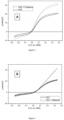
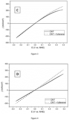
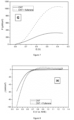
- Example 1 The effect of the additive in the catalytic layers of the electrodes prepared in Example 1 was evaluated for the catalysis of hydrogen oxidation to protons and electrons at the anode of a hydrogen/oxygen fuel cell (HFC), as well as for the catalysis of oxygen reduction to water at its cathode. Its effect is studied at the half-cell anode (Examples A to F), at the half-cell cathode (Examples H and I) and at the full-cell anode (Example G). In all experiments, the anode and the cathode are separated by an electrolyte. This can be a 25 ⁇ m thick Nafion membrane or a liquid electrolyte (0.5M H 2 SO 4 in water).
- Electrochemical characterizations were performed on a Bio-Logic SP300 potentiostat in a 3-electrode cell.
- the electrodes on which the catalysts have been deposited are pressed at room temperature around a 25 ⁇ m Nafion membrane.
- the resulting membrane-electrode assembly (MEA) is tested in a Paxitech PAC enclosure at room temperature and pressure.
- Examples C, D, E and F ( Figures 3, 4 , 5, 6 ) lead to a very similar reading but for a Pt catalyst with different carbon supports.
- Examples H and I ( Figures 8 , 9 ) show a positive effect of fullerene addition on oxygen reduction at Pt and Co-NC cathodes respectively.
- fullerene serves as a gas conductor and thus enhances oxygen (O 2 ) diffusion.
- Example G shows the effect of adding fullerene to the anode of a fuel cell with a cathode made of Co-NC. The power is multiplied by 5.
Landscapes
- Chemical & Material Sciences (AREA)
- Chemical Kinetics & Catalysis (AREA)
- Electrochemistry (AREA)
- General Chemical & Material Sciences (AREA)
- Engineering & Computer Science (AREA)
- Materials Engineering (AREA)
- Catalysts (AREA)
- Inert Electrodes (AREA)
- Carbon And Carbon Compounds (AREA)
Claims (12)
- Verwendung von Fulleren als Zusatz einer katalytischen Schicht einer Brennstoffzellenelektrode zur Verbesserung der Gasdiffusion, wobei die katalytische Schicht einen Katalysator umfasst, der ein Nichtedelmetall und einen leitfähigen porösen Träger umfasst und einen Fullerengehalt von 0,5 bis 60 % Trockengewicht, bezogen auf das Gesamttrockengewicht der katalytischen Schicht, aufweist.
- Katalytische Schicht einer Brennstoffzellenelektrode, die ein katalytisches Material, einen gasleitenden Zusatz und einen leitfähigen porösen Träger umfasst, wobei der gasleitende Zusatz ein Fulleren ist und das katalytische Material ein Katalysator ist, der ein Nichtedelmetall umfasst, wobei die Schicht einen Fullerengehalt von 0,5 bis 60 % Trockengewicht, bezogen auf das Gesamttrockengewicht der katalytischen Schicht, aufweist.
- Katalytische Schicht nach Anspruch 2, wobei der leitfähige poröse Träger aus Kohlenstoffallotropen, leitfähigen Metalloxiden und Wolframcarbid gewählt ist.
- Katalytische Schicht nach einem der Ansprüche 2 bis 3, mit einem Gehalt an katalytischem Material von 0,0001 bis 99,5 % Trockengewicht, bezogen auf das Gesamttrockengewicht der katalytischen Schicht.
- Katalytische Schicht nach Anspruch 4 mit einem Gehalt an katalytischem Material von 0,0001 bis 50 % Trockengewicht, bezogen auf das Gesamttrockengewicht der katalytischen Schicht.
- Katalytische Schicht nach Anspruch 4 mit einem Gehalt an katalytischem Material von 5 bis 99,5 % Trockengewicht, bezogen auf das Gesamttrockengewicht der katalytischen Schicht.
- Katalytische Tinte, die ein Lösungsmittel, ein katalytisches Material, einen gasleitenden Zusatz und einen leitfähigen porösen Träger umfasst, wobei der gasleitende Zusatz ein Fulleren ist und das katalytische Material ein Katalysator ist, der ein Nichtedelmetall umfasst, wobei die Tinte einen Fullerengehalt von 0,5 bis 60 % Trockengewicht, bezogen auf das Gesamttrockengewicht der katalytischen Tinte, aufweist.
- Katalytische Tinte nach Anspruch 7, wobei der leitfähige poröse Träger aus Kohlenstoffallotropen, leitfähigen Metalloxiden und Wolframcarbid gewählt ist.
- Katalytische Tinte nach einem der Ansprüche 7 bis 8, mit einem Gehalt an katalytischem Material von 0,0001 bis 99,5 % Trockengewicht, bezogen auf das Gesamttrockengewicht der katalytischen Tinte.
- Katalytische Tinte nach Anspruch 9 mit einem Gehalt an katalytischem Material von 0,0001 bis 50 % Trockengewicht, bezogen auf das Gesamttrockengewicht der katalytischen Tinte, und mit einem leitfähigen porösen Träger.
- Katalytische Tinte nach Anspruch 9 mit einem Gehalt an katalytischem Material von 5 bis 99,5 % Trockengewicht, bezogen auf das Gesamttrockengewicht der katalytischen Tinte.
- Brennstoffzellenelektrode mit einer Gasdiffusionsschicht und, auf wenigstens einem Teil der Oberfläche der Gasdiffusionsschicht, einer katalytischen Schicht nach einem der Ansprüche 2 bis 6.
Applications Claiming Priority (1)
| Application Number | Priority Date | Filing Date | Title |
|---|---|---|---|
| FR1854007A FR3081082B1 (fr) | 2018-05-14 | 2018-05-14 | Couches catalytiques comprenant un fullerene |
Publications (2)
| Publication Number | Publication Date |
|---|---|
| EP3570353A1 EP3570353A1 (de) | 2019-11-20 |
| EP3570353B1 true EP3570353B1 (de) | 2024-11-06 |
Family
ID=65243656
Family Applications (1)
| Application Number | Title | Priority Date | Filing Date |
|---|---|---|---|
| EP19174431.7A Active EP3570353B1 (de) | 2018-05-14 | 2019-05-14 | Katalytische schichten, die ein fulleren umfassen |
Country Status (2)
| Country | Link |
|---|---|
| EP (1) | EP3570353B1 (de) |
| FR (1) | FR3081082B1 (de) |
Family Cites Families (12)
| Publication number | Priority date | Publication date | Assignee | Title |
|---|---|---|---|---|
| US6113673A (en) | 1998-09-16 | 2000-09-05 | Materials And Electrochemical Research (Mer) Corporation | Gas storage using fullerene based adsorbents |
| KR100750075B1 (ko) * | 2000-08-08 | 2007-08-21 | 소니 가부시끼 가이샤 | 프로톤 전도성 전극 및 그 제조 방법 및 전기 화학 디바이스 |
| WO2007101051A2 (en) | 2006-02-23 | 2007-09-07 | The Regents Of The University Of California | Fullerene composite membranes for direct methanol fuel cell |
| JP2008027791A (ja) * | 2006-07-24 | 2008-02-07 | Toyota Motor Corp | 燃料電池用膜・電極接合体及び燃料電池 |
| JP5294550B2 (ja) * | 2006-09-01 | 2013-09-18 | 三洋電機株式会社 | 膜電極接合体および燃料電池 |
| JP2009117087A (ja) * | 2007-11-05 | 2009-05-28 | Equos Research Co Ltd | 燃料電池の電極用ペースト及び膜電極接合体の製造方法。 |
| EP2180539A1 (de) | 2008-10-21 | 2010-04-28 | Commissariat à l'Energie Atomique | Neuartige Materialien und deren Verwendung zur elektrokatalytischen Entwicklung oder Aufnahme von H2 |
| US20110300063A1 (en) | 2009-02-19 | 2011-12-08 | The Government Of The United States Of America, As Represented By The Secretary Of The Navy | Fullerene based hydrogen storage system |
| WO2011073723A1 (en) * | 2009-12-14 | 2011-06-23 | Commissariat A L'energie Atomique Et Aux Energies Alternatives | Electrolytic apparatus including an active layer using fullerenes combined with a metal as a catalytic system |
| JP6194183B2 (ja) * | 2013-03-28 | 2017-09-06 | 日立造船株式会社 | アルカリ形燃料電池用アノード電極触媒 |
| JP6189197B2 (ja) * | 2013-12-02 | 2017-08-30 | 日清紡ホールディングス株式会社 | 炭素触媒及びその製造方法並びにこれを用いた電極及び電池 |
| CN105720274A (zh) | 2016-04-15 | 2016-06-29 | 厦门大学 | 一种在燃料电池催化层中防止孔道水淹的方法 |
-
2018
- 2018-05-14 FR FR1854007A patent/FR3081082B1/fr active Active
-
2019
- 2019-05-14 EP EP19174431.7A patent/EP3570353B1/de active Active
Also Published As
| Publication number | Publication date |
|---|---|
| FR3081082A1 (fr) | 2019-11-15 |
| EP3570353A1 (de) | 2019-11-20 |
| FR3081082B1 (fr) | 2020-06-26 |
Similar Documents
| Publication | Publication Date | Title |
|---|---|---|
| EP1570539A2 (de) | Brennstoffzellen-elektrode enthaltend kohlenstoff-nanoröhren | |
| FR2764121A1 (fr) | Combustible pour piles a combustible a alimentation liquide | |
| EP1489677A2 (de) | Verfahren zur Herstellung einer Membran-Elektroden-Einheit für Brennstoffzellen | |
| EP2880202B1 (de) | Kompositelektroden für wasserelektrolyse | |
| US20050282061A1 (en) | Catalyst support for an electrochemical fuel cell | |
| US12562391B2 (en) | Catalytic composition, method for production thereof, use thereof for producing a fuel cell electrode and fuel cell comprising same | |
| FR3089133A1 (fr) | Procédé de préparation d’une couche active d’électrode pour des réactions de réduction électrochimique | |
| US20100021785A1 (en) | Membrane-electrode assembly for a fuel cell and a fuel cell system including the same | |
| US20040185325A1 (en) | Fuel cell having improved catalytic layer | |
| EP2800825B1 (de) | Poröse elektrode für protonenaustauschmembran | |
| EP2559085A1 (de) | Elektrodenstrukturierung für protonenaustauschmembran-brennstoffzelle | |
| JP4786453B2 (ja) | 燃料電池カソード用触媒、これを含む膜−電極接合体及び燃料電池システム | |
| US7740974B2 (en) | Formic acid fuel cells and catalysts | |
| EP3391448B1 (de) | Protonenleitende elektrochemische anordnung mit interner reformierung und dazugehöriges herstellungsverfahren | |
| KR102455396B1 (ko) | 연료전지 전극 촉매층 형성용 촉매 잉크 및 이의 제조 방법 | |
| FR2988405A1 (fr) | Cathode pour la reduction du co2 par electrocatalyse | |
| EP3570353A1 (de) | Katalytische schichten, die ein fulleren umfassen | |
| KR100668356B1 (ko) | 산소환원전극 및 이를 구비한 연료전지 | |
| EP2253743A1 (de) | Wasserelektrolysezelle mit festem Elektrolyt, die wenig oder gar keine Edelmetalle enthält | |
| WO2020109064A1 (fr) | Procede de preparation d'un materiau catalytique a base de precurseur mononucleaire de type w ou mo pour des reactions de reduction electrochimique | |
| WO2005081706A2 (en) | Formic acid fuel cells and catalysts | |
| FR3162053A1 (fr) | Procédé de préparation d’une électrode activée électrochimiquement à base de MoS2 supporté pour des réactions de réduction électrochimique | |
| WO2025237668A1 (fr) | Procede de preparation d'une couche active d'electrode a base de mos2 fluore pour des reactions de reduction electrochimique | |
| CN120784389A (zh) | 电化学氧还原催化剂 | |
| KR20070098161A (ko) | 연료 전지용 캐소드 촉매, 이를 포함하는 연료 전지용막-전극 어셈블리 및 연료 전지 시스템 |
Legal Events
| Date | Code | Title | Description |
|---|---|---|---|
| PUAI | Public reference made under article 153(3) epc to a published international application that has entered the european phase |
Free format text: ORIGINAL CODE: 0009012 |
|
| STAA | Information on the status of an ep patent application or granted ep patent |
Free format text: STATUS: THE APPLICATION HAS BEEN PUBLISHED |
|
| AK | Designated contracting states |
Kind code of ref document: A1 Designated state(s): AL AT BE BG CH CY CZ DE DK EE ES FI FR GB GR HR HU IE IS IT LI LT LU LV MC MK MT NL NO PL PT RO RS SE SI SK SM TR |
|
| AX | Request for extension of the european patent |
Extension state: BA ME |
|
| STAA | Information on the status of an ep patent application or granted ep patent |
Free format text: STATUS: REQUEST FOR EXAMINATION WAS MADE |
|
| 17P | Request for examination filed |
Effective date: 20200519 |
|
| RBV | Designated contracting states (corrected) |
Designated state(s): AL AT BE BG CH CY CZ DE DK EE ES FI FR GB GR HR HU IE IS IT LI LT LU LV MC MK MT NL NO PL PT RO RS SE SI SK SM TR |
|
| STAA | Information on the status of an ep patent application or granted ep patent |
Free format text: STATUS: EXAMINATION IS IN PROGRESS |
|
| 17Q | First examination report despatched |
Effective date: 20211005 |
|
| RIC1 | Information provided on ipc code assigned before grant |
Ipc: H01M 4/92 20060101ALI20240524BHEP Ipc: H01M 4/90 20060101ALI20240524BHEP Ipc: H01M 4/86 20060101AFI20240524BHEP |
|
| GRAP | Despatch of communication of intention to grant a patent |
Free format text: ORIGINAL CODE: EPIDOSNIGR1 |
|
| STAA | Information on the status of an ep patent application or granted ep patent |
Free format text: STATUS: GRANT OF PATENT IS INTENDED |
|
| INTG | Intention to grant announced |
Effective date: 20240709 |
|
| GRAS | Grant fee paid |
Free format text: ORIGINAL CODE: EPIDOSNIGR3 |
|
| GRAA | (expected) grant |
Free format text: ORIGINAL CODE: 0009210 |
|
| STAA | Information on the status of an ep patent application or granted ep patent |
Free format text: STATUS: THE PATENT HAS BEEN GRANTED |
|
| RAP3 | Party data changed (applicant data changed or rights of an application transferred) |
Owner name: COMMISSARIAT A L'ENERGIE ATOMIQUE ET AUX ENERGIESALTERNATIVES |
|
| AK | Designated contracting states |
Kind code of ref document: B1 Designated state(s): AL AT BE BG CH CY CZ DE DK EE ES FI FR GB GR HR HU IE IS IT LI LT LU LV MC MK MT NL NO PL PT RO RS SE SI SK SM TR |
|
| REG | Reference to a national code |
Ref country code: GB Ref legal event code: FG4D Free format text: NOT ENGLISH |
|
| REG | Reference to a national code |
Ref country code: CH Ref legal event code: EP |
|
| REG | Reference to a national code |
Ref country code: DE Ref legal event code: R096 Ref document number: 602019061393 Country of ref document: DE |
|
| REG | Reference to a national code |
Ref country code: IE Ref legal event code: FG4D Free format text: LANGUAGE OF EP DOCUMENT: FRENCH |
|
| REG | Reference to a national code |
Ref country code: LT Ref legal event code: MG9D |
|
| REG | Reference to a national code |
Ref country code: NL Ref legal event code: MP Effective date: 20241106 |
|
| PG25 | Lapsed in a contracting state [announced via postgrant information from national office to epo] |
Ref country code: HR Free format text: LAPSE BECAUSE OF FAILURE TO SUBMIT A TRANSLATION OF THE DESCRIPTION OR TO PAY THE FEE WITHIN THE PRESCRIBED TIME-LIMIT Effective date: 20241106 Ref country code: PT Free format text: LAPSE BECAUSE OF FAILURE TO SUBMIT A TRANSLATION OF THE DESCRIPTION OR TO PAY THE FEE WITHIN THE PRESCRIBED TIME-LIMIT Effective date: 20250306 Ref country code: IS Free format text: LAPSE BECAUSE OF FAILURE TO SUBMIT A TRANSLATION OF THE DESCRIPTION OR TO PAY THE FEE WITHIN THE PRESCRIBED TIME-LIMIT Effective date: 20250306 |
|
| PG25 | Lapsed in a contracting state [announced via postgrant information from national office to epo] |
Ref country code: FI Free format text: LAPSE BECAUSE OF FAILURE TO SUBMIT A TRANSLATION OF THE DESCRIPTION OR TO PAY THE FEE WITHIN THE PRESCRIBED TIME-LIMIT Effective date: 20241106 Ref country code: NL Free format text: LAPSE BECAUSE OF FAILURE TO SUBMIT A TRANSLATION OF THE DESCRIPTION OR TO PAY THE FEE WITHIN THE PRESCRIBED TIME-LIMIT Effective date: 20241106 |
|
| REG | Reference to a national code |
Ref country code: AT Ref legal event code: MK05 Ref document number: 1740402 Country of ref document: AT Kind code of ref document: T Effective date: 20241106 |
|
| PG25 | Lapsed in a contracting state [announced via postgrant information from national office to epo] |
Ref country code: BG Free format text: LAPSE BECAUSE OF FAILURE TO SUBMIT A TRANSLATION OF THE DESCRIPTION OR TO PAY THE FEE WITHIN THE PRESCRIBED TIME-LIMIT Effective date: 20241106 |
|
| PG25 | Lapsed in a contracting state [announced via postgrant information from national office to epo] |
Ref country code: ES Free format text: LAPSE BECAUSE OF FAILURE TO SUBMIT A TRANSLATION OF THE DESCRIPTION OR TO PAY THE FEE WITHIN THE PRESCRIBED TIME-LIMIT Effective date: 20241106 |
|
| PG25 | Lapsed in a contracting state [announced via postgrant information from national office to epo] |
Ref country code: NO Free format text: LAPSE BECAUSE OF FAILURE TO SUBMIT A TRANSLATION OF THE DESCRIPTION OR TO PAY THE FEE WITHIN THE PRESCRIBED TIME-LIMIT Effective date: 20250206 |
|
| PG25 | Lapsed in a contracting state [announced via postgrant information from national office to epo] |
Ref country code: AT Free format text: LAPSE BECAUSE OF FAILURE TO SUBMIT A TRANSLATION OF THE DESCRIPTION OR TO PAY THE FEE WITHIN THE PRESCRIBED TIME-LIMIT Effective date: 20241106 Ref country code: LV Free format text: LAPSE BECAUSE OF FAILURE TO SUBMIT A TRANSLATION OF THE DESCRIPTION OR TO PAY THE FEE WITHIN THE PRESCRIBED TIME-LIMIT Effective date: 20241106 Ref country code: GR Free format text: LAPSE BECAUSE OF FAILURE TO SUBMIT A TRANSLATION OF THE DESCRIPTION OR TO PAY THE FEE WITHIN THE PRESCRIBED TIME-LIMIT Effective date: 20250207 |
|
| PG25 | Lapsed in a contracting state [announced via postgrant information from national office to epo] |
Ref country code: PL Free format text: LAPSE BECAUSE OF FAILURE TO SUBMIT A TRANSLATION OF THE DESCRIPTION OR TO PAY THE FEE WITHIN THE PRESCRIBED TIME-LIMIT Effective date: 20241106 |
|
| PG25 | Lapsed in a contracting state [announced via postgrant information from national office to epo] |
Ref country code: RS Free format text: LAPSE BECAUSE OF FAILURE TO SUBMIT A TRANSLATION OF THE DESCRIPTION OR TO PAY THE FEE WITHIN THE PRESCRIBED TIME-LIMIT Effective date: 20250206 |
|
| PG25 | Lapsed in a contracting state [announced via postgrant information from national office to epo] |
Ref country code: SM Free format text: LAPSE BECAUSE OF FAILURE TO SUBMIT A TRANSLATION OF THE DESCRIPTION OR TO PAY THE FEE WITHIN THE PRESCRIBED TIME-LIMIT Effective date: 20241106 |
|
| PGFP | Annual fee paid to national office [announced via postgrant information from national office to epo] |
Ref country code: DE Payment date: 20250519 Year of fee payment: 7 |
|
| PG25 | Lapsed in a contracting state [announced via postgrant information from national office to epo] |
Ref country code: DK Free format text: LAPSE BECAUSE OF FAILURE TO SUBMIT A TRANSLATION OF THE DESCRIPTION OR TO PAY THE FEE WITHIN THE PRESCRIBED TIME-LIMIT Effective date: 20241106 |
|
| PGFP | Annual fee paid to national office [announced via postgrant information from national office to epo] |
Ref country code: GB Payment date: 20250527 Year of fee payment: 7 |
|
| PGFP | Annual fee paid to national office [announced via postgrant information from national office to epo] |
Ref country code: BE Payment date: 20250523 Year of fee payment: 7 |
|
| PG25 | Lapsed in a contracting state [announced via postgrant information from national office to epo] |
Ref country code: EE Free format text: LAPSE BECAUSE OF FAILURE TO SUBMIT A TRANSLATION OF THE DESCRIPTION OR TO PAY THE FEE WITHIN THE PRESCRIBED TIME-LIMIT Effective date: 20241106 |
|
| PGFP | Annual fee paid to national office [announced via postgrant information from national office to epo] |
Ref country code: FR Payment date: 20250526 Year of fee payment: 7 |
|
| PG25 | Lapsed in a contracting state [announced via postgrant information from national office to epo] |
Ref country code: RO Free format text: LAPSE BECAUSE OF FAILURE TO SUBMIT A TRANSLATION OF THE DESCRIPTION OR TO PAY THE FEE WITHIN THE PRESCRIBED TIME-LIMIT Effective date: 20241106 |
|
| PG25 | Lapsed in a contracting state [announced via postgrant information from national office to epo] |
Ref country code: SK Free format text: LAPSE BECAUSE OF FAILURE TO SUBMIT A TRANSLATION OF THE DESCRIPTION OR TO PAY THE FEE WITHIN THE PRESCRIBED TIME-LIMIT Effective date: 20241106 |
|
| PG25 | Lapsed in a contracting state [announced via postgrant information from national office to epo] |
Ref country code: CZ Free format text: LAPSE BECAUSE OF FAILURE TO SUBMIT A TRANSLATION OF THE DESCRIPTION OR TO PAY THE FEE WITHIN THE PRESCRIBED TIME-LIMIT Effective date: 20241106 |
|
| PG25 | Lapsed in a contracting state [announced via postgrant information from national office to epo] |
Ref country code: IT Free format text: LAPSE BECAUSE OF FAILURE TO SUBMIT A TRANSLATION OF THE DESCRIPTION OR TO PAY THE FEE WITHIN THE PRESCRIBED TIME-LIMIT Effective date: 20241106 |
|
| REG | Reference to a national code |
Ref country code: DE Ref legal event code: R097 Ref document number: 602019061393 Country of ref document: DE |
|
| PG25 | Lapsed in a contracting state [announced via postgrant information from national office to epo] |
Ref country code: SE Free format text: LAPSE BECAUSE OF FAILURE TO SUBMIT A TRANSLATION OF THE DESCRIPTION OR TO PAY THE FEE WITHIN THE PRESCRIBED TIME-LIMIT Effective date: 20241106 |
|
| PLBE | No opposition filed within time limit |
Free format text: ORIGINAL CODE: 0009261 |
|
| STAA | Information on the status of an ep patent application or granted ep patent |
Free format text: STATUS: NO OPPOSITION FILED WITHIN TIME LIMIT |
|
| 26N | No opposition filed |
Effective date: 20250807 |
|
| REG | Reference to a national code |
Ref country code: CH Ref legal event code: H13 Free format text: ST27 STATUS EVENT CODE: U-0-0-H10-H13 (AS PROVIDED BY THE NATIONAL OFFICE) Effective date: 20251223 |
|
| PG25 | Lapsed in a contracting state [announced via postgrant information from national office to epo] |
Ref country code: LU Free format text: LAPSE BECAUSE OF NON-PAYMENT OF DUE FEES Effective date: 20250514 |
|
| PG25 | Lapsed in a contracting state [announced via postgrant information from national office to epo] |
Ref country code: CH Free format text: LAPSE BECAUSE OF NON-PAYMENT OF DUE FEES Effective date: 20250531 |
|
| PG25 | Lapsed in a contracting state [announced via postgrant information from national office to epo] |
Ref country code: MC Free format text: LAPSE BECAUSE OF FAILURE TO SUBMIT A TRANSLATION OF THE DESCRIPTION OR TO PAY THE FEE WITHIN THE PRESCRIBED TIME-LIMIT Effective date: 20241106 |
|
| PG25 | Lapsed in a contracting state [announced via postgrant information from national office to epo] |
Ref country code: IE Free format text: LAPSE BECAUSE OF NON-PAYMENT OF DUE FEES Effective date: 20250514 |