EP3568694B1 - Targeted doxorubicin-gold nanoconjugates for tumor therapy - Google Patents
Targeted doxorubicin-gold nanoconjugates for tumor therapy Download PDFInfo
- Publication number
- EP3568694B1 EP3568694B1 EP18736294.2A EP18736294A EP3568694B1 EP 3568694 B1 EP3568694 B1 EP 3568694B1 EP 18736294 A EP18736294 A EP 18736294A EP 3568694 B1 EP3568694 B1 EP 3568694B1
- Authority
- EP
- European Patent Office
- Prior art keywords
- nanoconjugate
- cancer
- dtdtpa
- doxorubicin
- thioctic acid
- Prior art date
- Legal status (The legal status is an assumption and is not a legal conclusion. Google has not performed a legal analysis and makes no representation as to the accuracy of the status listed.)
- Active
Links
Images










Classifications
-
- A—HUMAN NECESSITIES
- A61—MEDICAL OR VETERINARY SCIENCE; HYGIENE
- A61K—PREPARATIONS FOR MEDICAL, DENTAL OR TOILETRY PURPOSES
- A61K47/00—Medicinal preparations characterised by the non-active ingredients used, e.g. carriers or inert additives; Targeting or modifying agents chemically bound to the active ingredient
- A61K47/50—Medicinal preparations characterised by the non-active ingredients used, e.g. carriers or inert additives; Targeting or modifying agents chemically bound to the active ingredient the non-active ingredient being chemically bound to the active ingredient, e.g. polymer-drug conjugates
- A61K47/69—Medicinal preparations characterised by the non-active ingredients used, e.g. carriers or inert additives; Targeting or modifying agents chemically bound to the active ingredient the non-active ingredient being chemically bound to the active ingredient, e.g. polymer-drug conjugates the conjugate being characterised by physical or galenical forms, e.g. emulsion, particle, inclusion complex, stent or kit
- A61K47/6921—Medicinal preparations characterised by the non-active ingredients used, e.g. carriers or inert additives; Targeting or modifying agents chemically bound to the active ingredient the non-active ingredient being chemically bound to the active ingredient, e.g. polymer-drug conjugates the conjugate being characterised by physical or galenical forms, e.g. emulsion, particle, inclusion complex, stent or kit the form being a particulate, a powder, an adsorbate, a bead or a sphere
- A61K47/6927—Medicinal preparations characterised by the non-active ingredients used, e.g. carriers or inert additives; Targeting or modifying agents chemically bound to the active ingredient the non-active ingredient being chemically bound to the active ingredient, e.g. polymer-drug conjugates the conjugate being characterised by physical or galenical forms, e.g. emulsion, particle, inclusion complex, stent or kit the form being a particulate, a powder, an adsorbate, a bead or a sphere the form being a solid microparticle having no hollow or gas-filled cores
- A61K47/6929—Medicinal preparations characterised by the non-active ingredients used, e.g. carriers or inert additives; Targeting or modifying agents chemically bound to the active ingredient the non-active ingredient being chemically bound to the active ingredient, e.g. polymer-drug conjugates the conjugate being characterised by physical or galenical forms, e.g. emulsion, particle, inclusion complex, stent or kit the form being a particulate, a powder, an adsorbate, a bead or a sphere the form being a solid microparticle having no hollow or gas-filled cores the form being a nanoparticle, e.g. an immuno-nanoparticle
-
- A—HUMAN NECESSITIES
- A61—MEDICAL OR VETERINARY SCIENCE; HYGIENE
- A61K—PREPARATIONS FOR MEDICAL, DENTAL OR TOILETRY PURPOSES
- A61K31/00—Medicinal preparations containing organic active ingredients
- A61K31/70—Carbohydrates; Sugars; Derivatives thereof
- A61K31/7028—Compounds having saccharide radicals attached to non-saccharide compounds by glycosidic linkages
- A61K31/7034—Compounds having saccharide radicals attached to non-saccharide compounds by glycosidic linkages attached to a carbocyclic compound, e.g. phloridzin
- A61K31/704—Compounds having saccharide radicals attached to non-saccharide compounds by glycosidic linkages attached to a carbocyclic compound, e.g. phloridzin attached to a condensed carbocyclic ring system, e.g. sennosides, thiocolchicosides, escin, daunorubicin
-
- A—HUMAN NECESSITIES
- A61—MEDICAL OR VETERINARY SCIENCE; HYGIENE
- A61K—PREPARATIONS FOR MEDICAL, DENTAL OR TOILETRY PURPOSES
- A61K33/00—Medicinal preparations containing inorganic active ingredients
- A61K33/24—Heavy metals; Compounds thereof
- A61K33/242—Gold; Compounds thereof
-
- A—HUMAN NECESSITIES
- A61—MEDICAL OR VETERINARY SCIENCE; HYGIENE
- A61K—PREPARATIONS FOR MEDICAL, DENTAL OR TOILETRY PURPOSES
- A61K38/00—Medicinal preparations containing peptides
- A61K38/04—Peptides having up to 20 amino acids in a fully defined sequence; Derivatives thereof
- A61K38/08—Peptides having 5 to 11 amino acids
-
- A—HUMAN NECESSITIES
- A61—MEDICAL OR VETERINARY SCIENCE; HYGIENE
- A61K—PREPARATIONS FOR MEDICAL, DENTAL OR TOILETRY PURPOSES
- A61K47/00—Medicinal preparations characterised by the non-active ingredients used, e.g. carriers or inert additives; Targeting or modifying agents chemically bound to the active ingredient
- A61K47/30—Macromolecular organic or inorganic compounds, e.g. inorganic polyphosphates
- A61K47/42—Proteins; Polypeptides; Degradation products thereof; Derivatives thereof, e.g. albumin, gelatin or zein
-
- A—HUMAN NECESSITIES
- A61—MEDICAL OR VETERINARY SCIENCE; HYGIENE
- A61K—PREPARATIONS FOR MEDICAL, DENTAL OR TOILETRY PURPOSES
- A61K47/00—Medicinal preparations characterised by the non-active ingredients used, e.g. carriers or inert additives; Targeting or modifying agents chemically bound to the active ingredient
- A61K47/50—Medicinal preparations characterised by the non-active ingredients used, e.g. carriers or inert additives; Targeting or modifying agents chemically bound to the active ingredient the non-active ingredient being chemically bound to the active ingredient, e.g. polymer-drug conjugates
- A61K47/51—Medicinal preparations characterised by the non-active ingredients used, e.g. carriers or inert additives; Targeting or modifying agents chemically bound to the active ingredient the non-active ingredient being chemically bound to the active ingredient, e.g. polymer-drug conjugates the non-active ingredient being a modifying agent
- A61K47/54—Medicinal preparations characterised by the non-active ingredients used, e.g. carriers or inert additives; Targeting or modifying agents chemically bound to the active ingredient the non-active ingredient being chemically bound to the active ingredient, e.g. polymer-drug conjugates the non-active ingredient being a modifying agent the modifying agent being an organic compound
- A61K47/542—Carboxylic acids, e.g. a fatty acid or an amino acid
-
- A—HUMAN NECESSITIES
- A61—MEDICAL OR VETERINARY SCIENCE; HYGIENE
- A61K—PREPARATIONS FOR MEDICAL, DENTAL OR TOILETRY PURPOSES
- A61K47/00—Medicinal preparations characterised by the non-active ingredients used, e.g. carriers or inert additives; Targeting or modifying agents chemically bound to the active ingredient
- A61K47/50—Medicinal preparations characterised by the non-active ingredients used, e.g. carriers or inert additives; Targeting or modifying agents chemically bound to the active ingredient the non-active ingredient being chemically bound to the active ingredient, e.g. polymer-drug conjugates
- A61K47/51—Medicinal preparations characterised by the non-active ingredients used, e.g. carriers or inert additives; Targeting or modifying agents chemically bound to the active ingredient the non-active ingredient being chemically bound to the active ingredient, e.g. polymer-drug conjugates the non-active ingredient being a modifying agent
- A61K47/62—Medicinal preparations characterised by the non-active ingredients used, e.g. carriers or inert additives; Targeting or modifying agents chemically bound to the active ingredient the non-active ingredient being chemically bound to the active ingredient, e.g. polymer-drug conjugates the non-active ingredient being a modifying agent the modifying agent being a protein, peptide or polyamino acid
-
- A—HUMAN NECESSITIES
- A61—MEDICAL OR VETERINARY SCIENCE; HYGIENE
- A61K—PREPARATIONS FOR MEDICAL, DENTAL OR TOILETRY PURPOSES
- A61K47/00—Medicinal preparations characterised by the non-active ingredients used, e.g. carriers or inert additives; Targeting or modifying agents chemically bound to the active ingredient
- A61K47/50—Medicinal preparations characterised by the non-active ingredients used, e.g. carriers or inert additives; Targeting or modifying agents chemically bound to the active ingredient the non-active ingredient being chemically bound to the active ingredient, e.g. polymer-drug conjugates
- A61K47/69—Medicinal preparations characterised by the non-active ingredients used, e.g. carriers or inert additives; Targeting or modifying agents chemically bound to the active ingredient the non-active ingredient being chemically bound to the active ingredient, e.g. polymer-drug conjugates the conjugate being characterised by physical or galenical forms, e.g. emulsion, particle, inclusion complex, stent or kit
- A61K47/6921—Medicinal preparations characterised by the non-active ingredients used, e.g. carriers or inert additives; Targeting or modifying agents chemically bound to the active ingredient the non-active ingredient being chemically bound to the active ingredient, e.g. polymer-drug conjugates the conjugate being characterised by physical or galenical forms, e.g. emulsion, particle, inclusion complex, stent or kit the form being a particulate, a powder, an adsorbate, a bead or a sphere
- A61K47/6923—Medicinal preparations characterised by the non-active ingredients used, e.g. carriers or inert additives; Targeting or modifying agents chemically bound to the active ingredient the non-active ingredient being chemically bound to the active ingredient, e.g. polymer-drug conjugates the conjugate being characterised by physical or galenical forms, e.g. emulsion, particle, inclusion complex, stent or kit the form being a particulate, a powder, an adsorbate, a bead or a sphere the form being an inorganic particle, e.g. ceramic particles, silica particles, ferrite or synsorb
-
- A—HUMAN NECESSITIES
- A61—MEDICAL OR VETERINARY SCIENCE; HYGIENE
- A61K—PREPARATIONS FOR MEDICAL, DENTAL OR TOILETRY PURPOSES
- A61K9/00—Medicinal preparations characterised by special physical form
- A61K9/0012—Galenical forms characterised by the site of application
- A61K9/0019—Injectable compositions; Intramuscular, intravenous, arterial, subcutaneous administration; Compositions to be administered through the skin in an invasive manner
-
- A—HUMAN NECESSITIES
- A61—MEDICAL OR VETERINARY SCIENCE; HYGIENE
- A61P—SPECIFIC THERAPEUTIC ACTIVITY OF CHEMICAL COMPOUNDS OR MEDICINAL PREPARATIONS
- A61P35/00—Antineoplastic agents
-
- C—CHEMISTRY; METALLURGY
- C07—ORGANIC CHEMISTRY
- C07K—PEPTIDES
- C07K7/00—Peptides having 5 to 20 amino acids in a fully defined sequence; Derivatives thereof
- C07K7/04—Linear peptides containing only normal peptide links
- C07K7/06—Linear peptides containing only normal peptide links having 5 to 11 amino acids
-
- B—PERFORMING OPERATIONS; TRANSPORTING
- B82—NANOTECHNOLOGY
- B82Y—SPECIFIC USES OR APPLICATIONS OF NANOSTRUCTURES; MEASUREMENT OR ANALYSIS OF NANOSTRUCTURES; MANUFACTURE OR TREATMENT OF NANOSTRUCTURES
- B82Y40/00—Manufacture or treatment of nanostructures
Definitions
- the present disclosure relates to doxorubicin-gold nanoconjugates that can be used for cancer treatment.
- the disclosure also relates to methods of making and using the nanoconjugates.
- Doxorubicin is a chemotherapeutic drug currently in clinical use for several tumors including breast cancer, ovarian cancer, liver cancer, kidney cancer, and others.
- doxorubicin One of the major side effects associated with doxorubicin is its cardiotoxicity. Cardiotoxicity can be minimized by targeted administration or by lowering concentration of the drug. However, reducing the quantity of drug administered correspondingly reduces cytotoxicity and efficacy. Antibody-drug conjugates have been developed for targeted delivery, but there is still a need to develop a doxorubicin delivery platform with low cardiotoxicity and/or high efficacy. US 2013/138032 A1 describes a pH-sensitive gold-nanoparticle -doxorubicin conjugate
- the present disclosure provides gold nanoconjugates for targeted delivery of doxorubicin.
- the present disclosure provides a nanoconjugate comprising: a gold nanoparticle (AuNP), dithiolated diethylenetriamine pentaacetic acid (DTDTPA), a thioctic acid terminated peptide, and doxorubicin, wherein the DTDTPA is directly linked to the gold nanoparticle surface via at least one Au-S bond, the thioctic acid terminated peptide is directly linked to the gold nanoparticle surface via at least one Au-S bond, and doxorubicin is linked to the DTDTPA.
- AuNP gold nanoparticle
- DTDTPA dithiolated diethylenetriamine pentaacetic acid
- thioctic acid terminated peptide doxorubicin
- the thioctic acid terminated peptide is thioctic bombesin.
- the thioctic bombesin has a sequence: Lipoic-Gln-Trp-Ala-Val-Gly-His-Leu- Met-NH 2 .
- the doxorubicin is linked to the DTDTPA via an amide bond.
- the present disclosure also provides a process for preparing a nanoconjugate disclosed herein, wherein the process comprises conjugating an AuNP-DTDTPA nanoparticle with the thioctic acid terminated peptide, wherein the gold in the gold nanoparticle and the thioctic acid terminated peptide are present in a stoichiometric ratio of about 1:0.5 to about 1:4. In some embodiments, the gold in the gold nanoparticle and the thioctic acid terminated peptide are present in a stoichiometric ratio of about 1:2.
- the nanoconjugate disclosed herein comprises about 1% to about 40% of the thioctic acid terminated peptide by weight of the nanoconjugate. In some embodiments, the nanoconjugate disclosed herein comprises about 20% to about 30% of the thioctic acid terminated peptide by weight of the nanoconjugate.
- the nanoconjugate disclosed herein comprises about 0.01% to about 0.05% of doxorubicin by weight of the nanoconjugate. In some embodiments, the nanoconjugate disclosed herein comprises about 0.03% of doxorubicin by weight of the nanoconjugate.
- the nanoconjugate has a hydrodynamic diameter of about 110 nm to about 140 nm as measured by dynamic light scattering (DLS). In some embodiments, the nanoconjugate has a hydrodynamic diameter of about 120 nm to about 130 nm as measured by dynamic light scattering (DLS).
- DLS dynamic light scattering
- the nanoconjugate has a zeta potential value of about -15 mV to about -30 mV. In some embodiments, the nanoconjugate has a zeta potential value of about -20 mV to about -25 mV.
- the present disclosure also provides a pharmaceutical composition
- a pharmaceutical composition comprising the nanoconjugate disclosed herein and a pharmaceutically acceptable carrier.
- the present disclosure further provides compounds for use in a method for treating a cancer comprising administering a therapeutically effective amount of the nanoconjugate disclosed herein to a subject in need thereof.
- the cancer is selected from the group consisting of acute lymphoblastic leukemia (ALL), acute myeloblastic leukemia (AML), bone sarcoma, breast cancer, endometrial cancer, gastric cancer, head and neck cancer, Hodgkin lymphoma, Non-Hodgkin lymphoma, liver cancer, kidney cancer, multiple myeloma, neuroblastoma, ovarian cancer, lung cancer, soft tissue sarcoma, thyomas, thyroid cancer, bladder cancer, uterine sarcoma, prostate cancer, colon cancer, ovarian cancer, non-small cell lung cancer, pancreatic cancer, Wilms' tumor, and Waldenstrom macroglobulinemia.
- ALL acute lymphoblastic leukemia
- AML acute myeloblastic leukemia
- bone sarcoma breast cancer
- endometrial cancer gastric cancer
- head and neck cancer Hodgkin lymphoma
- Non-Hodgkin lymphoma Non-Hodgkin lymphom
- the nanoconjugate is administered to the subject by injection.
- Gastrin releasing peptide (GRP) receptors are overexpressed in a variety of human cancer cells, such as breast cancer, prostate cancer, colon cancer, and other cancers. Bombesin peptide and its analogs are known to target GRP receptors.
- the present disclosure provides a multicomponent nanoparticle delivery system (nanoconjugate) comprising gold nanoparticles (AuNP), a targeting agent (e.g. bombesin (BBN)), and doxorubicin (DOX) as a cancer therapeutic agent.
- the gold nanoparticles are stabilized with dithiolated diethylenetriamine pentaacetic acid (DTDTPA) and can have a multi-layered structure.
- the nanoconjugate can be BBN-AuNP(DTDTPA)-DOX.
- BBN-AuNP(DTDTPA)-DOX is much more potent as compared to free doxorubicin.
- composition comprising "about 30 weight percent" of a compound could include from 27 weight percent of the compound up to and including 33 weight percent of the compound.
- nanoconjugate refers to a nanomaterial comprising a gold nanoparticle and other components, such as a stabilizing agent, a targeting agent, and a therapeutic agent.
- the stabilizing agent and targeting agent can be directly linked to the gold nanoparticle surface via one or more covalent or non-covalent bonds.
- Some components, such as the therapeutic agent can be linked to the gold nanoparticle through another component, such as the stabilizing agent.
- the term "therapeutically effective amount” means an amount effective, when administered to a patient, to provide the intended therapeutic benefit.
- the amount that is “effective” may vary from subject to subject, depending on the age and general condition of the individual, and the like.
- the present disclosure provides a nanoconjugate comprising: a gold nanoparticle (AuNP), dithiolated diethylenetriamine pentaacetic acid (DTDTPA), a thioctic acid terminated peptide, and doxorubicin, wherein the DTDTPA is directly linked to the gold nanoparticle surface via at least one Au-S bond, the thioctic acid terminated peptide is directly linked to the gold nanoparticle surface via at least one Au-S bond, and doxorubicin is linked to the DTDTPA.
- AuNP gold nanoparticle
- DTDTPA dithiolated diethylenetriamine pentaacetic acid
- thioctic acid terminated peptide is directly linked to the gold nanoparticle surface via at least one Au-S bond
- doxorubicin is linked to the DTDTPA.
- the nanoconjugate disclosed herein consists essentially of: a gold nanoparticle (AuNP), dithiolated diethylenetriamine pentaacetic acid (DTDTPA), a thioctic acid terminated peptide, and doxorubicin, wherein the DTDTPA is directly linked to the gold nanoparticle surface via at least one Au-S bond, the thioctic acid terminated peptide is directly linked to the gold nanoparticle surface via at least one Au-S bond, and doxorubicin is linked to the DTDTPA.
- AuNP gold nanoparticle
- DTDTPA dithiolated diethylenetriamine pentaacetic acid
- thioctic acid terminated peptide is directly linked to the gold nanoparticle surface via at least one Au-S bond
- doxorubicin is linked to the DTDTPA.
- Gold nanoparticles stabilized with DTDTPA i.e. , AuNP-DTDTPA
- DTDTPA i.e. , AuNP-DTDTPA
- WO 2015/103028 and Debouttiere et al., Advan. Funt. Mater. 2006, 16:2330-39 describe preparation and use of AuNP-DTDTPA.
- DTDTPA The chemical structure of DTDTPA is shown below. DTDTPA molecules can be linked to the gold nanoparticule surface via one or two Au-S bonds.
- DTDTPA loops surrounding the AuNP surface can include one, two, three, four, five, or more DTDTPA molecules.
- both thiol groups of a given DTDTPA molecule can both form an Au-S bond to the AuNP surface, thus forming a loop with one DTDTPA molecule.
- one thiol group of a given DTDTPA molecule can form an Au-S bond to the AuNP surface, while the second thiol group can form an intermolecuar disulfide bond (S-S) with a second DTDTPA molecule.
- S-S intermolecuar disulfide bond
- the second DTDTPA molecule can either be linked to still another DTDTPA molecule via a disulfide bond, or can be linked to the the AuNP surface via an Au-S bond thus forming of a loop consisting of two or more DTDTPA molecules.
- the stabilized nanoparticles can contain a multilayered organic shell of penta-acetic acid molecules on the surface of AuNPs. See Debouttiere et al., Advan. Funt. Mater. 2006, 16:2330-39 ; and Figure 2 .
- the nanoconjugate disclosed herein comprises about 10% to about 60% of DTDTPA by weight of the nanoconjugate.
- the nanoconjugate comprises about 10%, about 15%, about 20%, about 25%, about 30%, about 35%, about 40%, about 41%, about 42%, about 43%, about 44%, about 45%, about 46%, about 47%, about 48%, about 49%, about 50%, about 51%, about 52%, about 53%, about 54%, about 55%, or about 60% of DTDTPA by weight of the nanoconjugate, e.g., about 45%, or a range between any two of the preceeding values, e.g., about 30% to about 60%, or about 40% to about 50%.
- the nanoconjugate comprises about 45% of DTDTPA by weight of the nanoconjugate.
- the nanoconjugate disclosed herein can comprise a thioctic acid terminated peptide as a targeting agent.
- the targeting peptide can be bombesin peptide. Bombesin peptide can be used to functionalize gold nanomaterials for targeting certain tumor cells. See Chanda et al., Nano Lett. 2009, 9(5): 1798-1805 ; Chanda et al. PNAS 2010, 107(19): 8760-8765 ; Suresh et al., Bioconjuate Chem. 2014, 25, 1565-1579 ; and Silva et al., Bioconjuate Chem. 2016, 27, 1153-1164 .
- BBN seven-amino acid truncated bombesin analogue
- the thioctic acid terminated peptide can be thioctic terminated bombesin (TA-BBN, alternatively referred to as BBN herein) having a sequence: Lipoic-Gln-Trp-Ala-Val-Gly-His-Leu-Met-NH 2 .
- TA-BBN thioctic terminated bombesin
- the thioctic acid terminated peptide (e.g., TA-BBN) can be directly linked to the gold nanoparticle surface via one or two Au-S bonds.
- the nanoconjugate disclosed herein comprises about 1% to about 40% of thioctic acid terminated peptide by weight of the nanoconjugate.
- the nanoconjugate comprises about 1%, about 5%, about 10%, about 11%, about 12%, about 13%, about 14%, about 15%, about 16%, about 17%, about 18%, about 19%, about 20%, about 21%, about 22%, about 23%, about 24%, about 25%, about 26%, about 27%, about 28%, about 29%, about 30%, about 35%, or about 40% of thioctic acid terminated peptide by weight of the nanoconjugate, e.g., about 20% or about 25%, or a range between any two of the preceeding values, e.g., about 10% to about 30%, about 20% to about 30%, or about 15% to about 25%.
- the nanoconjugate comprises about 20% or about 25% of thioctic acid terminated peptide by weight of the nanoconjugate
- the AuNP-DTDTPA-BBN construct which can be subsequently linked with doxorubicin, can be prepared by a process comprising conjugating AuNP-DTDTPA nanoparticle with the thioctic acid terminated peptide, wherein the gold in the gold nanoparticle and the thioctic acid terminated peptide can be present in in the conjugation reaction in a stoichiometric ratio of about 1:0.5 to about 1:4.
- the stoichiometric ratio used herein referes to a molar ratio.
- the stoichiometric ratio of the gold in the gold nanoparticle to the thioctic acid terminated peptide used in the conjugation reaction can be about 1:0.75, about 1:1, about 1:1.5, about 1:2, about 1:2.5, about 1:3, about 1:3.5, or about 1:4, e.g., about 1:2, or a range between any two of the preceeding ratios, e.g. , about 1:1 to about 1:4, about 1:1 to about 1:3, about 1:1 to about 1:2, about 1:1.5 to about 1:4, about 1:1.5 to about 1:3, about 1:1.5 to about 1:2.5, or about 1:1.5 to about 1:2.
- the amount of the thioctic acid terminated peptide used in the conjugation reaction is in a ratio with the gold in the gold nanoparticle of at least about 1:1.5, at least about 1:2, at least about 1:2.5, or at least about 1:3.
- the stoichiometric ratio of the gold in the gold nanoparticle to the thioctic acid terminated peptide used in the conjugation reaction is about 1:2.
- the doxorubicin in the nanoconjugate is linked to the DTDTPA via an amide bond, formed between a carboxylate group of the DTDTPA and the amino group of the doxorubicin.
- the nanoconjugate disclosed herein comprises about 0.01% to about 0.05% of doxorubicin by weight of the nanoconjugate.
- the nanoconjugate can comprise about 0.01%, about 0.015%, about 0.02%, about 0.025%, about 0.03%, about 0.035%, about 0.04%, about 0.045%, or about 0.05% of doxorubicin by weight of the nanoconjugate, e.g., about 0.03%, or a range between any two of the preceeding values, e.g., about 0.01% to about 0.04%, about 0.01% to about 0.03%, about 0.02% to about 0.05%, about 0.02% to about 0.04%, about 0.02% to about 0.03%, or about 0.025% to 0.035%.
- the nanoconjugate comprises about 0.03% of doxorubicin by weight of the nanoconjugate.
- Nanoconjugates can be characterized by their hydrodynamic diameter (i.e., hydrodynamic size).
- the nanoconjugate disclosed herein has a hydrodynamic diameter of about 100 nm to about 150 nm or about 110 nm to about 140 nm as measured by dynamic light scattering (DLS).
- DLS dynamic light scattering
- the nanoconjugate has a hydrodynamic diameter of about 100 nm, about 110 nm, about 115 nm, about 120 nm, about 125 nm, about 130 nm, about 135 nm, about 140 nm, about 145 nm, or about 150 nm as measured by dynamic light scattering (DLS), e.g., about 125 nm, or a range between any two of the preceeding values, e.g., about 120 nm to about 125 nm, about 120 nm to about 130 nm, or about 125 nm to about 130 nm.
- the nanoconjugate has a hydrodynamic diameter of about 125 nm as measured by dynamic light scattering (DLS).
- Nanoconjugates can also be characterized by their zeta potential.
- the nanoconjugate disclosed herein has a zeta potential value of about -15 mV to about -30 mV.
- the nanoconjugate has a zeta potential value of about -15 mV, about -16 mV, about -17 mV, about -18 mV, about -19 mV, about -20 mV, about -21 mV, about -22 mV, about -23 mV, about -24 mV, about -25 mV, about -26 mV, about -27 mV, about -28 mV, about -29 mV,or about -30 mV, e.g., about -23 mV, or a range between any two of the preceeding values, e.g.
- the nanoconjugate has a zeta potential value of about about -20 mV to about -25 mV.
- the nanoconjugate disclosed herein consists essentially of a gold nanoparticle (AuNP), dithiolated diethylenetriamine pentaacetic acid (DTDTPA), a thioctic acid terminated bombesin peptide (TA-BBN), and doxorubicin, wherein the DTDTPA is directly linked to the gold nanoparticle surface via at least one Au-S bond, the TA-BBN is directly linked to the gold nanoparticle surface via at least one Au-S bond, and the doxorubicin is linked to the DTDTPA; wherein the AuNP-DTDTPA-BBN nanoconjugate precursor is prepared by a process comprising conjugating AuNP-DTDTPA nanoparticles with the TA-BBN, wherein the gold in the gold nanoparticle and the thioctic acid terminated bombesin peptide are present in the conjugation reaction in a stoichiometric ratio of about 1:2.
- the nanoconjugate described above can comprse a gold nanoparticle (AuNP), dithiolated diethylenetriamine pentaacetic acid (DTDTPA), a thioctic acid terminated bombesin peptide (TA-BBN), and doxorubicin, wherein the nanoconjugate comprises about 15% to about 25% of TA-BBN, about 25% to about 35% of DTDTPA, and about 0.01% to about 0.05% of doxorubicin, by weight of the nanoconjugate.
- AuNP gold nanoparticle
- DTDTPA dithiolated diethylenetriamine pentaacetic acid
- TA-BBN thioctic acid terminated bombesin peptide
- doxorubicin doxorubicin
- the nanoconjugate disclosed herein can comprise a gold nanoparticle (AuNP), dithiolated diethylenetriamine pentaacetic acid (DTDTPA), a thioctic acid terminated bombesin peptide (TA-BBN), and doxorubicin, wherein the nanoconjugate comprises about 20% of TA-BBN, about 30% of DTDTPA, and about 0.03% of doxorubicin, by weight of the nanoconjugate.
- AuNP gold nanoparticle
- DTDTPA dithiolated diethylenetriamine pentaacetic acid
- TA-BBN thioctic acid terminated bombesin peptide
- doxorubicin doxorubicin
- the nanoconjugate disclosed herein does not comprise a thioctic acid terminated peptide.
- the nanoconjugate comprises a gold nanoparticle (AuNP), dithiolated diethylenetriamine pentaacetic acid (DTDTPA), and doxorubicin, wherein the DTDTPA is directly linked to the gold nanoparticle surface via at least one Au-S bond, and doxorubicin is linked to the DTDTPA as described elsewhere herein.
- AuNP(DTDTPA)-DOX This construct is referred to herein as AuNP(DTDTPA)-DOX.
- the present disclosure provides a method for preparing the nanoconjugate disclosed herein, the method comprising coupling doxorubicin with a nanoparticle functionalized with DTDTPA.
- the method comprises (1) conjugating AuNP-DTDTPA with a thioctic acid terminated peptide (e.g., TA-BBN) to form a conjugate; and (2) coupling the conjugate with doxorubicin to form the nanoconjugate.
- a thioctic acid terminated peptide e.g., TA-BBN
- the coupling step forms an amide bond between a carboxyl group of DTDTPA and the amine group of DOX.
- the coupling step takes place using an activating agent, such as EDC (1-Ethyl-3-(3-dimethylaminopropyl)carbodiimide)and sulfo-NHS (N-hydroxysulfosuccinimide).
- the present disclosure provides a pharmaceutical composition comprising the nanoconjugate disclosed herein and a pharmaceutically acceptable carrier.
- the present disclosure also provides compounds for use in a method for treating a cancer comprising administering a therapeutically effective amount of the nanoconjugate disclosed herein to a subject in need thereof.
- the subject is a human.
- the cancer treated can be selected from the group consisting of acute lymphoblastic leukemia (ALL), acute myeloblastic leukemia (AML), bone sarcoma, breast cancer, endometrial cancer, gastric cancer, head and neck cancer, Hodgkin lymphoma, Non-Hodgkin lymphoma, liver cancer, kidney cancer, multiple myeloma, neuroblastoma, ovarian cancer, lung cancer ( e . g ., small cell lung cancer and non-small cell lung cancer), soft tissue sarcoma, thyomas, thyroid cancer, bladder cancer ( e . g ., transitional cell bladder cancer), uterine sarcoma, prostate cancer, colon cancer, ovarian cancer, pancreatic cancer, Wilms' tumor, and Waldenstrom macroglobulinemia.
- ALL acute lymphoblastic leukemia
- AML acute myeloblastic leukemia
- bone sarcoma breast cancer
- endometrial cancer gastric cancer
- the cancer treated according to the methods described herein is associated with GRP overexpression.
- the cancer associated with GRP overexpression can be small cell lung cancer, prostate cancer, breast cancer, colon cancer, ovarian cancer, non-small cell lung cancer, or pancreatic cancer.
- nanoconjugate or pharmaceutical composition disclosed herein can be administered to a subject by various methods known to a person of ordinary skill in the art.
- the nanoconjugate or pharmaceutical composition of the present disclosure can be administered by injection or via oral administration.
- UV-Visible Spectroscopy UV-Visible absorption spectra were recorded at room temperature using a Cytation 3 spectrophotometer (Biotek) in disposable 96 well plate with path length correction.
- Electron Microscopy Transmission electron microscope images were obtained on a JEOL 1400 transmission electron microscope (TEM), JEOL LTD., Tokyo, Japan. TEM samples were prepared by placing 5 ⁇ L of gold nanoparticle solution on the 300 mesh carbon coated copper grid. Excess solution was removed carefully and the grid was allowed to dry an additional five minutes. The average size and size distribution of nanoparticles were determined by processing the TEM image Adobe Photoshop with Fovea plug-ins.
- TEM transmission electron microscope
- DLS measurements were performed with a Malvern Zetasizer Nano ZS (Malvern Instruments Ltd. USA) equipped with a 633-nm He-Ne laser and operating at an angle of 173°.
- the software used to collect and analyze the data was the Dispersion Technology Software (DTS) version 5.10 from Malvern. 600 ⁇ l of each sample was measured in low volume semi-micro disposable sizing cuvettes (Fisher Scientific, USA) with a path length of 10 mm. Triplicate measurements were made at a position of 4.65 mm from the cuvette wall with an automatic attenuator. For each sample, 15 runs of 10 seconds were performed.
- DTS Dispersion Technology Software
- the size distribution, the Z-average diameter and the polydispersity index (PDI) were obtained from the autocorrelation function using the "general purpose mode" for all nanoparticle samples.
- the default filter factor of 50% and the default lower threshold of 0.05 and upper threshold of 0.01 were used.
- Zeta potential measurements were performed in triplicates using water as dispersant and Huckel model. For each sample, 20 runs were performed with auto analysis mode.
- Nanoparticle Tracking Analysis The hydrodynamic diameters of AuNPs were measured using NanoSight LM10-HSGFT system configured with a temperature controlled LM14G sample viewing unit equipped with a 532 nm (green) laser (NanoSight Limited, Amesbury, UK). Video tracking of the AuNPs based on Raleigh scattering was captured with a monochrome Marlin CCD camera (Allied Vision Technologies, Germany). A 1 mL syringe (Becton Dickinson, NJ) was used to deliver the samples to the viewing chamber and the temperature was held constant at 22°C. NanoSight 2.2 program was used to collect and analyze sample data. Each size measurement was based on a 30 second video and the Stokes-Einstein equation was used to calculate the mean hydrodynamic diameter.
- the samples were diluted 30-fold relative to the stock AuNP concentration prior to NTA measurements. This dilution was selected such that ⁇ 900 particles were tracked in a 30 second video. These conditions provided a representative sampling of the entire sample and are confirmed by the fact that size distribution did not change with longer videos in which significantly more nanoparticles were analyzed. Three measurements were conducted for each sample to provide an average size and standard deviation.
- PC-3 human prostate and MDA-MB231 human breast carcinoma cells were grown in RPMI 1640 medium (obtained from Gibco BRL, Grand Island, NY) supplemented with 4.5 g/L D-glucose, 25 mM Hepes, 0.11 g/L sodium pyruvate, 1.5 g/L sodiumbicarbonate, 2 mM L-glutamine, 10% heat-inactivated fetal bovine serum (Atlanta Biologicals, USA) and 1% penicillin/ streptomycin antibitiotic solution.
- Cells were cultured in a humidified atmosphere of 95% air and 5% CO 2 at 37°C (Thermo Scientific, USA), with the medium changed every other day. The cells were adherent in monolayers and when confluent were harvested from the cell culture flasks with trypsin-EDTA (Invitrogen) and seeded further apart.
- IC 50 measurements The receptor binding affinity of conjugates was determined by a competitive cell-binding assay on PC-3 cell cultures using 125 I-Tyr4-bombesin as the GRP specific radio-ligand. Approximately 30,000 cells were incubated at 37°C for 40 minutes under 5% CO 2 in the presence of 20000 cpm 125 I-Tyr4-bombesin (2200 Ci/mmol) and increasing concentration of theconjugate tested. After incubation, the reaction medium was aspirated, and the cells were washed three times with cold RPMI 1640 modified buffer. Cell-associated radioactivity was determined by counting in a Packard Riastar ⁇ counting system. IC 50 values were calculated using Graph Fit 4.0 graphing software. The % 125 I-Tyr4-bombesin bound to cells was plotted against increasing concentration of the conjugate tested to determine its IC 50 value.
- In vitro Cytotoxicity Assay In vitro cytotoxicity evaluation of NP1-DOX and NP2-DOX with respective controls such as NP1, NP2, free doxorubicin was performed on GRP expressing and non-expressing cancer cells, PC3 and MDA-MB-231, respectively. The cytotoxicity evaluation was performed in triplicates and the protocol was followed as described by the manufacturer. Briefly, 1 ⁇ 10 5 ml -1 cells at the exponential growth phase were placed in a flat bottom 96-well polystyrene-coated plate and were incubated for 12 hour in a CO 2 incubator at 5% CO 2 and 37 °C.
- NP1-Dox and NP2-Dox were prepared in the medium. Each concentration was added to the plate in quadruplets. After 24 hour incubation, 10 ⁇ L per well MTT (as received from the manufacturer, Promega Corporation, USA) was added and kept for 4 hours, and the formazan crystals so formed were dissolved in 100 ⁇ L detergent/solubilizing buffer. The plates were kept for 2 hours in dark at 25°C to dissolve all crystals, and the intensity of developed color was measured by micro plate reader (Epoch, BioTek, USA) operating at 570 nm wavelength. Wells with complete medium, nanoparticles, and MTT, but without cells, were used as blanks. Untreated cells were considered 100% viable.
- In vitro Stability studies were performed by incubating solutions of NP1 and NP2 at various pH conditions: 2, 5, 7, 10 and 12 for the period of 24 hours. The stability behavior for both were also monitored by challenging aqueous solutions of NP1 and NP2 (0.5 mL) with 0.5 mL each of 0.2M cysteine, 0.2M histidine, 0.2M HSA and 10% saline solutions. The stability was measured by monitoring the UV-visible absorbance, hydrodynamic radius and zeta potential measurements at 0 hour to 96 hours (0, 1, 24, 48, 72, and 96 hours).
- DTDTPA Dithiolated diethylenetriaminepentaacetic acid
- AuNP-DTDTPA NP1
- BBN bombesin
- DOX chemotherapeutic agent
- the first step was to conjugate the targeting peptide to NP1 .
- Thioctyl terminated bombesin (TA-BBN) was used for conjugating the peptide to NP1 through gold-thiol bonding.
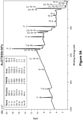
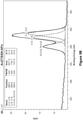
- Three different stoichiometric ratios of AuNP:BBN were used (1:0.5, 1:2 and 1:4). Excess of unreacted BBN was removed by repeated washings and BBN-AuNP-DTDTPA ( NP2 ) was isolated as pure nanoparticle pellets. HPLC analysis of the supernatant solutions obtained after conjugation of TA-BBN to NP1 was utilized for quantifying TA-BBN bound to NP2 .
- a standard calibration curve was constructed using different concentrations of TA-BBN and the area under curve (AUC) of known concentrations of TA-BBN used in the reactions were determined by HPLC.
- Conjugating the AuDTDTPA construct with TA-BBN in a 1:2 ratio (Au:TA-BB) resulted in about 0.26 mg of TA-BBN being incorporated into the construct per 1 mg of AuDTDTPA. See Figure 3 .
- NP2 prepared using 1:2 ratio showed remarkable stability and was therefore chosen for further studies.
- Nanoconjugates were characterized in detail by transmission electron microscope (TEM) image analysis, UV-visible absorption spectroscopy, dynamic light scattering (DLS), and Zeta potential measurements.
- TEM images showed a uniform size distribution of the nanoconjugates, with a size range of 3-5 nm ( Figures 4A and 4B ).
- NP2 showed no change in UV-visible absorption spectrum compared to NP1 upon conjugation to BBN.
- Figure 4C A 20 nm change in hydrodynamic diameter was observed in NP2 compared to NP1 upon conjugation to BBN (1:2, Au:BBN). The zeta potential change was negligible ( ⁇ 3 units) in NP2 compared to NP1 .
- the XPS spectrum of NP2 exhibits characterisitc peak of C, N, O, S, and Au ( Figure 5A ) .
- the relative elemental compositions and peak assignments for carbon species of NP2 are shown in the Tables 2 and 3 , respectively.
- Table 2 Relative Elemental Compositions of BBN-[AuNP(DTDTPA)] as Determined by XPS [Atom %] C N O Na ⁇ Si ⁇ S Au BBN-[AuNP(DTDTPA)] 57 14 19 3.0 1.2 3.1 3.6 ⁇ Sodium detected due to dissolution in NaOH solution ⁇ Silicon detected due to deposition on silicon wafer
- Species 1 and Species 1 exhibits two distinct sulfur peaks at 162.3 and 163.5eV, attributed to Au-S bonding of DTDTPA.
- the binding energy and coupling values correlate well with those reported in literature for NP1 ; however, the peaks shift to a slightly higher binding energy (0.5 eV) region upon conjugation to BBN.
- the two distinct sulfur peaks for Species 2 at 163.2 and 164.4eV with a ratio of 2:1 correspond to Au-S (sulfur coordinated to AuNPs) and S-CH3 (sulfur present in the methylcysteine amino acid in the BBN peptide backbone), respectively.
- Each class of sulfur peak was further split into the doublet S2p3/2 and S2p1/2 with coupling of 1.2 eV, confirming the conjugation of BBN to AuNP as reported in literature.
- Such presence of doublet with an equivalent area at a higher binding energy indicates both sulfur atoms of TA-BBN formed an Au-S bond on the AuNP surface.
- the binding energy values shift to a lower energy region compared to AuNP-BBN reported in literature.
- the 4f region of the spectrum shows two different signals for gold with energies of 83.6, 84.3, and 87.2, 88.0eV for Au 4f 7/2 and Au 4f 5/2 , respectively, corresponding to the core gold atom Au (0) and surface gold with partial Au (I) character ( Figure 6B ). It is widely believed from various recent studies that disulfide in thioctic acid oxidatively adds to AuNPs, resulting in a partial Au (I) character at the surface of the nanoparticle. The signal corresponding to the binding energies of 84.3 and 88 eV for Au peaks in 4f region are similar to the peptide conjugated AuNPs reported in literature, suggesting that Au is bound to the S atom of DTDTPA and TA-BBN.
- the carboxyl groups of DTDTPA on the surface of AuNPs are available for further functionalization. These carboxyl groups were utilized for conjugating doxorubicin. Traditional EDC-sulfoNHS chemistry was used to conjugate the amine group of DOX to the carboxyl groups of DTDTPA to obtain non-targeted AuNP-DTDTPA-Doxorubicin ( NP1-DOX ) and targeted BBN-AuNP-DTDTPA-DOX ( NP2-DOX ).
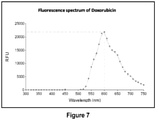
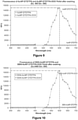
- Doxorubicin loading on NP1 and NP2 was estimated by fluorescence spectroscopy.
- Doxorubicin shows a fluorescence signature at 600 nm when excited at 485 nm and emitted at 590 nm ( Figure 7 ).
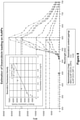
- Serial dilutions of DOX were made and a standard calibration curve was constructed to record the fluorescence intensities ( Figure 8 ).
- the fluorescent intensities of the supernatants were recorded and correlated with the standard calibration curve to quantify the amount of doxorubicin conjugated to AuNPs. Through fluorescent measurements, it was found that 0.53 ⁇ g and 0.3 ⁇ g of doxorubicin per mg of AuNP-DTDTPA and BBN-AuNP-DTDTPA were conjugated, respectively.
- the negative zeta potential value of -72 and -69 mV for NP1 and NP2 , respectively, changed to -23 mV indicates that the particles repel each other and that there is no tendency for the particles to aggregate.
- the physicochemical properties of NP1-DOX and NP2-DOX conjugates are summarized in Table 1 .
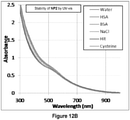
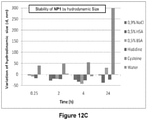
- NP1 and NP2 conjugates were investigated in various biologically relevant solutions. Solutions of NP1 and NP2 were challenged with 0.9% NaCl, 0.5% cysteine, 0.2M histidine, 0.5% human serum albumin (HSA), and 0.5% bovine serum albumin (BSA). The stability of the nanoconjugates at different time points was analyzed by three techniques, (i) monitoring the plasmon resonance using UV-visible spectroscopy, (ii) Changes in hydrodynamic diameter, and (iii) electrophoretic charge (Zeta potential) measurements. The change in surface plasmon resonance wavelength and plasmon band width and measurement of hydrodynamic diameter is directly related in understanding the aggregation behavior of the nanoparticles.
- Zeta potential measurement is an indication of repulsive forces that are present in aqueous solution and can be used to predict the long-term in vitro/in vivo stability of nanoparticulate dispersions.
- the stability studies were performed for nanoconjugates prepared with 1:2 and 1:4 stichiometric ratios of Au:BBN.
- the use of 1:4 ratio of Au:BBN showed aggregation over the period of 24 hrs time while both conjugates NP1 and NP2 [1:2 (Au:BBN) ratio] were stable in these biologically relevant solutions.
- the UV-visible absorption peaks remain unaltered, the changes in hydrodynamic diameter and zeta potential are minimal confirming the structural integrity and robustness of the conjugate ( Figure 12 ).
- NP2 Human prostate tumor PC-3 cells express a large number of GRP receptors on the surface of the cells.
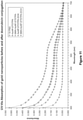
- the binding affinity of NP2 was evaluated by performing competitive inhibition assay and determining the IC 50 values.
- Nanoparticles prepared with three different stoichiometric ratios of Au:BBN (1:0.5, 1:2, 1:4) were used.
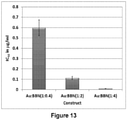
- a comparison of IC 50 values for different stoichiometric ratios of Au:BBN (1:0.5, 1:2, 1:4) was plotted ( Figure 13 ).
- the IC 50 values of different ratios of the conjugate NP2 are reported in micrograms, as the molecular weights of the nanoconjugates cannot be accurately determined.
- this conjugate is not highly stable and was not used for cellular studies.
- the competitive inhibition study confirms the receptor targeting properties of NP2.
- NP1-DOX and NP2-DOX showed IC 50 of 6 ⁇ g/ml and 9 ⁇ g/ml, respectively, in non-GRP expressing cancer cells, while in PC3 cells the IC 50 values were found to be 10 ⁇ g/ml and 5 ⁇ g/ml, respectively ( Table 4 ).
- IC 50 values represented here for NP1-DOX and NP2-DOX is based on the total weight of the nanoconjugate and the amount of DOX loaded on the nanoconjugate is 0.53 ⁇ g/mg and 0.3 ⁇ g/mg, respectively.
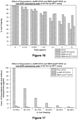
- the IC 50 values of the nanoconjugates in terms of doxorubicin are listed in Table 4 and Figures 18 and 19 .
- Table 4 IC 50 ( ⁇ g/ml) PC3 cells MDA-MB231 cells Nanoconj ugate Conc. Doxorubicin Conc. Nanoconjugate Conc. Doxorubicin Conc. NP1-DOX 9.89 0.0052 6 0.00318 NP2-DOX 5 0.0015 9 0.0027 Doxorubicin 9.5 9.5 >10 >10 >10
- doxorubicin conjugated AuNPs exhibited much more potent cytotoxicity than free doxorubicin.
- NP2-DOX's cytotoxivity increased 3000-fold and 6000-fold as compared to free doxorubicin in non-GRP expression and GRP expression cancer cells, respectively.
- DTDTPA dithiolated diethylenetriaminepentaacetic acid
- the synthesis BBN was performed using solid phase peptide synthesis employing Fmoc chemistry methodology and the final peptides were purified by HPLC.
- a 4-hydroxymethylphenoxyacetyl- 4'-methylbenzyhydrylamine resin was used as the solid support for the synthesis.
- Fmoc-protected amino acids were activated using one equivalent of 0.45 M HBTU/HOBt solutions and two equivalents of N,N-diisopropylethylamine.
- the amino acids were Fmoc deprotected using piperidine and coupled using NMM.HBTU. Following the coupling of all of the amino acids in the appropriate sequence, thioctic acid (lipoic acid) was coupled using DIC.HOBt.
- Cleavage of the peptide from the resin was performed using TFA. This cleavage step also removed the amino acid side chain protecting groups.
- the peptide was purified on a reverse-phase HPLC/C18 column using an AB gradient from 0% B, where A is 0.1% TFA in water and B is 0.1% TFA in acetonitrile. Following purification, the peptide mass was measured by liquid chromatography-mass spectrometry or matrix-assisted laser desorption/ionization, and the purity was measured using HPLC reverse-phase chromatography.
- Thioctic acid terminated bombesin was reacted with gold nanoparticles with stiochiometric ratios of Au:BBN 1:0.25, 1:0.5, 1:1, 1:2 and 1:4.
- TA-BBN Thioctic acid terminated bombesin 0.64 mg (0.57 ⁇ mol), 1.28 mg (1.14 ⁇ mol), 2.56 mg (2.27 ⁇ mol), 5.12 mg (4.54 ⁇ mol) and 10.24 mg (9.08 ⁇ mol) were dissolved in 4 mL of MeOH and then added to the nanoparticles solution. The reaction mixture was stirred for 2 hours at room temperature and formation of a dark brown precipitate was observed. The mixture was centrifuged (9300 g for 10 min at 20°C) and the supernatant was removed. The precipitated AuNPs were washed two times with MeOH and three times with water. The BBN-AuNP-DTDTPA were dried at low pressure and stored at -20°C.
- reaction was stirred for 3hrs at 37 0 C at 700 RPM. After 3 hours, the reaction mixture was centrifuged at 20000 g for 20 min at 25°C. Clinical doxorubicin 0.7 mg was used for conjugation with nanoparticles. To the doxorubicin solution, nanoparticles with activated carboxyl groups were added and the reaction mixture was vortexed. The coupling was performed for overnight at 25°C at 750 rpm. Reaction mixture was centrifuged at 20000 g for 20 minutes at 25°C and the pellets wwere subsequently washed twice with IX PBS and resuspended in IX PBS solution. Both the pellets and supernatants were used to study conjugation efficiency by fluorescence spectroscopy analysis.
Landscapes
- Health & Medical Sciences (AREA)
- Chemical & Material Sciences (AREA)
- Life Sciences & Earth Sciences (AREA)
- Medicinal Chemistry (AREA)
- General Health & Medical Sciences (AREA)
- Veterinary Medicine (AREA)
- Public Health (AREA)
- Pharmacology & Pharmacy (AREA)
- Animal Behavior & Ethology (AREA)
- Epidemiology (AREA)
- Engineering & Computer Science (AREA)
- Bioinformatics & Cheminformatics (AREA)
- Proteomics, Peptides & Aminoacids (AREA)
- Organic Chemistry (AREA)
- Inorganic Chemistry (AREA)
- Immunology (AREA)
- Molecular Biology (AREA)
- Nuclear Medicine, Radiotherapy & Molecular Imaging (AREA)
- General Chemical & Material Sciences (AREA)
- Nanotechnology (AREA)
- Chemical Kinetics & Catalysis (AREA)
- Ceramic Engineering (AREA)
- Gastroenterology & Hepatology (AREA)
- Biochemistry (AREA)
- Biophysics (AREA)
- Genetics & Genomics (AREA)
- Dermatology (AREA)
- Medicinal Preparation (AREA)
- Pharmaceuticals Containing Other Organic And Inorganic Compounds (AREA)
- Peptides Or Proteins (AREA)
Applications Claiming Priority (2)
| Application Number | Priority Date | Filing Date | Title |
|---|---|---|---|
| US201762444114P | 2017-01-09 | 2017-01-09 | |
| PCT/US2018/012882 WO2018129501A1 (en) | 2017-01-09 | 2018-01-09 | Targeted doxorubicin-gold nanoconjugates for tumor therapy |
Publications (3)
| Publication Number | Publication Date |
|---|---|
| EP3568694A1 EP3568694A1 (en) | 2019-11-20 |
| EP3568694A4 EP3568694A4 (en) | 2020-12-30 |
| EP3568694B1 true EP3568694B1 (en) | 2022-02-16 |
Family
ID=62791162
Family Applications (1)
| Application Number | Title | Priority Date | Filing Date |
|---|---|---|---|
| EP18736294.2A Active EP3568694B1 (en) | 2017-01-09 | 2018-01-09 | Targeted doxorubicin-gold nanoconjugates for tumor therapy |
Country Status (12)
| Country | Link |
|---|---|
| US (1) | US20210015944A1 (OSRAM) |
| EP (1) | EP3568694B1 (OSRAM) |
| JP (1) | JP7017258B2 (OSRAM) |
| KR (1) | KR102568577B1 (OSRAM) |
| CN (1) | CN110178028B (OSRAM) |
| AU (1) | AU2018205349B2 (OSRAM) |
| BR (1) | BR112019013469A2 (OSRAM) |
| CA (1) | CA3048908A1 (OSRAM) |
| ES (1) | ES2912286T3 (OSRAM) |
| MX (1) | MX2019008233A (OSRAM) |
| WO (1) | WO2018129501A1 (OSRAM) |
| ZA (1) | ZA201904736B (OSRAM) |
Families Citing this family (6)
| Publication number | Priority date | Publication date | Assignee | Title |
|---|---|---|---|---|
| KR101887421B1 (ko) * | 2016-09-20 | 2018-08-13 | 김문혜 | 체인 구동형 유기질비료 발효 건조장치 |
| CN113797353B (zh) * | 2020-06-12 | 2023-10-20 | 南京工业大学 | 一种放化疗联合治疗试剂及其制备方法 |
| CN112494660B (zh) * | 2020-12-22 | 2023-11-21 | 上海交通大学 | 纳米靶向药物的制备方法及在治疗胃癌中的应用 |
| EP4526067A4 (en) | 2022-05-17 | 2026-03-25 | Us Gov Sec Navy | GERM-FREE SYNTHESIS OF ANISOTROPIC GOLD NANOFLOWERS FOR CELL CONTROL AND DRUG DELIVERY APPLICATIONS |
| WO2023242766A1 (en) | 2022-06-15 | 2023-12-21 | Alembic Pharmaceuticals Limited | Gold nanoconjugates |
| CN120713846B (zh) * | 2025-07-14 | 2026-03-31 | 湖南省妇幼保健院 | 基于铜离子和多柔比星的纳米级配位聚合物NP@DoxCu及其制备方法和应用 |
Family Cites Families (7)
| Publication number | Priority date | Publication date | Assignee | Title |
|---|---|---|---|---|
| CN101563360A (zh) * | 2006-10-20 | 2009-10-21 | 益普生制药两合公司 | 肽-细胞毒性缀合物 |
| US20100021471A1 (en) * | 2008-07-25 | 2010-01-28 | Brookhaven Science Associates, Llc | Carbon nanotube-based drug delivery systems and methods of making same |
| WO2010014812A2 (en) * | 2008-07-30 | 2010-02-04 | The Research Foundation Of State University Of New York | Peptide compositions and methods of use |
| KR101196667B1 (ko) * | 2010-04-15 | 2012-11-02 | 포항공과대학교 산학협력단 | 피에이치 민감성 금속 나노 입자를 이용한 항암제 전달 시스템 |
| US9605304B2 (en) * | 2011-07-20 | 2017-03-28 | The Hong Kong Polytechnic University | Ultra-stable oligonucleotide-gold and-silver nanoparticle conjugates and method of their preparation |
| WO2014130429A2 (en) * | 2013-02-19 | 2014-08-28 | National Health Research Institutes | Caged platinum nanoclusters for anticancer chemotherapeutics |
| HUE050462T2 (hu) * | 2013-12-30 | 2020-12-28 | Univ Missouri | Au többkomponensû nanoanyagok és szintézis eljárások |
-
2018
- 2018-01-09 MX MX2019008233A patent/MX2019008233A/es unknown
- 2018-01-09 US US16/478,999 patent/US20210015944A1/en not_active Abandoned
- 2018-01-09 BR BR112019013469-7A patent/BR112019013469A2/pt not_active Application Discontinuation
- 2018-01-09 KR KR1020197019628A patent/KR102568577B1/ko active Active
- 2018-01-09 AU AU2018205349A patent/AU2018205349B2/en not_active Ceased
- 2018-01-09 JP JP2019536487A patent/JP7017258B2/ja not_active Expired - Fee Related
- 2018-01-09 ES ES18736294T patent/ES2912286T3/es active Active
- 2018-01-09 CN CN201880006184.9A patent/CN110178028B/zh not_active Expired - Fee Related
- 2018-01-09 EP EP18736294.2A patent/EP3568694B1/en active Active
- 2018-01-09 CA CA3048908A patent/CA3048908A1/en active Pending
- 2018-01-09 WO PCT/US2018/012882 patent/WO2018129501A1/en not_active Ceased
-
2019
- 2019-07-18 ZA ZA2019/04736A patent/ZA201904736B/en unknown
Also Published As
| Publication number | Publication date |
|---|---|
| AU2018205349B2 (en) | 2022-09-29 |
| RU2019125167A (ru) | 2021-02-09 |
| AU2018205349A1 (en) | 2019-06-27 |
| MX2019008233A (es) | 2019-10-17 |
| ES2912286T3 (es) | 2022-05-25 |
| EP3568694A1 (en) | 2019-11-20 |
| CA3048908A1 (en) | 2018-07-12 |
| CN110178028B (zh) | 2021-04-27 |
| CN110178028A (zh) | 2019-08-27 |
| EP3568694A4 (en) | 2020-12-30 |
| RU2019125167A3 (OSRAM) | 2021-09-13 |
| KR20190104333A (ko) | 2019-09-09 |
| US20210015944A1 (en) | 2021-01-21 |
| ZA201904736B (en) | 2021-04-28 |
| BR112019013469A2 (pt) | 2020-01-07 |
| WO2018129501A1 (en) | 2018-07-12 |
| JP7017258B2 (ja) | 2022-02-08 |
| KR102568577B1 (ko) | 2023-08-18 |
| JP2020504130A (ja) | 2020-02-06 |
Similar Documents
| Publication | Publication Date | Title |
|---|---|---|
| AU2018205349B2 (en) | Targeted doxorubicin-gold nanoconjugates for tumor therapy | |
| Botella et al. | Surface-modified silica nanoparticles for tumor-targeted delivery of camptothecin and its biological evaluation | |
| Bai et al. | A simple and general method for preparing antibody-PEG-PLGA sub-micron particles using electrospray technique: An in vitro study of targeted delivery of cisplatin to ovarian cancer cells | |
| EP2210616A1 (en) | Multifunctional stealth nanoparticles for biomedical use | |
| Zhou et al. | Gold nanocage decorated pH-sensitive micelle for highly effective photothermo-chemotherapy and photoacoustic imaging | |
| WO2018171164A1 (zh) | 一种喜树碱类前药及其制备和应用 | |
| Tran et al. | Design of iron oxide nanoparticles decorated oleic acid and bovine serum albumin for drug delivery | |
| EP3576717B1 (en) | Nanoparticle-based liver-targeting therapy | |
| Jain et al. | pH dependent drug release from drug conjugated PEGylated CdSe/ZnS nanoparticles | |
| Song et al. | Redox-responsive amphipathic dextran nanomicelles for solid tumor therapy | |
| Dharmatti et al. | Surface orchestration of gold nanoparticles using cysteamine as linke r and folate as navigating molecule for synaphic delivery of doxorubicin | |
| Wang et al. | A gold nanostar based multi-functional tumor-targeting nanoplatform for tumor theranostic applications | |
| Iqbal et al. | A bioinspired doxorubicin-carried albumin Nanocage against aggressive Cancer via systemic targeting of tumor and lymph node metastasis | |
| CN106309375A (zh) | 一种纳米粒制剂、其制备方法及应用 | |
| Zhang et al. | Self-assembling nanoparticles of dually hydrophobic prodrugs constructed from camptothecin analogue for cancer therapy | |
| JP5873719B2 (ja) | 白金含有化合物被覆ナノ粒子を含有するコンジュゲート | |
| Verma et al. | Novel hydrophilic drug polymer nano-conjugates of cisplatin showing long blood retention profile-its release kinetics, cellular uptake and bio-distribution | |
| Xiao et al. | Versatile hydrogel drug carrier loading with peptide-carbon dots conjugates for efficient targeting and synergistic suppression of breast cancer cell | |
| Uttekar et al. | 1, 2-Dihexadecanoyl-sn-glycero-3-phosphoethanolamin (DPPE), doxorubicin and folic acid conjugated micelles for cancer management in tumor bearing BALB/c mice | |
| RU2773707C2 (ru) | Наноконъюгаты доксорубицин-золото направленного воздействия для терапии опухолей | |
| Ma et al. | Redox-responsive self-assembled podophyllotoxin twin drug nanoparticles for enhanced intracellular drug delivery | |
| Ding et al. | A tumor-targeting drug delivery system based on cyclic NGR-modified, combretastatin A4-loaded, functionalized graphene oxide nanosheets | |
| Park et al. | Ternary biomolecular nanoparticles for targeting of cancer cells and anti-angiogenesis | |
| HK40014034A (en) | Targeted doxorubicin-gold nanoconjugates for tumor therapy | |
| Cheng et al. | Carbon nanomaterials for drug delivery |
Legal Events
| Date | Code | Title | Description |
|---|---|---|---|
| STAA | Information on the status of an ep patent application or granted ep patent |
Free format text: STATUS: THE INTERNATIONAL PUBLICATION HAS BEEN MADE |
|
| PUAI | Public reference made under article 153(3) epc to a published international application that has entered the european phase |
Free format text: ORIGINAL CODE: 0009012 |
|
| STAA | Information on the status of an ep patent application or granted ep patent |
Free format text: STATUS: REQUEST FOR EXAMINATION WAS MADE |
|
| 17P | Request for examination filed |
Effective date: 20190618 |
|
| AK | Designated contracting states |
Kind code of ref document: A1 Designated state(s): AL AT BE BG CH CY CZ DE DK EE ES FI FR GB GR HR HU IE IS IT LI LT LU LV MC MK MT NL NO PL PT RO RS SE SI SK SM TR |
|
| AX | Request for extension of the european patent |
Extension state: BA ME |
|
| DAV | Request for validation of the european patent (deleted) | ||
| DAX | Request for extension of the european patent (deleted) | ||
| A4 | Supplementary search report drawn up and despatched |
Effective date: 20201130 |
|
| RIC1 | Information provided on ipc code assigned before grant |
Ipc: A61K 47/64 20170101ALI20201124BHEP Ipc: A61K 38/08 20190101ALI20201124BHEP Ipc: A61K 47/62 20170101ALI20201124BHEP Ipc: A61K 33/24 20190101ALI20201124BHEP Ipc: G01N 33/48 20060101ALI20201124BHEP Ipc: A61K 47/69 20170101AFI20201124BHEP Ipc: A61K 47/54 20170101ALI20201124BHEP Ipc: A61P 35/00 20060101ALI20201124BHEP |
|
| REG | Reference to a national code |
Ref country code: DE Ref legal event code: R079 Ref document number: 602018030909 Country of ref document: DE Free format text: PREVIOUS MAIN CLASS: G01N0033480000 Ipc: A61K0047690000 |
|
| GRAP | Despatch of communication of intention to grant a patent |
Free format text: ORIGINAL CODE: EPIDOSNIGR1 |
|
| STAA | Information on the status of an ep patent application or granted ep patent |
Free format text: STATUS: GRANT OF PATENT IS INTENDED |
|
| RIC1 | Information provided on ipc code assigned before grant |
Ipc: A61K 33/242 20190101ALI20211007BHEP Ipc: A61K 31/704 20060101ALI20211007BHEP Ipc: A61K 47/62 20170101ALI20211007BHEP Ipc: A61P 35/00 20060101ALI20211007BHEP Ipc: A61K 47/54 20170101ALI20211007BHEP Ipc: A61K 38/08 20190101ALI20211007BHEP Ipc: A61K 33/24 20190101ALI20211007BHEP Ipc: G01N 33/48 20060101ALI20211007BHEP Ipc: A61K 47/64 20170101ALI20211007BHEP Ipc: A61K 47/69 20170101AFI20211007BHEP |
|
| INTG | Intention to grant announced |
Effective date: 20211103 |
|
| GRAS | Grant fee paid |
Free format text: ORIGINAL CODE: EPIDOSNIGR3 |
|
| GRAA | (expected) grant |
Free format text: ORIGINAL CODE: 0009210 |
|
| STAA | Information on the status of an ep patent application or granted ep patent |
Free format text: STATUS: THE PATENT HAS BEEN GRANTED |
|
| AK | Designated contracting states |
Kind code of ref document: B1 Designated state(s): AL AT BE BG CH CY CZ DE DK EE ES FI FR GB GR HR HU IE IS IT LI LT LU LV MC MK MT NL NO PL PT RO RS SE SI SK SM TR |
|
| REG | Reference to a national code |
Ref country code: GB Ref legal event code: FG4D |
|
| REG | Reference to a national code |
Ref country code: CH Ref legal event code: EP |
|
| REG | Reference to a national code |
Ref country code: DE Ref legal event code: R096 Ref document number: 602018030909 Country of ref document: DE |
|
| REG | Reference to a national code |
Ref country code: AT Ref legal event code: REF Ref document number: 1468490 Country of ref document: AT Kind code of ref document: T Effective date: 20220315 |
|
| REG | Reference to a national code |
Ref country code: IE Ref legal event code: FG4D |
|
| REG | Reference to a national code |
Ref country code: ES Ref legal event code: FG2A Ref document number: 2912286 Country of ref document: ES Kind code of ref document: T3 Effective date: 20220525 |
|
| REG | Reference to a national code |
Ref country code: LT Ref legal event code: MG9D |
|
| REG | Reference to a national code |
Ref country code: NL Ref legal event code: MP Effective date: 20220216 |
|
| REG | Reference to a national code |
Ref country code: AT Ref legal event code: MK05 Ref document number: 1468490 Country of ref document: AT Kind code of ref document: T Effective date: 20220216 |
|
| PG25 | Lapsed in a contracting state [announced via postgrant information from national office to epo] |
Ref country code: SE Free format text: LAPSE BECAUSE OF FAILURE TO SUBMIT A TRANSLATION OF THE DESCRIPTION OR TO PAY THE FEE WITHIN THE PRESCRIBED TIME-LIMIT Effective date: 20220216 Ref country code: RS Free format text: LAPSE BECAUSE OF FAILURE TO SUBMIT A TRANSLATION OF THE DESCRIPTION OR TO PAY THE FEE WITHIN THE PRESCRIBED TIME-LIMIT Effective date: 20220216 Ref country code: PT Free format text: LAPSE BECAUSE OF FAILURE TO SUBMIT A TRANSLATION OF THE DESCRIPTION OR TO PAY THE FEE WITHIN THE PRESCRIBED TIME-LIMIT Effective date: 20220616 Ref country code: NO Free format text: LAPSE BECAUSE OF FAILURE TO SUBMIT A TRANSLATION OF THE DESCRIPTION OR TO PAY THE FEE WITHIN THE PRESCRIBED TIME-LIMIT Effective date: 20220516 Ref country code: NL Free format text: LAPSE BECAUSE OF FAILURE TO SUBMIT A TRANSLATION OF THE DESCRIPTION OR TO PAY THE FEE WITHIN THE PRESCRIBED TIME-LIMIT Effective date: 20220216 Ref country code: LT Free format text: LAPSE BECAUSE OF FAILURE TO SUBMIT A TRANSLATION OF THE DESCRIPTION OR TO PAY THE FEE WITHIN THE PRESCRIBED TIME-LIMIT Effective date: 20220216 Ref country code: HR Free format text: LAPSE BECAUSE OF FAILURE TO SUBMIT A TRANSLATION OF THE DESCRIPTION OR TO PAY THE FEE WITHIN THE PRESCRIBED TIME-LIMIT Effective date: 20220216 Ref country code: BG Free format text: LAPSE BECAUSE OF FAILURE TO SUBMIT A TRANSLATION OF THE DESCRIPTION OR TO PAY THE FEE WITHIN THE PRESCRIBED TIME-LIMIT Effective date: 20220516 |
|
| PG25 | Lapsed in a contracting state [announced via postgrant information from national office to epo] |
Ref country code: PL Free format text: LAPSE BECAUSE OF FAILURE TO SUBMIT A TRANSLATION OF THE DESCRIPTION OR TO PAY THE FEE WITHIN THE PRESCRIBED TIME-LIMIT Effective date: 20220216 Ref country code: LV Free format text: LAPSE BECAUSE OF FAILURE TO SUBMIT A TRANSLATION OF THE DESCRIPTION OR TO PAY THE FEE WITHIN THE PRESCRIBED TIME-LIMIT Effective date: 20220216 Ref country code: GR Free format text: LAPSE BECAUSE OF FAILURE TO SUBMIT A TRANSLATION OF THE DESCRIPTION OR TO PAY THE FEE WITHIN THE PRESCRIBED TIME-LIMIT Effective date: 20220517 Ref country code: FI Free format text: LAPSE BECAUSE OF FAILURE TO SUBMIT A TRANSLATION OF THE DESCRIPTION OR TO PAY THE FEE WITHIN THE PRESCRIBED TIME-LIMIT Effective date: 20220216 Ref country code: AT Free format text: LAPSE BECAUSE OF FAILURE TO SUBMIT A TRANSLATION OF THE DESCRIPTION OR TO PAY THE FEE WITHIN THE PRESCRIBED TIME-LIMIT Effective date: 20220216 |
|
| PG25 | Lapsed in a contracting state [announced via postgrant information from national office to epo] |
Ref country code: IS Free format text: LAPSE BECAUSE OF FAILURE TO SUBMIT A TRANSLATION OF THE DESCRIPTION OR TO PAY THE FEE WITHIN THE PRESCRIBED TIME-LIMIT Effective date: 20220617 |
|
| PG25 | Lapsed in a contracting state [announced via postgrant information from national office to epo] |
Ref country code: SM Free format text: LAPSE BECAUSE OF FAILURE TO SUBMIT A TRANSLATION OF THE DESCRIPTION OR TO PAY THE FEE WITHIN THE PRESCRIBED TIME-LIMIT Effective date: 20220216 Ref country code: SK Free format text: LAPSE BECAUSE OF FAILURE TO SUBMIT A TRANSLATION OF THE DESCRIPTION OR TO PAY THE FEE WITHIN THE PRESCRIBED TIME-LIMIT Effective date: 20220216 Ref country code: RO Free format text: LAPSE BECAUSE OF FAILURE TO SUBMIT A TRANSLATION OF THE DESCRIPTION OR TO PAY THE FEE WITHIN THE PRESCRIBED TIME-LIMIT Effective date: 20220216 Ref country code: EE Free format text: LAPSE BECAUSE OF FAILURE TO SUBMIT A TRANSLATION OF THE DESCRIPTION OR TO PAY THE FEE WITHIN THE PRESCRIBED TIME-LIMIT Effective date: 20220216 Ref country code: DK Free format text: LAPSE BECAUSE OF FAILURE TO SUBMIT A TRANSLATION OF THE DESCRIPTION OR TO PAY THE FEE WITHIN THE PRESCRIBED TIME-LIMIT Effective date: 20220216 Ref country code: CZ Free format text: LAPSE BECAUSE OF FAILURE TO SUBMIT A TRANSLATION OF THE DESCRIPTION OR TO PAY THE FEE WITHIN THE PRESCRIBED TIME-LIMIT Effective date: 20220216 |
|
| REG | Reference to a national code |
Ref country code: DE Ref legal event code: R097 Ref document number: 602018030909 Country of ref document: DE |
|
| PG25 | Lapsed in a contracting state [announced via postgrant information from national office to epo] |
Ref country code: AL Free format text: LAPSE BECAUSE OF FAILURE TO SUBMIT A TRANSLATION OF THE DESCRIPTION OR TO PAY THE FEE WITHIN THE PRESCRIBED TIME-LIMIT Effective date: 20220216 |
|
| PLBE | No opposition filed within time limit |
Free format text: ORIGINAL CODE: 0009261 |
|
| STAA | Information on the status of an ep patent application or granted ep patent |
Free format text: STATUS: NO OPPOSITION FILED WITHIN TIME LIMIT |
|
| 26N | No opposition filed |
Effective date: 20221117 |
|
| PG25 | Lapsed in a contracting state [announced via postgrant information from national office to epo] |
Ref country code: SI Free format text: LAPSE BECAUSE OF FAILURE TO SUBMIT A TRANSLATION OF THE DESCRIPTION OR TO PAY THE FEE WITHIN THE PRESCRIBED TIME-LIMIT Effective date: 20220216 |
|
| REG | Reference to a national code |
Ref country code: CH Ref legal event code: PL |
|
| PG25 | Lapsed in a contracting state [announced via postgrant information from national office to epo] |
Ref country code: LU Free format text: LAPSE BECAUSE OF NON-PAYMENT OF DUE FEES Effective date: 20230109 |
|
| REG | Reference to a national code |
Ref country code: BE Ref legal event code: MM Effective date: 20230131 |
|
| PG25 | Lapsed in a contracting state [announced via postgrant information from national office to epo] |
Ref country code: LI Free format text: LAPSE BECAUSE OF NON-PAYMENT OF DUE FEES Effective date: 20230131 Ref country code: CH Free format text: LAPSE BECAUSE OF NON-PAYMENT OF DUE FEES Effective date: 20230131 |
|
| PG25 | Lapsed in a contracting state [announced via postgrant information from national office to epo] |
Ref country code: BE Free format text: LAPSE BECAUSE OF NON-PAYMENT OF DUE FEES Effective date: 20230131 |
|
| PG25 | Lapsed in a contracting state [announced via postgrant information from national office to epo] |
Ref country code: IE Free format text: LAPSE BECAUSE OF NON-PAYMENT OF DUE FEES Effective date: 20230109 |
|
| PGFP | Annual fee paid to national office [announced via postgrant information from national office to epo] |
Ref country code: ES Payment date: 20240205 Year of fee payment: 7 |
|
| PGFP | Annual fee paid to national office [announced via postgrant information from national office to epo] |
Ref country code: IT Payment date: 20231212 Year of fee payment: 7 |
|
| PG25 | Lapsed in a contracting state [announced via postgrant information from national office to epo] |
Ref country code: MC Free format text: LAPSE BECAUSE OF FAILURE TO SUBMIT A TRANSLATION OF THE DESCRIPTION OR TO PAY THE FEE WITHIN THE PRESCRIBED TIME-LIMIT Effective date: 20220216 |
|
| PG25 | Lapsed in a contracting state [announced via postgrant information from national office to epo] |
Ref country code: MC Free format text: LAPSE BECAUSE OF FAILURE TO SUBMIT A TRANSLATION OF THE DESCRIPTION OR TO PAY THE FEE WITHIN THE PRESCRIBED TIME-LIMIT Effective date: 20220216 |
|
| PGFP | Annual fee paid to national office [announced via postgrant information from national office to epo] |
Ref country code: GB Payment date: 20241212 Year of fee payment: 8 |
|
| PGFP | Annual fee paid to national office [announced via postgrant information from national office to epo] |
Ref country code: FR Payment date: 20241223 Year of fee payment: 8 |
|
| PGFP | Annual fee paid to national office [announced via postgrant information from national office to epo] |
Ref country code: DE Payment date: 20241217 Year of fee payment: 8 |
|
| PG25 | Lapsed in a contracting state [announced via postgrant information from national office to epo] |
Ref country code: CY Free format text: LAPSE BECAUSE OF FAILURE TO SUBMIT A TRANSLATION OF THE DESCRIPTION OR TO PAY THE FEE WITHIN THE PRESCRIBED TIME-LIMIT; INVALID AB INITIO Effective date: 20180109 |
|
| PG25 | Lapsed in a contracting state [announced via postgrant information from national office to epo] |
Ref country code: HU Free format text: LAPSE BECAUSE OF FAILURE TO SUBMIT A TRANSLATION OF THE DESCRIPTION OR TO PAY THE FEE WITHIN THE PRESCRIBED TIME-LIMIT; INVALID AB INITIO Effective date: 20180109 |
|
| PG25 | Lapsed in a contracting state [announced via postgrant information from national office to epo] |
Ref country code: TR Free format text: LAPSE BECAUSE OF FAILURE TO SUBMIT A TRANSLATION OF THE DESCRIPTION OR TO PAY THE FEE WITHIN THE PRESCRIBED TIME-LIMIT Effective date: 20220216 |
|
| PG25 | Lapsed in a contracting state [announced via postgrant information from national office to epo] |
Ref country code: IT Free format text: LAPSE BECAUSE OF NON-PAYMENT OF DUE FEES Effective date: 20250109 |
|
| REG | Reference to a national code |
Ref country code: ES Ref legal event code: FD2A Effective date: 20260227 |
|
| PG25 | Lapsed in a contracting state [announced via postgrant information from national office to epo] |
Ref country code: ES Free format text: LAPSE BECAUSE OF NON-PAYMENT OF DUE FEES Effective date: 20250110 |