EP3568144B1 - Probiotic compositions and uses thereof - Google Patents
Probiotic compositions and uses thereof Download PDFInfo
- Publication number
- EP3568144B1 EP3568144B1 EP18707627.8A EP18707627A EP3568144B1 EP 3568144 B1 EP3568144 B1 EP 3568144B1 EP 18707627 A EP18707627 A EP 18707627A EP 3568144 B1 EP3568144 B1 EP 3568144B1
- Authority
- EP
- European Patent Office
- Prior art keywords
- cells
- mean
- placebo
- value
- probiotic
- Prior art date
- Legal status (The legal status is an assumption and is not a legal conclusion. Google has not performed a legal analysis and makes no representation as to the accuracy of the status listed.)
- Active
Links
Images
Classifications
-
- A—HUMAN NECESSITIES
- A61—MEDICAL OR VETERINARY SCIENCE; HYGIENE
- A61K—PREPARATIONS FOR MEDICAL, DENTAL OR TOILETRY PURPOSES
- A61K35/00—Medicinal preparations containing materials or reaction products thereof with undetermined constitution
- A61K35/66—Microorganisms or materials therefrom
- A61K35/74—Bacteria
- A61K35/741—Probiotics
- A61K35/744—Lactic acid bacteria, e.g. enterococci, pediococci, lactococci, streptococci or leuconostocs
- A61K35/747—Lactobacilli, e.g. L. acidophilus or L. brevis
-
- A—HUMAN NECESSITIES
- A61—MEDICAL OR VETERINARY SCIENCE; HYGIENE
- A61K—PREPARATIONS FOR MEDICAL, DENTAL OR TOILETRY PURPOSES
- A61K35/00—Medicinal preparations containing materials or reaction products thereof with undetermined constitution
- A61K35/66—Microorganisms or materials therefrom
- A61K35/74—Bacteria
-
- A—HUMAN NECESSITIES
- A61—MEDICAL OR VETERINARY SCIENCE; HYGIENE
- A61K—PREPARATIONS FOR MEDICAL, DENTAL OR TOILETRY PURPOSES
- A61K9/00—Medicinal preparations characterised by special physical form
- A61K9/0012—Galenical forms characterised by the site of application
- A61K9/0053—Mouth and digestive tract, i.e. intraoral and peroral administration
-
- A—HUMAN NECESSITIES
- A61—MEDICAL OR VETERINARY SCIENCE; HYGIENE
- A61K—PREPARATIONS FOR MEDICAL, DENTAL OR TOILETRY PURPOSES
- A61K9/00—Medicinal preparations characterised by special physical form
- A61K9/14—Particulate form, e.g. powders, Processes for size reducing of pure drugs or the resulting products, Pure drug nanoparticles
-
- A—HUMAN NECESSITIES
- A61—MEDICAL OR VETERINARY SCIENCE; HYGIENE
- A61K—PREPARATIONS FOR MEDICAL, DENTAL OR TOILETRY PURPOSES
- A61K9/00—Medicinal preparations characterised by special physical form
- A61K9/14—Particulate form, e.g. powders, Processes for size reducing of pure drugs or the resulting products, Pure drug nanoparticles
- A61K9/19—Particulate form, e.g. powders, Processes for size reducing of pure drugs or the resulting products, Pure drug nanoparticles lyophilised, i.e. freeze-dried, solutions or dispersions
-
- A—HUMAN NECESSITIES
- A61—MEDICAL OR VETERINARY SCIENCE; HYGIENE
- A61K—PREPARATIONS FOR MEDICAL, DENTAL OR TOILETRY PURPOSES
- A61K9/00—Medicinal preparations characterised by special physical form
- A61K9/20—Pills, tablets, discs, rods
-
- A—HUMAN NECESSITIES
- A61—MEDICAL OR VETERINARY SCIENCE; HYGIENE
- A61K—PREPARATIONS FOR MEDICAL, DENTAL OR TOILETRY PURPOSES
- A61K9/00—Medicinal preparations characterised by special physical form
- A61K9/48—Preparations in capsules, e.g. of gelatin, of chocolate
-
- A—HUMAN NECESSITIES
- A61—MEDICAL OR VETERINARY SCIENCE; HYGIENE
- A61P—SPECIFIC THERAPEUTIC ACTIVITY OF CHEMICAL COMPOUNDS OR MEDICINAL PREPARATIONS
- A61P37/00—Drugs for immunological or allergic disorders
Definitions
- the present invention relates to a defined combination of probiotic strains of lactobacilli for use in the prevention and/or treatment in a subject of celiac disease autoimmunity (CDA), or celiac disease (CD).
- CDA celiac disease autoimmunity
- CD celiac disease
- the invention also provides compositions for such uses and methods of preventing and/or treating CDA and/or CD involving administering an effective amount of said probiotic strain to a subject.
- Celiac disease is a chronic immune-mediated disorder affecting the intestinal mucosa of the small bowel. It is caused by intolerance to gluten, the major storage protein found in wheat, rye and barley ( Schuppan D, et al. Gastroenterology. 2009;137(6):1912-33 ).
- Classical symptoms and clinical signs of celiac disease include abdominal discomfort, distention and diarrhoea, followed by signs of malnutrition (e.g., weight loss, anemia and osteoporosis).
- a significant portion of patients lack symptoms and are diagnosed through screening ( Ludvigsson JF, et al. Journal of Internal Medicine. 2011;269(6):560-71 ).
- treatment consists of a life-long gluten free diet (GFD).
- CD pathophysiology of CD is not completely understood but is proposed to be T-cell driven. Following the digestion of gluten proteins in the small bowel, the resulting gliadin peptides somehow cross the epithelial barrier and are presented by antigen-presenting cells on MHC-II-structures, enabling the activation of gliadin-specific CD4+ T-helper (T H ) 1 cells and CD8+ cytotoxic T (Tc) cells in the lamina intestinal.
- T H CD4+ T-helper
- Tc cytotoxic T
- IELs intra-epithelial lymphocytes
- CD shares these genetic risk traits with several other autoimmune disorders, most importantly type 1 diabetes (T1D), which shares its major susceptibility genes in the HLA-DQB1 and HLA-DRB1 loci as well as several non-HLA loci ( Smyth DJ, et al., New England Journal of Medicine. 2008;359(26):2767-77 ). Nevertheless, genetics alone cannot explain CD, since only a small minority of those carrying these haplotypes develop the disease.
- tissue transglutaminase autoantibodies While intestinal biopsy was previously considered the gold standard for the diagnosis of CD, several serological markers have been discovered of which tissue transglutaminase autoantibodies (tTGA) are currently the most common in clinical practice due to its high diagnostic sensitivity and specificity (van der Windt DA, et al., Diagnostic testing for celiac disease among patients with abdominal symptoms: a systematic review. Jama. 2010;303(17):1738-46 ).
- the revised guidelines from European Society for Paediatric Gastroenterology, Hepatology and Nutrition (ESPGHAN) in 2012 Husby S, et al., ESPGHAN guidelines for the diagnosis of coeliac disease. Journal of Pediatric Gastroenterology and Nutrition. 2012;54(1):136-60 ) suggest that significantly elevated tTGA levels, if followed by appropriate further testing, may eliminate the need for biopsy to confirm the diagnosis. In the majority of CD patients, tTGA levels decrease after introduction of GFD.
- CDA celiac disease autoimmunity
- CD celiac disease
- CDA celiac disease autoimmunity
- CD celiac disease
- Lactobacillus species The following probiotic strains of a Lactobacillus species are disclosed L. paracasei; L. plantarum; L. acidophilus; L. rhamnosus; L. casei; L. reuteri; L. brevis; L. crispatus; L. bulgaricus; L. fermentum; L. salivarius; L. johnsonii; and L. lactis
- Lactobacilli have been deposited under the Budapest Treaty by Probi A.B., Sölvegatan 41, Lund 22370, Sweden, as follows:- Species Strain Accession No. Date of deposit Depositor Depositary Lactobacillus plantarum HEAL 9 DSM 15312 27/11/2002 Probi DSMZ HEAL 19 DSM 15313 27/11/2002 Probi DSMZ HEAL 99 DSM 15316 27/11/2002 Probi DSMZ 299 DSM 6595 02/07/1991 Probi DSMZ 299v DSM 9843 16/03/1995 Probi DSMZ GOS42 DSM 32131 02/03/2015 Probi DSMZ Lactobacillus paracasei 8700:2 DSM 13434 06/04/2000 Probi DSMZ O2A DSM 13432 06/04/2000 Probi DSMZ Lactobacillus rhamnosus 271 DSM 6594 02/07/1991 Probi DSMZ
- Lactobacillus paracasei 8700:2 (DSM 13434) is used in combination with probiotic strain Lactobacillus plantarum HEAL 9 (DSM 15312).
- compositions may comprise the specified probiotic strain or strains of Lactobacilli , but preferably they consist of the specified strains without another effective amount of any other probiotic strains of Lactobacilli or other micro-organisms.
- compositions and formulations are provided.
- the probiotic strains of the invention are preferably freeze-dried.
- the probiotic strains of the invention may be provided together with a suitable carrier, diluent or excipient as a solid or liquid formulation, which may be a pharmaceutical formulation in on embodiment.
- a suitable liquid carrier examples include water and other aqueous solvents.
- a suitable solid carrier examples include maltodextrin, inulin, potato starch, corn starch or other vegetable starch, microcrystalline cellulose (MCC), and sugar alcohols.
- the composition may be a dry fermented or non-fermented composition.
- fermentation takes place in the gastrointestinal tract after ingestion of the composition by a subject.
- the probiotic strain(s) of the invention may be mixed with a liquid or solid carrier before administration to a subject.
- the subject may mix the strain(s) with a carrier consisting of water or some other aqueous solvent, or a drink prior to intake.
- the probiotic strains may be mixed with a carrier consisting of one or more foods.
- Preferred foods are gluten free products such as fermented or non-fermented dairy products such as yoghurts, fruit juices; beverages, soups, plant based foods such as soy products, dry food bars, baby food, infant nutrition, infant formula, breast milk replacements from birth.
- Infant or baby formula milk is a particularly preferred carrier for the probiotic of Lactobacilli strain(s) of the invention. It may be in a dry powder form for mixing with water before feeding it to babies as a ready-to-feed liquid form. It is normally made from cows' milk and contains whey and casein protein.
- the probiotic strain(s) of the invention may also be provided in a composition together with one or more ingredients of known dietary supplements, for example, micronutrients such as vitamins and minerals.
- the vitamin(s) and/or mineral(s) are selected from one or more of the vitamins: A, B 6 , B 12 , D; and/or the minerals: iron, zinc, magnesium.
- the probiotic strain(s) compositions the invention are provided in the form of a capsule or tablet or a powder for oral administration.
- Stick packs are a popular type of single-portion/single dose packaging used in the food industry and the pharmaceutical sector (see www.selo.com/packaging-machines/stick-packs/ ). They are very convenient for consumers to use and by containing a predetermined amount of the probiotic compositions of the invention, ensure the correct dose is taken to achieve a desired preventative and/or therapeutic effect according to the invention.
- the probiotic strain(s) of the invention are administered to a subject in a daily amount of from 1 ⁇ 10 6 to 1 ⁇ 10 14 colony forming units (CFU), preferably from 1 ⁇ 10 9 to 1 ⁇ 10 11 CFU and most preferably 1 ⁇ 10 10 CFU.
- the daily amount of CFU is preferably administered in a single dose or serving.
- the subject is a human.
- the human subject is a child.
- the child is less than 18, 17, 16, 15, 14, 13, 12, 11, 10, 9, 8, 7, 6, 5, 4, 3, 2, or 1 years old.
- the compositions of the invention are for administration from birth and especially from weaning, i.e. the point at which the baby ceases to be fed entirely by breast milk.
- the subject lacks one or more of the symptoms of CD but is at an increased risk of developing CD.
- the subject is identified as being at an increased risk of CD by the presence of one or more serological, immunological and/or genetic risk factors.
- Increased risk of developing celiac disease can be determined by immunological serotyping and/or genetic analysis. Immunological serotyping is used to identify the presence of the DQ2 serotype marker and/or the DQ8 serotype marker.
- Genetic analysis of genomic DNA can be performed by sequence-specific PCR using sequence-specific primers (PCR-SSP) or by gene sequencing. Sequence-specific PCR methods include: PCR with sequence-specific primers (PCR-SSP) ( Sacchetti L, et al., Rapid Identification of HLA DQA1*0501, DQB1*0201, and DRB1*04 Alleles in Celiac Disease by a PCR-Based Methodology. Clin Chem.
- Gene sequencing methods include Sanger sequencing with chain-terminating dideoxynucleotides, pyrosequencing, sequencing by synthesis (Illumina sequencing), sequencing by ligation (SOLiD sequencing), nanopore sequencing (MinION), Ion Torrent semiconductor sequencing and single-molecule real-time sequencing (Pacific Biosciences).
- DQ2.5 cis haplotype ( DQA1 * 05 / DQ89 * 02 ); DQ2.2 cis haplotype ( DQA1 * 02:01 / DQB1 * 02:02 ); DQ2.5 trans haplotype, e.g.
- DQ2.2 cis haplotype ( DQA1 * 02:01 / DQB1 * 02:02 ) with DQ7.5 cis haplotype ( DQA1 * 05:05 / DQB1 * 03:01 ); DQ8 cis haplotype ( DQA1 * 03 / DQB1 * 03:02 ); DQA1 * 05:01 allele; DQA1 * 05:05 allele; DQB1 * 03:02 allele.
- Immunological markers for CDA and/or CD include: tissue transglutaminase antibody level, including by radioligand binding assays ( Agardh et al., Using radioligand-binding assays to measure tissue transglutaminase autoantibodies in young children. Acta paediatrica (Oslo, Norway : 1992). 2004;93(8): 1046-51 , Agardh et al., Prediction of silent celiac disease at diagnosis of childhood type 1 diabetes by tissue transglutaminase autoantibodies and HLA. Pediatric diabetes.
- IgA Endomysial antibody (EMA) level including in the absence of a deficiency in total serum IgA; deaminated gliadin peptide (DGP IgA and IgG) levels.
- EMA Endomysial antibody
- the one or more risk factor(s) is HLA-DQ2 and/or HLA-DQ8.
- the one or more immunological risk factors is persistent tissue transglutaminase (tTGA) positivity, i.e. a tTGA positive test on two or more consecutive occasions.
- tTGA persistent tissue transglutaminase
- tTG positivity can be shown by the presence of tTG autoantibodies, preferably IgA-tTGA and/or IgG-tTGA, as described herein.
- T1D-associated autoantibodies constitute a serological marker for increased risk of developing CD and as such can be used to identify preferred subjects for preventative and/or therapeutic treatment according to the uses and methods of the present invention.
- Radioligand binding assays were used to assess tTGA as previously described ( ( Agardh D, et al., Pediatric Diabetes. 2001 ;2(2):58-65 ) ( Agardh D et al., Using radioligand-binding assays to measure tissue transglutaminase autoantibodies in young children. Acta paediatrica (Oslo, Norway: 1992). 2004;93(8):1046-51 ).
- tTG human tissue transglutaminase
- TNT SP6 Coupled Reticulocyte Lysate System Promega, Madison, Wl, USA
- 35S-methionine Perkin Elmer, Waltham, MA, USA
- IgG-tTGA 35S-tTG was diluted and added to human serum and incubated overnight at 4°C.
- Protein A sepharose (PAS) (Invitrogen, Thermo Fisher Scientific, Carlsbad, CA, USA) was used to separate free and antibody-bound 35S-tTG by binding IgG in serum.
- PAS Protein A sepharose
- the levels of TGA were expressed as U/mL calculated from standard curves containing approximately 2, 4, 8, 16, 31, 63, 125, 250, 500 and 1000 U/mL of respective IgA-tTGA and IgG-tTGA.
- the cut off level for positive values of IgG-tTG and IgA-tTG was set at >4.0 U/mL, which represented the 99 th percentile of 398 adult blood donors ( Agardh D, et al., Acta paediatrica. 2004;93(8):1046-51 ).
- the participants were tested for total IgA levels as part of their original studies; however, no such condition was detected among the participants.
- the lactobacilli culture was prepared by Probi AB, Lund, Sweden.
- Active product consisted of freeze-dried L. paracasei 8700:2 (DSM 13434) in combination with L. plantarum HEAL 9 (DSM 15312) with maltodextrin (Glucidex IT-19, Roquette, France) in the form of a powder containing a combined 1 ⁇ 10 10 CFU, with each strain being represented equally.
- Placebo consisted of powdered maltodextrin and yeast peptone (HYP-A, BioSpringer, France) to adjust colour and taste, so that the two test products (probiotic and placebo) were identical in appearance and taste.
- PBMCs mononuclear cells
- PBMCs Peripheral blood mononuclear cells from the cohorts in Example 1 were separated from whole blood by a density gradient centrifugation (1800 G) using a hydrophilic polysaccharide (BD Vac ® CPT TM Cell Preparation Tube NC FICOLL TM 4mL, Cat No 362760 Becton Dickinson, NJ, USA). Cells were separated within 2-24 hours after blood sample collection. The aspirated interphase mononuclear layer was washed three times with RPMI-1640 Medium with L-Glutamine (GIBCO no 21875034, Thermo Fisher Scientific, Gothenburg, Sweden).
- RPMI-1640 Medium with L-Glutamine
- the cells were counted in an Abbott CELL_DYN Ruby to a final concentration of 1-4 ⁇ 10 6 /mL Lymphocytes in RPMI-1640 (i.e. the volume of the PBMC suspension was adjusted so that there were 1-4 ⁇ 10 6 lymphocytes per mL).
- PBMCs were stained with monoclonal antibodies directed to surface and intracellular structures.
- the monoclonal antibodies (Table 2) were pre-labelled with four fluorochromes, fluorescein isothiocyanate (FITC), Phycoerythrin (PE), Peridinin chlorophyll protein (PerCP) and Allophycocyanin (APC).
- Stained cells were analysed using a four-colour FACSCalibur ® instrument (BD Biosciences, CA, USA) by passing via a laser beam.
- the FACSCalibur ® defines cell populations and count the cells by their characteristic features of size, granularity and fluorescence intensity.
- Optical detectors amplify and convert the light signals to electrical data signals.
- Direct Staining Tube Mixture Panel Label Mab prep in 100 ⁇ L Dilution Number of lymphocytes acquired, collected and gated 1 Isotype control FITC/PE/PerCP 5 ⁇ L 1/20 3000 APC 2,5 ⁇ L 1/40 2 CD3 FITC 5 ⁇ L 1/20 10000 CD16+56 PE 5 ⁇ L 1/5 CD19 PerCP 20 ⁇ L 3 CD3 FITC 5 ⁇ L 1/20 10000 CD45RA PE 0,4 ⁇ L 1/250 CD4 PerCP 5 ⁇ L 1/20 CD45RO APC 20 ⁇ L 1/5 4 CD3 FITC 5 ⁇ L 1/20 10000 CD45RA PE 0,4 ⁇ L 1/250 CD8 PerCP 2,5 ⁇ L 1/40 CD45RO APC 20 ⁇ L 115 5 CD3 FITC 5 ⁇ L 1/20 10000 CD8 PE 0,4 ⁇ L 1/250 CD4 PerCP 5 ⁇ L 1/20 CD62L APC 2,5 ⁇ L 1/40 6 CD25 FITC 10 ⁇ L 1/10 100000 CD45RA PE 0,4
- PBMCs were divided into two tubes: tube A for blocking of PBMCs at about 2-4 ⁇ 10 6 lymphocytes/ml in RPMI; tube B for PBMCs for staining without blocking, diluted to about 1-2 ⁇ 10 6 lymphocytes/ml by addition of RPMI.
- PBMCs in tube A were blocked by incubating with normal human IgG (1/34 dilution) for 15 minutes at 2-8°C protected from light.
- Antibody mixtures according to tubes 1-12 of the table above were prepared in FACS tubes (BD Falcon, VWR cat no 352052). Blocked PBMCs from tube A were added to tubes 9-11 and non-blocked PBMCs from tube B were added to tubes 1-8 and 12. FACS tubes 1-12 were vortexed gently and incubated for 30 minutes at 2-8°C protected from light. Stained PBMCs were washed by adding 2 ml cold phosphate buffered saline (PBS, pH 7.4, Gibco cat no 10010-015, Fisher Scientific, Gothenburg, Sweden), vortexing gently, centrifuging (10 minutes, 400 ⁇ g ), and discarding the supernatant.
- PBS cold phosphate buffered saline
- PBMCs were fixed by resuspension in 200 ⁇ l cold PBS-1% formaldehyde solution (3 parts PBS, pH 7.4, Gibco cat no 10010-015 to 1 part 4% formaldehyde solution, Apoteket cat no 34 24 36) and incubation at 2-8°C overnight protected from light.
- FACS tube 13 (see table above) was prepared with 100 ⁇ l non-blocked PBMCs from tube B.
- FACS tube 14 (see table above) was prepared for surface staining with 20 ⁇ l of the CD4 FITC / CD25 APC cocktail and 100 ⁇ l blocked PBMCs from tube A, vortexed gently, then incubated for 30 minutes at 2-8°C protected from light.
- PBMCs in tubes 13 and 14 were washed by adding 2 ml cold PBS, vortexing gently, centrifuging (5 minutes, 400 ⁇ g ), and discarding the supernatant.
- PBMCs in tubes 13 and 14 were fixed by resuspension in 1ml Fixation/Permeabilization Solution (one part Fixation/Permeabilization 4X Concentrate and three parts Fixation/Permeabilization Diluent) and incubation at 2-8°C overnight protected from light.
- Fixation/Permeabilization Solution one part Fixation/Permeabilization 4X Concentrate and three parts Fixation/Permeabilization Diluent
- PBMCs (tubes 13 and 14) were washed and permeabilized by centrifuging (10 minutes, 400 ⁇ g ) discarding the supernatant, resuspending in 2 ml 1X Permeabilization Buffer (one part 10X Permeabilization Buffer and nine parts distilled water), vortexing gently, repeating the preceding four steps again, and finally centrifuging again (10 minutes, 400 ⁇ g ).
- Permeabilized PBMCs in tube 14 were blocked with 2 ⁇ l normal rat serum by incubating for 15 minutes at 2-8°C protected from light.
- Intracellular staining was performed by adding 20 ⁇ l rat IgG2a isotype control PE to tube 13 and 20 ⁇ l anti-human FoxP3 PE to tube 14, followed by incubation for 30 minutes at 2-8°C protected from light. Stained PBMCs were washed with 2 ml PBS, gently vortexed, centrifuged (10 minutes, 400 ⁇ g ), and the supernatant was discarded before resuspending the cells in 200 ⁇ l PBS prior to flow cytometry analysis.
- the Becton Dickinson FACSCalibur ® can detect 6 different parameters of a single particle or cell in an optical system.
- the instrument converts light scattering and fluorescence intensity into digital pulses.
- Forward Scatter (FSC) provides a measure of size
- Side Scatter (SSC) provides a measure of cytoplasmic granularity.
- the instrument has four-color fluorescence detectors: the blue (488nm) laser detects FL1, FL2 and FL3 and an additional red diode laser (635nm) detects FL4.
- BD no 340486 3-color CaliBRITE Beads
- BD no 340487 CaliBRITE APC Beads
- AutoCOMPTM Software was performed for setting photomultiplier tube (PMT) voltages and adjusting and optimizing the fluorescence compensation of the detectors (FL1; FL2, FL3 and FL4).
- the CaliBRITE beads are of exact size and are labelled with exact amount of fluorochromes simulating unstained and stained leucocytes.
- AutoCOMP TM Software generates a CalibFile. All of the monoclonal antibodies were pre-titrated with the Calib File instrument setting. CellQuest Pro Software was used to run the BD FACSCalibur. 3000-10000 acquired, collected and gated lymphocytes were measured for each tube according to the table above.
- Isotype-matched control antibodies IgG2/IgG1/CD4 isotype (FITC, PE and PerCP-Cy 5.5) and IgG1 isotype (APC), BD biosciences, CA USA
- FITC cytoplasmic granularity
- APC FITC positive intensity
- New dot plots were displayed from the lymphocyte gate with different two-parameter combinations (FL1, FL2, FL3 and FL4) of the stained monoclonal antibodies of interest and the characteristic subsets were then identified. Quadrants were set in the two parameter dot plots from the isotype control, negative population. A subset is reported as a percentage of a quadrant population in the lymphocyte gate. Non-stained negative cells in lymphocyte gate were subtracted.
- leucocytes as used herein means PBMCs (i.e. the total population of isolated cells).
- CD4+ (Th) or CD8+ (Tc) cells were gated from the lymphocyte gate. From these gates, na ⁇ ve cells were gated as CD3+CD4/CD8+CD45RA+CD45RO- and memory cells as CD3+CD4/CD8+CD45RA-CD45RO+.
- Activated and differentiated effector and memory cells were gated as CD3+CD4/8+CD62L+, CD4+CD25+CD45RA+CD45RO+, CD4+CD25+CCR4+CD45RO, CD4+CD25+CCR4+CD62L+, CD8+CD45RA+CCR9+ ⁇ 7+, CD3+CD4+ICD8+ ⁇ 7+CCR9+, CD4+CD38+ ⁇ 7+CD62-.
- B cells were defined as CD3-CD19+ lymphocytes. From the lymphocyte gate, CD4+ cells were gated, followed by gating for CD25+ cells. This population was then examined for the expression of FoxP3+ cells.
- CD4+CD25+ gate From the CD4+CD25+ gate, the percent with the highest CD25 expression, CD4+CD25 high was determined. The CD4+CD25 high lymphocyte population was then examined further for the expression of FoxP3. NK cells were gated from the lymphocyte gate. From this gate NK cells were gated as CD3-CD16+/CD56+ cells.
- the lymphocyte assay region contained >70% lymphocytes.
- the intra-assay analysis of CD3+ T-cells showed a covariance of 3% and the inter-assay analysis of CD3+ T-cells showed a covariance of 5%.
- the study outcome was coeliac autoimmunity assessed as changes in serum levels of tTG autoantibodies (one child was excluded due to insufficient volumes) and changes in peripheral immune response of B cells, NK cells, and subpopulations of regulatory T cells after 6 months. Comparison between groups of binary variables was done by means of Fisher's exact test. Comparison between groups on continuous and ordered categorical data is done by the Wilcoxon Rank Sum test, e.g. Wilcoxon rank-sum test was used to compare tTGA levels between the probiotic-treated group with the placebo group at 0, 3 and 6 months. To compare the changes in tTGA levels over time within each group, Wilcoxon signed rank test for continuous variables was used.
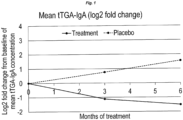
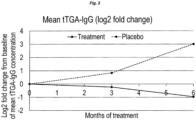
- HLA-type Probiotic group n (%) Placebo group n (%) p-value DR3-DQ2/DR4-DQ8 10 (25.0) 16 (42.1) 0.112 DR4-DQ8/DR4-DQ8 10 (25.0) 7 (18.4) 0.488 DR4-DQ8/DR8/DQ4 4 (10.0) 2 (5.2) 0.439 DR3-DQ2/DR3-DQ2 15 (37.5) 13 (34.2) 0.766 DR4/DR1 1 (2.5) 0 (0.0). 0.333 Table 4: Tissue transglutaminase autoantibody (tTGA) levels, IgA and IgG. p -values are comparisons between treatment and placebo at each visit.
- tTGA Tissue transglutaminase autoantibody
- Visit 1 Visit 2 (approx. 3 mo.) Visit 3 (approx. 6. mo.) tTGA-IgA, mean (median) Treatment 158.60 (4.71) 72.84 (3.07) 55.41 (2.69) Placebo 12.96 (4.38) 21.98 (4.93) 38.23 (3.72) p -value 1 0.8912 0.3013 0.6545 tTGA-IgG, mean (median) Treatment 166.98 (1.57) 141.74(1.64) 86.35 (1.61) Placebo 8.00 (1.60) 14.26 (1.56) 64.33 (1.36) p -value 1 0.8480 0.9373 0.5428 1 Wilcoxon ranked sum test, 2-sided
- Results - treatment with L. paracasei and L. plantarum strains decreases the proportion of natural killer T cells, counteracts the increased proportion of natural killer cells and reduces CD62L expression in cytotoxic T cells
- Flow cytometry analysis was used to examine any changes in the size and activation status of white blood cell populations at baseline and at each of the follow-up visits, in both study groups.
- CD62L is the cell adhesion molecule L-selectin, involved in lymphocyte interactions with endothelial cells, assisting entry into secondary lymphoid tissues.
- the presence of CD62L on the cell surface indicates a naive state (CD62L high ) whereas when the cells have been activated they release CD62L from their surface (CD62L low ).
- Table 5 NK-T cells CD3+CD56+ (% NK-T cells of lymphocytes)
- Group Statistics V0 V1 V2 V1-V0 V2-V0 Lactobacilli N 33 39 38 32 31 Missing 13 7 8 14 15 Min 0.10 0.10 0.10 -1.54 -3.67 Median 0.44 0.45 0.44 -0.09 -0.16 Max 4.74 3.27 1.60 1.57 1.00 Mean 0.77 0.67 0.51 -0.12 -0.29 Std 0.85 0.62 0.34 0.66 0.81 P-value NA NA NA 0.2082 0.0297 Placebo N 32 34 34 30 30 Missing 12 10 10 14 14 Min 0.12 0.22 0.19 -0.95 -0.94 Median 0.46 0.49 0.58 0.02 0.18 Max 1.26 1.30 2.35 0.97 1.
- T helper cells identified as CD3+CD4+, with sub-populations of CD4+ T helper cells differing between the two study groups.
- Table 18 shows that Lactobacillus treatment prevented an increase in the proportion of activated T helper cells by the second follow-up visit, where activation is identified by CD25, namely the interleukin-2 receptor alpha chain.
- Table 19 further shows that Lactobacillus treatment by the second follow-up visit, prevented an increase in the proportion of Tregulatory cells, identified as CD4+ cells with high CD25 positivity (CD25 high ).
- CD4+CD45RA+RO- (% CD45RA+CD45RO- of CD3+CD4+ cells or naive T-helper cells as % of lymphocytes)
- Group Statistics V0 V1 V2 V1-V0 V2-V0 Lactobacilli N 32 39 38 31 30 Missing 14 7 8 15 16 Min 38.93 48.45 49.57 -16.37 -14.55 Median 68.60 66.79 65.01 1.78 -0.59 Max 80.51 83.83 78.37 26.60 17.89 Mean 65.25 66.88 65.68 1.75 -0.08 Std 9.63 8.00 7.95 8.17 6.92 P-value NA NA NA NA 0.3105 0.7457 Placebo N 31 32 34 27 29 Missing 13 12 10 17 15 Min 42.72 46.64 47.24 -19.50 -28.78 Median 71.52 68.41 68.87 -1.72 -4.03 Max 85.28 82.13 82.39 12.27 19.53 Mean 69
- CD4+CD25+Foxp3+ T-cells in the placebo group which remained unchanged in the treatment group, could be explained by the downregulation effects of the two Lactobacillus strains on activated CD4+ cells.
- the observed reduction in CD3+CD4+ cells in the placebo group may be considered to be secondary to the compartmentalization of gluten-sensitive lymphocytes within the intestinal mucosa.
- CCR4 is an important chemokine receptor for recruitment of T-cells to the sight of inflammation and it is highly expressed on differentiated regulatory T cells ( lellem A, et al., Eur J Immunol. 2003;33(6):1488-96 ).
- the increases of CD4+CD25 high CD45RO+CCR4+ cells and CD4+CD25+Foxp3+ cells in the placebo group indicate an attempt to extinguish an ongoing intestinal inflammation and the immune response to dietary gluten antigens as previously described ( Frisullo G, et al., Human Immunol. 2009;70(6):430-5 ; Tiittanen M, et al., Clin Exp Immunol. 2008;152(3):498-507 ).
- the third finding of particular relevance was the peripheral changes in NK cells over time in the placebo group with ongoing coeliac autoimmunity, which was not observed in children that received probiotics.
- the population of NK and NK-T cells has been found to decrease in both tissue and in periphery in active coeliac disease ( Dunne MR, et al., PLoS ONE. 2013;8(10):e76008 ). This is in line with the findings of our study, where we found that NK cells increased in the probiotic group, but not in the placebo group. This further supports the importance of NK cells in coeliac disease and that the probiotic supplement may have a direct or indirect stimulatory effect on NK cells mirrored as a reduced autoimmune response in the periphery.
- IgA-tTGA and IgG-tTGA levels are valid diagnostic tests in CD
- the current clinical recommendations advocate the use of IgA-tTGA in children with normal total IgA levels, due to a higher specificity and clinical relevance (Husby S, et al., supra).
- the exemplary probiotic Lactobacilli used in this clinical study Lactobacillus plantarum HEAL9 and Lactobacillus paracasei 8700:2, showed suppressing effects on CD autoimmunity in children on a gluten-containing diet. This indicated that Lactobacillus strains can prevent and/or delay CD autoimmunity in 'at HLA-risk' individuals, suggesting a possible preventive application of probiotic Lactobacilli in CD.
- probiotic Lactobacilli species may delay or prevent the development of ongoing CD autoimmunity in children at genetic risk for CD. It indicates that the probiotic Lactobacillus strains of the invention can be used to delay and/or prevent progression from CDA to CD.
Landscapes
- Health & Medical Sciences (AREA)
- Life Sciences & Earth Sciences (AREA)
- Veterinary Medicine (AREA)
- Public Health (AREA)
- General Health & Medical Sciences (AREA)
- Chemical & Material Sciences (AREA)
- Medicinal Chemistry (AREA)
- Pharmacology & Pharmacy (AREA)
- Animal Behavior & Ethology (AREA)
- Epidemiology (AREA)
- Microbiology (AREA)
- Mycology (AREA)
- Molecular Biology (AREA)
- Engineering & Computer Science (AREA)
- Bioinformatics & Cheminformatics (AREA)
- Nuclear Medicine, Radiotherapy & Molecular Imaging (AREA)
- Chemical Kinetics & Catalysis (AREA)
- Immunology (AREA)
- Organic Chemistry (AREA)
- General Chemical & Material Sciences (AREA)
- Nutrition Science (AREA)
- Physiology (AREA)
- Medicines Containing Material From Animals Or Micro-Organisms (AREA)
- Medicinal Preparation (AREA)
- Micro-Organisms Or Cultivation Processes Thereof (AREA)
- Coloring Foods And Improving Nutritive Qualities (AREA)
Applications Claiming Priority (3)
| Application Number | Priority Date | Filing Date | Title |
|---|---|---|---|
| GBGB1700542.2A GB201700542D0 (en) | 2017-01-12 | 2017-01-12 | Probiotic compositions and uses thereof |
| GBGB1709731.2A GB201709731D0 (en) | 2017-06-19 | 2017-06-19 | Probiotic compositions and uses thereof |
| PCT/EP2018/050789 WO2018130667A1 (en) | 2017-01-12 | 2018-01-12 | Probiotic compositions and uses thereof |
Publications (3)
| Publication Number | Publication Date |
|---|---|
| EP3568144A1 EP3568144A1 (en) | 2019-11-20 |
| EP3568144B1 true EP3568144B1 (en) | 2024-05-08 |
| EP3568144C0 EP3568144C0 (en) | 2024-05-08 |
Family
ID=61386800
Family Applications (1)
| Application Number | Title | Priority Date | Filing Date |
|---|---|---|---|
| EP18707627.8A Active EP3568144B1 (en) | 2017-01-12 | 2018-01-12 | Probiotic compositions and uses thereof |
Country Status (13)
| Country | Link |
|---|---|
| US (1) | US11166993B2 (enExample) |
| EP (1) | EP3568144B1 (enExample) |
| JP (1) | JP7089523B2 (enExample) |
| KR (1) | KR102500496B1 (enExample) |
| CN (1) | CN110177561B (enExample) |
| AU (1) | AU2018207946B2 (enExample) |
| CA (1) | CA3049624A1 (enExample) |
| CL (1) | CL2019001938A1 (enExample) |
| MX (1) | MX2019008292A (enExample) |
| MY (1) | MY195253A (enExample) |
| PH (1) | PH12019501629A1 (enExample) |
| RU (1) | RU2763311C2 (enExample) |
| WO (1) | WO2018130667A1 (enExample) |
Families Citing this family (5)
| Publication number | Priority date | Publication date | Assignee | Title |
|---|---|---|---|---|
| CN112584848A (zh) * | 2018-06-18 | 2021-03-30 | 普罗比公司 | 益生菌组合物及其用途 |
| IT201900014550A1 (it) * | 2019-08-09 | 2021-02-09 | Abiogen Pharma Spa | Uso di colecalciferolo come agente attivo nel trattamento della celiachia |
| CN116869141A (zh) * | 2022-05-05 | 2023-10-13 | 内蒙古一康健康发展有限责任公司 | 一种具有保健功能的益生菌复合物及其制备方法 |
| KR102845919B1 (ko) * | 2023-02-28 | 2025-08-14 | 주식회사 피엘비앤비 | 장내 유해세균의 성장 억제 성능이 우수한 한국인 모유 유래 락티카제이바실러스 파라카제이 pl1536 및 이를 유효성분으로 포함하는 기능성식품 조성물 |
| CN119279210A (zh) * | 2024-12-16 | 2025-01-10 | 山东健源生物科技有限公司 | 一种复合益生菌发酵含药食同源物质的多谷物后生元制剂及其制备方法和应用 |
Family Cites Families (11)
| Publication number | Priority date | Publication date | Assignee | Title |
|---|---|---|---|---|
| WO2004076615A2 (en) * | 2003-02-27 | 2004-09-10 | Bioneer A/S | Immunomodulating probiotic compounds |
| WO2006097949A1 (en) * | 2005-03-16 | 2006-09-21 | Actial Farmacêutica, Lda. | Mixture of at least 6 species of lactic acid bacteria and/or bifidobacteria in the manufacture of sourdough |
| ZA200802934B (en) * | 2005-10-06 | 2009-09-30 | Probi Ab | Use of lactobacillus for treatment of virus infections |
| KR101300086B1 (ko) * | 2005-10-06 | 2013-08-30 | 프로비 아베 | 자가면역질환의 치료를 위한 락토바실러스의 용도 |
| WO2007108763A1 (en) | 2006-03-17 | 2007-09-27 | Probac Ab | Use of lactobacillus strains for promoting immunotolerance in autoimmune disease |
| US8137952B2 (en) | 2006-03-17 | 2012-03-20 | Probac Ab | Thermostable lactobacillus strains |
| EP3269379A1 (en) | 2008-11-30 | 2018-01-17 | Immusant, Inc. | Compositions and methods for treatment of celiac disease |
| EP2581461B1 (en) * | 2011-10-14 | 2014-09-24 | GenMont Biotech Incorporation | Composition and use of lactobacillus paracasei strain GMNL-133 in treating atopic dermatitis or other allergic diseases |
| MX363899B (es) | 2012-06-18 | 2019-04-05 | Heinz Co Brands H J Llc | Trastornos relacionados con gluten. |
| KR102129934B1 (ko) * | 2013-04-03 | 2020-07-03 | 프로비 아베 | 골다공증의 치료 또는 예방에 사용되는 프로바이오틱 스트레인 |
| WO2016083450A2 (en) * | 2014-11-25 | 2016-06-02 | Stichting Top Institute Food And Nutrition | New probiotic and new biomarker |
-
2018
- 2018-01-12 MX MX2019008292A patent/MX2019008292A/es unknown
- 2018-01-12 JP JP2019538207A patent/JP7089523B2/ja active Active
- 2018-01-12 CA CA3049624A patent/CA3049624A1/en active Pending
- 2018-01-12 RU RU2019121145A patent/RU2763311C2/ru active
- 2018-01-12 EP EP18707627.8A patent/EP3568144B1/en active Active
- 2018-01-12 KR KR1020197022803A patent/KR102500496B1/ko active Active
- 2018-01-12 MY MYPI2019003890A patent/MY195253A/en unknown
- 2018-01-12 AU AU2018207946A patent/AU2018207946B2/en active Active
- 2018-01-12 CN CN201880006818.0A patent/CN110177561B/zh active Active
- 2018-01-12 WO PCT/EP2018/050789 patent/WO2018130667A1/en not_active Ceased
- 2018-01-12 US US16/477,259 patent/US11166993B2/en active Active
-
2019
- 2019-07-11 CL CL2019001938A patent/CL2019001938A1/es unknown
- 2019-07-12 PH PH12019501629A patent/PH12019501629A1/en unknown
Also Published As
| Publication number | Publication date |
|---|---|
| CN110177561A (zh) | 2019-08-27 |
| BR112019014418A2 (pt) | 2020-04-14 |
| US20190358275A1 (en) | 2019-11-28 |
| EP3568144A1 (en) | 2019-11-20 |
| PH12019501629A1 (en) | 2020-06-01 |
| WO2018130667A1 (en) | 2018-07-19 |
| JP7089523B2 (ja) | 2022-06-22 |
| AU2018207946A1 (en) | 2019-07-25 |
| US11166993B2 (en) | 2021-11-09 |
| AU2018207946B2 (en) | 2024-07-18 |
| RU2019121145A3 (enExample) | 2021-04-26 |
| RU2019121145A (ru) | 2021-02-12 |
| KR102500496B1 (ko) | 2023-02-16 |
| JP2020513780A (ja) | 2020-05-21 |
| CA3049624A1 (en) | 2018-07-19 |
| CN110177561B (zh) | 2023-09-12 |
| RU2763311C2 (ru) | 2021-12-28 |
| EP3568144C0 (en) | 2024-05-08 |
| KR20190104568A (ko) | 2019-09-10 |
| MX2019008292A (es) | 2019-09-16 |
| CL2019001938A1 (es) | 2019-09-27 |
| MY195253A (en) | 2023-01-11 |
Similar Documents
| Publication | Publication Date | Title |
|---|---|---|
| Miyazawa et al. | Heat-killed Lactobacillus gasseri can enhance immunity in the elderly in a double-blind, placebo-controlled clinical study | |
| US11166993B2 (en) | Methods for celiac disease using lactobacillus strains | |
| EP4014982B1 (en) | Composition for inducing proliferation or accumulation of regulatory t cells | |
| Hirose et al. | Daily intake of heat-killed Lactobacillus plantarum L-137 augments acquired immunity in healthy adults | |
| JP6182628B2 (ja) | 免疫疾患の処置において使用するための、プロバイオティック細菌を含む組成物 | |
| Braat et al. | Lactobacillus rhamnosus induces peripheral hyporesponsiveness in stimulated CD4+ T cells via modulation of dendritic cell function | |
| Sugimura et al. | Effects of oral intake of plasmacytoid dendritic cells-stimulative lactic acid bacterial strain on pathogenesis of influenza-like illness and immunological response to influenza virus | |
| DK1951272T3 (en) | Use of lactobacillus for treatment of virus infections | |
| Hardy et al. | Consistency in polyclonal T-cell responses to gluten between children and adults with celiac disease | |
| US20150104423A1 (en) | Use of blood group status iii | |
| WO2016209806A1 (en) | Induction of lamina propria regulatory t cells | |
| Rawat et al. | Clinical and molecular features of X-linked hyper IgM syndrome–an experience from North India | |
| JP2008099632A (ja) | 免疫賦活作用・抗アレルギー作用を有する乳酸菌 | |
| CN1269489C (zh) | 整肠剂 | |
| Enomoto et al. | Oral administration of Lactobacillus plantarum NRIC0380 suppresses IgE production and induces CD4+ CD25+ Foxp3+ cells in vivo | |
| Ahrens et al. | Temporal dynamics of the gut microbiome preceding celiac disease in genetically at-risk children | |
| US20230220327A1 (en) | Serpin production | |
| Noorifard et al. | Eff ects of Probiotic Supplementation on Immune Response in Soldiers: A Randomized, Double-Blinded, Placebo-Controlled Trial | |
| Nehra et al. | Celiac disease and its therapy: current approaches and new advances | |
| HK40075389B (en) | Composition for inducing proliferation or accumulation of regulatory t cells | |
| Linker | Aus dem Lehrstuhl für Neurologie Prof. Dr. med. Ralf Linker der Fakultät für Medizin der Universität Regensburg | |
| HK40075389A (en) | Composition for inducing proliferation or accumulation of regulatory t cells | |
| Pozo-Rubio et al. | Pozo-Rubio T et al. Br J Nutr. 2011 Oct; 106 (8): 1216-23 |
Legal Events
| Date | Code | Title | Description |
|---|---|---|---|
| STAA | Information on the status of an ep patent application or granted ep patent |
Free format text: STATUS: UNKNOWN |
|
| STAA | Information on the status of an ep patent application or granted ep patent |
Free format text: STATUS: THE INTERNATIONAL PUBLICATION HAS BEEN MADE |
|
| PUAI | Public reference made under article 153(3) epc to a published international application that has entered the european phase |
Free format text: ORIGINAL CODE: 0009012 |
|
| STAA | Information on the status of an ep patent application or granted ep patent |
Free format text: STATUS: REQUEST FOR EXAMINATION WAS MADE |
|
| 17P | Request for examination filed |
Effective date: 20190812 |
|
| AK | Designated contracting states |
Kind code of ref document: A1 Designated state(s): AL AT BE BG CH CY CZ DE DK EE ES FI FR GB GR HR HU IE IS IT LI LT LU LV MC MK MT NL NO PL PT RO RS SE SI SK SM TR |
|
| AX | Request for extension of the european patent |
Extension state: BA ME |
|
| DAV | Request for validation of the european patent (deleted) | ||
| RAX | Requested extension states of the european patent have changed |
Extension state: BA Payment date: 20190812 |
|
| STAA | Information on the status of an ep patent application or granted ep patent |
Free format text: STATUS: EXAMINATION IS IN PROGRESS |
|
| 17Q | First examination report despatched |
Effective date: 20230310 |
|
| GRAP | Despatch of communication of intention to grant a patent |
Free format text: ORIGINAL CODE: EPIDOSNIGR1 |
|
| STAA | Information on the status of an ep patent application or granted ep patent |
Free format text: STATUS: GRANT OF PATENT IS INTENDED |
|
| RAP3 | Party data changed (applicant data changed or rights of an application transferred) |
Owner name: PROBI AB |
|
| INTG | Intention to grant announced |
Effective date: 20231205 |
|
| GRAS | Grant fee paid |
Free format text: ORIGINAL CODE: EPIDOSNIGR3 |
|
| GRAA | (expected) grant |
Free format text: ORIGINAL CODE: 0009210 |
|
| STAA | Information on the status of an ep patent application or granted ep patent |
Free format text: STATUS: THE PATENT HAS BEEN GRANTED |
|
| AK | Designated contracting states |
Kind code of ref document: B1 Designated state(s): AL AT BE BG CH CY CZ DE DK EE ES FI FR GB GR HR HU IE IS IT LI LT LU LV MC MK MT NL NO PL PT RO RS SE SI SK SM TR |
|
| REG | Reference to a national code |
Ref country code: GB Ref legal event code: FG4D |
|
| REG | Reference to a national code |
Ref country code: CH Ref legal event code: EP |
|
| REG | Reference to a national code |
Ref country code: DE Ref legal event code: R096 Ref document number: 602018069235 Country of ref document: DE |
|
| REG | Reference to a national code |
Ref country code: IE Ref legal event code: FG4D |
|
| U01 | Request for unitary effect filed |
Effective date: 20240606 |
|
| U07 | Unitary effect registered |
Designated state(s): AT BE BG DE DK EE FI FR IT LT LU LV MT NL PT SE SI Effective date: 20240620 |
|
| PG25 | Lapsed in a contracting state [announced via postgrant information from national office to epo] |
Ref country code: IS Free format text: LAPSE BECAUSE OF FAILURE TO SUBMIT A TRANSLATION OF THE DESCRIPTION OR TO PAY THE FEE WITHIN THE PRESCRIBED TIME-LIMIT Effective date: 20240908 |
|
| PG25 | Lapsed in a contracting state [announced via postgrant information from national office to epo] |
Ref country code: HR Free format text: LAPSE BECAUSE OF FAILURE TO SUBMIT A TRANSLATION OF THE DESCRIPTION OR TO PAY THE FEE WITHIN THE PRESCRIBED TIME-LIMIT Effective date: 20240508 |
|
| PG25 | Lapsed in a contracting state [announced via postgrant information from national office to epo] |
Ref country code: GR Free format text: LAPSE BECAUSE OF FAILURE TO SUBMIT A TRANSLATION OF THE DESCRIPTION OR TO PAY THE FEE WITHIN THE PRESCRIBED TIME-LIMIT Effective date: 20240809 |
|
| PG25 | Lapsed in a contracting state [announced via postgrant information from national office to epo] |
Ref country code: ES Free format text: LAPSE BECAUSE OF FAILURE TO SUBMIT A TRANSLATION OF THE DESCRIPTION OR TO PAY THE FEE WITHIN THE PRESCRIBED TIME-LIMIT Effective date: 20240508 |
|
| PG25 | Lapsed in a contracting state [announced via postgrant information from national office to epo] |
Ref country code: PL Free format text: LAPSE BECAUSE OF FAILURE TO SUBMIT A TRANSLATION OF THE DESCRIPTION OR TO PAY THE FEE WITHIN THE PRESCRIBED TIME-LIMIT Effective date: 20240508 |
|
| PG25 | Lapsed in a contracting state [announced via postgrant information from national office to epo] |
Ref country code: PL Free format text: LAPSE BECAUSE OF FAILURE TO SUBMIT A TRANSLATION OF THE DESCRIPTION OR TO PAY THE FEE WITHIN THE PRESCRIBED TIME-LIMIT Effective date: 20240508 Ref country code: NO Free format text: LAPSE BECAUSE OF FAILURE TO SUBMIT A TRANSLATION OF THE DESCRIPTION OR TO PAY THE FEE WITHIN THE PRESCRIBED TIME-LIMIT Effective date: 20240808 Ref country code: IS Free format text: LAPSE BECAUSE OF FAILURE TO SUBMIT A TRANSLATION OF THE DESCRIPTION OR TO PAY THE FEE WITHIN THE PRESCRIBED TIME-LIMIT Effective date: 20240908 Ref country code: HR Free format text: LAPSE BECAUSE OF FAILURE TO SUBMIT A TRANSLATION OF THE DESCRIPTION OR TO PAY THE FEE WITHIN THE PRESCRIBED TIME-LIMIT Effective date: 20240508 Ref country code: GR Free format text: LAPSE BECAUSE OF FAILURE TO SUBMIT A TRANSLATION OF THE DESCRIPTION OR TO PAY THE FEE WITHIN THE PRESCRIBED TIME-LIMIT Effective date: 20240809 Ref country code: ES Free format text: LAPSE BECAUSE OF FAILURE TO SUBMIT A TRANSLATION OF THE DESCRIPTION OR TO PAY THE FEE WITHIN THE PRESCRIBED TIME-LIMIT Effective date: 20240508 Ref country code: RS Free format text: LAPSE BECAUSE OF FAILURE TO SUBMIT A TRANSLATION OF THE DESCRIPTION OR TO PAY THE FEE WITHIN THE PRESCRIBED TIME-LIMIT Effective date: 20240808 |
|
| PG25 | Lapsed in a contracting state [announced via postgrant information from national office to epo] |
Ref country code: CZ Free format text: LAPSE BECAUSE OF FAILURE TO SUBMIT A TRANSLATION OF THE DESCRIPTION OR TO PAY THE FEE WITHIN THE PRESCRIBED TIME-LIMIT Effective date: 20240508 |
|
| PG25 | Lapsed in a contracting state [announced via postgrant information from national office to epo] |
Ref country code: RO Free format text: LAPSE BECAUSE OF FAILURE TO SUBMIT A TRANSLATION OF THE DESCRIPTION OR TO PAY THE FEE WITHIN THE PRESCRIBED TIME-LIMIT Effective date: 20240508 Ref country code: SK Free format text: LAPSE BECAUSE OF FAILURE TO SUBMIT A TRANSLATION OF THE DESCRIPTION OR TO PAY THE FEE WITHIN THE PRESCRIBED TIME-LIMIT Effective date: 20240508 |
|
| PG25 | Lapsed in a contracting state [announced via postgrant information from national office to epo] |
Ref country code: SM Free format text: LAPSE BECAUSE OF FAILURE TO SUBMIT A TRANSLATION OF THE DESCRIPTION OR TO PAY THE FEE WITHIN THE PRESCRIBED TIME-LIMIT Effective date: 20240508 |
|
| PG25 | Lapsed in a contracting state [announced via postgrant information from national office to epo] |
Ref country code: SM Free format text: LAPSE BECAUSE OF FAILURE TO SUBMIT A TRANSLATION OF THE DESCRIPTION OR TO PAY THE FEE WITHIN THE PRESCRIBED TIME-LIMIT Effective date: 20240508 Ref country code: SK Free format text: LAPSE BECAUSE OF FAILURE TO SUBMIT A TRANSLATION OF THE DESCRIPTION OR TO PAY THE FEE WITHIN THE PRESCRIBED TIME-LIMIT Effective date: 20240508 Ref country code: RO Free format text: LAPSE BECAUSE OF FAILURE TO SUBMIT A TRANSLATION OF THE DESCRIPTION OR TO PAY THE FEE WITHIN THE PRESCRIBED TIME-LIMIT Effective date: 20240508 Ref country code: CZ Free format text: LAPSE BECAUSE OF FAILURE TO SUBMIT A TRANSLATION OF THE DESCRIPTION OR TO PAY THE FEE WITHIN THE PRESCRIBED TIME-LIMIT Effective date: 20240508 |
|
| REG | Reference to a national code |
Ref country code: DE Ref legal event code: R097 Ref document number: 602018069235 Country of ref document: DE |
|
| U20 | Renewal fee for the european patent with unitary effect paid |
Year of fee payment: 8 Effective date: 20250124 |
|
| PLBE | No opposition filed within time limit |
Free format text: ORIGINAL CODE: 0009261 |
|
| STAA | Information on the status of an ep patent application or granted ep patent |
Free format text: STATUS: NO OPPOSITION FILED WITHIN TIME LIMIT |
|
| 26N | No opposition filed |
Effective date: 20250211 |
|
| REG | Reference to a national code |
Ref country code: CH Ref legal event code: PL |
|
| PG25 | Lapsed in a contracting state [announced via postgrant information from national office to epo] |
Ref country code: MC Free format text: LAPSE BECAUSE OF FAILURE TO SUBMIT A TRANSLATION OF THE DESCRIPTION OR TO PAY THE FEE WITHIN THE PRESCRIBED TIME-LIMIT Effective date: 20240508 |
|
| GBPC | Gb: european patent ceased through non-payment of renewal fee |
Effective date: 20250112 |
|
| PG25 | Lapsed in a contracting state [announced via postgrant information from national office to epo] |
Ref country code: GB Free format text: LAPSE BECAUSE OF NON-PAYMENT OF DUE FEES Effective date: 20250112 |
|
| PG25 | Lapsed in a contracting state [announced via postgrant information from national office to epo] |
Ref country code: CH Free format text: LAPSE BECAUSE OF NON-PAYMENT OF DUE FEES Effective date: 20250131 |
|
| U20 | Renewal fee for the european patent with unitary effect paid |
Year of fee payment: 9 Effective date: 20251210 |
|
| PG25 | Lapsed in a contracting state [announced via postgrant information from national office to epo] |
Ref country code: IE Free format text: LAPSE BECAUSE OF NON-PAYMENT OF DUE FEES Effective date: 20250112 |
|
| PG25 | Lapsed in a contracting state [announced via postgrant information from national office to epo] |
Ref country code: CY Free format text: LAPSE BECAUSE OF FAILURE TO SUBMIT A TRANSLATION OF THE DESCRIPTION OR TO PAY THE FEE WITHIN THE PRESCRIBED TIME-LIMIT Effective date: 20240508 |
|
| PG25 | Lapsed in a contracting state [announced via postgrant information from national office to epo] |
Ref country code: TR Free format text: LAPSE BECAUSE OF FAILURE TO SUBMIT A TRANSLATION OF THE DESCRIPTION OR TO PAY THE FEE WITHIN THE PRESCRIBED TIME-LIMIT Effective date: 20240508 |