EP3560947B1 - Glutathiontrisulfiddihydrat-kristall und verfahren zur herstellung davon - Google Patents
Glutathiontrisulfiddihydrat-kristall und verfahren zur herstellung davon Download PDFInfo
- Publication number
- EP3560947B1 EP3560947B1 EP17882683.0A EP17882683A EP3560947B1 EP 3560947 B1 EP3560947 B1 EP 3560947B1 EP 17882683 A EP17882683 A EP 17882683A EP 3560947 B1 EP3560947 B1 EP 3560947B1
- Authority
- EP
- European Patent Office
- Prior art keywords
- crystal
- glutathione
- aqueous solution
- trisulfide
- glutathione trisulfide
- Prior art date
- Legal status (The legal status is an assumption and is not a legal conclusion. Google has not performed a legal analysis and makes no representation as to the accuracy of the status listed.)
- Active
Links
Images


Classifications
-
- C—CHEMISTRY; METALLURGY
- C07—ORGANIC CHEMISTRY
- C07K—PEPTIDES
- C07K5/00—Peptides containing up to four amino acids in a fully defined sequence; Derivatives thereof
- C07K5/04—Peptides containing up to four amino acids in a fully defined sequence; Derivatives thereof containing only normal peptide links
- C07K5/08—Tripeptides
- C07K5/0819—Tripeptides with the first amino acid being acidic
-
- C—CHEMISTRY; METALLURGY
- C07—ORGANIC CHEMISTRY
- C07K—PEPTIDES
- C07K5/00—Peptides containing up to four amino acids in a fully defined sequence; Derivatives thereof
- C07K5/02—Peptides containing up to four amino acids in a fully defined sequence; Derivatives thereof containing at least one abnormal peptide link
- C07K5/0215—Peptides containing up to four amino acids in a fully defined sequence; Derivatives thereof containing at least one abnormal peptide link containing natural amino acids, forming a peptide bond via their side chain functional group, e.g. epsilon-Lys, gamma-Glu
-
- A—HUMAN NECESSITIES
- A61—MEDICAL OR VETERINARY SCIENCE; HYGIENE
- A61K—PREPARATIONS FOR MEDICAL, DENTAL OR TOILETRY PURPOSES
- A61K38/00—Medicinal preparations containing peptides
- A61K38/04—Peptides having up to 20 amino acids in a fully defined sequence; Derivatives thereof
- A61K38/06—Tripeptides
-
- A—HUMAN NECESSITIES
- A61—MEDICAL OR VETERINARY SCIENCE; HYGIENE
- A61P—SPECIFIC THERAPEUTIC ACTIVITY OF CHEMICAL COMPOUNDS OR MEDICINAL PREPARATIONS
- A61P39/00—General protective or antinoxious agents
- A61P39/06—Free radical scavengers or antioxidants
Definitions
- the present invention relates to a crystal of glutathione trisulfide dihydrate and a method for producing the same.
- Glutathione trisulfide which is a kind of trisulfide, is known as an analogue of oxidized glutathione (Non-Patent Document 1). Glutathione trisulfide is reduced by glutathione reductase in vivo, and hydrogen sulfide is generated at that time (Non-Patent Document 2). Generated hydrogen sulfide activates ⁇ -glutamylcysteine synthase, and the activated ⁇ -glutamylcysteine synthase increases a glutathione level in vivo (Non-Patent Document 3).
- glutathione Since glutathione has an antioxidant effect, when the glutathione level in vivo increases, it is possible to efficiently protect cells from peroxide and active oxygen species. From the above effect, in recent years, glutathione trisulfide has been increasingly expected to be an antioxidant component.
- Non-Patent Document 2 As a method for preparing glutathione trisulfide, a chemical synthesis method in which carbon disulfide is reacted with oxidized glutathione under basic conditions (Non-Patent Document 2) is known . And as a method for purifying glutathione trisulfide, a method of obtaining a glutathione trisulfide concentrate by a technique such as high speed liquid chromatography (Non-Patent Document 2) and a separation method using an ion exchange resin and a synthetic adsorption resin by a mixed bed (Non-Patent Document 4) are known. In the methods described in Non-Patent Documents 2 and 4, the synthesized and purified glutathione trisulfide was collected by freeze drying.
- a compound having a structure in which a plurality of sulfur atoms are connected is referred to as polysulfide.
- a method for producing polysulfide a method for producing alkyl polysulfide has been much reported so far (Non-Patent Document 5).
- the alkyl polysulfide is widely used as a preliminary sulfurizing agent, a coke refining inhibitor, and a lubricating oil additive.
- the alkyl polysulfide is a hydrophobic compound and has extremely low solubility in water. Therefore, as a manufacturing method of alkyl polysulfide, many methods have used an organic solvent as a solvent.
- trypanothione trisulfide was synthesized according to two strategies. It was found to be recognized and reduced by trypanothione reductase as the natural disulfide substrate. At the difference with the mechanism observed for the reduction of glutathione trisulfide by glutathione reductase, the intermediate trypanothione persulfide was rapidly reduced.
- the glutathione trisulfide obtained by freeze drying described in Non-Patent Documents 2 and 4 is non-crystalline, and there is no report relating to a crystal of glutathione trisulfide and a method for producing the same so far.
- the present invention aims to provide a crystal of glutathione trisulfide dihydrate and a method for producing the same.
- the present invention relates to the following (1) to (10).
- the crystal of the present invention is a crystal of glutathione trisulfide dihydrate.
- the crystal is a crystal of glutathione trisulfide, for example, by analysis using HPLC.
- Analysis conditions in the analysis using HPLC can include the following conditions.
- the crystal is a crystal of glutathione trisulfide also by analysis by powder X-ray diffraction.
- the analysis by powder X-ray diffraction can be performed, for example, by using a powder X-ray diffractometer (XRD) Ultima IV (manufactured by Rigaku Corporation), and using CuKa as the X-ray source, according to the attached instructions for use.
- XRD powder X-ray diffractometer
- the crystal of glutathione trisulfide is a crystal of dihydrate, by Karl-Fischer method or thermogravimetric differential thermal analysis, by the fact of the moisture content in the crystal is generally 5.3 ⁇ 1.0 wt%, preferably 5.3 ⁇ 0.5 wt%, and more preferably 5.3 ⁇ 0.3 wt%.
- thermogravimetric differential analysis for example, can be performed by measuring a weight change and a differential thermal from 30°C to 200°C (temperature change rate: 10°C/min) using EXSTAR 6000 (manufactured by Seiko Instruments Inc.), according to the attached instructions for use.
- Examples of the crystal of the present invention can include a crystal having peaks at diffraction angles (2 ⁇ °) described in the following (i) in the powder X-ray diffraction using CuKa as the X-ray source, preferably a crystal having peaks at diffraction angles (29°) described in the following (i) and (ii), more preferably a crystal having peaks at diffraction angles (29°) described in the following (i) to (iii), further more preferably a crystal having peak at diffraction angles (2 ⁇ °) described in the following (i) to (iv), particularly preferably a crystal having peaks at diffraction angles (2 ⁇ °) described in the following (i) to (v), and most preferably a crystal having peaks at diffraction angles (2 ⁇ °) described in the following (i) to (vi).
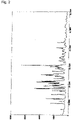
- the crystal of the present invention can include a crystal of glutathione trisulfide dihydrate, in which a powder X-ray diffraction pattern using CuKa as the X-ray source is defined by a pattern shown in Fig. 2 and by values of the diffraction angle shown in Table 2, and a crystal of glutathione trisulfide dihydrate, in which a powder X-ray diffraction pattern using CuKa as the X-ray source is defined by values of the diffraction angle shown in Table 3.
- the crystal of glutathione trisulfide dihydrate showing the infrared absorption spectrum shown in Fig. 3 can also be included as a specific example of the crystal of the present invention.
- Infrared spectroscopy (IR) analysis for example, can be performed using FTIR-8400 type (manufactured by Shimadzu Corporation) according to the attached instructions for use.
- More specific examples can include a crystal of glutathione trisulfide dihydrate showing various results shown in Table 6 when the single crystal X-ray structure analysis is performed.
- the single crystal X-ray structure analysis can be performed, for example, by using R-AXIS RAPD-F (manufactured by Rigaku Corporation) according to the instructions for use.
- a single crystal of glutathione trisulfide dihydrate is attached to a diffractometer, and a diffraction image is measured using X-rays having a predetermined wavelength in atmosphere at room temperature or an inert gas stream at a predetermined temperature.
- a single-crystal structure is obtained by the structure determination by a direct method and the structure refinement by a least square method, from a combination of the plane index and the diffraction intensity calculated from the diffraction image.
- the method for producing the crystal of the present invention is a method for producing a crystal of glutathione trisulfide dihydrate, comprising a step of precipitating a crystal of glutathione trisulfide dihydrate in an aqueous solution in which glutathione trisulfide is dissolved, and a step of collecting the precipitated crystal of glutathione trisulfide dihydrate, wherein the method further comprises a step of preparing the aqueous solution in which glutathione trisulfide is dissolved by leaving to stand or stirring an aqueous solution in which oxidized glutathione and thiosulfate are dissolved, before the step of precipitating the crystal of glutathione trisulfide dihydrate in the aqueous solution in which glutathione trisulfide is dissolved.
- Glutathione trisulfide contained in the aqueous solution in which glutathione trisulfide is dissolved may be produced by any production method such as a method of reacting oxidized glutathione and thiosulfate in an aqueous solution and other chemical synthesis methods, a fermentation method, an enzyme method, and an extraction method from natural matter.
- the solid material to be an obstacle of crystallization When solid material to be an obstacle of crystallization is contained in the aqueous solution in which glutathione trisulfide is dissolved, the solid material can be removed using centrifugal separation, filtration, a ceramic filter, or the like.
- hydrophobic impurities to be an obstacle of crystallization are contained in the aqueous solution in which glutathione trisulfide is dissolved, it is possible to remove the hydrophobic impurities by passing through a column filled with a synthetic adsorption resin, activated carbon, or the like.
- the aqueous solution in which glutathione trisulfide is dissolved for use in the method for producing a crystal of the present invention is preferably adjusted and used so that a concentration of glutathione trisulfide is generally 0.1 g/L or more, and preferably 0.5 g/L or more.
- the step of precipitating the crystal of glutathione trisulfide dihydrate in the aqueous solution can be performed, for example, by concentrating the aqueous solution, cooling the aqueous solution, adding or dropping an alcohol solution into the aqueous solution, or the like.
- the concentrating of the aqueous solution, the cooling of the aqueous solution, the addition or dropping of the alcohol solution into the aqueous solution, and the like can also be performed in combination of one or more.
- a general concentration method such as a heating concentration method or a method of concentration under reduced pressure can be used.
- Examples of a temperature of the aqueous solution in a case of heating concentration of the aqueous solution can include generally 40°C to 80°C, preferably 40°C to 70°C, and most preferably 40°C to 60°C.
- the time required for concentration in the case of heating concentration of the aqueous solution varies with a concentration of glutathione trisulfide in the aqueous solution and the temperature of the aqueous solution, but may be the time for the crystal of glutathione trisulfide dihydrate to precipitate in the aqueous solution.
- concentration of glutathione trisulfide in the aqueous solution varies with a concentration of glutathione trisulfide in the aqueous solution and the temperature of the aqueous solution, but may be the time for the crystal of glutathione trisulfide dihydrate to precipitate in the aqueous solution.
- Those skilled in the art can appropriately set, for example, in a range of generally 2 to 100 hours, preferably 3 to 70 hours, and most preferably 5 to 50 hours.
- Examples of a temperature of the aqueous solution when the aqueous solution is concentrated under reduced pressure can include generally 10°C to 60°C, preferably 20°C to 55°C, and most preferably 30°C to 50°C.
- the time required for concentration in the case of concentration under reduced pressure of the aqueous solution varies with a concentration of glutathione trisulfide in the aqueous solution and the temperature of the aqueous solution, but may be the time for the crystal of glutathione trisulfide dihydrate to precipitate in the aqueous solution. Specifically, for example, a range of generally 2 to 100 hours, preferably 3 to 70 hours, and most preferably 5 to 50 hours is preferable.
- the crystal of the present invention can be precipitated by concentration under reduced pressure at preferably 40 to 50°C, preferably for 10 hours.
- the temperature of the aqueous solution and the time required for cooling of the aqueous solution in the case of cooling the aqueous solution vary with the concentration of glutathione trisulfide in the aqueous solution, but may be conditions in which the crystal of glutathione trisulfide dihydrate is precipitated in the aqueous solution.
- the temperature of the aqueous solution is preferably in a range of generally 0 to 15°C, preferably 0 to 10°C, and most preferably 0 to 5°C.
- the time required for cooling is generally 6 hours to 8 days, preferably from 12 hours to 7 days, and most preferably 24 hours to 6 days.
- the alcohol solution When an alcohol solution is added or dropped into the aqueous solution, the alcohol solution may be a mixture of plural types of alcohol, or a mixture of alcohol and another organic solvent or water.
- examples of alcohol can include preferably alcohols of C1 to C6, more preferably alcohols of C1 to C3, still more preferably alcohols selected from the group consisting of methanol, ethanol, n-propanol, and isopropyl alcohol, even more preferably methanol or ethanol, and most preferably methanol.
- examples of a moisture content can include generally 40 wt% or less, preferably 20 wt% or less, more preferably 10 wt% or less, and most preferably 5 wt% or less.
- a temperature of the aqueous solution, an amount of the alcohol solution to be dropped or added, and time required for adding or dropping the alcohol solution vary with a concentration of glutathione trisulfide in the aqueous solution, but may be conditions in which the crystal of glutathione trisulfide dihydrate is precipitated in the aqueous solution.
- the temperature of the aqueous solution is preferably in a range of generally 0 to 40°C, preferably 0 to 35°C, and most preferably 5 to 30°C.
- the amount of the alcohol solution to be added or dropped is preferably in a range of generally an equal amount of 0.1 to 100 times, preferably an equal amount of 0.1 to 10 times, and most preferably an equal amount of 0.1 to 3 times of the aqueous solution.
- the time required for adding or dropping the alcohol solution is preferably in a range of generally 1 minute to 24 hours, preferably 1 minute to 10 hours, and most preferably 1 to 7 hours.
- a seed crystal may be added immediately before starting the step of precipitating the crystal of glutathione trisulfide dihydrate in the aqueous solution, or before the crystal of glutathione trisulfide dihydrate is precipitated in the step of precipitating the crystal of glutathione trisulfide dihydrate in the aqueous solution.
- the seed crystal for example, the crystal of glutathione trisulfide dihydrate obtained by the method for producing a crystal of the present invention can be used.
- the seed crystal is added so that a concentration thereof in the aqueous solution is generally 0.001 to 50 g/L, preferably 0.01 to 5 g/L.
- the time for adding the seed crystal can be set, for example, in a range of generally 0 to 12 hours, preferably 0 to 8 hours, and most preferably 0 to 4 hours after starting addition or dropping of the alcohol solution.
- the precipitated crystal After precipitating the crystal of glutathione trisulfide dihydrate by the above method, the precipitated crystal can be aged over generally 1 to 48 hours, preferably 1 to 24 hours, and most preferably 1 to 12 hours.
- Aging the crystal refers to growing the crystal by stopping the step of precipitating the crystal of glutathione trisulfide dihydrate.
- Growing the crystal refers to increasing the crystal starting from the precipitated crystal.
- Aging of the crystal is mainly performed for growing the crystal, but a new crystal may be precipitated simultaneously with the growth of the crystal.
- Stopping the step of precipitating the crystal of glutathione trisulfide dihydrate refers to stopping addition or dropping of the alcohol solution when the crystal of glutathione trisulfide dihydrate is precipitated by adding or dropping the alcohol solution in the aqueous solution.
- the step of precipitating the crystal of glutathione trisulfide dihydrate may be resumed.
- the step of collecting the crystal of glutathione trisulfide dihydrate for example, filtration, pressure filtration, suction filtration, centrifugal separation, and the like can be performed. Further, in order to reduce adhesion of mother liquor to the crystal and improve quality of the crystal, the crystal can be appropriately washed after collecting the crystal.
- a solution used for crystal washing for example, a solution obtained by mixing one or more kinds selected from the group consisting of water, methanol, ethanol, acetone, n-propanol, and isopropyl alcohol at an arbitrary ratio can be used.
- the crystal of the present invention can be obtained by drying a wet crystal obtained in this manner.
- Drying conditions are not particularly limited as long as a form of the crystal of glutathione trisulfide dihydrate can be maintained, and for example, drying under reduced pressure, vacuum drying, fluidized bed drying, ventilation drying, and the like can be applied.
- a drying temperature may be in any range as long as adhesive moisture or solution can be removed, and examples thereof can include preferably 80°C or less, more preferably 70°C or less, and most preferably 60°C or less.
- drying time can include preferably 1 to 60 hours, and more preferably 1 to 48 hours.
- the method for producing a crystal of the present invention comprises a step of preparing an aqueous solution in which glutathione trisulfide is dissolved by leaving to stand or stirring an aqueous solution in which oxidized glutathione and thiosulfate are dissolved, before the step of precipitating the crystal of glutathione trisulfide dihydrate in the aqueous solution in which glutathione trisulfide is dissolved.
- Glutathione trisulfide is generated by reacting oxidized glutathione and thiosulfate by leaving to stand or stirring the aqueous solution in which oxidized glutathione and thiosulfate are dissolved.
- the oxidized glutathione used in the above step may be a non-crystalline amorphous form or a crystal; and when it is a crystal, it may be an anhydride or may contain hydrated water.
- the thiosulfate used in the above step is not particularly limited, and examples thereof can include sodium thiosulfate and ammonium thiosulfate, preferably sodium thiosulfate.
- the thiosulfate used in the above step may be anhydride or may contain hydrated water.
- Examples of a concentration of oxidized glutathione in the aqueous solution in the above step can include generally 1 g/L or more, preferably 5 g/L or more, and more preferably 10 g/L or more.
- Examples of a concentration of thiosulfate in the aqueous solution in the above step can include generally 0.1 g/L or more, preferably 0.5 g/L or more, and more preferably 1 g/L or more.
- Examples of a temperature of the aqueous solution in the above step can include generally 5 to 40°C, and preferably 10 to 30°C.
- Examples of pH of the aqueous solution in the above step can include pH of generally 2 to 4.
- Examples of time for leaving to stand or stirring the aqueous solution in which oxidized glutathione and thiosulfate are dissolved, in the above step can include generally 2 to 48 hours, preferably 5 to 36 hours, and more preferably 8 to 24 hours.
- the aqueous solution in which glutathione trisulfide prepared by the method described above is dissolved is filtered to remove solid material such as sulfur, and then the filtrate is passed through a column filled with a synthetic adsorption resin, accordingly, an aqueous solution in which glutathione trisulfide having high purity is dissolved can be prepared.
- a crystal of glutathione trisulfide dihydrate having high purity can be obtained by the above method.
- Examples of the purity of the crystal of glutathione trisulfide dihydrate can include generally 93% or more, preferably 94% or more, more preferably 95% or more, and most preferably 96% or more.
- the purity of the crystal of glutathione trisulfide dihydrate can be confirmed by, for example, analysis using HPLC in the same manner as that in the above 1.
- Examples of the crystal of glutathione trisulfide dihydrate which can be produced by the above production method can include a crystal of glutathione trisulfide dihydrate in which a powder X-ray diffraction pattern using CuK ⁇ as the X-ray source is prescribed by a pattern shown in Fig. 2 and values of the diffraction angle shown in Table 2, and a crystal of glutathione trisulfide dihydrate in which a powder X-ray diffraction pattern using CuKa as the X-ray source is prescribed by values of the diffraction angle shown in Table 3.
- the crystal of glutathione trisulfide dihydrate showing the infrared absorption spectrum shown in Fig. 3 can also be included as a specific example of the crystal of glutathione trisulfide dihydrate that can be produced by the above production method.
- crystal of glutathione trisulfide dihydrate showing various results shown in Table 6 by single crystal X-ray structure analysis can also be included as a specific example of the crystal of glutathione trisulfide dihydrate that can be produced by the above production method.
- the present disclosure relates to a method for producing polysulfide, comprising a step of leaving to stand or stirring an aqueous solution in which a compound having a thiol group or a disulfide bond and thiosulfate are dissolved.
- the polysulfide refers to a compound containing a large number of continuous sulfur atoms represented by the following general formula (I): Formula (I) R-S n -R (wherein n represents any natural number equal to or greater than 3, preferably any natural number of 3 to 10, more preferably any natural number of 3 to 6, and most preferably 3 or 4; further, R represents a composition obtained by removing a hydrogen atom from an arbitrary compound; and in R, a sulfur atom is bonded to a carbon atom of R).
- R can include a composition (C 10 H 16 N 3 O 6 ) obtained by removing a hydrogen atom from a thiol group of reduced glutathione, a composition (C 5 H 8 NO 3 ) obtained by removing a hydrogen atom from a thiol group of N-acetyl-L-cysteine, and a composition (C 3 H 6 NO 2 ) obtained by removing a hydrogen atom from a thiol group of L-cysteine.
- a composition (C 10 H 16 N 3 O 6 ) obtained by removing a hydrogen atom from a thiol group of reduced glutathione
- C 5 H 8 NO 3 obtained by removing a hydrogen atom from a thiol group of N-acetyl-L-cysteine
- C 3 H 6 NO 2 obtained by removing a hydrogen atom from a thiol group of L-cysteine.
- a polysulfide is not particularly limited, but is preferably hydrophilic polysulfide.
- hydrophilic polysulfide refers to polysulfide in which a concentration of the polysulfide when the polysulfide is dissolved in water can be 0.1 g/L or more.
- hydrophilic polysulfide for example, can include glutathione trisulfide (C 10 H 16 N 3 O 6 -S 3 -C 10 H 16 N 3 O 6 ), glutathione tetrasulfide (C 10 H 16 N 3 O 6 -S 4 -C 10 H 16 N 3 O 6 ), glutathione pentasulfide (C 10 H 16 N 3 O 6 -S 5 -C 10 H 16 N 3 O 6 ), N-acetyl-L-cysteine trisulfide (C 5 H 8 NO 3 -S 3 -C 5 H 8 NO 3 ), N-acetyl-L-cysteine tetrasulfide (C 5 H 8 NO 3 -S 4 -C 5 H 8 NO 3 ), N-acetyl-L-cysteine pentasulfide (C 5 H 8 NO 3 -S 5 -C 5 H 8 NO 3 ), and N-acetyl-L-cy
- the thiosulfate is not particularly limited, and examples thereof can include sodium thiosulfate and ammonium thiosulfate, preferably sodium thiosulfate.
- the thiosulfate salt may be an anhydride or may contain hydrated water.
- the compound having a thiol group refers to a compound represented by the following general formula (II): Formula (II) R-S-H (wherein, R represents a composition obtained by removing a hydrogen atom from an arbitrary compound; and, in R, a sulfur atom is bonded to a carbon atom of R).
- the compound having a disulfide bond refers to a compound represented by the following general formula (III): Formula (III) R-S-S-R (wherein, R represents a composition obtained by removing a hydrogen atom from an arbitrary compound; and in R, a sulfur atom is bonded to a carbon atom of R).
- a compound having a thiol group or a disulfide bond can include preferably oxidized glutathione and reduced glutathione, and more preferably oxidized glutathione, when glutathione polysulfide, more specifically at least one selected from glutathione trisulfide, glutathione tetrasulfide, and glutathione pentasulfide, is produced as the polysulfide.
- the oxidized glutathione When oxidized glutathione is used as the compound having a thiol group or a disulfide bond, the oxidized glutathione may be a non-crystalline amorphous form or a crystal, when it is a crystal, it may be nonhydrate or may contain hydrated water.
- N-acetyl-L-cysteine polysulfide more specifically at least one selected from N-acetyl-L-cysteine trisulfide, N-acetyl-L-cysteine tetrasulfide, N-acetyl-L-cysteine pentasulfide, and N-acetyl-L-cysteine hexasulfide
- the specific examples can include preferably N-acetyl-L-cysteine disulfide and N-acetyl-L-cysteine, more preferably N-acetyl-L-cysteine disulfide.
- a concentration of the compound having a thiol group or a disulfide bond can appropriately set a concentration of the compound having a thiol group or a disulfide bond, a concentration of thiosulfate, and pH of a reaction aqueous solution in a reaction aqueous solution when the polysulfide is produced by the method of the present disclosure according to the compound having a thiol group or a disulfide bond for use.
- examples of a concentration of the oxidized glutathione in an aqueous solution in which the compound having a thiol group or a disulfide bond and thiosulfate are dissolved can include generally 1 g/L or more, preferably 5 g/L or more, and more preferably 10 g/L or more.
- examples of a concentration of the thiosulfate in the aqueous solution can include generally 0.1 g/L or more, preferably 0.5 g/L or more, and more preferably 1 g/L or more.
- examples of the pH of the aqueous solution can generally include pH of 2 to 4.
- examples of a concentration of the N-acetyl-N-cysteine disulfide in an aqueous solution in which the compound having a thiol group or a disulfide bond and thiosulfate are dissolved can include generally 10 g/L or more, preferably 30 g/L or more, and more preferably 50 g/L or more.
- examples of a concentration of the thiosulfate in the aqueous solution can include generally 1 g/L or more, preferably 5 g/L or more, and more preferably 10 g/L or more.
- examples of the pH of the aqueous solution can include generally pH of 1.5 to 4.
- Examples of a temperature for leaving to stand or stirring the aqueous solution in which the compound having a thiol group or a disulfide bond and the thiosulfate are dissolved can include generally 5 to 40°C, preferably 10 to 30°C.
- Examples of time for leaving to stand or stirring the aqueous solution in which the compound having a thiol group or a disulfide bond and the thiosulfate are dissolved can include generally 2 to 48 hours, preferably 5 to 36 hours, and more preferably 8 to 24 hours.
- the polysulfide can be easily produced in an aqueous solvent without using hydrogen sulfide.
- the target polysulfide can be isolated and purified by filtration, centrifugal separation, chromatography using a synthetic adsorption resin or an ion exchange resin, and the like.
- Example 1 (relevant for the claimed invention in as far as related to glutathione trisulfide)
- Oxidized glutathione (manufactured by Kyowa Hakko Bio Co., Ltd.) was dissolved in water and adjusted to 100 g/L, and sodium sulfate, sodium sulfite, sodium hydrogen sulfite, sodium thiosulfate, sulfuric acid, or sulfurous acid was added thereto so that their molar concentrations were the same as that of the oxidized glutathione, followed by stirring at room temperature for about 40 hours. A concentration of glutathione trisulfide in the solution was measured 0 hour, 16 hours, and 41 hours after start of the stirring. The concentration of glutathione trisulfide (g/L) for each elapsed time when each compound was added is shown in Table 1.
- glutathione trisulfide was generated in a significant amount only when sodium thiosulfate was added, and glutathione trisulfide was not generated in the other cases. Further, it was confirmed that glutathione tetrasulfide and glutathione pentasulfide in addition to glutathione trisulfide were generated in the solution as a result of liquid chromatography mass spectrometry measurement using 3200 QTRAP (manufactured by AB Sciex LLC).
- oxidized glutathione aqueous solution prepared by dissolving 65 g of oxidized glutathione (manufactured by Kyowa Hakko Bio Co., Ltd.) in water, 17 g of sodium thiosulfate (manufactured by Wako Pure Chemical Corporation) was added, followed by stirring at room temperature over 12 hours, to prepare 15.9 g/L of a glutathione trisulfide aqueous solution (purity: 34%).
- aqueous solution was filtered and a precipitate such as sulfur was separated by filtration, the obtained filtrate was passed through a column filled with 500 mL of synthetic adsorption resin SP207 (manufactured by Mitsubishi Chemical Corporation). Subsequently, elution was performed using 30 L of water to obtain 25 L of 0.56 g/L of a glutathione trisulfide aqueous solution (purity: 98%).
- thermogravimetric differential thermal analysis it was found that the obtained crystal of glutathione trisulfide was gradually dehydrated with temperature rise (30°C to 200°C) to obtain an anhydride at 61°C, and that the crystal was a dihydrate from a reduced moisture weight (theoretical value: 5.3 wt%, measurement value: 5.3 wt%).
- the obtained crystal has glutathione trisulfide purity of 96% (area%) or more.
- Table 2 shows diffraction angles of the peaks at which relative intensity ratio (I/I 0 ) is 30 or more from results of powder X-ray diffraction of the obtained crystal.
- “2 ⁇ ” indicates a diffraction angle (2 ⁇ °)
- “relative intensity” indicates a relative intensity ratio.
- the results of powder X-ray diffraction using CuKa as the X-ray source of the obtained crystal are shown in Fig. 2
- results of infrared spectroscopy (IR) analysis are shown in Fig. 3 .
- the precipitated crystal was separated from the aqueous solution by filtration and collected, and the crystal was dried under reduced pressure at room temperature to obtain 6.5 g of the crystal.
- Table 3 shows diffraction angles of peaks at which a relative intensity ratio (I/I 0 ) is 30 or more from results of powder X-ray diffraction of the obtained crystal.
- “2 ⁇ ” indicates a diffraction angle (2 ⁇ °)
- "relative intensity” indicates a relative intensity ratio.
- [Table 3] 2 ⁇ Relative strength 9.5 55 11.8 44 12.1 36 14.4 67 16.5 46 17.5 92 17.7 85 18.9 68 19.1 60 19.4 51 20.3 64 20.6 53 21.2 93 21.5 76 21.7 100 23.1 51 24.7 30 25.0 65 25.3 72 25.8 49 27.2 48 27.3 53 28.6 42 29.0 36 29.7 45 29.9 34 30.5 94 40.2 33 40.3 33
- the crystal was subjected to infrared spectroscopy (IR) analysis and thermogravimetric differential analysis. Results of a powder X-ray crystal diffraction pattern, an infrared absorption spectrum, and thermogravimetric differential thermal analysis of the crystal were the same as those of the crystal obtained in Example 2, and therefore, it was found that the crystal is a crystal of glutathione trisulfide dihydrate.
- IR infrared spectroscopy
- Example 2 1 g of the crystal of glutathione trisulfide dihydrate produced in Example 2 was dissolved in water, and the volume was made up to 100 mL. The aqueous solution was filtered with a 0.45 ⁇ m of filter and then lyophilized to obtain a whitish transparent powder. When powder X-ray diffraction of the powder was measured, it was found that the powder was a non-crystalline amorphous form of glutathione trisulfide since an X-ray diffraction peak was not confirmed.
- Each of the non-crystalline amorphous form and the crystal of glutathione trisulfide dihydrate obtained above was weighed 200 mg in a 100 mL of measuring flask, and then water was added to 100 mL. Subsequently, quantity of the reduced glutathione and oxidized glutathione contained in the aqueous solution was determined by analysis using HPLC, and weight (wt%) of the reduced glutathione and the oxidized glutathione with respect to weight of the glutathione trisulfide contained in the aqueous solution was calculated.
- the reduced glutathione and the oxidized glutathione contained in the crystal of glutathione trisulfide dihydrate were less than the non-crystalline amorphous form. From this, it was found that impurities can be efficiently removed from glutathione trisulfide by crystallization into the crystal of dihydrate.
- the crystal of glutathione trisulfide dihydrate obtained in Example 2 was subjected to single crystal X-ray diffraction (SXRD) at -173°C using a measurement device (single crystal X-ray structure analyzer SuperNova manufactured by Agilent Technologies).
- SXRD single crystal X-ray diffraction
- the results of the single crystal x-ray structure analysis confirmed that the crystal was surely a crystal of the glutathione trisulfide, and was a dihydrate crystal having water molecules within the unit lattice. Further, the Flack parameter [Acta Cryst. A39, 876. (1983)] was 0.15 (4), close to zero, confirming that there was no contradiction in the absolute structure revealed by the analysis.
- Example 7 is a reference example.
- N-acetyl-L-cysteine aqueous solution prepared by dissolving 202 g of N-acetyl-L-cysteine (manufactured by Kyowa Hakko Bio Co., Ltd.) in water, 2 mol/L of a sodium hydroxide aqueous solution (manufactured by Wako Pure Chemical Corporation) was added followed by adjusting the pH to 7.5, and then 63 mL of a hydrogen peroxide solution (manufactured by Wako Pure Chemical Corporation) was added and reacted at room temperature for 24 hours to oxidize N-acetyl-L-cysteine to N-acetyl-L-cysteine disulfide.
- the aqueous solution was passed through a column filled with 160 mL of an H + type of strong cation exchange resin UBK16 (manufactured by Mitsubishi Chemical Corporation), and 3100 mL of 65 g/L of an N-acetyl-N-cysteine disulfide aqueous solution was obtained.
- an N-acetyl-N-cysteine disulfide aqueous solution 48 g of sodium thiosulfate (manufactured by Wako Pure Chemical Corporation) was added, and the mixture was stirred at room temperature for 12 hours.
- the aqueous solution was filtered to separate a precipitate such as sulfur by filtration, and the obtained filtrate was passed through a column filled with 160 mL of synthetic adsorption resin SP207 (manufactured by Mitsubishi Chemical Corporation). Subsequently, the column was washed in an order of 240 mL of water and 700 mL of a 5% methanol aqueous solution (manufactured by KANTO CHEMICAL CO., INC.), then elution was performed using a 10% methanol aqueous solution (manufactured by KANTO CHEMICAL CO., INC.), and 2500 mL of an aqueous solution containing N-acetyl-L-cysteine trisulfide was obtained.
- SP207 synthetic adsorption resin
- Example 8 is a reference example.
- N-acetyl-L-cysteine aqueous solution prepared by dissolving 202 g of N-acetyl-L-cysteine (manufactured by Kyowa Hakko Bio Co., Ltd.) in water, 2 mol/L of a sodium hydroxide aqueous solution (manufactured by Wako Pure Chemical Corporation) was added followed by adjusting the pH to 7.5, and then 63 mL of a hydrogen peroxide solution (manufactured by Wako Pure Chemical Corporation) was added and reacted at room temperature for 24 hours to oxidize N-acetyl-L-cysteine to N-acetyl-L-cysteine disulfide.
- the aqueous solution was passed through a column filled with 160 mL of an H + type of strong cation exchange resin UBK16 (manufactured by Mitsubishi Chemical Corporation), and 3100 mL of 65 g/L of an N-acetyl-N-cysteine disulfide aqueous solution was obtained.
- an N-acetyl-N-cysteine disulfide aqueous solution 48 g of sodium thiosulfate (manufactured by Wako Pure Chemical Corporation) was added, and the mixture was stirred at room temperature over 12 hours.
- the aqueous solution was filtered to separate a precipitate such as sulfur by filtration, the obtained filtrate was passed through a column filled with 160 mL of synthetic adsorption resin SP207 (manufactured by Mitsubishi Chemical Corporation). Subsequently, the column was washed with 240 mL of water, 700 mL of a 5% methanol aqueous solution (manufactured by KANTO CHEMICAL CO., INC.), and 2500 mL of a 10% methanol aqueous solution (manufactured by KANTO CHEMICAL CO., INC.) in this order, then elution was performed using a 30% methanol aqueous solution (manufactured by KANTO CHEMICAL CO., INC.), and 550 mL of an aqueous solution containing N-acetyl-L-cysteine tetrasulfide was obtained.
- SP207 synthetic adsorption resin
- the present invention provides a crystal of glutathione trisulfide dihydrate that is useful as an antioxidant component, and a method for producing the same.
Landscapes
- Chemical & Material Sciences (AREA)
- Organic Chemistry (AREA)
- Genetics & Genomics (AREA)
- Biochemistry (AREA)
- Biophysics (AREA)
- General Health & Medical Sciences (AREA)
- Health & Medical Sciences (AREA)
- Medicinal Chemistry (AREA)
- Molecular Biology (AREA)
- Proteomics, Peptides & Aminoacids (AREA)
- Life Sciences & Earth Sciences (AREA)
- Peptides Or Proteins (AREA)
- Organic Low-Molecular-Weight Compounds And Preparation Thereof (AREA)
Claims (10)
- Ein Glutathiontrisulfiddihydrat-Kristall.
- Der Kristall nach Anspruch 1, welcher Peaks bei Beugungswinkeln (2θ°) von 30,5° ± 0,2°, 17,7° ± 0,2°, 17,5° ± 0,2 und 21,2° ± 0,2° bei einer Pulverröntgenbeugung aufweist, wobei CuKa als Röntgenquelle verwendet wird.
- Der Kristall nach Anspruch 2, welcher weiter Peaks bei Beugungswinkeln (2θ°) von 25,3° ± 0,2°, 21,5° ± 0,2°, 21,8° ± 0,2° und 19,0° ± 0,2° bei der Pulverröntgenbeugung aufweist.
- Der Kristall nach Anspruch 3, welcher weiter Peaks bei Beugungswinkeln (2θ°) von 19,2° ± 0,2°, 12,1° ± 0,2°, 25,0° ± 0,2° und 20,3° ± 0,2° bei der Pulverröntgenbeugung aufweist.
- Der Kristall nach Anspruch 4, welcher weiter Peaks bei Beugungswinkeln (2θ°) von 20,6° ± 0,2°, 29,7° ± 0,2°, 9,5° 10,2° und 14,4° ± 0,2° bei der Pulverröntgenbeugung aufweist.
- Der Kristall nach Anspruch 5, welcher weiter Peaks bei Beugungswinkeln (2θ°) von 27,3° ± 0,2°, 19,5°± 0,2°, 16,5°± 0,2° und 25,8° ± 0,2° bei der Pulverröntgenbeugung aufweist.
- Der Kristall nach Anspruch 6, welcher weiter Peaks bei Beugungswinkeln (2θ°) von 11,9°± 0,2°, 23,2° ± 0,2° und 30,0° ± 0,2° bei der Pulverröntgenbeugung aufweist.
- Der Kristall nach einem der Ansprüche 1 bis 7, welcher die folgenden ungefähren Einheitszellparameter aufweist, wenn bei -173°C bei der Einkristall-Röntgenstrukturanalyse gemessen: a = 5,3777 Å; b = 9,4390 Å; c = 14,7822 Å; α= 82,833°, β = 89,101°, γ= 89,392°; V = 744,37 Å3, Z = 1, und eine Raumgruppe P1 aufweist, wobei CuKa als Röntgenquelle verwendet wird.
- Ein Verfahren zur Herstellung eines Glutathiontrisulfiddihydrat-Kristalls, umfassend einen Schritt des Ausfällens eines Glutathiontrisulfiddihydrat-Kristalls aus einer wässrigen Lösung, in der Glutathiontrisulfid gelöst ist, und einen Schritt des Sammelns des ausgefällten Glutathiontrisulfiddihydrat-Kristalls; wobei das Verfahren weiter einen Schritt des Herstellens der wässrigen Lösung, in der Glutathiontrisulfid gelöst ist, durch Stehenlassen oder Rühren einer wässrigen Lösung, in der oxidiertes Glutathion und Thiosulfat gelöst sind, vor dem Schritt des Ausfällens des Glutathiontrisulfiddihydrat-Kristalls aus der wässrigen Lösung, in der Glutathiontrisulfid gelöst ist, umfasst.
- Das Herstellungsverfahren nach Anspruch 9, wobei der Schritt des Ausfällens des Glutathiontrisulfiddihydrat-Kristalls aus der wässrigen Lösung, in der Glutathiontrisulfid gelöst ist, ein Schritt des Ausfällens des Glutathiontrisulfiddihydrat-Kristalls durch Konzentrieren der wässrigen Lösung, in der Glutathiontrisulfid gelöst ist, ist.
Applications Claiming Priority (2)
| Application Number | Priority Date | Filing Date | Title |
|---|---|---|---|
| JP2016246115 | 2016-12-20 | ||
| PCT/JP2017/045805 WO2018117186A1 (ja) | 2016-12-20 | 2017-12-20 | グルタチオントリスルフィド・2水和物の結晶及びその製造方法 |
Publications (3)
| Publication Number | Publication Date |
|---|---|
| EP3560947A1 EP3560947A1 (de) | 2019-10-30 |
| EP3560947A4 EP3560947A4 (de) | 2020-08-26 |
| EP3560947B1 true EP3560947B1 (de) | 2022-08-24 |
Family
ID=62626413
Family Applications (1)
| Application Number | Title | Priority Date | Filing Date |
|---|---|---|---|
| EP17882683.0A Active EP3560947B1 (de) | 2016-12-20 | 2017-12-20 | Glutathiontrisulfiddihydrat-kristall und verfahren zur herstellung davon |
Country Status (8)
| Country | Link |
|---|---|
| US (1) | US11186610B2 (de) |
| EP (1) | EP3560947B1 (de) |
| JP (1) | JP7028795B2 (de) |
| CN (1) | CN110088118B (de) |
| AU (1) | AU2017380220B2 (de) |
| ES (1) | ES2928363T3 (de) |
| PH (1) | PH12019501404A1 (de) |
| WO (1) | WO2018117186A1 (de) |
Families Citing this family (16)
| Publication number | Priority date | Publication date | Assignee | Title |
|---|---|---|---|---|
| JP2022166333A (ja) * | 2019-09-18 | 2022-11-02 | 国立大学法人 熊本大学 | 活性イオウ分子種生体内濃度上昇剤 |
| CN115087635B (zh) | 2020-03-31 | 2024-04-12 | 协和医药化工股份有限公司 | 三硫化物化合物或硒代三硫化物化合物的制造方法 |
| JP7842033B2 (ja) * | 2020-05-12 | 2026-04-07 | ザ ジェネラル ホスピタル コーポレイション | 神経保護におけるグルタチオントリスルフィド(gsssg) |
| US20240139277A1 (en) * | 2020-05-20 | 2024-05-02 | Tohoku University | Drug containing active sulfur compound as its main component |
| EP4208026A1 (de) | 2020-09-01 | 2023-07-12 | University of Iowa Research Foundation | Dithiophosphatderivate als schwefelwasserstofffreisetzende chemikalien zur verbesserung des pflanzenwachstums und des ernteertrags |
| WO2022087022A1 (en) * | 2020-10-20 | 2022-04-28 | University Of Iowa Research Foundation | Methods for improving plant growth and cropyied by using compounds of trisulphide or tetrasulphide |
| EP4335451A4 (de) | 2021-06-16 | 2025-05-14 | Kyowa Hakko Bio Co., Ltd. | Prophylaktisches oder therapeutisches mittel gegen akute niereninsuffizienz |
| EP4342464A4 (de) | 2021-07-08 | 2025-06-04 | Kyowa Pharma Chemical Co., Ltd. | Prophylaktisches oder therapeutisches arzneimittel gegen parkinson-krankheit |
| TW202321270A (zh) | 2021-09-09 | 2023-06-01 | 國立大學法人九州大學 | 使用三硫化合物之防止肝細胞增殖因子中之酪胺酸殘基之硝基化的方法 |
| EP4461304A4 (de) * | 2022-02-10 | 2026-01-07 | Kyowa Hakko Bio Co Ltd | Zusammensetzung zur prävention oder verbesserung von leberfunktionsstörungen |
| US20250345383A1 (en) * | 2022-05-20 | 2025-11-13 | The General Hospital Corporation | Intranasal administration of polysulfide |
| EP4603087A1 (de) | 2022-11-21 | 2025-08-20 | Kyowa Hakko Bio Co., Ltd. | Prophylaktisches oder therapeutisches mittel gegen akute nierenverletzung durch antikrebsmittel |
| EP4647072A1 (de) | 2023-03-07 | 2025-11-12 | Kyowa Hakko Bio Co., Ltd. | Verstärker der physiologischen aktivität des hepatozytenwachstumsfaktors |
| WO2025028521A1 (ja) | 2023-08-01 | 2025-02-06 | キリンホールディングス株式会社 | 肝機能障害の予防又は改善用組成物 |
| WO2025070464A1 (ja) * | 2023-09-28 | 2025-04-03 | 協和ファーマケミカル株式会社 | トリスルフィド化合物を含有する医薬組成物 |
| WO2025249379A1 (ja) * | 2024-05-27 | 2025-12-04 | 三菱商事ライフサイエンス株式会社 | 過硫化物含有液状組成物 |
Family Cites Families (3)
| Publication number | Priority date | Publication date | Assignee | Title |
|---|---|---|---|---|
| US9000126B2 (en) * | 2010-04-21 | 2015-04-07 | Kyowa Hakko Bio Co., Ltd. | Crystalline oxidized glutathione and production method therefor |
| ITMI20131856A1 (it) * | 2013-11-08 | 2015-05-09 | Gnosis Spa | Processo per la preparazione di differenti forme cristalline del s-acetil glutatione e loro utilizzi in formulazioni farmaceutiche e nutraceutiche |
| EP3279208B1 (de) | 2015-03-31 | 2020-04-29 | University Public Corporation Osaka | Kristall aus reduziertem glutathion |
-
2017
- 2017-12-20 EP EP17882683.0A patent/EP3560947B1/de active Active
- 2017-12-20 ES ES17882683T patent/ES2928363T3/es active Active
- 2017-12-20 US US16/470,790 patent/US11186610B2/en active Active
- 2017-12-20 CN CN201780077981.1A patent/CN110088118B/zh active Active
- 2017-12-20 AU AU2017380220A patent/AU2017380220B2/en active Active
- 2017-12-20 WO PCT/JP2017/045805 patent/WO2018117186A1/ja not_active Ceased
- 2017-12-20 JP JP2018558052A patent/JP7028795B2/ja active Active
-
2019
- 2019-06-19 PH PH12019501404A patent/PH12019501404A1/en unknown
Non-Patent Citations (1)
| Title |
|---|
| STEUDEL RALF: "The chemistry of organic polysulfanes R-S(n)-R (n > 2).", CHEMICAL REVIEWS, 1 November 2002 (2002-11-01), pages 3905 - 3945, XP055791692, Retrieved from the Internet <URL:https://pubs.acs.org/doi/10.1021/cr010127m> [retrieved on 20210330] * |
Also Published As
| Publication number | Publication date |
|---|---|
| PH12019501404A1 (en) | 2020-02-24 |
| WO2018117186A1 (ja) | 2018-06-28 |
| CN110088118B (zh) | 2023-04-04 |
| EP3560947A4 (de) | 2020-08-26 |
| US11186610B2 (en) | 2021-11-30 |
| JPWO2018117186A1 (ja) | 2019-10-31 |
| AU2017380220B2 (en) | 2021-05-20 |
| US20200079818A1 (en) | 2020-03-12 |
| JP7028795B2 (ja) | 2022-03-02 |
| EP3560947A1 (de) | 2019-10-30 |
| CN110088118A (zh) | 2019-08-02 |
| AU2017380220A1 (en) | 2019-07-11 |
| ES2928363T3 (es) | 2022-11-17 |
Similar Documents
| Publication | Publication Date | Title |
|---|---|---|
| EP3560947B1 (de) | Glutathiontrisulfiddihydrat-kristall und verfahren zur herstellung davon | |
| EP2882687B1 (de) | Verfahren zur herstellung von stabilisiertem amorphem calciumcarbonat | |
| WO2018047715A1 (ja) | β-ニコチンアミドモノヌクレオチドの結晶及びその製造方法 | |
| US10745432B2 (en) | Crystal of 6′-sialyllactose sodium salt, and process for producing same | |
| CN107207552B (zh) | N-乙酰神经氨酸铵盐无水物的晶体及其制造方法 | |
| CN110678477B (zh) | 氧化型谷胱甘肽二阳离子盐的晶体及其制造方法 | |
| EP3385250B1 (de) | Kristalle von monovalentem kationensalz von 3-hydroxyisovaleriansäure und verfahren zur herstellung der besagten kristalle | |
| EP3178833B1 (de) | Kristall aus alkalimetall-n-acetylneuraminat-anhydrat und verfahren zur herstellung davon | |
| US11008355B2 (en) | Crystal of 3'-sialyllactose sodium salt n-hydrate, and process for producing same | |
| HK1258440B (en) | Crystals of monovalent cation salt of 3-hydroxyisovaleric acid, and method for producing said crystals |
Legal Events
| Date | Code | Title | Description |
|---|---|---|---|
| STAA | Information on the status of an ep patent application or granted ep patent |
Free format text: STATUS: THE INTERNATIONAL PUBLICATION HAS BEEN MADE |
|
| PUAI | Public reference made under article 153(3) epc to a published international application that has entered the european phase |
Free format text: ORIGINAL CODE: 0009012 |
|
| STAA | Information on the status of an ep patent application or granted ep patent |
Free format text: STATUS: REQUEST FOR EXAMINATION WAS MADE |
|
| 17P | Request for examination filed |
Effective date: 20190719 |
|
| AK | Designated contracting states |
Kind code of ref document: A1 Designated state(s): AL AT BE BG CH CY CZ DE DK EE ES FI FR GB GR HR HU IE IS IT LI LT LU LV MC MK MT NL NO PL PT RO RS SE SI SK SM TR |
|
| AX | Request for extension of the european patent |
Extension state: BA ME |
|
| DAV | Request for validation of the european patent (deleted) | ||
| DAX | Request for extension of the european patent (deleted) | ||
| A4 | Supplementary search report drawn up and despatched |
Effective date: 20200728 |
|
| RIC1 | Information provided on ipc code assigned before grant |
Ipc: C07K 5/037 20060101AFI20200722BHEP Ipc: A61K 38/06 20060101ALI20200722BHEP Ipc: A61P 39/06 20060101ALI20200722BHEP Ipc: C07K 1/14 20060101ALI20200722BHEP |
|
| STAA | Information on the status of an ep patent application or granted ep patent |
Free format text: STATUS: EXAMINATION IS IN PROGRESS |
|
| 17Q | First examination report despatched |
Effective date: 20210409 |
|
| REG | Reference to a national code |
Ref country code: DE Ref legal event code: R079 Ref document number: 602017061108 Country of ref document: DE Free format text: PREVIOUS MAIN CLASS: C07K0005037000 Ipc: C07K0005020000 |
|
| GRAP | Despatch of communication of intention to grant a patent |
Free format text: ORIGINAL CODE: EPIDOSNIGR1 |
|
| STAA | Information on the status of an ep patent application or granted ep patent |
Free format text: STATUS: GRANT OF PATENT IS INTENDED |
|
| RIC1 | Information provided on ipc code assigned before grant |
Ipc: C07K 5/02 20060101AFI20211003BHEP |
|
| INTG | Intention to grant announced |
Effective date: 20211102 |
|
| RIN1 | Information on inventor provided before grant (corrected) |
Inventor name: NAGANO, HIROSHI Inventor name: FUJIMOTO, AKIHIRO |
|
| GRAJ | Information related to disapproval of communication of intention to grant by the applicant or resumption of examination proceedings by the epo deleted |
Free format text: ORIGINAL CODE: EPIDOSDIGR1 |
|
| STAA | Information on the status of an ep patent application or granted ep patent |
Free format text: STATUS: EXAMINATION IS IN PROGRESS |
|
| GRAS | Grant fee paid |
Free format text: ORIGINAL CODE: EPIDOSNIGR3 |
|
| STAA | Information on the status of an ep patent application or granted ep patent |
Free format text: STATUS: GRANT OF PATENT IS INTENDED |
|
| GRAP | Despatch of communication of intention to grant a patent |
Free format text: ORIGINAL CODE: EPIDOSNIGR1 |
|
| INTC | Intention to grant announced (deleted) | ||
| INTG | Intention to grant announced |
Effective date: 20220304 |
|
| GRAF | Information related to payment of grant fee modified |
Free format text: ORIGINAL CODE: EPIDOSCIGR3 |
|
| GRAA | (expected) grant |
Free format text: ORIGINAL CODE: 0009210 |
|
| STAA | Information on the status of an ep patent application or granted ep patent |
Free format text: STATUS: THE PATENT HAS BEEN GRANTED |
|
| AK | Designated contracting states |
Kind code of ref document: B1 Designated state(s): AL AT BE BG CH CY CZ DE DK EE ES FI FR GB GR HR HU IE IS IT LI LT LU LV MC MK MT NL NO PL PT RO RS SE SI SK SM TR |
|
| REG | Reference to a national code |
Ref country code: CH Ref legal event code: EP |
|
| REG | Reference to a national code |
Ref country code: IE Ref legal event code: FG4D |
|
| REG | Reference to a national code |
Ref country code: AT Ref legal event code: REF Ref document number: 1513600 Country of ref document: AT Kind code of ref document: T Effective date: 20220915 Ref country code: DE Ref legal event code: R096 Ref document number: 602017061108 Country of ref document: DE |
|
| REG | Reference to a national code |
Ref country code: ES Ref legal event code: FG2A Ref document number: 2928363 Country of ref document: ES Kind code of ref document: T3 Effective date: 20221117 |
|
| REG | Reference to a national code |
Ref country code: LT Ref legal event code: MG9D |
|
| REG | Reference to a national code |
Ref country code: NL Ref legal event code: MP Effective date: 20220824 |
|
| PG25 | Lapsed in a contracting state [announced via postgrant information from national office to epo] |
Ref country code: SE Free format text: LAPSE BECAUSE OF FAILURE TO SUBMIT A TRANSLATION OF THE DESCRIPTION OR TO PAY THE FEE WITHIN THE PRESCRIBED TIME-LIMIT Effective date: 20220824 Ref country code: RS Free format text: LAPSE BECAUSE OF FAILURE TO SUBMIT A TRANSLATION OF THE DESCRIPTION OR TO PAY THE FEE WITHIN THE PRESCRIBED TIME-LIMIT Effective date: 20220824 Ref country code: PT Free format text: LAPSE BECAUSE OF FAILURE TO SUBMIT A TRANSLATION OF THE DESCRIPTION OR TO PAY THE FEE WITHIN THE PRESCRIBED TIME-LIMIT Effective date: 20221226 Ref country code: NO Free format text: LAPSE BECAUSE OF FAILURE TO SUBMIT A TRANSLATION OF THE DESCRIPTION OR TO PAY THE FEE WITHIN THE PRESCRIBED TIME-LIMIT Effective date: 20221124 Ref country code: NL Free format text: LAPSE BECAUSE OF FAILURE TO SUBMIT A TRANSLATION OF THE DESCRIPTION OR TO PAY THE FEE WITHIN THE PRESCRIBED TIME-LIMIT Effective date: 20220824 Ref country code: LV Free format text: LAPSE BECAUSE OF FAILURE TO SUBMIT A TRANSLATION OF THE DESCRIPTION OR TO PAY THE FEE WITHIN THE PRESCRIBED TIME-LIMIT Effective date: 20220824 Ref country code: LT Free format text: LAPSE BECAUSE OF FAILURE TO SUBMIT A TRANSLATION OF THE DESCRIPTION OR TO PAY THE FEE WITHIN THE PRESCRIBED TIME-LIMIT Effective date: 20220824 Ref country code: FI Free format text: LAPSE BECAUSE OF FAILURE TO SUBMIT A TRANSLATION OF THE DESCRIPTION OR TO PAY THE FEE WITHIN THE PRESCRIBED TIME-LIMIT Effective date: 20220824 |
|
| REG | Reference to a national code |
Ref country code: AT Ref legal event code: MK05 Ref document number: 1513600 Country of ref document: AT Kind code of ref document: T Effective date: 20220824 |
|
| PG25 | Lapsed in a contracting state [announced via postgrant information from national office to epo] |
Ref country code: PL Free format text: LAPSE BECAUSE OF FAILURE TO SUBMIT A TRANSLATION OF THE DESCRIPTION OR TO PAY THE FEE WITHIN THE PRESCRIBED TIME-LIMIT Effective date: 20220824 Ref country code: IS Free format text: LAPSE BECAUSE OF FAILURE TO SUBMIT A TRANSLATION OF THE DESCRIPTION OR TO PAY THE FEE WITHIN THE PRESCRIBED TIME-LIMIT Effective date: 20221224 Ref country code: HR Free format text: LAPSE BECAUSE OF FAILURE TO SUBMIT A TRANSLATION OF THE DESCRIPTION OR TO PAY THE FEE WITHIN THE PRESCRIBED TIME-LIMIT Effective date: 20220824 Ref country code: GR Free format text: LAPSE BECAUSE OF FAILURE TO SUBMIT A TRANSLATION OF THE DESCRIPTION OR TO PAY THE FEE WITHIN THE PRESCRIBED TIME-LIMIT Effective date: 20221125 |
|
| PG25 | Lapsed in a contracting state [announced via postgrant information from national office to epo] |
Ref country code: SM Free format text: LAPSE BECAUSE OF FAILURE TO SUBMIT A TRANSLATION OF THE DESCRIPTION OR TO PAY THE FEE WITHIN THE PRESCRIBED TIME-LIMIT Effective date: 20220824 Ref country code: RO Free format text: LAPSE BECAUSE OF FAILURE TO SUBMIT A TRANSLATION OF THE DESCRIPTION OR TO PAY THE FEE WITHIN THE PRESCRIBED TIME-LIMIT Effective date: 20220824 Ref country code: DK Free format text: LAPSE BECAUSE OF FAILURE TO SUBMIT A TRANSLATION OF THE DESCRIPTION OR TO PAY THE FEE WITHIN THE PRESCRIBED TIME-LIMIT Effective date: 20220824 Ref country code: CZ Free format text: LAPSE BECAUSE OF FAILURE TO SUBMIT A TRANSLATION OF THE DESCRIPTION OR TO PAY THE FEE WITHIN THE PRESCRIBED TIME-LIMIT Effective date: 20220824 Ref country code: AT Free format text: LAPSE BECAUSE OF FAILURE TO SUBMIT A TRANSLATION OF THE DESCRIPTION OR TO PAY THE FEE WITHIN THE PRESCRIBED TIME-LIMIT Effective date: 20220824 |
|
| REG | Reference to a national code |
Ref country code: DE Ref legal event code: R097 Ref document number: 602017061108 Country of ref document: DE |
|
| PG25 | Lapsed in a contracting state [announced via postgrant information from national office to epo] |
Ref country code: SK Free format text: LAPSE BECAUSE OF FAILURE TO SUBMIT A TRANSLATION OF THE DESCRIPTION OR TO PAY THE FEE WITHIN THE PRESCRIBED TIME-LIMIT Effective date: 20220824 Ref country code: EE Free format text: LAPSE BECAUSE OF FAILURE TO SUBMIT A TRANSLATION OF THE DESCRIPTION OR TO PAY THE FEE WITHIN THE PRESCRIBED TIME-LIMIT Effective date: 20220824 |
|
| P01 | Opt-out of the competence of the unified patent court (upc) registered |
Effective date: 20230509 |
|
| PG25 | Lapsed in a contracting state [announced via postgrant information from national office to epo] |
Ref country code: AL Free format text: LAPSE BECAUSE OF FAILURE TO SUBMIT A TRANSLATION OF THE DESCRIPTION OR TO PAY THE FEE WITHIN THE PRESCRIBED TIME-LIMIT Effective date: 20220824 |
|
| PLBE | No opposition filed within time limit |
Free format text: ORIGINAL CODE: 0009261 |
|
| STAA | Information on the status of an ep patent application or granted ep patent |
Free format text: STATUS: NO OPPOSITION FILED WITHIN TIME LIMIT |
|
| 26N | No opposition filed |
Effective date: 20230525 |
|
| REG | Reference to a national code |
Ref country code: BE Ref legal event code: MM Effective date: 20221231 |
|
| PG25 | Lapsed in a contracting state [announced via postgrant information from national office to epo] |
Ref country code: SI Free format text: LAPSE BECAUSE OF FAILURE TO SUBMIT A TRANSLATION OF THE DESCRIPTION OR TO PAY THE FEE WITHIN THE PRESCRIBED TIME-LIMIT Effective date: 20220824 Ref country code: LU Free format text: LAPSE BECAUSE OF NON-PAYMENT OF DUE FEES Effective date: 20221220 |
|
| PG25 | Lapsed in a contracting state [announced via postgrant information from national office to epo] |
Ref country code: BE Free format text: LAPSE BECAUSE OF NON-PAYMENT OF DUE FEES Effective date: 20221231 |
|
| PG25 | Lapsed in a contracting state [announced via postgrant information from national office to epo] |
Ref country code: HU Free format text: LAPSE BECAUSE OF FAILURE TO SUBMIT A TRANSLATION OF THE DESCRIPTION OR TO PAY THE FEE WITHIN THE PRESCRIBED TIME-LIMIT; INVALID AB INITIO Effective date: 20171220 |
|
| PG25 | Lapsed in a contracting state [announced via postgrant information from national office to epo] |
Ref country code: CY Free format text: LAPSE BECAUSE OF FAILURE TO SUBMIT A TRANSLATION OF THE DESCRIPTION OR TO PAY THE FEE WITHIN THE PRESCRIBED TIME-LIMIT Effective date: 20220824 |
|
| PG25 | Lapsed in a contracting state [announced via postgrant information from national office to epo] |
Ref country code: MK Free format text: LAPSE BECAUSE OF FAILURE TO SUBMIT A TRANSLATION OF THE DESCRIPTION OR TO PAY THE FEE WITHIN THE PRESCRIBED TIME-LIMIT Effective date: 20220824 |
|
| PG25 | Lapsed in a contracting state [announced via postgrant information from national office to epo] |
Ref country code: MC Free format text: LAPSE BECAUSE OF FAILURE TO SUBMIT A TRANSLATION OF THE DESCRIPTION OR TO PAY THE FEE WITHIN THE PRESCRIBED TIME-LIMIT Effective date: 20220824 |
|
| PG25 | Lapsed in a contracting state [announced via postgrant information from national office to epo] |
Ref country code: TR Free format text: LAPSE BECAUSE OF FAILURE TO SUBMIT A TRANSLATION OF THE DESCRIPTION OR TO PAY THE FEE WITHIN THE PRESCRIBED TIME-LIMIT Effective date: 20220824 Ref country code: MC Free format text: LAPSE BECAUSE OF FAILURE TO SUBMIT A TRANSLATION OF THE DESCRIPTION OR TO PAY THE FEE WITHIN THE PRESCRIBED TIME-LIMIT Effective date: 20220824 |
|
| PG25 | Lapsed in a contracting state [announced via postgrant information from national office to epo] |
Ref country code: BG Free format text: LAPSE BECAUSE OF FAILURE TO SUBMIT A TRANSLATION OF THE DESCRIPTION OR TO PAY THE FEE WITHIN THE PRESCRIBED TIME-LIMIT Effective date: 20220824 |
|
| PG25 | Lapsed in a contracting state [announced via postgrant information from national office to epo] |
Ref country code: MT Free format text: LAPSE BECAUSE OF FAILURE TO SUBMIT A TRANSLATION OF THE DESCRIPTION OR TO PAY THE FEE WITHIN THE PRESCRIBED TIME-LIMIT Effective date: 20220824 |
|
| REG | Reference to a national code |
Ref country code: CH Ref legal event code: U11 Free format text: ST27 STATUS EVENT CODE: U-0-0-U10-U11 (AS PROVIDED BY THE NATIONAL OFFICE) Effective date: 20260101 |
|
| PGFP | Annual fee paid to national office [announced via postgrant information from national office to epo] |
Ref country code: DE Payment date: 20251028 Year of fee payment: 9 |
|
| PGFP | Annual fee paid to national office [announced via postgrant information from national office to epo] |
Ref country code: GB Payment date: 20251030 Year of fee payment: 9 |
|
| PGFP | Annual fee paid to national office [announced via postgrant information from national office to epo] |
Ref country code: IT Payment date: 20251121 Year of fee payment: 9 |
|
| PGFP | Annual fee paid to national office [announced via postgrant information from national office to epo] |
Ref country code: FR Payment date: 20251110 Year of fee payment: 9 |
|
| PGFP | Annual fee paid to national office [announced via postgrant information from national office to epo] |
Ref country code: IE Payment date: 20251111 Year of fee payment: 9 |
|
| PGFP | Annual fee paid to national office [announced via postgrant information from national office to epo] |
Ref country code: ES Payment date: 20260108 Year of fee payment: 9 |
|
| PGFP | Annual fee paid to national office [announced via postgrant information from national office to epo] |
Ref country code: CH Payment date: 20260101 Year of fee payment: 9 |