EP3558086B1 - Ustensile de nettoyage - Google Patents
Ustensile de nettoyage Download PDFInfo
- Publication number
- EP3558086B1 EP3558086B1 EP18785495.5A EP18785495A EP3558086B1 EP 3558086 B1 EP3558086 B1 EP 3558086B1 EP 18785495 A EP18785495 A EP 18785495A EP 3558086 B1 EP3558086 B1 EP 3558086B1
- Authority
- EP
- European Patent Office
- Prior art keywords
- cleaning
- cleaning cloth
- cover
- folded
- utensil
- Prior art date
- Legal status (The legal status is an assumption and is not a legal conclusion. Google has not performed a legal analysis and makes no representation as to the accuracy of the status listed.)
- Active
Links
Images



Classifications
-
- A—HUMAN NECESSITIES
- A47—FURNITURE; DOMESTIC ARTICLES OR APPLIANCES; COFFEE MILLS; SPICE MILLS; SUCTION CLEANERS IN GENERAL
- A47L—DOMESTIC WASHING OR CLEANING; SUCTION CLEANERS IN GENERAL
- A47L25/00—Domestic cleaning devices not provided for in other groups of this subclass
-
- A—HUMAN NECESSITIES
- A47—FURNITURE; DOMESTIC ARTICLES OR APPLIANCES; COFFEE MILLS; SPICE MILLS; SUCTION CLEANERS IN GENERAL
- A47L—DOMESTIC WASHING OR CLEANING; SUCTION CLEANERS IN GENERAL
- A47L13/00—Implements for cleaning floors, carpets, furniture, walls, or wall coverings
- A47L13/10—Scrubbing; Scouring; Cleaning; Polishing
- A47L13/16—Cloths; Pads; Sponges
Definitions
- the present invention relates to a cleaning utensil according to the preamble of claim 1.
- a cleaning utensil of the type mentioned is from the US 2013/270127 A1 known.
- Cleaning utensils in the form of cleaning cloths or cleaning cloths are widely known. Such cleaning, dishwashing, cleaning or drying cloths are used in many ways in households and in industry. They not only serve the purpose of just washing utensils such as dishes and cutlery; To dry pots or pans, they are also used to wipe up liquids, remove stains, clean optical devices or clean window surfaces.
- a cleaning utensil in the form of a cleaning cloth made of a textile material with a rectangular basic shape is known.
- the known cleaning cloth is advantageously equipped with a suspension, wherein according to the invention the cleaning cloth has a second suspension made of a flexible material and spaced apart from the first suspension.
- the US 2017 / 0 119 119 A1 reveals a cleaning cloth.
- a small-format card for example made of plastic, or a small-format cover is provided, which are assigned to the cleaning cloth.
- the card or case can in turn be stored in a wallet. It is also intended that the cleaning cloth is also connected directly to the card or case.
- the card or cover can also consist of lid-like structures.
- Cleaning utensils in the form of cleaning cloths are also used in the form of dry microfiber cloths as glasses, display or jewelry cleaning cloths.
- the wipes are usually stored in glasses cases or trouser pockets etc., which often leads to a long search.
- the cloth is easily forgotten or lost, especially when changing clothes, jackets and bags.
- Quickly reaching for replacement solutions in the form of tissues or clothing is unfavorable for spectacle lenses or displays, as many materials damage the sensitive coatings of the spectacle lenses, displays or other surfaces or contamination of the cloth or its texture can cause scratches in the spectacle lenses, displays or others Surfaces can cause.
- the disadvantage of the known cleaning cloths is that they can be forgotten or, for example, become dirty when they are put into a bag, which can lead to undesirable damage in or on the cloth to be cleaned when using the soiled cleaning cloths or when using substitute solutions, such as clothing surfaces can come.
- a “cleaning cloth” is to be understood as a textile flat structure with an active layer, which consists of knitted, knitted, woven or non-woven, or mechanically consolidated microfiber, preferably micro- or nanofiber fleece.
- the cleaning cloth can be made of woven Textile material can be made which has protruding pile threads in a dense arrangement. The pile threads form the cleaning surface of the active layer.
- a water jet-solidified microfiber cloth advantageously serves as the mechanically consolidated microfiber.
- the textile flat structure should advantageously have the property that structures can be incorporated into the flat structure, for example by forming a folded edge by ironing or pressing the flat structure.
- the protective cover of the cleaning utensil according to the invention is always carried along, in contrast to a protective cover or a glasses case designed separately from the cleaning cloth. since this is part of the cleaning cloth in the form of the front and rear covers, ie the cleaning cloth is connected to at least one of the covers, also referred to as a cover element in the present application.
- the cleaning cloth can be unfolded from the dust jacket, the dust jacket in the form of the front cover and the rear cover remaining connected to the cleaning cloth via at least one of the cover elements, so that the dust jacket is not separated from the dust jacket during use of the cleaning cloth.
- the cleaning cloth After using the cleaning cloth, it can also advantageously be folded into a folding package, with the protective cover formed from the front cover and the rear cover at least partially enclosing the cleaning cloth folded into the folding package.
- the front longitudinal edge and the two front edges of the cleaning cloth folded into the folded package are advantageously not enclosed by the protective cover, so that any moisture that may be absorbed during cleaning can evaporate via these edges.
- the cleaning cloth can advantageously be glued, sewn or welded to at least one of the cover elements of the dust jacket in order to form a non-detachable connection between the dust jacket and the cleaning cloth.
- connection between the dust jacket and the cleaning cloth can advantageously also be detachable, for example in the form of a Velcro fastener, such as hook and loop tape (felt tape), mushroom head tape and velor tape buttons, mushroom head tape and loop tape, mushroom head tape on mushroom head tape or extruded hooks/mushrooms on the inner surface of the lid elements so that the cleaning cloth can be detached from the dust jacket in order to exchange it or wash it without the dust jacket.
- Velcro fastener such as hook and loop tape (felt tape), mushroom head tape and velor tape buttons, mushroom head tape and loop tape, mushroom head tape on mushroom head tape or extruded hooks/mushrooms on the inner surface of the lid elements
- the cleaning cloth folded into the folded package has a circumference approximately in credit card format, so that the folded package can be accommodated between the rear cover and the front cover of the dust jacket, which are also advantageously adapted in their circumference to the size of a credit card, without sections of the cleaning cloth extending beyond the circumference of the dust jacket.
- the cleaning cloth enclosed between the lids in the form of the folded package can be carried in a compact form, for example in a credit card compartment of a bag or a wallet.
- the dust jacket preferably has a paper-like, tear- and/or moisture-resistant backing layer.
- the moisture resistance of the paper can be achieved, for example, by impregnation. This can be carried out, for example, by hydrophobicization with a sizing agent, preferably surface sizing agent, with a wax emulsion or by lamination.
- the carrier layer can be made of glossy or matt paper, transparent, translucent, reflective or opaque paper or cardboard.
- cardboard refers to a material made from pulp, wood pulp and/or waste paper, which is basically paper of a greater thickness or strength.
- the cardboard usually consists of several layers of paper and can be subjected to a surface treatment. It is advisable to choose a cardboard box whose one side is e.g. pigment-coated and suitable for labeling.
- the pulp-like paper or cardboard can be replaced by a synthetic paper or paper fleece, which consists of plastic fibers, for example polyester fibers, polypropylene, polyethylene or a mixture of cellulose, viscose, polyamide and polyester fibers.
- the synthetic paper or paper fleece which can be impregnated on one or both sides, particularly to increase resistance, is characterized by a papery look and feel. It can be done with a sticky agent of a low Be coated with pressure-sensitive adhesive properties, which allows the cleaning utensil that has been pressed against a solid surface to be released again by pulling it off.
- the sticky or adhesive surface may be formed by applying an adhesive, water-resistant layer of silicone adhesive, synthetic adhesive or gum arabic.
- cover elements with a layer with low adhesive properties
- a soft, supple silicone gel can be used.
- the silicone gel is hydrophobic, non-toxic and non-allergenic.
- An acrylic adhesive also has the same properties.
- the paper-like carrier layer can be coated with a hydrocolloid material with a low adhesive strength.
- cover elements can be designed as a cleaning pad or as a display cleaning card, which, for example, comes from the DE102014103232A1 of the applicant is known.
- the protective cover of the cleaning utensil according to the invention is made of a plastic, a plastic mixture or, more generally, a polymer alloy of two or more mutually soluble polymers or copolymers, whereby these materials can preferably be processed as part of a plastic injection or casting process for injection molding flat molded parts .
- the protective cover of the cleaning utensil according to the invention it can be made from a cell or cell composite based on natural materials, such as cellulose, straw, bagasse, kenaf or bamboo, which advantageously come from a recycling process.
- the protective cover of the cleaning utensil according to the invention can be made of metal, a precious metal or an alloy of different metals or precious metals.
- a metal-plastic alloy is also conceivable, for example in order to combine an elegant look of the protective cover of the cleaning utensil according to the invention with a low weight.
- a dust jacket made of a transparent plastic is also preferred, for example to display an advertising message printed on the cleaning cloth.
- the cleaning cloth has fold lines which serve as a folding pattern for folding the cleaning cloth into the folding package.
- the fold lines can be incorporated into the cleaning cloth as folded edges or embossing, for example by ironing, pressing or edging.
- the folding pattern is predetermined by lines or a grid that are printed on the cleaning cloth or incorporated into the material of the cleaning cloth, the lines preferably being shown in at least two different colors, for example a blue line representing a fold of the cleaning cloth in plan view on the cleaning cloth to the rear and, for example, a red line indicates a folding of the cleaning cloth in a top view of the cleaning cloth to the front.
- the haptically detectable fold lines in the form of fold edges or embossings are advantageous because they only allow the fold pattern to have a specific shape and thus incorrect attempts to fold the cleaning cloth into a folding package that can be accommodated between the lids can be ruled out.
- the cleaning cloth for the cleaning utensil according to the invention is made are suitable for punching, ironing or embossing fold lines in the form of folded edges or embossings into the material, which is why in this case the into the material of the cleaning cloth incorporated lines or the grid to indicate the folding pattern are advantageous.
- two or more cleaning cloths with different or the same properties and materials can be connected to the same cover element or to different cover elements in such a way that, for example, two cleaning cloths are connected to the front or rear cover and can be folded together or each into a folding package, or one cleaning cloth is connected to the front or rear cover and the other cleaning cloth is connected to the rear or front cover, each cleaning cloth being folded into a folding package, with one folding package on the front cover and one folding package on the rear Lid lies on its inner surfaces.
- both folding packages are then lying one above the other between the upper lid and the lower lid, forming a folding package stack, and are enclosed by the dust jacket formed by the lid elements.
- the cleaning cloth can have a round, oval, polygonal, preferably rectangular and slightly rounded outline at its corners. Furthermore, the cleaning cloth can have a physical shape, for example a heart-shaped, ball-shaped or jersey-shaped shape, which is suitable as a folded package between the cover elements, i.e. H. to be included in the dust jacket. In addition, the cleaning cloth can have different cleaning surfaces or zones with different properties.
- the cover elements forming the dust jacket are designed separately from one another.
- the cover elements can be made from different materials, for example, so that the dust jacket can be made from a mix of materials depending on the customer's wishes.
- the separately designed cover elements can be connected to the cleaning cloth at different positions, for example the front cover can be connected to one side of the cleaning cloth and the rear cover can be connected to the cleaning cloth diagonally on the opposite side of the cleaning cloth.
- the two lids can also be connected to the cleaning cloth next to each other or connected to each other via their front sides.
- the lids are arranged on different sides of the cleaning cloth, when the cleaning cloth is folded up to form the folding package, they are guided towards one another via the folding pattern and together form the protective cover for the cleaning cloth.
- the covers are located directly next to each other, they can either be connected to each other by their respective connection to the cleaning cloth via the cleaning cloth or the covers can be connected via a separate connection, for example in the form of an adhesive strip or a fabric tape, which advantageously form a back of the dust jacket. be connected to each other.
- the front cover and the rear cover are preferably designed to be monolithic with one another, forming a common cover element.
- the common cover element designed as a component, is in this embodiment advantageously designed mirror-symmetrically, the mirror axis preferably being formed by a fold line, which enables the cover element to be folded around the mirror axis.
- the cover elements When the cover elements are folded together to form the dust jacket, which includes the cleaning cloth folded into the folded package, the cover element forms a spine of the dust jacket along the folded edge.
- the spine is designed either along the long sides or along the front sides of the dust jacket.
- the front cover and the rear cover are designed in a format for identity documents ID-1, ID-2 or ID-3, with the credit card format ID-1, which corresponds to 85.60 mm ⁇ 53.98 mm, being particularly preferred.
- ID-1 which corresponds to 85.60 mm ⁇ 53.98 mm
- this is preferably designed in double credit card format or in double format for the identity documents ID-2 or ID-3.
- the ID-2 format has a size of 105 mm ⁇ 74 mm; this corresponds to the DIN A7 format.
- the ID-3 format has a size of 125 mm ⁇ 88 mm; this corresponds to the DIN B7 format. This format determines the size of passports worldwide.
- the format of the cleaning utensil according to the invention should be chosen so that it allows the cleaning utensil to be carried in bags, trouser, jacket or shirt pockets or in a wallet, in a credit card case, in a card case or in a business card case.
- At least the front or rear cover can be designed as a tool or as a multi-tool in credit card format, which, for example, includes the tools knife, bottle opener, can opener, saw, centimeter measure, slotted screwdriver, protractor, nut driver in different sizes, ice scraper, comb, tick remover, template and/or hanging loop for a key.
- the cover elements can advantageously be made from a material as a multiple laminate with several layers, preferably one layer as a carrier layer is trained.
- a paper-like carrier layer is preferably suitable as the carrier layer.
- the advantage is that the paper-like carrier layer can ensure the stability of the cover elements of the dust jacket while maintaining a certain flexibility, which allows slightly concave or convex areas of a surface to be cleaned to be treated. It is also particularly advantageous that a resilient property of the base material is transferred to the dust jacket. Just like a flexible plastic film itself, which is flat and flat in its starting position and springs back into the starting position within its elastic range after manual bending, the dust jacket provided with such a carrier layer also springs back into its starting position.
- At least one RFID microchip is installed in the cleaning utensil.
- Radio Frequency IDentification is a method for reading and storing data without contact and without visual contact.
- An RFID system consists of a transponder that is attached to the object to be identified, in this case the display cleaning card, and a reading device.
- the RFID microchip can advantageously be placed in one of the cover elements.
- the passive transponder does not have its own energy supply.
- the energy for operating the transponder is provided by the reading device, which generates an electromagnetic field, which in turn penetrates the transponder's antenna coil and generates a voltage through induction.
- Various data, such as advertising logos, can be stored on the transponder.
- the reading device can be an RFID USB reader or UHF USB reader for connection to a PC terminal or laptop or smartphone.
- An existing NFC-enabled mobile phone e.g. smartphone
- smartphone can be used as a reading device.
- NFC Near Field Communication
- NFC-enabled mobile phones that are already on the market are suitable for this.
- the material of the cover element surrounding the RFID microchip is free of metallic, in particular para- or ferromagnetic, substances, inclusions or films that can impair the operation of the RFID microchip and data exchange. This restriction does not apply to the display cleaning cards without a built-in RFID microchip.
- the cleaning cloth or an active layer formed on the cover elements is antistatic, because when cleaning a display surface, for example, electrostatic charges can be generated by friction, which also affects the operation of the RFID or NFC microchip and can affect data exchange.
- the cleaning utensil is widely used in consumer electronic devices or optical devices, as well as in display devices in automobiles such as road vehicles, aircraft or watercraft.
- the cleaning cloth or the inner surface of the cover elements equipped with a cleaning layer can be used, for example, to clean sensitive surfaces of portable digital media players, such as the display of a cell phone, an iPod, a smartphone, a digital camera, etc.
- the cleaning utensil can also be used on medical devices that are equipped with display devices.
- the larger format cleaning utensil can be used to clean TV and PC screens.
- the presence of the RFID or NFC transponder also enables data such as advertising messages, images or logos to be exchanged quickly with the reader.
- the cleaning utensil of smaller format is suitable as a cosmetic utensil to be carried around, for example in a handbag or in a clutch, which combines a facial tissue and a mirror.
- the outer and/or inner surface of the cover elements can advantageously be provided with an advertising message, a sign, a symbol and/or a figure by printing, lasering, embossing or by foiling. Furthermore is The design of a scaling, a calendar or a password creator as information on the outer and/or inner surface of the cover elements is conceivable.
- the outer and/or inner surface of the cover element can also advantageously be designed as a cleaning surface or active surface, with the cleaning or active surface advantageously being provided with an advertising message, a sign, a symbol and/or a figure.
- a recess in the form of a window cutout can be formed in at least one cover element, which has the function of an advertising window or an advertising space for an advertising message, a sign, a symbol, an image and/or a figure applied to the cleaning cloth.
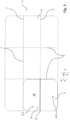
- the Figure 1 shows a cleaning utensil 1 according to the invention in the opened state.
- an envelope 3 which is composed of a front cover 4 and a rear cover 5 (also referred to as cover elements)
- cover elements 4 and 5 are shown in broken lines for a better overview and to show that the cleaning cloth is connected to the inner surfaces 4.1 and 5.1.
- the cleaning cloth 2 is glued over the entire surface to the inner surfaces 4.1 and 5.1.
- the cleaning cloth 2 is, as shown in the figure, unfolded to its full extent and has fold lines 7 which form a folding pattern.
- the folding pattern is used to fold the cleaning cloth 2 into one Figures 9 and 10 folded package 6 shown.
- the fold lines 7 can be incorporated into the cleaning cloth 2 as folded edges or embossings, for example as a crease, press groove or press edge.
- the fold lines 7 are designed as lines or grids printed on the cleaning cloth 2 or incorporated into the material of the cleaning cloth 2.
- the cleaning cloth 2 can be folded twice around the vertical fold lines 7 and once around the horizontal fold line 7.
- the cleaning cloth is in Figure 1 first folded around the left vertical fold line shown in the figure in the direction of the inner surfaces 4.1 and 5.1 of the cover elements 4 and 5 of the dust jacket 3, so that the middle part of the cleaning cloth 2 rests over the entire surface of the left part of the cleaning cloth 2 connected to the dust jacket 3.
- the right vertical fold line shown in the figure moves to the left outer edge of the dust jacket 3.
- the fold line 7 in the Figure 1 The right part of the cleaning cloth 2 shown is folded over the entire surface onto the middle part of the cleaning cloth 2 lying on the dust jacket 3 to form a folded package 6.
- the dust jacket 3 is folded by folding the front cover 4 onto the rear cover 5 around the horizontal fold line 7 with the folding package 6 in between.
- the outer surfaces 4.2 and 5.2 of the lid elements 4 and 5 lie on the outside and form the surface of the cleaning utensil 1, whereas the inner surfaces 4.1 and 5.1 of the lid elements 4 and 5 fully contact the folded package 6 lying between the lid elements 4 and 5 .
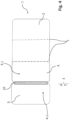
- the protective cover 3 is designed as a one-piece, monolithic cover element 45.
- the cover element 45 combines the front cover 4 with the rear cover 5 in one component, a folded edge 8 being formed between the front cover 4 and the rear cover 5, so that the cover elements 4 and 5 around the folded edge 8 with their inner surfaces 4.1 and 5.1 can be folded onto each other and the outer surfaces 4.2 and 5.2 form the surface of the folded cleaning utensil 1.
- the folded edge 8 forms a back of the dust jacket 3, so that a longitudinal edge of the dust jacket 3 is closed.
- the folded edge 8 can also be contrary to what is shown in the Figures 2 and 3 on the narrow or front sides between the cover elements 4 and 5 connected to the narrow or front sides, in which case the back formed on the narrow or front sides by the folded edge 8 forms the back of the dust jacket 3.
- the cleaning utensil 1 shown is enlarged by three fields by one line above the rear cover 5.
- the folding pattern is compared to that in Figure 2 shown cleaning cloth 2 expanded by a second vertical fold line 7, which runs parallel to the fold edge 8 and the first fold line 7.
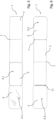
- the cleaning utensil 1 shown is reduced to just three fields.
- only two vertical fold lines 7 are formed parallel to the longitudinal edges of the cover elements 4 and 5, which allow the cleaning cloth 2 to be folded into a folding package 6, which can be received or enclosed between the cover elements 4 and 5 of the dust jacket 3.
- the cover elements 4 and 5 are connected to one another via one of their longitudinal edges by means of an adhesive strip 10, in the present case designed as a fabric tape.
- the adhesive strip 10, ie the fabric tape forms the back of the dust jacket 3 in this embodiment.
- the Figures 5 and 6 show a cleaning utensil with a cleaning cloth 2, the surface of which corresponds to the cleaning cloth in the Figure 4 cleaning utensil shown corresponds.
- the vertical fold lines 7 are formed parallel to the narrow or end faces of the cover elements 4 and 5.
- the narrow or end faces of the cover elements 4 and 5 collide
- the cover elements 4 and 5 in the Figure 6 shown cleaning utensil 2 are connected to the cleaning cloth 2 via two fields of the cleaning cloth 2 separated from each other on two sides of the cleaning cloth 2.
- the two cover elements 4 and 5 are fed towards one another when the cleaning cloth 2 is folded to form a folding package 6 and then form the protective cover 3, including the folding package 6 between the cover elements 4 and 5.
- the inner surface 4.1 of the front cover element 4 is designed with a mirror surface.
- the cleaning cloth 2 can be replaced by a cosmetic tissue, whereby the cleaning utensil 1 according to the invention is designed as a cosmetic article.
- FIG 7 is the cleaning cloth opposite the cleaning cloth in the Figures 5 to 7 increased by three fields, namely to six fields.
- the cover elements 4 and 5 in Figure 7 connected to the cleaning cloth 2 via two fields of the cleaning cloth 2, separated from one another on two sides of the cleaning cloth 2, the cover elements 4 and 5 also being connected to the cleaning cloth 2 lying diagonally at two corners of the cleaning cloth 2.
- the cleaning cloth 2 can be folded into a folding package 6 via the vertical and horizontal fold lines 7 in such a way that the two cover elements 4 and 5 are brought over one another over the entire surface and together form the protective cover 3, which encloses the cleaning cloth 2 folded into the folding package 6.
- the Figure 8 shows a top view from above of the front cover element of a folded one in the Figures 1 to 7 shown cleaning utensil 1.
- From the dimensions of the inner and outer surfaces 4.1, 5.1, 4.2, 5.2 of the front and rear cover elements 4 and 5 and the cleaning cloth 2 folded into a folding package 6 results in a compact, advantageously credit card-sized dimension of the folded cleaning utensil 1 , in this format, for example in a wallet or a shirt or trouser pocket can be carried, with the protective cover 3 protecting the folded and enclosed cleaning cloth 2 from contamination.
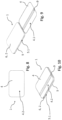
- the Figure 9 shows a cleaning utensil 1 in the unfolded state of the dust jacket 3.
- the cleaning cloth 2 folded into a folding package 6 rests on the inner surface 5.1 of the rear cover 5.
- Figure 10 shows that the cleaning cloth 2 folded into a folding package 6 is enclosed by the front lid 4 and the rear lid 5, the folding package 6 being in full contact with the inner surface 4.1 of the front lid and the inner surface 5.1 of the rear lid 5.
Landscapes
- Cleaning Implements For Floors, Carpets, Furniture, Walls, And The Like (AREA)
Claims (9)
- Ustensile de nettoyage (1), comprenant au moins un tissu de nettoyage (2) et une enveloppe de protection (3) avec au moins un couvercle avant (4), possédant une surface intérieure (4.1) et une surface extérieure (4.2), et avec au moins un couvercle arrière (5), possédant une surface intérieure (5.1) et une surface extérieure (5.2), dans lequel au moins le couvercle avant (4) ou le couvercle arrière (5) est relié avec le tissu de nettoyage (2), et le tissu de nettoyage (2) peut être replié pour former un paquet pliable (6) et l'enveloppe de protection (3) entoure avec le couvercle avant (4) et le couvercle arrière (5), au moins par endroits, le tissu de nettoyage (2) replié pour former le paquet pliable (6), caractérisé en ce que l'enveloppe de protection (3) est une composante du tissu de nettoyage (2) sous la forme des couvercles avant et arrière (4,5).
- Ustensile de nettoyage (1) selon la revendication 1, caractérisé en ce que le tissu de nettoyage (2) replié pour former le paquet pliable (6) se présente en volume à peu près dans un format de carte bancaire.
- Ustensile de nettoyage (1) selon la revendication 1 ou la revendication 2, caractérisé en ce que le tissu de nettoyage (2) présente des lignes de pliage (7) qui servent de gabarit de pliage pour le pliage du tissu de nettoyage (2) pour former le paquet pliable (6).
- Ustensile de nettoyage (1) selon la revendication 3, caractérisé en ce que le tissu de nettoyage (2) peut être replié pour former un paquet pliable (6) au moyen du gabarit de pliage, dont le pourtour correspond à peu près respectivement au pourtour de la surface intérieure (4.1) et de la surface extérieure (4.2) du couvercle avant (4) et au pourtour de la surface intérieure (5.1) et de la surface extérieure (5.2) du couvercle arrière (5).
- Ustensile de nettoyage (1) selon l'une des revendications 1 à 4, caractérisé en ce que le couvercle avant (4) et le couvercle arrière (5) sont conçus formant ensemble un élément de couvercle (45) monolithique commun, dans lequel l'élément de couvercle (45) est plié de telle manière que l'élément de couvercle (45) puisse être rabattu sur un bord de pliage (8), le bord de pliage (8) formant une partie arrière de l'enveloppe de protection (3).
- Ustensile de nettoyage (1) selon l'une des revendications 1 à 4, caractérisé en ce que le couvercle avant (4) et le couvercle arrière (5) sont conçus respectivement comme des éléments de couvercle (4, 5) séparés.
- Ustensile de nettoyage (1) selon la revendication 6, caractérisé en ce que l'élément de couvercle (4) ou (5) relié avec le tissu de nettoyage (2) est relié avec l'autre élément de couvercle (5) ou (4).
- Ustensile de nettoyage (1) selon l'une des revendications précédentes, caractérisé en ce que le couvercle avant (4) et le couvercle arrière (5) sont conçus dans un format de carte bancaire.
- Ustensile de nettoyage (1) selon l'une des revendications précédentes, caractérisé en ce que le tissu de nettoyage (2) est collé, cousu ou soudé avec au moins un des éléments de couvercle (4,5) de l'enveloppe de protection (3).
Applications Claiming Priority (2)
| Application Number | Priority Date | Filing Date | Title |
|---|---|---|---|
| DE102017120364.8A DE102017120364A1 (de) | 2017-09-05 | 2017-09-05 | Reinigungsutensil |
| PCT/DE2018/100756 WO2019048004A2 (fr) | 2017-09-05 | 2018-09-05 | Ustensile de nettoyage |
Publications (2)
| Publication Number | Publication Date |
|---|---|
| EP3558086A2 EP3558086A2 (fr) | 2019-10-30 |
| EP3558086B1 true EP3558086B1 (fr) | 2023-10-18 |
Family
ID=63833743
Family Applications (1)
| Application Number | Title | Priority Date | Filing Date |
|---|---|---|---|
| EP18785495.5A Active EP3558086B1 (fr) | 2017-09-05 | 2018-09-05 | Ustensile de nettoyage |
Country Status (3)
| Country | Link |
|---|---|
| EP (1) | EP3558086B1 (fr) |
| DE (2) | DE102017120364A1 (fr) |
| WO (1) | WO2019048004A2 (fr) |
Families Citing this family (1)
| Publication number | Priority date | Publication date | Assignee | Title |
|---|---|---|---|---|
| RU196143U1 (ru) * | 2019-05-27 | 2020-02-18 | Общество с ограниченной ответственностью «Абразивные технологии» | Устройство для очистки |
Family Cites Families (10)
| Publication number | Priority date | Publication date | Assignee | Title |
|---|---|---|---|---|
| US2778044A (en) * | 1954-06-29 | 1957-01-22 | Chester B Mikulski | Culinary washing pad |
| DE9310424U1 (de) * | 1993-07-13 | 1993-12-23 | CoRD Contract Research and Development GmbH, 13403 Berlin | Reinigungs- und Desinfektionspackung |
| US5918341A (en) * | 1996-08-20 | 1999-07-06 | Hale; Daniel D. | Hand-sized, controlled-fold, cleaning sleeve |
| US6226827B1 (en) * | 1998-11-02 | 2001-05-08 | James B. English, Jr. | Golfer's personal cleaning device |
| DE202006013078U1 (de) | 2006-08-25 | 2006-12-28 | Messing, Jan G. C. | Reinigungstuch |
| DE202008008679U1 (de) * | 2008-07-03 | 2008-09-04 | Willmann, Klaus, Dr. | Schutzmappe |
| DE102012101476B3 (de) * | 2012-02-23 | 2013-01-10 | Ulrich Pohlmann | Reinigungs-Pad für glatte oder leicht strukturierte, feste Oberflächen |
| US8622205B2 (en) * | 2012-04-16 | 2014-01-07 | Alec Ramsey | Pocket storable hand towel and case |
| DE102014103232A1 (de) | 2013-03-12 | 2014-09-18 | Ulrich Pohlmann | Display-Reinigungskarte mit RFID Transponder |
| US20170119119A1 (en) * | 2015-11-02 | 2017-05-04 | Micah Jordan BOROSEVICH | Apparatus includes wallet card assembly supporting cleaning fabric |
-
2017
- 2017-09-05 DE DE102017120364.8A patent/DE102017120364A1/de not_active Withdrawn
-
2018
- 2018-09-05 EP EP18785495.5A patent/EP3558086B1/fr active Active
- 2018-09-05 WO PCT/DE2018/100756 patent/WO2019048004A2/fr not_active Ceased
- 2018-09-05 DE DE112018004866.7T patent/DE112018004866A5/de not_active Withdrawn
Also Published As
| Publication number | Publication date |
|---|---|
| WO2019048004A3 (fr) | 2019-04-25 |
| DE102017120364A1 (de) | 2019-03-07 |
| WO2019048004A2 (fr) | 2019-03-14 |
| DE112018004866A5 (de) | 2020-06-18 |
| EP3558086A2 (fr) | 2019-10-30 |
Similar Documents
| Publication | Publication Date | Title |
|---|---|---|
| DE102012101476B3 (de) | Reinigungs-Pad für glatte oder leicht strukturierte, feste Oberflächen | |
| DE602004007296T2 (de) | Identifikationsheft mit hochfrequenz-identifikationseinrichtung | |
| DE69206128T2 (de) | Papierserviette. | |
| EP1861262B2 (fr) | Support de donnees destine a etre integre dans un passeport | |
| EP3558086B1 (fr) | Ustensile de nettoyage | |
| EP2685343A1 (fr) | Holder device for a mobile terminal | |
| EP0777898B1 (fr) | Dispositif justificatif d'entree et badge | |
| DE08845886T1 (de) | Sicherheitsfilm mit einer irisierenden sicherheitsmarkierung | |
| DE102014103232A1 (de) | Display-Reinigungskarte mit RFID Transponder | |
| EP3876884B1 (fr) | Impression de bandage | |
| DE202012009900U1 (de) | Etikett mit Tasche für Hosen, welches zur Aufnahme von Kreditkarten u.ä. geeignet ist | |
| DE102005021477B4 (de) | Verfahren zum Herstellen eines Laminats für ein Pass-Inlay und Ausweisdokument | |
| DE202012104125U1 (de) | Werbeträger als Mikrofaser-Reiniger | |
| EP2320764B1 (fr) | Pochette à photos décorative enroulée destinée à la conservation permanente et au transport de photographies, microfilms et supports de données importants | |
| DE202008006880U1 (de) | Kompressenhülle | |
| DE2340933A1 (de) | Handtuch fuer den einmaligen gebrauch | |
| DE202004012493U1 (de) | Ausweisdokument in Buchform mit elektronischem Datenträger | |
| EP3416830B1 (fr) | Support de données portatif pourvu d'un bosselage | |
| DE10215154B4 (de) | Ungefaltetes Druckmedium als Vorderdeckel für einen heftähnlichen Gegenstand und Verfahren zur Herstellung eines heftähnlichen Gegenstandes unter Verwendung dieses Druckmediums | |
| DE202018101053U1 (de) | Lesezeichen | |
| DE202007013361U1 (de) | Datenlesesystem sowie Datenträger | |
| DE102019003174A1 (de) | Behältnis | |
| DE102010050439B4 (de) | Kartenhalter | |
| DE3029885A1 (de) | Angebotskarte | |
| DE8229226U1 (de) | Halter zur bruchsicherung fuer insbesondere codierte scheckkarten |
Legal Events
| Date | Code | Title | Description |
|---|---|---|---|
| STAA | Information on the status of an ep patent application or granted ep patent |
Free format text: STATUS: UNKNOWN |
|
| STAA | Information on the status of an ep patent application or granted ep patent |
Free format text: STATUS: THE INTERNATIONAL PUBLICATION HAS BEEN MADE |
|
| PUAI | Public reference made under article 153(3) epc to a published international application that has entered the european phase |
Free format text: ORIGINAL CODE: 0009012 |
|
| STAA | Information on the status of an ep patent application or granted ep patent |
Free format text: STATUS: REQUEST FOR EXAMINATION WAS MADE |
|
| 17P | Request for examination filed |
Effective date: 20190724 |
|
| AK | Designated contracting states |
Kind code of ref document: A2 Designated state(s): AL AT BE BG CH CY CZ DE DK EE ES FI FR GB GR HR HU IE IS IT LI LT LU LV MC MK MT NL NO PL PT RO RS SE SI SK SM TR |
|
| AX | Request for extension of the european patent |
Extension state: BA ME |
|
| DAV | Request for validation of the european patent (deleted) | ||
| DAX | Request for extension of the european patent (deleted) | ||
| STAA | Information on the status of an ep patent application or granted ep patent |
Free format text: STATUS: EXAMINATION IS IN PROGRESS |
|
| 17Q | First examination report despatched |
Effective date: 20210810 |
|
| GRAP | Despatch of communication of intention to grant a patent |
Free format text: ORIGINAL CODE: EPIDOSNIGR1 |
|
| STAA | Information on the status of an ep patent application or granted ep patent |
Free format text: STATUS: GRANT OF PATENT IS INTENDED |
|
| INTG | Intention to grant announced |
Effective date: 20230503 |
|
| GRAS | Grant fee paid |
Free format text: ORIGINAL CODE: EPIDOSNIGR3 |
|
| GRAA | (expected) grant |
Free format text: ORIGINAL CODE: 0009210 |
|
| STAA | Information on the status of an ep patent application or granted ep patent |
Free format text: STATUS: THE PATENT HAS BEEN GRANTED |
|
| AK | Designated contracting states |
Kind code of ref document: B1 Designated state(s): AL AT BE BG CH CY CZ DE DK EE ES FI FR GB GR HR HU IE IS IT LI LT LU LV MC MK MT NL NO PL PT RO RS SE SI SK SM TR |
|
| REG | Reference to a national code |
Ref country code: GB Ref legal event code: FG4D Free format text: NOT ENGLISH |
|
| REG | Reference to a national code |
Ref country code: CH Ref legal event code: EP |
|
| REG | Reference to a national code |
Ref country code: DE Ref legal event code: R096 Ref document number: 502018013486 Country of ref document: DE |
|
| REG | Reference to a national code |
Ref country code: IE Ref legal event code: FG4D Free format text: LANGUAGE OF EP DOCUMENT: GERMAN |
|
| REG | Reference to a national code |
Ref country code: LT Ref legal event code: MG9D |
|
| REG | Reference to a national code |
Ref country code: NL Ref legal event code: MP Effective date: 20231018 |
|
| PG25 | Lapsed in a contracting state [announced via postgrant information from national office to epo] |
Ref country code: NL Free format text: LAPSE BECAUSE OF FAILURE TO SUBMIT A TRANSLATION OF THE DESCRIPTION OR TO PAY THE FEE WITHIN THE PRESCRIBED TIME-LIMIT Effective date: 20231018 |
|
| PG25 | Lapsed in a contracting state [announced via postgrant information from national office to epo] |
Ref country code: GR Free format text: LAPSE BECAUSE OF FAILURE TO SUBMIT A TRANSLATION OF THE DESCRIPTION OR TO PAY THE FEE WITHIN THE PRESCRIBED TIME-LIMIT Effective date: 20240119 |
|
| PG25 | Lapsed in a contracting state [announced via postgrant information from national office to epo] |
Ref country code: IS Free format text: LAPSE BECAUSE OF FAILURE TO SUBMIT A TRANSLATION OF THE DESCRIPTION OR TO PAY THE FEE WITHIN THE PRESCRIBED TIME-LIMIT Effective date: 20240218 |
|
| PG25 | Lapsed in a contracting state [announced via postgrant information from national office to epo] |
Ref country code: LT Free format text: LAPSE BECAUSE OF FAILURE TO SUBMIT A TRANSLATION OF THE DESCRIPTION OR TO PAY THE FEE WITHIN THE PRESCRIBED TIME-LIMIT Effective date: 20231018 |
|
| PG25 | Lapsed in a contracting state [announced via postgrant information from national office to epo] |
Ref country code: ES Free format text: LAPSE BECAUSE OF FAILURE TO SUBMIT A TRANSLATION OF THE DESCRIPTION OR TO PAY THE FEE WITHIN THE PRESCRIBED TIME-LIMIT Effective date: 20231018 |
|
| PG25 | Lapsed in a contracting state [announced via postgrant information from national office to epo] |
Ref country code: LT Free format text: LAPSE BECAUSE OF FAILURE TO SUBMIT A TRANSLATION OF THE DESCRIPTION OR TO PAY THE FEE WITHIN THE PRESCRIBED TIME-LIMIT Effective date: 20231018 Ref country code: IS Free format text: LAPSE BECAUSE OF FAILURE TO SUBMIT A TRANSLATION OF THE DESCRIPTION OR TO PAY THE FEE WITHIN THE PRESCRIBED TIME-LIMIT Effective date: 20240218 Ref country code: GR Free format text: LAPSE BECAUSE OF FAILURE TO SUBMIT A TRANSLATION OF THE DESCRIPTION OR TO PAY THE FEE WITHIN THE PRESCRIBED TIME-LIMIT Effective date: 20240119 Ref country code: ES Free format text: LAPSE BECAUSE OF FAILURE TO SUBMIT A TRANSLATION OF THE DESCRIPTION OR TO PAY THE FEE WITHIN THE PRESCRIBED TIME-LIMIT Effective date: 20231018 Ref country code: BG Free format text: LAPSE BECAUSE OF FAILURE TO SUBMIT A TRANSLATION OF THE DESCRIPTION OR TO PAY THE FEE WITHIN THE PRESCRIBED TIME-LIMIT Effective date: 20240118 Ref country code: PT Free format text: LAPSE BECAUSE OF FAILURE TO SUBMIT A TRANSLATION OF THE DESCRIPTION OR TO PAY THE FEE WITHIN THE PRESCRIBED TIME-LIMIT Effective date: 20240219 |
|
| PG25 | Lapsed in a contracting state [announced via postgrant information from national office to epo] |
Ref country code: SE Free format text: LAPSE BECAUSE OF FAILURE TO SUBMIT A TRANSLATION OF THE DESCRIPTION OR TO PAY THE FEE WITHIN THE PRESCRIBED TIME-LIMIT Effective date: 20231018 Ref country code: RS Free format text: LAPSE BECAUSE OF FAILURE TO SUBMIT A TRANSLATION OF THE DESCRIPTION OR TO PAY THE FEE WITHIN THE PRESCRIBED TIME-LIMIT Effective date: 20231018 Ref country code: PL Free format text: LAPSE BECAUSE OF FAILURE TO SUBMIT A TRANSLATION OF THE DESCRIPTION OR TO PAY THE FEE WITHIN THE PRESCRIBED TIME-LIMIT Effective date: 20231018 Ref country code: NO Free format text: LAPSE BECAUSE OF FAILURE TO SUBMIT A TRANSLATION OF THE DESCRIPTION OR TO PAY THE FEE WITHIN THE PRESCRIBED TIME-LIMIT Effective date: 20240118 Ref country code: LV Free format text: LAPSE BECAUSE OF FAILURE TO SUBMIT A TRANSLATION OF THE DESCRIPTION OR TO PAY THE FEE WITHIN THE PRESCRIBED TIME-LIMIT Effective date: 20231018 Ref country code: HR Free format text: LAPSE BECAUSE OF FAILURE TO SUBMIT A TRANSLATION OF THE DESCRIPTION OR TO PAY THE FEE WITHIN THE PRESCRIBED TIME-LIMIT Effective date: 20231018 |
|
| PG25 | Lapsed in a contracting state [announced via postgrant information from national office to epo] |
Ref country code: DK Free format text: LAPSE BECAUSE OF FAILURE TO SUBMIT A TRANSLATION OF THE DESCRIPTION OR TO PAY THE FEE WITHIN THE PRESCRIBED TIME-LIMIT Effective date: 20231018 |
|
| REG | Reference to a national code |
Ref country code: DE Ref legal event code: R097 Ref document number: 502018013486 Country of ref document: DE |
|
| PG25 | Lapsed in a contracting state [announced via postgrant information from national office to epo] |
Ref country code: CZ Free format text: LAPSE BECAUSE OF FAILURE TO SUBMIT A TRANSLATION OF THE DESCRIPTION OR TO PAY THE FEE WITHIN THE PRESCRIBED TIME-LIMIT Effective date: 20231018 |
|
| PG25 | Lapsed in a contracting state [announced via postgrant information from national office to epo] |
Ref country code: SK Free format text: LAPSE BECAUSE OF FAILURE TO SUBMIT A TRANSLATION OF THE DESCRIPTION OR TO PAY THE FEE WITHIN THE PRESCRIBED TIME-LIMIT Effective date: 20231018 |
|
| PG25 | Lapsed in a contracting state [announced via postgrant information from national office to epo] |
Ref country code: SM Free format text: LAPSE BECAUSE OF FAILURE TO SUBMIT A TRANSLATION OF THE DESCRIPTION OR TO PAY THE FEE WITHIN THE PRESCRIBED TIME-LIMIT Effective date: 20231018 Ref country code: SK Free format text: LAPSE BECAUSE OF FAILURE TO SUBMIT A TRANSLATION OF THE DESCRIPTION OR TO PAY THE FEE WITHIN THE PRESCRIBED TIME-LIMIT Effective date: 20231018 Ref country code: RO Free format text: LAPSE BECAUSE OF FAILURE TO SUBMIT A TRANSLATION OF THE DESCRIPTION OR TO PAY THE FEE WITHIN THE PRESCRIBED TIME-LIMIT Effective date: 20231018 Ref country code: IT Free format text: LAPSE BECAUSE OF FAILURE TO SUBMIT A TRANSLATION OF THE DESCRIPTION OR TO PAY THE FEE WITHIN THE PRESCRIBED TIME-LIMIT Effective date: 20231018 Ref country code: EE Free format text: LAPSE BECAUSE OF FAILURE TO SUBMIT A TRANSLATION OF THE DESCRIPTION OR TO PAY THE FEE WITHIN THE PRESCRIBED TIME-LIMIT Effective date: 20231018 Ref country code: DK Free format text: LAPSE BECAUSE OF FAILURE TO SUBMIT A TRANSLATION OF THE DESCRIPTION OR TO PAY THE FEE WITHIN THE PRESCRIBED TIME-LIMIT Effective date: 20231018 Ref country code: CZ Free format text: LAPSE BECAUSE OF FAILURE TO SUBMIT A TRANSLATION OF THE DESCRIPTION OR TO PAY THE FEE WITHIN THE PRESCRIBED TIME-LIMIT Effective date: 20231018 |
|
| PLBE | No opposition filed within time limit |
Free format text: ORIGINAL CODE: 0009261 |
|
| STAA | Information on the status of an ep patent application or granted ep patent |
Free format text: STATUS: NO OPPOSITION FILED WITHIN TIME LIMIT |
|
| 26N | No opposition filed |
Effective date: 20240719 |
|
| PG25 | Lapsed in a contracting state [announced via postgrant information from national office to epo] |
Ref country code: SI Free format text: LAPSE BECAUSE OF FAILURE TO SUBMIT A TRANSLATION OF THE DESCRIPTION OR TO PAY THE FEE WITHIN THE PRESCRIBED TIME-LIMIT Effective date: 20231018 |
|
| PG25 | Lapsed in a contracting state [announced via postgrant information from national office to epo] |
Ref country code: SI Free format text: LAPSE BECAUSE OF FAILURE TO SUBMIT A TRANSLATION OF THE DESCRIPTION OR TO PAY THE FEE WITHIN THE PRESCRIBED TIME-LIMIT Effective date: 20231018 |
|
| PG25 | Lapsed in a contracting state [announced via postgrant information from national office to epo] |
Ref country code: MC Free format text: LAPSE BECAUSE OF FAILURE TO SUBMIT A TRANSLATION OF THE DESCRIPTION OR TO PAY THE FEE WITHIN THE PRESCRIBED TIME-LIMIT Effective date: 20231018 |
|
| REG | Reference to a national code |
Ref country code: CH Ref legal event code: PL |
|
| PG25 | Lapsed in a contracting state [announced via postgrant information from national office to epo] |
Ref country code: LU Free format text: LAPSE BECAUSE OF NON-PAYMENT OF DUE FEES Effective date: 20240905 |
|
| GBPC | Gb: european patent ceased through non-payment of renewal fee |
Effective date: 20240905 |
|
| PG25 | Lapsed in a contracting state [announced via postgrant information from national office to epo] |
Ref country code: GB Free format text: LAPSE BECAUSE OF NON-PAYMENT OF DUE FEES Effective date: 20240905 |
|
| REG | Reference to a national code |
Ref country code: BE Ref legal event code: MM Effective date: 20240930 |
|
| PG25 | Lapsed in a contracting state [announced via postgrant information from national office to epo] |
Ref country code: BE Free format text: LAPSE BECAUSE OF NON-PAYMENT OF DUE FEES Effective date: 20240930 |
|
| PG25 | Lapsed in a contracting state [announced via postgrant information from national office to epo] |
Ref country code: CH Free format text: LAPSE BECAUSE OF NON-PAYMENT OF DUE FEES Effective date: 20240930 |
|
| PG25 | Lapsed in a contracting state [announced via postgrant information from national office to epo] |
Ref country code: IE Free format text: LAPSE BECAUSE OF NON-PAYMENT OF DUE FEES Effective date: 20240905 |
|
| PG25 | Lapsed in a contracting state [announced via postgrant information from national office to epo] |
Ref country code: FI Free format text: LAPSE BECAUSE OF FAILURE TO SUBMIT A TRANSLATION OF THE DESCRIPTION OR TO PAY THE FEE WITHIN THE PRESCRIBED TIME-LIMIT Effective date: 20231019 |
|
| PGFP | Annual fee paid to national office [announced via postgrant information from national office to epo] |
Ref country code: DE Payment date: 20250808 Year of fee payment: 8 |
|
| PGFP | Annual fee paid to national office [announced via postgrant information from national office to epo] |
Ref country code: AT Payment date: 20250919 Year of fee payment: 8 Ref country code: FR Payment date: 20250922 Year of fee payment: 8 |
|
| PG25 | Lapsed in a contracting state [announced via postgrant information from national office to epo] |
Ref country code: CY Free format text: LAPSE BECAUSE OF FAILURE TO SUBMIT A TRANSLATION OF THE DESCRIPTION OR TO PAY THE FEE WITHIN THE PRESCRIBED TIME-LIMIT; INVALID AB INITIO Effective date: 20180905 |
|
| PG25 | Lapsed in a contracting state [announced via postgrant information from national office to epo] |
Ref country code: HU Free format text: LAPSE BECAUSE OF FAILURE TO SUBMIT A TRANSLATION OF THE DESCRIPTION OR TO PAY THE FEE WITHIN THE PRESCRIBED TIME-LIMIT; INVALID AB INITIO Effective date: 20180905 |